
Browse by Subject
African American Studies (31)
-
 Eight leading scholars have joined forces to give us the most comprehensive book to date on the history of African-American religion from the slavery period to the present.Beginning with Albert Raboteau's essay on the importance of the story of Exodus among African-American Christians and concluding with Clayborne Carson's work on Martin Luther King, Jr.'s religious development, this volume illuminates the fusion of African and Christian traditions that has so uniquely contributed to American religious development. Several common themes emerge: the critical importance of African roots, the traumatic discontinuities of slavery, the struggle for freedom within slavery and the subsequent experience of discrimination, and the remarkable creativity of African-American religious faith and practice. Together, these essays enrich our understanding of both African-American life and its part in the history of religion in America.
-
 Subjects: Religion | African American Studies | Women's Studies | Politics | Anthropology | ChristianityTo be a black woman of faith in the American South is to understand and experience spirituality in a particular way. How this understanding expresses itself in everyday practices of faith is the subject of Between Sundays, an innovative work that takes readers beyond common misconceptions and narrow assumptions about black religion and into the actual complexities of African American women's spiritual lives. Gracefully combining narrative, interviews, and analysis, this book explores the personal, political, and spiritual commitments of a group of Baptist women whose experiences have been informed by the realities of life in a rural, southern community. In these lives, "spirituality" emerges as a space for creative agency, of vital importance to the ways in which these women interpret, inform, and reshape their social conditions--conditions often characterized by limited access to job opportunities, health care, and equitable schooling. In the words of these women, and in Marla F. Frederick's deft analysis, we see how spirituality - expressed as gratitude, empathy, or righteous discontent - operates as a transformative power in women's interactions with others, and in their own more intimate renegotiations of self.
-
 Subjects: Religion | African Studies | American Studies | United States History | African American StudiesBlack Magic looks at the origins, meaning, and uses of Conjure - the African American tradition of healing and harming that evolved from African, European, and American elements - from the slavery period to well into the twentieth century. Illuminating a world that is dimly understood by both scholars and the general public, Yvonne P. Chireau describes Conjure and other related traditions, such as Hoodoo and Rootworking, in a beautifully written, richly detailed history that presents the voices and experiences of African Americans and shows how magic has informed their culture. Focusing on the relationship between Conjure and Christianity, Chireau shows how these seemingly contradictory traditions have worked together in a complex and complementary fashion to provide spiritual empowerment for African Americans, both slave and free, living in white America. As she explores the role of Conjure for African Americans and looks at the transformations of Conjure over time, Chireau also rewrites the dichotomy between magic and religion. With its groundbreaking analysis of an often misunderstood tradition, this book adds an important perspective to our understanding of the myriad dimensions of human spirituality.
-
 The labor of black workers has been crucial to economic development in the United States. Yet because of racism and segregation, their contribution remains largely unknown. Spanning the 1930s to the present, Black Workers Remember tells the hidden history of African American workers in their own words. It provides striking firsthand accounts of the experiences of black southerners living under segregation in Memphis, Tennessee. Eloquent and personal, these oral histories comprise a unique primary source and provide a new way of understanding the black labor experience during the industrial era. Together, the stories demonstrate how black workers resisted racial apartheid in American industry and underscore the active role of black working people in history.The individual stories are arranged thematically in chapters on labor organizing, Jim Crow in the workplace, police brutality, white union racism, and civil rights struggles. Taken together, the stories ask us to rethink the conventional understanding of the civil rights movement as one led by young people and preachers in the 1950s and 1960s. Instead, we see the freedom struggle as the product of generations of people, including workers who organized unions, resisted Jim Crow at work, and built up their families, churches, and communities. The collection also reveals the devastating impact that a globalizing capitalist economy has had on black communities and the importance of organizing the labor movement as an antidote to poverty.QQ Michael Honey gathered these oral histories for more than fifteen years. He weaves them together here into a rich collection reflecting many tragic dimensions of America's racial history while drawing new attention to the role of workers and poor people in African American and American history.
-
 Subjects: Anthropology | Cultural Anthropology | Native American Studies | Native American Ethnicity | African American StudiesCirce Sturm takes a bold and original approach to one of the most highly charged and important issues in the United States today: race and national identity. Focusing on the Oklahoma Cherokee, she examines how Cherokee identity is socially and politically constructed, and how that process is embedded in ideas of blood, color, and race. Not quite a century ago, blood degree varied among Cherokee citizens from full blood to 1/256, but today the range is far greater--from full blood to 1/2048. This trend raises questions about the symbolic significance of blood and the degree to which blood connections can stretch and still carry a sense of legitimacy. It also raises questions about how much racial blending can occur before Cherokees cease to be identified as a distinct people and what danger is posed to Cherokee sovereignty if the federal government continues to identify Cherokees and other Native Americans on a racial basis. Combining contemporary ethnography and ethnohistory, Sturm's sophisticated and insightful analysis probes the intersection of race and national identity, the process of nation formation, and the dangers in linking racial and national identities.
-

-
 Subjects: Music | African American Studies | American Studies | California and the West | Californian and Western History | United States History | Contemporary Music | JazzThis new series, co-sponsored with The Center for Black Music Research of Columbia College, seeks to increase our understanding of black music genres and their importance to the cultures of the Atlantic world, including their influence on African musical styles. Books in the series will examine the wide-ranging music of the African diaspora - including the folk-derived musical styles of the Americas as well as European-influenced concert hall music of the entire black Atlantic world - by analyzing issues critical to our interpretation of the music itself and exploring the relationships between music and the other black expressive arts.Focusing on blues, jazz, gospel, rhythm and blues, and soul music, California Soul is one of the first books to explore the rich musical heritage of African Americans in California. The contributors describe in detail the individual artists, locales, groups, musical styles, and regional qualities, and the result is an important book that lays the groundwork for a whole new field of study. The essays draw from oral histories, music recordings, newspaper articles and advertisements, as well as population statistics to provide insightful discussions of topics like the California urban milieu's influence on gospel music, the development of the West Coast blues style, and the significance of Los Angeles's Central Avenue in the early days of jazz. Other essays offer perspectives on how individual musicians have been shaped by their African American heritage, and on the role of the record industry and radio in the making of music. In addition to the diverse range of essays, the book includes the most comprehensive bibliography now available on African American music and culture in California.
-
 David R. Roediger's powerful book argues that in its political workings, its distribution of advantages, and its unspoken assumptions, the United States is a "still white" nation. Race is decidedly not over. The critical portraits of contemporary icons that lead off the book--Rush Limbaugh, Bill Clinton, O.J. Simpson, and Rudolph Giuliani--insist that continuities in white power and white identity are best understood by placing the recent past in historical context. Roediger illuminates that history in an incisive critique of the current scholarship on whiteness and an account of race-transcending radicalism exemplified by vanguards such as W.E.B. Du Bois and John Brown. He shows that, for all of its staying power, white supremacy in the United States has always been a pursuit rather than a completed project, that divisions among whites have mattered greatly, and that "nonwhite" alternatives have profoundly challenged the status quo.Colored White reasons that, because race is a matter of culture and politics, racial oppression will not be solved by intermarriage or demographic shifts, but rather by political struggles that transform the meaning of race--especially its links to social and economic inequality. This landmark work considers the ways that changes in immigration patterns, the labor force, popular culture, and social movements make it possible--though far from inevitable--that the United States might overcome white supremacy in the twenty-first century. Roediger's clear, lively prose and his extraordinary command of the literature make this one of the most original and generative contributions to the study of race and ethnicity in the United States in many decades.
-
 Commonly portrayed in the media as holding women in strict subordination and deference to men, Islam is nonetheless attracting numerous converts among African American women. Are these women "reproducing their oppression," as it might seem? Or does their adherence to the religion suggest unsuspected subtleties and complexities in the relation of women, especially black women, to Islam? Carolyn Rouse sought answers to these questions among the women of Sunni Muslim mosques in Los Angeles. Her richly textured study provides rare insight into the meaning of Islam for African American women; in particular, Rouse shows how the teachings of Islam give these women a sense of power and control over interpretations of gender, family, authority, and obligations. In Engaged Surrender, Islam becomes a unique prism for clarifying the role of faith in contemporary black women's experience. Through these women's stories, Rouse reveals how commitment to Islam refracts complex processes - urbanization, political and social radicalization, and deindustrialization - that shape black lives generally, and black women's lives in particular. Rather than focusing on traditional (and deeply male) ideas of autonomy and supremacy, the book - and the community of women it depicts - emphasizes more holistic notions of collective obligation, personal humility, and commitment to overarching codes of conduct and belief. A much-needed corrective to media portraits of Islam and the misconceptions they engender, this engaged and engaging work offers an intimate, in-depth look into the vexed and interlocking issues of Islam, gender, and race.
-
 Subjects: Literature | African American Studies | Gender Studies | Literary Theory and Criticism | American Literature | Gay, Lesbian and Bisexual StudiesThis landmark collaboration between African American and white feminists goes to the heart of problems that have troubled feminist thinking for decades. Putting the racial dynamics of feminist interpretation center stage, these essays question such issues as the primacy of sexual difference, the universal nature of psychoanalytic categories, and the role of race in the formation of identity. They offer new ways of approaching African American texts and reframe our thinking about the contexts, discourses, and traditions of the American cultural landscape. Calling for the racialization of whiteness and claiming that psychoanalytic theory should make room for competing discourses of spirituality and diasporic consciousness, these essays give shape to the many stubborn incompatibilities - as well as the transformative possibilities - between white feminist and African American cultural formations.Bringing into conversation a range of psychoanalytic, feminist, and African-derived spiritual perspectives, these essays enact an inclusive politics of reading. Often explosive and always provocative, Female Subjects in Black and White models a new cross-racial feminism.
-
 Subjects: Anthropology | Cultural Anthropology | Ethnic Studies | African American Studies | United States History | SociologyLee D. Baker explores what racial categories mean to the American public and how these meanings are reinforced by anthropology, popular culture, and the law. Focusing on the period between two landmark Supreme Court decisions - Plessy v. Ferguson (the so-called "separate but equal" doctrine established in 1896) and Brown v. Board of Education (the public school desegregation decision of 1954) - Baker shows how racial categories change over time.Baker paints a vivid picture of the relationships between specific African American and white scholars, who orchestrated a paradigm shift within the social sciences from ideas based on Social Darwinism to those based on cultural relativism. He demonstrates that the greatest impact on the way the law codifies racial differences has been made by organizations such as the NAACP, which skillfully appropriated the new social science to exploit the politics of the Cold War.
-
 Subjects: History | United States History | Christianity | American Studies | African American Studies | African StudiesHow did an African-American man born in a ghetto in 1879 rise to such religious prominence that his followers addressed letters to him simply "God, Harlem U.S.A."?Using hitherto unknown materials, Jill Watts portrays the life and career of one of the twentieth century's most intriguing religious leaders, Father Divine. Starting as an itinerant preacher, Father Divine built an unprecedented movement that by the 1930s had attracted followers across the nation and around the world. As his ministry grew, so did the controversy surrounding his enormous wealth, flamboyant style, and committed "angels" - black and white, rich and poor alike.Here for the first time a full account of Father Divine's childhood and early years challenges previous contentions that he was born into a sharecropping family in the deep South. While earlier biographers have concentrated on Father Divine's social and economic programs, Watts focuses on his theology, which gives new meaning to secular activities that often appeared contradictory. Although much has been written about Father Divine, God, Harlem U.S.A. finally provides a balanced and intimate account of his life's work.
-

-
 Subjects: Music | American Music | Jazz | Ethnomusicology | American Studies | African American StudiesFrom its beginning, jazz has presented a contradictory social world: jazz musicians have worked diligently to erase old boundaries, but they have just as resolutely constructed new ones. David Ake's vibrant and original book considers the diverse musics and related identities that jazz communities have shaped over the course of the twentieth century, exploring the many ways in which jazz musicians and audiences experience and understand themselves, their music, their communities, and the world at large. Writing as a professional pianist and composer, the author looks at evolving meanings, values, and ideals--as well as the sounds--that musicians, audiences, and critics carry to and from the various activities they call jazz. Among the compelling topics he discusses is the "visuality" of music: the relationship between performance demeanor and musical meaning. Focusing on pianists Bill Evans and Keith Jarrett, Ake investigates the ways in which musicians' postures and attitudes influence perceptions of them as profound and serious artists. In another essay, Ake examines the musical values and ideals promulgated by college jazz education programs through a consideration of saxophonist John Coltrane. He also discusses the concept of the jazz "standard" in the 1990s and the differing sense of tradition implied in recent recordings by Wynton Marsalis and Bill Frisell. Jazz Cultures shows how jazz history has not consisted simply of a smoothly evolving series of musical styles, but rather an array of individuals and communities engaging with disparate--and oftentimes conflicting--actions, ideals, and attitudes.
-
 Subjects: History | African American Studies | Urban Studies | Californian and Western History | California and the WestIn 1964 an Urban League survey ranked Los Angeles as the most desirable city for African Americans to live in. In 1965 the city burst into flames during one of the worst race riots in the nation's history. How the city came to such a pass - embodying both the best and worst of what urban America offered black migrants from the South - is the story told for the first time in this history of modern black Los Angeles. A clear-eyed and compelling look at black struggles for equality in L.A.'s neighborhoods, schools, and workplaces from the Great Depression to our day, L.A. City Limits critically refocuses the ongoing debate about the origins of America's racial and urban crisis. Challenging previous analysts' near-exclusive focus on northern "rust-belt" cities devastated by de-industrialization, Josh Sides asserts that the cities to which black southerners migrated profoundly affected how they fared. He shows how L.A.'s diverse racial composition, dispersive geography, and dynamic postwar economy often created opportunities - and limits - quite different from those encountered by blacks in the urban North.
-
 "Like Trotsky, I did not leave home with the proverbial one-and-six in my pocket. I come from a family of landed gentry . . . [and] could have chosen the path of comfort and safety, for even in apartheid South Africa, there is still that path for those who will collaborate. But I chose the path of struggle and uncertainty." - from the PrefaceBorn into the small social elite of black South Africa, Phyllis Ntantala did not face the grinding poverty so familiar to other South African blacks. Instead, her struggle was that of a creative, articulate woman seeking fulfillment and justice in a land that tried to deny her both.The widow of Xhosa writer and historian A.C. Jordan and mother of African National Congress leader Z. Pallo Jordan, she and her family experienced a period of tremendous change in South Africa and also in the United States, where they moved during the 1960s. She discovers similarities in the two countries, including the arrogance of power.Anchored in history and culture, A Life's Mosaic sharply reveals the world and the people of South Africa. As the story of a political exile, it represents the dislocations that have caused universal suffering in the second half of the twentieth century. Phyllis Ntantala discusses the cruelty of racism, the cynicism of political solutions, and the hopes of those who live in both a world of exile and a world of dreams.
-
 "I do not speak carelessly or recklessly but with a definite object of helping the people, especially those of my race, to know, to understand, and to realize themselves." - Marcus Garvey, Halifax, Nova Scotia, 1937A popular companion to the scholarly edition of The Marcus Garvey and Universal Negro Improvement Association Papers, this volume is a collection of autobiographical and philosophical works produced by Garvey in the period from his imprisonment in Atlanta to his death in London in 1940.
-
 Subjects: Music | African American Studies | Autobiographies and Biographies | Contemporary Music | JazzQuincy Troupe's candid account of his friendship with Miles Davis is a revealing portrait of a great musician and an intimate study of a unique relationship. It is also an engrossing chronicle of the author's own development, both artistic and personal. As Davis's collaborator on Miles: The Autobiography,Troupe--one of the major poets to emerge from the 1960s--had exceptional access to the musician. This memoir goes beyond the life portrayed in the autobiography to describe in detail the processes of Davis's spectacular creativity and the joys and difficulties his passionate, contradictory temperament posed to the men's friendship. It shows how Miles Davis, both as a black man and an artist, influenced not only Quincy Troupe but whole generations. Troupe has written that Miles Davis was "irascible, contemptuous, brutally honest, ill-tempered when things didn't go his way, complex, fair-minded, humble, kind and a son-of-a-bitch." The author's love and appreciation for Davis make him a keen, though not uncritical, observer. He captures and conveys the power of the musician's presence, the mesmerizing force of his personality, and the restless energy that lay at the root of his creativity. He also shows Davis's lighter side: cooking, prowling the streets of Manhattan, painting, riding his horse at his Malibu home. Troupe discusses Davis's musical output, situating his albums in the context of the times--both political and musical--out of which they emerged. Miles and Me is an unparalleled look at the act of creation and the forces behind it, at how the innovations of one person can inspire both those he knows and loves and the world at large.
-
 One of the most worrisome images in America today is that of the teenage mother. For the African-American community, that image is especially troubling: All the problems of the welfare system seem to spotlight the black teenage mom. Elaine Bell Kaplan's affecting and insightful book dispels common perceptions of these young women. Her interviews with the women themselves, and with their mothers and grandmothers, provide a vivid picture of lives caught in the intersection of race, class, and gender.Kaplan challenges the assumption conveyed in the popular media that the African-American community condones teen pregnancy, single parenting, and reliance on welfare. Especially telling are the feelings of frustration, anger, and disappointment expressed by the mothers and grandmothers Kaplan interviewed. And in listening to teenage mothers discuss their problems, Kaplan hears first-hand of their misunderstandings regarding sex, their fraught relationships with men, and their difficulties with the educational system - all factors that bear heavily on their status as young parents.Kaplan's own experience as an African-American teenage mother adds a personal dimension to this book, and she offers substantial proposals for rethinking and reassessing the class factors, gender relations, and racism that influence black teenagers to become mothers.
-
 Subjects: Gender Studies | Gay, Lesbian and Bisexual Studies | African American Studies | Cultural AnthropologyGay black men, a thriving subculture of the black and gay communities, are doubly marginalized. Along with other black men, they are typically portrayed in the media and literature as "street corner men" - unemployed drifters, absentee fathers, substance abusers. In the larger gay community, they are an invisible minority. One of the Children, the first formal cultural study of gay black men in Harlem, not only illuminates this segment of America's gay population but presents a far richer, more diverse portrait of black men's lives than is commonly perceived.Based on two years' intensive research - during which the author lived in Harlem's gay community - including extensive interviews with fifty-seven community members, this book depicts gay black men's lives in all their social, economic, and cultural complexity. William Hawkeswood takes us from the street into the homes and lives of his subjects. He describes the elaborate network of friends, called "family," that supports these men emotionally and financially, and the community's two-tiered economic structure, comprising gay men and "boys," or hustlers.Hawkeswood also explores what it means for these men to be both gay and black. In the process, he makes the surprising discovery that while the AIDS virus looms all around them, it has not yet significantly affected the community of gay blacks who choose their sexual partners exclusively from among Harlem's other gay black men.
-
 Subjects: American Studies | African American Studies | Social Problems | California and the West | United States HistoryThe black migration to San Francisco and the Bay Area differed from the mass movement of Southern rural blacks and their families into the eastern industrial cities. Those who traveled West, or arrived by ship, were often independent, sophisticated, single men. Many were associated with the transportation boom following the Gold Rush; others traveled as employees of wealthy individuals.Douglas Daniels argues for the importance of going beyond the written record and urban statistics in examining the life of a minority community. He has studied photographs from family albums and interviewed members of old black San Francisco families in his effort to provide the first nuanced picture of the lives of black San Franciscans from the 1860s to the 1940s.
-
 Subjects: Sociology | American Studies | Anthropology | Economics and Business | Urban Studies | Public Policy | African American StudiesFrom the time of Booker T. Washington to today, and William Julius Wilson, the advice dispensed to young black men has invariably been, "Get a trade." Deirdre Royster has put this folk wisdom to an empirical test - and, in Race and the Invisible Hand, exposes the subtleties and discrepancies of a workplace that favors the white job-seeker over the black. At the heart of this study is the question: Is there something about young black men that makes them less desirable as workers than their white peers? And if not, then why do black men trail white men in earnings and employment rates? Royster seeks an answer in the experiences of 25 black and 25 white men who graduated from the same vocational school and sought jobs in the same blue-collar labor market in the early 1990s. After seriously examining the educational performances, work ethics, and values of the black men for unique deficiencies, her study reveals the greatest difference between young black and white men - access to the kinds of contacts that really help in the job search and entry process.
-
 Subjects: Music | American Music | American Studies | Popular Music | United States History | Ethnomusicology | African American StudiesThis powerful book covers the vast and various terrain of African American music, from bebop to hip-hop. Guthrie P. Ramsey, Jr., begins with an absorbing account of his own musical experiences with family and friends on the South Side of Chicago, evoking Sunday-morning worship services, family gatherings with food and dancing, and jam sessions at local nightclubs. This lays the foundation for a brilliant discussion of how musical meaning emerges in the private and communal realms of lived experience and how African American music has shaped and reflected identities in the black community. Deeply informed by Ramsey's experience as an accomplished musician, a sophisticated cultural theorist, and an enthusiast brought up in the community he discusses, Race Music explores the global influence and popularity of African American music, its social relevance, and key questions regarding its interpretation and criticism. Beginning with jazz, rhythm and blues, and gospel, this book demonstrates that while each genre of music is distinct - possessing its own conventions, performance practices, and formal qualities - each is also grounded in similar techniques and conceptual frameworks identified with African American musical traditions. Ramsey provides vivid glimpses of the careers of Dinah Washington, Louis Jordan, Dizzy Gillespie, Cootie Williams, and Mahalia Jackson, among others, to show how the social changes of the 1940s elicited an Afro-modernism that inspired much of the music and culture that followed.Race Music illustrates how, by transcending the boundaries between genres, black communities bridged generational divides and passed down knowledge of musical forms and styles. It also considers how the discourse of soul music contributed to the vibrant social climate of the Black Power Era. Multilayered and masterfully written, Race Music provides a dynamic framework for rethinking the many facets of African American music and the ethnocentric energy that infused its creation.
-
 Subjects: Religion | Cultural Anthropology | African American Studies | American Studies | Latin American StudiesRara is a vibrant annual street festival in Haiti, when followers of the Afro-Creole religion called Vodou march loudly into public space to take an active role in politics. Working deftly with highly original ethnographic material, Elizabeth McAlister shows how Rara bands harness the power of Vodou spirits and the recently dead to broadcast coded points of view with historical, gendered, and transnational dimensions.
-
 Can films about black characters, produced by white filmmakers, be considered "black films"? In answering this question, Mark Reid reassesses black film history, carefully distinguishing between films controlled by blacks and films that utilize black talent, but are controlled by whites. Previous black film criticism has "buried" the true black film industry, Reid says, by concentrating on films that are about, but not by, blacks.Reid's discussion of black independent films - defined as films that focus on the black community and that are written, directed, produced, and distributed by blacks - ranges from the earliest black involvement at the turn of the century up through the civil rights movement of the Sixties and the recent resurgence of feminism in black cultural production. His critical assessment of work by some black filmmakers such as Spike Lee notes how these films avoid dramatizations of sexism, homophobia, and classism within the black community.In the area of black commercial film controlled by whites, Reid considers three genres: African-American comedy, black family film, and black action film. He points out that even when these films use black writers and directors, a black perspective rarely surfaces.Reid's innovative critical approach, which transcends the "black-image" language of earlier studies - and at the same time redefines black film - makes an important contribution to film history. Certain to attract film scholars, this work will also appeal to anyone interested in African-American and Women's Studies.
-
 Subjects: American Studies | Anthropology | Sociology | African American Studies | Asian American Studies | Politics | Gender Studies | LawIn 1995, in a marked reversal of progress in the march toward racial equity, the Board of Regents voted to end affirmative action at the University of California. One year later the electorate voted to do the same across the state of California. Silence at Boalt Hall is the thirty-year story of students, faculty, and administrators struggling with the politics of race in higher education at U.C. Berkeley's prestigious law school - one of the first institutions to implement affirmative action policies and one of the first to be forced to remove them. Andrea Guerrero is a member of the last class of students admitted to Boalt Hall under the affirmative action policies. Her informed and passionate journalistic account provides an insider's view into one of the most pivotal and controversial issues of our time: racial diversity in higher education. Guerrero relates the stories of those who benefited from affirmative action and those who suffered from its removal. She shows how the "race-blind" admission policies at Boalt have been far from race-neutral and how the voices of underrepresented minority students have largely disappeared. A hushed silence - the silence of students, faculty, and administrators unwilling and unable to discuss the difficult issues of race - now hangs over Boalt and many institutions like it, Guerrero claims. As the legal and sociopolitical battles over affirmative action continue on a number of consequential fronts, this book provides a rich and engrossing perspective on many facets of this crucial question.
-
 Subjects: Sociology | American Studies | Anthropology | Urban Studies | African American Studies | Asian American Studies | Latino Studies | Labor Studies | Social Problems | ImmigrationImmigration is remaking the United States. In New York, Los Angeles, Miami, San Francisco, and Chicago, the multiethnic society of tomorrow is already in place. Yet today's urban centers appear unlikely to provide newcomers with the same opportunities their predecessors found at the turn of the last century. Using the latest sources of information, this hard-hitting volume of original essays looks at the nexus between urban realities and immigrant destinies in these American cities. Strangers at the Gates tells the real story of immigrants' prospects for success today and delineates the conditions that will hinder or aid the newest Americans in their quest to get ahead. This book stresses the crucial importance of understanding that immigration today is fundamentally urban and the equally important fact that immigrants are now flocking to places where low-skilled workers--regardless of ethnic background--are in particular trouble. These two themes are at the heart of this book, which also covers a range of provocative topics, often with surprising findings. Among the essayists, Nelson Lim enters the controversy over whether and how immigrants affect the employment prospects for African Americans; Mark Ellis investigates whether low immigrant wages depress other workers' salaries; William A.V. Clark contends that immigrants seem to be experiencing downward mobility; and Min Zhou asserts that trends among second-generation immigrants are decidedly more optimistic. These well-integrated and well-organized essays sit squarely at the intersection of sociology and economics, and along the way they point out both the strengths and the weaknesses of these two disciplines in understanding immigration. Providing a theoretically and empirically comprehensive overview of the economic fate of immigrants in major American cities, this book will make a major contribution to debates over immigration and the American future.
-
 Subjects: History | Californian and Western History | California and the West | African American StudiesTo Place Our Deeds traces the development of the African American community in Richmond, California, a city on the San Francisco Bay. This readable, extremely well-researched social history, based on numerous oral histories, newspapers, and archival collections, is the first to examine the historical development of one black working-class community over a fifty-year period.Offering a gritty and engaging view of daily life in Richmond, Shirley Ann Wilson Moore examines the process and effect of migration, the rise of a black urban industrial workforce, and the dynamics of community development. She describes the culture that migrants brought with them - including music, food, religion, and sports - and shows how these traditions were adapted to new circumstances. Working-class African Americans in Richmond used their cultural venues - especially the city's legendary blues clubs - as staging grounds from which to challenge the racial status quo, with a steadfast determination not to be "Jim Crowed" in the Golden State.As this important work shows, working-class African Americans often stood at the forefront of the struggle for equality and were linked to larger political, social, and cultural currents that transformed the nation in the postwar period.
-
 Subjects: Music | History | United States History | American Studies | African American Studies | American Music | Contemporary Music | JazzDespite the plethora of writing about jazz, little attention has been paid to what musicians themselves wrote and said about their practice. An implicit division of labor has emerged where, for the most part, black artists invent and play music while white writers provide the commentary. Eric Porter overturns this tendency in his creative intellectual history of African American musicians. He foregrounds the often-ignored ideas of these artists, analyzing them in the context of meanings circulating around jazz, as well as in relationship to broader currents in African American thought. Porter examines several crucial moments in the history of jazz: the formative years of the 1920s and 1930s; the emergence of bebop; the political and experimental projects of the 1950s, 1960s and 1970s; and the debates surrounding Jazz at Lincoln Center under the direction of Wynton Marsalis. Louis Armstrong, Anthony Braxton, Marion Brown, Duke Ellington, W.C. Handy, Yusef Lateef, Abbey Lincoln, Charles Mingus, Archie Shepp, Wadada Leo Smith, Mary Lou Williams, and Reggie Workman also feature prominently in this book. The wealth of information Porter uncovers shows how these musicians have expressed themselves in print; actively shaped the institutional structures through which the music is created, distributed, and consumed, and how they aligned themselves with other artists and activists, and how they were influenced by forces of class and gender. What Is This Thing Called Jazz? challenges interpretive orthodoxies by showing how much black jazz musicians have struggled against both the racism of the dominant culture and the prescriptive definitions of racial authenticity propagated by the music's supporters, both white and black.
-
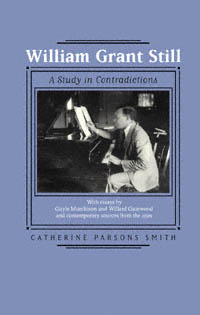 During the 1930s and 1940s William Grant Still (1895-1978) was known as the "Dean of Afro-American Composers." He worked as an arranger for early radio, on Broadway, and in Hollywood; major symphony orchestras performed his concert works; and an opera, written in collaboration with Langston Hughes, was produced by the New York City Opera. Despite these successes the composer's name gradually faded into obscurity. This book brings William Grant Still out of the archives and examines his place in America's musical heritage. It also provides a revealing window into our recent cultural past.Until now Still's profound musical creativity and cultural awareness have been obscured by the controversies that dogged much of his personal and professional life. New topics explored by Catherine Parsons Smith and her contributors include the genesis of the Afro American Symphony, Still's best-known work; his troubled years in film and opera; and his outspoken anticommunism.
-
 Subjects: Literature | Ethnic Studies | African American Studies | Asian Literature | Native American StudiesWriting Tricksters examines the remarkable resurgence of tricksters - ubiquitous shape-shifters who dwell on borders, at crossroads, and between worlds - on the contemporary cultural and literary scene. Depicting a chaotic, multilingual world of colliding and overlapping cultures, many of America's most successful and important women writers are writing tricksters. Taking up works by Maxine Hong Kingston, Louise Erdrich, and Toni Morrison, Jeanne Rosier Smith accessibly weaves together current critical discourses on marginality, ethnicity, feminism, and folklore, illuminating a "trickster aesthetic" central to non-Western storytelling traditions and powerfully informing American literature today.
African History (22)
-

-
 Subjects: African Studies | African History | Sociology | Postcolonial Studies | Cultural AnthropologyBureaucracy and Race overturns the common assumption that apartheid in South Africa was enforced only through terror and coercion. Without understating the role of violent intervention, Ivan Evans shows that apartheid was sustained by a great and ever-swelling bureaucracy. The Department of Native Affairs (DNA), which had dwindled during the last years of the segregation regime, unexpectedly revived and became the arrogant, authoritarian fortress of apartheid after 1948. The DNA was a major player in the prolonged exclusion of Africans from citizenship and the establishment of a racially repressive labor market. Exploring the connections between racial domination and bureaucratic growth in South Africa, Evans points out that the DNA's transformation of oppression into "civil administration" institutionalized and, for whites, legitimized a vast, coercive bureaucratic culture, which ensnared millions of Africans in its workings and corrupted the entire state. Evans focuses on certain features of apartheid - the pass system, the "racialization of space" in urban areas, and the cooptation of African chiefs in the Bantustans - in order to make it clear that the state's relentless administration, not its overtly repressive institutions, was the most distinctive feature of South Africa in the 1950s. All observers of South Africa past and present and of totalitarian states in general will follow with interest the story of how the Department of Native Affairs was crucial in transforming "the idea of apartheid" into a persuasive - and all too durable - practice.
-
 Despite a quarter century of "nation building," most African states are still driven by ethnic particularism - commonly known as "tribalism." The stubborn persistence of tribal ideologies despite the profound changes associated with modernization has puzzled scholars and African leaders alike. The bloody hostilities between the tribally-oriented Zulu Inkhata movement and supporters of the African National Congress are but the most recent example of tribalism's tenacity. The studies in this volume offer a new historical model for the growth and endurance of such ideologies in southern Africa.
-
 Subjects: African Studies | Politics | Social Problems | Autobiography | Education | African HistoryWilliam Finnegan's compelling account of a year spent teaching in a colored high school, "across the line," in Cape Town, South Africa brings the irrationality and injustice of apartheid into focus for the American reader. A new preface, written after the author's observation of the historic 1994 elections evaluates the progress made - and not made - toward dismantling the apartheid system.
-
 Subjects: History | Californian and Western History | Latino Studies | Labor Studies | California and the West | African HistoryIn her incisive analysis of the shaping of California's agricultural work force, Devra Weber shows how the cultural background of Mexican and, later, Anglo-American workers, combined with the structure of capitalist cotton production and New Deal politics, forging a new form of labor relations. She pays particular attention to Mexican field workers and their organized struggles, including the famous strikes of 1933.Weber's perceptive examination of the relationships between economic structure, human agency, and the state, as well as her discussions of the crucial role of women in both Mexican and Anglo working-class life, make her book a valuable contribution to labor, agriculture, Chicano, Mexican, and California history.
-
 Dateline Soweto documents the working lives of black South African reporters caught between the mistrust of militant blacks, police harrassment, and white editors who - fearing government disapproval - may not print the stories these reporters risk their lives to get. William Finnegan revisited several of these reporters during the May 1994 election and describes their post-apartheid working experience in a new preface and epilogue.
-
 Subjects: Anthropology | African Studies | Cultural Anthropology | African History | Postcolonial Studies | Social ProblemsOnce lauded as the wave of the African future, Zambia's economic boom in the 1960s and early 1970s was fueled by the export of copper and other primary materials. Since the mid-1970s, however, the urban economy has rapidly deteriorated, leaving workers scrambling to get by. Expectations of Modernity explores the social and cultural responses to this prolonged period of sharp economic decline. Focusing on the experiences of mineworkers in the Copperbelt region, James Ferguson traces the failure of standard narratives of urbanization and social change to make sense of the Copperbelt's recent history. He instead develops alternative analytic tools appropriate for an "ethnography of decline."Ferguson shows how the Zambian copper workers understand their own experience of social, cultural, and economic "advance" and "decline." Ferguson's ethnographic study transports us into their lives - the dynamics of their relations with family and friends, as well as copper companies and government agencies.Theoretically sophisticated and vividly written, Expectations of Modernity will appeal not only to those interested in Africa today, but to anyone contemplating the illusory successes of today's globalizing economy.
-
 Subjects: Anthropology | African Studies | Geography | African History | Cultural Anthropology | Postcolonial StudiesWhile doing fieldwork in a village in east Madagascar that had suffered both heavy settler colonialism and a bloody anticolonial rebellion, Jennifer Cole found herself confronted by a puzzle. People in the area had lived through almost a century of intrusive French colonial rule, but they appeared to have forgotten the colonial period in their daily lives. Then, during democratic elections in 1992-93, the terrifying memories came flooding back. Cole asks, How do once-colonized peoples remember the colonial period? Drawing on a fine-grained ethnography of the social practices of remembering and forgetting in one community, she develops a practice-based approach to social memory.
-

-
 Subjects: Politics | History | Middle Eastern Studies | Middle Eastern History | African History | African StudiesIndependence from colonial rule did not usher in the halcyon days many North Africans had hoped for, as the new governments in Morocco, Tunisia, and Algeria soon came to rely on repression to reinforce and maintain power. In response to widespread human rights abuses, individuals across the Maghrib began to form groups in the late 1970s to challenge the political practices and structures in the region, and over time these independent human rights organizations became prominent political actors. The activists behind them are neither saints nor revolutionaries, but political reformers intent on changing political patterns that have impeded democratization.This study, the first systematic comparative analysis of North African politics in more than a decade, explores the ability of society, including Islamist forces, to challenge the powers of states. Locating Maghribi polities within their cultural and historical contexts, Waltz traces state-society relations in the contemporary period. Even as Algeria totters at the brink of civil war and security concerns rise across the region, the human rights groups Susan Waltz examines implicitly challenge the authoritarian basis of political governance. Their efforts have not led to the democratic transition many had hoped, but human rights have become a crucial new element of North African political discourse.
-
 The colonial government of southern Nigeria began to use asylums to confine the allegedly insane in 1906. These asylums were administered by the British but confined Africans. Yet, as even many in the government recognized, insanity is a condition that shows cultural variation. Who decided the inmates were insane and how? This sophisticated historical study pursues these questions as it examines fascinating source material - writings by African patients in these institutions and the reports of officials, doctors, and others - to discuss the meaning of madness in Nigeria, the development of colonial psychiatry, and the connections between them. Jonathan Sadowsky's well-argued, concise study provides important new insights into the designation of madness across cultural and political frontiers.Imperial Bedlam follows the development of insane asylums from their origins in the nineteenth century to innovative treatment programs developed by Nigerian physicians during the transition to independence. Special attention is given to the writings of those considered "lunatics," a perspective relatively neglected in previous studies of psychiatric institutions in Africa and most other parts of the world.Imperial Bedlam shows how contradictions inherent in colonialism were articulated in both asylum policy and psychiatric theory. It argues that the processes of confinement, the labeling of insanity, and the symptoms of those so labeled reflected not only cultural difference but also political divides embedded in the colonial situation. Imperial Bedlam thus emphasizes not only the cultural background to madness but also its political and experiential dimensions.
-

-
 "Africa for the Africans" was the name given in Africa to the extraordinary black social protest movement led by Jamaican Marcus Mosiah Garvey (1887-1940). Volumes I-VII of the Marcus Garvey and Universal Negro Improvement Association Papers chronicled the Garvey movement that flourished in the United States during the 1920s. Now, the long-awaited African volumes of this edition (Volumes VIII and IX and a forthcoming Volume X) demonstrate clearly the central role Africans played in the development of the Garvey phenomenon.The African volumes provide the first authoritative account of how Africans transformed Garveyism from an external stimulus into an African social movement. They also represent the most extensive collection of documents ever gathered on the early African nationalism of the inter-war period. Here is a detailed chronicle of the spread of Garvey's call for African redemption throughout Africa and the repressive colonial responses it engendered. Volume VIII begins in 1917 with the little-known story of the Pan-African commercial schemes that preceded Garveyism and charts the early African reactions to the UNIA. Volume IX continues the story, documenting the establishment of UNIA chapters throughout Africa and presenting new evidence linking Garveyism and nascent Namibian nationalism.
-
 Modernity has become a keyword in a number of recent intellectual discussions. In this book, Donald L. Donham shows that similar debates have long occurred, particularly among peoples located on the margins of world power and wealth. Based on extensive fieldwork in Ethiopia - conducted over a twenty-year period - Marxist Modern provides a cultural history of the Ethiopian revolution that highlights the role of modernist ideas.Moving between the capital, Addis Ababa, and Maale, the home of a small ethnic group in the south, Donham constructs a narrative of upheaval and change, presenting local people's understandings of events, as these echoed with and appropriated stories of other world revolutions. With the help of poststructuralist insights and theories of narrative, Donham locates a recurrent dialectic between modernist Marxism, local Maale traditionalisms, and antimodernist, evangelical Christianity. One of the most consequential outcomes of this interaction - until the late 1980s - was the creation of a more powerful state, one that penetrated peasant communities ever more deeply and pervasively.Combining sophisticated theory with fascinating ethnographic detail, this study contributes to the theory of revolution as well as the study of modernity. In doing so, it seeks to integrate ethnography and history in a new way.
-
 Achille Mbembe is one of the most brilliant theorists of postcolonial studies writing today. In On the Postcolony he profoundly renews our understanding of power and subjectivity in Africa. In a series of provocative essays, Mbembe contests diehard Africanist and nativist perspectives as well as some of the key assumptions of postcolonial theory. This thought-provoking and groundbreaking collection of essays - his first book to be published in English - develops and extends debates first ignited by his well-known 1992 article "Provisional Notes on the Postcolony," in which he developed his notion of the "banality of power" in contemporary Africa. Mbembe reinterprets the meanings of death, utopia, and the divine libido as part of the new theoretical perspectives he offers on the constitution of power. He works with the complex registers of bodily subjectivity - violence, wonder, and laughter - to profoundly contest categories of oppression and resistance, autonomy and subjection, and state and civil society that marked the social theory of the late twentieth century. This provocative book will surely attract attention with its signal contribution to the rich interdisciplinary arena of scholarship on colonial and postcolonial discourse, history, anthropology, philosophy, political science, psychoanalysis, and literary criticism.
-
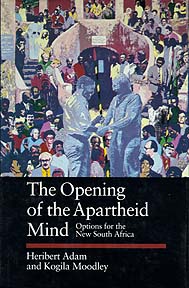 Refusing to be governed by what is fashionable or inoffensive, Heribert Adam and Kogila Moodley frankly address the passions and rationalities that drive politics in post-apartheid South Africa. They argue that the country's quest for democracy is widely misunderstood and that public opinion abroad relies on stereotypes of violent tribalism and false colonial analogies.Adam and Moodley criticize the personality cult surrounding Nelson Mandela and the accolades accorded F. W. de Klerk. They reject the black-versus-white conflict and substitute sober analysis and strategic pragmatism for the moral outrage that typifies so much writing about South Africa. Believing that the best expression of solidarity emanates from sympathetic but candid criticism, they pose challenging questions for the African National Congress and Nelson Mandela. They give in-depth coverage to political violence, the ANC-South African Communist Party alliance, Inkatha, and other controversial topics as well.The authors do not propose a solution that will guarantee a genuinely democratic South Africa. What they offer is an understanding of the country's social conditions and political constraints, and they sketch options for both a new South Africa and a new post-Cold War foreign policy for the whole of southern Africa. The importance of this book is as immediate as today's headlines.
-
 Explorers and ethnographers in Africa during the period of colonial expansion are usually assumed to have been guided by rational aims such as the desire for scientific knowledge, fame, or financial gain. This book, the culmination of many years of research on nineteenth-century exploration in Central Africa, provides a new view of those early European explorers and their encounters with Africans. Out of Our Minds shows explorers were far from rational--often meeting their hosts in extraordinary states influenced by opiates, alcohol, sex, fever, fatigue, and violence. Johannes Fabian presents fascinating and little-known source material, and points to its implications for our understanding of the beginnings of modern colonization. At the same time, he makes an important contribution to current debates about the intellectual origins and nature of anthropological inquiry. Drawing on travel accounts--most of them Belgian and German--published between 1878 and the start of World War I, Fabian describes encounters between European travelers and the Africans they met. He argues that the loss of control experienced by these early travelers actually served to enhance cross-cultural understanding, allowing the foreigners to make sense of strange facts and customs. Fabian's provocative findings contribute to a critique of narrowly scientific or rationalistic visions of ethnography, illuminating the relationship between travel and intercultural understanding, as well as between imperialism and ethnographic knowledge.
-
 Given the centrality of Africa to Italy's national identity, a thorough study of Italian colonial history and culture has been long overdue. Two important developments, the growth of postcolonial studies and the controversy surrounding immigration from Africa to the Italian peninsula, have made it clear that the discussion of Italy's colonial past is essential to any understanding of the history and construction of the nation. This collection, the first to gather articles by the most-respected scholars in Italian colonial studies, highlights the ways in which colonial discourse has pervaded Italian culture from the post-unification period to the present. During the Risorgimento, Africa was invoked as a limb of a proudly resuscitated Imperial Rome. During the Fascist era, imperialistic politics were crucial in shaping both domestic and international perceptions of the Italian nation. These contributors offer compelling essays on decolonization, exoticism, fascist and liberal politics, anthropology, and historiography, not to mention popular literature, feminist studies, cinema, and children's literature. Because the Italian colonial past has had huge repercussions, not only in Italy and in the former colonies but also in other countries not directly involved, scholars in many areas will welcome this broad and insightful panorama of Italian colonial culture.
-
 This book combines ethnography with the study of art to present a fascinating new vision of African history. It contains the paintings of a single artist depicting Zaire's history, along with a series of ethnographic essays discussing local history, its complex relationship to forms of self-expression and self-understanding, and the aesthetics of contemporary urban African and Third World societies. As a collaboration between ethnographer and painter, this innovative study challenges text-oriented approaches to understanding history and argues instead for an event- and experience-oriented model, ultimately adding a fresh perspective to the discourse on the relationship between modernity and tradition.During the 1970s, Johannes Fabian encouraged Tshibumba Kanda Matulu to paint the history of Zaire. The artist delivered the work in batches, together with an oral narrative. Fabian recorded these statements along with his own question-and-answer sessions with the painter. The first part of the book is the complete series of 100 paintings, with excerpts from the artist's narrative and the artist-anthropologist dialogues. Part Two consists of Fabian's essays about this and other popular painting in Zaire. The essays discuss such topics as performance, orality, history, colonization, and popular art.
-
 Youth and identity politics figure prominently in this provocative study of personal and collective memory in Madagascar. A deeply nuanced ethnography of historical consciousness, it challenges many cross-cultural investigations of youth, for its key actors are not adults but schoolchildren. Lesley Sharp refutes dominant assumptions that African children are the helpless victims of postcolonial crises, incapable of organized, sustained collective thought or action. She insists instead on the political agency of Malagasy youth who, as they decipher their current predicament, offer potent, historicized critiques of colonial violence, nationalist resistance, foreign mass media, and schoolyard survival. Sharp asserts that autobiography and national history are inextricably linked and therefore must be read in tandem, a process that exposes how political consciousness is forged in the classroom, within the home, and on the street in Madagascar. Keywords: Critical pedagogy
-
 During the colonial period, Africans told each other terrifying rumors that Africans who worked for white colonists captured unwary residents and took their blood. In colonial Tanganyika, for example, Africans were said to be captured by these agents of colonialism and hung upside down, their throats cut so their blood drained into huge buckets. In Kampala, the police were said to abduct Africans and keep them in pits, where their blood was sucked. Luise White presents and interprets vampire stories from East and Central Africa as a way of understanding the world as the storytellers did. Using gossip and rumor as historical sources in their own right, she assesses the place of such evidence, oral and written, in historical reconstruction. White conducted more than 130 interviews for this book and did research in Kenya, Uganda, and Zambia. In addition to presenting powerful, vivid stories that Africans told to describe colonial power, the book presents an original epistemological inquiry into the nature of historical truth and memory, and into their relationship to the writing of history.
-
 This is the history of the Meru people of Mount Kenya, based on their own traditions, from the earliest times through the colonial period. Many of these tales have been ritually passed down through no fewer than nineteen generations; others were remembered by those personally involved. Jeffrey Fadiman gathered them in interviews with more than 100 of the Meru's oldest men and women.The traditions touch on every era of the Meru past. They include narrations, songs, chants, and riddles. They tell of a mysterious origin, past enslavement, despairing flight, mountain warriorhood, British conquest, and the fight for freedom. The Meru elders spoke most often of urogi, or witchcraft, the incantations, rituals, and potions used to deal with the supernatural aspects of Meru life. As their society evolved, so did their urogi, developing a history of its own as practitioners in every generation sought to cope with the challenges of slavery, migration, war, colonialism, and Christianity.Fadiman has crafted the tales into a compelling narrative, passing on in his turn the stories he was given. This is African history from African perspectives that stretch back over 300 years.
African Studies (58)
-
 Subjects: Politics | African StudiesFor the past twenty-five years Kenya has progressed while much of Africa has stagnated. Instead of the economic disasters, underdevelopment, and serious food shortages that have plagued its neighbors, Kenya has enjoyed an expanding economy and agriculture. And instead of a corrupt and incompetent public administration, Kenya has established several successful rural development programs run by public servants with integrity and professional commitment.What accounts for these Kenyan successes? In this innovative study, David Leonard illustrates the way public policy is made and implemented in Kenya by focusing on four public officials who have had a great impact on rural development. He skillfully weaves his analyses of Kenya's political, economic, and administrative systems into evocative biographical portraits of Charles Karanja, General Manager of the Kenya Tea Development Authority, Harris Mule, administrative head of Finance and Planning, Ishmael Muriithi, head of the Veterinary Department, and Simeon Nyachae, Cabinet Secretary and chief of the Civil Service. The result is a fascinating glimpse of Kenyan political life from the inside, set in the context of the historical and social forces that have shaped that country's government.
-
 Subjects: Anthropology | African Studies | Asian Studies | Ethnic Studies | Gender Studies | History | Sociology | Media Studies | ReligionGenocide is one of the most pressing issues that confronts us today. Its death toll is staggering: over one hundred million dead. Because of their intimate experience in the communities where genocide takes place, anthropologists are uniquely positioned to explain how and why this mass annihilation occurs and the types of devastation genocide causes. This ground breaking book, the first collection of original essays on genocide to be published in anthropology, explores a wide range of cases, including Nazi Germany, Cambodia, Guatemala, Rwanda, and Bosnia.
-
 Robert Launay has been observing the changing religious practices of the Dyula, a Muslim community in West Africa, for more than a decade. In Beyond the Stream, he examines the ways in which this religious and ethnic minority group living on the fringes of the Muslim world maintains its ties to the universal Islamic tradition while adapting everyday religious practices to the local context. Through the lens of this specific community, Launay elucidates the interaction between fundamental Islamic beliefs, anchored historically in the Arab Middle East, and the continually changing ways that Islam is lived, wherever it is professed.By focusing on the tension between "particular" and "universal" - on how a given religious morality must function simultaneously within a tightly knit community and a larger global arena - Beyond the Stream addresses issues of broad concern to the anthropology of Islam and to world religions generally.
-
-
Subjects: Religion | African Studies | American Studies | United States History | African American StudiesBlack Magic looks at the origins, meaning, and uses of Conjure - the African American tradition of healing and harming that evolved from African, European, and American elements - from the slavery period to well into the twentieth century. Illuminating a world that is dimly understood by both scholars and the general public, Yvonne P. Chireau describes Conjure and other related traditions, such as Hoodoo and Rootworking, in a beautifully written, richly detailed history that presents the voices and experiences of African Americans and shows how magic has informed their culture. Focusing on the relationship between Conjure and Christianity, Chireau shows how these seemingly contradictory traditions have worked together in a complex and complementary fashion to provide spiritual empowerment for African Americans, both slave and free, living in white America. As she explores the role of Conjure for African Americans and looks at the transformations of Conjure over time, Chireau also rewrites the dichotomy between magic and religion. With its groundbreaking analysis of an often misunderstood tradition, this book adds an important perspective to our understanding of the myriad dimensions of human spirituality.
-
Subjects: African Studies | African History | Sociology | Postcolonial Studies | Cultural AnthropologyBureaucracy and Race overturns the common assumption that apartheid in South Africa was enforced only through terror and coercion. Without understating the role of violent intervention, Ivan Evans shows that apartheid was sustained by a great and ever-swelling bureaucracy. The Department of Native Affairs (DNA), which had dwindled during the last years of the segregation regime, unexpectedly revived and became the arrogant, authoritarian fortress of apartheid after 1948. The DNA was a major player in the prolonged exclusion of Africans from citizenship and the establishment of a racially repressive labor market. Exploring the connections between racial domination and bureaucratic growth in South Africa, Evans points out that the DNA's transformation of oppression into "civil administration" institutionalized and, for whites, legitimized a vast, coercive bureaucratic culture, which ensnared millions of Africans in its workings and corrupted the entire state. Evans focuses on certain features of apartheid - the pass system, the "racialization of space" in urban areas, and the cooptation of African chiefs in the Bantustans - in order to make it clear that the state's relentless administration, not its overtly repressive institutions, was the most distinctive feature of South Africa in the 1950s. All observers of South Africa past and present and of totalitarian states in general will follow with interest the story of how the Department of Native Affairs was crucial in transforming "the idea of apartheid" into a persuasive - and all too durable - practice.
-
 Subjects: Politics | History | Middle Eastern Studies | Islam | Intellectual History | African StudiesThe speed with which Algeria has gone from symbol of revolutionary socialism to Islamic battleground has confounded most observers. Charting Algeria's political evolution from the turn of the century to the present, Robert Malley explores the historical and intellectual underpinnings of the current crisis. His analysis helps makes sense of the civil war that is tearing Algeria apart.Using contemporary Algerian politics as a case study of the intellectual movement labeled "Third Worldism," Malley's thoughtful analysis also elucidates the broader transformations affecting countries of the Third World that once embraced ideologies of state-centered radical change. Malley focuses on the interplay between politics, economics, and ideology to explain the rise, essential components, and precipitous decline of Third Worldism - a movement that attracted scholars and activists in both the developed and underdeveloped worlds from the mid 1950s to the mid 1980s. He relates the disillusionment with Third Worldism to the growing appeal in the Third World of economic liberalism, versions of political pluralism, and ideological movements that threaten the very existence of the central state.At a time when the public increasingly is associating countries of the less developed world with Islamism, tribalism, and ethnic warfare, The Call from Algeria challenges our assumptions and offers a new perspective.
-
 Changing the Rules: The Politics of Liberalization and the Urban Informal Economy in Tanzania publicHow are people in one of Africa's largest cities, Dar es Salaam, capable of surviving day to day when the downward decline of Tanzania's economy has become so pronounced that even high-ranking state employees receive among the lowest incomes in the country? In this impressively researched and highly original study, Aili Mari Tripp shows how the people of Dar es Salaam, through creativity and considerable ingenuity, supply for themselves the various goods and services that the government can no longer provide. With the growth of an informal economy, they have demonstrated resistance to state control, resulting in broad political, economic and social transformations within Tanzania. Moreover, the unprecedented participation of women in informal economic activities has had a profound effect on gender relations.Tripp incorporates in-depth interviews and a field survey conducted at the household and micro-enterprise level in examining the influence and impact of the urban informal economy on Tanzanian society. This informal sector encompasses the enterprises of masons, cooks, cobblers, and tailors; a dizzying myriad of market vendors; even educators and doctors. Tripp shows how the urban informal economy challenges state-defined bases of social justice with alternative notions of economic equity. Her work is an essential contribution to the study of African politics and state-society relations.
-
 Corruption is increasingly recognized as a preeminent problem in the developing world. Bribery, extortion, fraud, kickbacks, and collusion have resulted in retarded economies, predator elites, and political instability. In this lively and absorbing book, Robert Klitgaard provides a framework for designing anti-corruption policies, and describes through five case studies how courageous policymakers were able to control corruption.
-
Despite a quarter century of "nation building," most African states are still driven by ethnic particularism - commonly known as "tribalism." The stubborn persistence of tribal ideologies despite the profound changes associated with modernization has puzzled scholars and African leaders alike. The bloody hostilities between the tribally-oriented Zulu Inkhata movement and supporters of the African National Congress are but the most recent example of tribalism's tenacity. The studies in this volume offer a new historical model for the growth and endurance of such ideologies in southern Africa.
-
Subjects: African Studies | Politics | Social Problems | Autobiography | Education | African HistoryWilliam Finnegan's compelling account of a year spent teaching in a colored high school, "across the line," in Cape Town, South Africa brings the irrationality and injustice of apartheid into focus for the American reader. A new preface, written after the author's observation of the historic 1994 elections evaluates the progress made - and not made - toward dismantling the apartheid system.
-
 Adding her stimulating and finely framed ethnography to recent work in the anthropology of the senses, Kathryn Geurts investigates the cultural meaning system and resulting sensorium of Anlo-Ewe-speaking people in southeastern Ghana. Geurts discovered that the five-senses model has little relevance in Anlo culture, where balance is a sense, and balancing (in a physical and psychological sense as well as in literal and metaphorical ways) is an essential component of what it means to be human. Much of perception falls into an Anlo category of seselelame (literally feel-feel-at-flesh-inside), in which what might be considered sensory input, including the Western sixth-sense notion of "intuition," comes from bodily feeling and the interior milieu. The kind of mind-body dichotomy that pervades Western European-Anglo American cultural traditions and philosophical thought is absent. Geurts relates how Anlo society privileges and elaborates what we would call kinesthesia, which most Americans would not even identify as a sense. After this nuanced exploration of an Anlo-Ewe theory of inner states and their way of delineating external experience, readers will never again take for granted the "naturalness" of sight, touch, taste, hearing, and smell.
-
Dateline Soweto documents the working lives of black South African reporters caught between the mistrust of militant blacks, police harrassment, and white editors who - fearing government disapproval - may not print the stories these reporters risk their lives to get. William Finnegan revisited several of these reporters during the May 1994 election and describes their post-apartheid working experience in a new preface and epilogue.
-
 Can a society as deeply divided as South Africa become democratic? In a most timely work, Donald L. Horowitz, author of the acclaimed Ethnic Groups in Conflict, points to the conditions that make democracy an improbable outcome in South Africa. At the same time, he identifies ways to overcome these obstacles, and he describes institutions that offer constitution makers the best chance for a democratic future.South Africa is generally considered an isolated case, a country unlike any other. Drawing on his extensive experience of racially and ethnically divided societies, however, Horowitz brings South Africa back into African and comparative politics. Experience gained in Nigeria, Botswana, Zimbabwe, and other divided societies around the world is relevant because, as South Africa leaves apartheid behind, it will still confront problems of pluralism: racial, ethnic, and ideological. Countries like South Africa, Horowitz argues, must develop institutions capable of coping with such divisions.Reviewing an array of constitutional proposals for South Africa - group rights, consociation, partition, binationalism, and an enhanced role for the judiciary - Horowitz shows that most are inappropriate for the country's problems, or else run afoul of some major ideological taboo. Institutions that are both apt and acceptable do exist, however. These are premised on the need to create incentives for accommodation across group lines. In the final chapter, Horowitz makes a major contribution to the theory of democratization as he considers how commitments to democracy might be extracted even from political groups with undemocratic objectives.Ranging skillfully across studies of social distance and stereotypes, electoral and party systems, constitutions and judiciaries, conflict and accommodation, and negotiation and democratization, Horowitz displays a broad comparative vision. His innovative study will change the way theorists and practitioners approach the task of making democracy work in difficult conditions.
-
Subjects: Anthropology | African Studies | Cultural Anthropology | African History | Postcolonial Studies | Social ProblemsOnce lauded as the wave of the African future, Zambia's economic boom in the 1960s and early 1970s was fueled by the export of copper and other primary materials. Since the mid-1970s, however, the urban economy has rapidly deteriorated, leaving workers scrambling to get by. Expectations of Modernity explores the social and cultural responses to this prolonged period of sharp economic decline. Focusing on the experiences of mineworkers in the Copperbelt region, James Ferguson traces the failure of standard narratives of urbanization and social change to make sense of the Copperbelt's recent history. He instead develops alternative analytic tools appropriate for an "ethnography of decline."Ferguson shows how the Zambian copper workers understand their own experience of social, cultural, and economic "advance" and "decline." Ferguson's ethnographic study transports us into their lives - the dynamics of their relations with family and friends, as well as copper companies and government agencies.Theoretically sophisticated and vividly written, Expectations of Modernity will appeal not only to those interested in Africa today, but to anyone contemplating the illusory successes of today's globalizing economy.
-
Subjects: Anthropology | African Studies | Geography | African History | Cultural Anthropology | Postcolonial StudiesWhile doing fieldwork in a village in east Madagascar that had suffered both heavy settler colonialism and a bloody anticolonial rebellion, Jennifer Cole found herself confronted by a puzzle. People in the area had lived through almost a century of intrusive French colonial rule, but they appeared to have forgotten the colonial period in their daily lives. Then, during democratic elections in 1992-93, the terrifying memories came flooding back. Cole asks, How do once-colonized peoples remember the colonial period? Drawing on a fine-grained ethnography of the social practices of remembering and forgetting in one community, she develops a practice-based approach to social memory.
-
 This study examines the lives of the women and men living in two small rural communities in Zambia on the eve of the collapse of the one-party state in the 1980s. Moving beyond the limits of traditional ethnography, Kate Crehan traces the often complex ways in which local, day-to-day realities are linked to wider economic, political, imaginative structures of power beyond northwestern Zambia.Drawing on extensive fieldwork, Crehan examines economics and gender, politics and kin relations, state and local relations, and witchcraft. Situating her data within a sophisticated yet accessible theoretical framework, she uncovers the power relations that have shaped and defined these communities. Among Crehan's theoretical contributions is a deft argument for the use of Antonio Gramsci's notion of hegemony to analyze ordinary life.This examination of a marginalized, rural society throws unexpected light on some of the concrete realities of capitalism in contemporary sub-Saharan Africa. It also provides inspiring examples of how complicated theoretical viewpoints can be translated - without simplification - into clear starting points for research.
-
Subjects: History | United States History | Christianity | American Studies | African American Studies | African StudiesHow did an African-American man born in a ghetto in 1879 rise to such religious prominence that his followers addressed letters to him simply "God, Harlem U.S.A."?Using hitherto unknown materials, Jill Watts portrays the life and career of one of the twentieth century's most intriguing religious leaders, Father Divine. Starting as an itinerant preacher, Father Divine built an unprecedented movement that by the 1930s had attracted followers across the nation and around the world. As his ministry grew, so did the controversy surrounding his enormous wealth, flamboyant style, and committed "angels" - black and white, rich and poor alike.Here for the first time a full account of Father Divine's childhood and early years challenges previous contentions that he was born into a sharecropping family in the deep South. While earlier biographers have concentrated on Father Divine's social and economic programs, Watts focuses on his theology, which gives new meaning to secular activities that often appeared contradictory. Although much has been written about Father Divine, God, Harlem U.S.A. finally provides a balanced and intimate account of his life's work.
-
 This book tells the story of the lives of migrant black African men who work on the South African gold mines, told from their own point of view and, as much as possible, in their own words. Dunbar Moodie examines the operation of local power structures and resistances, changes in production techniques, the limits and successes of unionization, and the nature of ethnic conflicts at different periods and on different terrains of struggle. He treats his subject thematically and historically, examining how notions of integrity, manhood, sexuality, work, power, solidarity, and violence have all changed over time, especially with the shift to a proletarianized work force on the mines in the 1970s. Moodie integrates analyses of individual life-strategies with theories of social change, illuminating the ways in which these play off each other in historically significant ways. He shows how human beings (in this case, African men) build integrity and construct their own social order, even in situations of apparent total repression.
-
-
 Is Marxism a reflection of the conceptual system it fights against, rather than a truly comprehensive approach to human history? Drawing on recent work in anthropology, history, and philosophy, Donald Donham confronts this problem in analyzing a radically different social order: the former Maale kingdom of southern Ethiopia."Every once in a while there appears a book that . . . opens up new ways of inquiring into the ways of the world. Donald Donham has written such a book. The style is quiet and judicious, but the effect is stunning. . . . In putting inherited partisan approaches to the test of explaining the realities of Maale society and culture, Donham enriches anthropology and imparts new vigor to the analytical Marxian traditions. History, Power, Ideology embodies a major accomplishment." - From the Foreword
-
 Houses in the Rainforest: Ethnicity and Inequality Among Farmers and Foragers in Central Africa publicThis is the first ethnographic study of the farmers and foragers of northeastern Zaire since Colin Turnbull's classic works of the 1960s. Roy Richard Grinker lived for nearly two years among the Lese farmers and their long-term partners, the Efe (Pygmies), learned their languages, and gained unique insights into their complex social relations and ethnic identities. By showing how political organization is structured by ethnic and gender relations in the Lese house, Grinker challenges previous views of the Lese and Efe and other farmer-forager societies, as well as the conventional anthropological boundary between domestic and political contexts.
-
Subjects: Politics | History | Middle Eastern Studies | Middle Eastern History | African History | African StudiesIndependence from colonial rule did not usher in the halcyon days many North Africans had hoped for, as the new governments in Morocco, Tunisia, and Algeria soon came to rely on repression to reinforce and maintain power. In response to widespread human rights abuses, individuals across the Maghrib began to form groups in the late 1970s to challenge the political practices and structures in the region, and over time these independent human rights organizations became prominent political actors. The activists behind them are neither saints nor revolutionaries, but political reformers intent on changing political patterns that have impeded democratization.This study, the first systematic comparative analysis of North African politics in more than a decade, explores the ability of society, including Islamist forces, to challenge the powers of states. Locating Maghribi polities within their cultural and historical contexts, Waltz traces state-society relations in the contemporary period. Even as Algeria totters at the brink of civil war and security concerns rise across the region, the human rights groups Susan Waltz examines implicitly challenge the authoritarian basis of political governance. Their efforts have not led to the democratic transition many had hoped, but human rights have become a crucial new element of North African political discourse.
-
 The Jews (Falasha) of northwestern Ethiopia are a unique example of a Jewish group living within an ancient, non-Western, predominantly Christian society. Hagar Salamon presents the first in-depth study of this group, called the "Hyena people" by their non-Jewish neighbors. Based on more than 100 interviews with Ethiopian immigrants now living in Israel, Salamon's book explores the Ethiopia within as seen through the lens of individual memories and expressed through ongoing dialogues. It is an ethnography of the fantasies and fears that divide groups and, in particular, Jews and non-Jews.Recurring patterns can be seen in Salamon's interviews, which thematically touch on religious disputations, purity and impurity, the concept of blood, slavery and conversion, supernatural powers, and the metaphors of clay vessels, water, and fire.The Hyena People helps unravel the complex nature of religious coexistence in Ethiopia and also provides important new tools for analyzing and evaluating inter-religious, interethnic, and especially Jewish-Christian relations in a variety of cultural and historical contexts.
-
 Figurative images have long played a critical, if largely unexamined, role in Africa - mediating relationships between the colonizer and the colonized, the state and the individual, and the global and the local. This pivotal volume considers the meaning and power of images in African history and culture. Paul S. Landau and Deborah Kaspin have assembled a wide-ranging collection of essays dealing with specific visual forms, including monuments, cinema, cartoons, domestic and professional photography, body art, world fairs, and museum exhibits. The contributors, experts in a number of disciplines, discuss various modes of visuality in Africa and of Africa, investigating the interplay of visual images with personal identity, class, gender, politics, and wealth. Integral to the argument of the book are over seventy contextualized illustrations. Africans saw foreigners in margarine wrappers, Tintin cartoons, circus posters, and Hollywood movies; westerners gleaned impressions of Africans from colonial exhibitions, Tarzan films, and naturalist magazines. The authors provide concrete examples of the construction of Africa's image in the modern world. They reveal how imperial iconographies sought to understand, deny, control, or transform authority, as well as the astonishing complexity and hybridity of visual communication within Africa itself.
-
The colonial government of southern Nigeria began to use asylums to confine the allegedly insane in 1906. These asylums were administered by the British but confined Africans. Yet, as even many in the government recognized, insanity is a condition that shows cultural variation. Who decided the inmates were insane and how? This sophisticated historical study pursues these questions as it examines fascinating source material - writings by African patients in these institutions and the reports of officials, doctors, and others - to discuss the meaning of madness in Nigeria, the development of colonial psychiatry, and the connections between them. Jonathan Sadowsky's well-argued, concise study provides important new insights into the designation of madness across cultural and political frontiers.Imperial Bedlam follows the development of insane asylums from their origins in the nineteenth century to innovative treatment programs developed by Nigerian physicians during the transition to independence. Special attention is given to the writings of those considered "lunatics," a perspective relatively neglected in previous studies of psychiatric institutions in Africa and most other parts of the world.Imperial Bedlam shows how contradictions inherent in colonialism were articulated in both asylum policy and psychiatric theory. It argues that the processes of confinement, the labeling of insanity, and the symptoms of those so labeled reflected not only cultural difference but also political divides embedded in the colonial situation. Imperial Bedlam thus emphasizes not only the cultural background to madness but also its political and experiential dimensions.
-
 Arusha National Park in northern Tanzania, known for its scenic beauty, is also a battleground. Roderick Neumann's illuminating analysis shows how this park embodies all the political-ecological dilemmas facing protected areas throughout Africa. The roots of the ongoing struggle between the park on Mount Meru and the neighboring Meru peasant communities go much deeper, in Neumann's view, than the issues of poverty, population growth, and ignorance usually cited. These conflicts reflect differences that go back to the beginning of colonial rule. By imposing a European ideal of pristine wilderness, Neumann says, the establishment of national parks and protected areas displaced African meanings as well as material access to the land. He focuses on the symbolic importance of natural landscapes among various social groups in this setting and how it relates to conflicts between peasant communities and the state.
-
 David Attwell defends the literary and political integrity of South African novelist J.M. Coetzee by arguing that Coetzee has absorbed the textual turn of postmodern culture while still addressing the ethical tensions of the South African crisis. As a form of "situational metafiction," Coetzee's writing reconstructs and critiques some of the key discourses in the history of colonialism and apartheid from the eighteenth century to the present. While self-conscious about fiction-making, it takes seriously the condition of the society in which it is produced.Attwell begins by describing the intellectual and political contexts surrounding Coetzee's fiction and then provides a developmental analysis of his six novels, drawing on Coetzee's other writings in stylistics, literary criticism, translation, political journalism and popular culture. Elegantly written, Attwell's analysis deals with both Coetzee's subversion of the dominant culture around him and his ability to see the complexities of giving voice to the anguish of South Africa.
-
 Justice in South Africa public
-
-
"Like Trotsky, I did not leave home with the proverbial one-and-six in my pocket. I come from a family of landed gentry . . . [and] could have chosen the path of comfort and safety, for even in apartheid South Africa, there is still that path for those who will collaborate. But I chose the path of struggle and uncertainty." - from the PrefaceBorn into the small social elite of black South Africa, Phyllis Ntantala did not face the grinding poverty so familiar to other South African blacks. Instead, her struggle was that of a creative, articulate woman seeking fulfillment and justice in a land that tried to deny her both.The widow of Xhosa writer and historian A.C. Jordan and mother of African National Congress leader Z. Pallo Jordan, she and her family experienced a period of tremendous change in South Africa and also in the United States, where they moved during the 1960s. She discovers similarities in the two countries, including the arrogance of power.Anchored in history and culture, A Life's Mosaic sharply reveals the world and the people of South Africa. As the story of a political exile, it represents the dislocations that have caused universal suffering in the second half of the twentieth century. Phyllis Ntantala discusses the cruelty of racism, the cynicism of political solutions, and the hopes of those who live in both a world of exile and a world of dreams.
-
 Subjects: Politics | Latin American Studies | African Studies | Labor Studies | Economics and BusinessChallenging prevailing theories of development and labor, Gay Seidman's controversial study explores how highly politicized labor movements could arise simultaneously in Brazil and South Africa, two starkly different societies. Beginning with the 1960s, Seidman shows how both authoritarian states promoted specific rapid-industrialization strategies, in the process reshaping the working class and altering relationships between business and the state. When economic growth slowed in the 1970s, workers in these countries challenged social and political repression; by the mid-1980s, they had become major voices in the transition from authoritarian rule.Based in factories and working-class communities, these movements enjoyed broad support as they fought for improved social services, land reform, expanding electoral participation, and racial integration.In Brazil, Seidman takes us from the shopfloor, where disenfranchized workers organized for better wages and working conditions, to the strikes and protests that spread to local communities. Similar demands for radical change emerged in South Africa, where community groups in black townships joined organized labor in a challenge to minority rule that linked class consciousness to racial oppression. Seidman details the complex dynamics of these militant movements and develops a broad analysis of how newly industrializing countries shape the opportunities for labor to express demands. Her work will be welcomed by those interested in labor studies, social theory, and the politics of newly industrializing regions.
-
"Africa for the Africans" was the name given in Africa to the extraordinary black social protest movement led by Jamaican Marcus Mosiah Garvey (1887-1940). Volumes I-VII of the Marcus Garvey and Universal Negro Improvement Association Papers chronicled the Garvey movement that flourished in the United States during the 1920s. Now, the long-awaited African volumes of this edition (Volumes VIII and IX and a forthcoming Volume X) demonstrate clearly the central role Africans played in the development of the Garvey phenomenon.The African volumes provide the first authoritative account of how Africans transformed Garveyism from an external stimulus into an African social movement. They also represent the most extensive collection of documents ever gathered on the early African nationalism of the inter-war period. Here is a detailed chronicle of the spread of Garvey's call for African redemption throughout Africa and the repressive colonial responses it engendered. Volume VIII begins in 1917 with the little-known story of the Pan-African commercial schemes that preceded Garveyism and charts the early African reactions to the UNIA. Volume IX continues the story, documenting the establishment of UNIA chapters throughout Africa and presenting new evidence linking Garveyism and nascent Namibian nationalism.
-
Modernity has become a keyword in a number of recent intellectual discussions. In this book, Donald L. Donham shows that similar debates have long occurred, particularly among peoples located on the margins of world power and wealth. Based on extensive fieldwork in Ethiopia - conducted over a twenty-year period - Marxist Modern provides a cultural history of the Ethiopian revolution that highlights the role of modernist ideas.Moving between the capital, Addis Ababa, and Maale, the home of a small ethnic group in the south, Donham constructs a narrative of upheaval and change, presenting local people's understandings of events, as these echoed with and appropriated stories of other world revolutions. With the help of poststructuralist insights and theories of narrative, Donham locates a recurrent dialectic between modernist Marxism, local Maale traditionalisms, and antimodernist, evangelical Christianity. One of the most consequential outcomes of this interaction - until the late 1980s - was the creation of a more powerful state, one that penetrated peasant communities ever more deeply and pervasively.Combining sophisticated theory with fascinating ethnographic detail, this study contributes to the theory of revolution as well as the study of modernity. In doing so, it seeks to integrate ethnography and history in a new way.
-
 John McWhorter challenges an enduring paradigm among linguists in this provocative exploration of the origins of plantation creoles. Using a wealth of data--linguistic, sociolinguistic, historical--he proposes that the "limited access model" of creole genesis is seriously flawed. That model maintains that plantation creole languages emerged because African slaves greatly outnumbered whites on colonial plantations. Having little access to the slaveholders' European languages, the slaves were forced to build a new language from what fragments they did acquire. Not so, says McWhorter, who posits that plantation creole originated in West African trade settlements, in interactions between white traders and slaves, some of whom were eventually transported overseas. The evidence that most New World creoles were imports traceable to West Africa strongly suggests that the well-established limited access model for plantation creole needs revision. In forcing a reexamination of this basic tenet, McWhorter's book will undoubtedly cause controversy. At the same time, it makes available a vast amount of data that will be a valuable resource for further explorations of genesis theory.
-

-
 Ngoma, in Bantu, means drum, song, performance, and healing cult or association. A widespread form of ritual healing in Central and Southern Africa, ngoma is fully investigated here for the first time and interpreted in a contemporary context. John Janzen's daring study incorporates drumming and spirit possession into a broader, institutional profile that emphasizes the varieties of knowledge and social forms and also the common elements of "doing ngoma."Drawing on his recent field research in Kinshasa, Dar-es-Salaam, Mbabane, and Capetown, Janzen reveals how ngoma transcends national and social boundaries. Spoken and sung discourses about affliction, extended counseling, reorientation of the self or household, and the creation of networks that link the afflicted, their kin, and their healers are all central to ngoma - and familiar to Western self-help institutions as well. Students of African healing and also those interested in the comparative and historical study of medicine, religion, and music will find Ngoma a valuable and thought-provoking book.
-
 The Okiek people of Kenya's forested highlands have a long history of hunting, honey gathering, and trading with their Maasai and Kipsigis neighbors; several decades ago, they also began farming and herding. This book follows a traveling exhibition of anthropologist Corinne Kratz's photographs of the Okiek through showings at seven venues, including the National Museum in Nairobi and the Smithsonian Institution in Washington, D.C. Kratz tells the story of the exhibition--the stereotypes it sought to challenge, how commentaries by Okiek people were incorporated, and different ways that viewers in Kenya and the United States understood it. In addition to presenting wonderful images of a little-known people, this inviting book explores the exhibition medium itself, focusing on the complexities and possibilities of cultural representation. Walking a fine line between the photographic intimacy of a family album and the ethnographic distance of documentary photography, The Ones That Are Wanted reproduces the exhibition in full, with its vibrant color photographs, multilingual captions, and lively commentary. Throughout, Kratz incorporates insightful reflections on her changing involvement with the exhibition as anthropologist, photographer, and curator, and she provides perceptive discussions of such topics as photography in Kenya, stereotypes, and the post-1970s proliferation of the politics of representation.
-
Refusing to be governed by what is fashionable or inoffensive, Heribert Adam and Kogila Moodley frankly address the passions and rationalities that drive politics in post-apartheid South Africa. They argue that the country's quest for democracy is widely misunderstood and that public opinion abroad relies on stereotypes of violent tribalism and false colonial analogies.Adam and Moodley criticize the personality cult surrounding Nelson Mandela and the accolades accorded F. W. de Klerk. They reject the black-versus-white conflict and substitute sober analysis and strategic pragmatism for the moral outrage that typifies so much writing about South Africa. Believing that the best expression of solidarity emanates from sympathetic but candid criticism, they pose challenging questions for the African National Congress and Nelson Mandela. They give in-depth coverage to political violence, the ANC-South African Communist Party alliance, Inkatha, and other controversial topics as well.The authors do not propose a solution that will guarantee a genuinely democratic South Africa. What they offer is an understanding of the country's social conditions and political constraints, and they sketch options for both a new South Africa and a new post-Cold War foreign policy for the whole of southern Africa. The importance of this book is as immediate as today's headlines.
-
 Subjects: Politics | African StudiesEconomic reform was the most pressing question for African and other Third World countries during the 1980s, and it will continue to dominate their public policy agendas during the coming decade. In this first full-length examination of the political economy of adjustment in Ghana, Jeffrey Herbst describes the causes of Ghana's dramatic economic decline and reviews the politics of reform that began in 1983.Ghana was one of the first African countries to adopt a comprehensive reform program and the one that has sustained adjustment longest. As Africa confronts the possibility of total economic collapse by the turn of the century, the Ghanaian experience will have profound ramifications across the continent in the debates regarding stabilization and structural change.Herbst devotes special attention to the interaction between the type of government and the politics of adjustment, the reaction of interest groups such as urban labor and the peasantry, and the relationship between economic and political change. His extended field research and sophisticated knowledge of the issues involved, both from the economic and political science literature, make this an extremely useful study. It will be important not only to Africanists, political scientists, economists, and sociologists, but also to government and financial leaders wrestling with economic reform in the Third World.
-
 In more than a metaphorical sense, the womb has proven to be an important site of political struggle in and about Africa. By examining the political significance - and complex ramifications - of reproductive controversies in twentieth-century Kenya, this book explores why and how control of female initiation, abortion, childbirth, and premarital pregnancy have been crucial to the exercise of colonial and postcolonial power. This innovative book enriches the study of gender, reproduction, sexuality, and African history by revealing how reproductive controversies challenged long-standing social hierarchies and contributed to the construction of new ones that continue to influence the fraught politics of abortion, birth control, female genital cutting, and HIV/AIDS in Africa.
-
 The Possessed and the Dispossessed: Spirits, Identity, and Power in a Madagascar Migrant Town publicSubjects: Anthropology | African Studies | Medical Anthropology | Women's Studies | Indigenous ReligionsThis finely drawn portrait of a complex, polycultural urban community in Madagascar emphasizes the role of spirit medium healers, a group heretofore seen as having little power. These women, Leslie Sharp argues, are far from powerless among the peasants and migrant laborers who work the land in this plantation economy. In fact, Sharp's wide-ranging analysis shows that tromba, or spirit possession, is central to understanding the complex identities of insiders and outsiders in this community, which draws people from all over the island and abroad.Sharp's study also reveals the contradictions between indigenous healing and Western-derived Protestant healing and psychiatry. Particular attention to the significance of migrant women's and children's experiences in a context of seeking relief from personal and social ills gives Sharp's investigation importance for gender studies as well as for studies in medical anthropology, Africa and Madagascar, the politics of culture, and religion and ritual.
-
 Subjects: History | Middle Eastern History | Postcolonial Studies | French Studies | African StudiesJulia Clancy-Smith's unprecedented study brings us a remarkable view of North African history from the perspective of the North Africans themselves. Focusing on the religious beliefs and political actions of Muslim elites and their followers in Algeria and Tunisia, she provides a richly detailed analysis of resistance and accommodation to colonial rule.Clancy-Smith demonstrates the continuities between the eras of Turkish and French rule as well as the importance of regional ties among elite families in defining Saharan political cultures. She rejects the position that Algerians and Tunisians were invariably victims of western colonial aggression, arguing instead that Muslim notables understood the outside world and were quite capable of manipulating the massive changes occurring around them.
-
This book combines ethnography with the study of art to present a fascinating new vision of African history. It contains the paintings of a single artist depicting Zaire's history, along with a series of ethnographic essays discussing local history, its complex relationship to forms of self-expression and self-understanding, and the aesthetics of contemporary urban African and Third World societies. As a collaboration between ethnographer and painter, this innovative study challenges text-oriented approaches to understanding history and argues instead for an event- and experience-oriented model, ultimately adding a fresh perspective to the discourse on the relationship between modernity and tradition.During the 1970s, Johannes Fabian encouraged Tshibumba Kanda Matulu to paint the history of Zaire. The artist delivered the work in batches, together with an oral narrative. Fabian recorded these statements along with his own question-and-answer sessions with the painter. The first part of the book is the complete series of 100 paintings, with excerpts from the artist's narrative and the artist-anthropologist dialogues. Part Two consists of Fabian's essays about this and other popular painting in Zaire. The essays discuss such topics as performance, orality, history, colonization, and popular art.
-
 Unlike most Asian and Latin American countries, sub-Saharan Africa has seen both an increase in population growth rates and a weakening of traditional patterns of child-spacing since the 1960s. It is tempting to conclude that sub-Saharan countries have simply not reached adequate levels of income, education, and urbanization for a fertility decline to occur. This book argues, however, that such a socioeconomic threshold hypothesis will not provide an adequate basis for comparison. These authors take the view that any reproductive regime is also anchored to a broader pattern of social organization, including the prevailing modes of production, rules of exchange, patterns of religious systems, kinship structure, division of labor, and gender roles. They link the characteristic features of the African reproductive regime with regard to nuptiality, polygyny, breastfeeding, postpartum abstinence, sterility, and child-fostering to other specifically African characteristics of social organization and culture. Substantial attention is paid to the heterogeneity that prevails among sub-Saharan societies and considerable use is made, therefore, of interethnic comparisons. As a result the book goes considerably beyond mere demographic description and builds bridges between demography and anthropology or sociology.
-
 Subjects: Politics | African StudiesAlthough Kenya is often considered an African success story, its political climate became increasingly repressive under its second president, Daniel arap Moi. Widner charts the transformation of the Kenya African National Union (KANU) from a weak, loosely organized political party under Jomo Kenyatta into an arm of the president's office, with "watchdog" youth wings and strong surveillance and control functions, under Moi. She suggests that single-party systems have an inherent tendency to become "party-states," or single-party regimes in which the head of state uses the party as a means of control. The speed and extent of these changes depend on the countervailing power of independent interest groups, such as business associations, farmers, or professionals. Widner's study offers important insights into the dynamics of party systems in Africa.
-

-
 In this provocative and compelling examination of the deep politics of war, Carolyn Nordstrom takes us from the immediacy of war-zone survival, through the offices of power brokers, to vast extra-legal networks that fuel war and international profiteering. She captures the human face of the front lines, revealing both the visible and the hidden realities of war in the twenty-first century. Shadows of War is grounded in ethnographic research carried out at the epicenters of political violence on several continents. Its pages are populated not only with the perpetrators and victims of war but also with the scoundrels, silent heroes, and average families who live their lives in the midst of explosive violence. War reconfigures our most basic notions of humanity, Nordstrom demonstrates. This book, of crucial importance at the present moment, shows that war is enmeshed in struggles over the very foundations of the sovereign state, the crafting of economic empires both legal and illegal, and innovative searches for peace. Nordstrom describes the multi-trillion-dollar international financial networks that support warfare. She traces the entangled routes by which illegal drugs, precious gems, weapons, basic food supplies, and pharmaceuticals are moved by an international cast of businesspeople, profiteers, and black-market operators. Shadows of War demonstrates how the experiences of both the architects of war and of ordinary people are deleted from media accounts and replaced with stories about soldiers, weapons, and territory. For the first time, this book retrieves from the shadows the faces of those whose stories seldom reach the light of international recognition.
-
 Shady Practices is a revealing analysis of the gendered political ecology brought about by conflicting local interests and changing developmental initiatives in a West African village. Between 1975 and 1985, while much of Africa suffered devastating drought conditions, Gambian women farmers succeeded in establishing hundreds of lucrative communal market gardens. In less than a decade, the women's incomes began outstripping their husbands' in many areas, until a shift in development policy away from gender equity and toward environmental concerns threatened to do away with the social and economic gains of the garden boom. Male landholders joined forestry personnel in attempts to displace the gardens and capture women's labor for the irrigation of male-controlled tree crops.This carefully documented microhistory draws on field experience spanning more than two decades and the insights of disciplines ranging from critical human geography to development studies. Schroeder combines the "success story" of the market gardens with a cautionary tale about the aggressive pursuit of natural resource management objectives, however well intentioned. He shows that questions of power and social justice at the community level need to enter the debates of policymakers and specialists in environment and development planning.
-

-
During the colonial period, Africans told each other terrifying rumors that Africans who worked for white colonists captured unwary residents and took their blood. In colonial Tanganyika, for example, Africans were said to be captured by these agents of colonialism and hung upside down, their throats cut so their blood drained into huge buckets. In Kampala, the police were said to abduct Africans and keep them in pits, where their blood was sucked. Luise White presents and interprets vampire stories from East and Central Africa as a way of understanding the world as the storytellers did. Using gossip and rumor as historical sources in their own right, she assesses the place of such evidence, oral and written, in historical reconstruction. White conducted more than 130 interviews for this book and did research in Kenya, Uganda, and Zambia. In addition to presenting powerful, vivid stories that Africans told to describe colonial power, the book presents an original epistemological inquiry into the nature of historical truth and memory, and into their relationship to the writing of history.
-
 This collection of interviews explores the role of religion in the lives of eminent South Africans who led the struggle against apartheid. Nelson Mandela, Chris Hani, Desmond Tutu, Nadine Gordimer, and seventeen other political, religious, and cultural leaders share the beliefs and values that informed the moral positions they adopted, often at great cost. From all ethnic, religious, and political backgrounds, these men and women have shaped one of the greatest political transformations of the century.What emerges from the interviews are reflections on all aspects of life in an embattled country. There are stories of the homelands and townships, and tales of imprisonment and exile. Dedicated communists relate their intense youthful devotion to Christianity; Muslim activists discuss the complexity of their relationships with their communities. As the respondents grapple with difficult questions about faith, politics, and authority, they expose a more personal picture: of their daily lives, of their pasts, and of the enormous conflicts that arise in a society that continually strains the moral fiber of its citizens. Taken together, these interviews reveal the many-faceted vision that has fueled South Africa's struggle for democracy.
-
 Over several centuries, the Serer of the Siin region of Senegal developed a complex system of land tenure that resulted in a stable rural society, productive agriculture, and a well-managed ecosystem. Dennis Galvan tells the story of what happened when French colonial rulers, and later the government of the newly independent Senegal, imposed new systems of land tenure and cultivation on the Serer of Siin. Galvan's book is a painstaking and skillful autopsy of ruinous Western-style "rational" economic development policy forced upon a fragile, yet self-sustaining, society. It is also a disquieting demonstration of the general folly of such an approach and an attempt to articulate a better, more sensitive, and ultimately more productive model for change - a model Galvan calls "institutional syncretism."
-
 In the past two decades, several settler regimes have collapsed and others seem increasingly vulnerable. This study examines the rise and demise of two settler states with particular emphasis on the role of repressive institutions of law and order. Drawing on field research in Northern Ireland and Zimbabwe, Ronald Weitzer traces developments in internal security structures before and after major political transitions. He concludes that thoroughgoing transformation of a repressive security apparatus seems to be an essential, but often overlooked, precondition for genuine democracy.In an instructive comparative analysis, Weitzer points out the divergent development of initially similar governmental systems. For instance, since independence in 1980, the government of Zimbabwe has retained and fortified basic features of the legal and organizational machinery of control inherited from the white Rhodesian state, and has used this apparatus to neutralize obstacles to the installation of a one-party state. In contrast, though liberalization is far from complete. The British government has succeeded in reforming important features of the old security system since the abrupt termination of Protestant, Unionist rule in Northern Ireland in 1972. The study makes a novel contribution to the scholarly literature on transitions from authoritarianism to democracy in its fresh emphasis on the pivotal role of police, military, and intelligence agencies in shaping political developments.
-
 Subjects: History | Asian History | European History | United States History | Environmental Studies | Asian Studies | African StudiesIt was the age of exploration, the age of empire and conquest, and human beings were extending their reach - and their numbers - as never before. In the process, they were intervening in the world's natural environment in equally unprecedented and dramatic ways. A sweeping work of environmental history, The Unending Frontier offers a truly global perspective on the profound impact of humanity on the natural world in the early modern period. John F. Richards identifies four broadly shared historical processes that speeded environmental change from roughly 1500 to 1800 c.e.: intensified human land use along settlement frontiers; biological invasions; commercial hunting of wildlife; and problems of energy scarcity. The Unending Frontier considers each of these trends in a series of case studies, sometimes of a particular place, such as Tokugawa Japan and early modern England and China, sometimes of a particular activity, such as the fur trade in North America and Russia, cod fishing in the North Atlantic, and whaling in the Arctic. Throughout, Richards shows how humans - whether clearing forests or draining wetlands, transporting bacteria, insects, and livestock; hunting species to extinction, or reshaping landscapes - altered the material well-being of the natural world along with their own.
-
 Marc Swartz takes us for the first time into the homes and neighborhoods of the Swahili in the East African port of Mombasa. At the same time he develops a new model for the operation and transmission of culture.In asking how cultural elements influence the social behavior of those who do not share them as well as of those who do, Swartz points to the mediation of status. The many types of status available to individuals provide guidelines that help explain, for example, why the broadly shared elements of Swahili culture (Islamic religion or the nuclear family) do not alone translate into behavior. The Way the World Is demonstrates in a highly original way how culture "works."
-
This is the history of the Meru people of Mount Kenya, based on their own traditions, from the earliest times through the colonial period. Many of these tales have been ritually passed down through no fewer than nineteen generations; others were remembered by those personally involved. Jeffrey Fadiman gathered them in interviews with more than 100 of the Meru's oldest men and women.The traditions touch on every era of the Meru past. They include narrations, songs, chants, and riddles. They tell of a mysterious origin, past enslavement, despairing flight, mountain warriorhood, British conquest, and the fight for freedom. The Meru elders spoke most often of urogi, or witchcraft, the incantations, rituals, and potions used to deal with the supernatural aspects of Meru life. As their society evolved, so did their urogi, developing a history of its own as practitioners in every generation sought to cope with the challenges of slavery, migration, war, colonialism, and Christianity.Fadiman has crafted the tales into a compelling narrative, passing on in his turn the stories he was given. This is African history from African perspectives that stretch back over 300 years.
-
 Why does tuberculosis, a disease which is both curable and preventable, continue to produce over 50,000 new cases a year in South Africa, primarily among blacks? In answering this question Randall Packard traces the history of one of the most devastating diseases in twentieth-century Africa, against the background of the changing political and economic forces that have shaped South African society from the end of the nineteenth century to the present. These forces have generated a growing backlog of disease among black workers and their families and at the same time have prevented the development of effective public health measures for controlling it. Packard's rich and nuanced analysis is a significant contribution to the growing body of literature on South Africa's social history as well as to the history of medicine and the political economy of health.
Aging (7)
-
 Intensive Care is an affecting view from the trenches, a seasoned doctor's minute-by-minute and day-by-day account of life in the Intensive Care Unit (ICU) of a major inner-city hospital, San Francisco General. John F. Murray, for many years Chief of the Pulmonary and Critical Care Division of the hospital and a Professor at the University of California, San Francisco, takes readers on his daily ward rounds, introducing them to the desperately ill patients he treats as well as to the young physicians and medical students who accompany him. Writing with compassion and knowledge accumulated over a long career, Murray presents the true stories of patients who show up with myriad disorders: asthma, cardiac failure, gastrointestinal diseases, complications due to AIDS, the effects of drug and alcohol abuse, emphysema. Readers will come away from this book with a comprehensive understanding of what an ICU is, what it does, who gets admitted, and how doctors and nurses make decisions concerning life-threatening medical problems. Intensive care for critically ill patients is a new but well-established and growing branch of medicine. Estimates suggest that 15 to 20 percent of all hospitalized patients in the United States are treated in an intensive or coronary care unit during each hospital stay, so there is a real possibility that the reader will either be admitted to an ICU himself or herself or knows someone who will be. Murray not only offers a real-time account of the diagnosis, treatment, and progress of his patients over the course of one month but also conveys a wealth of information about various diseases and medical procedures in succinct and easy-to-understand terms. In addition, he elaborates on ethical dilemmas that he confronts on an almost daily basis: the extent of patient autonomy, the denial of ICU care, the withdrawal of life support, and physician-assisted suicide. Murray concludes that ICUs are doing their job, but they could be even better, cheaper, and--most important--more humane. His chronicle brings substance to a world known to most of us only through the fiction of television.
-
-
 From the opening sequence, in which mid-nineteenth-century Indian fishermen hear the possibility of redemption in an old woman's madness, No Aging in India captures the reader with its interplay of story and analysis. Drawing on more than a decade of ethnographic work, Lawrence Cohen links a detailed investigation of mind and body in old age in four neighborhoods of the Indian city of Varanasi (Banaras) with events and processes around India and around the world. This compelling exploration of senility - encompassing not only the aging body but also larger cultural anxieties - combines insights from medical anthropology, psychoanalysis, and postcolonial studies. Bridging literary genres as well as geographic spaces, Cohen responds to what he sees as the impoverishment of both North American and Indian gerontologies - the one mired in ambivalence toward demented old bodies, the other insistent on a dubious morality tale of modern families breaking up and abandoning their elderly. He shifts our attention irresistibly toward how old age comes to matter in the constitution of societies and their narratives of identity and history.
-
 As the median age of the population increases, the care and housing of the elderly in the U.S. are of increasing concern. Jeanie Kayser-Jones compares a typical private institution in the U.S. with a government-owned home in Scotland.Her analysis compels attention to the systematic abuse of the institutionalized elderly in the U.S.
-
 This book is a state-of-the-art educational resource on the latest research and public-policy developments in the fields of wellness promotion and disease prevention. Based on award-winning lectures by University of California faculty on nine campuses as part of the Wellness Lectures Program jointly funded by The California Wellness Foundation, Health Net, and the University of California, the volume aims to widen the scope of health care research and policy to promote wellness rather than focus on illness and disease, and to incorporate proactive, interdisciplinary approaches to health care. The volume also contains chapters by distinguished scholars inthe fields of wellness promotion and disease prevention. Many of these articles fall outside the scope of what we conventionally call health promotion, bringing new perspectives to research and policy possibilities.Promoting Human Wellness is organized around core themes such as the importance of disease prevention programs that address multiple health risks, the link between poverty and minority status and disease susceptibility, and the challenge of evaluating health benefits and cost-effectiveness. The articles discuss such timely issues as genetic determinism as a paradigm in wellness promotion, adolescent health promotion and teen pregnancy prevention strategies, racial differences in cancer epidemiology, the California smokers' helpline, strategies for reducing youth violence, HIV/AIDS prevention, domestic violence education and prevention srategies, and the future of women's health research. Presented within the framework of social ecology, several of the chapters in this volume address new ideas and approaches in the wellness field that are only now beginning to be understood such as the social construction of variables including race, class, and gender. Promoting Human Wellness will be essential reading for health practitioners, policymakers, and others seeking to expand the ways we define and achieve health. Keywords: Public health, community health, medicine, nursing, social welfare, health education, health psychology, social ecology, public policy, aging, health promotion.
-
 Robert Desjarlais's graceful ethnography explores the life histories of two Yolmo elders, focusing on how particular sensory orientations and modalities have contributed to the making and the telling of their lives. These two are a woman in her late eighties known as Kisang Omu and a Buddhist priest in his mid-eighties known as Ghang Lama, members of an ethnically Tibetan Buddhist people whose ancestors have lived for three centuries or so along the upper ridges of the Yolmo Valley in north central Nepal. It was clear through their many conversations that both individuals perceived themselves as nearing death, and both were quite willing to share their thoughts about death and dying. The difference between the two was remarkable, however, in that Ghang Lama's life had been dominated by motifs of vision, whereas Kisang Omu's accounts of her life largely involved a "theatre of voices." Desjarlais offers a fresh and readable inquiry into how people's ways of sensing the world contribute to how they live and how they recollect their lives.
-
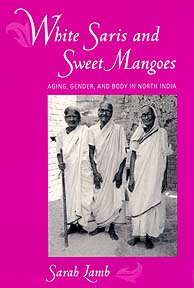 This rich ethnography explores beliefs and practices surrounding aging in a rural Bengali village. Sarah Lamb focuses on how villagers' visions of aging are tied to the making and unmaking of gendered selves and social relations over a lifetime. Lamb uses a focus on age as a means not only to open up new ways of thinking about South Asian social life, but also to contribute to contemporary theories of gender, the body, and culture, which have been hampered, the book argues, by a static focus on youth. Lamb's own experiences in the village are an integral part of her book and ably convey the cultural particularities of rural Bengali life and Bengali notions of modernity. In exploring ideals of family life and the intricate interrelationships between and within generations, she enables us to understand how people in the village construct, and deconstruct, their lives. At the same time her study extends beyond India to contemporary attitudes about aging in the United States. This accessible and engaging book is about deeply human issues and will appeal not only to specialists in South Asian culture, but to anyone interested in families, aging, gender, religion, and the body.
Agriculture (8)
-
 Subjects: Environmental Studies | California and the West | Public Policy | Social Science | Agriculture | Geography | Food and CookingIn an era of escalating food politics, many believe organic farming to be the agrarian answer. In this first comprehensive study of organic farming in California, Julie Guthman casts doubt on the current wisdom about organic food and agriculture, at least as it has evolved in the Golden State. Refuting popular portrayals of organic agriculture as a small-scale family farm endeavor in opposition to "industrial" agriculture, Guthman explains how organic farming has replicated what it set out to oppose.
-
 The Cactaceae family, with about sixteen hundred species, is cultivated worldwide for fruits, forage, fodder, and even as a vegetable. Cacti are recognized for their attractive flowers, special stem shapes, and ability to tolerate drought. Because of their efficient use of water and other adaptations, biological and agronomic interest in cacti has soared. These fascinating plants also have much to teach us about biodiversity and conservation. Yet a current, synthetic, wide-ranging reference on cacti has not been available until now. This comprehensive book, compiled by a well-known cactus biologist, includes authoritative, up-to-date chapters by thirty-five contributors from around the world on topics ranging from evolution to biotechnology. It is the first book of its kind to compile information on cactus biology, ecology, and uses in one convenient place. The first half of the book provides a thorough overview of cactus biology and morphology and discusses the environmental and conservation issues that affect the plants. It includes a discussion of the evolution of the family, paying particular attention to new genetic and molecular approaches. The second half of the book focuses on the practical concerns of cultivating cacti, such as pest control and diseases, horticultural and forage applications, and techniques for agronomy. Other chapters cover the different markets for cacti and products that are made from them. This unique volume will be a reliable and informative reference for ecologists and environmentalists, agriculturists, plant biologists, and anyone seriously interested in these remarkable plants.
-
 Why do farm workers earn less and have a lower status than blue-collar employees in comparable jobs? Robert J. Thomas answers this question through a multi-method study of agricultural work and labor markets. Fieldwork as a lettuce harvester provides valuable insights from the perspective of undocumented immigrants. This is a compelling analysis of how the vulnerability of non-citizens and women workers augments managerial control.
-
 Subjects: Sociology | Conservation | Ecology, Evolution, Environment | Technology and Society | Agriculture | Technology | Public PolicyTalk of genetically engineered organisms (GEOs) has moved from the hushed corridors of life science corporations to the front pages of the world's major newspapers. As Europeans began rejecting genetically engineered foods in the marketplace, the StarLink corn incident exploded in the United States and farmers set fire to genetically modified crops in India. Citizens and consumers have become increasingly aware of and troubled by the issues surrounding these new technologies. Considering cases from agriculture, food, forestry, and pharmaceuticals, this book examines some of the most pressing questions raised by genetic engineering. What determines whether GEOs enter the food supply, and how are such decisions being made? How is the biotechnology industry using its power to reshape food, fiber, and pharmaceutical production, and how are citizen-activists challenging these initiatives? And what are the social and political consequences of global differences over GEOs?
-
 Subjects: History | United States History | Californian and Western History | Environmental Studies | California and the West | Agriculture | Economics and BusinessFew industrial enterprises left a more enduring imprint on the American West than Miller & Lux, a vast meatpacking conglomerate started by two San Francisco butchers in 1858. Industrial Cowboys examines how Henry Miller and Charles Lux, two German immigrants, consolidated the West's most extensive land and water rights, swayed legislatures and courts, monopolized western beef markets, and imposed their corporate will on California's natural environment. Told with clarity and originality, this story uses one fascinating case study to illuminate the industrial development and environmental transformation of the American West during the late nineteenth and early twentieth centuries. The process by which two neighborhood butchers turned themselves into landed industrialists depended to an extraordinary degree on the acquisition, manipulation, and exploitation of natural resources. David Igler examines the broader impact that industrialism--as exemplified by Miller & Lux--had on landscapes and waterscapes, and on human as well as plant and animal life in the West. He also provides a rich discussion of the social relations engineered by Miller & Lux, from the dispossession of Californio rancheros to the ethnic segmentation of the firm's massive labor force. The book also covers such topics as land acquisition and reclamation, water politics, San Francisco's unique business environment, and the city's relation to its surrounding hinterlands. Above all, Igler highlights essential issues that resonate for us today: who holds the right and who has the power to engineer the landscape for market production?
-
 Subjects: Classics | Classical History | Military History | Ancient History | Classical Politics | AgricultureThe ancient Greeks were for the most part a rural, not an urban, society. And for much of the Classical period, war was more common than peace. Almost all accounts of ancient history assume that farming and fighting were critical events in the lives of the citizenry. Yet never before have we had a comprehensive modern study of the relationship between agriculture and warfare in the Greek world. In this completely revised edition of Warfare and Agriculture in Classical Greece, Victor Davis Hanson provides a systematic review of Greek agriculture and warfare and describes the relationship between these two important aspects of life in ancient communities. With careful attention to agronomic as well as military details, this well-written, thoroughly researched study reveals the remarkable resilience of those farmland communities.In the past, scholars have assumed that the agricultural infrastructure of ancient society was often ruined by attack, as, for example, Athens was relegated to poverty in the aftermath of the Persian and later Peloponnesian invasions. Hanson's study shows, however, that in reality attacks on agriculture rarely resulted in famines or permanent agrarian depression. Trees and vines are hard to destroy, and grainfields are only briefly vulnerable to torching. In addition, ancient armies were rather inefficient systematic ravagers and instead used other tactics, such as occupying their enemies' farms to incite infantry battle. Warfare and Agriculture in Classical Greece suggests that for all ancient societies, rural depression and desolation came about from more subtle phenomena - taxes, changes in political and social structure, and new cultural values - rather than from destructive warfare.
-

-
 Subjects: Wine and Viticulture | California and the West | Californian and Western History | Wine | AgricultureThe Zinfandel grape - currently producing big, rich, luscious styles of red wine - has a large, loyal, even fanatical following in California and around the world. The grape, grown predominantly in California, has acquired an almost mythic status - in part because of the caliber of its wines and its remarkable versatility, and in part because of the mystery surrounding its origins. Charles Sullivan, a leading expert on the history of California wine, has at last written the definitive history of Zinfandel. Here he brings together his deep knowledge of wine with the results of his extensive research on the grape in the United States and Europe in a book that will entertain and enlighten wine aficionados and casual enthusiasts. In this lively book, Sullivan dispels the false legend that has obscured Zinfandel's history for almost a century, reveals the latest scientific findings about the grape's European roots, shares his thoughts on the quality of the wines now being produced, and looks to the future of this remarkable grape. Sullivan reconstructs Zinfandel's journey through history - taking us from Austria to the East Coast of the U.S. in the 1820s, to Gold Rush California, and through the early days of the state's wine industry. He considers the ups and downs of the grape's popularity, including its most recent and, according to Sullivan, most brilliant "up." He also unravels the two great mysteries surrounding Zinfandel: the myth of Agoston Haraszthy's role in importing Zinfandel, and the heated controversy over the relationship between California Zinfandel and Italian Primitivo. Sullivan ends with his assessments of the 2001 and 2002 vintages, firmly setting the history of Zinfandel into the chronicles of grape history.
American Literature (45)
-
 Subjects: Literature | Literary Theory and Criticism | Poetry | American Studies | American LiteratureIn this first full-length study of Pound's influence on American poetry after World War II, Beach argues that Pound's experimental mode created a new tradition of poetic writing in America. Often neglected by academic critics and excluded from the "canon" of American poetic writing, Charles Olson, Robert Duncan, and later members of this experimental tradition have maintained the sense of an American avant garde in keeping with Pound's modernist experiments of the 1910s and 1920s. The work of these poets has served as a counterforce to the established traditions of the "American Sublime" and the Anglo-American formalism represented by T. S. Eliot and the New Criticism.ABC of Influence challenges previous discussions of poetic influence, particularly Harold Bloom's oedipal theory of revisionist "misreading," as insufficient for understanding the influence Pound's modernist practice and his relationship to poetic tradition had in defining the postmodernist poetics of Olson, Duncan, and other postwar American writers. The relation of these poets is most clearly seen on a formal level, but it is also evident in thematic elements of their work and in their stance toward poetic convention, the "canon," political and social engagement, and the inclusion of historical and other nonpoetic materials in the poetic text.This book makes a significant contribution to the study of modern American poetry by exploring modernism's legacy and charting new canonical possibilities in American literature. In reading Pound through the works of later poets, it also provides important new insights into Pound's own work and ideas.
-
 Subjects: Literature | American Literature | Literary Theory and Criticism | Twain | American StudiesThe phenomenon of performance is central to Mark Twain's writing and persona. But Twain's performative aspects have usually been dismissed as theatrical and discounted as lowbrow burlesque. Randall Knoper takes Twain's theatricality seriously and shows how Twain's work both echoes and engages the social and cultural problems embodied in nineteenth-century popular entertainments.Knoper draws on theater history, theories of acting and bodily expression, psychology and physiology, scientific accounts of spiritualism, and commercial spectacles to demonstrate Twain's use of "acting" and the "natural" in his creative explorations. This book enlarges our understanding of Mark Twain - the artist and the man - and also provides a window into a culture whose entertainments registered the sexual, racial, economic, and scientific forces that were transforming it.
-
 Few historians are bold enough to go after America's sacred cows in their very own pastures. But Michael Zuckerman is no ordinary historian, and this collection of his essays is no ordinary book.In his effort to remake the meaning of the American tradition, Zuckerman takes the entire sweep of American history for his province. The essays in this collection, including two never before published and a new autobiographical introduction, range from early New England settlements to the hallowed corridors of modern Washington. Among his subjects are Puritans and Southern gentry, Benjamin Franklin and Benjamin Spock, P. T. Barnum and Ronald Reagan. Collecting scammers and scoundrels, racists and rebels, as well as the purest genius, he writes to capture the unadorned American character.Recognized for his energy, eloquence, and iconoclasm, Zuckerman is known for provoking - and sometimes almost seducing - historians into rethinking their most cherished assumptions about the American past. Now his many fans, and readers of every persuasion, can newly appreciate the distinctive talents of one of America's most powerful social critics.
-
 In law, the late nineteenth century is often called the Age of Contract; in literature, the Age of Realism. Brook Thomas's new book brings contract and realism together to offer groundbreaking insights into both while exploring the social and cultural crises that accompanied America's transition from industrial capitalism to the corporate capitalism of the twentieth century.Thomas argues that, radically conceived, contract promised to generate an equitable social order - one organized around interpersonal exchange rather than conformity to a transcendental standard. But as the idea of contract took center stage in American culture after the Civil War, the law failed to deliver on this promise, instead legitimating hierarchies of race, class, and gender. Moving expertly from legal analysis to social history, to profoundly recontextualized literary critique, Thomas shows how writers like Twain, James, Howells, and Chopin took up contract as a model, formally and thematically, evoking its possibilities and dramatizing its failures.Thomas investigates a host of issues at the forefront of public debate in the nineteenth century: race and the meaning of equality, miscegenation, marriage, labor unrest, economic transformation, and changes in notions of human agency and subjectivity. Cross-examining a wide range of key literary and legal texts, he rethinks the ways they relate to each other and to their social milieu.As recent political rhetoric demonstrates, the promise of contract is still very much alive. American Literary Realism and the Failed Promise of Contract challenges conventional critical wisdom and makes a broad, provocative, and nuanced contribution to legal and literary studies, as well as to intellectual and social history. It promises to revise and enrich our understanding of American culture, law, and letters.
-
 Subjects: American Studies | American Literature | Californian and Western History | Popular CultureThis innovative cultural history investigates an intriguing, thrilling, and often lurid assortment of sensational literature that was extremely popular in the United States in 1848--including dime novels, cheap story paper literature, and journalism for working-class Americans. Shelley Streeby uncovers themes and images in this "literature of sensation" that reveal the profound influence that the U.S.-Mexican War and other nineteenth-century imperial ventures throughout the Americas had on U.S. politics and culture. Streeby's analysis of this fascinating body of popular literature and mass culture broadens into a sweeping demonstration of the importance of the concept of empire for understanding U.S. history and literature. This accessible, interdisciplinary book brilliantly analyzes the sensational literature of George Lippard, A.J.H Duganne, Ned Buntline, Metta Victor, Mary Denison, John Rollin Ridge, Louisa May Alcott, and many other writers. Streeby also discusses antiwar articles in the labor and land reform press; ideas about Mexico, Cuba, and Nicaragua in popular culture; and much more. Although the Civil War has traditionally been a major period marker in U.S. history and literature, Streeby proposes a major paradigm shift by using mass culture to show that the U.S.-Mexican War and other conflicts with Mexicans and Native Americans in the borderlands were fundamental in forming the complex nexus of race, gender, and class in the United States.
-
 Reminiscent of Chekhov's stories, The Blood of Strangers is a visceral portrayal of a physician's encounters with the highly charged world of an emergency room. In this collection of spare and elegant stories, Dr. Frank Huyler reveals a side of medicine where small moments - the intricacy of suturing a facial wound, the bath a patient receives from her husband and daughter - interweave with the lives and deaths of the desperately sick and injured. The author presents an array of fascinating characters, both patients and doctors - a neurosurgeon who practices witchcraft, a trauma surgeon who unexpectedly commits suicide, a wounded murderer, a man chased across the New Mexico desert by a heat-seeking missile. At times surreal, at times lyrical, at times brutal and terrifying, The Blood of Strangers is a literary work that emerges from one of the most dramatic specialties of modern medicine. This deeply affecting first book has been described by one early reader as "the best doctor collection I have seen since William Carlos Williams's The Doctor Stories."
-
 Subjects: American Studies | United States History | American Literature | Asian American Studies | Asian StudiesIn the years following World War II, American writers and artists produced a steady stream of popular stories about Americans living, working, and traveling in Asia and the Pacific. Meanwhile the U.S., competing with the Soviet Union for global power, extended its reach into Asia to an unprecedented degree. This book reveals that these trends - the proliferation of Orientalist culture and the expansion of U.S. power - were linked in complex and surprising ways. While most cultural historians of the Cold War have focused on the culture of containment, Christina Klein reads the postwar period as one of international economic and political integration - a distinct chapter in the process of U.S.-led globalization. Through her analysis of a wide range of texts and cultural phenomena - including Rodgers and Hammerstein's South Pacific and The King and I, James Michener's travel essays and novel Hawaii, and Eisenhower's People-to-People Program - Klein shows how U.S. policy makers, together with middlebrow artists, writers, and intellectuals, created a culture of global integration that represented the growth of U.S. power in Asia as the forging of emotionally satisfying bonds between Americans and Asians. Her book enlarges Edward Said's notion of Orientalism in order to bring to light a cultural narrative about both domestic and international integration that still resonates today.
-
 The prose writings of Charles Olson (1910-1970) have had a far-reaching and continuing impact on post-World War II American poetics. Olson's theories, which made explicit the principles of his own poetics and those of the Black Mountain poets, were instrumental in defining the sense of the postmodern in poetry and form the basis of most postwar free verse.The Collected Prose brings together in one volume the works published for the most part between 1946 and 1969, many of which are now out of print. A valuable companion to editions of Olson's poetry, the book backgrounds the poetics, preoccupations, and fascinations that underpin his great poems. Included are Call Me Ishmael, a classic of American literary criticism; the influential essays "Projective Verse" and "Human Universe"; and essays, book reviews, and Olson's notes on his studies. In these pieces one can trace the development of his new science of man, called "muthologos," a radical mix of myth and phenomenology that Olson offered in opposition to the mechanistic discourse and rationalizing policy he associated with America's recent wars in Europe and Asia. Editors Donald Allen and Benjamin Friedlander offer helpful annotations throughout, and poet Robert Creeley, who enjoyed a long and mutually influential relationship with Olson, provides the book's introduction.
-
 Subjects: Literature | Autobiographies and Biographies | Twain | American Literature | American StudiesThe last phase of Mark Twain's life is sadly familiar: Crippled by losses and tragedies, America's greatest humorist sank into a deep and bitter depression. It is also wrong. This book recovers Twain's final years as they really were - lived in the shadow of deception and prejudice, but also in the light of the author's unflagging energy and enthusiasm.Dangerous Intimacy relates the story of how, shortly after his wife's death in 1904, Twain basked in the attentions of Isabel Lyon, his flirtatious - and calculating - secretary. Lyon desperately wanted to marry her boss, who was almost thirty years her senior. She managed to exile Twain's youngest daughter, Jean, who had epilepsy. With the help of Twain's assistant, Ralph Ashcroft, who fraudulently acquired power of attorney over the author's finances, Lyon nearly succeeded in assuming complete control over Twain's life and estate. Fortunately, Twain recognized the plot being woven around him just in time. So rife with twists and turns as to defy belief, the story nonetheless comes to undeniable, vibrant life in the letters and diaries of those who witnessed it firsthand: Katy the housekeeper, Jean, Lyon, and others whose own distinctive, perceptive, often amusing voices take us straight into the heart of the Clemens household. Just as Twain extricated himself from the lies, prejudice, and self-delusion that almost turned him into an American Lear, so Karen Lystra liberates the author's last decade from a century of popular misunderstanding. In this gripping book we at last see how, late in life, this American icon discovered a deep kinship with his youngest child and continued to explore the precarious balance of love and pain that is one of the trademarks of his work.
-
 Subjects: Literature | American Literature | Literary Theory and Criticism | Women's Studies | Men and Masculinity | Autobiographies and Biographies | American Studies | United States HistoryThe marriage of Nathaniel and Sophia Hawthorne - for their contemporaries a model of true love and married happiness - was also a scene of revulsion and combat. T. Walter Herbert reveals the tragic conflicts beneath the Hawthorne's ideal of domestic fulfillment and shows how their marriage reflected the tensions within nineteenth-century society. In so doing, he sheds new light on Hawthorne's fiction, with its obsessive themes of guilt and grief, balked feminism and homosexual seduction, adultery, patricide, and incest.
-
 Subjects: Literature | Literary Theory and Criticism | American Literature | Gender Studies | United States History | American StudiesGillian Brown's book probes the key relationship between domestic ideology and formulations of the self in nineteenth-century America. Arguing that domesticity institutes gender, class, and racial distinctions that govern masculine as well as feminine identity, Brown brilliantly alters, for literary critics, feminists, and cultural historians, the critical perspective from which nineteenth-century American literature and culture have been viewed.In this study of the domestic constitution of individualism, Brown traces how the values of interiority, order, privacy, and enclosure associated with the American home come to define selfhood in general. By analyzing writings by Stowe, Hawthorne, Melville, Fern, and Gilman, and by examining other contemporary cultural modes - abolitionism, consumerism, architecture, interior decorating, motherhood, mesmerism, hysteria, and agoraphobia - she reconfigures the parameters of both domesticity and the patterns of self it fashions. Unfolding a representational history of the domestic, Brown's work offers striking new readings of the literary texts as well as of the cultural contexts that they embody.
-
 Subjects: Literature | American LiteratureWhat is a house? And what can architecture tell us about individual psychology, national character and aspiration? The house holds a central place in American mythology, as Marilyn Chandler demonstrates in a series of "house tours" through American novels, beginning with Thoreau's Walden and ending with Toni Morrison's Beloved and Marilynne Robinson's Housekeeping.Chandler illuminates the complex analogies between house and psyche, house and family, house and social environment, and house and text. She traces a historical path from settlement to unsettledness in American culture and explores all the rituals in between: of building, decorating, inhabiting, and abandoning houses. She notes the ambivalence between our desire for rootedness and our romanticization of wide open spaces, relating these poles to the tension between materialism and spirituality in our national character.At a time when housing has become a problem of unprecedented dimensions in America, this look at the place of houses and homes in the American imagination reveals some sources of the attitudes, assumptions, and expectations that underlie the designing and building of the homes we buy, sell, and dream about.
-

-
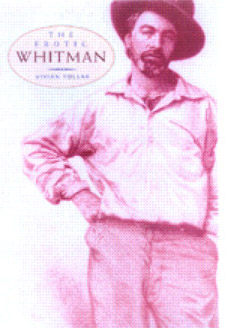 The Erotic Whitman publicSubjects: Literature | American Studies | Gender Studies | American Literature | Literary Theory and CriticismIn this provocative analysis of Whitman's exemplary quest for happiness, Vivian Pollak skillfully explores the intimate relationships that contributed to his portrayal of masculinity in crisis. She maintains that in representing himself as a characteristic nineteenth-century American and in proposing to heal national ills, Whitman was trying to temper his own inner conflicts as well. The poet's expansive vision of natural eroticism and of unfettered comradeship between democratic equals was, however, only part of the story. As Whitman waged a conscious campaign to challenge misogynistic and homophobic literary codes, he promoted a raceless, classless ideal of sexual democracy that theoretically equalized all varieties of desire and resisted none. Pollak suggests that this goal remains imperfectly achieved in his writings, which liberates some forbidden voices and silences others. Integrating biography and criticism, Pollak employs a loosely chronological organization to describe the poet's multifaceted "faith in sex." Drawing on his early fiction, journalism, poetry, and self-reviews, as well as letters and notebook entries, she shows how in spite of his personal ambivalence about sustained erotic intimacy, Whitman came to imagine himself as "the phallic choice of America."
-
 Subjects: Literature | Anthropology | American Literature | Literary Theory and Criticism | Native American StudiesEthnocriticism moves cultural critique to the boundaries that exist between cultures. The boundary traversed in Krupat's dexterous new book is the contested line between native and mainstream American literatures and cultures.For over a century the discourses of ethnography, history, and literature have sought to represent the Indian in America. Krupat considers all these discourses and the ways in which Indians have attempted to "write back," producing an oppositional - or at least a parallel - discourse.
-
 Subjects: Literature | American Literature | Literary Theory and Criticism | American Studies | Postcolonial StudiesRuss Castronovo underscores the inherent contradictions between America's founding principles of freedom and the reality of slavery in a book that probes mid-nineteenth-century representations of the founding fathers. He finds that rather than being coherent and consensual, narratives of nationhood are inconsistent, ambivalent, and ironic. He examines competing expressions of national memory in a wide range of mid-nineteenth-century artifacts: slave autobiography, classic American fiction, monumental architecture, myths of the Revolution, proslavery writing, and landscape painting.Castronovo theorizes a new American cultural studies which takes into consideration what Toni Morrison calls the "Africanist presence" that permeates American literature. He presents a genealogy that recovers those members of the national family whose status challenges the body politic and its history. The forgotten orphans in Melville's Moby-Dick and Israel Potter, the rebellious slaves in the work of Frederick Douglass and William Wells Brown, the citizens afflicted with amnesia in Lincoln's speeches, and the dispossessed sons in slave narratives all provide dissenting voices that provoke insurrectionary plots and counter-memories. Viewed here as a miscegenation of stories, the narrative of "America" resists being told of an intelligible story of uncontested descent. National identity rests not on rituals of consensus but on repressed legacies of parricide and rebellion.
-
Subjects: Literature | African American Studies | Gender Studies | Literary Theory and Criticism | American Literature | Gay, Lesbian and Bisexual StudiesThis landmark collaboration between African American and white feminists goes to the heart of problems that have troubled feminist thinking for decades. Putting the racial dynamics of feminist interpretation center stage, these essays question such issues as the primacy of sexual difference, the universal nature of psychoanalytic categories, and the role of race in the formation of identity. They offer new ways of approaching African American texts and reframe our thinking about the contexts, discourses, and traditions of the American cultural landscape. Calling for the racialization of whiteness and claiming that psychoanalytic theory should make room for competing discourses of spirituality and diasporic consciousness, these essays give shape to the many stubborn incompatibilities - as well as the transformative possibilities - between white feminist and African American cultural formations.Bringing into conversation a range of psychoanalytic, feminist, and African-derived spiritual perspectives, these essays enact an inclusive politics of reading. Often explosive and always provocative, Female Subjects in Black and White models a new cross-racial feminism.
-
 Fifteen Jugglers, Five Believers: Literary Politics and the Poetics of American Social Movements publicT.V. Reed urges an affiliation between literary theory and political action - and between political action and literary theory. What can the "new literary theory" learn from "new social movements"; and what can social activists learn from poststructuralism, new historicism, feminist theory, and neomarxism?In strikingly new interpretations of texts in four different genres - Agee and Evans's Let Us Now Praise Famous Men, Ellison's Invisible Man, Mailer's Armies of the Night, and the ecofeminist Women's Pentagon Actions of the early 1980s - Reed shows how reading literary texts for their political strategies and reading political movements as texts can help us overcome certain rhetorical traps that have undermined American efforts to combat racism, sexism, and economic inequality.
-
 Getting To Be Mark Twain publicMark Twain is one of our most accessible cultural icons, a figure familiar to virtually every American and renowned internationally. But he was not always as we know him today. Mark Twain began life as a loose gathering of postures, attitudes, and voices in the mind of Samuel Clemens. It was some time before he took full possession of the personality the world now recognizes.This is the story of the coming of age of Mark Twain. It begins in 1867, with Clemens stepping off the steamship Quaker City and almost immediately declaring himself "in a fidget to move." It comes to a close in 1871, with Clemens settling in Hartford. Mark Twain was substantially formed during the intervening years, as Clemens came East, gained fame and fortune with the publication of Innocents Abroad, courted and married Olivia Langdon, and established himself as a professional writer. Each of these steps represented a profound change in the former Wild Humorist of the Pacific Slope as he sifted through the elements in his personality and began to assume the qualities we now associate with him. The tale that unfolds here shows how, through that process, the Mark Twain of the late 1860s became the Mark Twain of all time.
-
 Subjects: Literature | American LiteratureThe Gold Standard and the Logic of Naturalism discusses ways of creating value in turn-of-the-century American capitalism. Focusing on such topics as the alienation of property, the invention of masochism, and the battle over free silver, it examines the participation of cultural forms in these phenomena. It imagines a literary history that must at the same time be social, economic, and legal; and it imagines a literature that, to be understood at all, must be understood both as a producer and a product of market capitalism.
-
 Nancy Armstrong and Leonard Tennenhouse challenge traditional accounts of the origins of modern Anglo-American culture by focusing on the emergence of print culture in England and the North American colonies. They postulate a modern middle class that consisted of authors and intellectuals who literally wrote a new culture into being.Milton's Paradise Lost marks the emergence of this new literacy. The authors show how Milton helped transform English culture into one of self-enclosed families made up of self-enclosed individuals. However, the authors point out that the popularity of Paradise Lost was matched by that of the Indian captivity narratives that flowed into England from the American colonies. Mary Rowlandson's account of her forcible separation from the culture of her origins stresses the ordinary person's ability to regain those lost origins, provided she remains truly English. In a colonial version of the Miltonic paradigm, Rowlandson sought to return to a family of individuals much like the one in Milton's depiction of the fallen world.Thus the origin both of modern English culture and of the English novel are located in North America. American captivity narratives formulated the ideal of personal life that would be reproduced in the communities depicted by Defoe, Richardson, and later domestic fiction.
-
 Subjects: Native American Studies | Native American Ethnicity | California and the West | Anthropology | Folklore and Mythology | Religion | American LiteratureJerrold E. Levy's masterly analysis of Navajo creation and origin myths shows what other interpretations often overlook: that the Navajo religion is as complete and nuanced an attempt to answer humanity's big questions as the religions brought to North America by Europeans. Looking first at the historical context of the Navajo narratives, Levy points out that Navajo society has never during its known history been either homogeneous or unchanging, and he goes on to identify in the myths persisting traditions that represent differing points of view within the society. The major transformations of the Navajo people, from a northern hunting and gathering society to a farming, then herding, then wage-earning society in the American Southwest, were accompanied by changes not only in social organization but also in religion. Levy sees evidence of internal historical conflicts in the varying versions of the creation myth and their reflection in the origin myths associated with healing rituals. Levy also compares Navajo answers to the perennial questions about the creation of the cosmos and why people are the way they are with the answers provided by Judaism and Christianity. And, without suggesting that they are equivalent, Levy discusses certain parallels between Navajo religious ideas and contemporary scientific cosmology. The possibility that in the future Navajo religion will be as much altered by changing conditions as it has been in the past makes this fascinating account all the more timely.
-
 Subjects: Literature | English Literature | American Studies | Literary Theory and Criticism | American LiteratureWhen James Joyce's Ulysses was first published in America, it quickly became a dynamic symbol of both modern art and the modern age. Jeffrey Segall skillfully demonstrates how various political, ideological, and religious allegiances influenced the critical reception and eventual canonization of what is perhaps the twentieth century's greatest novel.In re-creating the polemical debates that erupted, Segall provides a dramatic reminder of just how challenging and controversial Ulysses was - and is. Seventy years after Ulysses was first banned, the novel remains at the center of contemporary debates among feminist, neo-Marxist, and poststructuralist critics.Segall allows us the opportunity to view Ulysses from the perspective of its early readers, and he also elucidates key moments in recent American cultural history.
-

-
 Subjects: Native American Studies | Anthropology | Native American Ethnicity | Cultural Anthropology | Literature | Literary Theory and Criticism | American Literature | American StudiesThis remarkable collection of eight essays offers a rare perspective on the issue of cross-cultural communication. Greg Sarris is concerned with American Indian texts, both oral and written, as well as with other American Indian cultural phenomena such as basketry and religion. His essays cover a range of topics that include orality, art, literary criticism, and pedagogy, and demonstrate that people can see more than just "what things seem to be." Throughout, he asks: How can we read across cultures so as to encourage communication rather than to close it down?Sarris maintains that cultural practices can be understood only in their living, changing contexts. Central to his approach is an understanding of storytelling, a practice that embodies all the indeterminateness, structural looseness, multivalence, and richness of culture itself. He describes encounters between his Indian aunts and Euro-American students and the challenge of reading in a reservation classroom; he brings the reports of earlier ethnographers out of museums into the light of contemporary literary and anthropological theory.Sarris's perspective is exceptional: son of a Coast Miwok/Pomo father and a Jewish mother, he was raised by Mabel McKay - a renowned Cache Creek Pomo basketweaver and medicine woman - and by others, Indian and non-Indian, in Santa Rosa, California. Educated at Stanford, he is now a university professor and recently became Chairman of the Federated Coast Miwok tribe. His own story is woven into these essays and provides valuable insights for anyone interested in cross-cultural communication, including educators, theorists of language and culture, and general readers.
-
 Two centuries after their expedition awoke the nation both to the promise and to the disquiet of the vast territory out west, Lewis and Clark still stir the imagination, and their adventure remains one of the most celebrated and studied chapters in American history. This volume explores the legacy of Lewis and Clark's momentous journey and, on the occasion of its bicentennial, considers the impact of their westward expedition on American culture. Approaching their subject from many different perspectives - literature, history, women's studies, law, medicine, and environmental history, among others - the authors chart shifting attitudes about the explorers and their journals, together creating a compelling, finely detailed picture of the "interdisciplinary intrigue" that has always surrounded Lewis and Clark's accomplishment. This collection is most remarkable for its insights into ongoing debates over the relationships between settler culture and aboriginal peoples, law and land tenure, manifest destiny and westward expansion, as well as over the character of Sacagawea, the expedition's vision of nature, and the interpretation and preservation of the Lewis and Clark Trail.
-
 In fascinating new contextual readings of four of Herman Melville's novels - Typee, White-Jacket, Moby-Dick, and Pierre - Samuel Otter delves into Melville's exorbitant prose to show how he anatomizes ideology, making it palpable and strange. Otter portrays Melville as deeply concerned with issues of race, the body, gender, sentiment, and national identity. He articulates a range of contemporary texts (narratives of travelers, seamen, and slaves; racial and aesthetic treatises; fiction; poetry; and essays) in order to flesh out Melville's discursive world.Otter presents Melville's works as "inside narratives" offering material analyses of consciousness. Chapters center on the tattooed faces in Typee, the flogged bodies in White-Jacket, the scrutinized heads in Moby-Dick, and the desiring eyes and eloquent, constricted hearts of Pierre. Otter shows how Melville's books tell of the epic quest to know the secrets of the human body. Rather than dismiss contemporary beliefs about race, self, and nation, Melville inhabits them, acknowledging their appeal and examining their sway.Meticulously researched and brilliantly argued, this groundbreaking study links Melville's words to his world and presses the relations between discourse and ideology. It will deeply influence all future studies of Melville and his work.
-
 Subjects: Literature | Literary Theory and Criticism | American Literature | American Studies | Latin American History | Folklore and MythologyMexican Ballads, Chicano Poems combines literary theory with the personal engagement of a prominent Chicano scholar. Recalling his experiences as a student in Texas, José Limón examines the politically motivated Chicano poetry of the 60s and 70s. He bases his analyses on Harold Bloom's theories of literary influence but takes Bloom into the socio-political realm. Limón shows how Chicano poetry is nourished by the oral tradition of the Mexican corrido, or master ballad, which was a vital part of artistic and political life along the Mexican-U.S. border from 1890 to 1930.Limón's use of Bloom, as well as of Marxist critics Raymond Williams and Fredric Jameson, brings Chicano literature into the arena of contemporary literary theory. By focusing on an important but little-studied poetic tradition, his book challenges our ideas of the American canon and extends the reach of Hispanists and folklorists as well.
-
 Subjects: Gender Studies | Literature | Gay, Lesbian and Bisexual Studies | Women's Studies | American Literature | Ethnic Studies | American Studies | Literary Theory and CriticismRevealing the maternal as not a core identity but a site of profound psychic and social division, Hansen illuminates recent decades of feminist thought and explores novels by Jane Rule, Alice Walker, Louise Erdrich and Michael Dorris, Marge Piercy, Margaret Atwood, and Fay Weldon. Unlike traditional stories of abandoned children and bad mothers, these narratives refuse to sentimentalize motherhood's losses and impasses. Hansen embraces the larger cultural story of what it means to be a mother and illuminates how motherhood is being reimagined today.
-
 Anne Frank's Diary has been acclaimed throughout the world as an indelible portrait of a gifted girl and as a remarkable document of the Holocaust. For Meyer Levin, the respected writer who helped bring the Diary to an American audience, the Jewish girl's moving story became a thirty-year obsession that altered his life and brought him heartbreaking sorrow.Lawrence Graver's fascinating account of Meyer Levin's ordeal is a story within a story. What began as a warm collaboration between Levin and Anne's father, Otto Frank, turned into a notorious dispute that lasted several decades and included litigation and public scandal. Behind this story is another: one man's struggle with himself - as a Jew and as a writer - in postwar America. Looming over both stories is the shadow of the Holocaust and its persistent, complex presence in our lives.Graver's book is based on hundreds of unpublished documents and on interviews with some of the Levin-Frank controversy's major participants. It illuminates important areas of American culture: publishing, law, religion, politics, and the popular media. The "Red Scare," anti-McCarthyism, and the commercial imperatives of Broadway are all players in this book, along with the assimilationist mood among many Jews and the simplistic pieties of American society in the 1950s.Graver also examines the different and often conflicting ways that people the world over, Jewish and Gentile, wanted Anne Frank and her much-loved book to be represented. That her afterlife has in extraordinary ways taken on the shape and implications of myth makes Graver's story - and Meyer Levin's - even more compelling.
-
 Subjects: Literature | American Studies | Urban Studies | United States History | American Literature | SociologyReturning to his native Chicago after World War II, Nelson Algren found a city transformed. The flourishing industry, culture, and literature that had placed prewar Chicago at center stage in American life were entering a time of crisis. The middle class and economic opportunity were leaving the inner city, and Black Southerners arriving in Chicago found themselves increasingly estranged from the nation's economic and cultural resources. For Algren, Chicago was becoming "an October sort of city even in the spring," and as Carlo Rotella demonstrates, this metaphorical landscape of fall led Algren and others to forge a literary form that traced the American city's transformation. Narratives of decline, like the complementary narratives of black migration and inner-city life written by Claude Brown and Gwendolyn Brooks, became building blocks of the postindustrial urban literature.October Cities examines these narratives as they played out in Chicago, Philadelphia, and Manhattan. Through the work of Algren, Brown, Brooks, and other urban writers, Rotella explores the relationship of this new literature to the cities it draws upon for inspiration. The stories told are of neighborhoods and families molded by dramatic urban transformation on a grand scale with vast movements of capital and people, racial succession, and an intensely changing urban landscape.
-
 "It's an easy enough job if one has something to say," Paul Bowles remarked in a letter to his mother about his first foray into music criticism. And Paul Bowles, indeed, had plenty to say about music. Though known chiefly as a writer of novels and stories, Paul Bowles (1910-99) thought of himself first and foremost as a composer. Drawing together the work he did at the intersection of his two passions and professions, writing and music, this volume collects the music criticism Bowles published between 1935 and 1946 as well as an interview conducted by Irene Herrmann shortly before his death. An intimate of Aaron Copland and protégé of Virgil Thomson, Bowles was a musical sophisticate acquainted with an enormous range of music. His criticism collected here brilliantly illuminates not only the whole range of modernist composition but also film music, jazz, Mexican and Moroccan music, and many other genres. As a reviewer he reports on established artists and young hopefuls, symphonic concerts indoors and out, and important premieres of works by Copland, Thomson, Cage, Shostakovich, and Stravinsky, among others. Written with the austere grace of his better-known literary works, Bowles's criticism enhances our picture of an important era in American music history as well as our sense of his accomplishments and extraordinary contribution to twentieth-century culture.
-
 Subjects: Literature | Literary Theory and Criticism | American Literature | American Studies | United States History | ChristianityThe mixture of hostility and fascination with which native-born Protestants viewed the "foreign" practices of the "immigrant" church is the focus of Jenny Franchot's cultural, literary, and religious history of Protestant attitudes toward Roman Catholicism in nineteenth-century America.Franchot analyzes the effects of religious attitudes on historical ideas about America's origins and destiny. She then focuses on the popular tales of convent incarceration, with their Protestant "maidens" and lecherous, tyrannical Church superiors. Religious captivity narratives, like those of Indian captivity, were part of the ethnically, theologically, and sexually charged discourse of Protestant nativism.Discussions of Stowe, Longfellow, Hawthorne, and Lowell - writers who sympathized with "Romanism" and used its imaginative properties in their fiction - further demonstrate the profound influence of religious forces on American national character.
-
 Subjects: Literature | Poetry | Autobiographies and Biographies | American Literature | American Studies | LettersFor Charles Olson, letters were not only a daily means of communication with friends but were at the same time a vehicle for exploratory thought. In fact, many of Olson's finest works, including Projective Verse and the Maximus Poems, were formulated as letters. Olson's letters are important to an understanding of his definition of the postmodern, and through the play of mind exhibited here we recognize him as one of the vital thinkers of the twentieth century. In this volume, edited and annotated by Ralph Maud, we see Olson at the height of his powers and also at his most human. Nearly 200 letters, selected from a known 3,000, demonstrate the wide range of Olson's interests and the depth of his concern for the future. Maud includes letters to friends and loved ones, job and grant applications, letters of recommendation, and Black Mountain College business letters, as well as correspondence illuminating Olson's poetics. As we read through the letters, which span the years from 1931, when Olson was an undergraduate, to his death in 1970, a fascinating portrait of this complex poet and thinker emerges.
-
 Subjects: Literature | American Literature | Popular Culture | History | Men and Masculinity | United States History | Art History | American StudiesThe essays in this volume analyze a wide variety of cultural forms to demonstrate the centrality of masculine sentiment in American literary and cultural history from the early republic to the progressive era. Challenging the association of sentimentality exclusively with femininity in studies of American culture, the contributors analyze sentimentalism not just as a literary genre but as a structure of feeling manifested in many areas: temperance testimonials, begging letters, historiography, philanthropic performance, photography, portraiture, and poetry. Essays from a variety of disciplines - American studies, literature, history, art, gender studies - deconstruct the alignment of reason, commerce, and the public sphere with men, and feelings, domesticity, and the private sphere with women.
-
 Starting with the tensions in the early family constellation, Gloria C. Erlich traces Edith Wharton's erotic evolution - from her early repression of sexuality and her celibate marriage to her discovery of passion in a rapturous midlife love affair with the bisexual Morton Fullerton. Analyzing the novelist's life, letters, and fiction, Erlich reveals several interrelated identity systems - the filial, the sexual, and the creative - that evolved together over the course of Wharton's lifetime.
-
 Marlon Hom has selected and translated 220 rhymes from two collections of Chinatown songs published in 1911 and 1915. The songs are outspoken and personal, addressing subjects as diverse as sex, frustrations with the American bureaucracy, poverty and alienation, and the loose morals of the younger generation of Americans. Hom has arranged the songs thematically and gives an overview of early Chinese American literature.
-
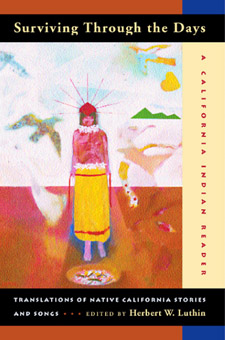 This anthology of treasures from the oral literature of Native California, assembled by an editor admirably sensitive to language, culture, and history, will delight scholars and general readers alike. Herbert Luthin's generous selection of stories, anecdotes, myths, reminiscences, and songs is drawn from a wide sampling of California's many Native cultures, and although a few pieces are familiar classics, most are published here for the first time, in fresh literary translations. The translators, whether professional linguists or Native scholars and storytellers, are all acknowledged experts in their respective languages, and their introductions to each selection provide welcome cultural and biographical context. Augmenting and enhancing the book are Luthin's engaging, informative essays on topics that range from California's Native languages and oral-literary traditions to critical issues in performance, translation, and the history of California literary ethnography.
-
 Traveling in Mark Twain public
-
 The practice of selling one's tale of woe to make a buck has long been a part of American culture. The Unvarnished Truth: Personal Narratives in Nineteenth-Century America is a powerful cultural history of how ordinary Americans crafted and sold their stories of hardship and calamity during the nineteenth century. Ann Fabian examines the tales of beggars, convicts, ex-slaves, prisoners of the Confederacy, and others to explore cultural authority, truth-telling, and the nature of print media as the country was shifting to a market economy. This well-crafted book describes the fascinating controversies surrounding these little-read tales and returns them to the social worlds where they were produced.Drawing on an enormous number of personal narratives - accounts of mostly poor, suffering, and often uneducated Americans - The Unvarnished Truth analyzes a long-ignored tradition in popular literature. Historians have treated the spread of literacy and the growth of print culture as a chapter in the democratization of refinement, but these tales suggest that this was not always the case. Producing stories that purported to be the plain, unvarnished truth, poor men and women edged their way onto the cultural stage, using storytelling strategies far older than those relying on a Renaissance sense of refinement and polish. This book introduces a unique collection of tales to explore the nature of truth, authenticity, and representation.
-
 Subjects: Native American Studies | American LiteratureIn its consideration of American Indian literature as a rich and exciting body of work, The Voice in the Margin invites us to broaden our notion of what a truly inclusive American literature might be, and of how it might be placed in relation to an international - a "cosmopolitan" - literary canon. The book comes at a time when the most influential national media have focused attention on the subject of the literary canon. They have made it an issue not merely of academic but of general public concern, expressing strong opinions on the subject of what the American student should or should not read as essential or core texts. Is the literary canon simply a given of tradition and history, or is it, and must it be, constantly under construction? The question remains hotly contested to the present moment.Arnold Krupat argues that the literary expression of the indigenous peoples of the United States has claims on us to more than marginal attention. Demonstrating a firm grasp of both literary history and contemporary critical theory, he situates Indian literature, traditional and modern, in a variety of contexts and categories. His extensive knowledge of the history and current theory of ethnography recommends the book to anthropologists and folklorists as well as to students and teachers of literature, both canonical and noncanonical. The materials covered, the perspectives considered, and the learning displayed all make The Voice in the Margin a major contribution to the exciting field of contemporary cultural studies.
-
 What Americans refer to as the Vietnam War embraces much more than the conflict with North Vietnam. Milton J. Bates considers the other conflicts that Americans brought to that war: the divisions stemming from differences in race, class, sex, generation, and frontier ideology. In exploring the rich vein of writing and film that emerged from the Vietnam War era, he strikingly illuminates how these stories reflect American social crises of the period.Some material examined here is familiar, including the work of Michael Herr, Tim O'Brien, Philip Caputo, Susan Sontag, Francis Ford Coppola, and Oliver Stone. Other material is less well known - Neverlight by Donald Pfarrer and De Mojo Blues by A. R. Flowers, for example. Bates also draws upon an impressive range of secondary readings, from Freud and Marx to Geertz and Jameson.As the products of a culture in conflict, Vietnam memoirs, novels, films, plays, and poems embody a range of political perspectives, not only in their content but also in their structure and rhetoric. In his final chapter Bates outlines a "politico-poetics" of the war story as a genre. Here he gives special attention to our motives - from the deeply personal to the broadly cultural - for telling war stories.
-
 Subjects: Literature | Californian and Western History | American Literature | Cultural AnthropologyConceived as a novelistic journey through the worlds of California, West of the West offers a vivid and diverse collection of writings on the state where extremes of every sort are dramatically evident in the weather, geography, and people. This richly fascinating collection represents the experience of California both physical and metaphysical, in fiction, poetry, essays, travel writing, confessions, reportage, and social criticism. The authors are native Californians, born-again Californians, exiles, émigrés, critics, and visitors of every kind - Jack Kerouac, Joan Didion, Amy Tan, Simone de Beauvoir, Carey McWilliams, Tom Wolfe, Gore Vidal, Octavio Paz, Jean Baudrillard, Ishmael Reed, Allen Ginsberg - to name just a few.
-
 In this compelling, accessible examination of one of America's greatest cultural and literary figures, Robert Leigh Davis details the literary and social significance of Walt Whitman's career as a nurse during the American Civil War. Davis shows how the concept of "convalescence" in nineteenth-century medicine and philosophy - along with Whitman's personal war experiences - provide a crucial point of convergence for Whitman's work as a gay and democratic writer.In his analysis of Whitman's writings during this period - Drum-Taps, Democratic Vistas, Memoranda During the War, along with journalistic works and correspondence - Davis argues against the standard interpretation that Whitman's earliest work was his best. He finds instead that Whitman's hospital writings are his most persuasive account of the democratic experience. Deeply moved by the courage and dignity of common soldiers, Whitman came to identify the Civil War hospitals with the very essence of American democratic life, and his writing during this period includes some of his most urgent reflections on suffering, sympathy, violence, and love. Davis concludes this study with an essay on the contemporary medical writer Richard Selzer, who develops the implications of Whitman's ideas into a new theory of medical narrative.
-
 Subjects: Architecture | Architectural History | Literature | American Literature | United States HistoryThe world of William Faulkner is seen from a new perspective in Thomas Hines's imaginative and many-faceted study. Hines assesses the impact of the built environment on Faulkner's consciousness and shows how the architecture of the writer's fictional county of Yoknapatawpha reflects the actual architecture of Oxford, Mississippi, and neighboring areas. Over 110 distinctive photographs, in both color and black-and-white, beautifully complement the text, making this book both a reading and viewing pleasure.Much has been written on the role of nature in Faulkner's work, but architecture and the built environment - the opposite of nature - have been virtually ignored. Arguing that nature and architecture are of equal importance in Faulkner's cosmos, Hines examines the writer's use of architectural modes - primitive, classical, gothic, and modern - to demarcate caste and class, to convey mood and ambience, and to delineate character. Hines provides not only another way of understanding Faulkner's work but also a means of appreciating the power of architecture to reflect what Faulkner called "the comedy and tragedy of being alive."Hines's gifts as an architectural historian and photographer and his intimate knowledge of Faulkner country are evident throughout this handsome book. Combining cultural, intellectual, architectural, and literary history, William Faulkner and the Tangible Past will take Faulkner lovers, as well as lovers of architecture, on a fascinating tour of Yoknapatawpha County.
American Music (12)
-
 Klezmer, the Yiddish word for a folk instrumental musician, has come to mean a person, a style, and a scene. This musical subculture came to the United States with the late-nineteenth-century Jewish immigrants from Eastern Europe. Although it had declined in popularity by the middle of the twentieth century, this lively music is now enjoying recognition among music fans of all stripes. Today, klezmer flourishes in the United States and abroad in the world music and accompany Jewish celebrations. The outstanding essays collected in this volume investigate American klezmer: its roots, its evolution, and its spirited revitalization. The contributors to American Klezmer include every kind of authority on the subject--from academics to leading musicians--and they offer a wide range of perspectives on the musical, social, and cultural history of klezmer in American life. The first half of this volume concentrates on the early history of klezmer, using folkloric sources, records of early musicians unions, and interviews with the last of the immigrant musicians. The second part of the collection examines the klezmer "revival" that began in the 1970s. Several of these essays were written by the leaders of this movement, or draw on interviews with them, and give firsthand accounts of how klezmer is transmitted and how its practitioners maintain a balance between preservation and innovation.
-
 Subjects: Music | American Music | Composers | Musicology | European History | United States HistoryThe forced migration of artists and scholars from Nazi Germany is a compelling and often wrenching story. The story is twofold, of impoverishment for the countries the musicians left behind and enrichment for the United States. The latter is the focus of this eminent collection, which approaches the subject from diverse perspectives, including documentary-style newspaper accounts and an exploration of Walt Whitman's poetry in the work of Paul Hindemith and Kurt Weill.The flood of musical migration from Germany and Austria from 1933 to 1944 had a lasting impact. Hundreds of musicians and musicologists came to the United States and remained here, and the shaping power of their talents is incalculable. Several essays provide firsthand insights into aspects of American cultural history to which these émigrés made essential contributions as conductors, professors, and composers; other essays tell of the traumatic experience of being exiled and the difficulties of finding one's way in a foreign country. While the migration infused the U.S. with a distinctly European musical awareness, at the same time the status and authority of its participants tended to intervene in the development of a genuinely American cultural voice. The story of the unprecedented migration that resulted from Nazism has many dimensions, and Driven Into Paradise illuminates them in deeply human terms.
-
Subjects: Music | American Music | Jazz | Ethnomusicology | American Studies | African American StudiesFrom its beginning, jazz has presented a contradictory social world: jazz musicians have worked diligently to erase old boundaries, but they have just as resolutely constructed new ones. David Ake's vibrant and original book considers the diverse musics and related identities that jazz communities have shaped over the course of the twentieth century, exploring the many ways in which jazz musicians and audiences experience and understand themselves, their music, their communities, and the world at large. Writing as a professional pianist and composer, the author looks at evolving meanings, values, and ideals--as well as the sounds--that musicians, audiences, and critics carry to and from the various activities they call jazz. Among the compelling topics he discusses is the "visuality" of music: the relationship between performance demeanor and musical meaning. Focusing on pianists Bill Evans and Keith Jarrett, Ake investigates the ways in which musicians' postures and attitudes influence perceptions of them as profound and serious artists. In another essay, Ake examines the musical values and ideals promulgated by college jazz education programs through a consideration of saxophonist John Coltrane. He also discusses the concept of the jazz "standard" in the 1990s and the differing sense of tradition implied in recent recordings by Wynton Marsalis and Bill Frisell. Jazz Cultures shows how jazz history has not consisted simply of a smoothly evolving series of musical styles, but rather an array of individuals and communities engaging with disparate--and oftentimes conflicting--actions, ideals, and attitudes.
-
 Subjects: German Studies | Cultural Anthropology | European History | United States History | American Music | Jazz | Gender Studies | American StudiesIn the two decades after World War II, Germans on both sides of the iron curtain fought vehemently over American cultural imports. Uta G. Poiger traces how westerns, jeans, jazz, rock 'n' roll, and stars like Marlon Brando or Elvis Presley reached adolescents in both Germanies, who eagerly adopted the new styles. Poiger reveals that East and West German authorities deployed gender and racial norms to contain Americanized youth cultures in their own territories and to carry on the ideological Cold War battle with each other. Poiger's lively account is based on an impressive array of sources, ranging from films, newspapers, and contemporary sociological studies, to German and U.S. archival materials. Jazz, Rock, and Rebels examines diverging responses to American culture in East and West Germany by linking these to changes in social science research, political cultures, state institutions, and international alliance systems. In the first two decades of the Cold War, consumer culture became a way to delineate the boundaries between East and West. This pathbreaking study, the first comparative cultural history of the two Germanies, sheds new light on the legacy of Weimar and National Socialism, on gender and race relations in Europe, and on Americanization and the Cold War.
-
"It's an easy enough job if one has something to say," Paul Bowles remarked in a letter to his mother about his first foray into music criticism. And Paul Bowles, indeed, had plenty to say about music. Though known chiefly as a writer of novels and stories, Paul Bowles (1910-99) thought of himself first and foremost as a composer. Drawing together the work he did at the intersection of his two passions and professions, writing and music, this volume collects the music criticism Bowles published between 1935 and 1946 as well as an interview conducted by Irene Herrmann shortly before his death. An intimate of Aaron Copland and protégé of Virgil Thomson, Bowles was a musical sophisticate acquainted with an enormous range of music. His criticism collected here brilliantly illuminates not only the whole range of modernist composition but also film music, jazz, Mexican and Moroccan music, and many other genres. As a reviewer he reports on established artists and young hopefuls, symphonic concerts indoors and out, and important premieres of works by Copland, Thomson, Cage, Shostakovich, and Stravinsky, among others. Written with the austere grace of his better-known literary works, Bowles's criticism enhances our picture of an important era in American music history as well as our sense of his accomplishments and extraordinary contribution to twentieth-century culture.
-
 Subjects: Music | Popular Music | American Music | Musicology | Contemporary Music | American Studies | Media StudiesAfter a hundred years of recording, the process of making records is still mysterious to most people who listen to them. Records hold a fundamental place in the dynamics of modern musical life, but what do they represent? Are they documents? Snapshots? Artworks? Fetishes? Commodities? Conveniences? The Poetics of Rock is a fascinating exploration of recording consciousness and compositional process from the perspective of those who make records. In it, Albin Zak examines the crucial roles played by recording technologies in the construction of rock music and shows how songwriters, musicians, engineers, and producers contribute to the creative project, and how they all leave their mark on the finished work. Zak shapes an image of the compositional milieu by exploring its elements and discussing the issues and concerns faced by artists. Using their testimony to illuminate the nature of record making and of records themselves, he shows that the art of making rock records is a collaborative compositional process that includes many skills and sensibilities not traditionally associated with musical composition. Zak connects all the topics--whether technical, conceptual, aesthetic, or historical--with specific artists and recordings and illustrates them with citations from artists and with musical examples. In lively and engaging prose, The Poetics of Rock brilliantly illustrates how the musical energy from a moment of human expression translates into a musical work wrought in sound.
-
 Carols floating across no-man's-land on Christmas Eve 1914; solemn choruses, marches, and popular songs responding to the call of propaganda ministries and war charities; opera, keyboard suites, ragtime, and concertos for the left hand - all provided testimony to the unique power of music to chronicle the Great War and to memorialize its battles and fallen heroes in the first post-Armistice decade. In this striking book, Glenn Watkins investigates these variable roles of music primarily from the angle of the Entente nations' perceived threat of German hegemony in matters of intellectual and artistic accomplishment - a principal concern not only for Europe but also for the United States, whose late entrance into the fray prompted a renewed interest in defining America as an emergent world power as well as a fledgling musical culture. He shows that each nation gave "proof through the night" - ringing evidence during the dark hours of the war - not only of its nationalist resolve in the singing of national airs but also of its power to recall home and hearth on distant battlefields and to reflect upon loss long after the guns had been silenced. Watkins's eloquent narrative argues that twentieth-century Modernism was not launched full force with the advent of the Great War but rather was challenged by a new set of alternatives to the prewar avant-garde. His central focus on music as a cultural marker during the First World War of necessity exposes its relationship to the other arts, national institutions, and international politics. From wartime scores by Debussy and Stravinsky to telling retrospective works by Berg, Ravel, and Britten; from "La Marseillaise" to "The Star-Spangled Banner," from "It's a Long Way to Tipperary" to "Over There," music reflected society's profoundest doubts and aspirations. By turns it challenged or supported the legitimacy of war, chronicled misgivings in miniature and grandiose formats alike, and inevitably expressed its sorrow at the final price exacted by the Great War. Proof through the Night concludes with a consideration of the post-Armistice period when, on the classical music front, memory and distance forged a musical response that was frequently more powerful than in wartime.
-
Subjects: Music | American Music | American Studies | Popular Music | United States History | Ethnomusicology | African American StudiesThis powerful book covers the vast and various terrain of African American music, from bebop to hip-hop. Guthrie P. Ramsey, Jr., begins with an absorbing account of his own musical experiences with family and friends on the South Side of Chicago, evoking Sunday-morning worship services, family gatherings with food and dancing, and jam sessions at local nightclubs. This lays the foundation for a brilliant discussion of how musical meaning emerges in the private and communal realms of lived experience and how African American music has shaped and reflected identities in the black community. Deeply informed by Ramsey's experience as an accomplished musician, a sophisticated cultural theorist, and an enthusiast brought up in the community he discusses, Race Music explores the global influence and popularity of African American music, its social relevance, and key questions regarding its interpretation and criticism. Beginning with jazz, rhythm and blues, and gospel, this book demonstrates that while each genre of music is distinct - possessing its own conventions, performance practices, and formal qualities - each is also grounded in similar techniques and conceptual frameworks identified with African American musical traditions. Ramsey provides vivid glimpses of the careers of Dinah Washington, Louis Jordan, Dizzy Gillespie, Cootie Williams, and Mahalia Jackson, among others, to show how the social changes of the 1940s elicited an Afro-modernism that inspired much of the music and culture that followed.Race Music illustrates how, by transcending the boundaries between genres, black communities bridged generational divides and passed down knowledge of musical forms and styles. It also considers how the discourse of soul music contributed to the vibrant social climate of the Black Power Era. Multilayered and masterfully written, Race Music provides a dynamic framework for rethinking the many facets of African American music and the ethnocentric energy that infused its creation.
-
 In this engrossing collection of essays, distinguished composer, theorist, journalist, and educator Arthur Berger invites us into the vibrant and ever-changing American music scene that has been his home for most of the twentieth century. Witty, urbane, and always entertaining, Berger describes the music scene in New York and Boston since the 1930s, discussing the heady days when he was a member of a tight-knit circle of avant-garde young composers mentored by Aaron Copland as well as his participation in a group at Harvard University dedicated to Stravinsky. As Virgil Thomson's associate on the New York Herald Tribune and founding editor of the prestigious Perspectives of New Music, Berger became one of the preeminent observers and critics of American music. His reflections on the role of music in contemporary life, his journalism career, and how changes in academia influence the composition and teaching of music offer a unique perspective informed by Berger's abundant intelligence and experience.
-
 Subjects: Music | American Music | Contemporary Music | Ethnomusicology | Opera | Musicology | Intellectual HistoryW. Anthony Sheppard considers a wide-ranging constellation of important musical works in this fascinating exploration of ritualized performance in twentieth-century music. Revealing Masks uncovers the range of political, didactic, and aesthetic intents that inspired the creators of modernist music theater. Sheppard is especially interested in the use of the "exotic" in techniques of masking and stylization, identifying Japanese Noh, medieval Christian drama, and ancient Greek theater as the most prominent exotic models for the creation of "total theater." Drawing on an extraordinarily diverse - and in some instances, little-known - range of music theater pieces, Sheppard cites the work of Igor Stravinsky, Benjamin Britten, Arthur Honegger, Peter Maxwell Davies, Harry Partch, and Leonard Bernstein, as well as Andrew Lloyd Webber and Madonna. Artists in literature, theater, and dance - such as William Butler Yeats, Paul Claudel, Bertolt Brecht, Isadora Duncan, Ida Rubenstein, and Edward Gordon Craig--also play a significant role in this study. Sheppard poses challenging questions that will interest readers beyond those in the field of music scholarship. For example, what is the effect on the audience and the performers of depersonalizing ritual elements? Does borrowing from foreign cultures inevitably amount to a kind of predatory appropriation? Revealing Masks shows that compositional concerns and cultural themes manifested in music theater are central to the history of twentieth-century Euro-American music, drama, and dance.
-
Subjects: Music | History | United States History | American Studies | African American Studies | American Music | Contemporary Music | JazzDespite the plethora of writing about jazz, little attention has been paid to what musicians themselves wrote and said about their practice. An implicit division of labor has emerged where, for the most part, black artists invent and play music while white writers provide the commentary. Eric Porter overturns this tendency in his creative intellectual history of African American musicians. He foregrounds the often-ignored ideas of these artists, analyzing them in the context of meanings circulating around jazz, as well as in relationship to broader currents in African American thought. Porter examines several crucial moments in the history of jazz: the formative years of the 1920s and 1930s; the emergence of bebop; the political and experimental projects of the 1950s, 1960s and 1970s; and the debates surrounding Jazz at Lincoln Center under the direction of Wynton Marsalis. Louis Armstrong, Anthony Braxton, Marion Brown, Duke Ellington, W.C. Handy, Yusef Lateef, Abbey Lincoln, Charles Mingus, Archie Shepp, Wadada Leo Smith, Mary Lou Williams, and Reggie Workman also feature prominently in this book. The wealth of information Porter uncovers shows how these musicians have expressed themselves in print; actively shaped the institutional structures through which the music is created, distributed, and consumed, and how they aligned themselves with other artists and activists, and how they were influenced by forces of class and gender. What Is This Thing Called Jazz? challenges interpretive orthodoxies by showing how much black jazz musicians have struggled against both the racism of the dominant culture and the prescriptive definitions of racial authenticity propagated by the music's supporters, both white and black.
-
 California has been fertile ground for country music since the 1920s, nurturing a multitude of talents from Gene Autry to Glen Campbell, Rose Maddox to Barbara Mandrell, Buck Owens to Merle Haggard. In this affectionate homage to California's place in country music's history, Gerald Haslam surveys the Golden State's contributions to what is today the most popular music in America. At the same time he illuminates the lives of the white, working-class men and women who migrated to California from the Dust Bowl, the Hoovervilles, and all the other locales where they had been turned out, shut down, or otherwise told to move on.Haslam's roots go back to Oildale, in California's central valley, where he first discovered the passion for country music that infuses Workin' Man Blues. As he traces the Hollywood singing cowboys, Bakersfield honky-tonks, western-swing dance halls, "hillbilly" radio shows, and crossover styles from blues and folk music that also have California roots, he shows how country music offered a kind of cultural comfort to its listeners, whether they were oil field roustabouts or hash slingers.Haslam analyzes the effects on country music of population shifts, wartime prosperity, the changes in gender roles, music industry economics, and television. He also challenges the assumption that Nashville has always been country music's hometown and Grand Ole Opry its principal venue. The soul of traditional country remains romantically rural, southern, and white, he says, but it is also the anthem of the underdog, which may explain why California plays so vital a part in its heritage: California is where people reinvent themselves, just as country music has reinvented itself since the first Dust Bowl migrants arrived, bringing their songs and heartaches with them.
American Studies (234)
-
Subjects: Literature | Literary Theory and Criticism | Poetry | American Studies | American LiteratureIn this first full-length study of Pound's influence on American poetry after World War II, Beach argues that Pound's experimental mode created a new tradition of poetic writing in America. Often neglected by academic critics and excluded from the "canon" of American poetic writing, Charles Olson, Robert Duncan, and later members of this experimental tradition have maintained the sense of an American avant garde in keeping with Pound's modernist experiments of the 1910s and 1920s. The work of these poets has served as a counterforce to the established traditions of the "American Sublime" and the Anglo-American formalism represented by T. S. Eliot and the New Criticism.ABC of Influence challenges previous discussions of poetic influence, particularly Harold Bloom's oedipal theory of revisionist "misreading," as insufficient for understanding the influence Pound's modernist practice and his relationship to poetic tradition had in defining the postmodernist poetics of Olson, Duncan, and other postwar American writers. The relation of these poets is most clearly seen on a formal level, but it is also evident in thematic elements of their work and in their stance toward poetic convention, the "canon," political and social engagement, and the inclusion of historical and other nonpoetic materials in the poetic text.This book makes a significant contribution to the study of modern American poetry by exploring modernism's legacy and charting new canonical possibilities in American literature. In reading Pound through the works of later poets, it also provides important new insights into Pound's own work and ideas.
-
Subjects: Literature | American Literature | Literary Theory and Criticism | Twain | American StudiesThe phenomenon of performance is central to Mark Twain's writing and persona. But Twain's performative aspects have usually been dismissed as theatrical and discounted as lowbrow burlesque. Randall Knoper takes Twain's theatricality seriously and shows how Twain's work both echoes and engages the social and cultural problems embodied in nineteenth-century popular entertainments.Knoper draws on theater history, theories of acting and bodily expression, psychology and physiology, scientific accounts of spiritualism, and commercial spectacles to demonstrate Twain's use of "acting" and the "natural" in his creative explorations. This book enlarges our understanding of Mark Twain - the artist and the man - and also provides a window into a culture whose entertainments registered the sexual, racial, economic, and scientific forces that were transforming it.
-
 Subjects: Politics | Sociology | California and the West | Urban Studies | American Studies | Public PolicyThe Activist's Handbook is a hard-hitting guide to winning social change in the 1990s. Randy Shaw, attorney and longtime activist for urban issues, shows how positive change can still be accomplished despite an increasingly grim political order, if activists employ the strategies set forth in this desperately needed primer.Inspiring "fear and loathing" in politicians, building diverse coalitions, and harnessing the media, the courts, and the electoral process to one's cause are only some of the key tactics Shaw advocates and explains. Central to all social-change activism, Shaw shows, is being proactive: rather than simply reacting to right-wing proposals, activists must develop an agenda and focus their resources on achieving it.The Activist's Handbook details the impact of specific strategies on campaigns across the country: battles over homelessness, the environment, AIDS policies, neighborhood preservation, and school reform among others. Though activist groups can have widely different aims, similar tactics are shown to produce success.Further, the book offers a sophisticated analysis of the American power structure by someone on the front lines. In showing how people can and must make a difference at both local and national levels, this is an indispensable guide not only for activists, but for everyone interested in the future of progressive politics in America.
-
 Robert Wuthnow shows how music and art are revitalizing churches and religious life across the nation in this first-ever consideration of the relationship between religion and the arts. All in Sync draws on more than four hundred in-depth interviews with church members, clergy, and directors of leading arts organizations and a new national survey to document a strong positive relationship between participation in the arts and interest in spiritual growth. Wuthnow argues that contemporary spirituality is increasingly encouraged by the arts because of its emphasis on transcendent experience and personal reflection. This kind of spirituality, contrary to what many observers have imagined, is compatible with active involvement in churches and serious devotion to Christian practices. The absorbing narrative relates the story of a woman who overcame a severe personal crisis and went on to head a spiritual direction center where participants use the arts to gain clarity about their own spiritual journeys. Readers visit contemporary worship services in Chicago, Philadelphia, and Boston and listen to leaders and participants explain how music and art have contributed to the success of these services. All in Sync also illustrates how music and art are integral parts of some Episcopal, African American, and Orthodox worship services, and how people of faith are using their artistic talents to serve others. Besides examining the role of the arts in personal spirituality and in congregational life, Wuthnow discusses how clergy and lay leaders are rethinking the role of the imagination, especially in connection with traditional theological virtues. He also shows how churches and arts organizations sometimes find themselves at odds over controversial moral questions and competing claims about spirituality. Accessible, relevant, and innovative, this book is essential for anyone searching for a better understanding of the dynamic relationships among religion, spirituality, and American culture.
-
Few historians are bold enough to go after America's sacred cows in their very own pastures. But Michael Zuckerman is no ordinary historian, and this collection of his essays is no ordinary book.In his effort to remake the meaning of the American tradition, Zuckerman takes the entire sweep of American history for his province. The essays in this collection, including two never before published and a new autobiographical introduction, range from early New England settlements to the hallowed corridors of modern Washington. Among his subjects are Puritans and Southern gentry, Benjamin Franklin and Benjamin Spock, P. T. Barnum and Ronald Reagan. Collecting scammers and scoundrels, racists and rebels, as well as the purest genius, he writes to capture the unadorned American character.Recognized for his energy, eloquence, and iconoclasm, Zuckerman is known for provoking - and sometimes almost seducing - historians into rethinking their most cherished assumptions about the American past. Now his many fans, and readers of every persuasion, can newly appreciate the distinctive talents of one of America's most powerful social critics.
-
 America at Century's End publicSubjects: American Studies | Ethnic Studies | Sociology | Urban Studies | Politics | Postcolonial Studies
-
 Subjects: History | Sociology | United States History | Technology and Society | History and Philosophy of Science | American StudiesThe telephone looms large in our lives, as ever present in modern societies as cars and television. Claude Fischer presents the first social history of this vital but little-studied technology - how we encountered, tested, and ultimately embraced it with enthusiasm. Using telephone ads, oral histories, telephone industry correspondence, and statistical data, Fischer's work is a colorful exploration of how, when, and why Americans started communicating in this radically new manner.Studying three California communities, Fischer uncovers how the telephone became integrated into the private worlds and community activities of average Americans in the first decades of this century. Women were especially avid in their use, a phenomenon which the industry first vigorously discouraged and then later wholeheartedly promoted. Again and again Fischer finds that the telephone supported a wide-ranging network of social relations and played a crucial role in community life, especially for women, from organizing children's relationships and church activities to alleviating the loneliness and boredom of rural life.Deftly written and meticulously researched, America Calling adds an important new chapter to the social history of our nation and illuminates a fundamental aspect of cultural modernism that is integral to contemporary life.
-
 Subjects: Geography | American Studies | Anthropology | United States History | International RelationsAn American Empire, constructed over the last century, long ago overtook European colonialism, and it has been widely assumed that the new globalism it espoused took us "beyond geography." Neil Smith debunks that assumption, offering an incisive argument that American globalism had a distinct geography and was pieced together as part of a powerful geographical vision. The power of geography did not die with the twilight of European colonialism, but it did change fundamentally. That the inauguration of the American Century brought a loss of public geographical sensibility in the United States was itself a political symptom of the emerging empire. This book provides a vital geographical-historical context for understanding the power and limits of contemporary globalization, which can now be seen as representing the third of three distinct historical moments of U.S. global ambition. The story unfolds through a decisive account of the career of Isaiah Bowman (1878-1950), the most famous American geographer of the twentieth century. For nearly four decades Bowman operated around the vortex of state power, working to bring an American order to the global landscape. An explorer on the famous Machu Picchu expedition of 1911 who came to be known first as "Woodrow Wilson's geographer," and later as Frankin D. Roosevelt's, Bowman was present at the creation of U.S. liberal foreign policy. A quarter-century later, Bowman was at the center of Roosevelt's State Department, concerned with the disposition of Germany and heightened U.S. access to European colonies; he was described by Dean Acheson as a key "architect of the United Nations." In that period he was a leader in American science, served as president of Johns Hopkins University, and became an early and vociferous cold warrior. A complicated, contradictory, and at times controversial figure who was very much in the public eye, he appeared on the cover of Time magazine. Bowman's career as a geographer in an era when the value of geography was deeply questioned provides a unique window into the contradictory uses of geographical knowledge in the construction of the American Empire. Smith's historical excavation reveals, in broad strokes yet with lively detail, that today's American-inspired globalization springs not from the 1980s but from two earlier moments in 1919 and 1945, both of which ended in failure. By recharting the geography of this history, Smith brings the politics - and the limits - of contemporary globalization sharply into focus.
-
 Before September 11, 2001, few Americans had heard of immigration detention, but in fact a secret and repressive prison system run by the U.S. Immigration and Naturalization Service has existed in this country for more than two decades. In American Gulag, prisoners, jailers, and whistle-blowing federal officials come forward to describe the frightening reality inside these INS facilities. Journalist Mark Dow's on-the-ground reporting brings to light documented cases of illegal beatings and psychological torment, prolonged detention, racism, and inhumane conditions. Intelligent, impassioned, and unlike anything that has been written on the topic, this gripping work of investigative journalism should be read by all Americans. It is a book that will change the way we see our country.American Gulag takes us inside prisons such as the Krome North Service Processing Center in Miami, the Corrections Corporation of America's Houston Processing Center, and county jails around the country that profit from contracts to hold INS prisoners. It contains disturbing in-depth profiles of detainees, including Emmy Kutesa, a defector from the Ugandan army who was tortured and then escaped to the United States, where he was imprisoned in Queens, and then undertook a hunger strike in protest. To provide a framework for understanding stories like these, Dow gives a brief history of immigration laws and practices in the United States - including the repercussions of September 11 and present-day policies. His book reveals that current immigration detentions are best understood not as a well-intentioned response to terrorism but rather as part of the larger context of INS secrecy and excessive authority.American Gulag exposes the full story of a cruel prison system that is operating today with an astonishing lack of accountability.
-
 Jeffrey Escoffier traces the emergence of a gay and lesbian political identity over the last four decades in this wide-ranging collection of his most influential essays. Situating the development of gay and lesbian communities in a broad sweep of recent American history, Escoffier examines how an urban subculture created by stigmatized and invisible men and women evolved into a vital public community with an activist political agenda and an influential position in contemporary American culture. Detailing what he calls the "political economy of the closet," Escoffier argues that the market process often played a crucial role (for better or for worse) in the emergence of gay and lesbian communities, and conversely, that these new communities have significantly impacted the American marketplace.From the development of a camp sensibility in popular culture - inspired by the erotic exhibitionism of drag queens - to the public reformation of safer-sex guidelines, Escoffier demonstrates how the gay movement has gradually acquired both social authority and recognition as a booming market. Throughout the ongoing struggle for legitimacy, gays and lesbians have had to negotiate the historical tension between the homoeroticism that courses through American culture and periodic outbreaks of homophobic paranoia. Escoffier follows the lesbian and gay movement across the contested terrain of American political life between the poles of multiculturalism and the religious right, to reveal how sexual minorities constitute a challenge to American society even as they are thoroughly integrated as citizens and kin. From McCarthy-era witchhunts to the activism of Queer Nation, Escoffier vividly describes the characteristic American homosexual journey through the tangled political web of authenticity, identity, and community.
-
In law, the late nineteenth century is often called the Age of Contract; in literature, the Age of Realism. Brook Thomas's new book brings contract and realism together to offer groundbreaking insights into both while exploring the social and cultural crises that accompanied America's transition from industrial capitalism to the corporate capitalism of the twentieth century.Thomas argues that, radically conceived, contract promised to generate an equitable social order - one organized around interpersonal exchange rather than conformity to a transcendental standard. But as the idea of contract took center stage in American culture after the Civil War, the law failed to deliver on this promise, instead legitimating hierarchies of race, class, and gender. Moving expertly from legal analysis to social history, to profoundly recontextualized literary critique, Thomas shows how writers like Twain, James, Howells, and Chopin took up contract as a model, formally and thematically, evoking its possibilities and dramatizing its failures.Thomas investigates a host of issues at the forefront of public debate in the nineteenth century: race and the meaning of equality, miscegenation, marriage, labor unrest, economic transformation, and changes in notions of human agency and subjectivity. Cross-examining a wide range of key literary and legal texts, he rethinks the ways they relate to each other and to their social milieu.As recent political rhetoric demonstrates, the promise of contract is still very much alive. American Literary Realism and the Failed Promise of Contract challenges conventional critical wisdom and makes a broad, provocative, and nuanced contribution to legal and literary studies, as well as to intellectual and social history. It promises to revise and enrich our understanding of American culture, law, and letters.
-
 In this refreshingly direct and engaging historical treatment of American music and musicology, Richard Crawford argues for the recognition of the distinct and vital character of American music. What is that character? How has musical life been supported in the United States and how have Americans understood their music? Exploring the conditions within which music has been made since the time of the American Revolution, Crawford suggests some answers to these questions.Surveying the history of several musical professions in the United States - composing, performing, teaching, and distributing music - Crawford highlights the importance of where the money for music comes from and where it goes. This economic context is one of his book's key features and gives a real-life view that is both fascinating and provocative. Crawford discusses interconnections between classical and popular music, using New England psalmody, nineteenth-century songs, Duke Ellington, and George Gershwin to illustrate his points.Because broad cultural forces are included in this unique study, anyone interested in American history and American Studies will find it as appealing as will students and scholars of American music.
-
 Written as a cultural weapon and a call to arms, Howl touched a raw nerve in Cold War America and has been controversial from the day it was first read aloud nearly fifty years ago. This first full critical and historical study of Howl brilliantly elucidates the nexus of politics and literature in which it was written and gives striking new portraits of Allen Ginsberg, Jack Kerouac, and William Burroughs. Drawing from newly released psychiatric reports on Ginsberg, from interviews with his psychiatrist, Dr. Philip Hicks, and from the poet's journals, American Scream shows how Howl brought Ginsberg and the world out of the closet of a repressive society. It also gives the first full accounting of the literary figures - Eliot, Rimbaud, and Whitman - who influenced Howl, definitively placing it in the tradition of twentieth-century American poetry for the first time. As he follows the genesis and the evolution of Howl, Jonah Raskin constructs a vivid picture of a poet and an era. He illuminates the development of Beat poetry in New York and San Francisco in the 1950s--focusing on historic occasions such as the first reading of Howl at Six Gallery in San Francisco in 1955 and the obscenity trial over the poem's publication. He looks closely at Ginsberg's life, including his relationships with his parents, friends, and mentors, while he was writing the poem and uses this material to illuminate the themes of madness, nakedness, and secrecy that pervade Howl. A captivating look at the cultural climate of the Cold War and at a great American poet, American Scream finally tells the full story of Howl - a rousing manifesto for a generation and a classic of twentieth-century literature.
-
Subjects: American Studies | American Literature | Californian and Western History | Popular CultureThis innovative cultural history investigates an intriguing, thrilling, and often lurid assortment of sensational literature that was extremely popular in the United States in 1848--including dime novels, cheap story paper literature, and journalism for working-class Americans. Shelley Streeby uncovers themes and images in this "literature of sensation" that reveal the profound influence that the U.S.-Mexican War and other nineteenth-century imperial ventures throughout the Americas had on U.S. politics and culture. Streeby's analysis of this fascinating body of popular literature and mass culture broadens into a sweeping demonstration of the importance of the concept of empire for understanding U.S. history and literature. This accessible, interdisciplinary book brilliantly analyzes the sensational literature of George Lippard, A.J.H Duganne, Ned Buntline, Metta Victor, Mary Denison, John Rollin Ridge, Louisa May Alcott, and many other writers. Streeby also discusses antiwar articles in the labor and land reform press; ideas about Mexico, Cuba, and Nicaragua in popular culture; and much more. Although the Civil War has traditionally been a major period marker in U.S. history and literature, Streeby proposes a major paradigm shift by using mass culture to show that the U.S.-Mexican War and other conflicts with Mexicans and Native Americans in the borderlands were fundamental in forming the complex nexus of race, gender, and class in the United States.
-
 This volume brings together one of the most provocative debates among historians in recent years. The center of controversy is the emergence of the antislavery movement in the United States and Britain and the relation of capitalism to this development.The essays delve beyond these issues, however, to raise a deeper question of historical interpretation: What are the relations between consciousness, moral action, and social change? The debate illustrates that concepts common in historical practice are not so stable as we have thought them to be. It is about concepts as much as evidence, about the need for clarity in using the tools of contemporary historical practice.The participating historians are scholars of great distinction. Beginning with an essay published in the American Historical Review (AHR), Thomas L. Haskell challenged the interpretive framework of David Brion Davis's celebrated study, The Problem of Slavery in the Age of Revolution. The AHR subsequently published responses by Davis and by John Ashworth, as well as a rejoinder by Haskell. The AHR essays and the relevant portions of Davis's book are reprinted here. In addition, there are two new essays by Davis and Ashworth and a general consideration of the subject by Thomas Bender.This is a highly disciplined, insightful presentation of a major controversy in historical interpretation that will expand the debate into new realms.
-
 Subjects: Ethnic Studies | Native American Studies | American Studies | Cultural Anthropology | Social Problems | United States HistoryThe thirteen contributors to As We Are Now invite readers to explore with them the untamed territory of race and mixblood identity in North America. A "mixblood," according to editor W.S. Penn, recognizes that his or her identity comes not from distinct and separable strains of ancestry but from the sum of the tension and interplay of all his or her ancestral relationships. These first-person narratives cross racial, national, and disciplinary boundaries in a refreshingly experimental approach to writing culture. Their authors call on similar but varied cultural and aesthetic traditions - mostly oral - in order to address some aspect of race and identity about which they feel passionate, and all resist the essentialist point of view. Mixblood Native American, Mestizo/a, and African-American writers focus their discussion on the questions indigenous and minority people ask and the way in which they ask them, clearly merging the singular "I" with the communal "we." These are new voices in the dialogue of ethnic writers, and they offer a highly original treatment of an important subject.
-
 Subjects: Art | Literature | Cinema and Performance Arts | Popular Culture | American Studies | Gender StudiesLinda S. Kauffman turns the pornography debate on its head with this audacious analysis of recent taboo-shattering fiction, film, and performance art. Investigating the role of fantasy in art, politics, and popular culture, she shows how technological advances in medicine and science (magnetic resonance imaging, computers, and telecommunications) have profoundly altered our concepts of the human body. Cyberspace is producing new forms of identity and subjectivity. The novelists, filmmakers, and performers in Bad Girls and Sick Boys are the interpreters of these brave new worlds, cartographers who are busy mapping the fin-de-millennium environment that already envelops us.Bad Girls and Sick Boys offers a vital and entertaining tour of the current cultural landscape. Kauffman boldly connects the dots between the radical artists who shatter taboos and challenge legal and aesthetic conventions. She links writers like John Hawkes and Robert Coover to Kathy Acker and William Vollmann; filmmakers like Ngozi Onwurah and Isaac Julien to Brian De Palma and Gus Van Sant; and performers like Carolee Schneemann and Annie Sprinkle to the visual arts. Kauffman's lively interviews with J. G. Ballard, David Cronenberg, Bob Flanagan, and Orlan add an extraordinary dimension to her timely and convincing argument.
-
 In this incisive reinterpretation of the history of the American labor movement, Howard Kimeldorf challenges received thinking about rank-and-file workers and the character of their unions. Battling for American Labor answers the baffling question of how, while mounting some of the most aggressive challenges to employing classes anywhere in the world, organized labor in the United States has warmly embraced the capitalist system of which they are a part. Rejecting conventional understandings of American unionism, Kimeldorf argues that what has long been the hallmark of organized labor in the United States - its distinctive reliance on worker self-organization and direct economic action - can be seen as a particular kind of syndicalism.Kimeldorf brings this syndicalism to life through two rich and compelling case studies of unionization efforts by Philadelphia longshoremen and New York City culinary workers during the opening decades of the twentieth century. He shows how these workers, initially affiliated with the radical IWW and later the conservative AFL, pursued a common logic of collective action at the point of production that largely dictated their choice of unions. Elegantly written and deeply engaging, Battling for American Labor offers insights not only into how the American labor movement got to where it is today, but how it might possibly reinvent itself in the years ahead.
-
 Subjects: Sociology | Social Problems | California and the West | Labor Studies | Economics and Business | Urban Studies | American Studies | Ethnic StudiesIn a study crucial to our understanding of American social inequality, Edna Bonacich and Richard Appelbaum investigate the return of sweatshops to the apparel industry, especially in Los Angeles. The "new" sweatshops, they say, need to be understood in terms of the decline in the American welfare state and its strong unions and the rise in global and flexible production. Apparel manufacturers now have the incentive to move production to wherever low-wage labor can be found, while maintaining arm's-length contractual relations that protect them from responsibility. The flight of the industry has led to a huge rise in apparel imports to the United States and to a decline in employment. Los Angeles, however, remains a puzzling exception in that its industry employment has continued to grow, to the point where L.A. is the largest center of apparel production in the nation. Not only the availability of low-wage immigrant (often undocumented) workers but also the focus on moderately priced, fashion-sensitive women's wear makes this possible. Behind the Label examines the players in the L.A. apparel industry, including manufacturers, retailers, contractors, and workers, evaluating the maldistribution of wealth and power. The authors explore government and union efforts to eradicate sweatshops while limiting the flight to Mexico and elsewhere, and they conclude with a description of the growing antisweatshop movement.Los Angeles Times Best Nonfiction Book of 2000
-
 Magali Larson's comprehensive study explores how architecture "happens" and what has become of the profession in the postmodern era. Drawing from extensive interviews with pivotal architects - from Philip Johnson, who was among the first to introduce European modernism to America, to Peter Eisenman, identified with a new "deconstructionist" style - she analyzes the complex tensions that exist between economic interest, professional status, and architectural product. She investigates the symbolic awards and recognition accorded by prestigious journals and panels, exposing the inner workings of a profession in a precarious social position. Larson captures the struggles around status, place, and power as architects seek to redefine their very purpose in contemporary America.The author's novel approach in synthesizing sociological research and theory proposes nothing less than a new cultural history of architecture. This is a ground-breaking contribution to the study of culture and the sociology of knowledge, as well as to architectural and urban history.
-
 In this engaging study of the much-loved statesman and polymath, Robert Middlekauff uncovers a little-known aspect of Benjamin Franklin's personality - his passionate anger. He reveals a fully human Franklin who led a remarkable life but nonetheless had his share of hostile relationships - political adversaries like the Penns, John Adams, and Arthur Lee - and great disappointments - the most significant being his son, William, who sided with the British. Utilizing an abundance of archival sources, Middlekauff weaves episodes in Franklin's emotional life into key moments in colonial and Revolutionary history. The result is a highly readable narrative that illuminates how historical passions can torment even the most rational and benevolent of men.
-
Subjects: Religion | African Studies | American Studies | United States History | African American StudiesBlack Magic looks at the origins, meaning, and uses of Conjure - the African American tradition of healing and harming that evolved from African, European, and American elements - from the slavery period to well into the twentieth century. Illuminating a world that is dimly understood by both scholars and the general public, Yvonne P. Chireau describes Conjure and other related traditions, such as Hoodoo and Rootworking, in a beautifully written, richly detailed history that presents the voices and experiences of African Americans and shows how magic has informed their culture. Focusing on the relationship between Conjure and Christianity, Chireau shows how these seemingly contradictory traditions have worked together in a complex and complementary fashion to provide spiritual empowerment for African Americans, both slave and free, living in white America. As she explores the role of Conjure for African Americans and looks at the transformations of Conjure over time, Chireau also rewrites the dichotomy between magic and religion. With its groundbreaking analysis of an often misunderstood tradition, this book adds an important perspective to our understanding of the myriad dimensions of human spirituality.
-
 The tangled connections that have bound Jews to African Americans in popular culture and liberal politics are at the heart of Michael Rogin's arresting and unnerving book. Looking at films from Birth of a Nation to Forrest Gump, Rogin explores blackface in Hollywood films as an aperture to broader issues: the nature of "white" identity in America, the role of race in transforming immigrants into "Americans," the common experiences of Jews and African Americans that made Jews key supporters in the fight for racial equality, and the social importance of popular culture. Rogin's forcefully argued study challenges us to confront the harsh truths behind the popularity of racial masquerade.
-
 Today women are lifting weights to build muscle, wrapping their bodies in seaweed to reduce unwanted water retention, attending weigh-ins at diet centers, and devoting themselves to many other types of "body work." Filled with the voices of real women, this book unravels the complicated emotional and intellectual motivations that drive them as they confront American culture's unreachable beauty ideals. This powerful feminist study lucidly and compellingly argues against the idea that the popularity of body work means that women are enslaved to a male-fashioned "beauty myth." Essential reading for understanding current debates on beauty, Body Work demonstrates that women actually use body work to escape that beauty myth. Debra Gimlin focuses on four sites where she conducted in-depth research--a beauty salon, aerobics classes, a plastic surgery clinic, and a social and political organization for overweight women. The honest and provocative interviews included in this book uncover these women's feelings about their bodies, their reasons for attempting to change or come to terms with them, and the reactions of others in their lives. These interviews show that women are redefining their identities through their participation in body work, that they are working on their self-images as much as on their bodies. Plastic surgery, for example, ultimately is an empowering life experience for many women who choose it, while hairstyling becomes an arena for laying claim to professional and social class identities. This book develops a convincing picture of how women use body work to negotiate the relationship between body and self, a process that inevitably involves coming to terms with our bodies' deviation from cultural ideals. One of the few studies that includes empirical evidence of women's own interpretations of body work, this important project is also based firmly in cultural studies, symbolic interactionism, and feminism. With this book, Debra Gimlin adds her voice to those of scholars who are now looking beyond the surface of the beauty myth to the complex reality of women's lives.
-
 Subjects: Ethnic Studies | Latino Studies | Autobiographies and Biographies | United States History | Media Studies | American StudiesThis first major collection of former Los Angeles Times reporter and columnist Ruben Salazar's writings, is a testament to his pioneering role in the Mexican American community, in journalism, and in the evolution of race relations in the U.S. Taken together, the articles serve as a documentary history of the Chicano Movement of the 1960s and of the changing perspective of the nation as a whole.Since his tragic death while covering the massive Chicano antiwar moratorium in Los Angeles on August 29, 1970, Ruben Salazar has become a legend in the Chicano community. As a reporter and later as a columnist for the Los Angeles Times, Salazar was the first journalist of Mexican American background to cross over into the mainstream English-language press. He wrote extensively on the Mexican American community and served as a foreign correspondent in Latin America and Vietnam. This first major collection of Salazar's writing is a testament to his pioneering role in the Mexican American community, in journalism, and in the evolution of race relations in the United States. Taken together, the articles serve as a documentary history of the Chicano Movement of the 1960s and of the changing perspective of the nation as a whole.Border Correspondent presents selections from each period of Salazar's career. The stories and columns document a growing frustration with the Kennedy administration, a young César Chávez beginning to organize farm workers, the Vietnam War, and conflict between police and community in East Los Angeles. One of the first to take investigative journalism into the streets and jails, Salazar's first-hand accounts of his experiences with drug users and police, ordinary people and criminals, make compelling reading.Mario García's introduction provides a biographical sketch of Salazar and situates him in the context of American journalism and Chicano history.
-
 Subjects: Anthropology | American Studies | Asian American Studies | Gender Studies | Urban Studies | Sociology | ImmigrationFleeing the murderous Pol Pot regime, Cambodian refugees arrive in America as at once the victims and the heroes of America's misadventures in Southeast Asia; and their encounters with American citizenship are contradictory as well. Service providers, bureaucrats, and employers exhort them to be self-reliant, individualistic, and free, even as the system and the culture constrain them within terms of ethnicity, race, and class. Buddha Is Hiding tells the story of Cambodian Americans experiencing American citizenship from the bottom-up. Based on extensive fieldwork in Oakland and San Francisco, the study puts a human face on how American institutions - of health, welfare, law, police, church, and industry - affect minority citizens as they negotiate American culture and re-interpret the American dream. In her earlier book, Flexible Citizenship, anthropologist Aihwa Ong wrote of elite Asians shuttling across the Pacific. This parallel study tells the very different story of "the other Asians" whose route takes them from refugee camps to California's inner-city and high-tech enclaves. In Buddha Is Hiding we see these refugees becoming new citizen-subjects through a dual process of being-made and self-making, balancing religious salvation and entrepreneurial values as they endure and undermine, absorb and deflect conflicting lessons about welfare, work, medicine, gender, parenting, and mass culture. Trying to hold on to the values of family and home culture, Cambodian Americans nonetheless often feel that "Buddha is hiding." Tracing the entangled paths of poor and rich Asians in the American nation, Ong raises new questions about the form and meaning of citizenship in an era of globalization.
-
 Subjects: History | United States History | Gender Studies | American Studies | History and Philosophy of ScienceWendy Kline's lucid cultural history of eugenics in America emphasizes the movement's central, continuing interaction with popular notions of gender and morality. Kline shows how eugenics could seem a viable solution to problems of moral disorder and sexuality, especially female sexuality, during the first half of the twentieth century. Its appeal to social conscience and shared desires to strengthen the family and civilization sparked widespread public as well as scientific interest. Kline traces this growing public interest by looking at a variety of sources, including the astonishing "morality masque" that climaxed the 1915 Panama Pacific International Exposition; the nationwide correspondence of the influential Human Betterment Foundation in Pasadena, California; the medical and patient records of a "model" state institution that sterilized thousands of allegedly feebleminded women in California between 1900 and 1960; the surprising political and popular support for sterilization that survived initial interest in, and then disassociation from, Nazi eugenics policies; and a widely publicized court case in 1936 involving the sterilization of a wealthy young woman deemed unworthy by her mother of having children. Kline's engaging account reflects the shift from "negative eugenics" (preventing procreation of the "unfit") to "positive eugenics," which encouraged procreation of the "fit," and it reveals that the "golden age" of eugenics actually occurred long after most historians claim the movement had vanished. The middle-class "passion for parenthood" in the '50s had its roots, she finds, in the positive eugenics campaign of the '30s and '40s. Many issues that originated in the eugenics movement remain controversial today, such as the use of IQ testing, the medical ethics of sterilization, the moral and legal implications of cloning and genetic screening, and even the debate on family values of the 1990s. Building a Better Race not only places eugenics at the center of modern reevaluations of female sexuality and morality but also acknowledges eugenics as an essential aspect of major social and cultural movements in the twentieth century.
-
 The "Businessmen's Revival" was a religious revival that unfolded in the wake of the 1857 market crash among white, middle-class Protestants. Delving into the religious history of Boston in the 1850s, John Corrigan gives an imaginative and wide-ranging interpretive study of the revival's significance. He uses it as a focal point for addressing a spectacular range of phenomena in American culture: the ecclesiastical and business history of Boston; gender roles and family life; the history of the theater and public spectacle; education; boyculture; and, especially, ideas about emotion during this period. This vividly written narrative recovers the emotional experiences of individuals from a wide array of little-used sources including diaries, correspondence, public records, and other materials. From these sources, Corrigan discovers that for these Protestants, the expression of emotion was a matter of transactions. They saw emotion as a commodity, and conceptualized relations between people, and between individuals and God, as transactions of emotion governed by contract. Religion became a business relation with God, with prayer as its legal tender. Entering this relationship, they were conducting the "business of the heart." This innovative study shows that the revival--with its commodification of emotional experience--became an occasion for white Protestants to underscore differences between themselves and others. The display of emotion was a primary indicator of membership in the Protestant majority, as much as language, skin color, or dress style. As Corrigan unravels the significance of these culturally constructed standards for emotional life, his book makes an important contribution to recent efforts to explore the links between religion and emotion, and is an important new chapter in the history of religion.
-
-
 Subjects: American Studies | Anthropology | Sociology | Literature | United States History | LettersOne of the leading public intellectuals of twentieth-century America and a pioneering and brilliant social scientist, C. Wright Mills left a legacy of interdisciplinary and hard-hitting work including two books that changed the way many people viewed their lives and the structure of power in the United States: White Collar (1951) and The Power Elite (1956). Mills persistently challenged the status quo within his profession--as in The Sociological Imagination (1959)--and within his country, until his untimely death in 1962. This collection of letters and writings, edited by his daughters, allows readers to see behind Mills's public persona for the first time. Mills's letters to prominent figures--including Saul Alinsky, Daniel Bell, Lewis Coser, Carlos Fuentes, Hans Gerth, Irving Howe, Dwight MacDonald, Robert K. Merton, Ralph Miliband, William Miller, David Riesman, and Harvey Swados--are joined by his letters to family members, letter-essays to an imaginary friend in Russia, personal narratives by his daughters, and annotations drawing on published and unpublished material, including the FBI file on Mills.
-
Subjects: Music | African American Studies | American Studies | California and the West | Californian and Western History | United States History | Contemporary Music | JazzThis new series, co-sponsored with The Center for Black Music Research of Columbia College, seeks to increase our understanding of black music genres and their importance to the cultures of the Atlantic world, including their influence on African musical styles. Books in the series will examine the wide-ranging music of the African diaspora - including the folk-derived musical styles of the Americas as well as European-influenced concert hall music of the entire black Atlantic world - by analyzing issues critical to our interpretation of the music itself and exploring the relationships between music and the other black expressive arts.Focusing on blues, jazz, gospel, rhythm and blues, and soul music, California Soul is one of the first books to explore the rich musical heritage of African Americans in California. The contributors describe in detail the individual artists, locales, groups, musical styles, and regional qualities, and the result is an important book that lays the groundwork for a whole new field of study. The essays draw from oral histories, music recordings, newspaper articles and advertisements, as well as population statistics to provide insightful discussions of topics like the California urban milieu's influence on gospel music, the development of the West Coast blues style, and the significance of Los Angeles's Central Avenue in the early days of jazz. Other essays offer perspectives on how individual musicians have been shaped by their African American heritage, and on the role of the record industry and radio in the making of music. In addition to the diverse range of essays, the book includes the most comprehensive bibliography now available on African American music and culture in California.
-
 On May 9, 1990, a bottle of Jack Daniels, a ring with letter, a Purple Heart and Bronze Star, a baseball, a photo album, an ace of spades, and a pie were some of the objects left at the Vietnam Veterans War Memorial. For Kristin Hass, this eclectic sampling represents an attempt by ordinary Americans to come to terms with a multitude of unnamed losses as well as to take part in the ongoing debate of how this war should be remembered. Hass explores the restless memory of the Vietnam War and an American public still grappling with its commemoration. In doing so it considers the ways Americans have struggled to renegotiate the meanings of national identity, patriotism, community, and the place of the soldier, in the aftermath of a war that ruptured the ways in which all of these things have been traditionally defined. Hass contextualizes her study of this phenomenon within the history of American funerary traditions (in particular non-Anglo traditions in which material offerings are common), the history of war memorials, and the changing symbolic meaning of war. Her evocative analysis of the site itself illustrates and enriches her larger theses regarding the creation of public memory and the problem of remembering war and the resulting causalities - in this case not only 58,000 soldiers, but also conceptions of masculinity, patriotism, and working-class pride and idealism.
-
 Subjects: Sociology | Ethnic Studies | Urban Studies | American Studies | California and the West | Social ProblemsIn this unflinching exploration of one of the most politically charged topics of our time, Pyong Gap Min investigates the racial dynamics that exist between Korean merchants, the African American community, and white society in general. Focusing on hostility toward Korean merchants in New York and Los Angeles, Min explains how the "middleman" economic role Koreans often occupy - between low-income, minority customers on the one hand and large corporate suppliers on the other - leads to conflicts with other groups. Further, Min shows how ethnic conflicts strengthen ties within Korean communities as Koreans organize to protect themselves and their businesses.Min scrutinizes the targeting of Korean businesses during the 1992 Los Angeles riots and the 1990 African American boycotts of Korean stores in Brooklyn. He explores Korean merchants' relationships with each other as well as with Latin American employees, Jewish suppliers and landlords, and government agencies. In each case, his nuanced analysis reveals how Korean communities respond to general scapegoating through collective action, political mobilization, and other strategies.Fluent in Korean, Min draws from previously unutilized sources, including Korean American newspapers and in-depth interviews with immigrants. His findings belie the media's sensationalistic coverage of African American-Korean conflicts. Instead, Caught in the Middle yields a sophisticated and clear-sighted understanding of the lives and challenges of immigrant merchants in America.
-
 Subjects: Sociology | American Studies | Labor Studies | Ethnic Studies | Latin American Studies | Immigration | Politics | AnthropologyFood, televisions, computer equipment, plumbing supplies, clothing. Much of the material foundation of our everyday lives is produced along the U.S./Mexico border in a world largely hidden from our view. Based on gripping firsthand accounts, this book investigates the impact of the North American Free Trade Agreement on those who labor in the agricultural fields and maquiladora factories on the border. Journalist David Bacon paints a powerful portrait of poverty, repression, and struggle, offering a devastating critique of NAFTA in the most pointed and in-depth examination of border workers published to date. Unlike journalists who have made brief excursions into strawberry fields and maquiladoras, Bacon has more than a decade's experience reporting on the ground at the border, and he has developed sustained relationships with scores of workers and organizers who have entrusted him with their stories. He describes harsh conditions of child labor in the Mexicali Valley, the deplorable housing outside factories in cities such as Tijuana, and corporate retaliation faced by union organizers. He finds that, despite the promises of its backers, NAFTA has locked in a harsh neoliberal economic policy that has swept away laws and protections that Mexican workers had established over decades. More than a showcase for NAFTA's victims, this book traces the emergence of a new social consciousness, telling how workers in Mexico, the United States, and Canada are now beginning to join together in a powerful new strategy of cross-border organizing as they search for economic and social justice.
-
 From the "Red Menace" to Tiananmen Square, the United States and China have long had an emotionally tumultuous relationship. Richard Madsen's frank and innovative examination of the moral history of U.S.-China relations targets the forces that have shaped this surprisingly strong tie between two strikingly different nations. Combining his expertise as a sinologist with the vision of America developed in Habits of the Heart and The Good Society, Madsen studies the cultural myths that have shaped the perceptions of people of both nations for the past twenty-five years.The dominant American myth about China, born in the 1960s, foresaw Western ideals of economic, intellectual, and political freedom emerging triumphant throughout the world. Nixon's visit to China nurtured this idea, and by the 1980s it was helping to sustain America's hopefulness about its own democratic identity. Meanwhile, Chinese popular culture has focused on the U.S., especially American consumer goods - Coca-Cola was described by the People's Daily as "capitalism concentrated in a bottle."Today we face a new global institutional and cultural environment in which the old myths no longer work for either Americans or Chinese. Madsen provides a framework for us to think about the relationship between democratic ideals and economic/political realities in the post-Cold War world. What he proposes is no less than the foundation for building a public philosophy for the emerging world order.
-
 In recent decades Protestant evangelicalism has become a conspicuous and--to many Americans, worrisome--part of this country's cultural and political landscape. But just how unified is the supposed constituency of the Christian Coalition? And who exactly are the people the Christian Right claims to represent? In the most extensive study of American evangelicals ever conducted, Christian Smith explores the beliefs, values, commitments, and goals of the ordinary men and women who make up this often misunderstood religious group. The result is a much-needed contribution to the discussion of issues surrounding fundamental American freedoms and the basic identity of the United States as a pluralistic nation. Based on data from a three-year national study, including more than 200 in-depth interviews of evangelicals around the country, Christian America? assesses the common stereotype of evangelicals as intolerant, right-wing, religious zealots seeking to impose a Christian moral order through political force. What Smith finds instead are people vastly more diverse and ambivalent than this stereotype suggests. On issues such as religion in education, "family values," Christian political activism, and tolerance of other religions and moralities, evangelicals are highly disparate and conflicted. As the voices of interviewees make clear, the labels "conservative" and "liberal" are too simplistic for understanding their approaches to public life and political action.
-
 Creator of the mono-maniacal Wile E. Coyote and his elusive prey, the Road Runner, Chuck Jones has won three Academy Awards and been responsible for many classics of animation featuring Bugs Bunny, Daffy Duck, Porky Pig, and Elmer Fudd. Who better to do Chuck Jones than Hugh Kenner, master wordsmith and technophile, a man especially qualified to illuminate the form of literacy that Jones so wonderfully executes in the art of character animation?A Flurry of Drawings reveals in cartoon-like sequences the irrepressible humor and profound reflection that have shaped Chuck Jones's work. Unlike Walt Disney, Jones and his fellow animators at Warner Brothers were not interested in cartoons that mimicked reality. They pursued instead the reality of the imagination, the Toon world where believability is more important than realism and movement is the ultimate aesthetic arbiter. Kenner offers both a fascinating explanation of cartoon culture and a new understanding of art's relationship to technology, criticism, freedom, and imagination.
-
 Los Angeles has grown from a scattered collection of towns and villages to one of the largest megacities in the world. In the process, it has inspired controversy among critics and scholars, as well as among its residents. Seeking original perspectives rather than consensus, the editors of The City have assembled a variety of essays examining the built environment and human dynamics of this extraordinary modern city, emphasizing the dramatic changes that have occurred since 1960. Together the essays - by experts in urban planning, architecture, geography, and sociology - create a new kind of urban analysis, one that is open to diversity but strongly committed to collective theoretical and practical understanding.
-
 Moving from People magazine to publicists' offices to tours of stars' homes, Joshua Gamson investigates the larger-than-life terrain of American celebrity culture. In the first major academic work since the early 1940s to seriously analyze the meaning of fame in American life, Gamson begins with the often-heard criticisms that today's heroes have been replaced by pseudoheroes, that notoriety has become detached from merit. He draws on literary and sociological theory, as well as interviews with celebrity-industry workers, to untangle the paradoxical nature of an American popular culture that is both obsessively invested in glamour and fantasy yet also aware of celebrity's transparency and commercialism.Gamson examines the contemporary "dream machine" that publicists, tabloid newspapers, journalists, and TV interviewers use to create semi-fictional icons. He finds that celebrity watchers, for whom spotting celebrities becomes a spectator sport akin to watching football or fireworks, glean their own rewards in a game that turns as often on playing with inauthenticity as on identifying with stars.Gamson also looks at the "celebritization" of politics and the complex questions it poses regarding image and reality. He makes clear that to understand American public culture, we must understand that strange, ubiquitous phenomenon, celebrity.
-

-
Subjects: American Studies | United States History | American Literature | Asian American Studies | Asian StudiesIn the years following World War II, American writers and artists produced a steady stream of popular stories about Americans living, working, and traveling in Asia and the Pacific. Meanwhile the U.S., competing with the Soviet Union for global power, extended its reach into Asia to an unprecedented degree. This book reveals that these trends - the proliferation of Orientalist culture and the expansion of U.S. power - were linked in complex and surprising ways. While most cultural historians of the Cold War have focused on the culture of containment, Christina Klein reads the postwar period as one of international economic and political integration - a distinct chapter in the process of U.S.-led globalization. Through her analysis of a wide range of texts and cultural phenomena - including Rodgers and Hammerstein's South Pacific and The King and I, James Michener's travel essays and novel Hawaii, and Eisenhower's People-to-People Program - Klein shows how U.S. policy makers, together with middlebrow artists, writers, and intellectuals, created a culture of global integration that represented the growth of U.S. power in Asia as the forging of emotionally satisfying bonds between Americans and Asians. Her book enlarges Edward Said's notion of Orientalism in order to bring to light a cultural narrative about both domestic and international integration that still resonates today.
-
 Subjects: Sociology | American Studies | Anthropology | Ethnic Studies | Latin American History | Postcolonial Studies | Urban Studies | ImmigrationColonial Subjects is the first book to use a combination of world-system and postcolonial approaches to compare Puerto Rican migration with Caribbean migration to both the United States and Western Europe. Ramón Grosfoguel provides an alternative reading of the world-system approach to Puerto Rico's history, political economy, and urbanization processes. He offers a comprehensive and well-reasoned framework for understanding the position of Puerto Rico in the Caribbean, the position of Puerto Ricans in the United States, and the position of colonial migrants compared to noncolonial migrants in the world system.
-
 The Color Bind tells the story of how Glynn Custred and Thomas Wood, two unknown academics, decided to write Proposition 209 in 1992 and thereby set in motion a series of events, far beyond their control, destined to transform the legal, political, and everyday meaning of civil rights for the next generation. Going behind the mass media coverage of the initiative, Lydia Chávez narrates the complex underlying motivations and maneuvering of the people, organizations, and political parties involved in the campaign to end affirmative action in California.For the first time, the role of University of California regent Ward Connerly in the campaign - one largely assigned to public relations - is put into perspective. In the course of the book Chávez also provides a rare behind-the-scenes journalistic account of the complex and fascinating workings of the initiative process. Chávez recreates the post-election climate of 1994, when the California Civil Rights Initiative (CCRI) appeared to be the right-time, right-place vehicle for Governor Pete Wilson and other Republican presidential prospects. President Clinton and the state Democratic Party thought the CCRI would splinter the party and jeopardize the upcoming presidential election. The Republicans, who saw the CCRI as a "wedge issue" to use against the Democrats, found to their surprise that the initiative was much more divisive in their own party.Updating her text to include the most current material, Chávez deftly delineates the interplay of competing interests around the CCRI, and explains why the opposition was unsuccessful in its strategy to fight the initiative. Her analysis probes the momentous - and national - implications of this state initiative in shaping the future of affirmative action in this country.
-
 Subjects: History | Californian and Western History | Ethnic Studies | Latino Studies | American Studies | Gender Studies | California and the West | United States HistorySpanning the period between Spanish colonization and the early twentieth century, this well-argued and convincing study examines the histories of Spanish and American conquests, and of ethnicity, race, and community in southern California. Lisbeth Haas draws on a diverse body of source materials (mission and court archives, oral histories, Spanish language plays, census and tax records) to build a new picture of rural society and social change.A borderlands and Chicano history, Haas's work provides a richly textured study of events that took place in and around San Juan Capistrano and Santa Ana in present-day Orange County. She provides a vivid sense of how and why the past acquires meaning in the lives that make up the historical identities she discusses. The voices of Juaneño and Luiseño Indians, Californios, and Mexicans are heard along the shifting faultlines of economic, social, and political change.This is one of the first truly multiethnic histories of California and of the West. It makes clear that issues of multiculturalism and ethnicity are not recent manifestations in California - they have characterized social and cultural relationships there since the late eighteenth century.
-
 Subjects: History | California and the West | Californian and Western History | United States History | Native American Ethnicity | Environmental Studies | Natural History | American StudiesCelebrating the 150th birthday of the state of California offers the opportunity to reexamine the founding of modern California, from the earliest days through the Gold Rush and up to 1870. In this four-volume series, published in association with the California Historical Society, leading scholars offer a contemporary perspective on such issues as the evolution of a distinctive California culture, the interaction between people and the natural environment, the ways in which California's development affected the United States and the world, and the legacy of cultural and ethnic diversity in the state.California before the Gold Rush, the first California Sesquicentennial volume, combines topics of interest to scholars and general readers alike. The essays investigate traditional historical subjects and also explore such areas as environmental science, women's history, and Indian history. Authored by distinguished scholars in their respective fields, each essay contains excellent summary bibliographies of leading works on pertinent topics. This volume also features an extraordinary full-color photographic essay on the artistic record of the conquest of California by Europeans, as well as over seventy black-and-white photographs, some never before published.
-
 Subjects: History | Native American Studies | American Studies | Native American Ethnicity | Women's Studies | ReligionWith Countering Colonization, Carol Devens offers a well-documented, revisionary history of Native American women. From the time of early Jesuit missionaries to the late nineteenth century, Devens brings Ojibwa, Cree, and Montagnais-Naskapi women of the Upper Great Lakes region to the fore. Far from being passive observers without regard for status and autonomy, these women were pivotal in their own communities and active in shaping the encounter between Native American and white civilizations.While women's voices have been silenced in most accounts, their actions preserved in missionary letters and reports indicate the vital part women played during centuries of conflict. In contrast to some Indian men who accepted the missionaries' religious and secular teachings as useful tools for dealing with whites, many Indian women felt a strong threat to their ways of life and beliefs. Women endured torture and hardship, and even torched missionaries' homes in an attempt to reassert control over their lives. Devens demonstrates that gender conflicts in Native American communities, which anthropologists considered to be "aboriginal," resulted in large part from women's and men's divergence over the acceptance of missionaries and their message.This book's perspective is unique in its focus on Native American women who acted to preserve their culture. In acknowledging these women as historically significant actors, Devens has written a work for every scholar and student seeking a more inclusive understanding of the North American past.
-
 Subjects: Anthropology | American Studies | Cultural Anthropology | Latino Studies | Chicano Studies | Sociology | Gender Studies | Latin American Studies | ImmigrationFrom about seven children per woman in 1960, the fertility rate in Mexico has dropped to about 2.6. Such changes are part of a larger transformation explored in this book, a richly detailed ethnographic study of generational and migration-related redefinitions of gender, marriage, and sexuality in rural Mexico and among Mexicans in Atlanta.
-
 On October 17, 1994, The Nation ran the headline "The Immigration Wars" on its cover over an illustration showing the western border of the United States with a multitude of people marching toward it. In the foreground, the Statue of Liberty topped by an upside-down American flag is joined by a growling guard dog lunging at a man carrying a pack. The magazine's coverage of emerging anti-immigrant sentiment shows how highly charged the images and texts on popular magazine covers can be. This provocative book gives a cultural history of the immigration issue in the United States since 1965, using popular magazine covers as a fascinating entry into a discussion of our attitudes toward one of the most volatile debates in the nation. Leo Chavez gathers and analyzes over seventy cover images from politically diverse magazines, including Time, Newsweek, U.S. News and World Report, Business Week, The New Republic, The Nation, and American Heritage. He traces the connections between the social, legal, and economic conditions surrounding immigration and the diverse images through which it is portrayed.Covering Immigration suggests that media images not only reflect the national mood but also play a powerful role in shaping national discourse. Drawing on insights from anthropology, sociology, and cultural studies, this original and perceptive book raises new questions about the media's influence over the public's increasing fear of immigration.
-
 Crack in America is the definitive book on crack cocaine. In reinterpreting the crack story, it offers new understandings of both drug addiction and drug prohibition. It shows how crack use arose in the face of growing unemployment, poverty, racism, and shrinking social services. It places crack in its historical context - as the latest in a long line of demonized drugs - and it examines the crack scare as a phenomenon in its own right. Most important, it uses crack and the crack scare as windows onto America's larger drug and drug policy problems.Written by a team of veteran drug researchers in medicine, law, and the social sciences, this book provides the most comprehensive, penetrating, and original analysis of the crack problem to date. It reviews the social pharmacology of crack and offers rich ethnographic case studies of crack binging, addiction, and sales. It explores crack's different impacts on whites, blacks, the middle class, and the poor, and explains why crack was always much less of a problem in other countries such as Canada, Australia, and The Netherlands.Crack in America helps readers understand why the United States has the most repressive, expensive, and yet least effective drug policy in the Western world. It discusses the ways politicians and the media generated the crack scare as the centerpiece of the War on Drugs. It catalogues the costs of the War on Drugs for civil liberties, situates crack use and sales in the political economy of the inner cities in the 1980s, and shows how the drug war led to the most massive wave of imprisonment in U.S. history. Finally, it explains why the failures of drug prohibition have led to the emergence of the harm reduction movement and other opposition forces that are changing the face of U.S. drug policy.
-
 Subjects: History | American Studies | Popular Culture | Intellectual History | Media Studies | Economics and BusinessOver the course of the twentieth century the popular perception of America's giant corporations has undergone an astonishing change. Condemned as dangerous leviathans in the century's first decades, by 1945 major corporations had become respected, even revered, institutions. Roland Marchand's lavishly illustrated and carefully researched book tells how large companies such as AT&T and U.S. Steel created their own "souls" in order to reassure consumers and politicians that bigness posed no threat to democracy or American values.Marchand traces this important transformation in the culture of capitalism by offering a series of case studies of such corporate giants as General Motors, General Electric, Metropolitan Life Insurance, and Du Pont Chemicals. Marchand examines the rhetorical and visual imagery developed by corporate leaders to win public approval and build their own internal corporate culture. In the "golden era" of the 1920s, companies boasted of their business statesmanship, but in the Depression years many of them turned in desperation to forms of public relations that strongly defended the capitalist system. During World War II public relations gained new prominence within corporate management as major companies linked themselves with Main-Street, small-town America. By the war's end, the corporation's image as a "good neighbor" had largely replaced that of the "soulless giant." American big business had succeeded in wrapping increasingly complex economic relationships in the comforting aura of familiarity.Marchand, author of the widely acclaimed Advertising the American Dream (1985), provides an elegant and convincing account of the origins and effects of the corporate imagery so ubiquitous in our world today.
-
 Few twentieth-century writers on architecture and design have enjoyed the renown of Reyner Banham. Born and trained in England and a U.S. resident starting in 1976, Banham wrote incisively about American and European buildings and culture. Now readers can enjoy a chronological cross-section of essays, polemics, and reviews drawn from more than three decades of Banham's writings.The volume, which includes discussions of Italian Futurism, Adolf Loos, Paul Scheerbart, and the Bauhaus as well as explorations of contemporary architecture by Frank Gehry, James Stirling, and Norman Foster, conveys the full range of Banham's belief in industrial and technological development as the motor of architectural evolution. Banham's interests and passions ranged from architecture and the culture of pop art to urban and industrial design. In brilliant analyses of automobile styling, mobile homes, science fiction films, and the American predilection for gadgets, he anticipated many of the preoccupations of contemporary cultural studies. Los Angeles, the city that Banham commemorated in a book and a film, receives extensive attention in essays on the Santa Monica Pier, the Getty Museum, Forest Lawn cemetery, and the ubiquitous freeway system.Eminently readable, provocative, and entertaining, this book is certain to consolidate Banham's reputation among architects and students of contemporary culture. For those acquainted with his writing, it offers welcome surprises as well as familiar delights. For those encountering Banham for the first time, it comprises the perfect introduction.
-
 The period immediately following the Second World War was a time, observed Randall Jarrell, when many American writers looked to the art of criticism as the representative act of the intellectual. Rethinking this interval in our culture, Neil Jumonville focuses on the group of writers and thinkers who founded, edited, and wrote for some of the most influential magazines in the country, including Partisan Review, Politics, Commentary, and Dissent. In their rejection of ideological, visionary, and romantic outlooks, reviewers and essayists such as Sidney Hook, Irving Howe, Lionel Trilling, Harold Rosenberg, and Daniel Bell adopted a pragmatic criticism that had a profound influence on the American intellectual community. By placing pragmatism at the center of intellectual activity, the New York Critics crossed from large belief systems to more tentative answers in the hope of redefining the proper function of the intellectual in the new postwar world.Because members of the New York group always valued being intellectuals more than being political leftists, they adopted a cultural elitism that opposed mass culture. Ready to combat any form of absolutist thought, they found themselves pitted against a series of antagonists, from the 1930s to the present, whom they considered insufficiently rational and analytical to be good intellectuals: the Communists and their sympathizers, the Beat writers, and the New Left. Jumonville tells the story of some of the paradoxes and dilemmas that confront all intellectuals. In this sense the book is as much about what it means to be an intellectual as it is about a specific group of thinkers.
-
 Subjects: Sociology | Anthropology | Psychology | American Studies | Urban Studies | Social ProblemsThe relationship between the homeless and the social service community marks a border where the disenfranchised meet the mainstream of society. Crossing the Border, the first book-length study of outreach work to the mentally ill homeless, uses ethnographic tools to examine encounters at this border. Michael Rowe provides a rich picture not only of a particular group of homeless people, but also of the complicated interactions between the marginalized and those who try to help them. As it examines both the dilemmas and opportunities of outreach work to the mentally ill homeless, this compelling study asks us to consider the broader questions about how we relate to the poor and other marginal persons at the border of society.The author's personal encounters with the homeless as Director of the New Haven ACCESS outreach project, his interviews with fifty homeless persons for this study, and his numerous interviews with outreach staff, provide an invaluable personal perspective. In this study, Rowe draws a collective portrait of the homeless whom he interviewed and observed, discusses the outreach workers in depth, examines transactions from the perspective of each party, and finally, places these encounters within the social and institutional contexts that shape them.Rowe's writing is accessible and punctuated with many vivid anecdotes. As Crossing the Border shows, encounters between the homeless and outreach workers represent a measure of where we will set our social boundaries and what standard of living we will accept for those who live at that boundary.
-
Subjects: Literature | Autobiographies and Biographies | Twain | American Literature | American StudiesThe last phase of Mark Twain's life is sadly familiar: Crippled by losses and tragedies, America's greatest humorist sank into a deep and bitter depression. It is also wrong. This book recovers Twain's final years as they really were - lived in the shadow of deception and prejudice, but also in the light of the author's unflagging energy and enthusiasm.Dangerous Intimacy relates the story of how, shortly after his wife's death in 1904, Twain basked in the attentions of Isabel Lyon, his flirtatious - and calculating - secretary. Lyon desperately wanted to marry her boss, who was almost thirty years her senior. She managed to exile Twain's youngest daughter, Jean, who had epilepsy. With the help of Twain's assistant, Ralph Ashcroft, who fraudulently acquired power of attorney over the author's finances, Lyon nearly succeeded in assuming complete control over Twain's life and estate. Fortunately, Twain recognized the plot being woven around him just in time. So rife with twists and turns as to defy belief, the story nonetheless comes to undeniable, vibrant life in the letters and diaries of those who witnessed it firsthand: Katy the housekeeper, Jean, Lyon, and others whose own distinctive, perceptive, often amusing voices take us straight into the heart of the Clemens household. Just as Twain extricated himself from the lies, prejudice, and self-delusion that almost turned him into an American Lear, so Karen Lystra liberates the author's last decade from a century of popular misunderstanding. In this gripping book we at last see how, late in life, this American icon discovered a deep kinship with his youngest child and continued to explore the precarious balance of love and pain that is one of the trademarks of his work.
-
 Subjects: History | California and the West | American Studies | Cultural Anthropology | Autobiographies and BiographiesDark Side of Fortune contains all the elements of a Hollywood thriller. Filling in one of the most important gaps in the history of the American West, Margaret Leslie Davis's riveting biography follows Edward L. Doheny's fascinating story from his days as an itinerant prospector in the dangerous jungles of Mexico, where he built the $100-million oil empire that ushered in the new era of petroleum. But it was a tale that ended in tragedy, when - at the peak of his economic power - Doheny was embroiled in the notorious Teapot Dome scandal and charged with bribing the U.S. Secretary of the Interior.Few captains of industry have matched Doheny's drive to succeed and his far-reaching ambition. Drawn to the West in search of fortune, he failed at prospecting before finding oil in a smelly, tar-befouled lot in Los Angeles in 1892. Certain that the substance had commercial value, he envisioned steamships and locomotives no longer powered by coal, but by oil. After developing massive oil wells in Mexico, Doheny built an international oil empire that made him one of the wealthiest men in the world. But in 1924 the scandal of Teapot Dome engulfed him. As accusations mounted, he hired America's top legal talent for his defense. During the ten-year-long litigation, Doheny's only son was mysteriously murdered by a family confidant. The government's case against Doheny ended in an astounding jury decision: The cabinet official accused of taking a bribe from Doheny was found guilty and sent to prison, yet Doheny was fully acquitted. Despite the verdict, the scandal had overshadowed the achievements of a lifetime, and he died in disgrace in 1935.Margaret Leslie Davis recreates the legal drama and adds details of behind-the-scenes strategy gleaned from the personal diaries and archives of Doheny's famed defense attorneys. Previously hidden personal correspondence adds to this first complete portrait of the man and answers questions about Doheny that have eluded historians for almost seventy-five years.
-
 Subjects: History | California and the West | Californian and Western History | United States History | American Studies | Gender StudiesOn the morning of January 24, 1848, James W. Marshall discovered gold in California. The news spread across the continent, launching hundreds of ships and hitching a thousand prairie schooners filled with adventurers in search of heretofore unimagined wealth. Those who joined the procession - soon called 49ers - included the wealthy and the poor from every state and territory, including slaves brought by their owners. In numbers, they represented the greatest mass migration in the history of the Republic.In this first comprehensive history of the Gold Rush, Malcolm J. Rohrbough demonstrates that in its far-reaching repercussions, it was the most significant event in the first half of the nineteenth century. No other series of events between the Louisiana Purchase and the Civil War produced such a vast movement of people; called into question basic values of marriage, family, work, wealth, and leisure; led to so many varied consequences; and left such vivid memories among its participants.Through extensive research in diaries, letters, and other archival sources, Rohrbough uncovers the personal dilemmas and confusion that the Gold Rush brought. His engaging narrative depicts the complexity of human motivation behind the event and reveals the effects of the Gold Rush as it spread outward in ever-widening circles to touch the lives of families and communities everywhere in the United States. For those who joined the 49ers, the decision to go raised questions about marital obligations and family responsibilities. For those men - and women, whose experiences of being left behind have been largely ignored until now - who remained on the farm or in the shop, the absences of tens of thousands of men over a period of years had a profound impact, reshaping a thousand communities across the breadth of the American nation.
-
Subjects: Literature | American Literature | Literary Theory and Criticism | Women's Studies | Men and Masculinity | Autobiographies and Biographies | American Studies | United States HistoryThe marriage of Nathaniel and Sophia Hawthorne - for their contemporaries a model of true love and married happiness - was also a scene of revulsion and combat. T. Walter Herbert reveals the tragic conflicts beneath the Hawthorne's ideal of domestic fulfillment and shows how their marriage reflected the tensions within nineteenth-century society. In so doing, he sheds new light on Hawthorne's fiction, with its obsessive themes of guilt and grief, balked feminism and homosexual seduction, adultery, patricide, and incest.
-
 Subjects: History | Politics | Popular Culture | United States History | American Studies | SociologyPeter Dale Scott's meticulously documented investigation uncovers the secrets surrounding John F. Kennedy's assassination. Offering a wholly new perspective - that JFK's death was not just an isolated case, but rather a symptom of hidden processes - Scott examines the deep politics of early 1960s American international and domestic policies.Scott offers a disturbing analysis of the events surrounding Kennedy's death, and of the "structural defects" within the American government that allowed such a crime to occur and to go unpunished. In nuanced readings of both previously examined and newly available materials, he finds ample reason to doubt the prevailing interpretations of the assassination. He questions the lone assassin theory and the investigations undertaken by the House Committee on Assassinations, and unearths new connections between Oswald, Ruby, and corporate and law enforcement forces.Revisiting the controversy popularized in Oliver Stone's movie JFK, Scott probes the link between Kennedy's assassination and the escalation of the U.S. commitment in Vietnam that followed two days later. He contends that Kennedy's plans to withdraw troops from Vietnam - offensive to a powerful anti-Kennedy military and political coalition - were secretly annulled when Johnson came to power. The split between JFK and his Joint Chiefs of Staff, and the collaboration between Army Intelligence and the Dallas Police in 1963, are two of the several missing pieces Scott adds to the puzzle of who killed Kennedy and why.Scott presses for a new investigation of the Kennedy assassination, not as an external conspiracy but as a power shift within the subterranean world of American politics. Deep Politics and the Death of JFK shatters our notions of one of the central events of the twentieth century.
-
 Political time is counted, not in years, but in issues - the depression defined the political era of the 1930s just as the cold war did the 1950s and civil rights the 1960s. Today the federal budget looms as the dominant issue by which all others are considered and has become a concern which catalyzes debate again and again in our nation's capital. In this definitive new work, Joseph White and Aaron Wildavsky describe and analyze the struggles over taxing and spending from Carter's last year through the Reagan administration.The battle of the budget is largely about how we define the role of the government and its relationship to the people. It is a story of congressional horsetrading, partisan posturing, and technical tricks that affect billions of dollars. It is also a story of politicians operating within constraints set by both public opinion and political interpretation of economic reality. Though budgeting has always been important, its impact on the national agenda has grown dramatically in the last decades.Based on extensive interviews with participants and thorough use of documentary sources, this book both explains how budgeting works so the reader can see what is at stake in seemingly arcane disputes and locates budgeting within larger ideological trends in American society. It also explains the relationship of the budget to media, party and policy activists and explores the ways in which the deficit represents a crisis of self-confidence in the ability of our institutions, preeminently Congress and the presidency. Along the way, it provides a uniquely comprehensive account of the entire budget problem, exploring Gramm-Rudman, tax reform, and the continuing stalemate around this issue.The Deficit and the Public Interest offers a wide-ranging "solution" to the deficit that encompasses several ideas: the authors demonstrate that institutions have performed better than their members and critics believe, and they contend that extreme solutions would likely be much worse than the original problems. Further, they redefine the problem as one of reducing interest costs so the deficit becomes manageable, and they proffer political advice on how to make this approach politically acceptable, both at home and abroad.This meticulously researched work provides an invaluable journey through the last decade of American politics. In its theoretical depth and incisive new approach to policymaking, The Deficit and the Public Interest lends a fundamentally new understanding of the place of the federal government in American society.
-
 Reproductive issues from sex and contraception to abortion and cloning have been controversial for centuries, and scientists who attempted to turn the study of reproduction into a discipline faced an uphill struggle. Adele Clarke's engrossing story of the search for reproductive knowledge across the twentieth century is colorful and fraught with conflict.Modern scientific study of reproduction, human and animal, began in the United States in an overlapping triad of fields: biology, medicine, and agriculture. Clarke traces the complicated paths through which physiological approaches to reproduction led to endocrinological approaches, creating along the way new technoscientific products from contraceptives to hormone therapies to new modes of assisted conception - for both humans and animals. She focuses on the changing relations and often uneasy collaborations among scientists and the key social worlds most interested in their work - major philanthropists and a wide array of feminist and medical birth control and eugenics advocates - and recounts vividly how the reproductive sciences slowly acquired standing.By the 1960s, reproduction was disciplined, and the young and contested scientific enterprise proved remarkably successful at attracting private funding and support. But the controversies continue as women - the targeted consumers - create their own reproductive agendas around the world. Elucidating the deep cultural tensions that have permeated reproductive topics historically and in the present, Disciplining Reproduction gets to the heart of the twentieth century's drive to rationalize reproduction, human and nonhuman, in order to control life itself.
-
Subjects: Literature | Literary Theory and Criticism | American Literature | Gender Studies | United States History | American StudiesGillian Brown's book probes the key relationship between domestic ideology and formulations of the self in nineteenth-century America. Arguing that domesticity institutes gender, class, and racial distinctions that govern masculine as well as feminine identity, Brown brilliantly alters, for literary critics, feminists, and cultural historians, the critical perspective from which nineteenth-century American literature and culture have been viewed.In this study of the domestic constitution of individualism, Brown traces how the values of interiority, order, privacy, and enclosure associated with the American home come to define selfhood in general. By analyzing writings by Stowe, Hawthorne, Melville, Fern, and Gilman, and by examining other contemporary cultural modes - abolitionism, consumerism, architecture, interior decorating, motherhood, mesmerism, hysteria, and agoraphobia - she reconfigures the parameters of both domesticity and the patterns of self it fashions. Unfolding a representational history of the domestic, Brown's work offers striking new readings of the literary texts as well as of the cultural contexts that they embody.
-
 Subjects: History | Urban Studies | History of Science | Anthropology | American Studies | European HistoryMost of us know - at least we've heard - that Benjamin Franklin conducted some kind of electrical experiment with a kite. What few of us realize - and what this book makes powerfully clear - is that Franklin played a major role in laying the foundations of modern electrical science and technology. This fast-paced book, rich with historical details and anecdotes, brings to life Franklin, the large international network of scientists and inventors in which he played a key role, and their amazing inventions. We learn what these early electrical devices - from lights and motors to musical and medical instruments - looked like, how they worked, and what their utilitarian and symbolic meanings were for those who invented and used them. Against the fascinating panorama of life in the eighteenth century, Michael Brian Schiffer tells the story of the very beginnings of our modern electrical world. The earliest electrical technologies were conceived in the laboratory apparatus of physicists; because of their surprising and diverse effects, however, these technologies rapidly made their way into many other communities and activities. Schiffer conducts us from community to community, showing how these technologies worked as they were put to use in public lectures, revolutionary experiments in chemistry and biology, and medical therapy. This story brings to light the arcane and long-forgotten inventions that made way for many modern technologies - including lightning rods (Franklin's invention), cardiac stimulation, xerography, and the internal combustion engine - and richly conveys the complex relationships among science, technology, and culture.
-
 Why have our drug wars failed and how might we turn things around? Ask the authors of this hardhitting exposè of U.S. efforts to fight drug trafficking and abuse. In a bold analysis of a century's worth of policy failure, Drug War Politics turns on its head many familiar bromides about drug politics. It demonstrates how, instead of learning from our failures, we duplicate and reinforce them in the same flawed policies. The authors examine the "politics of denial" that has led to this catastrophic predicament and propose a basis for a realistic and desperately needed solution.Domestic and foreign drug wars have consistently fallen short because they are based on a flawed model of force and punishment, the authors show. The failure of these misguided solutions has led to harsher get-tough policies, debilitating cycles of more force and punishment, and a drug problem that continues to escalate. On the foreign policy front, billions of dollars have been wasted, corruption has mushroomed, and human rights undermined in Latin America and across the globe. Yet cheap drugs still flow abundantly across our borders. At home, more money than ever is spent on law enforcement, and an unprecedented number of people - disproportionately minorities - are incarcerated. But drug abuse and addiction persist.The authors outline the political struggles that help create and sustain the current punitive approach. They probe the workings of Washington politics, demonstrating how presidential and congressional "out-toughing" tactics create a logic of escalation while the criticisms and alternatives of reformers are sidelined or silenced. Critical of both the punitive model and the legalization approach, Drug War Politics calls for a bold new public health approach, one that frames the drug problem as a public health - not a criminal - concern. The authors argue that only by situating drug issues in the context of our fundamental institutions - the family, neighborhoods, and schools - can we hope to provide viable treatment, prevention, and law enforcement. In its comprehensive investigation of our long, futile battle with drugs and its original argument for fundamental change, this book is essential for every concerned citizen.
-
-
 Subjects: Literature | American Studies | Autobiographies and Biographies | Social and Political Thought | United States HistoryRalph Waldo Emerson is one of the most important figures in the history of American thought, religion, and literature. The vitality of his writings and the unsettling power of his example continue to influence us more than a hundred years after his death. Now Robert D. Richardson Jr. brings to life an Emerson very different from the old stereotype of the passionless Sage of Concord. Drawing on a vast amount of new material, including correspondence among the Emerson brothers, Richardson gives us a rewarding intellectual biography that is also a portrait of the whole man.These pages present a young suitor, a grief-stricken widower, an affectionate father, and a man with an abiding genius for friendship. The great spokesman for individualism and self-reliance turns out to have been a good neighbor, an activist citizen, a loyal brother. Here is an Emerson who knew how to laugh, who was self-doubting as well as self-reliant, and who became the greatest intellectual adventurer of his age.Richardson has, as much as possible, let Emerson speak for himself through his published works, his many journals and notebooks, his letters, his reported conversations. This is not merely a study of Emerson's writing and his influence on others; it is Emerson's life as he experienced it. We see the failed minister, the struggling writer, the political reformer, the poetic liberator.The Emerson of this book not only influenced Thoreau, Fuller, Whitman, Dickinson, and Frost, he also inspired Nietzsche, William James, Baudelaire, Marcel Proust, Virginia Woolf, and Jorge Luis Borges. Emerson's timeliness is persistent and striking: his insistence that literature and science are not separate cultures, his emphasis on the worth of every individual, his respect for nature.Richardson gives careful attention to the enormous range of Emerson's readings - from Persian poets to George Sand - and to his many friendships and personal encounters - from Mary Moody Emerson to the Cherokee chiefs in Boston - evoking both the man and the times in which he lived. Throughout this book, Emerson's unquenchable vitality reaches across the decades, and his hold on us endures.
-
 Subjects: History | Latin American History | United States History | American Studies | Latin American StudiesThe deep relationship between the United States and Mexico has had repercussions felt around the world. This sweeping and unprecedented chronicle of the economic and social connections between the two nations opens a new window onto history from the Civil War to today and brilliantly illuminates the course of events that made the United States a global empire. The Mexican Revolution, Manifest Destiny, World War II, and NAFTA are all part of the story, but John Mason Hart's narrative transcends these moments of economic and political drama, resonating with the themes of wealth and power. Combining economic and historical analysis with personal memoirs and vivid descriptions of key episodes and players, Empire and Revolution is based on substantial amounts of previously unexplored source material. Hart excavated recently declassified documents in the archives of the United States government and traveled extensively in rural Mexico to uncover the rich sources for this gripping story of 135 years of intervention, cooperation, and corruption. Beginning just after the American Civil War, Hart traces the activities of an elite group of financiers and industrialists who, sensing opportunities for wealth to the south, began to develop Mexico's infrastructure. He charts their activities through the pivotal regime of Porfirio Díaz, when Americans began to gain ownership of Mexico's natural resources, and through the Mexican Revolution, when Americans lost many of their holdings in Mexico. Hart concentrates less on traditional political history in the twentieth century and more on the hidden interactions between Americans and Mexicans, especially the unfolding story of industrial production in Mexico for export to the United States. Throughout, this masterful narrative illuminates the development and expansion of the American railroad, oil, mining, and banking industries. Hart also shows how the export of the "American Dream" has shaped such areas as religion and work attitudes in Mexico.Empire and Revolution reveals much about the American psyche, especially the compulsion of American elites toward wealth, global power, and contact with other peoples, often in order to "save" them. These characteristics were first expressed internationally in Mexico, and Hart shows that the Mexican experience was and continues to be a prototype for U.S. expansion around the world. His work demonstrates the often inconspicuous yet profoundly damaging impact of American investment in the underdeveloped countries of Latin America, Asia, and Africa. Empire and Revolution will be the definitive book on U.S.-Mexico relations and their local and global ramifications.
-
Commonly portrayed in the media as holding women in strict subordination and deference to men, Islam is nonetheless attracting numerous converts among African American women. Are these women "reproducing their oppression," as it might seem? Or does their adherence to the religion suggest unsuspected subtleties and complexities in the relation of women, especially black women, to Islam? Carolyn Rouse sought answers to these questions among the women of Sunni Muslim mosques in Los Angeles. Her richly textured study provides rare insight into the meaning of Islam for African American women; in particular, Rouse shows how the teachings of Islam give these women a sense of power and control over interpretations of gender, family, authority, and obligations. In Engaged Surrender, Islam becomes a unique prism for clarifying the role of faith in contemporary black women's experience. Through these women's stories, Rouse reveals how commitment to Islam refracts complex processes - urbanization, political and social radicalization, and deindustrialization - that shape black lives generally, and black women's lives in particular. Rather than focusing on traditional (and deeply male) ideas of autonomy and supremacy, the book - and the community of women it depicts - emphasizes more holistic notions of collective obligation, personal humility, and commitment to overarching codes of conduct and belief. A much-needed corrective to media portraits of Islam and the misconceptions they engender, this engaged and engaging work offers an intimate, in-depth look into the vexed and interlocking issues of Islam, gender, and race.
-
 Subjects: American Studies | United States History | Middle Eastern History | Popular Culture | Middle Eastern Studies | Ethnic Studies | ReligionIn the last half of the twentieth century, cultural products--from films and news reports to museum exhibits and novels--profoundly shaped ideas about the relationship between Americans and the Middle East. In this innovative book, Melani McAlister explores the cultural history of political interests, arguing that U.S. encounters with the Middle East were influenced by both the presence of oil and the religious symbolism of the region. McAlister's richly textured study shows how culture functions as a social and historical force in shaping politics and identity. She skillfully weaves lively and accessible readings of popular culture with a rigorous analysis of U.S. foreign policy and the domestic politics of race. McAlister begins by situating the postwar development of U.S.-Middle East relations, including the rise of anticolonialism and the establishment of the state of Israel. Subsequent chapters consider specific events and cultural texts such as the epic film The Ten Commandments, the King Tut museum exhibit, writings from the Black arts movement, the U.S.-Iranian hostage crisis, and the 1990-1991 Gulf War. In each of these cases, McAlister demonstrates how representations of the Middle East have been a site of struggle over both the nature of U.S. foreign policy and the construction of race, religion, and gender within the United States. Truly interdisciplinary, this work will appeal to a wide audience as it illuminates the significant intersection of culture and politics that is at the heart of both nationalism and globalization.
-
The Erotic Whitman publicSubjects: Literature | American Studies | Gender Studies | American Literature | Literary Theory and CriticismIn this provocative analysis of Whitman's exemplary quest for happiness, Vivian Pollak skillfully explores the intimate relationships that contributed to his portrayal of masculinity in crisis. She maintains that in representing himself as a characteristic nineteenth-century American and in proposing to heal national ills, Whitman was trying to temper his own inner conflicts as well. The poet's expansive vision of natural eroticism and of unfettered comradeship between democratic equals was, however, only part of the story. As Whitman waged a conscious campaign to challenge misogynistic and homophobic literary codes, he promoted a raceless, classless ideal of sexual democracy that theoretically equalized all varieties of desire and resisted none. Pollak suggests that this goal remains imperfectly achieved in his writings, which liberates some forbidden voices and silences others. Integrating biography and criticism, Pollak employs a loosely chronological organization to describe the poet's multifaceted "faith in sex." Drawing on his early fiction, journalism, poetry, and self-reviews, as well as letters and notebook entries, she shows how in spite of his personal ambivalence about sustained erotic intimacy, Whitman came to imagine himself as "the phallic choice of America."
-
 As old as a roadway that was once a Native trail, as new as the suburban subdivisions spreading across the American countryside, the cultural landscape is endlessly changing. The study of cultural landscapes - a far more recent development - has also undergone great changes, ever broadening, deepening, and refining our understanding of the intricate webs of social and ecological spaces that help to define human groups and their activities. Everyday America surveys the widening conceptions and applications of cultural landscape writing in the United States and, in doing so, offers a clear and compelling view of the state of cultural landscape studies today. These essays - by distinguished journalists, historians, cultural geographers, architects, landscape architects, and planners - constitute a critical evaluation of the field's theoretical assumptions, and of the work of John Brinckerhoff Jackson, the pivotal figure in the emergence of cultural landscape studies. At the same time, they present exemplary studies of twentieth-century landscapes, from the turn-of-the-century American downtown to the corporate campus and the mini-mall. Assessing the field's accomplishments and shortcomings, offering insights into teaching the subject, and charting new directions for its future development, Everyday America is an eloquent statement of the meaning, value, and potential of the close study of human environments as they embody, reflect, and reveal American culture.
-
 Buddhism is the fastest growing religion in the United States, with adherents estimated in the several millions. But what exactly defines a "Buddhist"? This has been a much-debated question in recent years, particularly in regard to the religion's bifurcation into two camps: the so-called "imported" or ethnic Buddhism of Asian immigrants and the "convert" Buddhism of a mostly middle-class, liberal, intellectual elite. In this timely collection Charles S. Prebish and Kenneth K. Tanaka bring together some of the leading voices in Buddhist studies to examine the debates surrounding contemporary Buddhism's many faces.The contributors investigate newly Americanized Asian traditions such as Tibetan, Zen, Nichiren, Jodo Shinshu, and Theravada Buddhism and the changes they undergo to meet the expectations of a Western culture desperate for spiritual guidance. Race, feminism, homosexuality, psychology, environmentalism, and notions of authority are some of the issues confronting Buddhism for the first time in its three-thousand-year history and are powerfully addressed here.In recent years American Buddhism has been featured as a major story on ABC television news, National Public Radio, and in other national media. A strong new Buddhist journalism is emerging in the United States, and American Buddhism has made its way onto the Internet. The faces of Buddhism in America are diverse, active, and growing, and this book will be a valuable resource for anyone interested in understanding this vital religious movement.
-
Subjects: Literature | American Literature | Literary Theory and Criticism | American Studies | Postcolonial StudiesRuss Castronovo underscores the inherent contradictions between America's founding principles of freedom and the reality of slavery in a book that probes mid-nineteenth-century representations of the founding fathers. He finds that rather than being coherent and consensual, narratives of nationhood are inconsistent, ambivalent, and ironic. He examines competing expressions of national memory in a wide range of mid-nineteenth-century artifacts: slave autobiography, classic American fiction, monumental architecture, myths of the Revolution, proslavery writing, and landscape painting.Castronovo theorizes a new American cultural studies which takes into consideration what Toni Morrison calls the "Africanist presence" that permeates American literature. He presents a genealogy that recovers those members of the national family whose status challenges the body politic and its history. The forgotten orphans in Melville's Moby-Dick and Israel Potter, the rebellious slaves in the work of Frederick Douglass and William Wells Brown, the citizens afflicted with amnesia in Lincoln's speeches, and the dispossessed sons in slave narratives all provide dissenting voices that provoke insurrectionary plots and counter-memories. Viewed here as a miscegenation of stories, the narrative of "America" resists being told of an intelligible story of uncontested descent. National identity rests not on rituals of consensus but on repressed legacies of parricide and rebellion.
-
 Subjects: American Studies | Gender Studies | Film | Psychology | Literary Theory and Criticism | Sociology | Anthropology | Television and Radio | Women's StudiesWhen did cosmetic surgery become a common practice, the stuff of everyday conversation? In a work that combines a provocative ethnography of plastic surgery and a penetrating analysis of beauty and feminism, Virginia L. Blum searches out the social conditions and imperatives that have made ours a culture of cosmetic surgery. From diverse viewpoints, ranging from cosmetic surgery patient to feminist cultural critic, she looks into the realities and fantasies that have made physical malleability an essential part of our modern-day identity. For a cultural practice to develop such a tenacious grip, Blum argues, it must be fed from multiple directions: some pragmatic, including the profit motive of surgeons and the increasing need to appear young on the job; some philosophical, such as the notion that a new body is something you can buy or that appearance changes your life. Flesh Wounds is an inquiry into the ideas and practices that have forged such a culture. Tying the boom in cosmetic surgery to a culture-wide trend toward celebrity, Blum explores our growing compulsion to emulate what remain for most of us two-dimensional icons. Moving between personal experiences and observations, interviews with patients and surgeons, and readings of literature and cultural moments, her book reveals the ways in which the practice of cosmetic surgery captures the condition of identity in contemporary culture.
-
 As cultural revolutionary, media celebrity, Yippie, lost soul, and tragic suicide, Abbie Hoffman embodied the contradictions of his era. In this riveting new biography, Jonah Raskin draws on his own twenty-year relationship with Hoffman; hundreds of interviews with friends, family members, and former comrades; and careful scrutiny of FBI files, court records, and public documents. For the Hell of It is a must-read not only for those interested in this ultimate iconoclast, but also for all who seek a fuller understanding of Abbie Hoffman's America.
-

-
 Subjects: American Studies | Anthropology | Ethnic Studies | Politics | Religion | Sociology | ImmigrationWhat are we to make of the speed with which the new climate of national solidarity emerged after September 11? Does it not look strange against a backdrop of the much-touted divisiveness of American life? In truth, The Fractious Nation? makes clear, the contrast of the time of divisiveness before and the time of unity that followed is much too stark, indeed. Less than a year before two planes slammed into the World Trade Center, the 2000 presidential election produced not just the starkly blue and red electoral map but also the two tribal Americas those totemic colors emblazoned. And from the cultural wars to immigration restriction, from the Christian right to political correctness, recent decades have witnessed much hand-wringing on the left and the right about the fragmentation of American life. The Fractious Nation? enlists the critical intelligence of fourteen distinguished contributors who illuminate the schisms in American life and the often volatile debates they have inspired in the realms of culture, ethnic and racial pluralism, and political life. The collective wisdom of The Fractious Nation? suggests a counterview to all the overheated rhetoric. The authors warn against fixating on flamboyant incidents of racial conflict when black-and-white values overlap considerably. On a range of cultural issues, the gap between our citizens has closed as well. And even as the rivalry between liberalism and conservatism transmutes into new forms, the political center remains vital and democratic. We are tied together not just by shared values but by institutions - the Constitution, the culture of consumption, the etiquette of ethnic respect. In private life and public affairs, our nation has expanded the meaning of democratic citizenship. Still, there's no room for self-congratulations here. Tendencies toward preoccupation with private life encourage indifference to the suffering of the less privileged. This is also one of the main failings of the narrative of fragmentation: In its focus on matters of shared values, it too distracts from issues of poverty and inequality that also fragment the human spirit.
-
 Subjects: American Studies | Politics | Sociology | Gender Studies | United States History | EducationThis is the authoritative and long-awaited volume on Berkeley's celebrated Free Speech Movement (FSM) of 1964. Drawing from the experiences of many movement veterans, this collection of scholarly articles and personal memoirs illuminates in fresh ways one of the most important events in the recent history of American higher education. The contributors - whose perspectives range from that of FSM leader Mario Savio to University of California president Clark Kerr - -shed new light on such issues as the origins of the FSM in the civil rights movement, the political tensions within the FSM, the day-to-day dynamics of the protest movement, the role of the Berkeley faculty and its various factions, the 1965 trial of the arrested students, and the virtually unknown "little Free Speech Movement of 1966."
-
 Subjects: History | California and the West | American Studies | Anthropology | United States History | Intellectual History | Postcolonial StudiesThe American frontier, a potent symbol since Europeans first stepped ashore on North America, serves as the touchstone for Kerwin Klein's analysis of the narrating of history. Klein explores the traditions through which historians, philosophers, anthropologists, and literary critics have understood the story of America's origin and the way those understandings have shaped and been shaped by changing conceptions of history. The American West was once the frontier space where migrating Europe collided with Native America, where the historical civilizations of the Old World met the nonhistorical wilds of the New. It was not only the cultural combat zone where American democracy was forged but also the ragged edge of History itself, where historical and nonhistorical defied and defined each other. Klein maintains that the idea of a collision between people with and without history still dominates public memory. But the collision, he believes, resounds even more powerfully in the historical imagination, which creates conflicts between narration and knowledge and carries them into the language used to describe the American frontier. In Klein's words, "We remain obscurely entangled in philosophies of history we no longer profess, and the very idea of 'America' balances on history's shifting frontiers."
-
 Subjects: Sociology | American Studies | Asian American Studies | Chicano Studies | Latino Studies | Gender Studies | Latin American Studies | ImmigrationResurgent immigration is one of the most powerful forces disrupting and realigning everyday life in the United States and elsewhere, and gender is one of the fundamental social categories anchoring and shaping immigration patterns. Yet the intersection of gender and immigration has received little attention in contemporary social science literature and immigration research. This book brings together some of the best work in this area, including essays by pioneers who have logged nearly two decades in the field of gender and immigration, and new empirical work by both young scholars and well-established social scientists bringing their substantial talents to this topic for the first time.
-
 The 1960s was not just an era of civil rights, anti-war protest, women's liberation, hippies, marijuana, and rock festivals. The untold story of the 1960s is in fact about the New Right. For young conservatives the decade was about Barry Goldwater, Ayn Rand, an important war in the fight against communism, and Young Americans for Freedom (YAF). In A Generation Divided, Rebecca Klatch examines the generation that came into political consciousness during the 1960s, telling the story of both the New Right and the New Left, and including the voices of women as well as men. The result is a riveting narrative of an extraordinary decade, of how politics became central to the identities of a generation of people, and how changes in the political landscape of the 1980s and 1990s affected this identity.
-
 Subjects: American Studies | Politics | Sociology | Social Problems | Music | Social Theory | Cultural Anthropology | LawWhen FBI Director J. Edgar Hoover reported to the Nixon White House in 1972 about the Bureau's surveillance of John Lennon, he began by explaining that Lennon was a "former member of the Beatles singing group." When a copy of this letter arrived in response to Jon Wiener's 1981 Freedom of Information request, the entire text was withheld - along with almost 200 other pages - on the grounds that releasing it would endanger national security. This book tells the story of the author's remarkable fourteen-year court battle to win release of the Lennon files under the Freedom of Information Act in a case that went all the way to the Supreme Court. With the publication of Gimme Some Truth, 100 key pages of the Lennon FBI file are available - complete and unexpurgated, fully annotated and presented in a "before and after" format.Lennon's file was compiled in 1972, when the war in Vietnam was at its peak, when Nixon was facing reelection, and when the "clever Beatle" was living in New York and joining up with the New Left and the anti-war movement. The Nixon administration's efforts to "neutralize" Lennon are the subject of Lennon's file. The documents are reproduced in facsimile so that readers can see all the classification stamps, marginal notes, blacked out passages and - in some cases - the initials of J. Edgar Hoover. The file includes lengthy reports by confidential informants detailing the daily lives of anti-war activists, memos to the White House, transcripts of TV shows on which Lennon appeared, and a proposal that Lennon be arrested by local police on drug charges.Fascinating, engrossing, at points hilarious and absurd, Gimme Some Truth documents an era when rock music seemed to have real political force and when youth culture challenged the status quo in Washington. It also delineates the ways the Reagan, Bush, and Clinton administrations fought to preserve government secrecy, and highlights the legal strategies adopted by those who have challenged it.
-
 In recent decades, religious conservatives and secular liberals have battled over the "appropriate" role of women in society. In this absorbing exploration of Women's Aglow Fellowship, the largest women's evangelical organization in the world, R. Marie Griffith challenges the simple generalizations often made about charismatic or "spirit-filled" Christian women and uncovers important connections between Aglow members and the feminists to whom they so often seem opposed. Women's Aglow is an international, interdenominational group of "spirit-filled" women who meet outside the formal church structure for healing prayer, worship, and testimony. Aglow represents a wider evangelical culture that has gained recent media attention as women inspired by the Christian men's group, Promise Keepers, have initiated parallel groups such as Praise Keepers and Promise Reapers. These groups are generally newcomers to an institutional landscape that Aglow has occupied for thirty years, but their beliefs and commitments are very similar to Aglow's. While historians have examined earlier women's prayer groups, they've tended to ignore these modern-day evangelical groups because of their assumed connection to the "religious right."God's Daughters reveals a devotional world in which oral and written testimonies recount the afflictions of human life and the means for seeking relief and divine assistance. A relationship with God, envisioned as father, husband or lover, and friend, is a way to come to terms with pain, dysfunctional family relationships, and a desire for intimacy. Griffith's book is also valuable in showing the complex role that women play within Pentecostalism, a movement that has become one of the most important in twentieth-century world religions.
-
Subjects: History | United States History | Christianity | American Studies | African American Studies | African StudiesHow did an African-American man born in a ghetto in 1879 rise to such religious prominence that his followers addressed letters to him simply "God, Harlem U.S.A."?Using hitherto unknown materials, Jill Watts portrays the life and career of one of the twentieth century's most intriguing religious leaders, Father Divine. Starting as an itinerant preacher, Father Divine built an unprecedented movement that by the 1930s had attracted followers across the nation and around the world. As his ministry grew, so did the controversy surrounding his enormous wealth, flamboyant style, and committed "angels" - black and white, rich and poor alike.Here for the first time a full account of Father Divine's childhood and early years challenges previous contentions that he was born into a sharecropping family in the deep South. While earlier biographers have concentrated on Father Divine's social and economic programs, Watts focuses on his theology, which gives new meaning to secular activities that often appeared contradictory. Although much has been written about Father Divine, God, Harlem U.S.A. finally provides a balanced and intimate account of his life's work.
-
 Subjects: California and the West | American Studies | Natural History | Geography | Californian and Western History | United States HistoryCalifornia's storied Gold Rush triggered momentous changes not only for the state, but also for the nation and the world. The economic impact of that epoch-making event is the focus of the second volume of the California History Sesquicentennial Series. The chapter contributors offer a range of perspectives, including commentaries that reflect the new scholarship of environmental and resource history. Together, the essays and more than 90 illustrations show how the Gold Rush precipitated a veritable economic revolution whose effects continue to this day.Among the topics given a fresh interpretation are the relationship between technology and society; the environmental impact from mining and the sudden increase in California's population; the influence of the Gold Rush on agriculture, manufacturing, banking, and transportation; and its impact on the peoples and economies of Latin America, Europe, and Asia. The popular image of the independent prospector is also examined anew, as is the role of different groups of industrial workers, including Chinese, Mexicans, and women.The Gold Rush was a multiplier, an event that accelerated a chain of interrelated consequences that in turn accelerated economic growth. But it also touched a deep-seated nerve in the human psyche and unleashed economic forces, for good or ill, that transformed California forever into a Golden State.
-
 Subjects: History | American Studies | Sociology | Literature | Labor Studies | Urban Studies | Ethnic Studies | Gender StudiesThis eloquent, streetwise book is a paean to America's Rust Belt and a compelling exploration of four milieus caught up in a great transformation of city life. With loving attention to detail and a fine sense of historical context, Carlo Rotella explores women's boxing in Erie, Pennsylvania; Buddy Guy and the blues scene in Chicago; police work and crime stories in New York City, especially as they converged in the making of the movie The French Connection; and attempts at urban renewal in the classic mill city of Brockton, Massachusetts. Navigating through accrued layers of cultural, economic, and personal history, Rotella shows how stories of city life can be found in a boxing match, a guitar solo, a chase scene in a movie, or a landscape. The stories he tells dramatize the coming of the postindustrial era in places once defined by their factories, a sweeping set of changes that has remade the form and meaning of American urbanism. A native of the Rust Belt whose own life resonates with these stories, Rotella has gone to the home turfs of his characters, hanging out in boxing gyms and blues clubs, riding along with cops and moviemakers, discussing the future of Brockton with a visionary artist and a pitbull-fancying janitor who both plan to save the city's soul. These people make culture with their hands, and hands become an expressive metaphor for Rotella as he traces the links between their individual talents and the urban scenes in which they flourish. His writing elegantly connects what happens on the street to the larger story of urban transformation, especially the shift from a way of life that demanded individuals be "good with their hands" to one that depends on the intellectual and social skills fostered by formal education and service work. Strong feelings emerge in this book about what has been lost and gained in the long, slow aging-out of the industrial city. But Rotella's journey through the streets has its ultimate reward in discovering deep-rooted instances of what he calls "truth and beauty in the Rust Belt."
-
 Subjects: American Studies | Sociology | Politics | California and the West | Urban Studies | Geography | Environmental Studies | Californian and Western HistoryThe Grit Beneath the Glitter is the first real look at the new Las Vegas from the inside. In it, long-time residents as well as professionals reflect on the transformation of one of the fastest-growing and most famous cities on earth, yet one about which relatively little is known. They offer a lively and compelling portrait of the other side of Las Vegas: the people and institutions that support the glitter of the gaming and entertainment industry. Examining a range of topics--from the city's commercial history, labor conditions, and environmental problems to an analysis of the famous lights of the Strip--the contributors uncover the contradictions between the illusion and the reality of the city, the seam between fantasy and the life it masks. The essays in this collection explore the world that employees experience when they enter gaming palaces from an employee entrance in a back parking lot rather than through the scripted doors of casino/hotel palaces. They take readers into the neighborhoods where 1.4 million Americans now live, attend school, eat dinner, and go to work.
-
 Subjects: Sociology | Gender Studies | American Studies | Technology and Society | Anthropology | Electronic Media | Media Studies | Men and MasculinityLori Kendall is one of the first to explore the brave new world of social relations as they have evolved on the Internet. In this highly readable ethnography, she examines how men and women negotiate their gender roles on an online forum she calls BlueSky. The result is a first-rate analysis of the emerging social phenomenon of Internet-mediated communication and a ground-breaking study of the social and cultural effects of a medium that allows participants to assume identities of their own choosing. Despite the common assumption that the personas these men and women craft for themselves bear little resemblance to reality, Kendall discovers that the habitués of BlueSky stick surprisingly close to the facts of their actual lives and personalities.
-
 Subjects: Sociology | Anthropology | United States History | Labor Studies | American Studies | Women's StudiesMost of us have sat across the tray from a waitress, but how many of us know what really is going on from her side? Hey, Waitress! aims to tell us. Containing lively, personal portraits of waitresses from many different walks of life, this book is the first of its kind to show the intimate, illuminating, and often shocking behind-the-scenes stories of waitresses' daily shifts and daily lives. Alison Owings traveled the country - from border to border and coast to coast - to hear firsthand what waitresses think about their lives, their work, and their world. Part journalism and part oral history, Hey, Waitress! introduces an eclectic cast of characters: a ninety-five-year-old Baltimore woman who may have been the oldest living waitress, a Staten Island firebrand laboring at a Pizza Hut, a well-to-do runaway housewife, a Native American proud of her financial independence, a college student loving her diner more than her studies, a Cajun grandmother of twenty-two, and many others. The book also offers vivid slices of American history. The stories describe the famous sit-in at the Woolworth's counter in Greensboro, North Carolina, which helped spark the civil rights movement; early struggles for waitress unions; and battles against sexually discriminatory hiring in restaurants. A superb and accessible means of breaking down stereotypes, this book reveals American waitresses in all their complexity and individuality, and will surely change the way we order, tip, and, most of all, behave in restaurants.
-
 The Vikings called North America "Vinland," the land of wine. Giovanni de Verrazzano, the Italian explorer who first described the grapes of the New World, was sure that "they would yield excellent wines." And when the English settlers found grapes growing so thickly that they covered the ground down to the very seashore, they concluded that "in all the world the like abundance is not to be found." Thus, from the very beginning the promise of America was, in part, the alluring promise of wine. How that promise was repeatedly baffled, how its realization was gradually begun, and how at last it has been triumphantly fulfilled is the story told in this book.It is a story that touches on nearly every section of the United States and includes the whole range of American society from the founders to the latest immigrants. Germans in Pennsylvania, Swiss in Georgia, Minorcans in Florida, Italians in Arkansas, French in Kansas, Chinese in California - all contributed to the domestication of Bacchus in the New World. So too did innumerable individuals, institutions, and organizations. Prominent politicians, obscure farmers, eager amateurs, sober scientists: these and all the other kinds and conditions of American men and women figure in the story. The history of wine in America is, in many ways, the history of American origins and of American enterprise in microcosm.While much of that history has been lost to sight, especially after Prohibition, the recovery of the record has been the goal of many investigators over the years, and the results are here brought together for the first time.
-
 Subjects: Cinema and Performance Arts | American Studies | Gender Studies | Autobiographies and BiographiesJeanette MacDonald, the movie musical's first superstar, was an American original whose onscreen radiance mirrored a beguiling real-life personality. Based in large part on the author's exclusive access to MacDonald's private papers, including her unpublished memoir, this vivid, often touching biography transports us to a time when lavish musical films were major cultural events and a worldwide public eagerly awaited each new chance to fall under the singer's spell. Edward Baron Turk shows how MacDonald brilliantly earned her Hollywood nickname of "Iron Butterfly," and why she deserves a privileged position in the history of music and motion pictures.What made MacDonald a woman for our times, readers will discover, was her uncommon courage: Onscreen, the actress portrayed strong charcters in pursuit of deep emotional fulfillment, often in defiance of social orthodoxy, while offscreen she personified energy, discipline, and practical intellect. Drawing on interviews with individuals who knew her and on MacDonald's own words, Turk brings to life the intricate relations between the star and her legendary costars Maurice Chevalier, Clark Gable, and, above all, baritone Nelson Eddy. He reveals the deep crushes she inspired in movie giants Ernst Lubitsch and Louis B. Mayer and the extraordinary love story she shared with her husband of twenty-seven years, actor Gene Raymond.More than simply another star biography, however, this is a chronicle of American music from 1920s Broadway to 1960s television, in which Turk details MacDonald's fearless efforts to break down distinctions between High Art and mass-consumed entertainment. Hollywood Diva will attract fans of opera and concert music as much as enthusiasts of the great Hollywood musicals. It is first-rate cultural and film history.
-
 Subjects: Ethnic Studies | American Studies | Sociology | Cultural Anthropology | Asian American Studies | Gender Studies | United States History | Postcolonial Studies | ImmigrationFilipino Americans, who experience life in the United States as immigrants, colonized nationals, and racial minorities, have been little studied, though they are one of our largest immigrant groups. Based on her in-depth interviews with more than one hundred Filipinos in San Diego, California, Yen Le Espiritu investigates how Filipino women and men are transformed through the experience of migration, and how they in turn remake the social world around them. Her sensitive analysis reveals that Filipino Americans confront U.S. domestic racism and global power structures by living transnational lives that are shaped as much by literal and symbolic ties to the Philippines as they are by social, economic, and political realities in the United States. Espiritu deftly weaves vivid first-person narratives with larger social and historical contexts as she discovers the meaning of home, community, gender, and intergenerational relations among Filipinos. Among other topics, she explores the ways that female sexuality is defined in contradistinction to American mores and shows how this process becomes a way of opposing racial subjugation in this country. She also examines how Filipinos have integrated themselves into the American workplace and looks closely at the effects of colonialism.
-
 This intensely personal and engaging memoir is the coming-of-age story of a white boy growing up in a neighborhood of predominantly African American and Latino housing projects on New York's Lower East Side. Vividly evoking the details of city life from a child's point of view - the streets, buses, and playgrounds - Honky poignantly illuminates the usual vulnerabilities of childhood complicated by unusual circumstances. As he narrates these sharply etched and often funny memories, Conley shows how race and class shaped his life and the lives of his schoolmates and neighbors. A brilliant case study for illuminating the larger issues of inequality in American society, Honky brings us to a deeper understanding of the privilege of whiteness, the social construction of race, the power of education, and the challenges of inner-city life. Conley's father, a struggling artist, and his mother, an aspiring writer, joined Manhattan's bohemian subculture in the late 1960s, living on food stamps and raising their family in a housing project. We come to know his mother: her quirky tastes, her robust style, and the bargains she strikes with Dalton - not to ride on the backs of buses, and to always carry money in his shoe as protection against muggers. We also get to know his father, his face buried in racing forms, and his sister, who in grade school has a burning desire for cornrows. From the hilarious story of three-year-old Dalton kidnapping a black infant so he could have a baby sister to the deeply disturbing shooting of a close childhood friend, this memoir touches us with movingly rendered portraits of people and the unfolding of their lives. Conley's story provides a sophisticated example of the crucial role culture plays in defining race and class. Both of Conley's parents retained the "cultural capital" of the white middle class, and they passed this on to their son in the form of tastes, educational expectations, and a general sense of privilege. It is these advantages that ultimately provide Conley with his ticket to higher education and beyond. A tremendously good read, Honky addresses issues both timely and timeless that pertain to us all.
-
-
 Subjects: History | Politics | California and the West | United States History | Californian and Western History | Autobiography | American StudiesHere, reprinted for the first time since its original publication, is muckraking journalist Upton Sinclair's lively, caustic account of the 1934 election campaign that turned California upside down and almost won him the governor's mansion.Using his "End Poverty in California" movement (more commonly called EPIC) as a springboard, Sinclair ran for governor as a Democrat, equipped with a bold plan to end the Depression in California by taking over idle land and factories and turning them into cooperative ventures for the unemployed. To his surprise, thousands rallied to the idea, converting what he had assumed would be another of his utopian schemes into a mass political movement of extraordinary dimensions. With a loosely knit organization of hundreds of local EPIC clubs, Sinclair overwhelmed the moderate Democratic opposition to capture the primary election. When it came to the general election, however, his opposition employed highly effective campaign tactics: overwhelming media hostility, vicious red-baiting and voter intimidation, high-priced dirty tricks. The result was a resounding defeat in November.I, Candidate tells the story of Sinclair's campaign while also capturing the turbulent political mood of the 1930s. Employing his trademark muckraking style, Sinclair exposes the conspiracies of power that ensured big-money control over the media and other powerful institutions.
-
 Subjects: Sociology | Philosophy | Medicine | Technology and Society | Anthropology | American StudiesWe become ill in ways our parents and grandparents did not, with diseases unheard of and treatments undreamed of by them. Illness has changed in the postmodern era - roughly the period since World War II - as dramatically as technology, transportation, and the texture of everyday life. Exploring these changes, David B. Morris tells the fascinating story, or stories, of what goes into making the postmodern experience of illness different, perhaps unique. Even as he decries the overuse and misuse of the term "postmodern," Morris shows how brightly ideas of illness, health, and postmodernism illuminate one another in late-twentieth-century culture.Modern medicine traditionally separates disease - an objectively verified disorder - from illness - a patient's subjective experience. Postmodern medicine, Morris says, can make no such clean distinction; instead, it demands a biocultural model, situating illness at the crossroads of biology and culture. Maladies such as chronic fatigue syndrome and post-traumatic stress disorder signal our awareness that there are biocultural ways of being sick.The biocultural vision of illness not only blurs old boundaries but also offers a new and infinitely promising arena for investigating both biology and culture. In many ways Illness and Culture in the Postmodern Age leads us to understand our experience of the world differently.
-
 Subjects: Ethnic Studies | American Studies | Native American Studies | Native American Ethnicity | United States HistoryRachel Buff's innovative study of festivals in two American communities launches a substantive inquiry into the nature of citizenship, race, and social power. Drawing on ethnographic fieldwork as well as archival research, Buff compares American Indian powwows in Minneapolis with the West Indian American Day Carnival in New York. She demonstrates the historical, theoretical, and cultural links between two groups who are rarely thought of together and in so doing illuminates our understanding of the meaning of home and citizenship in the post-World War II period. The book also follows the history of federal Indian and immigration policy in this period, tracing the ways that migrant and immigrant identities are created by both national boundaries and transnational cultural memory. In addition to offering fascinating discussions of these lively and colorful festivals, Buff shows that their importance is not just as a form of performance or entertainment, but also as crucial sites for making and remaking meanings about group history and survival. Cultural performances for both groups contain a history of resistance to colonial oppression, but they also change and creatively respond to the experiences of migration and the forces of the global mass-culture industry. Accessible and engaging, Immigration and the Political Economy of Home addresses crucial contemporary issues. Powwow culture and carnival culture emerge as vital, dynamic sites that are central not only to the formation of American Indian and West Indian identities, but also to the understanding modern America itself: the history of its institution of citizenship, its postwar cities, and the nature of metropolitan culture.
-
 Subjects: Law | California and the West | History | United States History | Californian and Western History | American Studies | Asian American StudiesCharles McClain's illuminating new study probes Chinese efforts to battle manifold discrimination - in housing, employment, and education - in nineteenth-century America. Challenging the stereotypical image of a passive, insular group, McClain reveals a politically savvy population capable of mobilizing to fight mistreatment. He draws on English- and Chinese-language documents and rarely studied sources to chronicle the ways the Chinese sought redress and change in American courts.McClain focuses on the San Francisco Bay Area, the home of almost one-fifth of the fifty thousand Chinese working in California in 1870. He cites cases in which Chinese laundrymen challenged the city of San Francisco's discriminatory building restrictions, and lawsuits brought by parents to protest the exclusion of Chinese children from public schools. While vindication in the courtroom did not always bring immediate change (Chinese schoolchildren in San Francisco continued to be segregated well into the twentieth century), the Chinese community's efforts were instrumental in establishing several legal landmarks.In their battles for justice, the Chinese community helped to clarify many judicial issues, including the parameters of the Fourteenth Amendment and the legal meanings of nondiscrimination and equality. Discussing a wide range of court cases and gleaning their larger constitutional significance, In Search of Equality brings to light an important chapter of American cultural and ethnic history. It should attract attention from American and legal historians, ethnic studies scholars, and students of California culture.
-
 Subjects: Jewish Studies | American Studies | Popular Culture | Judaism | Gender Studies | United States History | LiteratureTwelve distinguished historians, political theorists, and literary critics present new perspectives on multiculturalism in this important collection. Central to the essays (all but one is appearing in print for the first time) is the question of how the Jewish experience can challenge the conventional polar opposition between a majority "white monoculture" and a marginalized "minorities of color multiculture." This book takes issue with such a dichotomy by showing how experiences of American Jews can undo conventional categories. Neither a complaint against multiculturalism by Jews who feel excluded from it, nor a celebration of multiculturalism as the solution to contemporary Jewish problems, Insider/Outsider explores how the Jews' anomalous status opens up multicultural history in different and interesting directions. The goal of the editors has been to transcend the notion of "comparative victimology" and to show the value of a narrative that does not rely on competing histories of persecution. Readers can discover in these essays arguments that will broaden their understanding of Jewish identity and multicultural theory and will enliven the contemporary debate about American culture generally.
-
 James W. Trent uses public documents, private letters, investigative reports, and rare photographs to explore our changing perceptions of mental retardation over the past 150 years. He contends that the economic vulnerability of mentally retarded people (and their families), more than the claims made for their intellectual or social limitations, has determined their institutional treatment.
-
 In this moving book, two skilled oral historians collect the words of Americans who have been victims of political repression in their own country. Disturbing and provocative, It Did Happen Here is must-reading for everyone who cares about protecting the rights and liberties upon which this country has been built.
-
 Subjects: History | American Studies | Asian American Studies | Californian and Western History | ImmigrationDo racial minorities in the United States assimilate to American values and institutions, or do they retain ethnic ties and cultures? In exploring the Japanese American experience, Lon Kurashige recasts this tangled debate by examining what assimilation and ethnic retention have meant to a particular community over a long period of time. This is an inner history, in which the group identity of one of America's most noteworthy racial minorities takes shape. From the 1930s, when Japanese immigrants controlled sizable ethnic enclaves, to the tragic wartime internment and postwar decades punctuated by dramatic class mobility, racial protest, and the influx of economic investment from Japan, the story is fraught with conflict. The narrative centers on Nisei Week in Los Angeles, the largest annual Japanese celebration in the United States. The celebration is a critical site of political conflict, and the ways it has changed over the years reflect the ongoing competition over what it has meant to be Japanese American. Kurashige reveals, subtly and with attention to gender issues, the tensions that emerged at different moments, not only between those who emphasized Japanese ethnicity and those who stressed American orientation, but also between generations and classes in this complex community.
-
 Subjects: History | Asian American Studies | American Studies | United States History | Labor StudiesIn early 1920 in Hawaii, Japanese sugar cane workers, faced with spiraling living expenses, defiantly struck for a wage increase to $1.25 per day. The event shook the traditional power structure in Hawaii and, as Masayo Duus demonstrates in this book, had consequences reaching all the way up to the eve of World War II.By the end of World War I, the Hawaiian Islands had become what a Japanese guidebook called a "Japanese village in the Pacific," with Japanese immigrant workers making up nearly half the work force on the Hawaiian sugar plantations. Although the strikers eventually capitulated, the Hawaiian territorial government, working closely with the planters, cracked down on the strike leaders, bringing them to trial for an alleged conspiracy to dynamite the house of a plantation official. And to end dependence on Japanese immigrant labor, the planters lobbied hard in Washington to lift restrictions on the immigration of Chinese workers. Placing the event in the context of immigration history as well as diplomatic history, Duus argues that the clash between the immigrant Japanese workers and the Hawaiian oligarchs deepened the mutual suspicion between the Japanese and United States governments. Eventually, she demonstrates, this suspicion led to the passage of the so-called Japanese Exclusion Act of 1924, an event that cast a long shadow into the future.Drawing on both Japanese- and English-language materials, including important unpublished trial documents, this richly detailed narrative focuses on the key actors in the strike. Its dramatic conclusions will have broad implications for further research in Asian American studies, labor history, and immigration history.
-
Subjects: Music | American Music | Jazz | Ethnomusicology | American Studies | African American StudiesFrom its beginning, jazz has presented a contradictory social world: jazz musicians have worked diligently to erase old boundaries, but they have just as resolutely constructed new ones. David Ake's vibrant and original book considers the diverse musics and related identities that jazz communities have shaped over the course of the twentieth century, exploring the many ways in which jazz musicians and audiences experience and understand themselves, their music, their communities, and the world at large. Writing as a professional pianist and composer, the author looks at evolving meanings, values, and ideals--as well as the sounds--that musicians, audiences, and critics carry to and from the various activities they call jazz. Among the compelling topics he discusses is the "visuality" of music: the relationship between performance demeanor and musical meaning. Focusing on pianists Bill Evans and Keith Jarrett, Ake investigates the ways in which musicians' postures and attitudes influence perceptions of them as profound and serious artists. In another essay, Ake examines the musical values and ideals promulgated by college jazz education programs through a consideration of saxophonist John Coltrane. He also discusses the concept of the jazz "standard" in the 1990s and the differing sense of tradition implied in recent recordings by Wynton Marsalis and Bill Frisell. Jazz Cultures shows how jazz history has not consisted simply of a smoothly evolving series of musical styles, but rather an array of individuals and communities engaging with disparate--and oftentimes conflicting--actions, ideals, and attitudes.
-
Subjects: German Studies | Cultural Anthropology | European History | United States History | American Music | Jazz | Gender Studies | American StudiesIn the two decades after World War II, Germans on both sides of the iron curtain fought vehemently over American cultural imports. Uta G. Poiger traces how westerns, jeans, jazz, rock 'n' roll, and stars like Marlon Brando or Elvis Presley reached adolescents in both Germanies, who eagerly adopted the new styles. Poiger reveals that East and West German authorities deployed gender and racial norms to contain Americanized youth cultures in their own territories and to carry on the ideological Cold War battle with each other. Poiger's lively account is based on an impressive array of sources, ranging from films, newspapers, and contemporary sociological studies, to German and U.S. archival materials. Jazz, Rock, and Rebels examines diverging responses to American culture in East and West Germany by linking these to changes in social science research, political cultures, state institutions, and international alliance systems. In the first two decades of the Cold War, consumer culture became a way to delineate the boundaries between East and West. This pathbreaking study, the first comparative cultural history of the two Germanies, sheds new light on the legacy of Weimar and National Socialism, on gender and race relations in Europe, and on Americanization and the Cold War.
-
 In the spring of 1942, under the guise of "military necessity," the U.S. government evacuated 110,000 Japanese Americans from their homes on the West Coast. About 7,000 people from the San Francisco Bay Area - the vast majority of whom were American citizens - were moved to an assembly center at Tanforan Racetrack and then to a concentration camp in Topaz, Utah. Dubbed the "jewel of the desert," the camp remained in operation until October 1945. This compelling book tells the history of Japanese Americans of San Francisco and the Bay Area, and of their experiences of relocation and internment.Sandra C. Taylor first examines the lives of the Japanese Americans who settled in and around San Francisco near the end of the nineteenth century. As their numbers grew, so, too, did their sense of community. They were a people bound together not only by common values, history, and institutions, but also by their shared status as outsiders. Taylor looks particularly at how Japanese Americans kept their sense of community and self-worth alive in spite of the upheavals of internment.The author draws on interviews with fifty former Topaz residents, and on the archives of the War Relocation Authority and newspaper reports, to show how relocation and its aftermath shaped the lives of these Japanese Americans. Written at a time when the United States once again regards Japan as a threat, Taylor's study testifies to the ongoing effects of prejudice toward Americans whose face is also the face of "the enemy."
-
Subjects: Literature | English Literature | American Studies | Literary Theory and Criticism | American LiteratureWhen James Joyce's Ulysses was first published in America, it quickly became a dynamic symbol of both modern art and the modern age. Jeffrey Segall skillfully demonstrates how various political, ideological, and religious allegiances influenced the critical reception and eventual canonization of what is perhaps the twentieth century's greatest novel.In re-creating the polemical debates that erupted, Segall provides a dramatic reminder of just how challenging and controversial Ulysses was - and is. Seventy years after Ulysses was first banned, the novel remains at the center of contemporary debates among feminist, neo-Marxist, and poststructuralist critics.Segall allows us the opportunity to view Ulysses from the perspective of its early readers, and he also elucidates key moments in recent American cultural history.
-
 In pluralistic societies that lack common ethical, social, and political values, legal interpretation is constantly under siege. Just interpretations - that is, interpretations that reflect a shared vision of justice - may become just interpretations in the sense of mere interpretations, rooted in the orientations and interests of different groups. Confronting this crisis in legal interpretation, Just Interpretations offers a critical appraisal of the principal theoretical trends in contemporary American and European jurisprudence and proposes an alternative approach.Michel Rosenfeld's critique focuses on neoformalism, pragmatism, discourse theory, and legal autopoiesis, and includes discussions of such authors as Habermas, Rorty, Posner, Luhmann, Dworkin, Fish, and Weinrib. To overcome the drawbacks of these theories, Rosenfeld elaborates a theory of "comprehensive pluralism," based on a substantive vision of pluralism. This approach, building on the insights of deconstruction, turns the fact of pluralism into a guiding normative imperative.Just Interpretations will attract the attention of constitutional scholars, political scientists, and critical theorists, and will also address an interdisciplinary audience interested in texts, interpretations, and postmodern concerns with justice.
-
Subjects: Native American Studies | Anthropology | Native American Ethnicity | Cultural Anthropology | Literature | Literary Theory and Criticism | American Literature | American StudiesThis remarkable collection of eight essays offers a rare perspective on the issue of cross-cultural communication. Greg Sarris is concerned with American Indian texts, both oral and written, as well as with other American Indian cultural phenomena such as basketry and religion. His essays cover a range of topics that include orality, art, literary criticism, and pedagogy, and demonstrate that people can see more than just "what things seem to be." Throughout, he asks: How can we read across cultures so as to encourage communication rather than to close it down?Sarris maintains that cultural practices can be understood only in their living, changing contexts. Central to his approach is an understanding of storytelling, a practice that embodies all the indeterminateness, structural looseness, multivalence, and richness of culture itself. He describes encounters between his Indian aunts and Euro-American students and the challenge of reading in a reservation classroom; he brings the reports of earlier ethnographers out of museums into the light of contemporary literary and anthropological theory.Sarris's perspective is exceptional: son of a Coast Miwok/Pomo father and a Jewish mother, he was raised by Mabel McKay - a renowned Cache Creek Pomo basketweaver and medicine woman - and by others, Indian and non-Indian, in Santa Rosa, California. Educated at Stanford, he is now a university professor and recently became Chairman of the Federated Coast Miwok tribe. His own story is woven into these essays and provides valuable insights for anyone interested in cross-cultural communication, including educators, theorists of language and culture, and general readers.
-
 In the early 1980s, tens of thousands of Cambodian refugees fled their war-torn country to take up residence in the United States, where they quickly became one of the most troubled and least studied immigrant groups. This book is the story of that passage, and of the efforts of Khmer Americans to recreate the fabric of culture and identity in the aftermath of the Khmer holocaust.Based on long-term research among Cambodians residing in metropolitan Boston, this rich ethnography provides a vivid portrait of the challenges facing Khmer American culture as seen from the perspective of elders attempting to preserve Khmer Buddhism in a deeply unfamiliar world. The study highlights the tensions and ambivalences of Khmer socialization, with particular emphasis on Khmer conceptions of personhood, morality, and sexuality. Nancy J. Smith-Hefner considers how this cultural heritage influences the performance of Khmer children in American schools and, ultimately, determines Khmer engagement with American culture.
-
 Kitchens takes us into the robust, overheated, backstage world of the contemporary restaurant. In this rich, often surprising portrait of the real lives of kitchen workers, Gary Alan Fine brings their experiences, challenges, and satisfactions to colorful life. He provides a riveting exploration of how restaurants actually work, both individually and as part of a larger culinary culture. Working conditions, time constraints, market forces, and aesthetic goals all figure into the food served to customers - who often don't know quite what they're getting.The kitchen is a place of constant compromise, of quirks, approximations, dirty tricks, surprises, and short cuts, as Fine demonstrates in his deft, readable narrative. He brings to life the complicated relationships among kitchen workers - servers, dishwashers, pantry workers, managers, restaurant critics, and customers - and reveals the effects of organizational structure on individual relations.
-
 Subjects: History | Politics | United States History | China | American Studies | Californian and Western HistoryAmericans have long been fascinated with European views of the United States. The many Chinese commentaries on America, however, have remained largely unavailable to the English reader. Land without Ghosts presents for the first time selections on America from Chinese writings over the last 150 years. Included are extracts from the travel diaries of nineteenth-century diplomats, a first-hand account of blacks in 1930s Alabama and of the young white Communists working to organize them.
-
 Subjects: American Studies | Anthropology | Ethnic Studies | Latino Studies | Gender Studies | Latin American Studies | Sociology | Urban Studies | ImmigrationLatinos are the fastest growing ethnic group in the United States and will comprise a quarter of the country's population by mid-century. The process of Latinization, the result of globalization and the biggest migration flow in the history of the Americas, is indeed reshaping the character of the U.S. This landmark book brings together some of the leading scholars now studying the social, cultural, racial, economic, and political changes wrought by the experiences, travails, and fortunes of the Latino population. It is the most definitive and comprehensive snapshot available of Latinos in the United States today. How are Latinos and Latinas changing the face of the Americas? What is new and different about this current wave of migration? In this pathbreaking book social scientists, humanities scholars, and policy experts examine what every citizen and every student needs to know about Latinos in the U.S., covering issues from historical continuities and changes to immigration, race, labor, health, language, education, and politics. Recognizing the diversity and challenges facing Latinos in the U.S., this book addresses what it means to define the community as such and how to move forward on a variety of political and cultural fronts. All of the contributions to Latinos are original pieces written especially for this volume.
-
 Subjects: Literature | American Studies | Ethnic Studies | Chicano Studies | Gender Studies | Social and Political Thought | Politics | Social Theory | ImmigrationIn Learning from Experience, Paula Moya offers an alternative to some influential philosophical assumptions about identity and experience in contemporary literary theory. Arguing that the texts and lived experiences of subordinated people are rich sources of insight about our society, Moya presents a nuanced universalist justification for identity-based work in ethnic studies. This strikingly original book provides eloquent analyses of such postmodernist feminists as Judith Butler, Donna Haraway, Norma Alarcón, and Chela Sandoval, and counters the assimilationist proposals of minority neoconservatives such as Shelby Steele and Richard Rodriguez. It advances realist proposals for multicultural education and offers an understanding of the interpretive power of Chicana feminists including Cherríe Moraga, Gloria Anzaldúa, and Helena María Viramontes. Learning from Experience enlarges our concept of identity and offers new ways to situate aspects of race, gender, class, and sexual orientation in discursive and sociopolitical contexts.
-
 Subjects: Politics | American StudiesThis book provides an incisive new look at the inner workings of the House of Representatives in the post-World War II era. Reevaluating the role of parties and committees, Gary Cox and Mathew McCubbins view parties in the House - especially majority parties - as a species of "legislative cartel." These cartels usurp the power, theoretically resident in the House, to make rules governing the structure and process of legislation. Possession of this rule-making power leads to two main consequences. First, the legislative process in general, and the committee system in particular, is stacked in favor of majority party interests. Second, because the majority party has all the structural advantages, the key players in most legislative deals are members of that party and the majority party's central agreements are facilitated by cartel rules and policed by the cartel's leadership.Debunking prevailing arguments about the weakening of congressional parties, Cox and McCubbins powerfully illuminate the ways in which parties exercise considerable discretion in organizing the House to carry out its work.This work will have an important impact on the study of American politics, and will greatly interest students of Congress, the presidency, and the political party system.
-
Two centuries after their expedition awoke the nation both to the promise and to the disquiet of the vast territory out west, Lewis and Clark still stir the imagination, and their adventure remains one of the most celebrated and studied chapters in American history. This volume explores the legacy of Lewis and Clark's momentous journey and, on the occasion of its bicentennial, considers the impact of their westward expedition on American culture. Approaching their subject from many different perspectives - literature, history, women's studies, law, medicine, and environmental history, among others - the authors chart shifting attitudes about the explorers and their journals, together creating a compelling, finely detailed picture of the "interdisciplinary intrigue" that has always surrounded Lewis and Clark's accomplishment. This collection is most remarkable for its insights into ongoing debates over the relationships between settler culture and aboriginal peoples, law and land tenure, manifest destiny and westward expansion, as well as over the character of Sacagawea, the expedition's vision of nature, and the interpretation and preservation of the Lewis and Clark Trail.
-
 Subjects: American Studies | Environmental Studies | Social Problems | Public Policy | Political Theory | Pacific Rim Studies | Urban Studies | Latin American StudiesThe sprawling cities of the developing world are vibrant hubs of economic growth, but they are also increasingly ecologically unsustainable and, for ordinary citizens, increasingly unlivable. Pollution is rising, affordable housing is decreasing, and green space is shrinking. Since three-quarters of those joining the world's population during the next century will live in Third World cities, making these urban areas more livable is one of the key challenges of the twenty-first century. This book explores the linked issues of livelihood and ecological sustainability in major cities of the developing and transitional world. Livable Cities? identifies important strategies for collective solutions by showing how political alliances among local communities, nongovernmental organizations, and public agencies can help ordinary citizens live better lives.
-
 In the 1940s film Now, Voyager, Bette Davis plays a daughter struggling against her mother's stifling repression. Nearly fifty years later, in the Hollywood saga Postcards from the Edge, Shirley MacLaine, as a neglectful and bossy mother, inflicts untold psychological pain on her daughter, played by Meryl Streep. These dramas of conflict and the ambivalent struggle for separation have been central to popular images of mothers and daughters in the last half-century in the U.S. Walters boldly challenges these dichotomies and proposes an innovative and multilayered understanding of the cultural construction of the mother/daughter relationship.In a discussion of popular media ranging from themes of maternal martyrdom to maternal malevolence, Walters shows that since World War II, mainstream culture has generally represented the mother/daughter relationship as one of never-ending conflict and thus promoted an "ideology of separation" as necessary to the daughter's emancipation and maturity. This ideological move is placed in a social context of the anti-woman backlash of the early post-war period and the renewed anti-feminism of the Reagan and Bush years.Walters uses exceptions to mainstream imagery-films such as A Tree Grows in Brooklyn, television shows like "Maude," novels like The Joy Luck Club-to offer evidence of alternative traditions and paradigms. Timely and vividly argued, Lives Together/Worlds Apart makes a brilliant contribution to discussions of popular culture and feminism.
-
 Subjects: American Studies | Californian and Western History | Urban Studies | United States HistoryMore comprehensive than any other book on this topic, Los Angeles and the Automobile places the evolution of Los Angeles within the context of American political and urban history.
-
 Subjects: Literature | American Studies | History | Philosophy | Ethnic Studies | Gender Studies | Cultural Anthropology | ImmigrationTaking stock of a century of pervasive loss - of warfare, disease, and political strife - this eloquent book opens a new view on both the past and the future by considering "what is lost" in terms of "what remains." Such a perspective, these essays suggest, engages and reanimates history. Plumbing the cultural and political implications of loss, the authors--political theorists, film and literary critics, museum curators, feminists, psychoanalysts, and AIDS activists--expose the humane and productive possibilities in the workings of witness, memory, and melancholy. Among the sites of loss the authors revisit are slavery, apartheid, genocide, war, diaspora, migration, suicide, and disease. Their subjects range from the Irish Famine and the Ottoman slaughter of Armenians to the aftermath of the Vietnam War and apartheid in South Africa, problems of partial immigration and assimilation, AIDS, and the re-envisioning of leftist movements. In particular, Loss reveals how melancholia can lend meaning and force to notions of activism, ethics, and identity.
-
 Lost Lullaby makes one think the unthinkable: how a loving parent can pray for the death of her child. It is Deborah Alecson's story of her daughter, Andrea, who was born after a full-term, uneventful pregnancy, weighing 7 pounds 11 ounces, perfectly formed and exquisitely featured. But an inexplicable accident at birth left her with massive and irreversible brain damage. On a vitality scale of one to ten, her initial reading was one. And so begins Deborah Alecson's heart-rending struggle to come to terms with two desperately conflicting and powerful emotions: her desire to nurture and love Andrea, and her desire to do everything in her power to bring about her death.Told in a mother's voice, with a simplicity and directness that heighten the intensity of the drama that unfolds, Lost Lullaby reaffirms the human dimension of what is too often an abstract and purely theoretical discussion. During the two months that Andrea spent in the Infant Intensive Care Unit, Ms. Alecson spoke with lawyers, doctors, and ethicists in an effort to understand the legal, medical and ethical implications of her plight. She recounts those discussions and describes legal cases that have a direct bearing on her own situation. Her battle - both in coming to the agonizing decision to let her child die and in convincing the medical and legal establishments to respect that decision - will engender empathy for the plight of many families, and an awareness of the need to use medical technology with restraint. It is a must-read for everyone who cares about how we make life-and-death decisions on these new medical, legal, and moral frontiers.
-
 A New York Times Notable BookThis remarkable work offers a fresh approach to a freedom that is often taken for granted in the United States, yet is one of the strongest and proudest elements of American culture: religious freedom. In this compellingly written, distinctively personal book, Judge John T. Noonan asserts that freedom of religion, as James Madison conceived it, is an American invention previously unknown to any nation on earth. The Lustre of Our Country demonstrates how the idea of religious liberty is central to the American experience and to American influence around the world.Noonan's original book is a history of the idea of religious liberty and its relationship with the law. He begins with an intellectual autobiography, describing his own religious and legal training. After setting the stage with autobiography, Noonan turns to history, with each chapter written in a new voice. One chapter takes the form of a catechism (questions and answers), presenting the history of the idea of religious freedom in Christianity and the American colonies. Another chapter on James Madison argues that Madison's support of religious freedom was not purely secular but rather the outcome of his own religious beliefs. A fictional sister of Alexis de Toqueville writes, contrary to her brother's work, that the U.S. government is very closely tied to religion. Other chapters offer straightforward considerations of constitutional law.Throughout the book, Noonan shows how the free exercise of religion led to profound changes in American law - he discusses abolition, temperance, and civil rights - and how the legal notion of religious liberty influenced revolutionary France, Japan, and Russia, as well as the Catholic Church during Vatican II. The Lustre of Our Country is a celebration of religious freedom - a personal and profound statement on what the author considers America's greatest moral contribution to the world.
-
 Subjects: History | United States History | California and the West | American Studies | Urban Studies | Californian and Western HistoryThe American West conjures up images of pastoral tranquility and wide open spaces, but by 1970 the Far West was the most urbanized section of the country. Exploring four intriguing cityscapes - Disneyland, Stanford Industrial Park, Sun City, and the 1962 Seattle World's Fair - John Findlay shows how each created a sense of cohesion and sustained people's belief in their superior urban environment. This first book-length study of the urban West after 1940 argues that Westerners deliberately tried to build cities that differed radically from their eastern counterparts.In 1954, Walt Disney began building the world's first theme park, using Hollywood's movie-making techniques. The creators of Stanford Industrial Park were more hesitant in their approach to a conceptually organized environment, but by the mid-1960s the Park was the nation's prototypical "research park" and the intellectual downtown for the high-technology region that became Silicon Valley.In 1960, on the outskirts of Phoenix, Del E. Webb built Sun City, the largest, most influential retirement community in the United States. Another innovative cityscape arose from the 1962 Seattle World's Fair and provided a futuristic, somewhat fanciful vision of modern life.These four became "magic lands" that provided an antidote to the apparent chaos of their respective urban milieus. Exemplars of a new lifestyle, they are landmarks on the changing cultural landscape of postwar America.
-
 The only comprehensive historical analysis of the globalization of the U.S. apparel industry, this book focuses on the reemergence of sweatshops in the United States and the growth of new ones abroad. Ellen Israel Rosen, who has spent more than a decade investigating the problems of America's domestic apparel workers, now probes the shifts in trade policy and global economics that have spawned momentous changes in the international apparel and textile trade. Making Sweatshops asks whether the process of globalization can be promoted in ways that blend industrialization and economic development in both poor and rich countries with concerns for social and economic justice - especially for the women who toil in the industry's low-wage sites around the world. Rosen looks closely at the role trade policy has played in globalization in this industry. She traces the history of current policies toward the textile and apparel trade to cold war politics and the reconstruction of the Pacific Rim economies after World War II. Her narrative takes us through the rise of protectionism and the subsequent dismantling of trade protection during the Reagan era to the passage of NAFTA and the continued push for trade accords through the WTO. Going beyond purely economic factors, this valuable study elaborates the full historical and political context in which the globalization of textiles and apparel has taken place. Rosen takes a critical look at the promises of prosperity, both in the U.S. and in developing countries, made by advocates for the global expansion of these industries. She offers evidence to suggest that this process may inevitably create new and more extreme forms of poverty.
-
 Subjects: Gender Studies | Sociology | Women's Studies | American Studies | Politics | Media StudiesMadonna, Murphy Brown, Thelma and Louise: These much-discussed media icons are the starting points of Suzanna Walter's brilliant, much-needed introduction to feminist cultural theory. Accessible yet theoretically sophisticated, up-to-date and entertaining, Material Girls acquaints readers with the major theories, debates, and concepts in this new and exciting field.With numerous case studies and illustrations, Walters situates feminist cultural theory against the background of the women's movement and media studies. Using examples from film, television, advertising, and popular discourse, she looks at topics such as the "male gaze," narrative theory, and new work on female "ways of seeing" and spectatorship. Throughout, Walters provides a historically grounded account of representations of women in popular culture while critiquing the dominance of psychoanalytic and postmodern analyses.The first comprehensive guide to the approaches and debates that make up this growing field, Material Girls belongs on the shelf of every cultural critic and savvy student today.
-
In fascinating new contextual readings of four of Herman Melville's novels - Typee, White-Jacket, Moby-Dick, and Pierre - Samuel Otter delves into Melville's exorbitant prose to show how he anatomizes ideology, making it palpable and strange. Otter portrays Melville as deeply concerned with issues of race, the body, gender, sentiment, and national identity. He articulates a range of contemporary texts (narratives of travelers, seamen, and slaves; racial and aesthetic treatises; fiction; poetry; and essays) in order to flesh out Melville's discursive world.Otter presents Melville's works as "inside narratives" offering material analyses of consciousness. Chapters center on the tattooed faces in Typee, the flogged bodies in White-Jacket, the scrutinized heads in Moby-Dick, and the desiring eyes and eloquent, constricted hearts of Pierre. Otter shows how Melville's books tell of the epic quest to know the secrets of the human body. Rather than dismiss contemporary beliefs about race, self, and nation, Melville inhabits them, acknowledging their appeal and examining their sway.Meticulously researched and brilliantly argued, this groundbreaking study links Melville's words to his world and presses the relations between discourse and ideology. It will deeply influence all future studies of Melville and his work.
-
Subjects: Literature | Literary Theory and Criticism | American Literature | American Studies | Latin American History | Folklore and MythologyMexican Ballads, Chicano Poems combines literary theory with the personal engagement of a prominent Chicano scholar. Recalling his experiences as a student in Texas, José Limón examines the politically motivated Chicano poetry of the 60s and 70s. He bases his analyses on Harold Bloom's theories of literary influence but takes Bloom into the socio-political realm. Limón shows how Chicano poetry is nourished by the oral tradition of the Mexican corrido, or master ballad, which was a vital part of artistic and political life along the Mexican-U.S. border from 1890 to 1930.Limón's use of Bloom, as well as of Marxist critics Raymond Williams and Fredric Jameson, brings Chicano literature into the arena of contemporary literary theory. By focusing on an important but little-studied poetic tradition, his book challenges our ideas of the American canon and extends the reach of Hispanists and folklorists as well.
-
 Subjects: Sociology | Chicano Studies | California and the West | Film | Women's Studies | Literary Theory and Criticism | Latin American Studies | American StudiesmeXicana Encounters charts the dynamic and contradictory representation of Mexicanas and Chicanas in culture. Rosa Linda Fregoso's deft analysis of the cultural practices and symbolic forms that shape social identities takes her across a wide and varied terrain. Among the subjects she considers are the recent murders and disappearances of women in Ciudad Juárez; transborder feminist texts that deal with private, domestic forms of violence; how films like John Sayles's Lone Star re-center white masculinity; and the significance of la familia to the identity of Chicanas/os and how it can subordinate gender and sexuality to masculinity and heterosexual roles. Fregoso's self-reflexive approach to cultural politics embraces the movement for social justice and offers new insights into the ways that racial and gender differences are inscribed in cultural practices.
-
 Subjects: History | United States History | American Studies | Science | History and Philosophy of ScienceEric Caplan's fascinating exploration of Victorian culture in the United States shatters the myth of Freud's seminal role in the creation of American psychotherapy. Resurrecting the long-buried "prehistory" of American mental therapeutics, Mind Games tells the remarkable story of how a widely assorted group of actors - none of them hailing from Vienna or from any other European city - compelled a reluctant medical profession to accept a new role for the mind in medicine. By the time Freud first set foot on American soil in 1909, as Caplan demonstrates, psychotherapy was already integrally woven into the fabric of American culture and medicine.What came to be known as psychotherapy emerged in the face of considerable opposition, much - indeed most - of which was generated by the medical profession itself. Caplan examines the contentious interplay within the American medical community, as well as between American physicians and their lay rivals, who included faith-healers, mind-curists, Christian Scientists, and Protestant ministers. These early practitioners of alternative medicine ultimately laid the groundwork for a distinctive and much heralded American type of psychotherapy. Its grudging acceptance by both medical elites and rank and file physicians signified their understanding that reliance on physical therapies to treat nervous and mental symptoms compromised their capacity to treat - and compete - effectively in a rapidly expanding mental-medical marketplace. Mind Games shows how psychotherapy came to occupy its central position in mainstream American culture.
-
John McWhorter challenges an enduring paradigm among linguists in this provocative exploration of the origins of plantation creoles. Using a wealth of data--linguistic, sociolinguistic, historical--he proposes that the "limited access model" of creole genesis is seriously flawed. That model maintains that plantation creole languages emerged because African slaves greatly outnumbered whites on colonial plantations. Having little access to the slaveholders' European languages, the slaves were forced to build a new language from what fragments they did acquire. Not so, says McWhorter, who posits that plantation creole originated in West African trade settlements, in interactions between white traders and slaves, some of whom were eventually transported overseas. The evidence that most New World creoles were imports traceable to West Africa strongly suggests that the well-established limited access model for plantation creole needs revision. In forcing a reexamination of this basic tenet, McWhorter's book will undoubtedly cause controversy. At the same time, it makes available a vast amount of data that will be a valuable resource for further explorations of genesis theory.
-
 In the past two decades young people, environmentalists, church activists, leftists, and others have mobilized against nuclear energy. Anti-nuclear protest has been especially widespread and vocal in Western Europe and the United States. In this lucid, richly documented book, Christian Joppke compares the rise and fall of these protest movements in Germany and the United States, illuminating the relationship between national political structures and collective action. He analyzes existing approaches to the study of social movements and suggests an insightful new paradigm for research in this area. Joppke proposes a political process perspective that focuses on the interrelationship between the state and social movements, a model that takes into account a variety of forces, including differential state structures, political cultures, movement organizations, and temporal and contextual factors.This is an invaluable work for anyone studying the dynamics of social movements around the world.
-
 Subjects: Gender Studies | Gay, Lesbian and Bisexual Studies | American Studies | Sociology | PoliticsCynthia Enloe's riveting new book looks at the end of the Cold War and places women at the center of international politics. Focusing on the relationship between the politics of sexuality and the politics of militarism, Enloe charts the changing definitions of gender roles, sexuality, and militarism at the end of the twentieth century.In the gray dawn of this new era, Enloe finds that the politics of sexuality have already shifted irrevocably. Women glimpse the possibilities of democratization and demilitarization within what is still a largely patriarchal world. New opportunities for greater freedom are seen in emerging social movements - gays fighting for their place in the American military, Filipina servants rallying for their rights in Saudi Arabia, Danish women organizing against the European Community's Maastricht treaty. Enloe also documents the ongoing assaults against women as newly emerging nationalist movements serve to reestablish the privileges of masculinity.The voices of real women are heard in this book. They reach across cultures, showing the interconnections between military networks, jobs, domestic life, and international politics. The Morning After will spark new ways of thinking about the complexities of the post-Cold War period, and it will bring contemporary sexual politics into the clear light of day as no other book has done.
-
 Sarah Banet-Weiser complicates the standard feminist take on beauty pageants in this intriguing look at a hotly contested but enduringly popular American ritual. She focuses on the Miss America pageant in particular, considering its claim to be an accurate representation of the diversity of contemporary American women. Exploring the cultural constructions and legitimations that go on during the long process of the pageant, Banet-Weiser depicts the beauty pageant stage as a place where concerns about national identity, cultural hopes and desires, and anxieties about race and gender are crystallized and condensed. The beauty pageant, she convincingly demonstrates, is a profoundly political arena deserving of serious study.Drawing on cultural criticism, ethnographic research, and interviews with pageant participants and officials, The Most Beautiful Girl in the World illustrates how contestants invent and reinvent themselves while articulating the female body as a national body. Banet-Weiser finds that most pageants are characterized by the ambivalence of contemporary "liberal" feminism, which encourages individual achievement, self-determination, and civic responsibility, while simultaneously promoting very conventional notions of beauty. The book explores the many different aspects of the Miss America pageant, including the swimsuit, the interview, and the talent competitions. It also takes a closer look at some extraordinary Miss Americas, such as Bess Myerson, the first Jewish Miss America; Vanessa Williams, the first African American Miss America; and Heather Whitestone, the first Miss America with a disability.
-
Subjects: Gender Studies | Literature | Gay, Lesbian and Bisexual Studies | Women's Studies | American Literature | Ethnic Studies | American Studies | Literary Theory and CriticismRevealing the maternal as not a core identity but a site of profound psychic and social division, Hansen illuminates recent decades of feminist thought and explores novels by Jane Rule, Alice Walker, Louise Erdrich and Michael Dorris, Marge Piercy, Margaret Atwood, and Fay Weldon. Unlike traditional stories of abandoned children and bad mothers, these narratives refuse to sentimentalize motherhood's losses and impasses. Hansen embraces the larger cultural story of what it means to be a mother and illuminates how motherhood is being reimagined today.
-
 In this new collection of reviews and essays, Jonathan Rosenbaum focuses on the political and social dynamics of the contemporary movie scene. Rosenbaum, widely regarded as the most gifted contemporary American commentator on the cinema, explores the many links between film and our ideological identities as individuals and as a society. Readers will find revealing examinations of, for example, racial stereotyping in the debates surrounding Do the Right Thing, key films from Africa, China, Japan, and Taiwan, Hollywood musicals and French serials, and the cultural amnesia accompanying cinematic treatments of the Russian Revolution, the civil rights movement, and the Vietnam War. From Schindler's List, Star Wars, Pulp Fiction, Forrest Gump, The Piano, and Ace Ventura: Pet Detective to the maverick careers of Orson Welles, Jacques Tati, Nicholas Ray, Chantal Akerman, Todd Haynes, and Andrei Tarkovsky, Rosenbaum offers a polemically pointed survey that makes clear the high stakes involved in every aspect of filmmaking and filmgoing.
-
 Murder in New York City dramatically expands what we know about urban homicide, and challenges some of the things we think we know. Eric Monkkonen's unprecedented investigation covers two centuries of murder in America's biggest city, combining newly assembled statistical evidence with many other documentary sources to tease out the story behind the figures. As we generally believe, the last part of the twentieth century was unusually violent, but there have been other high-violence eras as well: the late 1920s and the mid-nineteenth century, the latter because the absence of high-quality weapons and ammunition makes that era's stabbings and beatings seem almost more vicious. Monkkonen's long view allows us to look back to a time when guns were rarer, when poverty was more widespread, and when racial discrimination was more intense, and to ask what difference these things made. With many vivid case studies for illustration, he examines the crucial factors in killing through the years: the weapons of choice, the sex and age of offenders and victims, the circumstances and settings in which homicide tends to occur, and the race and ethnicity of murderers and their victims. In a final chapter, Monkkonen looks to the international context and shows that New York - and, by extension, the United States - has had consistently higher violence levels than London and Liverpool. No single factor, he says, shapes this excessive violence, but exploring the variables of age, ethnicity, weapons, and demography over the long term can lead to hope of changing old patterns.
-
 Puerto Rican music in New York is given center stage in Ruth Glasser's original and lucid study. Exploring the relationship between the social history and forms of cultural expression of Puerto Ricans, she focuses on the years between the two world wars. Her material integrates the experiences of the mostly working-class Puerto Rican musicians who struggled to make a living during this period with those of their compatriots and the other ethnic groups with whom they shared the cultural landscape.Through recorded songs and live performances, Puerto Rican musicians were important representatives for the national consciousness of their compatriots on both sides of the ocean. Yet they also played with African-American and white jazz bands, Filipino or Italian-American orchestras, and with other Latinos. Glasser provides an understanding of the way musical subcultures could exist side by side or even as a part of the mainstream, and she demonstrates the complexities of cultural nationalism and cultural authenticity within the very practical realm of commercial music.Illuminating a neglected epoch of Puerto Rican life in America, Glasser shows how ethnic groups settling in the United States had choices that extended beyond either maintenance of their homeland traditions or assimilation into the dominant culture. Her knowledge of musical styles and performance enriches her analysis, and a discography offers a helpful addition to the text.
-
 Subjects: Politics | American StudiesFew events in American politics over the past two decades have generated more attention than the increasing number of voters calling themselves Independent. By the early 1970s Independents outnumbered Republicans, according to many eminent experts on voting behavior. Yet the authors of this incisive new commentary on American politics claim that most of this widespread speculation on declining party affiliation is simply wrong. They contend that most so-called Independents lean strongly toward one of the two parties and resemble - in all important respects - either Democrats or Republicans. Contrary to expert opinion, only a small segment of voters are truly "independent" of either major party.Based on the most up-to-date 1990 data, The Myth of the Independent Voter provides a roadmap of the political arena for the general reader and scholar alike. Debunking conventional wisdom about voting patterns and allaying recent concerns about electoral stability and possible third party movements, the authors uncover faulty polling practices that have resulted in a skewed sense of the American voting population.Demonstrating that most of what has been written about Independents for more than thirty years is myth, this challenging book offers a trenchant new understanding of the party system, voting behavior, and public opinion.
-
 Subjects: Anthropology | Cultural Anthropology | Intellectual History | European History | American Studies | European Studies | Postcolonial StudiesIn this important and original study, the myth of the Noble Savage is an altogether different myth from the one defended or debunked by others over the years. That the concept of the Noble Savage was first invented by Rousseau in the mid-eighteenth century in order to glorify the "natural" life is easily refuted. The myth that persists is that there was ever, at any time, widespread belief in the nobility of savages. The fact is, as Ter Ellingson shows, the humanist eighteenth century actually avoided the term because of its association with the feudalist-colonialist mentality that had spawned it 150 years earlier. The Noble Savage reappeared in the mid-nineteenth century, however, when the "myth" was deliberately used to fuel anthropology's oldest and most successful hoax. Ellingson's narrative follows the career of anthropologist John Crawfurd, whose political ambition and racist agenda were well served by his construction of what was manifestly a myth of savage nobility. Generations of anthropologists have accepted the existence of the myth as fact, and Ellingson makes clear the extent to which the misdirection implicit in this circumstance can enter into struggles over human rights and racial equality. His examination of the myth's influence in the late twentieth century, ranging from the World Wide Web to anthropological debates and political confrontations, rounds out this fascinating study.
-
 Washington, D.C., is a city of powerful symbols - from the dominance of the Capitol dome and Washington Monument to the authority of the Smithsonian. This book takes us on a fascinating and informative tour of the nation's capital as Jeffrey F. Meyer unravels the complex symbolism of the city and explores its meaning for our national consciousness. Meyer finds that mythic and religious themes pervade the capital - in its original planning, in its monumental architecture, and in the ritualized events that have taken place over the 200 years the city has been the repository for the symbolism of the nation. As Meyer tours the city's famous axial layout, he discusses many historical figures and events, compares Washington to other great cities of the world such as Beijing and Berlin, and discusses the meaning and history of its architecture and many works of art. Treating Washington, D.C., as a complex religious center, Meyer finds that the city functions as a unifying element in American consciousness. This book will change the way we look at Washington, D.C., and provide a provocative new look at the meaning of religion in America today. It will also be a valuable companion for those traveling to this city that was envisioned from its inception as the center of the world.
-
 Narrowing the Nation's Power is the tale of how a cohesive majority of the Supreme Court has, in the last six years, cut back the power of Congress and enhanced the autonomy of the fifty states. The immunity from suit of the sovereign, Blackstone taught, is necessary to preserve the people's idea that the sovereign is "a superior being." Promoting the common law doctrine of sovereign immunity to constitutional status, the current Supreme Court has used it to shield the states from damages for age discrimination, disability discrimination, and the violation of patents, trademarks, copyrights, and fair labor standards. Not just the states themselves, but every state-sponsored entity--a state insurance scheme, a state university's research lab, the Idaho Potato Commission - has been insulated from paying damages in tort or contract. Sovereign immunity, as Noonan puts it, has metastasized. "It only hurts when you think about it," Noonan's Yalewoman remarks. Crippled by the states' immunity, Congress has been further brought to heel by the Supreme Court's recent invention of two rules. The first rule: Congress must establish a documentary record that a national evil exists before Congress can legislate to protect life, liberty, or property under the Fourteenth Amendment. The second rule: The response of Congress to the evil must then be both "congruent" and "proportionate." The Supreme Court determines whether these standards are met, thereby making itself the master monitor of national legislation. Even legislation under the Commerce Clause has been found wanting, illustrated here by the story of Christy Brzonkala's attempt to redress multiple rapes at a state university by invoking the Violence Against Women Act. The nation's power has been remarkably narrowed. Noonan is a passionate believer in the place of persons in the law. Rules, he claims, are a necessary framework, but they must not obscure law's task of giving justice to persons. His critique of Supreme Court doctrine is driven by this conviction.
-
-
 In the years between the world wars, Manhattan's Fourteenth Street-Union Square district became a center for commercial, cultural, and political activities, and hence a sensitive barometer of the dramatic social changes of the period. It was here that four urban realist painters - Kenneth Hayes Miller, Reginald Marsh, Raphael Soyer, and Isabel Bishop - placed their images of modern "new women." Bargain stores, cheap movie theaters, pinball arcades, and radical political organizations were the backdrop for the women shoppers, office and store workers, and consumers of mass culture portrayed by these artists. Ellen Wiley Todd deftly interprets the painters' complex images as they were refracted through the gender ideology of the period.This is a work of skillful interdisciplinary scholarship, combining recent insights from feminist art history, gender studies, and social and cultural theory. Drawing on a range of visual and verbal representations as well as biographical and critical texts, Todd balances the historical context surrounding the painters with nuanced analyses of how each artist's image of womanhood contributed to the continual redefining of the "new woman's" relationships to men, family, work, feminism, and sexuality.
-
 Toxic waste, contaminated water, cancer clusters - these phrases suggest deception and irresponsibility. But more significantly, they are watchwords for a growing struggle between communities, corporations, and government. In No Safe Place, sociologists, public policy professionals, and activists will learn how residents of Woburn, Massachusetts discovered a childhood leukemia cluster and eventually sued two corporate giants. Their story gives rise to questions important to any concerned citizen: What kind of government regulatory action can control pollution? Just how effective can the recent upsurge of popular participation in science and technology be? Phil Brown, a medical sociologist, and Edwin Mikkelsen, psychiatric consultant to the plaintiffs, look at the Woburn experience in light of similar cases, such as Love Canal, in order to show that toxic waste contamination reveals fundamental flaws in the corporate, governmental, and scientific spheres.The authors strike a humane, constructive note amidst chilling odds, advocating extensive lay involvement based on the Woburn model of civic action. Finally, they propose a safe policy for toxic wastes and governmental/corporate responsibility. Woburn, the authors predict, will become a code word for environmental struggles.
-
 Subjects: Sociology | Anthropology | American Studies | Labor Studies | Politics | Ethnic Studies | Urban StudiesChallenged by Ku Klux Klan action in the '20s, labor protests culminating in a general strike in the '40s, and the rise of the civil rights and black power struggles of the '60s, Oakland, California, seems to encapsulate in one city the broad and varied sweep of urban social movements in twentieth-century America. Taking Oakland as a case study of urban politics and society in the United States, Chris Rhomberg examines the city's successive episodes of popular insurgency for what they can tell us about critical discontinuities in the American experience of urban political community.
-
Anne Frank's Diary has been acclaimed throughout the world as an indelible portrait of a gifted girl and as a remarkable document of the Holocaust. For Meyer Levin, the respected writer who helped bring the Diary to an American audience, the Jewish girl's moving story became a thirty-year obsession that altered his life and brought him heartbreaking sorrow.Lawrence Graver's fascinating account of Meyer Levin's ordeal is a story within a story. What began as a warm collaboration between Levin and Anne's father, Otto Frank, turned into a notorious dispute that lasted several decades and included litigation and public scandal. Behind this story is another: one man's struggle with himself - as a Jew and as a writer - in postwar America. Looming over both stories is the shadow of the Holocaust and its persistent, complex presence in our lives.Graver's book is based on hundreds of unpublished documents and on interviews with some of the Levin-Frank controversy's major participants. It illuminates important areas of American culture: publishing, law, religion, politics, and the popular media. The "Red Scare," anti-McCarthyism, and the commercial imperatives of Broadway are all players in this book, along with the assimilationist mood among many Jews and the simplistic pieties of American society in the 1950s.Graver also examines the different and often conflicting ways that people the world over, Jewish and Gentile, wanted Anne Frank and her much-loved book to be represented. That her afterlife has in extraordinary ways taken on the shape and implications of myth makes Graver's story - and Meyer Levin's - even more compelling.
-
Subjects: Literature | American Studies | Urban Studies | United States History | American Literature | SociologyReturning to his native Chicago after World War II, Nelson Algren found a city transformed. The flourishing industry, culture, and literature that had placed prewar Chicago at center stage in American life were entering a time of crisis. The middle class and economic opportunity were leaving the inner city, and Black Southerners arriving in Chicago found themselves increasingly estranged from the nation's economic and cultural resources. For Algren, Chicago was becoming "an October sort of city even in the spring," and as Carlo Rotella demonstrates, this metaphorical landscape of fall led Algren and others to forge a literary form that traced the American city's transformation. Narratives of decline, like the complementary narratives of black migration and inner-city life written by Claude Brown and Gwendolyn Brooks, became building blocks of the postindustrial urban literature.October Cities examines these narratives as they played out in Chicago, Philadelphia, and Manhattan. Through the work of Algren, Brown, Brooks, and other urban writers, Rotella explores the relationship of this new literature to the cities it draws upon for inspiration. The stories told are of neighborhoods and families molded by dramatic urban transformation on a grand scale with vast movements of capital and people, racial succession, and an intensely changing urban landscape.
-
 The abolition movement is perhaps the most salient example of the struggle the United States has faced in its long and complex confrontation with the issue of race. In his final book, historian Paul Goodman, who died in 1995, presents a new and important interpretation of abolitionism. Goodman pays particular attention to the role that blacks played in the movement. In the half-century following the American Revolution, a sizable free black population emerged, the result of state-sponsored emancipation in the North and individual manumission in the slave states. At the same time, a white movement took shape, in the form of the American Colonization Society, that proposed to solve the slavery question by sending the emancipated blacks to Africa and making Liberia an American "colony." The resistance of northern free blacks was instrumental in exposing the racist ideology underlying colonization and inspiring early white abolitionists to attack slavery straight on. In a society suffused with racism, says Goodman, abolitionism stood apart by its embrace of racial equality as a Christian imperative.Goodman demonstrates that the abolitionist movement had a far broader social basis than was previously thought. Drawing on census and town records, his portraits of abolitionists reveal the many contributions of ordinary citizens, especially laborers and women long overshadowed by famous movement leaders. Paul Goodman's humane spirit informs these pages. His book is a scholarly legacy that will enrich the history of antebellum race and reform movements for years to come."[God] hath made of one blood all nations of men for to dwell on all the face of the earth." - Acts 17:26
-
 Subjects: History | Anthropology | Travel | American Studies | Cultural Anthropology | Popular Culture | CriminologyLöfgren takes us on a tour of the Western holiday world and shows how two centuries of "learning to be a tourist" have shaped our own ways of vacationing. We see how fashions in destinations have changed through the years, with popular images (written, drawn, painted, and later photographed) teaching the tourist what to look for and how to experience it. Travelers present and future will never see their cruises, treks, ecotours, round-the-world journeys, or trips to the vacation cottage or condo in quite the same way again. All our land-, sea-, and mindscapes will be the richer for Löfgren's insights.
-
 Subjects: Politics | Autobiographies and Biographies | California and the West | Californian and Western History | American Studies | United States HistoryDuring the Cold War years of the 1950s, William F. Knowland was one of the most important figures in American politics. As the Republican leader of the U.S. Senate, the wealthy California newspaper heir was recognized and respected by millions. His influence with President Eisenhower led to Earl Warren's appointment as chief justice, and Knowland set in motion a U.S.-China policy that remains part of our international direction today. Yet he committed suicide in 1974, following a personal decline that included political humiliation, a ruined marriage, and the loss of his family fortune.This is the first full-scale biography of Bill Knowland, written by two journalists who came to know him after he left Washington in 1958. Gayle B. Montgomery was a political editor at the Oakland Tribune, the newspaper owned by Knowland's father, the power-wielding Joseph R. Knowland. James W. Johnson was a Tribune editorial writer. Both men worked with Knowland when he returned to the newspaper after giving up his Senate seat in a failed bid to become governor of California. Knowland lost the governorship race to Edmund G. (Pat) Brown; had he won, many observers felt Knowland would have had a clear shot at the White House.This is a book not only about Mr. Republican, but also one that illuminates the strengths and deficiencies of Republican party politics during the years when the party was at its zenith. In portraying the life of Bill Knowland, the authors cast a glaring light both on the machinations of political power and on the Republican establishment's aspirations in the Warren-Eisenhower era.
-
 Subjects: American Studies | Ethnic Studies | United States History | Media Studies | Public Policy | Sociology | Law | Urban StudiesWith the government granting itself sweeping new surveillance powers, castigating its critics as unpatriotic, and equating differing opinions with abetting "America's enemies," free speech seems an early casualty of the war on terrorism. But as this book brilliantly demonstrates, to sacrifice our freedom of speech is to surrender the very heart and soul of America. Nan Levinson tells the stories of twenty people who refused to let anyone whittle away at their right to speak, think, create, or demur as they pleased. Among these sometimes unlikely defenders of the cause of free speech are a diplomat who disclosed secret information about government misconduct in Guatemala, a Puerto Rican journalist who risked going to prison to protect her sources, a high school teacher who discussed gays and lesbians in literature, a fireman who fought for his right to read Playboy at work, and a former porn star who defended her performance piece as art. Caught up in conflicts that are alarming, complex, confusing, mean, or just plain silly, their cases are both emblematic and individually revealing, affording readers a rich variety of perspectives on the issues surrounding free speech debates. In an engaging, anecdotal style, Levinson explores the balance between First Amendment and other rights, such as equality, privacy, and security; the relationship among behavior, speech, and images; the tangle of suppression, marketing, and politics; and the role of dissent in our society. These issues come to vibrant life in the stories recounted in Outspoken, stories that - whether heroic or infamous, outrageous or straightforward - remind us again and again of the power of words and of the strength of a democracy of voices.
-
 Subjects: American Studies | California and the West | Popular Culture | History | United States History | Californian and Western History | German StudiesFrom the Gold Rush to rush hour, the history of the American West is fraught with diverse, subversive, and at times downright eccentric elements. This provocative volume challenges traditional readings of western history and literature, and redraws the boundaries of the American West with absorbing essays ranging widely on topics from tourism to immigration, from environmental battles to interethnic relations, and from law to film. Taken together, the essays reassess the contributions of a diverse and multicultural America to the West, as they link western issues to global frontiers.Featuring the latest work by some of the best new writers both inside and outside academia, the original essays in Over the Edge confront the traditional field of western American studies with a series of radical, speculative, and sometimes outrageous challenges. The collection reads the West through Ben-Hur and the films of Mae West; revises the western American literary canon to include the works of African American and Mexican American writers; examines the implications of miscegenation law and American Indian blood quantum requirements; and brings attention to the historical participation of Mexican and Japanese American women, Native American slaves, and Alaskan cannery workers in community life.
-
 Since the birth of cinema, film has been lauded as a visual rather than a verbal medium; this sentiment was epitomized by John Ford's assertion in 1964 that, "When a motion picture is at its best, it is long on action and short on dialogue." Little serious work has been done on the subject of film dialogue, yet what characters say and how they say it has been crucial to our experience and understanding of every film since the coming of sound. Through informative discussions of dozens of classic and contemporary films - from Bringing Up Baby to Terms of Endearment, from Stagecoach to Reservoir Dogs--this lively book provides the first full-length study of the use of dialogue in American film. Sarah Kozloff shows why dialogue has been neglected in the analysis of narrative film and uncovers the essential contributions dialogue makes to a film's development and impact. She uses narrative theory and drama theory to analyze the functions that dialogue typically serves in a film. The second part of the book is a comprehensive discussion of the role and nature of dialogue in four film genres: westerns, screwball comedies, gangster films, and melodramas. Focusing on topics such as class and ethnic dialects, censorship, and the effect of dramatic irony, Kozloff provides an illuminating new perspective on film genres.
-
 Subjects: Anthropology | Latin American Studies | Politics | Ethnic Studies | Sociology | American Studies | Latin American HistoryParadise in Ashes is a deeply engaged and moving account of the violence and repression that defined the murderous Guatemalan civil war of the 1980s. In this compelling book, Beatriz Manz - an anthropologist who spent over two decades studying the Mayan highlands and remote rain forests of Guatemala - tells the story of the village of Santa María Tzejá, near the border with Mexico. Manz writes eloquently about Guatemala's tortured history and shows how the story of this village - its birth, destruction, and rebirth - embodies the forces and conflicts that define the country today. Drawing on interviews with peasants, community leaders, guerrillas, and paramilitary forces, Manz creates a richly detailed political portrait of Santa María Tzejá, where highland Maya peasants seeking land settled in the 1970s. Manz describes these villagers' plight as their isolated, lush, but deceptive paradise became one of the centers of the war convulsing the entire country. After their village was viciously sacked in 1982, desperate survivors fled into the surrounding rain forest and eventually to Mexico, and some even further, to the United States, while others stayed behind and fell into the military's hands. With great insight and compassion, Manz follows their flight and eventual return to Santa María Tzejá, where they sought to rebuild their village and their lives.
-
 In this delightful and engaging book, Greene uncovers a wonderful corner of American social history as he traces the popularization of old-time ethnic music from the turn of the century to the 1960s.Not so long ago, songs by the Andrews Sisters and Lawrence Welk blasted from phonographs, lilted over the radio, and dazzled television viewers across the country. Lending star quality to the ethnic music of Poles, Italians, Slovaks, Jews, and Scandinavians, luminaries like Frankie Yankovic, the Polka King, and "Whoopee John" Wilfart became household names to millions of Americans. In this vivid and engaging book, Victor Greene uncovers a wonderful corner of American social history as he traces the popularization of old-time ethnic music from the turn of the century to the 1960s. Drawing on newspaper clippings, private collections, ethnic societies, photographs, recordings, and interviews with musicians and promoters, Greene chronicles the emergence of a new mass culture that drew heavily on the vivid color, music, and dance of ethnic communities.In this story of American ethnic music, with its countless entertainers performing never-forgotten tunes in hundreds of small cities around the country, Greene revises our notion of how many Americans experienced cultural life. In the polka belt, extending from Connecticut to Nebraska and from Texas up to Minnesota and the Dakotas, not only were polkas, laendlers, schottisches, and waltzes a musical passion, but they shone a scintillating new light on the American cultural landscape. Greene follows the fortunes of groups like the Gold Chain Bohemians and national stars like Welk and Yankovic, illuminating the development of an important segment of American popular music that fed the craze for international dance music.And even though old-time music declined in the 1960s, overtaken by rock and roll, a new Grammy for the polka was initiated in 1986. In its ebullience and vitality, the genre endures.
-
 Subjects: Science | Environmental Studies | American Studies | United States History | Technology and SocietyHow much radiation is too much? J. Samuel Walker examines the evolution, over more than a hundred years, of radiation protection standards and efforts to ensure radiation safety for nuclear workers and for the general public. The risks of radiation - caused by fallout from nuclear bomb testing, exposure from medical or manufacturing procedures, effluents from nuclear power, or radioactivity from other sources - have aroused more sustained controversy and public fear than any other comparable industrial or environmental hazard. Walker clarifies the entire radiation debate, showing that permissible dose levels are a key to the principles and practices that have prevailed in the field of radiation protection since the 1930s, and to their highly charged political and scientific history as well.
-
Subjects: American Studies | African American Studies | Social Problems | California and the West | United States HistoryThe black migration to San Francisco and the Bay Area differed from the mass movement of Southern rural blacks and their families into the eastern industrial cities. Those who traveled West, or arrived by ship, were often independent, sophisticated, single men. Many were associated with the transportation boom following the Gold Rush; others traveled as employees of wealthy individuals.Douglas Daniels argues for the importance of going beyond the written record and urban statistics in examining the life of a minority community. He has studied photographs from family albums and interviewed members of old black San Francisco families in his effort to provide the first nuanced picture of the lives of black San Franciscans from the 1860s to the 1940s.
-
 Subjects: Religion | Sociology | Social Theory | Middle Eastern Studies | American Studies | United States HistoryMartin Riesebrodt's unconventional study provides an extraordinary look at religious fundamentalism. Comparing two seemingly disparate movements - in early twentieth-century United States and 1960s and 1970s Iran - he examines why these movements arose and developed. He sees them not simply as protests against "modernity" per se, but as a social and moral community's mobilization against its own marginalization and threats to its way of life. These movements protested against the hallmarks of industrialization and sought to transmit conservative cultural models to the next generation.Fundamentalists desired a return to an "authentic" social order governed by God's law, one bound by patriarchal structures of authority and morality. Both movements advocated a strict gender dualism and were preoccupied with controlling the female body, which was viewed as the major threat to public morality.
-
 Trees hold a powerful place in American constructions of what is good in nature and the environment. As we attempt to cope with environmental crises, trees are increasingly enlisted with great fervor as agents of our stewardship over nature. In this innovative and impassioned book, Shaul E. Cohen exposes the way that environmental stewardship is undermined through the manipulation of trees and the people who plant them by a partnership of big business, the government, and tree-planting groups. He reveals how positive associations and symbols that have been invested in trees are exploited by an interlocking network of government agencies, private timber companies, and nongovernmental organizations to subvert the power of people who think that they are building a better world.Planting Nature details the history of tree planting in the United States and the rise of popular sentiment around trees, including the development of the Arbor Day holiday and tree-planting groups such as the National Arbor Day Foundation and American Forests. Drawing from internal papers, government publications, advertisements, and archival documents, Cohen illustrates how organizations promote tree planting as a way of shifting attention away from the causes of environmental problems to their symptoms, masking business-as-usual agendas. Ultimately, Planting Nature challenges the relationships between a "green" public, the organizations that promote their causes, and the "powers that be," providing a cautionary tale of cooperation and deception that cuts across the political spectrum.
-
Subjects: Music | Popular Music | American Music | Musicology | Contemporary Music | American Studies | Media StudiesAfter a hundred years of recording, the process of making records is still mysterious to most people who listen to them. Records hold a fundamental place in the dynamics of modern musical life, but what do they represent? Are they documents? Snapshots? Artworks? Fetishes? Commodities? Conveniences? The Poetics of Rock is a fascinating exploration of recording consciousness and compositional process from the perspective of those who make records. In it, Albin Zak examines the crucial roles played by recording technologies in the construction of rock music and shows how songwriters, musicians, engineers, and producers contribute to the creative project, and how they all leave their mark on the finished work. Zak shapes an image of the compositional milieu by exploring its elements and discussing the issues and concerns faced by artists. Using their testimony to illuminate the nature of record making and of records themselves, he shows that the art of making rock records is a collaborative compositional process that includes many skills and sensibilities not traditionally associated with musical composition. Zak connects all the topics--whether technical, conceptual, aesthetic, or historical--with specific artists and recordings and illustrates them with citations from artists and with musical examples. In lively and engaging prose, The Poetics of Rock brilliantly illustrates how the musical energy from a moment of human expression translates into a musical work wrought in sound.
-
 From her perspective as both participant and observer, Barbara Epstein examines the nonviolent direct action movement which, inspired by the civil rights movement, flourished in the United States from the mid-seventies to the mid-eighties. Disenchanted with the politics of both the mainstream and the organized left, and deeply committed to forging communities based on shared values, activists in this movement developed a fresh, philosophy and style of politics that shaped the thinking of a new generation of activists. Driven by a vision of an ecologically balanced, nonviolent, egalitarian society, they engaged in political action through affinity groups, made decisions by consensus, and practiced mass civil disobedience.The nonviolent direct action movement galvanized originally in opposition to nuclear power, with the Clamshell Alliance in New England and then the Abalone Alliance in California leading the way. Its influence soon spread to other activist movements - for peace, non-intervention, ecological preservation, feminism, and gay and lesbian rights.Epstein joined the San Francisco Bay Area's Livermore Action Group to protest the arms race and found herself in jail along with a thousand other activists for blocking the road in front of the Lawrence Livermore Laboratory. She argues that to gain a real understanding of the direct action movement it is necessary to view it from the inside. For with its aim to base society as a whole on principles of egalitarianism and nonviolence, the movement sought to turn political protest into cultural revolution.
-
 Subjects: American Studies | Ethnic StudiesPost-Nationalist American Studies seeks to revise the cultural nationalism and celebratory American exceptionalism that tended to dominate American Studies in the Cold War era. The goal of the book's contributors is a less insular, more trans-national, comparative approach to American Studies, one that questions dominant American myths rather than canonizes them. Articulating new ways to think about American Studies, these essays demonstrate how diverse the field has become. Contributors are concerned with cross-cultural communication, race and gender, global and local identities, and the complex tensions between symbolic and political economies. Their essays explore, among other topics, the construction of "foreign" peoples and cultures; the notion of borders - territorial, racial, economic, and sexual; the "multilingual reality" of the United States; the place of the Mexican-American War in U.S. history; and the significance of Tiger Woods in today's global market of consumption. Together, the essays propose a renewed vision of the United States' role in the world and how American Studies scholarship can address that vision. Each contributor includes a sample syllabus showing how the issues discussed in individual essays can be brought into the classroom.
-
 Subjects: History | Sociology | United States History | American Studies | California and the West | Urban Studies | Californian and Western HistoryNeither a city nor a traditional suburb, Orange County, California represents a striking example of a new kind of social formation. This multidisciplinary volume offers a cogent case study of the "postsuburban" phenomenon.
-
 Subjects: Economics and Business | Ethnic Studies | Labor Studies | Politics | Urban Studies | American Studies | SociologyPoverty may have always been with us, but it hasn't always been the same. In an in-depth look at trends, patterns, and causes of poverty in the United States, John Iceland combines the latest statistical information, historical data, and social scientific theory to provide a comprehensive picture of poverty in America - a picture that shows how poverty is measured and understood and how this has changed over time, as well as how public policies have grappled with poverty as a political issue and an economic reality. Why does poverty remain so pervasive? Is it unavoidable? Are people from particular racial or ethnic backgrounds or family types inevitably more likely to be poor? What can we expect over the next few years? What are the limits of policy? These are just a few of the questions this book addresses. In a remarkably concise, readable, and accessible format, Iceland explores what the statistics and the historical record, along with most of the major works on poverty, tell us. At the same time, he advances arguments about the relative nature and structural causes of poverty - arguments that eloquently contest conventional wisdom about the links between individual failure, family breakdown, and poverty in America. At a time when the personal, political, social, and broader economic consequences of poverty are ever clearer and more pressing, the depth and breadth of understanding offered by this handbook should make it an essential resource and reference for all scholars, politicians, policymakers, and people of conscience in America.
-
 During most of this century, American health policy has emphasized caring for acute conditions rather than preventing and managing chronic illness - even though chronic illness has caused most sickness and death since the 1920s. In this provocative and wide-ranging book, Daniel Fox explains why this has been so and offers a forceful argument for fundamental change in national health care priorities.Fox discusses how ideas about illness and health care, as well as the power of special interest groups, have shaped the ways in which Americans have treated illness. Those who make health policy decisions have increased support for hospitals, physicians, and medical research, believing that people then would become healthier. This position, implemented at considerable cost, has not adequately taken into account the growing burden of chronic disabling illness. While decision makers may have defined chronic disease as a high priority in research, they have not given it such a priority in the financing of health services.The increasing burden of chronic illness is critical. Fox suggests ways to solve this problem without increasing the already high cost of health care - but he does not underestimate the difficulties in such a strategy. Advocating the redistribution of resources within hospital and medical services, he targets those that are redundant or marginally effective.There could be no more timely subject today than American health care. And Daniel Fox is uniquely able to address its problems. A historian of medicine, with knowledge of how hospitals and physicians behave and how health policy is made at government levels, he has extensively researched published and unpublished documents on health care. What he proposes could profoundly affect all Americans.
-
 This landmark exposé of the dark history of repressive police operations in American cities offers a richly detailed account of police misconduct and violations of protected freedoms over the past century. In an incisive examination of undercover work in Chicago, Los Angeles, New York, and Philadelphia as well as Washington, D.C., Detroit, New Haven, Baltimore, and Birmingham, Donner reveals the underside of American law enforcement.
-
 Just one hundred years ago, Americans almost universally condemned cremation. Today, nearly one-quarter of Americans choose to be cremated. The practice has gained wide acceptance as a funeral rite, in both our private and public lives, as the cremations of icons such as John Lennon and John F. Kennedy Jr. show. Purified by Fire tells the fascinating story of cremation's rise from notoriety to legitimacy and takes a provocative new look at important transformations in the American cultural landscape over the last 150 years. Stephen Prothero synthesizes a wide array of previously untapped source material, including newspapers, consumer guides, mortician trade journals, and popular magazines such as Reader's Digest to provide this first historical study of cremation in the United States. He vividly describes many noteworthy events - from the much-criticized first American cremation in 1876 to the death and cremation of Jerry Garcia in the late twentieth century. From the Gilded Age to the Progressive Era to the baby boomers of today, this book takes us on a tour through American culture and traces our changing attitudes toward death, religion, public health, the body, and the environment.
-
Subjects: Sociology | American Studies | Anthropology | Economics and Business | Urban Studies | Public Policy | African American StudiesFrom the time of Booker T. Washington to today, and William Julius Wilson, the advice dispensed to young black men has invariably been, "Get a trade." Deirdre Royster has put this folk wisdom to an empirical test - and, in Race and the Invisible Hand, exposes the subtleties and discrepancies of a workplace that favors the white job-seeker over the black. At the heart of this study is the question: Is there something about young black men that makes them less desirable as workers than their white peers? And if not, then why do black men trail white men in earnings and employment rates? Royster seeks an answer in the experiences of 25 black and 25 white men who graduated from the same vocational school and sought jobs in the same blue-collar labor market in the early 1990s. After seriously examining the educational performances, work ethics, and values of the black men for unique deficiencies, her study reveals the greatest difference between young black and white men - access to the kinds of contacts that really help in the job search and entry process.
-
Subjects: Music | American Music | American Studies | Popular Music | United States History | Ethnomusicology | African American StudiesThis powerful book covers the vast and various terrain of African American music, from bebop to hip-hop. Guthrie P. Ramsey, Jr., begins with an absorbing account of his own musical experiences with family and friends on the South Side of Chicago, evoking Sunday-morning worship services, family gatherings with food and dancing, and jam sessions at local nightclubs. This lays the foundation for a brilliant discussion of how musical meaning emerges in the private and communal realms of lived experience and how African American music has shaped and reflected identities in the black community. Deeply informed by Ramsey's experience as an accomplished musician, a sophisticated cultural theorist, and an enthusiast brought up in the community he discusses, Race Music explores the global influence and popularity of African American music, its social relevance, and key questions regarding its interpretation and criticism. Beginning with jazz, rhythm and blues, and gospel, this book demonstrates that while each genre of music is distinct - possessing its own conventions, performance practices, and formal qualities - each is also grounded in similar techniques and conceptual frameworks identified with African American musical traditions. Ramsey provides vivid glimpses of the careers of Dinah Washington, Louis Jordan, Dizzy Gillespie, Cootie Williams, and Mahalia Jackson, among others, to show how the social changes of the 1940s elicited an Afro-modernism that inspired much of the music and culture that followed.Race Music illustrates how, by transcending the boundaries between genres, black communities bridged generational divides and passed down knowledge of musical forms and styles. It also considers how the discourse of soul music contributed to the vibrant social climate of the Black Power Era. Multilayered and masterfully written, Race Music provides a dynamic framework for rethinking the many facets of African American music and the ethnocentric energy that infused its creation.
-
 Radio Active tells the story of how radio listeners at the American mid-century were active in their listening practices. While cultural historians have seen this period as one of failed reform - focusing on the failure of activists to win significant changes for commercial radio - Kathy M. Newman argues that the 1930s witnessed the emergence of a symbiotic relationship between advertising and activism. Advertising helped to kindle the consumer activism of union members affiliated with the CIO, middle-class club women, and working-class housewives. Once provoked, these activists became determined to influence - and in some cases eliminate - radio advertising. As one example of how radio consumption was an active rather than a passive process, Newman cites The Hucksters, Frederick Wakeman's 1946 radio spoof that skewered eccentric sponsors, neurotic account executives, and grating radio jingles. The book sold over 700,000 copies in its first six months and convinced broadcast executives that Americans were unhappy with radio advertising. The Hucksters left its mark on the radio age, showing that radio could inspire collective action and not just passive conformity.
-
 Radio Goes to War is the first comprehensive and in-depth look at the role of domestic radio in the United States during the Second World War. As this study convincingly demonstrates, radio broadcasting played a crucial role both in government propaganda and within the context of the broader cultural and political transformations of wartime America. Gerd Horten's absorbing narrative argues that no medium merged entertainment, propaganda, and advertising more effectively than radio. As a result, America's wartime radio propaganda emphasized an increasingly corporate and privatized vision of America's future, with important repercussions for the war years and the postwar era. Examining radio news programs, government propaganda shows, advertising, soap operas, and comedy programs, Horten situates radio wartime propaganda in the key shift from a Depression-era resentment of big business to the consumer and corporate culture of the postwar period.
-
Subjects: Religion | Cultural Anthropology | African American Studies | American Studies | Latin American StudiesRara is a vibrant annual street festival in Haiti, when followers of the Afro-Creole religion called Vodou march loudly into public space to take an active role in politics. Working deftly with highly original ethnographic material, Elizabeth McAlister shows how Rara bands harness the power of Vodou spirits and the recently dead to broadcast coded points of view with historical, gendered, and transnational dimensions.
-
 Subjects: Sociology | Native American Studies | Native American Ethnicity | History | American StudiesAt the dawn of the twenty-first century, America finds itself on the brink of a new racial consciousness. The old, unquestioned confidence with which individuals can be classified (as embodied, for instance, in previous U.S. census categories) has been eroded. In its place are shifting paradigms and new norms for racial identity. Eva Marie Garroutte examines the changing processes of racial identification and their implications by looking specifically at the case of American Indians.
-
 Have activists taken the bumper-sticker adage "Think Globally, Act Locally" too literally? Randy Shaw argues that they have, with destructive consequences for America. Since the 1970s, activist participation in national struggles has steadily given way to a nearly exclusive focus on local issues. America's political and corporate elite has succeeded in controlling the national agenda, while their adversaries - the citizen activists and organizations who spent decades building federal programs to reflect the country's progressive ideals - increasingly bypass national fights. The result has been not only the dismantling of hard-won federal programs but also the sabotaging of local agendas and community instituions by decisions made in the national arena.Shaw urges activists and their organizations to implement a "new national activism" by channeling energy from closely knit local groups into broader causes. Such activism enables locally oriented activists to shape America's future and work on national fights without traveling to Washington, D.C., but instead working in their own backyards. Focusing on the David and Goliath struggle between Nike and grassroots activists critical of the company's overseas labor practices, Shaw shows how national activism can rewrite the supposedly ironclad rules of the global economy by ensuring fair wages and decent living standards for workers at home and abroad. Similarly, the recent struggles for stronger clean air standards and new federal budget priorities demonstrate the potential grassroots national activism to overcome the corporate and moneyed interests that increasingly dictate America's future.Reclaiming America's final section describes how community-based nonprofit organizations, the media, and the Internet are critical resources for building national activism. Shaw declares that community-based groups can and must combine their service work with national grassroots advocacy. He also describes how activists can use public relations to win attention in today's sprawling media environment, and he details the movement-building potential of e-mail. All these resources are essential for activists and their organizations to reclaim America's progressive ideals.
-
 This collection of essays by leading American film scholars charts a whole new territory in genre film criticism. Rather than assuming that genres are self-evident categories, the contributors offer innovative ways to think about types of films, and patterns within films, in a historical context. Challenging familiar attitudes, the essays offer new conceptual frameworks and a fresh look at how popular culture functions in American society. The range of essays is exceptional, from David J. Russell's insights into the horror genre to Carol J. Clover's provocative take on "trial films" to Leo Braudy's argument for the subject of nature as a genre. Also included are essays on melodrama, race, film noir, and the industrial context of genre production. The contributors confront the poststructuralist critique of genre head-on; together they are certain to shape future debates concerning the viability and vitality of genre in studying American cinema.
-
 In this arresting book, Wai Chee Dimock takes on the philosophical tradition from Kant to Rawls, challenging its conception of justice as foundational, self-evident, and all-encompassing. The idea of justice is based on the premise that the world can be resolved into commensurate terms: punishment equal to the crime, redress equal to the injury, benefit equal to the desert. Dimock focuses, however, on what remains unexhausted, unrecovered, and noncorresponding in the exercise of justice. To honor these "residues," she turns to literature, which, in its linguistic density, transposes the clean abstractions of law and philosophy into persistent shadows, the abiding presence of the incommensurate. Justice can only be a partial answer to the phenomenon of human conflict.In arguing for justice as an incomplete virtue, Dimock draws upon legal history, political philosophy, linguistics, theology, and feminist theory; she discusses Aristotle and Augustine, Locke and Luther, Marx and Durkheim, Michael Sandel and Carol Gilligan, Noam Chomsky and Mary Ann Glendon. She also examines an unusual configuration of nineteenth-century American authors, pairing figures such as Herman Melville and Rebecca Harding Davis, Walt Whitman and Susan Warner.The result is a book both passionate and scholarly. It invites us to rethink the meanings of literature, law, and philosophy, and to imagine a language of community more supple and more nuanced than the language of justice.
-
 Subjects: Religion | United States History | Asian Studies | American Studies | Comparative ReligionsThis collection marks a turning point in the study of the history of American religions. In challenging the dominant paradigm, Thomas A. Tweed and his coauthors propose nothing less than a reshaping of the way that American religious history is understood, studied, and taught.The range of these essays is extraordinary. They analyze sexual pleasure, colonization, gender, and interreligious exchange. The narrators position themselves in a number of geographical sites, including the Canadian border, the American West, and the Deep South. And they discuss a wide range of groups, from Pueblo Indians and Russian Orthodox to Japanese Buddhists and Southern Baptists.
-
 If the conservative view of the American race problem is frightening, the traditional liberal view seems impotent. Analyzing the race problem from neither right nor left, Brooks sheds a new and clarifying light on America's longest running social and moral dilemma.This incisive book provides a bold new examination of the seemingly intractable racial problems confronting Americans at the end of the twentieth century. In a wide-ranging and probing study, Brooks calls into question the prevailing wisdom about racism, civil rights legislation, and the composition of the Black community, going on to offer a dramatic new approach to the race problem. In Brooks' mind, civil rights laws - laws targeted at racial discrimination - have not only failed to engender racial equality, but have in fact had a negative effect on the standard of living of many Blacks. Brooks defines the American race problem so as to carefully separate racial oppression from (economic) class oppression and explains how civil rights legislation since the 1960s has hurt Black Americans of every class. He offers a strategy for resolving the country's racial inequities, unique in its attentiveness to class division in Black society, that combines governmental remedies and an unprecedented program of Black self-help.While Brooks argues that the government has the means to resolve the race dilemma, he suggests that it lacks the spirit to do so. Thus, it may be time for Black Americans to come to grips with an unpleasant reality - namely, that they can count on the government only for minimal alleviation, and must take on the larger portion of responsibility for resolving the American race problem themselves.Certain to arouse controversy, Rethinking the American Race Problem offers new understandings of issues often clouded by misconceptions and backward notions. It is an important book for anyone concerned about the current state of race relations in America.
-
 Subjects: American Studies | Chicano Studies | Literature | Language and Linguistics | Law | Social and Political Thought | Rhetoric | Postcolonial Studies | United States HistoryChallenging the long-cherished notion of legal objectivity in the United States, Carl Gutiérrez-Jones argues that Chicano history has been consistently shaped by racially biased, combative legal interactions. Rethinking the Borderlands is an insightful and provocative exploration of the ways Chicano and Chicana artists, writers, musicians, and filmmakers engage this history in order to resist the disenfranchising effects of legal institutions, including the prison and the court.Gutiérrez-Jones examines the process by which Chicanos have become associated with criminality in both our legal institutions and our mainstream popular culture and thereby offers a new way of understanding minority social experience. Drawing on gender studies and psychoanalysis, as well as critical legal and race studies, Gutiérrez-Jones's approach to the law and legal discourse reveals the high stakes involved when concepts of social justice are fought out in the home, in the workplace and in the streets.
-
Subjects: Literature | Literary Theory and Criticism | American Literature | American Studies | United States History | ChristianityThe mixture of hostility and fascination with which native-born Protestants viewed the "foreign" practices of the "immigrant" church is the focus of Jenny Franchot's cultural, literary, and religious history of Protestant attitudes toward Roman Catholicism in nineteenth-century America.Franchot analyzes the effects of religious attitudes on historical ideas about America's origins and destiny. She then focuses on the popular tales of convent incarceration, with their Protestant "maidens" and lecherous, tyrannical Church superiors. Religious captivity narratives, like those of Indian captivity, were part of the ethnically, theologically, and sexually charged discourse of Protestant nativism.Discussions of Stowe, Longfellow, Hawthorne, and Lowell - writers who sympathized with "Romanism" and used its imaginative properties in their fiction - further demonstrate the profound influence of religious forces on American national character.
-
 Psychological insight is the creed of our time. A quiet academic discipline two generations ago, psychology has become a voice of great cultural authority, informing everything from family structure to government policy. How has this fledgling science become the source of contemporary America's most potent ideology?In this groundbreaking book - the first to fully explore the political and cultural significance of psychology in post-World War II America - Ellen Herman tells the story of Americans' love affair with the behavioral sciences. It began during wartime. The atmosphere of crisis sustained from the 1940s through the Cold War gave psychological "experts" an opportunity to prove their social theories and behavioral techniques. Psychologists, sociologists, and anthropologists carved a niche within government and began shaping military, foreign, and domestic policy. Herman examines this marriage of politics and psychology, which continued through the tumultuous 1960s.Psychological professionals' influence also spread among the general public. Drawn by promises of mental health and happiness, people turned to these experts for enlightenment. Their opinions validated postwar social movements from civil rights to feminism and became the basis of a new world view. Fascinating and long overdue, this book illuminates one of the dominant forces in American society.
-
 Subjects: Anthropology | American Studies | Asian American Studies | Postcolonial Studies | Sociology | Gender StudiesBy the year 2000 more than 350 Internet agencies were plying the email-order marriage trade, and the business of matching up mostly Western men with women from Asia, Eastern Europe, and Latin America had become an example of globalization writ large. This provocative work opens a window onto the complex motivations and experiences of the people behind the stereotypes and misconceptions that have exploded along with the practice of transnational courtship and marriage. Combining extensive Internet ethnography and face-to-face fieldwork, Romance on a Global Stage looks at the intimate realities of Filipinas, Chinese women, and U.S. men corresponding in hopes of finding a suitable marriage partner. Through the experiences of those engaged in pen pal relationships - their stories of love, romance, migration, and long-distance dating - this book conveys the richness and dignity of women's and men's choices without reducing these correspondents to calculating opportunists or naive romantics. Attentive to the structural, cultural, and personal factors that prompt women and men to seek marriage partners abroad, Romance on a Global Stage questions the dichotomies so frequently drawn between structure and agency, and between global and local levels of analysis.
-
 Subjects: History | Urban Studies | Californian and Western History | American Studies | California and the West | Ethnic StudiesMore than any event in the twentieth century, World War II marked the coming of age of America's West Coast cities. Almost overnight, new war industries prompted the mass urban migration and development that would trigger lasting social, cultural, and political changes. For the San Francisco Bay Area, argues Marilynn Johnson, the changes brought by World War II were as dramatic as those brought by the gold rush a century earlier.Focusing on Oakland, Richmond, and other East Bay shipyard boomtowns, Johnson chronicles the defense buildup, labor migration from the South and Midwest, housing issues, and social and racial conflicts that pitted newcomers against longtime Bay Area residents. She follows this story into the postwar era, when struggles over employment, housing, and civil rights shaped the urban political landscape for the 1950s and beyond. She also traces the cultural legacy of war migration and shows how Southern religion and music became an integral part of Bay Area culture.Johnson's sources are wide-ranging and include shipyard records, labor histories, police reports, and interviews. Her findings place the war's human drama at center stage and effectively recreate the texture of daily life in workplace, home, and community. Enriched by the photographs of Dorothea Lange and others, The Second Gold Rush makes an important contribution to twentieth-century urban studies as well as to California history.
-
 "The Sixties." The powerful images conveyed by those two words have become an enduring part of American cultural and political history. But where did Sixties radicalism come from? Who planted the intellectual seeds that brought it into being? These questions are answered with striking clarity in Andrew Jamison and Ron Eyerman's book. The result is a combination of history and biography that vividly portrays an entire culture in transition.The authors focus on specific individuals, each of whom in his or her distinctive way carried the ideas of the 1930s into the decades after World War II, and each of whom shared in inventing a new kind of intellectual partisanship. They begin with C. Wright Mills, Hannah Arendt, and Erich Fromm and show how their work linked the "old left" of the Thirties to the "new left" of the Sixties. Lewis Mumford, Rachel Carson, and Fairfield Osborn laid the groundwork for environmental activism; Herbert Marcuse, Margaret Mead, and Leo Szilard articulated opposition to the postwar "scientific-technological state." Alternatives to mass culture were proposed by Allen Ginsberg, James Baldwin, and Mary McCarthy; and Saul Alinsky, Dorothy Day, and Martin Luther King, Jr., made politics personal.This is an unusual book, written with an intimacy that brings to life both intellect and emotion. The portraits featured here clearly demonstrate that the transforming radicalism of the Sixties grew from the legacy of an earlier generation of thinkers. With a deep awareness of the historical trends in American culture, the authors show us the continuing relevance these partisan intellectuals have for our own age."In a time colored by 'political correctness' and the ascendancy of market liberalism, it is well to remember the partisan intellectuals of the 1950s. They took sides and dissented without becoming dogmatic. May we be able to say the same about ourselves." - from Chapter 7
-
Subjects: Literature | Poetry | Autobiographies and Biographies | American Literature | American Studies | LettersFor Charles Olson, letters were not only a daily means of communication with friends but were at the same time a vehicle for exploratory thought. In fact, many of Olson's finest works, including Projective Verse and the Maximus Poems, were formulated as letters. Olson's letters are important to an understanding of his definition of the postmodern, and through the play of mind exhibited here we recognize him as one of the vital thinkers of the twentieth century. In this volume, edited and annotated by Ralph Maud, we see Olson at the height of his powers and also at his most human. Nearly 200 letters, selected from a known 3,000, demonstrate the wide range of Olson's interests and the depth of his concern for the future. Maud includes letters to friends and loved ones, job and grant applications, letters of recommendation, and Black Mountain College business letters, as well as correspondence illuminating Olson's poetics. As we read through the letters, which span the years from 1931, when Olson was an undergraduate, to his death in 1970, a fascinating portrait of this complex poet and thinker emerges.
-
Subjects: Literature | American Literature | Popular Culture | History | Men and Masculinity | United States History | Art History | American StudiesThe essays in this volume analyze a wide variety of cultural forms to demonstrate the centrality of masculine sentiment in American literary and cultural history from the early republic to the progressive era. Challenging the association of sentimentality exclusively with femininity in studies of American culture, the contributors analyze sentimentalism not just as a literary genre but as a structure of feeling manifested in many areas: temperance testimonials, begging letters, historiography, philanthropic performance, photography, portraiture, and poetry. Essays from a variety of disciplines - American studies, literature, history, art, gender studies - deconstruct the alignment of reason, commerce, and the public sphere with men, and feelings, domesticity, and the private sphere with women.
-
Subjects: American Studies | Anthropology | Sociology | African American Studies | Asian American Studies | Politics | Gender Studies | LawIn 1995, in a marked reversal of progress in the march toward racial equity, the Board of Regents voted to end affirmative action at the University of California. One year later the electorate voted to do the same across the state of California. Silence at Boalt Hall is the thirty-year story of students, faculty, and administrators struggling with the politics of race in higher education at U.C. Berkeley's prestigious law school - one of the first institutions to implement affirmative action policies and one of the first to be forced to remove them. Andrea Guerrero is a member of the last class of students admitted to Boalt Hall under the affirmative action policies. Her informed and passionate journalistic account provides an insider's view into one of the most pivotal and controversial issues of our time: racial diversity in higher education. Guerrero relates the stories of those who benefited from affirmative action and those who suffered from its removal. She shows how the "race-blind" admission policies at Boalt have been far from race-neutral and how the voices of underrepresented minority students have largely disappeared. A hushed silence - the silence of students, faculty, and administrators unwilling and unable to discuss the difficult issues of race - now hangs over Boalt and many institutions like it, Guerrero claims. As the legal and sociopolitical battles over affirmative action continue on a number of consequential fronts, this book provides a rich and engrossing perspective on many facets of this crucial question.
-
 The drive to own the natural world in twentieth-century America seems virtually limitless. Signs of this national penchant for possessing nature are everywhere - from suburban picket fences to elaborate schemes to own underground water, clouds, even the ocean floor.Yet, as Theodore Steinberg demonstrates in this compelling, witty look at Americans' attempts to master the environment, nature continually turns these efforts into folly. In a rich, narrative style recalling the work of John McPhee, Steinberg tours America to explore some of the more unusual dilemmas that have arisen in our struggle to possess nature.Beginning along the Missouri River, Steinberg recounts the battle for three thousand acres of land the river carved from a Nebraska Indian reservation and deposited in Iowa. Then he travels to Louisiana, where an army of lawyers butted heads over whether Six Mile Lake was actually a lake or a stream. He continues to Arizona to investigate who owned the underground, then to Pennsylvania's Blue Ridge Mountains to see who claimed the clouds. He ends in crowded New York City with Donald Trump's struggle for air rights.Americans' obsession with owning nature was immortalized by Mark Twain in the tale of Slide Mountain, where a landslide-prone Nevada peak turned the American dream of real estate into dust. In relating these modern-day "Slide Mountain" stories, Steinberg illuminates what it means to live in a culture of property where everything must have an owner.
-
 Tax reformers, take note. Clarence Lo's investigation of California's Proposition 13 and other tax reduction bills is both a tribute and a warning to people who get "mad as hell" and try to do something about being pushed around by government. Homeowners in California, faced with impossible property tax bills in the 1970s, got mad and pushed back, starting an avalanche that swept tax limitation measures into state after state. What we learn is that, although the property tax was slashed, two-thirds of the benefits went to business owners rather than homeowners.How did a crusade launched by homeowning consumers seeking tax relief end up as a pro-business, supply-side political program? To trace the transformation, Lo uses the firsthand recollections of 120 activists in the movement, going back to the 1950s. He shows how their protests were ignored, until a suburban alliance of upper-middle-class property owners and business owners took charge. It was the program of that latter group, not the plight of the moderate-income homeowner, which inspired tax revolts across the nation and shaped the economic policies of the Reagan administration.
-
 Though smallpox was eradicated from the planet two decades ago, recent terrorist acts have raised the horrific possibility that rogue states, laboratories, or terrorist groups are in possession of secret stockpiles of the virus that causes the disease, and may be preparing to unleash it on target populations. Because it is a far deadlier killer than other biological warfare agents such as anthrax, and because the universal vaccination against smallpox was halted decades ago, a smallpox attack today would be nothing short of catastrophic. This clear, authoritative study looks at the long and fascinating history of the virus, with an informative overview of the political, biological, environmental, medical, and legal issues surrounding the question of whether or not the virus should be exterminated. The only two known samples of the virus are currently stored in Atlanta and Russia. The World Health Organization has repeatedly scheduled their destruction - an action that would rid the planet of all publicly acknowledged smallpox strains forever. Opponents of this plan argue that by destroying these last samples we are denying the possibility that this unique virus could be turned to beneficial purposes in basic scientific research. Others see the stockpile as part of a deterrent against future germ attacks. Proponents of prompt eradication argue that scientists have already learned all they can from this particular virus, and that by destroying the stockpile we are preventing it from ever falling into the wrong hands. As a thirty-year veteran of arms control issues, David Koplow is uniquely suited to provide readers with an informed and well-considered understanding of the complexities involved in the handling of this deadly virus.
-
 This is the story of Sea World, a theme park where the wonders of nature are performed, marketed, and sold. With its trademark star, Shamu the killer whale - as well as performing dolphins, pettable sting rays, and reproductions of pristine natural worlds - the park represents a careful coordination of shows, dioramas, rides, and concessions built around the theme of ocean life. Susan Davis analyzes the Sea World experience and the forces that produce it: the theme park industry; Southern California tourism; the privatization of urban space; and the increasing integration of advertising, entertainment, and education. The result is an engaging exploration of the role played by images of nature and animals in contemporary commercial culture, and a precise account of how Sea World and its parent corporation, Anheuser-Busch, succeed. Davis argues that Sea World builds its vision of nature around customers' worries and concerns about the environment, family relations, and education.While Davis shows the many ways that Sea World monitors its audience and manipulates animals and landscapes to manufacture pleasure, she also explains the contradictions facing the enterprise in its campaign for a positive public identity. Shifting popular attitudes, animal rights activists, and environmental laws all pose practical and public relations challenges to the theme park. Davis confronts the park's vast operations with impressive insight and originality, revealing Sea World as both an industrial product and a phenomenon typical of contemporary American culture. Spectacular Nature opens an intriguing field of inquiry: the role of commercial entertainment in shaping public understandings of the environment and environmental problems.
-
 Subjects: Religion | Cultural Anthropology | Native American Studies | American Studies | AnthropologySpirit Wars is an exploration of the ways in which the destruction of spiritual practices and beliefs of native peoples in North America has led to conditions of collective suffering--a process sometimes referred to as cultural genocide. Ronald Niezen approaches this topic through wide-ranging case studies involving different colonial powers and state governments: the seventeenth-century Spanish occupation of the Southwest, the colonization of the Northeast by the French and British, nineteenth-century westward expansion and nationalism in the swelling United States and Canada, and twentieth-century struggles for native people's spiritual integrity and freedom. Each chapter deals with a specific dimension of the relationship between native peoples and non-native institutions, and together these topics yield a new understanding of the forces directed against the underpinnings of native cultures.
-
 This colorful, richly textured account of spiritual training and practice within an American Indian social network emphasizes narrative over analysis. Thomas Buckley's foregrounding of Yurok narratives creates one major level of dialogue in an innovative ethnography that features dialogue as its central theoretical trope. Buckley places himself in conversation with contemporary Yurok friends and elders, with written texts, and with twentieth-century anthropology as well. He describes Yurok Indian spirituality as "a significant field in which individual and society meet in dialogue - cooperating, resisting, negotiating, changing each other in manifold ways. 'Culture,' here, is not a thing but a process, an emergence through time."
-
 Subjects: Politics | American Studies | Anthropology | Social and Political Thought | Political Theory | Public Policy | Social Problems | SociologyNel Noddings, one of the central figures in the contemporary discussion of ethics and moral education, argues that caring--a way of life learned at home--can be extended into a theory that guides social policy. Tackling issues such as capital punishment, drug treatment, homelessness, mental illness, and abortion, Noddings inverts traditional philosophical priorities to show how an ethic of care can have profound and compelling implications for social and political thought. Instead of beginning with an ideal state and then describing a role for home and family, this book starts with an ideal home and asks how what is learned there may be extended to the larger social domain. Noddings examines the tension between freedom and equality that characterized liberal thought in the twentieth century and finds that--for all its strengths--liberalism is still inadequate as social policy. She suggests instead that an attitude of attentive love in the home induces a corresponding responsiveness that can serve as a foundation for social policy. With her characteristic sensitivity to the individual and to the vulnerable in society, the author concludes that any corrective practice that does more harm than the behavior it is aimed at correcting should be abandoned. This suggests an end to the disastrous war on drugs. In addition, Noddings states that the caring professions that deal with the homeless should be guided by flexible policies that allow practitioners to respond adequately to the needs of very different clients. She recommends that the school curriculum should include serious preparation for home life as well as for professional and civic life. Emphasizing the importance of improving life in everyday homes and the possible role social policy might play in this improvement, Starting at Home highlights the inextricable link between the development of care in individual lives and any discussion of moral life and social policy.
-
Subjects: Sociology | American Studies | Anthropology | Urban Studies | African American Studies | Asian American Studies | Latino Studies | Labor Studies | Social Problems | ImmigrationImmigration is remaking the United States. In New York, Los Angeles, Miami, San Francisco, and Chicago, the multiethnic society of tomorrow is already in place. Yet today's urban centers appear unlikely to provide newcomers with the same opportunities their predecessors found at the turn of the last century. Using the latest sources of information, this hard-hitting volume of original essays looks at the nexus between urban realities and immigrant destinies in these American cities. Strangers at the Gates tells the real story of immigrants' prospects for success today and delineates the conditions that will hinder or aid the newest Americans in their quest to get ahead. This book stresses the crucial importance of understanding that immigration today is fundamentally urban and the equally important fact that immigrants are now flocking to places where low-skilled workers--regardless of ethnic background--are in particular trouble. These two themes are at the heart of this book, which also covers a range of provocative topics, often with surprising findings. Among the essayists, Nelson Lim enters the controversy over whether and how immigrants affect the employment prospects for African Americans; Mark Ellis investigates whether low immigrant wages depress other workers' salaries; William A.V. Clark contends that immigrants seem to be experiencing downward mobility; and Min Zhou asserts that trends among second-generation immigrants are decidedly more optimistic. These well-integrated and well-organized essays sit squarely at the intersection of sociology and economics, and along the way they point out both the strengths and the weaknesses of these two disciplines in understanding immigration. Providing a theoretically and empirically comprehensive overview of the economic fate of immigrants in major American cities, this book will make a major contribution to debates over immigration and the American future.
-
This anthology of treasures from the oral literature of Native California, assembled by an editor admirably sensitive to language, culture, and history, will delight scholars and general readers alike. Herbert Luthin's generous selection of stories, anecdotes, myths, reminiscences, and songs is drawn from a wide sampling of California's many Native cultures, and although a few pieces are familiar classics, most are published here for the first time, in fresh literary translations. The translators, whether professional linguists or Native scholars and storytellers, are all acknowledged experts in their respective languages, and their introductions to each selection provide welcome cultural and biographical context. Augmenting and enhancing the book are Luthin's engaging, informative essays on topics that range from California's Native languages and oral-literary traditions to critical issues in performance, translation, and the history of California literary ethnography.
-
 Subjects: Literature | Literary Theory and Criticism | Ethnic Studies | Women's Studies | United States History | American StudiesIn an innovative critique of traditional approaches to autobiography, Anne E. Goldman convincingly demonstrates that ethnic women can and do speak for themselves, even in the most unlikely contexts. Citing a wide variety of nontraditional texts - including the cookbooks of Nuevo Mexicanas, African American memoirs of midwifery and healing, and Jewish women's histories of the garment industry - Goldman illustrates how American women have asserted their ethnic identities and made their voices heard over and sometimes against the interests of publishers, editors, and readers. While the dominant culture has interpreted works of ethnic literature as representative of a people rather than an individual, the working women of this study insist upon their own agency in narrating rich and complicated self-portraits.
-
 Analyzing the ways U.S. culture has been formed and transformed in the 80s and 90s by its response to the Vietnam War and the AIDS epidemic, Marita Sturken argues that each has disrupted our conventional notions of community, nation, consensus, and "American culture." She examines the relationship of camera images to the production of cultural memory, the mixing of fantasy and reenactment in memory, the role of trauma and survivors in creating cultural comfort, and how discourses of healing can smooth over the tensions of political events.Sturken's discussion encompasses a brilliant comparison of the Vietnam Veterans Memorial and the AIDS Quilt; her profound reading of the Memorial as a national wailing wall - one whose emphasis on the veterans and war dead has allowed the discourse of heroes, sacrifice, and honor to resurface at the same time that it is an implicit condemnation of war - is particularly compelling. The book also includes discussions of the Kennedy assassination, the Persian Gulf War, the Challenger explosion, and the Rodney King beating. While debunking the image of the United States as a culture of amnesia, Sturken also shows how remembering itself is a form of forgetting, and how exclusion is a vital part of memory formation.
-
 Before 1930, the domestic market for electrical appliances was segmented, but New Deal policies and programs created a true mass market, reshaping the electrical and housing markets and guiding them toward mandated social goals. The New Deal identified electrical refrigeration as a key technology to reform domestic labor, raise family health, and build family assets. New Deal incentives led to nearly fifty percent of Title I National Housing Act loans being used to buy electric refrigerators in the 1930s. New Deal policies ultimately created the mass commodity culture of home-owning families that typified the conservative 1950s.
-
 This intimate study of prostitutes in New York City during the mid-nineteenth century reveals these women in an entirely new light. Unlike traditional studies, Marilynn Wood Hill's account of prostitution's positive attractions, as well as its negative aspects, gives a fresh perspective to this much-discussed occupation.Using a wealth of primary source material, from tax and court records to brothel guidebooks and personal correspondence, Hill shows the common concerns prostitutes shared with women outside the "profession." As mothers, sisters, daughters, and wives, trapped by circumstances, they sought a way to create a life and work culture for themselves and those they cared about.By the 1830s prostitution in New York was no longer hidden. Though officially outside the law, it was well integrated into the city's urban life. Hill documents the discrimination and legal harassment prostitutes suffered, and shows how they asserted their rights to protect themselves and their property. Although their occupation was frequently degrading and dangerous, it offered economic and social opportunities for many of its practitioners. Women controlled the prostitution business until about 1870, and during this period female employers and their employees often achieved economic goals not generally available to other working women.While examining aspects of prostitution that benefited women, Hill's vivid portrayal also makes evident the hardships that prostitutes endured. What emerges is a fully rounded study that will be welcomed by many readers.
-
 Using over twelve thousand previously classified documents made available through the Freedom of Information Act, David Cunningham uncovers the riveting inside story of the FBI's attempts to neutralize political targets on both the Right and the Left during the 1960s. Examining the FBI's infamous counterintelligence programs (COINTELPROs) against suspected communists, civil rights and black power advocates, Klan adherents, and antiwar activists, he questions whether such actions were aberrations or are evidence of the bureau's ongoing mission to restrict citizens' right to engage in legal forms of political dissent. At a time of heightened concerns about domestic security, with the FBI's license to spy on U.S. citizens expanded to a historic degree, the question becomes an urgent one. This book supplies readers with insights and information vital to a meaningful assessment of the current situation.There's Something Happening Here looks inside the FBI's COINTELPROs against white hate groups and the New Left to explore how agents dealt with the hundreds of individuals and organizations labeled as subversive threats. Rather than reducing these activities to a product of the idiosyncratic concerns of longtime director J. Edgar Hoover, Cunningham focuses on the complex organizational dynamics that generated literally thousands of COINTELPRO actions. His account shows how--and why--the inner workings of the programs led to outcomes that often seemed to lack any overriding logic; it also examines the impact the bureau's massive campaign of repression had on its targets. The lessons of this era have considerable relevance today, and Cunningham extends his analysis to the FBI's often controversial recent actions to map the influence of the COINTELPRO legacy on contemporary debates over national security and civil liberties.
-
 Subjects: American Studies | Anthropology | Ethnic Studies | Politics | Sociology | Urban Studies | ImmigrationFor those opposed to immigration, Miami is a nightmare. Miami is the de facto capital of Latin America; it is a city where immigrants dominate, Spanish is ubiquitous, and Denny's is an ethnic restaurant. Are Miami's immigrants representative of a trend that is undermining American culture and identity? Drawing from in-depth fieldwork in the city and looking closely at recent events such as the Elián González case, This Land Is Our Land examines interactions between immigrants and established Americans in Miami to address fundamental questions of American identity and multiculturalism. Rather than focusing on questions of assimilation, as many other studies have, this book concentrates on interethnic relations to provide an entirely new perspective on the changes wrought by immigration in the United States. A balanced analysis of Miami's evolution over the last forty years, This Land Is Our Land is also a powerful demonstration that immigration in America is not simply an "us versus them" phenomenon.
-

-
 In this timely book, Jerome Himmelstein offers a new interpretation of the growth of conservatism in American politics. Tracing the New Right of the 1970s and 1980s back to the Old Right of the 1950s, Himmelstein provides an interpretive map of the political landscape over the past decades, showing how conservatives ascended to power by reconstructing their ideology and building an independent movement.
-
 Subjects: American Studies | California and the West | Public Policy | Politics | Social Problems | Economics and Business | Medicine | Environmental Studies | SociologyTobacco War charts the dramatic and complex history of tobacco politics in California over the past quarter century. Beginning with the activities of a small band of activists who, in the 1970s, put forward the radical notion that people should not have to breathe second-hand tobacco smoke, Stanton Glantz and Edith Balbach follow the movement through the 1980s, when activists created hundreds of city and county ordinances by working through their local officials, to the present--when tobacco is a highly visible issue in American politics and smoke-free restaurants and bars are a reality throughout the state. The authors show how these accomplishments rest on the groundwork laid over the past two decades by tobacco control activists who have worked across the U.S. to change how people view the tobacco industry and its behavior. Tobacco War is accessibly written, balanced, and meticulously researched. The California experience provides a graphic demonstration of the successes and failures of both the tobacco industry and public health forces. It shows how public health advocates slowly learned to control the terms of the debate and how they discovered that simply establishing tobacco control programs was not enough, that constant vigilance was necessary to protect programs from a hostile legislature and governor. In the end, the California experience proves that it is possible to dramatically change how people think about tobacco and the tobacco industry and to rapidly reduce tobacco consumption. But California's experience also demonstrates that it is possible to run such programs successfully only as long as the public health community exerts power effectively. With legal settlements bringing big dollars to tobacco control programs in every state, this book is must reading for anyone interested in battling and beating the tobacco industry.
-
 Subjects: American Studies | Anthropology | Cultural Anthropology | Medical Anthropology | Ethnic Studies | Gender Studies | Medicine | Politics | SociologyIn this rare firsthand account, Lorna Rhodes takes us into a hidden world that lies at the heart of the maximum security prison. Focusing on the "supermaximums" - and the mental health units that complement them - Rhodes conveys the internal contradictions of a system mandated to both punish and treat. Her often harrowing, sometimes poignant, exploration of maximum security confinement includes vivid testimony from prisoners and prison workers, describes routines and practices inside prison walls, and takes a hard look at the prison industry. More than an exposé, Total Confinement is a theoretically sophisticated meditation on what incarceration tells us about who we are as a society. Rhodes tackles difficult questions about the extreme conditions of confinement, the treatment of the mentally ill in prisons, and an ever-advancing technology of isolation and surveillance. Using her superb interview skills and powers of observation, she documents how prisoners, workers, and administrators all struggle to retain dignity and a sense of self within maximum security institutions. In settings that place in question the very humanity of those who live and work in them, Rhodes discovers complex interactions - from the violent to the tender - among prisoners and staff. Total Confinement offers an indispensable close-up of the implications of our dependence on prisons to solve long-standing problems of crime and injustice in the United States.
-
 Subjects: Literature | Literary Theory and Criticism | Women's Studies | United States History | American StudiesIn this striking study of the pre-Civil War literary imagination, Karen Sánchez-Eppler charts how bodily difference came to be recognized as a central problem for both political and literary expression. Her readings of sentimental anti-slavery fiction, slave narratives, and the lyric poetry of Walt Whitman and Emily Dickinson demonstrate how these texts participated in producing a new model of personhood, one in which the racially distinct and physically constrained slave body converged with the sexually distinct and domestically circumscribed female body.Moving from the public domain of abolitionist politics to the privacy of lyric poetry, Sánchez-Eppler argues that attention to the physical body blurs the boundaries between public and private. Drawing analogies between black and female bodies, feminist-abolitionists use the public sphere of anti-slavery politics to write about sexual desires and anxieties they cannot voice directly.Sánchez-Eppler warns against exaggerating the positive links between literature and politics, however. She finds that the relationships between feminism and abolitionism reveal patterns of exploitation, appropriation, and displacement of the black body that acknowledge the difficulties in embracing "difference," in the nineteenth century as in the twentieth. Her insightful examination of issues that continue to be relevant today will make a distinctive mark on American literary and cultural studies.
-
 Subjects: Anthropology | Cultural Anthropology | American Studies | California and the West | Economics and Business | Environmental Studies | Latino StudiesThis tale of two cities - Butte, Montana, and Chuquicamata, Chile - traces the relationship of capitalism and community across cultural, national, and geographic boundaries. Combining social history with ethnography, Janet Finn shows how the development of copper mining set in motion parallel processes involving distinctive constructions of community, class, and gender in the two widely separated but intimately related sites. While the rich veins of copper in the Rockies and the Andes flowed for the giant Anaconda Company, the miners and their families in both places struggled to make a life as well as a living for themselves.Miner's consumption, a popular name for silicosis, provides a powerful metaphor for the danger, wasting, and loss that penetrated mining life. Finn explores themes of privation and privilege, trust and betrayal, and offers a new model for community studies that links local culture and global capitalism.
-
 Subjects: American Studies | Anthropology | Gender Studies | Popular Culture | Gay, Lesbian and Bisexual Studies | Science | SociologyRoger N. Lancaster provides the definitive rebuttal of evolutionary just-so stories about men, women, and the nature of desire in this spirited exposé of the heterosexual fables that pervade popular culture, from prime-time sitcoms to scientific theories about the so-called gay gene. Lancaster links the recent resurgence of biological explanations for gender norms, sexual desires, and human nature in general with the current pitched battles over sexual politics. Ideas about a "hardwired" and immutable human nature are circulating at a pivotal moment in human history, he argues, one in which dramatic changes in gender roles and an unprecedented normalization of lesbian and gay relationships are challenging received notions and commonly held convictions on every front.The Trouble with Nature takes on major media sources - the New York Times, Newsweek - and widely ballyhooed scientific studies and ideas to show how journalists, scientists, and others invoke the rhetoric of science to support political positions in the absence of any real evidence. Lancaster also provides a novel and dramatic analysis of the social, historical, and political backdrop for changing discourses on "nature," including an incisive critique of the failures of queer theory to understand the social conflicts of the moment. By showing how reductivist explanations for sexual orientation lean on essentialist ideas about gender, Lancaster invites us to think more deeply and creatively about human acts and social relations.
-
 Have the American people grown more politically sophisticated in the past three decades, or do they remain relatively ignorant of the political world? Did a "great leap forward" take place during the 1960s in which our citizenry became involved and adept voters? In this important book, Eric Smith addresses these and other provocative questions that have long befuddled political scientists and policymakers.Much of the current wisdom about American voters derives from an argument advanced in a volume entitled The Changing American Voter, written by Nie, Verba, and Petrocik. In this work, the authors contend that the electorate made a "great leap forward" in political sophistication and ideological thinking between the 1960 and 1964 elections. They argue that people changed in response to a shifting environment, and that, in particular, the surge of protest and ideological rhetoric between 1960 and 1964 engendered a new political savvy and sophistication. In their view, people learned to understand politics better, to relate the issues to the candidates more accurately, and to cast more informed, intelligent votes.In The Unchanging American Voter, Smith takes issue with this portrait of an engaged American citizenry and replaces it with a quite different picture of the voters of this nation. He posits a more bleak political l andscape in which the typical voter knows little about politics, is not interested in the political arena and consequently does not participate in it, and is even unable to organize his or her attitudes in a coherent manner. To support this view, Smith demonstrates how the indices by which Nie, Verba, and Petrocik measured levels of sophistication during the 1960s were methodologically flawed and how a closer examination of supposed changes reveals only superficial and unimportant shifts in the ways voters have approached the ballot box since the 1950s.The Unchanging American Voter is an intelligent and original work that provides a new perspective of the American citizenry. It is sure to engender discussion and debate about the dynamics of voting in postwar America.
-
 Class does make a difference in the lives and futures of American children. Drawing on in-depth observations of black and white middle-class, working-class, and poor families, Unequal Childhoods explores this fact, offering a picture of childhood today. Here are the frenetic families managing their children's hectic schedules of "leisure" activities; and here are families with plenty of time but little economic security. Lareau shows how middle-class parents, whether black or white, engage in a process of "concerted cultivation" designed to draw out children's talents and skills, while working-class and poor families rely on "the accomplishment of natural growth," in which a child's development unfolds spontaneously - as long as basic comfort, food, and shelter are provided. Each of these approaches to childrearing brings its own benefits and its own drawbacks. In identifying and analyzing differences between the two, Lareau demonstrates the power, and limits, of social class in shaping the lives of America's children.
-
The practice of selling one's tale of woe to make a buck has long been a part of American culture. The Unvarnished Truth: Personal Narratives in Nineteenth-Century America is a powerful cultural history of how ordinary Americans crafted and sold their stories of hardship and calamity during the nineteenth century. Ann Fabian examines the tales of beggars, convicts, ex-slaves, prisoners of the Confederacy, and others to explore cultural authority, truth-telling, and the nature of print media as the country was shifting to a market economy. This well-crafted book describes the fascinating controversies surrounding these little-read tales and returns them to the social worlds where they were produced.Drawing on an enormous number of personal narratives - accounts of mostly poor, suffering, and often uneducated Americans - The Unvarnished Truth analyzes a long-ignored tradition in popular literature. Historians have treated the spread of literacy and the growth of print culture as a chapter in the democratization of refinement, but these tales suggest that this was not always the case. Producing stories that purported to be the plain, unvarnished truth, poor men and women edged their way onto the cultural stage, using storytelling strategies far older than those relying on a Renaissance sense of refinement and polish. This book introduces a unique collection of tales to explore the nature of truth, authenticity, and representation.
-
 Sam Bass Warner, Jr., examines the historical roots of the major economic and social problems facing the U.S. in the 1990s. He documents the efforts, both failed and successful, to provide for basic human needs in the urban context, especially for decent housing and health care. For this edition, Warner provides a new preface and Charles Tilly a new foreword.
-
 This spirited, first-ever history of public television offers an insider's account of its topsy-turvy, forty-year odyssey. James Day, a founder of San Francisco's KQED and a past president of New York's WNET, chronicles public television's fascinating evolution from its inauspicious roots in the 1950s to its strong, fiercely debated presence in contemporary culture.The Vanishing Vision provides a vivid and often amusing behind-the-screens history. Day tells how a program producer, desperate to locate a family willing to live with television cameras for seven months, borrowed a dime - and a suggestion - from a blind date and telephoned the Louds of Santa Barbara. The result was the mesmerizing twelve-hour documentary, An American Family. Day relates how Big Bird and his friends were created to spice up Sesame Street when test runs showed a flagging interest in the program's "live-action" segments. And he describes how Frieda Hennock, the first woman appointed to the FCC, overpowered the resistance of her male colleagues to lay the foundation for public television.Along the way, Day identifies the particular forces that have shaped public television. The result, in his view, is a Byzantine bureaucracy kept on a leash by an untrusting Congress, with a fragmented leadership that lacks a clearly defined mission in today's multimedia environment. Public television's "democratic" structure of over 300 stations stifles boldness and innovation while absorbing money needed for national programming.Day calls for a bold rethinking of public television's mission, advocating a system that is adequately funded and independent of government, one capable of countering commercial television's "lowest-common-denominator" approach with a full range of substantive programs, comedy as well as culture, entertainment as well as information.
-
 This landmark study analyzes and compares the ideologies that develop among unequal social groups. Mary Jackman employs a unique national survey to investigate all three of the most prominent relations of inequality in the United States: gender, class, and race. Where other scholars have emphasized conflict as the emblem of intergroup oppression, Jackman proposes a theory in which both dominant and subordinate groups maneuver to avoid open hostility as they strive to control resources within the confines of their mutual relationship.Hostility, Jackman points out, creates resistance in a relationship. Dominant groups therefore try to preempt the use of force by following a velvet-glove strategy of "sweet persuasion." They are drawn especially to the ideological mold of paternalism, in which the coercion of subordinates is grounded in love rather than hate. Dominant-group members pronounce authoritatively on the needs and welfare of all and then profess to "provide" for those needs. Love, affection, and praise are offered to subordinates on strict condition that they comply with the terms of the unequal relationship. Whether in the home or in the arena of class or race relations, paternalism wraps control and authority in an ideological cocoon in which discriminatory actions are defined as benevolent and affection is made contingent on compliance.Jackman's emphasis on the practice of coercive love in race, class, and gender relations is sure to generate controversy and further research. Sociologists, psychologists, political scientists, and anyone interested in group ideology will find here a provocative challenge to conventional views.
-
 Subjects: Music | History | Opera | Composers | American Studies | California and the West | European HistoryOpera is a fragile, complex art, but it flourished extravagantly in San Francisco during the Gold Rush years, a time when daily life in the city was filled with gambling, duels, murder, and suicide. In the history of the United States there has never been a rougher town than Gold Rush San Francisco, yet there has never been a greater frenzy for opera than developed there in these exciting years.How did this madness for opera take root and grow? Why did the audience's generally drunken, brawling behavior gradually improve? How and why did Verdi emerge as the city's favorite composer? These are the intriguing themes of George Martin's enlightening and wonderfully entertaining story. Among the incidents recounted are the fist fight that stopped an opera performance and ended in a fatal duel; and the brothel madam who, by sitting in the wrong row of a theater, caused a fracas that resulted in the formation of the Vigilantes of 1856.Martin weaves together meticulously gathered social, political, and musical facts to create this lively cultural history. His study contributes to a new understanding of urban culture in the Jacksonian?Manifest Destiny eras, and of the role of opera in cities during this time, especially in the American West. Over it all soars Verdi's somber, romantic music, capturing the melancholy, the feverish joy, and the idealism of his listeners.
-
 Subjects: Sociology | American Studies | Anthropology | Ethnic Studies | Religion | Ethics | Gender StudiesIn the United States, public talk about charity for the poor is highly moralistic, even in our era of welfare reform. But how do we understand the actual experience of caring for the poor? This study looks at the front lines of volunteer involvement with the poor and homeless to assess what volunteer work means for those who do it. Rebecca Allahyari profiles volunteers at two charities - Loaves & Fishes and The Salvation Army - to show how they think about themselves and their work, providing new ways for discussing charity and morality. Allahyari explores these agencies' differing ideological orientations and the raced, classed, and gendered contexts they provide volunteers for doing charitable work. Drawing on participant observation, intensive interviewing, and content analysis of organizational publications, she looks in particular at the process of self-improvement for these volunteers. The competing visions of charity Allahyari finds at these two organizations reveal the complicated and contradictory politics of caring for the poor in the United States today.
-
 Contemporary artists have often clashed with conservative American evangelicals in recent years, giving the impression that art and religion are fundamentally at odds. Yet historically, artistic images have played a profound role in American religious life. This superb collection of essays, with its unique assembly of images, challenges the apparent tension between religion and the arts by illustrating and investigating their long-standing and intriguing relationship from the early nineteenth century to the present day. The essays explore such varied topics as Sioux Sun Dance artifacts and paintings, American Jewish New Year postcards, the New Mexican santos tradition, roadside shrines, images of journey in African American pictorial traditions, the public display of religion, and the religious use of nineteenth-century technologies of mass reproduction.
-
What Americans refer to as the Vietnam War embraces much more than the conflict with North Vietnam. Milton J. Bates considers the other conflicts that Americans brought to that war: the divisions stemming from differences in race, class, sex, generation, and frontier ideology. In exploring the rich vein of writing and film that emerged from the Vietnam War era, he strikingly illuminates how these stories reflect American social crises of the period.Some material examined here is familiar, including the work of Michael Herr, Tim O'Brien, Philip Caputo, Susan Sontag, Francis Ford Coppola, and Oliver Stone. Other material is less well known - Neverlight by Donald Pfarrer and De Mojo Blues by A. R. Flowers, for example. Bates also draws upon an impressive range of secondary readings, from Freud and Marx to Geertz and Jameson.As the products of a culture in conflict, Vietnam memoirs, novels, films, plays, and poems embody a range of political perspectives, not only in their content but also in their structure and rhetoric. In his final chapter Bates outlines a "politico-poetics" of the war story as a genre. Here he gives special attention to our motives - from the deeply personal to the broadly cultural - for telling war stories.
-
 Subjects: Gender Studies | American Studies | Anthropology | Ethnic Studies | European Studies | Men and Masculinity | Women's Studies | Law | SociologyIn France, a common notion is that the shared interests of graduate students and their professors could lead to intimate sexual relations, and that regulations curtailing those relationships would be both futile and counterproductive. By contrast, many universities and corporations in the United States prohibit sexual relationships across hierarchical lines and sometimes among coworkers, arguing that these liaisons should have no place in the workplace. In this age of globalization, how do cultural and legal nuances translate? And when they differ, how are their subtleties and complexities understood? In comparing how sexual harassment - a concept that first emerged in 1975 - has been defined differently in France and the United States, Abigail Saguy explores not only the social problem of sexual harassment but also the broader cultural concerns of cross-national differences and similarities.
-
Subjects: Music | History | United States History | American Studies | African American Studies | American Music | Contemporary Music | JazzDespite the plethora of writing about jazz, little attention has been paid to what musicians themselves wrote and said about their practice. An implicit division of labor has emerged where, for the most part, black artists invent and play music while white writers provide the commentary. Eric Porter overturns this tendency in his creative intellectual history of African American musicians. He foregrounds the often-ignored ideas of these artists, analyzing them in the context of meanings circulating around jazz, as well as in relationship to broader currents in African American thought. Porter examines several crucial moments in the history of jazz: the formative years of the 1920s and 1930s; the emergence of bebop; the political and experimental projects of the 1950s, 1960s and 1970s; and the debates surrounding Jazz at Lincoln Center under the direction of Wynton Marsalis. Louis Armstrong, Anthony Braxton, Marion Brown, Duke Ellington, W.C. Handy, Yusef Lateef, Abbey Lincoln, Charles Mingus, Archie Shepp, Wadada Leo Smith, Mary Lou Williams, and Reggie Workman also feature prominently in this book. The wealth of information Porter uncovers shows how these musicians have expressed themselves in print; actively shaped the institutional structures through which the music is created, distributed, and consumed, and how they aligned themselves with other artists and activists, and how they were influenced by forces of class and gender. What Is This Thing Called Jazz? challenges interpretive orthodoxies by showing how much black jazz musicians have struggled against both the racism of the dominant culture and the prescriptive definitions of racial authenticity propagated by the music's supporters, both white and black.
-
 Here is an original and provocative anthropological approach to the fundamental philosophical question of what makes life worth living. Gordon Mathews considers this perennial issue by examining nine pairs of similarly situated individuals in the United States and Japan. In the course of exploring how people from these two cultures find meaning in their daily lives, he illuminates a vast and intriguing range of ideas about work and love, religion, creativity, and self-realization.Mathews explores these topics by means of the Japanese term ikigai, "that which most makes one's life seem worth living." American English has no equivalent, but ikigai applies not only to Japanese lives but to American lives as well. Ikigai is what, day after day and year after year, each of us most essentially lives for.Through the life stories of those he interviews, Mathews analyzes the ways Japanese and American lives have been affected by social roles and cultural vocabularies. As we approach the end of the century, the author's investigation into how the inhabitants of the world's two largest economic superpowers make sense of their lives brings a vital new understanding to our skeptical age.
-
 Subjects: Economics and Business | Politics | American Studies | Sociology | Law | California and the WestWhen Orange County, California, filed for Chapter 9 protection on December 6, 1994, it became the largest municipality in United States history to declare bankruptcy. In the first comprehensive analysis of this momentous fiscal crisis, Mark Baldassare uncovers the many twists and turns from the dark days in December 1994 to the financial recovery of June 1996. Utilizing a wealth of primary materials from the county government and Merrill Lynch, as well as interviews with key officials and players in this drama, Mark Baldassare untangles the causes of this $1.64 billion fiasco.He finds three factors critical to understanding the bankruptcy: one, the political fragmentation of the numerous local governments in the area; two, the fiscal conservatism underlying voters' feelings about their tax dollars; three, the financial austerity in state government and in meeting rising state expenditures. Baldassare finds that these forces help to explain how a county known for its affluence and conservative politics could have allowed its cities' school, water, transportation, and sanitation agencies to be held hostage to this failed investment pool. Meticulously examining the events that led up to the bankruptcy, the local officials' response to the fiscal emergency, and the road to fiscal recovery - as well as the governmental reforms engendered by the crisis - When Government Fails is a dramatic and instructive economic morality tale. Eminently readable, it underlines the dangers inherent in a freewheeling bull economy and the imperatives of local and state governments to protect fiscal assets. As Baldassare shows, Orange County need not - and should not - happen again.
-
 In a book that fundamentally challenges our understanding of race in the United States, Neil Foley unravels the complex history of ethnicity in the cotton culture of central Texas. This engrossing narrative, spanning the period from the Civil War through the collapse of tenant farming in the early 1940s, bridges the intellectual chasm between African American and Southern history on one hand and Chicano and Southwestern history on the other. The White Scourge describes a unique borderlands region, where the cultures of the South, West, and Mexico overlap, to provide a deeper understanding of the process of identity formation and to challenge the binary opposition between "black" and "white" that often dominates discussions of American race relations.In Texas, which by 1890 had become the nation's leading cotton-producing state, the presence of Mexican sharecroppers and farm workers complicated the black-white dyad that shaped rural labor relations in the South. With the transformation of agrarian society into corporate agribusiness, white racial identity began to fracture along class lines, further complicating categories of identity. Foley explores the "fringe of whiteness," an ethno-racial borderlands comprising Mexicans, African Americans, and poor whites, to trace shifting ideologies and power relations. By showing how many different ethnic groups are defined in relation to "whiteness," Foley redefines white racial identity as not simply a pinnacle of status but the complex racial, social, and economic matrix in which power and privilege are shared.Foley skillfully weaves archival material with oral history interviews, providing a richly detailed view of everyday life in the Texas cotton culture. Addressing the ways in which historical categories affect the lives of ordinary people, The White Scourge tells the broader story of racial identity in America; at the same time it paints an evocative picture of a unique American region. This truly multiracial narrative touches on many issues central to our understanding of American history: labor and the role of unions, gender roles and their relation to ethnicity, the demise of agrarian whiteness, and the Mexican-American experience.
-
 Subjects: History | Californian and Western History | Chicano Studies | American Studies | Urban StudiesChronicling the rise of Los Angeles through shifting ideas of race and ethnicity, William Deverell offers a unique perspective on how the city grew and changed. Whitewashed Adobe considers six different developments in the history of the city - including the cementing of the Los Angeles River, the outbreak of bubonic plague in 1924, and the evolution of America's largest brickyard in the 1920s. In an absorbing narrative supported by a number of previously unpublished period photographs, Deverell shows how a city that was once part of Mexico itself came of age through appropriating - and even obliterating - the region's connections to Mexican places and people. Deverell portrays Los Angeles during the 1850s as a city seething with racial enmity due to the recent war with Mexico. He explains how, within a generation, the city's business interests, looking for a commercially viable way to establish urban identity, borrowed Mexican cultural traditions and put on a carnival called La Fiesta de Los Angeles. He analyzes the subtle ways in which ethnicity came to bear on efforts to corral the unpredictable Los Angeles River and shows how the resident Mexican population was put to work fashioning the modern metropolis. He discusses how Los Angeles responded to the nation's last major outbreak of bubonic plague and concludes by considering the Mission Play, a famed drama tied to regional assumptions about history, progress, and ethnicity. Taking all of these elements into consideration, Whitewashed Adobe uncovers an urban identity - and the power structure that fostered it - with far-reaching implications for contemporary Los Angeles.
-
In this compelling, accessible examination of one of America's greatest cultural and literary figures, Robert Leigh Davis details the literary and social significance of Walt Whitman's career as a nurse during the American Civil War. Davis shows how the concept of "convalescence" in nineteenth-century medicine and philosophy - along with Whitman's personal war experiences - provide a crucial point of convergence for Whitman's work as a gay and democratic writer.In his analysis of Whitman's writings during this period - Drum-Taps, Democratic Vistas, Memoranda During the War, along with journalistic works and correspondence - Davis argues against the standard interpretation that Whitman's earliest work was his best. He finds instead that Whitman's hospital writings are his most persuasive account of the democratic experience. Deeply moved by the courage and dignity of common soldiers, Whitman came to identify the Civil War hospitals with the very essence of American democratic life, and his writing during this period includes some of his most urgent reflections on suffering, sympathy, violence, and love. Davis concludes this study with an essay on the contemporary medical writer Richard Selzer, who develops the implications of Whitman's ideas into a new theory of medical narrative.
-

-
 Subjects: American Studies | Anthropology | Gay, Lesbian and Bisexual Studies | Ethnic Studies | United States History | Sociology | California and the WestWide-Open Town traces the history of gay men and lesbians in San Francisco from the turn of the century, when queer bars emerged in San Francisco's tourist districts, to 1965, when a raid on a drag ball changed the course of queer history. Bringing to life the striking personalities and vibrant milieu that fueled this era, Nan Alamilla Boyd examines the culture that developed around the bar scene and homophile activism. She argues that the communities forged inside bars and taverns functioned politically and, ultimately, offered practical and ideological responses to the policing of San Francisco's queer and transgender communities. Using police and court records, oral histories, tourist literature, and manuscript collections from local and state archives, Nan Alamilla Boyd explains the phenomenal growth of San Francisco as a "wide-open town" - a town where anything goes. She also relates the early history of the gay and lesbian civil rights movement that took place in San Francisco prior to 1965.Wide-Open Town argues that police persecution forged debates about rights and justice that transformed San Francisco's queer communities into the identity-based groups we see today. In its vivid re-creation of bar and drag life, its absorbing portrait of central figures in the communities, and its provocative chronicling of this period in the country's most transgressive city, Wide-Open Town offers a fascinating and lively new chapter of American queer history.
-
 William S. Burroughs is one of the twentieth century's most visible, controversial, and baffling literary figures. In the first comprehensive study of the writer, Timothy S. Murphy places Burroughs in the company of the most significant intellectual minds of our time. In doing so, he gives us an immensely readable and convincing account of a man whose achievements continue to have a major influence on American art and culture. Murphy draws on the work of such philosophers as Gilles Deleuze, Félix Guattari, Theodor Adorno, and Jean-Paul Sartre, and also investigates the historical contexts from which Burroughs's writings arose.From the paranoid isolationism of the Cold War through the countercultural activism of the sixties to the resurgence of corporate and state control in the eighties, Burroughs's novels, films, and music hold a mirror to the American psyche. Murphy coins the term "amodernism" as a way to describe Burroughs's contested relationship to the canon while acknowledging the writer's explicit desire for a destruction of such systems of classification. Despite the popular mythology that surrounds Burroughs, his work has been largely excluded from the academy of American letters. Finally here is a book that presents a solid portrait of a major artistic innovator, a writer who combines aesthetics and politics and who can perform as anthropologist, social goad, or media icon, all with consummate skill.
-
 When Charlotte Perkins Gilman's first nonfiction book, Women and Economics, was published exactly a century ago, in 1898, she was immediately hailed as the leading intellectual in the women's movement. Her ideas were widely circulated and discussed; she was in great demand on the lecture circuit, and her intellectual circle included some of the most prominent thinkers of the age. Yet by the mid-1960s she was nearly forgotten, and Women and Economics was long out of print. Revived here with new introduction, Gilman's pivotal work remains a benchmark feminist text that anticipates many of the issues and thinkers of 1960s and resonates deeply with today's continuing debate about gender difference and inequality.Gilman's ideas represent an integration of socialist thought and Darwinian theory and provide a welcome disruption of the nearly all-male canon of American economic and social thought. She stresses the connection between work and home and between public and private life; anticipates the 1960s debate about wages for housework; calls for extensive childcare facilities and parental leave policies; and argues for new housing arrangements with communal kitchens and hired cooks. She contends that women's entry into the public arena and the reforms of the family would be a win-win situation for both women and men as the public sphere would no longer be deprived of women's particular abilities, and men would be able to enlarge the possibilities to experience and express the emotional sustenance of family life.The thorough and stimulating introduction by Michael Kimmel and Amy Aronson provides substantial information about Gilman's life, personality, and background. It frames her impact on feminism since the Sixties and establishes her crucial role in the emergence of feminist and social thought.
-
 Ignorant. Brutal. Male. One of these stereotypes of the Ku Klux Klan offer a misleading picture. In Women of the Klan, sociologist Kathleen Blee unveils an accurate portrait of a racist movement that appealed to ordinary people throughout the country. In so doing, she dismantles the popular notion that politically involved women are always inspired by pacifism, equality, and justice."All the better people," a former Klanswoman assures us, were in the Klan. During the 1920s, perhaps half a million white native-born Protestant women joined the Women's Ku Klux Klan (WKKK). Like their male counterparts, Klanswomen held reactionary views on race, nationality, and religion. But their perspectives on gender roles were often progressive. The Klan publicly asserted that a women's order could safeguard women's suffrage and expand their other legal rights. Privately the WKKK was working to preserve white Protestant supremacy.Blee draws from extensive archival research and interviews with former Klan members and victims to underscore the complexity of extremist right-wing political movements. Issues of women's rights, she argues, do not fit comfortably into the standard dichotomies of "progressive" and "reactionary." These need to be replaced by a more complete understanding of how gender politics are related to the politics of race, religion, and class.
-
 Subjects: Gender Studies | Women's Studies | Sociology | Chicano Studies | American Studies | Popular Culture | Education | Anthropology | Social Problems | ImmigrationIn this examination of white and Mexican-American girls coming of age in California's Central Valley, Julie Bettie turns class theory on its head and offers new tools for understanding the ways in which class identity is constructed and, at times, fails to be constructed in relationship to color, ethnicity, gender, and sexuality. Documenting the categories of subculture and style that high school students use to explain class and racial/ethnic differences among themselves, Bettie depicts the complex identity performances of contemporary girls. The title, Women Without Class, refers at once to young working-class women who have little cultural capital to enable class mobility, to the fact that class analysis and social theory has remained insufficiently transformed by feminist and ethnic studies, and to the fact that some feminist analysis has itself been complicit in the failure to theorize women as class subjects. Bettie's research and analysis make a case for analytical and political attention to class, but not at the expense of attention to other axes of identity and social formations.
-
 The economic recovery of the 1990s brought with it a surge of new jobs, but the prospects for most working Americans improved little. Family income rose only slightly and the period witnessed a significant degradation of the quality of work as well as in what people could expect from their waged employment. In this book, Margaret K. Nelson and Joan Smith take a look inside the households of working-class Americans to consider how they are coping with large-scale structural changes in the economy, specifically how the downgrading of jobs has affected survival strategies, gender dynamics, and political attitudes.Drawing on both randomly distributed telephone surveys and in-depth interviews, Nelson and Smith explore the differences in the survival strategies of two groups of working-class households in a rural county: those in which at least one family member has been able to hold on to good work (a year-round, full-time job that carries benefits) and those in which nobody has been able to secure or retain steady employment. They find that households with good jobs are able to effectively use all of their labor power - they rely on two workers; they engage in on-the-side businesses; and they barter with friends and neighbors. In contrast, those living in families without at least one good job find themselves considerably less capable of deploying a complex, multi-faceted survival strategy. The authors further demonstrate that this difference between the two sets of households is accompanied by differences in the gender division of labor within the household and the manner in which individuals make sense of, and respond to, their employment.
-
 Subjects: Sociology | American Studies | Anthropology | Urban Studies | Ethnic Studies | Gender Studies | Politics | Social ProblemsChicago's Southwest Side is one of the last remaining footholds for the city's white working class, a little-studied and little-understood segment of the American population. This book paints a nuanced and complex portrait of the firefighters, police officers, stay-at-home mothers, and office workers living in the stable working-class community known as Beltway. Building on the classic Chicago School of urban studies and incorporating new perspectives from cultural geography and sociology, Maria Kefalas considers the significance of home, community, and nation for Beltway residents.
-
 Subjects: Latin American Studies | Anthropology | Sociology | American Studies | Ethnic Studies | Latin American History | Politics | Postcolonial StudiesThis richly detailed study chronicles recent political events in southern Mexico, up to and including the July 2000 election of Vicente Fox. Lynn Stephen focuses on the meaning that Emiliano Zapata, the great symbol of land reform and human rights, has had and now has for rural Mexicans. Stephen documents the rise of the Zapatista rebellion in Chiapas and shows how this rebellion was understood in other parts of Mexico, particularly in Oaxaca, giving a vivid sense of rural life in southern Mexico. Illuminating the cultural dimensions of these political events, she shows how indigenous Mexicans and others fashioned their own responses to neoliberal economic policy, which ended land reform, encouraged privatization, and has resulted in increasing socioeconomic stratification in Mexico. Mixing original ethnographic material drawn from years of fieldwork in Mexico with historical material from a variety of sources, Stephen shows how activists have appropriated symbols of the revolution to build the contemporary political movement. Her wide-ranging narrative touches on the history of land tenure, racism, gender issues in the Zapatista movement, local political culture, the Zapatista uprising of the 1990s and its aftermath, and more. A significant addition to our knowledge of social change in contemporary Mexico, Zapata Lives! also offers readers a model for engaged, activist anthropology.
Ancient History (55)
-
 To all those who witnessed his extraordinary conquests, from Albania to India, Alexander the Great appeared invincible. How Alexander himself promoted this appearance - how he abetted the belief that he enjoyed divine favor and commanded even the forces of nature against his enemies - is the subject of Frank L. Holt's absorbing book. Solid evidence for the "supernaturalized" Alexander lies in a rare series of medallions that depict the triumphant young king at war against the elephants, archers, and chariots of Rajah Porus of India at the Battle of the Hydaspes River. Recovered from Afghanistan and Iraq in sensational and sometimes perilous circumstances, these ancient artifacts have long animated the modern historical debate about Alexander. Holt's book, the first devoted to the mystery of these ancient medallions, takes us into the history of their discovery and interpretation, into the knowable facts of their manufacture and meaning, and, ultimately, into the king's own psyche and his frightening theology of war. The result is a valuable analysis of Alexander history and myth, a vivid account of numismatics, and a spellbinding look into the age-old mechanics of megalomania.
-
 Subjects: Classics | History | Classical Religions | Christianity | Ancient History | Autobiographies and BiographiesIn this new and illuminating interpretation of Ambrose, bishop of Milan from 374 to 397, Neil McLynn thoroughly sifts the evidence surrounding this very difficult personality. The result is a richly detailed interpretation of Ambrose's actions and writings that penetrates the bishop's painstaking presentation of self. McLynn succeeds in revealing Ambrose's manipulation of events without making him too Machiavellian. Having synthesized the vast complex of scholarship available on the late fourth century, McLynn also presents an impressive study of the politics and history of the Christian church and the Roman Empire in that period.Admirably and logically organized, the book traces the chronology of Ambrose's public activity and reconstructs important events in the fourth century. McLynn's zesty, lucid prose gives the reader a clear understanding of the complexities of Ambrose's life and career and of late Roman government.
-
 Subjects: Classics | Ancient HistoryCalled by Plutarch "the oldest and greatest of Alexander's successors," Antigonos the One-Eyed (382-301 BC) was the dominant figure during the first half of the Diadoch period, ruling most of the Asian territory conquered by the Macedonians during his final twenty years. Billows provides the first detailed study of this great general and administrator, establishing him as a key contributor to the Hellenistic monarchy and state. After a successful career under Philip and Alexander, Antigonos rose to power over the Asian portion of Alexander's conquests. Embittered by the persistent hostility of those who controlled the European and Egyptian parts of the empire, he tried to eliminate these opponents, an ambition which led to his final defeat in 301. In a corrective to the standard explanations of his aims, Billows shows that Antigonos was scarcely influenced by Alexander, seeking to rule West Asia and the Aegean, rather than the whole of Alexander's Empire.
-
 From the informal games of Homer's time to the highly organized contests of the Roman world, Miller has compileda trove of ancient sources: Plutarch on boxing, Aristotle on the pentathlon, Philostratos on the buying and selling of victories, Vitruvius on literary competitions, and Xenophon on female body building. With nearly 50 percent more texts than the highly successful second edition, this new version of Arete offers readers an absorbing lesson in the culture of Greek athletics from the greatest of teachers, the ancients themselves, and demonstrates that the concepts of virtue, skill, pride, valor, and nobility embedded in the word arete are only part of the story from antiquity.
-
 From the informal games of Homer's time to the highly organized contests of the Roman world, Miller has compiled a trove of ancient sources - Plutarch on boxing, Aristotle on the pentathlon, Philostratos on clay dust as an anti-perspirant and on the buying and selling of victories, Vitruvius on literary competitions, Xenophon on female body building. With fully twice as many texts as the highly successful first edition, this new version of Arete offers readers an absorbing lesson in the culture of Greek athletics from the greatest of teachers - the ancients themselves.These sources, which Miller himself has translated, provide unparalleled insights into ancient athletic practices and competitive festivals. They emphasize the fundamental role of athletics in education and shed light on such issues as the role of women in athletics and the politics and economics of the games. Ultimately they demonstrate that the concepts of virtue, skill, pride, valor, and nobility embedded in the word arete and so closely associated in the modern mind with Greek athletics are only part of the story from antiquity.
-
 Subjects: Classics | Ancient History | Politics | Classical History | Classical Religions | Classical PoliticsIn the Hellenistic period certain Greek temples and cities came to be declared "sacred and inviolable." Asylia was the practice of declaring religious places precincts of asylum, meaning they were immune to violence and civil authority. The evidence for this phenomenon - mainly inscriptions and coins - is scattered in the published record. The material has never been collected and presented in one publication until now.Kent J. Rigsby lays out these documents and discusses their historical implications in a substantial introduction. He argues that while a hopeful intention of military neutrality lay behind the institution of asylum, the declarations did not in fact change military behavior. Instead, "declared inviolability" became a civic and religious honor for which cities across the Greek world competed during the third to first centuries B.C.
-
 Furthering his masterful new approach to classifying and interpreting epigraphical data presented in Attic Letter-Cutters of 229 to 86 B.C., Stephen V. Tracy has produced a masterful study of the inscriptions from the time of King Philip of Macedon, Alexander the Great, Demosthenes, and Demetrios. Detailed study of the hands in this largest group of primary documents has enabled him to offer a number of new insights, such as reassessing the career of Demetrios of Phaleron and taking issue with the commonly accepted view that Athenian democracy ended in 322 B.C. with the defeat by the Macedonians at Krannon.Tracy pieces together stone documents and shows that the "handwriting" of individual stonecutters can be identified by the way particular letters are cut into the stone. He offers new readings, redatings, joins and associations, as well as initial publication of some fragments from the excavations in the Athenian agora.
-
 Little of the historiography of third-century Athens survives, and much of what we know - or might know - about the period has come down to us in inscriptions carved by Attic stonemasons of the time. In this book Stephen Tracy, the world's preeminent expert in this area, provides new insight into an unsettled and obscure moment in antiquity.
-
 The chaotic events of A.D. 395-400 marked a momentous turning point for the Roman Empire and its relationship to the barbarian peoples under and beyond its command. In this masterly study, Alan Cameron proposes a complete rewriting of received wisdom concerning the social and political history of these years. Our knowledge of the period comes to us in part through Synesius of Cyrene, who recorded his view of events in his De regno and De providentia. By redating these works, Cameron offers a vital, new interpretation of the interactions of pagans and Christians, Goths and Romans.In 394/95, during the last four months of his life, the emperor Theodosius I ruled as sole Augustus over a united Roman empire that had been divided between at least two emperors for most of the preceding one hundred years. Not only did the death of Theodosius set off a struggle between Roman officeholders of the two empires, but it also set off renewed efforts by the barbarian Goths to sieze both territory and office. Theodosius had encouraged high-ranking Goths to enter Roman military service; thus well placed, their efforts would lead to Alaric's sack of Rome in 410. Though Cameron's interest is in the particularities of events, the book conveys a wonderful sense of the general time and place. Cameron's rebuttal of modern scholarship, which pervades the narrative, enhances the reader's engagement with the complexities of interpretation. The result is a sophisticated recounting of a period of crucial change in the Roman Empire's relationship to the non-Roman world.
-
 Basil of Caesarea is thought of most often as an opponent of heresy and a pioneer of monastic life in the eastern church. In this new biographical study, however, controversy is no longer seen as the central preoccupation of his life nor are his ascetic initiatives viewed as separable from his pastoral concern for all Christians. Basil's letters, sermons, and theological treatises, together with the testimonies of his relatives and friends, reveal a man beset by doubt. He demanded loyalty, but gave it also, and made it a central feature of his church. In Rousseau's portrait, Basil's understanding of human nature emerges as his major legacy.
-
 Representing five major areas of Augustan scholarship - historiography, poetry, art, religion, and politics - the nineteen contributors to this volume bring us closer to a balanced, up-to-date account of Augustus and his principate.
-
 Herod the Great, King of Judaea from 444 B.C., is known as one of the world's great villains. This notoriety has overshadowed his actual achievements, particularly his role as a client king of Rome during Augustus's reign as emperor. An essential aspect of Herod's responsibilities as king of Judaea was his role as a builder. Remarkably innovative, he created an astonishing record of architectural achievement, not only in Judaea but also throughout Greece and the Roman east. Duane W. Roller systematically presents and discusses all the building projects known to have been initiated by Herod, and locates this material in a broad historical and cultural context.Bringing together previously inaccessible material, Roller enriches our understanding of the enigmatic Herod and provides new insights into Roman architecture. Herod was instrumental in the diffusion of the Augustan architectural revolution into the provinces and was the first to build outside Italy such Italian architectural forms as the basilica, amphitheater, villa, and Italian temple. Herod's legacy provided a groundwork for the architectural Romanization of the east, influencing the construction of the great temple complexes and palaces so familiar from later Roman architecture.Herod, like Augustus himself, was not only interested in architecture but also in diplomatic and financial contacts among cities of the region. In addition to providing a repertorium of the building projects, this study is also an exploration of international relations in the eastern Mediterranean at the beginning of the Roman imperial period.
-
 Subjects: Classics | Classical Religions | Classical History | History | Christianity | Ancient History | RhetoricMany reasons can be given for the rise of Christianity in late antiquity and its flourishing in the medieval world. In asking how Christianity succeeded in becoming the dominant ideology in the unpromising circumstances of the Roman Empire, Averil Cameron turns to the development of Christian discourse over the first to sixth centuries A.D., investigating the discourse's essential characteristics, its effects on existing forms of communication, and its eventual preeminence. Scholars of late antiquity and general readers interested in this crucial historical period will be intrigued by her exploration of these influential changes in modes of communication.The emphasis that Christians placed on language - writing, talking, and preaching - made possible the formation of a powerful and indeed a totalizing discourse, argues the author. Christian discourse was sufficiently flexible to be used as a public and political instrument, yet at the same time to be used to express private feelings and emotion. Embracing the two opposing poles of logic and mystery, it contributed powerfully to the gradual acceptance of Christianity and the faith's transformation from the enthusiasm of a small sect to an institutionalized world religion.
-
 Subjects: Classics | Classical Literature and Language | Social and Political Thought | Religion | Ancient HistoryThis collection of essays - the first of its kind in English - brings together the work of an international group of scholars examining the entire tradition associated with the ancient Cynics. The essays give a history of the movement as well as a state-of-the-art account of the literary, philosophical and cultural significance of Cynicism from antiquity to the present.Arguably the most original and influential branch of the Socratic tradition, Cynicism has become the focus of renewed scholarly interest in recent years, thanks to the work of Sloterdijk, Foucault, and Bakhtin, among others. The contributors to this volume - classicists, comparatists, and philosophers - draw on a variety of methodologies to explore the ethical, social and cultural practices inspired by the Cynics. The volume also includes an introduction, appendices, and an annotated bibliography, making it a valuable resource for a broad audience.
-
 The enigmatic three-mile-long Dema wall in the countryside outside ancient Athens has perplexed archaeologists and historians for decades. When was it built and what role did it play in Greek military history? In a tour de force of archaeological and historical argument, Mark H. Munn establishes the place of the Dema wall in the defense of Athens and offers a completely new perspective on the Boiotian War.Since no ancient reference to the wall survives, scholars have contested the date and purpose of the wall's construction, placing it anywhere between the Geometric Age and Hellenistic eras. While directing the excavation of a watchtower above the wall, Munn's chance discovery of a datable sherd in the wall's remains fixed the date of the wall's construction at 378 B.C., the onset of the three-year Boiotian War. Munn offers an absorbing narrative account of the war, and his descriptions and effective use of literary extracts render a vivid portrayal of the opposing generals, military tactics, and battle scenes.
-
 The two silver skyphoi commonly known as the Boscoreale Cups of Augustus and Tiberius are indispensable for providing the documentation of one of the only two cycles of Roman imperial state reliefs to survive from the Julio-Claudian period. Ann Kuttner offers the first comprehensive examination of these historical treasures.Kuttner studies the Cups not only from the standpoint of art history but also as they relate to Augustan ideology and politics. When she began work on this book, the whereabouts of the Cups was unknown, and she had to rely on the illustrations in Monuments et Memoires (Fondation Eugen Pinot, 1901). The rediscovery of the Cups at the Louvre in late 1990 has allowed Kuttner to examine them directly.
-
 Subjects: Classics | Classical History | Classical Literature and Language | Art and Architecture | Classical Politics | Classical Religions | Ancient HistoryPlato and Aristotle both believed that the arts were mimetic creations of the human mind that had the power to influence society. In this they were representative of a widespread consensus in ancient culture. Cultural and political impulses informed the fine arts, and these in turn shaped - and were often intended to shape - the living world. The contributors to this volume, all of whom have been encouraged and inspired by the work of Peter Green, document the interaction between life and the arts that has made art more lively and life more artful in sixteen essays with subjects ranging from antiquity to modern times.With topics ranging from Antigone to D. H. Lawrence and Norman Douglas, and from Bactrian coins to Livy's characterization of women, the scope, the zest, and the scholarship of these essays will illuminate new avenues in our understanding of the relationship between classics and culture, and in our appreciation of both the artistic products that have come down to us and the varieties of life from which they spring.
-
 Subjects: Classics | History | Classical History | Ancient History | Classical Politics | Autobiographies and BiographiesFailure of Empire is the first comprehensive biography of the Roman emperor Valens and his troubled reign (a.d. 364-78). Valens will always be remembered for his spectacular defeat and death at the hands of the Goths in the Battle of Adrianople. This singular misfortune won him a front-row seat among history's great losers. By the time he was killed, his empire had been coming unglued for several years: the Goths had overrun the Balkans; Persians, Isaurians, and Saracens were threatening the east; the economy was in disarray; and pagans and Christians alike had been exiled, tortured, and executed in his religious persecutions. Valens had not, however, entirely failed in his job as emperor. He was an admirable administrator, a committed defender of the frontiers, and a ruler who showed remarkable sympathy for the needs of his subjects. In lively style and rich detail, Lenski incorporates a broad range of new material, from archaeology to Gothic and Armenian sources, in a study that illuminates the social, cultural, religious, economic, administrative, and military complexities of Valens's realm. Failure of Empire offers a nuanced reconsideration of Valens the man and shows both how he applied his strengths to meet the expectations of his world and how he ultimately failed in his efforts to match limited capacities to limitless demands.
-
 Subjects: Classics | Literature | European History | Classical Religions | Christianity | Ancient HistoryUsing pagan fiction produced in Greek and Latin during the early Christian era, G. W. Bowersock investigates the complex relationship between "historical" and "fictional" truths. This relationship preoccupied writers of the second century, a time when apparent fictions about both past and present were proliferating at an astonishing rate and history was being invented all over again. With force and eloquence, Bowersock illuminates social attitudes of this period and persuasively argues that its fiction was influenced by the emerging Christian Gospel narratives.Enthralling in its breadth and enhanced by two erudite appendices, this is a book that will be warmly welcomed by historians and interpreters of literature.
-
 Subjects: Classics | Ancient HistoryFreed from the familial and social obligations incumbent on the living, the Roman testator could craft his will to be a literal "last judgment" on family, friends, and society. The Romans were fascinated by the contents of wills, believing the will to be a mirror of the testator's true character and opinions. The wills offer us a unique view of the individual Roman testator's world. Just as classicists, ancient historians, and legal historians will find a mine of information here, the general reader will be fascinated by the book's lively recounting of last testaments.Who were the testators and what were their motives? Why do family, kin, servants, friends, and community all figure in the will, and how are they treated? What sort of afterlife did the Romans anticipate? By examining wills, the book sets several issues in a new light, offering new interpretations of, or new insights into, subjects as diverse as captatio (inheritance-seeking), the structure of the Roman family, the manumission of slaves, public philanthropy, the afterlife and the relation of subject to emperor.Champlin's principal argument is that a strongly felt "duty of testacy" informed and guided most Romans, a duty to reward or punish all who were important to them, a duty which led them to write their wills early in life and to revise them frequently.
-
 What did it mean to be a professional teacher in the prestigious "liberal schools" - the schools of grammar and rhetoric - in late antiquity? How can we account for the abiding prestige of these schools, which remained substantially unchanged in their methods and standing despite the political and religious changes that had taken place around them?The grammarian was a pivotal figure in the lives of the educated upper classes of late antiquity. Introducing his students to correct language and to the literature esteemed by long tradition, he began the education that confirmed his students' standing in a narrowly defined elite. His profession thus contributed to the social as well as cultural continuity of the Empire. The grammarian received honor - and criticism; the profession gave the grammarian a firm sense of cultural authority but also placed him in a position of genteel subordination within the elite.Robert A. Kaster provides the first thorough study of the place and function of these important but ambiguous figures. He also gives a detailed prosopography of the grammarians, and of the other "teachers of letters" below the level of rhetoric, from the middle of the third through the middle of the sixth century, which will provide a valuable research tool for other students of late-antique education.
-
 In one of the most important contributions to the study of Roman imperialism to appear in recent years, Robert Kallet-Marx argues for a less simplistic, more fluid understanding of the evolution of Roman power in the Balkans, Greece, and Asia Minor. He distinguishes between hegemony - the ability of the Romans to command obedience on the basis of a real or implied military threat - and the later phenomenon of empire, demonstrating that Roman imperium was not the result of the sudden imposition of geographically defined provinces or permanent armies. Rather, the integration of the Greek world into a Roman imperial system was a complex process of evolution requiring mutual adaptation by both Romans and Greeks.
-
 The Hellenistic period (approximately the last three centuries B.C.), with its cultural complexities and enduring legacies, retains a lasting fascination today. Reflecting the vigor and productivity of scholarship directed at this period in the past decade, this collection of original essays is a wide-ranging exploration of current discoveries and questions. The twelve essays emphasize the cultural interaction of Greek and non-Greek societies in the Hellenistic period, in contrast to more conventional focuses on politics, society, or economy. The result of original research by some of the leading scholars in Hellenistic history and culture, this volume is an exemplary illustration of the cultural richness of this period.Paul Cartledge's introduction contains an illuminating introductory overview of current trends in Hellenistic scholarship. The essays themselves range over broad questions of comparative historiography, literature, religion, and the roles of Athens, Rome, and the Jews within the context of the Hellenistic world. The volume is dedicated to Frank Walbank and includes an updated bibliography of his work which has been essential to our understanding of the Hellenistic period.
-
 In a 1988 conference, American and British scholars unexpectedly discovered that their ideas were converging in ways that formed a new picture of the variegated Hellenistic mosaic. That picture emerges in these essays and eloquently displays the breadth of modern interest in the Hellenistic Age.A distrust of all ideologies has altered old views of ancient political structures, and feminism has also changed earlier assessments. The current emphasis on multiculturalism has consciously deemphasized the Western, Greco-Roman tradition, and Nubians, Bactrians, and other subject peoples of the time are receiving attention in their own right, not just as recipients of Greco-Roman culture.History, like Herakleitos' river, never stands still. These essays share a collective sense of discovery and a sparking of new ideas - they are a welcome beginning to the reexploration of a fascinatingly complex age.
-
 This compendium provides historical narratives, detailed references, citations, and commentaries on all the cities founded or refounded in Europe, The Islands, and Asia Minor during the Hellenistic period. Organized coherently in more than 180 entries, it is one of the most significant reference works in the field of Greek history to be completed in the past decade.
-
 Subjects: Classics | Classical History | Classical Religions | Judaism | Ancient History | Jewish StudiesThe interaction of Jew and Greek in antiquity intrigues the imagination. Both civilizations boasted great traditions, their roots stretching back to legendary ancestors and divine sanction. In the wake of Alexander the Great's triumphant successes, Greeks and Macedonians came as conquerors and settled as ruling classes in the lands of the eastern Mediterranean. Hellenic culture, the culture of the ascendant classes in many of the cities of the Near East, held widespread attraction and appeal. Jews were certainly not immune. In this thoroughly researched, lucidly written work, Erich Gruen draws on a wide variety of literary and historical texts of the period to explore a central question: How did the Jews accommodate themselves to the larger cultural world of the Mediterranean while at the same time reasserting the character of their own heritage within it? Erich Gruen's work highlights Jewish creativity, ingenuity, and inventiveness, as the Jews engaged actively with the traditions of Hellas, adapting genres and transforming legends to articulate their own legacy in modes congenial to a Hellenistic setting. Drawing on a diverse array of texts composed in Greek by Jews over a broad period of time, Gruen explores works by Jewish historians, epic poets, tragic dramatists, writers of romance and novels, exegetes, philosophers, apocalyptic visionaries, and composers of fanciful fables - not to mention pseudonymous forgers and fabricators. In these works, Jewish writers reinvented their own past, offering us the best insights into Jewish self-perception in that era.
-
 Subjects: Classics | Classical History | Classical Literature and Language | Political Theory | Ancient HistoryA theoretically sophisticated and illuminating reading of Tacitus, especially the Histories, this work points to a new understanding of the logic of Roman rule during the early Empire. Tacitus, in Holly Haynes' analysis, does not write about the reality of imperial politics and culture but about the imaginary picture that imperial society makes of these concrete conditions of existence - the "making up and believing" that figure in both the subjective shaping of reality and the objective interpretation of it. Haynes traces Tacitus's development of this fingere/credere dynamic both backward and forward from the crucial year A.D. 69. Using recent theories of ideology, especially within the Marxist and psychoanalytic traditions, she exposes the psychic logic lurking behind the actions and inaction of the protagonists of the Histories. Her work demonstrates how Tacitus offers penetrating insights into the conditions of historical knowledge and into the psychic logic of power and its vicissitudes, from Augustus through the Flavians. By clarifying an explicit acknowledgment of the difficult relationship between res and verba, in the Histories, Haynes shows how Tacitus calls into question the possibility of objective knowing - how he may in fact be the first to allow readers to separate the objectively knowable from the objectively unknowable. Thus, Tacitus appears here as going further toward identifying the object of historical inquiry - and hence toward an "objective" rendering of history - than most historians before or since.
-
 This volume captures the individuality, the national and personal identity, the cultural exchange, and the self-consciousness that have long been sensed as peculiarly potent in the Hellenistic world. The fields of history, literature, art, philosophy, and religion are each presented using the format of two essays followed by a response.Conveying the direction and focus of Hellenistic learning, eighteen leading scholars discuss issues of liberty versus domination, appropriation versus accommodation, the increasing diversity of citizen roles and the dress and gesture appropriate to them, and the accompanying religious and philosophical ferment. The result is an arresting view of the incredible and unprecedented diversity of the Hellenistic world.
-
 Imperatores Victi: Military Defeat and Aristocractic Competition in the Middle and Late Republic publicGiven the intense competition among aristocrats seeking public office in the middle and late Roman Republic, one would expect that their persistent struggles for honor, glory, and power could have seriously undermined the state or damaged the cohesiveness of the ruling class. Rome in fact depended on aristocratic competition, since no professional bureaucracy directed public affairs and no salary was attached to any public office. But as Rosenstein adeptly shows, competition appears to have been surprisingly limited, in ways that curtailed the possible destructive effects of all-out contests between individuals.Imperatores Victi examines one particularly striking case of such checks on competition. Military success at all times represented an abundant source of prestige and political strength at Rome. Generals who led armies to victory enjoyed a better-than-average chance of securing higher office upon their return from the field. Yet this study demonstrates that defeated generals were not barred from public office and in fact went on to win the Republic's most highly coveted and hotly contested offices in numbers virtually identical with those of their undefeated peers.Rosenstein explores how this unexpected limit to competition functions, reviewing beliefs about the religious origins of defeat, assumptions about common soldiers' duties in battle, and definitions of honorable behavior of an aristocrat during a crisis. These perspectives were instrumental in shifting the onus of failure away from a general's person and in offering positive strategies a general might use to win glory and respect even in defeat and to silence potential critics among a failed general's peers. Such limits to competition had an impact on the larger problems of stability and coherence in the Republic and its political elite; these larger problems are discussed in the concluding chapter.
-
 The Roman empire remains unique. Although Rome claimed to rule the world, it did not. Rather, its uniqueness stems from the culture it created and the loyalty it inspired across an area that stretched from the Tyne to the Euphrates. Moreover, the empire created this culture with a bureaucracy smaller than that of a typical late-twentieth-century research university. In approaching this problem, Clifford Ando does not ask the ever-fashionable question, Why did the Roman empire fall? Rather, he asks, Why did the empire last so long?Imperial Ideology and Provincial Loyalty in the Roman Empire argues that the longevity of the empire rested not on Roman military power but on a gradually realized consensus that Roman rule was justified. This consensus was itself the product of a complex conversation between the central government and its far-flung peripheries. Ando investigates the mechanisms that sustained this conversation, explores its contribution to the legitimation of Roman power, and reveals as its product the provincial absorption of the forms and content of Roman political and legal discourse. Throughout, his sophisticated and subtle reading is informed by current thinking on social formation by theorists such as Max Weber, Jürgen Habermas, and Pierre Bourdieu.
-
 Subjects: Classics | Archaeology | Ancient History | Gender Studies | Women's Studies | Religion | Comparative ReligionsThis book examines one of the most intriguing figures in the religious life of the ancient Mediterranean world, the Phrygian Mother Goddess, known to the Greeks and Romans as Cybele or Magna Mater, the Great Mother. Her cult was particularly prominent in central Anatolia (modern Turkey), and spread from there through the Greek and Roman world. She was an enormously popular figure, attracting devotion from common people and potentates alike. This book is the first comprehensive assembly and discussion of the entire extant evidence concerning the worship of the Phrygian Mother Goddess, from her earliest appearance in the prehistoric record to the early centuries of the Roman Empire.Lynn E. Roller presents and analyzes literary, historiographic, and archaeological data with equal acuity and flair. While previous studies have tended to emphasize the more outrageous aspects of the Mother Goddess's cult, such as her orgiastic rituals and the eunuch priests who attended her, this book places a special focus on Cybele's position in Anatolia and the ways in which the identity of the goddess changed as her cult was transmitted to Greece and Rome. Roller gives a detailed account of the growth, spread, and evolution of her cult, her ceremonies, and her meaning for her adherents.This book will introduce students of Classical antiquity to many aspects of the Great Mother which have been previously unexamined, and will interest anyone who has ever been piqued by curiosity about the Mother Goddess of the ancient Western world.
-
 A great deal of information has come to light over the past several decades about the role of arbitration between the Greek states. Arbitration and mediation were, in fact, central institutions in Hellenistic public life. In this comprehensive study, Sheila Ager brings together the scattered body of literary and epigraphical sources on arbitration, together with up-to-date bibliographic references, and commentary.The sources collected here range widely; Ager presents an exhaustive record of documents ranging from the settlement of a minor territorial squabble between two tiny city-states to the resolution of major conflicts separating the great powers of the day. In addition, Ager's introduction sets the documents in historical context and outlines distinctions among categories of arbitration. The work also includes indices to literary passages, inscriptions, persons, places, subjects, and Greek and Latin terms in the documents. This collection of many previously inaccessible texts will become a primary resource for any scholar or student working in the field of Hellenistic history.
-
 Subjects: Literature | Cultural Anthropology | European Studies | Ancient History | Philosophy | French StudiesInterpreting vestige with the eloquence of a poet and the knowledge of a field archaeologist, Gustaf Sobin explores his elected terrain: the landscapes of Provence and Languedoc. Drawing on prehistory, protohistory, and Gallo-Roman antiquity, the twenty-six essays in this book focus on a particular place or artifact for the relevance inherent in each. A Bronze Age earring or the rippling wave pattern in Massiolite ceramic are more than archival curiosities for Sobin. Instead they invite inquiry and speculation on existence itself: Artifacts are read as realia, and history as an uninterrupted sequence of object lessons.As much travel writing as meditative discourse, Luminous Debris is enhanced by a prose that tracks, questions, and reflects on the materials invoked. Sobin engages the reader with precise descriptions of those very materials and the messages to be gleaned from their examination, be they existential, ethical, or political.An American expatriate living in Provence for the past thirty-five years, Gustaf Sobin shares his enthusiasm for his adopted landscape and for a vertical interpretation of its strata. In Luminous Debris he creates meaning out of matter and celebrates instances of reality, past and present.
-
 Subjects: Classics | Classical Philosophy | Classical Religions | Classical Politics | Christianity | Ethics | Social and Political Thought | Ancient History | Intellectual HistoryThis provocative work provides a radical reassessment of the emergence and nature of Christian sexual morality, the dominant moral paradigm in Western society since late antiquity. While many scholars, including Michel Foucault, have found the basis of early Christian sexual restrictions in Greek ethics and political philosophy, Kathy L. Gaca demonstrates on compelling new grounds that it is misguided to regard Greek ethics and political theory - with their proposed reforms of eroticism, the family, and civic order - as the foundation of Christian sexual austerity. Rather, in this thoroughly informed and wide-ranging study, Gaca shows that early Christian goals to eradicate fornication were derived from the sexual rules and poetic norms of the Septuagint, or Greek Bible, and that early Christian writers adapted these rules and norms in ways that reveal fascinating insights into the distinctive and largely non-philosophical character of Christian sexual morality. Writing with an authoritative command of both Greek philosophy and early Christian writings, Gaca investigates Plato, the Stoics, the Pythagoreans, Philo of Alexandria, the apostle Paul, and the patristic Christians Clement of Alexandria, Tatian, and Epiphanes, freshly elucidating their ideas on sexual reform with precision, depth, and originality. Early Christian writers, she demonstrates, transformed all that they borrowed from Greek ethics and political philosophy to launch innovative programs against fornication that were inimical to Greek cultural mores, popular and philosophical alike. The Septuagint's mandate to worship the Lord alone among all gods led to a Christian program to revolutionize Gentile sexual practices, only for early Christians to find this virtually impossible to carry out without going to extremes of sexual renunciation. Knowledgeable and wide-ranging, this work of intellectual history and ethics cogently demonstrates why early Christian sexual restrictions took such repressive ascetic forms, and casts sobering light on what Christian sexual morality has meant for religious pluralism in Western culture, especially among women as its bearers.
-
 This richly illustrated work provides a new and deeper perspective on the interaction of visual representation and classical culture from the fifth century B.C. to the fourth century A.D. Drawing on a variety of source materials such as Graeco-Roman literature, historiography, and philosophy, in addition to artistic renderings, Paul Zanker forges the first comprehensive history of the visual representation of Greek and Roman intellectuals. He takes the reader from the earliest visual images of Socrates and Plato to the figures of Christ, the Apostles, and contemporaneous pagan and civic dignitaries.Through his interpretations of postures, gestures, facial expressions, and stylistic changes of particular set pieces, we come to know these great poets and philosophers through all of their various personas - the prophetic wise man, the virtuous democratic citizen, or the self-absorbed bon vivant. Zanker's analysis of how the iconography of influential thinkers and writers changed demonstrates the rise and fall of trends and the movement of schools of thought and belief, each successively embodying the most valued characteristics of the period and culture.
-
 Clothing, jewelry, animal remains, ceramics, coins, and weaponry are among the artifacts that have been discovered in graves in Gaul dating from the fifth to eighth century. Those who have unearthed them, from the middle ages to the present, have speculated widely on their meaning. This authoritative book makes a major contribution to the study of death and burial in late antique and early medieval society with its long overdue systematic discussion of this mortuary evidence. Tracing the history of Merovingian archaeology within its cultural and intellectual context for the first time, Effros exposes biases and prejudices that have colored previous interpretations of these burial sites and assesses what contemporary archaeology can tell us about the Frankish kingdoms. Working at the intersection of history and archaeology, and drawing from anthropology and art history, Effros emphasizes in particular the effects of historical events and intellectual movements on French and German antiquarian and archaeological studies of these grave goods. Her discussion traces the evolution of concepts of nationhood, race, and culture and shows how these concepts helped shape an understanding of the past. Effros then turns to contemporary multidisciplinary methodologies and finds that we are still limited by the types of information that can be readily gleaned from physical and written sources of Merovingian graves. For example, since material evidence found in the graves of elite families and particularly elite men is more plentiful and noteworthy, mortuary goods do not speak as directly to the conditions in which women and the poor lived. The clarity and sophistication with which Effros discusses the methods and results of European archaeology is a compelling demonstration of the impact of nationalist ideologies on a single discipline and of the struggle toward the more pluralistic vision that has developed in the post-war years.
-
 Thucydides has been found guilty of indifference toward financial matters without a consideration of all the evidence. Now Lisa Kallet-Marx examines Thucydides' treatment of financial resources by studying his comments on finance in the context of the whole work and scrutinizes other, chiefly epigraphic, evidence as well. Her comprehensive inspection of the Archaeology, Pentekontaetia, and history of the Archidamian War demonstrates that the role of financial resources is central to Thucydides' ideas about naval power and figures prominently in his speeches and narrative.Kallet-Marx's research reveals an important stage in the historical development of thought about state power, wealth, and imperialism. Her book will greatly interest scholars of ancient economics and classicists alike.
-
 Arthur Eckstein's fresh and stimulating interpretation challenges the way Polybius' Histories have long been viewed. He argues that Polybius evaluates people and events as much from a moral viewpoint as from a pragmatic, utilitarian, or even "Machiavellian" one. Polybius particularly asks for "improvement" in his audience, hoping that those who study his writings will emerge with a firm determination to live their lives nobly. Teaching by the use of moral exemplars, Polybius also tries to prove that success is not the sole standard by which human action should be judged.
-
 In classical antiquity, beginning in 573 B.C., Nemea hosted international athletic competitions like those at Olympia, Delphi, and Isthmia; the games at the four sites constituted the Panhellenic cycle, and the victors were the most famous athletes of antiquity. Nemea was never a city-state but served as a religious and athletic festival center where the Greek world assembled every two years under a flag of truce.Since 1974, excavations sponsored by the University of California at Berkeley have revealed many details of Nemea's history, as well as evidence for the nature of the buildings and other facilities which were part of the festival center. These discoveries, together with smaller finds in the museum and ancient literary and epigraphic sources, form the basis of a new and sharply defined picture of the Nemean Games.This guidebook is an introduction to the history and physical remains of the festival center and a complement to detailed final publications on the excavation now being prepared.
-
 Subjects: Classics | Classical Literature and Language | Classical History | Classical Politics | Classical Religions | Ancient HistoryThemistius was a philosopher, a prominent Constantinopolitan senator, and an adviser to Roman emperors during the fourth century A.D. In this first translation of Themistius's private orations to be published in English, Robert J. Penella makes accessible texts that shed significant light on the culture of Constantinople and, more generally, the eastern Roman empire during the fourth century. The sixteen speeches translated here are equipped with ample annotations and an informative introduction, making them a valuable resource on the late antique period, as well as on Greek intellectual history and oratory.In Themistius's public orations, he played the role of imperial panegyrist, but in the "private" or unofficial orations presented here, the senator concerns himself with apologetics, rhetorical and philosophical programs, material of autobiographical interest, and ethical themes. The speeches are valuable as evidence for the political, social, philosophical, religious, and literary history of fourth century Byzantium, and as examples of pagan ideology and eloquence in the newly Christianized court. Themistius argues, among other things, that the philosopher should be involved in public affairs, that the lessons of philosophy should be broadcast to the masses, and that it is appropriate for the philosopher to be an effective orator in order to circulate his teachings.
-
 Debate over the authenticity of "On the Jews" has persisted for nearly 1,900 years. Bezalel Bar-Kochva attempts to overcome this stalemate in his finely detailed and convincingly argued study that proves the forgery of the book and suggests not only a source for the text, but also a social, political, and cultural setting that explains its conception.Bar-Kochva argues that the author of this treatise belonged to the moderate conservative Jews of Alexandria, whose practices were contrary to the contemporary trends of Hellenistic Judaism. They rejected the application of Greek philosophy and allegorical interpretations of the Holy scriptures and advocated the use of Pentateuch Hebrew as the language for educating and for religious services. They showed a keen interest in Judea and identified themselves with the Jews of the Holy Land. "On the Jews," then, was the manifesto of this group and was written at the peak period of the Hasmonean kingdom. Its main purpose was to legitimize Jewish residence in Egypt, despite being explicitly prohibited in the Pentateuch, and to justify the continued residence of Jews there in a time of prosperity and expansion of the Jewish independent state.
-
 Gary Reger's highly original book applies modern statistical analysis to the detailed inscriptions at the Temple of Apollo on Delos. These inscriptions, discovered during excavations in the late nineteenth and early twentieth centuries, provide a wealth of information about the business and economic enterprises of the island from 314 to167 B.C.Reger examines the abundant data from the inscriptions and seeks patterns in the production and use of commodities (olive oil, pigs, firewood, barley, wheat) and in fluctuations in rents for real estate. Linking the island's economic history to the larger political scene, he offers a trenchant and overdue argument for an analysis of the Delian economy as a regional phenomenon, not - as others have seen it - as a center of international exchange.
-
 At once daring and authoritative, this book offers a profusely illustrated history of sexual politics in ancient Athens.The phallus was pictured everywhere in ancient Athens: painted on vases, sculpted in marble, held aloft in gigantic form in public processions, and shown in stage comedies. This obsession with the phallus dominated almost every aspect of public life, influencing law, myth, and customs, affecting family life, the status of women, even foreign policy.This is the first book to draw together all the elements that made up the "reign of the phallus" - men's blatant claim to general dominance, the myths of rape and conquest of women, and the reduction of sex to a game of dominance and submission, both of women by men and of men by men.In her elegant and lucid text Eva Keuls not only examines the ideology and practices that underlay the reign of the phallus, but also uncovers an intense counter-movement - the earliest expressions of feminism and antimilitarism.Complementing the text are 345 reproductions of Athenian vase paintings. Some have been reproduced in a larger format and gathered in an appendix for easy reference and closer study. These revealing illustrations are a vivid demonstration that classical Athens was more sexually polarized and repressive of women than any other culture in Western history.
-
 Until now, there has been no comprehensive study of religion in Athens from the end of the classical period to the time of Rome's domination of the city. Jon D. Mikalson provides a chronological approach to religion in Hellenistic Athens, disproving the widely held belief that Hellenistic religion during this period represented a decline from the classical era. Drawing from epigraphical, historical, literary, and archaeological sources, Mikalson traces the religious cults and beliefs of Athenians from the battle of Chaeroneia in 338 B.C. to the devastation of Athens by Sulla in 86 B.C., demonstrating that traditional religion played a central and vital role in Athenian private, social, and political life. Mikalson describes the private and public religious practices of Athenians during this period, emphasizing the role these practices played in the life of the citizens and providing a careful scruntiny of individual cults. He concludes his study by using his findings from Athens to call into question several commonly held assumptions about the general development of religion in Hellenistic Greece.
-
 Subjects: Classics | Ancient History | Classical History | Classical Politics | Classical Religions | Comparative LiteratureThis book is an attempt to coax Roman history closer to the bone, to the breath and matter of the living being. Drawing from a remarkable array of ancient and modern sources, Carlin Barton offers the most complex understanding to date of the emotional and spiritual life of the ancient Romans. Her provocative and original inquiry focuses on the sentiments of honor that shaped the Romans' sense of themselves and their society. Speaking directly to the concerns and curiosities of the contemporary reader, Barton brings Roman society to life, elucidating the complex relation between the inner life of its citizens and its social fabric. Though thoroughly grounded in the ancient writings - especially the work of Seneca, Cicero, and Livy - this book also draws from contemporary theories of the self and social theory to deepen our understanding of ancient Rome. Barton explores the relation between inner desires and social behavior through an evocative analysis of the operation, in Roman society, of contests and ordeals, acts of supplication and confession, and the sense of shame. As she fleshes out Roman physical and psychological life, she particularly sheds new light on the consequential transition from republic to empire as a watershed of Roman social relations. Barton's ability to build productively on both old and new scholarship on Roman history, society, and culture and her imaginative use of a wide range of work in such fields as anthropology, sociology, psychology, modern history, and popular culture will make this book appealing for readers interested in many subjects. This beautifully written work not only generates insight into Roman history, but also uses that insight to bring us to a new understanding of ourselves, our modern codes of honor, and why it is that we think and act the way we do.
-
 Subjects: Classics | Classical History | Classical Politics | Classical Literature and Language | Military History | Ancient HistoryHow did the Romans build and maintain one of the most powerful and stable empires in the history of the world? This illuminating book draws on the literature, especially the historiography, composed by the members of the elite who conducted Roman foreign affairs. From this evidence, Susan P. Mattern reevaluates the roots, motivations, and goals of Roman imperial foreign policy especially as that policy related to warfare. In a major reinterpretation of the sources, Rome and the Enemy shows that concepts of national honor, fierce competition for status, and revenge drove Roman foreign policy, and though different from the highly rationalizing strategies often attributed to the Romans, dictated patterns of response that remained consistent over centuries. Mattern reconstructs the world view of the Roman decision-makers, the emperors, and the elite from which they drew their advisers. She discusses Roman conceptions of geography, strategy, economics, and the influence of traditional Roman values on the conduct of military campaigns. She shows that these leaders were more strongly influenced by a traditional, stereotyped perception of the enemy and a drive to avenge insults to their national honor than by concepts of defensible borders. In fact, the desire to enforce an image of Roman power was a major policy goal behind many of their most brutal and aggressive campaigns.Rome and the Enemy provides a fascinating look into the Roman mind in addition to a compelling reexamination of Roman conceptions of warfare and national honor. The resulting picture creates a new understanding of Rome's long mastery of the Mediterranean world.
-
 History, political philosophy, and constitutional law were born in Athens in the space of a single generation--the generation that lived through the Peloponnesian War (431-404 b.c.e.). This remarkable age produced such luminaries as Socrates, Herodotus, Thucydides, Sophocles, Euripides, Aristophanes, and the sophists, and set the stage for the education and early careers of Plato and Xenophon, among others. The School of History provides the fullest and most detailed intellectual and political history available of Athens during the late fifth century b.c.e., as it examines the background, the context, and the decisive events shaping this society in the throes of war. This expansive, readable narrative ultimately leads to a new understanding of Athenian democratic culture, showing why and how it yielded such extraordinary intellectual productivity. As both a source and a subject, Thucydides' history of the Peloponnesian War is the central text around which the narrative and thematic issues of the book revolve. Munn re-evaluates the formation of the Greek historiographical tradition itself as he identifies the conditions that prompted Thucydides to write--specifically the historian's desire to guide the Athenian democracy as it struggled to comprehend its future. The School of History fully encompasses recent scholarship in history, literature, and archaeology. Munn's impressive mastery of the huge number of sources and publications informs his substantial contributions to our understanding of this democracy transformed by war. Immersing us fully in the intellectual foment of Athenian society, The School of History traces the history of Athens at the peak of its influence, both as a political and military power in its own time and as a source of intellectual inspiration for the centuries to come.
-
 Imperial ceremony was a vital form of self-expression for late antique society. Sabine MacCormack examines the ceremonies of imperial arrivals, funerals, and coronations from the late third to the late sixth centuries A.D., as manifest in the official literature and art of the time. Her study offers us new insights into the exercise of power and into the social, political, and cultural significance of religious change during the Christianization of the Roman world.
-
 Miriam Peskowitz offers a dramatic revision to our understanding of early rabbinic Judaism. Using a wide range of sources - archaeology, legal texts, grave goods, technology, art, and writings in Hebrew, Aramaic, Greek, and Latin - she challenges traditional assumptions regarding Judaism's historical development.Following the destruction of the Jerusalem Temple by Roman armies in 70 C.E., new incarnations of Judaism emerged. Of these, rabbinic Judaism was the most successful, becoming the classical form of the religion. Through ancient stories involving Jewish spinners and weavers, Peskowitz re-examines this critical moment in Jewish history and presents a feminist interpretation in which gender takes center stage. She shows how notions of female and male were developed by the rabbis of Roman Palestine and why the distinctions were so important in the formation of their religious and legal tradition.Rabbinic attention to women, men, sexuality, and gender took place within the "ordinary tedium of everyday life, in acts that were both familiar and mundane." While spinners and weavers performed what seemed like ordinary tasks, their craft was in fact symbolic of larger gender and sexual issues, which Peskowitz deftly explicates. Her study of ancient spinning and her abundant source material will set new standards in the fields of gender studies, Jewish studies, and cultural studies.
-
 Thundering Zeus uses an innovative, interdisciplinary approach to resolve one of the greatest puzzles in all of Hellenistic history. This book explores the remarkable rise of a Greek-ruled kingdom in ancient Bactria (modern Afghanistan) during the third century B.C. Diodotus I and II, whose dynasty emblazoned its coins with the dynamic image of Thundering Zeus, led this historic movement by breaking free of the Seleucid Empire and building a strong independent state in Central Asia. The chronology and crises that defined their reigns have been established here for the first time, and Frank Holt sets this new history into the larger context of Hellenistic studies.The best sources for understanding Hellenistic Bactria are archaeological, and they include a magnificent trove of coins. In addition to giving a history of Bactria, Thundering Zeus provides a catalog of these coins, as well as an introduction to the study of numismatics itself. Holt presents this fascinating material with the precision and acuity of a specialist and with the delight of an admirer, providing an up-to-date full catalog of known Diodotid coinage, and illustrating twenty-three coins.This succinct, energetic narrative thunders across the history of Hellenistic Bactria, exhuming coins, kingdoms, and customs as it goes. The result is a book that is both a history and a history of discovery, with much to offer those interested in ancient texts, archaeology, and coins.
-
 Subjects: Classics | Religion | Classical Religions | Christianity | Classical History | Ancient HistoryAn apostolic lifestyle characterized by total material renunciation, homelessness, and begging was practiced by monks throughout the Roman Empire in the fourth and fifth centuries. Such monks often served as spiritual advisors to urban aristocrats whose patronage gave them considerable authority and independence from episcopal control. This book is the first comprehensive study of this type of Christian poverty and the challenge it posed for episcopal authority and the promotion of monasticism in late antiquity. Focusing on devotional practices, Daniel Caner draws together diverse testimony from Egypt, Syria, Asia Minor, and elsewhere - including the Pseudo-Clementine Letters to Virgins, Augustine's On the Work of Monks, John Chrysostom's homilies, legal codes - to reveal gospel-inspired patterns of ascetic dependency and teaching from the third to the fifth centuries. Throughout, his point of departure is social and cultural history, especially the urban social history of the late Roman empire. He also introduces many charismatic individuals whose struggle to persist against church suppression of their chosen way of imitating Christ was fought with defiant conviction, and the book includes the first annotated English translation of the biography of Alexander Akoimetos (Alexander the Sleepless). Wandering, Begging Monks allows us to understand these fascinating figures of early Christianity in the full context of late Roman society.
-
Subjects: Classics | Classical History | Military History | Ancient History | Classical Politics | AgricultureThe ancient Greeks were for the most part a rural, not an urban, society. And for much of the Classical period, war was more common than peace. Almost all accounts of ancient history assume that farming and fighting were critical events in the lives of the citizenry. Yet never before have we had a comprehensive modern study of the relationship between agriculture and warfare in the Greek world. In this completely revised edition of Warfare and Agriculture in Classical Greece, Victor Davis Hanson provides a systematic review of Greek agriculture and warfare and describes the relationship between these two important aspects of life in ancient communities. With careful attention to agronomic as well as military details, this well-written, thoroughly researched study reveals the remarkable resilience of those farmland communities.In the past, scholars have assumed that the agricultural infrastructure of ancient society was often ruined by attack, as, for example, Athens was relegated to poverty in the aftermath of the Persian and later Peloponnesian invasions. Hanson's study shows, however, that in reality attacks on agriculture rarely resulted in famines or permanent agrarian depression. Trees and vines are hard to destroy, and grainfields are only briefly vulnerable to torching. In addition, ancient armies were rather inefficient systematic ravagers and instead used other tactics, such as occupying their enemies' farms to incite infantry battle. Warfare and Agriculture in Classical Greece suggests that for all ancient societies, rural depression and desolation came about from more subtle phenomena - taxes, changes in political and social structure, and new cultural values - rather than from destructive warfare.
-
 Subjects: Classics | Ancient History | Classical History | Economics and Business | Anthropology | PoliticsThe eighth century dawned on a Greek world that had remained substantially unchanged during the centuries of stagnation known as the Dark Age. This book is a study of the economic and cultural upheaval that shook mainland Greece and the Aegean area in the eighth century, and the role that poetry played in this upheaval. Using tools from political and economic anthropology, David Tandy argues that between about 800 and 700 B.C., a great transformation of dominant economic institutions took place involving wrenching adjustments in the way status and wealth were distributed within the Greek communities.Tandy explores the economic organization of preindustrial societies, both ancient and contemporary, to shed light on the Greek experience. He argues that the sudden shift in Greek economic formations led to new social behaviors and to new social structures such as the polis, itself a by-product of economic change. Unraveling the dialectic between the material record and epic poetry, Tandy shows that the epic tradition mirrored these new social behaviors and that it portrayed the stresses that economic change brought to the ancient Aegean world.Tandy brings in comparative evidence from other small-scale communities beset by changes, spotlighting the specific plight of one community, Ascra in Boeotia, on whose behalf Hesiod sang his Works and Days. The result is a lively, moving account of a human dilemma that, many centuries later, is all too familiar.
-
 Robert Vitalis's empirically rich study challenges the left-nationalist paradigm through which twentieth-century Egyptian history and politics has generally been interpreted. He argues with those who explain Egyptian economic development primarily in terms of class and of power struggles between British and Egyptian entrepreneurs and politicians.Vitalis offers a rare, detailed view of the objectives and political strategies of both international firms and Egypt's own big business rivals. He highlights the career of Muhammad Ahmad 'Abbud, modern Egypt's most successful businessman. Vitalis's argument can be effectively applied to many other Third World countries and his book makes a major contribution to ongoing debates regarding class, underdevelopment, and nationalism.
-
 This new, annotated translation of Hesiod's Works and Days is a collaboration between David W. Tandy, a classicist, and Walter Neale, an economist and economic historian. Hesiod was an ancient Greek poet whose Works and Days discusses agricultural practices and society in general. Classicists and ancient historians have turned to Works and Days for its insights on Greek mythology and religion. The poem also sheds light on economic history and ancient agriculture, and is a good resource for social scientists interested in these areas. This translation emphasizes the activities and problems of a practicing agriculturist as well as the larger, changing political and economic institutions of the early archaic period.The authors provide a clear, accurate translation along with notes aimed at a broad audience. The introductory essay discusses the changing economic, political and trading world of the eighth and seventh centuries B.C.E., while the notes present the range and possible meanings of important Greek terms and references in the poem and highlight areas of ambiguity in our understanding of Works and Days.
Animal Behavior (2)
-
 American Bison combines the latest scientific information and one man's personal experience in an homage to one of the most magnificent animals to have roamed America's vast, vanished grasslands. Dale F. Lott, a distinguished behavioral ecologist who was born on the National Bison Range and has studied the buffalo for many years, relates what is known about this iconic animal's life in the wild and its troubled history with humans. Written with unusual grace and verve, American Bison takes us on a journey into the bison's past and shares a compelling vision for its future, offering along the way a valuable introduction to North American prairie ecology. We become Lott's companions in the field as he acquaints us with the social life and physiology of the bison, sharing stories about its impressive physical prowess and fascinating relationships. Describing the entire grassland community in which the bison live, he writes about the wolves, pronghorn, prairie dogs, grizzly bears, and other animals and plants, detailing the interdependent relationships among these inhabitants of a lost landscape. Lott also traces the long and dramatic relationship between the bison and Native Americans, and gives a surprising look at the history of the hide hunts that delivered the coup de grâce to the already dwindling bison population in a few short years. This book gives us a peek at the rich and unique ways of life that evolved in the heart of America. Lott also dismantles many of the myths we have created about these ways of life, and about the bison in particular, to reveal the animal itself: ruminating, reproducing, and rutting in its full glory. His portrait of the bison ultimately becomes a plea to conserve its wildness and an eloquent meditation on the importance of the wild in our lives.
-
 Subjects: Organismal Biology | Cultural Anthropology | Evolution | Gender Studies | Animal Behavior | Sociology | BiologyScientific discoveries about the animal kingdom fuel ideological battles on many fronts, especially battles about sex and gender. We now know that male marmosets help take care of their offspring. Is this heartening news for today's stay-at-home dads? Recent studies show that many female birds once thought to be monogamous actually have chicks that are fathered outside the primary breeding pair. Does this information spell doom for traditional marriages? And bonobo apes take part in female-female sexual encounters. Does this mean that human homosexuality is natural? This highly provocative book clearly shows that these are the wrong kinds of questions to ask about animal behavior. Marlene Zuk, a respected biologist and a feminist, gives an eye-opening tour of some of the latest developments in our knowledge of animal sexuality and evolutionary biology. Sexual Selections exposes the anthropomorphism and gender politics that have colored our understanding of the natural world and shows how feminism can help move us away from our ideological biases. As she tells many amazing stories about animal behavior--whether of birds and apes or of rats and cockroaches--Zuk takes us to the places where our ideas about nature, gender, and culture collide. Writing in an engaging, conversational style, she discusses such politically charged topics as motherhood, the genetic basis for adultery, the female orgasm, menstruation, and homosexuality. She shows how feminism can give us the tools to examine sensitive issues such as these and to enhance our understanding of the natural world if we avoid using research to champion a feminist agenda and avoid using animals as ideological weapons. Zuk passionately asks us to learn to see the animal world on its own terms, with its splendid array of diversity and variation. This knowledge will give us a better understanding of animals and can ultimately change our assumptions about what is natural, normal, and even possible.
Animals (2)
-
American Bison combines the latest scientific information and one man's personal experience in an homage to one of the most magnificent animals to have roamed America's vast, vanished grasslands. Dale F. Lott, a distinguished behavioral ecologist who was born on the National Bison Range and has studied the buffalo for many years, relates what is known about this iconic animal's life in the wild and its troubled history with humans. Written with unusual grace and verve, American Bison takes us on a journey into the bison's past and shares a compelling vision for its future, offering along the way a valuable introduction to North American prairie ecology. We become Lott's companions in the field as he acquaints us with the social life and physiology of the bison, sharing stories about its impressive physical prowess and fascinating relationships. Describing the entire grassland community in which the bison live, he writes about the wolves, pronghorn, prairie dogs, grizzly bears, and other animals and plants, detailing the interdependent relationships among these inhabitants of a lost landscape. Lott also traces the long and dramatic relationship between the bison and Native Americans, and gives a surprising look at the history of the hide hunts that delivered the coup de grâce to the already dwindling bison population in a few short years. This book gives us a peek at the rich and unique ways of life that evolved in the heart of America. Lott also dismantles many of the myths we have created about these ways of life, and about the bison in particular, to reveal the animal itself: ruminating, reproducing, and rutting in its full glory. His portrait of the bison ultimately becomes a plea to conserve its wildness and an eloquent meditation on the importance of the wild in our lives.
-
 The Salton Sea, California's largest inland lake, supports a spectacular bird population that is among the most concentrated and most diverse in the world. Sadly, this crucial stopover along the Pacific Flyway for migratory and wintering shorebirds, landbirds, and waterfowl is dangerously close to collapse from several environmental threats. This book is the first thoroughly detailed book to describe the birds of Salton Sea, more than 450 species and subspecies in all. A major contribution to our knowledge about the birds of western North America, it will also be an important tool in the struggle to save this highly endangered area. Synthesizing data from many sources, including observations from their long-term work in the area, the authors' species accounts discuss each bird's abundance, seasonal status, movement patterns, biogeographic affinities, habitat associations, and more. This valuable reference also includes general information on the region's fascinating history and biogeography, making it an unparalleled resource for the birding community, for wildlife managers, and for conservation biologists concerned with one of the most threatened ecosystems in western North America.
Anthropology (300)
-
 Subjects: Anthropology | Cultural Anthropology | Folklore and Mythology | Indigenous Religions | PsychologyFilled with insight, provocative in its conclusions, A'aisa's Gifts is a groundbreaking ethnography of the Mekeo of Papua New Guinea and a valuable contribution to anthropological theory. Based on twenty years' fieldwork, this richly detailed study of Mekeo esoteric knowledge, cosmology, and self-conceptualizations recasts accepted notions about magic and selfhood. Drawing on accounts by Mekeo ritual experts and laypersons, this is the first book to demonstrate magic's profound role in creating the self. It also argues convincingly that dream reporting provides a natural context for self-reflection. In presenting its data, the book develops the concept of "autonomous imagination" into a new theoretical framework for exploring subjective imagery processes across cultures.
-
 With his investigation of slavery on the Northwest Coast of North America, Leland Donald makes a significant contribution to our understanding of the aboriginal cultures of this area. He shows that Northwest Coast servitude, relatively neglected by researchers in the past, fits an appropriate cross-cultural definition of slavery. Arguing that slaves and slavery were central to these hunting-fishing-gathering societies, he points out how important slaves were to the Northwest Coast economies for their labor and for their value as major items of exchange. Slavery also played a major role in more famous and frequently analyzed Northwest Coast cultural forms such as the potlatch and the spectacular art style and ritual systems of elite groups.The book includes detailed chapters on who owned slaves and the relations between masters and slaves; how slaves were procured; transactions in slaves; the nature, use, and value of slave labor; and the role of slaves in rituals. In addition to analyzing all the available data, ethnographic and historic, on slavery in traditional Northwest Coast cultures, Donald compares the status of Northwest Coast slaves with that of war captives in other parts of traditional Native North America.
-
 This latest work from Japanese-born anthropologist Takie Sugiyama Lebra is the first ethnographic study of the modern Japanese aristocracy. Established as a class at the beginning of the Meiji period, the kazoku ranked directly below the emperor and his family. Officially dissolved in 1947, this group of social elites is still generally perceived as nobility. Lebra gained entry into this tightly knit circle and conducted more than one hundred interviews with its members. She has woven together a reconstructive ethnography from their life histories to create an intimate portrait of a remote and archaic world.As Lebra explores the culture of the kazoku, she places each subject in its historical context. She analyzes the evolution of status boundaries and the indispensable role played by outsiders.But this book is not simply about the elite. It is also about commoners and how each stratum mirrors the other. Revealing previously unobserved complexities in Japanese society, it also sheds light on the universal problem of social stratification.
-
 What does it mean to worship beings that one believes are completely indifferent to, and entirely beyond the reach of, any form of worship whatsoever? How would such a relationship with sacred beings affect the religious life of a community? Using these questions as his point of departure, Lawrence A. Babb explores the ritual culture of image-worshipping Svetambar Jains of the western Indian states of Gujarat and Rajasthan.Jainism traces its lineages back to the ninth century B.C.E. and is, along with Buddhism, the only surviving example of India's ancient non-Vedic religious traditions. It is known and celebrated for its systematic practice of non-violence and for the intense rigor of the asceticism it promotes. A unique aspect of Babb's study is his linking of the Jain tradition to the social identity of existing Jain communities.Babb concludes by showing that Jain ritual culture can be seen as a variation on pan-Indian ritual patterns. In illuminating this little-known religious tradition, he demonstrates that divine "absence" can be as rich as divine "presence" in its possibilities for informing a religious response to the cosmos.
-
 In Erik Mueggler's powerful and imaginative ethnography, a rural minority community in the mountains of Southwest China struggles to find its place at the end of a century of violence and at the margins of a nation-state. Here, people describe the present age, beginning with the Great Leap Famine of 1958-1960 and continuing through the 1990s, as "the age of wild ghosts." Their stories of this age converge on a dream of community - a bad dream, embodied in the life, death, and reawakening of a single institution: a rotating headman-ship system that expired violently under the Maoist regime. Displaying a sensitive understanding of both Chinese and the Tibeto-Burman language spoken in this region, Mueggler explores memories of this institution, including the rituals and poetics that once surrounded it and the bitter conflicts that now haunt it.To exorcise "wild ghosts," he shows, is nothing less than to imagine the state and its power, to trace the responsibility for violence to its morally ambiguous origins, and to enunciate calls for justice and articulate longings for reconciliation.
-
Subjects: Geography | American Studies | Anthropology | United States History | International RelationsAn American Empire, constructed over the last century, long ago overtook European colonialism, and it has been widely assumed that the new globalism it espoused took us "beyond geography." Neil Smith debunks that assumption, offering an incisive argument that American globalism had a distinct geography and was pieced together as part of a powerful geographical vision. The power of geography did not die with the twilight of European colonialism, but it did change fundamentally. That the inauguration of the American Century brought a loss of public geographical sensibility in the United States was itself a political symptom of the emerging empire. This book provides a vital geographical-historical context for understanding the power and limits of contemporary globalization, which can now be seen as representing the third of three distinct historical moments of U.S. global ambition. The story unfolds through a decisive account of the career of Isaiah Bowman (1878-1950), the most famous American geographer of the twentieth century. For nearly four decades Bowman operated around the vortex of state power, working to bring an American order to the global landscape. An explorer on the famous Machu Picchu expedition of 1911 who came to be known first as "Woodrow Wilson's geographer," and later as Frankin D. Roosevelt's, Bowman was present at the creation of U.S. liberal foreign policy. A quarter-century later, Bowman was at the center of Roosevelt's State Department, concerned with the disposition of Germany and heightened U.S. access to European colonies; he was described by Dean Acheson as a key "architect of the United Nations." In that period he was a leader in American science, served as president of Johns Hopkins University, and became an early and vociferous cold warrior. A complicated, contradictory, and at times controversial figure who was very much in the public eye, he appeared on the cover of Time magazine. Bowman's career as a geographer in an era when the value of geography was deeply questioned provides a unique window into the contradictory uses of geographical knowledge in the construction of the American Empire. Smith's historical excavation reveals, in broad strokes yet with lively detail, that today's American-inspired globalization springs not from the 1980s but from two earlier moments in 1919 and 1945, both of which ended in failure. By recharting the geography of this history, Smith brings the politics - and the limits - of contemporary globalization sharply into focus.
-
Before September 11, 2001, few Americans had heard of immigration detention, but in fact a secret and repressive prison system run by the U.S. Immigration and Naturalization Service has existed in this country for more than two decades. In American Gulag, prisoners, jailers, and whistle-blowing federal officials come forward to describe the frightening reality inside these INS facilities. Journalist Mark Dow's on-the-ground reporting brings to light documented cases of illegal beatings and psychological torment, prolonged detention, racism, and inhumane conditions. Intelligent, impassioned, and unlike anything that has been written on the topic, this gripping work of investigative journalism should be read by all Americans. It is a book that will change the way we see our country.American Gulag takes us inside prisons such as the Krome North Service Processing Center in Miami, the Corrections Corporation of America's Houston Processing Center, and county jails around the country that profit from contracts to hold INS prisoners. It contains disturbing in-depth profiles of detainees, including Emmy Kutesa, a defector from the Ugandan army who was tortured and then escaped to the United States, where he was imprisoned in Queens, and then undertook a hunger strike in protest. To provide a framework for understanding stories like these, Dow gives a brief history of immigration laws and practices in the United States - including the repercussions of September 11 and present-day policies. His book reveals that current immigration detentions are best understood not as a well-intentioned response to terrorism but rather as part of the larger context of INS secrecy and excessive authority.American Gulag exposes the full story of a cruel prison system that is operating today with an astonishing lack of accountability.
-
 One of the richest and most complex civilizations in ancient America evolved around Lake Titicaca in southern Peru and northern Bolivia. This book is the first comprehensive synthesis of four thousand years of prehistory for the entire Titicaca region. It is a fascinating story of the transition from hunting and gathering to early agriculture, to the formation of the Tiwanaku and Pucara civilizations, and to the double conquest of the region, first by the powerful neighboring Inca in the fifteenth century and a century later by the Spanish Crown. Based on more than fifteen years of field research in Peru and Bolivia, Charles Stanish's book brings together a wide range of ethnographic, historical, and archaeological data, including material that has not yet been published. This landmark work brings the author's intimate knowledge of the ethnography and archaeology in this region to bear on major theoretical concerns in evolutionary anthropology. Stanish provides a broad comparative framework for evaluating how these complex societies developed. After giving an overview of the region's archaeology and cultural history, he discusses the history of archaeological research in the Titicaca Basin, as well as its geography, ecology, and ethnography. He then synthesizes the data from six archaeological periods in the Titicaca Basin within an evolutionary anthropological framework. Titicaca Basin prehistory has long been viewed through the lens of first Inca intellectuals and the Spanish state. This book demonstrates that the ancestors of the Aymara people of the Titicaca Basin rivaled the Incas in wealth, sophistication, and cultural genius. The provocative data and interpretations of this book will also make us think anew about the rise and fall of other civilizations throughout history.
-
Subjects: Anthropology | African Studies | Asian Studies | Ethnic Studies | Gender Studies | History | Sociology | Media Studies | ReligionGenocide is one of the most pressing issues that confronts us today. Its death toll is staggering: over one hundred million dead. Because of their intimate experience in the communities where genocide takes place, anthropologists are uniquely positioned to explain how and why this mass annihilation occurs and the types of devastation genocide causes. This ground breaking book, the first collection of original essays on genocide to be published in anthropology, explores a wide range of cases, including Nazi Germany, Cambodia, Guatemala, Rwanda, and Bosnia.
-
 Subjects: Anthropology | Pacific Rim Studies | Geography | Cultural Anthropology | Folklore and MythologyAn Anthropology of the Subject rounds out the theoretical-philosophical cosmos of one of the twentieth century's most intellectually adventurous anthropologists. Roy Wagner, having turned "culture" and "symbols" inside out (in The Invention of Culture and Symbols That Stand for Themselves, respectively), now does the same for the "subject" and subjectivity. In studying the human subject and the way human culture mirrors itself, Wagner has redefined holography as "the exact equivalence, or comprehensive identity, of part and whole in any human contingency."
-
 Rituals are valued by students of culture as lenses for bringing facets of social life and meaning into focus. Jane Monnig Atkinson's carefully crafted study offers unique insight into the rich shamanic ritual tradition of the Wana, an upland population of Sulawesi, Indonesia.
-
 Subjects: Anthropology | Cultural Anthropology | Middle Eastern Studies | Middle Eastern History | South AsiaIn this powerful book, David B. Edwards traces the lives of three recent Afghan leaders in Afghanistan's history--Nur Muhammad Taraki, Samiullah Safi, and Qazi Amin Waqad--to explain how the promise of progress and prosperity that animated Afghanistan in the 1960s crumbled and became the present tragedy of discord, destruction, and despair. Before Taliban builds on the foundation that Edwards laid in his previous book, Heroes of the Age, in which he examines the lives of three significant figures of the late nineteenth century--a tribal khan, a Muslim saint, and a prince who became king of the newly created state. In the mid twentieth century, Afghans believed their nation could be a model of economic and social development that would inspire the world. Instead, political conflict, foreign invasion, and civil war have left the country impoverished and politically dysfunctional. Each of the men Edwards profiles were engaged in the political struggles of the country's recent history. They hoped to see Afghanistan become a more just and democratic nation. But their visions for their country were radically different, and in the end, all three failed and were killed or exiled. Now, Afghanistan is associated with international terrorism, drug trafficking, and repression. Before Taliban tells these men's stories and provides a thorough analysis of why their dreams for a progressive nation lie in ruins while the Taliban has succeeded. In Edwards's able hands, this culturally informed biography provides a mesmerizing and revealing look into the social and cultural contexts of political change.
-
 Homa Hoodfar's richly detailed ethnography provides a rare glimpse into the daily life of Arab Muslim families. Focusing on the impact of economic liberalization policies from 1983 to 1993, she shows the crucial role of the household in survival strategies among low-income Egyptians. Hoodfar, an Iranian Muslim by birth, presents research that undermines many of the stereotypes associated with traditional Muslim women. Their apparent conservatism, she says, is based on rational calculation of the costs and benefits of working within formal and informal labor markets to secure household power. She posits that increasing adherence to Islam and taking up the veil on the part of women has been partially motivated by women's desire to protect and promote their interests both within and beyond households.
-
Subjects: Religion | African American Studies | Women's Studies | Politics | Anthropology | ChristianityTo be a black woman of faith in the American South is to understand and experience spirituality in a particular way. How this understanding expresses itself in everyday practices of faith is the subject of Between Sundays, an innovative work that takes readers beyond common misconceptions and narrow assumptions about black religion and into the actual complexities of African American women's spiritual lives. Gracefully combining narrative, interviews, and analysis, this book explores the personal, political, and spiritual commitments of a group of Baptist women whose experiences have been informed by the realities of life in a rural, southern community. In these lives, "spirituality" emerges as a space for creative agency, of vital importance to the ways in which these women interpret, inform, and reshape their social conditions--conditions often characterized by limited access to job opportunities, health care, and equitable schooling. In the words of these women, and in Marla F. Frederick's deft analysis, we see how spirituality - expressed as gratitude, empathy, or righteous discontent - operates as a transformative power in women's interactions with others, and in their own more intimate renegotiations of self.
-
 Popular notions about migration to the United States from Latin America and the Caribbean are too often distorted by memories of earlier European migrations and by a tendency to generalize from the more familiar cases of Mexico and Puerto Rico. Between Two Islands is an interdisciplinary study of Dominican migration, challenging many widespread, yet erroneous, views concerning the socio-economic background of new immigrants and the causes and consequences of their move to the United States.Eschewing monocausal treatments of migration, the authors insist that migration is a multifaceted process involving economic, political, and socio-cultural factors. To this end, they introduce an innovative analytical framework which includes such determinants as the international division of labor; state policy in the sending and receiving societies; class relations; transnational migrant households; social networks; and gender and generational hierarchies.By adopting this multidimensional approach, Grasmuck and Pessar are able to account for many intriguing paradoxes of Dominican migration and development of the Dominican population in the U.S. For example, why is it that the peak in migration coincided with a boom in Dominican economic growth? Why did most of the immigrants settle in New York City at the precise moment the metropolitan economy was experiencing stagnation and severe unemployment? And why do most immigrants claim to have achieved social mobility and middle-class standing despite employment in menial blue-collar jobs?Until quite recently, studies of international migration have emphasized the male migrant, while neglecting the role of women and their experiences. Grasmuck and Pessar's attempt to remedy this uneven perspective results in a better overall understanding of Dominican migration. For instance, they find that with regard to wages and working conditions, it is a greater liability to be female than to be without legal status. They also show that gender influences attitudes toward settlement, return, and workplace struggle.Finally, the authors explore some of the paradoxes created by Dominican migration. The material success achieved by individual migrant households contrasts starkly with increased socio-economic inequality in the Dominican Republic and polarized class relations in the United States.This is an exciting and important work that will appeal to scholars and policymakers interested in immigration, ethnic studies, and the continual reshaping of urban America.
-
Robert Launay has been observing the changing religious practices of the Dyula, a Muslim community in West Africa, for more than a decade. In Beyond the Stream, he examines the ways in which this religious and ethnic minority group living on the fringes of the Muslim world maintains its ties to the universal Islamic tradition while adapting everyday religious practices to the local context. Through the lens of this specific community, Launay elucidates the interaction between fundamental Islamic beliefs, anchored historically in the Arab Middle East, and the continually changing ways that Islam is lived, wherever it is professed.By focusing on the tension between "particular" and "universal" - on how a given religious morality must function simultaneously within a tightly knit community and a larger global arena - Beyond the Stream addresses issues of broad concern to the anthropology of Islam and to world religions generally.
-
 Subjects: Anthropology | Medical Anthropology | Women's Studies | Cultural Anthropology | Medicine | Gender StudiesWhy do so many American women allow themselves to become enmeshed in the standardized routines of technocratic childbirth - routines that can be insensitive, unnecessary, and even unhealthy? And why, in spite of the natural childbirth movement, has hospital birth become even more intensely technologized? Robbie Davis-Floyd argues that these obstetrical procedures are rituals that reflect a cultural belief in the superiority of science over nature. Her interviews with 100 mothers and many health care professionals reveal in detail both the trauma and the satisfaction women derive from childbirth. She also calls for greater cultural and medical tolerance of the alternative beliefs of women who choose to birth at home.
-
 Subjects: Anthropology | Cultural Anthropology | Medical Anthropology | Sociology | Gender Studies | Hinduism | South Asia | Asian StudiesEven childbirth is affected by globalization - and in India, as elsewhere, the trend is away from home births, assisted by midwives, toward hospital births with increasing reliance on new technologies. And yet, as this work of critical feminist ethnography clearly demonstrates, the global spread of biomedical models of childbirth has not brought forth one monolithic form of "modern birth." Focusing on the birth experiences of lower-class women in the South Indian state of Tamil Nadu, Birth on the Threshold reveals the complex and unique ways in which modernity emerges in local contexts. Through vivid description and animated dialogue, this book conveys the birth stories of the women of Tamil Nadu in their own voices, emphasizing their critiques of and aspirations for modern births today. In light of these stories, author Cecilia Van Hollen explores larger questions about how the structures of colonialism and postcolonial international and national development have helped to shape the form and meaning of birth for Indian women today. Ultimately, her book poses the question: How is gender - especially maternity - reconfigured as birth is transformed?
-
 Subjects: Anthropology | Women's Studies | Medical Anthropology | Sociology | Postcolonial Studies | Middle Eastern HistoryIn this rich, evocative study, Rhoda Ann Kanaaneh examines the changing notions of sexuality, family, and reproduction among Palestinians living in Israel. Distinguishing itself amid the media maelstrom that has homogenized Palestinians as "terrorists," this important new work offers a complex, nuanced, and humanized depiction of a group rendered invisible despite its substantial size, now accounting for nearly twenty percent of Israel's population. Groundbreaking and thought-provoking, Birthing the Nation contextualizes the politics of reproduction within contemporary issues affecting Palestinians, and places these issues against the backdrop of a dominant Israeli society.
-
Subjects: Anthropology | Cultural Anthropology | Native American Studies | Native American Ethnicity | African American StudiesCirce Sturm takes a bold and original approach to one of the most highly charged and important issues in the United States today: race and national identity. Focusing on the Oklahoma Cherokee, she examines how Cherokee identity is socially and politically constructed, and how that process is embedded in ideas of blood, color, and race. Not quite a century ago, blood degree varied among Cherokee citizens from full blood to 1/256, but today the range is far greater--from full blood to 1/2048. This trend raises questions about the symbolic significance of blood and the degree to which blood connections can stretch and still carry a sense of legitimacy. It also raises questions about how much racial blending can occur before Cherokees cease to be identified as a distinct people and what danger is posed to Cherokee sovereignty if the federal government continues to identify Cherokees and other Native Americans on a racial basis. Combining contemporary ethnography and ethnohistory, Sturm's sophisticated and insightful analysis probes the intersection of race and national identity, the process of nation formation, and the dangers in linking racial and national identities.
-
 For thousands of years boys known as "bleeders" faced an early, painful death from hemophilia. Dubbed "the Royal Disease" because of its identification with Queen Victoria, the world's most renowned carrier, hemophilia is a genetic disease whose sufferers had little recourse until the mid-twentieth century. In the first book to chronicle the emergence and transformation of the hemophilia community, Susan Resnik sets her story within our national political landscape - where the disease is also a social, psychological, and economic experience.Blood Saga includes many players and domains: men with hemophilia and their families, medical personnel, science researchers, and the author herself, who was Director of Education of the National Hemophilia Foundation in the early 1980s. At that time the "miracle treatment" of freeze-dried pooled plasma blood products enabled men with hemophilia to lead full, normal lives. Then the AIDS virus infiltrated the treatment system and over fifty percent of the hemophilia community became HIV-positive. But rather than collapsing, this community refocused its priorities, extended its reach, and helped shape blood safety policies to prevent further tragedy.The hemophilia community includes people from every socioeconomic and ethnic group, and Resnik's narrative and use of oral histories never lose touch with those affected by the disease. Her extensive informant interviewing allows much of this social history to be told by participants on all levels: parents, wives, nurses, doctors, government agency directors, health care providers, and many others.Gene insertion therapy now holds the promise of a cure for hemophilia in the near future. Scientific breakthroughs inevitably become intertwined with the industry and academic medical centers that govern the national health care system. And in that system, says Resnik, costs and safety are sometimes contending issues. She makes clear that the lessons learned in Blood Saga apply to all of us.
-

-
Subjects: Anthropology | American Studies | Asian American Studies | Gender Studies | Urban Studies | Sociology | ImmigrationFleeing the murderous Pol Pot regime, Cambodian refugees arrive in America as at once the victims and the heroes of America's misadventures in Southeast Asia; and their encounters with American citizenship are contradictory as well. Service providers, bureaucrats, and employers exhort them to be self-reliant, individualistic, and free, even as the system and the culture constrain them within terms of ethnicity, race, and class. Buddha Is Hiding tells the story of Cambodian Americans experiencing American citizenship from the bottom-up. Based on extensive fieldwork in Oakland and San Francisco, the study puts a human face on how American institutions - of health, welfare, law, police, church, and industry - affect minority citizens as they negotiate American culture and re-interpret the American dream. In her earlier book, Flexible Citizenship, anthropologist Aihwa Ong wrote of elite Asians shuttling across the Pacific. This parallel study tells the very different story of "the other Asians" whose route takes them from refugee camps to California's inner-city and high-tech enclaves. In Buddha Is Hiding we see these refugees becoming new citizen-subjects through a dual process of being-made and self-making, balancing religious salvation and entrepreneurial values as they endure and undermine, absorb and deflect conflicting lessons about welfare, work, medicine, gender, parenting, and mass culture. Trying to hold on to the values of family and home culture, Cambodian Americans nonetheless often feel that "Buddha is hiding." Tracing the entangled paths of poor and rich Asians in the American nation, Ong raises new questions about the form and meaning of citizenship in an era of globalization.
-
Subjects: American Studies | Anthropology | Sociology | Literature | United States History | LettersOne of the leading public intellectuals of twentieth-century America and a pioneering and brilliant social scientist, C. Wright Mills left a legacy of interdisciplinary and hard-hitting work including two books that changed the way many people viewed their lives and the structure of power in the United States: White Collar (1951) and The Power Elite (1956). Mills persistently challenged the status quo within his profession--as in The Sociological Imagination (1959)--and within his country, until his untimely death in 1962. This collection of letters and writings, edited by his daughters, allows readers to see behind Mills's public persona for the first time. Mills's letters to prominent figures--including Saul Alinsky, Daniel Bell, Lewis Coser, Carlos Fuentes, Hans Gerth, Irving Howe, Dwight MacDonald, Robert K. Merton, Ralph Miliband, William Miller, David Riesman, and Harvey Swados--are joined by his letters to family members, letter-essays to an imaginary friend in Russia, personal narratives by his daughters, and annotations drawing on published and unpublished material, including the FBI file on Mills.
-
 In this innovative combination of anthropology, history, and postmodern theory, Brinkley Messick examines the changing relation of writing and authority in a Muslim society from the late nineteenth century to the present. The creation and interpretation of texts, from sacred scriptures to administrative and legal contracts, are among the fundamental ways that authority is established and maintained in a complex state. Yet few scholars have explored this process and the ways in which it changes, especially outside the Western world.Messick brings together intensive ethnography and textual analysis from a wealth of material: Islamic jurisprudence, Yemeni histories, local documents. In exploring the structure and transformation of literacy, law, and statecraft in Yemen, he raises important issues that are of comparative significance for understanding political life in other Muslim and nonwestern states as well.
-
 Along with increasing life expectancy comes the knowledge that many Americans will one day enter nursing homes. Who are the people who will care for us or for our relatives? Nancy Foner provides a major study of institutional care that focuses on nursing aides, who are the backbone of American nursing homes. She examines the strains and paradoxes facing nursing aides - asked, on the one hand, to provide compassionate care and, on the other, to cope with the pressures of the workplace and the institution.Aides are expected to look after patients, who are predominantly older women, with kindness and consideration, but nursing home regulations and bureaucratic forces often hinder even the best efforts to offer consistently supportive care. Positioned at the bottom of the nursing hierarchy, aides must cope with the needs of frail, dependent residents, pressures from patients' relatives and from their own families, and demands of supervisors and coworkers.Foner's detailed description and analysis of caregiving dilemmas, based on intensive field research in a New York facility, brings the perspective of the nursing aides to the fore. This is a timely contribution to the study of work, bureaucracy, and the future of an aging American population.
-
 Madhu Natisar Nath is a Rajasthani farmer with no formal schooling. He is also a singer, a musician, and a storyteller. At the center of A Carnival of Parting are Madhu Nath's oral performances of two linked tales about the legendary Indian kings, Bharthari of Ujjain and Gopi Chand of Bengal. Both characters, while still in their prime, leave thrones and families to be initiated as yogis - a process rich in adventure and melodrama, one that offers unique insights into popular Hinduism's view of world renunciation. Ann Grodzins Gold presents these living oral epic traditions as flowing narratives, transmitting to Western readers the pleasures, moods, and interactive dimensions of a village bard's performance.Three introductory chapters and an interpretive afterword, together with an appendix on the bard's language by linguist David Magier, supply A Carnival of Parting with a full range of ethnographic, historical, and cultural backgrounds. Gold gives a frank and engaging portrayal of the bard Madhu Nath and her work with him.The tales are most profoundly concerned, Gold argues, with human rather than divine realities. In a compelling afterword, she highlights their thematic emphases on politics, love, and death. Madhu Nath's vital colloquial telling of Gopi Chand and Bharthari's stories depicts renunciation as inevitable and interpersonal attachments as doomed, yet celebrates human existence as a "carnival of parting."
-
 David Rudner's richly detailed ethnographic and historical analysis of a South Indian merchant-banking caste provides the first comprehensive analysis of the interdependence among Indian business practice, social organization, and religion. Exploring noncapitalist economic formations and the impact of colonial rule on indigenous commercial systems, Rudner argues that caste and commerce are inextricably linked through formal and informal institutions. The practices crucial to the formation and distribution of capital are also a part of this linkage. Rudner challenges the widely held assumptions that all castes are organized either by marriage alliance or status hierarchy and that caste structures are incompatible with the "rational" conduct of business.
-
 When the University of California Press first published Roediger's Ceremonial Costumes of the Pueblo Indians in 1941, it was immediately hailed as both a beautiful book and the most comprehensive description ever of the making and meaning of the Pueblo costumes of New Mexico and Arizona. It has been widely acknowledged as a classic and eagerly sought after in antiquarian bookstores.Exactly fifty years after its original publication, here is the book back in print, with a new introduction by the renowned anthropologist Fred Eggan. Roediger's vivid paintings are reproduced once more in full color, capturing the beauty and drama of the Pueblo ceremonies - the turquoise dance moccasins, the tableted headdress of the Zuni corn maidens, the bright-blanketed Kachina maiden, and the buffalo, brilliant eagle, and horned deer costumes.It was Roediger who first viewed the ceremony and ritual of the Pueblo peoples as dramatic performance, a view that has gained great currency since. As a student of drama at Yale University she was fascinated by the intensely theatrical dimension to Pueblo worship, and it is this original perspective that informs and illuminates her study.After a brief survey of the history, location, and life of the Pueblo peoples, Roediger embarks on a thorough analysis of the materials used in the Pueblo costumes. She explains both their symbolic significance and their manufacture - from the weaving of cloth and the tanning of leather to the preparation of birds' feathers, evergreens, paints, and dyes. She then provides a meticulous description of the costumed dancer - body paint, garments, ornaments, accessories, and dance properties such as rattles, headdresses, and masks.In her final section, Roediger explores the relation of the costumes to the prayer dramas, particularly to the reverential, solemn, ecstatic public dance with which these climax. Vivid details emerge here about such rituals as the animal dances from the Rio Grande region and the Rain Dance of the Zuni.Fifty years after its original publication, Virginia Roediger's book remains the most comprehensive study of the ceremonial costumes of the Pueblo peoples. A book of great visual appeal and unrivaled detail, it will be welcomed back by scholars and general readers alike.
-
 Two of the world's most pressing needs - biodiversity conservation and agricultural development in the Third World - are addressed in Karl S. Zimmerer's multidisciplinary investigation in geography. Zimmerer challenges current opinion by showing that the world-renowned diversity of crops grown in the Andes may not be as hopelessly endangered as is widely believed. He uses the lengthy history of small-scale farming by Indians in Peru, including contemporary practices and attitudes, to shed light on prospects for the future. During prolonged fieldwork among Peru's Quechua peasants and villagers in the mountains near Cuzco, Zimmerer found convincing evidence that much of the region's biodiversity is being skillfully conserved on a de facto basis, as has been true during centuries of tumultuous agrarian transitions.Diversity occurs unevenly, however, because of the inability of poorer Quechua farmers to plant the same variety as their well-off neighbors and because land use pressures differ in different locations. Social, political, and economic upheavals have accentuated the unevenness, and Zimmerer's geographical findings are all the more important as a result. Diversity is indeed at serious risk, but not necessarily for the same reasons that have been cited by others. The originality of this study is in its correlation of ecological conservation, ethnic expression, and economic development.
-
Changing the Rules: The Politics of Liberalization and the Urban Informal Economy in Tanzania publicHow are people in one of Africa's largest cities, Dar es Salaam, capable of surviving day to day when the downward decline of Tanzania's economy has become so pronounced that even high-ranking state employees receive among the lowest incomes in the country? In this impressively researched and highly original study, Aili Mari Tripp shows how the people of Dar es Salaam, through creativity and considerable ingenuity, supply for themselves the various goods and services that the government can no longer provide. With the growth of an informal economy, they have demonstrated resistance to state control, resulting in broad political, economic and social transformations within Tanzania. Moreover, the unprecedented participation of women in informal economic activities has had a profound effect on gender relations.Tripp incorporates in-depth interviews and a field survey conducted at the household and micro-enterprise level in examining the influence and impact of the urban informal economy on Tanzanian society. This informal sector encompasses the enterprises of masons, cooks, cobblers, and tailors; a dizzying myriad of market vendors; even educators and doctors. Tripp shows how the urban informal economy challenges state-defined bases of social justice with alternative notions of economic equity. Her work is an essential contribution to the study of African politics and state-society relations.
-
 Subjects: Anthropology | Ethnic Studies | European History | Sociology | Russian and Eastern European StudiesThis book illuminates one of the world's most troubled regions from a unique perspective - that of a prominent Russian intellectual. Valery Tishkov, a leading ethnographer who has also served in several important political posts, examines the evolution of the war in Chechnya that erupted in 1994, untangling the myths, the long-held resentments, and the ideological manipulations that have fueled the crisis. In particular, he explores the key themes of nationalism and violence that feed the turmoil there. Forceful, original, and timely, his study combines extensive interview material, historical perspectives, and deep local knowledge. Tishkov sheds light on Chechnya in particular and on how secessionist conflicts can escalate into violent conflagrations in general. With its balanced assessments of both Russian and Chechen perspectives, this book will be essential reading for people seeking to understand the role of Islamic fundamentalist nationalism in the contemporary world.
-
 This benchmark collection of cross-cultural essays on reproduction and childbirth extends and enriches the work of Brigitte Jordan, who helped generate and define the field of the anthropology of birth. The authors' focus on authoritative knowledge - the knowledge that counts, on the basis of which decisions are made and actions taken - highlights the vast differences between birthing systems that give authority of knowing to women and their communities and those that invest it in experts and machines.Childbirth and Authoritative Knowledge offers first-hand ethnographic research conducted by anthropologists in sixteen different societies and cultures and includes the interdisciplinary perspectives of a social psychologist, a sociologist, an epidemiologist, a staff member of the World Health Organization, and a community midwife. Exciting directions for further research as well as pressing needs for policy guidance emerge from these illuminating explorations of authoritative knowledge about birth. This book is certain to follow Jordan's Birth in Four Cultures as the definitive volume in a rapidly expanding field.
-
Subjects: Sociology | American Studies | Labor Studies | Ethnic Studies | Latin American Studies | Immigration | Politics | AnthropologyFood, televisions, computer equipment, plumbing supplies, clothing. Much of the material foundation of our everyday lives is produced along the U.S./Mexico border in a world largely hidden from our view. Based on gripping firsthand accounts, this book investigates the impact of the North American Free Trade Agreement on those who labor in the agricultural fields and maquiladora factories on the border. Journalist David Bacon paints a powerful portrait of poverty, repression, and struggle, offering a devastating critique of NAFTA in the most pointed and in-depth examination of border workers published to date. Unlike journalists who have made brief excursions into strawberry fields and maquiladoras, Bacon has more than a decade's experience reporting on the ground at the border, and he has developed sustained relationships with scores of workers and organizers who have entrusted him with their stories. He describes harsh conditions of child labor in the Mexicali Valley, the deplorable housing outside factories in cities such as Tijuana, and corporate retaliation faced by union organizers. He finds that, despite the promises of its backers, NAFTA has locked in a harsh neoliberal economic policy that has swept away laws and protections that Mexican workers had established over decades. More than a showcase for NAFTA's victims, this book traces the emergence of a new social consciousness, telling how workers in Mexico, the United States, and Canada are now beginning to join together in a powerful new strategy of cross-border organizing as they search for economic and social justice.
-
 How have the momentous policy shifts that followed the death of Mao Zedong changed families in China? What are the effects of the decollectivization of agriculture, the encouragement of limited private enterprise, and the world's strictest birth-control policy? Eleven sociologists and anthropologists explore these and other questions in this path-breaking volume. The essays concern both urban and rural communities and range from intellectual to working-class families. They show that there is no single trend in Chinese family organization today, but rather a mosaic of forms and strategies that must be seen in the light of particular local conditions.
-
 Using local studies to answer global questions, this compilation challenges traditional notions concerning historical Chinese population trends. Genealogies, epitaphs, and household registers are some of the local and primary materials used to examine the important issues of fertility, mortality, family structure, and migration patterns.
-
In recent decades Protestant evangelicalism has become a conspicuous and--to many Americans, worrisome--part of this country's cultural and political landscape. But just how unified is the supposed constituency of the Christian Coalition? And who exactly are the people the Christian Right claims to represent? In the most extensive study of American evangelicals ever conducted, Christian Smith explores the beliefs, values, commitments, and goals of the ordinary men and women who make up this often misunderstood religious group. The result is a much-needed contribution to the discussion of issues surrounding fundamental American freedoms and the basic identity of the United States as a pluralistic nation. Based on data from a three-year national study, including more than 200 in-depth interviews of evangelicals around the country, Christian America? assesses the common stereotype of evangelicals as intolerant, right-wing, religious zealots seeking to impose a Christian moral order through political force. What Smith finds instead are people vastly more diverse and ambivalent than this stereotype suggests. On issues such as religion in education, "family values," Christian political activism, and tolerance of other religions and moralities, evangelicals are highly disparate and conflicted. As the voices of interviewees make clear, the labels "conservative" and "liberal" are too simplistic for understanding their approaches to public life and political action.
-
 How do the people of a village that is both Chinese and Christian reconcile the contradictions between their religious and ethnic identities? This ethnographic study explores the construction and changing meanings of ethnic identity in Hong Kong. Established at the turn of the century by Hakka Christians who sought to escape hardships and discrimination in China, Shung Him Tong was constructed as an "ideal" Chinese and Christian village. The Hakka Christians translate "traditional" Chinese beliefs - such as ancestral worship and death rituals - that are incompatible with their Christian ideals into secular form, providing a crucial link with the past and with a Chinese identity. Despite accusations to the contrary, these villagers maintain that while they are Christian, they are still Chinese.
-
 The fabulous gown, the multitiered cake, abundant flowers, attendants and guests in their finery. The white wedding does more than mark a life passage. It marries two of the most sacred tenets of American culture - romantic love and excessive consumption. For anyone who has ever wondered about the meanings behind a white dress, a diamond ring, rice, and traditions such as cake cutting, bouquet tossing, and honeymooning, this book offers an entertaining and enlightening look at the historical, social, and psychological strains that come together to make the lavish wedding the most important cultural ritual in contemporary consumer culture. With an emphasis on North American society, Cele C. Otnes and Elizabeth H. Pleck show how the elaborate wedding means far more than a mere triumph for the bridal industry. Through interviews, media accounts, and wide-ranging research and analysis, they expose the wedding's reflection - or reproduction - of fundamental aspects of popular consumer culture: its link with romantic love, its promise of magical transformation, its engendering of memories, and its legitimization of consumption as an expression of perfection. As meaningful as any prospective bride might wish, the lavish wedding emerges here as a lens that at once reveals, magnifies, and reveres some of the dearest wishes and darkest impulses at the heart of our culture.
-
 Circumstantial Deliveries public
-
Why do farm workers earn less and have a lower status than blue-collar employees in comparable jobs? Robert J. Thomas answers this question through a multi-method study of agricultural work and labor markets. Fieldwork as a lettuce harvester provides valuable insights from the perspective of undocumented immigrants. This is a compelling analysis of how the vulnerability of non-citizens and women workers augments managerial control.
-
 Subjects: Anthropology | Folklore and Mythology | Literary Theory and Criticism | European LiteratureCandace Slater's new book focuses on narratives concerning Fray Leopoldo de Alpandeire (1864-1956), a Capuchin friar from Granada and probably the most popular nonconsecrated saint today in all of Spain. In tracing the emergence of a group of contemporary legends about Fray Leopoldo, Slater discusses both the stories she tape-recorded in the streets of Granada and the friar's official biography. She underscores the essential pluralism of the tales, their undercurrent of resistance to institutional authority, and their deep concern for the relationship between past and present. Bearing witness to the subtlety and resilience of even the most apparently conservative folk-literary forms, these stories are not only about the role of saints and miracles in an increasingly secular and industrial society but, first and foremost, also about the legacy of the Franco years.
-
Subjects: Sociology | American Studies | Anthropology | Ethnic Studies | Latin American History | Postcolonial Studies | Urban Studies | ImmigrationColonial Subjects is the first book to use a combination of world-system and postcolonial approaches to compare Puerto Rican migration with Caribbean migration to both the United States and Western Europe. Ramón Grosfoguel provides an alternative reading of the world-system approach to Puerto Rico's history, political economy, and urbanization processes. He offers a comprehensive and well-reasoned framework for understanding the position of Puerto Rico in the Caribbean, the position of Puerto Ricans in the United States, and the position of colonial migrants compared to noncolonial migrants in the world system.
-
 Post-Mao market reforms in China have led to a massive migration of rural peasants toward the cities. Officially denied residency in the cities, the over 80 million members of this "floating population" provide labor for the economic boom in urban areas but are largely denied government benefits that city residents receive. In an incisive and original study that goes against the grain of much of the current discussion on citizenship, Dorothy J. Solinger challenges the notion that markets necessarily promote rights and legal equality in any direct or linear fashion.
-
 One of the most striking developments in the history of modern civilizations has been the conversion of tribal peoples to more expansively organized "world" religions. There is little scholarly consensus as to why these religions have endured and why conversion to them has been so widespread. These essays explore the phenomenon of Christian conversion from this world-building perspective. Combining rich case studies with original theoretical insights, this work challenges sociologists, anthropologists and historians of religion to reassess the varieties of religious experience and the convergent processes involved in religious change.
-
Subjects: Anthropology | American Studies | Cultural Anthropology | Latino Studies | Chicano Studies | Sociology | Gender Studies | Latin American Studies | ImmigrationFrom about seven children per woman in 1960, the fertility rate in Mexico has dropped to about 2.6. Such changes are part of a larger transformation explored in this book, a richly detailed ethnographic study of generational and migration-related redefinitions of gender, marriage, and sexuality in rural Mexico and among Mexicans in Atlanta.
-
On October 17, 1994, The Nation ran the headline "The Immigration Wars" on its cover over an illustration showing the western border of the United States with a multitude of people marching toward it. In the foreground, the Statue of Liberty topped by an upside-down American flag is joined by a growling guard dog lunging at a man carrying a pack. The magazine's coverage of emerging anti-immigrant sentiment shows how highly charged the images and texts on popular magazine covers can be. This provocative book gives a cultural history of the immigration issue in the United States since 1965, using popular magazine covers as a fascinating entry into a discussion of our attitudes toward one of the most volatile debates in the nation. Leo Chavez gathers and analyzes over seventy cover images from politically diverse magazines, including Time, Newsweek, U.S. News and World Report, Business Week, The New Republic, The Nation, and American Heritage. He traces the connections between the social, legal, and economic conditions surrounding immigration and the diverse images through which it is portrayed.Covering Immigration suggests that media images not only reflect the national mood but also play a powerful role in shaping national discourse. Drawing on insights from anthropology, sociology, and cultural studies, this original and perceptive book raises new questions about the media's influence over the public's increasing fear of immigration.
-
 This absorbing narrative follows the craft community of French chocolatiers - members of a tiny group experiencing intensive international competition - as they struggle to ensure the survival of their businesses. Susan J. Terrio moves easily among ethnography, history, theory, and vignette, telling a story that challenges conventional views of craft work, associational forms, and training models in late capitalism. She enters the world of Parisian craft leaders and local artisanal families there and in southwest France to relate how they work and how they confront the representatives and structures of power, from taste makers, CEOs, and advertising executives to the technocrats of Paris and Brussels. Looking at craft culture and community from a cross-disciplinary perspective, Terrio finds that the chocolatiers affirm their collective identity and their place in the present by commemorating selectively their role in history. In addition to joining a distinguished tradition of American anthropological writing on the role of food, her study of the social production of taste in the invention of vintage, grand cru chocolates lends specificity and weight to theories of consumption by Pierre Bourdieu and others. The book will appeal to anthropologists, cultural studies scholars, and anyone curious about life in contemporary France.
-
Subjects: Sociology | Anthropology | Psychology | American Studies | Urban Studies | Social ProblemsThe relationship between the homeless and the social service community marks a border where the disenfranchised meet the mainstream of society. Crossing the Border, the first book-length study of outreach work to the mentally ill homeless, uses ethnographic tools to examine encounters at this border. Michael Rowe provides a rich picture not only of a particular group of homeless people, but also of the complicated interactions between the marginalized and those who try to help them. As it examines both the dilemmas and opportunities of outreach work to the mentally ill homeless, this compelling study asks us to consider the broader questions about how we relate to the poor and other marginal persons at the border of society.The author's personal encounters with the homeless as Director of the New Haven ACCESS outreach project, his interviews with fifty homeless persons for this study, and his numerous interviews with outreach staff, provide an invaluable personal perspective. In this study, Rowe draws a collective portrait of the homeless whom he interviewed and observed, discusses the outreach workers in depth, examines transactions from the perspective of each party, and finally, places these encounters within the social and institutional contexts that shape them.Rowe's writing is accessible and punctuated with many vivid anecdotes. As Crossing the Border shows, encounters between the homeless and outreach workers represent a measure of where we will set our social boundaries and what standard of living we will accept for those who live at that boundary.
-
 Subjects: Anthropology | EthnomusicologyThe "sobbing" vocal quality in many traditional songs of northwestern California Indian tribes inspired the title of Richard Keeling's comprehensive study. Little has been known about the music of aboriginal Californians, and Cry for Luck will be welcomed by those who see the interpretation of music as a key to understanding other aspects of Native American religion and culture.Among the Yurok, Hupa, and Karok peoples, medicine songs and spoken formulas were applied to a range of activities from hunting deer to curing an upset stomach or gaining power over an uninterested member of the opposite sex. Keeling inventories 216 specific forms of "medicine" and explains the cosmological beliefs on which they were founded. This music is a living tradition, and many of the public dances he describes are still performed today. Keeling's comparative, historical perspective shows how individual elements in the musical tradition can relate to the development of local cultures and the broader sphere of North American prehistory.
-
 Subjects: Ethnic Studies | Asian Studies | Anthropology | Social Science | Asian American Studies | ChinaThis anthology of autobiographical essays reveals the human side of the Chinese diaspora. Written by ethnic Chinese who were born or raised outside of China, these moving pieces, full of the poignant details of everyday life, describe the experience of growing up as a visible minority and the subsequent journey each author made to China. The authors - whose diverse backgrounds in countries such as New Zealand, Denmark, Sri Lanka, England, Indonesia, and the United States mirror the complex global scope of the Chinese diaspora - describe in particular how their journey to the country of their ancestors transformed their sense of what it means to be Chinese. The collection as a whole provides important insights into what ethnic identity has come to mean in our transnational era. Among the pieces is Brad Wong's discussion of his visit to his grandfather's poverty-stricken village in China's southern Guangdong province. He describes working with a few of the peasants tilling vegetables and compares life in the village with his middle-class upbringing in a San Francisco suburb. In another essay, Milan Lin-Rodrigo tells of her life in Sri Lanka and of the trip she made to China as an adult. She describes the difficult and sometimes humorous cultural differences she experienced when she met her Chinese half-sister and her father's first wife. Josephine Khu's lively afterword provides background information on the Chinese diaspora and gives a theoretical framework for understanding the issues raised in the essays. This intimate and rich anthology will be compelling reading for all who are seeking answers to the increasingly complex issue of ethnic and personal identity.
-
 More than just an expression of religious authority or an instrument of social control, the Inquisition was an arena where cultures met and clashed on both shores of the Atlantic. This pioneering volume examines how cultural identities were maintained despite oppression.Persecuted groups were able to survive the Inquisition by means of diverse strategies - whether Christianized Jews in Spain preserving their experiences in literature, or native American folk healers practicing medical care. These investigations of social resistance and cultural persistence will reinforce the cultural significance of the Inquisition.
-
 In this vivid ethnography set in contemporary Peru, Susan Stokes provides a compelling analysis of the making and unmaking of class consciousness among the urban poor. Her research strategy is multifaceted; through interviews, participant observation, and survey research she digs deeply into the popular culture of the social activists and shantytown residents she studies. The result is a penetrating look at how social movements evolve, how poor people construct independent political cultures, and how the ideological domination of oppressed classes can shatter.This work is a new and vital chapter in the growing literature on the formation of social movements. It chronicles the transformation of Peru's poor from a culture of deference and clientelism in the late 1960s to a population mobilized for radical political action today.
-
 In this lucid, witty, and forceful book, Shelly Errington argues that Primitive Art was invented as a new type of art object at the beginning of the twentieth century but that now, at the century's end, it has died a double but contradictory death. Authenticity and primitivism, both attacked by cultural critics, have died as concepts. At the same time, the penetration of nation-states, the tourist industry, and transnational corporations into regions that formerly produced these artifacts has severely reduced supplies of "primitive art," bringing about a second "death."Errington argues that the construction of the primitive in the nineteenth and twentieth centuries (and the kinds of objects chosen to exemplify it) must be understood as a product of discourses of progress - from the nineteenth-century European narrative of technological progress, to the twentieth-century narrative of modernism, to the late- twentieth-century narrative of the triumph of the free market. In Part One she charts a provocative argument ranging through the worlds of museums, art theorists, mail-order catalogs, boutiques, tourism, and world events, tracing a loosely historical account of the transformations of meanings of primitive art in this century. In Part Two she explores an eclectic collection of public sites in Mexico and Indonesia - a national museum of anthropology, a cultural theme park, an airport, and a ninth-century Buddhist monument (newly refurbished) - to show how the idea of the primitive can be used in the interests of promoting nationalism and economic development.Errington's dissection of discourses about progress and primitivism in the contemporary world is both a lively introduction to anthropological studies of art institutions and a dramatic new contribution to the growing field of cultural studies.
-
 During the late imperial era (1500-1911), China, though divided by ethnic, linguistic, and regional differences at least as great as those prevailing in Europe, enjoyed a remarkable solidarity. What held Chinese society together for so many centuries? Some scholars have pointed to the institutional control over the written word as instrumental in promoting cultural homogenization; others, the manipulation of the performing arts. This volume, comprised of essays by both anthropologists and historians, furthers this important discussion by examining the role of death rituals in the unification of Chinese culture.
-
 Over the past two decades, North Americans have become increasingly interested in understanding and reclaiming the rites that mark significant life passages. In the absence of meaningful rites of passage, we speed through the dangerous intersections of life and often come to regret missing an opportunity to contemplate a child's birth, mark the arrival of maturity, or meditate on the loss of a loved one. Providing a highly personal, thoroughly informed, and cross-cultural perspective on rites of passage for general readers, this book illustrates the power of rites to help us navigate life's troublesome transitions. The work of a major scholar who has spent years writing and teaching about ritual, Deeply into the Bone instigates a conversation in which readers can fruitfully reflect on their own experiences of passage. Covering the significant life events of birth, initiation, marriage, and death, chapters include first-person stories told by individuals who have undergone rites of passage, accounts of practices from around the world, brief histories of selected ritual traditions, and critical reflections probing popular assumptions about ritual. The book also explores innovative rites for other important events such as beginning school, same-sex commitment ceremonies, abortion, serious illness, divorce, and retirement. Taking us confidently into the abyss separating the spiritual from the social scientific, the personal from the scholarly, and the narrative from the analytical, Grimes synthesizes an impressive amount of information to help us find more insightful ways of comprehending life's great transitions. As we face our increasingly complex society, Deeply into the Bone will help us reclaim the power of rites and understand their effect on our lives.
-
 Subjects: Anthropology | Folklore and Mythology | Native American Ethnicity | Native American Studies"This is a good place for your work. Depression is a big problem here. About 70-80% of our people are depressed." When she arrived at the Flathead Reservation in Montana to start an ethnographic study of depression, medical anthropologist Theresa DeLeane O'Nell repeatedly encountered such statements. This astonishingly widespread concern propelled the author into the complex lives of these modern American Indian people and into the historical roots of their contemporary situation.In Disciplined Hearts, O'Nell draws on recent anthropological theory to locate Flathead depression in the culturally organized experiences of an oppressed people. According to O'Nell, Flathead narratives of depression are tales in which narrators use their demoralization as a guide for modern Indian life. Underlying their tales, she says, is the dramatic assertion that depression is the natural condition of "real Indians" - those who have "disciplined" their hearts by recasting their personal sadness into compassion for others.This rich account of family and community life describes the moral imagination with which Flathead Indian people weave together historical and personal loss, American Indian identity, and social responsibility. Based on her ethnographic and clinical work, O'Nell pinpoints American Indian depression within a complex interplay of cultural ideas of the self and the Indian family, emotion and ethnic identity, and historical relations between Indians and whites.
-
 Mary E. John investigates the metaphor of dislocation within and across two specific "locations" - the United States and India - in this epistemological inquiry into the production of theory in general and the grounds of feminist ethnography in particular. She probes a set of distinct but related themes: the lines of tension marking U.S. feminism, especially as foregrounded by women of color; the inescapable complexities of feminist theory and practice in India; and the traffic - in theory, feminists, and women - between the two contexts. Emphasizing the discrepancies in the dislocations articulated by feminists unequally affected by the West and its power, John explores issues of displacement and otherness in contemporary culture. She also raises compelling questions of how location impacts and is impacted by theory.As an Indian scholar schooled in the United States, John works as an "anthropologist in reverse," a "participant-observer" in the world of North American feminist theory. Her argument ranges widely, encompassing profound readings of theorists from Freud to Gayatri Spivak, Hortense Spillers to Aida Hurtado, as well as feminist theorists in India. By focusing on concepts of displacement, travel, and reterritorialization and by reaffirming a politics of location, John visualizes an alternate internationalism in our rapidly globalizing world.
-
 Our lives are full of disruptions, from the minor - a flat tire, an unexpected phone call - to the fateful - a diagnosis of infertility, an illness, the death of a loved one. In the first book to examine disruption in American life from a cultural rather than a psychological perspective, Gay Becker follows hundreds of people to find out what they do after something unexpected occurs. Starting with bodily distress, she shows how individuals recount experiences of disruption metaphorically, drawing on important cultural themes to help them reestablish order and continuity in their lives. Through vivid and poignant stories of people from different walks of life who experience different types of disruptions, Becker examines how people rework their ideas about themselves and their worlds, from the meaning of disruption to the meaning of life itself.Becker maintains that to understand disruption, we must also understand cultural definitions of normalcy. She questions what is normal for a family, for health, for womanhood and manhood, and for growing older. In the United States, where life is expected to be orderly and predictable, disruptions are particularly unsettling, she contends. And, while continuity in life is an illusion, it is an effective one because it organizes people's plans and expectations.Becker's phenomenological approach yields a rich, compelling, and entirely original narrative. Disrupted Lives acknowledges the central place of discontinuity in our existence at the same time as it breaks new ground in understanding the cultural dynamics that underpin life in the United States.FROM THE BOOK:"The doctor was blunt. He does not mince words. He did a [semen] analysis and he came back and said, 'This is devastatingly poor.' I didn't expect to hear that. It had never occurred to me. It was such a shock to my sense of self and to all these preconceptions of my manliness and virility and all of that. That was a very, very devastating moment and I was dumbfounded. . . . In that moment it totally changed the way that I thought of myself."
-
 Naked holy men denying sexuality and feeling; elderly people basking in the warmth and security provided by devoted and attentive family members; fastidious priests concerned solely with rules of purity and minutiae of ritual practice; puritanical moralists concealing women and sexuality behind purdah's veils - these are familiar Western stereotypes of India. The essays in Divine Passions, however, paint other, more colorful and emotionally alive pictures of India: ecstatic religious devotees rolling in temple dust; gray-haired elders worrying about neglect and mistreatment by family members; priests pursuing a lusty, carefree ideal of the good life; and jokers reviling one another with bawdy, sexual insults at marriages.Drawing on rich ethnographic data from emotion-charged scenarios, these essays question Western academic theories of emotion, particularly those that reduce emotions to physiological sensations or to an individual's private feelings. Presenting an alternative view of emotions as culturally constructed and morally evaluative concepts grounded in the bodily self, the contributors to Divine Passions help dispel some of the West's persistent misconceptions of Indian emotional experience. Moreover, the edition as a whole argues for a new and different understanding of India based on field research and an understanding of the devotional (bhakti) tradition.
-

-
Subjects: History | Urban Studies | History of Science | Anthropology | American Studies | European HistoryMost of us know - at least we've heard - that Benjamin Franklin conducted some kind of electrical experiment with a kite. What few of us realize - and what this book makes powerfully clear - is that Franklin played a major role in laying the foundations of modern electrical science and technology. This fast-paced book, rich with historical details and anecdotes, brings to life Franklin, the large international network of scientists and inventors in which he played a key role, and their amazing inventions. We learn what these early electrical devices - from lights and motors to musical and medical instruments - looked like, how they worked, and what their utilitarian and symbolic meanings were for those who invented and used them. Against the fascinating panorama of life in the eighteenth century, Michael Brian Schiffer tells the story of the very beginnings of our modern electrical world. The earliest electrical technologies were conceived in the laboratory apparatus of physicists; because of their surprising and diverse effects, however, these technologies rapidly made their way into many other communities and activities. Schiffer conducts us from community to community, showing how these technologies worked as they were put to use in public lectures, revolutionary experiments in chemistry and biology, and medical therapy. This story brings to light the arcane and long-forgotten inventions that made way for many modern technologies - including lightning rods (Franklin's invention), cardiac stimulation, xerography, and the internal combustion engine - and richly conveys the complex relationships among science, technology, and culture.
-
 This volume brings together prominent archaeologists working in areas outside Western Europe to discuss the most recent evidence for the origins of the early Upper Paleolithic and its relationship to the origin of modern humans. With a wealth of primary data from archaeological sites and regions that have never before been published and discussions of materials from difficult-to-find sources, the collection urges readers to reconsider the process of modern human behavioral origins. Archaeological evidence continues to play a critical role in debates over the origins of anatomically modern humans. The appearance of novel Upper Paleolithic technologies, new patterns of land use, expanded social networks, and the emergence of complex forms of symbolic communication point to a behavioral revolution beginning sometime around 45,000 years ago. Until recently, most of the available evidence for this revolution derived from Western European archaeological contexts that suggested an abrupt replacement of Mousterian Middle Paleolithic with Aurignacian Upper Paleolithic adaptations. In the absence of fossil association, the behavioral transition was thought to reflect the biological replacement of archaic hominid populations by intrusive modern humans. The contributors present new archaeological evidence that tells a very different story: The Middle-Upper Paleolithic transitions in areas as diverse as the Levant, Eastern-Central Europe, and Central and Eastern Asia are characterized both by substantial behavioral continuity over the period 45,000-25,000 years ago and by a mosaic-like pattern of shifting adaptations. Together these essays will enliven and enrich the discussion of the shift from archaic to modern behavioral adaptations.
-
 The environmental crisis is global in scope, yet contemporary environmental ethics is centered predominantly in Western philosophy and religion. Earth's Insights widens the scope of environmental ethics to include the ecological teachings embedded in non-Western worldviews. J. Baird Callicott ranges broadly, exploring the sacred texts of Islam, Hinduism, Jainism, Taoism, Confucianism, and Zen Buddhism, as well as the oral traditions of Polynesia, North and South America, and Australia. He also documents the attempts of various peoples to put their environmental ethics into practice. Finally, he wrestles with a question of vital importance to all people sharing the fate of this small planet: How can the world's many and diverse environmental philosophies be brought together in a complementary and consistent whole?
-
 Subjects: Religion | AnthropologyRecent decades have seen a revival of paganism, and every summer people gather across the United States to celebrate this increasingly popular religion. Sarah Pike's engrossing ethnography is the outcome of five years attending neo-pagan festivals, interviewing participants, and sometimes taking part in their ceremonies. Earthly Bodies, Magical Selves incorporates her personal experience and insightful scholarly work concerning ritual, sacred space, self-identity, and narrative. The result is a compelling portrait of this frequently misunderstood religious movement. Neo-paganism began emerging as a new religious movement in the late 1960s. In addition to bringing together followers for self-exploration and participation in group rituals, festivals might offer workshops on subjects such as astrology, tarot, mythology, herbal lore, and African drumming. But while they provide a sense of community for followers, Neo-Pagan festivals often provoke criticism from a variety of sources - among them conservative Christians, Native Americans, New Age spokespersons, and media representatives covering stories of rumored "Satanism" or "witchcraft."Earthly Bodies, Magical Selves explores larger issues in the United States regarding the postmodern self, utopian communities, cultural improvisation, and contemporary spirituality. Pike's accessible writing style and her nonsensationalistic approach do much to demystify neo-paganism and its followers.
-
 Echoes of the Past, Epics of Dissent, the story of a South Korean social movement, offers a window to a decade of tumultuous social protest in a postcolonial, divided nation. Abelmann brings a dramatic chapter of modern Korean history to life - a period in which farmers, student activists, and organizers joined to protest the corporate ownership of tenant plots never distributed in the 1949 Land Reform.From public sites of protest to backstage meetings and negotiations, from farming villages to university campuses, Abelmann's highly original study explores this movement as a complex process always in the making. Her discussion moves fluently between past and present, local and national, elites and dominated, and urban and rural. Touching on major historical issues, this ethnography of dissent explores contemporary popular nationalism and historical consciousness.
-
 Subjects: Anthropology | Cultural Anthropology | Sociology | Gender Studies | Medical Anthropology | Medicine | Women's Studies | ScienceIn the first book to examine the industry of reproductive technology from the perspective of the consumer, Gay Becker scrutinizes the staggering array of medical options available to women and men with fertility problems and assesses the toll - both financial and emotional - that the quest for a biological child often exacts from would-be parents. Becker interviewed hundreds of people over a period of years; their stories are presented here in their own words. Absorbing, informative, and in many cases moving, these stories address deep-seated notions about gender, self-worth, and the cultural ideal of biological parenthood. Becker moves beyond people's personal experiences to examine contemporary meanings of technology and the role of consumption in modern life. What emerges is a clear view of technology as culture, with technology the template on which issues such as gender, nature, and the body are being rewritten and continuously altered.The Elusive Embryo chronicles the history and development of reproductive technology, and shows how global forces in consumer culture have contributed to the industry's growth. Becker examines how increasing use of reproductive technology has changed ideas about "natural" pregnancy and birth. Discussing topics such as in vitro fertilization, how men and women "naturalize" the use of a donor, and what happens when new reproductive technologies don't work, Becker shows how the experience of infertility has become increasingly politicized as potential parents confront the powerful forces that shape this industry. The Elusive Embryo is accessible, well written, and well documented. It will be an invaluable resource for people using or considering new reproductive technologies as well as for social scientists and health professionals.
-
 Subjects: History | European Studies | German Studies | European History | Sociology | Political Theory | AnthropologyThe Emancipation of Writing is the first study of writing in its connection to bureaucracy, citizenship, and the state in Germany. Stitching together micro- and macro-level analysis, it reconstructs the vibrant, textually saturated civic culture of the German southwest in the aftermath of the French Revolution and Napoleon's invasions. Ian F. McNeely reveals that Germany's notoriously oppressive bureaucracy, when viewed through the writing practices that were its lifeblood, could also function as a site of citizenship. Citizens, acting under the mediation of powerful local scribes, practiced their freedoms in written engagements with the state. Their communications laid the basis for civil society, showing how social networks commonly associated with the free market, the free press, and the voluntary association could also take root in powerful state institutions.
-
 The work of inner-city emergency psychiatric units might best be described as "medicine under siege." Emptying Beds is the result of the author's two-year immersion in one such unit and its work. It is an account of the strategies developed by a staff of psychiatrists, social workers, nurses, and other mental health workers to deal with the dilemmas they face every day.
-
 Margaret Lock explicitly compares Japanese and North American medical and political accounts of female middle age to challenge Western assumptions about menopause. She uses ethnography, interviews, statistics, historical and popular culture materials, and medical publications to produce a richly detailed account of Japanese women's lives. The result offers irrefutable evidence that the experience and meanings - even the endocrinological changes - associated with female midlife are far from universal. Rather, Lock argues, they are the product of an ongoing dialectic between culture and local biologies.Japanese focus on middle-aged women as family members, and particularly as caretakers of elderly relatives. They attach relatively little importance to the end of menstruation, seeing it as a natural part of the aging process and not a diseaselike state heralding physical decline and emotional instability. Even the symptoms of midlife are different: Japanese women report few hot flashes, for example, but complain frequently of stiff shoulders.Articulate, passionate, and carefully documented, Lock's study systematically undoes the many preconceptions about aging women in two distinct cultural settings. Because it is rooted in the everyday lives of Japanese women, it also provides an excellent entree to Japanese society as a whole.Aging and menopause are subjects that have been closeted behind our myths, fears, and misconceptions. Margaret Lock's cross-cultural perspective gives us a critical new lens through which to examine our assumptions.
-
Commonly portrayed in the media as holding women in strict subordination and deference to men, Islam is nonetheless attracting numerous converts among African American women. Are these women "reproducing their oppression," as it might seem? Or does their adherence to the religion suggest unsuspected subtleties and complexities in the relation of women, especially black women, to Islam? Carolyn Rouse sought answers to these questions among the women of Sunni Muslim mosques in Los Angeles. Her richly textured study provides rare insight into the meaning of Islam for African American women; in particular, Rouse shows how the teachings of Islam give these women a sense of power and control over interpretations of gender, family, authority, and obligations. In Engaged Surrender, Islam becomes a unique prism for clarifying the role of faith in contemporary black women's experience. Through these women's stories, Rouse reveals how commitment to Islam refracts complex processes - urbanization, political and social radicalization, and deindustrialization - that shape black lives generally, and black women's lives in particular. Rather than focusing on traditional (and deeply male) ideas of autonomy and supremacy, the book - and the community of women it depicts - emphasizes more holistic notions of collective obligation, personal humility, and commitment to overarching codes of conduct and belief. A much-needed corrective to media portraits of Islam and the misconceptions they engender, this engaged and engaging work offers an intimate, in-depth look into the vexed and interlocking issues of Islam, gender, and race.
-
 Subjects: Anthropology | Social Theory | Social and Political Thought | Political Theory | Intellectual HistoryWith the originality and energy that have marked his earlier works, Eric Wolf now explores the historical relationship of ideas, power, and culture. Responding to anthropology's long reliance on a concept of culture that takes little account of power, Wolf argues that power is crucial in shaping the circumstances of cultural production. Responding to social-science notions of ideology that incorporate power but disregard the ways ideas respond to cultural promptings, he demonstrates how power and ideas connect through the medium of culture.Wolf advances his argument by examining three very different societies, each remarkable for its flamboyant ideological expressions: the Kwakiutl Indians of the Northwest Pacific Coast, the Aztecs of pre-Hispanic Mexico, and National Socialist Germany. Tracing the history of each case, he shows how these societies faced tensions posed by ecological, social, political, or psychological crises, prompting ideological responses that drew on distinctive, historically rooted cultural understandings. In each case study, Wolf analyzes how the regnant ideology intertwines with power around the pivotal relationships that govern social labor. Anyone interested in the history of anthropology or in how the social sciences make comparisons will want to join Wolf in Envisioning Power.
-
 Subjects: Anthropology | Cultural Anthropology | Latin American Studies | Native American Studies | Latin American History | ArtThis book is available in two editions: a four-volume deluxe hardcover edition and a single-volume paperback abridgment.The four-volume hardcover facsimile edition of Codex Mendoza places the most comprehensive, most extensively illustrated document of Aztec civilization within reach of a broad audience. Compiled in Mexico City around 1541 under the supervision of Spanish clerics, the Codex was intended to inform King Charles V about his newly conquered subjects. The manuscript contains pictorial accounts of Aztec emperors' conquests and tribute paid by the conquered, as well as a remarkable ethnographic record of Aztec daily life from cradle to grave. This four-volume publication is an unsurpassed source of information about Aztec history, geography, economy, social and political organization, glyphic writing, costumes, textiles, military attire, and indigenous art styles.Volume 1 contains interpretive essays by the authors and other leading specialists on every aspect of Codex Mendoza. Volume 2 offers a thorough description and discussion of each pictorial page, and Volume 3 is a complete color facsimile of the manuscript itself. Volume 4, a parallel image volume, is the most innovative and in some ways the most useful of the four. It provides an exact duplicate in black and white of the facsimile Volume 3, with the sixteenth-century Spanish text transcribed and then translated into English. In addition, all the glosses are translated and positioned exactly as on the original pictorial pages. The extensive and useful appendices add such things as pictorial charts of costumes and textiles, translations and discussions of all the glyphs in the codex, and a table of comparative chronologies.In making this extraordinary sixteenth-century work accessible (the original manuscript resides in the Bodleian Library, Oxford, England), the authors have performed an invaluable service to Mesoamerican scholars and all those interested in pre-Columbian peoples.The abridged paperback edition comprises volumes two and four of the hardcover, augmented by sixteen color images from volume 3.
-
 Here is the first translation into English of the complete Yin-Hai Jing-Wei, a classic fifteenth-century text on Chinese ophthalmology. As one of the few original manuscripts on traditional Chinese medicine translated into a Western language, this work offers an unprecedented view of the practice of medicine, and specifically eye care, in premodern China. Superbly rendered from the classical Chinese and extensively annotated by Paul U. Unschuld and Jürgen Kovacs, the text provides detailed descriptions of the etiology, symptomatology, and therapy of every eye disease known to fifteenth-century Chinese practitioners. The translators' introduction also provides the first in-depth analysis of the development of this specialty within Chinese medicine. As a source for comparative studies of Chinese and Western medicine and numerous other issues in the history of medicine and Chinese thought, the Yin-Hai Jing-Wei has no equal in the Western world.
-
Subjects: Literature | Anthropology | American Literature | Literary Theory and Criticism | Native American StudiesEthnocriticism moves cultural critique to the boundaries that exist between cultures. The boundary traversed in Krupat's dexterous new book is the contested line between native and mainstream American literatures and cultures.For over a century the discourses of ethnography, history, and literature have sought to represent the Indian in America. Krupat considers all these discourses and the ways in which Indians have attempted to "write back," producing an oppositional - or at least a parallel - discourse.
-

-
 Subjects: Anthropology | LiteratureWriting, the subject of much innovative scholarship in recent years, is only half of what we call literacy. The other half, reading, now finally receives its due in these groundbreaking essays by a distinguished group of anthropologists and literary scholars.The essays move well beyond the simple rubric of "literacy" in its traditional sense of evolutionary advancement from oral to written communication. Some investigate reading in exotically cross-cultural contexts. Some analyze the long historical transformation of reading in the West from a collective, oral practice to the private, silent one it is today, while others demonstrate that in certain Western contexts reading is still very much a social activity. The reading situations described here range from Anglo-Saxon England to contemporary Indonesia, from ancient Israel to a Kashaya Pomo Indian reservation.Filled with insights that erase the line between orality and textuality, this collection will attract a broad readership in anthropology, literature, history, and philosophy, as well as in religious, gender, and cultural studies.
-
 Allan Pred writes compellingly about the reawakening of racism throughout Europe at the end of the twentieth century - even in Sweden, a country widely regarded as the very model of social justice and equality. Many thousands of non-European and Muslim immigrants and refugees who took advantage of Sweden's generous immigration policies now find themselves the object of discrimination and worse. Through the cascading juxtaposition of many voices, including his own, Pred describes the intensifying cultural racism of the 1990s, the proliferation of negative ethnic stereotypes, and the spatial segregation of the non-Swedish. He quotes the newspaper Dagens Nyheter: "It is high time that Sweden reconsider its self-image as the stronghold of tolerance" (July 21, 1998), and analyzes the strategies that allow people to maintain that self-image. Perhaps the greatest strength of Even in Sweden is that Pred gives to the social consequences of global economic restructuring some very specific faces and places and a multitude of expressions of human will, both ill and good.
-
 Subjects: Gender Studies | Ecology, Evolution, Environment | Anthropology | Evolution | Health Care | Social Problems | Gay, Lesbian and Bisexual StudiesIn this innovative celebration of diversity and affirmation of individuality in animals and humans, Joan Roughgarden challenges accepted wisdom about gender identity and sexual orientation. A distinguished evolutionary biologist, Roughgarden takes on the medical establishment, the Bible, social science - and even Darwin himself. She leads the reader through a fascinating discussion of diversity in gender and sexuality among fish, reptiles, amphibians, birds, and mammals, including primates. Evolution's Rainbow explains how this diversity develops from the action of genes and hormones and how people come to differ from each other in all aspects of body and behavior. Roughgarden reconstructs primary science in light of feminist, gay, and transgender criticism and redefines our understanding of sex, gender, and sexuality. Witty, playful, and daring, this book will revolutionize our understanding of sexuality. Roughgarden argues that principal elements of Darwinian sexual selection theory are false and suggests a new theory that emphasizes social inclusion and control of access to resources and mating opportunity. She disputes a range of scientific and medical concepts, including Wilson's genetic determinism of behavior, evolutionary psychology, the existence of a gay gene, the role of parenting in determining gender identity, and Dawkins's "selfish gene" as the driver of natural selection. She dares social science to respect the agency and rationality of diverse people; shows that many cultures across the world and throughout history accommodate people we label today as lesbian, gay, and transgendered; and calls on the Christian religion to acknowledge the Bible's many passages endorsing diversity in gender and sexuality. Evolution's Rainbow concludes with bold recommendations for improving education in biology, psychology, and medicine; for democratizing genetic engineering and medical practice; and for building a public monument to affirm diversity as one of our nation's defining principles.
-
 Subjects: Anthropology | Latin American HistoryCan we address the issue of nationalism without polemics and restore it to the domain of social science? Claudio Lomnitz-Adler takes a major step in that direction by applying anthropological tools to the study of national culture. His sweeping and innovative interpretation of Mexican national ideology constructs an entirely new theoretical framework for the study of national and regional cultures everywhere. With an analysis of culture and ideology in internally differentiated regional spaces - in this case Morelos and the Huasteca in Mexico - Exits from the Labyrinth links rich ethnographic and historical research to two specific aspects of Mexican national ideology and culture: the history of legitimacy and charisma in Mexican politics, and the relationship between the national community and racial ideology.
-
Subjects: Anthropology | African Studies | Cultural Anthropology | African History | Postcolonial Studies | Social ProblemsOnce lauded as the wave of the African future, Zambia's economic boom in the 1960s and early 1970s was fueled by the export of copper and other primary materials. Since the mid-1970s, however, the urban economy has rapidly deteriorated, leaving workers scrambling to get by. Expectations of Modernity explores the social and cultural responses to this prolonged period of sharp economic decline. Focusing on the experiences of mineworkers in the Copperbelt region, James Ferguson traces the failure of standard narratives of urbanization and social change to make sense of the Copperbelt's recent history. He instead develops alternative analytic tools appropriate for an "ethnography of decline."Ferguson shows how the Zambian copper workers understand their own experience of social, cultural, and economic "advance" and "decline." Ferguson's ethnographic study transports us into their lives - the dynamics of their relations with family and friends, as well as copper companies and government agencies.Theoretically sophisticated and vividly written, Expectations of Modernity will appeal not only to those interested in Africa today, but to anyone contemplating the illusory successes of today's globalizing economy.
-

-
 Subjects: Anthropology | Cultural Anthropology | Demography | Latin American History | Latin American Studies | Postcolonial StudiesAnthropologists, historians, and sociologists will find here a striking challenge to accepted explanations of the northward movement of migrants from Mexico into the United States. Alvarez investigates the life histories of pioneer migrants and their offspring, finding a human dimension to migration which centers on the family. Spanish, American, and English exploits paved the way for exchange between Baja and Alta California. Alvarez shows how cultural stability actually increased as migrants settled in new locations, bringing their common values and memories with them.
-
 The idea of a family level society, discussed and disputed by anthropologists for nearly half a century, assumes moving, breathing form in Families of the Forest. According to Allen Johnson's deft ethnography, the Matsigenka people of southeastern Peru cannot be understood or appreciated except as a family level society; the family level of sociocultural integration is for them a lived reality. Under ordinary circumstances, the largest social units are individual households or small extended-family hamlets. In the absence of such "tribal" features as villages, territorial defense and warfare, local or regional leaders, and public ceremonials, these people put a premium on economic self-reliance, control of aggression within intimate family settings, and freedom to believe and act in their own perceived self-interest. Johnson shows how the Matsigenka, whose home is the Amazon rainforest, are able to meet virtually all their material needs with the skills and labor available to the individual household. They try to raise their children to be independent and self-reliant, yet in control of their emotional, impulsive natures, so that they can get along in intimate, cooperative living groups. Their belief that self-centered impulsiveness is dangerous and self-control is fulfilling anchors their moral framework, which is expressed in abundant stories and myths. Although, as Johnson points out, such people are often described in negative terms as lacking in features of social and cultural complexity, he finds their small-community lifestyle efficient, rewarding, and very well adapted to their environment.
-
 Subjects: Gender Studies | Women's Studies | Gay, Lesbian and Bisexual Studies | Sociology | AnthropologyIn an inventive and controversial collection of essays, sociologist Susan Krieger considers the many forms of wealth, both material and emotional, that women pass on to each other. This domestic heritage - the "family silver" - is the keystone for a discussion of mother-daughter relationships, intimate relationships between lesbians, ties between students and feminist teachers, the dilemmas of women in academia as well as in the broader work world, and the importance of female separatism. Drawing on her experiences as a lesbian, a feminist, and a teacher, Krieger presents a stunning critique of higher education. She argues for acknowledging gender in all areas of women's lives and for valuing women's inner realities and outer forms of expression.Krieger has developed a distinctly feminist approach to understanding and scholarship. Her style is self-revelatory, emotional, and at the same time deeply analytical. Her essays pioneer a new method of locating, defining, and honoring female values.The Family Silver includes a thought-provoking discussion of gender roles among women, including the author's experience of being mistaken for a man; an exploration of teaching in a feminist classroom; and a description of the controversy that resulted when the author refused to allow a hostile male student to take one of her courses. Beautifully written,The Family Silver addresses issues of central concern to feminists, postmodernists, and queer theorists and encourages new insights into how gender profoundly affects us all.
-
 More than thirty years after its initial publication, William Hinton's Fanshen continues to be the essential source for those fascinated with China's continual process of rural reform and social change. This edition will appeal to anyone interested in understanding China's complex social processes, and to those who wish to rediscover and re-experience this classic volume again.
-
 Subjects: Anthropology | Latin American Studies | Ethnic Studies | Cultural Anthropology | Sociology | Popular CultureIf, as David Guss argues, culture is a contested terrain with constantly changing contours, then festivals are its battlegrounds, where people come to fight and dispute in large acts of public display. Festive behavior, long seen by anthropologists and folklorists as the "uniform expression of a collective consciousness, is contentious and often subversive," and The Festive State is an eye-opening guide to its workings. Guss investigates "the ideology of tradition," combining four case studies in a radical multisite ethnography to demonstrate how in each instance concepts of race, ethnicity, history, gender, and nationhood are challenged and redefined. In a narrative as colorful as the events themselves, Guss presents the Afro-Venezuelan celebration of San Juan, the "neo-Indian" Day of the Monkey, the mestizo ritual of Tamunangue, and the cultural policies and products of a British multinational tobacco corporation. All these illustrate the remarkable fluidity of festive behavior as well as its importance in articulating different cultural interests.
-
 Fieldwork Under Fire is a path-breaking collection of essays written by anthropologists who have experienced the unpredictability and trauma of political violence firsthand. These essays combine theoretical, ethnographic, and methodological points of view to illuminate the processes and solutions that characterize life in dangerous places. They describe the first, often harrowing, experience of violence, the personal and professional problems that arise as troubles escalate, and the often surprising creative strategies people use to survive.In "writing violence," the authors give voice to all those affected by the conditions of violence: perpetrators as well as victims, civilians and specialists, black marketeers and heroes, jackals and researchers. Focusing on everyday experiences, these essays bring to light the puzzling contradictions of lives disturbed by violence: the simultaneous existence of laughter and suffering, of fear and hope. By doing so, they challenge the narrow conceptualization that associates violence with death and war, arguing that instead it must be considered a dimension of living.
-
 Fighting is common among contemporary Aboriginal women in Mangrove, Australia - women fight with men and with other women. Victoria Burbank's depiction of these women offers a powerful new perspective that can be applied to domestic violence in Western settings.Noting that Aboriginal women not only talk without shame about their emotions of anger but also express them in acts of aggression and defense, Burbank emphasizes the positive social and cultural implications of women's refusal to be victims. She explores questions of hierarchy and the expression of emotions, as well as women's roles in domestic violence. Human aggression can be experienced and expressed in different ways, she says, and is not necessarily always "wrong." Timely and controversial, Fighting Women will stimulate discussion of aggression and gender relations and will enlarge the debate on the victimization of women and children everywhere.
-
 Many Guatemalans speak of Mayan indigenous organizing as "a finger in the wound." Diane Nelson explores the implications of this painfully graphic metaphor in her far-reaching study of the civil war and its aftermath. Why use a body metaphor? What body is wounded, and how does it react to apparent further torture? If this is the condition of the body politic, how do human bodies relate to it - those literally wounded in thirty-five years of war and those locked in the equivocal embrace of sexual conquest, domestic labor, mestizaje, and social change movements?Supported by three and a half years of fieldwork since 1985, Nelson addresses these questions - along with the jokes, ambivalences, and structures of desire that surround them - in both concrete and theoretical terms. She explores the relations among Mayan cultural rights activists, ladino (nonindigenous) Guatemalans, the state as a site of struggle, and transnational forces including Nobel Peace Prizes, UN Conventions, neo-liberal economics, global TV, and gringo anthropologists. Along with indigenous claims and their effect on current attempts at reconstituting civilian authority after decades of military rule, Nelson investigates the notion of Quincentennial Guatemala, which has given focus to the overarching question of Mayan - and Guatemalan - identity. Her work draws from political economy, cultural studies, and psychoanalysis, and has special relevance to ongoing discussions of power, hegemony, and the production of subject positions, as well as gender issues and histories of violence as they relate to postcolonial nation-state formation.
-
Subjects: American Studies | Gender Studies | Film | Psychology | Literary Theory and Criticism | Sociology | Anthropology | Television and Radio | Women's StudiesWhen did cosmetic surgery become a common practice, the stuff of everyday conversation? In a work that combines a provocative ethnography of plastic surgery and a penetrating analysis of beauty and feminism, Virginia L. Blum searches out the social conditions and imperatives that have made ours a culture of cosmetic surgery. From diverse viewpoints, ranging from cosmetic surgery patient to feminist cultural critic, she looks into the realities and fantasies that have made physical malleability an essential part of our modern-day identity. For a cultural practice to develop such a tenacious grip, Blum argues, it must be fed from multiple directions: some pragmatic, including the profit motive of surgeons and the increasing need to appear young on the job; some philosophical, such as the notion that a new body is something you can buy or that appearance changes your life. Flesh Wounds is an inquiry into the ideas and practices that have forged such a culture. Tying the boom in cosmetic surgery to a culture-wide trend toward celebrity, Blum explores our growing compulsion to emulate what remain for most of us two-dimensional icons. Moving between personal experiences and observations, interviews with patients and surgeons, and readings of literature and cultural moments, her book reveals the ways in which the practice of cosmetic surgery captures the condition of identity in contemporary culture.
-
 These essays, which span twenty-five years of writing and a lifetime of experience, offer fresh and challenging insights into documentary. Dai Vaughan, one of the most highly regarded documentary editors to have worked in Britain in recent decades, makes his starting point plain: "Most of us would feel that the word 'documentary' had not justified its place in the dictionary if the films so called did not manifest some relationship with the world not shared by others." That elusive relationship is the subject of his eloquent reflections and analyses.As critic, Vaughan contrasts the Olympic Games films of Riefenstahl (1936) and Ichikawa (1964); as participant, he tells how the introduction of portable 16mm equipment gave rise to cinéma vérité and observational visual anthropology. The twin perspective of analyst and practitioner results in a radical restatement of the documentary project, one in which documentary is seen as engaging the viewer's freedom in a way that fiction does not. A chapter near the end, "From Today, Cinema Is Dead," is uncompromising in its pessimistic view that digitalization threatens the privileged relationship we have always granted between a photograph and its object. Film theorists and filmmakers, indeed everyone who cares about how our society represents itself to itself, will find For Documentary engrossing as well as illuminating.
-
Subjects: Anthropology | African Studies | Geography | African History | Cultural Anthropology | Postcolonial StudiesWhile doing fieldwork in a village in east Madagascar that had suffered both heavy settler colonialism and a bloody anticolonial rebellion, Jennifer Cole found herself confronted by a puzzle. People in the area had lived through almost a century of intrusive French colonial rule, but they appeared to have forgotten the colonial period in their daily lives. Then, during democratic elections in 1992-93, the terrifying memories came flooding back. Cole asks, How do once-colonized peoples remember the colonial period? Drawing on a fine-grained ethnography of the social practices of remembering and forgetting in one community, she develops a practice-based approach to social memory.
-
Subjects: American Studies | Anthropology | Ethnic Studies | Politics | Religion | Sociology | ImmigrationWhat are we to make of the speed with which the new climate of national solidarity emerged after September 11? Does it not look strange against a backdrop of the much-touted divisiveness of American life? In truth, The Fractious Nation? makes clear, the contrast of the time of divisiveness before and the time of unity that followed is much too stark, indeed. Less than a year before two planes slammed into the World Trade Center, the 2000 presidential election produced not just the starkly blue and red electoral map but also the two tribal Americas those totemic colors emblazoned. And from the cultural wars to immigration restriction, from the Christian right to political correctness, recent decades have witnessed much hand-wringing on the left and the right about the fragmentation of American life. The Fractious Nation? enlists the critical intelligence of fourteen distinguished contributors who illuminate the schisms in American life and the often volatile debates they have inspired in the realms of culture, ethnic and racial pluralism, and political life. The collective wisdom of The Fractious Nation? suggests a counterview to all the overheated rhetoric. The authors warn against fixating on flamboyant incidents of racial conflict when black-and-white values overlap considerably. On a range of cultural issues, the gap between our citizens has closed as well. And even as the rivalry between liberalism and conservatism transmutes into new forms, the political center remains vital and democratic. We are tied together not just by shared values but by institutions - the Constitution, the culture of consumption, the etiquette of ethnic respect. In private life and public affairs, our nation has expanded the meaning of democratic citizenship. Still, there's no room for self-congratulations here. Tendencies toward preoccupation with private life encourage indifference to the suffering of the less privileged. This is also one of the main failings of the narrative of fragmentation: In its focus on matters of shared values, it too distracts from issues of poverty and inequality that also fragment the human spirit.
-
This study examines the lives of the women and men living in two small rural communities in Zambia on the eve of the collapse of the one-party state in the 1980s. Moving beyond the limits of traditional ethnography, Kate Crehan traces the often complex ways in which local, day-to-day realities are linked to wider economic, political, imaginative structures of power beyond northwestern Zambia.Drawing on extensive fieldwork, Crehan examines economics and gender, politics and kin relations, state and local relations, and witchcraft. Situating her data within a sophisticated yet accessible theoretical framework, she uncovers the power relations that have shaped and defined these communities. Among Crehan's theoretical contributions is a deft argument for the use of Antonio Gramsci's notion of hegemony to analyze ordinary life.This examination of a marginalized, rural society throws unexpected light on some of the concrete realities of capitalism in contemporary sub-Saharan Africa. It also provides inspiring examples of how complicated theoretical viewpoints can be translated - without simplification - into clear starting points for research.
-
 With a wedding impending, the Taiwanese bride-to-be turns to bridal photographers, makeup artists, and hair stylists to transform her image beyond recognition. They give her fairer skin, eyes like a Western baby doll, and gowns inspired by sources from Victorian England to MTV. An absorbing consideration of contemporary bridal practices in Taiwan, Framing the Bride shows how the lavish photographs represent more than mere conspicuous consumption. They are artifacts infused with cultural meaning and emotional significance, products of the gender- and generation-based conflicts in Taiwan's hybrid system of modern matrimony. From the bridal photographs, the book opens out into broader issues such as courtship, marriage, kinship, globalization, and the meaning of the "West" and "Western" cultural images of beauty. Bonnie Adrian argues that in compiling enormous bridal albums full of photographs of brides and grooms in varieties of finery, posed in different places, and exuding romance, Taiwanese brides engage in a new rite of passage - one that challenges the terms of marriage set out in conventional wedding rites. In Framing the Bride, we see how this practice is also a creative response to U.S. domination of transnational visual imagery - how bridal photographers and their subjects take the project of globalization into their own hands, defining its terms for their lives even as they expose the emptiness of its images.
-
 This collection brings together the work of writers from a range of disciplines and cultural traditions to explore the social and political dimensions of sexuality and sexual experience. The contributors reconfigure existing notions of gender and sexuality, linking them to deeper understandings of power, resistance, and emancipation around the globe. They map areas that are currently at the cutting edge of social science writing on sexuality, as well as the complex interface between theory and practice. Framing the Sexual Subject highlights the extent to which populations and communities that once were the object of scientific scrutiny have increasingly demanded the right to speak on their own behalf, as subjects of their own sexualities and agents of their own sexual histories.
-
 "Why was Banaras such a mystery to me when I arrived in 1981? Was it ironically because I was an Indian and expected to have a privileged insight into it?"In this unusually personal, evocative account of her fieldwork experiences, Kumar tackles the dilemma of how a Western-trained Indian intellectual adapts to the field and builds deeply affecting relationships with strangers. She discloses what it is like to be a native researching her own culture, offering her fieldwork memoirs in all their spontaneity and candor.We see Banaras through her eyes when she first arrives: throngs of people, cramped and dark lodgings, unappetizing food, mischievous monkeys, and almost overwhelming filth. But as she establishes friendships, we are treated to her discoveries not only about the city and its people, but also about her place in this society.The familiar problems that face most anthropologists conducting fieldwork - of Self versus Other, objectivity versus bias, familiar circumstances versus new and dismaying ones - are given a surprising and complex dimension. Through a narration of her own experiences, the author demonstrates how personal locations - habits, preferences, expectations deriving from childhood memories, and areas of ignorance - impose themselves on the process of selection, observation, and interpretation in research.
-
Subjects: Anthropology | Cultural Anthropology | Ethnic Studies | African American Studies | United States History | SociologyLee D. Baker explores what racial categories mean to the American public and how these meanings are reinforced by anthropology, popular culture, and the law. Focusing on the period between two landmark Supreme Court decisions - Plessy v. Ferguson (the so-called "separate but equal" doctrine established in 1896) and Brown v. Board of Education (the public school desegregation decision of 1954) - Baker shows how racial categories change over time.Baker paints a vivid picture of the relationships between specific African American and white scholars, who orchestrated a paradigm shift within the social sciences from ideas based on Social Darwinism to those based on cultural relativism. He demonstrates that the greatest impact on the way the law codifies racial differences has been made by organizations such as the NAACP, which skillfully appropriated the new social science to exploit the politics of the Cold War.
-
 From the Fat of Our Souls offers a revealing new perspective on medicine, and the reasons for choosing or combining indigenous and cosmopolitan medical systems, in the Andean highlands. Closely observing the dialogue that surrounds medicine and medical care among Indians and Mestizos, Catholics and Protestants, peasants and professionals in the rural town of Kachitu, Libbet Crandon-Malamud finds that medical choice is based not on medical efficacy but on political concerns. Through the primary resource of medicine, people have access to secondary resources, the principal one being social mobility. This investigation of medical pluralism is also a history of class formation and the fluidity of both medical theory and social identity in highland Bolivia, and it is told through the often heartrending, often hilarious stories of the people who live there.
-
Subjects: History | California and the West | American Studies | Anthropology | United States History | Intellectual History | Postcolonial StudiesThe American frontier, a potent symbol since Europeans first stepped ashore on North America, serves as the touchstone for Kerwin Klein's analysis of the narrating of history. Klein explores the traditions through which historians, philosophers, anthropologists, and literary critics have understood the story of America's origin and the way those understandings have shaped and been shaped by changing conceptions of history. The American West was once the frontier space where migrating Europe collided with Native America, where the historical civilizations of the Old World met the nonhistorical wilds of the New. It was not only the cultural combat zone where American democracy was forged but also the ragged edge of History itself, where historical and nonhistorical defied and defined each other. Klein maintains that the idea of a collision between people with and without history still dominates public memory. But the collision, he believes, resounds even more powerfully in the historical imagination, which creates conflicts between narration and knowledge and carries them into the language used to describe the American frontier. In Klein's words, "We remain obscurely entangled in philosophies of history we no longer profess, and the very idea of 'America' balances on history's shifting frontiers."
-
 One of the great riddles of cultural history is the remarkable parallel that exists between the peoples of Amazonia and those of Melanesia. Although the two regions are separated by half a world in distance and at least 40,000 years of history, their cultures nonetheless reveal striking similarities in the areas of sex and gender. In both Amazonia and Melanesia, male-female differences infuse social organization and self-conception. They are the core of religion, symbolism, and cosmology, and they permeate ideas about body imagery, procreation, growth, men's cults, and rituals of initiation. The contributors to this innovative volume illuminate the various ways in which sex and gender are elaborated, obsessed over, and internalized, shaping subjective experiences common to entire cultural regions, and beyond. Through comparison of the life ways of Melanesia and Amazonia the authors expand the study of gender, as well as the comparative method in anthropology, in new and rewarding directions.
-
 In the most original and ambitious synthesis yet undertaken in Melanesian scholarship, Marilyn Strathern argues that gender relations have been a particular casualty of unexamined assumptions held by Western anthropologists and feminist scholars alike. The book treats with equal seriousness - and with equal good humor - the insights of Western social science, feminist politics, and ethnographic reporting, in order to rethink the representation of Melanesian social and cultural life. This makes The Gender of the Gift one of the most sustained critiques of cross-cultural comparison that anthropology has seen, and one of its most spirited vindications.
-
 The so-called science wars pit science against culture, and nowhere is the struggle more contentious - or more fraught with paradox - than in the burgeoning realm of genetics. A constructive response, and a welcome intervention, this volume brings together biological and cultural anthropologists to conduct an interdisciplinary dialogue that provokes and instructs even as it bridges the science/culture divide. Individual essays address issues raised by the science, politics, and history of race, evolution, and identity; genetically modified organisms and genetic diseases; gene work and ethics; and the boundary between humans and animals. The result is an entree to the complicated nexus of questions prompted by the power and importance of genetics and genetic thinking, and the dynamic connections linking culture, biology, nature, and technoscience. The volume offers critical perspectives on science and culture, with contributions that span disciplinary divisions and arguments grounded in both biological perspectives and cultural analysis. An invaluable resource and a provocative introduction to new research and thinking on the uses and study of genetics, Genetic Nature/Culture is a model of fruitful dialogue, presenting the quandaries faced by scholars on both sides of the two-cultures debate.
-

-
 The interaction between religious beliefs and hunting practices among the Asiniskawidiniwak or Rock Crees of northern Manitoba is the focus of Robert Brightman's detailed study. This foraging society, he says, bases aspects of its hunting and trapping largely on what we call "religious" conceptions.Seeking an ideology, however, that incorporates Cree beliefs about human-animal differences and the relationships that should exist between them as hunter and prey, Brightman finds these beliefs to be disordered and unstable rather than systematic. Animals are represented as simultaneously more and less powerful than humans. The hunter-prey relationship is talked about as both collaborative and adversarial. Exploring the influence of these religious representations on technical aspects of subsistence historically, Brightman finds that Crees' attitudes and actions toward animals were, and are, relatively arbitrary with respect to biological and environmental forces. Anthropologists will see in his well-researched discussion a challenge to prevailing ecological and Marxist approaches to foraging societies.
-
Subjects: Sociology | Gender Studies | American Studies | Technology and Society | Anthropology | Electronic Media | Media Studies | Men and MasculinityLori Kendall is one of the first to explore the brave new world of social relations as they have evolved on the Internet. In this highly readable ethnography, she examines how men and women negotiate their gender roles on an online forum she calls BlueSky. The result is a first-rate analysis of the emerging social phenomenon of Internet-mediated communication and a ground-breaking study of the social and cultural effects of a medium that allows participants to assume identities of their own choosing. Despite the common assumption that the personas these men and women craft for themselves bear little resemblance to reality, Kendall discovers that the habitués of BlueSky stick surprisingly close to the facts of their actual lives and personalities.
-
 Subjects: Anthropology | Medical Anthropology | East Asia Other | Ethnomusicology | Asian Studies | Cultural Anthropology | Medicine | MusicologyMusic and dance play a central role in the "healing arts" of the Senoi Temiar, a group of hunters and horticulturalists dwelling in the rainforest of peninsular Malaysia. As musicologist and anthropologist, Marina Roseman recorded and transcribed Temiar rituals, while as a member of the community she became a participant and even a patient during the course of her two-year stay. She shows how the sounds and gestures of music and dance acquire a potency that can transform thoughts, emotions, and bodies.
-
 Unlike most infertility books that focus on medical treatment, Healing the Infertile Family examines the social and emotional problems experienced by couples confronting infertility and suggests how they can be alleviated. In this updated edition, Gay Becker discusses her most recent study of couples experiencing infertility and offers guidelines for resolution of this common problem that will enable couples to face the future with hope.
-
 For the Foi people who live on the edge of the central highlands of Papua New Guinea, the flow of pearl shells is the "heart" of their social life. The pearl shell is the exchange item that mediates the creation of their most important sexual and social roles. The Heart of the Pearl Shell analyzes a number of myths of the Foi people, elegantly bringing together significant ethnographic materials in a way that has important implications for the development of social theory in anthropology and in Melanesian studies. Scholars of semiotic-symbolic anthropology and of comparative religion will also share the author's interest in the meaning and role of mythology in Foi culture.Instead of relying on orthodox methods of Freudian or structuralist interpretation, James Weiner assumes there is a dialectical relationship between the images of Foi myth and the images of the Foi's social world. He demonstrates how each set of these images is dependent upon the other for its creation. This innovative study locates Foi social meaning in the re-creation and attempted solution of the moral dilemmas that are crystallized in mythology and other poetic usages.
-
 Much of the political turmoil that has occurred in Afghanistan since the Marxist revolution of 1978 has been attributed to the dispute between Soviet-aligned Marxists and the religious extremists inspired by Egyptian and Pakistani brands of "fundamentalist" Islam. In a significant departure from this view, David B. Edwards contends that - though Marxism and radical Islam have undoubtedly played a significant role in the conflict - Afghanistan's troubles derive less from foreign forces and the ideological divisions between groups than they do from the moral incoherence of Afghanistan itself. Seeking the historical and cultural roots of the conflict, Edwards examines the lives of three significant figures of the late nineteenth century - a tribal khan, a Muslim saint, and a prince who became king of the newly created state. He explores the ambiguities and contradictions of these lives and the stories that surround them, arguing that conflicting values within an artificially-created state are at the root of Afghanistan's current instability.Building on this foundation, Edwards examines conflicting narratives of a tribal uprising against the British Raj that broke out in the summer of 1897. Through an analysis of both colonial and native accounts, Edwards investigates the saint's role in this conflict, his relationship to the Afghan state and the tribal groups that followed him, and the larger issue of how Islam traditionally functions as an encompassing framework of political association in frontier society.
-
Subjects: Sociology | Anthropology | United States History | Labor Studies | American Studies | Women's StudiesMost of us have sat across the tray from a waitress, but how many of us know what really is going on from her side? Hey, Waitress! aims to tell us. Containing lively, personal portraits of waitresses from many different walks of life, this book is the first of its kind to show the intimate, illuminating, and often shocking behind-the-scenes stories of waitresses' daily shifts and daily lives. Alison Owings traveled the country - from border to border and coast to coast - to hear firsthand what waitresses think about their lives, their work, and their world. Part journalism and part oral history, Hey, Waitress! introduces an eclectic cast of characters: a ninety-five-year-old Baltimore woman who may have been the oldest living waitress, a Staten Island firebrand laboring at a Pizza Hut, a well-to-do runaway housewife, a Native American proud of her financial independence, a college student loving her diner more than her studies, a Cajun grandmother of twenty-two, and many others. The book also offers vivid slices of American history. The stories describe the famous sit-in at the Woolworth's counter in Greensboro, North Carolina, which helped spark the civil rights movement; early struggles for waitress unions; and battles against sexually discriminatory hiring in restaurants. A superb and accessible means of breaking down stereotypes, this book reveals American waitresses in all their complexity and individuality, and will surely change the way we order, tip, and, most of all, behave in restaurants.
-
 Subjects: Anthropology | East Asia OtherMelanesian societies, like village societies in many parts of the world, are frequently portrayed as existing in a timeless, traditional present. These seven original essays offer an alternative view, one showing that historical evidence can and must inform our understanding of contemporary cultures.This collection brings together anthropologists and historians who maintain that the "timeless-traditionalism" approach of anthropology is inadequate. Life in the existing societies of Melanesia cannot be understood, they say, without examining how these societies are shaped by Western influences. The historical perspective that acknowledges ongoing political, economic, and social change results in less stereotypical descriptions of these traditional cultures. Historians and anthropologists of Melanesia and the Pacific will find here original and enlightening work that is sure to influence the theoretical orientation of Melanesian anthropology.
-
Is Marxism a reflection of the conceptual system it fights against, rather than a truly comprehensive approach to human history? Drawing on recent work in anthropology, history, and philosophy, Donald Donham confronts this problem in analyzing a radically different social order: the former Maale kingdom of southern Ethiopia."Every once in a while there appears a book that . . . opens up new ways of inquiring into the ways of the world. Donald Donham has written such a book. The style is quiet and judicious, but the effect is stunning. . . . In putting inherited partisan approaches to the test of explaining the realities of Maale society and culture, Donham enriches anthropology and imparts new vigor to the analytical Marxian traditions. History, Power, Ideology embodies a major accomplishment." - From the Foreword
-
Houses in the Rainforest: Ethnicity and Inequality Among Farmers and Foragers in Central Africa publicThis is the first ethnographic study of the farmers and foragers of northeastern Zaire since Colin Turnbull's classic works of the 1960s. Roy Richard Grinker lived for nearly two years among the Lese farmers and their long-term partners, the Efe (Pygmies), learned their languages, and gained unique insights into their complex social relations and ethnic identities. By showing how political organization is structured by ethnic and gender relations in the Lese house, Grinker challenges previous views of the Lese and Efe and other farmer-forager societies, as well as the conventional anthropological boundary between domestic and political contexts.
-
 The Huang Di nei jing su wen, known familiarly as the Su wen, is a seminal text of ancient Chinese medicine, yet until now there has been no comprehensive, detailed analysis of its development and contents. At last Paul U. Unschuld offers entry into this still-vital artifact of China's cultural and intellectual past. Unschuld traces the history of the Su wen to its origins in the final centuries B.C.E., when numerous authors wrote short medical essays to explain the foundations of human health and illness on the basis of the newly developed vessel theory. He examines the meaning of the title and the way the work has been received throughout Chinese medical history, both before and after the eleventh century when the text as it is known today emerged. Unschuld's survey of the contents includes illuminating discussions of the yin-yang and five-agents doctrines, the perception of the human body and its organs, qi and blood, pathogenic agents, concepts of disease and diagnosis, and a variety of therapies, including the new technique of acupuncture. An extensive appendix, furthermore, offers a detailed introduction to the complicated climatological theories of Wu yun liu qi ("five periods and six qi"), which were added to the Su wen by Wang Bing in the Tang era. In an epilogue, Unschuld writes about the break with tradition and innovative style of thought represented by the Su wen. For the first time, health care took the form of "medicine," in that it focused on environmental conditions, climatic agents, and behavior as causal in the emergence of disease and on the importance of natural laws in explaining illness. Unschuld points out that much of what we surmise about the human organism is simply a projection, reflecting dominant values and social goals, and he constructs a hypothesis to explain the formation and acceptance of basic notions of health and disease in a given society. Reading the Su wen, he says, not only offers a better understanding of the roots of Chinese medicine as an integrated aspect of Chinese civilization; it also provides a much needed starting point for discussions of the differences and parallels between European and Chinese ways of dealing with illness and the risk of early death.
-
The Jews (Falasha) of northwestern Ethiopia are a unique example of a Jewish group living within an ancient, non-Western, predominantly Christian society. Hagar Salamon presents the first in-depth study of this group, called the "Hyena people" by their non-Jewish neighbors. Based on more than 100 interviews with Ethiopian immigrants now living in Israel, Salamon's book explores the Ethiopia within as seen through the lens of individual memories and expressed through ongoing dialogues. It is an ethnography of the fantasies and fears that divide groups and, in particular, Jews and non-Jews.Recurring patterns can be seen in Salamon's interviews, which thematically touch on religious disputations, purity and impurity, the concept of blood, slavery and conversion, supernatural powers, and the metaphors of clay vessels, water, and fire.The Hyena People helps unravel the complex nature of religious coexistence in Ethiopia and also provides important new tools for analyzing and evaluating inter-religious, interethnic, and especially Jewish-Christian relations in a variety of cultural and historical contexts.
-
-
Subjects: Sociology | Philosophy | Medicine | Technology and Society | Anthropology | American StudiesWe become ill in ways our parents and grandparents did not, with diseases unheard of and treatments undreamed of by them. Illness has changed in the postmodern era - roughly the period since World War II - as dramatically as technology, transportation, and the texture of everyday life. Exploring these changes, David B. Morris tells the fascinating story, or stories, of what goes into making the postmodern experience of illness different, perhaps unique. Even as he decries the overuse and misuse of the term "postmodern," Morris shows how brightly ideas of illness, health, and postmodernism illuminate one another in late-twentieth-century culture.Modern medicine traditionally separates disease - an objectively verified disorder - from illness - a patient's subjective experience. Postmodern medicine, Morris says, can make no such clean distinction; instead, it demands a biocultural model, situating illness at the crossroads of biology and culture. Maladies such as chronic fatigue syndrome and post-traumatic stress disorder signal our awareness that there are biocultural ways of being sick.The biocultural vision of illness not only blurs old boundaries but also offers a new and infinitely promising arena for investigating both biology and culture. In many ways Illness and Culture in the Postmodern Age leads us to understand our experience of the world differently.
-
Figurative images have long played a critical, if largely unexamined, role in Africa - mediating relationships between the colonizer and the colonized, the state and the individual, and the global and the local. This pivotal volume considers the meaning and power of images in African history and culture. Paul S. Landau and Deborah Kaspin have assembled a wide-ranging collection of essays dealing with specific visual forms, including monuments, cinema, cartoons, domestic and professional photography, body art, world fairs, and museum exhibits. The contributors, experts in a number of disciplines, discuss various modes of visuality in Africa and of Africa, investigating the interplay of visual images with personal identity, class, gender, politics, and wealth. Integral to the argument of the book are over seventy contextualized illustrations. Africans saw foreigners in margarine wrappers, Tintin cartoons, circus posters, and Hollywood movies; westerners gleaned impressions of Africans from colonial exhibitions, Tarzan films, and naturalist magazines. The authors provide concrete examples of the construction of Africa's image in the modern world. They reveal how imperial iconographies sought to understand, deny, control, or transform authority, as well as the astonishing complexity and hybridity of visual communication within Africa itself.
-
 With Imagining Karma, Gananath Obeyesekere embarks on the very first comparison of rebirth concepts across a wide range of cultures. Exploring in rich detail the beliefs of small-scale societies of West Africa, Melanesia, traditional Siberia, Canada, and the northwest coast of North America, Obeyesekere compares their ideas with those of the ancient and modern Indic civilizations and with the Greek rebirth theories of Pythagoras, Empedocles, Pindar, and Plato. His groundbreaking and authoritative discussion decenters the popular notion that India was the origin and locus of ideas of rebirth. As Obeyesekere compares responses to the most fundamental questions of human existence, he challenges readers to reexamine accepted ideas about death, cosmology, morality, and eschatology. Obeyesekere's comprehensive inquiry shows that diverse societies have come through independent invention or borrowing to believe in reincarnation as an integral part of their larger cosmological systems. The author brings together into a coherent methodological framework the thought of such diverse thinkers as Weber, Wittgenstein, and Nietzsche. In a contemporary intellectual context that celebrates difference and cultural relativism, this book makes a case for disciplined comparison, a humane view of human nature, and a theoretical understanding of "family resemblances" and differences across great cultural divides.
-
 In 1987, the Japanese government inaugurated the Japan Exchange and Teaching (JET) program in response to global pressure to "internationalize" its society. This ambitious program has grown to be a major government operation, with an annual budget of $400 million (greater than the United States NEA and NEH combined) and more than six thousand foreign nationals employed each year in public schools all over Japan.How does a relatively homogeneous and insular society react when a buzzword is suddenly turned into a reality? How did the arrival of so many foreigners affect Japan's educational bureaucracy? How did the foreigners themselves feel upon discovering that English teaching was not the primary goal of the program? In this balanced study of the JET program, David L. McConnell draws on ten years of ethnographic research to explore the cultural and political dynamics of internationalization in Japan. Through vignettes and firsthand accounts, he highlights and interprets the misunderstandings of the early years of the program, traces the culture clashes at all levels of the bureaucracy, and speculates on what lessons the JET program holds for other multicultural initiatives.This fascinating book's jargon-free style and interdisciplinary approach will make it appealing to educators, policy analysts, students of Japan, and prospective and former JET participants.
-
 Subjects: Anthropology | ChinaChina underwent a dramatic social transformation in the last decade of the twentieth century. This powerful ethnographic study of one community focuses on the logic of everyday practice in post-reform rural China. Enriched with many vivid anecdotes describing life in the village of Zhaojiahe in northwestern China, In One's Own Shadow skillfully analyzes the changes and continuities marking the recent history of this region and highlights the broader implications for the way we understand Chinese modernity. Liu's narrative provides a wonderfully evocative exploration of many domains of everyday life such as kinship and marriage traditions, food systems, ceremonial celebrations, social relations, and village politics. He brings to life many of the personalities and customs of Zhaojiahe as he presents the villagers' strategies to modernize in an environment of scarce resources and a discredited cultural heritage. This accessibly written ethnography will be an essential contribution to the anthropology of China.
-
Subjects: Native American Studies | Native American Ethnicity | California and the West | Anthropology | Folklore and Mythology | Religion | American LiteratureJerrold E. Levy's masterly analysis of Navajo creation and origin myths shows what other interpretations often overlook: that the Navajo religion is as complete and nuanced an attempt to answer humanity's big questions as the religions brought to North America by Europeans. Looking first at the historical context of the Navajo narratives, Levy points out that Navajo society has never during its known history been either homogeneous or unchanging, and he goes on to identify in the myths persisting traditions that represent differing points of view within the society. The major transformations of the Navajo people, from a northern hunting and gathering society to a farming, then herding, then wage-earning society in the American Southwest, were accompanied by changes not only in social organization but also in religion. Levy sees evidence of internal historical conflicts in the varying versions of the creation myth and their reflection in the origin myths associated with healing rituals. Levy also compares Navajo answers to the perennial questions about the creation of the cosmos and why people are the way they are with the answers provided by Judaism and Christianity. And, without suggesting that they are equivalent, Levy discusses certain parallels between Navajo religious ideas and contemporary scientific cosmology. The possibility that in the future Navajo religion will be as much altered by changing conditions as it has been in the past makes this fascinating account all the more timely.
-
 The Tolai are among the most distinctive of Papua New Guinea's indigenous peoples. For all their success in the pursuit of modernity, the Tolai remain traditional in their attitudes toward death, the cultural elaboration of which colors almost every aspect of their existence.In his new book, A. L. Epstein develops an emotional profile of the Tolai, contending that societies are distinguished as much by the shape of their emotional life as they are by their social arrangements and cultural styles. Epstein describes a wide range of mourning ceremonies and other more and less public occasions. By investigating not only the words that stand for emotions but also the way affect enters into and informs people's conduct, he charts a new course for ethnography that seeks to integrate the study of the emotions into anthropological analysis.
-
 Subjects: Anthropology | East Asia OtherInalienable Possessions tests anthropology's traditional assumptions about kinship, economics, power, and gender in an exciting challenge to accepted theories of reciprocity and marriage exchange. Focusing on Oceania societies from Polynesia to Papua New Guinea and including Australian Aborigine groups, Annette Weiner investigates the category of possessions that must not be given or, if they are circulated, must return finally to the giver. Reciprocity, she says, is only the superficial aspect of exchange, which overlays much more politically powerful strategies of "keeping-while-giving."The idea of keeping-while-giving places women at the heart of the political process, however much that process may vary in different societies, for women possess a wealth of their own that gives them power. Power is intimately involved in cultural reproduction, and Weiner describes the location of power in each society, showing how the degree of control over the production and distribution of cloth wealth coincides with women's rank and the development of hierarchy in the community. Other inalienable possessions, whether material objects, landed property, ancestral myths, or sacred knowledge, bestow social identity and rank as well. Calling attention to their presence in Western history, Weiner points out that her formulations are not limited to Oceania. The paradox of keeping-while-giving is a concept certain to influence future developments in ethnography and the theoretical study of gender and exchange.
-
 Subjects: Anthropology | Cultural Anthropology | Asian Studies | Medical Anthropology | Ethnic Studies | Gender Studies | Politics | Medicine | SociologyThis exceptional collection of essays breaks new ground by examining the global impact of infertility as a major reproductive health issue, one that has profoundly affected the lives of countless women and men. Based on original research by seventeen internationally acclaimed social scientists, it is the first book to investigate the use of reproductive technologies in non-Western countries. Provocative and incisive, it is the most substantial work to date on the subject of infertility. With infertility as the lens through which a wide range of social issues is explored, the contributors address a far-reaching array of topics: why infertility has been neglected in population studies, how the deeply gendered nature of infertility sets the blame squarely on women's shoulders, how infertility and its treatment transform family dynamics and relationships, and the distribution of medical and marital power. The chapters present informed and sophisticated investigations into cultural perceptions of infertility in numerous countries, including China, India, the nations of sub-Saharan Africa, Vietnam, Costa Rica, Egypt, Israel, the United States, and the nations of Europe. Poised to become the quintessential reference on infertility from an international social science perspective, Infertility around the Globe makes a powerful argument that involuntary childlessness is a complex phenomenon that has far-reaching significance worldwide.
-
 Subjects: Sociology | Anthropology | Ethnic Studies | Gay, Lesbian and Bisexual Studies | Women's StudiesOne of the most fundamental human urges is to form a pair. Despite many tendencies that threaten traditional marriage and even make committed cohabitation problematic, very few people live through adulthood without at least one lengthy relationship, and up to ninety percent of Americans marry at least once in their lives. This pioneering volume draws attention to issues that question the unspoken traditional practices underlying coupling in America. In it, some of today's most innovative feminist scholars consider the dramatic changes couples have experienced over the past fifty years, such as the proliferation of divorce, the increase in ethnically-mixed relationships, the preponderance of older couples, and the new visibility of same-sex unions. Approaching their subject from a range of disciplines, the authors explore the couple as an enduring paradigm for human relationships, despite the changes in ideology and practice that couples have experienced over time. The essays delve into such subjects as the historical roots of modern marriage, the recent phenomenon of lesbian and gay commitment ceremonies, the home as a workplace and a place of refuge, and the stresses that turn a happy marriage into an unhappy one. One chapter explodes the myth that feminists are responsible for the high incidence of divorce, while another focuses on the financial worth of the wife after the demise of a long-standing marriage. Taken together, these essays impart a deep and complex picture of the challenges facing couples in our time. The vital and engaging narratives show that however anxious our society may be in the face of dissolving marriages and dysfunctional families, couples will continue to form the bedrock of American society in the twenty-first century.
-
 Stuart Blackburn takes the reader inside a little-known form of shadow puppetry in this captivating work about performing the Tamil version of the Ramayana epic. Blackburn describes the skill and physical stamina of the puppeteers in Kerala state in South India as they perform all night for as many as ten weeks during the festival season. The fact that these performances often take place without an audience forms the starting point for Blackburn's discussion - one which explores not only this important epic tale and its performance, but also the broader theoretical issues of text, interpretation, and audience.Blackburn demonstrates how the performers adapt the narrative and add their own commentary to re-create the story from a folk perspective. At a time when the Rama story is used to mobilize political movements in India, the puppeteers' elaborate recitation and commentary presents this controversial tale from another ethical perspective, one that advocates moral reciprocity and balance.While the study of folk narrative has until now focused on tales, tellers, and tellings, this work explores the importance of audience - absent or otherwise. Blackburn's elegant translations of the most dramatic and pivotal sequences of the story enhance our appreciation of this unique example of performance art.
-
 Subjects: History | Social Science | Postcolonial Studies | Anthropology | Economics and Business | PoliticsDuring the past fifty years, colonial empires around the world have collapsed and vast areas that were once known as "colonies" have become known as "less developed countries" or "the third world." The idea of development - and the relationship it implies between industrialized, affluent nations and poor, emerging nations - has become the key to a new conceptual framework. Development has also become a vast industry, involving billions of dollars and a worldwide community of experts. These essays - written by scholars in many fields - examine the production, transmission, and implementation of ideas about development within historical, political, and intellectual contexts, emphasizing the changing meanings of development over the past fifty years.The concept of development has come under attack in recent years both from those who see development as the imperialism of knowledge, imposing on the world a modernity that it does not necessarily want, and those who see development efforts as a distortion of the world market. These essays look beyond the polemics and focus on the diverse, contested, and changing meanings of development among social movements, national governments, international agencies, foundations, and scholars.
-
 The "one China" policy officially supported by the People's Republic of China, the United States, and other countries asserts that there is only one China and Taiwan is a part of it. The debate over whether the people of Taiwan are Chinese or independently Taiwanese is, Melissa J. Brown argues, a matter of identity: Han ethnic identity, Chinese national identity, and the relationship of both of these to the new Taiwanese identity forged in the 1990s. In a unique comparison of ethnographic and historical case studies drawn from both Taiwan and China, Brown's book shows how identity is shaped by social experience - not culture and ancestry, as is commonly claimed in political rhetoric.
-
 This collection of original essays draws on a variety of theoretical perspectives, methodologies, and empirical data to explore the effects of West Indian migration and to develop analytic frameworks to examine it.
-
 This first ethnographic study of factory workers engaged in radical labor protest gives a voice to a segment of the Japanese population that has been previously marginalized. These blue-collar workers, involved in prolonged labor disputes, tell their own story as they struggle to make sense of their lives and their culture during a time of conflict and instability. What emerges is a sensitive portrait of how workers grapple with a slowed economy and the contradictions of Japanese industry in the late postwar era. The ways that they think and feel about accommodation, resistance, and protest raise essential questions about the transformation of labor practices and limits of worker cooperation and compliance.
-
 American or Middle Eastern, Ashkenazi or Sephardi, insular or immersed in modern life - however diverse their situations or circumstances, Jews draw on common traditions and texts when they mark life's momentous events and rites of passage. The interplay of past and present, of individual practice and collective identity, emerges as a central fact of contemporary Jewish experience in Harvey E. Goldberg's multifaceted account of how Jews celebrate and observe the cycles of life. A leading anthropologist of Jewish culture, Goldberg draws on his own experience as well as classic sources and the latest research to create a nuanced portrait of Jewish rituals and customs that balances the reality of "ordinary Jews" with the authority of tradition. Looking at classic rites of passage such as circumcision and marriage, along with emerging life-milestone practices like pilgrimage and identity-seeking tourism, Jewish Passages aptly reflects the remarkable cultural and religious diversity within Judaism. This work offers a new view of Jewish culture and history with the individual firmly situated at their center by blending anecdote and historical vignettes with rabbinic, midrashic, and anthropological insights; by exploring Sephardi and Ashkenazi traditions as well as modern ideologies; and by bringing into sharp relief the activities of women and relations with Gentile neighbors. As such, this book provides a unique window on the particulars - and the significance - of personal and communal acts of identification among Jews past, present, and future.
-
-
Subjects: Native American Studies | Anthropology | Native American Ethnicity | Cultural Anthropology | Literature | Literary Theory and Criticism | American Literature | American StudiesThis remarkable collection of eight essays offers a rare perspective on the issue of cross-cultural communication. Greg Sarris is concerned with American Indian texts, both oral and written, as well as with other American Indian cultural phenomena such as basketry and religion. His essays cover a range of topics that include orality, art, literary criticism, and pedagogy, and demonstrate that people can see more than just "what things seem to be." Throughout, he asks: How can we read across cultures so as to encourage communication rather than to close it down?Sarris maintains that cultural practices can be understood only in their living, changing contexts. Central to his approach is an understanding of storytelling, a practice that embodies all the indeterminateness, structural looseness, multivalence, and richness of culture itself. He describes encounters between his Indian aunts and Euro-American students and the challenge of reading in a reservation classroom; he brings the reports of earlier ethnographers out of museums into the light of contemporary literary and anthropological theory.Sarris's perspective is exceptional: son of a Coast Miwok/Pomo father and a Jewish mother, he was raised by Mabel McKay - a renowned Cache Creek Pomo basketweaver and medicine woman - and by others, Indian and non-Indian, in Santa Rosa, California. Educated at Stanford, he is now a university professor and recently became Chairman of the Federated Coast Miwok tribe. His own story is woven into these essays and provides valuable insights for anyone interested in cross-cultural communication, including educators, theorists of language and culture, and general readers.
-
 Subjects: Anthropology | SociologyAdoption challenges our understanding of the core symbols of kinship in American culture - birth, biology, and blood. Through the lens of anthropological theory, Judith Modell examines these symbols and the way they affect people who experience the "fictive" kinship of adoption. Her findings are timely and profoundly moving and contribute valuable insights to the current debate about removing the veil of secrecy from adoption records and procedures.Modell draws on interviews with birthparents, adoptive parents, and adoptees, some of whom are involved in reforming the adoption process. That reform - the opening of records, the acknowledgment of a biological and a legal parent, the blending of families that are related only through a child - spotlights the very meanings of mother and father, "blood," and identity in this country. Thus her book complements other recent anthropological literature that argues for a radical rethinking of the way we define, and use, those concepts.Certain rhetorical motifs emerge in the language used by members of the adoption triad: "surrender" is the critical motif for birthparents, "telling" for adoptees, "love at first sight" for adopting parents, and "reunion" for the search process. Throughout, we hear the words of those involved in adoption, and we come to understand the ambiguities regarding love and responsibility, nurture and competence, well-being and wealth - concepts that underlie the "transaction in parenthood" in American culture. Modell's findings should have important ramifications for policy, practice, and individual participation in the adoption experience.
-
 Subjects: Anthropology | ChristianityThomas Csordas's eloquent analysis of the Catholic Charismatic Renewal, part of the contemporary cultural and media phenomenon known as conservative Christianity, embraces one of the primary tasks of anthropology: to stimulate critical reflection by making the exotic seem familiar and the familiar appear strange. This story, unlike an ethnography of a little-known tribal society, is about people who are quite like everybody else but at the same time inhabit a substantially different phenomenological world.Csordas has observed and studied Charismatic groups throughout the United States. He begins with an introduction to the Charismatic Renewal and a history of its development during the roughly thirty years of its existence. He describes the movement's internal diversity as well as its international extent, emphasizing Charismatic identity and the transformation of space and time in Charismatic daily life.Language, Charisma, and Creativity extends and builds on the ideas of self-transformation that Csordas introduced in his earlier book on Charismatic healing. This work makes an original, important contribution to anthropology, studies of religion and ritual, linguistic-semiotic and rhetorical studies, the multidisciplinary study of social movements, and American studies.
-
 The Qing Dynasty (1644-1911) was the last and arguably the greatest of the conquest dynasties to rule China. Its rulers, Manchus from the north, held power for three centuries despite major cultural and ideological differences with the Han majority. In this book, Evelyn Rawski offers a bold new interpretation of the remarkable success of this dynasty, arguing that it derived not from the assimilation of the dominant Chinese culture, as has previously been believed, but rather from an artful synthesis of Manchu leadership styles with Han Chinese policies.
-
Subjects: American Studies | Anthropology | Ethnic Studies | Latino Studies | Gender Studies | Latin American Studies | Sociology | Urban Studies | ImmigrationLatinos are the fastest growing ethnic group in the United States and will comprise a quarter of the country's population by mid-century. The process of Latinization, the result of globalization and the biggest migration flow in the history of the Americas, is indeed reshaping the character of the U.S. This landmark book brings together some of the leading scholars now studying the social, cultural, racial, economic, and political changes wrought by the experiences, travails, and fortunes of the Latino population. It is the most definitive and comprehensive snapshot available of Latinos in the United States today. How are Latinos and Latinas changing the face of the Americas? What is new and different about this current wave of migration? In this pathbreaking book social scientists, humanities scholars, and policy experts examine what every citizen and every student needs to know about Latinos in the U.S., covering issues from historical continuities and changes to immigration, race, labor, health, language, education, and politics. Recognizing the diversity and challenges facing Latinos in the U.S., this book addresses what it means to define the community as such and how to move forward on a variety of political and cultural fronts. All of the contributions to Latinos are original pieces written especially for this volume.
-
 Subjects: Anthropology | Ethnic Studies | Gender Studies | Latin American Studies | Sociology | Urban StudiesDonna M. Goldstein challenges much of what we think we know about the "culture of poverty." Drawing on more than a decade of experience in Brazil, Goldstein provides an intimate portrait of everyday life among the women of the favelas, or urban shantytowns. These women have created absurdist and black-humor storytelling practices in the face of trauma and tragedy. Goldstein helps us to understand that such joking and laughter is part of an emotional aesthetic that defines the sense of frustration and anomie endemic to the political and economic desperation of the shantytown.
-
 Japanese two-year-olds are indulged, dependent, and undisciplined toddlers, but by the age of six they have become obedient, self-reliant, and cooperative students. When Lois Peak traveled to Japan in search of the "magical childrearing technique" behind this transformation, she discovered that the answer lies not in the family but in the preschool, where teachers gently train their pupils in proper group behavior. Using case studies drawn from two contrasting schools, Peak documents the important early stages of socialization in Japanese culture.Contrary to popular perceptions, Japanese preschools are play-centered environments that pay little attention to academic preparation. It is here that Japanese children learn their first lessons in group life. The primary goal of these cheerful--even boisterous--settings is not to teach academic facts of learning-readiness skills but to inculcate behavior and attitudes appropriate to life in public social situations.Peak compares the behavior considered permissible at home with that required of children at preschool, and argues that the teacher is expected to be the primary agent in the child's transition. Step by step, she brings the socialization process to life, through a skillful combination of classroom observations, interviews with mothers and teachers, transcripts of classroom events, and quotations from Japanese professional literature.
-
 Subjects: Sociology | Ethnic Studies | Anthropology | Asian American Studies | Chicano Studies | Postcolonial Studies | Politics | Latino Studies | Social Problems | ImmigrationOne out of five Americans, more than 55 million people, are first-or second-generation immigrants. This landmark study, the most comprehensive to date, probes all aspects of the new immigrant second generation's lives, exploring their immense potential to transform American society for better or worse. Whether this new generation reinvigorates the nation or deepens its social problems depends on the social and economic trajectories of this still young population. In Legacies, Alejandro Portes and Rubén G. Rumbaut - two of the leading figures in the field - provide a close look at this rising second generation, including their patterns of acculturation, family and school life, language, identity, experiences of discrimination, self-esteem, ambition, and achievement. Based on the largest research study of its kind, Legacies combines vivid vignettes with a wealth of survey and school data. Accessible, engaging, and indispensable for any consideration of the changing face of American society, this book presents a wide range of real-life stories of immigrant families - from Mexico, Cuba, Nicaragua, Colombia, the Dominican Republic, Haiti, Jamaica, Trinidad, the Philippines, China, Laos, Cambodia, and Vietnam - now living in Miami and San Diego, two of the areas most heavily affected by the new immigration. The authors explore the world of second-generation youth, looking at patterns of parent-child conflict and cohesion within immigrant families, the role of peer groups and school subcultures, the factors that affect the children's academic achievement, and much more. A companion volume to Legacies, entitled Ethnicities: Children of Immigrants in America, was published by California in Fall 2001. Edited by the authors of Legacies, this book will bring together some of the country's leading scholars of immigration and ethnicity to provide a close look at this rising second generation.A Copublication with the Russell Sage Foundation
-
 Ethno-nationalist conflicts are rampant today, causing immense human loss. Stanley J. Tambiah is concerned with the nature of the ethno-nationalist explosions that have disfigured so many regions of the world in recent years. He focuses primarily on collective violence in the form of civilian "riots" in South Asia, using selected instances in Sri Lanka, Pakistan, and India. He situates these riots in the larger political, economic, and religious contexts in which they took place and also examines the strategic actions and motivations of their principal agents. In applying a wide range of social theory to the problems of ethnic and religious violence, Tambiah pays close attention to the history and culture of the region.On one level this provocative book is a scrupulously detailed anthropological and historical study, but on another it is an attempt to understand the social and political changes needed for a more humane order, not just in South Asia, but throughout the world.
-
 Subjects: Anthropology | LawLaura Nader, an instrumental figure in the development of the field of legal anthropology, investigates an issue of vital importance for our time: the role of the law in the struggle for social and economic justice. In this book she gives an overview of the history of legal anthropology and at the same time urges anthropologists, lawyers, and activists to recognize the centrality of law in social change. Nader traces the evolution of the plaintiff's role in the United States in the second half of the twentieth century and passionately argues that the atrophy of the plaintiff's power during this period represents a profound challenge to justice and democracy. Taking into account the vast changes wrought in both anthropology and the law by globalization, Nader speaks to the increasing dominance of large business corporations and the prominence of neoliberal ideology and practice today. In her discussion of these trends, she considers the rise of the alternative dispute resolution movement, which since the 1960s has been part of a major overhaul of the U.S. judicial system. Nader links the increasing popularity of this movement with the erosion of the plaintiff's power and suggests that mediation as an approach to conflict resolution is structured to favor powerful--often corporate--interests.
-
 This beautifully written book weaves reflections on anthropological fieldwork together with evocative meditations on a spectacular landscape as it takes us to the remote indigenous villages on the shore of Lake Titicaca, high in the Peruvian Andes. Ben Orlove brings alive the fishermen, reed cutters, boat builders, and families of this isolated region, and describes the role that Lake Titicaca has played in their culture. He describes the landscapes and rhythms of life in the Andean highlands as he considers the intrusions of modern technology and economic demands in the region. Lines in the Water tells a local version of events that are taking place around the world, but with an unusual outcome: people here have found ways to maintain their cultural autonomy and to protect their fragile mountain environment. The Peruvian highlanders have confronted the pressures of modern culture with remarkable vitality. They use improved boats and gear and sell fish to new markets but have fiercely opposed efforts to strip them of their indigenous traditions. They have retained their customary practice of limiting the amount of fishing and have continued to pass cultural knowledge from one generation to the next--practices that have prevented the ecological crises that have followed commercialization of small-scale fisheries around the world. This book--at once a memoir and an ethnography--is a personal and compelling account of a research experience as well as an elegantly written treatise on themes of global importance. Above all, Orlove reminds us that human relations with the environment, though constantly changing, can be sustainable.
-
 Subjects: Anthropology | Cultural Anthropology | Folklore and Mythology | Women's Studies | South AsiaIn many South Asian oral traditions, herons are viewed as duplicitous and conniving. These traditions tend also to view women as fragmented identities, dangerously split between virtue and virtuosity, between loyalties to their own families and those of their husbands. In women's songs, however, symbolic herons speak, telling of alternative moral perspectives shaped by women. The heron's words - and women's expressive genres more generally - criticize pervasive North Indian ideologies of gender and kinship that place women in subordinate positions. By inviting readers to "listen to the heron's words," the authors convey this shift in moral perspective and suggest that these spoken truths are compelling and consequential for the women in North India.The songs and narratives bear witness to a provocative cultural dissonance embedded in women's speech. This book reveals the power of these critical commentaries and the fluid and permeable boundaries between spoken words and the lives of ordinary village women.
-
-
 Subjects: Anthropology | Medical AnthropologyLives at Risk describes the introduction of Western medicine into Egypt. The two major innovations undertaken by Muhammad Ali in the mid-nineteenth century were a Western-style school of medicine and an international Quarantine Board. The ways in which these institutions succeeded and failed will greatly interest historians of medicine and of modern Egypt. And because the author relates her narrative to twentieth-century health issues in developing countries, Lives at Risk will also interest medical and social anthropologists.The presence of the quarantine establishment and the medical school in Egypt resulted in a rudimentary public health service. Paramedical personnel were trained to provide primary health care for the peasant population. A vaccination program effectively freed the nation from smallpox. But the disease-oriented, individual-care practice of medicine derived from the urban hospital model of industrializing Europe was totally incompatible with the health care requirements of a largely rural, agrarian population.
-
 For a generation, the Catholic Church in Brazil has enjoyed international renown as one of the most progressive social forces in Latin America. The Church's creation of Christian Base Communities (CEBs), groups of Catholics who learn to read the Bible as a call for social justice, has been widely hailed. Still, in recent years it has become increasingly clear that the CEBs are lagging far behind the explosive growth of Brazil's two other major national religious movements - Pentacostalism and Afro-Brazilian Umbanda.On the basis of his extensive fieldwork in Rio di Janeiro, including detailed life histories of women, blacks, youths, and the marginal poor, John Burdick offers the first in-depth explanation of why the radical Catholic Church is losing, and Pentecostalism and Umbanda winning, the battle for souls in urban Brazil.
-
 In Greece, women speak of mothering as "within the nature" of a woman. But this durable association of motherhood with femininity exists in tension with the highest incidence of abortion and one of the lowest fertility rates in Europe. In this setting, how do women think of themselves as proper individuals, mothers, and Greek citizens? In this anthropological study of reproductive politics and ethics in Athens, Greece, Heather Paxson tracks the effects of increasing consumerism and imported biomedical family planning methods, showing how women's "nature" is being transformed to meet crosscutting claims of the contemporary world. Locating profound ambivalence in people's ethical evaluations of gender and fertility control, Paxson offers a far-reaching analysis of conflicting assumptions about what it takes to be a good mother and a good woman in modern Greece, where assertions of cultural tradition unfold against a backdrop of European Union integration, economic struggle, and national demographic anxiety over a falling birth rate.
-
 Focusing on the private and public use of space, this volume explores the religious life of the new Muslim communities in North America and Europe. Unlike most studies of immigrant groups, these essays concentrate on cultural practices and expressions of everyday life rather than on the political issues that dominate today's headlines. The authors emphasize the cultural strength and creativity of communities that draw upon Islamic symbols and practices to define "Muslim space" against the background of a non-Muslim environment.The range of perspectives is broad, encompassing middle-class professionals, mosque congregations, factory workers in France and the north of England, itinerant African traders, and prison inmates in New York. The truism that "Islam is a religion of the word" takes on concrete meaning as these disparate communities find ways to elaborate word-centered ritual and to have the visual and aural presence of sacred words in the spaces they inhabit.The volume includes 46 black-and-white photographs that illustrate Muslim populations in Edmonton, Philadelphia, the Green Haven Correction Facility, Manhattan, Marseilles, Berlin, and London, among other places. The focus on space directs attention to the new kinds of boundaries and consciousness that exist not only for these Muslim populations, but for people from all backgrounds in today's ever more integrated world.
-
 Subjects: Anthropology | Cultural AnthropologyFocusing on the history of one medical field - rehabilitation medicine - this book provides the first systematic analysis of the underlying forces that shape medical specialization, challenging traditional explanations of occupational specialization.
-
The only comprehensive historical analysis of the globalization of the U.S. apparel industry, this book focuses on the reemergence of sweatshops in the United States and the growth of new ones abroad. Ellen Israel Rosen, who has spent more than a decade investigating the problems of America's domestic apparel workers, now probes the shifts in trade policy and global economics that have spawned momentous changes in the international apparel and textile trade. Making Sweatshops asks whether the process of globalization can be promoted in ways that blend industrialization and economic development in both poor and rich countries with concerns for social and economic justice - especially for the women who toil in the industry's low-wage sites around the world. Rosen looks closely at the role trade policy has played in globalization in this industry. She traces the history of current policies toward the textile and apparel trade to cold war politics and the reconstruction of the Pacific Rim economies after World War II. Her narrative takes us through the rise of protectionism and the subsequent dismantling of trade protection during the Reagan era to the passage of NAFTA and the continued push for trade accords through the WTO. Going beyond purely economic factors, this valuable study elaborates the full historical and political context in which the globalization of textiles and apparel has taken place. Rosen takes a critical look at the promises of prosperity, both in the U.S. and in developing countries, made by advocates for the global expansion of these industries. She offers evidence to suggest that this process may inevitably create new and more extreme forms of poverty.
-

-
 Helen Hardacre provides new insights into the spiritual and cultural dimensions of abortion debates around the world in this careful examination of mizuko kuyo - a Japanese religious ritual for aborted fetuses. Popularized during the 1970s, when religious entrepreneurs published frightening accounts of fetal wrath and spirit attacks, mizuko kuyo offers ritual atonement for women who, sometimes decades previously, chose to have abortions. As she explores the complex issues that surround this practice, Hardacre takes into account the history of Japanese attitudes toward abortion, the development of abortion rituals, the marketing of religion, and the nature of power relations in intercourse, contraception, and abortion.Although abortion in Japan is accepted and legal and was commonly used as birth control in the early postwar period, entrepreneurs used images from fetal photography to mount a surprisingly successful tabloid campaign to promote mizuko kuyo. Enthusiastically adopted by some religionists as an economic strategy, it was soundly rejected by others on doctrinal, humanistic, and feminist grounds.In four field studies in different parts of the country, Helen Hardacre observed contemporary examples of mizuko kuyo as it is practiced in Buddhism, Shinto, and the new religions. She also analyzed historical texts and contemporary personal accounts of abortion by women and their male partners and conducted interviews with practitioners to explore how a commercialized ritual form like mizuko kuyo can be marketed through popular culture and manipulated by the same forces at work in the selling of any commodity. Her conclusions reflect upon the deep current of misogyny and sexism running through these rites and through feto-centric discourse in general.
-

-
 Subjects: Anthropology | PoliticsCarnival, that image of sensuous frivolity, is shown by Abner Cohen to be a masquerade for the dynamic relations between culture and politics. His masterful study details the transformation of a local, polyethnic London fair to a massive, exclusively West Indian carnival, known as "Europe's biggest street festival," which in 1976 occasioned a bloody confrontation between black youth and the police and which has since become a fiercely contested cultural event.Cohen contrasts the development of the London carnival with the development of other carnivalesque movements, including the Renaissance Pleasure Faire of California. His valuable analysis of these relatively little-explored urban cultural movements advances further the theoretical formulations developed in his previous studies.
-
 Subjects: Middle Eastern Studies | Anthropology | Cultural Anthropology | Media Studies | Music | Cinema and Performance ArtsOffering a stimulating diversity of perspectives, this collection examines how popular culture through mass media defines the scale and character of social interaction in the Middle East. The contributors approach popular culture broadly, with an interest in how it creates new scales of communication and new dimensions of identity that affect economics, politics, aesthetics, and performance. Reflected in these essays is the fact that mass media are as ubiquitous in Cairo and Karachi as in Los Angeles and Detroit. From Persian popular music in Beverly Hills to Egyptians' reaction to a recent film on Gamal Abdel Nasser; from postmodern Turkish novels to the music of an Israeli transsexual singer, the essays illustrate the multiple contexts of modern cultural production. The unfolding of modernity in colonial and postcolonial societies has been little analyzed until now. In addressing transnational aspects of Middle Eastern societies, the contributors also challenge conventional assumptions about the region and its relation to the West. The volume will have wide appeal both to Middle Eastern scholars and to readers interested in global and cultural studies.
-
 The Mayos, an indigenous people of northwestern Mexico, live in small towns spread over southern Sonora and northern Sinaloa, lands of remarkable biological diversity. Traditional Mayo knowledge is quickly being lost as this culture becomes absorbed into modern Mexico. Moreover, as big agriculture spreads into the region, the natural biodiversity of these lands is also rapidly disappearing. This engaging and accessible ethnobotany, based on hundreds of interviews with the Mayos and illustrated with the authors' strikingly beautiful photographs, helps preserve our knowledge of both an indigenous culture and an endangered environment. This book contains a comprehensive description of northwest Mexico's tropical deciduous forests and thornscrub on the traditional Mayo lands reaching from the Sea of Cortés to the foothills of the Sierra Madre. The first half of the book is a highly readable account of the climate, geology, and vegetation of the region. The authors also provide a valuable history of the people, their language, culture, festival traditions, and plant use. The second half of the book is an annotated list of plants presenting the authors' detailed findings on plant use in Mayo culture.
-
 Subjects: Anthropology | Media Studies | Cultural Anthropology | Electronic Media | Postcolonial Studies | Ethnic Studies | Gender Studies | SociologyThis groundbreaking volume showcases the exciting work emerging from the ethnography of media, a burgeoning new area in anthropology that expands both social theory and ethnographic fieldwork to examine the way media - film, television, video - are used in societies around the globe, often in places that have been off the map of conventional media studies. The contributors, key figures in this new field, cover topics ranging from indigenous media projects around the world to the unexpected effects of state control of media to the local impact of film and television as they travel transnationally. Their essays, mostly new work produced for this volume, bring provocative new theoretical perspectives grounded in cross-cultural ethnographic realities to the study of media.
-
 Mesocosm is a study of Hinduism in its most fully realized form as a symbolic system for organizing the life of a particular kind of city - what the author terms an "archaic" city. The work is a detailed description and analysis of the symbolic world of Bhaktapur, a unicultural city in the Kathmandu Valley, a city which is perhaps the last surviving example of a type of organization once widespread in the ancient world.Robert Levy views Bhaktapur as a structured "mesocosm," mediating between the microcosm of individual self-conception and the macrocosm of the culturally conceived larger universe. The city is a bounded entity, grounded on a minutely divided and interrelated sacrilized space. It uses that space, roles assigned by an elaborate caste system, a semantically differentiated pantheon, and the tempos and forms of the festival year and rites of passage to construct a "civic dance," a web of communication and instruction which deeply affects the experience of Bhaktapur's citizens. Levy investigates the meaning of the community to the people who live there and suggests how the religious forms that have challenged Hinduism in South Asia - Christianity and, above all, Islam - are profoundly antithetical to Hinduism as the organizing principle for cities such as Bhaktapur. Mesocosm is a groundbreaking contribution to anthropology, social and religious history, and Indian and Nepalese studies.
-
 Subjects: Anthropology | Gender Studies | Latin American Studies | Urban Studies | Sociology | Medical Anthropology | Ethnic StudiesValentina Napolitano explores issues of migration, medicine, religion, and gender in this incisive analysis of everyday practices of urban living in Guadalajara, Mexico. Drawing on fieldwork over a ten-year period, Napolitano paints a rich and vibrant picture of daily life in a low-income neighborhood of Guadalajara. Migration, Mujercitas, and Medicine Men insightfully portrays the personal experiences of the neighborhood's residents while engaging with important questions about the nature of selfhood, subjectivity, and community identity as well as the tensions of modernity and its discontents in Mexican society.
-
 This case study of the Peruvian altiplano, the vast high-altitude plains surrounding Lake Titicaca, combines economic and social analysis with cultural and institutional history. Nils Jacobsen challenges the prevailing view that the rural Andes underwent a successful transition to capitalism between the mid-nineteenth and early twentieth centuries. He argues that although the political, economic, and administrative structures of colonialism were gradually dismantled by the region's advancing market economy, colonial modes of constructing power and social identity have lingered on even to this day.The result of painstaking research in remote rural archives, some of them now made inaccessible by the Shining Path, Mirages of Transition will become the definitive work on the Peruvian highlands.
-
 The Western cultural consensus based on the ideas of free markets and individualism has led many social scientists to consider poverty as a personal experience, a deprivation of material things, and a failure of just distribution. Mary Douglas and Steven Ney find this dominant tradition of social thought about poverty and well-being to be full of contradictions. They argue that the root cause is the impoverished idea of the human person inherited through two centuries of intellectual history, and that two principles, the idea of the solipsist self and the idea of objectivity, cause most of the contradictions.Douglas and Ney state that Economic Man, from its semitechnical niche in eighteenth-century economic theory, has taken over the realms of psychology, consumption, public assistance, political science, and philosophy. They say that by distorting the statistical data presented for policy analysis, the ideas of the solipsist self and objectivity indeed often protect a political bias. The authors propose to correct this by revising the current model of the person. Taking cultural bias into account and giving full play to political dissent, they restore the "persons" who have been missing from the social science debates.Drawing from anthropology, economics, political science, and sociology, the authors set forth a fundamental critique of the social sciences. Their book will find a wide audience among social scientists and will also interest anyone engaged in current discussions of poverty.This book is a copublication with the Russell Sage Foundation.
-
 In this first ground-level account of the Muslim separatist rebellion in the Philippines, Thomas McKenna challenges prevailing anthropological analyses of nationalism as well as their underlying assumptions about the interplay of culture and power. He examines Muslim separatism against a background of more than four hundred years of political relations among indigenous Muslim rulers, their subjects, and external powers seeking the subjugation of Philippine Muslims. He also explores the motivations of the ordinary men and women who fight in armed separatist struggles and investigates the formation of nationalist identities. A skillful meld of historical detail and ethnographic research, Muslim Rulers and Rebels makes a compelling contribution to the study of protest, rebellion, and revolution worldwide.
-
 A fascinating strand of the human potential movement of the 1960s involved the dream mystique of a previously unknown Malaysian tribe, the Senoi, first brought to the attention of the Western world by adventurer-anthropologist-psychologist Kilton Stewart. Exploring the origin, attraction, and efficacy of the Senoi ideas, G. William Domhoff also investigates current research on dreams and concludes that the story of Senoi dream theory tells us more about certain aspects of American culture than it does about this distant tribe. In analyzing its mystical appeal, he comes to some unexpected conclusions about American spirituality and practicality.
-
Subjects: Anthropology | Cultural Anthropology | Intellectual History | European History | American Studies | European Studies | Postcolonial StudiesIn this important and original study, the myth of the Noble Savage is an altogether different myth from the one defended or debunked by others over the years. That the concept of the Noble Savage was first invented by Rousseau in the mid-eighteenth century in order to glorify the "natural" life is easily refuted. The myth that persists is that there was ever, at any time, widespread belief in the nobility of savages. The fact is, as Ter Ellingson shows, the humanist eighteenth century actually avoided the term because of its association with the feudalist-colonialist mentality that had spawned it 150 years earlier. The Noble Savage reappeared in the mid-nineteenth century, however, when the "myth" was deliberately used to fuel anthropology's oldest and most successful hoax. Ellingson's narrative follows the career of anthropologist John Crawfurd, whose political ambition and racist agenda were well served by his construction of what was manifestly a myth of savage nobility. Generations of anthropologists have accepted the existence of the myth as fact, and Ellingson makes clear the extent to which the misdirection implicit in this circumstance can enter into struggles over human rights and racial equality. His examination of the myth's influence in the late twentieth century, ranging from the World Wide Web to anthropological debates and political confrontations, rounds out this fascinating study.
-
 This innovative study of modern Turkey is the result of many years of ethnographic fieldwork and archival research. Michael Meeker expertly combines anthropological and historical methods to examine the transition from the Ottoman Empire to the Turkish Republic in a major region of the country, the eastern Black Sea coast. His most significant finding is that a state-oriented provincial oligarchy played a key role in successive programs of reform over the course of more than two hundred years of imperial and national history. As Meeker demonstrates, leading individuals backed by interpersonal networks determined the outcome of the modernizing process, first during the westernizing period of the Empire, then during the revolutionary period of the Republic.To understand how such a state-oriented provincial oligarchy was produced and reproduced along the eastern Black Sea coast, Meeker integrates a contemporary ethnographic study of public life in towns and villages with a historical study of official documents, consular reports, and travel narratives. A Nation of Empire provides anthropologists, historians, and students of Eastern Europe and the Middle East with a new understanding of the complexities and contradictions of modern Turkish experience.
-
 Subjects: Anthropology | Politics | Cultural Anthropology | European History | Russian and Eastern European StudiesThe current transformation of many Eastern European societies is impossible to understand without comprehending the intellectual struggles surrounding nationalism in the region. Anthropologist Katherine Verdery shows how the example of Romania suggests that current ethnic tensions come not from a resurrection of pre-Communist Nationalism but from the strengthening of national ideologies under Communist Party rule.
-
 This book explores the transition from oral to written history now taking place in tribal Jordan, a transition that reveals the many ways in which modernity, literate historicity, and national identity are developing in the contemporary Middle East. As traditional Bedouin storytellers and literate historians lead him through a world of hidden documents, contested photographs, and meticulously reconstructed pedigrees, Andrew Shryock describes how he becomes enmeshed in historical debates, ranging from the local to the national level.The world the Bedouin inhabit is rich in oral tradition and historical argument, in subtle reflections on the nature of truth and its relationship to poetics, textuality, and power. Skillfully blending anthropology and history, Shryock discusses the substance of tribal history through the eyes of its creators - those who sustain an older tradition of authoritative oral history and those who have experimented with the first written accounts. His focus throughout is on the development of a "genealogical nationalism" as well as on the tensions that arise between tribe and state.Rich in both personal revelation and cultural implications, this book poses a provocative challenge to traditional assumptions about the way history is written.
-
 This expertly crafted ethnography examines the ways in which native and new citizens of Kodaira, a Tokyo suburb, have both remade the past and imagined the future of their city in a quest for an "authentic" Japanese community.
-
 Why do people have religious ideas? And why thosereligious ideas? The main theme of Pascal Boyer's work is that important aspects of religious representations are constrained by universal properties of the human mind-brain. Experimental results from developmental psychology, he says, can explain why certain religious representations are more likely to be acquired, stored, and transmitted by human minds. Considering these universal constraints, Boyer proposes an exciting new answer to the question of why similar religious representations are found in so many different cultures. His work will be widely discussed by cultural anthropologists, psychologists, and students of religion, history, and philosophy.
-
Ngoma, in Bantu, means drum, song, performance, and healing cult or association. A widespread form of ritual healing in Central and Southern Africa, ngoma is fully investigated here for the first time and interpreted in a contemporary context. John Janzen's daring study incorporates drumming and spirit possession into a broader, institutional profile that emphasizes the varieties of knowledge and social forms and also the common elements of "doing ngoma."Drawing on his recent field research in Kinshasa, Dar-es-Salaam, Mbabane, and Capetown, Janzen reveals how ngoma transcends national and social boundaries. Spoken and sung discourses about affliction, extended counseling, reorientation of the self or household, and the creation of networks that link the afflicted, their kin, and their healers are all central to ngoma - and familiar to Western self-help institutions as well. Students of African healing and also those interested in the comparative and historical study of medicine, religion, and music will find Ngoma a valuable and thought-provoking book.
-
From the opening sequence, in which mid-nineteenth-century Indian fishermen hear the possibility of redemption in an old woman's madness, No Aging in India captures the reader with its interplay of story and analysis. Drawing on more than a decade of ethnographic work, Lawrence Cohen links a detailed investigation of mind and body in old age in four neighborhoods of the Indian city of Varanasi (Banaras) with events and processes around India and around the world. This compelling exploration of senility - encompassing not only the aging body but also larger cultural anxieties - combines insights from medical anthropology, psychoanalysis, and postcolonial studies. Bridging literary genres as well as geographic spaces, Cohen responds to what he sees as the impoverishment of both North American and Indian gerontologies - the one mired in ambivalence toward demented old bodies, the other insistent on a dubious morality tale of modern families breaking up and abandoning their elderly. He shifts our attention irresistibly toward how old age comes to matter in the constitution of societies and their narratives of identity and history.
-
Subjects: Sociology | Anthropology | American Studies | Labor Studies | Politics | Ethnic Studies | Urban StudiesChallenged by Ku Klux Klan action in the '20s, labor protests culminating in a general strike in the '40s, and the rise of the civil rights and black power struggles of the '60s, Oakland, California, seems to encapsulate in one city the broad and varied sweep of urban social movements in twentieth-century America. Taking Oakland as a case study of urban politics and society in the United States, Chris Rhomberg examines the city's successive episodes of popular insurgency for what they can tell us about critical discontinuities in the American experience of urban political community.
-
 Borzu Qermezi was the headman and political leader of a group of nomadic pastoralists who were part of the Qashqa'i confederacy of southwest Iran. Proud, complex, strong-willed, witty, and cunning, Borzu successfully led his people on their annual migrations for many years. He regulated their travel; mediated conflicts; intervened in (and sometimes exacerbated) tense situations between his people and other nomads; and dealt with the government police agency. Structuring the account around the four seasons, Lois Beck recounts the day-to-day activities of Borzu during the year she spent traveling with his people. She describes the rigors of nomadic life and the consequences of decisions made in haste.During 1970 to 1971, Borzu and his people were faced with many difficulties. When the expected winter rains did not fall, pastures and crops shriveled. Unable to sell their starving livestock for any profit, Borzu's people saw their debts to urban merchants and moneylenders increase. At the same time, Iran exercised more bureaucratic control over the Qashqa'i by applying new policies over migratory schedules and the allocation of scarce pastures, and by introducing non-Qashqa'i agriculturalists and livestock investors as legitimate land users. All these measures threatened the nomad's way of life and eventually undermined the role of headmen such as Borzu. Lois Beck details the vicissitudes endured by Borzu's people and the strategies he devised to cope with them.Blending ethnographic and historical material, this book contains information unavailable for other tribal and nomadic pastoral groups in the Middle East and central Asia. Through Beck's deft analysis, we come to understand why nomadic pastoralism was once an important part of this vast region, and why tribal society has endured.
-
 What Muscovites get in a soup kitchen run by the Christian Church of Moscow is something far more subtle and complex - if no less necessary and nourishing - than the food that feeds their hunger. In Not by Bread Alone, the first full-length ethnographic study of poverty and social welfare in the postsocialist world, Melissa L. Caldwell focuses on the everyday operations and civil transactions at CCM soup kitchens to reveal the new realities, the enduring features, and the intriguing subtext of social support in Russia today. In an international food aid community, Caldwell explores how Muscovites employ a number of improvisational tactics to satisfy their material needs. She shows how the relationships that develop among members of this community - elderly Muscovite recipients, Russian aid workers, African student volunteers, and North American and European donors and volunteers - provide forms of social support that are highly valued and ultimately far more important than material resources. In Not by Bread Alone we see how the soup kitchens become sites of social stability and refuge for all who interact there - not just those with limited financial means - and how Muscovites articulate definitions of hunger and poverty that depend far more on the extent of one's social contacts than on material factors. By rethinking the ways in which relationships between social and economic practices are theorized - by identifying social relations and social status as Russia's true economic currency - this book challenges prevailing ideas about the role of the state, the nature of poverty and welfare, the feasibility of Western-style reforms, and the primacy of social connections in the daily lives of ordinary people in post-Soviet Russia.
-
 Subjects: Anthropology | South Asia
-
 Oil Age Eskimos publicIn a book made especially timely by the disastrous Exxon Valdez oil spill in March 1989, Joseph Jorgensen analyzes the impact of Alaskan oil extraction on Eskimo society. The author investigated three communities representing three environments: Gambell (St. Lawrence Island, Bering Sea), Wainwright (North Slope, Chukchi Sea), and Unalakleet (Norton Sound). The Alaska Native Claims Settlement Act of 1971, which facilitated oil operations, dramatically altered the economic, social, and political organization of these villages and others like them. Although they have experienced little direct economic benefit from the oil economy, they have assumed many environmental risks posed by the industry. Jorgensen provides a detailed reminder that the Native villagers still depend on the harvest of naturally-occurring resources of the land and sea - birds, eggs, fish, plants, land mammals and sea mammals. Oil Age Eskimos should be read by all those interested in Native American societies and the policies that affect those societies.
-
As the median age of the population increases, the care and housing of the elderly in the U.S. are of increasing concern. Jeanie Kayser-Jones compares a typical private institution in the U.S. with a government-owned home in Scotland.Her analysis compels attention to the systematic abuse of the institutionalized elderly in the U.S.
-
Subjects: History | Anthropology | Travel | American Studies | Cultural Anthropology | Popular Culture | CriminologyLöfgren takes us on a tour of the Western holiday world and shows how two centuries of "learning to be a tourist" have shaped our own ways of vacationing. We see how fashions in destinations have changed through the years, with popular images (written, drawn, painted, and later photographed) teaching the tourist what to look for and how to experience it. Travelers present and future will never see their cruises, treks, ecotours, round-the-world journeys, or trips to the vacation cottage or condo in quite the same way again. All our land-, sea-, and mindscapes will be the richer for Löfgren's insights.
-
 The cultural and even physical extinction of the world's remaining tribal people is a disturbing phenomenon of our time. In his study of the Batak of the Philippines, James Eder explores the adaptive limits of small human populations facing the ecological changes, social stresses, and cultural disruptions attending incorporation into broader socioeconomic systems.
-
The Okiek people of Kenya's forested highlands have a long history of hunting, honey gathering, and trading with their Maasai and Kipsigis neighbors; several decades ago, they also began farming and herding. This book follows a traveling exhibition of anthropologist Corinne Kratz's photographs of the Okiek through showings at seven venues, including the National Museum in Nairobi and the Smithsonian Institution in Washington, D.C. Kratz tells the story of the exhibition--the stereotypes it sought to challenge, how commentaries by Okiek people were incorporated, and different ways that viewers in Kenya and the United States understood it. In addition to presenting wonderful images of a little-known people, this inviting book explores the exhibition medium itself, focusing on the complexities and possibilities of cultural representation. Walking a fine line between the photographic intimacy of a family album and the ethnographic distance of documentary photography, The Ones That Are Wanted reproduces the exhibition in full, with its vibrant color photographs, multilingual captions, and lively commentary. Throughout, Kratz incorporates insightful reflections on her changing involvement with the exhibition as anthropologist, photographer, and curator, and she provides perceptive discussions of such topics as photography in Kenya, stereotypes, and the post-1970s proliferation of the politics of representation.
-
 "International indigenism" may sound like a contradiction in terms, but it is indeed a global phenomenon and a growing form of activism. In his fluent and accessible narrative, Ronald Niezen examines the ways the relatively recent emergence of an internationally recognized identity - "indigenous peoples" - intersects with another relatively recent international movement - the development of universal human rights laws and principles. This movement makes use of human rights instruments and the international organizations of states to resist the political, cultural, and economic incursions of individual states. The concept "indigenous peoples" gained currency in the social reform efforts of the International Labor Organization in the 1950s, was taken up by indigenous nongovernmental organizations, and is now fully integrated into human rights initiatives and international organizations. Those who today call themselves indigenous peoples share significant similarities in their colonial and postcolonial experiences, such as loss of land and subsistence, abrogation of treaties, and the imposition of psychologically and socially destructive assimilation policies. Niezen shows how, from a new position of legitimacy and influence, they are striving for greater recognition of collective rights, in particular their rights to self-determination in international law. These efforts are influencing local politics in turn and encouraging more ambitious goals of autonomy in indigenous communities worldwide.
-
 In this analysis of three generations of women in a Chinese silk factory, Lisa Rofel brilliantly interweaves the intimate details of her observations with a broad-ranging critique of the meaning of modernity in a postmodern age.The author based her study at a silk factory in the city of Hangzhou in eastern China. She compares the lives of three generations of women workers: those who entered the factory right around the Communist revolution in 1949, those who were youths during the Cultural Revolution of the 1970s, and those who have come of age in the Deng era. Exploring attitudes toward work, marriage, society, and culture, she convincingly connects the changing meanings of the modern in official discourse to the stories women tell about themselves and what they make of their lives.One of the first studies to take up theoretically sophisticated issues about gender, modernity, and power based on a solid ethnographic ground, this much-needed cross-generational study will be a model for future anthropological work around the world.
-
Explorers and ethnographers in Africa during the period of colonial expansion are usually assumed to have been guided by rational aims such as the desire for scientific knowledge, fame, or financial gain. This book, the culmination of many years of research on nineteenth-century exploration in Central Africa, provides a new view of those early European explorers and their encounters with Africans. Out of Our Minds shows explorers were far from rational--often meeting their hosts in extraordinary states influenced by opiates, alcohol, sex, fever, fatigue, and violence. Johannes Fabian presents fascinating and little-known source material, and points to its implications for our understanding of the beginnings of modern colonization. At the same time, he makes an important contribution to current debates about the intellectual origins and nature of anthropological inquiry. Drawing on travel accounts--most of them Belgian and German--published between 1878 and the start of World War I, Fabian describes encounters between European travelers and the Africans they met. He argues that the loss of control experienced by these early travelers actually served to enhance cross-cultural understanding, allowing the foreigners to make sense of strange facts and customs. Fabian's provocative findings contribute to a critique of narrowly scientific or rationalistic visions of ethnography, illuminating the relationship between travel and intercultural understanding, as well as between imperialism and ethnographic knowledge.
-
Subjects: Anthropology | Latin American Studies | Politics | Ethnic Studies | Sociology | American Studies | Latin American HistoryParadise in Ashes is a deeply engaged and moving account of the violence and repression that defined the murderous Guatemalan civil war of the 1980s. In this compelling book, Beatriz Manz - an anthropologist who spent over two decades studying the Mayan highlands and remote rain forests of Guatemala - tells the story of the village of Santa María Tzejá, near the border with Mexico. Manz writes eloquently about Guatemala's tortured history and shows how the story of this village - its birth, destruction, and rebirth - embodies the forces and conflicts that define the country today. Drawing on interviews with peasants, community leaders, guerrillas, and paramilitary forces, Manz creates a richly detailed political portrait of Santa María Tzejá, where highland Maya peasants seeking land settled in the 1970s. Manz describes these villagers' plight as their isolated, lush, but deceptive paradise became one of the centers of the war convulsing the entire country. After their village was viciously sacked in 1982, desperate survivors fled into the surrounding rain forest and eventually to Mexico, and some even further, to the United States, while others stayed behind and fell into the military's hands. With great insight and compassion, Manz follows their flight and eventual return to Santa María Tzejá, where they sought to rebuild their village and their lives.
-
 Like its classic predecessor, Asian Medical Systems, Paths to Asian Medical Knowledge significantly expands the study of Asian medicine. These essays ask how patients and practitioners know what they know - what evidence of disease or health they consider convincing and what cultural traditions and symbols guide their thinking. Whether discussing Japanese anatomy texts, Islamic humoralism, Ayurvedic clinical practice, or a variety of other subjects, the authors offer an exciting range of information and suggest new theoretical avenues for medical anthropology.
-
 This collection of twenty-eight essays by renowned anthropologist Eric R. Wolf is a legacy of some of his most original work, with an insightful foreword by Aram Yengoyan. Of the essays, six have never been published and two have not appeared in English until now. Shortly before his death, Wolf prepared introductions to each section and individual pieces, as well as an intellectual autobiography that introduces the collection as a whole. Sydel Silverman, who completed the editing of the book, says in her preface, "He wanted this selection of his writings over the past half-century to serve as part of the history of how anthropology brought the study of complex societies and world systems into its purview."
-
 Christine Hünefeldt documents in impressive, moving detail the striving and ingenuity, the hard-won triumphs and bitter defeats of slaves who sought liberation in nineteenth-century urban Peru. Drawing on judicial, ecclesiastical, and notarial records - including the testimony of the slaves themselves - she uncovers the various strategies slaves invented to gain their freedom.Hünefeldt pays particular attention to marriage relations and family life. Slaves used their family solidarity as a strategy, while slaveowners used the conflicts within families to prevent manumission. The author's focus on gender relations between slaveowners and slaves, as well as between slaves, is particularly original. Her eye for ethnographic detail and her perceptive reading of the documentary evidence make this book a rich and important contribution to the study of slavery in Latin America.
-
 Subjects: Anthropology | Cultural Anthropology | Middle Eastern Studies | Literary Theory and Criticism | Medieval Studies | Folklore and Mythology | Language and LinguisticsIn this first full-scale ethnographic study of Yemeni tribal poetry, Steven Caton reveals an astonishingly rich folkloric system where poetry is both a creation of art and a political and social act. Almost always spoken or chanted, Yemeni tribal poetry is cast in an idiom considered colloquial and "ungrammatical," yet admired for its wit and spontaneity. In Yemeni society, the poet has power over people. By eloquence the poet can stir or, if his poetic talents are truly outstanding, motivate an audience to do his bidding. Yemeni tribesmen think, in fact, that poetry's transformative effect is too essential not to use for pressing public issues.Drawing on his three years of field research in North Yemen, Caton illustrates the significance of poetry in Yemeni society by analyzing three verse genres and their use in weddings, war mediations, and political discourse on the state. Moreover, Caton provides the first anthropology of poetics. Challenging Western cultural assumptions that political poetry can rarely rise above doggerel, Caton develops a model of poetry as cultural practice. To compose a poem is to construct oneself as a peacemaker, as a warrior, as a Muslim. Thus the poet engages in constitutive social practice.Because of its highly interdisciplinary approach, this book will interest a wide range of readers including anthropologists, linguists, folklorists, literary critics, and scholars of Middle Eastern society, language, and culture.
-
 Peasant and Nation offers a major new statement on the making of national politics. Comparing the popular political cultures and discourses of postcolonial Mexico and Peru, Florencia Mallon provides a groundbreaking analysis of their effect on the evolution of these nation states. As political history from a variety of subaltern perspectives, the book takes seriously the history of peasant thought and action and the complexity of community politics. It reveals the hierarchy and the heroism, the solidarity and the surveillance, the exploitation and the reciprocity, that coexist in popular political struggle.With this book Mallon not only forges a new path for Latin American history but challenges the very concept of nationalism. Placing it squarely within the struggles for power between colonized and colonizing peoples, she argues that nationalism must be seen not as an integrated ideology that puts the interest of the nation above all other loyalties, but as a project for collective identity over which many political groups and coalitions have struggled. Ambitious and bold, Peasant and Nation both draws on monumental archival research in two countries and enters into spirited dialogue with the literatures of post-colonial studies, gender studies, and peasant studies.
-
 This provocative study of gender and sexuality in contemporary Japan investigates elements of Japanese popular culture including erotic comic books, stories of mother-son incest, lunchboxes - or obentos - that mothers ritualistically prepare for schoolchildren, and children's cartoons. Anne Allison brings recent feminist psychoanalytic and Marxist theory to bear on representations of sexuality, motherhood, and gender in these and other aspects of Japanese culture. Based on five years of fieldwork in a middle-class Tokyo neighborhood, this theoretically informed, accessible ethnographic study provides a provocative analysis of how sexuality, dominance, and desire are reproduced and enacted in late-capitalistic Japan.
-
 Nearly seven million Yi people live in Southwest China, but most educated people outside China have never heard of them. This book, the first scholarly study in a Western language on the Yi in four decades, brings this little-known part of the world to life. Perspectives on the Yi of Southwest China is a remarkable collection of work by both Yi and foreign scholars describing their history, traditional society, and recent social changes. In addition to being valuable as an ethnographic study, this book is also an experiment in communication among three discourses: the cosmopolitan disciplines of history and the social sciences, the Chinese discourse of ethnology and ethnohistory, and the Yi folk discourse of genealogy and ritual. This book uses the case of the Yi to conduct an international conversation across formerly isolated disciplines.
-
 Subjects: Anthropology | Postcolonial Studies | Middle Eastern Studies | Electronic Media | Media StudiesIn Picturing Casablanca, Susan Ossman probes the shape and texture of mass images in Casablanca, from posters, films, and videotapes to elections, staged political spectacles, and changing rituals. In a fluid style that blends ethnographic narrative, cultural reportage, and the author's firsthand experiences, Ossman sketches a radically new vision of Casablanca as a place where social practices, traditions, and structures of power are in flux.Ossman guides the reader through the labyrinthine byways of the city, where state bureaucracy and state power, the media and its portrayal of the outside world, and people's everyday lives are all on view. She demonstrates how images not only reflect but inform and alter daily experience. In the Arab League Park, teenagers use fashion and flirting to attract potential mates, defying traditional rules of conduct. Wedding ceremonies are transformed by the ubiquitous video camera, which becomes the event's most important spectator. Political leaders are molded by the state's adept manipulation of visual media.From Madonna videos and the TV's transformation of social time, to changing gender roles and new ways of producing and disseminating information, the Morocco that Ossman reveals is a telling commentary on the consequences of colonial planning, the influence of modern media, and the rituals of power and representation enacted by the state.
-
 Each year thousands of men and women from more than sixty countries journey by foot and bicycle across northern Spain, following the medieval pilgrimage road known as the Camino de Santiago. Their destination is Santiago de Compostela, where the remains of the apostle James are said to be buried. These modern-day pilgrims and the role of the pilgrimage in their lives are the subject of Nancy Louise Frey's fascinating book.Unlike the religiously-oriented pilgrims who visit Marian shrines such as Lourdes, the modern Road of St. James attracts an ecumenical mix of largely well-educated, urban middle-class participants. Eschewing comfortable methods of travel, they choose physically demanding journeys, some as long as four months, in order to experience nature, enjoy cultural and historical patrimony, renew faith, or cope with personal trauma.Frey's anthropological study focuses on the remarkable reanimation of the Road that has gained momentum since the 1980s. Her intensive fieldwork (including making the pilgrimage several times herself) provides a colorful portrayal of the pilgrimage while revealing a spectrum of hopes, discontents, and desires among its participants, many of whom feel estranged from society. The Camino's physical and mental journey offers them closer community, greater personal knowledge, and links to the past and to nature.But what happens when pilgrims return home? Exploring this crucial question Frey finds that pilgrims often reflect deeply on their lives and some make significant changes: an artistic voice is discovered, a marriage is ended, meaningful work is found. Other pilgrims repeat the pilgrimage or join a pilgrims' association to keep their connection to the Camino alive. And some only remain pilgrims while on the road. In all, Pilgrim Stories is an exceptional prism through which to understand the desires and dissatisfactions of contemporary Western life at the end of the millennium."Feet are touched, discussed, massaged, [and] become signs of a journey well traveled: 'I did it all on foot!' . . . Pilgrims give feet a power and importance not recognized in daily life, as a causeway and direct channel to the road, the past, meaningful relations, nature, and the self."
-
 Janet Hoskins provides both an ethnographic study of the organization of time in an Eastern Indonesian society and a theoretical argument about alternate temporalities in the modern world. Based on more than three years of field work with the Kodi people of the island of Sumba, her book focuses on Kodi calendrical rituals, exchange transactions, and confrontations with the historical forces of the colonial and postcolonial world. Hoskins explores the contingent, contested, and often contradictory precedent of the past to show how local systems of knowledge are in dialogue with wider historical forces.Arguing that traditional temporality is more complex than many theorists have realized, Hoskins highlights the flexibility and relativity of local time concepts, whose sophistication belies the cliche of simple societies living in a world outside of time.
-
 The romantic, nineteenth-century image of the Bedouin as fierce, independent nomads on camelback racing across an endless desert persists in the West. Yet since the era of Ottoman rule, the Mzeina Bedouin of the South Sinai desert have lived under foreign occupation. For the last forty years Bedouin land has been a political football, tossed back and forth between Israel and Egypt at least five times.
-
 Subjects: Anthropology | Art and ArchitectureJudith Justice uses an interdisciplinary approach to show how anthropologists and planners can combine their expertise to make health care programs culturally compatible with the populations they serve.
-

-
 How do landscapes - defined in the broadest sense to incorporate the physical contours of the built environment, the aesthetics of form, and the imaginative reflections of spatial representations - contribute to the making of politics? Shifting through the archaeological, epigraphic, and artistic remains of early complex societies, this provocative and far-reaching book is the first systematic attempt to explain the links between spatial organization and politics from an anthropological point of view. The Classic-period Maya, the kingdom of Urartu, and the cities of early southern Mesopotamia provide the focal points for this multidimensional account of human polities. Are the cities and villages in which we live and work, the lands that are woven into our senses of cultural and personal identity, and the national territories we occupy merely stages on which historical processes and political rituals are enacted? Or do the forms of buildings and streets, the evocative sensibilities of architecture and vista, the aesthetics of place conjured in art and media constitute political landscapes - broad sets of spatial practices critical to the formation, operation, and overthrow of polities, regimes, and institutions? Smith brings together contemporary theoretical developments from geography and social theory with anthropological perspectives and archaeological data to pursue these questions.
-
In more than a metaphorical sense, the womb has proven to be an important site of political struggle in and about Africa. By examining the political significance - and complex ramifications - of reproductive controversies in twentieth-century Kenya, this book explores why and how control of female initiation, abortion, childbirth, and premarital pregnancy have been crucial to the exercise of colonial and postcolonial power. This innovative book enriches the study of gender, reproduction, sexuality, and African history by revealing how reproductive controversies challenged long-standing social hierarchies and contributed to the construction of new ones that continue to influence the fraught politics of abortion, birth control, female genital cutting, and HIV/AIDS in Africa.
-
The Possessed and the Dispossessed: Spirits, Identity, and Power in a Madagascar Migrant Town publicSubjects: Anthropology | African Studies | Medical Anthropology | Women's Studies | Indigenous ReligionsThis finely drawn portrait of a complex, polycultural urban community in Madagascar emphasizes the role of spirit medium healers, a group heretofore seen as having little power. These women, Leslie Sharp argues, are far from powerless among the peasants and migrant laborers who work the land in this plantation economy. In fact, Sharp's wide-ranging analysis shows that tromba, or spirit possession, is central to understanding the complex identities of insiders and outsiders in this community, which draws people from all over the island and abroad.Sharp's study also reveals the contradictions between indigenous healing and Western-derived Protestant healing and psychiatry. Particular attention to the significance of migrant women's and children's experiences in a context of seeking relief from personal and social ills gives Sharp's investigation importance for gender studies as well as for studies in medical anthropology, Africa and Madagascar, the politics of culture, and religion and ritual.
-
 Subjects: Anthropology | Sociology | Social Problems | Urban Studies | Latin American Studies | Chicano Studies | Labor StudiesDrawing on two years of ethnographic fieldwork in two impoverished California communities - one made up of recent immigrants from Mexico, the other of U.S.-born Chicano citizens - this book provides an invaluable comparative perspective on Latino poverty in contemporary America. In northern California's high-tech Silicon Valley, author Daniel Dohan shows how recent immigrants get by on low-wage babysitting and dish-cleaning jobs. In the housing projects of Los Angeles, he documents how families and communities of U.S.-born Mexican Americans manage the social and economic dislocations of persistent poverty. Taking readers into worlds where public assistance, street crime, competition for low-wage jobs, and family, pride, and cross-cultural experiences intermingle, The Price of Poverty offers vivid portraits of everyday life in these Mexican American communities while addressing urgent policy questions such as: What accounts for joblessness? How can we make sense of crime in poor communities? Does welfare hurt or help?
-
This book is a state-of-the-art educational resource on the latest research and public-policy developments in the fields of wellness promotion and disease prevention. Based on award-winning lectures by University of California faculty on nine campuses as part of the Wellness Lectures Program jointly funded by The California Wellness Foundation, Health Net, and the University of California, the volume aims to widen the scope of health care research and policy to promote wellness rather than focus on illness and disease, and to incorporate proactive, interdisciplinary approaches to health care. The volume also contains chapters by distinguished scholars inthe fields of wellness promotion and disease prevention. Many of these articles fall outside the scope of what we conventionally call health promotion, bringing new perspectives to research and policy possibilities.Promoting Human Wellness is organized around core themes such as the importance of disease prevention programs that address multiple health risks, the link between poverty and minority status and disease susceptibility, and the challenge of evaluating health benefits and cost-effectiveness. The articles discuss such timely issues as genetic determinism as a paradigm in wellness promotion, adolescent health promotion and teen pregnancy prevention strategies, racial differences in cancer epidemiology, the California smokers' helpline, strategies for reducing youth violence, HIV/AIDS prevention, domestic violence education and prevention srategies, and the future of women's health research. Presented within the framework of social ecology, several of the chapters in this volume address new ideas and approaches in the wellness field that are only now beginning to be understood such as the social construction of variables including race, class, and gender. Promoting Human Wellness will be essential reading for health practitioners, policymakers, and others seeking to expand the ways we define and achieve health. Keywords: Public health, community health, medicine, nursing, social welfare, health education, health psychology, social ecology, public policy, aging, health promotion.
-
 Muslim preaching has been central in forming public opinion, building grassroots organizations, and developing leadership cadres for the wider Islamist agenda. Based on in-depth field research in Egypt, Patrick Gaffney focuses on the preacher and the sermon as the single most important medium for propounding the message of Islam. He draws on social history, political commentary, and theological sources to reveal the subtle connections between religious rhetoric and political dissent.Many of the sermons discussed were given during the rise of Islamic fundamentalism, and Gaffney attempts to describe this militant movement and to compare it with official Islam. Finally, Gaffney presents examples of the sermons, so readers can better understand the full range of contemporary Islamic expression.
-
 Individuality is often viewed as an exclusively Western value. In non-Western societies, collective identities seem to eclipse those of individuals. These generalities, however, have overlooked the importance of personal uniqueness, volition, and achievement in these cultures. As an anthropologist in Tamil Nadu, South India, Mattison Mines found private and public expressions of self in all sectors of society. Based on his twenty-five years of field research, Public Faces, Private Voices weaves together personal life stories, historical description, and theoretical analysis to define individuality in South Asia and to distinguish it from its Western counterpart.This engaging and controversial book will be of great interest to scholars and students working in anthropology, psychology, sociology, South Asian history, urban studies, and political science.
-
 Subjects: Middle Eastern Studies | Anthropology | Cultural Anthropology | Education | Religion | Islam | PoliticsThe development of mass education and the mass media have transformed the Islamic tradition in contemporary Egypt and the wider Muslim world. In Putting Islam to Work, Gregory Starrett focuses on the historical interplay of power and public culture, showing how these new forms of communication and a growing state interest in religious instruction have changed the way the Islamic tradition is reproduced.During the twentieth century new styles of religious education, based not on the recitation of sacred texts but on moral indoctrination, have been harnessed for use in economic, political, and social development programs. More recently they have become part of the Egyptian government's strategy for combating Islamist political opposition. But in the course of this struggle, the western-style educational techniques that were adopted to generate political stability have instead resulted in a rapid Islamization of public space, the undermining of traditional religious authority structures, and a crisis of political legitimacy. Using historical, textual, and ethnographic evidence, Gregory Starrett demonstrates that today's Islamic resurgence is rooted in new ways of thinking about Islam that are based in the market, the media, and the school.
-
Subjects: Sociology | American Studies | Anthropology | Economics and Business | Urban Studies | Public Policy | African American StudiesFrom the time of Booker T. Washington to today, and William Julius Wilson, the advice dispensed to young black men has invariably been, "Get a trade." Deirdre Royster has put this folk wisdom to an empirical test - and, in Race and the Invisible Hand, exposes the subtleties and discrepancies of a workplace that favors the white job-seeker over the black. At the heart of this study is the question: Is there something about young black men that makes them less desirable as workers than their white peers? And if not, then why do black men trail white men in earnings and employment rates? Royster seeks an answer in the experiences of 25 black and 25 white men who graduated from the same vocational school and sought jobs in the same blue-collar labor market in the early 1990s. After seriously examining the educational performances, work ethics, and values of the black men for unique deficiencies, her study reveals the greatest difference between young black and white men - access to the kinds of contacts that really help in the job search and entry process.
-
 Daniel Boyarin turns to the Epistles of Paul as the spiritual autobiography of a first-century Jewish cultural critic. What led Paul - in his dramatic conversion to Christianity - to such a radical critique of Jewish culture?Paul's famous formulation, "There is neither Jew nor Greek, no male and female in Christ," demonstrates the genius of Christianity: its concern for all people. The genius of Judaism is its validation of genealogy and cultural, ethnic difference. But the evils of these two thought systems are the obverse of their geniuses: Christianity has threatened to coerce universality, while ethnic difference is one of the most troubled issues in modern history.Boyarin posits a "diaspora identity" as a way to negotiate the pitfalls inherent in either position. Jewishness disrupts categories of identity because it is not national, genealogical, or even religious, but all of these, in dialectical tension with one another. It is analogous with gender: gender identity makes us different in some ways but not in others.An exploration of these tensions in the Pauline corpus, argues Boyarin, will lead us to a richer appreciation of our own cultural quandaries as male and female, gay and straight, Jew and Palestinian - and as human beings.
-
 This book provides a historical and ethnographic examination of gender relations in Malay society, in particular in the well-known state of Negeri Sembilan, famous for its unusual mixture of Islam and matrilineal descent. Peletz analyzes the diverse ways in which the evocative, heavily gendered symbols of "reason" and "passion" are deployed by Malay Muslims. Unlike many studies of gender, this book elucidates the cultural and political processes implicated in the constitution of both feminine and masculine identity. It also scrutinizes the relationship between gender and kinship and weighs the role of ideology in everyday life.Peletz insists on the importance of examining gender systems not as social isolates, but in relation to other patterns of hierarchy and social difference. His study is historical and comparative; it also explores the political economy of contested symbols and meanings. More than a treatise on gender and social change in a Malay society, this book presents a valuable and deeply interesting model for the analysis of gender and culture by addressing issues of hegemony and cultural domination at the heart of contemporary cultural studies.
-
 Faced with the decline of the traditional family and the explosive growth of the over-65 population, the Japanese are looking for new ways to care for their elders. This timely study documents the birth of a major social phenomenon in Japan - the planned retirement community.In the mid-1980s, Yasuhito Kinoshita spent a year living in Japan's first such community, Fuji-no-Sato. His collaboration with Christie W. Kiefer, a cultural gerontologist, is the first detailed study of a retirement community in a non-Western culture.Fuji-no-Sato is a social community with no visible traditions. Kinoshita and Kiefer show that its residents' preference for long-established relationships creates the need for the invention of relationships that have no precedent in Japanese society.This book reveals much about Japanese culture, and about the "graying of society" that plagues the newly industrialized countries of Asia. Its lessons about sensitivity to the elderly's values and the need for clear communication have important applications in other cultures as well.
-
 Religious nationalism is a subject of critical importance in much of the world today. Peter van der Veer's timely study on the relationship between religion and politics in India goes well beyond other books on this subject. He brings together several disciplines - anthropology, history, social theory, literary studies - to show how Indian religious identities have been shaped by pilgrimage, migration, language development, and more recently, print and visual media.Van der Veer's central focus is the lengthy dispute over the Babari mosque in Ayodhya, site of a bloody confrontation between Hindus and Muslims in December 1992. A thought-provoking range of other examples describes the historical construction of religious identities: cow protection societies and Sufi tombs, purdah and the political appropriation of images of the female body, Salman Rushdie and the role of the novel in nationalism, Mahatma Gandhi and Swami Vivekananda, the Khalsa movement among Sikhs, and nationalist archaeology and the televised Ramayana.Van der Veer offers a new perspective on the importance of religious organization and the role of ritual in the formation of nationalism. His work advances our understanding of contemporary India while also offering significant theoretical insights into one of the most troubling issues of this century.
-
 In an effort to restyle Cairo into a global capital that would meet the demands of tourists and investors and to achieve President Anwar Sadat's goal to modernize the housing conditions of the urban poor, the Egyptian government relocated residents from what was deemed valuable real estate in downtown Cairo to public housing on the outskirts of the city. Based on more than two years of ethnographic fieldwork among five thousand working-class families in the neighborhood of al-Zawyia al-Hamra, this study explores how these displaced residents have dealt with the stigma of public housing, the loss of their established community networks, and the diversity of the population in the new location. Until now, few anthropologists have delivered detailed case studies on this recent phenomenon. Ghannam fills this gap in scholarship with an illuminating analysis of urban engineering of populations in Cairo. Drawing on theories of practice, the study traces the various tactics and strategies employed by members of the relocated group to appropriate and transform the state's understanding of "modernity" and hegemonic construction of space. Informed by recent theories of globalization, Ghannam also shows how the growing importance of religious identity is but one of many contradictory ways that global trajectories mold the identities of the relocated residents. Remaking the Modern is a revealing ethnography of a working class community's struggle to appropriate modern facilities and confront the alienation and the dislocation brought on by national policies and the quest to globalize Cairo.
-
This book combines ethnography with the study of art to present a fascinating new vision of African history. It contains the paintings of a single artist depicting Zaire's history, along with a series of ethnographic essays discussing local history, its complex relationship to forms of self-expression and self-understanding, and the aesthetics of contemporary urban African and Third World societies. As a collaboration between ethnographer and painter, this innovative study challenges text-oriented approaches to understanding history and argues instead for an event- and experience-oriented model, ultimately adding a fresh perspective to the discourse on the relationship between modernity and tradition.During the 1970s, Johannes Fabian encouraged Tshibumba Kanda Matulu to paint the history of Zaire. The artist delivered the work in batches, together with an oral narrative. Fabian recorded these statements along with his own question-and-answer sessions with the painter. The first part of the book is the complete series of 100 paintings, with excerpts from the artist's narrative and the artist-anthropologist dialogues. Part Two consists of Fabian's essays about this and other popular painting in Zaire. The essays discuss such topics as performance, orality, history, colonization, and popular art.
-
 Subjects: Sociology | Economics and Business | Labor Studies | Public Policy | Anthropology | Urban StudiesThis gripping insider's look at the contemporary American trade union movement shows that reports of organized labor's death are premature. In this eloquent and erudite narrative, Steven Henry Lopez demonstrates how, despite a hostile legal environment and the punitive anti-unionism of U.S. employers, a few unions have organized hundreds of thousands of low-wage service workers in the past few years. The Service Employees International Union (SEIU) has been at the forefront of this effort, in the process pioneering innovative strategies of grassroots mobilization and protest. In a powerful ethnography that captures the voices of those involved in SEIU nursing-home organizing in western Pennsylvania, Lopez illustrates how post-industrial, low-wage workers are providing the backbone for a reinvigorated labor movement across the country.Reorganizing the Rust Belt argues that the key to the success of social movement unionism lies in its ability to confront a series of dilemmas rooted in the history of American labor relations. Lopez shows how the union's ability to devise creative solutions - rather than the adoption of specific tactics - makes the difference between success and failure.
-
 Where do we get our notions of social hierarchy and personal worth? What underlies our beliefs about the goals worth aiming for, the persons we hope to become? Elvin Hatch addresses these questions in his ethnography of a small New Zealand farming community, articulating the cultural system beneath the social hierarchy.Hatch describes a cultural theory of social hierarchy that defines not only the local system of social rank, but personhood as well. Because people define respectability differently, a crucial part of Hatch's approach is to examine how these differences are worked out over time.The concept of occupation is central to Hatch's analysis, since the work that people do provides the skeletal framework of the hierarchical order. He focuses in particular on sheep farming and compares his New Zealand community with one in California. Wealth and respectability are defined differently in the two places, with the result that California landholders perceive a social hierarchy different from the New Zealanders'. Thus the distinctive "shape" that characterizes the hierarchy among these New Zealand landholders and their conceptions of self reflect the distinctive cultural theory by which they live.
-
 This remarkably rich and multifaceted study of early Greek exploration makes an original contribution to current discussions of the encounters between Greeks and non-Greeks. Focusing in particular on myths about Odysseus and other heroes who visited foreign lands on their mythical voyages homeward after the Trojan War, Irad Malkin shows how these stories functioned to mediate encounters and conceptualize ethnicity and identity during the Archaic and Classical periods. Synthesizing a wide range of archaeological, mythological, and literary sources, this exceptionally learned book strengthens our understanding of early Greek exploration and city-founding along the coasts of the Western Mediterranean, reconceptualizes the role of myth in ancient societies, and revitalizes our understanding of ethnicity in antiquity.Malkin shows how the figure of Odysseus became a proto-colonial hero whose influence transcended the Greek-speaking world. The return-myths constituted a generative mythology, giving rise to oral poems, stories, iconographic imagery, rituals, historiographical interpretation, and the articulation of ethnic identities. Reassessing the role of Homer and alternative return-myths, the book argues for the active historical function of myth and collective representations and traces their changing roles through a spectrum of colonial perceptions - from the proto-colonial, through justifications of expansion and annexation, and up to decolonization.
-
 Reversible Destiny traces the history of the Sicilian mafia to its nineteenth-century roots and examines its late twentieth-century involvement in urban real estate and construction as well as drugs. Based on research in the regional capital of Palermo, this book suggests lessons regarding secretive organized crime: its capacity to reproduce a subculture of violence through time, its acquisition of a dense connective web of political and financial protectors during the Cold War era, and the sad reality that repressing it easily risks harming vulnerable people and communities. Charting the efforts of both the judiciary and a citizen's social movement to reverse the mafia's economic, political, and cultural power, the authors establish a framework for understanding both the difficulties and the accomplishments of Sicily's multifaceted antimafia efforts.
-
 Rhetorics of Self-Making publicDeparting from an essentialist concept of the self, this highly original volume advances the cross-cultural study of selfhood with three contributions to the literature: First, it approaches the self as an ideological process, arguing that selfhood is culturally situated and emergent in social practices of persuasion. Second, it demonstrates how postmodernity problematizes the experience and concept of the self. Finally, the book challenges the pervasive practice of equating an individuated self with the Western world and a relational self with the non-Western world. Contributions cover a broad range of topics - from the development of the eccentric self to the ritual circumcision of Jewish males.
-
 Peluso untangles the complex of peasant and state politics that has developed in Java over three centuries.
-
 The Romance of Democracy gives a unique insider perspective on contemporary Mexico by examining the meaning of democracy in the lives of working-class residents in Mexico City today. A highly absorbing and vividly detailed ethnographic study of popular politics and official subjugation, the book provides a detailed, bottom-up exploration of what men and women think about national and neighborhood democracy, what their dreams are for a better society, and how these dreams play out in their daily lives. Based on extensive fieldwork in the same neighborhood he discussed in his acclaimed book The Meanings of Macho, Matthew C. Gutmann now explores the possibilities for political and social change in the world's most populous city. In the process he provides a new perspective on many issues affecting Mexicans countrywide.
-
Subjects: Anthropology | American Studies | Asian American Studies | Postcolonial Studies | Sociology | Gender StudiesBy the year 2000 more than 350 Internet agencies were plying the email-order marriage trade, and the business of matching up mostly Western men with women from Asia, Eastern Europe, and Latin America had become an example of globalization writ large. This provocative work opens a window onto the complex motivations and experiences of the people behind the stereotypes and misconceptions that have exploded along with the practice of transnational courtship and marriage. Combining extensive Internet ethnography and face-to-face fieldwork, Romance on a Global Stage looks at the intimate realities of Filipinas, Chinese women, and U.S. men corresponding in hopes of finding a suitable marriage partner. Through the experiences of those engaged in pen pal relationships - their stories of love, romance, migration, and long-distance dating - this book conveys the richness and dignity of women's and men's choices without reducing these correspondents to calculating opportunists or naive romantics. Attentive to the structural, cultural, and personal factors that prompt women and men to seek marriage partners abroad, Romance on a Global Stage questions the dichotomies so frequently drawn between structure and agency, and between global and local levels of analysis.
-
 How does religious healing work, if indeed it does? In this study of the contemporary North American movement known as the Catholic Charismatic Renewal, Thomas Csordas investigates the healing practices of a modern religious movement to provide a rich cultural analysis of the healing experience. This is not only a book about healing, however, but also one about the nature of self and self- transformation. Blending ethnographic data and detailed case studies, Csordas examines processes of sensory imagery, performative utterance, orientation, and embodiment. His book forms the basis for a rapprochement between phenomenology and semiotics in culture theory that will interest anthropologists, philosophers, psychologists, physicians, and students of comparative religion and healing.
-
Youth and identity politics figure prominently in this provocative study of personal and collective memory in Madagascar. A deeply nuanced ethnography of historical consciousness, it challenges many cross-cultural investigations of youth, for its key actors are not adults but schoolchildren. Lesley Sharp refutes dominant assumptions that African children are the helpless victims of postcolonial crises, incapable of organized, sustained collective thought or action. She insists instead on the political agency of Malagasy youth who, as they decipher their current predicament, offer potent, historicized critiques of colonial violence, nationalist resistance, foreign mass media, and schoolyard survival. Sharp asserts that autobiography and national history are inextricably linked and therefore must be read in tandem, a process that exposes how political consciousness is forged in the classroom, within the home, and on the street in Madagascar. Keywords: Critical pedagogy
-
Robert Desjarlais's graceful ethnography explores the life histories of two Yolmo elders, focusing on how particular sensory orientations and modalities have contributed to the making and the telling of their lives. These two are a woman in her late eighties known as Kisang Omu and a Buddhist priest in his mid-eighties known as Ghang Lama, members of an ethnically Tibetan Buddhist people whose ancestors have lived for three centuries or so along the upper ridges of the Yolmo Valley in north central Nepal. It was clear through their many conversations that both individuals perceived themselves as nearing death, and both were quite willing to share their thoughts about death and dying. The difference between the two was remarkable, however, in that Ghang Lama's life had been dominated by motifs of vision, whereas Kisang Omu's accounts of her life largely involved a "theatre of voices." Desjarlais offers a fresh and readable inquiry into how people's ways of sensing the world contribute to how they live and how they recollect their lives.
-
 In this beautifully written work, Marjorie Becker reconstructs the cultural encounters which led to Mexico's post-revolutionary government. She sets aside the mythology surrounding president Lázaro Cárdenas to reveal his dilemma: until he and his followers understood peasant culture, they could not govern.This dilemma is vividly illustrated in Michoacán. There, peasants were passionately engaged in a Catholic culture focusing on the Virgin Mary. The Cardenistas, inspired by revolutionary ideas of equality and modernity, were oblivious to the peasants' spirituality and determined to transform them. A series of dramatic conflicts forced Cárdenas to develop a government that embodied some of the peasants' complex culture.Becker brilliantly combines concerns with culture and power and a deep historical empathy to bring to life the men and women of her story. She shows how Mexico's government today owes much of its subtlety to the peasants of Michoacán.
-
 In the first book to analyze shifts in lesbian identity, consciousness, and culture from the 1970s to the 1990s, Arlene Stein contributes an important chapter to the study of the women's movement and offers a revealing portrait of the exchange between a radical generation of feminists and its successors. Tracing the evolution of the lesbian movement from the bar scene to the growth of alternative families, Stein illustrates how a generation of women transformed the woman-centered ideals of feminism into a culture and a lifestyle.Sex and Sensibility relates the development of a "queer" sensibility in the 1990s to the foundation laid by the gay rights and feminist movements a generation earlier. Beginning with the stories of thirty women who came of age at the climax of the 70s women's movement - many of whom defined lesbianism as a form of resistance to dominant gender and sexual norms - Stein explores the complex issues of identity that these women confronted as they discovered who they were and defined themselves in relation to their communities and to society at large.Sex and Sensibility ends with interviews of ten younger women, members of the post-feminist generation who have made it a fashion to dismiss lesbian feminism as overly idealistic and reductive. Enmeshed in Stein's compelling and personal narrative are coming-out experiences, questions of separatism, work, desire, children, and family. Stein considers the multiple identities of women of color and the experiences of intermittent and "ex" lesbians.Was the lesbian feminist experiment a success? What has become of these ideas and the women who held them? In answering these questions, Stein illustrates the lasting and profound effect that the lesbian feminist movement had, and continues to have, on contemporary women's definitions of sexual identity.
-
In this provocative and compelling examination of the deep politics of war, Carolyn Nordstrom takes us from the immediacy of war-zone survival, through the offices of power brokers, to vast extra-legal networks that fuel war and international profiteering. She captures the human face of the front lines, revealing both the visible and the hidden realities of war in the twenty-first century. Shadows of War is grounded in ethnographic research carried out at the epicenters of political violence on several continents. Its pages are populated not only with the perpetrators and victims of war but also with the scoundrels, silent heroes, and average families who live their lives in the midst of explosive violence. War reconfigures our most basic notions of humanity, Nordstrom demonstrates. This book, of crucial importance at the present moment, shows that war is enmeshed in struggles over the very foundations of the sovereign state, the crafting of economic empires both legal and illegal, and innovative searches for peace. Nordstrom describes the multi-trillion-dollar international financial networks that support warfare. She traces the entangled routes by which illegal drugs, precious gems, weapons, basic food supplies, and pharmaceuticals are moved by an international cast of businesspeople, profiteers, and black-market operators. Shadows of War demonstrates how the experiences of both the architects of war and of ordinary people are deleted from media accounts and replaced with stories about soldiers, weapons, and territory. For the first time, this book retrieves from the shadows the faces of those whose stories seldom reach the light of international recognition.
-
Shady Practices is a revealing analysis of the gendered political ecology brought about by conflicting local interests and changing developmental initiatives in a West African village. Between 1975 and 1985, while much of Africa suffered devastating drought conditions, Gambian women farmers succeeded in establishing hundreds of lucrative communal market gardens. In less than a decade, the women's incomes began outstripping their husbands' in many areas, until a shift in development policy away from gender equity and toward environmental concerns threatened to do away with the social and economic gains of the garden boom. Male landholders joined forestry personnel in attempts to displace the gardens and capture women's labor for the irrigation of male-controlled tree crops.This carefully documented microhistory draws on field experience spanning more than two decades and the insights of disciplines ranging from critical human geography to development studies. Schroeder combines the "success story" of the market gardens with a cautionary tale about the aggressive pursuit of natural resource management objectives, however well intentioned. He shows that questions of power and social justice at the community level need to enter the debates of policymakers and specialists in environment and development planning.
-

-
 James Fisher combines the strengths of technical anthropology, literary memoir, and striking photography in this telling study of rapid social change in Himalayan Nepal. The author first visited the Sherpas of Nepal when he accompanied Sir Edmund Hilary on the Himalayan Schoolhouse Expedition of 1964. Returning to the Everest region several times during the 1970s and 1980s, he discovered that the construction of the schools had far less impact than one of the by-products of their building: a short-take-off-and-landing airstrip. By reducing the time it took to travel between Kathmandu and the Everest region from a hike of several days to a 45-minute flight, the airstrip made a rapid increase in tourism possible. Beginning with his impressions of Sherpa society in pre-tourist days, Fisher traces the trajectory of contemporary Sherpa society reeling under the impact of modern education and mass tourism, and assesses the Sherpa's concerns for their future and how they believe these problems should be and eventually will be resolved.
-
 Subjects: Anthropology | Folklore and MythologyIn the spring of 1935, at Snaketown, Arizona, two Pima Indians recounted and translated their entire traditional creation narrative. Juan Smith, reputedly the last tribesman with extensive knowledge of the Pima version of this story, spoke and sang while William Smith Allison translated into English and Julian Hayden, an archaeologist, recorded Allison's words verbatim. The resulting document, the "Hohokam Chronicles," is the most complete natively articulated Pima creation narrative ever written and a rare example of a single-narrator myth.Now this extraordinary work, composed of thirty-six separate stories, is presented in its entirety for the first time. Beautifully expressed, the narrative constitutes a kind of scripture for a native church, beginning with the creation of the universe out of the void and ending with the establishment in the sixteenth century of present-day villages. Central to the story is the murder/resurrection of a god-man, Siuuhu, who summoned the Pimas and Papagos (Tohono O'odham) as his army of vengeance and brought about the conquest of his murderers, the ancient Hohokam.Donald Bahr extensively annotates the text and supplements it with other Pima-Papago versions of similar stories. Important as a social and historic document, this book adds immeasurably to the growing body of Native American literature and to our knowledge of the development of Pima-Papago culture.
-
 Showing Signs of Violence deals with the ceremonies of pangngae, a mock headhunt that lingers stubbornly at the center of political life in a marginal upland community in Sulawesi, Indonesia. No killing takes place in this ritual - no actual heads are taken - but its rhetoric of violence is unmistakable and real.Kenneth M. George vividly details the rites of pangngae, from the headhunters' secret and predatory journey downriver to the week of public festivity that follows their exuberant return. He puts special emphasis on the songs, speeches, and liturgies of the headhunt and shows how this ritual is neither a relic form of primitive violence nor an obsolete discourse on the social horizons of a remote community. In fact, the themes, purposes, and circumstances of pangngae make it the most public and community-defining form of ceremonial violence for this small mountain enclave as it confronts the dilemmas presented by Indonesian modernity and state culture.
-
 Webb Keane argues that by looking at representations as concrete practices we may find them to be thoroughly entangled in the tensions and hazards of social existence. This book explores the performances and transactions that lie at the heart of public events in contemporary Anakalang, on the Indonesian island of Sumba. Weaving together sharply observed narrative, close analysis of poetic speech and valuable objects, and far-reaching theoretical discussion, Signs of Recognition explores the risks endemic in representational practices. An awareness of risk is embedded in the very forms of ritual speech and exchange. The possibilities for failure and slippage reveal people's mutual vulnerabilities and give words and things part of their power. Keane shows how the dilemmas posed by the effort to use and control language and objects are implicated with general problems of power, authority, and agency. He persuades us to look differently at ideas of voice and value. Integrating the analysis of words and things, this book contributes to a wide range of fields, including linguistic anthropology, cultural studies, social theory, and the studies of material culture, art, and political economy.
-
Subjects: American Studies | Anthropology | Sociology | African American Studies | Asian American Studies | Politics | Gender Studies | LawIn 1995, in a marked reversal of progress in the march toward racial equity, the Board of Regents voted to end affirmative action at the University of California. One year later the electorate voted to do the same across the state of California. Silence at Boalt Hall is the thirty-year story of students, faculty, and administrators struggling with the politics of race in higher education at U.C. Berkeley's prestigious law school - one of the first institutions to implement affirmative action policies and one of the first to be forced to remove them. Andrea Guerrero is a member of the last class of students admitted to Boalt Hall under the affirmative action policies. Her informed and passionate journalistic account provides an insider's view into one of the most pivotal and controversial issues of our time: racial diversity in higher education. Guerrero relates the stories of those who benefited from affirmative action and those who suffered from its removal. She shows how the "race-blind" admission policies at Boalt have been far from race-neutral and how the voices of underrepresented minority students have largely disappeared. A hushed silence - the silence of students, faculty, and administrators unwilling and unable to discuss the difficult issues of race - now hangs over Boalt and many institutions like it, Guerrero claims. As the legal and sociopolitical battles over affirmative action continue on a number of consequential fronts, this book provides a rich and engrossing perspective on many facets of this crucial question.
-
 The makers of obi, the elegant and costly sash worn over kimono in Japan, belong to an endangered species. These families of manufacturers, weavers, and other craftspeople centered in the Nishijin weaving district of Kyoto have practiced their demanding craft for generations. In recent decades, however, as a result of declining markets for kimono, they find their livelihood and pride harder to sustain. This book is a poignant exploration of a vanishing world. Tamara Hareven integrates historical research with intensive life history interviews to reveal the relationships among family, work, and community in this highly specialized occupation. Hareven uses her knowledge of textile workers' lives in the United States and Western Europe to show how striking similarities in weavers' experiences transcend cultural differences. These very rich personal testimonies, taken over a decade and a half, provide insight into how these men and women have juggled family and work roles and coped with insecurities. Readers can learn firsthand how weavers perceive their craft and how they interpret their lives and view the world around them. With rare immediacy, The Silk Weavers of Kyoto captures a way of life that is rapidly disappearing.
-

-
 The most striking feature of Wutong, the preeminent God of Wealth in late imperial China, was the deity's diabolical character. Wutong was perceived not as a heroic figure or paragon of noble qualities but rather as an embodiment of humanity's basest vices, greed and lust, a maleficent demon who preyed on the weak and vulnerable. In The Sinister Way, Richard von Glahn examines the emergence and evolution of the Wutong cult within the larger framework of the historical development of Chinese popular or vernacular religion - as opposed to institutional religions such as Buddhism or Daoism. Von Glahn's study, spanning three millennia, gives due recognition to the morally ambivalent and demonic aspects of divine power within the common Chinese religious culture.
-

-
 Subjects: Anthropology | Cultural Anthropology | Geography | French Studies | European Studies | TechnologyRockets roar into space - bearing roughly half the world's commercial satellites - from the same South American coastal rainforest where convicts once did time on infamous Devil's Island. What makes Space in the Tropics enthralling is anthropologist Peter Redfield's ability to draw from these two disparate European projects in French Guiana a gleaming web of ideas about the intersections of nature and culture. In comparing the Franco-European Ariane rocket program with the earlier penal experiment, Redfield connects the myth of Robinson Crusoe, nineteenth-century prison reform, the Dreyfus Affair, tropical medicine, postwar exploration of outer space, satellite technology, development, and ecotourism with a focus on place, and the incorporation of this particular place into greater extended systems. Examining the wider context of the Ariane program, he argues that technology and nature must be understood within a greater ecology of displacement and makes a case for the importance of margins in understanding the trajectories of modern life.
-
 Subjects: Anthropology | Literature in Translation | Middle Eastern Studies | Folklore and MythologyWere it simply a collection of fascinating, previously unpublished folktales, Speak, Bird, Speak Again: Palestinian Arab Folktales would merit praise and attention because of its cultural rather than political approach to Palestinian studies. But it is much more than this. By combining their respective expertise in English literature and anthropology, Ibrahim Muhawi and Sharif Kanaana bring to these tales an integral method of study that unites a sensitivity to language with a deep appreciation for culture.As native Palestinians, the authors are well-suited to their task. Over the course of several years they collected tales in the regions of the Galilee, Gaza, and the West Bank, determining which were the most widely known and appreciated and selecting the ones that best represented the Palestinian Arab folk narrative tradition. Great care has been taken with the translations to maintain the original flavor, humor, and cultural nuances of tales that are at once earthy and whimsical. The authors have also provided footnotes, an international typology, a comprehensive motif index, and a thorough analytic guide to parallel tales in the larger Arab tradition in folk narrative. Speak, Bird, Speak Again is an essential guide to Palestinian culture and a must for those who want to deepen their understanding of a troubled, enduring people.
-
Subjects: Religion | Cultural Anthropology | Native American Studies | American Studies | AnthropologySpirit Wars is an exploration of the ways in which the destruction of spiritual practices and beliefs of native peoples in North America has led to conditions of collective suffering--a process sometimes referred to as cultural genocide. Ronald Niezen approaches this topic through wide-ranging case studies involving different colonial powers and state governments: the seventeenth-century Spanish occupation of the Southwest, the colonization of the Northeast by the French and British, nineteenth-century westward expansion and nationalism in the swelling United States and Canada, and twentieth-century struggles for native people's spiritual integrity and freedom. Each chapter deals with a specific dimension of the relationship between native peoples and non-native institutions, and together these topics yield a new understanding of the forces directed against the underpinnings of native cultures.
-
This colorful, richly textured account of spiritual training and practice within an American Indian social network emphasizes narrative over analysis. Thomas Buckley's foregrounding of Yurok narratives creates one major level of dialogue in an innovative ethnography that features dialogue as its central theoretical trope. Buckley places himself in conversation with contemporary Yurok friends and elders, with written texts, and with twentieth-century anthropology as well. He describes Yurok Indian spirituality as "a significant field in which individual and society meet in dialogue - cooperating, resisting, negotiating, changing each other in manifold ways. 'Culture,' here, is not a thing but a process, an emergence through time."
-
Subjects: Politics | American Studies | Anthropology | Social and Political Thought | Political Theory | Public Policy | Social Problems | SociologyNel Noddings, one of the central figures in the contemporary discussion of ethics and moral education, argues that caring--a way of life learned at home--can be extended into a theory that guides social policy. Tackling issues such as capital punishment, drug treatment, homelessness, mental illness, and abortion, Noddings inverts traditional philosophical priorities to show how an ethic of care can have profound and compelling implications for social and political thought. Instead of beginning with an ideal state and then describing a role for home and family, this book starts with an ideal home and asks how what is learned there may be extended to the larger social domain. Noddings examines the tension between freedom and equality that characterized liberal thought in the twentieth century and finds that--for all its strengths--liberalism is still inadequate as social policy. She suggests instead that an attitude of attentive love in the home induces a corresponding responsiveness that can serve as a foundation for social policy. With her characteristic sensitivity to the individual and to the vulnerable in society, the author concludes that any corrective practice that does more harm than the behavior it is aimed at correcting should be abandoned. This suggests an end to the disastrous war on drugs. In addition, Noddings states that the caring professions that deal with the homeless should be guided by flexible policies that allow practitioners to respond adequately to the needs of very different clients. She recommends that the school curriculum should include serious preparation for home life as well as for professional and civic life. Emphasizing the importance of improving life in everyday homes and the possible role social policy might play in this improvement, Starting at Home highlights the inextricable link between the development of care in individual lives and any discussion of moral life and social policy.
-
Over several centuries, the Serer of the Siin region of Senegal developed a complex system of land tenure that resulted in a stable rural society, productive agriculture, and a well-managed ecosystem. Dennis Galvan tells the story of what happened when French colonial rulers, and later the government of the newly independent Senegal, imposed new systems of land tenure and cultivation on the Serer of Siin. Galvan's book is a painstaking and skillful autopsy of ruinous Western-style "rational" economic development policy forced upon a fragile, yet self-sustaining, society. It is also a disquieting demonstration of the general folly of such an approach and an attempt to articulate a better, more sensitive, and ultimately more productive model for change - a model Galvan calls "institutional syncretism."
-
 Subjects: Sociology | Anthropology | Gender Studies | Women's Studies | Economics and Business | Men and MasculinityMen who do "women's work" have consistently been the butt of jokes, derided for their lack of drive and masculinity. In this eye-opening study, Christine Williams provides a wholly new look at men who work in predominantly female jobs. Having conducted extensive interviews in four cities, Williams uncovers how men in four occupations - nursing, elementary school teaching, librarianship, and social work - think about themselves and experience their work.Contrary to popular imagery, men in traditionally female occupations do not define themselves differently from men in more traditional occupations. Williams finds that most embrace conventional, masculine values. Her findings about how these men fare in their jobs are also counterintuitive. Rather than being surpassed by the larger number of women around them, these men experience the "glass escalator effect," rising in disproportionate numbers to administrative jobs at the top of their professions. Williams finds that a complex interplay between gendered expectations embedded in organizations, and the socially determined ideas workers bring to their jobs, contribute to mens' advantages in these occupations.Using a feminist psychoanalytic perspective, Williams calls for more men not only to cross over to women's occupations, but also to develop alternative masculinities that find common ground with traditionally female norms of cooperation and caring. Until the workplace is sexually integrated and masculine and feminine norms equally valued, it will unfortunately remain "still a man's world."
-
 Cholera, although it can kill an adult through dehydration in half a day, is easily treated. Yet in 1992-93, some five hundred people died from cholera in the Orinoco Delta of eastern Venezuela. In some communities, a third of the adults died in a single night, as anthropologist Charles Briggs and Clara Mantini-Briggs, a Venezuelan public health physician, reveal in their frontline report. Why, they ask in this moving and thought-provoking account, did so many die near the end of the twentieth century from a bacterial infection associated with the premodern past? It was evident that the number of deaths resulted not only from inadequacies in medical services but also from the failure of public health officials to inform residents that cholera was likely to arrive. Less evident were the ways that scientists, officials, and politicians connected representations of infectious diseases with images of social inequality. In Venezuela, cholera was racialized as officials used anthropological notions of "culture" in deflecting blame away from their institutions and onto the victims themselves. The disease, the space of the Orinoco Delta, and the "indigenous ethnic group" who suffered cholera all came to seem somehow synonymous. One of the major threats to people's health worldwide is this deadly cycle of passing the blame. Carefully documenting how stigma, stories, and statistics circulate across borders, this first-rate ethnography demonstrates that the process undermines all the efforts of physicians and public health officials and at the same time contributes catastrophically to epidemics not only of cholera but also of tuberculosis, malaria, AIDS, and other killers. The authors have harnessed their own outrage over what took place during the epidemic and its aftermath in order to make clear the political and human stakes involved in the circulation of narratives, resources, and germs.
-
Subjects: Sociology | American Studies | Anthropology | Urban Studies | African American Studies | Asian American Studies | Latino Studies | Labor Studies | Social Problems | ImmigrationImmigration is remaking the United States. In New York, Los Angeles, Miami, San Francisco, and Chicago, the multiethnic society of tomorrow is already in place. Yet today's urban centers appear unlikely to provide newcomers with the same opportunities their predecessors found at the turn of the last century. Using the latest sources of information, this hard-hitting volume of original essays looks at the nexus between urban realities and immigrant destinies in these American cities. Strangers at the Gates tells the real story of immigrants' prospects for success today and delineates the conditions that will hinder or aid the newest Americans in their quest to get ahead. This book stresses the crucial importance of understanding that immigration today is fundamentally urban and the equally important fact that immigrants are now flocking to places where low-skilled workers--regardless of ethnic background--are in particular trouble. These two themes are at the heart of this book, which also covers a range of provocative topics, often with surprising findings. Among the essayists, Nelson Lim enters the controversy over whether and how immigrants affect the employment prospects for African Americans; Mark Ellis investigates whether low immigrant wages depress other workers' salaries; William A.V. Clark contends that immigrants seem to be experiencing downward mobility; and Min Zhou asserts that trends among second-generation immigrants are decidedly more optimistic. These well-integrated and well-organized essays sit squarely at the intersection of sociology and economics, and along the way they point out both the strengths and the weaknesses of these two disciplines in understanding immigration. Providing a theoretically and empirically comprehensive overview of the economic fate of immigrants in major American cities, this book will make a major contribution to debates over immigration and the American future.
-
 Susan Wadley first visited Karimpur - the village "behind mud walls" made famous by William and Charlotte Wiser - as a graduate student in 1967. She returned often, adding her observations and experiences to the Wisers' field notes from the 1920s and 1930s. In this long-awaited book, Wadley gives us a work of unprecedented scope: a portrait of an Indian village as it has changed over a sixty-year period.She hears of changes in agriculture, labor relations, education, and the family. But Karimpur's residents do not speak with one voice in describing the ways their lives have changed - viewpoints vary considerably depending on the speaker's gender, economic status, and caste. Using cultural documents such as songs and stories, as well as data on household budgets and farming practices, Wadley examines what it means to be poor or rich, female or male. She demonstrates that the forms of subordination prescribed for women are paralleled by those prescribed for lower castes.Villagers also speak of political struggles in India, and of the importance of religion when confronting change. Their stories, songs, and life histories reveal the rich fabric of Karimpur and show how much can be learned from listening to its people.
-
This anthology of treasures from the oral literature of Native California, assembled by an editor admirably sensitive to language, culture, and history, will delight scholars and general readers alike. Herbert Luthin's generous selection of stories, anecdotes, myths, reminiscences, and songs is drawn from a wide sampling of California's many Native cultures, and although a few pieces are familiar classics, most are published here for the first time, in fresh literary translations. The translators, whether professional linguists or Native scholars and storytellers, are all acknowledged experts in their respective languages, and their introductions to each selection provide welcome cultural and biographical context. Augmenting and enhancing the book are Luthin's engaging, informative essays on topics that range from California's Native languages and oral-literary traditions to critical issues in performance, translation, and the history of California literary ethnography.
-
 Widespread throughout Latin America, susto is a folk illness associated with a broad array of symptoms. It is considered by susceptible populations to be a sickness caused by the separation of soul and body which is precipitated by a supernatural force. Most studies of culture-bound diseases have relied on descriptive approaches that focus on pathologies derived from medical textbooks. This study takes an interdisciplinary approach, looking for explanations of susto in the interaction of social, physiological, and psychological factors.
-
 Subjects: Anthropology | Jewish Studies | European History | Sociology | Gay, Lesbian and Bisexual StudiesIn the 1990s, Vienna's Jews and queers abandoned their clandestine existence and emerged into the city's public sphere in unprecedented numbers. Symptoms of Modernity traces this development in the context of Central European history. Jews and homosexuals are signposts of an exclusionary process of nation-building. Cast in their modern roles in the late nineteenth century, they functioned as Others, allowing a national community to imagine itself as a site of ethnic and sexual purity. In Matti Bunzl's incisive historical and cultural analysis, the Holocaust appears as the catastrophic culmination of this violent project, an attempt to eradicate modernity's abject by-products from the body politic. As Symptoms of Modernity shows, though World War II brought an end to the genocidal persecution, the nation's exclusionary logic persisted, accounting for the ongoing marginalization of Jews and homosexuals. Not until the 1970s did individual Jews and queers begin to challenge the hegemonic subordination - a resistance that, by the 1990s, was joined by the state's attempts to ensure and affirm the continued presence of Jews and queers. Symptoms of Modernity gives an account of this radical cultural reversal, linking it to geopolitical transformations and to the supersession of the European nation-state by a postmodern polity.
-
 Subjects: Anthropology | Japan | Cultural Anthropology | Gay, Lesbian and Bisexual Studies | Women's Studies | Theatre | Popular CultureThe all-female Takarazuka Revue is world-famous today for its rococo musical productions, including gender-bending love stories, torridly romantic liaisons in foreign settings, and fanatically devoted fans. But that is only a small part of its complicated and complicit performance history. In this sophisticated and historically grounded analysis, anthropologist Jennifer Robertson draws from over a decade of fieldwork and archival research to explore how the Revue illuminates discourses of sexual politics, nationalism, imperialism, and popular culture in twentieth-century Japan.The Revue was founded in 1913 as a novel counterpart to the all-male Kabuki theater. Tracing the contradictory meanings of Takarazuka productions over time, with special attention to the World War II period, Robertson illuminates the intricate web of relationships among managers, directors, actors, fans, and social critics, whose clashes and compromises textured the theater and the wider society in colorful and complex ways. Using Takarazuka as a key to understanding the "logic" of everyday life in Japan and placing the Revue squarely in its own social, historical, and cultural context, she challenges both the stereotypes of "the Japanese" and the Eurocentric notions of gender performance and sexuality.
-
 Subjects: History | Politics | Anthropology | Latin American Studies | European Studies | Women's Studies | SociologyToward the end of the twentieth century in places ranging from Latin America and the Caribbean to Europe, the United States, South Africa, Nigeria, Iran, Japan, China, and South Asia, women and young people took to the streets to fight injustices they believed they could not confront in any other way. In the hope of changing the way politics is done, they called officials to account for atrocities they had committed and unjust laws they had upheld. They attempted to drive authoritarian governments from power by publicizing the activities these officials tried to hide. This powerful book takes us into the midst of these movements to give us a close-up look at how a new generation bore witness to human rights violations, resisted the efforts of regimes to shame and silence young idealists, and created a vibrant public life that remains a vital part of ongoing struggles for democracy and justice today. Through personal interviews, newspaper accounts, family letters, and research in the archives of human rights groups, this book portrays women and young people from Argentina, Chile, and Spain as emblematic of others around the world in their public appeals for direct democracy. An activist herself, author Temma Kaplan gives readers a deep and immediate sense of the sacrifices and accomplishments, the suffering and the power of these uncommon common people. By showing that mobilizations, sometimes accompanied by shaming rituals, were more than episodic - more than ways for societies to protect themselves against government abuses and even state terrorism - her book envisions a creative political sphere, a fifth estate in which ordinary citizens can reorient the political practices of democracy in our time.
-
 Subjects: Anthropology | Asian Studies | Medical Anthropology | Psychology | Southeast Asia | MedicineCharged with restoring harmony and relieving pain, the Malay shaman places his patients in trance and encourages them to express their talents, drives, personality traits - the "Inner Winds" of Malay medical lore - in a kind of performance. These healing ceremonies, formerly viewed by Western anthropologists as exotic curiosities, actually reveal complex multicultural origins and a unique indigenous medical tradition whose psychological content is remarkably relevant to contemporary Western concerns.Accepted as apprentice to a Malay shaman, Carol Laderman learned and recorded every aspect of the healing seance and found it comparable in many ways to the traditional dramas of Southeast Asia and of other cultures such as ancient Greece, Japan, and India. The Malay seance is a total performance, complete with audience, stage, props, plot, music, and dance. The players include the patient along with the shaman and his troupe. At the center of the drama are pivotal relationships - among people, between humans and spirits, and within the self. The best of the Malay shamans are superb poets, dramatists, and performers as well as effective healers of body and soul.
-
 In this feminist history of eight centuries of private life in China, Francesca Bray inserts women into the history of technology and adds technology to the history of women. Bray takes issue with the Orientalist image that traditional Chinese women were imprisoned in the inner quarters, deprived of freedom and dignity, and so physically and morally deformed by footbinding and the tyrannies of patriarchy that they were incapable of productive work. She proposes a concept of gynotechnics, a set of everyday technologies that define women's roles, as a creative new way to explore how societies translate moral and social principles into a web of material forms and bodily practices.Bray examines three different aspects of domestic life in China, tracing their developments from 1000 to 1800 A.D. She begins with the shell of domesticity, the house, focusing on how domestic space embodied hierarchies of gender. She follows the shift in the textile industry from domestic production to commercial production. Despite increasing emphasis on women's reproductive roles, she argues, this cannot be reduced to childbearing. Female hierarchies within the family reinforced the power of wives, whose responsibilities included ritual activities and financial management as well as the education of children.
-
 These two memoirs, superbly rendered into English for the first time, provide unique windows into the Sumatran past, in particular, and the early twentieth-century history of Southeast Asia, in general. Originally published soon after the Indonesian Revolution (1945-1949) liberated the island chain from Dutch control, these unusually insightful narratives recall the authors' boyhoods in rural Toba Batak and Minangkabau villages. In reconstructing their own passage into adulthood, the writers inevitably tell the story of their country's turbulent journey from colonial subjugation through revolution to independence. Susan Rodgers's perceptive introduction illuminates the importance of autobiography in developing historical consciousness and imagining a national future.
-

-
Subjects: American Studies | Anthropology | Ethnic Studies | Politics | Sociology | Urban Studies | ImmigrationFor those opposed to immigration, Miami is a nightmare. Miami is the de facto capital of Latin America; it is a city where immigrants dominate, Spanish is ubiquitous, and Denny's is an ethnic restaurant. Are Miami's immigrants representative of a trend that is undermining American culture and identity? Drawing from in-depth fieldwork in the city and looking closely at recent events such as the Elián González case, This Land Is Our Land examines interactions between immigrants and established Americans in Miami to address fundamental questions of American identity and multiculturalism. Rather than focusing on questions of assimilation, as many other studies have, this book concentrates on interethnic relations to provide an entirely new perspective on the changes wrought by immigration in the United States. A balanced analysis of Miami's evolution over the last forty years, This Land Is Our Land is also a powerful demonstration that immigration in America is not simply an "us versus them" phenomenon.
-
 To Weave and Sing is the first in-depth analysis of the rich spiritual and artistic traditions of the Carib-speaking Yekuana Indians of Venezuela, who live in the dense rain forest of the upper Orinoco. Within their homeland of Ihuruna, the Yekuana have succeeded in maintaining the integrity and unity of their culture, resisting the devastating effects of acculturation that have befallen so many neighboring groups. Yet their success must be attributed to more than natural barriers of rapids and waterfalls, to more than lack of "contact" with our "modern" world. The ethnographic history recounted here includes not only the Spanish discovery of the Yekuana but detailed indigenous accounts of the entire history of Yekuana contact with Western culture, revealing an adaptive technique of mythopoesis by which the symbols of a new and hostile European ideology have been consistently defused through their incorporation into traditional indigenous structures.The author's initial point of departure is the Watunna, the Yekuana creation epic, but he finds his principal entrance into this mythic world through basketry, focusing on the eleborate kinetic designs of the round waja baskets and the stories told about them. Guss argues that the problem of understanding Yekuana basketry is the problem of understanding all traditional art forms within a tribal context, and critiques the cultural assumptions inherent in our systems of classification. He demonstrates that the symbols woven into the baskets function not in isolation but collectively, as a powerful system cutting across the entire culture.To Weave and Sing addresses all Yekuana material culture and the greater reality it both incorporates and masks, discerning a unifying configuration of symbols in chapters on architectural forms, the geography of the body, and the use of herbs, face paints, and chants. A narrow view of slash-and-burn gardens as places of mere subsistence is challenged by Guss's portrait of these exclusively female spaces as systematic inversions of the male world, "the sacred turned on its head." Throughout, a wealth of narrative and ritual materials provides us with the closest approximation we have to a native exegesis of these phenomena. What we are offered here is a new Poetics of Culture, ethnography not as a static given but as a series of shifting fields, wherein culture (and our image of it) is constantly recreated in all of its parts, by all of its members.
-
Subjects: American Studies | Anthropology | Cultural Anthropology | Medical Anthropology | Ethnic Studies | Gender Studies | Medicine | Politics | SociologyIn this rare firsthand account, Lorna Rhodes takes us into a hidden world that lies at the heart of the maximum security prison. Focusing on the "supermaximums" - and the mental health units that complement them - Rhodes conveys the internal contradictions of a system mandated to both punish and treat. Her often harrowing, sometimes poignant, exploration of maximum security confinement includes vivid testimony from prisoners and prison workers, describes routines and practices inside prison walls, and takes a hard look at the prison industry. More than an exposé, Total Confinement is a theoretically sophisticated meditation on what incarceration tells us about who we are as a society. Rhodes tackles difficult questions about the extreme conditions of confinement, the treatment of the mentally ill in prisons, and an ever-advancing technology of isolation and surveillance. Using her superb interview skills and powers of observation, she documents how prisoners, workers, and administrators all struggle to retain dignity and a sense of self within maximum security institutions. In settings that place in question the very humanity of those who live and work in them, Rhodes discovers complex interactions - from the violent to the tender - among prisoners and staff. Total Confinement offers an indispensable close-up of the implications of our dependence on prisons to solve long-standing problems of crime and injustice in the United States.
-
Subjects: Anthropology | Cultural Anthropology | American Studies | California and the West | Economics and Business | Environmental Studies | Latino StudiesThis tale of two cities - Butte, Montana, and Chuquicamata, Chile - traces the relationship of capitalism and community across cultural, national, and geographic boundaries. Combining social history with ethnography, Janet Finn shows how the development of copper mining set in motion parallel processes involving distinctive constructions of community, class, and gender in the two widely separated but intimately related sites. While the rich veins of copper in the Rockies and the Andes flowed for the giant Anaconda Company, the miners and their families in both places struggled to make a life as well as a living for themselves.Miner's consumption, a popular name for silicosis, provides a powerful metaphor for the danger, wasting, and loss that penetrated mining life. Finn explores themes of privation and privilege, trust and betrayal, and offers a new model for community studies that links local culture and global capitalism.
-
 Subjects: Literature | Asian Literature | Comparative Literature | Poetry | Anthropology | Asian Studies | ChinaYunte Huang takes a most original "ethnographic" approach to more and less well-known American texts as he traces what he calls the transpacific displacement of cultural meanings through twentieth-century America's imaging of Asia. Informed by the politics of linguistic appropriation and disappropriation, <I>Transpacific Displacement </I>opens with a radically new reading of Imagism through the work of Ezra Pound and Amy Lowell. Huang relates Imagism to earlier linguistic ethnographies of Asia and to racist representations of Asians in American pop culture, such as the book and movie character Charlie Chan, then shows that Asian American writers subject both literary Orientalism and racial stereotyping to double ventriloquism and countermockery. Going on to offer a provocative critique of some textually and culturally homogenizing tendencies exemplified in Maxine Hong Kingston's work and its reception, Huang ends with a study of American translations of contemporary Chinese poetry, which he views as new ethnographies that maintain linguistic and cultural boundaries.
-
 Subjects: Anthropology | Asian Studies
-
 Tropical forests are vanishing at an alarming rate. This book, based on extensive international field research, highlights one solution for preserving this precious resource: empowering local people who depend on the forest for survival. Synthesizing a vast amount of information that has never been brought together in one place, Roger D. Stone and Claudia D'Andrea provide a clearly written and energizing tour of global efforts to empower community-based forest stewards. Along the way, they show the fundamental importance of tropical forest ecosystems and deepen our sense of urgency to save them for the benefit of billions of rural people in tropical and subtropical regions as well as for countless species of plants and animals. In their travels to research this book, the authors saw many remarkable examples of how proficient even the poorest local people can be in stabilizing and recovering formerly destitute forests. With engagingly written case studies from Thailand's Golden Triangle to Mindanao in the Philippines, from Indonesia, India, and Africa to Brazil, Mexico, and Central America, they introduce us to the communities and the individuals, the governments, the loggers, the agencies, and the local groups who vie for forest resources. Contrasting community-based efforts and traditional forest management with government and donor efforts, they discuss the many reasons why international institutions and national governments have been unable and unwilling to stem the accelerating loss of tropical forestland. This book argues we are paying a terrible price--politically, economically, and environmentally--for allowing tropical forests to be stripped. Community-based forestry is no panacea, but this book clearly shows its effectiveness as a management technique.
-
Subjects: American Studies | Anthropology | Gender Studies | Popular Culture | Gay, Lesbian and Bisexual Studies | Science | SociologyRoger N. Lancaster provides the definitive rebuttal of evolutionary just-so stories about men, women, and the nature of desire in this spirited exposé of the heterosexual fables that pervade popular culture, from prime-time sitcoms to scientific theories about the so-called gay gene. Lancaster links the recent resurgence of biological explanations for gender norms, sexual desires, and human nature in general with the current pitched battles over sexual politics. Ideas about a "hardwired" and immutable human nature are circulating at a pivotal moment in human history, he argues, one in which dramatic changes in gender roles and an unprecedented normalization of lesbian and gay relationships are challenging received notions and commonly held convictions on every front.The Trouble with Nature takes on major media sources - the New York Times, Newsweek - and widely ballyhooed scientific studies and ideas to show how journalists, scientists, and others invoke the rhetoric of science to support political positions in the absence of any real evidence. Lancaster also provides a novel and dramatic analysis of the social, historical, and political backdrop for changing discourses on "nature," including an incisive critique of the failures of queer theory to understand the social conflicts of the moment. By showing how reductivist explanations for sexual orientation lean on essentialist ideas about gender, Lancaster invites us to think more deeply and creatively about human acts and social relations.
-
 Subjects: Anthropology | Medical Anthropology | Cultural Anthropology | Ethics | Sociology | Ethnic StudiesTales about organ transplants appear in mythology and folk stories, and surface in documents from medieval times, but only during the past twenty years has medical knowledge and technology been sufficiently advanced for surgeons to perform thousands of transplants each year. In the majority of cases individuals diagnosed as "brain dead" are the source of the organs without which transplants could not take place. In this compelling and provocative examination, Margaret Lock traces the discourse over the past thirty years that contributed to the locating of a new criterion of death in the brain, and its routinization in clinical practice in North America. She compares this situation with that in Japan where, despite the availability of the necessary technology and expertise, brain death was legally recognized only in 1997, and then under limited and contested circumstances. Twice Dead explores the cultural, historical, political, and clinical reasons for the ready acceptance of the new criterion of death in North America and its rejection, until recently, in Japan, with the result that organ transplantation has been severely restricted in that country. This incisive and timely discussion demonstrates that death is not self-evident, that the space between life and death is historically and culturally constructed, fluid, multiple, and open to dispute. In addition to an analysis of that professional literature on and popular representations of the subject, Lock draws on extensive interviews conducted over ten years with physicians working in intensive care units, transplant surgeons, organ recipients, donor families, members of the general public in both Japan and North America, and political activists in Japan opposed to the recognition of brain death. By showing that death can never be understood merely as a biological event, and that cultural, medical, legal, and political dimensions are inevitably implicated in the invention of brain death, Twice Dead confronts one of the most troubling questions of our era.
-
 Subjects: Anthropology | Folklore and Mythology | Medical Anthropology | Physical Anthropology | Cultural Anthropology | Medicine | Gender Studies | Sociology | Social ProblemsThis compelling account of the author's experience with a chronic pain disorder and subsequent interaction with the American health care system goes to the heart of the workings of power and culture in the biomedical domain. It is a medical whodunit full of mysterious misdiagnosis, subtle power plays, and shrewd detective work. Setting a new standard for the practice of autoethnography, Susan Greenhalgh presents a case study of her intense encounter with an enthusiastic young specialist who, through creative interpretation of the diagnostic criteria for a newly emerging chronic disease, became convinced she had a painful, essentially untreatable, lifelong muscle condition called fibromyalgia. Greenhalgh traces the ruinous effects of this diagnosis on her inner world, bodily health, and overall well-being. Under the Medical Gaze serves as a powerful illustration of medicine's power to create and inflict suffering, to define disease and the self, and to manage relationships and lives. Greenhalgh ultimately learns that she had been misdiagnosed and begins the long process of undoing the physical and emotional damage brought about by her nearly catastrophic treatment. In considering how things could go so awry, she embarks on a cogent and powerful analysis of the sociopolitical sources of pain through feminist, cultural, and political understandings of the nature of medical discourse and practice in the United States. She develops fresh arguments about the power of medicine to medicalize our selves and lives, the seductions of medical science, and the deep, psychologically rooted difficulties women patients face in interactions with male physicians. In the end, Under the Medical Gaze goes beyond the critique of biomedicine to probe the social roots of chronic pain and therapeutic alternatives that rely on neither the body-cure of conventional medicine nor the mind-cure of some alternative medicines, but rather a broader set of strategies that address the sociopolitical sources of pain.
-
 The American experience in Vietnam divided us as a nation and eroded our confidence in both the morality and the effectiveness of our foreign policy. Yet our understanding of this tragic episode remains superficial because, then and now, we have never grasped the passionate commitment with which the Vietnamese clung to and fought over their own competing visions of what Vietnam was and what it might become. To understand the war, we must understand the Vietnamese, their culture, and their ways of looking at the world. Neil L. Jamieson, after many years of living and working in Vietnam, has written the book that provides this understanding.Jamieson paints a portrait of twentieth-century Vietnam. Against the background of traditional Vietnamese culture, he takes us through the saga of modern Vietnamese history and Western involvement in the country, from the coming of the French in 1858 through the Vietnam War and its aftermath. Throughout his analysis, he allows the Vietnamese - both our friends and foes, and those who wished to be neither - to speak for themselves through poetry, fiction, essays, newspaper editorials and reports of interviews and personal experiences.By putting our old and partial perceptions into this new and broader context, Jamieson provides positive insights that may perhaps ease the lingering pain and doubt resulting from our involvement in Vietnam. As the United States and Vietnam appear poised to embark on a new phase in their relationship, Jamieson's book is particularly timely.
-
Class does make a difference in the lives and futures of American children. Drawing on in-depth observations of black and white middle-class, working-class, and poor families, Unequal Childhoods explores this fact, offering a picture of childhood today. Here are the frenetic families managing their children's hectic schedules of "leisure" activities; and here are families with plenty of time but little economic security. Lareau shows how middle-class parents, whether black or white, engage in a process of "concerted cultivation" designed to draw out children's talents and skills, while working-class and poor families rely on "the accomplishment of natural growth," in which a child's development unfolds spontaneously - as long as basic comfort, food, and shelter are provided. Each of these approaches to childrearing brings its own benefits and its own drawbacks. In identifying and analyzing differences between the two, Lareau demonstrates the power, and limits, of social class in shaping the lives of America's children.
-
 Tourist art production is a global phenomenon and is increasingly recognized as an important and authentic expression of indigenous visual traditions. These thoughtful, engaging essays provide a comparative perspective on the history, character, and impact of tourist art in colonized societies in three areas of the world: Africa, Oceania, and North America. Ranging broadly historically and geographically, Unpacking Culture is the first collection to bring together substantial case studies on this topic from around the world.
-
 In 1976 Gelya Frank began writing about the life of Diane DeVries, a woman born with all the physical and mental equipment she would need to live in our society--except arms and legs. Frank was 28 years old, DeVries 26. This remarkable book--by turns moving, funny, and revelatory--records the relationship that developed between the women over the next twenty years. An empathic listener and participant in DeVries's life, and a scholar of the feminist and disability rights movements, Frank argues that Diane DeVries is a perfect example of an American woman coming of age in the second half of the twentieth century. By addressing the dynamics of power in ethnographic representation, Frank--anthropology's leading expert on life history and life story methods--lays the critical groundwork for a new genre, "cultural biography." Challenged to examine the cultural sources of her initial image of DeVries as limited and flawed, Frank discovers that DeVries is gutsy, buoyant, sexy--and definitely not a victim. While she analyzes the portrayal of women with disabilities in popular culture--from limbless circus performers to suicidal heroines on the TV news--Frank's encounters with DeVries lead her to come to terms with her own "invisible disabilities" motivating the study. Drawing on anthropology, philosophy, psychoanalysis, narrative theory, law, and the history of medicine, Venus on Wheels is an intellectual tour de force.
-
 Of the twenty-three Brazilian policemen interviewed in depth for this landmark study, fourteen were direct perpetrators of torture and murder during the three decades that included the 1964-1985 military regime. These "violence workers" and the other group of "atrocity facilitators" who had not, or claimed they had not, participated directly in the violence, help answer questions that haunt today's world: Why and how are ordinary men transformed into state torturers and murderers? How do atrocity perpetrators explain and justify their violence? What is the impact of their murderous deeds - on them, on their victims, and on society? What memories of their atrocities do they admit and which become public history?
-
 In June 1931, on a hillside in the Spanish Basque country, two children reported seeing the Virgin Mary. Within weeks, hundreds of seers were attracting tens of thousands of onlookers, and the nightly spectacle gave rise to others in dozens of towns across Spain. Visionaries explores the experience and the larger meaning of this wave.Immersing himself in the lives of the visionaries, William Christian retraced their steps and recreated their world. He spoke with hundreds of witnesses, who led him to caches of vision messages, diaries, clandestine publications, and eloquent photographs. He describes two kinds of visionaries and their relation to each other: the seers who had visions of Mary and the saints, and the believers who had a vision for the future, which they hoped Mary and the saints would confirm. Together, these visionaries attempted to convince a skeptical world that heavenly beings were appearing on the Iberian peninsula. By turns intense, poignant, fierce, and funny, this long-hidden history demonstrates the vital role of the extraordinary in giving voice to a society's hope and anguish.
-
Subjects: Sociology | American Studies | Anthropology | Ethnic Studies | Religion | Ethics | Gender StudiesIn the United States, public talk about charity for the poor is highly moralistic, even in our era of welfare reform. But how do we understand the actual experience of caring for the poor? This study looks at the front lines of volunteer involvement with the poor and homeless to assess what volunteer work means for those who do it. Rebecca Allahyari profiles volunteers at two charities - Loaves & Fishes and The Salvation Army - to show how they think about themselves and their work, providing new ways for discussing charity and morality. Allahyari explores these agencies' differing ideological orientations and the raced, classed, and gendered contexts they provide volunteers for doing charitable work. Drawing on participant observation, intensive interviewing, and content analysis of organizational publications, she looks in particular at the process of self-improvement for these volunteers. The competing visions of charity Allahyari finds at these two organizations reveal the complicated and contradictory politics of caring for the poor in the United States today.
-
 In the summer of 1985, a mostly Hawaiian crew set out aboard Hokule'a, a reconstructed ancient double canoe, to demonstrate what skeptics had steadfastly denied: that their ancestors, sailing in such canoes and navigating solely by reading stars, ocean swells, and other natural signs, could intentionally have sailed across the Pacific, exploring the vast oceanic realm of Polynesia and discovering and settling all its inhabitable islands. Their round-trip odyssey from Hawai'i to Aotearoa (New Zealand), across 12,000 nautical miles, dramatically refuted all theories declaring that - because of their unseaworthy canoes and inaccurate navigational methods - the ancient Polynesians could only have been pushed accidentally to their islands by the vagaries of wind and current.Voyage of Rediscovery is a vivid, immensely readable account of this remarkable journey through the Pacific, including tales of a curiosity attack by sperm whales and the crew's welcome to Aotearoa by Maori tribesmen, who dubbed them their sixth tribe. It describes how Hawaiian navigator Nainoa Thompson guided the canoe over thousands of miles of open ocean without compass, sextant, charts, or any other navigational aids. In so doing, it documents the experimental voyaging approach, developed by Ben Finney, which has both transformed our ideas about Polynesian migration and voyaging and been embraced by present-day Polynesians as a way to experience and celebrate their rich ancestral heritage as premier seafarers.By sailing in the wake of their ancestors, the Hawaiians and other Polynesians who captained, navigated, and crewed Hokule'a made the journey described here a cultural as well as a scientific odyssey of exploration.
-
 Ponam Island, a small community in Manus Province, Papua New Guinea, is the subject of this innovative study. The authors extend the criticism within anthropology of ethnographies that attempt to analyze village communities without reference to the nations of which they are a part, and that equate the traditional and the exotic with the untouched. They do so by describing the links between a peripheral village society and Papua New Guinea's national economy and institutions, in a way that will interest all those concerned with development and underdevelopment.The analysis focuses on major socioeconomic areas of village life: education, migration, wage employment, and remittance; trade, commerce, and exchange; subsistence fishing; ceremonial exchange. The authors' findings challenge the idea that colonial and Western-oriented encroachment leads to the decay of village societies or to their adopting Western values and practices. Ponam has been under significant Western influence for almost a century, yet the society has not decayed. It remains flourishing and generative, uniquely itself and neither blindly traditional nor mindlessly Western.
-

-
 Subjects: Anthropology | Latin American HistoryIn this study of warfare in ancient Mesoamerica, Ross Hassig offers new insight into three thousand years of Mesoamerican history, from roughly 1500 B.C. to the Spanish conquest. He examines the methods, purposes, and values of warfare as practiced by the major pre-Columbian societies and shows how warfare affected the rise of the state.
-
 War of Shadows is the haunting story of a failed uprising in the Peruvian Amazon - told largely by people who were there. Late in 1965, Asháninka Indians, members of one of the Amazon's largest native tribes, joined forces with Marxist revolutionaries who had opened a guerrilla front in Asháninka territory. They fought, and were crushed by, the overwhelming military force of the Peruvian government. Why did the Indians believe this alliance would deliver them from poverty and the depredations of colonization on their rainforest home? With rare insight and eloquence, anthropologists Brown and Fernández write about an Amazonian people whose contacts with outsiders have repeatedly begun in hope and ended in tragedy.The players in this dramatic confrontation included militants of the Movement of the Revolutionary Left (MIR), the U. S. Embassy, the Peruvian military, a "renegade" American settler, and the Asháninka Indians themselves. Using press reports and archival sources as well as oral histories, the authors weave a vivid tapestry of narratives and counternarratives that challenges the official history of the guerrilla struggle. Central to the story is the Asháninkas' persistent hope that a messiah would lead them to freedom, a belief with roots in eighteenth- and nineteenth-century jungle rebellions and religious movements.
-
Subjects: Classics | Ancient History | Classical History | Economics and Business | Anthropology | PoliticsThe eighth century dawned on a Greek world that had remained substantially unchanged during the centuries of stagnation known as the Dark Age. This book is a study of the economic and cultural upheaval that shook mainland Greece and the Aegean area in the eighth century, and the role that poetry played in this upheaval. Using tools from political and economic anthropology, David Tandy argues that between about 800 and 700 B.C., a great transformation of dominant economic institutions took place involving wrenching adjustments in the way status and wealth were distributed within the Greek communities.Tandy explores the economic organization of preindustrial societies, both ancient and contemporary, to shed light on the Greek experience. He argues that the sudden shift in Greek economic formations led to new social behaviors and to new social structures such as the polis, itself a by-product of economic change. Unraveling the dialectic between the material record and epic poetry, Tandy shows that the epic tradition mirrored these new social behaviors and that it portrayed the stresses that economic change brought to the ancient Aegean world.Tandy brings in comparative evidence from other small-scale communities beset by changes, spotlighting the specific plight of one community, Ascra in Boeotia, on whose behalf Hesiod sang his Works and Days. The result is a lively, moving account of a human dilemma that, many centuries later, is all too familiar.
-
Marc Swartz takes us for the first time into the homes and neighborhoods of the Swahili in the East African port of Mombasa. At the same time he develops a new model for the operation and transmission of culture.In asking how cultural elements influence the social behavior of those who do not share them as well as of those who do, Swartz points to the mediation of status. The many types of status available to individuals provide guidelines that help explain, for example, why the broadly shared elements of Swahili culture (Islamic religion or the nuclear family) do not alone translate into behavior. The Way the World Is demonstrates in a highly original way how culture "works."
-
 Like many an exclusive club, the medical profession subjects its prospective members to rigorous indoctrination: medical students are overloaded with work, deprived of sleep and normal human contact, drilled and tested and scheduled down to the last minute. Difficult as the regimen may be, for those who don't fit the traditional mold - white, male, middle-to-upper class, and heterosexual - medical school can be that much more harrowing. This riveting book tells the tales of a new generation of medical students - students whose varied backgrounds are far from traditional. Their stories will forever alter the way we see tomorrow's doctors. In these pages, a black teenage mother overcomes seemingly insurmountable odds, an observant Muslim dons the hijab during training, an alcoholic hides her addiction. We hear the stories of an Asian refugee, a Mexican immigrant, a closeted Christian, an oversized woman - these once unlikely students are among those who describe their medical school experiences with uncommon candor, giving a close-up look at the inflexible curriculum, the pervasive competitive culture, and the daunting obstacles that come with being "different" in medical school. Their tales of courage are by turns poignant, amusing, eye-opening - and altogether unforgettable.
-
Subjects: Gender Studies | American Studies | Anthropology | Ethnic Studies | European Studies | Men and Masculinity | Women's Studies | Law | SociologyIn France, a common notion is that the shared interests of graduate students and their professors could lead to intimate sexual relations, and that regulations curtailing those relationships would be both futile and counterproductive. By contrast, many universities and corporations in the United States prohibit sexual relationships across hierarchical lines and sometimes among coworkers, arguing that these liaisons should have no place in the workplace. In this age of globalization, how do cultural and legal nuances translate? And when they differ, how are their subtleties and complexities understood? In comparing how sexual harassment - a concept that first emerged in 1975 - has been defined differently in France and the United States, Abigail Saguy explores not only the social problem of sexual harassment but also the broader cultural concerns of cross-national differences and similarities.
-
 Subjects: Sociology | Economics and Business | Conservation | Latin American Studies | Politics | Postcolonial Studies | Anthropology | Social ProblemsThe new millennium began with the triumph of democracy and markets. But for whom is life just, how so, and why? And what is being done to correct persisting injustices? Blending macro-level global and national analysis with in-depth grassroots detail, the contributors highlight roots of injustices, how they are perceived, and efforts to alleviate them. Following up on issues raised in the groundbreaking best-seller Power and Popular Protest: Latin American Social Movements (California, 2001), these essays elucidate how conceptions of justice are socially constructed and contested and historically contingent, shaped by people's values and institutionally grounded in real-life experiences. The contributors, a stellar coterie of North and Latin American scholars, offer refreshing new insights that deepen our understanding of social justice as ideology and practice.
-
Here is an original and provocative anthropological approach to the fundamental philosophical question of what makes life worth living. Gordon Mathews considers this perennial issue by examining nine pairs of similarly situated individuals in the United States and Japan. In the course of exploring how people from these two cultures find meaning in their daily lives, he illuminates a vast and intriguing range of ideas about work and love, religion, creativity, and self-realization.Mathews explores these topics by means of the Japanese term ikigai, "that which most makes one's life seem worth living." American English has no equivalent, but ikigai applies not only to Japanese lives but to American lives as well. Ikigai is what, day after day and year after year, each of us most essentially lives for.Through the life stories of those he interviews, Mathews analyzes the ways Japanese and American lives have been affected by social roles and cultural vocabularies. As we approach the end of the century, the author's investigation into how the inhabitants of the world's two largest economic superpowers make sense of their lives brings a vital new understanding to our skeptical age.
-
This is the history of the Meru people of Mount Kenya, based on their own traditions, from the earliest times through the colonial period. Many of these tales have been ritually passed down through no fewer than nineteen generations; others were remembered by those personally involved. Jeffrey Fadiman gathered them in interviews with more than 100 of the Meru's oldest men and women.The traditions touch on every era of the Meru past. They include narrations, songs, chants, and riddles. They tell of a mysterious origin, past enslavement, despairing flight, mountain warriorhood, British conquest, and the fight for freedom. The Meru elders spoke most often of urogi, or witchcraft, the incantations, rituals, and potions used to deal with the supernatural aspects of Meru life. As their society evolved, so did their urogi, developing a history of its own as practitioners in every generation sought to cope with the challenges of slavery, migration, war, colonialism, and Christianity.Fadiman has crafted the tales into a compelling narrative, passing on in his turn the stories he was given. This is African history from African perspectives that stretch back over 300 years.
-
 Subjects: Anthropology | Cultural Anthropology | Earth Sciences | Postcolonial Studies | Sociology | European Studies | South Asia | ImmigrationDhooleka S. Raj explores the complexities of ethnic minority cultural change in this incisive examination of first- and second-generation middle-class South Asian families living in London. Challenging prevalent understandings of ethnicity that equate community, culture, and identity, Raj considers how transnational ethnic minorities are circumscribed by nostalgia for culture.Where Are You From? argues that the nostalgia for culture obscures the complexities of change in migrant minority lives and limits the ways the politics of diversity can be imagined by the nation. Based on ethnographic research with Indian migrants and their children, this book examines how categories of identity, culture, community, and nation are negotiated and often equated.
-
 Subjects: Anthropology | Cultural Anthropology | German Studies | Geography | European Studies | Social ProblemsWhen the Berlin Wall fell, people who lived along the dismantled border found their lives drastically and rapidly transformed. Daphne Berdahl, through ongoing ethnographic research in a former East German border village, explores the issues of borders and borderland identities that have accompanied the many transitions since 1990. What happens to identity and personhood, she asks, when a political and economic system collapses overnight? How do people negotiate and manipulate a liminal condition created by the disappearance of a significant frame of reference?Berdahl concentrates especially on how these changes have affected certain "border zones" of daily life - including social organization, gender, religion, and nationality - in a place where literal, indeed concrete, borders were until recently a very powerful presence. Borders, she argues, are places of ambiguity as well as of intense lucidity; these qualities may in fact be mutually constitutive. She shows how, in a moment of headlong historical transformation, larger political, economic, and social processes are manifested locally and specifically. In the process of a transition between two German states, people have invented, and to some extent ritualized, cultural practices that both reflect and constitute profound identity transformations in a period of intense social discord. Where the World Ended combines a vivid ethnographic account of everyday life under socialist rule and after German reunification with an original investigation of the paradoxical human condition of a borderland.
-
Why does tuberculosis, a disease which is both curable and preventable, continue to produce over 50,000 new cases a year in South Africa, primarily among blacks? In answering this question Randall Packard traces the history of one of the most devastating diseases in twentieth-century Africa, against the background of the changing political and economic forces that have shaped South African society from the end of the nineteenth century to the present. These forces have generated a growing backlog of disease among black workers and their families and at the same time have prevented the development of effective public health measures for controlling it. Packard's rich and nuanced analysis is a significant contribution to the growing body of literature on South Africa's social history as well as to the history of medicine and the political economy of health.
-
This rich ethnography explores beliefs and practices surrounding aging in a rural Bengali village. Sarah Lamb focuses on how villagers' visions of aging are tied to the making and unmaking of gendered selves and social relations over a lifetime. Lamb uses a focus on age as a means not only to open up new ways of thinking about South Asian social life, but also to contribute to contemporary theories of gender, the body, and culture, which have been hampered, the book argues, by a static focus on youth. Lamb's own experiences in the village are an integral part of her book and ably convey the cultural particularities of rural Bengali life and Bengali notions of modernity. In exploring ideals of family life and the intricate interrelationships between and within generations, she enables us to understand how people in the village construct, and deconstruct, their lives. At the same time her study extends beyond India to contemporary attitudes about aging in the United States. This accessible and engaging book is about deeply human issues and will appeal not only to specialists in South Asian culture, but to anyone interested in families, aging, gender, religion, and the body.
-
Subjects: American Studies | Anthropology | Gay, Lesbian and Bisexual Studies | Ethnic Studies | United States History | Sociology | California and the WestWide-Open Town traces the history of gay men and lesbians in San Francisco from the turn of the century, when queer bars emerged in San Francisco's tourist districts, to 1965, when a raid on a drag ball changed the course of queer history. Bringing to life the striking personalities and vibrant milieu that fueled this era, Nan Alamilla Boyd examines the culture that developed around the bar scene and homophile activism. She argues that the communities forged inside bars and taverns functioned politically and, ultimately, offered practical and ideological responses to the policing of San Francisco's queer and transgender communities. Using police and court records, oral histories, tourist literature, and manuscript collections from local and state archives, Nan Alamilla Boyd explains the phenomenal growth of San Francisco as a "wide-open town" - a town where anything goes. She also relates the early history of the gay and lesbian civil rights movement that took place in San Francisco prior to 1965.Wide-Open Town argues that police persecution forged debates about rights and justice that transformed San Francisco's queer communities into the identity-based groups we see today. In its vivid re-creation of bar and drag life, its absorbing portrait of central figures in the communities, and its provocative chronicling of this period in the country's most transgressive city, Wide-Open Town offers a fascinating and lively new chapter of American queer history.
-
Subjects: Gender Studies | Women's Studies | Sociology | Chicano Studies | American Studies | Popular Culture | Education | Anthropology | Social Problems | ImmigrationIn this examination of white and Mexican-American girls coming of age in California's Central Valley, Julie Bettie turns class theory on its head and offers new tools for understanding the ways in which class identity is constructed and, at times, fails to be constructed in relationship to color, ethnicity, gender, and sexuality. Documenting the categories of subculture and style that high school students use to explain class and racial/ethnic differences among themselves, Bettie depicts the complex identity performances of contemporary girls. The title, Women Without Class, refers at once to young working-class women who have little cultural capital to enable class mobility, to the fact that class analysis and social theory has remained insufficiently transformed by feminist and ethnic studies, and to the fact that some feminist analysis has itself been complicit in the failure to theorize women as class subjects. Bettie's research and analysis make a case for analytical and political attention to class, but not at the expense of attention to other axes of identity and social formations.
-
 Subjects: Gender Studies | Women's Studies | Sociology | Social Problems | Anthropology | Economics and Business | Urban Studies | Ethnic Studies | PoliticsThe dynamics of work and parenthood are in the midst of a revolutionary shift in the United States. Focused around a major factor in this shift - the rise of dual-income families - this groundbreaking volume provides a highly informative snapshot of the intricate fabric of work and family in the United States. With selections written by leading scholars both inside and outside academia, Working Families offers intimate stories of how families manage and how children respond to the rigors of their parents' lives, as well as broad overviews developed from survey and census data. Taken together, these essays present an updated and integral view of the revolutionary changes in patterns of work and family life occurring today. Using a broad range of methodologies, the contributors reach across gender, age, and class differences. They discuss working-class as well as affluent dual-career couples and work sites ranging from factories to offices. Straddling racial divides, the essays range from studies of white day care providers to a close look at a Mexican maid's daughter. The collection as a whole refutes the assumption that there is one normal type of family or workplace. These readable essays capture our attention as they build, cumulatively, to an absorbing picture of today's families and workplaces.
-
Subjects: Sociology | American Studies | Anthropology | Urban Studies | Ethnic Studies | Gender Studies | Politics | Social ProblemsChicago's Southwest Side is one of the last remaining footholds for the city's white working class, a little-studied and little-understood segment of the American population. This book paints a nuanced and complex portrait of the firefighters, police officers, stay-at-home mothers, and office workers living in the stable working-class community known as Beltway. Building on the classic Chicago School of urban studies and incorporating new perspectives from cultural geography and sociology, Maria Kefalas considers the significance of home, community, and nation for Beltway residents.
-
 Subjects: Anthropology | South AsiaThe Wrestler's Body tells the story of a way of life organized in terms of physical self-development. While Indian wrestlers are competitive athletes, they are also moral reformers whose conception of self and society is fundamentally somatic. Using the insights of anthropology, Joseph Alter writes an ethnography of the wrestler's physique that elucidates the somatic structure of the wrestler's identity and ideology.Young men in North India may choose to join an akhara, or gymnasium, where they subject themselves to a complex program of physical and moral fitness. Alter's first-hand description of each detail of the wrestler's regimen offers a unique perspective on South Asian culture and society. Wrestlers feel that moral reform of Indian national character is essential and advocate their way of life as an ideology of national health. Everyone is called on to become a wrestler and build collective strength through self-discipline.
-
 Subjects: Anthropology | Medical Anthropology | Sociology | Medicine | Asian Studies | Social ProblemsOne of the most influential and creative scholars in medical anthropology takes stock of his recent intellectual odysseys in this collection of essays. Arthur Kleinman, an anthropologist and psychiatrist who has studied in Taiwan, China, and North America since 1968, draws upon his bicultural, multidisciplinary background to propose alternative strategies for thinking about how, in the postmodern world, the social and medical relate.Writing at the Margin explores the border between medical and social problems, the boundary between health and social change. Kleinman studies the body as the mediator between individual and collective experience, finding that many health problems - for example the trauma of violence or depression in the course of chronic pain - are less individual medical problems than interpersonal experiences of social suffering. He argues for an ethnographic approach to moral practice in medicine, one that embraces the infrapolitical context of illness, the responses to it, the social institutions relating to it, and the way it is configured in medical ethics.Previously published in various journals, these essays have been revised, updated, and brought together with an introduction, an essay on violence and the politics of post-traumatic stress disorder, and a new chapter that examines the contemporary ethnographic literature of medical anthropology.
-
Subjects: Latin American Studies | Anthropology | Sociology | American Studies | Ethnic Studies | Latin American History | Politics | Postcolonial StudiesThis richly detailed study chronicles recent political events in southern Mexico, up to and including the July 2000 election of Vicente Fox. Lynn Stephen focuses on the meaning that Emiliano Zapata, the great symbol of land reform and human rights, has had and now has for rural Mexicans. Stephen documents the rise of the Zapatista rebellion in Chiapas and shows how this rebellion was understood in other parts of Mexico, particularly in Oaxaca, giving a vivid sense of rural life in southern Mexico. Illuminating the cultural dimensions of these political events, she shows how indigenous Mexicans and others fashioned their own responses to neoliberal economic policy, which ended land reform, encouraged privatization, and has resulted in increasing socioeconomic stratification in Mexico. Mixing original ethnographic material drawn from years of fieldwork in Mexico with historical material from a variety of sources, Stephen shows how activists have appropriated symbols of the revolution to build the contemporary political movement. Her wide-ranging narrative touches on the history of land tenure, racism, gender issues in the Zapatista movement, local political culture, the Zapatista uprising of the 1990s and its aftermath, and more. A significant addition to our knowledge of social change in contemporary Mexico, Zapata Lives! also offers readers a model for engaged, activist anthropology.
Archaeology (16)
-
One of the richest and most complex civilizations in ancient America evolved around Lake Titicaca in southern Peru and northern Bolivia. This book is the first comprehensive synthesis of four thousand years of prehistory for the entire Titicaca region. It is a fascinating story of the transition from hunting and gathering to early agriculture, to the formation of the Tiwanaku and Pucara civilizations, and to the double conquest of the region, first by the powerful neighboring Inca in the fifteenth century and a century later by the Spanish Crown. Based on more than fifteen years of field research in Peru and Bolivia, Charles Stanish's book brings together a wide range of ethnographic, historical, and archaeological data, including material that has not yet been published. This landmark work brings the author's intimate knowledge of the ethnography and archaeology in this region to bear on major theoretical concerns in evolutionary anthropology. Stanish provides a broad comparative framework for evaluating how these complex societies developed. After giving an overview of the region's archaeology and cultural history, he discusses the history of archaeological research in the Titicaca Basin, as well as its geography, ecology, and ethnography. He then synthesizes the data from six archaeological periods in the Titicaca Basin within an evolutionary anthropological framework. Titicaca Basin prehistory has long been viewed through the lens of first Inca intellectuals and the Spanish state. This book demonstrates that the ancestors of the Aymara people of the Titicaca Basin rivaled the Incas in wealth, sophistication, and cultural genius. The provocative data and interpretations of this book will also make us think anew about the rise and fall of other civilizations throughout history.
-
 Classical archaeology probably enjoys a wider appeal than any other branch of classical or archaeological studies. As an intellectual and academic discipline, however, its esteem has not matched its popularity. Here, Anthony Snodgrass argues that classical archaeology has a rare potential in the whole field of the study of the past to make innovative discoveries and apply modern approaches by widening the aims of the discipline.
-
Furthering his masterful new approach to classifying and interpreting epigraphical data presented in Attic Letter-Cutters of 229 to 86 B.C., Stephen V. Tracy has produced a masterful study of the inscriptions from the time of King Philip of Macedon, Alexander the Great, Demosthenes, and Demetrios. Detailed study of the hands in this largest group of primary documents has enabled him to offer a number of new insights, such as reassessing the career of Demetrios of Phaleron and taking issue with the commonly accepted view that Athenian democracy ended in 322 B.C. with the defeat by the Macedonians at Krannon.Tracy pieces together stone documents and shows that the "handwriting" of individual stonecutters can be identified by the way particular letters are cut into the stone. He offers new readings, redatings, joins and associations, as well as initial publication of some fragments from the excavations in the Athenian agora.
-
Little of the historiography of third-century Athens survives, and much of what we know - or might know - about the period has come down to us in inscriptions carved by Attic stonemasons of the time. In this book Stephen Tracy, the world's preeminent expert in this area, provides new insight into an unsettled and obscure moment in antiquity.
-
Herod the Great, King of Judaea from 444 B.C., is known as one of the world's great villains. This notoriety has overshadowed his actual achievements, particularly his role as a client king of Rome during Augustus's reign as emperor. An essential aspect of Herod's responsibilities as king of Judaea was his role as a builder. Remarkably innovative, he created an astonishing record of architectural achievement, not only in Judaea but also throughout Greece and the Roman east. Duane W. Roller systematically presents and discusses all the building projects known to have been initiated by Herod, and locates this material in a broad historical and cultural context.Bringing together previously inaccessible material, Roller enriches our understanding of the enigmatic Herod and provides new insights into Roman architecture. Herod was instrumental in the diffusion of the Augustan architectural revolution into the provinces and was the first to build outside Italy such Italian architectural forms as the basilica, amphitheater, villa, and Italian temple. Herod's legacy provided a groundwork for the architectural Romanization of the east, influencing the construction of the great temple complexes and palaces so familiar from later Roman architecture.Herod, like Augustus himself, was not only interested in architecture but also in diplomatic and financial contacts among cities of the region. In addition to providing a repertorium of the building projects, this study is also an exploration of international relations in the eastern Mediterranean at the beginning of the Roman imperial period.
-
 quality. Indeed, the well-preserved sculptural passages provide a key to the Early Gothic style as well as revealing the distinct imprints of three artists and their influences on each other. Blum's penetrating analyses of the restorative techniques and materials are accompanied by telling photograph-diagrams that distinguish the original work from that done later.Pamela Blum's investigation has relevance not only for students and scholars of medieval art but for curators and collectors as well. Anyone concerned with survivals from the past will appreciate her scrupulous detection in studying one of France's greatest monuments.
-
This volume brings together prominent archaeologists working in areas outside Western Europe to discuss the most recent evidence for the origins of the early Upper Paleolithic and its relationship to the origin of modern humans. With a wealth of primary data from archaeological sites and regions that have never before been published and discussions of materials from difficult-to-find sources, the collection urges readers to reconsider the process of modern human behavioral origins. Archaeological evidence continues to play a critical role in debates over the origins of anatomically modern humans. The appearance of novel Upper Paleolithic technologies, new patterns of land use, expanded social networks, and the emergence of complex forms of symbolic communication point to a behavioral revolution beginning sometime around 45,000 years ago. Until recently, most of the available evidence for this revolution derived from Western European archaeological contexts that suggested an abrupt replacement of Mousterian Middle Paleolithic with Aurignacian Upper Paleolithic adaptations. In the absence of fossil association, the behavioral transition was thought to reflect the biological replacement of archaic hominid populations by intrusive modern humans. The contributors present new archaeological evidence that tells a very different story: The Middle-Upper Paleolithic transitions in areas as diverse as the Levant, Eastern-Central Europe, and Central and Eastern Asia are characterized both by substantial behavioral continuity over the period 45,000-25,000 years ago and by a mosaic-like pattern of shifting adaptations. Together these essays will enliven and enrich the discussion of the shift from archaic to modern behavioral adaptations.
-
Subjects: Classics | Archaeology | Ancient History | Gender Studies | Women's Studies | Religion | Comparative ReligionsThis book examines one of the most intriguing figures in the religious life of the ancient Mediterranean world, the Phrygian Mother Goddess, known to the Greeks and Romans as Cybele or Magna Mater, the Great Mother. Her cult was particularly prominent in central Anatolia (modern Turkey), and spread from there through the Greek and Roman world. She was an enormously popular figure, attracting devotion from common people and potentates alike. This book is the first comprehensive assembly and discussion of the entire extant evidence concerning the worship of the Phrygian Mother Goddess, from her earliest appearance in the prehistoric record to the early centuries of the Roman Empire.Lynn E. Roller presents and analyzes literary, historiographic, and archaeological data with equal acuity and flair. While previous studies have tended to emphasize the more outrageous aspects of the Mother Goddess's cult, such as her orgiastic rituals and the eunuch priests who attended her, this book places a special focus on Cybele's position in Anatolia and the ways in which the identity of the goddess changed as her cult was transmitted to Greece and Rome. Roller gives a detailed account of the growth, spread, and evolution of her cult, her ceremonies, and her meaning for her adherents.This book will introduce students of Classical antiquity to many aspects of the Great Mother which have been previously unexamined, and will interest anyone who has ever been piqued by curiosity about the Mother Goddess of the ancient Western world.
-
Clothing, jewelry, animal remains, ceramics, coins, and weaponry are among the artifacts that have been discovered in graves in Gaul dating from the fifth to eighth century. Those who have unearthed them, from the middle ages to the present, have speculated widely on their meaning. This authoritative book makes a major contribution to the study of death and burial in late antique and early medieval society with its long overdue systematic discussion of this mortuary evidence. Tracing the history of Merovingian archaeology within its cultural and intellectual context for the first time, Effros exposes biases and prejudices that have colored previous interpretations of these burial sites and assesses what contemporary archaeology can tell us about the Frankish kingdoms. Working at the intersection of history and archaeology, and drawing from anthropology and art history, Effros emphasizes in particular the effects of historical events and intellectual movements on French and German antiquarian and archaeological studies of these grave goods. Her discussion traces the evolution of concepts of nationhood, race, and culture and shows how these concepts helped shape an understanding of the past. Effros then turns to contemporary multidisciplinary methodologies and finds that we are still limited by the types of information that can be readily gleaned from physical and written sources of Merovingian graves. For example, since material evidence found in the graves of elite families and particularly elite men is more plentiful and noteworthy, mortuary goods do not speak as directly to the conditions in which women and the poor lived. The clarity and sophistication with which Effros discusses the methods and results of European archaeology is a compelling demonstration of the impact of nationalist ideologies on a single discipline and of the struggle toward the more pluralistic vision that has developed in the post-war years.
-
In classical antiquity, beginning in 573 B.C., Nemea hosted international athletic competitions like those at Olympia, Delphi, and Isthmia; the games at the four sites constituted the Panhellenic cycle, and the victors were the most famous athletes of antiquity. Nemea was never a city-state but served as a religious and athletic festival center where the Greek world assembled every two years under a flag of truce.Since 1974, excavations sponsored by the University of California at Berkeley have revealed many details of Nemea's history, as well as evidence for the nature of the buildings and other facilities which were part of the festival center. These discoveries, together with smaller finds in the museum and ancient literary and epigraphic sources, form the basis of a new and sharply defined picture of the Nemean Games.This guidebook is an introduction to the history and physical remains of the festival center and a complement to detailed final publications on the excavation now being prepared.
-
How do landscapes - defined in the broadest sense to incorporate the physical contours of the built environment, the aesthetics of form, and the imaginative reflections of spatial representations - contribute to the making of politics? Shifting through the archaeological, epigraphic, and artistic remains of early complex societies, this provocative and far-reaching book is the first systematic attempt to explain the links between spatial organization and politics from an anthropological point of view. The Classic-period Maya, the kingdom of Urartu, and the cities of early southern Mesopotamia provide the focal points for this multidimensional account of human polities. Are the cities and villages in which we live and work, the lands that are woven into our senses of cultural and personal identity, and the national territories we occupy merely stages on which historical processes and political rituals are enacted? Or do the forms of buildings and streets, the evocative sensibilities of architecture and vista, the aesthetics of place conjured in art and media constitute political landscapes - broad sets of spatial practices critical to the formation, operation, and overthrow of polities, regimes, and institutions? Smith brings together contemporary theoretical developments from geography and social theory with anthropological perspectives and archaeological data to pursue these questions.
-
Gary Reger's highly original book applies modern statistical analysis to the detailed inscriptions at the Temple of Apollo on Delos. These inscriptions, discovered during excavations in the late nineteenth and early twentieth centuries, provide a wealth of information about the business and economic enterprises of the island from 314 to167 B.C.Reger examines the abundant data from the inscriptions and seeks patterns in the production and use of commodities (olive oil, pigs, firewood, barley, wheat) and in fluctuations in rents for real estate. Linking the island's economic history to the larger political scene, he offers a trenchant and overdue argument for an analysis of the Delian economy as a regional phenomenon, not - as others have seen it - as a center of international exchange.
-
 The thousands of ritual bronze vessels discovered by China's archaeologists serve as the major documentary source for the Western Zhou dynasty (1045-771 B.C.). These vessels contain long inscriptions full of detail on subjects as diverse as the military history of the period, the bureaucratic structure of the royal court, and lawsuits among the gentry. Moreover, being cast in bronze, the inscriptions preserve exactly the contemporary script and language.Shaughnessy has written a meticulous and detailed work on the historiography and interpretation of these objects. By demonstrating how the inscriptions are read and interpreted, Shaughnessy makes accessible in English some of the most important evidence about life in ancient China.
-
 This is the first comparative study of Roman architecture on the Iberian peninsula, covering six centuries from the arrival of the Romans in the third century B.C. until the decline of urban life on the peninsula in the third century A.D. During this period, the peninsula became an influential cultural and political region in the Roman world. Iberia supplied writers, politicians, and emperors, a fact acknowledged by Romanists for centuries, though study of the peninsula itself has too often been brushed aside as insignificant and uninteresting. In this book William E. Mierse challenges such a view.By examining in depth the changing forms of temples and their placement within the urban fabric, Mierse shows that architecture on the peninsula displays great variation and unexpected connections. It was never a slavish imitation of an imported model but always a novel experiment. Sometimes the architectural forms are both new and unexpected; in some cases specific prototypes can be seen, but the Iberian form has been significantly altered to suit local needs. What at first may seem a repetition of forms upon closer investigation turns out to be theme and variation. Mierse brings to his quest an impressive learning, including knowledge of several modern and ancient languages and the archaeology of the Roman East, which allows him a unique perspective on the interaction between events and architecture.
-
 In this long-awaited compendium of new and newly revised essays, Alison Wylie explores how archaeologists know what they know. Examining the history and methodology of Anglo-American archaeology, Wylie puts the tumultuous debates of the last thirty years in historical and philosophical perspective.
-
Thundering Zeus uses an innovative, interdisciplinary approach to resolve one of the greatest puzzles in all of Hellenistic history. This book explores the remarkable rise of a Greek-ruled kingdom in ancient Bactria (modern Afghanistan) during the third century B.C. Diodotus I and II, whose dynasty emblazoned its coins with the dynamic image of Thundering Zeus, led this historic movement by breaking free of the Seleucid Empire and building a strong independent state in Central Asia. The chronology and crises that defined their reigns have been established here for the first time, and Frank Holt sets this new history into the larger context of Hellenistic studies.The best sources for understanding Hellenistic Bactria are archaeological, and they include a magnificent trove of coins. In addition to giving a history of Bactria, Thundering Zeus provides a catalog of these coins, as well as an introduction to the study of numismatics itself. Holt presents this fascinating material with the precision and acuity of a specialist and with the delight of an admirer, providing an up-to-date full catalog of known Diodotid coinage, and illustrating twenty-three coins.This succinct, energetic narrative thunders across the history of Hellenistic Bactria, exhuming coins, kingdoms, and customs as it goes. The result is a book that is both a history and a history of discovery, with much to offer those interested in ancient texts, archaeology, and coins.
Architectural History (13)
-
In this lucid, witty, and forceful book, Shelly Errington argues that Primitive Art was invented as a new type of art object at the beginning of the twentieth century but that now, at the century's end, it has died a double but contradictory death. Authenticity and primitivism, both attacked by cultural critics, have died as concepts. At the same time, the penetration of nation-states, the tourist industry, and transnational corporations into regions that formerly produced these artifacts has severely reduced supplies of "primitive art," bringing about a second "death."Errington argues that the construction of the primitive in the nineteenth and twentieth centuries (and the kinds of objects chosen to exemplify it) must be understood as a product of discourses of progress - from the nineteenth-century European narrative of technological progress, to the twentieth-century narrative of modernism, to the late- twentieth-century narrative of the triumph of the free market. In Part One she charts a provocative argument ranging through the worlds of museums, art theorists, mail-order catalogs, boutiques, tourism, and world events, tracing a loosely historical account of the transformations of meanings of primitive art in this century. In Part Two she explores an eclectic collection of public sites in Mexico and Indonesia - a national museum of anthropology, a cultural theme park, an airport, and a ninth-century Buddhist monument (newly refurbished) - to show how the idea of the primitive can be used in the interests of promoting nationalism and economic development.Errington's dissection of discourses about progress and primitivism in the contemporary world is both a lively introduction to anthropological studies of art institutions and a dramatic new contribution to the growing field of cultural studies.
-
quality. Indeed, the well-preserved sculptural passages provide a key to the Early Gothic style as well as revealing the distinct imprints of three artists and their influences on each other. Blum's penetrating analyses of the restorative techniques and materials are accompanied by telling photograph-diagrams that distinguish the original work from that done later.Pamela Blum's investigation has relevance not only for students and scholars of medieval art but for curators and collectors as well. Anyone concerned with survivals from the past will appreciate her scrupulous detection in studying one of France's greatest monuments.
-
 This book is a dramatically told and visually stunning account of a ninth-century hermitage discovered on the South Peak of Skellig Michael, an island off the west coast of Ireland. It is the story, pieced together from fragmentary remains, study, and conjecture, of a man's attempt to live on a tiny ledge some 700 feet above the Atlantic on the outer edge of the European land mass, alone, as close to God as possible, in what is perhaps the ne plus ultra of ecstatic monastic solitude.Richly illustrated with maps, plans, and photographs that capture both the astonishing beauty and isolation of the hermitage, the text also includes reconstruction drawings of the site that combine a surveyor's accuracy with an artist's imaginative response to the hermit who found spiritual refuge on a pinnacle.
-
 This is the first in-depth study of how the architectural profession emerged in early American history. Mary Woods dispels the prevailing notion that the profession developed under the leadership of men formally schooled in architecture as an art during the late nineteenth century. Instead, she cites several instances in the early 1800s of craftsmen-builders who shifted their identity to that of professional architects. While struggling to survive as designers and supervisors of construction projects, these men organized professional societies and worked for architectural education, appropriate compensation, and accreditation.In such leading architectural practitioners as B. Henry Latrobe, Alexander J. Davis, H. H. Richardson, Louis Sullivan, and Stanford White, Woods sees collaborators, partners, merchandisers, educators, and lobbyists rather than inspired creators. She documents their contributions as well as those, far less familiar, of women architects and people of color in the profession's early days.Woods's extensive research yields a remarkable range of archival materials: correspondence among carpenters; 200-year-old lawsuits; architect-client spats; the organization of craft guilds, apprenticeships, university programs, and correspondence schools; and the structure of architectural practices, labor unions, and the building industry. In presenting a more accurate composite of the architectural profession's history, Woods lays a foundation for reclaiming the profession's past and recasting its future. Her study will appeal not only to architects, but also to historians, sociologists, and readers with an interest in architecture's place in America today.
-
 Rudy Koshar constructs a powerful framework in which to examine the subject of German collective memory, which for more than a half century has been shaped by the experience of Nazism, World War II, and the Holocaust. Finding the assumptions of many writers and scholars shortsighted, Koshar surveys the evidence of postwar German memory in the context of previous traditions. From Monuments to Traces follows the evolution of German "memory landscapes" all the way from national unification in 1870-71 through the world wars and political division to reunification in 1990. The memory landscapes of any society may incorporate monuments, historical buildings, memorials and cemeteries, battlefields, streets, or natural environments that foster shared memories of important events or personalities. They may also be designed to divert public attention from embarrassing or traumatic histories. Koshar argues that in Germany, memory landscapes have taken shape according to four separate paradigms--the national monument, the ruin, the reconstruction, and the trace--which he analyzes in relation to the changing political agendas that have guided them over time. Despite the massive ruptures of Germany's history, we see that significant continuities have served to counterbalance the traumas of the German past.
-
 Subjects: Medieval Studies | Architecture | European Studies | Christianity | European History | Architectural History | SociologyThe great Gothic cathedrals of Europe are among the most astonishing achievements of Western culture. Evoking feelings of awe and humility, they make us want to understand what inspired the people who had the audacity to build them. This engrossing book surveys an era that has fired the historical imagination for centuries. In it Robert A. Scott explores why medieval people built Gothic cathedrals, how they built them, what conception of the divine lay behind their creation, and how religious and secular leaders used cathedrals for social and political purposes. As a traveler's companion or a rich source of knowledge for the armchair enthusiast, The Gothic Enterprise helps us understand how ordinary people managed such tremendous feats of physical and creative energy at a time when technology was rudimentary, famine and disease were rampant, the climate was often harsh, and communal life was unstable and incessantly violent. While most books about Gothic cathedrals focus on a particular building or on the cathedrals of a specific region, The Gothic Enterprise considers the idea of the cathedral as a humanly created space. Scott discusses why an impoverished people would commit so many social and personal resources to building something so physically stupendous and what this says about their ideas of the sacred, especially the vital role they ascribed to the divine as a protector against the dangers of everyday life. Scott's narrative offers a wealth of fascinating details concerning daily life during medieval times. The author describes the difficulties master-builders faced in scheduling construction that wouldn't be completed during their own lifetimes, how they managed without adequate numeric systems or paper on which to make detailed drawings, and how climate, natural disasters, wars, variations in the hours of daylight throughout the year, and the celebration of holy days affected the pace and timing of work. Scott also explains such things as the role of relics, the quarrying and transporting of stone, and the incessant conflict cathedral-building projects caused within their communities. Finally, by drawing comparisons between Gothic cathedrals and other monumental building projects, such as Stonehenge, Scott expands our understanding of the human impulses that shape our landscape.
-
 In this richly illustrated book, art historian John R. Clarke helps us see the ancient Roman house "with Roman eyes." Clarke presents a range of houses, from tenements to villas, and shows us how enduring patterns of Roman wall decoration tellingly bear the cultural, religious, and social imprints of the people who lived with them.In case studies of seventeen excavated houses, Clarke guides us through four centuries of Roman wall painting, mosaic, and stucco decoration, from the period of the "Four Styles" (100 B.C. to A.D. 79) to the mid- third century. The First Style Samnite House shows its debt to public architecture in its clear integration of public and private spaces. The Villa of Oplontis asserts the extravagant social and cultural climate of the Second Style. Gemlike Third-Style rooms from the House of Lucretius Fronto reflect the refinement and elegance of Augustan tastes. The Vettii brothers' social climbing helps explain the overburdened Fourth-Style decoration of their famous house. And evidence of remodelling leads Clarke to conclude that the House of Jupiter and Ganymede became a gay hotel in the second century.In his emphasis on social and spiritual dimensions, Clarke offers a contribution to Roman art and architectural history that is both original and accessible to the general reader. The book's superb photographs not only support the author's findings but help to preserve an ancient legacy that is fast succumbing to modern deterioration resulting from pollution and vandalism.
-
 The dramatic transformation of Russian architecture from the 1880s to the 1917 revolution reflected the profound changes in Russian society as it entered the modern industrial age. William Craft Brumfield examines the extraordinary diversity of architectural styles in this period and traces the search by architects and critics for a "unifying idea" that would define a new architecture. Generously illustrated with archival materials and with the author's own superb photographs, this is the first comprehensive study by a Western scholar of a neglected period in European architectural and cultural history.Brumfield explores the diverse styles of Russian modernism in part by analyzing the contemporary theoretical debate about them: the relation between technology and style, the obligation of architecture to society, and the role of architecture as an expression of national identity. Steeped in controversy, Russian modernism at the beginning of the century foreshadowed the radical restructuring of architectural form in the Soviet Union during the two decades after the revolution. This authoritative work provides a new understanding of Russian architecture's last brief entrepreneurial episode and offers insight on our own era, when individual freedom and initiative may once again find expression in Russian architecture.
-
 People live in cities and experience them firsthand, while urban designers explain cities conceptually. In Representation of Places Peter Bosselmann takes on the challenging question of how designers can communicate the changes they envision in order that "the rest of us" adequately understand how those changes will affect our lives. New modes of imaging technology - from two-dimensional maps, charts, and diagrams to computer models - allow professionals to explain their designs more clearly than ever before. Although architects and planners know how to read these representations, few outside the profession can interpret them, let alone understand what it would be like to walk along the streets such representations describe. Yet decisions on what gets built are significantly influenced by these very representations. A portion of Bosselmann's book is based on innovative experiments conducted at the University of California, Berkeley's Visual Simulation Laboratory. In a section titled "The City in the Laboratory," he discusses how visual simulation was applied to projects in New York City, San Francisco, and Toronto. The concerns that Bosselmann addresses have an impact on large segments of society, and lay readers as well as professionals will find much that is useful in his timely, accessibly written book.
-
 Subjects: Architecture | Architectural HistoryAmong the oldest buildings in the United States, the churches of Spanish New Mexico - made of earth, of stone, of wood - are the surprisingly fragile reminders of a unique amalgam of Spanish architectural ideas and native American Pueblo culture. This book surveys the land and rivers, the people and ideas, that led to this compelling religious architecture; it is also a guide to visiting these churches today.In the ninth century the Anasazi, progenitors of the Pueblo peoples, constructed refined architectural complexes at Mesa Verde and Chaco Canyon. Contact with the Spanish in the late 1500s transformed the world of these indigenous peoples, changing their agricultural and living patterns - as well as religious practices. These changes were manifest architecturally in the sanctuaries the Spanish constructed as missions for the Indians or as parish churches for themselves. First built roughly between 1600 and 1829, but continuing to be rebuilt into this century, they were made of the very materials composing the land itself.In Part I, Marc Treib addresses the geographical, anthropological, and architectural aspects of church building in New Mexico and provides background on the church as both an institution and a building type. Part II presents thirty churches in depth and discusses such topics as sitting, construction in adobe and stone, the use of light, ornamentation, and the issues surrounding restoration.Sanctuaries of Spanish New Mexico is the only book in print to include all the major church sites still extant. Richly illustrated, with specially prepared plans of the churches, it will be welcomed by architectural historians and anyone with an interest in the American Southwest.
-
This is the first comparative study of Roman architecture on the Iberian peninsula, covering six centuries from the arrival of the Romans in the third century B.C. until the decline of urban life on the peninsula in the third century A.D. During this period, the peninsula became an influential cultural and political region in the Roman world. Iberia supplied writers, politicians, and emperors, a fact acknowledged by Romanists for centuries, though study of the peninsula itself has too often been brushed aside as insignificant and uninteresting. In this book William E. Mierse challenges such a view.By examining in depth the changing forms of temples and their placement within the urban fabric, Mierse shows that architecture on the peninsula displays great variation and unexpected connections. It was never a slavish imitation of an imported model but always a novel experiment. Sometimes the architectural forms are both new and unexpected; in some cases specific prototypes can be seen, but the Iberian form has been significantly altered to suit local needs. What at first may seem a repetition of forms upon closer investigation turns out to be theme and variation. Mierse brings to his quest an impressive learning, including knowledge of several modern and ancient languages and the archaeology of the Roman East, which allows him a unique perspective on the interaction between events and architecture.
-
 This book celebrates one of the richest and most enduring themes in American architecture - California's Arts and Crafts Movement. Echoing the writings of Helen Hunt Jackson, Charles F. Lummis, and Charles Keeler, this movement represented a retreat into a quieter place from the materialism of American society. Anti-commercial, anti-modern, Arts and Crafts practitioners drew on the decorative schemes of English Tudor, Swiss chalet, Japanese temple, and Spanish mission, evoking an earlier time before modern industry and technology intruded. And if only one word is used to describe virtually every Arts and Crafts house in California, that word is "woodsy": wood shingles outside, wood paneling inside, a wood fire burning in the homey, welcoming fireplace.Most chapters in this impressive and very readable book focus on one building by a particular architect or designer and illustrate that person's development and influences. Familiar architects such as Bernard Maybeck, Charles and Henry Greene, John Galen Howard, and Julia Morgan are here, but so too are less well-known names who were a vibrant part of the Arts and Crafts Movement. These late Romantics designed houses to complement nature rather than contrast with it. Their eclecticism and historicism reflected a Romantic bent as well, no doubt cultivated by their familiarity with the Ecole des Beaux-Arts in Paris, where, in fact, Howard, Maybeck, and Morgan studied.The book's contributors also give attention to the builders, contractors, and craftsmen whose skills contributed to the lasting impact of the California Arts and Crafts Movement. Superb illustrations provide examples of elevations, composition details, interior fixtures, and gardens, all designed to promote the "simple living and high thinking" of the Craftsman style, an esthetic that continues to influence architecture today.
-
Subjects: Architecture | Architectural History | Literature | American Literature | United States HistoryThe world of William Faulkner is seen from a new perspective in Thomas Hines's imaginative and many-faceted study. Hines assesses the impact of the built environment on Faulkner's consciousness and shows how the architecture of the writer's fictional county of Yoknapatawpha reflects the actual architecture of Oxford, Mississippi, and neighboring areas. Over 110 distinctive photographs, in both color and black-and-white, beautifully complement the text, making this book both a reading and viewing pleasure.Much has been written on the role of nature in Faulkner's work, but architecture and the built environment - the opposite of nature - have been virtually ignored. Arguing that nature and architecture are of equal importance in Faulkner's cosmos, Hines examines the writer's use of architectural modes - primitive, classical, gothic, and modern - to demarcate caste and class, to convey mood and ambience, and to delineate character. Hines provides not only another way of understanding Faulkner's work but also a means of appreciating the power of architecture to reflect what Faulkner called "the comedy and tragedy of being alive."Hines's gifts as an architectural historian and photographer and his intimate knowledge of Faulkner country are evident throughout this handsome book. Combining cultural, intellectual, architectural, and literary history, William Faulkner and the Tangible Past will take Faulkner lovers, as well as lovers of architecture, on a fascinating tour of Yoknapatawpha County.
Architecture (26)
-
 Subjects: Architecture | Urban StudiesConceiving of urban design in terms of architectural actions and reactions, Attoe and Logan propose a theory of "catalytic architecture" better suited to specifically American circumstances than the largely European models developed in the last thirty years for the remaking of cities.After exploring instances of failed attempts to impose European visions on American cities, the authors examine urban design successes that illustrate the principles and goals of catalytic architecture. With a series of case studies they characterize urban design as a controlled evolution, one that must also be strategic, responding to existing elements and guiding those that follow. The authors argue that the failure of American cities to control and guide the energies released in urban development can be prevented by "design guidance". From their own combined experience as urban architects and scholars, they provide a taxonomy of methods to guide urban design toward higher standards and better results.
-
Magali Larson's comprehensive study explores how architecture "happens" and what has become of the profession in the postmodern era. Drawing from extensive interviews with pivotal architects - from Philip Johnson, who was among the first to introduce European modernism to America, to Peter Eisenman, identified with a new "deconstructionist" style - she analyzes the complex tensions that exist between economic interest, professional status, and architectural product. She investigates the symbolic awards and recognition accorded by prestigious journals and panels, exposing the inner workings of a profession in a precarious social position. Larson captures the struggles around status, place, and power as architects seek to redefine their very purpose in contemporary America.The author's novel approach in synthesizing sociological research and theory proposes nothing less than a new cultural history of architecture. This is a ground-breaking contribution to the study of culture and the sociology of knowledge, as well as to architectural and urban history.
-
Herod the Great, King of Judaea from 444 B.C., is known as one of the world's great villains. This notoriety has overshadowed his actual achievements, particularly his role as a client king of Rome during Augustus's reign as emperor. An essential aspect of Herod's responsibilities as king of Judaea was his role as a builder. Remarkably innovative, he created an astonishing record of architectural achievement, not only in Judaea but also throughout Greece and the Roman east. Duane W. Roller systematically presents and discusses all the building projects known to have been initiated by Herod, and locates this material in a broad historical and cultural context.Bringing together previously inaccessible material, Roller enriches our understanding of the enigmatic Herod and provides new insights into Roman architecture. Herod was instrumental in the diffusion of the Augustan architectural revolution into the provinces and was the first to build outside Italy such Italian architectural forms as the basilica, amphitheater, villa, and Italian temple. Herod's legacy provided a groundwork for the architectural Romanization of the east, influencing the construction of the great temple complexes and palaces so familiar from later Roman architecture.Herod, like Augustus himself, was not only interested in architecture but also in diplomatic and financial contacts among cities of the region. In addition to providing a repertorium of the building projects, this study is also an exploration of international relations in the eastern Mediterranean at the beginning of the Roman imperial period.
-
 Drawing on a wide variety of contemporaneous sources from Chinese history, literature, religious writings, and art and literary criticism, Spiro provides the modern reader with an aesthetic and social context for understanding early Chinese portraiture. Contemplating the Ancients introduces portraits that were never intended to be physical likenesses of their subjects and illuminates the meaning they held for the viewers for whom they were made.Spiro focusses on fourth- and fifth-century sets of almost identi- cal portraits of individuals known collectively in Chinese history as the Seven Worthies of the Bamboo Grove. Unlike the earlier Han dynasty portraits whose messages were universal, these exemplary portraits addressed a specific elitist audience. The subjects of these portraits served as idealized representations for a largely nouvel-arrivé aristocracy.Spiro examines the complex and sometimes ironic changes that occur when historical individuals are transformed by tradition into classical exemplars. She shows how the visual arts translate ideals of personal character into stylistic cues and how these cues, in turn, affect the values and behavior of human beings.
-
Few twentieth-century writers on architecture and design have enjoyed the renown of Reyner Banham. Born and trained in England and a U.S. resident starting in 1976, Banham wrote incisively about American and European buildings and culture. Now readers can enjoy a chronological cross-section of essays, polemics, and reviews drawn from more than three decades of Banham's writings.The volume, which includes discussions of Italian Futurism, Adolf Loos, Paul Scheerbart, and the Bauhaus as well as explorations of contemporary architecture by Frank Gehry, James Stirling, and Norman Foster, conveys the full range of Banham's belief in industrial and technological development as the motor of architectural evolution. Banham's interests and passions ranged from architecture and the culture of pop art to urban and industrial design. In brilliant analyses of automobile styling, mobile homes, science fiction films, and the American predilection for gadgets, he anticipated many of the preoccupations of contemporary cultural studies. Los Angeles, the city that Banham commemorated in a book and a film, receives extensive attention in essays on the Santa Monica Pier, the Getty Museum, Forest Lawn cemetery, and the ubiquitous freeway system.Eminently readable, provocative, and entertaining, this book is certain to consolidate Banham's reputation among architects and students of contemporary culture. For those acquainted with his writing, it offers welcome surprises as well as familiar delights. For those encountering Banham for the first time, it comprises the perfect introduction.
-
 Subjects: Architecture | Urban Studies | Public Policy | Economics and Business | California and the WestWhenever a major earthquake strikes or a hurricane unleashes its fury, the devastating results fill our television screens and newspapers. Mary C. Comerio is interested in what happens in the weeks and months after such disasters, particularly in the recovery of damaged housing.Through case studies of six recent urban disasters - Hurricane Hugo in South Carolina, Hurricane Andrew in Florida, the Loma Prieta and Northridge earthquakes in California, as well as earthquakes in Mexico City and Kobe, Japan - Comerio demonstrates that several fundamental factors have changed in contemporary urban disasters. The foremost change is in scale, and as more Americans move to the two coasts, future losses will continue to be formidable because of increased development in these high-hazard areas. Moreover, the visibility of disasters in the news media will assure that response efforts remain highly politicized. And finally, the federal government is now expected to be on the scene with personnel, programs, and financial assistance even as private insurance companies are withdrawing disaster coverage from homeowners in earthquake- and hurricane-prone regions.Demonstrating ways that existing recovery systems are inadequate, Comerio proposes a rethinking of what recovery means, a comprehensive revision of the government's role, and more equitable programs for construction financing. She offers new criteria for a housing recovery policy as well as real financial incentives for preparedness, for limiting damage before disasters occur, and for providing a climate where private insurance can work. Her careful analysis makes this book important reading for policymakers, property owners, and anyone involved in disaster mitigation.
-
 Gathering architectural pieces from all over the world, the Paris Universal Exposition of 1867 introduced to fairgoers the notion of an imaginary journey, a new tourism en place. Through this and similar expositions, the world's cultures were imported to European and American cities as artifacts and presented to nineteenth-century men and women as the world in microcosm, giving a quick and seemingly realistic impression of distant places.Çelik examines the display of Islamic cultures at nineteenth-century world's fairs, focusing on the exposition architecture. She asserts that certain sociopolitical and cultural trends now crucial to our understanding of historical transformations in both the West and the world of Islam were mirrored in the fair's architecture. Furthermore, dominant attitudes toward cross-cultural exchanges were revealed repeatedly in Westerners' responses to these pavilions, in Western architects' interpretations of Islamic stylistic traditions, and in the pavilions' impact in such urban centers.Although the world's fairs claimed to be platforms for peaceful cultural communication, they displayed the world according to a hierarchy based on power relations. Çelik's delineation of this hierarchy in the exposition buildings enables us to understand both the adversarial relations between the West and the Middle East, and the issue of cultural self-definition for Muslim societies of the nineteenth century.
-
As old as a roadway that was once a Native trail, as new as the suburban subdivisions spreading across the American countryside, the cultural landscape is endlessly changing. The study of cultural landscapes - a far more recent development - has also undergone great changes, ever broadening, deepening, and refining our understanding of the intricate webs of social and ecological spaces that help to define human groups and their activities. Everyday America surveys the widening conceptions and applications of cultural landscape writing in the United States and, in doing so, offers a clear and compelling view of the state of cultural landscape studies today. These essays - by distinguished journalists, historians, cultural geographers, architects, landscape architects, and planners - constitute a critical evaluation of the field's theoretical assumptions, and of the work of John Brinckerhoff Jackson, the pivotal figure in the emergence of cultural landscape studies. At the same time, they present exemplary studies of twentieth-century landscapes, from the turn-of-the-century American downtown to the corporate campus and the mini-mall. Assessing the field's accomplishments and shortcomings, offering insights into teaching the subject, and charting new directions for its future development, Everyday America is an eloquent statement of the meaning, value, and potential of the close study of human environments as they embody, reflect, and reveal American culture.
-
 In this imaginative and comprehensive study, Edward Casey, one of the most incisive interpreters of the Continental philosophical tradition, offers a philosophical history of the evolving conceptualizations of place and space in Western thought. Not merely a presentation of the ideas of other philosophers, The Fate of Place is acutely sensitive to silences, absences, and missed opportunities in the complex history of philosophical approaches to space and place. A central theme is the increasing neglect of place in favor of space from the seventh century A.D. onward, amounting to the virtual exclusion of place by the end of the eighteenth century.Casey begins with mythological and religious creation stories and the theories of Plato and Aristotle and then explores the heritage of Neoplatonic, medieval, and Renaissance speculations about space. He presents an impressive history of the birth of modern spatial conceptions in the writings of Newton, Descartes, Leibniz, and Kant and delineates the evolution of twentieth-century phenomenological approaches in the work of Husserl, Merleau-Ponty, Bachelard, and Heidegger. In the book's final section, Casey explores the postmodern theories of Foucault, Derrida, Tschumi, Deleuze and Guattari, and Irigaray.
-
This book is a dramatically told and visually stunning account of a ninth-century hermitage discovered on the South Peak of Skellig Michael, an island off the west coast of Ireland. It is the story, pieced together from fragmentary remains, study, and conjecture, of a man's attempt to live on a tiny ledge some 700 feet above the Atlantic on the outer edge of the European land mass, alone, as close to God as possible, in what is perhaps the ne plus ultra of ecstatic monastic solitude.Richly illustrated with maps, plans, and photographs that capture both the astonishing beauty and isolation of the hermitage, the text also includes reconstruction drawings of the site that combine a surveyor's accuracy with an artist's imaginative response to the hermit who found spiritual refuge on a pinnacle.
-
This is the first in-depth study of how the architectural profession emerged in early American history. Mary Woods dispels the prevailing notion that the profession developed under the leadership of men formally schooled in architecture as an art during the late nineteenth century. Instead, she cites several instances in the early 1800s of craftsmen-builders who shifted their identity to that of professional architects. While struggling to survive as designers and supervisors of construction projects, these men organized professional societies and worked for architectural education, appropriate compensation, and accreditation.In such leading architectural practitioners as B. Henry Latrobe, Alexander J. Davis, H. H. Richardson, Louis Sullivan, and Stanford White, Woods sees collaborators, partners, merchandisers, educators, and lobbyists rather than inspired creators. She documents their contributions as well as those, far less familiar, of women architects and people of color in the profession's early days.Woods's extensive research yields a remarkable range of archival materials: correspondence among carpenters; 200-year-old lawsuits; architect-client spats; the organization of craft guilds, apprenticeships, university programs, and correspondence schools; and the structure of architectural practices, labor unions, and the building industry. In presenting a more accurate composite of the architectural profession's history, Woods lays a foundation for reclaiming the profession's past and recasting its future. Her study will appeal not only to architects, but also to historians, sociologists, and readers with an interest in architecture's place in America today.
-
 One of the central figures in modern landscape architecture, Garrett Eckbo (1910-2000) was a major influence in the field during an active career spanning five decades. While most of the early American designers concentrated on the private garden and the corporate landscape, Eckbo's work demonstrated innovative design ideas in a social setting. This engagement with social improvement has stayed with Eckbo throughout his life, distinguishing both his intentions and achievements, from his early work for the Farm Security Administration to his partnerships (including one of the most prominent landscape firms in the world, Eckbo, Dean, Austin, and Williams - EDAW) and his years as chair of the Department of Landscape Architecture at the University of California, Berkeley.In an elegant and detailed book that includes more than 100 of Eckbo's designs, Marc Treib examines the aesthetic formation of Eckbo's manner, and by implication the broader field of landscape architecture since the 1930s. Dorothée Imbert writes about Eckbo's social vision, including his belief that ultimately, landscape design is the "arrangement of environments for people." The book also contains a biographical and professional chronology and a complete bibliography of publications by and about Garrett Eckbo.
-
Subjects: Medieval Studies | Architecture | European Studies | Christianity | European History | Architectural History | SociologyThe great Gothic cathedrals of Europe are among the most astonishing achievements of Western culture. Evoking feelings of awe and humility, they make us want to understand what inspired the people who had the audacity to build them. This engrossing book surveys an era that has fired the historical imagination for centuries. In it Robert A. Scott explores why medieval people built Gothic cathedrals, how they built them, what conception of the divine lay behind their creation, and how religious and secular leaders used cathedrals for social and political purposes. As a traveler's companion or a rich source of knowledge for the armchair enthusiast, The Gothic Enterprise helps us understand how ordinary people managed such tremendous feats of physical and creative energy at a time when technology was rudimentary, famine and disease were rampant, the climate was often harsh, and communal life was unstable and incessantly violent. While most books about Gothic cathedrals focus on a particular building or on the cathedrals of a specific region, The Gothic Enterprise considers the idea of the cathedral as a humanly created space. Scott discusses why an impoverished people would commit so many social and personal resources to building something so physically stupendous and what this says about their ideas of the sacred, especially the vital role they ascribed to the divine as a protector against the dangers of everyday life. Scott's narrative offers a wealth of fascinating details concerning daily life during medieval times. The author describes the difficulties master-builders faced in scheduling construction that wouldn't be completed during their own lifetimes, how they managed without adequate numeric systems or paper on which to make detailed drawings, and how climate, natural disasters, wars, variations in the hours of daylight throughout the year, and the celebration of holy days affected the pace and timing of work. Scott also explains such things as the role of relics, the quarrying and transporting of stone, and the incessant conflict cathedral-building projects caused within their communities. Finally, by drawing comparisons between Gothic cathedrals and other monumental building projects, such as Stonehenge, Scott expands our understanding of the human impulses that shape our landscape.
-
 From the palace hotels of the elite to cheap lodging houses, residential hotels have been an element of American urban life for nearly two hundred years. Since 1870, however, they have been the target of an official war led by people whose concept of home does not include the hotel. Do these residences constitute an essential housing resource, or are they, as charged, a public nuisance?Living Downtown, the first comprehensive social and cultural history of life in American residential hotels, adds a much-needed historical perspective to this ongoing debate. Creatively combining evidence from biographies, buildings and urban neighborhoods, workplace records, and housing policies, Paul Groth provides a definitive analysis of life in four price-differentiated types of downtown residence. He demonstrates that these hotels have played a valuable socioeconomic role as home to both long-term residents and temporary laborers. Also, the convenience of hotels has made them the residence of choice for a surprising number of Americans, from hobo author Boxcar Bertha to Calvin Coolidge.Groth examines the social and cultural objections to hotel households and the increasing efforts to eliminate them, which have led to the seemingly irrational destruction of millions of such housing units since 1960. He argues convincingly that these efforts have been a leading contributor to urban homelessness.This highly original and timely work aims to expand the concept of the American home and to recast accepted notions about the relationships among urban life, architecture, and the public management of residential environments.
-
 The history of planning is much more, according to these authors, than the recorded progress of planning as a discipline and a profession. These essays counter the mainstream narrative of rational, scientific development with alternative histories that reveal hitherto invisible planning practices and agendas. While the official story of planning celebrates the state and its traditions of city building and regional development, these stories focus on previously unacknowledged actors and the noir side of planning.Through a variety of critical lenses - feminist, postmodern, and postcolonial - the essays examine a broad range of histories relevant to the preservation and planning professions. Some contributors uncover indigenous planning traditions that have been erased from the record: African American and Native American traditions, for example. Other contributors explore new themes: themes of gendered spaces and racist practices, of planning as an ordering tool, a kind of spatial police, of "bodies, cities, and social order" (influenced by Foucault, Lefebvre, and others), and of resistance.This scrutiny of the class, race, gender, ethnic, or ideological biases of ideas and practices inherent in the notion of planning as a modernist social technology clearly points to the inadequacy of modernist planning histories. Making the Invisible Visible redefines planning as the regulation of the physicality, sociality, and spatiality of the city. Its histories provide the foundation of a new, alternative planning paradigm for the multicultural cities of the future.
-
 A Medieval Mirror publicSubjects: Art | ArchitectureThe Speculum Humanae Salvationis or "Mirror of Human Salvation," is the only medieval work that exists in illuminated manuscripts, in blockbook editions of the mid-fifteenth century, and in sixteen later incunabula. The authors have provided lavishly illustrated accounts of the manuscripts and included reproductions of all 116 woodcuts of the blockbooks, accompanied by a description of the typography and production and an interpretation of each scene.
-
 Do survival instincts have anything to do with our architectural choices - our liking for a certain room, a special stairway, a plaza in a particular city? In this engaging study Grant Hildebrand discusses ways in which architectural forms emulate some archetypal settings that humans have found appealing - and useful to survival - from ancient times to the present.Speculating that nature has "designed" us to prefer certain conditions and experiences, Hildebrand is interested in how the characteristics of our most satisfying built environments mesh with Darwinian selection. In examining the appeal of such survival-based characteristics he cites architectural examples spanning five continents and five millennia. Among those included are the Palace of Minos, the Alhambra, Wells cathedral, the Shinto shrine at Ise, the Piazza San Marco, Brunelleschi's Pazzi Chapel, Frank Lloyd Wright's Fallingwater, a Seattle condominium, and recent houses by Eric Owen Moss and Arne Bystrom.Just what characteristics bestow evolutionary benefits? "Refuge and prospect" offer a protective place of concealment close to a foraging and hunting ground. "Enticement" invites the safe exploration of an information-rich setting where worthwhile discoveries await. "Peril" elicits an emotion of pleasurable fear and so tests and increases our competence in the face of danger: thus the attraction of a skyscraper or a house poised over a vertiginous ravine. "Order and complexity" tease our intuitions for sorting complex information into survival-useful categories.Gracefully written, with excellent illustrations that complement the text, Origins of Architectural Pleasure will open the reader's eyes to new ways of seeing a home, a workplace, a vacation setting, even a particular table in a restaurant. It also suggests important design considerations for buildings with a more pressing mandate for human appeal, such as hospitals, retirement homes, and hospices.
-
The dramatic transformation of Russian architecture from the 1880s to the 1917 revolution reflected the profound changes in Russian society as it entered the modern industrial age. William Craft Brumfield examines the extraordinary diversity of architectural styles in this period and traces the search by architects and critics for a "unifying idea" that would define a new architecture. Generously illustrated with archival materials and with the author's own superb photographs, this is the first comprehensive study by a Western scholar of a neglected period in European architectural and cultural history.Brumfield explores the diverse styles of Russian modernism in part by analyzing the contemporary theoretical debate about them: the relation between technology and style, the obligation of architecture to society, and the role of architecture as an expression of national identity. Steeped in controversy, Russian modernism at the beginning of the century foreshadowed the radical restructuring of architectural form in the Soviet Union during the two decades after the revolution. This authoritative work provides a new understanding of Russian architecture's last brief entrepreneurial episode and offers insight on our own era, when individual freedom and initiative may once again find expression in Russian architecture.
-
 Subjects: Art | ArchitectureIn the modern literature on Renaissance art and architecture, Paris has often been considered the Cinderella of the European capitals. The prestigious buildings that were erected soon after François I decided in 1528 to make Paris his residence have long since been lost. Thomson, however, restores this fascinating chapter of architectural history in his careful synthesis of documentary and technical sources.
-
People live in cities and experience them firsthand, while urban designers explain cities conceptually. In Representation of Places Peter Bosselmann takes on the challenging question of how designers can communicate the changes they envision in order that "the rest of us" adequately understand how those changes will affect our lives. New modes of imaging technology - from two-dimensional maps, charts, and diagrams to computer models - allow professionals to explain their designs more clearly than ever before. Although architects and planners know how to read these representations, few outside the profession can interpret them, let alone understand what it would be like to walk along the streets such representations describe. Yet decisions on what gets built are significantly influenced by these very representations. A portion of Bosselmann's book is based on innovative experiments conducted at the University of California, Berkeley's Visual Simulation Laboratory. In a section titled "The City in the Laboratory," he discusses how visual simulation was applied to projects in New York City, San Francisco, and Toronto. The concerns that Bosselmann addresses have an impact on large segments of society, and lay readers as well as professionals will find much that is useful in his timely, accessibly written book.
-
Subjects: Architecture | Architectural HistoryAmong the oldest buildings in the United States, the churches of Spanish New Mexico - made of earth, of stone, of wood - are the surprisingly fragile reminders of a unique amalgam of Spanish architectural ideas and native American Pueblo culture. This book surveys the land and rivers, the people and ideas, that led to this compelling religious architecture; it is also a guide to visiting these churches today.In the ninth century the Anasazi, progenitors of the Pueblo peoples, constructed refined architectural complexes at Mesa Verde and Chaco Canyon. Contact with the Spanish in the late 1500s transformed the world of these indigenous peoples, changing their agricultural and living patterns - as well as religious practices. These changes were manifest architecturally in the sanctuaries the Spanish constructed as missions for the Indians or as parish churches for themselves. First built roughly between 1600 and 1829, but continuing to be rebuilt into this century, they were made of the very materials composing the land itself.In Part I, Marc Treib addresses the geographical, anthropological, and architectural aspects of church building in New Mexico and provides background on the church as both an institution and a building type. Part II presents thirty churches in depth and discusses such topics as sitting, construction in adobe and stone, the use of light, ornamentation, and the issues surrounding restoration.Sanctuaries of Spanish New Mexico is the only book in print to include all the major church sites still extant. Richly illustrated, with specially prepared plans of the churches, it will be welcomed by architectural historians and anyone with an interest in the American Southwest.
-
This book celebrates one of the richest and most enduring themes in American architecture - California's Arts and Crafts Movement. Echoing the writings of Helen Hunt Jackson, Charles F. Lummis, and Charles Keeler, this movement represented a retreat into a quieter place from the materialism of American society. Anti-commercial, anti-modern, Arts and Crafts practitioners drew on the decorative schemes of English Tudor, Swiss chalet, Japanese temple, and Spanish mission, evoking an earlier time before modern industry and technology intruded. And if only one word is used to describe virtually every Arts and Crafts house in California, that word is "woodsy": wood shingles outside, wood paneling inside, a wood fire burning in the homey, welcoming fireplace.Most chapters in this impressive and very readable book focus on one building by a particular architect or designer and illustrate that person's development and influences. Familiar architects such as Bernard Maybeck, Charles and Henry Greene, John Galen Howard, and Julia Morgan are here, but so too are less well-known names who were a vibrant part of the Arts and Crafts Movement. These late Romantics designed houses to complement nature rather than contrast with it. Their eclecticism and historicism reflected a Romantic bent as well, no doubt cultivated by their familiarity with the Ecole des Beaux-Arts in Paris, where, in fact, Howard, Maybeck, and Morgan studied.The book's contributors also give attention to the builders, contractors, and craftsmen whose skills contributed to the lasting impact of the California Arts and Crafts Movement. Superb illustrations provide examples of elevations, composition details, interior fixtures, and gardens, all designed to promote the "simple living and high thinking" of the Craftsman style, an esthetic that continues to influence architecture today.
-
 The corporate downtown, with its multitude of social dilemmas and contradictions, is the focus of this well-illustrated volume. How are downtown projects conceived, scripted, produced, packaged, and used, and how has all this changed during the twentieth century? The authors of Urban Design Downtown offer a critical appraisal of the emerging appearance of downtown urban form. They explore both the poetics of design and the politics and economics of development decisions.Following a historical review of the various phases of downtown transformation, Anastasia Loukaitou-Sideris and Tridib Banerjee turn to contemporary American downtowns. They examine the phenomenon of public-space privatization, arguing that corporate open spaces are the consumer-oriented result of policies that have promoted downtown renovation and restructuring but at the same time have neglected the cities' existing poverty-stricken cores. The book's case studies of individual West Coast downtown projects capture the essence of late twentieth-century urbanism. This analysis of downtown urban America, which offers extensive insight into the design and development process, will interest architects, city planners, developers, and urban designers everywhere.
-
 Subjects: Architecture | Middle Eastern Studies | Middle Eastern History | French Studies | Postcolonial StudiesDuring its long history as the French colonial city par excellence, Algiers was the site of recurrent conflicts between colonizer and colonized. Through architecture and urban forms confrontations were crystallized, cultural identities were defined, and social engineering programs were shaped and challenged. In this pathbreaking book, Zeynep Çelik reads the city of Algiers as the site of social, political, and cultural conflicts during the 132 years of French occupation and argues that architecture and urban forms are integral components of the colonial discourse.Algiers' city planning, based on what Çelik calls "the trial-and-error" model of French colonial urbanism, included the fragmentation of the casbah, ambitious Beaux Arts schemes to create European forms of housing, master plans inspired by high modernism, and comprehensive regional plans. Eventually a dramatic housing shortage led all planning efforts to be centered on the construction of large-scale residential enclaves. French architects based their designs for domestic space on the concept of the "traditional house," itself an interdisciplinary colonial concept intertwined with the discourse on Algerian women. Housing also offered the French colonizers a powerful presence in a country where periodic resistance to the occupation eventually culminated in a seven-year war of liberation and an end to French rule.Extensively illustrated with photographs, maps, and housing plans, Çelik's book presents a fascinating example of colonial urban planning. Algiers comes alive as a city that reflected all the conflicts of colonialism while embracing innovation.
-
 Germany of the 1920s offers a stunning moment in modernity, a time when surface values first became determinants of taste, activity, and occupation: modernity was still modern, spectacle was still spectacular. Janet Ward's luminous study revisits Weimar Germany via the lens of metropolitan visual culture, analyzing the power that 1920s Germany holds for today's visual codes of consumerism.
-
Subjects: Architecture | Architectural History | Literature | American Literature | United States HistoryThe world of William Faulkner is seen from a new perspective in Thomas Hines's imaginative and many-faceted study. Hines assesses the impact of the built environment on Faulkner's consciousness and shows how the architecture of the writer's fictional county of Yoknapatawpha reflects the actual architecture of Oxford, Mississippi, and neighboring areas. Over 110 distinctive photographs, in both color and black-and-white, beautifully complement the text, making this book both a reading and viewing pleasure.Much has been written on the role of nature in Faulkner's work, but architecture and the built environment - the opposite of nature - have been virtually ignored. Arguing that nature and architecture are of equal importance in Faulkner's cosmos, Hines examines the writer's use of architectural modes - primitive, classical, gothic, and modern - to demarcate caste and class, to convey mood and ambience, and to delineate character. Hines provides not only another way of understanding Faulkner's work but also a means of appreciating the power of architecture to reflect what Faulkner called "the comedy and tragedy of being alive."Hines's gifts as an architectural historian and photographer and his intimate knowledge of Faulkner country are evident throughout this handsome book. Combining cultural, intellectual, architectural, and literary history, William Faulkner and the Tangible Past will take Faulkner lovers, as well as lovers of architecture, on a fascinating tour of Yoknapatawpha County.
Art (84)
-
Robert Wuthnow shows how music and art are revitalizing churches and religious life across the nation in this first-ever consideration of the relationship between religion and the arts. All in Sync draws on more than four hundred in-depth interviews with church members, clergy, and directors of leading arts organizations and a new national survey to document a strong positive relationship between participation in the arts and interest in spiritual growth. Wuthnow argues that contemporary spirituality is increasingly encouraged by the arts because of its emphasis on transcendent experience and personal reflection. This kind of spirituality, contrary to what many observers have imagined, is compatible with active involvement in churches and serious devotion to Christian practices. The absorbing narrative relates the story of a woman who overcame a severe personal crisis and went on to head a spiritual direction center where participants use the arts to gain clarity about their own spiritual journeys. Readers visit contemporary worship services in Chicago, Philadelphia, and Boston and listen to leaders and participants explain how music and art have contributed to the success of these services. All in Sync also illustrates how music and art are integral parts of some Episcopal, African American, and Orthodox worship services, and how people of faith are using their artistic talents to serve others. Besides examining the role of the arts in personal spirituality and in congregational life, Wuthnow discusses how clergy and lay leaders are rethinking the role of the imagination, especially in connection with traditional theological virtues. He also shows how churches and arts organizations sometimes find themselves at odds over controversial moral questions and competing claims about spirituality. Accessible, relevant, and innovative, this book is essential for anyone searching for a better understanding of the dynamic relationships among religion, spirituality, and American culture.
-
 The Venetian sculptor Antonio Canova (1757-1822) was Europe's most celebrated artist from the end of the ancien régime to the early years of the Restoration, an era when the traditional relationship between patrons and artists changed drastically. Christopher M. S. Johns's refreshingly original study explores a neglected facet of Canova's career: the effects of patrons, patronage, and politics on his choice of subjects and manner of working. While other artists produced art in the service of the state, Canova resisted the blandishments of the political powers that commissioned his works.Johns uses letters, diaries, and biographies to establish a political personality for Canova as an individual and an artist of international reputation. Though he had patrons as diverse as the pope, Napoleon, the Austrian Hapsburgs, the Prince Regent of Great Britain, and the Republic of Venice, Canova remained steadily employed and did so without controversy. A conservative and a Catholic, he devised a strategy that enabled him to work for patrons who were avowed enemies while remaining true to the cultural and artistic heritage of his Italian homeland. Using myth and funerary images and avoiding portraiture, he disguised the meanings behind his works and thus avoided their being identified with any political purpose.Johns greatly enhances our understanding of Canova's place in European art and political history, and in showing the influence of censorship, display, visual narrative, and propaganda, he highlights issues as contentious today as they were in Canova's time.
-
 Commonly known as the "Arnolfini Wedding" or "Giovanni Arnolfini and His Bride," Jan van Eyck's double portrait, painted in 1434, is probably the most widely recognized panel painting of the fifteenth century. One of the great masterpieces of early Flemish art, this enigmatic picture has also aroused intense speculation as to its precise meaning. Edwin Hall's accessible study - firmly grounded in Roman and canon law, theology, literature, and the social history of the period - offers a compelling new interpretation of this wonderful painting.Instead of depicting the sacrament of marriage, Hall argues, the painting commemorates the alliance between two wealthy and important Italian mercantile families, a ceremonious betrothal that reflects the social conventions of the time. Hall not only unlocks the mystery that has surrounded this work of art, he also makes a unique contribution to the fascinating history of betrothal and marriage custom, ritual, and ceremony, tracing their evolution from the late Roman Empire through the fifteenth century and providing persuasive visual evidence for their development. His illuminating view of Van Eyck's quintessential work is a striking example of how art continues to endure and engage us over the centuries.
-
 This visually stunning book focuses on the rebirth of Chinese art in the twentieth century under the influence of Western art and culture. Michael Sullivan, recognized throughout the world as a leading scholar of Chinese art, vividly documents the conflicting pulls of traditional and Western values on Chinese art and provides 364 illustrations, in color and black-and-white, to show the great range of artistic expression and the historical processes that occurred within various movements. A substantial biographical index of twentieth-century Chinese artists is a valuable addition to the text.Sullivan discusses artists and their work against China's background of oppression and relaxation, despair and hope. He expertly conveys the diverse and at times bizarre intertwining of Chinese cultural history and art during this century. Included are the intense debates between traditionalists and reformers, the creation of the first art schools, and the birth of the idea - shocking in ethnocentric China - that art is a world language that obliterates all frontiers. The scholarly traditions of classical Chinese painting, the belated discovery of Western modernism, the artistic upheaval under Communism, and China's rethinking of the very nature of art all have a place in Sullivan's fascinating history.Michael Sullivan has known many of the major figures in China's modern art movement of the 1930s and 1940s and has also gained the confidence of younger artists who rose to prominence following the 1979 "Peking Spring." This long-awaited book - richly documented and abundantly illustrated - is a capstone to Sullivan's work and will be enthusiastically welcomed by art lovers everywhere.
-
 Recognized as a major figure in postwar American painting, Richard Diebenkorn (1922-1993) was an artist strongly identified with California but whose work is beloved throughout the United States and the rest of the world. This catalog is the most comprehensive volume on the artist now available. Jane Livingston's extensively researched biographical essay covers Diebenkorn's entire career and concentrates on the artist's inner life and purposes as revealed in his paintings. Ruth Fine deals primarily with the figurative aspect of Diebenkorn's work (1955-67), and John Elderfield concentrates on the Ocean Park period (1967-93). All three authors provide valuable insights based on their personal relationships with the artist and his widow, Phyllis. On both page and canvas, the reader can sense Diebenkorn's complexity and highly self-conscious working methods, as well as his formidable integrity. The Art of Richard Diebenkorn will give readers with an interest in all phases of modernism new thoughts about the relationship between abstraction and representation. Stunningly illustrated, with 192 full-color reproductions, this book is an exhilarating testament to a distinctive American artist.
-
 The California Gold Rush captured the get-rich dreams of people around the world more completely than almost any event in American history. This catalog, published in celebration of the sesquicentennial of the 1848 discovery of gold at Sutter's Mill, shows the vitality of the arts in the Golden State during the latter nineteenth century and documents the dramatic impact of the Gold Rush on the American imagination.Among the throngs of gold-seekers in California were artists, many self-taught, others formally trained, and their arrival produced an outpouring of artistic works that provide insights into Gold Rush events, personages, and attitudes. The best-known painting of the Gold Rush era, C.C. Nahl's Sunday Morning in the Mines (1872), was created nearly two decades after gold fever had subsided. By then the Gold Rush's mythic qualities were well established, and new allegories - particularly the American belief in the rewards of hard work and enterprise - can be seen on Nahl's canvas. Other works added to the image of California as a destination for ambitious dreamers, an image that prevails to this day. In bringing together a range of art and archival material such as artists' diaries and contemporary newspaper articles, The Art of the Gold Rush broadens our understanding of American culture during a memorable period in the nation's history.
-
Subjects: Art | Literature | Cinema and Performance Arts | Popular Culture | American Studies | Gender StudiesLinda S. Kauffman turns the pornography debate on its head with this audacious analysis of recent taboo-shattering fiction, film, and performance art. Investigating the role of fantasy in art, politics, and popular culture, she shows how technological advances in medicine and science (magnetic resonance imaging, computers, and telecommunications) have profoundly altered our concepts of the human body. Cyberspace is producing new forms of identity and subjectivity. The novelists, filmmakers, and performers in Bad Girls and Sick Boys are the interpreters of these brave new worlds, cartographers who are busy mapping the fin-de-millennium environment that already envelops us.Bad Girls and Sick Boys offers a vital and entertaining tour of the current cultural landscape. Kauffman boldly connects the dots between the radical artists who shatter taboos and challenge legal and aesthetic conventions. She links writers like John Hawkes and Robert Coover to Kathy Acker and William Vollmann; filmmakers like Ngozi Onwurah and Isaac Julien to Brian De Palma and Gus Van Sant; and performers like Carolee Schneemann and Annie Sprinkle to the visual arts. Kauffman's lively interviews with J. G. Ballard, David Cronenberg, Bob Flanagan, and Orlan add an extraordinary dimension to her timely and convincing argument.
-
 Between 1890 and 1918 the city of Berlin evolved into a commercial and industrial hub that also became an international center for radical new ideas in the visual, performing, and literary arts. Jews were key leaders in developing this unique cosmopolitan culture. Berlin Metropolis: Jews and the New Culture, 1890-1918 vividly documents the many ways that Jewish artists and entrepreneurs participated in this burst of artistic creativity and promoted the emergence of modernism on the international scene.The book and exhibition at The Jewish Museum highlight leading cultural figures such as Max Liebermann, a founder of the Berlin Secession, and Herwarth Walden, who founded Der Sturm; artists such as Ludwig Meidner and Jakob Steinhardt; pioneers of cabaret, theater, and film, including Max Reinhardt and Ernst Lubitsch; art dealers, publishers, and writers; and leading intellectual and political figures such as Martin Buber and Georg Simmel. These and other fascinating individuals are represented by more than 200 diverse objects: paintings, sculpture, drawings, prints, books, letters, posters, graphic arts, theater memorabilia, and film. The book includes eight essays by scholars of German and Jewish culture and art history that provide a truly interdisciplinary interpretation of the Berlin renaissance.The period represented in Berlin Metropolis was a time when Jews were traditionally restricted from participating in major areas of German public life such as the army, government, and the university. But by turning to the "alternative public spheres" characteristic of urban society - galleries, cafés, journals, theaters, cabarets - they emerged as innovative cultural leaders whose intellectual and artistic impact is still felt today.The exhibition, Berlin Metropolis: Jews and the New Culture, 1890-1918, will be at The Jewish Museum, New York, from November 14, 1999, to March 5, 2000; and the Norton Museum of Art, West Palm Beach, Florida, from April 1 to June 11, 2000.
-
 Of the six Impressionist painters whose first exhibition scandalized and fascinated Paris in 1874, Berthe Morisot was the only woman. She reached a pinnacle of artistic achievement despite the restraints society placed on her sex, adroitly combining her artistic ambitions with a rewarding family life. Anne Higonnet brings fully to life an accomplished artist and her world.
-

-
 In this first study of art, law, and the legislator, Jonathan Ribner provides a revealing look at French art from 1789 to 1848, the period in which constitutional law was established in France. Drawing on several disciplines, he discusses how each of the early constitutional regimes in France used imagery suggesting the divine origin and sacred character of its laws.Primarily a study of art and politics, Broken Tablets discusses painting, sculpture, prints, and medals (many reproduced here for the first time), as well as contemporary literature, including the poetry of Alfred de Vigny, Alphonse de Lamartine, and Victor Hugo. Ribner assesses the ways in which legislation imagery became an instrument of political propaganda, and he clearly illuminates the cult of the law as it became personalized under Napoleon, monarchist under the Restoration, and defensive under Louis-Phillipe.
-
 Subjects: Art | Art HistoryDo the sacred decorations of a Florentine Renaissance chapel - saints, symbols, and scriptural stories - hold personal and political meanings? Cox-Rearick's ground-breaking book explores the message hidden in the frescoes and altar panels of the Chapel of Eleonora di Toledo, painted in the early 1540s by Agnolo Bronzino for the Spanish-born wife of Duke Cosimo I de Medici. Bronzino, then the chief painter to the Medici court, was largely responsible for the invention in Florence of the highly self-conscious, elegant Maniera style. Cox-Rearick interweaves her account of the Medici biography with an examination of Bronzino's commission in the broader context of his oeuvre.Cox-Rearick reveals the Chapel of Eleonora as an intimately devised decorative program that transmits messages about its patrons and Medici rule. Detailed color photographs of the newly restored art splendidly document this early tour de force of a major artist whose works are still relatively unexamined.
-
 Chinese calligraphy has traditionally been an emblem of the ruling class and its authority. After a century of mass revolution, what is the fate of this elite art? Richard Kraus explores the relationship beween politics and the art of writing in China today to explicate the complex relationship between tradition and modernity in Chinese culture. His study draws upon a wide range of sources, from political documents, memoirs, and interviews with Chinese intellectuals to art exhibitions and television melodramas.Mao Zedong and other Communist leaders gave calligraphy a revolutionary role, believing that their beloved art reflected the luster of authoritative words and deeds. Calligraphy was joined with new propagandistic mass media to become less a private art and more a public performance. It provided politically engaged citizens with subtle cues to changing power relationships in the People's Republic.Claiming neither that the Communists obliterated traditional culture nor that revolution failed to relieve the burden of China's past, this study subtly examines the changing uses of tradition in a modernizing society.
-
When the University of California Press first published Roediger's Ceremonial Costumes of the Pueblo Indians in 1941, it was immediately hailed as both a beautiful book and the most comprehensive description ever of the making and meaning of the Pueblo costumes of New Mexico and Arizona. It has been widely acknowledged as a classic and eagerly sought after in antiquarian bookstores.Exactly fifty years after its original publication, here is the book back in print, with a new introduction by the renowned anthropologist Fred Eggan. Roediger's vivid paintings are reproduced once more in full color, capturing the beauty and drama of the Pueblo ceremonies - the turquoise dance moccasins, the tableted headdress of the Zuni corn maidens, the bright-blanketed Kachina maiden, and the buffalo, brilliant eagle, and horned deer costumes.It was Roediger who first viewed the ceremony and ritual of the Pueblo peoples as dramatic performance, a view that has gained great currency since. As a student of drama at Yale University she was fascinated by the intensely theatrical dimension to Pueblo worship, and it is this original perspective that informs and illuminates her study.After a brief survey of the history, location, and life of the Pueblo peoples, Roediger embarks on a thorough analysis of the materials used in the Pueblo costumes. She explains both their symbolic significance and their manufacture - from the weaving of cloth and the tanning of leather to the preparation of birds' feathers, evergreens, paints, and dyes. She then provides a meticulous description of the costumed dancer - body paint, garments, ornaments, accessories, and dance properties such as rattles, headdresses, and masks.In her final section, Roediger explores the relation of the costumes to the prayer dramas, particularly to the reverential, solemn, ecstatic public dance with which these climax. Vivid details emerge here about such rituals as the animal dances from the Rio Grande region and the Rain Dance of the Zuni.Fifty years after its original publication, Virginia Roediger's book remains the most comprehensive study of the ceremonial costumes of the Pueblo peoples. A book of great visual appeal and unrivaled detail, it will be welcomed back by scholars and general readers alike.
-
 A Chinese Bestiary presents a fascinating pageant of mythical creatures from a unique and enduring cosmography written in ancient China. The Guideways through Mountains and Seas, compiled between the fourth and first centuries b.c.e., contains descriptions of hundreds of fantastic denizens of mountains, rivers, islands, and seas, along with minerals, flora, and medicine. The text also represents a wide range of beliefs held by the ancient Chinese. Richard Strassberg brings the Guideways to life for modern readers by weaving together translations from the work itself with information from other texts and recent archaeological finds to create a lavishly illustrated guide to the imaginative world of early China. Unlike the bestiaries of the late medieval period in Europe, the Guideways was not interpreted allegorically; the strange creatures described in it were regarded as actual entities found throughout the landscape. The work was originally used as a sacred geography, as a guidebook for travelers, and as a book of omens. Today, it is regarded as the richest repository of ancient Chinese mythology and shamanistic wisdom. The Guideways may have been illustrated from the start, but the earliest surviving illustrations are woodblock engravings from a rare 1597 edition. Seventy-six of those plates are reproduced here for the first time, and they provide a fine example of the Chinese engraver's art during the late Ming dynasty. This beautiful volume, compiled by a well-known specialist in the field, provides a fascinating window on the thoughts and beliefs of an ancient people, and will delight specialists and general readers alike.
-
Drawing on a wide variety of contemporaneous sources from Chinese history, literature, religious writings, and art and literary criticism, Spiro provides the modern reader with an aesthetic and social context for understanding early Chinese portraiture. Contemplating the Ancients introduces portraits that were never intended to be physical likenesses of their subjects and illuminates the meaning they held for the viewers for whom they were made.Spiro focusses on fourth- and fifth-century sets of almost identi- cal portraits of individuals known collectively in Chinese history as the Seven Worthies of the Bamboo Grove. Unlike the earlier Han dynasty portraits whose messages were universal, these exemplary portraits addressed a specific elitist audience. The subjects of these portraits served as idealized representations for a largely nouvel-arrivé aristocracy.Spiro examines the complex and sometimes ironic changes that occur when historical individuals are transformed by tradition into classical exemplars. She shows how the visual arts translate ideals of personal character into stylistic cues and how these cues, in turn, affect the values and behavior of human beings.
-
Few twentieth-century writers on architecture and design have enjoyed the renown of Reyner Banham. Born and trained in England and a U.S. resident starting in 1976, Banham wrote incisively about American and European buildings and culture. Now readers can enjoy a chronological cross-section of essays, polemics, and reviews drawn from more than three decades of Banham's writings.The volume, which includes discussions of Italian Futurism, Adolf Loos, Paul Scheerbart, and the Bauhaus as well as explorations of contemporary architecture by Frank Gehry, James Stirling, and Norman Foster, conveys the full range of Banham's belief in industrial and technological development as the motor of architectural evolution. Banham's interests and passions ranged from architecture and the culture of pop art to urban and industrial design. In brilliant analyses of automobile styling, mobile homes, science fiction films, and the American predilection for gadgets, he anticipated many of the preoccupations of contemporary cultural studies. Los Angeles, the city that Banham commemorated in a book and a film, receives extensive attention in essays on the Santa Monica Pier, the Getty Museum, Forest Lawn cemetery, and the ubiquitous freeway system.Eminently readable, provocative, and entertaining, this book is certain to consolidate Banham's reputation among architects and students of contemporary culture. For those acquainted with his writing, it offers welcome surprises as well as familiar delights. For those encountering Banham for the first time, it comprises the perfect introduction.
-
 Dore Ashton has updated the bibliography and added a new concluding chapter to her classic study of the paintings and drawings of Philip Guston, the only study of his work completely authorized by the artist.Philip Guston (1913-1980) was one of the most independent of the painters whose work was loosely linked by the term "abstract expressionism" during the 1950s, and he baffled admirers of his lushly beautiful abstract expressionist paintings by moving abruptly in mid-career to gritty figurative paintings in an almost cartoon-like style. One of the few critics who saw this at the time as a progressive development in his work was Dore Ashton, who here analyzes Guston's paintings and drawings in the context of the cultural milieu in which he worked, illuminating the dilemma facing artists who try to live with, understand, and express both the ideals of art and the reality of the world.
-
 Destination Culture takes the reader on an eye-opening journey from ethnological artifacts to kitsch. Posing the question, "What does it mean to show?" Barbara Kirshenblatt-Gimblett explores the agency of display in a variety of settings: museums, festivals, world's fairs, historical re-creations, memorials, and tourist attractions. She talks about how objects - and people - are made to "perform" their meaning for us by the very fact of being collected and exhibited, and about how specific techniques of display, not just the things shown, convey powerful messages. Her engaging analysis shows how museums compete with tourism in the production of "heritage." To make themselves profitable, museums are marketing themselves as tourist attractions. To make locations into destinations, tourism is staging the world as a museum of itself. Both promise to deliver heritage. Although heritage is marketed as something old, she argues that heritage is actually a new mode of cultural production that gives a second life to dying ways of life, economies, and places. The book concludes with a lively commentary on the "good taste/bad taste" debate in the ephemeral "museum of the life world," where everyone is a curator of sorts and the process of converting life into heritage begins.
-
The two silver skyphoi commonly known as the Boscoreale Cups of Augustus and Tiberius are indispensable for providing the documentation of one of the only two cycles of Roman imperial state reliefs to survive from the Julio-Claudian period. Ann Kuttner offers the first comprehensive examination of these historical treasures.Kuttner studies the Cups not only from the standpoint of art history but also as they relate to Augustan ideology and politics. When she began work on this book, the whereabouts of the Cups was unknown, and she had to rely on the illustrations in Monuments et Memoires (Fondation Eugen Pinot, 1901). The rediscovery of the Cups at the Louvre in late 1990 has allowed Kuttner to examine them directly.
-
quality. Indeed, the well-preserved sculptural passages provide a key to the Early Gothic style as well as revealing the distinct imprints of three artists and their influences on each other. Blum's penetrating analyses of the restorative techniques and materials are accompanied by telling photograph-diagrams that distinguish the original work from that done later.Pamela Blum's investigation has relevance not only for students and scholars of medieval art but for curators and collectors as well. Anyone concerned with survivals from the past will appreciate her scrupulous detection in studying one of France's greatest monuments.
-
 The death of Robert Smithson in 1973 robbed postwar American art of an unusually creative practitioner and thinker. Smithson's pioneering earthworks of the 1960s and 1970s anticipated contemporary concerns with environmentalism and the site-specific character of artistic production. His interrogation of authorship, the linear historiography of high modernism, and the limitations of the museum prefigures key themes in postmodern criticism while underscoring the uniqueness of Smithson's own work as an artist, filmmaker, and writer.Gary Shapiro's elegant and incisive study of Smithson's career is the first book to address the full range of the artist's dazzling virtuosity. Ranging from Smithson's best known works such as Spiral Jetty and Partially Buried Woodshed to his photographs, films, and theoretical readings and writings, Shapiro's masterful book analyzes Smithson's art in relation to the legacy of American art of the 1960s and central philosophical themes in its contemporary reception.
-
 How do seemingly disparate arenas of Enlightenment philosophy, economic theories, boudoir etiquette, literary styles, and artistic modes coincide in the late eighteenth century? In this poetic essay on the evolution of the idea of luxury and art, Rémy Saisselin uses precise, witty examples to describe the development of our modern taste, ultimately the successor of the more spiritual and grand baroque goût. His analysis both illuminates and distinguishes between eighteenth-century and modern varieties of conspicuous consumption.This persuasive discourse depicts the rise of luxe as an escape from ennui and shows how, for the first time in European history, a large class of wealthy, leisured people emerged to make art, luxury, and the avoidance of boredom its preoccupation. Saisselin provides an original and lucid picture of the first phases in the emergence of a specifically bourgeois taste.
-
 Erotic Faculties publicThe erotic and the intellectual come together to create a new kind of criticism in the lushly written work of Joanna Frueh. Addressing sexuality in ways that are usually hidden or left unsaid, Frueh - a noted performance artist and art historian - explores subjects such as aging, beauty, love, sex, pleasure, contemporary art, and the body as a site and vehicle of knowledge. Frueh's language is explicit, graphic, fragmented. She assumes multiple voices: those of lover, prophet, daughter, mythmaker, art critic, activist, and bleeding heart. What results is an utterly original narrative that frees us from the false objectivity of traditional critical discourse and affirms the erotic as a way to ease human suffering.Through personal reflection, parody, autobiography, and poetry, Frueh shows us what it means to perform criticism, to personalize critical thinking. Rejecting postmodern, deconstructed prose, she recuperates the sentimental, proudly asserts a romantic viewpoint, and disrupts academic and feminist conventions. Erotic Faculties seeks to free the power of our unutilized erotic faculties and to expand the possibilities of criticism; it is a wild ride and a consummate pleasure.
-
 As the creator of "Happenings" and "Environments," Allan Kaprow is the prince and prophet of all we call performance art today. He is also known for having written some of the most thoughtful, provocative, and influential essays of his generation. From "The Legacy of Jackson Pollock" in 1958 to "The Meaning of Life" in 1990, Kaprow has conducted a sustained philosophical inquiry into the paradoxical relationship of art to life, and thus into the nature of meaning itself. With the publication of this book, twenty-three of Kaprow's most significant essays are brought together in one volume for the first time.Kaprow charts his own evolution as an artist and also comments on contemporaneous developments in the arts. From the modernist avant-garde of the fifties to the current postmodern fin de siècle, Kaprow has written about - and from within - the shifting, blurring boundaries of genre, media, culture, and experience. Edited and introduced by critic Jeff Kelley, these essays bring into crisp focus the thinking of one of the most influential figures in the varied landscape of American art since the late 1950s.
-
Subjects: Anthropology | Cultural Anthropology | Latin American Studies | Native American Studies | Latin American History | ArtThis book is available in two editions: a four-volume deluxe hardcover edition and a single-volume paperback abridgment.The four-volume hardcover facsimile edition of Codex Mendoza places the most comprehensive, most extensively illustrated document of Aztec civilization within reach of a broad audience. Compiled in Mexico City around 1541 under the supervision of Spanish clerics, the Codex was intended to inform King Charles V about his newly conquered subjects. The manuscript contains pictorial accounts of Aztec emperors' conquests and tribute paid by the conquered, as well as a remarkable ethnographic record of Aztec daily life from cradle to grave. This four-volume publication is an unsurpassed source of information about Aztec history, geography, economy, social and political organization, glyphic writing, costumes, textiles, military attire, and indigenous art styles.Volume 1 contains interpretive essays by the authors and other leading specialists on every aspect of Codex Mendoza. Volume 2 offers a thorough description and discussion of each pictorial page, and Volume 3 is a complete color facsimile of the manuscript itself. Volume 4, a parallel image volume, is the most innovative and in some ways the most useful of the four. It provides an exact duplicate in black and white of the facsimile Volume 3, with the sixteenth-century Spanish text transcribed and then translated into English. In addition, all the glosses are translated and positioned exactly as on the original pictorial pages. The extensive and useful appendices add such things as pictorial charts of costumes and textiles, translations and discussions of all the glyphs in the codex, and a table of comparative chronologies.In making this extraordinary sixteenth-century work accessible (the original manuscript resides in the Bodleian Library, Oxford, England), the authors have performed an invaluable service to Mesoamerican scholars and all those interested in pre-Columbian peoples.The abridged paperback edition comprises volumes two and four of the hardcover, augmented by sixteen color images from volume 3.
-
 A Fable of Modern Art publicDore Ashton's masterly analysis of modern art grows out of a consideration of Balzac's brilliant and little known 'philosophic' story The Unknown Masterpiece in which the concerns of Cézanne, Picasso, and the abstract expressionists are strikingly prefigured. Balzac's fable is discussed not only within the context from which it emerged - early nineteenth-century romanticism - but also in its embodiment of various attitudes towards art. Ashton illuminates a web of associations linking Balzac to Cézanne, Rilke, Schoenberg, Kandinsky and Picasso as they struggle with the yearning to express the inexpressible, to make concrete the abstract.As Professor Ashton develops the conjectures of her book she reveals the interrelations of literature, music, and art and the basic problems which engage or beset the contemporary artist and those who seek to understand and appreciate contemporary art. This is a book of extreme originality which ranges so widely and offers such valuable insights that it forms an important contribution not only to the history of art and culture, but also to the history of ideas.
-
 Subjects: Art | Art and ArchitectureAlexander the Great changed the face of the ancient world. During his life and after his death, his image in works of art exerted an unprecedented influence?on marbles, bronzes, ivories, frescoes, mosaics, coins, medals, even painted pottery and reliefware. Alexander's physiognomy became the most famous in history. But can we really know what meaning lies behind these images?Andrew Stewart demonstrates that these portraits - wildly divergent in character, quality, type, provenance, date, and purpose - actually transmit not so much a likeness of Alexander as a set of carefully crafted clichés that mobilize the notion "Alexander" for diverse ends and diverse audiences. Stewart discusses the portraits as studies in power and his original interpretation of them gives unprecedented fullness and shape to the idea and image called "Alexander."
-
 In this groundbreaking work of incisive scholarship and analysis, Hannah Higgins explores the influential art movement Fluxus. Daring, disparate, contentious - Fluxus artists worked with minimal and prosaic materials now familiar in post-World War II art. Higgins describes the experience of Fluxus for viewers, even experiences resembling sensory assaults, as affirming transactions between self and world. Fluxus began in the 1950s with artists from around the world who favored no single style or medium but displayed an inclination to experiment. Two formats are unique to Fluxus: a type of performance art called the Event, and the Fluxkit multiple, a collection of everyday objects or inexpensive printed cards collected in a box that viewers explore privately. Higgins examines these two setups to bring to life the Fluxus experience, how it works, and how and why it's important. She does so by moving out from the art itself in what she describes as a series of concentric circles: to the artists who create Fluxus, to the creative movements related to Fluxus (and critics' and curators' perceptions and reception of them), to the lessons of Fluxus art for pedagogy in general. Although it was commonly associated with political and cultural activism in the 1960s, Fluxus struggled against being pigeonholed in these too-prescriptive and narrow terms. Higgins, the daughter of the Fluxus artists Alison Knowles and Dick Higgins, makes the most of her personal connection to the movement by sharing her firsthand experience, bringing an astounding immediacy to her writing and a palpable commitment to shedding light on what Fluxus is and why it matters.
-
This book is a dramatically told and visually stunning account of a ninth-century hermitage discovered on the South Peak of Skellig Michael, an island off the west coast of Ireland. It is the story, pieced together from fragmentary remains, study, and conjecture, of a man's attempt to live on a tiny ledge some 700 feet above the Atlantic on the outer edge of the European land mass, alone, as close to God as possible, in what is perhaps the ne plus ultra of ecstatic monastic solitude.Richly illustrated with maps, plans, and photographs that capture both the astonishing beauty and isolation of the hermitage, the text also includes reconstruction drawings of the site that combine a surveyor's accuracy with an artist's imaginative response to the hermit who found spiritual refuge on a pinnacle.
-
 William Pressly presents for the first time a close analysis of two important, neglected paintings, arguing that they are among the most extraordinary works of art devoted to the French Revolution. Johan Zoffany's Plundering the King's Cellar at Paris, August 10, 1792, and Celebrating over the Bodies of the Swiss Soldiers, both painted in about 1794, represent events that helped turn the English against the Revolution.Pressly places both paintings in their historical context - a time of heightened anti-French hysteria - and relates them to pictorial conventions: contemporary history painting, the depiction of urban mobs in satiric and festival imagery, and Hogarth's humorous presentation of modern moral subjects, all of which Zoffany adopted and reinvented for his own purposes. Pressly relates the paintings to Zoffany's status as a German-born Catholic living in Protestant England and to Zoffany's vision of revolutionary justice and the role played by the sansculottes, women, and blacks. He also examines the religious dimension in Zoffany's paintings, showing how they broke new ground by conveying Christian themes in a radically new format.Art historians will find Pressly's book of immense value, as will cultural historians interested in religion, gender, and race.
-
 Subjects: Art | Art HistoryArguably the pre-eminent European sculptor of his age, but historically considered little more than the facile court sculptor to the grand dukes of Florence, Giambologna played a major role in the artistic transformations of the late sixteenth century. Mary Weitzel Gibbons seeks to broaden our hitherto limited view of Giambologna's work by considering his neglected Genoese masterpiece, the Grimaldi Chapel. Although the chapel itself was destroyed during the Napoleonic period, its dazzling bronzes of Virtues and angel-putti and a Passion cycle in relief have survived. The fine detail and rich color of the bronzes are featured in color plates and black-and-white images photographed especially for this book.Gibbons reassesses Giambologna's work, clearly defining his relation to the narrative tradition and his role as an artist of the Catholic Reformation. Her new insights into the artist's work will appeal to all those intrigued by this turbulent era in Western European history.
-
 Subjects: Literature | Media Studies | Gender Studies | Cognitive Science | Social and Political Thought | Art | SociologyHigh Anxieties explores the history and ideological ramifications of the modern concept of addiction. Little more than a century old, the notions of "addict" as an identity and "addiction" as a disease of the will form part of the story of modernity. What is addiction? This collection of essays illuminates and refashions the term, delivering a complex and mature understanding of addiction. Brodie and Redfield's introduction provides a roadmap for readers and situates the fascinating essays within a larger, interdisciplinary framework. Stacey Margolis and Timothy Melley's pieces grapple with the psychology of addiction. Cannon Schmitt and Marty Roth delve into the relationship between opium and the British Empire's campaign to control and stigmatize China. Robyn R. Warhol and Nicholas O. Warner examine accounts of alcohol abuse in texts as disparate as Victorian novels, Alcoholics Anonymous literature, and James Fenimore Cooper's fiction. Helen Keane scrutinizes smoking, and Maurizio Viano turns to the silver screen to trace how the representation of drugs in films has changed over time. Ann Weinstone and Marguerite Waller's essays on addiction and cyberspace cap this impressive anthology.
-
 Nicole Oresme's translation of Aristotle's Nicomachean Ethics, Politics, and Economics into French from Latin in the 1370s is the subject of Claire Sherman's stunningly illustrated book. Though both the text translations and their images have been studied separately, this is the first time they are published in their entirety and considered together.Intended for an audience of Charles V, his counselors, and high-ranking lay people, these manuscripts are significant for their linguistic and political implications, for moving Aristotle's work beyond clerical and university boundaries, and for reflecting the dynamics of monarchic control of French language and culture. Sherman shows the importance of Oresme's role as translator and book designer. She also explores the gender and class representations in the imagery, relating them not only to the views of Oresme and his audience but also to the contemporary secular culture.
-
 Recent discussions about the culture of images have focused on issues of identity - sexual, racial, national - and the boundaries that define subjectivity. In this context Victor Burgin adopts an original critical strategy. He understands images less in traditional terms of the specific institutions that produce them, such as cinema, photography, advertising, and television, and more as hybrid mental constructs composed of fragments derived from the heterogeneous sources that together constitute the "media." Through deft analyses of a photograph by Helmut Newton, Parisian cityscapes, the space of the department store, a film by Ousmane Sembéne, and the writings of Henri Lefebvre, Andrè Breton, and Roland Barthes, Burgin develops an incisive theory of our culture of images and spectacle.In/Different Spaces explores the construction of identities in the psychical space between perception and consciousness, drawing upon psychoanalytic theories to describe the constitution and maintenance of "self" and "us" - in imaginary spatial and temporal relations to "other" and "them" - through the all-important relay of images. For Burgin, the image is never a transparent representation of the world but rather a principal player on the stage of history.
-
 With the help of over one hundred illustrations spanning three centuries, Richard Cohen investigates the role of visual images in European Jewish history. The interaction of Jews with the visual arts takes place, as Cohen says, in a vast gallery of prints, portraits, books, synagogue architecture, ceremonial art, modern Jewish painting and sculpture, political broadsides, monuments, medals, and memorabilia. Pointing to recent scholarship that overturns the stereotype of Jews as people of the text, unconcerned with the visual, Cohen shows how the coming of the modern period expanded the relationship of Jews to the visual realm far beyond the religious context. Toward the end of the nineteenth century, the study and collecting of Jewish art became a legitimate and even passionate pursuit, and signaled the entry of Jews into the art world as painters, collectors, and dealers.
-
 What did sex mean to the ancient Romans? In this lavishly illustrated study, John R. Clarke investigates a rich assortment of Roman erotic art to answer this question - and along the way, he reveals a society quite different from our own. Clarke reevaluates our understanding of Roman art and society in a study informed by recent gender and cultural studies, and focusing for the first time on attitudes toward the erotic among both the Roman non-elite and women. This splendid volume is the first study of erotic art and sexuality to set these works - many newly discovered and previously unpublished - in their ancient context and the first to define the differences between modern and ancient concepts of sexuality using clear visual evidence.Roman artists pictured a great range of human sexual activities - far beyond those mentioned in classical literature - including sex between men and women, men and men, women and women, men and boys, threesomes, foursomes, and more. Roman citizens paid artists to decorate expensive objects, such as silver and cameo glass, with scenes of lovemaking. Erotic works were created for and sold to a broad range of consumers, from the elite to the very poor, during a period spanning the first century B.C. through the mid-third century of our era. This erotic art was not hidden away, but was displayed proudly in homes as signs of wealth and luxury. In public spaces, artists often depicted outrageous sexual acrobatics to make people laugh.Looking at Lovemaking depicts a sophisticated, pre-Christian society that placed a high value on sexual pleasure and the art that represented it. Clarke shows how this culture evolved within religious, social, and legal frameworks that were vastly different from our own and contributes an original and controversial chapter to the history of human sexuality.
-
 Lovis Corinth publicSubjects: Art | Art HistoryThis splendid and generously illustrated monograph by Horst Uhr is the first comprehensive study of one of the great individualists in the history of art. Lovis Corinth (1858-1925) has long been recognized as a major figure in German painting, along with Emile Nolde and Max Beckmann. Spanning a tremendously fertile period in European painting, his astonishingly productive career touched on major currents of art in his time, from the nineteenth-century academic tradition to Naturalism, Impressionism, and Expressionism. Corinth was accomplished in several media, including painting, drawing, and watercolor. After his death in 1925 virtually every major German city held its own memorial exhibition.Professor Uhr draws on the artist's own diaries and letters, observations by his family, and writings by contemporaries to construct a detailed narrative which places Corinth's deeply autobiographical and personal work in the context of turn-of-the-century art politics in Munich and Berlin. Corinth is seen in relation both to contemporary cultural figures, such as artists, critics, and dealers, and to the theater, the Jugendstil movement, the Berlin Secession, and the Nietzsche cult in Germany. Corinth's themes in combination with powerful use of color and bold application of paint distinguish him as a modern master.
-
 The stunning mosaics that illustrate the story of Creation in the church of San Marco in Venice are the focus of Penny Howell Jolly's compelling and provocative book. Scholars of medieval art have long been interested in the Genesis mosaics because they copy a nearly destroyed fifth-century illuminated Greek manuscript known as the Cotton Genesis. But instead of seeing the mosaics as a vehicle for reconstructing a lost cycle of paintings, Jolly presents them as a social document revealing the essential misogyny that existed in thirteenth-century Venice. Jolly analyzes more than twenty scenes, one by one in narrative order, and her perceptive reading goes well beyond what the Genesis Vulgate text says about Eve and Adam. The mosaics establish Eve as the culpable character from the very moment of her Creation, says Jolly, and depict her as dangerous and unrepentant at the end. Incorporating both feminist religious and narratological studies, Jolly poses important questions on the nature of visual language as opposed to verbal language. The very ability of visual forms to recall a rich variety of references is one source of their power, and propaganda must have enough breadth of reference to be read by diverse groups. The San Marco cupola, Jolly maintains, is dealing in powerful propaganda, and her pictorial observations offer an articulate and refreshing new view of this well-known work.
-
 In a narrative gracefully combining intellectual and cultural history, Richard Cándida Smith unfolds the legacy of Stéphane Mallarmé (1842-1898), the poet who fathered the symbolist movement in poetry and art. The symbolists found themselves in the midst of the transition to a world in which new media devoured cultural products and delivered them to an ever-growing public. Their goal was to create and oversee a new elite culture, one that elevated poetry by removing it from a direct relationship to experience. Instead, symbolist poetry was dedicated to exploring discourse itself, and its practitioners to understanding how language shapes consciousness.Cándida Smith investigates the intellectual context in which symbolists came to view artistic practice as a form of knowledge. He relates their work to psychology, especially the ideas of William James, and to language and the emergence of semantics. Through the lens of symbolism, he focuses on a variety of subjects: sexual liberation and the erotic, anarchism, utopianism, labor, and women's creative role. Paradoxically, the symbolists' reconfiguration of elite culture fit effectively into the modern commercial media. After Mallarmé was rescued from obscurity, symbolism became a valuable commodity, exported by France to America and elsewhere in the market-driven turn-of-the-century world. Mallarmé's Children traces not only how poets regarded their poetry and artists their art but also how the public learned to think in new ways about cultural work and to behave differently as a result.
-
 Subjects: Art | Art HistoryThe meaning of late prehistoric Egyptian images has until now been tantalizingly mysterious, as little understood as the circumstances of their production. As a result, analyses of these images have been general and often incorrectly illustrated. Whitney Davis now provides a welcome remedy in this detailed reinterpretation of the images carved on ivory knife handles and schist cosmetic palettes. These images are among the most important documents of early Egyptian history and include the Narmer Palette, often considered the very inception of ancient Egyptian image making.Davis deciphers the intriguing pictorial narratives and complex metaphors of images that are concerned with "masking the blow" of the ruler. "Masking the blow" refers to the ways that the images - from hunted animals to human antagonists - represent, elide, or suppress the depiction of a ruler's violent act of conquering an enemy.Examining late prehistoric Egyptian images in light of contemporary visual theory and illustrating his analyses with excellent reproductions, Davis goes beyond the usual concern for stylistic development and iconographic meanings that characterize prior studies. His work will greatly interest art historians, archaeologists, anthropologists, and students of the visual arts.
-
-
A Medieval Mirror publicSubjects: Art | ArchitectureThe Speculum Humanae Salvationis or "Mirror of Human Salvation," is the only medieval work that exists in illuminated manuscripts, in blockbook editions of the mid-fifteenth century, and in sixteen later incunabula. The authors have provided lavishly illustrated accounts of the manuscripts and included reproductions of all 116 woodcuts of the blockbooks, accompanied by a description of the typography and production and an interpretation of each scene.
-
 In her analysis of Michelangelo's Last Judgment, Bernadine Barnes provides an original and stimulating view of this renowned fresco and of the audience for which it was created. Because Michelangelo is so often regarded as a nearly superhuman artistic genius, we tend to forget that his works were not created to illustrate his life. The Last Judgment did have great personal meaning for him, but his representation of this religious event was not purely self-directed, says Barnes. She argues that Michelangelo had a particular type of viewer in mind as he designed his work. The Last Judgment dealt with an especially evocative subject, and Michelangelo engaged viewers by creating highly imaginative scenes tempering fear with hope and by referring to contemporary events. The painting's original, elite audience - the papal court and a handful of distinguished lay persons - was sophisticated about art and poetry, almost exclusively male, and orthodox in its religious beliefs. That audience later broadened and included artists allowed into the Chapel to copy Michelangelo's work. These artists helped to create another, less sophisticated audience, one that knew the fresco only through reproductions and written descriptions. The response of this latter audience eventually prompted the church to censor the painting. Beautifully illustrated with photographs of the recently restored Sistine Chapel, Barnes's study greatly enhances our understanding of changing Renaissance attitudes toward art. Her book also provides valuable insights into one of Michelangelo's greatest works.
-
 This daring, intensely personal book challenges both conventional and feminist ideas about beauty by asking us to take pleasure in beauty without shame, and to see and feel the erotic in everyday life. Bringing together her varied experiences as a poet, art historian, bodybuilder, and noted performance artist, Joanna Frueh shows us how to move beyond society's equation of youth with beauty toward an aesthetic for the fully erotic human being. A lush combination of autobiography, theory, photography, and poetry, this book continues to develop the ideas about the erotic, beauty, older women, sex, and pleasure that Frueh first addressed in Erotic Faculties. Monster/Beauty examines these issues using a provocative, often explicit, set of examples. Frueh admiringly looks at the bodies and mindsets of midlife female bodybuilders, rethinks the vampire, and revises our ideas about traditional models of beauty, such as Aphrodite. Above all, she boldly brings her personal experience into the text, weaving her reflections on female sensuality with contemporary theory. These linked essays are as much a performance as they are a discussion, breaking down the barriers between the personal and the academic, and the erotic and the intellectual. Frueh writes passionately and beautifully, and the result is a much-needed exploration of beauty myths and taboos.
-
 Michael Koortbojian brings a novel approach to his study of the role of Greek mythology in Roman funerary art. He looks at two myths - Aphrodite and Adonis and Selene and Endymion - not only with respect to their appearance on Roman sarcophagi, but also with regard to the myths' significance in the greater fabric of Roman life. Moving beyond the examination of these sarcophagi as artistic achievements, he sets them in their broader historical and social contexts.Remembrance was an important factor in ancient social life and fueled the need for memorials. In helping us to understand the powerful allusions that Greek myths presented for the Romans, and the role of those allusions in preserving the memory of the dead, Koortbojian effectively widens our vision of the ancient world.
-
 This richly illustrated book is a lucid introduction to a largely neglected manifestation of Modernism that came out of fin-de-siècle Sweden. Michelle Facos presents the first study in English to seriously examine the movement known as Swedish National Romanticism. Her work is especially valuable in showing how the movement's primitivist tendencies were related to, but different from, similar cultural forces in Germany and other parts of Europe at that time. Facos shows how a small group of Swedish artists espoused a politically progressive, culturally conservative form of nationalism. These artists - among them Carl Larsson, Bruno Liljefors, and Hanna Hirsch Pauli - produced a specifically national Swedish art by focusing on indigenous history, legends, and folk tales as well as uniquely Swedish-Nordic values, geography, and ethnography. Their breathtaking images of the Nordic landscape shaped a communal "Folk" identity that accented regionalism, solidarity, and attachment to the past and protested against the perceived dangers of capitalist industrialism and urban expansion. By 1900 Sweden was on its way to realizing a society of social, economic, and political equality, and the National Romantic painters were no longer renegades. Facos's portrayal of their movement will attract readers in the arts, historians, folklorists, cultural anthropologists, and sociologists.
-
In the years between the world wars, Manhattan's Fourteenth Street-Union Square district became a center for commercial, cultural, and political activities, and hence a sensitive barometer of the dramatic social changes of the period. It was here that four urban realist painters - Kenneth Hayes Miller, Reginald Marsh, Raphael Soyer, and Isabel Bishop - placed their images of modern "new women." Bargain stores, cheap movie theaters, pinball arcades, and radical political organizations were the backdrop for the women shoppers, office and store workers, and consumers of mass culture portrayed by these artists. Ellen Wiley Todd deftly interprets the painters' complex images as they were refracted through the gender ideology of the period.This is a work of skillful interdisciplinary scholarship, combining recent insights from feminist art history, gender studies, and social and cultural theory. Drawing on a range of visual and verbal representations as well as biographical and critical texts, Todd balances the historical context surrounding the painters with nuanced analyses of how each artist's image of womanhood contributed to the continual redefining of the "new woman's" relationships to men, family, work, feminism, and sexuality.
-
 Jeffrey F. Hamburger's groundbreaking study of the art of female monasticism explores the place of images and image-making in the spirituality of medieval nuns during the later Middle Ages. Working from a previously unknown group of late-fifteenth-century devotional drawings made by a Benedictine nun for her cloistered companions, Hamburger discusses the distinctive visual culture of female communities. The drawings discovered by Hamburger and the genre to which they belong have never been given serious consideration by art historians, yet they serve as icons of the nuns' religious vocation in all its complexity. Setting the drawings and related imagery - manuscript illumination, prints, textiles, and metalwork - within the context of religious life and reform in late medieval Germany, Hamburger reconstructs the artistic, literary, and institutional traditions that shaped the lives of cloistered women.Hamburger convincingly demonstrates the overwhelming importance of "seeing" in devotional practice, challenging traditional assumptions about the primacy of text over image in monastic piety. His presentation of the "visual culture of the convent" makes a fundamental contribution to the history of medieval art and, more generally, of late medieval monasticism and spirituality.
-
 Subjects: Art | Art History | California and the West | United States History | Californian and Western HistoryTo many, California's social and cultural identity has set it apart from the rest of the nation. Identified almost exclusively with Hollywood and popular culture, the entire region has been denied a meaningful relationship to mainstream twentieth-century modernism. This groundbreaking collection emphatically challenges that assumption. In essays about California art during the first half of the century, the contributors evoke a culture, now recognizable as modernist, that reflects the actual circumstances of contemporary West Coast artistic experience in all its richness. The subjects include painting, murals, sculpture, film, photography, and architecture.The issue of regionalism is central to this remarkable collection. How do we build a cultural portrait of an area that reveals its distinctive character while recognizing its participation in the larger art historical framework? Through the essays runs the theme of an alternative culture that transformed modernism to suit its own regional imperatives. Compelled by a sense of distance and the need for reinvention, California artists created traditions for a new cultural landscape and society.On the Edge of America is an enlightening and visually exciting addition to the growing literature on California art and culture. Through its fresh and expanded view of modernism, it is also well suited to the formulation of a truly national cultural narrative, one that embraces the edges as well as the center of American creative life.
-
 Lavishly illustrated with exotic images ranging from Renoir's forgotten Algerian oeuvre to the abstract vision of Matisse's Morocco and beyond, this book is the first history of Orientalist art during the period of high modernism. Roger Benjamin, drawing on a decade of research in untapped archives, introduces many unfamiliar paintings, posters, miniatures, and panoramas and discovers an art movement closely bound to French colonial expansion. Orientalist Aesthetics approaches the visual culture of exoticism by ranging across the decorative arts, colonial museums, traveling scholarships, and art criticism in the Salons of Paris and Algiers. Benjamin's rediscovery of the important Society of French Orientalist Painters provides a critical context for understanding a lush body of work, including that of indigenous Algerian artists never before discussed in English. The painter-critic Eugène Fromentin tackled the unfamiliar atmospheric conditions of the desert, Etienne Dinet sought a more truthful mode of ethnographic painting by converting to Islam, and Mohammed Racim melded the Persian miniature with Western perspective. Benjamin considers armchair Orientalists concocting dreams from studio bric-à-brac, naturalists who spent years living in the oases of the Sahara, and Fauve and Cubist travelers who transposed the discoveries of the Parisian Salons to create decors of indigenous figures and tropical plants. The network that linked these artists with writers and museum curators was influenced by a complex web of tourism, rapid travel across the Mediterranean, and the march of modernity into a colonized culture. Orientalist Aesthetics shows how colonial policy affected aesthetics, how Europeans visualized cultural difference, and how indigenous artists in turn manipulated Western visual languages.
-
 Drawing on recent feminist and psychoanalytic criticism, Cinzia Sartini Blum provides the first analysis of the rhetoric, politics, and psychology of gender in the avant-garde writings of the Italian Futurist F.T. Marinetti. Her book explores the relations between the seemingly unrelated goals of Italian Futurism: technical revolution, espousal of violence, avowed misogyny, and rejection of literary tradition.Blum argues for the centrality of the rhetoric of gender in Marinetti's work. She also investigates a diverse array of his futurist textual practices that range from formal experimentation with "words in freedom" to nationalist manifestos that advocate intervention in World War I and anticipate subsequent fascist rhetoric of power and virility. A major contribution to the study of the twentieth-century avant-garde and the first full-length study of Marinetti in English, The Other Modernism will interest all those concerned with twentieth-century literature, culture, and society and the problem of modern subjectivity.
-
 Subjects: Art | Art CriticismOut of Eden presents the rigorous investigations and musings of a poet-essayist on the ways in which modern artists have confronted and transfigured the realist tradition of representation. Di Piero pursues his theme with an autobiographical force and immediacy. He fixes his attention on painters and photographers as disparate as Cezanne, Boccioni, Pollock, Warhol, Edward Weston, and Robert Frank. There is indeed a satisfying sweep to this collection: Matisse, Giacometti, Morandi, Bacon, the Tuscan Macchiaioli of the late nineteenth century, the Futurists of the early modern period, and the American pop painters.Di Piero's analysis of modern images also probes the relation between new kinds of image making and transcendence. The author argues that Matisse and Giacometti, for example, continued to exercise the religious imagination even in a desacralized age. And because Di Piero believes that the visual arts and poetry live intimate, coordinate lives, his essays speak of the relation of poetry to forms in art.
-
 Julia Andrews's extraordinary study of art, artists, and artistic policy during the first three decades of the People's Republic of China makes a major contribution to our understanding of modern China. From 1949 to 1979 the Chinese government controlled the lives and work of the country's artists - these were also years of extreme isolation from international artistic dialogue. During this period the Chinese Communist Party succeeded in eradicating most of the artistic styles and techniques it found politically repugnant. By 1979, traditional landscape painting had been replaced by a new style and subject that was strikingly different from both contemporary Western art and that of other Chinese areas such as Taiwan, Hong Kong, and Singapore.Through vivid firsthand accounts, Andrews recreates the careers of many individual artists who were forced to submit to a vacillating policy regarding style, technique, medium, and genre. She discusses the cultural controls that the government used, the ways in which artists responded, and the works of art that emerged as a result. She particularly emphasizes the influence of the Soviet Union on Chinese art and the problems it created for the practice of traditional painting.This book opens the way to new, stimulating comparisons of Western and Eastern cultures and will be welcomed by art historians, political scientists, and scholars of Asia.
-
 The boldly political mural projects of Diego Rivera and other leftist artists in San Francisco during the 1930s and early 1940s are the focus of Anthony W. Lee's fascinating book. Led by Rivera, these painters used murals as a vehicle to reject the economic and political status quo and to give visible form to labor and radical ideologies, including Communism.Several murals, and details of others, are reproduced here for the first time. Of special interest are works by Rivera that chart a progress from mural paintings commissioned for private spaces to those produced as a public act in a public space: Allegory of California, painted in 1930-31 at the Stock Exchange Lunch Club; Making a Fresco, Showing the Building of a City, done a few months later at the California School of Fine Arts; and Pan American Unity, painted in 1940 for the Golden Gate International Exposition.Labor itself became a focus of the new murals: Rivera painted a massive representation of a construction worker just as San Francisco's workers were themselves organizing; Victor Arnautoff, Bernard Zakheim, John Langley Howard , and Clifford Wight painted panels in Coit Tower that acknowledged the resolve of the dockworkers striking on the streets below. Radical in technique as well, these muralists used new compositional strategies of congestion, misdirection, and fragmentation, subverting the legible narratives and coherent allegories of traditional murals.Lee relates the development of wall painting to San Francisco's international expositions of 1915 and 1939, the new museums and art schools, corporate patronage, and the concerns of immigrants and ethnic groups. And he examines how mural painters struggled against those forces that threatened their practice: the growing acceptance of modernist easel painting, the vagaries of New Deal patronage, and a wartime nationalism hostile to radical politics.
-
 Subjects: Art | Art TheoryFor many years Rudolf Arnheim, known as the leading psychologist of art, has been keeping notebooks in which to jot down observations, ideas, questions, and even (after a stay in Japan for a year) poems in the haiku pattern. Some of these notes found their way into his books - known and prized the world over - such as Art and Visual Perception, Visual Thinking, and The Power of the Center (see list below). Now he has selected, from the remaining riches of his notebooks, the items in this volume. The book will be a joy to ramble through for all lovers of Arnheim's work, and indeed for anyone who shares Arnheim's contagious interest in the order that lies behind art, nature, and human life. It is a seedbed of ideas and observations in his special fields of psychology and the arts. "I have avoided mere images and I have avoided mere thoughts," says Arnheim in the Introduction, "but whenever an episode observed or a striking sentence read yielded a piece of insight I had not met before, I wrote it down and preserved it." There are also glimpses of his personal life - his wife, his cats, his students, his neighbors and colleagues. He is always concrete, in the manner that has become his trademark, often witty, and sometimes a bit wicked.In the blend of life and thought caught in these jottings, psychology and the arts are of course prominent. But philosophy, religion, and the natural sciences add to the medley of topics - always addressed in a way to sharpen the senses of the reader who, sharing Arnheim's cue from Dylan Thomas, may accompany him through "the parables of sun light and the legends of the green chapels and the twice told fields of childhood."All of Rudolf Arnheim's books have been published by the University of California Press.
-
 Performance artist Linda Montano, curious about the influence childhood experience has on adult work, invited other performance artists to consider how early events associated with sex, food, money/fame, or death/ritual resurfaced in their later work. The result is an original and compelling talking performance that documents the production of art in an important and often misunderstood community. Among the more than 100 artists Montano interviewed from 1979 to 1989 were John Cage, Suzanne Lacy, Faith Ringgold, Dick Higgins, Annie Sprinkle, Allan Kaprow, Meredith Monk, Eric Bogosian, Adrian Piper, Karen Finley, and Kim Jones. Her discussions with them focused on the relationship between art and life, history and memory, the individual and society, and the potential for individual and social change. The interviews highlight complex issues in performance art, including the role of identity in performer-audience relationships and art as an exploration of everyday conventions rather than a demonstration of virtuosity.
-
 This visually and intellectually exciting book brings the history of San Francisco's Chinatown alive by taking a close look at images of the quarter created during its first hundred years, from 1850 to 1950. Picturing Chinatown contains more than 160 photographs and paintings, some well known and many never reproduced before, to illustrate how this famous district has acted on the photographic and painterly imagination. Bringing together art history and the social and political history of San Francisco, this vividly detailed study unravels the complex cultural encounter that occurred between the women and men living in Chinatown and the artists who walked its streets, observed its commerce, and visited its nightclubs. Artistic representations of San Francisco's Chinatown include the work of some of the city's most gifted artists, among them the photographers Laura Adams Armer, Arnold Genthe, Dorothea Lange, Eadweard Muybridge, and Carleton Watkins and the painters Edwin Deakin, Yun Gee, Theodore Wores, and the members of the Chinese Revolutionary Artists' Club. Looking at the work of these artists and many others, Anthony Lee shows how their experiences in the district helped encourage, and even structured, some of their most ambitious experiments with brush and lens. In addition to discussing important developments in modern art history, Lee highlights the social and political context behind these striking images. He demonstrates the value of seeing paintings and photographs as cultural documents, and in so doing, opens a fascinating new perspective on San Francisco's Chinatown.
-
 What are poets looking at, looking for, when they walk into a room of pictures? Poets on Painters attempts to answer this question by bringing together, for the first time, essays by modern American and British poets about painting. The poets bring to their task a fresh eye and a freshened language, vivid with nuance and color and force.
-
 Possessors and Possessed analyzes how and why museums - characteristically Western institutions - emerged in the late-nineteenth-century Ottoman Empire. Shaw argues that, rather than directly emulating post-Enlightenment museums of Western Europe, Ottoman elites produced categories of collection and modes of display appropriate to framing a new identity for the empire in the modern era. In contrast to late-nineteenth-century Euro-American museums, which utilized organizational schema based on positivist notions of progress to organize exhibits of fine arts, Ottoman museums featured military spoils and antiquities long before they turned to the "Islamic" collections with which they might have been more readily associated. The development of these various modes of collection reflected shifting moments in Ottoman identity production. Shaw shows how Ottoman museums were able to use collection and exhibition as devices with which to weave counter-colonial narratives of identity for the Ottoman Empire. Impressive for both the scope and the depth of its research, Possessors and Possessed lays the groundwork for future inquiries into the development of museums outside of the Euro-American milieu.
-
 Subjects: Art | Art History | Art Theory | Intellectual History | Russian and Eastern European StudiesThe Berlin Wall was coming down, the Soviet Union was dissolving, Communist China was well on its way down the capitalist path; the world was witnessing political and social transformations without precedent. Artists, seeing it all firsthand, responded with a revolution of their own. What form this revolution took - how artists in the 1980s marked their societies' traumatic transition from decaying socialism to an insecure future - emerges in this remarkable volume. With in-depth perspectives on art and artists in the former Soviet Union, the Balkans and Mitteleuropa, China, and Cuba - all from scholars and art critics who were players in the tumultuous cultural landscapes they describe - this stunningly illustrated collection captures a singular period in the history of world art, and a critical moment in the cultural and political transition from the last century to our own. Authors Ales Erjavec, Gao Minglu, Boris Groys, Péter György, Gerardo Mosquera, and Misko Suvakovic observe distinct national differences in artistic responses to the social and political challenges of the time. But their essays also reveal a clear pattern in the ways in which artists registered the exhaustion of the socialist vision and absorbed the influence of art movements such as constructivism, pop art, and conceptual art, as well as the provocations of western pop culture. Indebted to but not derived from capitalist postmodernism, the result was a unique version of postsocialist postmodernism, an artistic/political innovation clearly identified and illustrated for the first time in these pages.
-
 The meaning of architectural sculpture is essential to our understanding of ancient Greek culture. The embellishment of buildings was common for the ancient Greeks, and often provocative. Some ornamental sculpture was placed where, when the building was finished, no mortal eye could view it. And unlike much architectural ornamentation of other cultures, Greek sculpture was often integral to the building, not just as decoration, and could not be removed without affecting the integrity of the building structure. This book is the first comprehensive treatment of the significance of Greek architectural sculpture. Brunilde Sismondo Ridgway, a world-class authority on ancient Greek sculpture, provides a highly informative tour of many dimensions of Greek public buildings - especially temples, tombs, and treasuries - in a text that is at once lucid, accessible, and authoritative.Ridgway's pragmatism and common sense steer us tactfully and clearly through thickets of uncertainty and scholarly disagreement. She refers to a huge number of monuments, and documents her discussions with copious and up-to-date bibliographies. This book is sure to be acknowledged at once as the standard treatment of its important topic.
-
 Marcel Duchamp is a founding figure of twentieth-century art and culture, the common source to which many contemporary movements trace their roots. His career has often been celebrated for its contradictions and discontinuities, its disparate parts unified only by their assault on the traditions of art. Jerrold Seigel offers a wholly different view, revealing a web of interrelated themes that unify Duchamp's work and tie it to his life.At the book's center is a reinterpretation of the famous "readymades," of which the urinal "Fountain" and the defaced Mona Lisa were the most shocking. By recovering their history, Seigel shows that their playful and rebellious surface veiled the meanings that linked them to Duchamp's pictures (especially the famous "Large Glass," here illuminated by a comprehensive new reading) and to his experiments with language. The result gives the artist's career the unity of a colorful and intricate puzzle.Behind that puzzle were the great modernist themes of isolation, perpetuated desire, and the imagined dissolution of the self. These themes entered Duchamp's mind both from his social and cultural environment and from the shaping experience of his family; around them were woven the patterns of working and loving that Seigel uncovers in his life. Duchamp emerges not just as a coherent, understandable personality, but as an exemplary one, his very eccentricities reflecting essential dimensions of modern experience.A mythic presence in modern culture, a hero whose story we tell for the sake of its valuable lessons, Duchamp opened the floodgates to a sea of questions about the nature and meaning of art. Seigel demands that we think again about these questions, and about the answers that Duchamp's heirs and followers have tried to give to them.
-
 During the 1920s and 1930s, Edward Steichen was the most successful photographer in the advertising industry. Although much has been said about Steichen's fine-art photography, his commercial work - which appeared regularly in Vanity Fair, Vogue, Ladies Home Journal, and almost every other popular magazine published in the United States - has not received the attention it deserves. At a time when photography was just beginning to replace drawings as the favored medium for advertising, Steichen helped transform the producers of such products as Welch's grape juice and Jergens lotion from small family businesses to national household names. In this book, Patricia Johnston uses Steichen's work as a case study of the history of advertising and the American economy between the wars. She traces the development of Steichen's work from an early naturalistic style through increasingly calculated attempts to construct consumer fantasies. By the 1930s, alluring images of romance and class, developed in collaboration with agency staff and packaged in overtly manipulative and persuasive photographs, became Steichen's stock-in-trade. He was most frequently chosen by agencies for products targeted toward women: his images depicted vivacious singles, earnest new mothers, and other stereotypically female life stages that reveal a great deal about the industry's perceptions of and pitches to this particular audience.Johnston presents an intriguing inside view of advertising agencies, drawing on an array of internal documents to reconstruct the team process that involved clients, art directors, account executives, copywriters, and photographers. Her book is a telling chronicle of the role of mass media imagery in reflecting, shaping, and challenging social values in American culture.
-
 Recording Conceptual Art features a highly provocative series of previously unpublished interviews conducted in early 1969 with some of the most dynamic, daring, and innovative artists of the tumultuous 1960s. The nine individuals - eight artists and one art dealer - are now known as major contributors to Conceptual art. These fascinating dialogues, conducted by Patricia Norvell, provide tantalizing moments of spontaneous philosophizing and brilliant insights, as well as moments of unabashed self-importance, with highly imaginative and colorful individuals.
-
 In Red City, Blue Period, Kaplan combines the methods of anthropology and the new cultural history to examine the civic culture of Barcelona between 1888 and 1939. She analyzes the peculiar sense of solidarity the citizens forged and explains why shared experiences of civic culture and pageantry sometimes galvanized resistance to authoritarian national governments but could not always overcome local class and gender struggles. She sheds light on the process by which principles of regional freedom and economic equity developed and changed in a city long known for its commitment to human dignity and artistic achievement.Although scholars increasingly recognize the relationship between so-called high art and popular culture, little has been done to explain what opens the eyes of artists to folk figures and religious art. Kaplan shows how artists like Picasso and Joan Miró, playwright Santiago Russinyol, the cellist Pablo Casals, and the architect Antonio Gaudí, as well as anarchists and other political activists, both shaped and were influenced by the artistic and political culture of Barcelona.
-
This book combines ethnography with the study of art to present a fascinating new vision of African history. It contains the paintings of a single artist depicting Zaire's history, along with a series of ethnographic essays discussing local history, its complex relationship to forms of self-expression and self-understanding, and the aesthetics of contemporary urban African and Third World societies. As a collaboration between ethnographer and painter, this innovative study challenges text-oriented approaches to understanding history and argues instead for an event- and experience-oriented model, ultimately adding a fresh perspective to the discourse on the relationship between modernity and tradition.During the 1970s, Johannes Fabian encouraged Tshibumba Kanda Matulu to paint the history of Zaire. The artist delivered the work in batches, together with an oral narrative. Fabian recorded these statements along with his own question-and-answer sessions with the painter. The first part of the book is the complete series of 100 paintings, with excerpts from the artist's narrative and the artist-anthropologist dialogues. Part Two consists of Fabian's essays about this and other popular painting in Zaire. The essays discuss such topics as performance, orality, history, colonization, and popular art.
-
Subjects: Art | ArchitectureIn the modern literature on Renaissance art and architecture, Paris has often been considered the Cinderella of the European capitals. The prestigious buildings that were erected soon after François I decided in 1528 to make Paris his residence have long since been lost. Thomson, however, restores this fascinating chapter of architectural history in his careful synthesis of documentary and technical sources.
-
 The Grandes Chroniques de France is a vernacular, frequently illustrated history of the medieval French monarchs. Originally describing the lives of the kings from their origins in Troy in 1274 to the reign of Philip Augustus, it was updated in several stages to the life of Charles VI. Copied and amended for a variety of royal and courtly patrons, approximately 130 of these manuscripts exist today. Anne Hedeman provides the first critical and comprehensive study of the chronicle's illustrations.Hedeman concentrates on the illustrations in twenty manuscripts, analyzing their artistic and cultural significance and offering new methods for studying illustrated manuscripts. She discusses the chronicle in relation to the political ideology of Louis IX, vernacular history, and the Latin chronicle tradition at Saint-Denis. Looking at the manuscripts of various periods, the author compares their representations of historical events, kingship, and individuals in and around the royal court. She also contrasts the styles of several authors and illustrators of the chronicle.The Royal Image includes a catalogue of over seventy-five illustrated manuscripts, and an appendix listing the artists. An additional appendix lists surviving manuscripts.
-
 In this groundbreaking volume, contemporary art historians - all of them women - probe the dilemmas and complexities of writing about the woman artist, past and present. Singular Women proposes a new feminist investigation of the history of art by considering how a historian's theoretical approach affects the way in which research progresses and stories are told. These thirteen essays on specific artists, from the Renaissance to the present day, address their work and history to examine how each has been inserted into or left out of the history of art. The authors go beyond an analysis of the past to propose new strategies for considering the contributions of women to the visual arts, strategies that take into account the idiosyncratic, personal, and limited rhetoric that confines all writers.
-
 Six plein-air painters in Oakland, California, joined together in 1917 to form an association that lasted nearly fifteen years. The Society of Six - Selden Connor Gile, Maurice Logan, William H. Clapp, August F. Gay, Bernard von Eichman, and Louis Siegriest - created a color-centered modernist idiom that shocked establishment tastes but remains the most advanced painting of its era in Northern California. Nancy Boas's well-informed and sumptuously illustrated chronicle recognizes the importance of these six painters in the history of American Post-Impressionism.The Six found themselves in the position of an avant garde not because they set out to reject conventionality, but because they aspired to create their own indigenous modernism. While the artists were considered outsiders in their time, their work is now recognized as part of the vital and enduring lineage of American art. Depression hardship ended the Six's ascendancy, but their painterliness, use of color, and deep alliance with the land and the light became a beacon for postwar Northern California modern painters such as Richard Diebenkorn and Wayne Thiebaud. Combining biography and critical analysis, Nancy Boas offers a fitting tribute to the lives and exhilarating painting of the Society of Six.
-
 Throughout the course of Byzantine history, Christian doctrine taught that angels have a powerful place in cosmology. It also taught that angels were immaterial, bodiless, invisible beings. But if that were the case, how could they be visualized and depicted in icons and other works of art? This book describes the strategies used by Byzantine artists to represent the incorporeal forms of angels and the rationalizations in defense of their representations mustered by theologians in the face of iconoclastic opposition. Glenn Peers demonstrates that these problems of representation provide a unique window on Late Antique thought in general.
-
 Henri Dorra, in his comprehensive new book, presents the development and the aesthetic theories of the symbolist movement in art and literature. Included are writings (many never before translated or reprinted) by artists, designers, architects, and critics, along with Dorra's learned commentary. Fifty photographs of symbolist works complement his encyclopedic coverage.Dorra traces symbolism and its roots from artist to artist and critic to critic from the 1860s to the early twentieth century. The decorative arts and architecture are examined as well as painting and sculpture. The Arts and Crafts movement, art nouveau, the work of Eiffel in France and Sullivan in the United States are all well represented.The close relations between symbolist poets and artists are reflected in the chapter on literary developments. Baudelaire, Rimbaud, Verlaine, and Mallarmé are here, but so, too, are writers less well-known. A section on the Post-Impressionists and the "Artists of the Soul" rounds out Dorra's rich and varied text, and his epilogue lays the groundwork for what was to follow symbolism.Dorra beautifully integrates the different aesthetic branches of symbolism, the different media and national variations, without ever losing sight of the whole. The historical context provided makes this a particularly appealing collection for students and scholars of art history and literature, as well as for anyone interested in the evolution of symbolism.
-
Analyzing the ways U.S. culture has been formed and transformed in the 80s and 90s by its response to the Vietnam War and the AIDS epidemic, Marita Sturken argues that each has disrupted our conventional notions of community, nation, consensus, and "American culture." She examines the relationship of camera images to the production of cultural memory, the mixing of fantasy and reenactment in memory, the role of trauma and survivors in creating cultural comfort, and how discourses of healing can smooth over the tensions of political events.Sturken's discussion encompasses a brilliant comparison of the Vietnam Veterans Memorial and the AIDS Quilt; her profound reading of the Memorial as a national wailing wall - one whose emphasis on the veterans and war dead has allowed the discourse of heroes, sacrifice, and honor to resurface at the same time that it is an implicit condemnation of war - is particularly compelling. The book also includes discussions of the Kennedy assassination, the Persian Gulf War, the Challenger explosion, and the Rodney King beating. While debunking the image of the United States as a culture of amnesia, Sturken also shows how remembering itself is a form of forgetting, and how exclusion is a vital part of memory formation.
-
 Long before e-mail and the Internet permeated society, Roy Ascott, a pioneering British artist and theorist, coined the term "telematic art" to describe the use of online computer networks as an artistic medium. In Telematic Embrace Edward A. Shanken gathers, for the first time, an impressive compilation of more than three decades of Ascott's philosophies on aesthetics, interactivity, and the sense of self and community in the telematic world of cyberspace. This book explores Ascott's ideas on how networked communication has shaped behavior and consciousness within and beyond the realm of what is conventionally defined as art. Telematics, a powerful marriage of computers and telecommunication, made technologies we now take for granted - such as e-mail and automated teller machines (ATMs) - part of our daily life, and made art a more interactive form of expression. Telematic art challenges traditional relationships between artist, artwork, and audience by allowing nonlocal audiences to influence the emergent qualities of the artwork, which consists of the ebb and flow of electronic information. These essays constitute a unique archaeology of ideas, tracing Ascott's meditations on the formation of consciousness through the intertwined cultural histories of art and technology from the 1960s to the present. Shanken's introduction situates Ascott's work within a history of ideas in art, technology, and philosophy. Given the increasing role of the Internet and the World Wide Web in the creation of commerce and community at the dawn of this new millennium, scholars, students, laypeople, policymakers, and artists will find this collection informative and thought-provoking.
-
 This original and sharply obser-vant book gives new significance to three important figures in the history of twentieth-century art: Eva Hesse, Lee Krasner, and Georgia O'Keeffe. Anne Wagner looks at their imagery and careers, relating their work to three decisive moments in the history of American modernism: the avant-garde of the 1920s, the New York School of the 1940s and 1950s, and the modernist redefinition undertaken in the 1960s. Their artistic contributions were invaluable, Wagner demonstrates, as well as hard-won. She also shows that the fact that these artists were women - the main element linking the three - is as much the index of difference among their art and experience as it is a passkey to what they share.
-
 Subjects: Art | Art HistoryNever before published essays by the widely admired psychologist of art. Arnheim spiritedly asserts art's fundamental achievements.Rudolf Arnheim has spent a lifetime analyzing the basic psychological principles that make works of visual art meaningful, stirring, indispensable, and lasting. But recent fashionable attitudes and theories about art, he argues, are undermining the foundation of artistic achievement itself.The essays collected in this volume are written in his familiar, careful, and solidly supported manner, but under present circumstances they amount to a call to arms. Included is a series of miniature monographs on a variety of great works of art. In other essays, Arnheim uncovers enlightening perspectives in the art of the blind, in architectural space, in caricature, and in the work of psychotics and autistic children. He also presents new scientific aspects on the psychology of art and widens our range of vision by connecting art with language, literature, and religion.
-
To Weave and Sing is the first in-depth analysis of the rich spiritual and artistic traditions of the Carib-speaking Yekuana Indians of Venezuela, who live in the dense rain forest of the upper Orinoco. Within their homeland of Ihuruna, the Yekuana have succeeded in maintaining the integrity and unity of their culture, resisting the devastating effects of acculturation that have befallen so many neighboring groups. Yet their success must be attributed to more than natural barriers of rapids and waterfalls, to more than lack of "contact" with our "modern" world. The ethnographic history recounted here includes not only the Spanish discovery of the Yekuana but detailed indigenous accounts of the entire history of Yekuana contact with Western culture, revealing an adaptive technique of mythopoesis by which the symbols of a new and hostile European ideology have been consistently defused through their incorporation into traditional indigenous structures.The author's initial point of departure is the Watunna, the Yekuana creation epic, but he finds his principal entrance into this mythic world through basketry, focusing on the eleborate kinetic designs of the round waja baskets and the stories told about them. Guss argues that the problem of understanding Yekuana basketry is the problem of understanding all traditional art forms within a tribal context, and critiques the cultural assumptions inherent in our systems of classification. He demonstrates that the symbols woven into the baskets function not in isolation but collectively, as a powerful system cutting across the entire culture.To Weave and Sing addresses all Yekuana material culture and the greater reality it both incorporates and masks, discerning a unifying configuration of symbols in chapters on architectural forms, the geography of the body, and the use of herbs, face paints, and chants. A narrow view of slash-and-burn gardens as places of mere subsistence is challenged by Guss's portrait of these exclusively female spaces as systematic inversions of the male world, "the sacred turned on its head." Throughout, a wealth of narrative and ritual materials provides us with the closest approximation we have to a native exegesis of these phenomena. What we are offered here is a new Poetics of Culture, ethnography not as a static given but as a series of shifting fields, wherein culture (and our image of it) is constantly recreated in all of its parts, by all of its members.
-
This book celebrates one of the richest and most enduring themes in American architecture - California's Arts and Crafts Movement. Echoing the writings of Helen Hunt Jackson, Charles F. Lummis, and Charles Keeler, this movement represented a retreat into a quieter place from the materialism of American society. Anti-commercial, anti-modern, Arts and Crafts practitioners drew on the decorative schemes of English Tudor, Swiss chalet, Japanese temple, and Spanish mission, evoking an earlier time before modern industry and technology intruded. And if only one word is used to describe virtually every Arts and Crafts house in California, that word is "woodsy": wood shingles outside, wood paneling inside, a wood fire burning in the homey, welcoming fireplace.Most chapters in this impressive and very readable book focus on one building by a particular architect or designer and illustrate that person's development and influences. Familiar architects such as Bernard Maybeck, Charles and Henry Greene, John Galen Howard, and Julia Morgan are here, but so too are less well-known names who were a vibrant part of the Arts and Crafts Movement. These late Romantics designed houses to complement nature rather than contrast with it. Their eclecticism and historicism reflected a Romantic bent as well, no doubt cultivated by their familiarity with the Ecole des Beaux-Arts in Paris, where, in fact, Howard, Maybeck, and Morgan studied.The book's contributors also give attention to the builders, contractors, and craftsmen whose skills contributed to the lasting impact of the California Arts and Crafts Movement. Superb illustrations provide examples of elevations, composition details, interior fixtures, and gardens, all designed to promote the "simple living and high thinking" of the Craftsman style, an esthetic that continues to influence architecture today.
-
 India's epic poem, the Ramayana, is a dramatic, ever-evolving tale of a prince and his bride, their adventures and dilemmas, and demons. Joanna Williams studies the art of the Ramayana in Orissa, a region known for its elegantly carved temples. There she researched both literary and visual art works, interviewed artists, and observed them at work.With depth and originality, Williams considers how Indian art tells a story in distinctive ways. Her narratological study takes into account many familiar genres of visual art: illustrated manuscripts, drawings on palm leaf paper, wall paintings, shadow plays, temple sculpture, and painted cloth pata. Included are discussions of pan-Indian versions of the epic, which include film, video, and the comic strip; and those local to Orissa, including rural theater and festivals.Noting that we often treat images designed to be seen in sequence as separate pictures, Williams argues that considering several Ramayana images in sequence reveals their qualities of variety, surprise, and emotional development, promoting an understanding of how the story is told. She discusses the artists' narrative strategies and offers interpretations of how and why artists made their choices.Williams persuasively argues against critics who believe that Indian art, indeed any traditional art, is conventional and lacks individual technique or vision. Her analysis across a variety of genres offers a new model for art historians; at the same time anthropologists, folklorists, and scholars of literature and narratology will find her work of great value.
-
 Subjects: Art | LiteraturePerhaps no twentieth-century artist utilized puns and linguistic ambiguity with greater effect - and greater controversy - than Marcel Duchamp. Through a careful "unpacking" of his major works, Dalia Judovitz finds that Duchamp may well have the last laugh. She examines how he interpreted notions of mechanical reproduction in order to redefine the meaning and value of the art object, the artist, and artistic production.Judovitz begins with Duchamp's supposed abandonment of painting and his subsequent return to material that mimics art without being readily classifiable as such. Her book questions his paradoxical renunciation of pictorial and artistic conventions while continuing to evoke and speculatively draw upon them. She offers insightful analyses of his major works including The Large Glass, Fountain and Given 1) the waterfall, 2) the illuminating gas.Duchamp, a poser and solver of problems, occupied himself with issues of genre, gender, and representation. His puns, double entendres, and word games become poetic machines, all part of his intellectual quest for the very limits of nature, culture, and perception. Judovitz demonstrates how Duchamp's redefinition of artistic modes of production through reproduction opens up modernism to more speculative explorations, while clearing the ground for the aesthetic of appropriation central to postmodernism.
-
Contemporary artists have often clashed with conservative American evangelicals in recent years, giving the impression that art and religion are fundamentally at odds. Yet historically, artistic images have played a profound role in American religious life. This superb collection of essays, with its unique assembly of images, challenges the apparent tension between religion and the arts by illustrating and investigating their long-standing and intriguing relationship from the early nineteenth century to the present day. The essays explore such varied topics as Sioux Sun Dance artifacts and paintings, American Jewish New Year postcards, the New Mexican santos tradition, roadside shrines, images of journey in African American pictorial traditions, the public display of religion, and the religious use of nineteenth-century technologies of mass reproduction.
-
 This fascinating study of devotional images traces their historical links to important strains of American culture. David Morgan demonstrates how popular visual images - from Warner Sallman's "Head of Christ" to velvet renditions of DaVinci's "Last Supper" to illustrations on prayer cards - have assumed central roles in contemporary American lives and communities.Morgan's history of popular religious images ranges from the late Middle Ages to the present day and analyzes what he calls "visual piety," or the belief that images convey. Rather than isolating popular icons from their social contexts or regarding them as merely illustrative of theological ideas, Morgan situates both Protestant and Catholic art within the domain of devotional practice, ritual, personal narrative, and the sacred space of the home. In addition, he examines how popular icons have been rooted in social concerns ranging from control of human passions to notions of gender, creedal orthodoxy, and friendship. Also discussed is the coupling of images with texts in the attempt to control meanings and to establish markers for one's community and belief. Drawing from the fields of music, sociology, theology, philosophy, psychology, and aesthetics,Visual Piety is the first book to bring to specialist and lay reader alike an understanding of religious imagery's place in the social formation and maintenance of everyday American life.
-
 Irene Bierman explores the complex relationship between alphabet and language as well as the ways the two elements are socially defined by time and place. She focuses her exploration on the Eastern Mediterranean in the sixth through twelfth centuries, notably Cairo's Fatimid dynasty of 969-1171. Examining the inscriptions on Fatimid architecture and textiles, Bierman offers insight into all elements of that society, from religion to the economy, and the enormous changes the dynasty underwent during that period. Bierman addresses fundamental issues of what buildings mean, how inscriptions affect that meaning, and the role of written messages and the ceremonies into which they are incorporated in service of propagandist goals. Her method and conclusions provide a pioneering model for studying public writing in other societies and offer powerful evidence to show that writing is a highly charged and deeply embedded social practice.
Art Criticism (13)
-
Commonly known as the "Arnolfini Wedding" or "Giovanni Arnolfini and His Bride," Jan van Eyck's double portrait, painted in 1434, is probably the most widely recognized panel painting of the fifteenth century. One of the great masterpieces of early Flemish art, this enigmatic picture has also aroused intense speculation as to its precise meaning. Edwin Hall's accessible study - firmly grounded in Roman and canon law, theology, literature, and the social history of the period - offers a compelling new interpretation of this wonderful painting.Instead of depicting the sacrament of marriage, Hall argues, the painting commemorates the alliance between two wealthy and important Italian mercantile families, a ceremonious betrothal that reflects the social conventions of the time. Hall not only unlocks the mystery that has surrounded this work of art, he also makes a unique contribution to the fascinating history of betrothal and marriage custom, ritual, and ceremony, tracing their evolution from the late Roman Empire through the fifteenth century and providing persuasive visual evidence for their development. His illuminating view of Van Eyck's quintessential work is a striking example of how art continues to endure and engage us over the centuries.
-
-
 The overall subject of the essays in The Body/Body Problem is the traditional one of what our ultimate makeup is, as creatures with minds and bodies. The central thesis is that we are beings who represent - and misrepresent - actual and possible worlds. Addressing philosophical questions of mental representation, Danto presents his distinctive approach to some of the most enduring topics in philosophy. He is concerned with the nature of description, the status of the external world, action theory, the philosophy of history, and the philosophical status of psychoanalytic explanation. Representation is a central concept in philosophy, says Danto, with differences among philosophers arising in the ways they account for how representations connect to the world or to the individuals possessing them, and how they connect with one another to form systems of beliefs, feelings, and attitudes. In these essays Danto's own voice, with his arguments and speculations, provides rich philosophical pleasures that will endure, to borrow from Santayana, "under whatever sky."Arthur C. Danto is one of the most original and multitalented philosophers writing today, a thinker whose interests traverse the boundaries of traditional understandings of philosophy. Best known for his contributions to the philosophy of art and aesthetics, Danto is also esteemed for his work in the history of philosophy, the philosophy of history, philosophical psychology, and action theory. These two volumes, each with an introduction by the author, contain essays spanning more than twenty-five years that have been selected to highlight the inseparability of philosophy and art in Danto's work. Together they present the thinking of Arthur C. Danto at his very best.
-
Dore Ashton has updated the bibliography and added a new concluding chapter to her classic study of the paintings and drawings of Philip Guston, the only study of his work completely authorized by the artist.Philip Guston (1913-1980) was one of the most independent of the painters whose work was loosely linked by the term "abstract expressionism" during the 1950s, and he baffled admirers of his lushly beautiful abstract expressionist paintings by moving abruptly in mid-career to gritty figurative paintings in an almost cartoon-like style. One of the few critics who saw this at the time as a progressive development in his work was Dore Ashton, who here analyzes Guston's paintings and drawings in the context of the cultural milieu in which he worked, illuminating the dilemma facing artists who try to live with, understand, and express both the ideals of art and the reality of the world.
-
The death of Robert Smithson in 1973 robbed postwar American art of an unusually creative practitioner and thinker. Smithson's pioneering earthworks of the 1960s and 1970s anticipated contemporary concerns with environmentalism and the site-specific character of artistic production. His interrogation of authorship, the linear historiography of high modernism, and the limitations of the museum prefigures key themes in postmodern criticism while underscoring the uniqueness of Smithson's own work as an artist, filmmaker, and writer.Gary Shapiro's elegant and incisive study of Smithson's career is the first book to address the full range of the artist's dazzling virtuosity. Ranging from Smithson's best known works such as Spiral Jetty and Partially Buried Woodshed to his photographs, films, and theoretical readings and writings, Shapiro's masterful book analyzes Smithson's art in relation to the legacy of American art of the 1960s and central philosophical themes in its contemporary reception.
-
As the creator of "Happenings" and "Environments," Allan Kaprow is the prince and prophet of all we call performance art today. He is also known for having written some of the most thoughtful, provocative, and influential essays of his generation. From "The Legacy of Jackson Pollock" in 1958 to "The Meaning of Life" in 1990, Kaprow has conducted a sustained philosophical inquiry into the paradoxical relationship of art to life, and thus into the nature of meaning itself. With the publication of this book, twenty-three of Kaprow's most significant essays are brought together in one volume for the first time.Kaprow charts his own evolution as an artist and also comments on contemporaneous developments in the arts. From the modernist avant-garde of the fifties to the current postmodern fin de siècle, Kaprow has written about - and from within - the shifting, blurring boundaries of genre, media, culture, and experience. Edited and introduced by critic Jeff Kelley, these essays bring into crisp focus the thinking of one of the most influential figures in the varied landscape of American art since the late 1950s.
-
In this groundbreaking work of incisive scholarship and analysis, Hannah Higgins explores the influential art movement Fluxus. Daring, disparate, contentious - Fluxus artists worked with minimal and prosaic materials now familiar in post-World War II art. Higgins describes the experience of Fluxus for viewers, even experiences resembling sensory assaults, as affirming transactions between self and world. Fluxus began in the 1950s with artists from around the world who favored no single style or medium but displayed an inclination to experiment. Two formats are unique to Fluxus: a type of performance art called the Event, and the Fluxkit multiple, a collection of everyday objects or inexpensive printed cards collected in a box that viewers explore privately. Higgins examines these two setups to bring to life the Fluxus experience, how it works, and how and why it's important. She does so by moving out from the art itself in what she describes as a series of concentric circles: to the artists who create Fluxus, to the creative movements related to Fluxus (and critics' and curators' perceptions and reception of them), to the lessons of Fluxus art for pedagogy in general. Although it was commonly associated with political and cultural activism in the 1960s, Fluxus struggled against being pigeonholed in these too-prescriptive and narrow terms. Higgins, the daughter of the Fluxus artists Alison Knowles and Dick Higgins, makes the most of her personal connection to the movement by sharing her firsthand experience, bringing an astounding immediacy to her writing and a palpable commitment to shedding light on what Fluxus is and why it matters.
-

-
 Subjects: Sociology | Popular Culture | European Studies | Russian and Eastern European Studies | Politics | Art Criticism | History | European HistoryMasters at visual propaganda, the Bolsheviks produced thousands of vivid and compelling posters after they seized power in October 1917. Intended for a semi-literate population that was accustomed to the rich visual legacy of the Russian autocracy and the Orthodox Church, political posters came to occupy a central place in the regime's effort to imprint itself on the hearts and minds of the people and to remold them into the new Soviet women and men. In this first sociological study of Soviet political posters, Victoria Bonnell analyzes the shifts that took place in the images, messages, styles, and functions of political art from 1917 to 1953. Everyone who lived in Russia after the October revolution had some familiarity with stock images of the male worker, the great communist leaders, the collective farm woman, the capitalist, and others. These were the new icons' standardized images that depicted Bolshevik heroes and their adversaries in accordance with a fixed pattern. Like other "invented traditions" of the modern age, iconographic images in propaganda art were relentlessly repeated, bringing together Bolshevik ideology and traditional mythologies of pre-Revolutionary Russia.Symbols and emblems featured in Soviet posters of the Civil War and the 1920s gave visual meaning to the Bolshevik worldview dominated by the concept of class. Beginning in the 1930s, visual propaganda became more prescriptive, providing models for the appearance, demeanor, and conduct of the new social types, both positive and negative. Political art also conveyed important messages about the sacred center of the regime which evolved during the 1930s from the celebration of the heroic proletariat to the deification of Stalin.Treating propaganda images as part of a particular visual language, Bonnell shows how people "read" them - relying on their habits of seeing and interpreting folk, religious, commercial, and political art (both before and after 1917) as well as the fine art traditions of Russia and the West. Drawing on monumental sculpture and holiday displays as well as posters, the study traces the way Soviet propaganda art shaped the mentality of the Russian people (the legacy is present even today) and was itself shaped by popular attitudes and assumptions.Iconography of Power includes posters dating from the final decades of the old regime to the death of Stalin, located by the author in Russian, American, and English libraries and archives. One hundred exceptionally striking posters are reproduced in the book, many of them never before published. Bonnell places these posters in a historical context and provides a provocative account of the evolution of the visual discourse on power in Soviet Russia.
-
Recent discussions about the culture of images have focused on issues of identity - sexual, racial, national - and the boundaries that define subjectivity. In this context Victor Burgin adopts an original critical strategy. He understands images less in traditional terms of the specific institutions that produce them, such as cinema, photography, advertising, and television, and more as hybrid mental constructs composed of fragments derived from the heterogeneous sources that together constitute the "media." Through deft analyses of a photograph by Helmut Newton, Parisian cityscapes, the space of the department store, a film by Ousmane Sembéne, and the writings of Henri Lefebvre, Andrè Breton, and Roland Barthes, Burgin develops an incisive theory of our culture of images and spectacle.In/Different Spaces explores the construction of identities in the psychical space between perception and consciousness, drawing upon psychoanalytic theories to describe the constitution and maintenance of "self" and "us" - in imaginary spatial and temporal relations to "other" and "them" - through the all-important relay of images. For Burgin, the image is never a transparent representation of the world but rather a principal player on the stage of history.
-
Subjects: Art | Art CriticismOut of Eden presents the rigorous investigations and musings of a poet-essayist on the ways in which modern artists have confronted and transfigured the realist tradition of representation. Di Piero pursues his theme with an autobiographical force and immediacy. He fixes his attention on painters and photographers as disparate as Cezanne, Boccioni, Pollock, Warhol, Edward Weston, and Robert Frank. There is indeed a satisfying sweep to this collection: Matisse, Giacometti, Morandi, Bacon, the Tuscan Macchiaioli of the late nineteenth century, the Futurists of the early modern period, and the American pop painters.Di Piero's analysis of modern images also probes the relation between new kinds of image making and transcendence. The author argues that Matisse and Giacometti, for example, continued to exercise the religious imagination even in a desacralized age. And because Di Piero believes that the visual arts and poetry live intimate, coordinate lives, his essays speak of the relation of poetry to forms in art.
-
In this groundbreaking volume, contemporary art historians - all of them women - probe the dilemmas and complexities of writing about the woman artist, past and present. Singular Women proposes a new feminist investigation of the history of art by considering how a historian's theoretical approach affects the way in which research progresses and stories are told. These thirteen essays on specific artists, from the Renaissance to the present day, address their work and history to examine how each has been inserted into or left out of the history of art. The authors go beyond an analysis of the past to propose new strategies for considering the contributions of women to the visual arts, strategies that take into account the idiosyncratic, personal, and limited rhetoric that confines all writers.
-
Henri Dorra, in his comprehensive new book, presents the development and the aesthetic theories of the symbolist movement in art and literature. Included are writings (many never before translated or reprinted) by artists, designers, architects, and critics, along with Dorra's learned commentary. Fifty photographs of symbolist works complement his encyclopedic coverage.Dorra traces symbolism and its roots from artist to artist and critic to critic from the 1860s to the early twentieth century. The decorative arts and architecture are examined as well as painting and sculpture. The Arts and Crafts movement, art nouveau, the work of Eiffel in France and Sullivan in the United States are all well represented.The close relations between symbolist poets and artists are reflected in the chapter on literary developments. Baudelaire, Rimbaud, Verlaine, and Mallarmé are here, but so, too, are writers less well-known. A section on the Post-Impressionists and the "Artists of the Soul" rounds out Dorra's rich and varied text, and his epilogue lays the groundwork for what was to follow symbolism.Dorra beautifully integrates the different aesthetic branches of symbolism, the different media and national variations, without ever losing sight of the whole. The historical context provided makes this a particularly appealing collection for students and scholars of art history and literature, as well as for anyone interested in the evolution of symbolism.
Art History (61)
-
 The year 1910 marks an astonishing, and largely unrecognized, juncture in Western history. In this perceptive interdisciplinary analysis, Thomas Harrison addresses the extraordinary intellectual achievement of the time. Focusing on the cultural climate of Middle Europe and paying particular attention to the life and work of Carlo Michelstaedter, he deftly portrays the reciprocal implications of different discourses - philosophy, literature, sociology, music, and painting. His beautifully balanced and deeply informed study provides a new, wider, and more ambitious definition of expressionism and shows the significance of this movement in shaping the artistic and intellectual mood of the age.1910 probes the recurrent themes and obsessions in the work of intellectuals as diverse as Egon Schiele, Georg Trakl, Vasily Kandinsky, Georg Lukàcs, Georg Simmel, Dino Campana, and Arnold Schoenberg. Together with Michelstaedter, who committed suicide in 1910 at the age of 23, these thinkers shared the essential concerns of expressionism: a sense of irresolvable conflict in human existence, the philosophical status of death, and a quest for the nature of human subjectivity. Expressionism, Harrison argues provocatively, was a last, desperate attempt by the intelligentsia to defend some of the most venerable assumptions of European culture. This ideological desperation, he claims, was more than a spiritual prelude to World War I: it was an unheeded, prophetic critique.
-
The Venetian sculptor Antonio Canova (1757-1822) was Europe's most celebrated artist from the end of the ancien régime to the early years of the Restoration, an era when the traditional relationship between patrons and artists changed drastically. Christopher M. S. Johns's refreshingly original study explores a neglected facet of Canova's career: the effects of patrons, patronage, and politics on his choice of subjects and manner of working. While other artists produced art in the service of the state, Canova resisted the blandishments of the political powers that commissioned his works.Johns uses letters, diaries, and biographies to establish a political personality for Canova as an individual and an artist of international reputation. Though he had patrons as diverse as the pope, Napoleon, the Austrian Hapsburgs, the Prince Regent of Great Britain, and the Republic of Venice, Canova remained steadily employed and did so without controversy. A conservative and a Catholic, he devised a strategy that enabled him to work for patrons who were avowed enemies while remaining true to the cultural and artistic heritage of his Italian homeland. Using myth and funerary images and avoiding portraiture, he disguised the meanings behind his works and thus avoided their being identified with any political purpose.Johns greatly enhances our understanding of Canova's place in European art and political history, and in showing the influence of censorship, display, visual narrative, and propaganda, he highlights issues as contentious today as they were in Canova's time.
-
Commonly known as the "Arnolfini Wedding" or "Giovanni Arnolfini and His Bride," Jan van Eyck's double portrait, painted in 1434, is probably the most widely recognized panel painting of the fifteenth century. One of the great masterpieces of early Flemish art, this enigmatic picture has also aroused intense speculation as to its precise meaning. Edwin Hall's accessible study - firmly grounded in Roman and canon law, theology, literature, and the social history of the period - offers a compelling new interpretation of this wonderful painting.Instead of depicting the sacrament of marriage, Hall argues, the painting commemorates the alliance between two wealthy and important Italian mercantile families, a ceremonious betrothal that reflects the social conventions of the time. Hall not only unlocks the mystery that has surrounded this work of art, he also makes a unique contribution to the fascinating history of betrothal and marriage custom, ritual, and ceremony, tracing their evolution from the late Roman Empire through the fifteenth century and providing persuasive visual evidence for their development. His illuminating view of Van Eyck's quintessential work is a striking example of how art continues to endure and engage us over the centuries.
-
This visually stunning book focuses on the rebirth of Chinese art in the twentieth century under the influence of Western art and culture. Michael Sullivan, recognized throughout the world as a leading scholar of Chinese art, vividly documents the conflicting pulls of traditional and Western values on Chinese art and provides 364 illustrations, in color and black-and-white, to show the great range of artistic expression and the historical processes that occurred within various movements. A substantial biographical index of twentieth-century Chinese artists is a valuable addition to the text.Sullivan discusses artists and their work against China's background of oppression and relaxation, despair and hope. He expertly conveys the diverse and at times bizarre intertwining of Chinese cultural history and art during this century. Included are the intense debates between traditionalists and reformers, the creation of the first art schools, and the birth of the idea - shocking in ethnocentric China - that art is a world language that obliterates all frontiers. The scholarly traditions of classical Chinese painting, the belated discovery of Western modernism, the artistic upheaval under Communism, and China's rethinking of the very nature of art all have a place in Sullivan's fascinating history.Michael Sullivan has known many of the major figures in China's modern art movement of the 1930s and 1940s and has also gained the confidence of younger artists who rose to prominence following the 1979 "Peking Spring." This long-awaited book - richly documented and abundantly illustrated - is a capstone to Sullivan's work and will be enthusiastically welcomed by art lovers everywhere.
-

-
Of the six Impressionist painters whose first exhibition scandalized and fascinated Paris in 1874, Berthe Morisot was the only woman. She reached a pinnacle of artistic achievement despite the restraints society placed on her sex, adroitly combining her artistic ambitions with a rewarding family life. Anne Higonnet brings fully to life an accomplished artist and her world.
-
In this first study of art, law, and the legislator, Jonathan Ribner provides a revealing look at French art from 1789 to 1848, the period in which constitutional law was established in France. Drawing on several disciplines, he discusses how each of the early constitutional regimes in France used imagery suggesting the divine origin and sacred character of its laws.Primarily a study of art and politics, Broken Tablets discusses painting, sculpture, prints, and medals (many reproduced here for the first time), as well as contemporary literature, including the poetry of Alfred de Vigny, Alphonse de Lamartine, and Victor Hugo. Ribner assesses the ways in which legislation imagery became an instrument of political propaganda, and he clearly illuminates the cult of the law as it became personalized under Napoleon, monarchist under the Restoration, and defensive under Louis-Phillipe.
-
Subjects: Art | Art HistoryDo the sacred decorations of a Florentine Renaissance chapel - saints, symbols, and scriptural stories - hold personal and political meanings? Cox-Rearick's ground-breaking book explores the message hidden in the frescoes and altar panels of the Chapel of Eleonora di Toledo, painted in the early 1540s by Agnolo Bronzino for the Spanish-born wife of Duke Cosimo I de Medici. Bronzino, then the chief painter to the Medici court, was largely responsible for the invention in Florence of the highly self-conscious, elegant Maniera style. Cox-Rearick interweaves her account of the Medici biography with an examination of Bronzino's commission in the broader context of his oeuvre.Cox-Rearick reveals the Chapel of Eleonora as an intimately devised decorative program that transmits messages about its patrons and Medici rule. Detailed color photographs of the newly restored art splendidly document this early tour de force of a major artist whose works are still relatively unexamined.
-
 Constructive Dissonance: Arnold Schoenberg and the Transformations of Twentieth-Century Culture publicArnold Schoenberg (1874-1951) is a pivotal figure of musical modernism. The "father of serialism" has influenced nearly every major composer of this century, and the idea of Schoenberg, now wild-eyed radical, now embattled moralist, now lonely prophet, is woven into the mythos of modern art. What is more, the sites of his professional activity - fin de siècle Vienna, the Berlin of the Weimar Republic, and his "exile to paradise" in Los Angeles - bring home the representative quality of his life and works, which bear witness to some of the defining experiences of our time.This collection by leading Schoenberg scholars is an interdisciplinary examination of the historical, aesthetic, and intellectual issues that formed Schoenberg's creative persona and continue to influence our response to the modernist legacy of the first half of this century. The book's first section, "Contexts," investigates Schoenberg's sense of ethnic, religious, and cultural identity. The second section, "Creations," focuses on specific works and the interplay between creative impulse and aesthetic articulation. The final section, "Connections," addresses the relationship of Schoenberg's legacy to present-day thought and practice.
-
Dore Ashton has updated the bibliography and added a new concluding chapter to her classic study of the paintings and drawings of Philip Guston, the only study of his work completely authorized by the artist.Philip Guston (1913-1980) was one of the most independent of the painters whose work was loosely linked by the term "abstract expressionism" during the 1950s, and he baffled admirers of his lushly beautiful abstract expressionist paintings by moving abruptly in mid-career to gritty figurative paintings in an almost cartoon-like style. One of the few critics who saw this at the time as a progressive development in his work was Dore Ashton, who here analyzes Guston's paintings and drawings in the context of the cultural milieu in which he worked, illuminating the dilemma facing artists who try to live with, understand, and express both the ideals of art and the reality of the world.
-
In this lucid, witty, and forceful book, Shelly Errington argues that Primitive Art was invented as a new type of art object at the beginning of the twentieth century but that now, at the century's end, it has died a double but contradictory death. Authenticity and primitivism, both attacked by cultural critics, have died as concepts. At the same time, the penetration of nation-states, the tourist industry, and transnational corporations into regions that formerly produced these artifacts has severely reduced supplies of "primitive art," bringing about a second "death."Errington argues that the construction of the primitive in the nineteenth and twentieth centuries (and the kinds of objects chosen to exemplify it) must be understood as a product of discourses of progress - from the nineteenth-century European narrative of technological progress, to the twentieth-century narrative of modernism, to the late- twentieth-century narrative of the triumph of the free market. In Part One she charts a provocative argument ranging through the worlds of museums, art theorists, mail-order catalogs, boutiques, tourism, and world events, tracing a loosely historical account of the transformations of meanings of primitive art in this century. In Part Two she explores an eclectic collection of public sites in Mexico and Indonesia - a national museum of anthropology, a cultural theme park, an airport, and a ninth-century Buddhist monument (newly refurbished) - to show how the idea of the primitive can be used in the interests of promoting nationalism and economic development.Errington's dissection of discourses about progress and primitivism in the contemporary world is both a lively introduction to anthropological studies of art institutions and a dramatic new contribution to the growing field of cultural studies.
-
The two silver skyphoi commonly known as the Boscoreale Cups of Augustus and Tiberius are indispensable for providing the documentation of one of the only two cycles of Roman imperial state reliefs to survive from the Julio-Claudian period. Ann Kuttner offers the first comprehensive examination of these historical treasures.Kuttner studies the Cups not only from the standpoint of art history but also as they relate to Augustan ideology and politics. When she began work on this book, the whereabouts of the Cups was unknown, and she had to rely on the illustrations in Monuments et Memoires (Fondation Eugen Pinot, 1901). The rediscovery of the Cups at the Louvre in late 1990 has allowed Kuttner to examine them directly.
-
quality. Indeed, the well-preserved sculptural passages provide a key to the Early Gothic style as well as revealing the distinct imprints of three artists and their influences on each other. Blum's penetrating analyses of the restorative techniques and materials are accompanied by telling photograph-diagrams that distinguish the original work from that done later.Pamela Blum's investigation has relevance not only for students and scholars of medieval art but for curators and collectors as well. Anyone concerned with survivals from the past will appreciate her scrupulous detection in studying one of France's greatest monuments.
-
A Fable of Modern Art publicDore Ashton's masterly analysis of modern art grows out of a consideration of Balzac's brilliant and little known 'philosophic' story The Unknown Masterpiece in which the concerns of Cézanne, Picasso, and the abstract expressionists are strikingly prefigured. Balzac's fable is discussed not only within the context from which it emerged - early nineteenth-century romanticism - but also in its embodiment of various attitudes towards art. Ashton illuminates a web of associations linking Balzac to Cézanne, Rilke, Schoenberg, Kandinsky and Picasso as they struggle with the yearning to express the inexpressible, to make concrete the abstract.As Professor Ashton develops the conjectures of her book she reveals the interrelations of literature, music, and art and the basic problems which engage or beset the contemporary artist and those who seek to understand and appreciate contemporary art. This is a book of extreme originality which ranges so widely and offers such valuable insights that it forms an important contribution not only to the history of art and culture, but also to the history of ideas.
-
In this groundbreaking work of incisive scholarship and analysis, Hannah Higgins explores the influential art movement Fluxus. Daring, disparate, contentious - Fluxus artists worked with minimal and prosaic materials now familiar in post-World War II art. Higgins describes the experience of Fluxus for viewers, even experiences resembling sensory assaults, as affirming transactions between self and world. Fluxus began in the 1950s with artists from around the world who favored no single style or medium but displayed an inclination to experiment. Two formats are unique to Fluxus: a type of performance art called the Event, and the Fluxkit multiple, a collection of everyday objects or inexpensive printed cards collected in a box that viewers explore privately. Higgins examines these two setups to bring to life the Fluxus experience, how it works, and how and why it's important. She does so by moving out from the art itself in what she describes as a series of concentric circles: to the artists who create Fluxus, to the creative movements related to Fluxus (and critics' and curators' perceptions and reception of them), to the lessons of Fluxus art for pedagogy in general. Although it was commonly associated with political and cultural activism in the 1960s, Fluxus struggled against being pigeonholed in these too-prescriptive and narrow terms. Higgins, the daughter of the Fluxus artists Alison Knowles and Dick Higgins, makes the most of her personal connection to the movement by sharing her firsthand experience, bringing an astounding immediacy to her writing and a palpable commitment to shedding light on what Fluxus is and why it matters.
-
William Pressly presents for the first time a close analysis of two important, neglected paintings, arguing that they are among the most extraordinary works of art devoted to the French Revolution. Johan Zoffany's Plundering the King's Cellar at Paris, August 10, 1792, and Celebrating over the Bodies of the Swiss Soldiers, both painted in about 1794, represent events that helped turn the English against the Revolution.Pressly places both paintings in their historical context - a time of heightened anti-French hysteria - and relates them to pictorial conventions: contemporary history painting, the depiction of urban mobs in satiric and festival imagery, and Hogarth's humorous presentation of modern moral subjects, all of which Zoffany adopted and reinvented for his own purposes. Pressly relates the paintings to Zoffany's status as a German-born Catholic living in Protestant England and to Zoffany's vision of revolutionary justice and the role played by the sansculottes, women, and blacks. He also examines the religious dimension in Zoffany's paintings, showing how they broke new ground by conveying Christian themes in a radically new format.Art historians will find Pressly's book of immense value, as will cultural historians interested in religion, gender, and race.
-
One of the central figures in modern landscape architecture, Garrett Eckbo (1910-2000) was a major influence in the field during an active career spanning five decades. While most of the early American designers concentrated on the private garden and the corporate landscape, Eckbo's work demonstrated innovative design ideas in a social setting. This engagement with social improvement has stayed with Eckbo throughout his life, distinguishing both his intentions and achievements, from his early work for the Farm Security Administration to his partnerships (including one of the most prominent landscape firms in the world, Eckbo, Dean, Austin, and Williams - EDAW) and his years as chair of the Department of Landscape Architecture at the University of California, Berkeley.In an elegant and detailed book that includes more than 100 of Eckbo's designs, Marc Treib examines the aesthetic formation of Eckbo's manner, and by implication the broader field of landscape architecture since the 1930s. Dorothée Imbert writes about Eckbo's social vision, including his belief that ultimately, landscape design is the "arrangement of environments for people." The book also contains a biographical and professional chronology and a complete bibliography of publications by and about Garrett Eckbo.
-
Subjects: Art | Art HistoryArguably the pre-eminent European sculptor of his age, but historically considered little more than the facile court sculptor to the grand dukes of Florence, Giambologna played a major role in the artistic transformations of the late sixteenth century. Mary Weitzel Gibbons seeks to broaden our hitherto limited view of Giambologna's work by considering his neglected Genoese masterpiece, the Grimaldi Chapel. Although the chapel itself was destroyed during the Napoleonic period, its dazzling bronzes of Virtues and angel-putti and a Passion cycle in relief have survived. The fine detail and rich color of the bronzes are featured in color plates and black-and-white images photographed especially for this book.Gibbons reassesses Giambologna's work, clearly defining his relation to the narrative tradition and his role as an artist of the Catholic Reformation. Her new insights into the artist's work will appeal to all those intrigued by this turbulent era in Western European history.
-
In this richly illustrated book, art historian John R. Clarke helps us see the ancient Roman house "with Roman eyes." Clarke presents a range of houses, from tenements to villas, and shows us how enduring patterns of Roman wall decoration tellingly bear the cultural, religious, and social imprints of the people who lived with them.In case studies of seventeen excavated houses, Clarke guides us through four centuries of Roman wall painting, mosaic, and stucco decoration, from the period of the "Four Styles" (100 B.C. to A.D. 79) to the mid- third century. The First Style Samnite House shows its debt to public architecture in its clear integration of public and private spaces. The Villa of Oplontis asserts the extravagant social and cultural climate of the Second Style. Gemlike Third-Style rooms from the House of Lucretius Fronto reflect the refinement and elegance of Augustan tastes. The Vettii brothers' social climbing helps explain the overburdened Fourth-Style decoration of their famous house. And evidence of remodelling leads Clarke to conclude that the House of Jupiter and Ganymede became a gay hotel in the second century.In his emphasis on social and spiritual dimensions, Clarke offers a contribution to Roman art and architectural history that is both original and accessible to the general reader. The book's superb photographs not only support the author's findings but help to preserve an ancient legacy that is fast succumbing to modern deterioration resulting from pollution and vandalism.
-
Figurative images have long played a critical, if largely unexamined, role in Africa - mediating relationships between the colonizer and the colonized, the state and the individual, and the global and the local. This pivotal volume considers the meaning and power of images in African history and culture. Paul S. Landau and Deborah Kaspin have assembled a wide-ranging collection of essays dealing with specific visual forms, including monuments, cinema, cartoons, domestic and professional photography, body art, world fairs, and museum exhibits. The contributors, experts in a number of disciplines, discuss various modes of visuality in Africa and of Africa, investigating the interplay of visual images with personal identity, class, gender, politics, and wealth. Integral to the argument of the book are over seventy contextualized illustrations. Africans saw foreigners in margarine wrappers, Tintin cartoons, circus posters, and Hollywood movies; westerners gleaned impressions of Africans from colonial exhibitions, Tarzan films, and naturalist magazines. The authors provide concrete examples of the construction of Africa's image in the modern world. They reveal how imperial iconographies sought to understand, deny, control, or transform authority, as well as the astonishing complexity and hybridity of visual communication within Africa itself.
-
This volume captures the individuality, the national and personal identity, the cultural exchange, and the self-consciousness that have long been sensed as peculiarly potent in the Hellenistic world. The fields of history, literature, art, philosophy, and religion are each presented using the format of two essays followed by a response.Conveying the direction and focus of Hellenistic learning, eighteen leading scholars discuss issues of liberty versus domination, appropriation versus accommodation, the increasing diversity of citizen roles and the dress and gesture appropriate to them, and the accompanying religious and philosophical ferment. The result is an arresting view of the incredible and unprecedented diversity of the Hellenistic world.
-
 Subjects: Jewish Studies | Medieval Studies | French Studies | Medieval History | Art History | JudaismAround the year 1225, an illuminated Bible was made for the king of France. That work and a companion volume, the two earliest surviving manuscripts of the Bible moralisée, are remarkable in a number of ways: they are massive in scope; they combine text and image to an unprecedented extent; and their illustrations, almost unique among medieval images in depicting contemporary figures and situations, comprise a vehement visual polemic against the Jews. In Images of Intolerance, Sara Lipton offers a nuanced and insightful reading of these extraordinary sources.Lipton investigates representations of Jews' economic activities, the depiction of Jews' scriptures in relation to Christian learning, the alleged association of Jews with heretics and other malefactors in Christian society, and their position in Christian eschatology. Jews are portrayed as threatening the purity of the Body of Christ, the integrity of the text of scripture, the faith, mores, and study habits of students, and the spiritual health of Christendom itself. Most interesting, however, is that the menacing themes in the Bible moralisée are represented in text and images as aspects of Jewish "perfidy" that are rampant among Christians as well. This innovative interdisciplinary study brings new understanding to the nature and development of social intolerance, and to the role art can play in that development.
-
Nicole Oresme's translation of Aristotle's Nicomachean Ethics, Politics, and Economics into French from Latin in the 1370s is the subject of Claire Sherman's stunningly illustrated book. Though both the text translations and their images have been studied separately, this is the first time they are published in their entirety and considered together.Intended for an audience of Charles V, his counselors, and high-ranking lay people, these manuscripts are significant for their linguistic and political implications, for moving Aristotle's work beyond clerical and university boundaries, and for reflecting the dynamics of monarchic control of French language and culture. Sherman shows the importance of Oresme's role as translator and book designer. She also explores the gender and class representations in the imagery, relating them not only to the views of Oresme and his audience but also to the contemporary secular culture.
-
What did sex mean to the ancient Romans? In this lavishly illustrated study, John R. Clarke investigates a rich assortment of Roman erotic art to answer this question - and along the way, he reveals a society quite different from our own. Clarke reevaluates our understanding of Roman art and society in a study informed by recent gender and cultural studies, and focusing for the first time on attitudes toward the erotic among both the Roman non-elite and women. This splendid volume is the first study of erotic art and sexuality to set these works - many newly discovered and previously unpublished - in their ancient context and the first to define the differences between modern and ancient concepts of sexuality using clear visual evidence.Roman artists pictured a great range of human sexual activities - far beyond those mentioned in classical literature - including sex between men and women, men and men, women and women, men and boys, threesomes, foursomes, and more. Roman citizens paid artists to decorate expensive objects, such as silver and cameo glass, with scenes of lovemaking. Erotic works were created for and sold to a broad range of consumers, from the elite to the very poor, during a period spanning the first century B.C. through the mid-third century of our era. This erotic art was not hidden away, but was displayed proudly in homes as signs of wealth and luxury. In public spaces, artists often depicted outrageous sexual acrobatics to make people laugh.Looking at Lovemaking depicts a sophisticated, pre-Christian society that placed a high value on sexual pleasure and the art that represented it. Clarke shows how this culture evolved within religious, social, and legal frameworks that were vastly different from our own and contributes an original and controversial chapter to the history of human sexuality.
-
Lovis Corinth publicSubjects: Art | Art HistoryThis splendid and generously illustrated monograph by Horst Uhr is the first comprehensive study of one of the great individualists in the history of art. Lovis Corinth (1858-1925) has long been recognized as a major figure in German painting, along with Emile Nolde and Max Beckmann. Spanning a tremendously fertile period in European painting, his astonishingly productive career touched on major currents of art in his time, from the nineteenth-century academic tradition to Naturalism, Impressionism, and Expressionism. Corinth was accomplished in several media, including painting, drawing, and watercolor. After his death in 1925 virtually every major German city held its own memorial exhibition.Professor Uhr draws on the artist's own diaries and letters, observations by his family, and writings by contemporaries to construct a detailed narrative which places Corinth's deeply autobiographical and personal work in the context of turn-of-the-century art politics in Munich and Berlin. Corinth is seen in relation both to contemporary cultural figures, such as artists, critics, and dealers, and to the theater, the Jugendstil movement, the Berlin Secession, and the Nietzsche cult in Germany. Corinth's themes in combination with powerful use of color and bold application of paint distinguish him as a modern master.
-
 Subjects: Literature | Renaissance History | Christianity | Rhetoric | Art History | Medieval HistoryThis revisionist view of Ignatius Loyola argues that his "autobiography" - until now taken to be a literal, documentary account - is in reality a work of rhetoric, a moral narrative that exploits the techniques of fiction. In radically reinterpreting this canonical text, our main source of information about the founder of the largest and most powerful religious order in Roman Catholicism, Boyle paints a vivid picture of Loyola's world. She surveys rhetorical and artistic theory, religious iconography, everyday custom, and an astonishing array of scenes and subjects: from curiosity, to codes of honor, to the holy places of Spain, to the significance of apparitions and flying serpents.Written in the tradition of Renaissance studies on individualism, Loyola's Acts engages current interest in autobiography and in the history of private life. The book also provides a powerful heuristic for interpreting a wide range of texts of the Christian tradition. Finally, this secular treatment of a canonized saint provides revealing insights into how a prestigious sixteenth-century figure like Loyola understood himself.
-
The stunning mosaics that illustrate the story of Creation in the church of San Marco in Venice are the focus of Penny Howell Jolly's compelling and provocative book. Scholars of medieval art have long been interested in the Genesis mosaics because they copy a nearly destroyed fifth-century illuminated Greek manuscript known as the Cotton Genesis. But instead of seeing the mosaics as a vehicle for reconstructing a lost cycle of paintings, Jolly presents them as a social document revealing the essential misogyny that existed in thirteenth-century Venice. Jolly analyzes more than twenty scenes, one by one in narrative order, and her perceptive reading goes well beyond what the Genesis Vulgate text says about Eve and Adam. The mosaics establish Eve as the culpable character from the very moment of her Creation, says Jolly, and depict her as dangerous and unrepentant at the end. Incorporating both feminist religious and narratological studies, Jolly poses important questions on the nature of visual language as opposed to verbal language. The very ability of visual forms to recall a rich variety of references is one source of their power, and propaganda must have enough breadth of reference to be read by diverse groups. The San Marco cupola, Jolly maintains, is dealing in powerful propaganda, and her pictorial observations offer an articulate and refreshing new view of this well-known work.
-
This richly illustrated work provides a new and deeper perspective on the interaction of visual representation and classical culture from the fifth century B.C. to the fourth century A.D. Drawing on a variety of source materials such as Graeco-Roman literature, historiography, and philosophy, in addition to artistic renderings, Paul Zanker forges the first comprehensive history of the visual representation of Greek and Roman intellectuals. He takes the reader from the earliest visual images of Socrates and Plato to the figures of Christ, the Apostles, and contemporaneous pagan and civic dignitaries.Through his interpretations of postures, gestures, facial expressions, and stylistic changes of particular set pieces, we come to know these great poets and philosophers through all of their various personas - the prophetic wise man, the virtuous democratic citizen, or the self-absorbed bon vivant. Zanker's analysis of how the iconography of influential thinkers and writers changed demonstrates the rise and fall of trends and the movement of schools of thought and belief, each successively embodying the most valued characteristics of the period and culture.
-
Subjects: Art | Art HistoryThe meaning of late prehistoric Egyptian images has until now been tantalizingly mysterious, as little understood as the circumstances of their production. As a result, analyses of these images have been general and often incorrectly illustrated. Whitney Davis now provides a welcome remedy in this detailed reinterpretation of the images carved on ivory knife handles and schist cosmetic palettes. These images are among the most important documents of early Egyptian history and include the Narmer Palette, often considered the very inception of ancient Egyptian image making.Davis deciphers the intriguing pictorial narratives and complex metaphors of images that are concerned with "masking the blow" of the ruler. "Masking the blow" refers to the ways that the images - from hunted animals to human antagonists - represent, elide, or suppress the depiction of a ruler's violent act of conquering an enemy.Examining late prehistoric Egyptian images in light of contemporary visual theory and illustrating his analyses with excellent reproductions, Davis goes beyond the usual concern for stylistic development and iconographic meanings that characterize prior studies. His work will greatly interest art historians, archaeologists, anthropologists, and students of the visual arts.
-
Michael Koortbojian brings a novel approach to his study of the role of Greek mythology in Roman funerary art. He looks at two myths - Aphrodite and Adonis and Selene and Endymion - not only with respect to their appearance on Roman sarcophagi, but also with regard to the myths' significance in the greater fabric of Roman life. Moving beyond the examination of these sarcophagi as artistic achievements, he sets them in their broader historical and social contexts.Remembrance was an important factor in ancient social life and fueled the need for memorials. In helping us to understand the powerful allusions that Greek myths presented for the Romans, and the role of those allusions in preserving the memory of the dead, Koortbojian effectively widens our vision of the ancient world.
-
This richly illustrated book is a lucid introduction to a largely neglected manifestation of Modernism that came out of fin-de-siècle Sweden. Michelle Facos presents the first study in English to seriously examine the movement known as Swedish National Romanticism. Her work is especially valuable in showing how the movement's primitivist tendencies were related to, but different from, similar cultural forces in Germany and other parts of Europe at that time. Facos shows how a small group of Swedish artists espoused a politically progressive, culturally conservative form of nationalism. These artists - among them Carl Larsson, Bruno Liljefors, and Hanna Hirsch Pauli - produced a specifically national Swedish art by focusing on indigenous history, legends, and folk tales as well as uniquely Swedish-Nordic values, geography, and ethnography. Their breathtaking images of the Nordic landscape shaped a communal "Folk" identity that accented regionalism, solidarity, and attachment to the past and protested against the perceived dangers of capitalist industrialism and urban expansion. By 1900 Sweden was on its way to realizing a society of social, economic, and political equality, and the National Romantic painters were no longer renegades. Facos's portrayal of their movement will attract readers in the arts, historians, folklorists, cultural anthropologists, and sociologists.
-
In the years between the world wars, Manhattan's Fourteenth Street-Union Square district became a center for commercial, cultural, and political activities, and hence a sensitive barometer of the dramatic social changes of the period. It was here that four urban realist painters - Kenneth Hayes Miller, Reginald Marsh, Raphael Soyer, and Isabel Bishop - placed their images of modern "new women." Bargain stores, cheap movie theaters, pinball arcades, and radical political organizations were the backdrop for the women shoppers, office and store workers, and consumers of mass culture portrayed by these artists. Ellen Wiley Todd deftly interprets the painters' complex images as they were refracted through the gender ideology of the period.This is a work of skillful interdisciplinary scholarship, combining recent insights from feminist art history, gender studies, and social and cultural theory. Drawing on a range of visual and verbal representations as well as biographical and critical texts, Todd balances the historical context surrounding the painters with nuanced analyses of how each artist's image of womanhood contributed to the continual redefining of the "new woman's" relationships to men, family, work, feminism, and sexuality.
-
Jeffrey F. Hamburger's groundbreaking study of the art of female monasticism explores the place of images and image-making in the spirituality of medieval nuns during the later Middle Ages. Working from a previously unknown group of late-fifteenth-century devotional drawings made by a Benedictine nun for her cloistered companions, Hamburger discusses the distinctive visual culture of female communities. The drawings discovered by Hamburger and the genre to which they belong have never been given serious consideration by art historians, yet they serve as icons of the nuns' religious vocation in all its complexity. Setting the drawings and related imagery - manuscript illumination, prints, textiles, and metalwork - within the context of religious life and reform in late medieval Germany, Hamburger reconstructs the artistic, literary, and institutional traditions that shaped the lives of cloistered women.Hamburger convincingly demonstrates the overwhelming importance of "seeing" in devotional practice, challenging traditional assumptions about the primacy of text over image in monastic piety. His presentation of the "visual culture of the convent" makes a fundamental contribution to the history of medieval art and, more generally, of late medieval monasticism and spirituality.
-
Subjects: Art | Art History | California and the West | United States History | Californian and Western HistoryTo many, California's social and cultural identity has set it apart from the rest of the nation. Identified almost exclusively with Hollywood and popular culture, the entire region has been denied a meaningful relationship to mainstream twentieth-century modernism. This groundbreaking collection emphatically challenges that assumption. In essays about California art during the first half of the century, the contributors evoke a culture, now recognizable as modernist, that reflects the actual circumstances of contemporary West Coast artistic experience in all its richness. The subjects include painting, murals, sculpture, film, photography, and architecture.The issue of regionalism is central to this remarkable collection. How do we build a cultural portrait of an area that reveals its distinctive character while recognizing its participation in the larger art historical framework? Through the essays runs the theme of an alternative culture that transformed modernism to suit its own regional imperatives. Compelled by a sense of distance and the need for reinvention, California artists created traditions for a new cultural landscape and society.On the Edge of America is an enlightening and visually exciting addition to the growing literature on California art and culture. Through its fresh and expanded view of modernism, it is also well suited to the formulation of a truly national cultural narrative, one that embraces the edges as well as the center of American creative life.
-
Lavishly illustrated with exotic images ranging from Renoir's forgotten Algerian oeuvre to the abstract vision of Matisse's Morocco and beyond, this book is the first history of Orientalist art during the period of high modernism. Roger Benjamin, drawing on a decade of research in untapped archives, introduces many unfamiliar paintings, posters, miniatures, and panoramas and discovers an art movement closely bound to French colonial expansion. Orientalist Aesthetics approaches the visual culture of exoticism by ranging across the decorative arts, colonial museums, traveling scholarships, and art criticism in the Salons of Paris and Algiers. Benjamin's rediscovery of the important Society of French Orientalist Painters provides a critical context for understanding a lush body of work, including that of indigenous Algerian artists never before discussed in English. The painter-critic Eugène Fromentin tackled the unfamiliar atmospheric conditions of the desert, Etienne Dinet sought a more truthful mode of ethnographic painting by converting to Islam, and Mohammed Racim melded the Persian miniature with Western perspective. Benjamin considers armchair Orientalists concocting dreams from studio bric-à-brac, naturalists who spent years living in the oases of the Sahara, and Fauve and Cubist travelers who transposed the discoveries of the Parisian Salons to create decors of indigenous figures and tropical plants. The network that linked these artists with writers and museum curators was influenced by a complex web of tourism, rapid travel across the Mediterranean, and the march of modernity into a colonized culture. Orientalist Aesthetics shows how colonial policy affected aesthetics, how Europeans visualized cultural difference, and how indigenous artists in turn manipulated Western visual languages.
-
Julia Andrews's extraordinary study of art, artists, and artistic policy during the first three decades of the People's Republic of China makes a major contribution to our understanding of modern China. From 1949 to 1979 the Chinese government controlled the lives and work of the country's artists - these were also years of extreme isolation from international artistic dialogue. During this period the Chinese Communist Party succeeded in eradicating most of the artistic styles and techniques it found politically repugnant. By 1979, traditional landscape painting had been replaced by a new style and subject that was strikingly different from both contemporary Western art and that of other Chinese areas such as Taiwan, Hong Kong, and Singapore.Through vivid firsthand accounts, Andrews recreates the careers of many individual artists who were forced to submit to a vacillating policy regarding style, technique, medium, and genre. She discusses the cultural controls that the government used, the ways in which artists responded, and the works of art that emerged as a result. She particularly emphasizes the influence of the Soviet Union on Chinese art and the problems it created for the practice of traditional painting.This book opens the way to new, stimulating comparisons of Western and Eastern cultures and will be welcomed by art historians, political scientists, and scholars of Asia.
-
The boldly political mural projects of Diego Rivera and other leftist artists in San Francisco during the 1930s and early 1940s are the focus of Anthony W. Lee's fascinating book. Led by Rivera, these painters used murals as a vehicle to reject the economic and political status quo and to give visible form to labor and radical ideologies, including Communism.Several murals, and details of others, are reproduced here for the first time. Of special interest are works by Rivera that chart a progress from mural paintings commissioned for private spaces to those produced as a public act in a public space: Allegory of California, painted in 1930-31 at the Stock Exchange Lunch Club; Making a Fresco, Showing the Building of a City, done a few months later at the California School of Fine Arts; and Pan American Unity, painted in 1940 for the Golden Gate International Exposition.Labor itself became a focus of the new murals: Rivera painted a massive representation of a construction worker just as San Francisco's workers were themselves organizing; Victor Arnautoff, Bernard Zakheim, John Langley Howard , and Clifford Wight painted panels in Coit Tower that acknowledged the resolve of the dockworkers striking on the streets below. Radical in technique as well, these muralists used new compositional strategies of congestion, misdirection, and fragmentation, subverting the legible narratives and coherent allegories of traditional murals.Lee relates the development of wall painting to San Francisco's international expositions of 1915 and 1939, the new museums and art schools, corporate patronage, and the concerns of immigrants and ethnic groups. And he examines how mural painters struggled against those forces that threatened their practice: the growing acceptance of modernist easel painting, the vagaries of New Deal patronage, and a wartime nationalism hostile to radical politics.
-
Performance artist Linda Montano, curious about the influence childhood experience has on adult work, invited other performance artists to consider how early events associated with sex, food, money/fame, or death/ritual resurfaced in their later work. The result is an original and compelling talking performance that documents the production of art in an important and often misunderstood community. Among the more than 100 artists Montano interviewed from 1979 to 1989 were John Cage, Suzanne Lacy, Faith Ringgold, Dick Higgins, Annie Sprinkle, Allan Kaprow, Meredith Monk, Eric Bogosian, Adrian Piper, Karen Finley, and Kim Jones. Her discussions with them focused on the relationship between art and life, history and memory, the individual and society, and the potential for individual and social change. The interviews highlight complex issues in performance art, including the role of identity in performer-audience relationships and art as an exploration of everyday conventions rather than a demonstration of virtuosity.
-
 David Michael Levin's ongoing exploration of the moral character and enlightenment-potential of vision takes a new direction in The Philosopher's Gaze. Levin examines texts by Descartes, Husserl, Wittgenstein, Nietzsche, Heidegger, Benjamin, Merleau-Ponty, and Lévinas, using our culturally dominant mode of perception and the philosophical discourse it has generated as the site for his critical reflections on the moral culture in which we are living.In Levin's view, all these philosophers attempted to understand, one way or another, the distinctive pathologies of the modern age. But every one also attempted to envision - if only through the faintest of traces, traces of mutual recognition, traces of another way of looking and seeing - the prospects for a radically different lifeworld. The world, after all, inevitably reflects back to us the character, the reach and range, of our vision.In these provocative essays, the author draws on the language of hermeneutical phenomenology and at the same time refines phenomenology itself as a method of working with our experience and thinking critically about the culture in which we live.
-
This visually and intellectually exciting book brings the history of San Francisco's Chinatown alive by taking a close look at images of the quarter created during its first hundred years, from 1850 to 1950. Picturing Chinatown contains more than 160 photographs and paintings, some well known and many never reproduced before, to illustrate how this famous district has acted on the photographic and painterly imagination. Bringing together art history and the social and political history of San Francisco, this vividly detailed study unravels the complex cultural encounter that occurred between the women and men living in Chinatown and the artists who walked its streets, observed its commerce, and visited its nightclubs. Artistic representations of San Francisco's Chinatown include the work of some of the city's most gifted artists, among them the photographers Laura Adams Armer, Arnold Genthe, Dorothea Lange, Eadweard Muybridge, and Carleton Watkins and the painters Edwin Deakin, Yun Gee, Theodore Wores, and the members of the Chinese Revolutionary Artists' Club. Looking at the work of these artists and many others, Anthony Lee shows how their experiences in the district helped encourage, and even structured, some of their most ambitious experiments with brush and lens. In addition to discussing important developments in modern art history, Lee highlights the social and political context behind these striking images. He demonstrates the value of seeing paintings and photographs as cultural documents, and in so doing, opens a fascinating new perspective on San Francisco's Chinatown.
-
What are poets looking at, looking for, when they walk into a room of pictures? Poets on Painters attempts to answer this question by bringing together, for the first time, essays by modern American and British poets about painting. The poets bring to their task a fresh eye and a freshened language, vivid with nuance and color and force.
-
Subjects: Art | Art History | Art Theory | Intellectual History | Russian and Eastern European StudiesThe Berlin Wall was coming down, the Soviet Union was dissolving, Communist China was well on its way down the capitalist path; the world was witnessing political and social transformations without precedent. Artists, seeing it all firsthand, responded with a revolution of their own. What form this revolution took - how artists in the 1980s marked their societies' traumatic transition from decaying socialism to an insecure future - emerges in this remarkable volume. With in-depth perspectives on art and artists in the former Soviet Union, the Balkans and Mitteleuropa, China, and Cuba - all from scholars and art critics who were players in the tumultuous cultural landscapes they describe - this stunningly illustrated collection captures a singular period in the history of world art, and a critical moment in the cultural and political transition from the last century to our own. Authors Ales Erjavec, Gao Minglu, Boris Groys, Péter György, Gerardo Mosquera, and Misko Suvakovic observe distinct national differences in artistic responses to the social and political challenges of the time. But their essays also reveal a clear pattern in the ways in which artists registered the exhaustion of the socialist vision and absorbed the influence of art movements such as constructivism, pop art, and conceptual art, as well as the provocations of western pop culture. Indebted to but not derived from capitalist postmodernism, the result was a unique version of postsocialist postmodernism, an artistic/political innovation clearly identified and illustrated for the first time in these pages.
-
The meaning of architectural sculpture is essential to our understanding of ancient Greek culture. The embellishment of buildings was common for the ancient Greeks, and often provocative. Some ornamental sculpture was placed where, when the building was finished, no mortal eye could view it. And unlike much architectural ornamentation of other cultures, Greek sculpture was often integral to the building, not just as decoration, and could not be removed without affecting the integrity of the building structure. This book is the first comprehensive treatment of the significance of Greek architectural sculpture. Brunilde Sismondo Ridgway, a world-class authority on ancient Greek sculpture, provides a highly informative tour of many dimensions of Greek public buildings - especially temples, tombs, and treasuries - in a text that is at once lucid, accessible, and authoritative.Ridgway's pragmatism and common sense steer us tactfully and clearly through thickets of uncertainty and scholarly disagreement. She refers to a huge number of monuments, and documents her discussions with copious and up-to-date bibliographies. This book is sure to be acknowledged at once as the standard treatment of its important topic.
-
During the 1920s and 1930s, Edward Steichen was the most successful photographer in the advertising industry. Although much has been said about Steichen's fine-art photography, his commercial work - which appeared regularly in Vanity Fair, Vogue, Ladies Home Journal, and almost every other popular magazine published in the United States - has not received the attention it deserves. At a time when photography was just beginning to replace drawings as the favored medium for advertising, Steichen helped transform the producers of such products as Welch's grape juice and Jergens lotion from small family businesses to national household names. In this book, Patricia Johnston uses Steichen's work as a case study of the history of advertising and the American economy between the wars. She traces the development of Steichen's work from an early naturalistic style through increasingly calculated attempts to construct consumer fantasies. By the 1930s, alluring images of romance and class, developed in collaboration with agency staff and packaged in overtly manipulative and persuasive photographs, became Steichen's stock-in-trade. He was most frequently chosen by agencies for products targeted toward women: his images depicted vivacious singles, earnest new mothers, and other stereotypically female life stages that reveal a great deal about the industry's perceptions of and pitches to this particular audience.Johnston presents an intriguing inside view of advertising agencies, drawing on an array of internal documents to reconstruct the team process that involved clients, art directors, account executives, copywriters, and photographers. Her book is a telling chronicle of the role of mass media imagery in reflecting, shaping, and challenging social values in American culture.
-
Recording Conceptual Art features a highly provocative series of previously unpublished interviews conducted in early 1969 with some of the most dynamic, daring, and innovative artists of the tumultuous 1960s. The nine individuals - eight artists and one art dealer - are now known as major contributors to Conceptual art. These fascinating dialogues, conducted by Patricia Norvell, provide tantalizing moments of spontaneous philosophizing and brilliant insights, as well as moments of unabashed self-importance, with highly imaginative and colorful individuals.
-
In Red City, Blue Period, Kaplan combines the methods of anthropology and the new cultural history to examine the civic culture of Barcelona between 1888 and 1939. She analyzes the peculiar sense of solidarity the citizens forged and explains why shared experiences of civic culture and pageantry sometimes galvanized resistance to authoritarian national governments but could not always overcome local class and gender struggles. She sheds light on the process by which principles of regional freedom and economic equity developed and changed in a city long known for its commitment to human dignity and artistic achievement.Although scholars increasingly recognize the relationship between so-called high art and popular culture, little has been done to explain what opens the eyes of artists to folk figures and religious art. Kaplan shows how artists like Picasso and Joan Miró, playwright Santiago Russinyol, the cellist Pablo Casals, and the architect Antonio Gaudí, as well as anarchists and other political activists, both shaped and were influenced by the artistic and political culture of Barcelona.
-
The Grandes Chroniques de France is a vernacular, frequently illustrated history of the medieval French monarchs. Originally describing the lives of the kings from their origins in Troy in 1274 to the reign of Philip Augustus, it was updated in several stages to the life of Charles VI. Copied and amended for a variety of royal and courtly patrons, approximately 130 of these manuscripts exist today. Anne Hedeman provides the first critical and comprehensive study of the chronicle's illustrations.Hedeman concentrates on the illustrations in twenty manuscripts, analyzing their artistic and cultural significance and offering new methods for studying illustrated manuscripts. She discusses the chronicle in relation to the political ideology of Louis IX, vernacular history, and the Latin chronicle tradition at Saint-Denis. Looking at the manuscripts of various periods, the author compares their representations of historical events, kingship, and individuals in and around the royal court. She also contrasts the styles of several authors and illustrators of the chronicle.The Royal Image includes a catalogue of over seventy-five illustrated manuscripts, and an appendix listing the artists. An additional appendix lists surviving manuscripts.
-
Subjects: Literature | American Literature | Popular Culture | History | Men and Masculinity | United States History | Art History | American StudiesThe essays in this volume analyze a wide variety of cultural forms to demonstrate the centrality of masculine sentiment in American literary and cultural history from the early republic to the progressive era. Challenging the association of sentimentality exclusively with femininity in studies of American culture, the contributors analyze sentimentalism not just as a literary genre but as a structure of feeling manifested in many areas: temperance testimonials, begging letters, historiography, philanthropic performance, photography, portraiture, and poetry. Essays from a variety of disciplines - American studies, literature, history, art, gender studies - deconstruct the alignment of reason, commerce, and the public sphere with men, and feelings, domesticity, and the private sphere with women.
-
In this groundbreaking volume, contemporary art historians - all of them women - probe the dilemmas and complexities of writing about the woman artist, past and present. Singular Women proposes a new feminist investigation of the history of art by considering how a historian's theoretical approach affects the way in which research progresses and stories are told. These thirteen essays on specific artists, from the Renaissance to the present day, address their work and history to examine how each has been inserted into or left out of the history of art. The authors go beyond an analysis of the past to propose new strategies for considering the contributions of women to the visual arts, strategies that take into account the idiosyncratic, personal, and limited rhetoric that confines all writers.
-
Six plein-air painters in Oakland, California, joined together in 1917 to form an association that lasted nearly fifteen years. The Society of Six - Selden Connor Gile, Maurice Logan, William H. Clapp, August F. Gay, Bernard von Eichman, and Louis Siegriest - created a color-centered modernist idiom that shocked establishment tastes but remains the most advanced painting of its era in Northern California. Nancy Boas's well-informed and sumptuously illustrated chronicle recognizes the importance of these six painters in the history of American Post-Impressionism.The Six found themselves in the position of an avant garde not because they set out to reject conventionality, but because they aspired to create their own indigenous modernism. While the artists were considered outsiders in their time, their work is now recognized as part of the vital and enduring lineage of American art. Depression hardship ended the Six's ascendancy, but their painterliness, use of color, and deep alliance with the land and the light became a beacon for postwar Northern California modern painters such as Richard Diebenkorn and Wayne Thiebaud. Combining biography and critical analysis, Nancy Boas offers a fitting tribute to the lives and exhilarating painting of the Society of Six.
-
Throughout the course of Byzantine history, Christian doctrine taught that angels have a powerful place in cosmology. It also taught that angels were immaterial, bodiless, invisible beings. But if that were the case, how could they be visualized and depicted in icons and other works of art? This book describes the strategies used by Byzantine artists to represent the incorporeal forms of angels and the rationalizations in defense of their representations mustered by theologians in the face of iconoclastic opposition. Glenn Peers demonstrates that these problems of representation provide a unique window on Late Antique thought in general.
-
 The Chinese made the world's first bronze chime-bells, which they used to perform ritual music, particularly during the Shang and Zhou dynasties (ca. 1700-221 B.C.). Lothar von Falkenhausen's rich and detailed study reconstructs how the music of these bells - the only Bronze Age instruments that can still be played - may have sounded and how it was conceptualized in theoretical terms. His analysis and discussion of the ritual, political, and technical aspects of this music provide a unique window into ancient Chinese culture.This is the first interdisciplinary perspective on recent archaeological finds that have transformed our understanding of ancient Chinese music. Of great significance to the understanding of Chinese culture in its crucial formative stage, it provides a fresh point of departure for exploring later Asian musical history and offers great possibilities for comparisons with music worldwide.
-
Henri Dorra, in his comprehensive new book, presents the development and the aesthetic theories of the symbolist movement in art and literature. Included are writings (many never before translated or reprinted) by artists, designers, architects, and critics, along with Dorra's learned commentary. Fifty photographs of symbolist works complement his encyclopedic coverage.Dorra traces symbolism and its roots from artist to artist and critic to critic from the 1860s to the early twentieth century. The decorative arts and architecture are examined as well as painting and sculpture. The Arts and Crafts movement, art nouveau, the work of Eiffel in France and Sullivan in the United States are all well represented.The close relations between symbolist poets and artists are reflected in the chapter on literary developments. Baudelaire, Rimbaud, Verlaine, and Mallarmé are here, but so, too, are writers less well-known. A section on the Post-Impressionists and the "Artists of the Soul" rounds out Dorra's rich and varied text, and his epilogue lays the groundwork for what was to follow symbolism.Dorra beautifully integrates the different aesthetic branches of symbolism, the different media and national variations, without ever losing sight of the whole. The historical context provided makes this a particularly appealing collection for students and scholars of art history and literature, as well as for anyone interested in the evolution of symbolism.
-
 Louis XIV, regency, rococo, neoclassical, empire, art nouveau, and historicist pastiche: furniture styles march across French history as regimes rise and fall. In this extraordinary social history, Leora Auslander explores the changing meaning of furniture from the mid-seventeenth to the early twentieth century, revealing how the aesthetics of everyday life were as integral to political events as to economic and social transformations. Enriched by Auslander's experience as a cabinetmaker, this work demonstrates how furniture served to represent and even generate its makers' and consumers' identities.
-
This is the first comparative study of Roman architecture on the Iberian peninsula, covering six centuries from the arrival of the Romans in the third century B.C. until the decline of urban life on the peninsula in the third century A.D. During this period, the peninsula became an influential cultural and political region in the Roman world. Iberia supplied writers, politicians, and emperors, a fact acknowledged by Romanists for centuries, though study of the peninsula itself has too often been brushed aside as insignificant and uninteresting. In this book William E. Mierse challenges such a view.By examining in depth the changing forms of temples and their placement within the urban fabric, Mierse shows that architecture on the peninsula displays great variation and unexpected connections. It was never a slavish imitation of an imported model but always a novel experiment. Sometimes the architectural forms are both new and unexpected; in some cases specific prototypes can be seen, but the Iberian form has been significantly altered to suit local needs. What at first may seem a repetition of forms upon closer investigation turns out to be theme and variation. Mierse brings to his quest an impressive learning, including knowledge of several modern and ancient languages and the archaeology of the Roman East, which allows him a unique perspective on the interaction between events and architecture.
-
This original and sharply obser-vant book gives new significance to three important figures in the history of twentieth-century art: Eva Hesse, Lee Krasner, and Georgia O'Keeffe. Anne Wagner looks at their imagery and careers, relating their work to three decisive moments in the history of American modernism: the avant-garde of the 1920s, the New York School of the 1940s and 1950s, and the modernist redefinition undertaken in the 1960s. Their artistic contributions were invaluable, Wagner demonstrates, as well as hard-won. She also shows that the fact that these artists were women - the main element linking the three - is as much the index of difference among their art and experience as it is a passkey to what they share.
-
Subjects: Art | Art HistoryNever before published essays by the widely admired psychologist of art. Arnheim spiritedly asserts art's fundamental achievements.Rudolf Arnheim has spent a lifetime analyzing the basic psychological principles that make works of visual art meaningful, stirring, indispensable, and lasting. But recent fashionable attitudes and theories about art, he argues, are undermining the foundation of artistic achievement itself.The essays collected in this volume are written in his familiar, careful, and solidly supported manner, but under present circumstances they amount to a call to arms. Included is a series of miniature monographs on a variety of great works of art. In other essays, Arnheim uncovers enlightening perspectives in the art of the blind, in architectural space, in caricature, and in the work of psychotics and autistic children. He also presents new scientific aspects on the psychology of art and widens our range of vision by connecting art with language, literature, and religion.
-
India's epic poem, the Ramayana, is a dramatic, ever-evolving tale of a prince and his bride, their adventures and dilemmas, and demons. Joanna Williams studies the art of the Ramayana in Orissa, a region known for its elegantly carved temples. There she researched both literary and visual art works, interviewed artists, and observed them at work.With depth and originality, Williams considers how Indian art tells a story in distinctive ways. Her narratological study takes into account many familiar genres of visual art: illustrated manuscripts, drawings on palm leaf paper, wall paintings, shadow plays, temple sculpture, and painted cloth pata. Included are discussions of pan-Indian versions of the epic, which include film, video, and the comic strip; and those local to Orissa, including rural theater and festivals.Noting that we often treat images designed to be seen in sequence as separate pictures, Williams argues that considering several Ramayana images in sequence reveals their qualities of variety, surprise, and emotional development, promoting an understanding of how the story is told. She discusses the artists' narrative strategies and offers interpretations of how and why artists made their choices.Williams persuasively argues against critics who believe that Indian art, indeed any traditional art, is conventional and lacks individual technique or vision. Her analysis across a variety of genres offers a new model for art historians; at the same time anthropologists, folklorists, and scholars of literature and narratology will find her work of great value.
-
Tourist art production is a global phenomenon and is increasingly recognized as an important and authentic expression of indigenous visual traditions. These thoughtful, engaging essays provide a comparative perspective on the history, character, and impact of tourist art in colonized societies in three areas of the world: Africa, Oceania, and North America. Ranging broadly historically and geographically, Unpacking Culture is the first collection to bring together substantial case studies on this topic from around the world.
-
 Subjects: Literature | Art History | English Literature | Victorian History | Literary Theory and CriticismNineteenth-century British culture frequently represented the eye as the preeminent organ of truth. These essays explore the relationship between the verbal and the visual in the Victorian imagination. They range broadly over topics that include the relationship of optical devices to the visual imagination, the role of photography in changing the conception of evidence and truth, the changing partnership between illustrator and novelist, and the ways in which literary texts represent the visual. Together they begin to construct a history of seeing in the Victorian period.
-
 Subjects: History | Middle Eastern History | European History | Middle Eastern Studies | Classics | Art HistoryEgypt's rich and celebrated ancient past has served many causes throughout history--in both Egypt and the West. Concentrating on the era from Napoleon's conquest and the discovery of the Rosetta Stone to the outbreak of World War I, this book examines the evolution of Egyptian archaeology in the context of Western imperialism and nascent Egyptian nationalism. Traditionally, histories of Egyptian archaeology have celebrated Western discoverers such as Champollion, Mariette, Maspero, and Petrie, while slighting Rifaa al-Tahtawi, Ahmad Kamal, and other Egyptians. This exceptionally well-illustrated and well-researched book writes Egyptians into the history of archaeology and museums in their own country and shows how changing perceptions of the past helped shape ideas of modern national identity. Drawing from rich archival sources in Egypt, the United Kingdom, and France, and from little-known Arabic publications, Reid discusses previously neglected topics in both scholarly Egyptology and the popular "Egyptomania" displayed in world's fairs and Orientalist painting and photography. He also examines the link between archaeology and the rise of the modern tourist industry. This richly detailed narrative discusses not only Western and Egyptian perceptions of pharaonic history and archaeology but also perceptions of Egypt's Greco-Roman, Coptic, and Islamic eras. Throughout this book, Reid demonstrates how the emergence of archaeology affected the interests and self-perceptions of modern Egyptians. In addition to uncovering a wealth of significant new material on the history of archaeology and museums in Egypt, Reid provides a fascinating window on questions of cultural heritage--how it is perceived, constructed, claimed, and contested.
Art Theory (20)
-
-
In this lucid, witty, and forceful book, Shelly Errington argues that Primitive Art was invented as a new type of art object at the beginning of the twentieth century but that now, at the century's end, it has died a double but contradictory death. Authenticity and primitivism, both attacked by cultural critics, have died as concepts. At the same time, the penetration of nation-states, the tourist industry, and transnational corporations into regions that formerly produced these artifacts has severely reduced supplies of "primitive art," bringing about a second "death."Errington argues that the construction of the primitive in the nineteenth and twentieth centuries (and the kinds of objects chosen to exemplify it) must be understood as a product of discourses of progress - from the nineteenth-century European narrative of technological progress, to the twentieth-century narrative of modernism, to the late- twentieth-century narrative of the triumph of the free market. In Part One she charts a provocative argument ranging through the worlds of museums, art theorists, mail-order catalogs, boutiques, tourism, and world events, tracing a loosely historical account of the transformations of meanings of primitive art in this century. In Part Two she explores an eclectic collection of public sites in Mexico and Indonesia - a national museum of anthropology, a cultural theme park, an airport, and a ninth-century Buddhist monument (newly refurbished) - to show how the idea of the primitive can be used in the interests of promoting nationalism and economic development.Errington's dissection of discourses about progress and primitivism in the contemporary world is both a lively introduction to anthropological studies of art institutions and a dramatic new contribution to the growing field of cultural studies.
-
Destination Culture takes the reader on an eye-opening journey from ethnological artifacts to kitsch. Posing the question, "What does it mean to show?" Barbara Kirshenblatt-Gimblett explores the agency of display in a variety of settings: museums, festivals, world's fairs, historical re-creations, memorials, and tourist attractions. She talks about how objects - and people - are made to "perform" their meaning for us by the very fact of being collected and exhibited, and about how specific techniques of display, not just the things shown, convey powerful messages. Her engaging analysis shows how museums compete with tourism in the production of "heritage." To make themselves profitable, museums are marketing themselves as tourist attractions. To make locations into destinations, tourism is staging the world as a museum of itself. Both promise to deliver heritage. Although heritage is marketed as something old, she argues that heritage is actually a new mode of cultural production that gives a second life to dying ways of life, economies, and places. The book concludes with a lively commentary on the "good taste/bad taste" debate in the ephemeral "museum of the life world," where everyone is a curator of sorts and the process of converting life into heritage begins.
-
 Subjects: Philosophy | Intellectual History | French Studies | Literary Theory and Criticism | Art TheoryLong considered "the noblest of the senses," vision has increasingly come under critical scrutiny by a wide range of thinkers who question its dominance in Western culture. These critics of vision, especially prominent in twentieth-century France, have challenged its allegedly superior capacity to provide access to the world. They have also criticized its supposed complicity with political and social oppression through the promulgation of spectacle and surveillance.Martin Jay turns to this discourse surrounding vision and explores its often contradictory implications in the work of such influential figures as Jean-Paul Sartre, Maurice Merleau-Ponty, Michel Foucault, Jacques Lacan, Louis Althusser, Guy Debord, Luce Irigaray, Emmanuel Levinas, and Jacques Derrida. Jay begins with a discussion of the theory of vision from Plato to Descartes, then considers its role in the French Enlightenment before turning to its status in the culture of modernity. From consideration of French Impressionism to analysis of Georges Bataille and the Surrealists, Roland Barthes's writings on photography, and the film theory of Christian Metz, Jay provides lucid and fair-minded accounts of thinkers and ideas widely known for their difficulty.His book examines the myriad links between the interrogation of vision and the pervasive antihumanist, antimodernist, and counter-enlightenment tenor of much recent French thought. Refusing, however, to defend the dominant visual order, he calls instead for a plurality of "scopic regimes." Certain to generate controversy and discussion throughout the humanities and social sciences, Downcast Eyes will consolidate Jay's reputation as one of today's premier cultural and intellectual historians.
-
 The "endless night" that film theory and psychoanalysis share is the darkness that these two disciplines face in their quest for the logics of intelligibility. This collection emphasizes the history of theory to demonstrate that film theory must be written with a strong sense of historical consciousness, curiosity, and archaeological craft. The volume brings together film theorists and practicing psychoanalysts to encourage an exchange of views between disciplines that encounter each other all too rarely.
-
Erotic Faculties publicThe erotic and the intellectual come together to create a new kind of criticism in the lushly written work of Joanna Frueh. Addressing sexuality in ways that are usually hidden or left unsaid, Frueh - a noted performance artist and art historian - explores subjects such as aging, beauty, love, sex, pleasure, contemporary art, and the body as a site and vehicle of knowledge. Frueh's language is explicit, graphic, fragmented. She assumes multiple voices: those of lover, prophet, daughter, mythmaker, art critic, activist, and bleeding heart. What results is an utterly original narrative that frees us from the false objectivity of traditional critical discourse and affirms the erotic as a way to ease human suffering.Through personal reflection, parody, autobiography, and poetry, Frueh shows us what it means to perform criticism, to personalize critical thinking. Rejecting postmodern, deconstructed prose, she recuperates the sentimental, proudly asserts a romantic viewpoint, and disrupts academic and feminist conventions. Erotic Faculties seeks to free the power of our unutilized erotic faculties and to expand the possibilities of criticism; it is a wild ride and a consummate pleasure.
-
As the creator of "Happenings" and "Environments," Allan Kaprow is the prince and prophet of all we call performance art today. He is also known for having written some of the most thoughtful, provocative, and influential essays of his generation. From "The Legacy of Jackson Pollock" in 1958 to "The Meaning of Life" in 1990, Kaprow has conducted a sustained philosophical inquiry into the paradoxical relationship of art to life, and thus into the nature of meaning itself. With the publication of this book, twenty-three of Kaprow's most significant essays are brought together in one volume for the first time.Kaprow charts his own evolution as an artist and also comments on contemporaneous developments in the arts. From the modernist avant-garde of the fifties to the current postmodern fin de siècle, Kaprow has written about - and from within - the shifting, blurring boundaries of genre, media, culture, and experience. Edited and introduced by critic Jeff Kelley, these essays bring into crisp focus the thinking of one of the most influential figures in the varied landscape of American art since the late 1950s.
-
A Fable of Modern Art publicDore Ashton's masterly analysis of modern art grows out of a consideration of Balzac's brilliant and little known 'philosophic' story The Unknown Masterpiece in which the concerns of Cézanne, Picasso, and the abstract expressionists are strikingly prefigured. Balzac's fable is discussed not only within the context from which it emerged - early nineteenth-century romanticism - but also in its embodiment of various attitudes towards art. Ashton illuminates a web of associations linking Balzac to Cézanne, Rilke, Schoenberg, Kandinsky and Picasso as they struggle with the yearning to express the inexpressible, to make concrete the abstract.As Professor Ashton develops the conjectures of her book she reveals the interrelations of literature, music, and art and the basic problems which engage or beset the contemporary artist and those who seek to understand and appreciate contemporary art. This is a book of extreme originality which ranges so widely and offers such valuable insights that it forms an important contribution not only to the history of art and culture, but also to the history of ideas.
-
In this groundbreaking work of incisive scholarship and analysis, Hannah Higgins explores the influential art movement Fluxus. Daring, disparate, contentious - Fluxus artists worked with minimal and prosaic materials now familiar in post-World War II art. Higgins describes the experience of Fluxus for viewers, even experiences resembling sensory assaults, as affirming transactions between self and world. Fluxus began in the 1950s with artists from around the world who favored no single style or medium but displayed an inclination to experiment. Two formats are unique to Fluxus: a type of performance art called the Event, and the Fluxkit multiple, a collection of everyday objects or inexpensive printed cards collected in a box that viewers explore privately. Higgins examines these two setups to bring to life the Fluxus experience, how it works, and how and why it's important. She does so by moving out from the art itself in what she describes as a series of concentric circles: to the artists who create Fluxus, to the creative movements related to Fluxus (and critics' and curators' perceptions and reception of them), to the lessons of Fluxus art for pedagogy in general. Although it was commonly associated with political and cultural activism in the 1960s, Fluxus struggled against being pigeonholed in these too-prescriptive and narrow terms. Higgins, the daughter of the Fluxus artists Alison Knowles and Dick Higgins, makes the most of her personal connection to the movement by sharing her firsthand experience, bringing an astounding immediacy to her writing and a palpable commitment to shedding light on what Fluxus is and why it matters.
-
 Subjects: Philosophy | Art TheoryDorothea Olkowski's exploration of the philosophy of Gilles Deleuze clarifies the gifted French thinker's writings for specialists and nonspecialists alike. Deleuze, she says, accomplished the "ruin of representation," the complete overthrow of hierarchic, organic thought in philosophy, politics, aesthetics, and ethics, as well as in society at large. In Deleuze's philosophy of difference, she discovers the source of a new ontology of change, which in turn opens up the creation of new modes of life and thought, not only in philosophy and feminism but wherever creation is at stake.The work of contemporary artist Mary Kelly has been central to Olkowski's thinking. In Kelly she finds an artist at work whose creative acts are in themselves the ruin of representation as a whole, and the text is illustrated with Kelly's art. This original and provocative account of Deleuze contributes significantly to a critical feminist politics and philosophy, as well as to an understanding of feminist art.
-
 Subjects: Literature | Fiction | Art Theory | Cinema and Performance Arts | Politics | Political Theory | HistoryTyrus Miller breaks new ground in this study of early twentieth-century literary and artistic culture. Whereas modernism studies have generally concentrated on the vital early phases of the modernist revolt, Miller focuses on the turbulent later years of the 1920s and 1930s, tracking the dissolution of modernism in the interwar years.In the post-World War I reconstruction and the worldwide crisis that followed, Miller argues, new technological media and the social forces of mass politics opened fault lines in individual and collective experience, undermining the cultural bases of the modernist movement. He shows how late modernists attempted to discover ways of occupying this new and often dangerous cultural space. In doing so they laid bare the ruin of the modernist aesthetic at the same time as they transcended its limits.In his wide-ranging theoretical and historical discussion, Miller relates developments in literary culture to tendencies in the visual arts, cultural and political criticism, mass culture, and social history. He excavates Wyndham Lewis's hidden borrowings from Al Jolson's The Jazz Singer; situates Djuna Barnes between the imagery of haute couture and the intellectualism of Duchamp; uncovers Beckett's affinities with Giacometti's surrealist sculptures and the Bolshevik clowns Bim-Bom; and considers Mina Loy as both visionary writer and designer of decorative lampshades. Miller's lively and engaging readings of culture in this turbulent period reveal its surprising anticipation of our own postmodernity.
-
This daring, intensely personal book challenges both conventional and feminist ideas about beauty by asking us to take pleasure in beauty without shame, and to see and feel the erotic in everyday life. Bringing together her varied experiences as a poet, art historian, bodybuilder, and noted performance artist, Joanna Frueh shows us how to move beyond society's equation of youth with beauty toward an aesthetic for the fully erotic human being. A lush combination of autobiography, theory, photography, and poetry, this book continues to develop the ideas about the erotic, beauty, older women, sex, and pleasure that Frueh first addressed in Erotic Faculties. Monster/Beauty examines these issues using a provocative, often explicit, set of examples. Frueh admiringly looks at the bodies and mindsets of midlife female bodybuilders, rethinks the vampire, and revises our ideas about traditional models of beauty, such as Aphrodite. Above all, she boldly brings her personal experience into the text, weaving her reflections on female sensuality with contemporary theory. These linked essays are as much a performance as they are a discussion, breaking down the barriers between the personal and the academic, and the erotic and the intellectual. Frueh writes passionately and beautifully, and the result is a much-needed exploration of beauty myths and taboos.
-
The Okiek people of Kenya's forested highlands have a long history of hunting, honey gathering, and trading with their Maasai and Kipsigis neighbors; several decades ago, they also began farming and herding. This book follows a traveling exhibition of anthropologist Corinne Kratz's photographs of the Okiek through showings at seven venues, including the National Museum in Nairobi and the Smithsonian Institution in Washington, D.C. Kratz tells the story of the exhibition--the stereotypes it sought to challenge, how commentaries by Okiek people were incorporated, and different ways that viewers in Kenya and the United States understood it. In addition to presenting wonderful images of a little-known people, this inviting book explores the exhibition medium itself, focusing on the complexities and possibilities of cultural representation. Walking a fine line between the photographic intimacy of a family album and the ethnographic distance of documentary photography, The Ones That Are Wanted reproduces the exhibition in full, with its vibrant color photographs, multilingual captions, and lively commentary. Throughout, Kratz incorporates insightful reflections on her changing involvement with the exhibition as anthropologist, photographer, and curator, and she provides perceptive discussions of such topics as photography in Kenya, stereotypes, and the post-1970s proliferation of the politics of representation.
-
Subjects: Art | Art TheoryFor many years Rudolf Arnheim, known as the leading psychologist of art, has been keeping notebooks in which to jot down observations, ideas, questions, and even (after a stay in Japan for a year) poems in the haiku pattern. Some of these notes found their way into his books - known and prized the world over - such as Art and Visual Perception, Visual Thinking, and The Power of the Center (see list below). Now he has selected, from the remaining riches of his notebooks, the items in this volume. The book will be a joy to ramble through for all lovers of Arnheim's work, and indeed for anyone who shares Arnheim's contagious interest in the order that lies behind art, nature, and human life. It is a seedbed of ideas and observations in his special fields of psychology and the arts. "I have avoided mere images and I have avoided mere thoughts," says Arnheim in the Introduction, "but whenever an episode observed or a striking sentence read yielded a piece of insight I had not met before, I wrote it down and preserved it." There are also glimpses of his personal life - his wife, his cats, his students, his neighbors and colleagues. He is always concrete, in the manner that has become his trademark, often witty, and sometimes a bit wicked.In the blend of life and thought caught in these jottings, psychology and the arts are of course prominent. But philosophy, religion, and the natural sciences add to the medley of topics - always addressed in a way to sharpen the senses of the reader who, sharing Arnheim's cue from Dylan Thomas, may accompany him through "the parables of sun light and the legends of the green chapels and the twice told fields of childhood."All of Rudolf Arnheim's books have been published by the University of California Press.
-
David Michael Levin's ongoing exploration of the moral character and enlightenment-potential of vision takes a new direction in The Philosopher's Gaze. Levin examines texts by Descartes, Husserl, Wittgenstein, Nietzsche, Heidegger, Benjamin, Merleau-Ponty, and Lévinas, using our culturally dominant mode of perception and the philosophical discourse it has generated as the site for his critical reflections on the moral culture in which we are living.In Levin's view, all these philosophers attempted to understand, one way or another, the distinctive pathologies of the modern age. But every one also attempted to envision - if only through the faintest of traces, traces of mutual recognition, traces of another way of looking and seeing - the prospects for a radically different lifeworld. The world, after all, inevitably reflects back to us the character, the reach and range, of our vision.In these provocative essays, the author draws on the language of hermeneutical phenomenology and at the same time refines phenomenology itself as a method of working with our experience and thinking critically about the culture in which we live.
-
Subjects: Art | Art History | Art Theory | Intellectual History | Russian and Eastern European StudiesThe Berlin Wall was coming down, the Soviet Union was dissolving, Communist China was well on its way down the capitalist path; the world was witnessing political and social transformations without precedent. Artists, seeing it all firsthand, responded with a revolution of their own. What form this revolution took - how artists in the 1980s marked their societies' traumatic transition from decaying socialism to an insecure future - emerges in this remarkable volume. With in-depth perspectives on art and artists in the former Soviet Union, the Balkans and Mitteleuropa, China, and Cuba - all from scholars and art critics who were players in the tumultuous cultural landscapes they describe - this stunningly illustrated collection captures a singular period in the history of world art, and a critical moment in the cultural and political transition from the last century to our own. Authors Ales Erjavec, Gao Minglu, Boris Groys, Péter György, Gerardo Mosquera, and Misko Suvakovic observe distinct national differences in artistic responses to the social and political challenges of the time. But their essays also reveal a clear pattern in the ways in which artists registered the exhaustion of the socialist vision and absorbed the influence of art movements such as constructivism, pop art, and conceptual art, as well as the provocations of western pop culture. Indebted to but not derived from capitalist postmodernism, the result was a unique version of postsocialist postmodernism, an artistic/political innovation clearly identified and illustrated for the first time in these pages.
-
Recording Conceptual Art features a highly provocative series of previously unpublished interviews conducted in early 1969 with some of the most dynamic, daring, and innovative artists of the tumultuous 1960s. The nine individuals - eight artists and one art dealer - are now known as major contributors to Conceptual art. These fascinating dialogues, conducted by Patricia Norvell, provide tantalizing moments of spontaneous philosophizing and brilliant insights, as well as moments of unabashed self-importance, with highly imaginative and colorful individuals.
-
In this groundbreaking volume, contemporary art historians - all of them women - probe the dilemmas and complexities of writing about the woman artist, past and present. Singular Women proposes a new feminist investigation of the history of art by considering how a historian's theoretical approach affects the way in which research progresses and stories are told. These thirteen essays on specific artists, from the Renaissance to the present day, address their work and history to examine how each has been inserted into or left out of the history of art. The authors go beyond an analysis of the past to propose new strategies for considering the contributions of women to the visual arts, strategies that take into account the idiosyncratic, personal, and limited rhetoric that confines all writers.
-
Henri Dorra, in his comprehensive new book, presents the development and the aesthetic theories of the symbolist movement in art and literature. Included are writings (many never before translated or reprinted) by artists, designers, architects, and critics, along with Dorra's learned commentary. Fifty photographs of symbolist works complement his encyclopedic coverage.Dorra traces symbolism and its roots from artist to artist and critic to critic from the 1860s to the early twentieth century. The decorative arts and architecture are examined as well as painting and sculpture. The Arts and Crafts movement, art nouveau, the work of Eiffel in France and Sullivan in the United States are all well represented.The close relations between symbolist poets and artists are reflected in the chapter on literary developments. Baudelaire, Rimbaud, Verlaine, and Mallarmé are here, but so, too, are writers less well-known. A section on the Post-Impressionists and the "Artists of the Soul" rounds out Dorra's rich and varied text, and his epilogue lays the groundwork for what was to follow symbolism.Dorra beautifully integrates the different aesthetic branches of symbolism, the different media and national variations, without ever losing sight of the whole. The historical context provided makes this a particularly appealing collection for students and scholars of art history and literature, as well as for anyone interested in the evolution of symbolism.
-
Long before e-mail and the Internet permeated society, Roy Ascott, a pioneering British artist and theorist, coined the term "telematic art" to describe the use of online computer networks as an artistic medium. In Telematic Embrace Edward A. Shanken gathers, for the first time, an impressive compilation of more than three decades of Ascott's philosophies on aesthetics, interactivity, and the sense of self and community in the telematic world of cyberspace. This book explores Ascott's ideas on how networked communication has shaped behavior and consciousness within and beyond the realm of what is conventionally defined as art. Telematics, a powerful marriage of computers and telecommunication, made technologies we now take for granted - such as e-mail and automated teller machines (ATMs) - part of our daily life, and made art a more interactive form of expression. Telematic art challenges traditional relationships between artist, artwork, and audience by allowing nonlocal audiences to influence the emergent qualities of the artwork, which consists of the ebb and flow of electronic information. These essays constitute a unique archaeology of ideas, tracing Ascott's meditations on the formation of consciousness through the intertwined cultural histories of art and technology from the 1960s to the present. Shanken's introduction situates Ascott's work within a history of ideas in art, technology, and philosophy. Given the increasing role of the Internet and the World Wide Web in the creation of commerce and community at the dawn of this new millennium, scholars, students, laypeople, policymakers, and artists will find this collection informative and thought-provoking.
Art and Architecture (14)
-
To all those who witnessed his extraordinary conquests, from Albania to India, Alexander the Great appeared invincible. How Alexander himself promoted this appearance - how he abetted the belief that he enjoyed divine favor and commanded even the forces of nature against his enemies - is the subject of Frank L. Holt's absorbing book. Solid evidence for the "supernaturalized" Alexander lies in a rare series of medallions that depict the triumphant young king at war against the elephants, archers, and chariots of Rajah Porus of India at the Battle of the Hydaspes River. Recovered from Afghanistan and Iraq in sensational and sometimes perilous circumstances, these ancient artifacts have long animated the modern historical debate about Alexander. Holt's book, the first devoted to the mystery of these ancient medallions, takes us into the history of their discovery and interpretation, into the knowable facts of their manufacture and meaning, and, ultimately, into the king's own psyche and his frightening theology of war. The result is a valuable analysis of Alexander history and myth, a vivid account of numismatics, and a spellbinding look into the age-old mechanics of megalomania.
-
The enigmatic three-mile-long Dema wall in the countryside outside ancient Athens has perplexed archaeologists and historians for decades. When was it built and what role did it play in Greek military history? In a tour de force of archaeological and historical argument, Mark H. Munn establishes the place of the Dema wall in the defense of Athens and offers a completely new perspective on the Boiotian War.Since no ancient reference to the wall survives, scholars have contested the date and purpose of the wall's construction, placing it anywhere between the Geometric Age and Hellenistic eras. While directing the excavation of a watchtower above the wall, Munn's chance discovery of a datable sherd in the wall's remains fixed the date of the wall's construction at 378 B.C., the onset of the three-year Boiotian War. Munn offers an absorbing narrative account of the war, and his descriptions and effective use of literary extracts render a vivid portrayal of the opposing generals, military tactics, and battle scenes.
-
 Subjects: Classics | Art and ArchitectureThe eight lectures that comprise this edition were first delivered by John Davidson Beazley in 1949. They were published in 1951 and soon became a of classical study of ancient Greek vases. This revised edition includes many additional illustrations.
-
Subjects: Classics | Classical History | Classical Literature and Language | Art and Architecture | Classical Politics | Classical Religions | Ancient HistoryPlato and Aristotle both believed that the arts were mimetic creations of the human mind that had the power to influence society. In this they were representative of a widespread consensus in ancient culture. Cultural and political impulses informed the fine arts, and these in turn shaped - and were often intended to shape - the living world. The contributors to this volume, all of whom have been encouraged and inspired by the work of Peter Green, document the interaction between life and the arts that has made art more lively and life more artful in sixteen essays with subjects ranging from antiquity to modern times.With topics ranging from Antigone to D. H. Lawrence and Norman Douglas, and from Bactrian coins to Livy's characterization of women, the scope, the zest, and the scholarship of these essays will illuminate new avenues in our understanding of the relationship between classics and culture, and in our appreciation of both the artistic products that have come down to us and the varieties of life from which they spring.
-
Subjects: Art | Art and ArchitectureAlexander the Great changed the face of the ancient world. During his life and after his death, his image in works of art exerted an unprecedented influence?on marbles, bronzes, ivories, frescoes, mosaics, coins, medals, even painted pottery and reliefware. Alexander's physiognomy became the most famous in history. But can we really know what meaning lies behind these images?Andrew Stewart demonstrates that these portraits - wildly divergent in character, quality, type, provenance, date, and purpose - actually transmit not so much a likeness of Alexander as a set of carefully crafted clichés that mobilize the notion "Alexander" for diverse ends and diverse audiences. Stewart discusses the portraits as studies in power and his original interpretation of them gives unprecedented fullness and shape to the idea and image called "Alexander."
-
In this richly illustrated book, art historian John R. Clarke helps us see the ancient Roman house "with Roman eyes." Clarke presents a range of houses, from tenements to villas, and shows us how enduring patterns of Roman wall decoration tellingly bear the cultural, religious, and social imprints of the people who lived with them.In case studies of seventeen excavated houses, Clarke guides us through four centuries of Roman wall painting, mosaic, and stucco decoration, from the period of the "Four Styles" (100 B.C. to A.D. 79) to the mid- third century. The First Style Samnite House shows its debt to public architecture in its clear integration of public and private spaces. The Villa of Oplontis asserts the extravagant social and cultural climate of the Second Style. Gemlike Third-Style rooms from the House of Lucretius Fronto reflect the refinement and elegance of Augustan tastes. The Vettii brothers' social climbing helps explain the overburdened Fourth-Style decoration of their famous house. And evidence of remodelling leads Clarke to conclude that the House of Jupiter and Ganymede became a gay hotel in the second century.In his emphasis on social and spiritual dimensions, Clarke offers a contribution to Roman art and architectural history that is both original and accessible to the general reader. The book's superb photographs not only support the author's findings but help to preserve an ancient legacy that is fast succumbing to modern deterioration resulting from pollution and vandalism.
-
What did sex mean to the ancient Romans? In this lavishly illustrated study, John R. Clarke investigates a rich assortment of Roman erotic art to answer this question - and along the way, he reveals a society quite different from our own. Clarke reevaluates our understanding of Roman art and society in a study informed by recent gender and cultural studies, and focusing for the first time on attitudes toward the erotic among both the Roman non-elite and women. This splendid volume is the first study of erotic art and sexuality to set these works - many newly discovered and previously unpublished - in their ancient context and the first to define the differences between modern and ancient concepts of sexuality using clear visual evidence.Roman artists pictured a great range of human sexual activities - far beyond those mentioned in classical literature - including sex between men and women, men and men, women and women, men and boys, threesomes, foursomes, and more. Roman citizens paid artists to decorate expensive objects, such as silver and cameo glass, with scenes of lovemaking. Erotic works were created for and sold to a broad range of consumers, from the elite to the very poor, during a period spanning the first century B.C. through the mid-third century of our era. This erotic art was not hidden away, but was displayed proudly in homes as signs of wealth and luxury. In public spaces, artists often depicted outrageous sexual acrobatics to make people laugh.Looking at Lovemaking depicts a sophisticated, pre-Christian society that placed a high value on sexual pleasure and the art that represented it. Clarke shows how this culture evolved within religious, social, and legal frameworks that were vastly different from our own and contributes an original and controversial chapter to the history of human sexuality.
-
This richly illustrated work provides a new and deeper perspective on the interaction of visual representation and classical culture from the fifth century B.C. to the fourth century A.D. Drawing on a variety of source materials such as Graeco-Roman literature, historiography, and philosophy, in addition to artistic renderings, Paul Zanker forges the first comprehensive history of the visual representation of Greek and Roman intellectuals. He takes the reader from the earliest visual images of Socrates and Plato to the figures of Christ, the Apostles, and contemporaneous pagan and civic dignitaries.Through his interpretations of postures, gestures, facial expressions, and stylistic changes of particular set pieces, we come to know these great poets and philosophers through all of their various personas - the prophetic wise man, the virtuous democratic citizen, or the self-absorbed bon vivant. Zanker's analysis of how the iconography of influential thinkers and writers changed demonstrates the rise and fall of trends and the movement of schools of thought and belief, each successively embodying the most valued characteristics of the period and culture.
-
Michael Koortbojian brings a novel approach to his study of the role of Greek mythology in Roman funerary art. He looks at two myths - Aphrodite and Adonis and Selene and Endymion - not only with respect to their appearance on Roman sarcophagi, but also with regard to the myths' significance in the greater fabric of Roman life. Moving beyond the examination of these sarcophagi as artistic achievements, he sets them in their broader historical and social contexts.Remembrance was an important factor in ancient social life and fueled the need for memorials. In helping us to understand the powerful allusions that Greek myths presented for the Romans, and the role of those allusions in preserving the memory of the dead, Koortbojian effectively widens our vision of the ancient world.
-
Subjects: Anthropology | Art and ArchitectureJudith Justice uses an interdisciplinary approach to show how anthropologists and planners can combine their expertise to make health care programs culturally compatible with the populations they serve.
-
The meaning of architectural sculpture is essential to our understanding of ancient Greek culture. The embellishment of buildings was common for the ancient Greeks, and often provocative. Some ornamental sculpture was placed where, when the building was finished, no mortal eye could view it. And unlike much architectural ornamentation of other cultures, Greek sculpture was often integral to the building, not just as decoration, and could not be removed without affecting the integrity of the building structure. This book is the first comprehensive treatment of the significance of Greek architectural sculpture. Brunilde Sismondo Ridgway, a world-class authority on ancient Greek sculpture, provides a highly informative tour of many dimensions of Greek public buildings - especially temples, tombs, and treasuries - in a text that is at once lucid, accessible, and authoritative.Ridgway's pragmatism and common sense steer us tactfully and clearly through thickets of uncertainty and scholarly disagreement. She refers to a huge number of monuments, and documents her discussions with copious and up-to-date bibliographies. This book is sure to be acknowledged at once as the standard treatment of its important topic.
-
At once daring and authoritative, this book offers a profusely illustrated history of sexual politics in ancient Athens.The phallus was pictured everywhere in ancient Athens: painted on vases, sculpted in marble, held aloft in gigantic form in public processions, and shown in stage comedies. This obsession with the phallus dominated almost every aspect of public life, influencing law, myth, and customs, affecting family life, the status of women, even foreign policy.This is the first book to draw together all the elements that made up the "reign of the phallus" - men's blatant claim to general dominance, the myths of rape and conquest of women, and the reduction of sex to a game of dominance and submission, both of women by men and of men by men.In her elegant and lucid text Eva Keuls not only examines the ideology and practices that underlay the reign of the phallus, but also uncovers an intense counter-movement - the earliest expressions of feminism and antimilitarism.Complementing the text are 345 reproductions of Athenian vase paintings. Some have been reproduced in a larger format and gathered in an appendix for easy reference and closer study. These revealing illustrations are a vivid demonstration that classical Athens was more sexually polarized and repressive of women than any other culture in Western history.
-
Throughout the course of Byzantine history, Christian doctrine taught that angels have a powerful place in cosmology. It also taught that angels were immaterial, bodiless, invisible beings. But if that were the case, how could they be visualized and depicted in icons and other works of art? This book describes the strategies used by Byzantine artists to represent the incorporeal forms of angels and the rationalizations in defense of their representations mustered by theologians in the face of iconoclastic opposition. Glenn Peers demonstrates that these problems of representation provide a unique window on Late Antique thought in general.
-
This is the first comparative study of Roman architecture on the Iberian peninsula, covering six centuries from the arrival of the Romans in the third century B.C. until the decline of urban life on the peninsula in the third century A.D. During this period, the peninsula became an influential cultural and political region in the Roman world. Iberia supplied writers, politicians, and emperors, a fact acknowledged by Romanists for centuries, though study of the peninsula itself has too often been brushed aside as insignificant and uninteresting. In this book William E. Mierse challenges such a view.By examining in depth the changing forms of temples and their placement within the urban fabric, Mierse shows that architecture on the peninsula displays great variation and unexpected connections. It was never a slavish imitation of an imported model but always a novel experiment. Sometimes the architectural forms are both new and unexpected; in some cases specific prototypes can be seen, but the Iberian form has been significantly altered to suit local needs. What at first may seem a repetition of forms upon closer investigation turns out to be theme and variation. Mierse brings to his quest an impressive learning, including knowledge of several modern and ancient languages and the archaeology of the Roman East, which allows him a unique perspective on the interaction between events and architecture.
Asian American Studies (17)
-
Subjects: Anthropology | American Studies | Asian American Studies | Gender Studies | Urban Studies | Sociology | ImmigrationFleeing the murderous Pol Pot regime, Cambodian refugees arrive in America as at once the victims and the heroes of America's misadventures in Southeast Asia; and their encounters with American citizenship are contradictory as well. Service providers, bureaucrats, and employers exhort them to be self-reliant, individualistic, and free, even as the system and the culture constrain them within terms of ethnicity, race, and class. Buddha Is Hiding tells the story of Cambodian Americans experiencing American citizenship from the bottom-up. Based on extensive fieldwork in Oakland and San Francisco, the study puts a human face on how American institutions - of health, welfare, law, police, church, and industry - affect minority citizens as they negotiate American culture and re-interpret the American dream. In her earlier book, Flexible Citizenship, anthropologist Aihwa Ong wrote of elite Asians shuttling across the Pacific. This parallel study tells the very different story of "the other Asians" whose route takes them from refugee camps to California's inner-city and high-tech enclaves. In Buddha Is Hiding we see these refugees becoming new citizen-subjects through a dual process of being-made and self-making, balancing religious salvation and entrepreneurial values as they endure and undermine, absorb and deflect conflicting lessons about welfare, work, medicine, gender, parenting, and mass culture. Trying to hold on to the values of family and home culture, Cambodian Americans nonetheless often feel that "Buddha is hiding." Tracing the entangled paths of poor and rich Asians in the American nation, Ong raises new questions about the form and meaning of citizenship in an era of globalization.
-
Subjects: American Studies | United States History | American Literature | Asian American Studies | Asian StudiesIn the years following World War II, American writers and artists produced a steady stream of popular stories about Americans living, working, and traveling in Asia and the Pacific. Meanwhile the U.S., competing with the Soviet Union for global power, extended its reach into Asia to an unprecedented degree. This book reveals that these trends - the proliferation of Orientalist culture and the expansion of U.S. power - were linked in complex and surprising ways. While most cultural historians of the Cold War have focused on the culture of containment, Christina Klein reads the postwar period as one of international economic and political integration - a distinct chapter in the process of U.S.-led globalization. Through her analysis of a wide range of texts and cultural phenomena - including Rodgers and Hammerstein's South Pacific and The King and I, James Michener's travel essays and novel Hawaii, and Eisenhower's People-to-People Program - Klein shows how U.S. policy makers, together with middlebrow artists, writers, and intellectuals, created a culture of global integration that represented the growth of U.S. power in Asia as the forging of emotionally satisfying bonds between Americans and Asians. Her book enlarges Edward Said's notion of Orientalism in order to bring to light a cultural narrative about both domestic and international integration that still resonates today.
-
Subjects: Ethnic Studies | Asian Studies | Anthropology | Social Science | Asian American Studies | ChinaThis anthology of autobiographical essays reveals the human side of the Chinese diaspora. Written by ethnic Chinese who were born or raised outside of China, these moving pieces, full of the poignant details of everyday life, describe the experience of growing up as a visible minority and the subsequent journey each author made to China. The authors - whose diverse backgrounds in countries such as New Zealand, Denmark, Sri Lanka, England, Indonesia, and the United States mirror the complex global scope of the Chinese diaspora - describe in particular how their journey to the country of their ancestors transformed their sense of what it means to be Chinese. The collection as a whole provides important insights into what ethnic identity has come to mean in our transnational era. Among the pieces is Brad Wong's discussion of his visit to his grandfather's poverty-stricken village in China's southern Guangdong province. He describes working with a few of the peasants tilling vegetables and compares life in the village with his middle-class upbringing in a San Francisco suburb. In another essay, Milan Lin-Rodrigo tells of her life in Sri Lanka and of the trip she made to China as an adult. She describes the difficult and sometimes humorous cultural differences she experienced when she met her Chinese half-sister and her father's first wife. Josephine Khu's lively afterword provides background information on the Chinese diaspora and gives a theoretical framework for understanding the issues raised in the essays. This intimate and rich anthology will be compelling reading for all who are seeking answers to the increasingly complex issue of ethnic and personal identity.
-
Subjects: Sociology | American Studies | Asian American Studies | Chicano Studies | Latino Studies | Gender Studies | Latin American Studies | ImmigrationResurgent immigration is one of the most powerful forces disrupting and realigning everyday life in the United States and elsewhere, and gender is one of the fundamental social categories anchoring and shaping immigration patterns. Yet the intersection of gender and immigration has received little attention in contemporary social science literature and immigration research. This book brings together some of the best work in this area, including essays by pioneers who have logged nearly two decades in the field of gender and immigration, and new empirical work by both young scholars and well-established social scientists bringing their substantial talents to this topic for the first time.
-
Subjects: Ethnic Studies | American Studies | Sociology | Cultural Anthropology | Asian American Studies | Gender Studies | United States History | Postcolonial Studies | ImmigrationFilipino Americans, who experience life in the United States as immigrants, colonized nationals, and racial minorities, have been little studied, though they are one of our largest immigrant groups. Based on her in-depth interviews with more than one hundred Filipinos in San Diego, California, Yen Le Espiritu investigates how Filipino women and men are transformed through the experience of migration, and how they in turn remake the social world around them. Her sensitive analysis reveals that Filipino Americans confront U.S. domestic racism and global power structures by living transnational lives that are shaped as much by literal and symbolic ties to the Philippines as they are by social, economic, and political realities in the United States. Espiritu deftly weaves vivid first-person narratives with larger social and historical contexts as she discovers the meaning of home, community, gender, and intergenerational relations among Filipinos. Among other topics, she explores the ways that female sexuality is defined in contradistinction to American mores and shows how this process becomes a way of opposing racial subjugation in this country. She also examines how Filipinos have integrated themselves into the American workplace and looks closely at the effects of colonialism.
-
Subjects: Law | California and the West | History | United States History | Californian and Western History | American Studies | Asian American StudiesCharles McClain's illuminating new study probes Chinese efforts to battle manifold discrimination - in housing, employment, and education - in nineteenth-century America. Challenging the stereotypical image of a passive, insular group, McClain reveals a politically savvy population capable of mobilizing to fight mistreatment. He draws on English- and Chinese-language documents and rarely studied sources to chronicle the ways the Chinese sought redress and change in American courts.McClain focuses on the San Francisco Bay Area, the home of almost one-fifth of the fifty thousand Chinese working in California in 1870. He cites cases in which Chinese laundrymen challenged the city of San Francisco's discriminatory building restrictions, and lawsuits brought by parents to protest the exclusion of Chinese children from public schools. While vindication in the courtroom did not always bring immediate change (Chinese schoolchildren in San Francisco continued to be segregated well into the twentieth century), the Chinese community's efforts were instrumental in establishing several legal landmarks.In their battles for justice, the Chinese community helped to clarify many judicial issues, including the parameters of the Fourteenth Amendment and the legal meanings of nondiscrimination and equality. Discussing a wide range of court cases and gleaning their larger constitutional significance, In Search of Equality brings to light an important chapter of American cultural and ethnic history. It should attract attention from American and legal historians, ethnic studies scholars, and students of California culture.
-
Subjects: History | American Studies | Asian American Studies | Californian and Western History | ImmigrationDo racial minorities in the United States assimilate to American values and institutions, or do they retain ethnic ties and cultures? In exploring the Japanese American experience, Lon Kurashige recasts this tangled debate by examining what assimilation and ethnic retention have meant to a particular community over a long period of time. This is an inner history, in which the group identity of one of America's most noteworthy racial minorities takes shape. From the 1930s, when Japanese immigrants controlled sizable ethnic enclaves, to the tragic wartime internment and postwar decades punctuated by dramatic class mobility, racial protest, and the influx of economic investment from Japan, the story is fraught with conflict. The narrative centers on Nisei Week in Los Angeles, the largest annual Japanese celebration in the United States. The celebration is a critical site of political conflict, and the ways it has changed over the years reflect the ongoing competition over what it has meant to be Japanese American. Kurashige reveals, subtly and with attention to gender issues, the tensions that emerged at different moments, not only between those who emphasized Japanese ethnicity and those who stressed American orientation, but also between generations and classes in this complex community.
-
Subjects: History | Asian American Studies | American Studies | United States History | Labor StudiesIn early 1920 in Hawaii, Japanese sugar cane workers, faced with spiraling living expenses, defiantly struck for a wage increase to $1.25 per day. The event shook the traditional power structure in Hawaii and, as Masayo Duus demonstrates in this book, had consequences reaching all the way up to the eve of World War II.By the end of World War I, the Hawaiian Islands had become what a Japanese guidebook called a "Japanese village in the Pacific," with Japanese immigrant workers making up nearly half the work force on the Hawaiian sugar plantations. Although the strikers eventually capitulated, the Hawaiian territorial government, working closely with the planters, cracked down on the strike leaders, bringing them to trial for an alleged conspiracy to dynamite the house of a plantation official. And to end dependence on Japanese immigrant labor, the planters lobbied hard in Washington to lift restrictions on the immigration of Chinese workers. Placing the event in the context of immigration history as well as diplomatic history, Duus argues that the clash between the immigrant Japanese workers and the Hawaiian oligarchs deepened the mutual suspicion between the Japanese and United States governments. Eventually, she demonstrates, this suspicion led to the passage of the so-called Japanese Exclusion Act of 1924, an event that cast a long shadow into the future.Drawing on both Japanese- and English-language materials, including important unpublished trial documents, this richly detailed narrative focuses on the key actors in the strike. Its dramatic conclusions will have broad implications for further research in Asian American studies, labor history, and immigration history.
-
In the spring of 1942, under the guise of "military necessity," the U.S. government evacuated 110,000 Japanese Americans from their homes on the West Coast. About 7,000 people from the San Francisco Bay Area - the vast majority of whom were American citizens - were moved to an assembly center at Tanforan Racetrack and then to a concentration camp in Topaz, Utah. Dubbed the "jewel of the desert," the camp remained in operation until October 1945. This compelling book tells the history of Japanese Americans of San Francisco and the Bay Area, and of their experiences of relocation and internment.Sandra C. Taylor first examines the lives of the Japanese Americans who settled in and around San Francisco near the end of the nineteenth century. As their numbers grew, so, too, did their sense of community. They were a people bound together not only by common values, history, and institutions, but also by their shared status as outsiders. Taylor looks particularly at how Japanese Americans kept their sense of community and self-worth alive in spite of the upheavals of internment.The author draws on interviews with fifty former Topaz residents, and on the archives of the War Relocation Authority and newspaper reports, to show how relocation and its aftermath shaped the lives of these Japanese Americans. Written at a time when the United States once again regards Japan as a threat, Taylor's study testifies to the ongoing effects of prejudice toward Americans whose face is also the face of "the enemy."
-
Subjects: Sociology | Ethnic Studies | Anthropology | Asian American Studies | Chicano Studies | Postcolonial Studies | Politics | Latino Studies | Social Problems | ImmigrationOne out of five Americans, more than 55 million people, are first-or second-generation immigrants. This landmark study, the most comprehensive to date, probes all aspects of the new immigrant second generation's lives, exploring their immense potential to transform American society for better or worse. Whether this new generation reinvigorates the nation or deepens its social problems depends on the social and economic trajectories of this still young population. In Legacies, Alejandro Portes and Rubén G. Rumbaut - two of the leading figures in the field - provide a close look at this rising second generation, including their patterns of acculturation, family and school life, language, identity, experiences of discrimination, self-esteem, ambition, and achievement. Based on the largest research study of its kind, Legacies combines vivid vignettes with a wealth of survey and school data. Accessible, engaging, and indispensable for any consideration of the changing face of American society, this book presents a wide range of real-life stories of immigrant families - from Mexico, Cuba, Nicaragua, Colombia, the Dominican Republic, Haiti, Jamaica, Trinidad, the Philippines, China, Laos, Cambodia, and Vietnam - now living in Miami and San Diego, two of the areas most heavily affected by the new immigration. The authors explore the world of second-generation youth, looking at patterns of parent-child conflict and cohesion within immigrant families, the role of peer groups and school subcultures, the factors that affect the children's academic achievement, and much more. A companion volume to Legacies, entitled Ethnicities: Children of Immigrants in America, was published by California in Fall 2001. Edited by the authors of Legacies, this book will bring together some of the country's leading scholars of immigration and ethnicity to provide a close look at this rising second generation.A Copublication with the Russell Sage Foundation
-
This visually and intellectually exciting book brings the history of San Francisco's Chinatown alive by taking a close look at images of the quarter created during its first hundred years, from 1850 to 1950. Picturing Chinatown contains more than 160 photographs and paintings, some well known and many never reproduced before, to illustrate how this famous district has acted on the photographic and painterly imagination. Bringing together art history and the social and political history of San Francisco, this vividly detailed study unravels the complex cultural encounter that occurred between the women and men living in Chinatown and the artists who walked its streets, observed its commerce, and visited its nightclubs. Artistic representations of San Francisco's Chinatown include the work of some of the city's most gifted artists, among them the photographers Laura Adams Armer, Arnold Genthe, Dorothea Lange, Eadweard Muybridge, and Carleton Watkins and the painters Edwin Deakin, Yun Gee, Theodore Wores, and the members of the Chinese Revolutionary Artists' Club. Looking at the work of these artists and many others, Anthony Lee shows how their experiences in the district helped encourage, and even structured, some of their most ambitious experiments with brush and lens. In addition to discussing important developments in modern art history, Lee highlights the social and political context behind these striking images. He demonstrates the value of seeing paintings and photographs as cultural documents, and in so doing, opens a fascinating new perspective on San Francisco's Chinatown.
-
Subjects: Anthropology | American Studies | Asian American Studies | Postcolonial Studies | Sociology | Gender StudiesBy the year 2000 more than 350 Internet agencies were plying the email-order marriage trade, and the business of matching up mostly Western men with women from Asia, Eastern Europe, and Latin America had become an example of globalization writ large. This provocative work opens a window onto the complex motivations and experiences of the people behind the stereotypes and misconceptions that have exploded along with the practice of transnational courtship and marriage. Combining extensive Internet ethnography and face-to-face fieldwork, Romance on a Global Stage looks at the intimate realities of Filipinas, Chinese women, and U.S. men corresponding in hopes of finding a suitable marriage partner. Through the experiences of those engaged in pen pal relationships - their stories of love, romance, migration, and long-distance dating - this book conveys the richness and dignity of women's and men's choices without reducing these correspondents to calculating opportunists or naive romantics. Attentive to the structural, cultural, and personal factors that prompt women and men to seek marriage partners abroad, Romance on a Global Stage questions the dichotomies so frequently drawn between structure and agency, and between global and local levels of analysis.
-
Subjects: American Studies | Anthropology | Sociology | African American Studies | Asian American Studies | Politics | Gender Studies | LawIn 1995, in a marked reversal of progress in the march toward racial equity, the Board of Regents voted to end affirmative action at the University of California. One year later the electorate voted to do the same across the state of California. Silence at Boalt Hall is the thirty-year story of students, faculty, and administrators struggling with the politics of race in higher education at U.C. Berkeley's prestigious law school - one of the first institutions to implement affirmative action policies and one of the first to be forced to remove them. Andrea Guerrero is a member of the last class of students admitted to Boalt Hall under the affirmative action policies. Her informed and passionate journalistic account provides an insider's view into one of the most pivotal and controversial issues of our time: racial diversity in higher education. Guerrero relates the stories of those who benefited from affirmative action and those who suffered from its removal. She shows how the "race-blind" admission policies at Boalt have been far from race-neutral and how the voices of underrepresented minority students have largely disappeared. A hushed silence - the silence of students, faculty, and administrators unwilling and unable to discuss the difficult issues of race - now hangs over Boalt and many institutions like it, Guerrero claims. As the legal and sociopolitical battles over affirmative action continue on a number of consequential fronts, this book provides a rich and engrossing perspective on many facets of this crucial question.
-
Marlon Hom has selected and translated 220 rhymes from two collections of Chinatown songs published in 1911 and 1915. The songs are outspoken and personal, addressing subjects as diverse as sex, frustrations with the American bureaucracy, poverty and alienation, and the loose morals of the younger generation of Americans. Hom has arranged the songs thematically and gives an overview of early Chinese American literature.
-
Subjects: Sociology | American Studies | Anthropology | Urban Studies | African American Studies | Asian American Studies | Latino Studies | Labor Studies | Social Problems | ImmigrationImmigration is remaking the United States. In New York, Los Angeles, Miami, San Francisco, and Chicago, the multiethnic society of tomorrow is already in place. Yet today's urban centers appear unlikely to provide newcomers with the same opportunities their predecessors found at the turn of the last century. Using the latest sources of information, this hard-hitting volume of original essays looks at the nexus between urban realities and immigrant destinies in these American cities. Strangers at the Gates tells the real story of immigrants' prospects for success today and delineates the conditions that will hinder or aid the newest Americans in their quest to get ahead. This book stresses the crucial importance of understanding that immigration today is fundamentally urban and the equally important fact that immigrants are now flocking to places where low-skilled workers--regardless of ethnic background--are in particular trouble. These two themes are at the heart of this book, which also covers a range of provocative topics, often with surprising findings. Among the essayists, Nelson Lim enters the controversy over whether and how immigrants affect the employment prospects for African Americans; Mark Ellis investigates whether low immigrant wages depress other workers' salaries; William A.V. Clark contends that immigrants seem to be experiencing downward mobility; and Min Zhou asserts that trends among second-generation immigrants are decidedly more optimistic. These well-integrated and well-organized essays sit squarely at the intersection of sociology and economics, and along the way they point out both the strengths and the weaknesses of these two disciplines in understanding immigration. Providing a theoretically and empirically comprehensive overview of the economic fate of immigrants in major American cities, this book will make a major contribution to debates over immigration and the American future.
-
 Tokyo Life, New York Dreams is a bicultural study focusing on Japanese immigrants in New York and the ideas they had about what they would find there. It is one of the first works to consider Japanese immigration to the East Coast, where immigrants were of a different class and social background from the laborers who came to the West Coast and Hawaii. Beginning with a portrait of immigrants' lives in New York City, Mitziko Sawada returns to Tokyo to examine the pre-immigration experience in depth, using rich sources of popular Japanese literature to trace the origins of immigrant perceptions of the U.S.Along with discussions of economics and politics in Tokyo, Sawada explores the prevalent images, ideologies, social myths, and attitudes of late Meiji and Early Taisho Japan. Her lively narrative draws on guide books, magazines, success literature, and popular novels to illuminate the formation of ideas about work, class, gender relations, and freedom in American society. This study analyzes the Japanese construction of a mythic America, perceived as a homogeneous and exotic "other."
-
 Subjects: History | Asian American Studies | Women's Studies | California and the West | Californian and Western History | Social ScienceUnbound Voices brings together the voices of Chinese American women in a fascinating, intimate collection of documents - letters, essays, poems, autobiographies, speeches, testimonials, and oral histories - detailing half a century of their lives in America. Together, these sources provide a captivating mosaic of Chinese women's experiences in their own words, as they tell of making a home for themselves and their families in San Francisco from the Gold Rush years through World War II.The personal nature of these documents makes for compelling reading. We hear the voices of prostitutes and domestic slavegirls, immigrant wives of merchants, Christians and pagans, homemakers, and social activists alike. We read the stories of daughters who confronted cultural conflicts and racial discrimination; the myriad ways women coped with the Great Depression; and personal contributions to the causes of women's emancipation, Chinese nationalism, workers' rights, and World War II. The symphony of voices presented here lends immediacy and authenticity to our understanding of the Chinese American women's lives.This rich collection of women's stories also serves to demonstrate collective change over time as well as to highlight individual struggles for survival and advancement in both private and public spheres. An educational tool on researching and reclaiming women's history, Unbound Voices offers us a valuable lesson on how one group of women overcame the legacy of bound feet and bound lives in America. The selections are accompanied by photographs, with extensive introductions and annotation by Judy Yung, a noted authority on primary resources relating to the history of Chinese American women.
Asian History (130)
-
 What forces were behind Japan's emergence as the first non-Western colonial power at the turn of the twentieth century? Peter Duus brings a new perspective to Meiji expansionism in this pathbreaking study of Japan's acquisition of Korea, the largest of its colonial possessions. He shows how Japan's drive for empire was part of a larger goal to become the economic, diplomatic, and strategic equal of the Western countries who had imposed a humiliating treaty settlement on the country in the 1850s.Duus maintains that two separate but interlinked processes, one political/military and the other economic, propelled Japan's imperialism. Every attempt at increasing Japanese political influence licensed new opportunities for trade, and each new push for Japanese economic interests buttressed, and sometimes justified, further political advances. The sword was the servant of the abacus, the abacus the agent of the sword.While suggesting that Meiji imperialism shared much with the Western colonial expansion that provided both model and context, Duus also argues that it was "backward imperialism" shaped by a sense of inferiority vis-à-vis the West. Along with his detailed diplomatic and economic history, Duus offers a unique social history that illuminates the motivations and lifestyles of the overseas Japanese of the time, as well as the views that contemporary Japanese had of themselves and their fellow Asians.
-
This latest work from Japanese-born anthropologist Takie Sugiyama Lebra is the first ethnographic study of the modern Japanese aristocracy. Established as a class at the beginning of the Meiji period, the kazoku ranked directly below the emperor and his family. Officially dissolved in 1947, this group of social elites is still generally perceived as nobility. Lebra gained entry into this tightly knit circle and conducted more than one hundred interviews with its members. She has woven together a reconstructive ethnography from their life histories to create an intimate portrait of a remote and archaic world.As Lebra explores the culture of the kazoku, she places each subject in its historical context. She analyzes the evolution of status boundaries and the indispensable role played by outsiders.But this book is not simply about the elite. It is also about commoners and how each stratum mirrors the other. Revealing previously unobserved complexities in Japanese society, it also sheds light on the universal problem of social stratification.
-
 Byron K. Marshall offers here a dramatic study of the changing nature and limits of academic freedom in prewar Japan, from the Meiji Restoration to the eve of World War II.Meiji leaders founded Tokyo Imperial University in the late nineteenth century to provide their new government with necessary technical and theoretical knowledge. An academic elite, armed with Western learning, gradually emerged and wielded significant influence throughout the state. When some faculty members criticized the conduct of the Russo-Japanese War the government threatened dismissals. The faculty and administration banded together, forcing the government to back down. By 1939, however, this solidarity had eroded. The conventional explanation for this erosion has been the lack of a tradition of autonomy among prewar Japanese universities. Marshall argues instead that these later purges resulted from the university's 40-year fixation on institutional autonomy at the expense of academic freedom.Marshall's finely nuanced analysis is complemented by extensive use of quantitative, biographical, and archival sources.
-
 Arif Dirlik's latest offering is a revisionist perspective on Chinese radicalism in the twentieth century. He argues that the history of anarchism is indispensable to understanding crucial themes in Chinese radicalism. And anarchism is particularly significant now as a source of democratic ideals within the history of the socialist movement in China.Dirlik draws on the most recent scholarship and on materials available only in the last decade to compile the first comprehensive history of his subject available in a Western language. He emphasizes the anarchist contribution to revolutionary discourse and elucidates this theme through detailed analysis of both anarchist polemics and social practice. The changing circumstances of the Chinese revolution provide the immediate context, but throughout his writing the author views Chinese anarchism in relation to anarchism worldwide.
-
 "Aryan," a word that today evokes images of racial hatred and atrocity, was first used by Europeans to suggest bonds of kinship, as Thomas Trautmann shows in his far-reaching history of British Orientalism and the ethnology of India. When the historical relationship uniting Sanskrit with the languages of Europe was discovered, it seemed clear that Indians and Britons belonged to the same family. Thus the Indo-European or Aryan idea, based on the principle of linguistic kinship, dominated British ethnological inquiry.In the nineteenth century, however, an emergent biological "race science" attacked the authority of the Orientalists. The spectacle of a dark-skinned people who were evidently civilized challenged Victorian ideas, and race science responded to the enigma of India by redefining the Aryan concept in narrowly "white" racial terms. By the end of the nineteenth century, race science and Orientalism reached a deep and lasting consensus in regard to India, which Trautmann calls "the racial theory of Indian civilization," and which he undermines with his powerful analysis of colonial ethnology in India. His work of reassessing British Orientalism and the Aryan idea will be of great interest to historians, anthropologists, and cultural critics.
-
 Subjects: History | Women's Studies | Autobiographies and Biographies | South Asia | Victorian History | Travel | European History | Asian HistoryAntoinette Burton focuses on the experiences of three Victorian travelers in Britain to illustrate how "Englishness" was made and remade in relation to imperialism. The accounts left by these three sojourners - all prominent, educated Indians - represent complex, critical ethnographies of "native" metropolitan society and offer revealing glimpses of what it was like to be a colonial subject in fin-de-siècle Britain. Burton's innovative interpretation of the travelers' testimonies shatters the myth of Britain's insularity from its own construction of empire and shows that it was instead a terrain open to continual contest and refiguration.Burton's three subjects felt the influence of imperial power keenly during even the most everyday encounters in Britain. Pandita Ramabai arrived in London in 1883 seeking a medical education and left in 1886, having resisted the Anglican Church's attempts to make her an evangelical missionary. Cornelia Sorabji went to Oxford to study law and became the first Indian woman to be called to the Bar. Behramji Malabari sought help for his Indian reform projects in England, and subjected London to colonial scrutiny in the process. Their experiences form the basis of this wide-ranging, clearly written, and imaginative investigation of diasporic movement in the colonial metropolis.
-
 During the interwar years in Japan, discourse on culture turned sharply inward after generations of openness to Western ideas. The characterizations that arose - that Japanese culture is unique, essential, and enduring - came to be accepted both inside and outside Japan. Leslie Pincus focuses on the work of Kuki Shuzo, a philosopher and the author of the classic "Iki" no Kozo, to explore culture and theory in Japan during the interwar years. She shows how Japanese intellectual culture ultimately became complicit, even instrumental, in an increasingly repressive and militaristic regime that ultimately brought the world to war.Pincus provides an extensive critical study of Kuki's intellectual lineage and shows how it intersects with a number of central figures in both European and Japanese philosophy. The discussion moves between Germany, France, and Japan, providing a guide to the development of culture in a number of national settings from the turn of the century to the 1930s.Inspired by the work of Foucault, the Marxist culturalists, and the Frankfurt School, Pincus reads against the grain of traditional interpretation. Her theoretically informed approach situates culture in a historical perspective and charts the ideological dimensions of cultural aesthetics in Japan. Authenticating Culture in Imperial Japan makes an important contribution to our understanding of modernity, nationalism, and fascism in the early twentieth century.
-
 In the Japanese labor movement of the early twentieth century, no one captured the public imagination as vividly as Osugi Sakae (1885-1923): rebel, anarchist, and martyr. Flamboyant in life, dramatic in death, Osugi came to be seen as a romantic hero fighting the oppressiveness of family and society.Osugi helped to create this public persona when he published his autobiography (Jijoden) in 1921-22. Now available in English for the first time, this work offers a rare glimpse into a Japanese boy's life at the time of the Sino-Japanese (1894-95) and the Russo-Japanese (1904-5) wars. It reveals the innocent - and not-so-innocent - escapades of children in a provincial garrison town and the brutalizing effects of discipline in military preparatory schools. Subsequent chapters follow Osugi to Tokyo, where he discovers the excitement of radical thought and politics.Byron Marshall rounds out this picture of the early Osugi with a translation of his Prison Memoirs (Gokuchuki), originally published in 1919. This essay, one of the world's great pieces of prison writing, describes in precise detail the daily lives of Japanese prisoners, especially those incarcerated for political crimes.
-
 The role of markets in linking local communities to larger networks of commerce, culture, and political power is the central element in Anand A. Yang's provocative and original study. Yang uses bazaars in the northeast Indian state of Bihar during the colonial period as the site of his investigation. The bazaar provides a distinctive locale for posing fundamental questions regarding indigenous societies under colonialism and for highlighting less familiar aspects of colonial India.At one level, Yang reconstructs Bihar's marketing system, from its central place in the city of Patna down to the lowest rung of the periodic markets. But he also concentrates on the dynamics of exchanges and negotiations between different groups and on what can be learned through the "voices" of people in the bazaar: landholders, peasants, traders, and merchants. Along the way, Yang uncovers a wealth of details on the functioning of rural trade, markets, fairs, and pilgrimages in Bihar.A key contribution of Bazaar India is its many-stranded narrative history of some of South Asia's primary actors over the past two centuries. But Yang's approach is not that of a detached observer; rather, his own voice is engaged with the voices of the past and with present-day historians. By focusing on the world beyond the mud walls of the village, he widens the imaginative geography of South Asian history. Readers with an interest in markets, social history, culture, colonialism, British India, and historiographic methods will welcome his book.
-
 This volume evaluates the dual roles of war and modernity in the transformation of twentieth-century Chinese identity. The contributors, all leading researchers, argue that war, no less than revolution, deserves attention as a major force in the making of twentieth-century Chinese history. Further, they show that modernity in material culture and changes in intellectual consciousness should serve as twin foci of a new wave of scholarly analysis. Examining in particular the rise of modern Chinese cities and the making of the Chinese nation-state, the contributors to this interdisciplinary volume of cultural history provide new ways of thinking about China's modern transformation up to the 1950s. Taken together, the essays demonstrate that the combined effect of a modernizing state and an industrializing economy weakened the Chinese bourgeoisie and undercut the individual's quest for autonomy. Drawing upon new archival sources, these theoretically informed, thoroughly revisionist essays focus on topics such as Western-inspired modernity, urban cosmopolitanism, consumer culture, gender relationships, interchanges between city and countryside, and the growing impact of the state on the lives of individuals. The volume makes an important contribution toward a postsocialist understanding of twentieth-century China.
-
 How did ordinary people live through the extraordinary changes that have swept across modern China? How did peasants transform themselves into urbanites? How did the citizens of Shanghai cope with the epic upheavals - revolution, war, and again revolution - that shook their lives? Even after decades of scholarship devoted to modern Chinese history, our understanding of the daily lives of the common people of China remains sketchy and incomplete. In this carefully researched study, Hanchao Lu weaves rich documentary data with ethnographic surveys and interviews to reconstruct the fabric of everyday life in China's largest and most complex city in the first half of this century.
-
 Blood Road is a complex mix of social history, literary analysis, political biography, and murder mystery. It explores and analyzes the social and cultural dynamics of the Chinese revolution of the 1920s by focusing on the mysterious 1928 assassination of Shen Dingyi - revolutionary, landlord, politician, poet, journalist, educator, feminist, and early member of both the Communist and Nationalist parties.The search for Shen's killer details the contours of revolutionary change in different spatial contexts - metropolitan Shanghai, the provincial capital Hangzhou, and Shen's home village of Yaqian. Several interrelated themes emerge in this dramatic story of revolution: the nature of social identity, the role of social networks, the political import of place, and the centrality of process in historical explanation. It contributes significantly to a new understanding of Chinese revolutionary culture and the 1920s revolution in particular. But Blood Road remains at base a story of people linked in various relationships who were thrust, often without choice, into treacherous revolutionary currents that shaped, twisted, and destroyed their lives.
-
 Japan's stunning metamorphosis from an isolated feudal regime to a major industrial power over the course of the nineteeth and early twentieth centuries has long fascinated and vexed historians. In this study, David L. Howell looks beyond the institutional and technological changes that followed Japan's reopening to the West to probe the indigenous origins of Japanese capitalism.
-
David Rudner's richly detailed ethnographic and historical analysis of a South Indian merchant-banking caste provides the first comprehensive analysis of the interdependence among Indian business practice, social organization, and religion. Exploring noncapitalist economic formations and the impact of colonial rule on indigenous commercial systems, Rudner argues that caste and commerce are inextricably linked through formal and informal institutions. The practices crucial to the formation and distribution of capital are also a part of this linkage. Rudner challenges the widely held assumptions that all castes are organized either by marriage alliance or status hierarchy and that caste structures are incompatible with the "rational" conduct of business.
-

-
 China Reporting documents the gathering of American journalists, diplomats and China scholars, "old China hands" all, who met in 1982 to discuss their experience in China.
-
A Chinese Bestiary presents a fascinating pageant of mythical creatures from a unique and enduring cosmography written in ancient China. The Guideways through Mountains and Seas, compiled between the fourth and first centuries b.c.e., contains descriptions of hundreds of fantastic denizens of mountains, rivers, islands, and seas, along with minerals, flora, and medicine. The text also represents a wide range of beliefs held by the ancient Chinese. Richard Strassberg brings the Guideways to life for modern readers by weaving together translations from the work itself with information from other texts and recent archaeological finds to create a lavishly illustrated guide to the imaginative world of early China. Unlike the bestiaries of the late medieval period in Europe, the Guideways was not interpreted allegorically; the strange creatures described in it were regarded as actual entities found throughout the landscape. The work was originally used as a sacred geography, as a guidebook for travelers, and as a book of omens. Today, it is regarded as the richest repository of ancient Chinese mythology and shamanistic wisdom. The Guideways may have been illustrated from the start, but the earliest surviving illustrations are woodblock engravings from a rare 1597 edition. Seventy-six of those plates are reproduced here for the first time, and they provide a fine example of the Chinese engraver's art during the late Ming dynasty. This beautiful volume, compiled by a well-known specialist in the field, provides a fascinating window on the thoughts and beliefs of an ancient people, and will delight specialists and general readers alike.
-
 In this probing and original study, Parks M. Coble examines the devastating impact of Japan's invasion and occupation of the lower Yangzi on China's emerging modern business community. Arguing that the war gravely weakened Chinese capitalists, Coble demonstrates that in occupied areas the activities of businessmen were closer to collaboration than to heroic resistance. He shows how the war left an important imprint on the structure and culture of Chinese business enterprise by encouraging those traits that had allowed it to survive in uncertain and dangerous times. Although historical memory emphasizes the entrepreneurs who followed the Nationalists armies to the interior, most Chinese businessmen remained in the lower Yangzi area. If they wished to retain any ownership of their enterprises, they were forced to collaborate with the Japanese and the Wang Jingwei regime in Nanjing. Characteristics of business in the decades prior to the war, including a preference for family firms and reluctance to become public corporations, distrust of government, opaqueness of business practices, and reliance of personal connections (guanxi) were critical to the survival of enterprises during the war and were reinforced by the war experience. Through consideration of the broader implications of the many responses to this complex era, Chinese Capitalists in Japan's New Order makes a substantial contribution to larger discussions of the dynamics of World War II and of Chinese business culture.
-
 The past two centuries have witnessed tremendous upheavals in every aspect of Chinese culture and society. At the level of everyday life, some of the most remarkable transformations have occurred in the realm of gender. Chinese Femininities/Chinese Masculinities is a mix of illuminating historical and ethnographic studies of gender from the 1700s to the present. The essays in this highly creative collection are organized in pairs that alternate in focus between femininity and masculinity, between subjects traditionally associated with feminism (such as family life) and those rarely considered from a gendered point of view (like banditry). The chapters provide a wealth of interesting detail on such varied topics as court cases involving widows and homosexuals; ideal spouses of early-twentieth-century radicals; changing images of prostitutes; the masculinity of qigong masters; sexuality in the era of reform; and the eroticization of minorities. While most of the essays were specifically written for this volume, a few are reprinted as a testament to their enduring value. Exploring the central role of gender as an organizing principle of Chinese social life, Chinese Femininities/ Chinese Masculinities is an innovative reader that will spark new debate in a wide range of disciplines.
-
Using local studies to answer global questions, this compilation challenges traditional notions concerning historical Chinese population trends. Genealogies, epitaphs, and household registers are some of the local and primary materials used to examine the important issues of fertility, mortality, family structure, and migration patterns.
-
 The essays assembled here represent a turning point in the study of Chinese economic history. Previous work has emphasized the institutional and social bases of economic change. These studies break new ground, bringing Western economic theory to the study of China's economy since the seventeenth century.
-
 At the dawn of the twentieth century, China's sovereignty was fragile at best. In the face of international pressure and domestic upheaval, young urban radicals - desperate for reforms that would save their nation - clamored for change, championing Western-inspired family reform and promoting free marriage choice and economic and emotional independence. But what came to be known as the New Culture Movement had the unwitting effect of fostering totalitarianism. In this wide-reaching, engrossing book, Susan Glosser examines how the link between family order and national salvation affected state-building and explores its lasting consequences. Glosser effectively argues that the replacement of the authoritarian, patriarchal, extended family structure with an egalitarian, conjugal family was a way for the nation to preserve crucial elements of its traditional culture. Her comprehensive research shows that in the end, family reform paved the way for the Chinese Communist Party to establish a deeply intrusive state that undermined the legitimacy of individual rights.
-
 In exploring the career of Seki Hajime (1873-1935), who served as mayor of Japan's second-largest city, Osaka, Jeffrey E. Hanes traces the roots of social progressivism in prewar Japan. Seki, trained as a political economist in the late 1890s, when Japan was focused single-mindedly on "increasing industrial production," distinguished himself early on as a people-centered, rather than a state-centered, national economist. After three years of advanced study in Europe at the turn of the century, during which he engaged Marxism and later steeped himself in the exciting new field of social economics, Seki was transformed into a progressive. The social reformism of Seki and others had its roots in a transnational fellowship of progressives who shared the belief that civilized nations should be able to forge a middle path between capitalism and socialism. Hanes's sweeping study permits us not only to weave social progressivism into the modern Japanese historical narrative but also to reconceive it as a truly transnational movement whose impact was felt across the Pacific as well as the Atlantic.
-
 Peter Zinoman's original and insightful study focuses on the colonial prison system in French Indochina and its role in fostering modern political consciousness among the Vietnamese. Using prison memoirs, newspaper articles, and extensive archival records, Zinoman presents a wealth of significant new information to document how colonial prisons, rather than quelling political dissent and maintaining order, instead became institutions that promoted nationalism and revolutionary education.
-
 In this innovative analysis of medicine and disease in colonial India, David Arnold explores the vital role of the state in medical and public health activities, arguing that Western medicine became a critical battleground between the colonized and the colonizers.Focusing on three major epidemic diseases - smallpox, cholera, and plague - Arnold analyzes the impact of medical interventionism. He demonstrates that Western medicine as practiced in India was not simply transferred from West to East, but was also fashioned in response to local needs and Indian conditions.By emphasizing this colonial dimension of medicine, Arnold highlights the centrality of the body to political authority in British India and shows how medicine both influenced and articulated the intrinsic contradictions of colonial rule.
-
Post-Mao market reforms in China have led to a massive migration of rural peasants toward the cities. Officially denied residency in the cities, the over 80 million members of this "floating population" provide labor for the economic boom in urban areas but are largely denied government benefits that city residents receive. In an incisive and original study that goes against the grain of much of the current discussion on citizenship, Dorothy J. Solinger challenges the notion that markets necessarily promote rights and legal equality in any direct or linear fashion.
-
 Subjects: History | Southeast Asia | Film | Gender Studies | Postcolonial Studies | Popular Culture | Asian HistoryThe American experience in the Vietnam War has been the subject of a vast body of scholarly work, yet surprisingly little has been written about how the war is remembered by Vietnamese themselves. The Country of Memory fills this gap in the literature by addressing the subject of history, memory, and commemoration of the Vietnam War in modern day Vietnam. This pathbreaking volume details the nuances, sources, and contradictions in both official and private memory of the War, providing a provocative assessment of social and cultural change in Vietnam since the 1980s. Inspired by the experiences of Vietnamese veterans, artists, authorities, and ordinary peasants, these essays examine a society undergoing a rapid and traumatic shift in politics and economic structure. Each chapter considers specific aspects of Vietnamese culture and society, such as art history, commemorative rituals and literature, gender, and tourism. The contributors call attention to not only the social milieu in which the work of memory takes place, but also the historical context in which different representations of the past are constructed. Drawing from a variety of sources, such as prison memoirs, commemorative shrines, funerary rituals, tourist sites and brochures, advertisements, and films, the authors piece together the disparate representations of the past in Vietnam. With these rare perspectives, The Country of Memory makes an important contribution to debates within postcolonial studies, as well as to the literature on memory, Vietnam, and the Vietnam War.
-
 This collection of ten essays on Banaras, one of the largest urban centers in India's eastern Gangetic plain, is united by a common interest in examining everyday activities in order to learn about shared values and motivations, processes of identity formation, and self-conscious constructions of community. Part One examines the performance genres that have drawn audiences from throughout the city. Part Two focuses on the areas of neighborhood, leisure, and work, examining the processes by which urban residents use a sense of identity to organize their activities and bring meaning to their lives. Part Three links these experiences within Banaras to a series of "larger worlds," ranging from language movements and political protests to disease ecology and regional environmental impact. Banaras is a complex world, with differences in religion, caste, class, language, and popular culture; the diversity of these essays embraces those differences. It is a collection that will interest scholars and students of South Asia as well as anyone interested in comparative discussions of popular culture.
-
 How do ordinary people respond to prolonged terror? The convulsion of Japan's "Warring States" period between 1467 and 1568 destroyed the medieval order and exposed the framework of an early modern polity. Mary Elizabeth Berry investigates the experience of upheaval in Kyoto during this time.Using diaries and urban records (extensively quoted in the text), Berry explores the violence of war, misrule, private justice, outlawry, and popular uprising. She also examines the structures of order, old and new, that abated chaos and abetted social transformation.The wartime culture of Kyoto comes to life in a panoramic study that covers the rebellion of the Lotus sectarians, the organization of work and power in commoner neighborhoods, the replotting of urban geography, and the redefinition of authority and prestige in the arena of play.
-
 Dao De Jing is one of the richest, most suggestive, and most popular works of philosophy and literature. Composed in China between the late sixth and the late fourth centuries b.c., its enigmatic verses have inspired artists, philosophers, poets, religious thinkers, and general readers down to our own times. This new translation, both revelatory and authentic, captures much of the beauty and nuance of the original work. In an extensive and accessible commentary to his translation, Moss Roberts reveals new depths of Dao De Jing. This edition is distinguished by the literary quality of the translation, its new renderings for a number of the stanzas, and by Roberts's knowledgeable contextualizations. Utilizing recently discovered manuscripts and Chinese scholarship based on them, he is able to shed new light on the work's historical and philosophical contexts. This translation shows that Dao De Jing is far more than a work of personal inspiration; it is also a work of universal scope that makes penetrating comments on politics, statecraft, cosmology, aesthetics, and ethics. Roberts brings these themes to our attention, shows how they are integrated into the work as a whole, and demonstrates the relevance of these topics for our own times.
-
During the late imperial era (1500-1911), China, though divided by ethnic, linguistic, and regional differences at least as great as those prevailing in Europe, enjoyed a remarkable solidarity. What held Chinese society together for so many centuries? Some scholars have pointed to the institutional control over the written word as instrumental in promoting cultural homogenization; others, the manipulation of the performing arts. This volume, comprised of essays by both anthropologists and historians, furthers this important discussion by examining the role of death rituals in the unification of Chinese culture.
-
 Eugene Irschick deftly questions the conventional wisdom that knowledge about a colonial culture is unilaterally defined by its rulers. Focusing on nineteenth-century South India, he demonstrates that a society's view of its history results from a "dialogic process" involving all its constituencies.For centuries, agricultural life in South India was semi-nomadic. But when the British took dominion, they sought to stabilize the region by inventing a Tamil "golden age" of sedentary, prosperous villages. Irschick shows that this construction resulted not from overt British manipulation but from an intricate cross-pollination of both European and native ideas. He argues that the Tamil played a critical role in constructing their past and thus shaping their future. And British administrators adapted local customs to their own uses.
-
 This book explores Japan's "scientific colonialism" through a careful study of the changing roles of Taiwanese doctors under Japanese colonial rule. By integrating individual stories based on interviews and archival materials with discussions of political and social theories, Ming-cheng Lo unearths the points of convergence for medicine and politics in colonial Taiwan.
-
 From 1935 to 1945, the Japan Romantic School (Nihon Romanha), a group of major intellectuals and literary figures, explored issues concerning politics, literature, and nationalism in ways that still influence cultural discourse in Japan today. Kevin Doak's timely study is a broad critique of modernity in early twentieth-century Japan. He uses close readings and translations of texts and poems to suggest that the school's interest in romanticism stemmed from its attempt to surmount the "cultural crisis" of lost traditions. This attempt to overcome modernity eventually reduced the movement's earlier critical impulses to expressions of nationalist longing.
-
 This thoughtfully organized survey of Japan's early modern period (1568-1868) is a remarkable blend of political, economic, intellectual, literary, and cultural history. The only truly comprehensive study in English of the Tokugawa period, it also introduces a new ecological perspective, covering natural disasters, resource use, demographics, and river control.
-
 This comprehensive volume integrates the history of late imperial China with the history of education over three centuries, revealing the significance of education in Chinese social, political, and intellectual life. A collaboration between social and intellectual historians, these fifteen essays provide the most wide-ranging study in English on China's education in the centuries before the modern revolution.
-
 Subjects: History | European History | Victorian History | Asian History | South Asia | Pacific Rim Studies | European StudiesThe grand exhibitions of the Victorian and Edwardian eras are the lens through which Peter Hoffenberg examines the economic, cultural, and social forces that helped define Britain and the British Empire. He focuses on major exhibitions in England, Australia, and India between the Great Exhibition of 1851 and the Festival of Empire sixty years later, taking special interest in the interactive nature of the exhibition experience, the long-term consequences for the participants and host societies, and the ways in which such popular gatherings revealed dissent as well as celebration. Hoffenberg shows how exhibitions shaped culture and society within and across borders in the transnational working of the British Empire. The exhibitions were central to establishing and developing a participatory imperial world, and each polity in that world provided distinctive information, visitors, and exhibits. Among the displays were commercial goods, working machines, and ethnographic scenes. Exhibits were intended to promote external commonwealth and internal nationalism. The imperial overlay did not erase significant differences but explained and used them in economic and cultural terms. The exhibitions in cities such as London, Sydney, and Calcutta were living and active public inventories of the Empire and its national political communities. The process of building and consuming such inventories persists today in the cultural bureaucracies, museums, and festivals of modern nation-states, the appeal to tradition and social order, and the actions of transnational bodies.
-
 Big businesses have faced a persistent dilemma in China since the nineteenth century: how to retain control over corporate hierarchies while adapting to local social networks. Sherman Cochran, in the first study to compare Western, Japanese, and Chinese businesses in Chinese history, shows how various businesses have struggled with this issue as they have adjusted to dramatic changes in Chinese society, politics, and foreign affairs. Cochran devotes a chapter each to six of the biggest business ventures in China before the Communist revolution: two Western-owned companies, Standard Oil and British-American Tobacco Company; two Japanese-owned companies, Mitsui Trading Company and Naigai Cotton Company; and two Chinese-owned firms, Shenxin Cotton Mills and China Match Company. In each case, he notes the businesses' efforts to introduce corporate hierarchies for managing the distribution of goods and the organization of factory workers, and he describes their encounters with a variety of Chinese social networks: tenacious factions of English-speaking compradors and powerful trade associations of non-English-speaking merchants channeling goods into the marketplace; and small cliques of independent labor bosses and big gangs of underworld figures controlling workers in the factories. Drawing upon archival sources and individual interviews, Cochran describes the wide range of approaches that these businesses adopted to deal with Chinese social networks. Each business negotiated its own distinctive relationship with local networks, and as each business learned about marketing goods and managing factory workers in China, it adjusted this relationship. Sometimes it strengthened its hierarchical control over networks and sometimes it delegated authority to networks, but it could not afford to take networks for granted or regard them as static because they, in turn, took their own initiative and made their own adjustments. In this book Cochran calls into question the idea that the spread of capitalism has caused business organizations to converge over time. His cases bring to light numerous organizational forms used by Western, Japanese, and Chinese corporations in China's past, and his conclusions suggest that businesses have experimented with new forms on the basis of their historical experiences - especially their encounters with social networks.
-
 Christina Kelley Gilmartin rewrites the history of gender politics in the 1920s with this compelling assessment of the impact of feminist ideals on the Chinese Communist Party during its formative years. For the first time, Gilmartin reveals the extent to which revolutionaries in the 1920s were committed to women's emancipation and the radical political efforts that were made to overcome women's subordination and to transform gender relations.Women activists whose experiences and achievements have been previously ignored are brought to life in this study, which illustrates how the Party functioned not only as a political organization but as a subculture for women as well. We learn about the intersection of the personal and political lives of male communists and how this affected their beliefs about women's emancipation. Gilmartin depicts with thorough and incisive scholarship how the Party formulated an ideological challenge to traditional gender relations while it also preserved aspects of those relationships in its organization.
-
 Japan was the only non-Western nation to industrialize before 1900 and its leap into the modern era has stimulated vigorous debates among historians and social scientists. In an innovative discussion that posits the importance of physical well-being as a key indicator of living standards, Susan B. Hanley considers daily life in the three centuries leading up to the modern era in Japan. She concludes that people lived much better than has been previously understood - at levels equal or superior to their Western contemporaries. She goes on to illustrate how this high level of physical well-being had important consequences for Japan's ability to industrialize rapidly and for the comparatively smooth transition to a modern, industrial society.While others have used income levels to conclude that the Japanese household was relatively poor in those centuries, Hanley examines the material culture - food, sanitation, housing, and transportation. How did ordinary people conserve the limited resources available in this small island country? What foods made up the daily diet and how were they prepared? How were human wastes disposed of? How long did people live? Hanley answers all these questions and more in an accessible style and with frequent comparisons with Western lifestyles. Her methods allow for cross-cultural comparisons between Japan and the West as well as Japan and the rest of Asia. They will be useful to anyone interested in the effects of modernization on daily life.
-
More than thirty years after its initial publication, William Hinton's Fanshen continues to be the essential source for those fascinated with China's continual process of rural reform and social change. This edition will appeal to anyone interested in understanding China's complex social processes, and to those who wish to rediscover and re-experience this classic volume again.
-
 This book brings the study of gender to Chinese medicine and in so doing contextualizes Chinese medicine in history. It examines the rich but neglected tradition of fuke, or medicine for women, over the seven hundred years between the Song and the end of the Ming dynasty. Using medical classics, popular handbooks, case histories, and belles lettres, it explores evolving understandings of fertility and menstruation, gestation and childbirth, sexuality, and gynecological disorders.Furth locates medical practice in the home, where knowledge was not the monopoly of the learned physician and male doctors had to negotiate the class and gender boundaries of everyday life. Women as healers and as patients both participated in the dominant medical culture and sheltered a female sphere of expertise centered on, but not limited to, gestation and birth. Ultimately, her analysis of the relationship of language, text, and practice reaches beyond her immediate subject to address theoretical problems that arise when we look at the epistemological foundations of our knowledge of the body and its history.
-
 In this study, the first of its kind in the English language, Richard von Glahn offers a definitive analysis of the economic, political, and social history of money and monetary policy during the Song, Yuan, Ming, and early Qing dynasties. Von Glahn presents a revisionist interpretation of previously held ideas about the effect of money and international trade in bullion on the rise and decline of dynastic power in China.Von Glahn's study also links Chinese monetary history to changing trends in money use and trade in gold and silver in Asia, Europe, and the Western Hemisphere. China's shift to a silver economy had a decisive influence not only on the growth of a market economy in China, but also on the formation of a global economy in the early modern era.Exhaustively researched from original archival sources, Fountain of Fortune critically examines the many facets of China's domestic and foreign monetary policy: the foundations of Chinese monetary theory; mining and minting of bronze coin; the rise and fall of paper currency; and the transition to silver bullion as the monetary standard. Providing keen insight into the economic and social history of Chinese society, this volume will serve as an indispensable reference for the reader seeking to understand China's distinctive history and its relationship to the world at large.
-
 From My Grandmother's Bedside is an experiment in genre, a moving and evocative reflection on contemporary Japan, human desire, family relations, life, and death. Norma Field, the daughter of a Japanese woman and an American G.I., and author of the acclaimed In the Realm of a Dying Emperor, returned to Japan in 1995 to tend to her slowly dying grandmother, who had been rendered speechless by multiple strokes. What she finds - both in the memories of her childhood in her grandmother's household and in the altered face of postmodern Japan - forms the substance of her narrative that transcends both memoir and essay to reveal, through crafted fragments, a refraction of the whole of Japan.Having spent her childhood in Japan and her adulthood in the United States, Field speaks from the position of one who straddles two worlds. Her testimony is highly personal, her voice is intimate, her observations are keen and clear. She juxtaposes details from daily life - conversations overheard on the subway; arguments between her mother and aunts; the struggle to feed, bathe, and care for her grandmother - with observations on the political and social changes that have transformed Japan. She shows how the belated coming to terms with the war and continuing avoidance of the same are intimately related to the look and feel of Japanese society today. She gently folds back the complicated layers of blame and responsibility for the war, touching in the process on subjects as diverse as the effects of the atomic bomb, comfort women, biracial/bicultural families, the farewells of Kamikaze pilots, and the dehumanizing effects of Japan's postwar economic boom. A recurrent theme is the observation of the fiftieth anniversary of the end of the war.From My Grandmother's Bedside is also a contemplation of the many facets of language: the kinds of language with which her grandmother's illness has been negotiated, the wordless language her grandmother speaks, her own relationship to these languages. Through it all runs the realization that the personal and the political are perpetually entangled, that past and present converge and overlap.
-
 This classic text by Fei Xiaotong, China's finest social scientist, was first published in 1947 and is Fei's chief theoretical statement about the distinctive characteristics of Chinese society. Written in Chinese from a Chinese point of view for a Chinese audience, From the Soil describes the contrasting organizational principles of Chinese and Western societies, thereby conveying the essential features of both. Fei shows how these unique features reflect and are reflected in the moral and ethical characters of people in these societies. This profound, challenging book is both succinct and accessible. In its first complete English-language edition, it is likely to have a wide impact on Western social theorists.Gary G. Hamilton and Wang Zheng's translation captures Fei's jargonless, straightforward style of writing. Their introduction describes Fei's education and career as a sociologist, the fate of his writings on and off the Mainland, and the sociological significance of his analysis. The translators' epilogue highlights the social reforms for China that Fei drew from his analysis and advocated in a companion text written in the same period.
-

-
 The thirteen essays in this volume, all by experts in the field of Chinese studies, reflect the diversity of approaches scholars follow in the study of China's past. Together they reveal the depth and vitality of Chinese civilization and demonstrate how an understanding of traditional China can enrich and broaden our own contemporary worldview.
-
 Jing Wang offers the first overview of the feverish decade of the 1980s in China, from early reexaminations of Maoism through the crackdown in Tiananmen Square. Wang's energetic, creative, and highly intelligent take on Chinese culture provides a broad portrait of the post-revolutionary era and a provocative inquiry into the nature of Chinese modernity.In seven linked essays, the author examines the cultural dynamics that have given rise to the epochal discourse. She traces the Chinese Marxists' short debate over "socialist alienation" and examines the various schools of thought - Li Zehou and the Marxist Reconstruction of Confucianism, the neo-Confucian Revivalists, and the Enlightenment School - that came into play in the Culture Fever. She also critiques the controversial mini-series Yellow River Elegy. In mapping out China's post-revolutionary aesthetics, Wang introduces the debate over "pseudo-modernism," refutes the pseudo-proposition of "Chinese postmodernism," and looks at the dawning of popular culture in the 1990s.This book delivers a ten-year intertwined history of Chinese intellectuals, writers, literary critics, and cultural critics that gives us a deeper understanding of the China of the 1980s, the 1990s, and beyond.
-
 The "Tibetan Question," the nature of Tibet's political status vis-à-vis China, has been the subject of often bitterly competing views while the facts of the issue have not been fully accessible to interested observers. While one faction has argued that Tibet was, in the main, historically independent until it was conquered by the Chinese Communists in 1951 and incorporated into the new Chinese state, the other faction views Tibet as a traditional part ofChina that split away at the instigation of the British after the fall of the Manchu Dynasty and was later dutifully reunited with "New China" in 1951. In contrast, this comprehensive study of modern Tibetan history presents a detailed, non-partisan account of the demise of the Lamaist state.Drawing on a wealth of British, American, and Indian diplomatic records; first-hand-historical accounts written by Tibetan participants; and extensive interviews with former Tibetan officials, monastic leaders, soldiers, and traders, Goldstein meticulously examines what happened and why. He balances the traditional focus on international relations with an innovative emphasis on the intricate web of internal affairs and events that produced the fall of Tibet. Scholars and students of Asian history will find this work an invaluable resource and interested readers will appreciate the clear explanation of highly polemicized, and often confusing, historical events.
-
 The history of India is the engrossing story of an ancient civilization, reborn as a modern nation. More a continent than a single nation, India is home to over one-fifth of humanity, yet it remains a mystery to most non-Indians, barely appreciated and poorly understood. Stanley Wolpert'sIndia provides a much-needed, concise overview of Indian history and culture. His new preface brings the book up to date, discussing national elections, the economic effects of the new globalization, and the consequences of joining the nuclear arms race.
-
 The Sung Dynasty (960-1279) was a paradoxical era for Chinese women. This was a time when footbinding spread, and Confucian scholars began to insist that it was better for a widow to starve than to remarry. Yet there were also improvements in women's status in marriage and property rights. In this thoroughly original work, one of the most respected scholars of premodern China brings to life what it was like to be a woman in Sung times, from having a marriage arranged, serving parents-in-law, rearing children, and coping with concubines, to deciding what to do if widowed.Focusing on marriage, Patricia Buckley Ebrey views family life from the perspective of women. She argues that the ideas, attitudes, and practices that constituted marriage shaped women's lives, providing the context in which they could interpret the opportunities open to them, negotiate their relationships with others, and accommodate or resist those around them.Ebrey questions whether women's situations actually deteriorated in the Sung, linking their experiences to widespread social, political, economic, and cultural changes of this period. She draws from advice books, biographies, government documents, and medical treatises to show that although the family continued to be patrilineal and patriarchal, women found ways to exert their power and authority. No other book explores the history of women in pre-twentieth-century China with such energy and depth.
-
 Alongside the scores of travel books about China written by foreign visitors, Chinese travelers' impressions of their own country rarely appear in translation. This anthology is the only comprehensive collection in English of Chinese travel writing from the first century A.D. through the nineteenth. Early examples of the genre describe sites important for their geography, history, and role in cultural mythology, but by the T'ang dynasty in the mid-eighth century certain historiographical and poetic discourses converged to form the "travel account" (yu-chi) and later the "travel diary" (jih-chi) as vehicles of personal expression and autobiography. These first-person narratives provide rich material for understanding the attitudes of Chinese literati toward place, nature, politics, and the self.The anthology is abundantly illustrated with paintings, portraits, maps, and drawings. Each selection is meticulously translated, carefully annotated, and prefaced by a brief description of the writer's life and work. The entire collection is introduced by an in-depth survey of the rise of Chinese travel writing as a cultural phenomenon. Inscribed Landscapes provides a unique resource for travelers as well as for scholars of Chinese literature, art, and history.
-
 Stefan Tanaka examines how late nineteenth and early twentieth century Japanese historians created the equivalent of an "Orient" for their new nation state. He argues that the Japanese attempted to use a variety of pasts - Chinese, Indian, and proto-historic Japanese - to construct an identity that was both modern and Asian.
-
 In this first social and cultural history of Japan's construction of Manchuria, Louise Young offers an incisive examination of the nature of Japanese imperialism. Focusing on the domestic impact of Japan's activities in Northeast China between 1931 and 1945, Young considers "metropolitan effects" of empire building: how people at home imagined and experienced the empire they called Manchukuo.Contrary to the conventional assumption that a few army officers and bureaucrats were responsible for Japan's overseas expansion, Young finds that a variety of organizations helped to mobilize popular support for Manchukuo - the mass media, the academy, chambers of commerce, women's organizations, youth groups, and agricultural cooperatives - leading to broad-based support among diverse groups of Japanese. As the empire was being built in China, Young shows, an imagined Manchukuo was emerging at home, constructed of visions of a defensive lifeline, a developing economy, and a settler's paradise.
-
 Living from 1215 to 1294 Khubilai Khan is one of history's most renowned figures. Here for the first time is an English-language biography of the man. Morris Rossabi draws on sources from a variety of East Asian, Middle Eastern, and European languages as he focuses on the life and times of the great Mongol monarch.
-
 Labor and Imperial Democracy in Prewar Japan examines the political role played by working men and women in prewar Tokyo and offers a reinterpretation of the broader dynamics of Japan's prewar political history. Gordon argues that such phenomena as riots, labor disputes, and union organizing can best be understood as part of an early twentieth-century movement for "imperial democracy" shaped by the nineteenth-century drive to promote capitalism and build a modern nation and empire. When the propertied, educated leaders of this movement gained a share of power in the 1920s, they disagreed on how far to go toward incorporating working men and women into an expanded body politic. For their part, workers became ambivalent toward working within the imperial democratic system. In this context, the intense polarization of laborers and owners during the Depression helped ultimately to destroy the legitimacy of imperial democracy.Gordon suggests that the thought and behavior of Japanese workers both reflected and furthered the intense concern with popular participation and national power that has marked Japan's modern history. He points to a post-World War II legacy for imperial democracy in both the organization of the working class movement and the popular willingness to see GNP growth as an index of national glory. Importantly, Gordon shows how historians might reconsider the roles of tenant farmers, students, and female activists, for example, in the rise and transformation of imperial democracy.
-
The Qing Dynasty (1644-1911) was the last and arguably the greatest of the conquest dynasties to rule China. Its rulers, Manchus from the north, held power for three centuries despite major cultural and ideological differences with the Han majority. In this book, Evelyn Rawski offers a bold new interpretation of the remarkable success of this dynasty, arguing that it derived not from the assimilation of the dominant Chinese culture, as has previously been believed, but rather from an artful synthesis of Manchu leadership styles with Han Chinese policies.
-
Ethno-nationalist conflicts are rampant today, causing immense human loss. Stanley J. Tambiah is concerned with the nature of the ethno-nationalist explosions that have disfigured so many regions of the world in recent years. He focuses primarily on collective violence in the form of civilian "riots" in South Asia, using selected instances in Sri Lanka, Pakistan, and India. He situates these riots in the larger political, economic, and religious contexts in which they took place and also examines the strategic actions and motivations of their principal agents. In applying a wide range of social theory to the problems of ethnic and religious violence, Tambiah pays close attention to the history and culture of the region.On one level this provocative book is a scrupulously detailed anthropological and historical study, but on another it is an attempt to understand the social and political changes needed for a more humane order, not just in South Asia, but throughout the world.
-
 How does a "homogeneous" society like Japan treat the problem of social inequality? Losing Face looks beyond conventional structural categories (race, class, ethnicity) to focus on conflicts based on differences in social status. Three rich and revealing case studies explore crucial asymmetries of age, sex, and former caste.
-
 Subjects: Literature | China | Asian Literature | Asian History | Cultural Anthropology | Postcolonial Studies | Japan | Comparative Literature | Literary Theory and CriticismShu-mei Shih's study is the first book in English to offer a comprehensive account of Chinese literary modernism from Republican China. In The Lure of the Modern, Shih argues for the contextualization of Chinese modernism in the semicolonial cultural and political formation of the time. Engaging critically with theories of modernism, postcoloniality, and global and local cultural studies, Shih analyzes pivotal issues - such as psychoanalysis, decadence, Orientalism, Occidentalism, semicolonial subjectivity, cosmopolitanism, and urbanism - that were mediated by Japanese as well as Western modernisms.
-
 Perched among peaks that loom over heat-shimmering plains, hill stations remain among the most curious monuments to the British colonial presence in India. In this engaging and meticulously researched study, Dane Kennedy explores the development and history of the hill stations of the raj. He shows that these cloud-enshrouded havens were sites of both refuge and surveillance for British expatriates: sanctuaries from the harsh climate as well as an alien culture; artificial environments where colonial rulers could nurture, educate, and reproduce themselves; commanding heights from which orders could be issued with an Olympian authority.Kennedy charts the symbolic and sociopolitical functions of the hill stations over the course of the nineteenth and early twentieth centuries, arguing that these highland communities became much more significant to the British colonial government than mere places for rest and play. Particularly after the revolt of 1857, they became headquarters for colonial political and military authorities. In addition, the hill stations provided employment to countless Indians who worked as porters, merchants, government clerks, domestics, and carpenters.The isolation of British authorities at the hill stations reflected the paradoxical character of the British raj itself, Kennedy argues. While attempting to control its subjects, it remained aloof from Indian society. Ironically, as more Indians were drawn to these mountain areas for work, and later for vacation, the carefully guarded boundaries between the British and their subjects eroded. Kennedy argues that after the turn of the century, the hill stations were increasingly incorporated into the landscape of Indian social and cultural life.
-
 Madeleine Zelin shatters the image of China as a backward empire wracked by corruption and economic stagnation, thrust into the modern world when the western gunboats arrived in the 1840s, by providing an account of the indigenous evolution of the Chinese state. The Magistrate's Tael makes it possible to judge the impact of the West on modern China's development.
-
 Mosk shows how population quality provides a key to understanding economic growth and social change in Japan.
-
 Contending that Japan's industrial and imperial revolutions were also geographical revolutions, Kären Wigen's interdisciplinary study analyzes the changing spatial order of the countryside in early modern Japan. Her focus, the Ina Valley, served as a gateway to the mountainous interior of central Japan. Using methods drawn from historical geography and economic development, Wigen maps the valley's changes - from a region of small settlements linked in an autonomous economic zone, to its transformation into a peripheral part of the global silk trade, dependent on the state. Yet the processes that brought these changes - industrial growth and political centralization - were crucial to Japan's rise to imperial power. Wigen's elucidation of this makes her book compelling reading for a broad audience.
-
 Tokugawa Japan ranks with ancient Athens as a society that not only tolerated, but celebrated, male homosexual behavior. Few scholars have seriously studied the subject, and until now none have satisfactorily explained the origins of the tradition or elucidated how its conventions reflected class structure and gender roles. Gary P. Leupp fills the gap with a dynamic examination of the origins and nature of the tradition. Based on a wealth of literary and historical documentation, this study places Tokugawa homosexuality in a global context, exploring its implications for contemporary debates on the historical construction of sexual desire.Combing through popular fiction, law codes, religious works, medical treatises, biographical material, and artistic treatments, Leupp traces the origins of pre-Tokugawa homosexual traditions among monks and samurai, then describes the emergence of homosexual practices among commoners in Tokugawa cities. He argues that it was "nurture" rather than "nature" that accounted for such conspicuous male/male sexuality and that bisexuality was more prevalent than homosexuality. Detailed, thorough, and very readable, this study is the first in English or Japanese to address so comprehensively one of the most complex and intriguing aspects of Japanese history.
-
 Until now our understanding of marriage in China has been based primarily on observations made during the twentieth century. The research of ten eminent scholars presented here provides a new vision of marriage in Chinese history, exploring the complex interplay between marriage and the social, political, economic, and gender inequalities that have so characterized Chinese society.
-
Mesocosm is a study of Hinduism in its most fully realized form as a symbolic system for organizing the life of a particular kind of city - what the author terms an "archaic" city. The work is a detailed description and analysis of the symbolic world of Bhaktapur, a unicultural city in the Kathmandu Valley, a city which is perhaps the last surviving example of a type of organization once widespread in the ancient world.Robert Levy views Bhaktapur as a structured "mesocosm," mediating between the microcosm of individual self-conception and the macrocosm of the culturally conceived larger universe. The city is a bounded entity, grounded on a minutely divided and interrelated sacrilized space. It uses that space, roles assigned by an elaborate caste system, a semantically differentiated pantheon, and the tempos and forms of the festival year and rites of passage to construct a "civic dance," a web of communication and instruction which deeply affects the experience of Bhaktapur's citizens. Levy investigates the meaning of the community to the people who live there and suggests how the religious forms that have challenged Hinduism in South Asia - Christianity and, above all, Islam - are profoundly antithetical to Hinduism as the organizing principle for cities such as Bhaktapur. Mesocosm is a groundbreaking contribution to anthropology, social and religious history, and Indian and Nepalese studies.
-
 John Dardess has selected a region of great political and intellectual importance, but one which local history has left almost untouched, for this detailed social history of T'ai-ho county during the Ming dynasty. Rather than making a sweeping, general survey of the region, he follows the careers of a large number of native sons and their relationship to Ming imperial politics. Using previously unexplored primary sources, Dardess details the rise and development of T'ai-ho village kinship, family lineage, landscape, agriculture, and economy. He follows its literati to positions of prominence in imperial government. This concentration on the history of one county over almost three centuries gives rise to an unusually sound and immediate understanding of how Ming society functioned and changed over time.
-
 This collection of essays challenges the notion that Japan's present cultural identity is the simple legacy of Japan's premodern and insular past. Building on the pathbreaking historical analysis of British traditions, The Invention of Tradition, sixteen American and Japanese scholars examine "age-old" Japanese cultural practices, ranging from judo to labor management, and show these to be largely creations of the modern era.
-
 A portentous tale of rural rebellion unfolds in Bruce Gilley's moving chronicle of a village on the northern China plains during the post-1978 economic reform era. Gilley examines how Daqiu Village, led by Yu Zuomin, a charismatic Communist Party secretary and president of the local industrial conglomerate, became the richest village in China and a model for the rural reforms of the 1980s and early 1990s. A growing campaign of political resistance led to increasing tensions between the villagers and the Chinese state, and eventually, in an event that made headlines around the world, an armed confrontation between the village and higher authorities backed by paramilitary police brought Yu Zuomin and his village crashing down.
-
In this first ground-level account of the Muslim separatist rebellion in the Philippines, Thomas McKenna challenges prevailing anthropological analyses of nationalism as well as their underlying assumptions about the interplay of culture and power. He examines Muslim separatism against a background of more than four hundred years of political relations among indigenous Muslim rulers, their subjects, and external powers seeking the subjugation of Philippine Muslims. He also explores the motivations of the ordinary men and women who fight in armed separatist struggles and investigates the formation of nationalist identities. A skillful meld of historical detail and ethnographic research, Muslim Rulers and Rebels makes a compelling contribution to the study of protest, rebellion, and revolution worldwide.
-
This expertly crafted ethnography examines the ways in which native and new citizens of Kodaira, a Tokyo suburb, have both remade the past and imagined the future of their city in a quest for an "authentic" Japanese community.
-
 This book explores the role of native place associations in the development of modern Chinese urban society and the role of native-place identity in the development of urban nationalism. From the late nineteenth to the early twentieth century, sojourners from other provinces dominated the population of Shanghai and other expanding commercial Chinese cities. These immigrants formed native place associations beginning in the imperial period and persisting into the mid-twentieth century. Goodman examines the modernization of these associations and argues that under weak urban government, native place sentiment and organization flourished and had a profound effect on city life, social order and urban and national identity.
-
 Native Sources is a collection of seminal essays on the demographic, economic, and social history of Tokugawa and modern Japan by one of the most eminent historians of Japan in this country. Gathered together for the first time and made accessible to students and scholars, Professor Smith's essays are indispensable reading for anyone interested in Japan's remarkable history.
-
 Frances Pritchett's lively, compassionate book joins literary criticism with history to explain how Urdu poetry - long the pride of Indo-Muslim culture - became devalued in the second half of the nineteenth century.This abrupt shift, Pritchett argues, was part of the backlash following the violent Indian Mutiny of 1857. She uses the lives and writings of the distinguished poets and critics Azad and Hali to show the disastrous consequences - culturally and politically - of British rule. The British had science, urban planning - and Wordsworth. Azad and Hali had a discredited culture and a metaphysical, sexually ambiguous poetry that differed radically from English lyric forms.Pritchett's beautiful reconstruction of the classical Urdu poetic vision allows us to understand one of the world's richest literary traditions and also highlights the damaging potential of colonialism.
-
 Opium is more than just a drug extracted from poppies. Over the past two centuries it has been a palliative medicine, an addictive substance, a powerful mechanism for concentrating and transferring wealth and power between nations, and the anchor for a now vanished sociocultural world in and around China. Opium Regimes integrates the pioneering research of sixteen scholars to show that the opium trade was not purely a British operation but involved Chinese merchants, Chinese state agents, and Japanese imperialists as well. The book presents a coherent historical arc that moves from British imperialism in the nineteenth century, to Chinese capital formation and state making at the turn of the century, to Japanese imperialism through the 1930s and 1940s, and finally to the apparent resolution of China's opium problem in the early 1950s. Together these essays show that the complex interweaving of commodity trading, addiction, and state intervention in opium's history refigured the historical face of East Asia more profoundly than any other commodity.
-
 These essays examine the relation of society and the state or, more broadly, the place of political action in society and in the history of Sung China. Connections between intellectual change and sociopolitical change are a consistent focus; attitudes toward history and problems of authority are a recurrent concern. The authors suggest new kinds of continuity between the disparate intellectual worlds of Northern and Southern Sung China. Their findings have important implications for our understanding of the neo-Confucian movement in Sung history and of the Sung in the history of Chinese ideas about politics and social action.
-
 The first detailed treatment of the Chinese homosexual tradition in any Western language, Passions of the Cut Sleeve shatters preconceptions and stereotypes. Gone is the image of the sternly puritanical Confucian as sole representative of Chinese sexual practices - and with it the justification for the modern Chinese insistence that homosexuality is a recent import from the decadent West. Rediscovering the male homosexual tradition in China provides a startling new perspective on Chinese society and adds richly to our understanding of homosexuality.Bret Hinsch's reconstruction of the Chinese homosexual past reveals unexpected scenes. An emperor on his deathbed turns over the seals of the empire to a male beloved; two men marry each other with elaborate wedding rituals; parents sell their son into prostitution. The tradition portrays men from all levels of society - emperors, transvestite actors, rapists, elegant scholars, licentious monks, and even the nameless poor.Drawing from dynastic histories, erotic novels, popular Buddhist tracts, love poetry, legal cases, and joke books, Passions of the Cut Sleeve evokes the complex and fascinating male homosexual tradition in China from the Bronze Age until its decline in recent times.
-
 Subjects: Asian Studies | History | South Asia | Language and Linguistics | Asian History | Asian LiteratureWhy would love for their language lead several men in southern India to burn themselves alive in its name? Passions of the Tongue analyzes the discourses of love, labor, and life that transformed Tamil into an object of such passionate attachment, producing in the process one of modern India's most intense movements for linguistic revival and separatism. Sumathi Ramaswamy suggests that these discourses cannot be contained within a singular metanarrative of linguistic nationalism and instead proposes a new analytic, "language devotion." She uses this concept to track the many ways in which Tamil was imagined by its speakers and connects these multiple imaginings to their experience of colonial and post-colonial modernity. Focusing in particular on the transformation of the language into a goddess, mother, and maiden, Ramaswamy explores the pious, filial, and erotic aspects of Tamil devotion. She considers why, as its speakers sought political and social empowerment, metaphors of motherhood eventually came to dominate representations of the language.
-
 The Japanese peasant has been thought of as an obedient and passive subject of the feudal ruling class. Yet Tokugawa villagers frequently engaged in unlawful and disruptive protests. Moreover, the frequency and intensity of the peasants' collective action increased markedly at the end of the Tokugawa period. Stephen Vlastos's examination of the changing patterns of peasant protest in the Fukushima area shows that peasant mobilization was restricted both ideologically and organizationally and that peasants did not become a prime moving force in the Meiji Restoration.
-
 In this compelling social history, William R. Pinch tackles one of the most important but most neglected fields of the colonial history of India: the relation between monasticism and caste. The highly original inquiry yields rich insights into the central structure and dynamics of Hindu society - insights that are not only of scholarly but also of great political significance.Perhaps no two images are more associated with rural India than the peasant who labors in an oppressive, inflexible social structure and the ascetic monk who denounces worldly concerns. Pinch argues that, contrary to these stereotypes, North India's monks and peasants have not been passive observers of history; they have often been engaged with questions of identity, status, and hierarchy - particularly during the British period. Pinch's work is especially concerned with the ways each group manipulated the rhetoric of religious devotion and caste to further its own agenda for social reform. Although their aims may have been quite different - Ramanandi monastics worked for social equity, while peasants agitated for higher social status - the strategies employed by these two communities shaped the popular political culture of Gangetic north India during and after the struggle for independence from the British.
-
 Challenging conventional notions about the place of women in Muslim societies, the Bihishti Zewar (Heavenly Ornaments) gives life to the themes of religious and social reform that have too often been treated in the abstract. This instructional guidebook, used by the world's largest population of Muslims, is a vital source for those interested in modern Indian social and intellectual history, in Islamic reform, and in conceptions of gender and women's roles.The Bihishti Zewar was written in northern India in the early 1900s by a revered Muslim scholar and spiritual guide, Maulana Ashraf 'Ali Thanawi (1864-1943), to instruct Muslim girls and women in religious teachings, proper behavior, and prudent conduct of their everyday lives. In so doing, it sets out the core of a reformist version of Islam that has become increasingly prominent across Muslim societies during the past hundred years. Throughout the work, nothing is more striking than the extent to which the book takes women and men as essentially the same, in contrast to European works directed toward women at this time.Its rich descriptions of the everyday life of the relatively privileged classes in turn-of-the-century north India provide information on issues of personality formation as well as on family life, social relations, household management, and encounters with new institutions and inventions. Barbara Metcalf has carefully selected those sections of the Bihishti Zewar that best illustrate the themes of reformist thought about God, the person, society, and gender. She provides a substantial introduction to the text and to each section, as well as detailed annotations.
-
 Subjects: Social Science | Japan | Cultural Anthropology | Asian History | Gender Studies | Popular CultureAre Japanese families in crisis? In this dynamic and substantive study, Merry Isaacs White looks back at two key moments of "family making" in the past hundred years - the Meiji era and postwar period - to see how models for the Japanese family have been constructed. The models had little to do with families of their eras and even less to do with families today, she finds. She vividly portrays the everyday reality of a range of families: young married couples who experience fleeting togetherness until the first child is born; a family separated by job shifts; a family with a grandmother as babysitter; a marriage without children.
-
 Prewar Shanghai: casinos, brothels, Green Gang racketeers, narcotics syndicates, gun-runners, underground Communist assassins, Comitern secret agents. Frederic Wakeman's masterful study of the most colorful and corrupt city in the world at the time provides a panoramic view of the confrontation and collaboration between the Nationalist secret police and the Shanghai underworld.In detailing the life and politics of China's largest urban center during the Guomindang era, Wakeman covers an array of topics: the puritanical social controls implemented by the police; the regional differences that surfaced among Shanghai's Chinese, the influence of imperialism and Western-trained officials. Parts of this book read like a spy novel, with secret police, torture, assassination; and power struggles among the French, International Settlement, and Japanese consular police within Shanghai.Chiang Kai-shek wanted to prove that the Chinese could rule Shanghai and the country by themselves, rather than be exploited and dominated by foreign powers. His efforts to reclaim the crime-ridden city failed, partly because of the outbreak of war with Japan in 1937, but also because the Nationalist police force was itself corrupted by the city.Wakeman's exhaustively researched study is a major contribution to the study of the Nationalist regime and to modern Chinese urban history. It also shows that twentieth-century China has not been characterized by discontinuity, because autocratic government - whether Nationalist or Communist - has prevailed.
-
-
 Subjects: History | Middle Eastern History | Russian and Eastern European Studies | Middle Eastern Studies | Islam | Asian Studies | Asian History | European HistoryAdeeb Khalid offers the first extended examination of cultural debates in Central Asia during Russian rule. With the Russian conquest in the 1860s and 1870s the region came into contact with modernity. The Jadids, influential Muslim intellectuals, sought to safeguard the indigenous Islamic culture by adapting it to the modern state. Through education, literacy, use of the press and by maintaining close ties with Islamic intellectuals from the Ottoman empire to India, the Jadids established a place for their traditions not only within the changing culture of their own land but also within the larger modern Islamic world.Khalid uses previously untapped literary sources from Uzbek and Tajik as well as archival materials from Uzbekistan, Russia, Britain, and France to explore Russia's role as a colonial power and the politics of Islamic reform movements. He shows how Jadid efforts paralleled developments elsewhere in the world and at the same time provides a social history of the Jadid movement. By including a comparative study of Muslim societies, examining indigenous intellectual life under colonialism, and investigating how knowledge was disseminated in the early modern period, The Politics of Muslim Cultural Reform does much to remedy the dearth of scholarship on this important period. Interest in Central Asia is growing as a result of the breakup of the former Soviet Union, and Khalid's book will make an important contribution to current debates over political and cultural autonomy in the region.
-
 Japan's catapult to world economic power has inspired many studies by social scientists, but few have looked at the 45 years of postwar Japan through the lens of history. The contributors to this book seek to offer such a view. As they examine three related themes of postwar history, the authors describe an ongoing historical process marked by unexpected changes, such as Japan's extraordinary economic growth, and unanticipated continuities, such as the endurance of conservative rule. A provocative set of interpretative essays by eminent scholars, this book will appeal to anyone interested in the history of twentieth-century Japan and the dilemmas facing Japan today.
-
 This detailed study offers a new interpretation of the emergence of warlordism in early twentieth-century China. Focusing on the provinces of Hunan and Hubei, Edward McCord shows how the repeated use of the military to settle disputes over the structure and allocation of political power in the early Republic ultimately thwarted the consolidation of civil authority. Warlordism flourished as military commanders took advantage of the growing militarization of politics to establish their dominance over early Republican government.McCord's study brings into sharp focus the social and political context of warlordism and is an essential bridge completing the narrative of events between two revolutionary eras. With the role of the military in modern Chinese politics receiving renewed attention today, this work is especially timely.
-
 The Protocol of the Gods is a pioneering study of the history of relations between Japanese native institutions (Shinto shrines) and imported Buddhist institutions (Buddhist temples). Using the Kasuga Shinto shrine and the Kofukuji Buddhist temple, one of the oldest and largest of the shrine-temple complexes, Allan Grapard characterizes what he calls the combinatory character of pre-modern Japanese religiosity. He argues that Shintoism and Buddhism should not be studied in isolation, as hitherto supposed. Rather, a study of the individual and shared characteristics of their respective origins, evolutions, structures, and practices can serve as a model for understanding the pre-modern Japanese religious experience.Spanning the years from a period before historical records to the forcible separation of the Kasuga-Kofukuji complex by the Meiji government in 1868, Grapard presents a wealth of little-known material. He includes translations of rare texts and provides new, accessible translations of familiar documents.
-
 Revealing information that has been suppressed in the Chinese Communist Party's official history, Wen-hsin Yeh presents an insightful new view of the Party's origins. She moves away from an emphasis on Mao and traces Chinese Communism's roots to the country's culturally conservative agrarian heartland. And for the first time, her book shows the transformation of May Fourth radical youth into pioneering Communist intellectuals from a social and cultural history perspective.Yeh's study provides a unique description of the spatial dimensions of China's transition into modernity and vividly evokes the changing landscapes, historical circumstances, and personalities involved. The human dimension of this transformation is captured through the biography of Shi Cuntong (1899-1970), a student from the Neo-Confucian county of Jinhua who became a founding member of the Party. Yeh's in-depth analysis of the dynamics of change is combined with a compelling narrative of the moral dilemmas in the lives of Shi Cuntong and other early leaders. Using sources previously closed to scholars, including recently discovered documents in the archives of the First United Front, Yeh shows the urban Communist movement as an intellectual revolution in social consciousness.The Maoist legacy has often been associated with the excesses of the Cultural Revolution. Yeh's historical reconstruction of a pre-Mao, non-organizational dimension of Chinese socialism is thus of vital interest to those seeking to redefine the place of the Communist Party in a post-Mao political order.
-
 Representing the culmination of more than a decade of empirical research in post-Mao China, this collection of essays explores changes in the nature of work in relation to changes in households, migration patterns, and gender roles during an era of economic reform. The contributors are respected scholars in fields that range from history and anthropology to demography and sociology. They use a variety of data and diverse approaches to gauge the impact of new economic opportunities on Chinese households and to show how the rise of the private sector, the industrialization of the countryside, and increased migration have affected Chinese workers and workplaces. The collection also asks us to consider how gender roles have been redefined by the economic and institutional changes that arose from post-Mao market reform.
-
 Re-Imaging Japanese Women takes a revealing look at women whose voices have only recently begun to be heard in Japanese society: politicians, practitioners of traditional arts, writers, radicals, wives, mothers, bar hostesses, department store and blue-collar workers. This unique collection of essays gives a broad, interdisciplinary view of contemporary Japanese women while challenging readers to see the development of Japanese women's lives against the backdrop of domestic and global change.These essays provide a "second generation" analysis of roles, issues and social change. The collection brings up to date the work begun in Gail Lee Bernstein's Recreating Japanese Women, 1600-1945 (California, 1991), exploring disparities between the current range of images of Japanese women and the reality behind the choices women make.
-
 Julia Adeney Thomas turns the concept of nature into a powerful analytical lens through which to view Japanese modernity, bringing the study of both Japanese history and political modernity to a new level of clarity. She shows that nature necessarily functions as a political concept and that changing ideas of nature's political authority were central during Japan's transformation from a semifeudal world to an industrializing colonial empire. In political documents from the nineteenth to the early twentieth century, nature was redefined, moving from the universal, spatial concept of the Tokugawa period, through temporal, social Darwinian ideas of inevitable progress and competitive struggle, to a celebration of Japan as a nation uniquely in harmony with nature. The so-called traditional "Japanese love of nature" masks modern state power. Thomas's theoretically sophisticated study rejects the supposition that modernity is the ideological antithesis of nature, overcoming the determinism of the physical environment through technology and liberating denatured subjects from the chains of biology and tradition. In making "nature" available as a critical term for political analysis, this book yields new insights into prewar Japan's failure to achieve liberal democracy, as well as an alternative means of understanding modernity and the position of non-Western nations within it.
-
 In thirteen wide-ranging essays, scholars and students of Asian and women's studies will find a vivid exploration of how female roles and feminine identity have evolved over 350 years, from the Tokugawa era to the end of World War II. Starting from the premise that gender is not a biological given, but is socially constructed and culturally transmitted, the authors describe the forces of change in the construction of female gender and explore the gap between the ideal of womanhood and the reality of Japanese women's lives. Most of all, the contributors speak to the diversity that has characterized women's experience in Japan. This is an imaginative, pioneering work, offering an interdisciplinary approach that will encourage a reconsideration of the paradigms of women's history, hitherto rooted in the Western experience.
-
 In this book, for the first time, we can hear the startling, moving voices of adventurous and rebellious Japanese women as they eloquently challenged the social repression of prewar Japan. The extraordinary women whose memoirs, recollections, and essays are presented here constitute a strong current in the history of modern Japanese life from the 1880s to the outbreak of the Pacific War.
-
 Old Beijing has become a subject of growing fascination in contemporary China since the 1980s. While physical remnants from the past are being bulldozed every day to make space for glass-walled skyscrapers and towering apartment buildings, nostalgia for the old city is booming. Madeleine Yue Dong offers the first comprehensive history of Republican Beijing, examining how the capital acquired its identity as a consummately "traditional" Chinese city. For residents of Beijing, the heart of the city lay in the labor-intensive activities of "recycling," a primary mode of material and cultural production and circulation that came to characterize Republican Beijing. An omnipresent process of recycling and re-use unified Beijing's fragmented and stratified markets into one circulation system. These material practices evoked an air of nostalgia that permeated daily life. Paradoxically, the "old Beijing" toward which this nostalgia was directed was not the imperial capital of the past, but the living Republican city. Such nostalgia toward the present, the author argues, was not an empty sentiment, but an essential characteristic of Chinese modernity.
-
 In 1950, China's new Communist government enacted a Marriage Law to allow free choice in marriage and easier access to divorce. Prohibiting arranged marriages, concubinage, and bigamy, it was one of the most dramatic efforts ever by a state to change marital and family relationships. In this comprehensive study of the effects of that law, Neil J. Diamant draws on newly opened urban and rural archival sources to offer a detailed analysis of how the law was interpreted and implemented throughout the country. In sharp contrast to previous studies of the Marriage Law, which have argued that it had little effect in rural areas, Diamant argues that the law reshaped marriage and family relationships in significant--but often unintended--ways throughout the Maoist period. His evidence reveals a confused and often conflicted state apparatus, as well as cases of Chinese men and women taking advantage of the law to justify multiple sexual encounters, to marry for beauty, to demand expensive gifts for engagement, and to divorce on multiple occasions. Moreover, he finds, those who were best placed to use the law's more liberal provisions were not well-educated urbanites but rather illiterate peasant women who had never heard of sexual equality; and it was poor men, not women, who were those most betrayed by the peasant-based revolution.
-
 Rhetoric and Ritual in Colonial India: The Shaping of a Public Culture in Surat City, 1852-1928 publicThis book explores the rhetoric and ritual of Indian elites undercolonialism, focusing on the city of Surat in the Bombay Presidency. It particularly examines how local elites appropriated and modified the liberal representative discourse of Britain and thus fashioned a "public' culture that excluded the city's underclasses. Departing from traditional explanations that have seen this process as resulting from English education or radical transformations in society, Haynes emphasizes the importance of the unequal power relationship between the British and those Indians who struggled for political influence and justice within the colonial framework. A major contribution of the book is Haynes' analysis of the emergence and ultimate failure of Ghandian cultural meanings in Indian politics after 1923.The book addresses issues of importance to historians and anthropologists of India, to political scientists seeking to understand the origins of democracy in the "Third World," and general readers interested in comprehending processes of cultural change in colonial contexts.
-

-
 In all of the South Asian subcontinent, Bengal was the region most receptive to the Islamic faith. This area today is home to the world's second-largest Muslim ethnic population. How and why did such a large Muslim population emerge there? And how does such a religious conversion take place? Richard Eaton uses archaeological evidence, monuments, narrative histories, poetry, and Mughal administrative documents to trace the long historical encounter between Islamic and Indic civilizations.Moving from the year 1204, when Persianized Turks from North India annexed the former Hindu states of the lower Ganges delta, to 1760, when the British East India Company rose to political dominance there, Eaton explores these moving frontiers, focusing especially on agrarian growth and religious change.
-
 The title of this unique insider's look at a crucial decade of Sino-American interchange derives from a Chinese expression that describes a relationship of two people whose lives are intimately intertwined but who do not fundamentally communicate with each other. David M. Lampton, former president of the National Committee on U.S.-China Relations, demonstrates that while the United States and China have enormous interests at stake in their bilateral relationship, neither has been particularly deft in dealing with the other. His fascinating account shows how the processes of globalization, along with the development of international regimes and multilateral organizations, have brought America and China increasingly close in the global bed. At the same time, their respective national institutions, interests, popular perceptions, and the very characters of their two peoples, assure that the nations continue to have substantially different dreams. Lampton explores the reasons why the Sino-American relationship is so difficult for both nations to manage and suggests ways it can be more effectively conducted in the future. His unique experience in China - nearly thirty years as a scholar, as the head of a policy-oriented exchange organization, and as director of Washington think-tank research programs - enabled him to spend extended periods with Chinese leaders and see them as they encountered America, as well as to observe U.S. leaders as they tried to come to grips with Chinese circumstances. Among many other key events, Lampton witnessed firsthand the aftermath of Tiananmen Square, successive congressional battles over most-favored-nation tariff treatment, the end of the Bush era and the rocky beginning of the Clinton administration, the death of Deng Xiaoping and Jiang Zemin's transition to power, the reversion of Hong Kong to Chinese sovereignty, and the Asian financial crisis that unfolded from mid-1997 to the end of the decade. Lampton's careful documentary research is supplemented by interviews and accounts of his personal interaction throughout the period with leaders and key players in Washington, Beijing, Taipei, and Hong Kong. The book thus represents a singular combination of historical research, policy analysis, and personal observation, and offers guidance for those in both America and China who must shape this critical relationship in the twenty-first century.
-
 In a remarkable example of history as detective work, Brian Martin pieces together the fascinating and complex story of the Shanghai Green Gang and its charismatic leader, Du Yuesheng. Martin sifts through a variety of fragmentary and at times contradictory evidence - from diplomatic dispatches to memoirs to police reports - to produce the most comprehensive account of this chaotic period of Chinese history. In analyzing the Green Gang's system of organized crime in Shanghai, the author broadens our understanding of a critical aspect of Chinese urban history and sheds light on the history of drug trafficking and organized crime worldwide.Martin argues that the Green Gang, the most powerful secret society in China during the first half of the twentieth century, was a resilient social organization that adapted successfully to the complex environment of a modernizing urban society. Illustrating its multilayered and complex relations with the bourgeoisie, the industrial proletariat, and the foreign and domestic political authorities, Martin demonstrates how these factors led to the Green Gang's absorption into the corporate state system after 1932.
-
 This critically acclaimed autobiography was an instant bestseller in Japan, where it has gone through more than forty printings since its first publication. Cultural critic, literary historian, novelist, poet, and physician, Kato Shuichi reconstructs his dramatic spiritual and intellectual journey from the militarist era of prewar Japan to the dynamic postwar landscapes of Japan and Europe. This fluid translation of A Sheep's Song captures Kato's unique voice and brings his insightful interpretation of modern Japan and its tumultuous relations with the outside world to English-speaking readers for the first time.Kato describes his youthful interest in the natural sciences as well as in Japanese and Western literatures - from the Man'yoshu to Akutagawa Ryunosuke, Baudelaire, Valéry, and Proust. Turning to the rise of Japanese fascism in the late 1930s, he recalls his rebellion against the jingoistic political atmosphere of the time. The chapters on the war and its aftermath include experiences of Hiroshima shortly after the bombing and the often tragicomic encounters between the defeated Japanese nation and the American Occupation forces. Throughout, memories of his wide-ranging literary career and broad experiences in Europe as a student, traveler, and cultural observer are punctuated by his unique perspectives on the relation between imagination, art, and politics.A postscript written especially for the English-language edition discusses the Vietnam War, the subsequent transformation of Japan, the cultures and societies of Europe, the United States, and China, and the collapse of the Soviet Union.
-
The makers of obi, the elegant and costly sash worn over kimono in Japan, belong to an endangered species. These families of manufacturers, weavers, and other craftspeople centered in the Nishijin weaving district of Kyoto have practiced their demanding craft for generations. In recent decades, however, as a result of declining markets for kimono, they find their livelihood and pride harder to sustain. This book is a poignant exploration of a vanishing world. Tamara Hareven integrates historical research with intensive life history interviews to reveal the relationships among family, work, and community in this highly specialized occupation. Hareven uses her knowledge of textile workers' lives in the United States and Western Europe to show how striking similarities in weavers' experiences transcend cultural differences. These very rich personal testimonies, taken over a decade and a half, provide insight into how these men and women have juggled family and work roles and coped with insecurities. Readers can learn firsthand how weavers perceive their craft and how they interpret their lives and view the world around them. With rare immediacy, The Silk Weavers of Kyoto captures a way of life that is rapidly disappearing.
-
The most striking feature of Wutong, the preeminent God of Wealth in late imperial China, was the deity's diabolical character. Wutong was perceived not as a heroic figure or paragon of noble qualities but rather as an embodiment of humanity's basest vices, greed and lust, a maleficent demon who preyed on the weak and vulnerable. In The Sinister Way, Richard von Glahn examines the emergence and evolution of the Wutong cult within the larger framework of the historical development of Chinese popular or vernacular religion - as opposed to institutional religions such as Buddhism or Daoism. Von Glahn's study, spanning three millennia, gives due recognition to the morally ambivalent and demonic aspects of divine power within the common Chinese religious culture.
-
 Tensions over the "Tibet Question" - the political status of Tibet - are escalating every day. The Dalai Lama has gained broad international sympathy in his appeals for autonomy from China, yet the Chinese government maintains a hard-line position against it. What is the history of the conflict? Can the two sides come to an acceptable compromise? In this thoughtful analysis, distinguished professor and longtime Tibet analyst Melvyn C. Goldstein presents a balanced and accessible view of the conflict and a proposal for the future.Tibet's political fortunes have undergone numerous vicissitudes since the fifth Dalai Lama first ascended to political power in Tibet in 1642. In this century, a forty-year period of de facto independence following the fall of the Qing dynasty in 1911 ended abruptly when the Chinese Communists forcibly incorporated Tibet into their new state and began the series of changes that destroyed much of Tibet's traditional social, cultural, and economic system. After the death of Mao in 1976, the rise to power of Deng Xiaoping quickly produced a change in attitude in Beijing and a major initiative to negotiate with the Dalai Lama to solve the conflict. This failed. With the death of Deng Xiaoping, the future of Tibet is more uncertain than ever, and Goldstein argues that the conflict could easily erupt into violence.Drawing upon his deep knowledge of the Tibetan culture and people, Goldstein takes us through the history of Tibet, concentrating on the political and cultural negotiations over the status of Tibet from the turn of the century to the present. He describes the role of Tibet in Chinese politics, the feeble and conflicting responses of foreign governments, overtures and rebuffs on both sides, and the nationalistic emotions that are inextricably entwined in the political debate. Ultimately, he presents a plan for a reasoned compromise, identifying key aspects of the conflict and appealing to the United States to play an active diplomatic role. Clearly written and carefully argued, this book will become the definitive source for anyone seeking an understanding of the Tibet Question during this dangerous turning point in its turbulent history.
-
 The most feared man in China, Dai Li, was chief of Chiang Kai-shek's secret service during World War II. This sweeping biography of "China's Himmler," based on recently opened intelligence archives, traces Dai's rise from obscurity as a rural hooligan and Green Gang blood-brother to commander of the paramilitary units of the Blue Shirts and of the dreaded Military Statistics Bureau: the world's largest spy and counterespionage organization of its time. In addition to exposing the inner workings of the secret police, whose death squads, kidnappings, torture, and omnipresent surveillance terrorized critics of the Nationalist regime, Dai Li's personal story opens a unique window on the clandestine history of China's Republican period. This study uncovers the origins of the Cold War in the interactions of Chinese and American special services operatives who cooperated with Dai Li in the resistance to the Japanese invasion in the 1930s and who laid the groundwork for an ongoing alliance against the Communists during the revolution that followed in the 1940s. Frederic Wakeman Jr. illustrates how the anti-Communist activities Dai Li led altered the balance of power within the Chinese Communist Party, setting the stage for Mao Zedong's rise to supremacy. He reveals a complex and remarkable personality that masked a dark presence in modern China - one that still pervades the secret services on both sides of the Taiwan Strait. Wakeman masterfully illuminates a previously little-understood world as he discloses the details of Chinese secret service trade-craft. Anyone interested in the development of modern espionage will be intrigued by Spymaster, which spells out in detail the ways in which the Chinese used their own traditional methods, in addition to adapting foreign ways, to create a modern intelligence service.
-
 In this superbly written and eminently readable narrative, Andrew E. Barshay presents the contrasting lives of Nanbara Shigeru (1889-1974) and Hasegawa Nyoze-kan (1875-1969), illuminating the complex predicament of modern Japanese intellectuals and their relation to state and society.Following the Meiji Restoration of 1868, a powerful modern state began to emerge in Japan, and with it, the idea of a "public" sphere of action. This sphere brought with it a new type of intellectual - a "public man" whose role was to interpret and nationalize "universal" (and largely foreign) ideas and ideologies.Activity within the public sphere took many forms as Japanese intellectuals sought to define their changing roles. At no time was such public activity as intense as during the crisis years of later imperial and early postwar Japan. In contrasting case studies, Andrew E. Barshay presents the lives of two modern Japanese intellectuals, Nanbara Shigeru (1889-1974), professor of Western political thought at Tokyo Imperial University, and Hasegawa Nyozekan (1875-1969), a versatile independent journalist. Through their writings and experiences, Barshay examines the power of the idea of "national community" in public life. He treats Nanbara's and Hasegawa's ideas and actions as they developed within the contexts of Western intellectual tradition and modern Japanese history. The result is a superbly written narrative that illuminates the complex predicament of modern Japanese intellectuals and their relation to the state and society. Barshay's work is ultimately a study of intellectual mobilization in a modern state, and of the price of national identity in the twentieth century.
-
 In this meticulously researched study, Sheldon Garon examines the evolution of Japan's governmental policies toward labor from the late nineteenth century to the present day, and he substantially revises prevailing views which depict relations between the Japanese state and labor simply in terms of suppression and mutual antagonism.
-
 Gregory Kasza examines state-society relations in interwar Japan through a case study of public policy toward radio, film, newspapers, and magazines.
-
Susan Wadley first visited Karimpur - the village "behind mud walls" made famous by William and Charlotte Wiser - as a graduate student in 1967. She returned often, adding her observations and experiences to the Wisers' field notes from the 1920s and 1930s. In this long-awaited book, Wadley gives us a work of unprecedented scope: a portrait of an Indian village as it has changed over a sixty-year period.She hears of changes in agriculture, labor relations, education, and the family. But Karimpur's residents do not speak with one voice in describing the ways their lives have changed - viewpoints vary considerably depending on the speaker's gender, economic status, and caste. Using cultural documents such as songs and stories, as well as data on household budgets and farming practices, Wadley examines what it means to be poor or rich, female or male. She demonstrates that the forms of subordination prescribed for women are paralleled by those prescribed for lower castes.Villagers also speak of political struggles in India, and of the importance of religion when confronting change. Their stories, songs, and life histories reveal the rich fabric of Karimpur and show how much can be learned from listening to its people.
-
 The sugar industry has been a vital part of the economic and social life of modern Philippine society. John A. Larkin examines how both the Filipino people and colonizing forces participated in this industry and how two types of society emerged: one based on plantation agriculture, the other on tenant farming.Negros Occidental and Pampanga, the most important sugar-producing regions, are the focus of Larkin's study. Examining the rise of the elite plantation-owning class, the subsequent gap between the extraordinarily wealthy and the impoverished, and the nation's dependence on the international market, Larkin concludes that the sugar industry resulted in stunted economic development, wide cleavages among the Filipino people, and an imbalance of political power - all effects that are still felt today.
-
The Chinese made the world's first bronze chime-bells, which they used to perform ritual music, particularly during the Shang and Zhou dynasties (ca. 1700-221 B.C.). Lothar von Falkenhausen's rich and detailed study reconstructs how the music of these bells - the only Bronze Age instruments that can still be played - may have sounded and how it was conceptualized in theoretical terms. His analysis and discussion of the ritual, political, and technical aspects of this music provide a unique window into ancient Chinese culture.This is the first interdisciplinary perspective on recent archaeological finds that have transformed our understanding of ancient Chinese music. Of great significance to the understanding of Chinese culture in its crucial formative stage, it provides a fresh point of departure for exploring later Asian musical history and offers great possibilities for comparisons with music worldwide.
-
These two memoirs, superbly rendered into English for the first time, provide unique windows into the Sumatran past, in particular, and the early twentieth-century history of Southeast Asia, in general. Originally published soon after the Indonesian Revolution (1945-1949) liberated the island chain from Dutch control, these unusually insightful narratives recall the authors' boyhoods in rural Toba Batak and Minangkabau villages. In reconstructing their own passage into adulthood, the writers inevitably tell the story of their country's turbulent journey from colonial subjugation through revolution to independence. Susan Rodgers's perceptive introduction illuminates the importance of autobiography in developing historical consciousness and imagining a national future.
-
 Subjects: History | Public Policy | Asian History | Southeast Asia | Economics and Business | PoliticsJonathan Marshall makes a provocative statement: it was not ideological or national security considerations that led the United States into war with Japan in 1941. Instead, he argues, it was a struggle for access to Southeast Asia's vast storehouse of commodities - rubber, oil, and tin - that drew the U.S. into the conflict. Boldly departing from conventional wisdom, Marshall reexamines the political landscape of the time and recreates the mounting tension and fear that gripped U.S. officials in the months before the war.Unusual in its extensive use of previously ignored documents and studies, this work records the dilemmas of the Roosevelt administration: it initially hoped to avoid conflict with Japan and, after many diplomatic overtures, it came to see war as inevitable. Marshall also explores the ways that international conflicts often stem from rivalries over land, food, energy, and industry. His insights into "resource war," the competition for essential commodities, will shed new light on U.S. involvement in other conflicts - notably in Vietnam and the Persian Gulf.
-
 In contrast to modern Japanese citizens, during the Tokugawa period (1600-1868) villagers frequently resorted to lawsuits to settle conflicts. Herman Ooms uses colorful, skillfully analyzed case studies to trace the evolution of class and status conflicts through lawsuits and petitions in villages. Inspired by the work of Max Weber and Pierre Bourdieu, this exploration of social and legal history illuminates the texture and detail of village life, focusing on relations to authority.Opening with a story of an angry peasant woman's lifelong struggle against village authority (a story involving murder and revenge), Ooms highlights the role played by obscure historical actors including local elites, commoners, women, and outcastes. He also discusses the important role lineages played in village politics and examines the origins of discrimination against Japan's burakumin, or outcastes.
-
 In this landmark exploration of the origins of nationalism and cultural identity in China, Pamela Kyle Crossley traces the ways in which a large, early modern empire of Eurasia, the Qing (1636-1912), incorporated neighboring, but disparate, political traditions into a new style of emperorship. Drawing on a wide variety of primary sources, including Manchu, Korean, and Chinese archival materials, Crossley argues that distortions introduced in seventeenth- and eighteenth-century historical records have blinded scholars to the actual course of events in the early years of the dynasty. This groundbreaking study examines the relationship between the increasingly abstract ideology of the centralizing emperorship of the Qing and the establishment of concepts of identity in the seventeenth and eighteenth centuries, before the advent of nationalism in China.Concluding with a broad-ranging postscript on the implications of her research for studies of nationalism and nation-building throughout modern Chinese history, A Translucent Mirror combines a readable narrative with a sophisticated, revisionary look at China's history. Crossley's book will alter current understandings of the Qing emperorship, the evolution of concepts of ethnicity, and the legacy of Qing rule for modern Chinese nationalism.
-
 This unusual study combines two books in one: the 1794 autobiographical travel narrative of an Indian, Dean Mahomet, recalling his years as camp-follower, servant, and subaltern officer in the East India Company's army (1769 to 1784); and Michael H. Fisher's portrayal of Mahomet's sojourn as an insider/outsider in India, Ireland, and England. Emigrating to Britain and living there for over half a century, Mahomet started what was probably the first Indian restaurant in England and then enjoyed a distinguished career as a practitioner of "oriental" medicine, i.e., therapeutic massage and herbal steam bath, in London and the seaside resort of Brighton. This is a fascinating account of life in late eighteenth-century India - the first book written in English by an Indian - framed by a mini-biography of a remarkably versatile entrepreneur.Travels presents an Indian's view of the British conquest of India and conveys the vital role taken by Indians in the colonial process, especially as they negotiated relations with Britons both in the colonial periphery and the imperial metropole.Connoisseurs of unusual travel narratives, historians of England, Ireland, and British India, as well as literary scholars of autobiography and colonial discourse will find much in this book. But it also offers an engaging biography of a resourceful, multidimensional individual.
-
The American experience in Vietnam divided us as a nation and eroded our confidence in both the morality and the effectiveness of our foreign policy. Yet our understanding of this tragic episode remains superficial because, then and now, we have never grasped the passionate commitment with which the Vietnamese clung to and fought over their own competing visions of what Vietnam was and what it might become. To understand the war, we must understand the Vietnamese, their culture, and their ways of looking at the world. Neil L. Jamieson, after many years of living and working in Vietnam, has written the book that provides this understanding.Jamieson paints a portrait of twentieth-century Vietnam. Against the background of traditional Vietnamese culture, he takes us through the saga of modern Vietnamese history and Western involvement in the country, from the coming of the French in 1858 through the Vietnam War and its aftermath. Throughout his analysis, he allows the Vietnamese - both our friends and foes, and those who wished to be neither - to speak for themselves through poetry, fiction, essays, newspaper editorials and reports of interviews and personal experiences.By putting our old and partial perceptions into this new and broader context, Jamieson provides positive insights that may perhaps ease the lingering pain and doubt resulting from our involvement in Vietnam. As the United States and Vietnam appear poised to embark on a new phase in their relationship, Jamieson's book is particularly timely.
-
Subjects: History | Asian History | European History | United States History | Environmental Studies | Asian Studies | African StudiesIt was the age of exploration, the age of empire and conquest, and human beings were extending their reach - and their numbers - as never before. In the process, they were intervening in the world's natural environment in equally unprecedented and dramatic ways. A sweeping work of environmental history, The Unending Frontier offers a truly global perspective on the profound impact of humanity on the natural world in the early modern period. John F. Richards identifies four broadly shared historical processes that speeded environmental change from roughly 1500 to 1800 c.e.: intensified human land use along settlement frontiers; biological invasions; commercial hunting of wildlife; and problems of energy scarcity. The Unending Frontier considers each of these trends in a series of case studies, sometimes of a particular place, such as Tokugawa Japan and early modern England and China, sometimes of a particular activity, such as the fur trade in North America and Russia, cod fishing in the North Atlantic, and whaling in the Arctic. Throughout, Richards shows how humans - whether clearing forests or draining wetlands, transporting bacteria, insects, and livestock; hunting species to extinction, or reshaping landscapes - altered the material well-being of the natural world along with their own.
-
 In this groundbreaking study, Seyyed Vali Reza Nasr examines the origins, historical development, and political strategies of one of the oldest and most influential Islamic revival movements, the Jama'at-i Islami of Pakistan. He focuses on the inherent tension between the movement's idealized vision of the nation as a holy community based in Islamic law and its political agenda of socioeconomic change for Pakistani society.Nasr's work goes beyond the exploration of a single party to examine the diverse sociopolitical roots of contemporary Islamic revivalism, challenging many of the standard interpretations about political expressions of Islam.
-
 1945: the most significant year in the modern history of Vietnam. One thousand years of dynastic politics and monarchist ideology came to an end. Eight decades of French rule lay shattered. Five years of Japanese military occupation ceased. Allied leaders determined that Chinese troops in the north of Indochina and British troops in the South would receive the Japanese surrender. Ho Chi Minh proclaimed the Democratic Republic of Vietnam, with himself as president.Drawing on extensive archival research, interviews, and an examination of published memoirs and documents, David G. Marr has written a richly detailed and descriptive analysis of this crucial moment in Vietnamese history. He shows how Vietnam became a vortex of intense international and domestic competition for power, and how actions in Washington and Paris, as well as Saigon, Hanoi, and Ho Chi Minh's mountain headquarters, interacted and clashed, often with surprising results. Marr's book probes the ways in which war and revolution sustain each other, tracing a process that will interest political scientists and sociologists as well as historians and Southeast Asia specialists.
-
In the summer of 1985, a mostly Hawaiian crew set out aboard Hokule'a, a reconstructed ancient double canoe, to demonstrate what skeptics had steadfastly denied: that their ancestors, sailing in such canoes and navigating solely by reading stars, ocean swells, and other natural signs, could intentionally have sailed across the Pacific, exploring the vast oceanic realm of Polynesia and discovering and settling all its inhabitable islands. Their round-trip odyssey from Hawai'i to Aotearoa (New Zealand), across 12,000 nautical miles, dramatically refuted all theories declaring that - because of their unseaworthy canoes and inaccurate navigational methods - the ancient Polynesians could only have been pushed accidentally to their islands by the vagaries of wind and current.Voyage of Rediscovery is a vivid, immensely readable account of this remarkable journey through the Pacific, including tales of a curiosity attack by sperm whales and the crew's welcome to Aotearoa by Maori tribesmen, who dubbed them their sixth tribe. It describes how Hawaiian navigator Nainoa Thompson guided the canoe over thousands of miles of open ocean without compass, sextant, charts, or any other navigational aids. In so doing, it documents the experimental voyaging approach, developed by Ben Finney, which has both transformed our ideas about Polynesian migration and voyaging and been embraced by present-day Polynesians as a way to experience and celebrate their rich ancestral heritage as premier seafarers.By sailing in the wake of their ancestors, the Hawaiians and other Polynesians who captained, navigated, and crewed Hokule'a made the journey described here a cultural as well as a scientific odyssey of exploration.
-
 The Waning of the Communist State: Economic Origins of Political Decline in China and Hungary publicSubjects: Politics | Sociology | European History | Asian History | China | European Studies | Economics and BusinessThis collection of essays offers a compelling explanation for the decline of communism in the two countries that went the furthest with economic reforms - China and Hungary. Articulating a vision of change that serves as a counterpoint to the prevailing emphasis on citizen resistance and protest, the contributors focus instead on the declining organizational integrity of the centralized party-state. The essays illuminate a "quiet revolution from within" that beset the two regimes after they chose to reform their economies and make concessions to the private sector.The nine contributors, three each from the disciplines of sociology, political science, and anthropology, examine key trends that appeared in both countries. The chapters trace political consequences of economic reform that range from the decline of the central state's fiscal dominance to the revitalization of long-suppressed ethnic loyalties.
-
 This is the first comprehensive study of popular culture in twentieth-century China, and of its political impact during the Sino-Japanese War of 1937-1945 (known in China as "The War of Resistance against Japan"). Chang-tai Hung shows in compelling detail how Chinese resisters used a variety of popular cultural forms - especially dramas, cartoons, and newspapers - to reach out to the rural audience and galvanize support for the war cause. While the Nationalists used popular culture as a patriotic tool, the Communists refashioned it into a socialist propaganda instrument, creating lively symbols of peasant heroes and joyful images of village life under their rule. In the end, Hung argues, the Communists' use of popular culture contributed to their victory in revolution.
-

-
 Subjects: Politics | Asian HistoryMost of the armed conflicts since World War II have been neither conventional nor nuclear, but wars of a third kind, usually fought in the Third World and relying heavily, although not exclusively, on guerrilla warfare. Edward E. Rice examines a number of conflicts of this sort, starting with the American Revolution, but concentrating on the Chinese Civil War, the Huk rebellion in the Philippines, the wars in Algeria and in Vietnam, and the repeated conflicts in Latin America. He explores the origin, organization, and motivation of wars of the third kind, their rural and popular nature, the conversion of guerrilla armies to regular armies, and conceptual approaches to counterinsurgency. Rice concludes with an analysis of the perils of these wars for the great powers.
-
 Singular for its breadth and balance, Winners in Peace chronicles the American Occupation of Japan, an episode that profoundly shaped the postwar world. Richard B. Finn, who participated in the Occupation as a young naval officer and diplomat, tells the full story of the activities from 1945 to 1952. He focuses on the two main actors, General Douglas MacArthur and Japanese Prime Minister Shigeru Yoshida, and details the era's major events, programs, and personalities, both American and Japanese.Finn draws on an impressive range of sources - American, Japanese, British, and Australian - including interviews with nearly one hundred participants in the Occupation. He describes the war crimes trials, constitutional reforms, and American efforts to rebuild Japan. The work of George Kennan in making political stability and economic recovery the top goals of the United States became critical in the face of the developing Cold War.Winners in Peace will aid our understanding of Japan today - its economic growth, its style of government, and the strong pacifist spirit of its people.
-
 Representing an unprecedented collaboration among international scholars from Asia, Europe, and the United States, this volume rewrites the history of East Asia by rethinking the contentious relationship between Confucianism and women. The authors discuss the absence of women in the Confucian canonical tradition and examine the presence of women in politics, family, education, and art in premodern China, Korea, and Japan. What emerges is a concept of Confucianism that is dynamic instead of monolithic in shaping the cultures of East Asian societies. As teachers, mothers, writers, and rulers, women were active agents in this process. Neither rebels nor victims, these women embraced aspects of official norms while resisting others. The essays present a powerful image of what it meant to be female and to live a woman's life in a variety of social settings and historical circumstances. Challenging the conventional notion of Confucianism as an oppressive tradition that victimized women, this provocative book reveals it as a modern construct that does not reflect the social and cultural histories of East Asia before the nineteenth century.
-
 Known for their striking full-body tattoos and severed fingertips, Japan's gangsters comprise a criminal class eighty thousand strong - more than four times the size of the American Mafia. Despite their criminal nature, the yakuza are accepted by fellow Japanese to a degree guaranteed to shock most Westerners. Here is the first book to reveal the extraordinary reach of Japan's Mafia. Originally published in 1986, Yakuza was so controversial in Japan that it could not be published there for five years. But in the West it has long served as the standard reference on Japanese organized crime, inspiring novels, screenplays, and criminal investigations. David E. Kaplan and Alec Dubro spent nearly two decades conducting hundreds of interviews with everyone from street-level hoodlums and police to Japan's most powerful godfathers. The result is a searing indictment of corruption in the world's second-largest economy. This updated, expanded, and thoroughly revised edition of Yakuza tells the full story of Japan's remarkable crime syndicates, from their feudal start as bands of medieval outlaws to their emergence as billion-dollar investors in real estate, big business, art, and more.
Asian Literature (19)
-
 Novelist Guanlong Cao's autobiographical account of growing up in urban Shanghai affords a rare glimpse into daily life during the forty turbulent years following the Communist Revolution. Forced to the bottom of Chinese society as "class enemies," Cao's family eked out a meager existence in a cramped attic. The details of their day-to-day existence - the endless quest for enough food, its preparation, Cao's schooling and friends, the stirrings of sexual desire, his dreams and fantasies - are brought brilliantly to life in spare yet evocative prose. The memoir illuminates a world largely unknown to Westerners, one where human pettiness, cruelty, joy, and tenderness play themselves out against a backdrop of political upheaval and material scarcity.Reminiscent of the concise style of classical Chinese memoirs, Cao's lean, elegant prose heightens the emotional intensity of his story. Perceptive and humorous, his voice is deeply original. It is a voice that demands to be heard - for the historical moment it captures as well as for the personal revelations it distills.
-
During the interwar years in Japan, discourse on culture turned sharply inward after generations of openness to Western ideas. The characterizations that arose - that Japanese culture is unique, essential, and enduring - came to be accepted both inside and outside Japan. Leslie Pincus focuses on the work of Kuki Shuzo, a philosopher and the author of the classic "Iki" no Kozo, to explore culture and theory in Japan during the interwar years. She shows how Japanese intellectual culture ultimately became complicit, even instrumental, in an increasingly repressive and militaristic regime that ultimately brought the world to war.Pincus provides an extensive critical study of Kuki's intellectual lineage and shows how it intersects with a number of central figures in both European and Japanese philosophy. The discussion moves between Germany, France, and Japan, providing a guide to the development of culture in a number of national settings from the turn of the century to the 1930s.Inspired by the work of Foucault, the Marxist culturalists, and the Frankfurt School, Pincus reads against the grain of traditional interpretation. Her theoretically informed approach situates culture in a historical perspective and charts the ideological dimensions of cultural aesthetics in Japan. Authenticating Culture in Imperial Japan makes an important contribution to our understanding of modernity, nationalism, and fascism in the early twentieth century.
-
This volume evaluates the dual roles of war and modernity in the transformation of twentieth-century Chinese identity. The contributors, all leading researchers, argue that war, no less than revolution, deserves attention as a major force in the making of twentieth-century Chinese history. Further, they show that modernity in material culture and changes in intellectual consciousness should serve as twin foci of a new wave of scholarly analysis. Examining in particular the rise of modern Chinese cities and the making of the Chinese nation-state, the contributors to this interdisciplinary volume of cultural history provide new ways of thinking about China's modern transformation up to the 1950s. Taken together, the essays demonstrate that the combined effect of a modernizing state and an industrializing economy weakened the Chinese bourgeoisie and undercut the individual's quest for autonomy. Drawing upon new archival sources, these theoretically informed, thoroughly revisionist essays focus on topics such as Western-inspired modernity, urban cosmopolitanism, consumer culture, gender relationships, interchanges between city and countryside, and the growing impact of the state on the lives of individuals. The volume makes an important contribution toward a postsocialist understanding of twentieth-century China.
-
A Chinese Bestiary presents a fascinating pageant of mythical creatures from a unique and enduring cosmography written in ancient China. The Guideways through Mountains and Seas, compiled between the fourth and first centuries b.c.e., contains descriptions of hundreds of fantastic denizens of mountains, rivers, islands, and seas, along with minerals, flora, and medicine. The text also represents a wide range of beliefs held by the ancient Chinese. Richard Strassberg brings the Guideways to life for modern readers by weaving together translations from the work itself with information from other texts and recent archaeological finds to create a lavishly illustrated guide to the imaginative world of early China. Unlike the bestiaries of the late medieval period in Europe, the Guideways was not interpreted allegorically; the strange creatures described in it were regarded as actual entities found throughout the landscape. The work was originally used as a sacred geography, as a guidebook for travelers, and as a book of omens. Today, it is regarded as the richest repository of ancient Chinese mythology and shamanistic wisdom. The Guideways may have been illustrated from the start, but the earliest surviving illustrations are woodblock engravings from a rare 1597 edition. Seventy-six of those plates are reproduced here for the first time, and they provide a fine example of the Chinese engraver's art during the late Ming dynasty. This beautiful volume, compiled by a well-known specialist in the field, provides a fascinating window on the thoughts and beliefs of an ancient people, and will delight specialists and general readers alike.
-
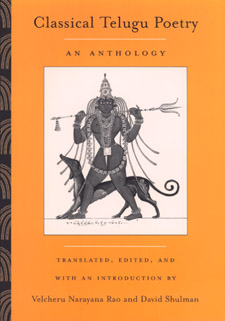 Subjects: Literature | Asian Studies | Hinduism | Poetry | Folklore and Mythology | South Asia | Social Theory | Asian LiteratureThis groundbreaking anthology opens a window on a thousand years of classical poetry in Telugu, the mellifluous language of Andhra Pradesh in southern India. The classical tradition in Telugu is one of the richest yet least explored of all South Asian literatures. This authoritative volume, the first anthology of classical Telugu poetry in English, gives an overview of one of the world's most creative poetic traditions. Velcheru Narayana Rao and David Shulman have brought together mythological, religious, and secular texts by twenty major poets who wrote between the eleventh and nineteenth centuries. The beautifully translated selections are often dramatic and unexpected in tone and effect, and sometimes highly personal. The authors have provided an informative, engaging introduction, fleshing out the history of Telugu literature, situating its poets in relation to significant literary themes and historical developments, and discussing the relationship between Telugu and the classical literature and poetry of Sanskrit.
-
Dao De Jing is one of the richest, most suggestive, and most popular works of philosophy and literature. Composed in China between the late sixth and the late fourth centuries b.c., its enigmatic verses have inspired artists, philosophers, poets, religious thinkers, and general readers down to our own times. This new translation, both revelatory and authentic, captures much of the beauty and nuance of the original work. In an extensive and accessible commentary to his translation, Moss Roberts reveals new depths of Dao De Jing. This edition is distinguished by the literary quality of the translation, its new renderings for a number of the stanzas, and by Roberts's knowledgeable contextualizations. Utilizing recently discovered manuscripts and Chinese scholarship based on them, he is able to shed new light on the work's historical and philosophical contexts. This translation shows that Dao De Jing is far more than a work of personal inspiration; it is also a work of universal scope that makes penetrating comments on politics, statecraft, cosmology, aesthetics, and ethics. Roberts brings these themes to our attention, shows how they are integrated into the work as a whole, and demonstrates the relevance of these topics for our own times.
-
 In this collection of passionately argued essays, the internationally acclaimed poet and critic Wai-lim Yip calls Western scholarship to account for its treacherous representation of non-Western literature. Yip moves from Plato to Hans-Georg Gadamer, from Chuang-tzu to Mao Tse-tung, from John Donne to Robert Creeley, as he attempts to create a double consciousness that includes the state of mind of the original author and the expressive potentials of the target language. He aims, first, to expose the types of distortions that have occurred in the process of translation from one language to another and, second, to propose guidelines that will prevent this kind of linguistic violence in the future.
-
 This historical novel, Encounter (Mannam), by Hahn Moo-Sook, one of Asia's most honored writers, is a story of the resilience in the Korean spirit. It is told through the experiences of Tasan, a high-ranking official and foremost Neo-Confucian scholar at the beginning of the nineteenth century. Because of Tasan's fascination with Western learning, then synonymous with Catholicism, he is exiled to a remote province for 18 years. In banishment he meets people from various social and religious backgrounds - Buddhist monks, peasants, shamans - whom he would not otherwise have met. The events of Tasan's life are effectively used to depict the confluence of Buddhist, Neo-Confucian, Taoist, and shamanistic beliefs in traditional Korea.A subplot involves three young sisters, the daughters of a prominent Catholic aristocrat, and affords the reader vivid glimpses into Yi-dynasty women's lives, particularly those of palace ladies, scholars' wives, tavern keepers, shamans, and slaves. In contrast to the long-held Confucian stereotype of female subservience, this story illustrates the richness of women's contribution to Korean culture and tradition.Encounter's detailed narrative provides a broad and informed view of nineteenth-century Korea, making it a highly useful book for courses on Korean literature and society. It will also be an engaging read for lovers of historical fiction.
-
 Subjects: Literature | Fiction | Language and Linguistics | Asian Literature | Folklore and Mythology | South AsiaThis book of oral tales from the south Indian region of Kannada represents the culmination of a lifetime of research by A. K. Ramanujan, one of the most revered scholars and writers of his time. The result of over three decades' labor, this long-awaited collection makes available for the first time a wealth of folktales from a region that has not yet been adequately represented in world literature. Ramanujan's skill as a translator, his graceful writing style, and his profound love and understanding of the subject enrich the tales that he collected, translated, and interpreted.With a written literature recorded from about 800 A.D., Kannada is rich in mythology, devotional and secular poetry, and more recently novels and plays. Ramanujan, born in Mysore in 1929, had an intimate knowledge of the language. In the 1950s, when working as a college lecturer, he began collecting these tales from everyone he could - servants, aunts, schoolteachers, children, carpenters, tailors. In 1970 he began translating and interpreting the tales, a project that absorbed him for the next three decades. When Ramanujan died in 1993, the translations were complete and he had written notes for about half of the tales.With its unsentimental sympathies, its laughter, and its delightfully vivid sense of detail, the collection stands as a significant and moving monument to Ramanujan's memory as a scholar and writer.
-
Jing Wang offers the first overview of the feverish decade of the 1980s in China, from early reexaminations of Maoism through the crackdown in Tiananmen Square. Wang's energetic, creative, and highly intelligent take on Chinese culture provides a broad portrait of the post-revolutionary era and a provocative inquiry into the nature of Chinese modernity.In seven linked essays, the author examines the cultural dynamics that have given rise to the epochal discourse. She traces the Chinese Marxists' short debate over "socialist alienation" and examines the various schools of thought - Li Zehou and the Marxist Reconstruction of Confucianism, the neo-Confucian Revivalists, and the Enlightenment School - that came into play in the Culture Fever. She also critiques the controversial mini-series Yellow River Elegy. In mapping out China's post-revolutionary aesthetics, Wang introduces the debate over "pseudo-modernism," refutes the pseudo-proposition of "Chinese postmodernism," and looks at the dawning of popular culture in the 1990s.This book delivers a ten-year intertwined history of Chinese intellectuals, writers, literary critics, and cultural critics that gives us a deeper understanding of the China of the 1980s, the 1990s, and beyond.
-
 Subjects: Literature | Asian LiteratureChinese intellectuals of the early twentieth century were attracted to realism primarily as a tool for social regeneration. Realism encouraged writers to adopt the stance of the independent cultural critic and drew into the compass of serious literature the disenfranchised "others" of Chinese society. As historical pressures forced new ideological commitments in the late twenties and thirties, however, writers grew suspicious both of the "individualism" implicit in the realist model and of the often superficial nature of the sympathies that their fiction evoked in the middle class. Anderson argues that realism must be defined negatively as a "discourse of limitations" and is of minimal utility in the Chinese search for political and cultural empowerment. He shows how hesitations about the realist model affect the fiction of four representative authors, Lu Xun, Ye Shaojun, Mao Dun, and Zhang Tianyi. He also considers the demise of critical realism in the face of a new collectivist understanding of Chinese reality.
-
 Kepner's selection shows the many ways fiction has mirrored the lives of Thai women over the twentieth century. The spectrum is broad, encompassing the young and the old, the rural and the cosmopolitan, the privileged and the poor. Some writers address previously unacceptable themes: female sexuality, spousal abuse, gender oppression. Others display a scintillating sense of humor. They touch on many themes - injustice, the heartlessness of society, loneliness, the difficult choices that life presents. Susan Kepner's lyrical, faithful translations preserve the tenor and resonances of these voices, many of which will be heard for the first time by English-speaking readers.
-
Subjects: Literature | China | Asian Literature | Asian History | Cultural Anthropology | Postcolonial Studies | Japan | Comparative Literature | Literary Theory and CriticismShu-mei Shih's study is the first book in English to offer a comprehensive account of Chinese literary modernism from Republican China. In The Lure of the Modern, Shih argues for the contextualization of Chinese modernism in the semicolonial cultural and political formation of the time. Engaging critically with theories of modernism, postcoloniality, and global and local cultural studies, Shih analyzes pivotal issues - such as psychoanalysis, decadence, Orientalism, Occidentalism, semicolonial subjectivity, cosmopolitanism, and urbanism - that were mediated by Japanese as well as Western modernisms.
-
 Lady Hyegyong's memoirs, which recount the chilling murder of her husband by his father, is one of the best known and most popular classics of Korean literature. From 1795 until 1805 Lady Hyegyong composed this masterpiece, which depicts a court life whose drama and pathos is of Shakespearean proportions. Presented in its social, cultural, and historical contexts, this first complete English translation opens a door into a world teeming with conflicting passions, political intrigue, and the daily preoccupations of a deeply intelligent and articulate woman.JaHyun Kim Haboush's accurate, fluid translation captures the intimate and expressive voice of this consummate storyteller. The Memoirs of Lady Hyegyong is a unique exploration of Korean selfhood and of how the genre of autobiography fared in premodern times.
-
Subjects: Asian Studies | History | South Asia | Language and Linguistics | Asian History | Asian LiteratureWhy would love for their language lead several men in southern India to burn themselves alive in its name? Passions of the Tongue analyzes the discourses of love, labor, and life that transformed Tamil into an object of such passionate attachment, producing in the process one of modern India's most intense movements for linguistic revival and separatism. Sumathi Ramaswamy suggests that these discourses cannot be contained within a singular metanarrative of linguistic nationalism and instead proposes a new analytic, "language devotion." She uses this concept to track the many ways in which Tamil was imagined by its speakers and connects these multiple imaginings to their experience of colonial and post-colonial modernity. Focusing in particular on the transformation of the language into a goddess, mother, and maiden, Ramaswamy explores the pious, filial, and erotic aspects of Tamil devotion. She considers why, as its speakers sought political and social empowerment, metaphors of motherhood eventually came to dominate representations of the language.
-
 The shishosetsu is a Japanese form of autobiographical fiction that flourished during the first two decades of this century. Focusing on the works of Chikamatsu Shuko, Shiga Naoya, and Kasai Zenzo, Edward Fowler explores the complex and paradoxical nature of shishosetsu, and discusses its linguistic, literary and cultural contexts.
-
 Breaking through the long-established image of Heian Japan (794-1185) as a culture dominated by ritualized aristocratic values, Yung-Hee Kim presents the picture of a country in transition, filled with a wide variety of common people responding to very ordinary situations. In popular songs called imayo, they expressed their concerns about religion, love, aging, and even current affairs.In 1179 Emperor Go-Shirakawa compiled Ryojin hisho, a twenty-volume collection of this song genre that juxtaposes the sacred with the profane, the high with the low, the male with the female, the old with the new. Kim makes these songs the core of her book, in translations that faithfully reflect the sounds and images of the originals and bring them to life within their own literary and cultural context.
-
Subjects: Literature | Asian Literature | Comparative Literature | Poetry | Anthropology | Asian Studies | ChinaYunte Huang takes a most original "ethnographic" approach to more and less well-known American texts as he traces what he calls the transpacific displacement of cultural meanings through twentieth-century America's imaging of Asia. Informed by the politics of linguistic appropriation and disappropriation, <I>Transpacific Displacement </I>opens with a radically new reading of Imagism through the work of Ezra Pound and Amy Lowell. Huang relates Imagism to earlier linguistic ethnographies of Asia and to racist representations of Asians in American pop culture, such as the book and movie character Charlie Chan, then shows that Asian American writers subject both literary Orientalism and racial stereotyping to double ventriloquism and countermockery. Going on to offer a provocative critique of some textually and culturally homogenizing tendencies exemplified in Maxine Hong Kingston's work and its reception, Huang ends with a study of American translations of contemporary Chinese poetry, which he views as new ethnographies that maintain linguistic and cultural boundaries.
-
Subjects: Literature | Ethnic Studies | African American Studies | Asian Literature | Native American StudiesWriting Tricksters examines the remarkable resurgence of tricksters - ubiquitous shape-shifters who dwell on borders, at crossroads, and between worlds - on the contemporary cultural and literary scene. Depicting a chaotic, multilingual world of colliding and overlapping cultures, many of America's most successful and important women writers are writing tricksters. Taking up works by Maxine Hong Kingston, Louise Erdrich, and Toni Morrison, Jeanne Rosier Smith accessibly weaves together current critical discourses on marginality, ethnicity, feminism, and folklore, illuminating a "trickster aesthetic" central to non-Western storytelling traditions and powerfully informing American literature today.
Asian Studies (88)
-
What forces were behind Japan's emergence as the first non-Western colonial power at the turn of the twentieth century? Peter Duus brings a new perspective to Meiji expansionism in this pathbreaking study of Japan's acquisition of Korea, the largest of its colonial possessions. He shows how Japan's drive for empire was part of a larger goal to become the economic, diplomatic, and strategic equal of the Western countries who had imposed a humiliating treaty settlement on the country in the 1850s.Duus maintains that two separate but interlinked processes, one political/military and the other economic, propelled Japan's imperialism. Every attempt at increasing Japanese political influence licensed new opportunities for trade, and each new push for Japanese economic interests buttressed, and sometimes justified, further political advances. The sword was the servant of the abacus, the abacus the agent of the sword.While suggesting that Meiji imperialism shared much with the Western colonial expansion that provided both model and context, Duus also argues that it was "backward imperialism" shaped by a sense of inferiority vis-à-vis the West. Along with his detailed diplomatic and economic history, Duus offers a unique social history that illuminates the motivations and lifestyles of the overseas Japanese of the time, as well as the views that contemporary Japanese had of themselves and their fellow Asians.
-
What does it mean to worship beings that one believes are completely indifferent to, and entirely beyond the reach of, any form of worship whatsoever? How would such a relationship with sacred beings affect the religious life of a community? Using these questions as his point of departure, Lawrence A. Babb explores the ritual culture of image-worshipping Svetambar Jains of the western Indian states of Gujarat and Rajasthan.Jainism traces its lineages back to the ninth century B.C.E. and is, along with Buddhism, the only surviving example of India's ancient non-Vedic religious traditions. It is known and celebrated for its systematic practice of non-violence and for the intense rigor of the asceticism it promotes. A unique aspect of Babb's study is his linking of the Jain tradition to the social identity of existing Jain communities.Babb concludes by showing that Jain ritual culture can be seen as a variation on pan-Indian ritual patterns. In illuminating this little-known religious tradition, he demonstrates that divine "absence" can be as rich as divine "presence" in its possibilities for informing a religious response to the cosmos.
-
In Erik Mueggler's powerful and imaginative ethnography, a rural minority community in the mountains of Southwest China struggles to find its place at the end of a century of violence and at the margins of a nation-state. Here, people describe the present age, beginning with the Great Leap Famine of 1958-1960 and continuing through the 1990s, as "the age of wild ghosts." Their stories of this age converge on a dream of community - a bad dream, embodied in the life, death, and reawakening of a single institution: a rotating headman-ship system that expired violently under the Maoist regime. Displaying a sensitive understanding of both Chinese and the Tibeto-Burman language spoken in this region, Mueggler explores memories of this institution, including the rituals and poetics that once surrounded it and the bitter conflicts that now haunt it.To exorcise "wild ghosts," he shows, is nothing less than to imagine the state and its power, to trace the responsibility for violence to its morally ambiguous origins, and to enunciate calls for justice and articulate longings for reconciliation.
-
Subjects: Anthropology | African Studies | Asian Studies | Ethnic Studies | Gender Studies | History | Sociology | Media Studies | ReligionGenocide is one of the most pressing issues that confronts us today. Its death toll is staggering: over one hundred million dead. Because of their intimate experience in the communities where genocide takes place, anthropologists are uniquely positioned to explain how and why this mass annihilation occurs and the types of devastation genocide causes. This ground breaking book, the first collection of original essays on genocide to be published in anthropology, explores a wide range of cases, including Nazi Germany, Cambodia, Guatemala, Rwanda, and Bosnia.
-
In the Japanese labor movement of the early twentieth century, no one captured the public imagination as vividly as Osugi Sakae (1885-1923): rebel, anarchist, and martyr. Flamboyant in life, dramatic in death, Osugi came to be seen as a romantic hero fighting the oppressiveness of family and society.Osugi helped to create this public persona when he published his autobiography (Jijoden) in 1921-22. Now available in English for the first time, this work offers a rare glimpse into a Japanese boy's life at the time of the Sino-Japanese (1894-95) and the Russo-Japanese (1904-5) wars. It reveals the innocent - and not-so-innocent - escapades of children in a provincial garrison town and the brutalizing effects of discipline in military preparatory schools. Subsequent chapters follow Osugi to Tokyo, where he discovers the excitement of radical thought and politics.Byron Marshall rounds out this picture of the early Osugi with a translation of his Prison Memoirs (Gokuchuki), originally published in 1919. This essay, one of the world's great pieces of prison writing, describes in precise detail the daily lives of Japanese prisoners, especially those incarcerated for political crimes.
-
The role of markets in linking local communities to larger networks of commerce, culture, and political power is the central element in Anand A. Yang's provocative and original study. Yang uses bazaars in the northeast Indian state of Bihar during the colonial period as the site of his investigation. The bazaar provides a distinctive locale for posing fundamental questions regarding indigenous societies under colonialism and for highlighting less familiar aspects of colonial India.At one level, Yang reconstructs Bihar's marketing system, from its central place in the city of Patna down to the lowest rung of the periodic markets. But he also concentrates on the dynamics of exchanges and negotiations between different groups and on what can be learned through the "voices" of people in the bazaar: landholders, peasants, traders, and merchants. Along the way, Yang uncovers a wealth of details on the functioning of rural trade, markets, fairs, and pilgrimages in Bihar.A key contribution of Bazaar India is its many-stranded narrative history of some of South Asia's primary actors over the past two centuries. But Yang's approach is not that of a detached observer; rather, his own voice is engaged with the voices of the past and with present-day historians. By focusing on the world beyond the mud walls of the village, he widens the imaginative geography of South Asian history. Readers with an interest in markets, social history, culture, colonialism, British India, and historiographic methods will welcome his book.
-
Subjects: Anthropology | Cultural Anthropology | Medical Anthropology | Sociology | Gender Studies | Hinduism | South Asia | Asian StudiesEven childbirth is affected by globalization - and in India, as elsewhere, the trend is away from home births, assisted by midwives, toward hospital births with increasing reliance on new technologies. And yet, as this work of critical feminist ethnography clearly demonstrates, the global spread of biomedical models of childbirth has not brought forth one monolithic form of "modern birth." Focusing on the birth experiences of lower-class women in the South Indian state of Tamil Nadu, Birth on the Threshold reveals the complex and unique ways in which modernity emerges in local contexts. Through vivid description and animated dialogue, this book conveys the birth stories of the women of Tamil Nadu in their own voices, emphasizing their critiques of and aspirations for modern births today. In light of these stories, author Cecilia Van Hollen explores larger questions about how the structures of colonialism and postcolonial international and national development have helped to shape the form and meaning of birth for Indian women today. Ultimately, her book poses the question: How is gender - especially maternity - reconfigured as birth is transformed?
-
 In the early part of this century, the discovery of a walled-up cave in northwest China led to the retrieval of a lost early Ch'an (Zen) literature of the T'ang dynasty (618-907). One of the recovered Zen texts was a seven-piece collection, the Bodhidharma Anthology. Of the numerous texts attributed to Bodhidharma, this anthology is the only one generally believed to contain authentic Bodhidharma material.Jeffrey L. Broughton provides a reliable annotated translation of the Bodhidharma Anthology along with a detailed study of its nature, content, and background. His work is especially important for its rendering of the three Records, which contain some of the earliest Zen dialogues and constitute the real beginnings of Zen literature.The vivid dialogues and sayings of Master Yuan, a long-forgotten member of the Bodhidharma circle, are the hallmark of the Records. Master Yuan consistently criticizes reliance on the Dharma, on teachers, on meditative practice, and on scripture, all of which lead to self-deception and confusion, he says. According to Master Yuan, if one has spirit and does not seek anything, including the teachings of Buddhism, then one will attain the quietude of liberation. The boldness in Yuan's utterances prefigures much of the full-blown Zen tradition we recognize today.Broughton utilizes a Tibetan translation of the Bodhidharma Anthology as an informative gloss on the Chinese original. Placing the anthology within the context of the Tun-huang Zen manuscripts as a whole, he proposes a new approach to the study of Zen, one that concentrates on literary history, a genealogy of texts rather than the usual genealogy of masters.
-
 Broken Silence brings together for the first time many of Japan's leading feminists, women who have been bucking the social mores of a patriarchal society for years but who remain virtually unknown outside Japan. While Japan is often thought to be without a significant feminist presence, these interviews and essays reveal a vital community of women fighting for social change.Sandra Buckley's dialogues with poets, journalists, teachers, activists, and businesswomen exemplify the diversity of Japanese feminism: we meet Kanazumi Fumiko, a lawyer who assists women in a legal system that has long discriminated against them; Kora Rumiko, a poet who reclaims and redefines language to convey her experiences as a woman; Nakanishi Toyoko, founder of the Japanese Women's Bookstore; and Ueno Chizuko, a professor who has tackled such issues as pornography and abortion reform both in and out of the academy.These women speak to a host of issues - the politics of language, the treatment of women in medicine and law, the deeply entrenched role of women as mothers and caregivers, the future of feminism in Japan, and the relationship between Japanese feminists and "western" feminisms. Broken Silence will do much to dispel Western stereotypes about Japanese women and challenge North American attitudes about feminism abroad. With a timeline, glossary, and comprehensive list of feminist organizations, this is a long overdue collection sure to inform and excite all those interested in feminism and Japan.
-
-
From the "Red Menace" to Tiananmen Square, the United States and China have long had an emotionally tumultuous relationship. Richard Madsen's frank and innovative examination of the moral history of U.S.-China relations targets the forces that have shaped this surprisingly strong tie between two strikingly different nations. Combining his expertise as a sinologist with the vision of America developed in Habits of the Heart and The Good Society, Madsen studies the cultural myths that have shaped the perceptions of people of both nations for the past twenty-five years.The dominant American myth about China, born in the 1960s, foresaw Western ideals of economic, intellectual, and political freedom emerging triumphant throughout the world. Nixon's visit to China nurtured this idea, and by the 1980s it was helping to sustain America's hopefulness about its own democratic identity. Meanwhile, Chinese popular culture has focused on the U.S., especially American consumer goods - Coca-Cola was described by the People's Daily as "capitalism concentrated in a bottle."Today we face a new global institutional and cultural environment in which the old myths no longer work for either Americans or Chinese. Madsen provides a framework for us to think about the relationship between democratic ideals and economic/political realities in the post-Cold War world. What he proposes is no less than the foundation for building a public philosophy for the emerging world order.
-
 After suffering isolation and persecution during the Maoist era, the Catholic Church in China has reemerged with astonishing vitality in recent years. Richard Madsen focuses on this revival and relates it to the larger issue of the changing structure of Chinese society, particularly to its implications for the development of a "civil society."Madsen knows China well and has spent extensive time there interviewing Chinese Catholics both young and old, the "true believers" and the less devout. Their stories reveal the tensions that have arisen even as political control over everyday life in China has loosened. Of particular interest are the rural-urban split in the church, the question of church authority, and the divisions between public and underground practices of church followers.All kinds of religious groups have revived and flourished in the post-Mao era. Protestants, Buddhists, Daoists, practitioners of folk religions, even intellectuals seeking more secularized answers to "ultimate" concerns are engaged in spiritual quests. Madsen is interested in determining if such quests contain the resources for constructing a more humane political order in China. Will religion contribute to or impede economic modernization? What role will the church play in the pluralization of society? The questions he raises in China's Catholics are important not only for China's political future but for all countries in transition from political totalitarianism.
-
-
 Three American missiles hit the Chinese embassy in Belgrade, and what Americans view as an appalling and tragic mistake, many Chinese see as a "barbaric" and intentional "criminal act," the latest in a long series of Western aggressions against China. In this book, Peter Hays Gries explores the roles of perception and sentiment in the growth of popular nationalism in China. At a time when the direction of China's foreign and domestic policies have profound ramifications worldwide, Gries offers a rare, in-depth look at the nature of China's new nationalism, particularly as it involves Sino-American and Sino-Japanese relations - two bilateral relations that carry extraordinary implications for peace and stability in the twenty-first century. Through recent Chinese books and magazines, movies, television shows, posters, and cartoons, Gries traces the emergence of this new nationalism. Anti-Western sentiment, once created and encouraged by China's ruling PRC, has been taken up independently by a new generation of Chinese. Deeply rooted in narratives about past "humiliations" at the hands of the West and impassioned notions of Chinese identity, popular nationalism is now undermining the Communist Party's monopoly on political discourse, threatening the regime's stability. As readable as it is closely researched and reasoned, this timely book analyzes the impact that popular nationalism will have on twenty-first century China and the world.
-
Subjects: Literature | Asian Studies | Hinduism | Poetry | Folklore and Mythology | South Asia | Social Theory | Asian LiteratureThis groundbreaking anthology opens a window on a thousand years of classical poetry in Telugu, the mellifluous language of Andhra Pradesh in southern India. The classical tradition in Telugu is one of the richest yet least explored of all South Asian literatures. This authoritative volume, the first anthology of classical Telugu poetry in English, gives an overview of one of the world's most creative poetic traditions. Velcheru Narayana Rao and David Shulman have brought together mythological, religious, and secular texts by twenty major poets who wrote between the eleventh and nineteenth centuries. The beautifully translated selections are often dramatic and unexpected in tone and effect, and sometimes highly personal. The authors have provided an informative, engaging introduction, fleshing out the history of Telugu literature, situating its poets in relation to significant literary themes and historical developments, and discussing the relationship between Telugu and the classical literature and poetry of Sanskrit.
-
Subjects: American Studies | United States History | American Literature | Asian American Studies | Asian StudiesIn the years following World War II, American writers and artists produced a steady stream of popular stories about Americans living, working, and traveling in Asia and the Pacific. Meanwhile the U.S., competing with the Soviet Union for global power, extended its reach into Asia to an unprecedented degree. This book reveals that these trends - the proliferation of Orientalist culture and the expansion of U.S. power - were linked in complex and surprising ways. While most cultural historians of the Cold War have focused on the culture of containment, Christina Klein reads the postwar period as one of international economic and political integration - a distinct chapter in the process of U.S.-led globalization. Through her analysis of a wide range of texts and cultural phenomena - including Rodgers and Hammerstein's South Pacific and The King and I, James Michener's travel essays and novel Hawaii, and Eisenhower's People-to-People Program - Klein shows how U.S. policy makers, together with middlebrow artists, writers, and intellectuals, created a culture of global integration that represented the growth of U.S. power in Asia as the forging of emotionally satisfying bonds between Americans and Asians. Her book enlarges Edward Said's notion of Orientalism in order to bring to light a cultural narrative about both domestic and international integration that still resonates today.
-
Peter Zinoman's original and insightful study focuses on the colonial prison system in French Indochina and its role in fostering modern political consciousness among the Vietnamese. Using prison memoirs, newspaper articles, and extensive archival records, Zinoman presents a wealth of significant new information to document how colonial prisons, rather than quelling political dissent and maintaining order, instead became institutions that promoted nationalism and revolutionary education.
-
In this innovative analysis of medicine and disease in colonial India, David Arnold explores the vital role of the state in medical and public health activities, arguing that Western medicine became a critical battleground between the colonized and the colonizers.Focusing on three major epidemic diseases - smallpox, cholera, and plague - Arnold analyzes the impact of medical interventionism. He demonstrates that Western medicine as practiced in India was not simply transferred from West to East, but was also fashioned in response to local needs and Indian conditions.By emphasizing this colonial dimension of medicine, Arnold highlights the centrality of the body to political authority in British India and shows how medicine both influenced and articulated the intrinsic contradictions of colonial rule.
-
Corruption is increasingly recognized as a preeminent problem in the developing world. Bribery, extortion, fraud, kickbacks, and collusion have resulted in retarded economies, predator elites, and political instability. In this lively and absorbing book, Robert Klitgaard provides a framework for designing anti-corruption policies, and describes through five case studies how courageous policymakers were able to control corruption.
-
Subjects: Ethnic Studies | Asian Studies | Anthropology | Social Science | Asian American Studies | ChinaThis anthology of autobiographical essays reveals the human side of the Chinese diaspora. Written by ethnic Chinese who were born or raised outside of China, these moving pieces, full of the poignant details of everyday life, describe the experience of growing up as a visible minority and the subsequent journey each author made to China. The authors - whose diverse backgrounds in countries such as New Zealand, Denmark, Sri Lanka, England, Indonesia, and the United States mirror the complex global scope of the Chinese diaspora - describe in particular how their journey to the country of their ancestors transformed their sense of what it means to be Chinese. The collection as a whole provides important insights into what ethnic identity has come to mean in our transnational era. Among the pieces is Brad Wong's discussion of his visit to his grandfather's poverty-stricken village in China's southern Guangdong province. He describes working with a few of the peasants tilling vegetables and compares life in the village with his middle-class upbringing in a San Francisco suburb. In another essay, Milan Lin-Rodrigo tells of her life in Sri Lanka and of the trip she made to China as an adult. She describes the difficult and sometimes humorous cultural differences she experienced when she met her Chinese half-sister and her father's first wife. Josephine Khu's lively afterword provides background information on the Chinese diaspora and gives a theoretical framework for understanding the issues raised in the essays. This intimate and rich anthology will be compelling reading for all who are seeking answers to the increasingly complex issue of ethnic and personal identity.
-
This collection of ten essays on Banaras, one of the largest urban centers in India's eastern Gangetic plain, is united by a common interest in examining everyday activities in order to learn about shared values and motivations, processes of identity formation, and self-conscious constructions of community. Part One examines the performance genres that have drawn audiences from throughout the city. Part Two focuses on the areas of neighborhood, leisure, and work, examining the processes by which urban residents use a sense of identity to organize their activities and bring meaning to their lives. Part Three links these experiences within Banaras to a series of "larger worlds," ranging from language movements and political protests to disease ecology and regional environmental impact. Banaras is a complex world, with differences in religion, caste, class, language, and popular culture; the diversity of these essays embraces those differences. It is a collection that will interest scholars and students of South Asia as well as anyone interested in comparative discussions of popular culture.
-
In this collection of passionately argued essays, the internationally acclaimed poet and critic Wai-lim Yip calls Western scholarship to account for its treacherous representation of non-Western literature. Yip moves from Plato to Hans-Georg Gadamer, from Chuang-tzu to Mao Tse-tung, from John Donne to Robert Creeley, as he attempts to create a double consciousness that includes the state of mind of the original author and the expressive potentials of the target language. He aims, first, to expose the types of distortions that have occurred in the process of translation from one language to another and, second, to propose guidelines that will prevent this kind of linguistic violence in the future.
-
This book explores Japan's "scientific colonialism" through a careful study of the changing roles of Taiwanese doctors under Japanese colonial rule. By integrating individual stories based on interviews and archival materials with discussions of political and social theories, Ming-cheng Lo unearths the points of convergence for medicine and politics in colonial Taiwan.
-
This thoughtfully organized survey of Japan's early modern period (1568-1868) is a remarkable blend of political, economic, intellectual, literary, and cultural history. The only truly comprehensive study in English of the Tokugawa period, it also introduces a new ecological perspective, covering natural disasters, resource use, demographics, and river control.
-
Echoes of the Past, Epics of Dissent, the story of a South Korean social movement, offers a window to a decade of tumultuous social protest in a postcolonial, divided nation. Abelmann brings a dramatic chapter of modern Korean history to life - a period in which farmers, student activists, and organizers joined to protest the corporate ownership of tenant plots never distributed in the 1949 Land Reform.From public sites of protest to backstage meetings and negotiations, from farming villages to university campuses, Abelmann's highly original study explores this movement as a complex process always in the making. Her discussion moves fluently between past and present, local and national, elites and dominated, and urban and rural. Touching on major historical issues, this ethnography of dissent explores contemporary popular nationalism and historical consciousness.
-

-
This book brings the study of gender to Chinese medicine and in so doing contextualizes Chinese medicine in history. It examines the rich but neglected tradition of fuke, or medicine for women, over the seven hundred years between the Song and the end of the Ming dynasty. Using medical classics, popular handbooks, case histories, and belles lettres, it explores evolving understandings of fertility and menstruation, gestation and childbirth, sexuality, and gynecological disorders.Furth locates medical practice in the home, where knowledge was not the monopoly of the learned physician and male doctors had to negotiate the class and gender boundaries of everyday life. Women as healers and as patients both participated in the dominant medical culture and sheltered a female sphere of expertise centered on, but not limited to, gestation and birth. Ultimately, her analysis of the relationship of language, text, and practice reaches beyond her immediate subject to address theoretical problems that arise when we look at the epistemological foundations of our knowledge of the body and its history.
-
With a wedding impending, the Taiwanese bride-to-be turns to bridal photographers, makeup artists, and hair stylists to transform her image beyond recognition. They give her fairer skin, eyes like a Western baby doll, and gowns inspired by sources from Victorian England to MTV. An absorbing consideration of contemporary bridal practices in Taiwan, Framing the Bride shows how the lavish photographs represent more than mere conspicuous consumption. They are artifacts infused with cultural meaning and emotional significance, products of the gender- and generation-based conflicts in Taiwan's hybrid system of modern matrimony. From the bridal photographs, the book opens out into broader issues such as courtship, marriage, kinship, globalization, and the meaning of the "West" and "Western" cultural images of beauty. Bonnie Adrian argues that in compiling enormous bridal albums full of photographs of brides and grooms in varieties of finery, posed in different places, and exuding romance, Taiwanese brides engage in a new rite of passage - one that challenges the terms of marriage set out in conventional wedding rites. In Framing the Bride, we see how this practice is also a creative response to U.S. domination of transnational visual imagery - how bridal photographers and their subjects take the project of globalization into their own hands, defining its terms for their lives even as they expose the emptiness of its images.
-
Subjects: Anthropology | Medical Anthropology | East Asia Other | Ethnomusicology | Asian Studies | Cultural Anthropology | Medicine | MusicologyMusic and dance play a central role in the "healing arts" of the Senoi Temiar, a group of hunters and horticulturalists dwelling in the rainforest of peninsular Malaysia. As musicologist and anthropologist, Marina Roseman recorded and transcribed Temiar rituals, while as a member of the community she became a participant and even a patient during the course of her two-year stay. She shows how the sounds and gestures of music and dance acquire a potency that can transform thoughts, emotions, and bodies.
-
Jing Wang offers the first overview of the feverish decade of the 1980s in China, from early reexaminations of Maoism through the crackdown in Tiananmen Square. Wang's energetic, creative, and highly intelligent take on Chinese culture provides a broad portrait of the post-revolutionary era and a provocative inquiry into the nature of Chinese modernity.In seven linked essays, the author examines the cultural dynamics that have given rise to the epochal discourse. She traces the Chinese Marxists' short debate over "socialist alienation" and examines the various schools of thought - Li Zehou and the Marxist Reconstruction of Confucianism, the neo-Confucian Revivalists, and the Enlightenment School - that came into play in the Culture Fever. She also critiques the controversial mini-series Yellow River Elegy. In mapping out China's post-revolutionary aesthetics, Wang introduces the debate over "pseudo-modernism," refutes the pseudo-proposition of "Chinese postmodernism," and looks at the dawning of popular culture in the 1990s.This book delivers a ten-year intertwined history of Chinese intellectuals, writers, literary critics, and cultural critics that gives us a deeper understanding of the China of the 1980s, the 1990s, and beyond.
-

-
The Huang Di nei jing su wen, known familiarly as the Su wen, is a seminal text of ancient Chinese medicine, yet until now there has been no comprehensive, detailed analysis of its development and contents. At last Paul U. Unschuld offers entry into this still-vital artifact of China's cultural and intellectual past. Unschuld traces the history of the Su wen to its origins in the final centuries B.C.E., when numerous authors wrote short medical essays to explain the foundations of human health and illness on the basis of the newly developed vessel theory. He examines the meaning of the title and the way the work has been received throughout Chinese medical history, both before and after the eleventh century when the text as it is known today emerged. Unschuld's survey of the contents includes illuminating discussions of the yin-yang and five-agents doctrines, the perception of the human body and its organs, qi and blood, pathogenic agents, concepts of disease and diagnosis, and a variety of therapies, including the new technique of acupuncture. An extensive appendix, furthermore, offers a detailed introduction to the complicated climatological theories of Wu yun liu qi ("five periods and six qi"), which were added to the Su wen by Wang Bing in the Tang era. In an epilogue, Unschuld writes about the break with tradition and innovative style of thought represented by the Su wen. For the first time, health care took the form of "medicine," in that it focused on environmental conditions, climatic agents, and behavior as causal in the emergence of disease and on the importance of natural laws in explaining illness. Unschuld points out that much of what we surmise about the human organism is simply a projection, reflecting dominant values and social goals, and he constructs a hypothesis to explain the formation and acceptance of basic notions of health and disease in a given society. Reading the Su wen, he says, not only offers a better understanding of the roots of Chinese medicine as an integrated aspect of Chinese civilization; it also provides a much needed starting point for discussions of the differences and parallels between European and Chinese ways of dealing with illness and the risk of early death.
-
With Imagining Karma, Gananath Obeyesekere embarks on the very first comparison of rebirth concepts across a wide range of cultures. Exploring in rich detail the beliefs of small-scale societies of West Africa, Melanesia, traditional Siberia, Canada, and the northwest coast of North America, Obeyesekere compares their ideas with those of the ancient and modern Indic civilizations and with the Greek rebirth theories of Pythagoras, Empedocles, Pindar, and Plato. His groundbreaking and authoritative discussion decenters the popular notion that India was the origin and locus of ideas of rebirth. As Obeyesekere compares responses to the most fundamental questions of human existence, he challenges readers to reexamine accepted ideas about death, cosmology, morality, and eschatology. Obeyesekere's comprehensive inquiry shows that diverse societies have come through independent invention or borrowing to believe in reincarnation as an integral part of their larger cosmological systems. The author brings together into a coherent methodological framework the thought of such diverse thinkers as Weber, Wittgenstein, and Nietzsche. In a contemporary intellectual context that celebrates difference and cultural relativism, this book makes a case for disciplined comparison, a humane view of human nature, and a theoretical understanding of "family resemblances" and differences across great cultural divides.
-
The Tolai are among the most distinctive of Papua New Guinea's indigenous peoples. For all their success in the pursuit of modernity, the Tolai remain traditional in their attitudes toward death, the cultural elaboration of which colors almost every aspect of their existence.In his new book, A. L. Epstein develops an emotional profile of the Tolai, contending that societies are distinguished as much by the shape of their emotional life as they are by their social arrangements and cultural styles. Epstein describes a wide range of mourning ceremonies and other more and less public occasions. By investigating not only the words that stand for emotions but also the way affect enters into and informs people's conduct, he charts a new course for ethnography that seeks to integrate the study of the emotions into anthropological analysis.
-
Subjects: Anthropology | Cultural Anthropology | Asian Studies | Medical Anthropology | Ethnic Studies | Gender Studies | Politics | Medicine | SociologyThis exceptional collection of essays breaks new ground by examining the global impact of infertility as a major reproductive health issue, one that has profoundly affected the lives of countless women and men. Based on original research by seventeen internationally acclaimed social scientists, it is the first book to investigate the use of reproductive technologies in non-Western countries. Provocative and incisive, it is the most substantial work to date on the subject of infertility. With infertility as the lens through which a wide range of social issues is explored, the contributors address a far-reaching array of topics: why infertility has been neglected in population studies, how the deeply gendered nature of infertility sets the blame squarely on women's shoulders, how infertility and its treatment transform family dynamics and relationships, and the distribution of medical and marital power. The chapters present informed and sophisticated investigations into cultural perceptions of infertility in numerous countries, including China, India, the nations of sub-Saharan Africa, Vietnam, Costa Rica, Egypt, Israel, the United States, and the nations of Europe. Poised to become the quintessential reference on infertility from an international social science perspective, Infertility around the Globe makes a powerful argument that involuntary childlessness is a complex phenomenon that has far-reaching significance worldwide.
-
Stuart Blackburn takes the reader inside a little-known form of shadow puppetry in this captivating work about performing the Tamil version of the Ramayana epic. Blackburn describes the skill and physical stamina of the puppeteers in Kerala state in South India as they perform all night for as many as ten weeks during the festival season. The fact that these performances often take place without an audience forms the starting point for Blackburn's discussion - one which explores not only this important epic tale and its performance, but also the broader theoretical issues of text, interpretation, and audience.Blackburn demonstrates how the performers adapt the narrative and add their own commentary to re-create the story from a folk perspective. At a time when the Rama story is used to mobilize political movements in India, the puppeteers' elaborate recitation and commentary presents this controversial tale from another ethical perspective, one that advocates moral reciprocity and balance.While the study of folk narrative has until now focused on tales, tellers, and tellings, this work explores the importance of audience - absent or otherwise. Blackburn's elegant translations of the most dramatic and pivotal sequences of the story enhance our appreciation of this unique example of performance art.
-
The "one China" policy officially supported by the People's Republic of China, the United States, and other countries asserts that there is only one China and Taiwan is a part of it. The debate over whether the people of Taiwan are Chinese or independently Taiwanese is, Melissa J. Brown argues, a matter of identity: Han ethnic identity, Chinese national identity, and the relationship of both of these to the new Taiwanese identity forged in the 1990s. In a unique comparison of ethnographic and historical case studies drawn from both Taiwan and China, Brown's book shows how identity is shaped by social experience - not culture and ancestry, as is commonly claimed in political rhetoric.
-
 Japan's Administrative Elite publicA major player in Japanese society is its government bureaucracy. Neither Japan's phenomenal track record in the world marketplace nor its remarkable success in managing its domestic affairs can be understood without insight into how its government bureaucracy works - how its elite administrators are recruited, socialized, and promoted; how they interact among themselves and with other principal players in Japan, notably politicians; how they are rewarded; and what happens to them when they retire at a relatively young age. Yet, despite its pivotal importance, there is no comprehensive and up-to-date study of Japan's administrative elite in the English language. This book seeks to fill that gap.Koh examines patterns of continuity and change, identifies similarities and differences between Japan and four other industrialized democracies (the United States, Britain, France, and Germany), and assesses the implications of the Japanese model of public management. Though many features of Japanese bureaucracy are found in the Western democracies, the degree to which they manifest themselves in Japan appears to be unsurpassed.Koh shows that the Japanese model of public management contains both strengths and weaknesses. For example, the price Japan pays for the high caliber of its administrative elite is the stifling rigidity of a multiple track system, a system with second-class citizens and demoralized "non-career" civil servants who actually bear a lion's share of administrative burden. The Japanese experience demonstrates not only how steep the price of success can be but also the enduring effects of culture over structure.
-

-
In this first social and cultural history of Japan's construction of Manchuria, Louise Young offers an incisive examination of the nature of Japanese imperialism. Focusing on the domestic impact of Japan's activities in Northeast China between 1931 and 1945, Young considers "metropolitan effects" of empire building: how people at home imagined and experienced the empire they called Manchukuo.Contrary to the conventional assumption that a few army officers and bureaucrats were responsible for Japan's overseas expansion, Young finds that a variety of organizations helped to mobilize popular support for Manchukuo - the mass media, the academy, chambers of commerce, women's organizations, youth groups, and agricultural cooperatives - leading to broad-based support among diverse groups of Japanese. As the empire was being built in China, Young shows, an imagined Manchukuo was emerging at home, constructed of visions of a defensive lifeline, a developing economy, and a settler's paradise.
-
Living from 1215 to 1294 Khubilai Khan is one of history's most renowned figures. Here for the first time is an English-language biography of the man. Morris Rossabi draws on sources from a variety of East Asian, Middle Eastern, and European languages as he focuses on the life and times of the great Mongol monarch.
-
Labor and Imperial Democracy in Prewar Japan examines the political role played by working men and women in prewar Tokyo and offers a reinterpretation of the broader dynamics of Japan's prewar political history. Gordon argues that such phenomena as riots, labor disputes, and union organizing can best be understood as part of an early twentieth-century movement for "imperial democracy" shaped by the nineteenth-century drive to promote capitalism and build a modern nation and empire. When the propertied, educated leaders of this movement gained a share of power in the 1920s, they disagreed on how far to go toward incorporating working men and women into an expanded body politic. For their part, workers became ambivalent toward working within the imperial democratic system. In this context, the intense polarization of laborers and owners during the Depression helped ultimately to destroy the legitimacy of imperial democracy.Gordon suggests that the thought and behavior of Japanese workers both reflected and furthered the intense concern with popular participation and national power that has marked Japan's modern history. He points to a post-World War II legacy for imperial democracy in both the organization of the working class movement and the popular willingness to see GNP growth as an index of national glory. Importantly, Gordon shows how historians might reconsider the roles of tenant farmers, students, and female activists, for example, in the rise and transformation of imperial democracy.
-
 Students and teachers of Chinese history and philosophy will not want to miss Daniel Gardner's accessible translation of the teachings of Chu Hsi (1130-1200) - a luminary of the Confucian tradition who dominated Chinese intellectual life for centuries. Homing in on a primary concern of our own time, Gardner focuses on Chu Hsi's passionate interest in education and its importance to individual development.For hundreds of years, every literate person in China was familiar with Chu Hsi's teachings. They informed the curricula of private academies and public schools and became the basis of the state's prestigious civil service examinations. Nor was Chu's influence limited to China. In Korea and Japan as well, his teachings defined the terms of scholarly debate and served as the foundation for state ideology.Chu Hsi was convinced that through education anyone could learn to be fully moral and thus travel the road to sagehood. Throughout his life, he struggled with the philosophical questions underlying education: What should people learn? How should they go about learning? What enables them to learn? What are the aims and the effects of learning?Part One of Learning to Be a Sage examines Chu Hsi's views on learning and how he arrived at them. Part Two presents a translation of the chapters devoted to learning in the Conversations of Master Chu.
-
 Bringing together fifteen essays by outstanding Buddhist scholars from Asia, Europe, and North America, this book offers a distinctive portrayal of the "life of Buddhism." The contributors focus on a number of religious practices across the Buddhist world, from Sri Lanka to New York, Japan to Tibet. The essays highlight not so much Buddhist doctrine or sacred texts, but rather the actual behavior and lived experience of Buddhist adherents. A general introduction by Frank E. Reynolds and Jason A. Carbine provides a historical overview and briefly characterizes the three major variants of Buddhist tradition - the Hinayana/Theravada branch practiced in Sri Lanka and much of Southeast Asia; the Mahayana branch located most notably in East Asia; and the Vajrayana/Esoteric branch established in Tibet and Japan. It also takes note of a distinctive form of Buddhism that is now emerging among non-Asian practitioners in the West. The editors introduce each essay with a brief commentary that situates its contents within the Buddhist tradition as a whole. The pieces offer concise depictions and analyses of particular aspects of Buddhist life, including temple architecture and iconography, the consecration of sacred objects, meditative practices, devotional expressions, exorcisms, and pilgrimage journeys. Topics discussed also include the construction of religio-political and religio-social hierarchies, gender roles, the management of asocial behavior, and confrontations with dying and death.
-
How does a "homogeneous" society like Japan treat the problem of social inequality? Losing Face looks beyond conventional structural categories (race, class, ethnicity) to focus on conflicts based on differences in social status. Three rich and revealing case studies explore crucial asymmetries of age, sex, and former caste.
-
Tokugawa Japan ranks with ancient Athens as a society that not only tolerated, but celebrated, male homosexual behavior. Few scholars have seriously studied the subject, and until now none have satisfactorily explained the origins of the tradition or elucidated how its conventions reflected class structure and gender roles. Gary P. Leupp fills the gap with a dynamic examination of the origins and nature of the tradition. Based on a wealth of literary and historical documentation, this study places Tokugawa homosexuality in a global context, exploring its implications for contemporary debates on the historical construction of sexual desire.Combing through popular fiction, law codes, religious works, medical treatises, biographical material, and artistic treatments, Leupp traces the origins of pre-Tokugawa homosexual traditions among monks and samurai, then describes the emergence of homosexual practices among commoners in Tokugawa cities. He argues that it was "nurture" rather than "nature" that accounted for such conspicuous male/male sexuality and that bisexuality was more prevalent than homosexuality. Detailed, thorough, and very readable, this study is the first in English or Japanese to address so comprehensively one of the most complex and intriguing aspects of Japanese history.
-
 This elegant history considers a fascinating array of texts, cultural practices, and intellectual processes - including maps and mapmaking, poetry, travel writing, popular fiction, and encyclopedias - to chart the emergence of a new geographical consciousness in early modern Japan. Marcia Yonemoto's wide-ranging history of ideas traces changing conceptions and representations of space by looking at the roles played by writers, artists, commercial publishers, and the Shogunal government in helping to fashion a new awareness of space and place in this period. Her impressively researched study shows how spatial and geographical knowledge confined to elites in early Japan became more generalized, flexible, and widespread in the Tokugawa period. In the broadest sense, her book grasps the elusive processes through which people came to name, to know, and to interpret their worlds in narrative and visual forms.
-
-
Helen Hardacre provides new insights into the spiritual and cultural dimensions of abortion debates around the world in this careful examination of mizuko kuyo - a Japanese religious ritual for aborted fetuses. Popularized during the 1970s, when religious entrepreneurs published frightening accounts of fetal wrath and spirit attacks, mizuko kuyo offers ritual atonement for women who, sometimes decades previously, chose to have abortions. As she explores the complex issues that surround this practice, Hardacre takes into account the history of Japanese attitudes toward abortion, the development of abortion rituals, the marketing of religion, and the nature of power relations in intercourse, contraception, and abortion.Although abortion in Japan is accepted and legal and was commonly used as birth control in the early postwar period, entrepreneurs used images from fetal photography to mount a surprisingly successful tabloid campaign to promote mizuko kuyo. Enthusiastically adopted by some religionists as an economic strategy, it was soundly rejected by others on doctrinal, humanistic, and feminist grounds.In four field studies in different parts of the country, Helen Hardacre observed contemporary examples of mizuko kuyo as it is practiced in Buddhism, Shinto, and the new religions. She also analyzed historical texts and contemporary personal accounts of abortion by women and their male partners and conducted interviews with practitioners to explore how a commercialized ritual form like mizuko kuyo can be marketed through popular culture and manipulated by the same forces at work in the selling of any commodity. Her conclusions reflect upon the deep current of misogyny and sexism running through these rites and through feto-centric discourse in general.
-
 Subjects: Asian Studies | China
-
 An American boy, son of Presbyterian missionaries, was born in Shanghai early in this century. The boy lived two lives, one within the pious church compound, the other along the canal and in the alleys of a traditional Chinese city. There he faced the alley brats' Lady Bandit, heard the shrill screams of a child's foot-binding, learned rank obscenities from passing boatmen, and, while still in short pants, chewed Sen-Sen and ogled snake-charmers in the old Native City. He sailed up the Yangtze to attend boarding school, and along with his Boy Scout patrol, met Chiang Kai-shek. And when John Espey grew up, he wrote about his years in China.This memoir is the story of those years, and while it is a wry, affectionate account, it also conveys an often overlooked picture of China in the years before communism. Seen through the eyes of a child, the interplay of religion, commerce, and American colonialism that took place during this period is revealed more tellingly - and more lightheartedly - than in many an analysis by an "old China hand."Espey's bent is to use a "Chinese" approach to his subject, that is, to hide a second meaning within his words, to speak in parables. This he learned from both his single-minded missionary father and the family's Chinese cook. The result is that the reader of Minor Heresies, Major Departures will learn a great deal about the Pacific Rim while having a rollicking good time.
-

-
Native Sources is a collection of seminal essays on the demographic, economic, and social history of Tokugawa and modern Japan by one of the most eminent historians of Japan in this country. Gathered together for the first time and made accessible to students and scholars, Professor Smith's essays are indispensable reading for anyone interested in Japan's remarkable history.
-
 Subjects: Politics | Asian Studies | Religion | Social Problems | Middle Eastern Studies | South AsiaWill the religious confrontations with secular authorities around the world lead to a new Cold War? Mark Juergensmeyer paints a provocative picture of the new religious revolutionaries altering the political landscape in the Middle East, South Asia, Central Asia, and Eastern Europe. Impassioned Muslim leaders in Egypt, Palestine, and Algeria, political rabbis in Israel, militant Sikhs in India, and triumphant Catholic clergy in Eastern Europe are all players in Juergensmeyer's study of the explosive growth of religious movements that decisively reject Western ideas of secular nationalism.Juergensmeyer revises our notions of religious revolutions. Instead of viewing religious nationalists as wild-eyed, anti-American fanatics, he reveals them as modern activists pursuing a legitimate form of politics. He explores the positive role religion can play in the political life of modern nations, even while acknowledging some religious nationalists' proclivity to violence and disregard of Western notions of human rights. Finally, he situates the growth of religious nationalism in the context of the political malaise of the modern West. Noting that the synthesis of traditional religion and secular nationalism yields a religious version of the modern nation-state, Juergensmeyer claims that such a political entity could conceivably embrace democratic values and human rights.
-
 In the summer of 1900, bands of peasant youths from the villages of north China streamed into Beijing to besiege the foreign legations, attracting the attention of the entire world. Joseph Esherick reconstructs the early history of the Boxers, challenging the traditional view that they grew from earlier anti-dynastic sects, and stressing instead the impact of social ecology and popular culture.
-
In this analysis of three generations of women in a Chinese silk factory, Lisa Rofel brilliantly interweaves the intimate details of her observations with a broad-ranging critique of the meaning of modernity in a postmodern age.The author based her study at a silk factory in the city of Hangzhou in eastern China. She compares the lives of three generations of women workers: those who entered the factory right around the Communist revolution in 1949, those who were youths during the Cultural Revolution of the 1970s, and those who have come of age in the Deng era. Exploring attitudes toward work, marriage, society, and culture, she convincingly connects the changing meanings of the modern in official discourse to the stories women tell about themselves and what they make of their lives.One of the first studies to take up theoretically sophisticated issues about gender, modernity, and power based on a solid ethnographic ground, this much-needed cross-generational study will be a model for future anthropological work around the world.
-
Julia Andrews's extraordinary study of art, artists, and artistic policy during the first three decades of the People's Republic of China makes a major contribution to our understanding of modern China. From 1949 to 1979 the Chinese government controlled the lives and work of the country's artists - these were also years of extreme isolation from international artistic dialogue. During this period the Chinese Communist Party succeeded in eradicating most of the artistic styles and techniques it found politically repugnant. By 1979, traditional landscape painting had been replaced by a new style and subject that was strikingly different from both contemporary Western art and that of other Chinese areas such as Taiwan, Hong Kong, and Singapore.Through vivid firsthand accounts, Andrews recreates the careers of many individual artists who were forced to submit to a vacillating policy regarding style, technique, medium, and genre. She discusses the cultural controls that the government used, the ways in which artists responded, and the works of art that emerged as a result. She particularly emphasizes the influence of the Soviet Union on Chinese art and the problems it created for the practice of traditional painting.This book opens the way to new, stimulating comparisons of Western and Eastern cultures and will be welcomed by art historians, political scientists, and scholars of Asia.
-
Subjects: Asian Studies | History | South Asia | Language and Linguistics | Asian History | Asian LiteratureWhy would love for their language lead several men in southern India to burn themselves alive in its name? Passions of the Tongue analyzes the discourses of love, labor, and life that transformed Tamil into an object of such passionate attachment, producing in the process one of modern India's most intense movements for linguistic revival and separatism. Sumathi Ramaswamy suggests that these discourses cannot be contained within a singular metanarrative of linguistic nationalism and instead proposes a new analytic, "language devotion." She uses this concept to track the many ways in which Tamil was imagined by its speakers and connects these multiple imaginings to their experience of colonial and post-colonial modernity. Focusing in particular on the transformation of the language into a goddess, mother, and maiden, Ramaswamy explores the pious, filial, and erotic aspects of Tamil devotion. She considers why, as its speakers sought political and social empowerment, metaphors of motherhood eventually came to dominate representations of the language.
-
Like its classic predecessor, Asian Medical Systems, Paths to Asian Medical Knowledge significantly expands the study of Asian medicine. These essays ask how patients and practitioners know what they know - what evidence of disease or health they consider convincing and what cultural traditions and symbols guide their thinking. Whether discussing Japanese anatomy texts, Islamic humoralism, Ayurvedic clinical practice, or a variety of other subjects, the authors offer an exciting range of information and suggest new theoretical avenues for medical anthropology.
-
 Subjects: Environmental Studies | Politics | Southeast Asia | Ecology | Asian Studies | Economics and BusinessThis gripping portrait of environmental politics chronicles the devastating destruction of the Philippine countryside and reveals how ordinary men and women are fighting back. Traveling through a land of lush rainforests, the authors have recorded the experiences of the people whose livelihoods are disappearing along with their country's natural resources. The result is an inspiring, informative account of how peasants, fishers, and other laborers have united to halt the plunder and to improve their lives.These people do not debate global warming - they know that their very lives depend on the land and oceans, so they block logging trucks, protest open-pit mining, and replant trees. In a country where nearly two-thirds of the children are impoverished, the reclaiming of natural resources is offering young people hope for a future. Plundering Paradise is essential reading for anyone interested in development, the global environment, and political life in the Third World.
-
Subjects: History | Middle Eastern History | Russian and Eastern European Studies | Middle Eastern Studies | Islam | Asian Studies | Asian History | European HistoryAdeeb Khalid offers the first extended examination of cultural debates in Central Asia during Russian rule. With the Russian conquest in the 1860s and 1870s the region came into contact with modernity. The Jadids, influential Muslim intellectuals, sought to safeguard the indigenous Islamic culture by adapting it to the modern state. Through education, literacy, use of the press and by maintaining close ties with Islamic intellectuals from the Ottoman empire to India, the Jadids established a place for their traditions not only within the changing culture of their own land but also within the larger modern Islamic world.Khalid uses previously untapped literary sources from Uzbek and Tajik as well as archival materials from Uzbekistan, Russia, Britain, and France to explore Russia's role as a colonial power and the politics of Islamic reform movements. He shows how Jadid efforts paralleled developments elsewhere in the world and at the same time provides a social history of the Jadid movement. By including a comparative study of Muslim societies, examining indigenous intellectual life under colonialism, and investigating how knowledge was disseminated in the early modern period, The Politics of Muslim Cultural Reform does much to remedy the dearth of scholarship on this important period. Interest in Central Asia is growing as a result of the breakup of the former Soviet Union, and Khalid's book will make an important contribution to current debates over political and cultural autonomy in the region.
-
 Throughout the twentieth century, Beijing University (or Beida) has been at the center of China's greatest political and cultural upheavals - from the May Fourth Movement of 1919 to the Cultural Revolution of the 1960s to the tragic events in Tiananmen Square in 1989. Why this should be - how Beida's historical importance has come to transcend that of a mere institution of higher learning--is a question at the heart of this book. A study of intellectuals and political culture during the past century's tumultuous early decades, The Power of Position is the first to focus on Beida, China's oldest and best-known national university. Timothy B. Weston portrays the university as a key locus used by intellectuals to increase their influence in society. Weston analyzes the links between intellectuals' political and cultural commitments and their specific manner of living. He also compares Beijing's intellectual culture with that of the rising metropolis of Shanghai. What emerges is a remarkably nuanced and complex picture of life at China's leading university, especially in the decades leading up to the May Fourth Movement.
-
Revealing information that has been suppressed in the Chinese Communist Party's official history, Wen-hsin Yeh presents an insightful new view of the Party's origins. She moves away from an emphasis on Mao and traces Chinese Communism's roots to the country's culturally conservative agrarian heartland. And for the first time, her book shows the transformation of May Fourth radical youth into pioneering Communist intellectuals from a social and cultural history perspective.Yeh's study provides a unique description of the spatial dimensions of China's transition into modernity and vividly evokes the changing landscapes, historical circumstances, and personalities involved. The human dimension of this transformation is captured through the biography of Shi Cuntong (1899-1970), a student from the Neo-Confucian county of Jinhua who became a founding member of the Party. Yeh's in-depth analysis of the dynamics of change is combined with a compelling narrative of the moral dilemmas in the lives of Shi Cuntong and other early leaders. Using sources previously closed to scholars, including recently discovered documents in the archives of the First United Front, Yeh shows the urban Communist movement as an intellectual revolution in social consciousness.The Maoist legacy has often been associated with the excesses of the Cultural Revolution. Yeh's historical reconstruction of a pre-Mao, non-organizational dimension of Chinese socialism is thus of vital interest to those seeking to redefine the place of the Communist Party in a post-Mao political order.
-
In this book, for the first time, we can hear the startling, moving voices of adventurous and rebellious Japanese women as they eloquently challenged the social repression of prewar Japan. The extraordinary women whose memoirs, recollections, and essays are presented here constitute a strong current in the history of modern Japanese life from the 1880s to the outbreak of the Pacific War.
-

-
Subjects: Religion | United States History | Asian Studies | American Studies | Comparative ReligionsThis collection marks a turning point in the study of the history of American religions. In challenging the dominant paradigm, Thomas A. Tweed and his coauthors propose nothing less than a reshaping of the way that American religious history is understood, studied, and taught.The range of these essays is extraordinary. They analyze sexual pleasure, colonization, gender, and interreligious exchange. The narrators position themselves in a number of geographical sites, including the Canadian border, the American West, and the Deep South. And they discuss a wide range of groups, from Pueblo Indians and Russian Orthodox to Japanese Buddhists and Southern Baptists.
-
 In Revolution and History, Arif Dirlik examines the application of the materialist conception of history to the analysis of Chinese history in a period when Marxist ideas first gained currency in Chinese intellectual circles. His argument raises questions about earlier interpretations of Marxist historiography by scholars who based their opinions primarily on post-1949 writings.
-
 Subjects: Asian Studies | European History | Social Theory | Political Theory | Economics and BusinessThe contrast in the rate of growth between Western and Eastern societies since 1800 has caused Asian societies to be characterized as backward and resistant to change, though until 1600 or so certain Asian states were technologically far in advance of Europe. The Rice Economies, drawing on original source materials, examines patterns of technological and social evolution specific to East-Asian wet-rice economies in order to clarfiy some general historical trends in economic development.
-
 In this pioneering study of the Twelver Shi'i branch of Islam prevalent in Iraq and Iran, J. R. I. Cole traces the influence of Shi'i rule on the development of religious communalism and conflict in the North Indian State of Awadh (Oudh). He also examines the relationship of the Shi'i clergy to the state and the clerical reaction to British imperialism and capitalism.Based on research in rare manuscripts and in archives, the book reveals that the Shi'i clergy advocated policies that caused resentment among Sunnis and Hindus, thereby promoting religious communalism and setting the stage for modern communal conflict. The Shi'i learned men took government posts in support of Awadh's Shi'i nawabs and shahs; Awadh state support, in turn, helped transform Shi'ism from a persecuted "sect" to a dominant, if still minority, religious establishment.Sociologically, the book draws attention to the specific role of the state in defining "sect" and "church." It also argues the importance of class divisions within the Shi'i community, showing that the dominant clerical ideology was often not accepted by the laboring strata. Cole's study supports the view that Muslim communalism in Northern India had genuine historical roots and was not simply an elite strategy of modern Muslim politicians. Contrary to the arguments of some writers and to the image projected by Iran's current ayatullahs, he claims that most Shi'i clergy did not play a role of opposition to the state.
-
 In 1928, Edgar Snow (1905-1972) set out to see the world, hoping to make his mark as a travel-adventure writer. Shanghai was to be a mere stopover, but Snow stayed on in China for thirteen more years. The idealistic young Midwesterner became a journalist and ultimately developed close friendships with China's emerging revolutionary leaders. His 1938 classic, Red Star over China, strongly influenced American views of the Chinese Communists and is still in print nearly sixty years later.This biography breaks fresh ground with its unique and extensive use of Snow's diaries of over forty years. These writings convey Snow's private hopes and fears, his moods and motivations. Thomas skillfully links them with Snow's public writings and deeds. By recreating the milieu in which Snow worked in China, Thomas provides a clearer understanding of both the man and his times.Snow came to China devoid of any political agenda or sinological background. He returned home a politically astute China hand and famed journalist-author. His writing had taken on the nature of political action, which resulted in troubled soul-searching that Snow usually confined to his diary. Thomas's portrait of Ed Snow reveals a man caught up in an important historical moment, a man who profoundly influenced, and was influenced by, the events that swirled around him.
-
-
Webb Keane argues that by looking at representations as concrete practices we may find them to be thoroughly entangled in the tensions and hazards of social existence. This book explores the performances and transactions that lie at the heart of public events in contemporary Anakalang, on the Indonesian island of Sumba. Weaving together sharply observed narrative, close analysis of poetic speech and valuable objects, and far-reaching theoretical discussion, Signs of Recognition explores the risks endemic in representational practices. An awareness of risk is embedded in the very forms of ritual speech and exchange. The possibilities for failure and slippage reveal people's mutual vulnerabilities and give words and things part of their power. Keane shows how the dilemmas posed by the effort to use and control language and objects are implicated with general problems of power, authority, and agency. He persuades us to look differently at ideas of voice and value. Integrating the analysis of words and things, this book contributes to a wide range of fields, including linguistic anthropology, cultural studies, social theory, and the studies of material culture, art, and political economy.
-
The makers of obi, the elegant and costly sash worn over kimono in Japan, belong to an endangered species. These families of manufacturers, weavers, and other craftspeople centered in the Nishijin weaving district of Kyoto have practiced their demanding craft for generations. In recent decades, however, as a result of declining markets for kimono, they find their livelihood and pride harder to sustain. This book is a poignant exploration of a vanishing world. Tamara Hareven integrates historical research with intensive life history interviews to reveal the relationships among family, work, and community in this highly specialized occupation. Hareven uses her knowledge of textile workers' lives in the United States and Western Europe to show how striking similarities in weavers' experiences transcend cultural differences. These very rich personal testimonies, taken over a decade and a half, provide insight into how these men and women have juggled family and work roles and coped with insecurities. Readers can learn firsthand how weavers perceive their craft and how they interpret their lives and view the world around them. With rare immediacy, The Silk Weavers of Kyoto captures a way of life that is rapidly disappearing.
-
Breaking through the long-established image of Heian Japan (794-1185) as a culture dominated by ritualized aristocratic values, Yung-Hee Kim presents the picture of a country in transition, filled with a wide variety of common people responding to very ordinary situations. In popular songs called imayo, they expressed their concerns about religion, love, aging, and even current affairs.In 1179 Emperor Go-Shirakawa compiled Ryojin hisho, a twenty-volume collection of this song genre that juxtaposes the sacred with the profane, the high with the low, the male with the female, the old with the new. Kim makes these songs the core of her book, in translations that faithfully reflect the sounds and images of the originals and bring them to life within their own literary and cultural context.
-
 Using ceremonials such as imperial weddings and funerals as models, T. Fujitani illustrates what visual symbols and rituals reveal about monarchy, nationalism, city planning, discipline, gender, memory, and modernity. Focusing on the Meiji Period (1868-1912), Fujitani brings recent methods of cultural history to a study of modern Japanese nationalism for the first time.
-
In this meticulously researched study, Sheldon Garon examines the evolution of Japan's governmental policies toward labor from the late nineteenth century to the present day, and he substantially revises prevailing views which depict relations between the Japanese state and labor simply in terms of suppression and mutual antagonism.
-
 This comparison of rural development in India and the United States develops important departures from economic and historical institutionalism. It elaborates a new conceptual framework for analyzing state-society relations beginning from the premise that policy implementation, as the site of tangible exchanges between state and society, provides strategic interaction among self-interested individuals, social groups, and bureaucracies. It demonstrates how this interaction can be harnessed to enhance the effectiveness of public policy. Echeverri-Gent's application of this framework to poverty alleviation programs generates provocative insights about the ways in which institutions and social structure constrain policy-makers. In the process, he illuminates new implications for the concepts of state autonomy and state capacity.The book's original conceptual framework and intriguing findings will interest scholars of South Asia and American politics, social theorists, and policy-makers.
-
 Subjects: Asian Studies | ChinaThis is a study of the first major American effort to aid a developing country - China - in the early twentieth century. Anyone interested in U.S.-China relations and in the American presence abroad will find it provocative and frequently moving.
-
Subjects: Anthropology | Asian Studies | Medical Anthropology | Psychology | Southeast Asia | MedicineCharged with restoring harmony and relieving pain, the Malay shaman places his patients in trance and encourages them to express their talents, drives, personality traits - the "Inner Winds" of Malay medical lore - in a kind of performance. These healing ceremonies, formerly viewed by Western anthropologists as exotic curiosities, actually reveal complex multicultural origins and a unique indigenous medical tradition whose psychological content is remarkably relevant to contemporary Western concerns.Accepted as apprentice to a Malay shaman, Carol Laderman learned and recorded every aspect of the healing seance and found it comparable in many ways to the traditional dramas of Southeast Asia and of other cultures such as ancient Greece, Japan, and India. The Malay seance is a total performance, complete with audience, stage, props, plot, music, and dance. The players include the patient along with the shaman and his troupe. At the center of the drama are pivotal relationships - among people, between humans and spirits, and within the self. The best of the Malay shamans are superb poets, dramatists, and performers as well as effective healers of body and soul.
-
 In late classical and early medieval China, ascetics strove to become transcendents--deathless beings with supernormal powers. Practitioners developed dietetic, alchemical, meditative, gymnastic, sexual, and medicinal disciplines (some of which are still practiced today) to perfect themselves and thus transcend death. Narratives of their achievements circulated widely. Ge Hong (283-343 c.e.) collected and preserved many of their stories in his Traditions of Divine Transcendents, affording us a window onto this extraordinary response to human mortality. Robert Ford Campany's groundbreaking and carefully researched text offers the first complete, critical translation and commentary for this important Chinese religious work, at the same time establishing a method for reconstructing lost texts from medieval China. Clear, exacting, and annotated, the translation comprises over a hundred lively, engaging narratives of individuals deemed to have fought death and won. Additionally, To Live as Long as Heaven and Earth systematically introduces the Chinese quest for transcendence, illuminating a poorly understood tradition that was an important source of Daoist religion and a major social, cultural, and religious phenomenon in its own right.
-

-
Tokyo Life, New York Dreams is a bicultural study focusing on Japanese immigrants in New York and the ideas they had about what they would find there. It is one of the first works to consider Japanese immigration to the East Coast, where immigrants were of a different class and social background from the laborers who came to the West Coast and Hawaii. Beginning with a portrait of immigrants' lives in New York City, Mitziko Sawada returns to Tokyo to examine the pre-immigration experience in depth, using rich sources of popular Japanese literature to trace the origins of immigrant perceptions of the U.S.Along with discussions of economics and politics in Tokyo, Sawada explores the prevalent images, ideologies, social myths, and attitudes of late Meiji and Early Taisho Japan. Her lively narrative draws on guide books, magazines, success literature, and popular novels to illuminate the formation of ideas about work, class, gender relations, and freedom in American society. This study analyzes the Japanese construction of a mythic America, perceived as a homogeneous and exotic "other."
-
Subjects: Literature | Asian Literature | Comparative Literature | Poetry | Anthropology | Asian Studies | ChinaYunte Huang takes a most original "ethnographic" approach to more and less well-known American texts as he traces what he calls the transpacific displacement of cultural meanings through twentieth-century America's imaging of Asia. Informed by the politics of linguistic appropriation and disappropriation, <I>Transpacific Displacement </I>opens with a radically new reading of Imagism through the work of Ezra Pound and Amy Lowell. Huang relates Imagism to earlier linguistic ethnographies of Asia and to racist representations of Asians in American pop culture, such as the book and movie character Charlie Chan, then shows that Asian American writers subject both literary Orientalism and racial stereotyping to double ventriloquism and countermockery. Going on to offer a provocative critique of some textually and culturally homogenizing tendencies exemplified in Maxine Hong Kingston's work and its reception, Huang ends with a study of American translations of contemporary Chinese poetry, which he views as new ethnographies that maintain linguistic and cultural boundaries.
-
Subjects: Anthropology | Asian Studies
-
Subjects: History | Asian History | European History | United States History | Environmental Studies | Asian Studies | African StudiesIt was the age of exploration, the age of empire and conquest, and human beings were extending their reach - and their numbers - as never before. In the process, they were intervening in the world's natural environment in equally unprecedented and dramatic ways. A sweeping work of environmental history, The Unending Frontier offers a truly global perspective on the profound impact of humanity on the natural world in the early modern period. John F. Richards identifies four broadly shared historical processes that speeded environmental change from roughly 1500 to 1800 c.e.: intensified human land use along settlement frontiers; biological invasions; commercial hunting of wildlife; and problems of energy scarcity. The Unending Frontier considers each of these trends in a series of case studies, sometimes of a particular place, such as Tokugawa Japan and early modern England and China, sometimes of a particular activity, such as the fur trade in North America and Russia, cod fishing in the North Atlantic, and whaling in the Arctic. Throughout, Richards shows how humans - whether clearing forests or draining wetlands, transporting bacteria, insects, and livestock; hunting species to extinction, or reshaping landscapes - altered the material well-being of the natural world along with their own.
-
-
 The first authoritative volume on the totality of Buddhism in the West, Westward Dharma establishes a comparative and theoretical perspective for considering the amazing variety of Buddhist traditions, schools, centers, and teachers that have developed outside of Asia. Leading scholars from North America, Europe, South Africa, and Australia explore the plurality and heterogeneity of traditions and practices that are characteristic of Buddhism in the West. This recent, dramatic growth in Western Buddhism is accompanied by an expansion of topics and issues of Buddhist concern. The contributors to this volume treat such topics as the broadening spirit of egalitarianism; the increasing emphasis on the psychological, as opposed to the purely religious, nature of practice; scandals within Buddhist movements; the erosion of the distinction between professional and lay Buddhists; Buddhist settlement in Israel; the history of Buddhism in internment camps; repackaging Zen for the West; and women's dharma in the West. The interconnections of historical and theoretical approaches in the volume make it a rich, multi-layered resource.
-
Subjects: Anthropology | Medical Anthropology | Sociology | Medicine | Asian Studies | Social ProblemsOne of the most influential and creative scholars in medical anthropology takes stock of his recent intellectual odysseys in this collection of essays. Arthur Kleinman, an anthropologist and psychiatrist who has studied in Taiwan, China, and North America since 1968, draws upon his bicultural, multidisciplinary background to propose alternative strategies for thinking about how, in the postmodern world, the social and medical relate.Writing at the Margin explores the border between medical and social problems, the boundary between health and social change. Kleinman studies the body as the mediator between individual and collective experience, finding that many health problems - for example the trauma of violence or depression in the course of chronic pain - are less individual medical problems than interpersonal experiences of social suffering. He argues for an ethnographic approach to moral practice in medicine, one that embraces the infrapolitical context of illness, the responses to it, the social institutions relating to it, and the way it is configured in medical ethics.Previously published in various journals, these essays have been revised, updated, and brought together with an introduction, an essay on violence and the politics of post-traumatic stress disorder, and a new chapter that examines the contemporary ethnographic literature of medical anthropology.
Astronomy (2)
-
 At some time around 200 A.D., the Stoic philosopher and teacher Cleomedes delivered a set of lectures on elementary astronomy as part of a complete introduction to Stoicism for his students. The result was The Heavens (Caelestia), the only work by a professional Stoic teacher to survive intact from the first two centuries A.D., and a rare example of the interaction between science and philosophy in late antiquity. This volume contains a clear and idiomatic English translation - the first ever - of The Heavens, along with an informative introduction, detailed notes, and technical diagrams. This important work will now be accessible to specialists in both ancient philosophy and science and to readers interested in the history of astronomy and cosmology but with no knowledge of ancient Greek.
-
 Subjects: Organismal Biology | Paleontology | Astronomy | Evolution | Earth Sciences | Physical SciencesAlways a controversial and compelling topic, the origin of life on Earth was considered taboo as an area of inquiry for science as recently as the 1950s. Since then, however, scientists working in this area have made remarkable progress, and an overall picture of how life emerged is coming more clearly into focus. We now know, for example, that the story of life's origin begins not on Earth, but in the interiors of distant stars. This book brings a summary of current research and ideas on life's origin to a wide audience. The contributors, all of whom received the Oparin/Urey Gold Medal of the International Society for the Study of the Origin of Life, are luminaries in the fields of chemistry, paleobiology, and astrobiology, and in these chapters they discuss their life's work: understanding the what, when, and how of the early evolution of life on Earth. Presented in nontechnical language and including a useful glossary of scientific terms, Life's Origin gives a state-of-the-art encapsulation of the fascinating work now being done by scientists as they begin to characterize life as a natural outcome of the evolution of cosmic matter.
Autobiographies and Biographies (60)
-
 Shane Crotty's biography of David Baltimore details the life and work of one of the most brilliant, powerful, and controversial scientists of our time. Although only in his early sixties, Baltimore has made major discoveries in molecular biology, established the prestigious Whitehead Institute at MIT, been president of Rockefeller University, won the Nobel Prize, and been vilified by detractors in one of the most scandalous and protracted investigations of scientific fraud ever. He is now president of Caltech and a leader in the search for an AIDS vaccine. Crotty not only tells the compelling story of this larger-than-life figure, he also treats the reader to a lucid account of the amazing revolution that has occurred in biology during the past forty years. Basing his narrative on many personal interviews, Crotty recounts the milestones of Baltimore's career: completing his Ph.D. at Rockefeller University in eighteen months, participating in the anti - Vietnam War movement, winning a Nobel Prize at age thirty-seven for the codiscovery of reverse transcriptase, and co-organizing the recombinant DNA/genetic engineering moratorium. Along the way, readers learn what viruses are and what they do, what cancer is and how it happens, the complexities of the AIDS problem, how genetic engineering works, and why making a vaccine is a complicated process. And, as Crotty considers Baltimore's public life, he retells the famous scientific fraud saga and Baltimore's vindication after a decade of character assassination. Crotty possesses the alchemical skill of converting technical scientific history into entertaining prose as he conveys Baltimore's huge ambitions, intensity, scientific genius, attitude toward science and politics, and Baltimore's own view about what happened in the "Baltimore Affair." Ahead of the Curve shows why with his complex personality, keen involvement in public issues, and wide-ranging interests David Baltimore has not only shaped the face of American science as we know it today, but has also become a presence in our culture.
-
Subjects: Classics | History | Classical Religions | Christianity | Ancient History | Autobiographies and BiographiesIn this new and illuminating interpretation of Ambrose, bishop of Milan from 374 to 397, Neil McLynn thoroughly sifts the evidence surrounding this very difficult personality. The result is a richly detailed interpretation of Ambrose's actions and writings that penetrates the bishop's painstaking presentation of self. McLynn succeeds in revealing Ambrose's manipulation of events without making him too Machiavellian. Having synthesized the vast complex of scholarship available on the late fourth century, McLynn also presents an impressive study of the politics and history of the Christian church and the Roman Empire in that period.Admirably and logically organized, the book traces the chronology of Ambrose's public activity and reconstructs important events in the fourth century. McLynn's zesty, lucid prose gives the reader a clear understanding of the complexities of Ambrose's life and career and of late Roman government.
-
 Subjects: History | European Studies | Medieval History | Medieval Studies | Autobiographies and Biographies | Classical PoliticsOn May 20, 1347, Cola di Rienzo overthrew without violence the turbulent rule of Rome's barons and the absentee popes. A young visionary and the best political speaker of his time, Cola promised Rome a return to its former greatness. Ronald G. Musto's vivid biography of this charismatic leader - whose exploits have enlivened the work of poets, composers, and dramatists, as well as historians - peels away centuries of interpretation to reveal the realities of fourteenth-century Italy and to offer a comprehensive account of Cola's rise and fall. A man of modest origins, Cola gained a reputation as a talented professional with an unparalleled knowledge of Rome's classical remains. After earning the respect and friendship of Petrarch and the sponsorship of Pope Clement VI, Cola won the affections and loyalties of all classes of Romans. His buono stato established the reputation of Rome as the heralded New Jerusalem of the Apocalypse and quickly made the city a potent diplomatic and religious center that challenged the authority - and power - of both pope and emperor. At the height of Cola's rule, a conspiracy of pope and barons forced him to flee the city and live for years as a fugitive until he was betrayed and taken to Avignon to stand trial as a heretic. Musto relates the dramatic story of Cola's subsequent exoneration and return to central Italy as an agent of the new pope. But only weeks after he reestablished his government, he was slain by the Romans atop the Capitoline hill. In his exploration, Musto examines every known document pertaining to Cola's life, including papal, private, and diplomatic correspondence rarely used by earlier historians. With his intimate knowledge of historical Rome - its streets and ruins, its churches and palaces, from the busy Tiber riverfront to the lost splendor of the Capitoline - he brings a cinematic flair to this fascinating historical narrative.
-
Subjects: History | Women's Studies | Autobiographies and Biographies | South Asia | Victorian History | Travel | European History | Asian HistoryAntoinette Burton focuses on the experiences of three Victorian travelers in Britain to illustrate how "Englishness" was made and remade in relation to imperialism. The accounts left by these three sojourners - all prominent, educated Indians - represent complex, critical ethnographies of "native" metropolitan society and offer revealing glimpses of what it was like to be a colonial subject in fin-de-siècle Britain. Burton's innovative interpretation of the travelers' testimonies shatters the myth of Britain's insularity from its own construction of empire and shows that it was instead a terrain open to continual contest and refiguration.Burton's three subjects felt the influence of imperial power keenly during even the most everyday encounters in Britain. Pandita Ramabai arrived in London in 1883 seeking a medical education and left in 1886, having resisted the Anglican Church's attempts to make her an evangelical missionary. Cornelia Sorabji went to Oxford to study law and became the first Indian woman to be called to the Bar. Behramji Malabari sought help for his Indian reform projects in England, and subjected London to colonial scrutiny in the process. Their experiences form the basis of this wide-ranging, clearly written, and imaginative investigation of diasporic movement in the colonial metropolis.
-
 Subjects: Sociology | Autobiographies and BiographiesAll students and scholars are curious about the human faces behind the impersonal rhetoric of academic disciplines. Here twenty of America's most prominent sociologists recount the intellectual and biographical events that shaped their careers. Family history, ethnicity, fear, private animosities, extraordinary determination, and sometimes plain good fortune are among the many forces that combine to mold the individual talents presented in Authors of Their Own Lives. With contributions from women and men, young and old, native-born Americans and immigrants, quantitative scholars and qualitative ones, this book provides a fascinating source for students and professional sociologists alike.Some of the autobiographies maintain their reserve, others are profoundly revealing. Their subjects range from childhood, educational, and intellectual influences, to academic careerism and burnout, to the history of American sociology. Authors stands alone as a deeply personal autobiographical account of contemporary sociology.
-
In this engaging study of the much-loved statesman and polymath, Robert Middlekauff uncovers a little-known aspect of Benjamin Franklin's personality - his passionate anger. He reveals a fully human Franklin who led a remarkable life but nonetheless had his share of hostile relationships - political adversaries like the Penns, John Adams, and Arthur Lee - and great disappointments - the most significant being his son, William, who sided with the British. Utilizing an abundance of archival sources, Middlekauff weaves episodes in Franklin's emotional life into key moments in colonial and Revolutionary history. The result is a highly readable narrative that illuminates how historical passions can torment even the most rational and benevolent of men.
-
Of the six Impressionist painters whose first exhibition scandalized and fascinated Paris in 1874, Berthe Morisot was the only woman. She reached a pinnacle of artistic achievement despite the restraints society placed on her sex, adroitly combining her artistic ambitions with a rewarding family life. Anne Higonnet brings fully to life an accomplished artist and her world.
-
Subjects: Ethnic Studies | Latino Studies | Autobiographies and Biographies | United States History | Media Studies | American StudiesThis first major collection of former Los Angeles Times reporter and columnist Ruben Salazar's writings, is a testament to his pioneering role in the Mexican American community, in journalism, and in the evolution of race relations in the U.S. Taken together, the articles serve as a documentary history of the Chicano Movement of the 1960s and of the changing perspective of the nation as a whole.Since his tragic death while covering the massive Chicano antiwar moratorium in Los Angeles on August 29, 1970, Ruben Salazar has become a legend in the Chicano community. As a reporter and later as a columnist for the Los Angeles Times, Salazar was the first journalist of Mexican American background to cross over into the mainstream English-language press. He wrote extensively on the Mexican American community and served as a foreign correspondent in Latin America and Vietnam. This first major collection of Salazar's writing is a testament to his pioneering role in the Mexican American community, in journalism, and in the evolution of race relations in the United States. Taken together, the articles serve as a documentary history of the Chicano Movement of the 1960s and of the changing perspective of the nation as a whole.Border Correspondent presents selections from each period of Salazar's career. The stories and columns document a growing frustration with the Kennedy administration, a young César Chávez beginning to organize farm workers, the Vietnam War, and conflict between police and community in East Los Angeles. One of the first to take investigative journalism into the streets and jails, Salazar's first-hand accounts of his experiences with drug users and police, ordinary people and criminals, make compelling reading.Mario García's introduction provides a biographical sketch of Salazar and situates him in the context of American journalism and Chicano history.
-
Creator of the mono-maniacal Wile E. Coyote and his elusive prey, the Road Runner, Chuck Jones has won three Academy Awards and been responsible for many classics of animation featuring Bugs Bunny, Daffy Duck, Porky Pig, and Elmer Fudd. Who better to do Chuck Jones than Hugh Kenner, master wordsmith and technophile, a man especially qualified to illuminate the form of literacy that Jones so wonderfully executes in the art of character animation?A Flurry of Drawings reveals in cartoon-like sequences the irrepressible humor and profound reflection that have shaped Chuck Jones's work. Unlike Walt Disney, Jones and his fellow animators at Warner Brothers were not interested in cartoons that mimicked reality. They pursued instead the reality of the imagination, the Toon world where believability is more important than realism and movement is the ultimate aesthetic arbiter. Kenner offers both a fascinating explanation of cartoon culture and a new understanding of art's relationship to technology, criticism, freedom, and imagination.
-

-
 Ruy Gómez de Silva, or the prince of Eboli, was one of the central figures at the court of Spain in the sixteenth century. Thanks to his oily affability, social grace, and an uncanny knack for anticipating and catering to the desires of his prince, he rose from obscurity to become the favorite and chief minister of Philip II.From the scattered surviving sources James Boyden weaves a vivid, compelling narrative: one that breathes life not only into Ruy Gómez, but into the court, the era, and the enigmatic character of Phillip II as well. Elegantly written and highly readable, this book discovers in the career of Gómez the techniques, aspirations, and mentality of an accomplished courtier in the age of Castiglione.
-
The period immediately following the Second World War was a time, observed Randall Jarrell, when many American writers looked to the art of criticism as the representative act of the intellectual. Rethinking this interval in our culture, Neil Jumonville focuses on the group of writers and thinkers who founded, edited, and wrote for some of the most influential magazines in the country, including Partisan Review, Politics, Commentary, and Dissent. In their rejection of ideological, visionary, and romantic outlooks, reviewers and essayists such as Sidney Hook, Irving Howe, Lionel Trilling, Harold Rosenberg, and Daniel Bell adopted a pragmatic criticism that had a profound influence on the American intellectual community. By placing pragmatism at the center of intellectual activity, the New York Critics crossed from large belief systems to more tentative answers in the hope of redefining the proper function of the intellectual in the new postwar world.Because members of the New York group always valued being intellectuals more than being political leftists, they adopted a cultural elitism that opposed mass culture. Ready to combat any form of absolutist thought, they found themselves pitted against a series of antagonists, from the 1930s to the present, whom they considered insufficiently rational and analytical to be good intellectuals: the Communists and their sympathizers, the Beat writers, and the New Left. Jumonville tells the story of some of the paradoxes and dilemmas that confront all intellectuals. In this sense the book is as much about what it means to be an intellectual as it is about a specific group of thinkers.
-
Dore Ashton has updated the bibliography and added a new concluding chapter to her classic study of the paintings and drawings of Philip Guston, the only study of his work completely authorized by the artist.Philip Guston (1913-1980) was one of the most independent of the painters whose work was loosely linked by the term "abstract expressionism" during the 1950s, and he baffled admirers of his lushly beautiful abstract expressionist paintings by moving abruptly in mid-career to gritty figurative paintings in an almost cartoon-like style. One of the few critics who saw this at the time as a progressive development in his work was Dore Ashton, who here analyzes Guston's paintings and drawings in the context of the cultural milieu in which he worked, illuminating the dilemma facing artists who try to live with, understand, and express both the ideals of art and the reality of the world.
-
Subjects: Literature | Autobiographies and Biographies | Twain | American Literature | American StudiesThe last phase of Mark Twain's life is sadly familiar: Crippled by losses and tragedies, America's greatest humorist sank into a deep and bitter depression. It is also wrong. This book recovers Twain's final years as they really were - lived in the shadow of deception and prejudice, but also in the light of the author's unflagging energy and enthusiasm.Dangerous Intimacy relates the story of how, shortly after his wife's death in 1904, Twain basked in the attentions of Isabel Lyon, his flirtatious - and calculating - secretary. Lyon desperately wanted to marry her boss, who was almost thirty years her senior. She managed to exile Twain's youngest daughter, Jean, who had epilepsy. With the help of Twain's assistant, Ralph Ashcroft, who fraudulently acquired power of attorney over the author's finances, Lyon nearly succeeded in assuming complete control over Twain's life and estate. Fortunately, Twain recognized the plot being woven around him just in time. So rife with twists and turns as to defy belief, the story nonetheless comes to undeniable, vibrant life in the letters and diaries of those who witnessed it firsthand: Katy the housekeeper, Jean, Lyon, and others whose own distinctive, perceptive, often amusing voices take us straight into the heart of the Clemens household. Just as Twain extricated himself from the lies, prejudice, and self-delusion that almost turned him into an American Lear, so Karen Lystra liberates the author's last decade from a century of popular misunderstanding. In this gripping book we at last see how, late in life, this American icon discovered a deep kinship with his youngest child and continued to explore the precarious balance of love and pain that is one of the trademarks of his work.
-
Subjects: History | California and the West | American Studies | Cultural Anthropology | Autobiographies and BiographiesDark Side of Fortune contains all the elements of a Hollywood thriller. Filling in one of the most important gaps in the history of the American West, Margaret Leslie Davis's riveting biography follows Edward L. Doheny's fascinating story from his days as an itinerant prospector in the dangerous jungles of Mexico, where he built the $100-million oil empire that ushered in the new era of petroleum. But it was a tale that ended in tragedy, when - at the peak of his economic power - Doheny was embroiled in the notorious Teapot Dome scandal and charged with bribing the U.S. Secretary of the Interior.Few captains of industry have matched Doheny's drive to succeed and his far-reaching ambition. Drawn to the West in search of fortune, he failed at prospecting before finding oil in a smelly, tar-befouled lot in Los Angeles in 1892. Certain that the substance had commercial value, he envisioned steamships and locomotives no longer powered by coal, but by oil. After developing massive oil wells in Mexico, Doheny built an international oil empire that made him one of the wealthiest men in the world. But in 1924 the scandal of Teapot Dome engulfed him. As accusations mounted, he hired America's top legal talent for his defense. During the ten-year-long litigation, Doheny's only son was mysteriously murdered by a family confidant. The government's case against Doheny ended in an astounding jury decision: The cabinet official accused of taking a bribe from Doheny was found guilty and sent to prison, yet Doheny was fully acquitted. Despite the verdict, the scandal had overshadowed the achievements of a lifetime, and he died in disgrace in 1935.Margaret Leslie Davis recreates the legal drama and adds details of behind-the-scenes strategy gleaned from the personal diaries and archives of Doheny's famed defense attorneys. Previously hidden personal correspondence adds to this first complete portrait of the man and answers questions about Doheny that have eluded historians for almost seventy-five years.
-
 Rudolf Carnap and W. V. Quine, two of the twentieth century's most important philosophers, corresponded at length - and over a long period of time - on matters personal, professional, and philosophical. Their friendship encompassed issues and disagreements that go to the heart of contemporary philosophic discussions. Carnap (1891-1970) was a founder and leader of the logical positivist school. The younger Quine (1908-) began as his staunch admirer but diverged from him increasingly over questions in the analysis of meaning and the justification of belief. That they remained close, relishing their differences through years of correspondence, shows their stature both as thinkers and as friends. The letters are presented here, in full, for the first time.The substantial introduction by Richard Creath offers a lively overview of Carnap's and Quine's careers and backgrounds, allowing the nonspecialist to see their writings in historical and intellectual perspective. Creath also provides a judicious analysis of the philosophical divide between them, showing how deep the issues cut into the discipline, and how to a large extent they remain unresolved.Dear Carnap, I enclose a copy of a paper which I am ready to send off for publication. . . . I am anxious to have you look this over as soon as possible, to see whether you have reason to suppose the system contradictory: for it looks dangerous.Dear Quine: I read your paper very carefully and with the highest interest. . . . So far, I do not see any contradiction in the system itself . . . but I share your feeling that the whole looks rather dangerous.
-
Subjects: Literature | American Literature | Literary Theory and Criticism | Women's Studies | Men and Masculinity | Autobiographies and Biographies | American Studies | United States HistoryThe marriage of Nathaniel and Sophia Hawthorne - for their contemporaries a model of true love and married happiness - was also a scene of revulsion and combat. T. Walter Herbert reveals the tragic conflicts beneath the Hawthorne's ideal of domestic fulfillment and shows how their marriage reflected the tensions within nineteenth-century society. In so doing, he sheds new light on Hawthorne's fiction, with its obsessive themes of guilt and grief, balked feminism and homosexual seduction, adultery, patricide, and incest.
-
 In 1938, at an age when most men are long retired, Douglas Hyde (1860-1949) was elected first president of modern Ireland. The unanimous choice of delegates from all political factions, he was no stranger to public life or to fame. Until now, however, there has been no full-scale biography of this important historical and literary figure.Known as a tireless nationalist, Hyde attracted attention on both sides of the Atlantic from a very early age. He was hailed by Yeats as a source of the Irish Literary Renaissance; earned international recognition for his contributions to the theory and methodology of folklore; joined Lady Gregory, W. B. Yeats, George Moore, and Edward Martyn in shaping an Irish theater; and as president of the Gaelic League worked for twenty-two years on behalf of Irish Ireland.Yet in spite of these and other accomplishments Hyde remained an enigmatic figure throughout his life. Why did he become an Irish nationalist? Why were his two terms as Irish Free State senator so curiously passive? Why, when he had threatened it earlier, did he oppose the use of physical force in 1916? How did he nevertheless retain the support of his countrymen and the trust and friendship of such a man as Eamon de Valera? Douglas Hyde: A Maker of Modern Ireland dispels for the first time the myths and misinformation that have obscured the private life of this extraordinary scholar and statesman.
-
-
Subjects: Literature | American Studies | Autobiographies and Biographies | Social and Political Thought | United States HistoryRalph Waldo Emerson is one of the most important figures in the history of American thought, religion, and literature. The vitality of his writings and the unsettling power of his example continue to influence us more than a hundred years after his death. Now Robert D. Richardson Jr. brings to life an Emerson very different from the old stereotype of the passionless Sage of Concord. Drawing on a vast amount of new material, including correspondence among the Emerson brothers, Richardson gives us a rewarding intellectual biography that is also a portrait of the whole man.These pages present a young suitor, a grief-stricken widower, an affectionate father, and a man with an abiding genius for friendship. The great spokesman for individualism and self-reliance turns out to have been a good neighbor, an activist citizen, a loyal brother. Here is an Emerson who knew how to laugh, who was self-doubting as well as self-reliant, and who became the greatest intellectual adventurer of his age.Richardson has, as much as possible, let Emerson speak for himself through his published works, his many journals and notebooks, his letters, his reported conversations. This is not merely a study of Emerson's writing and his influence on others; it is Emerson's life as he experienced it. We see the failed minister, the struggling writer, the political reformer, the poetic liberator.The Emerson of this book not only influenced Thoreau, Fuller, Whitman, Dickinson, and Frost, he also inspired Nietzsche, William James, Baudelaire, Marcel Proust, Virginia Woolf, and Jorge Luis Borges. Emerson's timeliness is persistent and striking: his insistence that literature and science are not separate cultures, his emphasis on the worth of every individual, his respect for nature.Richardson gives careful attention to the enormous range of Emerson's readings - from Persian poets to George Sand - and to his many friendships and personal encounters - from Mary Moody Emerson to the Cherokee chiefs in Boston - evoking both the man and the times in which he lived. Throughout this book, Emerson's unquenchable vitality reaches across the decades, and his hold on us endures.
-
 Erasmus of the Low Countries publicFew historical figures have been more important in modeling the ideal of impartial critical scholarship than Erasmus of Rotterdam (1469-1536). Yet his critical scholarship, though beholden to no one, was not dispassionate. James Tracy shows how Erasmus the scholar sought through his writings to promote the moral and religious renewal of Christian society.Tracy finds the genesis of the humanist's notion of a "Christian republic" of pious and learned individuals in his "Burgundian," or Low Countries, roots. Erasmus's vision of reform, Tracy argues, sprung from a humanist tradition focusing on the importance of teaching (doctrina), a tradition from which Erasmus departed in his optimism about human nature and his deep suspicion of the powers that be. Amid the storms of Reformation controversy, he pruned back the "dissimulation" by which he had thought to convey different meanings to different readers, yet in the end he could not control the way his words were read. If Erasmus's scholarly ideal carries an enduring fascination, so too does his dilemma as a man of circumspection who would also be a reformer.
-
Subjects: Classics | History | Classical History | Ancient History | Classical Politics | Autobiographies and BiographiesFailure of Empire is the first comprehensive biography of the Roman emperor Valens and his troubled reign (a.d. 364-78). Valens will always be remembered for his spectacular defeat and death at the hands of the Goths in the Battle of Adrianople. This singular misfortune won him a front-row seat among history's great losers. By the time he was killed, his empire had been coming unglued for several years: the Goths had overrun the Balkans; Persians, Isaurians, and Saracens were threatening the east; the economy was in disarray; and pagans and Christians alike had been exiled, tortured, and executed in his religious persecutions. Valens had not, however, entirely failed in his job as emperor. He was an admirable administrator, a committed defender of the frontiers, and a ruler who showed remarkable sympathy for the needs of his subjects. In lively style and rich detail, Lenski incorporates a broad range of new material, from archaeology to Gothic and Armenian sources, in a study that illuminates the social, cultural, religious, economic, administrative, and military complexities of Valens's realm. Failure of Empire offers a nuanced reconsideration of Valens the man and shows both how he applied his strengths to meet the expectations of his world and how he ultimately failed in his efforts to match limited capacities to limitless demands.
-
 In this major new book on Virginia Woolf, Caramagno contends psychobiography has much to gain from a closer engagement with science. Literary studies of Woolf's life have been written almost exclusively from a psychoanalytic perspective. They portray Woolf as a victim of the Freudian "family romance," reducing her art to a neurotic evasion of a traumatic childhood.But current knowledge about manic-depressive illness - its genetic transmission, its biochemistry, and its effect on brain function - reveals a new relationship between Woolf's art and her illness. Caramagno demonstrates how Woolf used her illness intelligently and creatively in her theories of fiction, of mental functioning, and of self structure. Her novels dramatize her struggle to imagine and master psychic fragmentation. They helped her restore form and value to her own sense of self and lead her readers to an enriched appreciation of the complexity of human consciousness.
-
As cultural revolutionary, media celebrity, Yippie, lost soul, and tragic suicide, Abbie Hoffman embodied the contradictions of his era. In this riveting new biography, Jonah Raskin draws on his own twenty-year relationship with Hoffman; hundreds of interviews with friends, family members, and former comrades; and careful scrutiny of FBI files, court records, and public documents. For the Hell of It is a must-read not only for those interested in this ultimate iconoclast, but also for all who seek a fuller understanding of Abbie Hoffman's America.
-
 Freud and His Critics publicSubjects: History | Intellectual History | Autobiographies and Biographies | Psychology | PsychiatryWars against Freud have been waged along virtually every front during the past decade. Now Paul Robinson takes on three of Freud's most formidable critics, mounting a thoughtful, witty, and ultimately devastating critique of the historian of science Frank Sulloway, the psychoanalyst Jeffrey Masson, and the philosopher Adolf Grünbaum.Frank Sulloway contends that Freud took most of his ideas from Darwin and other contemporary thinkers - that he was something of a closet biologist. Jeffrey Masson charges that Freud caved in to peer pressure when he abandoned his early seduction theory (which Masson believes was correct) in favor of the theory of infantile sexuality. Adolf Grünbaum impugns Freud's claim to have grounded his ideas - especially the idea of the unconscious - on solid empirical foundations.Under Robinson's rigorous cross-examination, the evidence of these three accusers proves ambiguous and their arguments biased by underlying assumptions and ideological commitments. Robinson concludes that the anti-Freudian writings of Sulloway, Masson, and Grünbaum reveal more about their authors' prejudices - and about the Zeitgeist of the past decade - than they do about Freud.Beautifully crafted and full of surprises, Robinson's work is a compelling defense of one of history's most original and powerful minds. Freud and His Critics will earn an enduring place in the raging Freudian debate.
-
 Subjects: Autobiographies and Biographies | California and the West | History | Intellectual HistoryThe Los Angeles Times called the first volume of The Gold and the Blue "a major contribution to our understanding of American research universities." This second of two volumes continues the story of one of the last century's most influential figures in higher education. A leading visionary, architect, leader, and fighter for the University of California, Clark Kerr was chancellor of the Berkeley campus from 1952 to 1958 and president of the university from 1958 to 1967. He saw the university through its golden years - a time of both great advancement and great conflict. This absorbing memoir is an intriguing insider's account of how the University of California rose to the peak of scientific and scholarly stature and how, under Kerr's unique leadership, it evolved into the institution it is today. In Volume II: Political Turmoil, Kerr turns to the external and political environment of the 1950s and 1960s, contrasting the meteoric rise of the University of California to the highest pinnacle of academic achievement with its troubled political context. He describes his attempts to steer a middle course between attacks from the political Right and Left and discusses the continuing attacks on the university, and on him personally, by the state Un-American Activities Committee. He provides a unique point of view of the Free Speech Movement on the Berkeley campus in the fall of 1964. He also details the events of January 1967, when he was dismissed as president of the university by the Board of Regents.
-
-
 Subjects: History | California and the West | Californian and Western History | United States History | Autobiographies and BiographiesA legendary book collector, a connoisseur of fine art, a horticulturist, and a philanthropist, Henry Edwards Huntington is perhaps best known as the founder of the world-renowned Huntington Library, Art Gallery, and Botanical Gardens in San Marino, California. James Thorpe's comprehensive biography of Huntington tells the richly human story of the man who became America's greatest book collector and was a leading figure in the development of southern California.Henry Edwards Huntington was born in New York State in 1850. He began working at the age of 17, eventually moved to California, and in later years was hailed for his vision in developing the street railway system that created the structure of the Los Angeles area. Always a lover of books, Huntington acquired many spectacular volumes - among them the complete Gutenberg Bible on vellum and the library of the Earl of Bridgewater. He also built a splendid art collection and established a grand botanical garden on the grounds of the buildings that would house his art and books. Then, in an act of philanthropy seldom equaled, he gave these great treasures to the public.The intimate side of Huntington's life appears in these pages, too. Thorpe has culled a vast trove of private letters, diaries, and other documents that reveal Huntington's exceptional personal qualities. The author's well-rounded biography of this unassuming yet gifted American is also richly evocative of the times in which Henry Edwards Huntington lived.
-
Subjects: Cinema and Performance Arts | American Studies | Gender Studies | Autobiographies and BiographiesJeanette MacDonald, the movie musical's first superstar, was an American original whose onscreen radiance mirrored a beguiling real-life personality. Based in large part on the author's exclusive access to MacDonald's private papers, including her unpublished memoir, this vivid, often touching biography transports us to a time when lavish musical films were major cultural events and a worldwide public eagerly awaited each new chance to fall under the singer's spell. Edward Baron Turk shows how MacDonald brilliantly earned her Hollywood nickname of "Iron Butterfly," and why she deserves a privileged position in the history of music and motion pictures.What made MacDonald a woman for our times, readers will discover, was her uncommon courage: Onscreen, the actress portrayed strong charcters in pursuit of deep emotional fulfillment, often in defiance of social orthodoxy, while offscreen she personified energy, discipline, and practical intellect. Drawing on interviews with individuals who knew her and on MacDonald's own words, Turk brings to life the intricate relations between the star and her legendary costars Maurice Chevalier, Clark Gable, and, above all, baritone Nelson Eddy. He reveals the deep crushes she inspired in movie giants Ernst Lubitsch and Louis B. Mayer and the extraordinary love story she shared with her husband of twenty-seven years, actor Gene Raymond.More than simply another star biography, however, this is a chronicle of American music from 1920s Broadway to 1960s television, in which Turk details MacDonald's fearless efforts to break down distinctions between High Art and mass-consumed entertainment. Hollywood Diva will attract fans of opera and concert music as much as enthusiasts of the great Hollywood musicals. It is first-rate cultural and film history.
-
 Pioneering aviator, blackshirt leader, colonial governor, confidante and heir-apparent to Benito Mussolini, the dashing and charismatic Italo Balbo exemplified the ideals of Fascist Italy during the 1920s and 30s. He earned national notoriety after World War I as a ruthless squadrista whose blackshirt forces crushed socialist and trade union organizations. As Minister of Aviation from 1926 to 1933, he led two internationally heralded mass trans-Atlantic flights. When his aerial armada reached the U. S., Chicago honored him with a Balbo Avenue, New York staged a ticker-tape parade, and President Roosevelt invited him to lunch. As colonial governor from 1933 to 1940, Balbo transformed Libya from backward colony to model Italian province. To many, Italo Balbo seemed to embody a noble vision of Fascism and the New Italy.
-
Living from 1215 to 1294 Khubilai Khan is one of history's most renowned figures. Here for the first time is an English-language biography of the man. Morris Rossabi draws on sources from a variety of East Asian, Middle Eastern, and European languages as he focuses on the life and times of the great Mongol monarch.
-
 Subjects: History | European History | Women's Studies | Autobiographies and Biographies | French Studies | History and Philosophy of Science | MedicineThis unorthodox biography explores the life of an extraordinary Enlightenment woman who, by sheer force of character, parlayed a skill in midwifery into a national institution. In 1759, in an effort to end infant mortality, Louis XV commissioned Madame Angélique Marguerite Le Boursier du Coudray to travel throughout France teaching the art of childbirth to illiterate peasant women. For the next thirty years, this royal emissary taught in nearly forty cities and reached an estimated ten thousand students. She wrote a textbook and invented a life-sized obstetrical mannequin for her demonstrations. She contributed significantly to France's demographic upswing after 1760.Who was the woman, both the private self and the pseudonymous public celebrity? Nina Rattner Gelbart reconstructs Madame du Coudray's astonishing mission through extensive research in the hundreds of letters by, to, and about her in provincial archives throughout France. Tracing her subject's footsteps around the country, Gelbart chronicles du Coudray's battles with finance ministers, village matrons, local administrators, and recalcitrant physicians, her rises in power and falls from grace, and her death at the height of the Reign of Terror. At a deeper level, Gelbart recaptures du Coudray's interior journey as well, by questioning and dismantling the neat paper trail that the great midwife so carefully left behind. Delightfully written, this tale of a fascinating life at the end of the French Old Regime sheds new light on the histories of medicine, gender, society, politics, and culture.
-
 Subjects: Science | Physics | Autobiographies and Biographies | Women's Studies | History | History and Philosophy of ScienceLise Meitner (1878-1968) was a pioneer of nuclear physics and co-discoverer, with Otto Hahn and Fritz Strassmann, of nuclear fission. Braving the sexism of the scientific world, she joined the prestigious Kaiser Wilhelm Institute for Chemistry and became a prominent member of the international physics community. Of Jewish origin, Meitner fled Nazi Germany for Stockholm in 1938 and later moved to Cambridge, England. Her career was shattered when she fled Germany, and her scientific reputation was damaged when Hahn took full credit - and the 1944 Nobel Prize - for the work they had done together on nuclear fission. Ruth Sime's absorbing book is the definitive biography of Lise Meitner, the story of a brilliant woman whose extraordinary life illustrates not only the dramatic scientific progress but also the injustice and destruction that have marked the twentieth century.
-
 Subjects: Medicine | Health Care | Autobiographies and Biographies | Medical Anthropology | PsychiatryTraumatic brain injury can interrupt without warning the life story that any one of us is in the midst of creating. When the author's fifteen-year-old son survives a terrible car crash in spite of massive trauma to his brain, she and her family know only that his story has not ended. Their efforts, Erik's own efforts, and those of everyone who helps bring him from deep coma to new life make up a moving and inspiring story for us all, one that invites us to reconsider the very nature of "self" and selfhood. Ruthann Knechel Johansen, who teaches literature and narrative theory, is a particularly eloquent witness to the silent space in which her son, confronted with life-shattering injury and surrounded by conflicting narratives about his viability, is somehow reborn. She describes the time of crisis and medical intervention as an hour-by-hour struggle to communicate with the medical world on the one hand and the everyday world of family and friends on the other. None of them knows how much, or even whether, they can communicate with the wounded child who is lost from himself and everything he knew. Through this experience of utter disintegration, Johansen comes to realize that self-identity is molded and sustained by stories. As Erik regains movement and consciousness, his parents, younger sister, doctors, therapists, educators, and friends all contribute to a web of language and narrative that gradually enables his body, mind, and feelings to make sense of their reacquired functions. Like those who know and love him, the young man feels intense grief and anger for the loss of the self he was before the accident, yet he is the first to see continuity where they see only change. The story is breathtaking, because we become involved in the pain and suspense and faith that accompany every birth. Medical and rehabilitation professionals, social workers, psychotherapists, students of narrative, and anyone who has faced life's trauma will find hope in this meditation on selfhood: out of the shambles of profound brain injury and coma can arise fruitful lives and deepened relationships. Keywords: narrative; selfhood; therapy; traumatic brain injury; healing; spirituality; family crisis; children
-

-
 Subjects: Jewish Studies | Women's Studies | European History | Judaism | Autobiographies and BiographiesHannah Rochel Verbermacher, a Hasidic holy woman known as the Maiden of Ludmir, was born in early-nineteenth-century Russia and became famous as the only woman in the three-hundred-year history of Hasidism to function as a rebbe - or charismatic leader - in her own right. Nathaniel Deutsch follows the traces left by the Maiden in both history and legend to fully explore her fascinating story for the first time. The Maiden of Ludmir offers powerful insights into the Jewish mystical tradition, into the Maiden's place within it, and into the remarkable Jewish community of Ludmir. Her biography ultimately becomes a provocative meditation on the complex relationships between history and memory, Judaism and modernity. History first finds the Maiden in the eastern European town of Ludmir, venerated by her followers as a master of the Kabbalah, teacher, and visionary, and accused by her detractors of being possessed by a dybbuk, or evil spirit. Deutsch traces the Maiden's steps from Ludmir to Ottoman Palestine, where she eventually immigrated and re-established herself as a holy woman. While the Maiden's story - including her adamant refusal to marry - recalls the lives of holy women in other traditions, it also brings to light the largely unwritten history of early-modern Jewish women. To this day, her transgressive behavior, a challenge to traditional Jewish views of gender and sexuality, continues to inspire debate and, sometimes, censorship within the Jewish community.
-
 Subjects: History | United States History | Latino Studies | Chicano Studies | Autobiography | Californian and Western History | Autobiographies and BiographiesWho is Bert Corona? Though not readily identified by most Americans, nor indeed by many Mexican Americans, Corona is a man of enormous political commitment whose activism has spanned much of this century. Now his voice can be heard by the wide audience it deserves. In this landmark publication - the first autobiography by a major figure in Chicano history - Bert Corona relates his life story.Corona was born in El Paso in 1918. Inspired by his parents' participation in the Mexican Revolution, he dedicated his life to fighting economic and social injustice. An early labor organizer among ethnic communities in southern California, Corona has agitated for labor and civil rights since the 1940s. His efforts continue today in campaigns to organize undocumented immigrants.This book evolved from a three-year oral history project between Bert Corona and historian Mario T. García. The result is a testimonio, a collaborative autobiography in which historical memories are preserved more through oral traditions than through written documents. Corona's story represents a collective memory of the Mexican-American community's struggle against discrimination and racism. His narration and García's analysis together provide a journey into the Mexican-American world.Bert Corona's reflections offer us an invaluable glimpse at the lifework of a major grass-roots American leader. His story is further enriched by biographical sketches of others whose names have been little recorded during six decades of American labor history.
-
 Subjects: Ethnic Studies | Women's Studies | Chicano Studies | California and the West | Californian and Western History | Autobiographies and BiographiesTaking us from the open spaces of rural New Mexico and the fields of California's Great Central Valley to the intellectual milieu of student life in Berkeley during the 1950s, this memoir, based on an oral history by Mario T. García, is the powerful and moving testimonio of a young Mexican American woman's struggle to rise out of poverty. Migrant Daughter is the coming-of-age story of Frances Esquibel Tywoniak, who was born in Spanish-speaking New Mexico, moved with her family to California during the Depression to attend school and work as a farm laborer, and subsequently won a university scholarship, becoming one of the few Mexican Americans to attend the University of California, Berkeley, at that time. Giving a personal perspective on the conflicts of living in and between cultures, this eloquent story provides a rare glimpse into the life of a young Mexican American woman who achieved her dreams of obtaining a university education. In addition to the many fascinating details of everyday life the narrative provides, Mario T. García's introduction contextualizes the place and importance of Tywoniak's life. Both introduction and narrative illustrate the process by which Tywoniak negotiated her relation to ethnic identity and cultural allegiances, the ways in which she came to find education as a channel for breaking with fieldwork patterns of life, and the effect of migration on family and culture. This deeply personal memoir portrays a courageous Mexican American woman moving between many cultural worlds, a life story that at times parallels, and at times diverges from, the real life experiences of thousands of other, unnamed women.
-
Subjects: Music | African American Studies | Autobiographies and Biographies | Contemporary Music | JazzQuincy Troupe's candid account of his friendship with Miles Davis is a revealing portrait of a great musician and an intimate study of a unique relationship. It is also an engrossing chronicle of the author's own development, both artistic and personal. As Davis's collaborator on Miles: The Autobiography,Troupe--one of the major poets to emerge from the 1960s--had exceptional access to the musician. This memoir goes beyond the life portrayed in the autobiography to describe in detail the processes of Davis's spectacular creativity and the joys and difficulties his passionate, contradictory temperament posed to the men's friendship. It shows how Miles Davis, both as a black man and an artist, influenced not only Quincy Troupe but whole generations. Troupe has written that Miles Davis was "irascible, contemptuous, brutally honest, ill-tempered when things didn't go his way, complex, fair-minded, humble, kind and a son-of-a-bitch." The author's love and appreciation for Davis make him a keen, though not uncritical, observer. He captures and conveys the power of the musician's presence, the mesmerizing force of his personality, and the restless energy that lay at the root of his creativity. He also shows Davis's lighter side: cooking, prowling the streets of Manhattan, painting, riding his horse at his Malibu home. Troupe discusses Davis's musical output, situating his albums in the context of the times--both political and musical--out of which they emerged. Miles and Me is an unparalleled look at the act of creation and the forces behind it, at how the innovations of one person can inspire both those he knows and loves and the world at large.
-
An American boy, son of Presbyterian missionaries, was born in Shanghai early in this century. The boy lived two lives, one within the pious church compound, the other along the canal and in the alleys of a traditional Chinese city. There he faced the alley brats' Lady Bandit, heard the shrill screams of a child's foot-binding, learned rank obscenities from passing boatmen, and, while still in short pants, chewed Sen-Sen and ogled snake-charmers in the old Native City. He sailed up the Yangtze to attend boarding school, and along with his Boy Scout patrol, met Chiang Kai-shek. And when John Espey grew up, he wrote about his years in China.This memoir is the story of those years, and while it is a wry, affectionate account, it also conveys an often overlooked picture of China in the years before communism. Seen through the eyes of a child, the interplay of religion, commerce, and American colonialism that took place during this period is revealed more tellingly - and more lightheartedly - than in many an analysis by an "old China hand."Espey's bent is to use a "Chinese" approach to his subject, that is, to hide a second meaning within his words, to speak in parables. This he learned from both his single-minded missionary father and the family's Chinese cook. The result is that the reader of Minor Heresies, Major Departures will learn a great deal about the Pacific Rim while having a rollicking good time.
-
 Subjects: Autobiographies and Biographies | History of Science | Paleontology | California and the West | Women's StudiesAt a time when women could not vote and very few were involved in the world outside the home, Annie Montague Alexander (1867-1950) was an intrepid explorer, amateur naturalist, skilled markswoman, philanthropist, farmer, and founder and patron of two natural history museums at the University of California, Berkeley. Barbara R. Stein presents a luminous portrait of this remarkable woman, a pioneer who helped shape the world of science in California, yet whose name has been little known until now. Alexander's father founded a Hawaiian sugar empire, and his great wealth afforded his adventurous daughter the opportunity to pursue her many interests. Stein portrays Alexander as a complex, intelligent, woman who--despite her frail appearance--was determined to achieve something with her life. Along with Louise Kellogg, her partner of forty years, Alexander collected thousands of animal, plant, and fossil specimens throughout western North America. Their collections serve as an invaluable record of the flora and fauna that were beginning to disappear as the West succumbed to spiraling population growth, urbanization, and agricultural development. Today at least seventeen taxa are named for Alexander, and several others honor Kellogg, who continued to make field trips after Alexander's death. Alexander's dealings with scientists and her encouragement--and funding--of women to do field research earned her much admiration, even from those with whom she clashed. Stein's extensive use of archival material, including excerpts from correspondence and diaries, allows us to see Annie Alexander as a keen observer of human nature who loved women and believed in their capabilities. Her legacy endures in the fields of zoology and paleontology and also in the lives of women who seek to follow their own star to the fullest degree possible.
-
Subjects: Politics | Autobiographies and Biographies | California and the West | Californian and Western History | American Studies | United States HistoryDuring the Cold War years of the 1950s, William F. Knowland was one of the most important figures in American politics. As the Republican leader of the U.S. Senate, the wealthy California newspaper heir was recognized and respected by millions. His influence with President Eisenhower led to Earl Warren's appointment as chief justice, and Knowland set in motion a U.S.-China policy that remains part of our international direction today. Yet he committed suicide in 1974, following a personal decline that included political humiliation, a ruined marriage, and the loss of his family fortune.This is the first full-scale biography of Bill Knowland, written by two journalists who came to know him after he left Washington in 1958. Gayle B. Montgomery was a political editor at the Oakland Tribune, the newspaper owned by Knowland's father, the power-wielding Joseph R. Knowland. James W. Johnson was a Tribune editorial writer. Both men worked with Knowland when he returned to the newspaper after giving up his Senate seat in a failed bid to become governor of California. Knowland lost the governorship race to Edmund G. (Pat) Brown; had he won, many observers felt Knowland would have had a clear shot at the White House.This is a book not only about Mr. Republican, but also one that illuminates the strengths and deficiencies of Republican party politics during the years when the party was at its zenith. In portraying the life of Bill Knowland, the authors cast a glaring light both on the machinations of political power and on the Republican establishment's aspirations in the Warren-Eisenhower era.
-
 Subjects: History | Middle Eastern History | Middle Eastern Studies | Autobiographies and BiographiesWhen he was assassinated in 1896, Nasir al-Din Shah had occupied the Peacock throne for nearly half a century. A colorful, complex figure, he is frequently portrayed as indolent and indulgent. Yet he was in many ways an effective ruler who displayed remarkable resilience in the face of dilemmas and vulnerabilities shared by most monarchs of the Islamic world in the nineteenth century.The Pivot of the Universe is the first biography of this fascinating monarch. In it Amanat traces Nasir al-Din Shah's transformation from an insecure crown prince, and later an erratic boy-king, to a ruler with substantial control over his government and foreign policy. He provides a vivid picture of the political culture that determined Nasir al-Din Shah's behavior and, ultimately, his conception of government: the mode of succession in an urbanizing nomadic dynasty, the complicated relationships of the harem and his family, and the fatherly role of his guardian-ministers.Based on extensive research into public and private papers, illustrated with drawings and photographs from the period, this book offers a fresh interpretation both of the significance of Nasir al-Din Shah and the way in which the Iranian monarchy, the centerpiece of an ancient political order, withstood and adjusted to the challenges of modern times.
-
 Subjects: Literature | Autobiographies and Biographies | Print Media | Education | United States HistoryAt age 28, he was dean of Yale Law School; at 30, president of the University of Chicago. By his mid-thirties, Robert Maynard Hutchins was an eminent figure in the world of educational innovation and liberal politics. And when he was 75, he told a friend, "I should have died at 35."Milton Mayer, Hutchins's colleague, and friend, gives an intimate picture of the remarkably outstanding, and fallible, man who participated in many of this century's most important social and political controversies. He captures the energy and intellectual fervor Hutchins could transmit to others, and which the man brought to the fields of law, politics, civil rights, and public affairs.Rich in detail and anecdote, this memoir vividly brings to life both a man and an age.
-
In 1928, Edgar Snow (1905-1972) set out to see the world, hoping to make his mark as a travel-adventure writer. Shanghai was to be a mere stopover, but Snow stayed on in China for thirteen more years. The idealistic young Midwesterner became a journalist and ultimately developed close friendships with China's emerging revolutionary leaders. His 1938 classic, Red Star over China, strongly influenced American views of the Chinese Communists and is still in print nearly sixty years later.This biography breaks fresh ground with its unique and extensive use of Snow's diaries of over forty years. These writings convey Snow's private hopes and fears, his moods and motivations. Thomas skillfully links them with Snow's public writings and deeds. By recreating the milieu in which Snow worked in China, Thomas provides a clearer understanding of both the man and his times.Snow came to China devoid of any political agenda or sinological background. He returned home a politically astute China hand and famed journalist-author. His writing had taken on the nature of political action, which resulted in troubled soul-searching that Snow usually confined to his diary. Thomas's portrait of Ed Snow reveals a man caught up in an important historical moment, a man who profoundly influenced, and was influenced by, the events that swirled around him.
-
 Second Sight publicSubjects: Autobiographies and Biographies | MedicineHe knew he was going blind. Yet he finished graduate school, became a history professor, and wrote books about the American West. Then, nearly fifty, Robert Hine lost his vision completely. Fifteen years later, a risky eye operation restored partial vision, returning Hine to the world of the sighted. "The trauma seemed instructive enough" for him to begin a journal.That journal is the heart of Second Sight, a sensitively written account of Hine's journey into darkness and out again. The first parts are told simply, with little anguish. The emotion comes when sight returns; like a child he discovers the world anew - the intensity of colors, the sadness of faces grown older, the renewed excitement of sex and the body.With the understanding and insights that come from living on both sides of the divide, Hine ponders the meaning of blindness. His search is enriched by a discourse with other blind writers, humorist James Thurber, novelist Eleanor Clark, poet Jorge Luis Borges, among others. With them he shares thoughts on the acceptance and advantages of blindness, resentment of the blind, the reluctance with sex, and the psychological depression that often follows the recovery of sight.Hine's blindness was the altered state in which to learn and live, and his deliverance from blindness the spur to seek and share its lessons. What he found makes a moving story that embraces all of us - those who can see and those who cannot.
-
Subjects: Literature | Poetry | Autobiographies and Biographies | American Literature | American Studies | LettersFor Charles Olson, letters were not only a daily means of communication with friends but were at the same time a vehicle for exploratory thought. In fact, many of Olson's finest works, including Projective Verse and the Maximus Poems, were formulated as letters. Olson's letters are important to an understanding of his definition of the postmodern, and through the play of mind exhibited here we recognize him as one of the vital thinkers of the twentieth century. In this volume, edited and annotated by Ralph Maud, we see Olson at the height of his powers and also at his most human. Nearly 200 letters, selected from a known 3,000, demonstrate the wide range of Olson's interests and the depth of his concern for the future. Maud includes letters to friends and loved ones, job and grant applications, letters of recommendation, and Black Mountain College business letters, as well as correspondence illuminating Olson's poetics. As we read through the letters, which span the years from 1931, when Olson was an undergraduate, to his death in 1970, a fascinating portrait of this complex poet and thinker emerges.
-
Starting with the tensions in the early family constellation, Gloria C. Erlich traces Edith Wharton's erotic evolution - from her early repression of sexuality and her celibate marriage to her discovery of passion in a rapturous midlife love affair with the bisexual Morton Fullerton. Analyzing the novelist's life, letters, and fiction, Erlich reveals several interrelated identity systems - the filial, the sexual, and the creative - that evolved together over the course of Wharton's lifetime.
-
This critically acclaimed autobiography was an instant bestseller in Japan, where it has gone through more than forty printings since its first publication. Cultural critic, literary historian, novelist, poet, and physician, Kato Shuichi reconstructs his dramatic spiritual and intellectual journey from the militarist era of prewar Japan to the dynamic postwar landscapes of Japan and Europe. This fluid translation of A Sheep's Song captures Kato's unique voice and brings his insightful interpretation of modern Japan and its tumultuous relations with the outside world to English-speaking readers for the first time.Kato describes his youthful interest in the natural sciences as well as in Japanese and Western literatures - from the Man'yoshu to Akutagawa Ryunosuke, Baudelaire, Valéry, and Proust. Turning to the rise of Japanese fascism in the late 1930s, he recalls his rebellion against the jingoistic political atmosphere of the time. The chapters on the war and its aftermath include experiences of Hiroshima shortly after the bombing and the often tragicomic encounters between the defeated Japanese nation and the American Occupation forces. Throughout, memories of his wide-ranging literary career and broad experiences in Europe as a student, traveler, and cultural observer are punctuated by his unique perspectives on the relation between imagination, art, and politics.A postscript written especially for the English-language edition discusses the Vietnam War, the subsequent transformation of Japan, the cultures and societies of Europe, the United States, and China, and the collapse of the Soviet Union.
-
 A unique insider's account of day-to-day life inside a Tibetan monastery, The Sound of Two Hands Clapping reveals to Western audiences the fascinating details of monastic education. Georges B. J. Dreyfus, the first Westerner to complete the famous Ge-luk curriculum and achieve the distinguished title of geshe, weaves together eloquent and moving autobiographical reflections with a historical overview of Tibetan Buddhism and insights into its teachings.
-
The most feared man in China, Dai Li, was chief of Chiang Kai-shek's secret service during World War II. This sweeping biography of "China's Himmler," based on recently opened intelligence archives, traces Dai's rise from obscurity as a rural hooligan and Green Gang blood-brother to commander of the paramilitary units of the Blue Shirts and of the dreaded Military Statistics Bureau: the world's largest spy and counterespionage organization of its time. In addition to exposing the inner workings of the secret police, whose death squads, kidnappings, torture, and omnipresent surveillance terrorized critics of the Nationalist regime, Dai Li's personal story opens a unique window on the clandestine history of China's Republican period. This study uncovers the origins of the Cold War in the interactions of Chinese and American special services operatives who cooperated with Dai Li in the resistance to the Japanese invasion in the 1930s and who laid the groundwork for an ongoing alliance against the Communists during the revolution that followed in the 1940s. Frederic Wakeman Jr. illustrates how the anti-Communist activities Dai Li led altered the balance of power within the Chinese Communist Party, setting the stage for Mao Zedong's rise to supremacy. He reveals a complex and remarkable personality that masked a dark presence in modern China - one that still pervades the secret services on both sides of the Taiwan Strait. Wakeman masterfully illuminates a previously little-understood world as he discloses the details of Chinese secret service trade-craft. Anyone interested in the development of modern espionage will be intrigued by Spymaster, which spells out in detail the ways in which the Chinese used their own traditional methods, in addition to adapting foreign ways, to create a modern intelligence service.
-
 Subjects: Religion | Christianity | Women's Studies | Autobiographies and Biographies | Renaissance HistoryWith few exceptions, representations of Renaissance women were created by men. The Spanish saint, Teresa of Avila (1515-1582), who chose to represent herself, was one of those exceptions. What prompted her to write Book of Her Life, Interior Castle, and other works? What does the self-portrait of this sixteenth-century nun, mystic, and founder of convents reveal about its author, the church, state, and role of women?St. Teresa of Avila, an innovative analysis of Teresa's autobiographical writings, explores these and many other questions. Bringing to bear a knowledge of Inquisition studies, theory of autobiography, scriptural hermeneutics, and hagiography, Carole Slade defines Teresa's writings as a project of self-interpretation undertaken mainly as the result of the perceived, later realized, threat of an accusation of heresy. Being female and of paternal Jewish ancestry, Teresa was vulnerable to such a charge.Teresa's writing project presented her with serious difficulties. Judicial confession, her prescribed genre, presumed the writer's guilt, while the subordinate female script precluded a defense against the suspicion that her mystical experiences came from the devil. Through careful textual analysis, Slade demonstrates that Teresa exploited the nuances of numerous genres - hagiography, New World chronicle, mystical theological treatise, and early novel - to create an innocent textual persona and depict herself in heroic terms.A signal contribution to our understanding of Teresa's rhetorical and literary talent and life circumstances, this book will engage readers across a broad range of disciplines.
-
 From heading a campus of the largest public university in the nation to participating in the birth of molecular biology, Robert L. Sinsheimer's experiences have given him a unique vantage point from which to view the paths that science and education have taken in the twentieth century. This book tells the story of his life, of his own growth, and of his leading role in both science and higher learning during the past fifty years.Robert L. Sinsheimer's experiences have given him a unique vantage point from which to view the paths that science and education have taken in the twentieth century. He has witnessed and participated in the birth of molecular biology, taught at leading universities, and headed a campus of the largest public university in the nation. This book tells the story of his life, of his own growth, and of his leading role in both science and higher learning during the past fifty years.While a student and then a researcher at MIT, and as a professor at Iowa State University and later at Caltech, Sinsheimer was a major participant in the "molecular revolution" that radically transformed the science of life. He was also one of the first to foresee the potential of molecular biology and to draw attention to some of the ethical quandaries the new science would pose.In 1977 Sinsheimer became chancellor at the University of California, Santa Cruz, at a crucial time in the campus's evolution. He played a key part in revitalizing the educational experiment that has made the campus unique among the state's institutions of higher learning.Sinsheimer's life has been lived at the ever-advancing edge of knowledge. In simple, elegant language, he offers historical and philosophical insights into the world of science and the mind of a scientist. His reflections are both fascinating and valuable.
-
 Subjects: History | Middle Eastern History | Middle Eastern Studies | Autobiographies and BiographiesUntil now, we have known very little of the lives of ordinary Middle Eastern men and women, despite extensive research on the modern Middle East. With this collection of essays, the life stories of peasants, villagers, pastoralists, and urbanites can finally be heard - no more will our view of the Middle East be seen only over the shoulders of the elite.These twenty-four biographies are drawn from the entire Middle East - from Morocco to Afghanistan - and provide vantage points from which to understand modern Middle Eastern history "from the bottom up." Spanning the past 150 years and reflecting important transformations, the stories challenge elite-centered accounts of what has occurred in the Middle East and illuminate hidden corners of a largely unrecorded world.The essays, divided chronologically, provide a comprehensive framework for those unfamiliar with Middle Eastern social history. "Pre-Colonial Lives" covers the period from 1850 until World War I, "Colonial Lives" chronicles the beginning of European rule, and "Contemporary Lives" relates the massive changes of the postwar era. Through them, we see how specific ecologies, ways of life, ethnic, class and gender situations can shape individual human action.
-
 Subjects: Literature | Renaissance Literature | English Literature | Literary Theory and Criticism | Women's Studies | Autobiographies and BiographiesThe Tragedy of Mariam (1613) is the first original play by a woman to be published in England, and its author is the first English woman writer to be memorialized in a biography, which is included with this edition of the play.Mariam is a distinctive example of Renaissance drama that serves the desire of today's readers and scholars to know not merely how women were represented in the early modern period but also how they themselves perceived their own condition.With this textually emended and fully annotated edition, the play will now be accessible to all readers. The accompanying biography of Cary further enriches our knowledge of both domestic and religious conflicts in the seventeenth century.
-
This unusual study combines two books in one: the 1794 autobiographical travel narrative of an Indian, Dean Mahomet, recalling his years as camp-follower, servant, and subaltern officer in the East India Company's army (1769 to 1784); and Michael H. Fisher's portrayal of Mahomet's sojourn as an insider/outsider in India, Ireland, and England. Emigrating to Britain and living there for over half a century, Mahomet started what was probably the first Indian restaurant in England and then enjoyed a distinguished career as a practitioner of "oriental" medicine, i.e., therapeutic massage and herbal steam bath, in London and the seaside resort of Brighton. This is a fascinating account of life in late eighteenth-century India - the first book written in English by an Indian - framed by a mini-biography of a remarkably versatile entrepreneur.Travels presents an Indian's view of the British conquest of India and conveys the vital role taken by Indians in the colonial process, especially as they negotiated relations with Britons both in the colonial periphery and the imperial metropole.Connoisseurs of unusual travel narratives, historians of England, Ireland, and British India, as well as literary scholars of autobiography and colonial discourse will find much in this book. But it also offers an engaging biography of a resourceful, multidimensional individual.
-
During the 1930s and 1940s William Grant Still (1895-1978) was known as the "Dean of Afro-American Composers." He worked as an arranger for early radio, on Broadway, and in Hollywood; major symphony orchestras performed his concert works; and an opera, written in collaboration with Langston Hughes, was produced by the New York City Opera. Despite these successes the composer's name gradually faded into obscurity. This book brings William Grant Still out of the archives and examines his place in America's musical heritage. It also provides a revealing window into our recent cultural past.Until now Still's profound musical creativity and cultural awareness have been obscured by the controversies that dogged much of his personal and professional life. New topics explored by Catherine Parsons Smith and her contributors include the genesis of the Afro American Symphony, Still's best-known work; his troubled years in film and opera; and his outspoken anticommunism.
-
 Subjects: History | California and the West | Californian and Western History | Autobiographies and BiographiesWilliam Mulholland presided over the creation of a water system that forever changed the course of southern California's history. Mulholland, a self-taught engineer, was the chief architect of the Owens Valley Aqueduct - a project ranking in magnitude and daring with the Panama Canal - that brought water to semi-arid Los Angeles from the lush Owens Valley. The story of Los Angeles's quest for water is both famous and notorious: it has been the subject of the classic yet historically distorted movie Chinatown, as well as many other accounts. This first full-length biography of Mulholland challenges many of the prevailing versions of his life story and sheds new light on the history of Los Angeles and its relationship with its most prized resource: water. Catherine Mulholland, the engineer's granddaughter, provides insights into this story that family familiarity affords, and adds to our historical understanding with extensive primary research in sources such as Mulholland's recently uncovered office files, newspapers, and Department of Water and Power archives. She scrutinizes Mulholland's life - from his childhood in Ireland to his triumphant completion of the Owens Valley Aqueduct to the tragedy that ended his career. This vivid portrait of a rich chapter in the history of Los Angeles is enhanced with a generous selection of previously unpublished photographs.Los Angeles Times Best Nonfiction Book of 2000
-
 Willie Brown: A Biography publicSubjects: Politics | History | United States History | Californian and Western History | Autobiographies and BiographiesThis is the first comprehensive biography of Willie Brown, one of California's most enduring and controversial politicians. Audacious, driven, talented - Brown has dominated California politics longer and more completely than any other public figure. James Richardson, a senior writer for The Sacramento Bee, takes us from Brown's childhood, through his years as Speaker of the State Assembly, to his election as San Francisco's mayor. Along the way we get a riveting, behind-the-scenes account of three decades of California politics.
-
 Subjects: Literature | Literary Theory and Criticism | English Literature | Poetry | Women's Studies | Autobiographies and BiographiesFocusing on the poems of Wordsworth's "Great Decade," feminist critics have tended to see Wordsworth as an exploiter of women and "feminine" perspectives. In this original and provocative book, Judith Page examines works from throughout Wordsworth's long career to offer a more nuanced feminist account of the poet's values. She asks questions about Wordsworth and women from the point of view of the women themselves and of eighteenth- and nineteenth-century culture. Making extensive use of family letters, journals, and other documents, as well as unpublished material by the poet's daughter Dora Wordsworth, Page presents Wordsworth as a poet not defined primarily by egotistical sublimity but by his complicated and conflicted endorsement of domesticity and familial life.
Autobiography (22)
-
 In 1932 Zara Witkin, a prominent American engineer, set off for the Soviet Union with two goals: to help build a society more just and rational than the bankrupt capitalist system at home, and to seek out the beautiful film star Emma Tsesarskaia.His memoirs offer a detailed view of Stalin's bureaucracy - entrenched planners who snubbed new methods; construction bosses whose cover-ups led to terrible disasters; engineers who plagiarized Witkin's work; workers whose pride was defeated. Punctuating this document is the tale of Witkin's passion for Tsesarskaia and the record of his friendships with journalist Eugene Lyons, planner Ernst May, and others.Witkin felt beaten in the end by the lethargy and corruption choking the greatest social experiment in history, and by a pervasive evil - the suppression of human rights and dignity by a relentless dictatorship. Finally breaking his spirit was the dissolution of his romance with Emma, his "Dark Goddess."In his lively introduction, Michael Gelb provides the historical context of Witkin's experience, details of his personal life, and insights offered by Emma Tsesarskaia in an interview in 1989.
-
Novelist Guanlong Cao's autobiographical account of growing up in urban Shanghai affords a rare glimpse into daily life during the forty turbulent years following the Communist Revolution. Forced to the bottom of Chinese society as "class enemies," Cao's family eked out a meager existence in a cramped attic. The details of their day-to-day existence - the endless quest for enough food, its preparation, Cao's schooling and friends, the stirrings of sexual desire, his dreams and fantasies - are brought brilliantly to life in spare yet evocative prose. The memoir illuminates a world largely unknown to Westerners, one where human pettiness, cruelty, joy, and tenderness play themselves out against a backdrop of political upheaval and material scarcity.Reminiscent of the concise style of classical Chinese memoirs, Cao's lean, elegant prose heightens the emotional intensity of his story. Perceptive and humorous, his voice is deeply original. It is a voice that demands to be heard - for the historical moment it captures as well as for the personal revelations it distills.
-
In the Japanese labor movement of the early twentieth century, no one captured the public imagination as vividly as Osugi Sakae (1885-1923): rebel, anarchist, and martyr. Flamboyant in life, dramatic in death, Osugi came to be seen as a romantic hero fighting the oppressiveness of family and society.Osugi helped to create this public persona when he published his autobiography (Jijoden) in 1921-22. Now available in English for the first time, this work offers a rare glimpse into a Japanese boy's life at the time of the Sino-Japanese (1894-95) and the Russo-Japanese (1904-5) wars. It reveals the innocent - and not-so-innocent - escapades of children in a provincial garrison town and the brutalizing effects of discipline in military preparatory schools. Subsequent chapters follow Osugi to Tokyo, where he discovers the excitement of radical thought and politics.Byron Marshall rounds out this picture of the early Osugi with a translation of his Prison Memoirs (Gokuchuki), originally published in 1919. This essay, one of the world's great pieces of prison writing, describes in precise detail the daily lives of Japanese prisoners, especially those incarcerated for political crimes.
-
 The euphoria of discovery is the only motivation many scientists need for studying nature and its secrets. Yet euphoria is rarely expressed in scientific publications. This book, a personal account of more than thirty years of fieldwork by one of the world's leading bat biologists, wonderfully conveys the thrill of scientific discovery. Theodore Fleming's work to document the lives and ecological importance of plant-visiting bats has taken him to the tropical forests of Panama, Costa Rica, and Australia, and to the lush Sonoran Desert of northwest Mexico and Arizona. This book tells the story of his fascinating career and recounts his many adventures in the field. Fleming weaves autobiographical reflections together with information on the natural history and ecology of bats and describes many other animals and plants he has encountered. His book details the stresses and rewards of life in scientific field camps, gives portraits of prominent biologists such as Dan Janzen and Peter Raven, and traces the development of modern tropical biology. A witness to the destruction and development of many of the forests he has visited throughout his career, Fleming makes a passionate plea for the conservation of these wild places.
-
Reminiscent of Chekhov's stories, The Blood of Strangers is a visceral portrayal of a physician's encounters with the highly charged world of an emergency room. In this collection of spare and elegant stories, Dr. Frank Huyler reveals a side of medicine where small moments - the intricacy of suturing a facial wound, the bath a patient receives from her husband and daughter - interweave with the lives and deaths of the desperately sick and injured. The author presents an array of fascinating characters, both patients and doctors - a neurosurgeon who practices witchcraft, a trauma surgeon who unexpectedly commits suicide, a wounded murderer, a man chased across the New Mexico desert by a heat-seeking missile. At times surreal, at times lyrical, at times brutal and terrifying, The Blood of Strangers is a literary work that emerges from one of the most dramatic specialties of modern medicine. This deeply affecting first book has been described by one early reader as "the best doctor collection I have seen since William Carlos Williams's The Doctor Stories."
-
 A pioneer in international conservation and wildlife ecology, Raymond Dasmann published his first book, the influential text Environmental Conservation, when the term "environment" was little known and "conservation" to most people simply meant keeping or storing. This delightful memoir tells the story of an unpretentious man who helped create and shape today's environmental movement. Ranging from Dasmann's travels to ecological hotspots around the world to his development of concepts such as bioregionalism and ecotourism, this autobiography is a story of international conservation action and intrigue, a moving love story, and a gripping chronicle of an exceptional life. Dasmann takes us from his boyhood days in San Francisco in the early 1920s to his action-packed military service in Australia during World War II, where he met his future wife, Elizabeth. After returning to the United States, Dasmann received his doctorate as a conservation biologist when the field was just being developed. Dasmann left the safety of academia to work with conservation organizations around the world, including the United Nations, and has done fieldwork in Africa, Sri Lanka, the Caribbean, and California. This book is both a memoir and an account of how Dasmann's thinking developed around issues that are vitally important today. In engaging conversational language, he shares his thoughts on issues he has grappled with throughout his life, such as population growth and the question of how sustainability can be measured, understood, and regained. Called by the Wild tells the story of an inspirational risk taker who reminds us that "the earth is the only known nature reserve in the entire universe" and that we must learn to treat it as such.
-
Subjects: African Studies | Politics | Social Problems | Autobiography | Education | African HistoryWilliam Finnegan's compelling account of a year spent teaching in a colored high school, "across the line," in Cape Town, South Africa brings the irrationality and injustice of apartheid into focus for the American reader. A new preface, written after the author's observation of the historic 1994 elections evaluates the progress made - and not made - toward dismantling the apartheid system.
-
 This engaging memoir presents one man's lifelong love of the ocean and gives a highly personal, behind-the-scenes look at California's magnificent and innovative aquariums. David Powell, for many years curator of the world-renowned Monterey Bay Aquarium, tells the story of his life as a pioneering aquarist. From handling great white sharks to transporting delicate fish on bumpy airplanes to night diving for fish in the Indian Ocean, <I>A Fascination for Fish </I>describes many of the mind-boggling challenges that make modern aquariums possible and offers an intriguing glimpse beneath the ocean's surface. Powell's career in diving and aquarium development goes back to the beginning of modern methods in both areas. From the early techniques he devised to get fish into aquariums alive and healthy to his later exploratory dive to a depth of eleven hundred feet in a two-person submarine, Powell's action-packed narrative inspires laughter, wonder, and philosophical reflection. <I>A Fascination for Fish </I>also includes many stories about Powell's diving adventures on the California coast, in the Sea of Cortez, and in many remote and exotic locations around the world.
-
 Subjects: Native American Studies | AutobiographyDrawing on the life stories of Native Americans solicited by historians during the 19th century and, later, by anthropologists concerned with amplifying the cultural record, Arnold Krupat examines the Indian autobiography as a specific genre of American writing.
-
From My Grandmother's Bedside is an experiment in genre, a moving and evocative reflection on contemporary Japan, human desire, family relations, life, and death. Norma Field, the daughter of a Japanese woman and an American G.I., and author of the acclaimed In the Realm of a Dying Emperor, returned to Japan in 1995 to tend to her slowly dying grandmother, who had been rendered speechless by multiple strokes. What she finds - both in the memories of her childhood in her grandmother's household and in the altered face of postmodern Japan - forms the substance of her narrative that transcends both memoir and essay to reveal, through crafted fragments, a refraction of the whole of Japan.Having spent her childhood in Japan and her adulthood in the United States, Field speaks from the position of one who straddles two worlds. Her testimony is highly personal, her voice is intimate, her observations are keen and clear. She juxtaposes details from daily life - conversations overheard on the subway; arguments between her mother and aunts; the struggle to feed, bathe, and care for her grandmother - with observations on the political and social changes that have transformed Japan. She shows how the belated coming to terms with the war and continuing avoidance of the same are intimately related to the look and feel of Japanese society today. She gently folds back the complicated layers of blame and responsibility for the war, touching in the process on subjects as diverse as the effects of the atomic bomb, comfort women, biracial/bicultural families, the farewells of Kamikaze pilots, and the dehumanizing effects of Japan's postwar economic boom. A recurrent theme is the observation of the fiftieth anniversary of the end of the war.From My Grandmother's Bedside is also a contemplation of the many facets of language: the kinds of language with which her grandmother's illness has been negotiated, the wordless language her grandmother speaks, her own relationship to these languages. Through it all runs the realization that the personal and the political are perpetually entangled, that past and present converge and overlap.
-
 Subjects: History | California and the West | Intellectual History | Californian and Western History | AutobiographyOne of the last century's most influential figures in higher education, Clark Kerr was a leading visionary, architect, leader, and fighter for the University of California. Chancellor of the Berkeley campus from 1952 to 1958 and president of the university from 1958 to 1967, Kerr saw the university through its golden years--a time of both great advancement and great conflict. This absorbing memoir is an intriguing insider's account of how the University of California rose to the peak of scientific and scholarly stature and how, under Kerr's unique leadership, the university evolved into the institution it is today. In this first of two volumes, Kerr describes the private life of the university from his first visit to Berkeley as a graduate student at Stanford in 1932 to his dismissal under Governor Ronald Reagan in 1967. Early in his tenure as a professor, the Loyalty Oath issue erupted, and the university, particularly the Berkeley campus, underwent its most difficult upheaval until the onset of the Free Speech Movement in 1964. Kerr discusses many pivotal developments, including the impact of the GI Bill and the evolution of the much-emulated 1960 California Master Plan for Higher Education. He also discusses the movement for universal access to education and describes the establishment and growth of each of the nine campuses and the forces and visions that shaped their distinctive identities. Kerr's perspective of more than fifty years puts him in a unique position to assess which of the academic, structural, and student life innovations of the 1950s and 1960s have proven successful and to consider what lessons about higher education we might learn from that period. The second volume of the memoir will treat the public life of the university and the political context that conditioned its environment.
-
This intensely personal and engaging memoir is the coming-of-age story of a white boy growing up in a neighborhood of predominantly African American and Latino housing projects on New York's Lower East Side. Vividly evoking the details of city life from a child's point of view - the streets, buses, and playgrounds - Honky poignantly illuminates the usual vulnerabilities of childhood complicated by unusual circumstances. As he narrates these sharply etched and often funny memories, Conley shows how race and class shaped his life and the lives of his schoolmates and neighbors. A brilliant case study for illuminating the larger issues of inequality in American society, Honky brings us to a deeper understanding of the privilege of whiteness, the social construction of race, the power of education, and the challenges of inner-city life. Conley's father, a struggling artist, and his mother, an aspiring writer, joined Manhattan's bohemian subculture in the late 1960s, living on food stamps and raising their family in a housing project. We come to know his mother: her quirky tastes, her robust style, and the bargains she strikes with Dalton - not to ride on the backs of buses, and to always carry money in his shoe as protection against muggers. We also get to know his father, his face buried in racing forms, and his sister, who in grade school has a burning desire for cornrows. From the hilarious story of three-year-old Dalton kidnapping a black infant so he could have a baby sister to the deeply disturbing shooting of a close childhood friend, this memoir touches us with movingly rendered portraits of people and the unfolding of their lives. Conley's story provides a sophisticated example of the crucial role culture plays in defining race and class. Both of Conley's parents retained the "cultural capital" of the white middle class, and they passed this on to their son in the form of tastes, educational expectations, and a general sense of privilege. It is these advantages that ultimately provide Conley with his ticket to higher education and beyond. A tremendously good read, Honky addresses issues both timely and timeless that pertain to us all.
-
Subjects: History | Politics | California and the West | United States History | Californian and Western History | Autobiography | American StudiesHere, reprinted for the first time since its original publication, is muckraking journalist Upton Sinclair's lively, caustic account of the 1934 election campaign that turned California upside down and almost won him the governor's mansion.Using his "End Poverty in California" movement (more commonly called EPIC) as a springboard, Sinclair ran for governor as a Democrat, equipped with a bold plan to end the Depression in California by taking over idle land and factories and turning them into cooperative ventures for the unemployed. To his surprise, thousands rallied to the idea, converting what he had assumed would be another of his utopian schemes into a mass political movement of extraordinary dimensions. With a loosely knit organization of hundreds of local EPIC clubs, Sinclair overwhelmed the moderate Democratic opposition to capture the primary election. When it came to the general election, however, his opposition employed highly effective campaign tactics: overwhelming media hostility, vicious red-baiting and voter intimidation, high-priced dirty tricks. The result was a resounding defeat in November.I, Candidate tells the story of Sinclair's campaign while also capturing the turbulent political mood of the 1930s. Employing his trademark muckraking style, Sinclair exposes the conspiracies of power that ensured big-money control over the media and other powerful institutions.
-
 Incidents publicSubjects: Literature | Autobiography | Literary Theory and Criticism | Gay, Lesbian and Bisexual StudiesIn 1979, just after having written skeptically on the question of whether a journal was worth keeping "with a view to publication," Roland Barthes began to keep an intimate journal called "Soirées de Paris" in which he gave direct notation to his gay desire in its various states of excitation, panic, and despair. Together with three other uncollected texts by Barthes, including an earlier journal he kept in Morocco, this remarkable document was published in France after its author's death under the title of Incidents. Richard Howard's translation now makes the volume available to readers of English."I gave him some money, he promised to be at the rendezvous an hour later, and of course never showed up. I asked myself if I was really so mistaken (the received wisdom about giving money to a hustler in advance!) and concluded that since I really didn't want him all that much (nor even to make love), the result was the same: sex or no sex, at eight o'clock I would find myself back at the same point in my life." - from Incidents
-
"Like Trotsky, I did not leave home with the proverbial one-and-six in my pocket. I come from a family of landed gentry . . . [and] could have chosen the path of comfort and safety, for even in apartheid South Africa, there is still that path for those who will collaborate. But I chose the path of struggle and uncertainty." - from the PrefaceBorn into the small social elite of black South Africa, Phyllis Ntantala did not face the grinding poverty so familiar to other South African blacks. Instead, her struggle was that of a creative, articulate woman seeking fulfillment and justice in a land that tried to deny her both.The widow of Xhosa writer and historian A.C. Jordan and mother of African National Congress leader Z. Pallo Jordan, she and her family experienced a period of tremendous change in South Africa and also in the United States, where they moved during the 1960s. She discovers similarities in the two countries, including the arrogance of power.Anchored in history and culture, A Life's Mosaic sharply reveals the world and the people of South Africa. As the story of a political exile, it represents the dislocations that have caused universal suffering in the second half of the twentieth century. Phyllis Ntantala discusses the cruelty of racism, the cynicism of political solutions, and the hopes of those who live in both a world of exile and a world of dreams.
-
 In Medicines of the Soul, the autobiographical writings of three leading women in today's Islamic revival movement reveal dramatic stories of religious transformation. As interpreted by Fedwa Malti-Douglas, the autobiographies provide a powerful, groundbreaking portrayal of gender, religion, and discourses of the body in Arabo-Islamic culture. At the center of each story is a lively female Islamic spirituality that questions secular hierarchies while reaffirming patriarchal ones.
-
Lady Hyegyong's memoirs, which recount the chilling murder of her husband by his father, is one of the best known and most popular classics of Korean literature. From 1795 until 1805 Lady Hyegyong composed this masterpiece, which depicts a court life whose drama and pathos is of Shakespearean proportions. Presented in its social, cultural, and historical contexts, this first complete English translation opens a door into a world teeming with conflicting passions, political intrigue, and the daily preoccupations of a deeply intelligent and articulate woman.JaHyun Kim Haboush's accurate, fluid translation captures the intimate and expressive voice of this consummate storyteller. The Memoirs of Lady Hyegyong is a unique exploration of Korean selfhood and of how the genre of autobiography fared in premodern times.
-
Subjects: History | United States History | Latino Studies | Chicano Studies | Autobiography | Californian and Western History | Autobiographies and BiographiesWho is Bert Corona? Though not readily identified by most Americans, nor indeed by many Mexican Americans, Corona is a man of enormous political commitment whose activism has spanned much of this century. Now his voice can be heard by the wide audience it deserves. In this landmark publication - the first autobiography by a major figure in Chicano history - Bert Corona relates his life story.Corona was born in El Paso in 1918. Inspired by his parents' participation in the Mexican Revolution, he dedicated his life to fighting economic and social injustice. An early labor organizer among ethnic communities in southern California, Corona has agitated for labor and civil rights since the 1940s. His efforts continue today in campaigns to organize undocumented immigrants.This book evolved from a three-year oral history project between Bert Corona and historian Mario T. García. The result is a testimonio, a collaborative autobiography in which historical memories are preserved more through oral traditions than through written documents. Corona's story represents a collective memory of the Mexican-American community's struggle against discrimination and racism. His narration and García's analysis together provide a journey into the Mexican-American world.Bert Corona's reflections offer us an invaluable glimpse at the lifework of a major grass-roots American leader. His story is further enriched by biographical sketches of others whose names have been little recorded during six decades of American labor history.
-
 The renowned physicist Emilio Segrè (1905-1989) left his memoirs to be published posthumously because, he said, "I tell the truth the way it was and not the way many of my colleagues wish it had been." This compelling autobiography offers a personal account of his fascinating life as well as candid portraits of some of this century's most important scientists, such as Enrico Fermi, E. O. Lawrence, and Robert Oppenheimer.Born in Italy to a well-to-do Jewish family, Segrè showed early signs of scientific genius - at age seven he began a notebook of physics experiments. He became Fermi's first graduate student in 1928 and contributed to the discovery of slow neutrons, and later was appointed director of the physics laboratory at the University of Palermo. While visiting the Radiation Laboratory at Berkeley in 1938, he learned that he had been dismissed from his Palermo post by Mussolini's Fascist regime. Lawrence then hired him to work on the cyclotron at Berkeley with Luis Alvarez, Edwin McMillan, and Glenn Seaborg. Segrè was one of the first to join Oppenheimer at Los Alamos, where he became a group leader on the Manhattan Project. His account of that mysterious enclave of scientists, all working feverishly to develop the atomic bomb before the Nazis did, includes his description of the first explosion at Alamogordo.Segrè writes movingly of the personal devastation wrought by the Nazis, his struggles with fellow scientists, and his love of nature. His book offers an intimate glimpse into a bygone era as well as a unique perspective on some of the most important scientific developments of this century.
-
 Moving Places is the brilliant account of a life steeped in and shaped by the movies - part autobiography, part film analysis, part social history. Jonathan Rosenbaum, one of America's most gifted film critics, began his moviegoing in the 1950s in small-town Alabama, where his family owned and managed a chain of theaters.Starting in the Deep South of his boyhood, Rosenbaum leads us through a series of "screen memories," making us aware of movies as markers of the past - when and where we saw them, with whom, and what we did afterward. The mood swings easily from sensual and poignant regret to screwball exuberance, punctuated along the way by a tribute to the glamorous Grace Kelly of Rear Window, a meditation on The Rocky Horror Picture Show and its improbable audience-community, and an extended riff on Rosenbaum's encounters with On Moonlight Bay.Originally published in 1980, Moving Places is reissued now both as a companion volume to the author's latest book and as a means of introducing a new generation of film buffs to this unique, often humorous exploration of one man's life at the movies.
-
 Subjects: History | Renaissance History | Women's Studies | European Studies | Literature in Translation | Autobiography | European History | LettersThe letters of Alessandra Strozzi provide a vivid and spirited portrayal of life in fifteenth-century Florence. Among the richest autobiographical materials to survive from the Italian Renaissance, the letters reveal a woman who fought stubbornly to preserve her family's property and position in adverse circumstances, and who was an acute observer of Medicean society. Her letters speak of political and social status, of the concept of honor, and of the harshness of life, including the plague and the loss of children. They are also a guide to Alessandra's inner life over a period of twenty-three years, revealing the pain and sorrow, and, more rarely, the joy and triumph, with which she responded to the events unfolding around her.This edition includes translations, in full or in part, of 35 of the 73 extant letters. The selections carry forward the story of Alessandra's life and illustrate the range of attitudes, concerns, and activities which were characteristic of their author.
-
 Subjects: History | European Studies | Sociology | Politics | Russian and Eastern European Studies | AutobiographyIn 1941, as a Red Army soldier fighting the Nazis on the Belarussian front, Janusz Bardach was arrested, court-martialed, and sentenced to ten years of hard labor. Twenty-two years old, he had committed no crime. He was one of millions swept up in the reign of terror that Stalin perpetrated on his own people. In the critically acclaimed Man Is Wolf to Man, Bardach recounted his horrific experiences in the Kolyma labor camps in northeastern Siberia, the deadliest camps in Stalin's gulag system. In this sequel Bardach picks up the narrative in March 1946, when he was released. He traces his thousand-mile journey from the northeastern Siberian gold mines to Moscow in the period after the war, when the country was still in turmoil. He chronicles his reunion with his brother, a high-ranking diplomat in the Polish embassy in Moscow; his experiences as a medical student in the Stalinist Soviet Union; and his trip back to his hometown, where he confronts the shattering realization of the toll the war has taken, including the deaths of his wife, parents, and sister. In a trenchant exploration of loss, post-traumatic stress syndrome, and existential loneliness, Bardach plumbs his ordeal with honesty and compassion, affording a literary window into the soul of a Stalinist gulag survivor. Surviving Freedom is his moving account of how he rebuilt his life after tremendous hardship and personal loss. It is also a unique portrait of postwar Stalinist Moscow as seen through the eyes of a person who is both an insider and outsider. Bardach's journey from prisoner back to citizen and from labor camp to freedom is an inspiring tale of the universal human story of suffering and recovery.
Biology (17)
-
 To the age-old debate over what it means to be human, the relatively new fields of sociobiology and artificial intelligence bring new, if not necessarily compatible, insights. What have these two fields in common? Have they affected the way we define humanity? These and other timely questions are addressed with colorful individuality by the authors of The Boundaries of Humanity.Leading researchers in both sociobiology and artificial intelligence combine their reflections with those of philosophers, historians, and social scientists, while the editors explore the historical and contemporary contexts of the debate in their introductions. The implications of their individual arguments, and the often heated controversies generated by biological determinism or by mechanical models of mind, go to the heart of contemporary scientific, philosophical, and humanistic studies.
-
 From majestic Redwoods to ancient Western Bristlecone Pines, California's trees have long inspired artists, poets, naturalists - and real estate developers. Verna Johnston's splendid book, illustrated with her superb color photographs and Carla Simmons's detailed black-and-white drawings, now offers an unparalleled view of the Golden State's world-renowned forests and woodlands.In clear, vivid prose, Johnston introduces each of the state's dominant forest types. She describes the unique characteristics of the trees and the interrelationships of the plants and animals living among them, and she analyzes how fire, flood, fungi, weather, soil, and humans have affected the forest ecology. The world of forest and woodland animals comes alive in these pages - the mating games, predation patterns, communal life, and the microscopic environment of invertebrates and fungi are all here.Johnston also presents a sobering view of the environmental hazards that threaten the state's trees: acid snow, ozone, blister rust, over-logging. Noting the interconnectedness of the diverse life forms within tree regions, she suggests possible answers to the problems currently plaguing these areas. Enriched by the observations of early naturalists and Johnston's many years of fieldwork, this is a book that will be welcomed by all who care about California's treasured forests and woodlands.
-
 The Dinosauria provides a state-of-the-science view of current world research on dinosaur behavior, evolution, and extinction. Its internationally renowned authors, all specialists on the various members of the Dinosauria, contribute definitive descriptions and illustrations of these magnificent Mesozoic beasts.
-
 Here is a benchmark study of one significant stretch of the Pacific Ocean, the Southern California Bight. Extending from Point Conception to the Mexican border and out to the 200-mile limit, these waters have never before been investigated in such detail, from so many points of view, by such an eminent group of scientists. The twenty-five expert contributors summarize everything known about the physical, chemical, geological, and biological characteristics of the area in individual chapters; the volume concludes with a synthesis of the information presented. In addition, chapters are devoted to the influence of humans on the marine environment and to the various laws and governmental agencies concerned with protecting it. Because Southern California is so heavily populated and because the ocean is a major recreational area for its people, the information in this unique volume will be invaluable for the region's planners and decisionmakers as well as for all those who study the globe's marine resources and ecology.
-
 The largest of all seals, elephant seals rank among the most impressive of marine mammals. They are renowned for their spectacular recovery from near-extinction at the end of the nineteenth century when seal hunters nearly eliminated the entire northern species. No other vertebrate has come so close to extinction and made such a complete recovery. The physiological extremes that elephant seals can tolerate are also remarkable: females fast for a month while lactating, and the largest breeding males fast for over one hundred days during the breeding seasons, at which times both sexes lose forty percent of their body weight. Elephant seals dive constantly during their long foraging migrations, spending more time under water than most whales and diving deeper and longer than any other marine mammal.This first book-length discussion of elephant seals brings together worldwide expertise from scientists who describe and debate recent research, including the history and status of various populations, their life-history tactics, and other findings obtained with the help of modern microcomputer diving instruments attached to free-ranging seals. Essential for all marine mammalogists for its information and its methodological innovations, Elephant Seals will also illuminate current debates about species extinctions and possible means of preventing them.
-
 Engagingly written, with both learning and humor, Fish bridges the gap between purely pictorial books and scholarly texts, and provides a succinct summary of fish biology and conservation for students and fish enthusiasts.
-
The so-called science wars pit science against culture, and nowhere is the struggle more contentious - or more fraught with paradox - than in the burgeoning realm of genetics. A constructive response, and a welcome intervention, this volume brings together biological and cultural anthropologists to conduct an interdisciplinary dialogue that provokes and instructs even as it bridges the science/culture divide. Individual essays address issues raised by the science, politics, and history of race, evolution, and identity; genetically modified organisms and genetic diseases; gene work and ethics; and the boundary between humans and animals. The result is an entree to the complicated nexus of questions prompted by the power and importance of genetics and genetic thinking, and the dynamic connections linking culture, biology, nature, and technoscience. The volume offers critical perspectives on science and culture, with contributions that span disciplinary divisions and arguments grounded in both biological perspectives and cultural analysis. An invaluable resource and a provocative introduction to new research and thinking on the uses and study of genetics, Genetic Nature/Culture is a model of fruitful dialogue, presenting the quandaries faced by scholars on both sides of the two-cultures debate.
-
 Twenty years in the making by a distinguished dolphin expert and his associates, The Hawaiian Spinner Dolphin is the first comprehensive scientific natural history of a dolphin species ever written. From their research camp at Kealakeakua Bay in Hawaii, these scientists followed a population of wild spinner dolphins by radiotracking their movements and, with the use of a windowed underwater vessel, observing the details of their underwater social life.The authors begin with a description of the spinner dolphin species, its morphology and systematics, and then examine the ocean environment, the organization of dolphin populations, and the way this school-based society of mammals uses shorelines for rest and instruction of the young. The dolphins' reproductive cycle, their vision, vocalization, hearing, breathing, and feeding, and the integration of the school are carefully analyzed. The authors conclude with a comprehensive evolutionary analysis of this marine cultural system, with its behavioral flexibility and high levels of cooperation.This absorbing book is the richest source available of new scientific insights about the lives of wild dophins and how their societies evolved at sea.
-
 The Human Genome Project is an expensive, ambitious, and controversial attempt to locate and map every one of the approximately 100,000 genes in the human body. If it works, and we are able, for instance, to identify markers for genetic diseases long before they develop, who will have the right to obtain such information? What will be the consequences for health care, health insurance, employability, and research priorities? And, more broadly, how will attitudes toward human differences be affected, morally and socially, by the setting of a genetic "standard"?The compatibility of individual rights and genetic fairness is challenged by the technological possibilities of the future, making it difficult to create an agenda for a "just genetics." Beginning with an account of the utopian dreams and authoritarian tendencies of historical eugenics movements, this book's nine essays probe the potential social uses and abuses of detailed genetic information. Lucid and wide-ranging, these contributions will provoke discussion among bioethicists, legal scholars, and policy makers.
-
 This is the first comprehensive, up-to-date treatment of mammals in the state of Oregon since 1936, when Vernon Bailey's The Mammals and Life Zones of Oregon was published. It provides a basic reference for mammalogists, wildlife biologists, students, and anyone interested in mammalian life in the northwestern United States. Indeed, researchers in states adjacent to Oregon will find much useful information regarding the mammals their regions share with Oregon. Descriptions of all 136 extant or recently extirpated mammal species in Oregon are in the book, with information on geographical variation, diet, reproduction, ontogeny, mortality, and behavior. The authors provide range maps and lists of collection localities based on their examination of 55,265 museum specimens and brief accounts of morphology, species diversity, distribution, and fossil records. Keys to orders, families, and species are provided for identification of unknown specimens. Also helpful is the introductory section with its discussion of skull morphology, evolutionary history, basic taxonomy, zoogeography, zoonotic diseases, and the history of mammalogy in Oregon. A bibliography of 2,925 references makes the volume especially useful for anyone wishing to do further research.
-
-
Subjects: Organismal Biology | Cultural Anthropology | Evolution | Gender Studies | Animal Behavior | Sociology | BiologyScientific discoveries about the animal kingdom fuel ideological battles on many fronts, especially battles about sex and gender. We now know that male marmosets help take care of their offspring. Is this heartening news for today's stay-at-home dads? Recent studies show that many female birds once thought to be monogamous actually have chicks that are fathered outside the primary breeding pair. Does this information spell doom for traditional marriages? And bonobo apes take part in female-female sexual encounters. Does this mean that human homosexuality is natural? This highly provocative book clearly shows that these are the wrong kinds of questions to ask about animal behavior. Marlene Zuk, a respected biologist and a feminist, gives an eye-opening tour of some of the latest developments in our knowledge of animal sexuality and evolutionary biology. Sexual Selections exposes the anthropomorphism and gender politics that have colored our understanding of the natural world and shows how feminism can help move us away from our ideological biases. As she tells many amazing stories about animal behavior--whether of birds and apes or of rats and cockroaches--Zuk takes us to the places where our ideas about nature, gender, and culture collide. Writing in an engaging, conversational style, she discusses such politically charged topics as motherhood, the genetic basis for adultery, the female orgasm, menstruation, and homosexuality. She shows how feminism can give us the tools to examine sensitive issues such as these and to enhance our understanding of the natural world if we avoid using research to champion a feminist agenda and avoid using animals as ideological weapons. Zuk passionately asks us to learn to see the animal world on its own terms, with its splendid array of diversity and variation. This knowledge will give us a better understanding of animals and can ultimately change our assumptions about what is natural, normal, and even possible.
-
 Subjects: Science | Computer Science | Biology | Technology and Society | Social Theory | Cultural Anthropology | California and the WestSilicon Second Nature takes us on an expedition into an extraordinary world where nature is made of bits and bytes and life is born from sequences of zeroes and ones. Artificial Life is the brainchild of scientists who view self-replicating computer programs - such as computer viruses - as new forms of life. Anthropologist Stefan Helmreich's look at the social and simulated worlds of Artificial Life - primarily at the Santa Fe Institute, a well-known center for studies in the sciences of complexity - introduces readers to the people and programs connected with this unusual hybrid of computer science and biology.When biology becomes an information science, when DNA is downloaded into virtual reality, new ways of imagining "life" become possible. Through detailed dissections of the artifacts of Artifical Life, Helmreich explores how these novel visions of life are recombining with the most traditional tales told by Western culture. Because Artificial Life scientists tend to see themselves as masculine gods of their cyberspace creations, as digital Darwins exploring frontiers filled with primitive creatures, their programs reflect prevalent representations of gender, kinship, and race, and repeat origin stories most familiar from mythical and religious narratives.But Artificial Life does not, Helmreich says, simply reproduce old stories in new software. Much like contemporary activities of cloning, cryonics, and transgenics, the practice of simulating and synthesizing life in silico challenges and multiplies the very definition of vitality. Are these models, as some would claim, actually another form of the real thing? Silicon Second Nature takes Artifical Life as a symptom and source of our mutating visions of life itself.
-
 This is a book about some of nature's most alluring and forbidding creatures, written by a man with an abiding passion for snakes, as well as for science, the fate of the planet, and the wonder of life. Harry Greene presents every facet of the natural history of snakes - their diversity, evolution, and conservation - and at the same time makes a personal statement of why these animals are so compelling.This book provides an up-to-date summary of the biology of snakes on a global basis. Eight chapters are devoted to general biology topics, including anatomy, feeding, venoms, predation and defense, social behavior, reproduction, evolution, and conservation; eight chapters survey the major snake groups, including blindsnakes, boas, colubrids, stiletto snakes, cobras, sea snakes, and vipers. Details of particular interest, such as coral snake mimicry and the evolution of the0 rattle, are highlighted as special topics. Chapter introductory essays are filled with anecdotes that will tempt nonspecialists to read on, while the book's wealth of comprehensive information will gratify herpeto-culturalists and professional biologists.Greene's writing is clear, engaging, and full of appreciation for his subject. Michael and Patricia Fogden are known internationally for their outstanding work, and their stunning color photographs of snakes in their natural habitats are a brilliant complement to Greene's text. Here is a scientific book that provides accurate information in an accessible way to general readers, strongly advocates for a persecuted group of animals, encourages conservation - not just of snakes but of ecosystems - and credits science for enriching our lives. In helping readers explore the role of snakes in human experience, Greene and the Fogdens show how science and art can be mutual pathways to understanding.
-
From heading a campus of the largest public university in the nation to participating in the birth of molecular biology, Robert L. Sinsheimer's experiences have given him a unique vantage point from which to view the paths that science and education have taken in the twentieth century. This book tells the story of his life, of his own growth, and of his leading role in both science and higher learning during the past fifty years.Robert L. Sinsheimer's experiences have given him a unique vantage point from which to view the paths that science and education have taken in the twentieth century. He has witnessed and participated in the birth of molecular biology, taught at leading universities, and headed a campus of the largest public university in the nation. This book tells the story of his life, of his own growth, and of his leading role in both science and higher learning during the past fifty years.While a student and then a researcher at MIT, and as a professor at Iowa State University and later at Caltech, Sinsheimer was a major participant in the "molecular revolution" that radically transformed the science of life. He was also one of the first to foresee the potential of molecular biology and to draw attention to some of the ethical quandaries the new science would pose.In 1977 Sinsheimer became chancellor at the University of California, Santa Cruz, at a crucial time in the campus's evolution. He played a key part in revitalizing the educational experiment that has made the campus unique among the state's institutions of higher learning.Sinsheimer's life has been lived at the ever-advancing edge of knowledge. In simple, elegant language, he offers historical and philosophical insights into the world of science and the mind of a scientist. His reflections are both fascinating and valuable.
-
 Subjects: Environmental Studies | Conservation | California and the West | Ecology | Natural History | Science | Biology | Botany | ZoologyIn 1540 Francisco Vasquez de Coronado introduced the first domestic livestock to the American Southwest. Over the subsequent four centuries, cattle, horses, and sheep have created a massive ecological experiment on these arid grasslands, changing them in ways we can never know with certainty. The Appleton-Whittell Research Ranch in the high desert of southeastern Arizona is an 8,000-acre sanctuary where grazing has been banned since 1968. In this spirited account of thirty years of research at the ranch, Carl and Jane Bock summarize the results of their fieldwork, which was aimed at understanding the dynamics of grasslands in the absence of livestock. The View from Bald Hill provides an intimate look at the natural history of this unique site and illuminates many issues pertaining to the protection and restoration of our nation's grasslands.
-
 This is a story of conservation told through the natural histories of two of the world's most fascinating birds, the Wood Duck of North America and the Mandarin of Asia. The only two species in their genus (Aix), these Northern Wood Ducks are native to different continents but have long been kept together in captivity. Now, for the first time in history, they are also flying side by side in the wild in a small area of northern California. This rare circumstance has given Lawton L. Shurtleff and Christopher Savage the opportunity to observe the Northern Wood Ducks' close relationship and is the starting point of this informative and beautifully rendered book.The opening chapters tell how the Wood Duck and the Mandarin came to inhabit the Pacific Flyway and explain their extraordinary similarities. Subsequent chapters discuss the distinctive histories of the two species and describe the birds throughout the seasons in their native flyways. The Mandarins' place in Asian art and literature is the subject of Chapter Five. The final chapter illuminates the successful work done to protect the North American Wood Duck, which has made a remarkable recovery from near extinction, and the beginning efforts to protect the Mandarin, whose existence in East Asia is seriously threatened.Stunning full-color photographs by renowned wildlife photographers, along with photographs by the authors, capture the exquisite beauty of these much revered birds. Detailed maps show the Wood Ducks' territory in North America and the Mandarins' territory in East Asia and Great Britain. Three appendices - plans for building nestboxes, instructions for banding birds, and lists of books and conservation organizations - and a thorough index are valuable resources in a book that will delight bird-lovers and general readers alike.
Botany (5)
-
The Cactaceae family, with about sixteen hundred species, is cultivated worldwide for fruits, forage, fodder, and even as a vegetable. Cacti are recognized for their attractive flowers, special stem shapes, and ability to tolerate drought. Because of their efficient use of water and other adaptations, biological and agronomic interest in cacti has soared. These fascinating plants also have much to teach us about biodiversity and conservation. Yet a current, synthetic, wide-ranging reference on cacti has not been available until now. This comprehensive book, compiled by a well-known cactus biologist, includes authoritative, up-to-date chapters by thirty-five contributors from around the world on topics ranging from evolution to biotechnology. It is the first book of its kind to compile information on cactus biology, ecology, and uses in one convenient place. The first half of the book provides a thorough overview of cactus biology and morphology and discusses the environmental and conservation issues that affect the plants. It includes a discussion of the evolution of the family, paying particular attention to new genetic and molecular approaches. The second half of the book focuses on the practical concerns of cultivating cacti, such as pest control and diseases, horticultural and forage applications, and techniques for agronomy. Other chapters cover the different markets for cacti and products that are made from them. This unique volume will be a reliable and informative reference for ecologists and environmentalists, agriculturists, plant biologists, and anyone seriously interested in these remarkable plants.
-
The Mayos, an indigenous people of northwestern Mexico, live in small towns spread over southern Sonora and northern Sinaloa, lands of remarkable biological diversity. Traditional Mayo knowledge is quickly being lost as this culture becomes absorbed into modern Mexico. Moreover, as big agriculture spreads into the region, the natural biodiversity of these lands is also rapidly disappearing. This engaging and accessible ethnobotany, based on hundreds of interviews with the Mayos and illustrated with the authors' strikingly beautiful photographs, helps preserve our knowledge of both an indigenous culture and an endangered environment. This book contains a comprehensive description of northwest Mexico's tropical deciduous forests and thornscrub on the traditional Mayo lands reaching from the Sea of Cortés to the foothills of the Sierra Madre. The first half of the book is a highly readable account of the climate, geology, and vegetation of the region. The authors also provide a valuable history of the people, their language, culture, festival traditions, and plant use. The second half of the book is an annotated list of plants presenting the authors' detailed findings on plant use in Mayo culture.
-
-
 Using cases of plant migration documented by both historical and fossil evidence, Jonathan D. Sauer provides a landmark assessment of what is presently known, and not merely assumed, about the process.
-
Subjects: Environmental Studies | Conservation | California and the West | Ecology | Natural History | Science | Biology | Botany | ZoologyIn 1540 Francisco Vasquez de Coronado introduced the first domestic livestock to the American Southwest. Over the subsequent four centuries, cattle, horses, and sheep have created a massive ecological experiment on these arid grasslands, changing them in ways we can never know with certainty. The Appleton-Whittell Research Ranch in the high desert of southeastern Arizona is an 8,000-acre sanctuary where grazing has been banned since 1968. In this spirited account of thirty years of research at the ranch, Carl and Jane Bock summarize the results of their fieldwork, which was aimed at understanding the dynamics of grasslands in the absence of livestock. The View from Bald Hill provides an intimate look at the natural history of this unique site and illuminates many issues pertaining to the protection and restoration of our nation's grasslands.
Buddhism (12)
-
In the early part of this century, the discovery of a walled-up cave in northwest China led to the retrieval of a lost early Ch'an (Zen) literature of the T'ang dynasty (618-907). One of the recovered Zen texts was a seven-piece collection, the Bodhidharma Anthology. Of the numerous texts attributed to Bodhidharma, this anthology is the only one generally believed to contain authentic Bodhidharma material.Jeffrey L. Broughton provides a reliable annotated translation of the Bodhidharma Anthology along with a detailed study of its nature, content, and background. His work is especially important for its rendering of the three Records, which contain some of the earliest Zen dialogues and constitute the real beginnings of Zen literature.The vivid dialogues and sayings of Master Yuan, a long-forgotten member of the Bodhidharma circle, are the hallmark of the Records. Master Yuan consistently criticizes reliance on the Dharma, on teachers, on meditative practice, and on scripture, all of which lead to self-deception and confusion, he says. According to Master Yuan, if one has spirit and does not seek anything, including the teachings of Buddhism, then one will attain the quietude of liberation. The boldness in Yuan's utterances prefigures much of the full-blown Zen tradition we recognize today.Broughton utilizes a Tibetan translation of the Bodhidharma Anthology as an informative gloss on the Chinese original. Placing the anthology within the context of the Tun-huang Zen manuscripts as a whole, he proposes a new approach to the study of Zen, one that concentrates on literary history, a genealogy of texts rather than the usual genealogy of masters.
-
 Following the upheavals of the Cultural Revolution, the People's Republic of China gradually permitted the renewal of religious activity. Tibetans, whose traditional religious and cultural institutions had been decimated during the preceding two decades, took advantage of the decisions of 1978 to begin a Buddhist renewal that is one of the most extensive and dramatic examples of religious revitalization in contemporary China. The nature of that revival is the focus of this book. Four leading specialists in Tibetan anthropology and religion conducted case studies in the Tibet autonomous region and among the Tibetans of Sichuan and Qinghai provinces. There they observed the revival of the Buddhist heritage in monastic communities and among laypersons at popular pilgrimages and festivals. Demonstrating how that revival must contend with tensions between the Chinese state and aspirations for greater Tibetan autonomy, the authors discuss ways that Tibetan Buddhists are restructuring their religion through a complex process of social, political, and economic adaptation. Buddhism has long been the main source of Tibetans' pride in their culture and country. These essays reveal the vibrancy of that ancient religion in contemporary Tibet and also the problems that religion and Tibetan culture in general are facing in a radically altered world.
-
 Zen Buddhism is perhaps best known for its emphasis on meditation, and probably no figure in the history of Zen is more closely associated with meditation practice than the thirteenth-century Japanese master Dogen, founder of the Soto school. This study examines the historical and religious character of the practice as it is described in Dogen's own meditation texts, introducing new materials and original perspectives on one of the most influential spiritual traditions of East Asian civilization. The Soto version of Zen meditation is known as "just sitting," a practice in which, through the cultivation of the subtle state of "nonthinking," the meditator is said to be brought into perfect accord with the higher consciousness of the "Buddha mind" inherent in all beings. This study examines the historical and religious character of the practice as it is described in Dogen's own meditation texts, introducing new materials and original perspectives on one of the most influential spiritual traditions of East Asian civilization.
-
Buddhism is the fastest growing religion in the United States, with adherents estimated in the several millions. But what exactly defines a "Buddhist"? This has been a much-debated question in recent years, particularly in regard to the religion's bifurcation into two camps: the so-called "imported" or ethnic Buddhism of Asian immigrants and the "convert" Buddhism of a mostly middle-class, liberal, intellectual elite. In this timely collection Charles S. Prebish and Kenneth K. Tanaka bring together some of the leading voices in Buddhist studies to examine the debates surrounding contemporary Buddhism's many faces.The contributors investigate newly Americanized Asian traditions such as Tibetan, Zen, Nichiren, Jodo Shinshu, and Theravada Buddhism and the changes they undergo to meet the expectations of a Western culture desperate for spiritual guidance. Race, feminism, homosexuality, psychology, environmentalism, and notions of authority are some of the issues confronting Buddhism for the first time in its three-thousand-year history and are powerfully addressed here.In recent years American Buddhism has been featured as a major story on ABC television news, National Public Radio, and in other national media. A strong new Buddhist journalism is emerging in the United States, and American Buddhism has made its way onto the Internet. The faces of Buddhism in America are diverse, active, and growing, and this book will be a valuable resource for anyone interested in understanding this vital religious movement.
-
 Is a total renunciation of clothing a prerequisite to attaining salvation? In Gender and Salvation, P. S. Jaini brings to light heretofore untranslated texts centering on a centuries-old debate between the two principal Jaina sects, the Digambaras and the Svetambaras. At the core of the debate is the question: should gender-based differences of biology and life experience condition or limit an individual's ability to accomplish the ultimate religious goal?For the Digambaras, the example of total nudity set by Mahavira (599-527 B.C.), the central spiritual figure of Jainism, mandates an identical practice for all who aspire to the highest levels of religious attainment. For the Svetambaras, the renunciation necessary occurs purely on an internal level and is neither affected nor confirmed by the absence of clothes. Both sects agree, however, that nudity is not permitted for women under any circumstances. The Digambaras, therefore, believe that a woman cannot attain salvation, while the Svetambaras believe they can. Through their analysis of this dilemma, the Jaina thinkers whose texts are translated here demonstrate a level of insight into the material and spiritual constraints on women that transcends the particular question of salvation and relates directly to current debates on the effects of gender in our own society.
-
With Imagining Karma, Gananath Obeyesekere embarks on the very first comparison of rebirth concepts across a wide range of cultures. Exploring in rich detail the beliefs of small-scale societies of West Africa, Melanesia, traditional Siberia, Canada, and the northwest coast of North America, Obeyesekere compares their ideas with those of the ancient and modern Indic civilizations and with the Greek rebirth theories of Pythagoras, Empedocles, Pindar, and Plato. His groundbreaking and authoritative discussion decenters the popular notion that India was the origin and locus of ideas of rebirth. As Obeyesekere compares responses to the most fundamental questions of human existence, he challenges readers to reexamine accepted ideas about death, cosmology, morality, and eschatology. Obeyesekere's comprehensive inquiry shows that diverse societies have come through independent invention or borrowing to believe in reincarnation as an integral part of their larger cosmological systems. The author brings together into a coherent methodological framework the thought of such diverse thinkers as Weber, Wittgenstein, and Nietzsche. In a contemporary intellectual context that celebrates difference and cultural relativism, this book makes a case for disciplined comparison, a humane view of human nature, and a theoretical understanding of "family resemblances" and differences across great cultural divides.
-
Bringing together fifteen essays by outstanding Buddhist scholars from Asia, Europe, and North America, this book offers a distinctive portrayal of the "life of Buddhism." The contributors focus on a number of religious practices across the Buddhist world, from Sri Lanka to New York, Japan to Tibet. The essays highlight not so much Buddhist doctrine or sacred texts, but rather the actual behavior and lived experience of Buddhist adherents. A general introduction by Frank E. Reynolds and Jason A. Carbine provides a historical overview and briefly characterizes the three major variants of Buddhist tradition - the Hinayana/Theravada branch practiced in Sri Lanka and much of Southeast Asia; the Mahayana branch located most notably in East Asia; and the Vajrayana/Esoteric branch established in Tibet and Japan. It also takes note of a distinctive form of Buddhism that is now emerging among non-Asian practitioners in the West. The editors introduce each essay with a brief commentary that situates its contents within the Buddhist tradition as a whole. The pieces offer concise depictions and analyses of particular aspects of Buddhist life, including temple architecture and iconography, the consecration of sacred objects, meditative practices, devotional expressions, exorcisms, and pilgrimage journeys. Topics discussed also include the construction of religio-political and religio-social hierarchies, gender roles, the management of asocial behavior, and confrontations with dying and death.
-
 The tradition of Chan Buddhism - more popularly known as Zen - has been romanticized throughout its history. In this book, John R. McRae shows how modern critical techniques, supported by recent manuscript discoveries, make possible a more skeptical, accurate, and - ultimately - productive assessment of Chan lineages, teaching, fundraising practices, and social organization. Synthesizing twenty years of scholarship, Seeing through Zen offers new, accessible analytic models for the interpretation of Chan spiritual practices and religious history. Writing in a lucid and engaging style, McRae traces the emergence of this Chinese spiritual tradition and its early figureheads, Bodhidharma and the "sixth patriarch" Huineng, through the development of Zen dialogue and koans. In addition to constructing a central narrative for the doctrinal and social evolution of the school, Seeing through Zen examines the religious dynamics behind Chan's use of iconoclastic stories and myths of patriarchal succession. McRae argues that Chinese Chan is fundamentally genealogical, both in its self-understanding as a school of Buddhism and in the very design of its practices of spiritual cultivation. Furthermore, by forgoing the standard idealization of Zen spontaneity, we can gain new insight into the religious vitality of the school as it came to dominate the Chinese religious scene, providing a model for all of East Asia - and the modern world. Ultimately, this book aims to change how we think about Chinese Chan by providing new ways of looking at the tradition.
-
Robert Desjarlais's graceful ethnography explores the life histories of two Yolmo elders, focusing on how particular sensory orientations and modalities have contributed to the making and the telling of their lives. These two are a woman in her late eighties known as Kisang Omu and a Buddhist priest in his mid-eighties known as Ghang Lama, members of an ethnically Tibetan Buddhist people whose ancestors have lived for three centuries or so along the upper ridges of the Yolmo Valley in north central Nepal. It was clear through their many conversations that both individuals perceived themselves as nearing death, and both were quite willing to share their thoughts about death and dying. The difference between the two was remarkable, however, in that Ghang Lama's life had been dominated by motifs of vision, whereas Kisang Omu's accounts of her life largely involved a "theatre of voices." Desjarlais offers a fresh and readable inquiry into how people's ways of sensing the world contribute to how they live and how they recollect their lives.
-
A unique insider's account of day-to-day life inside a Tibetan monastery, The Sound of Two Hands Clapping reveals to Western audiences the fascinating details of monastic education. Georges B. J. Dreyfus, the first Westerner to complete the famous Ge-luk curriculum and achieve the distinguished title of geshe, weaves together eloquent and moving autobiographical reflections with a historical overview of Tibetan Buddhism and insights into its teachings.
-
In late classical and early medieval China, ascetics strove to become transcendents--deathless beings with supernormal powers. Practitioners developed dietetic, alchemical, meditative, gymnastic, sexual, and medicinal disciplines (some of which are still practiced today) to perfect themselves and thus transcend death. Narratives of their achievements circulated widely. Ge Hong (283-343 c.e.) collected and preserved many of their stories in his Traditions of Divine Transcendents, affording us a window onto this extraordinary response to human mortality. Robert Ford Campany's groundbreaking and carefully researched text offers the first complete, critical translation and commentary for this important Chinese religious work, at the same time establishing a method for reconstructing lost texts from medieval China. Clear, exacting, and annotated, the translation comprises over a hundred lively, engaging narratives of individuals deemed to have fought death and won. Additionally, To Live as Long as Heaven and Earth systematically introduces the Chinese quest for transcendence, illuminating a poorly understood tradition that was an important source of Daoist religion and a major social, cultural, and religious phenomenon in its own right.
-
The first authoritative volume on the totality of Buddhism in the West, Westward Dharma establishes a comparative and theoretical perspective for considering the amazing variety of Buddhist traditions, schools, centers, and teachers that have developed outside of Asia. Leading scholars from North America, Europe, South Africa, and Australia explore the plurality and heterogeneity of traditions and practices that are characteristic of Buddhism in the West. This recent, dramatic growth in Western Buddhism is accompanied by an expansion of topics and issues of Buddhist concern. The contributors to this volume treat such topics as the broadening spirit of egalitarianism; the increasing emphasis on the psychological, as opposed to the purely religious, nature of practice; scandals within Buddhist movements; the erosion of the distinction between professional and lay Buddhists; Buddhist settlement in Israel; the history of Buddhism in internment camps; repackaging Zen for the West; and women's dharma in the West. The interconnections of historical and theoretical approaches in the volume make it a rich, multi-layered resource.
California and the West (104)
-
Subjects: Politics | Sociology | California and the West | Urban Studies | American Studies | Public PolicyThe Activist's Handbook is a hard-hitting guide to winning social change in the 1990s. Randy Shaw, attorney and longtime activist for urban issues, shows how positive change can still be accomplished despite an increasingly grim political order, if activists employ the strategies set forth in this desperately needed primer.Inspiring "fear and loathing" in politicians, building diverse coalitions, and harnessing the media, the courts, and the electoral process to one's cause are only some of the key tactics Shaw advocates and explains. Central to all social-change activism, Shaw shows, is being proactive: rather than simply reacting to right-wing proposals, activists must develop an agenda and focus their resources on achieving it.The Activist's Handbook details the impact of specific strategies on campaigns across the country: battles over homelessness, the environment, AIDS policies, neighborhood preservation, and school reform among others. Though activist groups can have widely different aims, similar tactics are shown to produce success.Further, the book offers a sophisticated analysis of the American power structure by someone on the front lines. In showing how people can and must make a difference at both local and national levels, this is an indispensable guide not only for activists, but for everyone interested in the future of progressive politics in America.
-
Subjects: Environmental Studies | California and the West | Public Policy | Social Science | Agriculture | Geography | Food and CookingIn an era of escalating food politics, many believe organic farming to be the agrarian answer. In this first comprehensive study of organic farming in California, Julie Guthman casts doubt on the current wisdom about organic food and agriculture, at least as it has evolved in the Golden State. Refuting popular portrayals of organic agriculture as a small-scale family farm endeavor in opposition to "industrial" agriculture, Guthman explains how organic farming has replicated what it set out to oppose.
-
 The Baja California peninsula is home to many forms of life found nowhere else on earth. This, combined with the peninsula's rugged and inaccessible terrain, has made the area one of the last true biological frontiers of North America. L. Lee Grismer is not only the foremost authority on the amphibians and reptiles of Baja California, but also an outstanding photographer. He has produced the most comprehensive work on the herpetofauna of the peninsula and its islands ever published. With its stunning color images, detailed accounts of many little-known species, and descriptions of the region's diverse environment, this is the definitive guide to the amphibians and reptiles of a fascinating and remote region. The culmination of Grismer's quarter century of fieldwork on the Baja peninsula and his exploration of more than one hundred of its islands in the Pacific Ocean and the Sea of Cortés, this book gives information on the identification, distribution, natural history, and taxonomy of each species of amphibian and reptile found there. Preliminary accounts of the life history of many of the salamanders, frogs, toads, turtles, lizards, and snakes are reported here for the first time, and several species that were almost unknown to science are illustrated in full color. The book also contains new data on species distribution and on the effect of the isolated landscape of the peninsula and its islands on the evolutionary process. Much of the information gathered here is presented in biogeographical overviews that consider the extremely varied environments of Baja California in both a contemporary and a historical framework. An original and important contribution to science, this book will generate further research for years to come as it becomes a benchmark reference for both professionals and amateurs.
-
The California Gold Rush captured the get-rich dreams of people around the world more completely than almost any event in American history. This catalog, published in celebration of the sesquicentennial of the 1848 discovery of gold at Sutter's Mill, shows the vitality of the arts in the Golden State during the latter nineteenth century and documents the dramatic impact of the Gold Rush on the American imagination.Among the throngs of gold-seekers in California were artists, many self-taught, others formally trained, and their arrival produced an outpouring of artistic works that provide insights into Gold Rush events, personages, and attitudes. The best-known painting of the Gold Rush era, C.C. Nahl's Sunday Morning in the Mines (1872), was created nearly two decades after gold fever had subsided. By then the Gold Rush's mythic qualities were well established, and new allegories - particularly the American belief in the rewards of hard work and enterprise - can be seen on Nahl's canvas. Other works added to the image of California as a destination for ambitious dreamers, an image that prevails to this day. In bringing together a range of art and archival material such as artists' diaries and contemporary newspaper articles, The Art of the Gold Rush broadens our understanding of American culture during a memorable period in the nation's history.
-
Subjects: Sociology | Social Problems | California and the West | Labor Studies | Economics and Business | Urban Studies | American Studies | Ethnic StudiesIn a study crucial to our understanding of American social inequality, Edna Bonacich and Richard Appelbaum investigate the return of sweatshops to the apparel industry, especially in Los Angeles. The "new" sweatshops, they say, need to be understood in terms of the decline in the American welfare state and its strong unions and the rise in global and flexible production. Apparel manufacturers now have the incentive to move production to wherever low-wage labor can be found, while maintaining arm's-length contractual relations that protect them from responsibility. The flight of the industry has led to a huge rise in apparel imports to the United States and to a decline in employment. Los Angeles, however, remains a puzzling exception in that its industry employment has continued to grow, to the point where L.A. is the largest center of apparel production in the nation. Not only the availability of low-wage immigrant (often undocumented) workers but also the focus on moderately priced, fashion-sensitive women's wear makes this possible. Behind the Label examines the players in the L.A. apparel industry, including manufacturers, retailers, contractors, and workers, evaluating the maldistribution of wealth and power. The authors explore government and union efforts to eradicate sweatshops while limiting the flight to Mexico and elsewhere, and they conclude with a description of the growing antisweatshop movement.Los Angeles Times Best Nonfiction Book of 2000
-
The Salton Sea, California's largest inland lake, supports a spectacular bird population that is among the most concentrated and most diverse in the world. Sadly, this crucial stopover along the Pacific Flyway for migratory and wintering shorebirds, landbirds, and waterfowl is dangerously close to collapse from several environmental threats. This book is the first thoroughly detailed book to describe the birds of Salton Sea, more than 450 species and subspecies in all. A major contribution to our knowledge about the birds of western North America, it will also be an important tool in the struggle to save this highly endangered area. Synthesizing data from many sources, including observations from their long-term work in the area, the authors' species accounts discuss each bird's abundance, seasonal status, movement patterns, biogeographic affinities, habitat associations, and more. This valuable reference also includes general information on the region's fascinating history and biogeography, making it an unparalleled resource for the birding community, for wildlife managers, and for conservation biologists concerned with one of the most threatened ecosystems in western North America.
-
 Subjects: History | California and the West | United States History | Californian and Western History | Viticulture | WineCalifornia's Napa Valley is one of the world's premier wine regions today, but this has not always been true. James Lapsley's entertaining history explains how a collective vision of excellence among winemakers and a keen sense of promotion transformed the region and its wines following the repeal of Prohibition. Focusing primarily on the formative years of Napa's fine winemaking, 1934 to 1967, Lapsley then concludes with a chapter on the wine boom of the 1970s, placing it in a social context and explaining the role of Napa vineyards in the beverage's growing popularity.Names familiar to wine drinkers occur throughout these pages - Beaulieu, Beringer, Charles Krug, Christian Brothers, Louis Martini, Inglenook - and the colorful stories behind the names give this book a personal dimension. These strong-willed, competitive winemakers found ways to work cooperatively, both in sharing knowledge and technology and in promoting their region. The result was an unprecedented improvement in wine quality that brought with it a new reputation for the Napa Valley.In The Silverado Squatters, Robert Louis Stevenson refers to wine as "bottled poetry," and although Stevenson's reference was to the elite vineyards of France, his words are appropriate for Napa wines today. Their success, as Lapsley makes clear, is due to much more than the beneficence of sun and soil. Craft, vision, and determination have played a part too, and for that, wine drinkers the world over are grateful.
-
From majestic Redwoods to ancient Western Bristlecone Pines, California's trees have long inspired artists, poets, naturalists - and real estate developers. Verna Johnston's splendid book, illustrated with her superb color photographs and Carla Simmons's detailed black-and-white drawings, now offers an unparalleled view of the Golden State's world-renowned forests and woodlands.In clear, vivid prose, Johnston introduces each of the state's dominant forest types. She describes the unique characteristics of the trees and the interrelationships of the plants and animals living among them, and she analyzes how fire, flood, fungi, weather, soil, and humans have affected the forest ecology. The world of forest and woodland animals comes alive in these pages - the mating games, predation patterns, communal life, and the microscopic environment of invertebrates and fungi are all here.Johnston also presents a sobering view of the environmental hazards that threaten the state's trees: acid snow, ozone, blister rust, over-logging. Noting the interconnectedness of the diverse life forms within tree regions, she suggests possible answers to the problems currently plaguing these areas. Enriched by the observations of early naturalists and Johnston's many years of fieldwork, this is a book that will be welcomed by all who care about California's treasured forests and woodlands.
-
 Subjects: History | Politics | United States History | Californian and Western History | California and the WestCalifornia was perhaps the most important locus for the development of the Progressive reform movement in the decades of the twentieth century. These twelve original essays represent the best of the new scholarship on California Progressivism. Ranging across a spectrum that embraces ethnicity, gender, class, and varying ideological stances, the authors demonstrate that reform in California was a far broader, more complicated phenomenon than we have previously understood.Since the 1950s, scholars have used California Progressivism as a model case study for explaining early twentieth-century social and political reform nationwide. But such a model - which ignored issues of class, race, and gender - simplified a political movement that was, in fact, quite complex.In revising the monolithic interpretation of reform and reformers, this volume provides a better understanding of the sweeping reform impulses that had such a profound effect on American political and social institutions during this century. Equally important, the issues examined here offer significant insights into problems that the entire country must tackle as we approach the new century.
-
 Subjects: Environmental Studies | California and the WestThis volume presents 135 of the papers presented at the 1981 California Riparian Systems Conference. The papers address all aspects of riparian systems: habitat, wildlife, land management, land use policy planning, conservation and water resource management.
-
 California Rivers and Streams provides a clear and informative overview of the physical and biological processes that shape California's rivers and watersheds. Jeffrey Mount introduces relevant basic principles of hydrology and geomorphology and applies them to an understanding of the differences in character of the state's many rivers. He then builds on this foundation by evaluating the impact on waterways of different land use practices - logging, mining, agriculture, flood control, urbanization, and water supply development.Water may be one of California's most valuable resources, but it is far from being one we control. In spite of channels, levees, lines and dams, the state's rivers still frequently flood, with devastating results. Almost all the rivers in California are dammed or diverted; with the booming population, there will be pressure for more intervention.Mount argues that Californians know little about how their rivers work and, more importantly, how and why land-use practices impact rivers. The forceful reconfiguration and redistribution of the rivers has already brought the state to a critical crossroads. California Rivers and Streams forces us to reevaluate our use of the state's rivers and offers a foundation for participating in the heated debates about their future.
-
Subjects: Music | African American Studies | American Studies | California and the West | Californian and Western History | United States History | Contemporary Music | JazzThis new series, co-sponsored with The Center for Black Music Research of Columbia College, seeks to increase our understanding of black music genres and their importance to the cultures of the Atlantic world, including their influence on African musical styles. Books in the series will examine the wide-ranging music of the African diaspora - including the folk-derived musical styles of the Americas as well as European-influenced concert hall music of the entire black Atlantic world - by analyzing issues critical to our interpretation of the music itself and exploring the relationships between music and the other black expressive arts.Focusing on blues, jazz, gospel, rhythm and blues, and soul music, California Soul is one of the first books to explore the rich musical heritage of African Americans in California. The contributors describe in detail the individual artists, locales, groups, musical styles, and regional qualities, and the result is an important book that lays the groundwork for a whole new field of study. The essays draw from oral histories, music recordings, newspaper articles and advertisements, as well as population statistics to provide insightful discussions of topics like the California urban milieu's influence on gospel music, the development of the West Coast blues style, and the significance of Los Angeles's Central Avenue in the early days of jazz. Other essays offer perspectives on how individual musicians have been shaped by their African American heritage, and on the role of the record industry and radio in the making of music. In addition to the diverse range of essays, the book includes the most comprehensive bibliography now available on African American music and culture in California.
-
 Subjects: Environmental Studies | Ecology | California and the West | Marine and Freshwater SciencesMillions upon millions of salmon and steelhead once filled California streams, providing a plentiful and sustainable food resource for the original peoples of the region. But over the years, dams and irrigation diversions have reduced natural spawning habitat from an estimated 6,000 miles to fewer than 300. River pollution has also hit hard at fish populations, which within recent decades have diminished by 80 percent. One species, the San Joaquin River spring chinook, became extinct soon after World War II. Other species are nearly extinct.This volume documents the reasons for the decline; it also offers practical suggestions about how the decline might be reversed. The California salmon story is presented here in human perspective: its broad historical, economic, cultural, and political facets, as well as the biological, are all treated. No comparable work has ever been published, although some of the material has been available for half a century.In the richly varied contributions in this volume, the reader meets Indians whose history is tied to the history of the salmon and steelhead upon which they depend; commercial trollers who see their livelihood and unique lifestyle vanishing; biologists and fishery managers alarmed at the loss of river water habitable by fish and at the effects of hatcheries on native gene pools. Women who fish, conservation-minded citizens, foresters, economists, outdoor writers, engineers, politicians, city youth restoring streambeds - all are represented. Their lives - and the lives of all Californians - are affected in myriad ways by the fate of California's salmon and steelhead.
-
 In this fascinating work, Frankiel examines California's rich, multi-faceted religious history during the period in which the state was taking shape on the American landscape.
-
Subjects: Sociology | Ethnic Studies | Urban Studies | American Studies | California and the West | Social ProblemsIn this unflinching exploration of one of the most politically charged topics of our time, Pyong Gap Min investigates the racial dynamics that exist between Korean merchants, the African American community, and white society in general. Focusing on hostility toward Korean merchants in New York and Los Angeles, Min explains how the "middleman" economic role Koreans often occupy - between low-income, minority customers on the one hand and large corporate suppliers on the other - leads to conflicts with other groups. Further, Min shows how ethnic conflicts strengthen ties within Korean communities as Koreans organize to protect themselves and their businesses.Min scrutinizes the targeting of Korean businesses during the 1992 Los Angeles riots and the 1990 African American boycotts of Korean stores in Brooklyn. He explores Korean merchants' relationships with each other as well as with Latin American employees, Jewish suppliers and landlords, and government agencies. In each case, his nuanced analysis reveals how Korean communities respond to general scapegoating through collective action, political mobilization, and other strategies.Fluent in Korean, Min draws from previously unutilized sources, including Korean American newspapers and in-depth interviews with immigrants. His findings belie the media's sensationalistic coverage of African American-Korean conflicts. Instead, Caught in the Middle yields a sophisticated and clear-sighted understanding of the lives and challenges of immigrant merchants in America.
-
Los Angeles has grown from a scattered collection of towns and villages to one of the largest megacities in the world. In the process, it has inspired controversy among critics and scholars, as well as among its residents. Seeking original perspectives rather than consensus, the editors of The City have assembled a variety of essays examining the built environment and human dynamics of this extraordinary modern city, emphasizing the dramatic changes that have occurred since 1960. Together the essays - by experts in urban planning, architecture, geography, and sociology - create a new kind of urban analysis, one that is open to diversity but strongly committed to collective theoretical and practical understanding.
-
 San Francisco is perhaps the most exhilarating of all American cities--its beauty, cultural and political avant-gardism, and history are legendary, while its idiosyncrasies make front-page news. In this revised edition of his highly regarded study of San Francisco's economic and political development since the mid-1950s, Chester Hartman gives a detailed account of how the city has been transformed by the expansion--outward and upward--of its downtown. His story is fueled by a wide range of players and an astonishing array of events, from police storming the International Hotel to citizens forcing the midair termination of a freeway. Throughout, Hartman raises a troubling question: can San Francisco's unique qualities survive the changes that have altered the city's skyline, neighborhoods, and economy? Hartman was directly involved in many of the events he chronicles and thus had access to sources that might otherwise have been unavailable. A former activist with the National Housing Law Project, San Franciscans for Affordable Housing, and other neighborhood organizations, he explains how corporate San Francisco obtained the necessary cooperation of city and federal governments in undertaking massive redevelopment. He illustrates the rationale that produced BART, a subway system that serves upper-income suburbs but few of the city's poor neighborhoods, and cites the environmental effects of unrestrained highrise development, such as powerful wind tunnels and lack of sunshine. In describing the struggle to keep housing affordable in San Francisco and the seemingly intractable problem of homelessness, Hartman reveals the human face of the city's economic transformation.
-
The Color Bind tells the story of how Glynn Custred and Thomas Wood, two unknown academics, decided to write Proposition 209 in 1992 and thereby set in motion a series of events, far beyond their control, destined to transform the legal, political, and everyday meaning of civil rights for the next generation. Going behind the mass media coverage of the initiative, Lydia Chávez narrates the complex underlying motivations and maneuvering of the people, organizations, and political parties involved in the campaign to end affirmative action in California.For the first time, the role of University of California regent Ward Connerly in the campaign - one largely assigned to public relations - is put into perspective. In the course of the book Chávez also provides a rare behind-the-scenes journalistic account of the complex and fascinating workings of the initiative process. Chávez recreates the post-election climate of 1994, when the California Civil Rights Initiative (CCRI) appeared to be the right-time, right-place vehicle for Governor Pete Wilson and other Republican presidential prospects. President Clinton and the state Democratic Party thought the CCRI would splinter the party and jeopardize the upcoming presidential election. The Republicans, who saw the CCRI as a "wedge issue" to use against the Democrats, found to their surprise that the initiative was much more divisive in their own party.Updating her text to include the most current material, Chávez deftly delineates the interplay of competing interests around the CCRI, and explains why the opposition was unsuccessful in its strategy to fight the initiative. Her analysis probes the momentous - and national - implications of this state initiative in shaping the future of affirmative action in this country.
-
 California is the nation's great vineyard, supplying grapes for most of the wine produced in the United States. The state is home to more than 700 wineries, and California's premier wines are recognized throughout the world. But until now there has been no comprehensive guide to California wine and winemaking. Charles L. Sullivan's A Companion to California Wine admirably fills that gap - here is the reference work for consumers, wine writers, producers, and scholars.Sullivan's encyclopedic handbook traces the Golden State's wine industry from its mission period and Gold Rush origins down to last year's planting and vintage statistics. All aspects of wine are included, and wine production from vine propagation to bottling is described in straightforward language. There are entries for some 750 wineries, both historical and contemporary; for more than 100 wine grape varieties, from Aleatico to Zinfandel; and for wine types from claret to vermouth - all given in a historical context.In the book's foreword the doyen of wine writers, Hugh Johnson, tells of his own forty-year appreciation of California wine and its history. "Charles Sullivan's Companion," he adds, "will provide the grist for debate, speculation, and reminiscence from now on. With admirable dispassion he sets before us just what has happened in the plot so far."
-
Subjects: History | Californian and Western History | Ethnic Studies | Latino Studies | American Studies | Gender Studies | California and the West | United States HistorySpanning the period between Spanish colonization and the early twentieth century, this well-argued and convincing study examines the histories of Spanish and American conquests, and of ethnicity, race, and community in southern California. Lisbeth Haas draws on a diverse body of source materials (mission and court archives, oral histories, Spanish language plays, census and tax records) to build a new picture of rural society and social change.A borderlands and Chicano history, Haas's work provides a richly textured study of events that took place in and around San Juan Capistrano and Santa Ana in present-day Orange County. She provides a vivid sense of how and why the past acquires meaning in the lives that make up the historical identities she discusses. The voices of Juaneño and Luiseño Indians, Californios, and Mexicans are heard along the shifting faultlines of economic, social, and political change.This is one of the first truly multiethnic histories of California and of the West. It makes clear that issues of multiculturalism and ethnicity are not recent manifestations in California - they have characterized social and cultural relationships there since the late eighteenth century.
-
Subjects: History | California and the West | Californian and Western History | United States History | Native American Ethnicity | Environmental Studies | Natural History | American StudiesCelebrating the 150th birthday of the state of California offers the opportunity to reexamine the founding of modern California, from the earliest days through the Gold Rush and up to 1870. In this four-volume series, published in association with the California Historical Society, leading scholars offer a contemporary perspective on such issues as the evolution of a distinctive California culture, the interaction between people and the natural environment, the ways in which California's development affected the United States and the world, and the legacy of cultural and ethnic diversity in the state.California before the Gold Rush, the first California Sesquicentennial volume, combines topics of interest to scholars and general readers alike. The essays investigate traditional historical subjects and also explore such areas as environmental science, women's history, and Indian history. Authored by distinguished scholars in their respective fields, each essay contains excellent summary bibliographies of leading works on pertinent topics. This volume also features an extraordinary full-color photographic essay on the artistic record of the conquest of California by Europeans, as well as over seventy black-and-white photographs, some never before published.
-
 Subjects: History | Education | Technology and Society | Military History | Californian and Western History | History and Philosophy of Science | California and the West | Intellectual History | United States HistoryThe "cold war university" is the academic component of the military-industrial-academic complex, and its archetype, according to Rebecca Lowen, is Stanford University. Her book challenges the conventional wisdom that the post-World War II "multiversity" was created by military patrons on the one hand and academic scientists on the other and points instead to the crucial role played by university administrators in making their universities dependent upon military, foundation, and industrial patronage.Contesting the view that the "federal grant university" originated with the outpouring of federal support for science after the war, Lowen shows how the Depression had put financial pressure on universities and pushed administrators to seek new modes of funding. She also details the ways that Stanford administrators transformed their institution to attract patronage.With the end of the cold war and the tightening of federal budgets, universities again face pressures not unlike those of the 1930s. Lowen's analysis of how the university became dependent on the State is essential reading for anyone concerned about the future of higher education in the post-cold war era.
-
Subjects: History | California and the West | American Studies | Cultural Anthropology | Autobiographies and BiographiesDark Side of Fortune contains all the elements of a Hollywood thriller. Filling in one of the most important gaps in the history of the American West, Margaret Leslie Davis's riveting biography follows Edward L. Doheny's fascinating story from his days as an itinerant prospector in the dangerous jungles of Mexico, where he built the $100-million oil empire that ushered in the new era of petroleum. But it was a tale that ended in tragedy, when - at the peak of his economic power - Doheny was embroiled in the notorious Teapot Dome scandal and charged with bribing the U.S. Secretary of the Interior.Few captains of industry have matched Doheny's drive to succeed and his far-reaching ambition. Drawn to the West in search of fortune, he failed at prospecting before finding oil in a smelly, tar-befouled lot in Los Angeles in 1892. Certain that the substance had commercial value, he envisioned steamships and locomotives no longer powered by coal, but by oil. After developing massive oil wells in Mexico, Doheny built an international oil empire that made him one of the wealthiest men in the world. But in 1924 the scandal of Teapot Dome engulfed him. As accusations mounted, he hired America's top legal talent for his defense. During the ten-year-long litigation, Doheny's only son was mysteriously murdered by a family confidant. The government's case against Doheny ended in an astounding jury decision: The cabinet official accused of taking a bribe from Doheny was found guilty and sent to prison, yet Doheny was fully acquitted. Despite the verdict, the scandal had overshadowed the achievements of a lifetime, and he died in disgrace in 1935.Margaret Leslie Davis recreates the legal drama and adds details of behind-the-scenes strategy gleaned from the personal diaries and archives of Doheny's famed defense attorneys. Previously hidden personal correspondence adds to this first complete portrait of the man and answers questions about Doheny that have eluded historians for almost seventy-five years.
-
Subjects: History | Californian and Western History | Latino Studies | Labor Studies | California and the West | African HistoryIn her incisive analysis of the shaping of California's agricultural work force, Devra Weber shows how the cultural background of Mexican and, later, Anglo-American workers, combined with the structure of capitalist cotton production and New Deal politics, forging a new form of labor relations. She pays particular attention to Mexican field workers and their organized struggles, including the famous strikes of 1933.Weber's perceptive examination of the relationships between economic structure, human agency, and the state, as well as her discussions of the crucial role of women in both Mexican and Anglo working-class life, make her book a valuable contribution to labor, agriculture, Chicano, Mexican, and California history.
-
Subjects: History | California and the West | Californian and Western History | United States History | American Studies | Gender StudiesOn the morning of January 24, 1848, James W. Marshall discovered gold in California. The news spread across the continent, launching hundreds of ships and hitching a thousand prairie schooners filled with adventurers in search of heretofore unimagined wealth. Those who joined the procession - soon called 49ers - included the wealthy and the poor from every state and territory, including slaves brought by their owners. In numbers, they represented the greatest mass migration in the history of the Republic.In this first comprehensive history of the Gold Rush, Malcolm J. Rohrbough demonstrates that in its far-reaching repercussions, it was the most significant event in the first half of the nineteenth century. No other series of events between the Louisiana Purchase and the Civil War produced such a vast movement of people; called into question basic values of marriage, family, work, wealth, and leisure; led to so many varied consequences; and left such vivid memories among its participants.Through extensive research in diaries, letters, and other archival sources, Rohrbough uncovers the personal dilemmas and confusion that the Gold Rush brought. His engaging narrative depicts the complexity of human motivation behind the event and reveals the effects of the Gold Rush as it spread outward in ever-widening circles to touch the lives of families and communities everywhere in the United States. For those who joined the 49ers, the decision to go raised questions about marital obligations and family responsibilities. For those men - and women, whose experiences of being left behind have been largely ignored until now - who remained on the farm or in the shop, the absences of tens of thousands of men over a period of years had a profound impact, reshaping a thousand communities across the breadth of the American nation.
-

-
Subjects: Architecture | Urban Studies | Public Policy | Economics and Business | California and the WestWhenever a major earthquake strikes or a hurricane unleashes its fury, the devastating results fill our television screens and newspapers. Mary C. Comerio is interested in what happens in the weeks and months after such disasters, particularly in the recovery of damaged housing.Through case studies of six recent urban disasters - Hurricane Hugo in South Carolina, Hurricane Andrew in Florida, the Loma Prieta and Northridge earthquakes in California, as well as earthquakes in Mexico City and Kobe, Japan - Comerio demonstrates that several fundamental factors have changed in contemporary urban disasters. The foremost change is in scale, and as more Americans move to the two coasts, future losses will continue to be formidable because of increased development in these high-hazard areas. Moreover, the visibility of disasters in the news media will assure that response efforts remain highly politicized. And finally, the federal government is now expected to be on the scene with personnel, programs, and financial assistance even as private insurance companies are withdrawing disaster coverage from homeowners in earthquake- and hurricane-prone regions.Demonstrating ways that existing recovery systems are inadequate, Comerio proposes a rethinking of what recovery means, a comprehensive revision of the government's role, and more equitable programs for construction financing. She offers new criteria for a housing recovery policy as well as real financial incentives for preparedness, for limiting damage before disasters occur, and for providing a climate where private insurance can work. Her careful analysis makes this book important reading for policymakers, property owners, and anyone involved in disaster mitigation.
-
 Subjects: Food and Cooking | California and the West | Californian and Western History | Ethnic Studies | Women's StudiesIn 1991 Ruth Reichl, then a Los Angeles Times food writer, observed that much of the style now identified with California cuisine, and with nouvelle cuisine du Mexique, was practiced by Encarnación Pinedo a century earlier. A landmark of American cuisine first published in 1898 as El cocinero español (The Spanish Cook), Encarnación's Kitchen is the first cookbook written by a Hispanic in the United States, as well as the first recording of Californio food - Mexican cuisine prepared by the Spanish-speaking peoples born in California. Pinedo's cookbook offers a fascinating look into the kitchens of a long-ago culture that continues to exert its influence today. Of some three hundred of Pinedo's recipes included here - a mixture of Basque, Spanish, and Mexican - many are variations on traditional dishes, such as chilaquiles, chiles rellenos, and salsa (for which the cook provides fifteen versions). Whether describing how to prepare cod or ham and eggs (a typical Anglo dish labeled "huevos hipócritas"), Pinedo was imparting invaluable lessons in culinary history and Latino culture along with her piquant directions. In addition to his lively, clear translation, Dan Strehl offers a remarkable view of Pinedo's family history and of the material and literary culture of early California cooking. Prize-winning journalist Victor Valle puts Pinedo's work into the context of Hispanic women's testimonios of the nineteenth century, explaining how the book is a deliberate act of cultural transmission from a traditionally voiceless group.
-
 Mary Austin's 1917 novel illuminates one of the crucial issues in California history - the usurpation of water from the Owens Valley. Ranging from the eastern Sierra to the financial district in San Francisco, the plot portrays the frenzied speculation in land and resources, labor protests, and feminist organizing of the time, exemplified in the successful efforts of an independent young woman to buy back her family's Owens Valley ranch.
-
 Subjects: History | United States History | Californian and Western History | California and the WestFounding the Far West is an ambitious and vividly written narrative of the early years of statehood and statesmanship in three pivotal western territories. Johnson offers a model example of a new approach to history that is transforming our ideas of how America moved west, one that breaks the mold of "regional" and "frontier" histories to show why Western history is also American history.Johnson explores the conquest, immigration, and settlement of the first three states of the western region. He also investigates the building of local political customs, habits, and institutions, as well as the socioeconomic development of the region. While momentous changes marked the Far West in the later nineteenth century, distinctive local political cultures persisted. These were a legacy of the pre-Civil War conquest and settlement of the regions but no less a reflection of the struggles for political definition that took place during constitutional conventions in each of the three states.At the center of the book are the men who wrote the original constitutions of these states and shaped distinctive political cultures out of the common materials of antebellum American culture. Founding the Far West maintains a focus on the individual experience of the constitution writers - on their motives and ambitions as pioneers, their ideological intentions as authors of constitutions, and the successes and failures, after statehood, of their attempts to give meaning to the constitutions they had produced.
-
 Here with a new preface, a new foreword, and an updated bibliography is the definitive history of Los Angeles from its beginnings as an agricultural village of fewer than 2,000 people to its emergence as a metropolis of more than 2 million in 1930 - a city whose distinctive structure, character, and culture foreshadowed much of the development of urban America after World War II.
-
Subjects: History | California and the West | American Studies | Anthropology | United States History | Intellectual History | Postcolonial StudiesThe American frontier, a potent symbol since Europeans first stepped ashore on North America, serves as the touchstone for Kerwin Klein's analysis of the narrating of history. Klein explores the traditions through which historians, philosophers, anthropologists, and literary critics have understood the story of America's origin and the way those understandings have shaped and been shaped by changing conceptions of history. The American West was once the frontier space where migrating Europe collided with Native America, where the historical civilizations of the Old World met the nonhistorical wilds of the New. It was not only the cultural combat zone where American democracy was forged but also the ragged edge of History itself, where historical and nonhistorical defied and defined each other. Klein maintains that the idea of a collision between people with and without history still dominates public memory. But the collision, he believes, resounds even more powerfully in the historical imagination, which creates conflicts between narration and knowledge and carries them into the language used to describe the American frontier. In Klein's words, "We remain obscurely entangled in philosophies of history we no longer profess, and the very idea of 'America' balances on history's shifting frontiers."
-
 Subjects: History | Californian and Western History | Environmental Studies | California and the West | Labor StudiesThe once arid valleys and isolated coastal plains of California are today the center of fruit production in the United States. Steven Stoll explains how a class of capitalist farmers made California the nation's leading producer of fruit and created the first industrial countryside in America. This brilliant portrayal of California from 1880 to 1930 traces the origins, evolution, and implications of the fruit industry while providing a window through which to view the entire history of California.Stoll shows how California growers assembled chemicals, corporations, and political influence to bring the most perishable products from the most distant state to the great urban markets of North America. But what began as a compromise between a beneficent environment and intensive cultivation ultimately became threatening to the soil and exploitative of the people who worked it.Invoking history, economics, sociology, agriculture, and environmental studies, Stoll traces the often tragic repercussions of fruit farming and shows how central this story is to the development of the industrial countryside in the twentieth century.
-
One of the central figures in modern landscape architecture, Garrett Eckbo (1910-2000) was a major influence in the field during an active career spanning five decades. While most of the early American designers concentrated on the private garden and the corporate landscape, Eckbo's work demonstrated innovative design ideas in a social setting. This engagement with social improvement has stayed with Eckbo throughout his life, distinguishing both his intentions and achievements, from his early work for the Farm Security Administration to his partnerships (including one of the most prominent landscape firms in the world, Eckbo, Dean, Austin, and Williams - EDAW) and his years as chair of the Department of Landscape Architecture at the University of California, Berkeley.In an elegant and detailed book that includes more than 100 of Eckbo's designs, Marc Treib examines the aesthetic formation of Eckbo's manner, and by implication the broader field of landscape architecture since the 1930s. Dorothée Imbert writes about Eckbo's social vision, including his belief that ultimately, landscape design is the "arrangement of environments for people." The book also contains a biographical and professional chronology and a complete bibliography of publications by and about Garrett Eckbo.
-
 Glaciers in sunny California? Many people will be surprised to learn that there are several hundred in this state, ranging in size from the impressive Whitney Glacier on Mt. Shasta and the Palisade Glacier in the Sierra Nevada to tiny glacierets. While California's glaciers are small compared to those in the northern Rockies or the European Alps, each one is interesting and some are suitable for exploring. Also of note is the fact that Ice Age glaciers carved California's most spectacular mountain scenery - the High Sierra was glaciated several times and glacial landforms are prominent features of the Sierran landscape today.Bill Guyton summarizes the history of the discovery of Ice Age glaciation and modern-day glaciers in California, as well as the development of modern ideas about the state's glacial history. He describes the controversy about the origin of Yosemite Valley and quotes from the colorful accounts of early mountain explorers such as John Muir, Josiah Whitney, and François Matthes. His book provides a primer on glaciers and glacial landforms, a glossary of technical terms, helpful illustrations, and a 100-mile Sierra field trip guide for readers who want to see glaciers and glacial features for themselves. Glaciers of California will make any visit to the mountains more interesting, whether one is carrying a camera, crampons, or a fishing pole.
-
 California's extraordinary ecological and economic diversity has brought it prosperity, pollution, and overpopulation. These factors and the state's national and international ties make California an essential test case for the impact of global climate change - temperature increases, water shortages, more ultraviolet radiation. The scientists in this forward-looking volume give their best estimates of what the future holds.Beginning with an overview by Joseph Knox, the book discusses the greenhouse effect, the latest climate modeling capabilities, the implications of climate change for water resources, agriculture, biological ecosystems, human behavior, and energy.The warning inherent in a scenario of unchecked population growth and energy use in California applies to residents of the entire planet. The sobering conclusions related here include recommendations for research that will help us all prepare for potential climate change.
-
 The discovery of gold in 1848 catapulted California into statehood and triggered environmental, social, political, and economic events whose repercussions are still felt today. Mary Hill combines her scientific training with a flair for storytelling to present the history of gold in California from the distant geological past through the wild days of the Gold Rush to the present.The early days of gold fever drew would-be miners from around the world, many enduring great hardships to reach California. Once here, they found mining to be backbreaking work and devised machines to help recover gold. These machines pawed gravel from river bottoms and tore apart mountainsides, wreaking environmental havoc that silted rivers, ruined farmlands, and provoked the world's first environmental conflict settled in the courts. Native Americans were nearly wiped out by invading miners or their diseases, and many Spanish-speaking settlers - Californios - were pushed aside.Hill writes of gold's uses in today's world for everything from coins to coffins, gourmet foods to spacecraft. Her comprehensive overview of gold's impact on California includes illustrated explanations of geology and mining in nontechnical language as well as numerous illustrations, maps, and photographs.
-
Subjects: Autobiographies and Biographies | California and the West | History | Intellectual HistoryThe Los Angeles Times called the first volume of The Gold and the Blue "a major contribution to our understanding of American research universities." This second of two volumes continues the story of one of the last century's most influential figures in higher education. A leading visionary, architect, leader, and fighter for the University of California, Clark Kerr was chancellor of the Berkeley campus from 1952 to 1958 and president of the university from 1958 to 1967. He saw the university through its golden years - a time of both great advancement and great conflict. This absorbing memoir is an intriguing insider's account of how the University of California rose to the peak of scientific and scholarly stature and how, under Kerr's unique leadership, it evolved into the institution it is today. In Volume II: Political Turmoil, Kerr turns to the external and political environment of the 1950s and 1960s, contrasting the meteoric rise of the University of California to the highest pinnacle of academic achievement with its troubled political context. He describes his attempts to steer a middle course between attacks from the political Right and Left and discusses the continuing attacks on the university, and on him personally, by the state Un-American Activities Committee. He provides a unique point of view of the Free Speech Movement on the Berkeley campus in the fall of 1964. He also details the events of January 1967, when he was dismissed as president of the university by the Board of Regents.
-
Subjects: History | California and the West | Intellectual History | Californian and Western History | AutobiographyOne of the last century's most influential figures in higher education, Clark Kerr was a leading visionary, architect, leader, and fighter for the University of California. Chancellor of the Berkeley campus from 1952 to 1958 and president of the university from 1958 to 1967, Kerr saw the university through its golden years--a time of both great advancement and great conflict. This absorbing memoir is an intriguing insider's account of how the University of California rose to the peak of scientific and scholarly stature and how, under Kerr's unique leadership, the university evolved into the institution it is today. In this first of two volumes, Kerr describes the private life of the university from his first visit to Berkeley as a graduate student at Stanford in 1932 to his dismissal under Governor Ronald Reagan in 1967. Early in his tenure as a professor, the Loyalty Oath issue erupted, and the university, particularly the Berkeley campus, underwent its most difficult upheaval until the onset of the Free Speech Movement in 1964. Kerr discusses many pivotal developments, including the impact of the GI Bill and the evolution of the much-emulated 1960 California Master Plan for Higher Education. He also discusses the movement for universal access to education and describes the establishment and growth of each of the nine campuses and the forces and visions that shaped their distinctive identities. Kerr's perspective of more than fifty years puts him in a unique position to assess which of the academic, structural, and student life innovations of the 1950s and 1960s have proven successful and to consider what lessons about higher education we might learn from that period. The second volume of the memoir will treat the public life of the university and the political context that conditioned its environment.
-
 Available again in paperback, Golden Days is a major novel from one of the most provocative voices on the American literary scene. Linking the recent past with an imagined future, Carolyn See captures life in Los Angeles in the 70s and 80s. This marvelously imaginative, hilarious, and original work offers fresh insights into the way we were, the way we are, and the way we could end up.
-
Subjects: California and the West | American Studies | Natural History | Geography | Californian and Western History | United States HistoryCalifornia's storied Gold Rush triggered momentous changes not only for the state, but also for the nation and the world. The economic impact of that epoch-making event is the focus of the second volume of the California History Sesquicentennial Series. The chapter contributors offer a range of perspectives, including commentaries that reflect the new scholarship of environmental and resource history. Together, the essays and more than 90 illustrations show how the Gold Rush precipitated a veritable economic revolution whose effects continue to this day.Among the topics given a fresh interpretation are the relationship between technology and society; the environmental impact from mining and the sudden increase in California's population; the influence of the Gold Rush on agriculture, manufacturing, banking, and transportation; and its impact on the peoples and economies of Latin America, Europe, and Asia. The popular image of the independent prospector is also examined anew, as is the role of different groups of industrial workers, including Chinese, Mexicans, and women.The Gold Rush was a multiplier, an event that accelerated a chain of interrelated consequences that in turn accelerated economic growth. But it also touched a deep-seated nerve in the human psyche and unleashed economic forces, for good or ill, that transformed California forever into a Golden State.
-
Subjects: American Studies | Sociology | Politics | California and the West | Urban Studies | Geography | Environmental Studies | Californian and Western HistoryThe Grit Beneath the Glitter is the first real look at the new Las Vegas from the inside. In it, long-time residents as well as professionals reflect on the transformation of one of the fastest-growing and most famous cities on earth, yet one about which relatively little is known. They offer a lively and compelling portrait of the other side of Las Vegas: the people and institutions that support the glitter of the gaming and entertainment industry. Examining a range of topics--from the city's commercial history, labor conditions, and environmental problems to an analysis of the famous lights of the Strip--the contributors uncover the contradictions between the illusion and the reality of the city, the seam between fantasy and the life it masks. The essays in this collection explore the world that employees experience when they enter gaming palaces from an employee entrance in a back parking lot rather than through the scripted doors of casino/hotel palaces. They take readers into the neighborhoods where 1.4 million Americans now live, attend school, eat dinner, and go to work.
-
 Although better known for its sunny skies, Los Angeles suffers devastating flooding. This book explores a fascinating and little-known chapter in the city's history - the spectacular failures to control floods that occurred throughout the twentieth century. Despite the city's 114 debris dams, 5 flood control basins, and nearly 500 miles of paved river channels, Southern Californians have discovered that technologically engineered solutions to flooding are just as disaster-prone as natural waterways. Jared Orsi's lively history unravels the strange and often hazardous ways that engineering, politics, and nature have come together in Los Angeles to determine the flow of water. He advances a new paradigm - the urban ecosystem - for understanding the city's complex and unpredictable waterways and other issues that are sure to play a large role in future planning. As he traces the flow of water from sky to sea, Orsi brings together many disparate and intriguing pieces of the story, including local and national politics, the little-known San Gabriel Dam fiasco, the phenomenal growth of Los Angeles, and, finally, the influence of environmentalism. Orsi provocatively widens his vision toward other cities for which Los Angeles may offer a lesson - both of things gone wrong and a glimpse of how they might be improved.
-
Subjects: History | California and the West | Californian and Western History | United States History | Autobiographies and BiographiesA legendary book collector, a connoisseur of fine art, a horticulturist, and a philanthropist, Henry Edwards Huntington is perhaps best known as the founder of the world-renowned Huntington Library, Art Gallery, and Botanical Gardens in San Marino, California. James Thorpe's comprehensive biography of Huntington tells the richly human story of the man who became America's greatest book collector and was a leading figure in the development of southern California.Henry Edwards Huntington was born in New York State in 1850. He began working at the age of 17, eventually moved to California, and in later years was hailed for his vision in developing the street railway system that created the structure of the Los Angeles area. Always a lover of books, Huntington acquired many spectacular volumes - among them the complete Gutenberg Bible on vellum and the library of the Earl of Bridgewater. He also built a splendid art collection and established a grand botanical garden on the grounds of the buildings that would house his art and books. Then, in an act of philanthropy seldom equaled, he gave these great treasures to the public.The intimate side of Huntington's life appears in these pages, too. Thorpe has culled a vast trove of private letters, diaries, and other documents that reveal Huntington's exceptional personal qualities. The author's well-rounded biography of this unassuming yet gifted American is also richly evocative of the times in which Henry Edwards Huntington lived.
-
 Subjects: Sociology | Urban Studies | Ethnic Studies | Labor Studies | Immigration | Chicano Studies | Social Problems | California and the WestHow the Other Half Works solves the riddle of America's contemporary immigration puzzle: why an increasingly high-tech society has use for so many immigrants who lack the basic skills that today's economy seems to demand. In clear and engaging style, Waldinger and Lichter isolate the key factors that explain the presence of unskilled immigrants in our midst. Focusing on Los Angeles, the capital of today's immigrant America, this hard-hitting book elucidates the other side of the new economy, showing that hiring is finding not so much "one's own kind" but rather the "right kind" to fit the demeaning, but indispensable, jobs many American workers disdain.
-
Subjects: History | Politics | California and the West | United States History | Californian and Western History | Autobiography | American StudiesHere, reprinted for the first time since its original publication, is muckraking journalist Upton Sinclair's lively, caustic account of the 1934 election campaign that turned California upside down and almost won him the governor's mansion.Using his "End Poverty in California" movement (more commonly called EPIC) as a springboard, Sinclair ran for governor as a Democrat, equipped with a bold plan to end the Depression in California by taking over idle land and factories and turning them into cooperative ventures for the unemployed. To his surprise, thousands rallied to the idea, converting what he had assumed would be another of his utopian schemes into a mass political movement of extraordinary dimensions. With a loosely knit organization of hundreds of local EPIC clubs, Sinclair overwhelmed the moderate Democratic opposition to capture the primary election. When it came to the general election, however, his opposition employed highly effective campaign tactics: overwhelming media hostility, vicious red-baiting and voter intimidation, high-priced dirty tricks. The result was a resounding defeat in November.I, Candidate tells the story of Sinclair's campaign while also capturing the turbulent political mood of the 1930s. Employing his trademark muckraking style, Sinclair exposes the conspiracies of power that ensured big-money control over the media and other powerful institutions.
-
 "Biodiversity." As argument over environmental and conservation policy grows more heated in California and throughout the nation, the term has become a buzzword. But what does biodiversity really mean? What really threatens it? Why should we care? In Our Own Hands offers a readable, scientifically sound view of California's biological diversity and what must be done to preserve it. The book will be an invaluable resource for environmental and natural resource specialists, educators, and general readers.Local and global forces threaten California's wetlands, dunes, oak woodlands, and riparian forest habitats - all declining habitats in a rapidly urbanizing, culturally heterogeneous, and politically turbulent state. Always a bellwether, California will be a model for the rest of the United States in its scientific and political solutions to conservation problems. This book proposes the first steps toward a unified national conservation policy for the twenty-first century.
-
Subjects: Law | California and the West | History | United States History | Californian and Western History | American Studies | Asian American StudiesCharles McClain's illuminating new study probes Chinese efforts to battle manifold discrimination - in housing, employment, and education - in nineteenth-century America. Challenging the stereotypical image of a passive, insular group, McClain reveals a politically savvy population capable of mobilizing to fight mistreatment. He draws on English- and Chinese-language documents and rarely studied sources to chronicle the ways the Chinese sought redress and change in American courts.McClain focuses on the San Francisco Bay Area, the home of almost one-fifth of the fifty thousand Chinese working in California in 1870. He cites cases in which Chinese laundrymen challenged the city of San Francisco's discriminatory building restrictions, and lawsuits brought by parents to protest the exclusion of Chinese children from public schools. While vindication in the courtroom did not always bring immediate change (Chinese schoolchildren in San Francisco continued to be segregated well into the twentieth century), the Chinese community's efforts were instrumental in establishing several legal landmarks.In their battles for justice, the Chinese community helped to clarify many judicial issues, including the parameters of the Fourteenth Amendment and the legal meanings of nondiscrimination and equality. Discussing a wide range of court cases and gleaning their larger constitutional significance, In Search of Equality brings to light an important chapter of American cultural and ethnic history. It should attract attention from American and legal historians, ethnic studies scholars, and students of California culture.
-
Subjects: Native American Studies | Native American Ethnicity | California and the West | Anthropology | Folklore and Mythology | Religion | American LiteratureJerrold E. Levy's masterly analysis of Navajo creation and origin myths shows what other interpretations often overlook: that the Navajo religion is as complete and nuanced an attempt to answer humanity's big questions as the religions brought to North America by Europeans. Looking first at the historical context of the Navajo narratives, Levy points out that Navajo society has never during its known history been either homogeneous or unchanging, and he goes on to identify in the myths persisting traditions that represent differing points of view within the society. The major transformations of the Navajo people, from a northern hunting and gathering society to a farming, then herding, then wage-earning society in the American Southwest, were accompanied by changes not only in social organization but also in religion. Levy sees evidence of internal historical conflicts in the varying versions of the creation myth and their reflection in the origin myths associated with healing rituals. Levy also compares Navajo answers to the perennial questions about the creation of the cosmos and why people are the way they are with the answers provided by Judaism and Christianity. And, without suggesting that they are equivalent, Levy discusses certain parallels between Navajo religious ideas and contemporary scientific cosmology. The possibility that in the future Navajo religion will be as much altered by changing conditions as it has been in the past makes this fascinating account all the more timely.
-
 In the Shadow of the Eagles: Sonora and the Transformation of the Border During the Porfiriato publicSubjects: History | United States History | Latin American Studies | Ethnic Studies | California and the WestIn the Shadow of the Eagles considers the historical roots of Mexican border society. The Mexican northwest, and Sonora in particular, has often captured the public's imagination; it has been portrayed as a region of untold mineral wealth, insurgent Apaches and Yaquis, self-reliant cowboys, miners, and smugglers. During the nineteenth century, however, the Sonoran region was transformed from a distant frontier outpost to a bustling and influential border state. This transformation gave rise to a dynamic relationship between Sonora and the southwestern United States. In this innovative synthesis of Mexican, border, and western history, Miguel Tinker Salas traces the social and economic history of the Sonora border region and shows the role played by the United States in the economy of Mexico.Drawing on extensive research in Mexico City, Sonora, Arizona, and California, Tinker Salas contributes original discussions of the development of regional credit practices, the elite's use of violence as a political tool to preserve autonomy, the effects of class, race, and gender in Sonoran society, and the influence of the railroad and mining on the border economy. Balancing theory with original empirical data in a strong, readable narrative, In the Shadow of the Eagles recasts our understanding of regional Mexican history and expands our ideas about the borderlands.
-
 Subjects: Native American Studies | United States History | Ethnic Studies | California and the WestIn the Puget Sound region of Washington state, indigenous peoples and their descendants have a long history of interaction with settlers and their descendants. Indians in the Making offers the first comprehensive account of these interactions, from contact with traders of the 1820s to the Indian fishing rights activism of the 1970s. In this thoroughly researched history, Alexandra Harmon also provides a theoretically sophisticated analysis that charts shifting notions of Indian identity, both in native and in nonnative communities.During the period under consideration, each major shift in demographic, economic, and political conditions precipitated new deliberations about how to distinguish Indians from non-Indians and from each other. By chronicling such dialogues over 150 years, this groundbreaking study reveals that Indian identity has a complex history. Examining relations in various spheres of life - labor, public ceremony, marriage and kinship, politics and law - Harmon shows how Indians have continually redefined themselves. Her focus on the negotiations that have given rise to modern Indian identity makes a significant contribution to the discourse of contemporary multiculturalism and ethnic studies.
-
Subjects: History | United States History | Californian and Western History | Environmental Studies | California and the West | Agriculture | Economics and BusinessFew industrial enterprises left a more enduring imprint on the American West than Miller & Lux, a vast meatpacking conglomerate started by two San Francisco butchers in 1858. Industrial Cowboys examines how Henry Miller and Charles Lux, two German immigrants, consolidated the West's most extensive land and water rights, swayed legislatures and courts, monopolized western beef markets, and imposed their corporate will on California's natural environment. Told with clarity and originality, this story uses one fascinating case study to illuminate the industrial development and environmental transformation of the American West during the late nineteenth and early twentieth centuries. The process by which two neighborhood butchers turned themselves into landed industrialists depended to an extraordinary degree on the acquisition, manipulation, and exploitation of natural resources. David Igler examines the broader impact that industrialism--as exemplified by Miller & Lux--had on landscapes and waterscapes, and on human as well as plant and animal life in the West. He also provides a rich discussion of the social relations engineered by Miller & Lux, from the dispossession of Californio rancheros to the ethnic segmentation of the firm's massive labor force. The book also covers such topics as land acquisition and reclamation, water politics, San Francisco's unique business environment, and the city's relation to its surrounding hinterlands. Above all, Igler highlights essential issues that resonate for us today: who holds the right and who has the power to engineer the landscape for market production?
-
Subjects: History | African American Studies | Urban Studies | Californian and Western History | California and the WestIn 1964 an Urban League survey ranked Los Angeles as the most desirable city for African Americans to live in. In 1965 the city burst into flames during one of the worst race riots in the nation's history. How the city came to such a pass - embodying both the best and worst of what urban America offered black migrants from the South - is the story told for the first time in this history of modern black Los Angeles. A clear-eyed and compelling look at black struggles for equality in L.A.'s neighborhoods, schools, and workplaces from the Great Depression to our day, L.A. City Limits critically refocuses the ongoing debate about the origins of America's racial and urban crisis. Challenging previous analysts' near-exclusive focus on northern "rust-belt" cities devastated by de-industrialization, Josh Sides asserts that the cities to which black southerners migrated profoundly affected how they fared. He shows how L.A.'s diverse racial composition, dispersive geography, and dynamic postwar economy often created opportunities - and limits - quite different from those encountered by blacks in the urban North.
-
 Robert Thayer brings the concepts and promises of the growing bioregional movement to a wide audience in a book that passionately urges us to discover "where we are" as an antidote to our rootless, stressful modern lives. LifePlace is a provocative meditation on bioregionalism and what it means to live, work, eat, and play in relation to naturally, rather than politically, defined areas. In it, Thayer gives a richly textured portrait of his own home, the Putah-Cache watershed in California's Sacramento Valley, demonstrating how bioregionalism can be practiced in everyday life. Written in a lively anecdotal style and expressing a profound love of place, this book is a guide to the personal rewards and the social benefits of reinhabiting the natural world on a local scale. In LifePlace, Thayer shares what he has learned over the course of thirty years about the Sacramento Valley's geography, minerals, flora, and fauna; its relation to fire, agriculture, and water; and its indigenous peoples, farmers, and artists. He shows how the spirit of bioregionalism springs from learning the history of a place, from participating in its local economy, from living in housing designed in the context of the region. He asks: How can we instill a love of place and knowledge of the local into our education system? How can the economy become more responsive to the ecology of region? This valuable book is also a window onto current writing on bioregionalism, introducing the ideas of its most notable proponents in accessible and highly engaging prose. At the same time that it gives an entirely new appreciation of California's Central Valley, LifePlace shows how we can move toward a new way of being, thinking, and acting in the world that can lead to a sustainable, harmonious, and more satisfying future.
-
 This is a compelling story of the experiences of three young women who attended the University of California at Berkeley and became caught up in the tumultuous changes of the Sixties. Sara Davidson follows the three - Susie, Tasha, and Sara herself - from their first meeting in 1962, through the events that "radicalized" them in unexpected ways in the decade after the years in Berkeley. Susie navigates through the Free Speech Movement and the early women's movement in Berkeley, and Tasha enters the trendy New York art and society scene. Sara, a journalist, travels the country reporting on the stories of the sixties.The private lives that Davidson reconstructs are set against the public background of the time. Figures such as Timothy Leary, Mario Savio, Tom Hayden, and Joan Baez are here, as are the many young people who sought alternatives to "the establishment" through whatever means seemed worth exploring: radical politics, meditation, drugs, group sex, or dropping out. Davidson's honest and detailed chronicle reveals the hopes, confusion, and disillusionment of a generation whose rites of passage defined one of the most contentious decades of this century.
-
Subjects: History | United States History | California and the West | American Studies | Urban Studies | Californian and Western HistoryThe American West conjures up images of pastoral tranquility and wide open spaces, but by 1970 the Far West was the most urbanized section of the country. Exploring four intriguing cityscapes - Disneyland, Stanford Industrial Park, Sun City, and the 1962 Seattle World's Fair - John Findlay shows how each created a sense of cohesion and sustained people's belief in their superior urban environment. This first book-length study of the urban West after 1940 argues that Westerners deliberately tried to build cities that differed radically from their eastern counterparts.In 1954, Walt Disney began building the world's first theme park, using Hollywood's movie-making techniques. The creators of Stanford Industrial Park were more hesitant in their approach to a conceptually organized environment, but by the mid-1960s the Park was the nation's prototypical "research park" and the intellectual downtown for the high-technology region that became Silicon Valley.In 1960, on the outskirts of Phoenix, Del E. Webb built Sun City, the largest, most influential retirement community in the United States. Another innovative cityscape arose from the 1962 Seattle World's Fair and provided a futuristic, somewhat fanciful vision of modern life.These four became "magic lands" that provided an antidote to the apparent chaos of their respective urban milieus. Exemplars of a new lifestyle, they are landmarks on the changing cultural landscape of postwar America.
-
Subjects: Sociology | Chicano Studies | California and the West | Film | Women's Studies | Literary Theory and Criticism | Latin American Studies | American StudiesmeXicana Encounters charts the dynamic and contradictory representation of Mexicanas and Chicanas in culture. Rosa Linda Fregoso's deft analysis of the cultural practices and symbolic forms that shape social identities takes her across a wide and varied terrain. Among the subjects she considers are the recent murders and disappearances of women in Ciudad Juárez; transborder feminist texts that deal with private, domestic forms of violence; how films like John Sayles's Lone Star re-center white masculinity; and the significance of la familia to the identity of Chicanas/os and how it can subordinate gender and sexuality to masculinity and heterosexual roles. Fregoso's self-reflexive approach to cultural politics embraces the movement for social justice and offers new insights into the ways that racial and gender differences are inscribed in cultural practices.
-
 Subjects: History | California and the West | Californian and Western History | Chicano Studies | Sociology | Politics | Social Problems | Immigration¡Mi Raza Primero! is the first book to examine the Chicano movement's development in one locale - in this case Los Angeles, home of the largest population of people of Mexican descent outside of Mexico City. Ernesto Chávez focuses on four organizations that constituted the heart of the movement: The Brown Berets, the Chicano Moratorium Committee, La Raza Unida Party, and the Centro de Acción Social Autónomo, commonly known as CASA. Chávez examines and chronicles the ideas and tactics of the insurgency's leaders and their followers who, while differing in their goals and tactics, nonetheless came together as Chicanos and reformers. Deftly combining personal recollection and interviews of movement participants with an array of archival, newspaper, and secondary sources, Chávez provides an absorbing account of the events that constituted the Los Angeles-based Chicano movement. At the same time he offers insights into the emergence and the fate of the movement elsewhere. He presents a critical analysis of the concept of Chicano nationalism, an idea shared by all leaders of the insurgency, and places it within a larger global and comparative framework. Examining such variables as gender, class, age, and power relationships, this book offers a sophisticated consideration of how ethnic nationalism and identity functioned in the United States during the 1960s and 1970s.
-
Subjects: Ethnic Studies | Women's Studies | Chicano Studies | California and the West | Californian and Western History | Autobiographies and BiographiesTaking us from the open spaces of rural New Mexico and the fields of California's Great Central Valley to the intellectual milieu of student life in Berkeley during the 1950s, this memoir, based on an oral history by Mario T. García, is the powerful and moving testimonio of a young Mexican American woman's struggle to rise out of poverty. Migrant Daughter is the coming-of-age story of Frances Esquibel Tywoniak, who was born in Spanish-speaking New Mexico, moved with her family to California during the Depression to attend school and work as a farm laborer, and subsequently won a university scholarship, becoming one of the few Mexican Americans to attend the University of California, Berkeley, at that time. Giving a personal perspective on the conflicts of living in and between cultures, this eloquent story provides a rare glimpse into the life of a young Mexican American woman who achieved her dreams of obtaining a university education. In addition to the many fascinating details of everyday life the narrative provides, Mario T. García's introduction contextualizes the place and importance of Tywoniak's life. Both introduction and narrative illustrate the process by which Tywoniak negotiated her relation to ethnic identity and cultural allegiances, the ways in which she came to find education as a channel for breaking with fieldwork patterns of life, and the effect of migration on family and culture. This deeply personal memoir portrays a courageous Mexican American woman moving between many cultural worlds, a life story that at times parallels, and at times diverges from, the real life experiences of thousands of other, unnamed women.
-
 Each year millions of people visit the area of rugged California coastline and wild mountains known as Big Sur. Finally here is a book that is both a natural history of this beautiful region and an excellent guide to its extensive public lands. The first section introduces the area's geology, climate, flora, fauna, and human history. The second section describes selected sites, trails, and features that are mentioned in Part One.Although Big Sur is world famous for awe-inspiring scenery, it is less known for its great ecological diversity and its significance as a haven for many species of terrestrial and marine wildlife. In no other part of the world do fog-loving coastal redwoods thrive on one slope of a canyon while arid-climate yuccas grow on the other. Similarly, sea otters and cormorants live near dry-climate creatures like canyon wrens and whiptail lizards. The area's staggering beauty and forbidding wilderness have inspired artists, poets, naturalists, and hikers - and also real estate developers.As increasing tourism, development pressure, and land-use decisions continue to affect Big Sur, this book will do much to heighten awareness of the region's biotic richness and fragility. Written in nontechnical language, with generous color photographs, drawings, maps, species lists, and a bibliography, it will attract both the casual and the serious naturalist, as well as anyone concerned about preserving California's natural heritage.
-
 Subjects: Environmental Studies | Ecology | Earth Sciences | California and the West | Natural HistoryThe White-Inyo Range - rising sharply from the eastern edge of Owens Valley - is one of the most extraordinary landscapes in the world. High, dry, and amazingly diverse, it boasts an expansive alpine tundra and features the oldest living species on earth - the 4,000-year-old Bristlecone Pines. This colorful and authoritative volume assembles a wealth of information of deep interest to the hikers and scientists attracted to White-Inyo's altitude and isolation.The nearly two dozen contributors to the volume are leading experts on the flora and fauna, the geology, geomorphology, meteorology, anthropology, and archaeology of the area. The book offers descriptions of more than 650 kinds of living organisms, from the handful of fish to the abundance of reptile, amphibian, bird and plant species. (It provides descriptions of hundreds of flowering plants.) It contains an 8-color geologic map and a roadside guide that enables the visitor to make sense of the area's complex geological history. Readers will also learn about air currents that make the range a delight for sailplane pilots and create strange cloud formations. And a special chapter tells what is known of the Native Americans who moved up and down the mountain slopes in response to seasonal changes.For anyone who wishes to visit this astonishing area or to do research there, this volume will be a unique, comprehensive resource.
-

-
Subjects: Autobiographies and Biographies | History of Science | Paleontology | California and the West | Women's StudiesAt a time when women could not vote and very few were involved in the world outside the home, Annie Montague Alexander (1867-1950) was an intrepid explorer, amateur naturalist, skilled markswoman, philanthropist, farmer, and founder and patron of two natural history museums at the University of California, Berkeley. Barbara R. Stein presents a luminous portrait of this remarkable woman, a pioneer who helped shape the world of science in California, yet whose name has been little known until now. Alexander's father founded a Hawaiian sugar empire, and his great wealth afforded his adventurous daughter the opportunity to pursue her many interests. Stein portrays Alexander as a complex, intelligent, woman who--despite her frail appearance--was determined to achieve something with her life. Along with Louise Kellogg, her partner of forty years, Alexander collected thousands of animal, plant, and fossil specimens throughout western North America. Their collections serve as an invaluable record of the flora and fauna that were beginning to disappear as the West succumbed to spiraling population growth, urbanization, and agricultural development. Today at least seventeen taxa are named for Alexander, and several others honor Kellogg, who continued to make field trips after Alexander's death. Alexander's dealings with scientists and her encouragement--and funding--of women to do field research earned her much admiration, even from those with whom she clashed. Stein's extensive use of archival material, including excerpts from correspondence and diaries, allows us to see Annie Alexander as a keen observer of human nature who loved women and believed in their capabilities. Her legacy endures in the fields of zoology and paleontology and also in the lives of women who seek to follow their own star to the fullest degree possible.
-
Subjects: Art | Art History | California and the West | United States History | Californian and Western HistoryTo many, California's social and cultural identity has set it apart from the rest of the nation. Identified almost exclusively with Hollywood and popular culture, the entire region has been denied a meaningful relationship to mainstream twentieth-century modernism. This groundbreaking collection emphatically challenges that assumption. In essays about California art during the first half of the century, the contributors evoke a culture, now recognizable as modernist, that reflects the actual circumstances of contemporary West Coast artistic experience in all its richness. The subjects include painting, murals, sculpture, film, photography, and architecture.The issue of regionalism is central to this remarkable collection. How do we build a cultural portrait of an area that reveals its distinctive character while recognizing its participation in the larger art historical framework? Through the essays runs the theme of an alternative culture that transformed modernism to suit its own regional imperatives. Compelled by a sense of distance and the need for reinvention, California artists created traditions for a new cultural landscape and society.On the Edge of America is an enlightening and visually exciting addition to the growing literature on California art and culture. Through its fresh and expanded view of modernism, it is also well suited to the formulation of a truly national cultural narrative, one that embraces the edges as well as the center of American creative life.
-
Subjects: Politics | Autobiographies and Biographies | California and the West | Californian and Western History | American Studies | United States HistoryDuring the Cold War years of the 1950s, William F. Knowland was one of the most important figures in American politics. As the Republican leader of the U.S. Senate, the wealthy California newspaper heir was recognized and respected by millions. His influence with President Eisenhower led to Earl Warren's appointment as chief justice, and Knowland set in motion a U.S.-China policy that remains part of our international direction today. Yet he committed suicide in 1974, following a personal decline that included political humiliation, a ruined marriage, and the loss of his family fortune.This is the first full-scale biography of Bill Knowland, written by two journalists who came to know him after he left Washington in 1958. Gayle B. Montgomery was a political editor at the Oakland Tribune, the newspaper owned by Knowland's father, the power-wielding Joseph R. Knowland. James W. Johnson was a Tribune editorial writer. Both men worked with Knowland when he returned to the newspaper after giving up his Senate seat in a failed bid to become governor of California. Knowland lost the governorship race to Edmund G. (Pat) Brown; had he won, many observers felt Knowland would have had a clear shot at the White House.This is a book not only about Mr. Republican, but also one that illuminates the strengths and deficiencies of Republican party politics during the years when the party was at its zenith. In portraying the life of Bill Knowland, the authors cast a glaring light both on the machinations of political power and on the Republican establishment's aspirations in the Warren-Eisenhower era.
-
Subjects: American Studies | California and the West | Popular Culture | History | United States History | Californian and Western History | German StudiesFrom the Gold Rush to rush hour, the history of the American West is fraught with diverse, subversive, and at times downright eccentric elements. This provocative volume challenges traditional readings of western history and literature, and redraws the boundaries of the American West with absorbing essays ranging widely on topics from tourism to immigration, from environmental battles to interethnic relations, and from law to film. Taken together, the essays reassess the contributions of a diverse and multicultural America to the West, as they link western issues to global frontiers.Featuring the latest work by some of the best new writers both inside and outside academia, the original essays in Over the Edge confront the traditional field of western American studies with a series of radical, speculative, and sometimes outrageous challenges. The collection reads the West through Ben-Hur and the films of Mae West; revises the western American literary canon to include the works of African American and Mexican American writers; examines the implications of miscegenation law and American Indian blood quantum requirements; and brings attention to the historical participation of Mexican and Japanese American women, Native American slaves, and Alaskan cannery workers in community life.
-
The boldly political mural projects of Diego Rivera and other leftist artists in San Francisco during the 1930s and early 1940s are the focus of Anthony W. Lee's fascinating book. Led by Rivera, these painters used murals as a vehicle to reject the economic and political status quo and to give visible form to labor and radical ideologies, including Communism.Several murals, and details of others, are reproduced here for the first time. Of special interest are works by Rivera that chart a progress from mural paintings commissioned for private spaces to those produced as a public act in a public space: Allegory of California, painted in 1930-31 at the Stock Exchange Lunch Club; Making a Fresco, Showing the Building of a City, done a few months later at the California School of Fine Arts; and Pan American Unity, painted in 1940 for the Golden Gate International Exposition.Labor itself became a focus of the new murals: Rivera painted a massive representation of a construction worker just as San Francisco's workers were themselves organizing; Victor Arnautoff, Bernard Zakheim, John Langley Howard , and Clifford Wight painted panels in Coit Tower that acknowledged the resolve of the dockworkers striking on the streets below. Radical in technique as well, these muralists used new compositional strategies of congestion, misdirection, and fragmentation, subverting the legible narratives and coherent allegories of traditional murals.Lee relates the development of wall painting to San Francisco's international expositions of 1915 and 1939, the new museums and art schools, corporate patronage, and the concerns of immigrants and ethnic groups. And he examines how mural painters struggled against those forces that threatened their practice: the growing acceptance of modernist easel painting, the vagaries of New Deal patronage, and a wartime nationalism hostile to radical politics.
-
This visually and intellectually exciting book brings the history of San Francisco's Chinatown alive by taking a close look at images of the quarter created during its first hundred years, from 1850 to 1950. Picturing Chinatown contains more than 160 photographs and paintings, some well known and many never reproduced before, to illustrate how this famous district has acted on the photographic and painterly imagination. Bringing together art history and the social and political history of San Francisco, this vividly detailed study unravels the complex cultural encounter that occurred between the women and men living in Chinatown and the artists who walked its streets, observed its commerce, and visited its nightclubs. Artistic representations of San Francisco's Chinatown include the work of some of the city's most gifted artists, among them the photographers Laura Adams Armer, Arnold Genthe, Dorothea Lange, Eadweard Muybridge, and Carleton Watkins and the painters Edwin Deakin, Yun Gee, Theodore Wores, and the members of the Chinese Revolutionary Artists' Club. Looking at the work of these artists and many others, Anthony Lee shows how their experiences in the district helped encourage, and even structured, some of their most ambitious experiments with brush and lens. In addition to discussing important developments in modern art history, Lee highlights the social and political context behind these striking images. He demonstrates the value of seeing paintings and photographs as cultural documents, and in so doing, opens a fascinating new perspective on San Francisco's Chinatown.
-
Subjects: American Studies | African American Studies | Social Problems | California and the West | United States HistoryThe black migration to San Francisco and the Bay Area differed from the mass movement of Southern rural blacks and their families into the eastern industrial cities. Those who traveled West, or arrived by ship, were often independent, sophisticated, single men. Many were associated with the transportation boom following the Gold Rush; others traveled as employees of wealthy individuals.Douglas Daniels argues for the importance of going beyond the written record and urban statistics in examining the life of a minority community. He has studied photographs from family albums and interviewed members of old black San Francisco families in his effort to provide the first nuanced picture of the lives of black San Franciscans from the 1860s to the 1940s.
-
Subjects: History | Sociology | United States History | American Studies | California and the West | Urban Studies | Californian and Western HistoryNeither a city nor a traditional suburb, Orange County, California represents a striking example of a new kind of social formation. This multidisciplinary volume offers a cogent case study of the "postsuburban" phenomenon.
-
 Subjects: History | California and the West | Latin American History | Latino Studies | Social Problems | Politics | Californian and Western History | Urban Studies | CriminologyIn June 1943, the city of Los Angeles was wrenched apart by the worst rioting it had seen to that point in the twentieth century. Incited by sensational newspaper stories and the growing public hysteria over allegations of widespread Mexican American juvenile crime, scores of American servicemen, joined by civilians and even police officers, roamed the streets of the city in search of young Mexican American men and boys wearing a distinctive style of dress called a Zoot Suit. Once found, the Zoot Suiters were stripped of their clothes, beaten, and left in the street. Over 600 Mexican American youths were arrested. The riots threw a harsh light upon the deteriorating relationship between the Los Angeles Mexican American community and the Los Angeles Police Department in the 1940s.In this study, Edward J. Escobar examines the history of the relationship between the Los Angeles Police Department and the Mexican American community from the turn of the century to the era of the Zoot Suit Riots. Escobar shows the changes in the way police viewed Mexican Americans, increasingly characterizing them as a criminal element, and the corresponding assumption on the part of Mexican Americans that the police were a threat to their community. The broader implications of this relationship are, as Escobar demonstrates, the significance of the role of the police in suppressing labor unrest, the growing connection between ideas about race and criminality, changing public perceptions about Mexican Americans, and the rise of Mexican American political activism.
-
 Subjects: History | California and the West | United States History | Californian and Western HistoryNothing so changed nineteenth-century America as did the railroad. Growing up together, the iron horse and the young nation developed a fast friendship. Railroad Crossing is the story of what happened to that friendship, particularly in California, and it illuminates the chaos that was industrial America from the middle of the nineteenth century through the first decade of the twentieth.Americans clamored for the progress and prosperity that railroads would surely bring, and no railroad was more crucial for California than the transcontinental line linking East to West. With Gold Rush prosperity fading, Californians looked to the railroad as the state's new savior. But social upheaval and economic disruption came down the tracks along with growth and opportunity.Analyzing the changes wrought by the railroad, William Deverell reveals the contradictory roles that technology and industrial capitalism played in the lives of Americans. That contrast was especially apparent in California, where the gigantic corporate "Octopus" - the Southern Pacific Railroad - held near-monopoly status. The state's largest employer and biggest corporation, the S.P. was a key provider of jobs and transportation - and wielder of tremendous political and financial clout.Deverell's lively study is peopled by a rich and disparate cast: railroad barons, newspaper editors, novelists, union activists, feminists, farmers, and the railroad workers themselves. Together, their lives reflect the many tensions - political, social, and economic - that accompanied the industrial transition of turn-of-the-century America.
-
 This sweeping, vibrant narrative chronicles the history of the Mexican community in Los Angeles. Douglas Monroy unravels the dramatic, complex story of Mexican immigration to Los Angeles during the early decades of the twentieth century and shows how Mexican immigrants re-created their lives and their communities. Against the backdrop of this newly created cityscape, Rebirth explores pivotal aspects of Mexican Los Angeles during this time - its history, political economy, popular culture - and depicts the creation of a time and place unique in Californian and American history.Mexican boxers, movie stars, politicians, workers, parents, and children, American popular culture and schools, and historical fervor on both sides of the border all come alive in this literary, jargon-free chronicle. In addition to the colorful unfolding of the social and cultural life of Mexican Los Angeles, Monroy tells a story of first-generation immigrants that provides important points of comparison for understanding other immigrant groups in the United States.Monroy shows how the transmigration of space, culture, and reality from Mexico to Los Angeles became neither wholly American nor Mexican, but México de afuera, "Mexico outside," a place where new concerns and new lives emerged from what was both old and familiar. This extremely accessible work uncovers the human stories of a dynamic immigrant population and shows the emergence of a truly transnational history and culture. Rebirth provides an integral piece of Chicano history, as well as an important element of California urban history, with the rich, synthetic portrait it gives of Mexican Los Angeles.
-
 Subjects: History | Californian and Western History | Cultural Anthropology | California and the West | United States HistoryFrom about 1830 to 1849, Bent's Old Fort, located in present-day Colorado on the Mountain Branch of the Santa Fe Trail, was the largest trading post in the Southwest and the mountain-plains region. Although the raw enterprise and improvisation that characterized the American westward movement seem to have little to do with ritual, Douglas Comer argues that the fort grew and prospered because of ritual and that ritual shaped the subsequent history of the region to an astonishing extent.At Bent's Old Fort, rituals of trade, feasting, gaming, marriage, secret societies, and war, as well as the "calcified ritual" provided by the fort itself, brought together and restructured Anglo, Hispanic, and American Indian cultures. Comer sheds new light on this heretofore poorly understood period in American history, building at the same time a powerfully convincing case to demonstrate that the human world is made through ritual.Comer gives his narrative an anthropological and philosophical framework; the events at Bent's Old Fort provide a compelling example not only of "world formation" but of a world's tragic collapse, culminating in the Sand Creek massacre. He also calls attention to the reconstructed Bent's Old Fort on the site of the original. Here visitors reenact history, staff work out personal identities, and groups lobby for special versions of history by ritual recasting of the past as the present.
-
 Subjects: History | United States History | Californian and Western History | California and the West | LawFew chapters in American judicial history have enjoyed as colorful a past as has the U.S. Court of Appeals for the Ninth Circuit. Created in 1891, its jurisdiction now encompasses California, Oregon, Nevada, Washington, Idaho, Montana, Arizona, Hawaii, and Alaska. David Frederick has mined archival sources, including court records and legal papers throughout the West and in Washington, D.C., to document the Ninth Circuit's first fifty years. His findings are much more than a record of the court, however, for they also provide a unique social and cultural history of the West.During these years, the court heard key cases involving railroads, the Alaska gold rush, Chinese immigration, organized labor, and use of natural resources. Many of the decisions from this period foreshadowed issues that are with us today. Frederick also documents the court's part in Western development and in issues relating to World War I, Prohibition, New Deal legislation, and the evolving role of federal judges.Frederick portrays the West's most important judicial institution with clarity and intelligence, reminding us that the evolution of the Ninth Circuit both reflected and affected the dramatic changes occurring in the West during the court's early years. This is a book that will appeal not only to lawyers, but to historians, sociologists, and general readers as well.
-
 When Ruth Harriet Louise joined Metro-Goldwyn-Mayer, the studio with "more stars than there are in heaven," she was twenty-two years old and the only woman working as a portrait photographer for the Hollywood studios. In a career that lasted from 1925 until 1930, Louise (born Ruth Goldstein) photographed all the stars, contract players, and many of the hopefuls who passed through the studio's front gates, including Greta Garbo, Lon Chaney, John Gilbert, Joan Crawford, Marion Davies, and Norma Shearer. This book, which coincides with a major traveling retrospective of Louise's work organized by the Santa Barbara Museum of Art, is the first collection of her exquisite photographs. Containing over one hundred breathtaking images--reproduced from the original negatives--, it attests to the talent and vision of a surprisingly unknown photographer who formed the images and helped create the popularity of some of our most enduring stars. Louise shot about one hundred thousand negatives that distilled the glamour, drama, and excitement of MGM's feature productions. Louise's original photographs were circulated to millions of moviegoers, magazine and newspaper readers, and fans. The movies and publicity machine that these photographs supported shaped the basic notions of stardom, glamour, and fashion in the 1920s and still affect our ideas today. Robert Dance and Bruce Robertson re-create the entire process--from the moment a performer sat in front of Louise's camera to the point at which a fan pasted a star's picture into a scrapbook. They provide insight into Louise's work habits in the studio and describe the personal dynamics between Louise and the actors she photographed. They include a condensed account of the methods of other photographers, a sharp analysis of fan culture in the period, and superb readings of Louise's photographs. With its combination of well-known and rare images, all magnificently reproduced, this book is a fitting tribute to one of the most gifted and underappreciated glamour photographers of Hollywood's golden period. Note: The hardcover edition of this book does have a dust jacket. (Some hardcovers of University of California Press books available in paperback do not.)
-
 California's coastal zones are areas of extreme vulnerability, subject to the vicissitudes of weather and prone to erosion, landslides, and flooding. Gerald Kuhn and Francis Shepard examine and analyze these threats to coastal stability in a thought-provoking and detailed study of the coastal area of San Diego County from the nineteenth century to the present. An invaluable resource for oceanographers, geologists, meteorologists, coastal engineers, property owners, developers, and planning and regulatory agencies.
-
Subjects: History | Urban Studies | Californian and Western History | American Studies | California and the West | Ethnic StudiesMore than any event in the twentieth century, World War II marked the coming of age of America's West Coast cities. Almost overnight, new war industries prompted the mass urban migration and development that would trigger lasting social, cultural, and political changes. For the San Francisco Bay Area, argues Marilynn Johnson, the changes brought by World War II were as dramatic as those brought by the gold rush a century earlier.Focusing on Oakland, Richmond, and other East Bay shipyard boomtowns, Johnson chronicles the defense buildup, labor migration from the South and Midwest, housing issues, and social and racial conflicts that pitted newcomers against longtime Bay Area residents. She follows this story into the postwar era, when struggles over employment, housing, and civil rights shaped the urban political landscape for the 1950s and beyond. She also traces the cultural legacy of war migration and shows how Southern religion and music became an integral part of Bay Area culture.Johnson's sources are wide-ranging and include shipyard records, labor histories, police reports, and interviews. Her findings place the war's human drama at center stage and effectively recreate the texture of daily life in workplace, home, and community. Enriched by the photographs of Dorothea Lange and others, The Second Gold Rush makes an important contribution to twentieth-century urban studies as well as to California history.
-
 Subjects: California and the West | Californian and Western History | Geography | United States HistoryA critical era in California's history and development - the building of the first roads over the Sierra Nevada - is thoroughly and colorfully documented in Thomas Howard's fascinating book. During California's first two decades of statehood (1850-1870), the state was separated from the east coast by a sea journey of at least six weeks. Although Californians expected to be connected with the other states by railroad soon after the 1849 Gold Rush, almost twenty years elapsed before this occurred. Meanwhile, various overland road ventures were launched by "emigrants," former gold miners, state government officials, the War Department, the Interior Department, local politicians, town businessmen, stagecoach operators, and other entrepreneurs whose alliances with one another were constantly shifting. The broad landscape of international affairs is also a part of Howard's story.Constructing roads and accumulating geographic information in the Sierra Nevada reflected Washington's interest in securing the vast western territories formerly held by others. In a remarkably short time the Sierra was transformed by vigorous exploration, road-promotion, and road-building. Ox-drawn wagons gave way to stagecoaches able to provide service as fine as any in the country. Howard effectively uses diaries, letters, newspaper stories, and official reports to recreate the human struggle and excitement involved in building the first trans-Sierra roads. Some of those roads have become modern highways used by thousands every day, while others are now only dim traces in the lonely backcountry.
-
 Subjects: Environmental Studies | California and the WestAll lovers of the mountains will welcome Verna Johnston's new and completely updated edition of her classic, Sierra Nevada, originally published in 1970. A professional biologist, veteran ornithologist, and well-known wildlife photographer, Johnston is the perfect guide for a natural-history trip into the Sierra. Regardless of how one explores the magnificent 400-mile-long mountain range, on foot or by car, in an armchair or a classroom, this is the book to have.Beginning with the western foothills, Johnston evokes a vivid picture of the varied plant and animal life encountered as the elevation increases, tops the crest, and drops to the more precipitous, arid eastern Sierra slope. The reader is taken through chaparral and mountain meadows, pine and fir forests, granite expanses and snowy peaks. Johnston writes of the Native Americans' uses and stewardship of the land, the role of fire in forest ecology, the eras of sheep herders and loggers, the work of John Muir and other preservationists, and the battles to save Mono Lake and Lake Tahoe. Her lifetime of field experience and discovery offers intimate observations of rarely recorded events: the courtship of the Sierra Nevada salamander, a wolverine attacking two bears, a fight to the death between a skink and a scorpion.Many changes have occurred in the Sierra since the first edition of this book was published, including acid snow, tensions involving human and cougar habitats, and an ominous drop in amphibian populations. Johnston documents these events and updates the ecological research in the rich, evocative writing style that makes her book a naturalist's treasure. This is a guide to the Sierra Nevada for the next millennium.
-
Subjects: Science | Computer Science | Biology | Technology and Society | Social Theory | Cultural Anthropology | California and the WestSilicon Second Nature takes us on an expedition into an extraordinary world where nature is made of bits and bytes and life is born from sequences of zeroes and ones. Artificial Life is the brainchild of scientists who view self-replicating computer programs - such as computer viruses - as new forms of life. Anthropologist Stefan Helmreich's look at the social and simulated worlds of Artificial Life - primarily at the Santa Fe Institute, a well-known center for studies in the sciences of complexity - introduces readers to the people and programs connected with this unusual hybrid of computer science and biology.When biology becomes an information science, when DNA is downloaded into virtual reality, new ways of imagining "life" become possible. Through detailed dissections of the artifacts of Artifical Life, Helmreich explores how these novel visions of life are recombining with the most traditional tales told by Western culture. Because Artificial Life scientists tend to see themselves as masculine gods of their cyberspace creations, as digital Darwins exploring frontiers filled with primitive creatures, their programs reflect prevalent representations of gender, kinship, and race, and repeat origin stories most familiar from mythical and religious narratives.But Artificial Life does not, Helmreich says, simply reproduce old stories in new software. Much like contemporary activities of cloning, cryonics, and transgenics, the practice of simulating and synthesizing life in silico challenges and multiplies the very definition of vitality. Are these models, as some would claim, actually another form of the real thing? Silicon Second Nature takes Artifical Life as a symptom and source of our mutating visions of life itself.
-
Six plein-air painters in Oakland, California, joined together in 1917 to form an association that lasted nearly fifteen years. The Society of Six - Selden Connor Gile, Maurice Logan, William H. Clapp, August F. Gay, Bernard von Eichman, and Louis Siegriest - created a color-centered modernist idiom that shocked establishment tastes but remains the most advanced painting of its era in Northern California. Nancy Boas's well-informed and sumptuously illustrated chronicle recognizes the importance of these six painters in the history of American Post-Impressionism.The Six found themselves in the position of an avant garde not because they set out to reject conventionality, but because they aspired to create their own indigenous modernism. While the artists were considered outsiders in their time, their work is now recognized as part of the vital and enduring lineage of American art. Depression hardship ended the Six's ascendancy, but their painterliness, use of color, and deep alliance with the land and the light became a beacon for postwar Northern California modern painters such as Richard Diebenkorn and Wayne Thiebaud. Combining biography and critical analysis, Nancy Boas offers a fitting tribute to the lives and exhilarating painting of the Society of Six.
-
 Charles Montgomery's compelling narrative traces the history of the upper Rio Grande's modern Spanish heritage, showing how Anglos and Hispanos sought to redefine the region's social character by glorifying its Spanish colonial past. This readable book demonstrates that northern New Mexico's twentieth-century Spanish heritage owes as much to the coming of the Santa Fe Railroad in 1880 as to the first Spanish colonial campaign of 1598. As the railroad brought capital and migrants into the region, Anglos posed an unprecedented challenge to Hispano wealth and political power. Yet unlike their counterparts in California and Texas, the Anglo newcomers could not wholly displace their Spanish-speaking rivals. Nor could they segregate themselves or the upper Rio Grande from the image, well-known throughout the Southwest, of the disreputable Mexican. Instead, prominent Anglos and Hispanos found common cause in transcending the region's Mexican character. Turning to colonial symbols of the conquistador, the Franciscan missionary, and the humble Spanish settler, they recast northern New Mexico and its people.
-
 A dramatic environmental saga unfolds in John Hart's compelling story of the fight to save Mono Lake. This ancient inland sea, in the eastern Sierra near Yosemite National Park, is among the oldest in North America. But over the past fifty years, as its feeder streams were steadily drained to supply water to ever-growing, ever-thirsty Los Angeles, the lake's water volume eventually was reduced by half. Mono Lake's bizarre but productive ecosystem began to collapse: salinity greatly increased, nesting and migrating birds were threatened, and fierce alkali dust storms became a common occurrence.Then, in the mid-1970s, a handful of people, most of them students with minimal financial resources, began a campaign to save the dying lake. They took on not only Los Angeles but the entire state government and a whole way of thinking about water. Their fight seemed doomed in the beginning, but long years of grassroots education and effort finally paid off. In 1994, the California Water Resources Control Board ruled that Los Angeles's use of Mono Lake's waters be restricted. Over time, the lake will return to a healthy condition.John Hart integrates natural, social, and political history into a story that is a source of hope for anyone concerned about the environment. Storm over Mono demonstrates the important role of science in public policy debates and validates the concept of the public trust, the idea that certain things belong to us all, not metaphorically but in simple legal fact.Complementing Hart's narrative are 32 stunning color photographs by a dozen leading nature photographers, along with numerous black-and-white photographs, illustrations, and maps.
-
 Subjects: History | Californian and Western History | United States History | California and the WestTaming the Elephant is the last of four volumes in the distinguished California History Sesquicentennial Series, an outstanding compilation of original essays by leading historians and writers. These topical, interrelated volumes reexamine the meaning of the founding of modern California during the state's pioneer period. General themes run through all four volumes: the interplay of traditional cultures and frontier innovation in the creation of a distinctive California society; the dynamic interaction of people and nature and the beginnings of massive environmental change; the impact of the California experience on the nation and the world; the influence of pioneer patterns on modern California; and the legacy of ethnic and cultural diversity as a major influence on the state's history. This fourth volume treats the role of post-Gold Rush California government, politics, and law in the building of a dynamic state, with influences that persist today. Provocative essays investigate the creation of constitutional foundations, law and jurisprudence, the formation of government agencies, and the development of public policy. Authors chart the roles played by diverse groups - criminals and peace officers, entrepreneurs and miners, farmers and public officials, defenders of discrimination and female and African American activists. The essays also explore subjects largely overlooked in the past, such as the significance of local and federal government in pioneer California and early struggles to secure civil rights for women and racial minorities.
-
Subjects: History | Californian and Western History | California and the West | African American StudiesTo Place Our Deeds traces the development of the African American community in Richmond, California, a city on the San Francisco Bay. This readable, extremely well-researched social history, based on numerous oral histories, newspapers, and archival collections, is the first to examine the historical development of one black working-class community over a fifty-year period.Offering a gritty and engaging view of daily life in Richmond, Shirley Ann Wilson Moore examines the process and effect of migration, the rise of a black urban industrial workforce, and the dynamics of community development. She describes the culture that migrants brought with them - including music, food, religion, and sports - and shows how these traditions were adapted to new circumstances. Working-class African Americans in Richmond used their cultural venues - especially the city's legendary blues clubs - as staging grounds from which to challenge the racial status quo, with a steadfast determination not to be "Jim Crowed" in the Golden State.As this important work shows, working-class African Americans often stood at the forefront of the struggle for equality and were linked to larger political, social, and cultural currents that transformed the nation in the postwar period.
-
Subjects: American Studies | California and the West | Public Policy | Politics | Social Problems | Economics and Business | Medicine | Environmental Studies | SociologyTobacco War charts the dramatic and complex history of tobacco politics in California over the past quarter century. Beginning with the activities of a small band of activists who, in the 1970s, put forward the radical notion that people should not have to breathe second-hand tobacco smoke, Stanton Glantz and Edith Balbach follow the movement through the 1980s, when activists created hundreds of city and county ordinances by working through their local officials, to the present--when tobacco is a highly visible issue in American politics and smoke-free restaurants and bars are a reality throughout the state. The authors show how these accomplishments rest on the groundwork laid over the past two decades by tobacco control activists who have worked across the U.S. to change how people view the tobacco industry and its behavior. Tobacco War is accessibly written, balanced, and meticulously researched. The California experience provides a graphic demonstration of the successes and failures of both the tobacco industry and public health forces. It shows how public health advocates slowly learned to control the terms of the debate and how they discovered that simply establishing tobacco control programs was not enough, that constant vigilance was necessary to protect programs from a hostile legislature and governor. In the end, the California experience proves that it is possible to dramatically change how people think about tobacco and the tobacco industry and to rapidly reduce tobacco consumption. But California's experience also demonstrates that it is possible to run such programs successfully only as long as the public health community exerts power effectively. With legal settlements bringing big dollars to tobacco control programs in every state, this book is must reading for anyone interested in battling and beating the tobacco industry.
-
Subjects: Anthropology | Cultural Anthropology | American Studies | California and the West | Economics and Business | Environmental Studies | Latino StudiesThis tale of two cities - Butte, Montana, and Chuquicamata, Chile - traces the relationship of capitalism and community across cultural, national, and geographic boundaries. Combining social history with ethnography, Janet Finn shows how the development of copper mining set in motion parallel processes involving distinctive constructions of community, class, and gender in the two widely separated but intimately related sites. While the rich veins of copper in the Rockies and the Andes flowed for the giant Anaconda Company, the miners and their families in both places struggled to make a life as well as a living for themselves.Miner's consumption, a popular name for silicosis, provides a powerful metaphor for the danger, wasting, and loss that penetrated mining life. Finn explores themes of privation and privilege, trust and betrayal, and offers a new model for community studies that links local culture and global capitalism.
-
 Subjects: History | Californian and Western History | Law | Latino Studies | California and the WestAlthough Mexico lost its northern territories to the United States in 1848, battles over property rights and ownership have remained intense. This turbulent, vividly narrated story of the Maxwell Land Grant, a single tract of 1.7 million acres in northeastern New Mexico, shows how contending groups reinterpret the meaning of property to uphold their conflicting claims to land. The Southwest has been and continues to be the scene of a collision between land regimes with radically different cultural conceptions of the land's purpose. We meet Jicarilla Apaches, whose identity is rooted in a sense of place; Mexican governors and hacienda patrons seeking status as New World feudal magnates; "rings" of greedy territorial politicians on the make; women finding their own way in a man's world; Anglo homesteaders looking for a place to settle in the American West; and Dutch investors in search of gargantuan returns on their capital. The European and American newcomers all "mistranslated" the prior property regimes into new rules, to their own advantage and the disadvantage of those who had lived on the land before them. Their efforts to control the Maxwell Land Grant by wrapping it in their own particular myths of law and custom inevitably led to conflict and even violence as cultures and legal regimes clashed.
-
 One of the most critical environmental challenges facing both Californians and Australians in the 1860s involved the aftermath of the gold rushes. Settlers on both continents faced the disruptive impacts of mining, grazing, and agriculture; in response to these challenges, environmental reformers attempted to remake the natural environment into an idealized garden landscape. As this cutting-edge history shows, an important result of this nineteenth-century effort to "renovate" nature was a far-reaching exchange of ideas between the United States - especially in California - and Australia. Ian Tyrrell demonstrates how Californians and Australians shared plants, insects, personnel, technology, and dreams, creating a system of environmental exchange that transcended national and natural boundaries. True Gardens of the Gods traces a new nineteenth-century environmental sensibility that emerged from the collision of European expansion with these frontier environments.Tyrrell traces historical ideas and personalities, provides in-depth discussions of introduced plants species (such as the eucalyptus and Monterey Pine), looks at a number of scientific programs of the time, and measures the impact of race, class, and gender on environmental policy. The book represents a new trend toward studying American history from a transnational perspective, focusing especially on a comparison of American history with the history of similar settler societies. Through the use of original research and an innovative methodology, this book offers a new look at the history of environmentalism on a regional and global scale.
-
 From Sacagawea's travels with Lewis and Clark to rock groupie Pamela Des Barres's California trips, women have moved across the American West with profound consequences for the people and places they encounter. Virginia Scharff revisits a grand theme of United States history - our restless, relentless westward movement--but sets out in new directions, following women's trails from the early nineteenth to the late twentieth centuries. In colorful, spirited stories, she weaves a lyrical reconsideration of the processes that created, gave meaning to, and ultimately shattered the West.Twenty Thousand Roads introduces a cast of women mapping the world on their own terms, often crossing political and cultural boundaries defined by male-dominated institutions and perceptions. Scharff examines the faint traces left by Sacagawea and revisits Susan Magoffin's famed honeymoon journey down the Santa Fe Trail. We also meet educated women like historian Grace Hebard and government extension agent Fabiola Cabeza de Baca, who mapped the West with different voyages and visions. Scharff introduces women whose lives gave shape to the forces of gender, race, region, and modernity; participants in exploration, war, politics, empire, and struggles for social justice; and movers and shakers of everyday family life. This book powerfully and poetically shows us that to understand the American West, we must examine the lives of women who both built and resisted American expansion. Scharff remaps western history as she reveals how moving women have shaped our past, present, and future.
-
Subjects: History | Asian American Studies | Women's Studies | California and the West | Californian and Western History | Social ScienceUnbound Voices brings together the voices of Chinese American women in a fascinating, intimate collection of documents - letters, essays, poems, autobiographies, speeches, testimonials, and oral histories - detailing half a century of their lives in America. Together, these sources provide a captivating mosaic of Chinese women's experiences in their own words, as they tell of making a home for themselves and their families in San Francisco from the Gold Rush years through World War II.The personal nature of these documents makes for compelling reading. We hear the voices of prostitutes and domestic slavegirls, immigrant wives of merchants, Christians and pagans, homemakers, and social activists alike. We read the stories of daughters who confronted cultural conflicts and racial discrimination; the myriad ways women coped with the Great Depression; and personal contributions to the causes of women's emancipation, Chinese nationalism, workers' rights, and World War II. The symphony of voices presented here lends immediacy and authenticity to our understanding of the Chinese American women's lives.This rich collection of women's stories also serves to demonstrate collective change over time as well as to highlight individual struggles for survival and advancement in both private and public spheres. An educational tool on researching and reclaiming women's history, Unbound Voices offers us a valuable lesson on how one group of women overcame the legacy of bound feet and bound lives in America. The selections are accompanied by photographs, with extensive introductions and annotation by Judy Yung, a noted authority on primary resources relating to the history of Chinese American women.
-
Subjects: Music | History | Opera | Composers | American Studies | California and the West | European HistoryOpera is a fragile, complex art, but it flourished extravagantly in San Francisco during the Gold Rush years, a time when daily life in the city was filled with gambling, duels, murder, and suicide. In the history of the United States there has never been a rougher town than Gold Rush San Francisco, yet there has never been a greater frenzy for opera than developed there in these exciting years.How did this madness for opera take root and grow? Why did the audience's generally drunken, brawling behavior gradually improve? How and why did Verdi emerge as the city's favorite composer? These are the intriguing themes of George Martin's enlightening and wonderfully entertaining story. Among the incidents recounted are the fist fight that stopped an opera performance and ended in a fatal duel; and the brothel madam who, by sitting in the wrong row of a theater, caused a fracas that resulted in the formation of the Vigilantes of 1856.Martin weaves together meticulously gathered social, political, and musical facts to create this lively cultural history. His study contributes to a new understanding of urban culture in the Jacksonian?Manifest Destiny eras, and of the role of opera in cities during this time, especially in the American West. Over it all soars Verdi's somber, romantic music, capturing the melancholy, the feverish joy, and the idealism of his listeners.
-
Subjects: Environmental Studies | Conservation | California and the West | Ecology | Natural History | Science | Biology | Botany | ZoologyIn 1540 Francisco Vasquez de Coronado introduced the first domestic livestock to the American Southwest. Over the subsequent four centuries, cattle, horses, and sheep have created a massive ecological experiment on these arid grasslands, changing them in ways we can never know with certainty. The Appleton-Whittell Research Ranch in the high desert of southeastern Arizona is an 8,000-acre sanctuary where grazing has been banned since 1968. In this spirited account of thirty years of research at the ranch, Carl and Jane Bock summarize the results of their fieldwork, which was aimed at understanding the dynamics of grasslands in the absence of livestock. The View from Bald Hill provides an intimate look at the natural history of this unique site and illuminates many issues pertaining to the protection and restoration of our nation's grasslands.
-
 Subjects: Politics | California and the WestCalifornia's adoption of the blanket primary in 1996 presented a unique natural experiment on the impact that election rules have on politics. Billed as a measure that would increase voter participation and end ideological polarization, Proposition 198 placed California voters once again on the frontier of political reform. Employing a variety of data sources and methodologies, the contributors to Voting at the Political Fault Line apply their wide-ranging expertise to understand how this change in political institutions affected electoral behavior and outcomes. This authoritative study analyzes the consequences of California's experiment with the blanket primary, including the incidence of, motivations behind, and persistence of crossover voting; the behavior of candidates and donors; the effects on candidate positions and party platforms; and the consequences for women, minorities, and minor-party candidates.Published in association with the Institute of Governmental Studies, University of California, Berkeley
-
 Subjects: California and the West | Californian and Western History | United States History | Literature in Translation | TravelWhile French sea captain Auguste Duhaut-Cilly may not have become wealthy from his around-the-world travels between 1826 and 1829, his trip has enriched historians interested in early nineteenth-century California. Because of a poor choice in goods to trade he found it necessary to spend nearly two years on the Alta and Baja California coasts before disposing of his cargo and returning to France. What was bad luck for Duhaut-Cilly was good luck for us, however, because he recorded his impressions of the region's natural history and human populations in a diary. This translation of Duhaut-Cilly's writing offers today's readers a rare eyewitness account of the pastoral society that was Mexican California, including the missions at the height of their power.A veteran of the Napoleonic wars, Duhaut-Cilly was an educated man conversant in Spanish and English. He was also Catholic, which gave him special access to the California missions. Thus his diary allows the reader an insider's view of the padres' lives, including their dealings with the military. Through his eyes we see the region's indigenous people and how they were treated, and we're privy to his commentary on the behavior of the Californios.This translation also contains Duhaut-Cilly's account of the Sandwich Islands portion of his voyage and provides an authentic rendering of life at sea during the early nineteenth century. In the spirit of Richard Henry Dana's Two Years before the Mast, Duhaut-Cilly's reflections are a historical gem for anyone with a love of personal narratives and original accounts of the past.
-
 Subjects: History | United States History | Water | Public Policy | Geography | California and the West | Californian and Western HistoryDonald Pisani's history of perhaps the boldest economic and social program ever undertaken in the United States--to reclaim and cultivate vast areas of previously unusable land across the country - shows in fascinating detail how ambitious government programs fall prey to the power of local interest groups and the federal system of governance itself. What began as the underwriting of a variety of projects to create family farms and farming communities had become by the 1930s a massive public works and regional development program, with an emphasis on the urban as much as on the rural West.
-
 Subjects: History | Politics | California and the West | United States History | Californian and Western History | Social Theory | Environmental StudiesWestern Times and Water Wars chronicles more than a hundred years of tumultuous events in the history of California's Owens Valley. From the pioneer conquest of the native inhabitants to the infamous destruction of the valley's agrarian economy by water-hungry Los Angeles, this legendary setting is a microcosm of the development of the American West.
-
Subjects: Economics and Business | Politics | American Studies | Sociology | Law | California and the WestWhen Orange County, California, filed for Chapter 9 protection on December 6, 1994, it became the largest municipality in United States history to declare bankruptcy. In the first comprehensive analysis of this momentous fiscal crisis, Mark Baldassare uncovers the many twists and turns from the dark days in December 1994 to the financial recovery of June 1996. Utilizing a wealth of primary materials from the county government and Merrill Lynch, as well as interviews with key officials and players in this drama, Mark Baldassare untangles the causes of this $1.64 billion fiasco.He finds three factors critical to understanding the bankruptcy: one, the political fragmentation of the numerous local governments in the area; two, the fiscal conservatism underlying voters' feelings about their tax dollars; three, the financial austerity in state government and in meeting rising state expenditures. Baldassare finds that these forces help to explain how a county known for its affluence and conservative politics could have allowed its cities' school, water, transportation, and sanitation agencies to be held hostage to this failed investment pool. Meticulously examining the events that led up to the bankruptcy, the local officials' response to the fiscal emergency, and the road to fiscal recovery - as well as the governmental reforms engendered by the crisis - When Government Fails is a dramatic and instructive economic morality tale. Eminently readable, it underlines the dangers inherent in a freewheeling bull economy and the imperatives of local and state governments to protect fiscal assets. As Baldassare shows, Orange County need not - and should not - happen again.
-
Subjects: American Studies | Anthropology | Gay, Lesbian and Bisexual Studies | Ethnic Studies | United States History | Sociology | California and the WestWide-Open Town traces the history of gay men and lesbians in San Francisco from the turn of the century, when queer bars emerged in San Francisco's tourist districts, to 1965, when a raid on a drag ball changed the course of queer history. Bringing to life the striking personalities and vibrant milieu that fueled this era, Nan Alamilla Boyd examines the culture that developed around the bar scene and homophile activism. She argues that the communities forged inside bars and taverns functioned politically and, ultimately, offered practical and ideological responses to the policing of San Francisco's queer and transgender communities. Using police and court records, oral histories, tourist literature, and manuscript collections from local and state archives, Nan Alamilla Boyd explains the phenomenal growth of San Francisco as a "wide-open town" - a town where anything goes. She also relates the early history of the gay and lesbian civil rights movement that took place in San Francisco prior to 1965.Wide-Open Town argues that police persecution forged debates about rights and justice that transformed San Francisco's queer communities into the identity-based groups we see today. In its vivid re-creation of bar and drag life, its absorbing portrait of central figures in the communities, and its provocative chronicling of this period in the country's most transgressive city, Wide-Open Town offers a fascinating and lively new chapter of American queer history.
-
Subjects: History | California and the West | Californian and Western History | Autobiographies and BiographiesWilliam Mulholland presided over the creation of a water system that forever changed the course of southern California's history. Mulholland, a self-taught engineer, was the chief architect of the Owens Valley Aqueduct - a project ranking in magnitude and daring with the Panama Canal - that brought water to semi-arid Los Angeles from the lush Owens Valley. The story of Los Angeles's quest for water is both famous and notorious: it has been the subject of the classic yet historically distorted movie Chinatown, as well as many other accounts. This first full-length biography of Mulholland challenges many of the prevailing versions of his life story and sheds new light on the history of Los Angeles and its relationship with its most prized resource: water. Catherine Mulholland, the engineer's granddaughter, provides insights into this story that family familiarity affords, and adds to our historical understanding with extensive primary research in sources such as Mulholland's recently uncovered office files, newspapers, and Department of Water and Power archives. She scrutinizes Mulholland's life - from his childhood in Ireland to his triumphant completion of the Owens Valley Aqueduct to the tragedy that ended his career. This vivid portrait of a rich chapter in the history of Los Angeles is enhanced with a generous selection of previously unpublished photographs.Los Angeles Times Best Nonfiction Book of 2000
-
California has been fertile ground for country music since the 1920s, nurturing a multitude of talents from Gene Autry to Glen Campbell, Rose Maddox to Barbara Mandrell, Buck Owens to Merle Haggard. In this affectionate homage to California's place in country music's history, Gerald Haslam surveys the Golden State's contributions to what is today the most popular music in America. At the same time he illuminates the lives of the white, working-class men and women who migrated to California from the Dust Bowl, the Hoovervilles, and all the other locales where they had been turned out, shut down, or otherwise told to move on.Haslam's roots go back to Oildale, in California's central valley, where he first discovered the passion for country music that infuses Workin' Man Blues. As he traces the Hollywood singing cowboys, Bakersfield honky-tonks, western-swing dance halls, "hillbilly" radio shows, and crossover styles from blues and folk music that also have California roots, he shows how country music offered a kind of cultural comfort to its listeners, whether they were oil field roustabouts or hash slingers.Haslam analyzes the effects on country music of population shifts, wartime prosperity, the changes in gender roles, music industry economics, and television. He also challenges the assumption that Nashville has always been country music's hometown and Grand Ole Opry its principal venue. The soul of traditional country remains romantically rural, southern, and white, he says, but it is also the anthem of the underdog, which may explain why California plays so vital a part in its heritage: California is where people reinvent themselves, just as country music has reinvented itself since the first Dust Bowl migrants arrived, bringing their songs and heartaches with them.
-
 Working People of California publicSubjects: History | Ethnic Studies | California and the West | Labor Studies | Californian and Western HistoryFrom the California Indians who labored in the Spanish missions to the immigrant workers on Silicon Valley's high-tech assembly lines, California's work force has had a complex and turbulent past, marked by some of the sharpest and most significant battles fought by America's working people. This anthology presents the work of scholars who are forging a new brand of social history - one that reflects the diversity of California's labor force by paying close attention to the multicultural and gendered aspects of the past. Readers will discover a refreshing chronological breadth to this volume, as well as a balanced examination of both rural and urban communities.Daniel Cornford's excellent general introduction provides essential historical background while his brief introductions to each chapter situate the essays in their larger contexts. A list of further readings appears at the end of each chapter.
-
Subjects: Wine and Viticulture | California and the West | Californian and Western History | Wine | AgricultureThe Zinfandel grape - currently producing big, rich, luscious styles of red wine - has a large, loyal, even fanatical following in California and around the world. The grape, grown predominantly in California, has acquired an almost mythic status - in part because of the caliber of its wines and its remarkable versatility, and in part because of the mystery surrounding its origins. Charles Sullivan, a leading expert on the history of California wine, has at last written the definitive history of Zinfandel. Here he brings together his deep knowledge of wine with the results of his extensive research on the grape in the United States and Europe in a book that will entertain and enlighten wine aficionados and casual enthusiasts. In this lively book, Sullivan dispels the false legend that has obscured Zinfandel's history for almost a century, reveals the latest scientific findings about the grape's European roots, shares his thoughts on the quality of the wines now being produced, and looks to the future of this remarkable grape. Sullivan reconstructs Zinfandel's journey through history - taking us from Austria to the East Coast of the U.S. in the 1820s, to Gold Rush California, and through the early days of the state's wine industry. He considers the ups and downs of the grape's popularity, including its most recent and, according to Sullivan, most brilliant "up." He also unravels the two great mysteries surrounding Zinfandel: the myth of Agoston Haraszthy's role in importing Zinfandel, and the heated controversy over the relationship between California Zinfandel and Italian Primitivo. Sullivan ends with his assessments of the 2001 and 2002 vintages, firmly setting the history of Zinfandel into the chronicles of grape history.
Californian and Western History (68)
-
Subjects: American Studies | American Literature | Californian and Western History | Popular CultureThis innovative cultural history investigates an intriguing, thrilling, and often lurid assortment of sensational literature that was extremely popular in the United States in 1848--including dime novels, cheap story paper literature, and journalism for working-class Americans. Shelley Streeby uncovers themes and images in this "literature of sensation" that reveal the profound influence that the U.S.-Mexican War and other nineteenth-century imperial ventures throughout the Americas had on U.S. politics and culture. Streeby's analysis of this fascinating body of popular literature and mass culture broadens into a sweeping demonstration of the importance of the concept of empire for understanding U.S. history and literature. This accessible, interdisciplinary book brilliantly analyzes the sensational literature of George Lippard, A.J.H Duganne, Ned Buntline, Metta Victor, Mary Denison, John Rollin Ridge, Louisa May Alcott, and many other writers. Streeby also discusses antiwar articles in the labor and land reform press; ideas about Mexico, Cuba, and Nicaragua in popular culture; and much more. Although the Civil War has traditionally been a major period marker in U.S. history and literature, Streeby proposes a major paradigm shift by using mass culture to show that the U.S.-Mexican War and other conflicts with Mexicans and Native Americans in the borderlands were fundamental in forming the complex nexus of race, gender, and class in the United States.
-
The California Gold Rush captured the get-rich dreams of people around the world more completely than almost any event in American history. This catalog, published in celebration of the sesquicentennial of the 1848 discovery of gold at Sutter's Mill, shows the vitality of the arts in the Golden State during the latter nineteenth century and documents the dramatic impact of the Gold Rush on the American imagination.Among the throngs of gold-seekers in California were artists, many self-taught, others formally trained, and their arrival produced an outpouring of artistic works that provide insights into Gold Rush events, personages, and attitudes. The best-known painting of the Gold Rush era, C.C. Nahl's Sunday Morning in the Mines (1872), was created nearly two decades after gold fever had subsided. By then the Gold Rush's mythic qualities were well established, and new allegories - particularly the American belief in the rewards of hard work and enterprise - can be seen on Nahl's canvas. Other works added to the image of California as a destination for ambitious dreamers, an image that prevails to this day. In bringing together a range of art and archival material such as artists' diaries and contemporary newspaper articles, The Art of the Gold Rush broadens our understanding of American culture during a memorable period in the nation's history.
-
 In its natural condition the Sacramento Valley was a flood-ravaged region where an inland sea a hundred miles long regularly formed during the rainy season, to drain slowly away by the summer months. Today the Valley is marvelously productive, with a great capital city at its center, but only after a seventy-year struggle to devise and build an intricate thousand miles of levees and drains. Robert Kelley sets that battle within the encompassing national political culture, which produced, through the Republican and Democratic parties, widely diverging ideas about how best to reclaim the Valley from flood. He draws on approaches developed in the field of policy analysis to examine the relationship between American political culture and environmental policy-making. We find that the prolonged controversy over the Sacramento Valley illuminates American decision-making, then and now.
-
Subjects: History | California and the West | United States History | Californian and Western History | Viticulture | WineCalifornia's Napa Valley is one of the world's premier wine regions today, but this has not always been true. James Lapsley's entertaining history explains how a collective vision of excellence among winemakers and a keen sense of promotion transformed the region and its wines following the repeal of Prohibition. Focusing primarily on the formative years of Napa's fine winemaking, 1934 to 1967, Lapsley then concludes with a chapter on the wine boom of the 1970s, placing it in a social context and explaining the role of Napa vineyards in the beverage's growing popularity.Names familiar to wine drinkers occur throughout these pages - Beaulieu, Beringer, Charles Krug, Christian Brothers, Louis Martini, Inglenook - and the colorful stories behind the names give this book a personal dimension. These strong-willed, competitive winemakers found ways to work cooperatively, both in sharing knowledge and technology and in promoting their region. The result was an unprecedented improvement in wine quality that brought with it a new reputation for the Napa Valley.In The Silverado Squatters, Robert Louis Stevenson refers to wine as "bottled poetry," and although Stevenson's reference was to the elite vineyards of France, his words are appropriate for Napa wines today. Their success, as Lapsley makes clear, is due to much more than the beneficence of sun and soil. Craft, vision, and determination have played a part too, and for that, wine drinkers the world over are grateful.
-
Subjects: History | Politics | United States History | Californian and Western History | California and the WestCalifornia was perhaps the most important locus for the development of the Progressive reform movement in the decades of the twentieth century. These twelve original essays represent the best of the new scholarship on California Progressivism. Ranging across a spectrum that embraces ethnicity, gender, class, and varying ideological stances, the authors demonstrate that reform in California was a far broader, more complicated phenomenon than we have previously understood.Since the 1950s, scholars have used California Progressivism as a model case study for explaining early twentieth-century social and political reform nationwide. But such a model - which ignored issues of class, race, and gender - simplified a political movement that was, in fact, quite complex.In revising the monolithic interpretation of reform and reformers, this volume provides a better understanding of the sweeping reform impulses that had such a profound effect on American political and social institutions during this century. Equally important, the issues examined here offer significant insights into problems that the entire country must tackle as we approach the new century.
-
Subjects: Music | African American Studies | American Studies | California and the West | Californian and Western History | United States History | Contemporary Music | JazzThis new series, co-sponsored with The Center for Black Music Research of Columbia College, seeks to increase our understanding of black music genres and their importance to the cultures of the Atlantic world, including their influence on African musical styles. Books in the series will examine the wide-ranging music of the African diaspora - including the folk-derived musical styles of the Americas as well as European-influenced concert hall music of the entire black Atlantic world - by analyzing issues critical to our interpretation of the music itself and exploring the relationships between music and the other black expressive arts.Focusing on blues, jazz, gospel, rhythm and blues, and soul music, California Soul is one of the first books to explore the rich musical heritage of African Americans in California. The contributors describe in detail the individual artists, locales, groups, musical styles, and regional qualities, and the result is an important book that lays the groundwork for a whole new field of study. The essays draw from oral histories, music recordings, newspaper articles and advertisements, as well as population statistics to provide insightful discussions of topics like the California urban milieu's influence on gospel music, the development of the West Coast blues style, and the significance of Los Angeles's Central Avenue in the early days of jazz. Other essays offer perspectives on how individual musicians have been shaped by their African American heritage, and on the role of the record industry and radio in the making of music. In addition to the diverse range of essays, the book includes the most comprehensive bibliography now available on African American music and culture in California.
-
In this fascinating work, Frankiel examines California's rich, multi-faceted religious history during the period in which the state was taking shape on the American landscape.
-
San Francisco is perhaps the most exhilarating of all American cities--its beauty, cultural and political avant-gardism, and history are legendary, while its idiosyncrasies make front-page news. In this revised edition of his highly regarded study of San Francisco's economic and political development since the mid-1950s, Chester Hartman gives a detailed account of how the city has been transformed by the expansion--outward and upward--of its downtown. His story is fueled by a wide range of players and an astonishing array of events, from police storming the International Hotel to citizens forcing the midair termination of a freeway. Throughout, Hartman raises a troubling question: can San Francisco's unique qualities survive the changes that have altered the city's skyline, neighborhoods, and economy? Hartman was directly involved in many of the events he chronicles and thus had access to sources that might otherwise have been unavailable. A former activist with the National Housing Law Project, San Franciscans for Affordable Housing, and other neighborhood organizations, he explains how corporate San Francisco obtained the necessary cooperation of city and federal governments in undertaking massive redevelopment. He illustrates the rationale that produced BART, a subway system that serves upper-income suburbs but few of the city's poor neighborhoods, and cites the environmental effects of unrestrained highrise development, such as powerful wind tunnels and lack of sunshine. In describing the struggle to keep housing affordable in San Francisco and the seemingly intractable problem of homelessness, Hartman reveals the human face of the city's economic transformation.
-
California is the nation's great vineyard, supplying grapes for most of the wine produced in the United States. The state is home to more than 700 wineries, and California's premier wines are recognized throughout the world. But until now there has been no comprehensive guide to California wine and winemaking. Charles L. Sullivan's A Companion to California Wine admirably fills that gap - here is the reference work for consumers, wine writers, producers, and scholars.Sullivan's encyclopedic handbook traces the Golden State's wine industry from its mission period and Gold Rush origins down to last year's planting and vintage statistics. All aspects of wine are included, and wine production from vine propagation to bottling is described in straightforward language. There are entries for some 750 wineries, both historical and contemporary; for more than 100 wine grape varieties, from Aleatico to Zinfandel; and for wine types from claret to vermouth - all given in a historical context.In the book's foreword the doyen of wine writers, Hugh Johnson, tells of his own forty-year appreciation of California wine and its history. "Charles Sullivan's Companion," he adds, "will provide the grist for debate, speculation, and reminiscence from now on. With admirable dispassion he sets before us just what has happened in the plot so far."
-
Subjects: History | Californian and Western History | Ethnic Studies | Latino Studies | American Studies | Gender Studies | California and the West | United States HistorySpanning the period between Spanish colonization and the early twentieth century, this well-argued and convincing study examines the histories of Spanish and American conquests, and of ethnicity, race, and community in southern California. Lisbeth Haas draws on a diverse body of source materials (mission and court archives, oral histories, Spanish language plays, census and tax records) to build a new picture of rural society and social change.A borderlands and Chicano history, Haas's work provides a richly textured study of events that took place in and around San Juan Capistrano and Santa Ana in present-day Orange County. She provides a vivid sense of how and why the past acquires meaning in the lives that make up the historical identities she discusses. The voices of Juaneño and Luiseño Indians, Californios, and Mexicans are heard along the shifting faultlines of economic, social, and political change.This is one of the first truly multiethnic histories of California and of the West. It makes clear that issues of multiculturalism and ethnicity are not recent manifestations in California - they have characterized social and cultural relationships there since the late eighteenth century.
-
Subjects: History | California and the West | Californian and Western History | United States History | Native American Ethnicity | Environmental Studies | Natural History | American StudiesCelebrating the 150th birthday of the state of California offers the opportunity to reexamine the founding of modern California, from the earliest days through the Gold Rush and up to 1870. In this four-volume series, published in association with the California Historical Society, leading scholars offer a contemporary perspective on such issues as the evolution of a distinctive California culture, the interaction between people and the natural environment, the ways in which California's development affected the United States and the world, and the legacy of cultural and ethnic diversity in the state.California before the Gold Rush, the first California Sesquicentennial volume, combines topics of interest to scholars and general readers alike. The essays investigate traditional historical subjects and also explore such areas as environmental science, women's history, and Indian history. Authored by distinguished scholars in their respective fields, each essay contains excellent summary bibliographies of leading works on pertinent topics. This volume also features an extraordinary full-color photographic essay on the artistic record of the conquest of California by Europeans, as well as over seventy black-and-white photographs, some never before published.
-
Subjects: History | Education | Technology and Society | Military History | Californian and Western History | History and Philosophy of Science | California and the West | Intellectual History | United States HistoryThe "cold war university" is the academic component of the military-industrial-academic complex, and its archetype, according to Rebecca Lowen, is Stanford University. Her book challenges the conventional wisdom that the post-World War II "multiversity" was created by military patrons on the one hand and academic scientists on the other and points instead to the crucial role played by university administrators in making their universities dependent upon military, foundation, and industrial patronage.Contesting the view that the "federal grant university" originated with the outpouring of federal support for science after the war, Lowen shows how the Depression had put financial pressure on universities and pushed administrators to seek new modes of funding. She also details the ways that Stanford administrators transformed their institution to attract patronage.With the end of the cold war and the tightening of federal budgets, universities again face pressures not unlike those of the 1930s. Lowen's analysis of how the university became dependent on the State is essential reading for anyone concerned about the future of higher education in the post-cold war era.
-
Subjects: History | Californian and Western History | Latino Studies | Labor Studies | California and the West | African HistoryIn her incisive analysis of the shaping of California's agricultural work force, Devra Weber shows how the cultural background of Mexican and, later, Anglo-American workers, combined with the structure of capitalist cotton production and New Deal politics, forging a new form of labor relations. She pays particular attention to Mexican field workers and their organized struggles, including the famous strikes of 1933.Weber's perceptive examination of the relationships between economic structure, human agency, and the state, as well as her discussions of the crucial role of women in both Mexican and Anglo working-class life, make her book a valuable contribution to labor, agriculture, Chicano, Mexican, and California history.
-
Subjects: History | California and the West | Californian and Western History | United States History | American Studies | Gender StudiesOn the morning of January 24, 1848, James W. Marshall discovered gold in California. The news spread across the continent, launching hundreds of ships and hitching a thousand prairie schooners filled with adventurers in search of heretofore unimagined wealth. Those who joined the procession - soon called 49ers - included the wealthy and the poor from every state and territory, including slaves brought by their owners. In numbers, they represented the greatest mass migration in the history of the Republic.In this first comprehensive history of the Gold Rush, Malcolm J. Rohrbough demonstrates that in its far-reaching repercussions, it was the most significant event in the first half of the nineteenth century. No other series of events between the Louisiana Purchase and the Civil War produced such a vast movement of people; called into question basic values of marriage, family, work, wealth, and leisure; led to so many varied consequences; and left such vivid memories among its participants.Through extensive research in diaries, letters, and other archival sources, Rohrbough uncovers the personal dilemmas and confusion that the Gold Rush brought. His engaging narrative depicts the complexity of human motivation behind the event and reveals the effects of the Gold Rush as it spread outward in ever-widening circles to touch the lives of families and communities everywhere in the United States. For those who joined the 49ers, the decision to go raised questions about marital obligations and family responsibilities. For those men - and women, whose experiences of being left behind have been largely ignored until now - who remained on the farm or in the shop, the absences of tens of thousands of men over a period of years had a profound impact, reshaping a thousand communities across the breadth of the American nation.
-
Subjects: Food and Cooking | California and the West | Californian and Western History | Ethnic Studies | Women's StudiesIn 1991 Ruth Reichl, then a Los Angeles Times food writer, observed that much of the style now identified with California cuisine, and with nouvelle cuisine du Mexique, was practiced by Encarnación Pinedo a century earlier. A landmark of American cuisine first published in 1898 as El cocinero español (The Spanish Cook), Encarnación's Kitchen is the first cookbook written by a Hispanic in the United States, as well as the first recording of Californio food - Mexican cuisine prepared by the Spanish-speaking peoples born in California. Pinedo's cookbook offers a fascinating look into the kitchens of a long-ago culture that continues to exert its influence today. Of some three hundred of Pinedo's recipes included here - a mixture of Basque, Spanish, and Mexican - many are variations on traditional dishes, such as chilaquiles, chiles rellenos, and salsa (for which the cook provides fifteen versions). Whether describing how to prepare cod or ham and eggs (a typical Anglo dish labeled "huevos hipócritas"), Pinedo was imparting invaluable lessons in culinary history and Latino culture along with her piquant directions. In addition to his lively, clear translation, Dan Strehl offers a remarkable view of Pinedo's family history and of the material and literary culture of early California cooking. Prize-winning journalist Victor Valle puts Pinedo's work into the context of Hispanic women's testimonios of the nineteenth century, explaining how the book is a deliberate act of cultural transmission from a traditionally voiceless group.
-
 The pioneer battling with a hostile environment - whether it be arid land, drought, dust storms, dense forests, or harsh winters - is a staple of western American history. In this innovative, multi-disciplinary work, Peter Boag takes issue with the image of the settler against the frontier, arguing that settlers viewed their new surroundings positively and attempted to create communities in harmony with the landscape. Using Oregon's Calapooia Valley as a case study, Boag presents a history of both land and people that shows the process of change as settlers populated the land and turned it to their own uses.By combining local sources, ranging from letters and diaries to early maps and local histories, and drawing upon the methods of geography, natural history, and literary analysis, Boag has created a richly detailed grass-roots portrait of a frontier community. Most significantly, he analyzes the connections among environmental, cultural, and social changes in ways that illuminate the frontier experience throughout the American west.
-
Subjects: History | United States History | Californian and Western History | California and the WestFounding the Far West is an ambitious and vividly written narrative of the early years of statehood and statesmanship in three pivotal western territories. Johnson offers a model example of a new approach to history that is transforming our ideas of how America moved west, one that breaks the mold of "regional" and "frontier" histories to show why Western history is also American history.Johnson explores the conquest, immigration, and settlement of the first three states of the western region. He also investigates the building of local political customs, habits, and institutions, as well as the socioeconomic development of the region. While momentous changes marked the Far West in the later nineteenth century, distinctive local political cultures persisted. These were a legacy of the pre-Civil War conquest and settlement of the regions but no less a reflection of the struggles for political definition that took place during constitutional conventions in each of the three states.At the center of the book are the men who wrote the original constitutions of these states and shaped distinctive political cultures out of the common materials of antebellum American culture. Founding the Far West maintains a focus on the individual experience of the constitution writers - on their motives and ambitions as pioneers, their ideological intentions as authors of constitutions, and the successes and failures, after statehood, of their attempts to give meaning to the constitutions they had produced.
-
Subjects: History | Californian and Western History | Environmental Studies | California and the West | Labor StudiesThe once arid valleys and isolated coastal plains of California are today the center of fruit production in the United States. Steven Stoll explains how a class of capitalist farmers made California the nation's leading producer of fruit and created the first industrial countryside in America. This brilliant portrayal of California from 1880 to 1930 traces the origins, evolution, and implications of the fruit industry while providing a window through which to view the entire history of California.Stoll shows how California growers assembled chemicals, corporations, and political influence to bring the most perishable products from the most distant state to the great urban markets of North America. But what began as a compromise between a beneficent environment and intensive cultivation ultimately became threatening to the soil and exploitative of the people who worked it.Invoking history, economics, sociology, agriculture, and environmental studies, Stoll traces the often tragic repercussions of fruit farming and shows how central this story is to the development of the industrial countryside in the twentieth century.
-
The discovery of gold in 1848 catapulted California into statehood and triggered environmental, social, political, and economic events whose repercussions are still felt today. Mary Hill combines her scientific training with a flair for storytelling to present the history of gold in California from the distant geological past through the wild days of the Gold Rush to the present.The early days of gold fever drew would-be miners from around the world, many enduring great hardships to reach California. Once here, they found mining to be backbreaking work and devised machines to help recover gold. These machines pawed gravel from river bottoms and tore apart mountainsides, wreaking environmental havoc that silted rivers, ruined farmlands, and provoked the world's first environmental conflict settled in the courts. Native Americans were nearly wiped out by invading miners or their diseases, and many Spanish-speaking settlers - Californios - were pushed aside.Hill writes of gold's uses in today's world for everything from coins to coffins, gourmet foods to spacecraft. Her comprehensive overview of gold's impact on California includes illustrated explanations of geology and mining in nontechnical language as well as numerous illustrations, maps, and photographs.
-
Subjects: History | California and the West | Intellectual History | Californian and Western History | AutobiographyOne of the last century's most influential figures in higher education, Clark Kerr was a leading visionary, architect, leader, and fighter for the University of California. Chancellor of the Berkeley campus from 1952 to 1958 and president of the university from 1958 to 1967, Kerr saw the university through its golden years--a time of both great advancement and great conflict. This absorbing memoir is an intriguing insider's account of how the University of California rose to the peak of scientific and scholarly stature and how, under Kerr's unique leadership, the university evolved into the institution it is today. In this first of two volumes, Kerr describes the private life of the university from his first visit to Berkeley as a graduate student at Stanford in 1932 to his dismissal under Governor Ronald Reagan in 1967. Early in his tenure as a professor, the Loyalty Oath issue erupted, and the university, particularly the Berkeley campus, underwent its most difficult upheaval until the onset of the Free Speech Movement in 1964. Kerr discusses many pivotal developments, including the impact of the GI Bill and the evolution of the much-emulated 1960 California Master Plan for Higher Education. He also discusses the movement for universal access to education and describes the establishment and growth of each of the nine campuses and the forces and visions that shaped their distinctive identities. Kerr's perspective of more than fifty years puts him in a unique position to assess which of the academic, structural, and student life innovations of the 1950s and 1960s have proven successful and to consider what lessons about higher education we might learn from that period. The second volume of the memoir will treat the public life of the university and the political context that conditioned its environment.
-
Subjects: California and the West | American Studies | Natural History | Geography | Californian and Western History | United States HistoryCalifornia's storied Gold Rush triggered momentous changes not only for the state, but also for the nation and the world. The economic impact of that epoch-making event is the focus of the second volume of the California History Sesquicentennial Series. The chapter contributors offer a range of perspectives, including commentaries that reflect the new scholarship of environmental and resource history. Together, the essays and more than 90 illustrations show how the Gold Rush precipitated a veritable economic revolution whose effects continue to this day.Among the topics given a fresh interpretation are the relationship between technology and society; the environmental impact from mining and the sudden increase in California's population; the influence of the Gold Rush on agriculture, manufacturing, banking, and transportation; and its impact on the peoples and economies of Latin America, Europe, and Asia. The popular image of the independent prospector is also examined anew, as is the role of different groups of industrial workers, including Chinese, Mexicans, and women.The Gold Rush was a multiplier, an event that accelerated a chain of interrelated consequences that in turn accelerated economic growth. But it also touched a deep-seated nerve in the human psyche and unleashed economic forces, for good or ill, that transformed California forever into a Golden State.
-
Subjects: American Studies | Sociology | Politics | California and the West | Urban Studies | Geography | Environmental Studies | Californian and Western HistoryThe Grit Beneath the Glitter is the first real look at the new Las Vegas from the inside. In it, long-time residents as well as professionals reflect on the transformation of one of the fastest-growing and most famous cities on earth, yet one about which relatively little is known. They offer a lively and compelling portrait of the other side of Las Vegas: the people and institutions that support the glitter of the gaming and entertainment industry. Examining a range of topics--from the city's commercial history, labor conditions, and environmental problems to an analysis of the famous lights of the Strip--the contributors uncover the contradictions between the illusion and the reality of the city, the seam between fantasy and the life it masks. The essays in this collection explore the world that employees experience when they enter gaming palaces from an employee entrance in a back parking lot rather than through the scripted doors of casino/hotel palaces. They take readers into the neighborhoods where 1.4 million Americans now live, attend school, eat dinner, and go to work.
-
Subjects: History | California and the West | Californian and Western History | United States History | Autobiographies and BiographiesA legendary book collector, a connoisseur of fine art, a horticulturist, and a philanthropist, Henry Edwards Huntington is perhaps best known as the founder of the world-renowned Huntington Library, Art Gallery, and Botanical Gardens in San Marino, California. James Thorpe's comprehensive biography of Huntington tells the richly human story of the man who became America's greatest book collector and was a leading figure in the development of southern California.Henry Edwards Huntington was born in New York State in 1850. He began working at the age of 17, eventually moved to California, and in later years was hailed for his vision in developing the street railway system that created the structure of the Los Angeles area. Always a lover of books, Huntington acquired many spectacular volumes - among them the complete Gutenberg Bible on vellum and the library of the Earl of Bridgewater. He also built a splendid art collection and established a grand botanical garden on the grounds of the buildings that would house his art and books. Then, in an act of philanthropy seldom equaled, he gave these great treasures to the public.The intimate side of Huntington's life appears in these pages, too. Thorpe has culled a vast trove of private letters, diaries, and other documents that reveal Huntington's exceptional personal qualities. The author's well-rounded biography of this unassuming yet gifted American is also richly evocative of the times in which Henry Edwards Huntington lived.
-
Subjects: History | Politics | California and the West | United States History | Californian and Western History | Autobiography | American StudiesHere, reprinted for the first time since its original publication, is muckraking journalist Upton Sinclair's lively, caustic account of the 1934 election campaign that turned California upside down and almost won him the governor's mansion.Using his "End Poverty in California" movement (more commonly called EPIC) as a springboard, Sinclair ran for governor as a Democrat, equipped with a bold plan to end the Depression in California by taking over idle land and factories and turning them into cooperative ventures for the unemployed. To his surprise, thousands rallied to the idea, converting what he had assumed would be another of his utopian schemes into a mass political movement of extraordinary dimensions. With a loosely knit organization of hundreds of local EPIC clubs, Sinclair overwhelmed the moderate Democratic opposition to capture the primary election. When it came to the general election, however, his opposition employed highly effective campaign tactics: overwhelming media hostility, vicious red-baiting and voter intimidation, high-priced dirty tricks. The result was a resounding defeat in November.I, Candidate tells the story of Sinclair's campaign while also capturing the turbulent political mood of the 1930s. Employing his trademark muckraking style, Sinclair exposes the conspiracies of power that ensured big-money control over the media and other powerful institutions.
-
Subjects: Law | California and the West | History | United States History | Californian and Western History | American Studies | Asian American StudiesCharles McClain's illuminating new study probes Chinese efforts to battle manifold discrimination - in housing, employment, and education - in nineteenth-century America. Challenging the stereotypical image of a passive, insular group, McClain reveals a politically savvy population capable of mobilizing to fight mistreatment. He draws on English- and Chinese-language documents and rarely studied sources to chronicle the ways the Chinese sought redress and change in American courts.McClain focuses on the San Francisco Bay Area, the home of almost one-fifth of the fifty thousand Chinese working in California in 1870. He cites cases in which Chinese laundrymen challenged the city of San Francisco's discriminatory building restrictions, and lawsuits brought by parents to protest the exclusion of Chinese children from public schools. While vindication in the courtroom did not always bring immediate change (Chinese schoolchildren in San Francisco continued to be segregated well into the twentieth century), the Chinese community's efforts were instrumental in establishing several legal landmarks.In their battles for justice, the Chinese community helped to clarify many judicial issues, including the parameters of the Fourteenth Amendment and the legal meanings of nondiscrimination and equality. Discussing a wide range of court cases and gleaning their larger constitutional significance, In Search of Equality brings to light an important chapter of American cultural and ethnic history. It should attract attention from American and legal historians, ethnic studies scholars, and students of California culture.
-
Subjects: History | United States History | Californian and Western History | Environmental Studies | California and the West | Agriculture | Economics and BusinessFew industrial enterprises left a more enduring imprint on the American West than Miller & Lux, a vast meatpacking conglomerate started by two San Francisco butchers in 1858. Industrial Cowboys examines how Henry Miller and Charles Lux, two German immigrants, consolidated the West's most extensive land and water rights, swayed legislatures and courts, monopolized western beef markets, and imposed their corporate will on California's natural environment. Told with clarity and originality, this story uses one fascinating case study to illuminate the industrial development and environmental transformation of the American West during the late nineteenth and early twentieth centuries. The process by which two neighborhood butchers turned themselves into landed industrialists depended to an extraordinary degree on the acquisition, manipulation, and exploitation of natural resources. David Igler examines the broader impact that industrialism--as exemplified by Miller & Lux--had on landscapes and waterscapes, and on human as well as plant and animal life in the West. He also provides a rich discussion of the social relations engineered by Miller & Lux, from the dispossession of Californio rancheros to the ethnic segmentation of the firm's massive labor force. The book also covers such topics as land acquisition and reclamation, water politics, San Francisco's unique business environment, and the city's relation to its surrounding hinterlands. Above all, Igler highlights essential issues that resonate for us today: who holds the right and who has the power to engineer the landscape for market production?
-
Subjects: History | American Studies | Asian American Studies | Californian and Western History | ImmigrationDo racial minorities in the United States assimilate to American values and institutions, or do they retain ethnic ties and cultures? In exploring the Japanese American experience, Lon Kurashige recasts this tangled debate by examining what assimilation and ethnic retention have meant to a particular community over a long period of time. This is an inner history, in which the group identity of one of America's most noteworthy racial minorities takes shape. From the 1930s, when Japanese immigrants controlled sizable ethnic enclaves, to the tragic wartime internment and postwar decades punctuated by dramatic class mobility, racial protest, and the influx of economic investment from Japan, the story is fraught with conflict. The narrative centers on Nisei Week in Los Angeles, the largest annual Japanese celebration in the United States. The celebration is a critical site of political conflict, and the ways it has changed over the years reflect the ongoing competition over what it has meant to be Japanese American. Kurashige reveals, subtly and with attention to gender issues, the tensions that emerged at different moments, not only between those who emphasized Japanese ethnicity and those who stressed American orientation, but also between generations and classes in this complex community.
-
In the spring of 1942, under the guise of "military necessity," the U.S. government evacuated 110,000 Japanese Americans from their homes on the West Coast. About 7,000 people from the San Francisco Bay Area - the vast majority of whom were American citizens - were moved to an assembly center at Tanforan Racetrack and then to a concentration camp in Topaz, Utah. Dubbed the "jewel of the desert," the camp remained in operation until October 1945. This compelling book tells the history of Japanese Americans of San Francisco and the Bay Area, and of their experiences of relocation and internment.Sandra C. Taylor first examines the lives of the Japanese Americans who settled in and around San Francisco near the end of the nineteenth century. As their numbers grew, so, too, did their sense of community. They were a people bound together not only by common values, history, and institutions, but also by their shared status as outsiders. Taylor looks particularly at how Japanese Americans kept their sense of community and self-worth alive in spite of the upheavals of internment.The author draws on interviews with fifty former Topaz residents, and on the archives of the War Relocation Authority and newspaper reports, to show how relocation and its aftermath shaped the lives of these Japanese Americans. Written at a time when the United States once again regards Japan as a threat, Taylor's study testifies to the ongoing effects of prejudice toward Americans whose face is also the face of "the enemy."
-
Subjects: History | African American Studies | Urban Studies | Californian and Western History | California and the WestIn 1964 an Urban League survey ranked Los Angeles as the most desirable city for African Americans to live in. In 1965 the city burst into flames during one of the worst race riots in the nation's history. How the city came to such a pass - embodying both the best and worst of what urban America offered black migrants from the South - is the story told for the first time in this history of modern black Los Angeles. A clear-eyed and compelling look at black struggles for equality in L.A.'s neighborhoods, schools, and workplaces from the Great Depression to our day, L.A. City Limits critically refocuses the ongoing debate about the origins of America's racial and urban crisis. Challenging previous analysts' near-exclusive focus on northern "rust-belt" cities devastated by de-industrialization, Josh Sides asserts that the cities to which black southerners migrated profoundly affected how they fared. He shows how L.A.'s diverse racial composition, dispersive geography, and dynamic postwar economy often created opportunities - and limits - quite different from those encountered by blacks in the urban North.
-
Subjects: History | Politics | United States History | China | American Studies | Californian and Western HistoryAmericans have long been fascinated with European views of the United States. The many Chinese commentaries on America, however, have remained largely unavailable to the English reader. Land without Ghosts presents for the first time selections on America from Chinese writings over the last 150 years. Included are extracts from the travel diaries of nineteenth-century diplomats, a first-hand account of blacks in 1930s Alabama and of the young white Communists working to organize them.
-
This is a compelling story of the experiences of three young women who attended the University of California at Berkeley and became caught up in the tumultuous changes of the Sixties. Sara Davidson follows the three - Susie, Tasha, and Sara herself - from their first meeting in 1962, through the events that "radicalized" them in unexpected ways in the decade after the years in Berkeley. Susie navigates through the Free Speech Movement and the early women's movement in Berkeley, and Tasha enters the trendy New York art and society scene. Sara, a journalist, travels the country reporting on the stories of the sixties.The private lives that Davidson reconstructs are set against the public background of the time. Figures such as Timothy Leary, Mario Savio, Tom Hayden, and Joan Baez are here, as are the many young people who sought alternatives to "the establishment" through whatever means seemed worth exploring: radical politics, meditation, drugs, group sex, or dropping out. Davidson's honest and detailed chronicle reveals the hopes, confusion, and disillusionment of a generation whose rites of passage defined one of the most contentious decades of this century.
-
Subjects: American Studies | Californian and Western History | Urban Studies | United States HistoryMore comprehensive than any other book on this topic, Los Angeles and the Automobile places the evolution of Los Angeles within the context of American political and urban history.
-
Subjects: History | United States History | California and the West | American Studies | Urban Studies | Californian and Western HistoryThe American West conjures up images of pastoral tranquility and wide open spaces, but by 1970 the Far West was the most urbanized section of the country. Exploring four intriguing cityscapes - Disneyland, Stanford Industrial Park, Sun City, and the 1962 Seattle World's Fair - John Findlay shows how each created a sense of cohesion and sustained people's belief in their superior urban environment. This first book-length study of the urban West after 1940 argues that Westerners deliberately tried to build cities that differed radically from their eastern counterparts.In 1954, Walt Disney began building the world's first theme park, using Hollywood's movie-making techniques. The creators of Stanford Industrial Park were more hesitant in their approach to a conceptually organized environment, but by the mid-1960s the Park was the nation's prototypical "research park" and the intellectual downtown for the high-technology region that became Silicon Valley.In 1960, on the outskirts of Phoenix, Del E. Webb built Sun City, the largest, most influential retirement community in the United States. Another innovative cityscape arose from the 1962 Seattle World's Fair and provided a futuristic, somewhat fanciful vision of modern life.These four became "magic lands" that provided an antidote to the apparent chaos of their respective urban milieus. Exemplars of a new lifestyle, they are landmarks on the changing cultural landscape of postwar America.
-
Subjects: History | United States History | Latino Studies | Chicano Studies | Autobiography | Californian and Western History | Autobiographies and BiographiesWho is Bert Corona? Though not readily identified by most Americans, nor indeed by many Mexican Americans, Corona is a man of enormous political commitment whose activism has spanned much of this century. Now his voice can be heard by the wide audience it deserves. In this landmark publication - the first autobiography by a major figure in Chicano history - Bert Corona relates his life story.Corona was born in El Paso in 1918. Inspired by his parents' participation in the Mexican Revolution, he dedicated his life to fighting economic and social injustice. An early labor organizer among ethnic communities in southern California, Corona has agitated for labor and civil rights since the 1940s. His efforts continue today in campaigns to organize undocumented immigrants.This book evolved from a three-year oral history project between Bert Corona and historian Mario T. García. The result is a testimonio, a collaborative autobiography in which historical memories are preserved more through oral traditions than through written documents. Corona's story represents a collective memory of the Mexican-American community's struggle against discrimination and racism. His narration and García's analysis together provide a journey into the Mexican-American world.Bert Corona's reflections offer us an invaluable glimpse at the lifework of a major grass-roots American leader. His story is further enriched by biographical sketches of others whose names have been little recorded during six decades of American labor history.
-
Subjects: History | California and the West | Californian and Western History | Chicano Studies | Sociology | Politics | Social Problems | Immigration¡Mi Raza Primero! is the first book to examine the Chicano movement's development in one locale - in this case Los Angeles, home of the largest population of people of Mexican descent outside of Mexico City. Ernesto Chávez focuses on four organizations that constituted the heart of the movement: The Brown Berets, the Chicano Moratorium Committee, La Raza Unida Party, and the Centro de Acción Social Autónomo, commonly known as CASA. Chávez examines and chronicles the ideas and tactics of the insurgency's leaders and their followers who, while differing in their goals and tactics, nonetheless came together as Chicanos and reformers. Deftly combining personal recollection and interviews of movement participants with an array of archival, newspaper, and secondary sources, Chávez provides an absorbing account of the events that constituted the Los Angeles-based Chicano movement. At the same time he offers insights into the emergence and the fate of the movement elsewhere. He presents a critical analysis of the concept of Chicano nationalism, an idea shared by all leaders of the insurgency, and places it within a larger global and comparative framework. Examining such variables as gender, class, age, and power relationships, this book offers a sophisticated consideration of how ethnic nationalism and identity functioned in the United States during the 1960s and 1970s.
-
Subjects: Ethnic Studies | Women's Studies | Chicano Studies | California and the West | Californian and Western History | Autobiographies and BiographiesTaking us from the open spaces of rural New Mexico and the fields of California's Great Central Valley to the intellectual milieu of student life in Berkeley during the 1950s, this memoir, based on an oral history by Mario T. García, is the powerful and moving testimonio of a young Mexican American woman's struggle to rise out of poverty. Migrant Daughter is the coming-of-age story of Frances Esquibel Tywoniak, who was born in Spanish-speaking New Mexico, moved with her family to California during the Depression to attend school and work as a farm laborer, and subsequently won a university scholarship, becoming one of the few Mexican Americans to attend the University of California, Berkeley, at that time. Giving a personal perspective on the conflicts of living in and between cultures, this eloquent story provides a rare glimpse into the life of a young Mexican American woman who achieved her dreams of obtaining a university education. In addition to the many fascinating details of everyday life the narrative provides, Mario T. García's introduction contextualizes the place and importance of Tywoniak's life. Both introduction and narrative illustrate the process by which Tywoniak negotiated her relation to ethnic identity and cultural allegiances, the ways in which she came to find education as a channel for breaking with fieldwork patterns of life, and the effect of migration on family and culture. This deeply personal memoir portrays a courageous Mexican American woman moving between many cultural worlds, a life story that at times parallels, and at times diverges from, the real life experiences of thousands of other, unnamed women.
-
-
Subjects: Art | Art History | California and the West | United States History | Californian and Western HistoryTo many, California's social and cultural identity has set it apart from the rest of the nation. Identified almost exclusively with Hollywood and popular culture, the entire region has been denied a meaningful relationship to mainstream twentieth-century modernism. This groundbreaking collection emphatically challenges that assumption. In essays about California art during the first half of the century, the contributors evoke a culture, now recognizable as modernist, that reflects the actual circumstances of contemporary West Coast artistic experience in all its richness. The subjects include painting, murals, sculpture, film, photography, and architecture.The issue of regionalism is central to this remarkable collection. How do we build a cultural portrait of an area that reveals its distinctive character while recognizing its participation in the larger art historical framework? Through the essays runs the theme of an alternative culture that transformed modernism to suit its own regional imperatives. Compelled by a sense of distance and the need for reinvention, California artists created traditions for a new cultural landscape and society.On the Edge of America is an enlightening and visually exciting addition to the growing literature on California art and culture. Through its fresh and expanded view of modernism, it is also well suited to the formulation of a truly national cultural narrative, one that embraces the edges as well as the center of American creative life.
-
Subjects: Politics | Autobiographies and Biographies | California and the West | Californian and Western History | American Studies | United States HistoryDuring the Cold War years of the 1950s, William F. Knowland was one of the most important figures in American politics. As the Republican leader of the U.S. Senate, the wealthy California newspaper heir was recognized and respected by millions. His influence with President Eisenhower led to Earl Warren's appointment as chief justice, and Knowland set in motion a U.S.-China policy that remains part of our international direction today. Yet he committed suicide in 1974, following a personal decline that included political humiliation, a ruined marriage, and the loss of his family fortune.This is the first full-scale biography of Bill Knowland, written by two journalists who came to know him after he left Washington in 1958. Gayle B. Montgomery was a political editor at the Oakland Tribune, the newspaper owned by Knowland's father, the power-wielding Joseph R. Knowland. James W. Johnson was a Tribune editorial writer. Both men worked with Knowland when he returned to the newspaper after giving up his Senate seat in a failed bid to become governor of California. Knowland lost the governorship race to Edmund G. (Pat) Brown; had he won, many observers felt Knowland would have had a clear shot at the White House.This is a book not only about Mr. Republican, but also one that illuminates the strengths and deficiencies of Republican party politics during the years when the party was at its zenith. In portraying the life of Bill Knowland, the authors cast a glaring light both on the machinations of political power and on the Republican establishment's aspirations in the Warren-Eisenhower era.
-
Subjects: American Studies | California and the West | Popular Culture | History | United States History | Californian and Western History | German StudiesFrom the Gold Rush to rush hour, the history of the American West is fraught with diverse, subversive, and at times downright eccentric elements. This provocative volume challenges traditional readings of western history and literature, and redraws the boundaries of the American West with absorbing essays ranging widely on topics from tourism to immigration, from environmental battles to interethnic relations, and from law to film. Taken together, the essays reassess the contributions of a diverse and multicultural America to the West, as they link western issues to global frontiers.Featuring the latest work by some of the best new writers both inside and outside academia, the original essays in Over the Edge confront the traditional field of western American studies with a series of radical, speculative, and sometimes outrageous challenges. The collection reads the West through Ben-Hur and the films of Mae West; revises the western American literary canon to include the works of African American and Mexican American writers; examines the implications of miscegenation law and American Indian blood quantum requirements; and brings attention to the historical participation of Mexican and Japanese American women, Native American slaves, and Alaskan cannery workers in community life.
-
The boldly political mural projects of Diego Rivera and other leftist artists in San Francisco during the 1930s and early 1940s are the focus of Anthony W. Lee's fascinating book. Led by Rivera, these painters used murals as a vehicle to reject the economic and political status quo and to give visible form to labor and radical ideologies, including Communism.Several murals, and details of others, are reproduced here for the first time. Of special interest are works by Rivera that chart a progress from mural paintings commissioned for private spaces to those produced as a public act in a public space: Allegory of California, painted in 1930-31 at the Stock Exchange Lunch Club; Making a Fresco, Showing the Building of a City, done a few months later at the California School of Fine Arts; and Pan American Unity, painted in 1940 for the Golden Gate International Exposition.Labor itself became a focus of the new murals: Rivera painted a massive representation of a construction worker just as San Francisco's workers were themselves organizing; Victor Arnautoff, Bernard Zakheim, John Langley Howard , and Clifford Wight painted panels in Coit Tower that acknowledged the resolve of the dockworkers striking on the streets below. Radical in technique as well, these muralists used new compositional strategies of congestion, misdirection, and fragmentation, subverting the legible narratives and coherent allegories of traditional murals.Lee relates the development of wall painting to San Francisco's international expositions of 1915 and 1939, the new museums and art schools, corporate patronage, and the concerns of immigrants and ethnic groups. And he examines how mural painters struggled against those forces that threatened their practice: the growing acceptance of modernist easel painting, the vagaries of New Deal patronage, and a wartime nationalism hostile to radical politics.
-
Subjects: History | Sociology | United States History | American Studies | California and the West | Urban Studies | Californian and Western HistoryNeither a city nor a traditional suburb, Orange County, California represents a striking example of a new kind of social formation. This multidisciplinary volume offers a cogent case study of the "postsuburban" phenomenon.
-
 The history of the American West is a history of struggles over land, and none has inspired so much passion and misunderstanding as the conflict between ranchers and the federal government over public grazing lands. Drawing upon neglected sources from organized ranchers, this is the first book to provide a historically based explanation for why the relationship between ranchers and the federal government became so embattled long before modern environmentalists became involved in the issue. Reconstructing the increasingly contested interpretations of the meaning of public land administration, Public Lands and Political Meaning traces the history of the political dynamics between ranchers and federal land agencies, giving us a new look at the relations of power that made the modern West. Although a majority of organized ranchers supported government control of the range at the turn of the century, by midcentury these same organizations often used a virulently antifederal discourse that fueled many a political fight in Washington and that still runs deep in American politics today. In analyzing this shift, Merrill shows how profoundly people's ideas about property wove their way into the political language of the debates surrounding public range policy. As she unravels the meaning of this language, Merrill demonstrates that different ideas about property played a crucial role in perpetuating antagonism on both sides of the fence. In addition to illuminating the origins of the "sagebrush rebellions" in the American West, this book also persuasively argues that political historians must pay more attention to public land management issues as a way of understanding tensions in American state-building.
-
Subjects: History | California and the West | Latin American History | Latino Studies | Social Problems | Politics | Californian and Western History | Urban Studies | CriminologyIn June 1943, the city of Los Angeles was wrenched apart by the worst rioting it had seen to that point in the twentieth century. Incited by sensational newspaper stories and the growing public hysteria over allegations of widespread Mexican American juvenile crime, scores of American servicemen, joined by civilians and even police officers, roamed the streets of the city in search of young Mexican American men and boys wearing a distinctive style of dress called a Zoot Suit. Once found, the Zoot Suiters were stripped of their clothes, beaten, and left in the street. Over 600 Mexican American youths were arrested. The riots threw a harsh light upon the deteriorating relationship between the Los Angeles Mexican American community and the Los Angeles Police Department in the 1940s.In this study, Edward J. Escobar examines the history of the relationship between the Los Angeles Police Department and the Mexican American community from the turn of the century to the era of the Zoot Suit Riots. Escobar shows the changes in the way police viewed Mexican Americans, increasingly characterizing them as a criminal element, and the corresponding assumption on the part of Mexican Americans that the police were a threat to their community. The broader implications of this relationship are, as Escobar demonstrates, the significance of the role of the police in suppressing labor unrest, the growing connection between ideas about race and criminality, changing public perceptions about Mexican Americans, and the rise of Mexican American political activism.
-
Subjects: History | California and the West | United States History | Californian and Western HistoryNothing so changed nineteenth-century America as did the railroad. Growing up together, the iron horse and the young nation developed a fast friendship. Railroad Crossing is the story of what happened to that friendship, particularly in California, and it illuminates the chaos that was industrial America from the middle of the nineteenth century through the first decade of the twentieth.Americans clamored for the progress and prosperity that railroads would surely bring, and no railroad was more crucial for California than the transcontinental line linking East to West. With Gold Rush prosperity fading, Californians looked to the railroad as the state's new savior. But social upheaval and economic disruption came down the tracks along with growth and opportunity.Analyzing the changes wrought by the railroad, William Deverell reveals the contradictory roles that technology and industrial capitalism played in the lives of Americans. That contrast was especially apparent in California, where the gigantic corporate "Octopus" - the Southern Pacific Railroad - held near-monopoly status. The state's largest employer and biggest corporation, the S.P. was a key provider of jobs and transportation - and wielder of tremendous political and financial clout.Deverell's lively study is peopled by a rich and disparate cast: railroad barons, newspaper editors, novelists, union activists, feminists, farmers, and the railroad workers themselves. Together, their lives reflect the many tensions - political, social, and economic - that accompanied the industrial transition of turn-of-the-century America.
-
Subjects: History | Californian and Western History | Cultural Anthropology | California and the West | United States HistoryFrom about 1830 to 1849, Bent's Old Fort, located in present-day Colorado on the Mountain Branch of the Santa Fe Trail, was the largest trading post in the Southwest and the mountain-plains region. Although the raw enterprise and improvisation that characterized the American westward movement seem to have little to do with ritual, Douglas Comer argues that the fort grew and prospered because of ritual and that ritual shaped the subsequent history of the region to an astonishing extent.At Bent's Old Fort, rituals of trade, feasting, gaming, marriage, secret societies, and war, as well as the "calcified ritual" provided by the fort itself, brought together and restructured Anglo, Hispanic, and American Indian cultures. Comer sheds new light on this heretofore poorly understood period in American history, building at the same time a powerfully convincing case to demonstrate that the human world is made through ritual.Comer gives his narrative an anthropological and philosophical framework; the events at Bent's Old Fort provide a compelling example not only of "world formation" but of a world's tragic collapse, culminating in the Sand Creek massacre. He also calls attention to the reconstructed Bent's Old Fort on the site of the original. Here visitors reenact history, staff work out personal identities, and groups lobby for special versions of history by ritual recasting of the past as the present.
-
Subjects: History | United States History | Californian and Western History | California and the West | LawFew chapters in American judicial history have enjoyed as colorful a past as has the U.S. Court of Appeals for the Ninth Circuit. Created in 1891, its jurisdiction now encompasses California, Oregon, Nevada, Washington, Idaho, Montana, Arizona, Hawaii, and Alaska. David Frederick has mined archival sources, including court records and legal papers throughout the West and in Washington, D.C., to document the Ninth Circuit's first fifty years. His findings are much more than a record of the court, however, for they also provide a unique social and cultural history of the West.During these years, the court heard key cases involving railroads, the Alaska gold rush, Chinese immigration, organized labor, and use of natural resources. Many of the decisions from this period foreshadowed issues that are with us today. Frederick also documents the court's part in Western development and in issues relating to World War I, Prohibition, New Deal legislation, and the evolving role of federal judges.Frederick portrays the West's most important judicial institution with clarity and intelligence, reminding us that the evolution of the Ninth Circuit both reflected and affected the dramatic changes occurring in the West during the court's early years. This is a book that will appeal not only to lawyers, but to historians, sociologists, and general readers as well.
-
 Subjects: Gender Studies | History | Men and Masculinity | Californian and Western History | Urban Studies | Gay, Lesbian and Bisexual Studies | SociologyAt the turn of the twentieth century, two distinct, yet at times overlapping, male same-sex sexual subcultures had emerged in the Pacific Northwest: one among the men and boys who toiled in the region's logging, fishing, mining, farming, and railroad-building industries; the other among the young urban white-collar workers of the emerging corporate order. Boag draws on police logs, court records, and newspaper accounts to create a vivid picture of the lives of these men and youths--their sexual practices, cultural networks, cross-class relations, variations in rural and urban experiences, and ethnic and racial influences.
-
Subjects: History | Urban Studies | Californian and Western History | American Studies | California and the West | Ethnic StudiesMore than any event in the twentieth century, World War II marked the coming of age of America's West Coast cities. Almost overnight, new war industries prompted the mass urban migration and development that would trigger lasting social, cultural, and political changes. For the San Francisco Bay Area, argues Marilynn Johnson, the changes brought by World War II were as dramatic as those brought by the gold rush a century earlier.Focusing on Oakland, Richmond, and other East Bay shipyard boomtowns, Johnson chronicles the defense buildup, labor migration from the South and Midwest, housing issues, and social and racial conflicts that pitted newcomers against longtime Bay Area residents. She follows this story into the postwar era, when struggles over employment, housing, and civil rights shaped the urban political landscape for the 1950s and beyond. She also traces the cultural legacy of war migration and shows how Southern religion and music became an integral part of Bay Area culture.Johnson's sources are wide-ranging and include shipyard records, labor histories, police reports, and interviews. Her findings place the war's human drama at center stage and effectively recreate the texture of daily life in workplace, home, and community. Enriched by the photographs of Dorothea Lange and others, The Second Gold Rush makes an important contribution to twentieth-century urban studies as well as to California history.
-
Subjects: California and the West | Californian and Western History | Geography | United States HistoryA critical era in California's history and development - the building of the first roads over the Sierra Nevada - is thoroughly and colorfully documented in Thomas Howard's fascinating book. During California's first two decades of statehood (1850-1870), the state was separated from the east coast by a sea journey of at least six weeks. Although Californians expected to be connected with the other states by railroad soon after the 1849 Gold Rush, almost twenty years elapsed before this occurred. Meanwhile, various overland road ventures were launched by "emigrants," former gold miners, state government officials, the War Department, the Interior Department, local politicians, town businessmen, stagecoach operators, and other entrepreneurs whose alliances with one another were constantly shifting. The broad landscape of international affairs is also a part of Howard's story.Constructing roads and accumulating geographic information in the Sierra Nevada reflected Washington's interest in securing the vast western territories formerly held by others. In a remarkably short time the Sierra was transformed by vigorous exploration, road-promotion, and road-building. Ox-drawn wagons gave way to stagecoaches able to provide service as fine as any in the country. Howard effectively uses diaries, letters, newspaper stories, and official reports to recreate the human struggle and excitement involved in building the first trans-Sierra roads. Some of those roads have become modern highways used by thousands every day, while others are now only dim traces in the lonely backcountry.
-
 When August Frugé joined the University of California Press in 1944, it was part of the University's printing department, publishing a modest number of books a year, mainly monographs by UC faculty members. When he retired as director 32 years later, the Press had been transformed into one of the largest, most distinguished university presses in the country, publishing more than 150 books annually in fields ranging from ancient history to contemporary film criticism, by notable authors from all over the world. August Frugé's memoir provides an exciting intellectual and topical story of the building of this great press. Along the way, it recalls battles for independence from the University administration, the Press's distinctive early style of book design, and many of the authors and staff who helped shape the Press in its formative years.
-
Six plein-air painters in Oakland, California, joined together in 1917 to form an association that lasted nearly fifteen years. The Society of Six - Selden Connor Gile, Maurice Logan, William H. Clapp, August F. Gay, Bernard von Eichman, and Louis Siegriest - created a color-centered modernist idiom that shocked establishment tastes but remains the most advanced painting of its era in Northern California. Nancy Boas's well-informed and sumptuously illustrated chronicle recognizes the importance of these six painters in the history of American Post-Impressionism.The Six found themselves in the position of an avant garde not because they set out to reject conventionality, but because they aspired to create their own indigenous modernism. While the artists were considered outsiders in their time, their work is now recognized as part of the vital and enduring lineage of American art. Depression hardship ended the Six's ascendancy, but their painterliness, use of color, and deep alliance with the land and the light became a beacon for postwar Northern California modern painters such as Richard Diebenkorn and Wayne Thiebaud. Combining biography and critical analysis, Nancy Boas offers a fitting tribute to the lives and exhilarating painting of the Society of Six.
-
Subjects: History | Californian and Western History | United States History | California and the WestTaming the Elephant is the last of four volumes in the distinguished California History Sesquicentennial Series, an outstanding compilation of original essays by leading historians and writers. These topical, interrelated volumes reexamine the meaning of the founding of modern California during the state's pioneer period. General themes run through all four volumes: the interplay of traditional cultures and frontier innovation in the creation of a distinctive California society; the dynamic interaction of people and nature and the beginnings of massive environmental change; the impact of the California experience on the nation and the world; the influence of pioneer patterns on modern California; and the legacy of ethnic and cultural diversity as a major influence on the state's history. This fourth volume treats the role of post-Gold Rush California government, politics, and law in the building of a dynamic state, with influences that persist today. Provocative essays investigate the creation of constitutional foundations, law and jurisprudence, the formation of government agencies, and the development of public policy. Authors chart the roles played by diverse groups - criminals and peace officers, entrepreneurs and miners, farmers and public officials, defenders of discrimination and female and African American activists. The essays also explore subjects largely overlooked in the past, such as the significance of local and federal government in pioneer California and early struggles to secure civil rights for women and racial minorities.
-
-
Subjects: History | Californian and Western History | California and the West | African American StudiesTo Place Our Deeds traces the development of the African American community in Richmond, California, a city on the San Francisco Bay. This readable, extremely well-researched social history, based on numerous oral histories, newspapers, and archival collections, is the first to examine the historical development of one black working-class community over a fifty-year period.Offering a gritty and engaging view of daily life in Richmond, Shirley Ann Wilson Moore examines the process and effect of migration, the rise of a black urban industrial workforce, and the dynamics of community development. She describes the culture that migrants brought with them - including music, food, religion, and sports - and shows how these traditions were adapted to new circumstances. Working-class African Americans in Richmond used their cultural venues - especially the city's legendary blues clubs - as staging grounds from which to challenge the racial status quo, with a steadfast determination not to be "Jim Crowed" in the Golden State.As this important work shows, working-class African Americans often stood at the forefront of the struggle for equality and were linked to larger political, social, and cultural currents that transformed the nation in the postwar period.
-
This book celebrates one of the richest and most enduring themes in American architecture - California's Arts and Crafts Movement. Echoing the writings of Helen Hunt Jackson, Charles F. Lummis, and Charles Keeler, this movement represented a retreat into a quieter place from the materialism of American society. Anti-commercial, anti-modern, Arts and Crafts practitioners drew on the decorative schemes of English Tudor, Swiss chalet, Japanese temple, and Spanish mission, evoking an earlier time before modern industry and technology intruded. And if only one word is used to describe virtually every Arts and Crafts house in California, that word is "woodsy": wood shingles outside, wood paneling inside, a wood fire burning in the homey, welcoming fireplace.Most chapters in this impressive and very readable book focus on one building by a particular architect or designer and illustrate that person's development and influences. Familiar architects such as Bernard Maybeck, Charles and Henry Greene, John Galen Howard, and Julia Morgan are here, but so too are less well-known names who were a vibrant part of the Arts and Crafts Movement. These late Romantics designed houses to complement nature rather than contrast with it. Their eclecticism and historicism reflected a Romantic bent as well, no doubt cultivated by their familiarity with the Ecole des Beaux-Arts in Paris, where, in fact, Howard, Maybeck, and Morgan studied.The book's contributors also give attention to the builders, contractors, and craftsmen whose skills contributed to the lasting impact of the California Arts and Crafts Movement. Superb illustrations provide examples of elevations, composition details, interior fixtures, and gardens, all designed to promote the "simple living and high thinking" of the Craftsman style, an esthetic that continues to influence architecture today.
-
Subjects: History | Californian and Western History | Law | Latino Studies | California and the WestAlthough Mexico lost its northern territories to the United States in 1848, battles over property rights and ownership have remained intense. This turbulent, vividly narrated story of the Maxwell Land Grant, a single tract of 1.7 million acres in northeastern New Mexico, shows how contending groups reinterpret the meaning of property to uphold their conflicting claims to land. The Southwest has been and continues to be the scene of a collision between land regimes with radically different cultural conceptions of the land's purpose. We meet Jicarilla Apaches, whose identity is rooted in a sense of place; Mexican governors and hacienda patrons seeking status as New World feudal magnates; "rings" of greedy territorial politicians on the make; women finding their own way in a man's world; Anglo homesteaders looking for a place to settle in the American West; and Dutch investors in search of gargantuan returns on their capital. The European and American newcomers all "mistranslated" the prior property regimes into new rules, to their own advantage and the disadvantage of those who had lived on the land before them. Their efforts to control the Maxwell Land Grant by wrapping it in their own particular myths of law and custom inevitably led to conflict and even violence as cultures and legal regimes clashed.
-
Subjects: History | Asian American Studies | Women's Studies | California and the West | Californian and Western History | Social ScienceUnbound Voices brings together the voices of Chinese American women in a fascinating, intimate collection of documents - letters, essays, poems, autobiographies, speeches, testimonials, and oral histories - detailing half a century of their lives in America. Together, these sources provide a captivating mosaic of Chinese women's experiences in their own words, as they tell of making a home for themselves and their families in San Francisco from the Gold Rush years through World War II.The personal nature of these documents makes for compelling reading. We hear the voices of prostitutes and domestic slavegirls, immigrant wives of merchants, Christians and pagans, homemakers, and social activists alike. We read the stories of daughters who confronted cultural conflicts and racial discrimination; the myriad ways women coped with the Great Depression; and personal contributions to the causes of women's emancipation, Chinese nationalism, workers' rights, and World War II. The symphony of voices presented here lends immediacy and authenticity to our understanding of the Chinese American women's lives.This rich collection of women's stories also serves to demonstrate collective change over time as well as to highlight individual struggles for survival and advancement in both private and public spheres. An educational tool on researching and reclaiming women's history, Unbound Voices offers us a valuable lesson on how one group of women overcame the legacy of bound feet and bound lives in America. The selections are accompanied by photographs, with extensive introductions and annotation by Judy Yung, a noted authority on primary resources relating to the history of Chinese American women.
-
 In 1893, when the University of California was just twenty-five years old, its governing board took a bold step in voting the money to set up a publishing program for the works of its faculty. Like many of the American universities established in the late nineteenth century, California followed the German model of emphasizing original research among its faculty. But, then as now, commercial publishers were not prepared to publish the results, and so these early research universities began to publish for themselves. In the final quarter of the nineteenth century, Johns Hopkins, California, Chicago, and Columbia all began to publish. All four, in time, became scholarly publishers of consequence.In this book, published to commemorate the centennial of the University of California Press, Albert Muto chronicles the early history of the Press, from its beginnings as a printer of monographs by the University's own faculty to its emergence in the early 1950s as a full-fledged university press in the Oxbridge tradition.Profusely illustrated with archival photos and examples of early book design, this book gives us a new perspective on the history of publishing in the United States, and on the early years of the nation's largest public university.
-
Subjects: California and the West | Californian and Western History | United States History | Literature in Translation | TravelWhile French sea captain Auguste Duhaut-Cilly may not have become wealthy from his around-the-world travels between 1826 and 1829, his trip has enriched historians interested in early nineteenth-century California. Because of a poor choice in goods to trade he found it necessary to spend nearly two years on the Alta and Baja California coasts before disposing of his cargo and returning to France. What was bad luck for Duhaut-Cilly was good luck for us, however, because he recorded his impressions of the region's natural history and human populations in a diary. This translation of Duhaut-Cilly's writing offers today's readers a rare eyewitness account of the pastoral society that was Mexican California, including the missions at the height of their power.A veteran of the Napoleonic wars, Duhaut-Cilly was an educated man conversant in Spanish and English. He was also Catholic, which gave him special access to the California missions. Thus his diary allows the reader an insider's view of the padres' lives, including their dealings with the military. Through his eyes we see the region's indigenous people and how they were treated, and we're privy to his commentary on the behavior of the Californios.This translation also contains Duhaut-Cilly's account of the Sandwich Islands portion of his voyage and provides an authentic rendering of life at sea during the early nineteenth century. In the spirit of Richard Henry Dana's Two Years before the Mast, Duhaut-Cilly's reflections are a historical gem for anyone with a love of personal narratives and original accounts of the past.
-
Subjects: History | United States History | Water | Public Policy | Geography | California and the West | Californian and Western HistoryDonald Pisani's history of perhaps the boldest economic and social program ever undertaken in the United States--to reclaim and cultivate vast areas of previously unusable land across the country - shows in fascinating detail how ambitious government programs fall prey to the power of local interest groups and the federal system of governance itself. What began as the underwriting of a variety of projects to create family farms and farming communities had become by the 1930s a massive public works and regional development program, with an emphasis on the urban as much as on the rural West.
-
Subjects: Literature | Californian and Western History | American Literature | Cultural AnthropologyConceived as a novelistic journey through the worlds of California, West of the West offers a vivid and diverse collection of writings on the state where extremes of every sort are dramatically evident in the weather, geography, and people. This richly fascinating collection represents the experience of California both physical and metaphysical, in fiction, poetry, essays, travel writing, confessions, reportage, and social criticism. The authors are native Californians, born-again Californians, exiles, émigrés, critics, and visitors of every kind - Jack Kerouac, Joan Didion, Amy Tan, Simone de Beauvoir, Carey McWilliams, Tom Wolfe, Gore Vidal, Octavio Paz, Jean Baudrillard, Ishmael Reed, Allen Ginsberg - to name just a few.
-
Subjects: History | Politics | California and the West | United States History | Californian and Western History | Social Theory | Environmental StudiesWestern Times and Water Wars chronicles more than a hundred years of tumultuous events in the history of California's Owens Valley. From the pioneer conquest of the native inhabitants to the infamous destruction of the valley's agrarian economy by water-hungry Los Angeles, this legendary setting is a microcosm of the development of the American West.
-
Subjects: History | Californian and Western History | Chicano Studies | American Studies | Urban StudiesChronicling the rise of Los Angeles through shifting ideas of race and ethnicity, William Deverell offers a unique perspective on how the city grew and changed. Whitewashed Adobe considers six different developments in the history of the city - including the cementing of the Los Angeles River, the outbreak of bubonic plague in 1924, and the evolution of America's largest brickyard in the 1920s. In an absorbing narrative supported by a number of previously unpublished period photographs, Deverell shows how a city that was once part of Mexico itself came of age through appropriating - and even obliterating - the region's connections to Mexican places and people. Deverell portrays Los Angeles during the 1850s as a city seething with racial enmity due to the recent war with Mexico. He explains how, within a generation, the city's business interests, looking for a commercially viable way to establish urban identity, borrowed Mexican cultural traditions and put on a carnival called La Fiesta de Los Angeles. He analyzes the subtle ways in which ethnicity came to bear on efforts to corral the unpredictable Los Angeles River and shows how the resident Mexican population was put to work fashioning the modern metropolis. He discusses how Los Angeles responded to the nation's last major outbreak of bubonic plague and concludes by considering the Mission Play, a famed drama tied to regional assumptions about history, progress, and ethnicity. Taking all of these elements into consideration, Whitewashed Adobe uncovers an urban identity - and the power structure that fostered it - with far-reaching implications for contemporary Los Angeles.
-
Subjects: History | California and the West | Californian and Western History | Autobiographies and BiographiesWilliam Mulholland presided over the creation of a water system that forever changed the course of southern California's history. Mulholland, a self-taught engineer, was the chief architect of the Owens Valley Aqueduct - a project ranking in magnitude and daring with the Panama Canal - that brought water to semi-arid Los Angeles from the lush Owens Valley. The story of Los Angeles's quest for water is both famous and notorious: it has been the subject of the classic yet historically distorted movie Chinatown, as well as many other accounts. This first full-length biography of Mulholland challenges many of the prevailing versions of his life story and sheds new light on the history of Los Angeles and its relationship with its most prized resource: water. Catherine Mulholland, the engineer's granddaughter, provides insights into this story that family familiarity affords, and adds to our historical understanding with extensive primary research in sources such as Mulholland's recently uncovered office files, newspapers, and Department of Water and Power archives. She scrutinizes Mulholland's life - from his childhood in Ireland to his triumphant completion of the Owens Valley Aqueduct to the tragedy that ended his career. This vivid portrait of a rich chapter in the history of Los Angeles is enhanced with a generous selection of previously unpublished photographs.Los Angeles Times Best Nonfiction Book of 2000
-
Willie Brown: A Biography publicSubjects: Politics | History | United States History | Californian and Western History | Autobiographies and BiographiesThis is the first comprehensive biography of Willie Brown, one of California's most enduring and controversial politicians. Audacious, driven, talented - Brown has dominated California politics longer and more completely than any other public figure. James Richardson, a senior writer for The Sacramento Bee, takes us from Brown's childhood, through his years as Speaker of the State Assembly, to his election as San Francisco's mayor. Along the way we get a riveting, behind-the-scenes account of three decades of California politics.
-
Working People of California publicSubjects: History | Ethnic Studies | California and the West | Labor Studies | Californian and Western HistoryFrom the California Indians who labored in the Spanish missions to the immigrant workers on Silicon Valley's high-tech assembly lines, California's work force has had a complex and turbulent past, marked by some of the sharpest and most significant battles fought by America's working people. This anthology presents the work of scholars who are forging a new brand of social history - one that reflects the diversity of California's labor force by paying close attention to the multicultural and gendered aspects of the past. Readers will discover a refreshing chronological breadth to this volume, as well as a balanced examination of both rural and urban communities.Daniel Cornford's excellent general introduction provides essential historical background while his brief introductions to each chapter situate the essays in their larger contexts. A list of further readings appears at the end of each chapter.
-
Subjects: Wine and Viticulture | California and the West | Californian and Western History | Wine | AgricultureThe Zinfandel grape - currently producing big, rich, luscious styles of red wine - has a large, loyal, even fanatical following in California and around the world. The grape, grown predominantly in California, has acquired an almost mythic status - in part because of the caliber of its wines and its remarkable versatility, and in part because of the mystery surrounding its origins. Charles Sullivan, a leading expert on the history of California wine, has at last written the definitive history of Zinfandel. Here he brings together his deep knowledge of wine with the results of his extensive research on the grape in the United States and Europe in a book that will entertain and enlighten wine aficionados and casual enthusiasts. In this lively book, Sullivan dispels the false legend that has obscured Zinfandel's history for almost a century, reveals the latest scientific findings about the grape's European roots, shares his thoughts on the quality of the wines now being produced, and looks to the future of this remarkable grape. Sullivan reconstructs Zinfandel's journey through history - taking us from Austria to the East Coast of the U.S. in the 1820s, to Gold Rush California, and through the early days of the state's wine industry. He considers the ups and downs of the grape's popularity, including its most recent and, according to Sullivan, most brilliant "up." He also unravels the two great mysteries surrounding Zinfandel: the myth of Agoston Haraszthy's role in importing Zinfandel, and the heated controversy over the relationship between California Zinfandel and Italian Primitivo. Sullivan ends with his assessments of the 2001 and 2002 vintages, firmly setting the history of Zinfandel into the chronicles of grape history.
Chicano Studies (19)
-
 Subjects: Ethnic Studies | Latin American Studies | Latino Studies | Sociology | Gender Studies | Chicano StudiesThis is the first interdisciplinary collection of articles addressing the unique history of Chicana women. From a diverse range of perspectives, a new generation of Chicana scholars here chronicles the previously undocumented rich tapestry of Chicanas' lives over the last three centuries. Focusing on how women have grappled with political subordination and sexual exploitation, the contributors confront the complex intersection of class, race, ethnicity, and gender that defines the Chicana experience in America.The book analyzes the ways that oppressive power relations and resistance to domination have shaped Chicana history, exploring subjects as diverse as sexual violence against Amerindian women during the Spanish conquest of California to contemporary Chicanas' efforts to construct feminist cultural discourses.The volume ends with a provocative dialogue among the contributors about the challenges, frustrations, and obstacles that face Chicana scholars, and the voices heard here testify to the vibrant state of Chicano scholarship.Trenchant and wide-ranging, this collection is essential reading for understanding the dynamics of feminism and multiculturalism.
-
Subjects: Anthropology | American Studies | Cultural Anthropology | Latino Studies | Chicano Studies | Sociology | Gender Studies | Latin American Studies | ImmigrationFrom about seven children per woman in 1960, the fertility rate in Mexico has dropped to about 2.6. Such changes are part of a larger transformation explored in this book, a richly detailed ethnographic study of generational and migration-related redefinitions of gender, marriage, and sexuality in rural Mexico and among Mexicans in Atlanta.
-
Subjects: Sociology | American Studies | Asian American Studies | Chicano Studies | Latino Studies | Gender Studies | Latin American Studies | ImmigrationResurgent immigration is one of the most powerful forces disrupting and realigning everyday life in the United States and elsewhere, and gender is one of the fundamental social categories anchoring and shaping immigration patterns. Yet the intersection of gender and immigration has received little attention in contemporary social science literature and immigration research. This book brings together some of the best work in this area, including essays by pioneers who have logged nearly two decades in the field of gender and immigration, and new empirical work by both young scholars and well-established social scientists bringing their substantial talents to this topic for the first time.
-
 The momentous influx of Mexican undocumented workers into the United States over the last decades has spurred new ways of thinking about immigration. Pierrette Hondagneu-Sotelo's incisive book enlarges our understanding of these recently arrived Americans and uncovers the myriad ways that women and men recreate families and community institutions in a new land.Hondagneu-Sotelo argues that people do not migrate as a result of concerted household strategies, but as a consequence of negotiations often fraught with conflict in families and social networks. Migration and settlement transform long-held ideals and lifestyles. Traditional patterns are reevaluated, and new relationships - often more egalitarian - emerge. Women gain greater personal autonomy and independence as they participate in public life and gain access to both social and economic influence previously beyond their reach.Bringing to life the experiences of undocumented immigrants and delineating the key role of women in newly established communities, Gendered Transitions challenges conventional assumptions about gender and migration. It will be essential reading for demographers, historians, sociologists, and policymakers."I've opened my eyes. Back there, they say 'no.' You marry, and no, you must stay home. Here, it's different. You marry, and you continue working. Back in Mexico, it's very different. There is very much machismo in those men." - A Mexican woman living in the United States
-
Subjects: Sociology | Urban Studies | Ethnic Studies | Labor Studies | Immigration | Chicano Studies | Social Problems | California and the WestHow the Other Half Works solves the riddle of America's contemporary immigration puzzle: why an increasingly high-tech society has use for so many immigrants who lack the basic skills that today's economy seems to demand. In clear and engaging style, Waldinger and Lichter isolate the key factors that explain the presence of unskilled immigrants in our midst. Focusing on Los Angeles, the capital of today's immigrant America, this hard-hitting book elucidates the other side of the new economy, showing that hiring is finding not so much "one's own kind" but rather the "right kind" to fit the demeaning, but indispensable, jobs many American workers disdain.
-
Subjects: Literature | American Studies | Ethnic Studies | Chicano Studies | Gender Studies | Social and Political Thought | Politics | Social Theory | ImmigrationIn Learning from Experience, Paula Moya offers an alternative to some influential philosophical assumptions about identity and experience in contemporary literary theory. Arguing that the texts and lived experiences of subordinated people are rich sources of insight about our society, Moya presents a nuanced universalist justification for identity-based work in ethnic studies. This strikingly original book provides eloquent analyses of such postmodernist feminists as Judith Butler, Donna Haraway, Norma Alarcón, and Chela Sandoval, and counters the assimilationist proposals of minority neoconservatives such as Shelby Steele and Richard Rodriguez. It advances realist proposals for multicultural education and offers an understanding of the interpretive power of Chicana feminists including Cherríe Moraga, Gloria Anzaldúa, and Helena María Viramontes. Learning from Experience enlarges our concept of identity and offers new ways to situate aspects of race, gender, class, and sexual orientation in discursive and sociopolitical contexts.
-
Subjects: Sociology | Ethnic Studies | Anthropology | Asian American Studies | Chicano Studies | Postcolonial Studies | Politics | Latino Studies | Social Problems | ImmigrationOne out of five Americans, more than 55 million people, are first-or second-generation immigrants. This landmark study, the most comprehensive to date, probes all aspects of the new immigrant second generation's lives, exploring their immense potential to transform American society for better or worse. Whether this new generation reinvigorates the nation or deepens its social problems depends on the social and economic trajectories of this still young population. In Legacies, Alejandro Portes and Rubén G. Rumbaut - two of the leading figures in the field - provide a close look at this rising second generation, including their patterns of acculturation, family and school life, language, identity, experiences of discrimination, self-esteem, ambition, and achievement. Based on the largest research study of its kind, Legacies combines vivid vignettes with a wealth of survey and school data. Accessible, engaging, and indispensable for any consideration of the changing face of American society, this book presents a wide range of real-life stories of immigrant families - from Mexico, Cuba, Nicaragua, Colombia, the Dominican Republic, Haiti, Jamaica, Trinidad, the Philippines, China, Laos, Cambodia, and Vietnam - now living in Miami and San Diego, two of the areas most heavily affected by the new immigration. The authors explore the world of second-generation youth, looking at patterns of parent-child conflict and cohesion within immigrant families, the role of peer groups and school subcultures, the factors that affect the children's academic achievement, and much more. A companion volume to Legacies, entitled Ethnicities: Children of Immigrants in America, was published by California in Fall 2001. Edited by the authors of Legacies, this book will bring together some of the country's leading scholars of immigration and ethnicity to provide a close look at this rising second generation.A Copublication with the Russell Sage Foundation
-
Subjects: History | United States History | Latino Studies | Chicano Studies | Autobiography | Californian and Western History | Autobiographies and BiographiesWho is Bert Corona? Though not readily identified by most Americans, nor indeed by many Mexican Americans, Corona is a man of enormous political commitment whose activism has spanned much of this century. Now his voice can be heard by the wide audience it deserves. In this landmark publication - the first autobiography by a major figure in Chicano history - Bert Corona relates his life story.Corona was born in El Paso in 1918. Inspired by his parents' participation in the Mexican Revolution, he dedicated his life to fighting economic and social injustice. An early labor organizer among ethnic communities in southern California, Corona has agitated for labor and civil rights since the 1940s. His efforts continue today in campaigns to organize undocumented immigrants.This book evolved from a three-year oral history project between Bert Corona and historian Mario T. García. The result is a testimonio, a collaborative autobiography in which historical memories are preserved more through oral traditions than through written documents. Corona's story represents a collective memory of the Mexican-American community's struggle against discrimination and racism. His narration and García's analysis together provide a journey into the Mexican-American world.Bert Corona's reflections offer us an invaluable glimpse at the lifework of a major grass-roots American leader. His story is further enriched by biographical sketches of others whose names have been little recorded during six decades of American labor history.
-
Subjects: Sociology | Chicano Studies | California and the West | Film | Women's Studies | Literary Theory and Criticism | Latin American Studies | American StudiesmeXicana Encounters charts the dynamic and contradictory representation of Mexicanas and Chicanas in culture. Rosa Linda Fregoso's deft analysis of the cultural practices and symbolic forms that shape social identities takes her across a wide and varied terrain. Among the subjects she considers are the recent murders and disappearances of women in Ciudad Juárez; transborder feminist texts that deal with private, domestic forms of violence; how films like John Sayles's Lone Star re-center white masculinity; and the significance of la familia to the identity of Chicanas/os and how it can subordinate gender and sexuality to masculinity and heterosexual roles. Fregoso's self-reflexive approach to cultural politics embraces the movement for social justice and offers new insights into the ways that racial and gender differences are inscribed in cultural practices.
-
Subjects: History | California and the West | Californian and Western History | Chicano Studies | Sociology | Politics | Social Problems | Immigration¡Mi Raza Primero! is the first book to examine the Chicano movement's development in one locale - in this case Los Angeles, home of the largest population of people of Mexican descent outside of Mexico City. Ernesto Chávez focuses on four organizations that constituted the heart of the movement: The Brown Berets, the Chicano Moratorium Committee, La Raza Unida Party, and the Centro de Acción Social Autónomo, commonly known as CASA. Chávez examines and chronicles the ideas and tactics of the insurgency's leaders and their followers who, while differing in their goals and tactics, nonetheless came together as Chicanos and reformers. Deftly combining personal recollection and interviews of movement participants with an array of archival, newspaper, and secondary sources, Chávez provides an absorbing account of the events that constituted the Los Angeles-based Chicano movement. At the same time he offers insights into the emergence and the fate of the movement elsewhere. He presents a critical analysis of the concept of Chicano nationalism, an idea shared by all leaders of the insurgency, and places it within a larger global and comparative framework. Examining such variables as gender, class, age, and power relationships, this book offers a sophisticated consideration of how ethnic nationalism and identity functioned in the United States during the 1960s and 1970s.
-
Subjects: Ethnic Studies | Women's Studies | Chicano Studies | California and the West | Californian and Western History | Autobiographies and BiographiesTaking us from the open spaces of rural New Mexico and the fields of California's Great Central Valley to the intellectual milieu of student life in Berkeley during the 1950s, this memoir, based on an oral history by Mario T. García, is the powerful and moving testimonio of a young Mexican American woman's struggle to rise out of poverty. Migrant Daughter is the coming-of-age story of Frances Esquibel Tywoniak, who was born in Spanish-speaking New Mexico, moved with her family to California during the Depression to attend school and work as a farm laborer, and subsequently won a university scholarship, becoming one of the few Mexican Americans to attend the University of California, Berkeley, at that time. Giving a personal perspective on the conflicts of living in and between cultures, this eloquent story provides a rare glimpse into the life of a young Mexican American woman who achieved her dreams of obtaining a university education. In addition to the many fascinating details of everyday life the narrative provides, Mario T. García's introduction contextualizes the place and importance of Tywoniak's life. Both introduction and narrative illustrate the process by which Tywoniak negotiated her relation to ethnic identity and cultural allegiances, the ways in which she came to find education as a channel for breaking with fieldwork patterns of life, and the effect of migration on family and culture. This deeply personal memoir portrays a courageous Mexican American woman moving between many cultural worlds, a life story that at times parallels, and at times diverges from, the real life experiences of thousands of other, unnamed women.
-
Subjects: Anthropology | Sociology | Social Problems | Urban Studies | Latin American Studies | Chicano Studies | Labor StudiesDrawing on two years of ethnographic fieldwork in two impoverished California communities - one made up of recent immigrants from Mexico, the other of U.S.-born Chicano citizens - this book provides an invaluable comparative perspective on Latino poverty in contemporary America. In northern California's high-tech Silicon Valley, author Daniel Dohan shows how recent immigrants get by on low-wage babysitting and dish-cleaning jobs. In the housing projects of Los Angeles, he documents how families and communities of U.S.-born Mexican Americans manage the social and economic dislocations of persistent poverty. Taking readers into worlds where public assistance, street crime, competition for low-wage jobs, and family, pride, and cross-cultural experiences intermingle, The Price of Poverty offers vivid portraits of everyday life in these Mexican American communities while addressing urgent policy questions such as: What accounts for joblessness? How can we make sense of crime in poor communities? Does welfare hurt or help?
-
 Between the end of World War I and the Great Depression, over 58,000 Mexicans journeyed to the Midwest in search of employment. Many found work in agriculture, but thousands more joined the growing ranks of the industrial proletariat. Throughout the northern Midwest, and especially in Detroit, Mexican workers entered steel mills, packing houses, and auto plants, becoming part of the modern American working class.Zaragosa Vargas's work focuses on this little-known feature in the history of Chicanos and American labor. In relating the experiences of Mexicans in workplace and neighborhood, and in showing the roles of Mexican women, the Catholic Church, and labor unions, Vargas enriches our knowledge of immigrant urban life. His is an important work that will be welcomed by historians of Chicano Studies and American labor.
-
 Subjects: History | Latin American History | Popular Culture | Chicano Studies | Latin American Studies | Contemporary MusicThis powerful study shows how America's biggest export, rock and roll, became a major influence in Mexican politics, society, and culture. From the arrival of Elvis in Mexico during the 1950s to the emergence of a full-blown counterculture movement by the late 1960s, Eric Zolov uses rock and roll to illuminate Mexican history through these charged decades and into the 1970s. This fascinating narrative traces the rechanneling of youth energies away from political protest in the wake of the 1968 student movement and into counterculture rebellion, known as La Onda (The Wave). Refried Elvis accounts for the events of 1968 and their aftermath by revealing a mounting crisis of patriarchal values, linked both to the experience of modernization during the 1950s and 1960s and to the limits of cultural nationalism as promoted by a one-party state.Through an engrossing analysis of music and film, as well as fanzines, newspapers, government documents, company reports, and numerous interviews, Zolov shows how rock music culture became a volatile commodity force, whose production and consumption strategies were shaped by intellectuals, state agencies, transnational and local capital, musicians, and fans alike. More than a history of Mexican rock and roll, Zolov's study demonstrates the politicized nature of culture under authoritarianism, and offers a nuanced discussion of the effects of cultural imperialism that deepens our understanding of gender relations, social hierarchies, and the very meanings of national identity in a transnational era.
-
Subjects: American Studies | Chicano Studies | Literature | Language and Linguistics | Law | Social and Political Thought | Rhetoric | Postcolonial Studies | United States HistoryChallenging the long-cherished notion of legal objectivity in the United States, Carl Gutiérrez-Jones argues that Chicano history has been consistently shaped by racially biased, combative legal interactions. Rethinking the Borderlands is an insightful and provocative exploration of the ways Chicano and Chicana artists, writers, musicians, and filmmakers engage this history in order to resist the disenfranchising effects of legal institutions, including the prison and the court.Gutiérrez-Jones examines the process by which Chicanos have become associated with criminality in both our legal institutions and our mainstream popular culture and thereby offers a new way of understanding minority social experience. Drawing on gender studies and psychoanalysis, as well as critical legal and race studies, Gutiérrez-Jones's approach to the law and legal discourse reveals the high stakes involved when concepts of social justice are fought out in the home, in the workplace and in the streets.
-
-
 Subjects: Literature | Chicano Studies | Ethnic Studies | Latin American Studies | Literature in TranslationTijuana is a haunting collection of stories and a novella, all set in the shadowy borderlands between Mexico and the United States. A fresh and evocative voice, Federico Campbell traces many kinds of borders - geographical, psychological, cultural, spiritual - and the "halfway beings" that inhabit them.The novella, "Everything About Seals," is both a passionate love story and a deeply disquieting chronicle of romantic obsession. The narrative voices in Campbell's stories are many-sided, moving from the brash teenager whose gang's symbol is the Mobil Oil flying horse to the confused law student who no longer knows whether his cultural allegiance is to Mexico City or to Los Angeles.Campbell has captured here the ambivalent, fascinating ties between Mexico and the U.S., ties ranging from Hollywood movies to Mexican folklore. The first English-language translation of his work, Tijuana will be welcomed by general readers as well as literary critics, anthropologists, historians, and those interested in the culture of the border.
-
Subjects: History | Californian and Western History | Chicano Studies | American Studies | Urban StudiesChronicling the rise of Los Angeles through shifting ideas of race and ethnicity, William Deverell offers a unique perspective on how the city grew and changed. Whitewashed Adobe considers six different developments in the history of the city - including the cementing of the Los Angeles River, the outbreak of bubonic plague in 1924, and the evolution of America's largest brickyard in the 1920s. In an absorbing narrative supported by a number of previously unpublished period photographs, Deverell shows how a city that was once part of Mexico itself came of age through appropriating - and even obliterating - the region's connections to Mexican places and people. Deverell portrays Los Angeles during the 1850s as a city seething with racial enmity due to the recent war with Mexico. He explains how, within a generation, the city's business interests, looking for a commercially viable way to establish urban identity, borrowed Mexican cultural traditions and put on a carnival called La Fiesta de Los Angeles. He analyzes the subtle ways in which ethnicity came to bear on efforts to corral the unpredictable Los Angeles River and shows how the resident Mexican population was put to work fashioning the modern metropolis. He discusses how Los Angeles responded to the nation's last major outbreak of bubonic plague and concludes by considering the Mission Play, a famed drama tied to regional assumptions about history, progress, and ethnicity. Taking all of these elements into consideration, Whitewashed Adobe uncovers an urban identity - and the power structure that fostered it - with far-reaching implications for contemporary Los Angeles.
-
Subjects: Gender Studies | Women's Studies | Sociology | Chicano Studies | American Studies | Popular Culture | Education | Anthropology | Social Problems | ImmigrationIn this examination of white and Mexican-American girls coming of age in California's Central Valley, Julie Bettie turns class theory on its head and offers new tools for understanding the ways in which class identity is constructed and, at times, fails to be constructed in relationship to color, ethnicity, gender, and sexuality. Documenting the categories of subculture and style that high school students use to explain class and racial/ethnic differences among themselves, Bettie depicts the complex identity performances of contemporary girls. The title, Women Without Class, refers at once to young working-class women who have little cultural capital to enable class mobility, to the fact that class analysis and social theory has remained insufficiently transformed by feminist and ethnic studies, and to the fact that some feminist analysis has itself been complicit in the failure to theorize women as class subjects. Bettie's research and analysis make a case for analytical and political attention to class, but not at the expense of attention to other axes of identity and social formations.
China (106)
-
In Erik Mueggler's powerful and imaginative ethnography, a rural minority community in the mountains of Southwest China struggles to find its place at the end of a century of violence and at the margins of a nation-state. Here, people describe the present age, beginning with the Great Leap Famine of 1958-1960 and continuing through the 1990s, as "the age of wild ghosts." Their stories of this age converge on a dream of community - a bad dream, embodied in the life, death, and reawakening of a single institution: a rotating headman-ship system that expired violently under the Maoist regime. Displaying a sensitive understanding of both Chinese and the Tibeto-Burman language spoken in this region, Mueggler explores memories of this institution, including the rituals and poetics that once surrounded it and the bitter conflicts that now haunt it.To exorcise "wild ghosts," he shows, is nothing less than to imagine the state and its power, to trace the responsibility for violence to its morally ambiguous origins, and to enunciate calls for justice and articulate longings for reconciliation.
-
Arif Dirlik's latest offering is a revisionist perspective on Chinese radicalism in the twentieth century. He argues that the history of anarchism is indispensable to understanding crucial themes in Chinese radicalism. And anarchism is particularly significant now as a source of democratic ideals within the history of the socialist movement in China.Dirlik draws on the most recent scholarship and on materials available only in the last decade to compile the first comprehensive history of his subject available in a Western language. He emphasizes the anarchist contribution to revolutionary discourse and elucidates this theme through detailed analysis of both anarchist polemics and social practice. The changing circumstances of the Chinese revolution provide the immediate context, but throughout his writing the author views Chinese anarchism in relation to anarchism worldwide.
-
This visually stunning book focuses on the rebirth of Chinese art in the twentieth century under the influence of Western art and culture. Michael Sullivan, recognized throughout the world as a leading scholar of Chinese art, vividly documents the conflicting pulls of traditional and Western values on Chinese art and provides 364 illustrations, in color and black-and-white, to show the great range of artistic expression and the historical processes that occurred within various movements. A substantial biographical index of twentieth-century Chinese artists is a valuable addition to the text.Sullivan discusses artists and their work against China's background of oppression and relaxation, despair and hope. He expertly conveys the diverse and at times bizarre intertwining of Chinese cultural history and art during this century. Included are the intense debates between traditionalists and reformers, the creation of the first art schools, and the birth of the idea - shocking in ethnocentric China - that art is a world language that obliterates all frontiers. The scholarly traditions of classical Chinese painting, the belated discovery of Western modernism, the artistic upheaval under Communism, and China's rethinking of the very nature of art all have a place in Sullivan's fascinating history.Michael Sullivan has known many of the major figures in China's modern art movement of the 1930s and 1940s and has also gained the confidence of younger artists who rose to prominence following the 1979 "Peking Spring." This long-awaited book - richly documented and abundantly illustrated - is a capstone to Sullivan's work and will be enthusiastically welcomed by art lovers everywhere.
-
Novelist Guanlong Cao's autobiographical account of growing up in urban Shanghai affords a rare glimpse into daily life during the forty turbulent years following the Communist Revolution. Forced to the bottom of Chinese society as "class enemies," Cao's family eked out a meager existence in a cramped attic. The details of their day-to-day existence - the endless quest for enough food, its preparation, Cao's schooling and friends, the stirrings of sexual desire, his dreams and fantasies - are brought brilliantly to life in spare yet evocative prose. The memoir illuminates a world largely unknown to Westerners, one where human pettiness, cruelty, joy, and tenderness play themselves out against a backdrop of political upheaval and material scarcity.Reminiscent of the concise style of classical Chinese memoirs, Cao's lean, elegant prose heightens the emotional intensity of his story. Perceptive and humorous, his voice is deeply original. It is a voice that demands to be heard - for the historical moment it captures as well as for the personal revelations it distills.
-
This volume evaluates the dual roles of war and modernity in the transformation of twentieth-century Chinese identity. The contributors, all leading researchers, argue that war, no less than revolution, deserves attention as a major force in the making of twentieth-century Chinese history. Further, they show that modernity in material culture and changes in intellectual consciousness should serve as twin foci of a new wave of scholarly analysis. Examining in particular the rise of modern Chinese cities and the making of the Chinese nation-state, the contributors to this interdisciplinary volume of cultural history provide new ways of thinking about China's modern transformation up to the 1950s. Taken together, the essays demonstrate that the combined effect of a modernizing state and an industrializing economy weakened the Chinese bourgeoisie and undercut the individual's quest for autonomy. Drawing upon new archival sources, these theoretically informed, thoroughly revisionist essays focus on topics such as Western-inspired modernity, urban cosmopolitanism, consumer culture, gender relationships, interchanges between city and countryside, and the growing impact of the state on the lives of individuals. The volume makes an important contribution toward a postsocialist understanding of twentieth-century China.
-
How did ordinary people live through the extraordinary changes that have swept across modern China? How did peasants transform themselves into urbanites? How did the citizens of Shanghai cope with the epic upheavals - revolution, war, and again revolution - that shook their lives? Even after decades of scholarship devoted to modern Chinese history, our understanding of the daily lives of the common people of China remains sketchy and incomplete. In this carefully researched study, Hanchao Lu weaves rich documentary data with ethnographic surveys and interviews to reconstruct the fabric of everyday life in China's largest and most complex city in the first half of this century.
-
Blood Road is a complex mix of social history, literary analysis, political biography, and murder mystery. It explores and analyzes the social and cultural dynamics of the Chinese revolution of the 1920s by focusing on the mysterious 1928 assassination of Shen Dingyi - revolutionary, landlord, politician, poet, journalist, educator, feminist, and early member of both the Communist and Nationalist parties.The search for Shen's killer details the contours of revolutionary change in different spatial contexts - metropolitan Shanghai, the provincial capital Hangzhou, and Shen's home village of Yaqian. Several interrelated themes emerge in this dramatic story of revolution: the nature of social identity, the role of social networks, the political import of place, and the centrality of process in historical explanation. It contributes significantly to a new understanding of Chinese revolutionary culture and the 1920s revolution in particular. But Blood Road remains at base a story of people linked in various relationships who were thrust, often without choice, into treacherous revolutionary currents that shaped, twisted, and destroyed their lives.
-
Chinese calligraphy has traditionally been an emblem of the ruling class and its authority. After a century of mass revolution, what is the fate of this elite art? Richard Kraus explores the relationship beween politics and the art of writing in China today to explicate the complex relationship between tradition and modernity in Chinese culture. His study draws upon a wide range of sources, from political documents, memoirs, and interviews with Chinese intellectuals to art exhibitions and television melodramas.Mao Zedong and other Communist leaders gave calligraphy a revolutionary role, believing that their beloved art reflected the luster of authoritative words and deeds. Calligraphy was joined with new propagandistic mass media to become less a private art and more a public performance. It provided politically engaged citizens with subtle cues to changing power relationships in the People's Republic.Claiming neither that the Communists obliterated traditional culture nor that revolution failed to relieve the burden of China's past, this study subtly examines the changing uses of tradition in a modernizing society.
-
 Using a model of "fragmented authoritarianism," this volume sharpens our view of the inner workings of the Chinese bureaucracy. The contributors' interviews with politically well-placed bureaucrats and scholars, along with documentary and field research, illuminate the bargaining and maneuvering among officials on the national, provincial, and local levels.
-
-
From the "Red Menace" to Tiananmen Square, the United States and China have long had an emotionally tumultuous relationship. Richard Madsen's frank and innovative examination of the moral history of U.S.-China relations targets the forces that have shaped this surprisingly strong tie between two strikingly different nations. Combining his expertise as a sinologist with the vision of America developed in Habits of the Heart and The Good Society, Madsen studies the cultural myths that have shaped the perceptions of people of both nations for the past twenty-five years.The dominant American myth about China, born in the 1960s, foresaw Western ideals of economic, intellectual, and political freedom emerging triumphant throughout the world. Nixon's visit to China nurtured this idea, and by the 1980s it was helping to sustain America's hopefulness about its own democratic identity. Meanwhile, Chinese popular culture has focused on the U.S., especially American consumer goods - Coca-Cola was described by the People's Daily as "capitalism concentrated in a bottle."Today we face a new global institutional and cultural environment in which the old myths no longer work for either Americans or Chinese. Madsen provides a framework for us to think about the relationship between democratic ideals and economic/political realities in the post-Cold War world. What he proposes is no less than the foundation for building a public philosophy for the emerging world order.
-
China Reporting documents the gathering of American journalists, diplomats and China scholars, "old China hands" all, who met in 1982 to discuss their experience in China.
-
 The transition from a planned to a market economy that began in China in the late 1970s unleashed an extraordinary series of changes, including increases in private enterprise, foreign investment, the standard of living, and corruption. Another result of economic reform has been the creation of a new class - China's new business elite. Margaret M. Pearson considers the impact that this new class is having on China's politics. She concludes that, contrary to the assumptions of Westerners, these groups are not at the forefront of the emergence of a civil society; rather, they are part of a system shaped deliberately by the Chinese state to ensure that economic development will not lead to democratization.
-
Three American missiles hit the Chinese embassy in Belgrade, and what Americans view as an appalling and tragic mistake, many Chinese see as a "barbaric" and intentional "criminal act," the latest in a long series of Western aggressions against China. In this book, Peter Hays Gries explores the roles of perception and sentiment in the growth of popular nationalism in China. At a time when the direction of China's foreign and domestic policies have profound ramifications worldwide, Gries offers a rare, in-depth look at the nature of China's new nationalism, particularly as it involves Sino-American and Sino-Japanese relations - two bilateral relations that carry extraordinary implications for peace and stability in the twenty-first century. Through recent Chinese books and magazines, movies, television shows, posters, and cartoons, Gries traces the emergence of this new nationalism. Anti-Western sentiment, once created and encouraged by China's ruling PRC, has been taken up independently by a new generation of Chinese. Deeply rooted in narratives about past "humiliations" at the hands of the West and impassioned notions of Chinese identity, popular nationalism is now undermining the Communist Party's monopoly on political discourse, threatening the regime's stability. As readable as it is closely researched and reasoned, this timely book analyzes the impact that popular nationalism will have on twenty-first century China and the world.
-
 This is the most comprehensive study to date of the rich popular music scene in contemporary China. Focusing on the city of Beijing and drawing upon extensive fieldwork, China's New Voices shows that during the 1980s and 1990s, rock and pop music, combined with new technologies and the new market economy, have enabled marginalized groups to achieve a new public voice that is often independent of the state. Nimrod Baranovitch analyzes this phenomenon by focusing on three important contexts: ethnicity, gender, and state politics. His study is a fascinating look at the relationship between popular music in China and broad cultural, social, and political changes that are taking place there. Baranovitch's sources include formal interviews and conversations conducted with some of China's most prominent rock and pop musicians and music critics, with ordinary people who provide lay perspectives on popular music culture, and with others involved in the music industry and in academia. Baranovitch also observed recording sessions, concerts, and dance parties, and draws upon TV broadcasts and many publications in Chinese about popular music. keywords: Ethnicity
-
A Chinese Bestiary presents a fascinating pageant of mythical creatures from a unique and enduring cosmography written in ancient China. The Guideways through Mountains and Seas, compiled between the fourth and first centuries b.c.e., contains descriptions of hundreds of fantastic denizens of mountains, rivers, islands, and seas, along with minerals, flora, and medicine. The text also represents a wide range of beliefs held by the ancient Chinese. Richard Strassberg brings the Guideways to life for modern readers by weaving together translations from the work itself with information from other texts and recent archaeological finds to create a lavishly illustrated guide to the imaginative world of early China. Unlike the bestiaries of the late medieval period in Europe, the Guideways was not interpreted allegorically; the strange creatures described in it were regarded as actual entities found throughout the landscape. The work was originally used as a sacred geography, as a guidebook for travelers, and as a book of omens. Today, it is regarded as the richest repository of ancient Chinese mythology and shamanistic wisdom. The Guideways may have been illustrated from the start, but the earliest surviving illustrations are woodblock engravings from a rare 1597 edition. Seventy-six of those plates are reproduced here for the first time, and they provide a fine example of the Chinese engraver's art during the late Ming dynasty. This beautiful volume, compiled by a well-known specialist in the field, provides a fascinating window on the thoughts and beliefs of an ancient people, and will delight specialists and general readers alike.
-
In this probing and original study, Parks M. Coble examines the devastating impact of Japan's invasion and occupation of the lower Yangzi on China's emerging modern business community. Arguing that the war gravely weakened Chinese capitalists, Coble demonstrates that in occupied areas the activities of businessmen were closer to collaboration than to heroic resistance. He shows how the war left an important imprint on the structure and culture of Chinese business enterprise by encouraging those traits that had allowed it to survive in uncertain and dangerous times. Although historical memory emphasizes the entrepreneurs who followed the Nationalists armies to the interior, most Chinese businessmen remained in the lower Yangzi area. If they wished to retain any ownership of their enterprises, they were forced to collaborate with the Japanese and the Wang Jingwei regime in Nanjing. Characteristics of business in the decades prior to the war, including a preference for family firms and reluctance to become public corporations, distrust of government, opaqueness of business practices, and reliance of personal connections (guanxi) were critical to the survival of enterprises during the war and were reinforced by the war experience. Through consideration of the broader implications of the many responses to this complex era, Chinese Capitalists in Japan's New Order makes a substantial contribution to larger discussions of the dynamics of World War II and of Chinese business culture.
-
How have the momentous policy shifts that followed the death of Mao Zedong changed families in China? What are the effects of the decollectivization of agriculture, the encouragement of limited private enterprise, and the world's strictest birth-control policy? Eleven sociologists and anthropologists explore these and other questions in this path-breaking volume. The essays concern both urban and rural communities and range from intellectual to working-class families. They show that there is no single trend in Chinese family organization today, but rather a mosaic of forms and strategies that must be seen in the light of particular local conditions.
-
The past two centuries have witnessed tremendous upheavals in every aspect of Chinese culture and society. At the level of everyday life, some of the most remarkable transformations have occurred in the realm of gender. Chinese Femininities/Chinese Masculinities is a mix of illuminating historical and ethnographic studies of gender from the 1700s to the present. The essays in this highly creative collection are organized in pairs that alternate in focus between femininity and masculinity, between subjects traditionally associated with feminism (such as family life) and those rarely considered from a gendered point of view (like banditry). The chapters provide a wealth of interesting detail on such varied topics as court cases involving widows and homosexuals; ideal spouses of early-twentieth-century radicals; changing images of prostitutes; the masculinity of qigong masters; sexuality in the era of reform; and the eroticization of minorities. While most of the essays were specifically written for this volume, a few are reprinted as a testament to their enduring value. Exploring the central role of gender as an organizing principle of Chinese social life, Chinese Femininities/ Chinese Masculinities is an innovative reader that will spark new debate in a wide range of disciplines.
-
Using local studies to answer global questions, this compilation challenges traditional notions concerning historical Chinese population trends. Genealogies, epitaphs, and household registers are some of the local and primary materials used to examine the important issues of fertility, mortality, family structure, and migration patterns.
-
The essays assembled here represent a turning point in the study of Chinese economic history. Previous work has emphasized the institutional and social bases of economic change. These studies break new ground, bringing Western economic theory to the study of China's economy since the seventeenth century.
-
 This important volume affords a panoramic view of local elites during the dramatic changes of late imperial and Republic China. Eleven specialists present fresh, detailed studies of subjects ranging from cultivated upper gentry to twentieth-century militarists, from wealthy urban merchants to village leaders. In the introduction and conclusion the editors reassess the pioneering gentry studies of the 1960s, draw comparisons to elites in Europe, and suggest new ways of looking at the top people in Chinese local social systems. Chinese Local Elites and Patterns of Dominance lays the foundation for future discussions of Chinese elites and provides a solid introduction for non-specialists.Essays are by Stephen C. Averill, Lenore Barkan, Lynda S. Bell, Timothy Brook, Prasenjit Duara, Edward A. McCord, William T. Rowe, Keith Schoppa, David Strand, Rubie S. Watson, and Madeleine Zelin.
-
At the dawn of the twentieth century, China's sovereignty was fragile at best. In the face of international pressure and domestic upheaval, young urban radicals - desperate for reforms that would save their nation - clamored for change, championing Western-inspired family reform and promoting free marriage choice and economic and emotional independence. But what came to be known as the New Culture Movement had the unwitting effect of fostering totalitarianism. In this wide-reaching, engrossing book, Susan Glosser examines how the link between family order and national salvation affected state-building and explores its lasting consequences. Glosser effectively argues that the replacement of the authoritarian, patriarchal, extended family structure with an egalitarian, conjugal family was a way for the nation to preserve crucial elements of its traditional culture. Her comprehensive research shows that in the end, family reform paved the way for the Chinese Communist Party to establish a deeply intrusive state that undermined the legitimacy of individual rights.
-
How do the people of a village that is both Chinese and Christian reconcile the contradictions between their religious and ethnic identities? This ethnographic study explores the construction and changing meanings of ethnic identity in Hong Kong. Established at the turn of the century by Hakka Christians who sought to escape hardships and discrimination in China, Shung Him Tong was constructed as an "ideal" Chinese and Christian village. The Hakka Christians translate "traditional" Chinese beliefs - such as ancestral worship and death rituals - that are incompatible with their Christian ideals into secular form, providing a crucial link with the past and with a Chinese identity. Despite accusations to the contrary, these villagers maintain that while they are Christian, they are still Chinese.
-
 Scholars have generally agreed that the story of New Text Confucianism in late imperial China centers on K'ang Yu-wei and the late nineteenth-century political reforms he took credit for after fleeing China in 1898. In this important new book, Benjamin Elman explores the roots of New Text ideas and shows that Confucians first dissented from the orthodox raison d'etre of the imperial state over three hundred years earlier, during the transition from the late Ming to early Ch'ing dynasties.New Text scholars, although not revolutionary, stood for new forms of belief, and they challenged the authenticity of classical sources upon which much orthodox political discourse had been based. Their notions of historical change proved to be important stepping stones toward an influential New Text vision of social and political transformation that climaxed in the 1898 reform movement.Elman examines the conflicting New Text versus Old Text portraits of Confucius in order to gain a more precise grasp of classical studies in imperial China as the ideological source for the "constitutionality" of the Confucian imperium. Central to his argument is the discovery that kinship organizations in pre-modern China played an important role in fostering schools of learning such as the Ch'ang-chou New Text school. Accordingly, this study affords us a unique perspective on how gentry sought to impose their agenda on the state in an effort to weather the great changes occurring during the Ming and Ch'ing dynasties.
-
 After decades of egalitarian, restricted consumption, residents of China's cities are surrounded by a level of material comfort and commercial hype unimaginable just ten years ago. In this first in-depth treatment of the consumer revolution in China, fourteen leading scholars of Chinese culture and society explore the interpersonal consequences of rapid commercialization.In the early 1980s, Beijing's communist leadership advocated decollectivization, foreign trade, and private entrepreneurship to jump-start a stagnant economy, while explicitly rejecting any notion that economic reforms would promote political change. However, by the early 1990s the reforms in the marketplace not only produced double-digit growth but also enabled ordinary citizens to nurture dreams and social networks that challenged official discourse and conventions through millions of daily commercial transactions. Using participant observation, contributors to this book describe and analyze a wide range of these changing consumer practices: luxury housing, white wedding gowns, greeting cards, McDonald's, discos, premium cigarettes, bowling, and more.
-
Drawing on a wide variety of contemporaneous sources from Chinese history, literature, religious writings, and art and literary criticism, Spiro provides the modern reader with an aesthetic and social context for understanding early Chinese portraiture. Contemplating the Ancients introduces portraits that were never intended to be physical likenesses of their subjects and illuminates the meaning they held for the viewers for whom they were made.Spiro focusses on fourth- and fifth-century sets of almost identi- cal portraits of individuals known collectively in Chinese history as the Seven Worthies of the Bamboo Grove. Unlike the earlier Han dynasty portraits whose messages were universal, these exemplary portraits addressed a specific elitist audience. The subjects of these portraits served as idealized representations for a largely nouvel-arrivé aristocracy.Spiro examines the complex and sometimes ironic changes that occur when historical individuals are transformed by tradition into classical exemplars. She shows how the visual arts translate ideals of personal character into stylistic cues and how these cues, in turn, affect the values and behavior of human beings.
-
Post-Mao market reforms in China have led to a massive migration of rural peasants toward the cities. Officially denied residency in the cities, the over 80 million members of this "floating population" provide labor for the economic boom in urban areas but are largely denied government benefits that city residents receive. In an incisive and original study that goes against the grain of much of the current discussion on citizenship, Dorothy J. Solinger challenges the notion that markets necessarily promote rights and legal equality in any direct or linear fashion.
-
Subjects: Ethnic Studies | Asian Studies | Anthropology | Social Science | Asian American Studies | ChinaThis anthology of autobiographical essays reveals the human side of the Chinese diaspora. Written by ethnic Chinese who were born or raised outside of China, these moving pieces, full of the poignant details of everyday life, describe the experience of growing up as a visible minority and the subsequent journey each author made to China. The authors - whose diverse backgrounds in countries such as New Zealand, Denmark, Sri Lanka, England, Indonesia, and the United States mirror the complex global scope of the Chinese diaspora - describe in particular how their journey to the country of their ancestors transformed their sense of what it means to be Chinese. The collection as a whole provides important insights into what ethnic identity has come to mean in our transnational era. Among the pieces is Brad Wong's discussion of his visit to his grandfather's poverty-stricken village in China's southern Guangdong province. He describes working with a few of the peasants tilling vegetables and compares life in the village with his middle-class upbringing in a San Francisco suburb. In another essay, Milan Lin-Rodrigo tells of her life in Sri Lanka and of the trip she made to China as an adult. She describes the difficult and sometimes humorous cultural differences she experienced when she met her Chinese half-sister and her father's first wife. Josephine Khu's lively afterword provides background information on the Chinese diaspora and gives a theoretical framework for understanding the issues raised in the essays. This intimate and rich anthology will be compelling reading for all who are seeking answers to the increasingly complex issue of ethnic and personal identity.
-
 This pioneering work examines prostitution in Shanghai from the late nineteenth century to the present. Drawn mostly from the daughters and wives of the working poor and declassè elites, prostitutes in Shanghai were near the bottom of class and gender hierarchies. Yet they were central figures in Shanghai urban life, entering the historical record whenever others wanted to appreciate, castigate, count, regulate, cure, pathologize, warn about, rescue, eliminate, or deploy them as a symbol in a larger social panorama.Over the past century, prostitution has been understood in many ways: as a source of urbanized pleasures, a profession full of unscrupulous and greedy schemers, a changing site of work for women, a source of moral danger and physical disease, a marker of national decay, and a sign of modernity. For the Communist leadership of the 1950s, the elimination of prostitution symbolized China's emergence as a strong, healthy, and modern nation. In the past decade, as prostitution once again has become a recognized feature of Chinese society, it has been incorporated into a larger public discussion about what kind of modernity China should seek and what kind of sex and gender arrangements should characterize that modernity.Prostitutes, like every other non-elite group, did not record their own lives. How can sources generated by intense public argument about the "larger" meanings of prostitution be read for clues to those lives? Hershatter makes use of a broad range of materials: guidebooks to the pleasure quarters, collections of anecdotes about high-class courtesans, tabloid gossip columns, municipal regulations prohibiting street soliciting, police interrogations of streetwalkers and those accused of trafficking in women, newspaper reports on court cases involving both courtesans and streetwalkers, polemics by Chinese and foreign reformers, learned articles by Chinese scholars commenting on the world history of prostitution and analyzing its local causes, surveys by doctors and social workers on sexually transmitted disease in various Shanghai populations, relief agency records, fictionalized accounts of the scams and sufferings of prostitutes, memoirs by former courtesan house patrons, and interviews with former officials and reformers.Although a courtesan may never set pen to paper, we can infer a great deal about her strategizing and working of the system through the vast cautionary literature that tells her customers how not to be defrauded by her. Newspaper accounts of the arrests and brief court testimonies of Shanghai streetwalkers let us glimpse the way that prostitutes positioned themselves to get the most they could from the legal system. Without recourse to direct speech, Hershatter argues, these women have nevertheless left an audible trace. Central to this study is the investigation of how things are known and later remembered, and how, later still, they are simultaneously apprehended and reinvented by the historian.
-
Dao De Jing is one of the richest, most suggestive, and most popular works of philosophy and literature. Composed in China between the late sixth and the late fourth centuries b.c., its enigmatic verses have inspired artists, philosophers, poets, religious thinkers, and general readers down to our own times. This new translation, both revelatory and authentic, captures much of the beauty and nuance of the original work. In an extensive and accessible commentary to his translation, Moss Roberts reveals new depths of Dao De Jing. This edition is distinguished by the literary quality of the translation, its new renderings for a number of the stanzas, and by Roberts's knowledgeable contextualizations. Utilizing recently discovered manuscripts and Chinese scholarship based on them, he is able to shed new light on the work's historical and philosophical contexts. This translation shows that Dao De Jing is far more than a work of personal inspiration; it is also a work of universal scope that makes penetrating comments on politics, statecraft, cosmology, aesthetics, and ethics. Roberts brings these themes to our attention, shows how they are integrated into the work as a whole, and demonstrates the relevance of these topics for our own times.
-
During the late imperial era (1500-1911), China, though divided by ethnic, linguistic, and regional differences at least as great as those prevailing in Europe, enjoyed a remarkable solidarity. What held Chinese society together for so many centuries? Some scholars have pointed to the institutional control over the written word as instrumental in promoting cultural homogenization; others, the manipulation of the performing arts. This volume, comprised of essays by both anthropologists and historians, furthers this important discussion by examining the role of death rituals in the unification of Chinese culture.
-
In this collection of passionately argued essays, the internationally acclaimed poet and critic Wai-lim Yip calls Western scholarship to account for its treacherous representation of non-Western literature. Yip moves from Plato to Hans-Georg Gadamer, from Chuang-tzu to Mao Tse-tung, from John Donne to Robert Creeley, as he attempts to create a double consciousness that includes the state of mind of the original author and the expressive potentials of the target language. He aims, first, to expose the types of distortions that have occurred in the process of translation from one language to another and, second, to propose guidelines that will prevent this kind of linguistic violence in the future.
-
This book explores Japan's "scientific colonialism" through a careful study of the changing roles of Taiwanese doctors under Japanese colonial rule. By integrating individual stories based on interviews and archival materials with discussions of political and social theories, Ming-cheng Lo unearths the points of convergence for medicine and politics in colonial Taiwan.
-
 For centuries Daoism (Taoism) has played a central role in the development of Chinese thought and civilization, yet to this day only a few of its sacred texts have been translated into English. Now Stephen R. Bokenkamp introduces the reader to ancient scriptures never before published in the West, providing a systematic and easily accessible introduction to early Daoism (c. 2nd-6th C.E.). Representative works from each of the principal Daoist traditions comprise the basic structure of the book, with each chapter accompanied by an introduction that places the material within a historical and cultural context. Included are translations of the earliest Daoist commentary to Laozi's Daode jing (Tao Te Ching); historical documents relating the history of the early Daoist church; a petitioning ritual used to free believers from complaints brought against them by the dead; and two complete scriptures, one on individual meditation practice and another designed to rescue humanity from the terrors of hell through recitation of its powerful charms. In addition, Bokenkamp elucidates the connections Daoism holds with other schools of thought, particularly Confucianism and Buddhism.This book provides a much-needed introduction to Daoism for students of religion and is a welcome addition for scholars wishing to explore Daoist sacred literature. It serves as an overview to every aspect of early Daoist tradition and all the seminal practices which have helped shape the religion as it exists today.
-
This comprehensive volume integrates the history of late imperial China with the history of education over three centuries, revealing the significance of education in Chinese social, political, and intellectual life. A collaboration between social and intellectual historians, these fifteen essays provide the most wide-ranging study in English on China's education in the centuries before the modern revolution.
-
Big businesses have faced a persistent dilemma in China since the nineteenth century: how to retain control over corporate hierarchies while adapting to local social networks. Sherman Cochran, in the first study to compare Western, Japanese, and Chinese businesses in Chinese history, shows how various businesses have struggled with this issue as they have adjusted to dramatic changes in Chinese society, politics, and foreign affairs. Cochran devotes a chapter each to six of the biggest business ventures in China before the Communist revolution: two Western-owned companies, Standard Oil and British-American Tobacco Company; two Japanese-owned companies, Mitsui Trading Company and Naigai Cotton Company; and two Chinese-owned firms, Shenxin Cotton Mills and China Match Company. In each case, he notes the businesses' efforts to introduce corporate hierarchies for managing the distribution of goods and the organization of factory workers, and he describes their encounters with a variety of Chinese social networks: tenacious factions of English-speaking compradors and powerful trade associations of non-English-speaking merchants channeling goods into the marketplace; and small cliques of independent labor bosses and big gangs of underworld figures controlling workers in the factories. Drawing upon archival sources and individual interviews, Cochran describes the wide range of approaches that these businesses adopted to deal with Chinese social networks. Each business negotiated its own distinctive relationship with local networks, and as each business learned about marketing goods and managing factory workers in China, it adjusted this relationship. Sometimes it strengthened its hierarchical control over networks and sometimes it delegated authority to networks, but it could not afford to take networks for granted or regard them as static because they, in turn, took their own initiative and made their own adjustments. In this book Cochran calls into question the idea that the spread of capitalism has caused business organizations to converge over time. His cases bring to light numerous organizational forms used by Western, Japanese, and Chinese corporations in China's past, and his conclusions suggest that businesses have experimented with new forms on the basis of their historical experiences - especially their encounters with social networks.
-
Christina Kelley Gilmartin rewrites the history of gender politics in the 1920s with this compelling assessment of the impact of feminist ideals on the Chinese Communist Party during its formative years. For the first time, Gilmartin reveals the extent to which revolutionaries in the 1920s were committed to women's emancipation and the radical political efforts that were made to overcome women's subordination and to transform gender relations.Women activists whose experiences and achievements have been previously ignored are brought to life in this study, which illustrates how the Party functioned not only as a political organization but as a subculture for women as well. We learn about the intersection of the personal and political lives of male communists and how this affected their beliefs about women's emancipation. Gilmartin depicts with thorough and incisive scholarship how the Party formulated an ideological challenge to traditional gender relations while it also preserved aspects of those relationships in its organization.
-
Here is the first translation into English of the complete Yin-Hai Jing-Wei, a classic fifteenth-century text on Chinese ophthalmology. As one of the few original manuscripts on traditional Chinese medicine translated into a Western language, this work offers an unprecedented view of the practice of medicine, and specifically eye care, in premodern China. Superbly rendered from the classical Chinese and extensively annotated by Paul U. Unschuld and Jürgen Kovacs, the text provides detailed descriptions of the etiology, symptomatology, and therapy of every eye disease known to fifteenth-century Chinese practitioners. The translators' introduction also provides the first in-depth analysis of the development of this specialty within Chinese medicine. As a source for comparative studies of Chinese and Western medicine and numerous other issues in the history of medicine and Chinese thought, the Yin-Hai Jing-Wei has no equal in the Western world.
-
More than thirty years after its initial publication, William Hinton's Fanshen continues to be the essential source for those fascinated with China's continual process of rural reform and social change. This edition will appeal to anyone interested in understanding China's complex social processes, and to those who wish to rediscover and re-experience this classic volume again.
-
This book brings the study of gender to Chinese medicine and in so doing contextualizes Chinese medicine in history. It examines the rich but neglected tradition of fuke, or medicine for women, over the seven hundred years between the Song and the end of the Ming dynasty. Using medical classics, popular handbooks, case histories, and belles lettres, it explores evolving understandings of fertility and menstruation, gestation and childbirth, sexuality, and gynecological disorders.Furth locates medical practice in the home, where knowledge was not the monopoly of the learned physician and male doctors had to negotiate the class and gender boundaries of everyday life. Women as healers and as patients both participated in the dominant medical culture and sheltered a female sphere of expertise centered on, but not limited to, gestation and birth. Ultimately, her analysis of the relationship of language, text, and practice reaches beyond her immediate subject to address theoretical problems that arise when we look at the epistemological foundations of our knowledge of the body and its history.
-
In this study, the first of its kind in the English language, Richard von Glahn offers a definitive analysis of the economic, political, and social history of money and monetary policy during the Song, Yuan, Ming, and early Qing dynasties. Von Glahn presents a revisionist interpretation of previously held ideas about the effect of money and international trade in bullion on the rise and decline of dynastic power in China.Von Glahn's study also links Chinese monetary history to changing trends in money use and trade in gold and silver in Asia, Europe, and the Western Hemisphere. China's shift to a silver economy had a decisive influence not only on the growth of a market economy in China, but also on the formation of a global economy in the early modern era.Exhaustively researched from original archival sources, Fountain of Fortune critically examines the many facets of China's domestic and foreign monetary policy: the foundations of Chinese monetary theory; mining and minting of bronze coin; the rise and fall of paper currency; and the transition to silver bullion as the monetary standard. Providing keen insight into the economic and social history of Chinese society, this volume will serve as an indispensable reference for the reader seeking to understand China's distinctive history and its relationship to the world at large.
-
 Scholars have long held that the Chinese Communist Party (CCP) was a centralized organization from its founding in 1921. In a departure from that view, From Friend to Comrade demonstrates how the CCP began as a group of study societies, only evolving into a mass Marxist-Leninist party by 1927.Hans J. van de Ven's study is based on party documents of the 1920s that have only recently become available, as well as the writings of a wide range of Chinese communists. He analyzes the party's difficulty in building a cohesive organization firmly rooted in Chinese society. While past scholarship has emphasized the influence of Soviet communism on the CCP, van de Ven stresses the thinking and actions of Chinese communists themselves, placing their struggle in the context of China's political history and highly complex society.
-
 Using a wide variety of sources previously unavailable, Hong Yung Lee offers for the first time a theoretical and historical perspective on China's ruling elite, examining their politics and the bureaucratic system in which they participate. He traces the evolution of these cadres from the guerrilla fighters who first joined the communist movement and founded the new regime in 1949 to the technocratic specialists who wield power today.In the revolution the Communist leaders built a peasant-based party organization whose members were largely recruited from uneducated poor peasants and hired laborers. Even after they became the founders of a new regime, their rural orientation and revolutionary experiences continued to affect the political process.Lee shows that the requirements of modernization have compelled the state to replace the revolutionary cadres with bureaucratic technocrats. Selected from the postliberation generation, the new leaders are more committed to problem-solving than to socialism. Despite uncertainties in the immediate future, this elite transformation signifies an end to modern China's revolutionary era. Lee argues that it seems only a matter of time before China will have a bureaucratic-authoritarian regime led by technocrats possessing a managerial perspective and a pragmatic economic orientation.
-
This classic text by Fei Xiaotong, China's finest social scientist, was first published in 1947 and is Fei's chief theoretical statement about the distinctive characteristics of Chinese society. Written in Chinese from a Chinese point of view for a Chinese audience, From the Soil describes the contrasting organizational principles of Chinese and Western societies, thereby conveying the essential features of both. Fei shows how these unique features reflect and are reflected in the moral and ethical characters of people in these societies. This profound, challenging book is both succinct and accessible. In its first complete English-language edition, it is likely to have a wide impact on Western social theorists.Gary G. Hamilton and Wang Zheng's translation captures Fei's jargonless, straightforward style of writing. Their introduction describes Fei's education and career as a sociologist, the fate of his writings on and off the Mainland, and the sociological significance of his analysis. The translators' epilogue highlights the social reforms for China that Fei drew from his analysis and advocated in a companion text written in the same period.
-
-
The thirteen essays in this volume, all by experts in the field of Chinese studies, reflect the diversity of approaches scholars follow in the study of China's past. Together they reveal the depth and vitality of Chinese civilization and demonstrate how an understanding of traditional China can enrich and broaden our own contemporary worldview.
-
Jing Wang offers the first overview of the feverish decade of the 1980s in China, from early reexaminations of Maoism through the crackdown in Tiananmen Square. Wang's energetic, creative, and highly intelligent take on Chinese culture provides a broad portrait of the post-revolutionary era and a provocative inquiry into the nature of Chinese modernity.In seven linked essays, the author examines the cultural dynamics that have given rise to the epochal discourse. She traces the Chinese Marxists' short debate over "socialist alienation" and examines the various schools of thought - Li Zehou and the Marxist Reconstruction of Confucianism, the neo-Confucian Revivalists, and the Enlightenment School - that came into play in the Culture Fever. She also critiques the controversial mini-series Yellow River Elegy. In mapping out China's post-revolutionary aesthetics, Wang introduces the debate over "pseudo-modernism," refutes the pseudo-proposition of "Chinese postmodernism," and looks at the dawning of popular culture in the 1990s.This book delivers a ten-year intertwined history of Chinese intellectuals, writers, literary critics, and cultural critics that gives us a deeper understanding of the China of the 1980s, the 1990s, and beyond.
-
The Huang Di nei jing su wen, known familiarly as the Su wen, is a seminal text of ancient Chinese medicine, yet until now there has been no comprehensive, detailed analysis of its development and contents. At last Paul U. Unschuld offers entry into this still-vital artifact of China's cultural and intellectual past. Unschuld traces the history of the Su wen to its origins in the final centuries B.C.E., when numerous authors wrote short medical essays to explain the foundations of human health and illness on the basis of the newly developed vessel theory. He examines the meaning of the title and the way the work has been received throughout Chinese medical history, both before and after the eleventh century when the text as it is known today emerged. Unschuld's survey of the contents includes illuminating discussions of the yin-yang and five-agents doctrines, the perception of the human body and its organs, qi and blood, pathogenic agents, concepts of disease and diagnosis, and a variety of therapies, including the new technique of acupuncture. An extensive appendix, furthermore, offers a detailed introduction to the complicated climatological theories of Wu yun liu qi ("five periods and six qi"), which were added to the Su wen by Wang Bing in the Tang era. In an epilogue, Unschuld writes about the break with tradition and innovative style of thought represented by the Su wen. For the first time, health care took the form of "medicine," in that it focused on environmental conditions, climatic agents, and behavior as causal in the emergence of disease and on the importance of natural laws in explaining illness. Unschuld points out that much of what we surmise about the human organism is simply a projection, reflecting dominant values and social goals, and he constructs a hypothesis to explain the formation and acceptance of basic notions of health and disease in a given society. Reading the Su wen, he says, not only offers a better understanding of the roots of Chinese medicine as an integrated aspect of Chinese civilization; it also provides a much needed starting point for discussions of the differences and parallels between European and Chinese ways of dealing with illness and the risk of early death.
-
Subjects: Anthropology | ChinaChina underwent a dramatic social transformation in the last decade of the twentieth century. This powerful ethnographic study of one community focuses on the logic of everyday practice in post-reform rural China. Enriched with many vivid anecdotes describing life in the village of Zhaojiahe in northwestern China, In One's Own Shadow skillfully analyzes the changes and continuities marking the recent history of this region and highlights the broader implications for the way we understand Chinese modernity. Liu's narrative provides a wonderfully evocative exploration of many domains of everyday life such as kinship and marriage traditions, food systems, ceremonial celebrations, social relations, and village politics. He brings to life many of the personalities and customs of Zhaojiahe as he presents the villagers' strategies to modernize in an environment of scarce resources and a discredited cultural heritage. This accessibly written ethnography will be an essential contribution to the anthropology of China.
-
The Sung Dynasty (960-1279) was a paradoxical era for Chinese women. This was a time when footbinding spread, and Confucian scholars began to insist that it was better for a widow to starve than to remarry. Yet there were also improvements in women's status in marriage and property rights. In this thoroughly original work, one of the most respected scholars of premodern China brings to life what it was like to be a woman in Sung times, from having a marriage arranged, serving parents-in-law, rearing children, and coping with concubines, to deciding what to do if widowed.Focusing on marriage, Patricia Buckley Ebrey views family life from the perspective of women. She argues that the ideas, attitudes, and practices that constituted marriage shaped women's lives, providing the context in which they could interpret the opportunities open to them, negotiate their relationships with others, and accommodate or resist those around them.Ebrey questions whether women's situations actually deteriorated in the Sung, linking their experiences to widespread social, political, economic, and cultural changes of this period. She draws from advice books, biographies, government documents, and medical treatises to show that although the family continued to be patrilineal and patriarchal, women found ways to exert their power and authority. No other book explores the history of women in pre-twentieth-century China with such energy and depth.
-
Alongside the scores of travel books about China written by foreign visitors, Chinese travelers' impressions of their own country rarely appear in translation. This anthology is the only comprehensive collection in English of Chinese travel writing from the first century A.D. through the nineteenth. Early examples of the genre describe sites important for their geography, history, and role in cultural mythology, but by the T'ang dynasty in the mid-eighth century certain historiographical and poetic discourses converged to form the "travel account" (yu-chi) and later the "travel diary" (jih-chi) as vehicles of personal expression and autobiography. These first-person narratives provide rich material for understanding the attitudes of Chinese literati toward place, nature, politics, and the self.The anthology is abundantly illustrated with paintings, portraits, maps, and drawings. Each selection is meticulously translated, carefully annotated, and prefaced by a brief description of the writer's life and work. The entire collection is introduced by an in-depth survey of the rise of Chinese travel writing as a cultural phenomenon. Inscribed Landscapes provides a unique resource for travelers as well as for scholars of Chinese literature, art, and history.
-
The "one China" policy officially supported by the People's Republic of China, the United States, and other countries asserts that there is only one China and Taiwan is a part of it. The debate over whether the people of Taiwan are Chinese or independently Taiwanese is, Melissa J. Brown argues, a matter of identity: Han ethnic identity, Chinese national identity, and the relationship of both of these to the new Taiwanese identity forged in the 1990s. In a unique comparison of ethnographic and historical case studies drawn from both Taiwan and China, Brown's book shows how identity is shaped by social experience - not culture and ancestry, as is commonly claimed in political rhetoric.
-
Living from 1215 to 1294 Khubilai Khan is one of history's most renowned figures. Here for the first time is an English-language biography of the man. Morris Rossabi draws on sources from a variety of East Asian, Middle Eastern, and European languages as he focuses on the life and times of the great Mongol monarch.
-
Subjects: History | Politics | United States History | China | American Studies | Californian and Western HistoryAmericans have long been fascinated with European views of the United States. The many Chinese commentaries on America, however, have remained largely unavailable to the English reader. Land without Ghosts presents for the first time selections on America from Chinese writings over the last 150 years. Included are extracts from the travel diaries of nineteenth-century diplomats, a first-hand account of blacks in 1930s Alabama and of the young white Communists working to organize them.
-
The Qing Dynasty (1644-1911) was the last and arguably the greatest of the conquest dynasties to rule China. Its rulers, Manchus from the north, held power for three centuries despite major cultural and ideological differences with the Han majority. In this book, Evelyn Rawski offers a bold new interpretation of the remarkable success of this dynasty, arguing that it derived not from the assimilation of the dominant Chinese culture, as has previously been believed, but rather from an artful synthesis of Manchu leadership styles with Han Chinese policies.
-
Students and teachers of Chinese history and philosophy will not want to miss Daniel Gardner's accessible translation of the teachings of Chu Hsi (1130-1200) - a luminary of the Confucian tradition who dominated Chinese intellectual life for centuries. Homing in on a primary concern of our own time, Gardner focuses on Chu Hsi's passionate interest in education and its importance to individual development.For hundreds of years, every literate person in China was familiar with Chu Hsi's teachings. They informed the curricula of private academies and public schools and became the basis of the state's prestigious civil service examinations. Nor was Chu's influence limited to China. In Korea and Japan as well, his teachings defined the terms of scholarly debate and served as the foundation for state ideology.Chu Hsi was convinced that through education anyone could learn to be fully moral and thus travel the road to sagehood. Throughout his life, he struggled with the philosophical questions underlying education: What should people learn? How should they go about learning? What enables them to learn? What are the aims and the effects of learning?Part One of Learning to Be a Sage examines Chu Hsi's views on learning and how he arrived at them. Part Two presents a translation of the chapters devoted to learning in the Conversations of Master Chu.
-
Subjects: Literature | China | Asian Literature | Asian History | Cultural Anthropology | Postcolonial Studies | Japan | Comparative Literature | Literary Theory and CriticismShu-mei Shih's study is the first book in English to offer a comprehensive account of Chinese literary modernism from Republican China. In The Lure of the Modern, Shih argues for the contextualization of Chinese modernism in the semicolonial cultural and political formation of the time. Engaging critically with theories of modernism, postcoloniality, and global and local cultural studies, Shih analyzes pivotal issues - such as psychoanalysis, decadence, Orientalism, Occidentalism, semicolonial subjectivity, cosmopolitanism, and urbanism - that were mediated by Japanese as well as Western modernisms.
-
Madeleine Zelin shatters the image of China as a backward empire wracked by corruption and economic stagnation, thrust into the modern world when the western gunboats arrived in the 1840s, by providing an account of the indigenous evolution of the Chinese state. The Magistrate's Tael makes it possible to judge the impact of the West on modern China's development.
-
 A powerful element in twentieth-century Chinese politics has been the myth of Chinese resistance to Japan's seizure of Manchuria in 1931. Investigating the shifting alliances of key players in that event, Rana Mitter traces the development of the narrative of resistance to the occupation and shows how it became part of China's political consciousness, enduring even today. After Japan's September 1931 military strike leading to a takeover of the Northeast, the Chinese responded in three major ways: collaboration, resistance in exile, and resistance on the ground. What motives prompted some Chinese to collaborate, others to resist? What were conditions like under the Japanese? Through careful reading of Chinese and Japanese sources, particularly local government records, newspapers, and journals published both inside and outside occupied Manchuria, Mitter sheds important new light on these questions.
-
Until now our understanding of marriage in China has been based primarily on observations made during the twentieth century. The research of ten eminent scholars presented here provides a new vision of marriage in Chinese history, exploring the complex interplay between marriage and the social, political, economic, and gender inequalities that have so characterized Chinese society.
-
Subjects: Asian Studies | China
-
John Dardess has selected a region of great political and intellectual importance, but one which local history has left almost untouched, for this detailed social history of T'ai-ho county during the Ming dynasty. Rather than making a sweeping, general survey of the region, he follows the careers of a large number of native sons and their relationship to Ming imperial politics. Using previously unexplored primary sources, Dardess details the rise and development of T'ai-ho village kinship, family lineage, landscape, agriculture, and economy. He follows its literati to positions of prominence in imperial government. This concentration on the history of one county over almost three centuries gives rise to an unusually sound and immediate understanding of how Ming society functioned and changed over time.
-
An American boy, son of Presbyterian missionaries, was born in Shanghai early in this century. The boy lived two lives, one within the pious church compound, the other along the canal and in the alleys of a traditional Chinese city. There he faced the alley brats' Lady Bandit, heard the shrill screams of a child's foot-binding, learned rank obscenities from passing boatmen, and, while still in short pants, chewed Sen-Sen and ogled snake-charmers in the old Native City. He sailed up the Yangtze to attend boarding school, and along with his Boy Scout patrol, met Chiang Kai-shek. And when John Espey grew up, he wrote about his years in China.This memoir is the story of those years, and while it is a wry, affectionate account, it also conveys an often overlooked picture of China in the years before communism. Seen through the eyes of a child, the interplay of religion, commerce, and American colonialism that took place during this period is revealed more tellingly - and more lightheartedly - than in many an analysis by an "old China hand."Espey's bent is to use a "Chinese" approach to his subject, that is, to hide a second meaning within his words, to speak in parables. This he learned from both his single-minded missionary father and the family's Chinese cook. The result is that the reader of Minor Heresies, Major Departures will learn a great deal about the Pacific Rim while having a rollicking good time.
-
A portentous tale of rural rebellion unfolds in Bruce Gilley's moving chronicle of a village on the northern China plains during the post-1978 economic reform era. Gilley examines how Daqiu Village, led by Yu Zuomin, a charismatic Communist Party secretary and president of the local industrial conglomerate, became the richest village in China and a model for the rural reforms of the 1980s and early 1990s. A growing campaign of political resistance led to increasing tensions between the villagers and the Chinese state, and eventually, in an event that made headlines around the world, an armed confrontation between the village and higher authorities backed by paramilitary police brought Yu Zuomin and his village crashing down.
-
 David Shambaugh, a leading international authority on Chinese strategic and military affairs, offers the most comprehensive and insightful assessment to date of the Chinese military. The result of a decade's research, Modernizing China's Military comes at a crucial moment in history, one when international attention is increasingly focused on the rise of Chinese military power. Basing his analysis on an unprecedented use of Chinese military publications and interviews with People's Liberation Army (PLA) officers, Shambaugh addresses important questions about Chinese strategic intentions and military capabilities--questions that are of key concern for government policymakers as well as strategic analysts and a concerned public.
-
This book explores the role of native place associations in the development of modern Chinese urban society and the role of native-place identity in the development of urban nationalism. From the late nineteenth to the early twentieth century, sojourners from other provinces dominated the population of Shanghai and other expanding commercial Chinese cities. These immigrants formed native place associations beginning in the imperial period and persisting into the mid-twentieth century. Goodman examines the modernization of these associations and argues that under weak urban government, native place sentiment and organization flourished and had a profound effect on city life, social order and urban and national identity.
-
Opium is more than just a drug extracted from poppies. Over the past two centuries it has been a palliative medicine, an addictive substance, a powerful mechanism for concentrating and transferring wealth and power between nations, and the anchor for a now vanished sociocultural world in and around China. Opium Regimes integrates the pioneering research of sixteen scholars to show that the opium trade was not purely a British operation but involved Chinese merchants, Chinese state agents, and Japanese imperialists as well. The book presents a coherent historical arc that moves from British imperialism in the nineteenth century, to Chinese capital formation and state making at the turn of the century, to Japanese imperialism through the 1930s and 1940s, and finally to the apparent resolution of China's opium problem in the early 1950s. Together these essays show that the complex interweaving of commodity trading, addiction, and state intervention in opium's history refigured the historical face of East Asia more profoundly than any other commodity.
-
These essays examine the relation of society and the state or, more broadly, the place of political action in society and in the history of Sung China. Connections between intellectual change and sociopolitical change are a consistent focus; attitudes toward history and problems of authority are a recurrent concern. The authors suggest new kinds of continuity between the disparate intellectual worlds of Northern and Southern Sung China. Their findings have important implications for our understanding of the neo-Confucian movement in Sung history and of the Sung in the history of Chinese ideas about politics and social action.
-
In this analysis of three generations of women in a Chinese silk factory, Lisa Rofel brilliantly interweaves the intimate details of her observations with a broad-ranging critique of the meaning of modernity in a postmodern age.The author based her study at a silk factory in the city of Hangzhou in eastern China. She compares the lives of three generations of women workers: those who entered the factory right around the Communist revolution in 1949, those who were youths during the Cultural Revolution of the 1970s, and those who have come of age in the Deng era. Exploring attitudes toward work, marriage, society, and culture, she convincingly connects the changing meanings of the modern in official discourse to the stories women tell about themselves and what they make of their lives.One of the first studies to take up theoretically sophisticated issues about gender, modernity, and power based on a solid ethnographic ground, this much-needed cross-generational study will be a model for future anthropological work around the world.
-
 In March 1950 Senator Joseph R. McCarthy accused Owen Lattimore, a distinguished China scholar at The Johns Hopkins University, of being "the top Soviet espionage agent in the U.S." The Senate Foreign Relations Committee exonerated Lattimore four months later, but for the next two years Pat McCarran and his Senate Internal Security Committee investigated him, forcing the Justice Department to indict him for perjury. The case was eventually dismissed, but only after extraordinary efforts by the FBI failed to unearth a single reliable witness who could testify against Lattimore.Lattimore was a victim of the virulent witch hunts that took place in the U.S. in the 1950s after China, our friend and ally in World War II, went over to that reviled enemy, communism. Americans could not believe that China made this choice freely; its adherence to the World Communist Conspiracy must have been coerced by Soviet manipulation and domestic subversion by Americans. Some Communist mastermind in the American government had to be blamed for our "loss" of China. Lattimore, who had never been in the State Department but who had warned that China was not a stooge of Stalinist Russia and that Mao Zedong had come to power on his own, became the scapegoat.In this magisterial biography, Robert Newman follows the career of Owen Lattimore, scholar-adventurer, through his service in both the Chinese Nationalist and American governments in World War II, the tribulations of being Joe McCarthy's flagship heretic, his brilliant academic career in England, and finally his return to Central Asia as the foremost advocate of Mongolian nationalism and independence.Newman proves definitively that there was never any case against Lattimore. His book is based on a unique source, the Lattimore file from the FBI - 38,900 pages - arguably the most complete and candid file on a major prosecution ever released by the Federal Bureau of Investigation. It is on the FBI's testimony - albeit testimony of the most reluctant sort - that Lattimore is finally exonerated.
-
Julia Andrews's extraordinary study of art, artists, and artistic policy during the first three decades of the People's Republic of China makes a major contribution to our understanding of modern China. From 1949 to 1979 the Chinese government controlled the lives and work of the country's artists - these were also years of extreme isolation from international artistic dialogue. During this period the Chinese Communist Party succeeded in eradicating most of the artistic styles and techniques it found politically repugnant. By 1979, traditional landscape painting had been replaced by a new style and subject that was strikingly different from both contemporary Western art and that of other Chinese areas such as Taiwan, Hong Kong, and Singapore.Through vivid firsthand accounts, Andrews recreates the careers of many individual artists who were forced to submit to a vacillating policy regarding style, technique, medium, and genre. She discusses the cultural controls that the government used, the ways in which artists responded, and the works of art that emerged as a result. She particularly emphasizes the influence of the Soviet Union on Chinese art and the problems it created for the practice of traditional painting.This book opens the way to new, stimulating comparisons of Western and Eastern cultures and will be welcomed by art historians, political scientists, and scholars of Asia.
-
The first detailed treatment of the Chinese homosexual tradition in any Western language, Passions of the Cut Sleeve shatters preconceptions and stereotypes. Gone is the image of the sternly puritanical Confucian as sole representative of Chinese sexual practices - and with it the justification for the modern Chinese insistence that homosexuality is a recent import from the decadent West. Rediscovering the male homosexual tradition in China provides a startling new perspective on Chinese society and adds richly to our understanding of homosexuality.Bret Hinsch's reconstruction of the Chinese homosexual past reveals unexpected scenes. An emperor on his deathbed turns over the seals of the empire to a male beloved; two men marry each other with elaborate wedding rituals; parents sell their son into prostitution. The tradition portrays men from all levels of society - emperors, transvestite actors, rapists, elegant scholars, licentious monks, and even the nameless poor.Drawing from dynastic histories, erotic novels, popular Buddhist tracts, love poetry, legal cases, and joke books, Passions of the Cut Sleeve evokes the complex and fascinating male homosexual tradition in China from the Bronze Age until its decline in recent times.
-
Nearly seven million Yi people live in Southwest China, but most educated people outside China have never heard of them. This book, the first scholarly study in a Western language on the Yi in four decades, brings this little-known part of the world to life. Perspectives on the Yi of Southwest China is a remarkable collection of work by both Yi and foreign scholars describing their history, traditional society, and recent social changes. In addition to being valuable as an ethnographic study, this book is also an experiment in communication among three discourses: the cosmopolitan disciplines of history and the social sciences, the Chinese discourse of ethnology and ethnohistory, and the Yi folk discourse of genealogy and ritual. This book uses the case of the Yi to conduct an international conversation across formerly isolated disciplines.
-
Prewar Shanghai: casinos, brothels, Green Gang racketeers, narcotics syndicates, gun-runners, underground Communist assassins, Comitern secret agents. Frederic Wakeman's masterful study of the most colorful and corrupt city in the world at the time provides a panoramic view of the confrontation and collaboration between the Nationalist secret police and the Shanghai underworld.In detailing the life and politics of China's largest urban center during the Guomindang era, Wakeman covers an array of topics: the puritanical social controls implemented by the police; the regional differences that surfaced among Shanghai's Chinese, the influence of imperialism and Western-trained officials. Parts of this book read like a spy novel, with secret police, torture, assassination; and power struggles among the French, International Settlement, and Japanese consular police within Shanghai.Chiang Kai-shek wanted to prove that the Chinese could rule Shanghai and the country by themselves, rather than be exploited and dominated by foreign powers. His efforts to reclaim the crime-ridden city failed, partly because of the outbreak of war with Japan in 1937, but also because the Nationalist police force was itself corrupted by the city.Wakeman's exhaustively researched study is a major contribution to the study of the Nationalist regime and to modern Chinese urban history. It also shows that twentieth-century China has not been characterized by discontinuity, because autocratic government - whether Nationalist or Communist - has prevailed.
-
 In the past decade, China was able to carry out economic reform without political reform, while the Soviet Union attempted the opposite strategy. How did China succeed at economic market reform without changing communist rule? Susan Shirk shows that Chinese communist political institutions are more flexible and less centralized than their Soviet counterparts were.Shirk pioneers a rational choice institutional approach to analyze policy-making in a non-democratic authoritarian country and to explain the history of Chinese market reforms from 1979 to the present. Drawing on extensive interviews with high-level Chinese officials, she pieces together detailed histories of economic reform policy decisions and shows how the political logic of Chinese communist institutions shaped those decisions.Combining theoretical ambition with the flavor of on-the-ground policy-making in Beijing, this book is a major contribution to the study of reform in China and other communist countries.
-
Throughout the twentieth century, Beijing University (or Beida) has been at the center of China's greatest political and cultural upheavals - from the May Fourth Movement of 1919 to the Cultural Revolution of the 1960s to the tragic events in Tiananmen Square in 1989. Why this should be - how Beida's historical importance has come to transcend that of a mere institution of higher learning--is a question at the heart of this book. A study of intellectuals and political culture during the past century's tumultuous early decades, The Power of Position is the first to focus on Beida, China's oldest and best-known national university. Timothy B. Weston portrays the university as a key locus used by intellectuals to increase their influence in society. Weston analyzes the links between intellectuals' political and cultural commitments and their specific manner of living. He also compares Beijing's intellectual culture with that of the rising metropolis of Shanghai. What emerges is a remarkably nuanced and complex picture of life at China's leading university, especially in the decades leading up to the May Fourth Movement.
-
This detailed study offers a new interpretation of the emergence of warlordism in early twentieth-century China. Focusing on the provinces of Hunan and Hubei, Edward McCord shows how the repeated use of the military to settle disputes over the structure and allocation of political power in the early Republic ultimately thwarted the consolidation of civil authority. Warlordism flourished as military commanders took advantage of the growing militarization of politics to establish their dominance over early Republican government.McCord's study brings into sharp focus the social and political context of warlordism and is an essential bridge completing the narrative of events between two revolutionary eras. With the role of the military in modern Chinese politics receiving renewed attention today, this work is especially timely.
-
Revealing information that has been suppressed in the Chinese Communist Party's official history, Wen-hsin Yeh presents an insightful new view of the Party's origins. She moves away from an emphasis on Mao and traces Chinese Communism's roots to the country's culturally conservative agrarian heartland. And for the first time, her book shows the transformation of May Fourth radical youth into pioneering Communist intellectuals from a social and cultural history perspective.Yeh's study provides a unique description of the spatial dimensions of China's transition into modernity and vividly evokes the changing landscapes, historical circumstances, and personalities involved. The human dimension of this transformation is captured through the biography of Shi Cuntong (1899-1970), a student from the Neo-Confucian county of Jinhua who became a founding member of the Party. Yeh's in-depth analysis of the dynamics of change is combined with a compelling narrative of the moral dilemmas in the lives of Shi Cuntong and other early leaders. Using sources previously closed to scholars, including recently discovered documents in the archives of the First United Front, Yeh shows the urban Communist movement as an intellectual revolution in social consciousness.The Maoist legacy has often been associated with the excesses of the Cultural Revolution. Yeh's historical reconstruction of a pre-Mao, non-organizational dimension of Chinese socialism is thus of vital interest to those seeking to redefine the place of the Communist Party in a post-Mao political order.
-
Representing the culmination of more than a decade of empirical research in post-Mao China, this collection of essays explores changes in the nature of work in relation to changes in households, migration patterns, and gender roles during an era of economic reform. The contributors are respected scholars in fields that range from history and anthropology to demography and sociology. They use a variety of data and diverse approaches to gauge the impact of new economic opportunities on Chinese households and to show how the rise of the private sector, the industrialization of the countryside, and increased migration have affected Chinese workers and workplaces. The collection also asks us to consider how gender roles have been redefined by the economic and institutional changes that arose from post-Mao market reform.
-
Old Beijing has become a subject of growing fascination in contemporary China since the 1980s. While physical remnants from the past are being bulldozed every day to make space for glass-walled skyscrapers and towering apartment buildings, nostalgia for the old city is booming. Madeleine Yue Dong offers the first comprehensive history of Republican Beijing, examining how the capital acquired its identity as a consummately "traditional" Chinese city. For residents of Beijing, the heart of the city lay in the labor-intensive activities of "recycling," a primary mode of material and cultural production and circulation that came to characterize Republican Beijing. An omnipresent process of recycling and re-use unified Beijing's fragmented and stratified markets into one circulation system. These material practices evoked an air of nostalgia that permeated daily life. Paradoxically, the "old Beijing" toward which this nostalgia was directed was not the imperial capital of the past, but the living Republican city. Such nostalgia toward the present, the author argues, was not an empty sentiment, but an essential characteristic of Chinese modernity.
-
-
In 1950, China's new Communist government enacted a Marriage Law to allow free choice in marriage and easier access to divorce. Prohibiting arranged marriages, concubinage, and bigamy, it was one of the most dramatic efforts ever by a state to change marital and family relationships. In this comprehensive study of the effects of that law, Neil J. Diamant draws on newly opened urban and rural archival sources to offer a detailed analysis of how the law was interpreted and implemented throughout the country. In sharp contrast to previous studies of the Marriage Law, which have argued that it had little effect in rural areas, Diamant argues that the law reshaped marriage and family relationships in significant--but often unintended--ways throughout the Maoist period. His evidence reveals a confused and often conflicted state apparatus, as well as cases of Chinese men and women taking advantage of the law to justify multiple sexual encounters, to marry for beauty, to demand expensive gifts for engagement, and to divorce on multiple occasions. Moreover, he finds, those who were best placed to use the law's more liberal provisions were not well-educated urbanites but rather illiterate peasant women who had never heard of sexual equality; and it was poor men, not women, who were those most betrayed by the peasant-based revolution.
-
-
 In this incisive analysis of one of the most spectacular economic breakthroughs in the Deng era, Jean C. Oi shows how and why Chinese rural-based industry has become the fastest growing economic sector not just in China but in the world. Oi argues that decollectivization and fiscal decentralization provided party officials of the localities - counties, townships, and villages - with the incentives to act as entrepreneurs and to promote rural industrialization in many areas of the Chinese countryside. As a result, the corporatism practiced by local officials has become effective enough to challenge the centrality of the national state.Dealing not only with the political setting of rural industrial development, Oi's original and strongly argued study also makes a broader contribution to conceptualizations of corporatism in political theory. Oi writes provocatively about property rights and principal-agent relationships and shows the complex financial incentives that underpin and strengthen the growth in local state corporatism and shape its evolution. This book will be essential for those interested in Chinese politics, comparative politics, and communist and post-communist systems.
-
The title of this unique insider's look at a crucial decade of Sino-American interchange derives from a Chinese expression that describes a relationship of two people whose lives are intimately intertwined but who do not fundamentally communicate with each other. David M. Lampton, former president of the National Committee on U.S.-China Relations, demonstrates that while the United States and China have enormous interests at stake in their bilateral relationship, neither has been particularly deft in dealing with the other. His fascinating account shows how the processes of globalization, along with the development of international regimes and multilateral organizations, have brought America and China increasingly close in the global bed. At the same time, their respective national institutions, interests, popular perceptions, and the very characters of their two peoples, assure that the nations continue to have substantially different dreams. Lampton explores the reasons why the Sino-American relationship is so difficult for both nations to manage and suggests ways it can be more effectively conducted in the future. His unique experience in China - nearly thirty years as a scholar, as the head of a policy-oriented exchange organization, and as director of Washington think-tank research programs - enabled him to spend extended periods with Chinese leaders and see them as they encountered America, as well as to observe U.S. leaders as they tried to come to grips with Chinese circumstances. Among many other key events, Lampton witnessed firsthand the aftermath of Tiananmen Square, successive congressional battles over most-favored-nation tariff treatment, the end of the Bush era and the rocky beginning of the Clinton administration, the death of Deng Xiaoping and Jiang Zemin's transition to power, the reversion of Hong Kong to Chinese sovereignty, and the Asian financial crisis that unfolded from mid-1997 to the end of the decade. Lampton's careful documentary research is supplemented by interviews and accounts of his personal interaction throughout the period with leaders and key players in Washington, Beijing, Taipei, and Hong Kong. The book thus represents a singular combination of historical research, policy analysis, and personal observation, and offers guidance for those in both America and China who must shape this critical relationship in the twenty-first century.
-
In 1928, Edgar Snow (1905-1972) set out to see the world, hoping to make his mark as a travel-adventure writer. Shanghai was to be a mere stopover, but Snow stayed on in China for thirteen more years. The idealistic young Midwesterner became a journalist and ultimately developed close friendships with China's emerging revolutionary leaders. His 1938 classic, Red Star over China, strongly influenced American views of the Chinese Communists and is still in print nearly sixty years later.This biography breaks fresh ground with its unique and extensive use of Snow's diaries of over forty years. These writings convey Snow's private hopes and fears, his moods and motivations. Thomas skillfully links them with Snow's public writings and deeds. By recreating the milieu in which Snow worked in China, Thomas provides a clearer understanding of both the man and his times.Snow came to China devoid of any political agenda or sinological background. He returned home a politically astute China hand and famed journalist-author. His writing had taken on the nature of political action, which resulted in troubled soul-searching that Snow usually confined to his diary. Thomas's portrait of Ed Snow reveals a man caught up in an important historical moment, a man who profoundly influenced, and was influenced by, the events that swirled around him.
-
The tradition of Chan Buddhism - more popularly known as Zen - has been romanticized throughout its history. In this book, John R. McRae shows how modern critical techniques, supported by recent manuscript discoveries, make possible a more skeptical, accurate, and - ultimately - productive assessment of Chan lineages, teaching, fundraising practices, and social organization. Synthesizing twenty years of scholarship, Seeing through Zen offers new, accessible analytic models for the interpretation of Chan spiritual practices and religious history. Writing in a lucid and engaging style, McRae traces the emergence of this Chinese spiritual tradition and its early figureheads, Bodhidharma and the "sixth patriarch" Huineng, through the development of Zen dialogue and koans. In addition to constructing a central narrative for the doctrinal and social evolution of the school, Seeing through Zen examines the religious dynamics behind Chan's use of iconoclastic stories and myths of patriarchal succession. McRae argues that Chinese Chan is fundamentally genealogical, both in its self-understanding as a school of Buddhism and in the very design of its practices of spiritual cultivation. Furthermore, by forgoing the standard idealization of Zen spontaneity, we can gain new insight into the religious vitality of the school as it came to dominate the Chinese religious scene, providing a model for all of East Asia - and the modern world. Ultimately, this book aims to change how we think about Chinese Chan by providing new ways of looking at the tradition.
-
In a remarkable example of history as detective work, Brian Martin pieces together the fascinating and complex story of the Shanghai Green Gang and its charismatic leader, Du Yuesheng. Martin sifts through a variety of fragmentary and at times contradictory evidence - from diplomatic dispatches to memoirs to police reports - to produce the most comprehensive account of this chaotic period of Chinese history. In analyzing the Green Gang's system of organized crime in Shanghai, the author broadens our understanding of a critical aspect of Chinese urban history and sheds light on the history of drug trafficking and organized crime worldwide.Martin argues that the Green Gang, the most powerful secret society in China during the first half of the twentieth century, was a resilient social organization that adapted successfully to the complex environment of a modernizing urban society. Illustrating its multilayered and complex relations with the bourgeoisie, the industrial proletariat, and the foreign and domestic political authorities, Martin demonstrates how these factors led to the Green Gang's absorption into the corporate state system after 1932.
-
The most striking feature of Wutong, the preeminent God of Wealth in late imperial China, was the deity's diabolical character. Wutong was perceived not as a heroic figure or paragon of noble qualities but rather as an embodiment of humanity's basest vices, greed and lust, a maleficent demon who preyed on the weak and vulnerable. In The Sinister Way, Richard von Glahn examines the emergence and evolution of the Wutong cult within the larger framework of the historical development of Chinese popular or vernacular religion - as opposed to institutional religions such as Buddhism or Daoism. Von Glahn's study, spanning three millennia, gives due recognition to the morally ambivalent and demonic aspects of divine power within the common Chinese religious culture.
-
Tensions over the "Tibet Question" - the political status of Tibet - are escalating every day. The Dalai Lama has gained broad international sympathy in his appeals for autonomy from China, yet the Chinese government maintains a hard-line position against it. What is the history of the conflict? Can the two sides come to an acceptable compromise? In this thoughtful analysis, distinguished professor and longtime Tibet analyst Melvyn C. Goldstein presents a balanced and accessible view of the conflict and a proposal for the future.Tibet's political fortunes have undergone numerous vicissitudes since the fifth Dalai Lama first ascended to political power in Tibet in 1642. In this century, a forty-year period of de facto independence following the fall of the Qing dynasty in 1911 ended abruptly when the Chinese Communists forcibly incorporated Tibet into their new state and began the series of changes that destroyed much of Tibet's traditional social, cultural, and economic system. After the death of Mao in 1976, the rise to power of Deng Xiaoping quickly produced a change in attitude in Beijing and a major initiative to negotiate with the Dalai Lama to solve the conflict. This failed. With the death of Deng Xiaoping, the future of Tibet is more uncertain than ever, and Goldstein argues that the conflict could easily erupt into violence.Drawing upon his deep knowledge of the Tibetan culture and people, Goldstein takes us through the history of Tibet, concentrating on the political and cultural negotiations over the status of Tibet from the turn of the century to the present. He describes the role of Tibet in Chinese politics, the feeble and conflicting responses of foreign governments, overtures and rebuffs on both sides, and the nationalistic emotions that are inextricably entwined in the political debate. Ultimately, he presents a plan for a reasoned compromise, identifying key aspects of the conflict and appealing to the United States to play an active diplomatic role. Clearly written and carefully argued, this book will become the definitive source for anyone seeking an understanding of the Tibet Question during this dangerous turning point in its turbulent history.
-
The thousands of ritual bronze vessels discovered by China's archaeologists serve as the major documentary source for the Western Zhou dynasty (1045-771 B.C.). These vessels contain long inscriptions full of detail on subjects as diverse as the military history of the period, the bureaucratic structure of the royal court, and lawsuits among the gentry. Moreover, being cast in bronze, the inscriptions preserve exactly the contemporary script and language.Shaughnessy has written a meticulous and detailed work on the historiography and interpretation of these objects. By demonstrating how the inscriptions are read and interpreted, Shaughnessy makes accessible in English some of the most important evidence about life in ancient China.
-
The most feared man in China, Dai Li, was chief of Chiang Kai-shek's secret service during World War II. This sweeping biography of "China's Himmler," based on recently opened intelligence archives, traces Dai's rise from obscurity as a rural hooligan and Green Gang blood-brother to commander of the paramilitary units of the Blue Shirts and of the dreaded Military Statistics Bureau: the world's largest spy and counterespionage organization of its time. In addition to exposing the inner workings of the secret police, whose death squads, kidnappings, torture, and omnipresent surveillance terrorized critics of the Nationalist regime, Dai Li's personal story opens a unique window on the clandestine history of China's Republican period. This study uncovers the origins of the Cold War in the interactions of Chinese and American special services operatives who cooperated with Dai Li in the resistance to the Japanese invasion in the 1930s and who laid the groundwork for an ongoing alliance against the Communists during the revolution that followed in the 1940s. Frederic Wakeman Jr. illustrates how the anti-Communist activities Dai Li led altered the balance of power within the Chinese Communist Party, setting the stage for Mao Zedong's rise to supremacy. He reveals a complex and remarkable personality that masked a dark presence in modern China - one that still pervades the secret services on both sides of the Taiwan Strait. Wakeman masterfully illuminates a previously little-understood world as he discloses the details of Chinese secret service trade-craft. Anyone interested in the development of modern espionage will be intrigued by Spymaster, which spells out in detail the ways in which the Chinese used their own traditional methods, in addition to adapting foreign ways, to create a modern intelligence service.
-

-
 China's most important love comedy, Wang Shifu's Xixiangji, or The Story of the Western Wing, is a rollicking play that chronicles the adventures of the star-crossed lovers Oriole and Student Zhang. Since its appearance in the thirteenth century, it has enjoyed unparalleled popularity. The play has given rise to innumerable sequels, parodies, and rewritings; it has influenced countless later plays, short stories, and novels and has played a crucial role in the development of drama criticism. This translation of the full and complete text of the earliest extant version is available in paperback for the first time. The editors' introduction will inform students of Chinese cultural and literary traditions.
-
Subjects: Asian Studies | ChinaThis is a study of the first major American effort to aid a developing country - China - in the early twentieth century. Anyone interested in U.S.-China relations and in the American presence abroad will find it provocative and frequently moving.
-
The Chinese made the world's first bronze chime-bells, which they used to perform ritual music, particularly during the Shang and Zhou dynasties (ca. 1700-221 B.C.). Lothar von Falkenhausen's rich and detailed study reconstructs how the music of these bells - the only Bronze Age instruments that can still be played - may have sounded and how it was conceptualized in theoretical terms. His analysis and discussion of the ritual, political, and technical aspects of this music provide a unique window into ancient Chinese culture.This is the first interdisciplinary perspective on recent archaeological finds that have transformed our understanding of ancient Chinese music. Of great significance to the understanding of Chinese culture in its crucial formative stage, it provides a fresh point of departure for exploring later Asian musical history and offers great possibilities for comparisons with music worldwide.
-
In this feminist history of eight centuries of private life in China, Francesca Bray inserts women into the history of technology and adds technology to the history of women. Bray takes issue with the Orientalist image that traditional Chinese women were imprisoned in the inner quarters, deprived of freedom and dignity, and so physically and morally deformed by footbinding and the tyrannies of patriarchy that they were incapable of productive work. She proposes a concept of gynotechnics, a set of everyday technologies that define women's roles, as a creative new way to explore how societies translate moral and social principles into a web of material forms and bodily practices.Bray examines three different aspects of domestic life in China, tracing their developments from 1000 to 1800 A.D. She begins with the shell of domesticity, the house, focusing on how domestic space embodied hierarchies of gender. She follows the shift in the textile industry from domestic production to commercial production. Despite increasing emphasis on women's reproductive roles, she argues, this cannot be reduced to childbearing. Female hierarchies within the family reinforced the power of wives, whose responsibilities included ritual activities and financial management as well as the education of children.
-
In late classical and early medieval China, ascetics strove to become transcendents--deathless beings with supernormal powers. Practitioners developed dietetic, alchemical, meditative, gymnastic, sexual, and medicinal disciplines (some of which are still practiced today) to perfect themselves and thus transcend death. Narratives of their achievements circulated widely. Ge Hong (283-343 c.e.) collected and preserved many of their stories in his Traditions of Divine Transcendents, affording us a window onto this extraordinary response to human mortality. Robert Ford Campany's groundbreaking and carefully researched text offers the first complete, critical translation and commentary for this important Chinese religious work, at the same time establishing a method for reconstructing lost texts from medieval China. Clear, exacting, and annotated, the translation comprises over a hundred lively, engaging narratives of individuals deemed to have fought death and won. Additionally, To Live as Long as Heaven and Earth systematically introduces the Chinese quest for transcendence, illuminating a poorly understood tradition that was an important source of Daoist religion and a major social, cultural, and religious phenomenon in its own right.
-
In this landmark exploration of the origins of nationalism and cultural identity in China, Pamela Kyle Crossley traces the ways in which a large, early modern empire of Eurasia, the Qing (1636-1912), incorporated neighboring, but disparate, political traditions into a new style of emperorship. Drawing on a wide variety of primary sources, including Manchu, Korean, and Chinese archival materials, Crossley argues that distortions introduced in seventeenth- and eighteenth-century historical records have blinded scholars to the actual course of events in the early years of the dynasty. This groundbreaking study examines the relationship between the increasingly abstract ideology of the centralizing emperorship of the Qing and the establishment of concepts of identity in the seventeenth and eighteenth centuries, before the advent of nationalism in China.Concluding with a broad-ranging postscript on the implications of her research for studies of nationalism and nation-building throughout modern Chinese history, A Translucent Mirror combines a readable narrative with a sophisticated, revisionary look at China's history. Crossley's book will alter current understandings of the Qing emperorship, the evolution of concepts of ethnicity, and the legacy of Qing rule for modern Chinese nationalism.
-
Subjects: Literature | Asian Literature | Comparative Literature | Poetry | Anthropology | Asian Studies | ChinaYunte Huang takes a most original "ethnographic" approach to more and less well-known American texts as he traces what he calls the transpacific displacement of cultural meanings through twentieth-century America's imaging of Asia. Informed by the politics of linguistic appropriation and disappropriation, <I>Transpacific Displacement </I>opens with a radically new reading of Imagism through the work of Ezra Pound and Amy Lowell. Huang relates Imagism to earlier linguistic ethnographies of Asia and to racist representations of Asians in American pop culture, such as the book and movie character Charlie Chan, then shows that Asian American writers subject both literary Orientalism and racial stereotyping to double ventriloquism and countermockery. Going on to offer a provocative critique of some textually and culturally homogenizing tendencies exemplified in Maxine Hong Kingston's work and its reception, Huang ends with a study of American translations of contemporary Chinese poetry, which he views as new ethnographies that maintain linguistic and cultural boundaries.
-
 Subjects: Literature | ChinaThis collection is the first comprehensive treatment of the song lyric (tz'u) in China from its origins through the nineteenth century. Engaging issues of form, language, voice, and transmission, these essays explore the changing and frequently problematic situation of the tz'u over centuries of literary production. They articulate the common ground of critical discourse, focusing on concerns of gender and genre, that took shape in essays, anthologies, and the poems themselves.
-
The Waning of the Communist State: Economic Origins of Political Decline in China and Hungary publicSubjects: Politics | Sociology | European History | Asian History | China | European Studies | Economics and BusinessThis collection of essays offers a compelling explanation for the decline of communism in the two countries that went the furthest with economic reforms - China and Hungary. Articulating a vision of change that serves as a counterpoint to the prevailing emphasis on citizen resistance and protest, the contributors focus instead on the declining organizational integrity of the centralized party-state. The essays illuminate a "quiet revolution from within" that beset the two regimes after they chose to reform their economies and make concessions to the private sector.The nine contributors, three each from the disciplines of sociology, political science, and anthropology, examine key trends that appeared in both countries. The chapters trace political consequences of economic reform that range from the decline of the central state's fiscal dominance to the revitalization of long-suppressed ethnic loyalties.
-
This is the first comprehensive study of popular culture in twentieth-century China, and of its political impact during the Sino-Japanese War of 1937-1945 (known in China as "The War of Resistance against Japan"). Chang-tai Hung shows in compelling detail how Chinese resisters used a variety of popular cultural forms - especially dramas, cartoons, and newspapers - to reach out to the rural audience and galvanize support for the war cause. While the Nationalists used popular culture as a patriotic tool, the Communists refashioned it into a socialist propaganda instrument, creating lively symbols of peasant heroes and joyful images of village life under their rule. In the end, Hung argues, the Communists' use of popular culture contributed to their victory in revolution.
-
Representing an unprecedented collaboration among international scholars from Asia, Europe, and the United States, this volume rewrites the history of East Asia by rethinking the contentious relationship between Confucianism and women. The authors discuss the absence of women in the Confucian canonical tradition and examine the presence of women in politics, family, education, and art in premodern China, Korea, and Japan. What emerges is a concept of Confucianism that is dynamic instead of monolithic in shaping the cultures of East Asian societies. As teachers, mothers, writers, and rulers, women were active agents in this process. Neither rebels nor victims, these women embraced aspects of official norms while resisting others. The essays present a powerful image of what it meant to be female and to live a woman's life in a variety of social settings and historical circumstances. Challenging the conventional notion of Confucianism as an oppressive tradition that victimized women, this provocative book reveals it as a modern construct that does not reflect the social and cultural histories of East Asia before the nineteenth century.
-
 Centering on five life stories by Chinese women activists born just after the turn of this century, this first history of Chinese May Fourth feminism disrupts the Chinese Communist Party's master narrative of Chinese women's liberation, reconfigures the history of the Chinese Enlightenment from a gender perspective, and addresses the question of how feminism engendered social change cross-culturally.In this multilayered book, the first-person narratives are complemented by a history of the discursive process and the author's sophisticated intertextual readings. Together, the parts form a fascinating historical portrait of how educated Chinese men and women actively deployed and appropriated ideologies from the West in their pursuit of national salvation and self-emancipation. As Wang demonstrates, feminism was embraced by men as instrumental to China's modernity and by women as pointing to a new way of life.
Christianity (61)
-
 In his final accomplishment of an extraordinarily distinguished career, James W. McKinnon considers the musical practices of the early Church in this incisive examination of the history of Christian chant from the years a.d. 200 to 800. The result is an important book that is certain to have a long-lasting impact on musicology, religious studies, and history.
-
Eight leading scholars have joined forces to give us the most comprehensive book to date on the history of African-American religion from the slavery period to the present.Beginning with Albert Raboteau's essay on the importance of the story of Exodus among African-American Christians and concluding with Clayborne Carson's work on Martin Luther King, Jr.'s religious development, this volume illuminates the fusion of African and Christian traditions that has so uniquely contributed to American religious development. Several common themes emerge: the critical importance of African roots, the traumatic discontinuities of slavery, the struggle for freedom within slavery and the subsequent experience of discrimination, and the remarkable creativity of African-American religious faith and practice. Together, these essays enrich our understanding of both African-American life and its part in the history of religion in America.
-
Subjects: Classics | History | Classical Religions | Christianity | Ancient History | Autobiographies and BiographiesIn this new and illuminating interpretation of Ambrose, bishop of Milan from 374 to 397, Neil McLynn thoroughly sifts the evidence surrounding this very difficult personality. The result is a richly detailed interpretation of Ambrose's actions and writings that penetrates the bishop's painstaking presentation of self. McLynn succeeds in revealing Ambrose's manipulation of events without making him too Machiavellian. Having synthesized the vast complex of scholarship available on the late fourth century, McLynn also presents an impressive study of the politics and history of the Christian church and the Roman Empire in that period.Admirably and logically organized, the book traces the chronology of Ambrose's public activity and reconstructs important events in the fourth century. McLynn's zesty, lucid prose gives the reader a clear understanding of the complexities of Ambrose's life and career and of late Roman government.
-
Basil of Caesarea is thought of most often as an opponent of heresy and a pioneer of monastic life in the eastern church. In this new biographical study, however, controversy is no longer seen as the central preoccupation of his life nor are his ascetic initiatives viewed as separable from his pastoral concern for all Christians. Basil's letters, sermons, and theological treatises, together with the testimonies of his relatives and friends, reveal a man beset by doubt. He demanded loyalty, but gave it also, and made it a central feature of his church. In Rousseau's portrait, Basil's understanding of human nature emerges as his major legacy.
-
Subjects: Religion | African American Studies | Women's Studies | Politics | Anthropology | ChristianityTo be a black woman of faith in the American South is to understand and experience spirituality in a particular way. How this understanding expresses itself in everyday practices of faith is the subject of Between Sundays, an innovative work that takes readers beyond common misconceptions and narrow assumptions about black religion and into the actual complexities of African American women's spiritual lives. Gracefully combining narrative, interviews, and analysis, this book explores the personal, political, and spiritual commitments of a group of Baptist women whose experiences have been informed by the realities of life in a rural, southern community. In these lives, "spirituality" emerges as a space for creative agency, of vital importance to the ways in which these women interpret, inform, and reshape their social conditions--conditions often characterized by limited access to job opportunities, health care, and equitable schooling. In the words of these women, and in Marla F. Frederick's deft analysis, we see how spirituality - expressed as gratitude, empathy, or righteous discontent - operates as a transformative power in women's interactions with others, and in their own more intimate renegotiations of self.
-
 Subjects: Religion | Politics | European History | Islam | History | Middle Eastern Studies | Jewish Studies | ChristianityThe recent atrocities in Bosnia-Herzegovina have stunned people throughout the world. With Holocaust memories still painfully vivid, a question haunts us: how is this savagery possible? Michael A. Sells answers by demonstrating that the Bosnian conflict is not simply a civil war or a feud of age-old adversaries. It is, he says, a systematic campaign of genocide and a Christian holy war spurred by religious mythologies.This passionate yet reasoned book examines how religious stereotyping - in popular and official discourse - has fueled Serbian and Croatian ethnic hatreds. Sells, who is himself Serbian American, traces the cultural logic of genocide to the manipulation by Serb nationalists of the symbolism of Christ's death, in which Muslims are "Christ-killers" and Judases who must be mercilessly destroyed. He shows how "Christoslavic" religious nationalism became a central part of Croat and Serbian politics, pointing out that intellectuals and clergy were key instruments in assimilating extreme religious and political ideas.Sells also elucidates the ways that Western policy makers have rewarded the perpetrators of the genocide and punished the victims. He concludes with a discussion of how the multireligious nature of Bosnian society has been a bridge between Christendom and Islam, symbolized by the now-destroyed bridge at Mostar. Drawing on historical documents, unpublished United Nations reports, articles from Serbian and Bosnian media, personal contacts in the region, and Internet postings, Sells reveals the central role played by religious mythology in the Bosnian tragedy. In addition, he makes clear how much is at stake for the entire world in the struggle to preserve Bosnia's existence as a multireligious society.
-
The "Businessmen's Revival" was a religious revival that unfolded in the wake of the 1857 market crash among white, middle-class Protestants. Delving into the religious history of Boston in the 1850s, John Corrigan gives an imaginative and wide-ranging interpretive study of the revival's significance. He uses it as a focal point for addressing a spectacular range of phenomena in American culture: the ecclesiastical and business history of Boston; gender roles and family life; the history of the theater and public spectacle; education; boyculture; and, especially, ideas about emotion during this period. This vividly written narrative recovers the emotional experiences of individuals from a wide array of little-used sources including diaries, correspondence, public records, and other materials. From these sources, Corrigan discovers that for these Protestants, the expression of emotion was a matter of transactions. They saw emotion as a commodity, and conceptualized relations between people, and between individuals and God, as transactions of emotion governed by contract. Religion became a business relation with God, with prayer as its legal tender. Entering this relationship, they were conducting the "business of the heart." This innovative study shows that the revival--with its commodification of emotional experience--became an occasion for white Protestants to underscore differences between themselves and others. The display of emotion was a primary indicator of membership in the Protestant majority, as much as language, skin color, or dress style. As Corrigan unravels the significance of these culturally constructed standards for emotional life, his book makes an important contribution to recent efforts to explore the links between religion and emotion, and is an important new chapter in the history of religion.
-
In this fascinating work, Frankiel examines California's rich, multi-faceted religious history during the period in which the state was taking shape on the American landscape.
-
After suffering isolation and persecution during the Maoist era, the Catholic Church in China has reemerged with astonishing vitality in recent years. Richard Madsen focuses on this revival and relates it to the larger issue of the changing structure of Chinese society, particularly to its implications for the development of a "civil society."Madsen knows China well and has spent extensive time there interviewing Chinese Catholics both young and old, the "true believers" and the less devout. Their stories reveal the tensions that have arisen even as political control over everyday life in China has loosened. Of particular interest are the rural-urban split in the church, the question of church authority, and the divisions between public and underground practices of church followers.All kinds of religious groups have revived and flourished in the post-Mao era. Protestants, Buddhists, Daoists, practitioners of folk religions, even intellectuals seeking more secularized answers to "ultimate" concerns are engaged in spiritual quests. Madsen is interested in determining if such quests contain the resources for constructing a more humane political order in China. Will religion contribute to or impede economic modernization? What role will the church play in the pluralization of society? The questions he raises in China's Catholics are important not only for China's political future but for all countries in transition from political totalitarianism.
-
 This book makes an illuminating contribution to one of Christianity's central problems: the understanding and interpretation of scripture, and more specifically, the relationship between the Old Testament and the New. John David Dawson analyzes the practice and theory of "figural" reading in the Christian tradition of Biblical interpretation by looking at writings of Jewish and Christian thinkers, both ancient and modern, who have reflected on that form of traditional Christian Biblical interpretation. Dawson argues Christian interpretation of Hebrew scripture originally was, and should be, aimed at not reducing the Jewish meaning or replacing it but rather at building on it or carrying on from it. Dawson closely examines the work of three prominent twentieth-century thinkers who have offered influential variants of figural reading: Biblical scholar Daniel Boyarin, philologist and literary historian Erich Auerbach, and Christian theologianHans Frei. Contrasting the interpretive programs of these modern thinkers to that of Origen of Alexandria, Dawson proposes that Origen exemplifies a kind of Christian reading that can respect Christianity's link to Judaism while also respecting the independent religious identity of Jews. Through a fresh study of Origen's allegorical interpretation, this book challenges the common charge that Christian non-literal reading of scripture necessarily undermines the literal meaning of the text. This highly interdisciplinary work will advance debates about different methods of interpretation and about different types of textual meaning that are relevant for many disciplines, including ancient Christianity, Jewish and Christian thought, literary theory, religious studies, and classical studies.
-
How do the people of a village that is both Chinese and Christian reconcile the contradictions between their religious and ethnic identities? This ethnographic study explores the construction and changing meanings of ethnic identity in Hong Kong. Established at the turn of the century by Hakka Christians who sought to escape hardships and discrimination in China, Shung Him Tong was constructed as an "ideal" Chinese and Christian village. The Hakka Christians translate "traditional" Chinese beliefs - such as ancestral worship and death rituals - that are incompatible with their Christian ideals into secular form, providing a crucial link with the past and with a Chinese identity. Despite accusations to the contrary, these villagers maintain that while they are Christian, they are still Chinese.
-
Subjects: Classics | Classical Religions | Classical History | History | Christianity | Ancient History | RhetoricMany reasons can be given for the rise of Christianity in late antiquity and its flourishing in the medieval world. In asking how Christianity succeeded in becoming the dominant ideology in the unpromising circumstances of the Roman Empire, Averil Cameron turns to the development of Christian discourse over the first to sixth centuries A.D., investigating the discourse's essential characteristics, its effects on existing forms of communication, and its eventual preeminence. Scholars of late antiquity and general readers interested in this crucial historical period will be intrigued by her exploration of these influential changes in modes of communication.The emphasis that Christians placed on language - writing, talking, and preaching - made possible the formation of a powerful and indeed a totalizing discourse, argues the author. Christian discourse was sufficiently flexible to be used as a public and political instrument, yet at the same time to be used to express private feelings and emotion. Embracing the two opposing poles of logic and mystery, it contributed powerfully to the gradual acceptance of Christianity and the faith's transformation from the enthusiasm of a small sect to an institutionalized world religion.
-
One of the most striking developments in the history of modern civilizations has been the conversion of tribal peoples to more expansively organized "world" religions. There is little scholarly consensus as to why these religions have endured and why conversion to them has been so widespread. These essays explore the phenomenon of Christian conversion from this world-building perspective. Combining rich case studies with original theoretical insights, this work challenges sociologists, anthropologists and historians of religion to reassess the varieties of religious experience and the convergent processes involved in religious change.
-
 Subjects: History | Medieval History | Middle Eastern History | Christianity | Medieval Studies | Middle Eastern Studies | Social Science | Political TheoryTomaz Mastnak's provocative analysis of the roots of peacemaking in the Western world elucidates struggles for peace that took place in the high and late Middle Ages. Mastnak traces the ways that eleventh-century peace movements, seeking to end violence among Christians, shaped not only power structures within Christendom but also the relationship of the Western Christian world to the world outside. The unification of Christian society under the banner of "holy peace" precipitated a fundamental division between the Christian and non-Christian worlds, and the postulated peace among Christians led to holy war against non-Christians.
-
 What do UFO believers, Christian millennialists, and right-wing conspiracy theorists have in common? According to Michael Barkun in this fascinating yet disturbing book, quite a lot. It is well known that some Americans are obsessed with conspiracies. The Kennedy assassination, the Oklahoma City bombing, and the 2001 terrorist attacks have all generated elaborate stories of hidden plots. What is far less known is the extent to which conspiracist worldviews have recently become linked in strange and unpredictable ways with other "fringe" notions such as a belief in UFOs, Nostradamus, and the Illuminati. Unraveling the extraordinary genealogies and permutations of these increasingly widespread ideas, Barkun shows how this web of urban legends has spread among subcultures on the Internet and through mass media, how a new style of conspiracy thinking has recently arisen, and how this phenomenon relates to larger changes in American culture. This book, written by a leading expert on the subject, is the most comprehensive and authoritative examination of contemporary American conspiracism to date. Barkun discusses a range of material - involving inner-earth caves, government black helicopters, alien abductions, secret New World Order cabals, and much more - that few realize exists in our culture. Looking closely at the manifestions of these ideas in a wide range of literature and source material from religious and political literature, to New Age and UFO publications, to popular culture phenomena such as The X-Files, and to websites, radio programs, and more, Barkun finds that America is in the throes of an unrivaled period of millennarian activity. His book underscores the importance of understanding why this phenomenon is now spreading into more mainstream segments of American culture.
-
Subjects: Classics | Literature | European History | Classical Religions | Christianity | Ancient HistoryUsing pagan fiction produced in Greek and Latin during the early Christian era, G. W. Bowersock investigates the complex relationship between "historical" and "fictional" truths. This relationship preoccupied writers of the second century, a time when apparent fictions about both past and present were proliferating at an astonishing rate and history was being invented all over again. With force and eloquence, Bowersock illuminates social attitudes of this period and persuasively argues that its fiction was influenced by the emerging Christian Gospel narratives.Enthralling in its breadth and enhanced by two erudite appendices, this is a book that will be warmly welcomed by historians and interpreters of literature.
-
 The clash between evolution and creationism is one of the most hotly contested topics in education today. This book, written by one of America's most distinguished science educators, provides essential background information on this difficult and important controversy. Giving a sweeping and balanced historical look at both schools of thought, John A. Moore shows that faith can exist alongside science, that both are essential to human happiness and fulfillment, but that we must support the teaching of science and the scientific method in our nation's schools. This highly informative book will be an invaluable aid for parents, teachers, and lawmakers, as well as for anyone who wants a better understanding of this debate. From Genesis to Genetics shows us why we must free both science and religion to do the good work for which each is uniquely qualified. Using accessible language, Moore describes in depth these two schools of thought. He begins with an analysis of the Genesis story, examines other ancient creation myths, and provides a nuanced discussion of the history of biblical interpretation. After looking at the tenets and historical context of creationism, he presents the history of evolutionary thought, explaining how it was developed, what it means, and why it is such a powerful theory. Moore goes on to discuss the relationship of nineteenth-century religion to Darwinism, examine the historic Scopes trial, and take us up to the current controversy over what to teach in schools. Most important, this book also explores options for avoiding confrontations over this issue in the future. Thoughtfully and powerfully advocating that the teaching of science be kept separate from the teaching of religion, Moore asks us to recognize that a vigorous and effective scientific community is essential to our nation's health, to our leadership role in the world, and to the preservation of a healthy environment.
-
 Subjects: Sociology | European Studies | Cultural Anthropology | Ethnic Studies | Christianity | Judaism | IslamJames Ron uses controversial comparisons between Serbia and Israel to present a novel theory of state violence. Formerly a research consultant to Human Rights Watch and the International Red Cross, Ron witnessed remarkably different patterns of state coercion. Frontiers and Ghettos presents an institutional approach to state violence, drawing on Ron's field research in the Middle East, Balkans, Chechnya, Turkey, and Africa, as well as dozens of rare interviews with military veterans, officials, and political activists on all sides. Studying violence from the ground up, the book develops an exciting new framework for analyzing today's nationalist wars.
-
 Gene Burns examines the origins of contemporary diversity and conflict in the Catholic Church, illuminating as well the processes of ideological change.
-
 Gasparo Contarini (1483-1542) was a major protagonist in the Counter-Reformation of the sixteenth century. A worldly Venetian patrician, he later became an ascetic advocate of Church reform and, as a Catholic cardinal, was sent to the important Colloquy of Regensburg. He failed in his mission to bring about an agreement between Lutherans and Catholics; nevertheless, his life and thought, as well as his friendships with the most vocal proponents of concord, peace, and toleration, make him an impressive and significant historical figure.In the first biography of Contarini since 1885, Elisabeth Gleason greatly broadens our understanding of the man and his times. As a result, scholars and students will come to see Cardinal Gasparo Contarini as a reminder of alternative concepts of authority and liberty in both church and state.
-
 Ruth Bloch's stellar essays on the origins of Anglo-American conceptions of gender and morality are brought together in this valuable book, which collects six of her most influential pieces in one place for the first time and includes two new essays. The volume illuminates the overarching theme of her work by addressing a basic historical question: Why did the attitudes toward gender and family relations that we now consider traditional values emerge when they did? Bloch looks deeply into eighteenth-century culture to answer this question, highlighting long-term developments in religion, intellectual history, law, and literature, showing that the eighteenth century was a time of profound transformation for women's roles as wives and mothers, for ideas about sexuality, and for notions of female moral authority. She engages topics from British moral philosophy to colonial laws regarding courtship, and from the popularity of the sentimental novel to the psychology of religious revivalism. Lucid, provocative, and wide-ranging, these eight essays bring a revisionist challenge to both women's studies and cultural studies as they ask us to reconsider the origins of the system of gender relations that has dominated American culture for two hundred years.
-
Subjects: History | United States History | Christianity | American Studies | African American Studies | African StudiesHow did an African-American man born in a ghetto in 1879 rise to such religious prominence that his followers addressed letters to him simply "God, Harlem U.S.A."?Using hitherto unknown materials, Jill Watts portrays the life and career of one of the twentieth century's most intriguing religious leaders, Father Divine. Starting as an itinerant preacher, Father Divine built an unprecedented movement that by the 1930s had attracted followers across the nation and around the world. As his ministry grew, so did the controversy surrounding his enormous wealth, flamboyant style, and committed "angels" - black and white, rich and poor alike.Here for the first time a full account of Father Divine's childhood and early years challenges previous contentions that he was born into a sharecropping family in the deep South. While earlier biographers have concentrated on Father Divine's social and economic programs, Watts focuses on his theology, which gives new meaning to secular activities that often appeared contradictory. Although much has been written about Father Divine, God, Harlem U.S.A. finally provides a balanced and intimate account of his life's work.
-
-
Subjects: Medieval Studies | Architecture | European Studies | Christianity | European History | Architectural History | SociologyThe great Gothic cathedrals of Europe are among the most astonishing achievements of Western culture. Evoking feelings of awe and humility, they make us want to understand what inspired the people who had the audacity to build them. This engrossing book surveys an era that has fired the historical imagination for centuries. In it Robert A. Scott explores why medieval people built Gothic cathedrals, how they built them, what conception of the divine lay behind their creation, and how religious and secular leaders used cathedrals for social and political purposes. As a traveler's companion or a rich source of knowledge for the armchair enthusiast, The Gothic Enterprise helps us understand how ordinary people managed such tremendous feats of physical and creative energy at a time when technology was rudimentary, famine and disease were rampant, the climate was often harsh, and communal life was unstable and incessantly violent. While most books about Gothic cathedrals focus on a particular building or on the cathedrals of a specific region, The Gothic Enterprise considers the idea of the cathedral as a humanly created space. Scott discusses why an impoverished people would commit so many social and personal resources to building something so physically stupendous and what this says about their ideas of the sacred, especially the vital role they ascribed to the divine as a protector against the dangers of everyday life. Scott's narrative offers a wealth of fascinating details concerning daily life during medieval times. The author describes the difficulties master-builders faced in scheduling construction that wouldn't be completed during their own lifetimes, how they managed without adequate numeric systems or paper on which to make detailed drawings, and how climate, natural disasters, wars, variations in the hours of daylight throughout the year, and the celebration of holy days affected the pace and timing of work. Scott also explains such things as the role of relics, the quarrying and transporting of stone, and the incessant conflict cathedral-building projects caused within their communities. Finally, by drawing comparisons between Gothic cathedrals and other monumental building projects, such as Stonehenge, Scott expands our understanding of the human impulses that shape our landscape.
-
 Gregory I (590-604) is often considered the first medieval pope and the first exponent of a truly medieval spirituality. Carole Straw places Gregory in his historical context and considers the many facets of his personality - monk, preacher, and pope - in order to elucidate the structure of his thought and present a unified, thematic interpretation of his spiritual concerns.
-

-
 Kathleen M. Blee's disturbing and provocative look at the hidden world of organized racism focuses on women, the newest recruiting targets of racist groups and crucial to their campaign for racial supremacy. Through personal interviews with women active in the Ku Klux Klan, neo-Nazi groups, Christian Identity sects, and white power skinhead gangs across the United States, Blee dispels many misconceptions of organized racism. Women are seldom pushed into the racist movement by any compelling interest, belief, or need, she finds. Most are educated. Only the rare woman grew up poor. Most were not raised in abusive families. Most women did not follow men into the world of organized racism. Inside Organized Racism offers a fascinating examination of the submerged social relations and the variety of racist identities that lie behind the apparent homogeneity of the movement. Following up her highly praised study of the women in the 1920s Ku Klux Klan, Blee discovers that many of today's racist women combine dangerous racist and anti-Semitic agendas with otherwise mainstream lives. Few of the women she interviews had strong racist or anti-Semitic views before becoming associated with racist groups. Rather, they learned a virulent hatred of racial minorities and anti-Semitic conspiratorial beliefs by being in racist groups. The only national sample of a broad spectrum of racist activists and the only major work on women racists, this well-written and important book also sheds light on how gender relationships shape participation in the movement as a whole.
-
 For many in Miami's Cuban exile community, hating Fidel Castro is as natural as loving one's children. This hatred, Miguel De La Torre suggests, has in fact taken on religious significance. In La Lucha for Cuba, De La Torre shows how Exilic Cubans, a once marginalized group, have risen to power and privilege - distinguishing themselves from other Hispanic communities in the United States - and how religion has figured in their ascension. Through the lens of religion and culture, his work also unmasks and explores intra-Hispanic structures of oppression operating among Cubans in Miami. Miami Cubans use a religious expression, la lucha, or "the struggle," to justify the power and privilege they have achieved. Within the context of la lucha, De La Torre explores the religious dichotomy created between the "children of light" (Exilic Cubans) and the "children of darkness" (Resident Cubans). Examining the recent saga of the Elián González custody battle, he shows how the cultural construction of la lucha has become a distinctly Miami-style spirituality that makes el exilio (exile) the basis for religious reflection, understanding, and practice - and that conflates political mobilization with spiritual meaning in an ongoing confrontation with evil.
-
Subjects: Anthropology | ChristianityThomas Csordas's eloquent analysis of the Catholic Charismatic Renewal, part of the contemporary cultural and media phenomenon known as conservative Christianity, embraces one of the primary tasks of anthropology: to stimulate critical reflection by making the exotic seem familiar and the familiar appear strange. This story, unlike an ethnography of a little-known tribal society, is about people who are quite like everybody else but at the same time inhabit a substantially different phenomenological world.Csordas has observed and studied Charismatic groups throughout the United States. He begins with an introduction to the Charismatic Renewal and a history of its development during the roughly thirty years of its existence. He describes the movement's internal diversity as well as its international extent, emphasizing Charismatic identity and the transformation of space and time in Charismatic daily life.Language, Charisma, and Creativity extends and builds on the ideas of self-transformation that Csordas introduced in his earlier book on Charismatic healing. This work makes an original, important contribution to anthropology, studies of religion and ritual, linguistic-semiotic and rhetorical studies, the multidisciplinary study of social movements, and American studies.
-
For a generation, the Catholic Church in Brazil has enjoyed international renown as one of the most progressive social forces in Latin America. The Church's creation of Christian Base Communities (CEBs), groups of Catholics who learn to read the Bible as a call for social justice, has been widely hailed. Still, in recent years it has become increasingly clear that the CEBs are lagging far behind the explosive growth of Brazil's two other major national religious movements - Pentacostalism and Afro-Brazilian Umbanda.On the basis of his extensive fieldwork in Rio di Janeiro, including detailed life histories of women, blacks, youths, and the marginal poor, John Burdick offers the first in-depth explanation of why the radical Catholic Church is losing, and Pentecostalism and Umbanda winning, the battle for souls in urban Brazil.
-
Subjects: Literature | Renaissance History | Christianity | Rhetoric | Art History | Medieval HistoryThis revisionist view of Ignatius Loyola argues that his "autobiography" - until now taken to be a literal, documentary account - is in reality a work of rhetoric, a moral narrative that exploits the techniques of fiction. In radically reinterpreting this canonical text, our main source of information about the founder of the largest and most powerful religious order in Roman Catholicism, Boyle paints a vivid picture of Loyola's world. She surveys rhetorical and artistic theory, religious iconography, everyday custom, and an astonishing array of scenes and subjects: from curiosity, to codes of honor, to the holy places of Spain, to the significance of apparitions and flying serpents.Written in the tradition of Renaissance studies on individualism, Loyola's Acts engages current interest in autobiography and in the history of private life. The book also provides a powerful heuristic for interpreting a wide range of texts of the Christian tradition. Finally, this secular treatment of a canonized saint provides revealing insights into how a prestigious sixteenth-century figure like Loyola understood himself.
-
 Silenced for 1,600 years, the "heretics" speak for themselves in this account of the Priscillianist controversy that began in fourth-century Spain. In a close examination of rediscovered texts, Virginia Burrus provides an unusual opportunity to explore heresy from the point of view of the followers of Priscillian and to reevaluate the reliability of the historical record. Her analysis takes into account the concepts of gender, authority, and public and private space that informed established religion's response to this early Christian movement.Priscillian, who began his career as a lay teacher with particular influence among women, faced charges of heresy along with accusations of sorcery and sexual immorality following his ordination to the episcopacy. He was executed along with several of his followers circa 386. His purportedly "gnostic" doctrines produced controversy and division within the churches of Spain, dissension that continued into the early decades of the fifth century.Burrus's thorough and wide-ranging study enlarges upon previous scholarship, particularly in bringing a feminist perspective to bear on the gendered constructions of religious orthodoxies, making a valuable contribution to the recent commentary that explores new ways of looking at early Christian controversies.
-
Subjects: Classics | Classical Philosophy | Classical Religions | Classical Politics | Christianity | Ethics | Social and Political Thought | Ancient History | Intellectual HistoryThis provocative work provides a radical reassessment of the emergence and nature of Christian sexual morality, the dominant moral paradigm in Western society since late antiquity. While many scholars, including Michel Foucault, have found the basis of early Christian sexual restrictions in Greek ethics and political philosophy, Kathy L. Gaca demonstrates on compelling new grounds that it is misguided to regard Greek ethics and political theory - with their proposed reforms of eroticism, the family, and civic order - as the foundation of Christian sexual austerity. Rather, in this thoroughly informed and wide-ranging study, Gaca shows that early Christian goals to eradicate fornication were derived from the sexual rules and poetic norms of the Septuagint, or Greek Bible, and that early Christian writers adapted these rules and norms in ways that reveal fascinating insights into the distinctive and largely non-philosophical character of Christian sexual morality. Writing with an authoritative command of both Greek philosophy and early Christian writings, Gaca investigates Plato, the Stoics, the Pythagoreans, Philo of Alexandria, the apostle Paul, and the patristic Christians Clement of Alexandria, Tatian, and Epiphanes, freshly elucidating their ideas on sexual reform with precision, depth, and originality. Early Christian writers, she demonstrates, transformed all that they borrowed from Greek ethics and political philosophy to launch innovative programs against fornication that were inimical to Greek cultural mores, popular and philosophical alike. The Septuagint's mandate to worship the Lord alone among all gods led to a Christian program to revolutionize Gentile sexual practices, only for early Christians to find this virtually impossible to carry out without going to extremes of sexual renunciation. Knowledgeable and wide-ranging, this work of intellectual history and ethics cogently demonstrates why early Christian sexual restrictions took such repressive ascetic forms, and casts sobering light on what Christian sexual morality has meant for religious pluralism in Western culture, especially among women as its bearers.
-
 In this classic work of American religious history, Robert Middlekauff traces the evolution of Puritan thought and theology in America from its origins in New England through the early eighteenth century. He focuses on three generations of intellectual ministers - Richard, Increase, and Cotton Mather - in order to challenge the traditional telling of the secularization of Puritanism, a story of faith transformed by reason, science, and business. Delving into the Mathers' private papers and unpublished writings as well as their sermons and published works, Middlekauff describes a Puritan theory of religious experience that is more creative, complex, and uncompromising than traditional accounts have allowed. At the same time, he portrays changing ideas and patterns of behavior that reveal much about the first hundred years of American life.
-
 Pilgrims in the deserts of Egypt and the holy land during the fourth and fifth centuries A.D. often reported visiting holy people as part of their tours of holy places. This is the first comprehensive study of pilgrimage to these famous ascetics of late antique Christianity. Through an original analysis of pilgrim writings of this period, Georgia Frank discovers a literary imagination at work, one that both recorded and shaped the experience of pilgrimage to living saints. Taking an important new approach to these texts, Frank finds in them a record of the writers' and readers' spiritual expectations and uses these fresh insights to add substantially to our understanding of the purposes and practices of pilgrimage. Frank focuses in particular on two important and well-known early texts - The History of the Monks in Egypt (ca. 400) and Palladius's The Lausiac History (ca. 420), situating these narratives in their literary, historical, and spiritual contexts. She compares these narratives to exotic travel writing and to tales of otherworldly journeys. Bringing in contemporary theory, she demonstrates the importance of sight as a means of spiritual progress and explores the relation between the function of sight in these narratives and in other expressions of visual piety in late antiquity Christianity, such as the veneration of relics and, eventually, icons. With its unique focus on the sensory dimensions of pilgrimage - especially visuality - this absorbing book widens our understanding of early Christian pilgrims and those who read their accounts. At the same time, it also sheds new light on the relation between religious experience and the senses, on literary representations of visual experience, and on the literature of pious travel.
-
 In a work that challenges notions that have dominated New Testament scholarship for more than a hundred years, Israel Knohl gives startling evidence for a messianic precursor to Jesus who is described as the "Suffering Servant" in recently published fragments of the Dead Sea Scrolls. The Messiah before Jesus clarifies many formerly incomprehensible aspects of Jesus' life and confirms the story in the New Testament about his messianic awareness. The book shows that, around the time of Jesus' birth, there came into being a conception of "catastrophic" messianism in which the suffering, humiliation, and death of the messiah were regarded as an integral part of the redemptive process. Scholars have long argued that Jesus could not have foreseen his suffering, death, and resurrection because the concept of a slain savior who rises from the dead was alien to the Judaism of his time. But, on the basis of hymns found at Qumran among the Dead Sea Scrolls, Knohl argues that, one generation before Jesus, a messianic leader arose in the Qumran sect who was regarded by his followers as ushering in an era of redemption and forgiveness. This messianic leader was killed by Roman soldiers in the course of a revolt that broke out in Jerusalem in 4 B.C.E. The Romans forbade his body to be buried and after the third day his disciples believed that he was resurrected and rose to heaven. This formed the basis for Jesus' messianic consciousness, Knohl argues; it was because of this model that Jesus anticipated he would suffer, die, and be resurrected after three days. Knohl takes his fascinating inquiry one step further by suggesting that this messiah was a figure known to us from historical sources of the period. This identification may shed new light on the mystery of the "Paraclete" in the Gospel of John. A pathbreaking study, The Messiah before Jesus will reshape our understanding of Christianity and its relationship to Judaism.
-
Washington, D.C., is a city of powerful symbols - from the dominance of the Capitol dome and Washington Monument to the authority of the Smithsonian. This book takes us on a fascinating and informative tour of the nation's capital as Jeffrey F. Meyer unravels the complex symbolism of the city and explores its meaning for our national consciousness. Meyer finds that mythic and religious themes pervade the capital - in its original planning, in its monumental architecture, and in the ritualized events that have taken place over the 200 years the city has been the repository for the symbolism of the nation. As Meyer tours the city's famous axial layout, he discusses many historical figures and events, compares Washington to other great cities of the world such as Beijing and Berlin, and discusses the meaning and history of its architecture and many works of art. Treating Washington, D.C., as a complex religious center, Meyer finds that the city functions as a unifying element in American consciousness. This book will change the way we look at Washington, D.C., and provide a provocative new look at the meaning of religion in America today. It will also be a valuable companion for those traveling to this city that was envisioned from its inception as the center of the world.
-
 Subjects: History | Religion | Christianity | European History | Medieval History | Medieval StudiesDistinguished historian Robert Brentano provides an entirely new perspective on the character of the church, religion, and society in the medieval Italian diocese of Rieti from 1188 to 1378. Combing through a cache of previously ignored documents stored in a tower of the cathedral, he uses wills, litigation proceedings, fiscal accounts, and other records to reconstruct the daily life of the diocese.
-
 One King, One Faith: The Parlement of Paris and the Religious Reformations of the Sixteenth Century publicThis book, the culmination of a lifelong career in French history, tackles head-on the central question of the French Religious Wars: Why did France prove so consistently hostile and resistant to Protestantism? Distinguished scholar Nancy Lyman Roelker claims that what ultimately motivated the passion and violence of the civil wars was religion. She demonstrates that not only the body politic but also the body social was defined by Gallican Catholicism.Roelker underscores the role the Parlement played in shaping and safeguarding the social, as well as the political, order. Her study is based on extensive research in the correspondence, memoirs, and tracts of mainstream Catholic magistrates as well as dissenters. It creates an overview of the mentalitès of the Parlement, analyzes religious attitudes toward major events of the period, and examines the Parlement's role in the triumph of Henri IV. Along the way, it sheds light on the inner workings of the Parlement and other political institutions, on social structures, and on collective ideas. And above all, this distinguished work brilliantly illuminates the role of religion in society and the state. It will be the definitive work on the subject for many years to come.
-
 Founded by Ignatius Loyola in 1540, the Society of Jesus remains the largest and most controversial religious order of men in Catholicism. Since the 1960s, however, Jesuits in the United States have lost more than half of their members, and they have experienced a massive upheaval in what they believe and how they work and live. In this groundbreaking book, Peter McDonough and Eugene C. Bianchi draw on interviews and statements gathered from more than four hundred Jesuits and former Jesuits to provide an intimate look at turmoil among Catholicism's legendary best-and-brightest. Priests and former priests speak candidly about their reasons for joining (and leaving) the Jesuits, about their sexual development and orientation, about their spiritual crises and their engagement with other religious traditions. They discuss issues ranging from celibacy to the ordination of women, homosexuality, the rationale of the priesthood, the challenges of community life, and the divinity of Jesus.Passionate Uncertainty traces the transformation of the Society of Jesus from a fairly unified organization into a smaller, looser community with disparate goals and an elusive corporate identity. From its role as a traditional subculture during the days of immigrant Catholicism, the order has changed into an amalgam of countercultures shaped around social mission, sexual identity, and an eclectic spirituality. The story of the Jesuits reflects the crisis of clerical authority and the deep ambivalence surrounding American Catholicism's encounter with modernity.
-
Each year thousands of men and women from more than sixty countries journey by foot and bicycle across northern Spain, following the medieval pilgrimage road known as the Camino de Santiago. Their destination is Santiago de Compostela, where the remains of the apostle James are said to be buried. These modern-day pilgrims and the role of the pilgrimage in their lives are the subject of Nancy Louise Frey's fascinating book.Unlike the religiously-oriented pilgrims who visit Marian shrines such as Lourdes, the modern Road of St. James attracts an ecumenical mix of largely well-educated, urban middle-class participants. Eschewing comfortable methods of travel, they choose physically demanding journeys, some as long as four months, in order to experience nature, enjoy cultural and historical patrimony, renew faith, or cope with personal trauma.Frey's anthropological study focuses on the remarkable reanimation of the Road that has gained momentum since the 1980s. Her intensive fieldwork (including making the pilgrimage several times herself) provides a colorful portrayal of the pilgrimage while revealing a spectrum of hopes, discontents, and desires among its participants, many of whom feel estranged from society. The Camino's physical and mental journey offers them closer community, greater personal knowledge, and links to the past and to nature.But what happens when pilgrims return home? Exploring this crucial question Frey finds that pilgrims often reflect deeply on their lives and some make significant changes: an artistic voice is discovered, a marriage is ended, meaningful work is found. Other pilgrims repeat the pilgrimage or join a pilgrims' association to keep their connection to the Camino alive. And some only remain pilgrims while on the road. In all, Pilgrim Stories is an exceptional prism through which to understand the desires and dissatisfactions of contemporary Western life at the end of the millennium."Feet are touched, discussed, massaged, [and] become signs of a journey well traveled: 'I did it all on foot!' . . . Pilgrims give feet a power and importance not recognized in daily life, as a causeway and direct channel to the road, the past, meaningful relations, nature, and the self."
-
 Subjects: History | ChristianityMartin Luther, the first Protestant, was also the central figure in the West's first media campaign. But to what extent was the Reformation a "print event"? And what, finally, was Luther's role in the movement? With Mark Edwards's study of Protestant and Catholic pamphlets published in the early years of the Reformation (1518-1530), these and other questions surrounding Reformation printing are at last given their full due.Edwards couples his findings with a provocative analysis of the ways in which they challenge the accepted history of the Reformation. His determination of who knew what, and when, as well as how readers interpreted Luther's message makes Edwards's work one that will influence the study of printing and the early Reformation for years to come.
-
 Richard Lim explores the importance of verbal disputation in Late Antiquity, offering a rich socio-historical and cultural examination of the philosophical and theological controversies. He shows how public disputation changed with the advent of Christianity from a means of discovering truth and self-identification to a form of social competition and "winning over" an opponent. He demonstrates how the reception and practice of public debate, like other forms of competition in Late Antiquity, were closely tied to underlying notions of authority, community and social order.
-
 Those people in uniforms who ring bells and raise money for the poor during the holiday season belong to a religious movement that in 1865 combined early feminism, street preaching, holiness theology, and intentionally outrageous singing into what soon became the Salvation Army. In Pulling the Devil's Kingdom Down, Pamela Walker emphasizes how thoroughly the Army entered into nineteenth-century urban life. She follows the movement from its Methodist roots and East London origins through its struggles with the established denominations of England, problems with the law and the media, and public manifestations that included street brawls with working-class toughs. The Salvation Army was a neighborhood religion, with a "battle plan" especially suited to urban working-class geography and cultural life. The ability to use popular leisure activities as inspiration was a major factor in the Army's success, since pubs, music halls, sports, and betting were regarded as its principal rivals. Salvationist women claimed the "right to preach" and enjoyed spiritual authority and public visibility more extensively than in virtually any other religious or secular organization. Opposition to the new movement was equally energetic and took many forms, but even as contemporary music hall performers ridiculed the "Hallelujah Lasses," the Salvation Army was spreading across Great Britain and the Continent, and on to North America. The Army offered a distinctive response to the dilemmas facing Victorian Christians, in particular the relationship between what Salvationists believed and the work they did. Walker fills in the social, cultural, and religious contexts that make that relationship come to life.
-
 Robert Wuthnow and John H. Evans bring together a stellar collection of essays that paints a contemporary portrait of American Protestantism - a denomination that has remained quietly, but firmly, influential in the public sphere. Mainline Protestants may have steered clear of the controversial, attention-grabbing tactics of the Religious Right, but they remain culturally influential and continue to impact American society through political action and the provision of social services. The contributors to this volume address religion's larger role in society and cover such topics as welfare, ecology, family, civil rights, and homosexuality. Pioneering, timely, and meticulously researched, The Quiet Hand of God will be an essential reference to the dynamics of American religion well into the twenty-first century.
-
Daniel Boyarin turns to the Epistles of Paul as the spiritual autobiography of a first-century Jewish cultural critic. What led Paul - in his dramatic conversion to Christianity - to such a radical critique of Jewish culture?Paul's famous formulation, "There is neither Jew nor Greek, no male and female in Christ," demonstrates the genius of Christianity: its concern for all people. The genius of Judaism is its validation of genealogy and cultural, ethnic difference. But the evils of these two thought systems are the obverse of their geniuses: Christianity has threatened to coerce universality, while ethnic difference is one of the most troubled issues in modern history.Boyarin posits a "diaspora identity" as a way to negotiate the pitfalls inherent in either position. Jewishness disrupts categories of identity because it is not national, genealogical, or even religious, but all of these, in dialectical tension with one another. It is analogous with gender: gender identity makes us different in some ways but not in others.An exploration of these tensions in the Pauline corpus, argues Boyarin, will lead us to a richer appreciation of our own cultural quandaries as male and female, gay and straight, Jew and Palestinian - and as human beings.
-
 Subjects: Literature | Religion | Literary Theory and Criticism | Renaissance History | Christianity | Renaissance LiteratureThis is the first book on the Renaissance Bible by an Anglo-American scholar in nearly fifty years. Not confined to a history of exegesis, it is instead a study of Renaissance culture - a culture whose central text was the Bible. Shuger explores, among other topics, the links between late medieval Christology and early modern subjectivity; religious eroticism and the origins of the sexualized body; the transformation of humanist philology into comparative religion; and the representation of daughter-sacrifice and female erotic desire.
-
Subjects: Literature | Literary Theory and Criticism | American Literature | American Studies | United States History | ChristianityThe mixture of hostility and fascination with which native-born Protestants viewed the "foreign" practices of the "immigrant" church is the focus of Jenny Franchot's cultural, literary, and religious history of Protestant attitudes toward Roman Catholicism in nineteenth-century America.Franchot analyzes the effects of religious attitudes on historical ideas about America's origins and destiny. She then focuses on the popular tales of convent incarceration, with their Protestant "maidens" and lecherous, tyrannical Church superiors. Religious captivity narratives, like those of Indian captivity, were part of the ethnically, theologically, and sexually charged discourse of Protestant nativism.Discussions of Stowe, Longfellow, Hawthorne, and Lowell - writers who sympathized with "Romanism" and used its imaginative properties in their fiction - further demonstrate the profound influence of religious forces on American national character.
-

-
Imperial ceremony was a vital form of self-expression for late antique society. Sabine MacCormack examines the ceremonies of imperial arrivals, funerals, and coronations from the late third to the late sixth centuries A.D., as manifest in the official literature and art of the time. Her study offers us new insights into the exercise of power and into the social, political, and cultural significance of religious change during the Christianization of the Roman world.
-
Subjects: Religion | Christianity | Women's Studies | Autobiographies and Biographies | Renaissance HistoryWith few exceptions, representations of Renaissance women were created by men. The Spanish saint, Teresa of Avila (1515-1582), who chose to represent herself, was one of those exceptions. What prompted her to write Book of Her Life, Interior Castle, and other works? What does the self-portrait of this sixteenth-century nun, mystic, and founder of convents reveal about its author, the church, state, and role of women?St. Teresa of Avila, an innovative analysis of Teresa's autobiographical writings, explores these and many other questions. Bringing to bear a knowledge of Inquisition studies, theory of autobiography, scriptural hermeneutics, and hagiography, Carole Slade defines Teresa's writings as a project of self-interpretation undertaken mainly as the result of the perceived, later realized, threat of an accusation of heresy. Being female and of paternal Jewish ancestry, Teresa was vulnerable to such a charge.Teresa's writing project presented her with serious difficulties. Judicial confession, her prescribed genre, presumed the writer's guilt, while the subordinate female script precluded a defense against the suspicion that her mystical experiences came from the devil. Through careful textual analysis, Slade demonstrates that Teresa exploited the nuances of numerous genres - hagiography, New World chronicle, mystical theological treatise, and early novel - to create an innocent textual persona and depict herself in heroic terms.A signal contribution to our understanding of Teresa's rhetorical and literary talent and life circumstances, this book will engage readers across a broad range of disciplines.
-
Throughout the course of Byzantine history, Christian doctrine taught that angels have a powerful place in cosmology. It also taught that angels were immaterial, bodiless, invisible beings. But if that were the case, how could they be visualized and depicted in icons and other works of art? This book describes the strategies used by Byzantine artists to represent the incorporeal forms of angels and the rationalizations in defense of their representations mustered by theologians in the face of iconoclastic opposition. Glenn Peers demonstrates that these problems of representation provide a unique window on Late Antique thought in general.
-
 This first English translation of Leontius of Neapolis's Life of Symeon the Fool brings to life one of the most colorful of early Christian saints. In this study of a major hagiographer at work, Krueger fleshes out a broad picture of the religious, intellectual, and social environment in which the Life was created and opens a window onto the Christian religious imagination at the end of Late Antiquity. He explores the concept of holy folly by relating Symeon's life to the gospels, to earlier hagiography, and to anecdotes about Diogenes the Cynic.The Life is one of the strangest works of the Late Antique hagiography. Symeon seemed a bizarre choice for sanctification, since it was through very peculiar antics that he converted heretics and reformed sinners. Symeon acted like a fool, walked about naked, ate enormous quantities of beans, and defecated in the streets. When he arrived in Emesa, Symeon tied a dead dog he found on a dunghill to his belt and entered the city gate, dragging the dog behind him. Krueger presents a provocative interpretation of how these bizarre antics came to be instructive examples to everyday Christians.
-
 Territories of Grace offers a sophisticated model of cultural change in early modern rural society, by examining the religion of villagers in the French diocese of Grenoble during the Counter-Reformation. Keith P. Luria describes the encounter of village and official forms of piety, arguing that historians have oversimplified the struggle between high and low culture in early modern Europe. He shows how religion was constructed in a complex relationship between villagers, concerned with creating their own religion, and a bishop, intent on cultivating in his flock a Counter-Reformation style of worship and a new standard of social behavior.Luria analyzes records of pastoral visits, examines forms of devotion to saints, and undertakes an ethnographic investigation of one community, to illustrate this interaction. He uncovers a process of cultural change in which villagers and reformers alike took an active role in creating their own culture by adopting, adapting, or resisting the symbols, practices, and meanings of others. The theoretical insights of his study will be of interest to historians, anthropologists, and others concerned with rural society, comparative religion, and questions of cultural change.
-
 How could early modern Venice, a city renowned for its political freedom and social harmony, also have become a center of religious dissent and inquisitorial repression? To answer this question, John Martin develops an innovative approach that deftly connects social and cultural history. The result is a profoundly important contribution to Renaissance and Reformation studies.Martin offers a vivid re-creation of the social and cultural worlds of the Venetian heretics - those men and women who articulated their hopes for religious and political reform and whose ideologies ranged from evangelical to anabaptist and even millenarian positions. In exploring the connections between religious beliefs and social experience, he weaves a rich tapestry of Renaissance urban life that is sure to intrigue all those involved in anthropological, religious, and historical studies - students and scholars alike.
-
In June 1931, on a hillside in the Spanish Basque country, two children reported seeing the Virgin Mary. Within weeks, hundreds of seers were attracting tens of thousands of onlookers, and the nightly spectacle gave rise to others in dozens of towns across Spain. Visionaries explores the experience and the larger meaning of this wave.Immersing himself in the lives of the visionaries, William Christian retraced their steps and recreated their world. He spoke with hundreds of witnesses, who led him to caches of vision messages, diaries, clandestine publications, and eloquent photographs. He describes two kinds of visionaries and their relation to each other: the seers who had visions of Mary and the saints, and the believers who had a vision for the future, which they hoped Mary and the saints would confirm. Together, these visionaries attempted to convince a skeptical world that heavenly beings were appearing on the Iberian peninsula. By turns intense, poignant, fierce, and funny, this long-hidden history demonstrates the vital role of the extraordinary in giving voice to a society's hope and anguish.
-

-
 Hildegard of Bingen (1098-1179) would have been an extraordinary person in any age. But for a woman of the twelfth century her achievements were so exceptional that posterity has found it hard to take her measure. Barbara Newman, a premier Hildegard authority, brings major scholars together to present an accurate portrait of the Benedictine nun and her many contributions to twelfth-century religious, cultural, and intellectual life. Written by specialists in fields ranging from medieval theology to medicine to music, these essays offer an understanding of how one woman could transform so many of the traditions of the world in which she lived.Hildegard of Bingen was the only woman of her age accepted as an authoritative voice on Christian doctrine as well as the first woman permitted by the pope to write theological books. She was the author of the first known morality play; an artist of unusual talents; the most prolific chant composer of her era; and the first woman to write extensively on natural science and medicine, including sexuality as seen from a female perspective. She was the only woman of her time to preach openly to mixed audiences of clergy and laity, and the first saint whose biography includes a first-person memoir.Adding to the significance of this volume is the fact that Hildegard's oeuvre reflects the entire sweep of twelfth-century culture and society. Scholars and lay readers alike will find this collection a rich introduction to a remarkable figure and to her tumultuous world. With the commemoration of the 900th anniversary of Hildegard's birth in September 1998, the publication of Voice of the Living Light is especially welcome.
-
Subjects: Classics | Religion | Classical Religions | Christianity | Classical History | Ancient HistoryAn apostolic lifestyle characterized by total material renunciation, homelessness, and begging was practiced by monks throughout the Roman Empire in the fourth and fifth centuries. Such monks often served as spiritual advisors to urban aristocrats whose patronage gave them considerable authority and independence from episcopal control. This book is the first comprehensive study of this type of Christian poverty and the challenge it posed for episcopal authority and the promotion of monasticism in late antiquity. Focusing on devotional practices, Daniel Caner draws together diverse testimony from Egypt, Syria, Asia Minor, and elsewhere - including the Pseudo-Clementine Letters to Virgins, Augustine's On the Work of Monks, John Chrysostom's homilies, legal codes - to reveal gospel-inspired patterns of ascetic dependency and teaching from the third to the fifth centuries. Throughout, his point of departure is social and cultural history, especially the urban social history of the late Roman empire. He also introduces many charismatic individuals whose struggle to persist against church suppression of their chosen way of imitating Christ was fought with defiant conviction, and the book includes the first annotated English translation of the biography of Alexander Akoimetos (Alexander the Sleepless). Wandering, Begging Monks allows us to understand these fascinating figures of early Christianity in the full context of late Roman society.
-
 Subjects: Religion | Women's Studies | Christianity | Classical Religions | History | Medieval StudiesFor nearly two millennia, despite repeated prohibitions, Christian women have preached. Some have preached in official settings; others have found alternative routes for expression. Prophecy, teaching, writing, and song have all filled a broad definition of preaching. This anthology, with essays by an international group of scholars from several disciplines, investigates the diverse voices of Christian women who claimed the authority to preach and prophesy. The contributors examine the centuries of arguments, grounded in Pauline injunctions, against women's public speech and the different ways women from the early years of the church through the twentieth century have nonetheless exercised religious leadership in their communities. Some of them based their authority solely on divine inspiration; others were authorized by independent-minded communities; a few were even recognized by the church hierarchy. With its lively accounts of women preachers and prophets in the Christian tradition, this exceptionally well-documented collection will interest scholars and general readers alike.
-
 At the close of the sixteenth century, despite Protestant attempts to discourage popular devotion to saints and shrines, the Roman Church in Bavaria initiated a propagandistic campaign through the publishing of pilgrimage books and pamphlets. Philip Soergel's cogent exploration of this little-known pilgrimage literature yields a vivid portrait of religion before, during, and after the Reformation and Counter-Reformation.These "advertisements," combining testimonies of miracles with fantastic legends about shrines, fueled the conflict between Catholics and Protestants and helped shape a distinctive Catholic historical consciousness. Soergel stresses the power of the printed word as a defense of traditional authority, testing other historians' assertions about the neglect of printing and literacy in the Counter-Reformation.
Cinema and Performance Arts (58)
-
 Subjects: Cinema and Performance Arts | Theatre"Backstory" is the screenwriter's term for what happens in a plot before the screen story begins. In this companion volume to McGilligan's widely praised Backstory: Interviews with Screenwriters of Hollywood's Golden Age, fourteen studio scribes active in later decades rail and reminisce about their fifty-plus years of inventing and scripting movies. Richard Brooks, Garson Kanin and Ruth Gordon, Arthur Laurents, Ben Maddow, Stewart Stern, Daniel Taradash, and Philip Yordan are among the distinguished figures included.The 1940s were a period of transition for the motion picture industry, from an era of hope and glory and the upheavals of World War II to a postwar era of caution and confusion. The 1950s brought a great decline in the number of films produced and led to the extinction of that peculiar creature, the contract writer.The survivors of Hollywood's most productive years remain wonderfully talkative, however. In this lively collection of interviews they contribute useful writing tips, radical correctives to screen history and industry folklore, and just plain fascinating gossip. As a whole, the interviews provide a compelling biographical close-up of an entire generation of men and women whose talent, vision, and tenacity were critical to the institution we know as "Hollywood."
-
 The Backstory series of unique "oral histories" chronicles the lives and careers of notable Hollywood screenwriters - in their own words. Backstory: Interviews with Screenwriters of Hollywood's Golden Age focused on the early sound era and the 1930s. Backstory 2 featured Interviews with Screenwriters of the 1940s and 1950s. Backstory 3 takes up the history of American screenwriting in the 1960s, through the experiences of fourteen key scenarists. These lively interviews, conducted by Pat McGilligan and others, feature Jay Presson Allen, George Axelrod, Walter Bernstein, Horton Foote, Walon Green, Charles B. Griffith, John Michael Hayes, Ring Lardner Jr., Wendell Mayes, Irving Ravetch and Harriet Frank Jr., Arnold Schulman, Stirling Silliphant, and Terry Southern.The series has proven useful and edifying for film students, scholars, and historians, for screenwriters and other professionals, and for film buffs in general. Applauded by reviewers and named among the "100 essential film books" by a Los Angeles Times-appointed panel, it is cited often and quoted in many film histories.
-
Subjects: Art | Literature | Cinema and Performance Arts | Popular Culture | American Studies | Gender StudiesLinda S. Kauffman turns the pornography debate on its head with this audacious analysis of recent taboo-shattering fiction, film, and performance art. Investigating the role of fantasy in art, politics, and popular culture, she shows how technological advances in medicine and science (magnetic resonance imaging, computers, and telecommunications) have profoundly altered our concepts of the human body. Cyberspace is producing new forms of identity and subjectivity. The novelists, filmmakers, and performers in Bad Girls and Sick Boys are the interpreters of these brave new worlds, cartographers who are busy mapping the fin-de-millennium environment that already envelops us.Bad Girls and Sick Boys offers a vital and entertaining tour of the current cultural landscape. Kauffman boldly connects the dots between the radical artists who shatter taboos and challenge legal and aesthetic conventions. She links writers like John Hawkes and Robert Coover to Kathy Acker and William Vollmann; filmmakers like Ngozi Onwurah and Isaac Julien to Brian De Palma and Gus Van Sant; and performers like Carolee Schneemann and Annie Sprinkle to the visual arts. Kauffman's lively interviews with J. G. Ballard, David Cronenberg, Bob Flanagan, and Orlan add an extraordinary dimension to her timely and convincing argument.
-
 Musser takes us into the long-forgotten world of early cinema - unexpectedly sophisticated and yet radically different from current movie-making. Focusing on Edwin S. Porter, most often remembered as the producer of The Great Train Robbery, Musser situates Porter's achievements within the vibrant context of turn-of-the-century popular culture and the commercial pragmatics of the Edison Manufacturing Company - the leading American film-producing entity from 1894 to 1908.
-
 Subjects: Cinema and Performance Arts | FilmFrom the proselytizing lantern slides of early Christian missionaries to contemporary films that look at Africa through an African lens, N. Frank Ukadike explores the development of black African cinema. He examines the impact of culture and history, and of technology and co-production, on filmmaking throughout Africa.Every aspect of African contact with and contribution to cinematic practices receives attention: British colonial cinema; the thematic and stylistic diversity of the pioneering "francophone" films; the effects of television on the motion picture industry; and patterns of television documentary filmmaking in "anglophone" regions. Ukadike gives special attention to the growth of independent production in Ghana and Nigeria, the unique Yoruba theater-film tradition, and the militant liberationist tendencies of "lusophone" filmmakers. He offers a lucid discussion of oral tradition as a creative matrix and the relationship between cinema and other forms of popular culture. And, by contrasting "new" African films with those based on the traditional paradigm, he explores the trends emerging from the eighties and nineties.Clearly written and accessible to specialist and general reader alike, Black African Cinema's analysis of key films and issues - the most comprehensive in English - is unique. The book's pan-Africanist vision heralds important new strategies for appraising a cinema that increasingly attracts the attention of film students and Africanists.
-
 Though Luis Buñuel, one of the most important filmmakers of the twentieth century, spent his most productive years as a director in Mexico, film histories and criticism invariably pay little attention to his work during this period. The only English-language study of Buñuel's Mexican films, this book is the first to explore a significant but neglected area of this filmmaker's distinguished career and thus to fill a gap in our appreciation and understanding of both Buñuel's achievement and the history of Mexican film. Ernesto Acevedo-Muñoz considers Buñuel's Mexican films - made between 1947 and 1965 - within the context of a national and nationalist film industry, comparing the filmmaker's employment of styles, genres, character types, themes, and techniques to those most characteristic of Mexican cinema. In this study Buñuel's films emerge as a link between the Classical Mexican cinema of the 1930s through the 1950s and the "new" Cinema of the 1960s, flourishing in a time of crisis for the national film industry and introducing some of the stylistic and conceptual changes that would revitalize Mexican cinema.
-
 Cecil B. DeMille and American Culture demonstrates that the director, best remembered for his overblown biblical epics, was one of the most remarkable film pioneers of the Progressive Era. In this innovative work, which integrates cultural history and cultural studies, Sumiko Higashi shows how DeMille artfully inserted cinema into genteel middle-class culture by replicating in his films such spectacles as elaborate parlor games, stage melodramas, department store displays, Orientalist world's fairs, and civic pageantry. The director not only established his signature as a film author by articulating middle-class ideology across class and ethnic lines, but by the 1920's had become a trendsetter, with set and costume designs that influenced the advertising industry to create a consumer culture based on female desire. Drawing on a wealth of previously untapped material from the DeMille Archives and other collections, Higashi provides imaginative readings of DeMille's early feature films, viewing them in relation to the dynamics of social change, and she documents the extent to which the emergence of popular culture was linked to the genteel tradition.
-
 Subjects: Cinema and Performance Arts | FilmPier Paolo Pasolini (1922-1975) was arguably the most complex director of postwar Italian cinema. His films - Accattone, The Canterbury Tales, Medea, Saló - continue to challenge and entertain new generations of moviegoers. A leftist, a homosexual, and a distinguished writer of fiction, poetry, and criticism, Pasolini once claimed that "a certain realism" informed his filmmaking.Masterfully combining analyses of Pasolini's literary and theoretical writings and of all his films, Maurizio Viano offers the first thorough study of Pasolini's cinematic realism, in theory and in practice. He finds that Pasolini's cinematic career exemplifies an "expressionistic realism" that acknowledges its subjective foundation instead of striving for an impossible objectivity.Focusing on the personal and expressionistic dimensions of Pasolini's cinema, Viano also argues that homosexuality is present in the films in ways that critics have thus far failed to acknowledge. Sure to generate controversy among film scholars, Italianists, and fans of the director's work, this accessible film-by-film treatment is an ideal companion for anyone watching Pasolini's films on video.
-
 Casting aside the traditional conception of film as an outgrowth of photography, theater, and the novel, the essays in this volume reassess the relationship between the emergence of film and the broader culture of modernity. Contributors, leading scholars in film and cultural studies, link the popularity of cinema in the late nineteenth century to emerging cultural phenomena such as window shopping, mail-order catalogs, and wax museums.
-
 This updated edition of Richard Abel's magisterial history of French cinema between 1896 and 1914 is based on extensive investigation of rare archival films and documents.
-
 Subjects: Cinema and Performance Arts | FilmThe nature of comedy has interested many thinkers, from Plato to Freud, but film comedy has not received much theoretical attention in recent years. The essays in Comedy/Cinema/Theory use a range of critical and theoretical approaches to explore this curious and fascinating subject. The result is a stimulating, informative book for anyone interested in film, humor, and the art of bringing the two together.Comedy remains a central human preoccupation, despite the vagaries in form that it has assumed over the centuries in different media. In his introduction, Horton surveys the history of the study of comedy, from Aristophanes to the present, and he also offers a perspective on other related comic forms: printed fiction, comic books, TV sitcoms, jokes and gags.Some essays in the collection focus on general issues concerning comedy and cinema. In lively (and often humorous) prose, such scholars as Lucy Fischer, Noel Carroll, Peter Lehman, and Brian Henderson employ feminist, post-Freudian, neo-Marxist, and Bakhtinian methodologies. The remaining essays bring theoretical considerations to bear on specific works and comic filmmakers. Peter Brunette, William Paul, Scott Bukatman, Dana Polan, Charles Eidsvik, Ruth Perlmutter, Stephen Mamber, and Andrew Horton provide different perspectives for analyzing The Three Stooges, Chaplin, Jerry Lewis, Woody Allen, Dusan Makavejev, and Alfred Hitchcock's sole comedy, Mr. and Mrs. Smith, as well as the peculiar genre of cynical humor from Eastern Europe.As editor Horton notes, an over-arching theory of film comedy does not emanate from these essays. Yet the diversity and originality of the contributions reflect vital and growing interest in the subject, and both students of film and general moviegoers will relish the results.
-
 This sequel to A Critical Cinema offers a new collection of interviews with independent filmmakers that is a feast for film fans and film historians. Scott MacDonald reveals the sophisticated thinking of these artists regarding film, politics, and contemporary gender issues.The interviews explore the careers of Robert Breer, Trinh T. Minh-ha, James Benning, Su Friedrich, and Godfrey Reggio. Yoko Ono discusses her cinematic collaboration with John Lennon, Michael Snow talks about his music and films, Anne Robertson describes her cinematic diaries, Jonas Mekas and Bruce Baillie recall the New York and California avant-garde film culture. The selection has a particularly strong group of women filmmakers, including Yvonne Rainer, Laura Mulvey, and Lizzie Borden. Other notable artists are Anthony McCall, Andrew Noren, Ross McElwee, Anne Severson, and Peter Watkins.
-
 Subjects: Cinema and Performance Arts | FilmA Critical Cinema 3 continues Scott MacDonald's compilation of personal interviews and public discussions with major contributors to independent filmmaking and film awareness. An informative exchange with Amos Vogel, whose Cinema 16 Society drew American filmgoers into a broader sense of film history, is followed by interviews reflecting a wide range of approaches to filmmaking. Sally Potter discusses her popular feature, Orlando, in relation to the experimental work that preceded it, and Canadian independent John Porter argues compellingly for small-gauge, Super-8mm filmmaking. Ken Jacobs discusses the "Nervous System" apparatus with which he transforms old film footage into new forms of motion picture art; Jordan Belson describes his Vortex Concerts, ancestors of modern laser light shows; and Elias Merhige talks about going beneath the "rational structure of meaning" in Begotten.A Critical Cinema 3 presents independent cinema as an international and multiethnic phenomenon. MacDonald interviews filmmakers from Sweden, France, Italy, Austria, Armenia, India, the Philippines, and Japan and examines the work of African Americans, European Americans, Asian Americans, and Hispanics. He provides an introductory overview of each interviewee, as well as detailed film/videographies and selected bibliographies. With its predecessors, A Critical Cinema (California, 1988) and A Critical Cinema 2 (California, 1992), this is the most extensive, in-depth exploration of independent cinema available in English.
-
 This extraordinary handbook was inspired by the distinctive concerns of anthropologists and others who film people in the field. The authors cover the practical, technical, and theoretical aspects of filming, from fundraising to exhibition, in lucid and complete detail - information never before assembled in one place. The first section discusses filmmaking styles and the assumptions that frequently hide unacknowledged behind them, as well as the practical and ethical issues involved in moving from fieldwork to filmmaking. The second section concisely and clearly explains the technical aspects, including how to select and use equipment, how to shoot film and video, and the reasons for choosing one or the other, and how to record sound. Finally, the third section outlines the entire process of filmmaking: preproduction, production, postproduction, and distribution. Filled with useful illustrations and covering documentary and ethnographic filmmaking of all kinds, Cross-Cultural Filmmaking will be as essential to the anthropologist or independent documentarian on location as to the student in the classroom.
-
 Lutz Koepnick analyzes the complicated relationship between two cinemas - Hollywood's and Nazi Germany's - in this theoretically and politically incisive study. The Dark Mirror examines the split course of German popular film from the early 1930s until the mid 1950s, showing how Nazi filmmakers appropriated Hollywood conventions and how German film exiles reworked German cultural material in their efforts to find a working base in the Hollywood studio system. Through detailed readings of specific films, Koepnick provides a vivid sense of the give and take between German and American cinema.
-
 Do women in classical Hollywood cinema ever truly speak for themselves? In Echo and Narcissus, Amy Lawrence examines eight classic films to show how women's speech is repeatedly constructed as a "problem," an affront to male authority. This book expands feminist studies of the representation of women in film, enabling us to see individual films in new ways, and to ask new questions of other films.Using Sadie Thompson (1928), Blackmail (1929), Rain (1932), The Spiral Staircase, Sorry,Wrong Number, Notorious, Sunset Boulevard (1950) and To Kill a Mockingbird (1962), Lawrence illustrates how women's voices are positioned within narratives that require their submission to patriarchal roles and how their attempts to speak provoke increasingly severe repression. She also shows how women's natural ability to speak is interrupted, made difficult, or conditioned to a suffocating degree by sound technology itself. Telephones, phonographs, voice-overs, and dubbing are foregrounded, called upon to silence women and to restore the primacy of the image.Unlike the usage of "voice" by feminist and literary critics to discuss broad issues of authorship and point of view, in film studies the physical voice itself is a primary focus. Echo and Narcissus shows how assumptions about the "deficiencies" of women's voices and speech are embedded in sound's history, technology, uses, and marketing. Moreover, the construction of the woman's voice is inserted into the ideologically loaded cinematic and narrative conventions governing the representation of women in Hollywood film.
-
 Subjects: Cinema and Performance Arts | FilmBetween 1908 and 1913, D. W. Griffith played a key role in the reformulating of film's narrative techniques, thus contributing to the creation of what we now think of as the classical Hollywood cinema. This book is the only extensive treatment of a critical period in the history of film acting: the emergence of the realistic "verisimilar" style in Griffith's biograph films. Roberta Pearson shows how Griffith gradually abandoned the deliberately affected "histrionic" acting style derived from the nineteenth-century stage. No longer did actors mime distress by raising their arms to heaven or clutching their heads - a subtle facial expression, a slight change in posture would convey a character's extreme emotions instead.Pearson makes detailed comparisons of certain Biograph films and brings a freshness to her analysis by closely examining contemporary journalistic writing, acting manuals, and the recollections of actors of the time. Her work is important for anyone interested in early cinema and performance, and it will enliven the study of American cultural history and mass communications.
-
 Empire of Ecstasy offers a novel interpretation of the explosion of German body culture between the two wars - nudism and nude dancing, gymnastics and dance training, dance photography and criticism, and diverse genres of performance from solo dancing to mass movement choirs. Karl Toepfer presents this dynamic subject as a vital and historically unique construction of "modern identity." The modern body, radiating freedom and power, appeared to Weimar artists and intelligentsia to be the source of a transgressive energy, as well as the sign and manifestation of powerful, mysterious "inner" conditions. Toepfer shows how this view of the modern body sought to extend the aesthetic experience beyond the boundaries imposed by rationalized life and to transcend these limits in search of ecstasy. With the help of much unpublished or long-forgotten archival material (including many little-known photographs), he investigates the process of constructing an "empire" of appropriative impulses toward ecstasy. Toepfer presents the work of such well-known figures as Rudolf Laban, Mary Wigman, and Oskar Schlemmer, along with less-known but equally fascinating body culture practitioners. His book is certain to become required reading for historians of dance, body culture, and modernism.
-
The "endless night" that film theory and psychoanalysis share is the darkness that these two disciplines face in their quest for the logics of intelligibility. This collection emphasizes the history of theory to demonstrate that film theory must be written with a strong sense of historical consciousness, curiosity, and archaeological craft. The volume brings together film theorists and practicing psychoanalysts to encourage an exchange of views between disciplines that encounter each other all too rarely.
-
 Subjects: Cinema and Performance Arts | FilmDuring its forty years as a forum for scholars, filmmakers, critics, and film lovers, Film Quarterly has looked in depth at the most critical elements in the political, social, theoretical, and aesthetic history of the cinema. Once closely tied to Hollywood, the journal was investigated by the Tenney committee in 1946 and two of its board members came under fire from the House Un-American Activities Committee in 1951. After several metamorphoses, however, and with the dedicated participation of its editors, board members, and authors, the journal now stands as the oldest and most prominent journal in cinema studies, publishing film (and video and television) history, criticism, theory, analysis, interviews, and film and book reviews.Spanning the 1950s to the 1990s, Film Quarterly: Forty Years - A Selection is a collaborative effort by the past and present editors and the editorial board to celebrate and illuminate the medium that has prompted so much thought and exchange during the journal's lifetime. From articles on documentary and genre to history and technology, narrative and the avant-garde, this carefully selected collection proposes groundbreaking theoretical models, fresh approaches to individual film classics, reassessments of filmmakers' bodies of work, and discussions of new films and technologies.
-
 This study of the films of Oshima Nagisa is both an essential introduction to the work of a major postwar director of Japanese cinema and a theoretical exploration of strategies of filmic style. For almost forty years, Oshima has produced provocative films that have received wide distribution and international acclaim. Formally innovative as well as socially daring, they provide a running commentary, direct and indirect, on the cultural and political tensions of postwar Japan. Best known today for his controversial films In the Realm of the Senses and The Empire of Passion, Oshima engages issues of sexuality and power, domination and identity, which Maureen Turim explores in relation to psychoanalytic and postmodern theory. The films' complex representation of women in Japanese society receives detailed and careful scrutiny, as does their political engagement with the Japanese student movement, postwar anti-American sentiments, and critiques of Stalinist tendencies of the Left. Turim also considers Oshima's surprising comedies, his experimentation with Brechtian and avant-garde theatricality as well as reflexive textuality, and his essayist documentaries in this look at an artist's gifted and vital attempt to put his will on film.
-
 First Cut offers an opportunity to learn what film editing really is, and to learn from the source. Gabriella Oldham's interviews with twenty-three award-winning film editors give a full picture of the complex art and craft of editing a film. Filled with animated anecdotes and detailed examples, this is the first book to provide a comprehensive treatment of both documentary and feature film editing.
-
These essays, which span twenty-five years of writing and a lifetime of experience, offer fresh and challenging insights into documentary. Dai Vaughan, one of the most highly regarded documentary editors to have worked in Britain in recent decades, makes his starting point plain: "Most of us would feel that the word 'documentary' had not justified its place in the dictionary if the films so called did not manifest some relationship with the world not shared by others." That elusive relationship is the subject of his eloquent reflections and analyses.As critic, Vaughan contrasts the Olympic Games films of Riefenstahl (1936) and Ichikawa (1964); as participant, he tells how the introduction of portable 16mm equipment gave rise to cinéma vérité and observational visual anthropology. The twin perspective of analyst and practitioner results in a radical restatement of the documentary project, one in which documentary is seen as engaging the viewer's freedom in a way that fiction does not. A chapter near the end, "From Today, Cinema Is Dead," is uncompromising in its pessimistic view that digitalization threatens the privileged relationship we have always granted between a photograph and its object. Film theorists and filmmakers, indeed everyone who cares about how our society represents itself to itself, will find For Documentary engrossing as well as illuminating.
-
 Subjects: History | European History | French Studies | European Literature | Cinema and Performance Arts | PoliticsIn this innovative volume, leading scholars examine the role of the body as a primary site of political signification in seventeenth- and eighteenth-century France. Some essays focus on the sacralization of the king's body through a gendered textual and visual rhetoric. Others show how the monarchy mastered subjects' minds by disciplining the body through dance, music, drama, art, and social rituals. The last essays in the volume focus on the unmaking of the king's body and the substitution of a new, republican body. Throughout, the authors explore how race and gender shaped the body politic under the Bourbons and during the Revolution. This compelling study expands our conception of state power and demonstrates that seemingly apolitical activities like the performing arts, dress and ritual, contribute to the state's hegemony. From the Royal to the Republican Body will be an essential resource for students and scholars of history, literature, music, dance and performance studies, gender studies, art history, and political theory.
-
 Galileo's 1632 book, Dialogue on the Two Chief World Systems, Ptolemaic and Copernican, comes alive for twentieth-century readers thanks to Maurice Finocchiaro's brilliant new translation and presentation. Condemned by the Inquisition for its heretical proposition that the earth revolves around the sun, Galileo's masterpiece takes the form of a debate, divided into four "days," among three highly articulate gentlemen.Finocchiaro sets the stage with his introduction, which not only provides the human and historical framework for the Dialogue but also admits the reader gracefully into the basic non-Copernican understanding of the universe that would have been shared by Galileo's original audience. The translation of the Dialogue is abridged in order to highlight its essential content, and Finocchiaro gives titles to the various parts of the debate as a guide to the principal topics. By explicating his own critical reading of this text that is itself an exercise in critical reasoning on a gripping real-life controversy, he illuminates those universal, perennial activities of the human mind that make Galileo's book a living document. This is a concrete, hands-on introduction to critical thinking. The translation has been made from the Italian text provided in volume 7 of the Critical National Edition of Galileo's complete works edited by Antonio Favaro. The translator has also consulted the 1632 edition, as well as the other previous English translations, including California's 1967 version.Galileo on the World Systems is a remarkably nuanced interpretation of a classic work and will give readers the tools to understand and evaluate for themselves one of the most influential scientific books in Western civilization.
-
 No composer contributed more to film than Bernard Herrmann, who in over 40 scores enriched the work of such directors as Orson Welles, Alfred Hitchcock, François Truffaut, and Martin Scorsese. In this first major biography of the composer, Steven C. Smith explores the interrelationships between Herrmann's music and his turbulent personal life, using much previously unpublished information to illustrate Herrmann's often outrageous behavior, his working methods, and why his music has had such lasting impact.From his first film (Citizen Kane) to his last (Taxi Driver), Herrmann was a master of evoking psychological nuance and dramatic tension through music, often using unheard-of instrumental combinations to suit the dramatic needs of a film. His scores are among the most distinguished ever written, ranging from the fantastic (Fahrenheit 451, The Day the Earth Stood Still) to the romantic (Obsession, The Ghost and Mrs. Muir) to the terrifying (Psycho).Film was not the only medium in which Herrmann made a powerful mark. His radio broadcasts included Orson Welles's Mercury Theatre of the Air and The War of the Worlds. His concert music was commissioned and performed by the New York Philharmonic, and he was chief conductor of the CBS Symphony.Almost as celebrated as these achievements are the enduring legends of Herrmann's combativeness and volatility. Smith separates myth from fact and draws upon heretofore unpublished material to illuminate Herrmann's life and influence. Herrmann remains as complex as any character in the films he scored - a creative genius, an indefatigable musicologist, an explosive bully, a generous and compassionate man who desperately sought friendship and love.
-
 Subjects: Cinema and Performance Arts | FilmGathered here for the first time are Alfred Hitchcock's reflections on his own life and work. In this ample selection of largely unknown and formerly inaccessible interviews and essays, Hitchcock provides an enlivening commentary on a career that spanned decades and transformed the history of the cinema. Bringing the same exuberance and originality to his writing as he did to his films, he ranges from accounts of his own life and experiences to techniques of filmmaking and ideas about cinema in general. Wry, thoughtful, witty, and humorous - as well as brilliantly informative - this selection reveals another side of the most renowned filmmaker of our time.Sidney Gottlieb not only presents some of Hitchcock's most important pieces, but also places them in their historical context and in the context of Hitchcock's development as a director. He reflects on Hitchcock's complicated, often troubled, and continually evolving relationship toward women, both on and off the set. Some of the topics Hitchcock touches upon are the differences between English and American attitudes toward murder, the importance of comedy in film, and the uses and techniques of lighting. There are also many anecdotes of life among the stars, reminiscences from the sets of some of the most successful and innovative films of this century, and incisive insights into working method, film history, and the role of film in society.Unlike some of the complex critical commentary that has emerged on his life and work, the director's own writing style is refreshingly straightforward and accessible. Throughout the collection, Hitchcock reveals a delight and curiosity about his medium that bring all his subjects to life.
-
Subjects: Cinema and Performance Arts | American Studies | Gender Studies | Autobiographies and BiographiesJeanette MacDonald, the movie musical's first superstar, was an American original whose onscreen radiance mirrored a beguiling real-life personality. Based in large part on the author's exclusive access to MacDonald's private papers, including her unpublished memoir, this vivid, often touching biography transports us to a time when lavish musical films were major cultural events and a worldwide public eagerly awaited each new chance to fall under the singer's spell. Edward Baron Turk shows how MacDonald brilliantly earned her Hollywood nickname of "Iron Butterfly," and why she deserves a privileged position in the history of music and motion pictures.What made MacDonald a woman for our times, readers will discover, was her uncommon courage: Onscreen, the actress portrayed strong charcters in pursuit of deep emotional fulfillment, often in defiance of social orthodoxy, while offscreen she personified energy, discipline, and practical intellect. Drawing on interviews with individuals who knew her and on MacDonald's own words, Turk brings to life the intricate relations between the star and her legendary costars Maurice Chevalier, Clark Gable, and, above all, baritone Nelson Eddy. He reveals the deep crushes she inspired in movie giants Ernst Lubitsch and Louis B. Mayer and the extraordinary love story she shared with her husband of twenty-seven years, actor Gene Raymond.More than simply another star biography, however, this is a chronicle of American music from 1920s Broadway to 1960s television, in which Turk details MacDonald's fearless efforts to break down distinctions between High Art and mass-consumed entertainment. Hollywood Diva will attract fans of opera and concert music as much as enthusiasts of the great Hollywood musicals. It is first-rate cultural and film history.
-
 Subjects: Cinema and Performance Arts | German Studies | Film | United States History | European HistoryThe setting is 1920s Berlin, cultural heart of Europe and the era's only serious cinematic rival to Hollywood. In his engaging study, Thomas Saunders explores an outstanding example of one of the most important cultural developments of this century: global Americanization through the motion picture.The invasion of Germany by American films, which began in 1921 with overlapping waves of sensationalist serials, slapstick shorts, society pictures, and historical epics, initiated a decade of cultural collision and accommodation. On the one hand it fueled an impassioned debate about the properties of cinema and the specter of wholesale Americanization. On the other hand it spawned unprecedented levels of cooperation and exchange.In Berlin, American motion pictures not only entertained all social classes and film tastes but also served as a vehicle for American values and a source of sharp economic competition. Hollywood in Berlin correlates the changing forms of Hollywood's contributions to Weimar culture and the discourses that framed and interpreted them, restoring historical contours to a leading aspect of cultural interchange in this century. At the same time, the book successfully embeds Weimar cinema in its contemporary international setting.
-
 The first issue of Hollywood Quarterly, in October 1945, marked the appearance of the most significant, successful, and regularly published journal of its kind in the United States. For its entire life, the Quarterly held to the leftist utopianism of its founders, several of whom would later be blacklisted. The journal attracted a collection of writers unmatched in North American film studies for the heterogeneity of their intellectual and practical concerns: from film, radio, and television industry workers to academics; from Sam Goldwyn, Edith Head, and Chuck Jones to Theodor Adorno and Siegfried Kracauer. For this volume, Eric Smoodin and Ann Martin have selected essays that reflect the astonishing eclecticism of the journal, with sections on animation, the avant-garde, and documentary to go along with a representative sampling of articles about feature-length narrative films. They have also included articles on radio and television, reflecting the contents of just about every issue of the journal and exemplifying the extraordinary moment in film and media studies that Hollywood Quarterly captured and helped to create. In 1951, Hollywood Quarterly was renamed the Quarterly of Film, Radio, and Television, and in 1958 it was replaced by Film Quarterly, which is still published by the University of California Press. During those first twelve years, the Quarterly maintained an intelligent, sophisticated, and critical interest in all the major entertainment media, not just film, and in issue after issue insisted on the importance of both aesthetic and sociological methodologies for studying popular culture, and on the political significance of the mass media.
-
Stuart Blackburn takes the reader inside a little-known form of shadow puppetry in this captivating work about performing the Tamil version of the Ramayana epic. Blackburn describes the skill and physical stamina of the puppeteers in Kerala state in South India as they perform all night for as many as ten weeks during the festival season. The fact that these performances often take place without an audience forms the starting point for Blackburn's discussion - one which explores not only this important epic tale and its performance, but also the broader theoretical issues of text, interpretation, and audience.Blackburn demonstrates how the performers adapt the narrative and add their own commentary to re-create the story from a folk perspective. At a time when the Rama story is used to mobilize political movements in India, the puppeteers' elaborate recitation and commentary presents this controversial tale from another ethical perspective, one that advocates moral reciprocity and balance.While the study of folk narrative has until now focused on tales, tellers, and tellings, this work explores the importance of audience - absent or otherwise. Blackburn's elegant translations of the most dramatic and pivotal sequences of the story enhance our appreciation of this unique example of performance art.
-
 Fervently admired and frequently reviled, Jean-Marie Straub and Danièle Huillet - who have lived and worked together for almost forty years - may well be the most uncompromising, not to say intransigent, filmmakers in the history of the medium. Their radical and deeply political films placed them as forerunners of the New German Cinema movement in the 1960s and influential figures in the subsequent explosion of the European avant-garde. In Landscapes of Resistance, Barton Byg fills a significant gap in modern German and European cinema studies by tracing the career of the two filmmakers and exploring their connection to German modernism, in particular their relationship to the Frankfurt School.Although they are not German themselves, Straub and Huillet have used German material as the basis for the majority of their films. They have transcribed prose by Böll and Kafka, operas by Schoenberg, and verse dramas by Holderlin. Byg explores how their work engages German culture with a critical distance and affection and confronts the artificiality of divisions between high and low culture.
-
Subjects: Literature | Fiction | Art Theory | Cinema and Performance Arts | Politics | Political Theory | HistoryTyrus Miller breaks new ground in this study of early twentieth-century literary and artistic culture. Whereas modernism studies have generally concentrated on the vital early phases of the modernist revolt, Miller focuses on the turbulent later years of the 1920s and 1930s, tracking the dissolution of modernism in the interwar years.In the post-World War I reconstruction and the worldwide crisis that followed, Miller argues, new technological media and the social forces of mass politics opened fault lines in individual and collective experience, undermining the cultural bases of the modernist movement. He shows how late modernists attempted to discover ways of occupying this new and often dangerous cultural space. In doing so they laid bare the ruin of the modernist aesthetic at the same time as they transcended its limits.In his wide-ranging theoretical and historical discussion, Miller relates developments in literary culture to tendencies in the visual arts, cultural and political criticism, mass culture, and social history. He excavates Wyndham Lewis's hidden borrowings from Al Jolson's The Jazz Singer; situates Djuna Barnes between the imagery of haute couture and the intellectualism of Duchamp; uncovers Beckett's affinities with Giacometti's surrealist sculptures and the Bolshevik clowns Bim-Bom; and considers Mina Loy as both visionary writer and designer of decorative lampshades. Miller's lively and engaging readings of culture in this turbulent period reveal its surprising anticipation of our own postmodernity.
-
 Whoever wrote "Make 'em laugh!" knew that it's easier said than done. But people love to laugh, and good comedy will always sell. With the help of this complete and entertaining guide, writers and would-be writers for film and television can look forward to writing comedy that goes far beyond stereotypic jokes and characters. In Laughing Out Loud, award-winning screenwriter and author Andrew Horton blends history, theory, and analysis of comedy with invaluable advice.Using examples from Chaplin to Seinfeld, Aristophanes to Woody Allen, Horton describes comedy as a perspective rather than merely as a genre and then goes on to identify the essential elements of comedy. His lively overview of comedy's history traces its two main branches - anarchistic comedy and romantic comedy - from ancient Greece through contemporary Hollywood, by way of commedia dell'arte, vaudeville, and silent movies. Television and international cinema are included in Horton's analysis, which leads into an up-close review of the comedy chemistry in a number of specific films and television shows.The rest of the book is a practical guide to writing feature comedy and episodic TV comedy, complete with schedules and exercises designed to unblock any writer's comic potential. The appendices offer tips on networking, marketing, and even producing comedies, and are followed by a list of recommended comedies and a bibliography.
-
 Subjects: Cinema and Performance Arts | FilmTo view a film is to see another's seeing mediated by the technology and techniques of the camera. By manipulating the cinematic apparatus in unorthodox ways, avant-garde filmmakers challenge the standardized versions of seeing perpetuated by the dominant film industry and generate ways of seeing that are truer to actual human vision.Beginning with the proposition that the images of cinema and vision derive from the same basic elements - light, movement, and time - Wees argues that cinematic apparatus and human visual apparatus have significant properties in common. For that reason they can be brought into a dynamic, creative relationship which the author calls the dialectic of eye and camera. The consequences of this relationship are what Wees explores.Although previous studies have recognized the visual bias of avant-garde film, this is the first to place the visual aesthetics of avant-garde film in a long-standing, multidisciplinary discourse on vision, visuality, and art.
-
 Subjects: Cinema and Performance Arts | FilmOrson Welles considered The Magnificent Ambersons the crucial turning point in his career. He said, "They destroyed Ambersons and it destroyed me." In 1942, while Welles was away, RKO Studios drastically recut the completed film. None of that deleted footage is known to survive.Now film scholar Robert Carringer has reconstructed Welles's own version of Ambersons, using all available surviving evidence including rare studio documents and the recollections of Welles himself and other original participants in the film.Carringer reaches startling conclusions about where the responsibility for the film's undoing ultimately lies. His spellbinding - and no doubt controversial - book will be eagerly welcomed by film historians and enthusiasts.
-
Subjects: Middle Eastern Studies | Anthropology | Cultural Anthropology | Media Studies | Music | Cinema and Performance ArtsOffering a stimulating diversity of perspectives, this collection examines how popular culture through mass media defines the scale and character of social interaction in the Middle East. The contributors approach popular culture broadly, with an interest in how it creates new scales of communication and new dimensions of identity that affect economics, politics, aesthetics, and performance. Reflected in these essays is the fact that mass media are as ubiquitous in Cairo and Karachi as in Los Angeles and Detroit. From Persian popular music in Beverly Hills to Egyptians' reaction to a recent film on Gamal Abdel Nasser; from postmodern Turkish novels to the music of an Israeli transsexual singer, the essays illustrate the multiple contexts of modern cultural production. The unfolding of modernity in colonial and postcolonial societies has been little analyzed until now. In addressing transnational aspects of Middle Eastern societies, the contributors also challenge conventional assumptions about the region and its relation to the West. The volume will have wide appeal both to Middle Eastern scholars and to readers interested in global and cultural studies.
-
 The concept of intertextuality has proven of inestimable value in recent attempts to understand the nature of literature and its relation to other systems of cultural meaning. In The Memory of Tiresias, Mikhail Iamposlki presents the first sustained attempt to develop a theory of cinematic intertextuality.Building on the insights of semiotics and contemporary film theory, Iampolski defines cinema as a chain of transparent, mimetic fragments intermixed with quotations he calls "textual anomalies." These challenge the normalization of meaning and seek to open reading out onto the unlimited field of cultural history, which is understood in texts as a semiotically active extract, already inscribed.Quotations obstruct mimesis and are consequently transformed in the process of semiosis, an operation that Iampolski defines as reading in an aura of enigma. In a series of brilliant analyses of films by D.W. Griffith, Sergei Eisenstein, and Luis Buñuel, he presents different strategies of intertextual reading in their work. His book suggests the continuing centrality of semiotic analysis and is certain to interest film historians and theorists, as well as readers in cultural and literary studies.
-
 The history of drama is typically viewed as a series of inert "styles." Tracing British and American stage drama from the 1880s onward, W. B. Worthen instead sees drama as the interplay of text, stage production, and audience.How are audiences manipulated? What makes drama meaningful? Worthen identifies three rhetorical strategies that distinguish an O'Neill play from a Yeats, or these two from a Brecht. Where realistic theater relies on the "natural" qualities of the stage scene, poetic theater uses the poet's word, the text, to control performance. Modern political theater, by contrast, openly places the audience at the center of its rhetorical designs, and the drama of the postwar period is shown to develop a range of post-Brechtian practices that make the audience the subject of the play.Worthen's book deserves the attention of any literary critic or serious theatergoer interested in the relationship between modern drama and the spectator.
-
 "Film noir" evokes memories of stylish, cynical, black-and-white movies from the 1940s and 1950s - melodramas about private eyes, femmes fatales, criminal gangs, and lovers on the run. In More Than Night, James Naremore discusses these pictures, but he also shows that the central term is more complex and paradoxical than we realize. Film noir refers both to an important cinematic legacy and to an idea we have projected onto the past.This lively, wide-ranging cultural history offers an original approach to the subject, as well as new production information and fresh commentary on scores of films, including such classics as Double Indemnity, The Third Man, and Out of the Past, and such "neo noirs" as Chinatown, Pulp Fiction, and Devil in a Blue Dress. Naremore discusses film noir as a term in criticism; as an expression of artistic modernism; as a symptom of Hollywood censorship and politics in the 1940s; as a market strategy; as an evolving style; as a cinema about races and nationalities; and as an idea that circulates across all the information technologies. Interdisciplinary in approach, this book has valuable things to say not only about film and television, but also about modern literature, the fine arts, and popular culture in general. In a field where much of what has been published is superficial and derivative, Naremore's work is certain to be received as a definitive treatment.
-
In this new collection of reviews and essays, Jonathan Rosenbaum focuses on the political and social dynamics of the contemporary movie scene. Rosenbaum, widely regarded as the most gifted contemporary American commentator on the cinema, explores the many links between film and our ideological identities as individuals and as a society. Readers will find revealing examinations of, for example, racial stereotyping in the debates surrounding Do the Right Thing, key films from Africa, China, Japan, and Taiwan, Hollywood musicals and French serials, and the cultural amnesia accompanying cinematic treatments of the Russian Revolution, the civil rights movement, and the Vietnam War. From Schindler's List, Star Wars, Pulp Fiction, Forrest Gump, The Piano, and Ace Ventura: Pet Detective to the maverick careers of Orson Welles, Jacques Tati, Nicholas Ray, Chantal Akerman, Todd Haynes, and Andrei Tarkovsky, Rosenbaum offers a polemically pointed survey that makes clear the high stakes involved in every aspect of filmmaking and filmgoing.
-
Moving Places is the brilliant account of a life steeped in and shaped by the movies - part autobiography, part film analysis, part social history. Jonathan Rosenbaum, one of America's most gifted film critics, began his moviegoing in the 1950s in small-town Alabama, where his family owned and managed a chain of theaters.Starting in the Deep South of his boyhood, Rosenbaum leads us through a series of "screen memories," making us aware of movies as markers of the past - when and where we saw them, with whom, and what we did afterward. The mood swings easily from sensual and poignant regret to screwball exuberance, punctuated along the way by a tribute to the glamorous Grace Kelly of Rear Window, a meditation on The Rocky Horror Picture Show and its improbable audience-community, and an extended riff on Rosenbaum's encounters with On Moonlight Bay.Originally published in 1980, Moving Places is reissued now both as a companion volume to the author's latest book and as a means of introducing a new generation of film buffs to this unique, often humorous exploration of one man's life at the movies.
-
 When New German cinema directors like R. W. Fassbinder, Ulrike Ottinger, and Werner Schroeter explored issues of identity - national, political, personal, and sexual - music and film style played crucial roles. Most studies of the celebrated film movement, however, have sidestepped the role of music, a curious oversight given its importance to German culture and nation formation. Caryl Flinn's study reverses this trend, identifying styles of historical remembrance in which music participates. Flinn concentrates on those styles that urge listeners to interact with difference - including that embodied in Germany's difficult history - rather than to "master" or "get past" it. Flinn breaks new ground by considering contemporary reception frameworks of the New German Cinema, a generation after its end. She discusses transnational, cultural, and historical contexts as well as the sexual, ethnic, national, and historical diversity of audiences. Through detailed case studies, she shows how music helps filmgoers engage with a range of historical subjects and experiences. Each chapter of The New German Cinema examines a particular stylistic strategy, assessing music's role in each. The study also examines queer strategies like kitsch and camp and explores the movement's charged construction of human bodies on which issues of ruination, survival, memory, and pleasure are played out.
-
Since the birth of cinema, film has been lauded as a visual rather than a verbal medium; this sentiment was epitomized by John Ford's assertion in 1964 that, "When a motion picture is at its best, it is long on action and short on dialogue." Little serious work has been done on the subject of film dialogue, yet what characters say and how they say it has been crucial to our experience and understanding of every film since the coming of sound. Through informative discussions of dozens of classic and contemporary films - from Bringing Up Baby to Terms of Endearment, from Stagecoach to Reservoir Dogs--this lively book provides the first full-length study of the use of dialogue in American film. Sarah Kozloff shows why dialogue has been neglected in the analysis of narrative film and uncovers the essential contributions dialogue makes to a film's development and impact. She uses narrative theory and drama theory to analyze the functions that dialogue typically serves in a film. The second part of the book is a comprehensive discussion of the role and nature of dialogue in four film genres: westerns, screwball comedies, gangster films, and melodramas. Focusing on topics such as class and ethnic dialects, censorship, and the effect of dramatic irony, Kozloff provides an illuminating new perspective on film genres.
-
 Since the days of silent films, music has been integral to the cinematic experience, serving, variously, to allay audiences' fears of the dark and to heighten a film's emotional impact. Yet viewers are often unaware of its presence. In this bold, insightful book, film and music scholar and critic Royal S. Brown invites readers not only to "hear" the film score, but to understand it in relation to what they "see."Unlike earlier books, which offered historical, technical, and sociopolitical analyses, Overtones and Undertones draws on film, music, and narrative theory to provide the first comprehensive aesthetics of film music. Focusing on how the film/score interaction influences our response to cinematic situations, Brown traces the history of film music from its beginnings, covering both American and European cinema. At the heart of his book are close readings of several of the best film/score interactions, including Psycho, Laura, The Sea Hawk, Double Indemnity, and Pierrot le Fou. In revealing interviews with Bernard Herrmann, Miklós Rósza, Henry Mancini, and others, Brown also allows the composers to speak for themselves. A complete discography and bibliography conclude the volume.
-
Performance artist Linda Montano, curious about the influence childhood experience has on adult work, invited other performance artists to consider how early events associated with sex, food, money/fame, or death/ritual resurfaced in their later work. The result is an original and compelling talking performance that documents the production of art in an important and often misunderstood community. Among the more than 100 artists Montano interviewed from 1979 to 1989 were John Cage, Suzanne Lacy, Faith Ringgold, Dick Higgins, Annie Sprinkle, Allan Kaprow, Meredith Monk, Eric Bogosian, Adrian Piper, Karen Finley, and Kim Jones. Her discussions with them focused on the relationship between art and life, history and memory, the individual and society, and the potential for individual and social change. The interviews highlight complex issues in performance art, including the role of identity in performer-audience relationships and art as an exploration of everyday conventions rather than a demonstration of virtuosity.
-
 Subjects: Cinema and Performance Arts | FilmJonathan Rosenbaum, longtime contributor to such publications as Film Quarterly, Sight and Sound, and The Village Voice, is arguably the most eloquent, insightful film critic writing in America today. Placing Movies, the first collection of his work, gathers together thirty of his most distinctive and illuminating pieces. Written over a span of twenty-one years, these essays cover an extraordinarily broad range of films - from Hollywood blockbusters to foreign art movies to experimental cinema. They include not just reviews but perceptive commentary on directors, actors, and trends; and thoughtful analysis of the practice of film criticism.It is this last element - Rosenbaum's reflections on the art of film criticism - that sets this collection apart from other volumes of film writing. Both in the essays themselves and in the section introductions, Rosenbaum provides a rare insider's view of his profession: the backstage politics, the formulation of critical judgments, the function of film commentary. Taken together, these pieces serve as a guided tour of the profession of film criticism.They also serve as representative samples of Rosenbaum's unique brand of film writing. Among the highlights are memoirs of director Jacques Tati and maverick critic Manny Farber, celebrations of classics such as Gentlemen Prefer Blondes and The Manchurian Candidate, and considered reevaluations of Orson Welles and Woody Allen.
-
 Subjects: Cinema and Performance Arts | FilmPlay It Again, Sam is a timely investigation of a topic that until now has received almost no critical attention in film and cultural studies: the cinematic remake. As cinema enters its second century, more remakes are appearing than ever before, and these writers consider the full range: Hollywood films that have been recycled by Hollywood, such as The Jazz Singer, Cape Fear, and Robin Hood; foreign films including Breathless; and Three Men and a Baby, which Hollywood has reworked for American audiences; and foreign films based on American works, among them Yugoslav director Emir Kusturica's Time of the Gypsies, which is a "makeover" of Coppola's Godfather films. As these essays demonstrate, films are remade by other films (Alfred Hitchcock went so far as to remake his own The Man Who Knew Too Much) and by other media as well.The editors and contributors draw upon narrative, film, and cultural theories, and consider gender, genre, and psychological issues, presenting the "remake" as a special artistic form of repetition with a difference and as a commercial product aimed at profits in the marketplace. The remake flourishes at the crossroads of the old and the new, the known and the unknown. Play It Again, Sam takes the reader on an eye-opening tour of this hitherto unexplored territory.
-
 How do children today learn to understand stories? Why do they respond so enthusiastically to home video games and to a myth like Teenage Mutant Ninja Turtles? And how are such fads related to multinational media mergers and the "new world order"? In assessing these questions, Marsha Kinder provides a brilliant new perspective on modern media.
-
 Only once in cinema history have imported films dominated the American market: during the nickelodeon era in the early years of the twentieth century, when the Pathé company's "Red Rooster" films could be found "everywhere." Through extensive original research, Richard Abel demonstrates how crucial French films were in making "going to the movies" popular in the United States, first in vaudeville houses and then in nickelodeons.Abel then deftly exposes the consequences of that popularity. He shows how, in the midst of fears about mass immigration and concern that women and children (many of them immigrants) were the principal audience for moving pictures, the nickelodeon became a contested site of Americanization. Pathé's Red Rooster films came to be defined as dangerously "foreign" and "alien" and even "feminine" (especially in relation to "American" subjects like westerns). Their impact was thwarted, and they were nearly excluded from the market, all in order to ensure that the American cinema would be truly American.The Red Rooster Scare offers a revealing and readable cultural history of American cinema's nationalization, by one of the most distinguished historians of early cinema.
-
Can films about black characters, produced by white filmmakers, be considered "black films"? In answering this question, Mark Reid reassesses black film history, carefully distinguishing between films controlled by blacks and films that utilize black talent, but are controlled by whites. Previous black film criticism has "buried" the true black film industry, Reid says, by concentrating on films that are about, but not by, blacks.Reid's discussion of black independent films - defined as films that focus on the black community and that are written, directed, produced, and distributed by blacks - ranges from the earliest black involvement at the turn of the century up through the civil rights movement of the Sixties and the recent resurgence of feminism in black cultural production. His critical assessment of work by some black filmmakers such as Spike Lee notes how these films avoid dramatizations of sexism, homophobia, and classism within the black community.In the area of black commercial film controlled by whites, Reid considers three genres: African-American comedy, black family film, and black action film. He points out that even when these films use black writers and directors, a black perspective rarely surfaces.Reid's innovative critical approach, which transcends the "black-image" language of earlier studies - and at the same time redefines black film - makes an important contribution to film history. Certain to attract film scholars, this work will also appeal to anyone interested in African-American and Women's Studies.
-
 Roberto Rossellini publicThis is the first full-length study in any language of the most significant film director of Italian Neorealism. Peter Brunette combines close analyses of Roberto Rossellini's formal and narrative style with a thorough account of his position in the political and cultural landscape of postwar Italy. More than forty films are explored, including Open City, Paisan, Voyage to Italy, The Rise to Power of Louis XIV, and films made in the director's later years that documented crucial epochs in human history. Brunette's book is based on eight years of research, during which he interviewed members of the director's family as well as Rossellini himself. Brunette also draws on an enormous body of European and American criticism and discusses the various intellectual debates spawned by the director's work. This landmark study is both a comprehensive introduction to one of the most influential practitioners of the contemporary cinema and a boldly original discussion of Italian Neorealism.
-
 Hollywood films about Asians and interracial sexuality are the focus of Gina Marchetti's provocative new work. While miscegenation might seem an unlikely theme for Hollywood, Marchetti shows how fantasy-dramas of interracial rape, lynching, tragic love, and model marriage are powerfully evident in American cinema.The author begins with a discussion of D. W. Griffith's Broken Blossoms, then considers later films such as Shanghai Express, Madame Butterfly, and the recurring geisha movies. She also includes some fascinating "forgotten" films that have been overlooked by critics until now.Marchetti brings the theoretical perspective of recent writing on race, ethnicity, and gender to her analyses of film and television and argues persuasively that these media help to perpetuate social and racial inequality in America. Noting how social norms and taboos have been simultaneously set and broken by Hollywood filmmakers, she discusses the "orientalist" tensions underlying the construction of American cultural identity. Her book will be certain to interest readers in film, Asian, women's, and cultural studies.
-
When Ruth Harriet Louise joined Metro-Goldwyn-Mayer, the studio with "more stars than there are in heaven," she was twenty-two years old and the only woman working as a portrait photographer for the Hollywood studios. In a career that lasted from 1925 until 1930, Louise (born Ruth Goldstein) photographed all the stars, contract players, and many of the hopefuls who passed through the studio's front gates, including Greta Garbo, Lon Chaney, John Gilbert, Joan Crawford, Marion Davies, and Norma Shearer. This book, which coincides with a major traveling retrospective of Louise's work organized by the Santa Barbara Museum of Art, is the first collection of her exquisite photographs. Containing over one hundred breathtaking images--reproduced from the original negatives--, it attests to the talent and vision of a surprisingly unknown photographer who formed the images and helped create the popularity of some of our most enduring stars. Louise shot about one hundred thousand negatives that distilled the glamour, drama, and excitement of MGM's feature productions. Louise's original photographs were circulated to millions of moviegoers, magazine and newspaper readers, and fans. The movies and publicity machine that these photographs supported shaped the basic notions of stardom, glamour, and fashion in the 1920s and still affect our ideas today. Robert Dance and Bruce Robertson re-create the entire process--from the moment a performer sat in front of Louise's camera to the point at which a fan pasted a star's picture into a scrapbook. They provide insight into Louise's work habits in the studio and describe the personal dynamics between Louise and the actors she photographed. They include a condensed account of the methods of other photographers, a sharp analysis of fan culture in the period, and superb readings of Louise's photographs. With its combination of well-known and rare images, all magnificently reproduced, this book is a fitting tribute to one of the most gifted and underappreciated glamour photographers of Hollywood's golden period. Note: The hardcover edition of this book does have a dust jacket. (Some hardcovers of University of California Press books available in paperback do not.)
-
 Subjects: Cinema and Performance Arts | FilmScreenwriter Robert Riskin (1897-1955) was a towering figure even among the giants of Hollywood's Golden Age. Known for his unique blend of humor and romance, wisecracking and idealism, Riskin teamed with director Frank Capra to produce some of his most memorable films. Pat McGilligan has collected six of the best Riskin scripts: Platinum Blonde (1931), American Madness (1932), It Happened One Night (1934), Mr. Deeds Goes to Town (1936), Lost Horizon (1937), and Meet John Doe (1941). All of them were directed by Capra, and although Capra's work has been amply chronicled and celebrated, Riskin's share in the collaboration has been overlooked since his death. McGilligan provides the "backstory" for the forgotten half of the team, indispensable counterpoint to the director's self-mythologizing autobiography - and incidentally the missing link in any study of Capra's career.Riskin's own career, although interrupted by patriotic duty and cut short by personal tragedy, produced as consistent, entertaining, thoughtful, and enduring a body of work as any Hollywood writer's. Those who know and love these vintage films will treasure these scripts. McGilligan's introduction offers new information and insights for fans, scholars, and general readers.
-
 Subjects: Cinema and Performance Arts | FilmAlmost every day of the year a film festival takes place somewhere in the world--from sub-Saharan Africa to the Land of the Midnight Sun. Sundance to Sarajevo is a tour of the world's film festivals by an insider whose familiarity with the personalities, places, and culture surrounding the cinema makes him uniquely suited to his role. Kenneth Turan, film critic for the Los Angeles Times, writes about the most unusual as well as the most important film festivals, and the cities in which they occur, with an eye toward the larger picture. His lively narrative emphasizes the cultural, political, and sociological aspects of each event as well as the human stories that influence the various and telling ways the film world and the real world intersect. Of the festivals profiled in detail, Cannes and Sundance are obvious choices as the biggest, brashest, and most influential of the bunch. The others were selected for their ability to open a window onto a wider, more diverse world and cinema's place in it. Sometimes, as with Sarajevo and Havana, film is a vehicle for understanding the international political community's most vexing dilemmas. Sometimes, as with Burkina Faso's FESPACO and Pordenone's Giornate del Cinema Muto, it's a chance to examine the very nature of the cinematic experience. But always the stories in this book show us that film means more and touches deeper chords than anyone might have expected. No other book explores so many different festivals in such detail or provides a context beyond the merely cinematic.
-
 Departing from those who define postmodernism in film merely as a visual style or set of narrative conventions, Anne Friedberg develops the first sustained account of the cinema's role in postmodern culture. She explores the ways in which nineteenth-century visual experiences - photography, urban strolling, panorama and diorama entertainments - anticipate contemporary pleasures provided by cinema, video, shopping malls, and emerging "virtual reality" technologies.Comparing the visual practices of shopping, tourism, and film-viewing, Friedberg identifies the experience of "virtual" mobility through time and space as a key determinant of postmodern cultural identity. Evaluating the theories of Jameson, Lyotard, Baudrillard, and others, she adds critical insights about the role of gender and gender mobility in the configurations of consumer culture.A strikingly original work, Window Shopping challenges many of the existing assumptions about what exactly postmodern is. This book marks the emergence of a compelling new voice in the study of contemporary culture.
-
 "We need good screenwriters who understand character." Everywhere Andrew Horton traveled in researching this book - from Hollywood to Hungary - he heard the same refrain. Yet most of the standard how-to books on screenwriting follow the film industry's earlier lead in focusing almost exclusively on plot and formulaic structures.With this book, Horton, a film scholar and successful screenwriter, provides the definitive work on the character-based screenplay. Exceptionally wide-ranging - covering American, international, mainstream, and "off-Hollywood" films, as well as television - the book offers creative strategies and essential practical information.Horton begins by placing screenwriting in the context of the storytelling tradition, arguing through literary and cultural analysis that all great stories revolve around a strong central character. He then suggests specific techniques and concepts to help any writer - whether new or experienced - build more vivid characters and screenplays. Centering his discussion around four film examples - including Thelma & Louise and The Silence of the Lambs - and the television series, Northern Exposure, he takes the reader step-by-step through the screenwriting process, starting with the development of multi-dimensional characters and continuing through to rewrite. Finally, he includes a wealth of information about contests, fellowships, and film festivals.Espousing a new, character-based approach to screenwriting, this engaging, insightful work will prove an essential guide to all of those involved in the writing and development of film scripts.
Classical History (36)
-
To all those who witnessed his extraordinary conquests, from Albania to India, Alexander the Great appeared invincible. How Alexander himself promoted this appearance - how he abetted the belief that he enjoyed divine favor and commanded even the forces of nature against his enemies - is the subject of Frank L. Holt's absorbing book. Solid evidence for the "supernaturalized" Alexander lies in a rare series of medallions that depict the triumphant young king at war against the elephants, archers, and chariots of Rajah Porus of India at the Battle of the Hydaspes River. Recovered from Afghanistan and Iraq in sensational and sometimes perilous circumstances, these ancient artifacts have long animated the modern historical debate about Alexander. Holt's book, the first devoted to the mystery of these ancient medallions, takes us into the history of their discovery and interpretation, into the knowable facts of their manufacture and meaning, and, ultimately, into the king's own psyche and his frightening theology of war. The result is a valuable analysis of Alexander history and myth, a vivid account of numismatics, and a spellbinding look into the age-old mechanics of megalomania.
-
 John of Ephesus traveled throughout the sixth-century Byzantine world in his role as monk, missionary, writer and church leader. In his major work,The Lives of the Eastern Saints, he recorded 58 portraits of monks and nuns he had known, using the literary conventions of hagiography in a strikingly personal way. War, bubonic plague, famine, collective hysteria, and religious persecution were a part of daily life and the background against which asceticism developed an acute meaning for a beleaguered populace. Taking the work of John of Ephesus as her guide, Harvey explores the relationship between asceticism and society in the sixth-century Byzantine East.Concerned above all with the responsibility of the ascetic to lay society, John's writing narrates his experiences in the villages of the Syrian Orient, the deserts of Egypt, and the imperial city of Constantinople. Harvey's work contributes to a new understanding of the social world of the late antique Byzantine East, skillfully examining the character of ascetic practices, the traumatic separation of "Monophysite" churches, the fluctuating roles of women in Syriac Christianity, and the general contribution of hagiography to the study of history.
-
Subjects: Classics | Ancient History | Politics | Classical History | Classical Religions | Classical PoliticsIn the Hellenistic period certain Greek temples and cities came to be declared "sacred and inviolable." Asylia was the practice of declaring religious places precincts of asylum, meaning they were immune to violence and civil authority. The evidence for this phenomenon - mainly inscriptions and coins - is scattered in the published record. The material has never been collected and presented in one publication until now.Kent J. Rigsby lays out these documents and discusses their historical implications in a substantial introduction. He argues that while a hopeful intention of military neutrality lay behind the institution of asylum, the declarations did not in fact change military behavior. Instead, "declared inviolability" became a civic and religious honor for which cities across the Greek world competed during the third to first centuries B.C.
-
Little of the historiography of third-century Athens survives, and much of what we know - or might know - about the period has come down to us in inscriptions carved by Attic stonemasons of the time. In this book Stephen Tracy, the world's preeminent expert in this area, provides new insight into an unsettled and obscure moment in antiquity.
-
 By the mid fifth century B.C., Athens had become the most powerful city-state in Greece: a rich democracy led by Pericles that boldly gained control of an empire. Athens's strength under Pericles was the result of a complex interaction of events from the time of Cleisthenes. Fornara and Samons unravel the intricacies of the conflicting ancient sources to show how the development of both democracy and empire were interdependent in Athens's multifaceted evolution. The authors trace and contrast four stands of development: the history of the Alcmeonid family of Cleisthenes and Pericles, the nature and development of Athenian democracy, the growth of Athenian empire, and the burgeoning antagonism between Athens and Sparta. The fresh perspective thus afforded by this clear presentation will intrigue those with interests in both ancient economics and politics.The figure of Pericles is central to all four avenues of inquiry. His decision to create the enmisthos polis marked a fateful turn. Henceforth the democracy and the empire presupposed each other. Ultimately, Pericles's policies fueled Sparta's growing insecurity, resulting in her declaration of war on Athens in 431 B.C. and Athens's eventual fall.
-
Representing five major areas of Augustan scholarship - historiography, poetry, art, religion, and politics - the nineteen contributors to this volume bring us closer to a balanced, up-to-date account of Augustus and his principate.
-
Subjects: Classics | Classical Religions | Classical History | History | Christianity | Ancient History | RhetoricMany reasons can be given for the rise of Christianity in late antiquity and its flourishing in the medieval world. In asking how Christianity succeeded in becoming the dominant ideology in the unpromising circumstances of the Roman Empire, Averil Cameron turns to the development of Christian discourse over the first to sixth centuries A.D., investigating the discourse's essential characteristics, its effects on existing forms of communication, and its eventual preeminence. Scholars of late antiquity and general readers interested in this crucial historical period will be intrigued by her exploration of these influential changes in modes of communication.The emphasis that Christians placed on language - writing, talking, and preaching - made possible the formation of a powerful and indeed a totalizing discourse, argues the author. Christian discourse was sufficiently flexible to be used as a public and political instrument, yet at the same time to be used to express private feelings and emotion. Embracing the two opposing poles of logic and mystery, it contributed powerfully to the gradual acceptance of Christianity and the faith's transformation from the enthusiasm of a small sect to an institutionalized world religion.
-
 Looking at Classical warfare from the perspective of the non-belligerents, Robert A. Bauslaugh brings together the scattered evidence testifying to neutral behavior among the Greek city-states and their non-Greek neighbors. Were the Argives of 480/479 B.C. really "Medizers," as many have accused, or were they pursuing a justifiable policy of neutrality as they claimed? On what basis in international law or custom did the Corcyraeans claim non-alignment? Why were the leading belligerent states willing to accept the inclusion of a "neutrality clause" in the Common Peace of 371? These questions have not been asked by historians of international law, and the answers provide a far more complex and sophisticated picture of interstate relations than has so far been available.Despite the absence of exclusively diplomatic language, the concept of respect for neutrals appears early in Greek history and remains a nearly constant feature of Classical wars. The problems confronting uncommitted states, which have clear parallels in modern history, were balanced by widespread acceptance of the need for limitations on the chaos of warfare.
-
The two silver skyphoi commonly known as the Boscoreale Cups of Augustus and Tiberius are indispensable for providing the documentation of one of the only two cycles of Roman imperial state reliefs to survive from the Julio-Claudian period. Ann Kuttner offers the first comprehensive examination of these historical treasures.Kuttner studies the Cups not only from the standpoint of art history but also as they relate to Augustan ideology and politics. When she began work on this book, the whereabouts of the Cups was unknown, and she had to rely on the illustrations in Monuments et Memoires (Fondation Eugen Pinot, 1901). The rediscovery of the Cups at the Louvre in late 1990 has allowed Kuttner to examine them directly.
-
Subjects: Classics | Classical History | Classical Literature and Language | Art and Architecture | Classical Politics | Classical Religions | Ancient HistoryPlato and Aristotle both believed that the arts were mimetic creations of the human mind that had the power to influence society. In this they were representative of a widespread consensus in ancient culture. Cultural and political impulses informed the fine arts, and these in turn shaped - and were often intended to shape - the living world. The contributors to this volume, all of whom have been encouraged and inspired by the work of Peter Green, document the interaction between life and the arts that has made art more lively and life more artful in sixteen essays with subjects ranging from antiquity to modern times.With topics ranging from Antigone to D. H. Lawrence and Norman Douglas, and from Bactrian coins to Livy's characterization of women, the scope, the zest, and the scholarship of these essays will illuminate new avenues in our understanding of the relationship between classics and culture, and in our appreciation of both the artistic products that have come down to us and the varieties of life from which they spring.
-
Subjects: Classics | History | Classical History | Ancient History | Classical Politics | Autobiographies and BiographiesFailure of Empire is the first comprehensive biography of the Roman emperor Valens and his troubled reign (a.d. 364-78). Valens will always be remembered for his spectacular defeat and death at the hands of the Goths in the Battle of Adrianople. This singular misfortune won him a front-row seat among history's great losers. By the time he was killed, his empire had been coming unglued for several years: the Goths had overrun the Balkans; Persians, Isaurians, and Saracens were threatening the east; the economy was in disarray; and pagans and Christians alike had been exiled, tortured, and executed in his religious persecutions. Valens had not, however, entirely failed in his job as emperor. He was an admirable administrator, a committed defender of the frontiers, and a ruler who showed remarkable sympathy for the needs of his subjects. In lively style and rich detail, Lenski incorporates a broad range of new material, from archaeology to Gothic and Armenian sources, in a study that illuminates the social, cultural, religious, economic, administrative, and military complexities of Valens's realm. Failure of Empire offers a nuanced reconsideration of Valens the man and shows both how he applied his strengths to meet the expectations of his world and how he ultimately failed in his efforts to match limited capacities to limitless demands.
-
 Analyzing the "democratic" features and institutions of the Athenian democracy in the fifth century B.C., Martin Ostwald traces their development from Solon's judicial reforms to the flowering of popular sovereignty, when the people assumed the right both to enact all legislation and to hold magistrates accountable for implementing what had been enacted.
-
Gregory I (590-604) is often considered the first medieval pope and the first exponent of a truly medieval spirituality. Carole Straw places Gregory in his historical context and considers the many facets of his personality - monk, preacher, and pope - in order to elucidate the structure of his thought and present a unified, thematic interpretation of his spiritual concerns.
-
The Hellenistic period (approximately the last three centuries B.C.), with its cultural complexities and enduring legacies, retains a lasting fascination today. Reflecting the vigor and productivity of scholarship directed at this period in the past decade, this collection of original essays is a wide-ranging exploration of current discoveries and questions. The twelve essays emphasize the cultural interaction of Greek and non-Greek societies in the Hellenistic period, in contrast to more conventional focuses on politics, society, or economy. The result of original research by some of the leading scholars in Hellenistic history and culture, this volume is an exemplary illustration of the cultural richness of this period.Paul Cartledge's introduction contains an illuminating introductory overview of current trends in Hellenistic scholarship. The essays themselves range over broad questions of comparative historiography, literature, religion, and the roles of Athens, Rome, and the Jews within the context of the Hellenistic world. The volume is dedicated to Frank Walbank and includes an updated bibliography of his work which has been essential to our understanding of the Hellenistic period.
-
Subjects: Classics | Classical History | Classical Religions | Judaism | Ancient History | Jewish StudiesThe interaction of Jew and Greek in antiquity intrigues the imagination. Both civilizations boasted great traditions, their roots stretching back to legendary ancestors and divine sanction. In the wake of Alexander the Great's triumphant successes, Greeks and Macedonians came as conquerors and settled as ruling classes in the lands of the eastern Mediterranean. Hellenic culture, the culture of the ascendant classes in many of the cities of the Near East, held widespread attraction and appeal. Jews were certainly not immune. In this thoroughly researched, lucidly written work, Erich Gruen draws on a wide variety of literary and historical texts of the period to explore a central question: How did the Jews accommodate themselves to the larger cultural world of the Mediterranean while at the same time reasserting the character of their own heritage within it? Erich Gruen's work highlights Jewish creativity, ingenuity, and inventiveness, as the Jews engaged actively with the traditions of Hellas, adapting genres and transforming legends to articulate their own legacy in modes congenial to a Hellenistic setting. Drawing on a diverse array of texts composed in Greek by Jews over a broad period of time, Gruen explores works by Jewish historians, epic poets, tragic dramatists, writers of romance and novels, exegetes, philosophers, apocalyptic visionaries, and composers of fanciful fables - not to mention pseudonymous forgers and fabricators. In these works, Jewish writers reinvented their own past, offering us the best insights into Jewish self-perception in that era.
-
 Subjects: Classics | Classical History | Classical Politics | Classical Literature and Language | Economics and BusinessIn Works and Days, one of the two long poems that have come down to us from Hesiod, the poet writes of farming, morality, and what seems to be a very nasty quarrel with his brother Perses over their inheritance. In this book, Anthony T. Edwards extracts from the poem a picture of the social structure of Ascra, the hamlet in northern Greece where Hesiod lived, most likely during the seventh century b.c.e. Drawing on the evidence of trade, food storage, reciprocity, and the agricultural regime as Hesiod describes them in Works and Days, Edwards reveals Ascra as an autonomous village, outside the control of a polis, less stratified and integrated internally than what we observe even in Homer. In light of this reading, theconflict between Hesiod and Perses emerges as a dispute about the inviolability of the community's external boundary and the degree of interobligation among those within the village.Hesiod's Ascra directly counters the accepted view of Works and Days, which has Hesiod describing a peasant society subordinated to the economic and political control of an outside elite. Through his deft analysis, Edwards suggests a new understanding of both Works and Days and the social and economic organization of Hesiod's time and place.
-
Subjects: Classics | Classical History | Classical Literature and Language | Political Theory | Ancient HistoryA theoretically sophisticated and illuminating reading of Tacitus, especially the Histories, this work points to a new understanding of the logic of Roman rule during the early Empire. Tacitus, in Holly Haynes' analysis, does not write about the reality of imperial politics and culture but about the imaginary picture that imperial society makes of these concrete conditions of existence - the "making up and believing" that figure in both the subjective shaping of reality and the objective interpretation of it. Haynes traces Tacitus's development of this fingere/credere dynamic both backward and forward from the crucial year A.D. 69. Using recent theories of ideology, especially within the Marxist and psychoanalytic traditions, she exposes the psychic logic lurking behind the actions and inaction of the protagonists of the Histories. Her work demonstrates how Tacitus offers penetrating insights into the conditions of historical knowledge and into the psychic logic of power and its vicissitudes, from Augustus through the Flavians. By clarifying an explicit acknowledgment of the difficult relationship between res and verba, in the Histories, Haynes shows how Tacitus calls into question the possibility of objective knowing - how he may in fact be the first to allow readers to separate the objectively knowable from the objectively unknowable. Thus, Tacitus appears here as going further toward identifying the object of historical inquiry - and hence toward an "objective" rendering of history - than most historians before or since.
-
Imperatores Victi: Military Defeat and Aristocractic Competition in the Middle and Late Republic publicGiven the intense competition among aristocrats seeking public office in the middle and late Roman Republic, one would expect that their persistent struggles for honor, glory, and power could have seriously undermined the state or damaged the cohesiveness of the ruling class. Rome in fact depended on aristocratic competition, since no professional bureaucracy directed public affairs and no salary was attached to any public office. But as Rosenstein adeptly shows, competition appears to have been surprisingly limited, in ways that curtailed the possible destructive effects of all-out contests between individuals.Imperatores Victi examines one particularly striking case of such checks on competition. Military success at all times represented an abundant source of prestige and political strength at Rome. Generals who led armies to victory enjoyed a better-than-average chance of securing higher office upon their return from the field. Yet this study demonstrates that defeated generals were not barred from public office and in fact went on to win the Republic's most highly coveted and hotly contested offices in numbers virtually identical with those of their undefeated peers.Rosenstein explores how this unexpected limit to competition functions, reviewing beliefs about the religious origins of defeat, assumptions about common soldiers' duties in battle, and definitions of honorable behavior of an aristocrat during a crisis. These perspectives were instrumental in shifting the onus of failure away from a general's person and in offering positive strategies a general might use to win glory and respect even in defeat and to silence potential critics among a failed general's peers. Such limits to competition had an impact on the larger problems of stability and coherence in the Republic and its political elite; these larger problems are discussed in the concluding chapter.
-
The Roman empire remains unique. Although Rome claimed to rule the world, it did not. Rather, its uniqueness stems from the culture it created and the loyalty it inspired across an area that stretched from the Tyne to the Euphrates. Moreover, the empire created this culture with a bureaucracy smaller than that of a typical late-twentieth-century research university. In approaching this problem, Clifford Ando does not ask the ever-fashionable question, Why did the Roman empire fall? Rather, he asks, Why did the empire last so long?Imperial Ideology and Provincial Loyalty in the Roman Empire argues that the longevity of the empire rested not on Roman military power but on a gradually realized consensus that Roman rule was justified. This consensus was itself the product of a complex conversation between the central government and its far-flung peripheries. Ando investigates the mechanisms that sustained this conversation, explores its contribution to the legitimation of Roman power, and reveals as its product the provincial absorption of the forms and content of Roman political and legal discourse. Throughout, his sophisticated and subtle reading is informed by current thinking on social formation by theorists such as Max Weber, Jürgen Habermas, and Pierre Bourdieu.
-
 Demosthenes (384-322 b.c.) was an Athenian statesman and a widely read author whose life, times, and rhetorical abilities captivated the minds of generations. Sifting through the rubble of a mostly lost tradition of ancient scholarship, Craig A. Gibson tells the story of how one group of ancient scholars helped their readers understand this man's writings. This book collects for the first time, translates, and offers explanatory notes on all the substantial fragments of ancient philological and historical commentaries on Demosthenes. Using these texts to illuminate an important aspect of Graeco-Roman antiquity that has hitherto been difficult to glimpse, Gibson gives a detailed portrait of a scholarly industry that touched generations of ancient readers from the first century b.c. to the fifth century and beyond. In this lucidly organized work, Gibson surveys the physical form of the commentaries, traces the history of how they were passed down, and explains their sources, interests, and readership. He also includes a complete collection of Greek texts, English translations, and detailed notes on the commentaries.
-
A great deal of information has come to light over the past several decades about the role of arbitration between the Greek states. Arbitration and mediation were, in fact, central institutions in Hellenistic public life. In this comprehensive study, Sheila Ager brings together the scattered body of literary and epigraphical sources on arbitration, together with up-to-date bibliographic references, and commentary.The sources collected here range widely; Ager presents an exhaustive record of documents ranging from the settlement of a minor territorial squabble between two tiny city-states to the resolution of major conflicts separating the great powers of the day. In addition, Ager's introduction sets the documents in historical context and outlines distinctions among categories of arbitration. The work also includes indices to literary passages, inscriptions, persons, places, subjects, and Greek and Latin terms in the documents. This collection of many previously inaccessible texts will become a primary resource for any scholar or student working in the field of Hellenistic history.
-
 The rise of Christianity to the dominant position it held in the Middle Ages remains a paradoxical achievement. Early Christian communities in Gaul had been so restrictive that they sometimes persecuted misfits with accusations of heresy. Yet by the fifth century Gallic aristocrats were becoming bishops to enhance their prestige; and by the sixth century Christian relic cults provided the most comprehensive idiom for articulating values and conventions. To strengthen its appeal, Christianity had absorbed the ideologies of secular authority already familiar in Gallic society.
-
Pilgrims in the deserts of Egypt and the holy land during the fourth and fifth centuries A.D. often reported visiting holy people as part of their tours of holy places. This is the first comprehensive study of pilgrimage to these famous ascetics of late antique Christianity. Through an original analysis of pilgrim writings of this period, Georgia Frank discovers a literary imagination at work, one that both recorded and shaped the experience of pilgrimage to living saints. Taking an important new approach to these texts, Frank finds in them a record of the writers' and readers' spiritual expectations and uses these fresh insights to add substantially to our understanding of the purposes and practices of pilgrimage. Frank focuses in particular on two important and well-known early texts - The History of the Monks in Egypt (ca. 400) and Palladius's The Lausiac History (ca. 420), situating these narratives in their literary, historical, and spiritual contexts. She compares these narratives to exotic travel writing and to tales of otherworldly journeys. Bringing in contemporary theory, she demonstrates the importance of sight as a means of spiritual progress and explores the relation between the function of sight in these narratives and in other expressions of visual piety in late antiquity Christianity, such as the veneration of relics and, eventually, icons. With its unique focus on the sensory dimensions of pilgrimage - especially visuality - this absorbing book widens our understanding of early Christian pilgrims and those who read their accounts. At the same time, it also sheds new light on the relation between religious experience and the senses, on literary representations of visual experience, and on the literature of pious travel.
-
 Because they list all the public holidays and pagan festivals of the age, calendars provide unique insights into the culture and everyday life of ancient Rome. The Codex-Calendar of 354 miraculously survived the Fall of Rome. Although it was subsequently lost, the copies made in the Renaissance remain invaluable documents of Roman society and religion in the years between Constantine's conversion and the fall of the Western Empire.In this richly illustrated book, Michele Renee Salzman establishes that the traditions of Roman art and literature were still very much alive in the mid-fourth century. Going beyond this analysis of precedents and genre, Salzman also studies the Calendar of 354 as a reflection of the world that produced and used it. Her work reveals the continuing importance of pagan festivals and cults in the Christian era and highlights the rise of a respectable aristocratic Christianity that combined pagan and Christian practices. Salzman stresses the key role of the Christian emperors and imperial institutions in supporting pagan rituals. Such policies of accomodation and assimilation resulted in a gradual and relatively peaceful transformation of Rome from a pagan to a Christian capital.
-
Subjects: Classics | Classical Literature and Language | Classical History | Classical Politics | Classical Religions | Ancient HistoryThemistius was a philosopher, a prominent Constantinopolitan senator, and an adviser to Roman emperors during the fourth century A.D. In this first translation of Themistius's private orations to be published in English, Robert J. Penella makes accessible texts that shed significant light on the culture of Constantinople and, more generally, the eastern Roman empire during the fourth century. The sixteen speeches translated here are equipped with ample annotations and an informative introduction, making them a valuable resource on the late antique period, as well as on Greek intellectual history and oratory.In Themistius's public orations, he played the role of imperial panegyrist, but in the "private" or unofficial orations presented here, the senator concerns himself with apologetics, rhetorical and philosophical programs, material of autobiographical interest, and ethical themes. The speeches are valuable as evidence for the political, social, philosophical, religious, and literary history of fourth century Byzantium, and as examples of pagan ideology and eloquence in the newly Christianized court. Themistius argues, among other things, that the philosopher should be involved in public affairs, that the lessons of philosophy should be broadcast to the masses, and that it is appropriate for the philosopher to be an effective orator in order to circulate his teachings.
-
This remarkably rich and multifaceted study of early Greek exploration makes an original contribution to current discussions of the encounters between Greeks and non-Greeks. Focusing in particular on myths about Odysseus and other heroes who visited foreign lands on their mythical voyages homeward after the Trojan War, Irad Malkin shows how these stories functioned to mediate encounters and conceptualize ethnicity and identity during the Archaic and Classical periods. Synthesizing a wide range of archaeological, mythological, and literary sources, this exceptionally learned book strengthens our understanding of early Greek exploration and city-founding along the coasts of the Western Mediterranean, reconceptualizes the role of myth in ancient societies, and revitalizes our understanding of ethnicity in antiquity.Malkin shows how the figure of Odysseus became a proto-colonial hero whose influence transcended the Greek-speaking world. The return-myths constituted a generative mythology, giving rise to oral poems, stories, iconographic imagery, rituals, historiographical interpretation, and the articulation of ethnic identities. Reassessing the role of Homer and alternative return-myths, the book argues for the active historical function of myth and collective representations and traces their changing roles through a spectrum of colonial perceptions - from the proto-colonial, through justifications of expansion and annexation, and up to decolonization.
-
 Subjects: Classics | Classical HistoryG.E.R. Lloyd's wide-ranging and historical study of the development of Greek science is a valuable contribution to current debates in the philosophy of language, on the analysis of scientific revolutions, and the rationality of science.
-
Subjects: Classics | Ancient History | Classical History | Classical Politics | Classical Religions | Comparative LiteratureThis book is an attempt to coax Roman history closer to the bone, to the breath and matter of the living being. Drawing from a remarkable array of ancient and modern sources, Carlin Barton offers the most complex understanding to date of the emotional and spiritual life of the ancient Romans. Her provocative and original inquiry focuses on the sentiments of honor that shaped the Romans' sense of themselves and their society. Speaking directly to the concerns and curiosities of the contemporary reader, Barton brings Roman society to life, elucidating the complex relation between the inner life of its citizens and its social fabric. Though thoroughly grounded in the ancient writings - especially the work of Seneca, Cicero, and Livy - this book also draws from contemporary theories of the self and social theory to deepen our understanding of ancient Rome. Barton explores the relation between inner desires and social behavior through an evocative analysis of the operation, in Roman society, of contests and ordeals, acts of supplication and confession, and the sense of shame. As she fleshes out Roman physical and psychological life, she particularly sheds new light on the consequential transition from republic to empire as a watershed of Roman social relations. Barton's ability to build productively on both old and new scholarship on Roman history, society, and culture and her imaginative use of a wide range of work in such fields as anthropology, sociology, psychology, modern history, and popular culture will make this book appealing for readers interested in many subjects. This beautifully written work not only generates insight into Roman history, but also uses that insight to bring us to a new understanding of ourselves, our modern codes of honor, and why it is that we think and act the way we do.
-
Subjects: Classics | Classical History | Classical Politics | Classical Literature and Language | Military History | Ancient HistoryHow did the Romans build and maintain one of the most powerful and stable empires in the history of the world? This illuminating book draws on the literature, especially the historiography, composed by the members of the elite who conducted Roman foreign affairs. From this evidence, Susan P. Mattern reevaluates the roots, motivations, and goals of Roman imperial foreign policy especially as that policy related to warfare. In a major reinterpretation of the sources, Rome and the Enemy shows that concepts of national honor, fierce competition for status, and revenge drove Roman foreign policy, and though different from the highly rationalizing strategies often attributed to the Romans, dictated patterns of response that remained consistent over centuries. Mattern reconstructs the world view of the Roman decision-makers, the emperors, and the elite from which they drew their advisers. She discusses Roman conceptions of geography, strategy, economics, and the influence of traditional Roman values on the conduct of military campaigns. She shows that these leaders were more strongly influenced by a traditional, stereotyped perception of the enemy and a drive to avenge insults to their national honor than by concepts of defensible borders. In fact, the desire to enforce an image of Roman power was a major policy goal behind many of their most brutal and aggressive campaigns.Rome and the Enemy provides a fascinating look into the Roman mind in addition to a compelling reexamination of Roman conceptions of warfare and national honor. The resulting picture creates a new understanding of Rome's long mastery of the Mediterranean world.
-
History, political philosophy, and constitutional law were born in Athens in the space of a single generation--the generation that lived through the Peloponnesian War (431-404 b.c.e.). This remarkable age produced such luminaries as Socrates, Herodotus, Thucydides, Sophocles, Euripides, Aristophanes, and the sophists, and set the stage for the education and early careers of Plato and Xenophon, among others. The School of History provides the fullest and most detailed intellectual and political history available of Athens during the late fifth century b.c.e., as it examines the background, the context, and the decisive events shaping this society in the throes of war. This expansive, readable narrative ultimately leads to a new understanding of Athenian democratic culture, showing why and how it yielded such extraordinary intellectual productivity. As both a source and a subject, Thucydides' history of the Peloponnesian War is the central text around which the narrative and thematic issues of the book revolve. Munn re-evaluates the formation of the Greek historiographical tradition itself as he identifies the conditions that prompted Thucydides to write--specifically the historian's desire to guide the Athenian democracy as it struggled to comprehend its future. The School of History fully encompasses recent scholarship in history, literature, and archaeology. Munn's impressive mastery of the huge number of sources and publications informs his substantial contributions to our understanding of this democracy transformed by war. Immersing us fully in the intellectual foment of Athenian society, The School of History traces the history of Athens at the peak of its influence, both as a political and military power in its own time and as a source of intellectual inspiration for the centuries to come.
-
 Subjects: Classics | Classical Literature and Language | Classical History | Comparative Literature | LiteraturePublic spectacle - from the morning rituals of the Roman noble to triumphs and the shows of the Arena - formed a crucial component of the language of power in ancient Rome. The historian Livy (c. 60 B.C.E.-17 C.E.), who provides our fullest description of Rome's early history, presents his account of the growth of the Roman state itself as something to be seen - a visual monument and public spectacle. Through analysis of several episodes in Livy's History, Andrew Feldherr demonstrates the ways in which Livy uses specific visual imagery to make the reader not only an observer of certain key events in Roman history but also a participant in those events. This innovative study incorporates recent literary and cultural theory with detailed historical analysis to put an ancient text into dialogue with contemporary discussions of visual culture.In Spectacle and Society in Livy's History, Feldherr shows how Livy uses the literary representation of spectacles from the Roman past to construct a new sense of civic identity among his readers. He offers a new way of understanding how Livy's technique addressed the political and cultural needs of Roman citizens in Livy's day. In addition to renewing our understanding of Livy through modern scholarship, Feldherr provides a new assessment of the historian's aims and methods by asking what it means for the historian to make readers spectators of history.
-
Thundering Zeus uses an innovative, interdisciplinary approach to resolve one of the greatest puzzles in all of Hellenistic history. This book explores the remarkable rise of a Greek-ruled kingdom in ancient Bactria (modern Afghanistan) during the third century B.C. Diodotus I and II, whose dynasty emblazoned its coins with the dynamic image of Thundering Zeus, led this historic movement by breaking free of the Seleucid Empire and building a strong independent state in Central Asia. The chronology and crises that defined their reigns have been established here for the first time, and Frank Holt sets this new history into the larger context of Hellenistic studies.The best sources for understanding Hellenistic Bactria are archaeological, and they include a magnificent trove of coins. In addition to giving a history of Bactria, Thundering Zeus provides a catalog of these coins, as well as an introduction to the study of numismatics itself. Holt presents this fascinating material with the precision and acuity of a specialist and with the delight of an admirer, providing an up-to-date full catalog of known Diodotid coinage, and illustrating twenty-three coins.This succinct, energetic narrative thunders across the history of Hellenistic Bactria, exhuming coins, kingdoms, and customs as it goes. The result is a book that is both a history and a history of discovery, with much to offer those interested in ancient texts, archaeology, and coins.
-
 Subjects: Classics | Classical Philosophy | Classical History | Classical Literature and Language | Social and Political Thought | Social TheoryWeaving together ancient Greek texts and postmodernist theory, Christopher Rocco addresses the debate between modernity and postmodernity that dominates contemporary theory. Interpreting Greek drama within a critical framework informed by contemporary theorists Foucault, Habermas, Horkheimer and Adorno, Tragedy and Enlightenment makes a sophisticated argument for the continuing relevance of the classical past, focusing on the subject of democracy.The starting point for Rocco's analysis is the impasse in contemporary political and cultural theory over the possibility and desirability of democracy in a postmodern world. After explaining the competing positions in the current debate, Rocco argues that ancient Greek tragedy and dialogue - specifically Sophocles' Oedipus, Plato's Republic and Gorgias, and Aeschylus' Oresteia - suggest alternate constructions for this and other postmodern problems.Rocco gives a detailed analysis of the contemporary divide over the theories of Jürgen Habermas and Michel Foucault and provides a provocative reading of Horkheimer and Adorno's Dialectic of Enlightenment. This original contribution to political and cultural discourse brings us to a new understanding of familiar texts and will alter the grounds of debate for students and scholars of the classical and the contemporary worlds.
-
Subjects: Classics | Religion | Classical Religions | Christianity | Classical History | Ancient HistoryAn apostolic lifestyle characterized by total material renunciation, homelessness, and begging was practiced by monks throughout the Roman Empire in the fourth and fifth centuries. Such monks often served as spiritual advisors to urban aristocrats whose patronage gave them considerable authority and independence from episcopal control. This book is the first comprehensive study of this type of Christian poverty and the challenge it posed for episcopal authority and the promotion of monasticism in late antiquity. Focusing on devotional practices, Daniel Caner draws together diverse testimony from Egypt, Syria, Asia Minor, and elsewhere - including the Pseudo-Clementine Letters to Virgins, Augustine's On the Work of Monks, John Chrysostom's homilies, legal codes - to reveal gospel-inspired patterns of ascetic dependency and teaching from the third to the fifth centuries. Throughout, his point of departure is social and cultural history, especially the urban social history of the late Roman empire. He also introduces many charismatic individuals whose struggle to persist against church suppression of their chosen way of imitating Christ was fought with defiant conviction, and the book includes the first annotated English translation of the biography of Alexander Akoimetos (Alexander the Sleepless). Wandering, Begging Monks allows us to understand these fascinating figures of early Christianity in the full context of late Roman society.
-
Subjects: Classics | Classical History | Military History | Ancient History | Classical Politics | AgricultureThe ancient Greeks were for the most part a rural, not an urban, society. And for much of the Classical period, war was more common than peace. Almost all accounts of ancient history assume that farming and fighting were critical events in the lives of the citizenry. Yet never before have we had a comprehensive modern study of the relationship between agriculture and warfare in the Greek world. In this completely revised edition of Warfare and Agriculture in Classical Greece, Victor Davis Hanson provides a systematic review of Greek agriculture and warfare and describes the relationship between these two important aspects of life in ancient communities. With careful attention to agronomic as well as military details, this well-written, thoroughly researched study reveals the remarkable resilience of those farmland communities.In the past, scholars have assumed that the agricultural infrastructure of ancient society was often ruined by attack, as, for example, Athens was relegated to poverty in the aftermath of the Persian and later Peloponnesian invasions. Hanson's study shows, however, that in reality attacks on agriculture rarely resulted in famines or permanent agrarian depression. Trees and vines are hard to destroy, and grainfields are only briefly vulnerable to torching. In addition, ancient armies were rather inefficient systematic ravagers and instead used other tactics, such as occupying their enemies' farms to incite infantry battle. Warfare and Agriculture in Classical Greece suggests that for all ancient societies, rural depression and desolation came about from more subtle phenomena - taxes, changes in political and social structure, and new cultural values - rather than from destructive warfare.
-
Subjects: Classics | Ancient History | Classical History | Economics and Business | Anthropology | PoliticsThe eighth century dawned on a Greek world that had remained substantially unchanged during the centuries of stagnation known as the Dark Age. This book is a study of the economic and cultural upheaval that shook mainland Greece and the Aegean area in the eighth century, and the role that poetry played in this upheaval. Using tools from political and economic anthropology, David Tandy argues that between about 800 and 700 B.C., a great transformation of dominant economic institutions took place involving wrenching adjustments in the way status and wealth were distributed within the Greek communities.Tandy explores the economic organization of preindustrial societies, both ancient and contemporary, to shed light on the Greek experience. He argues that the sudden shift in Greek economic formations led to new social behaviors and to new social structures such as the polis, itself a by-product of economic change. Unraveling the dialectic between the material record and epic poetry, Tandy shows that the epic tradition mirrored these new social behaviors and that it portrayed the stresses that economic change brought to the ancient Aegean world.Tandy brings in comparative evidence from other small-scale communities beset by changes, spotlighting the specific plight of one community, Ascra in Boeotia, on whose behalf Hesiod sang his Works and Days. The result is a lively, moving account of a human dilemma that, many centuries later, is all too familiar.
Classical Literature and Language (42)
-
From the informal games of Homer's time to the highly organized contests of the Roman world, Miller has compiled a trove of ancient sources - Plutarch on boxing, Aristotle on the pentathlon, Philostratos on clay dust as an anti-perspirant and on the buying and selling of victories, Vitruvius on literary competitions, Xenophon on female body building. With fully twice as many texts as the highly successful first edition, this new version of Arete offers readers an absorbing lesson in the culture of Greek athletics from the greatest of teachers - the ancients themselves.These sources, which Miller himself has translated, provide unparalleled insights into ancient athletic practices and competitive festivals. They emphasize the fundamental role of athletics in education and shed light on such issues as the role of women in athletics and the politics and economics of the games. Ultimately they demonstrate that the concepts of virtue, skill, pride, valor, and nobility embedded in the word arete and so closely associated in the modern mind with Greek athletics are only part of the story from antiquity.
-
 Subjects: Classics | Classical Philosophy | Classical Literature and Language | Philosophy | Social and Political Thought | LiteratureFor much of its history, philosophy was not merely a theoretical discipline but a way of life, an "art of living." This practical aspect of philosophy has been much less dominant in modernity than it was in ancient Greece and Rome, when philosophers of all stripes kept returning to Socrates as a model for living. The idea of philosophy as an art of living has survived in the works of such major modern authors as Montaigne, Nietzsche, and Foucault. Each of these writers has used philosophical discussion as a means of establishing what a person is and how a worthwhile life is to be lived. In this wide-ranging, brilliantly written account, Alexander Nehamas provides an incisive reevaluation of Socrates' place in the Western philosophical tradition and shows the importance of Socrates for Montaigne, Nietzsche, and Foucault.Why does each of these philosophers - each fundamentally concerned with his own originality - return to Socrates as a model? The answer lies in the irony that characterizes the Socrates we know from the Platonic dialogues. Socratic irony creates a mask that prevents a view of what lies behind. How Socrates led the life he did, what enabled or inspired him, is never made evident. No tenets are proposed. Socrates remains a silent and ambiguous character, forcing readers to come to their own conclusions about the art of life. This, Nehamas shows, is what allowed Montaigne, Nietzsche, and Foucault to return to Socrates as a model without thereby compelling them to imitate him.This highly readable, erudite study argues for the importance of the tradition within Western philosophy that is best described as "the art of living" and casts Montaigne, Nietzsche, and Foucault as the three major modern representatives of this tradition. Full of original ideas and challenging associations, this work will offer new ways of thinking about the philosophers Nehamas discusses and about the discipline of philosophy itself.
-
 The Best of the Argonauts: The Redefinition of the Epic Hero in Book One of Apollonius' Argonautica publicThis revelatory exploration of Book One of the Argonautica rescues Jason from his status as the ineffectual hero of Apollonius' epic poem. James J. Clauss argues that by posing the question, "Who is the best of the Argonauts?" Apollonius redefines the epic hero and creates, in Jason, a man more realistic and less awesome than his Homeric predecessors, one who is vulnerable, dependent on the help of others, even morally questionable, yet ultimately successful.In bringing Apollonius' "curious and demanding poem" to life, Clauss illuminates two features of the poet's narrative style: his ubiquitous allusions to the poetry of others, especially Homer, and the carefully balanced structural organization of his episodes. The poet's subtextual interplay is explored, as is his propensity for underscoring the manipulation of the poetry of others through ring composition.
-
 Restoring to Catullus a provocative power that familiarity has tended to dim, this book argues that Catullus challenges us to think about the nature of lyric in new ways. Fitzgerald shows how Catullus's poetry reflects the conditions of its own consumption as it explores the terms and possibilities of the poet's license. Reading the poetry in relation to the drama of position played out between poet, poem, and reader, the author produces a fresh interpretation of almost all of Catullus's oeuvre. Running through the book is an analysis of the ideological stakes behind the construction of the author Catullus in twentieth-century scholarship and of the agenda governing the interpreter's position in relation to Catullus.
-
Subjects: Classics | Classical Literature and Language | Social and Political Thought | Religion | Ancient HistoryThis collection of essays - the first of its kind in English - brings together the work of an international group of scholars examining the entire tradition associated with the ancient Cynics. The essays give a history of the movement as well as a state-of-the-art account of the literary, philosophical and cultural significance of Cynicism from antiquity to the present.Arguably the most original and influential branch of the Socratic tradition, Cynicism has become the focus of renewed scholarly interest in recent years, thanks to the work of Sloterdijk, Foucault, and Bakhtin, among others. The contributors to this volume - classicists, comparatists, and philosophers - draw on a variety of methodologies to explore the ethical, social and cultural practices inspired by the Cynics. The volume also includes an introduction, appendices, and an annotated bibliography, making it a valuable resource for a broad audience.
-
For centuries Daoism (Taoism) has played a central role in the development of Chinese thought and civilization, yet to this day only a few of its sacred texts have been translated into English. Now Stephen R. Bokenkamp introduces the reader to ancient scriptures never before published in the West, providing a systematic and easily accessible introduction to early Daoism (c. 2nd-6th C.E.). Representative works from each of the principal Daoist traditions comprise the basic structure of the book, with each chapter accompanied by an introduction that places the material within a historical and cultural context. Included are translations of the earliest Daoist commentary to Laozi's Daode jing (Tao Te Ching); historical documents relating the history of the early Daoist church; a petitioning ritual used to free believers from complaints brought against them by the dead; and two complete scriptures, one on individual meditation practice and another designed to rescue humanity from the terrors of hell through recitation of its powerful charms. In addition, Bokenkamp elucidates the connections Daoism holds with other schools of thought, particularly Confucianism and Buddhism.This book provides a much-needed introduction to Daoism for students of religion and is a welcome addition for scholars wishing to explore Daoist sacred literature. It serves as an overview to every aspect of early Daoist tradition and all the seminal practices which have helped shape the religion as it exists today.
-
 Subjects: Music | European Studies | Opera | Classical Music | Women's Studies | Classical Literature and Language | Renaissance HistoryOpera developed during a time when the position of women - their rights and freedoms, their virtues and vices, and even the most basic substance of their sexuality - was constantly debated. Many of these controversies manifested themselves in the representation of the historical and mythological women whose voices were heard on the Venetian operatic stage. Drawing upon a complex web of early modern sources and ancient texts, this engaging study is the first comprehensive treatment of women, gender, and sexuality in seventeenth-century opera. Wendy Heller explores the operatic manifestations of female chastity, power, transvestism, androgyny, and desire, showing how the emerging genre was shaped by and infused with the Republic's taste for the erotic and its ambivalent attitudes toward women and sexuality. Heller begins by examining contemporary Venetian writings about gender and sexuality that influenced the development of female vocality in opera. The Venetian reception and transformation of ancient texts - by Ovid, Virgil, Tacitus, and Diodorus Siculus - form the background for her penetrating analyses of the musical and dramatic representation of five extraordinary women as presented in operas by Claudio Monteverdi, Francesco Cavalli, and their successors in Venice: Dido, queen of Carthage (Cavalli); Octavia, wife of Nero (Monteverdi); the nymph Callisto (Cavalli); Queen Semiramis of Assyria (Pietro Andrea Ziani); and Messalina, wife of Claudius (Carlo Pallavicino).
-
 Under Ptolemy II Philadelphus, who ruled Egypt in the middle of the third century B.C.E., Alexandria became the brilliant multicultural capital of the Greek world. Theocritus's poem in praise of Philadelphus - at once a Greek king and an Egyptian pharaoh - is the only extended poetic tribute to this extraordinary ruler that survives. Combining the Greek text, an English translation, a full line-by-line commentary, and extensive introductory studies of the poem's historical and literary context, this volume also offers a wide-ranging and far-reaching consideration of the workings and representation of poetic patronage in the Ptolemaic age. In particular, the book explores the subtle and complex links among Theocritus's poem, modes of praise drawn from both Greek and Egyptian traditions, and the subsequent flowering of Latin poetry in the Augustan age. As the first detailed account of this important poem to show how Theocritus might have drawn on the pharaonic traditions of Egypt as well as earlier Greek poetry, this book affords unique insight into how praise poetry for Ptolemy and his wife may have helped to negotiate the adaptation of Greek culture that changed conditions of the new Hellenistic world. Invaluable for its clear translation and its commentary on genre, dialect, diction, and historical reference in relation to Theocritus's Encomium, the book is also significant for what it reveals about the poem's cultural and social contexts and about Theocritus' devices for addressing his several readerships. COVER IMAGE: The image on the front cover of this book is incorrectly identified on the jacket flap. The correct caption is: Gold Oktadrachm depicting Ptolemy II and Arsinoe (mid-third century BCE; by permission of the Museum of Fine Arts, Boston).
-
 The epic tradition has been part of many different cultures throughout human history. This noteworthy collection of essays provides a comparative reassessment of epic and its role in the ancient, medieval, and modern worlds, as it explores the variety of contemporary approaches to the epic genre. Employing theoretical perspectives drawn from anthropology, literary studies, and gender studies, the authors examine familiar and less well known oral and literary traditions - ancient Greek and Latin, Arabic, South Slavic, Indian, Native American, Italian, English, and Caribbean - demonstrating the continuing vitality of the epic tradition.Juxtaposing work on the traditional canon of western epics with scholarship on contemporary epics from various parts of the world, these essays cross the divide between oral and literary forms that has long marked the approach to the genre. With its focus on the links among narrative, politics, and performance, the collection creates a new dialogue illustrating the sociopolitical significance of the epic tradition. Taken together, the essays raise compelling new issues for the study of epic, as they examine concerns such as national identity, gender, pedagogy, and the creation of the canon.
-
Subjects: Classics | Classical History | Classical Literature and Language | Art and Architecture | Classical Politics | Classical Religions | Ancient HistoryPlato and Aristotle both believed that the arts were mimetic creations of the human mind that had the power to influence society. In this they were representative of a widespread consensus in ancient culture. Cultural and political impulses informed the fine arts, and these in turn shaped - and were often intended to shape - the living world. The contributors to this volume, all of whom have been encouraged and inspired by the work of Peter Green, document the interaction between life and the arts that has made art more lively and life more artful in sixteen essays with subjects ranging from antiquity to modern times.With topics ranging from Antigone to D. H. Lawrence and Norman Douglas, and from Bactrian coins to Livy's characterization of women, the scope, the zest, and the scholarship of these essays will illuminate new avenues in our understanding of the relationship between classics and culture, and in our appreciation of both the artistic products that have come down to us and the varieties of life from which they spring.
-
 Form and Good in Plato's Eleatic Dialogues: The Parmenides, Theatetus, Sophist, and Statesman publicIn this innovative analysis, Plato's four eleatic dialogues are treated as a continuous argument. In Kenneth Dorter's view, Plato reconsiders the theory of forms propounded in his earlier dialogues and through an examination of the theory's limitations reaffirms and proves it essential. Contradicted are both those philosophers who argue that Plato espoused his theory of forms uncritically and those who argue that Plato in some sense rejected the theory and moved toward the categorical analysis developed byAristotle. Dorter's reexamination of Plato's insights implies an important new direction for modern philosophical inquiry.
-
What did it mean to be a professional teacher in the prestigious "liberal schools" - the schools of grammar and rhetoric - in late antiquity? How can we account for the abiding prestige of these schools, which remained substantially unchanged in their methods and standing despite the political and religious changes that had taken place around them?The grammarian was a pivotal figure in the lives of the educated upper classes of late antiquity. Introducing his students to correct language and to the literature esteemed by long tradition, he began the education that confirmed his students' standing in a narrowly defined elite. His profession thus contributed to the social as well as cultural continuity of the Empire. The grammarian received honor - and criticism; the profession gave the grammarian a firm sense of cultural authority but also placed him in a position of genteel subordination within the elite.Robert A. Kaster provides the first thorough study of the place and function of these important but ambiguous figures. He also gives a detailed prosopography of the grammarians, and of the other "teachers of letters" below the level of rhetoric, from the middle of the third through the middle of the sixth century, which will provide a valuable research tool for other students of late-antique education.
-
Subjects: Classics | Classical History | Classical Politics | Classical Literature and Language | Economics and BusinessIn Works and Days, one of the two long poems that have come down to us from Hesiod, the poet writes of farming, morality, and what seems to be a very nasty quarrel with his brother Perses over their inheritance. In this book, Anthony T. Edwards extracts from the poem a picture of the social structure of Ascra, the hamlet in northern Greece where Hesiod lived, most likely during the seventh century b.c.e. Drawing on the evidence of trade, food storage, reciprocity, and the agricultural regime as Hesiod describes them in Works and Days, Edwards reveals Ascra as an autonomous village, outside the control of a polis, less stratified and integrated internally than what we observe even in Homer. In light of this reading, theconflict between Hesiod and Perses emerges as a dispute about the inviolability of the community's external boundary and the degree of interobligation among those within the village.Hesiod's Ascra directly counters the accepted view of Works and Days, which has Hesiod describing a peasant society subordinated to the economic and political control of an outside elite. Through his deft analysis, Edwards suggests a new understanding of both Works and Days and the social and economic organization of Hesiod's time and place.
-
 The Satyricon of Petronius, a comic novel written in the first century A.D., is famous today primarily for its amazing banquet tale, "Trimalchio's Feast." But this episode is only one part of the larger picture of life during Nero's rule presented in the work. In this accessible discussion of Petronius's masterful use of parody, Gian Biagio Conte offers an interpretation of the Satyricon as a whole. He combines the scholarly precision of close reading with a significant, original theoretical model.At the heart of his interpretation, Conte reveals the technique of the "hidden author" that Petronius employs at the expense of his characters, in particular the teller of the story, Enclopius. By remaining hidden outside the narrative, Petronius invites the reader to smile at the folies de grandeur that occur in a culture of scholars and declaimers. Yet as Conte shows, behind the parody and inexhaustible humor of the Satyricon lies an unexpectedly serious lament. For those familiar with the Satyricon, as well as for new readers, Conte's book will be a reliable, enjoyable guide to the wonders the Satyricon contains.
-
Subjects: Classics | Classical History | Classical Literature and Language | Political Theory | Ancient HistoryA theoretically sophisticated and illuminating reading of Tacitus, especially the Histories, this work points to a new understanding of the logic of Roman rule during the early Empire. Tacitus, in Holly Haynes' analysis, does not write about the reality of imperial politics and culture but about the imaginary picture that imperial society makes of these concrete conditions of existence - the "making up and believing" that figure in both the subjective shaping of reality and the objective interpretation of it. Haynes traces Tacitus's development of this fingere/credere dynamic both backward and forward from the crucial year A.D. 69. Using recent theories of ideology, especially within the Marxist and psychoanalytic traditions, she exposes the psychic logic lurking behind the actions and inaction of the protagonists of the Histories. Her work demonstrates how Tacitus offers penetrating insights into the conditions of historical knowledge and into the psychic logic of power and its vicissitudes, from Augustus through the Flavians. By clarifying an explicit acknowledgment of the difficult relationship between res and verba, in the Histories, Haynes shows how Tacitus calls into question the possibility of objective knowing - how he may in fact be the first to allow readers to separate the objectively knowable from the objectively unknowable. Thus, Tacitus appears here as going further toward identifying the object of historical inquiry - and hence toward an "objective" rendering of history - than most historians before or since.
-
 Here is the first survey of the surviving evidence for the growth, development, and influence of the Neoplatonist allegorical reading of the Iliad and Odyssey. Professor Lamberton argues that this tradition of reading was to create new demands on subsequent epic and thereby alter permanently the nature of European epic. The Neoplatonist reading was to be decisive in the birth of allegorical epic in late antiquity and forms the background for the next major extension of the epic tradition found in Dante.
-
 This innovative study explores selected odes and epistles by the late-first-century poet Horace in light of modern anthropological and literary theory. Phebe Lowell Bowditch looks in particular at how the relationship between Horace and his patron Maecenas is reflected in these poems' themes and rhetorical figures. Using anthropological studies on gift exchange, she uncovers an implicit economic dynamic in these poems and skillfully challenges standard views on literary patronage in this period. Horace and the Gift Economy of Patronage provides a striking new understanding of Horace's poems and the Roman system of patronage, and also demonstrates the relevance of New Historicist and Marxist critical paradigms for Roman studies. In addition to incorporating anthropological and sociological perspectives, Bowditch's theoretical approach makes use of concepts drawn from linguistics, deconstruction, and the work of Michel Foucault. She weaves together these ideas in an original approach to Horace's use of golden age imagery, his language concerning public gifts or munera, his metaphors of sacrifice, and the rhetoric of class and status found in these poems.Horace and the Gift Economy of Patronage represents an original approach to central issues and questions in the study of Latin literature, and sheds new light on our understanding of Roman society in general.
-
Demosthenes (384-322 b.c.) was an Athenian statesman and a widely read author whose life, times, and rhetorical abilities captivated the minds of generations. Sifting through the rubble of a mostly lost tradition of ancient scholarship, Craig A. Gibson tells the story of how one group of ancient scholars helped their readers understand this man's writings. This book collects for the first time, translates, and offers explanatory notes on all the substantial fragments of ancient philological and historical commentaries on Demosthenes. Using these texts to illuminate an important aspect of Graeco-Roman antiquity that has hitherto been difficult to glimpse, Gibson gives a detailed portrait of a scholarly industry that touched generations of ancient readers from the first century b.c. to the fifth century and beyond. In this lucidly organized work, Gibson surveys the physical form of the commentaries, traces the history of how they were passed down, and explains their sources, interests, and readership. He also includes a complete collection of Greek texts, English translations, and detailed notes on the commentaries.
-
 This study transforms our understanding of Roman love elegy, an important and complex corpus of poetry that flourished in the late first century b.c.e. Sharon L. James reads key poems by Propertius, Tibullus, and Ovid for the first time from the perspective of the woman to whom they are addressed - the docta puella, or learned girl, the poet's beloved. By interpreting the poetry not, as has always been done, from the stance of the elite male writers - as plaint and confession - but rather from the viewpoint of the women - thus as persuasion and attempted manipulation - James reveals strategies and substance that no one has listened for before.
-
 Subjects: Classics | Classical Literature and LanguageThe controversy over Virgil's optimism or pessimism, which has long absorbed readers of his poetry, might fruitfully yield to a perspective which allows contradictions to stand unresolved, to constitute, in fact, the essence of his poems' meaning. So interpreted, the pervasive contradictions of the Georgics are not problems to be solved, but expressions of the poet's vision of fundamental tensions in human experience.Focusing on the figure of the poet in his relationship to the farmer, Professor Perkell studies oppositions between power and beauty, profit and art, matter and spirit, which are critical to the poem's meaning. She points to the poet's privileging of myth over praeceptum, of divine revelation over experiment and practice, and of mystery over solution. The poem's oppositions find ultimate expression in the bougonia, literally false as Georgic precept but metaphorically true as image of Iron Age technology and culture. Through this metaphor, the poet suggests the high value of his own truth and implicitly challenges the values of the agricultural, material poem which the Georgics on its surface professes to be.Shaped by insights of reader-response and structuralist criticism, this new study of the Georgics should interest Classicists and students of literature.
-
 Epigrams, the briefest of Greek poetic forms, had a strong appeal for readers of the Hellenistic period (323-31 B.C.). One of the most characteristic literary forms of the era, the epigram, unlike any other ancient or classical form of poetry, was not only composed for public recitation but was also collected in books intended for private reading. Brief and concise, concerned with the personal and the particular, the epigram emerged in the Hellenistic period as a sophisticated literary form that evinces the period's aesthetic preference for the miniature, the intricate, and the fragmented.Kathryn Gutzwiller offers the first full-length literary study of these important poems by studying the epigrams within the context of the poetry books in which they were originally collected. Drawing upon ancient sources as well as recent papyrological discoveries, Gutzwiller reconstructs the nature of Hellenistic epigram books and interprets individual poems as if they remained part of their original collections. This approach results in illuminating and original readings of many major poets, and demonstrates that individual epigrammatists were differentiated by gender, ethnicity, class status, and philosophical views. In an important final chapter, Gutzwiller reconstructs much of the poetic structure of Meleager's Garland, an ancient anthology of Hellenistic epigrams.
-
 Propertius (ca. 54 b.c.--ca. 2 b.c.) was a Roman poet who composed four compelling books of elegies in the chaotic years surrounding Rome's transition from republic to empire. The first three of these books revolve mostly around a tormented love affair with a woman called Cynthia. The fourth book of poetry rests on more diverse subject matter and is notoriously the most opaque and elusive. In The Politics of Desire, Micaela Janan radically reassesses Propertius' last elegies, using contemporary psychoanalytic theory to illuminate these challenging texts. Janan finds that the upheaval of Rome's transformation to empire corresponds to the intellectually unsettled conditions of our own time, so that contemporary methodologies offer an uncannily suitable approach for understanding Propertius. In particular, she uses the work of Jacques Lacan, since it provides the best conceptual tools for examining the relation between political crisis and the struggles of the self, a theme that resonates in these difficult elegies. This book expands our understanding of an important Roman poet, and its innovative and sophisticated methodological approach makes a substantial contribution to feminist and psychoanalytic criticism. In addition, Janan addresses elegy's relationship to larger cultural questions, and broadens our understanding of the social crisis affecting Rome during the early empire.
-
 This book provides a new literary treatment of an often-overlooked collection of fragmentary poems from the third century B.C.E. Alexandrian poet Callimachus. Callimachus' Iambi form a collection of thirteen poems, which rework archaic Greek iambography and look forward to Roman satire and other genres, especially to such collections as Horace's Epodes. The poems are especially significant as examples of cultural memory since they are composed both as an act of commemorating earlier poetry and as a manipulation of traditional features of iambic poetry to refashion the iambic genre. This book fills a significant gap by providing the first complete translation of several of these fragmentary poems in English, along with line-by-line commentary, notes, and literary analysis. The structure of the book is thematic, with chapters focusing on such topics as poetic voice, fable, ethical criticism, and statuary. Each chapter consists of an introduction, text and selected critical apparatus, translation, and comprehensive thematic discussion. Acosta-Hughes focuses especially on Callimachus' manipulation of traditional features of archaic iambic poetry such as persona loquens, ethical and critical message, and eristic dialogue. He also includes a detailed analysis of the Alexandrian poet's artistic relationship with the earlier iambic poets Archilochus and Hipponax.Polyeideia will interest not only readers of Greek and Hellenistic poetry but also readers of Roman satire and invective verse, as well as those intrigued by the processes of memorializing and fashioning poetic culture.
-
 Horace's Odes have a surface translucency that belies their rhetorical sophistication. Gregson Davis brings together recent trends in the study of Augustan poetry and critical theory and deftly applies them to individual poems. Exploring four rhetorical strategies - what he calls modes of assimilation, authentication, consolation, and praise and dispraise - Davis produces enlightening, new interpretations of this classic work.Polyhymnia, named after one of the Muses invoked in Horace's opening poem, revises the common image of Horace as a complacent, uncomplicated, and basically superficial singer. Focusing on the artistic persona - the lyric "self" that is constituted in the text - Davis explores how the lyric speaker constructs subtle "arguments" whose building-blocks are topoi, recurrent motifs, and generic conventions. By examining the substructure of lyric argument in groupings of poems sharing similar strategies, the author discloses the major principles that inform Horatian lyric composition.
-
 Subjects: Classics | Classical Literature and LanguageIn The Power of Thetis, Laura M. Slatkin reveals the full importance of mythic allusion in Homeric composition and in the experience of Homer's audience.
-
Subjects: Classics | Classical Literature and Language | Classical History | Classical Politics | Classical Religions | Ancient HistoryThemistius was a philosopher, a prominent Constantinopolitan senator, and an adviser to Roman emperors during the fourth century A.D. In this first translation of Themistius's private orations to be published in English, Robert J. Penella makes accessible texts that shed significant light on the culture of Constantinople and, more generally, the eastern Roman empire during the fourth century. The sixteen speeches translated here are equipped with ample annotations and an informative introduction, making them a valuable resource on the late antique period, as well as on Greek intellectual history and oratory.In Themistius's public orations, he played the role of imperial panegyrist, but in the "private" or unofficial orations presented here, the senator concerns himself with apologetics, rhetorical and philosophical programs, material of autobiographical interest, and ethical themes. The speeches are valuable as evidence for the political, social, philosophical, religious, and literary history of fourth century Byzantium, and as examples of pagan ideology and eloquence in the newly Christianized court. Themistius argues, among other things, that the philosopher should be involved in public affairs, that the lessons of philosophy should be broadcast to the masses, and that it is appropriate for the philosopher to be an effective orator in order to circulate his teachings.
-
 These ardent, even obsessed, poems about erotic passion are among the brightest jewels in the crown of Latin literature. Written by Propertius, Rome's greatest poet of love, who was born around 50 b.c., a contemporary of Ovid, these elegies tell of Propertius' tormented relationship with a woman he calls "Cynthia." Their connection was sometimes blissful, more often agonizing, but as the poet came to recognize, it went beyond pride or shame to become the defining event of his life. Whether or not it was Propertius' explicit intention, these elegies extend our ideas of desire, and of the human condition itself.
-
 Re-Reading Sappho reflects the recent fascination with Sappho's "afterlife." The essays examine the changing interpretations of scholars and writers who have read the fragmentary remains of Sappho's poetry. As the contributors explore the ways that each generation creates its own Sappho, the Sapphic tradition itself becomes an index to changing sensibilities and cultural norms about sexuality, gender roles, and notions of fema le authorship.A legendary literary figure, Sappho has attracted readers, critics, and biographers ever since she composed poems on the island of Lesbos at the close of the seventh century B.C. Bringing together some of the best recent criticism on the subject, this volume, together with Reading Sappho, represents the first anthology of Sappho scholarship, drawing attention to Sappho's importance as a poet and reflecting the diversity of critical approaches in classical and literary scholarship during the last several decades.
-
 Reading Sappho considers Sappho's poetry as a powerful, influential voice in the Western cultural tradition. Essays are divided into four sections: "Language and Literary Context," "Homer and Oral Tradition", "Ritual and Social Context", and "Women's Erotics". Contributors focus on literary history, mythic traditions, cultural studies, performance studies, recent work in feminist theory, and more.A legendary literary figure, Sappho has attracted readers, critics, and biographers ever since she composed poems on the island of Lesbos at the close of the seventh century B.C. Bringing together some of the best recent criticism on the subject, this volume, together with Re-Reading Sappho, represents the first anthology of Sappho scholarship, drawing attention to Sappho's importance as a poet and reflecting the diversity of critical approaches in classical and literary scholarship during the last several decades.
-
 Subjects: Classics | Literature | Politics | History | Literary Theory and Criticism | Classical Literature and LanguageAnn Vasaly introduces representation theory into the study of Ciceronian persuasion and contends that an understanding of milieu - social, political, topographical - is crucial to understanding Ciceronian oratory. As a genre uniquely dependent on an immediate interaction between author and audience, ancient oratory becomes performance art.Vasaly investigates the way Cicero represented the contemporary physical world - places, topography, and monuments, both those seen and those merely mentioned - to his listeners and demonstrates how he used these representations to persuade. Her exceptionally well-written study deftly recaptures the immediacy of Cicero's oratory and makes a trenchant contribution to an important new area of inquiry in Classical Studies.
-
 Subjects: Classics | Classical Religions | Classical Literature and Language | Intellectual History | Folklore and Mythology | Cultural AnthropologyDuring the archaic and classical periods, Greek ideas about the dead evolved in response to changing social and cultural conditions - most notably changes associated with the development of the polis, such as funerary legislation, and changes due to increased contacts with cultures of the ancient Near East. In Restless Dead, Sarah Iles Johnston presents and interprets these changes, using them to build a complex picture of the way in which the society of the dead reflected that of the living, expressing and defusing its tensions, reiterating its values and eventually becoming a source of significant power for those who knew how to control it. She draws on both well-known sources, such as Athenian tragedies, and newer texts, such as the Derveni Papyrus and a recently published lex sacra from Selinous.Topics of focus include the origin of the goes (the ritual practitioner who made interaction with the dead his specialty), the threat to the living presented by the ghosts of those who died dishonorably or prematurely, the development of Hecate into a mistress of ghosts and its connection to female rites of transition, and the complex nature of the Erinyes. Restless Dead culminates with a new reading of Aeschylus' Oresteia that emphasizes how Athenian myth and cult manipulated ideas about the dead to serve political and social ends.
-
This remarkably rich and multifaceted study of early Greek exploration makes an original contribution to current discussions of the encounters between Greeks and non-Greeks. Focusing in particular on myths about Odysseus and other heroes who visited foreign lands on their mythical voyages homeward after the Trojan War, Irad Malkin shows how these stories functioned to mediate encounters and conceptualize ethnicity and identity during the Archaic and Classical periods. Synthesizing a wide range of archaeological, mythological, and literary sources, this exceptionally learned book strengthens our understanding of early Greek exploration and city-founding along the coasts of the Western Mediterranean, reconceptualizes the role of myth in ancient societies, and revitalizes our understanding of ethnicity in antiquity.Malkin shows how the figure of Odysseus became a proto-colonial hero whose influence transcended the Greek-speaking world. The return-myths constituted a generative mythology, giving rise to oral poems, stories, iconographic imagery, rituals, historiographical interpretation, and the articulation of ethnic identities. Reassessing the role of Homer and alternative return-myths, the book argues for the active historical function of myth and collective representations and traces their changing roles through a spectrum of colonial perceptions - from the proto-colonial, through justifications of expansion and annexation, and up to decolonization.
-
 Modern readings of ancient Athenian drama tend to view it as a presentation of social or moral problems, as if ancient drama showed the same realism seen on the present-day stage. Such views are belied by the plays themselves, in which supremely violent actions occur in a legendary time and place distinct both from reality and from the ethics of ordinary life. Offering fresh readings of Attic tragedy, Anne Pippin Burnett urges readers to peel away twentieth-century attitudes toward vengeance and reconsider the revenge tragedies of ancient Athens in their own context.After a consideration of how our view of Elizabethan drama has obscured an accurate view of the ancient tragedies, Burnett reviews early Greek notions of vengeance as expressed in the Odyssey, Heracles' tales, Pindar's odes, Attic judicial processes, and the legend of Harmodius and Aristogeiton. Then, setting aside post-Platonic and Judeo-Christian notions of criminality, she provides new interpretations of all the Attic tragedies in which revenge is a central theme: Aeschylus' Libation Bearers, Sophocles' Ajax, Electra, and Tereus, and Euripides' Children of Heracles, Hecuba, Medea, Electra, and Orestes.Burnett shows that for the ancients, revenge meant a redress of imbalances in both human and divine worlds, achieved through human actions. The vengeful heroines thus appear in a new light. Electra, Hecuba, Medea, and others cease to be the picture of depravity in dramas that are grotesque and sensational, and are instead representative human figures who respond with grandeur to the outsize demands of necessity and supernatural powers.
-
Subjects: Classics | Classical History | Classical Politics | Classical Literature and Language | Military History | Ancient HistoryHow did the Romans build and maintain one of the most powerful and stable empires in the history of the world? This illuminating book draws on the literature, especially the historiography, composed by the members of the elite who conducted Roman foreign affairs. From this evidence, Susan P. Mattern reevaluates the roots, motivations, and goals of Roman imperial foreign policy especially as that policy related to warfare. In a major reinterpretation of the sources, Rome and the Enemy shows that concepts of national honor, fierce competition for status, and revenge drove Roman foreign policy, and though different from the highly rationalizing strategies often attributed to the Romans, dictated patterns of response that remained consistent over centuries. Mattern reconstructs the world view of the Roman decision-makers, the emperors, and the elite from which they drew their advisers. She discusses Roman conceptions of geography, strategy, economics, and the influence of traditional Roman values on the conduct of military campaigns. She shows that these leaders were more strongly influenced by a traditional, stereotyped perception of the enemy and a drive to avenge insults to their national honor than by concepts of defensible borders. In fact, the desire to enforce an image of Roman power was a major policy goal behind many of their most brutal and aggressive campaigns.Rome and the Enemy provides a fascinating look into the Roman mind in addition to a compelling reexamination of Roman conceptions of warfare and national honor. The resulting picture creates a new understanding of Rome's long mastery of the Mediterranean world.
-
 Sappho sang her poetry to the accompaniment of the lyre on the Greek island of Lesbos over 2500 years ago. Throughout the Greek world, her contemporaries composed lyric poetry full of passion, and in the centuries that followed the golden age of archaic lyric, new forms of poetry emerged. In this unique anthology, today's reader can enjoy the works of seventeen poets, including a selection of archaic lyric and the complete surviving works of the ancient Greek women poets - the latter appearing together in one volume for the first time.Sappho's Lyre is a combination of diligent research and poetic artistry. The translations are based on the most recent discoveries of papyri (including "new" Archilochos and Stesichoros) and the latest editions and scholarship. The introduction and notes provide historical and literary contexts that make this ancient poetry more accessible to modern readers.Although this book is primarily aimed at the reader who does not know Greek, it would be a splendid supplement to a Greek language course. It will also have wide appeal for readers of' ancient literature, women's studies, mythology, and lovers of poetry.
-
 When, in the third century B.C.E., the Ptolemies became rulers in Egypt, they found themselves not only kings of a Greek population but also pharaohs for the Egyptian people. Offering a new and expanded understanding of Alexandrian poetry, Susan Stephens argues that poets such as Callimachus, Theocritus, and Apollonius proved instrumental in bridging the distance between the two distinct and at times diametrically opposed cultures under Ptolemaic rule. Her work successfully positions Alexandrian poetry as part of the dynamic in which Greek and Egyptian worlds were bound to interact socially, politically, and imaginatively. The Alexandrian poets were image-makers for the Ptolemaic court, Seeing Double suggests; their poems were political in the broadest sense, serving neither to support nor to subvert the status quo, but to open up a space in which social and political values could be imaginatively re-created, examined, and critiqued. Seeing Double depicts Alexandrian poetry in its proper context - within the writing of foundation stories and within the imaginative redefinition of Egypt as "Two Lands" - no longer the lands of Upper and Lower Egypt, but of a shared Greek and Egyptian culture.
-
 Lucius Annaeus Seneca, Nero's tutor and advisor, wrote philosophical essays, some of them in the form of letters, and dramas on Greek mythological topics, which since the early Renaissance have exercised a powerful influence on the European theater. Because in his essays Seneca, in his own eclectic way, subscribes to the philosophy of the Stoic school, scholars and critics have long been asking the question whether the plays, also, could be regarded as transmitters of Stoic thought. Various answers, ranging from a categorical no to an uneasy yes, have been given.With few exceptions, the students who have concerned themselves with this question have looked for their enlightenment in Stoic psychology and Stoic ethics. In this book, Thomas G. Rosenmeyer proposes instead to look at the Stoic science of nature, of the world and human beings in the world, as a more plausible grounding for the difference between Senecan drama and its Greek predecessors. In the process of looking at what the Stoics, especially the early Stoics, had to say about the forces determining natural phenomena, the author uncovers a deeply pessimistic strain in Stoic cosmology, and an interest in physicality and environmental tension, that he finds replicated in the theater, not only of Seneca, but also of the later European tradition indebted to him.
-
Imperial ceremony was a vital form of self-expression for late antique society. Sabine MacCormack examines the ceremonies of imperial arrivals, funerals, and coronations from the late third to the late sixth centuries A.D., as manifest in the official literature and art of the time. Her study offers us new insights into the exercise of power and into the social, political, and cultural significance of religious change during the Christianization of the Roman world.
-
Subjects: Classics | Classical Literature and Language | Classical History | Comparative Literature | LiteraturePublic spectacle - from the morning rituals of the Roman noble to triumphs and the shows of the Arena - formed a crucial component of the language of power in ancient Rome. The historian Livy (c. 60 B.C.E.-17 C.E.), who provides our fullest description of Rome's early history, presents his account of the growth of the Roman state itself as something to be seen - a visual monument and public spectacle. Through analysis of several episodes in Livy's History, Andrew Feldherr demonstrates the ways in which Livy uses specific visual imagery to make the reader not only an observer of certain key events in Roman history but also a participant in those events. This innovative study incorporates recent literary and cultural theory with detailed historical analysis to put an ancient text into dialogue with contemporary discussions of visual culture.In Spectacle and Society in Livy's History, Feldherr shows how Livy uses the literary representation of spectacles from the Roman past to construct a new sense of civic identity among his readers. He offers a new way of understanding how Livy's technique addressed the political and cultural needs of Roman citizens in Livy's day. In addition to renewing our understanding of Livy through modern scholarship, Feldherr provides a new assessment of the historian's aims and methods by asking what it means for the historian to make readers spectators of history.
-
 Subjects: Classics | Classical Literature and LanguageThe messenger who reports important action that has occurred offstage is a familiar inhabitant of Greek tragedy. A messenger informs us about the death of Jocasta and the blinding of Oedipus, the madness of Heracles, the slaughter of Aigisthos, and the death of Hippolytus, among other important events. Despite its prevalence, this conventional figure remains only little understood. Combining several critical approaches - narrative theory, genre study, and rhetorical analysis - this lucid study develops a synthetic view of the messenger of Greek tragedy, showing how this role illuminates some of the genre's most persistent concerns, especially those relating to language, knowledge, and the workings of tragic theater itself. James Barrett gives close readings of several plays including Aeschylus's Persians, Sophocles' Electra and Oedipus Tyrannus, and Euripides' Bacchae and Rhesos. He traces the literary ancestry of the tragic messenger, showing that the messenger's narrative constitutes an unexplored site of engagement with Homeric epic, and that the role illuminates fifth-century b.c. experimentation with modes of speech. Breaking new ground in the study of Athenian tragedy, Barrett deepens our understanding of many central texts and of a form of theater that highlights the fragility and limits of human knowledge, a theme explored by its use of the messenger.
-
 Drawing on current literary, cultural, and historical approaches, Joan Burton presents sophisticated new readings of Theocritus's urban mimes, which are among the most frequently cited evidence of Hellenistic cultural life, religion, magic, and aesthetics. Unlike Theocritus's bucolic poems, which focus on the male experience, all of his urban mimes represent women in more central and powerful roles, reflecting the growing visibility of Greek women at the time. A work of both innovation and wide-ranging scholarship, this book will be welcomed not only by students of the Hellenistic age but also by readers interested in issues of gender, sexuality, and culture in the ancient world.
-
Subjects: Classics | Classical Philosophy | Classical History | Classical Literature and Language | Social and Political Thought | Social TheoryWeaving together ancient Greek texts and postmodernist theory, Christopher Rocco addresses the debate between modernity and postmodernity that dominates contemporary theory. Interpreting Greek drama within a critical framework informed by contemporary theorists Foucault, Habermas, Horkheimer and Adorno, Tragedy and Enlightenment makes a sophisticated argument for the continuing relevance of the classical past, focusing on the subject of democracy.The starting point for Rocco's analysis is the impasse in contemporary political and cultural theory over the possibility and desirability of democracy in a postmodern world. After explaining the competing positions in the current debate, Rocco argues that ancient Greek tragedy and dialogue - specifically Sophocles' Oedipus, Plato's Republic and Gorgias, and Aeschylus' Oresteia - suggest alternate constructions for this and other postmodern problems.Rocco gives a detailed analysis of the contemporary divide over the theories of Jürgen Habermas and Michel Foucault and provides a provocative reading of Horkheimer and Adorno's Dialectic of Enlightenment. This original contribution to political and cultural discourse brings us to a new understanding of familiar texts and will alter the grounds of debate for students and scholars of the classical and the contemporary worlds.
Classical Music (3)
-
Subjects: Music | European Studies | Opera | Classical Music | Women's Studies | Classical Literature and Language | Renaissance HistoryOpera developed during a time when the position of women - their rights and freedoms, their virtues and vices, and even the most basic substance of their sexuality - was constantly debated. Many of these controversies manifested themselves in the representation of the historical and mythological women whose voices were heard on the Venetian operatic stage. Drawing upon a complex web of early modern sources and ancient texts, this engaging study is the first comprehensive treatment of women, gender, and sexuality in seventeenth-century opera. Wendy Heller explores the operatic manifestations of female chastity, power, transvestism, androgyny, and desire, showing how the emerging genre was shaped by and infused with the Republic's taste for the erotic and its ambivalent attitudes toward women and sexuality. Heller begins by examining contemporary Venetian writings about gender and sexuality that influenced the development of female vocality in opera. The Venetian reception and transformation of ancient texts - by Ovid, Virgil, Tacitus, and Diodorus Siculus - form the background for her penetrating analyses of the musical and dramatic representation of five extraordinary women as presented in operas by Claudio Monteverdi, Francesco Cavalli, and their successors in Venice: Dido, queen of Carthage (Cavalli); Octavia, wife of Nero (Monteverdi); the nymph Callisto (Cavalli); Queen Semiramis of Assyria (Pietro Andrea Ziani); and Messalina, wife of Claudius (Carlo Pallavicino).
-
 Just as the preoccupations of any given cultural moment make their way into the language of music, the experience of music makes its way into other arenas of life. To unearth these overlapping meanings and vocabularies from the Victorian era, Ruth A. Solie examines sources as disparate as journalism, novels, etiquette manuals, religious tracts, and teenagers' diaries for the muffled, even subterranean, conversations that reveal so much about what music meant to the Victorians. Her essays, giving voice to "what goes without saying" on the subject - that cultural information so present and pervasive as to go unsaid - fill in some of the most intriguing blanks in our understanding of music's history. This much-anticipated collection, bringing together new and hard-to-find pieces by an acclaimed musicologist, mines the abundant casual texts of the period to show how Victorian-era people - English and others - experienced music and what they understood to be its power and its purposes. Solie's essays start from topics as varied as Beethoven criticism, Macmillan's Magazine, George Eliot's Daniel Deronda, opera tropes in literature, and the Victorian myth of the girl at the piano. They evoke common themes - including the moral force that was attached to music in the public mind and the strongly gendered nature of musical practice and sensibility - and in turn suggest the complex links between the history of music and the history of ideas.
-
In this engrossing collection of essays, distinguished composer, theorist, journalist, and educator Arthur Berger invites us into the vibrant and ever-changing American music scene that has been his home for most of the twentieth century. Witty, urbane, and always entertaining, Berger describes the music scene in New York and Boston since the 1930s, discussing the heady days when he was a member of a tight-knit circle of avant-garde young composers mentored by Aaron Copland as well as his participation in a group at Harvard University dedicated to Stravinsky. As Virgil Thomson's associate on the New York Herald Tribune and founding editor of the prestigious Perspectives of New Music, Berger became one of the preeminent observers and critics of American music. His reflections on the role of music in contemporary life, his journalism career, and how changes in academia influence the composition and teaching of music offer a unique perspective informed by Berger's abundant intelligence and experience.
Classical Philosophy (15)
-
 Subjects: Philosophy | Classical PhilosophyPhilosophers as diverse as Socrates, Plato, Spinoza, and Rawls have sometimes argued that ethics can be an exact discipline whose propositions can match the exactness we associate with mathematics. Yet for Aristotle, knowledge of ethical matters is essentially inexact, and his perceptive criticisms of the Socratic-Platonic ideal of ethical knowledge and its metaphysical presuppositions remain of enduring interest to contemporary moral theorists.Georgios Anagnostopoulos offers the most systematic and comprehensive critical examination to date of Aristotle's views on the exactness of ethics. Combining rigorous philosophical argument and close analysis of the philosopher's treatises on human conduct, he gives form to Aristotle's belief that knowledge of matters of conduct, not unlike knowledge of most natural phenomena, can never be free of certain kinds of inexactness. He concludes that according to Aristotle, ethics constitutes a mode of knowledge that is neither totally nondemonstrative on account of its inexactness nor free of the important epistemological difficulties common to all nonmathematical disciplines.
-
Subjects: Classics | Classical Philosophy | Classical Literature and Language | Philosophy | Social and Political Thought | LiteratureFor much of its history, philosophy was not merely a theoretical discipline but a way of life, an "art of living." This practical aspect of philosophy has been much less dominant in modernity than it was in ancient Greece and Rome, when philosophers of all stripes kept returning to Socrates as a model for living. The idea of philosophy as an art of living has survived in the works of such major modern authors as Montaigne, Nietzsche, and Foucault. Each of these writers has used philosophical discussion as a means of establishing what a person is and how a worthwhile life is to be lived. In this wide-ranging, brilliantly written account, Alexander Nehamas provides an incisive reevaluation of Socrates' place in the Western philosophical tradition and shows the importance of Socrates for Montaigne, Nietzsche, and Foucault.Why does each of these philosophers - each fundamentally concerned with his own originality - return to Socrates as a model? The answer lies in the irony that characterizes the Socrates we know from the Platonic dialogues. Socratic irony creates a mask that prevents a view of what lies behind. How Socrates led the life he did, what enabled or inspired him, is never made evident. No tenets are proposed. Socrates remains a silent and ambiguous character, forcing readers to come to their own conclusions about the art of life. This, Nehamas shows, is what allowed Montaigne, Nietzsche, and Foucault to return to Socrates as a model without thereby compelling them to imitate him.This highly readable, erudite study argues for the importance of the tradition within Western philosophy that is best described as "the art of living" and casts Montaigne, Nietzsche, and Foucault as the three major modern representatives of this tradition. Full of original ideas and challenging associations, this work will offer new ways of thinking about the philosophers Nehamas discusses and about the discipline of philosophy itself.
-
 In this close examination of the social and political thought of Marcus Tullius Cicero (106-43 B.C.), Neal Wood focuses on Cicero's conceptions of state and government, showing that he is the father of constitutionalism, the archetype of the politically conservative mind, and the first to reflect extensively on politics as an activity.
-
At some time around 200 A.D., the Stoic philosopher and teacher Cleomedes delivered a set of lectures on elementary astronomy as part of a complete introduction to Stoicism for his students. The result was The Heavens (Caelestia), the only work by a professional Stoic teacher to survive intact from the first two centuries A.D., and a rare example of the interaction between science and philosophy in late antiquity. This volume contains a clear and idiomatic English translation - the first ever - of The Heavens, along with an informative introduction, detailed notes, and technical diagrams. This important work will now be accessible to specialists in both ancient philosophy and science and to readers interested in the history of astronomy and cosmology but with no knowledge of ancient Greek.
-
In this imaginative and comprehensive study, Edward Casey, one of the most incisive interpreters of the Continental philosophical tradition, offers a philosophical history of the evolving conceptualizations of place and space in Western thought. Not merely a presentation of the ideas of other philosophers, The Fate of Place is acutely sensitive to silences, absences, and missed opportunities in the complex history of philosophical approaches to space and place. A central theme is the increasing neglect of place in favor of space from the seventh century A.D. onward, amounting to the virtual exclusion of place by the end of the eighteenth century.Casey begins with mythological and religious creation stories and the theories of Plato and Aristotle and then explores the heritage of Neoplatonic, medieval, and Renaissance speculations about space. He presents an impressive history of the birth of modern spatial conceptions in the writings of Newton, Descartes, Leibniz, and Kant and delineates the evolution of twentieth-century phenomenological approaches in the work of Husserl, Merleau-Ponty, Bachelard, and Heidegger. In the book's final section, Casey explores the postmodern theories of Foucault, Derrida, Tschumi, Deleuze and Guattari, and Irigaray.
-
In a 1988 conference, American and British scholars unexpectedly discovered that their ideas were converging in ways that formed a new picture of the variegated Hellenistic mosaic. That picture emerges in these essays and eloquently displays the breadth of modern interest in the Hellenistic Age.A distrust of all ideologies has altered old views of ancient political structures, and feminism has also changed earlier assessments. The current emphasis on multiculturalism has consciously deemphasized the Western, Greco-Roman tradition, and Nubians, Bactrians, and other subject peoples of the time are receiving attention in their own right, not just as recipients of Greco-Roman culture.History, like Herakleitos' river, never stands still. These essays share a collective sense of discovery and a sparking of new ideas - they are a welcome beginning to the reexploration of a fascinatingly complex age.
-
 Subjects: Classics | Social and Political Thought | Intellectual History | Classical Philosophy | Philosophy | RhetoricHellenistic Philosophy of Mind is an elegant survey of Stoic and Epicurean ideas about the soul - an introduction to two ancient schools whose belief in the soul's physicality offer compelling parallels to modern approaches in the philosophy of mind. Annas incorporates recent thinking on Hellenistic philosophy of mind so lucidly and authoritatively that specialists and nonspecialists alike will find her book rewarding.In part, the Hellenistic epoch was a "scientific" period that broke with tradition in ways that have an affinity with the modern shift from the seventeenth and eighteenth centuries to the present day. Hellenistic philosophy of the soul, Annas argues, is in fact a philosophy of mind, especially in the treatment of such topics as perception, thought, and action.
-
This volume captures the individuality, the national and personal identity, the cultural exchange, and the self-consciousness that have long been sensed as peculiarly potent in the Hellenistic world. The fields of history, literature, art, philosophy, and religion are each presented using the format of two essays followed by a response.Conveying the direction and focus of Hellenistic learning, eighteen leading scholars discuss issues of liberty versus domination, appropriation versus accommodation, the increasing diversity of citizen roles and the dress and gesture appropriate to them, and the accompanying religious and philosophical ferment. The result is an arresting view of the incredible and unprecedented diversity of the Hellenistic world.
-
Subjects: Classics | Classical Philosophy | Classical Religions | Classical Politics | Christianity | Ethics | Social and Political Thought | Ancient History | Intellectual HistoryThis provocative work provides a radical reassessment of the emergence and nature of Christian sexual morality, the dominant moral paradigm in Western society since late antiquity. While many scholars, including Michel Foucault, have found the basis of early Christian sexual restrictions in Greek ethics and political philosophy, Kathy L. Gaca demonstrates on compelling new grounds that it is misguided to regard Greek ethics and political theory - with their proposed reforms of eroticism, the family, and civic order - as the foundation of Christian sexual austerity. Rather, in this thoroughly informed and wide-ranging study, Gaca shows that early Christian goals to eradicate fornication were derived from the sexual rules and poetic norms of the Septuagint, or Greek Bible, and that early Christian writers adapted these rules and norms in ways that reveal fascinating insights into the distinctive and largely non-philosophical character of Christian sexual morality. Writing with an authoritative command of both Greek philosophy and early Christian writings, Gaca investigates Plato, the Stoics, the Pythagoreans, Philo of Alexandria, the apostle Paul, and the patristic Christians Clement of Alexandria, Tatian, and Epiphanes, freshly elucidating their ideas on sexual reform with precision, depth, and originality. Early Christian writers, she demonstrates, transformed all that they borrowed from Greek ethics and political philosophy to launch innovative programs against fornication that were inimical to Greek cultural mores, popular and philosophical alike. The Septuagint's mandate to worship the Lord alone among all gods led to a Christian program to revolutionize Gentile sexual practices, only for early Christians to find this virtually impossible to carry out without going to extremes of sexual renunciation. Knowledgeable and wide-ranging, this work of intellectual history and ethics cogently demonstrates why early Christian sexual restrictions took such repressive ascetic forms, and casts sobering light on what Christian sexual morality has meant for religious pluralism in Western culture, especially among women as its bearers.
-
 With Plato's Euthydemus, Thomas Chance solves a longstanding riddle of Platonic studies. Thought to be an early, immature work, the Euthydemus has come across to scholars as lacking Plato's characteristic greatness. This apparent lack, Chance argues, is not a failure of the text but of scholarly perception. He advances a single thesis: that Plato deliberately presents eristic - contentious debate - as the antithesis to his own philosophical method. Once this thesis is accepted, the "hidden" purpose of the Euthydemus becomes manifest: Plato has used the occasion of his dialogue to combine a brilliantly crafted parody of sophistic antilogy with a subtle yet forceful exhortation designed to persuade all of us to pursue virtue and to love wisdom.
-
 Of all Plato's dialogues, the Parmenides is notoriously the most difficult to interpret. Scholars of all periods have disagreed about its aims and subject matter. The interpretations have ranged from reading the dialogue as an introduction to the whole of Platonic metaphysics to seeing it as a collection of sophisticated tricks, or even as an elaborate joke. This work presents an illuminating new translation of the dialogue together with an extensive introduction and running commentary, giving a unified explanation of the Parmenides and integrating it firmly within the context of Plato's metaphysics and methodology. Scolnicov shows that in the Parmenides Plato addresses the most serious challenge to his own philosophy: the monism of Parmenides and the Eleatics. In addition to providing a serious rebuttal to Parmenides, Plato here re-formulates his own theory of forms and participation, arguments that are central to the whole of Platonic thought, and provides these concepts with a rigorous logical and philosophical foundation. In Scolnicov's analysis, the Parmenides emerges as an extension of ideas from Plato's middle dialogues and as an opening to the later dialogues. Scolnicov's analysis is crisp and lucid, offering a persuasive approach to a complicated dialogue. This translation follows the Greek closely, and the commentary affords the Greekless reader a clear understanding of how Scolnicov's interpretation emerges from the text. This volume will provide a valuable introduction and framework for understanding a dialogue that continues to generate lively discussion today.
-
 This collection of essays is addressed to the growing number of philosophers, classicists, and intellectual historians who are interested in the development of Greek thought after Aristotle. In nine original studies, the authors explore the meaning and history of "eclecticism" in the context of ancient philosophy. The book casts fresh light on the methodology of such central figures as Cicero, Philo, Plutarch, Sextus Empiricus, and Ptolemy, and also illuminates many of the conceptual issues discussed most creatively in this period.
-
Lucius Annaeus Seneca, Nero's tutor and advisor, wrote philosophical essays, some of them in the form of letters, and dramas on Greek mythological topics, which since the early Renaissance have exercised a powerful influence on the European theater. Because in his essays Seneca, in his own eclectic way, subscribes to the philosophy of the Stoic school, scholars and critics have long been asking the question whether the plays, also, could be regarded as transmitters of Stoic thought. Various answers, ranging from a categorical no to an uneasy yes, have been given.With few exceptions, the students who have concerned themselves with this question have looked for their enlightenment in Stoic psychology and Stoic ethics. In this book, Thomas G. Rosenmeyer proposes instead to look at the Stoic science of nature, of the world and human beings in the world, as a more plausible grounding for the difference between Senecan drama and its Greek predecessors. In the process of looking at what the Stoics, especially the early Stoics, had to say about the forces determining natural phenomena, the author uncovers a deeply pessimistic strain in Stoic cosmology, and an interest in physicality and environmental tension, that he finds replicated in the theater, not only of Seneca, but also of the later European tradition indebted to him.
-
 We tend to suppose that the ancient Greeks had primitive ideas of the self, of responsibility, freedom, and shame, and that now humanity has advanced from these to a more refined moral consciousness. Bernard Williams's original and radical book questions this picture of Western history. While we are in many ways different from the Greeks, Williams claims that the differences are not to be traced to a shift in these basic conceptions of ethical life. We are more like the ancients than we are prepared to acknowledge, and only when this is understood can we properly grasp our most important differences from them, such as our rejection of slavery.The author is a philosopher, but much of his book is directed to writers such as Homer and the tragedians, whom he discusses as poets and not just as materials for philosophy. At the center of his study is the question of how we can understand Greek tragedy at all, when its world is so far from ours.Williams explains how it is that when the ancients speak, they do not merely tell us about themselves, but about ourselves. Shame and Necessity gives a new account of our relations to the Greeks, and helps us to see what ethical ideas we need in order to live in the modern world.
-
Subjects: Classics | Classical Philosophy | Classical History | Classical Literature and Language | Social and Political Thought | Social TheoryWeaving together ancient Greek texts and postmodernist theory, Christopher Rocco addresses the debate between modernity and postmodernity that dominates contemporary theory. Interpreting Greek drama within a critical framework informed by contemporary theorists Foucault, Habermas, Horkheimer and Adorno, Tragedy and Enlightenment makes a sophisticated argument for the continuing relevance of the classical past, focusing on the subject of democracy.The starting point for Rocco's analysis is the impasse in contemporary political and cultural theory over the possibility and desirability of democracy in a postmodern world. After explaining the competing positions in the current debate, Rocco argues that ancient Greek tragedy and dialogue - specifically Sophocles' Oedipus, Plato's Republic and Gorgias, and Aeschylus' Oresteia - suggest alternate constructions for this and other postmodern problems.Rocco gives a detailed analysis of the contemporary divide over the theories of Jürgen Habermas and Michel Foucault and provides a provocative reading of Horkheimer and Adorno's Dialectic of Enlightenment. This original contribution to political and cultural discourse brings us to a new understanding of familiar texts and will alter the grounds of debate for students and scholars of the classical and the contemporary worlds.
Classical Politics (16)
-
Subjects: History | European Studies | Medieval History | Medieval Studies | Autobiographies and Biographies | Classical PoliticsOn May 20, 1347, Cola di Rienzo overthrew without violence the turbulent rule of Rome's barons and the absentee popes. A young visionary and the best political speaker of his time, Cola promised Rome a return to its former greatness. Ronald G. Musto's vivid biography of this charismatic leader - whose exploits have enlivened the work of poets, composers, and dramatists, as well as historians - peels away centuries of interpretation to reveal the realities of fourteenth-century Italy and to offer a comprehensive account of Cola's rise and fall. A man of modest origins, Cola gained a reputation as a talented professional with an unparalleled knowledge of Rome's classical remains. After earning the respect and friendship of Petrarch and the sponsorship of Pope Clement VI, Cola won the affections and loyalties of all classes of Romans. His buono stato established the reputation of Rome as the heralded New Jerusalem of the Apocalypse and quickly made the city a potent diplomatic and religious center that challenged the authority - and power - of both pope and emperor. At the height of Cola's rule, a conspiracy of pope and barons forced him to flee the city and live for years as a fugitive until he was betrayed and taken to Avignon to stand trial as a heretic. Musto relates the dramatic story of Cola's subsequent exoneration and return to central Italy as an agent of the new pope. But only weeks after he reestablished his government, he was slain by the Romans atop the Capitoline hill. In his exploration, Musto examines every known document pertaining to Cola's life, including papal, private, and diplomatic correspondence rarely used by earlier historians. With his intimate knowledge of historical Rome - its streets and ruins, its churches and palaces, from the busy Tiber riverfront to the lost splendor of the Capitoline - he brings a cinematic flair to this fascinating historical narrative.
-
Subjects: Classics | Ancient History | Politics | Classical History | Classical Religions | Classical PoliticsIn the Hellenistic period certain Greek temples and cities came to be declared "sacred and inviolable." Asylia was the practice of declaring religious places precincts of asylum, meaning they were immune to violence and civil authority. The evidence for this phenomenon - mainly inscriptions and coins - is scattered in the published record. The material has never been collected and presented in one publication until now.Kent J. Rigsby lays out these documents and discusses their historical implications in a substantial introduction. He argues that while a hopeful intention of military neutrality lay behind the institution of asylum, the declarations did not in fact change military behavior. Instead, "declared inviolability" became a civic and religious honor for which cities across the Greek world competed during the third to first centuries B.C.
-
By the mid fifth century B.C., Athens had become the most powerful city-state in Greece: a rich democracy led by Pericles that boldly gained control of an empire. Athens's strength under Pericles was the result of a complex interaction of events from the time of Cleisthenes. Fornara and Samons unravel the intricacies of the conflicting ancient sources to show how the development of both democracy and empire were interdependent in Athens's multifaceted evolution. The authors trace and contrast four stands of development: the history of the Alcmeonid family of Cleisthenes and Pericles, the nature and development of Athenian democracy, the growth of Athenian empire, and the burgeoning antagonism between Athens and Sparta. The fresh perspective thus afforded by this clear presentation will intrigue those with interests in both ancient economics and politics.The figure of Pericles is central to all four avenues of inquiry. His decision to create the enmisthos polis marked a fateful turn. Henceforth the democracy and the empire presupposed each other. Ultimately, Pericles's policies fueled Sparta's growing insecurity, resulting in her declaration of war on Athens in 431 B.C. and Athens's eventual fall.
-
 Drawing on the evidence of anthropology as well as ancient literature and inscriptions, Gagarin examines the emergence of law in Greece from the 8th through the 6th centuries B.C., that is, from the oral culture of Homer and Hesiod to the written enactment of codes of law in most major cities.
-
Subjects: Classics | Classical History | Classical Literature and Language | Art and Architecture | Classical Politics | Classical Religions | Ancient HistoryPlato and Aristotle both believed that the arts were mimetic creations of the human mind that had the power to influence society. In this they were representative of a widespread consensus in ancient culture. Cultural and political impulses informed the fine arts, and these in turn shaped - and were often intended to shape - the living world. The contributors to this volume, all of whom have been encouraged and inspired by the work of Peter Green, document the interaction between life and the arts that has made art more lively and life more artful in sixteen essays with subjects ranging from antiquity to modern times.With topics ranging from Antigone to D. H. Lawrence and Norman Douglas, and from Bactrian coins to Livy's characterization of women, the scope, the zest, and the scholarship of these essays will illuminate new avenues in our understanding of the relationship between classics and culture, and in our appreciation of both the artistic products that have come down to us and the varieties of life from which they spring.
-
Subjects: Classics | History | Classical History | Ancient History | Classical Politics | Autobiographies and BiographiesFailure of Empire is the first comprehensive biography of the Roman emperor Valens and his troubled reign (a.d. 364-78). Valens will always be remembered for his spectacular defeat and death at the hands of the Goths in the Battle of Adrianople. This singular misfortune won him a front-row seat among history's great losers. By the time he was killed, his empire had been coming unglued for several years: the Goths had overrun the Balkans; Persians, Isaurians, and Saracens were threatening the east; the economy was in disarray; and pagans and Christians alike had been exiled, tortured, and executed in his religious persecutions. Valens had not, however, entirely failed in his job as emperor. He was an admirable administrator, a committed defender of the frontiers, and a ruler who showed remarkable sympathy for the needs of his subjects. In lively style and rich detail, Lenski incorporates a broad range of new material, from archaeology to Gothic and Armenian sources, in a study that illuminates the social, cultural, religious, economic, administrative, and military complexities of Valens's realm. Failure of Empire offers a nuanced reconsideration of Valens the man and shows both how he applied his strengths to meet the expectations of his world and how he ultimately failed in his efforts to match limited capacities to limitless demands.
-
Analyzing the "democratic" features and institutions of the Athenian democracy in the fifth century B.C., Martin Ostwald traces their development from Solon's judicial reforms to the flowering of popular sovereignty, when the people assumed the right both to enact all legislation and to hold magistrates accountable for implementing what had been enacted.
-
Subjects: Classics | Classical History | Classical Politics | Classical Literature and Language | Economics and BusinessIn Works and Days, one of the two long poems that have come down to us from Hesiod, the poet writes of farming, morality, and what seems to be a very nasty quarrel with his brother Perses over their inheritance. In this book, Anthony T. Edwards extracts from the poem a picture of the social structure of Ascra, the hamlet in northern Greece where Hesiod lived, most likely during the seventh century b.c.e. Drawing on the evidence of trade, food storage, reciprocity, and the agricultural regime as Hesiod describes them in Works and Days, Edwards reveals Ascra as an autonomous village, outside the control of a polis, less stratified and integrated internally than what we observe even in Homer. In light of this reading, theconflict between Hesiod and Perses emerges as a dispute about the inviolability of the community's external boundary and the degree of interobligation among those within the village.Hesiod's Ascra directly counters the accepted view of Works and Days, which has Hesiod describing a peasant society subordinated to the economic and political control of an outside elite. Through his deft analysis, Edwards suggests a new understanding of both Works and Days and the social and economic organization of Hesiod's time and place.
-
Subjects: Classics | Classical Philosophy | Classical Religions | Classical Politics | Christianity | Ethics | Social and Political Thought | Ancient History | Intellectual HistoryThis provocative work provides a radical reassessment of the emergence and nature of Christian sexual morality, the dominant moral paradigm in Western society since late antiquity. While many scholars, including Michel Foucault, have found the basis of early Christian sexual restrictions in Greek ethics and political philosophy, Kathy L. Gaca demonstrates on compelling new grounds that it is misguided to regard Greek ethics and political theory - with their proposed reforms of eroticism, the family, and civic order - as the foundation of Christian sexual austerity. Rather, in this thoroughly informed and wide-ranging study, Gaca shows that early Christian goals to eradicate fornication were derived from the sexual rules and poetic norms of the Septuagint, or Greek Bible, and that early Christian writers adapted these rules and norms in ways that reveal fascinating insights into the distinctive and largely non-philosophical character of Christian sexual morality. Writing with an authoritative command of both Greek philosophy and early Christian writings, Gaca investigates Plato, the Stoics, the Pythagoreans, Philo of Alexandria, the apostle Paul, and the patristic Christians Clement of Alexandria, Tatian, and Epiphanes, freshly elucidating their ideas on sexual reform with precision, depth, and originality. Early Christian writers, she demonstrates, transformed all that they borrowed from Greek ethics and political philosophy to launch innovative programs against fornication that were inimical to Greek cultural mores, popular and philosophical alike. The Septuagint's mandate to worship the Lord alone among all gods led to a Christian program to revolutionize Gentile sexual practices, only for early Christians to find this virtually impossible to carry out without going to extremes of sexual renunciation. Knowledgeable and wide-ranging, this work of intellectual history and ethics cogently demonstrates why early Christian sexual restrictions took such repressive ascetic forms, and casts sobering light on what Christian sexual morality has meant for religious pluralism in Western culture, especially among women as its bearers.
-
Arthur Eckstein's fresh and stimulating interpretation challenges the way Polybius' Histories have long been viewed. He argues that Polybius evaluates people and events as much from a moral viewpoint as from a pragmatic, utilitarian, or even "Machiavellian" one. Polybius particularly asks for "improvement" in his audience, hoping that those who study his writings will emerge with a firm determination to live their lives nobly. Teaching by the use of moral exemplars, Polybius also tries to prove that success is not the sole standard by which human action should be judged.
-
Subjects: Classics | Classical Literature and Language | Classical History | Classical Politics | Classical Religions | Ancient HistoryThemistius was a philosopher, a prominent Constantinopolitan senator, and an adviser to Roman emperors during the fourth century A.D. In this first translation of Themistius's private orations to be published in English, Robert J. Penella makes accessible texts that shed significant light on the culture of Constantinople and, more generally, the eastern Roman empire during the fourth century. The sixteen speeches translated here are equipped with ample annotations and an informative introduction, making them a valuable resource on the late antique period, as well as on Greek intellectual history and oratory.In Themistius's public orations, he played the role of imperial panegyrist, but in the "private" or unofficial orations presented here, the senator concerns himself with apologetics, rhetorical and philosophical programs, material of autobiographical interest, and ethical themes. The speeches are valuable as evidence for the political, social, philosophical, religious, and literary history of fourth century Byzantium, and as examples of pagan ideology and eloquence in the newly Christianized court. Themistius argues, among other things, that the philosopher should be involved in public affairs, that the lessons of philosophy should be broadcast to the masses, and that it is appropriate for the philosopher to be an effective orator in order to circulate his teachings.
-
Subjects: Classics | Ancient History | Classical History | Classical Politics | Classical Religions | Comparative LiteratureThis book is an attempt to coax Roman history closer to the bone, to the breath and matter of the living being. Drawing from a remarkable array of ancient and modern sources, Carlin Barton offers the most complex understanding to date of the emotional and spiritual life of the ancient Romans. Her provocative and original inquiry focuses on the sentiments of honor that shaped the Romans' sense of themselves and their society. Speaking directly to the concerns and curiosities of the contemporary reader, Barton brings Roman society to life, elucidating the complex relation between the inner life of its citizens and its social fabric. Though thoroughly grounded in the ancient writings - especially the work of Seneca, Cicero, and Livy - this book also draws from contemporary theories of the self and social theory to deepen our understanding of ancient Rome. Barton explores the relation between inner desires and social behavior through an evocative analysis of the operation, in Roman society, of contests and ordeals, acts of supplication and confession, and the sense of shame. As she fleshes out Roman physical and psychological life, she particularly sheds new light on the consequential transition from republic to empire as a watershed of Roman social relations. Barton's ability to build productively on both old and new scholarship on Roman history, society, and culture and her imaginative use of a wide range of work in such fields as anthropology, sociology, psychology, modern history, and popular culture will make this book appealing for readers interested in many subjects. This beautifully written work not only generates insight into Roman history, but also uses that insight to bring us to a new understanding of ourselves, our modern codes of honor, and why it is that we think and act the way we do.
-
Subjects: Classics | Classical History | Classical Politics | Classical Literature and Language | Military History | Ancient HistoryHow did the Romans build and maintain one of the most powerful and stable empires in the history of the world? This illuminating book draws on the literature, especially the historiography, composed by the members of the elite who conducted Roman foreign affairs. From this evidence, Susan P. Mattern reevaluates the roots, motivations, and goals of Roman imperial foreign policy especially as that policy related to warfare. In a major reinterpretation of the sources, Rome and the Enemy shows that concepts of national honor, fierce competition for status, and revenge drove Roman foreign policy, and though different from the highly rationalizing strategies often attributed to the Romans, dictated patterns of response that remained consistent over centuries. Mattern reconstructs the world view of the Roman decision-makers, the emperors, and the elite from which they drew their advisers. She discusses Roman conceptions of geography, strategy, economics, and the influence of traditional Roman values on the conduct of military campaigns. She shows that these leaders were more strongly influenced by a traditional, stereotyped perception of the enemy and a drive to avenge insults to their national honor than by concepts of defensible borders. In fact, the desire to enforce an image of Roman power was a major policy goal behind many of their most brutal and aggressive campaigns.Rome and the Enemy provides a fascinating look into the Roman mind in addition to a compelling reexamination of Roman conceptions of warfare and national honor. The resulting picture creates a new understanding of Rome's long mastery of the Mediterranean world.
-
History, political philosophy, and constitutional law were born in Athens in the space of a single generation--the generation that lived through the Peloponnesian War (431-404 b.c.e.). This remarkable age produced such luminaries as Socrates, Herodotus, Thucydides, Sophocles, Euripides, Aristophanes, and the sophists, and set the stage for the education and early careers of Plato and Xenophon, among others. The School of History provides the fullest and most detailed intellectual and political history available of Athens during the late fifth century b.c.e., as it examines the background, the context, and the decisive events shaping this society in the throes of war. This expansive, readable narrative ultimately leads to a new understanding of Athenian democratic culture, showing why and how it yielded such extraordinary intellectual productivity. As both a source and a subject, Thucydides' history of the Peloponnesian War is the central text around which the narrative and thematic issues of the book revolve. Munn re-evaluates the formation of the Greek historiographical tradition itself as he identifies the conditions that prompted Thucydides to write--specifically the historian's desire to guide the Athenian democracy as it struggled to comprehend its future. The School of History fully encompasses recent scholarship in history, literature, and archaeology. Munn's impressive mastery of the huge number of sources and publications informs his substantial contributions to our understanding of this democracy transformed by war. Immersing us fully in the intellectual foment of Athenian society, The School of History traces the history of Athens at the peak of its influence, both as a political and military power in its own time and as a source of intellectual inspiration for the centuries to come.
-
When, in the third century B.C.E., the Ptolemies became rulers in Egypt, they found themselves not only kings of a Greek population but also pharaohs for the Egyptian people. Offering a new and expanded understanding of Alexandrian poetry, Susan Stephens argues that poets such as Callimachus, Theocritus, and Apollonius proved instrumental in bridging the distance between the two distinct and at times diametrically opposed cultures under Ptolemaic rule. Her work successfully positions Alexandrian poetry as part of the dynamic in which Greek and Egyptian worlds were bound to interact socially, politically, and imaginatively. The Alexandrian poets were image-makers for the Ptolemaic court, Seeing Double suggests; their poems were political in the broadest sense, serving neither to support nor to subvert the status quo, but to open up a space in which social and political values could be imaginatively re-created, examined, and critiqued. Seeing Double depicts Alexandrian poetry in its proper context - within the writing of foundation stories and within the imaginative redefinition of Egypt as "Two Lands" - no longer the lands of Upper and Lower Egypt, but of a shared Greek and Egyptian culture.
-
Subjects: Classics | Classical History | Military History | Ancient History | Classical Politics | AgricultureThe ancient Greeks were for the most part a rural, not an urban, society. And for much of the Classical period, war was more common than peace. Almost all accounts of ancient history assume that farming and fighting were critical events in the lives of the citizenry. Yet never before have we had a comprehensive modern study of the relationship between agriculture and warfare in the Greek world. In this completely revised edition of Warfare and Agriculture in Classical Greece, Victor Davis Hanson provides a systematic review of Greek agriculture and warfare and describes the relationship between these two important aspects of life in ancient communities. With careful attention to agronomic as well as military details, this well-written, thoroughly researched study reveals the remarkable resilience of those farmland communities.In the past, scholars have assumed that the agricultural infrastructure of ancient society was often ruined by attack, as, for example, Athens was relegated to poverty in the aftermath of the Persian and later Peloponnesian invasions. Hanson's study shows, however, that in reality attacks on agriculture rarely resulted in famines or permanent agrarian depression. Trees and vines are hard to destroy, and grainfields are only briefly vulnerable to torching. In addition, ancient armies were rather inefficient systematic ravagers and instead used other tactics, such as occupying their enemies' farms to incite infantry battle. Warfare and Agriculture in Classical Greece suggests that for all ancient societies, rural depression and desolation came about from more subtle phenomena - taxes, changes in political and social structure, and new cultural values - rather than from destructive warfare.
Classical Religions (26)
-
In his final accomplishment of an extraordinarily distinguished career, James W. McKinnon considers the musical practices of the early Church in this incisive examination of the history of Christian chant from the years a.d. 200 to 800. The result is an important book that is certain to have a long-lasting impact on musicology, religious studies, and history.
-
Subjects: Classics | History | Classical Religions | Christianity | Ancient History | Autobiographies and BiographiesIn this new and illuminating interpretation of Ambrose, bishop of Milan from 374 to 397, Neil McLynn thoroughly sifts the evidence surrounding this very difficult personality. The result is a richly detailed interpretation of Ambrose's actions and writings that penetrates the bishop's painstaking presentation of self. McLynn succeeds in revealing Ambrose's manipulation of events without making him too Machiavellian. Having synthesized the vast complex of scholarship available on the late fourth century, McLynn also presents an impressive study of the politics and history of the Christian church and the Roman Empire in that period.Admirably and logically organized, the book traces the chronology of Ambrose's public activity and reconstructs important events in the fourth century. McLynn's zesty, lucid prose gives the reader a clear understanding of the complexities of Ambrose's life and career and of late Roman government.
-
John of Ephesus traveled throughout the sixth-century Byzantine world in his role as monk, missionary, writer and church leader. In his major work,The Lives of the Eastern Saints, he recorded 58 portraits of monks and nuns he had known, using the literary conventions of hagiography in a strikingly personal way. War, bubonic plague, famine, collective hysteria, and religious persecution were a part of daily life and the background against which asceticism developed an acute meaning for a beleaguered populace. Taking the work of John of Ephesus as her guide, Harvey explores the relationship between asceticism and society in the sixth-century Byzantine East.Concerned above all with the responsibility of the ascetic to lay society, John's writing narrates his experiences in the villages of the Syrian Orient, the deserts of Egypt, and the imperial city of Constantinople. Harvey's work contributes to a new understanding of the social world of the late antique Byzantine East, skillfully examining the character of ascetic practices, the traumatic separation of "Monophysite" churches, the fluctuating roles of women in Syriac Christianity, and the general contribution of hagiography to the study of history.
-
Subjects: Classics | Ancient History | Politics | Classical History | Classical Religions | Classical PoliticsIn the Hellenistic period certain Greek temples and cities came to be declared "sacred and inviolable." Asylia was the practice of declaring religious places precincts of asylum, meaning they were immune to violence and civil authority. The evidence for this phenomenon - mainly inscriptions and coins - is scattered in the published record. The material has never been collected and presented in one publication until now.Kent J. Rigsby lays out these documents and discusses their historical implications in a substantial introduction. He argues that while a hopeful intention of military neutrality lay behind the institution of asylum, the declarations did not in fact change military behavior. Instead, "declared inviolability" became a civic and religious honor for which cities across the Greek world competed during the third to first centuries B.C.
-
Basil of Caesarea is thought of most often as an opponent of heresy and a pioneer of monastic life in the eastern church. In this new biographical study, however, controversy is no longer seen as the central preoccupation of his life nor are his ascetic initiatives viewed as separable from his pastoral concern for all Christians. Basil's letters, sermons, and theological treatises, together with the testimonies of his relatives and friends, reveal a man beset by doubt. He demanded loyalty, but gave it also, and made it a central feature of his church. In Rousseau's portrait, Basil's understanding of human nature emerges as his major legacy.
-
 In modern times, various Jewish groups have argued whether Jewishness is a function of ethnicity, of nationality, of religion, or of all three. These fundamental conceptions were already in place in antiquity. The peculiar combination of ethnicity, nationality, and religion that would characterize Jewishness through the centuries first took shape in the second century B.C.E. This brilliantly argued, accessible book unravels one of the most complex issues of late antiquity by showing how these elements were understood and applied in the construction of Jewish identity - by Jews, by gentiles, and by the state.Beginning with the intriguing case of Herod the Great's Jewishness, Cohen moves on to discuss what made or did not make Jewish identity during the period, the question of conversion, the prohibition of intermarriage, matrilineal descent, and the place of the convert in the Jewish and non-Jewish worlds. His superb study is unique in that it draws on a wide range of sources: Jewish literature written in Greek, classical sources, and rabbinic texts, both ancient and medieval. It also features a detailed discussion of many of the central rabbinic texts dealing with conversion to Judaism.
-
 Subjects: Jewish Studies | Religion | Judaism | Gender Studies | Comparative Religions | Classical ReligionsBeginning with a startling endorsement of the patristic view of Judaism - that it was a "carnal" religion, in contrast to the spiritual vision of the Church - Daniel Boyarin argues that rabbinic Judaism was based on a set of assumptions about the human body that were profoundly different from those of Christianity. The body - specifically, the sexualized body - could not be renounced, for the Rabbis believed as a religious principle in the generation of offspring and hence in intercourse sanctioned by marriage.This belief bound men and women together and made impossible the various modes of gender separation practiced by early Christians. The commitment to coupling did not imply a resolution of the unequal distribution of power that characterized relations between the sexes in all late-antique societies. But Boyarin argues strenuously that the male construction and treatment of women in rabbinic Judaism did not rest on a loathing of the female body. Thus, without ignoring the currents of sexual domination that course through the Talmudic texts, Boyarin insists that the rabbinic account of human sexuality, different from that of the Hellenistic Judaisms and Pauline Christianity, has something important and empowering to teach us today.
-
This book makes an illuminating contribution to one of Christianity's central problems: the understanding and interpretation of scripture, and more specifically, the relationship between the Old Testament and the New. John David Dawson analyzes the practice and theory of "figural" reading in the Christian tradition of Biblical interpretation by looking at writings of Jewish and Christian thinkers, both ancient and modern, who have reflected on that form of traditional Christian Biblical interpretation. Dawson argues Christian interpretation of Hebrew scripture originally was, and should be, aimed at not reducing the Jewish meaning or replacing it but rather at building on it or carrying on from it. Dawson closely examines the work of three prominent twentieth-century thinkers who have offered influential variants of figural reading: Biblical scholar Daniel Boyarin, philologist and literary historian Erich Auerbach, and Christian theologianHans Frei. Contrasting the interpretive programs of these modern thinkers to that of Origen of Alexandria, Dawson proposes that Origen exemplifies a kind of Christian reading that can respect Christianity's link to Judaism while also respecting the independent religious identity of Jews. Through a fresh study of Origen's allegorical interpretation, this book challenges the common charge that Christian non-literal reading of scripture necessarily undermines the literal meaning of the text. This highly interdisciplinary work will advance debates about different methods of interpretation and about different types of textual meaning that are relevant for many disciplines, including ancient Christianity, Jewish and Christian thought, literary theory, religious studies, and classical studies.
-
Subjects: Classics | Classical Religions | Classical History | History | Christianity | Ancient History | RhetoricMany reasons can be given for the rise of Christianity in late antiquity and its flourishing in the medieval world. In asking how Christianity succeeded in becoming the dominant ideology in the unpromising circumstances of the Roman Empire, Averil Cameron turns to the development of Christian discourse over the first to sixth centuries A.D., investigating the discourse's essential characteristics, its effects on existing forms of communication, and its eventual preeminence. Scholars of late antiquity and general readers interested in this crucial historical period will be intrigued by her exploration of these influential changes in modes of communication.The emphasis that Christians placed on language - writing, talking, and preaching - made possible the formation of a powerful and indeed a totalizing discourse, argues the author. Christian discourse was sufficiently flexible to be used as a public and political instrument, yet at the same time to be used to express private feelings and emotion. Embracing the two opposing poles of logic and mystery, it contributed powerfully to the gradual acceptance of Christianity and the faith's transformation from the enthusiasm of a small sect to an institutionalized world religion.
-
Subjects: Classics | Classical History | Classical Literature and Language | Art and Architecture | Classical Politics | Classical Religions | Ancient HistoryPlato and Aristotle both believed that the arts were mimetic creations of the human mind that had the power to influence society. In this they were representative of a widespread consensus in ancient culture. Cultural and political impulses informed the fine arts, and these in turn shaped - and were often intended to shape - the living world. The contributors to this volume, all of whom have been encouraged and inspired by the work of Peter Green, document the interaction between life and the arts that has made art more lively and life more artful in sixteen essays with subjects ranging from antiquity to modern times.With topics ranging from Antigone to D. H. Lawrence and Norman Douglas, and from Bactrian coins to Livy's characterization of women, the scope, the zest, and the scholarship of these essays will illuminate new avenues in our understanding of the relationship between classics and culture, and in our appreciation of both the artistic products that have come down to us and the varieties of life from which they spring.
-
Subjects: Classics | Literature | European History | Classical Religions | Christianity | Ancient HistoryUsing pagan fiction produced in Greek and Latin during the early Christian era, G. W. Bowersock investigates the complex relationship between "historical" and "fictional" truths. This relationship preoccupied writers of the second century, a time when apparent fictions about both past and present were proliferating at an astonishing rate and history was being invented all over again. With force and eloquence, Bowersock illuminates social attitudes of this period and persuasively argues that its fiction was influenced by the emerging Christian Gospel narratives.Enthralling in its breadth and enhanced by two erudite appendices, this is a book that will be warmly welcomed by historians and interpreters of literature.
-
Subjects: Classics | Classical History | Classical Religions | Judaism | Ancient History | Jewish StudiesThe interaction of Jew and Greek in antiquity intrigues the imagination. Both civilizations boasted great traditions, their roots stretching back to legendary ancestors and divine sanction. In the wake of Alexander the Great's triumphant successes, Greeks and Macedonians came as conquerors and settled as ruling classes in the lands of the eastern Mediterranean. Hellenic culture, the culture of the ascendant classes in many of the cities of the Near East, held widespread attraction and appeal. Jews were certainly not immune. In this thoroughly researched, lucidly written work, Erich Gruen draws on a wide variety of literary and historical texts of the period to explore a central question: How did the Jews accommodate themselves to the larger cultural world of the Mediterranean while at the same time reasserting the character of their own heritage within it? Erich Gruen's work highlights Jewish creativity, ingenuity, and inventiveness, as the Jews engaged actively with the traditions of Hellas, adapting genres and transforming legends to articulate their own legacy in modes congenial to a Hellenistic setting. Drawing on a diverse array of texts composed in Greek by Jews over a broad period of time, Gruen explores works by Jewish historians, epic poets, tragic dramatists, writers of romance and novels, exegetes, philosophers, apocalyptic visionaries, and composers of fanciful fables - not to mention pseudonymous forgers and fabricators. In these works, Jewish writers reinvented their own past, offering us the best insights into Jewish self-perception in that era.
-
 Subjects: Religion | Classical ReligionsThe fifteen hagiographies about holy women of the Syrian Orient collected here include stories of martyrs' passions and saints' lives, pious romances and personal reminiscences. Dating from the fourth to seventh centuries A.D., they are translated from Syriac into accessible and vivid prose. Annotations and source notes by the translators help clarify elements that may be unfamiliar to some readers. This collection bears witness to the profound contributions women made to early Chistianity: their various roles, their leadership inside and outside the church structure, and their power to influence others. A new preface discusses recent developments in the field and updates the bibliography.
-
The rise of Christianity to the dominant position it held in the Middle Ages remains a paradoxical achievement. Early Christian communities in Gaul had been so restrictive that they sometimes persecuted misfits with accusations of heresy. Yet by the fifth century Gallic aristocrats were becoming bishops to enhance their prestige; and by the sixth century Christian relic cults provided the most comprehensive idiom for articulating values and conventions. To strengthen its appeal, Christianity had absorbed the ideologies of secular authority already familiar in Gallic society.
-
Silenced for 1,600 years, the "heretics" speak for themselves in this account of the Priscillianist controversy that began in fourth-century Spain. In a close examination of rediscovered texts, Virginia Burrus provides an unusual opportunity to explore heresy from the point of view of the followers of Priscillian and to reevaluate the reliability of the historical record. Her analysis takes into account the concepts of gender, authority, and public and private space that informed established religion's response to this early Christian movement.Priscillian, who began his career as a lay teacher with particular influence among women, faced charges of heresy along with accusations of sorcery and sexual immorality following his ordination to the episcopacy. He was executed along with several of his followers circa 386. His purportedly "gnostic" doctrines produced controversy and division within the churches of Spain, dissension that continued into the early decades of the fifth century.Burrus's thorough and wide-ranging study enlarges upon previous scholarship, particularly in bringing a feminist perspective to bear on the gendered constructions of religious orthodoxies, making a valuable contribution to the recent commentary that explores new ways of looking at early Christian controversies.
-
Subjects: Classics | Classical Philosophy | Classical Religions | Classical Politics | Christianity | Ethics | Social and Political Thought | Ancient History | Intellectual HistoryThis provocative work provides a radical reassessment of the emergence and nature of Christian sexual morality, the dominant moral paradigm in Western society since late antiquity. While many scholars, including Michel Foucault, have found the basis of early Christian sexual restrictions in Greek ethics and political philosophy, Kathy L. Gaca demonstrates on compelling new grounds that it is misguided to regard Greek ethics and political theory - with their proposed reforms of eroticism, the family, and civic order - as the foundation of Christian sexual austerity. Rather, in this thoroughly informed and wide-ranging study, Gaca shows that early Christian goals to eradicate fornication were derived from the sexual rules and poetic norms of the Septuagint, or Greek Bible, and that early Christian writers adapted these rules and norms in ways that reveal fascinating insights into the distinctive and largely non-philosophical character of Christian sexual morality. Writing with an authoritative command of both Greek philosophy and early Christian writings, Gaca investigates Plato, the Stoics, the Pythagoreans, Philo of Alexandria, the apostle Paul, and the patristic Christians Clement of Alexandria, Tatian, and Epiphanes, freshly elucidating their ideas on sexual reform with precision, depth, and originality. Early Christian writers, she demonstrates, transformed all that they borrowed from Greek ethics and political philosophy to launch innovative programs against fornication that were inimical to Greek cultural mores, popular and philosophical alike. The Septuagint's mandate to worship the Lord alone among all gods led to a Christian program to revolutionize Gentile sexual practices, only for early Christians to find this virtually impossible to carry out without going to extremes of sexual renunciation. Knowledgeable and wide-ranging, this work of intellectual history and ethics cogently demonstrates why early Christian sexual restrictions took such repressive ascetic forms, and casts sobering light on what Christian sexual morality has meant for religious pluralism in Western culture, especially among women as its bearers.
-
Pilgrims in the deserts of Egypt and the holy land during the fourth and fifth centuries A.D. often reported visiting holy people as part of their tours of holy places. This is the first comprehensive study of pilgrimage to these famous ascetics of late antique Christianity. Through an original analysis of pilgrim writings of this period, Georgia Frank discovers a literary imagination at work, one that both recorded and shaped the experience of pilgrimage to living saints. Taking an important new approach to these texts, Frank finds in them a record of the writers' and readers' spiritual expectations and uses these fresh insights to add substantially to our understanding of the purposes and practices of pilgrimage. Frank focuses in particular on two important and well-known early texts - The History of the Monks in Egypt (ca. 400) and Palladius's The Lausiac History (ca. 420), situating these narratives in their literary, historical, and spiritual contexts. She compares these narratives to exotic travel writing and to tales of otherworldly journeys. Bringing in contemporary theory, she demonstrates the importance of sight as a means of spiritual progress and explores the relation between the function of sight in these narratives and in other expressions of visual piety in late antiquity Christianity, such as the veneration of relics and, eventually, icons. With its unique focus on the sensory dimensions of pilgrimage - especially visuality - this absorbing book widens our understanding of early Christian pilgrims and those who read their accounts. At the same time, it also sheds new light on the relation between religious experience and the senses, on literary representations of visual experience, and on the literature of pious travel.
-
 Whereas many books look at how women's bodies are represented in different religions and cultures around the world, this work explores the site of a woman's voice and identity, her head. The female head threatens to disrupt the classic gender distinctions that link men to speech, identity, and mind while relegating women to silence, anonymity, and flesh. The contributors to this collection argue that the objectification of women as sexual and reproductive bodies results in their symbolic beheading. Decapitation occurs symbolically in myths as well as in actual practices such as veiling, head covering, and cosmetic highlighting, which by sexualizing a woman's face turns it into an extension of her body.The essays explore how similar treatments of the female head find their unique articulation in diverse religious traditions and cultures: in Hindu myths of beheading, in Buddhist and Tantric practices and poetry about the hair of female nuns, in the resistance to veiling by early Christian women at Corinth, in contemporary veiling practices in a Turkish village, in the eroticization of the female mouth in ancient Judaism, and in Greek and Roman cosmetic practices.Together these essays show how the depiction of the female head is critical for an understanding of gender and its influence on other fundamental religious and cultural issues.
-
Subjects: Classics | Classical Literature and Language | Classical History | Classical Politics | Classical Religions | Ancient HistoryThemistius was a philosopher, a prominent Constantinopolitan senator, and an adviser to Roman emperors during the fourth century A.D. In this first translation of Themistius's private orations to be published in English, Robert J. Penella makes accessible texts that shed significant light on the culture of Constantinople and, more generally, the eastern Roman empire during the fourth century. The sixteen speeches translated here are equipped with ample annotations and an informative introduction, making them a valuable resource on the late antique period, as well as on Greek intellectual history and oratory.In Themistius's public orations, he played the role of imperial panegyrist, but in the "private" or unofficial orations presented here, the senator concerns himself with apologetics, rhetorical and philosophical programs, material of autobiographical interest, and ethical themes. The speeches are valuable as evidence for the political, social, philosophical, religious, and literary history of fourth century Byzantium, and as examples of pagan ideology and eloquence in the newly Christianized court. Themistius argues, among other things, that the philosopher should be involved in public affairs, that the lessons of philosophy should be broadcast to the masses, and that it is appropriate for the philosopher to be an effective orator in order to circulate his teachings.
-
Richard Lim explores the importance of verbal disputation in Late Antiquity, offering a rich socio-historical and cultural examination of the philosophical and theological controversies. He shows how public disputation changed with the advent of Christianity from a means of discovering truth and self-identification to a form of social competition and "winning over" an opponent. He demonstrates how the reception and practice of public debate, like other forms of competition in Late Antiquity, were closely tied to underlying notions of authority, community and social order.
-
Until now, there has been no comprehensive study of religion in Athens from the end of the classical period to the time of Rome's domination of the city. Jon D. Mikalson provides a chronological approach to religion in Hellenistic Athens, disproving the widely held belief that Hellenistic religion during this period represented a decline from the classical era. Drawing from epigraphical, historical, literary, and archaeological sources, Mikalson traces the religious cults and beliefs of Athenians from the battle of Chaeroneia in 338 B.C. to the devastation of Athens by Sulla in 86 B.C., demonstrating that traditional religion played a central and vital role in Athenian private, social, and political life. Mikalson describes the private and public religious practices of Athenians during this period, emphasizing the role these practices played in the life of the citizens and providing a careful scruntiny of individual cults. He concludes his study by using his findings from Athens to call into question several commonly held assumptions about the general development of religion in Hellenistic Greece.
-
Subjects: Classics | Classical Religions | Classical Literature and Language | Intellectual History | Folklore and Mythology | Cultural AnthropologyDuring the archaic and classical periods, Greek ideas about the dead evolved in response to changing social and cultural conditions - most notably changes associated with the development of the polis, such as funerary legislation, and changes due to increased contacts with cultures of the ancient Near East. In Restless Dead, Sarah Iles Johnston presents and interprets these changes, using them to build a complex picture of the way in which the society of the dead reflected that of the living, expressing and defusing its tensions, reiterating its values and eventually becoming a source of significant power for those who knew how to control it. She draws on both well-known sources, such as Athenian tragedies, and newer texts, such as the Derveni Papyrus and a recently published lex sacra from Selinous.Topics of focus include the origin of the goes (the ritual practitioner who made interaction with the dead his specialty), the threat to the living presented by the ghosts of those who died dishonorably or prematurely, the development of Hecate into a mistress of ghosts and its connection to female rites of transition, and the complex nature of the Erinyes. Restless Dead culminates with a new reading of Aeschylus' Oresteia that emphasizes how Athenian myth and cult manipulated ideas about the dead to serve political and social ends.
-
Subjects: Classics | Ancient History | Classical History | Classical Politics | Classical Religions | Comparative LiteratureThis book is an attempt to coax Roman history closer to the bone, to the breath and matter of the living being. Drawing from a remarkable array of ancient and modern sources, Carlin Barton offers the most complex understanding to date of the emotional and spiritual life of the ancient Romans. Her provocative and original inquiry focuses on the sentiments of honor that shaped the Romans' sense of themselves and their society. Speaking directly to the concerns and curiosities of the contemporary reader, Barton brings Roman society to life, elucidating the complex relation between the inner life of its citizens and its social fabric. Though thoroughly grounded in the ancient writings - especially the work of Seneca, Cicero, and Livy - this book also draws from contemporary theories of the self and social theory to deepen our understanding of ancient Rome. Barton explores the relation between inner desires and social behavior through an evocative analysis of the operation, in Roman society, of contests and ordeals, acts of supplication and confession, and the sense of shame. As she fleshes out Roman physical and psychological life, she particularly sheds new light on the consequential transition from republic to empire as a watershed of Roman social relations. Barton's ability to build productively on both old and new scholarship on Roman history, society, and culture and her imaginative use of a wide range of work in such fields as anthropology, sociology, psychology, modern history, and popular culture will make this book appealing for readers interested in many subjects. This beautifully written work not only generates insight into Roman history, but also uses that insight to bring us to a new understanding of ourselves, our modern codes of honor, and why it is that we think and act the way we do.
-
This first English translation of Leontius of Neapolis's Life of Symeon the Fool brings to life one of the most colorful of early Christian saints. In this study of a major hagiographer at work, Krueger fleshes out a broad picture of the religious, intellectual, and social environment in which the Life was created and opens a window onto the Christian religious imagination at the end of Late Antiquity. He explores the concept of holy folly by relating Symeon's life to the gospels, to earlier hagiography, and to anecdotes about Diogenes the Cynic.The Life is one of the strangest works of the Late Antique hagiography. Symeon seemed a bizarre choice for sanctification, since it was through very peculiar antics that he converted heretics and reformed sinners. Symeon acted like a fool, walked about naked, ate enormous quantities of beans, and defecated in the streets. When he arrived in Emesa, Symeon tied a dead dog he found on a dunghill to his belt and entered the city gate, dragging the dog behind him. Krueger presents a provocative interpretation of how these bizarre antics came to be instructive examples to everyday Christians.
-
Subjects: Classics | Religion | Classical Religions | Christianity | Classical History | Ancient HistoryAn apostolic lifestyle characterized by total material renunciation, homelessness, and begging was practiced by monks throughout the Roman Empire in the fourth and fifth centuries. Such monks often served as spiritual advisors to urban aristocrats whose patronage gave them considerable authority and independence from episcopal control. This book is the first comprehensive study of this type of Christian poverty and the challenge it posed for episcopal authority and the promotion of monasticism in late antiquity. Focusing on devotional practices, Daniel Caner draws together diverse testimony from Egypt, Syria, Asia Minor, and elsewhere - including the Pseudo-Clementine Letters to Virgins, Augustine's On the Work of Monks, John Chrysostom's homilies, legal codes - to reveal gospel-inspired patterns of ascetic dependency and teaching from the third to the fifth centuries. Throughout, his point of departure is social and cultural history, especially the urban social history of the late Roman empire. He also introduces many charismatic individuals whose struggle to persist against church suppression of their chosen way of imitating Christ was fought with defiant conviction, and the book includes the first annotated English translation of the biography of Alexander Akoimetos (Alexander the Sleepless). Wandering, Begging Monks allows us to understand these fascinating figures of early Christianity in the full context of late Roman society.
-
Subjects: Religion | Women's Studies | Christianity | Classical Religions | History | Medieval StudiesFor nearly two millennia, despite repeated prohibitions, Christian women have preached. Some have preached in official settings; others have found alternative routes for expression. Prophecy, teaching, writing, and song have all filled a broad definition of preaching. This anthology, with essays by an international group of scholars from several disciplines, investigates the diverse voices of Christian women who claimed the authority to preach and prophesy. The contributors examine the centuries of arguments, grounded in Pauline injunctions, against women's public speech and the different ways women from the early years of the church through the twentieth century have nonetheless exercised religious leadership in their communities. Some of them based their authority solely on divine inspiration; others were authorized by independent-minded communities; a few were even recognized by the church hierarchy. With its lively accounts of women preachers and prophets in the Christian tradition, this exceptionally well-documented collection will interest scholars and general readers alike.
Classics (117)
-
To all those who witnessed his extraordinary conquests, from Albania to India, Alexander the Great appeared invincible. How Alexander himself promoted this appearance - how he abetted the belief that he enjoyed divine favor and commanded even the forces of nature against his enemies - is the subject of Frank L. Holt's absorbing book. Solid evidence for the "supernaturalized" Alexander lies in a rare series of medallions that depict the triumphant young king at war against the elephants, archers, and chariots of Rajah Porus of India at the Battle of the Hydaspes River. Recovered from Afghanistan and Iraq in sensational and sometimes perilous circumstances, these ancient artifacts have long animated the modern historical debate about Alexander. Holt's book, the first devoted to the mystery of these ancient medallions, takes us into the history of their discovery and interpretation, into the knowable facts of their manufacture and meaning, and, ultimately, into the king's own psyche and his frightening theology of war. The result is a valuable analysis of Alexander history and myth, a vivid account of numismatics, and a spellbinding look into the age-old mechanics of megalomania.
-
Subjects: Classics | History | Classical Religions | Christianity | Ancient History | Autobiographies and BiographiesIn this new and illuminating interpretation of Ambrose, bishop of Milan from 374 to 397, Neil McLynn thoroughly sifts the evidence surrounding this very difficult personality. The result is a richly detailed interpretation of Ambrose's actions and writings that penetrates the bishop's painstaking presentation of self. McLynn succeeds in revealing Ambrose's manipulation of events without making him too Machiavellian. Having synthesized the vast complex of scholarship available on the late fourth century, McLynn also presents an impressive study of the politics and history of the Christian church and the Roman Empire in that period.Admirably and logically organized, the book traces the chronology of Ambrose's public activity and reconstructs important events in the fourth century. McLynn's zesty, lucid prose gives the reader a clear understanding of the complexities of Ambrose's life and career and of late Roman government.
-
Subjects: Classics | Ancient HistoryCalled by Plutarch "the oldest and greatest of Alexander's successors," Antigonos the One-Eyed (382-301 BC) was the dominant figure during the first half of the Diadoch period, ruling most of the Asian territory conquered by the Macedonians during his final twenty years. Billows provides the first detailed study of this great general and administrator, establishing him as a key contributor to the Hellenistic monarchy and state. After a successful career under Philip and Alexander, Antigonos rose to power over the Asian portion of Alexander's conquests. Embittered by the persistent hostility of those who controlled the European and Egyptian parts of the empire, he tried to eliminate these opponents, an ambition which led to his final defeat in 301. In a corrective to the standard explanations of his aims, Billows shows that Antigonos was scarcely influenced by Alexander, seeking to rule West Asia and the Aegean, rather than the whole of Alexander's Empire.
-
Classical archaeology probably enjoys a wider appeal than any other branch of classical or archaeological studies. As an intellectual and academic discipline, however, its esteem has not matched its popularity. Here, Anthony Snodgrass argues that classical archaeology has a rare potential in the whole field of the study of the past to make innovative discoveries and apply modern approaches by widening the aims of the discipline.
-
From the informal games of Homer's time to the highly organized contests of the Roman world, Miller has compileda trove of ancient sources: Plutarch on boxing, Aristotle on the pentathlon, Philostratos on the buying and selling of victories, Vitruvius on literary competitions, and Xenophon on female body building. With nearly 50 percent more texts than the highly successful second edition, this new version of Arete offers readers an absorbing lesson in the culture of Greek athletics from the greatest of teachers, the ancients themselves, and demonstrates that the concepts of virtue, skill, pride, valor, and nobility embedded in the word arete are only part of the story from antiquity.
-
From the informal games of Homer's time to the highly organized contests of the Roman world, Miller has compiled a trove of ancient sources - Plutarch on boxing, Aristotle on the pentathlon, Philostratos on clay dust as an anti-perspirant and on the buying and selling of victories, Vitruvius on literary competitions, Xenophon on female body building. With fully twice as many texts as the highly successful first edition, this new version of Arete offers readers an absorbing lesson in the culture of Greek athletics from the greatest of teachers - the ancients themselves.These sources, which Miller himself has translated, provide unparalleled insights into ancient athletic practices and competitive festivals. They emphasize the fundamental role of athletics in education and shed light on such issues as the role of women in athletics and the politics and economics of the games. Ultimately they demonstrate that the concepts of virtue, skill, pride, valor, and nobility embedded in the word arete and so closely associated in the modern mind with Greek athletics are only part of the story from antiquity.
-
Subjects: Classics | Classical Philosophy | Classical Literature and Language | Philosophy | Social and Political Thought | LiteratureFor much of its history, philosophy was not merely a theoretical discipline but a way of life, an "art of living." This practical aspect of philosophy has been much less dominant in modernity than it was in ancient Greece and Rome, when philosophers of all stripes kept returning to Socrates as a model for living. The idea of philosophy as an art of living has survived in the works of such major modern authors as Montaigne, Nietzsche, and Foucault. Each of these writers has used philosophical discussion as a means of establishing what a person is and how a worthwhile life is to be lived. In this wide-ranging, brilliantly written account, Alexander Nehamas provides an incisive reevaluation of Socrates' place in the Western philosophical tradition and shows the importance of Socrates for Montaigne, Nietzsche, and Foucault.Why does each of these philosophers - each fundamentally concerned with his own originality - return to Socrates as a model? The answer lies in the irony that characterizes the Socrates we know from the Platonic dialogues. Socratic irony creates a mask that prevents a view of what lies behind. How Socrates led the life he did, what enabled or inspired him, is never made evident. No tenets are proposed. Socrates remains a silent and ambiguous character, forcing readers to come to their own conclusions about the art of life. This, Nehamas shows, is what allowed Montaigne, Nietzsche, and Foucault to return to Socrates as a model without thereby compelling them to imitate him.This highly readable, erudite study argues for the importance of the tradition within Western philosophy that is best described as "the art of living" and casts Montaigne, Nietzsche, and Foucault as the three major modern representatives of this tradition. Full of original ideas and challenging associations, this work will offer new ways of thinking about the philosophers Nehamas discusses and about the discipline of philosophy itself.
-
John of Ephesus traveled throughout the sixth-century Byzantine world in his role as monk, missionary, writer and church leader. In his major work,The Lives of the Eastern Saints, he recorded 58 portraits of monks and nuns he had known, using the literary conventions of hagiography in a strikingly personal way. War, bubonic plague, famine, collective hysteria, and religious persecution were a part of daily life and the background against which asceticism developed an acute meaning for a beleaguered populace. Taking the work of John of Ephesus as her guide, Harvey explores the relationship between asceticism and society in the sixth-century Byzantine East.Concerned above all with the responsibility of the ascetic to lay society, John's writing narrates his experiences in the villages of the Syrian Orient, the deserts of Egypt, and the imperial city of Constantinople. Harvey's work contributes to a new understanding of the social world of the late antique Byzantine East, skillfully examining the character of ascetic practices, the traumatic separation of "Monophysite" churches, the fluctuating roles of women in Syriac Christianity, and the general contribution of hagiography to the study of history.
-
Subjects: Classics | Ancient History | Politics | Classical History | Classical Religions | Classical PoliticsIn the Hellenistic period certain Greek temples and cities came to be declared "sacred and inviolable." Asylia was the practice of declaring religious places precincts of asylum, meaning they were immune to violence and civil authority. The evidence for this phenomenon - mainly inscriptions and coins - is scattered in the published record. The material has never been collected and presented in one publication until now.Kent J. Rigsby lays out these documents and discusses their historical implications in a substantial introduction. He argues that while a hopeful intention of military neutrality lay behind the institution of asylum, the declarations did not in fact change military behavior. Instead, "declared inviolability" became a civic and religious honor for which cities across the Greek world competed during the third to first centuries B.C.
-
Furthering his masterful new approach to classifying and interpreting epigraphical data presented in Attic Letter-Cutters of 229 to 86 B.C., Stephen V. Tracy has produced a masterful study of the inscriptions from the time of King Philip of Macedon, Alexander the Great, Demosthenes, and Demetrios. Detailed study of the hands in this largest group of primary documents has enabled him to offer a number of new insights, such as reassessing the career of Demetrios of Phaleron and taking issue with the commonly accepted view that Athenian democracy ended in 322 B.C. with the defeat by the Macedonians at Krannon.Tracy pieces together stone documents and shows that the "handwriting" of individual stonecutters can be identified by the way particular letters are cut into the stone. He offers new readings, redatings, joins and associations, as well as initial publication of some fragments from the excavations in the Athenian agora.
-
Little of the historiography of third-century Athens survives, and much of what we know - or might know - about the period has come down to us in inscriptions carved by Attic stonemasons of the time. In this book Stephen Tracy, the world's preeminent expert in this area, provides new insight into an unsettled and obscure moment in antiquity.
-
By the mid fifth century B.C., Athens had become the most powerful city-state in Greece: a rich democracy led by Pericles that boldly gained control of an empire. Athens's strength under Pericles was the result of a complex interaction of events from the time of Cleisthenes. Fornara and Samons unravel the intricacies of the conflicting ancient sources to show how the development of both democracy and empire were interdependent in Athens's multifaceted evolution. The authors trace and contrast four stands of development: the history of the Alcmeonid family of Cleisthenes and Pericles, the nature and development of Athenian democracy, the growth of Athenian empire, and the burgeoning antagonism between Athens and Sparta. The fresh perspective thus afforded by this clear presentation will intrigue those with interests in both ancient economics and politics.The figure of Pericles is central to all four avenues of inquiry. His decision to create the enmisthos polis marked a fateful turn. Henceforth the democracy and the empire presupposed each other. Ultimately, Pericles's policies fueled Sparta's growing insecurity, resulting in her declaration of war on Athens in 431 B.C. and Athens's eventual fall.
-
The chaotic events of A.D. 395-400 marked a momentous turning point for the Roman Empire and its relationship to the barbarian peoples under and beyond its command. In this masterly study, Alan Cameron proposes a complete rewriting of received wisdom concerning the social and political history of these years. Our knowledge of the period comes to us in part through Synesius of Cyrene, who recorded his view of events in his De regno and De providentia. By redating these works, Cameron offers a vital, new interpretation of the interactions of pagans and Christians, Goths and Romans.In 394/95, during the last four months of his life, the emperor Theodosius I ruled as sole Augustus over a united Roman empire that had been divided between at least two emperors for most of the preceding one hundred years. Not only did the death of Theodosius set off a struggle between Roman officeholders of the two empires, but it also set off renewed efforts by the barbarian Goths to sieze both territory and office. Theodosius had encouraged high-ranking Goths to enter Roman military service; thus well placed, their efforts would lead to Alaric's sack of Rome in 410. Though Cameron's interest is in the particularities of events, the book conveys a wonderful sense of the general time and place. Cameron's rebuttal of modern scholarship, which pervades the narrative, enhances the reader's engagement with the complexities of interpretation. The result is a sophisticated recounting of a period of crucial change in the Roman Empire's relationship to the non-Roman world.
-
Basil of Caesarea is thought of most often as an opponent of heresy and a pioneer of monastic life in the eastern church. In this new biographical study, however, controversy is no longer seen as the central preoccupation of his life nor are his ascetic initiatives viewed as separable from his pastoral concern for all Christians. Basil's letters, sermons, and theological treatises, together with the testimonies of his relatives and friends, reveal a man beset by doubt. He demanded loyalty, but gave it also, and made it a central feature of his church. In Rousseau's portrait, Basil's understanding of human nature emerges as his major legacy.
-
In modern times, various Jewish groups have argued whether Jewishness is a function of ethnicity, of nationality, of religion, or of all three. These fundamental conceptions were already in place in antiquity. The peculiar combination of ethnicity, nationality, and religion that would characterize Jewishness through the centuries first took shape in the second century B.C.E. This brilliantly argued, accessible book unravels one of the most complex issues of late antiquity by showing how these elements were understood and applied in the construction of Jewish identity - by Jews, by gentiles, and by the state.Beginning with the intriguing case of Herod the Great's Jewishness, Cohen moves on to discuss what made or did not make Jewish identity during the period, the question of conversion, the prohibition of intermarriage, matrilineal descent, and the place of the convert in the Jewish and non-Jewish worlds. His superb study is unique in that it draws on a wide range of sources: Jewish literature written in Greek, classical sources, and rabbinic texts, both ancient and medieval. It also features a detailed discussion of many of the central rabbinic texts dealing with conversion to Judaism.
-
The Best of the Argonauts: The Redefinition of the Epic Hero in Book One of Apollonius' Argonautica publicThis revelatory exploration of Book One of the Argonautica rescues Jason from his status as the ineffectual hero of Apollonius' epic poem. James J. Clauss argues that by posing the question, "Who is the best of the Argonauts?" Apollonius redefines the epic hero and creates, in Jason, a man more realistic and less awesome than his Homeric predecessors, one who is vulnerable, dependent on the help of others, even morally questionable, yet ultimately successful.In bringing Apollonius' "curious and demanding poem" to life, Clauss illuminates two features of the poet's narrative style: his ubiquitous allusions to the poetry of others, especially Homer, and the carefully balanced structural organization of his episodes. The poet's subtextual interplay is explored, as is his propensity for underscoring the manipulation of the poetry of others through ring composition.
-
Representing five major areas of Augustan scholarship - historiography, poetry, art, religion, and politics - the nineteen contributors to this volume bring us closer to a balanced, up-to-date account of Augustus and his principate.
-
Herod the Great, King of Judaea from 444 B.C., is known as one of the world's great villains. This notoriety has overshadowed his actual achievements, particularly his role as a client king of Rome during Augustus's reign as emperor. An essential aspect of Herod's responsibilities as king of Judaea was his role as a builder. Remarkably innovative, he created an astonishing record of architectural achievement, not only in Judaea but also throughout Greece and the Roman east. Duane W. Roller systematically presents and discusses all the building projects known to have been initiated by Herod, and locates this material in a broad historical and cultural context.Bringing together previously inaccessible material, Roller enriches our understanding of the enigmatic Herod and provides new insights into Roman architecture. Herod was instrumental in the diffusion of the Augustan architectural revolution into the provinces and was the first to build outside Italy such Italian architectural forms as the basilica, amphitheater, villa, and Italian temple. Herod's legacy provided a groundwork for the architectural Romanization of the east, influencing the construction of the great temple complexes and palaces so familiar from later Roman architecture.Herod, like Augustus himself, was not only interested in architecture but also in diplomatic and financial contacts among cities of the region. In addition to providing a repertorium of the building projects, this study is also an exploration of international relations in the eastern Mediterranean at the beginning of the Roman imperial period.
-
Restoring to Catullus a provocative power that familiarity has tended to dim, this book argues that Catullus challenges us to think about the nature of lyric in new ways. Fitzgerald shows how Catullus's poetry reflects the conditions of its own consumption as it explores the terms and possibilities of the poet's license. Reading the poetry in relation to the drama of position played out between poet, poem, and reader, the author produces a fresh interpretation of almost all of Catullus's oeuvre. Running through the book is an analysis of the ideological stakes behind the construction of the author Catullus in twentieth-century scholarship and of the agenda governing the interpreter's position in relation to Catullus.
-
Subjects: Classics | Classical Religions | Classical History | History | Christianity | Ancient History | RhetoricMany reasons can be given for the rise of Christianity in late antiquity and its flourishing in the medieval world. In asking how Christianity succeeded in becoming the dominant ideology in the unpromising circumstances of the Roman Empire, Averil Cameron turns to the development of Christian discourse over the first to sixth centuries A.D., investigating the discourse's essential characteristics, its effects on existing forms of communication, and its eventual preeminence. Scholars of late antiquity and general readers interested in this crucial historical period will be intrigued by her exploration of these influential changes in modes of communication.The emphasis that Christians placed on language - writing, talking, and preaching - made possible the formation of a powerful and indeed a totalizing discourse, argues the author. Christian discourse was sufficiently flexible to be used as a public and political instrument, yet at the same time to be used to express private feelings and emotion. Embracing the two opposing poles of logic and mystery, it contributed powerfully to the gradual acceptance of Christianity and the faith's transformation from the enthusiasm of a small sect to an institutionalized world religion.
-
In this close examination of the social and political thought of Marcus Tullius Cicero (106-43 B.C.), Neal Wood focuses on Cicero's conceptions of state and government, showing that he is the father of constitutionalism, the archetype of the politically conservative mind, and the first to reflect extensively on politics as an activity.
-
At some time around 200 A.D., the Stoic philosopher and teacher Cleomedes delivered a set of lectures on elementary astronomy as part of a complete introduction to Stoicism for his students. The result was The Heavens (Caelestia), the only work by a professional Stoic teacher to survive intact from the first two centuries A.D., and a rare example of the interaction between science and philosophy in late antiquity. This volume contains a clear and idiomatic English translation - the first ever - of The Heavens, along with an informative introduction, detailed notes, and technical diagrams. This important work will now be accessible to specialists in both ancient philosophy and science and to readers interested in the history of astronomy and cosmology but with no knowledge of ancient Greek.
-
Looking at Classical warfare from the perspective of the non-belligerents, Robert A. Bauslaugh brings together the scattered evidence testifying to neutral behavior among the Greek city-states and their non-Greek neighbors. Were the Argives of 480/479 B.C. really "Medizers," as many have accused, or were they pursuing a justifiable policy of neutrality as they claimed? On what basis in international law or custom did the Corcyraeans claim non-alignment? Why were the leading belligerent states willing to accept the inclusion of a "neutrality clause" in the Common Peace of 371? These questions have not been asked by historians of international law, and the answers provide a far more complex and sophisticated picture of interstate relations than has so far been available.Despite the absence of exclusively diplomatic language, the concept of respect for neutrals appears early in Greek history and remains a nearly constant feature of Classical wars. The problems confronting uncommitted states, which have clear parallels in modern history, were balanced by widespread acceptance of the need for limitations on the chaos of warfare.
-
Subjects: Classics | Classical Literature and Language | Social and Political Thought | Religion | Ancient HistoryThis collection of essays - the first of its kind in English - brings together the work of an international group of scholars examining the entire tradition associated with the ancient Cynics. The essays give a history of the movement as well as a state-of-the-art account of the literary, philosophical and cultural significance of Cynicism from antiquity to the present.Arguably the most original and influential branch of the Socratic tradition, Cynicism has become the focus of renewed scholarly interest in recent years, thanks to the work of Sloterdijk, Foucault, and Bakhtin, among others. The contributors to this volume - classicists, comparatists, and philosophers - draw on a variety of methodologies to explore the ethical, social and cultural practices inspired by the Cynics. The volume also includes an introduction, appendices, and an annotated bibliography, making it a valuable resource for a broad audience.
-
The enigmatic three-mile-long Dema wall in the countryside outside ancient Athens has perplexed archaeologists and historians for decades. When was it built and what role did it play in Greek military history? In a tour de force of archaeological and historical argument, Mark H. Munn establishes the place of the Dema wall in the defense of Athens and offers a completely new perspective on the Boiotian War.Since no ancient reference to the wall survives, scholars have contested the date and purpose of the wall's construction, placing it anywhere between the Geometric Age and Hellenistic eras. While directing the excavation of a watchtower above the wall, Munn's chance discovery of a datable sherd in the wall's remains fixed the date of the wall's construction at 378 B.C., the onset of the three-year Boiotian War. Munn offers an absorbing narrative account of the war, and his descriptions and effective use of literary extracts render a vivid portrayal of the opposing generals, military tactics, and battle scenes.
-
Subjects: Classics | Art and ArchitectureThe eight lectures that comprise this edition were first delivered by John Davidson Beazley in 1949. They were published in 1951 and soon became a of classical study of ancient Greek vases. This revised edition includes many additional illustrations.
-
 From the hand of Dioscorus of Aphrodito, sixth-century Coptic lawyer and poet, we have the only autograph poems to come down to us on papyrus from the late ancient world. Both the poetry he wrote for special occasions and the documents he produced in his legal career, in Greek and Coptic, reflect the major preoccupations of Dioscorus' society and his age: the nature of Byzantine imperial government, the patronage of the powerful elite, and the spirituality of the Egyptian Christian church. Thanks to residence in Egypt and many years of work with the original papyri, Leslie S. B. MacCoull is able to present a comprehensive picture of Dioscorus and his times. Through detailed analyses of the documents and poems, some previously unknown, she leads us to a fresh perception of the Coptic culture of Byzantine Egypt. She reveals the man and his world as inheritors of and contributors to the Egyptian-Classical-Christian fusion of society and intellectual life that gave birth to Gnosticism and the Desert Fathers. Dioscorus of Aphrodito epitomizes the little-known cultural flowering of late antique Egypt, which is now seen not as a place of sterility and decadence, but as the home of a strikingly original and creative culture whose subsequent eclipse still remains unexplained.
-
Drawing on the evidence of anthropology as well as ancient literature and inscriptions, Gagarin examines the emergence of law in Greece from the 8th through the 6th centuries B.C., that is, from the oral culture of Homer and Hesiod to the written enactment of codes of law in most major cities.
-
Under Ptolemy II Philadelphus, who ruled Egypt in the middle of the third century B.C.E., Alexandria became the brilliant multicultural capital of the Greek world. Theocritus's poem in praise of Philadelphus - at once a Greek king and an Egyptian pharaoh - is the only extended poetic tribute to this extraordinary ruler that survives. Combining the Greek text, an English translation, a full line-by-line commentary, and extensive introductory studies of the poem's historical and literary context, this volume also offers a wide-ranging and far-reaching consideration of the workings and representation of poetic patronage in the Ptolemaic age. In particular, the book explores the subtle and complex links among Theocritus's poem, modes of praise drawn from both Greek and Egyptian traditions, and the subsequent flowering of Latin poetry in the Augustan age. As the first detailed account of this important poem to show how Theocritus might have drawn on the pharaonic traditions of Egypt as well as earlier Greek poetry, this book affords unique insight into how praise poetry for Ptolemy and his wife may have helped to negotiate the adaptation of Greek culture that changed conditions of the new Hellenistic world. Invaluable for its clear translation and its commentary on genre, dialect, diction, and historical reference in relation to Theocritus's Encomium, the book is also significant for what it reveals about the poem's cultural and social contexts and about Theocritus' devices for addressing his several readerships. COVER IMAGE: The image on the front cover of this book is incorrectly identified on the jacket flap. The correct caption is: Gold Oktadrachm depicting Ptolemy II and Arsinoe (mid-third century BCE; by permission of the Museum of Fine Arts, Boston).
-
The epic tradition has been part of many different cultures throughout human history. This noteworthy collection of essays provides a comparative reassessment of epic and its role in the ancient, medieval, and modern worlds, as it explores the variety of contemporary approaches to the epic genre. Employing theoretical perspectives drawn from anthropology, literary studies, and gender studies, the authors examine familiar and less well known oral and literary traditions - ancient Greek and Latin, Arabic, South Slavic, Indian, Native American, Italian, English, and Caribbean - demonstrating the continuing vitality of the epic tradition.Juxtaposing work on the traditional canon of western epics with scholarship on contemporary epics from various parts of the world, these essays cross the divide between oral and literary forms that has long marked the approach to the genre. With its focus on the links among narrative, politics, and performance, the collection creates a new dialogue illustrating the sociopolitical significance of the epic tradition. Taken together, the essays raise compelling new issues for the study of epic, as they examine concerns such as national identity, gender, pedagogy, and the creation of the canon.
-
Subjects: Classics | Classical History | Classical Literature and Language | Art and Architecture | Classical Politics | Classical Religions | Ancient HistoryPlato and Aristotle both believed that the arts were mimetic creations of the human mind that had the power to influence society. In this they were representative of a widespread consensus in ancient culture. Cultural and political impulses informed the fine arts, and these in turn shaped - and were often intended to shape - the living world. The contributors to this volume, all of whom have been encouraged and inspired by the work of Peter Green, document the interaction between life and the arts that has made art more lively and life more artful in sixteen essays with subjects ranging from antiquity to modern times.With topics ranging from Antigone to D. H. Lawrence and Norman Douglas, and from Bactrian coins to Livy's characterization of women, the scope, the zest, and the scholarship of these essays will illuminate new avenues in our understanding of the relationship between classics and culture, and in our appreciation of both the artistic products that have come down to us and the varieties of life from which they spring.
-
Subjects: Classics | History | Classical History | Ancient History | Classical Politics | Autobiographies and BiographiesFailure of Empire is the first comprehensive biography of the Roman emperor Valens and his troubled reign (a.d. 364-78). Valens will always be remembered for his spectacular defeat and death at the hands of the Goths in the Battle of Adrianople. This singular misfortune won him a front-row seat among history's great losers. By the time he was killed, his empire had been coming unglued for several years: the Goths had overrun the Balkans; Persians, Isaurians, and Saracens were threatening the east; the economy was in disarray; and pagans and Christians alike had been exiled, tortured, and executed in his religious persecutions. Valens had not, however, entirely failed in his job as emperor. He was an admirable administrator, a committed defender of the frontiers, and a ruler who showed remarkable sympathy for the needs of his subjects. In lively style and rich detail, Lenski incorporates a broad range of new material, from archaeology to Gothic and Armenian sources, in a study that illuminates the social, cultural, religious, economic, administrative, and military complexities of Valens's realm. Failure of Empire offers a nuanced reconsideration of Valens the man and shows both how he applied his strengths to meet the expectations of his world and how he ultimately failed in his efforts to match limited capacities to limitless demands.
-
Subjects: Classics | Literature | European History | Classical Religions | Christianity | Ancient HistoryUsing pagan fiction produced in Greek and Latin during the early Christian era, G. W. Bowersock investigates the complex relationship between "historical" and "fictional" truths. This relationship preoccupied writers of the second century, a time when apparent fictions about both past and present were proliferating at an astonishing rate and history was being invented all over again. With force and eloquence, Bowersock illuminates social attitudes of this period and persuasively argues that its fiction was influenced by the emerging Christian Gospel narratives.Enthralling in its breadth and enhanced by two erudite appendices, this is a book that will be warmly welcomed by historians and interpreters of literature.
-
Subjects: Classics | Ancient HistoryFreed from the familial and social obligations incumbent on the living, the Roman testator could craft his will to be a literal "last judgment" on family, friends, and society. The Romans were fascinated by the contents of wills, believing the will to be a mirror of the testator's true character and opinions. The wills offer us a unique view of the individual Roman testator's world. Just as classicists, ancient historians, and legal historians will find a mine of information here, the general reader will be fascinated by the book's lively recounting of last testaments.Who were the testators and what were their motives? Why do family, kin, servants, friends, and community all figure in the will, and how are they treated? What sort of afterlife did the Romans anticipate? By examining wills, the book sets several issues in a new light, offering new interpretations of, or new insights into, subjects as diverse as captatio (inheritance-seeking), the structure of the Roman family, the manumission of slaves, public philanthropy, the afterlife and the relation of subject to emperor.Champlin's principal argument is that a strongly felt "duty of testacy" informed and guided most Romans, a duty to reward or punish all who were important to them, a duty which led them to write their wills early in life and to revise them frequently.
-
Form and Good in Plato's Eleatic Dialogues: The Parmenides, Theatetus, Sophist, and Statesman publicIn this innovative analysis, Plato's four eleatic dialogues are treated as a continuous argument. In Kenneth Dorter's view, Plato reconsiders the theory of forms propounded in his earlier dialogues and through an examination of the theory's limitations reaffirms and proves it essential. Contradicted are both those philosophers who argue that Plato espoused his theory of forms uncritically and those who argue that Plato in some sense rejected the theory and moved toward the categorical analysis developed byAristotle. Dorter's reexamination of Plato's insights implies an important new direction for modern philosophical inquiry.
-
Analyzing the "democratic" features and institutions of the Athenian democracy in the fifth century B.C., Martin Ostwald traces their development from Solon's judicial reforms to the flowering of popular sovereignty, when the people assumed the right both to enact all legislation and to hold magistrates accountable for implementing what had been enacted.
-
 How is sport in contemporary society related to sport in earlier civilizations? Why is the expenditure of energy involved in sport considered exhilarating, while the equivalent expenditure of energy in other contexts can be dispiriting? David Sansone offers answers to these questions and advances a revolutionary thesis to account for the widespread phenomenon of sport. Drawing upon ethnological findings to demonstrate the ritual character of sport, he explores the relationship between ancient Greek sport and sacrificial ritual and traces elements common to both back to primitive origins.
-

-
What did it mean to be a professional teacher in the prestigious "liberal schools" - the schools of grammar and rhetoric - in late antiquity? How can we account for the abiding prestige of these schools, which remained substantially unchanged in their methods and standing despite the political and religious changes that had taken place around them?The grammarian was a pivotal figure in the lives of the educated upper classes of late antiquity. Introducing his students to correct language and to the literature esteemed by long tradition, he began the education that confirmed his students' standing in a narrowly defined elite. His profession thus contributed to the social as well as cultural continuity of the Empire. The grammarian received honor - and criticism; the profession gave the grammarian a firm sense of cultural authority but also placed him in a position of genteel subordination within the elite.Robert A. Kaster provides the first thorough study of the place and function of these important but ambiguous figures. He also gives a detailed prosopography of the grammarians, and of the other "teachers of letters" below the level of rhetoric, from the middle of the third through the middle of the sixth century, which will provide a valuable research tool for other students of late-antique education.
-
In one of the most important contributions to the study of Roman imperialism to appear in recent years, Robert Kallet-Marx argues for a less simplistic, more fluid understanding of the evolution of Roman power in the Balkans, Greece, and Asia Minor. He distinguishes between hegemony - the ability of the Romans to command obedience on the basis of a real or implied military threat - and the later phenomenon of empire, demonstrating that Roman imperium was not the result of the sudden imposition of geographically defined provinces or permanent armies. Rather, the integration of the Greek world into a Roman imperial system was a complex process of evolution requiring mutual adaptation by both Romans and Greeks.
-
The Hellenistic period (approximately the last three centuries B.C.), with its cultural complexities and enduring legacies, retains a lasting fascination today. Reflecting the vigor and productivity of scholarship directed at this period in the past decade, this collection of original essays is a wide-ranging exploration of current discoveries and questions. The twelve essays emphasize the cultural interaction of Greek and non-Greek societies in the Hellenistic period, in contrast to more conventional focuses on politics, society, or economy. The result of original research by some of the leading scholars in Hellenistic history and culture, this volume is an exemplary illustration of the cultural richness of this period.Paul Cartledge's introduction contains an illuminating introductory overview of current trends in Hellenistic scholarship. The essays themselves range over broad questions of comparative historiography, literature, religion, and the roles of Athens, Rome, and the Jews within the context of the Hellenistic world. The volume is dedicated to Frank Walbank and includes an updated bibliography of his work which has been essential to our understanding of the Hellenistic period.
-
In a 1988 conference, American and British scholars unexpectedly discovered that their ideas were converging in ways that formed a new picture of the variegated Hellenistic mosaic. That picture emerges in these essays and eloquently displays the breadth of modern interest in the Hellenistic Age.A distrust of all ideologies has altered old views of ancient political structures, and feminism has also changed earlier assessments. The current emphasis on multiculturalism has consciously deemphasized the Western, Greco-Roman tradition, and Nubians, Bactrians, and other subject peoples of the time are receiving attention in their own right, not just as recipients of Greco-Roman culture.History, like Herakleitos' river, never stands still. These essays share a collective sense of discovery and a sparking of new ideas - they are a welcome beginning to the reexploration of a fascinatingly complex age.
-
Subjects: Classics | Social and Political Thought | Intellectual History | Classical Philosophy | Philosophy | RhetoricHellenistic Philosophy of Mind is an elegant survey of Stoic and Epicurean ideas about the soul - an introduction to two ancient schools whose belief in the soul's physicality offer compelling parallels to modern approaches in the philosophy of mind. Annas incorporates recent thinking on Hellenistic philosophy of mind so lucidly and authoritatively that specialists and nonspecialists alike will find her book rewarding.In part, the Hellenistic epoch was a "scientific" period that broke with tradition in ways that have an affinity with the modern shift from the seventeenth and eighteenth centuries to the present day. Hellenistic philosophy of the soul, Annas argues, is in fact a philosophy of mind, especially in the treatment of such topics as perception, thought, and action.
-
This compendium provides historical narratives, detailed references, citations, and commentaries on all the cities founded or refounded in Europe, The Islands, and Asia Minor during the Hellenistic period. Organized coherently in more than 180 entries, it is one of the most significant reference works in the field of Greek history to be completed in the past decade.
-
Subjects: Classics | Classical History | Classical Religions | Judaism | Ancient History | Jewish StudiesThe interaction of Jew and Greek in antiquity intrigues the imagination. Both civilizations boasted great traditions, their roots stretching back to legendary ancestors and divine sanction. In the wake of Alexander the Great's triumphant successes, Greeks and Macedonians came as conquerors and settled as ruling classes in the lands of the eastern Mediterranean. Hellenic culture, the culture of the ascendant classes in many of the cities of the Near East, held widespread attraction and appeal. Jews were certainly not immune. In this thoroughly researched, lucidly written work, Erich Gruen draws on a wide variety of literary and historical texts of the period to explore a central question: How did the Jews accommodate themselves to the larger cultural world of the Mediterranean while at the same time reasserting the character of their own heritage within it? Erich Gruen's work highlights Jewish creativity, ingenuity, and inventiveness, as the Jews engaged actively with the traditions of Hellas, adapting genres and transforming legends to articulate their own legacy in modes congenial to a Hellenistic setting. Drawing on a diverse array of texts composed in Greek by Jews over a broad period of time, Gruen explores works by Jewish historians, epic poets, tragic dramatists, writers of romance and novels, exegetes, philosophers, apocalyptic visionaries, and composers of fanciful fables - not to mention pseudonymous forgers and fabricators. In these works, Jewish writers reinvented their own past, offering us the best insights into Jewish self-perception in that era.
-
Subjects: Classics | Classical History | Classical Politics | Classical Literature and Language | Economics and BusinessIn Works and Days, one of the two long poems that have come down to us from Hesiod, the poet writes of farming, morality, and what seems to be a very nasty quarrel with his brother Perses over their inheritance. In this book, Anthony T. Edwards extracts from the poem a picture of the social structure of Ascra, the hamlet in northern Greece where Hesiod lived, most likely during the seventh century b.c.e. Drawing on the evidence of trade, food storage, reciprocity, and the agricultural regime as Hesiod describes them in Works and Days, Edwards reveals Ascra as an autonomous village, outside the control of a polis, less stratified and integrated internally than what we observe even in Homer. In light of this reading, theconflict between Hesiod and Perses emerges as a dispute about the inviolability of the community's external boundary and the degree of interobligation among those within the village.Hesiod's Ascra directly counters the accepted view of Works and Days, which has Hesiod describing a peasant society subordinated to the economic and political control of an outside elite. Through his deft analysis, Edwards suggests a new understanding of both Works and Days and the social and economic organization of Hesiod's time and place.
-
The Satyricon of Petronius, a comic novel written in the first century A.D., is famous today primarily for its amazing banquet tale, "Trimalchio's Feast." But this episode is only one part of the larger picture of life during Nero's rule presented in the work. In this accessible discussion of Petronius's masterful use of parody, Gian Biagio Conte offers an interpretation of the Satyricon as a whole. He combines the scholarly precision of close reading with a significant, original theoretical model.At the heart of his interpretation, Conte reveals the technique of the "hidden author" that Petronius employs at the expense of his characters, in particular the teller of the story, Enclopius. By remaining hidden outside the narrative, Petronius invites the reader to smile at the folies de grandeur that occur in a culture of scholars and declaimers. Yet as Conte shows, behind the parody and inexhaustible humor of the Satyricon lies an unexpectedly serious lament. For those familiar with the Satyricon, as well as for new readers, Conte's book will be a reliable, enjoyable guide to the wonders the Satyricon contains.
-
Subjects: Classics | Classical History | Classical Literature and Language | Political Theory | Ancient HistoryA theoretically sophisticated and illuminating reading of Tacitus, especially the Histories, this work points to a new understanding of the logic of Roman rule during the early Empire. Tacitus, in Holly Haynes' analysis, does not write about the reality of imperial politics and culture but about the imaginary picture that imperial society makes of these concrete conditions of existence - the "making up and believing" that figure in both the subjective shaping of reality and the objective interpretation of it. Haynes traces Tacitus's development of this fingere/credere dynamic both backward and forward from the crucial year A.D. 69. Using recent theories of ideology, especially within the Marxist and psychoanalytic traditions, she exposes the psychic logic lurking behind the actions and inaction of the protagonists of the Histories. Her work demonstrates how Tacitus offers penetrating insights into the conditions of historical knowledge and into the psychic logic of power and its vicissitudes, from Augustus through the Flavians. By clarifying an explicit acknowledgment of the difficult relationship between res and verba, in the Histories, Haynes shows how Tacitus calls into question the possibility of objective knowing - how he may in fact be the first to allow readers to separate the objectively knowable from the objectively unknowable. Thus, Tacitus appears here as going further toward identifying the object of historical inquiry - and hence toward an "objective" rendering of history - than most historians before or since.
-
Here is the first survey of the surviving evidence for the growth, development, and influence of the Neoplatonist allegorical reading of the Iliad and Odyssey. Professor Lamberton argues that this tradition of reading was to create new demands on subsequent epic and thereby alter permanently the nature of European epic. The Neoplatonist reading was to be decisive in the birth of allegorical epic in late antiquity and forms the background for the next major extension of the epic tradition found in Dante.
-
 The most important primary texts on homosexuality in ancient Greece and Rome are translated into modern, explicit English and collected together for the first time in this comprehensive sourcebook. Covering an extensive period - from the earliest Greek texts in the late seventh century b.c.e. to Greco-Roman texts of the third and fourth centuries c.e. - the volume includes well-known writings by Plato, Sappho, Aeschines, Catullus, and Juvenal, as well as less well known but highly relevant and intriguing texts such as graffiti, comic fragments, magical papyri, medical treatises, and selected artistic evidence. These fluently translated texts, together with Thomas K. Hubbard's valuable introductions, clearly show that there was in fact no more consensus about homosexuality in ancient Greece and Rome than there is today. The material is organized by period and by genre, allowing readers to consider chronological developments in both Greece and Rome. Individual texts each are presented with a short introduction contextualizing them by date and, where necessary, discussing their place within a larger work. Chapter introductions discuss questions of genre and the ideological significance of the texts, while Hubbard's general introduction to the volume addresses issues such as sexual orientation in antiquity, moral judgments, class and ideology, and lesbianism. With its broad, unexpurgated, and thoroughly informed presentation, this unique anthology gives an essential perspective on homosexuality in classical antiquity.
-
This innovative study explores selected odes and epistles by the late-first-century poet Horace in light of modern anthropological and literary theory. Phebe Lowell Bowditch looks in particular at how the relationship between Horace and his patron Maecenas is reflected in these poems' themes and rhetorical figures. Using anthropological studies on gift exchange, she uncovers an implicit economic dynamic in these poems and skillfully challenges standard views on literary patronage in this period. Horace and the Gift Economy of Patronage provides a striking new understanding of Horace's poems and the Roman system of patronage, and also demonstrates the relevance of New Historicist and Marxist critical paradigms for Roman studies. In addition to incorporating anthropological and sociological perspectives, Bowditch's theoretical approach makes use of concepts drawn from linguistics, deconstruction, and the work of Michel Foucault. She weaves together these ideas in an original approach to Horace's use of golden age imagery, his language concerning public gifts or munera, his metaphors of sacrifice, and the rhetoric of class and status found in these poems.Horace and the Gift Economy of Patronage represents an original approach to central issues and questions in the study of Latin literature, and sheds new light on our understanding of Roman society in general.
-
In this richly illustrated book, art historian John R. Clarke helps us see the ancient Roman house "with Roman eyes." Clarke presents a range of houses, from tenements to villas, and shows us how enduring patterns of Roman wall decoration tellingly bear the cultural, religious, and social imprints of the people who lived with them.In case studies of seventeen excavated houses, Clarke guides us through four centuries of Roman wall painting, mosaic, and stucco decoration, from the period of the "Four Styles" (100 B.C. to A.D. 79) to the mid- third century. The First Style Samnite House shows its debt to public architecture in its clear integration of public and private spaces. The Villa of Oplontis asserts the extravagant social and cultural climate of the Second Style. Gemlike Third-Style rooms from the House of Lucretius Fronto reflect the refinement and elegance of Augustan tastes. The Vettii brothers' social climbing helps explain the overburdened Fourth-Style decoration of their famous house. And evidence of remodelling leads Clarke to conclude that the House of Jupiter and Ganymede became a gay hotel in the second century.In his emphasis on social and spiritual dimensions, Clarke offers a contribution to Roman art and architectural history that is both original and accessible to the general reader. The book's superb photographs not only support the author's findings but help to preserve an ancient legacy that is fast succumbing to modern deterioration resulting from pollution and vandalism.
-
This volume captures the individuality, the national and personal identity, the cultural exchange, and the self-consciousness that have long been sensed as peculiarly potent in the Hellenistic world. The fields of history, literature, art, philosophy, and religion are each presented using the format of two essays followed by a response.Conveying the direction and focus of Hellenistic learning, eighteen leading scholars discuss issues of liberty versus domination, appropriation versus accommodation, the increasing diversity of citizen roles and the dress and gesture appropriate to them, and the accompanying religious and philosophical ferment. The result is an arresting view of the incredible and unprecedented diversity of the Hellenistic world.
-
With Imagining Karma, Gananath Obeyesekere embarks on the very first comparison of rebirth concepts across a wide range of cultures. Exploring in rich detail the beliefs of small-scale societies of West Africa, Melanesia, traditional Siberia, Canada, and the northwest coast of North America, Obeyesekere compares their ideas with those of the ancient and modern Indic civilizations and with the Greek rebirth theories of Pythagoras, Empedocles, Pindar, and Plato. His groundbreaking and authoritative discussion decenters the popular notion that India was the origin and locus of ideas of rebirth. As Obeyesekere compares responses to the most fundamental questions of human existence, he challenges readers to reexamine accepted ideas about death, cosmology, morality, and eschatology. Obeyesekere's comprehensive inquiry shows that diverse societies have come through independent invention or borrowing to believe in reincarnation as an integral part of their larger cosmological systems. The author brings together into a coherent methodological framework the thought of such diverse thinkers as Weber, Wittgenstein, and Nietzsche. In a contemporary intellectual context that celebrates difference and cultural relativism, this book makes a case for disciplined comparison, a humane view of human nature, and a theoretical understanding of "family resemblances" and differences across great cultural divides.
-
Imperatores Victi: Military Defeat and Aristocractic Competition in the Middle and Late Republic publicGiven the intense competition among aristocrats seeking public office in the middle and late Roman Republic, one would expect that their persistent struggles for honor, glory, and power could have seriously undermined the state or damaged the cohesiveness of the ruling class. Rome in fact depended on aristocratic competition, since no professional bureaucracy directed public affairs and no salary was attached to any public office. But as Rosenstein adeptly shows, competition appears to have been surprisingly limited, in ways that curtailed the possible destructive effects of all-out contests between individuals.Imperatores Victi examines one particularly striking case of such checks on competition. Military success at all times represented an abundant source of prestige and political strength at Rome. Generals who led armies to victory enjoyed a better-than-average chance of securing higher office upon their return from the field. Yet this study demonstrates that defeated generals were not barred from public office and in fact went on to win the Republic's most highly coveted and hotly contested offices in numbers virtually identical with those of their undefeated peers.Rosenstein explores how this unexpected limit to competition functions, reviewing beliefs about the religious origins of defeat, assumptions about common soldiers' duties in battle, and definitions of honorable behavior of an aristocrat during a crisis. These perspectives were instrumental in shifting the onus of failure away from a general's person and in offering positive strategies a general might use to win glory and respect even in defeat and to silence potential critics among a failed general's peers. Such limits to competition had an impact on the larger problems of stability and coherence in the Republic and its political elite; these larger problems are discussed in the concluding chapter.
-
The Roman empire remains unique. Although Rome claimed to rule the world, it did not. Rather, its uniqueness stems from the culture it created and the loyalty it inspired across an area that stretched from the Tyne to the Euphrates. Moreover, the empire created this culture with a bureaucracy smaller than that of a typical late-twentieth-century research university. In approaching this problem, Clifford Ando does not ask the ever-fashionable question, Why did the Roman empire fall? Rather, he asks, Why did the empire last so long?Imperial Ideology and Provincial Loyalty in the Roman Empire argues that the longevity of the empire rested not on Roman military power but on a gradually realized consensus that Roman rule was justified. This consensus was itself the product of a complex conversation between the central government and its far-flung peripheries. Ando investigates the mechanisms that sustained this conversation, explores its contribution to the legitimation of Roman power, and reveals as its product the provincial absorption of the forms and content of Roman political and legal discourse. Throughout, his sophisticated and subtle reading is informed by current thinking on social formation by theorists such as Max Weber, Jürgen Habermas, and Pierre Bourdieu.
-
Subjects: Classics | Archaeology | Ancient History | Gender Studies | Women's Studies | Religion | Comparative ReligionsThis book examines one of the most intriguing figures in the religious life of the ancient Mediterranean world, the Phrygian Mother Goddess, known to the Greeks and Romans as Cybele or Magna Mater, the Great Mother. Her cult was particularly prominent in central Anatolia (modern Turkey), and spread from there through the Greek and Roman world. She was an enormously popular figure, attracting devotion from common people and potentates alike. This book is the first comprehensive assembly and discussion of the entire extant evidence concerning the worship of the Phrygian Mother Goddess, from her earliest appearance in the prehistoric record to the early centuries of the Roman Empire.Lynn E. Roller presents and analyzes literary, historiographic, and archaeological data with equal acuity and flair. While previous studies have tended to emphasize the more outrageous aspects of the Mother Goddess's cult, such as her orgiastic rituals and the eunuch priests who attended her, this book places a special focus on Cybele's position in Anatolia and the ways in which the identity of the goddess changed as her cult was transmitted to Greece and Rome. Roller gives a detailed account of the growth, spread, and evolution of her cult, her ceremonies, and her meaning for her adherents.This book will introduce students of Classical antiquity to many aspects of the Great Mother which have been previously unexamined, and will interest anyone who has ever been piqued by curiosity about the Mother Goddess of the ancient Western world.
-
Demosthenes (384-322 b.c.) was an Athenian statesman and a widely read author whose life, times, and rhetorical abilities captivated the minds of generations. Sifting through the rubble of a mostly lost tradition of ancient scholarship, Craig A. Gibson tells the story of how one group of ancient scholars helped their readers understand this man's writings. This book collects for the first time, translates, and offers explanatory notes on all the substantial fragments of ancient philological and historical commentaries on Demosthenes. Using these texts to illuminate an important aspect of Graeco-Roman antiquity that has hitherto been difficult to glimpse, Gibson gives a detailed portrait of a scholarly industry that touched generations of ancient readers from the first century b.c. to the fifth century and beyond. In this lucidly organized work, Gibson surveys the physical form of the commentaries, traces the history of how they were passed down, and explains their sources, interests, and readership. He also includes a complete collection of Greek texts, English translations, and detailed notes on the commentaries.
-
A great deal of information has come to light over the past several decades about the role of arbitration between the Greek states. Arbitration and mediation were, in fact, central institutions in Hellenistic public life. In this comprehensive study, Sheila Ager brings together the scattered body of literary and epigraphical sources on arbitration, together with up-to-date bibliographic references, and commentary.The sources collected here range widely; Ager presents an exhaustive record of documents ranging from the settlement of a minor territorial squabble between two tiny city-states to the resolution of major conflicts separating the great powers of the day. In addition, Ager's introduction sets the documents in historical context and outlines distinctions among categories of arbitration. The work also includes indices to literary passages, inscriptions, persons, places, subjects, and Greek and Latin terms in the documents. This collection of many previously inaccessible texts will become a primary resource for any scholar or student working in the field of Hellenistic history.
-
The rise of Christianity to the dominant position it held in the Middle Ages remains a paradoxical achievement. Early Christian communities in Gaul had been so restrictive that they sometimes persecuted misfits with accusations of heresy. Yet by the fifth century Gallic aristocrats were becoming bishops to enhance their prestige; and by the sixth century Christian relic cults provided the most comprehensive idiom for articulating values and conventions. To strengthen its appeal, Christianity had absorbed the ideologies of secular authority already familiar in Gallic society.
-
This study transforms our understanding of Roman love elegy, an important and complex corpus of poetry that flourished in the late first century b.c.e. Sharon L. James reads key poems by Propertius, Tibullus, and Ovid for the first time from the perspective of the woman to whom they are addressed - the docta puella, or learned girl, the poet's beloved. By interpreting the poetry not, as has always been done, from the stance of the elite male writers - as plaint and confession - but rather from the viewpoint of the women - thus as persuasion and attempted manipulation - James reveals strategies and substance that no one has listened for before.
-
What did sex mean to the ancient Romans? In this lavishly illustrated study, John R. Clarke investigates a rich assortment of Roman erotic art to answer this question - and along the way, he reveals a society quite different from our own. Clarke reevaluates our understanding of Roman art and society in a study informed by recent gender and cultural studies, and focusing for the first time on attitudes toward the erotic among both the Roman non-elite and women. This splendid volume is the first study of erotic art and sexuality to set these works - many newly discovered and previously unpublished - in their ancient context and the first to define the differences between modern and ancient concepts of sexuality using clear visual evidence.Roman artists pictured a great range of human sexual activities - far beyond those mentioned in classical literature - including sex between men and women, men and men, women and women, men and boys, threesomes, foursomes, and more. Roman citizens paid artists to decorate expensive objects, such as silver and cameo glass, with scenes of lovemaking. Erotic works were created for and sold to a broad range of consumers, from the elite to the very poor, during a period spanning the first century B.C. through the mid-third century of our era. This erotic art was not hidden away, but was displayed proudly in homes as signs of wealth and luxury. In public spaces, artists often depicted outrageous sexual acrobatics to make people laugh.Looking at Lovemaking depicts a sophisticated, pre-Christian society that placed a high value on sexual pleasure and the art that represented it. Clarke shows how this culture evolved within religious, social, and legal frameworks that were vastly different from our own and contributes an original and controversial chapter to the history of human sexuality.
-
Subjects: Classics | Classical Philosophy | Classical Religions | Classical Politics | Christianity | Ethics | Social and Political Thought | Ancient History | Intellectual HistoryThis provocative work provides a radical reassessment of the emergence and nature of Christian sexual morality, the dominant moral paradigm in Western society since late antiquity. While many scholars, including Michel Foucault, have found the basis of early Christian sexual restrictions in Greek ethics and political philosophy, Kathy L. Gaca demonstrates on compelling new grounds that it is misguided to regard Greek ethics and political theory - with their proposed reforms of eroticism, the family, and civic order - as the foundation of Christian sexual austerity. Rather, in this thoroughly informed and wide-ranging study, Gaca shows that early Christian goals to eradicate fornication were derived from the sexual rules and poetic norms of the Septuagint, or Greek Bible, and that early Christian writers adapted these rules and norms in ways that reveal fascinating insights into the distinctive and largely non-philosophical character of Christian sexual morality. Writing with an authoritative command of both Greek philosophy and early Christian writings, Gaca investigates Plato, the Stoics, the Pythagoreans, Philo of Alexandria, the apostle Paul, and the patristic Christians Clement of Alexandria, Tatian, and Epiphanes, freshly elucidating their ideas on sexual reform with precision, depth, and originality. Early Christian writers, she demonstrates, transformed all that they borrowed from Greek ethics and political philosophy to launch innovative programs against fornication that were inimical to Greek cultural mores, popular and philosophical alike. The Septuagint's mandate to worship the Lord alone among all gods led to a Christian program to revolutionize Gentile sexual practices, only for early Christians to find this virtually impossible to carry out without going to extremes of sexual renunciation. Knowledgeable and wide-ranging, this work of intellectual history and ethics cogently demonstrates why early Christian sexual restrictions took such repressive ascetic forms, and casts sobering light on what Christian sexual morality has meant for religious pluralism in Western culture, especially among women as its bearers.
-
This richly illustrated work provides a new and deeper perspective on the interaction of visual representation and classical culture from the fifth century B.C. to the fourth century A.D. Drawing on a variety of source materials such as Graeco-Roman literature, historiography, and philosophy, in addition to artistic renderings, Paul Zanker forges the first comprehensive history of the visual representation of Greek and Roman intellectuals. He takes the reader from the earliest visual images of Socrates and Plato to the figures of Christ, the Apostles, and contemporaneous pagan and civic dignitaries.Through his interpretations of postures, gestures, facial expressions, and stylistic changes of particular set pieces, we come to know these great poets and philosophers through all of their various personas - the prophetic wise man, the virtuous democratic citizen, or the self-absorbed bon vivant. Zanker's analysis of how the iconography of influential thinkers and writers changed demonstrates the rise and fall of trends and the movement of schools of thought and belief, each successively embodying the most valued characteristics of the period and culture.
-
Clothing, jewelry, animal remains, ceramics, coins, and weaponry are among the artifacts that have been discovered in graves in Gaul dating from the fifth to eighth century. Those who have unearthed them, from the middle ages to the present, have speculated widely on their meaning. This authoritative book makes a major contribution to the study of death and burial in late antique and early medieval society with its long overdue systematic discussion of this mortuary evidence. Tracing the history of Merovingian archaeology within its cultural and intellectual context for the first time, Effros exposes biases and prejudices that have colored previous interpretations of these burial sites and assesses what contemporary archaeology can tell us about the Frankish kingdoms. Working at the intersection of history and archaeology, and drawing from anthropology and art history, Effros emphasizes in particular the effects of historical events and intellectual movements on French and German antiquarian and archaeological studies of these grave goods. Her discussion traces the evolution of concepts of nationhood, race, and culture and shows how these concepts helped shape an understanding of the past. Effros then turns to contemporary multidisciplinary methodologies and finds that we are still limited by the types of information that can be readily gleaned from physical and written sources of Merovingian graves. For example, since material evidence found in the graves of elite families and particularly elite men is more plentiful and noteworthy, mortuary goods do not speak as directly to the conditions in which women and the poor lived. The clarity and sophistication with which Effros discusses the methods and results of European archaeology is a compelling demonstration of the impact of nationalist ideologies on a single discipline and of the struggle toward the more pluralistic vision that has developed in the post-war years.
-
Thucydides has been found guilty of indifference toward financial matters without a consideration of all the evidence. Now Lisa Kallet-Marx examines Thucydides' treatment of financial resources by studying his comments on finance in the context of the whole work and scrutinizes other, chiefly epigraphic, evidence as well. Her comprehensive inspection of the Archaeology, Pentekontaetia, and history of the Archidamian War demonstrates that the role of financial resources is central to Thucydides' ideas about naval power and figures prominently in his speeches and narrative.Kallet-Marx's research reveals an important stage in the historical development of thought about state power, wealth, and imperialism. Her book will greatly interest scholars of ancient economics and classicists alike.
-
Arthur Eckstein's fresh and stimulating interpretation challenges the way Polybius' Histories have long been viewed. He argues that Polybius evaluates people and events as much from a moral viewpoint as from a pragmatic, utilitarian, or even "Machiavellian" one. Polybius particularly asks for "improvement" in his audience, hoping that those who study his writings will emerge with a firm determination to live their lives nobly. Teaching by the use of moral exemplars, Polybius also tries to prove that success is not the sole standard by which human action should be judged.
-
Michael Koortbojian brings a novel approach to his study of the role of Greek mythology in Roman funerary art. He looks at two myths - Aphrodite and Adonis and Selene and Endymion - not only with respect to their appearance on Roman sarcophagi, but also with regard to the myths' significance in the greater fabric of Roman life. Moving beyond the examination of these sarcophagi as artistic achievements, he sets them in their broader historical and social contexts.Remembrance was an important factor in ancient social life and fueled the need for memorials. In helping us to understand the powerful allusions that Greek myths presented for the Romans, and the role of those allusions in preserving the memory of the dead, Koortbojian effectively widens our vision of the ancient world.
-
In classical antiquity, beginning in 573 B.C., Nemea hosted international athletic competitions like those at Olympia, Delphi, and Isthmia; the games at the four sites constituted the Panhellenic cycle, and the victors were the most famous athletes of antiquity. Nemea was never a city-state but served as a religious and athletic festival center where the Greek world assembled every two years under a flag of truce.Since 1974, excavations sponsored by the University of California at Berkeley have revealed many details of Nemea's history, as well as evidence for the nature of the buildings and other facilities which were part of the festival center. These discoveries, together with smaller finds in the museum and ancient literary and epigraphic sources, form the basis of a new and sharply defined picture of the Nemean Games.This guidebook is an introduction to the history and physical remains of the festival center and a complement to detailed final publications on the excavation now being prepared.
-
 The latest of Michael Allen's distinguished studies of the Renaissance Neoplatonist, Marsilio Ficino (1433-1499), presents a difficult, fascinating text. Late in his career, Ficino wrote a commentary on the intractable passage in Book VIII of Plato's Republic that concerns the mysterious geometric or "fatal" number. He was thus the first modern interpreter of this famous passage, and Allen is the first in our era to translate and elucidate his remarkable commentary.Allen's critical translation of Ficino's analysis of the fatal number passage shows how it develops philosophical, psychological, numerological, astrological, and prophetic themes that had a particular resonance at the end of the fifteenth century.
-
Because they list all the public holidays and pagan festivals of the age, calendars provide unique insights into the culture and everyday life of ancient Rome. The Codex-Calendar of 354 miraculously survived the Fall of Rome. Although it was subsequently lost, the copies made in the Renaissance remain invaluable documents of Roman society and religion in the years between Constantine's conversion and the fall of the Western Empire.In this richly illustrated book, Michele Renee Salzman establishes that the traditions of Roman art and literature were still very much alive in the mid-fourth century. Going beyond this analysis of precedents and genre, Salzman also studies the Calendar of 354 as a reflection of the world that produced and used it. Her work reveals the continuing importance of pagan festivals and cults in the Christian era and highlights the rise of a respectable aristocratic Christianity that combined pagan and Christian practices. Salzman stresses the key role of the Christian emperors and imperial institutions in supporting pagan rituals. Such policies of accomodation and assimilation resulted in a gradual and relatively peaceful transformation of Rome from a pagan to a Christian capital.
-
 Subjects: Classics | European HistoryFor generations, scholars have focused on the rise of the Greek city-state and its brilliant cosmopolitan culture as the ultimate source of the Western tradition in literature, philosophy, and politics. This passionate book leads us outside the city walls to the countryside, where the vast majority of the Greek citizenry lived, to find the true source of the cultural wealth of Greek civilization. Victor Hanson shows that the real "Greek revolution" was not merely the rise of a free and democratic urban culture, but rather the historic innovation of the independent family farm.The farmers, vinegrowers, and herdsmen of ancient Greece are "the other Greeks," who formed the backbone of Hellenic civilization. It was these tough-minded, practical, and fiercely independent agrarians, Hanson contends, who gave Greek culture its distinctive emphasis on private property, constitutional government, contractual agreements, infantry warfare, and individual rights. Hanson's reconstruction of ancient Greek farm life, informed by hands-on knowledge of the subject (he is a fifth-generation California vine- and fruit-grower) is fresh, comprehensive, and absorbing. His detailed chronicle of the rise and tragic fall of the Greek city-state also helps us to grasp the implications of what may be the single most significant trend in American life today - the imminent extinction of the family farm.
-
Of all Plato's dialogues, the Parmenides is notoriously the most difficult to interpret. Scholars of all periods have disagreed about its aims and subject matter. The interpretations have ranged from reading the dialogue as an introduction to the whole of Platonic metaphysics to seeing it as a collection of sophisticated tricks, or even as an elaborate joke. This work presents an illuminating new translation of the dialogue together with an extensive introduction and running commentary, giving a unified explanation of the Parmenides and integrating it firmly within the context of Plato's metaphysics and methodology. Scolnicov shows that in the Parmenides Plato addresses the most serious challenge to his own philosophy: the monism of Parmenides and the Eleatics. In addition to providing a serious rebuttal to Parmenides, Plato here re-formulates his own theory of forms and participation, arguments that are central to the whole of Platonic thought, and provides these concepts with a rigorous logical and philosophical foundation. In Scolnicov's analysis, the Parmenides emerges as an extension of ideas from Plato's middle dialogues and as an opening to the later dialogues. Scolnicov's analysis is crisp and lucid, offering a persuasive approach to a complicated dialogue. This translation follows the Greek closely, and the commentary affords the Greekless reader a clear understanding of how Scolnicov's interpretation emerges from the text. This volume will provide a valuable introduction and framework for understanding a dialogue that continues to generate lively discussion today.
-
Subjects: Classics | Classical Literature and LanguageThe controversy over Virgil's optimism or pessimism, which has long absorbed readers of his poetry, might fruitfully yield to a perspective which allows contradictions to stand unresolved, to constitute, in fact, the essence of his poems' meaning. So interpreted, the pervasive contradictions of the Georgics are not problems to be solved, but expressions of the poet's vision of fundamental tensions in human experience.Focusing on the figure of the poet in his relationship to the farmer, Professor Perkell studies oppositions between power and beauty, profit and art, matter and spirit, which are critical to the poem's meaning. She points to the poet's privileging of myth over praeceptum, of divine revelation over experiment and practice, and of mystery over solution. The poem's oppositions find ultimate expression in the bougonia, literally false as Georgic precept but metaphorically true as image of Iron Age technology and culture. Through this metaphor, the poet suggests the high value of his own truth and implicitly challenges the values of the agricultural, material poem which the Georgics on its surface professes to be.Shaped by insights of reader-response and structuralist criticism, this new study of the Georgics should interest Classicists and students of literature.
-
Epigrams, the briefest of Greek poetic forms, had a strong appeal for readers of the Hellenistic period (323-31 B.C.). One of the most characteristic literary forms of the era, the epigram, unlike any other ancient or classical form of poetry, was not only composed for public recitation but was also collected in books intended for private reading. Brief and concise, concerned with the personal and the particular, the epigram emerged in the Hellenistic period as a sophisticated literary form that evinces the period's aesthetic preference for the miniature, the intricate, and the fragmented.Kathryn Gutzwiller offers the first full-length literary study of these important poems by studying the epigrams within the context of the poetry books in which they were originally collected. Drawing upon ancient sources as well as recent papyrological discoveries, Gutzwiller reconstructs the nature of Hellenistic epigram books and interprets individual poems as if they remained part of their original collections. This approach results in illuminating and original readings of many major poets, and demonstrates that individual epigrammatists were differentiated by gender, ethnicity, class status, and philosophical views. In an important final chapter, Gutzwiller reconstructs much of the poetic structure of Meleager's Garland, an ancient anthology of Hellenistic epigrams.
-
Propertius (ca. 54 b.c.--ca. 2 b.c.) was a Roman poet who composed four compelling books of elegies in the chaotic years surrounding Rome's transition from republic to empire. The first three of these books revolve mostly around a tormented love affair with a woman called Cynthia. The fourth book of poetry rests on more diverse subject matter and is notoriously the most opaque and elusive. In The Politics of Desire, Micaela Janan radically reassesses Propertius' last elegies, using contemporary psychoanalytic theory to illuminate these challenging texts. Janan finds that the upheaval of Rome's transformation to empire corresponds to the intellectually unsettled conditions of our own time, so that contemporary methodologies offer an uncannily suitable approach for understanding Propertius. In particular, she uses the work of Jacques Lacan, since it provides the best conceptual tools for examining the relation between political crisis and the struggles of the self, a theme that resonates in these difficult elegies. This book expands our understanding of an important Roman poet, and its innovative and sophisticated methodological approach makes a substantial contribution to feminist and psychoanalytic criticism. In addition, Janan addresses elegy's relationship to larger cultural questions, and broadens our understanding of the social crisis affecting Rome during the early empire.
-
This book provides a new literary treatment of an often-overlooked collection of fragmentary poems from the third century B.C.E. Alexandrian poet Callimachus. Callimachus' Iambi form a collection of thirteen poems, which rework archaic Greek iambography and look forward to Roman satire and other genres, especially to such collections as Horace's Epodes. The poems are especially significant as examples of cultural memory since they are composed both as an act of commemorating earlier poetry and as a manipulation of traditional features of iambic poetry to refashion the iambic genre. This book fills a significant gap by providing the first complete translation of several of these fragmentary poems in English, along with line-by-line commentary, notes, and literary analysis. The structure of the book is thematic, with chapters focusing on such topics as poetic voice, fable, ethical criticism, and statuary. Each chapter consists of an introduction, text and selected critical apparatus, translation, and comprehensive thematic discussion. Acosta-Hughes focuses especially on Callimachus' manipulation of traditional features of archaic iambic poetry such as persona loquens, ethical and critical message, and eristic dialogue. He also includes a detailed analysis of the Alexandrian poet's artistic relationship with the earlier iambic poets Archilochus and Hipponax.Polyeideia will interest not only readers of Greek and Hellenistic poetry but also readers of Roman satire and invective verse, as well as those intrigued by the processes of memorializing and fashioning poetic culture.
-
Horace's Odes have a surface translucency that belies their rhetorical sophistication. Gregson Davis brings together recent trends in the study of Augustan poetry and critical theory and deftly applies them to individual poems. Exploring four rhetorical strategies - what he calls modes of assimilation, authentication, consolation, and praise and dispraise - Davis produces enlightening, new interpretations of this classic work.Polyhymnia, named after one of the Muses invoked in Horace's opening poem, revises the common image of Horace as a complacent, uncomplicated, and basically superficial singer. Focusing on the artistic persona - the lyric "self" that is constituted in the text - Davis explores how the lyric speaker constructs subtle "arguments" whose building-blocks are topoi, recurrent motifs, and generic conventions. By examining the substructure of lyric argument in groupings of poems sharing similar strategies, the author discloses the major principles that inform Horatian lyric composition.
-
Subjects: Classics | Classical Literature and LanguageIn The Power of Thetis, Laura M. Slatkin reveals the full importance of mythic allusion in Homeric composition and in the experience of Homer's audience.
-
The meaning of architectural sculpture is essential to our understanding of ancient Greek culture. The embellishment of buildings was common for the ancient Greeks, and often provocative. Some ornamental sculpture was placed where, when the building was finished, no mortal eye could view it. And unlike much architectural ornamentation of other cultures, Greek sculpture was often integral to the building, not just as decoration, and could not be removed without affecting the integrity of the building structure. This book is the first comprehensive treatment of the significance of Greek architectural sculpture. Brunilde Sismondo Ridgway, a world-class authority on ancient Greek sculpture, provides a highly informative tour of many dimensions of Greek public buildings - especially temples, tombs, and treasuries - in a text that is at once lucid, accessible, and authoritative.Ridgway's pragmatism and common sense steer us tactfully and clearly through thickets of uncertainty and scholarly disagreement. She refers to a huge number of monuments, and documents her discussions with copious and up-to-date bibliographies. This book is sure to be acknowledged at once as the standard treatment of its important topic.
-
Subjects: Classics | Classical Literature and Language | Classical History | Classical Politics | Classical Religions | Ancient HistoryThemistius was a philosopher, a prominent Constantinopolitan senator, and an adviser to Roman emperors during the fourth century A.D. In this first translation of Themistius's private orations to be published in English, Robert J. Penella makes accessible texts that shed significant light on the culture of Constantinople and, more generally, the eastern Roman empire during the fourth century. The sixteen speeches translated here are equipped with ample annotations and an informative introduction, making them a valuable resource on the late antique period, as well as on Greek intellectual history and oratory.In Themistius's public orations, he played the role of imperial panegyrist, but in the "private" or unofficial orations presented here, the senator concerns himself with apologetics, rhetorical and philosophical programs, material of autobiographical interest, and ethical themes. The speeches are valuable as evidence for the political, social, philosophical, religious, and literary history of fourth century Byzantium, and as examples of pagan ideology and eloquence in the newly Christianized court. Themistius argues, among other things, that the philosopher should be involved in public affairs, that the lessons of philosophy should be broadcast to the masses, and that it is appropriate for the philosopher to be an effective orator in order to circulate his teachings.
-
These ardent, even obsessed, poems about erotic passion are among the brightest jewels in the crown of Latin literature. Written by Propertius, Rome's greatest poet of love, who was born around 50 b.c., a contemporary of Ovid, these elegies tell of Propertius' tormented relationship with a woman he calls "Cynthia." Their connection was sometimes blissful, more often agonizing, but as the poet came to recognize, it went beyond pride or shame to become the defining event of his life. Whether or not it was Propertius' explicit intention, these elegies extend our ideas of desire, and of the human condition itself.
-
Richard Lim explores the importance of verbal disputation in Late Antiquity, offering a rich socio-historical and cultural examination of the philosophical and theological controversies. He shows how public disputation changed with the advent of Christianity from a means of discovering truth and self-identification to a form of social competition and "winning over" an opponent. He demonstrates how the reception and practice of public debate, like other forms of competition in Late Antiquity, were closely tied to underlying notions of authority, community and social order.
-
This collection of essays is addressed to the growing number of philosophers, classicists, and intellectual historians who are interested in the development of Greek thought after Aristotle. In nine original studies, the authors explore the meaning and history of "eclecticism" in the context of ancient philosophy. The book casts fresh light on the methodology of such central figures as Cicero, Philo, Plutarch, Sextus Empiricus, and Ptolemy, and also illuminates many of the conceptual issues discussed most creatively in this period.
-
Re-Reading Sappho reflects the recent fascination with Sappho's "afterlife." The essays examine the changing interpretations of scholars and writers who have read the fragmentary remains of Sappho's poetry. As the contributors explore the ways that each generation creates its own Sappho, the Sapphic tradition itself becomes an index to changing sensibilities and cultural norms about sexuality, gender roles, and notions of fema le authorship.A legendary literary figure, Sappho has attracted readers, critics, and biographers ever since she composed poems on the island of Lesbos at the close of the seventh century B.C. Bringing together some of the best recent criticism on the subject, this volume, together with Reading Sappho, represents the first anthology of Sappho scholarship, drawing attention to Sappho's importance as a poet and reflecting the diversity of critical approaches in classical and literary scholarship during the last several decades.
-
Reading Sappho considers Sappho's poetry as a powerful, influential voice in the Western cultural tradition. Essays are divided into four sections: "Language and Literary Context," "Homer and Oral Tradition", "Ritual and Social Context", and "Women's Erotics". Contributors focus on literary history, mythic traditions, cultural studies, performance studies, recent work in feminist theory, and more.A legendary literary figure, Sappho has attracted readers, critics, and biographers ever since she composed poems on the island of Lesbos at the close of the seventh century B.C. Bringing together some of the best recent criticism on the subject, this volume, together with Re-Reading Sappho, represents the first anthology of Sappho scholarship, drawing attention to Sappho's importance as a poet and reflecting the diversity of critical approaches in classical and literary scholarship during the last several decades.
-
Gary Reger's highly original book applies modern statistical analysis to the detailed inscriptions at the Temple of Apollo on Delos. These inscriptions, discovered during excavations in the late nineteenth and early twentieth centuries, provide a wealth of information about the business and economic enterprises of the island from 314 to167 B.C.Reger examines the abundant data from the inscriptions and seeks patterns in the production and use of commodities (olive oil, pigs, firewood, barley, wheat) and in fluctuations in rents for real estate. Linking the island's economic history to the larger political scene, he offers a trenchant and overdue argument for an analysis of the Delian economy as a regional phenomenon, not - as others have seen it - as a center of international exchange.
-
At once daring and authoritative, this book offers a profusely illustrated history of sexual politics in ancient Athens.The phallus was pictured everywhere in ancient Athens: painted on vases, sculpted in marble, held aloft in gigantic form in public processions, and shown in stage comedies. This obsession with the phallus dominated almost every aspect of public life, influencing law, myth, and customs, affecting family life, the status of women, even foreign policy.This is the first book to draw together all the elements that made up the "reign of the phallus" - men's blatant claim to general dominance, the myths of rape and conquest of women, and the reduction of sex to a game of dominance and submission, both of women by men and of men by men.In her elegant and lucid text Eva Keuls not only examines the ideology and practices that underlay the reign of the phallus, but also uncovers an intense counter-movement - the earliest expressions of feminism and antimilitarism.Complementing the text are 345 reproductions of Athenian vase paintings. Some have been reproduced in a larger format and gathered in an appendix for easy reference and closer study. These revealing illustrations are a vivid demonstration that classical Athens was more sexually polarized and repressive of women than any other culture in Western history.
-
Until now, there has been no comprehensive study of religion in Athens from the end of the classical period to the time of Rome's domination of the city. Jon D. Mikalson provides a chronological approach to religion in Hellenistic Athens, disproving the widely held belief that Hellenistic religion during this period represented a decline from the classical era. Drawing from epigraphical, historical, literary, and archaeological sources, Mikalson traces the religious cults and beliefs of Athenians from the battle of Chaeroneia in 338 B.C. to the devastation of Athens by Sulla in 86 B.C., demonstrating that traditional religion played a central and vital role in Athenian private, social, and political life. Mikalson describes the private and public religious practices of Athenians during this period, emphasizing the role these practices played in the life of the citizens and providing a careful scruntiny of individual cults. He concludes his study by using his findings from Athens to call into question several commonly held assumptions about the general development of religion in Hellenistic Greece.
-
Subjects: Classics | Literature | Politics | History | Literary Theory and Criticism | Classical Literature and LanguageAnn Vasaly introduces representation theory into the study of Ciceronian persuasion and contends that an understanding of milieu - social, political, topographical - is crucial to understanding Ciceronian oratory. As a genre uniquely dependent on an immediate interaction between author and audience, ancient oratory becomes performance art.Vasaly investigates the way Cicero represented the contemporary physical world - places, topography, and monuments, both those seen and those merely mentioned - to his listeners and demonstrates how he used these representations to persuade. Her exceptionally well-written study deftly recaptures the immediacy of Cicero's oratory and makes a trenchant contribution to an important new area of inquiry in Classical Studies.
-
Subjects: Classics | Classical Religions | Classical Literature and Language | Intellectual History | Folklore and Mythology | Cultural AnthropologyDuring the archaic and classical periods, Greek ideas about the dead evolved in response to changing social and cultural conditions - most notably changes associated with the development of the polis, such as funerary legislation, and changes due to increased contacts with cultures of the ancient Near East. In Restless Dead, Sarah Iles Johnston presents and interprets these changes, using them to build a complex picture of the way in which the society of the dead reflected that of the living, expressing and defusing its tensions, reiterating its values and eventually becoming a source of significant power for those who knew how to control it. She draws on both well-known sources, such as Athenian tragedies, and newer texts, such as the Derveni Papyrus and a recently published lex sacra from Selinous.Topics of focus include the origin of the goes (the ritual practitioner who made interaction with the dead his specialty), the threat to the living presented by the ghosts of those who died dishonorably or prematurely, the development of Hecate into a mistress of ghosts and its connection to female rites of transition, and the complex nature of the Erinyes. Restless Dead culminates with a new reading of Aeschylus' Oresteia that emphasizes how Athenian myth and cult manipulated ideas about the dead to serve political and social ends.
-
This remarkably rich and multifaceted study of early Greek exploration makes an original contribution to current discussions of the encounters between Greeks and non-Greeks. Focusing in particular on myths about Odysseus and other heroes who visited foreign lands on their mythical voyages homeward after the Trojan War, Irad Malkin shows how these stories functioned to mediate encounters and conceptualize ethnicity and identity during the Archaic and Classical periods. Synthesizing a wide range of archaeological, mythological, and literary sources, this exceptionally learned book strengthens our understanding of early Greek exploration and city-founding along the coasts of the Western Mediterranean, reconceptualizes the role of myth in ancient societies, and revitalizes our understanding of ethnicity in antiquity.Malkin shows how the figure of Odysseus became a proto-colonial hero whose influence transcended the Greek-speaking world. The return-myths constituted a generative mythology, giving rise to oral poems, stories, iconographic imagery, rituals, historiographical interpretation, and the articulation of ethnic identities. Reassessing the role of Homer and alternative return-myths, the book argues for the active historical function of myth and collective representations and traces their changing roles through a spectrum of colonial perceptions - from the proto-colonial, through justifications of expansion and annexation, and up to decolonization.
-
Modern readings of ancient Athenian drama tend to view it as a presentation of social or moral problems, as if ancient drama showed the same realism seen on the present-day stage. Such views are belied by the plays themselves, in which supremely violent actions occur in a legendary time and place distinct both from reality and from the ethics of ordinary life. Offering fresh readings of Attic tragedy, Anne Pippin Burnett urges readers to peel away twentieth-century attitudes toward vengeance and reconsider the revenge tragedies of ancient Athens in their own context.After a consideration of how our view of Elizabethan drama has obscured an accurate view of the ancient tragedies, Burnett reviews early Greek notions of vengeance as expressed in the Odyssey, Heracles' tales, Pindar's odes, Attic judicial processes, and the legend of Harmodius and Aristogeiton. Then, setting aside post-Platonic and Judeo-Christian notions of criminality, she provides new interpretations of all the Attic tragedies in which revenge is a central theme: Aeschylus' Libation Bearers, Sophocles' Ajax, Electra, and Tereus, and Euripides' Children of Heracles, Hecuba, Medea, Electra, and Orestes.Burnett shows that for the ancients, revenge meant a redress of imbalances in both human and divine worlds, achieved through human actions. The vengeful heroines thus appear in a new light. Electra, Hecuba, Medea, and others cease to be the picture of depravity in dramas that are grotesque and sensational, and are instead representative human figures who respond with grandeur to the outsize demands of necessity and supernatural powers.
-
Subjects: Classics | Classical HistoryG.E.R. Lloyd's wide-ranging and historical study of the development of Greek science is a valuable contribution to current debates in the philosophy of language, on the analysis of scientific revolutions, and the rationality of science.
-
Subjects: Classics | Ancient History | Classical History | Classical Politics | Classical Religions | Comparative LiteratureThis book is an attempt to coax Roman history closer to the bone, to the breath and matter of the living being. Drawing from a remarkable array of ancient and modern sources, Carlin Barton offers the most complex understanding to date of the emotional and spiritual life of the ancient Romans. Her provocative and original inquiry focuses on the sentiments of honor that shaped the Romans' sense of themselves and their society. Speaking directly to the concerns and curiosities of the contemporary reader, Barton brings Roman society to life, elucidating the complex relation between the inner life of its citizens and its social fabric. Though thoroughly grounded in the ancient writings - especially the work of Seneca, Cicero, and Livy - this book also draws from contemporary theories of the self and social theory to deepen our understanding of ancient Rome. Barton explores the relation between inner desires and social behavior through an evocative analysis of the operation, in Roman society, of contests and ordeals, acts of supplication and confession, and the sense of shame. As she fleshes out Roman physical and psychological life, she particularly sheds new light on the consequential transition from republic to empire as a watershed of Roman social relations. Barton's ability to build productively on both old and new scholarship on Roman history, society, and culture and her imaginative use of a wide range of work in such fields as anthropology, sociology, psychology, modern history, and popular culture will make this book appealing for readers interested in many subjects. This beautifully written work not only generates insight into Roman history, but also uses that insight to bring us to a new understanding of ourselves, our modern codes of honor, and why it is that we think and act the way we do.
-
Subjects: Classics | Classical History | Classical Politics | Classical Literature and Language | Military History | Ancient HistoryHow did the Romans build and maintain one of the most powerful and stable empires in the history of the world? This illuminating book draws on the literature, especially the historiography, composed by the members of the elite who conducted Roman foreign affairs. From this evidence, Susan P. Mattern reevaluates the roots, motivations, and goals of Roman imperial foreign policy especially as that policy related to warfare. In a major reinterpretation of the sources, Rome and the Enemy shows that concepts of national honor, fierce competition for status, and revenge drove Roman foreign policy, and though different from the highly rationalizing strategies often attributed to the Romans, dictated patterns of response that remained consistent over centuries. Mattern reconstructs the world view of the Roman decision-makers, the emperors, and the elite from which they drew their advisers. She discusses Roman conceptions of geography, strategy, economics, and the influence of traditional Roman values on the conduct of military campaigns. She shows that these leaders were more strongly influenced by a traditional, stereotyped perception of the enemy and a drive to avenge insults to their national honor than by concepts of defensible borders. In fact, the desire to enforce an image of Roman power was a major policy goal behind many of their most brutal and aggressive campaigns.Rome and the Enemy provides a fascinating look into the Roman mind in addition to a compelling reexamination of Roman conceptions of warfare and national honor. The resulting picture creates a new understanding of Rome's long mastery of the Mediterranean world.
-
Sappho sang her poetry to the accompaniment of the lyre on the Greek island of Lesbos over 2500 years ago. Throughout the Greek world, her contemporaries composed lyric poetry full of passion, and in the centuries that followed the golden age of archaic lyric, new forms of poetry emerged. In this unique anthology, today's reader can enjoy the works of seventeen poets, including a selection of archaic lyric and the complete surviving works of the ancient Greek women poets - the latter appearing together in one volume for the first time.Sappho's Lyre is a combination of diligent research and poetic artistry. The translations are based on the most recent discoveries of papyri (including "new" Archilochos and Stesichoros) and the latest editions and scholarship. The introduction and notes provide historical and literary contexts that make this ancient poetry more accessible to modern readers.Although this book is primarily aimed at the reader who does not know Greek, it would be a splendid supplement to a Greek language course. It will also have wide appeal for readers of' ancient literature, women's studies, mythology, and lovers of poetry.
-
History, political philosophy, and constitutional law were born in Athens in the space of a single generation--the generation that lived through the Peloponnesian War (431-404 b.c.e.). This remarkable age produced such luminaries as Socrates, Herodotus, Thucydides, Sophocles, Euripides, Aristophanes, and the sophists, and set the stage for the education and early careers of Plato and Xenophon, among others. The School of History provides the fullest and most detailed intellectual and political history available of Athens during the late fifth century b.c.e., as it examines the background, the context, and the decisive events shaping this society in the throes of war. This expansive, readable narrative ultimately leads to a new understanding of Athenian democratic culture, showing why and how it yielded such extraordinary intellectual productivity. As both a source and a subject, Thucydides' history of the Peloponnesian War is the central text around which the narrative and thematic issues of the book revolve. Munn re-evaluates the formation of the Greek historiographical tradition itself as he identifies the conditions that prompted Thucydides to write--specifically the historian's desire to guide the Athenian democracy as it struggled to comprehend its future. The School of History fully encompasses recent scholarship in history, literature, and archaeology. Munn's impressive mastery of the huge number of sources and publications informs his substantial contributions to our understanding of this democracy transformed by war. Immersing us fully in the intellectual foment of Athenian society, The School of History traces the history of Athens at the peak of its influence, both as a political and military power in its own time and as a source of intellectual inspiration for the centuries to come.
-
When, in the third century B.C.E., the Ptolemies became rulers in Egypt, they found themselves not only kings of a Greek population but also pharaohs for the Egyptian people. Offering a new and expanded understanding of Alexandrian poetry, Susan Stephens argues that poets such as Callimachus, Theocritus, and Apollonius proved instrumental in bridging the distance between the two distinct and at times diametrically opposed cultures under Ptolemaic rule. Her work successfully positions Alexandrian poetry as part of the dynamic in which Greek and Egyptian worlds were bound to interact socially, politically, and imaginatively. The Alexandrian poets were image-makers for the Ptolemaic court, Seeing Double suggests; their poems were political in the broadest sense, serving neither to support nor to subvert the status quo, but to open up a space in which social and political values could be imaginatively re-created, examined, and critiqued. Seeing Double depicts Alexandrian poetry in its proper context - within the writing of foundation stories and within the imaginative redefinition of Egypt as "Two Lands" - no longer the lands of Upper and Lower Egypt, but of a shared Greek and Egyptian culture.
-
Lucius Annaeus Seneca, Nero's tutor and advisor, wrote philosophical essays, some of them in the form of letters, and dramas on Greek mythological topics, which since the early Renaissance have exercised a powerful influence on the European theater. Because in his essays Seneca, in his own eclectic way, subscribes to the philosophy of the Stoic school, scholars and critics have long been asking the question whether the plays, also, could be regarded as transmitters of Stoic thought. Various answers, ranging from a categorical no to an uneasy yes, have been given.With few exceptions, the students who have concerned themselves with this question have looked for their enlightenment in Stoic psychology and Stoic ethics. In this book, Thomas G. Rosenmeyer proposes instead to look at the Stoic science of nature, of the world and human beings in the world, as a more plausible grounding for the difference between Senecan drama and its Greek predecessors. In the process of looking at what the Stoics, especially the early Stoics, had to say about the forces determining natural phenomena, the author uncovers a deeply pessimistic strain in Stoic cosmology, and an interest in physicality and environmental tension, that he finds replicated in the theater, not only of Seneca, but also of the later European tradition indebted to him.
-
Imperial ceremony was a vital form of self-expression for late antique society. Sabine MacCormack examines the ceremonies of imperial arrivals, funerals, and coronations from the late third to the late sixth centuries A.D., as manifest in the official literature and art of the time. Her study offers us new insights into the exercise of power and into the social, political, and cultural significance of religious change during the Christianization of the Roman world.
-
We tend to suppose that the ancient Greeks had primitive ideas of the self, of responsibility, freedom, and shame, and that now humanity has advanced from these to a more refined moral consciousness. Bernard Williams's original and radical book questions this picture of Western history. While we are in many ways different from the Greeks, Williams claims that the differences are not to be traced to a shift in these basic conceptions of ethical life. We are more like the ancients than we are prepared to acknowledge, and only when this is understood can we properly grasp our most important differences from them, such as our rejection of slavery.The author is a philosopher, but much of his book is directed to writers such as Homer and the tragedians, whom he discusses as poets and not just as materials for philosophy. At the center of his study is the question of how we can understand Greek tragedy at all, when its world is so far from ours.Williams explains how it is that when the ancients speak, they do not merely tell us about themselves, but about ourselves. Shame and Necessity gives a new account of our relations to the Greeks, and helps us to see what ethical ideas we need in order to live in the modern world.
-
Subjects: Classics | Classical Literature and Language | Classical History | Comparative Literature | LiteraturePublic spectacle - from the morning rituals of the Roman noble to triumphs and the shows of the Arena - formed a crucial component of the language of power in ancient Rome. The historian Livy (c. 60 B.C.E.-17 C.E.), who provides our fullest description of Rome's early history, presents his account of the growth of the Roman state itself as something to be seen - a visual monument and public spectacle. Through analysis of several episodes in Livy's History, Andrew Feldherr demonstrates the ways in which Livy uses specific visual imagery to make the reader not only an observer of certain key events in Roman history but also a participant in those events. This innovative study incorporates recent literary and cultural theory with detailed historical analysis to put an ancient text into dialogue with contemporary discussions of visual culture.In Spectacle and Society in Livy's History, Feldherr shows how Livy uses the literary representation of spectacles from the Roman past to construct a new sense of civic identity among his readers. He offers a new way of understanding how Livy's technique addressed the political and cultural needs of Roman citizens in Livy's day. In addition to renewing our understanding of Livy through modern scholarship, Feldherr provides a new assessment of the historian's aims and methods by asking what it means for the historian to make readers spectators of history.
-
Subjects: Classics | Classical Literature and LanguageThe messenger who reports important action that has occurred offstage is a familiar inhabitant of Greek tragedy. A messenger informs us about the death of Jocasta and the blinding of Oedipus, the madness of Heracles, the slaughter of Aigisthos, and the death of Hippolytus, among other important events. Despite its prevalence, this conventional figure remains only little understood. Combining several critical approaches - narrative theory, genre study, and rhetorical analysis - this lucid study develops a synthetic view of the messenger of Greek tragedy, showing how this role illuminates some of the genre's most persistent concerns, especially those relating to language, knowledge, and the workings of tragic theater itself. James Barrett gives close readings of several plays including Aeschylus's Persians, Sophocles' Electra and Oedipus Tyrannus, and Euripides' Bacchae and Rhesos. He traces the literary ancestry of the tragic messenger, showing that the messenger's narrative constitutes an unexplored site of engagement with Homeric epic, and that the role illuminates fifth-century b.c. experimentation with modes of speech. Breaking new ground in the study of Athenian tragedy, Barrett deepens our understanding of many central texts and of a form of theater that highlights the fragility and limits of human knowledge, a theme explored by its use of the messenger.
-
This first English translation of Leontius of Neapolis's Life of Symeon the Fool brings to life one of the most colorful of early Christian saints. In this study of a major hagiographer at work, Krueger fleshes out a broad picture of the religious, intellectual, and social environment in which the Life was created and opens a window onto the Christian religious imagination at the end of Late Antiquity. He explores the concept of holy folly by relating Symeon's life to the gospels, to earlier hagiography, and to anecdotes about Diogenes the Cynic.The Life is one of the strangest works of the Late Antique hagiography. Symeon seemed a bizarre choice for sanctification, since it was through very peculiar antics that he converted heretics and reformed sinners. Symeon acted like a fool, walked about naked, ate enormous quantities of beans, and defecated in the streets. When he arrived in Emesa, Symeon tied a dead dog he found on a dunghill to his belt and entered the city gate, dragging the dog behind him. Krueger presents a provocative interpretation of how these bizarre antics came to be instructive examples to everyday Christians.
-
This is the first comparative study of Roman architecture on the Iberian peninsula, covering six centuries from the arrival of the Romans in the third century B.C. until the decline of urban life on the peninsula in the third century A.D. During this period, the peninsula became an influential cultural and political region in the Roman world. Iberia supplied writers, politicians, and emperors, a fact acknowledged by Romanists for centuries, though study of the peninsula itself has too often been brushed aside as insignificant and uninteresting. In this book William E. Mierse challenges such a view.By examining in depth the changing forms of temples and their placement within the urban fabric, Mierse shows that architecture on the peninsula displays great variation and unexpected connections. It was never a slavish imitation of an imported model but always a novel experiment. Sometimes the architectural forms are both new and unexpected; in some cases specific prototypes can be seen, but the Iberian form has been significantly altered to suit local needs. What at first may seem a repetition of forms upon closer investigation turns out to be theme and variation. Mierse brings to his quest an impressive learning, including knowledge of several modern and ancient languages and the archaeology of the Roman East, which allows him a unique perspective on the interaction between events and architecture.
-
Drawing on current literary, cultural, and historical approaches, Joan Burton presents sophisticated new readings of Theocritus's urban mimes, which are among the most frequently cited evidence of Hellenistic cultural life, religion, magic, and aesthetics. Unlike Theocritus's bucolic poems, which focus on the male experience, all of his urban mimes represent women in more central and powerful roles, reflecting the growing visibility of Greek women at the time. A work of both innovation and wide-ranging scholarship, this book will be welcomed not only by students of the Hellenistic age but also by readers interested in issues of gender, sexuality, and culture in the ancient world.
-
 Thucydides' History of the Peloponnesian War is the earliest surviving realist text in the European tradition. As an account of the Peloponnesian War, it is famous both as an analysis of power politics and as a classic of political realism. From the opening speeches, Thucydides' Athenians emerge as a new and frightening source of power, motivated by self-interest and oblivious to the rules and shared values under which the Greeks had operated for centuries. Gregory Crane demonstrates how Thucydides' history brilliantly analyzes both the power and the dramatic weaknesses of realist thought. The tragedy of Thucydides' history emerges from the ultimate failure of the Athenian project. The new morality of the imperialists proved as conflicted as the old; history shows that their values were unstable and self-destructive. Thucydides' history ends with the recounting of an intellectual stalemate that, a century later, motivated Plato's greatest work. Thucydides and the Ancient Simplicity includes a thought-provoking discussion questioning currently held ideas of political realism and its limits. Crane's sophisticated claim for the continuing usefulness of the political examples of the classical past will appeal to anyone interested in the conflict between the exercise of political power and the preservation of human freedom and dignity.
-
Thundering Zeus uses an innovative, interdisciplinary approach to resolve one of the greatest puzzles in all of Hellenistic history. This book explores the remarkable rise of a Greek-ruled kingdom in ancient Bactria (modern Afghanistan) during the third century B.C. Diodotus I and II, whose dynasty emblazoned its coins with the dynamic image of Thundering Zeus, led this historic movement by breaking free of the Seleucid Empire and building a strong independent state in Central Asia. The chronology and crises that defined their reigns have been established here for the first time, and Frank Holt sets this new history into the larger context of Hellenistic studies.The best sources for understanding Hellenistic Bactria are archaeological, and they include a magnificent trove of coins. In addition to giving a history of Bactria, Thundering Zeus provides a catalog of these coins, as well as an introduction to the study of numismatics itself. Holt presents this fascinating material with the precision and acuity of a specialist and with the delight of an admirer, providing an up-to-date full catalog of known Diodotid coinage, and illustrating twenty-three coins.This succinct, energetic narrative thunders across the history of Hellenistic Bactria, exhuming coins, kingdoms, and customs as it goes. The result is a book that is both a history and a history of discovery, with much to offer those interested in ancient texts, archaeology, and coins.
-
 Subjects: Literature | Literary Theory and Criticism | European Literature | Folklore and Mythology | Religion | Language and Linguistics | Classics | Medieval StudiesJohn Miles Foley offers an innovative and straightforward approach to the structural analysis of oral and oral-derived traditional texts. Professor Foley argues that to give the vast and complex body of oral "literature" its due, we must first come to terms with the endemic heterogeneity of traditional oral epics, with their individual histories, genres, and documents, as well as both the synchronic and diachronic aspects of their poetics.Until now, the emphasis in studies of oral traditional works has been placed on addressing the correspondences among traditions - shared structures of "formula," "theme," and "story-pattern." Traditional Oral Epic explores the incongruencies among traditions and focuses on the qualities specific to certain oral and oral-derived works. It is certain to inspire further research in this field.
-
Subjects: Classics | Classical Philosophy | Classical History | Classical Literature and Language | Social and Political Thought | Social TheoryWeaving together ancient Greek texts and postmodernist theory, Christopher Rocco addresses the debate between modernity and postmodernity that dominates contemporary theory. Interpreting Greek drama within a critical framework informed by contemporary theorists Foucault, Habermas, Horkheimer and Adorno, Tragedy and Enlightenment makes a sophisticated argument for the continuing relevance of the classical past, focusing on the subject of democracy.The starting point for Rocco's analysis is the impasse in contemporary political and cultural theory over the possibility and desirability of democracy in a postmodern world. After explaining the competing positions in the current debate, Rocco argues that ancient Greek tragedy and dialogue - specifically Sophocles' Oedipus, Plato's Republic and Gorgias, and Aeschylus' Oresteia - suggest alternate constructions for this and other postmodern problems.Rocco gives a detailed analysis of the contemporary divide over the theories of Jürgen Habermas and Michel Foucault and provides a provocative reading of Horkheimer and Adorno's Dialectic of Enlightenment. This original contribution to political and cultural discourse brings us to a new understanding of familiar texts and will alter the grounds of debate for students and scholars of the classical and the contemporary worlds.
-
 Virgil's Epic Technique publicSubjects: Classics | Literature in TranslationHeinze's study, originally published in German in 1903, remains a classic of Virgil scholarship. This translation makes the book available in English for the first time.
-
Subjects: Classics | Religion | Classical Religions | Christianity | Classical History | Ancient HistoryAn apostolic lifestyle characterized by total material renunciation, homelessness, and begging was practiced by monks throughout the Roman Empire in the fourth and fifth centuries. Such monks often served as spiritual advisors to urban aristocrats whose patronage gave them considerable authority and independence from episcopal control. This book is the first comprehensive study of this type of Christian poverty and the challenge it posed for episcopal authority and the promotion of monasticism in late antiquity. Focusing on devotional practices, Daniel Caner draws together diverse testimony from Egypt, Syria, Asia Minor, and elsewhere - including the Pseudo-Clementine Letters to Virgins, Augustine's On the Work of Monks, John Chrysostom's homilies, legal codes - to reveal gospel-inspired patterns of ascetic dependency and teaching from the third to the fifth centuries. Throughout, his point of departure is social and cultural history, especially the urban social history of the late Roman empire. He also introduces many charismatic individuals whose struggle to persist against church suppression of their chosen way of imitating Christ was fought with defiant conviction, and the book includes the first annotated English translation of the biography of Alexander Akoimetos (Alexander the Sleepless). Wandering, Begging Monks allows us to understand these fascinating figures of early Christianity in the full context of late Roman society.
-
Subjects: Classics | Classical History | Military History | Ancient History | Classical Politics | AgricultureThe ancient Greeks were for the most part a rural, not an urban, society. And for much of the Classical period, war was more common than peace. Almost all accounts of ancient history assume that farming and fighting were critical events in the lives of the citizenry. Yet never before have we had a comprehensive modern study of the relationship between agriculture and warfare in the Greek world. In this completely revised edition of Warfare and Agriculture in Classical Greece, Victor Davis Hanson provides a systematic review of Greek agriculture and warfare and describes the relationship between these two important aspects of life in ancient communities. With careful attention to agronomic as well as military details, this well-written, thoroughly researched study reveals the remarkable resilience of those farmland communities.In the past, scholars have assumed that the agricultural infrastructure of ancient society was often ruined by attack, as, for example, Athens was relegated to poverty in the aftermath of the Persian and later Peloponnesian invasions. Hanson's study shows, however, that in reality attacks on agriculture rarely resulted in famines or permanent agrarian depression. Trees and vines are hard to destroy, and grainfields are only briefly vulnerable to torching. In addition, ancient armies were rather inefficient systematic ravagers and instead used other tactics, such as occupying their enemies' farms to incite infantry battle. Warfare and Agriculture in Classical Greece suggests that for all ancient societies, rural depression and desolation came about from more subtle phenomena - taxes, changes in political and social structure, and new cultural values - rather than from destructive warfare.
-
Subjects: Classics | Ancient History | Classical History | Economics and Business | Anthropology | PoliticsThe eighth century dawned on a Greek world that had remained substantially unchanged during the centuries of stagnation known as the Dark Age. This book is a study of the economic and cultural upheaval that shook mainland Greece and the Aegean area in the eighth century, and the role that poetry played in this upheaval. Using tools from political and economic anthropology, David Tandy argues that between about 800 and 700 B.C., a great transformation of dominant economic institutions took place involving wrenching adjustments in the way status and wealth were distributed within the Greek communities.Tandy explores the economic organization of preindustrial societies, both ancient and contemporary, to shed light on the Greek experience. He argues that the sudden shift in Greek economic formations led to new social behaviors and to new social structures such as the polis, itself a by-product of economic change. Unraveling the dialectic between the material record and epic poetry, Tandy shows that the epic tradition mirrored these new social behaviors and that it portrayed the stresses that economic change brought to the ancient Aegean world.Tandy brings in comparative evidence from other small-scale communities beset by changes, spotlighting the specific plight of one community, Ascra in Boeotia, on whose behalf Hesiod sang his Works and Days. The result is a lively, moving account of a human dilemma that, many centuries later, is all too familiar.
-
Subjects: History | Middle Eastern History | European History | Middle Eastern Studies | Classics | Art HistoryEgypt's rich and celebrated ancient past has served many causes throughout history--in both Egypt and the West. Concentrating on the era from Napoleon's conquest and the discovery of the Rosetta Stone to the outbreak of World War I, this book examines the evolution of Egyptian archaeology in the context of Western imperialism and nascent Egyptian nationalism. Traditionally, histories of Egyptian archaeology have celebrated Western discoverers such as Champollion, Mariette, Maspero, and Petrie, while slighting Rifaa al-Tahtawi, Ahmad Kamal, and other Egyptians. This exceptionally well-illustrated and well-researched book writes Egyptians into the history of archaeology and museums in their own country and shows how changing perceptions of the past helped shape ideas of modern national identity. Drawing from rich archival sources in Egypt, the United Kingdom, and France, and from little-known Arabic publications, Reid discusses previously neglected topics in both scholarly Egyptology and the popular "Egyptomania" displayed in world's fairs and Orientalist painting and photography. He also examines the link between archaeology and the rise of the modern tourist industry. This richly detailed narrative discusses not only Western and Egyptian perceptions of pharaonic history and archaeology but also perceptions of Egypt's Greco-Roman, Coptic, and Islamic eras. Throughout this book, Reid demonstrates how the emergence of archaeology affected the interests and self-perceptions of modern Egyptians. In addition to uncovering a wealth of significant new material on the history of archaeology and museums in Egypt, Reid provides a fascinating window on questions of cultural heritage--how it is perceived, constructed, claimed, and contested.
-
This new, annotated translation of Hesiod's Works and Days is a collaboration between David W. Tandy, a classicist, and Walter Neale, an economist and economic historian. Hesiod was an ancient Greek poet whose Works and Days discusses agricultural practices and society in general. Classicists and ancient historians have turned to Works and Days for its insights on Greek mythology and religion. The poem also sheds light on economic history and ancient agriculture, and is a good resource for social scientists interested in these areas. This translation emphasizes the activities and problems of a practicing agriculturist as well as the larger, changing political and economic institutions of the early archaic period.The authors provide a clear, accurate translation along with notes aimed at a broad audience. The introductory essay discusses the changing economic, political and trading world of the eighth and seventh centuries B.C.E., while the notes present the range and possible meanings of important Greek terms and references in the poem and highlight areas of ambiguity in our understanding of Works and Days.
Cognitive Science (2)
-
Subjects: Literature | Media Studies | Gender Studies | Cognitive Science | Social and Political Thought | Art | SociologyHigh Anxieties explores the history and ideological ramifications of the modern concept of addiction. Little more than a century old, the notions of "addict" as an identity and "addiction" as a disease of the will form part of the story of modernity. What is addiction? This collection of essays illuminates and refashions the term, delivering a complex and mature understanding of addiction. Brodie and Redfield's introduction provides a roadmap for readers and situates the fascinating essays within a larger, interdisciplinary framework. Stacey Margolis and Timothy Melley's pieces grapple with the psychology of addiction. Cannon Schmitt and Marty Roth delve into the relationship between opium and the British Empire's campaign to control and stigmatize China. Robyn R. Warhol and Nicholas O. Warner examine accounts of alcohol abuse in texts as disparate as Victorian novels, Alcoholics Anonymous literature, and James Fenimore Cooper's fiction. Helen Keane scrutinizes smoking, and Maurizio Viano turns to the silver screen to trace how the representation of drugs in films has changed over time. Ann Weinstone and Marguerite Waller's essays on addiction and cyberspace cap this impressive anthology.
-
 Why does the human brain insist on interpreting the world and constructing a narrative? In this ground-breaking work, Michael S. Gazzaniga, one of the world's foremost cognitive neuroscientists, shows how our mind and brain accomplish the amazing feat of constructing our past - a process clearly fraught with errors of perception, memory, and judgment. By showing that the specific systems built into our brain do their work automatically and largely outside of our conscious awareness, Gazzaniga calls into question our everyday notions of self and reality. The implications of his ideas reach deeply into the nature of perception and memory, the profundity of human instinct, and the ways we construct who we are and how we fit into the world around us.Over the past thirty years, the mind sciences have developed a picture not only of how our brains are built but also of what they were built to do. The emerging picture is wonderfully clear and pointed, underlining William James's notion that humans have far more instincts than other animals. Every baby is born with circuits that compute information enabling it to function in the physical world. Even what helps us to establish our understanding of social relations may have grown out of perceptual laws delivered to an infant's brain. Indeed, the ability to transmit culture - an act that is only part of the human repertoire - may stem from our many automatic and unique perceptual-motor processes that give rise to mental capacities such as belief and culture.Gazzaniga explains how the mind interprets data the brain has already processed, making "us" the last to know. He shows how what "we" see is frequently an illusion and not at all what our brain is perceiving. False memories become a part of our experience; autobiography is fiction. In exploring how the brain enables the mind, Gazzaniga points us toward one of the greatest mysteries of human evolution: how we become who we are.
Comparative Literature (15)
-
The year 1910 marks an astonishing, and largely unrecognized, juncture in Western history. In this perceptive interdisciplinary analysis, Thomas Harrison addresses the extraordinary intellectual achievement of the time. Focusing on the cultural climate of Middle Europe and paying particular attention to the life and work of Carlo Michelstaedter, he deftly portrays the reciprocal implications of different discourses - philosophy, literature, sociology, music, and painting. His beautifully balanced and deeply informed study provides a new, wider, and more ambitious definition of expressionism and shows the significance of this movement in shaping the artistic and intellectual mood of the age.1910 probes the recurrent themes and obsessions in the work of intellectuals as diverse as Egon Schiele, Georg Trakl, Vasily Kandinsky, Georg Lukàcs, Georg Simmel, Dino Campana, and Arnold Schoenberg. Together with Michelstaedter, who committed suicide in 1910 at the age of 23, these thinkers shared the essential concerns of expressionism: a sense of irresolvable conflict in human existence, the philosophical status of death, and a quest for the nature of human subjectivity. Expressionism, Harrison argues provocatively, was a last, desperate attempt by the intelligentsia to defend some of the most venerable assumptions of European culture. This ideological desperation, he claims, was more than a spiritual prelude to World War I: it was an unheeded, prophetic critique.
-
 Since its original publication in 1949, Irving A. Leonard's pioneering Books of the Brave has endured as the classic account of the introduction of literary culture to Spain's New World. Leonard's study documents the works of fiction that accompanied and followed the conquistadores to the Americas and goes on to argue that popular texts influenced these men and shaped the way they thought and wrote about their New World experiences.For the first time in English, this edition combines Leonard's text with a selection of the documents that were his most valuable sources - nine lists of books destined for the Indies. Containing a wealth of information that is sure to spark future study, these lists provide the documentary evidence for what is perhaps Leonard's greatest contribution: his demonstration that royal and inquisitorial prohibitions failed to control the circulation of books and ideas in colonial Spanish America.Rolena Adorno's introduction signals the lasting value of Books of the Brave and brings the reader up to date on developments in cultural-historical studies that have shed light on the role of books in Spanish American colonial culture. Adorno situates Leonard's work at the threshold between older, triumphalist views of Spanish conquest history and more recent perspectives engendered by studies of native American peoples.With its rich descriptions of the book trade in both Spain and America, Books of the Brave has much to offer historians as well as literary critics. Indeed, it is a highly readable and engaging book for anyone interested in the cultural life of the New World.
-
Restoring to Catullus a provocative power that familiarity has tended to dim, this book argues that Catullus challenges us to think about the nature of lyric in new ways. Fitzgerald shows how Catullus's poetry reflects the conditions of its own consumption as it explores the terms and possibilities of the poet's license. Reading the poetry in relation to the drama of position played out between poet, poem, and reader, the author produces a fresh interpretation of almost all of Catullus's oeuvre. Running through the book is an analysis of the ideological stakes behind the construction of the author Catullus in twentieth-century scholarship and of the agenda governing the interpreter's position in relation to Catullus.
-
The epic tradition has been part of many different cultures throughout human history. This noteworthy collection of essays provides a comparative reassessment of epic and its role in the ancient, medieval, and modern worlds, as it explores the variety of contemporary approaches to the epic genre. Employing theoretical perspectives drawn from anthropology, literary studies, and gender studies, the authors examine familiar and less well known oral and literary traditions - ancient Greek and Latin, Arabic, South Slavic, Indian, Native American, Italian, English, and Caribbean - demonstrating the continuing vitality of the epic tradition.Juxtaposing work on the traditional canon of western epics with scholarship on contemporary epics from various parts of the world, these essays cross the divide between oral and literary forms that has long marked the approach to the genre. With its focus on the links among narrative, politics, and performance, the collection creates a new dialogue illustrating the sociopolitical significance of the epic tradition. Taken together, the essays raise compelling new issues for the study of epic, as they examine concerns such as national identity, gender, pedagogy, and the creation of the canon.
-

-
 Although closely focused on the remarkable Hebrew First-Crusade narratives, Robert Chazan's new interpretation of these texts is anything but narrow, as his title, God, Humanity, and History, strongly suggests. The three surviving Hebrew accounts of the crusaders' devastating assaults on Rhineland Jewish communities during the spring of 1096 have been examined at length, but only now can we appreciate the extent to which they represent their turbulent times. After a close analysis of the texts themselves, Chazan addresses the objectives of the three narratives. He compares these accounts with earlier Jewish history writing and with contemporary crusade historiography. It is in their disjuncture with past forms of Jewish historical narration and their amazing parallels with Latin crusade narratives that the Hebrew narratives are most revealing. We see how they reflect the embeddedness of early Ashkenazic Jewry in the vibrant atmosphere of late-eleventh- and early-twelfth-century northern Europe.
-
 Subjects: Middle Eastern Studies | Literature in Translation | Comparative Literature | Middle Eastern HistoryAutobiography is a literary genre which Western scholarship has ascribed mostly to Europe and the West. Countering this assessment and presenting many little-known texts, this comprehensive work demonstrates the existence of a flourishing tradition in Arabic autobiography. Interpreting the Self discusses nearly one hundred Arabic autobiographical texts and presents thirteen selections in translation. The authors of these autobiographies represent an astonishing variety of geographical areas, occupations, and religious affiliations. This pioneering study explores the origins, historical development, and distinctive characteristics of autobiography in the Arabic tradition, drawing from texts written between the ninth and nineteenth centuries c.e. This volume consists of two parts: a general study rethinking the place of autobiography in the Arabic tradition, and the translated texts. Part one demonstrates that there are far more Arabic autobiographical texts than previously recognized by modern scholars and shows that these texts represent an established and - especially in the Middle Ages - well-known category of literary production. The thirteen translated texts in part two are drawn from the full one-thousand-year period covered by this survey and represent a variety of styles. Each text is preceded by a brief introduction guiding the reader to specific features in the text and providing general background information about the author. The volume also contains an annotated bibliography of 130 premodern Arabic autobiographical texts.In addition to presenting much little-known material, this volume revisits current understandings of autobiographical writing and helps create an important cross-cultural comparative framework for studying the genre.
-
Subjects: Literature | China | Asian Literature | Asian History | Cultural Anthropology | Postcolonial Studies | Japan | Comparative Literature | Literary Theory and CriticismShu-mei Shih's study is the first book in English to offer a comprehensive account of Chinese literary modernism from Republican China. In The Lure of the Modern, Shih argues for the contextualization of Chinese modernism in the semicolonial cultural and political formation of the time. Engaging critically with theories of modernism, postcoloniality, and global and local cultural studies, Shih analyzes pivotal issues - such as psychoanalysis, decadence, Orientalism, Occidentalism, semicolonial subjectivity, cosmopolitanism, and urbanism - that were mediated by Japanese as well as Western modernisms.
-
 Subjects: Literature | Literary Theory and Criticism | Intellectual History | Rhetoric | Comparative LiteratureOn Human Nature: A Gathering While Everything Flows brings together the late essays, autobiographical reflections, an interview, and a poem by the eminent literary theorist and cultural critic Kenneth Burke (1897-1993). Burke, author of Language as Symbolic Action, A Grammar of Motives, and Rhetoric of Motives, among other works, was an innovative and original thinker who worked at the intersection of sociology, psychology, literary theory, and semiotics. This book, a selection of fourteen representative pieces of his productive later years, addresses many important themes Burke tackled throughout his career such as logology (his attempt to find a universal language theory and methodology), technology, and ecology. The essays also elaborate Burke's notions about creativity and its relation to stress, language and its literary uses, the relation of mind and body, and more. Provocative, idiosyncratic, and erudite, On Human Nature makes a significant statement about cultural linguistics and is an important rounding-out of the Burkean corpus.
-
 Subjects: Literature | Comparative Literature | Language and Linguistics | Literary Theory and Criticism | Jewish StudiesModernism valorizes the marginal, the exile, the "other" - yet we tend to use writing from the most commonly read European languages (English, French, German) as examples of this marginality. Chana Kronfeld counters these dominant models of marginality by looking instead at modernist poetry written in two decentered languages, Hebrew and Yiddish. What results is a bold new model of literary dynamics, one less tied to canonical norms, less limited geographically, and less in danger of universalizing the experience of minority writers.Kronfeld examines the interpenetrations of modernist groupings through examples of Hebrew and Yiddish poetry in Europe, the U.S., and Israel. Her discussions of Amichai, Fogel, Raab, Halpern, Markish, Hofshteyn, and Sutskever will be welcomed by students of modernism in general and Hebrew and Yiddish literatures in particular.
-
Epigrams, the briefest of Greek poetic forms, had a strong appeal for readers of the Hellenistic period (323-31 B.C.). One of the most characteristic literary forms of the era, the epigram, unlike any other ancient or classical form of poetry, was not only composed for public recitation but was also collected in books intended for private reading. Brief and concise, concerned with the personal and the particular, the epigram emerged in the Hellenistic period as a sophisticated literary form that evinces the period's aesthetic preference for the miniature, the intricate, and the fragmented.Kathryn Gutzwiller offers the first full-length literary study of these important poems by studying the epigrams within the context of the poetry books in which they were originally collected. Drawing upon ancient sources as well as recent papyrological discoveries, Gutzwiller reconstructs the nature of Hellenistic epigram books and interprets individual poems as if they remained part of their original collections. This approach results in illuminating and original readings of many major poets, and demonstrates that individual epigrammatists were differentiated by gender, ethnicity, class status, and philosophical views. In an important final chapter, Gutzwiller reconstructs much of the poetic structure of Meleager's Garland, an ancient anthology of Hellenistic epigrams.
-
 In addition to its more well known literary and artistic origins, the French surrealist movement drew inspiration from currents of psychological anxiety and rebellion running through a shadowy side of mass culture, specifically in fantastic popular fiction and sensationalistic journalism. The provocative nature of this insolent mass culture resonated with the intellectual and political preoccupations of the surrealists, as Robin Walz demonstrates in this fascinating study. Pulp Surrealism weaves an interpretative history of the intersection between mass print culture and surrealism, re-evaluating both our understanding of mass culture in early twentieth-century Paris and the revolutionary aims of the surrealist movement.Pulp Surrealism presents four case studies, each exploring the out-of the-way and impertinent elements which inspired the surrealists. Walz discusses Louis Aragon's Le paysan de Paris, one of the great surrealist novels of Paris. He goes on to consider the popular series of Fantômes crime novels; the Parisan press coverage of the arrest, trial, and execution of mass-murderer Landru; and the surrealist inquiry "Is Suicide a Solution?", which Walz juxtaposes with reprints of actual suicide faits divers (sensationalist newspaper blurbs). Although surrealist interest in sensationalist popular culture eventually waned, this exploration of mass print culture as one of the cultural milieux from which surrealism emerged ultimately calls into question assumptions about the avant-garde origins of modernism itself.
-
Subjects: Classics | Ancient History | Classical History | Classical Politics | Classical Religions | Comparative LiteratureThis book is an attempt to coax Roman history closer to the bone, to the breath and matter of the living being. Drawing from a remarkable array of ancient and modern sources, Carlin Barton offers the most complex understanding to date of the emotional and spiritual life of the ancient Romans. Her provocative and original inquiry focuses on the sentiments of honor that shaped the Romans' sense of themselves and their society. Speaking directly to the concerns and curiosities of the contemporary reader, Barton brings Roman society to life, elucidating the complex relation between the inner life of its citizens and its social fabric. Though thoroughly grounded in the ancient writings - especially the work of Seneca, Cicero, and Livy - this book also draws from contemporary theories of the self and social theory to deepen our understanding of ancient Rome. Barton explores the relation between inner desires and social behavior through an evocative analysis of the operation, in Roman society, of contests and ordeals, acts of supplication and confession, and the sense of shame. As she fleshes out Roman physical and psychological life, she particularly sheds new light on the consequential transition from republic to empire as a watershed of Roman social relations. Barton's ability to build productively on both old and new scholarship on Roman history, society, and culture and her imaginative use of a wide range of work in such fields as anthropology, sociology, psychology, modern history, and popular culture will make this book appealing for readers interested in many subjects. This beautifully written work not only generates insight into Roman history, but also uses that insight to bring us to a new understanding of ourselves, our modern codes of honor, and why it is that we think and act the way we do.
-
Subjects: Classics | Classical Literature and Language | Classical History | Comparative Literature | LiteraturePublic spectacle - from the morning rituals of the Roman noble to triumphs and the shows of the Arena - formed a crucial component of the language of power in ancient Rome. The historian Livy (c. 60 B.C.E.-17 C.E.), who provides our fullest description of Rome's early history, presents his account of the growth of the Roman state itself as something to be seen - a visual monument and public spectacle. Through analysis of several episodes in Livy's History, Andrew Feldherr demonstrates the ways in which Livy uses specific visual imagery to make the reader not only an observer of certain key events in Roman history but also a participant in those events. This innovative study incorporates recent literary and cultural theory with detailed historical analysis to put an ancient text into dialogue with contemporary discussions of visual culture.In Spectacle and Society in Livy's History, Feldherr shows how Livy uses the literary representation of spectacles from the Roman past to construct a new sense of civic identity among his readers. He offers a new way of understanding how Livy's technique addressed the political and cultural needs of Roman citizens in Livy's day. In addition to renewing our understanding of Livy through modern scholarship, Feldherr provides a new assessment of the historian's aims and methods by asking what it means for the historian to make readers spectators of history.
-
Subjects: Literature | Asian Literature | Comparative Literature | Poetry | Anthropology | Asian Studies | ChinaYunte Huang takes a most original "ethnographic" approach to more and less well-known American texts as he traces what he calls the transpacific displacement of cultural meanings through twentieth-century America's imaging of Asia. Informed by the politics of linguistic appropriation and disappropriation, <I>Transpacific Displacement </I>opens with a radically new reading of Imagism through the work of Ezra Pound and Amy Lowell. Huang relates Imagism to earlier linguistic ethnographies of Asia and to racist representations of Asians in American pop culture, such as the book and movie character Charlie Chan, then shows that Asian American writers subject both literary Orientalism and racial stereotyping to double ventriloquism and countermockery. Going on to offer a provocative critique of some textually and culturally homogenizing tendencies exemplified in Maxine Hong Kingston's work and its reception, Huang ends with a study of American translations of contemporary Chinese poetry, which he views as new ethnographies that maintain linguistic and cultural boundaries.
Comparative Religions (7)
-
 Subjects: Religion | Comparative ReligionsThis book addresses a fundamental dilemma in religious studies. Exploring the tension between humanistic and social scientific approaches to thinking and writing about religion, Daniel Gold develops a line of argument that begins with the aesthetics of academic writing in the field. He shows that successful writers on religion employ characteristic aesthetic strategies in communicating their visions of human truths. Gold examines these strategies with regard to epistemology and to the study of religion as a collective endeavor.
-
Subjects: Jewish Studies | Religion | Judaism | Gender Studies | Comparative Religions | Classical ReligionsBeginning with a startling endorsement of the patristic view of Judaism - that it was a "carnal" religion, in contrast to the spiritual vision of the Church - Daniel Boyarin argues that rabbinic Judaism was based on a set of assumptions about the human body that were profoundly different from those of Christianity. The body - specifically, the sexualized body - could not be renounced, for the Rabbis believed as a religious principle in the generation of offspring and hence in intercourse sanctioned by marriage.This belief bound men and women together and made impossible the various modes of gender separation practiced by early Christians. The commitment to coupling did not imply a resolution of the unequal distribution of power that characterized relations between the sexes in all late-antique societies. But Boyarin argues strenuously that the male construction and treatment of women in rabbinic Judaism did not rest on a loathing of the female body. Thus, without ignoring the currents of sexual domination that course through the Talmudic texts, Boyarin insists that the rabbinic account of human sexuality, different from that of the Hellenistic Judaisms and Pauline Christianity, has something important and empowering to teach us today.
-
What do UFO believers, Christian millennialists, and right-wing conspiracy theorists have in common? According to Michael Barkun in this fascinating yet disturbing book, quite a lot. It is well known that some Americans are obsessed with conspiracies. The Kennedy assassination, the Oklahoma City bombing, and the 2001 terrorist attacks have all generated elaborate stories of hidden plots. What is far less known is the extent to which conspiracist worldviews have recently become linked in strange and unpredictable ways with other "fringe" notions such as a belief in UFOs, Nostradamus, and the Illuminati. Unraveling the extraordinary genealogies and permutations of these increasingly widespread ideas, Barkun shows how this web of urban legends has spread among subcultures on the Internet and through mass media, how a new style of conspiracy thinking has recently arisen, and how this phenomenon relates to larger changes in American culture. This book, written by a leading expert on the subject, is the most comprehensive and authoritative examination of contemporary American conspiracism to date. Barkun discusses a range of material - involving inner-earth caves, government black helicopters, alien abductions, secret New World Order cabals, and much more - that few realize exists in our culture. Looking closely at the manifestions of these ideas in a wide range of literature and source material from religious and political literature, to New Age and UFO publications, to popular culture phenomena such as The X-Files, and to websites, radio programs, and more, Barkun finds that America is in the throes of an unrivaled period of millennarian activity. His book underscores the importance of understanding why this phenomenon is now spreading into more mainstream segments of American culture.
-
Subjects: Classics | Archaeology | Ancient History | Gender Studies | Women's Studies | Religion | Comparative ReligionsThis book examines one of the most intriguing figures in the religious life of the ancient Mediterranean world, the Phrygian Mother Goddess, known to the Greeks and Romans as Cybele or Magna Mater, the Great Mother. Her cult was particularly prominent in central Anatolia (modern Turkey), and spread from there through the Greek and Roman world. She was an enormously popular figure, attracting devotion from common people and potentates alike. This book is the first comprehensive assembly and discussion of the entire extant evidence concerning the worship of the Phrygian Mother Goddess, from her earliest appearance in the prehistoric record to the early centuries of the Roman Empire.Lynn E. Roller presents and analyzes literary, historiographic, and archaeological data with equal acuity and flair. While previous studies have tended to emphasize the more outrageous aspects of the Mother Goddess's cult, such as her orgiastic rituals and the eunuch priests who attended her, this book places a special focus on Cybele's position in Anatolia and the ways in which the identity of the goddess changed as her cult was transmitted to Greece and Rome. Roller gives a detailed account of the growth, spread, and evolution of her cult, her ceremonies, and her meaning for her adherents.This book will introduce students of Classical antiquity to many aspects of the Great Mother which have been previously unexamined, and will interest anyone who has ever been piqued by curiosity about the Mother Goddess of the ancient Western world.
-
 Subjects: Religion | Comparative ReligionsThe first thorough assessment of the field of comparative religion in forty years, this groundbreaking volume surmounts the seemingly intractable division between postmodern scholars who reject the comparative endeavor and those who affirm it. The contributors demonstrate that a broader vision of religion, involving different scales of comparison for different purposes, is both justifiable and necessary.A Magic Still Dwells brings together leading historians of religions from a wide range of backgrounds and vantage points, and draws from traditions as diverse as Indo-European mythology, ancient Greek religion, Judaism, Buddhism, Ndembu ritual, and the spectrum of religions practiced in America. The contributors take seriously the postmodern critique, explain its impact on their work, uphold or reject various premises, and in several cases demonstrate new comparative approaches. Together, the essays represent a state-of-the-art assessment of current issues in the comparative study of religion.
-
Subjects: Religion | United States History | Asian Studies | American Studies | Comparative ReligionsThis collection marks a turning point in the study of the history of American religions. In challenging the dominant paradigm, Thomas A. Tweed and his coauthors propose nothing less than a reshaping of the way that American religious history is understood, studied, and taught.The range of these essays is extraordinary. They analyze sexual pleasure, colonization, gender, and interreligious exchange. The narrators position themselves in a number of geographical sites, including the Canadian border, the American West, and the Deep South. And they discuss a wide range of groups, from Pueblo Indians and Russian Orthodox to Japanese Buddhists and Southern Baptists.
-
 Every major religion exalts certain individuals who occupy a dual role. On the one hand they serve as exemplars of virtue to be imitated, and on the other hand they stand removed from other mortals, privileged and unique. Christianity knows them as saints, and in the study of religion the term has been taken over and applied to similar figures in other traditions. The essays in this volume analyze the role of the saint in Judaism, Christianity, Islam, Hinduism, Buddhism, and Confucianism, providing both a comparative and an interpretive view of sainthood.The notion of sainthood is problematic in two ways. First, can the category be usefully applied to individuals in religious traditions other than Christianity? How has it manifested itself, and what differences are there in the various manifestations of sainthood? Second, where individuals are considered to have risen above the norms in these different traditions, how is it possible to resolve the tension between the saint's imitability and his or her otherness, between imitating and venerating the saint? The authors consider these questions in relation to a wide range of individuals in all the major traditions.
Composers (15)
-
 In this provocative account Tia DeNora reconceptualizes the notion of genius by placing the life and career of Ludwig van Beethoven in its social context. She explores the changing musical world of late eighteenth-century Vienna and follows the activities of the small circle of aristocratic patrons who paved the way for the composer's success.DeNora reconstructs the development of Beethoven's reputation as she recreates Vienna's robust musical scene through contemporary accounts, letters, magazines, and myths - a colorful picture of changing times. She explores the ways Beethoven was seen by his contemporaries and the image crafted by his supporters. Comparing Beethoven to contemporary rivals now largely forgotten, DeNora reveals a figure musically innovative and complex, as well as a keen self-promoter who adroitly managed his own celebrity.DeNora contends that the recognition Beethoven received was as much a social achievement as it was the result of his personal gifts. In contemplating the political and social implications of culture, DeNora casts many aspects of Beethoven's biography in a new and different light, enriching our understanding of his success as a performer and composer.
-
Constructive Dissonance: Arnold Schoenberg and the Transformations of Twentieth-Century Culture publicArnold Schoenberg (1874-1951) is a pivotal figure of musical modernism. The "father of serialism" has influenced nearly every major composer of this century, and the idea of Schoenberg, now wild-eyed radical, now embattled moralist, now lonely prophet, is woven into the mythos of modern art. What is more, the sites of his professional activity - fin de siècle Vienna, the Berlin of the Weimar Republic, and his "exile to paradise" in Los Angeles - bring home the representative quality of his life and works, which bear witness to some of the defining experiences of our time.This collection by leading Schoenberg scholars is an interdisciplinary examination of the historical, aesthetic, and intellectual issues that formed Schoenberg's creative persona and continue to influence our response to the modernist legacy of the first half of this century. The book's first section, "Contexts," investigates Schoenberg's sense of ethnic, religious, and cultural identity. The second section, "Creations," focuses on specific works and the interplay between creative impulse and aesthetic articulation. The final section, "Connections," addresses the relationship of Schoenberg's legacy to present-day thought and practice.
-
Subjects: Music | American Music | Composers | Musicology | European History | United States HistoryThe forced migration of artists and scholars from Nazi Germany is a compelling and often wrenching story. The story is twofold, of impoverishment for the countries the musicians left behind and enrichment for the United States. The latter is the focus of this eminent collection, which approaches the subject from diverse perspectives, including documentary-style newspaper accounts and an exploration of Walt Whitman's poetry in the work of Paul Hindemith and Kurt Weill.The flood of musical migration from Germany and Austria from 1933 to 1944 had a lasting impact. Hundreds of musicians and musicologists came to the United States and remained here, and the shaping power of their talents is incalculable. Several essays provide firsthand insights into aspects of American cultural history to which these émigrés made essential contributions as conductors, professors, and composers; other essays tell of the traumatic experience of being exiled and the difficulties of finding one's way in a foreign country. While the migration infused the U.S. with a distinctly European musical awareness, at the same time the status and authority of its participants tended to intervene in the development of a genuinely American cultural voice. The story of the unprecedented migration that resulted from Nazism has many dimensions, and Driven Into Paradise illuminates them in deeply human terms.
-
 Here is the first full-scale account of Schoenberg's early tonal works, a rich repertory that music historians have tended to neglect or view as transitional to a mature atonal style.Between 1893 and 1908, Schoenberg created many genuine masterworks in the genres of Lieder, chamber music, and symphonic music. This book includes detailed critical analyses of such widely admired and performed compositions as Verklärte Nacht, Gurrelieder, and the First Chamber Symphony, as well as discussions of little-known but important songs and instrumental works from the earlier years.Drawing on original manuscript sources, on Schoenberg's musical environment, on a range of analytical methods, and on Schoenberg's own theories, Frisch traces the development of technique and aesthetic across this critical fifteen-year period of the composer's career.
-
No composer contributed more to film than Bernard Herrmann, who in over 40 scores enriched the work of such directors as Orson Welles, Alfred Hitchcock, François Truffaut, and Martin Scorsese. In this first major biography of the composer, Steven C. Smith explores the interrelationships between Herrmann's music and his turbulent personal life, using much previously unpublished information to illustrate Herrmann's often outrageous behavior, his working methods, and why his music has had such lasting impact.From his first film (Citizen Kane) to his last (Taxi Driver), Herrmann was a master of evoking psychological nuance and dramatic tension through music, often using unheard-of instrumental combinations to suit the dramatic needs of a film. His scores are among the most distinguished ever written, ranging from the fantastic (Fahrenheit 451, The Day the Earth Stood Still) to the romantic (Obsession, The Ghost and Mrs. Muir) to the terrifying (Psycho).Film was not the only medium in which Herrmann made a powerful mark. His radio broadcasts included Orson Welles's Mercury Theatre of the Air and The War of the Worlds. His concert music was commissioned and performed by the New York Philharmonic, and he was chief conductor of the CBS Symphony.Almost as celebrated as these achievements are the enduring legends of Herrmann's combativeness and volatility. Smith separates myth from fact and draws upon heretofore unpublished material to illuminate Herrmann's life and influence. Herrmann remains as complex as any character in the films he scored - a creative genius, an indefatigable musicologist, an explosive bully, a generous and compassionate man who desperately sought friendship and love.
-
 The interests of the British composer Jonathan Harvey are wide and varied, embracing Christianity, Buddhism, eastern and western philosophy, aesthetics, science, and mysticism. All affect his musical thinking and are a part of this unusual and personal book, which is accompanied by a compact disc featuring works discussed by the author.Harvey explores aspects of music that he connects with spirituality: self-identity, ambiguity, unity, stasis, and silence. In the course of his explorations he offers corroborating statements about music and spirituality from sources ranging from Nietzsche to Oliver Sacks. The book and CD include samples of his own music as well as compositions by Mozart, Scriabin, Stockhausen, and others that help to illustrate the profoundness of what Harvey deems "the good listening experience."For Harvey, composing is his way of trying to live a life "skillfully" in the Buddhist sense. In Quest of Spirit is a window into his creative world and provides a sense of what music can mean at the moment of its inception.
-
 George Perle takes us into the composer's workshop as he reevaluates what we call "twentieth-century music" - a term used to refer to new or modern or contemporary music that represents a radical break from the tonal tradition, or "common practice," of the preceding three centuries. He proposes that this music, in the course of breaking with the tonal tradition, presents coherent and definable elements of a new tradition. In spite of the disparity in their styles, idioms, and compositional methods, he argues, what unites Scriabin, Stravinsky, Bartók, and the Viennese circle (Schoenberg, Berg, and Webern) is more important than what separates them.If we are to understand the connections among these mainstream composers, we also have to understand their connections with the past. Through an extraordinarily comprehensive analysis of a single piece by Varèse, Density 21.5 for unaccompanied flute, Perle shows how these composers refer not only to their contemporaries but also to Wagner, Debussy, and Beethoven.Perle isolates the years 1909-10 as the moment of revolutionary transformation in the foundational premises of our musical language. He asks: What are the implications of this revolution, not only for the composer, but also for the listener? What are the consequences for the theory and teaching of music today? In his highly original answers, Perle relates the role of intuition in the listening experience to its role in the compositional process.Perle asserts that the post-Schoenbergian serialists have preoccupied themselves with secondary and superficial aspects of Schoenberg's twelve-tone method that have led it to a dead end but he also exposes the speciousness of current alternatives such as chance music, minimalism, and the so-called return to tonality. He offers a new and more comprehensive definition of "twelve-tone music" and firmly rejects the notion that accessibility to the new music is reserved for a special class of elite listeners.
-
"It's an easy enough job if one has something to say," Paul Bowles remarked in a letter to his mother about his first foray into music criticism. And Paul Bowles, indeed, had plenty to say about music. Though known chiefly as a writer of novels and stories, Paul Bowles (1910-99) thought of himself first and foremost as a composer. Drawing together the work he did at the intersection of his two passions and professions, writing and music, this volume collects the music criticism Bowles published between 1935 and 1946 as well as an interview conducted by Irene Herrmann shortly before his death. An intimate of Aaron Copland and protégé of Virgil Thomson, Bowles was a musical sophisticate acquainted with an enormous range of music. His criticism collected here brilliantly illuminates not only the whole range of modernist composition but also film music, jazz, Mexican and Moroccan music, and many other genres. As a reviewer he reports on established artists and young hopefuls, symphonic concerts indoors and out, and important premieres of works by Copland, Thomson, Cage, Shostakovich, and Stravinsky, among others. Written with the austere grace of his better-known literary works, Bowles's criticism enhances our picture of an important era in American music history as well as our sense of his accomplishments and extraordinary contribution to twentieth-century culture.
-
 One of this century's most influential musical intellects takes center stage in Taylor Greer's meticulously wrought study of Charles Seeger (1886-1979). Seeger left an indelible mark in the fields of musicology, music criticism, ethnomusicology, and avant-garde musical composition, but until now there has been no extended appreciation and critique of Seeger's work as a whole, nor has an accessible guide to his texts been available.Exploring the entire corpus of Charles Seeger's writing, A Question of Balance highlights the work of those persons who most influenced him, especially Henri Bergson, Bertrand Russell, and Ralph Perry. Invited to inaugurate the music department at the University of California's Berkeley campus in 1912, Seeger became keenly aware of his deficiencies in general education and put himself on a rigorous regimen of intellectual development that included studying history, anthropology, political theory, and philosophy. For the remainder of his life his ideas about music heavily influenced the development of ethnomusicology and systematic musicology.Charles Seeger is perhaps best known as the father of the folk singers Pete, Mike, and Peggy Seeger and as the husband of the innovative American composer Ruth Crawford. This book makes clear that Seeger was an extremely important thinker and educator in his own right. Seeger's intellectual curiosity was as eclectic as it was enthusiastic, and Greer skillfully weaves together the connections Seeger made between music, the humanities, and the sciences. The result is a luminous tapestry depicting Seeger's ideal schemes of musicology. At the same time it reflects the turbulence and vitality in American musical life during the early decades of the century.
-
In this engrossing collection of essays, distinguished composer, theorist, journalist, and educator Arthur Berger invites us into the vibrant and ever-changing American music scene that has been his home for most of the twentieth century. Witty, urbane, and always entertaining, Berger describes the music scene in New York and Boston since the 1930s, discussing the heady days when he was a member of a tight-knit circle of avant-garde young composers mentored by Aaron Copland as well as his participation in a group at Harvard University dedicated to Stravinsky. As Virgil Thomson's associate on the New York Herald Tribune and founding editor of the prestigious Perspectives of New Music, Berger became one of the preeminent observers and critics of American music. His reflections on the role of music in contemporary life, his journalism career, and how changes in academia influence the composition and teaching of music offer a unique perspective informed by Berger's abundant intelligence and experience.
-
 This compelling investigation of the later music of Franz Schubert explores the rich terrain of Schubert's impromptus and last piano sonatas. Drawing on the relationships between these pieces and Schubert's Winterreise song cycle, his earlier "Der Wanderer," the closely related "Unfinished" Symphony, and his story of exile and homecoming, "My Dream," Charles Fisk explains how Schubert's view of his own life may well have shaped his music in the years shortly before his death. Fisk's intimate portrayal of Schubert is based on evidence from the composer's own hand, both verbal (song texts and his written words) and musical (vocal and instrumental). Noting extraordinary aspects of tonality, structure, and gestural content, Fisk argues that through his music Schubert sought to alleviate his apparent sense of exile and his anticipation of early death. Fisk supports this view through close analyses of the cyclic connections within and between the works he explores, finding in them complex musical narratives that attempt to come to terms with mortality, alienation, hope, and desire. Fisk's knowledge of Schubert's life and music, together with his astute and imaginative attention to musical detail, helps him achieve one of the most difficult goals in music criticism: to capture and verbalize the human content of instrumental music.
-
 Subjects: Music | Opera | Musicology | Composers | Russian and Eastern European Studies | LiteratureAn aesthetic, historical, and theoretical study of four scores, Russian Opera and the Symbolist Movement is a groundbreaking and imaginative treatment of the important yet neglected topic of Russian opera in the Silver Age. Spanning the gap between the supernatural Russian music of the nineteenth century and the compositions of Prokofiev and Stravinsky, this exceptionally insightful and well-researched book explores how Russian symbolist poets interpreted opera and prompted operatic innovation. Simon Morrison shows how these works, though stylistically and technically different, reveal the extent to which the operatic representation of the miraculous can be translated into its enactment. Morrison treats these largely unstudied pieces by canonical composers: Tchaikovsky's Queen of Spades, Rimsky-Korsakov's Legend of the Invisible City of Kitezh and the Maiden Fevroniya, Scriabin's unfinished Mysterium, and Prokofiev's Fiery Angel. The chapters, revisionist studies of these composers and scores, address separate aspects of Symbolist poetics, discussing such topics as literary and musical decadence, pagan-Christian syncretism, theurgy, and life creation, or the portrayal of art in life. The appendix offers the first complete English-language translation of Scriabin's libretto for the Preparatory Act. Providing valuable insight into both the Symbolist enterprise and Russian musicology, this book casts new light on opera's evolving, ambiguous place in fin de siècle culture.
-

-
Subjects: Music | History | Opera | Composers | American Studies | California and the West | European HistoryOpera is a fragile, complex art, but it flourished extravagantly in San Francisco during the Gold Rush years, a time when daily life in the city was filled with gambling, duels, murder, and suicide. In the history of the United States there has never been a rougher town than Gold Rush San Francisco, yet there has never been a greater frenzy for opera than developed there in these exciting years.How did this madness for opera take root and grow? Why did the audience's generally drunken, brawling behavior gradually improve? How and why did Verdi emerge as the city's favorite composer? These are the intriguing themes of George Martin's enlightening and wonderfully entertaining story. Among the incidents recounted are the fist fight that stopped an opera performance and ended in a fatal duel; and the brothel madam who, by sitting in the wrong row of a theater, caused a fracas that resulted in the formation of the Vigilantes of 1856.Martin weaves together meticulously gathered social, political, and musical facts to create this lively cultural history. His study contributes to a new understanding of urban culture in the Jacksonian?Manifest Destiny eras, and of the role of opera in cities during this time, especially in the American West. Over it all soars Verdi's somber, romantic music, capturing the melancholy, the feverish joy, and the idealism of his listeners.
-
During the 1930s and 1940s William Grant Still (1895-1978) was known as the "Dean of Afro-American Composers." He worked as an arranger for early radio, on Broadway, and in Hollywood; major symphony orchestras performed his concert works; and an opera, written in collaboration with Langston Hughes, was produced by the New York City Opera. Despite these successes the composer's name gradually faded into obscurity. This book brings William Grant Still out of the archives and examines his place in America's musical heritage. It also provides a revealing window into our recent cultural past.Until now Still's profound musical creativity and cultural awareness have been obscured by the controversies that dogged much of his personal and professional life. New topics explored by Catherine Parsons Smith and her contributors include the genesis of the Afro American Symphony, Still's best-known work; his troubled years in film and opera; and his outspoken anticommunism.
Computer Science (2)
-
 This uniquely comprehensive book brings together the vast amount of technical, economic, and political information and the analyses of supercomputing that have hitherto been buried in the frequently inaccessible "gray literature." Seventy-nine distinguished participants in the second Frontiers of Supercomputing conference offer perceptive and often controversial views on the emerging computing environment in the United States.
-
Subjects: Science | Computer Science | Biology | Technology and Society | Social Theory | Cultural Anthropology | California and the WestSilicon Second Nature takes us on an expedition into an extraordinary world where nature is made of bits and bytes and life is born from sequences of zeroes and ones. Artificial Life is the brainchild of scientists who view self-replicating computer programs - such as computer viruses - as new forms of life. Anthropologist Stefan Helmreich's look at the social and simulated worlds of Artificial Life - primarily at the Santa Fe Institute, a well-known center for studies in the sciences of complexity - introduces readers to the people and programs connected with this unusual hybrid of computer science and biology.When biology becomes an information science, when DNA is downloaded into virtual reality, new ways of imagining "life" become possible. Through detailed dissections of the artifacts of Artifical Life, Helmreich explores how these novel visions of life are recombining with the most traditional tales told by Western culture. Because Artificial Life scientists tend to see themselves as masculine gods of their cyberspace creations, as digital Darwins exploring frontiers filled with primitive creatures, their programs reflect prevalent representations of gender, kinship, and race, and repeat origin stories most familiar from mythical and religious narratives.But Artificial Life does not, Helmreich says, simply reproduce old stories in new software. Much like contemporary activities of cloning, cryonics, and transgenics, the practice of simulating and synthesizing life in silico challenges and multiplies the very definition of vitality. Are these models, as some would claim, actually another form of the real thing? Silicon Second Nature takes Artifical Life as a symptom and source of our mutating visions of life itself.
