
A Buccaneer's Atlas: Basil Ringrose's South Sea Waggoner
Edited by Derek Howse and Norman J. W. Thrower
To Warren L. Hanna
Author, Lawyer, and Gentleman
(1898-1987)
Table of Contents
- FOREWORD
- PREFACE
- NOTES ON CONVENTIONS
- INTRODUCTION
- A NOTE ON GEOGRAPHIC AND NAVIGATIONAL MATTERS
- THE SOUTH SEA WAGGONER
- A Description of the Waggoner and an Explanation of Editorial Conventions
- THE SOUTH SEA WAGGONER
- Documents Relating to the Voyage
- Appendix A Index of Charts
- Appendix B High Court of Admiralty Record of the Trial for Piracy and Murder Southwark, June 10, 1682
- Appendix C Chronology
- SELECT BIBLIOGRAPHY OF SECONDARY SOURCES
- INDEX
FOREWORD
In the history of the buccaneers, those romanticized robbers of the Spanish Main, the Caribbean, and the Pacific coasts in the late seventeenth century, Henry Morgan has well overshadowed Bartholomew Sharp, and Sharp, in turn, has overshadowed Basil Ringrose. As a criminal, Ringrose had something to be said for him: not the most cruel and savage of the breed, he had a gift for sketching harbors and for writing (when he was not seasick on a voyage) a very readable kind of narrative—one of historical importance. Certainly Bartholomew Sharp got most of the credit, and deserved at least some of it, after he appeared in England, along with Ringrose and some others, in the spring of 1682. Sharp had been an effective and enduring leader of his band of buccaneers in the enterprise of crossing to the Pacific shore and, in capturing Spanish shipping, had reaped a considerable harvest from the colonial power, though not without many setbacks. Moreover, he had shown remarkable skills in navigating the waters south of Cape Horn from west to east (the first English captain to do so) and bringing his stolen vessel, the Trinity , to the West Indies. If Sharp bought himself off with the English King Charles II (who had even knighted and given the lieutenant governorship of Jamaica to Henry Morgan some years before), he did it by means that were not as despicable as most of the actions of Morgan and his like—Sharp supplied as penance a book of charts of the coast of western Spanish America that was regarded as a great prize, and with it he won his freedom.
It was Basil Ringrose, however, who made Sharp's voyage known and popular with the adventure-loving reading public of the day. Ringrose wrote a literate and revealing account of the venture that brought the buccaneers across the isthmus of Panama. It followed the core of them, normally under Sharp's leadership, through their many vicissitudes until they arrived rich (except for those who had made their shipmates richer by gambling away their gains) in the West Indies, from there to disperse and commit further crimes until their usually short-spun lives gave out. Ringrose gives us the impression that he might have preferred to spend a quieter life at sea or even on shore as a scholarly writer or craftsman, but he could not resist returning to the pirates' trade, only to lose his life in it some four years after the Trinity adventure.
Basil Ringrose's journal, his chief claim to modern notice, has never been printed from the autograph manuscript. What we know is an altered but substantially correct version (somewhat slanted to glorify Sharp) that was, in 1685, published as the second volume of the 1684 London edition of Exquemelin's chameleon-like book, Bucaniers of America . Ringrose tells us little about himself, and little more is so far known, but the journal is both an effective document in maritime history and a record of a particular group of buccaneers in the Pacific. The tale he told, and the sketches of Spanish harbors on the western shores of the Spanish Indies he made, were revealing to his contemporaries and useful to his successors (most of whom had more legitimate grounds for attacking Spaniards than had Sharp or Ringrose). But he did even more: he compiled a substantial "waggoner"—a verbal description in the form of sailing directions—to much of the coast he sailed along as well as to some parts he never visited. This waggoner has remained unprinted; it is presented for the first time in this book by Commander Derek Howse and Professor Norman Thrower.
Ringrose's work stems from the famous "Waggoner of the South Sea" with which Sharp bought his freedom from the king. He had captured from a Spanish ship a great prize: a set of official manuscript sailing directions, illustrated by a very large number of coastal charts, and probably by a general map, much more detailed than previously available. This he set a hack translator to render into English, and then enlisted a veritable Hack—William Hack, no less, a tradesman chartmaker of the Thames School—to copy its words and charts so that it should be successful in conveying detailed information to the English authorities on the minutiae of the shorelines of what, to almost all Englishmen, was Terra Incognita indeed. King Charles II in the end received several copies, and others were commissioned for his successor and for other influential persons around the Court. William Hack certainly worked hard at his copying. At least thirteen atlases
(some finely bound) survive. They contain somewhat varying numbers of illustrations, but all are well made, highly competent, and visually striking. The editors of the present volume rightly consider the relationship of Ringrose's waggoner to Hack's atlases and add to our existing knowledge. Such atlases were regarded as being too confidential to go into print. It is somewhat ironic, therefore, that lesser followers of Sharp and Ringrose—including Exquemelin—had before them in most cases, only the fifteen harbor and town charts and sketches with which Ringrose's published narrative was embellished. So, through Ringrose, that edition of Bucaniers of America had its special value for later venturers into the Pacific.
The editors have here provided us with a valuable summary of Basil Ringrose's published journal, reinforced in places by other contemporary narratives, and have printed and commented on his waggoner—the manuscript sailing directions and charts. They have also given us a list and commentary on Hack's "Waggoner of the South Sea." All that is lacking now is an edition of Ringrose's manuscript journal as he wrote it , but they may well spur on others to do it. The editors have here, however, done more than merely bring Ringrose almost to life; they have recovered some of the knowledge and information that constitute the most enduring monument we have of these daring raids on the Spanish Indies, which were so significant in the revealing of the shores of one part of the Pacific Ocean to the eyes of England and of Europe.
NOVEMBER 1990
PREFACE
One of the lesser-known treasures of the National Maritime Museum at Greenwich is Basil Ring-rose's South Sea Waggoner, a pilot book written about 1682 and never before published. Basil Ringrose was a buccaneer—which is a polite way of saying "pirate"—one of a band of Englishmen who walked across the Isthmus of Darien, embarked in Indian canoes, and captured Spanish ships off the city of Panama. The buccaneers made one of these ships, the four-hundred-ton Trinity , their flagship, and from her they harried Spanish ports and shipping on the Pacific coasts of the Americas for some eighteen months, eventually sailing around Cape Horn to the West Indies.
The results of this voyage proved of the greatest interest to King Charles II of England and his ministers, even giving rise to a minor diplomatic incident with Spain. This waggoner was one of those results: it is unique, not only because no other copy is known, but also because it contains a description, with charts, of the coast of California from Cape Mendocino to Cape San Lucas, the earliest such description in English. It is therefore fitting that this edition should be published by the University of California Press. One of the editors (H.D.H.), who has in general looked after matters historical, was lately Head of the Department of Navigation and Astronomy at the National Maritime Museum; the other (N.J.W.T.), who has looked after matters geographical and cartographic, is Professor of Geography at the University of California, Los Angeles (UCLA), and Director of its William Andrews Clark Memorial Library and Center for Seventeenth- and Eighteenth-Century Studies.
Many people have helped to make this book possible, but our special thanks go to the Director and Trustees of the National Maritime Museum, Greenwich, for permitting us to prepare this edition of one of their treasures, for providing many facilities, and for giving much assistance, particularly financial help in the provision of photographs and the waiving of reproduction charges; and to the UCLA Academic Senate, Committee on Research, for providing grants over several years. Our particular thanks go also to Tony A. Cimolino of UCLA, who has helped in so many ways; to Professor David B. Quinn of the University of Liverpool and president of the Hakluyt Society, not only for writing the Foreword, but also for his most constructive criticisms of the introductory text, a task performed also by Commander David W. Waters, formerly of the National Maritime Museum, R. B. Knight of Chartham, Kent, and Peter Earle of the London School of Economics; to Professor W. Michael Mathes of the University of San Francisco, for identifying the original Spanish sources in the early part of the waggoner; to Professor A. Kiralfy of King's College, London, for his elegant translations of Latin court proceedings: to Dominique Pahlavan of UCLA, the cartographic compiler of the index charts; and to Warren L. Hanna of Kensington, California, for his generous donations.
We owe our thanks also to many other individuals and institutions who assisted us in our research, all so patient and helpful. In the many libraries whose facilities we used, the following gave particular help: John C. Dann and Laurence B. Kiddle, of the Clements Library, University of Michigan; Philip Hoen and Estelle Rebec, of the Bancroft Library, University of California, Berkeley; R. C. Latham, of the Pepys Library, Magdalene College, Cambridge, England; Marilla Fletcher, Roger Knight, Ann Montagu (who transcribed the whole waggoner text), David Proctor, Alan Stimson, Christopher Terrell, Piet van der Merwe, and Gervaise Vaz, of the National Maritime Museum, Greenwich; Peter Barber, Margaret Nickson, and Helen Wallis, of the British Library, London; J. D. Brown, of the Naval Historical Library, Ministry of Defence, London; Herbert Cahoon and Pamela White, of the Pierpont Morgan Library, New York; Howell J. Heaney and Marie E. Korey, of the Free Library of Philadelphia; Thomas R. Adams, of the John Carter Brown Library, Providence, Rhode Island; and Virginia Rust, of the Huntington Library, San Marino, California. Our thanks also go to Nicholas Rodger, of the Public Record Office, London; John Maggs, of Maggs Bros., London; Jacob Zeitlin, of Zeitlin and Ver Brugge, Los Angeles; H. P. Kraus, of New York; and the late Warren R. Howell, of John Howell Books, San Francisco.
Of the many individuals who have helped with information and advice, we would make special mention of the following: Carlos B. Hagen and Professors
Charles F. Bennett, Henry J. Bruman, Richard F. Logan, Jonathan D. Sauer, and Hartmut Walter, of the University of California, Los Angeles; Professor H. Homer Aschmann, of the University of California, Riverside; Professor Robert C. Ritchie, of the University of California, San Diego; the late Professor John H. Parry, of Harvard University; Professor Glyndwr Williams, of Queen Mary College, London, and a former president of the Hakluyt Society; Professor Olaf Pedersen, of the University of Aarhus, Denmark; Professor Ursula Lamb, of the University of Arizona, Tucson; the late Professor Christopher Lloyd, of Heath-field, Sussex; and H. Karno, of San Francisco.
In addition, the editors and publishers would like to acknowledge the following for permission to reproduce copyrighted materials: The British Library, London, for Figs. pp. 7, 17, and 37; Huntington Library, San Marino, California, for Fig. p. 263; the Naval Historical Library, Ministry of Defence, London, for Fig. p. 36 (photo NMM). All other illustrations are provided courtesy of the National Maritime Museum, Greenwich.
NORMAN J. W. THROWER
SEVENOAKS, ENGLAND, AND
PACIFIC PALISADES, CALIFORNIA
NOVEMBER 1990
NOTES ON CONVENTIONS
The following conventions have been observed in the introductory text and the notes to the Waggoner:
Dates . In the introductory text, except in quotations, dates are expressed in the modern form, with the year starting on January 1—e.g., February 12, 1681. Until 1752, however, Great Britain still followed the Julian calendar, with the year starting on March 24. Thus, Ringrose would have expressed the above date as either February 12, 1680, or February 12, 1680/1. All the English accounts of the voyage used the Julian calendar—as does this account—but Spanish accounts of the same incidents were in the Gregorian calendar, which at that time was ten days in advance of the Julian—February 22, 1681, for the above date.
Place-names . In the Introduction only, place-names are generally given in the present-day form, with seventeenth-century equivalents in parentheses where desirable, e.g., Ilo (Hilo), Huasco (Guasco); names that are thoroughly anglicized are spelled without accents, e.g., Panama, Peru.
Distances. Miles are nautical miles of approximately 2,000 yards, or 60 to a degree of latitude, unless otherwise mentioned. (English statute miles are 1,760 yards.) Leagues in English texts are nautical leagues of 3 nautical miles, 20 to a degree. The Spanish legua commun was the same measure (5-57 km), although sometimes a Spanish geographical league, at 17.5 to a degree (6.35 kin), was used.
Abbreviations . The table below gives the meanings of the abbreviations used in the notes throughout this volume. Most of these abbreviations refer to documents described, along with others, in detail on pp. 261-67 and listed in Tables 1-5, pp. 267-71. Complete citations to secondary works referred to in the notes are given in the select bibliography.
|
Cross references . Parenthetical citations in the form "Wag. p. 50" refer to the transcriptions of the text of Ringrose's Waggoner (W3 ) between pp. 46 and 256, where a particular place has been described by Ringrose.
Image not available.
The Pacific coast of the Americas, showing the track of the Trinity , April 1680-January 1682.
From William Hack's manuscript South Sea Waggoner, dedicated to King James II in 1685.
(From National Maritime Museum MS. P.33.)
INTRODUCTION
Prologue
That which often Spurs men on to the undertaking of the most difficult Adventures, is the sacred hunger of Gold; and 'twas Gold was the bait that tempted a Pack of merry Boys of us, near Three Hundred in Number, being all Souldiers of Fortune, under Command (by our own Election) of Captain John Coxon , to list our salves in the Service of one of the Rich West Indian Monarchs, the Emperour of Darien or Durian . Which Country has its Name from a River so called, running into the South Sea, almost a cross the Isthmus , which is between the two formerly Great Empires of Mexico and Peru , and joyns the Northern and Southern America .
(JP1 , 1)
This flowery prose opens the earliest printed account of the voyage that gave rise to the South Sea Waggoner described in this book.1 In 1680 a band of English buccaneers marched across the Isthmus of Darien from the Atlantic, or North Sea, to the Pacific, or South Sea. They captured Spanish ships in front of the city of Panama, one of which they made their flagship. From this vessel they terrorized Spanish possessions on the west coast of the Americas for eighteen months (mostly under the leadership of Capt. Bartholomew Sharp) and finally sailed around Cape Horn to the West Indies—the first Englishmen to do so from that direction. When they reached England early in 1682, Sharp presented to King Charles II a "great Book full of Sea-Charts and Maps, containing a very accurate and exact description of all the Ports, Soundings, Creeks, Rivers, Capes, and Coasts belonging to the South Sea, and all the Navigations usually performed by the Spaniards in that Ocean" (JP2 , 3:80).
That "great Book" was a prize of great military value indeed, because it contained just the sort of information that, since the days of Columbus, Spain had tried to keep secret from other nations—and it was almost certainly the source of Ringrose's South Sea Waggoner reproduced here. So when Sharp and two of his crew were arrested in London—accused by the Spanish ambassador of piracy and murder—there is some evidence that royal influence behind the scenes may have effected the verdict of not guilty, a verdict that eventually caused a minor diplomatic incident with Spain.
At the time we are speaking of, England and Spain were at peace. By the Treaty of Madrid in July 1670, "universal peace anti friendship" was proclaimed among the subjects of the two sovereigns in the New World, formal hostilities of every kind were renounced, commissions granted to privateers were withdrawn, and for the future all offenders were to be punished. England was to hold all her possessions in the New World as her own property—particularly Jamaica (a remarkable concession on the part of Spain)—and she consented, on behalf of her subjects, to forbear trading with any Spanish port without a license.
This treaty, which allowed for hostile acts to be excused up to July 1671, did very little, however, to deter the buccaneers of Jamaica. In January 1671, before details of the treaty had reached Jamaica officially, the infamous Henry Morgan (later to become respectable as Sir Henry Morgan, lieutenant governor of Jamaica), with a commission from the governor "to defend Jamaica," led 1,800 men across the Isthmus of Darien and attacked the old city of Panama, which the Spaniards set on fire. The buccaneers occupied the city for three weeks, then marched back across the isthmus, taking with them a great deal of booty—Morgan himself
Image not available.
The city of Panama on fire after Morgan's raid, 1671. (From an engraving by Jan Kip
in John Exquemelin's Bucaniers of America , 2d ed. [London, 1684], pt. 3, opp. p. 26.)
Image not available.
Panama and Darien. (From James Burney, History of the Buccaneers of America [London, 1816], opp. p. 81.)
claimed £30,000 worth, although his critics said it was £70,000 and that Morgan had concealed the balance.
The Third Dutch War between 1672 and 1678, in which England and France were in somewhat unnatural alliance against Holland, reduced the level of buccaneering activity against Spain, but soon after Christmas 1679, a fleet of five ships sailed from Port Royal, Jamaica. After casting around for some time, they decided to try and repeat Morgan's success of 1668 by attacking Porto Bello (Portovelo), the city on the Caribbean coast from which the Spanish treasure fleets sailed to Europe.
Landing two hundred men some considerable distance to the eastward, they marched through the jungle and took the town, gaining booty that allowed some £40 per man, "beside what extraordinary shares were drawn by our Officers, the Owners of the Vessels, Carpenters, Surgeons, and those who lost any Limbs, or were killed in this Expedition, according to the customary Laws of the Bucaniers " (JP2 , 3:64).
Flushed with success, they decided to try to repeat yet another of Morgan's successes—no less than an attack on the great city of Panama on the Pacific side of the isthmus, rebuilt on a new site since Morgan's sacking nine years earlier.
And so starts our story proper. But, before we embark, two points must be made: first, since it has not proved possible to consult original Spanish sources as much as we would have wished, this account relies heavily on the words of the buccaneers themselves, very prone to exaggeration and to inaccuracy in detail; and second, although we may euphemistically use the word buccaneers , the reader must remember that these "heroes" were, plain and simple, pirates—robbers and murderers of subjects of a friendly power, albeit magnificent seamen.
Several of the participants wrote accounts of their adventures (discussed at greater length pp. 261-62): Bartholomew Sharp, counted leader in all the published accounts of the voyage; Lionel Wafer, the surgeon; William Dampier, later to be a circumnavigator; John Cox, the New Englander; William Dick, alias William Williams; an anonymous buccaneer who went to the then Danish island of St. Thomas in the Virgins; and Basil Ringrose, the subject of this book, who wrote far and away the best account. The story told here is culled from all the various accounts mentioned above, interspersed with—to give the period feeling—the actual chapter headings and charts from the printed version of Basil Ringrose's account of the voyage, edited by—or for—Bartholomew Sharp, and published in 1685 after Ringrose had left on another voyage.
Bucaniers of America
The Second Volume
Part IV
Containing the dangerous Voyage, and bold Assaults of Captain Bartholomew Sharp, and others, performed in the South Sea, for the space of two years, &c.
Chap. I
Captain Coxon, Sawkins, Sharp, and others, set forth in a Fleet towards the Province of Darien, upon the Continent of America. Their designs to pillage and plunder in those parts. Number of their Ships, and strength of their Forces by Sea and Land.
On April 3, 1680, seven buccaneer ships arrived at Golden Island, where the River Atrato (Darien) flows into the Caribbean Sea. The local Indians proved friendly, delighted to help the English buccaneers in anything that would discomfort the hated Spanish. The attack on Panama they thought a good idea but suggested that, on the way, the raiding party might first attack the Spanish settlement of Santa María, where the gold dust washed in the upper branches of the Santa María River was collected before being sent in batches to Panama. Santa María lay forty miles across the isthmus and a few miles from the Gulf of San Miguel—so called because it was on Michaelmas Day 1513 that Balboa, "silent upon a peak in Darien," first saw that very gulf, becoming the first European to set eyes on the South Sea.
Leaving a small party to guard the ships, 331 men landed at daybreak on April 5, almost all armed with fuzee, pistol, and hanger, and "each of them [having]
three or four Cakes of Bread, (called by the English Dough-boy's ) for their provision of Victuals; and as for drink, the Rivers afforded them enough" (JP3 , 4). They marched off in seven companies, each distinguished by a colored flag, led by Captains John Coxon, Peter Harris (two companies each), Bartholomew Sharp, Richard Sawkins, and Edmund Cook. The first "general" was Coxon, but, in true buccaneering tradition, the chief leadership changed from time to time, according to the votes of individual buccaneers. The most important leader in our story, though, was Bartholomew Sharp, who, eighteen months later, took the surviving buccaneers back to the West Indies around Cape Horn.
Chap. II
They march towards the Town of Santa Maria with design to take it. The Indian King of Darien meeteth them by the way. Difficulties of this March, with other occurrences till they arrive at the place.
On Monday, April 5, 1680, the seven companies started their march—through a wood, across a sandy bay, and then up a woody valley, with seven Indians as guides. At nightfall they built huts for shelter, having been warned by the Indians not to lie in the grass for fear of snakes. There they were joined by a native chief called by the buccaneers Captain Andreas, who spoke some Spanish and was to remain with them until they reached Panama. The next day they started climbing and had soon crossed the dividing range, reaching the headwaters of the River Tuira (Santa María), which, Andreas told them, passed through the town of Santa María before emptying into the Gulf of San Miguel, which in turn empties into the Pacific. And then the difficult part of their march really began, as recounted by Ringrose:
Hence we continued our march until noon, and then ascended another Mountain extreamly higher than the former. Here we ran much danger oftentimes, and in many places, the Mountain being so perpendicular, and the path so narrow, that but one man at a time could pass. We arrived by the dark of the evening on the other side of the Mountain, and lodged again by the side of the same River, having marched that day, according to our reckoning, about eighteen miles. This night likewise some rain did fall.
(JP3 , 6)
Following the river and crossing it every half mile or so, the buccaneers continued their difficult march until they arrived at a large Indian village, where they were able to rest for the remainder of that day and the whole of the next, Thursday, while Indians were sent downriver to obtain canoes. While there, it was decided that Richard Sawkins should lead the "forlorn," the advance party to attack Santa María. They marched along the river bank all Friday, and when they reached the canoes on Saturday they decided to divide into two parties for the trip downstream—and perhaps have a rest from walking. Coxon, Sharp, Cook, Captain Andreas, and seventy men, including Ringrose, embarked in fourteen canoes, each with two Indian pilots. The remainder of the party, led by Sawkins and Harris, continued to march until they embarked in canoes on another branch of the river. "But if it was so that we were tired in travelling by Land before," complained Ring-rose, "certainly we were in a worser condition now in our Canoas . For at the distance of almost every stones cast, we were constrained to quit, and get out of our Boats, and hale them over either Sands or Rocks: at other times over Trees that lay cross and filled up the River, so that they hindred our Navigation; yea, several times over the very points of Land it self" (JP3 , 8).
All Sunday and Monday they continued down-river, building huts for shelter each night. But the worries of both parties were compounded by having lost touch with each other: both feared treachery by the Indians. On Tuesday morning, however, Ringrose's party reached a spit of land where the other branch of the river joined, and the Indians predicted that the main buccaneer fleet of canoes would soon arrive. And so it proved. Early on Wednesday, the whole fleet—sixty-eight canoes containing 327 Englishmen (4 had returned to the Caribbean during the march) and 50 Indians—set off downstream, propelled by oars and paddles instead of the sticks and poles that had been needed before. The buccaneers' march—through jungle, over mountains, down swift tropical streams—was nearly over:
Thus we rowed with all hast imaginable, and upon the River hapned to meet two or three Indian Canoas that were laded with Plantans. About midnight we arrived and landed at the distance of half a mile, more or less, from the Town of Santa Maria , whither our march was all along intended. The place where we landed was deeply muddy, insomuch, that we were constrained to lay our paddles on the mud to wade upon, and withal, lift our selves up by the boughs of the trees, to support our Bodies from sinking. Afterwards we were forced to cut our way through the woods for some space, where we took up our Lodgings for that night, for fear of being discovered by the Enemy, unto whom we were so nigh.
(JP3 , 9-10)
With this sort of prose—and this sort of adventure story—it is not surprising that Ringrose's saga became a best-seller, with new editions right into the twentieth century.
Chap. III
They take the Town of Santa Maria with no loss of Men, and but small purchase of what they sought for. Description of the Place, Country, and River adjacent. They resolve to go and plunder the second time the City of Panama.
"The next morning, which was Thursday April the Fifteenth, about break of day, we heard from the Town a small Arm discharged, and after that a Drum beating a travailler . With this we were roused from our sleep, and taking up our Arms, we put ourselves in order and marched towards the Town. As soon as we came out of the Woods into the open ground, we were descryed by the Spaniards , who had received before-hand intelligence of our coming, and were prepared to receive us, having already conveyed away all their Treasure of Gold, and sent it to Panama " (JP3 , 10). Sawkins led the attack on the palisades with about fifty men, and the garrison of some two hundred soon called for quarter, the only casualties among the attackers being two men wounded.
Despite their apparent success, the buccaneers were disappointed with what they found. This was no large town but only "some wild houses made of Cane," by the side of a river twice as wide as the Thames at London, with depths of two and a half fathoms at the town. "But as bad a place as it was, our fortune was much worse. For we came only three days too late, or else we had met with three hundred weight of Gold, which was carried thence to Panama in a Bark2 that is sent from thence twice or thrice every year, to fetch what Gold is brought to Santa Maria from the Mountains" (JP3 , 11). But what was probably worse for the long-term success of the expedition was the fact that the governor escaped with a few men (including the priest), and was able to take to Panama the news of the attack, eluding Sawkins who with ten men in a canoe gave chase.
Obviously there was no time to lose: the sooner they could attack Panama, the better, and Coxon was chosen to lead the enterprise "to please the humours of some of our company," as Ringrose put it (JP3 , 12). On Friday, they burned the fort, the church, and the town and sent what little booty they had managed to capture back to the Caribbean with twelve men and a few prisoners. Andreas and his son "King Golden-cap" decided to stay with the buccaneers, but most of the remaining Indians left.
Chap. IV
The Bucaniers leave the Town of Santa Maria, and proceed by Sea to take Panama. Extream difficulties, with sundry accidents and dangers of that Voyage.
On Saturday, April 17, 1680, having stayed in Santa María only two days, the buccaneers embarked in thirty-five canoes and a captured piragua (a large dugout propelled normally by sail) and started to row downriver, taking two days to reach the Gulf of San Miguel (or Bellona). Ringrose had a miserable time, having, with four other men, been allocated a heavy and sluggish canoe. When the tide fell, many shoals appeared, and Ringrose got badly lost. Soon the other canoes were out of sight. Then when the tide turned, they found they could make no headway against the flood and had to improvise some sort of mooring and await the ebb. They spent most of the first night on a sandbank in the rain. The next day, Sunday, they managed to overtake some of their companions who had spent the night in a hut and who were filling their water jars. By the time Ringrose and his crew had done likewise, the other canoes had gone and they were once more alone. By now they were near the mouth of the river—the Boca Chica—but they were unable to make way against the very strong flood tide, so they went ashore to await high water. We will finish this chapter in Ring-rose's own words:
As soon as the Tyde began to turn, we rowed away from thence unto an Island, distant about a League and an half from the mouth of the River, in the Gulf of San Miguel [Wag. p. 43]. Here in the Gulf it went very hard with us whensoever any wave dashed against the sides of our Canoa, for it was nigh twenty foot in length, and yet not quite one foot and a half in breadth where it was at its broadest. So that we had just room enough to sit down in her, and a little water would easily have both filled and overwhelmed us. At the Island aforesaid, we took up our resting place for that night, though for the loss of our company, and the great dangers we were
in, the sorrowfullest night that until then, I ever experimented in my whole life. For it rained impetuously all night long, insomuch that we were wet from head to foot, and had not one dry thred about us; neither through the violence of the rain, were we able to keep any fire burning wherewith to warm or dry us.
The Tide ebbeth here a good half mile from the mark of high water, and leaveth bare wonderful high, and sharp pointed rocks. We passed this heavy and tedious night without one sole minute of sleep, being all very sorrowful to see our selves so far and remote from the rest of our companions, as also totally destitute of all humane comfort. For a vast Sea surrounded us on one side, and the mighty power of our Enemies the Spaniards on the other. Neither could we descry at any hand the least thing to relieve us, all that we could see being the wide sea, high Mountains and Rocks; mean while our selves were confined to an Egg-shell, instead of a Boat, without so much as a few cloaths to defend us from the injuries of the weather. For at that time none of us had a shooe to our feet. We searched the whole Key, to see if we could find any water, but found none.
(JP3 , 15-16)
Poor Ringrose! But it was to be some time before things got much better.
Chap. V
Shipwrack of Mr. Ringrose the Author of this Narrative. He is taken by the Spaniards, and miraculously by them preserved. Several other accidents and disasters which befel him after the loss of his Companions till he found them again. Description of the Gulf of Vallona.
Wet and cold, Ringrose and his companions launched the canoe at daybreak on Monday and started rowing westward. The sea was high and they had to bail continuously. Then a larger sea than usual capsized the boat. Luckily they were close to an island and managed to struggle ashore, followed by the overturned canoe; however, although their arms and powder were safe, they had lost all their bread and fresh water. They then saw another canoe capsizing in almost the same place. The crew turned out to be six Spaniards from the Santa María garrison, and Ringrose says they all sat down together and made a fire to cook meat, which the Spaniards had with them. Soon they were approached by friendly—friendly to Ringrose—Indians who had a large canoe and said that, if the English came with them, they could catch up with the main party of buccaneers by the next morning. The Indians wanted to kill the Spaniards, but Ringrose persuaded them not to; they did, however, insist on keeping one as a prisoner. The other Spaniards left hastily in Ringrose's old canoe, which he had given them because theirs had broken up when it was driven ashore.
Despite these adversities, Ringrose somehow thought of his duty to future English navigators. He tells us that on this day he produced his first chart, "A Description of Laguna or Gulf of Ballona."3 (The adventures of the next week or so are well illustrated in Fig. p. 7, top, drawn by Ringrose himself for his journal, and in Hack's copy of it, Fig. p. 8, which has rather more place-names.) The Indians' canoe held twenty people and had a sail, so when they left the island they made good speed. About nine o'clock at night, the Indians, having seen fires they thought were made by Captain Andreas and his companions, decided to land
Image not available.
Image not available.
Panama Bay, from the English copy of the Spanish derrotero of 1669, probably that
captured by Morgan in 1671. Sailing directions in Spanish, with an English translation
in a different hand underneath, can be seen written on the sea areas of the chart.
North is to the left.
(From British Library MS. Harley 4034.)
Image not available.
Panama Bay, drawn by Basil Ringrose in his holograph journal of ca. 1681-82, from which
the corresponding chart in the printed version (reproduced here on p. 11) was copied.
(The pencil copying squares can still be seen on the original.) "Of this," he said, "I may
dare affirm, that it is in general more correct and true, than the Spaniards have
themselves" (JP3 , 38). North is to the left.
(From British Library MS. Sloane 3820, f. 29.)
Image not available.
Panama Bay, from the James II copy of William Hack's South Sea Waggoner. This is
typical of all the other copies listed in Table 3 (pp. 269-70) and is geographically the same
as Ringrose's Charts 40 and 41 reproduced in this book. Surprisingly, all these omit the
Pearl Islands, which lie between the Gulf of San Miguel (here called the "Gulf of Vallona")
and Panama, although they are shown in detail in separate charts anti are included in the
charts illustrating the journals of the voyage. This and other indications cause one to
wonder why Ringrose and Hack did not include in their waggoners the information obtained
on the voyage. North is to the left.
(From National Maritime Museum MS. P.33, f. 48.)
near Punta San Lorenzo. When they reached the breakers close to shore, however, some sixty Spaniards ran out of the woods and hauled the canoe bodily out of the water onto the beach: the Indians managed to escape, but Ringrose and his companions were captured.
Having first tried English and French, Ringrose eventually managed to communicate in Latin with "some of them, who were more intelligent than the rest." Apparently they were a party of prisoners from Santa María who had been marooned by the main body of buccaneers in case any of them managed to escape and take the news to Panama. Things looked pretty bleak for Ringrose and his companions until the Spaniard who had been made prisoner by the Indians came in "and reported how kind I had been to him, and the rest of his Companions, by saving their Lives from the cruelty of the Indians . The Captain having heard him, arose from his seat immediately and embraced me, saying, that we Englishmen were very friendly Enemies, and good people, but that the Indians were very Rogues, and a treacherous Nation" (JP3 , 22). Ringrose and his companions were invited to share what little food there was and to stay the night. Ringrose politely refused, though. By this time the Indians had been enticed back out of the woods, and they all re-embarked in the canoe, which was then pushed back into the sea by the Spaniards.
Sailing west all night in miserable weather, Ringrose and his companions eventually rejoined the main body of the English, at anchor in a small bay, at about ten the next morning, Tuesday. Though several canoes had capsized after leaving the shelter of the gulf, no one was lost, and the other buccaneers seem to have had a less adventurous passage than Ringrose.
Chap. VI
The Bucaniers prosecute their Voyage, till they come within sight of Panama. They take several Barks and Prisoners by the way. Are descryed by the Spaniards before their arrival. They order the Indians to kill the Prisoners.
Soon after Ringrose rejoined the buccaneers, they all set sail again and at about four o'clock reached Plantan Key (the small island about halfway between Pto San Lorenzo and Chepillo on Fig. p. 7, top), where they surprised an old man in a watchtower (Wag. p. 128). From him they learned that the governor of Santa María had left only the day before for Panama: Sawkins was once again dispatched to try and intercept him before he reached the town. Soon after dark, a thirty-ton bark was seen approaching the other side of the island. This was swiftly captured.
The next day, Wednesday, April 21—with Sharp, Cook, and some 130 men in the captured bark and the remainder in their canoes—the whole party sailed once again toward Panama, making for the island of Chepillo, rowing and sailing through shoal water about three miles from the coast. In the afternoon, Harris managed to capture a bark that accommodated thirty men. The next morning, another bark was sighted and was attacked by Coxon. She proved to be a man-of-war bark. In the ensuing battle, one buccaneer was killed and five wounded, the bark herself escaping toward Panama. This seemed to eliminate any idea of surprise the buccaneers might have had—if the governor had not already given the alarm (Sawkins had had no success in his chase), then the man-of-war bark was bound to do so.
Reaching Chepillo on Thursday afternoon, the buccaneers took a few native prisoners and captured a piragua. Since the element of surprise was lost, they decided not to make a direct attack on the town but to attack shipping instead. Time was of the essence, so, having stayed only a few hours, they left Chepillo at about four o'clock and rowed all night.
Meanwhile, Sharp and the men in the bark captured at Plantan Key had lost touch with the canoes, their provisions were few, and they had no water. They decided to make for one of the Pearl Islands to the south, where a prisoner told them a new brigantine had just been launched. And so it proved. At about eleven o'clock on Thursday morning they reached the island, where they were able not only to capture the new bark but also to persuade the few Spaniards to part with water, wood, provisions—and wine. Having made a hole in the hull of their old bark, they sailed that afternoon in their new one and, after spending the night at another island where they watered all the forenoon, they sailed at noon Friday for Chepillo—only to find, when they arrived after dark, that the main body of buccaneers had left two days before.
Chap. VII
They arrive within sight of Panama. Are encountred by Three small men of War. They fight them with only sixty eight men, and utterly defeat them, taking two of the said Vessels. Description of that bloody fight. They take several Ships at the Isle of Perico before Panama.
Before dawn on St. George's Day, April 23, 1580, the first buccaneer canoes approached the island of Perico. From there they could see the new town of Panama, which was being rebuilt on the peninsula of Ancón (the site of today's Panama City), six miles from the original city burnt during Morgan's raid (Wag. pp. 124, 126). When the news of the buccaneers' approach had reached Panama the previous day, an armadilla of three small Spanish men-of-war had been hurriedly manned, and as soon as the English canoes and piraguas were sighted, this small force sailed to intercept.
In the fierce battle that followed, the buccaneers triumphed, despite a Spanish superiority in numbers of men. For the loss of only eighteen killed and wounded, the English captured two of the ships, whereas the Spaniards lost a hundred or more killed, including the admiral, Don Jacinto de Barahona. One of those captured—badly burned in powder explosions onboard his ship when trying to give succor to his admiral—was the third-in-command, Captain Francisco de Peralta, called by Ringrose "an old and stout Spaniard , Native of Andalusia in Spain " (JP3 , 28). He was to remain a prisoner of the buccaneers for eight months. Captain Peter Harris died of his wounds two days after the battle.
Of this action, Ringrose said: "And indeed, to give our Enemies their due, no men in the world did ever act more bravely than these Spaniards " (JP3 , 30).
Having disposed of the armadilla , the buccaneers turned their attention to the five ships at anchor off Perico, which they discovered were almost unmanned, their crews having been pressed into service for the men-of-war the day before. The largest of these was the four-hundred-ton Santísima Trinidad (or Blessed Trinity), the same ship in which, according to William Dampier, Peralta himself had fought and escaped with the Panama treasure when Morgan attacked the town ten years earlier (J14 , 42; Kemp and Lloyd 1960, 40-41).
The buccaneers decided to keep the Trinity as their flagship; of the other four ships, they kept two and burned two.
Chap. VIII
Description of the State and Condition of Panama, and the parts adjacent. What Vessels they took while they blocked up the said Port. Captain Coxon with seventy more returneth home. Sawkins is chosen in chief.
Of Barahona's force in Panama, Ringrose said: "The Commanders had strict orders given them, and their resolutions were to give quarters to none of the Pirats or Bucaniers . But such bloody Commands as these seldom or never do happen to prosper" (JP3 , 28). Nevertheless, the buccaneers decided not to emulate Henry Morgan by attacking the town itself—which by now had a garrison four times larger than in 1670; they realized that, having lost the advantage of surprise, their chances of success were slim. As a result of the Battle of Perico, however, the buccaneers now had three ships—of 400, 180, and 50 tons respectively—together with two or more barks. (Sharp rejoined the Fleet in his bark the day after the battle, bringing with him welcome supplies of wine.) They resolved therefore to emulate instead an even earlier English "pirate," Sir Francis Drake, and attack Spanish shipping and towns in the South Sea.
In the meantime, there were loud criticisms of Coxon's conduct during the battle. "The main cause of those reflexions, was the backwardness in the last Engagement with the Armadilla ; concerning which point, some sticked not to defame, or brand him, with a note of Cowardize" (JP3 , 35). In a huff, Coxon and some seventy men took the smallest of the captured ships and a piragua and sailed back to the Gulf of San Miguel, to return overland to the ships waiting in the Caribbean. To the chagrin of those who remained, he took with him the best surgeon in the fleet (not Lionel Wafer), who refused to leave behind any of his instruments or medicaments. The Indian chief Captain Andreas and his son Prince Golden-cap, who had helped the buccaneers so much since they first landed, elected to leave also.
Sawkins, reckoned by all to have been the hero of the Battle of Perico, was elected the new "General," taking over command of the Trinity . On Monday evening, three days after the battle, Sharp and his men captured a small vessel seen approaching the anchorage. Unarmed except for rapiers, she was nevertheless a splendid prize, yielding, according to Sharp himself, 50,000 pieces of eight (£12,500),4 1,400 jars of wine and brandy, and powder and shot. She had come from Lima (J6 , 18; J14 , 43).
The buccaneers were now down to about two hundred men. After ten days refitting off Perico, the buccaneer fleet of three ships and two small barks sailed to another island, Taboga, slightly farther from Panama, where they stayed about a fortnight (Wag. p. 126). All the inhabitants fled on the pirates' arrival, but soon merchants from Panama arrived to trade with the English, selling commodities that were needed and buying goods captured from Spanish vessels, as well as Negro prisoners at 200 pieces of eight each. It seems to have been a pleasant place; Sharp was particularly impressed with the abundant fruit—pineapples, oranges, lemons, "albecato" pears, coconuts, and other unidentified fruit. While there, Sharp captured a bark from Paita, full of flour. Ringrose further describes a big success of about May 10: the taking of the ship San Pedro (JP3 , 37, 158), which had been sent from Peru to pay the garrison of Panama. After relieving her of 57,000 pieces of eight (£14,250), plus two thousand very welcome jars of wine and fifty jars of gunpowder, the buccaneers allowed the ship to go on her way. Although Sharp does not mention this incident, it is possible that the San Pedro and the ship he said he captured on April 26 were one and
Image not available.
the same and that the dates got mixed up in the various accounts.
On May 15, they sailed to the island of Otoque, a few miles farther from the city (Chart 41). "Here at Otoque ," says Ringrose, "I finished a draught, comprehending from point Garachine , unto the Bay of Panama , &c. Of this I may dare affirm, that it is in general more correct and true, than any the Spaniards have themselves. For which cause I have here inserted it [see the chart "The Bay of Panama and Gulf of Ballona" above and Figs. pp. 7 and 8], for the satisfaction of those that are curious in such things" (JP3 , 38).
Chap. IX
Captain Sawkins, Chief Commander of the Bucaniers, is killed before Puebla Neuba. They are repulsed from the said place. Captain Sharp chosen to be their leader. Many more of their company leave them and return home overland.
The pirate ships then left the Gulf of Panama "about the middle of May , 1680, in quest of some other purchase or design, coasting the Shore towards the Northern Parts of America , commonly called California . We persisted in our course the space of eight or ten days, in all which time nothing remarkable happened unto us; till at the end thereof we arrived at the isles of Quiblo [Coiba], where there is a Town, called by the Spaniards Puebla Nova " (JP2 , 3:72). En route, one of the pirate barks was blown back across the gulf (it did eventually rejoin Coxon), and another was captured by the Spaniards at the Isle of Gallo, where the crew were forced to disclose the buccaneers' future plans—that they were to go south to Guayaquil after a cast up the coast toward Mexico.
On May 22, leaving the Trinity at anchor off Coiba, Sawkins led sixty men in a bark and canoes to attack Puebla Nueva (today called Remedios), on the maim land north of Coiba. But the Spaniards, forewarned, repulsed the pirates, killing Sawkins and two others. "And here they kiled our Valiant Capt. Sawkings, a man as stoute as could bee and [likewise next unto Captain Sharp , the best] beloved above any that ever wee had amongst us and he well deserved, for wee may attribute but the greatest honour to him in our fighte at Panama, [with the Spanish Armadilla or Little Fleet. Especially considering that, as hath been said above, Captain Sharp was by accident absent at the time of that great and bloody fight]." So runs, outside the brackets, the entry in Ringrose's own manuscript journal (J4 , f. 30), the words inside the brackets being the amendments of the editor of the printed version (JP3 , 41-42) who, if he was not Bartholomew Sharp himself, certainly had Sharp's welfare in mind.
When Sawkins was killed, Sharp took charge of the surviving pirates and withdrew, capturing a one-hundred-ton bark in the river and sailing her back to Coiba to rejoin the Trinity and the other remaining ship, commanded by Edmund Cook.
So, of the five captains who had marched across the isthmus, Harris and Sawkins had been killed, and Coxon had returned to the Caribbean. Only two remained—Bartholomew Sharp, who took over the Trinity and the chief command, and Edmund Cook, to whom Sharp gave the one-hundred-ton ship he had just captured, renamed the Mayflower . Sharp's command was not without its problems, however, for whereas Sawkins had enjoyed great popularity, many of the crew did not approve of Sharp: "Captain Sharp . . . asked our men in full Councel, who of them were willing to go or stay, and prosecute the design Captain Sawkins had undertaken, which was to remain in the South Sea, and there to make a compleat Voyage; after which, he intended to go home round about America , through the Straights of Magallanes " (JP3 , 43).
Sharp also promised that everyone who stayed would be worth £1,000. Ringrose's journal continues:
Image not available.
Track chart of the Trinity and Mayflower , 1680-82. (Based on a chart compiled by Capt. John Cresswell, RN.
from John Cox's journal, then in possession of Philip Gosse, used as the endpaper of the latter's book
The History of Piracy [London, 1932].)
"All those who had remained after the departure of Captain Coxon , for love of Captain Sawkins , and only to be in his company, and under his Conduct, thinking thereby to make their fortunes, would stay no longer, but pressed to depart" (JP3 , 43). And Ringrose, by his own admission, was one of those. "Yet, being much afraid and averse to trust my self among wild Indians any farther, I chose rather to stay, though unwilling, and venture on that long and dangerous Voyage" (JP3 , 43). So Ringrose stayed (and was to regret his decision several times in the ensuing months), but sixty-three pirates decided to leave and on May 31, with the four Indians who had been with the buccaneers since the beginning, set sail in Cook's old ship for the Gulf of San Miguel. According to information from prisoners taken in the Gulf of Nicoya a year later, they returned overland across the Isthmus of Darien, manned one of the buccaneer ships left at Golden Island in April 1680, and captured a Spanish ship off Porto Bello (JP3 , 145).
Three days later there occurred another mutiny, though a minor one this time. The crew of the Mayflower said they would no longer have Cook as captain. Sharp therefore gave the Mayflower to John Cox, a New Englander and old acquaintance who would, as we shall see, be less than loyal to Sharp in the future. At the same time Peralta, the veteran Spanish captain captured at Perico, was transferred to the Mayflower because the newer prisoner, Captain Juan of the San Pedro , had "promised to do great things for us, by Piloting and conducting us unto several places of great Riches" (JP3 , 45). Of those who wrote accounts, Sharp, Dampier, Wafer, and Ringrose stayed in the Trinity , while Cox, Dick, and the unknown narrator of J14 were among the forty men in the Mayflower .
Chap. X
They depart from Island of Cayboa unto the Isle of Gorgona, where they Careen their Vessels. Description of this Isle. They resolve to go and plunder Arica, leaving their design of Guayaquil.
In carly April 1680, 331 buccaneers had left their ships in the Caribbean, all optimistic for plunder. Now, two months later, only 146 men remained in the two ships that sailed, under the command of Capt. Bartholomew Sharp, from Coiba, west of Panama, to the coasts of Peru and Chile in search of gold. But first, the ships had to be refitted and their bottoms cleaned of the marine growth that is so prevalent in those waters. They decided, therefore, to make for the Galápagos Islands—the "Isles of the Turtles," on the equator some seven hundred miles southwest of Panama—where they could expect to carry out these very important housekeeping operations without Spanish interference. However, the extremely light winds made their goal impossible to achieve, and at the suggestion of their Spanish prisoner, Captain Peralta, they settled for the island of Gorgona, about twenty miles off the coast of present-day Colombia in latitude 3° north (Wag. p. 38), which Peralta said the Spaniards never visited because it always rained (JP3 , 49). About a month after leaving Coiba, they anchored on the south side of the island, a direct distance of some three hundred nautical miles to the southeast of Coiba. There the Trinity was careened—beached and hauled down on her side for her bottom to be cleaned and repaired—and some of her after superstructure removed to improve her sailing qualities.
Chap. XI
The Bucaniers depart from the Isle of Gorgona, with design to plunder Arica. They loose one another by the way. They touch at the Isle of Plate, or Drakes Isle, where they meet again. Description of this Isle. Some Memoirs of Sir Francis Drake. An account of this Voyage, and the Coasts all along. They sad as far in a fortnight, as the Spaniards usually do in three months.
The refitting completed, both ships sailed from Gorgona on July 25. The original intention had been to attack Guayaquil, in today's Ecuador, about four hundred miles down the coast in latitude 3° south. However, it was reckoned that the Spaniards there would be well prepared—an excellent appreciation of the situation, as it turned out—and it would be better to make for Arica, the port for the silver mines that Drake had once attacked, 1,700 nautical miles south of Gorgona, on the border between Peru and Chile, in latitude 18° south. Ringrose explains the thinking behind the decision: "A certain old man [a Moor], who had long time sailed among the Spaniards , told us, he could carry us to a place called Arica . Unto which Town, he said, all the Plate was brought down from Potosi, Chuquisaca , and several other places within the Land, where it was digged out of the Mountains and Mines. And that he doubted not, but that we might get there of purchase at least two thousand pound every man. For all the Plate of the South Sea lay there as it were in store; being deposited at the said place, until such time as the ships did fetch it away" (JP3 , 53-54).
Image not available.
In thick weather during the night of July 28-29, the Trinity and the Mayflower lost each other, to the consternation of both crews. When the Trinity arrived at the Isle of Plate (Wag. p. 152),5 however, they were surprised and delighted to discover that the Mayflower had been at anchor there for some days and was just about to leave. So both ships remained at anchor off the island, and the crew spent three days refitting the rigging and catching and salting a good number of tortoises and goats.
Chap. XII
Captain Sharp and his company depart from the Isle of Plate, in prosecution of their Voyage towards Arica. They take two Spanish Vessels by the way, and learn intelligence from the enemy. Eight of their company destroyed at the Isle of Gallo. Tediousness of this Voyage, and great hardship they endured. Description of the Coast all along, and their sailings.
The two ships sailed on August 17, 1680, making to the south. However, the Mayflower proved a very slow sailer and had to be taken in tow by the Trinity . A week later, off Guayaquil, Sharp captured a Spanish bark—his first success since leaving the Panama area two months before. Though quite small, the bark yielded 3,276 pieces of eight and several important prisoners, including Nicolas Moreno, the pilot, who was to remain with the buccaneers for many months.
From their prisoners, the buccaneers learned that they had indeed been expected off Guayaquil and that the viceroy of Peru had taken steps to warn coastal towns, instructing shipping to stay in port. The Spaniards had discovered the English seafarers' intentions—for Guayaquil was Sawkins's original target—when a pirate bark had been captured off the Isle of Gallo earlier in May.
On the night of August 27, the Trinity was taken aback while towing the Mayflower ; resulting in a collision in which the latter's bowsprit was fractured. The next day, having transferred the Mayflower's forty-man crew and stores to the Trinity , the disabled ship was sunk, "for that Country could not afford us a Tree large enough to make a new Boltspreet" (JP1 , 25).
On September 4, another ship was captured. After stripping her of most of her cargo, the buccaneers cut down her masts, put most of their earlier prisoners aboard with some food and water, and set her adrift. Some important prisoners were retained: Captain Peralta, taken at Perico; Captain Juan from the San Pedro ; Captain Argandona, the pilot Moreno, and two others from the vessel taken off Guayaquil; and "twelve slaves, of whom we intended to make good use, to do the drudgery of our ship" (JP3 , 82).
Chap. XIII
A continuation of their long and tedious Voyage to Arica, with a description of the Coasts and Sailings thereunto. Great hardship they endured for want of Water and other Provisions. They are descryed at Arica, and dare not land there; the Country being all in Arms before them. They retire from thence, and go unto Puerto de Hilo, close by Arica. Here they land, take the Town with little or no loss on their side, refresh themselves with Provisions; but in the end are cheated by the Spaniards, and forced shamefully to retreat from thence.
The course from Guayaquil to Arica is directly in the face of the Southeast Trade Winds, which blow steadily almost parallel to the coast throughout the year. Sharp therefore, on September 7, 1680, set course in a southwesterly direction to make sufficient offing before their intended descent on Arica. On the 19th, having sailed almost a thousand miles, he turned eastward. The following night, the two Magellanic Clouds—galaxies visible to the naked eye in the southern hemisphere—
were seen from the Trinity . Ringrose reported that the smaller was "about the bigness of a mans hat" (JP3 , 85).
More than a month later, on October 22, they sighted land, a little north of Arica, almost on the present-day boundary between Peru and Chile. By this time they were very short of water, each man's ration being only half a pint a day. But they did not dare land lest they should be discovered prematurely. On the evening of Monday, October 25, having anchored about six leagues south of Arica, most of the crew left the ship in the launch they had captured from the last prize, with canoes under tow, and rowed all night toward the town of Arica. When dawn came, though, they found not only that the sea was so bad that landing from boats would be hazardous, but also that the alarm had been raised—defenders lined the beach, and ships lay at anchor in the roads. The buccaneers turned tail and rowed back to their ship, where they decided to attack instead the village of Ilo (Hilo), about seventy miles up the coast (Wag. pp. 212-14). This they did on October 27, sacking the village and a neighboring sugarworks. Finally after six days they were driven off, most of their plunder still ashore; moreover, they were forced to sail without having found many of the fresh provisions they so badly needed to combat the disease of scurvy, cases of which were beginning to appear among the crew.
Image not available.
Chap. XIV
The Bucaniers depart from the Port of Hilo, and sail unto that of Coquimbo.
They are descryed before their arrival.
Notwithstanding they land: are encountred by the Spaniards, and put them to flight. They take, plunder, and fire the City of la Serena. A description thereof. A Stratagem of the Spaniards in endeavouring to fire their ship, discovered and prevented. They are deceived again by the Spaniards, and forced to retire from Coquimbo, without any Ransom for the City, or considerable pillage. They release several of their chiefest Prisoners.
On November 3, 1680, the Trinity sailed from Ilo, once again steering away from the coast to make a large tack to reach Coquimbo, some 11° of latitude south of Arica and about two hundred miles north of Valparaíso. During this passage, before dawn on November 19, 1680, Ringrose saw the great comet of 1680, used by Isaac Newton in his Principia of 1687 to illustrate his newly invented method of calculating a cometary orbit. Ring-rose reported that the body was dull and the tail extended eighteen to twenty degrees directly north-northwest (JP3 , 101).
They made a landfall on December 2 and, near Coquimbo early the next day, landed a hundred men to attack the neighboring town of La Serena, of which Ringrose says, "I took this following ground-plat thereof" (JP3 , 106; see below). La Serena was quite a substantial place, with seven churches (all with organs) and a chapel. "Stayed in it 4 days," says Ringrose; "took much provision and some church plate, [and] very rich Church robes" (Wag. p. 232). He also commended the strawberries: "as big as Walnuts, and those very delicious to the taste" (JP3 , 105). Having set fire to the town because the Spanish promise of a ransom was not fulfilled, they returned to the ship to discover that she had been the object of a remarkably sophisticated sabotage attempt. Undetected by those left on board, a Spaniard floated out to the ship on an inflated horse's hide, coming under the stern of the ship. He then crammed oakum, sulphur, and other combustible material between the rudder and the sternpost and set it on fire. Alarmed by smoke from the burning rudder, the shipkeepers thought their prisoners were responsible, but they soon found the source of the fire and put it out before too much damage was done. The daring sabo-
Image not available.
teur got successfully ashore again, leaving the hide and a match burning at both ends, which were found by crewmembers who went ashore immediately after the incident (JP3 , 109).
Even after three hundred years, Sharp's exploits are still remembered in Chile. In the region around Coquimbo and La Serena, there is a saying, "Ya llegó el charqui a Coquimbo" ("The uninvited guest is already at Coquimbo"), deriving from an earlier version, "Ya llegó el Charpe a Coquimbo" ("Sharp is already at Coquimbo"), from the period when Spanish mothers used to frighten their children by citing Sharp as a bogey-man. It is said that sometimes the expression was varied to "Ya llegó el Draque a Coquimbo," a reference to Sir Francis Drake, an even earlier bogeyman in South America (Prof. Lawrence B. Kiddle of Ann Arbor, private communication).
Before sailing, all but one of the more important prisoners were set free. Among these was Captain Peralta, a man much admired by Ringrose—he probably taught Ringrose Spanish—who seems to have been willing to share his local navigational knowledge with the buccaneers. Only the pilot Moreno remained, to be put ashore at Nicoya five months later.
Image not available.
Chap. XV
The Bucaniers depart from Coquimbo for the Isle of Juan Fernandez. An exact account of this Voyage. Misery they endure, and great dangers they escape very narrowly there. They mutiny among themselves, and choose Watling to be their chief Commander.
Description of the Island. Three Spanish Men of War meet with the Bucaniers, at the said Island; but these outbrave them on the one side, and give them the slip on the other.
Still very short of water and provisions, the Trinity sailed from Coquimbo on December 7, 1680, heading for the island of Juan Fernández about four hundred miles to the southwest, where she anchored on Christmas Day on the south side of the main island, in a bay open to the prevailing southeasterly winds. In the eighteen days they spent off the island, they never found a secure anchorage: anchors dragged and the cable parted time and time again (although, except on final departure, there were no reports of anchors not being recovered). On one occasion, Ringrose, in charge of a party sent ashore for water, was stranded for two nights when the weather was so bad that the party could not return on board and the ship had to put to sea. Despite these difficulties, however, the buccaneers managed to embark wood, water, and goat meat (Wag. p. 256n).
On January 2, 1681, John Hilliard, the Trinity 's master, died. John Cox, former captain of the Mayflower , became master for the starboard watch, John Fall for the larboard. Perhaps these appointments stimulated mutiny no. 4, described thus by Bartholomew Sharp himself:
My company understanding that I was resolved home this year they got privately on shore together & consulted to turn me out of bearing command, & put in another in my place, the promoter of which designe as I was cordially informed after was a true hearted desembleing New England man, whom I for old aquaintance sake had taken from before the mast (& made him my vice admirall) it was not at all for his manhood or art for he had none (only as I said before for old aquaintance) as they consulted so they acted, & took my ship perforce out of my possesion, & kept me as prisoner. There was about 70 of them in the caball. This fellow that bred the mutiny was named John Cox.
(J11 , Jan. 6, 1681)
William Dick fills in some of the background for this dispute:
From Coquimbo we sailed to the Isles of Juan Fernandez , where we kept our Christmass, that year 1680, finding there good plenty of Provisions, and as much dissention among our Men, who would not return home that year, as our Captain would have them to do, but make a farther search for Gold,
Image not available.
Image not available.
A description of Juan Fernández in Basil Ringrose's holograph journal (Jan. 11-14, 1681).
(From British Library MS. Sloane 3820, ff. 82r, 82v.)
Image not available.
Basil Ringrose's journal description of Juan Fernández in the printed version.
(From John Exquemelin, Bucaniers of America , [London, 1685], pt. 4, pp. 122-23.)
or golden Prizes, into those Seas. But the true occasion of their grudg was, that Captain Sharp had got by these adventures, as it was said, almost a thousand pound, whereas many of our men were scarce worth a groat: and good reason there was for their poverty; for at the Isle of Plate , called by us Drakes Isle , and other places, they had lost all their money to their fellow Bucaniers , at dice; so that some had a great deal, and others just nothing. Those who were thrifty men sided with Captain Sharp , and were for returning home; but the others chose another Commander, by name John Watling , and turned Sharp out of his Commission, pretending they could do it as being a free election. And so they might do, for they were the greatest number by far; and power may pretend to anything.
(JP2 , 3:76)
The new commander, John Watling, "an old privateer and a stout seaman" (said to have been the Watling who gave his name to the Bahamian island that some say was Columbus's first sight of land in the New World), seems to have brought a certain respectability to the company. The day after he took command he put William Cook, servant to the deposed Capt. Edmund Cook, in irons for committing unnatural acts and for alleged sedition. (William Cook died for reasons not specified on February 14.) Two days later, a Sunday, Watling held Divine Service, the first since the death of Sawkins—who, a rather unctuous Ringrose added, had even gone so far as to throw dice overboard when he found them being used for gaming on the Sabbath.
Later that week, on January 12, three Spanish men-of-war were sighted approaching the island. Watling slipped his cable and put to sea immediately,6 sailing northeastward toward Arica once more.
Chap. XVI
The Bucaniers depart from the Isle of Juan Fernandez, unto that of Yqueque.
Here they take several Prisoners, and learn intelligence of the posture of affairs at Arica. Cruelty committed upon one of the said prisoners, who had rightly informed them. They attempt Arica the second time, and take the Town, but are beaten out of it again before they could plunder, with great loss of men, many of them being killed, wounded, and made Prisoners.
Captain Watling their chief Commander is killed in this Attacque, and Captain Sharp presently chosen again, who leadeth them off, and through Mountains of difficulties, maketh a bold Retreat unto the ship.
After a reconnaissance raid on the island of Iquique, where the buccaneers learned that Arica had been put in a state of defense, on January 27 Watling anchored the Trinity some forty miles south of Arica and set off in canoes. Three days later ninety-three men landed a couple of miles south of the town.
Watling proved to be a poor military commander, and the buccaneers were soundly repulsed, with thirty-one dead and nine taken prisoner, including three surgeons, said by Sharp to have been looting apothecary shops, by Ringrose to have been drinking, by Dick to have been tending the wounded—perhaps all three! Since Captain Watling was among those killed, Sharp was persuaded to reassume command. Better the devil, you know . . . ! The remaining forty-two men fought
Image not available.
their way back to the boats and to the ship. They learned later that the Spaniards had lost seventy dead and two hundred wounded (Wag. pp. 214-16).
Chap. XVII
A description of the Bay of Arica. They sail from hence unto the Port of Guasco, where they get Provisions. A draught of the said Port. They land again at Hilo to revenge the former affronts, and took what they could find.
After the Arica fiasco Sharp, on February 1, 1681, once more headed southwest into the Pacific. On March 3, Ringrose tells us, all hands were called up and a council held. With winter approaching, the buccaneers decided that the time had come to abandon the project and return overland to the Caribbean (which, in the event, they did not do). But first it was essential to get water and provisions, so course was set for the mainland. About this time, Ringrose fell ill.
On March 12, they fell in with the coast of Chile a few miles north of Coquimbo and landed sixty men at the town of Huasco (Guasco) (Wag. p. 230). With almost no hindrance from the locals, who all ran away, the buccaneers embarked 500 jars of water, 120 sheep, 60 goats, and 200 bushels of corn, but alas, the inhabitants had driven away all the oxen and hidden their wine and plate.
Image not available.
After three days ashore, they sailed again on March 15, making northward before the prevailing wind at an average speed of about two and a half knots. On March 27, having passed Arica of bitter memory, they landed once again at the village of Ilo (Hilo) (Wag. p. 212), achieving complete surprise. There they took water, wine, figs and other fruit, molasses, and sugar. They sailed the same evening, making their way northwest-ward once again.
Chap. XVIII
They depart from the Port of Hilo, unto the Gulf of Nicoya, where they take down their decks, and mend the sailing of their ship. Forty seven of their Companions leave them, and go home over land. A description of the Gulf of Nicoya. They take two Barks and some Prisoners there. Several other remarques belonging to this Voyage.
From March 27 until April 16 they sailed without incident up the coast, once more averaging about two and a half knots thanks to favorable winds. On April 17, however, just north of the Isle of Plate and almost on the equator, mutiny broke out again—mutiny no. 5—a significant number of the crew being dissatisfied with Sharp as a leader. After much argument, it was decided that the matter should be put to a vote, the winning party to keep the ship and continue the voyage, the losing party to take the launch and two canoes. William Dampier describes the outcome:
Accordingly we put it to the Vote; and upon dividing, Captain Sharp 's Party carried it. I, who had never been pleased with his Management, though I had hitherto kept my Mind to my self, now declared my self on the side of those that were Out-voted; and according to our Agreement, we took Shares of such Necessaries, as were fit to carry over Land with us, (for that was our Resolution:) and so prepared for our Departure.
(JP4, IV )
Among those who elected to leave besides William Dampier (later to be author of A New Voyage Round the World [JP4 ] and other books) was the surgeon Lionel Wafer, who also wrote an account. The party, consisting of forty-four white men, three Indians, and five Negro slaves, was led by Capt. John Cook, a Creole (no relation to Edmund Cook, one-time captain of the Mayflower ). The launch and two canoes, provisioned and provided with sails, left the Trinity on April 17, 1681, sailing northward. The next day they succeeded in capturing a small bark, which made them much less cramped. On April 30, after a passage of more than six hundred miles, the three craft (one canoe was lost on the way) reached the Gulf of San Miguel, whence they had
set off for Panama almost exactly a year before. Abandoning their vessels and landing on May 1, the main party—without the injured Wafer, who had been left behind in the care of the Indians—reached the Caribbean twenty-three days and 110 miles later. But that, with Dampier's subsequent adventures, is another story.
To return to the Trinity , Captain Sharp and his party, which included John Cox, William Dick, and Basil Ringrose, were now down to sixty-five men. William Dick summed up the situation: "Now our Company and Forces were extremely weakned, but our hearts as yet were good, and though we had met with many disappointments in several places, yet we hoped that at last, by some means or other, we should attain the ends of our desires, which was, to enrich our selves" (JP2 , 3:78).
The weather was deteriorating, so Sharp decided to make northwestward for Central America once again. While on passage, in order to improve the Trinity 's sailing qualities, they started cutting down the quarterdeck so that she should be flush-decked. After a fifteen-day crossing of the mouth of the Gulf of Panama, they made a landfall on April 25 off Costa Rica at the island of Cano. They then moved up the coast to the Gulf of Nicoya, where they anchored on May 7 (Wag. p. 104). There they made several raids on villages in the vicinity, capturing a bark and getting news of the Spanish reactions to their raid on Panama a year earlier. More important, they captured a Spanish shipwright with his men, who were willing to help complete the alterations to the Trinity —to make her a flush-decked vessel, to shorten her masts, and to re-rig her. So pleased were the buccaneers with their services that, before they left the gulf, they gave them one of the captured barks. They also set free "the old pilot"—presumably Moreno (JP3 , 146).
Also at Nicoya, the pirates' interpreter, James Marquis (Ringrose calls him Cannis Marcy; the anonymous narrative calls him Copus), a Dutchman who had sailed in Spanish ships, became friendly with an Indian girl and deserted, leaving behind £500 worth of booty. Although the buccaneers were concerned that he would tell the Spaniards what he knew of their plans, losing him as an interpreter did not matter, said Dick, because Ringrose, "being a good Scholar, and full of ingeniosity, had also good skill in Languages" (JP2 , 3:79).
Image not available.
Chap. XIX
They depart from the Gulf of Nicoya, unto Golfo Dulce, where they careen their Vessel. An account of their sailings along the Coast. Also a description of Golfo Dulce. The Spaniards force the Indians of Darien unto a Peace, by a stratagem contrived in the name of the English.
On May 28, 1681, they weighed and tacked out of the Gulf of Nicoya with one captured bark in company, sailing southeast. It was just under a year since the Trinity had been careened, and since much of that year had been spent in tropical waters, her bottom was very foul. Sharp called the ship's company together to discuss plans. The decision was taken that they should head for Golfo Dulce—the "Sweet Gulf"—and careen there, and then sail to the coast of South America near the equator and cruise thereabouts looking for plunder.
Ringrose describes Golfo Dulce, which Sharp renamed "King Charles his harbour," as "a better place by far then that of Nicoya and secure from all winds, yea and from Spaniards also, for the Sea coast here is clear of that vermin, but here are Indians who were very friendly with us and came abourde with there wives and Children" (Wag. p. 110).
The Trinity and the bark captured at Nicoya entered the Gulf on June 6 and two days later found a
Image not available.
suitable place for careening, close to an Indian settlement where they built themselves a house to live in during the refit. Despite an alarming experience with a "great and fierce tornado," careening was successfully completed, the ship watered and provisioned, and Ringrose was able to take the bark round the gulf to do a running survey.
Chap. XX
They depart from Golfo Dulce, to go and cruise under the Æquinoctial. Here they take a rich Spanish vessel with 37000 Pieces of Eight, besides Plate and other Goods. They take also a Pacquet-boat bound from Panama to Lima. An account of their Sailings and the Coasts along.
Careening completed, they set sail for South America on June 28. Having had no success with raids ashore, they decided that the best strategy would be to lay in wait for Spanish coastal shipping on the trade route from Valdivia, Arica, Callao, and Guayaquil to Panama. Ringrose sailed in the captured bark—a better sailer, according to Ringrose, "than the man of war; for so we called the Trinity vessel; notwithstanding she was newly cleansed and tallowed" (JP3 , 156).
The two vessels made a landfall on July 5 in latitude 2° north, turning south just within sight of land and waiting near Cape San Francisco. On the 8th, their patience was rewarded: a comparatively large ship, the San Pedro , was captured—the same ship that fourteen months earlier had yielded so much money when taken in Panama Bay. This time her main cargo was coconuts, but Ringrose reported that she also carried 37,000 pieces of eight (£9,250, a substantial sum in the 1680s) and some wine and plate. They took her inshore and anchored, spending a leisurely few days "rummaging" their prize. Eventually they cut down the mainmast by the board, gave them her mainsail and victuals and drink enough, and sent her away "right afore the wind" for Panama. "The Master was very glad we gave him his ship again and the most part of his lading—that he swore that we were the honestest ladrones that ever he saw in his days" (J14 , 63). The dividend shared out a few days later amounted to 234 pieces of eight per man (with a far larger share for the captains and the officers).
On the 27th, cruising in the same area, they took another small prize, a barco d'aviso , or packetboat, which however yielded no worthwhile loot and was set adrift with her crew.
Chap. XXI
They take another Spanish ship richly laden under the Æquinoctial. They make several Dividends of their booty among themselves. They arrive at the Isle of Plate, where they are in danger of being all Massacred by their Slaves and Prisoners. Their departure from thence for the Port and Bay of Paita, with design to plunder the said place.
On July 29, 1681, probably the most important incident in the whole voyage occurred—an incident that was to lead directly to the publishing of this book. Sharp's journal starts the story: "29th Fryday. In the morning about 7 of the clock we espied a sayle in the offing. She boare NW, per judgement 4 miles. Wee gave chase and came up with her" (J6 , 96). Cox's printed version continues: "the Spaniard began to fire some small Arms at us, but our way being to come Board and Board [close alongside, with the ships touching], and never to fire a Shot at randome, when we came up close with her, we warmed their Decks so that they soon struck, and called for Quarter" (JP1 , 88). Ringrose amplifies the story: "They fired 3 or 4 guns first at us but wee answered them with a continuall volley soe that they ran down into the hole [sic ]. Wee kild there Capt: and a Seaman & wounded the Boateswane so they calld quarter: soe our Capt: and 12 of us entered her. I saw the finest woman I have seen in the South Sea. There capts name was Don Diego Lopez. Wee found 40 men onboarde" (J4 , f. 106v). The ship's name was El Santo Rosario ("The Holy Rosary"), and she was bound for Panama from Callao.
It is interesting that three minor events of this incident are mentioned in only some of the accounts. The first was referred to only by Sharp and Ringrose: "In this Vessel we took also a Prize of the Lady call'd Donna Joanna Constanta , about 18 Years of age, Wife to Don John, and the beautifullest Creature that my Eyes beheld in the South Seas" (JP6 , 52). The second concerns a prize of silver (unhappily, not recognized as such)
mentioned by Dick, Cox, and the unknown narrator but not by Sharp or Ringrose; the best account was Dick's:
In this Ship, besides the lading above-mentioned we found also almost 700 Pigs of Plate, but we took them to be some other Metal, especially Tin: and under this mistake they were slighted by us all, especially the Captain, and Seamen, who by no perswasions used by some few, who were for having them rummaged, could not be induced to take them into our Ship, as we did most of the other things. Thus we left them on board the Rosario , and not knowing what to do with the bottom, in that scarcity of men we were under, we turned her away loose unto the Sea: being very glad we had got such good Belly-timber out of her, and thinking little what quantity of rich Metal we left behind. It should seem this Plate was not yet thorowly refined and fitted for to coyn; and this was the occasion that deceived us all. One only Pig of Plate, out of the whole number of almost seven hundred, we took into our Ship, thinking to make Bullets of it: and to this effect, or what else, our Seamen pleased, the greatest part of it was melted or squandred away. Afterwards, when we arrived at Antego , we gave the remaining part of it, which was yet about one third thereof, unto a Bristol man, who knew presently what it was, (though he dissembled with us) brought it for England, and sold it there for seventy five pound sterling, as he confessed himself afterwards to some of our men. Thus we parted with the richest Booty we had gotten in the whole Voyage, through our own ignorance and laziness.
(JP2 , 3:80)
The third event is that which gave rise to this book—the capturing of the Spanish charts and sailing directions. Dick tells us the circumstances, following immediately from the last quotation:
In this ship the Rosario we took also a great Book full of Sea-Charts and Maps, containing a very accurate and exact description of all the Ports, Soundings, Creeks, Rivers, Capes, and Coasts belonging to the South Sea, and all the Navigations usually performed by the Spaniards in that Ocean. This Book, it seemeth, serveth them for an entire and compleat Wagenaer , in those Parts, and for its novelty and curiosity, was presented unto his Majesty after our return into England . It hath been since translated into English, as I hear, by his Majesties Order, and the Copy of the Translation, made by a Jew, I have seen at Wapping ; but withal, the Printing thereof is severely prohibited, lest other Nations should get into those Seas and make use thereof, which is wished may be reserved only for England against its due time. The Seaman, who at first laid hold on it, on board the Rosario , told us, the Spaniards were going to cast this Book over-board, but that he prevented them, which notwithstanding we scarce did give entire credit unto, as knowing in what confusion they all were. Had the Captain himself been alive at that time, this his Story would have deserved more belief; yet, howsoever, if the Spaniards did not attempt to throw this Book into the Sea, at least they ought to have done it for the reasons that are obvious to every mans understanding and are hinted at before.
(JP2 , 3:81-82)
These documents were extremely valuable in terms of military intelligence. Whether there was any official attempt to suppress the fact that they had been captured we do not know, but the only account ever printed was that of Dick, in the earliest published account of the voyage in i684 (JP2 ). No early manuscript version of the various journals mentioned the capture of the documents, and the first manuscript reference outside State Papers occurred in the version of Sharp's journal prepared for the Admiralty after 1686,7 where the entry for July 29, 1681 (J11 ), states:
In this prize I took a Spanish manuscript of prodigious vallue. It describes all the ports, roads, harbours, bayes, sands, rocks & riseing of the land & instructions how to work a ship into any port or harbour between the Latt. of 17°.15' N°[Acapulco] and 57° S° Latt. [Cape Horn]. They were goeing to throw it over board but by good luck I saved it. The Spaniards cried when I gott the book. (farwell South Sea now) allso I took in this a nother jewell vizt a young Lady about 18 years of age. Her name was Dona Jowna Constanta a very comely creature. Her husbands name was Don Juan &a . The ship was call'd the Rosario.
Otherwise, the capture of the documents is mentioned only in the very last known copy of Sharp's journal (J13 ).
The next day, the buccaneers took their prize inshore and anchored her under Cape Pasado (Pasao), just 23 minutes south of the equator. There they "rummaged" her, removing jars of wine and brandy—the number varying between 400 and 650 according to the account—together with much plate, oil, fruit, and some ready money, but ignoring the pigs of "tin." They then cut down the Rosario 's masts, leaving only the foremast standing, and, on July 31, set her adrift with all the prisoners—including the comely Donna Joanna—except "Francisco , who was a Biscainer , by reason he reported himself to be the best Pilot of those Seas" (JP3 , 163), and a 15-year-old, Simón Calderón, who became Sharp's servant.
They stayed at anchor under Cape Pasado for four days, during which time they stripped and then scuttled the bark they had captured at Nicoya. Weighing anchor on August 2 and standing south-southeast, the buccaneers shared out the ready money taken in the Rosario —amounting to ninety-four pieces of eight per man—at sea. On the 12th they anchored off the Isle of
Plate once again, going ashore for goat meat. For some unspecified reason, the quartermaster, James Chappel, fought a duel with Ringrose, who neglects to give us the result, but in any case, Ringrose survived. Later there was another mutiny, this time by the slaves, which was quickly and brutally suppressed by Sharp. While at the island, the Trinity was given "a pair of boots and tops" (the hull was painted near the waterline—"between wind and water"—with tallow, etc.; the term boot-topping is still used for the equivalent operation today), and the crew meanwhile got very merry sampling the wine and brandy taken from the Rosario .
With throbbing heads, they sailed on the 16th, making what progress they could southward against contrary winds. It had been generally agreed that the time had come to make tracks for home, with a stop on the way in Paita, some 150 miles south of Guayaquil, to provide themselves with necessaries.
Chap. XXII
They arrive at Paita, where they are disappointed of their expectations, as not daring to land, seeing all the Country alarmed before them. They bear away for the Straight of Magallanes. Description of the Bay and Port of Paita, and Colan. An account of their Sailings towards the Streight aforementioned.
On August 28, 1681, the buccaneers arrived off Paita and sent two canoes toward the town (Wag. p. 162). On approaching the harbor, however, they were fired upon; obviously the element of surprise had been lost, so the canoes returned to the Trinity , and the final decision was taken to head for home with no further aggressive endeavors.
Image not available.
Sharp therefore set a southwesterly course out into the Pacific to take advantage of the Southeast Trade Winds, which prevail as far as 30° south latitude. They sailed on that course for about a month, altering to a southeasterly course toward the entrance of the Strait of Magellan about September 27. From then on, the ever-increasing northwest winds drove them at a great rate—greater than they estimated, as we shall see.
Chap. XXIII
The Bucaniers arrive at a place incognito, unto which they give the name of the Duke of Yorks Islands . A description of the said Islands, and of the Gulf, or Lagoon, wherein they lie, so far as it was searched. They remain there many days by stress of weather, not without great dangers of being lost. An account of some other things remarkable that hapned there.
"And about 3 a clock in the morning the watch saw breakers very near us and under our lee. It blew [so] hard that a night before we had handed our topp sailes, and went under a pair, of coarses & our mizen. Wee wear gott now up to

So ran one account of the dramatic happenings on the morning of October 12, 1681. "It was the great mercy of God, which had always attended us in this Voyage, that saved us from perishing at this time; for we were close ashoar before we saw it; and our fore-yard, which we most needed on this occasion, was taken down" (JP3 , 178).
They entered an inlet, which they named English Gulf (Wag. p. 252), anchoring in the first instance in forty fathoms of water within a stone's throw of the shore. Until late October the weather was appalling, and various journals describe the continual dragging and losing of anchors, the parting of even the largest cables, the need to shift berth again and again, sometimes while attached to the shore, sometimes when just
Image not available.
at anchor. On October 15 the rudder touched ground and the goose-neck fitting was broken—a disaster indeed.
On October 28, however, the weather began to mend—it got hot and the snow began to melt, bringing fog with it. The calmer weather allowed the buccaneers to unship and repair the rudder. As for food, they had the occasional penguin and goose but mostly had to be contented with mussels, limpets, and cockles—which is presumably why Ringrose had to record this in his journal for October 30: "I myself could not go [on an expedition to the other side of the island], as I desired, being with two or three more, at that time very much tormented with the Gripes" (JP3 , 183). They were all very glad of the wine and brandy taken from the Rosario . Although they met a few natives, most had fled.
Image not available.
The land they had so abruptly discovered was named by Sharp "His Royal Highness the Duke of York's Islands," and on today's charts the Isla Duque de York is shown at the latitude observed by Ringrose and others. Said Sharp: "and we observed by our astrolobes on shore & found ourselves to be in Lat.

Despite its title, the chart of the gulf shown here describes only the vicinity of their last anchorage within English Gulf, whence they sailed on November 5, having abandoned the idea of wintering there as so little food was to be had.
Chap. XXIV
They depart from the English Gulf in quest of the Straight of Magallanes which they cannot find. They return home by an unknown way, never Navigated before.
Heading first southwest away from land, they altered southeasterly after three days, cautiously approaching what they thought should be the Pacific entrance to the Strait of Magellan. However, worsening weather drove them further and further south; by November 16 and 17 they had sighted whales and icebergs, by Ringrose's observation in latitude 58°23' south.8 Experiencing by turns gales, calms, and fog, they drove eastward, then, about November 21, altered northeast into the Atlantic. Sharp and his men thus became the first Englishmen to double Cape Horn eastward, probably at a distance of some 150 miles—not even Drake had been so far south. They also proved that south of South America there was no such continent as Terra Australis incognita . Dick stated this in print: "Neither could we make any Land, but came round about such a way, as peradventure never any Mortals came before us; yet nothing remarkable did we see or meet withal, except hard Weather, and here and there some floats of Ice, of two or three
Leagues long " (JP2 , 3:82-83)—although this statement did not stop lames Cook being sent to search for the southern continent ninety years later.
While going around Cape Horn, an incident occurred that was recorded by the unknown journal-keeper in the crew:
One night as wee weare getting about the Land, some men gott merry Especially the capt. and his mess, which caused some words to arise betweene the capt. and some of the company, in so much that they fell to blowes, but the captain runns into his cabban and fetches out [a] Pistoll loden, and comeing to one of our Peepple by name Richard Hendricks fired itt off as he thought att his head, but it pleased god it mist his head and grased on his neck. The next morning wee found the shott placed in one of the Dead Eyes in the maine shroudes which was but jus behinde him. The Capt. thought he had kil'd the man [and] cried out Armes, their was one dead, and he would kill more, [at] which [the] cabban mess ran and fetched their armes forthwith, and those that weir awake was fetching theirs likewise, which [if they] had not been soberer then others and [had] more discretion in them, Sharpe had certanly been kill'd [and] it had likt to have been a bad business. But when things came to an understanding, all was husht upp, especially findeing the man not so much hurt as wee did suppose and was cured in a weeks time.
(J14 , 68)
On December 5 they decided to share out the eight chests of money remaining undistributed, each man getting 322 pieces of eight (about £80). On December 7 Sharp became aware of a plot to kill him on Christmas Day, and, feeling he would be safer if stocks of wine were reduced, he gave orders that the wine was to be shared out then and there—three jars per mess.
So the Trinity sailed northeast into mid-Atlantic.
Chap. XXV
The Bucaniers continue their Navigation, without seeing any Land, till they arrive at the Caribby Islands in the West Indies. They give away their Ship to some of their Companions that were poor; and disperce for several Countrys. The Author of this Journal arriveth in England.
By Christmas Day they were in hot weather in the latitude of Rio de Janeiro. Apparently Sharp's precautions succeeded, and there were no mutinous troubles for him. The ship's company had a merry Christmas dinner, eating their first meat since leaving Duke of York's Island: a pig, brought on board as a piglet at Nicoya in May and now weighing ninety pounds, was killed, together with a Spanish dog bought from the quartermaster for 40 pieces of eight. This food was washed down with several barrels of wine.
On January 18, 1682, by now very short of water, they reached the latitude of Barbados, 13°10' north, and turned west with the Trade Wind on the starboard quarter to "run down the latitude" to Barbados.9 Ten days later, an hour before daybreak on January 28, Barbados was sighted bearing south-southwest, two and a half leagues (about ten miles)—a remarkable landfall considering it was the first land to be sighted since they had left Patagonia nearly three months and some nine thousand nautical miles before. Altogether a wonderful feat of navigation!
Also remarkable is that none of the journalists mention any of the crew suffering from scurvy—which one would have expected after forty days on the usual seagoing diet of that time, lacking as it did fresh fruit and vegetables.
They made for Spikes Roads in the northeast part of the island, where they were met by the pinnace of the frigate Richmond , whose crew refused an invitation to come on board. "Neither dared we be so bold, as to put in there at Barbado's; for hearing of a Frigat lying there, we feared least the said Frigat should seize us for Privateers, and for having acted in all our voyage without Commission. Thus we stood away from thence for the Island of Antego " (JP3 , 210).
While on passage north, the crew gave Captain Sharp a mulatto boy "to wait upon him" to thank him for all he had done. They also had a final share-out of plunder.
On January 30, the Trinity arrived off Antigua (some later accounts say Nevis), where the governor, Colonel Codrington, refused them permission to land, though they were able to get provisions. It was thereupon decided that every man should shift for himself, with seven men who had lost all their money at play being given the Trinity . What happened is described in the Epilogue.
So ended a remarkable voyage, remarkable not only for the navigational feats achieved but also for the damage done to Spanish interests by so very few men—even if they were pirates. The Spaniards themselves estimated the total damage done to shipping and ports at more than 4 million pesos, with twenty-five ships destroyed and probably more than two hundred Spaniards killed (Artíñano de Galdácano 1917, quoted in Gerhard 1960, 153).
Epilogue
The End of the Trinity
William Dick tells the story of how, in 1679, before the attack on Porto Bello, the English buccaneer ships met a French privateer man-of-war, whose commission was only for three months. "We shewed him our Commission, which was now for three years to come. This we had purchased at a cheap rate, having only given for it the sum of Ten Ducats , or Pieces of Eight. But the truth of the thing was, that at first our Commission was made only for the space of three months, the same date as the French Mans was; whereas among our selves, we had contrived to make it last for three years; for with this we were resolved to seek our Fortunes" (JP2 , 3:63). What wicked forgery!
The commission that had been thus "contrived" had originally been issued by the French governor of Petit Goâve (Petit Guaves), a bay in French Hispaniola some thirty miles west of Port-au-Prince. Now, nearly three years later, the seven men who had gambled away their money decided that the safest place to make for in the Trinity was Petit Goâve. The ship proved to be very leaky, though, and as there were only seven to man her, the men prudently decided to put in to a nearby island. St. Thomas in the Virgin Islands, between the Leeward Islands and Puerto Rico, was their choice, for although the Danish West India Company had taken possession of the island eleven years earlier, in 1671, most of the island's population was English. St. Thomas's governor, Nicholas Esmit, brother of a retired pirate, Adolf Esmit, welcomed the buccaneers and sent out extra hands to bring the Trinity to a berth under the castle. The next day, however, the cable parted and she drove ashore. They got her off, but because they could not afford to hire Negroes to pump her, they had to beach her on a soft bottom. The unknown journalist concludes his account thus: "The good ship Trinity which was built in the South Sea ended her voyage, and through the blessing of God brought us among our countrymen again. And these being what I can think on at present, being a true account of our voyage, being as near as I can remember, my journal being detained at St. Thomas's and lost. The Lord be praised for all his mercies to us" (J14 , 71).
Thus, in February 1682, the Trinity had ended her voyage—but not her usefulness, for she became a sort of depôt ship for buccaneers who came to St. Thomas to careen and refit their ships. A little over a year later, however, on August 10, 1683 (by which time the retired pirate Adolf Esmit had ousted his brother and become governor himself), HMS Francis , commanded by Capt. Charles Carlisle, entered the harbor of St. Thomas. There he found at anchor the pirate ship La Trompeuse , commanded by the notorious French pirate Jean Hamlin, "who had taken seventeen Ships of all Nations, of which eleven [were] English , upon the coast of Guinea , and most barbarously and inhumanely treated the men belonging to them" (JP1 , 121).
The Francis was fired on, not only by La Trompeuse , which was to be expected, but also by the castle, which made Carlisle most indignant. He therefore "sent on shoar to know the reason, and to demand the pyrate as a common Enemy; but receiving no satisfactory answer, he immediately prepared Fireworks, and that Night fitted out his Boats, and set the Pyrates Ship on fire. . . . The Fire took good effect, and when the Pyrates Ship was burnt down to the Powder, she blew up, one piece of Timber of her, which was all on fire, lighting on another Ship likewise in the Road (that used to be helpful to them in Careening) [and] burnt her also" (JP1 , 121-22). So says a printed account, but Carlisle's manuscript report of proceedings reveals that the latter ship was none other than the Trinity: "a great privateer which the pirate ships cleaned by, and burnt her with her masts and yards standing, formerly commanded by Capt. Sharp in the South Sea; she burnt down to the water" (NMM MS. GOS/7).
So perished the Santísima Trinidad , said to have been the treasure ship Morgan failed to capture in 1671; but the English buccaneers did succeed in taking her in 1680 off the east coast of Panama, and she served them well, bringing them safely to Antigua. We must now leave St. Thomas for the time being, though we shall return. What happened to the seven buccaneers who were left there in February 1682 we do not know, but it is quite possible that they eventually made their way back to Jamaica, whence they had started out over two years before.
On March 8, 1682, Sir Henry Morgan, now lieutenant-governor of Jamaica (to be superseded within two months), reported to Sir Leoline Jenkins, secretary of state, that four of Sharp's crew had reached
Jamaica, one of whom, Edward Povey, had surrendered and turned King's Evidence—could he have been our anonymous journalist?—while he, Morgan, had sought out three others, one of whom was a bloody and notorious villain. The local vice-admiralty court had found all four guilty, but he sought guidance as to how to proceed. On July 29, the new governor, Sir Thomas Lynch, was ordered to execute the villain and to keep the other three in prison (PRO, CO1 48, no. 37, f. 157; CO1 49, p. 170).
The Trial of Piracy
In the meantime, some of the others had arrived in En-gland—Sharp, Cox, Dick, and about six others, in the White Fox (Capt. Charles Howard) from Nevis, landed at Plymouth (one report says Portsmouth) on March 25, 1682; and Ringrose and thirteen more, in the Lisbon Merchant (Capt. Robert Porteen) from Antigua, arrived at Dartmouth on March 26.
As soon as news of their arrival reached London, the Spanish ambassador, Don Pedro Ronquillo, demanded that they be found and brought to trial—for piracy and the murder of Don Diego López, captain of the Rosario . On May 9, 1682, Thomas Camp of Stepney, parish sidesman (roughly equivalent to a U.S. deputy marshal), made a written statement which was counter-signed by the secretary of state himself. In it Camp said that the landlord of the Anchor on Salpeter Bank had told him, in the presence of three witnesses, that Sharp was lodging at the Anchor; that he, Sharp, boasted that he had been an "outlyer," or pirate, for about sixteen years and that he robbed all nations, particularly the king of Spain; and that "he had lived a wicked Course of Life abroad & thought that he should never dye a Naturall Death, that he came home to sue out his Pardon, which he had no great hopes to obtain, & if he did not, that he would returne again to the West Indyes, or Words to that effect." The landlord also told Camp that Sharp had several thousands of pounds and several portmanteaux of jewels and of gold and silver, coined and uncoined; and that about ten of Sharp's men, all that was left of the crew, were in town, including one "Scott," a near relation of Sharp's, living with his father in East Smithfield (PRO, HCA 1/51, ff. 183-84).
On May 18, Simón Calderón, about sixteen years old and of Santiago, Chile, gave a deposition saying that he had been captured from the Rosario and had become Sharp's servant, coming to England with Sharp in the White Fox; he gave his version of the events surrounding the capture of the Rosario and subsequent happenings, mentioning a "Gilbert Dick" (PRO, HCA 1/51, ff. 181-82). The same day, an admiralty court warrant was issued for the arrest of Bartholomew Sharp, Gilbert Dick, and Scott on a charge of suspected murder of the master of the Rosario and piracy on the said ship. They were committed to Marshalsea Prison in Southwark, and the next day statements were taken from "Bartholomew Sharpe lodging in Captain Peadeler near the Tower, formerly living in Jamaica, born in the parish of Stepney in the county of Middlesex, mariner aged about 32 years"; from "John Cox of Lower Shadwell in the county of Middlesex, mariner aged 30 years" (presumably the "Scott" of the warrant, relation to Sharp and author of the journal published by Ayres); and from "William Williams of Shadwell in the county of Middlesex, mariner aged 38 years or thereabouts" (presumably the "Gilbert Dick" of the warrant and in Calderón's testimony, and the "W.D." whose account was published in the 1684 edition of Bucaniers of America ) (PRO, HCA 1/51, ff. 185-89).
None of these depositions or statements add much to what we know already, nor do they mention the captured charts. On May 25, however, the earl of Conway, with the Court at Windsor, wrote to Secretary Jenkins telling him that the king understood that the Spanish ambassador had delivered to Jenkins books taken from Sharp containing "a Description of the South Sea and Spanish Sea Ports in cartes" and that the king wished Jenkins to bring those books to Windsor next month "with all the Privacy you can, and his Majesty having received copies of those drafts, which are at present imperfect, will Deliver them to you, to get them perfected by that original with the secrecy that may be" (PRO, SP Dom/29, 419, no. 40). That perfecting resulted in the translation made by Philip Dassigny and William Hack dated October 23, 1682, dedicated to the king by Sharp himself, and now in the King's Maritime Collection in the British Library, London (W2/A1 , K.Mar. VIII 15; see pp. 263-64).
How the Spanish ambassador got hold of the books from Sharp we do not know, nor do we know why he gave them to Secretary Jenkins, though it must have been connected with the trial. On June 7, Conway at Windsor wrote a letter to Jenkins at Whitehall giving hints of much intrigue behind the Spanish ambassador's back:
Upon some discourse between his Majesty and the Duke of Albemarle about the pirates in the South Sea, which are to be tried next Saturday, his Majesty commanded me late this night, to write to you again to put off the trial till Wednesday or Thursday next, but so that it may give no umbrage or jealousy to the Spanish Ambassador, as if it were done by his Majesty's knowledge and direction of the Court, according to the Rules and Method of their proceeding. When you come here, his Majesty will acquaint you with the reason of it.
(PRO, SP Dom/29, 419, no. 80)
What a tantalizing last sentence! One can only speculate that the king was doing his best to see that Sharp was not hanged before he had supervised the preparation of that immensely important South Sea Waggoner in English.
In the event, the king's attempts to delay the proceedings failed: the High Court of Admiralty assembled in the New Hall, in the borough of Southwark, county of Surrey, on Saturday, June 10, 1682. And what an imposing court it was: Sir Thomas Exton, advocate general, sitting with two commissioners of the Navy Board, both admirals; three other admirals; a captain; and three senior lawyers.10 At that time court proceedings were recorded in Latin; translations of the indictments, the counts of the indictments at the trial, and the verdicts are reproduced in Appendix B, and these give the best possible formal account of the trial. The grand jury found that there was "true bill"—a case to answer—but the petty jury acquitted. Exactly what influence the king was able to bring to bear on the case—if any—we do not know; English juries do not give reasons for their verdicts. Two accounts survive that help to give some background, although both are, of course, from the English point of view: William Dick—one of those accused, under the name of William Williams—said that he and his companions were acquitted by the petty jury after a fair trial,
they wanting Witnesses to prove what they intended: Neither had they had any at all against us, were it not for two or three villains of our own Company, among which were two Negro's , who turn'd Cat in the Pan, and had a spleen against Capt. Sharp and others, that had profited more by the Voyage than they had done. One chief Article against us, was the taking of the Rosario , and killing the Captain thereof, and another man: But it was proved the Spaniards fired at us first, as I have hinted at above, and thus it was judged that we ought to defend our selves.
(JP2 , 3:83-84)
Neither Sharp nor Cox mentioned the trial in their published accounts.
The second account is by no less a person than the secretary of state, Sir Leoline Jenkins, writing to the English ambassador in Madrid, Sir Henry Goodrick, in the certain knowledge that the verdicts would find no favor in Spain:
At a late Session of the Admiralty were tried three Englishmen for piracy & murder committed in the Spanish West Indies. The Grand Jury found the Bill against them, but the Petty Jury acquitted them for want of sufficient proof, there being but two Boys (born in West India) & two negroes (whose testimony were not unanimously admitted by the Judges) that evidenced against them: I need not tell you how uncontrollable the Verdict of Juries are with us; however, the thing [?] may be represented to that Court I doubt not but you'll vindicate the public justice of the Nation from any aspersions.
Besides, We have very grievous complaints of hard and indeed inhuman usages that great numbers of our people suffer that are in the power of the Spaniards in the West Indies.
(PRO, SP 94/104, 188, June 19, 1682)
The last word seems to have come from the Spanish secretary of state in Madrid in a formal letter to the English ambassador expressing amazement at the English legal system. The Spanish ambassador in London, Don Pedro Ronquillo, had personally protested about the acquittal to King Charles II in London, who had replied that "he did not meddle with matters relating to Law." His Most Christian Majesty in Madrid—by coincidence, also Charles (Carlos) II—said that he was "surprised at this Procedure and that laying the blame on the Judges can never be a satisfaction where the damage is so great as to deserve an interposition of the King of Great Britain's power and authority, specially where the observance and execution of Treaties is concerned." He, the Spanish king, would have disregarded such a decision even if it were against the laws of his own realm, if it would cultivate a good correspondence between the Crowns—and he would have hoped that the English king would do the same on his part (PRO, SP 94/67, 147). Despite the Treaty of Mad rid, it appears that no reply was sent. A month later, however, Goodrick was expelled from the Court at Madrid on a seemingly trumped-up charge.
Basil Ringrose (1653?-1686)
On January 28, 1653, an infant son of Richard and Mary Ringrose was christened Basill at the church of St. Martin-in-the-Fields, Westminster. Richard had married Mary Blithe, of the nearby City of London parish of St. Dunstan-in-the-West, at St. Martin's on November 1, 1649, the year King Charles I was beheaded. In the parish rate book for 1653-54, Richard Ringrose is
|
listed as living on the water (southern) side of High Street, Westminster, close to where Charing Cross station is today; his rates were assessed as 6s 6d . A second son, Symon, was born on April 13, 1655, and in the same year the endorsement "poore" appeared against Richard's name in the rate book, when he was 5s in arrears. In 1656-57 he was 2s in arrears; in 1657-58 the Ringrose house was inhabited by Mr. Russ (poore) and Mr. Raymond. Where the Ringroses went we do not know, but presumably they stayed in Westminster, as Richard and Mary had two other sons christened in St. Martin's—Richard, born January 14, 1661, and a second Symon, born August 31, 1663.11 The Great Plague of London started in the parish of St. Martin's, Westminster, in November 1664, when Basill would have been nearly twelve. (The Great Fire of 1666 did not reach the parish.) Poverty and the plague are bound to have had a great effect on Basill's life.
Although we cannot be certain that this Basill is our Basil, it is highly likely. Certainly the date is right—he would have been twenty-seven when he joined the buccaneers. But where did he get his education, which was obviously of superior quality? We know that by 1680 he had some French and Latin; he learned Spanish with no difficulty, well enough to act as the buccaneers' interpreter; his English prose was of high quality; he drew some very creditable sea charts; his knowledge of navigation and pilotage techniques was far superior to that of most mariners of his time—how many would even attempt to determine their longitude by observing a solar eclipse? And yet his name does not appear in the lists of pupils at the London schools of Westminster, St. Paul's, Charterhouse, Merchant Taylors', or Christ's Hospital (where the Royal Mathematical School was founded in 1673 especially for training navigators—a bit late for Ringrose, who would have been twenty). Nor was anyone of that name recorded as being a graduate of any English or Scottish university of the period.
Although he first enters our story at the general rendezvous of the fleet at Boca del Toro in the early part of 1680, in his journal he likens the huts of the Darien Indians to those in Jamaica, indicating that, as one might expect, he had been in that island sometime before the departure of the Sharp expedition. One secondary source says that he was a runaway apprentice, but no evidence is offered (Lloyd 1966, 32).
In both journal and waggoner, particularly the latter, Ringrose exhibits what in today's terms might seem an unreasonable hatred of the Spaniards in America. However, when looked at through seventeenth-century English eyes, perhaps his feelings are not quite so unreasonable. Here is an example:
There is another village at the bottome of the bay called Chuluteca; it hath aboute 30 houses, not above 2 Spaniards amongst them. They live by gathering of provision wch they truck for necessarys when any ship comes to them but then the slye Spaniard will not suffer them to trade but trade for them under pretence that strangers mighte cheate them, but faile not to cheate them themselves of 3/4 of what they intrust them with. Were it not for this Shift, the lazy Spaniard could not grow soe rich, but there Insupportable crueltyes to these poor natives I hope in due time will reach the allmightyes ear, who will open the hearte of a more christian prince to deliver this people and drive away these Catterpillers from there superbous seats of Lazyness.
(Wag. pp. 92, 94)
—which is not the usual material from which sailing directions are made.
Ringrose seems to have been almost universally liked by his shipmates although he does mention having a duel with the quartermaster (effectively second-in-command), James Chappel, at the Isle of Plate in August 1681 (JP3 , 165).
Before proceeding with his later adventures, two quotations may do something to fill in the back-ground—the first is an unbiased opinion by William Dick describing the occasion of the Dutch interpreter James Marquis's desertion:
After his departure we had no great use for an Interpreter, neither now did we much want one; yet in what occasions we had, we made use of one Mr. Ringrose , who was with us in all this Voyage, and being a good Scholar, and full of ingeniosity, had also good skill in Languages. This Gentleman kept an exact and very curious Journal of all our Voyage, from our first setting out to the very last day, took also all the observations we made, and likewise an accurate description of all the Ports, Towns and Lands we came to. His Papers, or rather his Diary , with all his Drafts, are now in the hands of a person of my acquaintance at Wapping in London , and, as he telleth me, are very nigh being printed.
(JP2 , 3:79)
The second quotation is perhaps somewhat more biased, being taken from the preface to the printed edition of Ringrose's journal:
we have given unto us here, by Mr. Ringrose , an exact account of many places in the South Sea; the very Draughts and Maps . . . All which things, as they manifest unto us the inquisitiveness of the Author, so ought we highly to applaud his Curiosity and Genius , who all along the course of this Voy-
age, not onely fought with his Sword in the most desperate Engagements and Battels of the Bucaniers against the Spaniards , but with his Pen gave us a true account of those Transactions; and with his pencil hath delineated unto us the very Scenes of those Tragedies. Thus we find him totally employed towards our information and instruction at home, while he endured the greatest fatigues and hardship abroad: at the same time making Quadrants at Sea, that others sate idle and murmuring upon the Decks; at the same time ship-wrackt, and almost naked, and starving upon a desart Island, and yet describing, even more exactly than the Spaniards themselves, the Gulf of Ballona , otherwise called of San Miguel , where he was cast away. These things, I say, as they are not undeserving of the highest praise and commendation of this ingenious Gentleman Mr. Ringrose their Author, so shall the Curioso 's of Nature and Posterity it self be his eternal debtors for their acquaintance with these writings.
(JP3 , sig. A2)
We know that, after the Trinity voyage, Ringrose arrived at Dartmouth on March 26, 1682, and sailed again for the South Sea in the Cygnet on October 1, 1683. The fair copies of his journal and waggoner (J4 , BL Sloane 3820; and W3 , NMM P.32, the subject of the present book), both in the same hand (assumed to be Ringrose's own), were presumably produced during these seventeen months in England, when he would have been in contact with Dick's "acquaintance in Wapping," the cartographer William Hack, whose work is discussed below. A doctored version of Ringrose's journal, dedicated by Hack to the duke of Albemarle (J5 , BL Sloane 48)—doctored to praise Bartholomew Sharp—was used as the copy for the second volume of Bucaniers of America —"From the Original Journal of the said Voyage. Written by Mr. Basil Ringrose, Gent. Who was all along present at those Transactions" published by William Crooke in London in February 1685. His waggoner sees its first publication with the present work.
During those same seventeen months, some London merchants were persuaded—by Ringrose himself, according to Dampier12 —that a ship should be fitted out for trade along the western coasts of South America. The 180-ton, sixteen-gun Cygnet was chosen, under the command of Capt. Charles Swan, with thirty-six men, including three supercargoes of whom Ringrose was one.13 She sailed from the Downs on October 1, 1683, with a cargo worth £5,000.
As a trading voyage, it was a disaster. At Valdivia in March 1684 they were driven off by the Spaniards despite a flag of truce, with two men killed and Ringrose and one other being the only ones of the landing party to escape unhurt. Dampier continues: "Captain Swan began to repent that ever he took this voyage in hand and he did never affect Master Ringrose afterwards . . . for Mr. Ringrose being the proposer of this voyage, did demonstrate the thing being very feasible in England which now Captain Swan found to be difficult" (JP4 , 1:540-42nn). They then tried to trade in the gulf of Nicoya in Costa Rica with equally disastrous results. Dampier says that, although Ringrose was an ingenious gentleman, his commercial acumen left much to be desired in choosing two places to trade, "the one being only a garrison, the other a port of poor mulattos."
Because of general failure in legitimate trading and the desertion of many of his crew, Swan decided in October 1684 that the Cygnet should join the several English and French buccaneer ships then active in the South Sea.
Their raids up and down the coast met with no great success either, however. On February 19, 1686, Swan and his men landed at the mouth of the Rio Grande de Santiago in Mexico, opposite the Tres Marías Islands, seeking provisions. They captured the small town of Sentispac (Santa Pecaque), fifteen miles inland, without resistance, but while they were transferring supplies of maize to horses to take to their canoes in the river, a large body of Spaniards ambushed the English party, killing fifty of the buccaneers, a quarter of Swan's entire force. Among them, said Dampier, was "my Ingenious Friend Mr. Ringrose . . . who wrote that Part of the History of the Buccaneers which relates to Captain Sharp. He was at this time Cape-Merchant, or Super-Cargo of Captain Swan's Ship. He had no mind to this Voyage; but was necessitated to engage in it or starve" (JP4 , 1:271-72).
Bartholomew Sharp
At his trial in June 1682, Sharp was described as having been born in the parish of Stepney about 1650. He
Image not available.
Ambush of the buccaneers from the Cygnet , near Sentispac, Mexico, February 19, 1686, when Basil Ringrose was killed.
(From William Dampier's Nouveau Voyage autour du monde . . . [Amsterdam, 1698], vol. 1, opp. p. 307.)
boasted of having been a pirate for some sixteen years—say, since 1666. Dampier suggests that he was one of a gang who plundered Segovia (in 1675?). The first definite mention we have of him is in December 1679 as commander of a bark among the pirate ships assembling for the attack on Porto Bello (J14 , 20).
As we have seen, Sharp reached Plymouth on March 25, 1682, and was acquitted of the charges of piracy and murder in Southwark on June 10. In the meantime he had made contact with the cartographer William Hack at Wapping, assisting in the editing of his own journals—and those of Ringrose—and of the translations of the Spanish charts and books captured from the Rosario . Of the surviving copies of these (listed in Tables 1 and 3, pp. 267-68, 269-70), four have dedications by Sharp himself:
|
Probably as a result of the presentation to the king of the first of the above documents the previous month, Sharp was given a captain's commission in the Royal Navy on November 25, 1682. He was appointed to command the Bonetta sloop, being fitted out to search for the wreck of the Spanish treasure ship Concepción , stranded on a coral reef in the Bahamas in 1640, information on which had just reached Admirals Narbrough and Haddock, two members of the Navy Board who had been members of the admiralty court that had tried Sharp and his shipmates for piracy and murder the previous June. In the event, the Bonetta sailed under the command of Capt. Edward Stanley in April 1683
(Earle 1979, 119-23). Why Sharp did not take up this command we do not know, but his friend William Dick says that he wasted all his money on good fellowship and went out of England, he, Dick, knowing not where (in fact, back to the West Indies, as we shall see). Stanley and the Bonetta failed to find the wreck, but a subsequent expedition in 1687 under William Phips—backed by Albemarle, Narbrough, and others—found it and brought back to England treasure worth some £210,000 (Earle 1979, 173ff.).
Sharp's subsequent adventures have been related in some detail by Kemp and Lloyd (1960, 55-66), so they need only be summarized here. The first we hear of him in the West Indies again is in a commission from the governor of Nevis dated January 29, 1684, for Sharp to "take and apprehend savage Indians and pirates" (PRO, Colonial Papers, vol. 53, no. 18). On October 31 he captured a ship off Jamaica, which he renamed Josiah . He sailed to Bermuda where he became friendly with the governor, who described him as very zealous for the king's service. He sailed around the West Indies, but at the end of 1686 was brought to Nevis to stand trial for piracy at Jamaica in 1684 and at Campeche on the Yucatan Peninsula in 1686. One of his accusers, besides calling Sharp a proclaimed pirate, an absconding debtor, a cattle thief, and a traitor who had sold his services to the French, complained that when writs had been served on him he had lit his pipe or wiped his breech with them. In the trial, on December 30, 1686, the grand jury brought in a verdict of ignoramus; 14 he was brought to trial once again on other charges on February 12, 1687, and this time he was acquitted by the petty jury.
In 1687, the duke of Albemarle, who had been one of the king's advisers during the trial in 1682 and to whom several of the journals and waggoners that relate to the Trinity voyage are dedicated, was appointed governor of Jamaica; he took with him as physician Dr. Hans Sloane, who assembled and later presented to the nation so many of the documents used to tell this story. In a book describing his visit to Jamaica, Sloane mentions that in 1688 "Captain Sharp, formerly an English Commander in the South Sea" was "commander" of Anguilla, the northernmost of the Leeward Islands (Sloane 1704, lxxxvii).
In the summer of 1699, when Sharp would have been about fifty-one, Rear Admiral Benbow visited St. Thomas in the Virgins in response to a rumor that the notorious pirate Captain Kidd was near. In answer to Benbow's enquiries, the Danish governor answered "that there were not any subjects of England on the Island, Captain Sharp, the noted pirate, only excepted who was confined for misdemeanours, and having some Alliegence to the King of Denmark, could not justifiably be delivered up." The author of that account added that St. Thomas itself "hath been, as it now is, a Receptacle for Freebooters of all Nations." So runs the last reference to Bartholomew Sharp so far discovered (Burchett 1720, 179).
The Cartographic Legacy
The question may be asked: what effect did the South Sea waggoners of Ringrose and Hack have on future English charting of the Pacific coasts of the Americas? Sadly, the answer is probably none at all, though the information might have been used subsequently by a few buccaneers.
There is some evidence that the waggoner reproduced here is in fact a fair copy, so it is probable that Ringrose took the original (or another copy) with him when he sailed for the coast again in the Cygnet in 1683. As for Hack's waggoner, though none of the surviving copies show any signs of having been to sea, it is possible that there were one or more copies among the ships in the second English buccaneer incursion into the Pacific in the 1680s—but this is only speculation and we have no evidence. We do know, however, that Ringrose's harbor plans, published with his journal in Bucaniers of America —and reproduced in this Introduction—were widely disseminated, being reprinted at least eight times before 1771, but that the waggoners of Ringrose and Hack were never published, and so their contents remained unknown except to a few individuals.
Apart from a very few privateers (as the buccaneers preferred to be called), hardly any English ships visited the eastern Pacific during the first three decades of the eighteenth century, so there was no call for the few existing English charts of those coasts to be brought up to date, even if the information in the waggoners had been published. When Commodore Anson sailed with his small squadron for the Pacific in 1740, one would have expected that he had at least seen the Admiralty
copy of the journals of Wood (who had been Narbrough's master in the Sweepstakes in the Strait of Magellan in 1670), Sharp, and Cowley (J11/A5 ), and possibly Hack's waggoner as well. But, once again, we have no evidence.15
So alas (though this conclusion may be refuted by future research), it is very likely that the enormous amount of work that went into producing these wag-goners was never put to any practical use.
A NOTE ON GEOGRAPHIC AND NAVIGATIONAL MATTERS
Geography
The Waggoner (W3 ) was intended primarily for the navigator, but it is also a rich source of information on the physical and cultural geography of the Pacific coast of North and South America. Although the work is short on theories (generally developed after Ringrose's time) concerning the morphogenesis of landforms, circulation of the atmosphere and oceanic currents, and the location of settlements, it provides excellent descriptions of a wide range of natural and manmade features.
Three major physiographic realms are included in Ringrose's landform delineations: shorelands, uplands, and islands. Within each of these major categories further divisions can be made. Thus the shorelands are divided first into bays, lowlands, cliffs, and headlands. Bays are then categorized by size as "small," "deep," and "great," with the especially large ones designated as "gulfs."1 Lowlands include the estuaries of large rivers, deltas "full of small rivers," salt marshes, and mangrove swamps. Sea cliffs are described in terms of their physical characteristics—"bold" or "very steep"—and by the appearance of their constituent materials—"white," "white sandy," or "like heaps of salt." Headlands range from a "low pointe" through an "endiforent pointe in height" up to a "very high hill butting into the sea."
A wide range of terms apply to uplands, the second major category of landforms in the Waggoner, including: low hills, high hills, tablelands, high lands, mountains, and volcanoes. Examples of each of the above types are, respectively, "small round hill," "the highest hill of all the coast here aboute," "even and indifferent high land," "very high land," "very great mountain," and "highest volcanoes." Among the several active volcanoes he lists, Ringrose notes both an eruption with lava and the venting of gases, along with various degrees of activity, from a volcano that "does not throw out much smoak" to one that "continually throwes out fire." He also mentions earthquakes.
The islands described in the Waggoner include everything from a rocky islet to a feature one hundred kilometers in circumference. Ringrose's island terminology can be divided into three categories: "key," "small," and "greate." Archipelagoes, depending on the number of islands involved, are designated by such terms as "several," a "range," or a "parcell." Depending on a chart's scale, smaller rocks, stacks, and islets may or may not be indicated, but larger islands are always included, even if special plates are needed, as in the case of Juan Fernández or the Galápagos. Ringrose notes several unusual insular features, such as the blowhole, called bufador in Spanish "because of the noise the sea makes against it" (Wag. p. 76), and groups of islands that appear like ships under sail, "called Velas" from the Spanish vela , a sail.
Hydrographic features were of great importance to mariners. It was especially critical to find sources of fresh water (as well as of wood, for cooking, drying, and ship repair), so inlets were thoroughly investigated to determine whether potable water might be had in abundance all year long or only seasonally. The physical character of inlets was likewise noted. Since rivers have sand bars and alluvial fiats that obstruct ships, only small boats are advised for use in such areas. Ringrose showed shoals by symbol, and on some of the charts he indicated depth of water by number of fathoms. The nature of the bottom material, important for anchoring, is noted as "good grounde," "sandy bay," "broken grounde and sunken rocks," or "cleane ousey grounde." Tidal ranges are mentioned in the text but not indicated on the charts.
Although the general nature of weather patterns in the Pacific was imperfectly known and is not mentioned in the Waggoner, there are references to local winds and currents. Surf conditions are also indicated. The majority of notes on the winds refer to direction, intensity, and potential dangers to ships and their crews: "If a SE [wind] comes, which makes a tempest on this Coaste, it will goe hard to save your vessell or
your selves, the sea runnes soe high" (Wag. p. 118). Land-to-sea and sea-to-land breezes are also noted: "A wind from shore wch will drive you from your anchor if you bee not carefull," and "Gett as far in to the Eastward as you can that the North winds may not drive you a shore" (Wag. pp. 146, 226). Seasonally strong and prevailing winds are mentioned: "It is soe windy but expetially from September till Aprill, wch are times for the north winde" (Wag. p. 100). Precipitation and moisture conditions are referred to as "Gross Cloudy land," "wonderfull raines," and mountains with "snow like a sugar loaf."
Flora mentioned in the Waggoner can be divided into plants introduced from the Old World and plants indigenous to the New World. Among the former are tree crops such as olive, apple, pear, and plum. Other Old World crops, well established by the time Ringrose reached the Pacific coast of America, included the grape, sugar cane, and certain grains. New World flora, both domesticated and natural, added greatly to the attractiveness of the area. Among native American domesticated plants mentioned in the Waggoner are corn (maize), cacao, manioc (sweet and bitter cassava), and plantain. Useful native plants that were gathered include mangrove (for firewood) and various hardwoods (for shipbuilding and repair). Many of these plants were subsistence items, but others also had trading value. Savanna or subtropical grasslands, used for grazing, are mentioned as well.
As with the flora, both Old and New World types of fauna are referred to. Among the former, cattle kept in "stantions" (stanchions, or stockades), swine kept in "craules" (crawls, or pens), and goats and sheep are discussed. The New World fauna mentioned are all undomesticated; these include deer, various birds, and sea creatures, including turtles, which the mariners prized especially as food.
A number of references are made to the native peoples, Indians of various groups, and to their treatment by the Spanish. Ringrose deplores the exploitation of the Indians, who were employed in gathering, fishing, agriculture, simple manufacturing, and trade. Both the racial mix of the inhabitants and the nature of the buildings of certain towns are discussed, as well as the size of the towns themselves and their industries. Settlements of special importance are underscored: Lima, Ciudad de Los Reyes with its outport Callao, is characterized as the "cheife [port] of the South Sea for in Lima resideth the Spanish Viceroy and to this port is broughte all the Gold, Silver, pearles and Stones" (Wag. pp. 190, 192). A vital Pacific port north of the equator, Acapulco, is described as "the place from whence the Spaniard embarques from Mexico for China and the fillipines, wch is a peculiar privilige it hath for no other port dares trade to any parts of the East Indies butt from hence" (Wag. p. 66). Besides this most important route of the Manila galleon, other sea lanes are discussed, as are some land transportation arteries, for although many remote settlements on the nine thousand miles of coast covered in the Waggoner could be reached only by water, others did have arduous overland connections.
When the English captured the derrotero , the Spanish had already occupied the Pacific coast of the Americas for a century and a half and had learned much about the area. This rich Spanish source must have provided a summary of a great deal of geographical lore which was added to, and made available by, Basil Ring-rose. His South Sea Waggoner gave the English of the late seventeenth century strategic information on the Pacific coast of North and South America. Today it offers us much interesting geographical and historical data and, even more, an insightful and colorful glimpse at a world long gone.
Navigation
Although no generally practicable method of determining longitude at sea existed until the end of the eighteenth century, the determination of latitude was relatively simple. This was done by measuring the angular distance of the sun above the horizon at noon—the meridian altitude. It was also possible to determine latitude by observing the pole-star, but not in the latitudes frequented by the Trinity . These facts governed the navigational methods used during the Trinity 's voyage.
As there was no way of checking east-west progress once out of sight of land, position had to be estimated by dead reckoning—by keeping an hour-by-hour check on courses and distances sailed (possibly, though unlikely in the Trinity , aided by some form of speed-measuring log), taking into account such factors as the strength of the wind, currents, leeway, and so forth. This is illustrated in Fig. p. 36, which is copied from Captain Sharp's log-book, with the actual courses and distances sailed each day resolved into their north-south and east-west components ("northing," "southing," "easting," and "westing"). The log includes a periodical check on the totals of each of these components since the last land seen (the "departure" point—in this case, Juan Fernández), a check that was maintained until the next landfall.
East-west progress could only be estimated, but north-south progress could be actually measured daily, weather permitting. To do this, the navigator needed two things: an instrument for measuring the sun's me-
Image not available.
Page from a fair copy of Bartholomew Sharp's log for December 1680, showing how dead reckoning
was computed by resolving the courses and distances made good each day into their north-south
and east-west components. The "Meridian Altitude" column actually records, not the sun's altitude
above the horizon, but its observed zenith distance at noon (altitude + zenith distance = 90°); this in
turn was used to compute the "Lattitude by Observation" column.
(From Naval Historical Library MSS. 4.)
ridian altitude; and a table giving, for every day of the year at noon, the sun's declination—its angular distance north or south of the celestial equator. (At the equinoxes, the declination is zero; at northern midsummer, it is 23°.5 north, at midwinter, 23°.5 south.)
All but one of the angle-measuring instruments available at the time can be seen in Fig. p. 37, left, which shows William Hack's title page to the first translation of the "great book" captured from the Rosario (BL MS. K.Mar. VIII 15). At top left is the Davis quadrant, or backstaff, with which the navigator, his back to the sun, makes the measurement using the sun's shadow. Though not easy to use when the sun is high (as at noon in the tropics), it would probably have been the instrument preferred by the buccaneers. They might not have had such an instrument, however; it is unlikely one would have been carried on the march across the Isthmus of Darien, and, as the backstaff was not popular with Spanish seamen, it was probably not among the equipment of the Trinity or the Mayflower .
In the printed version of Ringrose's journal (but, curiously enough, not in the holograph version), the entry for August 2o, 1680, states that he had "finished two Quadrants; each of which were two foot and a half radius" (JP3 , 68). On October 1, 1681, he records: "This day I finished another Quadrant, being the third I finished in the Voyage" (JP3 , 176). In using the term quadrant , he could have been referring either to the Davis quadrant or to the simple mariner's quadrant, such as that at bottom left in Fig. p. 37, left. It is difficult to decide which. The first is a complex piece of joinery, and dividing the scales is difficult without a jig and special tools; the second is simpler to make but had virtually gone out of use at sea by that date.
Image not available.
Title page of the first of William Hack's manuscript South
Sea Waggoners, dedicated by Bartholomew Sharp to
King Charles II in 1682. It shows contemporary navigational
instruments: top left, backstaff; top right, cross-staff; bottom
left, quadrant; bottom right, globe and dividers.
(From British Library MS. K.Mar. VIII 15.)
The instrument shown at top right in Fig. p. 37, left, is the cross-staff. This simple wooden instrument was used by pushing one of the cross-pieces, or transoms, to and fro on the staff so that, with the eye on the butt of the staff, the transom's bottom was on the horizon and its top on the heavenly body being observed; the angular distance was then read off scales engraved on the staff. (Transoms of three different lengths were supplied to cater for different ranges of angles, only one being used at a time.) Because of the glare, this was not a good instrument for use with the sun but was excellent for finding latitude by the pole-star; however, the Trinity was never in a latitude from which satisfactory polestar observations could be obtained (north of, say, 15° north), although the buccaneers would certainly have found at least one cross-staff on board the Trinity when they captured her.
The contemporary angle-measuring instrument not shown in Fig. p. 37, left, was the mariner's astrolabe, the method of use being demonstrated in Fig. p. 37, right. One or more of these would certainly have been found in the Trinity when she was captured. Though very difficult to use in a ship with any movement on her, the mariner's astrolabe was an accurate instrument for measuring altitudes ashore. On October 18, 1681, at the Duke of York's Island in Chile, Sharp wrote in his journal (J11 ): "Being Tuesday we had a clear day and we observed by our Astrolobes on shore & found our selves to be in the Latitude of 50°37' South. High land, mountanous & barren." Cox makes much the same entry, as does Ringrose in his journal, though the latter does not mention the type of instrument used (JP3 , 181).
Image not available.
Observing the sun with a mariner's astrolabe.
(From Pedro de Medina, Arte de Navegar [Valladolid, 1545].)
On November 2, in the same place, Ringrose tells us that he has determined the south polar distance (SPD: the angular distance from the south celestial pole) of "the South star in the Cock's foot" and made it 28°25' (JP3 , 184). This was probably the third-magnitude Alpha Tucanae, whose actual SPD in 1680 was 28°10'. He probably did this by observing the star's meridian altitude and then applying the latitude found a fortnight earlier. At that time, the positions of the southern stars were very imperfectly known, so he presumably took this observation simply to add to the corpus of astronomical knowledge, as he would himself have had no navigational use for it.
As for that other requirement for finding latitude, the solar declination table, we have only one reference: on November 15, 1680, Ringrose says: "Our latitude by observation we found to be 23D.25S. I took now the
Declination-Table used and made by the Cosmographer of Lima " (JP3 , 101)—which had, perhaps, been captured at Ilo a few days earlier.
One other navigational instrument was mentioned in the accounts of the voyage, an azimuth compass said by Ringrose to have been used south of Cape Horn to find magnetic variation: "In the evening of this day [November 27, 1681] we had a very exact sight of the Sun, and found above 30d . variation of the Needle. From whence ought to be concluded, that it is very difficult to direct a course of Navigation in these parts. For in the space of only twenty five leagues sailing, we have experimented [sic ] eight or nine degrees difference of variation, by a good Dutch Azimuth Compass" (JP3 , 134). Other navigational apparatus which the mariners were bound to have had was a lead and line for sounding the depth of water, and possibly, but not certainly, a log-ship, log reel, and half-minute sandglass for measuring speed through the water.
On September 12, 1680, there occurred a very rare event, an annular eclipse of the sun visible in the south Pacific,2 which Ringrose seized on as the only opportunity to measure his longitude astronomically. In his journal entry for September 13, he says: "Yesterday in the Afternoon we had a great Eclipse of the Sun, which lasted from one of the clock till three after dinner. From this Eclipse I then took the true judgment of our longitude from the Canary Islands , and found my self to be 285 D.35 [east of the lie de Fer, the modern Hierro, or 92°19' west of Greenwich] in Lat 11 D.45 S" (JP3 , 84).
Alas, we have no means of checking the accuracy of that longitude, as the Trinity was on a long tack some eight hundred miles into the Pacific on passage between Guayaquil and Coquimbo. The order of magnitude is certainly right, however (see Fig. p. 12), proving that Ringrose must have had considerable navigational training even to attempt such an observation. He would of course have needed some sort of almanac with predictions of the times of the various parts of the eclipse. This was most likely a Spanish manuscript almanac—perhaps taken from one of the prisoners—based on the meridian of the Ile de Fer.
The documents that have survived prove that there were at least three expert navigators in the Trinity: Bartholomew Sharp, John Cox, and Basil Ringrose; John Hilliard, the Trinity 's master who died, was presumably a competent navigator as well. Undoubtedly, the best educated of these was Ringrose, but Captain Sharp's predawn sighting of Barbados at two and a half leagues, without any significant alteration of course to search for the island—and after nearly three months with no glimpse of land—was a remarkable feat of navigation, even if he was following the accepted contemporary practice of finding the island by "running down the latitude." Whatever opinion one might have of these people as pirates, one cannot but admire them as magnificent seamen and navigators.
THE SOUTH SEA WAGGONER
A Description of the Waggoner and an Explanation of Editorial Conventions
The Waggoner
Physical Description
Basil Ringrose's Waggoner (National Maritime Museum classmark P.32) contains 110 leaves, each 158 × 203 mm, comprising a title page followed by 106 pages of text on the left-hand side and 106 pages of charts on the facing, right-hand side. Facing pages of text and illustrations have been given the same number. The illustrations are arranged one or two to a page; in total, there are some 140 charts in plan, profile, or near-profile view. Descriptions of places in the text are never more than a few pages from the chart or charts on which the places are named. The Waggoner is entirely handwritten.
The charts are drawn in pen and ink on paper, and color has been applied in muted watercolor washes. Most coastlines have an orange or yellow wash; a blue wash is used occasionally for trees, and red for roofs of buildings. These colors reinforce the delineation of features drawn in dark ink (see the frontispiece). Crosshatching is used on dark features including cliffs, and a dotted symbol is employed for underwater features, especially shoals. The volume has a contemporary binding of tooled brown leather, 165 × 210 mm, with RING/ROSE/WAG/ONER stamped on the spine. It is in very good condition.
Content
The whole of the volume (text and all charts, except possibly Chart 107) is in the same hand, probably but not certainly that of Ringrose himself. This writing is the same as in the manuscript version of Ringrose's journal (J4 ), an edited version of which was printed in J. Exquemelin's Bucaniers of America. The Second Volume (London, 1685) (JP3 ). We will call this writer "Red" from the color of the ink he used for placenames on charts.
However, someone else, whom we will call "Black," has been through all the charts in the Waggoner making a few alterations and additions in a black ink darker than that used for the coastlines by "Red." All of these additions are of a navigational nature, presumably from a source other than the one "Red" used. (These additions and alterations are indicated by asterisks in the notes accompanying the reproduced charts that follow.)
Image not available.
A typical opening of Ringrose's waggoner, with text on the left and chart on the right.
This spread deals with southern Chile, Los Evangelistos being at the Pacific entrance to
the Strait of Magellan. Each page of the original is 158 × 203 mm.
(From National Maritime Museum MS. P.32, p. 104.)
Image not available.
Comparison of Ringrose and modern coastlines of California.
(Complied by Tony A. Cimolino.)
The two hands are definitely different, "Black" using the old secretary-hand r , for example, while "Red" always uses the modern r . Both normally use the secretary-hand e , with occasional lapses into the modern e . Most of the names by "Red" are copied directly from the Spanish (Malabrigo al Este, 5 leguas , for example), although he occasionally gives simple words like fort and bridge in English. "Black," however, generally writes in English, occasionally rendering the Spanish with an Italian accent, so to speak (e.g., Pta di Cullo on Chart 54). Certain symbols also indicate that two hands are involved—soundings are shown in both red and black, and anchorages may be depicted by either a Maltese cross or an anchor symbol. Latitudes on the charts are almost always in the correcting hand, as are a few remarks concerning anchorages and soundings. A good example of the two hands together can be seen on Chart 106.
There are generous colored borders, and where two charts occupy a single page, an internal border is used as a divider. With few exceptions, the charts are oriented with the coast across the long axis of the page, north and west to the left and south and east to the right. Geographically, the charts are arranged with north at the beginning of the manuscript and south at the end. Exceptions are the next-to-last and last charts in the volume, which show oceanic islands—Juan Fernández and the Galápagos, respectively—that were important for navigating the Pacific shores of South America. The Galápagos chart, which lacks any textual reference, has a very different appearance from any other chart in the Waggoner and is probably from the English survey of the islands made in 1684-85 by William Ambrose Cowley.
The total coverage of the charts extends, with small gaps and some overlap, from northern California to Tierra del Fuego—42° north to 56° south latitude (see index maps, Appendix A). The individual charts vary greatly in scale, coverage, and point of view. Even excluding the first and the last two maps, which are not representative of the work as a whole, there is considerable variety in the scale of the charts. The first chart, covering about one-fifth of the total area mapped in the Waggoner, is a small-scale general delineation of California as an island. This notion—that California, embracing both the present-day U.S. state and Baja California, was not a peninsula but an island—found expression, as in this case, on maps for more than a century. This particular chart does not appear in Hack's waggoners, which have, however, a general chart showing Baja California as a peninsula. In Ringrose's Waggoner the general chart of California is followed by ten detailed charts of the Pacific coast of California and six of mainland Mexico north of Acapulco, from a certain Don Melchor (for more on Don Melchor, see Wag., p. 64, n. 25). Thereafter, the captured derrotero seems to have been the source of all the remaining charts of the coasts of Central and South America.
Following contemporary convention, the more important the area, the larger the scale and the more detailed the chart. For example, the ports of Acapulco and Callao (Lima) are shown in considerable detail. By contrast, long stretches of coast with no useful anchorages, sometimes with directions altered to fit the map frame more easily, receive little attention. Great differences in scale exist even within individual charts, again according to contemporary convention; thus, bays are usually larger in scale than intervening stretches of coast. In addition, a single chart may combine viewing perspectives, with the features of low coasts in plan view and uplands usually in profile.
The projection used on all the charts is presumably the plane chart with a local reference. Except on Chart 107, no lines of latitude or longitude are drawn, but many of the charts have an approximately square grid in light pencil. This grid varies in size with the chart and was probably used for copying from, or to, other charts.
Whereas nearly all Ringrose's charts seem to be straight copies of the captured derrotero (and are substantially the same as Hack's from Acapulco southward), his sailing directions are very much his own account, incorporating his own experience when he had been to the place described and interpreting Spanish accounts when he had not.
Symbols
Very large numbers of physical and cultural features are delineated, many by pictographic symbols that generalize environmental features in a semi-natural way.
General points to note in the rendering of the charts in the colored original are as follows:
Anchorages . Most are indicated by black Maltese crosses inserted by "Red," although "Black" has added a few on Charts 81-84 using an anchor symbol.
Soundings . Most are in red, a few having been added in black. Only fifteen charts have soundings (see note to Chart 11).
Latitudes and navigational remarks . Almost all of these have been added by "Black."
Topography, coastline, etc . Most coastlines are reinforced by an orange or yellow wash, with black-ink hatching to show cliffs, offshore rocks, etc. A very few—mostly those lined by trees (e.g., Charts 23 and 24)—have a blue wash. Buildings are in black, occasionally with red roofs.
Islands . Mostly in red except those large enough to be outlined in orange.
Borders of charts . Horizontal: red; vertical: blue. There are no latitude or longitude graduations (except on Chart 107, of the Galápagos Islands—not by Ring-rose, and added later).
Squaring . Charts 2-85, 105, and 106 are covered with an approximately square grid in light pencil, with sides of varying lengths between a half and three-quarters of an inch. Squaring is a recognized method of copying maps, with or without a change of scale. Whether this grid was drawn for copying from, or to, is not clear.
Compass roses . On Charts 12-15 only.
Appendix A (pp. 277-82) contains a summary map and eighteen detailed index charts (plotted using data from modern nautical charts) showing the coverage of the 107 pages of charts in the Waggoner (W3 ) that follow.
An Explanation of the Editorial Conventions
Since Ringrose's original book contained the charts on the right-hand pages and the relevant text on the facing left-hand pages (see Fig. p. 41), the same plan is followed here, with the transcribed text facing the reproduction of the appropriate chart. In the transcription of the text, original spelling and capitalization are faithfully followed, although punctuation has often had to be silently added to make the meaning clearer.
Both text and charts are annotated. Notes to the charts include, in italic type, verbatim transcriptions of all place-names and other writing (excluding depths and anchorages) on each chart. This information is presented from left to right and top to bottom according to its position on the charts. An asterisk denotes an alteration or addition by "Black" (see p. 41); a question mark denotes a doubtful transcription. Occasionally the same place-name is repeated on a succeeding chart, in which case it is also repeated in the notes for that chart; more often, however, place-names on one chart are repeated on the preceding or following text page.
Known modern equivalents of place-names or notations (especially where different) follow the original, after an equals sign, in roman type. The modern equivalent is normally given only once. An equals sign after a latitude gives the present-day determination of latitude. In the annotations, foreign words (e.g., common Spanish words, scientific names of plants) and some English translations are indicated by single quotation marks, and titles of publications, names of ships, etc., by double. General notes pertinent to the chart as a whole are given at the end of the entry for the chart.
Where two charts are on the same page with a border between them, or where there is some natural division (e.g., between mainland and major island), place-names and notations are grouped separately within an entry to indicate this division.
In his own South Sea Waggoners, William Hack often added to his charts interesting explanatory notes, some of which are quoted here in the annotations to Ringrose's text. These take the form "Hack, f. 140," referring to the folio numbers of the National Maritime Museum copy W8 , dedicated to King James II in 1685.
To help the reader place each chart in modern context, it is identified by giving in the running heads the name of the country in which the area represented lies (in terms of present-day political boundaries).
Glossary of Spanish Words Found in the Waggoner
The Spanish word is first given in modern spelling, followed in a few instances by Ringrose's spelling.
|
|
||||||||||||||||||||||||||||||||||||||||||||||||||||||||||||||||||||||||||||||||||||||||||
THE SOUTH SEA WAGGONER
Shewing the making & bearing of all the Coasts from California to the Streights of Le Maire done
Basil Ringrose
Image not available.
Symbols Used by Ringrose on Waggoner Charts
 |
Anchorages |
Soundings are in fathoms on the few charts that show them.
Conventions Used in Footnotes
|
* |
An alteration by "Black" (see p. 42) |
|
Hack f. 12 |
Folio numbers in the Greenwich copy of Hack's South Sea Waggoner (W8 ) |
Cavo de Andreus is the utmost cape the Spaniards make use of in there Voyages to the East Indies.1 The Discription of the Coaste of this Island is as followeth declared at large.2
Image not available.
Chart 2
Anian —a legendary strait connecting the Pacific with the Polar Sea. The name derives
from 'Aniu' in the account of Marco Polo's travels. As a strait, the name is first found in a
pamphlet by Giacomo Gastaldi, who used the name 'Ania' in 1559. Its first appearance on
a dated map was on Bologna Zaltieri's map of Nova Franza in 1566, as 'Streto de Anian,'
probably copied from a lost map of Gastaldi (W. Michael Mathes, private communication; and
Wagner 1968, 426).
Quivera o Nueba Granada —Quivira, a legendary kingdom sought by explorers and placed
on maps anywhere from Kansas to California. Granada is an important city in old Spain
and also a city on Lago de Nicaragua in Central America. Nueva Granada was also
the name applied to Colombia in colonial times.
Nueba Ginea
Cavo Coriantes = Cabo Corrientes ('corriente' = current).
Acapulco = Acapulco.
California = California, Alta and Baja (Upper and Lower).
Cavo de Foitunas —'Fortunate Cape,' an imaginary place which Ringrose
locates in the northeast corner of California.
Cavo al Oest—'Cape of the West,' an imaginary place usually located northward
of the northernmost named point along the California coast.
Cavo de San Andreus = possibly Point Saint George or Cape Blanco.
Cavo Mendocino = Cape Mendocino, often the landfall for the eastbound Manila galleon.
P
ta de los Reys = Point Reyes.
P
ta de Pinos = Point Pinos.
Seniças = Cenizas = Isla San Martín.
Cedros = Isla Cedros.
La Nabidad = Isla Natividad.
Madalia = Bahía Magdalena.
Cavo S
n Lucas = Cabo San Lucas.
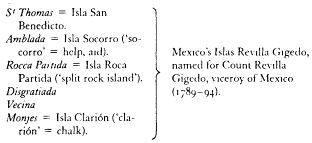
This Cape Andreus is Gross Cloudy land,3 very high continueing to run South between 10 & 11 leagues to another Cape Called cavo de Mendocino wch is in North latt.


Image not available.
Chart 3
Cavo de Sant Andreus = possibly Point Saint George or Cape Blanco.
Cavo Mendocino = Cape Mendocino.
P
ta Baja = Point Arena.
P
ta de los Reyes = Point Reyes.
Triangulos = Farallon Islands.
P
ta del año nuebo = Point Año Nuevo; also Point Ano Nuevo.
The anchorage northwest of Point Reyes, marked "+," is probably today's Bodega Bay. The
one inside the point is certainly Drakes Bay. The next anchorage down the coast might seem
to be in the entrance to San Francisco Bay, but this is unlikely in view of the strength of the tidal
currents in the Golden Gate, and it probably represents Drakes Estero, an inlet in Drakes Bay.
de los Reys, an Endiforent pointe in heighte. At some distance it seemes an Island and NW from it is a rounde hill. It is an Exellent port and you are here safe from all winds. In the harboure you have a Creeke in wch is safe and smooth riding and find friendly Indians and good watering. The Coast is shoaly soe keep 5 or 6 leagues offe and when you see los Triangulos9 then make in for the porte. Here was lost the Ship St Augustine 1595 by sailing too neer the pointe.10 Hence the land runnes SEbS to Pta del año Nuebo, a low pt in latt.

Image not available.
Chart 4
P
ta de Pinos = Point Pinos.
Estero Salada —mouth of the Salinas River.
Puerto de monte Rey = Estero Bay, not Monterey Bay, which lies north of Point Pinos.
Puerto de Sardinas = Point San Luis.
P
ta de La Concepsion = Point Conception.
Yslas Nobladas = four islands: San Miguel, Santa Rosa, Santa Cruz, and San Nicolas.
Canal de S
ta Barbara = Santa Barbara Channel.
S
ta Barbara = Santa Barbara Island.
P
ta de la Conversion = Santa Barbara Point.
S
ta Catalina = Santa Catalina Island.
Y
a fortuna = San Clemente Island.
Here you have very good riding in 6, 7 and 8 fathom water. You may know this port by the pine trees & by very white Cliffs one the South side. It is in North latt.


Image not available.
Chart 5
Baya de S
t Andreus = San Pedro Bay.
Puerto de San Diego = San Diego Bay.
Yslas de San Martin = Coronado Islands.
Baya de Todos Santos = Bahía Todos Santos.
Baya de San Quintin = Bahía de San Quintín.
S
n Marcos = Isla de Guadalupe.
East 12 leagues. In the way is the Greate Island Sta Catalina, above 20 leagues rounde, well peopled & is in latt.


Image not available.
Chart 6
Baya de Virgines = Bahía Rosario.
S
t Geronimo = Isla Gerónimo.
Y
a de Cenicas = Isla Cedros.
Messa de Juan Gomez = Sierra de Santa Clara.
Cavo S
t Augustíno = Punta Eugenia.
Y
a de Nra Sma = Isla Natividad.
Islas de Cenos = Isla San Roque and Isla Asunción.
wch is in latt.


Image not available.
Chart 7
Baya de Madalina = Bahía Magdalena.
Puerto del Marques —at Punta Marqués; there is, in fact, no harbor there.
Puente de lansado —at Punta Gasparino.
Cavo de San Lucas = Cabo San Lucas. The departure point for the Acapulco-
bound Manila galleon, and therefore a focal point for pirates waiting for the galleon.
Baya de San Barnabe = Bahía San Lucas.
St Lucas is 20 leagues in latt.

On the Maine land19 you meet the hill called Xalisco and Close to it the Island Maxantelba. The maine20 is all along full of Cocao walks21 and Stantions.22 Hence SEbE 22 leagues is Pta Ponteque whence runes a Deep baye 14 leagues to Cape Corientes wch is in latt.

Image not available.
Chart 8
Cerro de Xalisco = Monte San Juan, 7,550 feet (2,302 m), in the region of Jalisco.
Majantelba = Isla Isabela.
P
to de Matanchel = Ensenada Matenchén, three miles southeast of San Bias, which was
not founded until 1768. It was the principal port of New Galicia and the principal supply
port for Franciscan missions in Alta California. Just off the chart about ten miles northwest
is the mouth of the Río Grande de Santiago, the largest river in central Mexico, near which
is Sentispac, where Ringrose was killed on February 19, 1686 (see Introduction, p. 30, and
Gerhard 1960, 49-51).
Las Marias = Islas Las Tres Maríns. Four islands: San Juanito,
María Madre, María Magdelena, María Cleofas.
P
ta Ponteque = Punta Mita, at Bahía Banderas. The three rocks are called Las Tres Marietas.
Coronados —part of the Sierra Volcánica Transversal.
Cavo Corientes = Cabo Corrientes, the landfall for the Manila galleon coming from Cabo San Lucas
and therefore a focal point for buccaneers.
Salinas del Piloto
Valle de Balderos —for Val de Banderas = Puerto Vallarta.
Ya
s Pinto = Roca Negra.
Y
as de Chamettla—islands in the Bahía de Chametla or Bahía de Pérula, then the southernmost
port in New Galicia (Gerhard 1960, 48). Not to be confused with Chametla in lat. 22°40' N.
Volcan de Colima = Volcán de Colima, 12,290 feet (3,748 m), part of
Nevado de Colima, with peaks to 14,118 feet (4,306 m).
Y
a Blanca = Los Frailes ('The Friars').
Puerto de S
t . Jago—at Punta Farallón.
to the port La Navidad is SE 16 leagues, a very good Port with good water and wood.23 Here the Spaniards builde Ships, the biggest of the South Sea and here they built the first that ever sailed for the East Indias from this part of the world.24 It is in Latt.

Image not available.
Chart 9
Puerto de Navidad = Barra de Navidad, discovered in 1523, northernmost Pacific port in New
Spain, served as a port of refuge for Manila galleons, after Acapulco was chosen
as the eastern base for galleons instead of Navidad (Gerhard 1960, 46).
Puerto de Celagua —a small bay within the Bahía de Manzanillo.
Puerto de Supan = Bahía Manzanillo.
Los Motines —the rugged coast of Michoacán, so named for a 1533 mutiny ('motín') that took place there.
Rio Sacatuli = Río Zacatula, which empties into Bahía Petacalco.
Hence the land runnes even and Indiferent high 16 leagues to the towne of Ystapa and hence EbS 20 leagues to Morro de Petaplan, where is a path leading to a towne soe called. Hence to the Port of Acapulco is 8 leagues, all along a sandy bay and even land.
The fore going Coast I have discribed from the Originall of Don Melchor.25
Image not available.
Chart 10
Ystapa = Ixtapa.
Ziguatenejo = Bahía de Zihuatancjo.
Morro Petaplan = Morro de Petalán, 640 feet (195 m).
Puerto de Acapulco = Bahía de Acapulco.
Acapulco is a greate port of trade. It is the place from whence the Spaniard embarques from Mexico for China and the fillipines, wch is a peculiar privilige it hath for no other port dares trade to any parts of the East Indies butt from hence.26 It is distant above 80 leagues from ye City of Mexico and all goods are carryed on mules though it is a very ill way and they pass through 4 severall nations of Indians who want but Encouragement to cast of the yoake of there tiranicall masters, neither are the Spaniards themselves in a fitt posture to resist them if they were headed by a few resolute men but they have so bauked these poor Innocent people that they dare not think of fredome for fear of greater Thraldome.27 This port is an exellent good harbour where a Ship may ride
Image not available.
Chart 11
The pitch hill —containing deposits of bitumen, useful for caulking ships' hulls.
Tetas de Cuaca = Cerro Tetas de Coyuca, 'tetas' (breasts) referring to two distinct conical summits of 1,200 feet (366 m).
* Acapulco

a long history of Indian occupation. Founded in 1550 by the Spanish, it was the American terminus
of the Manila galleon, the first of which arrived in 1573.
fort = Fuerte de San Diego de Acapulco. Constructed in 1616 to defend the area
against English pirates, it is in the shape of a five-pointed star.
Bay of Icacos
* 2 leagues
Marquese = Puerto Marqués. (See also Chart 13 text.)
* 8 Leag. E & W
Acapulco
Griffo —'grifo' = griffin, a mythical creature, whose fore part resembles an eagle, and hinder
part a lion: it was supposed to watch over gold mines and hidden treasures. Though it can
be seen clearly in the view of Acapulco on p. 264, on today's charts no rock is located in this
position (nor is the rock Griffo off Concepción on Chart 98 identified on modern charts); the
point of land immediately below, however, is now named Punta Grifo. Presumably, the rock has
either been demolished or a sea passage between the rock and the point no longer exists.
Out of 107 of Ringrose's charts, only fifteen show soundings. This is the first, the others
being charts of Acahutla (21), San Miguel (23), Amapal (24), Gulf of Nicoya (31), Punta Hequira
(37), Santa Barbara (47), Gulf of Guayaquil (55), Santo Domingo (77), Chule (83), Valparaíso (95),
Concepción (98), Valdivia (200), Chiloe (101), Galápagos, Albemarle (107, not by Ringrose).
In his waggoners, Hack shows soundings only for Guayaquil, Coquimbo (single sounding),
Concepción, Valdivia, and Chiloe (single sounding), though he mentions depths frequently in the
textual notes on each chart.
Asterisks here and in subsequent transcriptions indicate words added or amended by
"Black" (see pp. 41 and 43).
Secure from all winds and weather. The towne consists of aboute 120 famelyes and hath for its defence a Castle of 12 gunns though if they should on a sudden bee attaqued I am certain that they have not Artists to work them. If one would Enter into this port it is best to bring the hill Cuaca N 1/2 Easterly from you, then bear in to the South East of the Island wch is at the mouth of the harbour & have a care of Coming too near Griffo28 but if the wind should bee northerly then you may goe to westward of the Greate Island and if you please securely anchor betweene the 3d Island and the maine. You may know this port by its high land for it is all low both to East & west of it and all along both wayes for Severall leagues sandy bayes. Two leagues to East South East is Puerto del Marquese a very good port and good watering and wooding and here are two or three houses of Indians who live by fishing. The Port of Acapulco is in North Latt.

Image not available.
Chart 12
Rio de Naguala = Río Papagayo ('papagayo' = parrot, macaw).
* 5 Leages NW & SE
Pisqueria de Don Garcia —on Río Nexpa.
* 6 Leagues NE & SW
Cerillo de Taclamana = Cerro del Coacoyal, at Punta Acamama, 625 feet (191 m).
Rio de Taclamana
Las barancas
* or broken ground = Cordillera de El Fuerte, with peaks to 3,800 feet (1,159 m).
The Tartar Shoals lie just off "Las Barancas" and are symbolized but not named above.
P
ta Galera = Punta Galera.
* 16.00 Lat. North = Lat. 16°01' N.
Rio Verde = Río Atoyac or Verde, 200 miles (320 km) long.
* 7 Leagues
* Bajos
Morro Hermoso = Morro Hermoso, 837 feet (255 m) ('hermoso' = beautiful).
as Robbers att Mexico are sent in Irons to Acapulco & soe kept in the Castle till such time as Ships goe to China or fflilipines and soe are to Serve some years in those places as Soldiers. Eastward from the port of Marquese are 2 or 3 Islands with Some Indian fishing houses on them.
From La marquese to the river of Naguala is 6 1/2 Leagues, a small River, only one or two fishers houses who from hence have a good path to Acapulco. It is a bold shore.
ffrom Naguala to the fishing place of Don Garcia S.E. is 5 leagues, all Even land and Sandy bay. Here live 15 or 20 Indian Slaves29 to dry fish.
ffrom this place of Don Garcia to el Cerillo is SEbE 6 leagues all along even land and sandy bay. It is a small rounde hill close to Sea shore.
ffrom this hill to the river of Taclamana is 2 leagues. Here doe live 5 or 6 Indians to fish.
ffrom Taclamana to Pta Galera is 8 leages, pretty high land and in the way severall shoales a good mile from Shore &
Image not available.
Chart 13
Morro Hermoso —see Chart 12 n.
Baho
Isla de Alcatraces = Isla Alcatraz or Piedra Blanca ('alcatraz' = pelican; 'piedra blanca'
= white rock), near the mouth of Río Grande (unnamed above).
Puerto Escondido = Bahía Escondido ('escondido' = hidden).
Rio de Agua duce = Río Sicatela ('agua dulce' = sweet water).
* 6 Leagues
Rio de Masias = Río Colotepec.
Rio Galera = Río Tonameca.
Puerto de los Angelos = Puerto Angel, the western limit of Golfo de Tehuantepec.
*

ffor 2 leagues out you have scarse 2 fathom water.
ffrom Pta Galera to Morro Hermoso is 7 leagues mountienous and full of rocks. A little SE from it is a hilly Island 2 mile from the maine Called Alcatraces. It is good watering at the river on the maine and here live Indians with a ffriar.
ffrom Hermoso to the port Escondido is 8 leagues. This is a bay, its East point butting into the sea, 1/2 a league more then its west. It is a smooth & good port and here is good wooding & watering. It is the only Port from Marquese. Here is a roade leading to very greate Cittys & townes in the Country.
ffrom Escondido to Rio Masias is 8 leagues. This is an Exellent Port and well peopled with Indians but much troubled wth Calmes. It is smoothest when the N.W. wind blowes. There is a good watering river 2 leagues N.W. from it which in rainy times doth overflow almost all the way to Masias soe that a mile in ye sea you may take up fresh water.
ffrom Masias to Rio Galera is 18 leagues, all mountenous & wild Country full of Greate & little bayes but no port. Many mangrove30 trees
Image not available.
Chart 14
Calera
Rio Galera
Rto Cayula = Río Coyula.
Cerillo —an unnamed hill, 769 feet (234 m).
Isla de la brea —'brea' = tar, pitch, or asphalt.
Isla de Sacraficio = Isla de Sacrificios.
Isla de Caluca = Isla Cacaluta.
Rio Caluca = Río Tayuta.
Puerto de Guatulco = Puerto Guatulco, the Bahía Santa Cruz of colonial times, the first seaport to be developed on Mexico's Pacific coast, and the
best harbor between Amapala and Acapulco.
*

Isla Tangola = Isla Tangola-Tangola. This island has a remarkable appearance,
its top being covered with bushes.
Rio tangola —at Bahía Tangola-Tangola.
Rio Capolito = Río Capulita.
and rocky points. In some places good masts may bee had.31
ffrom Galera to the Port of Angells is 6 leagues. This is as good a port as it is famous for it is seldome without shiping in it. Here are aboute 20 houses. It hath greate trading to it for its hides & tallow and sends Goods to Los Angelos and Mexico by land.32 When you enter you must keep to Eastward of a rock & shoale. It is in North latt.

ffrom the port of Angells to Guatulco is 16 leagues. In the way are severall rivers & Islands. At the Island Sacrificio on the maine side is secure riding from all winds & here you may wood & water and exellent pearle are found in 6 or 7 fathome water. Guatulco is famously knowne by its being once taken by Sr francis Drake in the yeare 1579 who in one house took a bushell of mony33 and also a second time taken & burnt by Sr Thomas Candish in the yeare 158734 but it hath been alwaise famous in being the port to wch from Mexico they send all such goods as they designe for Piru.
Image not available.
Chart 15
Rio de Simatlan = Río Ayuta.
P
ta de Ayutla = Punta Ayuta.
Bishops Bay = Bahía Astata.
Rio Estata
Bishops Towne = Santiago Astata = Guamalula.
Estata
Morro Bamba —a remarkable dome-shaped bluff at Bahía de Bamba, 700 feet (213 m).
Morro Masattlan = Punta Chipeque, a bold dark cliff with a knife-edged ridge, 500 feet (152 m).
Rio Masattlan —at Bahía Mazatán.
las Salinas = Bahía Salina Cruz.
Ventosa = Bahía Ventosa ('ventosa' = windy). Hack f. 12: "This Port is Call'd Ventosa by reason the
wind blows stronger Continually there then in all the Gulfe & it lies in the Middle."
Hack folio numbers here and in subsequent annotations refer to W8 , the James II copy.
It is also the seaport to the greate citys Coxaca & Arato. It is from Mexico 65 leagues, from Coxaca 59, from Arato 35 leagues. It is all along high mountenous land. On its west side is a hill Called Buffadore because of the noise the sea makes against it.35 If you would enter this port keep west from Tangola till the midle of the port bee due north then saile in, keeping in equall distance both points. The best anchorage is on the west side due South from the towne wch Containes 150 houses & a large Church.
ffrom Guatulco to Capolito is 4 leagues. Thence to Simatlan is 3 leagues. Thence to Pta Ayutla 2 leagues. Thence to Estata is 5 leagues, all high mountenous land. The Country here aboute is very populous. 4 leagues within land is the great towne Called el Obispo. It hath 4 churches and at least 300 houses and all aboute it are stantions of beeves. On the seaside is a large Indian towne, not above 3 or 4 Spaniards who lord it amongst them.
ffrom Estata to Morro Bamba is 4 leagues. At the west end of it is a shole 2 miles of Shore, one fathom under high water marke. Hence to Morro de Masattlan is 3 leagues. Thence to Salinas 4 leagues. This
Image not available.
Chart 16
Morro de Carbon = Cerro Morro, 150 feet (46 m).
Rio de ffequantepeque = Río Tehuantepec.
Barra de [Mosquitos (continued on lower chart)] = Barra de San Francisco.
Mosquitos
Anegadizas —'anegadiza' = subject to frequent flooding.
port is the place from whence many Comoditys are sent allong the South sea36 coast to the greate Enriching of this towne wch doth containe aboute 50 houses. Merchants who trade from the North Sea37 come up the River Guasaqualpo in barks38 and thence hawl but 13 leagues hether wch is a good roade soe that waggons pass it; from hence 5 or 6 leagues is the greate towne of ffequantepeque a bishops sea39 a very rich place and all along here very populous and greate store of Perle along the Coaste. The bay of ffequantepeque is a good port but much Subict to North winds & for yt is Dangerous. It is distant from Salinas 2 leagues.
ffrom Salinas to ffequantepeque river is 6 leagues. Thence to Mosquitos is 8 leagues all along shallow water, therfore keep at least 2 leagues off with a greate ship and send small boates in if you have Occation. It is all low land (only the hill Carbon) in many places drowned. ffrom Mosquitos to Vernal is 7 leagues. It seems from Eastward to bee a greate many hills. It is the pointe of the Gulfe of ffequintepeque. ffrom Vernall to Encomienda is 5 leagues. It is a small
Image not available.
Chart 17
Cerro de Vernal = Cerro San Bernardo, 3,034 feet (925 m).
*
Lat .

La Encomienda —an 'encomienda' was Indian land, together with its inhabitants, granted to
Spanish colonists, especially soldiers. Hack f. 15: "This Mount is Call'd Encomienda by reason of the
Great Cross that stands upon it; it is made with trees & may be seen at a great distance when you are
of at sea." On 'encomienda,' see Zavala (1935) and Simpson (1929), and on 'hacienda,' or great
estate, see Chevalier (1963).
Volcan de Soconusco = Sierra de Soconusco, 10,310 feet (3,144 m).
Rio de Soconusco —at Barra de Soconusco.
hill with a savana on it in forme of a cross.40 You may anchor in any part of the Coast aboute and from this place doth begin the high Volcanous hills.41 The first is the Volcan of Soconusco distant 7 leagues, a very high land and 2 or 3 leagues from the sea, in shew like a sugar loafe. Neare to this Volcan is the towne of Soconusco wch is 6 leagues up the river of the same name wch falls into the sea a league to SE of the Volcan.
ffrom the Volcan of Soconusco to the Volcans of the Amilpas is 12 leagues. The Coast runnes SEbE. The two highest have each of them a river right against them. These Volcans send out smoake some times.
ffrom Amilpas to the Volcan of Sapoteclan is 7 leagues. Here & there a sandy bay full of points & Creeks. Hence to Sacatapeque is 6 leagues. This volcan throwes out much smoake and to the Eastward of it there is a river of good water but hard getting of for there is no port.
Image not available.
Chart 18
Las Amilpas [second word deleted]—two volcanos, 11,200 and 14,000 feet (3,416 and 4,270 m); the higher one is called Tacana.
Volcan de Sapoticlan —an unnamed volcano, 10,850 feet (3,309 m).
Volcan de Sacatapeque [Atittlan deleted] = Volcán Santa María, 12,467 feet (3,802 m).
ffrom Sacatepeque to Attittlan is 7 leagues. This is a very greate mountaine casting out smoake. The coast runnes all along here NW & SE. Attittlan is a townes name also, 4 or 5 leagues up the river, for every of these Volcans take the name of a towne near them.
ffrom Atittlan to Las Anabacas is 4 leagues. These are two wonderfull high mangrove trees wch may bee seen a greate way into the Sea.
ffrom Anabacas to the fiery Volcan of Guatemala is 8 leagues. This Volcan Continually throwes out fire but most in the rainy Season for the raine falling makes it burn with more vehemence. Behind this mountaine is the greate City of Guatemala, 14 leagues from the Sea port though not from the sea side. Out of this Citty the Spaniard vapours42 he can muster 4000 Castilians43 but Certainely if hee were to show a quarter of them hee must be forst to borrow halfe that quarter from neigh-bouring townes, but it is a greate place and a bishoprick. From hence to barra de Estapa is 8 leagues.
Image not available.
Chart 19
Bolcan de Atittlan = Volcán Atitlán, 11,597 feet (3,537 m).
Las Anabacas —'baca' = laurel; tree of the genus 'Laurus,' or bay tree.
Bolcan de Guatemala = Volcán Acatenango, 13,036 feet (3,976 m).
Hack f. 19: "This hill burst & out of it came aboundance of Sulphur which did great
damage to the Citty of Guatimala."
* Vulcan de Ventocuagua = Volcán de Agua, 12,306 feet (3,753 m).
Volcan de Rumbado = Volcán Pacaya, 8,400 feet (2,562 m).
This Estapa is the port of Guatamala, a place of greate trade and Comerse and here is a small Village of Indians but all the country here aboute is very populous of Indians who are most slaves to the Spaniards of Guatemala. From this port to the river of Sonsonate is 26 leagues, all the Coaste low land at the sea side being mangroves, but withinland extreame high as Paneca wch is the highest land but one of all this coaste and Casts out much smoake. The Coaste runnes between these 2 ports EbS & WbN. Ye river of Montecabo is a fresh river & good port and also the other river 3 leagues to Eastward of Estapa hath 3 fathom water at the barre. Acahutla is the Village scituate to westward of Punta de los remedios, a place of the greateste traffick in all these parts, it being a port to many greate townes and Villages of note and fame as shall bee next seen and is in north latt.

Image not available.
Chart 20
Barra de Estapa = Puerto de Istapa.
Los Esclavos = Cerro Gavia, 6,335 feet (1,931 m), and Cerro Tecuamburro, 6,100 feet (1,860 m); 'esclavo' = slave.
Guasacapa
*
Rio Monticalco de los Esclavos = Río Esclavos.
Sierra de Paneca = Cerro Grande de Apaneca, 6,368 feet (1,942 m).
*
Rio Salado = Río San Pedro.
Volcan de Sonsonate = Volcán Santa Ana, 8,300 feet (2,531 m).
Rio Sonsonate = Río Grande de Sonsonate.
This ffamous port leades to a Contry as populos as any part of the Spanish dominions in the west Indies.44 At the sea side are aboute 30 houses, most ware houses. It is governed by a teniente under the Command of the Governour of Trinidad. From the port to the City of Trinidad is near 6 English leagues,45 hath 5 parrishes, aboute 400 familyes; to each house, spatious walks & Gardens of pleasure, all very artificiall. From the city it is 2 leagues in the high roade to Nabiscalco, a village of 20 or 25 houses; then to Salcatican another like Village 4 mile. Thence to the Greate towne of Paneca is 3 leagues. It consists of neare 200 ffamilyes. It lyes North of the roade 1/2 a league from Paneca. Southward, Crossing the roade, is the towne of Sta Domingo, from it 2 leagues & from Trinidad 6 1/2 leagues, it hath better then 100 large houses and most rich people. Southward of this towne is Sta Lucia of 30 or 40 houses, most very large. The whole Contry besides is every where filld with sugar works & stantions of beeves & Craules46 of hogs. At the City
Image not available.
Chart 21
Sierra de Paneca = Cerro Grande de Apaneca.
Volcan de Sonsonate = Volcán Santa Ana.
Paneca = Apaneca.
Salcatican = Salcoatitán.
Naliscalco = Nahuizalco.
City of Trinidad = Sonsonate, founded 1524.
S
to Domingo = Santo Domingo.
The King's path from Guatemala —now part of the Inter-American Highway.
S
ta Lucia = Guayamango.
Caldes
? Trape. de Pallo de Guete
trapiche del rey
To: bisalco
Obraje del Rey —'the king's trading station.
Trap: de Pineda
Obraje de Geronomo del D
na Pena
Obraje de Don Melchor
Obraje de J
n de Cojeres
Tra. de Carosco
Pescadores —a fishing village ('pescador' = fisherman).
Storehouse or Acahutla
Rio Salada = Río San Pedro.
Rio de Sonsonate = Río Grande de Sonsonate.
Port of Acahutla = Acajutla.
P
ta de los Remedios = Punta Remedios.
Trinidad is a large bridge crossing the river of Sonsonate & 2 leagues from it is a Village Called Tovisalco & from thence Eastward out of the roade is the towne of Caldeo, about 70 famelyes, a rich towne. All these pay homage to Trinidad, & the towne of Sonsonate though in bigness & riches little inferiour to the City it selfe. This is a very pleasant Contry delighting the eye and filling the purse of the Industrious Inhabitant. The best anchorage is in 12 fathom right off from the river; from the Volcan of Sonsonate to Sierra de la Paneca NW is 3 leagues. All along the coast here is very high land. When you are right of the port of Sonsonate you have the land and Valley of Salvador open where stands a small towne called Guaymoco. The Chiefe Comoditye along this coast is Cocao. There is some trade from Mexeco to Sonsonate and also from the port Cavallos on the North Sea.
ffrom Sonsonate to Volcan de Ysacos is 3 leagues and from yt
Image not available.
Chart 22
Volan de los Ysacos = Volcán Isalco, 6,328 feet (1,930 m).
Sierra de la Balsama = Costa de Bálsamo. One of the main exports of this area is Peruvian
balsam, a product of a tree grown in tropical America, 'Myroxylon perierae,' an expectorant
and stomachic (digestive tonic).
Bernerdillo
* Moncalco
Volcan de San Salvador = Volcán Salvador, 5,794 feet (1,761 m).
Volcan de Sacatelupa = Volcán Vicente, 7,040 feet (2,140 m).
Place to Salvadore is 5 leagues. Under these hills is a stoney hill Called Vernall. Thence to Volcan de Sacatelupa is 10 leagues. This Volcan throwes out much smoake and is as bigge as St Miguel. Hence to Rio de lempa 2 leagues. From hence doth begin the faire Con-trey of St Miguels. In the river Lempa thence lyeth a boate which is to Cary over passengers47 and from the river to St Miguels is 18 English leagues viz: ffrom the river to Liquilisco 4 leagues, to Araguaiquin 4 more, to Osolien 3 more, to Sta Maria 3 more, & to St Miguel 4. It is a greate place of 7 Churches and more then 600 ffamelyes. Behind the Volcan the River St Miguel makes a greate lagoone whose borders are very well peopled. This is a greate place for building of ships. In the wide Creek have been built Ships of 7 or 800 tunne. The Countrey is very plentifull of all things necessary for man. The Earth yealdeth forth her fruits without the help of man in many places. ffrom Rio de lempa to Barra de hibaltique is 13 Leagues.
Image not available.
Chart 23
Volcan de Tecapa = Volcán Taburecte, 3,880 feet (1,183 m).
Volcançillo de tecapa = Volcán Tecapa, 5,010 feet (1,528 m). Hack's valley of Tecapa (f. 24):
"Vulcan a small Mount of Tecapa which casteth out of a hole on the top of it (Brimstan)
& ebbs & flows like the tyde."
Volcan de Silottlan = Volcán Jucuapa, 5,640 feet (1,720 m).
Volcan de San Miguel = Volcán San Miguel, 6,300 feet (1,921 m).
Cerros de Mondeo
Liquilisco = Jiquilisco.
Araguaiquin = Erequaiquin.
Osolien = Usulután.
S
ta Maria = Santa María.
San Miguel = San Miguel.
X—a ferry across the river (see p. 90 text).
The kings roade to the City of S
t . Miguel = the Inter-American Highway.
A Creek to build or Careene greate Ships in = Estero Grande.
Capt Morales Crene = Puerto El Triunfo.
Fon Dionisio = San Dionisio.
Diego Garsia
Capt Alvarez
Isla del Esperitu S
to = Isla El Espíritu Santo ('espíritu santo' = holy spirit).
S
t Juan de Goso = Península de San Juan del Gozo.
Isla de Palmares = Isla de Samuria.
Rio de Lempa = Río Lempa.
Barra de hibaltique = Bajos Lempa.
Isla de Socaran = Isla San Sebastián.
Rio de San Miguel = Río Grande de San Miguel.
Thence to the river of St Miguil is 5 leagues. At the mouth of this river at low water you have 2 fathom in Entrance. Keep the Volcan due North of you and you need not feare any thing.
The Guile of ffonceca is 9 leagues deep & 4 wide at its mouth. In it are 2 Islands well peopled by Indians which are Conchava and Miangola. There are many more Islands but because they are not Inhabitted I pass by them but it is deep water aboute them all. The towne of Amapall Consists of aboute 100 houses; hath greate Traffick for its Cocao, Tallow, hides & all sorts of provisions; is governed by a Teniente under the President of Guatemala. There is another village at the bottome of the bay called Chuluteca; it hath aboute 30 houses, not above 2 Spaniards amongst them. They live by gathering of provision wch they truck48 for necessarys when any ship comes to them but then the slye Spaniard will
Image not available.
Chart 24
Chuluteca = Choluteca.
Quantepeque
Guanas
Lateca
Lamiangola = Isla Meanguera.
Negrillos
Maçanpique = Isla Punta Zacate.
Concava = Isla Conchagua.
Golfo de Amapal or Fonceca = Golfo de Fonseca.
Don Pedro de Ginea
Way to S
t Miguel—see Chart 23 n.
Amapall = La Unión, the main port of El Salvador. This should not be confused with Amapala,
the main Pacific port of Honduras, on Isla Tigre, founded in 1833.
*
Amapal Lat

Condadillo = Estero El Tamarindo.
Rio
Estero
Astillero de Avila
Astellero de Padron = Estero Padre Ramos.
P ta de Cosivina = Punta Coseguina.
not suffer them to trade but trade for them under pretence that strangers mighte cheate them, but faile not to cheate them themselves of a of what they intrust them with. Were it not for this Shift the lazy Spaniard could not grow soe rich, but there Insupportable crueltyes to these poor natives I hope in due time will reach the allmightyes ear, who will open the hearte of a more christian prince to deliver this people and drive away these Catterpillers from there superbous seats of Lazyness.
Cosuvina is a very high hill with a flatt Savana on the top of it. At its foot are 2 rocks a Gunshott from Shore, but it is a very bold Coast. This hill is 6 leagues long and it makes the East point of the Gulfe of Amapall. SE 2 leagues in Messa de Roldan on whose top is severall white Cliffs. The whole coast runes NW and SE; observe that the white cliffs are not on Messa de roldan but on the
Image not available.
Chart 25
La Cosubina = Volcán Cosiguina, 2,860 feet (872 m), with a crater lake.
Messa de Roldan = Cerro Roldán, 1,033 feet (315 m).
P
to de Martin Lopez = Estero Padre Ramos.
Top of the port of Martin Lopez wch is 4 leagues SE from it, and from that port to the harbour of Realejo is 4 leagues. This is a safe port from all winds. If you would enter, leave the biggest of the two Islands on your Starboard side (this Island is all Savana) and when you are within it give a Good birth to the land on Larbourde side and Saile direct for the anchoring place wch is 3 leagues from the towne, wch consists of 150 houses, the people very rich. Further within land 3 leagues is the towne Vexo, wch is 2 leagues from a river wch Comes from amapall and barques Come up with goods to there path side and there lade & unlade.49 The Port of Realejo is in north latt.

Image not available.
Chart 26
Veigho = El Viejo ('the old one'), a town. ('Vexo' in Chart 26 text.)
Volcan de Veho = Volcán Viejo, 5,670 feet (1,729 m).
the way to Vejo from Amapall
Realejo = El Realejo = Puerto de La Posesión = Corinto. Manila
galleons were built here before 1585 (Gerhard 1960, 29).
Estero S
ta Clara
Estero de Suciagua
?Rio Samadio
Estero de Los Asseradores = Estero de Aserradores ('aserrador' = sawyer).
Rio de N
ta Snra
Baya de Boracho
Passo de Cavallo = Estero Paso Caballos ('paso caballos' = horse crossing).
los Asseradores = Isla de Aserradores.
*
Realejo Lat

Nuebo anño = Barrio Nuevo ('new quarter').
Bocachica
?Cegtanon = Isla del Cardón.
Hack (f. 27) makes it clear that the object in the river top left (near Veigho ) is a ship coming from Amapal or Fonseca.
ffrom Realexo to Rio Tosta is 3 leagues. This river is sometimes dry, but if it were not yett the Sea runes soe high that noe one can land neare it.50 Hence to Messa de Sutraba is 6 leagues, all high land and greate sea and a very windy Coaste.
ffrom thence to Volcan de Telica is 4 leagues. This Volcan Throwes out much smoake and the Coast is very mountenous and very windy and no good port but all along an Iron shore,51 ffrom thence to Volcan de leon is 5 leagues. This Volcan also throweth out very much smoake. It is a very high mountaine, distant from the sea 4 1/2 leagues, and beyond this hill, more within land, is scituate the greate City Called Leon. From this city the mountaine taketh its name. They say there are 11 churches in Leon and above 4000 houses and its inhabitants very rich, ruled by a Governour.
Image not available.
Chart 27
Coma de Tosta = Loma Santa Lucía.
Rio Tosta = Río El Tamarindo.
Mossa de Sutraba
Volcan de Telica = Volcán Telica, 3,478 feet (1,061 m).
Volcan de Leon = Volcán Las Pilas, 3,543 feet (1,081 m).
The city of León was founded in 1524.
ffrom Volcan de leon to Messa de Mariane is 2 leagues & ffrom thence to the port of Sta Joana is 5 leagues. In this port are Ships Continually building but here runnes a greate Sea to the utter hinderance of any boates going a shoare unless by a greate chance. From hence to pta Catalina is 15 leagues SSE and betweene them is the greate bay of Papagayo,52 an ill place to goe a shore in and a worse place to ride in. It is soe windy but expetially from September till Aprill, wch are times for the north winde.53 From this Gulfe you see within land the greate Volcan of Granada and nearer the Sea the Volcan of Bombache, both casting out much smoake. In the midst of the gulfe is a fresh river but the sea soe high that it is dangerous adventuring to land in it. Over the point Catalina is the Greate Volcan of Papagayo but that doth not throw out much smoake. This Catalina is a very high pt & mountenous.
Image not available.
Chart 28
Volcan de Granada or de la Isla = Volcán Góngora, 5,670 feet (1,729 m).
Volcan Bombache = Volcán Mombacho, 4,300 feet (1,311 m).
Volcan de Papagayo = Volcán Rincón de La Vieja, 6,280 feet (1,915 m) ('rincón de la vieja' = the old lady's nook).
Messa de Mariane
Lo alto de Senosop = Monte Papayal, 1,400 feet (427 m).
Puerto S
t Juan = Puerto San Juan del Sur.
Messa de S
ta Juana
Golfo de Papagayo = Golfo de Papagayo ('papagayo' = parrot and macaw, brightly colored birds of the family
'Psittacidae,' several species of which can imitate the human voice; buccaneers kept these birds as pets). Ringrose
incorrectly places Golfo de Papagayo at Bahía Elena; it actually lies south of Cabo Santa Elena.
P
ta Sta Catalina = Cabo Santa Elena
*
in Lat

At the end of this pta Catalina are 2 small Islands and ffrom hence to the Port de Velas is 9 leagues. It is a very deep bay and at the bottom of it you may water. The port Opens to the westward and is called Velas54 because of severall rocks wch from Sea boarde looke like ships under saile.
ffrom this port to Morro Hermoso is 7 leagues NNW & SSE. This is a high hill butting out into the Sea and from thence it growes higher & higher within land. Betweene this port of Vellas and this morro Hermoso is a little high Island 2 leagues from shore and 3 leagues from the port of Velas, over wch are the high hills of Cepancas. This hill takes its name from a towne soe called 4 leagues within land from this porte of aboute 40 or 50 houses of Indians & Mulattoes with negros who are slaves to some Spaniards near that place.
Image not available.
Chart 29
Cerro de Cepancas = Cerro Santa Elena, its two highest peaks at 2,346 and 2,158 feet (713 and 656 m).
P
ta de Sta Catalina = Cabo Santa Elena, the northernmost point of Golfo de Papagayo (or Golfo Culebra).
Puertos de Velos = Golfo de Papagayo, the southern point of which is called Cabo Velas
(shown unnamed in chart with many offshore rocks).
ffrom this Morro Hermoso to Cape de Guyones is 8 leagues, all along mountenous land to sea boarde, full of Rocks but none far from land. It is a very wild Coaste. Here is no Port for a ship. From Cape de Guiones to Cape Blanco is 12 leagues. The Coast runnes NWbW & SEbE. In the way are 2 dangerous shoales, a league from land. At low water they may be seene. Cape blanco is the highest part of all the Coaste and righte offe it is a rockey Island neare a mile from it. This Cape blanco it is the west cape of the Gulfe of Nicoya, a place much used by the Spaniard and to theire Cost used by my selfe and some other English in the yeare 1681.55 Wee tooke in rio de la dispença there carpenters who were building 2 greate ships there and broughte them to the Island Chira, where our ship lay, with all theire tooles & made
Image not available.
Chart 30
Morro Hermoso = Monte Hermoso, 769 feet (234 m), with a saddle shape.
Cabo de guiones = Punta Guionos ('guión' = guidon, a small signaling flag).
Cape blanco = Cabo Blanco, with Isla Blanca offshore (see p. 104).
*
Lat.

them worke for us till wee had taken of our ships deck and shortened our masts, and in Rio del terpesque took 2 barques laden with tallow. Wee stayed in this Gulfe 16 dayes. It is from Cape blanco to La herradura 9 leagues east & west. On the Cape side is a towne of Indians, aboute 20 houses, Called Sto Domingo. On the other side is the port of Caldera where is one store house but ships bounde for Nicoya anchor at the Island Chira, from whence the towne is 10 leagues, consisting of 70 or 80 houses & theire chiefe trade is tallow & hides. On the Island Chira a small village of Indians, about 10 or 11 houses, where wee filled water at a pond. The poor Indians related the sad usage they founde under there tiranicall masters, who make them work because they have nothing to pay theire tribute with. They have a chappell but when I was there ther was nothing in it. They formerly made Jarrs on this Island but now the Indians are
Image not available.
Chart 31
Rio del Tarpesque = Río Tempisque.
Rio de Cañas = Río Canamazo.
Rio de Baranca = Río de Barranca.
Messa de Macolela
Rio de Cartago = Río Grande.
Puerto de Solon
P
ta de Palmare = Punta Arenas.
Caldera = Bahía Caldera ('caldera' = caldron).
Herradura = Puerto Herradura = Point Leona.
Chira = Isla Chira. Hack (f. 36) has no soundings. "At the Island
of Chira in this Gulfe of Nicoya Capt Sharpe Cut his ship down."
S
a Guayervos = Isla Caballo ('caballo' = horse).
Paro = Isla Pájaro ('pájaro' = bird).
Golfo de Nicoya = Golfo de Nicoya = Salinas Gulf of colonial times. Hack f. 32: "Capt Sharpe
Calls this the Bay of Snakes; the reason was that dureing the Time he staid here he & his
Company was Sustein'd by eating Snakes & monkeys."
Peña = Isla Bejuco ('bejuco' = rattan, reed).
Lucar = Isla San Lucas.
ffrales = Islas Negritos.
Rio de la Dispença del rey
Berrugate = Isla Berrugate.
Venados = Isla Venado ('venado' = deer, stag).
Path to Nicoya
Rio de Mandayare = Río Morote.
Rio Campele = Río San Pedro.
S
to Domingo = Lepanto.
Cape Blanco = Cabo Blanco.
most of them run away. ffrom Herradura to Rio de la Estrella is 11 leagues and from thence to Canio is 5 leagues. This Island Caño I have been at it is 4 leagues SW from Pta mala. It is aboute a league rounde, Endiferent high land. The best anchorage is on the NE Side in 14 ffathom, a quarter of a mile from Shore where you may wood & water well. There is some hoggs on the Island. We kild one and a pig.56 Within Pta Mala is a deep bay and good anchorage. There Sr Thomas Candish Careened in the yeare 1587.57 In the bay is a Island full of Indians. Here are exellent Oysters along the bay but the Shore is full of Riffs and shoales. Therefore keep a good league from it. Pta Mala is a low pt and beside that Island close to the point there is a little one 2 mile of it wch showes at distance like a saile. It is an even Country & woody from the pt to Gulfo Dulce, and they are distant at NWbW & SEbE 9 good leagues.
Image not available.
Chart 32
Herradura —see Chart 31 n.
Rio de la Estrella = Río Viejo; 'estrella' = star.
*
Rocks of Queypo = Islas de Los Quepos.
Caño = Isla del Caño ('caño'= spout; sea channel). The buccaneers were at Isla del Caño on
April 24 and 25, 1681: "In this place grows great number of Cacao trees . . . moreover some
good hogs on shore, whereof we killed one and two pigs" ("Bucaniers of America" [JP3], chap. 18).
*
Candishes Bay = Bahía Uvita in Bahía de Coronado (the original name is for Thomas Cavendish).
P
ta mala = Punta Mala ('mala' = bad).
Gulfo Dulce58 is a very smooth good Port, a better place by far then that of Nicoya and secure from all winds, yea & from Spaniards also, for the sea coast here is cleare of that vermin but here are Indians who were very ffriendly with us and came abourde with there wiles and Children. There are but few of them and I beleive live here to shun the Spaniars but not soe much but they pay the halfe of what fish they Catch to the friar for a toe wch they say is 4 sleeps59 up in the contry, but they stayed from the Spaniard soe long as wee stayed with them and wee trucked with them for honey Plantanes and Casavio roots.60 Here wee caught each day fish enough for 100 men soe that here wee kept hollydays. Wee layde our ship aground here and refitted her and founde multitude of Large Cockles here.61 It is good wooding and watering at very pleasant rivers. The Contrey is mountenous. From hence to Pta Burica is 5 leagues.
Image not available.
Chart 33
P
ta Mala = Punta Mala.
Golfo Dulce = Golfo Dulce ('dulce' = sweet), between Punta Banco and Cabo Matapalo
opposite (unnamed above). The buccaneers were in Golfo Dulce June 6-28, 1681, and
Ringrose related that "our Captain [Sharp] gave this gulf the name of King Charles, his
Harbour" ("Bucaniers of America" [JP3], chap. 19). Hack (f. 39) called this Sweet Gulf or
King of England's Harbour and planted a large Union flag in the middle of the gulf, noting:
"Capt Sharpe after that he had Cut his ship down at Chira came (here to Corene) where he
had Comerce with the Natives & in memory thereof he Call'd it King CHARLES
es harbour Anno 1681."
P
ta Palmares = Punta Platanel ('platanal' = plantain plantation).
P
ta Burica = Punta Burica. This point divides Costa Rica and Panama.
Punta Burica is a low point running into the Sea WSW. From Eastward it showes like two Islands. Its coast is full of Riffes62 soe that I advise to keep a league and halfe from shore. To East of it the land makes a long deepe bay in wch stands the towne of Chiriqui. A league within the land a river of the same name passeth by it. The towne hath aboute 50 houses in it, most Indians. You see hence within land the greate hill of Baru at whose foot is another small towne of 40 or 50 houses. The trade here is for Monteca, Indico, Pitch and tar63 and Provisions, wch is the trade of all this coast along. This river of Cheriqui is very seldome withoute some ship or other in it wch brings trade to them from Panama and other places.64 In the country you meet plenty of stantions and in the woods store of wild Deer65 & hoggs.
Image not available.
Chart 34
Cerro de Baru = Cerro Ave María, 1,138 feet (347 m).
* Rio ffonsica = Río Fonseca.
Rio S
n Juan = Río San Juan.
Rio del Dupi = Río Dupí.
Rio S
n ffelis = Río San Felix.
Pan Sucre [Sugar Loaf] = Cerro La Garita, 545 feet (166 m)
('garita' = sentry box).
Yslas Secas = Islas Secas ('seca' = dry).
Puiblo de Cheriqui = Chiriquí.
Rio Cheriqui = Río Chiriquí.
Isla de Muertos —'Island of the Dead.'
Rio Garache = Río Gariche.
Rio de Piedras = Río Piedra ('piedras' = stones).
Rio de Chiriqui Vejo = Río Chiriquí Viejo.
P
to de Limones = La Boca de Los Espinos; there is a town
called Los Limones 10 miles (16 km) up the Río Chiriquí Viejo.
Los Ladrones = Islas Ladrones ('ladrones' = thieves).
Montuosa = Isla Montuosa ('montuosa' = wooded).
The Country heer is well peopled and there are severall fine townes & Villages and Particularly the Towne of Puiblo nuebo, otherwise Called La Civdad de Nra Snra de los Remedios. It is 3 leagues from the Seaside up a river in wch ships of good Burthen66 ride, for I found 4 fathom at low water 1/2 a mile within its mouth. As you enter, to larboarde67 is a small Island Called Silva from the continuall noise like musick heard in the nighte. There I did hear it and can Liken it to a violin & Organ togeather,68 but we hear paid severe for our musick for going to this towne wee lost valiant Capt Sawkins by an Ambuscade.69 In this river wee tooke one ship and burnt two others & at Coyba burnt another. This coaste is famous for Pearle fishing for at these Islands are hutts built for the fishers. The maine is full of wilde Deer not easily scared, and also Coyba, where I have tasted severall of them. They are but small and relish
Image not available.
Chart 35
Rio del Cobre
Rio Baja
Rio de Bequi
Rio de Virallo
Rio Biobio
Baya Honda = Bahía Honda ('honda' = deep).
Puiblo Nuebo = Remedios. Hack f. 41: "Capt Richard Sawkins in an atempt of takeing this
town of Puebla Nucho lost his Life on Tusday the 25th day of May
1680. from this place is trasparted pitch: tallow attey & Indigo &a "
? Rioqueva Guebala
? Cardos
Pordoma = Isla de Porcada.
Rio Beaba
Morro del Puiblo
Ysla de Carillo
way up the River
Canales = Isla Canal de Afuera.
Rancheria = Isla Ranchería ('ranchería' = small settlement).
Silva = Isla Silva de Afuera.
Coyba = Isla de Coiba.
Quicarra = Isla Jicarón.
Pan de Sucie —see Chart 34 n.
Boca dell Toio —at Isla Toro ('toro' = bull).
more like mutton then venaison,70 but the Sea affords the best meate wch is Tortoise,71 very large, fatt, & sweete; besides here is plenty of fish, all excellent & good. On the island Coyba is a store of good medicinall wood Called Paula Maria and also herba maria,72 things of good prise in England. In Baya honda there is also much store of medicinall herbs, wch the grounde produces without the help of man. In the river of Puiblo Nuibo they build small vessells but exellent good ones. They trade in the same Comodityes as at Cheriqui but have much greater traffick. More Eastward are many good ports and some rivers that you may Enter with your ship, though 600 tunne. The bay is full of Islands but there is no feare of any place but what you see marked by mee in the Draughte of them73 but it is all a secure coaste only you will find
Image not available.
Chart 36
Rio bocubi
Morro hermoso
Rio Martinello = Río Martín Grande.
? Rio molin
Rio Penaga = Río Ponuga.
Rio del Torio = Río Torio.
P
ta de Tisira = Punta Duartes.
Rio de Suay = Río Suay.
Rio Meriato = Río Morillo.
Coma de Lobali
Farellon de Guayca
Puerto de Zuela
Costa fondable —'coast fit for anchoring.'
P
ta Meriato = Punta Mariato.
el Toro = Filos del Tigre, 1,065 feet (324 m) ('tigre' = jaguar, 'Panthera onca').
Leones = Isla Leones.
Cibaco = Isla Cébaco.
Rio del Tabaraba
Gobernador = Isla Gobernadora ('gobernador' = governor).
Rio de Filipina
P
ta Filipina = Punta Brava.
a greate Current by reason of soe many bayes & rivers in it. ffrom Pta Burica, the west point of this bay, to Pta Meriato in the East, is 44 Leagues. From the Pt Meriato to Pta Heguira is 20 leagues E and West very cleane and good Grounde. ffrom Heguira to Pta Mala is 9 leagues, an open coast to the south East wind and no Shelter here, but to Leeward of the Rocks of Pta Mala, where you may wood & water very well. There is a good Port to Eastward of Heguera 2 leagues, but if a SE comes which makes a tempest on this Coaste, it will goe hard to save your vessell or your selves, the sea runnes soe high. You have water in summer in the bottom of the bay but in winter you may have it as it falls from the Rocks nearer to you in a small rivulett in the Rocks.
Image not available.
Chart 37
P
ta Meriato = Punta Mariato.
Penascos
Morro Puercos = Punta Morro de Puercos.
Bajos
P
ta Heguira = Punta Guánico.
Morro Puercos
P
ta Heguira
Rio Cañas = Río de Caña ('caña' = reed).
* Rio Quiribibi
Rio de Cascajales
Los ffrailes = Islas Frailes ('fraile' = friar).
* N E.b E.
Rio de Qria = Río Oria.
Yeguade del Cap
t Luis Delgado = Pedasí ('yeguade' = stables).
P
ta Mala = Cabo Mala.
Near Pta Mala is a greate Stantion of Don Luis Delgado74 where may be had any thing necessary for sea fareing men, and if a ship have an ocation to Careene or lay ashore, the Island Yguanas is as good a place as can bee on the side next the maine, from whence it is distant a league & halfe. It is here aboute cleane good grounds and plenty of fresh water & good wood. From this Island it is 12 leagues to Nata,75 wch is a well compacted large towne and hath greate trade with panama in selling them Provisions. Here are severall townes of note that are greate places and have much dealing with the North side. This towne of Nata is very rich and Populous, though I am Certaine they have not 50 old Spaine men in it for the mixt blood is soe dispersed that for one white you may see 100 of other sorts.76
Image not available.
Chart 38
Cerras de Canagua = Cerro Grande, 3,200 feet (976 m).
Rio Oria = Río Oria.
Luis Delgado = Pedasí.
Rio del Piazi = Río Pedasí.
Rio del Puin = Río Purío.
Mensabe Purro = Río Mensabé.
Guarane = Río Guararé.
Boca Vieja
Rio Cubita = Río de La Villa.
Parita = Río Parita.
Rio Escovio = Río Santa Maria.
? el Manbrillan = Río Membrillar ('membrillero' = quince tree, 'Cydonia oblonga').
Estero Salado = Estero Salado ('salado' = salty).
Rio Chico de Nata = Río Chico; Nata is the unnamed town shown above.
Cerro de San Essovall
Rio grande de Meta = Río Grande.
P
ta Mala = Cabo Mala.
Isla de Guanas = Isla Iguana; 'Iguana' refers to any of several
large tropical American lizards of the genus 'Iguana.'
P
ta de licas = Punta Lisa ('lisa' = smooth).
La Serruzuela —the hill Cerro Cerrezuela is also called
Cerro de San Essovall, 670 feet (204 m) (see Chart 39).
ffrom Nata the coast streaches in mountenous hills and the water shoales in such manner that there is scarse any coming in for a ship, but if there were there is not any port along it, nor much traffick aboute the Coaste wch at the sea side is low land but grooves very high within land. Behind these hills is a Village called Sapo wence they fetch hogs and fowles77 to Panama as they doe from all these places on this Coaste. I would advise every ship to keep of from the shore above 2 leagues, for they will find broken grounde and sunken rocks, but the Coast is full of good ffresh water rivers and exellent fish wch they cary severall leagues within land. This fishing is an Employment they putt the natives to but reward them
Image not available.
Chart 39
Cerro del Sapo —this seems to be a view from seaward of the two peaks Cerro Campana, 3,297
feet (1,005 m) and Cerro Trinidad, 3,170 feet (967 m), well inland, whose position, marked Cerro del Sapo ,
can bc seen on Chart 40. The real Cerro del Sapo is a hundred miles on the other side of the Gulf of
Panama, eight miles south-southeast of Punta Garachine; it is marked Sapo on the right-hand edge of Chart 41.
La Serruzuela —see Chart 38n.
La Cherrera = Río Chorrera ('chorrera' = rapids).
Rio de la Estancia = Río Estancia ('estancia' = ranch).
Rio de Anton = Río Antón.
Rio Chico = Río Chico ('chico' = small).
Rio de Chiru = Río Hato ('hato' = herd).
Rio de ffarellones = Río Farallón.
? Cavnas = Río Las Guías ('guía' = guide).
Rio de Chame = Río Chamé.
Rio de la Gartos = Río Lagarto ('lagarto' = lizard).
ffarellones de Chiru = Farrallón del Chirú.
P
ta de Chame al NE = Punta Chamé. (See also Chart 40 for a different view.)
Hack f. 46: "Alongst this Coast runs such a boisterous sea that there is no coming near it, without dainger."
very slenderly. From Pta de Chame beginnes the bay of Panama wch is the greatest sea port (next Lima) of all the South Sea.78 It hath 8 Parish Churches and more then 30 Chapells. It is almoste a mile & half long and a good mile broade. It stood formerly 4 mile to the Eastward of the place it stands now on but by being taken and kept a month and then burnt by Sr Henry Morgan and by misfortunes 3 times burnt since,79 they thought it better to build here at the sea side then at the old place, and it is now better built and larger then the old towne was. From the old towne there Cathedrall is seen as you ride at anchor at Perico,80 where all ships wch come to Panama ride unless small barques wch by meanes of a Creeke run into the city. Before this city
Image not available.
Chart 40
This hall is over Panama —an unnamed hill near the old city, 148 feet (45 m). The present
city of Panama is located at the house below the word Ancon. See Chart 41, first note.

Rio Chico = Río Abajo ('abajo' = below).
Cerro dell Ancon = Ancón, 647 feet (197 m).
Rio Grande = Río Grande; today this is the site of the Panama Canal.
Rio de Benados = Río Venado ('venado' = stag, deer).
Cerro de Cabra = Cerro Cabra, 1,673 feet (510 m) ('cabra' = goat).
Rio de Bique = Río Botrero.
Isla Melones = Isla Melones ('melones' = melons).
Isla de nats = Isla Naos ('nao' = ship).
Perico = Isla Perico ('perico' = parakeet—also a mizzen-top-gallant sail). Because of the large
rise and fall of tide, ships for Panama City had to lie at Perico to load and unload. See Introduction, pp. 9 and 10.
ffarellon = Isla Flamenco.
Tavogilea = Isla Taboguilla.
Tavoga = Isla Taboga.
Biabia = Isla Urabá.
Valladolid = Isla Chamá.
Otoque = Isla Otoque.
bonao = Isla Boná.
Ysla Verde = Islote Verde.
S nra
Mandingo = Isla Mandinga ('mandinga' = little rogue).
Silla de Cavallo = Isla Ensenada.
pan de sucie = Islote Pan de Azúcar.
Tabora = Isla Taborcillo.
Guaca
Cerro del Sapo = Cerro Campana and Cerro Trinidad.
See Chart 39 for a different view; see also Chart 39n.
Pezepuete = Río Perequeté.
R o Sahalizes = Río Sajalices.
Camaron
Rio de la Gartas = Río Lagarto.
P ta de Chame = Punta Chame.
wee fought the Spaniards, they having 3 Armadilla's with 228 men, wee in 5 canoas and a Periaugre with 68 men. Here we kild there Admirall, took there Vice Admirall and forced there other away, taking 2 of there ships. and the same morning being Apr: 23: 1680, we tooke afterward 5 greate ships riding in the roade one of wch viz: (the Trinitie) brought us round aboughte the Southerne parts of America. Here wee lay 3 weeks, took all that went oute, or came in, amongst wch one had 52000 Dollers.81 We brought the city into such straightes for Provision that they came and bought the flower82 and wine83 &c. of us Wch wee had taken from them. Thence we sailed to Taboga. There took the towne and watered there. It is 4 leagues from Panama.84 Hence went to Otoque, took that village and severall hoggs and fowle. In the woodes here aboute are large Parrotts.85
Image not available.
Chart 41
Panama = Ciudad de Panamá, first visited by Vasco Núñez de Balboa in 1513. The city was
founded by Pedro Arias Dávila in 1519, 5 miles (9 km) northeast of the present site; today
this former site is called Panamá Vieja (Old Panama). Panama was the main Spanish exploration
base for the Pacific coast of North and South America anti served as the southern end of the
transisthmian trade route. The city was destroyed in 1671 by 1,200 men under Capt. (later Sir)
Henry Morgan. Ringrose states that the city was burned three more times by "casualty" before
being moved. The city was rebuilt in 1673 at the present site, a fortified peninsula "much bigger
than the old one was, and is built for the most part of brick, the rest being of stone, and tiled. . . .
The extent of the City comprehends better than a mile and a half in length and above a mile
in breadth. The Houses for the most part are three stories in height. It is well walled around,
with two Gates." These fortifications protected the city from falling to the buccaneers. Ringrose
also observed that "some poor people still inhabit the old town, and the Cathedral Church is
still kept there, the beautiful building whereof makes a fair show at a distance like that of St.
Paul's at London " ("Bucaniers of America" [JP3], p. 33). (The original Saint Paul's Cathedral
was finished at the end of the thirteenth century; it was destroyed by the Great Fire of London
in 1666 anti was demolished by 1675 when the cornerstone of Sir Christopher Wren's masterpiece
was laid. As the second structure was not completed until 1710, Ringrose was probably referring
to the former Saint Paul's.) The chart above shows the Catedral Viejo anti the pre-1671 city of
Panama. (The present city of Panamá is located below the word Ancon on Chart 40.)
Juan Diaz = Río Juan Diáz.
Tocumen = Río Tocumén.
Pacora = Río Pacora.
Arbol de Guise —'tree of seasoning'; a spice tree or plantation.
Rio Chapo = Río Chepo.
Chepello = Isla Chepillo. The buccaneers landed at Isla Chepillo on April 22, 1680,
where they obtained food anti a small ship.
Chimaro = Río Sama Cruz de Chinina.
Pariga = Río Pasiga.
La Gartos = Río Lagarto.
la Maistra = Río La Maestra.
Rio Honda = Río Honda ('hondo' = deep).
P
ta Manglares = Punta Mangle ('manglar' = mangrove, 'Rhizophora mangle').
Rio Chiman = Río Chimán.
Lo Alto de Mache = Serrania de Majé.
Mache = Isla Majé.
P
ta San Lorenzo = Punta San Lorenzo.
Quebrada de Mar
Rio Sucio = Río Sucio ('sucio' = foul; here, for submerged rocks).
Golfo San Miguel = Golfo de San Miguel = Gulf of Vallona (Ballona).
P
ta de Patina = Punta Patiño.
R
o Perez = Río Sambú.
Sapo = Cerro Sapo, 4,264 feet (1,300 m) ('sapo' = toad).
aguacale
P
ta Garachine = Punta Garachiné.
On this Shoale was lost y
e Almirante 1631
Though they appear separately on Chart 43, the Pearl Islands are somewhat surprisingly
omitted here; they are, however, included in the equivalent chart in Ringrose's journal (see Fig. p. 11).
ffrom Panama to Chepello is 8 leagues. Here wee took a parcell of Mulattoes and negroes.86 On the maine over against this Island is the river of Chepo and up seven leagues on this River is a towne Called Chepo, plentiffull of Provisions and people very rich. By this river87 it is very easye to Come into the South Sea, it going far up, and the Indians naturally abhor the Spaniard.88 From Chepello to Plantan Island is 7 leagues, a league from the maine and Indiforent deepe water about it, but the maine is all a long shallow water. I have been a league from shore and not founde 4 foote water. From hence to Pta San Lorenzo is 10 leagues, a very sholy pt , low land and full of Creekes. From hence beginnes the guile of St Miguell or Golfo de Balleno, in which are severall Islands.
Image not available.
Chart 42
S
ta Maria = Santa Fe. The buccaneers, after crossing the isthmus, sacked and
burned this fort and town on April 15, 1680. For further details, see Introduction, p. 5.
Rio Tugueso = Río Tuquesa, a tributary of the Río Chucunaque, a tributary of the Río
Chico, a tributary of the Río Tuira. The Río Tuquesa descends from the continental divide
in the Serrania del Darién. This river was part of a route across the Isthmus. On a map by
Dampier (JP4 , opp. p. 12) entitled "A Map of the Isthmus of Darien & Bay of Panama,"
there is written across the isthmus along the Río Tuquesa, "The A's Entrance
into the South Seas." This route was also used by the buccaneers in 1680.
Rio Tuyra = Río Tuira. "This river is twice as broad as the river
Thames at London" ("Bucaniers of America" [JP3], chap. 3).
Dos Bocas
Rio San Miguel = Río Sabana.
Rio banbo = Quebrada Corredó.
Dos hermanos
Rio Papayall = Quebrada Teteral.
Rio Sucio = Río Sucio ('sucio' = foul; here, for submerged rocks).
P
ta de Buron
Quebrada de Talique
Quebrada de Juan Sape
Rio de Indios = Puerto Darién. Darien is the name of the province.
Rio de balsas = Río Balsas o Tucuti. Balsa wood ( Ochroma lagopus )
is exceedingly light and is used for making rafts.
Astillero de Estovall Martin = La Palma.
Rio bona vista —at Punta Buena Vista.
Piña de D. Diego = Punta Sabanas ('sabana' = sheet).
boca Chica
Cedros = Isla Cedro ('cedro' = cedar).
P
ta Patina = Punta Patiño.
Camba
Rio Sucio
Rio Congo = Río Congo.
Peña Ora
Aquada
P
ta lorenzo = Punta San Lorenzo.
P
ta Gorda = Punta Gorda.
P
ta Corenzo
Yguanos = Isla Iguana, any of several large tropical
American lizards of the genus 'Iguana.'
farellon de Patatas = Islotes Patiñito.
Quebrada = Río Sambú.
Cerro del Sapo = Cerro Sapo ('sapo' = toad).
P
ta Garachina = Punta Garachiné.
This chart is of the Golfo de San Miguel.
This gulfe is very smooth and hath deepe water and good anchoring in severall places. It was the place by wch Sr ffrancis Drake entered the South Sea and Performed severall brave Exploytes against the Spaniard.89 Next it is famous for the unhappy passage of Capt Oxnam in the yeare 1578,90 but it is most of all famous for our Passage in the yeare 1680 in the month of Aprill where in the River St Miguell wee took and burnte a Spanish Garrisson, 260 soldiers being in the fort, and by this Gulfe entered in to the Spanish Seas as they proudly Call them; but if the sword gave them there title, it Likewise gave us ours, for wee were masters of these Seas 22 months and mighte have been to this day if wee would have stayed there.91 Neare to the mouth of this Gulfe lyeth a range of Islands called the Kings Islands.92 There are about 40 of them in
Image not available.
Chart 43
The Kings Islands
* or the Perle Islands = Archipiélago de Las Perlas, consisting
of many islands and islets with numerous above-water and submerged rocks.
Pacheca = Isla Pacheca.
Bar
tme de la Calle = Isla Bartolomé.
Saboga = Isla Saboga.
Contadora = Isla Contadora.
Chapera = Isla Chapera.
Chino = Isla Chitre.
Mogomago = Isla Mogo Mogo.
Vallanetta
la Paja
mina Grande = Isla La Mina.
mina Chica = Isla La Minita.
Cazalla = Isla Casaya.
volcanos
garsios
Gibraleon = Isla Gibraleón.
Ensalletta = Isla Bolaños.
Gaspar Ramos = Isla Bayoneta ('bayoneta' = bayonet).
Carracol = Isla Caracoles ('caracol' = seashell).
Estovall Perez
Membrillos = Isla Membrillo ('membrillo' = quince).
Viberes = Isla Viveros ('vivero' = fishpond).
Asafrur = Isleta de Afuera.
Chapaceros = Isla San Pedro.
S
n Pablo = Isla San Pablo.
Perico = Isla Perico.
Elifante = Isla Elefante (may refer to the elephant seal, 'Mirounga angustirostris').
Puercos = Isla de Puercos ('puercos' = hogs, swine).
monte = Isla de Monte.
y:polada = Isla Camote ('camote' = sweet potato, 'Ipomoea batatas,'
a tropical plant cultivated for its edible tuberous root).
On this shole was lost the Almirante 1631 = Banco San José, the
shallowest point of which, Trollope Rock, is 9 feet (3 m) deep.
S
t Elmo = Isla Santelmo.
Galera = Isla Galera ('galera' = crab).
Isla del Rey = Isla del Rey.
mendano = Río Mendaño ('mendaño' = sand dune).
Carrino = Río Chuche.
Capira = Río Chepillo.
Rio Bermejo = Río San Juan ('bermejo' = vermillion).
Mosquitos = Punta Gorda; mosquito—any of various dipterous insects of the family
'Culicidae.' The Golfo de Panamá is infested with mosquitoes that transmit malaria.
Rio Casique = Río de Cacique ('cacique' = a native Indian chief of Mexico or the West Indies).
R
o limon = Río Limón ('limón' = lemon or lime).
P
ta de cocos = Punta de Cocos, the southern extremity of Isla del
Rey ('coco' = coconut palm, 'Cocos nucifera').
Cavallero = Quebrada La Guinea (a guinea was an English gold coin issued from 1663 to 1813).
Martin Perez = Río Martín Pérez.
? la Gartos = Río San Juan.
Puiblo Viejo = Playa Honda.
Canelija = Canal Ventura Cruz.
bombaz = Punta Lava Lava ('bombazo' = explosion).
Ortiz = Río San Francisco.
Ostion = Río Ostión ('ostión' = a large oyster).
Serez = Isla Gallo ('gallo' = rooster).
Mariche
S
nra = Isla Señora.
S
ta Catalina
Mortena = Isleta Platania.
Ped
o Gonsales = Isla Pedro González. South of here should be the
Armada Channel. The island of Chuche is missing near the title.
all and severall good Ports and harbours with good wooding and watering. On the greate Island there is a village were they build vessells. There wee tooke one of 30 tunne, a very good Sayler.93 Betweene the Island Galera and Pta Garachina is a Dangerous shoale wher on the Spaniards have lost 3 or 4 greate ships and it is in the usuall passage of there fleete from Lima to Panama and betweene the said Island and the maine is near 6 leagues.94 From Pta Garachina to Puerto de Pinas is 8 leagues. It hath two small Islands at the mouth of it, but you may saile if you please close to them for there is not less then 12 or 14 ffathom. Here is good wood and water and ffruite. It is very high land and makes a hollowing in the top and is in latt.

Image not available.
Chart 44
P
ta Garachina = Punta Garachiné.
Puerto de Caricoles —a cove at Punta Caracoles ('caracol' = seashell).
Puerto de Pinas = Bahía Piñas.

Puerto Quemado = Bahía Octavia.

Puerto Claro = Bahía Cupia.
mouth is a rounde hill, not so high land as Pinas. There are severall good Ports and bayes along this shore, as the small village of ffranciscans, it being the place where some of that Order were left till the Country were discovered.95 ffrom the bay of San Antro begins a Drouned land very low wch in rainy times hath only its trees above water. It is Called Las Anegadizas. Before you come at Corientes by 12 leagues is a River Called Rio de Sandio. All along this Coaste is deepe water and you may sail close to the shore in 10 or 12 ffathom water, cleare Ousey grounde.
This Cape Corientes is very high land and from sea boarde showes like an Island and on its top hath 3 hillock. If you look at it to the SE it seemes a round Key.96 It is in north latt.

Image not available.
Chart 45
Baya de ffian Solano = Bahía Solano, at Punta San Francisco Solano.
Baya de San Anto
o = Puerto Utría. Hack f. 55: "Here is the Religious
seat of St Francisco [the Order of Saint Francis of Assisi]."
Las Anegadas = Picos tic Ananas, 1,500 feet (457 m). This is the first high land near
the coast north of Cerro Montecristi (see Chart 53), more than 400 relics
(640 km) distant, and from the south looks like an Island.
Rio Sandio = Río Tibuga, at the head of Golfo de Tibuga.
Cavo de Corientes = Cabo Corrientes ('corriente' = current)—well named,
as there is a constant northerly current in its vicinity.

raines, wch this Coaste is much subject to till you come past Cape ffrancisco.97
ffrom Corientes to the River Buena Ventura is 23 leagues NW and SE. In the mid way is the Island de Palmas and near this Island a River falls into the sea, wch at low water hath 2 ffathom at its bar. It is very deep water on most parts of this Island, Buena Ventura in North Latt hath

Image not available.
Chart 46
Cerro de Torra from here & the gold mines come —n. 100 (Chart 47).
? Cerro de Caraba hall
Cavo Corientes
Rio Bogotes = Río Baudo, 100 miles (160 km) long.
Rio de los Noanamas = Río San Juan, 200 miles (320 km) long, navigable most of its length,
with rich gold placers in the upper reaches (department of Caldas) in the Cordillera Occidental.
The first reconnaissance of the Pacific coast of South America, by Pascual de Andagoya in
1522 from Panama, reached Río San Juan (4°15' N), which was the northern coastal limit of
the Incan Empire.
Palmares = Isla Palmas.
ffran:de S
n Po
Rio de Pagua
Baya de la buina ventura = Bahía Buenaventura ('buenaventura' = good fortune)—the
largest Pacific port of Colombia.
Rio de la buina ventura = Río Buenaventura.
P
ta de Arena
Isla de Realezo
Rio ostiones
Baya de Raposa
Estero de los Piles
Rio de los Piles
Rio San Juan
La Madalina
? Sarambria
Rio Gorgon
Esmiralldos
Gorgona = Isla Gorgona. Francisco Pizarro waited nearly seven months, during 1526-27, on
Isla Gorgona for Diego de Almagro to return from Panama with reinforcements. Hack f. 57:
"Capt Sharpe Call'd Gorgona after his own name by reason he Core'nd there. This Isle is
full of a sort of trees Call'd Maria: which are very servicable for ships masts & on the SE part of it is
a River of excellent good water."

waite for gold wch falls from the mountaines of Toro.100 The Island Gorgona is in North latt.

Image not available.
Chart 47
Rio de Cedros = Rio Mícay.
Serras de Pasta
Rio de Tilimbi
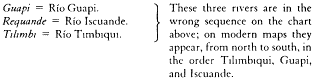
S ta Barbara = the town of Pizarro.
Gallo = Isla del Gallo. Francisco Pizarro waited on Isla del Gallo during 1526 while Diego
de Almagro returned to Panama for reinforcements; he moved to the larger Isla Gorgona
(see Chart 46n) 90 miles (144 km) north when Isla del Gallo proved too small. On
the mainland near Isla del Gallo is the town of Pizarro.
Arastra = Río Amarales (mouth of the Río Tanaje).
Estero = Río Curay.
Rio de Maldu = Rio Chagui.
Rosario = Río Rosario.
Surhidero de los Navios = Ensenada Tumaco.
Rio de Mira = Río Mira, 150 miles (240 km) long.
Gorgonilla = Islote Gorgonilla. This island is located 70 miles (112 km) too
far south on the above chart; it actually lies close by Isla Gorgona.
wee first left Panama and they had Come up hither in search of us and here unfortunately mett there ruine.101 ffrom the Island Gallo, wch is in north latt.


Image not available.
Chart 48
P
ta Manglares att first Sighte* all Low Land
P
ta de Manglares = Punta Manglares ('manglar' = mangrove).
Ancon de Sardina's = Bahía de Ancón de Sardinas—Sardine Bay. This is a shallow bight
33 miles (53 km) long in which there are numerous openings that resemble the mouths of rivers.
Rio de St. Jago = Río Santiago, 100 miles (160 km).
ing there Neiboures, by that meanes decreasing faster then Nature gives Increase, but a truer reason is the Spanish tiranny hath drove these poore Natives into such unwholesome places of Bogges and ffennes yt the ill Vapours102 of the Earth consumes more then theire warrs. At the End of this bay there doth begin high land and the Coaste bends away to WSW as far as cape ffrancisco. This river of St Jago is a very greate river but ships enter not, though the Spaniards have a small Village 3 leagues up it and they say there is 4 ffathom at its mouth. If you would Enter, Encline to the SE side and when you are over the barre there is very deep water. It is a mile broade. It is the highest land of all this Coaste except Matteo to wch is 7 leagues. Here ships have masts yards or provisions. It is inhabitted
Image not available.
Chart 49
Baya de San Matteo = Bahía San Mateo, at the mouth of the Río de Esmeraldas (50 miles
[80 km] long). Hack f. 60: "The Bay of St Matheo . . . is posest by Indian warriours (who
will hurt no strainger) & here is sold by the Mullata's all sorts provissions. But I give
you a Caution of 2 things which are of great importance Vizt 1st not to Jest with there
women or debauch them; 2dly not to threaten the natives; with armes or otherwise but treat
them with humility you may have what you please."
la baya de San Matteo 10 or 12 leagues dist:
Tacames = Población de Atacames.
Puerto de La Galera = Bahía de Atacames.
P
ta Galera = Punta Galera.
The dotted symbol off Puerto de La Galera is an extensive coral reef (Arrecife de Atacames).
by Spanish Mottattoes & Indians. To leeward of this bay 3 leagues is a river where wee watred when the Sn Pedro was taken by us the second time.103 Wee fetched our water 3 mile up the river. If you would enter into the bay keep to the SE side. It hath North Latt

Image not available.
Chart 50
P
ta Galena all NW.
Cavo de San Francisco = Cabo de San Francisco.
el Portete —the mouth of the Río Portete.
Ties Rios de Los Coxemies —there are a number of mouths to a large lagoon (Estero Cojimies)
into which drains the Río Cojimies. Hack f. 61: "I give you to understand yt when you com to
or near the Latt of yc Port of Quemado: that if any Birds which are call'd Mariposas coms on
board that you are within 5 or 6 Leagues of the shore; & allso I advise you that if at any hour
in the night you hear a bird call'd Graja that then you tack & stand of to sea: steering N W
if possible you can with small sailes. Both this I have experienced. I made a voyage takeing my
departure from this said Cape. . . ." [We do not know who is talking here. It was certainly not Hack.]
Coaque = Carrizal.
Serra de Coaque = Montanas de Cuaque, up to 1,000 feet (305 m).
Rio de Sama = Río lama. The equator is just north of Río Jama.
Hack f. 62: "On the shoalds of Jama, Domingo Antonio by going to near the shore
was cast away the ship was call'd Gonzalo Baltran; this was in the year 1612."
are rocks for halfe a mile. Here are Indians who will have hoe Comerse with the Spaniards who are forced if they want water to goe a shore armed. Here is noe very good water butt such as it is you will find in a lagoone a quarter of a mile within land at a river wch in the seasons runnes into the Sea. From this Point to Cape ffrancisco104 is 2 leagues. It is a high Cape but it is far higher within land being North and South with it. It seemes an Island and from windward it seemes 3 capes. It is a woody mountenous land and hath white cliffs. From hence to El Portete is 3 good leagues, the Coast SE. It is a rounde hill behind wch is good wood and water and very smoothe landing. It hath a white cliffe at the head of it. You doe anchor in good grounde. Sometimes, though seldome at noones, there springs a wind from Shore wch will drive you from your anchor if you bee not carefull.105 From Portete to
Image not available.
Chart 51
Enseñada de Bocia Borachos = Punta Borrachos ('borracho' = intoxicated)—bare white
cliffs fronted by a long sandy beach in this bay.
Cavo Passao = Cabo Pasao = Cabo Pasado, where the Rosario was captured (see Introduction, p. 21).
Passao
La Canoa = Río de Chone.
Baya de Caracas = Jaramillo.
La Canoa
Baya de Caracas
Pescadores —a fishing settlement ('pescador' = fisherman).
Passao al sur —two views of Passao from the south.
S b E
the first river of the Coxemies is 3 leagues. There are 3 of them wch take 4 leagues in length of the Coast. They are full of Shoales, in some places a league of into the Sea, soe when you come aboute 2 leagues from Shore, you will do well to Sounde, but to windward of these 3 rivers you may come nearer the land, but it is all along not very deep as far as Coaque 6 leagues distant from hence SbW. In this bay you have 11 fathome water and one the shore soe many white cliffes wch appeare like heapes of Salt. Over this place doth pass the Equinoctiall106 and you may anchor close under these hills out of danger of the wind if you have Occation. From this bay to Cape Passao107 is 12 leagues WSW, all along deep water and close under Shore you may ride to Leeward of this cape. You will find people in a small Village of 20 familyes. When you would enter have a care of
Image not available.
Chart 52
Cape Lorenzo = Cabo de San Lorenzo.
*
p
t di Cama = Punta de Jaramijo.
Manta = Ciudad de Manta; center for production of Panama hats.
Cape Lorenzo
of Severall rocks wch lye right of from the cape. It is in South latt.

Image not available.
Chart 53
Monte Xpo SE = Cerro de Montecristi, 1996 feet (609 m); three views, as indicated here and
at Xpo al Norte and Xpo al SW on this chart.
Plata al Nort = Isla dc La Plata, 590 feet (180 m) ('plata' = silver); three views, as indicated here and
at Plata al N.E . and Plata al NbE on this chart.
Plata al N.E.
Xpo al Norte
S
ta Helena al SbE = Punta Santa Elena, a narrow promontory at the northern point of Golfo de Guayaquil,
appears as an island when seen from the sea. The hill at the point is steep anti flat-topped, 297 feet (90 m);
two views, as indicated here and at S
ta Hellena al Sur on this chart.
S
ta Hellena al Sur
Plata al NbE
Xpo al SW
It is 4 foot under water and makes a greate Sea. From this Port to Cape Lorenzo is 6 leagues. Over the port of Manta is Monte Christo and the Shoale is from it NbW. This is a very high hill. There are 2 or 3 more hills to the westward of it but are not soe high. On this Coaste the wind blowes at SW & West South West and there runnes such a Current to leward about this cape that some ships cannot in a long time gett to windward of it. We were 3 dayes.108 From this Cape 4 leagues SW is an Island called Plata wch is soe called from Sr ffrancis Drake his shareing of plate there.109 I have been here twise and have founde good Turtle, Goates, & fish.110 It lyeth in one degree

Image not available.
Chart 54
Cape Lorenzo = Cabo de San Lorenzo.
*
Rio Picoaza = Río Jipijapa.
*
p
ta di Cullo = Punta de Callo ('callo' = tongue, in Quechua).
Salango = Isla Salango.
Los Ahorcados = Islotes Los Ahorcados ('ahorcado' = one who has been hung by the neck):
these islands were the site of executions, as noted by Ringrose.
Colanche = Islote Pelado. The town of Colanche is 5 miles (8 km) inland; see also n. 112 (Chart 55).
S
ta Helena = Villa de Santa Elena.
el Cope
el Sal
P
ta Sta Helena = Punta Santa Elena.
Although he shows three views of it on Chart 53, Ringrose omits Isla la Plata from this chart,
presumably because it was omitted from the derrotero he was copying. It should be placed
just below the border of Chart 54A, under Cape Lorenzo , which is where Hack places it on
some of his versions of the same chart (f. 57 in the Greenwich Waggoner), often calling it Sir
Francis Drake's Isle.
ffrom Plata to Salango is 6 leagues SE. From Salango Northward is the Port of Callo, a good port. A league up from it is the towne of Picoaza wch in time of the breezes is a better port then that of Manta. ffrom Plata to Pta de Sta Hellena South is 18 leagues. Here aboute is a stronge leeward Current. SE from the Island Salango are two rocks called Los Ahorcados because one Machicao hanged two Spaniards there. These are Distant from Salango 3 leagues, and Deeper in the bay 3 leagues is the Island of Colanche, where you may anchor very safe in 10 fathom water.112 This Island is one league Distant from a river of the same name, a fine freshwater river from whence the[y] fetch water to serve the towne of Sta Helena, where there is exellent riding for ships but not above 4 fathom water, for there is not much water all along this coaste of low land. You must ride over against the Indian houses for you may see the towne. Here you may have any sort of provision if you have occation for it.
Image not available.
Chart 55
P
ta Sta Helena = Punta Santa Elena.
Cerras de Chanduy = Cerro Chanduy, three peaks to 1,400 feet (427 m).
Estero de Chanduy = Chanduy.
Y
la Verde = Isla Verde.
P
ta de Alcatraces = Punta Alcatras.
Estero = Estero Salado ('salado' = salty).
P
ta de Piedias = Punta dc Piedra ('piedra' = rock).
P
ta de Balsas
P
ta de Miel
P
ta Goide
Guayaquill = Guayaquil.
La Matansa
Puerto de Dievelez = Eloy Alfaro.
Puerto de D
a
Isla Rodriquez = Isla Santay.
del Rey
Leon
Bajos de mondiagon = Isla Mondragón.
R
o Alonde
R
o Montaña = Canal de Matorrillos.
el Naranjal = Canal tic Naranjal.
Rio de boli
Rio baleo = Río Baleo Grande.
Lo Alto de Tunbes = Cerros Los Amotapes.
Rio Tongoi = Río Tenguel.
Rio Machala = Río Machala.
Salte de Buij
Bajos de Paguell = Isla Jambeli.
Rio Tunbes = Río Tumbes.
La Puna = Isla Puná.
P
ta Sa Bernard = Punta Cascajal.
P
ta Españiol = Punta Buenos Aires.
Alto de Mala = Cerro Zambapala, 975 feet (297 m).
P
ta Arena = Punta Arena.
las Salinas = Punta Carnero ('carnero' = sheep, ram).
Cambray = Isla de Santa Clara.
S
ta Clara

Sombrerett
Mancora = Máncora.
P ta de Mero = Punta Malpelo.
Cavo Blanco = Cabo Blanco.
Golfo de Guayaquil, shown on this chart, is the largest inlet on the west coast of South
America north of Isla Chiloé (42° S). The gulf extends from Punta Santa Elena
on the north to Cabo Blanco on the south and is 126 miles (203 km) wide at the mouth.
Righte off from the pointe are sunken rocks. If you would enter the port by night, stand not in for Shore till the high point of land bee withoute you. It showes at distance to bee an Island. An 100 Leagues from Passao west are severall greate Islands Called Los Galapagos.113 From Hellena to Cape blanco is SSW 38 leagues. The Point and Sta Clara are NWbN & SWbS. The Point with Chanduy is ESE & WNW 5 leagues. Here it is fful of Shoales. If you would Saile from the pointe to Sta Clara or Tunbes, have a care least the Current Cast you into the bay further then you think for soe be sure to mind the tides. It is high water at La Puna and Sta Clara at moon setting.114 From Sta Clara to Pta de la Arena you Saile ENE. They are distant 8 leagues. Betweene these two Islands there is no passage for a greate Ship. From Pta de la Arena to Pta de Bay is other 8 leagues. This is the port of Lapuna. From hence to the City of Guayaquil is other 8 leagues. This is a very difficult
Image not available.
Chart 56
From these hills the River of Guayaquil springs
Embarcadero in winter
Bridge
Embarcadero in summer
S
t Juan de Pimoche = Pimocha.
Amores
Rio Pimoche
Pueblo de San Pedro de baba = Samborondón.
Rio de baba -= Río Los Tintos.
Caranca = Hacienda Barranca.
Barranca
Puiblo daule = Pascuales.
Rio Daule = Río Daule.
Hernando
Rodriguez
Guayaquil = Santiago de Guayaquil, the principal port and largest
city of Ecuador, founded in 1536 by Sebastián de Benalcázar.
foit
Rio de Quilca
Rio de Chilintomo = Río Juján.
Puiblo de Chilintomo = Baquerizo Moreno.
el Contador
Yaguache el Cone = Yaguache Nuevo.
Rio de Yaguache = Río Chimbo.
Juan de Nova
el Vermejo
Belin
? noavioso
Taura
? el mauso
Isla dell Rey
fales
This chart shows the drainage area of the Río Guayas above Guayaquil. The Río Guayas
is formed by the confluence of the Río Babahoyo and the Río Daule 4 miles (6.5 km) above the city.
Channell and many Severall wayes are given to Saile it, but few good ones, for the ablest pilott of the South Sea will not think it a disparagement to bee beholding to one of the Indians of La puna or Sta Clara to guide him up, but Capt Perallto115 hath often told mee that his way was to sounde all along & when bee founde not above 6 ffathom to goe aboute and by that meanes had Carryed up severall. This city of Guayaquil is a greate towne, the best built of the South Sea and richest for gold, it being the Embarcadero for the greate city of 80 leagues up called Quito,116 where they make good broade cloth. Here are many greate and rich townes in this gulfe. The Governour of this Guayaquill came out with Soldiers in a Ship to fighte us but wee kept him from Returning for Some months & Caryed him and severall more of the Chiefe of them wth us a long time.117 The land of Tunbes is the subject of a Spanish
Image not available.
Chart 57
Cape Blanco al Sur = Cabo Blanco, the southern entrance point of the Golfo de Guayaquil,
with inset showing this feature from the south.
These hills are seene within land —Cerro Los Amotapes, with peaks to 5,300 feet (1,616 m).
Rio Tunbes = Río Tumbes, 110 miles (177 km) long. The many mouths of the Río Tumbes lie north
of Punta Malpelo. In 1527, Diego de Almagro and Francisco Pizarro, on their second voyage south,
reached the active Incan port of Tumbes (on the Río Tumbes) and established friendly relations.
On their third voyage in 1531, which resulted in the conquest of Peru, they landed at Caleta La Cruz de
Pizarro, just south of Punta Malpelo, and found Tumbes in ruins, the result of an Incan civil war.
Sombrerett —'small hat.'
here ends the mangroves
P
ta de Moro = Punta Malpelo. At this point, at the apex of the Río Tumbes delta, the luxuriant
vegetation (including mangrove) of the tuner part of Golfo de Guayaquil ends, with only brushwood
growing on the desert coast to the south.
Mancora = Puerto Máncora.
Cape Blanco = Cabo Blanco.

Story. They say that the first settlement of the Spaniards in the South Sea next to Panama was here were they first came, two preists went a Shore with Crosses in there hands while 10000 Indians Stood Gazing on them. It happened that two Lions and two Bears came forth of the woods and the preists streachmg out there armes the savage beasts Came and worshiped the cross and became very tame.118 In this Gulfe the Spaniards build greate ships. From Pta de Mero to Cape blanco is 16 leagues, a very windy Coaste espetially off of the Cape wch is in South latt.

Image not available.
Chart 58
Cape Blanco = Cabo Blanco. Between here and Punta de Pariñas lies the modern
city of Talara, the center of Peru's petroleum industry, just south of Punta Malaca.
Malaca = Ensenada de Malaca.

Spaniards lost a ship with there pilott Michaile Angell. Pta Parina is low land and at Distance lookes like 2 small round Islands. There alwaise runnes a greate sea here abouts.
From this point to the Port of Paita is 8 leagues low land to sea boarde. The Coaste runnes SSE. Within land are the high hills of Motape. This is a very good Port. The towne Consists of 250 ffamelyes, nor 4 of them Spaniards borne to this towne. The City of Piura come to Trade. This City the Spaniards say is 4 times soe bigge as Paita & distant from it 13 leagues in the roade to Lima wch is a greate roade for those persons whose Business Calls them from Lima to Panama or from thence to Lima, and whose stomachs cannot brooke the sea doe travell by land to Paita or from it to lima.
Image not available.
Chart 59
Serras de Motape = Cerros Los Amotapes, with peaks to 5,312 feet (1,619 m).
P
ta Parma = Punta de Pariñas.
Rio Colan = Río Chira, 100 miles (160 km) long.
Colan = Colan.
Puerto de Paita = Puerto de Paita, today a major port and cotton area.
Pena Oradada = Punta Ayoyero (phonetic local variant of 'agujero,' or hole = 'horadado.' pierced).
La Silla de Paita = Cerros Silla de Paita.
Above Piura is a greate towne Called Loxa from wence they bring much gold to Paita. Paita hath felt the force of the English, for May 10: 1598 Sr Thomas Candish took it & burnt it only with 60 English routing 300 Spaniards.119 In the yeare 1681 wee were before it120 but they had stockadoed the towne aboute and had there the whole strength of Piura, Loxa & Colan, wch is but 2 Leagues distant to leeward on the bay, twise soe bigge as Paita. A league WSW from Paita is Peña Oradada. Thence one League SW is the Island Lobos. Paita is South Latt.

Image not available.
Chart 60
Silla de Paita = Cerros Silla de Paita.
Peña Oradada = Punta Ayoyero.
Lobos = Isla Foca ('lobo' = wolf; hence sea-wolf, or seal). See n. 124.
Ensenada de Sechura = Ensenada de Sechura.
Sechura = Villa de Sechura, on the banks of the Río Piura, 150 miles (241 km) long. Piura, located
35 miles (57 km) up the Río Piura, was founded in 1532 by Francisco Pizarro; originally named
San Miguel de Piura, it is the oldest Spanish settlement in Peru, but it does not appear in Ringrose.
P
ta Pisura
Nonura —town abandoned at an uncertain date. The modern oil terminal of Bayovar is probably on the same site.
Pta de la Aguja
the bay is the Village of Sechura of 30 or 40 houses of Indians who gett there livings on the fishing trade for those Sardina's. Nearer to Punta Aguja is a small Village called Nonura, wch is as good a port as is that of Paita. It is a Country full of Indians. The pt is a long high hill and to Eastward & westward of it are many Rocks, but they are not dangerous because they are very neare the shore. It is all a long a barren Sandy Coast, not having one stick of wood nor no good taking in of water for any ship, wch is the Cause of the little trade it hath, but up in the Country is plenty of all things.122 The Indians are greate Slaves to the Spaniards. I have here drawne it as it appears at severall pts of the Compass from you.123 It is in South latt.
Image not available.
Chart 61
Image not available.
6 degrees. From hence the Coast runnes Nearest SE as far as the port of Saña, Wch is 36 leagues distant from the Southward End of Aguja. To the Southward Island Lobos is 6 leagues SE. This Island is 2 good leagues from the maine land. It is a Rocky Island only used by Indian ffishermen. I would not advise any ship to pass betweene it and ye maine for the Spaniards have lost severall ships by it and there is nothing of Provision or anything else to be had near it. It is Seven leagues South from the other Lobos (not that Lobos near Paita) wch is twise so bigge as this, this not being a league long, but they both have plenty of fish.124 I have found this to bee n Latt.

Image not available.
Chart 62
the Northward Island Lobos al NE, tres Leguas = Isla Lobos de Tierra ('Seal Island'). See n. 124 (Chart 62).

P ta Aguja = Punta Aguja.
Lobos
Morro de Etten = Morro de Eten, 640 feet (195 m).
Lobos
*

to Cherripee is the River Saña wch leads to a citty of the same name 3 leagues up it. The Citty hath 7 Churches and aboute 500 ffamelyes. At Cheripee ships loade Corne125 for Lima and Panama, though there runnes a very greate sea. A mile right off from the port of Cheripe is a shoale wch you must take heed of. Farther along is the port of Pacasmayo126 where they likewise lade corne but a very open road and greate sea. The best mark to know this bay is by the numerous flights of small birds wch are alwaise in this bay and not any where else near it. Here is no water unless you goe a mile within land for it, to the noe small Discomoditye of the Inhabitants, but some make there living by bringing it to the sea side and selling it to ships that stop here.
Image not available.
Chart 63
Civdad de Saña = Zaña, 15 miles (25 km) up the Río Zaña, abandoned during the colonial period.
Quebrada
Pico Alto = Cerro Facio, 1,731 feet (528 m).
Pacasmajo = Villa de Pacasmayo.
Cerras San Pedro
Morro Malabrigo = Morro de Malabrigo, 812 feet (248 m) ('malabrigo' = poor haven).
Rio de Saña = Río Saña (or Zaña), 60 miles (97 km) long.
Ermito tambo
P
ta Cherrippe = Punta Chérrepe.
Rio fequantepeque = Río de Jequetepeque, 100 miles (160 km) long.
Further is the port of Malabrigo wch is known by its high hill, wch hath a hollowing in the midst. It is an ill port and is in south latt.

Image not available.
Chart 64
Malabrigo al. Este 5 leguas
Campaña de Truhilio al NE = Cerro Campaña, 3,268 feet (997 m).
La Madalina = Magdalena de Cao, today a large sugar-producing area.
Rio Chicama = Río Chicama, 50 miles (80 km) long.
P
ta de Cao
*
guanchaco = Huanchaco.
Truhilio = Trujillo.
Puerto de Guanchaco
ffarellon de Malabrigo al NW = Islas Macabí.
Campaña to the NE of you. Here runnes a very high sea soe that in the smoothest time it is dangerous Going a shoare in a boate, but they use barque loggs to bring of there Corne. On it is high double land in the Country, but Campaña de Truhilio is at the sea side. The city is two leagues from the sea side in a brave, rich, pleasant, fruitefull Country, having 2 crops of Corne in a yeare.129 Hence runes along the bay of Guanapee which is no good port, no more then the rest. The port of Truhilio is in latt.


Image not available.
Chart 65
Rio de Truhilio = Río Moche.
Moche = Moche.
Puerto Chuelo = Salaverry.
Morro de Guanape = Cerro Prieto de Guañape, 755 feet (230 m).
ffrom this Island of Guanape to the Island of Santa is 10 leagues SSE and in the mid way is the Island of Chao, betweene wch and Guanape are many Shoals, very Dangerous, therfore Carefully to bee avoyded. The bay of Chao is a good port but here is no water, but at the towne a league up, NW from the port of Santa, is a Shoale though not near a quarter of a mile out, but have a care of it for you will not perceive it till you are on it. It is a good porte and you may have provisions and wood and water. When you enter the Port look out for a streake of white sand wch is like a Roade and is within land near fferroll and having Discovered it you may safely anchor before it in 4: 5: or 6 fathom water and good Grounde.
Image not available.
Chart 66
Morro de Guanape = Cerro Prieto de Guañape.
Rio Guanape = Río Virú, 50 miles (81 km) long. The town of Guañape is today called Virú;
it lies some 8 miles (12 km) inland.
Chao —there is no town here today, only a pier.
Puerto de chao —at Punta Chao.
Morro de Chao = Cerro Salina, 1,480 feet (451 m).
Isletta = Islas Chao.
Rio de Santa = Río Santa, 200 miles (322 km) long—one of the largest and
most rapid rivers on the coast of Peru.
Santa = Puerto Santa.
Morro de Santa —a peak on Península de Santa, 515 feet (157 m).
Corrobado = Islote Corcovado ('corcovado' = hunchbacked).
Isla de Santa = Isla Santa, 475 feet (145 m).
You may saile between the Island Santa and the maine but have a care of a small Island wch lyes betweene them. The Island Santa is a league long and hath South Latt.

Image not available.
Chart 67
These hills are far up in the Country
Morro de Santa —see Chart 66 n.
Chimbote = Chimbote.
Bacas de fferrol = Islotes Ferrol, three main islets ranging in
height from 250 to 500 feet (80 to 150 m).
Morro de fferrol al Este = Cerro Peninsula, 1,778 feet (542 m).
*
Puerto de Guanbacho = Bahía de Samanco.
Isla de Santa = Isla Santa.
Side under water and you cannott see it but at low water and then it is a fathom and halfe under water, but between this Shoale and the maine is 17 ffathom water. It is two good Stones casts132 from the maine. You may Enter on the north side and anchor in 6 ffathom water, close under a white hill which you may come very near to. This port hath South lattitude

Image not available.
Chart 68
Mongon al SE
al NE
*
punta chinos = Punta Samanco, the southern point of Bahía de Samanco.
Hack f. 88: "Port of Chinos by ye name of ye Tortoishell."
Pueito de Los Chinos =Caleta Los Chinos.
Puerto de Casma —on the Río Casma.
Isletta
Mongon = Cerro Mongón, 3,743 feet (1,142 m)—the highest and most prominent feature
on this part of the coast, with a rounded appearance; two views here, al SE and al NE.
ffrom the Port Vermexo to the Port of Guarmey is 4 leagues. From Casma hither the Coast runnes South. Within the port is a white rounde Island. You must ride to windward of it in 8 fathom water. The port is peopled with Indians and Sambo's134 but a league up is a good towne of Spaniards of 100 ffamelyes. Here is a small Rivulett of water wch in winter runnes into the Sea. This port is in South lattitude

Image not available.
Chart 69
Mongonsillo = Colina Redonda, 1,683 feet (513 m)—on the south flank of Cerro Mongón, at Punta Mongoncillo.
Guarmey = Pueblo de Huarmey, an oasis with fruit trees in a sandy desert on the Río Huarmey.
bridge
Caletas —'coves,' of which there are many along this coast.
Puerto bermejo = Manache. ('Port Vermexo' on p. 182.)
*

Puerto de Guarmey = Bahía Huarmey.
Hence to Permonguilla is a rocky Coaste. This place from Sea boarde seemes an Island, very white because of the fowles Dung wch lyes on it.135 Hence to Rio de la barranca is 10 leagues. Near to Permonguilla stands an old decayed Indian fort Called the fort of Linga where the Spaniards have Massacred thousands of the Poor natives as by some Sculls seen there to this day.136 Near to the River Barranca stands the Old towne of Baranca but the new towne is built near there Port wch is a deep bay but little wood or water. The Coast along is full of high white Cliffs and not very high land in the bay and Port of Supe. The land is low to Sea board but all
Image not available.
Chart 70
Cerro del Jaques de la Zorra = Cerro Las Tetas, 1,522 feet (464 m), with two peaks above Punta Las Zorras.
P
ta de Gramandell = Punta Jaguey, which forms the southern side of Bahía Gramandal.
these hills are [continues on Chart 70B ]
seen over the sea coasts = Cordillera Occidental de Los Andes (Cordillera Negra), with peaks to 11,800 feet (3,600 m).
? Coches
Cerro del Injenio
the fort of Linga = Fortaleza de Paramonga, built by the Incas in the fifteenth century.
Permonguilla = Paramonga.
Rio = Río Fortaleza.
Rio Barranca —'barranca' = ravine. Here on the southern bank of Río Pativilon
is a steep cliff from which the town of Barranca derives its name.
old towne
new Barranca —today Población de Barranca extends as a strip settlement from the banks
of Río Barranca south to Supe.
Puerto de La Baranca = Bahía Barranca, useless to shipping owing to constant heavy surf and the steep
aspect of the coast.
*

Puiblo de Supe = the town of Supe, or Puerto Supe.
along very high up in the Country. From Barenca to this Supe is 3 leagues. It is an Indiferent Port. The Village hath near 40 ffamelyes. It is a Country ffull of People. Hence to the Island of Don Martin is 3 leagues. It is a small white Island a mile Distant ffrom the maine. It is halfe a league long. From hence to the leeward Port of Guaura is one league and to the windward Port is one league more.137 In this windward Port ships ride where you have a River wch passes by the towne of Guara, a league up, Containing 100 ffamilyes. In this port is a hill wch hath two little ones on its top, at the leeward pt of wch you must ride in 9 ffathom. If a greate ship, have a Care of the windward Side of the hill ffor there abouts are many Rocks under water.
Image not available.
Chart 71
this is over Guara = Cerro San Cristóbal, 2,100 feet (640 m).
Guaura = Huaura.
bridge —the bridge at Huaura is over the Río Huaura.
Rio
Morro de
* Guavra = Punta Carquín, with a fort.
Vicama
Guacho = Huacho.
Cerro de Salinas = Cerro Sanú = Monte Salinas, a prominent pyramid-shaped hill,
935 feet (285 m), taking its name from the saltwater lagoon at its base.
P
ta Galera = Punta Lachay.
The Island of Guaura is in south lattitude


Image not available.
Chart 72
P
ta Galera = Punta Lachay.
*

Marsaque = Isla Mazorca, the largest Island of Grupo de Huaura.
Malgesi = Islote Pelado.
La Chay
Pescadores —the fishermen's houses are located at Punta Grita Lobos along
the Ensenada Playa Grande, a bight that extends 20 miles (32 km).
Chancay = Chancay.
morro = Cerro Macatón, 1,988 feet (606 m).
Rio = Río Chancay, 70 miles (113 km) long.
Sierra de la Arena —peaks to 6,500 feet (2,000 m).
Puerto de Anton de Rodas = Bahía de Ancón.
Pescadores = Grupo de Pescadores ('The Fishermen').
ffarrellon de D na Franca = Islote San Pedro, anti several islets.
Boca negra = Bocanegra. The unnamed river north of Bocanegra is Río Chillón.
Ormigas = Islotes Hormigas de Afuera ('hormiga' = ant).
is 2 leagues. These Islands make a secure & safe Port. These are N & S with Calao. The City of Kings138 or lima is 2 leagues up from Calao and Calao is its port. From Pescadores to the Islands Called Hormigas is 7 leagues WbS. ffrom Pescadores to the Island of Calao is 5 leagues. From Hormigas to the Island of Lima is ESE 9 leagues. The Island of lima is 2 leagues long and outward from it there is a small Key, and on the South Side of it are severall others, and in its place of Riding is a small high hill. From hence to Calao is a Chanall but not Easily found for the many Shoals in the way. The Port of Calao is a good port and the cheife of the South Sea for in Lima resideth
Image not available.
Chart 73
Image not available.
the Spanish Viceroy and to this port is broughte all the Gold, Silver, pearles, and Stones with Guineas139 and other rich things that the South part of the World Affords. In Lima are 38 Parish Churches, 7 monasterys, 4 Nunneryes & one Colledge of Jesuists.140 It is the Seate of an Arch=bishop and through it runnes the River of Lima. Its cheife church ffor Bravery & Relicts is that of St ffrancisco, the next St Pedro. In the first are 24 altars. In the next 17 altars. Calao is its port. It is walled aboute and hath 6 bastions made not in a Regular manner but 4 of them facing the Sea. Wth in the walls is a church and towne.
Image not available.
Chart 74
Boca Negra = Bocanegra.
Rio de Lima = Rio Rimac, 80 miles (130 km) long. 'Lima' is derived from 'Rimac.'
Civdad de Los Reyes = Lima, founded by Francisco Pizarro in 1535 as Ciudad de Los Reyes ('City of the Kings').
Monte trigo
Aguada —'watering place.'
the way = Avenida Colonial, the main throughfare between
the harbor and the city center, about 7 miles (12 km) inland.
Calao = Callao, founded in 1537 and during colonial times the leading Pacific port. The site
of Castillo Real Felipe (with five towers, rebuilt in 1770), Callao was once separate from Lima,
but today the city is continuous to the coast.
*
Callao in

Pitipili —probably the quay.
Isla de Lima = Isla San Lorenzo.
*

Peña Horadada —'horadada' = pierced, perforated.
Morro de Solon = Morro Solar, 932 feet (284 m), having the shape of a quoin, or wedge.
Lima is dominated by Cerro San Cristóbal, on top of which is a large cross. The city today has more
than fifty churches and numerous monasteries and convents and is the largest city and port of Peru.
Calao is ffamous not only for its being the Port of lima but also for that Sr ffrancis Drake did here Cutt loose 12 saile of Ships and took a Chest of Mony, feb. 13, 1579.141 In this port lye all the Kings ships and never depart unless when the fleete comes from old Spaine to Puerto Velo.142 Within land are severall greate and rich cityes as Cusco, Guamanga, &c.143 The port Calao is in 12 degrees South lattitude. If you would ride in this Port of Calao, bring the towne South from you and you may anchor from 12 ffathom to 4 fathom. From the Island of Lima to Rio de Pachacama SE is 4 leagues, at whose mouth are severall Islands and Rocks, 8 or 9 in Number. From these
Image not available.
Chart 75
Morro de Solon = Morro Solar.
Rio Pachacama = Río Lurín, which runs through the town of Pachacama.
Pico Alta de Chilca
P
ta de Chilca—Punta de Chilca is actually the southern point of Caleta Pucusana, not the
northern as shown by Ringrose, off of which lies Isla Chilca (or Isla Chuncho), unnamed above.
Puerto de Chilca = Caleta Pucusana (or Puerto Chilca).
*
Chilca = Chilca.
Rio de Chilca = Río Mala.
*
M. Tambo
Isla de Asia = Isla de Asia, 120 feet (37 m), one of the most easily identified features on this
part of the coast, along which a wind called the 'paraca' disturbs the sea from noon to dusk.
P
ta Asia = Punta Malpaso de Asia.
Islands to the Point of Chilca144 is other 4 leagues. There is a towne Called Chilca 3 leagues up from ye sea side. From hence to Isla de Asia is 3 Leagues and from hence to the Port of Canete wch by another name is Called Guarco, is 8 Leagues. Here is a hill Jetting145 into the sea, on the top of wch is a stone fort Built by the Indians who live about it. Within Land you see the high hills wch show righte off at sea as I have Marqued them. It is a Cleare Coaste along but much subiect to Calmes near the shore.
ffrom Canete to Chincha is 10 leagues SSE. It is a good port. Here is a greate traffick
Image not available.
Chart 76
These halls are seen over the low land = Cordillera Occidental de Los Andes.
Isla de Canete —consists of a reef with two above-water rocks named El Fraile and Ciriaco.
Today the town is called San Vicente de Cañetc.
Puerto de Canete = Puerto de Cerro Azul.
Rio Canete = Río Cañete, 120 miles (193 km) long. Cliffs from 440 to 550 feet (134 to 167 m)
run from Rio Cañete south.
Rio Herball
P
ta Herball—there is a prominent clump of scrub on the lower part of the cliffs near Caleta Jaguay, which may
be Ringrose's P
ta Herball.
To Arica for our wine and other Commodityes. Neer this port are 3 Islands wch show white and hath on them multitudes of Guanas146 and about them greate store of fish. They lye SW from the port 3 large leagues. In this Port of Chincha ships ride in 7 ffathom water. From this Port 2 leagues up is a towne Called Sto Domingo. They Deale in wine & Brandy.147 From Rio de Chincha to Rio de Lorinchincha is 3 leagues. Up the River is a Village of that name where they likewise deale in wine and brandy. It is a very pleasant healthy Country. From hence
Image not available.
Chart 77
Quebrada de Topara = Río Topara.
Rio Chincha = Río Chincha, 80 miles (130 km) long.
S
to Domingo = Puerto Tambo de Mora.
Rio de Guambramayo
Rio de Lorinchincha
Caucato = Caleta Caucato.
to the port of Pisco148 is 3 1/2 leagues. This is the Greatest port of these seas for vending of wine and Brandy, and for it they are never without ships from severall other parts and have of there owne 15 saile. It is a vast rich town containeing neare 300 houses. They have a fort of 6 gunns. It is all along a Sandy Bay, and hath very good Riding for greate Ships in 5 or 6 ffathom and for smaller in 3 1/2 fathom water. Here is a good River for ffresh water. This Towne of Pisco is in South Latt.

Image not available.
Chart 78
Rio Pisco = Río Pisco, 150 miles (241 km) long.
Pisco = Pisco.
Isla Blanca = Isla Blanca.
Puerto de Paraca = Bahía de Paracas. Hack (f. 103) says local wines from
the valley of Yca are shipped from this port.
*
M. Paraca = Monte Lechuza ('lechuza' = owl), 1,158 feet (353 m), on Peninsula de Paracas.
Ballena
La Ballesia = Islas Ballestas ('ballesta' = crossbow).
Isla de chincha = Grupo de Chincha.
*
St. Gallan = Isla San Gallán.
*
Lat .

Lagunilla = Caleta Lagunillas.
Ysla de Carate = Islote Zárate.
ffrom Pisco to Paraca is 3 leagues. On a bay here are 3 or 4 store houses for the towne is 15 or 16 leagues up in the Country. These deale in wine and brandy also. From hence to Morro de Sangallan is 3 leagues, off from whose point comes a shoale. When you come out of Paraca bee wary of it. All those ports are most exellent & smooth and all starke calme only from noon to 3 a clock after noon.149 This Morro de Sangallan is in South latt.

Image not available.
Chart 79
Morro de Vegas = Monte Carretas, 1,637 feet (499 m). The unnamed island to the right of the mountain is Isla de Las Viejas.
*
14.20. Lat S. = Lat. 14°11' S.
Morro Quemado = Monte Quemado ('quemado' = burning) 2,070 feet (631 m), a remarkably flat-topped ridge
with a thick cap of reddish earth. Hack (f. 104) says that wines are shipped from the port but that Quemado
is a bad harbor, with no fresh water or wood.
Los Ollenos —guano-covered islet and pinnacles, lying south of Punta Doña María at Punta Olleros, which
is north of Río Ica. There are rocks to the north of the mesa called Islotes Infiernillos ('infiernillo' = little hell).
Messa de D
na Marta = Cerro La Mesa de Doña María Francisca (Punta Doña María) is a prominent truncated
conical mountain, 2,160 feet (659 m).
Rio de Yca = Río Ica, 100 miles (161 km) long.
Morro de Cavallo al NE = Morro Nazca, 1,020 feet (311 m).
another name is called the port of Lanasca that being a towne from whence comes greate store of wine & brandy. Distant from this port 15 leagues, it is in South latt.

Image not available.
Chart 80
Curacanguana = Cerro Huricangane, 5,660 feet (1,726 m), the highest point of a tableland.
Puerto de San Nicolas = Bahía San Nicolás.
*
15.30 S . = Lat. 15°12' S.
Puerto de San Juan = Bahía San Juan.
Penascos —'rocks'; a reef extends half a mile off the coast here.
Penascos
Morro de Acari = Morro Chala, 3,740 feet (1,140 m).
*
Acary
* 16.15 South = Lat. 15°45' S.
not ride for it is a windy place and here doth runne a greate Sea. From hence to Morro de Ariquipa is 9 leagues. Here you have high land and from hence you may see the high lands of Atico. This Ariquipa is a towne 18 leagues from the Sea Side and its port is in South Latt.

Image not available.
Chart 81
*
Morro de Acari = Morro Chala.
Puerto de Chala = Puerto de Chala. The Río Atequipa flows into Caleta Quilquay
about 4 miles (6 km) to the east of Punta Chala.
Morro de Atiquipa —lesser peak below Morro Chala.
*
Morro di Alico = Morro de Atico.
This Atico is very high land but hath no good place of Riding.
ffrom it to Ocona is 9 leagues SEbE, an Iron wild Shore. In the way are many hollowings in the land caused by severall rivers and close to shore are Severall Islands called ffarellones de los Pescadores.
ffrom Ocona to Camana is 6 leagues; the Coast runs SEbE.
Image not available.
Chart 82
Morro de Atico = Morro de Atico.
farellones de los Pescadores —'Rocks of the Fishermen' ('farallón' = a sheer rock that projects
out of the ocean). This coast is identified by four dark cliffs, from 600 to 1,000 feet
(183 to 305 m) in height, fronted by islets.
Ocaña = Caleta Ocona. Ocona was a Cinchona-growing center in colonial times. (' Cinchona
officinalis ' is an evergreen tree native to South America possessing medicinal properties; it
was named for the condesa de Chincón, wife of a Peruvian viceroy of the seventeenth
century, who was cured of a fever—possibly malaria—by the use of this bark.)
It is a good Port and is Peopled with Spaniards, and here they have much fruite as Olives, Peaches, apples, Pears, Plumbs, &c.151 It is seldome without ships or Barques, it being a very good port.
ffrom hence to the Port of Chule is 12 leagues viz. to the Island Cornejo is 4 leagues. Thence to the Port of Hilay or Chilay is 5 leagues. Thence to Chule is 3 leagues. In Hilay is most exellent Riding. Within the keys in 50 ffathom water. This Chule is in South Latt.

Image not available.
Chart 83
Camana = Camaná, famous for olive oil.
*
Aquilca = Quilca, at the mouth of the Rio Vitor (or Quilca), 160 miles (258 km) long.
Hack mentions an abundance of fish here.
Isla de Cornejo = Roca Foca ('Seal Rock').
*
Quebrada Cornejo —lies behind Punta Cornejo; the land beyond has
peaks up to 5,530 feet (1,686 m).
P
ta Chilay = Punta Islay.
*
Lat. 17.0 South = Lat. 17°00' S.
Los Almenos —translates roughly as 'crenelated,' like a battlement.
Chule = Mollendo.
the barre to unlade. Hether they bring the broade Cloath of Quito (wch hath often kept mee warme).152 The passage is soe narrow here that butt one boate Can pass at a time. You may from hence see the Volcan of Ariquipa 18 leagues up in the Country.
Hence to Hilo is 16 leagues SSE. At Rio Tambo you have 18 ffathom water but a greate sea. The port of Hilo hath good water and a Village of Indians. I have been in this port twise, first in 1680, nex in 1681.153 Here runnes out a long pt into the Sea wch hath South latt.

Image not available.
Chart 84
Rio Tambo = Rio Tambo, 140 miles (225 km) long, lies in the Valle de Tambo and has a very fertile appearance.
Herba Buina = Caleta Yerba Buena, at the mouth of Quebrada Yerba Buena. This ravine ('quebrada')
appears as a green strip against the barren plain, a desert coastal oasis—its vegetation is the only distinctive
feature in the general monotony of this part of the coast.
Río Hilo = Río Osmore (or Río Ilo). The ruins of Ilo Viejo, destroyed by an earthquake in 1868, lie on the northern side of Río Ilo
(as indicated by the church in the chart). Población de Pacocha, or Ilo Nuevo, famous for olive oil and wine,
is south of the river (located in the chart by two houses).
P
ta Hilo = Punta Coles, a low sandy spit jutting out from an abrupt termination of a high tableland.
Some rocks lie off the point around Isleta Lobos.
P
ta de Cole—Ringrose applies this name to a point south of the modern Punta Coles, possibly Punta Chorillos.
Talcaguey = Cerro Tanapache, 3,688 feet (1,125 m).
Rio de la Camba = Rio Locumba, 100 miles (161 km) long.
Here are Delicate ffruites and I have walked a league up in an Olive walke. Here is a roade to Potosy and to Punio, where are rich mines.154 It is ffrom San Gallan SEbS. ffrom hilo to Morro de Sama is Nine leagues. In midway is Rio de la Camba. The Coaste runnes SE. At the bottom of this Morro are 20 white cliffs, some bigge, some little. It hath a hollowing on the top; the North pt is highest. Hence to Rio Juan Diaz is 6 leagues. Here are 2 or 3 ffishing houses. Hence to the port of Arica is 10 leagues. This is the embarquadero where the silver of Potosy and other mines embarque for Lima. I was before the towne in 1680 but Jan. 30, 1681 wee landed and took the towne but could not take the
Image not available.
Chart 85
Morro de Sama = Morro Sama, 2,500 feet (762 m).
*

Rio de Sama = Río Sama.
Rio de Juan Diaz = Río Lluta.
Puerto de Arica = Bahía Arica. The river through the town (almost invariably dry) is called
Río San José Hack f. 113: "In a clear day you may see the Cordilera Nevada: this port
[Arica] is the embarcadero to three very rich mines, Vizt Potosi, Puno & Plata."
fort
* Morro dey Arica = Morro de Arica, 460 feet (124 m).
* Lat

Isletta = Isla Alacrán ('alacrán' = scorpion).
Arica, dating from pre-Columbian times, was conquered by the Incas in 1250 and served the
Spaniards as a Peruvian port during colonial times. At the northern edge of the Atacama
Desert, Arica has an average annual rainfall of 0.04 inches (1 mm). Along this steep-to coast
heavy swells called 'bravezas' sometimes occur during calm weather owing to
the open aspect and the lengthy fetch of the South Pacific Ocean.
Castle soe wee lost 28 men killd & taken and 18 more we broughte of wounded. We were but 90 men there and the Spaniards had 700 men. They conffessed they lost 75 killd & 107 wounded amongst whom was there Governour himselfe.155 This port is in South Latt.

ffrom hence the Coaste runnes SbW as ffar as Tarapaca 26 Leagues, viz. to Rio de Vitor is 5 leagues. Thence to Pissaqua is 15 Leagues but 8 Leagues short is the River Camarones whence they cary water to severall places along the Coaste. Over these Costs are seen within land high hills Covered with snow. Hence to Morro
Image not available.
Chart 86
These Snow halls are seen w
n it is cleare weather—"The snow-covered summits of the Cordillera
de Los Andes are visible, in clear weather, at a great clistance from seaward; however, these summits
are rarely of use to the mariner, owing to the clouds which envelop them and to their apparent uniformity
of elevation" (Great Britain, Hydrographer of the Navy 1968, 2). This northern portion of Chile sees
a greater number of clear days because of the dry climate. The elevation of the Andes here averages
5,000-10,000 feet (1,500-3,000 m), with many peaks exceeding 18,000 feet (5,500 m). The highest point
in the western hemisphere is Volcán Aconcaqua, at nearly 22,000 feet (6,700 m), to the east of Valparaíso (33° S).
Morro de Arica al NW = Morro de Arica.
Quebrada de vitor = Quebrada Vitor.
*
Lat. 19.20 = Lat. 18°47' S.
Rio Camarones = Río Camarones ('camarón' = shrimp), 65 miles (105 km) long.
Rio de Pisagua —on Bahía de Pisagua.
*
Lat. 20.00 = Lat. 19°32' S.
de Tarapaca is 6 leagues and is in South Latt.

Image not available.
Chart 87
Yqueque —the city of Iquique was founded in the sixteenth century in connection with the discovery of the rich
Guantajaya silver mines, famed in the colonial period and now abandoned, five miles to the east of Iquique.
Morro de Tarapaca = Monte Tarapacá, 4,525 feet (1,380 m).
*
Lat. 20.20 = Lat. 20°20' S.
Rio de Loa = Río Loa, 275 miles (442 km), the longest Chilean river. The only river to reach the
Pacific Ocean through the Atacama Desert from the Andes, the Rio Loa is navigable by portage.
Hack f. 116: "At the River Loa stands a Church; which by the Spaniards relation was built by the
Order of Sr Francis Drake."
*

Algodonales = Bahía or Punta Algodonales, at Puerto Tocopilla ('algodonal' = cotton plantation).
is 16 leagues SE, full of Sharpe rocks & no port or bay, very deep water in the way. 5 leagues ffrom Loa there is a pond of water and there are a few poore Indians whome the Spaniard call Paquissa. Where the water is you will see a greate tree (wch is a greate Raritye on these barren Coasts).158 Tacama is in South latt.

Image not available.
Chart 88
Atacama —the Atacama Desert, extending 600 miles (965 km) through northern Chile, consists
of a series of dry salt basins where in many places rain has never been recorded; it is famous for nitrate
production begun in the mid-nineteenth century.
Baya de Mexillones = Bahía Mejillones del Sur ('mejillón' = mussel).
a good port but open to the north wind. It is a very good place to Careene in but no water. It lyes in South Latt.

Hence to Morro de Georje is 10 leagues SbW. All the way betweene them is a dangerous open bay into wch the SW wind blowes full. You may ride behind Morro de Georje in 25 fathoms but not without danger.
ffrom hence to the bay of Nra Snra is 22 leagues, all along a wild unpeopled Coaste and an Iron Shoare with very high land. The Coast runnes SSW and very little good water all along.
Image not available.
Chart 89
Puerto to de Morro Moreno = Bahía Moreno.
Morio Moreno al SSE
*
Baya de N. Señora —probably on the site of the port of modern Antofagasta, founded in 1870,
an extensive mining port and site of pre-Columbian ruins. Not the same as the bay of the
same name on Chart 90.
*
Lat

Morro de Georje = Morro Jara, 418 feet (127 m).
Sierras de N ra Snia —a range of mountains taking its name from the similarly named bays on
either end and ranging between 5,900 and 7,870 feet (1,800 and 2,400 m) high; part of the Cordillera
de La Costa.
But in this bay is good water. You ride right off from it in good ground but a greate sea. I advise to come no neerer then 25 ffathom water. From the high land comes downe a sharpe point, and neer halfe a mile from that point in the Sea is a small white Island wch when you anchor must bee just a head you, and it is in South latt.

Hence to the Port de Velas is 7 leagues. Hence is good riding but very deep water for you must
Image not available.
Chart 90
Baya de N
ia Snra = Bahía Nuestra Señora.
Puerto de velas = Bahía Isla Blanca. 'Vela' (sail) refers to guano-covered rocks that appear from
far off as triangular white shapes. The nutrient-rich waters of the Humboldt Current support abundant
fish and hence bird populations along this coast, and the low rainfall allows the guano to accumulate.
el Junial = Caleta Pajonal ('pajonal' = place abounding in tall grass).
el Chineral = Puerto Chañaral de las Ánimas.
*
el Chirenal
ride in 30 ffathom water. Gett as far in to the Eastward as you can that the North winds may not drive you a shore, where you must Infallibly Perrish. It hath on its South side a white Sandy Cliffe. Here is plenty of that sort of fish called Marisco161 but no water. At Junial is very good Riding but no Inhabitants nor water. Without its mouth is a small Island.
Hence to Chirenal is 6 leagues. It is a safe & good port from all winds but hath no water nor any thing else nessessary for man.
Hence to Copiapo is 3 leagues, all good ridings and bayes. This port of Copiapo is a safe port from
Image not available.
Chart 91
Copiapo = Puerto Viajo or Bahía and Río Copiapó. The Copiapó River is usually considered
the southern boundary of the Atacama Desert. Coastal mountains, known as the Cordillera de La
Costa, run parallel with the Cordillera de Los Andes from Arica (18° S) to Isla Chiloé (42° S); the
two ranges are separated in the north by transverse ranges that delimit basins and in the south
by a great valley, 110 miles (77 km) long. The town of Copiapó was founded in 1540 by Pedro de Valdivia.
Baya Sallada = Bahía Salado.
El Totoral = Totoral.
Puerto de Guasco = Puerto Huasco. Río Huasco (unnamed on the chart) is 140 miles (225 km) long.
Southerly winds and hath a barre wch doth much breake the north wind. Wth in this barre you shall see 4 or 5 fishing houses, but here is no good water. Here is a towne of aboute 70 famelyes, a place of a Considerable trade. The land here at Distance doth make like that of Sta Hellena.162 In this port they lade flower, wine & sugar163 for Chiluy. From hence to the Islands of Coquimbo is SWbS 40 leagues. From Copiapo to Baya Salada is 6 leagues. Here is Endiferent Riding and a dangerous shoale wch lyes righte west from the river, wch is brackish water. Hence to Totorall is 11 leagues. If you would ride here, sett the point SWbW from you and you will find good Anchorage. From hence to
Image not available.
Chart 92
Illas de Paxaros = Islotes Pájaros ('pájaro' = bird).
*
Coquimbo
Puibla de la Serena = the town of La Serena, located at the mouth of the Río Elquí 8 miles (13 km)
north of Coquimbo, which occupies the southernmost portion of the flat sandy cuspate bay. Coquimbo
is a major port, but La Serena is the larger city.
Baya de Coquimbo = Bahía Coquimbo. Hack f. 127: "Out of this High Mount [Coquimbo] is taken aboundance
of Copper which is transported to Lima."
*
Lat

Tortuga
herradura = Bahía Herradura de Guayacán.
Baya de Tongoy = Bahía Tongoy; Tongoy is the site of copper smelting.
* Lat. 30.20 = Lat. 30°17' S.
the Port of Guasco is other 11 leagues, a good port from South and SW winds. I was here in 1681 and find the place a league up Inhabitted by the river side; I was 6 or 7 mile up in the Country and saw about 70 or 80 houses but people all fled.164 The place hath severall penns of Sheepe and Goats of wch we brought off good store.165 Here is good Come, wine, flesh and water but an open roade. From hence to the Islands Paxaros is 14 leagues. These are 4 Islands wch doe lye one wth another NNE and SSW, the middle are the biggest. Hence to the bay of Coquimbo is 7 leagues. At the Entrance are two small Isles and you anchor close by a small stone Called Tortuga. It is in South latt.

Image not available.
Chart 93
Limari = Río Lamarí.
*
Lat 31.40 S . = Lat. 31°00' S.
herraduia —'horseshoe-shaped [bay].'
The mountains seen from this coast are the Altos de Talinay, rising 1,500- 2,500 feet (457-762 m) in
height. They are covered by a Mediterranean woodland of small trees and shrubs.
the yeare 1680. We took the City Called La Serena of 7 Churches and a Chappell; stayed in it 4 days, took much provision and some church plate, very rich Church robes.166 The bay is Covered with gold dust. Hence one league is La Herradura & to the Port of Tongoi is 9 leagues SW. Here is good riding and a River where are plenty of Craw fish.167 It is in South latt.

Image not available.
Chart 94
Puerto del Governador = Bahía Conchalí.
P
ta de la Vallena = Punta Pichicui.
Puerto de la Ligua = Caleta Ligua.
Puerto de Papudo = Puerto Papudo.
*
Lat

* Puerto de Quintero = Bahía Quintero.
hence to El Puerto del Governadour is 7 leagues, a good Port and in South latt.

Hence to Papudo is 3 1/2 leagues. It hath very good riding and a very high hill in the port. Hence to the Port de Quintico is 7 leagues. Here are severall shoales above water
Image not available.
Chart 95
Rio Concon = Río Aconcagua.
P
ta Concon = Punta Concón.
Rio Chile
Campañado
Quillote
Rio Marga Marga
El Almedrall
Quebrada Elias
*
Vina de la mar = Viña del Mar.
Quebrada del Pueito
? Que:de los bueys
Puerto de Valparaiso = Bahía Valparaíso. Valparaíso ('Valley of Paradise') was founded in 1536
by Pedro Valdivia. The terminus of the trans-Andean railroad to Argentina, today it is
the most important port on the west coast of South America.
*
33.30 Lat. S . = Lat. 33°03' S.
but you may Pass by them for Shore. Amongst them is a greate Current. In the riding place you have 12 fathom water, good grounde.
Hence to the Port de Quintico is 3 leagues. It is but an Indiferent port for the North wind blowes righte in at its mouth.
Hence to Valparaiso is 6 leagues. This port hath a fort of 12 gunnes for its defence, and 20 leagues up is a City Called St Jago of 12 Parishes.169 In 7 fathom in this port you are secure from the South and North winds. The Latt. of this Port is

Image not available.
Chart 96
*
Quebrada de Valloa
ffarellon del Obispo
P
ta de Caxaoma
Quebrada de Vazquez
*
Puerto de San Anton
Las Salinas
Rio de Maypo = Río Maipo, 155 miles (250 km) long.
Rio de Rapel = Río Rapel.
P
ta de Topocalma = Punta Topocalma.
deepe water. You ride a mile to leeward of an Island and in 25 or 30 fathom water, cleane and good grounde. Hence to Quebrada170 de Lora is 6 leagues and hath riding near to severall white Cliffs. Hence to Rio de Maule is 8 leagues, all rocky way, runing SW. Here beginns woody land and Continueth all the way to la Consession.171 In this River Maule is much timber Wth wch they build Ships at the Rivers mouth. On the barre is 3 fathom water when low water. This is a windy coaste and much subject to Norths. Hence to Pta de Humos is 11 leagues. It is full of shoals. Here the Spaniards lost Capt Marroquin and 60
Image not available.
Chart 97
Pueito de Navidad
Quebrada de lora
*
Lat. 34.S = Lat. 34°10' S.
Rio de Maule = Río Maule, 175 miles (282 km) long.
P
ta de Humos = Punta La Vieja.
Caranca = Bahía Chanco.
Rio de Ytata = Río Itata, 110 miles (177 km) long.
*
Lat 35.40 = Lat. 36°23' S.
Sin ffundo
Herradura = Bahía Coliumo.
men drowned. The Coastes run SSW. Hence to Ytata is a populous Country. From Ytata to La Herradura is 6 leagues, all very deep water and Iron Coaste. You may ride safe here from North and South winds. ffrom Herradura to Quiriquina is 3 leagues SW, Wch lyes in the Port of La Consession, wch is a greate City of Spaniards; fformerly a greate Garrison of Soldiers wch fought the Indians of Arauco,172 but now many merchants live there. It is in South latt.

Image not available.
Chart 98
*
Rio Larquin
Peltome = Tomé.
*
Civdad de la Conceptn = Penco, the site of the original city of Concepción, founded by Pedro
de Valdivia in 1551. After an earthquake in 1730, Concepción was moved 8 miles (13 km) to the south,
where today it straddles the Río Bío Bío. Penco now is only a minor port with ceramic works.
Marrinas = Punta Marinao.
Griffo —from mythology, a griffin (see Chart 11n). The modern chart shows no rock in that position.
Quiriquina
P
ta de Talcaguano = Punta Tumbes, the port for Concepción after 1730. Near the point is a place
called Talcahuano, which today is a major port and the foremost naval base in Chile.
Farrelles de Ollas = Roca Quiebra Olas (roughly, 'Beacon of the Surf,' meaning rocks that are awash).
Puerto de San Vincente = Bahía San Vicente.
Tetas de Biobio = Tetas del Bío Bío—two peaks of 800 feet (244 m).
Rio Biobio = Río Bío Bío, rising in the Andean lakes and flowing 240 miles (386 km); although it is
one of Chile's longest rivers, it is navigable only near the mouth.
the South wind blowes then they anchor on the North side. There is no deep water on Either Side. St Vincents is a secure port from all winds but the west. Hence to Bio bio, wch are two high hills, is 3 leagues. From Sta Maria wch is Called Delicada to La Mocha is 24 leagues SW. ffrom Sta Maria to Puerto de Carnero is 12 leagues. Hether come Soldiers.173 From hence to La Mocha is 12 leagues. This Island is a refuge for Indians that fly from the maine maine land to live here at peace. It is very well peopled and is in Latt.

Image not available.
Chart 99
Valle de Arauco = Arauco, on the Golfo de Arauco.
La Delicada = Isla Santa María, the easternmost point of which is named Punta Delicada.
*
Lat. 37.20. = Lat. 37°03' S.
P
ta de la Bapi = Punta Lavapié. This point lies north of Bahía Carnero in
Lat. 37°09'; the second Punto Labapi (added by "Black") is here misnamed.
Puerto de Carnero = Bahía Carnero.
*
Lat .

* Punto Labapi —sec Pta de la Bapi above.
lo Alto de Tucapell = Cordilleras de Nahuelbuta.
* Rio de Tucapel = Río Lebu (name changed in 1862). Hack f. 140: "The high Mount of Tucapell is the
place where the Indians hold theire Generall Rendevooz: & drink & consult what enterprize they shall take
in hand and there they murder'd the Governour of Baldivia."
* P ta de Tirno = Punta Tucapel.
Costa Baja = 'low coast.'
Ysla de Mocha = Isla Mocha ('mocha' = blunt).
Rio Ymperial = Río Imperial, 135 miles (217 km) long.
Costa Baja
Rio Tolten = Río Toltén, 80 miles (128 km) long.
Queule = Río and Bahía Queule.
ffor Ships that come in here. From Queule to Morro Bonifacio is 12 leagues and hence to Puerto de Corall is 4 leagues. Here ships doe Ride that are bound in for Baldivia.174 Soe soon as you enter the river of Baldivia you will see two branches. The Southernmost is ye best therfore Ships use that and it is to the towne better then 6 leagues. The other only boates use and it is not full. Two leagues up in the greate Chanell is an Island Called Constantino on wch is two forts to Command any Shiping Wch shall enter. Another fort is at port Corall. The Islands are Inhabitted by Indians. Morro Gonsale is in latt.

Image not available.
Chart 100
Rio Tolten = Río Toltén.
Morro Bonifacio
here enter the frigats —see Torno de Galeon below.
P
ta Niebla
Ysla de Constantino Perez = Isla Mancera.
Isla del Rey 6 Legues Rounde = Isla del Rey. Ringrose shows this large island much smaller than it should be.
Ysla de Baldibia = Isla Teje.
Rio Mariquina = Río Cruces.
Estero de Don Juan
Rio Lanquen = Río Valdivia, 11 miles (20 km) long, formed by the confluence of the Río Calle-Calle
and the Río Cruces at Valdivia.
Isla Callacalla
*
Here stood the Citty Baldivia = Valdivia, founded in 1522 by Pedro de Valdivia. Gateway to the
Chilean lake district, the surrounding area was the site of many battles in the Indian Wars.
fort
? Dutch Retirete
Rio de Asilla
Rio Anin
Torno de Galeon = Río Tornagaleones ('Return of the Galleons').
This channel and the one labeled here enter the frigats are two of the distributaries of the Río
Valdivia that connect the city of Valdivia with the ocean. Galleons, being larger ships than
frigates, with a greater draft, would need a deeper channel. Today the frigate
channel is dredged and is the navigable passage to Valdivia.
Rio tonguilon
Enseñada de S
ta Anna
P
to Gordo
Rio Claro
Enseñada de San Juan = Ensenada San Juan.
Rio San Martin
S
t Xhvall
*
Puerto de Zettrall = Corral, a town on Puerto de Corral, site of a Spanish fort founded in 1642 (not shown on Ringrose's chart).
Centeneca
Morro Gonsalo = Morro Gonzalo.
Playa —'beach.'
P
ta Galera = Punta Galera.
Hence to Pta Galera is 3 1/2 leagues, high Doubled land but the point low to the sea side. Hence to Rio Buino is 5 leagues. The river makes a deep hollowing. Hence to the port of San Pedro is 10 leagues. Here is another hollow Valley; all else is high land. Hence to Pta Quedal is 9 leagues SSW. Hence to Pta de Godoy is 6 leagues. It hath severall keys under its high land. Hence to the Port and towne of Carilmapo is 4 leagues. It is an ill and Dangerous Port. This port is in latt.

Image not available.
Chart 101
P
ta Galera = Punta Galera.
Rio Buino = Río Bueno, 75 miles (121 km) long, navigable for 40 miles (64 kilometers).
*
Lat. 40.30 . = Lat. 40°13' S.
Osorno —the city of Osorno, founded in 1558 but destroyed by Araucanian Indians
a number of times; located inland in the central valley.
P
ta de San Pedro = Punta San Pedro.
P
ta Quedal = Punta Quillagua.
*
L. 41.20 = Lat. 41°00' S.
La Baya
Bolcan de Osorno = Volcán Osorno, 8,725 feet (2,660 m), known for its symmetrical cone.
Alto San Pedro
Bolcan de Yuanavia = Volcán Calbuco, 6,611 feet (2,015 m); active in 1928.
P
ta de Godoy = Morro Amortajado ('amortajado' = enshrouded), on the peninsula La Isla, which
is very greatly exaggerated in the chart above. There is a reef named Godoy 5 miles (8 km) to the north.
Y
a Pedro Nunez
*
Carilmapo = Carelmapu.
Calbuco
? Altonlina°
Puerto Yngles = Ancud. The modern city, founded in 1769 on the site of
ancient forts and ruins, became the provincial capital in 1937.
P
ta de Ancud
2 or 3 keyes at its head. As you enter by Quillan, there are 2 or 3 greate Islands and further you may see land on your starboard side. These are the Islands of the Chonos, a greate people. From Quillan to the inmost pt of the Island Chiluy is 10 leagues. From this Inmost pointe you must saile EbN 8 leagues and you shall see a rock like a barke and thence you may see the Islands of Chiloa. You may pass by the snow hills for the port of Chiluy and pass by the Island Chaulineque.
The Island Guaffo is a high Island and in South latt.

Image not available.
Chart 102
Calluco
Chope
? Actro Chausos
Tae
Colomaba de benchimibeda
Patangas
Chi duape
Tolton
Manlin
Agrio
quinal
Guaylaque
Caylaque
Altan
Calcaquey
Lindin
Cheulineque = Isla Chaulinec.
Queny = Isla Quenac.
Chaylin
Coleta
huablin
Cayle
Panuen
Mamon
Chonos
Madalina = Islas Guaitecas.
Guafo = Isla Guafo.
Isla de Chiluy = Isla Chiloé.
Linao = Bahía Linao.
Chaca
? Valle de La limo
Quinchao = Isla Quinchao.
limuy = Isla Lemuy.
Tanqui = Isla Tranqui.
Choncas
P
ta Quilan = Cabo Quilán.
Tetas de Cucao —two peaks, 1,300 feet (400 m) high, overlooking
Bahía Cucao.
Puerto de Cucao = Bahía Cucao.
P
ta de Ancud = Punta Corona ('corona' = crown).
Puerto Yngles = Bahía de Ancud.
To the City of Castro, wch is Inhabitted by the Spaniards and a place of greate trade, for to it the Indians bring Ambergrease,175 hides and Tallow, and ships from lima Come and bring them Cloathing for theire Commodityes. Now the Spaniards Can goe no further in theire Coasters because they trade no further and will not that theire owne people know the passage out of these seas).176
But it is a high hilly land, almost all the yeare Covered wth snow, full of deep bayes,177 Dangerous shoales and wild Indians. I was in November 1682 [sic ] in latt.

Image not available.
Chart 103
Guaffo = Isla Guafo.
La Madalina = Islas Guaitecas.
Hente Chonos
Los Coronados
*
45.15 = Lat. 45°25' S.
Rio de Rabudos
Rio sin fundo
Rio S
t . Estervan = Estero San Esteban.
On this shole Diego Gallego was lost —the point south of Bahía San Andrés is called Cabo
Gallegos (46°20' S), while half a degree to the north are three points—Punta Gallegos, Seno
Gallegos, and Península Gallegos—that appear similar in shape to the features on the Waggoner
chart above. The location of the wreck of the "Diego Gallego" cannot be determined, but a
shoal called Isla Inchemo is a possible site.
*
S. 46.15 = Lat. 46°17' S.
Cabo de San Andreas = Bahía San Andrés.
*
From Cap. Sant Andrew to Streights of Magellan the Coasts runs N. and S.
Cabo de San Roman = Cabo Raper.
S
ta Catalina
The general trend of the coast is nearly north and south, but the shoreline is one of the most
convoluted in the world and, according to the British Admiralty Pilot, is still imperfectly known.
amongst a parcell of greate Islands whose tops where covered with snow. Wee found extreme good ports178 but a very windy Coast. Wee lay there a month and every day took lamperts179 off the rocks, enough to serve 100 men; also Mussells,180 some 6 Inches long, all most pure and exellent good. Some few Penguins wee Caughte (wch are a most exellent fowle but there wings are not large enough to beare there bodyes soe they live amongst the Rocks and in the water).181 Severall other sorts of fowle here are but most of them tast very much of fish wch is there only food.182 We saw
Image not available.
Chart 104
Baya de N
ra Sma
S
ta Barbara = Isla Javier.
*
47.20 = Lat. 47°11' S.
Puerto de Hernando Gallego
Baya de los Reyes = Boca de Canales.
Baya de San Juan = Bahía Tarn.
Baya de San Lazaro
La Campaña = Isla La Campaña. From La Campaña north to the edge of the chart the coast is within the Golfo de Peñas.
C° Corso
Ancon Sin Salida = 'bay without an outlet.'
San Martin
Serrania = Cordillera de Los Andes.
N
ra Sma


rather than "Our Lady") with the Duke of York's Islands, where Ringrose and his shipmates had made astrolabe
observations ashore on October 18, 1681, obtaining a latitude of 50°37' (see Introduction, p. 24). The
southernmost island of the group is still called Isla Duque de York, the name given by Sharp three
hundred years ago, changed by Hack to "King James the 2nd his Isle" in the waggoners dedicated
to the new king in 1685. The buccaneers' latitude and descriptions of the "Trinity"'s harbor of refuge, called
by them "English Gulf," indicate that it was almost certainly today's Puerto Morales.
los Evangelistos = Grupo Evangelistas, the Four Evangelists; today a lighthouse on one of these islands,
its light 195 feet above Mean High Water Spring Tides, marks the western entrance to the Strait of Magellan.
also some wild Ducks183 but the land all over Barren and Rocky. Wee took one of the Natives,184 a lad very well sett and Strong and broughte him with us to Antego.185 Hee was very darke Coloured, Covered only with a seales skin throwne over his shoulders. Hence the land runnes SE to the Straights of Magellan, wch was till of late the only known Passage into the South Sea.186 It is in length 120 leagues in latt.


Image not available.
Chart 105
Mar del Norte = South Atlantic Ocean.
Cavo de San Estovan = Cabo Setabense.
Estrecho de San
* Vincente = Estrecho de Le Maire.
Cavo San Bartholomeo = Cabo San Bartolomé.
*
Lat. 55.00 . = Lat. 54°53' S.
Rio Gallego = Río Gallegos.
Cavo Virgines = Cabo Vírgenes.
Magellan Mouth
Cavo del Espritu S
to = Cabo Espíritu Santo ('espíritu santo' = holy spirit).
Baya de hombre de Jesus = Bahía Lomas ('nombre de Jesús' = name of Jesus').
Baya S
t ffillipe = Bahía Felipe.
P
ta Arena = Punta Arenas.
S
t Sebastians mouth = Bahía San Sebastián (falsely shown as connecting to Estrecho de Magallanes).
Cavo de Peñas = Cabo Peñas.
Baya Grande = Bahía Gente Grande.
Cavo San Ynes
Cavo St. Vincente = Cabo San Vicente.
ffarrellones de Monte Gordo = Islote Veleros ('velero' = sailboat or sailmaker).
Ysla de San Gonsalo = Cabo San Gonzalo.
Mar del Sur = South Pacific Ocean.
Ysla de Diego Ramirez = Isla Diego Ramírez.
Sierro de San Ylefonco = Cordillera Darwin. "The chief mountain-chain of southern T[ierra] del
Fuego, ranging along the north side of the northern arm of the Beagle Channel, . . . [has] two
points (Mounts Sarmiento anti Darwin) rising to heights of 6,800 and 6,900 feet [2,100 m]"
(Darwin 1846, 445). Darwin visited here in 1830 with Captain FitzRoy when a second sea passage
through the tip of South America, the Canal Beagle, was discovered. The other peak was named
after Pedro Sarmiento de Gamboa, who, after Drake had navigated the passage in 1578, led an
expedition to the Strait of Magellan and established an ill-fated colony there in 1584.
Apostoles = Rocas Apóstoles.
Cavo Victoria = Cabo Victoria.
Evangelistos = Grupo Evangelistas.
Estrecho de Magellan = Estrecho de Magallanes.
Baya Grande
Cavo Desiada = Cabo Deseado ('deseado' = desired, craved) = Cabo Pilar.
lobos
Civdad del Rey
Ysla Nevada = Seno Nevado.
Volcan Telos —an unnamed peak on Isla Santa Inés, 4,400 feet (1,342 m).
San Valentine = Cabo Valentín.
Boqueron = Paso Boquerón ('boquerón' = wide opening).
The unnamed Isla de Los Estados (Staten Island), at the top of the chart, is cut off. Though
Ringrose gives no name to it, Hack calls Staten Island "Albemarle Island," giving it a latitude of 54°45' S.
This chart shows very well the late-seventeenth-century idea of the geography of Tierra del
Fuego. On the Pacific side we find Cavo Desiada , today's Cabo Pilar. On the Atlantic side,
S
t Sebastians mouth does not, in fact, exist. South of Estrecho de San Vincente —now known
as the Strait of Le Maire—today's Beagle Channel is not shown. Neither Ringrose nor Hack
shows Cape Horn as such. Ysla de Diego Ramirez appears too close to Tierra
del Fuego—the several islands actually lie some sixty miles from the nearest land.
to East of Le Maires Straights,188 and first land wee made was his Maties Island of Barbados189 after two years stay in the South Sea.190
These two Islands191 ffollowing are in South Latt

ffinis
Image not available.
Chart 106
The Eastward Island of Juan Fernandez = Isla Robinson Crusoe (Isla Más a Tierra). This is
the largest of the three Islas de Juan Fernández, which included as well Isla Más Afuera
('más afuera' = farthest away) and Isla Santa Clara (Goat Island, off Isla Robinson Crusoe).
The island is 36 square miles (93 sq km); its highest point is Cerro El Yunque ('The Anvil'),
3,200 feet (976 m). Alexander Selkirk, the model for Daniel Defoe's (1660-1731) "Robinson
Crusoe," published in 1719, lived on this island from October 1704 to February 1709.
*
110 Leagues west from Valparaiso
*
Lat 34.15 = Lat. 34°47' S.
The West Island of Juan Fernandez = Isla Más Afuera, 33 square miles (85 sq km). The
highest point is Cerro de Los Inocentes ('The Innocents'), 5,413 feet (1,650 m). The island is
uninhabited. Hack ff. 148-49: "These Isles was discover'd in the year 1585 by Juan Fernandes;
they ly in the Latt of 34°:15':S°." On f. 149, under the title of "Mr Bazil Ringrose his relation
of ys Isle of Juan Fernandes," Hack notes: "It is not inhabited but if it were it would prove the
sharpest thorn that ever toucht the Spaniard; for it is naturally fortified: & with a £100 charge
& good managment 100 men may keep it from 1000 if it should be invaded: it lyes 110
Leagues [330 naut. mi.] west from Valpariso. In a word if this Isle was inhabited it would be
very profitable in matter of trade in time of peace with the Spaniard: & if a war very usefull
to the English." In fact, the main island is 120 leagues (360 naut. mi.) west of Valparaíso.
The Galápagos Islands—or Islas Encantadas, the "Enchanted Isles"—were discovered in 1535 by Tomás de Berlanga, bishop of Panama, and were first charted in 1570 by Ortelius, who called them "Insulae de los Galepegos," from the Spanish word for the giant tortoises that abound on the islands.
The islands were visited by two English buccaneer ships in June 1684. Although Capt. John Eaton of the Nicholas of London is usually credited with the rediscovery of the islands on this occasion, "Captain" William Ambrose Cowley, then master of the Batchelor's Delight (he moved later to the Nicholas ), makes this claim in the published version of his journal: "I being the first to come to an Anchor there, did give them all distinct names." (JP6 , 9). Though Ringrose was not present at that time, being in the Cygnet , Dampier anti Wafer were both in the Batchelor's Delight , and the former published an account of the islands and their fauna and flora in his 1697 A New Voyage Round the World (JP4 , 100-110).
Thereafter, the islands became a favorite place of "refreshment" for buccaneers in the seventeenth and early eighteenth centuries and for whalers, mostly American, in the nineteenth. The island group was annexed by Ecuador in 1832 and renamed Archipiélago de Colón.
The islands are of special interest to naturalists for their wildlife arrested at various stages of evolutionary development. Their fame today rests chiefly on the 1835 visit of the Beagle (Capt. Robert Fitzroy), when the naturalist Charles Darwin gathered much of the evidence that led to his On the Origin of Species by Means of Natural Selection (London, 1859).
Of the islands named by Cowley, only Culpeper, Wainman, Crossman, Redondo, and Albany have retained their original names. A few were renamed by the English in the early nineteenth century (Jervis, Indefatigable, Duncan, Barrington, Chatham, and Hood). After annexation, Ecuador renamed all the islands except the few of Cowley's listed above.
This is the only chart in the Waggoner that has a longitude scale, the longitudes being measured eastward from the Lizard, a point of land in Cornwall 5°13' west of Greenwich. (A similar chart printed in the published version of Cowley's journal, JP6 , verifies this reference meridian.) Considering the difficulties of determining longitude at that time, the buccaneers were astonishingly accurate: King James's Isle (today's San Salvador) is actually 85°40' west of the Lizard: the manuscript chart here gives it as 82°30', the printed version in JP6 , 83°40'.
Image not available.
Chart 107
[This chart, of the Archipiélago de Colón, or Islas Galápagos, lying on the equator 500 to 650
miles (800 to 1,050 km) west of Ecuador, is not in Ringrose's hand and must have been added
to the Waggoner after the Islands had been visited by Eaton and Cowley in 1684. Modern
Ecuadorean island names are followed here by the obsolete English names used in the early
nineteenth century.]
L
d Culpepers Isle = Isolte Culpepper, named for Thomas, Lord Culpeper (1635-89), governor of Virginia 1680-83.
Wainmans Isle = Isolte Wenman, actually consisting of three islets; probably named
for Philip, third viscount Wenman, or Richard, fourth viscount.
Little Wainman —northernmost of the three islets of Islote Wenman; unnamed today.
Redondo = Roca Redondo ('redondo' = round).
Abingtons Isle = Isla Pinta = Abingdon Island; probably named for James Bertie, first earl of Abingdon (d. 1699).
Bindless Isle = Isla Marchena = Bindloe Island.
M'. Eures Isle = Isla Genovesa = Tower Island.
THE EQUINOCTIAL = the equator; this term, now rare, was n common use until the nineteenth century.
S' John Narbroughs Isle = Isla Fernandina = Narbrough Island. Sir John Narbrough (1640-88) made a voyage
through the Strait of Magellan to Valdivia and back in 1670-71.
Albemarle Isle = Isla Isabela = Albemarle Island, the largest island of the archipelago; named for Christopher
Monck, second duke of Albemarle (1653-88), knighted by King Charles II, made chancellor of the University
of Cambridge in 1682, and in 1687 appointed governor-general of Jamaica.
King James Isle = Isla San Salvador or Santiago = James Island; King James II (1633-1701) was crowned on February
6, 1685, after Ringrose left England for the last time.
Norfolk Isle = Isla Santa Cruz or Chaves = Indefatigable Island; named for Henry Howard, sixth duke of Norfolk (1628-84),
fellow of the Royal Society, and book collector.
Dassigny's I . = Isla San Cristóbal = Chatham Island; named for the translator of the 'derrotero,' Philip Dassigny.
Privateers Rock = Isla Española = Hood Island. 'Privateer' was the polite name by which a
buccaneer—or pirate—of that date would often describe himself.
S'. Anthony Deans Isle = Isla Rabida = Jervis Island; named for Sir Anthony Deane (1638-1721), shipbuilder, commissioner
of the Navy, and fellow of the Royal Society.
Brattles Isle = Isla Pinzón ('pinzón' = finch) = Duncan Island; named for Thomas Brattle (1658-1713), merchant
of Boston, Massachusetts, and treasurer of Harvard College.
Crosmans I. = Isletas Crossman, or Los Hermanos ('The Brothers'), four small islets lying off Isla Isabella.
K. Charles's Isle = Isla Santa María = Floreana Island or Charles Island. King Charles II (1630-85) reigned during
the voyage of the "Trinity"; he is known for his love of ships and science.
Documents Relating to the Voyage
The Trinity's voyage gave rise to various documents, listed in the tables at the end of this section. But before discussing them, we must properly introduce someone who executed so many of them—the cartographer William Hack, William Dick's "acquaintance at Wapping in London" to whom Ringrose gave his journal and drafts (see Introduction, pp. 29-31, and JP2 , 79).
William Hack (c. 1655-1708) was the son of a Winchester innkeeper. According to the records of the Drapers' Company, he was apprenticed to the chart-maker Andrew Welch for nine years from 1671 (Campbell 1973, 87), although there is no information that he was ever admitted to the freedom of that Company. His first known chart is dated 1682, and thereafter he became a prolific producer of manuscript sea charts in London, in both atlases and single sheets; no fewer than 331 charts have survived (Smith 1978, 100), many signed "At the Signe of Great Britain and Ireland near new stairs in Wapping." His meeting with Bartholomew Sharp early in 1682 seems likely to have been the basis of his ultimate success. The first transcription of "the great book of charts" brought back by Sharp was made by Hack (W2/A1 : see pp. 263-64), with a translation of the sailing directions by Philip Dassigny, a Jew who apparently later sailed in one of the buccaneer ships to the Pacific and after whom Cowley named one of the Galápagos islands.
Hack was a prolific producer of manuscript charts—not only of the American Pacific coast (eleven surviving South Sea waggoners by him are listed in Table 3, pp. 269-70), but also of the Atlantic seaboard and Caribbean and of the East Indies—mostly bound into sumptuous atlases. He also illustrated and produced charts for six of the surviving copies of the journals of the Sharp-Ringrose voyage listed in Table 1 (pp. 267-68). His earliest patron seems to have been Christopher, second duke of Albemarle (1653-88), close confidant of King Charles II, a Lord of Trade and Plantations, and, from 1687, governor of Jamaica. The duke's physician, Hans Sloane, accompanied him on this last commission, which is why so many of the relevant documents come from the Sloane collection in the British Library. Later, several of Hack's volumes were dedicated to John, Lord Somers (1651-1715), who became Lord High Chancellor in 1698.
In 1699, James Knapton published A Collection of Original Voyages (which included Sharp's journal) where Hack, who edited the volume, was described as "Capt. William Hacke," although there is no evidence that he ever went to sea. He died in 1708 (Campbell 1973, 101).
The Accounts of the Voyage (Tables 1 and 2)
Five full accounts of the voyage have survived; we will consider these in the order of their eventual publication. Although William Dampier and Lionel Wafer were also on the voyage, their published accounts do not start until after they had left the Trinity to return overland to the Caribbean, so they are not considered here. (They are listed in Table 2.)
The writers of these five accounts are as follows (detailed information on individual books and manuscripts is given in the tables, where works are identified by reference number):
JOHN COX , the Trinity's master and one of those brought to trial. Three identical copies of Cox's journal survive (J1, J2, J3 ). Although none is dated, the first is dedicated to Albemarle, who is asked "to accept of this journal in the plain tarpaulin habit in which you will find it."
Cox's journal was published in May 1684 as part of The Voyages and Adventures of Capt. Barth. Sharp And others, in the South Sea , by Philip Ayres, in octavo at 1s 6d (JP1 ). Cox's name is nowhere mentioned in the printed book, and the reader is left with the impression that the author was Bartholomew Sharp himself.
WILLIAM DICK , another of those brought to trial (but under the name of William Williams). No manuscript copy of his account has been found, but it was published, under the initials "W.D.," in May 1684—the same month as Cox's account—in the second English edition of Bucaniers of America (JP2 ), an account of buccaneering activities written by John Exquemelin and first published in English by William Crook(e) in February 1684.
BASIL RINGROSE , author of the waggoner that is the subject of this book, who did not stand trial. Two copies of his journal survive: one in his own hand and containing twelve charts drawn by him (J4 ),1 and an edited copy in another hand with subtle additions in Sharp's favor and with twelve charts drawn by Hack (good copies of Ringrose's own), dedicated to Albemarle (J5 ).
The second version of Ringrose's journal was published (with further additions) by William Crooke in February 1685 as Bucaniers of America. The Second Volume Containing the Dangerous Voyage and Bold Attempts of Captain Bartholomew Sharp . . . From the Original Journal of the said Voyage. Written By Mr. Basil Ringrose, Gent . (JP3 ). This had been reprinted at least eight times by 1771.
Copies of corresponding pages of Ringrose's handwritten journal (J4 ) and of the printed version (JP3 ) can be seen in Figs. p. 17.
BARTHOLOMEW SHARP , the captain of the Trinity and one of those tried. Many copies of Sharp's journal survive. J6 is a Hack copy written in the same hand as the edited copy of Ringrose's journal (J5 ), without charts but with the addition of John Wood's journal description of the Strait of Magellan from Narbrough's voyage in the Sweepstakes in 1669. J6 is dated 1683 and dedicated to Albemarle by Sharp.
J7 is an undated copy of the Sharp and Wood journals (in the same hand as the waggoner appendix, A2 , discussed below), with eleven charts by Hack, the same as those he did for the Ringrose journal copy (J5 ).
J8 is a very abridged copy of Sharp's journal only, without charts, diplomatically omitting all reference to piracy, ransom, or plunder, and dedicated to Charles II by Sharp himself: this may well have been a companion volume to the waggoner and appendix (W2/A1 ) that Sharp presented to the king in October 1682. In the Pepysian Library of Magdalene College, Cambridge, are two copies (J9 and J10 ), one of which is in a book, Miscellanys of Matters Political Historical and Naval , with other papers of Samuel Pepys, indicating that the journal was copied for Pepys in or after 1685.
The return of Ambrose Cowley and other English buccaneers from the Pacific in 1686 gave rise to further copies of Sharp's journal, all by Hack: J11 and J12 , both of which contained Cowley's journal as well as those of Sharp and Wood. J11 , which seems to have been in British Admiralty hands for a very long time, contains more information than earlier copies, probably culled from Cox's and Ringrose's accounts, by now, in print. J12 is notable for the number of illustrations: not only did Hack include sixteen full-page charts illustrating Sharp's journal, but there were also charts of the Galáp-agos, Ladrones (Marianas), and part of the Philippine Islands, as well as seventy-one smaller drawings, including a chart of Chesapeake Bay, coastal profiles, and portraits of explorers and natives. The last known copy, J13 —with Wood's journal but not Cowley's, and dedicated to Lord Somers as Lord High Chancellor (and therefore produced in 1698 or later)—is probably the fullest account of all. Sharp's journal finally got into print in June 1699 in Hack's A Collection of Original Voyages (JP6 ).
ANONYMOUS . J14 is an anonymous account written from memory by one of those who sailed in the Trinity to St. Thomas at the end of the voyage, whose journal was detained by the Danish authorities and lost. The writer may well have been Edward Povey, who turned King's Evidence in Jamaica in March 1682. In the same book is the writer's account of the sack of Porto Bello early in 1680. Neither account was ever published.
The South Sea Waggoners (Table 3)
A Derrotero Captured
In August 1671, Morgan, fresh from his sack of Panama, gave the governor of Jamaica, Sir Thomas Lynch, a "Derrotero of the South Sea,"2 which Lynch then sent to the King (CSP Col . 1672, nos. 604, 729, 887; PRO, COI/28, f. 2; COI/29, ff. 12-13). In March 1680, the
|
Aqui yeasse Don Juan de Cauessa |
Here lies Don Juan de Cavessa, |
|
Cantadoi de la yglesia Mayor |
Chief singer of the Cathedral Church |
|
Y cantador del Rey mi Señor |
And chief singer of the King my Lord, |
|
que Cantaua tan bien |
Who sang so well |
|
que dijo Dios a sus angeles |
that God said to his angels |
|
Callense Cabrones que Canta |
Shut up, you sons of bitches, for |
|
Don Juan de Cauessa |
Don Juan de Cavessa is singing, |
|
Cantador de la yglesia Mayor |
Chief stager of the Cathedral Church |
|
y del Rey mi Señor |
and of the King my Lord. |
This satirical ditty was written to mock a cert ün Juan Cavessa (or Cabeza), apparently by someone with a seseo (non-Castilian) accent from either Andalusia or—more likely—Spanish America. It would be nice to think that this was a ditty sung by Spanish prisoners on board the Trinity and written down at Ringrose's request. Certain indications, however, make it seem likely that the main body of the book was a fair copy of his journal done by Ringrose in England after his return in 1682. If so, the poem must have been copied after 1682. (We are grateful to Professor Lawrence B. Kiddle of Ann Arbor for this translation.)
Image not available.
Acapulco, from the Spanish derrotero dated Panama, 1669, probably the one captured by Morgan
and sent back to England in 1672.
(From Huntington Library MS. HM918 [D2].)
Royal Society heard of just such a book "made for the king of Spain, and presented to his majesty, in the possession of the earl of Bristol [George Digby, d. 1677] at the time of his death" (Birch 1756-57, 4:27). Joseph Moxon the hydrographer said he had had custody of it for a time (was he having it copied?) but had returned it to the earl; he would enquire whether Captain Wood (presumably Admiral Narbrough's master on the Sweepstakes ) knew anything. We hear no more.
In the Huntington Library, San Marino, California, is preserved a Spanish derrotero (D2 ) dated Panama, 1669, bearing inside the front cover a shelf number from the library of William Blathwayt (d. 1717), secretary to the Lords of Trade and Plantations in the early 1680s or later. In the British Library, London, is preserved a copy of that derrotero with English translations immediately under the Spanish texts on each chart (W1 ; see Figs. p. 7 top). Could D2 be the derrotero captured by Morgan in 1670? Could the copy, W1 , have been made under the supervision of Joseph Moxon?3 The answers to these two questions could be yes, although there is no direct evidence. At one time these two books were thought to have been the main source from which Hack compiled his waggoners. However, comparison of the charts in D2 with those in the Ringrose anti Hack waggoners indicates that the former was certainly not the principal source of the latter, although it might have been available for reference. The present whereabouts of that Spanish principal source is one of the mysteries waiting to be solved.4
The whereabouts of the first book to derive from the missing Rosario documents, however, is known for certain. This is an atlas in King George III's Maritime Collection in the British Library (W2/A1 ). Entirely
Image not available.
The port of Acapulco, about 1670. At D is shown the rock El Grifo, which does not appear on today's
charts as a separate feature; compare with Ringrose's Chart 11.
(From a seventeenth-century engraving, probably by Francis Place, preserved at the National Maritime Museum.)
handwritten, the dedication is to King Charles II by Bartholomew Sharp, dated 1682 (reproduced in Fig. p. 37). This is almost certainly the book the king, on May 25 of that year, directed should be prepared (see Introduction, p. 27). It is in two parts, the first of which is entirely text, giving sailing directions from the Strait of Magellan to north of Acapulco; these came to be known in later versions as "The Appendix to Sharp's South Sea Waggoner," of which more below. This first part of the book ended with the following statement:
Dated the 23rd Oct 1682. The aforegoing Journalls of the South Seas was translated out of the Spanish Originall for the use of your most Sacred Majesty by the care of Philip Dassigny 1682.
The second part comprises 130 charts of the coast from Acapulco to the Strait of Le Maire, one of which, on page 240, was signed by William Hack and dated 1682. These charts, the prototype for all subsequent South Sea waggoners, were in a smaller format than their successors, and they had no titles, compass roses (except on the first chart), or distance scales. Unlike subsequent versions, they made no reference to Sharp's exploits. In general—and this point applies both to this and subsequent versions—the charts seem to be straight copies of the captured Spanish charts, with no account taken of information obtained on the voyage—quite the opposite of Ringrose's charts illustrating his and Sharp's journals. This contrast can be seen in Figs. pp. 7 and 8, which show Panama Bay as depicted in the translation of Morgan's captured derrotero (W1 ), in Ringrose's journal (J4 ), and in one of the "production" copies of Hack's waggoner (W8 ), originally edited by Sharp. These should be compared with Punama Bay in Ringrose's Waggoner, Charts 40 and 41.
Ringrose's Waggoner
A unique feature of the waggoner reproduced in this book is the description of the Pacific coasts of Califor-
nia, which is not included in any of Hack's waggoners. Ringrose tells us that this description, together with that of the coast of Mexico northwest of Acapulco, is "discribed from the Originall of Don Melchor" (Wag. p. 64). Don Melchor may have been Gen. Melchor Fernández de Córdoba, in command at Acapulco at the time of the Dutch corsair Joris van Spilbergen's raid in September 1615. Spilbergen obtained charts and other items from the ship of Nicolas de Cardona, who was licensed to fish for pearls in the area. Much of the material to the south of Acapulco is from Cardona's description (Mathes 1970, 155), and for the coast from "Cavo de Sant Andreus" (possibly Point Saint George or Cape Blanco) to Acapulco (see Charts 2-10) the derroteros of Fray Antonio de Ascensión and Gerónimo Martín Palacios apparently served as source material (Mathes 1965, 430, 471). There is substantial garbled spelling and variance in detail from the originals, for Ringrose used at least a second-generation copy and had to interpret the Spanish as best he could.
In both the Ringrose and the Hack waggoners, the charts from Acapulco southward were derived immediately from the same source, presumably the missing Rosario documents. Ringrose's charts seem to be closer to the original, as he tends to use Spanish place-names, which Hack often translates into English. Though the areas covered are often different, the Hack and Ringrose waggoner charts give the same basic information, with only minor differences that probably occurred in copying. Furthermore, as noted in our Description of the Waggoner, p. 41, someone—whom we have called "Black"—has been through Ringrose's charts (but not the text of the sailing directions on the facing pages) making small additions of a navigational nature.
Ringrose's written sailing directions are, however, substantially different from the written information on Hack's charts, where sailing directions are placed in blank spaces on the charts themselves (see Fig. p. 8) and occasionally Bartholomew Sharp's own opinion and advice are quoted. Ringrose presents his sailing directions in narrative form on the pages facing each chart, giving—certainly from Acapulco southward—very much his own account, incorporating his own experience when he had been there and interpreting the Spanish accounts when he had not (as in the case of the charts north of Acapulco, which came from the aforementioned Don Melchor). Though Ringrose and Hack definitely did not copy their charts directly from the derrotero captured by Morgan (probably D2 and W1 ), it is entirely possible that, if they had access, they could have used it as one of the sources for their respective sailing directions.
Image not available.
Inside front cover of the Ringrose waggoner, showing
twentieth-century bookplate and shelfmark.
(From the National Maritime Museum.)
Almost certainly, this copy of the Waggoner was prepared by Ringrose after his arrival in England on March 26, 1682, and before he sailed in the Cygnet on October 1, 1683—a period of eighteen months. Its fine physical condition makes it unlikely that it was ever taken to sea. On December 5, 1938, 255 years later, the director of the newly founded National Maritime Museum at Greenwich received a letter from the antiquarian booksellers Maggs Bros. of London saying it was being offered for sale by "a customer in South America." It was sent to England and on May 18, 1939, was purchased for £125 by Sir James Caird, the new museum's generous benefactor. The only clue to its whereabouts during those 255 years is provided by its bookplate reproduced above, bearing the name C. CRUZ. MONTT. This is probably Carlos Cruz Montt (born 1876), a member of a prominent Chilean family who received his higher education in Europe, where he collected paintings, books, and so forth. Part of his collection was auctioned soon after World War I.
A fuller description of Ringrose's Waggoner is given on pp. 41-44.
Hack's First Waggoner Copies
Of the first three "production" copies of Hack's waggoner, two (W5 and W6 , dated 1683 and 1684, respectively) were dedicated to King Charles II by Bartholomew Sharp. The third (W4 ), once the property of
the South Sea Company, is undated and has no dedication. There is also an uncolored copy not in Hack's hand (W7/A3 ), probably from the Charles II period, containing charts from Acapulco southward (many now missing) and the appendix described below; according to a note in his own hand dated Amsterdam 1692, this copy belonged to Nicolaas Witsen, the Dutch geographer. In all these early copies except W5 , the charts lack titles and compass roses (excluding the general East Pacific chart where there is one).
When lames II ascended the throne in 1685, Hack lost no time in presenting a waggoner to him (W8 , dated 1685). Probably the most elegant of all surviving copies, the charts have both titles and compass roses and are beautifully decorated in red, green, blue, yellow, and gold. The charts number 149 instead of 130 to 135 as in previous copies, not because a greater area is covered, but because some of the charts in the early copies were placed two to a page. The name of Duke of York's Island in southern Chile was tactfully changed to "King James the 2nd his Isle," only to be changed back in subsequent copies. After James was deposed in 1688, this copy was acquired by King William III's Dutch private secretary, who, according to a statement in ink on the flyleaf (about mid-eighteenth century, judging by the handwriting), gave it to Capt. Lord Archibald Hamilton, R.N. (see Table 6, p. 272). The title page is endorsed at the top in ink with the initials "A.H.," which, by comparison with his full signature, prove definitely to have been written by Hamilton himself.
Hack's Later Waggoners
The second invasion of the Pacific by English buccaneers in 1683 resulted in more information about the South Sea reaching England, particularly from Ambrose Cowley, who arrived in England late in 1686 having been master successively of the Revenge, Batchelor's Delight , and Nicholas . Probably in 1687, Hack produced W9 , dedicated to James II. It contains precisely those charts that W8 does not have—those of the Mexican coast northwest of Acapulco as far as the port of Matanchel, in the mouth of the Gulf of California opposite the Tres Marías Islands—as well as the textual sailing direction appendix. Thus the king had all the information on the South Sea known to Hack up to 1687. In further proof that W9 was indeed produced specifically to complement W8 , the former has Lord Alexander Hamilton's initials on the title page, exactly as in the latter—so at one stage both books were in his library. How and when they parted company, we do not know. It might be mentioned here that the only wag-goner in this series to contain a description of California, Upper and Lower, is Ringrose's (W3 ), reproduced complete in this book.
In 1687, Hack produced the dated volume W10 , containing the northwest Mexico charts, seven charts of the Caribbean, and charts of the Galápagos Islands and "Pepys Island" (identified, despite a spurious latitude, as the Falkland Islands): these last charts were from information supplied by Cowley. The other four known South Sea waggoners by Hack contain his complete South Sea chart package, from the mouth of the Gulf of California to the Strait of Le Maire, together with the Galápagos Islands, Juan Fernández and Pepys Islands, plus the general chart of the East Pacific that he added to all his waggoners except W2, W9 , and W10 .
"The Appendix to Sharp's South Sea Waggoner" (Table 4)
Hack used the title "Appendix to Sharp's South Sea Waggoner" in three volumes (A2, A4 , and A5 , the last two forming part of larger works) to describe texts giving directions for sailing along the coast between Cape Mendocino and the Strait of Magellan and into the various ports en route—Acapulco, Panama, Callao, Valdivia, and Chiloe. These texts were straight translations from Spanish works—presumably taken from the Rosario —parts of which were stated to be the work of Capt. Bartholomew Vellegas (so spelled in manuscripts). The 1682 prototype, W2/A1 , also had sailing directions for a slightly smaller area, translated by Philip Dassigny, the wording of which is not the same as in the other appendices. The directions given are supplementary to the remarks appearing on Hack's charts. A3/W7 seems to be a secondary copy of a Charles II version.
Derroteros Encountered Du Ring Research (Table 5)
Except perhaps for D2 —the possible Morgan prize—none of the derroteros in Table 5 can be proved to have had influence on our story; they are listed simply to eliminate them from the search for the captured Rosario material. It is possible that D6 and D7 were brought back by Cowley or one of his shipmates, providing material for the additional charts northwest of Acapulco from W9 onward.
English Public Records
Many papers in the Public Record Office in London have been referred to, principally those in the Domestic series, Colonial series (America and West Indies), and Spanish series of the State Papers (SP). For the years concerned, the first two of these have been printed in the several volumes of the Calendar of State Papers listed in the Select Bibliography, though sources cited in the text refer to the original documents rather than the Calendars .
The court records of the piracy trial are among the papers of the High Court of Admiralty in HCA 1/11, nos. 101-7, and HCA 1/51, nos. 181-89.
|
TABLE 1 |
||||
|
Ref. no. |
Present Location |
Date |
||
|
Size (cm) |
Author |
Provenance |
Dedication |
Remarks |
|
J1 |
Cox |
BL, Sloane 49 |
n.d. |
|
|
32.5 × 21 |
Albemarle |
Albemarle by Cox |
||
|
J2 |
Cox |
NMM, GOS/4 (1939) |
n.d. |
These three are in the same hand and virtually Identical except for the dedication. |
|
Quaritch |
||||
|
P. A. Mearns (1923) |
||||
|
Philip Gosse (bkpt.) |
||||
|
J3 |
Cox |
Pepys, PL.2349 |
n.d. |
|
|
32.5 × 21 |
||||
|
J4 |
Ringrose (holograph) |
BL, Sloane 3820 |
n.d., but < 1683 |
12 charts by Ringrose, with large pencil squares. |
|
19 × 17 |
||||
|
J5 |
Ringrose (copy) |
BL, Sloane 48 |
n.d. |
Same hand as J6 . Same binding as A2 . 12 charts by Hack. |
|
40.5 × 26.5 |
Albemarle by Hack |
|||
|
J6 |
Sharp |
BL, Sloane 46 B |
1683 |
East Pacific chart, title page, and illustrations by Hack, but no other charts. It seems likely that A2, J5, J6 , and J7 were commissioned together by Albemarle in 1683. |
|
41 × 27 |
Wood |
Albemarle by Hack |
||
|
J7 |
Sharp |
BL, Sloane 46 A |
n.d. |
Same hand as A2 . 11 charts by Hack. Modern binding. |
|
41 × 27 |
Wood |
|||
|
J8 |
Sharp |
Kraus, 1981 (110) |
n.d. |
Very abridged text. No charts. Possibly made to accompany W2/A1 . |
|
31 × 19.5 |
Charles II |
Charles II by Sharp |
||
|
Thos. Anson (18th c.) (bkpt.) |
||||
|
Houghton |
||||
|
Christie 1979, lot 245 |
||||
|
J9 |
Sharp |
Pepys, PL.2874, ff. 271-356 (1685) |
July 1682 |
Copied into book "Miscellanys of Matters Political Historical and Naval." No charts. |
|
43 × 28 |
Duke of York |
|||
|
J10 |
Sharp |
Pepys, PL.2610 (complete book) |
n.d. |
Text as J9 . No charts. |
|
J11/A5 |
Sharp |
Naval Hist. Lib., MSS.4 |
n.d., but > 1686 |
14 charts and coastal views by Hack. |
|
47 × 30 |
Wood |
|||
|
Cowley |
||||
|
J12 |
Sharp |
Pierpont Morgan Lib., N.Y., MA.3310 (1980) |
n.d., but > 1686 |
18 full-page charts and 71 smaller maps, drawings, etc., by Hack. |
|
45.7 × 29.1 |
Wood |
|||
|
Cowley |
Chr. Jeaffreson of Dullingham (18th c.) |
|||
|
Orion Bkslrs. (1948) (Lynam) |
||||
|
Houghton |
||||
|
Christie 1979, lot 243 |
||||
|
ABBREVIATIONS AND SYMBOLS bkpt = bookplate; n.d. = not dated: n.k. = not known; num = press mark or catalog number: sig. = signature; < = before; > = after. |
||||
|
NOTE : For index and biographies of previous owners, see Table 6. |
||||
(Table continued on next page)
|
TABLE 1 (continued) |
||||
|
Ref. no. |
Present Location |
Date |
||
|
Size (cm) |
Author |
Provenance |
Dedication |
Remarks |
|
J13 |
Sharp |
Private hands (1980) |
n.d., but ca. 1698 |
13 charts by Hack. Companion to W12 (?—same dedication and binding). In HMC (1872), app. to 3d report, p. 208. |
|
45 × 28.2 |
Wood |
Lord Somers (c. 1698) |
||
|
Marquess of Bute (1872) |
Lord Somers by Hack |
|||
|
Houghton |
||||
|
Christie 1979, lot 244 |
||||
|
J14 |
Anonymous |
BL, Sloane 2752, pp. 36-71 |
n.d. |
Written from memory by someone whose journal was left in St. Thomas. |
|
(Povey?) |
||||
|
J15 |
Cowley |
BL, Sloane 1050 |
n.d., but > 1686 |
Holograph. No charts. |
|
J16 |
Cowley |
BL, Sloane 54 |
n.d., but > 1686 |
Copy. No charts. |
|
J17 |
Cowley |
Pepys, PL. 2826 |
n.d., but > 1686 |
Copy. No charts. |
|
TABLE 2 |
|||
|
Ref. No. |
Author |
Date |
Title |
|
JP1 |
Cox |
May 1684 |
Philip Ayres, ed. The Voyages and Adventures of Capt. Barth. Sharp And others, in the South Sea . . . Published by Philip Ayres, Esq; / London: Printed by, B.W. for R.H. and S.T. . . . 1684 . [Another edition of 1684 gives the publisher as "P.A."] |
|
JP2 |
Dick |
May 1684 |
John Exquemelin. Bucaniers of America: Or, a True Account of the Most Remarkable Assaults . . . / Written originally in Dutch, by John Esquemeling, one of the Bucaniers . . . / The Second Edition, Corrected, and Inlarged with two Additional Relations, viz. the one of Captain Cook, and the other of Captain Sharp. Now faithfully rendred into English. / London: Printed by William Crooke at the Green Dragon without Temple-Bar. 1684 . Part III, Chap. XII—"A brief account of Captain Sharp . . . Given by one of the Bucaniers , who was present at those Transactions . . . W.D . At the Bank-side beyond the Bear-garden . |
|
JP3 |
Ringrose |
Feb. 1685 |
Basil Ringrose. Bucaniers of America. / The Second Volume Containing The Dangerous Voyage and Bold Attempts of Captain Bartholomew Sharp and others; performed upon the Coasts of the South Sea, for the space of two years, &c. From the Original Journal of the said Voyage. Written By Mr. Basil Ringrose, Gent. Who was all along present at those Transactions. / London: Printed for William Crooke, at the Sign of the Green Dragon without Temple-bar. 1685 . |
|
JP4 |
Dampier |
Feb. 1697 |
William Dampier. A New Voyage round the World . . . By William Dampier. . . / London, Printed for James Knapton, at the Crown in St. Pauls Church-yard. MDCXCVII [1697]. |
|
JP5 |
Wafer |
Nov. 1698 |
Lionel Wafer. A New Voyage and Description of the Isthmus of America . . . by Lionel Wafer . . . London: Printed for James Knapton, at the Crown in St. Paul's Church-yard, 1699 . |
|
JP6 |
Sharp |
June 1699 |
Capt. William Hacke. A Collection of Original Voyages Containing: |
|
NOTE: Dates of publication are taken from E. Arber (ed.), The Term Catalogues 1668-1709 A.D. . . . (London, 1905-6). |
|||
|
TABLE 3 |
||||
|
Ref. no. |
Present Location |
Author, date |
Areas |
Remarks |
|
Size (cm) |
Provenance |
Dedication |
No. of charts |
|
|
W1 |
BL, Harley 4034 |
J. Moxon (?) n.d., but > 1672 |
A Cal OO Q |
Copy of D2 (Spanish, 1669), with texts in Spanish and English. |
|
43 × 31 |
147 |
|||
|
W2/A1 |
BL, K.Mar. VIII 15 |
Hack and Dassigny, 1682 |
A + Appendix |
Prototype for all Hack atlases, though small format. No titles or compass roses (except Acapulco). |
|
35.2 × 22 |
Charles II (1682) |
Charles II by Sharp |
130 |
|
|
W3 |
NMM, P. 32 (1939) |
Ringrose, n.d., but < 1682-83 |
Cal C A M G |
Sailing directions on facing pages. Galápagos not in Ringrose's hand. |
|
16.5 × 21 |
S. America (C. Cruz. Montt?) |
104 |
||
|
W4 |
Huntington Lib., HM. 265 (1966) |
Hack, n.d. |
A O |
No titles or compass roses (except Pacific). |
|
43.7 × 32.5 |
131 |
|||
|
Wm. Hill (ca. 1693) |
||||
|
S. Sea Co. (1711) |
||||
|
Quaritch (1887 and 1914) |
||||
|
Robinson |
||||
|
W5 |
Free Lib. of Philadelphia, Elkins 169 (1947) |
Hack, 1683 |
A O |
Very decorative. Has titles and compass roses; decorative folio numbers; yellow borders. |
|
41 × 27.5 |
Charles II by Sharp |
131 |
||
|
Charlcs II |
||||
|
Anthony Askew (?) |
||||
|
Wm. Burrell (bkpt.) |
||||
|
R. Heber (bkpt.) |
||||
|
Ld. Kingsborough |
||||
|
Rodd 845 (1842) (num.) |
||||
|
Phillipps 17503 (num.) |
||||
|
H. V. Jones 392(2) (hum.) |
||||
|
W. M. Elkins 169 (1939) |
||||
|
W6 |
BL, Sloane 44 |
Hack, 1684 |
A O |
Plainer than W5 . No titles or compass roses. |
|
41 × 29 |
Charles II (1684) |
Charles II by Sharp |
135 |
|
|
W7/A3 |
Bancroft Lib., M-M.224 |
n.k., n.d., but < 1685 |
A + Appendix |
Secondary copy not in Hack's hand. No titles, compass roses, or color. |
|
31.5 × 20.2 |
Nicolaas Witsen |
Originally 129 charts with 2 in Witsen's hand. 55 of these are now missing. |
||
|
W8 |
NMM, P.33 (1931) |
Hack, 1685 |
A O |
Very elegant. Companion to W9/A4 . |
|
41 × 29 |
James II |
James II by Hack |
149 |
|
|
Wm. III's Dutch private sec'ty |
||||
|
Lord Archibald Hamilton (18th c.) (sig.) |
||||
|
John Towneley (18th c.) (bkpt.) |
||||
|
Lady Lincoln (1930) |
||||
|
W9/A4 |
Free Lib. of Philadelphia, Elkins 169 (1947) |
Hack, n.d., but > 1688 |
M + Appendix |
Companion to W8 . |
|
39.5 × 25.5 |
James II |
James II by Hack |
17 |
|
|
Wm. III's Dutch private sec'ty (?) |
||||
|
Lord Archibald Hamilton (18th c.) (sig.) |
||||
|
Thos. Anson (bkpt.) |
||||
|
Lord Kingsborough (?) |
||||
|
Phillipps 13972 (1852) (num.) |
||||
|
H. V. Jones 392(2) (num.) |
||||
|
W. M. Elkins 169 (1939) |
||||
(Table continued on next page)
|
TABLE 3 (continued) |
||||
|
Ref. no. |
Present Location |
Author, date |
Areas |
Remarks |
|
Size (cm) |
Provenance |
Dedication |
No. of charts |
|
|
W10 |
BL, Sloane 45 |
Hack, 1687 |
M G P |
Charts as in W9 but in reverse order; plus Galápagos, Pepys, and Caribbean. |
|
45 × 31 |
32 + 7 Caribbean |
|||
|
W11 |
Private hands (1980) |
Hack, n.d. |
M A G P O |
|
|
44.5 × 32.3 |
Quaritch (1950) |
164 |
||
|
Houghton |
||||
|
Christie 1979, lot 241 |
||||
|
W12 |
BL, K.Mar. VIII 16 |
Hack, 1698 |
M A G P O |
Bar scales. Companion to J13 (same dedication and binding). |
|
45 × 33 |
Lord Somers (1698) |
Lord Somers by Hack |
165 |
|
|
Sir R. Walpole |
||||
|
Col. Selwyn (18th c.) |
||||
|
Lord Sydney |
||||
|
George III (1800) |
||||
|
W13 |
J. Carter Brown Lib., Codex Eng. 53 (1966) |
Hack, n.d. |
M A G P O |
No compass roses or bar scales. |
|
46.5 × 34.5 |
183 |
|||
|
J. Clevland (18th c.) (bkpt.) |
||||
|
Sotheby, June 20, 1966, lot 87 |
||||
|
W14 |
Clements Lib. (1979) |
Hack, n.d. |
M A G P O |
No compass roses or bar scales. |
|
40.7 × 29.8 |
G. Grenville (18th c.) |
183 |
||
|
Houghton |
||||
|
Christie 1979, lot 242 |
||||
|
KEY TO AREAS A = Acapulco to Strait of Le Maire; C = Upper California. Cal = California general: G = Galápagos Islands, M = Mexico north of Acapulco; O = East Pacific: OO = Whole Pacific, P = Pepys Island (Falkland Islands): Q = Quirós and Torres discoveries, 1606. |
||||
|
ABBREVIATIONS AND SYMBOLS See footnote to Table 1. |
||||
|
NOTES In the earlier Hack South Sea waggoners (before W8 ), the coast between Acapulco and the Gulf of Nicoya (A) is covered by nineteen charts, whereas in later waggoners the same area occupies thirty-five charts, hence the differences in total numbers for the same areas W10, W13 , and W14 have fifteen additional charts for the Galáapagos Islands. |
||||
|
A similar list was published by Thomas R. Adams in "William Hack's Manuscript Atlases of 'The Great South Sea of America,'" in The John Carter Brown Library Annual Report for 1965-1966 (Providence, R.I., [1966]). The concordance between the two lists is as follows: |
||||
|
Adams |
1 |
2 |
3 |
4 |
5 |
6 |
7 |
8 |
9 |
10 |
11 |
12 |
13 |
14 |
|
Howse & Thrower |
W2 |
W7 |
W9 |
|||||||||||
|
W1 |
W5 |
W4 |
W6 |
W8 |
W10 |
A2 |
W11 |
W12 |
W13 |
W14 |
||||
|
A1 |
A3 |
A4 |
|
TABLE 4 |
|||
|
Ref. no. |
Present Location |
Date |
Remarks |
|
Size (cm) |
Dedication |
||
|
A1/W2 |
BL, K.Mar. VIII 15 |
1682 |
The prototype, signed and d ted by Dassigny. |
|
35.2 × 22 |
Charles II by Sharp |
||
|
A2 |
BL, Sloane 47 |
n.d., but ca. 1683 |
Same hand as J7 . Same binding as J2 . |
|
41 × 25.5 |
Albemarle by Hack |
||
|
A3/W7 |
Bancroft Lib., M-M.224 |
n.d., but probably < 1685 |
A secondary copy. |
|
31.5 × 20.2 |
|||
|
A4/W9 |
Free Lib. of Philadelphia, Elkins 169 (1947) |
n.d., but > 1688 |
Companion to W8 . |
|
39.5 × 25.5 |
James II by Hack |
||
|
A5/J11 |
Naval Hist. Lib., MSS.4 |
n.d., but > 1686 |
Signed by Hack. |
|
47 × 30 |
|||
|
TABLE 5 |
||||
|
Ref. no. |
Present Location |
Author, date |
Areas |
Remarks |
|
Size (cm) |
Provenance |
Dedication |
No. of charts |
|
|
D1 |
Private hands |
P. Baena, ca. 1650 |
Cal A G Q Solomon Is. |
In Spanish, Bound with account of voyage of Schouten and Le Maire, probably written not long after 1622. |
|
30 × 20.2 |
Maria Wildmann |
148 |
||
|
Emily Driscoll (1950s) |
||||
|
Houghton |
||||
|
Christie 1979, lot 175a |
||||
|
D2 |
Huntington Lib., HM.918 |
n.k., 1669 |
Cal A Q |
Spanish. W1 is a copy, with English translations. |
|
39.6 × 29 |
Blathwayt (17th c.) (num.) |
149 |
||
|
D3 |
Huntington Lib., HM.917 |
Martín Marín de Velasco, 18th-century copy of 1675 work |
Nicaragua to Callao |
|
|
32.5 × 23.6 |
||||
|
D4 |
BL, Sloane 239 |
n.k., n.d. |
A |
Spanish with one or two English additions referring to Capt. Eaton. Very crude. |
|
32.5 × 25.5 |
138 |
|||
|
D5 |
Naval Hist. Lib., Va. 4 |
n.k., n.d. |
Isla Blanca, Pt. S. Antonio through Acapulco to Paita |
|
|
41.3 × 26 |
||||
|
D6 |
Private hands |
Cabiñas (1692), after Nicolás de Espinoza |
A |
In Spanish. With text: (a) sailing directions to Philippines; and (b) treatise on navigation and surveying. |
|
42 × 27.5 |
Phillipps 25089 |
109 |
||
|
Robinson |
||||
|
Houghton (1950) |
||||
|
Christie 1979, lot 176a |
||||
|
D7 |
N.Y. Pub. Lib. |
Jouban de la Guilbaudière, 1696 |
n.k. |
In French. |
|
a The Christie sale referred to, of books and manuscripts from the library of Arthur A. Houghton, Jr, took place June 13-14, 1979 |
||||
|
TABLE 6 |
|
ALBEMARLE , Christopher Monck, second duke of (1653-88). Soldier, friend of Charles II; Chancellor of Cambridge University and Lord of Trade anti Plantations 1682; governor general of Jamaica 1687, where he died in 1688. His personal physician was Hans Sloane (q.v.). |
|
J1, J5, J6, A2 |
|
ANSON , Thomas (fl. 1745), of Shugborough in the parish of Colwich, Staffordshire. Bibliophile. Elder brother of George, Admiral Lord Anson (1697-1762). |
|
J8, W9/A4 |
|
ASKEW , Anthony, M.D. (1722-74), of Cambridge and London. Physician, classical scholar, and bibliophile (Bibliotheca Askeviana ); library sold 1775-85. |
|
W5 |
|
BANCROFT LIBRARY , University of California, Berkeley, California. Founded by Hubert H. Bancroft (1832-1918) of San Francisco, historian and book collector with special interest in voyages and travel in the western hemisphere. |
|
W7/A3 |
|
BLATHWAYT , William (1649?-1717). Politician and civil servant: secretary-at-war 1683-1704; clerk to the Privy Council 1689; commissioner of trade 1696-1706. See p. 263 |
|
D2 |
|
BRITISH LIBRARY (BL), London. Formerly part of the British Museum, among whose foundation collections in 1753 were those of Sloane and Harley (q.v.). |
|
J1, J4, J5, J6, J7, J14, J15, J16, W1, W2/A1, W6, W10, W12, A2, D4 |
|
BURRELL , Sir William (1732-96). Antiquarian, lawyer, and bibliophile. Practiced in Admiralty Court; director of the South Sea Company (q.v.). |
|
W5 |
|
BUTE , John Patrick Crichton-Stuart, third marquess, of Mount Stuart, Co. Bute (1847-1900). J13 was in his library at the time of the publication of the Appendix to the third report of the Historical Manuscripts Commission (p. 208) in 1872, possibly acquired by the third earl of Bute (1713-92), bibliophile and prime minister 1762-63. |
|
J13 |
|
CHARLES II (1630—85). King of England 1660-85. |
|
J8, W2/A1, W5, W6 |
|
CHRISTIE , M ANSON, AND WOOD , of London. Auctioneers. |
|
J8, J12, J13, W11, W14, D1, D6 |
|
CLEMENTS LIBRARY , University of Michigan, Ann Arbor, Michigan. Founded by William L. Clements (1861-1934) of Ann Arbor, manufacturer anti bibliophile. |
|
W14 |
|
CLEVLAND , John (1707?-63), of Tapeley, near Bideford, Devon; son of Capt. William Cleveland, a commissioner of the Navy. Civil servant: entered Navy Office ca. 1723; Clerk of the Acts 1743-46; Second Secretary of the Admiralty 1746-51; Secretary of the Admiralty 1751-63. Colleague of Admiral Lord Anson anti George Grenville (q.v.). For the Clevlands, see Namier and Brooke (1964), 220-22. |
|
W13 |
(Table continued on next page)
|
TABLE 6 (continued ) |
|
DRISCOLL , Emily, of Shepherdstown, West Virginia. Dealer in autographs and drawings. |
|
D1 |
|
ELKINS , William McIntire (1882-1947), of Philadelphia, Pennsylvania. Banker and bibliophile. Bequeathed the American part of his library to the Free Library of Philadelphia. |
|
W5, W9/A4 |
|
GEORGE III (1738-1820). King of England 1760-1820. |
|
W2/A1, W12 |
|
GOSSE , Philip (1879-1959), of Cambridge: son of Sir Edmund Gosse, essayist and bibliophile. Physician and author of The Pirates' Who's Who (1924) and The History of Piracy (1932). His piracy collection was acquired by the National Maritime Museum, Greenwich, in 1939. |
|
J2 |
|
GRENVILLE , Rt. Hon. George (1712-70). Statesman and bibliophile: treasurer of the Navy 1754; First Lord of the Admiralty 1762-63; prime minister 1763-65. His son Thomas (1755-1846) assembled the Bibliotheca Grenvilliana , which he bequeathed to the British Museum. |
|
W14 |
|
HAMILTON , Capt. Lord Archibald, R.N. (d. 1754): seventh and youngest son of the third duke of Hamilton. Captain 1693; commanded the Lichfield 1696 and the Eagle at the capture of Gibraltar 1704; retired 1710; governor of Jamaica 1710-14; commissioner of Admiralty 1729-38. Received W8 , and probably W9 , from King William's Dutch private secretary between 1707 and 1714.1 |
|
W8, W9/A4 |
|
HARLEY , Robert, first earl of Oxford (1661-1724). Statesman and bibliophile: first considerable collection of books 1705; chancellor of the Exchequer and leader of the Tories 1710; Lord Treasurer 1711; initiated scheme for funding the national debt through South Sea Company (q.v.) 1711; impeached 1717. After his death, his son Edward, second earl, added to his father's book collection, which was sold after his death in 1741, the manuscripts becoming one of the foundation collections of the British Museum in 1753. |
|
W1 |
|
HEBER , Richard (1773-1833), of Hodnet, Shropshire, and Pimlico, Middlesex; half brother to Reginald Heber, bishop and hymn writer. One of the most magnificent of book collectors, Richard Heber said: "No gentlemen can be without three copies of a book—one for show, one for use, and one for borrowers"; his library of 146,827 volumes was sold 1834-37. |
|
W5 |
|
HILL , William (fl. 1680-1726), of Lincoln's Inn, London. Barrister. He bought W4 from Hack himself for £70 in about 1693; he sold it to the newly founded South Sea Company (q.v.) for 20 guineas in 1711, when he was in prison for a £30 debt (letter from Hill to James Bateman of the South Sea Co., Dec. 3, 1711: Huntington Library MS. HM 20096); the Lincoln's Inn "Black Book" has an entry for April 27, 1726: "The Treasurer to pay Mr. William Hill, a poor member of this Society, £2 2s. towards his support" (British Library Addl. MS. 25494, f. 41). |
|
W4 |
|
HOUGHTON , Arthur A., Jr. (1906-), of Wye, Maryland, and New York City. Industrialist (Corning Glass) and bibliophile: honorary curator of rare books, Library of Congress 1940-42; his library is housed partly at Wye, partly at Harvard University. |
|
J8, J12, J13, W11, W14, D1, D6 |
|
HUNTINGTON LIBRARY AND ART GALLERY , San Marino, California. Founded by Henry E. Huntington (1850-1927) of San Marino, railway magnate and book collector of English literature and Americana. |
|
W4, D2, D3 |
|
JAMES II 0633-1701), duke of York. Lord High Admiral 1660-73; battles of Solebay 1665 and Southwold Bay 1672; king of England 1685-88. |
|
J8, W8, W9/A4 |
|
JEAFFRESON , Christopher, of Dullingham, Cambridgeshire. |
|
J12 |
|
JOHN CARTER BROWN LIBRARY , Brown University, Providence, Rhode Island. Founded by John Carter Brown (1797-1874) of Providence, merchant and collector of books on voyage and travel in the western hemisphere. |
|
W13 |
|
JONES , Herschel V. (1861-1928), of Minneapolis, Minnesota. Journalist and bibliophile. |
|
W5, W9/A4 |
|
KINGSBOROUGH , Edward King-Tenison, viscount (1795-1837), of Dublin. Friend of Sir Thomas Phillipps, who persuaded him to study Mexico. Author of the seven-volume Antiquities of Mexico ; died in a debtor's prison in Dublin. Library sold 1842-54, with Mexicana bought by Phillipps (q.v.). |
|
W5, W9/A4 |
|
KRAUS , H. P., of New York, N.Y. Rare book dealer and bibliophile. |
|
J8 |
|
LINCOLN , Lady: probably the countess of Lincoln (Lady Susan Harriet-Catherine Douglas Hamilton, 1814-1860), who married the future fifth duke of Newcastle in 1832. |
|
W8 |
|
MAGGS BROS. , London. Rare book dealers. See p. 265. |
|
W3, W8 |
|
MEARNS , P. A. (fl. 1923). |
|
J2 |
|
MONTT , C. Cruz, the name on the bookplate of W3 , (see Fig. p. 265). |
|
W3 |
|
NATIONAL MARITIME MUSEUM (NMM), Greenwich. Founded 1936. |
|
J2, W3, W8 |
|
NAVAL HISTORICAL LIBRARY , Ministry of Defence, London; formerly known as the Admiralty Library. |
|
J11/A5, D5 |
|
NEW YORK PUBLIC LIBRARY , New York, N.Y. |
|
D7 |
|
ORLON BOOKSELLERS , London (fl. 1940). |
|
J12 |
|
PEPYS , Samuel (1633-1703), of London. Diarist, bibliophile, and naval administrator: Clerk of the Acts, Navy Board, 1660; secretary of the Admiralty 1673-79 and 1686-89. His library was given to Magdalene College, Cambridge, in 1726, where it remains intact (and in the same bookcases) today. |
|
J3, J9, J10, J17 |
|
PHILADELPHIA , FREE LIBRARY OF , Pennsylvania. Acquired Americana from the library of William M. Elkins (q.v.) in 1947. |
|
W5, W9/A4 |
|
1 . On the recto of the dedication page of W8 (NMM MS. P.33) is the inscription "In the Reign of Queen Anne This large Volume of original drawings was given by King Williams Dutch private Secretary [probably Abel Tassin d'Allene] to Lord Archibald Hamilton then a Captain of a Ship of the Line." Hamilton signed his initials on the title pages of both W8 and W9/A4 (Elkins 169). For Hamilton's career, see Charnock 1795, 3: 15. |
(Table continued on next page)
|
TABLE 6 (continued ) |
|
PHILLIPPS , Sir Thomas (1792-1872), of Middle Hill, Broadway, Worcestershire. Antiquarian and bibliophile: recommended that Lord Kingsborough study Mexican subjects, and acquired Kings-borough's Mexicana collection after his death; of enormous size, Phillipps's library is still being dispersed (1984). |
|
W5, W9/A4, D6 |
|
PIERPONT MORGAN LIBRARY , New York, N.Y. Founded by John Pierpont Morgan (1873-1913), of New York, financier and bibliophile. |
|
J12 |
|
QUARITCH , of London. Rare book dealers. |
|
J2, W4, W11 |
|
ROBINSON , C. L. F. (d. 1916) of Newport, Rhode Island. Manufacturer and yachtsman. |
|
W4, D6 |
|
RODD , Thomas (fl. 1830-45), of London. Bookseller. |
|
W5 |
|
SELWYN , Col. John (d. 1751), of Matson, near Gloucester. Soldier and MP. aide-de-camp to duke of Marlborough; MP for Gloucester 1734-47; treasurer of Queen Caroline's pensions. Acquired W12 from Sir Robert Walpole (q.v.).2 |
|
W12 |
|
SLOANE , Sir Hans (1660-1753). Physician, antiquarian, and bibliophile: physician to duke of Albemarle (q.v.) when governor of Jamaica 1687-89; secretary of the Royal Society 1693-1717, president 1727-41; founded botanic garden, Chelsea, 1721. Collections purchased for the nation to form nucleus of British Museum 1754. |
|
J1, J4, J5, J6, J7, J14, J15, J16, W6, W10, A2, D4 |
|
SOMERS , John, Baron (1657-1716), of Evesham, Worcestershire. Statesman and lawyer: Lord High Chancellor and created baron 1697; Lord President of the Council 1708-10. Library sold 1777. |
|
J13, W12 |
|
SOTHEBY AND SON , of London. Auctioneers. |
|
W13 |
|
SOUTH SEA COMPANY , London. Founded 1711, when Harley (q.v.) proposed using it to fund the national debt; South Sea Bubble 1720; most of company's rights sold to Spain 1750; company survived to 1853. |
|
W4 |
|
SYDNEY , John, second viscount (1764-1831), of Chislehurst, Kent. Lord of the Bedchamber to George III, to whom he gave W12 in 1800.3 |
|
W12 |
|
TOWNELEY , John (d. 1813), of Corney House, Chiswick, Middlesex. Bibliophile: uncle and heir to Charles Towneley, antiquarian; library sold 1814-16. |
|
W8 |
|
WALPOLE , Sir Robert (1676-1745). Statesman: secretary at war 1708; treasurer of the Navy 1710; prime minister anti chancellor of the Exchequer 1715-17 and 1721; First Lord of the Treasury 1727; resigned and created earl of Orford 1742. Acquired W12 from Lord Somers (q.v.); friend of Charles Townshend, whose son married the daughter of the next owner, Colonel Selwyn (q.v.); library sold 1751. |
|
W12 |
|
WILDMANN , Maria. |
|
D1 |
|
WILLIAM III's DUTCH PRIVATE SECRETARY (presumably Abel Tassin d'Allene, who succeeded Constantijn Huygens, Jr., in that post in 1697). Gave W8 , and presumably W9 , to Capt. Lord Archibald Hamilton (q.v.) in the reign of Queen Anne (1707-14). |
|
W8, W9/A4 |
|
WITSEN , Nicolaas (1641-1717), of Amsterdam. Geographer and cartographer, and mayor of Amsterdam. |
|
W7/A3 |
Appendix A
Index of Charts
On the following pages are indexes grouped into three sections:
1. Indexes A-O, showing limits of 105 manuscript charts in the Waggoner primarily from Spanish sources;
2. Indexes P-Q, showing limits of the 2 manuscript charts in the Waggoner presumably from English sources (Galápagos and Juan Fernández Islands);
3. Index R, of the 15 printed charts from Bucaniers of America (JP3 ) included in the Introduction.
The index charts have modern place-names and show modern political boundaries. Charts A-Q were plotted initially on very large scale modern charts and then reduced to fit page-size formats. It was not feasible to make all these plots of uniform scale because of the great variation in the scales of the original charts—those of Central America, the area of greatest interest to the buccaneers, being generally of much larger scale than those of the extremities of the coverage, in California and southern South America. We did, however, assemble the charts into fifteen groups of about ten charts each that were drawn on bases of common scale; these groups are represented on each of the fifteen index charts A-O. There seemed to be no reason to add a bar scale, since the grid can be used for scale (1° of latitude = 60 nautical miles exactly, or 70 statute miles approximately).
|
|||||||||||||||||||||||||||||||||||||||||||||||||||||||||||||||
Image not available.
Image not available.
Image not available.
Image not available.
Image not available.
|
|||||||||||||||||||||||||||||||||||||||||||||||||||
Appendix B
High Court of Admiralty Record of the Trial for Piracy and Murder
Southwark, June 10, 1682
Translation from the Latin by Professor A. Kiralfy
Indictment against Sharp, Cox, and Williams (PRO, HCA 1/11, 101)
The jurors for our lord the King present on their oaths that Bartholomew Sharpe, lately of the parish of Stepney in the county of Middlesex, seaman; John Cox, lately of the parish of St. Paul Shadwell in the county of Middlesex, seaman; and William Williams, lately of the parish of St. Paul Shadwell aforesaid, seaman, on the 20th day of May1 in the 32nd year of the reign of our lord King Charles II, by the grace of God King of England, Scotland, France, and Ireland, Defender &c., did with force and arms on the high seas in a certain place about six leagues distant from a certain cape commonly called Cape Passado in the West Indies and within the jurisdiction of the Admiral of England, piratically and feloniously invade, board, break, and enter a certain ship called "Le Rosario," of which John Lopez was then and there captain; and did then and there piratically and feloniously assault the said John Lopez, the captain aforesaid, and certain seamen being then in the same ship in treaty and friendship of the said lord our present King; and did piratically and feloniously put the aforesaid John Lopez, the captain, and the said seamen of the said ship in bodily fear of their lives then and there in the said ship on the said high seas in the said place about six leagues distant from the said cape called Cape Passado in the West Indies and within the aforesaid jurisdiction; and did piratically and feloniously steal, take, and carry away from the said John Lopez, captain, and the said seamen and from their custody and possession then and there on the said high seas in the said place about six leagues distant from the cape called Cape Passado aforesaid 40 lb. weight of sea bread worth 50 shillings in lawful English money, a hamper of potatoes worth 5 shillings, 500 great bottles of Nasta wine worth £200 in lawful English money, and two sails for a ship worth £6 in lawful English money, being goods and chattels of certain persons not known to the aforesaid jurors, being then and there in the treaty and friendship of our lord the King on the said high seas in the said place six leagues distant from the cape called Cape Passado and within the said jurisdiction in the said ship in the custody and possession of the said John Lopez, captain of the said ship, and of the said seamen being in the same, against the peace of our lord the present King, his Crown and dignity.
Further Indictment against Sharp, Cox, and Williams (PRO, HCA 1/11, 102)
The jurors for our lord the King present on their oaths that Bartholomew Sharpe, lately of the parish of Step-hey in the county of Middlesex, seaman; John Cox, lately of the parish of St. Paul Shadwell in the county of Middlesex, seaman; and William Williams, lately of the parish of St. Paul Shadwell aforesaid in the aforesaid county, seaman, on the 20th day of May in the 32nd year of the reign of our lord Charles II, by the grace of God King of England, Scotland, France, and Ireland, Defender of the Faith, on the high seas, in a certain place about six leagues distant from a certain cape commonly
called Cape Passado in the West Indies, and within the jurisdiction of the Admiral of England in a certain warship called "Le Trinidad," of which the said Bartholomew Sharpe was then Captain, with force and arms then and there feloniously, wilfully, and with malice aforethought navigate and approach a certain ship called "Le Rosario" of which John Lopez was then captain and belonging to subjects [of] the most Serene [?] King of Spain now in the treaty and friendship of our present King, on the said sea and within the said jurisdiction, in and with the said warship.
And that the aforesaid Bartholomew Sharpe, John Cox, and William Williams did then and there feloniously, wilfully, and with malice aforethought assault the said John Lopez being then and there on the said ship called "Le Rosario" in the treaty and friendship of our said lord the King and in the peace of God and of the said lord the King, and that the aforesaid Bartholomew Sharpe did then and there explode and discharge a certain musket worth 10 shillings in the said warship and loaded with gunpowder and leaden shot (which same musket the same Bartholomew Sharpe then and there had and held in both his hands) at the said John Lopez.
And that the said Bartholomew Sharpe then and there did, by the force emitted by the powder aforesaid with the said shot from the said musket, feloniously, wilfully, and with malice aforethought wound the said John Lopez in and on the left side of his body, near his left nipple, causing the said Lopez with the said shot, discharged as aforesaid, a mortal wound one inch wide and four inches deep, in and on the left side of his body, near the said left nipple, of which said mortal wound the said John Lopez then and there died, on the said ship called "Le Rosario" on the high seas in the said place about six leagues distant from the said cape called Cape Passado in the West Indies and within the aforesaid jurisdiction.
And that the aforesaid John Cox and William Williams at the time of the aforesaid felony and murder feloniously and wilfully and with malice aforethought committed and perpetrated by the said Bartholomew Sharpe in the manner and form aforesaid were feloniously, wilfully, and with malice aforethought present, aiding, abetting, comforting, assisting, and maintaining the said Bartholomew Sharpe to do and perpetrate the said felony and murder feloniously, wilfully, and with malice aforethought.
And so the jurors say on their said oaths that the said Bartholomew Sharpe, John Cox, and William Williams feloniously, wilfully, and with malice aforethought killed and murdered the said John Lopez on the high seas, in the aforesaid place distant six leagues from the cape called Cape Passado in the West Indies and within the jurisdiction of the Admiralty of England in the manner and form aforesaid, against the peace of our lord the King, his Crown and dignity.
Counts of the Indictment at the Trial (PRO, HCA, 104)
At a session of Oyer and Terminer2 and Gaol Delivery of the Admiralty of England held at New Hall in Southwark in the county of Surrey, on Saturday the 10th day of June in the 34th year of King Charles II of England, before Sir Thomas Exton, LL.D., Sir Robert Holmes, Sir James Smith, Sir John Narborough, Sir Richard Haddock, Sir John Wetwang, Stephen Brice, LL.D., Sir Richard Raines, Sir James Butler, the Queen's attorney, and Sir John Berry:
Counts against Sharp, Cox, and Williams (PRO, HCA, 1/11, 104)
1. for piratically and feloniously stealing a certain ship called "Le Trinidad" and its equipment and fittings;
2. for piratically and feloniously breaking and entering the ship called "Le St Pedro" (of which J Ortez de Ganbon[?] was master) and putting the master and seamen in bodily fear, and stealing goods of great value from it;
3. for piratically and feloniously entering a boat called "the little St John boat" (of which Diego Pablo was master) and putting master and seamen in bodily fear, and stealing goods of great valise from it;
4. for piratically and feloniously breaking and entering a ship called "Le Rosario" (of which John Lopez was master) and putting master and seamen in bodily fear, and stealing goods of great value from it;
5. for the murder of the said John Lopez, master of the said ship called "Le Rosario."
Verdicts (PRO, HCA, 1/11, 105)
Session of Oyer and Terminer and Gaol Delivery of our lord the King for the Admiralty of England at New Hall in the parish of St. George in Southwark in the county of Surrey on Saturday, June 10, in the 34th year of King Charles II of England.
Bartholomew Sharpe, John Cox, and William Williams were severally acquitted of several felonies, piracies, and murder and released. Fee—8s 4d each. The court was adjourned to Monday, June 26 [1682] at the Hall of the Lords of the Admiralty at 2 p.m.
Appendix C
Chronology
|
||||||||||||||||||||||||||||||||||||||||||||||||||||||||||||||||||||||||||||||||||||||||||||||||||||||||||||||||||||||||||||||||||||||||||||||||||||||||||||||||||||||||||||||||||||
(Table continued on next page)
(Table continued from previous page)
|
Page nos. |
||||
|
Prologue |
Present text |
Printed journal (JP3 ) |
||
|
July 29 |
Capture of the Rosario with charts, etc., off Cape Pasado, Ecuador |
21 |
151 |
|
|
Aug. 1 |
Bark captured in May scuttled |
22 |
163 |
|
|
Aug. 12-16 |
Boot-topping at Isle of Plate |
23 |
165 |
|
|
Aug. 28 |
Landing at Pasta, Peru, foiled; decision made to return to West Indies via Strait of Magellan |
23 |
169 |
|
|
Oct. 12-Nov. 5 |
At Duke of York's Isle, Southern Patagonia |
23 |
178 |
|
|
Nov. 17 |
Having missed the Strait of Magellan, the Trinity reaches 58°23' S, about 150 miles south of Cape Horn; into the South Atlantic |
24 |
192 |
|
|
1682 |
||||
|
Jan. 7 |
Equator crossed |
25 |
204 |
|
|
Jan. 28 |
Barbados sighted |
25 |
204 |
|
|
Jan. 30 |
Trinity arrives in Antigua; crew disperses |
25 |
212 |
|
|
Feb. |
Trinity abandoned at St. Thomas, Virgin Islands |
26 |
— |
|
|
Mar. 25-26 |
Most of crew reach England |
27 |
212 |
|
|
Epilogue |
||||
|
1682 |
||||
|
May 18 |
Sharp, Dick, and Cox arrested in London on charges of piracy and murder |
27 |
— |
|
|
June 10 |
Admiralty court acquits for lack of evidence |
28 |
— |
|
|
Oct. 23 |
Date of dedication of Hack's first South Sea Waggoner (W2/A1 ), to Charles II by Sharp |
27 |
— |
|
|
Nov. 25 |
Sharp appointed to command Bonetta sloop (command never taken up) |
31 |
— |
|
|
1683 |
||||
|
Aug 10 |
Trinity destroyed in St. Thomas harbor |
26 |
— |
|
|
Oct. 1 |
Ringrose sails for South Sea in the Cygnet |
30 |
— |
|
|
1684 |
||||
|
Jan. |
Sharp in Nevis |
32 |
— |
|
|
May |
Journals of Cox and Dick (JP1 & JP2 ) published in London |
261 |
— |
|
|
1685 |
||||
|
Feb. |
Ringrose's journal (JP3 ) published in London |
262 |
— |
|
|
1686 |
||||
|
Feb. 19 |
Ringrose killed in Mexico |
30 |
— |
|
|
Dec. 30 |
Sharp acquitted of piracy in Nevis |
32 |
— |
|
|
1688 |
Sharp "commander" of Anguilla |
32 |
— |
|
|
1699 |
||||
|
June |
Sharp's journal (JP6 ) published in London |
262 |
— |
|
|
Summer |
Sharp in prison on St. Thomas |
32 |
— |
|
SELECT BIBLIOGRAPHY OF SECONDARY SOURCES
Adams, Thomas R. "William Hack's Manuscript Atlases of the Great South Sea of America." In John Carter Brown Library Annual Report for 1965-1966 . Providence, R.I., [1966].
Andrews, Kenneth R. The Spanish Caribbean: Trade and Plunder; 1530-1630 . New Haven, Ct., 1978.
Artíñano y de Galdácano, Gervasio de. Historia del commercio con las Indias . . . . Barcelona, 1917.
Aschmann, Homer. "Distribution and Peculiarity of Mediterranean Ecosystems." In Mediterranean-Type Ecosystems: Origin and Structure , edited by Francesco di Castri and Harold A. Mooney. New York, 1973.
Aschmann, Homer, and Conrad Bahr. "Man's Impact on the Wild Landscape." In Convergent Evolution in Chile and California , edited by Harold A. Mooney. Stroudsburg, Pa., 1973.
Ashbrook, Joseph. "The Astronomical Pirate." Sky and Telescope , August 1969, 75.
Birch, Thomas. The History of the Royal Society of London . 4 vols. London, 1756-57.
Boulind, Richard. "William Hack and the Description of New England." In Sibley's Hen: A Volume in Memory of Cliffoid Kenyon Shipton . Boston, 1982.
Bradley, Peter T. The Lure of Peru: Marrtime Intrusion into the South Sea, 1598-1701 . Basingstoke and London, 1989.
Bruman, Henry J. "Early Coconut Culture in Western Mexico," and "A Further Note on Coconuts in Colima." Hispanic American Historical Review 25, no. 2 (1945): 213, and 27, no. 2 (1947): 572-73.
———. "Sovereign California: The State's Most Plausible Alternative Scenario." In Henry J. Bruman and Clement Meighan, Early California Perception and Reality. William Andrews Clark Memorial Library, Los Angeles, 1981.
Burchett, Josiah. A Complete History of the Most Remarkable Transactions at Sea . London, 1720.
Burney, James. History of the Buccaneers of America . London, 1816.
Campbell, Tony. "The Drapers' Company and Its School of Seventeenth-century Chartmakers." In My Head Is a Map , edited by Helen Wallis and Sarah Tyacke. London, 1973.
Castillero Calvo, Alfredo. Los negros y mulatos libres en historia social . Panama City, 1969.
Charnock, John. Biographia Navalis . 6 vols. London, 1794-98.
Chevalier, François. Land and Society in Colonial Mexico. The Great Hacienda . Edited by Lesley B. Simpson, translated by Alvin Eustic. Berkeley and Los Angeles, 1963.
Croft, Pauline. "English Mariners Trading to Spain and Portugal, 1558-1625." The Mariner's Mirror 69, no. 3 (1983): 251-66.
Dampier, William. A New Voyage Round the World . . . . 1697. Reprint, edited by N. M. Penzer. London, 1937.
Darwin, Charles. Geological Observations on South America . . . of the Voyage of the "Beagle. " London, 1846.
———. On the Origin of Species . London, 1859.
Defoe, Daniel. The Life and Strange Surprizing Adventures of Robinson Crusoe of York, Mariner . London, 1719.
Earle, Peter. The Wreck of the Almiranta. Sir William Phips and the Hispaniola Treasure . London, 1979.
———. The Sack of Panama . London, 1981.
Fletcher, Francis. The World Encompassed . London, 1628. Reprinted in Francis Drake Privateer: Contemporary Narratives and Documents , edited by John Hampden. University: University of Alabama Press, 1972.
Flores Mata, Gaudencio, et al. Tipos de vegetación de la República Mexicana (with map). Mexico City, 1971.
Galvin, John, ed. The First Spanish Entry into San Francisco Bay, 1775 . San Francisco, 1971.
Gerhard, Peter. Pirates on the West Coast of New Spain, 1575-1742 . Glendale, Ca., 1960.
———. The Southeast Frontier of New Spain . Princeton, 1979.
Gosse, Philip. The Pirates' Who's Who . London, 1927.
———. The History of Piracy . London, 1932.
Grant, Campbell. "Island Cumash." In California , edited by Robert F. Heizer. Vol. 8 of Handbook of North American Indians . Washington, D.C., 1978.
Great Britain. Hydrographer of the Navy. South American Pilot, Vol. II . 15th ed. Taunton, 1971.
———. South American Pilot, Vol. III . 5th ed. Taunton, 1968.
———. Pacific Coasts of Central America and United States Pilot . 8th ed. Taunton, 1975.
Great Britain. Public Record Office. Calendar of State Papers. Colonial Series, America and West Indies, 1669-1674 . London, 1884.
———. Calendar of State Papers. Domestic Series, January 1st to December 31st, 1682 . London, 1932.
———. Calendar of State Papers. Colonial Series, America and West Indies, 1681-1685 . London, 1898.
Great Britain. Royal Commission on Historical Manuscripts. Third Report, Appendix . London, 1872.
Gzrimek, Bernhard, ed. Animal Life Encyclopedia . Vol. 13. New York, 1972.
Haring, C. H. The Buccaneers of the West Indies in the XVII Century . London, 1910.
Howse, Derek, and Michael Sanderson. The Sea Chart . Newton Abbot, England, 1973.
Kemp, Peter K., and Christopher Lloyd. The Brethren of the Coast: The British and French Buccaneers in the South Seas . London, 1960.
Leighly, John B. California as an Island: An Illustrated Essay . San Francisco, 1972.
Lloyd, Christopher. "Bartholomew Sharp, Buccaneer." The Mariner's Mirror 42 (1956): 291-301.
———. William Dampier . Hamden, Ct., 1966.
Lynam, Edward. The Mapmaker's Art . London, 1953. [The chapter on Sharp was first published by Orion Booksellers, Ltd., in 1946.]
McEvedy, Colin, and Richard Jones. Atlas of Worm Population History . London, 1978.
MacLeod, Murdo. Spanish Central America: A Socio-Economic History, 1520-1720 . Berkeley and Los Angeles, 1973.
Mathes, W. Michael. Californiana I: Documentos para la historia de la demarcación comercial de California, 1583-1632 . 2 vols. Madrid, 1965.
———. Californiana II: Documentos para la historia de la explotación comercial de California, 1611-1679 . 2 vols. Madrid, 1970.
———. The Capture of "Santa Aria. " Los Angeles, 1969.
———. Vizcaíno and Spanish Expansion in the Pacific . San Francisco, 1968.
Miller, Robert. "Cortés and the First Attempt to Colonize California." California Historical Quarterly 53, no. 1 (1974): 5-16.
Mörner, Magnus. Race Mixture in the History of Latin America . Boston, 1967.
Namier, Lewis B., and John Brooke, eds. The History of Parliament: The House of Commons, 1754-1790. II—Members, A-J . London, 1964.
Nuttall, Zelia, ed. New Light on Drake . Hakluyt Society Publications, 2d ser., no. 34. London, 1914.
Oppolzer, Theodor von. Canon of Eclipses . Vienna, 1887.
Ortiz Sotelo, Jorge. Un Derroterro inglés de las costas de América (1703-1704) . Lima, 1988.
Parry, John H. The Spanish Seaborne Empire . London, 1966.
Ritchie, Robert C. Captain Kidd and the War against the Pirates . Cambridge, Mass., 1986.
Sauer, Carl O. Aboriginal Population of Northwestern Mexico . Berkeley, 1935.
———. The Early Spanish Main . Berkeley and Los Angeles, 1966.
Sherman, William L. Forced Native Labor in Sixteenth-Century Spanish America . Lincoln, Neb., 1979.
Simpson, Lesley B. The Encomienda in New Spain: Forced Labor in the Spanish Colonies, 1492-1550 . Berkeley, 1929.
Skelton, Raleigh A. "King George III's Maritime Collection," British Museum Quarterly 18 (1953): 63-65.
———. "Hydrographic Collections in the British Museum," Journal of the Institute of Navigation 9 (1956): 323-34.
———. Explorers' Maps . London, 1958.
Sloane, Sir Hans. A Voyage to the Islands Madera, Barbadoes, Nieves, S. Christophers and Jamaica . . . Vol. 1. London, 1704.
Smith, Thomas R. "Manuscript and Printed Sea-Charts in Seventeenth-century London: The Case of the Thames School." In The Compleat Plattmaker , edited by Norman J. W. Thrower. William Andrews Clark Memorial Library, Los Angeles, 1978.
Standley, Paul C. "Flora of the Panama Canal Zone." In Contributions to the United States National Herbarium 27 (1928).
Thrower, Norman J. W., and David E. Bradbury, eds. Chile-California Mediterranean Scrub Atlas: A Comparative Analysis . Stroudsburg, Pa., 1977.
Tooley, Ronald V. California as an Island . Map Collectors' Circle Series, no. 8. London, 1963.
Villamarín, Juan A., and Judith E. Villamarín. Indian Labor in Mainland Colonial Spanish America . University of Delaware, Latin American Studies Program Occasional Papers and Monographs, no. 1. Newark, 1975.
Wafer, Lionel. A New Voyage and Description of the Isthmus of America . London, 1699. Reprint, edited by L. E. Elliot Joyce. Hakluyt Society Publications, 2d ser., no 73. Oxford, 1934.
Wagner, Henry R. The Cartography of the Northwest Coast of America . 2 vols. Berkeley, 1937. Reprint (1 vol.). Amsterdam, 1968.
Williams, Glyndwr. Documents relating to Anson's voyage round the world, 1740-1744 . Navy Records Society, no. 109. London, 1967.
Zavala, Silvio A. La Encomienda indiana . Madrid, 1935.
———. New Viewpoints on Spanish Colonization in America . Philadelphia, 1943.
INDEX
Modern forms of place names are indicated in parentheses.
A
Abajo, Rio, Panama, 125
Abingdon Island (Isle Pinta), Galapagos, 259
Abingtons Isle (Isle Pinta), Galapagos, 259
Acahutla: Acahutla, El Salvador, 67 , 84 , 87 ;
Port of Acahutla (Acajutla), El Salvador, 87
Acamama, Punta, Mexico, 69
Acapulco: Acapulco, Mexico, 22 , 43 , 49 , 59 , 63 , 64 , 64 n, 65 -66, 66 n, 67 -68, 70 , 73 , 264 -66;
Acapulco de Juárez, Mexico, 67 ;
Bahía de Acapulco, Mexico, 65 ;
Fuerte de San Diego de Acapulco, Mexico, 67 ;
Port of Acapulco, Mexico, 64 , 68 ;
Puerto de Acapulco, Mexico, 65
Acari, Morro di (Morro Chala), Peru, 204 , 205 , 207
Acatenango, Volcán, Guatemala, 83
Acmacidae, 252 n
Aconcagua: Rio Aconcagua, Chile, 235 ;
Volcán Aconcaqua, Chile-Argentina, 217
Actro Chausos, Chile, 249
Admiralty, High Court of, 28 , 31 , 267 ;
proceedings, 283 -85; Admiralty Library (see Naval Historical Library)
Aextoxicon punctatum, 232
Afuera: Isla Lobos de Afuera, Peru, 168 n, 169 ;
Isla Más Afuera, Chile, 257 ;
Isleta de Afuera, Panama, 131 ;
Islotes Hormigas de Afuera, Peru, 188 , 189 , 191
Agrio, Chile, 249
Agua, Volcán de, Guatemala, 83
Agua Duce, Rio de (Rio Sicatela), Mexico, 71
Aguja: Aguja, Peru, 168 ;
Pta del Aguja (Punta Aguja), Peru, 166 , 167 , 169
Ahorcados, Los (Islotes Los Ahorcados), Ecuador, 153 , 154
Alacrán, Isla, Chile, 215
Albemarle, duke, governor-general of Jamaica, 27 , 32 , 259 , 271 ;
dedications to, 31 , 261 , 267 , 270
Albemarle Island (Isla Isabela), Galapagos, 67 , 259
Alcatraces: Alcatraces, Mexico, 72 ;
Pta de Alcatraces (Punta Alcatras), Ecuador, 155
Alcatraz: Alcatraz, Mexico, 71 ;
Isla Alcatraz, Mexico, 71 ;
Isla de Alcatraces, Mexico, 71
Alfaro, Eloy, Ecuador, 155
Algodonales (Bahía Algodonales), Chile, 218
Alico, Morro de (Morro de Atico), Peru, 207
Alima, Volcán de, Mexico, 60
Almagro, Diego de, Spanish explorer, 137 , 139 , 159
Almedrall, El, Chile, 235
Almenos, Los, Peru, 211
Alonde, Ro, Ecuador, 155
Alpaca, 212
Alta California, Mexico, 56 n, 61
Alta de Chilca, Pico, Peru, 195
Altan, Chile, 249
Alto: Alto de Mala (Cerro Zambapala), Ecuador, 155 ;
Alto San Pedro, Chile, 247 ;
Lo Alto de Tucapell (Cordilleras de Nahuelbuta), Chile, 243 ;
Lo Alto de Tunbes (Cerros Los Amotapes). Ecuador, 155 ;
Pico Alto (Cerro Facio), Peru, 171
Altonlina, Chile, 247
Altos de Talinay, Chile, 231
Amapal: Amapal, El Salvador, 67 , 97 ; Amapal or Fonceca, Golfo de (see Fonseca)
Amapala: Amapala, Mexico, 73 ;
Amapala, Honduras, 93
Amapall: Amapall (La Unión), El Salvador, 92 , 93 , 96 , 97 ;
Gulfe of Amapall, El Salvador, 94
Amarales, Rio, Colombia, 139
Ambergrease, 250
Ambergris, 250 n
Amblada (Isla Socorro), Mexico, 49
Amblyihynchus cristatus , 198 n
Amilpas: Amilpas, Guatemala, 80 ;
Volcan of the Amilpas, Guatemala, 80
Amores, Ecuador, 157
Amortajado, Morro, Chile, 247
Amotapes, Cerros Los, Ecuador, 155
Ana de Osorio, 209
Anabacas, Guatemala, 82
Ananas, Picos de, Colombia, 135
Anasgeorggica spinicauda , 254 n
Anchor tavern, Stepney, England, 27
Anchorage, symbols for, 41 , 43 , 46
Anchoves, 164
Ancon: Ancon, Panama, 124 n, 125 ;
Anton de Sardinas (Bahía de Ancón de Sardinas), Ecuador, 140 , 141 ;
Ancon Sin Salida, Chile, 253 ;
Bahía de Ancon, Peru, 189 ;
Cerro del Ancon, Panama, 125
Ancud: Ancud, Chile, 247 ;
Bahía de An-cud, Chile, 249 ;
Pta de Ancud (Punta Corona), Chile, 247 , 249
Andagoya, Pascual de, Spanish explorer, 137
Andes: Andes, South America, 146 n, 219 ;
Cordillera Occidental de Los Andes (Cordillera Negra), Peru. 185 , 197
Andreas, Cabo de San, Chile, 251
Andreas, Captain, Indian chief, 4 , 6 , 10
Andres, Bahía San, Chile, 251
Anegadas, Las (Picos de Ananas), Colombia, 135
Anegadizas: Anegadizas, Mexico, 77 ;
Las Anegadizas, Colombia, 134
Angel, Puerto, Mexico, 71
Angell, Michaile, Spanish pilot, 162
Angells, Mexico, 74
Angelos, Puerto de los (Puerto Angel), Mexico, 71
Anguilla, 32
Ania, 49
Anian, 49
Ánimas, Puerto Chañaral de las, Chile, 225
Anin, Rio, Chile, 245
Aniu, 49
Año nuebo, Pta del (Point Año Nuevo), USA, 51 , 52
Año Nuevo, Point, USA, 51 , 52
Anonymous journalist, 262
Anson, George, Commodore, later Admiral, Lord, 32
Anson, Thomas, book collector, 267 , 270 , 271
Antego (Antigua), 254
Antofagasta, Chile, 223
Anton: Anton de Rodas, Puerto de (Bahía de Ancón), Peru, 189 ;
Puerto de San Anton, Chile, 237 ;
Rio de Anton (Rio Antón), Panama, 123
Antonio, Domingo, 145
Antonio de Ascensión, Fray, 265
Antro, Bay of San, Colombia, 134
Apeneca: Apeneca, El Salvador, 87 ;
Cerro Grande de Apaneca, Guatemala-El Salvador, 85 , 87
Apostoles (Rocas Apóstoles), Chile, 255
Apples, 210
Aquada, Panama, 129
Aquilca (Quilca), Peru, 211
Araguaiquin (Erequaiquin), El Salvador, 90 , 91
Arastra (Rio Amarales), Colombia, 139
Arato, Mexico, 76
Araucanians, 240 n
Arauco, Chile, 243
Arbol de Guise, Panama, 127
Archipiélago: Archipiélago de Colón (Galapagos Islands), Ecuador, 258 n, 259 ;
Archipiélago de las Perlas, Panama, 130 n, 131 ;
Archipiélago Madre de Dios, Chile, 253
Arena: Arena, Point, USA, 51 , 56 n;
Arenas, Punta, Costa Rica, 107 ;
Pta Arena (Punta Arena), Ecuador, 155 ;
Pta Arena (Punta Arenas), Argen-
Arena (continued )
tina, 255 ;
Pta de Arena, Colombia, 137 ;
Pta de la Arena, Ecuador, 156 ;
Sierra de la Arena, Peru, 189
Argentina, 235
Arica: Arica, Chile, 13 , 14 , 21 , 152 n, 198 , 204 , 214 -16, 227 ;
Bahía Arica, Chile, 215 ;
Morro de Arica, Chile, 215 , 217 ;
Puerto de Arica (Bahía Arica), Chile, 215
Ariquipa: Ariquipa, Peru, 204 , 206 , 210 ;
Morro de Ariquipa, Peru, 206 ;
Port of Ariquipa, Peru, 206 ;
Volcan of Ariquipa, Peru, 212
Armada Channel, Panama, 131
Asafrur (Isleta de Afuera), Panama 131
Ascensión, Fray Antonio de, Spanish cartographer, 64 n
Aserradores: Estero de Aserradores, Nicaragua, 97 ;
Isla de Aserradores, Nicaragua, 97
Asia: Isla de Asia, Peru, 195 , 196 ;
Pta Asia (Punta Malpaso de Asia), Peru, 195
Asilla, Rio de, Chile, 245
Astata, Bahía, Mexico, 75
Astellero de Padron (Estero Padre Ramos), Nicaragua, 93
Astillero de Avila, Nicaragua, 93
Astillero de Estovall Martin (La Palma), Panama, 129
Astronomical observations, 14 , 15 , 24 n, 37
Asunción, Isla, Mexico, 57
Atacama: Atacama, Chile, 221 ;
Atacama Desert, Chile, 215 , 219 , 227
Atacames: Bahía de Atacames, Ecuador, 143 ;
Poblacíon de Atacames, Ecuador, 143
Atequipa, Rio, Peru, 207
Atico: Atico, Peru, 206 ;
Morro de Atico, Peru, 207 , 209
Atiquipa, Morro de, Peru, 207
Atitlán: Volcán Atitlán, Guatemala, 83 ;
Bolcan de Atittlan (Volcán Atitlán), Guatemala, 83 ;
Attittlan, Guatemala, 82
Atrato R., Panama, 3
Attittlan. See Atitlán
Ave María, Cerro, Panama, 113
Avenida Colonial, Lima, Peru, 193
Avicennia germinans , 72 n
Avila, Astillero de, Nicaragua, 93
Ayacucho, Peru, 194
Ayoyero, Punta, Peru, 163
Ayres, Philip, publisher, 27 , 261 , 268
Ayuta: Punta Ayuta, Mexico, 75 ;
Rio Ayuta, Mexico, 75 ;
Pta de Ayutla (Punta Ayuta), Mexico, 75 , 76
Aztecs, 66 n
Azúcar, Islote Pan de, Panama, 125
Azul, Puerto de Cerro, Peru, 197
B
Baba: Puiblo de San Pedio de Baba (Samborondón), Ecuador, 157 ;
Rio de Baba (Rio Los Tintos), Ecuador, 157 ;
Babahoyo, Rio, Ecuador, 157
Bacas de Fferrol (Islotes Ferrol), Peru, 179
Backstaff (Davis quadrant), 36
Baena, P., cartographer, 271
Bahía Arica, Chile, 215
Bahía Astata, Mexico, 75
Bahía Banderas, Mexico, 61
Bahía Caldera, Costa Rica, 107
Bahía Carnero, Chile, 243
Bahía Chanco, Chile, 239
Bahía Coliumo, Chile, 239
Bahía Conchalí, Chile, 233
Bahía Copiapo, Chile, 227
Bahía Coquimbo, Chile, 229
Bahía Cucao, Chile, 249
Bahía Cupia, Colombia, 133
Bahía de Acapulco. See Acapulco
Bahía de Ancón, Peru, 189
Bahía de Ancud, Chile, 249
Bahía de Atacames, Ecuador, 143
Bahía de Chametla. See Chametla
Bahía de Coronado, Costa Rica, 108 n, 109
Bahía de Paracas, Peru, 201
Bahía de Pérula, Mexico, 61
Bahía de Pisagua, Chile, 217
Bahía de San Barnabé, Mexico, 60 n
Bahía de San Quintín, Mexico, 55
Bahía de Somanco, Peru, 179
Bahía de Zihuatanejo, Mexico, 65
Bahía Elena, Costa Rica, 101
Bahía Escondido, Mexico, 71
Bahía Felipe, Argentina, 255
Bahía Gente Grande, Argentina, 255
Bahía Gramandal, Peru, 185
Bahía Herradura de Guayacán, Chile, 229 , 231 , 232
Bahía Honda, Panama, 115
Bahía Huarmey, Peru, 183
Bahía Isla Blanca, Chile, 225
Bahía Linao, Chile, 249
Bahía Lomas, Argentina, 255
Bahía Magdalena. See Magdelana
Bahía Manzanillo. See Manzanillo
Bahía Mejillones del Sur, Chile, 220
Bahía Moreno, Chile, 223
Bahía Nuestra Señora, Chile, 225
Bahía Octavia, Colombia, 133
Bahía Petacalco, Mexico, 63
Bahía Piñas, Colombia, 133
Bahía Queule, Chile, 243
Bahía Quintero, Chile, 233
Bahía Rosario, Mexico, 57
Bahía Salado, Chile, 227
Bahía Salina Cruz, Mexico, 75
Bahía San Andres, Chile, 251
Bahía San Juan, Peru, 205
Bahía San Lucas. See San Lucas
Bahía San Nicolás, Peru, 205
Bahía San Sebastián, Argentina, 255
Bahía San Vicente, Chile, 241
Bahía Santa Cruz, Mexico, 73
Bahía Solano, Colombia, 135
Bahía Tarn, Chile, 253
Bahía Todos Santos, Mexico, 55
Bahía Tongoy, Chile, 229
Bahía Uvita, Costa Rica, 108 n, 109
Bahía Valparaíso, Chile, 235
Baho, Mexico, 71
Baja: Baja California, Mexico, 43 , 60 n;
Costa Baja, Chile, 243 ;
Rio Baja, Panama, 115
Bajos: Bajos, Mexico, 69 ;
Bajos, Panama, 119 ;
Bajos de Mondragon (Isla Mondragón), Ecuador, 155 ;
Bajos de Paguell (Isla Jambeli), Ecuador, 155 ;
Bajos Lempa, El Salvador, 91
Balboa, Vasco Núñez de, Spanish explorer, 3 , 127
Balboa Harbor, Panama, 124 n
Baldivia: Baldivia, Chile (see Valdivia);
Ysla de Baldivia (Isla Teje), Chile, 245
Baleo, Rio (Rio Baleo Grande), Ecuador, 155
Ballena, Peru, 201
Balleno, Golfo de, Panama, 128
Ballesia, La (Islas Ballestas), Peru, 201
Balsa wood, 129
Balsama, Sierra de la (Costa de Bálsamo), El Salvador, 89
Bálsamo, Costa de, El Salvador, 89
Balsas: Pta de Balsas, Ecuador, 155 ;
Rio de Balsas (Rio Balsas o Tucuti), Panama, 129
Bamba, Morro, Mexico, 75
Banbo, Rio (Quebrada Corredó), Panama, 129
Banco San José, Panama, 131
Bancroft Library, Berkeley, USA, 269 , 271
Banda, Punta, Mexico, 56 n
Banderas, Bahía, Mexico, 61
Bapi, Pta de la (Punta Lavapié), Chile, 243
Baquerizo Moreno, Ecuador, 157
Barahona, Jacinto de, Spanish admiral, 9 , 10
Baranca: Puerto de La Baranca, Peru, 185 ;
Rio de Baranca (Rio de Barranca), Costa Rica, 107
Barbara. See Santa Barbara
Barenca, Peru, 186
Barks, captured, 5 , 9 -11, 14 , 20 -22;
defined, 5 n
Barques, 124
Barra de Estapa (Puerto de Istapa), Guatemala, 82 , 85
Barra de Hibaltique (Bajos Lempa), El Salvador, 90 , 91
Barra de Mosquitos (Barra de San Francisco), Mexico, 77
Barra de Navidad, Mexico, 63
Barra de San Francisco, Mexico, 77
Barranca: Barranca, Ecuador, 157 ;
Barranca (Población de Barranca), Peru, 185 ;
Rio Barranca (Rio Pativilon), Peru, 184 , 185 ;
Rio de Barranca, Costa Rica, 107 ;
Rio de la Barranca, Peru, 184
Barrio Nuevo, Nicaragua, 97
Bartholomeo, Cavo San (Cabo San Bartolomé), Argentina, 255
Bartme de la Calle (Isla Bartolomé), Panama, 131
Bartolomé: Cabo San Bartolomé, Argentina, 255 ;
Isla Bartolomé, Panama, 131
Baru: Baru, Panama, 112 ;
Cerro de Baru (Cerro Ave María), 113
Batehelor's Delight , privateer, 18 n, 30 n, 266 , 258 n
Baudo, Rio, Colombia, 137
Bay, Pta de, Ecuador, 156
Bay of Icacos, Mexico, 67
Bay of Nra Sra, Chile, 222
Bay of Panama, 130 n
Bay of Papagayo, Costa Rica, 100
Bay of San Antro, Colombia, 134
Bay of Sechura, Peru, 164
Baya, La, Chile, 247
Baya de Boracho, Nicaragua, 97
Baya de Caracas (Jaramillo), Ecuador, 147
Baya de Coquimbo (Bahía Coquimbo), Chile, 229 , 230
Baya de Ffran Solano (Bahía Solano), Colombia, 135
Baya de la Buina Ventura (Bahía Buenaventura), Colombia, 137
Baya de Los Reyes (Boca de Canales), Chile, 253
Baya de Madalina. See Magdalena
Baya de Mexillones (Bahía Mejillones del Sur), Chile, 220
Baya de N. Señora, Chile, 223
Baya de Nombre de Jesus (Bahía Lomas), Argentina, 255
Baya de Nra Snra, Chile, 253
Baya de Nra Sra (Bahía Nuestra Señora), Chile, 225
Baya de Rapaosa, Colombia, 137
Baya de San Anto (Puerto Utría), Colombia, 135
Baya de San Barnabe. See San Lucas
Baya de San Juan (Bahía Tarn), Chile, 253
Baya de San Lazaro, Chile, 253
Baya de San Matteo (Bahía San Mateo), Ecuador, 143
Baya de San Quintin (Bahía de San Quintin), Mexico, 55
Baya de St Andreus (San Pedro Bay), USA, 55 , 56
Baya de Todos Santos, Mexico, 55 , 56
Baya de Tongoy (Bahía Tongoy), Chile, 229
Baya de Virgines (Bahía Rosario), Mexico, 57
Baya Grande, Chile, 255
Baya Honda (Bahía Honda), Panama, 115 , 116
Baya Salada, Chile, 228
Baya Sallada (Bahía Salado), Chile, 227
Baya St Ffillipe (Bahía Felipe), Argentina, 255
Bayoneta, Isla, Panama, 131
Bayovar, Peru, 165
Beaba, Rio, Panama, 115
Beachy Head, England, 146 n
Beagle , scientific exploration vessel, 258 n
Beagle Channel, Chile, 255
Bears, 160
Beech trees, 238 n
Bejuco, Isla, Costa Rica, 107
Belin, Ecuador, 157
Bello, Porto, Panama, 66 n, 194 n
Bellona, Gulf of, Panama. See San Miguel
Benados, Rio de (Rio Venado), Panama, 125
Benalcázar, Sebastián de, Spanish explorer, 157
Benbow, John, Vice-Admiral, 32
Benchimibeda, Colomaba de, Chile, 249
Bequi, Rio de, Panama, 115
Berlanga, Tomás de, Spanish explorer, 258 n
Bermejo: Puerto Bermejo (Manache), Peru, 183 ;
Rio Bermejo (Rio San Juan), Panama, 131
Bermuda, 32
Bernard, Pta Sa (Punta Casajal), Ecuador, 155
Bernerdillo, El Salvador, 89
Berrugate (Isla Berrugate), Costa Rica, 107
Berry, Sir John, Admiral, 28 n, 284
Bertie, James, first earl of Abingdon, 259
Bertran, Don, Spanish official, 144
Biabia (Isla Urabá), Panama, 125
Bindless Isle (Isla Marchena), Galapagos, 259
Bindloe Island (Isla Marchena), Galapagos, 259
Bío Bío: Biobio, Chile, 242 ;
Rio Bío Bío, Chile, 238 n, 241 ;
Rio Biobio, Panama, 115 ;
Tetas de Biobio (Tetas del Bio Bio), Chile, 241
Bique, Rio de (Rio Botrero), Panama, 125
Bishops Bay (Bahía Astata), Mexico, 75
Bishops Towne (Santiago Astata), Mexico, 75
"Black," 41 , 43 , 44 , 46 , 265
Black, Jeanette D., librarian, 263
Blanca: Bahía Isla Blanca, Chile, 225 ;
Isla Blanca, Peru, 201 ;
Ya Blanca (Los Frailes), Mexico, 61
Blanco: C. Blanco, USA, 265 ;
Cape Blanco (Cabo Blanco), Costa Rica, 104 , 105 , 106 , 107 ;
Punta Blanco, Costa Rica, 111 ;
Cabo (Cavo, Cape) Blanco, Peru, 155 , 156 , 159 , 160
Boca de Canales, Chile, 253
Boca del Toro, Panama, 29
Boca Grande (Bahía Gente Grande), Argentina, 255
Boca Negra (Bocanegra), Peru, 189 , 193
Boca Vieja, Panama, 121
Bocachica, Nicaragua, 97
Bocas, Dos, Panama, 129
Bocca dell Toro, Panama, 115
Bocia Borachos, Enseñada de (Punta Borrachos), Ecuador, 147
Bocubi, Rio, Panama, 117
Bodega Bay, USA, 51
Bogotes, Rio (Rio Baudo), Colombia, 137
Bolaños, Isla, Panama, 131
Bolcan de Atittlan (Volcán Atitlán), Guatemala, 83
Bolcan de Guatemala (Volcán Acatenango), Guatemala, 83
Bolcan de Osorno (Voleán Osorno), Chile, 247
Bolcan de Yuanavia (Voleán Calbuco), Chile, 247
Boli, Rio de, Ecuador, 155
Bombache, Volcan (Volcán Mombacho), Costa Rica, 100 , 101
Bombacho, Peru, 178
Bombaz (Punta Lava Lava), Panama, 131
Bona Vista, Rio (Punta Buena Vista), Panama, 129
Bonao (Isla Boná), Panama, 125
Bonetta , sloop, 31 -32
Bonifacio, Morro, Chile, 244 , 245
Boqueron (Paso Boquerón), Chile, 255
Borachos, Enseñada de Bocia (Punta Borrachos), Ecuador, 147
Botrero, Rio, Panama, 125
Brattle, Thomas, American merchant, 259
Brattles Isle (Isla Pinzón), Galapagos, 259
Brava, Punta, Panama, 117
Brea, Isla de la, Mexico, 73
Brice, Stephen, advocate, 28 n, 284
Bristol, earl of, 263
British Library, London, England, 263 , 267 -271
Bucaniers of America. See Exquemelin
Buena Ventura, River, Colombia, 136
Buena Vista, Punta, Panama, 129
Buenos Aires, Punta, Ecuador, 155
Bueys, Quebrada los, Chile, 235
Buffadore, Mexico, 76
Buij, Salte de, Ecuador, 155
Buina, Herba (Caleta Yerba Buina), Peru, 213
Buina Ventura: Baya de la Buina Ventura (Bahía Buenaventura), Colombia, 137 ;
Rio de la Buina Ventura (Rio Buenaventura), Colombia, 137
Buino, Rio (Rio Bueno), Chile, 246 , 247
Burica, Pta (Punta Burica), Costa Rica-Panama, 110 , 111 , 112 , 118
Burney, James, author, 2
Buron, Pta de, Panama, 129
C
Caballo, Isla, Costa Rica, 107
Cabiñas, cartographer, 271
Cabo Blanco: Cabo Blanco, Costa Rica, 105 , 107 ;
Cabo Corrientes. See Corrientes
Cabo de guiones (Punta Guionos), Costa Rica, 105
Cabo de San Andreas, Chile, 251
Cabo de San Lorenzo, Ecuador, 149
Cabo de San Roman (Cabo Raper), Chile, 251
Cabo Deseado, Chile, 255
Cabo Espíritu Santo, Argentina, 255
Cabo Mala, Panama, 119
Cabo Matapalo, Costa Rica, 111
Cabo Pasao, Ecuador, 147
Cabo Peñas, Argentina, 255
Cabo Pilar, Chile, 255
Cabo Quilán, Chile, 249
Cabo Raper, Chile, 251
Cabo San Bartolomé, Argentina, 255
Cabo San Gonzalo, Argentina, 255
Cabo San Lucas. See San Lucas
Cabo San Vicente, Argentina, 255
Cabo Santa Elena, Costa Rica, 100 n, 101 , 103
Cabo Setabense, Argentina, 255
Cabo Valentín, Chile, 255
Cabo Velas, Costa Rica, 103
Cabo Victoria, Chile, 255
Cabra, Cerro de (Cerro Cabra), Panama, 125
Cabrillo, Juan Rodríguez, explorer, 56 n
Cacafuego , Spanish vessel, 130 n
Cacaluta, Isla, Mexico, 73
Cacique, Rio de, Panama, 131
Caird, Sir James, purchaser of the Waggoner, 265
Calabra, Laque of, Peru, 180
Calao: Calao (Callao), Peru, 190 , 193 , 194 ;
Island of Calao, Peru, 188 , 190
Calbuco: Calbuco, Chile, 247 ;
Volcán Calbuco, Chile, 247
Calcaquey, Chile, 249
Caldas, Colombia, 137
Caldeo, El Salvador, 88
Caldera (Bahía Caldera), Costa Rica, 107 ;
Port of Caldera, 106
Calderón, Simón, captured Spanish servant, 22 , 27
Caldes, El Salvador, 87
Caleta Cuacato, Peru, 199
Caleta La Cruz de Pizarro, Peru, 159
Caleta Lagunillas, Peru, 201
Caleta Ligua, Chile, 233
Caleta Los Chinos, Peru, 181
Caleta Ocona, Peru, 209
Caleta Pajonal, Chile, 225
Caleta Pucusana, Peru, 195
Caleta Quilquay, Peru, 207
Calera Yerba Buina, Peru, 213
Caletas, Peru, 183
California, 11 , 43 , 48 , 49 , 50 , 52 n, 60 , 48 -60, 264 , 266
Callacalla, Isla, Chile. 245
Callao, Peru, 21 , 43 , 124 n, 190 -94, 266
Calle: Bartme de la Calle (Isla Bartolomé), Panama, 131 ;
Rio Calle Calle, Chile, 245 ;
Calle de La Limo, Chile, 249
Callo: Callo, Ecuador, 154 ;
Pta de Callo (Cullo), Ecuador, 43 , 153 ;
Punta de Callo, Ecuador, 153
Callophyllum longifolia , 116 n
Calluco, Chile, 249
Caluca: Isla de Caluca (Isla Cacaluta), Mexico, 73 ;
Rio Caluca (Rio Tayuta), Mexico, 73
Cama, Pt di (Punta de Jaramijo), Ecuador, 149
Camaron, Panama, 125
Camarones, Rio, Chile, 216 , 217
Camba: Camba, Panama, 129 ;
Rio de la Camba (Rio Locumba), Peru, 213 , 214
Cambray (Isla de Santa Clara), Ecuador, 155
Camote, Isla, Panama. 131
Camp, Thomas, sidesman, 27
Campaña: Campaña, Peru, 174 ;
Campaña de Truhilio (Cerro Campaña), Peru, 173 , 174 ;
Cerro Campana. Panama, 123 ;
La Campaña (Isla La Campaña), Chile, 253
Campañado, Chile, 235
Campeche, Mexico, 32
Campele, Rio (Rio San Pedro), Costa Rica, 107
Canagua, Cerras de (Cerro Grande), Panama, 121
Canal de Afuera, Isla, Panama, 115
Canal de Matorrillos, Ecuador, 155
Canal de Naranjal, Ecuador, 155
Canal de Sta Barbara. See Santa Barbara
Canal Ventura Cruz, Panama, 131
Canales: Boca de Canales, Chile, 253 ;
Canales (Isla Canal de Afuera), Panama, 115
Canamazo, Rio, Costa Rica, 107
Canary Islands, 228 n
Cañas: Rio Cañas (Rio de Caña), Panama, 119 ;
Rio de Cañas (Rio Canamazo), Costa Rica, 107
Candish, Thomas. See Cavendish
Candishes Bay (Bahía Uvita), Costa Rica, 108 n, 109
Canelija (Canal Ventura Cruz), Panama, 131
Canete: Canete, Peru, 196 ;
Isla de Canete, Peru, 197 ;
Port of Canete, Peru, 196 ;
Puerto de Canete (Puerto de Cerro Azul), Peru. 197 ;
Rio Canete, Peru, 197 ;
San Vicente de Cañete, Peru, 197
Canio, Costa Rica, 108
Cano I., Costa Rica, 20 , 108 -9
Caño, Isla del. Costa Rica. 108 , 109
Canoa, La (Rio de Chone), Ecuador. 147
Cao: Magdalena de Cao, Peru, 173 ;
Pta de Cao, Peru, 173
Cape Andreus, USA, 50
Cape Blanco: Cape Blanco (Cabo Blanco), Costa Rica, 104 -7;
Cape Blanco, Peru, 156 , 159 , 160 , 161 ;
Cape Blanco, USA, 49 , 50 n, 51
Cape Corientes. See Corientes
Cape de Guiones, Costa Rica, 104
Cape de Guyones, Costa Rica, 104
Cape Ffrancisco: Cape Ffrancisco, Colombia, 136 ;
Cape Ffrancisco, Ecuador, 146
Cape Horn, Chile, 4 , 22 , 24 , 30 n, 38 , 155 n, 256 n
Cape Lorenzo (Cabo de San Lorenzo), Ecuador. 149 , 152 , 153
Cape Mendocino. See Mendocino
Cape merchant (supercargo), defined, 30 n
Cape Passao, Ecuador, 148 , 148 n
Cape San Francisco, Ecuador, 144 n
Cape San Lorenzo, Ecuador, 150
Cape San Lucas. See San Lucas
Cape St Lucas. See San Lucas
Capolito: Capolito, Mexico, 76 ;
Rio Capolito (Rio Capulita), Mexico, 73
Capria (Rio Chepillo), Panama, 131
Capt Alvarez (ranch), El Salvador, 91
Capt Luis Delgado, Yeguade del (Pedasí), Panama, 119
Capt Morales Crene (Puerto El Triunfo), El Salvador, 91
Capt Oxnam (John Oxenham, buccaneer), 130 , 130 n
Capulita, Mexico. 73
Carabahall, Cerro de, Colombia, 137
Caracas: Baya de Caracas (Jaramillo), Ecuador, 147 ;
Caracas, Ecuador, 150
Caracoles: Isla Caracoles, Panama, 131 ;
Punta Caracoles, Panama, 133
Caranca: Caranca (Bahía Chanco), Chile. 239 ;
Caranca (Hacienda Barranca), Ecuador, 157
Carate, Ysla de (Islote Zárate), Peru, 201
Carbon: Carbon, Mexico, 78 ;
Morro de Carbon (Cerro Morro). Mexico, 77
Cardón, Isla del, Nicaragua, 97
Cardos, Panama, 115
Carelmapu, Chile, 247
Carib, 54 n
Caricoles, Puerto de, Panama, 133
Carillo, Ysla de, Panama, 115
Carilmapo (Carelmapu), Chile, 246 , 247
Carlisle, Charles, captain, 26
Carlos II, king of Spain, 28
Carnero: Puerto de Carnero (Bahía Carnero), Chile, 242 . 243 ;
Punta Carnero, Ecuador, 155
Carquín, Punta, Peru, 187
Carracol (Isla Caracoles), Panama, 131
Carretas, Monte, Peru, 203
Carrino (Rio Chuche), Panama, 131
Carrizal, Ecuador, 145
Cartagena, Colombia, 66 n
Cartago, Rio de (Rio Grande), Costa Rica, 107
Casajal, Punta, Ecuador, 155
Casaya, Isla, Panama, 131
Cascajales, Rio de, Panama, 119
Casique, Rio (Rio de Cacique), Panama, 131
Casma: Casma, Peru, 182 ;
Port of Casma, Peru, 178 ;
Puerto de Casma, Peru, 181
Cassava, 110 n
Castilians, 82
Castillo Real Felipe, Peru, 193
Castro, City of, Chile, 250
Catalina: Catalina, Costa Rica, 100 ;
Pta Catalina, Costa Rica, 100 ;
Sta Catalina, Chile, 251
Caucato (Caleta Cuacato), Peru, 199
Cavallero (Quebrada La Guiena), Panama, 131
Cavallo: Cavallo, Peru, 202 ;
Morro de Cavallo (Morro Nazca), Peru, 203 ;
Passo de Cavallo (Estero Paso Caballos), Nicaragua, 97 ;
Silla de Cavallo (Isla Ensenada), Panama, 125
Cavallos, El Salvador, 88
Sr Thomas Candish, 108 , 164 ;
Thomas Candish, 74 ;
Cavnas (Rio Las Guías), Panama, 123
Cavo al Oest, 49
Cavo Blanco (Cabo Blanco), Peru, 155
Cavo Coriantes. See Corrientes
Cavo Corientes. See Corrientes
Cavo de Andreus, USA, 48 , 50 n
Cavo de Corientes (Cabo Corrientes), Colombia, 135
Cavo de Fortunas, 49
Cavo de Mendocino. See Mendocino
Cavo de Peñas (Cabo Peñas), Argentina, 255
Cavo de San Andreus, USA, 49
Cavo de San Estovan (Cabo Setabense), Argentina, 255
Cavo de San Francisco (Cabo de San Francisco), Ecuador, 145
Cavo de San Lucas. See San Lucas
Cavo de Sant Andreus, USA, 51
Cavo del Esperitu Sto (Cabo Espíritu Santo), Argentina, 255
Cavo Desiada (Cabo Deseado), Chile, 255
Cavo Mendocino. See Mendocino
Cavo Passao (Cabo Pasao), Ecuador, 147
Cavo San Bartholomeo (Cabo San Bartolomé), Argentina, 255
Cavo San Ynes, Argentina, 255
Cavo Sn Lucas. See San Lucas
Cavo St Augustine, Mexico, 58
Cavo St Augustíno (Punta Eugenia), Mexico, 57
Cavo St. Vincente (Cabo San Vicente), Argentina, 255
Cavo Victoria (Cabo Victor a), Chile, 255
Cavo Virgines, Argentina, 255
Caxaoma, Pta de, Chile, 237
Caylaque, Chile, 249
Cayle, Chile, 249
Cayula, Rio (Rio Coyula), Mexico, 73
Cazalla (Isla Casaya), Panama, 131
Cébaco, Isla, Panama, 117
Cedros: Cedros Mexico, 49 ;
Cedros (Isla Cedro), Panama, 129 ;
Cenicas Island, Mexico, 58 ;
Isla Cedros, Mexico, 49 , 57 ;
Islas de Cenos (Isla San Roque and Isla Asunción), Mexico, 57 , 58 ;
Rio de Cedros (Rio Míay), Colombia. 139 ;
Ya de Cenicas. Mexico. 57
Cegtanon (Isla del Cardón), Nicaragua, 97
Celagua. See Manzanillo
Cenicas. See Cedros
Cenos, Islas de. See Cedros
Centenca, Chile, 245
Central America, 43 , 49 , 72 n, 80 n, 98 , 194 n
Cepancas: Cepancas, Costa Rica, 102 ;
Cerro de Cepancas (Cerro Santa Elena), Costa Rica, 103
Cerillo: Cerillo, Mexico, 73 ;
Cerillo de Taclamana (Cerro del Coacoyal). Mexico, 69
Cermeño, Sebastián Rodríguez, Portuguese navigator, 52 n
Cerras de Canagua (Cerro Grande), Panama, 121
Cerras de Chanduy (Cerro Chanduy), Ecuador, 155
Cerras San Pedro, Peru, 171
Cerrezuela, Cerro, Panama, 121
Cerro Ave María, Panama 113
Cerro Azul, Puerto dc, Peru, 197
Cerro Campana: Cerro Campana, Panama, 123 ;
Cerro Campaña, Peru, 173
Cerro Cerrezuela, Panama, 121
Cerro de Baru (Cerro Ave María), Panama, 113
Cerro de Cabra (Cerro Cabra). Panama, 125
Cerro de Carabahall Colombia, 137
Cerro de Cepancas (Cerro Santa Elena), Costa Rica, 103
Cerro de Los Inocentes, Juan Fernandez, 257
Cerro de Montecristi, Ecuador, 151
Cerro de Salinas (Cerro Sanú), Peru, 187
Cerro de San Essovall, Panama, 121
Cerro de Torra. Colombia, 137
Cerro de Vernal (Cerro San Bernardo), Mexico, 79
Cerro de Xalisco (Monte San Juan), Mexico, 61
Cerro del Coacoyal, Mexico, 69
Cerro del Injenio, Peru, 185
Cerro del Jaques de la Zorra (Cerro Las Tetas), Peru, 185
Cerro del Sapo (Cerro Campana), Panama, 123 , 125 , 129
Cerro dell Ancon, Panama, 125
Cerro El Yunque. Juan Fernandez, 257
Cerro Facio, Peru, 171
Cerro Grande de Apaneca, Guatemala-El Salvador, 85 , 87
Cerro Grande, Panama, 121
Cerro Huricangane, Peru, 205
Cerro Illescas, Peru, 167
Cerro La Garita, Panama, 113
Cerro La Mesa de Doña María Francesca, Peru, 203
Cerro Las Tetas, Peru, 185
Cerro Los Amotapes, Peru, 159
Cerro Macatón, Peru, 189
Cerro Mongon, Peru, 183
Cerro Montecristi, Colombia, 135
Cerro Morro, Mexico, 77
Cerro Peninsula, Peru, 179
Cerro Prieto de Guañape, Peru, 175 , 177
Cerro San Bernardo, Mexico, 79
Cerro San Cristóbal, Peru, 187 , 193
Cerro Santa Elena, Costa Rica, 103
Cerro Sanú, Peru, 187
Cerro Sapo, Panama, 127
Cerro Tanapache, Peru, 213
Cerro Tetas de Coyuca, Mexico, 67
Cerro Zambapala, Ecuador, 155
Cerros de Mondeo, El Salvador, 91
Cerros Los Amotapes: Cerros Los Amotapes, Ecuador, 155 ;
Cerros Los Amotapes, Peru, 163
Cerros Silla de Paita, Peru, 163 , 167
Chaca, Chile, 249
Chacala, Mexico, 52 n
Chagui, Rio, Colombia, 139
Chala: Morro Chala, Peru, 205 , 207 ;
Puerto de Chala, Peru, 207 ;
Punta Chala, Peru, 207
Chamá, Isla, Panama, 125
Chame: Pta de Chame (Punta Chamé), Panama, 123 -25;
Rio de Chame (Rio Chamé), Panama, 123
Chametla: Bahía de Chametla, Mexico, 61 ;
Bahía de Pérula, Mexico, 61 ;
Chamettlan, Mexico, 60 ;
Yas de Chamettla, Mexico, 61
Chamettlan. See Chametla
Chañaral de las Ánimas, Puerto, Chile, 225
Chancay: Chancay, Peru, 188 ;
Rio Chancay, Peru, 189
Chanco, Bahía, Chile, 239
Chanduy: Chanduy, Ecuador, 156 ;
Cerras de Chanduy (Cerro Chanduy), Ecuador, 155
Chanell of Sta Barbara. See Santa Barbara
Channel Islands. See Santa Barbara
Chao: Chao, Peru, 177 ;
Island of Chao, Peru, 176 ;
Islas Chao, Peru, 177 ;
Morro de Chao, Peru, 177 ;
Puerto de Chao, Peru, 177
Chapaceros (Isla San Pedro), Panama, 131
Chapera (Isla Chapera), Panama, 131
Chapo, Rio (Rio Chepo), Panama, 127
Chappel James, buccaneer, 23 , 29
Charles I, king of England, 28
Charles II, king of England, 1 , 20 , 27 -28, 261 , 267 , 269 , 271 , 252 n, 259 ;
dedications to, 31 , 262 , 265 , 267 , 269 , 270
Charles Island (Isla Santa María), Galapagos, 259
Charles V, king of Spain, 192
Charles's Isle, K. Isla Santa María), Galapagos, 259
Chatham Island (Isla San Cristóbal), Galapagos, 258 n, 259
Chaulinec, Island, Chile, 249
Chaulmeque, Island, Chile, 248
Chaves, Isla, Galapagos, 259
Chaylin, Chile, 249
Chelonia mydas , 116 n
Chepello: Chepello, Panama, 128 ;
Chepillo I., Panama, 9 , 127 -28;
Isla Chepillo, Panama, 127 ;
Rio Chepillo, Panama, 131
Chepo: Chepo, Panama, 128 ;
Rio Chepo, Panama, 127
Cheripee, Peru, 170
Cheriqui: Cheriqui, Panama, 112 , 116 ;
Puiblo de Cheriqui (Chiriquí), Panama, 113 ;
Rio Cheriqui (Rio Chiriquí), Panama, 113
Cherrepe, Punta, Peru, 171
Cherrera, La (Rio Chorrera), Panama, 123
Cherrippe, Pta (Punta Cherrepe), Peru, 171
Chesapeake Bay, USA, 262
Cheulineque (Island Chaulinec), Chile, 249
Chi duape, Chile, 249
Chica, Boca, Panama, 129
Chicama: Chicama, Peru, 172 ;
Rio Chicama, Peru, 173
Chicken, 122 n
Chico de Nata, Rio (Rio Chico), Panama, 121
Chico, Rio (Rio Abajo), Panama, 123 , 125 , 129
Chilay, Pta (Punta Islay), Peru, 211
Chilca: Chilca, Peru, 195 , 196 ;
lsla Chilca, Peru, 195 ;
Pico Alta de Chilca, Peru. 195 ;
Point of Chilca, Peru, 196 ;
Pta de Chilca (Punta de Chilca), Peru, 195 ;
Puerto de Chilca, Peru, 195 ;
Rio de Chilca, Peru, 195
Chile, Rio, Chile, 235
Chilintomo: Puiblo de Chilintomo (Baquerizo Moreno), Ecuador, 157 ;
Rio de Chilintomo (Rio Jujan). Ecuador, 157
Chillón, Rio, Peru, 189
Chiloa, Chile, 248
Chiloe: Chiloe, Chile, 67 , 266 ;
Chiluy, Chile, 228 ;
Chiluy Island. Chile, 248 ;
Isla Chiloe, Chile, 155 , 227 , 249 ;
Isla de Chiluy (Isla Chiloé), Chile, 249
Chiluy. See Chiloe
Chiman, Rio, Panama, 127
Chimaro (Rio Sama Cruz de Chinina), Panama, 127
Chimbo, Rio, Ecuador, 157
Chimbote, Peru, 179
Chincha: Chincha, Peru, 196 ;
Isla de Chincha (Grupo de Chincha). Peru, 201 ;
Port of Chincha, Peru, 198 ;
Rio Chincha, Peru, 199 ;
Rio de Chincha, Peru. 198
Chinchona officinalis, 209
Chineral, El (Puerto Chañaral de las Ánimas), Chile, 225
Chinina, Rio Sama Cruz de, Panama, 127
Chino (Isla Chitre), Panama, 131
Chinos: Puerto de Los Chinos (Caleta Los Chinos), Peru, 181 ;
Punta Chinos (Punta Samanco), Peru, 181
Chipeque, Punta, Mexico, 75
Chira: Chira (Isla Chira), Costa Rica. 107 , 111 ;
Chira Island, Costa Rica, 104 , 106 ;
Rio Chira, Peru, 163
Chirenal: Chirenal, Chile, 226 ;
El Chirenal, Chile, 225
Chiriqui: Chiriqui, Panama, 112 , 113 ;
Rio Chiriquí, Panama, 113 ;
Rio de Chiriqui Vejo (Rio Chiriquí Viejo), Panama, 113
Chiru: Farrallón del Chiru, Panama, 123 ;
Rio de Chiru (Rio Hato), Panama, 123
Chitre, Isla, Panama, 131
Chloephaga picta picta, 252 n
Choluteca (Chuluteca), Honduras, 29 , 92 , 93
Choncas, Chile, 249
Chone, Rio de, Ecuador, 147
Chonos: Chonos, Chile, 249 ;
Hente Chonos, Chile, 251
Chope, Chile, 249
Chorillos, Punta, Peru, 213
Chorrera, Rio, Panama, 123
Christie, Manson & Wood, auctioneers, 267 -68, 270 -71
Christo, Monte, Ecuador, 152
Christ's Hospital school, London, England, 29
Chrysanthemum balsamita , 116 n
Chuche: Chuche, Panama, 131 ;
Rio Chuche, Panama, 131
Chucunaque, Rio, Panama, 129
Chuelo, Puerto (Salaverry), Peru, 175
Chule: Chule (Mollendo), Peru, 67 , 210 , 211 ;
Port of Chule, Peru, 210
Chuluteca (Choluteca), Honduras, 92 , 93
Chuncho, Isla, Peru, 195
Chuquisaca, Bolivia, 13
Cibaco (Isla Cébaco), Panama, 117
Cinque Ports , privateer, 18 n
Ciriaco, Peru, 197
City of Castro, Chile, 250
City of Guatemala, Guatemala, 82
City of Guayaquil, Ecuador, 156
City of Kings (Lima), Peru, 190
City of Mexico. See Mexico
City of Piura. Peru, 162
City of the Kings (Lima), Peru, 193
City of Trinidad (Sonsonate), El Salvador, 86 , 87
Ciudad de Panama (Panama), 127
Civdad de la Conceptn (Concepcion), Chile, 241
Civdad de Los Reyes (Lima), Peru. 193
Civdad de Saña (Zaña), Peru, 171
Civdad del Rey, Chile, 255
Clara: Isla de Santa Clara, Ecuador, 155 ;
Isla Santa Clara, Chile. 257 ;
Clarion, Isla, Mexico. 49
Claro: Puerto Claro (Bahía Cupia), Colombia. 133 ;
Rio Claro, Chile. 245
Clements Library, Ann Arbor, USA. 270 -71
Clevland, John, secretary of the Admiralty, 270 -71
Coaque: Coaque (Carrizal), Ecuador, 145 , 148 ;
Serra de Coaque (Montanas de Cuaque), Ecuador, 145
Coastal redwood. 50 n
Cobre, Rio del, Panama, 115
Cocao, 50 , 50 n, 60 , 62 , 88 , 92
Coches, Peru. 185
Coconut, 60 n
Coconut palm, 131
Cocos, Pta de (Punta de Cocos), Panama, 131
Codrington. governor of Antigua, 25
Coiba: Coiba I., Panama, 11 , 13 , 19 , 114 -16, 120 -22;
Isla de Coiba, Panama, 115
Cojimies, Rio, Ecuador, 145
Colan: Colan, Peru, 163 , 164 ;
Rio Colan (Rio Chira), Peru, 163 ;
River of Colan, Peru, 164
Colanche: Colanche (Islote Pelado), Ecuador, 153 ;
Island of Colanche, Ecuador, 154
Cole, Pta de, Peru, 213
Coles, Pta, Peru, 213
Coleta, Chile, 249
Colima, Volcan de, Mexico, 61
Colina Redonda, Peru, 183
Coliumo, Bahía. Chile, 239
Colomaba de Benchimibeda, Chile, 249
Colón. Archipiélago de (Galapagos Islands), Ecuador, 258 n 259
Colotepec, Rio, Mexico, 71
Columbus, Christopher, 18
Coma de Lebali, Panama, 117
Coma de Tosta (Loma Santa Lucía), Nicaragua, 99
Comet of 1680, 15
Compass, azimuth, 38 ;
Compass roses. 44
Concava (Isla Conchagua), El Salvador, 93
Concepción, Chile. 238 , 240 n, 241
Concepción. See Point Conception
Concepción , Spanish vessel, 31 , 240 n
Conceptn, Cividad de la (Concepcion). Chile, 241
Concession, La, Chile, 234
Conchagua, Isla, El Salvador, 93
Conchalí, Bahía, Chile, 233
Conchava, El Salvador, 92
Concon: Pta Concon (Punta Concon), Chile. 235 ;
Rio Concon (Rio Aconcagua), Chile, 235
Condadilio (Estero El Tamarindo), El Salvador, 93
Cone, Yaguache el (Yaguache Nuevo), Ecuador. 157
Congo, Rio. Panama, 129
Conocarpus erecta , 72 n
Consessession. See Point Conception
Consession: Consession (Concepción), Chile, 238 ;
Port of La Consession, Chile, 240
Constanta, Don Juan, and Donna Joanna, Spanish prisoners, 21 -22
Constantino: Constantino, Chile, 244 ;
Ysla de Constantino Perez (Isla Mancera), Chile, 245
Contador, El. Ecuador, 157
Contadora (Isla Contadora), Panama, 131
Conversion, Pta de la. See Santa Barbara
Conway, earl of, 27
Cook, Edmund, buccaneer, 4 , 9 , 11 , 18 , 19
Cook. James, captain, R.N., 25
Cook, John, buccaneer, 19 , 30 n
Cook, William, buccaneer, 18
Cope, El, Ecuador, 153
Copiapo: Copiapo, Chile, 224 , 226 , 228 ;
Bahía Copiapo, Chile, 227 ;
Rio Copiapo, Chile, 227
Coquimbo: Baya de Coquimbo, Baya de (Bahía Coquimbo), 229 , 230 ;
Coquimbo, Chile, 15 -16, 38 , 67 , 152 n, 158 , 228 -30
Coral, Chile, 245
Corall, Puerto de, Chile, 244
Corcovado, Islote, Peru, 177
Cordillera Darwin, Chile, 255
Cordillera de El Fuerte, Mexico, 69
Cordillera de La Costa, Chile, 223 . 227
Cordillera de Los Andes, South America, 217 , 227 , 253
Cordillera Negra, Peru, 185
Cordillera Nevada, Chile, 215
Cordillera Occidental, South America, 136 n, 137
Cordillera Occidental de Los Andes (Cordillera Negra), Peru, 185 . 197
Cordilleras de Nahuelbuta, Chile, 243
Córdoba, Melchor Fernández de. See Melchor
Corene, Costa Rica, 111
Corenzo, Pta, Panama, 129
Corientes. See Corrientes
Corinto, Nicaragua, 97
Cornejo: Isla de Cornejo (Roca Foca), Peru, 211 ;
Island Cornejo, Peru, 210 ;
Punta Cornejo, Peru, 211 ;
Quebrada Cornejo, Peru, 211
Corona, Punta, Chile, 249
Coronado: Bahía de Coronado, Costa Rica. 108 n, 109 ;
Coronado Islands, Mexico, 55 ;
Coronados (Sierra Volcánica Transversal), Mexico, 61 ;
Los Coronados, Chile, 251
Corral, Puerto de, Chile, 245
Corredó, Quebrada, Panama, 129
Corrientes: Cabo Corrientes, Colombia, 132 , 134 , 135 ;
Cape Corientes, Colombia, 132 ;
Cape Corienres (Cabo or Cavo), Mexico, 60 , 61 ;
Cavo Coriantes, USA, 49 ;
Corrientes, Colombia, 134 , 136
Corrobado (Islote Corcovado), Peru, 177
Corso, Co, Chile, 253
Cortés, Hernán, Spanish explorer, 62 , 66 n
Coseguina: Punta Coseguina, Nicaragua, 93 ;
Volcán Coseguina, Nicaragua, 95
Cosivina, Pta de (Punta Coseguina), Nicaragua, 93
Costa Baja, Chile, 243
Costa de Bálsamo, El Salvador, 89
Costa fondable, Panama, 117
Costa Rica, 111
Costmary, 116 n
Cosuvina, Nicaragua, 94
Cowley, William Ambrose, buccaneer, 33 , 43 , 266 -68;
Cox, John, buccaneer and journalist, 3 , 12 , 16 , 20 , 21 , 24 n, 27 , 37 , 38 , 152 n;
is tried for piracy, 27 -28, 283 -85;
Coxaca, Mexico, 76
Coxemies, Ecuador, 148
Coxon, John, buccaneer, 1 , 4 , 9 , 10 , 12
Coyba (Isla de Coiba), Panama, 114 , 115 , 116
Coyula, Rio, Mexico, 73
Crene. Capt Morales (Puerto El Triunfo). El Salvador, 91
Creole, 82 n
Cresswell. John, captain, R.N., 12
Cristóbal: Cerro San Cristobal, Peru, 187 , 193 ;
Isla San Cristóbat, Galapagos, 259
Crooke, William, publisher, 261 , 262 , 268
Crosmans I. (Isletas Crossman or Los Hermanos), Galapagos, 259
Crossman, Ecuador, 258 n
Cross-staff. 37
Cruces, Rio, Chile, 245
Crus, Valley de la, Chile, 248
Crusoe, Isla Robinson (Isla Más a Tierra), Chile, 257
Cruz, Canal Ventura, Panama, 131
Cruz de Pizarro, Caleta La, Peru, 159
Cuaca, Mexico, 68
Cuacato, Caleta, Peru, 199
Cuaque, Montanas de, Ecuidor, 145
Cuba, 86 n
Cubita, Rio (Rio de La Villa), Panama, 121
Cucao: Puerto de Cucao (Bahía Cucao), Chile. 249 ;
Tetas de Cacao, Chile, 249
Cuidad de Manta, Ecuador 149
Culebra, Golfo, Costa Rica, 103
Culicidae, 131
Cullo, Pta de (di) (Punta de Callo), Ecuador, 153
Culpepper, Thomas, lord, 259
Culpeppers Isle, Ld (Islote Culpepper), Galapagos, 258 n, 259
Cupia, Bahía, Colombia, 133
Curacanguana (Cerro Huricangane), Peru, 205
Curicanguana, Peru, 204
Cusco (Cuzco), Peru, 194
Cuzco, Peru, 194
Cydonia oblonga , 121
Cygnet , privateer, 30 , 32 , 258 n, 265
D
D. Diego, Piña de (Punta Sabanas), Panama, 129
Da, Puerto de, Ecuador, 155
D'Allene, Abel Tassin. See William III's private secretary
Dampier, William, buccaneer and journalist: on the voyage, 12 , 19 -20;
subsequent career, 18 n, 30 n;
his writings, 3 , 10 , 30 , 129 , 164 n, 258 n, 268 ;
tribute to Ringrose, 30
Darien: Isthmus of Darien, Panama, 1 , 2 , 3 , 7 , 8 , 9 ;
Puerto Darien, Panama, 129 ;
Serrania del Darien, Panama, 129
Dartmouth, Devon, England, 27 , 30
Darwin, Charles, naturalist, 258 n
Darwin: Cordillera Darwin, Chile, 255 ;
Mount Darwin, Chile, 255
Dassigny, Philip, translator, 22 , 27 , 259 , 261 , 266
Dassigny's I. (Isla San Cristóbal), Galapagos, 259
Daulc: Puiblo Daule (Pascuales), Ecuador, 157 ;
Rio Daule, Ecuador, 157
Dávila, Pedro Arias, Spanish explorer, 127
Davis, Edmund, buccaneer, 30 n
Davis quadrant (backstaff), 36
De Cardona, Nicolás, Spanish captain, 265
De la Guilbaudiére, Jouban, cartographer, 271
De Tunbes, Lo Alto (Cerros Los Amotapes), Ecuador, 155
Dead reckoning, 35
Deane, Sir Anthony, shipbuilder, 259
Deans Isle, Sir Anthony (Isla Rabida), Galapagos, 259
Decapoda, 232
Declination table, solar, 37 -38
Defoe, Daniel, author: his Robinson Crusoe . 18 n. 256 n, 257 n
Del Rey: Del Rey. Ecuador, 155 ;
Isla Del Rey, Panama. 131
Delgado, Yeguade del Capt Luis (Pedasí), Panama, 119
Dehcada: La Delicada (Isla Santa Maria), Chile, 243 ;
Punta Delicada, Chile, 243
Derioteros , Spanish, defined, 262 n;
captured by Morgan, 7 , 262 -63, 265 , 266 , 268 ;
translated, 7 , 27 , 264 , 269 , 271 ;
captured by Sharp, 22 , 43 , 263 , 265 ;
Deseado, Cabo, Chile, 255
Desert, Atacama, Chile, 215
Desiada, Cavo (Cabo Deseado), Chile, 255
Diaz: Juan Diaz (Rio Juan Diaz), Panama, 127 ;
Rio Juan Diaz, Peru, 214
Dick (Williams), William, buccaneer anti journalist, 12 , 27 ;
is tried for piracy, 27 -28, 283 -85;
his journal, 3 , 16 , 20 , 26 , 29 , 32 , 261 , 268
Diego Gallego , Spanish vessel, 251
Diego Garsia (ranch), El Salvador, 91
Diego Ramirez, Ysla de (Isla Diego Ramírez), Chile, 255
Dlevelez, Puerto de (Eloy Alfaro), Ecuador, 155
Dios, Archipiélago Madro de, Chile, 253
Disgratiada, 49
Dispenca del Rey, Rio de la, Costa Rica, 104 . 107
Dna Franca, Ffarrellon de (Islotc San Pedro), Peru, 189
Dna Maria, Messa de (Cerro La Mesa de Doña María Francisca), Peru, 203
Domingo, Sto, Peru, 198
Don Juan, Estero de, Chile, 245
Don Luis Delgado, Panama, 120
Don Martin, Island of, Peru, 182 , 186
Don Melchor. See Melchor
Don Pedro de Ginea, El Salvador, 93
Doña: Cerro La Mesa de Doña María Francisca, Peru, 203 ;
Punta Doña María, Peru, 203
Dos Bocas, Panama, 129
Dos Hermanos, Panama, 129
Douglas fir, 50 n
Drake, Sir Francis, buccaneer and explorer, 10 , 13 , 14 , 16 , 24 , 50 , 52 n, 56 n, 74 , 74 n, 130 , 130 n, 152 , 152 n, 194 , 218 , 219 , 255 , 256 n;
Drake Passage, 256 n;
Drakes Estero, USA, 51 ;
Drake's Isle, Ecuador (see Plata)
Driscoll, Emily, dealer, 271 , 272
Duartes, Punta, Panama, 117
Duchess , privateer, 18 n
Duke of York. See James II
Duke of York's Island, Chile, 23 , 25 , 37 , 252 , 253
Duke , privateer, 18 n
Dulce, Golfo, Costa Rica, 108 , 110 -11;
careening at, 20 -21
Duncan Island (Isla Pinzón), Galapagos, 258 n, 259
Dupi, Rio del (Rio Dupí), Panama, 113
Dutch Retirete, Chile, 245
E
East Indias, 62
East Smithfield, Middlesex, England, 27
Eaton, John, buccaneer, 30 n, 258 n, 259
El Almedrall, Chile, 235
El Cerillo, Mexico, 70
El Chineral (Puerto Chañaral de las Ánimas), Chile, 225
El Contador, Ecuador, 157
El Cope, Ecuador, 153
El Fraile, Peru, 197
El Junial (Caleta Pajonal), Chile, 225
El Manbrillan (Rio Membrillar), Panama, 121
El Mauso, Ecuador, 157
El Naranjal (Canal de Naranjal), Ecuador, 155
El Obispo, Mexico, 76
El Portete: El Portete, Ecuador, 146 ;
El Portete (Rio Portete), Ecuador, 145
El Puerto de Monte Rey. See Monterey
El Puerto del Governadour, Chile, 234
El Realejo, Nicaragua, 97
El Sal, Ecuador, 153
El Salvador, El Salvador, 93
El Tamarindo: Estero El Tamarindo, El Salvador, 93 ;
Rio El Tamarindo, Nicaragua, 99
El Toro (Filos del Tigre), Panama, 117
El Totoral, Chile, 227
El Triunfo, Puerto, El Salvador, 91
El Vermejo, Ecuador, 157
El Yunque, Cerro, Juan Fernandez, 257
Elena: Bahía Elena, Costa Rica, 101 ;
Punta Santa Elena, Ecuador, 151 , 155
Elias, Quebrada, Chile, 235
Elifante (Isla Elefante), Panama, 131
Elkins, W. M., book collector, 269 , 270 , 272
Elmo, St (Isla Santelmo), Panama, 131
Eloy Alfaro, Ecuador, 155
Elquí, Rio, Chile, 229
Encantadas, Islas (Galapagos Islands), Ecuador, 258 n
Encomienda, Mexico, 78
Engles, Puerto del, Chile, 246
English Channel, 146 n
English Gulf, Chile. See Puerto Morales
English, 104
Ensalletta (Isla Bolaños), Panama, 131
Enseñada, Isla, Panama, 125
Enseñada de Bocia Borachos (Punta Borrachos), Ecuador, 147
Enseñada de Malaca, Peru, 161
Enseñada de San Juan, Chile, 245
Enseñada de Sechura, Peru, 165
Enseñada de Sta Anna, Chile, 245
Enseñada Matenchén, Mexico, 61
Enseñada Playa Grande, Peru, 189
Enseñada Tumaco, Colombia, 139
Equator, 259
Equinoctial, 259
Equinoctiall, 148
Erequaiquin, El Salvador, 91
Ermito tambo, Peru, 171
Esclavos, Rio Monticalco de los (Rio Esclavos), Guatemala, 85
Escondido: Escondido, Mexico, 72 ;
Puerto Escondido (Bahía Escondido), Mexico, 71
Escovio, Rio (Rio Santa Maria), Panama, 121
Esmeraldes, Rio de, Ecuador, 143
Esmiralldos, Colombia, 137
Esmit, Adolf, buccaneer, 26
Esmit, Nicolas, governor of St Thomas, 26
Españiol, Pta (Punta Buenos Aires), Ecuador, 155
Española, Isla, Galapagos, 259
Esperitu Sto, Cavo del (Cabo Espíritu Santo), Argentina, 255
Esperitu Sto, Isla del (Isla El Espíritu Santo), El Salvador, 91
Espinoza, Nicolás de, Spanish cartographer, 271
Essovall, Cerro de San, Panama, 121
Estados, Isla de Los (Staten Island), Argentina, 255
Estancia, Rio de la (Rio Estancia), Panama, 123
Estapa: Estapa, Guatemala, 84 ;
Barra de Estapa (Puerto de Istapa), Guatemala, 85
Esteban, Estero San, Chile, 251
Estero (Estero Salado), Ecuador, 155
Estero (Rio Curay), Colombia, 139
Estero Bay, USA, 53
Estero Cojimies, Ecuador, 145
Estero de Aserradores, Nicaragua. 97
Estero de Chanduy (Chanduy), Ecuador, 155
Estero de Don Juan, Chile, 245
Estero de Los Asseradores (Estero de Aserradores), Nicaragua, 97
Estero de los Piles, Colombia, 137
Estero de Suciagua, Nicaragua, 97
Estero El Tamarindo, El Salvador, 93
Estero Padre Ramos, Nicaragua. 93 , 95
Estero Paso Caballos, Nicaragua, 97
Estero Salada (Salinas River), USA, 53
Estero Salado (Estero Salado), Panama, 121
Estero San Esteban, Chile, 251
Estero Sta Clara, Nicaragua, 97
Estervan, Rio St (Estero San Esteban), Chile, 251
Estovall: Astillero de Estovall Martin (La Palma), Panama, 129 ;
Estovall Perez, Panama, 131
Estrecho de Le Maire. Argentina, 255
Estrecho de Magellan (Estrecho de Magallanes), Chile, 255
Estrecho de San Vincente (Estrecho de Le Maire), Argentina, 255
Estrella, Rio de la (Rio Viejo), Costa Rica, 108 , 109
Etten, Morro (Morro de Eten), Peru, 169
Eugenia, Punta, Mexico, 57
Eures Isle, Mr (Isle Genovesa), Galapagos, 259
Evangelistos, Los (Grupo Evangelistas), Chile, 253
Exquemelin, John: his Bucaniers of America , vi -viii, 2 , 30 , 32 , 41 , 262 , 268
F
Facio, Cerro, Peru, 171
Falkland Island (Pepys Island), 266
Fall, John, buccaneer, 16
Far East, 66 n
Farallon: Farallon Islands, USA, 51 , 52 n;
Farellon de Guayca, Panama, 117 ;
Farellon de Patatas (Islotes Patiñito), Panama, 129 ;
Ffarellon de Malabrigo (Islas Macabí), Peru, 173 ;
Ffarellon del Obispo, Chile, 237 ;
Ffarellon (Isla Flamenco), Panama, 125 ;
Ffarellones de Chiru (Farrallón del Chirú), Panama, 123 ;
Ffarellones de los Pescadores, Peru, 208 , 209 ;
Ffarrellon de Dna Franca (Islote San Pedro), Peru, 189 ;
Ffarrellones de Monte Gordo (Islote Veleros), Argentina. 255 ;
Islands of Saint James (Farallon Islands), USA, 52 n;
Los Triangulos (Farallon Islands), USA, 52 ;
Puerto de St Jago (Punta Farallón), Mexico, 61 ;
Rio Farallón, Panama, 123 ;
Rio de Ffarellones (Rio Farallón), Panama, 123
Farralles de Ollas (Roca Quiebra Olas), Chile, 241
Farrallón. See Farallon
Fehpe, Bahía, Argentina, 255
Fequantepeque, Rio (Rio de Jequetepeque), Peru, 171
Fer, Isle de (Canary Island). See Hierro
Ferello, Bartolomé (Ferrer), Spanish explorer, 56 n
Fernández Islands, Juan, Chile, 256 n
Fernández, Juan, Spanish navigator, 256 n
Fernandina, Isla, Galapagos, 259
Ferrol: Ferrol, Peru, 178 ;
Islotes Ferrol, Peru, 179
Ffarellon. See Faraellon
Ffarellones. See Faraellon
Ffarrellon. See Faraellon
Ffarrellones. See Faraellon
Ffequantepeque: Ffequantepeque, Mexico, 78 ;
Rio de Ffequantepeque (Rio Tehuantepec), Mexico, 77 ;
Gulfe of Ffequintepeque, Mexico, 78
Fferrol, Bacas de (Islotes Ferrol), Peru, 179
Ffillipe, Baya St (Bahía Felipe), Argentina, 255
Fflilipines, 70
Ffonsica, Rio (Rio Fonseca), Panama, 113
Ffortuna, Mexico, 56
Ffrailes, Los (Islas Frailes), Panama, 119
Ffrales (Isla Negritos), Costa Rica, 107
Ffran de Sn Po, Colombia, 137
Ffranciscans, 134
Ffrancisco, Cape, Colombia, 136
Filipina: Pta Filipina (Punta Brava), Panama, 117 ;
Rio de Filipina, Panama, 117
Fillipines, 66
Filos del Tigre, Panama, 117
fishing, 122
Fitzroy, Robert, captain, R.N., 255 , 258 n
Flamenco: Flamenco, Panama, 124 n;
Isla Flamenco, Panama, 125
Floreana Island (Isla Santa María), Galapagos, 259
Flota, 66 n
Foca: Isla Foca, Peru, 168 n; Roca Foca, Peru, 211
Fon Dionisio (San Dionisio), El Salvador, 91
Fonceca. See Fonseca
Fonseca: Golfo de Fonseca, El Salvador-Honduras-Nicaragua, 93 , 97 ;
Golfo de Amapal or Fonseca, El Salvador-Honduras-Nicaragua, 93 ;
Gulfe of Ffonceca, El Salvador-Honduras-Nicaragua, 92 ;
Rio Fonseca, Panama, 113
Fort of Linga (Fortaleza de Paramonga), Peru, 184 , 185
Fortaleza de Paramonga, Peru, 184 , 185
Fortuna, Ya (San Clemente Island), USA, 53
Fortunate Harbour, Chile. See Puerto Morales
Fowles, 122
Fraile, El, Peru, 197
Frailes, Islas, Panama, 119
Franca, Ffarrellon de Dna (Islote San Pedro), Peru, 189
Francis , H.M.S., 26
Francisca, Cerro La Mesa Doña María, Peru, 203
Franciscan, Mexico, 61
Francisco, pilot, 22
Francisco, Rio San, Panama, 131
Fuego: Terra Fuego, Argentina-Chile, 254 ;
Tierra del Fuego, Argentina-Chile, 255
Fuerte de San Diego de Acapulco. See Acapulco
Fundo, Rio sin, Chile, 251
G
Galápagos: Galápagos Islands, Ecuador, 13 , 43 , 67 , 198 n, 258 -59, 262 , 266 ;
Los Galapagos, Ecuador, 156
Galeon, Torno de (Rio Tornagaleones), Chile, 245
Galepegos, Insulae de los, Ecuador, 258 n
Galera: Galera, Ecuador, 144 ;
Galera (Isla Galera), Panama, 131 ;
Galera Island, Panama, 132 ;
Isle of Galera, Peru, 188 ;
Pta Galera, Chile, 245 -47;
Pta Galera (Punta Lachay), Peru, 187 -89;
Pta Galera (Punta Galera), Mexico, 69 , 70 , 72 ;
Rio Galera (Rio Tonameca), Mexico, 71 , 72 , 73
Gali, Francisco, Spanish explorer, 56 n
Gallan: San Gallan, Peru, 214 ;
St Gallan (Isla San Gallán), Peru, 201
Gallego: Peninsula Gallegos, Chile, 251 ;
Puerto de Hernando Gallego, Chile, 253 ;
Punta Gallegos, Chile, 251 ;
Rio Gallego (Rio Gallegos), Argentina, 255 ;
Seno Gallegos, Chile, 251
Gallo: Gallo, Colombia, 140 ;
Gallo (Isla del Gallo). Colombia, 139 ;
Gallo Island, Colombia, 14 , 138 -40;
Isla Gallo, Panama, 131
Gamboa, Pedro Sarmiento tie, chronicler, 194 n, 255
Ganbón, J. Ortez de, Spanish captain, 284
Garache, Rio (Rio Gariche), Panama, 113
Garachina, Pta (Punta Garachiné), Panama, 11 , 127 , 129 , 132 -33
Garcia, Don, fishing place, Mexico, 70
Gariche, Rio, Panama, 113
Garsios, Panama, 131
Gartas, Rio de la (Rio Lagarto), Panama, 125
Gartos: La Gartos (Rio San Juan), Panama, 131 ;
Rio de la Gartos (Rio Lagarto), Panama, 123
Gaspar Ramos (Isla Bayoneta), Panama, 131
Gasparino, Punta, Mexico, 59
Gastaldi, Giacomo, cartographer, 49
Genovesa, Isle, Galapagos, 259
Gente Grande, Bahía, Argentina, 255
Geographical aspects, 34 -35;
glossary of Spanish terms, 44 -45
George III, king of England, 263 , 270 , 272
Georje, Morro de (Morro Jara), Chile, 222 , 223
Geronimo: Isla Geronimo, Mexico, 57 ;
Obraje de Geronomo del Dna Pena, El Salvador, 87
Gibraleon (Isla Gibraléon), Panama, 131
Gigedo, Count Revilla, viceroy of Mexico, 49
Gobernador (Isla Gobernadora), Panama, 117
Godoy, Pta de (Morro Amertajado), Chile, 246 , 247
Golden Hind , privateer, 74 n
Golden Island, Panama, 3
Golden-cap, King (Indian prince), 5 , 10
Golfo Culebra, Costa Rica, 103
Golfo de Amapal or Fonceca. See Fonseca
Golfo de Arauco, Chile, 243
Golfo de Balleno, Panama, 128
Golfo de Fonseca. See Fonseca
Golfo de Guayaquil, Ecuador, 151 , 155 , 159
Golfo de Nicoya, Costa Rica. 107
Golfo de Papagayo, Costa Rica, 101 , 103
Golfo de Peñas, Chile, 253
Golfo de Tehuantepec, Mexico, 71
Golfo de Tibuga, Colombia, 135
Golfo del Papagayo, Costa Rica, 100 n
Golfo Dulce, Costa Rica, 20 -21, 108 , 110 , 111
Golfo San Miguel (Golfo do San Miguel), Panama, 127
Gomez: Juan Gomez, Mexico, 58 ;
Mesa de Juan Gomez, Mexico, 58 n;
Messa de Juan Gomez (Sierra de Santa Clara), Mexico, 57 , 58
Góngora, Volcán, Costa Rica, 101
Gonsale, Morro, Chile, 244
Gonsales, Pedo (Pedro González), Panama, 131
Gonsalo: Morro Gonsalo, Chile, 245 ;
Ysla de San Gonsalo (Cabo San Gonzalo). Argentina, 255
González, Perdo, Panama, 131
Gonzalo Baltran , Spanish vessel. 145
Goodrick, Sir Henry, ambassador. 28
Gorda, Pta (Punta Gorda), Panama. 129 , 131
Gorde, Pta, Ecuador, 155
Gordo: Ffarrellones de Monte Gordo (Islote Veleros), Argentina. 255 ;
Pto Gordo, Chile, 245
Gorgon, Rio, Colombia, 137
Gorgona Island (Isla Gorgona). Ecuador, 136 -38;
careening at, 13
Gorgonilla (Islote Gorgonilla), Colombia, 139 , 140
Gosse, Philip, author, 12 , 267 , 272
Governador, Puerto del (Bahía Conchalí), Chile, 233
Governadour, El Puerto del, Chile, 234
Governour of Guayaquil, 158
Gramandal, Bahía, Peru, 185
Gramandell. Pta de (Punta Jaguey), Peru, 185
Granada, 49
Granada, Volcan de (Volcán Góngora), Costa Rica, 100 , 101
Grande, Bahía Gente, Argentina, 255
Grande, Baya, Chile, 255
Grande, Boca (Bahía Gente Grande), Argentina, 255
Grande, Cerro, Panama, 121
Grande, Ensenada Playa, Peru, 189
Grande, Rio Baleo, Ecuador, 155
Grande, Rio, Mexico, 71 ;
Costa Rica, 107 ;
Panama, 124 n
Grande de Santiago, Rio, Mexico, 61
Green turtle, 116 n
Greenwich, National Maritime Museum, xii , 41 , 44 , 46 , 52 , 265 , 267 , 269 , 272
Grenville, George, prime minister, 270 , 272
Griffin, Mexico, 67
Griffo, Chile, 241
Griffo, Mexico, 67 , 68 , 68 n
Grifo, Punta, Mexico, 67
Grita Lobos, Punta, Peru, 189
Grupo de Chincha, Peru, 201
Grupo de Huaura, Peru, 189
Grupo de Pescadores, Peru, 189 , 191
Grupo Evangelistas, Chile, 253
Guaca, Panama, 125
Guacho (Huacho), Peru, 187
Guadalupe, Isla de, Mexico, 55
Guaffo (Isla Guafo), Chile, 248 , 251
Guafo (Isla Guafo), Chile, 249 , 251
Guaitecas, Islas, Chile, 249 , 251
Guamalula, Mexico, 75
Guamanga (Ayacucho), Peru, 194
Guambramayo, Rio de, Peru, 199
Guanaco, 212
Guanape: Island of Guanape, Peru, 174 ;
Morro de Guanape (Cerro Prieto de Guañape), Peru, 175 , 177 ;
Rio Guanape (Rio Virú), Peru, 177
Guanapee, Peru, 174
Guanas: Guanas, El Salvador, 93 ;
Isla de Guanas (Isla Iguana), Panama, 121
Guanbacho, Puerto de (Bahía de Somanco), Peru, 179
Guanchaco: Guanchaco (Huanchaco), Peru, 173 ;
Port of Guanchaco, Peru, 172 ;
Puerto de Guanchaco, Peru, 173
Guánico, Punta, Panama, 119
Guano, 184
Guantajaya, Chile, 219
Guapi (Rio Guapi), Colombia, 139
Guara: Port of Guara, Peru, 186 ;
Towne of Guara, Peru, 186
Guarane (Rio Guararé), Panama, 121
Guarco, Peru, 196
Guarmey: Guarmey, Peru, 182 ;
Guarmey (Pueblo de Huarmey), Peru, 183 ;
Port of Guarmey, Peru, 182 ;
Puerto de Guarmey (Bahía Huarmey), Peru, 183
Guasacapa, Guatemala, 85
Guasaqualpo, River, Mexico, 78
Guasco, Chile. See Huasco
Guatemala: Guatemala, 87 ;
Bolcan de Guatemala (Volcán Acatenango), Guatemala, 83 ;
City of Guatemala, Guatemala, 82 ;
president of Guatemala, 92 ;
Volcan of Guatemala, 82
Guatulco, Puerto de (Puerto Guatulco), Mexico, 73 , 74 , 74 n, 76
Guaura: Guaura (Huaura), Peru, 187 ;
Island of Guaura, Peru, 188 ;
Morro de Guaura, Peru, 187
Guayacán, Bahía Herradura de, Chile, 229 , 231 , 232
Guayaquil: City of Guayaquil, Ecuador, 156 ;
Golfo de Guayaquil, Ecuador, 67 , 151 , 155 ;
Guayaquil (Santiago de Guayaquil), Ecuador, 152 n, 157 , 158 ;
Guayaquill (Guayaquil), Ecuador, 155 ;
Guyaquil, Ecuador, 13 . 14 . 21 , 23 , 38 , 155 -56;
River of Guayaquil, Ecuador, 157
Guayas, Rio, Ecuador, 157
Guayca, Farellon de, Panama, 117
Guaylaque, Chile, 249
Guaymoco, El Salvador, 88
Guebala, Rioqueva, Panama, 115
Guías, Rio Las, Panama, 123
Guiena, Quebrada La, Panama, 131
Guiones, Cabo de (Punta Guionos), Costa Rica, 104 , 105
Guionos, Punta, Costa Rica, 105
Guise, Arbol de, Panama, 127
Gulf, English, Chile, 252 n
Gulf of Guayaquil. See Guayaquil
Gulf of Mexico. See Mexico
Gulf of Panama, 120 n
Gulf of San Miguel, Panama, 130 n, 256 n
Gulf of Vallona (Ballona), Panama, 127
Guile of Amapall, 94 . See also Fonseca
Gulfe of Ffequintepeque, Mexico, 78
Gulfe of Ffonceca. See Fonseca
Gulfe of Nicoya, Costa Rica, 104
Guyaquil. See Guayaquil
Guyones, Cape de, Costa Rica, 104
H
Hacienda Barranca, Ecuador, 157
Hack, William, cartographer, vii -viii, 22 n, 30 , 31 ;
biography, 261 -62;
his South Sea Waggoners, viii , xii , 8 , 27 , 32 , 36 , 37 , 43 , 44 , 67 , 262 -63;
listed, 268 -70
Haddock, Sir Richard, Admiral, 28 n, 31 , 284
Hamilton, Archibald, lord, captain, R.N., 266 , 269 , 270 , 272 , 273
Harley, Robert, earl of Oxford, 268 , 272
Harris, Peter, buccaneer, 4 , 9
Hato, Rio, Panama, 123
Havana, Cuba, 66 n
Heber, Richard, book collector, 269 , 272
Heguera, Panama, 118
Heguira, Pta, Panama, 118
Helena, Sta (Punta Santa Elena), Ecuador, 151 , 154
Hellena: Hellena, Ecuador, 156 ;
Sta Hellena, Chile, 228
Hendricks, Richard, buccaneer, 25
Hente Chonos, Chile, 251
Herba Buina (Caleta Yerba Buina), Peru, 213
Herba maria, wood, 116 , 116 n
Herball: Pta Herball, Peru, 197 ;
Rio Herball, Peru, 197
Hermanos: Dos Hermanos, Panama, 129 ;
Isletas Los Hermanos, Galapagos, 259
Hermoso: Hermoso, Mexico, 72 ;
Morro Hermoso, Mexico, 72 ;
Morro Hermoso, Panama, 117 ;
Morro Hermoso (Monte Hermoso), Costa Rica, 104 , 105
Hernando: Hernando, Ecuador, 157 ;
Puerto de Hernando Gallego, Chile, 253
Herradura: Herradura (Bahía Coliumo), Chile, 239 ;
Herradura (Bahía Herradura de Guayacán), Chile, 229 , 231 , 232 ;
Herradura (Puerto Herradura), Costa Rica, 107 , 108 , 109 ;
La Herradura, Chile, 240
Hibaltique, Barra de (Bajos Lempa), El Salvador, 90 , 91
Hierro (Isle de Fer), Canary Islands, 38
Higuira, Pta (Punta Guánico), Panama, 119
Hilay, Port of, Peru, 210
Hill, William, barrister, 269 , 272
Hilliard, John, buccaneer, 16 , 38
Hills of Motape, Peru, 162
Hilo, Peru. See Ilo
Hispaniola, 86 n
Hogs, 122
Holmes, Robert. Admiral, 28 n, 284
Honda: Baya Honda (Bahía Honda), Panama, 115 ;
Playa Honda, Panama, 131 ;
Rio Honda, Panama, 127
Honduras, 93
Hood Island (Isla Española). Galapagos, 258 n, 259
Hoorn, Netherlands, 256 n
Horadada, Peña, Peru, 193
Hormigas. Hormigas, Peru, 190 ;
Hormigas de Afuera, Islotes, Peru, 188 , 189 , 191
Horn, Cape, Chile, 4 , 22 , 24 , 30 n, 38 , 155 n, 256 n
Houghton, Arthur A., book collector, 267 , 270 -72
Howard, Charles, captain, R.N., 27
Howard, Henry, duke of Norfolk 259
Huablin, Chile, 249
Huacho, Peru, 187
Huanchaco, Peru, 173
Huarmey: Pueblo de Huarmey, Peru, 183 ;
Rio Huarmey, Peru, 183
Huasco: attacked, 19 ;
Huasco (Guasco), Chile, 152 n, 227 , 230 ;
Puerto de Guasco (Puerto Huasco), Chile, 227 ;
Rio Huasco, Chile, 227
Huaura: Huaura, Peru, 187 ;
Grupo de
Huaura (continued )
Huaura, Peru, 189 ;
Rio Huaura, Peru, 187
Humboldt Current, 225
Humos, Pta de (Punta La Vieja), Chile, 238 , 239
Huntington Library, San Marino, USA, 263 , 269 , 271 , 272
Huricangane, Cerro, Peru, 205
Hutchinson, Henry, chart collector, 33 n
Huygens, Constantijn, Jr. See William III's Dutch private secretary
I
Iago. St (Santiago), Chile, 234
Ica, Rio, Peru, 203
Iguana, Isla. Panama. 121 , 129
Iguana, 198 n
Illas de Paxaros (Islotes Pájaros), Chile, 229
Illescas, Cerro, Peru, 167
Hilo, Peru, 212 ;
Ilo, Peru, 38 , 152 n, 212 -14;
Ilo Viejo, Peru, 213 ;
Pta Hilo (Pta Coles), Peru, 213 ;
Rio Hilo (Rio Osmore), Peru, 213
Imperial, Rio, Chile, 243
Imperiall, River of, Chile, 242
Incan Empire, 137
Indefatigable Island (Isla Santa Cruz or Chaves), Galápagos, 258 n, 259
Indians, 50 , 52 , 66 , 67 , 70 , 70 n, 72 , 76 , 82 n, 84 , 92 , 102 , 106 , 108 , 110 , 112 , 128 , 144 , 146 , 158 . 166 , 168 , 182 , 196 , 212 , 242 , 244 , 250 , 252 n;
Indian fort, 184 ;
Indians, Chonos, 248 ;
Indians of Arauco, 240 ;
Indians, Paquissa, 220
Indigofera (Indico), 112 n
Indios, Rio de (Puerto Darien), Panama, 129
Inés, Isla Santa, Chile, 255
Infiernillos, Islotes, Peru, 203
Injenio, Cerro del, Peru. 185
Inocentes, Cerro de Los, Juan Fernández, 257
Insulae de los Galepegos, Ecuador, 258 n
Ipomoea, batatas, 131
Isabela: Isla Isabela, Galapagos, 259 ;
Isla Isabela, Mexico, 61
Isalco, Volcán, El Salvador, 89
Iscuande, Rio, Colombia, 139
Isla, La, Chile, 247
Isla Alacrán, Chile, 215
Isla Alcatraz. See Alcatraz
Isla Asunción, Mexico, 57
Isla Bartolomé, Panama, 131
Isla Bayoneta, Panama, 131
Isla Bejuco, Costa Rica. 107
Isla Berrugate, Costa Rica, 107
Isla Blanca: Bahía Isla Blanca, Chile, 225 ;
Isla Blanca, Costa Rica, 105 ;
Isla Blanca, Peru, 201
Isla Bolaños, Panama, 131
Isla Boná, Panama, 125
Isla Caballo. Costa Rica, 107
Isla Cacaluta, Mexico, 73
Isla Callacalla, Chile, 245
Isla Camote, Panama, 131
Isla Canal de Afuera, Panama, 115
Isla Caracoles, Panama, 131
Isla Casaya, Panama, 131
Isla Cébaco, Panama, 117
Isla Cedros. See Cedros
Isla Chamá, Panama, 125
Isla Chapera, Panama, 131
Isla Chaves, Galapagos, 259
Isla Chepillo, Panama, 127
Isla Chilca, Peru, 195
Isla Chiloe, Chile, 155 , 227 , 249
Isla Chira, Costa Rica, 107
Isla Chitre, Panama, 131
Isla Chuncho, Peru, 195
Isla Clarion, Mexico, 49
Isla Conchagua, El Salvador, 93
Isla Contadora, Panama, 131
Isla de Alcatraces, See Alcatraz
Isla de Aserradores, Nicaragua, 97
Isla de Caluca (Isla Cacaluta), Mexico, 73
Isla de Canete, Peru, 197
Isla de Chiluy (Isla Chiloé), Chile, 249
Isla de Chincha (Grupo de Chincha), Peru, 201
Isla de Coiba, Panama, 115
Isla de Cornejo (Roca Foca), Peru, 211
Isla de Guadalupe, Mexico, 55
Isla de Guanas (Isla Iguana), Panama, 121
Isla de La Brea, Mexico, 73
Isla de La Plata, Ecuador, 151
Isla de Las Viejas, Peru, 203
Isla de Lima, Peru, 193
Isla de Los Estados (Staten Island), Argentina, 255
Isla de Monte, Panama, 131
Isla de Muertos, Panama, 113
Isla de Nats (Isla Naos), Panama, 125
Isla de Palmares (Isla de Samuria), El Salvador, 91
Isla de Porcada, Panama. 115
Isla de Puercos, Panama, 131
Isla de Realezo, Colombia, 137
Isla de Sacraficio (Isla de Sacrificios), Mexico, 73
Isla de Samuria, El Salvador, 91
Isla de Santa Clara, Ecuador, 155
Isla de Santa, Peru, 177 -79
Isla de Silva, Panama, 114 n
Isla de Socaran (Isla San Sebastían), El Salvador, 91
Isla del Caño, Costa Rica, 109
Isla del Cardón, Nicaragua, 97
Isla del Esperitu Sto (Isla El Espíritu Santo), El Salvador, 91
Isla del Gallo, Colombia, 139
Isla del Rey: Isla del Rey, Chile, 245 ;
Isla del Rey, Panama, 130 , 131 ;
Isla dell Rey, Ecuador, 157
Isla Diego Ramírez, Chile, 255
Isla El Espíritu Santo, El Salvador, 91
Isla Elefante, Panama, 131
Isla Ensenada, Panama, 125
Isla Española, Galapagos, 259
Isla Fernandina, Galapagos, 259
Isla Flamenco, Panama, 125
Isla Foca, Peru, 168 n
Isla Galera, Panama, 131
Isla Gallo, Panama, 131
Isla Geronimo, Mexico, 57
Isla Gibraléon, Panama, 131
Isla Gobernadora, Panama, 117
Isla Gorgona, Colombia, 139
Isla Iguana, Panama, 121 , 129
Isla Isabela: Isla Isabela, Galapagos, 259 ;
Isla Isabela, Mexico, 61
Isla Jambeli, Ecuador, 155
Isla Javier, Chile, 253
Isla Jicarón, Panama, 115
Isla La Campaña, Chile, 253
Isla La Mina, Panama, 131
Isla La Minita, Panama. 131
Isla Lemuy, Chile, 249
Isla Leones, Panama, 117
Isla Lobos de Afuera, Peru, 168 n, 169
Isla Lobos de Tierra, Peru, 168 n, 169
Isla Mancera, Chile, 245
Isla Mandinga, Panama, 125
Isla Marchena, Galapagos, 259
Isla Más a Tierra, Chile, 257
Isla Más Afuera, Chile, 257
Isla Mazorca, Peru, 189
Isla Meanguera, El Salvador, 93
Isla Melones, Panama, 125
Isla Membrillo, Panama, 131
Isla Mocha, Chile, 243
Isla Mogo Mogo, Panama, 131
Isla Mondragón, Ecuador, 155
Isla Montuosa, Panama, 113
Isla Natividad, Mexico, 49 , 57
Isla Negritos, Costa Rica, 107
Isla Otoque, Panama, 125
Isla Pacheca, Panama, 131
Isla Pájaro, Costa Rica, 107
Isla Palmas, Colombia, 137
Isla Perico, Panama, 131
Isla Pinzón, Galapagos, 259
Isla Puná, Ecuador, 155
Isla Punta Zacate, El Salvador, 93
Isla Quenac, Chile, 249
Isla Quinchao, Chile, 249
Isla Rabida, Galapagos, 259
Isla Ranchería, Panama, 115
Isla Robinson Crusoe (Isla Más a Tierra), Chile, 257
Isla Roca Partida, Mexico, 49
Isla Rodriguez (Isla Santay), Ecuador, 155
Isla Saboga, Panama, 131
Isla Salango, Ecuador, 153
Isla San Benedicto, Mexico, 49
Isla San Cristóbal, Galapagos, 259
Isla San Gallán, Peru, 201
Isla San Lucas, Costa Rica, 107
Isla San Martín, USA, 49
Isla San Pablo, Panama, 131
Isla San Roque, Mexico, 57
Isla San Salvador, Galapagos, 258 n, 259
Isla San Sebastían, El Salvador, 91
Isla Santa Clara, Chile, 257
Isla Santa Cruz, Galapagos, 259
Isla Santa Inés, Chile, 255
Isla Santa Maria: Isla Santa Maria, Chile, 243 ;
Isla Santa Marí, Galapagos, 259
Isla Santay, Ecuador, 155
Isla Santelmo, Panama, 131
Isla Santiago, Galapagos, 258 n, 259
Isla Señora, Panama, 131
Isla Silva de Afuera, Panama, 115
Isla Socorro, Mexico, 49
Isla Taboga, Panama, 125
Isla Taboguilla, Panama, 125
Isla Taborcillo, Panama, 125
Isla Tangola (Isla Tangola-Tangola), Mexico, 73
Isla Teje, Chile, 245
Isla Tigre, El Salvador, 93
Isla Tranqui, Chile, 249
Isla Urabá, Panama, 125
Isla Venado, Costa Rica, 107
Isla Verde, Ecuador, 155
Isla Viveros, Panama, 131
Islan Lobos, Peru, 172
Island Caño, Costa Rica, 108
Island Cenicas. See Cedros
Island Chaulinec, Chile, 249
Island Chaulineque, Chile, 248
Island Chiluy, Chile, 248
Island Chira, Costa Rica, 104 , 106
Island Cornejo, Peru, 210
Island de Palmas, Colombia, 136
Island Galera, Panama, 132
Island Gallo, Colombia, 138 , 140
Island Gorgona, Colombia, 136 , 138
Island Guaffo, Chile, 248
Island Lobos, Peru, 164
Island of Calao (Isla San Lorenzo), Peru, 188 , 190 , 191
Island of Chao, Peru, 176
Island of Colanche, Ecuador, 154
Island of Don Martin, Peru, 182 , 186
Island of Guanape, Peru, 174 , 176
Island of Guaura, Peru, 188
Island of Lima, Peru, 190 , 194
Island of Malabrigo, Peru, 174
Island of San Marcos, 56
Island of Santa, Peru, 176
Island Paxaros, Chile, 230
Island Plata, Ecuador, 152
Island Yguanas, Panama, 120
Island Yqueque, Chile, 218
Islands of Saint James. See Farallon
Islands of San Martin, Mexico, 56
Islas Ballestas, Peru, 201
Islas Chao, Peru, 177
Islas de Cenos. See Cedros
Islas de Los Quepos, Costa Rica, 109
Islas Encantadas (Galapagos Islands), Ecuador, 258 n
Islas Frailes, Panama, 119
Islas Guaitecas, Chile, 249 , 251
Islas Juan Fernandez, Chile, 257
Islas Ladrones, Panama, 113
Islas Las Tres Marias, Mexico, 61
Islas Lobos, Peru, 168 n
Islas Macabí, Peru, 173
Islas Revilla Gigedo, Mexico, 49
Islas Secas, Panama, 113
Islay, Punta, Peru, 211
Isle Genovesa, Galapagos, 259
Isle of Galera, Peru, 188
Isle Pinta, Galapagos, 259
Isleta de Afuera, Panama, 131
Isleta Lobos, Peru, 213
Isleta Platania, Panama, 131
Isletas Crossman, Galapagos, 259
Isletas Los Hermanos, Galapagos, 259
Isletta (Isla Alacrán), Chile, 215
Isletta (Islas Chao), Peru, 177 , 181
Islote Corcovado, Peru, 177
Islote Culpepper, Galapagos, 259
Islote Pan de Azúar, Panama, 125
Islote Pelado: Islote Pelado, Ecuador, 153 ;
Islote Pelado, Peru, 189
Islote San Pedro, Peru, 189
Islote Veleros, Argentina, 255
Islote Verde, Panama, 125
Islote Wenman, Galapagos, 259
Islote Zárate, Peru, 201
Islotes Ferrol, Peru, 179
Islotes Hormigas de Afuera, Peru, 188 , 189 , 191
Islotes Infiernillos, Peru, 203
Islotes Los Ahorcados, Ecuador, 153
Islotes Pájaros, Chile, 229
Islotes Patiñito, Panama, 129
Istapa, Puerto de, Guatemala, 85
Itata, Rio, Chile, 239
Ixtapa, Mexico, 65
J
Jago: St Jago, Ecuador, 142 ;
St Jago (Santiago), Chile, 236
Jaguar, 117
Jaguey, Punta, Peru, 185
Jama, Rio, Ecuador, 145
Jamaica, 1 , 3 , 26 , 29 , 32 , 259 , 262
Jambeli, Isla, Ecuador, 155
James II, king of England, xii , 8 , 44 , 252 n, 259 , 266 , 269 , 270 , 272 ;
dedications to, 266 , 267 , 269 , 270
James Island (Isla San Salvador or Santiago), Galapagos, 258 n, 259
Jaques de la Zorra, Cerro del Jaques (Cerro Las Tetas), Peru, 185
Jaquoy de la Torra, Peru, 182
Jara, Morro, Chile, 223
Jaramijo, Punta de, Ecuador, 149
Jaramillo, Ecuador, 147
Javier, Isla, Chile, 253
Jenkins, Sir Leoline, 27 -28
Jequetepeque, Rio de, Peru, 171
Jervis Island (Isla Rabida), Galapagos, 258 n, 259
Jesupar, Mexico, 62
Jesus, Baya de Nombre de (Bahía Lomas), Argentina, 255
Jicarón, Isla, Panama, 115
Jipijapa, Rio, Ecuador, 153
Jiquilisco, El Salvador, 91
Jn de Cojeres, Obraje de, El Salvador, 87
John Carter Brown Library, Providence, USA, 270 , 272
John Narbroughs Isle, Sr (Isla Fernandina), Galapagos, 259
Jones, H. V., book collector, 269 , 270 , 272
José: Banco San José, Panama, 131 ;
Rio San Jose, Chile, 215
Josiah , ship, 32
Journals of the voyage, 261 -62, 267 -68. See also Anonymous; Cox; Dampier; Dick; Ringrose; Sharp; Wafer
Juan, Spanish captain, 12
Juan: Baya de San Juan (Bahía Tarn), Chile, 253 ;
Enseñada tie San Juan, Chile, 245 ;
Estero de Don Juan, Chile, 245 ;
Juan de Nova, Ecuador, 157 ;
Juan Diaz (Rio Juan Diaz), Panama, 127 ;
Juan Fernández, Chile, archipelago, 16 , 17 , 18 n, 35 , 43 , 196 n, 197 , 256 n, 266 ;
Juan Gomez (see Gomez); Quebrada de Juan Sape, Panama, 129 ;
Port of San Juan, Peru, 204 ;
Puerto de San Juan (Bahía San Juan), Peru, 205 ;
Rio de Juan Diaz (Rio Lluta), Peru, 215 ;
Rio Juan Diaz, Peru, 214 ;
Rio San Juan, Colombia, 137 ;
Rio San Juan, Panama, 131 ;
St Juan de Pimoche (Pimocha), Ecuador, 157
Jucuapa, Volcán, El Salvador, 91
Jujan, Rio, Ecuador, 157
Junial: El Junial, El (Caleta Pajonal), Chile, 225 ;
Junial, Chile, 226
K
K. Charles's Isle (Isla Santa María), Galapagos, 259
Kansas, USA, 49
Kidd, William, buccaneer, 32
Kiddle, L. B., professor, 16
King Charles's Harbor, Costa Rica. See Dulce, Golfo
King James II's Isle, Chile. See Duke of York's Isle
King James Isle (Isla San Salvador or Santiago), Galapagos, 258 n, 259
King of England's Harbor, Costa Rica, 111
Kings, City of (Lima), Peru, 190
King's Islands, Panama. See Perlas Islands
Kingsborough, viscount, 269 , 270 , 272
Kip, Jan, engraver, 2
Knapton, James, publisher, 261
L
La Aguja, Pta de La, Peru, 165
La Ballesia (Islas Ballestas), Peru, 201
La Baya, Chile, 247
La Boca de Los Espinos, Panama, 113
La Campaña (Isla La Campaña), Chile, 253
La Canoa (Rio de Chone), Ecuador, 147
La Cherrera (Rio Chorrera), Panama, 123
La Civdad de Nra Snra de los Remedios, Panama, 114
La Concession: La Concession, Chile, 234 ;
Port of La Concession, Chile, 240
La Costa, Cordillera de, Chile, 223 , 227
La Cosubina (Volcán Cosiguina), Nicaragua, 95
La Cruz de Pizarro, Caleta, Peru, 159
La Delicada (Isla Santa Maria), Chile, 243
La Encomienda, Mexico, 79
La Galera, Puerto de (Bahía de Atacames), Ecuador, 143
La Garita, Cerro, Panama, 113
La Gartos (Rio San Juan), Panama, 131
La Guiena, Quebrada, Panama, 131
La Herradura: La Herradura, Chile, 240 ;
La Herradura, Costa Rica, 106
La Isla, Chile, 247
La Ligua: Port of La Ligua, Chile, 234 ;
Puerto de La Ligua (Caleta Ligua), 233
La Limo, Calle de, Chile, 249
La Madalina: La Madalina, Colombia, 137 ;
La Madalina (Islas Guaitecas), Chile, 251 ;
La Madalina (Magdalena de Cao), Peru, 173
La Maistra (Rio La Maestra), Panama, 127
La Marquese, Mexico, 70
La Matansa, Ecuador, 155
La Mesa de Doña María Francisca, Cerro, Peru, 203
La Mocha, Chile, 242
La Navidad. See Natividad
La Paja, Panama, 131
La Palma, Panama, 129
La Plata, Isla de, Ecuador, 151
La Posesión, Puerto de, Nicaragua, 97
La Puna (Isla Puna), Ecuador, 155 , 158
La Purification, Port of, Mexico, 60
La Serena: La Serena, Chile, 16 , 229 , 232 ;
Puibla de La Serena (La Serena), Chile, 229 , 232 ;
sacked, 15
La Serruzuela (Cerro Cerrezuela), Panama, 121 , 123
La Silla de Paita (Cerros Silla de Paita), Peru, 163
La Trompeuse , privateer, 26
La Unión, El Salvador, 93
La Vieja, Punta, Chile, 239
La Villa, Rio de, Panama, 121
Labapi, Punto, Chile, 243
Lachay: Lachay, Peru, 188 , 189 ;
Punta Lachay, Peru, 187
Ladrones Islands. See Marianas Islands
Ladrones, Islas, Panama, 113
Lagarto, Rio, Panama, 125 , 127
Lago de Nicaragua, Nicaragua, 49
Laguncularia racemosa , 72 n
Lagunilla (Caleta Lagunillas), Peru, 201
Lake Titicaca, Peru, 214 n
Lama, 212
Lamiangola (Isla Meanguera), El Salvador, 93
Lamperts, limpet, 252
Lanasca, Port of, Peru, 204 , 206
Lanquen, Rio (Rio Valdivia), Chile, 245
Lansado, Puerte de (Punta Gasparino), Mexico, 59
Laque of Calabra, Peru, 180
Laqui, Puerto de, Chile, 246
Larquin, Rio, Chile, 241
Las Amilpas, Guatemala, 81
Las Anabacas, Guatemala, 82
Las Anabacs, Guatemala, 83
Las Anegadas (Picos de Ananas), Colombia, 135
Las Anegadizas, Colombia, 134
Las Barancas (Cordillera de El Fuerte), Mexico, 69
Las Guías, Rio, Panama, 123
Las Marias. See Las Tres Marias
Las Pilas, Volcán, Nicaragua, 99
Las Salinas Las Salinas, Chile, 236 ;
Las Salinas, Peru, 188 ;
Las Salinas (Bahía Salina Cruz), Mexico, 75 ;
Las Salinas (Punta Carnero), Ecuador, 155
Las Tetas, Cerro, Peru, 185
Las Tres Marias: Las Marias (Islas Las Tres Marias), Mexico, 60 , 61 ;
Las Tres Marietas, Mexico, 61
Las Viejas, Isla de, Peru, 203
Las Zorras, Punta, Peru, 185
Lateca, El Salvador, 93
running down the, 25
Laurus lingue , 180 n
Lava Lava, Punta, Panama, 131
Lavapié, Punta, Chile, 243
Lazaro, Baya de San, Chile, 253
Ld Culpeppers Isle (Islote Culpepper), Galapagos, 259
Le Maire, Jacob, Dutch explorer, 256 n
Le Maire: Estrecho de Le Maire, Argentina, 255 ;
Le Maires Straights, Argentina, 256 ;
Straight of Le Maire, Argentina, 254 n, 255 n, 264 , 266 ;
Strait of Le Maire, Argentina, 254
Lebalt, Coma de, Panama, 117
Lebu, Rio, Chile, 243
Lechuza, Monte, Peru, 201
Leeward Islands, 254 n
Lemon, 131
Lempa: Lempa, El Salvador, 90 ;
Bajos Lempa, El Salvador, 92 ;
Rio de Lempa, El Salvador, 90 , 91
Lemuy, Isla, Chile, 249
Leon: Leon, Ecuador, 155 ;
Volcan de Leon (Volcán Las Pilas), Nicaragua, 98 -100
Leones (Isla Leones), Panama, 117
Lepanto, Costa Rica, 107
Licas, Pta de (Punta Lisa), Panama, 121
Ligua, Caleta, Chile, 233
Lima: Lima, Peru, 38 , 124 , 124 n, 130 n, 132 , 162 , 170 , 188 , 190 -94, 214 , 250 ;
Isla de Lima, Peru, 193 ;
Island of Lima, Peru, 190 , 194 ;
Rio de Lima (Rio Rimac), Peru, 193
Limari (Rio Limari), Chile, 231 , 232
Lime, 131
Limón, Rio, Panama, 131
Limones, Pto de (La Boca de Los Espinos), Panama, 11
Limuy (Isla Lemuy), Chile, 249
Linao (Bahía Linao), Chile, 249
Lindin, Chile, 249
Linga, Fort of (Fortaleza de Paramonga), Peru, 184 , 185
Lions, 160
Liquilisco (Jiquilisco), El Salvador, 90 , 91
Lisa, Punta, Panama, 121
Lisbon Merchant , merchantman, 27
Little Wainman, Galapagos, 259
Lizard, Cornwall, England, 258 n
Llama, 212
Lluta, Rio, Peru, 215
Lo Alto de Mache (Serrania de Majé), Panama, 127
Lo alto de Senosop (Monte Papayal), Costa Rica, 101
Lo Alto de Tucapell (Cordilleras de Nahuelbuta), Chile, 243
Lo Alto de Tunbes (Cerros Los Amotapes), Ecuador, 155
Loa, Rio de, Chile, 219
Lobos, Chile, 255
Lobos: Isleta Lobos, Peru, 213 ;
Lobos, Peru, 168 ;
Lobos (Isla Foca), Peru, 165 ;
Lobos Island, Peru, 164 ;
Lobos de Afuera, Isla, Peru, 168 n, 169 ;
Lobos de Tierra, Isla, Peru, 168 n, 169 ;
Punta Grita Lobos, Peru, 189
Locumba, Rio, Peru, 213
Loma Santa Lucía, Nicaragua, 99
Lomas, Bahía, Argentina, 255
López, Diego, Spanish captain, 21 , 27 , 283 -84
Lora, Quebrada de, Chile, 238 , 239
Lorenzo: Cape Lorenzo (Cabo de San Lorenzo), Ecuador, 149 ;
Pta Lorenzo (Punta San Lorenzo), Panama, 127 -29
Lorinchincha, Rio de, Peru, 198 , 199
Los Ahorcados (Islotes Los Ahorcados), Ecuador, 153 , 154
Los Almenos, Peru, 211
Los Amotapes, Cerros, Peru, 155 , 159 , 163
Los Andes, Cordillera Occidental de (Cordillera Negra), Peru, 185 , 197
Los Angelos (Puebla), Mexico, 74
Los Asseradores: Estero de Los Asseradores (Estero de Aserradores), Nicaragua, 97 ;
Los Asseradores (Isla de Aserradores), Nicaragua, 97
Los Chinos, Puerto de (Caleta Los Chinos), Peru, 181
Los Coronados, Chile, 251
Los Esclavos, Guatemala, 85
Los Espinos, La Boca, Panama, 113
Los Estados, Isla de (Staten Island), Argentina, 255
Los Evangelistos (Grupo Evangelistas), Chile, 41 , 253
Los Ffrailes (Islas Frailes), Panama, 119
Los Frailes, Mexico, 61
Los Galapagos, Ecuador, 156
Los Gartos (Rio Lagarto), Panama, 127
Los Hermanos, Isletas, Galapagos, 259
Los Inocentes, Cerro de, Juan Fernandez, Chile, 257
Los Ladrones (Islas Ladrones), Panama, 113
Los Ollenos, Peru, 203
Los Quepos, Islas de, Costa Rica, 109
Los Reyes: Baya de Los Reyes (Boca de Canales), Chile, 253 ;
Cividad de Los Reyes (Lima), Peru, 193
Los Salinas, Mexico, 54
Los Tintos, Rio, Ecuador, 157
Los Triangulos. See Farallon
Loxa, Peru, 164
Lucar (Isla San Lucas), Costa Rica, 107
Luis Delgado (Pedasí), Panama, 121
M
M Paraca (Monte Lechuza), Peru, 201
M Tambo, Peru, 195
Macabí, Islas, Peru, 173
Macanpique (Isla Punta Zacate), El Salvador, 93
Macatón, Cerro, Peru, 189
Macaw, Costa Rica, 101
Machala, Rio, Ecuador, 155
Mache: Lo Alto de Mache (Serrania de Majé), Panama, 127 ;
Mache (Isla Majé), Panama, 127
Macolela, Messa de, Costa Rica, 107
Madalina: La Madalina, Colombia, 137 ;
La Madalina (Islas Guaitecas), Chile, 251 ;
La Madalina (Magdalena de Cao), Peru, 173 ;
La Madalina (see Magdalena); Madalina (Islas Guaitecas), Chile, 249
Madre de Dios, Archipiélago, Chile, 253
Madrid, Spain, 28 ;
Treaty of Madrid, 1 , 28 , 286
Maestra, La, Panama, 127
Magalhães, Fernão da, Portuguese explorer in the service of Spain, 254 n
Magallanes, Estrecho de, Chile, 255
Magdalena: Bahía Magdalena, Mexico, 49 , 58 n;
Baya de Madilina (Bahía Magdalena), Mexico, 58 n, 59 ;
María Magdalena, Mexico, 61 ;
Magdalena de Cao, Peru, 173
Magdalene College, Cambridge, England. See Pepys Library
Magellan: Estrecho de Magellan (Estrecho de Magallanes), Chile, 255 ;
Magellan goose, 252 n;
Magellan Mouth, Argentina, 255 ;
Magellan, Straights of, 254 ;
Magellan, Strait of, Chile-Argentina, 11 , 23 , 24 , 250 n, 251 , 253 n, 254 -55, 264 ;
Magellan, Streights of, 251 ;
Woods description of, 262 , 268
Magellanic clouds, 14
Magellanic penguin, 252 n
Maggs Brothers, booksellers, 265
Magnetic variation, 38
Maipo, Rio, Chile, 237
Maire, Estrecho de Le, Argentina, 255
Maistra, La (Rio La Maestra), Panama, 127
Majantelba (Isla Isabela), Mexico, 61
Mala: Alto de Mala (Cerro Zambapala), Ecuador, 155 ;
Pta Mall (Punta Mala), Costa Rica, 108 , 109 , 111 ;
Pta Mala (Punta Mala), Panama, 118
Malabrigo: Malabrigo, Peru, 172 , 173 ;
Malabrigo al Este, Peru, 43 ;
Ffarellon de Malabrigo (Islas Macabí), Peru, 173 ;
Island of Malabrigo, Peru 174 ;
Morro Malabrigo, Peru, 171
Malaca (Ensenada de Malaca), Peru, 161
Malacca, Peru, 160
Maldu, Rio de (Rio Chagui), Colombia, 139
Malgesi (Islote Pelado), Peru, 189
Malpaso de Asia, Punta, Peru, 195
Malpelo, Punta, Peru, 155 , 159
Malus pumila , 210 n
Mamon, Chile, 249
Manache, Peru, 183
Manbrillan, El (Rio Membrillar), Panama, 121
Mancera, Isla, Chile, 245
Mancora (Puerto Mancora), Peru, 155 , 159
Mandayare, Rio de (Rio Morote), Costa Rica, 107
Mandingo (Isla Mandinga), Panama, 125
Manglares: Pta de Manglares, Colombia, 140 , 141 ;
Pta Manglares (Punta Mangle), Panama, 127
Manihot aipi, M. esculenta, M. utilissima , 110 n
Manila, Philippines, 52 n, 59 , 61 , 63 , 67 ;
Manila galleon, 48 n, 74 n, 97
Manlin, Chile, 249
Manta Manta, Ecuador, 154 ;
Manta (Cuidad de Manta), Ecuador, 149 , 150 , 152
Manteca 112 n
Manzanillo: Bahía Manzanillo, Mexico, 63 ;
Celagua, Mexico, 62 ;
Port De Supan, Mexico, 62 ;
Puerto de Celagua (Bahía Manzanillo), Mexico, 63 ;
Puerto de Supan (Bahía Manzanillo), Mexico, 63
Mar del Norte (Atlantic Ocean), 255
Mar del Sur (Pacific Ocean). 255
Mar, Vina de la (Viña del Mar), Chile, 235
Marchena, Isla, Galapagos, 259
Marga Marga, Rio. Chile, 235
Maria: Isla Santa Maria, Chile, 243 ;
Isla Santa María, Galapagos, 259 ;
Maria, Sta, Chile, 242 ;
Maria, Sta (Santa Fe). Panama, 129 ;
María Cleofas, Mexico, 61 ;
María Madre, Mexico, 61 ; María Magdelena (see Magdalena)
Marianas Islands, Western Pacific Ocean, 262
Mariane, Messa de, Costa Rica, 100 , 101
Mariato, Punta, Panama, 119
Mariche, Panama, 131
Marinao, Punta, Chile, 241
Mariquina, Rio (Rio Cruces), Chile, 245
Marisco, fish, 226
Marques: Marquese (Puerto Marqués), Mexico, 67 , 70 , 72 ;
Puerto del Marques (Punta Marqués), Mexico, 59 ;
Puerto del Marquese, Mexico, 58 , 68 ;
Puerto Marqués, Mexico, 67 ;
Punta Marqués, Mexico, 59
Marquis, James, buccaneer, 20 , 29
Marrinas (Punta Marinao), Chile 241
Marroquin, Spanish captain, 238
Marsaque (Isla Mazorca), Peru, 189
Marshalsea Prison, Southwark, England, 27
Martín Grande, Rio, Panama, 117
Martin Lopez: Port of Martin Lopez, Nicaragua, 96 ;
Pto de Martin Lopez (Estero Padre Ramos), Nicaragua, 95
Martin Perez (Rio Martín Pérez), Panama, 131
Martin, San, Chile, 253
Martinello, Rio (Rio Martín Grande), Panama, 117
Más a Tierra, Isla, Chile, 257
Más Afuera, Isla, Chile, 257
Masattlan: Morro Masattlan (Punta Chipeque), Mexico, 75 ;
Rio Masattlan, Mexico, 75
Masias, Mexico, 72
Masias, Rio de (Rio Colotepec), Mexico, 71 , 72
Matanchel: Matanchel (Matanchén), Mexico, 60 n, 266 ;
Pto de Matanchel (Ensenada Matenchén), Mexico, 61
Matanchén, Mexico, 60 n
Matansa, La, Ecuador, 155
Matapalo, Cabo, Costa Rica, 111
Mathes, W. Michael, 49
Matorrillos, Canal de, Ecuador, 155
Matteo, Baya de San (Bahía San Mateo), Ecuador, 142 n, 143
Maule, Rio de (Rio Maule), Chile, 238 , 239
Mauso, El, Ecuador, 157
Maxantelba, Mexico, 60
Mayflower , Spanish vessel: captured, 11 , 12 , 19 , 36 ;
scuttled, 14
Maypo, Rio de (Rio Maipo), Chile, 237
Mazama americana , 112 n
Mazorca, Isla, Peru, 189
Meanguera, Isla, E1 Salvador, 93
Mejillones del Sur, Bahía, Chile, 220
Melchor, Fernández de Cordoba, Spanish general, 265
Melchor: Don Melchor, 43 , 64 , 64 n, 265 ;
Melchor Fernández de Córdoba, 64 n;
Obraje de Don Melchor, El Salvador, 87
Melones, Isla, Panama, 125
Melons, 125
Membrillar, Rio, Panama, 121
Membrillos (Isla Membrillo), Panama, 131
Mendano (Rio Mendaño), Panama, 131
Mendocino: C. Mendocino, USA, 266 ;
Cape Mendocino, USA, 49 , 50 n, 51 ;
Cavo Mendocino, USA, 49 , 51 ;
Cavo de Mendocino, USA, 50
Mensabe Purro (Rio Mensabé), Panama, 121
Merchant Taylors School, London, England, 29
Meriato: Pta Meriato (Punta Meriato), Panama, 117 , 118 ;
Rio Meriato (Rio Morillo), Panama, 117
Mero, Pta de (Punta Malpelo), Peru, 155 , 160
Mesa de Juan Gomez. See Gomez
Messa de Dna Maria (Cerro La Mesa de Doña María Francisca), Peru, 203
Messa de Juan Gomez. See Gomez
Messa de Macolela, Costa Rica, 107
Messa de Mariane, Costa Rica, 100 , 101
Messa de Roldan, Nicaragua, 94
Messa de Sta Juana, Costa Rica, 101
Messa de Sutraba, Nicaragua, 98
Mestizo, 82 n
Meta, Rio grande de (Rio Grande), Panama, 121
Mexico, 49 , 56 n, 60 n, 61 , 62 n, 66 , 67 , 70 , 73 , 74 , 74 n, 76 , 131 ;
Mexico City, Mexico, 66 n, 74 n;
City of Mexico, Mexico, 66 ;
Gulf of Mexico, 66 n;
Mexeco, 88
Mexillones, Baya de (Bahía Mejillones del Sur), Chile, 220
Miangola, El Salvador, 92
Mícay, Rio, Colombia, 139
Miel, Pta de, Ecuador, 155
Mina Chica (Isla La Minita), Panama, 131
Mina Grande (Isla la Mina), Panama, 131
Minita, Isla La, Panama, 131
Mira, Rio de (Rio Mira), Colombia, 139
Mirounga angustirostris , 131
Mocha: Isla Mocha, Chile, 243 ;
La Mocha, Chile, 242 ;
Ysla de Mocha (Isla Mocha), Chile, 243
Moche, Peru, 175
Mogomago (Isla Mogo Mogo), Panama, 131
Molin, Rio, Panama, 117
Mollendo, Peru, 211
Mombacho, Volcán, Costa Rica, 101
Moncalco, E1 Salvador, 89
Monck, Christopher. See Albemarle
Mondragon, Bajos de (Isla Mondragón), Ecuador, 155
Mongon (Cerro Mongon), Peru, 180 , 181 , 183
Mongoncillo, Punta, Peru, 183
Mongonsillo (Colina Redonda), Peru, 183
Monjes (Isla Clarion), Mexico, 49
Montaña, Ro (Canal de Matorrillos), Ecuador, 155
Montanas de Cuaque, Ecuador, 145
Monte (Isla tie Monte), Panama, 131
Monte Carretas, Peru, 203
Monte Christo, Ecuador, 152
Monte Gordo, Ffarrellones de (Islote Veleros), Argentina, 255
Monte Hermoso, Costa Rica, 105
Monte Lechuza, Peru, 201
Monte Papayal, Costa Rica, 101
Monte Quemado, Peru, 203
Monte Rey, Puerto de (Estero Bay), USA, 53
Monte Trigo, Peru. 193
Monte Xpo (Cerro de Montecristi), Ecuador, 151
Montecabo, Guatemala, 84
Montecristi, Cerro, Colombia, 135 , 151
Monterey, El Puerto de Monte Rey, USA, 54 , 56 n
Monticalco de los Esclavos, Rio (Rio Esclavos), Guatemala, 85
Montt, Carlos Cruz, Chilean book collector, 265 , 269 , 272
Montuosa (Isla Montuosa), Panama, 113
Mora, Puerto Tambo de, Peru, 198 , 199
Morales, Puerto, Chile, 253
Moreno, Nicolás, Spanish pilot, 14 , 16 , 20 , 158
Moreno: Baquerizo Moreno, Ecuador, 157 ;
Morro Moreno, Chile, 224 ;
Port of Morro Moreno. Chile, 220 ;
Puerto de Morro Moreno (Bahía Moreno), Chile, 223
Morgan, Sir Henry, buccaneer: sacks Panama, 1 -3, 9 , 10 , 26 , 124 , 127 ;
captures deriotero , 7 , 12 , 262 -63, 264 , 268 ;
lieutenant governor of Jamaica, vii , 26 -27
Morillo, Rio, Panama, 117
Moro, Pta de (Punta Malpelo), Peru, 159
Morote, Rio, Costa Rica, 107
Morro Amortajado, Chile, 247
Morro Bonifacio, Chile, 244 , 245
Morro de Alico (Morro de Atico), Peru, 207
Morro de Arica, Chile, 215 , 217
Morro de Ariquipa, Peru, 206
Morro de Atico, Peru, 207 , 209
Morro de Atiquipa, Peru, 207
Morro de Carbon (Cerro Morro), Mexico, 77
Morro de Cavallo (Morro Nazca), Peru, 203
Morro de Chao, Peru, 177
Morro de Etten (Morro de Eten), Peru, 169
Morro de Fferrol (Cerro Peninsula), Peru, 179
Morro de Georje (Morro Jara), Chile, 222 , 223
Morro de Guanape (Cerro Prieto de Guañape), Peru, 175 , 177
Morro de Guaura, Peru, 187
Morro de Masattlan, Mexico, 76
Morro de Petalán. See Petalÿn
Morro de Petaplan. See Petalán
Morro de Sama, Peru, 214 , 215
Morro de Sangallan, Peru, 202
Morro de Santa, Peru, 177 , 179
Morro de Solon, Peru, 193 , 195
Morro de Tarapaca (Monte Tarapaca), Chile, 218 , 219
Morro de Viejas (Monte Carretas), Peru, 203
Morro del Puiblo, Panama, 115
Morro di Acari (Morro Chala), Peru, 204 , 205 , 207
Morro Gonsale, Chile, 244
Morro Gonsalo, Chile, 245
Morro Hermoso: Morro Hermoso, Mexico, 69 , 71 , 72 ;
Morro Hermoso, Panama, 117 ;
Morro Hermoso (Monte Hermoso), Costa Rica, 102 , 104 , 105
Morro Jara, Chile, 223
Morro Malabrigo, Peru, 171
Morro Masattlan (Punta Chipeque), Mexico, 75
Morro Moreno. See Moreno
Morro Nazca, Peru, 203
Morro Petaplan, See Petalán
Morro Puercos (Punta Morro de Puercos), Panama, 119
Morro Quemado (Monte Quemado), Peru, 202 , 203
Mortena (Isleta Platania), Panama, 131
Mosquitos: Barra de Mosquitos (Barra de San Francisco), Mexico, 77 ;
Mosquitos, 78 ;
Mosquitos (Punta Gorda), Panama, 131
Mossa de Sutraba, Nicaragua, 99
Motape: Hills of Motape, Peru, 162 ;
Serras de Motape (Cerros Los Amotapes), Peru, 163
Mottattoes, 144
Mount Darwin, Chile, 255
Mount Sarmiento, Chile, 255
Moxon, Joseph, cartographer and publisher, 263 , 268
Mr Eures Isle (Isle Genovesa), Galapagos, 259
Muertos, Isla de, Panama, 113
Musa, 110 n
Mussels, 252
Mutton, 116
Myroxylon perierae , 89
Mytilus , 252 n
N
N. Senora* , Baya de, Chile, 223
Nabiscalco, El Salvador, 86
Naguala: Naguala, Mexico, 70 ;
Rio de Naguala (Rio Papagayo), Mexico, 69
Nahuatl, 66 n
Nahuelbuta, Cordilleras de, Chile, 243
Nahuizalco, El Salvador, 87
Naliscalco (Nahuizalco), El Salvador, 87
Naos (Isla de Nats), Panama, 124 n
Naranjal, El (Canal de Naranjal), Ecuador, 155
Narbrough, Sir John, admiral, 28 n, 31 -33, 259 , 262 , 263 , 284
Narbrough Island (Isla Fernandina), Galapagos, 259
Narbroughs Isle, Sr John (Isla Fernandina), Galapagos, 259
Nata: Nata, Panama, 120 , 122 ;
Rio Chico de Nata (Rio Chico), Panama, 121
National Maritime Museum. See Greenwich
Natividad: Isla Natividad, Mexico, 49 , 57 ;
La Nabidad (Isla Natividad), Mexico, 49 ;
La Navidad, Mexico, 62
Nats, Isla de (Isla Naos), Panama, 125
Naval Historical Library (Admiralty Library), London, England, 22 n, 267 , 270 , 271 , 272
Navidad: Navidad, Mexico, 56 n, 63 ;
Puerto de Navidad, Chile, 239 ;
Puerto de Navidad (Barra de Navidad), Mexico, 63
Navigational aspects, 35 -38;
remarks, 43
Navios, Surhidero de los (Ensenada Tumaco), Colombia, 139
Nayarit, Mexico, 61
Nazca, Morro, Peru, 203
Negra: Boca Negra (Bocanegra), Peru, 189 , 193 ;
Cordillera Negra, Peru, 185
Negrillos, El Salvador, 93
Negritos, Isla, Costa Rica, 107
Negro, 82 n, 102 , 128 , 130 n
Nevada: Cordillera Nevada, Chile, 215 ;
Ysla Nevada (Seno Nevado), Chile, 255
Nevado de Colima, Mexico, 61
New Albion, 74 n
New Galicia, Mexico, 61
New York Public Library, New York, USA, 271
Newton, Isaac, his Principia , 15
Nexpa, Rio, Mexico, 69
Nicholas, San, Peru, 202
Nicholas , privateer, 30 n, 258 n, 266
Nicolas, Puerto de San (Bahía San Nicolás), Peru, 205
Nicoya: Gulf of Nicoya, Costa Rica, 16 , 25 , 30 , 67 , 104 , 106 -7, 110 , 158 ;
Golfo de, 107 ;
refit at, 20
Niebla, Pta, Chile, 245
Noanamas, Rio de los (Rio San Juan), Colombia, 137
Noavioso, Ecuador, 157
Nobladas, Yslas (Channel Islands), USA, 53
Nombre de Jesus, Baya de (Bahía Lomas), Argentina, 255
Norfolk Isle (Isla Santa Cruz or Chares), Galapagos, 259
Norte, Mar del (Atlantic Ocean), 255
North Sea (Atlantic Ocean), 78 , 88
Nothofagus, 238 n
Nova Albion, 50 n
Nova Franza, 49
Nova, Juan de, Ecuador, 157
Nra Snra (Archipiélago Madre de Dios), Chile, 253
Nra Snra, Baya de, Chile, 253
Nra Snra, Rio de, Nicaragua, 97
Nra Snra, Ya de (Isla Natividad), Mexico, 57
Nra Snra de los Remedios, La Civdad de, Panama, 114
Nra Sra, Bay of, Chile, 222
Nra Sra, Baya de (Bahía Nuestra Señora), Chile, 225
Nra Sra, Sierras de, Chile, 223
Nucho, Puebla, Panama, 115
Nueba Ginea, 49
Nuebo anño (Barrio Nuevo), Nicaragua, 97
Nuebo, Puiblo (Remedios), Panama, 114 , 115
Nuestra Señora, Bahía, Chile, 225
Nueva Granada (Colombia), 49
Nuevo Yaguache, Ecuador, 157
Nunez, Ya Pedro, Chile, 247
O
Obispo, Ffarellon del, Chile, 237
Obraje de Don Melchor. See Melchor
Obraje de Geronomo del Dna Pena, El Salvador, 87
Obraje de Jn de Cojeres, El Salvador, 87
Obraje del Rey, El Salvador, 87
Occidental de Los Andes, Cordillera (Cordillera Negra), Peru, 85 , 197
Ochroma lagopus , 129
Octavia, Bahía, Colombia, 133
Odocoileus virginianus , 112 n
Olas, Roca Quiebra, Chile, 241
Olea europaea , 210 n
Olive oil, 211
Ollas, Farralles de (Roca Quiebra Olas), Chile, 240 , 241
Ollenos, Los, Peru, 203
Olleros, Punta, Peru, 203
Oradada, Pena (Punta Ayoyero), Peru, 163
Order of Saint Francis of Assisi, 135
Oria, Rio de (Rio Oria), Panama, 119 , 121
Orion Booksellers, London, England, 267 , 272
Ormigas (Islotes Hormigas de Afuera), Peru, 188 , 189 , 191
Ortelius, Abraham, cartographer, 258 n
Ortiz (Rio San Francisco), Panama, 131
Osmore, Rio, Peru, 213
Osolien (Usulután), El Salvador, 90 , 91
Osorno: Bolcan de Osorno (Volcán Osorno), Chile, 247 ;
Osorno, Chile, 247
Ostion (Rio Ostión), Panama, 131
Ostiones, Rio, Colombia, 137
Otoque Island, Panama, 11 , 125 , 126
Oxenham, John, buccaneer, 130 , 130 n
Oyster, 131
P
P de la Conversion. See Point Conception
Pablo, Diego, shipmaster, 284
Pablo: Isla San Pablo, Panama, 131 ;
Sn Pablo (Isla San Pablo), Panama, 131
Pacasmajo: Pacasmajo (Villa de Pacasmayo), Peru, 171 ;
Port of Pacasmayo, Peru, 170
Pacaya, Volcán, Guatemala, 83
Pachacama, Rio de, Peru, 194 , 195
Patheca (Isla Pacheca), Panama, 131
Pacific Ocean, 48 , 49 , 62 n, 63 , 67 , 73 , 74 n, 80 n, 93 , 98 , 136 n, 137 , 193 , 194 n, 219 , 255 , 256 n
Pacora (Rio Pacora), Panama, 127
Padre Ramos, Estero, Nicaragua, 93 , 95
Padron, Astellero de (Estero Padre Ramos), Nicaragua, 93
Pagua, Rio de, Colombia, 137
Paguell, Bajos de (Isla Jambeli), Ecuador, 155
Paita: La Silla de Pasta (Cerros Silla de Paita), Peru, 163 ;
landing at, 23 ;
Paita, Peru, 152 n, 162 -66, 168 n;
Port of Paita, Peru, 162 ;
Puerto de Paita, Peru, 163
Pájaro, Isla, Costa Rica, 107
Pájaros, Islotes, Chile, 229
Pajonal, Caleta, Chile, 225
Palacios, Gerónimo Martín, Spanish cartographer, 265
Palma, La, Panama, 129
Palmate: Isla de Palmares (Isla de Samuria), El Salvador, 91 ;
Palmares (Isla Palmas), Colombia, 137 ;
Pta de Palmare (Punta Arenas), Costa Rica, 107 ;
Pta Palmares (Punta Platanel), Costa Rica, 111
Palmas, Isla, Colombia, 136 , 137
Palo Maria, 116 n
Pan tic Azúcar, Islote, Panama, 125
Pan de sucie (Islote Pan de Azúcar), Panama, 115 , 125
Pan Sucre (Cerro La Garita), Panama, 113
Panama, 111 , 122 , 124 , 125 , 126 , 127 , 128 , 130 n, 132 , 137 , 140 , 160 , 162 , 170 ;
Panama Canal, 124 n;
Panama City, 1 , 2 , 3 , 5 , 8 , 9 , 21 , 112 n, 124 -25;
gulf and bay of Panama, 7 , 8 , 11 , 12 , 20 , 124 -27, 264 , 266 ;
Panama hats, 149
Paneca: Paneca (Apeneca), El Salvador, 84 , 86 , 87 ;
Sierra de Paneca (see Cerro Grande de Apaneca)
Panthera onca, 117
Panuen, Chile, 249
Papagayo: Bay of Papagayo, Costa Rica, 100 ;
Golfo de Papagayo, Costa Rica, 101 , 103 ;
Rio Papagayo, Mexico, 69 ;
Volcan de Papagayo (Volcán Rincón de La Vieja), Costa Rica, 100 , 101
Papayal, Monte, Costa Rica, 101
Papayall, Rio (Quebrada Teteral), Panama, 129
Papudo, Puerto de (Puerto Papudo), Chile, 233 , 234
Paraca: M. Paraca (Monte Lechuza), Peru, 201 ;
Paraca, Peru, 202 ;
Península de Paracas, Peru, 201 ;
Puerto de Paraca (Bahía de Paracas), Peru, 201
Paramonga, Fortaleza de, Peru, 184 , 185
Pariga (Rio Pasiga), Panama, 127
Parina, Pta (Punta de Pariñas), Peru, 160 , 162 , 163
Pariñas, Punta de, Peru, 161
Parita (Rio Parita), Panama, 121
Paro (Isla Pájaro), Costa Rica, 107
Pasado (Passao), Cape, Ecuador, 22 , 147 -48, 148 n, 150 , 283 -84
Pasao, Cabo, Ecuador, 147
Pascuales, Ecuador, 157
Pasiga, Rio, Panama, 127
Paso Boquerón, Chile, 255
Paso Caballos, Estero, Nicaragua, 97
Passao, Cavo (Cabo Pasado), Ecuador, 147 , 156
Passo de Cavallo (Estero Paso Caballos), Nicaragua, 97
Pasta, Serra de, Colombia, 139
Patagonia, Argentina, 152 n
Patangas, Chile, 249
Patatas, Farellon de (Islotes Patiñito), Panama, 129
Patina, Pta (de) (Punta Patiño), Panama, 127 , 129
Patiñito, Islotes, Panama, 129
Pativilon, Rio, Peru, 185
Paula Maria, wood, 116
Paxaros: Illas de Paxaros (Islotes Pájaros), Chile, 229 ;
Paxaros Island, Chile, 230
Peaches, 210
Peadeler, Spanish captain, 27
Pearl Islands, Panama, 230 n
Pears, 210
Pedasí, Rio, Panama, 119 , 121
Pedro de Baba, Puiblo de San (Samborondón), Ecuador, 157
Pedro: Alto San Pedro, Chile, 247 ;
Isla San Pedro, Panama, 131 ;
Islote San Pedro, Peru, 189 ;
Pedro Gonsales, Panama, 131 ;
Pedro González, Panama, 131 ;
Pta de San Pedro (Punta San Pedro), Chile, 247 ;
Ya Pedro Nunez, Chile, 247
Pelado: Islote Pelado, Ecuador, 153 ;
Islote Pelado, Peru, 189
Peltome (Tomé), Chile, 241
Peña Horadada, Peru, 193
Peña (Isla Bejuco), Costa Rica, 107
Peña Ora, Panama, 129
Pena Oradada (Punta Ayoyero), Peru, 163 -65
Penaga, Rio (Rio Ponuga), Panama, 117
Peñas: Cabo Peñas, Argentina, 255 ;
Cavo de Peñas (Cabo Peñas), Argentina, 255 ;
Golfo de Peñas, Chile, 253
Penascos: Penascos, Panama, 119 ;
Penascos, Peru, 205
Penco, Chile, 241
Penguins, 252
Peninsula, Cerro, Peru, 179
Península de Paracas, Peru, 201
Peninsula Gallegos, Chile, 251
Peninsulares, 82 n
Pepys Island. See Falkland Islands
Pepys Library, Magdalene College, Cambridge, 262 , 267 , 268 , 272
Pepys, Samuel, secretary of the Admiralty, 262
Peralta, Francisco de, Spanish captain, 9 , 10 , 13 , 16 , 136 n, 158 n, 160 n
Perequeté, Rio, Panama, 125
Perez: Estovall Perez, Panama, 131 ;
Martin Perez (Rio Martín Pérez), Panama, 131 ;
Ro Perez (Rio Sambú), Panama, 127
Perico: battle of, 9 , 10 , 126 ;
Perico, Ecuador, 158 ;
Perico (Isla Perico), Panama, 131 ;
Perico Island, Panama, 124 -25
Perlas, Archipelago de las (Pearl Islands, Kings Islands), Panama, 8 , 9 , 130 -31
Perle Islands, Panama, 131
Permonguilla (Paramonga), Peru, 184 , 185
Peru Current, 152 n;
viceroy of, 14
Pérula, Bahía de, See Chametla
Peruvian balsam, 89
Pescadores: Ffarellones de los Pescadores, Peru, 208 , 209 ;
Pescadores, Ecuador, 147 ;
Pescadores, El Salvador, 87 ;
Pescadores (Grupo de Pescadores), Peru, 189 , 191
Petacalco, Bahía, Mexico, 63
Petalán: Morro de Petalán, Mexico, 65 ;
Morro de Petaplan, Mexico, 64 ;
Morro Petaplan, Mexico, 65
Petit Goâve, Haiti, 26
Pezepuete (Rio Perequeté), Panama, 125
Philadelphia, Free Library of, USA, 269 , 270 , 272
Philippine Islands, 262
Phillipps, Sir Thomas, book collector, 269 -71, 273
Phips, William, captain, 32
Physeter catodon , 250 n
Piazi, Rio del (Rio Pedasí), Panama, 121
Pica, Chile, 218
Pichicui, Punta, Chile, 233
Pico Alta de Chilca, Peru, 195
Pico Alto (Cerro Facio), Peru, 171
Picoaza: Picoaza, Ecuador, 154 ;
Rio Picoaza (Rio Jipijapa), Ecuador, 153
Picos de Ananas, Colombia, 135
Pieces of eight, 10 n
Piedra Blanca, Mexico, 71
Piedras: Pta de Piedras (Punta de Piedra), Ecuador, 155 ;
Rio de Piedras (Rio Piedra), Panama, 113
Pierpont Morgan Library, New York, USA, 267 , 273
Pilar, Cabo, Chile, 255
Piles: Estero de los Piles, Colombia, 137 ;
Rio de los Piles, Colombia, 137
Pimoche: Rio Pimoche, Ecuador, 157 ;
St Juan de Pimoche (Pimocha), Ecuador, 157
Piña de D. Diego (Punta Sabanas), Panama, 129
Pinas, Puerto de (Bahía Piñas), Colombia, 132 , 133
Pinos, Pta de (Point Pinos), USA, 49 , 53
Pinta, Isle, Galapagos, 259
Pintail duck, 254 n
Pinto, Yas (Roca Negra), Mexico, 61
Pinzón, Isla, Galapagos, 259
Piragua, 9
Piru. See Peru
Pisagua: Bahía de Pisagua, Chile, 217 ;
Rio de Pisagua, Chile, 217
Pisco: Pisco, Peru, 200 -202;
Rio Pisco, Peru, 201
Pisqueria de Don Garcia, Mexico, 69
Pissaqua, Chile, 216
Pisura, Pta, Peru, 165
Piura: San Miguel de Piura, Peru, 165 ;
City of Piura, Peru, 162 ;
Piura, Peru, 164 ;
Rio Piura, Peru, 165
Pizarro, Caleta La Cruz de, Peru, 159
Pizarro, Francisco, Spanish explorer, 137 , 139 , 159 , 165 , 193
Plantain, 110 n
Plantan Island. Panama, 128
Plata, Isla de la (Isle of Plate, Sir Francis Drake's Isle), Ecuador, 13 , 18 , 19 , 29 , 30 n, 151 , 152 , 153 n, 154 ;
refit at, 14 ;
boot-topping at, 23
Platanel, Punta, Costa Rica, 111
Platania. Isleta, Panama. 131
Playa Grande, Ensenada, Peru, 189
Playa Honda. Panama, 131
Plums, 210
Plymouth, Devon, England, 27 , 31
Poblacíon de Atacames, Ecuador, 143
Población de Barranca, Peru, 185
Point Conception: Consessession, USA, 54 ;
P. de la Conversion, USA, 54 ;
Pta de La Concepsion. USA, 53 ;
Pta de la Concession, USA, 54 ;
Point of Chilca, Peru, 196
Point Pinos, USA, 49
Point Reyes. See Reyes
Point Saint George, USA, 49 , 51 , 265
Point San Luis, USA, 53
Point Talcaguana, Chile, 240
Polar Sea, 49
Pole-star observations, 37
Polo, Marco, Italian explorer, 49
Ponteque, Pta (Punta Mita), Mexico, 60 , 61
Ponuga, Rio, Panama, 117
Porcada, Isla de, Panama, 115
Pordoma (Isla de Porcada), Panama, 115
Port de Quintico, Chile, 236
Port De Supan. See Manzanillo
Port de Velas, Costa Rica, 102
Port of Acahutla (Acajutla), El Salvador, 87
Port of Acapulco. See Acapulco
Port of Angells, Mexico, 74
Port of Ariquipa, Peru, 206
Port of Caldera, Costa Rica, 106
Port of Canete, Peru, 196
Port of Casma, Peru. 178
Port of Chincha, Peru, 198
Port of Chule, Peru, 210
Port of Guanchaco, Peru, 172
Port of Guara, Peru, 186
Port of Guarmey, Peru, 182
Port of Guasco, Chile, 230
Port of Guatemala, Guatemala, 84
Port of Hilay, Peru, 210
Port of La Consession, Chile, 240
Port of La Ligua, Chile, 234
Port of La Purification, Mexico, 60
Port of Lanasca, Peru, 204 , 206
Port of Martin Lopez, Nicaragua, 96
Port of Morro Moreno, Chile, 220
Port of Pacasmayo, Peru, 170
Port of Paita, Peru, 162
Port of Quintico, Chile, 234
Port of San Juan, Peru, 204
Port of Santa, Peru, 176
Port of Supe, Peru, 184
Port of Tongoi, Chile, 232
Port of Topocalma, Chile, 236
Port of Vela, Chile, 224
Port of Vellas, Costa Rica, 102
Port of Vermexo, Peru, 180 , 182
Porte of St Jago, Mexico, 60
Porteen, Robert, English captain, 27
Portete, El (Rio Portete), Ecuador, 145
Porto Bello, Portobelo, Porto Bello, Portovelo, Panama, 3 , 26 , 31 , 66 n, 194 n
Portsmouth, Hampshire, England, 27
Potosy, Bolivia, 214
Povey, Edward, buccaneer, 27 , 262 , 268
Prieto de Guañape, Cerro, Peru, 175 , 177
Privateer's commission, 26
Privateers Rock (Isla Española), Galapagos, 259
Prunus domestica , 210 n
Prunus persica , 210 n
Pseudotsuga, menziesii, taxifolia , 50 n
Psittacidae, 101
Psittaciformes, 126 n
Pt di Cama (Punta de Jaramijo), Ecuador, 149
Pt Meriato, Panama, 118
Pta Arena: Pta Arena (Punta Arena), Ecuador, 155 ;
Pta Arena (Punta Arenas), Argentina, 255
Pta Asia (Punta Malpaso de Asia), Peru, 195
Pta Ayutla, Mexico, 76
Pta Baja (Point Arena), USA, 51 , 56 n
Pta Burica (Punta Burica), Costa Rica-Panama, 110 , 111 , 118
Pta Catalina, Costa Rica, 100 , 102
Pta Cherrippe (Punta Cherrepe), Peru, 171
Pta Chilay (Punta Islay), Peru, 211
Pta Coles, Peru, 213
Pta Concon (Punta Concon), Chile, 235
Pta Corenzo, Panama, 129
Pta de Alcatraces (Punta Alcatras), Ecuador, 155
Pta de Ancud (Punta Corona). Chile, 247 , 249
Pta de Arena, Colombia, 137
Pta de Ayutla (Punta Ayuta), Mexico, 75
Pta de Balsas, Ecuador, 155
Pta de Bay, Ecuador, 156
Pta de Buron, Panama, 129
Pta de Cao, Peru, 173
Pta de Caxaoma, Chile, 237
Pta de Chame (Punta Chamé), Panama, 123 -25
Pta de Chilca (Punta de Chilca), Peru, 195
Pta de Cocos (Punta de Cocos), Panama, 131
Pta de Cote, Peru, 213
Pta de Cosivina (Punta Coseguina), Nicaragua, 93
Pta de Cullo (Punta de Callo), Ecuador, 153
Pta de Godoy (Morro Amortajado), Chile, 246 , 247
Pta de Gramandell (Punta Jaguey), Peru, 185
Pta de Humos (Punta La Vieja), Chile, 238 , 239
Pta de La Aguja, Peru, 165
Pta de la Arena, Ecuador, 156
Pta de la Bapi (Punta Lavapié), Chile, 243
Pta de la Concepsion. See Point Conception
Pta de la Concession. See Point Conception
Pta de la Conversion. See Santa Barbara
Pta de la Vallena (Punta Pichicui), Chile, 233
Pta de licas (Punta Lisa), Panama, 121
Pta de los Remedios (Punta Remedios), El Salvador, 87
Pta de los Reyes. See Reyes
Pta de los Reys. See Reyes
Pta de Manglares, Colombia, 140 , 141
Pta de Mero (Punta Malpelo), Peru, 155 , 160
Pta de Miel, Ecuador, 155
Pta de Moro (Punta Malpelo), Peru, 159
Pta de Palmare (Punta Arenas), Costa Rica, 107
Pta de Parina, Peru, 160
Pta de Patina (Punta Patiño), Panama, 127
Pta de Piedras (Punta de Piedra), Ecuador, 155
Pta de Pinos (Point Pinos), USA, 49 , 53
Pta de San Pedro (Punta San Pedro), Chile, 247
Pta de Sta Catalina (Cabo Santa Elena). Costa Rica, 103
Pta de Sta Hellena, Ecuador, 154
Pta de Talcaguano (Punta Tumbes), Chile, 241
Pta de Tirno (Punta Tucapel), Chile, 243
Pta de Tisira (Punta Duartes), Panama, 117
Pta de Topocalma (Punta Topocalma), Chile, 237
Pta del Aguja (Punta Aguja), Peru, 167 , 169
Pta del Año Nuebo (Point Año Nuevo), USA. 51 , 52
Pta di Cullo, Ecuador, 43 , 153
Pta Españiol (Punta Buenos Aires), Ecuador, 155
Pta Filipina (Punta Brava), Panama, 117
Pta Galera: Pta Galera, Chile, 245 -47;
Pta Galera (Punta Galera), Ecuador, 143 , 145 ;
Pta Galera (Punta Galera), Mexico, 69 , 70 , 72 ;
Pta Galera (Punta Lachay), Peru, 187 , 188 , 189
Pta Garachina (Punta Garachiné), Panama, 129 , 132 , 133
Pta Gorda (Punta Gorda), Panama, 129
Pta Gorde, Ecuador, 155
Pta Herball, Peru, 197
Pta Higuira (Punta Guánico), Panama, 118 , 119
Pta Hilo (Pta Coles), Peru, 213
Pta Lorenzo (Punta San Lerenzo), Panama, 129
Pta Mala (Punta Mala), Costa Rica, 108 , 109 , 111
Pta Mala (Cabo Mala), Panama, 118 -21
Pta Manglares, Colombia, 141 ;
(Punta Mangle), Panama, 127
Pta Meriato (Punta Meriato), Panama, 117 -19
Pta Niebla, Chile, 245
Pta Palmares (Punta Platanel), Costa Rica, 111
Pta Parina (Punta de Pariñas), Peru, 162 , 163
Pta Patina (Punta Patiño), Panama, 129
Pta Pisura, Peru, 165
Pta Ponteque (Punta Mita), Mexico, 60 , 61
Pta Quedal (Punta Quillagua), Chile, 246 , 247
Pta Quilan (Cabo Quilan). Chile, 249
Pta Sa Bernard (Punta Casajal), Ecuador, 155
Pta San Lorenzo, Panama, 127 , 128
Pta Sta Catalina (Cabo Santa Elena), Costa Rica, 101
Pta Sta Helen (Punta Santa Elena), Ecuador, 153 , 155
Pto de Limones (La Boca de Los Espinos), Panama, 113
Pto de Martin Lopez (Estero Padre Ramos), Nicaragua, 95
Pto de Matanchel (Ensenada Matenchén), Mexico, 61
Pto Gordo, Chile, 245
Public Record Office, London, England, 267
Pucusana, Caleta, Peru, 195
Puebla, Mexico, 74 n
Puebla Nucho, Panama, 115
Puebla Nueva, Panama. See Remedios
Pueblo de Huarmey, Peru, 183
Puercos Puercos (Isla de Puercos), Panama, 131 ;
Puercos, Morro (Punta Morro de Puercos), Panama, 119
Puerte de Lansado (Punta Gasparino), Mexico, 59
Puerto, Quebrada del, Chile, 235
Puerto Angel, Mexico, 71
Puerto Bermejo (Manache), Peru, 183
Puerto Chañaral dc las Ánimas, Chile, 225
Puerto Chuelo (Salaverry), Peru, 175
Puerto Claro (Bahía Cupia), Colombia, 133
Puerto Darien, Panama, 129
Puerto de Acapulco. See Acapulco
Puerto de Anton tic Rodas (Bahía de Ancón), Peru, 189
Puerto de Arica (Bahía Arica), Chile, 215
Puerto de Canete (Puerto de Cerro Azul), Peru, 197
Puerto de Caricoles, Panama, 133
Puerto de Carnero (Bahía Carnero), Chile, 242 , 243
Puerto de Casma, Peru, 181
Puerto de Celagua. See Manzanillo
Puerto de Cerro Azul, Peru, 197
Puerto de Chala (Puerto de Chala), Peru, 207
Puerto tic Chao. Peru, 177
Puerto de Chilca, Peru, 195
Puerto de Corall, Chile, 244
Puerto de Corral, Chile, 245
Puerto de Cucao (Bahía Cucao), Chile, 249
Puerto de Da, Ecuador, 155
Puerto de Dievelez (Eloy Alfaro), Ecuador, 155
Puerto de Guanbacho (Bahía de Somanco), Peru, 179
Puerto de Guanchaco, Peru, 173
Puerto de Guarmey (Bahía Huarmey). Peru, 183
Puerto de Guasco (Puerto Huasco), Chile, 227
Puerto de Guatulco (Puerto Guatulco), Mexico, 73
Puerto de Hernando Gallego, Chile, 253
Puerto de Istapa, Guatemala, 85
Puerto de La Baranca, Peru, 185
Puerto de La Galera (Bahía de Atacames), Ecuador, 143
Puerto de La Ligua (Caleta Ligua), Chile, 233
Puerto tic Ira Posesión, Nicaragua, 97
Puerto de Laqui, Chile, 246
Puerto de Los Angelos (Puerto Angel), Mexico, 71
Puerto de Los Chinos (Caleta Los Chinos), Peru, 181
Puerto de Monte Rey (Estero Bay), USA, 53
Puerto de Morro Moreno (Bahía Moreno), Chile, 223
Puerto de Navidad: Puerto de Navidad (Barra de Navidad), Mexico, 63 ;
Puerto de Navidad, Chile, 239
Puerto de Paita, Peru, 163
Puerto de Papudo (Puerto Papudo), Chile, 233
Puerto de Paraca (Bahía de Paracas), Peru, 201
Puerto de Pinas (Bahía Piñas), Colombia, 132 , 133
Puerto de Quintero (Bahía Quintero), Chile, 233
Puerto de San Anton, Chile, 237
Puerto de San Diego (San Diego Bay), USA, 55
Puerto de San Juan (Bahía San Juan), Peru, 205
Puerto de San Nicolas (Bahía San Nicolás), Peru, 205
Puerto de San Vicente (Bahía San Vicente), Chile, 241
Puerto de Sardinas (Point San Luis), USA, 53
Puerto de Solon, Costa Rica, 107
Puerto de St Jago. See Farallon
Puerto de Supan. See Manzanillo
Puerto de Valparaiso (Bahía Valparaíso). Chile, 235
Puerto de Velas (Bahía Isla Blanca), Chile, 225
Puerto de Zettrall (Coral), Chile, 245
Puerto de Zuela, Panama, 117
Puerto del Engles, Chile, 246
Puerto del Governador (Bahía Conchalí), Chile, 233
Puerto del Governadour, El, Chile, 234
Puerto del Marques. See Marques
Puerto del Marquese. See Marques
Puerto El Triunfo, El Salvador, 91
Puerto Escondido (Bahía Escondido), Mexico, 71
Puerto Herradura, Costa Rica, 107
Puerto Huasco, Chile, 227
Puerto Mancora, Peru, 159
Puerto Marqués. See Marques
Puerto Morales (English Gulf, Fortunate Harbour), Chile, 24 , 252 n, 253 , 253 n, 259 n
Puerto Quemado (Bahía Octavia), Colombia, 132 , 133
Puerto San Juan del Sur, Costa Rica, 101
Puerto St Juan (Puerto San Juan del Sur), Costa Rica, 101
Puerto Tambo de Mora, Peru, 198 , 199
Puerto Tocopilla, Chile, 219
Puerto Utría, Colombia, 135
Puerto Vallarta, Mexico, 61
Puerto Yngles (Bahía de Ancud), Chile, 247 , 249
Puertos de Velos (Golfo de Papagayo), Costa Rica, 103
Puibla de La Serena (La Serena), Chile, 229 , 232
Puiblo, Morro del, Panama, 115
Puiblo Daule (Pascuales), Ecuador, 157
Puiblo de Cheriqui (Chiriquí), Panama 113
Puiblo de Chilintomo (Baquerizo Moreno). Ecuador, 157
Puiblo de San Pedio de Baba (Samborondón), Ecuador, 157
Puiblo de Supe (Supé), Peru, 185
Puiblo Nuebo (Remedios), Panama, 114 , 115
Puiblo Nuibo, river, Panama, 116
Puiblo Viejo (Playa Honda), Panama, 131
Puin, Rio del (Rio Purío), Panama, 121
Puna, La (Isla Puná), Ecuador, 155 , 158
Punio (Puno), Peru, 214 , 214 n
Puno, Peru, 214 n
Punta Acamama, Mexico, 69
Punta Aguja, Peru, 166 , 167 , 169
Punta Alcatras, Ecuador, 155
Punta Arena, Ecuador, 155
Punta Arenas: Punta Arenas, Argentina, 255 ;
Punta Arenas, Costa Rica, 107
Punta Ayoyero, Peru, 163
Punta Ayuta, Mexico, 75
Punta Banda, Mexico, 56 n
Punta Blanco, Costa Rica, 111
Punta Brava, Panama, 117
Punta Buena Vista, Panama, 129
Punta Buenos Aires, Ecuador, 155
Punta Burica, Costa Rica-Panama, 111 , 112
Punta Caracoles, Panama, 133
Punta Carnero, Ecuador, 155
Punta Carquín, Peru, 187
Punta Casajal, Ecuador, 155
Punta Catalina (Cabo Santa Elena), Costa Rica, 100 n
Punta Chala, Peru, 207
Punta Chamé, Panama, 123
Punta Cherrepe, Peru, 171
Punta Chinos (Punta Samanco), Peru, 181
Puma Chipeque, Mexico, 75
Punta Chorillos, Peru, 213
Punta Concon, Chile, 235
Punta Cornejo, Peru, 211
Punta Corona, Chile, 249
Punta Coseguina, Nicaragua, 93
Punta de Callo, Ecuador, 153
Punta de Chilca, Peru, 195
Punta de Cocos, Panama, 131
Punta de Jaramijo, Ecuador, 149
Punta de los remedios, Guatemala, 84
Punta de Pariñas, Peru, 161
Punta de Piedra, Ecuador, 155
Punta de Quillan, Chile, 246 , 248
Punta Delicada, Chile, 243
Punta Doña María, Peru, 203
Punta Duartes, Panama, 117
Punta Eugenia, Mexico, 57
Punta Farallón. See Farallon
Punta Galera: Punta Galera, Ecuador, 143 ;
Punta Galera, Mexico, 69
Punta Gallegos, Chile, 251
Punta Garachiné, Panama, 129 , 133
Punta Gasparino, Mexico, 59
Punta Gorda, Panama, 129 , 131
Punta Grifo, Mexico, 67
Punta Grita Lobos, Peru, 189
Punta Guánico, Panama, 119
Punta Guionos, Costa Rica, 105
Punta Islay, Peru, 211
Punta Jaguey, Peru, 185
Punta La Vieja, Chile, 239
Punta Lachay, Peru, 187
Punta Las Zorras, Peru, 185
Punta Lava Lava, Panama, 131
Punta Lavapié, Chile, 243
Punta Lisa, Panama, 121
Punta Mala, Costa Rica, 109 , 111
Punta Malpaso de Asia, Peru, 195
Punta Malpelo, Peru, 155 , 159
Punta Manglares, Colombia, 141
Punta Mangle, Panama, 127
Punta Mariato, Panama, 119
Punta Marinao, Chile, 241
Punta Marqués. See Marques
Punta Meriato, Panama, 117
Punta Mongoncillo, Peru, 183
Punta Morro de Puercos, Panama, 119
Punta Olleros, Peru, 203
Punta Patiño, Panama, 129
Punta Pichicui, Chile, 233
Punta Platanel, Costa Rica, 111
Punta Remedios, El Salvador, 87
Punta Sabanas, Panama, 129
Punta Samanco, Peru, 181
Punta San Francisco Solano, Colombia, 135
Punta San Lorenzo, Panama, 129
Punta San Pedro, Chile, 247
Punta Santa Elena, Ecuador, 151 , 155
Punta Topocalma, Chile, 237
Punta Tucapel, Chile, 243
Punta Tumbes, Chile, 241
Punta Zacate, Isla, El Salvador, 93
Punto Labapi, Chile, 243
Purío, Rio, Panama, 121
Purro, Mensabe (Rio Mensabeé), Panama, 121
Pyrus communis , 210 n
Q
Quadrant, 30 , 36 , See also Davis quadrant
Quantepeque, El Salvador, 93
Quartich, booksellers, 267 , 269 , 270 , 273
Quebrada, Peru, 171
Quebrada (Rio Sambú), Panama, 129
Quebrada Cornejo, Peru, 211
Quebrada Corredó, Panama, 129
Quebrada de Juan Sape, Panama, 129
Quebrada de Lora, Chile, 238 , 239
Quebrada de Mar, Panama, 127
Quebrada de Talique, Panama, 129
Quebrada de Topara, Peru, 199
Quebrada de Valloa, Chile, 237
Quebrada de Vitor, Chile, 217
Quebrada del Puerto, Chile, 235
Quebrada Elias, Chile, 235
Quebrada La Guiena, Panama, 131
Quebrada los Bueys, Chile, 235
Quebrada Teteral, Panama, 129
Quedal, Pta (Punta Quillagua). Chile, 246 , 247
Quemado: Morro Quemado, Peru, 202 ;
Puerto Quemado (Bahía Octavia), Colombia, 132 , 133
Quenac, Isla, Chile, 249
Queny (Isla Quenac), Chile, 249
Queule: Queule, Chile, 242 , 244 ;
Queule (Rio Queule), Chile, 243
Queypo, Rocks of (Islas de Los Quepos), Costa Rica, 109
Quiblo Island, Panama. See Coiba Island
Quicarra (Isla Jicarón), Panama, 115
Quiebra Olas, Roca, Chile, 241
Quilan, Pta (Cabo Quilan), Chile, 249
Quilca, Rio de, Ecuador, 157
Quillan, Punta de, Chile, 246 , 248
Quillote, Chile, 235
Quilquay, Caleta, Peru, 207
Quinal, Chile, 249
Quince, 131
Quinchao (Isla Quinchao), Chile, 249
Quintero, Puerto de (Bahía Quintero), Chile, 233
Quintico, Port de, Chile, 234 , 236
Quiribibi, Rio, Panama, 119
Quivera, Quivera o Nueba Granada, 49
Quivira, 49
R
Rabida, Isla, Galapagos, 259
Rabudos, Rio de, Chile, 251
Raines, Sir Richard, 28 n, 284
Ramos: Estero Padre Ramos, Nicaragua, 93 ;
Gaspar Ramos (Isla Bayoneta), Panama, 131
Rancheria (Isla Ranchería), Panama, 115
Rapaosa, Baya de, Colombia, 137
Rapel, Rio de (Rio Rapel), Chile, 237
Raper, Cabo, Chile, 251
Raymond, Mister, of Westminster, 29
Realejo (El Realejo), Nicaragua, 96 , 97
Realexo, Nicaragua, 98
Realezo, Isla de, Colombia, 137
"Red," 41
Redonda, Colina, Peru, 183
Redondo (Roca Redondo), Galapagos, 258 n, 259
Redwood, 50 n
Remedios: attacked, 11 ;
Pta de los Remedios (Punta Remedios), El Salvador, 87 ;
Remedios (Puebla Nueva), Panama, 114 -15
Requande (Rio Iscuande), Colombia, 139
Revenge , privateer, 30 n, 266
Revilla, Gigedo, Islas, Mexico, 49
Rey: Cividad del Rey, Chile, 255 ;
Del Rey, Ecuador, 155 ;
Isla del Rey, Chile, 245 ;
Isla del Rey, Panama, 130 , 131 ;
Isla dell Rey, Ecuador, 157 ;
Obraje del Rey, El Salvador, 87 ;
Reyes: Baya de Los Reyes (Boca de Canales), Chile, 253 ;
Civdad de Los Reyes (Lima), Peru, 193 ;
Reyes, Point, USA, 49 , 51 , 56 n;
Pta de los Reyes, USA, 51
Richmond , frigate, 25
Rimac, Rio, Peru, 193
Rincón de La Vieja, Volcán, Costa Rica, 101
Ringrose, Basil, buccaneer and journalist:
charts and text printed here, 46 -259;
his astronomical observations, 14 , 15 , 24 n, 27 ;
his education, 30 ;
his family and early life, 28 -29;
his journal, vii -viii, 3 , 7 , 17 , 29 , 36 , 41 , 61 , 262 , 267 ;
his navigation, 38 ;
his skill at languages, 20 , 29 ;
his subsequent career, 30 , 258 n;
his waggoner, VII, 1 , 30 , 32 , 39 -44;
on the voyage, 4 -26 passim ;
published, vii -viii, 11 , 17 , 36 , 262 , 268 ;
tribute by Dampier, 30
Ringrose, Richard and Mary, Richard Jr., and Simon, 28
Rio Abajo, Panama, 125
Rio Aconcagua, Chile, 235
Rio Amarales, Colombia, 139
Rio Anin, Chile, 245
Rio Atequipa, Peru, 207
Rio Ayuta, Mexico, 75
Rio Babahoyo, Ecuador, 157
Rio Baja, Panama, 115
Rio Baleo (Rio Baleo Grande), Ecuador, 155
Rio Banbo (Quebrada Corredó), Panama, 129
Rio Barranca (Rio Pativilon), Peru, 185
Rio Baudo, Colombia, 137
Rio Beaba, Panama, 115
Rio Bermejo (Rio San Juan), Panama, 131
Rio Bío Bío, Chile, 238 n, 241
Rio Biobio, Panama, 115
Rio Bocubi, Panama, 117
Rio Bogotes (Rio Baudo), Colombia, 137
Rio Bona Vista (Punta Buena Vista), Panama, 129
Rio Botrero, Panama, 125
Rio Buino (Rio Bueno), Chile, 246 , 247
Rio Calle Calle, Chile, 245
Rio Caluca (Rio Tayuta), Mexico, 73
Rio Camarones, Chile, 217
Rio Campele (Rio San Pedro), Costa Rica, 107
Rio Canamazo, Costa Rica, 107
Rio Cañas (Rio de Caña), Panama, 119
Rio Canete, Peru, 197
Rio Capolito (Rio Capulita), Mexico, 73
Rio Capulita, Mexico, 73
Rio Casique (Rio de Cacique), Panama, 131
Rio Cayula (Rio Coyula), Mexico, 73
Rio Chagui, Colombia, 139
Rio Chancay, Peru, 189
Rio Chapo (Rio Chepo), Panama, 127
Rio Chepillo, Panama, 131
Rio Chepo, Panama, 127
Rio Cheriqui (Rio Chiriquí), Panama, 113
Rio Chicama (Rio Chicama), Peru, 173
Rio Chico de Nata (Rio Chico), Panama, 121
Rio Chico (Rio Abajo), Panama, 123 , 125 , 129
Rio Chile, Chile, 235
Rio Chillón, Peru, 189
Rio Chiman, Panama, 127
Rio Chimbo, Ecuador, 157
Rio Chincha, Peru, 199
Rio Chira, Peru, 163
Rio Chiriquí, Panama, 113
Rio Chiriquí Viejo, Panama, 113
Rio Chorrera, Panama, 123
Rio Chuche, Panama, 131
Rio Chucunaque, Panama, 129
Rio Claro, Chile, 245
Rio Cojimies, Ecuador, 145
Rio Colan (Rio Chira), Peru, 163
Rio Colotepec, Mexico, 71
Rio Concon (Rio Aconcagua), Chile, 235
Rio Congo, Panama, 129
Rio Copiapo, Chile, 227
Rio Coyula, Mexico, 73
Rio Cruces, Chile, 245
Rio Cubita (Rio de La Villa), Panama, 121
Rio Curay, Colombia, 139
Rio Daule, Ecuador, 157
Rio de Agua duce (Rio Sicatela), Mexico, 71
Rio de Anton (Rio Antón), Panama, 123
Rio de Asilla, Chile, 245
Rio de Baba (Rio Los Tintos), Ecuador, 157
Rio de Balsas (Rio Balsas o Tucuti), Panama, 129
Rio de Baranca (Rio de Barranca), Costa Rica, 107
Rio de Barranca, Costa Rica, 107
Rio de Benados (Rio Venado), Panama, 125
Rio de Bequi, Panama, 115
Rio de Bique (Rio Botrero), Panama, 125
Rio de Boli, Ecuador, 155
Rio de Cacique, Panama, 131
Rio de Caña, Panama, 119
Rio de Cañas (Rio Canamazo), Costa Rica, 107
Rio de Cartago (Rio Grande), Costa Rica, 107
Rio de Cascajales, Panama, 119
Rio de Cedros (Rio Mícay), Colombia, 139
Rio de Chame (Rio Chamé), Panama, 123
Rio de Chilca, Peru, 195
Rio de Chilintomo (Rio Jujan), Ecuador, 157
Rio de Chincha, Peru, 198
Rio de Chiriqui Vejo (Rio Chirlquí Viejo), Panama, 113
Rio de Chiru (Rio Hato), Panama, 123
Rio de Chone, Ecuador, 147
Rio de Esmeraldes, Ecuador, 143
Rio de Ffarellones (Rio Farallón), Panama, 123
Rio de Ffequantepeque (Rio Tehuantepec), Mexico, 77
Rio de Filipina, Panama, 117
Rio de Guambramayo, Peru, 199
Rio de Indios (Puerto Darien), Panama, 129
Rio de Janeiro, Brazil, 25
Rio de Jequetepeque, Peru, 171
Rio de Juan Diaz (Rio Lluta), Peru, 215
Rio de la Barranca, Peru, 184
Rio de la Buina Ventura (Rio Buenaventura), Colombia, 137
Rio de La Camba, Peru, 214
Rio de la Camba (Rio Locumba), Peru, 213
Rio de la Dispenca, Costa Rica, 104
Rio de la Dispenca del Rey, Costa Rica, 107
Rio de la Estancia (Rio Estancia), Panama, 123
Rio de la Estrella (Rio Viejo), Costa Rica, 108 , 109
Rio de la Gartas (Rio Lagarto), Panama, 125
Rio de la Gartos (Rio Lagarto), Panama, 123
Rio de La Villa, Panama, 121
Rio de Lempa (Rio Lempa), El Salvador, 90 , 91
Rio de Lima (Rio Rimac), Peru, 193
Rio de Loa, Chile, 219
Rio de Lorinchincha, Peru, 198 , 199
Rio de los Noanamas (Rio San Juan), Colombia, 137
Rio de los Piles, Colombia, 137
Rio de Maldu (Rio Chagui), Colombia, 139
Rio tie Mandayare (Rio Morote), Costa Rica, 107
Rio de Masias (Rio Colotepec), Mexico, 71
Rio de Maule (Rio Maule), Chile, 238 , 239
Rio de Maypo (Rio Maipo), Chile, 237
Rio de Mira (Rio Mira), Colombia, 139
Rio de Naguala (Rio Papagayo), Mexico, 69
Rio de Nra Snra, Nicaragua, 97
Rio de Oria (Rio Oria), Panama, 119
Rio (to Pachacama, Peru, 194 , 195
Rio de Pagua, Colombia, 137
Rio de Piedras (Rio Piedra), Panama, 113
Rio de Pisagua, Chile. 217
Rio de Quilca, Ecuador, 157
Rio de Rabudos, Chile, 251
Rio de Rapel (Rio Rapel), Chile, 237
Rio de Sacatuli, Mexico, 62
Rio de Sama: Rio de Sama, Peru, 215 ;
Rio de Sama (Rio Jama), Ecuador, 145
Rio de San Miguel (Rio Grande de San Miguel), El Salvador, 91
Rio de Saña (Rio Zana), Peru, 171
Rio de Sandio, Colombia, 134
Rio de Santa (Rio Santa), Peru, 177
Rio de Simatlan (Rio Ayuta), Mexico, 75
Rio de Soconusco, Mexico, 79
Rio de Sonsonate (Rio Grande de Sonsonate), El Salvador, 87
Rio de St Jago (Rio Santiago), Ecuador, 141
Rio de Suay (Rio Suay), Panama, 117
Rio de Taclamama, Mexico, 69
Rio de Tilimbi, Colombia, 139
Rio de Topara, Peru, 199
Rio de Truhilio (Rio Moche), Peru, 175
Rio de Tucapel (Rio Lebu), Chile, 243
Rio de Virallo, Panama, 115
Rio de Vitor, Chile, 216
Rio de Yaguache (Rio Chimbo), Ecuador, 157
Rio de Yca (Rio Ica), Peru, 203
Rio de Ytata (Rio Itata), Chile, 239
Rio del Cobre, Panama, 115
Rio del Dupi (Rio Dupí), Panama, 113
Rio del Piazi (Rio Pedasí), Panama, 121
Rio del Puin (Rio Purío), Panama, 121
Rio del Tabaraba, Panama, 117
Rio del Tarapesque (Rio Tempisque), Costa Rica, 107
Rio del Terpesque, Costa Rica, 106
Rio del Torio (Rio Torio), Panama, 117
Rio El Tamarindo, Nicaragua, 99
Rio Elquí Chile, 229
Rio Esclavos, Guatemala, 85
Rio Escovio (Rio Santa Maria), Panama, 121
Rio Estata, Mexico, 75
Rio Farallón, Panama, 123
Rio Fequantepeque (Rio de Jequetepeque), Peru, 171
Rio Ffonsica (Rio Fonseca), Panama, 113
Rio Fonseca, Panama, 113
Rio Fortaleza, Peru, 185
Rio Galera (Rio Tonameca), Mexico, 71 . 72 , 73
Rio Gallego (Rio Gallegos), Argentina, 255
Rio Garache (Rio Gariche), Panama, 113
Rio Gariche, Panama, 113
Rio Gorgon, Colombia, 137
Rio Grande de Meta (Rio Grande), Panama, 121
Rio Grande: Rio Grande, Mexico, 71 , 107 ;
Rio Grande, Panama, 124 n, 125 ;
Rio Grande de San Miguel, El Salvador, 91 ;
Rio Grande de Santiago, Mexico, 30 , 61 ;
Rio Grande de Sonsonate, El Salvador, 85
Rio Guanape (Rio Virú), Peru, 177
Rio Guararé, Panama, 121
Rio Guayas, Ecuador, 157
Rio Hato, Panama, 123
Rio Herball, Peru, 197
Rio Hilo (Rio Osmore), Peru, 213
Rio Honda, Panama, 127
Rio Huarmey, Peru, 183
Rio Huasco, Chile, 227
Rio Huaura, Peru, 187
Rio Ica, Peru, 203
Rio Imperial, Chile, 243
Rio Iscuande, Colombia, 139
Rio Itata, Chile, 239
Rio Jama, Ecuador, 145
Rio Jipijapa, Ecuador, 153
Rio Juan Diaz: Rio Juan Diaz, Panama, 127 ;
Rio Juan Diaz, Peru, 214
Rio Jujan, Ecuador, 157
Rio La Maestra, Panama, 127
Rio Lagarto, Panama, 125 , 127
Rio Lanquen (Rio Valdivia), Chile, 245
Rio Larquin, Chile, 241
Rio Las Guías, Panama, 123
Rio Lebu, Chile, 243
Rio Limón, Panama, 131
Rio Lluta, Peru, 215
Rio Locumba, Peru, 213
Rio Los Tintos, Ecuador, 157
Rio Machala, Ecuador, 155
Rio Maipo, Chile, 237
Rio Marga Marga, Chile, 235
Rio Mariquina (Rio Cruces), Chile, 245
Rio Martín Grande, Panama, 117
Rio Martín Pérez, Panama, 131
Rio Martinello (Rio Martín Grande), Panama, 117
Rio Masattlan, Mexico, 75
Rio Masias, Mexico, 72
Rio Membrillar, Panama, 121
Rio Mendaño, Panama, 131
Rio Mensabé, Panama, 121
Rio Meriato (Rio Morillo), Panama, 117
Rio Mícay, Colombia, 139
Rio Mira, Colombia, 139
Rio Moche, Peru, 175
Rio Molin, Panama, 117
Rio Monticalco de los Esclavos (Rio Esclavos), El Salvador, 85
Rio Morillo, Panama, 117
Rio Morote, Costa Rica, 107
Rio Nexpa, Mexico, 69
Rio Oria (Rio Oria), Panama, 121
Rio Osmore, Peru, 213
Rio Ostión, Panama, 131
Rio Ostiones, Colombia, 137
Rio Pacora, Panama, 127
Rio Papagayo, Mexico, 69
Rio Papayall (Quebrada Teteral), Panama. 129
Rio Parita, Panama, 121
Rio Pasiga, Panama, 127
Rio Pativilon, Peru, 185
Rio Pedasí, Panama, 121
Rio Penaga (Rio Ponuga), Panama, 117
Rio Perequeté, Panama, 125
Rio Picoaza (Rio Jipijapa), Ecuador, 153
Rio Piedra, Panama, 113
Rio Pimoche, Ecuador, 157
Rio Pisco, Peru, 201
Rio Piura, Peru, 165
Rio Ponuga, Panama, 117
Rio Portete, Ecuador, 145
Rio Purío, Panama, 121
Rio Queule, Chile, 243
Rio Quiribibi, Panama, 119
Rio Rimac, Peru, 193
Rio Rosario, Colombia, 139
Rio Sabana, Panama, 129
Rio Sacatuli (Rio Zacatula), Mexico, 63
Rio Sajalices, Panama, 125
Rio Salada (Rio San Pedro), El Salvador, 87
Rio Salado (Rio San Pedro), Guatemala, 85
Rio Sama Cruz de Chinina, Panama, 127
Rio Samadio, Nicaragua, 97
Rio San Felix, Panama, 113
Rio San Francisco, Panama. 131
Rio San Jose, Chile, 215
Rio San Juan, Colombia, 137 ;
Rio San Martin, Chile, 245
Rio San Miguel (Rio Sabana), Panama, 129
Rio San Pedro, El Salvador, 85 , 87 ;
Costa Rica. 107
Rio Sandio (Rio Tibuga), Colombia, 135
Rio Santa Maria, Panama, 121
Rio Santiago, Ecuador, 141
Rio Sicatela, Mexico, 71
Rio Sin Fundo, Chile, 251
Rio Sn Ffelis (Rio San Felix), Panama, 113
Rio Sn Juan (Rio San Juan), Panama, 113
Rio Sonsonate (Rio Grande de Sonsonate), El Salvador, 85
Rio St Estervan (Estero San Esteban), Chile. 251
Rio Suay, Panama, 117
Rio Tanaje. Colombia, 139
Rio Tangola, Mexico, 73
Rio Tayuta, Mexico, 73
Rio Tehuantepec, Mexico, 77
Rio Tempisque, Costa Rica, 107
Rio Tenguel, Ecuador, 155
Rio Tibuga. Colombia, 135
Rio Timbiqui, Colombia. 139
Rio Tocumén, Panama, 127
Rio Tonameca, Mexico. 71
Rio Tongoi (Rio Tenguel). Ecuador. 155
Rio Tonguilon, Chile, 245
Rio Torio, Panama, 117
Rio Tornagaleones, Chile, 245
Rio Tosta (Rio El Tamarindo), Nicaragua, 98 . 99
Rio Tugueso (Rio Tuquesa), Panama, 129
Rio Tuira, Panama, 129
Rio Tunbes (Rio Tumbes). Peru, 155 , 159
Rio Tuquesa, Panama. 129
Rio Tuyra (Rio Tuira), Panama, 129
Rio Valdivia, Chile, 245
Rio Venado. Panama, 125
Rio Verde (Rio Atoyac), Mexico. 69
Rio Viejo, Costa Rica. 109
Rio Virú, Peru. 177
Rio Vitor, Peru, 211
Rio Ymperial (Rio Imperial), Chile. 243
Rio Zacatula, Mexico. 63
Rio Zana, Peru, 171
Rioqueva Guebala, Panama, 115
River Barranca, Peru, 184
River Buena Ventura, Colombia, 136
River Camarones, Chile, 216
River Guasaqualpo, Mexico, 78
River of Colan, Peru. 164
River of Guayaquil, Ecuador, 157
River of Imperiall, Chile, 242
River Saña. Peru. 170
River St Miguell. Panama. 130
Ro Alonde, Ecuador, 155
Ro Limon (Rio Limón). Panama, 131
Ro Mantaña (Canal de Matorrillos), Ecuador, 155
Ro Perez (Rio Sambú), Panama, 127
Ro Sahalizes (Rio Sajalices), Panama, 125
Robinson, C. L. F., 269 , 271 , 273
Robinson Crusoe, Isla (Isla Más a Tierra), Chile, 257
Robinson Crusoe. See Defoe
Roca Foca, Peru, 211
Roca Negra, Mexico, 61
Roca Partida, Isla, Mexico, 49
Roca Quiebra Olas, Chile, 241
Roca Redondo. Galapagos, 259
Rocas Apóstoles, Chile, 255
Rocca Partida (Isla Roca Partida), Mexico, 49
Rocks of Queypo (Islas de Los Quepos), Costa Rica, 109
Rodas, Puerto de Anton de (Bahía de Ancón), Peru, 189
Rodd, Thomas, bookseller, 269 , 273
Rodriquez, Isla (Isla Santay), Ecuador, 155 , 157
Roldan, Messa de, Nicaragua, 94
Roman, Cabo de San (Cabo Raper), Chile, 251
Ronquillo, Don Pedro, ambassador, 27 -28
Rooster, 131
Rosario , captured, 21 -22, 27 , 147 , 148 n, 152 n, 263 , 264
Rosario: Bahía Rosario, Mexico, 57 ;
Rosario (Rio Rosario), Colombia, 139
Royal Fleet of Spain, 124 n
Royal Society of London, Proceedings , 262
Rumbado. Volcan de (Volcán Pacaya), Guatemala, 83
Russ, Mister, of Westminster, 29
S
Sa Bernard, Pta (Punta Casajal), Ecuador, 155
Sa Guayervos (Isla Caballo), Costa Rica, 107
Sabana, Rio, Panama, 129
Sabanas, Punta, Panama, 129
Saboga (Isla Saboga), Panama, 131
Sacatapeque: Sacatapeque, Guatemala, 80 ;
Volcan de Sacatapeque (Volcán Santa María), Guatemala, 81
Sacatelupa, Volcan de (Voleán Vicente), El Salvador, 89 , 90
Sacatepeque, Guatemala, 82
Sacatuli, Rio (Rio Zacatula), Mexico, 62 , 63
Saccharum officinarum , 228 n
Sacraficio, Isla de (Isla de Sacrificios), Mexico, 73 , 74
Sahahzes, Rio (Rio Sajalices), Panama, 125
Saint Francis of Assisi, 135
Saint George, Point, USA, 49 , 51
Sajalices, Rio, Panama. 125
Sal, El, Ecuador, 153
Salada: Baya Salada, Chile, 228 ;
Rio Salada (Rio San Pedro), El Salvador, 87
Salado: Bahía Salado, Chile, 227 ;
Estero Salado, Ecuador, 155 ;
Estero Salado (Estero Salado), Panama, 121 ;
Rio Salado (Rio San Pedro), Guatemala, 85
Salango (Isla Salango), Ecuador, 153 , 154
Salaverry, Peru, 175
Salcatican (Salcoatitán), El Salvador, 86 , 87
Salcoatitán. El Salvador, 87
Salina Cruz, Bahía, Mexico, 75
Salinas: Cerro de Salinas (Cerro Sanú), Peru, 187 ;
Las Salinas, Chile, 236 ;
Las Salinas, Peru, 188 ;
Las Salinas (Bahía Salina Cruz). Mexico, 75 ;
Las Salinas (Punta Carnero). Ecuador, 155 ;
Salinas del Piloto, Mexico, 61 ;
Salinas River. USA. 53
Sallada, Baya (Bahía Salado), Chile, 227
Salte de Buij, Ecuador, 155
Salvador: Isla San Salvador, Galapagos, 258 n, 259 ;
Volcán Salvador, El Salvador, 89
Salvadore, El Salvador, 90
Sama: Morro de Sama, Peru, 214 , 215 ;
Rio de Sama, Peru, 215 ;
Rio de Sama (Rio Jama), Ecuador, 145
Samadio, Rio, Nicaragua, 97
Samanco, Punta, Peru, 181
Samborondón, Ecuador, 157
Sambo, 182
Samuria, Isla de, El Salvador, 91
San Agustín , Spanish vessel, 52 n
San Andreas, Cabo de, Chile, 251
San Andres, Bahía, Chile, 251
San Andreus: Cape San Andreus, USA, 265 ;
Cavo de San Andreus, USA, 49
San Anton, Puerto de, Chile, 237
San Antro, Bay of, Colombia, 134
San Barnabé, Bahía de, Mexico, 60 n
San Bartholomeo, Cavo (Cabo San Bartolomé), Argentina, 255
San Bartolomé, Cabo, Argentina, 255
San Benedicto, Isla, Mexico. 49
San Bernardo, Cerro, Mexico, 79
San Blas, Mexico, 61
San Clemente Island, USA, 53
San Cristóbal: Cerro San Cristóbal, Peru, 187 , 193 ;
Isla San Cristóbal, Galapagos, 259
San Diego: Puerto de San Diego (San Diego Bay), USA, 55 ;
San Diego, USA, 56 n;
San Diego Bay, USA, 55
San Dionisio, El Salvador, 91
San Essovall, Cerro de, Panama, 121
San Esteban, Estero, Chile, 251
San Estovan, Cavo de (Cabo Setabense), Argentina, 255
San Felix, Rio, Panama, 113
San Francisco: Barra de San Francisco, Mexico, 77 ;
Cape San Francisco, Ecuador, 21 , 144 n, 145 -46;
Rio San Francisco, Panama, 151 ;
San Francisco Bay, USA, 51 , 74 n;
San Francisco, USA, 56 n
San Gallan: Isla San Gallán, Peru, 201 ;
San Gallan, Peru, 214
San Gonsalo, Ysla de (Cabo, San Gonzalo), Argentina, 255
San Gonzalo, Cabo, Argentina, 255
San Jose: Banco San José, Panama, 131 ;
Rio San Jose, Chile, 215
San Juan: Bahía San Juan. Peru, 205 ;
Baya de San Juan (Bahía Tarn), Chile, 253 ;
Enseñada le San Juan, Chile, 245 ;
Port of San Juan, Peru, 204 ;
Puerto de San Juan (Bahía San Juan), Peru, 205 ;
Puerto San Juan del Sur, Costa Rica, 101 ;
Rio San Juan, Colombia, 137 ;
Rio San Juan, Panama, 113 , 131
San Juanito, Mexico, 61
San Lazaro, Baya de, Chile, 253
San Lorenzo: Cabo de San Lorenzo, Ecuador, 149 ;
Pta San Lorenzo, Panama, 8 , 9 , 127 -28;
Punta San Lorenzo, Panama, 129
San Lucas: Bahía San Lucas, Mexico, 59 , 60 n;
Baya de San Barnabe (Bahía San Lucas), Mexico, 50 ;
Cabo San Lucas, Mexico, 49 , 59 , 61 ;
Cape San Lucas, Mexico, 56 n, 74 n;
Cape St Lucas, Mexico, 60 ;
Cavo de San Lucas, Mexico, 59 ;
Cavo Sn Lucas,
Mexico, 49 ;
Isla San Lucas, Costa Rica, 107
San Luis, Point, USA, 53
San Marcos, Island of, Mexico, 56
San Marcos, University of, Lima, Peru, 192
San Martin: Isla San Martin, USA, 49 ;
Islands of San Martin, Mexico, 56 ;
Rio San Martin, Chile, 245 ;
San Martin, Chile, 253 ;
Yslas de San Martin (Coronado Islands). Mexico, 55
San Mattco, Baya de (Bahía San Mateo), Ecuador, 143
San Miguel: Golfo San Miguel (Golfo de San Miguel), Panama, 127 ;
Gulfe of San Miguel, Panama (Ballona), 3 -6, 10 , 19 . 30 , 126 , 127 , 128 , 130 n, 256 n;
San Miguel, E1 Salvador, 67 . 91 ;
San Miguel de Piura, Peru, 165 ;
Rio de San Miguel (Rio Grande de San Miguel), El Salvador, 91 ;
Rio San Miguel (Rio Sabana). Panama, 129 ;
Volcán de San Miguel (Volcán San Miguel), El Salvador, 91
San Nicholas: Puerto de San Nicolas (Bahía San Nicolás), Peru, 205 ;
San Nicholas, Peru, 202
San Pablo, Isla, Panama, 131
San Pedio de Baba, Puiblo de (Samborondón), Ecuador, 157
San Pedro , Spanish vessel, captured, 10 , 12 , 21 , 144 , 284 , 286
San Pedro: Alto San Pedro, Chile, 247 ;
San Pedro Bay, USA, 55 ;
Cerras San Pedro, Cerras, Peru, 171 ;
Isla San Pedro, Panama, 131 ;
lslote San Pedro, Peru, 189 ;
Pta de San Pedro (Punta San Pedro), Chile, 247 ;
Rio San Pedro, El Salvador, 85 , 87 ;
Rio San Pedro, Costa Rica, 107
San Quintin: Bahía de San Quintin, Mexico, 55 ;
Baya de San Quintin, Mexico, 55
San Roman, Cabo de (Cabo Raper), Chile, 251
San Roque, Isla, Mexico, 57
San Salvador ; Spanish vessel, 56 n
San Salvador: Isla San Salvador, Galapagos, 258 n, 259 ;
Volcan de San Salvador (Volcán Salvador), El Salvador, 89
San Sebastián: Bahía San Sebastián, Argentina, 255 ;
Isla San Sebastián, E1 Salvador, 91
San Valentine (Cabo Valentín), Chile, 255
San Vicente: Cabo San Vicente, Argentina, 255 ;
San Vicente de Cañete, Peru, 197 ;
Puerto de San Vicente (Bahía San Vicente), Chile, 241
San Vincente, Estrecho de (Estrecho de Le Maire), Argentina, 255
San Ylefonco. Sierro de (Cordillera Darwin), Chile, 255
San Ynes, Cavo, Argentina, 255
Sañ: Cividad de Saña (Zaña), Peru, 171 ;
Saña, Peru, 168 ;
Rio de Saña (Rio Zana), Peru, 171 ;
River Saña, Peru, 170
Sandio, Rio (Rio Tibuga), Colombia, 134 , 135
Sangallan: Morro tie Sangallan, Peru, 202 ;
Sangallan, Chile, 222
Santa Ana , Spanish vessel, 74 n, 164 n
Santa Ana, Voncán, El Salvador, 85 , 87
Santa Barbara: Canal de Sta Barbara (Santa Barbara Channel), USA, 53 ;
Chanell of Sta Barbara, USA, 54 ;
Pta de la Conversion (Santa Barbara Point), USA, 53 ;
Santa Barbara Channel, USA, 53 ;
Santa Barbara Island, USA, 53 ;
Santa Barbara Point, USA, 53 ;
Sta Barbara, Colombia, 139 ;
Sta Barbara (Isla Javier), Chile, 253 ;
Sta Barbara Island, USA, 53
Santa Catalina Island, USA, 53
Santa Clara: Isla de Santa Clara, Ecuador, 155 ;
Isla Santa Clara, Chile, 257 ;
Síerra de Santa Clara, Mexico, 57 , 58 n
Santa Cruz: Bahía Santa Cruz, Mexico, 73 ;
Isla Santa Cruz, Galapagos. 259
Santa Elena: Cabo Santa Elena, Costa Rica, 100 n, 101 , 103 ;
Cerro Santa Elena, Costa Rica, 103 ;
Punta Santa Elena, Ecuador, 151 , 155
Santa Fé (Santa Maria), Panama, 9 , 129 ;
Santa Inés, Isla, Chile, 255
Santa Lucía, Loma, Nicaragua, 99
Santa María: Isla Santa Maria, Chile, 243 ;
Isla Santa María, Galapagos, 259 ;
Rio Santa Maria, Panama, 121 ;
Santa María, E1 Salvador, 91 ;
Volcán Santa María, Guatemala, 81
Santa Pecaque, Mexico. See Sentispac
Santa: Isla de Santa, Peru, 177 -79;
Island of Santa, Peru, 176 ;
Port of Santa, Peru, 176 ;
Rio de Santa (Rio Santa), Peru, 177
Santay, Isla, Ecuador, 155
Santelmo, Isla, Panama, 131
Santiago: Santiago Astata, Mexico, 75 ;
Santiago de Guayaquil, Ecuador. 157 ;
Isla Santiago, Galapagos, 258 n. 259 ;
Rio Santiago, Ecuador, 141
Santísima Trinidad. See Trinity
Santo Domingo, El Salvador, 67 , 87
Sanú, Cerro, Peru, 187
Sapo: Cerro del Sapo (Cerro Campana), Panama, 123 , 125 , 129 ;
Sapo. Panama, 122 ;
Sapo (Cerro Sapo), Panama, 127
Sapoticlan, Volcan de, Guatemala, 80 , 81
Sarambria, Colombia, 137
Sardinas: Ancon de Sardinas (Bahía de Ancón de Sardinas), Ecuador, 140 , 141 ;
Puerto de Sardinas (Point San Luis), USA, 53
Sarmiento, Mount, Chile, 255
Savana, 94
Savanna, 54 n
Sawkins, Richard, buccaneer, 4 , 5 , 9 , 10 , 18 , 114 , 115
Schouten, Willem, Dutch explorer, 256 n
Scott. See Cox
Sea urchin, 226 n
Sebastians Mouth, St (Bahía San Sebastián), Argentina, 255
Secas, Yslas (Islas Secas), Panama, 113
Sechura: Bay of Sechura, Peru, 164 ;
Sechura, Peru, 165 , 166 , 168 n
Segovia, Nicaragua, 31
Selkirk, Alexander, castaway, 18 n, 257 n
Selwyn, John, book collector, 270 , 273
Senicas (Isla San Martin), Mexico, 49
Seno Gallegos, Chile, 251
Seno Nevado, Chile, 255
Señora, Isla, Panama, 131
Senosop, Lo alto de (Monte Papayal), Costa Rica, 101
Sentispac (Santa Pecaque), Mexico, 30 , 61
Sequoia sempervirens , 50 n
Serez (Isla Gallo), Panama, 131
Serra de Coaque (Montanas de Cuaque), Ecuador, 145
Serra de Pasta, Colombia, 139
Serrania (Cordillera de Los Andes), Chile, 253
Serrania del Darien, Panama, 129
Serras de Motape (Cerros Los Amotapes), Peru, 163
Serruzuela, La (Cerro Cerrezuela), Panama, 121 , 123
Setabense, Cabo, Argentina, 255
Shadwell, Middlesex, England, 27
Sharp, Bartholomew, buccaneer and journalist: dedications by, 31 , 265 ;
his astronomical observations, 24 n;
his early life, 30 -31;
his journal and log. 3 , 22 , 31 , 35 -36, 111 , 130 n, 216 n, 262 , 267 -68;
his navigation, 38 ;
his subsequent career, 31 -32;
is tried for piracy, 27 -28, 283 -85;
on the voyage, 4 -26 passim ;
Sheep, 230
Ships, names of, 44
Sicatela, Rio, Mexico. 71
Sierra de la Arena, Peru, 189
Sierra de la Balsama (Costa de Bálsamo), E1 Salvador, 89
Sierra de la Paneca, Guatemala-El Salvador, 88
Sierra de Paneca. See Cerro Grande de Apaneca
Sierra de Santa Clara, Mexico, 57 , 58 n
Sierra de Soconusco, Mexico, 79
Sierra Volcánica Transversal, Mexico. 61
Sierras de Nra Sra, Chile, 223
Sierro de San Ylefonco (Cordillera Darwin), Chile, 255
Silla de Cavallo (Isla Ensenada), Panama, 125
Silla de Paita, La (Cerros Silla de Paita), Peru, 163 -65, 167
Silottlan, Volcan de (Volcán Jucuapa), El Salvador, 91
Silva (Isla Silva de Afuera), Panama, 114 , 115
Simatlan, Rio de (Rio Ayuta), Mexico, 75 , 76
Sin Salida, Ancon, Chile, 253
Slaves, 166
Sloane, Dr. Hans, 32 , 261 , 267 -70, 273
Smith, Sir James, admiral, 28 n, 284
Sn Ffelis, Rio (Rio San Felix), Panama, 113
Sn Juan, Rio (Rio San Juan), Panama, 113
Sn Marcos (Isla de Guadalupe), Mexico, 55
Sn Pablo (Isla San Pablo), Panama, 131
Sn Po, Ffran de, Colombia, 137
Snra (Isla Señora), Panama, 131
Snra, Nra (Archipiélago Madre de Dios), Chile, 253
Socaran, Isla de (Isla San Sebastían), El Salvador, 91
Soconusco: Soconusco, Mexico, 80 ;
Rio de Soconusco, Mexico, 79 ;
Sierra de Soconusco, Mexico, 79 ;
Volcan de
Soconusco (continued )
Soconusco (Sierra de Soconusco), Mexico, 79 ;
Volcan of Soconusco, Mexico, 80
Socorro, Isla, 49
Solano, Bahía, Colombia, 135
Solon, Morro de, Peru, 193 , 195
Solon, Puerto de, Costa Rica, 107
Somanco, Bahía de, Peru, 179
Somers, lord, book collector, 261 , 262 , 268 , 270 , 273 ;
Sonsonate: Sonsonate, El Salvador, 84 , 87 , 88 ;
Rio Sonsonate (Rio Grande de Sonsonate), El Salvador, 85 ;
Volcan de Sonsonate (Volcán Santa Ana), El Salvador, 85 . 87
Sotheby and Son, auctioneers, 270 , 273
South America, 137 , 155 , 161 , 166 n, 194 n, 209 , 214 n, 235 , 254 n. 256 n
South America Pilot, 45
South Sea Company, 33 n, 266 , 269 , 273
South Sea (Pacific Ocean), 52 n, 62 , 78 , 96 . 124 , 128 . 130 , 136 , 158 , 160 , 190 , 215 , 254 , 256
South Sea Waggoners, defined, in, 3 ;
listed, 268 -70;
effect on cartography, 32 ;
listed. 270 , See also Hack; Ringrose
Spanish and Spaniards, 52 n, 62 , 66 , 66 n, 67 , 70 n. 74 n, 76 , 82 , 84 , 86 , 94 , 102 , 104 , 110 , 114 n, 126 , 128 , 144 , 146 , 154 , 160 , 162 , 164 , 166 , 168 , 178 , 182 , 184 , 210 , 216 , 218 , 220 , 238 , 250 ;
native-born, 82 n;
Spanish dominions, 86 ;
Spanish main, 60 n
Sperm whale, 250 n
Spheniscus magellanicus , 252 n
Spikes Roads, Barbados, 25
Squaring, 43
Sr Anthony Deans Isle (Isla Rabida), Galapagos, 259
Sr John Narbroughs Isle (Isla Fernandina), Galapagos, 259
St Andreus, Baya de, USA, 55 , 56
St Augustine, USA, 52
St Barnabe, Mexico, 60
St Diego, USA, 56
St Elmo (Isla Santelmo), Panama, 131
St Estervan, Rio (Estero San Esteban), Chile, 251
St Ffillipe, Baya (Bahía Felipe), Argentina, 255
St Ffrancisco Church, Lima, Peru, 192
St Gallan (Isla San Gallán), Peru, 201
St Geronimo (Isla Geronimo), Mexico, 57
St Jago (Santiago), Chile, 234
St Jago: Porte of St Jago, Mexico, 60 ;
Rio de St Jago (Rio Santiago), Ecuador, 141 ;
St Jago, Ecuador, 142 ;
St Jago (Santiago), Chile, 236
St Juan: Puerto St Juan (Puerto San Juan del Sur), Costa Rica, 101 ;
St Juan de Goso (Pneínsula de San Juan del Gozo), El Salvador, 91 ;
St Juan de Pimoche (Pimocha), Ecuador, 157
St Lucas, Mexico, 60
St Martin-in-the-Fields church, Westminster, 28 -29
St Marys herb, 116 n
St Miguel, El Salvador, 90
St Miguell: River St Miguell, Panama, 130 ;
St Miguell, Panama, 128
St Miguels, E1 Salvador, 90
St Miguil, El Salvador, 92
St Paul's Cathedral, London, England, 127
St Paul's School, London, England, 29
St Pedro Church, Lima, Peru, 192
St Sebastians Mouth (Bahía San Sebastián), Argentina, 255
St Thomas: St Thomas, Virgin Islands, 3 , 26 , 32 ;
St Thomas (Isla San Benedicto), Mexico, 49
St Vincente, Cavo (Cabo San Vicente), Argentina, 255
St Vincents: St Vincents, Chile, 242 ;
Straights of St Vincents (Strait of Le Maire), Argentina, 254
St Xhvall, Chile, 245
Sta Anna, Enseñada de, Chile, 245
Sta Barbara. See Santa Barbara
Sta Catalina: Pta de Sta Catalina (Cabo Santa Elena), Costa Rica, 101 , 103 ;
Sta Catalina, Chile, 251 ;
Sta Catalina (Santa Catalina Island), USA, 53 , 56
Sta Clara: Sta Clara, Ecuador, 155 , 156 , 158 ;
Sta Clara, Estero, Nicaragua, 97
Sta Domingo, El Salvador, 86
Sta Helena: Pta de Sta Hellena, Ecuador, 154 ;
Sta Helena, Ecuador, 154 ;
Sta Helena (Punta Santa Elena), Ecuador, 151 ;
Sta Helena (Villa de Santa Elena), Ecuador, 153
Sta Hellena, Chile, 228
Sta Joana, Nicaragua, 100
Sta Juana, Messa de, Costa Rica, 101
Sta Lucia (Guayamango), El Salvador, 86 , 87
Sta Marta: Sta Maria, Chile, 242
Sta Maria (Santa Fe), Panama, 129
Sta Maria (Santa María), El Salvador, 90 , 91
Stag, 125
Stanley, Edward, captain, R. N., 31
Staten Island, Argentina, 255 , 256 n
Stepney, Middlesex, England, 30
Sto Domingo: Sto Domingo (Lepanto), Costa Rica, 106 , 107 ;
Sto Domingo (Puerto Tambo de Mora), Peru, 198 , 199 ;
Sto Domingo (Santo Domingo), El Salvador, 87
Straights: Straights of Magellan, Chile-Argentina, 254 ;
Straights of St Vincents (Strait of Le Maire), Argentina, 254
Strait: Strait of Le Maire, Argentina, 254 ;
Strait of Magellan, Chile-Argentina, 253 , 254 n, 255 , 256 n
Streights of Magellan, 251
Streto de Anian, 49
Strong, John, privateer, 154
Suay, Rio de (Rio Suay), Panama, 117
Suciagua, Estero de, Nicaragua, 97
Sucie, Pan del (Islote Pan de Azúcar), Panama, 125
Sugar, 228
Supe, Port of, Peru, 184 -86
Supercargo (cape merchant), defined, 30 n
Sur, Mar del (Pacific Ocean), 255
Surhidero de los Navios (Ensenada Tumaco), Colombia, 139
Sus scrofa , 108 n
Sutraba, Messa de, Nicaragua, 98 , 99
Swan, Charles, buccaneer, 30
Sweepstakes , H.M.S., 262 , 263
Sweet potato, 131
T
Tabaraba, Rio del, Panama, 117
Taboga Island (Isla Tavoga), Panama, 10 , 125 -26
Tabogullla, Isla, Panama, 125
Tabora (Isla Taborcillo), Panama, 125
Taborcillo, Isla, Panama, 125
Taburecte, Volcán, El Salvador, 91
Tacames (Poblacíon de Atacames), Ecuador, 143 , 144
Taclamama, Rio de, Mexico, 69
Taclamana, Mexico, 70
Tae, Chile, 249
Talara, Peru, 161
Talcaguana, Point, Chile, 240
Talcaguano, Pta de (Punta Tumbes), Chile, 241
Talcaguey (Cerro Tanapache), Peru, 213
Talcahuano, Chile, 241
Talinay, Altos de, Chile, 231
Talique, Quebrada de, Panama, 129
Tambo: Ermito Tambo, Peru, 171 ;
M. Tambo, Peru, 195 ;
Puerto Tambo de Mora, Peru, 198 , 199 ;
Valle de Tambo, Peru, 213
Tanaje, Rio, Colombia, 139
Tanapache, Cerro, Peru, 213
Tangola: Isla Tangola (Isla Tangola-Tangola), Mexico, 73 ;
Rio Tangola, Mexico, 73 ;
Tangola, Mexico, 76
Tanqui (Isla Tranqui), Chile, 249
Tarapaca: Morro de Tarapaca, Chile, 218 ;
Tarapesque, Rio del (Rio Tempisque), Costa Rica, 107
Tarn, Bahía, Chile, 253
Taura, Ecuador, 157
Tavoga (Isla Taboga), Panama, 125
Tavogilea (Isla Taboguilla), Panama, 125
Tayuta, Rio, Mexico, 73
Tecapa: Volcan de Tecapa (Volcán Taburecte), El Salvador, 91 ;
Volcancillo de Tecapa (Volcán Tecapa), E1 Salvador, 91
Tehuantepec, Rio, Mexico, 77
Teje, Isla, Chile, 245
Telica, Volcan de (Volcán Telica), Nicaragua, 98 , 99
Telos, Volcan, Chile, 255
Tempisque, Rio, Costa Rica, 107
Tenguel, Rio, Ecuador, 155
Tepeixtec, 66 n
Tepuztec, 66 n
Terpesque, Rio del, Costa Rica, 106
Terra australis incognita , 24
Terra Fuego, Argentina-Chile, 254
Terrestrial equator, 148 n
Tetas: Cerro Las Tetas, Peru, 185 ;
Tetas de Biobio (Tetas del Bio Bio), Chile, 241 ;
Tetas de Cuaca (Cerro Tetas de Coyuca), Mexico, 67 ;
Tetas de Cucao, Chile, 249
Teteral, Quebrada, Panama, 129
Tezcatec, 66 n
Thames, river, London, England, 129
Theobroma cacao (Cocao), 50 n
Third Dutch War, 3
Tibuga: Golfo de Tibuga, Colombia, 135 ;
Rio Tibuga, Colombia, 135
Tierra: Isla Lobos de Tierra, Peru, 168 n, 169 ;
Isla Más a Tierra, Chile, 257 ;
Tierra del Fuego, Chile-Argentina,
Tierra (continued )
43 , 252 n, 254 , 255 , 256 n, 260, 262
Tigre: Filos del Tigre, Panama, 117 ;
Isla Tigre, El Salvador, 93
Tilimbi, Rio de (Rio Timbiqui), Colombia, 139
Timbiqui, Rio, Colombia, 139
Tintos, Rio Los, Ecuador, 157
Tirno, Pta de (Punta Tucapel), Chile, 243
Tisira, Pta de (Punta Duartes), Panama, 117
Titicaca, Lake, Peru, 214 n
Toad, 129
Tocopilla, Puerto, Chile, 219
Tocumen (Rio Tocumén), Panama, 127
Todos Santos, Baya dc (Bahía), Mexico, 55 , 56
Tolten: Rio Tolten, Chile, 243 , 245 ;
Tolton, Chile, 249
Tomás de Berlanga, Spanish explorer, 258 n
Tomé, Chile, 241
Tonameca, Rio, Mexico, 71
Tongoi: Port of Tongoi, Chile, 232 ;
Rio Tongoi (Rio Tenguel), Ecuador, 155
Tongoy: Bahía Tongoy, Chile, 229 ;
Baya de Tongoy (Bahía Tongoy), Chile, 229
Tonguilon, Rio, Chile, 245
Topara: Quebrada de Topara, Peru, 199 ;
Rio de Topara, Peru, 199
Topocalma: Port of Topocalma, Chile, 236 ;
Pta de Topocalma (Punta Topocalma), Chile, 237
Topography, 43
Torio, Rio del (Rio Torio), Panama, 117
Tornagaleones, Rio, Chile, 245
Torno de Galeon (Rio Tornagaleones), Chile, 245
Toro: Bocca dell Toro, Panama, 115 ;
El Toro (Filos del Tigre), Panama, 117 ;
Toro, Colombia, 138
Torra: Cerro de Torra, Colombia, 137 ;
Jaquoy de la Torra, Peru, 182
Tortue, 116 n
Tosta: Coma de Tosta (Loma Santa Lucía), Nicaragua, 99 ;
Rio Tosta (Rio El Tamarindo), Nicaragua, 98 , 99
Totorall, Chile, 228
Tovisalco, El Salvador, 88
Tower Island (Isla Genovesa), Galapagos, 259
Towne of Guara, Peru, 186
Towneley, John, book collector, 269 , 273
Tranqui, Isla, Chile, 249
Tres Marias Islands, Mexico, 30 , 60 -61, 266
Tres Rios de Los Coxemies (Estero Cojimies), Ecuador, 145
Triangulos (Farallon Islands), USA, 51
Trigo, Monte, Peru, 193
Trinidad: City of Trinidad, El Salvador, 86 ;
Governour of Trinidad, El Salvador, 86 ;
Trinidad, El Salvador, 88
Trtntty (Santisima Trinidad ), 152 n, 252 n, 256 n, 259 ;
captured, 10 ;
destroyed by fire, 26 ;
escapes from Morgan, 10 , 26 ;
on the voyage, 10 -26 passim ;
to St Thomas, 26 ;
Trollope Rock, Panama, 131
Truhilio: Campaña de Truhilio (Cerro Campaña), Peru, 173 ;
Rio de Truhilio (Rio Moche), Peru, 175 ;
Truhilio (Trujillo), Peru, 172 -74
Tucapel: Punta Tucapel, Chile, 243 ;
Rio de Tucapel (Rio Lebu), Chile, 243
Tucapell, Lo Alto de (Cordilleras de Nahuelbuta), Chile, 243
Tucuti, Rio Balsas o, Panama, 129
Tugueso, Rio (Rio Tuquesa), Panama, 129
Tumaco, Ensenada, Colombia, 139
Tumbes, Punta, Chile, 241
Tunbes: Lo Alto De Tunbes (Cerros Los Amotapes), Peru, 155 ;
Rio Tunbes (Rio Tumbes), Peru, 155 , 159 ;
Tuquesa, Rio, Panama, 129
Turtles, 252 n
Tuxtex, 66 n
Tuyra, Rio (Rio Tuira), Panama, 129
U
University of Cambridge, England, 259
University of San Marcos, Lima, Peru, 192
Urabá, Isla, Panama, 125
Usulután, El Salvador, 91
Utría, Puerto, Colombia, 135
V
Val de Banderas, Mexico, 61
Valdivia: Rio Valdivia, Chile, 245 ;
Valdivia, Chile, 21 , 30 , 67 , 227 , 235 , 241 , 244 -45, 266
Valentine, San (Cabo Valentín), Chile, 255
Valladolid (Isla Chamá), Panama, 125
Vallanetta, Panama, 131
Vallarta, Puerto, Mexico, 61
Valle de Arauco, Chile, 243
Valle de Balderos (Puerto Vallarta), Mexico, 61
Valle de Tambo, Peru, 213
Vallena, Pta de La (Punta Pichicui), Chile 233
Valley de la Crus, Chile, 248
Valley of Salvador, El Salvador, 88
Valloa, Quebrada de, Chile, 237
Vallona, Gulf of, Panama. See San Miguel
Valparaiso: Puerto de Valparaiso (Bahía Valparaíso), Chile, 235 , 236 ;
Valparaiso, Chile, 15 , 67 , 196 , 217 , 235 , 236 , 256 , 257
Van Spilenbergen, Joris, Dutch buccaneer, 265
Vecina, 49
Veho, Volcan de (Volcán Viejo), Nicaragua, 97
Veigho (El Viejo), Nicaragua, 97
Vela, Port of, Chile, 224
Velas: Cabo Velas, Costa Rica, 103 ;
Puerto de Velas (Bahía Isla Blanca), Chile, 225
Velasco, M. M. de, cartographer, 271
Veleros, Islote, Argentina, 255
Vellegas, Bartholomew, Spanish captain, 266
Velos, Puertos de (Golfo de Papagayo), Costa Rica, 103
Venado, Rio, Panama, 125
Venados (Isla Venado), Costa Rica, 107
Venison (Venaison), 116 , 116 n
Ventocuagua, Vulcan de (Volcán de Agua), Guatemala, 83
Ventosa (Bahía Ventosa), Mexico, 75
Ventura Cruz, Canal, Panama, 131
Veracruz, Mexico, 66 n
Verde: Rio Verde (Rio Atoyac), Mexico, 69 ;
Yla Verde (Isla Verde), Ecuador, 155 ;
Ysla Verde (Islote Verde), Panama, 125
Vermejo, El, Ecuador, 157
Vermexo, Port, Peru, 180 , 182
Vernal: Cerro de Vernal (Cerro San Bernardo), Mexico, 79 ;
Vernal, Mexico, 78
Vernall, Mexico, El Salvador, 78 , 90
Vexo, Nicaragua, 96
Viberes (Isla Viveros), Panama, 131
Vicama, Peru, 187
Vicente: San Vicente de Cañete, Peru, 197 ;
Puerto de San Vicente (Bahía San Vicente), Chile, 241 ;
Volcán Vicente, E1 Salvador, 89
Victoria, Cavo (Cabo Victoria), Chile, 255
Victoria , Spanish ship, 56 n
Vicuña, 212
Vieja: Boca Vieja, Panama, 121 ;
Isla de Las Viejas, Peru, 203 ;
Morro de Viejas (Monte Carretas), Peru, 203
Viejo: Ilo Viejo, Peru, 213 ;
Puiblo Viejo (Playa Honda), Panama, 131 ;
Rio Viejo, Costa Rica, 109 ;
Volcán Viejo, Nicaragua, 97
Villa: Villa de Pacasmayo, Peru, 171 ;
Villa de Santa Elena, Ecuador, 153
Vina de la Mar (Viña del Mar), Chile, 235
Vincents, St, Chile, 242
Virallo, Rio de, Panama, 115
Virgines: Baya de Virgines, Mexico, 57 ;
Cavo Virgines, Argentina, 255
Virú, Peru, 177
Vista, Rio Bona (Punta Buena Vista), Panama, 129
Vitis vinifera , 198 n
Vitor: Quebrada de Vitor, Chile, 217 ;
Rio de Vitor, Chile, 216 ;
Rio Vitor, Peru, 211
Viveros, Isla, Panama, 131
Vizcaíno, Sebastián, Spanish explorer, 56 n
Volcán Acatenango, Guatemala, 83
Volcán Aconcaqua, Chile-Argentina, 217
Volcán Atitlán, Guatemala, 83
Volcán Bombache (Volcán Mombacho), Costa Rica, 101
Volcán Calbuco, Chile, 247
Volcán Cosiguina, Nicaragua, 95
Volcán de Agua, Guatemala, 83
Volcán de Alima, Mexico, 60
Volcán de Colima, Mexico, 61
Volcán de Granada (Volcán Góngora), Costa Rica, 101
Volcán de Leon, (Volcán Las Pilas), Nicaragua, 98 , 99 , 100
Volcán de los Ysacos (Volcán Isalco), El Salvador, 89
Volcán dc Papagayo (Volcán Rincón de La Vieja), Costa Rica, 101
Volcán de Rumbado (Volcán Pacaya), Guatemala, 83
Volcán de Sacatapeque (Volcán Santa María), Guatemala, 81
Volcán de Sacatelupa (Volcán Vicente), El Salvador, 89 , 90
Volcán de San Miguel (Volcán San Miguel), El Salvador, 91
Volcán de San Salvador (Volcán Salvador), El Salvador, 89
Volcán de Sapoticlan, Guatemala, 81
Volcán de Silottlan (Volcán Jucuapa), El Salvador, 91
Volcán de Soconusco (Sierra de Soconusco), Mexico, 79
Volcán de Sonsonate (Volcán Santa Ana), El Salvador, 85 , 87
Volcán de Tecapa (Volcán Taburecte), E1 Salvador, 91
Volcán de Telica (Volcán Telica), Nicaragua, 98 , 99
Volcán de Veho (Volcán Viejo), Nicaragua, 97
Volcán de Ysacos, E1 Salvador, 88
Volcán Góngora, Costa Rica, 101
Volcán Isalco, El Salvador, 89
Volcán Jucuapa, El Salvador, 91
Volcán Las Pilas, Nicaragua, 99
Volcán Mombacho, Costa Rica, 101
Volcán of Ariquipa, Peru, 212
Volcán of Bombache, Nicaragua, 100
Volcán of Granada, Nicaragua, 100
Volcán of Guatemala, Guatemala, 82
Volcán of Papagayo, Nicaragua, 100
Volcán of Sapoteclan, Guatemala, 80
Volcán of Soconusco, Guatemala, 80
Volcán of Sonsonate, Guatemala, 88
Volcán Osorno, Chile, 247
Volcán Pacaya, El Salvador, 83
Volcán Rincón de La Vieja, Costa Rica, 101
Volcán Salvador, E1 Salvador, 89
Volcán Santa Ana, El Salvador, 85 , 87
Volcán Santa María, Guatemala, 81
Volcán Taburecte, El Salvador, 91
Volcán Tecapa, E1 Salvador, 91
Volcán Telos, Chile, 255
Volcán Vicente, El Salvador, 89
Volcán Viejo, Nicaragua, 97
Volcancillo de Tecapa (Volcán Tecapa), El Salvador, 91
Volcans of the Amilpas, Guatemala, 80
Vulcan de Ventocuagua (Volcán de Agua), Guatemala, 83
W
Wafer, Lionel, surgeon, buccaneer, and journalist, 3 , 10 , 12 , 19 -20, 258 n, 261 , 268
Waggoner, defined. 41 . See also South Sea Waggoner
Wainman, Little, Galapagos, 258 n, 259
Wainmans Isle (Islote Wenman), Galapagos, 259
Walpole, Sir Robert, 270 , 273
Wapping, Middlesex, England, 22 , 30 , 31
Watling, John, buccaneer, 18 , 216 n
Welch. Andrew, cartographer, 261
Welfare , privateer, 154
Wenman, Islote, Galapagos, 259
Wenman, Philip, viscount, 259
Wenman, Richard, viscount, 259
West Africa, 192
West Indies, 86 , 86 n, 131 , 228 n
Westminster School, London, 29
Wetwang, Sir John, captain, R.N., 28 n, 284
Weymouth , H.M.S., 18 n
White Fox , merchantman, 27
William III, king of England, 266 ;
his Dutch private secretary (d'Allene), 266 , 269 , 270 , 273
Williams, William. See Dick
Witsen, Nicolaas, geographer, 266 , 269 , 273
Wood, John, captain: his description of the Strait of Magellan, 33 , 262 , 263 , 266 , 267 , 268
Wren, Sir Christopher, architect and mathematician, 127
X
Xalisco (Jalisco), Mexico, 60
Xhvall, St, Chile, 245
Xpo, Monte (Cerro de Montecristi), Ecuador, 151
Y
Ya Blanca (Los Frailes), Mexico, 61
Ya de Cenicas. See Cedros
Ya de Nra Snra (Isla Natividad), Mexico, 57
Ya fortuna (San Clemente Island), USA, 53
Ya Pedro Nunez, Chile, 247
Yaguache: Yaguache el Cone (Yaguache Nuevo), Ecuador, 157 ;
Yaguache Nuevo, Ecuador, 157 ;
Rio de Yaguache (Rio Chimbo), Ecuador, 157
Yas de Chamettla. See Chametla
Yas Pinto (Roca Negra), Mexico, 61
Yca: Rio de Yca (Rio Ica), Peru, 203 ;
Yea, Peru, 201
Yeguade del Capt Luis Delgado (Pedasí), Panama, 119
Yeguade, Panama, 120 n
Yerba Buina, Caleta, Peru, 213
Yguanos (Isla Iguana), Panama, 129
Yla Verde (Isla Verde), Ecuador, 155
Ylefonco, Sierro de San (Cordillera Darwin), Chile, 255
Ymperial, Rio (Rio Imperial), Chile, 243
Ynes, Cavo San, Argentina, 255
Yngles, Puerto (Bahía de Ancud), Chile, 247 , 249
Yorks Island, Duke of, Chile, 252 , 253
Ypolada (Isla Camote), Panama, 131
Yqueque: Island Yqueque, Chile, 218 ;
Yqueque, Chile, 219 .
See also Iqueque
Ysacos, Volcan de la (Volcán Isalco), El Salvador, 89
Ysla de Baldivia (Isla Teje), Chile, 245
Ysla de Carate (Islote Zárate), Peru, 201
Ysla de Carillo, Panama, 115
Ysla de Constantino Perez (Isla Mancera), Chile, 245
Ysla de Diego Ramirez (Isla Diego Ramírez), Chile, 255
Ysla de Mocha (Isla Mocha), Chile, 243
Ysla de San Gonsalo (Cabo San Gonzalo), Argentina, 255
Ysla Nevada (Seno Nevado), Chile, 255
Ysla Verde (Islote Verde), Panama, 125
Yslas de San Martin (Coronado Islands), Mexico, 55
Yslas Nobladas (Channel Islands), USA, 53
Yslas Secas (Islas Secas), Panama, 113
Ystapa (Ixtapa), Mexico, 64 , 65
Ytata: Rio de Ytata (Rio Itata), Chile, 239 ;
Ytata, Chile, 240
Yuanavia, Bolcan de (Volcán Calbuco), Chile, 247
Yunque, Cerro El, Juan Fernandez, Chile, 257
Z
Zacate, Isla Punta, El Salvador, 93
Zacatula, Rio, Mexico, 63
Zaltieri, Bologna, cartographer, 49
Zambapala, Cerro, Ecuador, 155
Zambo, 82 n
Zaña: Zaña, Peru, 171 ;
Rio Zana, Peru, 171
Zárate, Islote, Peru, 201
Zea Mays , 170 n
Zettrall, Puerto de (Coral), Chile, 245
Ziguatenejo (Bahía de Zihuatanejo), Mexico, 65
Zorra, Cerro del Jaques de la (Cerro Las Tetas), Peru, 185
Zorras, Punta Las, Peru, 185
Zuela, Puerto de, Panama, 117
|
Designer: |
Mark Ong, Side-by-Side Studios |
|
Compositor: |
G & S Typesetters, Inc. |
|
Text: |
11/14 Granjon |
|
Display: |
Conchin |
|
Printer: |
BookCrafters, Inc. |
|
Binder: |
BookCrafters, Inc. |