
| • | • | • |
Mahomed's Baths (1821–43)
Mahomed's Baths stood as the most concrete expression of Dean Mahomet's professional success. He and a wealthy London backer, Thomas Brown, constructed the splendid baths at a particularly striking location, just down the Steine from the Brighton Pavilion, and perched on a prominent vantage point overhanging the shore on the new main seaside road (see figure 11).[77] This building first opened when Dean Mahomet had already turned sixty-two. Its location, imposing form, and elaborate internal decoration stood as testimony to the prominence he had reached in the community and in the bathhouse profession. A composite of several descriptions of his bathhouse from the time of its glory enable us to describe its design and ornamentation.[78] These descriptions convey the elements which Dean Mahomet evoked in his patients: Oriental and classical Grecian exotica, an almost religious faith in his method, his scientific medical professionalism, and the patronage of the elite. This combination made his bathhouse the epitome of fashion in Brighton for nearly two decades.
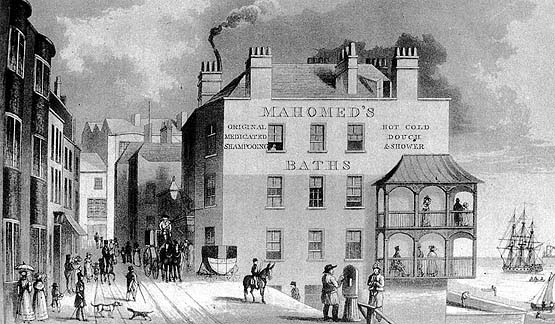
Figure 11. Mahomed's Baths (Mahomed, Shampooing).
Visitors entered his bathhouse through a splendid vestibule off the fashionable Kings Road. Dean Mahomet covered the walls of this entrance room with a mural of “Moguls and Janissaries…represented in rich dresses, and the Muses…in plain Grecian attire.” Over the years, he further festooned the walls of this entry with relics, what a visitor called his “trophies in the shape of crutches, spine-stretchers, leg-irons, head-strainers, bump-dressers, and club-foot reformers…[bestowed by] former martyrs to rheumatism, sciatica, and lumbago. Mahomed's vigorous and scientific shampooing having restored them to health.” In this entryway as well, he kept his “visitor's books,” open for testimonials from his distinguished patients. He divided his patients by sex and class reserving one book, for example, for “Ladies of the Nobility.” He later mined these visitor's books, selecting particularly important patients or glowing tributes for his extensive and colorful publicity.
From this entry, ladies mounted the stairs to the floor above, while gentlemen proceeded directly ahead down a corridor. A naturalist described the walls of this corridor:
[a] profusion of trees laden with their fruits and rich foliage, meet the eye on every side, and description of the Duranta Plumina, the Chinese Limodoron, the large flowing sensitiloe plant or mimosa grandiflora, the rencalmina nutens or nodding grandiflora, the bouvardia versicolor, the bright rencalmis, is given with a correctness that is delightful. Birds of the gayest colours are represented also winging their rapid flight through sylvan groves, and Hebe is seen reclining on the ambent air, and strewing the earth with flowers, symbolical of the efficacy of the Medicated Baths, which are prepared in a peculiar manner from herbs, etc. the growth of India.
Awaiting their baths on separate floors, ladies and gentlemen amused themselves in reading rooms furnished with a variety of local and metropolitan newspapers and journals selected for the expected interests of their respective genders. These rooms faced south, overlooking the sea and, to the east and west, the Brighton seashore and open-air sea bathing machines. The walls of these rooms
In addition, ladies had a “boudoir” and gentlemen a “private parlour” in which to await their turn in the baths. Elevated balconies surrounded the building, including “an elegant sun screen” room.were beautifully painted in the most glowing colours, with Indian landscapes, from designs of Mr. Mahomed himself. On one side is seen a superb pagoda, surrounded by a variety of figures in the costume of the country, making their profound salams. On another is a gorgeous temple, beneath which is represented an enormous idol, the object of idolatrous worship. Here is the celebrated car of Jaggernaut, and here a messenger just dispatched on a distant journey, on his camel, and armed as they are seen in India. On one side is a Rajah's mausoleum, and on another a group of Brahmins, and on a third a group of native musicians sitting beneath the umbrageous trees of that prolific soil. Here is a lake whose liquid surface is lost beneath the rising bosom of those distant mountains whilst the swan, swelling with pride, gently breaks the monotonous stillness of the scene and the rich plumage of the Balearic and Numidian cranes.
Arranged symmetrically off each of the central corridors stood the bathing rooms themselves, four per floor. All of the bathing rooms “[are] fitted with a marble bath, and have the means of giving in the same room hot water, cold water, shower, and douche baths. Four of them are also fitted with the Indian vapour or shampooing baths, two of which are appropriated for ladies and two for gentlemen.” Above, five bedrooms awaited any patient who desired to remain for more extended treatment. Dean Mahomet located water closets discretely at various places within the building.
Unseen by the patients, but essential to the functioning of the Baths, were a basement with “a large coal and store cellars, breakfast room, a manservant's room, kitchens, scullery, and other offices. A spacious area, in which is the steam engine room, surrounds the west and south sides of the house, enclosed with an iron fence, which is a most important benefit to the comfort and security of the building.” This steam engine pumped the large volume of sea and fresh water used by the establishment. Figure 12 shows the structure and apparatus of such baths.[79]
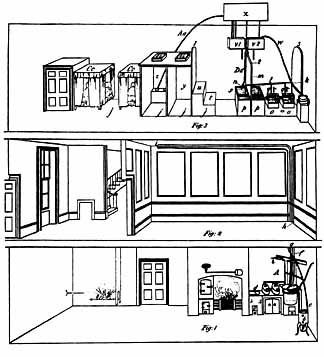
Figure 12. Diagram of a bathhouse (Cochrane, Improvement [1809], pl. 5).
Two men and three women lived as servants and bath attendants on the premises. No one on the staff, except Dean Mahomet, was Indian. Adjacent to the Baths stood a comfortable house where Dean Mahomet, Jane, and their growing family lived (figure 13 shows the only known portrait of Mrs. Jane Mahomet).[80] To accompany this majestic new bathhouse, Dean Mahomet developed a new public persona for himself.
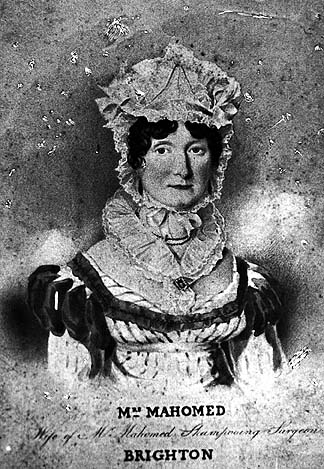
Figure 13. Mrs. Mahomed, Wife of Mr. Mahomed, Shampooing Surgeon, Brighton (courtesy of East Sussex County Library).