
1. NEW DIRECTIONS
IN HUMAN WELLNESS PROMOTION
The chapters in part 1 introduce a trend toward innovation in the field of human wellness and present both general paradigms and specific examples of the multidimensional and person-centered perspective on wellness promotion. Stokols (chapter 1) describes an emerging paradigm of wellness promotion, traces the societal developments that have prompted greater interest in wellness promotion since the 1970s, and highlights the challenge and value of developing broadergauged and more comprehensive wellness promotion strategies for the future. Breslow (chapter 2) continues this line of argument and focuses specifically on the need to incorporate the social context as a factor in wellness promotion planning and intervention. Strohman (chapter 5) expands the discussion in an unusual direction with his examination of the role of genetics in human wellness. He argues for a greater appreciation of the complex inter-relationships between the genome and both micro- and macroenvironments in the determination of phenotypic expressions related to health. Finally, Kaplan (chapter 3) and Syme (chapter 4) provide concrete examples of the types of programs that can emerge from a more integrative paradigm of wellness. Kaplan describes an alternative model for evaluating medical interventions based on “quality of life years,” that is, treatment outcome in terms of both extending the duration of life and improving the quality of life. Kaplan's General Health Policy Model yields a different order of priorities for medical procedures than the traditional approach of valuing interventions solely in terms of
1. THE SOCIAL ECOLOGICAL
PARADIGM OF WELLNESS PROMOTION
Daniel Stokols
INTRODUCTION
Prior to the 1970s, efforts to improve individual and population health focused almost entirely on the medical treatment of disease. The concepts of health promotion and wellness were little known, and financial investment in preventive health care was quite limited, accounting for only 2.5% of the nation's annual health care expenditures during the early 1970s (Brennan, 1982).
Less than three decades later, societal commitment to disease prevention strategies has increased dramatically. Local, state, and federal governments have enacted public policies designed to curtail individuals' use of tobacco products, protect workers' safety, and reduce driving-related injuries and fatalities (Breslow and Johnson, 1993; Pertschuk and Shopland, 1989; Wells et al., 1997; Williams et al., 1983). Businesses and managed care organizations have invested substantial funds toward the development and implementation of disease prevention programs (Fielding and Piserchia, 1989; Satcher and Hull, 1995; U.S. Public Health Service, 1992, 1993). In 1996, the U.S. Food and Drug Administration successfully imposed regulatory constraints on the sale and distribution of cigarettes and smokeless tobacco products to minors (U.S. Food and Drug Administration, 1996). It is likely that even more stringent regulatory constraints on the production and sale of tobacco products will be enacted at state and federal levels during the coming years (Newsweek, 1998).
The burgeoning interest in disease prevention and health promotion
Several scientific studies have documented the substantial health benefits and financial savings associated with disease prevention and health promotion programs (DeJoy and Wilson, 1995; O'Donnell and Harris, 1994; Pelletier, 1996; Stokols et al., 1995). Effective wellness promotion strategies include employee health risk appraisal, counseling, and lifestyle change programs (Erfurt et al., 1991; Fries et al., 1994), cultural change strategies within organizational settings (Allen and Allen, 1986; Bellingham, 1990), and the provision of clinical preventive services to enhance maternal and child health (Thompson et al., 1995; U.S. Preventive Services Task Force, 1989). A mid-decade review of progress toward meeting the Healthy People 2000 goals in the United States found substantial reductions in adult use of tobacco products and in alcoholrelated automobile deaths and moderate gains in the proportion of adults exercising regularly and eating less fatty diets (McGinnis and Lee, 1995). Also, the proportion of workplaces providing health promotion programs for their employees increased significantly between the mid-1980s and early 1990s (U.S. Department of Health and Human Services, 1992).
Although many health promotion programs have been effective, others have failed or achieved only limited success. For example, although
To improve the health of vulnerable populations and reduce the selfselection biases and attrition rates associated with many intervention programs, broader-gauged strategies of health promotion will be required that combine behavioral, organizational, environmental, regulatory, and political initiatives to alleviate community sources of illness and injury (Atwood et al., 1997; Montes et al., 1995; Winkleby, 1994; Winett et al., 1989). The limitations of earlier disease prevention and health promotion programs, noted previously, highlight the need for a major paradigm shift away from narrowly focused interventions aimed primarily at changing individuals' health behavior toward more comprehensive formulations that address the interdependencies among socioeconomic, cultural, political, environmental, organizational, psychological, and biological determinants of health and illness (Richmond and Kotelchuck, 1991; Schneider Jamner, this volume's introduction; Stokols, 1996; Winett et al., 1989).
Researchers in the field of public health have recognized for many years that patterns of health and illness are closely linked to a variety of sociocultural, political, and physical-environmental conditions within
The next section of the chapter outlines some of the developments, both in the field of public health and in society as a whole, that have led to the development of a broader, more integrative approach to wellness promotion—the social ecological model—which emphasizes the joint influence of behavior and environment on wellness rather than focusing exclusively on either category of health-determining factors.
SCIENTIFIC AND SOCIETAL
ORIGINS OF WELLNESS PROMOTION
We live in an era in which the dominant causes of morbidity and mortality are strongly linked to human behavior at the individual, community, and government levels (Detels et al., 1997). A crucial challenge for the 21st century is to develop programs and policies that will establish health-promotive environments at local, regional, and global levels—those that minimize individuals' exposure to health-threatening conditions and support their efforts to promote personal and collective wellness. The enormity of this task stems from the complex web of health-determining factors that impinge on individuals, organizations, and whole communities. Although these complexities make the task of promoting human wellness seem rather daunting, the “small wins” approach to social problems (Weick, 1984) suggests that as incremental health promotion and environmental protection strategies are adopted in local communities, they can exert a positive, albeit gradual, influence on population health.
Essential prerequisites for developing effective environmental design and public policy programs to create healthful surroundings are sound theoretical analyses of key concepts such as “health,” “wellness,” “wellness
The terms “disease prevention” and “health protection” have been used to describe various medical and public health strategies aimed at preventing the onset of physical and mental illness (e.g., inoculation against infectious diseases, enhanced community sanitation services, reduction of workplace hazards, and governmental regulation of food and drug safety). The concepts of health or wellness promotion, however, differ from the disease prevention orientation in that they place greater emphasis on the role of individuals, groups, and organizations as active agents in shaping health practices and policies to optimize both individual and collective well-being (e.g., U.S. Public Health Service, 1979, 1991; Williams, 1982; Winett et al., 1989; World Health Organization, 1984).
The majority of health promotion programs implemented in corporate and community settings have focused on changing individuals rather than their environments, organizations, or institutions. That is, they have been designed to modify individuals' health habits and lifestyles (e.g., exercise and dietary regimens) rather than to provide environmental resources and interventions that promote enhanced well-being (e.g., installation of improved ventilation systems within buildings to enhance indoor air quality, design of safe stairways to reduce falls and injuries, modification of agricultural machinery to reduce occupational injuries, and provision of insurance coverage for preventive risk-factor screenings among the elderly). Much recent research, however, suggests the potential value of environmental and institutional interventions as an adjunct to behaviorally oriented health promotion programs (e.g., Archea, 1985; Archea and Connell, 1986; Beck, chapter 16; Green and Kreuter, 1990;
CONCEPTUAL ORIENTATION AND SCOPE
The chapters in this volume reflect recent efforts to develop broader and more comprehensive strategies for promoting human wellness. These strategies recognize the multiplicity of factors that influence personal and collective well-being and emphasize the multidisciplinary foundations of scientific research, professional practice, and health policy analysis in the field of wellness promotion. Taken together, these chapters reflect several themes that are intrinsic to the social ecological paradigm as a basis for understanding the community and environmental origins of public health problems and for organizing disease prevention and wellness promotion programs that can effectively ameliorate those problems. Specifically, the chapters in this volume highlight the following:
- The advantages of implementing disease prevention and wellness promotion programs that target multiple health risks and illnesses (e.g., cancer, cardiovascular disease, AIDS and HIV, unintentional injuries, and community violence) rather than focusing narrowly on singular disease categories
- The strategic value of identifying and reducing threats to public health at several community levels and in the context of multiple settings (e.g., residential settings, schools, workplaces, and health care facilities)
- The well-documented links among poverty, minority status, and susceptibility to disease and the importance of targeting vulnerable groups in the population for preventive services and wellness programs
- The advantages of combining multiple strategies of disease prevention and wellness promotion (e.g., lifestyle change, health education, medical practice, environmental enhancement, media campaigns, and regulatory initiatives) within comprehensive health promotion programs
- The challenge of rigorously evaluating the health benefits, costeffectiveness, and sustainability of alternative disease prevention and wellness promotion programs
A major goal of this chapter is to delineate the core theoretical and programmatic assumptions that underlie the social ecological approach to
THE SOCIAL ECOLOGY OF HEALTH
PROMOTION: CORE ASSUMPTIONS
The term “ecology” pertains broadly to the interrelations between organisms and their environments (Hawley, 1950). From its early roots in biology, the ecological paradigm has evolved within several disciplines (e.g., sociology, psychology, economics, and public health) to provide a general framework for understanding the nature of people's transactions with their physical and sociocultural surroundings (e.g., Barker, 1968; Cassel, 1964; Catalano, 1979; Park and Burgess, 1925; Rogers-Warren and Warren, 1977). The field of social ecology gives greater attention to the social, institutional, and cultural contexts of people-environment relations than did earlier versions of human ecology, which were more closely oriented to biological processes and the geographic environment (e.g., Alihan, 1964; Binder et al., 1975; Michelson, 1970). The social ecological perspective encompasses certain core assumptions about the dynamics of human health and the development of effective strategies to promote personal and collective well-being. These assumptions are outlined here.
First, the healthfulness of a situation and the well-being of its participants are assumed to be influenced by multiple facets of both the physical environment (e.g., geography, architecture, and technology) and the social environment (e.g., culture, economics, and politics). Moreover, the health status of individuals and groups is influenced not only by environmental factors but also by a variety of personal attributes, including genetic heritage, psychological dispositions, and behavioral patterns. Thus, efforts to promote human well-being should be based on an understanding of the dynamic interplay among diverse environmental and personal factors rather than on analyses that focus exclusively on environmental, biological, or behavioral factors (cf. Moos, 1979; Stokols, 1996). For example, chapter 5 by Strohman highlights the joint influence of individuals' genetic heritage and the social environment on their susceptibility to various illnesses. Also, Minkler's research demonstrates the value of community organizing techniques aimed at ameliorating health-threatening conditions in a residential area (e.g., the threat of
Second, analyses of health and health promotion should address the multidimensional and complex nature of human environments. As noted previously, environments can be described in terms of their physical and social components, but they also can be characterized in terms of their objective (actual) or subjective (perceived) qualities and their scale or immediacy to individuals and groups (proximal vs. distal). Furthermore, environments can be described as an array of independent attributes (e.g., lighting, temperature, noise, space arrangement, and group size) or in terms of the composite relationships among several features, as exemplified by constructs such as behavior settings, person-environment fit, and social climate (Stokols, 1987). The highly variegated nature of human environments has direct implications for the design and evaluation of health promotion programs, as illustrated by several of the chapters in this volume. For example, chapter 9 by Guendelman highlights the diversity of environmental factors that affect pregnancy outcomes in immigrant and nonimmigrant populations, including the level of social support available to individuals, the nutritional content of their diet, and the quality and availability of prenatal care. Schenker's chapter similarly illustrates the multiple environmental factors that influence agricultural workers' health, including their levels of exposure to sunlight, pesticides, and unsafe equipment. And the chapters by Stanton, Danoff-Burg, and Gallant; Roach; and Villablanca reveal the subtle ways in which societal and cultural values influence the direction and funding of health research programs and sometimes lead to racially, culturally, and gender-biased interpretations of research findings.
Third, just as environments can be described in terms of their relative scale and complexity, the participants in those environments can be studied at varying levels ranging from individuals, small groups, and organizations to larger communities and populations. Rather than focusing solely on individuals or aggregates, the social ecological perspective incorporates multiple levels of analysis and diverse methodologies (e.g., medical exams, questionnaires, behavioral observations, environmental recordings, and epidemiologic analyses) for assessing the healthfulness of settings and the well-being of individuals and groups. For
Moreover, the social ecological perspective assumes that the effectiveness of health promotion programs can be enhanced through the coordination of individuals and groups acting at different levels, for example, family members who make efforts to improve their health practices, corporate managers who shape organizational health policies, and public health officials who supervise community health services (e.g., Green and Kreuter, 1990; Pelletier, 1984; Winett et al., 1989). Accordingly, chapter 24 by Waldo and Coates suggests that HIV and AIDS prevention efforts should engage multiple social units to promote health-enhancing behavioral changes, including individuals, small groups, organizations, and community decision-making groups. The chapter by East highlights the influential role of childbearing teens in shaping the sexual practices and likelihood of unwanted pregnancy among their younger sisters, and that by Nader underscores the value of collaborative partnerships linking universities with other community groups as a basis for promoting wellness among children and their families.
Fourth, the social ecological perspective incorporates a variety of concepts derived from systems theory (e.g., interdependence, homeostasis, negative feedback, and deviation amplification; see Cannon, 1932; Emery and Trist, 1972; Katz and Kahn, 1966; Maruyama, 1963) to understand the dynamic interrelations between people and their environments. Thus, people-environment transactions are characterized by cycles of mutual influence whereby the physical and social features of settings directly influence their occupants' health, and, concurrently, the participants in settings modify the healthfulness of their surroundings through their individual and collective actions. These cycles of mutual influence between individuals and their environments are evident in chapter 11 by Sanders-Phillips, showing that individuals' routine exposure to community violence leads to feelings of disempowerment, helplessness, and depression, which in turn preclude their efforts to adopt health promotive practices related to dietary improvement and physical activity. Similarly,
Moreover, the social ecological model views human environments as complex systems in which local settings and organizations are nested within more complex and remote regions. Accordingly, efforts to promote human well-being must take into account the interdependencies that exist among immediate and more distant environments. For example, the occupational health and safety of community work settings are directly influenced by state and national ordinances aimed at protecting environmental quality and public health (cf. Schenker, chapter 21). Similarly, research conducted as part of the Violence Prevention Initiative in California (Wallack, chapter 19; Wintemute, 1992) demonstrates the substantial impact of public policies (especially those regulating the production and sale of firearms) in lowering rates of community violence, injury, and homicide. Additionally, Hofmann (chapter 20) contends that managed care policy reforms guaranteeing age-appropriate health care to teenagers would be one of the most effective strategies for reducing unwanted teen pregnancies and abortions.
Finally, owing to the complexity of human environments and an explicit emphasis on multilevel and multimethod analyses of behavior, the social ecological perspective is inherently interdisciplinary in its approach to health research and the development of health promotion programs. The ecological perspective draws on the fields of medicine and public health, as well as the behavioral and social sciences, in the study and promotion of human well-being. The chapter authors represented in this volume, for example, bring a wide range of disciplinary training and perspectives to the field of wellness promotion, including molecular genetics, medicine, epidemiology, psychology, sociology, anthropology, and economics. Moreover, social ecological approaches to wellness promotion link the community-wide, preventive strategies and epidemiologic orientation of public health with the individual-level, therapeutic and curative strategies of medicine. For example, the California Smokers' Helpline described in chapter 14 by Zhu and Anderson epitomizes a health-promotive intervention that combines the broad scope and “reach” of a statewide public health program with the intensity of a more personalized clinical intervention. Similarly, the medical education programs described in chapter 17 by Slavin and Wilkes introduce physicians
The social ecological perspective also incorporates the behavioral and social science emphases on (1) the active role played by individuals and groups in modifying their own health behavior and well-being, (2) the development and testing of theoretical models describing people environment transactions, and (3) the importance of conducting evaluative studies to assess the cost-effectiveness and social impact of wellness promotion programs (e.g., Cassel, 1964; Engel, 1976; Evans, 1988; Ganiats and Sieber, chapter 12; Henderson and Scutchfield, 1989; Kaplan, chapter 3; Schwartz, 1982; Williams, 1982; Winett et al., 1989). For example, the statewide Wellness Guide described in chapter 4 by Syme exemplifies a community-level intervention whose development and evaluation were guided by psychological and sociological theories of the links between personal and community empowerment on the one hand and the likelihood and efficacy of individuals' health-promotive behavior on the other.
The core assumptions and themes inherent in ecological approaches to wellness promotion are elaborated on in subsequent chapters of the volume. For example, the multiple dimensions of environments and the ways in which they are related to individual and collective well-being are examined in the chapter by Stokols in part 1. The interactions among several categories of environmental and personal determinants of health also are discussed in that chapter. Moreover, social ecological perspectives on health suggest that the effectiveness of wellness promotion efforts can be enhanced through multilevel intervention “packages” (Geller, 1987; Weiss, 1991; Williams, 1982; Winett et al., 1989) combining both behavioral and environmental modification strategies. Thus, chapter 16 by Beck describes a multifaceted intervention for promoting wellness among the elderly that includes a social, medical, and environmental assessment, followed by the provision of specific recommendations for individual behavior change and environmental modifications (e.g., installation of handrails in bathrooms to prevent falls).
Taken together, the chapters in this volume highlight the growing importance of developing more integrative and broader-gauged strategies for promoting human wellness. The principles of social ecology outlined here and elaborated on in subsequent chapters provide a valuable foundation for establishing more integrative and effective approaches to wellness promotion research, practice, and policy during the 21st century.
NOTES
The author thanks Dr. Margaret Schneider Jamner for her helpful comments on an earlier version of the chapter.
REFERENCES
Adler, N. E., Boyce, T., Chesney, M. A., et al. (1994). “Socioeconomic status and health: The challenge of the gradient.” American Psychologist49, 15–24.
Alihan, M. A. (1964). “Social ecology: A critical analysis.” New York: Cooper Square Publishers.
Allen, J., and Allen, R. F. (1986). “Achieving health promotion objectives through cultural change systems.” American Journal of Health Promotion1, 42–49.
Archea, J. C. (1985). “Environmental factors associated with stair accidents by the elderly.” Clinics in Geriatric Medicine1, 555–569.
Archea, J., and Connell, B. R. (1986). “Architecture as an instrument of public health: Mandating practice prior to the conduct of systematic inquiry.” In H. Wineman, R. Barnes, and C. Zimring, eds., Proceedings of the seventeenth annual conference of the Environmental Design Research Association.Pp. 305–309. Washington, D.C.: Environmental Design Research Association.
Atwood, K., Colditz, G. A., and Kawachi, I. (1997). “From public health science to prevention policy: Placing science in its social and political contexts.” American Journal of Public Health87, 1603–1606.
Barker, R. G. (1968). Ecological psychology: Concepts and methods for studying the environment of human behavior.Stanford, Calif.: Stanford University Press.
Bellingham, R. (1990). “Debunking the myth of individual health promotion.” In M. E. Scofield, ed., Occupational medicine: Worksite health promotion.665–675. Philadelphia: Hanley and Belfus.
Binder, A., Stokols, D., and Catalano, R. (1975). “Social ecology: An emerging multidiscipline.” Journal of Environmental Education7, 32–43.
Brennan, A. J. (1982). “Health promotion: What's in it for business and industry?” Health Education Quarterly9, 9–19.
Breslow, L. (1996). “Social ecological strategies for promoting healthy lifestyles.” American Journal of Health Promotion10, 253–257.
Breslow, L., and Johnsen, M. (1993). “California's Proposition 99 on tobacco and its impact.” Annual Review of Public Health14, 585–604.
Cannon, W. B. (1932). The wisdom of the body.New York: W. W. Norton.
Cassel, J. (1964). “Social science theory as a source of hypotheses in epidemio logical research.” American Journal of Public Health54, 1482–1487.
Catalano, R. (1979). Health, behavior, and the community: An ecological perspective.Elmsford, N.Y.: Pergamon Press.
DeJoy, D. M., and Wilson, M. G., eds (1995). Critical issues in worksite health promotion.Boston: Allyn and Bacon.
Detels, R., Holland, W. W., McEwen, J., and Omenn, G. S., eds. (1997). Oxford textbook of public health:Volumes 1, 2, 3. 3rd ed. New York: Oxford University Press.
Detels, R., and Breslow, L. (1997). “Current scope and concerns in public health.” In R. Detels, W. W. Holland, J. McEwen, and G. Omenn, eds., Oxford textbook of public health, Volume 1: The scope of public health. 3rd ed. Pp. 3–17. New York: Oxford University Press.
Durkheim, E. (1951). Suicide: A study in sociology.New York: The Free Press.
Eisenberg, D. M., Kessler, R. C., Foster, C., et al. (1993). “Unconventional medicine in the United States.” New England Journal of Medicine328, 246–252.
Emery, F. E., and Trist, E. L. (1972). Towards a social ecology: Contextual appreciations of the future in the present.London: Plenum Press.
Engel, G. L. (1976). “The need for a new medical model.” Science196, 129–136.
Erfurt, J. C., Foote, A., and Heirich, M. A. (1991). “The cost-effectiveness of worksite wellness programs for hypertension control, weight loss, and smoking cessation.” Journal of Occupational Medicine33, 962–970.
Evans, R. I. (1988). “Health promotion—Science or ideology?” Health Psychology7, 203–219.
Fielding, J. E., and Halfon, N. (1994). “Where is the health in health system reform?” Journal of the American Medical Association271, 1292–1296.
Fielding J. E., and Piserchia, P. V. (1989). “Frequency of worksite health promotion activities.” American Journal of Public Health73, 538–542.
Fisher, E. B., Jr. (1995). “Editorial: The results of the COMMIT Trial.” American Journal of Public Health85, 159–169.
Fontanarosa, P. (1995). “The unrelenting epidemic of violence in America: Truths and consequences.” Journal of the American Medical Association273, 01792–1793.
Fries, J. F., Harrington, H., Edwards, R., et al. (1994). “Randomized controlled trial of cost reductions from a health education program: The California Public Employees' Retirement System (PERS) Study.” American Journal of Health Promotion8, 216–223.
Fries, J. F., Koop, C. E., Beadle, C. E., et al. (1993). “Reducing health care costs by reducing the need and demand for medical services.” New England Journal of Medicine329, 321–325.
Geller, E. S. (1987). “Applied behavior analysis and environmental psychology: From strange bedfellows to a productive marriage.” In D. Stokols and I. Altman, eds., Handbook of environmental psychology:Volume 1. New York: John Wiley and Sons, 361–388.
Green, L. W., and Kreuter, M. W. (1990). “Health promotion as a public health strategy for the 1990s.” Annual Review of Public Health11, 319–334.
Green, L. W., and Ottoson, J. M. (1994). Community health. 7th ed. St. Louis: Mosby.
Greenberg, M. R. (1986). “Indoor air quality: Protecting public health through design, planning, and research.” Journal of Architectural and Planning Research3, 253–261.
Hawley, A. H. (1950). Human ecology: A theory of community structure.New York: Ronald Press.
Hedge, A. (1989). “Environmental conditions and health in offices.” International Review of Ergonomics2, 87–110.
Henderson, D. A., and Scutchfield, F. D. (1989). “Point-counterpoint: The public health versus medical model of prevention.” American Journal of Preventive Medicine5, 113–119.
Karasek, R., and Theorell, T., eds. (1990). Healthy work: Stress, productivity, and the reconstruction of working life.New York: Basic Books.
Katz, D., and Kahn, R. L. (1966). The social psychology of organizations.New York: John Wiley and Sons.
Kickbush, I. (1989). “Approaches to an ecological base for public health.” Health Promotion4, 265–268.
Lawrence, R. J., ed. (1990). “Housing, health, and well-being.” Special issue of the Journal of Sociology and Social Welfare17.
Lawton, M. P. (1999). “Environmental taxonomy: Generalizations from research with older adults.” In S. L. Friedman and T. D. Wachs, eds., Measuring environment across the lifespan.Pp. 91–124. Washington, D.C.: American Psychological Association.
Marlatt, G. A., and Gordon, J. R. (1985). Relapse prevention: A self-control strategy for the maintenance of behavior change.New York: Guilford Press.
Maruyama, M. (1963). “The second cybernetics: Deviation-amplifying mutual causal processes.” American Scientist51, 164–179.
McGinnis, J. M., and Lee, P. R. (1995). “Healthy People 2000 at mid decade.” Journal of the American Medical Association273, 1123–1129.
McKinlay, J. B. (1975). “A case for refocusing upstream: The political economy of illness.” In A. J. Enelow and J. B. Henderson, eds., Applying behavioral science to cardiovascular risk.Washington, D.C.: American Heart Association.
McLeroy, K. R., Bibeau, D., Steckler, A., and Glanz, K. (1988). “An ecological perspective on health promotion programs.” Health Education Quarterly15, 351–378.
Mendell, M. J., and Smith, A. H. (1990). “Consistent pattern of elevated symptoms in air-conditioned office buildings: A reanalysis of epidemiologic studies.” American Journal of Public Health80, 1193–1199.
Michelson, W. H. (1970). Man and his urban environment: A sociological approach.Reading, Mass.: Addison-Wesley.
Miller, J. G. (1978). The theory of living systems.New York: McGraw-Hill.
Montes, J. H., Eng, E., and Braithwaite, R. L. (1995). “A commentary on minority health as a paradigm shift in the United States.” American Journal of Health Promotion9, 247–250.
Moos, R. H. (1979). “Social ecological perspectives on health.” In G. C. Stone, F. Cohen, and N. E. Adler, eds,. Health psychology: A handbook.Pp. 523–547. San Francisco: Jossey-Bass.
Newsweek. (1998). Making tobacco say “Aaaaah.” March 16, 33.
O'Donnell, M. P., and Harris, J. S., eds. (1994). Health promotion in the workplace. 2nd ed. Albany, N.Y.: Delmar Publishers.
“Ottawa Charter for Health Promotion.” (1986). Health Promotion, 1, iii–iv.
Park, R., and Burgess, E., eds. (1925). The city.Chicago: University of Chicago Press
Pelletier, K. R. (1984). Healthy people in unhealthy places: Stress and fitness at work.New York: Dell Publishing.
Pelletier, K. R. (1994). Sound mind, sound body: A new model for lifelong health.New York: Simon and Schuster.
Pelletier, K. R. (1996). “A review and analysis of the health and cost-effective outcome studies of comprehensive health promotion and disease prevention programs at the worksite:” 1993–1995 update. American Journal of Health Promotion10, 380–388.
Pertschuk, M., and Shopland, D. (1989, September). Major local smoking ordinances in the United States. National Institutes of Health Publication 90479. Washington, D.C.: U.S. Government Printing Office.
Prochaska, J. O., DiClemente, C. C., and Norcross, J. C. (1992). In “search of how people change: Applications to addictive behaviors.” “American Psychologist” 47, 1102–1114.
Richmond, J. B., and Kotelchuck, M. (1991). “Coordination and development of strategies and policy for public health promotion in the United States.” In W. W. Holland, R. Detels, and G. Knox, eds., Oxford textbook of public health.Pp. 441–454. Oxford: Oxford Medical Publications.
Robertson, L. S. (1986). “Behavioral and environmental interventions for reducing motor vehicle trauma.” In L. Breslow, J. E. Fielding, and L. B. Lave, eds., Annual Review of Public Health7, 13–34. Palo Alto, Calif.: Annual Reviews Inc.
Rogers-Warren, A., and Warren, S. F., eds.. (1977). Ecological perspectives in behavior analysis.Baltimore: University Park Press.
Rosenstock, L., Olenac, C., and Wagner, G. R. (1998). “The National Occupational Research Agenda: A model of broad stakeholder input into priority setting.” American Journal of Public Health88, 353–356.
Sarason, S. B. (1974). The psychological sense of community.San Francisco: Jossey-Bass.
Satcher, D., and Hull, F. (1995). “The weight of an ounce.” Journal of the American Medical Association273, 1149–1150.
Schauffler, H. H. (1993). Health promotion and disease prevention in health care reform. Contract report to The California Wellness Foundation. Berkeley: School of Public Health, University of California.
Schwartz, G. E. (1982). “Testing the biopsychosocial model: The ultimate challenge facing behavioral medicine.” Journal of Consulting and Clinical Psychology50, 1041–1053.
Stokols, D. (1987). “Conceptual strategies of environmental psychology.” In D. Stokols and I. Altman, eds., Handbook of environmental psychology, Volume 1. New York: John Wiley and Sons, 41–70.
Stokols, D. (1996). “Translating social ecological theory into guidelines for community health promotion.” American Journal of Health Promotion10, 282–298.
Stokols, D., Pelletier, K. R., and Fielding, J. E. (1995). “Integration of medical care and worksite health promotion.” Journal of the American Medical Association273, 1136–1142.
Syme, S. L. (1990). “Health promotion: Old approaches, new choices, future imperatives.” Presented at the Conference on “The New Public Health: 1990,” Los Angeles, April.
Thompson, R. S., Taplin, S. H., McAfee, T. A., et al. (1995). “Primary and secondary prevention services in clinical practice: Twenty years' experience in development, implementation, and evaluation.” Journal of the American Medical Association273, 1130–1135.
“U.S. Department of Health and Human Services.” (1992). 1992 National Survey of Worksite Health Promotion Activities. Final Report PB93-500023. Washington, D.C.: U.S. Government Printing Office.
“U.S. Food and Drug Administration.” (1996). Executive summary: The regulations restricting the sale and distribution of cigarettes and smokeless tobacco to protect children and adolescents. http://www.fda.gov/opacom/campaigns/tobacco/execrule.html.
“U.S. Preventive Service Task Force.” (1989). Guide to clinical preventive services: An assessment of the effectiveness of 169 interventions.Baltimore: Williams and Wilkins.
“U.S. Public Health Service.” (1964). Smoking and health: Report of the Advisory Committee to the Surgeon General of the Public Health Service. PHS Publication 1103. Washington, D.C.: U.S. Government Printing Office.
“U.S. Public Health Service.” (1967). The health consequences of smoking: A Public Health Service review. PHS Publication 1696. Washington, D.C.: U.S. Government Printing Office.
“U.S. Public Health Service.” (1979). Healthy people: The Surgeon General's report on health promotion and disease prevention. DHEW Publication (PHS) 79-55071. Washington, D.C.: U.S. Government Printing Office.
“U.S. Public Health Service.” (1991). Healthy People 2000: National health promotion and disease prevention objectives. PHHS Publication (PHS) 91-50212. Washington, D.C.: U.S. Government Printing Office.
“U.S. Public Health Service.” (1992). Business responds to AIDS.Washington, D.C.: U.S. Government Printing Office.
Webster's Encyclopedic Unabridged Dictionary of the English Language. (1989). New York: Portland House.
Weick, K. E. (1984). “Small wins: Redefining the scale of social problems.” American Psychologist39, 40–49.
Weiss, S. M. (1991). “Health at work.” In S. M. Weiss, J. E. Fielding, and A. Baum, eds., Perspectives in behavioral medicine: Health at work.Pp. 1–10. Hillsdale, N.J.: Lawrence Erlbaum Associates.
Wells M., Stokols D., McMahan S., and Clitheroe, C. (1997). “Evaluation of a worksite injury and illness prevention program: Do the effects of the REACH OUT Training Program reach the employees?” Journal of Occupational Health Psychology2, 25–34.
Williams, A. F. (1982). “Passive and active measures for controlling disease and injury: The role of health psychologists.” Health Psychology1, 399–409.
Williams, A. F., Karpf, R. S., and Zador, P. F. (1983). “Variations in minimum licensing age and fatal motor vehicle crashes.” American Journal of Public Health73, 1401–1403.
Winett, R. A., King, A. C., and Altman, D. G. (1989). Health psychology and public health: An integrative approach.New York: Pergamon Press.
Winkleby, M. A. (1994). “The future of community-based cardiovascular disease intervention studies.” American Journal of Public Health84, 1369–1372.
Wintemute, G. J. (1992). “From research to public policy: The prevention of motor vehicle injuries, childhood drownings, and firearm violence.” American Journal of Health Promotion6, 451–464.
World Health Organization. (1984). “Health promotion: A discussion document on the concept and principles.” Health Promotion1, 73–76.
2. THE SOCIETAL CONTEXT OF DISEASE
PREVENTION AND WELLNESS PROMOTION
Lester Breslow
From time immemorial, people have been concerned, collectively as well as individually, about avoiding health impairment and prolonging life. In society they have developed two increasingly specialized arms for advancing their health interests: (1) sets of healers, now long dominated by physicians, for dealing with individuals' problems, and (2) community health protection, to which public health personnel are devoted. The first set focuses on people one at a time and the second on the population as a whole. Physicians have tended to emphasize cures, whereas public health has focused attention on prevention, though considerable overlap in these emphases has occurred. Both are supported by society to varying degrees in different times and situations, generally corresponding to the value that society places on them for safeguarding health.
COMMUNICABLE DISEASES
Most health problems arise in a societal context. Thus, tuberculosis, influenza, pneumonia, and other respiratory-borne and acute intestinal diseases dominated the health scene during the early days of the industrial revolution and even into the 20th century. Exhausting factory work, crowded housing and work space, polluted water, and inadequate nutrition largely determined that disease pattern. The latter has steadily been yielding both to social reform of poor living conditions and to social
THE CHRONIC DISEASE EPIDEMIC
Progress against the communicable diseases has led to longer lives. Steady improvement in technology and living conditions, however, created opportunity for increasing segments of the population—at first for the more affluent and subsequently most other people—to luxuriate in ways that induced other kinds of health damage. Physical inactivity; excessive calorie consumption, especially in the form of fats and sweets; and access to new forms of tobacco eventuated in the 20th-century epidemics of cardiovascular disease, lung cancer, diabetes, and other chronic diseases.
In the struggle against this new set of health problems, treatment dominated in the beginning, but prevention is now emerging as the major approach. The 1957 report of the Commission on Chronic Illness, which brought together the American Medical Association, American Public Health Association, American Hospital Association and American Public Welfare Association, introduced and delineated the key concepts for chronic disease prevention: primary and secondary prevention.1 The former was defined as “averting the occurrence of disease” and the second as “halting the progression of disease from its early unrecognized stage to a more severe one and preventing complications or sequelae of disease.”2 Continued development of knowledge concerning the causation of chronic disease, especially behavioral risk factors, has enhanced prospects for primary prevention. Similarly, continuing technological advances in screening for early signs of disease have led to improvements in secondary prevention. As the 20th century comes to a close, social support for primary and secondary prevention of chronic disease is growing rapidly.
A NEW CONCEPT OF HEALTH
Meanwhile, something beyond prevention of disease as a health goal is gaining recognition. The World Health Organization (WHO) has defined health as “a state of complete physical, mental and social wellbeing, not merely the absence of disease and infirmity.” 3 Though denigrated for years as wooly-headed and not useful in scientific work, the
Gradual acceptance of that idea appears due to continuing advances not only against the communicable diseases but also against the noncommunicable chronic diseases. The prescience of the first WHO leaders is shown in the fact that mortality from major forms of chronic disease such as heart disease and cancer was still rising at the mid-century point; since then, however, both have passed their epidemic peaks and are declining, thus opening the path to a new view of health.
Overcoming the chronic diseases is resulting both from their declining incidence and from lowering their fatality. Social support of primary and secondary prevention has played a substantial role in that development.
IMPAIRMENT AS THE ISSUE
An important consequence of delaying mortality among those afflicted with chronic disease has been the extension of life expectancy within the population as a whole. Aging of the population, with its accompanying accumulation of multiple pathologies from life's stresses, is stimulating concern about functional impairment, with its social as well as individual implications.
One sign of that concern may be seen in efforts to measure health impairments. One of the first to emerge was the set of activities of daily living (ADLs) proposed by Katz, Downs, Cash, and Grotz in 1970.6 They listed six activities necessary for living, such as eating and toileting, and began measuring the extent to which individuals could perform these functions without aid from others. This process permitted delineating the need for care, with treatment as the primary aim. Since the ADLs earmarked only those persons requiring extensive care, a next step was to define instrumental activities of daily living (IADLs).7 These included such items as ability to perform household chores or to go shopping. Subsequently, advanced activities of daily living (AADLs) have been proposed 8 and include such behaviors as participation in regular exercise.
Noteworthy in this evolution of ADLs, IADLs, and AADLs has been
WELLNESS AS A CONCEPT
Wellness as a health goal is still a relatively crude concept. It has not yet become sufficiently explicit and standardized to permit clear delineation in a person or measurement in a population. In dealing with health, we are still strongly inclined to diagnose and count diseases and to determine the number of ADLs, IADLs, and AADLs that people can perform.
The term “wellness promotion” implies a step beyond prevention of disease and impairment. All the items that might be listed under the rubric of wellness apply to relative states of health rather than to gradations of disease or impairment. Promotion of wellness may similarly be viewed as actions to achieve higher levels of health above and beyond the reduction of impairment.
Disease and impairment have been quite well delineated; wellness has not. It is therefore necessary to make wellness as a state of health more explicit in order to advance understanding of how to promote it. This constitutes an important, current challenge to health science.9
SOCIAL ASPECTS OF DISEASE
PREVENTION/WELLNESS PROMOTION STRATEGY
Despite the elementary state of the wellness concept, it already appears that many of the same things that must be attacked in order to prevent disease also need attention in achieving wellness. For example, avoiding smoking both prevents lung disease and enhances pulmonary function; physical exercise both prevents cardiac disease and strengthens musculoskeletal function. Thus, in many respects disease prevention and wellness promotion constitute the two aspects of a positive health strategy.
Several levels of action are desirable in this strategy: individual, interpersonal, and social. In behavior affecting one's own health (and that is an increasingly important factor), the individual makes the final decision; he/she ultimately determines what and how much to eat, how much alcohol
The third, and probably most effective, level of intervention for behavior that protects health is the social environment. Since behavior adverse to health arises so largely from societal influences—for example, inducing youngsters to smoke cigarettes, tolerating excessive use of alcoholic beverages, and failing to provide adequate opportunity for physical exercise in the inner city—such influences must be dealt with on the social level. In an earlier day, health advance necessitated creating a social milieu that favored hand washing and not spitting; now it has become necessary to establish new social hygiene standards: not smoking, drinking modestly if at all, exercising, and eating sensibly.
Exemplifying the societal approach to disease prevention and wellness promotion, and the struggles involved, is the California tobacco control program.10 Activists against the number one cause of death in the United States—in major voluntary health agencies, public health and medicine, and elsewhere—had not prevailed in the legislature over tobacco industry interests. Therefore, taking advantage of the state's legislative initiative process, they succeeded in getting Proposition 99 passed in a general election. The latter increased the tax on cigarettes 25 cents a pack and allocated 20 percent of the funds to prevention efforts, the rest to medical, hospital, research and other purposes. The broad-scale program implemented with the prevention funds by the California Department of Health Services stimulates tobacco control activity in local health departments, schools, and a wide variety of community agencies throughout the state. These local efforts, and subsequent state action, stopped smoking in public buildings, workplaces, and restaurants; stepped up enforcement of laws forbidding tobacco sales to minors; removed vending machines from many places; and otherwise severely discouraged smoking. Vigorous communication via television, radio, and other media did likewise. Schools introduced materials and in other
The tobacco industry fought back intensively with political contributions and lobbying, formation of phony “public” organizations to oppose local control activities, and heavy promotion of products. The governor and the legislature then joined in substantially disrupting the program by diverting prevention monies to medical services, until the antitobacco forces obtained court action to stop such diversion of funds. Now efforts are under way to restore the program.
The California tobacco control experience has indicated how sharply social trends and conflicts can affect health-related behavior and thus disease prevention and wellness promotion. Other elements of such efforts are likewise embedded in social context, which must be considered in order to achieve effective action.
REFERENCES
1. “Commission on Chronic Illness.” 1957. Chronic Illness in the United States.Cambridge, Mass.: Harvard University Press.
2. “Commission on Chronic Illness.” 1957. Chronic Illness in the United States. Volume I: Prevention of Chronic Illness.Cambridge, Mass.: Harvard University Press.
3. “World Health Organization.” 1984. Health promotion: A discussion document on the concept and principles. Health Promotion1, 73–76.
4. “Government of Canada.” 1974. A new perspective on the health of Canadians (Lalonde Report). Department of National Health and Welfare, Ottawa.
5. “Ottawa Charter for Health Promotion.” 1986. Canadian Journal of Health Promotion77, 425–436.
6. Katz, S., Downs, T. D., Cash, H. R., and Grotz, R. C.1970. “Progress in development of the index of ADL.” Gerontologist10, 20–30.
7. Avlund, K., Schultz-Larsen, K., and Kreiber, S.1993. “The measurement of instrumental ADL: Content validity and construct validity.” Aging5, 371–383.
8. Reuben, D. B., Laliberte, L., Hiris, J., and Mor, V.1990. “A hierarchical exercise scale to measure function at the Advanced Activities of Daily Living (AADL) level.” Journal of the American Geriatrics Society38, 855–861.
9. Breslow, L.1999. “From disease prevention to health promotion.” Journal of the American Medical Association281, 1030–1033.
10. Breslow, L., and Johnsen, M.1993. “California's Proposition 99 on tobacco and its impact.” Annual Review of Public Health14, 585–604.
3. PROMOTING WELLNESS
Biomedical versus Outcomes Models
Robert M. Kaplan
This chapter grew out of my experience of being named as the Wellness Lecturer at the University of California, San Diego, in 1991. It is remarkable to consider what changes have occurred over these last few years. Yet, it is also remarkable that we still face many of the same problems. In 1991, managed care had captured only a small percentage of the health care market in the United States. Today, managed care is a dominant force in most areas of the country. In 1991, few observers challenged the autonomy of physicians as sole decision makers. Today, practice guidelines for the individual health care providers are an accepted part of practice. Finally, the use of public health and preventive health care approaches, although recognized as important in 1991, were not common parts of practice. Today, the reorganization of health care has provided new opportunities for incorporation of prevention paradigms. These changes have stimulated rethinking of the basic foundations of health care organization and delivery, and this chapter addresses some of the related issues. We will begin by considering the framework proposed in 1991.
WHAT ARE THE PROBLEMS?
The major problems in the American health care system might be described as the three A's: affordability, access, and accountability (Kaplan, 1993). Similar problems were identified by Relman (1989).
Affordability
The affordability problem results from our inability to pay for all the health care that is desired. Health care costs in the United States grew remarkably between 1940 and the mid-1990s. In 1940, approximately four billion dollars per year were spent on health care in the United States. That amount tripled by 1950 and continued to escalate at an exponential rate through the early 1990s. Health expenditures were over a trillion dollars in 1996. It now takes just over a day to match the yearly expenditure from 1940.
The high costs of American health care cause very serious problems for U.S. products in the world marketplace. This is because the costs of health care are represented in every product that the United States exports. Since our per capita expenditures on health care are twice what they are in countries such as Great Britain or Japan, health care costs contribute proportionally more to the expense of American exports. We pay for expensive health care in many different ways. In some cases patients pay more for services. However, we also pay for high health care costs when we purchase consumer products. Part of the price of each product is the health insurance paid on behalf of the workers. More important, workers are doubly affected by increased health care costs. When their employers pay more for health insurance, workers get lower wages and retirement benefits (Center for Health Economics Research, 1994). If spending on health benefits rises, other aspects of compensation may be held constant or may decline.
Access
The United States remains the only industrialized country that does not provide universal access to health care. Part of the problem is that health care is usually unaffordable without insurance. The exact number of uninsured people is difficult to determine. Current estimates suggest that over 40 million Americans have no regular source of health care. The only group that has universal coverage is the elderly since virtually all Americans older than age 65 are covered by the Medicare program. The uninsured are not necessarily the unemployed. In fact, the majority of those without health insurance are working or dependents of workers. However, many employers provide either no health insurance or inadequate coverage.
Accountability
Health care may be the only major American industry that is not held accountable for what it produces. Although we produce more health care services per capita than any country in the world, it is not clear that Americans are in any way healthier than residents of other developed countries, where considerably less is spent on health care. Patient satisfaction surveys suggest that consumers are significantly more satisfied with health care services in countries that spend considerably less. One analysis compared satisfaction and expenditures in 10 countries (the United States, Canada, France, Germany, Sweden, Australia, the Netherlands, Italy, Japan, and the United Kingdom). Among these countries, the United States spends more per capita and is significantly lower in the percentage of consumers satisfied with the services they receive (Blendon et al., 1990).
In summary, the U.S. health care system is in serious trouble. Solutions to these problems require that we consider all three dimensions. In addition, we must challenge some of the most basic models of health care. The accountability piece of the puzzle is perhaps the most challenging. In order to address accountability, we must address central ideas about the purpose of health care. Most of this chapter reviews methods for accounting for health care benefits.
BIOMEDICAL AND OUTCOMES MODELS
Health care has been dominated by a traditional biomedical model. According to this model, human pain and suffering are caused by disease processes. Disease activity is measured by judgments of trained physicians and by physiological measures, including blood chemistry or radiographic evidence of pathology. The traditional medical model recognizes behavioral factors as predictors of these outcomes. Behavioral risk factors might be cigarette smoking, high-risk behaviors, or the consumption of a high-fat diet (Kaplan, 1984). In addition, the traditional biomedical model suggests that disease process is determined by genetic predispositions, environmental exposures, and the aging process itself. The disease process is also affected by medical care and the use of regular medical tests (Wilson and Cleary, 1995).
According to the traditional biomedical model, the purpose of medicine is to find disease pathology and to fix it. We sometimes refer to this
An alternative model for health care, known as the outcomes model, is similar to the traditional biomedical model. However, the ultimate outcome is not a measure of disease process. The goals of health care are to extend the duration of life and/or to improve the quality of life. Disease processes are of interest because pathology may either shorten life expectancy or make life less desirable. The same variables that predict disease process may also predict life expectancy or quality of life. However, in contrast to the traditional biomedical model, behaviors or biological events may affect life expectancy independently of disease process. Further, the measures of success in the outcomes model are different than those in the traditional biomedical model. The outcomes model emphasizes quality of life and life duration instead of clinical measures of disease process. As similar as these two models appear, they lead to substantially different approaches to organizing, financing, and delivering health care (Kaplan, 1990). These distinctions are addressed in the following sections.
Valuing Health Services
The traditional biomedical model uses procedures to fix biological problems. The greater use of procedures in the United States than in other countries resulted in the American system becoming more expensive than the systems in other countries. By 1990, it was clear that cost control would dominate the health policy agenda throughout the decade. Often, cost reduction is considered the major objective of health care reform. Pauly (1995), for example, argues that cost should be the central consideration in policy analysis. However, too much attention to cost may neglect the primary mission of health care. For example, if cost is the only criterion, the development of guidelines for appropriate care may exclude expensive services. In order to choose between alternative health programs, it is best to evaluate not only the costs but also the
Despite the improvements in measuring patient outcomes, determining the value of health services has been particularly difficult. In contrast to cost-benefit analysis, which focuses on the dollar returns for investing in particular programs, or consumer willingness to pay for service, cost-utility analysis used in some health services evaluations considers the health outcomes of a program, weighted by patient preferences for outcomes, in relation to the financial costs of the program. In economics, the value of a product is related to the willingness of consumers to pay for it. For example, the value of a Mercedes-Benz automobile is set by the price that consumers are willing to pay for the car. If the price is too high, few cars are sold. Health services are difficult to value in this manner because consumers rarely pay for them directly. Instead, the charges are paid by third parties. Third-party payment leaves consumers out of the loop and makes it difficult to establish whether the services are valuable to patients.
A GENERAL HEALTH POLICY MODEL
In order to understand health outcomes, it is necessary to build a comprehensive theoretical model of health status. The major aspects of the model include mortality (death) and morbidity (health-related quality of life). In several papers, we have suggested that diseases and disabilities are important for two reasons. First, illness may cause the life expectancy to be shortened. Second, illness may make life less desirable at times prior to death (diminished health-related quality of life) (Kaplan and Anderson, 1988; Kaplan et al., 1993).
Over the last two decades, a group of investigators at the University of California, San Diego, has developed the General Health Policy Model (GHPM). Central to the model is a general conceptualization of
Mortality. A model of health outcomes necessarily includes a component for mortality. Indeed, many public health statistics focus exclusively on mortality through estimations of crude mortality rates, age-adjusted mortality rates, and infant mortality rates.
Morbidity. Health-related quality of life is also an important outcome. Most public health indicators are relatively insensitive to variations toward the well end of the death-wellness continuum. Measures of mortality, to give an extreme example, ignore all variations of morbidity: a person in a coma is considered equivalent to an asymptomatic person at full function. Both, after all, are alive. In addition, disability measures often ignore those who are relatively healthy. For example, the RAND Health Insurance Study reported that about 80% of the general population have no dysfunction. Thus, they would estimate that 80% of the population is well. But in studies that assess symptoms and function, only about 12% of the general population report no symptoms on a particular day (Kaplan et al., 1976). In other words, health symptoms or problems are a very common aspect of the human experience. Some might argue that symptoms are unimportant because they are subjective and unobservable. However, symptoms are highly correlated with the demand for medical services, expenditures on health care, and motivations to alter lifestyles. Further symptoms lower quality of life even if a disease cannot be detected. Thus, we feel that the quantification of symptoms is very important when assessing morbidity. The GHPM, using the Quality of Well-Being (QWB) scale described later, considers functioning in three areas (mobility, physical activity, and social activity) and symptoms.
Utility (Relative Importance). Not all outcomes are equally important. For example, a treatment that prevents nausea is not equivalent to one that prevents death. Given that mortality and the various components of morbidity can be tabulated, it is important to consider their relative importance. A key component of the GHPM attempts to scale the various health outcomes according to their relative importance. This exercise adds the “quality” dimensions
― 50 ―to health status. In the preceding example, the relative importance of dying would be weighted more than developing nausea. The weighting is accomplished by rating all states on a quality continuum ranging from 0 (for dead) to 1.0 (for optimum, asymptomatic functioning). These ratings are typically provided by independent judges who are representative of the general population. Using this system it is possible to express the relative importance of states in relation to the life-death continuum. A point halfway on the scale (0.5) is regarded as halfway between optimum function and death. The quality-of-life weighting system for the QWB has been described in several different publications (Kaplan et al., 1976, 1978, 1979).Prognosis. In the GHPM, the term “prognosis” refers to the probability of transition among health states over the course of time and includes consideration of duration of problems. A headache that lasts one hour is not equivalent to a headache that lasts one month. A cough that lasts three days is not equivalent to a cough that lasts three years. In considering the severity of illness, duration of the problem is central. As basic as this concept is, most contemporary models of health outcome measurement completely disregard the duration component. The GHPM considers the point at which the problem begins. A person may have no symptoms or dysfunctions currently but may have a high probability of health problems in the future. The prognosis component of the model takes these transitions into consideration. A discount rate is used for future outcomes if the utility of a future outcome is not the same as that of a present outcome. For example, a daylong headache that will begin a year from now may be less of a concern than a daylong headache that will start immediately.
The components of the model can be integrated to express outcomes in terms of quality-adjusted life years (QALYs). A QALY is defined as the equivalent of a completely well year of life, or a year of life free of any symptoms, problems, or health-related disabilities. A principal advantage of the QALY is that it provides a common metric that allows different programs to be directly compared. The quality-adjusted life expectancy is the current life expectancy adjusted for diminished quality of life associated with dysfunctional states and the duration of stay in each state.
Consider, for example, a person with a rare lung disease and in a state of functioning and symptoms that is rated by community peers as 0.5 on
Now suppose that a vaccination becomes available and that the threat of the flu can be eliminated by vaccinating the 35,000 people in the community. The cost of the vaccine is $5 per person, or $175,000. The average cost/utility of the program would be as follows:

Using the concept of the QALY, the net cost/utility ratio of two alternative programs can be calculated as follows:

It is important to consider the marginal, or incremental, cost/utility of programs. Although we could compare the simple costs and effects of different programs, we most often have to decide how much we are willing to pay in order to add an additional benefit. For example, behavior modification has been shown to be valuable for helping people kick the smoking habit. However, the benefits might be enhanced if nicotine replacement therapy is added to behavior modification. Analysis might show that both behavior modification and behavior modification plus nicotine replacement reduce tobacco use. However, we must decide if we are willing to pay the extra expense for adding nicotine replacement. Usually, we must choose between several programs.
Another way to evaluate outcomes is within “policy space.” Various approaches to cost/benefit and cost/utility analysis occasionally produce different results. The output for cost/benefit analysis is in monetary terms—a program that produces cost savings. Cost/utility analysis
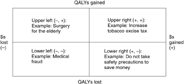
Figure 3.1. Two-dimensional policy space from Anderson et al. (1986). Tobacco excise tax may be one of the few policy examples that is in the upperright quadrant.
The right half of the plane would be used to represent programs in which benefits exceed costs, while the left half would display situations in which costs exceed benefits. The upper half of the figure displays outcomes that have positive health effects in terms of QALYs. Those in the bottom half of the figure would be used to represent negative health outcomes in well-year units.
The two-dimensional space yields four quadrants. One quadrant, the lower left, represents unsuitable alternatives. In these cases, dollars are being spent, and negative health consequences occur. Administration of a uniformly toxic treatment might be represented by this quadrant. The upper-right quadrant represents the most attractive alternatives. Here, QALY health benefits are gained, and there are also economic benefits. Increasing tobacco excise tax may be one of the few true examples of such a program. The upper-left quadrant shows QALY gains, but with more significant costs associated with these improvements. Transplantation surgery for the elderly might be described by this quadrant. Here
The lower-right quadrant represents another level of economic tradeoff. Here, society may be willing to sacrifice some health benefits in exchange for cost savings. Anderson and colleagues suggested that these trade-offs may be common in studies involving nuclear power; pollution control; occupational, environmental, and consumer product safety; highway speed limits; and so on.
DECISIONS: OUTCOMES VERSUS
TRADITIONAL BIOMEDICAL MODELS
Although the traditional biomedical model and the outcomes model are similar in many ways, they lead to different decisions about the use of resources for prevention. In the following sections, several examples are reviewed.
Diagnosis versus Outcomes
The traditional biomedical model is centered on medical diagnoses. Diagnosis defines the problems that have been found and gives direction about what needs to be fixed. The traditional system pays providers for using diagnostic tests to find problems and for using therapeutic interventions to fix the problems. Despite the importance of diagnosis, it often obscures or confuses the importance of some health problems. There are at least three reasons why focusing on diagnosis may have led us in some wrong directions. First, diagnoses do not always lead to better health outcomes. Often, people are placed in categories, but identification of a condition does not necessarily mean that an effective treatment can be applied. Second, diagnoses are not always correct, and in some cases, individuals will be treated for conditions they do not have or will fail to be effectively treated because the correct diagnosis was overlooked. Third, in many cases, poor health outcomes result from risky behavior or from exposure to risk factors. Community health outcomes can be enhanced by removing the risk factor or by modifying behavior. The identification of a disease on the pathway between the risk factor and the outcome is interesting but not essential.
There are approximately 2,150,000 deaths in the United States each
Major nongenetic contributors to mortality were examined in an important analysis by McGinnis and Foege (1993). When these external factors are considered independent of the disease model, clear priorities for prevention emerge. A summary of the estimates for actual causes of death in the United States is presented in Table 3.1. Tobacco use is associated with more than 400,000 deaths each year, while diet and activity patterns account for an additional 300,000. These dwarf the number of deaths associated with problems that the public is generally concerned about, such as illicit drug use. The McGinnis and Foege analysis challenged us to think differently about the way we track health indicators in the United States. Only a small fraction of the trillion dollars the United States spends annually on health care is devoted to the control of the major factors that cause premature mortality in the United States. Estimates suggest that less than 5% of the total annual health care budget is devoted to prevention efforts (Rothenberg et al., 1987). If the focus of attention shifts from finding and fixing diseases to producing QALYs, it becomes clear that preventive efforts to reduce tobacco, drug, and alcohol use and to promote exercise deserve greater attention.
It is commonly argued that traditional fee-for-service medicine provides few incentives to offer preventive services. Indeed, the higher the rates of service utilization, the greater the revenue. One attractive feature of managed care is that there are substantial incentives to prevent illness and to reduce health care utilization. From a public health perspective, managed care organizations have responsibility for a defined population. If they can keep this population healthy by investing in prevention, they may ultimately profit by having reduced costs and higher consumer satisfaction.
| Factor | Deaths | Percentage |
|---|---|---|
| SOURCE: McGinnis and Foege (1993). | ||
| Tobacco | 400,000 | 19 |
| Diet-activity patterns | 300,000 | 14 |
| Alcohol | 100,000 | 5 |
| Microbial agents | 90,000 | 4 |
| Toxic agents | 60,000 | 3 |
| Firearms | 35,000 | <2 |
| Sexual behavior | 30,000 | 1 |
| Motor vehicles | 25,000 | 1 |
| Illicit use of drugs | 20,000 | <1 |
| Total | 1,060,000 | 50 |
The traditional biomedical model has dominated thinking about prevention. Most of the 3% to 5% of the health care dollar used for prevention is devoted to clinical preventive services offered by physicians. For example, the great majority of expenditures on prevention relate to screening for diseases, such as breast cancer, cervical cancer, and prostate cancer. The purpose of the prevention service is to detect a disease that already exists and intervene medically so that progression is retarded. The screening tests have become profitable for the providers who offer them, and there is growing concern about abuses or profiteering by those who administer tests to people who do not need them.
Guidelines for preventive services might limit reimbursement to those services recommended in the Guide to Clinical Preventive Services. The U.S. Preventive Services Taskforce has prepared this excellent document that describes the appropriate use of a wide variety of medical preventive services. The strong emphasis in the Guide is on the appropriate use of medical screening tests by physicians. The latest version of the guide includes 70 chapters. There are 11 chapters devoted specifically to counseling (tobacco, physical activity, diet, motor vehicle injuries, household and recreational injuries, youth violence, low-back pain, dental/periodontal disease, HIV and STD, unintended pregnancy, and gynecological cancers). However, most of the guidelines advise physicians on testing and the medical implications for those who have been found to have a disease. For example, 47 of the 60 sets of guidelines in the first edition of the Guide concern the application of medical screening tests. Another five consider immunizations and chemoprophylaxis. The remaining eight guidelines are on counseling.
The guidelines for preventive services arise from the traditional find it–fix it model. The emphasis is on using medical screening tests that identify diseases that already exist. These are the services that have traditionally generated fees for providers. The limited yield from this approach is reviewed in the next section. The current environment favors an outcomes-oriented approach. According to the outcomes model, diagnosis and treatment are important only if they make life longer and/or better.
Medical Geography
The traditional biomedical model of health care rests on several important assumptions. One assumption is that medical technology enhances health outcomes and that there is a pool of untreated disease on which these technologies might be successfully deployed. If this is true, then more applications of medical technologies should result in better health outcomes. A second assumption is that any well-trained doctor presented with the same problem will come to the same diagnosis. However, it has been known for some time that there is substantial variation in the rate at which problems are diagnosed and treated in different communities. Thus, even though the distribution of a disease may be the same in different communities, the rate at which diseases are diagnosed varies substantially. Wennberg and colleagues have devoted the past quarter of a century to a description of this problem (Wennberg, 1996).
Wennberg argues that a major factor in the use of medical services is “supplier-induced demand.” This implies that providers create demand for services by diagnosing illness. Most surgical subspecialists would agree there is a need to perform surgery on some well-defined cases. These might include amputation of a toe with gangrene, removal of some well-defined tumors, or intervention to repair a compound fracture. However, there is also substantial discretion in the use of some medical and surgical procedures. This is well illustrated by the comparison of procedures in two communities: Boston, Massachusetts, and New Haven, Connecticut.
Boston and New Haven are similar in a variety of ways. Both are traditional New England cities that have multiethnic populations. The two cities have approximately the same climate, and both cities are home to prestigious Ivy League universities. Since the cities are near each other, we would expect that the costs of medical care should be approximately the same. Using data from the mid-1970s, Wennberg and
Figure 3.2 shows the distribution of costs in Connecticut service areas and in Massachusetts services areas in the 1970s. In 1975, Medicare was paying $324 per recipient per month in Boston and only $155 per month for residents of New Haven. The situation has not changed much. In 1989, per capita hospital expenditures for acute care were $1,524 for residents of Boston and $777 for those living in New Haven.
Further study by Wennberg and his colleagues showed that Boston has more hospital capacity than does New Haven. In Boston, there are
4.3 hospital beds for every 1,000 residents, while in New Haven, there are fewer than 2.3 beds per 1,000 residents. Residents of Boston are more likely to be hospitalized for a wide variety of acute medical conditions than are residents of New Haven. For many different medical conditions, such as pneumonia or congestive heart failure, Bostonians are more likely to be cared for as hospital inpatients, while residents of New Haven are treated outside the hospital.
Some of the differences between Boston and New Haven might be attributed to the greater development of hospital facilities. New Haven has only one major medical school (Yale), while Boston has three medical schools. The Harvard Medical School is associated with several different teaching hospitals. Further, Boston has four hospitals associated with different religious establishments, while there is only one religious affiliated hospital in New Haven.
The Boston–New Haven comparison is particularly interesting from a public policy perspective. Medicare is a federal program that hopes to provide equal benefit to all its recipients. Yet, on average, Medicare spends twice as much per capita in Boston as it does in New Haven (Wennberg et al., 1996) for the same care. Are New Haven residents getting a bad deal? Since the government is spending less on New Haven residents, it might be argued that their health should suffer. However, outcomes evidence does not show that residents of Boston are any healthier than residents of New Haven. In fact, some evidence implies that Boston residents may be worse off. For example, people in Boston are more likely to be rehospitalized for the same condition than are people in New Haven. Residents of Boston appear to have more complications from medical treatment. More may not necessarily be better. Indeed, there is some evidence that more may be worse (Fisher et al., 1994). In the next section, we consider this question. Under a traditional model that focuses on diagnosis, more facilities will lead to more diagnoses.
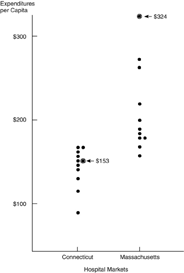
Figure 3.2. Distribution of costs in Connecticut service areas and in Massachusetts service areas in the 1970s. Each dot represents one of the 11 most populated market areas in Connecticut or Massachusetts. Per capita expenditures for hospitals are generally lower in Connecticut, but there is a twofold range of variation. The circled dots represent the New Haven and Boston markets, where the majority of hospitalizations occur in teaching hospitals. Adapted from Wennberg (1990).
The outcomes model regards diagnosis as important only if it leads to patient betterment.
A War on Cancer
Numerous studies raise questions about the association between volume of medical care and community health status. Two recent examples come from studies on the treatment of cancer and the treatment of cardiovascular disease. In 1971 Congress passed the National Cancer Act, which was also described as President Nixon's War on Cancer (National Cancer Act, PL 99-158, 1971). The purpose of the National Cancer Act was to deploy significant resources toward the eradication of cancer. Most of those resources have been directed toward treatment, with relatively few resources devoted to cancer cause and prevention. Progress in the War on Cancer was recently evaluated by Bailar and Gornik (1997). Figure 3.3 summarizes recent trends in cancer mortality in the United States between 1996 and 1994. Mortality from cancer appeared to peak in about 1991 and has gone down slightly since then. Overall, there have been slight increases in cancer mortality since the War on Cancer began in 1971. However, changes in cancer death rates have been relatively modest. The American Cancer Society provides data on cancer mortality trends over the past 60 years for men (Figure 3.4) and women (Figure 3.5). For both men and women, there have been significant declines in cancers of the stomach and significant increases in cancers of the lung. For women, there have also been significant declines in cancers of the uterus and small declines in cancers of the colon and rectum. However, for most sites, the proportions of people dying of cancers have been relatively unaffected by major changes in medical care. The rapid increase in deaths from cancers of the lung can be attributed almost exclusively to the use of cigarettes. It is encouraging that deaths from lung cancer appear to have peaked for males by 1990and are now declining as cigarette use has decreased. Rates of lung cancer for women, however, are continuing to increase.
One example of the differences between the traditional biomedical and the outcomes models concerns screening and treatment for prostate cancer. The War on Cancer followed a traditional find it–fix it biomedical model. The identification of cancer dictates treatment, which in turn is evaluated by changes in biological process or disease activity. In the case of prostate cancer, a digital rectal exam may identify an asymmetric prostate, leading to a biopsy and the identification of prostate
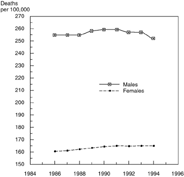
Figure 3.3. Trends in cancer mortality in the United States, 1986 and 1994. Data from Bailar and Gornik (1997).
In contrast to the traditional biomedical model, an outcomes perspective embraces public health notions of benefit. Instead of focusing on disease process, benefit is defined in terms of life duration and quality of life. Studies have demonstrated that serum PSA is elevated in men with clinically diagnosed prostate cancer (Hudson et al., 1989) and that PSA levels above 4.0ng /ml have positive predictive value for prostate cancer. Despite the promise of PSA screening, there are also significant controversies. Prostate cancer is common for men age 70 years and older (Lu-Yao et al., 1994). Averaging data across eight autopsy studies, Coley et al. (1997) estimated the prevalence of prostate cancer to be 39% in 70- to 79-year-old men. The treatment of this disease varies dramatically from country to country and within regions of the United States. For example,
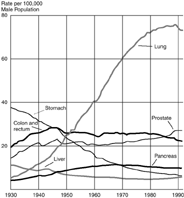
Figure 3.4. Trends in cancer mortality by site for men. Source: American Cancer Society (1997).
In considering changes in mortalities since 1970, Bailar and Gornik
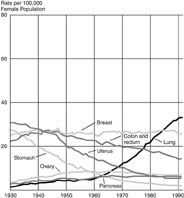
Figure 3.5. Trends in cancer mortality by site for women. Uterine cancer death rates are for cervix and corpus combined. Source: American Cancer Society (1997).
Looking into Arteries
Other examples come from the treatment of cardiovascular disease. Acute myocardial infarction is the most common cause of morbidity and mortality in both the United States and Canada. However, the two countries approach the treatment of cardiovascular disease differently. Invasive cardiac procedures, such as coronary angiography, are performed considerably more often in the United States than in Canada. Some years ago, we noted that about eight of every ten well-insured patients in San Diego received angiography following a heart attack, if they were treated in private hospitals (Nicod et al., 1991). However, only 40% patients at the San Diego Veterans Affairs Health Center received the procedure following a heart attack. In Vancouver, only 20% of post–myocardial infarction patients got angiography, and only 10% of patients in Sweden received the procedure. This variation would be acceptable if we knew that more care led to better health. However, there was little evidence that more aggressive care produced better results. Controlling for the seriousness of the heart attack (measured by the ejection fraction), the probability of surviving a heart attack in San Diego, Vancouver, and Sweden was comparable.
More recently, the use of invasive cardiac procedures in the United States and Canada was evaluated for 224,258 elderly Medicare recipients in the United States and 9,444 older patients in Ontario, Canada. Each of these patients had been the victim of heart attack after 1991. Among American patients, 34.9% underwent coronary angiography, while only 6.7% of the Canadian patients received this procedure. Having coronary angiography increases the likelihood that other invasive procedures will be performed. Among the American patients, 11.7% underwent transluminal coronary angioplasty in comparison to 1.5% of the Canadian patients. Further, 10.6% of the American patients versus only 1.4% of the Canadian patients underwent coronary artery bypass surgery. Figure 3.6 summarizes both the procedure rates and the mortality rates for these patients. It might be presumed that American patients are better off because they are more likely to obtain the latest procedures. However, mortality rates 30 days following the attack were comparable in the two countries (21.4% vs. 22.3%). Further, the mortality rates one year later were virtually identical (34.3% in the United States vs. 34.4% in Canada). These data suggest that the use of high-technology medical procedures is much more likely in the American system than in
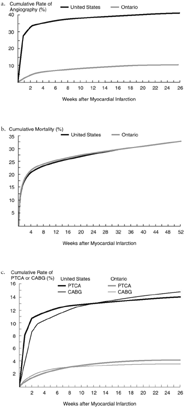
Figure 3.6. Rates of coronary angiography (section a), cardiovascular procedures (section b), and heart disease mortality (section c) in the United states and Canada. Adapted from Tu et al.(1977).
These findings suggest that the find it–fix it approach to established coronary heart disease may have limited benefits. The procedures are expensive but may not extend life. An alternative might be to invest in programs that attempt to enhance outcomes by promoting health in entire communities. For heart disease, this might be accomplished by changing behaviors to reduce cholesterol. Programs to lower cholesterol might have only a small benefit for individuals but might have a substantial benefit for communities. As many as 40% of men and 20% of women have serum cholesterol levels less than 240 mg/dl. One analysis considered the benefits of population-wide heart disease prevention programs in California and Finland. Some of these programs have been criticized because they reduce serum cholesterol by only 1% to 4%. However, these slight reductions in average serum cholesterol may have contributed to as much as one-third in the decline in coronary heart disease in the United States since the mid-1960s. The education programs in Finland and California use media campaigns and face-to-face instruction. The programs cost about $4.95 per person per year and, on average, produce a reduction of about 2% in serum cholesterol. The programs produce a qualityadjusted year of life at about $3,200 for individuals at risk for coronary
THE OREGON EXPERIMENT
There have been a few attempts to apply outcomes thinking to health policy. One heroic attempt to apply an outcomes model to public policy was considered by the State of Oregon. In the late 1980s, Oregon was faced with the fact that costs of health care were expanding much more rapidly than the budgets for Medicaid. Collectively, Oregon citizens spent approximately $6 billion on health care in 1989, which is about three times what they spent in state income taxes. Oregon also recognized that American health care is not a two-tiered system but rather a three-tiered system. The three-tiered system includes people who have regular insurance and can pay for their care, people enrolled in Medicaid, and a growing third tier of people who had no health insurance at all. By 1993, this third tier represented about 450,000 citizens, or about one-fifth the population of the state. In addition, another 230,000 were underinsured, and the trend indicated that the number of uninsured and underinsured was steadily increasing. In order to address the growing crisis of funding for health care, the only alternatives were to (1) change eligibility criteria and remove some individuals from the Medicaid rolls, (2) continue to provide care to a large number of people but limit the care they receive, or (3) increase revenues (taxes) to pay for the current system.
Led by a grassroots citizens group known as Oregon Health Decisions, it was argued that Oregon, like other states and countries, was already rationing health care. The problem was that rationing was implicit and not open to public scrutiny. In fact, people were being rationed rather than services. In other words, many individuals in need of care received none because they were in the wrong category. Pregnant women, for example, were covered. A young woman employed as an hourly worker may be ineligible for health care, but an unemployed woman would be eligible if she were to become pregnant. Thus, the system created incentives to become pregnant in order to have a regular source of health care. The system allowed health care under Medicaid for
These arguments caught the attention of John Kitzhaber, M.D., the president of the state senate and now the governor of Oregon. Under Kitzhaber's leadership, Oregon passed three pieces of legislation to attack this problem (Kitzhaber, 1990). In this chapter we focus most specifically on Senate Bill 27, which mandated that health services be prioritized from most to least important. The purpose of the prioritization was to eliminate services that did not provide benefit. The process of creating the prioritized list was an extremely difficult one. The commission began by attempting to create a prioritized list of all health services. However, it soon became apparent that this was a nearly impossible task. Thus, the commissioners began searching for a combination of conditions and treatments that could be lumped together. They refer to these as condition-treatment pairs. Examples of these condition treatment pairs are shown in Table 3.2. For example, the condition of rectal prolapse is paired with the treatment partial colectomy, while osteoporosis is paired with medical therapy.
A Health Services Commission was created in order to develop the prioritized list. This commission obtained several sources of information. First, it held public hearings to learn about preferences for medical care in the Oregon communities. These meetings helped clarify how citizens viewed medical services. Various approaches to care were rated and discussed. On the basis of 48 town meetings that were attended by more than 1,000 people, 13 community values emerged. These values included prevention, cost-effectiveness, quality of life, ability to function, length of life, and so on. The major lesson from the community meetings was that citizens wanted preventive services. Further, the people consistently stated that the state should forgo expensive heroic treatments for individuals or small groups in order to offer basic services for everyone. In order to pay for these basic services, it was necessary to reduce spending elsewhere, and it was therefore important to rank services according to their desirability as determined by studies of community values. The commission chose to evaluate services using the QWB scale and a modified GHPM.
| Condition | Treatment |
|---|---|
| Rectal prolapse | Partial colectomy |
| Osteoporosis | Medical therapy |
| Ophthalmic injury | Closure |
| Obesity | Nutritional and lifestyle counseling |
Two factors influenced the commission's decision to modify the standard GHPM approach. First, the commission could not conduct clinical trials for each of the many condition-treatment pairs. Further, estimation of treatment benefit using the QWB cannot be left to laymen. Thus, the commission formed a medical committee that had expertise in essentially all specialty areas and nearly all the major provider groups in the state. The Oregon citizens were concerned about using weights from California in assigning priorities in their state. Thus, 1,001 Oregon citizens participated in a separate weighting experiment. The weights were obtained in a telephone survey that was conducted by Oregon State University.
Multiple Lists
The Oregon Health Services Commission created multiple versions of the prioritized list. The first list was created in 1990. This list rankordered 1,692 condition-treatment pairs. The Health Services Commission used rough estimates of QWB changes and cost to create this list. Although this list has been the target of extensive criticism, the Health Services Commission probably intended it to be a working document rather than a final list. While they were working on the list, they completed a first draft that was discussed at a public meeting.
The list was put together in a hasty manner. As a result, there were some obvious problems. For example, 314 different medical therapies were all valued at $98.51, and an additional 177 were all estimated to cost $2,560.65 (Tengs et al., 1996). The last 193 pairs on the 1,692-item list were ranked alphabetically according to diagnosis. In addition, there were many counterintuitive orderings on the list. For example, treatment for thumb sucking was ranked higher than treatment for AIDS. Although the 1990 list was clearly flawed, it is also important to emphasize that it was never officially released. There are many reasons why the list may not have been dependable. Perhaps most important was that the
Perhaps the most discussed list was the one released in 1991. This list included 709 items. The list was based on the QWB scale to estimate benefit and included estimates of costs. In the 1991 list, the system was reorganized according to three basic categories of care: essential, very important, and valuable to certain individuals (Table 3.3). Within these major groupings there were 17 subcategories. Nine of the 17 subcategories were classified as essential. The commission decided to place greatest emphasis on problems that were acute, fatal, and reversible. In these cases, treatment prevents death, and there is full recovery, for example, appendectomy for appendicitis and nonsurgical treatment for whooping cough. Other subcategories classified as essential included maternity care, treatment for conditions that prevent death but do not allow full recovery, and preventive care for children.
Listed as very important were treatments for nonfatal conditions that would return the individual to a previous state of health. Also included in this category were acute, nonfatal, one-time treatments that might improve quality of life. These might be hip replacements and cornea transplants. At the bottom of the list were treatments for fatal or nonfatal conditions that did not improve quality of life or extend life. These might be progressive treatments for the end stages of diseases such as cancer and AIDS or care for conditions for which the treatments were known not to be effective. In the revised approach, the commission decided to ignore cost information and to allow their own subjective judgments to influence the rankings on the list. Table 3.4 summarizes the conditions selected from the top of the list, the middle of the list, and the bottom of the list. Unfortunately, the final exercise in Oregon resulted in many deviations from the GHPM. However, the exercise demonstrates an attempt to resolve the healthcare crisis on the basis of health outcome.
One of the most important criticisms of the Oregon plan has been offered by Tengs and her associates (Tengs, 1996; Tengs et al., 1996). These investigators used rank-order correlational methods to compare the Oregon lists with cost-effectiveness analyses that have been published in the literature. They report that the 1990 list showed essentially no correlation with published cost-effectiveness analyses. The 1991 list was correlated 0.39 with published studies, while the correlation of the 1992 list was 0.25. The correlation with the 1993 list was 0.24. The Tengs analyses are important, and they have received widespread attention as criticisms
| NOTE: Every person is entitled to services necessary for a diagnosis. Each health service on the list is presumed to include necessary ancillary services, such as hospital care, prescription drugs, and medical equipment and supplies necessary for successful treatment. | SOURCE: Oregon Health Services Commission. |
|---|---|
| Essential | |
| 1. Acute fatal—treatment prevents death and allows full recovery: appendectomy for appendicitis; nonsurgical treatment for whooping cough; repair of deep, open wound in neck; nonsurgical treatment for infection of the heart muscle (myocarditis) | |
| 2. Maternity care, including most newborn disorders: obstetrical care for pregancy; care of the newborn | |
| 3. Acute fatal—treatment prevents death but does not allow full recovery: nonsurgical treatment for stroke; all treatment for burns; treatment for severe head injuries | |
| 4. Preventive care for children: immunizations and well-child exams | |
| 5. Chronic fatal—treatment improves life span and quality of life: nonsurgical treatment for insulin-dependent diabetes; medical and surgical treatment for treatable cancer of the uterus; medical treatment for asthma; drug therapy for HIV disease | |
| 6. Reproductive services—excludes maternity and infertility services: birth control and sterilization | |
| 7. Comfort care: pain management and hospice care for the end stages of disases such as cancer and AIDS | |
| 8. Preventive dental care—adults and children: exams; cleaning and fluoride treatment | |
| 9. Proven effective preventive care for adults: mammograms; blood pressure screening; Pap smears | |
| Very Important | |
| 10. Acute nonfatal—treatment causes return to previous health: nonsurgical treatment for acute thyroiditis; medical treatment for vaginitis; fillings for cavities | |
| 11. Chronic nonfatal—one-time treatment improves quality of life: hip replacement; corneal transplants for cataracts; rheumatic fever | |
| 12. Acute nonfatal—treatment without return to previous health: relocation of dislocated elbow; repair of cut to cornea | |
| 13. Chronic nonfatal—repetitive treatment improves quality of life: nonsurgical treatment for rheumatoid arthritis; gout; migraine headaches | |
| Valuable to Certain Individuals | |
| 14. Acute nonfatal—treatment speeds recovery: medical treatment for viral sore throat; diaper rash | |
| 15. Infertility services: medical treatment for infertility; in vitro fertilization; artificial insemination | |
| 16. Less effective preventive care for adults: routine screening for those people not otherwise at risk, such as diabetes screening if the person is under 40 years old and not pregnant | |
| 17. Fatal or nonfatal—treatment causes minimal or no improvement in quality of life: aggressive treatment for end stages of diseases such as cancer and AIDS; medical treatment for nongenital warts. |
| Top 10 |
| 1. Medical treatment for bacterial pneumonia |
| 2. Medical treatment of tuberculosis |
| 3. Medical or surgical treatment for peritonitis |
| 4. Removal for foreign body from pharynx, larynx, trachea, bronchus, and esophagus |
| 5. Appendectomy |
| 6. Repair of ruptured intestine |
| 7. Repair of hernia with obstruction and/or gangrene |
| 8. Medical therapy for croup syndrome |
| 9. Medical therapy for acute orbital cellulitis |
| 10. Surgery for ectopic pregnancy |
| Middle 10 |
| 350. Repair of open wounds |
| 351. Drainage and medical therapy for abscessed cysts of Bartholin's gland |
| 352. Medical therapy for pilonidal cyst with abscess |
| 353. Medical therapy for acute thyroiditis |
| 354. Medical therapy for acute otitis media |
| 355. Drainage tubes or tonsil-adenoidectomy for chronic otitis media |
| 356. Surgical treatment for cholesteatoma |
| 357. Medical therapy for sinusitis |
| 358. Medical therapy for acute conjunctivitis |
| 359. Medical therapy for spina bifida without hydrocephalus |
| Bottom 10 |
| 700. Mastopexy for gynecomastia |
| 701. Medical and surgical therapy for cyst of the kidney |
| 702. Medical therapy for end-stage HIV disease (comfort care excluded— it is high on list) |
| 703. Surgery for chronic pancreatitis |
| 704. Medical therapy for superficial wounds without infection |
| 705. Medical therapy for constitutional aplastic anemia |
| 706. Surgical treatment for prolapsed urethral mucosa |
| 707. Paracentesis of aqueous for central retinal artery occlusion |
| 708. Life support for extremely low birth weight (<500 g) and under 23-week gestation |
| 709. Life support for anencephalous |
It is of interest to note that the 1991 list, the one closest to using the GHPM, showed the strongest correlation with the published literature. The correlation of .39 is statistically significant and substantial. It is important to emphasize that the Oregon project and the previously published analyses were conducted using very different methods. Further, the Tengs's analysis makes the assumptions that the rank ordering of previously published studies is correct and that failure to replicate this rank ordering must be incorrect. It is known that there is substantial variability in the estimates of cost-effectiveness across published studies.
Perhaps the most misunderstood aspect of the Oregon experience is the belief that Oregon rationed health care on the basis of cost-effectiveness. Tengs (1996) argued that Oregon intended to allocate resources using a systematic approach. However, in response to political pressures and political realities, the state abandoned the use of systematic decision analysis. They first eliminated cost for consideration, and then they eliminated quality of life from the analysis and focused on subjective estimates of treatment effectiveness over a short time interval of five years. Not only did the system applied in Oregon differ from systematic cost-effectiveness analysis, but in fact the priorities were only weakly related to results from systematic analysis.
Update on the Oregon Plan
Despite all the criticisms of the Oregon plan, there is some evidence that the outcomes approach produced benefits. The Medicaid portion of the Oregon Health Plan enrolled 120,000 new members during its first year. This was equal to the number projected for the five-year life span of the demonstration project. The initial evaluation showed that emergency room visits declined 5.3% in 1994 and that urgent care visits declined by 1%. A 1995 evaluation suggested that emergency room visits dropped an additional 2.1% overall and 6.2% in Oregon's rural areas. One of the advantages of the program is that insuring more people reduces bad debt
One of the interesting results of the plan was that the number of Oregon families receiving AFDC declined. Since it was no longer necessary to be in AFDC in order to get health care, the incentives for being on welfare were removed (Conviser, 1997).
CONCLUSIONS
This chapter has outlined a new paradigm for thinking about alternatives in health care. In short, it is suggested that limited health care resources be used to maximize life expectancy and health-related quality of life. Services that do not achieve their objectives should not be funded, and the savings should be used to extend basic health care benefits to people currently uninsured. The proposed model is consistent with the thinking of several groups, including scholars in the United States (Office of Technology Assessment, 1979; Russell, 1986; Weinstein and Stason, 1976, 1977), the United Kingdom (Drummond et al., 1987; Maynard, 1991; Williams, 1988), Canada (Torrance, 1986, 1987), and Australia (Richardson, 1991). Although the exact methodologies proposed by these different research groups vary slightly, the theory is nearly identical. Patrick and Erickson (1993) offered a detailed account of the methodological steps required to implement the system. Methods are now available to begin guiding policy decisions. However, our information base for the implementation of the model is still incomplete.
The attractiveness of the outcomes model arises from several of its qualities. For example, it makes all choices explicit, so that anyone can evaluate the assumptions used to make decisions. The model requires a large amount of data on health outcomes, much more than what we have available for most health care programs. Little research has been completed that measures outcomes in a manner that would be useful in applying the model. This requires either that we obtain the data directly (through clinical trials or other means) or that the data be estimated. Though there is extensive experience in using estimated data (e.g., Naglie and Detsky, 1992; Weinstein and Stason, 1976), there is evidence that the methods used in this approach may be faulty (Fryback et al., 1993). A second drawback is the effort required to complete an evaluation.
In conclusion, problems in health care might be characterized by the three A's: affordability, access, and accountability. These three problems are interrelated. Health care became expensive because a traditional biomedical model rewarded providers for doing procedures on the basis of diagnoses. The excessive expense of care made the costs prohibitive, and many people lost access to the system. However, the expensive system has been unable to demonstrate that it provides benefits to patients. An alternative to the biomedical model, known as the outcomes model, emphasizes that health services must be valued in terms of their impact on life expectancy and their effects on patient-reported quality of life. The outcomes model suggests that population health status might be enhanced if resources are shifted away from procedure-based reimbursement and toward primary prevention.
NOTE
Supported in part by a scholars' grant from the American Cancer Society.
REFERENCES
“American Cancer Society.” (1997). Cancer Facts and Figures—1997.Atlanta: American Cancer Society.
“American College of Physicians.” (1997). “Screening for prostate cancer.” Annals of Internal Medicine126, 480–484.
Anderson, J. P., Bush, J. W., Chen, M. M., and Dolenc, D. C.(1986). “Policy space areas and properties of benefit-cost/utility analysis.” Journal of the American Medical Association255 (6), 794–795.
Bailar, J. C., and Gornik, H. L.(1997). “Cancer undefeated.” New England Journal of Medicine336, 1569–1574.
Blendon, R. J., Leitman, R., Morrison, I., and Donelan, K.(1990). “Satisfaction with health systems in ten nations.” Health Affairs9, 185–192.
Brook, R. H., and Lohr, K. N.(1987). “Monitoring quality of care in the Medicare program: Two proposed systems.” Journal of the American Medical Associations258, 3138–3141.
“Center for Health Economics Research.” (1994). The Nation's Healthcare Bill: Who Bears the Burden?Waltham, Mass.: Center for Health Economics Research.
Coley, C. M., Barry, M. J., Fleming, C., et al. (1997). “Early detection of prostate cancer. Part II: Estimating the risks, benefits, and costs.” Annals of Internal Medicine126, 468–479.
Conviser, R.(1997). “A brief history of the Oregon Health Plan and its features.” Unpublished paper, Oregon Health Services Commission, Salem, Oregon.
Drummond, M., Stoddart, G., Labelle, R., and Cushman, R.(1987). “Health economics: An introduction for clinicians.” Annals of Internal Medicine107, 88–92.
Fisher, E. S., Wennberg, J. E., Stukel, T. A., and Sharp, S. M.(1994). “Hospital readmission rates for cohorts of Medicare beneficiaries in Boston and New Haven.” New England Journal of Medicine331, 989–995.
Fleming, C., Wasson, J. H., Albertsen, P. C., et al. (1993). “A decision analysis of alternative treatment strategies for clinically localized prostate cancer.” Journal of the American Medical Association269, 2650–2658.
Fryback, D. G., Dasbach, E. J., Klein, R., et al. (1993). “The Beaver Dam Health Outcomes Study: Initial catalog of health-state quality factors.” Medical Decision Making13 (2), 89–102.
Hudson, M. A., Bahnson, R. R., and Catalona, W. J.(1989). “Clinical use of prostate specific antigen in patients with prostate cancer.” Journal of Urology142, 1011–1017.
Hunink, M. G., Goldman, L., Tosteson, A. N., et al. (1997). “The recent decline in mortality from coronary heart disease, 1980–1990: The effect of secular trends in risk factors and treatment.” Journal of the American Medical Association277 (7), 535–542.
Hunink, M. G., Goldman, L., Tosteson, A. N., et al. (1993b). “Application of a general health policy model in the American healthcare crisis.” Journal of the Royal Society of Medicine86, 277–281.
Hunink, M. G., Goldman, L., Tosteson, A. N., et al. (1997). “Decisions about prostate cancer screening in managed care.” Current Opinion in Oncology9, 480–486.
Kaplan, R. M.(1984). “The connection between clinical health promotion and health status: A critical overview.” American Psychologist39 (7), 755–765.
Kaplan, R. M.(1990). “Behavior as the central outcome in health care.” American Psychologist45, 1211–1220.
Kaplan, R. M., and Anderson, J. P.(1988). “A general health policy model: Update and applications.” Health Services Research23, 203–235.
Kaplan, R. M., Anderson, J. P., and Ganiats, T. G.(1993). “The quality of wellbeing scale: Rationale for a single quality of life index.” In S. R. Walker and R. Rosser, eds., Quality of Life Assessment and Applications.Pp. 65–94. London: MTP Press.
Kaplan, R. M., Bush, J. W., and Berry, C. C.(1976). “Health status: Types of validity and the index of well-being.” Health Services Research11 (4), 478–507.
Kaplan, R. M., Bush, J. W., and Berry, C. C.(1978). “The reliability, stability, and generaliz ability of a health status index.” Proceedings of the Social Status Section, American Statistical Association, 704–709.
Kaplan, R. M., Bush, J. W., and Berry, C. C.(1979). “Health status index: Category rating versus magnitude estimation for measuring levels of well-being.” Medical Care17 (5), 501–525.
Kaplan, R. M., Orleans, C. T., Perkins, K. A., et al. (1995). “Marshaling the evidence for greater regulation and control of tobacco products: A call for action.” Annals of Behavioral Medicine17, 3–14.
Kitzhaber, J.(1990). “The Oregon Basic Health Services Act.” Oregon State Senate, Salem, Oregon.
Lu-Yao, G. L., Baron, J. A., Barrett, J. A., and Fisher, E. S.(1994). “Treatment and survival among elderly Americans with hip fractures: A population based study.” American Journal of Public Health84, 1287–1291.
Maynard, A.(1991). “Economic issues in HIV management.” In A. Maynard, ed., Economic Aspects of HIV Management.Pp. 6–12. London: Colwood House Medical Publications.
McGinnis, J. M., and Foege, W. H.(1993). “Actual causes of death in the United States.” Journal of the American Medical Association270, 2207–2212.
Naglie, I. G., and Detsky, A. S.(1992). “Treatment of chronic nonvalvular atrial fibrillation in the elderly: A decision analysis.” Medical Decision Making12, 239–249.
Nicod, P., Gilpin, E. A., Dittrich, H., et al. (1991). “Trends in use of coronary angiography in subacute phase of myocardial infarction.” Circulation84 (3), 1004–1015.
“Office of Technology Assessment, U.S. Congress.” (1979). A Review of Selected Federal Vaccine and Immunization Policies: Based on Case Studies of Pneumococcal Vaccine.Washington, D.C.: U.S. Government Printing Office.
Patrick, D. L., and Erickson, P.(1993). Health Status and Health Policy: Allocating Resources to Healthcare.Cambridge, Mass.: Cambridge University Press.
Patrick, D. L., and Erickson, P.(1995). “When does curbing health costs really help the economy?” Health Affairs (Millwood) 14, 68–82.
Relman, A.(1989). “Confronting the crisis in health care.” Technology Review, July, 31–40.
Richardson, J.(1991). “Economic assessment in healthcare: Theory and practice.” Melbourne, Australia: Monash University National Centre for Health Program Evaluation.
Rothenberg, R., Masca, P., Mikl, J., et al. (1987). “Cancer.” American Journal of Preventive Medicine3 (Suppl.), 30–42.
Russell, L.(1986). Is Prevention Better Than Cure?Washington, D.C.: The Brookings Institution.
Sturm, R., and Wells, K. B.(1995). “How can care for depression become more cost-effective?” Journal of the American Medical Association273, 51–58.
Tengs, T. O.(1996). “An evaluation of Oregon's Medicaid rationing algorithms.” Health Economics5 (3), 171–181.
Tengs, T. O., Meyer, G., Siegel, J. E., et al. (1996). “Oregon's Medicaid ranking and cost-effectiveness: Is there any relationship?” Medical Decision Making16, 99–107.
Torrance, G. W.(1986). “Measurement of health state utilities for economic appraisal: A review.” Journal of Health Economics5, 1.
Torrance, G. W.(1987). “Utility approach to measuring health-related quality of life.” Journal of Chronic Diseases40, 593–600.
Tosteson, A. N., Weinstein, M. C., Hunink, M. G., et al. (1997). “Cost-effective-ness of populationwide educational approaches to reduce serum cholesterol levels.” Circulation95, 24–30.
Tu, J. V., Pashos, C. L., Naylor, C. D., et al. (1997). “Use of cardiac procedures and outcomes in elderly patients with myocardial infarction in the United States and Canada.” New England Journal of Medicine336, 1500–1505.
Weinstein, M. C., and Stason, W. B.(1976). Hypertension: A Policy Perspective.Cambridge, Mass.: Harvard University Press.
Weinstein, M. C., and Stason, W. B.(1977). “Foundations of cost-effectiveness analysis for health and medical practice.” New England Journal of Medicine296, 716.
Wennberg, J. E.(1990). “Small area analysis and the medical care problem.” In L. Sechrest, E. Perrin, and J. Bunker, eds., Research Methodology: Strengthening Causal Interpretations of Nonexperimental Data.Pp. 177–206. USPHS/UDHHS Publication (PHS) 90-3454. Washington, D.C.: U.S. Government Printing Office.
Wennberg, J. E.(1996). “On the appropriateness of small-area analysis for cost containment.” Health Affairs (Millwood) 15, 164–167.
Williams, A.(1988). “The importance of quality of life in policy decisions.” In S. Walker and R. Rosser, eds., Quality of Life: Assessment and Application.Pp. 279–280. London: MTP Press.
Wilson, I. B., and Cleary, P. D.(1995). “Linking clinical variables with health related quality of life: A conceptual model of patient outcomes.” Journal of the American Medical Association273, 59–65.
4. COMMUNITY PARTICIPATION,
EMPOWERMENT, AND HEALTH
Development of a Wellness
Guide for California
S. Leonard Syme
INTRODUCTION
Interventions are the key element in public health practice. Every discipline in public health attempts, directly or indirectly, to prevent disease or promote health through interventions. Many of these have successfully improved public health through the implementation of government regulations for water, milk, and food quality as well as for sewage control, housing standards, highway and automobile safety, and occupational hazards. However, in comparison to such structural changes, when interventions have required that people learn the facts and then change their own high-risk behavior, results have not been as impressive.
We need to review this failure and think about alternative ways of attacking this problem.
THE MULTIPLE RISK FACTOR INTERVENTION TRIAL
It is instructive to begin with the classic failure, that of the Multiple Risk Factor Intervention Trial (MRFIT).1 That trial, which began in 1971 and ended in 1981, was intended to reduce the death rate from coronary heart disease in the United States by getting men in the top 10% risk group to lower their risk through behavioral change. A massive screening of 361,662 men in 20 cities throughout the country identified those at highest risk, using high serum cholesterol, cigarette smoking, and high blood pressure as determinants. After three intensive screening exams,
Prior to randomization, all these men were informed about the requirements of the trial. They had to agree ahead of time to be randomly assigned either to the clinic or to their own doctors. Those randomized to the clinic had to be willing to stop smoking, change their diet, take medication for high blood pressure, agree to come to the clinic once or twice a week during the early phases of the trial, bring family members when requested, and continue their participation for six to eight years. Participants were urged not to enter the trial if they had any doubts or reservations about these terms. In addition, some volunteers were rejected by staff psychologists because it was thought that they might not be good participants. As a result, the final group of men was carefully selected, highly motivated, and highly informed.
The MRFIT cost $180 million. It was probably the most intensive and expensive clinical trial ever developed to educate people and get them to change their behavior. The trial failed.2 Despite the fact that each clinic in the trial had a large staff of specially trained counselors who worked very closely with each participant for the entire period, after six years 65% of the participants were still smoking, only half the men with hypertension had their blood pressure under control, and there were so few dietary changes that they are not even worth mentioning.
There are several explanations for the failure of MRFIT. One, of course, is that the men in the special intervention group did not change their behavior enough; another is that men in the control group changed too much.
During posttrial debriefing with the men in the control group, it was learned that when they were randomized to the control group, many simply changed behaviors on their own. This is an important phenomenon because it suggests that providing people with information about their risk is not a waste of time, and it also points out the importance of how that information is transmitted. In MRFIT, the control group members were provided with personalized and relevant information about threats to their health, but they were forced to find their own solutions. The men in the special intervention group with whom the clinics worked so intensively did not have better results than those men relegated to the control group.
The results from MRFIT were, of course, disappointing. Even more discouraging is the fact that even when people do successfully change
COMMUNITY INTERVENTION STRATEGIES
The MRFIT is just the most dramatic in a long list of failures we have experienced over the years in attempting to get people to change their behavior and maintain those changes over time. As a result of the MRFIT failure and others like it, some of us in public health began to explore new and different intervention alternatives. One of the most interesting of these was to develop community intervention programs rather than continuing to focus on individuals. If we could not get individuals to change their behavior, perhaps we could succeed by changing the communities in which people live.
In 1984, I began a collaboration with Enid Hunkeler of the Kaiser Health Plan Division of Research to design and execute a communitybased smoking intervention program in Richmond, California. At the beginning of this project, we assessed smoking behavior, knowledge, and attitudes in a random sample of residents living in a targeted area of Richmond. At the end of five years, we did a second survey with another random sample in the area to assess changes in behavior, knowledge, and attitudes. In the interval between the two surveys, we implemented an ambitious and intensive antismoking program. We worked with business and government leaders and identified a local captain on every block of the research area. We helped local children make an antismoking video featuring their own dancers and musicians performing their own music. (This video was shown for the first time in a large auditorium to a standing-room-only audience.) Data from an extensive process evaluation study directed by Professor Troy Duster of the Institute for Social Change at the University of California, Berkeley, confirmed that the project was implemented very effectively. Unfortunately, after five years of work, the smoking cessation results in Richmond were no better than they were in our two comparison cities (San Francisco and Oakland).
It is not entirely clear why this carefully designed project failed, but
The nationwide Community Intervention Trial for Smoking Cessation (COMMIT) 3 followed basically the same design as the Richmond project. This trial involved more than 10,000 heavy smokers in 11 intervention cities. A matched group of another 11 cities served as the control group. In the intervention cities, the goal was to create a social climate that did not support tobacco use. Efforts were made to implement smokefree policies at work sites and elsewhere in the community, provide a newsletter and other information, and train people to become smoking counselors. At the end of this massive and ambitious nationwide trial, no difference was observed in quit rate among heavy smokers between the intervention and control communities. Approximately 18% quit in both communities. Among light to moderate smokers, 31% quit in the intervention cities while 28% quit in the control communities. It is important to note that this study was expertly done by some of the best smoking cessation interventionists in the country, and it, too, failed.
During the time of the MRFIT, Richmond, and COMMIT studies, three major community intervention programs targeting coronary heart disease were also under way. These three interventions were the Stanford Five-City Coronary Heart Disease Project,4 the Minnesota Heart Health Program,5 and the Pawtucket (Rhode Island) Community Heart Health Program.6 These were long-term trials involving intensive educational campaigns focused on coronary heart disease risk factors. Each of these projects was well designed, and all were implemented with energy and enthusiasm. None have yet reported their morbidity and mortality data, but they have published their risk-factor results. No differences were found in Minnesota and Rhode Island between the communities targeted for intervention and those that served as control communities; some modest changes were seen in the Stanford study for two risk factors.
WHERE WE STAND
Notwithstanding the failures of intervention efforts that relied primarily on the dissemination of information, it is important to recognize the successes that have taken place. Death rates from coronary heart disease in the United States have plummeted since 1968 despite the failure of various clinical trials designed to do just that. A conference, sponsored by the National Heart, Lung, and Blood Institute, was organized to explain this remarkable phenomenon, but it could not account for it in terms of less fat in the American diet, better control of hypertension, reduction in cigarette smoking, increases in physical activity, new surgical techniques, or better community resuscitation programs. Although the reduction in death rates is real and something is happening to explain it, we do not know what that something is.
Cigarette smoking rates have plummeted as well. Compared to overall prevalence rates of around 45% several years ago, current rates are now in the mid-20% range. Although more than 90% of this reduction has been achieved by individuals working on their own, it does appear that this success is due, in part, to information provided to them on the dangers of smoking.7
More discouraging is the fact that despite our best efforts to inform people about the risks of smoking, the rate among many minority populations is unchanged, and the rate among women continues to rise. And, most troubling, the smoking rate among American high school students has risen from 27% in 1991 to 35% in 1995. Among young Black males, the rate of smoking has doubled during that time (28%), while among young White males and females, the prevalence of smoking is now 37% and 40%, respectively. Among 8th-, 10th-, and 12th-graders, daily smoking rates increased by about 50% between 1991 and 1996. One of every five 12th-graders now smokes daily.8 This is very sad news.
More people in the United States are physically active than ever before, but this phenomenon occurs mostly among the upper-middle class.9 In the general population, the prevalence of obesity is actually increasing, with one-third of Americans now overweight.10 And pregnant women drank more alcohol in 1995 than they did four years earlier (3.5% of pregnant women had seven or more drinks per week, a 400% increase from 1991).11
Clearly, there have been successes and failures, but we do not always know why, and we have not always been able to stop the harmful things from happening. Thus, the current situation is confusing. Providing information is certainly of value, but we very often find that it is not enough.
CHANGING THE PARADIGM
The field of public health faces some difficult challenges. Suggestions have been made to improve this situation, but while they are reasonable, they are not, in my opinion, enough to solve the problem. One of these suggestions is that we develop and use more innovative and rigorous research designs. Part of that process would require us to improve our definitions as well as our measurement and assessment methods. The way in which we define disease, for example, has actually caused us much harm. We typically use a disease classification scheme that is firmly rooted in the clinical model of disease. Thus, we study such chronic problems as coronary heart disease, cancer, and arthritis as separate entities. This type of classification may be useful in the individual diagnosis and treatment of disease, but it is not helpful if our goal is prevention. It would make more sense to develop a classification scheme based on the risk factors that clinical conditions have in common.
Historically, this is the approach that was used so successfully in the study of infectious diseases. In that work, the key public health concepts were the study of diseases that were water, food, vector, and air borne. In a similar vein, in the study of diseases in the developed world today, it probably would be more useful to study smoking diseases, poverty diseases, nutritional deficiency or excess diseases, and sexually transmitted diseases. By studying only clinically defined diseases, we make it virtually impossible to see underlying commonalities, to see what forces in the community are causing problems, and to see how better to target in-terventions.12 This risk-factor focus would be of great value in improving assessment and measurement methods because it would be more likely to influence researchers to measure the right things.
Another suggestion is that we use qualitative methods more frequently in our work. There is often a reluctance to utilize such methods in favor of more rigorous quantitative assessment, even when quantitative approaches may be missing important issues. For example, we all know that in studying older people, quality of life may be more important than
While these suggestions have merit and need to be considered, there is an even more important problem that must be addressed if we hope to deal effectively with the intervention challenge we face. We need to understand better the community and environmental forces that cause disease and that might be successfully targeted for intervention. It is, of course, not easy to select important community and environmental risk factors, but there is one factor about which there can be no argument: social class.
ONE APPROACH TO UNDERSTANDING
COMMUNITY FACTORS: SOCIAL CLASS
Until recently, social class had not been widely studied in public health despite the fact that the lower people are in terms of social class—however that term is defined—the higher are the rates of virtually all diseases and conditions. Although this phenomenon is universally recognized, almost nothing is known about why it occurs. While the list of possible causes is long and well recognized—including such factors as poverty, substandard housing, unemployment, poor nutrition, inadequate medical care, and low education—the relative importance of these various factors is not clear because social class is so rarely studied as the focus of research. In fact, social class is of such overwhelming power that it is typically “held constant” in research so that other things can be studied. If that were not done, social class would swamp all other factors, and it would be impossible to see the role of any other issues. Consequently, virtually nothing is known about the various subcomponents associated with social class.
One might justifiably argue: Why do we need to study the relative importance of this or that factor associated with social class? Is it not
The Study of British Civil Servants
An example of how we might study social class is provided by the work of Michael Marmot and his associates. In their study of British civil servants, these researchers showed that those at the very bottom of the civil service hierarchy had heart disease rates that were four times higher than those at the top.13 After adjusting for blood pressure, serum cholesterol, smoking, fibrinogen, social support, and other well-known heart disease risk factors, the difference between these groups was still threefold. But Marmot's study revealed something else as well: Those civil servants one step down from the top of the hierarchy—people who were professionals and executives, such as doctors and lawyers—had heart disease rates that were twice as high as those at the very top. Those at the very top were upper-class directors of agencies, all of whom had been educated at Oxford and Cambridge and most of whose careers were destined to end in knighthood.
It is not surprising that individuals at the bottom had higher rates of disease than those at the top, but it is surprising that doctors and lawyers, one step down from the top, also had higher rates. Doctors and lawyers are not poor, they do not live in run-down houses or suffer from inadequate medical care, and they are not hampered by poor education or poor nutrition. Therefore, it is not just that those at the bottom who have the highest rates of heart disease; there is a gradient of disease from the top of the British civil service hierarchy to the bottom. At first it was thought that this phenomenon might for some reason be unique to the British civil service. It is not. A similar gradient has been found almost everywhere in the industrialized world and for virtually every disease that has been studied.14 How can this gradient be explained?
THE CONCEPT OF CONTROL
One hypothesis that seems to make sense in explaining this phenomenon is that as one moves down the social class hierarchy, one has less opportunity to influence the events that affect one's life. If this idea about control of one's destiny turns out to be useful, there are things that can be done to intervene, such as providing information to people so that they can take greater control of their lives. The term empowerment is much used these days, and even though it has lately taken on a faddish connotation, it may nevertheless be a central and crucial concept.15 Indeed, this idea in one form or another has been used by scholars for many years under the headings of mastery, self-efficacy, locus of control, learned helplessness, controllability, predictability, desire for control, sense of control, powerlessness, hardiness, competence, and sense of coherence.
The concept of control has recently been found to be of great value in studying job stress and health. Early efforts to study the impact of job stress by focusing exclusively on job demands failed to identify any health consequences. However, when Robert Karasek and Tores Theorell added the concepts of discretion, latitude, and control to the notion of job demands, they were able to show very important effects on health.16 Interestingly, Marmot and his associates recently published a paper that finally solved the gradient-of-disease problem among the British civil servants: When the concept of control was added to their analysis, the gradient of disease was virtually eliminated.17
A Successful Intervention
One very impressive and successful community intervention began in 1971 in North Karelia, Finland. The North Karelia project was instituted as a result of demands from the community and began when a local newspaper reported that North Karelia had the world's highest death rate from coronary heart disease. This article caused great consternation and prompted community leaders to demand that national public health authorities do something to help them. In other words, the priorities for intervention were established by the citizens themselves, not by public health professionals. When the government team arrived, it was warmly greeted by an enthusiastic population. The intervention itself focused on structural changes rather than just information and education; for example, local meat and dairy producers agreed to lower the fat content of
Between 1970 and 1997, the death rate from coronary heart disease in North Karelia dropped more than 60%. This is a faster rate of decline than was recorded elsewhere in Finland or in any other European country.19 This decline is not simply due to improved medical care, because case-fatality rates were unchanged; the big improvement was a reduction in new and recurrent cases of coronary heart disease, a change due primarily to improved primary prevention. While declines in mortality rates and risk factors have also been observed during this same period of time in other parts of Finland, the changes in North Karelia have been by far the most impressive.20 One major difference between the highly successful North Karelia study and the other major community-level coronary heart disease intervention projects that failed was the active involvement of community workers in initiating and facilitating the project.
THE WELLNESS GUIDE
Drawing on the concepts of social class and control of destiny and the strategies of community-initiated interventions (as in North Karelia), a group of us in the Berkeley School of Public Health have spent approximately 10 years developing The Wellness Guide for California. Our goal was to inform Californians about the determinants of a healthy lifestyle and to communicate that there are choices that they can make and community resources that are available to help them. The Guide was developed with the active and intensive involvement of more than 400 community members who selected the topics to be covered, dictated much of the content, and guided the writing. It was specifically designed to empower people in lower social class positions because these are the people who bear the largest burden of disease and possess the fewest resources for dealing with these problems.
Interestingly enough, community members were initially involved only reluctantly. The first effort consisted of an 80-page guide, written entirely by university professionals, to help people deal with life problems from conception and birth to old age and death. We thought that we had done a good job in preparing this document. However, when we pretested it among the people for whom it was intended, we got a rude shock. Most of them found our efforts amusing but not very helpful or relevant. One man said, “You folks up at the university have done it again. If you want to know what problems we face, why don't you just ask us?”
We spent the next full year learning from our intended audience what they saw as their major life problems and what they knew about ways to solve those problems. This was an eye opener. For example, we had not realized that one of the biggest problems faced by 8- to 12-year-old girls was “being stuck with a bad reputation.” Nor were we aware that many people did not know precisely what a budget was or how to make one.
In the end, children helped with the section on children, people with mental illness helped with that section, old people worked on the aging section, and so on. We also received significant input from members of the Hispanic community in developing and adapting the Guide into its Spanish-language version: La Guía del Bienestar. Following a difficult year of listening and learning, we received major funding from The California Wellness Foundation to design, print, and distribute the Guide to 100,000 mothers in the Women, Infants and Children (WIC) Program, a nutrition program intended for low-income pregnant women and mothers of small children. Before distributing the Guide, we held 12 regional workshops throughout the state to train WIC staff in how to use the Guide with their clients most effectively.
Once our work was under way, The California Wellness Foundation selected and funded an independent group of researchers to evaluate our project. Three outcomes were selected for study: Did the mothers who received the Guide, in comparison to those who did not, (1) have more sense of control and confidence in solving life problems, (2) know more about ways to solve those problems, and (3) change their behavior?
A complex, multistage, stratified random sampling design was used to select WIC mothers for study. In the end, 1,189 mothers were chosen for the baseline survey from 36 clinics in the state. As shown in Table 4.1, 816 mothers received the Guide in English or Spanish, while 373 did not. Approximately four months after the baseline survey, another random sample was selected to see whether mothers who had received the Guide had improved regarding their attitudes, knowledge, confidence, sense of control, and behavior. This sample consisted of 1,889 mothers, 994 of whom had received the Guide and a random sample of 895 mothers who had not. Finally, eight months after the baseline survey, a third independent sample was chosen, this time consisting of 672 mothers. Of this group, 362 had received the Guide, and 310 had not. Only a few mothers ended up in more than one sample; the three samples were independent of one another.
During all three time periods, mothers who received the Guide were
| Mothers Who Received the Guide | Mothers Who Did Not Receive the Guide | |
|---|---|---|
| At baseline | 816 | 373 |
| 4 months later | 994 | 895 |
| 8 months later | 362 | 310 |
| Total mothers | 2,172 | 1,578 |
| (24 WIC clinics) | (12 WIC clinics) |
| 8 Months after Receiving the Guide (%) | |
|---|---|
| Had read the Guide | 86 |
| Still had the Guide | 74 |
| Changed behavior | 26 |
| Called telephone numbers | 16 |
| Intended to use the Guide in the future | 65 |
The first encouraging finding that the evaluators noted in this survey was that eight months after receiving the Guide, 86% of the mothers had read it, and 74% still had their copies. As shown in Table 4.2, 16% had called one or more of the telephone numbers in the Guide, 26% had actually made behavioral changes, and 65% intended to use the Guide in the future.
The second encouraging finding was that mothers who received the Guide were more knowledgeable and confident about solving life problems, as shown in Tables 4.3 and 4.4. The data in Tables 4.3 and 4.4 show the percentages of improvement of mothers who received the Guide versus those who did not in dealing with the following problems: What would you do if (1) you needed free medical care for your children, (2) a friend told you that he or she had a serious drug problem, (3) for the past few months your family had been spending more money than it made, and (4) a friend thought that he or she was being denied government benefits he or she deserved? These four problems were actually discussed in the Guide, but a fifth
| Responses 4 Months after Baseline (%) | Responses 8 Months after Baseline (%) | |||
|---|---|---|---|---|
| Problem | Recipients | Non-recipients | Recipients | Non-recipients |
*Chi-squarc test of difference between recipients and nonrecipients, p <.01. | ||||
| Getting medical care for children | 14 | 2 [*] | 11 | −10 [*] |
| Helping friend with drug problem | 18 | 9 [*] | 24 | −1 [*] |
| Spending too much money | 31 | 14 [*] | 25 | −3 [*] |
| Helping friend who is being denied government benefits | 30 | −4 [*] | 29 | 0 [*] |
| Helping friend who is owed a tax refund | 19 | 6 [*] | 31 | −1 [*] |
problem was not. The purpose of asking about the fifth problem was to see whether mothers who read the Guide would be empowered by that reading to deal more effectively with a problem that was not referred to in the Guide. The fifth question was, “Suppose a friend thinks the government owes her a refund on her tax return? What would you do?”
As can be seen in Table 4.3, mothers who received the Guide were significantly more knowledgeable about finding information to solve problems than mothers in the control group. This is true for each of these problems at four months, and these differences are even greater at eight months. In my view, the extent of improvement in the mothers who received the Guide is remarkable. It is also noteworthy that the mothers who did not receive the Guide actually showed a decrease in knowledge over time.
As can be seen in Table 4.4, mothers who received the Guide were also significantly more confident at four months and at eight months in solving problems than mothers who had not received the Guide. This is important because confidence is crucial in dealing with life challenges. If people know ahead of time that they will not be able to meet such challenges, little effort will be made even to try. If people lack confidence
| Responses 4 Months after Baseline (%) | Responses 8 Months after Baseline (%) | |||
|---|---|---|---|---|
| Problem | Recipients | Non-recipients | Recipients | Non-recipients |
**Chi-square test of difference between recipients and nonrecipients, p <.01. | ||||
*Chi-square rest of difference between recipients and nonrecipients, p <.05. | ||||
| Getting medical care for children | 17 | −2 [**] | 22 | 0 [**] |
| Helping friend with drug problem | 7 | −3 [**] | 10 | 0 [*] |
| Spending too much money | 1 | −1 [*] | 9 | −1 |
| Helping friend who is being denied government benefits | 7 | 4 | 14 | 13 |
| Helping friend who is owed a tax refund | 5 | 5 | 11 | 10 [**] |
Mothers who received the Guide were also asked whether they had actually done anything different as a consequence of reading it. This was an open-ended question, and a content analysis of the results was carried out. We were pleased to note that 20% of mothers had made a change after four months, and a surprising 26% of them made a change after eight months. Some of the most frequent responses are shown in Table 4.5. This type of behavioral change based on a printed document may be unique in the health education literature.
One key function of the Guide is its role as a directory of community resources. Every page has a listing titled “For More Help.” This listing refers people to the Community Services section of their local phone book. Initially we found that the major telephone directory publishers each had a different way of classifying community services, but eventually we were able to get them all to standardize their listings and adopt the taxonomy used in the Guide. As a result, Californians in virtually every community can use the Guide in conjunction with their own phone directory
| Found a counselor | Decided to breast-feed |
| Used housing assistance | Visited an employment agency |
| Gained a better understanding of how to talk to kids | Located Alcoholics Anonymous group for friend |
| Started school | Learned how to choose a pediatrician |
While successes like this are rare and it is tempting to be excited about these results, it is important to realize that we have not yet been able to show that these improvements in knowledge, confidence, problemsolving skills, and behavioral changes do finally result in better health. Nevertheless, the epidemiologic evidence suggests that when people have greater control over their lives, when they are better able to influence the events that impinge on them, their health is better. There is growing evidence from the field of psychoneuroimmunology that this type of psychosocial factor can have important impacts on immunologic function,21 and so we are optimistic and will continue to pursue this work. We were gratified that the WIC Program agreed with our assessment. To date, WIC has purchased and distributed one million copies of the Guide to mothers around the state.
SAN FRANCISCO BUS DRIVERS
While The Wellness Guide was developed with extensive community input, it nonetheless is focused on individuals and not on the social, economic, organizational, or political situations that are at the root of most problems. In fact, it might seem cruel and ineffective to suggest that people simply learn to adjust to and cope with an unfair and damaging world. This is another very important challenge that we must face.
To some extent, this issue has been addressed by a group of us at the School of Public Health in a study dealing with hypertension among San Francisco bus drivers. On the basis of a review of their preemployment medical records, we determined that the blood pressure of these bus drivers was relatively normal before they began driving city buses. The
Proposals to the San Francisco bus company about changing the bus schedule originally met with great resistance. The company much preferred a program that taught drivers better coping skills so that they could deal with stress more effectively. The company was also willing to instruct the drivers about nutrition and exercise and encourage them to seek medical help for high blood pressure. However, once we began working with individual drivers, two important things happened. First, the bus company became aware of the fact that the drivers had high rates not only of hypertension but also of musculoskeletal problems, gastrointestinal difficulties, and respiratory complaints—all of which were causing high rates of absenteeism, accidents, and early retirement. If we were to offer individual recommendations to drivers that focused only on blood pressure, it would not help their other problems. Further, even if some current drivers were helped, the new drivers who followed them would continue to be at risk. The company began to see that the individual approach to hypertension was not going to solve the larger problem, and they began to discuss the possibility of structural and organizational changes.
The drivers also began to appreciate the limits of an intervention that focused on them as individuals. They knew that even if they succeeded in making changes in their diet, exercise, and coping patterns, the continued heavy pressure from their jobs would eventually break them. As a consequence, the drivers, through their union, began pressing for structural changes to the job itself.
INDIVIDUAL VERSUS COMMUNITY INTERVENTIONS
It is often easier to begin intervention programs with individuals because their problems are obvious and salient. It is not as easy to recognize the
The Guide is also being used to teach parents and children what they can and should expect from their schools. These “health promoters” are then encouraged to recruit other parents and students to address schoolwide issues such as safety and improved parent-child communication. We are hopeful that this will provide the type of community support the schools need to increase their effectiveness and resources. In fact, schools may be the most important venue for such interventions.
It might be argued that The Wellness Guide approach is not ultimately the best way to deal with the effects of economic inequality in our society and that such an approach distracts us from focusing on fundamental societal reforms and makes things easier for those who remain committed to the status quo. However, by insisting on only fundamental and revolutionary social change, we may be doomed to programs that will not take effect for generations. Moral outrage about inequality is appropriate, but if we really want to change the world, we may have to begin by avoiding this type of artificial dichotomy. It seems clear to me that empowering individuals is a crucial and necessary first step in the movement toward societal change. One cannot stand without the other.
In my view, a good beginning toward reconciling the individual-versus-community argument can be made by empowering people very early in life. A wonderful example of this type of skills training is provided by the Perry Preschool Program in Ypsilanti, Michigan, in the 1960s.22 Poor, Black three- and four-year-old children were invited to attend a new preschool program (a model that eventually led to the development of Head Start). The sponsors of the program were overwhelmed by the number of applicants. To be fair, they accepted a group at random for admission. The children who were accepted had one or two years of this preschool experience and no further special intervention.
These children were then interviewed in a follow-up study when they were 19 years of age. The results were astonishing. Almost 100% of them were located, and their life circumstances were compared to a random group who had not had the preschool experience. In comparison to that control group, the children from the preschool had twice the
It is not clear which elements of this program are responsible for these results. One feature of the program is that children who enroll in the class are asked what they would like to do. If they do not know, they are assigned to work with children who have declared an interest. When the new children eventually indicate areas of interest, all the resources of the school are marshaled to help them. If, for example, they are interested in airplanes, they learn, with help, to make a paper airplane and fly it. When it crashes, they are helped to redesign it and fly it again. When it crashes again, they are helped a third time. And so on, all day.
This approach encourages children to develop their own interests and to learn different ways to solve problems in the face of difficulties or failure. In short, they learn how to succeed. When these children go on to kindergarten and grade school, they do better than other poor, Black children, and this improvement tends to be cumulative over time. It is this type of empowerment that changes the lives of children and their families, and it is empowered individuals that are necessary to the initiation and maintenance of effective societal change.
SOME CONCLUDING THOUGHTS
The key lesson we health professionals should learn from the mistakes of the past is to be creative and inventive enough to become experts in the role of not being an expert.23 An excellent article titled “Sustaining Interventions in Community Systems: On the Relationship between Researchers and Communities” reveals the problem we face in its last sentence: “Those psychologists willing to apply their expertise to community health will face extraordinary challenges in translating their expertise to the needs of communities.” 24 It has been suggested by Professor Meredith Minkler that this sentence should read, “Those psychologists [and others, of course] willing to acknowledge the expertise of communities will face extraordinary challenges in letting go of power so that communities can use their expertise (aided by outside resources) to build on their strengths and address what they define as the needs of their communities.”
John McKnight eloquently expresses the problem this way:
The dilemma we face is lack of familiarity with the real community. We have great professional skills in managing and working within our systems, but
Most educational interventions, either individual or community based, have thus far not proven to be effective. Most people do not change high-risk behaviors, and those who do seem to do so for reasons unrelated to our special efforts. It is important to learn what we can from the successes that we have seen. In my view, the common element in these successes is that people have found ways to influence the events that impinge on them and to change behaviors that do not support a healthy lifestyle. To do this, of course, they need information that they can shape to fit their life and social circumstances. This is a major challenge to those of us in public health. We have not paid sufficient attention to this problem in our training, research, or intervention programs. We need to do better.
NOTE
Prepared for the 1997 California Wellness Foundation/University of California Wellness Lecture Series under a grant from The California Wellness Foundation.
REFERENCES
1. “Multiple Risk Factor Intervention Trial Research Group.” 1981. The Multiple Risk Factor Intervention Trial.Preventive Medicine10, 387–553.
2. “Multiple Risk Factor Intervention Trial Research Group.” 1982. Multiple Risk Factor Intervention Trial: Risk factor changes and mortality results. Journal of the American Medical Association248, 1465–1477.
3. “Community Intervention Trial for Smoking Cessation (COMMIT): II.” 1995. Changes in adult cigarette smoking prevalence. American Journal of Public Health85, 193–200.
4. Farquar, J. W., Fortmann, S. P., Flora, J. A., et al. 1990. Effects of community wide education on cardiovascular disease risk factors. Journal of the American Medical Association264, 359–365.
5. Luepker, R. V., Murray, D. M., Jacobs, D. R., et al. 1994. Community education for cardiovascular disease prevention: Risk factor changes in the Minnesota Heart Health Program. American Journal of Public Health84, 1383–1393.
6. Lefebvre, R. C., Lasater, T. M., Carleton, R. A., and Peterson, G.1987. “Theory and delivery of health programming in the community: The Pawtucket Heart Health Program.” Preventive Medicine16, 80–95.
7. Fiore, M. C., Novotny, T. E., Pierce, J. P., et al. 1990. “Methods used to quit smoking in the United States: Do cessation programs help?” Journal of the American Medical Association263, 2760–2765.
8. Novotny, T. E.1996. “Smoking among Black and white youth: Differences that matter.” Annals of Epidemiology6, 474–475.
9. Caspersen, C. J., Christenson, G. M., and Pollard, R. A.1986. “Status of the 1990 physical fitness and exercise objective: Evidence from NHIS 1985.” Public Health Reports101, 587–592.
10. 1997. “Update: Prevalence of overweight among children, adolescents, and adults—United States” , 1988–1994. Morbidity and Mortality Weekly Report6 (9), 199–202.
11. “U.S. Department of Health and Human Services.” 1997. The Ninth Special Report to the U.S. Congress on Alcohol and Health.Washington, D.C.: U.S. Department of Health and Human Services, Public Health Service, National Institute of Alcohol and Alcohol Abuse.
12. Syme, S. L.1996. “Rethinking disease: Where do we go from here?” Annals of Epidemiology6, 463–468.
13. Marmot, M. G., Rose, G., Shipley, M., and Hamilton, P. J. S.1978. “Employment grade and coronary heart disease in British civil servants.” Journal of Epidemiology and Community Health3, 244–249.
14. Adler, N. E., Boyce, W. T., Chesney, M. A., et al. 1994. “Socioeconomic status and health: The challenge of the gradient.” American Psychologist49, 15–24.
15. Syme, S. L.1990. “Control and health: An epidemiological perspective.” In Rodin, J., Schooler, C., and Schaie, K. W., eds., Self-Directedness: Cause and Effects throughout the Life Course.Pp. 213–219. Hillsdale, N.J.: Lawrence Erlbaum Associates.
16. Karasek, R., and Theorell, T.1990. Healthy Work: Stress, Productivity, and the Reconstruction of Working Life.New York: Basic Books.
17. Marmot, M. G., Bosma, H., Hemingway, E., et al. 1997. “Contribution of job control and other risk factors to social variations in coronary heart disease incidence.” The Lancet350, 235–239.
18. Puska, P., Nissinen, A., Tuomilehto, J., et al. 1985. “The community based strategy to prevent coronary heart disease: Conclusions from the ten years of the North Karelia Project.” Annual Review of Public Health6, 147–193.
19. Salomaa, V., Miettinen, H., Kuulasma, K., et al. 1996. “Decline of CHD mortality in Finland during 1983–1992: Roles of incidence, recurrence, and case-fatality.” Circulation94, 3130–3137.
20. Vartiainen, E., Puska, P., Jousilahti, P., et al. 1994. “Twenty-year trends in coronary risk factors in North Karelia and in other areas of Finland.” International Journal of Epidemiology23, 495–504.
21. Ader, R., ed. 1981. Psychoneuroimmunology.New York: Academic Press.
22. Berrueta-Clement, J. R., Schweinhart, L. J., Barnett, W. S., et al. 1984. Changed Lives: The Effects of the Perry Pre-School Program on Youths through Age 19.Ypsilanti, Mich.: High/Scope Press.
23. Minkler, M., ed. 1997. Community Organizing and Community Building for Health.New Brunswick, N.J.: Rutgers University Press.
24. Altman, D.1995. “Sustaining interventions in community systems: On the relationship between researchers and communities.” Health Psychologist14 (6), 526–536.
25. McKnight, J. L.1994. “Two tools for well-being: Health systems and communities.” American Journal of Preventive Medicine10 (3), 23–25.
5. GENETIC DETERMINISM AS A FAILING
PARADIGM IN BIOLOGY AND MEDICINE
Implications for Health and Wellness
Richard C. Strohman
CRISIS: WHERE IS THE PROGRAM?
The trouble with the extended theory of the gene is that genetic elements, while critical, are only one aspect of biological regulation. They cannot, in themselves, specify details of organismal phenotype, including complex diseases like sporadic cancer and cardiovascular diseases. To be sure, there are cases in which genes may be said to “cause” attributes of an organism, but these are rare; in the realm of human diseases they account for about 2% of our total disease load.1 For the most part, complex attributes … phenotypes of organisms … are not caused by genes even though genes are the ultimate agents used to create phenotypes. But if genes don't determine us, if our disease causality cannot be located in genetic agents alone, if developmental processes characterized by high fidelity adherence to species form cannot be reduced to genetic programs, if the source of evolutionary change is not traced solely to random genetic mutation, then what does determine us? Where is disease causality located, where and what is the nature of programmed growth and development in living organisms, and what is the creative source of new morphology and function acting as substrates for natural selection? In short, if the program for life is not in the genes … and organisms are clearly programmed …, then where is the program?
The short answer is that the program is in no one place; it is distributed at many levels of the organism, and all levels are open to environmental signals. Controls may be found distributed in gene circuits, in metabolic networks, in cytoskeletal structures, in membrane units, in extracellular
This short answer is already extremely complex compared to the idea of reducibility, that ultimate control is in the gene. Part of the current maturing of biology is the surrender of simple “storybook” explanations for how life works and the acceptance that life is beginning to appear more like a complex adaptive system than like a gene machine. It is not the purpose of this chapter to treat in detail the various levels of complexity in cells and organisms, and in any case that would be beyond the reach of the author. What is attempted here is an effort to define the deficiencies evident in genetic reductionism and the problems presented by these deficiencies to medical thinking and to concepts of wellness.
Holism and Epigenesis:
Alternatives to Reductionism in Biology
Reductionism is being questioned at many levels.3,4 We are hearing of concerns about the lack of relationship between genomic and morphological complexity of cells and organisms. We hear questions concerning whether genomic databases provide the information necessary to define function at higher levels.5,6 We are becoming aware of theories of development that do not rely so heavily on genetic mutation as the source of new morphology and action but that instead emphasize the presence of robust generic processes of cells and organisms that generate new phenotypes.7 And we are learning of theories of evolution distinctly different from standard brand neo-Darwinism.8 These are not special creation theories but scientific theories that truly aim to incorporate developmental processes into a new and more complex theory of evolution. Finally, we are beginning to see a view of complex human disease that is not reductionist in nature and does not rely on causal explanations rooted in gene mutation but rather sees disease as a function of
If we are seeing a shift away from formal reductionism that identifies genes and genetic programs as the causes of complex diseases, it is also a shift toward an emphasis on higher levels of analysis and in many ways involves a turn toward physiological levels analysis informed perhaps by complex adaptive systems theory.7,8 While this shift is just beginning to be appreciated in the basic research community, where it and the accompanying revolution will certainly take some time to complete itself, the implications for medicine and for the further evolution of our concepts of health and wellness require immediate attention.11–13 This is so for many reasons, not the least of which is that medical research continues to be dominated by molecular/genetic analysis and by a reductionist program that resists any tendency toward hierarchical analysis in which the gene appears not as sole causal agent but merely as an important part of the overall complex biological system. Genetic analysis does contribute uniquely to rare monogenic diseases (see the following discussion) but cannot extend the notion of unique genetic cause to complex diseases (common cancer and heart diseases for example) or to regulatory levels above the gene where the issues of health and wellness and their relationship to the world are most likely to be joined. This is a major problem (discussed in the following) since the stated goal of one of our most ambitious and expensive scientific projects, the Human Genome Project (HGP), is to map all complex human diseases to “Mendelian” genes.
Biological Complexity and Concepts of Wellness
Why is it that molecular/genetic reductionism does not address issues of wellness and health? First, molecular and genetic focus is almost exclusively on the diagnosis and cure of disease symptoms. This focus provides a valuable contribution because some diseases are truly genetic in the strict sense and because the design of many drugs is seen to depend more and more on a molecular understanding. However, the strategies (causal pathways) for health and wellness are profoundly different from
For all the previously stated reasons, we now find ourselves in a most critical situation in health care. Driven by economic requirements of managed care, we are coming to recognize the importance of disease prevention combined with health promotion/maintenance, and that is a giant step forward. The direction here is to extend the period of healthy life without necessarily increasing life expectancy. That is, there is increasing evidence that populations in economically advanced countries are rapidly approaching a maximum life expectancy and that further
This is not in any way meant to discredit or undermine research in gene/molecular-based biology, which continues to be essential. Indeed molecular genetic research as defined by newer epigenetic approaches is essential to our understanding of the pathways from environment to genome and to the changes in patterns of gene expression that take place during exposure to disease-related stress. The argument here is for balancing our national research effort with a commitment to inquiry into the more complex issues of living organisms and of their interactions with the world in which they live.
BACKGROUND
The Medical-Epidemiological Background
Substantial evidence from diverse studies now points to the possibility that most human diseases in the Western world are manageable and that
The Biomedical Paradigm
and the Problem of Informational Redundancy
The major assumption of modern biomedical research is that unique genes have unique effects. This assumption is essential in the following areas:
Medical genetics, which seeks isomorphic mapping of human diseases to Mendelian genes 25
Molecular biology, which seeks to identify unique, genetically based mechanisms driving cellular processes 26
Developmental biology, which presupposes (1) the presence of genetic programs, (2) additivity of gene effects, and (3) the ability to map complex developmental stages to additive programmatic sequences in DNA 27
These assumptions and presuppositions, now experiencing major problems, are also the major features of the HGP. The HGP has become the centerpiece of the biomedical paradigm and has distilled a simplistic guide for future research and application. This guide is summarized as follows:
- All major noninfectious diseases are caused by defective genes.
- Diagnosis and therapy are available through genetic analysis alone.
- Aging and other complex human behavior is genetic, and all may be mapped to Mendelian factors.
As Brenner 28 and Wilkins 27 have pointed out, however, the uniqueness assumption of genetic determinism,
Unique Genes → Unique Effects,
is undermined by an emerging body of evidence showing functional informational redundancy in cell regulation. Here the focus is on redundant genes that more than one gene may specify any given function.29 In this case the reductionistic plan to associate genetic causality with complex phenotype is brought into question since the major research approach, saturation mutagenesis, depends completely on the uniqueness equation. This approach to understanding disease will generate a map or network of factors that interact to provide a useful background for a complex phenotype. However, as argued here, ultimate behavior is encoded not in DNA but rather in the environmentally interactive cellular epigenetic network, which includes the genome.
Levels of Biological Regulation
It is important here to distinguish three modes of gene activity that are operative in determining complex phenotype in organisms. The first is monogenic, which specifies a one gene → one trait pathway. This path
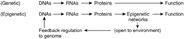
Figure 5.1. Genetic and epigenetic regulation.
The third path is epigenetic, which may involve both single-gene and multigene interaction. Epigenesis implies a level of complexity beyond gene-gene interaction and extends to interaction between genes, between genes and gene products (proteins), and between all of these and environmental signals, including, of course, the individual organismal experience. But in addition, epigenetic pathways are usually thought by developmental biologists to involve progressive states of organization, each succeeding state depending on the prior state. Epigenetic pathway therefore implies great complexity of interaction as well as the production of entire states of organization arising from that interaction (see Figure 5.1). Finally, an epigenetic change in a cell, in a strict sense, is heritable; initial cellular responses not restricted to genomic alterations, usually called phenotypic or physiological adaptations, may persist over time and become stable so that change is transmitted to daughter cells during mitosis.
The heritable aspect of epigenetic change is an obvious aspect of differentiation where many different cell types, all with identical genomic sequences, maintain their differences over many generations. Of course, secondary changes in DNA may also contribute to the stabilization of cellular change, but these changes are not programmed by genes; they are rather programmed into DNA by regulatory events about which we now know quite a bit. Changes in methylation pattern, in DNA-binding proteins, or chromatin structure are examples of inherited secondary changes in DNA. These epigenetic changes result in altered transcriptional patterns and therefore in altered patterns of behavior at all levels
Classical genetics has revealed the mechanisms for the transmission of genes from generation to generation, but the strategy of the genes in unfolding the developmental programme remains obscure. Epigenetics comprises the study of the mechanisms that impart temporal and spatial control on the activity of all those genes required for the development of a complex organism from the zygote to the adult.31
As such, the definition establishes the basis for a level of organizational control above the genome, a level that is now well established in fact, but it is a level of complexity that continues to evade decisive theoretical insight. That is, epigenetic regulation is already extending and stretching the limits of our ability to draw the limits of interactional networks that are at work in governing a major phenotype like a complex disease. For example, the mechanisms of DNA marking (e.g., methylation) may be elucidated, but what is missing is any understanding of the question, “Where and how are these mechanisms deployed in cells … what are the rules, the boundary conditions for such deployment?” These questions are being addressed,10 but currently we have no consensus in biology that is necessary for a major new direction to be implemented. Courage and vision may be required on the part of our research leadership if we are to progress. Meanwhile we expect that a full description of a genetic network will come complete with a set of rules for its operation as an open system. But the rules do not come with the network diagram; they have to be discovered by human ingenuity. The differences between a genetic and an epigenetic informational system are depicted in Figure 5.1.
We have wrongly extended the theory of the gene to another area altogether; we have been lulled into reasoning that if the gene theory works at one level, from DNA to protein, it must work at all higher levels as well. We have thus extended the theory of the gene to the realm of gene management. But gene management is an entirely different process involving interactive cellular processes that display a complexity that may be described only as transcalculational, a mathematical term for “mind-boggling.” This interactive complexity is epigenetic in nature; it involves open networks of genes, proteins, and environmental signals that may turn out to be coextensive with the cell itself. It is as if the cell has interposed between its genome and its behavior a second informational
Genetic pathways specify organismal function only in rare cases, as in monogenic diseases like sickle cell anemia or muscular dystrophy, where mutation produces dysfunction in a protein of crucial importance. In these cases the cell (mostly but not always) has no compensatory mechanism, and environmental influences are nil; redundant information at either the genetic or the epigenetic level appears to be absent, and the mutant gene becomes the disease. But this rare event has such a powerful effect in making real the critical issues of disease and health that it has commanded our attention in other areas of our lives. Common diseases like cancer and cardiovascular problems that account for over 70% of premature morbidity and mortality are not the effects of single genes.
Epigenetic networks have been described as cellular neural networks and, given their great complexity and openness to environmental signals, most probably utilize a (nonlinear) logic and set of rules quite different from the comparatively linear rules needed for completing the genetic sequence of events. This comparison also emphasizes feedback from epigenetic networks to the genome, feedback that includes changing the patterns of gene expression. This change in pattern of gene expression is accomplished by enzymatic changes in chromosome structure and by “marking” sections of DNA chemically without changing the genetic code in any way. What is changed is the accessibility of genes to expression pathways. But the decisions to mark or not to mark are in the epigenetic and not the genetic pathway. These details of epigenetic biology, as defined by Jablonka and Holliday,30,31 are well known and are thoroughly covered in the literature. We can see at once that failure to include epigenetic processes and their rules in predicting outcomes and basing outcome analysis only on information in DNA will lead to the anomalies that are now being seen. Thus, information for cellular integration and response is encoded not only in DNA, and there are no genetic programs for this process; rather integration and response come out of the dynamics of the interactive system itself. The system response includes the genome but is not reducible to it. The cell is starting to look more like a complex adaptive system rather than a factory floor of robotic gene machines, and that is well and good.
In what follows, whenever I refer to polygenic traits or diseases, I assume,
For my purposes, therefore, polygenic and epigenetic are synonymous. The basic assumption is that complex disease states, at a cellular level, involve heritable changes that may include gene mutation but that also include persistent cytoplasmic changes. In addition, it must be clear what classical developmental biologists mean when they discuss complex phenotypes in terms of genotypes. What is usually meant is that all complex traits (e.g., intelligence, aggressiveness, and cancer) have some genetic basis. But this basis is so polygenic (interactive and epigenetic)—it may extend to the entire genome—that there is little in the way of practical meaning given to “genetic basis.” For example, there is a genetic basis for speaking French, but the meaning of this does not go beyond the idea that there is a genetic basis for being human. In order to speak any language, we need to have something called a human genome (of which there are as many different kinds as there are humans) consisting of about 100,000 genes. But while these genes are necessary for speaking French, they are not sufficient. We also need the appropriate environment, the appropriate body, and the appropriate experience, all of which provide information not contained in the genome. Unfortunately, most behavioral and medical geneticists continue to believe that even the most complex human behavior can be reduced to genetic circuits. We now turn to examples where predictions and diagnoses based on genetic analysis alone have generated conflict and anomalous results.
CONFLICT OF THE MAJOR MEDICAL
PARADIGM WITH POPULATION GENETICS
The foundations of applied molecular genetics are twofold. The first is found in the statistical approaches designed by Fisher and Wright 32 to describe efficiency of selection in producing desired traits in agricultural populations. The second is found in the singular successful attempt in 1908 by A. Garrod to map a metabolic disease, alkaptonuria, to a Mendelian pattern of inheritance.33 Garrod would later offer the concept of “inborn errors of metabolism” to describe a range of metabolic disorders, leading to the general emphasis on genetic disease. The wide acceptance of the concept of genetic diseases, and the confusion of rare monogenic diseases of the Garrod type with the more common
The tension between agricultural genetics and medical genetics has been described and analyzed most recently by Wahlsten.35 In brief, the argument is that the major statistical tool, analysis of variance (ANOVA), as developed by Fisher, is insensitive to the heredity-environment interaction. This insensitivity is minimized in the agricultural breeding experiments for which ANOVA was designed because large sample size is normally the rule. In medical genetic studies (extended families) or in behavior genetics (twin studies), the sample sizes are small, so that error is large in detecting lack of interaction between heredity and environment. As Wahlsten points out, a newer statistical approach, multiple regression, is replacing ANOVA, but for the kinds of studies being discussed here, the two procedures are essentially equivalent. Experts in agricultural genetics generally accept significant interaction between genes and environment and are extremely cautious in applying heritability coefficients or in assigning any significant numeric value to genetic cause when dealing with complex traits. Their position is that if gene effects are interactive (not additive) with environmental effects, it is incorrect to use ANOVA for assessing genetic contribution to a particular phenotype across a range of environments. Medical geneticists, however, using the same ANOVA but with significantly smaller sample size, not surprisingly do not find evidence for interaction and therefore assume that heredity and environment are additive. They then assign great significance to heritability coefficients and are confident that these numbers describe quantitatively the contribution of separate heredity and environment to any particular phenotype. We have a medical literature, then, that asserts with great confidence, but with serious theoretical reservations from sectors of population genetics, that this or that complex behavior or disease, while having an environmental component, also has a separate genetic component that can be discovered and utilized in pursuit of some hypothetical treatment strategy. It is beyond the scope of this review to enter this controversy fully. It is enough to state the minimum conclusion that medical/behavioral genetics, with a linear view of gene-disease causality, finds itself in serious debate with a significant segment of its parent science, population genetics, which sees complex traits, including disease, as highly interactive and impossible to reduce to genetic elements alone (Figure 5.1).
CONFLICT OF THE MAJOR MEDICAL
PARADIGM WITH DISEASE DISTRIBUTION
Since the work of Garrod in 1908, a large number of monogenic diseases have been discovered, and there is a general misconception that all diseases are open to monogenic logic and to solution through gene therapy of some kind. In fact, the total percentage of monogenic diseases has remained constant at less than 2%. While rare monogenic diseases are legitimate targets of the new technology, most of the rest of the 98% of human diseases, including cancer and heart diseases, are not. The latter are polygenic, multifactorial diseases for which genes may be necessary but not sufficient.1
Diseases may be distributed according to whether they are determined before or after fertilization.36,37 Those determined before fertilization (2%) are, of course, genetic and are mostly not preventable. Of those determined after fertilization (98%), there may be multiple causality, including early developmental effects, but in theory at least these are all preventable.
There is a second level at which the biomedical paradigm is in conflict with actual disease distribution. The problem for medical genetic theory is that the common diseases of cancer and of the circulatory system appear to be new; they were not significant causes of death and disability in the early part of the 20th century.37 They are now the major cause of premature death and suffering in the industrial world. Clearly, this sudden shift in causality cannot be based on genetic change. Evolutionary theory and molecular biology agree completely that genetic adaptation due to mutation would take thousands of years and that change due to genetic recombination would also require much more time than the mere 50 to 100 years involved. The reasoning of medical genetics, however, is that these new diseases attack people mostly in older (post-60) age-groups. As such, the responsible genes would be beyond the reach of natural selection, which operates effectively at younger prereproductive ages. This being the case, it is argued that heart and cancer diseases are “old” entities, have always been with us (as have their genes), but show up significantly now because it is only recently that our population has aged sufficiently for them to become a problem. If this is true—so goes the argument—then these are genetic diseases, pure and simple, and may be attacked as such.
But the natural history of our complex diseases shows that, in all probability, these are not genetic diseases but are diseases of civilization.
CONFLICT WITH MOLECULAR
BIOLOGY OF DISEASE DIAGNOSIS
Hypertension, Myocardial
Infarction, and the ACE Mutation
Restriction fragment length polymorphisms (RFLP) are being used to generate maps of genes and gene products that interact to produce a disease phenotype. The general idea here is that unique DNA sequences (mutations) can be linked to inheritance of phenotype and then mapped to specific chromosomes. Ultimately this analysis may lead to identifying mutated genes of known function and, theoretically, to gene or gene product replacement therapy. While this approach is applicable to singlegene diseases, it is highly suspect when applied to polygenic, multifactorial diseases.
The starting point for much of RFLP work was the analysis by Lander and Botstein 38 applied to the hypertensive rat.39 This work revealed linkage of hypertension to a mutation at the ACE (angiotensin converting enzyme) locus, a gene responsible for converting angiotensin I to angiotensin II, a protein crucial to blood pressure regulation. Subsequent work, however, showed that ACE mutation was not linked with hypertension
Myocardial infarction in humans has also been linked to ACE mutation.41 However, in this study many individuals were identified with the identical mutation who had no heart disease. Clearly, other factors are involved. How many other genes or other factors might there be? In studies like this, the question is rarely asked. But the physiology of heart function clearly reveals that ACE-related diseases will most likely be multifactorial, polygenic entities. If so, then one expects that each of the many genes will have a small effect,43 redundancy will be present, and any one gene or even several functionally related genes may be necessary but not sufficient to precipitate a heart disease. In other words, one anticipates that in this situation genetic diagnosis will not be a robust predictor of phenotype. The environment and individual natural history will be major determining factors. In the case of angiotensin-related function, it is clear that redundant epigenetic regulation will dominate a single genetic defect. Why? It is well known that in the normal or diseased human ventricle, ACE is a minor source of angiotensin II. There are many other (gene coded) serine proteases that provide for 90% of ventricular angiotensin II levels.44
We conclude that ACE mutation will predict neither hypertension nor myocardial infarction in humans. While an ACE mutation might have some effect, at the wider physiological–nervous system level, there will be further interactional complexity and phenotypic adaptation, including central nervous system override of renin production. These and other elements of the hypertensive control network will confound simple genetic determinism. Examples include complex cortical and medullary regulation of heart and blood pressure rhythms that are exquisitely sensitive to environmental input and personal experience.45 While the use of ACE inhibitors may be a useful therapy for hypertension, an ACE screen for heart disease is not predicted to be efficient. Yet the biomedical community persists in calling for the use of an ACE gene screen to predict tendency for heart diseases and to emphasize genetic models of hypertension in general.46,47 Why?
Molecular biologists are compelled to find as much detail as possible in gene-based networks like the one for hypertension, and RFLP approaches
Atherosclerosis
This is a model of multifactorial diseases. It is the major cause of death in North America and in a number of European countries.48 Current research focus is on a hypothesis in which “response to injury” offers the most promise for understanding and perhaps control.49 The hypothesis involves a complex etiology of atherosclerosis that includes disorders of lipid metabolism, clotting, blood pressure regulation, and carbohydrate regulation. The events proximal to the disease include lipid infiltration of blood vessel walls and loss of control of intimal cell proliferation that is postulated by some to involve, in the case of restenosis following angioplasty, tumor suppressor gene (p53) inactivation.50,51 Thus, assuming that the hypothesis is correct, it remains highly unlikely that diagnosis or prediction of atherosclerosis will emerge from gene mutation analysis. Why? Mutation in p53 or related genes is identified as an end product in a long line of causal factors. Epidemiological studies reveal over 200 risk factors at work,52,53 and molecular studies suggest that hundreds of genes may be involved; as many as 200 different genes are probably active in lipid metabolism alone. Using new techniques of linkage disequilibrium,10 one may be able to detect the influences of perhaps 500 genes affecting atherosclerosis. What is the predicted benefit of measuring small effects of 500 genes? Nil. Why? Because each small effect will
There is, however, a role for genetic analysis in the diagnosis of complex polygenic diseases like atherosclerosis. New approaches attempt to link genomic variation with specific environmental and physiological states to predict disease phenotype. They recognize that genetic and environmental signals are strongly interactive and that few signals of either kind will exert independent effects on the determination of disease susceptibility. These approaches assume “that interactive effects are translated through quantitative variation of intermediate biological and physiological agents that link discrete genome type variations and variation in risk of disease.” 52 For example, Sing and his collaborators 54 have proposed a nonparametric statistical strategy for selecting combinations of genotypes, intermediate risk factor traits (physiological states), and environmental agents that can be associated with subsets of individuals showing a disease phenotype. One early result of this has been the strong association (odds ratio greater than 2) of high body mass index combined with unique apolipoprotein E genotypes with coronary artery disease. This strategy may be extended to many genomic, physiological, and environmental interactors and may reveal the role of genome type variation in nonlinear relationships with a great variety of other interactors.55 Approaches such as this represent an upper limit of using genetic analysis coupled with other signals in a dynamic epigenetic framework to predict disease outcome. Other examples of nonlinear approaches to predict disease susceptibility rely on dynamical measures of physiological states alone and will be discussed here.
Cancer and Mutation in Regulatory Genes
The purpose of this section is, once again, to focus on an epigenetic perspective as an alternative way of thinking about disease causality. It is not the intent to dismiss mutations as an important aspect of tumor formation. However, a significant and persistent criticism of the mutational theory of cancer remains in evidence, and it behooves us to be reminded of it as a possible missing piece of our mainstream approach to cancer detection and diagnosis. This criticism should be kept in mind as we
- The mutation of single genes of “major” importance, in itself, is insufficient to cause cancer at least in the early stages. Tumor suppressor genes or oncogenes are examples of major genes.
- Early stages are often reversible and display tissuewide cellular changes inconsistent with single-gene mutation causality.
- Early-stage changes are seen as epigenetic adaptations to environmental signals. These changes progress through intermediate states to end-stage tumors that do show many mutations that may preclude any spontaneous remission. In what follows here, discussion is restricted to polygenic cancers where there is no Mendelian segregation associated with the phenotype.
Cancer, in its multiple forms, has often been described as one of our most multifactorial and enigmatic diseases. While strong evidence exists for a genetic background, for many cancers much of this evidence is potentially confounded by congenital and familial effects; we forget that many things are inherited in addition to genes. In addition, we know that many forms of cancer have strong environmental determinants. Current research emphasis, however, is on mutation in tumor suppressor genes, which, while they will play some role in cancer, may also prove to be constrained by other factors. Here I analyze several cases and conclude that an epigenetic basis for polygenic cancer is an attractive but missing research component.
The p53 and rb Genes as Tumor Suppressors The most recent trend has been to associate unique cancers with mutation in growth control or tumor suppression genes such as p53 or retinoblastoma (rb).61,62 These genes code for DNA-binding proteins that delay or inhibit cell replication. Mutation in both alleles would then produce defective regulation of growth and tumor formation. If one of these genes is defective at birth, then one inherits a tendency or susceptibility for cancer; the disease itself is then predicted to occur when, through somatic mutation, the second allele is also defective. But it is now clear that some form of redundancy for p53 and rb is present in cells, making it difficult or impossible to use mutational analysis alone for predicting cancer. For example, a mouse has been constructed with both p53 alleles absent (homozygous
More recent evidence shows that p53 protein may form heterodimers with many other cellular proteins,65 including replication protein A, which is involved in the initial stage of DNA replication.66 Thus, p53 regulation is a prime candidate for epigenetic control in which the final effect is modulated by a complex interaction of many bits of genetic and environmental information. Much is learned about DNA replication in p53 studies, but the emerging picture shows not single-gene control of cancer but complex interactive regulation. Epigenetic interactions of p53 protein with other gene products form a basis for explaining the varied effects observed when p53 is mutated in different genetic backgrounds 63 or when wild-type p53 fails to restore normal growth regulation to p53-defective cells.62
A similar story may be told for the retinoblastoma (rb) mutation (for a review, see reference 67), which arises either spontaneously or via heredity associated with a deletion in or absence of chromosome 13 in 20% to 30% of affected cases.68,69 But 20% to 30% is not 100%, so clearly other factors are involved. Many individual rb tumors do not show mutated rb genes.70 In addition, while expression of wild-type rb in some rb-defective cells will restore normal growth,71 such transfection and expression fails to produce normal growth when these cells are transplanted to the eye of nude mice.72 Homozygous rb knockout in the mouse is lethal but only late in development after lineage determination is complete and after millions of cell replications have been completed.62 This gene, therefore, while it plays an important role in cell replication, is not essential during early development and is not sufficient to cause cancer. We must assume that epigenetic control of rb is taking place.
Finally, one of the most outstanding characteristics of neuroblastoma is spontaneous remission at 10- to 100-fold greater than that seen for
A newer explanation for remission is apoptosis, but one is left with an epigenetic regulation because some aspect of cellular behavior must be presumed to signal cell death or to engage the so-called apoptosis program. Here again we become aware of the facile nature of molecular thinking on the issue of genetic programming and apoptosis.74 For example, in a recent review we read, “Within a few months of birth the programme is activated: cells then die successfully by apoptosis and the (rb) tumor shrinks.” 73 When one asks the question, “What activates the program?,” the answer is usually in terms of other genes for growth factors or DNA-binding proteins. But cells reacting to stressful signals such as x-irradiation or to a loss of normal tissue environments when explanted into cell culture will display a variety of epigenetic adaptations that might easily trigger cell death.75
Genes for Breast Cancer Human breast cancer work is heavily invested in gene mutation causality even though a large population study tells us that less than 2.5% of breast cancer is associated with genetic determinism.76 Many mutations are found in later stages of a variety of tumors. While it is likely that these play some role, it remains uncertain whether mutations are the cause or the effect of earlier, nongenetic lesions that, if reversed soon enough, would have deflected the tumors altogether.56,77
The latest focus in breast cancer has been on a familial study where linkage has been established for “cancer tendency” to a locus on chromosome 17q21.78 The lod score (see the glossary at the end of this chapter) for linkage was 5.98, well in the range to ensure a high probability of association between the cancer and the genetic anomaly. While the technology of this linkage study may be assumed to be state of the art, we must also be aware of its problems. For example, we do not know what the frequency of this mutation might be in the general population, nor do we know the extent to which other mutations might be present in the suspect or other chromosomes of the affected women. Nor do we know the pleiotropic and epistatic effects that other genes might have in altering the penetrance of the suspected mutation. These are all questions of fundamental importance in elementary genetics.43 We also have
This breast cancer gene, BRCA1—a putative tumor suppressor gene—has now been isolated.79 BRCA1 germ line mutations are linked to breast and ovarian cancer in a number of small families having multiple cases of these diseases. Women carrying mutant BRCA1 alleles have a significant increase of breast and ovarian cancer so this finding may prove to be extremely useful. The search for the breast cancer gene had been accompanied by an unnecessary hyperbolic publicity in both mass media and scientific press where an anxious expectation was developed that once the gene was found, we would be provided with important new clues for all breast cancer and perhaps for cancer in general. High expectations like this have proved mostly unfounded in the history of cancer research and serve only to frustrate public opinion and undermine confidence in research. It was sobering for many, therefore, to find that in nonfamilial breast and ovarian cancers, constituting more than 95% of the cases, BRCA1 mutations were not involved.80 Thus, this mutation “appears to play no role in common, nonhereditary forms of breast cancer that strike about 173,000 women in the U.S. each year—a finding that undermines some long-held assumptions about how the gene works.” 81
There has also been much attention paid to another tumor suppressor gene, CDKN2, that codes for the cell cycle regulatory protein cyclindependent kinase-4 inhibitor (p16).82 This (mutant) gene has been linked to a variety of tumors and has been a prime suspect for breast cancer. However, a recent report has now examined human breast carcinomas for mutations of this gene with negative results. Evidently, p16 is not involved in the formation of primary breast carcinoma.83 In addition, it has been found that p16 mutations are found in cell lines derived from many tumors but not in primary tumors within the patients, making it clear that so-called carcinogenic mutations may be a pure artifact of cell culture.83 The studies on p16 mutation are consistent with a hypothesis of cancer where early neoplastic change is an epigenetic one that includes mutation as an event after the fact of initiation.
OTHER CONFLICTS WITHIN BIOMEDICINE:
THE PROBLEM OF PREMATURE DIAGNOSIS
Imaging Techniques
Computed tomography and magnetic resonance imaging have become widespread and extremely expensive additions to diagnosis. The problems inherent in imaging techniques have been recently analyzed 84 and are discussed briefly here as prologue to similar problems turning up with molecular measurements that, while extremely sensitive, are also without proven meaning when applied to disease manifestation.
Imaging techniques, because they are so sensitive, often measure not disease itself but early changes in tissue that are taken as evidence that disease will develop. Early changes may, however, be extremely misleading since they often reflect reversible processes or those with extremely long lag time to any clinical manifestation. As our machines are able to detect the most incipient stages, we experience several problems.84 First, as exemplified by thyroid cancer, is the problem of defining diseases as cellular changes that always progress to serious morbidity. In this case, clinical cancer (tumor size greater than 2 centimeters) is seen in only 0.1% of adults between the ages of 50 to 70 years. However, autopsy using increasingly thin sections of the gland could reveal at least one papillary carcinoma in 36% of adults. It was calculated that as sections became thinner, autopsy would show verifiable papillary cancer in 100% of cases. These “tumors” discovered at earliest stage represent an enormous reservoir of detectable but subclinical disease. Under these circumstances and for a variety of diseases, the patient may never experience clinical symptoms but, under aggressive medical management, may become involved in unnecessary and expensive medical procedures that are predicted to have little positive effect.84
The second major problem that arises has to do with the effect on reported disease frequency where frequency increases as the degree of measurement sensitivity increases. However, without any manifestation, early stage diagnosis makes it appear as if we are experiencing large increases in the disease itself. The third problem is the effect of statistical evaluations of various therapies for a disease. As the time between diagnosis and manifestation increases, it is made to appear as if various therapies are working even when nothing in the way of treatment need be involved in the statistical analysis.84
Antigen and Nucleic Acid Sequence Measurement
Nowhere in medical technology have we greater sensitivity of measurement than in antigen and nucleic acid chemistry. The possibility exists, however, that these measurements are often without predictive value for the diseases for which their measurement was designed. Increased levels of scrutiny can, for example, explain recent reported increased prevalence in breast, prostate, and thyroid cancer.84 Prostate antigen testing, together with other evaluation, may prove useful. However, these tests, used alone, can provide for an enormous increase in reported prevalence and an increased apparent time of survival and, unless carefully applied, could lead to unnecessary treatment.
Polymerase chain reaction (PCR) is a technology used extensively to report “viral loads” in patients and has replaced measurements of actual infective units of pathogen. What PCR does is to amplify by thousands of times sequences of DNA that are present in body fluids at extremely dilute concentration. For example, it has proved to be crucial for diagnosis of HIV-related AIDS, where it is used to amplify vanishingly small amounts of parts of HIV sequences. But such partial sequences tell us nothing about the presence of “live” virus and could be reporting on DNA fragments resulting from a variety of sources (e.g., viral degradation). In addition, PCR is notoriously difficult to quantitate, and recent publications fail to publish standards that might show actual viral numbers. As Nobelest Kary Mullis, the inventor of PCR, himself states in a paper that was refused publication, “The vice of the PCR is that it can find the biochemical equivalent of the needle in the haystack. Viral fragments that are present only in minute quantities can be amplified and identified, but this tells us nothing about whether replicating virus is present in sufficient quantities to do harm.” 85 The HIV-AIDS hypothesis remains plagued by the fact that most AIDS patients, until end-stage disease, rarely show HIV viremia (classically defined by actual virus replication), and diagnosis continues to rely on PCR and antibody measurements. In HIV and other infectious diseases, we may have abandoned, at great scientific cost, traditional rules for establishing disease causality.86 For example, HIV, as many contend, may be caused by agents other than or in addition to HIV. But reliance on PCR tends to conceal the absence of viral units and to conceal the possibility that other causes may be involved.
CONFLICT RESOLUTION AND OTHER SPECULATION
The conflicts described here arise from attempts to apply a strict geneticreduction analysis to the problem of complex phenotypes. Why has it been so difficult to use single-gene markers to predict polygenic cancer in individuals even when a mutation is present in an important tumor suppressor gene (rb or p53)? Why are there so many false positives and false negatives in predicting heart disease when there is a measurable defect in an important gene (ACE) involved in blood pressure regulation? Finally, why is it that the elimination (homozygous knockout) of both copies of a gene like p53—known to be important for controlled growth of cultured cells—fails to provoke any measurable defects in normal development? On the basis of a linear genetic analysis, these failed predictions should have been viewed as evidence of a failed cancer theory. However, the response from biotechnology has been to rescue the genetic theory in the face of these and many other exceptions to the rule that unique genes have predictable unique effects. Why this response should persistently come up has been treated elsewhere as part of a paradigm shift 87 in biology and medicine.88
The short answers, to the questions of lack of predictive power of gene analysis and of why we have thrown out the facts rather than the theory, are not too difficult. The explanation formulated here is that polygenic disease and growth regulation are not linear processes and cannot therefore be fully analyzed by a linear logic. Rather, they are representatives of complex adaptive systems that are innately unpredictable. To understand the unpredictable nature and other features of such systems, it will be necessary to develop a disease theory similar to what is found in treating nonlinear phenomena.89
What is needed to supplement genetic theory is a theory of biological complex adaptive systems.90 If living systems were seen as complex adaptive systems, then we would not be surprised at the previously mentioned failure of prediction. In fact, they would be expected since such systems are unpredictable and actually seek out alternative pathways when perturbed by new information, either from the outside world or from within. The results of alternative pathway selection would include epigenetic change in the genome and resulting change in pattern of gene expression. In the case of mutation, however, we need to remember that it is taking place within an epigenetic framework. As explained by James Shapiro,91 part of the adaptive response of bacterial cells to stress is
Statements concerning cells “sensing danger” and “initiating responses” strike biologists today more as poetic meanderings than as statements with scientific value. But clearly cells and multicellular organisms display these holistic behaviors. Natural selection operates not merely at a genetic level but at all levels of biological organization,93,94 including whole-cell and organismal behavior. Much evidence exists for the idea that cells do sense danger and respond in a manner that is not explored by reductionistic thinking. For example, when tissues are exposed to X rays, there is a tissuewide, or “field,” response in the cellular population as a whole, a response that is quite separate from gene mutation but that actually induces persistent hypersensitivity to future mutation.95 Cells exposed to the stress of removal from normal tissue constraints in vivo when explanted to cell culture adopt many morphological changes that are heritable and that, when continued over a period of time, give rise to transformation and to mutation.96 The flip side here is the demonstrated ability of liver architecture to constrain tumor growth in an age-dependent fashion. Tumor cells explanted into young rat livers generate tumors at a much lower frequency compared to that seen when these cells are transplanted into older livers.97 Findings like this are difficult to reconcile with singe gene mutation causality but are predicted by an epigenetic theory of cancer that locates control of single cell growth in higher (tissue and organ) levels of biological organization.
Perhaps the most important new insight into cancer is the one having
One may conclude that (1) higher-level epigenetic management and constraint on tumor growth delays clinical cancer and may even reverse it and that (2) epigenetic mechanisms at the intracellular level are responsible for generating increased mutation rates necessary for escape of these cells from the higher-level constraints. In other words, cancer is a cellular, epigenetic disease and not the result of single-gene mutation.
An approach to complex analysis of heart disease with multigenetic causality linked to interactive environments is the work of Sing and his group as mentioned previously (see the section “Atherosclerosis”). At these levels above the cell, for complex physiological systems, chaos theory builds on epigenetic thinking and already is providing new ways to think about complex systems.8–10 This is particularly true for cardiac function, where sinus arrhythmia, long thought to be low-level noise or random fluctuation in heart rate, is now seen as high-order chaos.99 Coupling of heart rate to brain function and thus to experience has long been appreciated as an observable patterned occurrence but was mostly inexplicable through standard physiological experiment.100 Chaos theory is an old story in physiology in general 101 and is able to provide a method of revealing generic patterns in what was thought to be random variation. Recognition of these patterns allows new insights into brainheart physiology and may even allow prediction of sudden cardiac death among patients at risk.99
NOTE
This chapter draws much from previously published materials by the author. See references section for the exact citations.
GLOSSARY
- ALLELES.
- Different forms of the same gene.
- ANTIGEN.
- A protein recognized by the immune system.
- APOPTOSIS.
- Programmed cell death.
- COMPUTED TOMOGRAPHY.
- A technology used to scan whole bodies for diagnostic purposes.
- CONSERVED HUMAN GENOME.
- All genomes, including the human genome, tend to remain constant over long periods of time because of the presence in cells of formidable DNA repair systems. Mutations, for example, occur, but most are repaired.
- CYTOPLASM.
- General term for that part of the cell surrounding the nucleus.
- EPIGENETIC.
- Generally refers to the inheritance of factors and processes that are in addition to genes. Also refers to changes in the genome that do not involve sequence changes in DNA.
- EPISTATIC.
- Interaction between genes.
- HETEROZYGOUS.
- When the two alleles are different.
- HOMOZYGOUS.
- all genes come in allelic pairs; “homozygous” refers to cases in which both alleles are the same.
- HUMAN GENOME PROJECT.
- An international effort to identify every gene in the total of 70,000 to 100,000 genes thought to be present in all humans.
- ISOMORPHIC.
- A linear or direct representation of one thing by another.
- LOD SCORE.
- A technical term used to indicate linkage of a gene to a phenotype.
- MENDELIAN GENE.
- Defined by inheritance pattern when studied in families.
- METHYLATION.
- An epigenetic change involving addition of a chemical group (methyl group) to DNA, thus changing gene expression without changing DNA sequences within the gene.
- MONOGENETIC.
- A phenotype (disease) said to be caused by a single gene mutation.
- NUCLEIC ACID.
- DNA or RNA.
- PCR.
- Polymerase chain reaction; a technique that measures extremely small samples of DNA.
- PHENOTYPE.
- What the organism looks and behaves like; its morphology.
- PLEIOTROPIC.
- A gene or a protein having many effects.
- POLYGENIC.
- A phenotype shaped by many genes acting in concert.
- PROGEROID.
- Characteristic of old age.
- RETINOBLASTOMA.
- A disease (cancer) of the retina.
- SATURATION MUTAGENESIS.
- An experimental procedure in which genes are randomly made mutant.
REFERENCES
1. Strohman, R. C.1994. “Epigenesis: The missing beat in biotechnology?” Bio/Technology12, 156–164.
2. Polanyi, M.1968. “Life's irreducible structure.” Science160, 1308–1312.
3. Nurse, P.1997. “The ends of understanding.” Nature387, 657.
4. Williams, N.1997. “Biologists cut reductionist approaches down to size.” Science277, 476–477.
5. Miklos, G. L. G.1993. “Emergence of organizational complexities during metazoanevolution: Perspectives from molecular biology, palaeontology and neo-Darwinism.” Memoirs of the Australasian Association of Palaeontology15, 7–41.
6. Miklos, G. L. G., and Rubin, G.1996. “The role of the Genome Project in determining gene function: Insights from model organisms.” Cell86, 521–529.
7. Goodwin, B. C.1994. How the Leopard Changed Its Spots: The Evolution of Complexity.New York: Scribner's Sons.
8. Webster, G., and Goodwin, B.1997. Form and Transformation.Cambridge: Cambridge University Press.
9. Golderberger, A.1996. “Non-linear dynamics for clinicians: Chaos theory, fractals, and complexity at the bedside.” The Lancet347, 1312–1314.
10. Schipper, H., Turley, E. A., and Baum, M.1996. “A new biological framework for cancer research.” The Lancet348, 1149–1151.
11. Golub, E. S.1997. The Limits of Medicine.Chicago: University of Chicago Press.
12. Weiss, K. M.1995. Genetic Variation and Human Disease.Cambridge: Cambridge University Press.
13. Sing, C. F., Haviland, M. B., and Reilly, S. L.1996. “Genetic architecture of common multifactorial diseases.” Ciba Foundation Symposium197, 211–232.
14. Weatherall, D. J.1982. The New Genetics and Clinical Practice.London: Nuffield Provincial Hospitals Trust.
15. Strohman, R. C.1993. “Ancient genomes, wise bodies, unhealthy people: Limits of genetic thinking in biology and medicine.” Perspectives in Biology and Medicine37 (1), 112–145.
16. Rose, M. R.1991. Evolutionary Biology of Aging.Oxford: Oxford University Press.
17. Finch, C. E.1990. Longevity, Senescence, and the Genome.Chicago: University of Chicago Press.
18. Fries, J. F., and Crapo, L. M.1981. Vitality and Aging: Implications of the Rectangular Curve.New York: W. H. Freeman.
19. Tsai, S. P., Lee, E. S., and Hardy, R. J.1978. “The effect of a reduction in leading causes of death: Potential gains in life expectancy.” American Journal of Public Health68, 966–971.
20. Olshanky, S. J., Carnes, B. A., and Cassel, C.1990. “In search of Methuselah: Estimating the upper limits to human longevity. Science” 250, 634–640.
21. Lander, E. S., and Schork, N. J.1994. “Genetic dissection of complex traits.” Science265, 2037–2048.
22. Plomin, R., Defries, J. C., and McClearn, G. E.1990. Behavioral Genetics. 2d ed. New York: W. H. Freeman.
23. Goodwin, B. C.1985. “What are the causes of morphogenesis?” Bioessays3, 32–36.
24. Nijhout, H. F.1990. “Metaphors and the role of genes in development.” Bioessays12, 441–446.
25. Hood, L.1992. In The Code of Codes. Edited by D. J. Kevles and L. Hood. Cambridge, Mass.: Harvard University Press.
26. Casky, T.1992. In The Code of Codes. Edited by D. J. Kevles and L. Hood. Cambridge, Mass.: Harvard University Press.
27. Wilkins, A. S.1993. Genetic Analysis Of Animal Development. 2nd ed. New York: Wiley-Liss.
28. Brenner, S., Dove, W., Herskowitz, I., and Thomas, R.1990. “Genes and development: Molecular and logical themes.” Genetics126, 479–486.
29. Tautz, D.1992. “Redundancies, development and the flow of information.” Bioessays14, 263–266.
30. Jablonka, E., and Lamb, M. J.1995. Epigenetic Inheritance and Evolution.New York: Oxford University Press.
31. Holliday, R.1990. Philosophical Transactions of the Royal Society of LondonB326, 329–338.
32. Provine, W. B.1971. The Origins of Theoretical Population Genetics.Chicago: University of Chicago Press.
33. McKusick, V. A.1964. Human Genetics.Englewood Cliffs, N. J.: Prentice Hall.
34. Yoxen, E. J.1984. “Constructing genetic diseases.” In Cultural Perspectives on Biological Knowledge, edited by T. Duster and K. Garrett. Norwood, N. J.: Ablex.
35. Wahlsten, D.1990. “Insensitivity of the analysis of variance to heredityenvironment interaction.” Behavior and Brain Science13, 109–161.
36. McKeown, T.1979. The Role of Medicine: Dream, Mirage or Nemesis?Princeton, N. J.: Princeton University Press.
37. McKeown, T.1988. The Origins of Human Disease.New York: Basil Blackwell.
38. Lander, E. S., and Botstein, D.1989. “Mapping Mendelian factors underlying quantitative traits using Rflp maps.” Genetics121, 185–199.
39. Jacob, H. J., Linkpaintner, K., Lincoln, S. E., et al. 1991. “Genetic mapping of a gene causing hypertension in the stroke-prone spontaneously hypertensive rat.” Cell67, 213–224.
40. Jeunemaitre, X., Lifton, R. P., Hunt, S. C., et al. 1992. “Absence of linkage between the angiotensin converting enzyme locus and human essential hypertension.” Nature Genetics1, 72–75.
41. Cambien, F., Poirier, O., Lecref, L., et al. 1992. “Deletion polymorphism in the gene for angiotensin-converting enzyme is a potent risk factor for myocardial infarction.” Nature359, 641–644.
42. Myers, M. M., Brunelli, S. A., Squire, J. M., et al. 1989. “Maternal behavior of shr rats and its relationship to offspring blood pressures.” Developmental Psychobiology22 (1), 29–53.
43. Ayala, F. J., and Kiger, J. A., Jr.1984. Modern Genetics. 2nd ed. Menlo Park, Calif.: Benjamin/Cummings.
44. Urata, H., Healy, B., Stewart, R. W., et al. 1990. “Angiotensin: Ii-forming
45. Peterson, L. H.1972. In Neural and Psychological Mechanisms in Cardio vascular Disease.Milan: Casa Editrice.
46. Kurtz, T. W.1992. “The ace of hearts.” Nature359, 588–589.
47. Kurtz, T. W.1992. “Genetic models of hypertension.” The Lancet344, 167–168.
48. Higgins, M., and Higgins, R. V.1989. “Trends and determinants of coronary heart disease mortality: International comparisons.” International Journal of Epidemiology18, 3–12.
49. Ross, R.1993. “The pathogenesis of atherosclerosis.” Nature, 362, 801–809.
50. Speir, E., Modali, R., Huang, E.-S., et al. 1994. “Potential role of human cytomegalovirus and p53 interaction in coronary restenosis.” Science265, 391–394.
51. Marx, J.1994. “Cmv-p53 interaction may help explain clogged arteries.” Science265, 320.
52. Davignon, J., and Roy, M.1993. “Familial hypercholesterolemia in French Canadians: Taking advantage of the presence of a founder effect.” American Journal of Cardiology72, 6d–10d.
53. Davignon, J., Dufour, R., and Cantin, M.1983. “Atherosclerosis and hypertension.” In Hypertension, edited by J. Genest, O. Kuchel, P. Hamet, and M. Cantin. New York: McGraw-Hill.
54. Sing, C. F., Haviland, M. B., Templeton, A. R., and Reilly, S. L.1994. “Alternative genetic strategies for predicting risk of atherosclerosis.” In Proceedings of the Xth Atherosclerosis Symposium. “Excerpta Medica International Congress Series.” Amsterdam: Elsevier Science Publishers.
55. Sing, C. F., Haviland, M. B., Templeton, A. R., et al. 1992. “Biological complexity and strategies for finding DNA variations responsible for interindividual variation in risk of a common chronic disease, coronary artery disease.” Annals of Medicine24, 539–547.
56. Prehn, R. T.1994. “Cancers beget mutations versus mutations beget cancers.” Cancer Research54, 5296–5300.
57. Rubin, H.1990. “On the nature of enduring modifications induced in cells and organisms.” Am. Physio. Soc.L19–L24.
58. Farber, E., and Rubin, H.1991. “Cellular adaptation in the development of cancer.” Cancer Research51, 2751–2761.
59. Lijinsky, W.1989. “A view of the relation between carcinogenesis and mutagenesis.” Environmental and Molecular Mutagenesis14 (16), 78–84.
60. Clark, W. H.1994 “What is inherited in neoplastic systems? Animal models of cutaneous malignant melanoma.” Laboratory Investigation71, 1–4.
61. Levine, A. J., Momand, J., and Finlay, C. A.1991. “The p53 tumour suppressor gene.” Nature351, 453–456.
62. Jacks, T., Faneli, A., Schmitt, E. M., et al. 1992. “Effects of an rb mutation in the mouse.” Nature359, 295–300.
63. Donehower, L. A., Harvey, M., Slagle, B. L., et al. 1992. “Mice deficient for p53 are developmentally normal but susceptible to spontaneous tumors.” Nature356, 215–221.
64. Baker, S. J., Markowitz, S., Fearon, E. R., et al. 1990. “Suppression of human colorectal carcinoma cell growth by wild-type p53.” Science249, 912–915.
65. Pietenpol, J. A., and Vogelstein, B.1993. No room at the p53 inn.Nature356, 17–18.
66. Dutta, A., Ruppert, J. M., Aster, J. C., and Winchester, E.1993. “Inhibition of DNA replication factor rpa by p53.” Nature365, 79–82.
67. Dowdy, S. F., Hinds, P. W., Louie, K., et al. 1993. “Physical interaction of the retinoblastoma protein with human D cyclins.” Cell73, 499–511.
68. Knudson, A.1985. “Hereditary cancer, oncogenes, and antioncogenes.” Cancer Research45, 1437–1443.
69. Benedict, W. F., Banetjee, A., Mark, C., and Murphee, A.1983. “Nonrandom chromosomal changes in untreated retinoblastoma.” Cancer Genetics and Cytogenetics10, 311–333.
70. Gardner, H. A., Gallie, B. L., Knight, L. A., and Phillips, R. A.1982. “Multiple karyotypic changes in retinoblastoma tumor cells: Presence of normal chromosome no. 13 in most tumors.” Cancer Genetics and Cyotgenetics6, 201–211.
71. Bookstein, R., Shew, J. Y., Chen, P. L., et al. 1990. “Suppression of tumorigenicity of human prostate carcinoma cells by replacing a mutated rb gene.” Science247, 712–715.
72. Xu, H. J., Sumegi, J., Hu, S. X., et al. 1991. “Intraocular tumor function of rb reconstituted retinoblastoma cells.” Cancer Research51, 4481–4485.
73. Pritchard, J., and Hickman, J. A.1994. “Why does stage 4s neuroblastoma regress spontaneously?” The Lancet344, 869–870.
74. Farber, E.1994. “Programmed cell death: Necrosis versus apoptosis.” Modern Pathology7, 605–609.
75. Rubin, H.1994. “Epigenetic nature of neoplastic transformation.” In Devel opmental Biology and Cancer, edited by G. M. Hodges and C. Rowlatt. Boca Raton, Fla.: CRC Press.
76. Colditz, G. A., Willett, W. C., Hunter, D. J., et al. 1993. “Family history, age, and risk of breast cancer.” Journal of the American Medical Association270 (3), 338–343.
77. Rubin, H.1985. “Cancer as a dynamic developmental disease.” Cancer Research45, 2935–2942.
78. Hall, J. M., Lee, M. K., Newman, B., et al. 1990. “Linkage of early-onset familial breast cancer to chromosome 17q21.” Science250, 1684–1689.
79. Miki, Y., Swenson, J., Shattuck-Eidens, D., et al. 1994. “A strong candidate for the breast cancer and ovarian cancer susceptibility gene Brca1.” Science266, 66–71.
80. Futreal, P. A., Liu, Q., Shattuck-Eidens, D., et al. 1994. “Brca1 mutations in primary breast and ovarian carcinomas.” Science266, 120–121.
81. Nowak, R.1994. “Breast cancer gene offers surprises.” Science265, 1796–1799.
82. Kamb, A., Nelleke, A. G., Weaver-Feldhaus, J., et al. 1994. “A cell cycle regulator potentially involved in genesis of many tumor types.” Science264, 436–439.
83. Xu, L., Sgroi, D., Sterner, C. J., et al. 1944. “Mutational analysis of Cdkn2
84. Black, W. C., and Welch, H. G.1993. “Advances in diagnostic imaging and overestimation of disease prevalence and the benefits of therapy.” New England Journal of Medicine328 (17), 1237–1243.
85. Thomas, C., Mullis, K. B., Ellison, B. J., and Johnson, P.1993. “Why there is still an HIV controversy.” Unpublished manuscript.
86. Duesberg, P. H.1992. “Aids acquired by drug consumption and other noncontagious risk factors.” Pharmacology and Therapeutics55, 201–277.
87. Kuhn, T.1996. The Structure of Scientific Revolutions. 3rd ed. Chicago: University of Chicago Press.
88. Strohman, R. C.1997. “The coming Kuhnian revolution in biology.” Nature Biotechnology15, 194–200.
89. Waldrop, M. M.1994. Complexity.New York: Simon & Schuster.
90. Gell-Mann, M.1994. The Quark and the Jaguar.New York: W. H. Freeman.
91. Shapiro, J.1992. “Natural genetic engineering in evolution.” Genetica86, 99–111.
92. McClintock, B.1984. “The significance of responses of the genome to challenge.” Science226, 792–801.
93. Gould, S. J.1993. In The Logic of Life, edited by C. A. R. Boyd and D. Noble. Oxford: Oxford University Press.
94. Kaufmann, S.1993. The Origins of Order.New York: Oxford University Press.
95. Frank, J. P., and Williams, J. R.1982. “X-ray induction of persistent hypersensitivity to mutation.” Science216, 307–308.
96. Rubin, H.1993. “Cellular epigenetics: Effects of passage history on competence of cells for “spontaneous” transformation.” Proceedings of the National Academy of Sciences USA90, 10715–10719.
97. McCullough, K. D., Coleman, W. B., Smith, G. J., and Grisham, J. W.1997. “Age dependent induction of hepatic tumor regression by the tissue microenvironment after transplantation of neoplastically transformed rat epithelial cells into the liver.” Cancer Research.
98. Richards, B., Zhang, H., Phear, G., and Meuth, M.1997. “Conditional mutator phenotypes in hMSH2–deficient tumor cell lines.” Science277, 1523–1525.
99. Skinner, J. E., Molnar, M., Vybiral, T., and Mitra, M.1992. “Application of chaos theory to biology and medicine.” Integrative Physiological and Behavioral Science27, 39–53.
100. Bond, W. C., Bohs, C., Ebey, J., and Wolf, S.1973. “Rhythmic heart rate variability (sinus arrhythmia) related to stages of sleep.” Conditional Reflex8 (2), 98–107.
101. Rossler, O. E., and Rossler, R.1994. Integrative Physiological and Behavioral Science29 (3), 328–333.