
I. The Early Years
In the beginning…
of the Scripps Institution there were biologists William E. Ritter and Charles A. Kofoid, and there were newspaper owner E. W. Scripps and his philanthropic half-sister Ellen Browning Scripps, and there were medical doctor Fred Baker, who collected sea shells, and his liberated wife Charlotte, and there were the other San Diegans who became members of the Marine Biological Association. There was also a University of California then, to which Ritter belonged. That university in those primordial years was at Berkeley, and its campus was green in spring, golden in summer and fall, and had no automobiles.
The early history of the Scripps Institution has been well detailed in Scripps Institution of Oceanography: First Fifty Years, by Helen Raitt and Beatrice Moulton,[*]
[*] Los Angeles: Ward Ritchie Press, 1967.
which covers the founding years, the directorship of William E. Ritter from 1903 to 1923, and also the directorship of T. Wayland Vaughan from 1924 to 1936, and more.The present account begins in 1936, with some overlap of the account by Raitt and Moulton. It is intended to cover the era of expansion in oceanography from boats along the coast to ships at sea, as has been carried out, with verve, by the Scripps Institution of Oceanography.
I. Harald Sverdrup Sets the Sails
Oceanography is not so much a science as a state of mind. So is the Scripps Institution of Oceanography.
Scripps is the oldest institution of oceanography in the United States (organized in 1903 and dedicated to research in oceanography in 1925), the first to award a doctorate in oceanography (1930), and the largest oceanographic institution in the United States (approximately 1,100 staff and students in 1976). It is officially defined as a research and graduate school of the University of California, San Diego.
As a state of mind, Scripps Institution is a group of scientists and students whose interests lie in the ocean itself. They began as biologists, geologists, chemists, physicists, or even engineers, but they call themselves oceanographers. Their talk of science is sprinkled with Navy terms and fishermen's jargon. Geography of the edges of the sea is as natural to them as was that of the Mediterranean to the Phoenician sailors. Like any sailors, their gaze goes suddenly faraway when they speak of certain ports.
They do not really love the ocean.
“To oceanographers,” said William A. Nierenberg, “the sea is an enormous and restless antagonist. The work is
H. William Menard, who has been going on expeditions for a quarter of a century, has called the ocean “little more than a nuisance to a marine geologist. It provides a convenient medium for transporting equipment, although it is regrettably unstable. Otherwise it seems to be an unnecessary filter which obscures every bit of information that one manages to collect.”[2]
That restless mass of opaque water hides the mountains and troughs, conceals the fishes and the sea serpents, wobbles the sound waves, and churns the stomach. But its power and its mystery hold some people in a spell, and among those are oceanographers. They devise instruments to penetrate the obscurity of seven miles of swirling water. Slowly they wrest secrets from an alien world that holds them back.
“I have often wondered,” mused Roger Revelle, “why it is so pleasant to be on a small, oily, and uncomfortable ship, far from the nearest land. … I am convinced that it is because on shipboard both the past and the future disappear — only the present is left.”[3]
The lowering and return of a rock dredge can take many hours. Time stands still. One can muse over the effortless roll of the porpoise, wonder how the flyingfishes fly, watch the rim of the setting sun turn emerald green. There is time for geography, for history, for listening to the ideas of a colleague in another discipline. Time and the vastness of the sea create oceanographers — interdisciplinary, international, and interesting raconteurs.
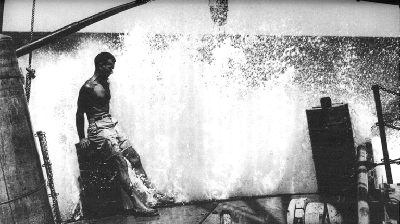
“The sea is an enormous and restless antagonist,” as illustrated by Willard Bascom on Capricorn Expedition, 1953.
It was not always so at Scripps. The institution actually began in the tide pools, and many years passed before it reached the middle of the sea. In 1892 William E. Ritter, then the new chairman of the zoology department at the
Like many others since then, Ritter came under the spell of La Jolla and the Scripps Institution. He moved from Berkeley to La Jolla to become the institution's first director, serving from 1903 until 1923. In 1912 he helped negotiate the transfer of the small, self-sufficient marine station to the University of California. The scope of this philosopher-biologist was broad, and he realized that other sciences were necessary for his biological survey. So he brought a physicist and a chemist to the young institution. Indeed, he laid the foundations deep in the sands of La Jolla for a many-faceted study of everything about the ocean. Ritter's breadth of interests in the ocean created the diversity that characterizes the Scripps Institution.
As his retirement approached, Ritter urged the institution into encompassing all of oceanography, and he favored the appointment of geologist T. Wayland Vaughan as his successor. Vaughan, then with the United States Geological Survey, was already well known in scientific circles for his work on foraminifera, on corals, and on coral reef formation.
In his directorship from 1924 to 1936, Vaughan drew the institution into national and international ventures. For ten years he chaired the International Committee on the
Since the sale of the Alexander Agassiz[*]
[*] To avoid confusion with later ships, see the list of Scripps ships in chapter 14.
in 1917, the institution had not owned a research ship. This Vaughan remedied in 1925 by purchasing a 64-foot purse seiner, the Thaddeus, which was renamed the Scripps. She was a small vessel to face the entire Pacific Ocean. Vaughan's intent, however, was to pursue oceanographic studies by sending Scripps staff members on ships of other agencies. The most extensive program of this kind was the participation of chemist Erik G. Moberg in the cruise of the Carnegie for two months in 1929, from San Francisco to Honolulu.That same year Vaughan began arrangements for a scientific program on the Carnegie over a wide area of the Pacific, to be carried out by the Scripps Institution after the last voyage of that ship for its own organization, the Carnegie Institution of Washington, in 1931. Moberg, in consultation with other staff members, prepared a detailed program of work. In November of 1929, however, the Carnegie was destroyed in Apia, Samoa, by an explosion which also killed her captain. Vaughan wrote:
Those members of the staff of the Scripps Institution who had been associated with the staff of the
― 8 ―‘Carnegie’ were paralyzed when the tragic news first reached us. We both admired and were personally fond of Captain [James P.] Ault and in addition to the grief we felt over his untimely death, there was the regret over the interruption of one of the finest programs of oceanographic research in modern times and the delay of further work on the oceanography of the Pacific.[4]
Vaughan, urged by Moberg, briefly considered carrying out the proposed researches on the Scripps. But, as he said in a plea to Robert P. Scripps: “All of us who are familiar with the ‘Scripps’, notwithstanding its being excellently adapted to short cruises along and off the coast, are of the opinion that it is rather small for making real sea voyages.”[5]
Robert P. Scripps, the son of E. W. Scripps, did respond with interest to Vaughan's plea, and in 1930 advised University President Robert G. Sproul that he could provide $150,000 for constructing a ship to be used for research by Scripps Institution and other institutions. Before this offer could be carried out, however, Robert Scripps found that his resources had been “affected by the financial depression,” and university officials, in consultation with Vaughan, concluded that “the income of the Scripps Institution [was] not adequate for the operation of a sea-going research vessel.”[6]
Director Vaughan's hopes for an oceanographic program in the Pacific were dashed. Even the 64-foot Scripps was not used extensively, according to biologist Winfred E. Allen, who noted in 1931: “In the last six years the Scripps Institution boat has been in operation on about 130 days, in the last four years about 60 days, in the last two years not more than ten days.”[7]
Vaughan was commissioned in 1932 by the Committee
On 1 September 1936, Harald U. Sverdrup became the third director of Scripps Institution. Born in Sogndal, Norway, on 15 November 1888, Sverdrup had already had a distinguished career. His native country was among few in the world then that called oceanography a science. At the University of Oslo, Sverdrup had enrolled in the encompassing course called physical oceanography and astronomy, but he was turned toward meteorology and oceanography by Professor Vilhelm Bjerknes, whom he followed to Leipzig (during World War I) where in 1917 he completed his Ph.D. dissertation: Der Nordatlantische Passat, the North Atlantic Trade Wind. Under explorer Roald Amundsen, from 1917 to 1925, Sverdrup was in charge of the oceanographic and meteorological work on the Norwegian research ship Maud, which was intentionally frozen into the ice in order to be carried across the polar regions for scientific observations. He also served as navigator and occasionally as cook on the Maud, lived for seven months with the native Siberian Chukchi tribe, and wrote a great many reports while icebound. In later years Sverdrup said that he was most proud that “after seven years on the Maud he parted friends with his shipmates.”[8]
He forecast his future, too, while icebound:
During the last winter in the Arctic, in 1924–25 [he wrote many years later], we used to discuss what we wanted to do after returning to civilization. One of our party wanted to go to Peru, cross the Andes and, instead of drifting with the ice, to drift down the Amazon River on a raft. He did. I used to say that I should like an opportunity to do oceanographic work
― 10 ―in the Pacific Ocean. It took me much longer to reach that goal.[9]
Before getting to the Scripps Institution, Sverdrup in 1931 accompanied Hubert Wilkins on the first attempt at exploration beneath the polar ice in the submarine Nautilus. Of that trip, Sverdrup said that “he didn't mind living aboard a submarine, but not that submarine. He had expected to find a perfect machine for the business, but instead was greeted with an ex-naval vessel, the ‘0–12,’ which had laid a number of years idle in Philadelphia. The expedition operated to the north of Spitzbergen, and soon called it quits.”[10]
Sverdrup became a professor at the Geophysical Institute in Bergen, and in 1931 he became a research professor at the Christian Michelsen Institute there. He became acquainted with the United States by spending two six-month periods at the Department of Terrestrial Magnetism of the Carnegie Institution of Washington, where he worked on data collected by the Maud and also data from the seventh cruise of the research ship Carnegie.
Vaughan spoke aright when he called Sverdrup “one of the foremost living authorities on dynamic oceanography” — for Sverdrup helped to make it dynamic. He was, however, a self-effacing person, as indicated in a letter to Vaughan in which he agreed to be the director of Scripps for three years:
I must confess that I have hesitated in assuming the responsibility which the directorship of a great institution like Scripps must involve. My hesitation is, I believe, rooted in my deep respect for scientific research. … It does not worry me that I am not an expert within many of the branches of oceanography which are represented at the Scripps Institution, since
― 11 ―it is impossible to find anyone who would have such qualifications, but I do not want to disappoint those who think me able to carry your plans further and, according to these, to help making Scripps Institution a centre also of dynamic oceanography.[11]
Vaughan had paved the way, for in 1925 he had completed the transformation, in projects and people as well as in name, from the Scripps Institution for Biological Research to the Scripps Institution of Oceanography. So, in the fall of 1936, at his new location Sverdrup found the full spectrum of oceanic studies:
Director Vaughan was completing a report on the fossil foraminifera of Trinidad before his retirement to Washington, D.C.
Professor Francis B. Sumner, a philosophical biologist who had given up his 17-years study of the genetics of deer-mice (Peromyscus) in order to fit into oceanography, was studying how fish change color and what protection their colors afford them.
Professor George F. McEwen, a physicist concerned with ocean currents and temperatures, was predicting a “moderate excess” of precipitation for the season, from his analysis of the many years of temperature measurements recorded daily, usually by Stanley W. Chambers, who also took tide records, plankton samples, and water samples for density and chemical analysis.
Assistant Professor Winfred E. Allen, expert on diatoms, was suggesting that river runoff influenced the productivity of marine plankton, and was statistically analyzing collections of phytoplankton from the daily pier collections at Scripps and at Point Hueneme.
Assistant Professor Erik G. Moberg, chemist and also skipper of the Scripps, had just directed one cruise on the Fish and Game Commission ship Bluefin and was continuing
Assistant Professor Denis L. Fox, physiologist, who had worked as an oil company chemist before earning his Ph.D. at Stanford, was gathering mussels from the pier for studies of their feeding habits and the carotenoids that turned them orange, as well as working with Sumner on the pigments of fishes.
Assistant Professor Claude E. ZoBell, microbiologist, who had come to Scripps from the Hooper Foundation in San Francisco after receiving his Ph.D. at Berkeley, was working on a statistical approach to the distribution and characteristics of bacteria that live in the sea, and analyzing their effect upon sea-floor muds.
Instructor Martin W. Johnson, zoologist, who had earned his Ph.D. at the University of Washington and had come to Scripps from the International Fisheries Commission on the east coast, was making biweekly collections of zooplankton along the pier, having recently returned from a cruise on the Coast and Geodetic Survey ship Guide, and was continuing to work out the life histories and distribution of pelagic copepods.
Associate in Oceanography Percy S. Barnhart, who had recently completed a book on the marine fishes of southern California, was managing the popular public aquarium and bemoaning the damage to his colorful display of mounted fishes that had been loaned to the California-Pacific Exposition in San Francisco.
Instructor Richard H. Fleming, chemist and a Scripps alumnus, had led two trips on the Fish and Game Commission boat Bluefin to set out 4,000 drift bottles for current studies, and was trying to determine seasonal changes in the coastal waters.
Easter Ellen Cupp, who had received her Ph.D. in 1934 for work at Scripps, was completing a taxonomic monograph
Visiting investigator Francis P. Shepard, geologist from the University of Illinois, was rowing out from the pier every few months to take lead-line soundings to measure changes in the Scripps submarine canyon; a commerical model of the canyon had been constructed shortly before from his earlier soundings, and one was on exhibit in the museum.
Visitor La Place Bostwick, formerly a jewelry designer and pearl buyer in St. Louis, was cultivating pearls in abalones.
Visitor Robert T. Young was collecting parasites from fishes and birds, and tracing their life histories.
Fred Baker, M.D., civic leader and a most active founder of the Marine Biological Association of San Diego, held an honorary curatorship of mollusks and owned one of the largest private shell collections in the world, from which he frequently donated shells to the institution's museum.
Five graduate students were registered for studies at Scripps; one of them, Roger Revelle, had received his Ph.D. in May 1936, with a dissertation on bottom samples collected by the Carnegie before her explosion. Six other students were on campus, chiefly for summer work but not registered. Five technical and clerical assistants and six maintenance workers completed the institution's roster, and in addition a number of workers assigned by the Work Projects Administration helped in everything from laboratory analysis to bookbinding, painting, and paving.
Such was the modest, yet diverse, nucleus that Sverdrup found for delving into the mysteries and workings of the ocean.
The assorted researches were carried out in the institution's three main buildings: George H. Scripps Laboratory, William E. Ritter Hall, and the Library-Museum, which was
The director and his family were housed in a two-story residence on campus. Many of the staff, the students, and some visitors lived in the 24 one-story frame cottages on the campus — “terrible cottages,” thought Mrs. (Gudrun) Sverdrup, and she later admitted that she cried when she first saw them. “The tight colony,” recalled Denis Fox long afterward, “like most such communities, received the pulse of any personal news items with the rapidity of an electric current crossing a wire network, and gossip could be extensive at times. It was not easy to keep clear of the busy, sometimes inventive, ‘grapevine’ in those early days.”[12]
An annual income of about $800,000, of which approximately half came from the state of California, kept the research work going. The greatest needs of the institution, according to Director Vaughan in mid-1936, were a new aquarium building and repairs to the pier.
On 13 November 1936, just two months after Sverdrup's arrival, the institution's small ship, the Scripps, burned at its berth following an explosion in the galley. Martin W. Johnson, unhappily landlocked, then penned a Christmas wish for the institution:
IF SANTA WERE A SAILOR
If Santa were a sailor, he'd bring us all a ship.
He'd fill it full of lab supplies and take us on a trip.
He'd bring a lot of citrate flasks, and silver nitrate too,
And heaps of sparkling glassware of curious shapes, and new.
He'd give us Nansen bottles, to bring up ocean brine,
And messengers and what-not, and miles and miles of line.
There'd be a long slide-rule on board to figure out the flow,
For Santa sure would like to know just where oceans go.
He'd bring us nets, and dredges too, to send down in the deep,
To fetch back fish and other things all in a squirming heap.
He'd say, “Now boys, I'd like to know, do mermaids really be?
Do awful scaly serpents torment them in the sea?
It's up to you, my gallant lads, to check these weird tales,
So hoist your flag, your anchors weigh, and set your shining sails.”[13]
Sverdrup, who had already been thinking of acquiring a vessel large enough for truly oceanic work, promptly requested an appointment with Robert P. Scripps, who this time agreed to provide $50,000 for a new ship. Sverdrup moved quickly; he found the 100-foot graceful sailing schooner Serena available for sale, and on 5 April 1937, Robert P. Scripps bought her for the institution. In gratitude
Martin Johnson demonstrated his enthusiasm with a jaunty sketch of the ship on his 1937 Christmas card for the institution's bulletin board.[*]
[*] See illustration. A longtime custom at Scripps was a Christmas card bulletin board for staff members to use to exchange season's greetings throughout the campus. The savings on postage were contributed by many participants to the Red Cross. The bulletin board has been revived in recent years.
From that moment, the direction for the institution was: out. That is, out to sea. From 1937, with a total of 19 vessels over the years through 1976, the Scripps Institution scientists and ships have logged 3,738,526 nautical miles, from Mazatlán to Mahé, from Hakodate to Punta Arenas — and dozens of other ports — in the oceanographers' pursuit of happiness.
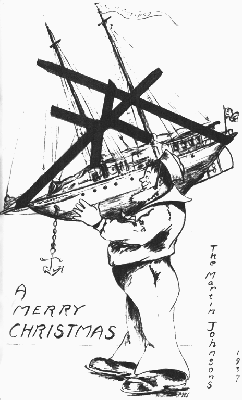
“If Santa were a sailor, he'd bring us all a ship. …” Christmas card drawn by Martin W. Johnson, 1937, after the purchase of the E. W. Scripps.
NOTES
1. Quoted in: Allan C. Fisher, Jr., “San Diego: California's Plymouth Rock,” National Geographic, Vol. 136 (July 1969), 145.
2. Marine Geology of the Pacific (New York: McGraw-Hill, 1964), Preface. Used with permission of McGraw-Hill Book Company.
3. Quoted in: Helen Raitt, Exploring the Deep Pacific (New York: W. W. Norton, 1956), xiv.
4. Letter to Harry L. Smithton, 7 December 1929.
5. Letter of 25 January 1930.
6. Letter to ship broker Daniel H. Cox, 15 January 1932.
7. Letter to State Director of Finance Rolland C. Vandegrift, 7 October 1931.
8. Roger Revelle and Walter Munk, “Harald Ulrik Sverdrup — An Appreciation,” Journal of Marine Research, Vol. VII, No. 3 (1948), 127.
9. “Response by the Medallist,” Science, Vol. 90 (14 July 1939), 26.
10. Frederick C. Whitney, “Sverdrup of Scripps,” La Jollan, Vol. 1, No. 8 (4 December 1946), 18.
11. Letter of 11 April 1936.
12. “Again the Scene,” Manuscript in SIO Archives, 1975, 124.
13. In SIO Archives, History in the News, 1936–40, 17.
II. Crossing the Threshold
Harald Sverdrup's philosophy was that throughout the broad Pacific Ocean a great many things awaited study. As soon as the E. W. Scripps was converted into a research vessel, he set the institution to studying those things. His own interests were particularly in currents and the relationship of the ocean to weather. But he also favored an all-out attack on problems, one that used the talents of every specialist. A recurrent theme in Sverdrup's talks and reports was his aim to draw together the varied disciplines toward studying The Ocean.
Mapping the currents along the coast not only contributed to understanding weather but also could be combined with finding where the California sardines spawned, in a project undertaken with the U.S. Bureau of Fisheries in 1938. For six months of each year until mid-1941, the E. W. Scripps plied a grid of 40 stations within the California Current system. Plankton samples were taken, temperatures were recorded, and oxygen and phosphate analyses of seawater were made regularly at each station. From these data Sverdrup was satisfied that “a definite relationship was established between the ocean currents, the character of the
One-half of the operating expenses of the E. W. Scripps in her first year came from the Geological Society of America as a grant to research associate Francis P. Shepard, so the geologists sailed off to take bottom cores and to set current meters on the floor of the ocean, after which they proudly announced the “largely unexpected” discovery of a current as fast as one-half mile per hour along the bottom off San Pedro, and constantly shifting currents in many other places.
In 1939 came the institution's first major expedition, when the E. W. Scripps in February and March carried venturesome geologists and naturalists to explore the mysteries of the Sea of Cortez, the gulf between Baja California and mainland Mexico. The explorers found the floor of the Gulf of California to be unexpectedly rough topography, and the waters to be extremely rich in marine life, reddened in patches with dense plankton blooms. They also found the Seri Indians of Tiburon to be no longer (if ever) cannibals.
From October to December of 1940 geologists led another expedition on the E. W. Scripps to the Gulf of California. The “fathometer echo-sounding machine” was run almost continuously, bottom samples and long cores — sometimes of green stinking mud — were taken, and the geology of islands and mainland was explored. Clear blue water greeted the explorers in the fall, but by December patches of red water again showed the richness of the gulf nutrients.
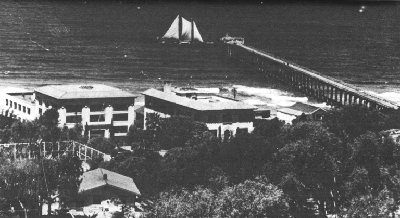
Most of the Scripps campus and all of the fleet — the E. W. Scripps — just before World War II.
Those trips were exercises in ingenuity and cost-effectiveness, according to Shepard's students Robert S. Dietz and K. O. Emery:
Prior to the cruises we built dredges, grab samplers, sediment traps, and corers …. We purchased junk
― 22 ―lead at 3¢ per pound, used scrap 2 1/2-inch pipe, and built two corers for about $ 50 each. … The scientific party [seven members] was expected to be sailors to run the ship and technicians to operate oceanographic winches, assemble and use the water and bottom samplers, and do various shipboard analyses for water chemistry. Among our duties while steering the ship was to tabulate by hand the water depth every two minutes. We did this with great enthusiasm since we had installed aboard the latest Submarine Signal Co. fathometer, which indicated the depth on a revolving red-flashing neon light. Graphic recorders had not yet been invented, so this instrument represented to us a remarkable advance over the sounding lead.[2]
Armed with new facts, collections, and theories from the many hours of work at sea, Sverdrup still could but conclude diffidently in 1940: “We are only crossing the threshold to the ocean world.”[3]
In the lull before the fury of World War II, Scripps was still small and isolated, but busy in widely varied researches. Some say that the establishment was then actually run by Sverdrup's secretary Tillie Genter, who had been with the institution since 1919. Just outside the director's office in Scripps Laboratory was the only telephone, to which a staff member, when necessary, was summoned in person (and in obvious disapproval) or via the hand-cranked telephone system in Ritter Hall and the Library. In 1941 the Aquarium-Museum registered 8,453 signed visitors, and the library held 18,550 bound volumes. Each March the staff held an afternoon open house for the town in honor of the university's charter day. Gudrun Sverdrup made quantities of cookies every Christmas for a holiday party for the children in the campus cottages.
Sea-going staff members gathered samples from the
Staff members also spoke to civic groups frequently, and patiently answered reporters' questions. The cutting of kelp, they repeatedly said, does not bring more seaweed onto the beaches. Rip currents are not caused by heavy onshore winds, and a swimmer can escape rips by swimming parallel to shore. The warm Japan Current does not bring unusually warm weather to California, for it does not reach this coast by many miles. Local weather and fishing prospects, they said, were becoming better understood through detailed studies of the ocean. News items of that time recount Sverdrup proclaiming that the sea is not level, Winfred E. Allen repeating that discoloration in the ocean is caused by myriads of microscopic plants, Roger Revelle theorizing that the Gulf of California might be forming a future oil field. A 17-foot core, the longest then taken, came in for a bit of bragging, with due credit to Dietz and Emery, who had improved the design of the corer.
In addition to his own research, everyone was helping in projects of others. Denis Fox was analyzing pigments in the mud cores that Francis Shepard and Roger Revelle had brought up from the floor of the Gulf of California, and
Many at Scripps contributed to the monumental volume, “four pounds and all muscle”: The Oceans: Their Physics, Chemistry, and General Biology,[5] by Harald U. Sverdrup, Martin W. Johnson, and Richard H. Fleming, described soon after its publication in 1942 as “epoch-making” and “without doubt the most comprehensive and authoritative treatise or text which has thus far appeared in this field.” Because of its “comprehensive treatment of valuable information” during international war, the government limited the sale of the book to the United States and Canada for the first year.
Sverdrup hoped for even broader vistas for the staff, as he noted in the annual report in mid-1941:
Emphasis has again been placed on attendance at scientific meetings by members of the staff because the isolated location of the Scripps Institution makes it desirable for the staff to retain contacts with other workers in their fields and to establish new contacts.
Instead of scientific meetings, the new contacts came from a quite different direction in that year of 1941: the Navy's need-to-know. For 35 years that union has been a fruitful one of mutual cooperation.
The Navy's greatest need in mid-1941 was to meet what was called the menace of the German submarine. The National Defense Research Committee set up a project on the west coast through the university at the Navy Radio and Sound Laboratory on Point Loma, soon named the University of California Division of War Research (UCDWR). For
Physicists led the frontal attack on antisubmarine warfare at first, as Revelle recalled later:
… [Ernest] Lawrence and his friends, reasoning with some justification that oceanographers were bumbling amateurs, quickly decided that underwater sound was a poor way to catch submarines and that optical methods should be used instead. They constructed an extremely powerful underwater searchlight and sewed together a huge black canvas cylinder which could be towed underwater to imitate a submarine. Unfortunately, it turned out that when the searchlight was directed on this object, it could be detected out to a range of about 100 feet. Shortly thereafter many of the physicists disappeared from UCDWR. The rest of us did not learn until after the war that they had gone off together to design and build an atom bomb.[6]
The oceanographers stayed, and the staff of UCDWR grew to 600 persons. Some of those came fortuitously: Jeffery D. Frautschy, for instance. Professor Franklin B. Hanley from the University of Minnesota had joined UCDWR early in the war, and he telephoned his former geology student to say that a job was available for him in San Diego. In those days of wartime secrecy, he could not say what the job was, but he assured Frautschy that it was in his line. “By the way, do you get seasick?” asked Hanley. “I never have,” said Frautschy, without adding that he had never been within a thousand miles of the ocean. On the morning after his arrival in San Diego he went to sea for
[*] See Stranger in the ship list, chapter 14.
— and did not get seasick. He has stayed with oceanography ever since.The researchers at UCDWR experimented with transmitted waves — radio, infrared, ultraviolet — and within the first year they concluded that the impervious ocean would yield only to sound waves. They quickly learned that the “silent” sea is instead a cacophony. Whales moan, porpoises squeal, some fish grunt, others whistle or sing, and some just grind their teeth. In warmer waters of the Pacific, a bedlam of crackling noise that overwhelmed all other sounds was soon identified by Martin Johnson as snapping shrimp in great colonies; then the little crustacean's habits and distribution could be predicted, so that, later, patches of them served as noisy havens for American submarines in Japanese waters.
Scientists transmitting sound pulses into the sea found echoes from the often-rugged topography of the ocean floor, reverberations from everywhere, and blockages and channels for sound waves in the far-from-uniform water of the ocean, which swirls and eddies, dilates and contracts under the influence of currents, tides, salinity, temperature, and pressure. They investigated the thermocline (first described in freshwater lakes in 1897): the discontinuity between warm surface water and the cold depths, a transition that is found at different depths in different regions, and that deflects sound waves passing through it. The depth to the thermocline could be measured, so that it too provided a haven for submarines.
Near Guadalupe Island off Baja California, in 1942, UCDWR researchers Russell W. Raitt, R. J. Christensen, and Carl F. Eyring found the phantom bottom of the sea, that registered on the scope of the echo-sounder as if it were the floor of the ocean itself. But, where the bottom was known
[*] An alternate story says that the initials stood for the Echo-ranging group of UCDWR, usually called the ECR group, of which those three were members.
but physicists began calling it the deep scattering layer, because it scattered the sound waves. Martin Johnson was again called upon, to see if the “phantom” was alive. He predicted that, if the layer were made up of living organisms, it should rise in the evening and then disperse and form again the next morning. On a round-the-clock trip at sea, on 26 and 27 June 1945, he confirmed his prediction. More detailed studies of the deep scattering layer were postponed until after the war.To solve the complications of the sea's noises and echoes, as they were unscrambled by workers at UCDWR and other similar laboratories — at Harvard; Massachusetts Institute of Technology; New London, Connecticut; Woods Hole Oceanographic Institution; and Orlando, Florida — the Navy began installing hydrophones on ships to pinpoint underwater sounds as far away as ten miles, gain controls to screen out some echoes, and bathythermograph recorders to find the thermocline and to make continuous records of the always-varying ocean temperatures and pressures. Sonar charts were prepared for the Pacific and Indian oceans, as were topographic charts, and supplements to the Navy's sailing directions for submarines. On all of these, UCDWR worked closely with the Fleet Sonar School in San Diego, and after 1943 with the Pacific Submarine Force. In 1945 the laboratory was placed under the Navy's Bureau of Ships.
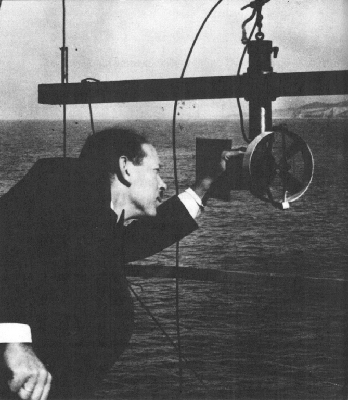
Harald Sverdrup, adjusting a current meter at the end of the Scripps pier, probably in the late 1930s.
By 1944 the menace of the German submarine was
Separately from UCDWR, those who remained at Scripps were helping wherever and however they could with national defense. Sverdrup's own role was affected by his sorrow over his homeland. He had originally taken a three-year leave of absence from the Christian Michelsen Institute to serve as director of Scripps until 1939, and then had accepted a two-year extension. In May 1940, while his country was being overrun by foreign troops, Sverdrup asked University President Robert G. Sproul for permission to stay indefinitely at Scripps, on the basis that his own country would be unable to participate in any research for some time, and that he would only be a “liability” there, as his “ability and training” were not such that he could “render active help.”[8] After the war Sverdrup said: “I thanked God that I was here in the United States where I might better fight the evil with knowledge, rather than being just another old man with a musket.”[9]
But soon after beginning with the work at UCDWR, Sverdrup was withdrawn from it on the regulation forbidding “a person with relatives in an occupied country to work with classified material.”[10] Although disappointed, he continued as director of Scripps, advised on other war-related projects, and taught courses for Air Force personnel. His clearance for classified work was later reinstated. During the war the Sverdrup family became United States citizens.
Sverdrup also helped with the wave-forecasting project. In 1938 U.S. Grant IV of UCLA and Francis Shepard had begun a study of coastal breakers with a specially built wave
The wartime project began with Scripps student Walter H. Munk, who had transferred from the California Institute of Technology in 1939 to study under Sverdrup. Early in his wartime Army service, Munk proposed a means of forecasting sea and swell on beaches, based on a formula that incorporated wind velocity, fetch, and duration. He had become concerned when he learned that practice landings at the Army training camp in North Carolina were discontinued whenever breakers were more than five feet high, while he knew that average breakers along European coasts were regularly six feet and more. Sverdrup helped persuade military authorities that the calculations of his young student were valid, and that forecasting would be feasible.
A great deal of the work [Sverdrup said later] was devoted to the study of the transformation of waves as they travel from deep to shallow water and to the relation between swell and surf. The studies covered such subjects as the velocity of progress in shallow water, the effect of shoaling bottom in the bending of waves (refraction), height of breaker in relation to height of swell, and relation between height of breaker and depth of breaking.[11]
These were not simple problems. Munk and his colleagues were fortunate in having advice from one of UCDWR's experts, Carl Eckart — a physicist characterized by preciseness, shyness, and quiet, deliberate speech. Munk
Not only the expertise of UCDWR, but even the beauty of La Jolla contributed to the war effort, for photographs of wave patterns along the La Jolla coast, distinctive for its bilobed submarine canyon, became the models for analyses of waves on beaches across the world.
In the fall of 1943, in cooperation with Woods Hole Oceanographic Institution and the engineering department at Berkeley (where John D. Isaacs and Willard Bascom participated), Scripps engaged in a program toward forecasting sea and swell from weather maps, forecasting breakers and surf, using aerial photographs to examine surf, and determining water depths from aerial photographs. Throughout the war more than 200 military officers (including some British ones) were trained at Scripps in these techniques. Beaches on Pacific islands, isolated peaks in a broad deep ocean, posed a separate problem, but the technique of working backward from aerial photographs made predictions of landing conditions feasible there also. At Palau a trained observer found several unknown passages through the reef by noting the pattern of breaking waves from his spotting plane.
When describing the wave-forecasting project after the war, Sverdrup said:
The weather situation the day of the Normandy landings was unsettled, but the forecasts were reliable and no mishaps occurred because of incorrect estimates
― 32 ―of weather and surf. … Two former Scripps Institution students, Capt. John Crowell and Capt. Charles Bates, were in charge of surf-forecasting. When the landings on Sicily took place the Fleet ran into a severe storm … and it appeared possible that the Fleet would have to turn back. However, the aerologist forecast that the wind would die down and that only moderate surf would be encountered next morning at H-Hour. … This turned out correct and was one of the most brilliant predictions made during the war.[13]
In other wartime contributions, Denis Fox and Claude ZoBell served as consultants to industries on fouling organisms and microorganisms on seaplanes. Separately, Fox found a means of precluding fouling animals from settling on aluminum panels by applying an organic detergent dissolved in petrolatum. Robert H. Tschudy and Marston Sargent, and later postdoctoral student C. K. Tseng, gathered and cultured the red alga, Gelidium cartilagineum, in an effort to reduce this country's dependence on agar from Japan, vital to hospitals as a medium for culturing infectious organisms. J. Frederick Wohnus studied the beds of giant kelp, which was being considered more intensively as a possible agar substitute and as a stabilizer and binder in food and chemical products. ZoBell studied also the oxidation of natural and synthetic rubber by microorganisms, advised on public health problems, and gave first aid classes — as did Fox, who also worked with Thomas W. Whitaker of the nearby Department of Agriculture field station on developing vitamin-rich vegetables for the armed forces. McEwen and Sverdrup provided requested oceanographic information to the Army Air Force, and various staff members gave courses in oceanographic subjects to military personnel.
ZoBell noted after the war that “all of the personnel
The Scripps library lent many of its books to defense projects and provided some to the British Admiralty that it had been unable to find elsewhere. The library also compiled a bibliography of its holdings on physical oceanography for the Weather Bureau, and it provided to staff researchers, for a Navy project, its file of temperatures, salinities, and current data in the Pacific Ocean gathered before the war by Japanese oceanographers. The institution improved its fire-fighting equipment as a defense measure, and it endured the deterioration of grounds and buildings from lack of manpower — to the degree that a reporter who visited the campus just after the war spoke of a “weather-beaten, musty smelling group of ramshackle buildings”[15] (while praising the research work). The pier, not yet repaired in spite of Vaughan's plea in 1936, and further damaged by a heavy storm in December 1942, was closed to the public. But the daily pier records were continued, and Martin Johnson pursued round-the-clock studies of underwater animal noises from the pier, where he kept a cot for night catnaps. The pier, in the absence of the E. W. Scripps, became the main source of replacements for the aquarium exhibits, both by line fishing and by means of a large trap kept set at the deep-water end.
The war, of course, was a time of heartache, endurance, and inconvenience for everyone. At its end, many at Scripps who had been drawn into special tasks returned with relief to their preferred work.
But a change was becoming evident. In a remarkable understatement in March 1945, a Scripps committee
The Scripps Institution was, after all, the only place in the United States at which a higher degree in oceanography was offered in 1946. Several of the officers who had taken the wartime courses in wave forecasting were eager to enter this new profession, and the Navy had a growing need for trained oceanographers. The Navy also had money for ocean research and, equally important, it had ships.
“The war showed how oceanography could be applied,” said Sverdrup in September 1946. “This fall we shall have 25 men studying for their doctorate [by November there were 37]. For the first time there are enough opportunities in oceanography so that we feel justified in urging young men to study it.”[16]
The golden age of global oceanography was beginning.
Sverdrup himself did not stay to see the outcome of what he had helped to stimulate, for in March 1948 he returned to Norway to become director of the Norsk Polar Institutt. Just before departing he commented, “The last 11 years with the University of California have been among the happiest of my life.”[17]
Sverdrup had been good for the institution, too. He had expanded the horizons and opened new doors to studying the ocean. His philosophy of directing the laboratory was to make himself accessible by leaving his door open on Thursday afternoons. He also established the sociable and informative weekly staff luncheon.[*]
[*] Wednesday staff luncheon continued into the 1960s.
Sverdrup is remembered as a charming person, a small and wiry man whoColleagues Revelle and Munk felt that Sverdrup's outstanding characteristic was “internal harmony between the diverse aspects of a complex personality, between the explorer and the scholar, the naturalist and the theorist, the teacher and the administrator.” They credited him with “humor, kindliness, insight and self-discipline,” and remarked that “behind that self-discipline one occasionally glimpses a Norse emotionality, intensity and recklessness.”[18]
“Reasonable” was Sverdrup's favorite English word, said Munk, who also defined his mentor as an unsophisticated kind of scientist who had “an inordinate amount of common sense” and was best at synthesizing material. His 1940 paper on the transport equation, which Sverdrup himself did not consider important at the time, is considered a classic in the explanation of the equatorial current system. Chapter 15 of The Oceans. on “The Water Masses and Currents of the Oceans,” was his outstanding summary, concluded Revelle and Munk; in that chapter, “Sverdrup's ‘feeling’ for data, his common sense interpretation of physical laws, his experience and remarkable memory [had been] brought to bear upon the problem of dealing with all oceans from a common point of view.”[19]
The sailing was not all smooth for Sverdrup at Scripps. He was sorely hurt when his security clearance was
Sverdrup left Scripps Institution in remarkably sound condition for studying The Ocean. In 1946, at least partly because of Roger Revelle, then on Navy duty with the Bureau of Ships, the Navy had created the Office of Research and Inventions, soon renamed the Office of Naval Research (ONR), to pursue promising leads from the wartime researches. On 1 July 1946, the first ONR contract with the Scripps Institution began; it was for $120,000 for the first year and was fully oceanic:
Conduct surveys and research, analyse and compile data and technical information, prepare material for charts, manuals, and reports, and foster the training of military and civilian personnel in the following fields of oceanography: permanent currents; interaction of the sea and atmosphere (including wind waves, swell and surf); the distribution of physical properties; the distribution of chemical properties; the distribution of organisms; the characteristics of the sea bottom and beaches; tides, tidal currents and destructive sea waves; the physics and distribution of sea and terrigenous ice. Such a program shall include both geographical investigations (surveys), experiments in the laboratory and
― 37 ―at sea, pertinent theoretical studies and necessary travel.[20]
The following year the state of California appropriated $300,000 to Scripps for each of three years to help solve the state's greatest oceanographic problem: where had the California sardines gone?
From available Navy ships, without charge (and with considerable correspondence between the institution and Revelle, still on Navy duty in Washington), Scripps was able to select a 143-foot seagoing tug and a 134-foot minesweeper, “on the basis that the Navy would be under no financial obligations to recondition or maintain the vessels or to pay any part of the operating expenses thereof.”[21] Through a contest on campus, the ships were renamed Horizon and Crest.[*]
[*] See list of ships in chapter 14.
The original intent had been to acquire and modify three Navy ships, but the cost of conversion proved too high, so Scripps instead bought, with funds provided by the Navy, the instantly usable 80-foot purse-seiner Paolina-T. She was the first in use to supplement the war-weary E. W. Scripps, which was returned by UCDWR in 1947. The Crest, although sound enough otherwise, proved to have faulty engine shafts, so she went into a shipyard in Long Beach for extensive repairs. That took funds away from converting the Horizon to oceanographic service, so Scripps ship personnel did that work themselves whenever they could find bits of time and money. James L. Faughn, who became technical marine superintendent in 1948, found himself dealing more often with ailing than with sailing ships for some time.
Four seagoing ships and access to the newly developed wartime electronic equipment opened new doors to studying
[*] Excluding the ships' crews.
of richly varied background combined to create the diversity that characterizes Scripps today. The history since 1945 becomes almost beyond recounting. The only way to attempt to do it justice is to break up the story into the units that today make up the institution.NOTES
1. SIO Annual Report, 1941.
2. “Early Days of Marine Geology,” Oceanus, Vol. 19, No. 4 (Summer 1976), 20.
3. San Diego Union, 30 March 1940.
4. “The Nth Campus Problem,” Bear Facts (May 1966), 2.
5. New York, Prentice-Hall, 1942.
6. “The Age of Innocence and War in Oceanography,” Oceans Magazine, Vol. I, No. 3 (March 1969), 8.
7. San Diego Union, 30 September 1946.
8. Letter of 1 May 1940.
9. Quoted in: Frederick C. Whitney, “Sverdrup of Scripps,” La Jollan, Vol. I, No. 8 (4 December 1946), 18–19.
10. Letter to University of California President Sproul, June 1942.
11. SIO Biennial Report, 1944–46, 12.
12. Memorial service for Carl Eckart, 3 November 1973.
13. Los Angeles Times, 15 January 1946.
14. SIO Biennial Report, 1944–46, 10.
15. Frederick C. Whitney, “Sverdrup of Scripps,” La Jollan, Vol. I, No. 8 (4 December 1946), 18.
16. San Diego Union, 8 September 1946.
17. La Jolla Light, 26 February 1948.
18. “Harald Ulrik Sverdrup — An Appreciation,” Journal of Marine Research, Vol. VII, No. 3. (1948), 127.
19. Ibid., 130.
20. ONR Progress Report No. 1, SIO Reference 46–7, 1946.
21. Minutes of Marine Research Committee, 13 March 1947.