
Melodrama as a Middle-Class Sermon
On July 13, 1914, seven months into his first year as director-general of the Lasky Company, DeMille began to film an adaptation of What's His Name , a minor novel that had not previously won acclaim on the legitimate stage.[1] Since his first three features, The Squaw Man, The Call of the North , and The Virginian , were screen versions of well-known plays that could boast the location shooting, action scenes, and frontiersmen typical of Westerns, What's His Name was a significant departure. A domestic melodrama based on an unconventional sex-role reversal, it represented DeMille's first effort to rewrite a genre that his father, Henry, C. DeMille, had formulated in collaboration with David Belasco in the 1880s and 1890s. To put it another way, melodrama translated from stage to screen as an intertext was in some measure a DeMille family enterprise. According to the tradition of well-made plays crafted by his father and by his brother, William, DeMille resolved the personal and family dilemmas signifying the ethical crises of modern urban life by constructing his mise-en-scène as an instructive tableau. That he was unable to do so with the moral clarity so compelling in late-nineteenth-century stage melodrama reveals a great deal not only about the evolution of the genre but about the transformation of middle-class culture in the early twentieth century.
A discourse on gender, What's His Name registers ambiguity about social change during an era when a broadly defined middle class, differentiated between "old" independent farmers and small businessmen and "new" salaried white-collar workers, was undergoing a transition in its composition, ethos, and life-style. Caught between visible extremes of urban wealth and poverty, middle-class families, with annual incomes ranging from $1,200 to
$5,000, sought to define their social identity in terms of a distinctive style of living.[2] The old ingrained habits of self-denial, restraint, and frugality were giving way to an investment in comfort and refinement as signifiers of genteel status. As What's His Name demonstrates, however, such a practice was fraught with danger because it remapped private versus public spheres based on traditional definitions of gender and vitiated the differentiation between home and marketplace.[3]
What's His Name takes place in Blakeville, a small town whose inhabitants engage in simple pleasures such as enjoying refreshments at a soda fountain, but not so small that it is unexposed to touring companies that travel by rail and provide the lure of big city attractions. At the beginning of the narrative, Harvey, unidentified by a surname and destined to become "What's His Name," marries his sweetheart Nellie against the objections of Uncle Peter, a crusty bachelor who resists the tyranny of domestication. DeMille moves his camera in for a medium shot at the wedding as Harvey plunges out of a crowd of guests to search frantically for the ring, a nervous gesture that betrays his uneasiness. An intertitle, "Three Years Later," marks the passage of time. Nellie has become disenchanted with housewifery and mothering a young daughter named Phoebe. Attracted by a musical comedy troupe performing in town, she responds eagerly to an opportunity to join the chorus at a salary of twenty dollars a week. A sign of his diminished status in the role of maternal substitute and lackey, Harvey is carrying Phoebe as well as luggage at the train station when the family departs for New York.
After an auspicious debut, Nellie becomes the "Toast of Broadway" and attracts the attention of a millionaire named Fairfax, who typifies the silk-hatted, paunchy villain signifying greed in Progressive Era cartoons.[4] A scenario representing the moral dilemma of a consumer culture, What's His Name shows a small-town comedienne neglecting her family and succumbing to the lure of upper-class finery. But the morality of self-denial personified by Uncle Peter and characteristic of the propertied "old" middle class ultimately prevails. When her child becomes seriously ill, Nellie relinquishes the excitement of theatrical life and resumes her duties as a wife and mother. As discourse on women and the family, the film thus reconstructs traditional gender roles but not without the ambiguity rendered by lighting effects in the final tableau. A close analysis of this melodrama is intriguing, but it first requires contextualization with respect to the role of women in the formation and social reproduction of the middle-class family; their control over social and theatergoing rituals as these defined the self in relation to others in genteel society is especially relevant for an informed reading.
As historians and sociologists point out, the access of the middle class to education meant that particularly the upper level of this socioeconomic group, albeit subject to the homogenizing forces of the leisure industry, would nevertheless exercise cultural power disproportionate to political
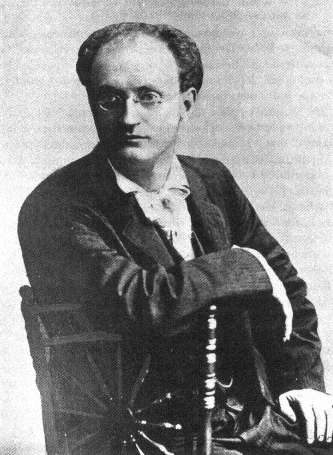
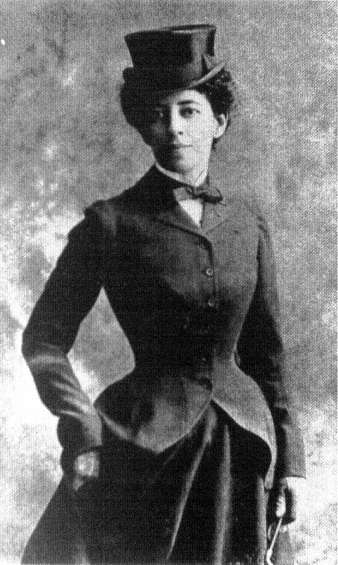
8 and 9. Cecil B. DeMille's parents: playwright Henry
Churchill DeMille, and (opposite) theatrical agent Matilda Beatrice
Samuel DeMille. (Photos courtesy Brigham Young University)
power. The genteel middle class in fact wielded enormous influence through its redefinition of womanhood and the family. As established by the practice of native-born, Protestant households, the privatized family became a refuge from the marketplace, especially in suburban communities built away from downtown business districts after the Civil War. Particularly essential in middle-class formation, as Mary P. Ryan argues, was the role of women who supplemented family income by taking in boarders, shopped with great economy, and saved enough money to educate sons. Given a
pattern of financial investment in the education of sons, matrilineal ties persisted in the lives of young men.[5] A case in point is DeMille's own family. When his mother became a widow with three children in 1893, she resolutely provided for the future. A resourceful woman, Beatrice DeMille founded the Henry C. DeMille School for Girls at the Pompton, New Jersey, estate that
her husband had purchased two years before his untimely death. She also capitalized on the rights to the celebrated DeMille-Belasco plays to establish herself as a theatrical agent for playwrights. Although she never learned to manage finances and heavily mortgaged the family estate, she made certain William was educated at Columbia University and Cecil at the Pennsylvania Military College. When her younger son decided to gamble on filmmaking in 1913, she sold her theatrical agency for twenty-five thousand dollars to provide him with the requisite capital.[6] Years later, he confided to an interviewer, "we have to bring out the tremendous personality that she was and how much I am 'operating' from her, because it's an awful lot."[7]
Women demonstrated resourcefulness in transforming the middle-class family under their own supervision because men were no longer heads of "corporate and patriarchal households" characteristic of an agrarian era.[8] A feminization of American culture thus occurred under the leadership of women allied with clergymen because both, lacking traditional access to power, elevated passivity to a virtue in sentimental discourse. The pervasiveness of sentimentalism in genteel circles understandably provoked a surge of the martial ideal in definitions of masculine selfhood and in pursuit of American foreign policy at the turn of the century. According to T. J. Jackson Lears, middle- and upper-class men who felt suffocated by over-civilization, luxury, and effeminacy endorsed the strenuous life exemplified by Theodore Roosevelt in his frontier, hunting, and military exploits. Distinctions between manual and nonmanual labor as an index of class and ethnicity, in other words, meant that privileged men would ritualize the pursuit of athleticism. After the Census Bureau declared the frontier closed in 1890, for example, the Westerner became a compelling figure in such best-sellers as The Virginian (1902), dedicated to Theodore Roosevelt by a Harvard classmate.[9] DeMille's first three adaptations, including The Virginian , also exemplify the revitalization of men as frontier heroes in Westerns. A domestic melodrama, What's His Name affirms to the contrary that male bravado expressed barely submerged fears of castration. Such a contrast in discursive modes reveals fault lines based on gender within the privileged social strata. To put it another way, sentimentalism with its polite evasiveness about urban conflict, on the one hand, and masculine quest for potency with its emphasis on self-realization, on the other, were expressions of sexual conflict in an age when class hegemony remained intact. As manifestations of Victorian homosocial or sex-segregated culture, however, both sentimentalism and embattled masculinity served to accommodate the growth of consumer capitalism because the rhetoric of spiritual uplift was co-opted to rationalize self-fulfillment.[10]
The influence of genteel women in establishing middle-class culture as a matrix that governed the formation of the self in relation to a consumer
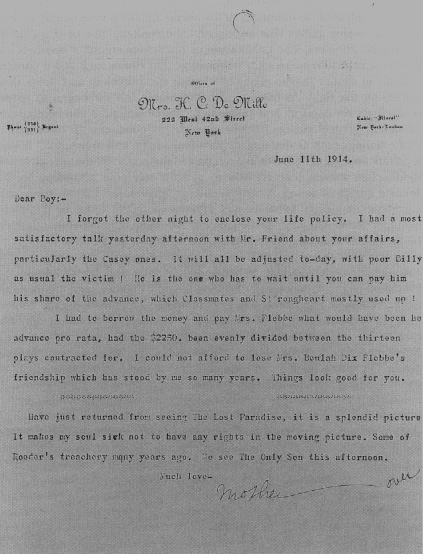
10. Correspondence addressed to DeMille by his mother, Beatrice, who
continued to manage his finances after he became director-general of the
Lasky Company. (Photo courtesy Brigham Young University)
society cannot be underestimated. Particularly relevant were theatrical modes of self-representation in polite forms of social intercourse and in elaborate parlor games that anticipated the reemergence of the elite in fashionable theaters. The publication of numerous etiquette manuals implied that an entrée into society was possible, but rituals such as the "ordeal by fork" at dinner parties required elegant comportment and dress, thus winnowing the field. As families with disposable income began to spend increasingly on comfort and refinement, social practices like ceremonial callings in genteel parlors became preludes to concourse in ostentatious public settings such as theaters, department stores, and museums.[11] A sign of private and public spheres intersecting in the art of self-theatricalization, middle-class women learned how to gesture and pose according to the Delsarte system of acting. A notable foreign import, this French schematic expression of human behavior was introduced in the 1870s by Broadway producer Steele MacKaye at the Lyceum Academy, subsequently renamed the American Academy of Dramatic Arts by Henry C. DeMille.[12]
Anticipating the revival of theater attendance among the upper middle class, dramaturgical modes of self-representation and social interaction flourished in the form of mid-nineteenth-century parlor games and theatricals. As Karen Halttunen has documented, upper-middle-class society engaged in performances of charades, proverbs, burlesques, farces, tableaux vivants, and shadow pantomimes that were quite elaborate in the use of costumes, sets, lighting, sound, and special effects. What accounts for this fascination with artifice in an industrial and urban setting? Why was playacting so integral to middle-class culture, especially in an era of increased consumption? According to Halttunen, the urban environment represented a "world of strangers" that endangered social relations and thus required adherence to a semiotics of performance rituals ensuring gentility. Social intercourse in this guise resembled a charade, however, in which actors engaging in self-theatricalization signified the decline of character based on moral virtue and the rise of personality associated with consumption. Consequently, the private theatrical represented a play-within-a-play because the parlor had become a stage for observances in which proper attire and decorum were but aspects of a performance. Yet these communicative acts, as Erving Goffman argues, were nevertheless morally implicated because they raised questions about the nature of "claims" and "promises" being transmitted.[13] The social transactions of a consumer culture thus resulted in ethical dilemmas such as those involved in performance rituals that the genteel classes by no means succeeded in resolving.
Undeniably, upper-middle-class society was being transformed in drawing room pursuits that placed a premium on self-commodification, a problematic basis for a personal sense of identity as well as for social interaction. Genteel women thus presided over rituals that eroded a legacy of evangelical
Protestantism expressed as moral empowerment in sentimental discourse. But if cultivated women stepped off their pedestals, they succeeded in dictating the terms of access to respectable society and thereby extended their influence into the public sphere. All the world became a stage as the middle class began to engage in ritualistic theatergoing after having earlier abandoned the scene to the boisterous lower orders in the gallery. While congregating in lavish foyers or enjoying a performance on stage, formally attired audiences engaged in a form of playacting scripted according to social conventions. Across the country, a building craze responded to middle-class demand for grandiose theaters as a setting for self-display and social intercourse. The Providence Opera House, for example, was built in record time with a budget exceeding expenditure on all the city's previous theaters combined. Unveiled in 1871, the magnificent new structure showcased a melodrama titled Fashion, or Life in New York because "it gave the ladies an opportunity to show some handsome dresses." Similarly, Pittsburgh's aspiring middle class demanded a "New York" theater without galleries that seated the lower classes to accommodate syndicated shows in the 1890s.[14]
The construction of ornate theaters of" Moorish and rococo designs" not only represented a shift in patterns of genteel middle-class consumption but signified a decline in the Victorian practice of separate spheres for the sexes. As a social agency, the theater became the site of transition between the privatized home and the marketplace as these two institutions began to converge. An important aspect of this transformation in theatergoing, previously dismissed as the object of religious and social opprobrium, was the successful rewriting of melodrama for genteel audiences. Understandably, the reformulating of a genre that was derived from popular forms of entertainment for the urban working class was essential in an age when culture was differentiated between lowbrow and highbrow forms of consumption. Within this context, the success of the society drama associated with the names of Henry C. DeMille and David Belasco proved to be a significant development. A brief but successful collaboration on four domestic melodramas resulted in a legacy that Cecil B. DeMilie would later transmit to the screen as an intertext designed for theatergoers accustomed to social ritual as performance.