
Chapter Twelve—
A Time to Meet
Cemented by propinquity, the alliance between MOIP and MGO grew into a powerful force from the 1954 "Three Societies" Conference through the end of the decade. The personalities of the Moscow leaders of geography and geology, such as Andrei Aleksandrovich Grigor'ev, Grigor'ev's successor as head of the Institute of Geography (IGAN), Innokentii Petrovich Gerasimov, the good-natured Ivan Dmitrievich Papanin, and the secretary of the Geographical Society's Moscow branch, Iurii Konstantinovich Efremov, played an immense role in developing these links. Nevertheless, structural and theoretical developments in geography and the earth sciences, together with the influential presence of Nasimovich, Formozov, Leonid Nikolaevich Sobolev, and other zoologists and botanists in the Biogeography Department of IGAN, as well as the rising prominence of the biogeographer Anatolii Georgievich Voronov, an MGU professor, within the Geographical Society, all worked to push geography as a discipline into an intimate embrace of nature protection issues.
Enter the Geographers
By the mid-1950s geography was finding a second wind in the Soviet Union. Gosplan began to seek out geographers for consultations, especially when planning hydroelectric installations, particularly after the unsatisfactory experience with the Rybinsk reservoir, which demonstrated the adverse consequences of doing without solid scientific advice.[1] The "Stalin Plan for the Great Transformation of Nature" and Khrushchëv's Virgin Lands program also created a demand for detailed descriptions and maps of large areas of the USSR, a boon for geographers.
With geology and meteorology now completely separate disciplines, geography—a loosely knit federation of such fields as economic geography, physical geography, cartography, and biogeography—had lost its most "scientific-looking" subdisciplines, intensifying the discipline's crisis of identity. Physical geographers made a bid for control over the discipline and its image, hoping to stabilize geography's prestige by emphasizing the scientistic landform categories of their field. Nature protection afforded those in biogeography and economic geography the opportunity to try to claim for geography the title of the "environmental science." For the discipline as a whole and for the various subdisciplines, this was a complicated interplay that would affect the distribution of resources and the future of research directions.
Theoretically, geography was experiencing a period of ferment as the search for a coherent object of study for the discipline, long elusive, was drawn now to an attempt to identify "natural" units in the overall environment. This search had much in common with the evolution of the discipline of ecology. One major Soviet school in geography was linked to the ideas of Nikolai Adol'fovich Solntsev, who asserted the possibility of identifying coherent units—"landscapes." Basing his ideas on those of V. V. Dokuchaev, who incorporated soil layers into an understanding of larger bioticabiotic systems, and Lev Semënovich Berg, who was the first to use the term landshaft (landscape, from the German Landschaft ), Solntsev saw the "landscape" as a self-contained molecule, much as ecologists from Kozhevnikov to Sukachëv imagined the biocenosis. Solntsev and his school proceeded from a geomorphological starting point, viewing each landscape as formed by a discrete genetic process, involving a certain originary mother rock and a shared history of uplifting and weathering, in turn determining the vegetation.
A competing perspective, partly influenced by A. A. Grigor'ev's ideas, was held by V. B. Sochava, E. M. Murzaev, S. V. Zonn, and I. P. Gerasimov, who saw the unity of "landscapes" as the product of a process of coevolution: here, the later history of the landscape mattered more than its earliest history, with biota assumed to have greater capacity to influence soils, relief, and ultimately the vegetational cover than in competing theories. Nevertheless, both views agreed on the presence of "landscapes" as holistic units in nature, however defined.
A few geographers, such as David L'vovich Armand, Iurii Efremov, Fëdor Nikolaevich Mil'kov, and others argued for a broader understanding of landscape that was less essentialistic. For them, geography was the broadest study of all—that of the earth's entire envelope of life, akin to Vernadskii's biosphere—and they viewed the scientistic search for a smaller "empirical" unit of study as a misguided narrowing of the discipline's perspective.
Finally, botanical and animal ecologists now lodged in the Institute of
Geography of the Academy of Sciences introduced to geography the perspectives of those who sought to define natural communities—biocenoses—on the basis of spatially bounded processes of mineral cycling and shared rates of productivity. These descended from the approaches of I. V. Larin, L. E. Rodin, and Nina Bazilevskaia, and found expression in the productivity studies and cycling analyses done by the Institute of Geography on the Tsentral'no-Chernozëmnyi zapovednik .
Despite their interpretive differences all these groups could unite around a single assertion: the world of life was under threat and needed to be protected.[2]
Geographical propinquity as a factor in human social affairs is not to be dismissed lightly. We have already seen how the occupation of the same building by MOIP and MGO helped forge the powerful alliance between the two organizations during the 1950s. Propinquity also had a hand in the enlistment of geographers into VOOP in the early 1950s, a development that had interesting consequences later on. On the twenty-fourth through the thirty-first floors of the main tower of Moscow State University is the Museum of Earth Sciences (muzei zemlevedeniia ). Thematically, it suggests approaches to the study of three levels of our environment: local (kraevedenie ), regional (stranovedenie ), and planetary (zemlevedenie ). In 1949, upon his demobilization from the Soviet Army and his return to Moscow (having pioneered the geographical exploration of the Kurile Islands in 1946 while still in uniform), Iurii Konstantinovich Efremov (see figure 15) sought to resume his teaching duties at Moscow University, which the war had interrupted in 1941. Born on May 1, 1913, Efremov apprenticed as a metalworker in 193–1931 and then attended the Omsk Agricultural Institute, transferring to the Moscow Timiriazev Agricultural Academy until 1934. A stint working with tourists in the Western Caucasus preceded his enrollment in Moscow University, from which he graduated in 1939. Now, Efremov wanted to create a museum of earth sciences. Soviet bureaucracy being as formidable as it was, it took six years to prepare for the opening, which was just in time for the 200th anniversary of the university in 1955.
Gurgen Artashesovich Avetisian had also joined the staff of the museum, and he and Efremov struck up an acquaintance. Shortly after VOOP's merger with the Green Plantings Society, Avetisian, as president of the Organizing Committee of the new merged organization, invited Efremov to attend one of their meetings. Drawing in other geographers, Efremov and his colleagues began to constitute a "fifth column of geographers in a milieu that was rather geographically ignorant." With the departure of much of VOOP's old guard to MOIP, VOOP's aktiv now consisted of a group of "gladiolus and strawberry breeders from the outskirts of Moscow" who "had nothing at all in common with ecology, biocenology, and nature protection" as the founding generation understood it.[3]
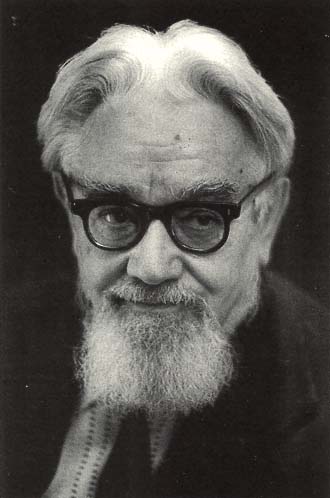
Figure 15.
Iurii Konstantinovich Efremov (1913– ).
About that time, the Academy's newly reorganized Commission on Nature Protection had, among its other initiatives, prepared a draft law on nature protection for the Russian Federation. Promoted and largely written by the commission's secretary, Lev Konstantinovich Shaposhnikov, a zoologist of high ethics but juridically and economically naive and narrowly trained, the draft law focused exclusively on protection of biota and protected territories, omitting issues of human health and what we today understand as "environmental quality." Owing to its defects, the draft failed to gain the
approval either of legal experts or of Gosplan of the RSFSR, and there the matter rested for about a year.
After the Estonians enacted a pioneering nature protection law in 1957, however, someone—Iurii Zhdanov, head of the Central Committee's Science Department, or Mikhail Suslov, perhaps—decided that in light of the international atmosphere and considerations of the image of the USSR abroad a Soviet law on nature protection should be enacted. It was thought prudent to begin with the remaining republics before enacting an all-Union law; such preliminary efforts would help to "get the lumps out" of the all-Union law.[4]
That such a consideration began to emerge from within the Soviet Party elite about that time is generally confirmed by the recent testimony of a Kremlin insider. Iurii Zhdanov has written that
still working in the Science Department, I accidentally became aware that few in our country were writing about its nature. Specifically, there were no natural history albums. On the initiative of our department the Geography Faculty of Moscow University under the leadership of I. Gerasimov created the first album, The Nature of Our Motherland. Pictures of natural scenes in zapovedniki were included in it as well. At the time, the album was still a thin, monotone affair, but it soon was expanded and improved. . . . [ U]nder Khrushchëv contacts with foreign figures surged. At such meetings it was the custom to give coffee-table albums on the nature and culture of your country. And we suddenly remembered: aside from our album there was nothing at all. That is when the decision was made to reissue the volume as a deluxe gift album, Nature in the USSR.[5]
The same logic applied to the legislation and to the decision to permit the Academy Commission on Nature Protection to join the IUPN about the same time.
Once it was decided that the republics should follow in Estonia's footsteps, the RSFSR Council of Ministers, finding the Academy commission's efforts unacceptable, moved on, forwarding the assignment to VOOP. However, by 1957 that organization was, to understate matters greatly, even less equipped than the commission to draft such legislation. As Efremov described it, "You can imagine at what a loss [the strawberry and gladiolus breeders] found themselves after they had been summoned by the government to prepare a nature protection law for Russia. It was then that they turned for help to the Geographical Society. And we responded."[6]
Together with Leonid Nikolaevich Sobolev and David L'vovich Armand, Efremov took the initiative and decided to craft a law that would shift the emphasis from zapovedniki to the realization that "nature was dying" as a result of improper use, greed, and waste. In the absence of anyone else in VOOP capable of completing the assignment, the new president of VOOP, Mikhail Mikhailovich Bochkarëv, who also was chair of the RSFSR State For-
estry Committee, had to turn to Efremov's group; appealing to Bochkarëv's "practical" side, they were able to convince him to support them in their "geographical" approach. Efremov's approach emphasized preserving environmental quality even as nature is used and transformed rather than trying to preserve "pristine" nature. To solicit as much feedback as possible, Efremov and his team held "seminars" for planners, economic managers, and legal experts at which they fielded objections. Armand's rhetorical skill made him a standout in these discussions. "We even put the legal experts to shame," gloated Efremov thirty years later, because they had not even considered these questions until they began attending the seminars. The shamed legal experts moved quickly to establish university departments or chairs of conservation law such as the one created at MGU by V. V. Petrov.[7]
Another outcome of Efremov's activity was the penetration of conservation ideas to the Party's elite. Efremov got an unexpected invitation from P. A. Satiukov, editor in chief of Pravda , who asked the geographer if he could present some of his ideas to the paper's editorial board. On June 5, 1957, Efremov arrived at the Pravda complex near Leningradskii Prospekt. About twelve persons were present at the meeting, including a good percentage of the editorial board.
What Efremov told the assembled Party journalists must have pricked some ears: "The protection of nature is very much impeded by the underestimation of its importance, by a lack of comprehension of its significance, and by lack of respect for this citizens' movement both by the broad masses as well as by leading [Party] figures." Perhaps, he offered, that lack of respect was spurred by the label "protection of nature. "' Protection of nature' for some sounds like something conservative, like a call to some kind of museumlike mummification and to an absurd inviolability of nature generally; it seems like some kind of private cause and concern of a few weirdo do-gooders [chudaki-blagotvoriteli ], like a haven for those unfit for gainful work." Unlike his field biologist friends, geographer Efremov had his own objections to the term okhrana prirody (protection of nature); it sounded too passive. "Rather," he said, "defenders of nature must be on the offensive, they defend not for the sake of preservation and mummification but in order to enrich natural resources. For that reason their banners should read 'Protection and Enrichment of Nature.'"[8]
A wide gulf and feelings of "strain" characterized the two polar positions regarding the use of nature in recent Soviet history, he explained. Some of scientific public opinion supported the extreme position of using bans and prohibitions to preserve nature as it is. On the other hand, some partisans of use "justified their rampages and their rapacious ravishing of nature by such demagogic 'principled' appeals as: 'From whom are we defending nature? From the people? No! Nature must serve the people! It must be subjugated and transformed, not protected!"' This kind of slogan-mongering,
argued Efremov, did a lot of damage, especially when combined with a cavalier attitude toward the complexities of the natural world. "It disoriented people, deflected them from the necessity of continuously caring for nature—our mother—and the basis of our productive forces and our economy," he continued. Confronting us, he declared, "is the necessity to overcome first of all the mass disrespect to the tasks of protection and enrichment of nature" and to oppose the equally harmful view of nature protection as "simply this season's big campaign."[9]
Efremov explained that the reason nature protection needed to be a constant concern was that it "was the cornerstone of the present and future well-being of the inhabitants of our planet." Nature protection and enrichment was the permanent rudder that balanced the "inevitable [dialectical] contradiction between nature and its use by humanity, between the inevitability of using up natural resources and caring for their replenishment and further expansion." For that same reason, he argued, now addressing partisans of preservationism,
it is not necessary to show anxiety when we are witnesses to ever newer intrusions on nature as it is: this is an expression of that same permanently operating contradiction that leads us now and will no doubt lead us many times into conflict. Enterprising neighbors will never stop greedily eyeing protected meadows, or lumbermen the forests, or hunters the game animal. Under the flag of "temporary measures" they will always find justifications . . . for exceeding tempos of exploitation set by science.
For that reason, Efremov repeated, nature protectors had to be eternally vigilant. The dialectic furnished no respite.[10] Efremov held out some hope of social peace between the economic managers and the nature defenders, however. If the principles of true planning gained ascendancy over the principles of resource-grabbing among the economic managers themselves, Efremov assured the editors, "then there would be less necessity for the defenders of nature to engage in sharp struggle from their side. The economic managers must transform themselves into defenders of nature, its friends and enrichers," instructed Efremov.[11] Then all social interests could truly be harmonized.
Although his emphasis was on what we would call "wise use," Efremov was also a supporter of inviolable zapovedniki , although for him they had a lower priority than for the hard-core field biologists. Significantly, though, despite the fact that it might sound like the agenda of some "weirdo do-gooder" before this tough audience, he defended zapovedniki as they had been originally constituted, that is, as inviolable and established for all eternity. Although later, he noted, "this formulation was thrown out as allegedly idealistic for asserting the existence of 'eternal values,'" Efremov cleverly noted that those critics "forgot that Marxism-Leninism had discovered
eternal principles; let us recall, for starters, the transfer of land eternally for the use of the collective farms . . . Setting aside of protected territory only justifies itself if it is for all time. . . . The principle of eternal preservation [zapovedanie navechno ] must be eternally restored to our zapovednik cause and in legislation."[12]
As a representative of scientific public opinion in the specific form that such a social group assumed under Soviet conditions, Efremov found himself caught in his own dialectic. Despite his disposition toward economic development, he was still at bottom a non-Party scientist who was fighting to defend the dignity of his social identity in a system that was at best disrespectful of it. And in his milieu the struggle for the purity of zapovedniki was the central means by which this social identity was affirmed and announced. In the bowels of the system, at the editorial offices of Pravda , as he struggled to find a common language with the Party apparatchiki , Efremov found himself unable to betray his own values or identity. Although the rich and productive tension generated by these efforts permeated his entire remarkable presentation, his proud restatement of his dignified claims to civic empowerment and respect are most vividly profiled in his discussion of nature protection as an ethical endeavor. "The protection of nature is a battlefront," he said, "where the struggle demands valor and decisiveness and a deep conviction of the rightness of the principles being defended. Valor is needed at all levels of this struggle. For the warden guarding the zapovednik the poacher's bullet always threatens. Incidents of the heroic deaths of scientists at the hands of vengeful violators of zapovednik conditions are familiar to us; we need only recall the fates of Isaev or Kaplanov." In an obvious reference to A. V. Malinovskii, Efremov continued:
Unfortunately, such courage has not always been shown by the highest leaders of nature protection and zapovednik management. . . . It wasn't even the bullet of the poacher that frightened them, but merely the ire of their immediate superiors, little black marks on their high reputations. But their stamps of approval, signifying assent to the ravaging of major natural treasures, to the destruction of zapovednik conditions, were more than little black marks. They left an inky streak on the cause of the protection and enrichment of nature, and led here and there already to irreversible devastation and to irrevocable losses.
For the real representative of scientific public opinion, the defense of honor and ethical duty, not public office or fear of political retribution, had the greater claim on one's actions. At least that is how scientists wanted to think about themselves.
Efremov tried to shame the Pravda editors by noting that the USSR was in last place among major nations in the percentage of national territory under protection:
The fact that we, with all of the wealth and bounty of our natural resources, have fourteen times less land under protection in percentage terms than even the United States, echoes for us like a reproach among international scientific and cultural public opinion. Still more shameful is the fact of the liquidation and clear-cutting of forests of those zapovedniki, for example in the Carpathians and the Transcarpathians, that arose under conditions of capitalism and were assiduously cared for by the Ukrainians and Poles even under Austro-Hungarian rule.[13]
Nor did Efremov neglect the "impermissibly large scale of soil erosion in our country." Wasn't it ironic, he asked, that the erosion-control ideas of physical geographer D. L. Armand, "who has just brilliantly defended his doctoral dissertation," were successfully implemented by the Chinese but ignored by the USSR Ministry of Agriculture, in whose system he worked?[14]
Efremov called for the editors' support for the creation of an all-Union society for the protection and enrichment of nature and an authoritative state committee with the power to levy "severe sanctions" on violators of the law.[15]
Efremov's final point concerned his long-standing passion for kraevedenie. Almost until the latter movement's final forcible disbanding in 1937, kraedenie and the nature protection movement had been inseparable civic twins. They had shared much of the same leadership, and a remarkable number of their leading activists were active in both movements. If we look upon both kraevedenie and nature protection activism not simply as esthetically motivated but as activities laden with social meaning, the linkage between the two immediately becomes clear: both represented the idea that fragile human social relations, particularly those that affirmed the political, moral, and intellectual dignity and empowerment of the educated citizen within the community, were built up with great sacrifice and over immense political obstacles in Russia. The ecological community and the local cultural region that was the object of the kraeved's study both were formed from a long process of coevolution. Both symbolized the ideals of diversity within harmony—a harmony cemented not by hierarchical authoritarian power but by the almost organic ties of mutual dependence, assistance, and duty, old themes in Russian intellectual social thought. Stalin's attempt to make Soviet society uniform through his politics of "leveling" [uravnilovka] of all genuine, autonomous diversity (tightly controlled state-sponsored ethnic dance troupes and the like were Stalin's replacement for that diversity) via a "great transformation" of society and nature both was viewed as a mortal threat to the prerevolutionary intelligentsia's ideal.
Efremov's love was old Moscow. After Stalin's death he fought to restore the historic names of Moscow's streets, efforts that have only recently been rewarded. Just as he and other nature protection activists sought to roll back
the "vandalism" of 1951, they sought to restore other symbolically resonant landmarks of the old world that Stalin had tried to efface.
Most important, though, was "to guarantee a decisive about-face in the public opinion of the whole country concerning the protection and enrichment of nature." And for that, Efremov concluded, an "authoritative article" had to appear in Pravda providing a "corrective in their worldview, the most fundamental attitudes of people toward nature."[16] Satiukov and some of his colleagues were so impressed that he asked Efremov for materials for an editorial. Although Efremov prepared an extensive draft, no editorial resulted.[17] But was it pure coincidence that Pravda published Academy president Nesmeianov's powerful essay on nature protection some five months later?
Despite the Pravda disappointment, Efremov was later asked to write the speech introducing the Russian Republic's new law on nature protection for Nikolai Nikolaevich Organov, chairman of the RSFSR Supreme Soviet. Invited to witness the enactment of his law by the RSFSR Supreme Soviet, Efremov for the first time in his life entered the mysterious government compound within the Kremlin.[18]
From the perspective of enforcement, the law passed on October 27, 1960 was no more distinguished than other Soviet legislation; liability and enforcement authority were both unclear, and the law's gaps seemed larger than its substance. Much was sacrificed between Efremov's daring presentation before the editors of Pravda and the ultimate redaction of his draft law by a team of bureaucrats. Nevertheless, the law contained phrasing that reflected a sophisticated understanding of society and nature as a system. It called for "taking into account the interrelationships among the resources listed [separately] under Article 1, so that the exploitation of one resource will not inflict damage on others"; it called for continuous qualitative as well as quantitative monitoring of what we identify as resources, to be centralized in the Central Statistical Administration of the RSFSR; it prohibited reductions in the size of useful natural areas such as forests, meadows, and bodies of water unless they were specifically approved for alternative uses; and called on economic agents to avoid damage to natural resources during construction. Efremov's law called for a prominent place for science in the planning of nature protection strategies and specifically granted VOOP the right to create citizen inspectorates to monitor compliance alongside the official agencies.[19]
The decade (1955–1965) during which Efremov served as the scholarly secretary of MGO under Papanin's presidency was the golden age of that organization's civic activism. Founded in 1945, the branch grew quickly and only one year later began to publish an influential series of anthologies, Voprosy geografii (Problems of Geography), which grew to well over one hundred
numbers. By the end of Efremov's term the Moscow branch alone had 2,555 members, about what the entire Geographical Society had had in 1946.[20]
In close alliance with MOIP, where his counterpart Konstantin Mikhailovich Efron (see figure 16) labored equally tirelessly under Sukachëv and Varsonof'eva, and with the Academy of Sciences' Commission on Nature Protection and the Academy's Moscow House of Scholars under Professor V. I. Sobolevskii, Efremov was at the hub of the frenetic organizing activity of the period. After the effective departure of almost all of the old-timer biologists from VOOP, Efremov and Armand were among the handful who served as that society's sole remaining bridge to the older scientists' movement.
Within the Moscow branch of the Geographical Society an important role was played by the Biogeography Commission, founded in 1956. Its very first session, dedicated to problems of nature protection with talks by Dement'ev and Nasimovich, set the tone for the future activity of this unit, which sponsored twenty-seven talks in 1956–1957 alone, attended at times by more than 200 people. Acknowledging the prominence of the new commission, the Moscow branch in 1957 voted to entrust to it the preparation of an entire volume of its anthology. This appeared as number 48 of Voprosy geografii in 1960, devoted to problems of biogeography and the protection of nature.[21]
The Geographical Society was, along with MOIP, one of the oldest surviving scholarly organizations in the Soviet Union, having been founded in 1845. Like MOIP and VOOP, it survived in the postrevolutionary period doubtless owing to its aura of venerable quaintness: here was another clan of chudaki . Like MOIP and VOOP, through the late 1940s it had a modest membership, although the number of full members had expanded from 896 in 1941 to 3,560 in 1947.[22] Its Second Congress (the Second All-Union Geographical Congress), which took place in January 1947, was attended by 1,600 delegates and guests.[23]
On December 24, 1950, longtime society president Lev Semënovich Berg, an eminent academician, limnologist, and biogeographer, died. Merkulov's minions were turning their attention to the zapovedniki and to VOOP, and could just as easily turn on the geographers. Like VOOP, the Geographical Society endured a tense hiatus until the Party finally gave its permission to elect a new leader. Unlike VOOP, the society chose brilliantly. Assuming the presidency on July 23, 1952, Evgenii Nikanorovich Pavlovskii, the eminent parasitologist, director of the Academy's Zoological Institute and the Military Medical Academy, and academic politician supreme, led the Geographical Society for more than a decade, until May 29, 1964. Serving under him as vice presidents were Gerasimov and Stanislav Vikent'evich Kalesnik, a glaciologist who had served for a decade under Berg as scholarly secretary.
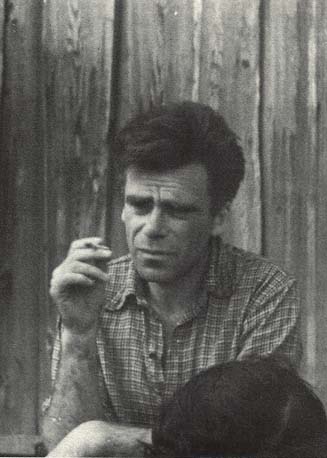
Figure 16.
Konstantin Mikhailovich Efron (1921– ).
Again paralleling VOOP, the Geographical Society was allowed to hold its next Congress (called the Second Congress of the Geographical Society of the USSR) in 1955. The 209 delegates were joined by more than 2,000 guests, now including foreigners from eleven countries. Among the most notable of the 106 talks were those by Sukachëv and by Zonn on the shelter belts, by Armand on soil erosion, and by N. E. Kabanov on the scientific role of zapovedniki . With the Moscow branch at the oars and with the sympathetic captaincy of Pavlovskii and his crew, the larger Geographical Society now also began to set a strong course for nature protection.[24]
Within the Geographical Society the following years saw an accelerating series of activities and conferences dedicated to problems of nature protection, but what must rate as the landmark event of the era was a conference so powerful that, at the last moment, publication of its proceedings was halted by the censors.
The 1957 Conference on Rare and Endangered Species
When the old-timers were driven out of VOOP and into the arms of MOIP, they represented an enormous fund of organizing experience as well as passion for nature protection. Although Aleksandr Petrovich Protopopov had already made an unforgettable impression at the 1954 zapovednik conference, the feisty activist had an idea for one last campaign that he hoped would dramatize the larger issue of the accelerating impoverishment of the biotic world around us. As longtime former chair of VOOP's Crimean Commission, Protopopov was no stranger to management and organization. Having convinced his friends G. G. Adelung, I. O. Chernenko, and A. A. Nasimovich (see figure 17) to serve with him as a "war council," Protopopov spared no efforts to ensure the success of his proposed all-Union conference on rare and endangered species of plants and animals, set for March 1957. The organizational committee was based at MOIP in the old Zoological Museum on Gertsen Street, where Protopopov now worked in MOIP's newly created Commission on Nature Protection.[25] With the Moscow House of Scholars and the Geographical Society's Moscow branch strongly on board, the four committee members sent letters to scores of colleagues around the country to get out the word.[26]
Real spring was still over a month away when the Conference on Problems of the Protection of Valuable, Rare, and Endangered Species of Plants and Animals and of Unique Geological Objects and Their Rational Use (its cumbersome official title) began in the early evening of March 25, 1957. Into the low white building—a former aristocratic mansion—on Kropotkin Street near Chistyi Lane, in the older part of the Arbat, streamed a huge crowd of chudaki . As they pressed to get out of the freezing air, they jammed the lobby and the parklike courtyard all the way back to the wrought-iron gates by the street.
When P. A. Polozhentsev's gavel brought the conference to order, nearly every seat in the stately auditorium was filled. With well over 600 in attendance, this was not only already a resounding triumph for Protopopov, but an astounding demonstration of scientific public opinion. Of this number, 400 had come from out of town, from as far as eastern Siberia and Central Asia. The press, which had decided to cover the event, could not fail to notice this impressive constituency: the cream of Soviet field biology, geol-
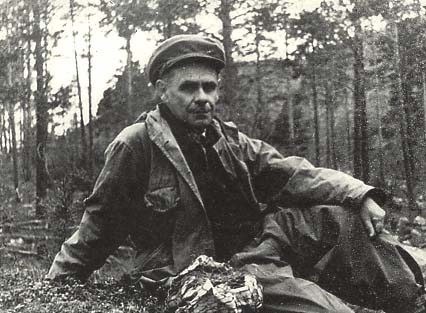
Figure 17.
Andrei Aleksandrovich Nasimovich (1909–1983).
ogy, and geography. Party and government officials did not miss the significance of such a show of strength, either, which may help to explain the timing of the invitation to Efremov to come to speak to the editors of Pravda . "In a certain sense," wrote Efron three years later, "this may be considered a pivotal moment in the struggle for the protection of nature, giving its participants the push to organize a series of local conferences that permitted a new beginning for activism at the periphery and in the center."[27]
Over five days the conference heard 108 talks, beginning with G. E. Burdin's broad survey from his vantage as head of Glavokhota RSFSR's zapovedniki . He set a cosmopolitan tone for the mass meeting by characterizing nature protection as "reflecting not only vital national interests of one particular people or state. The solution of these problems concerns all the peoples of the world."[28] Such a public acknowledgment of one's international citizenship had become safer as a result of Khrushchëv's active diplomacy, with its implicit criticism of Stalin's isolationism—isolationism that had been painfully ironic, because Marxism was the "cosmopolitan" ideologypar excellence .
Much as he had delighted the conference of zapovednik directors and workers the year before, Burdin now thrilled the huge auditorium with the
announcement that 108,000 hectares had already been restored to the Caucasus zapovednik and that his agency had slated fifteen new reserves to be created by 1960, along with the expansion of existing ones.[29]
In a blatant swipe at Malinovskii and the USSR Ministry of Agriculture's approach, Burdin again declared that "the protection of nature, including the forests, must be achieved on a strictly scientific basis, holistically [kompleksno] , and may not be subordinated to only a single narrow economic goal," a position that completely supported the claim of scientific public opinion to be the arbiter of scientific standards governing resource use.[30] However, he went on, "in the actions of the leaders of those economic agencies which simultaneously bear responsibility for nature protection as well, the economic tasks always are given priority." Part of the problem was that the press and the Party were "generally not terribly interested" in those agencies and the result was that "the protection of natural resources is sacrificed by [the agencies] for narrow economic interests, which are guided by the attitude toward resource availability: 'a hundred years is plenty for us.'"[31]
Of all the remaining formal talks, though, with the possible exception of A. A. Nasimovich's review of foreign literature on the protection of nature in which he brought up the issue of the harmful effects of pesticides, the presentation that pushed the political limits furthest was that of A. A. Peredel'skii, who worked in radiation ecology. "In the majority of cases," stated Peredel'skii, "human activity is the causal factor of the extinction of species." Now, however, there was an "unusually serious" and growing threat, not simply to individual species "but to all life itself, including humanity," the threat of radiation.[32]
With the proliferation of radiation a new branch of biology had emerged—radiation ecology—Peredel'skii informed his listeners:
A child of the atomic age, radiation ecology at the present time is in its first stages of infancy. However, the basic outlines of its future profile are already sufficiently defined. . . . In first order facing radiation ecology is the task of assisting with epidemiological controls in the atomic age, to identify the biological pathways by which radioactive isotopes on those abundantly poisoned areas of dry land, water, or air are disseminated further. These are the result of military and experimental explosions of atomic and hydrogen bombs and of the activity of nuclear reactors and other nuclear-related industries, including extraction and enrichment, and also the broad use of natural and artificial radioisotopes in technology and in scientific research, medicine, and agriculture.[33]
Although the diffusion of isotopes through soil erosion, wind action, and the circulation of water, and the roles of temperature and precipitation, were all well studied, the migration of these isotopes through the tissues of living and dead organisms remained mysterious. First-level concentrations
of radioisotopes in the organs of living creatures, Peredel'skii suggested, were thousands of times greater than in the general environment. When the organisms' carcasses were eaten, these concentrations substantially increased, rising in tandem with the place of the consuming organism on the food chain. "What emerges are dauntingly complex ecological 'radiation food chains.'"[34]
Although bodies of water could be cleansed by some bacteria or by insect larvae, which concentrate the isotopes and then disperse them when the insects reach their mature, airborne stage, the problem was one of scale. "We might well ask," he said, "what is the nature of the threat to cetaceans [whales and dolphins] . . . in the oceans?" The Pacific was now polluted by radioactive dust and ash from the explosions by the United States in the Marshall Islands, he warned, and isotopes could collect in plankton and cause a catastrophic extermination of whales.[35]
And while radiation was a threat to all species, he averred, it was a particular threat to those rare and endangered species already on the brink of disappearing. In a highly unusual final appeal Peredel'skii concluded: "Nature protection activists must . . . address the governments of all countries, insisting on the prompt attainment of strict bilateral and international legal measures to protect nature from pollution by radioactive isotopes."[36] It was plain that Peredel'skii was making no distinction between "good" Soviet socialist radiation and "bad" capitalist radiation.
After the first evening's plenary session the conference broke up into more specialized sessions and workshops, reconvening for a final discussion on the penultimate evening of the great meeting; the final day's plenary would be devoted to resolutions. After four days of horror stories, the mood was militant. One listener submitted a written question to L. K. Shaposhnikov of the Academy commission, that began: "Comrade Shaposhnikov, isn't it time to move from words to action? Nature is disappearing catastrophically."[37] Another charged, "While you are creating your very own bureaucratic system of commissions within the Academy of Sciences nothing will remain of nature. There won't be anything left for you to protect. Have you truly heard the 'cries from the soul' that welled up from the audience?"[38] The well-meaning Shaposhnikov was hurt: "I was astonished by the first lines [of the question]. I don't believe, after all, that the Academy of Sciences deserves that kind of characterization."[39]
What the questioner did not appreciate, though, is that Academy president Nesmeianov was an expert at the "game," and knew that the appointment of a firebrand as scholarly secretary of the nature protection commission could have knocked the entire game board over and his job into the bargain. At each level—from activist to Academy president to chairman of the RSFSR Council of Ministers—the trick was to play the game as close to
the threshold of political permissibility as possible without going over the edge. For each level of player there was a different set of rules and a different threshold that defined political life or death, promotion or demotion, freedom or imprisonment. Worse yet, these thresholds were always in motion; they could narrow abruptly at the whim of the Party bosses. For players, the object was not only to play as close to the edge as possible but also to engineer the retreat of that edge: that is, to gain playing ground and political "space" for their side.
However, unlike the politicos in the RSFSR cabinet or even the Academy president, who was still a loyal member of the Communist nomenklatura , authentic scientific public opinion constituted a special class of players who had their own rules and their own goal line at the rear of their playing field, retreat beyond which would fatally compromise their social identities and their self-respect. Scientific public opinion continually had to balance between compromising its ethical injunctions in order to keep itself in business—a genuinely valuable social goal in an authoritarian political regime such as that of the USSR—or acting on its sense of entitlement to full civic and political rights and risking curtailment of privileges or even obliteration. Neither choice was easy or satisfactory.
Burdin was next to answer the questions of the audience. One question dealt with the touchy subject of acclimatization and culling of animals within the Glavokhota zapovedniki , as these measures were viewed by activists as the very symbols of the hated transformation of nature and as a deep profanation of the purity of the reserves. Here, too, the RSFSR had come through for the activists; Burdin told an ecstatic audience that both measures had been ended in his reserves system.[40]
The next question, though, introduced a note of disquiet into the otherwise triumphal gathering. Someone asked whether there was any truth to the announcement yesterday at the conference that the Crimean and Belovezhskaia pushcha zapovedniki were to be reorganized into game management preserves. Burdin responded that Glavokhota did not have any official information on this, although he did have a copy of the letter Pavlovskii had sent to the political leadership protesting these changes.[41]
After the question and answer period, there was a final round of statements before people dispersed for the night. Ecologist G. A. Novikov, though a Party member, was sharper than most in his criticism of the political leadership:
For us here today, as well as for many others, . . . it is completely clear that the question of the protection of nature in the Soviet Union is in an extremely grave state. . . . The broad Soviet public, whom we represent, has for a long time already been demonstrating its deep concern over this matter. . . . If those comrades who were placed by the Party and government to direct this cause [Malinovskii and his aides] had acted as befitted Bolshevik leaders and
worked together with the masses instead of avoiding them like the plague, then we would not be in the shameful situation in which we now find ourselves. I will speak candidly about this, naming names, as was done a number of years ago. There was a time—1950—when the cause of zapovedniki was prospering. There then followed a period of sharp deterioration. Who is guilty of this? Malinovskii. I, as a Soviet scientist and as a Communist, cannot, I must confess, understand for the life of me why our leading political institutions have not listened to what broad public opinion has been saying about this matter and about this person [Malinovskii]. I cannot understand how this person, who has compromised himself from the bottom to the top before the Party and the state is still occupying his position![42]
Novikov's harangue set off a demonstration in the hall. When the cheering and clapping died down, Novikov resumed his unexpectedly explicit remarks: "How is it that he still heads the [USSR Ministry of Agriculture's] Main Administration of Hunting and Nature Protection?! To let Malinovskii defend this cause is the same things as letting the wolf guard the sheep or letting the elephant into the china shop!" Again the hall erupted in applause and laughter. Novikov's talk had detonated four days of growing feelings of tension, anger, concern, frustration, and militancy.
Malinovskii, observed Novikov, came to the opening of the session with a bored and weary look on his face, sat down and then left, "vividly testif[ying] to Malinovskii's credentials as a 'zealot' of this cause." Again to applause he expressed his hope that "our cause will soon be rid of such grief, of such a leader." Even the unkind words directed at Malinovskii in 1954 paled before the abuse hurled by Novikov that evening. By contrast, Novikov did extend to Burdin his best wishes for success. Before this audience, the juxtaposition could not have been more effective.[43]
Not to be outdone, Nasimovich insisted that in the resolutions the conference should go on record as holding "a sharply negative view of the reorganization of the system of zapovedniki and . . . to our own home-grown Herostratus of this cause, A. V. Malinovskii," also provoking laughter and applause.[44] Nasimovich also could not resist recording his "amazement at why this man who more than anyone was responsible for the destruction of the system [of reserves], more than anyone represents the Soviet Union at international conferences on problems of the protection of nature! This is a shame!" Again, applause thundered through the large hall. Nasimovich urged the conference to write a letter to USSR minister of agriculture Matskevich calling for Malinovskii's ouster.[45] No one could remember any other unsponsored, unchoreographed appeal for the removal of a highly placed member of the Soviet government.
Decidedly calmer heads prevailed when it came time to draft the resolutions to the conference.[46] Although the reorganization of the zapovedniki was condemned in resolution 13 as having "the most harmful consequences,"
Malinovskii personally was not mentioned. Also glaringly omitted from the resolutions was mention of the danger of radiation, although all of the other major issues—botanical, zoological, or geological—were accommodated.
Still, there was a heady feeling when the conference closed on March 30. Because of MOIP's formal ties with Moscow University, it was able to gain the assent of the university's press to publish the proceedings. Leaving aside content, the bulk of the tome—477 printed pages—entailed a major commitment. With Protopopov assuming hands-on editorial control of the volume and Fëdor Nikolaevich Petrov, "the oldest living Bolshevik," acting as editor in chief, the volume was ready for publication by early 1959, with an interesting, heavily historical introduction by Protopopov. Galley proofs were prepared, and the volume was only days away from production with a print run of 2,000 when the entire project was shut down by the Moscow censor, the movement's old "friend" Tsyriul'nikov.[47]
An order, similar to Lysenko and Prezent's order to smash the frames of Stanchinskii's book at the compositor's, had gone out to destroy the prepared materials of the conference. Was it the article on radiation that upset the censor? Or was it the composite impression of the volume? Or was it an order from a higher authority yet—Matskevich or even Khrushchëv? We still cannot say for sure. Fortunately, the head of MOIP's publishing operations, Grigorii Naumovich Endel'man, had his wits about him. Rescuing one copy of the galleys, he cut them, rebound them, and hand numbered them, depositing the unpublished volume, including the title page, in the MOIP archives.[48]
The excitement and feelings of solidarity generated by the conference spilled out into a range of new public relations initiatives. A week after the close of the conference, activists were able to criticize the l951 "reorganization" in the central press for the first time. "In Defense of Zapovedniki " was published in the April 6, 1957, issue of Izvestiia , which concluded with the now customary recourse to shaming the regime into action: "The protection of nature and the organization and support for a network of zapovedniki is a matter of the honor of the entire Soviet people!"[49]
The All-Union Conference on Zapovedniki
Flushed with their success, the MOIP and MGO activists immediately began planning the second big nature protection conference, set for one year later. Again held in the Moscow House of Scholars under the chairmanship of V. I. Sobolevskii and V. G. Geptner, the All-Union Conference on Zapovedniki began its work on the evening of March 17, 1958, with 473 in attendance representing 159 institutions and organizations.[50]
Geptner welcomed the large gathering, reminding the audience that "our public opinion always was passionately concerned with the cause of the protection of nature and always devoted special attention to the zapovedniki ." Those who knew the history of this cause in Russia were aware, he continued, that a very large percentage of zapovedniki were organized at the initiative of citizens' organizations, including local kraeved societies. The state had always relied on civic initiative.[51] Although the changes introduced in 1951 rejected and denigrated this tradition, "in the recent past we have been living through a new period," he said. "The expansion of the rights of the Union republics, the organization of economic regions, . . . etc. have created an entirely new situation for the protection of nature and for our zapovedniki ," he added, noting the restoration of previously eliminated zapovedniki and the creation of new ones by Russia and the other republics. It was a desire to exploit this new, optimistic climate of opinion and these new opportunities for influencing policy, Geptner explained, that moved MOIP, MGO, and the Moscow House of Scholars to call the present conference.[52]
One of the more dramatic moments at the conference, which was noticeably more sedate than those in 1954 and 1957, was the announcement by Geptner that there would be a special talk dedicated to the work of V. N. Makarov in nature protection by S. S. Turov, Makarov's successor as director of the Moscow University Zoological Museum. When Geptner asked that the audience stand in Makarov's memory, the great hall heaved as 473 naturalists came to their feet to remember the cause's great leader with a standing ovation.[53]
Stretching the bounds of political criticism, the botanical ecologist S. Ia. Sokolov for the first time raised the issue of "highly placed poachers," pointing the finger at the militia and prosecutors of raion -level governments. "They style themselves Louis XVI," governed by the slogan "Après moi, le déluge." Sokolov added that "they kill off wildlife in the most merciless fashion, sometimes shooting senselessly." If we cannot fight against this, he noted, particularly when the violators are figures on the oblast' level or up, prospective members of our cause will shrug and say: "This is a fool's errand; we will be protecting nature, and Comrade Zver'ev will come along and destroy everything."[54] Sokolov graphically described how Zver'ev, a colonel and director of a Noril'sk kombinat (multiprocess factory), went out with his comrades to the Nairna River and shot several hundred wild reindeer that were trying to ford the river. Then they abandoned the carcasses and drove away. When kolkhoz workers came by and collected the deer, they were able to use them only for bait for trapping foxes.[55]
Winding up on March 21 with a very long list of resolutions, the conference repeated the calls made by the 1957 Rare and Endangered Species and Western Ukrainian Nature Protection Conferences and by the Congress of
the All-Union Botanical Society of the same year for an all-Union agency to ensure the protection of nature, for a network of zapovedniki representing every landscape zone of the USSR, and for an all-Union law on nature protection and the rational use of resources. In addition, it called for a range of new measures:
1. that all republic–and oblast' -level government and Party organs should discuss the current state of nature protection and zapovedniki in each economic region (Khrushchëv had just reorganized the territorial units of the USSR into sovnarkhozy, or economic planning units);
2. that the press should become more involved with propagandizing nature protection;
3. that the journal Okhrana prirody and the Nauchno-metodicheskie zapiski should be revived;
4. that full courses on nature protection should be introduced at the university level, including at teacher-training colleges, and that for lower grades relevant materials should be integrated into the curriculum plans; and
5. that any plan for acclimatization of exotic flora and fauna should be submitted to the Academy's Commission on the Protection of Nature for approval.[56]
A letter sent to the RSFSR Council of Ministers and to N. N. Organov, chairman of the RSFSR Supreme Soviet, from Gosplan RSFSR member V. Domrachev on July 16, 1958 illustrates the effect of this massing of public opinion. Reacting to a letter of June 17 from MOIP to the RSFSR Council of Ministers urging the adoption of the conference's resolutions, Domrachev's memo, speaking for Gosplan RSFSR, found it "exigent" that Glavokhota RSFSR before January 1, 1959, after consultations with all interested parties, submit concrete proposals for the organization of new zapovedniki and the expansion of existing ones.[57]
Once again, an emboldened movement took hope. A full list of Soviet congresses and conferences at which the protection of nature was the exclusive or a prominent theme for the period 1957 through 1960 would be surprisingly long.[58]
Zoologists and biogeographers constituted a proselytizing force for nature protection and zapovedniki with the Academy's Institute of Geography and the Geographical Society. MOIP was already multidisciplinary, although by the end of the 1950s, chemistry and physics were completely marginal areas and there was even discussion of disbanding those sections.[59] As a result of these processes and of the intimate collaboration of the two societies in nature protection, by the end of the 1950s a remarkable interdisciplinary
culture extended from academic geology through geography and botany to zoology—a broad front of organized scientific public opinion.
Winning the Young: MOIP, KIuBZ, VOOP, and the Young Naturalists
Perhaps because field naturalism was viewed as both a craft and a worldview, the Moscow Society of Naturalists from the beginning had a place for young apprentices, called pitomtsy (fledglings).[60] The "fledglings" were trained not only in technical methods in science and in frameworks of scientific analysis, but also in the proper way to conduct scientific discussions and disputes, and in a whole world of other values besides.
One of the most important values to be inculcated was the "autonomy of science" from political authority. It was not merely coincidence that MOIP vice president Vera Aleksandrovna Varsonof'eva, who in 1955 published an extensive history of MOIP, noted that the society maintained as active members Decembrists and those fallen from official favor: "These facts graphically testify to the fact that the leaders of the Moscow Society of Naturalists in the oppressive years of the reign of Nicholas I did not fear to attract politically 'untrustworthy' people to their milieu."[61] Aleksandr Ivanovich Gertsen (Herzen) was elected to the "youth" section in 1830, later becoming a full member. The Society did not flinch from listing him as a full member in 1842, when he was already in exile in Vologda. Varsonof'eva's commentary conveys how deeply entrenched these proud traditions were:
The authentic face of the Society was revealed, of course, not in official meetings and pompous receptions but in its scientific activity and its attitude toward the representatives of the progressive intelligentsia. In science as well there was a struggle between the new and the old. . . . In this struggle the Moscow Society of Naturalists took an identifiable position. Doubtless, within the society were individuals with reactionary inclinations but the majority of the members were on the side of the progressive materialist teachings, of evolutionary ideas, and later defended Darwinism from the attacks of reactionary scientists. This attracted the Decembrists and A. I. Herzen to the Society as well. . . . In turn, the Society continued to value its "fledgling" Herzen even when he became a political exile.[62]
With the eclipse of MOIP from the 1860s through the 1920s, the role of training "fledglings" had been preempted by a number of organizations. In this regard the first decade of Bolshevik power was a particularly fecund time, with the creation of a youth section within VOOP as well as the emergence of KIuBZ (the Circle of Young Biologists of the Moscow Zoo) and the more "loyal" Young Naturalist movement.
Pëtr Petrovich Smolin, affectionately called "PPS" by generations of children and students, was smitten with a love for field biology as a child, reading Brehm's Life of Animals at age five. After the revolution, Smolin found employment at the Moscow Zoo, where he was central to protecting the animals during the Civil War. Along with zoologist V. G. Dormidontov, in 1923 Smolin organized KIuBZ. However, Smolin's objections to keeping animals behind bars moved him to transfer the headquarters of the Circle to the K. A. Timiriazev Central Biological Station in Sokol'niki. There, KIuBZ and the Young Naturalists functioned as one, with Smolin representing the Biological Station of the Young Naturalists at the First All-Russian Congress for the Protection of Nature in September 1929. Smolin, however, was called away to the far North to organize a commercial game procurement station in Arkhangel'sk in 1930. There, along the coast of the Arctic Ocean, with the help of Biological Station "graduates," Smolin worked to identify the richest regions for fur-bearing mammals and other game. From one extreme of the country he traveled in 1935 to the other, to the Crimean zapovednik , where he worked until 1939. He then returned to Moscow to work in the Darwin Museum as an interpretive guide. With the coming of war he cut short his stay in Moscow to enlist in the army, becoming the commander of a platoon as well as an instructor on the military use of dogs.[63]
In Smolin's absence, leadership of KIuBZ fell to the zoologist Pëtr Aleksandrovich Manteifel', who had been a co-organizer of the group; according to one account, Manteifel"s son was in the Boy Scouts before the revolution, and Manteifel' wanted his son's outdoor education to continue. KIuBZ became one of the Soviet-era equivalents to scouting.[64]
Manteifel', whom Varvara Ivanovna Osmolovskaia (a zoologist who had been a member of KIuBZ in the 1930s) once termed a "natural Lysenkoist" owing to his passion for the transformation of nature, also deeply loved nature and was a formidable naturalist and a hunter. Like Smolin, he was charismatic and, despite his belligerently anti-preservationist ideology (which led him to ally himself with Lysenko against the vast mass of field biologists), he inspired his young charges with the excitement of conducting serious research and observation in undisturbed nature. Despite her subsequent strong scientific and ethical opposition to Manteifel"s views, Osmolovskaia recalled with nostalgia traveling to the Altai in 1934 with a group from KIuBZ to catch marmots, which the students then introduced to alpine habitats in Dagestan (at that younger age she was caught up with Manteifel"s vision of rearranging nature by means of acclimatization).[65] During the 1930s, perhaps the golden age for KIuBZ, a host of future zoologists received inspiration and training at his hands, as reflected in a photograph of a reunion of kruzhok graduates (see figure 18).[66]
Of course, enthusiasm alone does not make knowledgeable scientists,
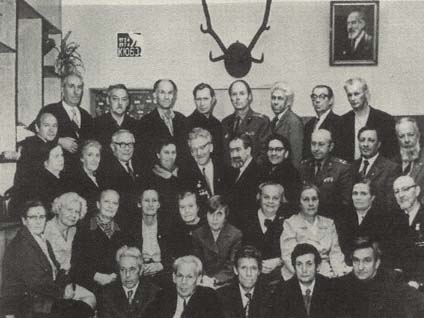
Figure 18.
KIuBZ fiftieth anniversary.
and here Manteifel"s leanings toward dubious doctrines of nature transformation sometimes did his protégés a disservice. As Konstantin Mikhailovich Efron remarked, although Manteifel' was a great leader for those in the sixth grade or younger, he had a great capacity to confuse the developing minds of older youths.[67] In the opinion of Elena Alekseevna Liapunova, a cytogeneticist who was a member of Smolin's VOOP kruzhok (circle) in the early 1950s, "PPS was incomparably more interesting than Manteifel'." On the other hand, after the August 1948 calamity, Manteifel', despite his own hostility to classical genetics, remained personally supportive of "his" fledglings such as E. D. Il'ina, who was fired for embracing a "formal genetics worldview."[68]
With peacetime Smolin first taught at the Institute of Furs and Pelts at Balashikha, just east of Moscow, and then in 1948 returned to the Darwin Museum. Simultaneously, from 1946 Smolin headed the youth section of VOOP as well as returning to the directorship of KIuBZ. However, a falling-out with the leadership at the Moscow Zoo led Smolin to resign from KIuBZ in 1949, taking a number of youngsters personally loyal to him over to the VOOP kruzhok , where he now invested all of his efforts. Among the
members was the future population ecologist Aleksei Vladimirovich Iablokov, who was elected the first president of the VOOP circle. Another member of that impressive cohort was the priest Father Aleksandr Men', who was later murdered. Based first in the premises of the Moscow oblast' Pedagogical Institute and from 1966 in the Darwin Museum, the VOOP kruzhok was weak until Smolin took over the reins.[69]
Although the atmosphere of the groups was more alike than dissimilar, the VOOP group was more traditionally scholarly than KIuBZ. If we discount his personal animus against Manteifel', Smolin's observations from 1951 illuminate this difference: "The existing Young Naturalist institutions and the children's collectives grouped around them exhibit a one-sided agrobiological ['Lysenkoist'] tendency. . . . Knowledge of nature stands at a very low level not only among the so-called Young Naturalists but among their leaders as well [a reference to Manteifel']."[70]
All of these groups, which were formally united under the umbrella of the Young Naturalists, had a profoundly democratic spirit. As Liapunova put it, they exuded a spirit of grazhdanstvennost' (citizenship). Loyalty to the group, which embraced those in grades five through ten, was important, but so was the exercise of individual responsibility.[71]
In the VOOP kruzhok in particular there was a "strong feeling of community." Aleksei Andreevich Liapunov, Elena's father and an eminent mathematician with a strong interest in biology, often invited the group over for discussions with light refreshments in their apartment. They even had a definite schedule. On Tuesdays there were lectures held at the Lenin (Potëmkin) Pedagogical Institute in the central Frunze district of Moscow. PPS often invited famous scientists to these; in those days they came willingly. On another weekday the kruzhkovtsy met by themselves and read their own lectures; these meetings were sometimes held at the Darwin Museum, where PPS worked. On weekends there were excursions to natural areas in the vicinity such as the Prioksko-Terrasnyi zapovednik , Zvenigorod, Lake Kiëvo, and other interesting places. Everyone got up at dawn, and PPS led the members along trails and identified the various birds they encountered. Every once in a while he hinted at opposition to Lysenko's ideas, but never explicitly, not wishing to place the children in a situation where they would have to lie.[72]
When general meetings were held, the members experienced the feel of a "real" scientific society on the model of MOIP. There were membership inductions. To be accepted, the young woman or man had to make a scientific presentation based on her or his own research with photos and a dossier, already a sign of seriousness; until you did that you remained a soiskatel , or candidate member. Elena Liapunova, for example, traveled to the former Verkhne-Moskvoretskii zapovednik and worked on a method of censusing
beavers (including a demographic analysis) by examining the size of gnawed sections of trees. With induction immediately came membership in VOOP. Whenever the group held elections of officers, members had a "real democratic feeling."[73]
We cannot overestimate the importance of these groups, particularly the VOOP circle, as crucibles for the formation of the leading field biologists of the USSR. Those of the VOOP circle had the highest success rate of all students in the MGU Biology Faculty, and the graduates of both circles—VOOP and KIuBZ—demonstrated a solidarity within their ranks (especially among those of the same cohort) that endured for decades. That solidarity enabled them to organize outside of any institutional framework. One example was the organization of Nikolai Vladimirovich Timofeev-Resovskii's first lecture in Moscow (1955) since his deportation from Germany at the end of the war, which was held at the Liapunovs' home. The audience was composed largely of a group of university students who had all been members of the VOOP circle. This lecture was an important milestone in the revival of formal and population genetics in the Soviet Union.[74]
Following the 1958 MOIP-organized All-Moscow Conference on the Role of Youth in the Protection of Nature, MOIPjoined the quest for the hearts and minds of the naturalistically inclined youth. MOIP was aiming at university students, too old for the other groups. Under the chairmanship of Fëdor Nikolaevich Petrov, who from 1954 was chair of MOIP's new Section on the Protection of Nature, and through the efforts of Nikolai Sergeevich Dorovatovskii, one of the section's vice presidents, and of Konstantin Mikhailovich Efron, the society's scholarly secretary, a Student Subsection was organized, of which the most active members later became zoologists and conservation activists: Maria Cherkasova, Boris Vilenkin, and V. Baranov.[75] Even MOIP, however, proved too tame for the university students. Within two years the students, centered at the Biology Faculty of Moscow University, had amicably gone their own way, creating an entirely new kind of organization, the druzhina po okhrane prirody (Nature Protection Brigade). Nonetheless, it was no accident that the druzhiny , with their roots in MOIP, became the standard-bearers of future Soviet field biologists and of future scientific public opinion.
Finally, any discussion of how the founding generation of scientific public opinion sought to perpetuate its worldview, values, and vision of science must mention the last of the young naturalist organizations, the Circle of Young Naturalists of the Section on Nature Protection of MOIP. To a certain extent, this group was MOIP's compensation for having lost the university students. Founded in the early 1960s by zoologist Anna Petrovna Razorënova, this circle arguably became the most successful of the youth groups of the next two decades. Single, chronically ill, and also caring for a
sick father, Razorënova could not work, and instead for twenty-five years she selflessly devoted all her energies to the circle, organizing weekly seminars for children in grades six through ten. The earliest seminars were attended by Boris Fëdorovich Goncharov, Nikolai Aleksandrovich Formozov, Vadim Mokievskii, Arkadii Tishkov, and other now prominent natural scientists; more than 250 of Razorënova's "graduates" went on to become natural scientists. Some years' cohorts had up to twenty-five members.
On holidays and Sundays the MOIP kruzhok would convene on a farm outside Moscow. Later, Razorënova rented and then bought a house near Myshkin on the Volga, using it as a base for excursions. Like the other groups, the MOIP circle organized trips to zapovedniki , and the older students participated in animal censuses. A special treat was the trip to the Black Sea coast during winter vacation.[76]
The generation of founders of the Russian nature protection movement was schooled at a particular time and place. The imposing level of erudition that generation attained was as much a product of the prerevolutionary familial environment as of tsarist-era educational possibilities. These were strongly colored by the class structure of the era and by the values of both the traditions of the landed gentry and the emerging commercial and professional culture of Russia's cities. It is also important to recognize that science was still "small science" and that it was possible for an individual to gain prominence by investigating some of the great uncharted areas of the natural world. It was also a time when it was fashionable to advance grand theories and when there was greater faith in science. Finally, it was a time before scientific paradigms, ideas, and "facts" were called into question as perceptually driven artifacts resting on ultimately arbitrary or unprovable premises.
Almost all of those conditions had radically changed or were changing by the 1960s. The magnificently rich prerevolutionary education that wellborn and even middle-class children received in the home and at elite schools gave way, at least in school, to a routinized, rote, and dulling education, particularly after the early 1930s. It was far more difficult to affirm in public an identity based on the ideals of civic dignity and the autonomy of science, and the idea that scientific public opinion possessed special knowledge that conferred on it the right to intervene decisively in some public policy areas. Finally, in the era of emerging "big science" it became difficult for anyone to achieve the status of titan. Scientific authority itself would soon be questioned—later in the Soviet Union than in the West, but in time to cast a shadow on those coming to maturity in the 1980s and 1990s.
Taken together, all of these changes foreclosed the possibility of replicating the generation of the founders. And considering that the political and moral authority of those figures in part flowed from their sense of
authority among the next generation of scientists—who were less erudite and who practiced more what Thomas Kuhn has called "normal science" than paradigm-shaping—was problematic. There were limits to the effectiveness of the youth circles in socializing future naturalists to become just like their forebears. Yet much of that older spirit was passed along. Considering the political, cultural, and socioeconomic environment in which the founders were fated to work, that itself must be considered a monumental achievement.