
The Educator
If there was a common motivation for this century's pioneer black women activists, it was the conscious desire to enhance the status of the African-American. With missionary zeal, they carried on their work and repeatedly spoke of its potential to "stamp weal or woe on the coming history of [their] . . . people."[17] The ideal of assisting the needy and underprivileged was a goal shared by the white women's club movement of the nineteenth century. For white women, though, the act of giving aid to others made it possible to work outside the home without losing claim to true womanhood; for the black woman, helping the less fortunate was a necessity for all.
No group carried out the theme of self-help more than black women educators. Teaching was the profession most open to them despite low pay (smaller than that of either males or white women), regulations that excluded married women from teaching in the public schools, and gender discrimination in higher positions, and frequently women who made their mark in other areas also entered the field
of teaching at some point in their lives. A significant appeal lay in the fact that education was seen as the most important avenue of racial progress—an ideal way to expedite racial betterment.
Immediately after the Civil War, black men held most of the jobs of teaching and preaching, but by 1890 black women had become a dominant force in the educational system of southern states. The number of black women teachers grew rapidly in the South and also in the North during the exodus, so that by 1910 women outnumbered men five to one.[18]
The respect accorded music teachers enabled them not only to influence their students but also to provide assistance and guidance to other members of the community. Like Mary L. Europe, who discovered the distinguished singer Larry Winters (1915–65)[19] and guided his early study of music, they encouraged and promoted talented young musicians.
Taking the next step, educators found the ways and means of offering scholarships to assist in the education of their students. The B-Sharp Club of New Orleans, for example, organized in 1917 by pianist, singer, and teacher Camille Nickerson (1888–1982),[20] offered and continues today to provide substantial scholarship awards to aspiring musicians.[21]
Public School Teachers
In the early twentieth century, women music teachers on the high school level conducted choirs and, less frequently, bands. It is not surprising that the directors of instrumental ensembles in public schools were usually male, since American women instrumentalists received training mainly as organists and pianists or sometimes as violinists and were less likely to find encouragement to take up wind instruments. Black women instrumentalists were, however, in evidence during these years, especially in show business, and occasionally they worked in the public school system.[22]
Isabelle Taliaferro Spiller (1888–1974), orchestral supervisor at Wadleigh High School in New York starting in 1942, was a competent wind instrument performer. She studied piano in early life and continued to do so through college,[23] but her experience in performing on tenor alto, and baritone saxophone and trumpet as a member of the Six Musical Spillers, a vaudeville group formed by her husband, furnished important preparation for her position as orchestral supervisor.[24] Isabelle Spiller was also assistant manager for the Musical Spillers (1912–26) and director of the Spiller Music School, founded in 1926.
In the case of Revella Hughes (1895–1987), stage experience was both detrimental and helpful. A soprano, pianist, and organist, she organized and conducted the band of Douglass High School of Huntington, West Virginia Earlier, Hughes had trained the chorus for the road show version of Eubie Blake and Noble Sissle's celebrated musical comedy Shuffle Along (1921) and had been a star of
Runnin' Wild , a successful musical comedy by James P.Johnson (1923). According to Hughes, her show business background turned out, at first, to be a liability:
Some parents who knew that I had been in show business complained to the school board that they didn't want this show business woman teaching their children. . . . I told you that show people had an awful reputation. But I was allowed to remain in the system. I was supervisor of music for the Negro public schools, and I taught music in the elementary school and at Douglass High School. When I was ready to leave the parents begged me to . . . stay with them. Isn't life funny? When I left, I left them with a band of 124 pieces. There was $900.00 in the bank; they had uniforms and good instruments, including sousaphones. . . . When I began we had to borrow instruments from stores and organizations for our parades.[25]
Her success in producing and directing musicals and operettas that turned out to be profitable fund-raisers may have helped to convince dissenting parents that "this show business woman" was truly an asset to the community.[26]
Although the administrative level of the public education system was still, as late as the 1930s, viewed as a predominantly male province, black women music teachers—such as Spiller and Hughes—were occasionally able to infiltrate it. In Washington, D.C., from the turn of the century to 1925, three women were appointed supervisors of music in the colored schools: Alice Strange-Davis (from 1896 to 1900); Harriet Gibbs Marshall (1900 to 1905), whose further contributions will be discussed later; and Josephine E. Wormley (1916 to 1925). In Chicago, Mildred Bryant Jones (dates unknown, active from the early decades of the century to around the 1950s) influenced large numbers of students in her position as head of the music program at Wendell Phillips High School.[27]
Similarly, in Washington, D.C., the music curricula in two of three public high schools available to black youth were established by women: Mary L. Europe at Dunbar High School and Estelle Pinckney Webster at Armstrong High. But they contributed to community events in significant ways outside of their responsibilities of conducting high school choirs and teaching classes. For example, Europe and Webster were among those invited to provide music and lectures for meetings of the Bethel Literary and Historical Association, the leading cultural organization of the city. Of course, Europe and Webster, both of whom conducted private teaching studios, could expect to reap benefits from opportunities to perform or present students at Bethel Literary meetings. Attention resulting from coverage by the national press could, at the very least, add to their reputations as teachers.[28]
College Teachers
Historically, institutions of higher education offered the widest scope for the talents of women teachers, and even in the early years of the historically black colleges and universities, a few black women were hired to give instruction in music. When the Fisk Jubilee Singers set out from Fisk University in 1871 on the first of
their famous tours, which raised $150,000 for the university and popularized the African-American spiritual in America and Europe, a young pianist, Ella Sheppard (Moore), was charged with the vocal training and general oversight of the singers. She also directed them on occasion, and, when illness forced the director, George White, to resign, she took over full management of the group. Sheppard also assisted Theodore Seward in compiling the 1872 publication Jubilee Songs as Sung by the Fisk Jubilee Singers of Fisk University . These words from a eulogy published in the Fisk University News indicate the impact of her leadership: "As a leader of music, Mrs. Moore had few equals. Well do I remember, when, more than a score of years ago, she trained a Jubilee chorus in which I sang bass. We were young, life was all a dream, but she had us only a few hours when we began to realize that 'the Lord had laid His hands on' her."[29]
In the early twentieth century, black women performers were attracted to the faculties of historically black colleges and universities in surprisingly large numbers, both for financial security and for the chance to teach promising young students. Discrimination limited the possibilities for national recognition and also reduced the number of jobs available to performers. College administrators were very likely anxious to include on their faculties artists who had extensive concert experience and who had studied at American colleges and universities or perhaps in Europe. Joining forces, then, was desirable for both college and artist, as well as for the surrounding community, which welcomed increased opportunities to hear highly trained performers.
Hazel Harrison (1883–1969), the leading black woman pianist of this era, combined teaching with a concert career. Harrison, who appeared with the Berlin Philharmonic Orchestra at the age of twenty-one, taught at Tuskegee Institute in Alabama (1931–34) and Howard University in Washington, D.C. (1934–59), and ended her teaching career at Alabama State College at Montgomery (1959–64). With the double limitation of race and gender, she was unacceptable to the Hurok Concert Bureau, the leading American management agency,[30] but determination led her to make whatever adjustments were necessary to continue a career as concert artist. Acting as her own concert manager, she periodically took leave from teaching to concentrate on performing. During a three-year leave of absence from Howard University, she performed some 100 concerts throughout the United States. Harrison's devotion to her students took many forms, including the use of receipts from her concerts to establish the Olive J. Harrison scholarship fund—named for her mother—at Howard University.[31]
Other examples of outstanding black women on college faculties include Maud Cuney-Hare (1874–1936), a pianist and author who served as director of music at the Deaf, Dumb and Blind Institute of Texas and at Prairie View State College in Prairie View, Texas (see further below),[32] and the singer Florence Cole Talbert (ca. 1890–1961), who in 1930 became the first black director of music at Bishop College in Dallas, Texas. As a result of successful tours in Italy, especially her appearance in the leading role of Aida at the Teatro comunale in Cosenza
(Calabria), Talbert was well known to African-American musicians. She later headed the voice department at Tuskegee College (1934–40).[33]
Founders of Institutions
Although college-level training in music was available to African-American students at historically black colleges and universities, as well as at some predominantly white music schools, such as Oberlin Conservatory and the New England Conservatory, the need for easily obtainable training in music beyond high school was often met by small local institutions. Several music schools or departments of music within schools were founded by black women during the years 1903 to 1930;[34] moreover, many music studios (sometimes called schools) were established by performers after retiring from the stage. Of the several women who founded institutions, Harriet G. Marshall (1869–1941), Lulu Vere Childers (1870–1946), Emma Azalia Hackley (1867–1922), and Mary Cardwell Dawson (1894–1962) stand tall because of the unusual nature of their contributions.
Most impressive among institutions established by black women was the Washington Conservatory of Music and School of Expression founded in Washington, D.C., by Harriet Gibbs Marshall.[35] Marshall was the first of her race to graduate from the Oberlin Conservatory of Music as a piano major, and, after piano study in Europe, she concertized in the United States. She established a department of music (ca. 1890) at Eckstein-Norton, a small black college in Cane Spring, Kentucky, and raised money for the music building through her piano concerts and through performances of the Eckstein-Norton Choir, a group she organized and directed.[36]
Marshall's most remarkable contributions, however, were made in connection with the Washington Conservatory. Her experience at Eckstein-Norton convinced her of the need to find and train talented youth and inspired Marshall to open her school in 1903.[37] It was more widely known than other private schools owned and operated by blacks and, by offering conservatory-level instruction, attracted students mainly from Washington but also from the North, South, and Midwest. It was also the longest to survive, although not without tremendous effort on Marshall's part. In order to keep the school financially afloat, she wrote voluminously for assistance to politicians, artists, and any others whom she considered possible donors.[38] Although there was never a surplus of money on hand, the school continued to operate until 1960 with assistance from white as well as black philanthropists.[39]
From its beginning, the Washington Conservatory recruited a faculty of highly trained, and, in some cases, widely known musicians. Emma Azalia Hackley, whose later achievements as singer, conductor, and educator are discussed below, commuted from Philadelphia to teach at the conservatory during the 1903–4 academic year. Her response to the invitation to teach at the school was probably representative: "I would enjoy very much the association with you and other persons mentioned as the faculty-to-be. In a kind of faint far-off way, we have nursed a
somewhat similar idea here, but we are not so blessed with talent as is Washington."[40]
Throughout her career, Marshall was fortunate in that she was encouraged by her father, Judge Wistar Mifflin Gibbs. He contributed the building in which the school was housed, and in his letters he assured her of his support for whatever decisions she made.[41] Although she received assistance from many donors, and endorsements from prominent black musicians such as the composer Florence Price,[42] some questioned the need for the school. Henry C. King, president of Oberlin, spoke of his initial reservations, "The question . . . was whether with the musical department of Howard University, there really was any such demand for another school [in Washington]." He did finally give Marshall his endorsement, commenting, "I am glad to send you a word that I hope may be of help to you in building up your work. You certainly seem already to have developed quite an institution."[43]
In addition to the meritorious service of providing music instruction to many students, the Washington Conservatory of Music offered the Washington community a concert series that annually presented artists of national stature. As discussed earlier, the most widespread institutional support of the black concert artist came from the churches, which had since the early nineteenth century assumed the management and promotion functions of concert bureaus. Increasingly, black colleges began to sponsor musical programs, and the larger institutions such as Fisk, Hampton, and Howard sponsored annual concert series for the enjoyment of the students and the wider African-American community. At the same time, these series (whether in churches or colleges) were crucial to black performers, who in the early twentieth century, especially as they began their careers, were dependent upon this "black circuit" for performance opportunities.
An 1896 graduate of Oberlin Conservatory, Lulu Vere Childers came to Washington to join the faculty of Howard University in 1905. She was responsible for turning a small music program into, first, a Conservatory of Music (1913) and, later, into a School of Music (1918). When Howard offered its lecture-recital series in the 1920s, the young singer Marian Anderson, a friend of Childers', was among the artists. As the years passed, the series assumed an important position in Washington music affairs. Concerts by artists of national and international standing drew racially mixed audiences, an anomaly in the segregated city, and were prominently reviewed in newspapers of both black and white communities. In preparation for the 1938–39 season, Constitution Hall was sought as a larger auditorium for a recital by that same Marian Anderson, who was by now a world-renowned contralto. This request set in motion events that led to the great singer's triumphant Lincoln Memorial concert of April 1939, the result of the Daughters of the American Revolution's refusal to rent Constitution Hall for a performance by a black artist.
In view of the fact that college choir directors among women were relatively few, the achievements of Childers in this regard are particularly noteworthy. She won favorable criticism for presentations of choral masterpieces such as Handel's Messiah ,
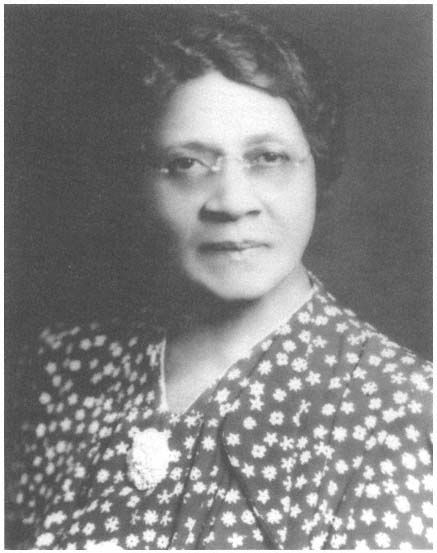
Fig. 21.
Lulu Vere Childers, choral conductor and longtime dean of the School of Music, Howard University.
Photograph possibly taken upon her receiving the honorary doctorate in music, 1942.
By permission of the Moorland-Spingarn Research Center, Howard University
Archives, Howard University.
Mendelssohn's Elijah , Gabriel Pierné's The Children's Crusade , and Samuel Coleridge-Taylor's Hiawatha trilogy. Vespers services featuring the choir brought overflow audiences to the University Chapel, especially at Easter and Christmas.[44] The Department of Music at Howard University must be viewed as Childers' legacy.
Emma Azalia Hackley's wide-ranging musical activities, which included teaching voice, lecturing, and performing, seemed to be equal components in her struggle to assist young black performers. She believed that "there is a future for colored musicians. . . . If we encourage our young people generally throughout the country every five or six years some one of them will leap out of the circle of mediocrity and push his way to the front, and perhaps represent us musically as we have never been represented."[45] She, too, founded a music school, the Vocal Normal Institute of Detroit, Michigan, which existed from 1912 to 1916. After a trip to Paris to study voice, she conceived the idea of sending students to study abroad and raised money for scholarships through her own concerts and donations from patrons. She could point to several outstanding musicians whom she had helped. Clarence Cameron White (1880–1960), a violinist who became a celebrated black composer, was the first beneficiary. His $600.00 scholarship was, in Hackley's words, "a mere pittance [but still helpful] if it would score one point in favor of so many millions of people" (i.e., black Americans).[46] White used the money to study in London with Samuel Coleridge-Taylor. Foremost among recipients of the Hackley scholarship awards was another composer of national standing, R. Nathaniel Dett (1882–1943), also a pianist. The singers Cleota Collins (1893–1976) and Florence Cole Talbert and the violinists Harrison Emmanuel (dates unknown) and Kemper Harreld (1885–1971) also received assistance for study from Hackley. Carl R. Diton (1886–1962), who used his Hackley scholarship to study piano in Munich, Germany, spoke of the large number of black singers who profited from Hackley's educational activism, "She more than anyone else is responsible for the trend toward the cultivation of the Negro's natural voice and higher musical training. . . . No other Negro to my knowledge has given her time, money, and energy in this way, unselfishly and purely for the sake of the other individual."[47]
Training a young performer was not, of course, enough. Black educators must have found it galling that even their best students could find few professional opportunities. Black singers, for example, were systematically excluded from performing with white opera companies in the United States; Lillian Evanti (1890–1967) and Caterina Jarboro (1903–86), though, did sing with established companies in Europe.[48] At the turn of the century, a few singers found opportunities to perform with black traveling companies that introduced operatic finales into their shows.[49]
To counteract this state of affairs, which existed until 1955, when Marian Anderson made her belated appearance at New York's Metropolitan Opera as Ulrica in Verdi's Un ballo in maschera , black opera companies were formed. These companies, most of them episodic and short-lived, began staging opera with black casts in the 1870s.[50]
Mary Cardwell Dawson (1894–1962) accepted the challenge and established
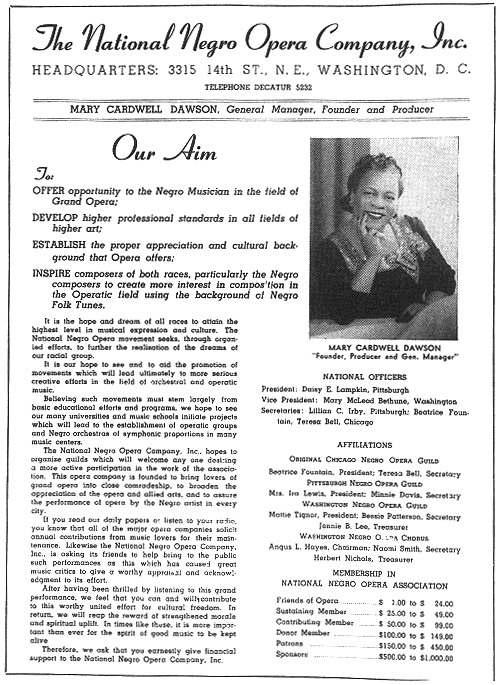
Fig. 22.
Call for contributions (in a [1940s?] program for Aida ), National
Negro Opera Company, Inc., founded by Mary Cardwell Dawson.
Louia Vaughn Jones scrapbooks, Moorland-Spingarn Research
Center, Howard University.
the National Negro Opera Company (NNOC) in 1941. An activist teacher when she founded the Cardwell School of Music in Pittsburgh in 1927, Dawson had become aware of the desperate need of the black singer for an operatic outlet. Her company lasted for twenty-one years, mounting productions of operas and oratorios, and presenting some of the best-known black singers. One of its most successful productions was La traviata presented in 1943 in Washington, D.C., with Lillian Evanti singing the lead role. The production was heard initially by an audience of 15,000 and, to accommodate others who wished to hear it, was scheduled for a repeat performance.[51] The favorable critical review of the production must have brought well-deserved professional satisfaction to the prima donna, Lillian Evanti, and also to the far-sighted Mary Cardwell Dawson.
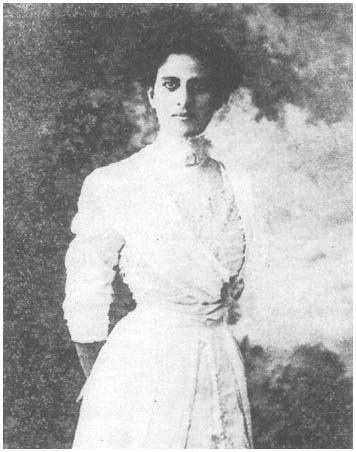
Fig. 23.
Maud Cuney-Hare.
By permission of Atlanta University Center, Robert W. Woodruff
Library.