
Preliminary Definitions: Terms for Kin Groups
Nakarattar terms for kin groups segmented the caste into contrasting categories that provided an index to three levels of social distance: (a) structured kinship (including relations between in-laws), (b) diffuse kinship, and (c) common membership in the Nakarattar caste, but no kinship ties. These levels are depicted in Figure 13. At its most diffuse level, Nakarattar kinship terms distinguished caste members who were kin (contakkarar ) from those who were not (contam illai ). Kin included all of one's
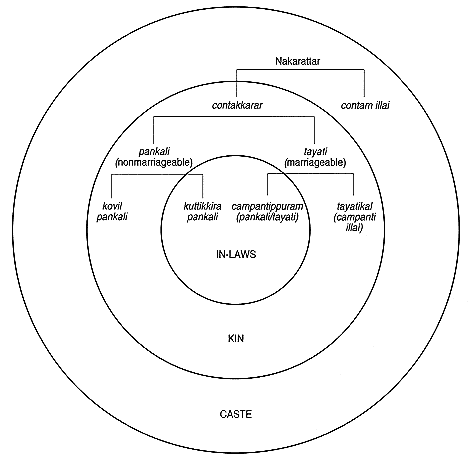
Figure 13.
Levels of social distance in Nakarattar kin relations.
agnatic relations, collectively referred to as pankali: that is, members of a person's clan (kovil pankali ) as well as members of one's lineage (kuttikkira pankali ).[1] Kin also included members of a one's spouse's lineage, all of whom were referred to as campantippuram ("in-laws"). Once kinship relations were established between two sets of kuttikkira pankali through marriage, they lingered on even after the paired descent groups had terminated jural obligations contracted at the time of the marriage. Affinal relations between kin groups did not extend to members of a spouse's temple clan outside his or her lineage.
Nakarattars employed the terms tayapillai and tayati (plurals tayappillaikal and tayatikal ), in both a broad and a narrow sense. In the broad
sense the terms referred to members of descent groups with whom Nakarattars had once established a marriage alliance, even if they no longer maintained the alliance as such. The terms indicated that marriages had previously occurred between female tayatis and male pankalis . In this sense, tayati designated a more diffuse relationship of kinship than a campantippuram relationship, that is, a relationship between descent groups observing an ongoing marriage alliance. Relationships within this diffuse body of affines were recognized, and they might be activated by persons seeking favors, much as were the ties between otherwise unrelated members of the same temple-clan. There did not, however, exist any institutionalized set of rights and obligations for tayatis such as those incurred by two lineages actively allied by marriage.
Nakarattars viewed all of the husband's agnatic relatives as the basic unit of reference for the wife as well as the husband. They constituted an enormously extended family into which the wife had married and were referred to by the focal couple and its offspring simply as "our pankali ." Active campantippuram members who belonged to the wife's uterine descent groups, however, were marked by a narrow use of the term tayati , signaled in discussion by reference to specific moral obligations.