
The Problem of European-Based Theories
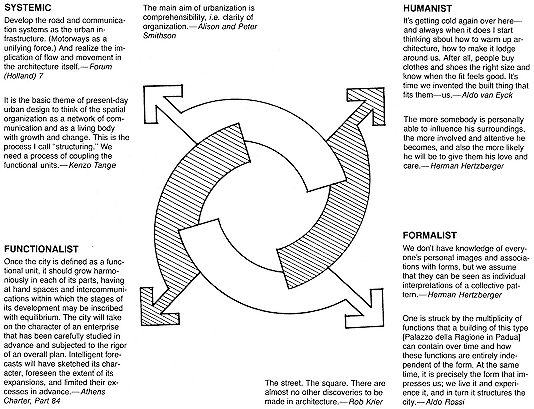
We submit that European theory tends to be narrow and argumentative. Each new approach seems to have developed to oppose and replace others, but because all the approaches shift laterally, no single one can encompass the others. We see the alternative approaches in European urban design that we have outlined as complementary and overlapping, but not as sufficient. In the accompanying diagram we characterize European urban design theories as sharing some concerns and values but, more significant, as moving in different directions.
15.
Countervailing directions of European theory, with associated testimonies.
Our view, which will emerge in the chapters that follow, is that we need not argue with the values and methods represented by the European heritage of urban design theory. We should not have to abandon the precepts of functionalism to seek the poetry of formalism, or those of humanism to seek urban order, and so forth. The question we ask is not, Which of these European theories should the American designer choose or disregard? but, Which of these intentions should be considered first when the urban designer faces a particular design problem? And then which should be considered next? And we ask, What theory of urban design can translate the European heritage into American terms?
Before we begin to reformulate this diagram according to American contexts, we want to review briefly the impact of European theory on an American city. If our first point is that European theories are unnecessarily argumentative and narrow, our second is that European theory has not fared well in America. Although the cultural link between Europe and America is strong, there are significant differences too. For example, European theory seems often to derive from social objectives, whereas American practice often grows from assumed economic opportunities or imperatives. Because of these differences, an American approach to urban design theory is needed if we are to do good things in American cities.