
Part IV: Old Modernity and New Modernity
The Republican Town of Of
9. Revolution
Amnesia and Prohibition
National Public Culture and Imperial Public Culture
The official history of the Turkish Republic begins on May 19, 1919, with the arrival of the Ottoman military commander, Mustafa Kemal Pasha, in the Black Sea port of Samsun.[1] Under the terms of an armistice, the Ottoman sultan had accepted the disbanding of what remained of his armies, as well as military occupation by Britain, France, and Italy. Having left Istanbul under orders to implement the armistice, Mustafa Kemal, later to become known as Atatürk, instead set about coordinating a national resistance in defiance of the imperial government. Just days before his departure, a Greek army had landed at the Aegean port of Izmir with intentions of annexing western Asia Minor. In time, however, Mustafa Kemal was able to rally imperial commanders and troops in Anatolia and assume leadership of a National Assembly meeting in Ankara. The Independence War (1921–22) that followed concluded with the defeat and retreat of the Greek army. In the aftermath of this victory, Italy, France, and Britain came to terms with the nationalist movement, whereupon the imperial government collapsed. The declaration of the Turkish Republic followed soon thereafter (1923).
From the moment of military victory, the National Assembly, urged along by Mustafa Kemal, began to move toward radical revisions of the state system. By 1925, the Sultanate and Caliphate had been replaced by a president. The sacred law of Islam had been entirely abandoned in favor of the Swiss civil code and the Italian penal code. Religious schools and institutes had been closed in order to emphasize secular education. The Gregorian calendar and the international clock had replaced Islamic dates and times. From their inception, these changes in governmental institutions anticipated nothing less than a revolution, the replacement of an imperial by a national public culture. Certain kinds of religious speech, script, dress, and manners in public life were legally proscribed. Other kinds of secular speech, script, dress, and manners in public life were officially approved. There would be a new Turkish writing, a new Turkish language, a new Turkish history, and a new Turkish folklore. Scholarly institutes would be founded, academic research would be sponsored, and a core of schoolteachers would be trained for the purpose of propagating new national norms that would take the place of old imperial norms.
The effects of this revolution were not restricted to the greater cities, even during the early years of the Turkish Republic. Many district officers, public prosecutors, and gendarmes in towns and villages were zealous nationalists. They were ready, if not eager, to use their powers to arrest and prosecute anyone who defied the secular reforms. In addition to legal enforcement, provincial state officials also conducted propaganda campaigns aimed at disgracing local representatives of the imperial system, that is to say, aghas and hodjas. By the later 1930s, anyone who wished to take part in public life was obliged to do so in accordance with the new national norms. Indeed, even direct descendants of aghas and hodjas took care to appear in public life as Turkish nationalists rather than Muslim ottomanists. It is true that not everyone in the towns and villages of Anatolia changed their everyday habits. But any villager or townsman who wished to receive the respect of a state official was obliged to reform himself or herself.
The revolution would not have been so successful, and perhaps not successful at all, without the coupling of repression with enjoyment. Contrary to a stereotype of provincial Ottoman society, the villages and towns of Anatolia were anything but inert sociopolitical entities, even if the population had been impoverished and exhausted by decades of warfare by the 1920s. The top-down project of modular nationalism therefore required that citizens be drawn into the new public life of the Turkish nation by a process of self-discovery and development. Of the various steps taken, one of the more effective in provincial Turkey was the encouragement of local celebrations of local engagements in the Independence War, which became known everywhere as Liberation Day (Kurtuluş Günü). Sometime during the early years of the Turkish Republic, the towns in the western Aegean provinces began to commemorate the exact day of the year when foreign troops withdrew. The result was a series of rolling Liberation Days that progressively marked the westward advance of the nationalist forces toward Izmir.
By analogy, the towns in the eastern Black Sea provinces also began to commemorate their own series of rolling Liberation Days, but in reference to the end of an earlier military conflict. The Russian army had initially invaded and occupied the eastern coastal region in 1916, but then withdrew in 1918 as a consequence of the Bolshevik Revolution. This means that the Liberation Days in the Black Sea towns commemorate events that predate the landing of the Greek army in Izmir, Mustafa Kemal's arrival in Samsun, the rise of the nationalist movement, the subsequent Independence War, and the concluding declaration of the Turkish Republic. That is to say, they refer to events that occurred "anachronistically," in the context of an imperial rather than a national struggle.
In the next four sections of this chapter, I shall consider the way in which two Oflu authors attempted to understand this dislocated periodization during the later 1940s. At the time, the new national forms of speech, script, dress, and manners had thoroughly displaced the old imperial forms in the district of Of. Indeed, the revolution in public culture was as thorough and complete as it would ever be. Nonetheless, a state society of imperial origin was already colonizing nationalist institutions and organizations. As a result, the new public culture was beginning to feature splits and divides that challenged some of the most experienced and knowledgeable of the Oflus. National ideology and institutions had indeed brought about a change in consciousness in the district of Of, but in such a way as to make the relationship of present and past difficult to decipher.
The Battle for Of
The celebration of Liberation Day in the district of Of does not really mark the final withdrawal of foreign troops, as is the case elsewhere, but resistance to their initial assault two years previously. In this respect, the first event of local nationalist history occurs at a moment when the imperial government was anticipating victory. The district of Of therefore offers a striking example of a dislocated periodization, exceptional even for the towns along the eastern Black Sea coast. To explain, I must first briefly mention the larger context of military conflict in the late winter of 1916.
The Germans and Ottomans had been at war with the British, French, Italians, and Russians for a little more than a year. A great Ottoman victory, credited to Mustafa Kemal, had recently been achieved at Gallipoli. But all kinds of disasters were looming in the eastern provinces of Erzurum, Van, and Trabzon. Already, the imperial government had begun to deport the Armenian minority into the Syrian desert, where many would die without provisions or shelter. Very soon, the Muslim majority would also suffer massive casualties and extraordinary hardship as a consequence of Russian offensives followed by Ottoman counteroffensives.[2]
The Russian advance on Trabzon began in February, when a land army supported by naval gun ships occupied the town of Rize.[3] Avni Pasha, regional military commander of Lazistan, decided to gather the remnants of his retreating forces and make a desperate stand at the Baltacıı River in the district of Of (see map 1). Arriving in one of the interior villages of the district, he proceeded to summon to his side a number of the local leaders, asking them to rally the population in support of his army. The response he received seems to have exceeded anything he might have expected. For the next two or three weeks, several thousand Ottoman troops, reinforced by thousands of irregulars and assisted by thousands of civilians, succeeded in halting the forward movement of a formidable Russian force.[4] During a brief but terrifying interval, the twentieth century arrived in the district of Of in the form of machine guns, naval bombardment, trench warfare, and civilian refugees.[5]
As a popular effort involving great danger and sacrifice, the Battle for Of rightfully came to be remembered as the dawn of a new kind of political identity and participation. It was the local instance of a Turkish nation that was coming into existence even before the prospect of the extinction of the Ottoman Empire. Some twenty-five years after the declaration of the Turkish Republic, as the country was moving from a one-party to a multiparty system, two little books appeared that explored the meaning of the Battle for Of. Each of their authors pondered the early spring of 1916 as they considered the identity of the inhabitants of the district of Of. Each of them posed the question of how the Oflus had been able to manifest themselves as a Turkish nation, already in the twilight of the Ottoman Empire.
The first of the books to appear, in late 1949, was a memoir based on first-hand experience. It was written by Hasan Umur, student of the hodjas during the later Empire, participant in the Battle for Of, activist in the nationalist movement, and local politician in the early Turkish Republic. The second to appear (early 1950) was a research project based on personal interviews, official documents, and authoritative sources. It was written by Altay Yiğit, a young teacher in a primary school, native of the new district of Çaykara, and an intimate of leading individuals from large family groupings. I shall begin with their contradictory reports of what Avni Pasha, regional commander of Lazistan, said and wrote soon after he arrived in the district of Of, on February 28, 1916. Umur was among the local leaders who responded to the summons of Avni Pasha. He tells us that his party found the military commander sittingin a chair in the garden of a village residence sometime after midnight:
Umur goes on to explain what he took to be the meaning of these remarks. Avni Pasha was saying that no one would be forced to take part in the battle, and no one who fled the front lines would be arrested. Given that the situation was so desperate, he had no alternative but to appeal to the patriotism (vatan aşkıı) of the Oflus.Upon introducing himself to us, he said: "I am going to engage the enemy in battle here. I will give weapons to those who wish to join our soldiers in the battle. If there are those who do not wish to engage in the battle, let them carry munitions for our soldiers. And if there are those who are unable to do this, let them dig trenches for our soldiers. And if there are still those who say they cannot do this, let them say prayers for our soldiers.And if as well there are those who say they cannot do this, by God I shall hang them, and so help me God I shall hang them." And then he excused himself [from our presence]. [Italics mine][6]
Umur recollected that an imperial military officer had delivered a speech that resembled a nationalist exhortation of the republican period. Avni Pasha had called for a popular rising of a total society in support of "our soldiers," constructing an image of a division of labor that implicitly included young and old, male and female, well and infirm. In doing so, he had attempted to inspire his audience to identify themselves with the imperial troops, rhetorically insisting that he would hang anyone who refused to say prayers in support of their efforts. But Umur was citing utterances that he had heard thirty years earlier, before the collapse of the Empire had been followed by the founding of the Republic. This raises the possibility, if not the likelihood, that his memory was playing tricks on him. There is good evidence that this was the case.
Avni Pasha had also sent communiqués to district officials in late February, delegating to them the authority to organize support for the war effort. Yiğit discovered one of these documents in the archives of the müftü of Of and published a transliterated version in his own account.[7] In his communiqué, Avni Pasha uses terms that correspond to Umur's recollections, but their meaning is entirely different. He addresses the müftü with respect for his person and his office, recognizing his devotion to state and religion. So he does appeal to a kind of patriotism, but it is an "official" patriotism limited to those individuals who held titles and positions in the imperial system. He orders the müftü to send him everyone, whether residents or guests, including all army deserters, absentee conscripts, and soldiers on furlough "capable of contributing to the war effort, for fighting, attacking, transporting, and constructing." So he does refer to his need for a division of labor, but not to a total society composed of individuals with different abilities and inclinations. He also calls for extreme, punitive measures to be applied to anyone who refused to support his troops, but he does not do so merely by way of rhetorical emphasis. On the contrary, he delegates full authority to the müftü "to rain down the most terrible kind of worldly punishments and afflictions on anyone who opposed him." And tothis end, he recommends "destruction and burning of their households, and the deportation and torture of their relatives and descendants." In other words, Avni Pasha was licensing the harshest treatment of the Muslim population, just as other state officials had already licensed the harshest treatment of the Armenian population.
In contrast to the oral quote, the communiqué is consistent with state policies that had been repeatedly applied to the district of Of at moments of extreme political crisis during the post-classical imperial period. The governors of the province of Trabzon had often called on local elites to assemble and dispatch troops in support of the central armies of the Ottoman Empire. In doing so, they had often appealed to their identification with and participation in the imperial system, that is, their readiness to fight for state and religion. On the other hand, the governors of the province had also on some occasions carried out punitive expeditions against local elites. In doing so, they had burned houses, destroyed crops, hanged leaders, and deported families in order to force the submission of local elites at the head of local followings.[8] In his message to the müftü, Avni Pasha therefore wrote in these two conventional registers of the post-classical imperial period. He acknowledged the "devotion to state and religion" of his official respondent even as he licensed "worldly punishments and afflictions" for anyone resisting his orders.[9] So he in no way indicated any inclination to rely on the "patriotism" (vatan aşkıı) of the general population in the district of Of.
Avni Pasha may have adjusted the two conventional registers to suit his audience, drawing the line here when speaking to local leaders and drawing the line there when issuing orders to district officials. By such an estimation, the military commander would have spoken with respect for those who came to meet him at midnight in the garden, just as he also mercilessly threatened those who would not support the troops. When Umur recalled what he said, more than thirty years later, he may have further adjusted the two conventional registers, unconsciously redrawing the line between respect and threat. It was by this final edition that Avni Pasha had come to speak as a nationalist of the republican period.
Even if it is possible to soften the jarring contrast between the oral and written versions of Avni Pasha's remarks, the fact remains that Umur had mis-remembered. He had recalled that Avni Pasha did not intend to arrest anyone who fled the front lines but relied instead on an appeal to patriotism. The communiqué flatly contradicts this interpretation, and in doing so casts doubt on the reliability of Umur's memory. But there is also another reason to doubt Umur's recollection. If the overall design of his little book is considered, we can see that the words of the military commander are cited for a literary purpose. They confirm the presence of a certain "nation-thing" during the experience of the Battle for Of that was otherwise absent at the time of its recollection in writing. For the point of Umur's little book is that a national relationship of state and people, which had become palpable during the Battle for Of, had not afterwards been fully realized by the Turkish Republic. This is a strong indication that the memory of Avni Pasha's statement had been unconsciously reformulated as the singular moment of a pure national origin to be contrasted with an impure national aftermath.
Hodjas as the Founders of the Nation
Following the Battle for Of, Umur left the district of Of as a refugee, never again to return as a permanent resident. Sometime later he became an activist and politician in the nationalist movement, and so came to embrace the idea that the state should represent the people. However, by the later 1940s he had come to think of all the ways in which the people (halk) as defined by nationalist ideology and institutions, were not the people (millet) as measured by his own background and experience.
Umur was having such thoughts in anticipation of the possibility of free and direct elections. The prospect of a sounding of public opinion had probably brought to his mind the gap between the nation-state and the nation-people, the gap that should not have existed by the measure of his nationalist conviction and commitment. Accordingly, he had begun to reconsider who the people really were and therefore what the state really should be. And in doing so, he had followed his memories back to the moment of a pure national origin, back to the Battle for Of. There, he discovered an answer that stood in direct contradiction to revolutionary ideology and institutions. His little book, Of and the Battles for Of, is the result. It is an effort to explain what would have been unconscionable to the large majority of secular nationalists.
Umur begins with a brief essay on the importance of patriotism in human history, revealing his preoccupation with questions of the nation, as a people bound to a homeland. He then reviews the history of the district of Of, about which he was singularly informed.[10] And what he brings to light for his readers, as he sifts through legend and rumor, is a people who are a people only as a consequence of the local religious professors and academies. It was they who had brought about the Islamization of the district of Of, making a place of many peoples speaking many languages into a place of one people with one religion.
His discovery had come to him from what he had personally learned and experienced in the district of Of; nonetheless, he concluded that his homeland could be taken as but a small part of a larger whole. The professors and academies that were once to be found in the district of Of, but that also existed throughout the core Ottoman provinces (bütün yurttaki medreseler gibi), had "laid the foundations of the Turkish nation."[11] They had forged a common moral outlook and hence a communal solidarity among the people, not only in the district of Of, but in the rest of the country as well. Such a claim was not an original one at the time it was published; nonetheless, it was far from innocuous in its specific formulation.[12] Umur was not just saying that religion had played an important role in the history of the Turkish people, as would have been acknowledged even by the most radical secularists. He was saying that no such thing as a Turkish people would have ever existed without the local representatives of the imperial religious establishment.
Knowing that his conclusion would prove controversial, Umur provides his readers with a historical and sociological account of the professors and academies. He discusses what was good and what was bad about religious education, consistently deriving its virtues from the personal character of the professors and its vices from inept policies and regulations. So he admits the deficiencies of the imperial religious establishment, but he consistently traces them to the state system, while otherwise lauding the religious teachers and students. As proof of their accomplishments, he includes a series of short biographies of the district's most distinguished representatives during the last years of the Empire and the first years of the Republic. His readers would be able to remember one or more of these men as their own personal teachers. In doing so, th ey would recall them as individuals who had been respected, if not cherished. It is this larger argument that explains why Umur had mis-remembered exactly what Avni Pasha had said in the midnight meeting in the garden. He was recalling the Battle for Of as a moment when the moral qualities of the people, put in place by the professors and academies, had been called forth by a state official.
Now Umur was completely correct with regard to the accomplishment of the professors and academies. They had indeed done exactly what he claimed they had done, at least in the context of the history of the district of Of. They had constituted the dominant form of ethical thinking and practice. Without them, the Oflus would be a hodgepodge of ethnic, if not tribal, groupings with little or nothing in common. But he was altogether incorrect to identify the Battle for Of as a moment of a perfect relationship between people and state. Indeed, the Battle for Of featured a gulf between the state and the people, as Avni Pasha's communiqué to the müftü clearly demonstrates. And this disjunction between state and people in 1916 was structurally similar, although not strictly identical, to the disjunction that had stirred Umur to question national public culture in 1949. To see more clearly what troubled him, we must examine the second account of the Battle for Of.
Aghas as Founders of the Nation
Altay Yiğit intended his little book, Eastern Black Sea Battles in the First World War, to be used in classrooms so that the children of the district would know local history. He had therefore conceived and constructed his story of the Battle for Of in an impeccable Kemalist format, the essential precondition for its adoption by a state school. The narrative of the little book is the result of research based on participant testimonies, official documents, and published histories. In other words, it is a nationalist history that conforms to scientific criteria. Nonetheless, the narrative is also interspersed with poetry composed by the most famous and eloquent authors of the early nationalist period. It joins authoritative methods and facts with an impassioned patriotism.
Yiğit also begins by explaining the importance of patriotism in all of human history in his introduction. This leads him to the example of Kemal Atatürk, the founder of the Turkish Republic. Here he cites the accomplishments of the Eternal Leader (Ebedî Şef), and he concludes with a quotation of his "Speech to Youth" (Ey Türk Gençliği!). The first two chapters that follow then examine the imperial period as a run-up to the national period. They bear the titles "Our Relationships with the Russians Through History" and "The Collapse of the Ottoman Empire and Its Causes." Yiğit then turns to his main topic, an account of local residents who joined troops of the imperial army in order to resist Russian military invasion and occupation. Before mentioning specific incidents and individuals, however, he briefly explains the general significance of the Great War.
Because it was a modern military conflict, the Great War took the form of "total warfare" (topyekun harb). By this fact, the Ottoman Empire had to rely more than ever before on a people, all the more so because of the weakened condition of the state system. And of course, the only people it found to rely upon, at least in Asia Minor, were the Turkish people. As a consequence, the Great War brought to light the qualities of the Turkish nation (ıırkıımııza has kahramanlıık). And so it was that the Russian advance in 1916 locally took the form of a struggle for national existence (bütün varlıığıı ile savaşmak zorundadıır). An imperial army, which had been transformed into a national army (Türk ordusu) by total warfare, would require the assistance of the local population—not only its local militias, but all the residents of what was already in effect a national homeland (Karadenizin evlâtlarıı).
By these textual moves, made in three short paragraphs, Yiğit set the Battle for Of in the framework of the age of nations: A state had come to represent a people because the state was obliged to depend on the people. He immediately follows this opening argument with a list of the names of those volunteers who were known to have first rushed to the front lines between Batum and Hopa, even before the Russian advance. The list includes forty-five names of militia members from Rize, Of, and Sürmene. Next, he briefly describes three successive battles that occurred as the Russians advanced westward beyond Batum toward Rize, estimating in each instance the number of casualties on both sides. He then describes the Battle for Of in more detail. In the course of this account, he tells how soldiers and civilians worked together to organize a front at the Baltacıı River.[13] Here he again gives lists of names of the volunteers who were part of this endeavor, but he also tells his readers about their words and actions. In doing so, he usually recounts how a military officer (his name is given) gave orders to one or more local residents (their names are given).
This account of the Battle for Of is remarkable in its tacit features, meaningless to anyone but an Oflu. The names that appear in the lists are in romanized characters, but they otherwise appear in their old imperial form. This being the case, the personal names of individuals are sometimes accompanied by a title, such as agha, bey, or pasha. When the individual is a local resident, the personal names are almost always preceded by a family name in the form of a patronymic (always if titled), such as Nuhoğlu Ahmet Agha. The exact distribution of the names in the lists is significant. Of the forty-five names of volunteers who rushed to the front lines at Batum, a third have the title agha as well as the patronymic of an agha-family from Rize, Of, or Sürmene.[14] As for the lists of names associated with the Battle for Of, they always begin with a large cluster of individuals whose personal names are accompanied by the title agha and whose family names are those of agha-families. As for the accounts of the interactions of military officers and local leaders, they almost always involve well-known aghas from well-known agha-families.
Now, Yiğit's lists of names are in no way false or even biased. On the contrary, they appear to be a reasonably accurate version of the Battle for Of, even if not an exhaustive and definitive one. Leading individuals from large family groupings had always provided the leadership for local militias and regiments. The aghas from agha-families had assembled and accompanied soldiers on imperial campaigns, at home and abroad, for centuries. One would therefore expect that aghas from agha-families would be in the forefront of popular support for the imperial troops on the occasion of the Russian invasion in 1916. What is more significant is the placement of the aghas and the agha-families in a nationalist frame. The volunteers from among the local residents are presented as representatives of a Turkish people. The military officers and troops are representatives of a Turkish state. So the aghas from agha-families are given pride of place in the relationship of the nation-people and the nation-state. However, there is still more to the matter than this. By the lists of names, aghas from agha-families act as the representatives of the people of Of as the latter manifest themselves as a Turkish nation coming to the assistance of a Turkish state. But in the details of the account, aghas from agha-families are not depicted as assembling and directing volunteers (as they must have done in fact during the Battle for Of). They are depicted as receiving and fulfilling the orders of military officers. So for Yiğit, as for Umur, the nation once again becomes visible through a relationship of state and people, but in a different form. For Umur, the relationship of state and people manifested a moral solidarity (a state official evoking the support of a local population), but for Yiğit the relationship of state and people manifested a hierarchy (state officials directing local leaders who then direct the local population).
To understand this difference, we must return once again to the time the little book was written. Leading individuals from large family groupings had once again become intermediaries between state officials and the local population by the later 1940s. This had come about as state officials of the Kemalist period followed a governmental practice of the imperial period, turning to leading individuals from large family groupings for assistance, even though this contradicted nationalist ideology and institutions. As a consequence, an imperial state society at the local level had gradually but efficiently reoriented itself to become a national state society at the local level. Leading individuals from large family groupings, the descendants of aghas from agha-families, now appeared as nationalist rather than ottomanist in behavior, speech, and dress.[15]
Yiğit's account of the Battle for Of therefore confirms that the old modernity, which could now be described as the "old republic," had inhabited the new modernity, which could now be described as the "new republic." According to this reorientation, the consequence of official practices if not policies, it was no longer possible for the Oflus to identify leading individuals from large family groupings as an unwelcome imperial legacy. Consequently, the ascendants of leading individuals from large family groupings, the aghas from agha-families, began to appear in memory as a nationalist leadership, even in the mind of a young Kemalist teacher in a primary school.
The confusion of the present with the past is clearly apparent from other formal features of the little book. It includes photographs of places and individuals associated with the battles of 1916 but that clearly date from after the declaration of the Turkish Republic. One of the five photographs of places shows a battle site (the high pastures in the Sultan Murat Mountains), but the other four show contemporary scenes of government buildings in the towns of Rize, Of, and Çaykara, one of them being identified as "headquarters." The four photographs of individuals include two individuals with the title "agha." One is a leading individual from the Muradoğlu (Harun Agha), and the other a leading individual from the Selimoğlu (Ferhat Agha). These two men are identified as participants in the Battle for Of, but they would also be among the most conservative, if not reactionary, of the local elites during the early Republican period.[16]
But I have not yet mentioned the most striking of all the ironies that result from all these crossovers by which the local imperial was embedded within the local national. Yiğit could have plausibly described the aghas as the actual leaders of the people during the Battle for Of. After all, they were members of a regional social oligarchy, positioned in district networks, surrounded by large numbers of agnates, relatives, friends, partners, and followers. And indeed, for the very same reasons, their descendants could also plausibly be described as leaders of the people during the later 1940s. However, to so describe either group, it would be necessary for Yiğit to position them in circles of interpersonal association that were linked with Islamic belief and practice. But in the meantime, between 1916 and 1950, the Kemalists had disestablished Islam, thereby de-legitimizing the regional social oligarchy of the old province of Trabzon. So Yiğit could mention Islamic belief and practice as a feature of the Turkish nation (as he does in his introduction), but he could not describe aghas from agha-families as leaders of the people. He could only describe them as leaders of the people by virtue of their connections with officials of the nation-state, the latter having monopolized the legitimate representation of the nation-people.
In this regard, Yiğit is strangely silent when it comes to the professors and academies of the district of Of that were not only in existence legally in 1916, but also still in existence illegally in 1950. In this regard, his silence has all the earmarks of a prohibition. For example, of the more than a hundred personal names on his lists, only two have official religious titles (müftü, müderris), and only a few more indicate any kind of religious accomplishment (a number of hafıız, but not a single hacıı).[17] Instead, the most common title affixed to a personal name after that of agha is efendi. Such a title would have indicated an "educated gentleman," hence by implication a graduate of a secular state school (rüşdiye), even though at least some if not most of these efendis had once been religious students, or even religious teachers.[18]
Now Yiğit was a schoolteacher somewhere near the town of Of, but he was also himself from Çaykara, that part of the old district of Of so famous for its professors and academies. This means he would have not only been well informed about hodjas of Of, but he would also have inevitably had connections with such persons. It is even likely that he was a descendant of a line of hodjas, as was the case for many men and women who became schoolteachers, and certainly for most men and women who became writers or scholars. But Yiğit tells us nothing of this. Instead, he obliquely informs his readers that he is both a close relative and close friend of leading individuals from large family groupings.[19]
Yiğit was most certainly withholding important information from his readers. But he was not intentionally attempting to trick or deceive. He was writing as an Oflu/Çaykaralıı and Kemalist. He wished to pay homage to the bravery of local residents in 1916, but he was obliged to so do by imposing on himself the revolutionary prohibitions that had made possible the move from Empire to Republic. He had therefore obliged himself to remain silent on this point or to disguise that point, and in the process of accepting such prohibitions, he progressively developed amnesia. By the time he had finished writing his book, he was no longer conscious of the relationship of the aghas to the hodjas. And because he was no longer conscious of this relationship, he could no longer understand who aghas had been or why the agha-families existed.
His citation of an official document in his little book confirms this conclusion. Yiğit had explicitly recognized one instance of the cooperation of a kind of agha and a kind of hodja. It occurs precisely in his citation of the communiqué that I have as yet only partially translated. Avni Pasha writes to the müftü that he was sending Haşıım Agha to assist him in carrying out his orders "to rain down the most terrible kind of worldly punishments and afflictions on anyone who opposed [them]." So his citation of the communiqué ever so slightly lifts the veil on the partnership of aghas and hodjas in the old regional social oligarchy, which is otherwise damaging to his case. And his citation of the communiqué also lifts the veil on official readiness to license the regional social oligarchy to inflict all the horrors of imperial sovereign power on the local population, which is also damaging to his case.
Yiğit was attempting to show that the imperial troops had emerged as a "Turkish army" just as the local population had emerged as a "Turkish people" in 1916. Nonetheless, he chose to include a document that reeks of the "imperial" and so directly contradicted the "national" significance of the Battle for Of. Why did he not "suppress" this most embarrassing official instrument? In my opinion, Yiğit cites the communiqué because it stood as concrete evidence of the readiness of state officials to delegate full sovereign power to local elites. It therefore stood as substantial confirmation that local elites were a nationalist leadership, at least in the terms of his argument. But it could only serve as confirmation if he simultaneously forgot that the communiqué otherwise wildly contradicted nationalist ideology and institutions. It revealed that an imperial state official was ready to use sovereign power to threaten and coerce the general population, and it revealed that local elites, consisting of aghas and hodjas, were ready to lend their assistance in such an effort.
In effect, Yiğit was himself unconsciously moving to reconstitute the hierarchy on which Avni Pasha was depending when he wrote his communiqué. He was at the time a schoolteacher who did research and wrote books, but he was doing so in a way that made him a "nationalist hodja." His account of the Battle for Of confirmed that nationalist aghas occupied a proper place in the state system. The result was the legitimization of a nationalist empire in which local elites assisted state officials to manage, and if need be to coerce, the general population. The old pattern by which state power captured religious revelation was reappearing as a new pattern by which state power captured secular history.
This puts Hasan Umur in a different light. Since he dared to reflect on the role of the professors and academies, and so defy secularist prohibitions, it would seem that he should have had a clearer vision of the past, and hence a clearer understanding of the present.
Amnesia and Prohibition
By all accounts of the Battle for Of, and they include a large body of songs and stories, Avni Pasha had no need to threaten the local population with burning, destroying, torturing, and deporting. Caught between two armies, the local residents would have had more to gain by siding with the Russians, who were advancing, and more to lose by siding with the Ottomans, who were retreating. And yet, for reasons that should be clear from previous chapters, a very large number of Oflus chose to join or assist "their" imperial troops.
Part of the response of the Oflus would have most certainly involved aghas directing local militias in accordance with the orders of imperial military officers. And yet, the popular response would not have been limited to such a process. Accordingly, Hasan Umur was able to provide an account of the Battle for Of that makes virtually no mention of aghas.[20] This is evidence that the rising of the Oflus against the Russian invasion was general and popular in character, rather than limited to the circles of local elites, their agnates, relatives, friends, and partners. Umur's account of the Battle for Of as a popular rising therefore has to be regarded as a reasonable and accurate version, even if it, too, cannot be said to be exhaustive and definitive.[21] The inconsistency in the accounts of Umur and Yiğit are therefore not wholly matters of "construction." They indicate that the events of the Battle for Of were of a complex and variegated character, which is exactly what one would expect during a conflagration.
And yet there are also signs of prohibition and amnesia in Umur's Of and the Battles for Of. As we saw in chapter 1, Umur does refer to aghas in the introductory historical section of his book. He describes the "time of the aghas" (ağa devresi), a period he restricts to the half century between 1790 and 1840. In doing so, he associates the aghas and agha-families with conditions of civil disorder that he attributed to the decline of the classical imperial system. He thereby disconnects them from the later Empire just as he disconnects them from the early Republic.[22] So for Umur, the aghas were the pathological effects of a weakened and ineffective state system. Otherwise, he makes no other explicit reference to them.[23] Umur's omission of the aghas is no less suspicious than Yiğit's omission of the hodjas.
During his youth, Umur would have been among that segment of the Ottoman public who had come to believe in a new kind of governmental institution. So it is very likely that he would have seen the aghas, intermediaries between the state and the general population, as a problem of misgovernment. If this were the case, he would have had a sense of déjà vu during the later 1940s. Once again, leading individuals from large family groupings had begun to play a prominent role in public life. And once again, in the opinion of the majority of local residents, there were severe problems of misgovernment.
If Umur was so apprised of the situation in the district of Of during the 1940s, his silence is entirely understandable. He would refuse to recognize that the aghas had played a role in the Battle for Of. He would not give them an important place in events that he otherwise had conceived as the first signs of a Turkish state that effectively and genuinely represented a Turkish people. Instead, he would foreground all those ways in which the injunctions of a military officer had stirred a popular rising against the Russian invasion and occupation. And as a way of explaining how it had been possible for the state to represent a people at this moment, he would turn to the work of professors and academies.
And of course he was justified in doing so, as I have already noted. By virtue of the efforts of the professors and academies, the Oflus enjoyed a common moral outlook that enabled communal solidarity. They therefore enjoyed a capacity to form all kinds of circles of interpersonal association, not only in the form of leading individuals at the head of armed followings, but in all kinds of other, more entrepreneurial ways, along the lines of my friends in the Crystal Palace Hotel and Teahouse. And so, Umur appropriately praised the professors and academies. But in doing so he not only consciously chose to remain silent about the aghas, but he also forgot about them precisely by way of a thought that was forbidden to him.
The descendants of aghas had once again inhabited the state system, controlling nationalist institutions and organizations by the later 1940s. They were ready and able to monopolize sovereign power at the local level by virtue of a discipline of interpersonal association. And this was itself a legacy of an imperial tactic, one by which state power held official religion as a captive. But Umur could not see how this was so because the descendants of aghas represented themselves as a national leadership. They wore hats, trousers, and shoes rather than turbans, baggy pants, and slippers. They were represented by schoolteachers who wrote authoritative histories of their close connections with the nationalist movement. All this being the case, it was not easy to recognize (even if it was otherwise easy to see) that they were positioned in a regional social oligarchy rooted in the imperial history of power and religion. In his account of the Battle for Of, just after his quote of Avni Pasha, we find a confirmation of this second instance of amnesia born of a prohibition.
Just a day or so before Avni Pasha arrived in the district, the campfires of Russian troops had began to appear along the western banks of the İİyidere River, the border between Of and Rize (see map 1). Umur hoped that a front might be organized there, sparing the villages of central Of from the worst of the fighting. To assess this possibility, he had set out from the district center in the company of a policeman (zabit), intending to reach one of the villages near the western banks of that river. On their way, the two of them came across an older hodja, blissfully unaware of all that was happening. Umur describes their meeting as an incongruous scene of pastoral serenity:
While ascending just at the point of passing the Baltacıı River, in the fine air of a cool spring day, we saw Hurşit Efendi, professor of the Eskipazar religious academy, reclining in a sheltered spot in a meadow just above the road. Every time I encountered this man I gave him a greeting [1st pers.: selamün aleyküm; 2nd pers: aleyküm selam, hoş geldin; 1st pers.: hoş buldum; 2nd pers: merhaba; 1st pers.: merhaba; 2nd pers: nasıılsıın?; 1st pers.: iyiyim, sen de nasıılsıın?, etc.] "Where are you going?" he inquired. After briefly explaining the situation, I said, "We are going to battle. We will not let the enemy into the country." [Thinking Umur was going to fight the imperial government] the hodja said in reply, "I grant all of the district of Of to you. If you don't struggle and become a man, what good is there in it?" I understood what he meant, but my policeman friend did not and asked me, "What is the hodja saying?" To which I replied, "The hodja doesn't understand the affairs of this world. He is talking about something else again." Immediately I set out on the road, and of course the policeman followed along. The hodja had a grudge against the [imperial] government. He was alluding to the possibility of setting up a new government that would replace the existing government, which did not know how to direct the people. [24] The fact of interpersonal association (the exchange of greetings) was enough to sanction the hodja's engagement in a revolutionary initiative aimed at seizure of sovereign power. Such a revolutionary initiative would have the purpose of bringing the state into proper alignment with society. It was therefore inspired by the old imperial modernity in which interpersonal association was the foundation of sovereign power. Umur could not formulate the connection of aghas and hodjas any more successfully than Yiğit. Even though he dared to challenge a prohibition, he, too, was afflicted with amnesia. He could not understand that aghas and hodjas came in the company of one another as the representatives of the old republic based on sovereign power and interpersonal association.
The revolutionary impulses of Hurşit Efendi, so spontaneous and immediate, illustrates that the professors and academies had done something more than forge a common moral outlook that enabled communal solidarity. They had been part of an imperial tradition of power and religion. And so hodjas in partnership with aghas had enabled the local population to assert themselves in the imperial system. The old imperial modernity therefore harbored a republican principle. The state was composed as a society, and so it was that society could become part of the state. This old republican principle therefore harbored the potential to serve the new republican principle.
The old republic was founded on a principle of hierarchy, even though it was implemented through participation. The new republic, however, was founded on a principle of participation, even though it was implemented through hierarchy.[25] The Kemalist revolution had become problematic in the district of Of even before the first electoral sounding of public opinion in the Turkish Republic. The devices of authority and association far exceeded nationalist ideology and institutions. The result was splits and divides in national public culture working through an alchemy of amnesia and prohibition.
In the remainder of this chapter, I shall return to the revolution in public culture in the town of Of during the first decade of the Turkish Republic. In doing so, I explain the extent to which principles were contradicted by practices.
The Deposition of Ferhat Agha
Ferhat Agha Selimoğlu, the ascendant of every public office holder in the early 1960s (see fig. 2), first became the mayor of the town of Of sometime around 1910. Although he is said to have been an active participant in the Battle for Of, he chose to remain in the district during the Russian occupation from 1916 to 1918, continuing to serve as mayor. Many leading individuals from large family groupings elected to stay in their districts, and some of them worked with the military authorities as representatives of the local population.[26] This put them in a delicate position with respect to the nationalist movement once the Russian troops withdrew.
After the beginning of the Independence War, but before the declaration of the Turkish Republic, the local elites in Rize, Of, and Sürmene are said to have been contacted by emissaries of Mustafa Kemal Pasha. Each was asked how many men in arms they might be able to assemble and dispatch in support of the nationalist struggle. According to my interlocutors, the actual purpose of these inquiries was to assess the strength of local elites in anticipation that they might choose to support the imperial government. Those who were considered too powerful because they had too many men or too much money were called before the independence courts (istiklâl mahkemeleri).[27] Some leading individuals from large family groupings were there accused of collaborating with the Russians. This was not because they were guilty of any crime, so it was said, but rather it was a move to weaken them by detaining and dishonoring them. Ferhat Agha managed not only to survive the turmoil of the interregnum but also to remain the mayor of the town, by default since there were no local elections. However, his luck finally ran out in 1926 when a new district officer (kaymakam) took steps to force him out of office. The timing of his deposition is significant since it occurs at the moment of confrontation between the nationalist movement and the old state societies in the provinces of the Turkish Republic. From 1925, the Kemalist leadership of the National Assembly had begun to take steps to suppress their opponents and consolidate their hold on the central government. The ongoing Kurdish rebellion of Shaikh Sait had served as an initial pretext for their doing so.[28] But subsequent incidents provided further justification. The adoption of the Dress Law (Kııyafet Kanunu) in the fall had led to a number of armed rebellions in different parts of Anatolia, some of them occurring in the eastern coastal districts.[29] Then, in the following summer, the discovery of a plot to assassinate Mustafa Kemal in Izmir provided the occasion to crush the opposition. Soon afterward, the Republican People's Party (RPP) became the only legal political party, initiating more than twenty years of a one-party regime (1925–45).[30]
The deposition of Ferhat Agha occurred in this context. One of my interlocutors recalled the occasion as follows:
During the year 1925, a new district officer (kaymakam) was appointed to the district of Of. [The next year] this man went to Ferhat Agha and told him that he would no longer serve as the mayor of the town. In reply, Ferhat Agha gave the district officer two slaps (tokat) across his face. The district officer then proceeded to telegraph Trabzon for reinforcements. Taking a number of gendarmes (jandarma) with him, he surrounded the office of the mayor, which was next to the Town Square Coffeehouse. He ordered Ferhat Agha out of the office and announced that a new mayor would be chosen.
The district officer and his subordinates (memur) are remembered to have become the dominant authorities in the district of Of after the deposition of Ferhat Agha. Probably as never before, district state officials were able to take a range of actions without first reaching agreement or receiving assistance from local elites. The enhancement of the state system at the expense of the old state society was recalled by one of my interlocutors as the onset of moral laxity and decline:
With the news [of the declaration of the Turkish Republic in 1923], there were celebrations in the town of Of. Crowds assembled and bonfires were built. There was a sense that the future would be different, but the first change to be noticed was the misbehavior of young men. This was especially the case during the "time of the waiter girls" (karson kıızlar devresi), sometime around 1926–27. A building was turned into a kind of theater (tiyatro) in the town of Of. Films were shown using an electric generator that was run by a little water wheel. [There was no cinema in the 1960s.] Sometimes singers and musicians would come to the town, appear on the stage, and perform for audiences. [There was no nightclub in the 1960s.] Besides the theater, there was also at least one new kind of coffeehouse. One of the new nationalist regulations permitted women to work as waitresses in the coffeehouses. [There was no such coffeehouse in the 1960s.] To encourage this reform, local officials declared that the prices in coffeehouses with men rather than women waiters would have to be set higher. Someone, either a state official or a private party, set up a coffeehouse with women waiters and a group of musicians and permitted the patrons to dance. [There was no public dancing in the 1960s.] Some of the local youths began to attend this establishment, going there to smoke cigarettes, have the girls wait on them, and dance among themselves. They considered themselves very modern and very revolutionary. [There was no place where young men could drink or smoke in the 1960s.] Soon there were disturbances in the coffeehouses, as the young men quarreled with one another and fights broke out. Unwilling to tolerate this, local state officials revoked the experiment, called in a minivan [sic], and packed off the women and the musicians to Trabzon. Still, these kinds of excesses had changed the relationship of fathers and sons. Sons became less respectful of their fathers. The young men no longer went to the mosque or the Friday prayers. They failed to keep the fast during Ramadan. [In the 1960s, by contrast, it was uncommon for young men in the town to avoid the weekly prayers or to break the fast.]
It is not surprising that the revolution, by which the state system had moved to overturn the state society, was remembered as a moment of filial rebellion. The Kemalists had reinforced the ligaments of official authority even as they had also relaxed the ligaments of social authority. Every citizen now had to wear a hat instead of a fez, so why should one attend to fathers and uncles who had worn the fez instead of a hat? But then, as we have already seen, memory can play tricks. The recollection of the unraveling of social and familial hierarchy has to be put in the context of a revolution that promised more than it eventually delivered.
Let us return to the last half of my interlocutor's account of the deposition of Ferhat Agha:
To a point, this memory fits the previous recollection of moral laxity and decline. Speaking to me in 1967, my interlocutor was recalling how the Oflus had become aware of a part of the physician's consciousness that was otherwise hidden from them. This had come about when he had come into contact with foreigners whose dress and manners were incongruous, if not absurd. The new mayor had welcomed a Frenchman who was said to be a general in that nation's army, but he stepped off the boat in the company of his wife, wore a funny little brimmed hat, and had the same title as an irregular soldier under the old imperial regime. Some general! Some nation!The district officer ordered Ferhat Agha out of the office and announced that a new mayor would be chosen. The district officer and Ferhat Agha then entered into negotiations. They agreed that a new mayor would be appointed, but by their mutual approval. It was then that Hasan [surname omitted] was appointed to the mayoralty, which he held for six or seven years. He was a physician, and he spoke some French. We knew this because one day a boat stopped here and a French general and his wife disembarked at the pier. Hasan [surname omitted] received them and spoke French to them. The Frenchman wore a little brimmed pillbox hat [kepi] and was named De Limerjine, which everyone understood as "Crazy Merjin" (Deli Mercin).
The two "asides" that appear in the account of the deposition of Ferhat Agha are equally revealing. After a show of force, we are told, the district officer and Ferhat Agha had "entered into negotiations," and eventually they agreed that a new mayor would be appointed "by their mutual approval." These are signs that the practices of the old regime would continue to be the practice of the new regime. Kemalist ideology and institutions might have been designed to replace the old state society with a new nation of citizens in the long run, but the state system would continue to work through the old state society in the short run.
By this assessment of the deposition of Ferhat Agha, the reforms of the early Republic bear a resemblance tothe reforms of the late Empire. Whenever the state system was strong and the state society was weak, the provincial governor had confronted local elites in the eastern coastal districts, sometimes deposing them from state offices and replacing them. When the provincial governor did so, he chose successors in order to insure the cooperation and assistance of those he had dismissed. Similarly, the district officer who deposed Ferhat Agha understood that it was best to make gestures of deference to this man rather than ignore him. The district officer in question, who is remembered as exceptionally intelligent and competent, was also more pragmatic and less ideological than some of his successors.
The aforementioned Hasan, the physician, continued as mayor of the town for about five years (not six or seven as my interlocutor stated). He was then briefly succeeded by yet another member of the Selimoğlu family line, by circumstances about which I have no information. The more interesting period of the mayoralty begins sometime later during the early 1930s, not long after the death of Ferhat Agha.
The Selimoğlu Family Line During the Early Republic
Mehmet Selimoğlu was born in 1901 in the interior "home" village of the Selimoğlu family line, about twenty kilometers up the western valley-system.[31] At some point, he attended a middle school (rüşdiye), probably in the town of Of. Later, he dabbled in "trade and farming," probably in the town of Of. In 1927, the year after the deposition of Ferhat Agha, he joined the Republican People's Party. He was elected chairman of the RPP in the district of Of in 1932, and he was elected mayor of the town in 1934. He continued to hold both of these offices until he was elected to represent the province of Trabzon in the National Assembly in 1946.
Mehmet was remembered as educated (tahsilli), bright (zeki), and energetic (çalıışkan). He had come of age during the first years of the nationalist movement. He had entered politics at the beginning of the one-party period. He had become mayor at the high point of the program of reforms. His assumption of the mayoralty therefore marks the definitive replacement of the old order by the new order. How was it, then, that the local transition from Empire to Republic resulted in a local public official, later a national public official, that eventually emerged as a leading individual from a large family grouping?
As it happened, Mehmet Selimoğlu was not at all well placed in his family line at the beginning of his mayoralty. He was not descended from Ferhat Agha or any other prominent member of the Selimoğlu during the late imperial period. He was from the interior "home" village of the family line, and so not a member of any of the "sets" (takıımlar) of the family line that were most numerous and visible in the town of Of.[32] He did not have a large number of brothers, uncles, or cousins, since he was also not part of any large set of the family line in the home village. He married an older woman only after he had become mayor, did not have any children afterward, and so was not in a position to consolidate a wide circle of agnates, relatives, and friends. He was maternally (not paternally) related to a set of the family line in the town, but the relationship was strained by an earlier event of bride abduction followed by a vengeance murder in the 1910s. There were rumors that the sons of Ferhat Agha had abused and humiliated him when he was a boy. So he would not have had especially warm feelings for the set of Ferhat Agha, which was the largest circle of agnates, relatives, and friends in the town of Of. My interlocutors who were old enough to recall Mehmet Selimoğlu as a youth referred to him as "Little Mehmet" (Küçük Mehmet). The nickname is significant. He was "Little Mehmet," that is, not "Big Mehmet," a son of Ferhat Agha, who was senior to him. So "Little Mehmet" was not initially a leading individual of his family line.
At the time, any young man of the Selimoğlu who had become a Kemalist would not have been well positioned in the patronymic group. The senior prominent members of the family line were too closely wedded to the old regime to be able to adapt themselves to the new regime. Accordingly, Mehmet became mayor of the town without resorting to the old state society. And after becoming mayor of the town, he continued to remain apart from the vertical and horizontal solidarities of the old state society. That is to say, he made no move to use the office of mayor to consolidate a broad circle of agnates, relatives, and friends. On the contrary, during most of the decade he served as mayor, his associates were drawn from a narrow circle of district officials, civil servants, professionals, and merchants. He had become the mayor of bureaucrats, businessmen, and professionals in a small town where there were not very many of these representatives of the new modernity. By my estimation, his core constituency would have roughly consisted of five bureaucrats, one military officer, two judges, three lawyers, one doctor, five teachers, seven merchants, and three businessmen, some of who were not Oflus. All of these individuals would have been members of the RPP, and hence more or less radical secularists. Accordingly, Mehmet Selimoğlu felt no need to display himself in public as a believer, and he is not remembered as a man who was religiously observant. On the contrary, he is said to have had a number of unfortunate petty vices, including drinking and partying.
Mehmet Selimoğlu had personal qualities that had never before had a bearing on the rise to prominence of an individual in the district of Of, qualities that had no relationship to aghas and agha-families or hodjas and medreses. But even though his education, intelligence, and energy must be acknowledged, it was also the case that he would have been only one of a number of exceptional individuals in the town of Of, and therefore only one of several potential candidates for the mayoralty. That the Kemalist leadership nonetheless selected Mehmet Selimoğlu points to a policy of relying on local elites of the old regime. That is to say, they accepted one of the Selimoğlu. And in doing so, they may even have thought he was a leading individual of this large family grouping.
The response to another radical measure of the program of reform, enacted during the same year that Mehmet became mayor, provides further evidence of this peculiar situation. The Name Law of 1934 required every citizen to adopt an official surname. It was at this time that the man who had been Mustafa Kemal became Kemal Atatürk. Similarly, all the citizens in the district of Of also chose new surnames. At this point the correction of a common misunderstanding is required.
It has been observed that "the Turks, like most other Muslim peoples, were not in the habit of using family names."[33] Surnames were indeed exceptional, although not unknown, in many parts of the country. However, there were appellations that resembled surnames in the rural areas of much of Anatolia. It was commonly the case that a collection of agnatically related households in a village might designate themselves by a collective name. So household or family groupings sometimes chose surnames that were derived from these lineage or tribalnames. But they more typically chose a new surname from lists of officially approved surnames, since the lineage or tribal appellations were not always understood to refer to a family line.
Otherwise, it is not at all accurate to say that the Turks were not in the habit of using what could be regarded as surnames. Everywhere in the districts of Anatolia, from the seventeenth century forward, if not earlier, there were individuals who were designated by reference to the name of their family line. This was especially the case in the eastern coastal districts, where names of family lines were a matter of paramount significance. As I have already pointed out in chapter 1, the names of family lines, whether in the "oğlu" or the "zade" form, were used, both officially and nonofficially, to refer to the principal figures of the old state society. Unlike the lineage or tribal names elsewhere in rural Anatolia, these patronymics did not mark a person as a country bumpkin. Instead, they confirmed standing and position in the imperial system; hence, many individuals were loath to surrender them.[34] Consequently, the old patronymics commonly, although not invariably, became the basis for the new surnames, simply by eliding the suffix. In the district of Of, for example, Selimoğlu became Selim, Muradoğlu became Murad, while Tellioğlu became Öztel, Bektaşoğlu became Bektaş, Şisikoğlu became Şişik, and Abdikoğlu became Abdik.[35] The application of the Name Law of 1934 is therefore of utmost interest as an indicator of the transition from the old republic to the new republic.
As the deadline for selecting surnames approached (January 1, 1935), there were disagreements, even heated quarrels, among the members of some large family groupings. As we have already seen, these conglomerations of hundreds of households were comprised of a variety of sets (takıımlar), and each set was the potential basis for a faction. The members of different sets were sometimes tempted to formalize these latent cleavages, designating themselves by distinctive surnames. Concerned that such disputes might actually lead to civil disorders, the district officer is said to have taken steps to insure that the members of large family groupings all agreed to adopt the same surname. In one instance, it is recalled, he went to the length of summoning all the elders (büyükler) of the Tellioğlu, a large family grouping in the vicinity of the sub-district center. They had been quarreling about the adoption of a surname, and the sets were on the brink of splitting into different groupings. The district officer told the elders they were the most numerous family in the area and should stay together. He then informed them that he would himself choose their new surname by preserving in some way their old family name. Thereupon he dubbed them with the new surname "Öztel." So in this instance, a district officer, who is recalled as an ardent Kemalist, arranged for the continuation of the legacy of aghas and agha-families. He had done so as a practical measure of preserving the working relationship of the new state system with the old state society. He was a revolutionary in principle, but a conservative in practice.
However, in still another instance, a leading individual from a large family grouping specifically chose to disassociate himself from his agnatic relatives. After January 1, 1935, Mehmet Selimoğlu became Mehmet Sayıın, designating himself by a surname that does not seem to have been adopted by any other member of his patronymic group. The name he chose was a neologism, a "New Turkish" creation of the language reform that meant "esteemed" or "respected." At the same time, most of the other members of the family line had adopted the official surname of "Selim," thereby retaining a semantic hold on their old name, hence also a hold on its eminence.
Mehmet Sayıın had chosen a surname that at the same time asserted his attachment to the program of reforms and his detachment from the other members of his family line. And whatever his intention, his new surname could not help but suggest that the old name he had explicitly refused was disrespected in that his new name was respected. So by the choice of his surname, Mehmet Sayıın appears to have been a radical Kemalist; however, he was pushed by circumstance to become conservative in practice, even if he was a revolutionary in principle.
After Mehmet Sayıın assumed the mayoralty, he began to accumulate other public offices as well. He became the chairman of the Turkish Air Association (Türk Hava Kurumu), chairman of the Red Crescent Society (Kıızıılay Cemiyeti), chairman of the Children's Protection Society (Çocuk Esirgeme), chairman of the Of People's House (Of Halkevi), and chairman of the RPP. He was also director of the Ferry Boat Agency (Deniz Yollarıı Acenteliği) and caretaker (mütevelli) for the endowment (vakııf) of the town mosque.[36] As my interlocutors remarked, "Little Mehmet was the government." In this regard, he had succeeded in fully "replacing" Ferhat Agha, who might also have been described in such terms. But if he was similar to his imperial predecessor, he was also different. He had begun as an outsider to his family line. He had disassociated himself from his agnates by choosing a unique surname, and he risen to prominence under the auspices of the one-party regime.
Although I have relatively good information about his accumulation of public offices, I have very little information about his motives. It is possible that Mehmet Sayıın was in a certain sense forced to accumulate offices. Any local office that he allowed to escape his personal control would have been commanded by a circle of agnates, relatives, and friends, most probably one that would be led by a member of his own family line. He may therefore have concluded that a local public official like himself would have to serve as the dike against the interpersonal associations of the old state society.
There is some evidence for this. In the course of acquiring public offices, Mehmet Sayıın was sometimes obliged to anger members of his family line. For example, he became the director of the Ferry Agency, a public office more lucrative than most, only by removing one of the descendants of Ferhat Agha. More tellingly, perhaps, the one public office that he never succeeded in fully controlling appears to have remained in the hands of leading individuals from large family groupings. This was the directorship of the Agricultural Credit Cooperative, another that was more lucrative than most.
The organization of agricultural cooperatives had first begun during last years of the Empire. They were originally intended to curtail the dependence of producers on usurious loans, but they also served a number of other functions.[37] The cooperatives collected contributions from villagers in order to establish a capital fund. The same villagers could then apply for financial assistance as agricultural producers. The cooperatives bought tools and supplies in bulk at wholesale prices, passing along the benefit to the villagers. The cooperatives rented warehouses so that the villagers could store their crops until such time as they might be sold at the best price. And finally, the members of cooperatives were able to take advantage of government programs intended to stabilize prices and encourage production.[38]
The first Agricultural Credit Cooperative (Tarıım Kredi Kooperatifi) was organized in the district of Of in 1931, before Mehmet Sayıın had served as mayor.[39] Its first director earned himself the nickname "heathen imam" (gâvur imamıı). As for the cooperative, it became known as the "imam's bank" (imam bankasıı). This man appears to have achieved a minimal literacy by studying in one of the religious academies, although he was said to never perform his prayers or attend the mosque. According to the story told to me, the "heathen imam," "uneducated but clever" (tahsilsiz fakat kurnaz), would go to the villages where there were members of the cooperative, set up a table, lay out stacks of papers, and place two bags at his side, one on the left and the other on the right. The members would then come to him and sign papers that he presented to them. This done, he would take money from the bag on the left, give the signers a small percentage, and then drop most of the money in the bag on the right. He would then use this money to give loans to various relatives (akraba), friends (arkadaş), and youths (delikanlıı) so that they became indebted to him and supported him.
The director of the Agricultural Credit Cooperative, together with some kind of executive council, was elected by its membership. This being the case, it would have been difficult for Mehmet Sayıın to control the cooperative since he lacked a circle of agnates, relatives, friends, and partners among the villagers. On the other hand, the "heathen imam" had been a municipal employee of Ferhat Agha, and he was from a family line that had been associated with the Five Party during the previous century. So it is likely that the cooperative had remained in the possession of a circle of agnates, relatives, friends, and partners once centered on Ferhat Agha. The Agricultural Credit Cooperative was probably the last bastion of the old state society in the town of Of. If it was, this would explain in part how it was that the descendants of Ferhat Agha came to monopolize the public life of the town during the 1940s.
Official Principle and Official Practice
In the spring of 1939, a few months after the death of Kemal Atatürk, a resident of the provincial capital traveled to Of and reported on his short visit in one of its newspapers. During his stay in the town of Of, he had attended a public address made by Bay Mahmut [sic], a district officer who had recently been assigned to Of.[40] The visitor described how Bay Mahmut had at one point praised the local gendarmes who had resisted the aghas. Turning to speak to a number of the gendarmes who were standing at his side, he had "opened fire" on the aghas:[41]
"We will thrash the aghas. We will save the simple and pure folk from their influence, their execrable acts, and their deceits and tricks. We will not give them precedence in any manner, with respect to any thing or task." Then turning to the audience, he said, "I am saying this to you. If a villager comes to you, stand up, but if an agha comes before you, do not budge from your place." There were both aghas and villagers in this meeting; there were people from every class. Wherever there are aghas and those who depend on them, they [all of them] are covered in shame, while the people and the villagers are rearing up with thankfulness and gratitude over their downfallen pride.[42]
According to the memory of my interlocutors, government campaigns against aghas during the 1930s were not always limited to denunciation and invective. Sometimes villagers dared to lodge complaints with district officials against a leading individual from a large family grouping. When villagers did so, the gendarmes sometimes arrested and jailed the accused, or even beat him on the spot. Villagers of the "common class" (ehali takıımıı, ehali millet) also began to refuse to assist the descendants of aghas, seeing that the state no longer favored them. Some said the descendants of the aghas, if not the aghas themselves, fell on hard times. The grandsons of Ferhat Agha, later to become prominent public officials, were obliged to work as janitors or waiters. Tellingly, the old gestures of homage, such as stooping to kiss a patron's hand, vanished from public life. Even when a villager of the common class attempted such a gesture of homage, the descendants of aghas began to refuse such gestures.
At the same time, as we have seen, the transition from the old to the new forms of dress and manners was imperfect. As the example of the Name Law indicates, provincial state officials had continued governmental practices that were not consistent with revolutionary ideology and institutions. They might move against an agha or a descendant of an agha in this or that instance. In other ways, they would have chosen to work through leading individuals from large family groupings, or even to support the social thinking and practice on which their position and influence depended. The predicament of Mehmet Sayıın was a result of this compromise of principle by practice. He had been officially favored because he was a member of the most prominent family line of the imperial period, but he was obliged to prevent leading individuals from large family groupings from once again dominating the public life of the town and district.
Notes
1. See Zürcher (1993) for an assessment of official history as it took shape during the one-party period of the Turkish Republic.
2. See Zürcher (1993) for an assessment of the massive losses among the civilian population, both Armenian (pp. 119–21) and Muslim (pp. 170-72).
3. Yiğit 1950, 88.
4. Yiğit (1950, 96) estimates the number of troops at five thousand regular soldiers, three thousand Oflu irregular soldiers, and another three thousand regular infantry who arrived on the tenth day of the battle.
5. The Russian army occupied the eastern segment of the province, including the town of Trabzon, for about two years. Failing to control the Zigana Pass, which connects the port of the provincial capital with the highlands, the Russians undertook to build a road from Of to Bayburt. Many Oflus eventually worked on the road, but the money given them as wages soon became worthless.
6. Umur 1949, 46.
7. Yiğit 1950, 91:
Lâzistan Havalisi Kumandanlıığıı / Bismillahirrahmanirrahim; / Müftü kazayıı Of Hüseyin Sabri efendiye / Mektup velâi selâhiyetimdir. / Bu kerre kazayıı Of'da [mukim] ve misafir harp ve darbe veya nakliyat veya inşaatıı ceriyyeye kudreti vafir [bilumum] firarî, bekaya ve tebdilhava efradıınıın nezdi fazilânelerine yollanan ve emir ve kararıımııza terfik olunan Hacıı Haşıım ağanıın sây ve gayreti ve sizin din ve devlet uğrundaki fedakârane faaliyetiniz ile cem ve tarafııma sevk olunmalııdıır. [Müfrezede] ve kapıısıı önünde çalıışmaktan ve emrinize itaatten [i stinkâf] edecek kimseler üzerine dünyanıın eşeddi ceza ve mesaibini yağdıırmağa sana selâhiyeti tamme verdim. Bu gibi kimselerin hanelerini ihrak ve tahrip ve evlât ve ahfat ve [akraba] ve [tallükatıınıı] nefy ve tazip hususundaki icraatıınıızıı görmek isterim. / Veminellahitevfik. / 28—Şubat—1331 / Lâzist an Havalisi kumandanıı / Mirliva Ahmet Avni.
8. The provincial government subjected the district population to such measures on at least four occasions. Troops surrounded and deported seven villages in 1710/1121 (Umur 1956, Nos. 45, 46). Canııklıı Ali sent about ten thousand troops into Of sometime around 1775 (Goloğlu 1975, 44–45). Süleyman Pasha sent twenty-five thousand troops into the district of Of and Sürmene in 1817 (Aktepe 1950–52, 33; MAE CCCT L. 2, Nos. 43, 47, 49, 50, Dupré). Osman Pasha sent twenty-five thousand troops into the districts of Of and Sürmene in 1832 (PRO FO 524/2 p. 19, May 1832; PRO FO 524/1 p. 23, Aug. 1832, Brant). Houses are burned and men are hanged (PRO FO 195/101, July 17, 1839). A large force is dispatched to punish the Lazes (PRO FO 195/101, Sept. 9, 1839).
9. Umur (1949, 47) and Yiğit (1950, 104) relate other anecdotes that suggest that Avni Pasha was not among the most progressive Ottoman military commanders. They describe how he dispatched his soldiers to the front promising to reward them with a silver coin for each enemy hat and a gold coin for every enemy rifle, a practice reminiscent of payment for each head of an enemy soldier, still an official policy during the eighteenth century. Umur also recounts how Avni Pasha flew into a rage when he received the report of one of his cavalryman, striking him on the head with his horsewhip and threatening him with execution. After intercession on the part of another military officer, the cavalryman was allowed to explain that he had failed to remove telephone lines before the arrival of the enemy out of fear for his life.
10. He would be even better informed several years later, after completing a program of archival research (Umur 1951, 1956).
11. Umur 1949, 29–30.
12. Cf. Barkan 1942a, 1942b.
13. Yiğit explains that an organization (teşkilat) was set up to assemble volunteers for the battle (1950, 91–92). The individuals who participated in this organization are then listed for each of the principal areas of Of (pp. 93–96). Here we find the names of the old aghas from the principal agha-families of the old Five and Twenty-five parties, including the Selimoğlu, Muradoğlu, Nuhoğlu, Tellioğlu, Bektaşoğlu, Cansıızoğlu, and so on.
14. There are also one pasha, two beys, and one efendi among the names.
15. As we shall see in chap. 10, it was not always a question of their descendants. There were also a few examples of the old aghas of the later imperial period (Reşat Agha, Harun Agha) who re-emerged as leading individuals during the later Turkish Republic.
16. The other two are individuals from well-known family groupings, but they are given the title "educated gentlemen" (efendi).
17. Some of the family names include the titles hacıı and molla, but these were of historical rather than current significance.
18. For example, the two other photographs of individuals are of "Boduroğlu Hasan Efendi" and "Hacııbektaşoğlu Ömer Efendi," both of whom are wearing a Kemalist tie but also sporting the beard of a hacıı. Hasan Efendi, who is shown bareheaded, is none other than Hasan Umur, who studied under a distinguished religious professor as well as in secular institutions. Ömer Efendi, who is shown wearing a fez, probably also had such a mixed religious and secular education.
19. The dedication of the book and its place of sale provide indications of these connections.
20. In his account of the Battle for Of, I have discovered only three instances of personal names with the title. They all occur in the same sentence, where they refer to one, and only one, agha taking part: "According to Genç Agha Nuhoğlu, as many as sixty people took part in the battle [on a certain hill near a certain village], among whom were found Ali Agha Nuhoğlu, the son of Esat Agha, and ıızzet De-mircioğlu" (Umur 1949, 55).
21. Since he regarded this popular rising as a manifestation of the work of professors and academies, his book otherwise features numerous references to personal names with the titles müderris, hoca, molla, or hacıı.
22. It is true that he gives a favorable report on Memiş Agha Tuzcuoğlu, but only as an instance of the cruelty and corruption of imperial state officials, such as Osman Paşa Hazinedaroğlu. It is perhaps significant that Memiş Agha was also a merchant and financier, like Hasan Umur himself during his later years.
23. Later, of course, he would publish the results of his archival research (Umur 1951, 1956), which would cast the aghas and agha-families in a highly unfavorable light.
24. Umur 1949, 45–46. Although Umur does not explain the hodja's grudge, the central government had favored diminishing the authority of the learned class at this time and was about to undertake further secular reforms of the educational and judicial system (Zürcher 1993, 125-26).
25. For an account of the concepts of sovereignty and citizenship in what I have termed the old republic, see Meeker 1996.
26. Ferhat Agha explained his decision in a letter dated June 6, 1916, which was sent to the müftü of Of, then in hiding (Yiğit 1950, 124–25). It would have been difficult for the Russian army to govern the eastern coastal districts without them. It is therefore quite likely that their absence would have only compounded the suffering and hardship of the general population. Their "collaboration" can therefore be plausibly justified, even by the criteria of nationalist patriotism.
27. Early on, the nationalists had set up the independence courts to deal with their opponents (Shaw and Kural 1977, 352–53; Zürcher 1993, 159).
28. Zürcher 1993, 376-80.
29. Shankland (1999) notes that an armed uprising against the Dress Law that occurred in Rize on November 25, 1925, first began in the district of Of. If this is true, my interlocutors discreetly avoided mentioning it to me.
30. Lewis 1961, 269; Zürcher 1993, 181-83.
31. A short biography appeared in the Halk Gazetesi (Apr. 28, 1949).
32. Each of these sets were built around a core agnatic lineage of the family line, as in the instance of the sons and grandsons of Ferhat Agha (see fig. 2). I use "set" in the place of "lineage," there being a local term for the former but not the latter.
33. Lewis 1961, 283.
34. Each patronymic has a learned, written form in Ottoman, where the Persian suffix "zade" replaces the Turkic "oğlu." So one also encounters the older Ottoman variants, Selimzade and Muradzade. This would be a pretentious usage during the Turkish Republic, but I have encountered it a few times.
35. It is possible that elision of the suffix was common in informal usage even before the Name Law. Today one often hears the usage "the Murads" (Muradlar), "the Selim" (Selimler), "the Şişiks" (Şişikler), "the Abdiks" (Abdikler), and others.
36. The office of headman (muhtar) for the municipality had been abolished at this time.
37. The records of the cooperative show that a total of about 4,000 Turkish lira was made available in loans during the fiscal year 1933. The amount of loans outstanding and the number of members at the close of the fiscal year were not given. In 1937, the records show that a total of about 5,000 Turkish lira had been loaned to forty members by the end of the fiscal year.
38. I shall have some rather bleak things to say about the way in which cooperatives were run, but I do not mean to judge them as complete failures. They were organized to serve villagers, and eventually they did. Still, they could not escape the circumstances of the political transformation of which they were a part. I shall use them as examples to indicate the character and problems of that transformation, not to cast doubt on government assistance programs.
39. The cooperative movement had its beginnings in the late Ottoman period, primarily after the revolution of 1908 (Lewis 1961, 453).
40. The titles "bay" and "bayan" can be compared to the French "citoyen" and "citoyenne." The former, like the latter, were introduced when titles of the old regime, such as "bey" and "hanıım," were suppressed. Eventually, they lost currency and were replaced by more generalized usages of "bey" and "hanıım."
41. In all likelihood, the speech against aghas as given by the district officer of Of in April 1939 was also a commemoration of Atatürk.
42. The article was titled "Impressions of a Trip from Trabzon to Of" (Trabzondan Ofa Gidiş Gelişin Intibalarıı) and appeared in Yeni Yol, Apr. 22, 1939.
10. Democracy
The Old Republic Inhabits the New Republic
The Transition From the One-Party to the Multiparty Regime
In this chapter, I shall explain how the move from a one-party to a multiparty regime vivified both district networks and coastal coalitions. Leading individuals from the Selimoğlu and the Muradoğlu once again came to dominate public life as each aligned himself with one of two national political parties. This development illustrates how the behavioral foundations of the old state society remained in place during the first two decades of the Turkish Republic despite the revolution in public culture.
In April 1945, the National Assembly in Ankara ratified the Charter of the United Nations, confirming membership of the Turkish Republic in that international organization. At the time, some members of the Republican People's Party were already recommending reforms that would bring Turkey into closer alignment with the democratic principles of the new international organization.[1] Then, on November 1, 1945, President İİsmet İİnönü gave a speech to the National Assembly in which he announced a change in the political system. Opposition parties would soon be allowed to form, after which free and direct elections would occur.[2]
Although the first "free and direct" elections would be held only a few months after İİnönü's speech, it would be some years before the RPP allowed itself to be challenged by the opposition. At the national level, some party leaders remained vigorously opposed to any weakening of the one-party system, seeing it as the instrument by which the state could both guide and mold the population. And at the local level, many party members of the RPP were loath to contemplate any changes that would upset the framework of patronage and clientage associated with the RPP. The district of Of provides a case in point.
In the summer of 1945, the president of the Republic was traveling by motorcade along the eastern Black Sea coast. Arriving in the town of Of, his entourage stopped in order to offer encouragement to local party activists. During the brief visit, I was told, Mehmet Sayıın was presented to İİsmet Pasha [sic], who greeted him warmly. As my interlocutor recollected this occasion, he remarked, "It was then that we knew for sure that he had been 'chosen' (seçilmiş) [to represent the province of Trabzon in the National Assembly]." As for Mehmet, one can guess that he had been calculating his chances for some years. And in doing so, he would have understood that his rise to national prominence was contingent on firm control of his local political base, whether there was a one-party or a multiparty system. And so he had already begun thinking of himself as a leading individual from a large family grouping. Before examining how he did so, I must first explain the obstacles to his transformation.
Rivalries among the Family Line
Mehmet could only become the key figure in a circle of interpersonal association with the support of the Selimoğlu. But his family line carried a heavy burden of history. The sets (takıımlar) of the Selimoğlu had vied with one another for prominence. On rare occasions, they had come into serious conflict with one another. So Mehmet could not just assume that all the members of his family line would support him. He would have to take steps to address an undertow of resentments and jealousies.
One of the most serious incidents had taken place during the interregnum between the Empire and Republic in the home village of the Selimoğlu. Sometime in 1922, a young man of the family line had abducted (kaçıırdıı) a young woman of the family line with the intention of marrying her. In response, another young man of the family line organized a party of men and succeeded in taking back the young woman. Afterward, it was discovered that the abductor had sexual relations with her (onu bozdu), thereby ruining her chances for a suitable match in the future. Thus began a series of events that concluded with the shooting and death of a friend of the abductor, yet another young man of the family line, but a resident of the town of Of, not the home village. One of my acquaintances told me the story in the 1960s in order to explain the cleavages in the family line. In the citations of my field notes that follow, I have substituted the terms "the abductor," "the rescuer," and "the friend" in brackets whenever my interlocutor mentioned the personal names of those involved:
At the time of the kidnapping, the government was weak and self-help was common. All the men in the district of Of used to go about armed with pistols and rifles. One could not depend on the police or the courts for justice, and the resort to weapons was not all that uncommon. So when the woman was at last taken back to her family [by the rescuer], and it became known that she had been raped, there was plenty of anger all around and a good chance of further trouble. For his part, [the abductor] of the woman set about to take revenge on [the rescuer] for having taken her back.
Some years before, [the rescuer] had been appointed as a minor official in charge of a government warehouse. Taking advantage of his position, he had sold all the goods that were stored there, pocketed the money, and then burned the warehouse to cover his tracks. Knowing this, [the abductor] began to urge Rasih Efendi [the father of his friend] to go to the government with this story of theft and arson. After he did so, [the rescuer] was soon arrested and brought to trial. However, on the very day he was taken by the gendarmes to appear in court, he evaded his guards, escaped through a back door, and went into hiding in the mountains.
As we have seen in earlier chapters, gender relations played an important role in social standing in the district of Of. Setting aside the issue of emotional attachments, of fathers and daughters as well as of young men and women, the arrangement of marriages was the very stuff of interpersonal association, and hence of district social networks. Ultimately, there could be no leading individuals, and thus no large family groupings, without the regulation of the giving and receiving of women in marriage. An abduction of a young woman would have normally ended in a settlement between the two families involved. The rescue of the young woman made such an outcome less likely on this occasion, but it still would have been possible for a settlement to be reached. When the rape became public knowledge, it became a genuine challenge, if not impossible, to bring the aggrieved parties into agreement. The informing of the police, however, represented a serious deterioration of the situation. Once the quarrel fell into the hands of state officials, it was almost impossible for the members of the family line to resolve it. Then, a chance incident caused a bitter division between the sets of the family line, both those in the village and those in the town. My interlocutor gave me the following account:
During the following summer, [the rescuer] began to roam about the highland pastures (yayla) with a gang of armed men looking for trou-ble. One day, by chance, as they were loitering about a mosque in one of the summer settlements, by a bad turn of luck, their worst enemies happened to come along, [the abductor] and his friend [the son of Rasih Efendi, the informer]. The two men came by singly, one about a hundred meters behind the other, [first the friend and then the abductor]. After [the friend] had passed the mosque, the party of [the rescuer] began firing on him, striking him once in the shoulder. Both [the abductor] and [the friend] fell to the ground and returned the fire so that [the rescuer] and his group took cover near the mosque. But now another member of their party, who had been napping in a nearby house, was awakened by the shots. Taking his rifle, he came out to discover [the friend of the abductor] lying on the ground before his house, firing at his comrades near the mosque. There and then he shot [the friend of the abductor] dead from behind. Hearing the gunfire, a number of women had by now come out of the houses in an effort to stop the fighting. Seeing that [the friend of the abductor] was already dead, they brought rugs (kilim), wrapped both [the abductor] and [the friend] in them, and carried their bodies away as though both were dead. [The rescuer] and his group wanted to assure themselves that the two of them had been killed, but the women would not allow them to do so. [The abductor] had not even been hit once, and so the women were able to save him. As for the party of [the rescuer], they went out in the highland pastures to dance and sing in celebration of having killed their enemies.
After the murder, supporters of the two sides traded charges and countercharges, each blaming the other for the outbreak of violence. Although the principals were reputed troublemakers, the dispute focused on the question of who had or had not conformed with social norms:
Some said that [the friend] had said "selamün aleyküm" to the party of [the rescuer] as he passed them, but had received no "aleyküm selam" in return; even so, he continued on his way minding his own business. Others said [the friend of the abductor] did not say "selamün aleyküm," but passed by without speaking and then started to fire at them from a distance. Still others said that [the friend of the abductor] had said, "I will fuck the mothers and daughters of the lot of you!" (Topunuzun anasıınıı avradıınıı sikeceğim!) The party of [the rescuer] themselves offered excuses. "Why should we have attacked him? They were only two and we were many. We had nothing to fear."
By the preceding account, the abduction and recovery of the young woman had moved into the background as a justification. In their place, the principals traded accusations of impropriety. This shift of attention probably began to occur even as the news of the shooting reached the village and the town. The abduction and rescue had spiraled out of control, threatening the solidarity of the family line, and even the hierarchy of social relations in the district of Of. My inter locutor concluded his account by describing the falling out of the members of the family line, as well as the criticism of Ferhat Agha:
When the news reached the Selimoğlu in the district center, they were furious with the Selimoğlu of the village [because a senseless quarrel in the village had resulted in the death of the son of a prominent individual of the family line in the town]. Young men of the Selimoğlu in the district center broke the windows in a house that was owned by the father of [the rescuer], and they tried to catch his brother, who was able to escape to Sürmene by boat. To demonstrate their friendship [with the Selimoğlu of the district center], their friends and allies came from their villages and offered to help track down [the rescuer]. Rasih Efendi was of course especially upset about the murder of his son, and his three surviving sons were no less upset. They openly blamed Ferhat Agha for allowing such a thing to happen, not only in his area, but also in his family line, for which he was held responsible.
My interlocutor then concluded his story by describing how its legacy of bitter memories scarred the relationships of members of the family line for years to come:
[The rescuer], who was held responsible for the death of [the friend of the abductor], was eventually caught and sentenced to a long jail term, but freed a few years later by amnesty. His close relatives [among the Selimoğlu of the village] did not come to the town for several years, and [the rescuer] himself did not dare show his face there until after the death of Ferhat Agha in 1931.
At the time, Mehmet was situated exactly in the middle of all those members of his family line in the village who had been involved. He was a close paternal cousin of the rescuer, and so also of the father of the young woman who had been abducted. At the same time, he was also the maternal half-brother of the friend who had been murdered, and so also close to those who had abducted the young woman and then informed on the rescuer. During the 1930s, after Mehmet had become mayor, the memory of the abduction, rescue, and murder complicated his relationships with the sets of the family line in the town. As I have explained, the sons of Rasih Efendi and descendants of Ferhat Agha had been angered by the members of the family line in the village, just as their relationships with one another had been embittered when the former blamed the latter for not insuring the peace.
So Mehmet did not have the best relations with the sons of Rasih Efendi (his half-brothers) because of his connections with the rescuer and his associates, and he did not have the best relations with the descendants of Ferhat Agha since he was connected with the sons of Rasih. All these hard feelings were compounded by the fact that he, an obscure member of the family line from the village, had become mayor, rather than a prominent member of the family line from the town. So Mehmet was more or less distrusted by all the sets of the family line in both the town and the village. But he was also in a position to ally himself with any set of the family line, since he was equally close to all, even as he was equally distant. During the 1930s, his relations with his agnates appear to have been more in the register of distrust than alliance. He had chosen a surname different from all his agnatic relatives. He had managed to garner for himself almost every public office open to a local resident, in effect preventing his agnates from doing so. In acquiring these public offices, moreover, he had brought about the dismissal of a Selimoğlu on more than one occasion, giving rise to resentment among both the descendants of Ferhat Agha and the sons of Rasih Efendi. By the early 1940s, he had begun to work with individuals of these two sets of the family line, but he could not yet be described as a leading individual from a large family grouping.
Mehmet Bey and the Descendants of Ferhat Agha in the Elections of 1946
By the winter of 1945, Mehmet was still contemplating his elevation to the National Assembly sometime during the general national elections, then formally scheduled for 1947. At the same time, he had just become aware that he might have to face an opponent in what might well be a free and direct election. It was in this context that he made a decisive move to become the leading individual of his large family grouping. During a meeting of the executive council of the local branch of the RPP, Mehmet surrendered his membership and chairmanship in that governing body. On this same occasion, a son of Rasih Efendi and a son of Ferhat Agha were elected to the executive council, the former as its chairman and the second as a member.[3] So Mehmet had ceded his positions to senior members of two sets of the family line in the town, preparing for a new era when popular support would perhaps play a larger role in the political process.
On January 7, 1946, former members of the RPP registered the Democrat Party (Demokrat Partisi) as an opposition party in anticipation of a general national election the following year. Alarmed by the party's enthusiastic reception among the public, the leadership of the RPP decided to hold the elections immediately. On the occasion of the national RPP congress in May, before any branches of the new party had yet been opened in the province of Trabzon, it was declared that municipal elections would take place immediately, and national elections would quickly follow in the summer.[4] The leadership of the DP decided to boycott the snap municipal elections but entered the national elections nonetheless. Although direct and free in principle, both the municipal and national elections fell far short of such an achievement, especially in the eastern coastal districts (by then divided among the provinces of Rize, Trabzon, Giresun, and Ordu). The first branch of the DP had not been opened in the town of Trabzon until June 1946, the same month as the municipal elections and only shortly before the national elections. In addition to having a late start, the opposition party was also faced with a corrupt electoral process, the casting and counting of votes being obviously rigged in many places.
The news of imminent elections would have caught Mehmet off guard as much as his potential opponents in the town of Of. He was obliged to accelerate his plans to devolve his local offices to members of his family line. He decided to allow (or perhaps he could not prevent) the descendants of Ferhat Agha to seize the public offices open to local residents in the town of Of. Yakup, a son of Ferhat Agha, ran successfully for the office of mayor, a position he was to retain for twenty-seven years. Yusuf, a grandson of Ferhat Agha, ran successfully for the newly revived office of town headman (muhtar), serving until 1952, when he was succeeded by another member of the family line (see fig. 2).
As it happened, Mehmet had recently done a favor for the man who would succeed him as mayor. When Yakup's house had burned down not long before, he had directed a public campaign to raise contributions for rebuilding his residence. So he may have been cultivating Yakup as his own personal representative in the town of Of. On the other hand, it is more likely that he was forced to favor the descendants of Ferhat Agha over the sons of Rasih Efendi. When the "heathen imam" was removed from the Agricultural Credit Cooperative a few years earlier, Salih, the younger brother of Yusuf, had become its director, even though he was virtually an adolescent at the time. And when the Hazelnut Marketing Cooperative was organized in the same year as the national and municipal elections, Eşref (a son of Ferhat Agha) was appointed as accountant, then as director three years later (see fig. 2). These developments are further evidence that cooperatives, having leaders elected by a large membership, inevitably became the special preserve of leading individuals from large family groupings.
So by the time of the municipal elections of 1946, the configuration of local offices, more or less as I discovered it twenty years later, was coming into place in the town of Of. The very set of the Selimoğlu that would have been the primary target of campaigns against aghas and agha-families in the 1930s was dominating the public offices in the town of Of. Two months after the municipal elections, Mehmet was himself elected as a member of the National Assembly for the province of Trabzon. And from this time forward he is locally remembered as "Mehmet Bey," an appellation that designated someone who held a position in the state system.[5] He had therefore doubly transformed himself by the results of the municipal and national elections. He was no longer the mayor of a town with a narrow constituency of officials, civil servants, professionals, and merchants. He had newly become a member of parliament in Ankara, even as he had also newly become the patron of the descendants of Ferhat Agha. But he was not yet, as we shall see, a leading individual from a large family grouping.
The RPP had emerged relatively unscathed from the municipal and national elections in most parts of the country; nonetheless, the one-party system had been seriously destabilized. The DP had received substantial numbers of votes in some places, even if it had not done especially well in the eastern coastal districts, suggesting that the arrival of a multiparty system would also mean the defeat of the RPP. In the aftermath of the elections in Trabzon, the provincial newspapers that sided with the opposition began to report mass resignations from the RPP and a surge of support for the DP. The victories of Mehmet, Yakup, and Yusuf were also accompanied by a certain amount of local unrest. The DP had received no more than ten votes in the town of Of; nonetheless, Mehmet Bey did not enjoy broad popular support. Even some members of the Selimoğlu family line were ready to join any kind of credible opposition.
Mehmet Bey, member of the National Assembly and resident of Ankara, received news of the unrest among his constituency during the winter of 1946 and hastily organized a trip back to the district of Of to put things back in order. After he arrived, he immediately began to make the rounds of his supporters, especially those who were said to be displeased and contemplating resignation. He promised them this perk or that office, if only they would give up the idea of joining the opposition party. By these moves, so I was told, he managed to halt, and even reverse, the resignations. Thosewho had recently joined the DP began to rejoin the RPP.Mehmet Bey was almost completely successful in suppressing support for the new opposition party. The members of the DP had been reduced, some of my interlocutors claimed, to a mere handful. Even so, the handful in question included prominent members of the family line.
On the occasion of his visit, Mehmet Bey had been unable to appease his three half-brothers, the sons of Rasih Efendi. They resented the favors that he had granted the descendants of Ferhat Agha, whom they saw as their rivals. Why had he preferred these other Selimoğlu when they were more closely related and just as active in public affairs? Mehmet Bey had all along attempted to curry their support and grant them favors. During the winter of 1945, as already mentioned, the eldest had been elected chairman of the executive committee of the RPP. But this had not been nearly enough for his three half-brothers. They felt they had assisted in insuring the election victory in 1946. They believed they deserved to enjoy its full fruits but had instead been pushed aside by the descendants of Ferhat Agha. Now, in the winter of 1946, they were on the verge of resigning from the RPP and going over to the DP, thereby openly splitting the family line. During his visit Mehmet Bey therefore resumed his efforts to pressure his half-brothers to remain within the RPP fold. One day, two of them were summoned to the government building. There they were received by both the district officer of Of and a member of the National Assembly, who lectured them about the virtues of loyalty and the vices of conflict. They were informed that there was no need for an opposition party in the district. Reportedly, the sons of Rasih Efendi could not be mollified and remained determined to become activists in the new opposition party, the DP.
Unable to dissuade them in the usual ways, Mehmet Bey had at least isolated his half-brothers so that they had little support from the family line. He returned to Ankara reasonably confident that the DP was weakening in the district of Of. In the town itself, he had nothing to worry about other than a few jealous relatives who had never been entirely happy with him. Some months later, an incident took place in the town that was designed to confirm the collapse of the DP as an alternative to the RPP. One night, a raid was carried out on the DP's newly opened town headquarters. Someone had broken into the office, destroyed all the records of membership, and carried away the chairs, tables, and typewriter, leaving nothing but a bare room. A few days later, most of these items were discovered to have been dumped into the nearby river. According to rumor, word had come down to the police some days before that they should look the other way on that night. Regardless of whoever was responsible for it, the sacking of the DP headquarters had a clear meaning. In the town of Of, anyone who chose to join the DP would have to face the descendants of Ferhat Agha at the local level, and the one-party regime at the national level.
The Resurgence of the Old Republic in the Elections of 1950
If indeed they had given the go-ahead for the raid, the local leadership of the RPP had not sufficiently analyzed the situation. The possibility of a shift from a one-party to a multiparty system had brought into view a new kind of political equation. Since the members of the National Assembly were henceforth to be chosen in direct and free elections, anyone at the local level who could turn out thousands of votes would have a claim on the leadership of a political party. And if a particular political party succeeded in winning a national election, then the person who could produce thousands of votes would also be able to make things happen at the level of the state system.
By the later 1940s, this new political equation was on the horizon. The leadership of both the RPP and the DP had made contact with local elites of the regional social oligarchy in the provinces of Rize, Trabzon, Giresun, and Ordu. According to an announcement in a provincial newspaper that appeared on July 1, 1949, Reşat Agha Muradoğlu, together with his two sons, had resigned from the RPP in order to join the DP. Reşat Agha was a direct descendant of the first several generations of aghas of the Muradoğlu family line, one of the last of the local elites in the old imperial style. The news of his support for the DP caused a sensation in the district of Of and near panic among the local RPP activists in the town, given the prospect of national elections in the spring of the following year. There were many more members of the Muradoğlu than members of the Selimoğlu. Furthermore, the former had a reputation for sticking together, while the latter had a reputation for quarreling among themselves. More significantly, the countrified Muradoğlu were themselves farmers who resided in their villages, and so they were potentially able to communicate with the average Oflu much more effectively than the citified Selimoğlu, who sat in offices behind desks in the district center. In other words, the Muradoğlu had a more extensive and a more operational district network of agnates, relatives, friends, and partners. Some of the descendants of Ferhat Agha, who had a clear understanding of what their rivals might be able to accomplish, feared that Reşat Agha might personally be able to sway the votes of a major segment of the rural population. Mehmet Bey himself, too long accustomed to the elitist and statist practices of the RPP, still had an imperfect understanding of the electoral importance of numbers, solidarity, and populism. Asked about Muradoğlu support for the DP during a Giresun congress of the RPP, he appeared unconcerned. "These shepherds (çoban) might attract five thousands votes," he is said to have replied, "but what is that going to get them?" As it happened, Mehmet Bey had counted correctly but reached the wrong conclusion.
Receiving word of Mehmet Bey's insult, "The Muradoğlu are nothing but shepherds," Reşat Agha became all the more determined to bring out a massive vote for the DP by mobilizing his relatives, friends, partners, and allies. He is reported to have toured the villages, specifically telling his audiences that they should not be afraid to vote for the DP. He would see to it personally that they would not be subject to reprisals. The first sacking of the DP offices had been the last. With the assistance of his two sons, both men of strong character and determination, Reşat Agha could energize a circle of interpersonal association for the purpose of bringing out a large vote for the DP in the national election. At the local level, electoral politics and party organizations were reawakening the legacy of the leading individuals, family lines, and district social networks. The mechanisms of social relations that had been able to pour seven or eight hundred men in arms into the district center as late as 1908 were now being used as a means to bring out the vote.
So Mehmet Bey, whose only solid constituency had once been a narrow circle of officials, civil servants, professionals, and merchants in the town, was in deep trouble. He was openly opposed by the sons of Rasih Efendi, his half-brothers, who had joined the DP in the belief that he had slighted them in the distribution of favors. Leading individuals among the Muradoğlu were touring the villages to bring out their friends, relatives, and partners to the polls. His control of the town of Of was slipping away to his clients, the descendants of Ferhat Agha, the latter having always believed that he had usurped their rightful position. And resentful of the descendants of Ferhat Agha, the sons of Rasih Efendi were also touring the villages to urge their agnates, relatives, friends, and partners to support the DP. But worst of all, the political party through whose ranks he had risen was facing the possibility of a resounding electoral defeat.
It is at this point that Mehmet Bey made a belated move to become a leading individual from a large family grouping. He assumed a new name. Formerly known as Mehmet Bey Sayıın, he now became known as Mehmet Bey Selimoğlu.[6] He was far from being the first or the only person of his family line to make an adjustment in his surname. On the contrary, he was among the last. For some years, the members of large family groupings in the coastal region had been reverting back to the original form of their old patronymics, even with the addition of the suffix "oğlu" (occasionally even using "zade"). In a few instances, large family groupings that had actually split their surnames, despite the counsel of state officials, reunited as they reverted to the old patronymic.[7] The prospect of free and direct elections of the representatives of the National Assembly had given a new meaning to the old vertical and horizontal solidarities. The old republic was acquiring a new purpose and becoming a political force in the new republic.
The DP roundly defeated the RPP in the national elections held in May 1950.[8] The fortunes of the two parties were, however, mixed in the provinces of Rize, Trabzon, Giresun, and Ordu, the part of the coastal region that formerly comprised the old province of Trabzon. The DP did very well in Rize and Giresun, but the RPP was able to hold its own in Trabzon and Ordu. Still, Mehmet Bey was not reelected to the National Assembly.[9] The Muradoğlu were only able to turn out five thousand votes for the DP in the district of Of, as opposed to seven thousand votes for the RPP. But the "shepherds" could nonetheless take satisfaction in having determined that Mehmet Bey would lose his seat in the National Assembly.[10]
Mehmet Bey is said to have come to the town of Of from Trabzon on the night when the election returns were announced. He was seen walking through the streets with the district officer (kaymakam) on one arm and the district judge (hakim) on the other. He had been drinking and his face was drawn. The interlocutor who told me of this memory seemed to recall the scene as the end of an era. Mehmet Bey had been selected by national party leaders because of his presumed position as a dominant figure in the district of Of. We can guess that he must have occasionally hinted to them that he was the heir of the old aghas of the Selimoğlu. In fact, his place in the family line, and hence in the social networks of the district of Of, was tenuous. He would run again in the national elections of 1954, but the DP would take all twelve seats for the province of Trabzon. On this occasion, the votes he personally garnered fell below the totals he had received in 1950.[11]
Elites of the Old Republic and Elites of the New Republic
Before describing how family lines and national parties came into perfect alignment during the 1950s, I must first explain why new social groups that became dominant in other towns and cities were pushed aside in the district of Of. For example, why was it that circles of civil servants, professionals, property-owners, and merchants were unable to dominate the RPP and the DP, and then to mobilize the turn-out of voters in the villages through their own networks of patronage and clientage? Someof them had been the backers of Mehmet Bey and the RPP for years. Others had founded the DP when it first arose as a threat to Mehmet Bey and the RPP. Elsewhere in the Turkish Republic, including some other districts in the province of Trabzon, these kinds of individuals had constituted the political leadership of the RPP and DP at this time. As for the district of Of, the old order of leading individuals and social formations had remained more or less dormant during the one-party period. It was not already in existence at the moment when the prospect of open elections first appeared on the horizon. Why, then, did the political parties, along with local networks of patronage and clientage, slip once again into the hands of leading individuals from large family groupings?
Two anecdotes will serve to illustrate why representatives of the Muradoğlu family line were essential for the success of the opposition in the district of Of. Given the circumstances of 1950, the descendants of Ferhat Agha could not have been displaced by a "civil" opposition. What the situation required, as the sacking of the DP demonstrated, was at least the specter of an "uncivil" opposition.
The first anecdote illustrates how leading individuals from large family groupings saw to it that their relatives were accorded respect and deference. In effect, it illustrates the dark side of the imperial tactic of gaze, discipline, and rule. During the spring and summer harvest, the villagers carried large baskets of tea leaves to government stations, where they were weighed and graded by officials. There were sometimes disputes when the villagers felt that their leaves have been improperly graded. One of my interlocutors recounted the following events:
The important point is the belief of the narrator that a leading individual of a large family grouping, but not the close kinsmen of the man who was killed, would carry out retribution. Neither the anticipated murder of the accused nor the actual murder of his son can be described as a vengeance murder. By the logic of vendetta, which was not unknown in the district of Of, a family member of the agent, probably an adolescent son or a younger brother, would have been obliged to take vengeance. The murder of the son who was eating his dinner was something else. Leading individuals, who had an interest in the social standing of their family line, would not tolerate attacks or insults directed against their relatives or, for that matter, even friends of their relatives.[13]Two years ago, [a member of a large family grouping, but himself of no special prominence] was working as an agent in a tea-collecting station. An angry villager, unhappy with the grade assigned his leaves, gave the agent two slaps (tokat) in the face. The agent drew his gun in response, but his assailant was also armed. Firing his pistol first, the villager killed the man then and there with several shots. He was soon arrested by gendarmes and held in prison in Trabzon. One month later an unknown assailant shot and killed this man's son, firing at him through the window of his house as he was eating his dinner. The man himself [who shot and killed the agent] is still in jail, but he will not live out his life. Even if he does not return to the district of Of, he will be tracked down and killed in retaliation. I know who is responsible for this. It is [a leading individual from a large family grouping but not someone who was closely related to the agent].[12]
The man who told me this story also assumed that the individual who had shot the son in retribution was not himself a member of the family line. Some of the leading individuals from various agha-families were known to have clients among the "mountaineers" (dağlıılar), the poor folk from the valley highlands. These clients were said to do whatever dirty work their patrons might require of them. A woman might be assaulted. A man might be beaten up. A fire might destroy a granary or a house. Livestock might be pilfered or butchered. A few shots might be fired through the window or floor of a house.[14] Some say this was more the style of those leading individuals from large families who were until recently farmers and herders, like the Muradoğlu. The prominent members of the Selimoğlu, the sacking of the DP headquarters in 1946 notwithstanding, positioned themselves as officials, bureaucrats, and professionals, and as such were able to assert themselves in a more subtle fashion. Ordinary villagers and townsmen might have hesitated to oppose Mehmet Bey and the descendants of Ferhat Agha. But once prominent members of the Muradoğlu chose to support the DP, they too could afford to do so.
The second anecdote concerned an attempted abduction of a woman, similar to the incident that had occurred in the home village in 1922. As we have seen, the control of women by their fathers before their marriage and by their husbands after their marriage was one of the principles of the old vertical and horizontal solidarities. The story that follows illustrates how leading individuals of different family lines were eager to avoid civil disorders that might arise from quarrels over women:
My interlocutor then explained how the elders of the family lines involved went about insuring that the incident would not lead to further trouble:A maternal granddaughter of the "X-oğlu" [a large family grouping], a married woman, had come to the bus station in Of in order to take a bus to Giresun. In Of, women from Giresun are considered to be loose. Overhearing her destination, several men loitering about the station [they are named and some are associated with large family groupings] hatched a plot to abduct her. They misled her, saying her bus had already departed, and told her a car would be coming for her, which she could take instead. They arranged to have a car come to the bus station, and they persuaded her to get in. Meanwhile, one of the Selimoğlu overheard their conversation with the woman and became suspicious. He asked about the bus for Giresun at the ticket counter, learned that it had not yet departed, and realized that the woman had been deceived. He immediately informed the gendarmes (jandarma), who apprehended the car and its occupants just outside town. The affair was hushed up because of the family lines that were involved, and no formal complaints were ever lodged against the abductors.
In other words, when a dispute threatens to divide a family line or its injure its relationship with other family lines, one should send those responsible into hiding and tie them into knots of social relations with those who are eager to punish them. In effect, the anecdote illustrates the kind of steps that Ferhat Agha might have taken, but apparently did not take, in order to settle the hard feelings provoked by abduction in 1922.Within a week, one of the key perpetrators of the abduction, a "Y-oğlu," was married to a woman of the Muradoğlu, who were friends of the "X-oğlu." This was interpreted as a move to neutralize those individuals most likely to take vengeance, that is, the Muradoğlu. Although the woman was only a maternal descendant of their family line, they were judged to be the party most likely to reassert the untouchability of anyone who might be conceived to be under their protection. Another of the key perpetrators, who was a "Z-oğlu," arranged to move to Eskipazar, where one of the Muradoğlu had been persuaded to give him protection. Again, this was a way of neutralizing the group most likely to resort to vengeance in the affair. All the men who had attempted to abduct the woman stayed in hiding for several months. A year after the incident, they were just beginning to show themselves regularly in public.
The Old Republic Inhabits the New Republic
During the national elections in 1954 and 1957, the two dominant large family groupings in the district of Of gradually came into alignment with the two dominant national parties in the Turkish Republic. By the end of the decade, the Selimoğlu were the local representatives of the RPP and the Muradoğlu were the representatives of the DP. The relative efficiency with which local social formations aligned themselves with the major national parties was impressive. I shall briefly review the steps by which this came about.
From 1949 to 1957, there was no perfect alignment of the two families and the two parties. The descendants of Ferhat Agha (Selimoğlu) held a firm grip on the public offices in the town and were RPP leaders and activists in the district (see fig. 2). Nonetheless, they were weakened by the fact that the RPP did not receive enough electoral support to form a national government from 1950. Meanwhile, the sons of Rasih Efendi (Selimoğlu) had been joined by the sons of Reşat Agha (Muradoğlu) as party leaders and activists in the DP, ever since the run-up to the elections of 1950. These two sets of the two large family groupings continued to work together during the period in question, when the DP, led by Adnan Menderes, was able to form the national government.[15]
During the run-up to the national elections in the summer of 1957, however, a crisis in the DP at the national level reverberated at the local level in Of. Adnan Menderes, who had been moving to restrict the political process, was being challenged from within his own party as well as from the opposition parties. Instead of changing course, however, the leadership of the DP moved to suppress dissent, first by purging their party membership. Similarly, in the countryside, the local leaders of the DP also began to purge local party membership.[16] One of my interlocutors recounted the incidents that followed in the district of Of:
In preparation for the coming elections, [the sons of Rasih Efendi] had been touring the villages signing up people as members of the DP party. They had been organizing the membership to elect delegates to attend a DP party convention to be held in the town of Of. They engaged in a number of maneuvers. They would sign up people, mix up the papers, and so attempt to let their own people in and keep other people out of the meeting. When someone came to the meeting they would tell him that his papers were not in order so he would not be admitted to the meeting.
[The sons of Rasih Efendi] were intent on packing the meeting with their own supporters. What they were trying to do was to gain control over the DP so they could run it as they liked. The Muradoğlu heard about their intentions and came in a crowd to the meeting. They were ready to make their way into the room whatever anyone said to them or did to them. They eventually forced their way inside and chased two of the three brothers out of the meeting. This was the end of the Selimoğlu influence in the DP.[17]
The sons of Rasih Efendi had run the local branch of the DP in an authoritarian manner, emulating party leaders at the national level. When they were driven out of the DP, they founded a local branch of a new national political party, the Freedom Party (Hürriyet Partisi). The FP had been organized in late 1955 by DP dissidents at the national level who had been dismissed for refusing to accept party discipline.[18] So now the sons of Rasih Efendi were emulating DP dissidents at the national level who had been objecting to the authoritarian manner of party leaders. The FP failed miserably in the national elections of 1957 and soon vanished from the scene both locally and nationally. Until the 1970s, all the political activists and most of the voters from the Selimoğlu family line were affiliated with the RPP.
A similar sorting out of family lines and political parties took place among the Muradoğlu. Harun Agha was the elderly bearded man for whom youths had stood at attention in the restaurant in Eskipazar during my brief stopover in 1965 (see chap. 1). Impressed that his kinsman, Reşat Agha, had been able to defeat Mehmet Bey in the national elections, he also became a party activist. Sometime during the early 1950s, Harun Agha had announced that he had joined the Nation Party (Millet Partisi). Founded by dissident members of the RPP and DP, this party called for a program of moral uplift based on family and religion.[19] Eventually, Harun Agha became the chairman of the NP in the district of Of. During the run-up to the national elections of 1953, he toured the villages of the district soliciting or, more exactly, demanding support for the NP. Like Reşat Agha, he was one of only a very few individuals who were still accorded the title "agha."[20] Unlike Reşat Agha, however, he had a much harder time adapting himself to the demands of electoral politics. According to the memory of an acquaintance who had also joined the party and toured the villages with him, Harun Agha was better at intimidating the villagers he encountered than at winning their sympathies for his party. For example, he used to travel by minibus from village to village, carrying a staff (bastinado) in the manner of some of the old aghas of the imperial period. This gesture succeeded very well in reinforcing his stern appearance, not to mention bringing to mind his fearsome reputation. If a driver of the minibus asked him for a fare, he would simply refuse to pay. If the driver persisted, he would threaten to punish him with his staff. This kind of behavior apparently decreased whatever support there might have been for the Nation Party to the vanishing point.
The failure of Harun Agha and the Nation Party deserves special comment. The platform of the Nation Party appealed to popular resentment of the secular reforms; nonetheless, the NP succeeded in garnering only 5 percent of the vote in the province of Trabzon in 1950. So a national party that attempted to make the most of the religious issue actually did very poorly in a region where one would have expected success. The failure of the NP underlines the fact that leading individuals, large family groupings, and district social networks did not constitute an Islamist reaction to the Turkish Republic. They were social formations from the old state society that were assuming a place in the new state system. These social formations were founded on an imperial version of Islamic belief and practice, but they were otherwise oriented toward the official state system of the Turkish Republic. The most successful members of the Selimoğlu and Muradoğlu family lines were no more interested in an extreme Islamist agenda than in a "leftist" or "rightist" agenda. They were not intending to challenge secularism. They wanted to be recognized by and participate in the state system, as did their ascendants during the late period of decentralization.
The rapidity and efficiency with which the two major groups of local elites aligned themselves with two major national parties was then a direct legacy of the old state society. With the shift from one-party to multiparty politics, the local elites were poised to serve as the intermediaries between the government and the population. They were still positioned within a framework of competing social formations. They still believed they had a right to participate in sovereign power. So from the time of the national elections of 1950, leading individuals from the two dominant family lines polished their skills as electoral politicians. They learned how to turn out the vote. They learned how to lobby party leaders.
Their education in electoral politics was accelerated by international circumstances. During the 1950s, the United States was providing the Turkish Republic with agricultural loans and military assistance. This money appeared in the eastern coastal region in the form of subsidies for the development of agriculture, especially the expansion of tea cultivation, as well as funds for road and bridge projects. But there were always questions about how agricultural subsidies were distributed in the coastal region, and where roads and bridges would be built first and last. It was now possible for the Oflus to see a connection between vertical and horizontal solidarities in the district and the configuration of sovereign power in the state system. Consequently there was an extraordinary interest in elections and parties during the 1950s and into the 1960s. Some of the Oflus were described as afflicted by "political fanaticism" (siyaset hastasıı). They felt obliged not only to read every newspaper and listen to every broadcast, but also to travel from place to place to attend political rallies and speeches. Some were said to have ruined their families and business through their preoccupation with politics.
Once the sons of Reşat Agha dominated the DP, they quickly became formidable political competitors. Adnan Menderes was prime minister, and the DP dominated the National Assembly. The man and his party were to become notorious for their skillful use of patronage and clientage as political weapons. As a consequence, the sons of Reşat Agha were able to break down the single channel between the central government and the district population that had been established by Mehmet Bey Selimoğlu and inherited by the descendants of Ferhat Agha. By 1960, the town of Of was no longer the single conduit between state officials and the district population that it had once been.
The first blow to the town of Of and the Selimoğlu came in the later 1950s. At the time, there was a cooperative for tea producers in the town that was managed by Hüseyin Selimoğlu, a brother of Yusuf and Salih. But now a group of the Muradoğlu proposed to organize a second cooperative to be based at Eskipazar that would become a competitor of the already existing cooperative. The supporters of Hüseyin Selimoğlu argued against this measure, saying that one cooperative was sufficient for the district. They had a great deal at stake since cooperatives were also concentrations of capital and, as such, slush funds for clients. In the end, however, the government permitted the new cooperative to come into existence. The decision made perfect sense, since some of the most productive tea gardens were owned by the Muradoğlu and in the vicinity of Eskipazar. Still, this challenge to Mehmet Bey would not have occurred a few years previously.
A second blow soon followed. During the later 1950s, the officials of the government tea monopoly determined that a tea factory was to be built in the district of Of. But where would the factory be located? The answer to this question was an important one for the two dominant family lines. The tea factory would have administrators and workers, that is to say, a payroll.[21] The construction and maintenance of the tea factory would also provide a stimulus for local tradesmen. The key difference between the various proposals for the tea factory was that the Selimoğlu wanted to situate the factory in the town of Of, the Muradoğlu near the market of Eskipazar. I was told a barely credible story by one of my interlocutors, which seems nonetheless to have been true. State officials had finally made a decision. The new factory would be built near the town of Of. All the building materials, the cement and iron, were brought to that site in preparation for the beginning of the construction. At this point, the Muradoğlu came to the proposed site and carried all the building materials "on their backs" to a site near Eskipazar, where the Muradoğlu had taken the initiative to set aside land for the factory. In response, the officials of the state tea monopoly changed their minds and decided to locate the factory just outside Eskipazar. The market of Eskipazar, which had consisted of only a few shops, thereafter became a small town.
The military coup of 1960 was eventually followed by the execution of Menderes and the banning of the DP. But the descendants of Ferhat Agha, now leading individuals in a district network and a coastal coalition, enjoyed only a brief advantage. After the return to electoral politics in 1961, the sons of Reşat Agha were once again associated with a national party, now the Justice Party (Adalet Partisi), which had replaced the banned Democrat Party. The two family lines were therefore once again aligned with the two major political parties at the national level.[22]
Sometime around 1964, the government proposed to build a lumber mill somewhere along the coast. Although the stakes were smaller than in the instance of the construction of the tea factory, this installation would also have important commercial benefits for the immediate area in which it was located. It was said that the Selimoğlu began to quarrel among themselves about who might benefit from selling their land to the government as a site for the lumber mill. Then, in the midst of the confusion, the Muradoğlu offered a site nearer Eskipazar at a reduced price. The thriving marketplace was pushed further along the path toward becoming a town.
By the time of my arrival in the district of Of, leading individuals among the Muradoğlu could claim political clout of mythic proportions. A son of Reşat Agha was reputed to have the power to shift seven thousand voters in an election. Whether he was in fact able to do so was perhaps beside the point. The belief that he controlled so many votes was just as firmly held in Trabzon and Ankara as it was in Of. So when this son of Reşat Agha made a trip to the provincial or national capital, as was his regular practice, he was certain to have an attentive audience among both party leaders and state officials.
During the 1950s and 1960s, the RPP never enjoyed a period of majority government as did their rivals, first the DP and then the JP. So the local clients of the RPP, such as the Selimoğlu, were in a less enviable position than the local clients of the DP or JP, such as the Muradoğlu. Still, the descendants of Ferhat Agha remained formidable political competitors. They continued to hold all the public offices open to local residents in the town, and hence most of those in the district. The town was also still the district center, and therefore the location of most government offices and the residences of most state administrative, judicial, military, and police officials. Furthermore, many of the staff, secretaries, and janitors were agnates, relatives, friends, and partners of the Selimoğlu. So the descendants of Ferhat Agha were in a good position to learn about and respond to government programs and policies.
They were also able to develop their skills in electoral politics in ways reminiscent of machine politics in the ethnic wards of Chicago. During the 1960s, a majority of the voters in the district favored the JP, successor to the DP. So as the population of the municipality increased, the electoral strength of the RPP, and thus the power of the descendants of Ferhat Agha, steadily weakened. Already in 1965, it was said that the town was JP during the day, when the villagers came to the market, and then RPP at night, when they returned to their mountain hamlets. To counter the trend, local elections had to be engineered by bringing truckloads of supporters into the municipality from those villages whose inhabitants could be expected to support the descendants of Ferhat Agha. For good reason, the town of Of came to be known as the citadel (hisar) of the RPP and the descendants of Ferhat Agha.
In 1967, I met the son of Reşat Agha who was said to be able to deliver seven thousand votes in a local election. At the time, he counseled me to move to Eskipazar, where an American like myself would find a warmer welcome: "We are capitalists (kapitalist)," he told me, "but they [the descendants of Ferhat Agha] are socialists (sosyalist)." The comment was inspired by the new "left of center" (ortanıın solu) orientation of the RPP that had been formulated by Bülent Ecevit.[23] Sometime later, Hüseyin Selimoğlu, the rival of the son of Reşat Agha in the town of Of, wholeheartedly agreed with his assessment. Referring to his personal commitment to Bülent Ecevit, he said to me, "Yes, we are left of the center. We are even left of the left of center!" He did not mean he was more leftist in his ideology than the party leader. His formulation was intended to express his personal loyalty to the party leader. That is, he was thinking in terms of a discipline of interpersonal association, not in terms of leftist, liberal, or rightist ideology. As for the son of Reşat Agha, he was of course no more a capitalist than Hüseyin was a socialist. They were both representatives of the old republic, which now inhabited the new republic.
Notes
1. Zürcher (1993, 219) concludes that the shift from a one-party to a multiparty system had domestic as well as international causes. 2. ıınönü had succeeded to the presidency upon the death of Atatürk in 1938. According to Zürcher (1993, 221), he had first indicated his support for a multiparty system during his parliamentary speech on November 1, 1944.
2. Zürcher (1993, 219) concludes that the shift from a one-party to a multiparty system had domestic as well as international causes. 2. ıınönü had succeeded to the presidency upon the death of Atatürk in 1938. According to Zürcher (1993, 221), he had first indicated his support for a multiparty system during his parliamentary speech on November 1, 1944.
3. See the Halk Gazetesi, winter of 1945. The two individuals were among seven men elected as members of the executive council by all in attendance. The son of Ferhat Agha, in a tie with one other man, received the most votes of all those elected to the executive council (twenty-five votes each). The son of Rasih Efendi was afterward elected by the seven members of the executive council as their chairman, replacing the former chairman, Mehmet Sayıın. 4. Lewis 1961, 298-300.
4. Although the title bey had been abolished along with the Sultanate and the Caliphate, informally it had never fully lost currency in the district of Of. It was used to refer to anyone who had served as a state official. So far as I know, Hasan Bey Selimzade was the only other member of the family line accorded the title. He had been appointed as a sub-district officer (nahiye müdürü) sometime during the late nineteenth century.
5. In a notice about the RPP congress in Of that appeared in Yeni Yol, dated December 1, 1939, he is referred to as "Mehmet Sayıın." In references to him that appear on July 11, 1944, in Yeni Yol, he is called "Mehmet Sayıın, the mayor of Of." In a biography that appeared in 1949 in the Halk Gazetesi, he is called "Mehmet Selimoğlu."
6. IThe same kind of reversion was less common elsewhere in the country, where the old lineage, clan, and tribal names were not a claim to eminence in the state system, but rather a negative sign of rusticity and marginality.
7. INationally, the RPP won 69 seats and the DP won 408 seats of a total of 486 in the National Assembly. In the province of Trabzon, the RPP won 9 and the DP won 3 seats. In the province of Rize, the RPP won 0 and the DP won 6 seats. See D.I.E. 1966.
8. The votes for the RPP and DP, respectively, were as follows: Ordu, 50 percent vs. 50 percent; Giresun, 38 percent vs. 62 percent; Trabzon, 49 percent vs. 46 percent; Rize 30 percent vs. 70 percent; total for the four provinces, 44 percent vs. 55 percent (ibid.).
9. The votes for the RPP and DP, respectively, were as follows: Ordu, 50 percent vs. 50 percent; Giresun, 38 percent vs. 62 percent; Trabzon, 49 percent vs. 46 percent; Rize 30 percent vs. 70 percent; total for the four provinces, 44 percent vs. 55 percent (ibid.).
10. The votes for Mehmet Sayıın, followed by the average of votes received for the RPP and DP in each district of Trabzon, are as follows: Trabzon (town): Mehmet Sayıın 12,651, RPP 14,000, and DP 10,500; Of: 7,091, 7,000, and 5,400; Çaykara: 4,679, 4,750, and 5,500; Sürmene: 10,868, 11,500, and 10,500; Maçka 6,717, 7,000, and 4,100; Vakfııkebir 7,341, 7,850, and 14,500; Akçaabat 10,263, 10,700, and 9,500. See Yeni Yol, results of national elections of May 17, 1950.
11. See the results for the national elections as announced in Yeni Yol. The RPP received 33 percent and the DP 57 percent of the total vote in 1954. Mehmet Bey received about half the number needed to win a seat.
12. I heard a similar story about an incident in Çayeli, but no leading individuals from large family groupings were involved in it. An official in a tea factory was assaulted by an ordinary villager. The latter was shot dead by an unknown assailant sometime later. The brother of the official was suspected as the murderer. This man, a resident of one of the district villages, was obliged to avoid the precincts of the town of Çayeli permanently. When he wished to go to market or to sit in a coffeehouse, he was obliged to go to Pazar instead. If he had been a leading individual from a large family grouping, he might have been less vulnerable to retaliation.
13. I have never determined if the prediction of my interlocutor actually came about.
14. Many of the older houses have stables on the ground floor. I heard stories of individuals who gave their rivals a warning by stealing into the stable, shooting through the floor planks to terrorize the inhabitants, and then quickly va/nishing into the night.
15. In June of 1949, Kazıım Üstündağ was first chairman, and a son of Reşat Agha (Muradoğlu) was second chairman, of the Of congress of the DP, while a second son of Reşat Agha and a son of Rasih Efendi (Selimoğlu) were members of the executive council. See Yeni Yol, June 15, 1949. In 1953, a son of Reşat Agha was first chairman, and a son of Rasih Efendi was second chairman, of the Of congress of the DP, while a second son of Reşat Agha was one of the members of the executive council. See Yeni Yol, undetermined edition. In May 1957, a son of Rasih Efendi was named chairman of the Of congress of the DP, and the members of the executive council ominously listed no Muradoğlu whatsoever. See Yeni Yol, May 14, 1957.
16. See Zürcher 1993, 240-43.
17. 17. My interlocutor thought that this had taken place in 1954, but I think that 1957 was the more likely date. As noted above, in May 1957, a son of Rasih Efendi was chairman of the Of congress of the DP, which for the first time included no Muradoğlu whatsoever on its executive council. Only four months later, a second son of Rasih Efendi, along with one of the former members of the DP executive council, announced his resignation from the DP to join the Freedom Party (Hürriyet Partisi); see Yeni Yol, September 12, 1957. Then, a few weeks later, the first son of Rasih Efendi himself was named as chairman of the Of congress of the FP, while yet another former member of the DP executive council was named as a member of the executive council of the FP; see Yeni Yol, October 1, 1957.
18. 18. Zürcher 1993, 242.
19. Ibid., 244.
20. A photograph of Harun Agha, together with a photograph of Ferhat Agha, appears in Yiğit's account of the Battle for Of (1950).
21. In 1961, the tea factory at Eskipazar had 68 permanent and 520 temporary workers (Tekeli 1961, 14-15).
22. The RPP and the JP initially formed a coalition government until 1962. The RPP thereafter formed coalition governments without the JP until 1965, when the JP won the national elections with a landslide and formed a majority government. See Zürcher (1993, 258-65).
23. RPP supporters said, "Left of center is the way of Atatürk" (Ortanıın solu, Atatürk yolu), to which the reply from the JP was "Left of center is the way to Moscow" (Ortanıın solu, Moskova yolu). Cf. Zürcher 1993, 265-66.
11. Civil Society
Coffeehouses and Cooperatives
Coffeehouses: Forums of Public Life
During the 1960s, there were about ten coffeehouses (kahve) in the town of Of, some of which were also called reading rooms (kûraathane) or teahouses (çayhane). Despite the name commonly applied to them, the coffeehouses were not places where one went to drink a good or bad cup of coffee. They were the forums of public life, for the town, but also for the entire district. During the course of a week, thousands of villagers came down from their mountain hamlets to spend some time sitting and talking in a coffeehouse, exchanging pleasantries, making business deals, debating politics, learning the latest gossip, playing card games, or hearing newspapers read aloud. The coffeehouses in the town of Of therefore confirm the existence of a level of interpersonal association beyond the family and household, and even beyond the village or a group of villages. I shall first describe the usual pattern of encounters in coffeehouses and then examine the different kinds of coffeehouses in the town of Of.
I cannot recall ever hearing anyone make a speech to an audience in a coffeehouse. Such an event could conceivably take place, but it would have been unusual.[1] The coffeehouse was not like an assembly room, a parliament, or a town square, where a single individual might address an audience. And yet those who sat and talked in the coffeehouses could be said to represent a general public. For example, I was strolling in the town one winter evening with an acquaintance. As we passed several coffeehouses, we looked through the fogged windows and saw unusually large crowds of men sitting at the tables. Moved to comment on the spectacle, my acquaintance observed, "The public is sitting" (millet oturur). My translation is a free one.[2] The Turkish word in question, millet, can also translated as "community," "folk," "people," or "nation." In this instance, I think the translation "public" is appropriate. The interactions that occurred in coffeehouses were based both on the assumption of common public norms and the existence of a general public body. I shall give examples to illustrate these points.
One commonly sat with agnates, relatives, friends, and clients in coffeehouses. During these sittings, one exchanged salutations, offered and accepted hospitality, and made conventional inquiries. In this regard, many of the gestures and utterances on such occasions were part of what could be described as a normative performance. Such a performance usually involved only two to four individuals sitting at a single table, but sometimes extended to several tables. For example, a host might bring a guest of some prominence into the coffeehouse, and the guest might himself come with an entourage. On such an occasion, the guest might attract the attention of men sitting at several tables, seven, eleven, or fifteen people. The guest might even find that everyone in the room had turned to hear what he had to say. But he would address the room not as a speechmaker, but only as a conversationalist. His comments would be followed by the replies of others in the room, in accordance with an etiquette of conversation.
As the example implies, individuals who associated in a coffeehouse did not always know one another. Anyone sitting in a coffeehouse was ready for new encounters with persons he had not yet met. Some individuals went to coffeehouses hoping for just such a novelty to break the tedium of an ordinary afternoon or evening. These new encounters involved meetings among Oflus who could easily locate a thread of relationships or a set of experiences that linked them. Encounters between strangers followed a similar pattern as encounters between acquaintances, except they required a little additional work. Where are you from? Is your house the building just beyond the bridge on the hill to the left? Who is your father? Is he the Ahmet who married the daughter of İİsmail, the greengrocer whose shop is just before the mosque? These exchanges did not have to be invented on the spot. They were based on the norms of a public body. The stranger was not assumed to be a stranger, but rather someone who was intimate and familiar by a connection yet to be discovered.
The coffeehouses as forums of public life were not recent inventions. They were once the instruments of the regional social oligarchy of the post-classical period. To better understand their function in the 1960s, therefore, it is useful to situate them in the transition from Empire to Republic. In this respect, the relationship of the coffeehouse (kahve) to the salon (oda) is significant. In most of the villages and towns of rural Anatolia, not so very many decades ago, one or more individuals maintained salons in their houses where male friends and followers met. In these household settings, they conversed, drank tea or coffee, and sometimes shared a meal, pausing at appropriate times to perform their ablutions and prayers. The more prominent the individuals involved, the more spacious and elaborate the salon. Some featured carved ceilings, conical fireplaces, elevated daises, and cushioned benches (sedir). These gatherings can be considered the equivalent of the gatherings in the petition room of the palace complex (see chap. 4). The salon, like the petition room, featured normative performances of interpersonal association, the gaze of the agha being the equivalent of the gaze of the sultan.
The greater and lesser aghas of the eastern coastal districts maintained such salons in their governmental mansions during the period of decentralization (see chap. 1). And later, when they were no longer allowed to have governmental mansions, they continued to maintain salons in district centers (see chap. 8). However, there were relatively few salons in the villages of the eastern coastal districts by comparison with rural Anatolia. The paucity of salons in places such as the district of Of did not indicate a lack of social structure or organization, but rather the opposite, a more developed regional social oligarchy. The greater and lesser aghas did not allow ordinary villagers of prominence to build and maintain salons, even if they had the means to do so. The salons were places of interpersonal association, and hence the instruments of building a following, and therefore a move toward the assertion of sovereign power.
At the same time, the circles of interpersonal association in the district of Of involved many individuals, such that a single salon could not accommodate all of them. Accordingly, coffeehouses supplemented the salons in the eastern coastal districts. The aghas owned or sponsored coffeehouses, during and after the period of decentralization. Their followers were obliged to patronize them by sitting and talking there, if not also sleeping and eating there, since they sometimes included dormitories and kitchens. The immediate associates of the aghas, if not the aghas themselves, also appeared in the coffeehouses. The result was a greater separation of family and household from the forum s of public life than in the rural areas of Anatolia. The men of the eastern coastal districts, if they wished to be considered anybody at all, were obliged to leave their hamlets more or less every day to see and be seen in coffeehouses. In this respect, the coffeehouses stand to the salons much as the palace middle court stands to the petition room. They were devices for the staging and performance of an interpersonal association that was otherwise centered on a single individual.
During the 1960s, the coffeehouses in the district of Of still featured a legacy of the imperial period. The old aghas and mansions were gone, but leading individuals and circles of interpersonal association remained. So the coffeehouses, some more than others, remained the key sites of a regional social oligarchy. The absence of occasions when a speaker addressed a general audience in a coffeehouse is an example of this. Leaders were not related to followers by an impersonal and abstract framework of rules, the kind of setting usually associated with citizens and their assemblies. Rather, the interactions of individuals in the coffeehouses worked through an idiom of intimacy and familiarity, conventionally expressed if not emotionally felt. Although the most prominent individuals were sometimes referred to with an honorific, such as "Mehmet Bey," they were usually referred to by their first names alone, and sometimes even by nicknames, such as "Little Mehmet." They were never referred to by the title of their offices, such as "the mayor" (belediye reisi) or the "national assemblyman" (milli mebus).
Hierarchy and Coffeehouses
The idiom of intimacy and familiarity in social relations was associated with hierarchy as much as equality. For example, women were fully qualified citizens of the Turkish Republic, but they were never to be found sitting and talking in coffeehouses. Their exclusion was consistent with other features of the imperial period. Women were not household heads (hane reisi). They were not members of family lines, and so did not have family names. They could not represent households or family lines in public life. They could not be leading individuals, nor were they counted among the leading individuals' followers. They therefore did not go to coffeehouses, just as they did not go to the Friday prayers. Men represented their families and households in public life, and women were restricted to these represented families and households.
These were unshakable rules in the 1960s, as suggested by my interlocutors' bizarre recollection of the "time of the waiter girls" (see chap. 9). One could ask the Oflus all kinds of questions about their lives, but one was expected to avoid the subject of the family and household, and certainly the subject of the women who were part of it. It is even possible that women were not considered to constitute the public body (millet) in the district of Of. The proper names of wives and daughters were not recorded in the census office.[3] Men did not count their daughters when asked the number of their children.[4] A number of circumlocutions were possible. One might inquire about the "family" of a friend or associate (çoluk çocuĞunuz iyi mi?), but an inquiry about the welfare of a spouse (eşiniz iyi mi?) was going too far. This explains why the reader can safely assume that every one of my directly quoted interlocutors was male (see figs. 10 and 11).[5]
The hierarchy of gender relations was related to a hierarchy of age. When an older man entered a coffeehouse, it was not uncommon to see one, two, or three younger men leave the room. The latter would have been the junior kinsmen—brothers, sons, or nephews—of the old man. They left the coffeehouse out of recognition that he represented them in public life. If they had remained, thus presenting themselves as individuals in public life, this would have been a gesture of challenge or defiance. They would be saying, "I am also a competent public actor like you. I, too, can have friends and associates in public life. I am therefore free of the obligation to defer to you. I am not of your immediate family or household." For this reason, the obligation to leave was especially incumbent upon a younger man who was a member of the same household as the older man, then eased as the relationship became more distant.
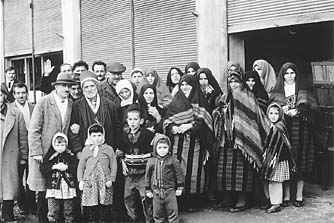
Figure 11. A descendant of Ferhat Agha (in fedora), an elder (in turban), and women.
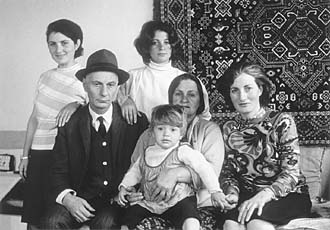
Figure 11. A townsman at home.
The two examples, hierarchies of gender and age, illustrate how the family and household were shaped by their connection with a certain kind of public life. It was not the other way around. A study of the family in the eastern coastal districts would uncover all kinds of differences among households, the traces of Turkic, Kurdish, Lazi, Armenian, Greek, Georgian, Circassian, Bosnian, and Albanian influences. At the same time, all these differences had been more or less submerged by the norms of a certain kind of public life. The circles of agnates, relatives, friends, and clients associated with coffeehouses were public rather than private formations. Older men did not have the privilege of sitting and talking in coffeehouses as a consequence of family and household structure. Distinctions of gender and age were rooted in public life, and these distinctions in turn had an impact on family and household structure.
If villagers no longer stooped and kissed the hands of leading individuals, the conduct of social relations in coffeehouses was precisely adjusted to express social precedence and standing. For example, the villagers in the town and district of Of almost never drank coffee in the coffeehouses. They bought themselves and their associates small glasses of tea for a few pennies, consuming numerous servings during an afternoon or evening. Coffee, served alaturka in small demitasses, was reserved for guests of some special distinction. So the choice of refreshment offered was just one way in which the conduct of social relation expressed hierarchy. Others included the arrangement of chairs, who was served first and last, who spoke most often and who listened most often, and whether a speaker received the attention of only one table or several tables. The idiom of intimacy and familiarity in coffeehouses was then an expression of a certain kind of civility, an ottomanism that had been adjusted to, even if was also partially dislocated by, republicanism.
A curious arrangement typical of most of the coffeehouses in the district of Of provides a striking illustration of this civility. A smaller room was set apart from the main room of the establishment by some kind of partition, so that it comprised an interior within the interior. These little rooms could be more effectively heated on a damp and cold winter day, but this was not really the reason for their existence. The small rooms were places for a more intimate and familiar kind of association, where sensitive matters could be discussed more freely. The arrangement of an interior within an interior was not restricted to coffeehouses. Shops and offices also featured a small room set apart from a larger room. The shopkeeper could receive a customer, and the official could receive a citizen, in a setting of intimacy and familiarity. They could therefore sit and talk in accordance with a discipline of sociability, even though business or government had brought them together. Some of the small shops were especially interesting because they had little partitions that could accommodate no more than two or three persons crammed inside, knee-to-knee, with a Primus stove and a pot of tea precariously poised on a shelf to one side. So one could enter a place of business or government and be treated as a customer or a citizen. But you could also enter the shop or office as "İİsmail of the MuradoĞlu from Balek village" or "Ahmet of the Ramoğlu from the town of Of" and be treated differently, after the exchange of greetings, drinking tea, and having a conversation. The interiors within interiors were then a feature of a discipline of interpersonal association. They were places devoted specifically to face-to-face interactions that differentiated those "further in" from those "further out."
One or more of the little rooms within the large rooms of coffeehouses may have originally been built by one of the aghas of the later imperial period. As Gunday informs us, the aghas from surrounding villages once directly maintained salons in the town of Of (see chap. 8). It seems likely that these aghas would have set themselves up in little meeting rooms that adjoined larger assembly rooms. If they did so, tea and coffee most certainly would have been served in the latter. These meeting and assembly rooms probably would have evolved into coffeehouses in some instances, if indeed they had not originally been built as such. And one might guess that the conversion of meeting and assembly rooms into commercial coffeehouses would have been a way to evade government restrictions.
I would not claim that these structures in the town of Of were explicit imitations of palace architecture, which also featured interiors within interiors (see chap. 4). Rather, I would claim they were the result of the dissemination of an imperial tactic, sovereign power through interpersonal association, from center to periphery. Accordingly, it also makes no sense to see the normative performances in the coffeehouses of Of as imitations of palace ceremony and protocol. They were the result of the spread of ethical practices of political authority, rather than the aping of palace formalities.
My interlocutors in the town of Of will have a good laugh when they learn that I have associated their coffeehouses with normative performances. I heard many criticisms from the Oflus regarding the bad manners of their compatriots in coffeehouses. Some sat akimbo and dressed badly. Some fell asleep in their chairs or on the table. Some spoke loudly and used coarse language. I was treated to praises of Oflu masculinity, punctuated by pistol shots, in a coffeehouse. I saw huge rolls of cash exchanged in the course of the purchase of a large Vabis truck. I sat at card games where each card was placed on the table with a sound resembling a fist blow or a pistol shot. I exchanged information on what were purported to be exotic sexual practices in the United States and Turkey. I heard discussions of how one went about bribing municipal officials in Istanbul. But then I also heard debates on the work ethic and its importance for national development. I was counseled about the terrible fate awaiting unbelievers in the afterlife. I heard detailed analyses of Turkish, Greek, and American foreign policies. I was questioned about the details of space travel.
Sometimes my interlocutors complained that the conduct of social relations in the coffeehouses had deteriorated in recent years. I heard the opinion that card playing, laughter, gambling, and drinking were once virtually unknown in the coffeehouses of Of. But other interlocutors affirmed that these practices had always taken place in at least some coffeehouses. The fact of the matter is that the normative standard of behavior among the Oflus, as well as their neighbors to the east and west, is probably more rough-and-tumble than elsewhere in Anatolia. Nonetheless, if the Oflus might sometimes have used coarse language and rough gestures, they also had a keen sense of a discipline of interpersonal association.
Coffeehouses of the New Versus the Old Republic
I have described the conduct of social relations in coffeehouses as a form of public life. But it was a nonofficial rather than an official form of public life. This had been the case during the Ottoman Empire, and it was once again the case in the Turkish Republic. The conduct of social relations in coffeehouses was a kind of work leading to the construction and maintenance of district networks. Neither the work itself nor the district networks as its result had ever been explicitly prescribed and enforced by official statutes or procedures. Its hegemony depended on a social system of gaze, discipline, and rule rather than the laws, courts, and police of the state system. Accordingly, the old republic could colonize the new republic even after the nationalist revolution had led to the suppression and replacement of the imperial state system.
Before examining how coffeehouses played an important role in this colonization, I shall first mention an important distinction in the types of coffeehouses in the town of Of. Some coffeehouses were places for elites of the new republic rather than elites of the old republic. The New City Club (Yeni şehir Kulübü) and the Municipal Reading Room (Belediye Kûraathanesi) were situated in the new center of the town, built after the declaration of the Turkish Republic (see chap. 1). Both of these coffeehouses attracted a select clientele from which villagers were altogether absent.
The New City Club was located behind the government building, away from the town, not far from the beach. It was usually patronized by officials, professionals, and businessmen who were often, but not always, from somewhere other than the district of Of. These included most of the higher government officials, such as the district officer, the public prosecutor, the district military officer, and the two judges. But it was also patronized by a certain segment of the town professionals, some of whom were Oflu, but most of whom were Rizeli, Bayburtlu, or Trabzonlu. They included two lawyers, a doctor, a banker, a pharmacist, a paint shop owner, and a major appliance dealer. This was a place where one could do some drinking, card playing, and backgammon playing, the latter not being a favorite pastime of villagers.
The Municipal Reading Room was located opposite the entrance to the government building, just across Atatürk Square. It included an adjoining room that was designated as the "Of Teachers' Association" (Of Öğretmen Derneği). This coffeehouse was part of a line of offices and apartments that included the residences of clerks and officials. Here one could play cards or backgammon, but no alcoholic drinks were served. It was frequented by a few lower-ranking clerks and functionaries, a number of primary and middle school teachers, and young men who had graduated from the high school or completed a university degree but were as yet unemployed. Most of these individuals were from the district of Of.
The atmosphere in each of these two establishments was distinctive. The patrons of the New City Club were secularist and nationalist. They might sometimes discuss national politics, but they usually avoided discussing individuals or incidents in the district of Of. As far as their dress, speech, and behavior were concerned, they would not havebeen out of place in one of the middle-class quarters of Trabzon, Ankara, or Istanbul. The patrons of the Municipal Reading Room, besides the teachers and functionaries, were mostly younger, educated youths who went there in order to avoid their elders who would be sitting in other coffeehouses. Their conversations were also oriented toward the world beyond Of, focusing on careers, sports, fashion, novels, and films.
I do not think that the conduct of social relations in these two coffeehouses could be described as the basis of a form of public life, whether nonofficial or official. This is not to say that those who attended them were free of a discipline of social thinking and practice. On the contrary, the clientele of the New City Club and the Municipal Reading Room had received extensive educations. Most had attended primary, middle, and high schools. Some had attended higher institutes, acquiring academic degrees or professional certificates. Because of such backgrounds, they too were members of circles of interpersonal association. But these circles, the nature of which lies beyond the scope of this study, had not been constructed and were not maintained in the conduct of social relations in coffeehouses.
In many towns in Turkey, including some along the eastern Black Sea coast, the sociopolitical groups who patronized coffeehouses like the New City Club and the Municipal Reading Room dominated public life in the 1960s. In the town of Of, however, these kinds of citizens were outnumbered by tens of thousands of other villagers and townsmen who were part of vertical and horizontal solidarities.
The town of Of was different from other towns only in degree rather than in kind; Of simply serves as an especially striking instance of the way in which the old republic inhabited the new. Taking advantage of this, I shall describe the relationship of coffeehouses and cooperatives to illustrate this double character of public life in the Turkish Republic. To do so, I shall focus on the three sons of the oldest son of Ferhat Agha.
Three Grandsons of Ferhat Agha in the Multiparty Period
During the 1950s and 1960s, Yusuf, Hüseyin, and Salih attempted to build a local political base in the district of Of so that one of them might be elected to the National Assembly (see fig. 2). Yusuf, the oldest brother, had become the first headman (muhtar) in the town, then the chairman of the Turkish Air Association. By the 1960s, he was described by my interlocutors as the most powerful man in the town of Of, the éminence grise of the descendants of Ferhat Agha. His reputation, which was also a kind of notoriety, was not due to his hold on a public office, but rather to his position in the vertical and horizontal solidarities of the old republic. Salih, the youngest brother, had become the director of the Agricultural Credit Cooperative as a youth in 1941. He was the first of the descendants of Ferhat Agha to hold a public office, and he would eventually serve as a civil servant for some fifty years, longer than any other member of his family line. In contrast to Yusuf, who was at the center of a nonofficial circle of agnates, relatives, friends, and associates, Salih was a leading individual because he managed an official public institution with a sizable budget.
Hüseyin, the middle brother, would become the candidate for national political office. He would have been in his early adulthood in 1946, when Mehmet Sayûn was "chosen" to represent the province of Trabzon in the National Assembly. At the time, his agnate's achievement appears to have deeply impressed him. More than any of the other descendants of Ferhat Agha, Hüseyin emulated the militant Kemalist orientation of his eminent kinsman. During the later 1940s, when he would have still been in his late twenties, he was an outspoken supporter of the Kemalist program of reforms. He even gave one of his children a Turkic, rather than an Islamic, name, an extraordinary gesture for a resident of the district of Of. It was probably during this same period that Hüseyin first adopted the dress and manners of RPP partisans. He always wore a suit coat, fedora, dress shirt, and cravat. He donned these items in such a way that they lost all their qualities as fashion to become entirely absorbed by their function as a uniform.
Also in the same manner as Mehmet Sayûn, Hüseyin began to accumulate public offices. At first, he was obliged to be content with relatively insignificant chairmanships, since his close agnates already held the really important posts. Just before the national elections of 1950, he became chairman of the Of People's House (Halkevi), a kind of culture club that had been designed to foster participation in official public life. Soon afterward, he became the chairman of the Red Crescent Society (Kûzûlay Cemiyeti), then chairman of the Primary School Parent-Teacher Association (Iİlk Okul Aile Birliği), and then chairman of the Middle School Parent-Teacher Association (Orta Okul Aile Birliği).
Otherwise, Hüseyin appears to have been more imaginative than Mehmet Bey was, perhaps too imaginative to be entirely successful as a practical politician. The Kemalist program of reforms had relied on control of the printed page, its script and its language, as an instrument for the revolution in public culture. Hüseyin seems to have been paying attention. During the later 1940s he had opened a shop in the town of Of that sold newspapers, magazines, books, and stationery.[6] In doing so, he had political as well as commercial interests at stake. In the run-up to the national elections of 1950, he began to accompany Yakup, mayor of Of and RPP chairman, as he toured the villages in an effort to turn out the vote. Realizing that the elections were a battle for the minds of the voters, he began to bring out a weekly newspaper, New Of (Yeni Of), the first and perhaps still the only such publication to appear in the district of Of.[7] The newspaper was published irregularly during periods of relative political calm, then regularly in the run-ups to municipal or national elections. Its columns often reported local social events, funerals, weddings, and so on, but it also included political commentaries, that took issue with provincial newspapers that favored the DP rather than the RPP.
For some years, Hüseyin achieved little more than visibility, and perhaps notoriety, as a figure in the public life of the town and the district. Then, in 1955, he managed to become the director of the first tea cooperative in the district of Of.[8] At the time, the very first tea gardens in the district of Of were beginning to reach full production. Most were in eastern Of, where the Muradoğlu resided, rather than western Of, where the Selimoğlu resided. But somehow the three brothers, Yusuf, Hüseyin, and Salih, got the jump on their rivals, the sons of Reşat Agha (Muradoğlu).[9] Moreover, they had done so even though this was the period when Menderes was prime minister, that is, a period when patronage and clientage were in the hands of the DP, not the RPP.
Soon afterwards, Hüseyin began to consider how he might use the cooperative as a means for repeating the feat of Mehmet Bey, election to the National Assembly. Eventually, he would do so by combining his "work" as directorship of the cooperative with his "work" as a leading individual in one of the coffeehouses.
The Town Square Coffeehouse and Teas Producers' Cooperative
The Town Square Coffeehouse (Meydan Kahvesi) stood at what had been the center of the town after its initial incorporation as a municipality around 1874. When I first resided in the district in the 1960s, the outlines of the old town square were still visible, despite encroachments by shops and warehouses. A municipal building had also previously been located on one side of the old square, just to one side of the coffeehouse. During the 1910s and 1920s, Ferhat Agha had sat in his offices in this municipal building.[10] As mayor of the town, he would have received residents of the town and district, who had by then become citizens of the Empire, on official business. At the same time, he would also have sat with, hosted, and talked to a circle of agnates, relatives, friends, and clients in the coffeehouse next door.
By the early 1950s, the descendants of Ferhat Agha received residents of the town and district, now citizens of the Republic, in the offices of their various directorships and chairmanships. These offices, none located exactly on the old square, were scattered about the town. But during the afternoon or evening, when their offices were closed for business, they sat with, hosted, and talked to agnates, relatives, friends, and clients in the Town Square Coffeehouse. The latter included shopkeepers and merchants from the town, as well as a certain number of high and low government employees. In fact, it could be said that most of what transpired in the government building (hükümet) was exposed to the eyes and ears of the descendants of Ferhat Agha who gathered in the Town Square Coffeehouse. This means that the district officer in Of during the 1960s faced circumstances very similar to those faced by the provincial governors during the 1880s (see chap. 8).
In addition to the descendants of Ferhat Agha, some other leading individuals—especially those from the family lines once associated with the old Five Party—also sat and talked in the Town Square Coffeehouse. However, there were individuals from the town or district that never sat, hosted, and talked in its rooms. For example, members of the Muradoğlu family line, or their relatives and friends associated with the Twenty-five party, were never to be seen there. The latter had their own regular coffeehouses in or near Eskipazar, and during their visits to Of, they would go to a coffeehouse other than the Town Square Coffeehouse. A good number of my acquaintances also scrupulously avoided the Town Square Coffeehouse, but not always because they were close to the Muradoğlu. They did not want to be implicated in any of the circles of interpersonal association in the town or district. These uncommitted individuals would have certainly been welcomed by the descendants of Ferhat Agha in the Town Square Coffeehouse, but they did not want to incur the obligations that were part of the framework of vertical and horizontal solidarities.[11] For this and other reasons, the district officer, the public prosecutor, the two judges, and the district military officer also avoided the Town Square Coffeehouse. They were obliged to meet regularly with the descendants of Ferhat Agha, since the latter held public offices, but they chose not to meet them in their coffeehouse. As for most of the schoolteachers and university students, they would have endured a thousand tortures before setting foot in the Town Square Coffeehouse.
The descendants of Ferhat Agha who held public offices commonly entertained distinguished visitors. But when they did so, they treated them to banquets in restaurants and never invited them to the Town Square Coffeehouse. So they dined with state officials and inspectors, provincial party leaders, and other public figures, and they also regularly included district officials and town professionals. Almost certainly, the descendants of Ferhat Agha deducted expenses for these banquets from the treasuries of the municipality, cooperative, or society in question. The banquets were not the same as sitting and talking in coffeehouses. The official and the nonofficial republic were visibly separated by clear and distinct boundaries.
The Town Square Coffeehouse featured the most elaborate example of an interior within an interior of any such establishment. A larger room accommodated fifty to seventy-five persons at tables for four. A smaller room accommodated sixteen to twenty persons, also at tables for four. The smaller room was set apart from the larger room by a windowed partition that appeared to be of recent construction, no earlier than the 1950s. In the smaller room it was not possible to conduct a private discussion between two or three people since it was so easy to overhear what was being said at every table. At the same time, it was impossible to overhear what was being said in the smaller room from the larger room, which was usually crowded and noisy.
The atmosphere of intimacy and familiarity in the smaller room discouraged anonymous individuals from entering it. One felt obliged to be invited to join the company of those who were already sitting there. The smaller room was also brightly illuminated by a single bare electric bulb of comparatively high wattage that hung from the center of the ceiling. So everyone in the room was fully present to one another by the absence of both shadows and compartments. Moreover, everyone in the larger room could see the occupants of the smaller room, but they could not hear what they were saying when the door was shut. So the occupants of the smaller room were a group that was "further in" on display to a public body that was "further out."
The smaller room could be considered a structure of the old imperial modernity; nonetheless, it was decked out as a structure of the new republican modernity. The portraits of national leaders Kemal Atatürk, İİsmet İİnönü, and Cemal Gürsel were hung near the ceiling of one wall.[12] To the right of the three portraits there was a plaque inscribed with the words "People's House" (Halkevi). A large map of Asia Minor was located in the center of another wall. It represented what was to become the Republic of Turkey at the time of the Independence War, indicating the occupation zones of the European powers, Britain, Greece, Italy, and France. There was also a hat rack on the wall, a symbolic fixture since only Kemalist nationalists would have donned fedoras (Şapka) in Of.
The smaller room was usually not occupied during the day, and it was not always occupied in the evening. But the three brothers, Yusuf, Hüseyin, and Salih, were by far its most frequent users. One, two, or all of them might sit there together, always in the company of an inner circle of friends and clients. During the fall of 1966, they welcomed me to sit with them as a special favor, and I did so on many occasions, becoming one of the regulars. On the first occasion I entered the smaller room, the three brothers, in the company of others, were calculating the possible votes they could muster in certain villages in the upcoming local elections. On one of the last occasions I entered the smaller room, they were vigorously disputing the fairness of the distribution of the fertilizer annually allotted to the tea cooperative.
These two incidents, which involved the business of elections and cooperatives, were exceptional. The three brothers more normally assembled in the smaller room to socialize with their inner circle of friends and clients. When they were there, they almost always listened to the evening news broadcast, turning the radio on just before the news began and turning it off immediately afterward. The reactions that followed the news tended to conform to the current party line of the RPP. One man from one of the villages, considered to be a specialist in party ideology, provided guidance in this respect. He would also sometimes read aloud from a newspaper while others listened. For my benefit, perhaps, he sometimes read aloud from party tracts, explaining and justifying them. If I asked a question, he would occasionally be called on to give an "official" response. But the discussion was not always restricted to party politics. The topics of conversations included economics, religion, philosophy, and, perhaps more often than usual because of my presence, international affairs.
Often I found one of the brothers, most commonly Yusuf but often Hüseyin and sometimes Salih, in the larger room. Along with Yakup, the mayor of the town, they were the descendants of Ferhat Agha who were most likely to be found there. Hüseyin hosted his closest friends and clients at his table, but he also hosted ordinary villagers who were passing through town or attending the weekly market. He would even invite men he did not know to his table, offer them tea, ask them about news of their villages, and sound them out about their political opinions. This was the fashion for any leading individual of a family line who aspired to extend his contacts and influence among the villagers. They were obliged to sit in the same place at certain hours each day, afternoon and evening, ready to receive anyone who might wish to consult with them. The sons of Reşat Agha, for example, could also be found sitting and talking in customary places in Eskipazar. Hüseyin's behavior, however, is especially revealing. From time to time, he would leave his table to go to the old town mosque. There, he would remove his hat, coat, and shoes, roll up his sleeves and take off his socks, and then carry out his ablutions. Fully transformed from Kemalist to Muslim, he joined the ordinary villagers to perform the prayers. Afterward, he would return to his table in the Town Square Coffeehouse, where he appeared as a leading individual of the old republic. But he might be obliged to return to his office in the tea cooperative, where he appeared as a public official of the new republic.
Soon after I began to attend the "salon" in the smaller room of the Town Square Coffeehouse, Hüseyin invited me to pay him a visit at his workplace. When I first went to the Of Tea Producers' Assistance Cooperative (Of Çaycûlar Yardûmlaşma Kooperatifi), he received me in his private office, a spacious room furnished in the style of a high government posting. He was seated in a steel chair behind a steel desk, both of which were stationed on a raised platform. A large wooden frame enclosing a crimson quilted textile was attached to the wall behind the desk. Several large matching steel armchairs were just in front of and below his desk, facing the crimson quilted background. These were unusually luxurious furnishings for a town where most tables, chairs, and cabinets were locally made by carpenters and ironworkers.
I was invited to sit in one of the chairs. Doing so, I found myself in a position of lowness regarding Hüseyin in a position of highness. He appeared from behind his desk, framed by the crimson background. As I surveyed the office, other messages of bureaucratic and administrative eminence came into view. There was a portrait of Kemal Atatürk on the wall, as there would have been in virtually any state or public office at the time. More exceptionally, there was also a portrait of Mithat Paşa, the most eminent of the Ottoman bureaucratic modernizers. A telephone, a more or less rare instrument in the town of Of at that time, was on the desk and covered with an embroidered cloth. Soon after I sat down, the telephone rang. Hüseyin removed the cloth, picked up the receiver and spoke for a few moments, then put the receiver back and replaced the cloth. He then asked me what I would like to drink, and then called upon a servant (odacû) to bring my request. I relate these details for a reason, not to make fun of my amiable host.
Hüseyin had modeled his office on the style followed by higher government officials at the time. The elevated platform, steel furniture, quilted and framed fabric, and private telephone could not be matched as a combination by any district official, not the bank director, the two judges, or even the district officer himself. One would have to look to the offices of the provincial governors in Rize and Trabzon to find something that matched or exceeded the quality of these furnishings. So Hüseyin was presenting himself to the public in the district of Of, as well as to visiting dignitaries from elsewhere, as a person of importance. And, of course, he was doing this at the expense of the members of the tea cooperative.
More interestingly, Hüseyin's manner of presenting himself tells us how bureaucratic and administrative eminence in the Turkish Republic still bore the traces of the imperial system. The elevated desk, the cloth background, the cloth telephone cover, the large steel chairs, and the offering of refreshments in the republican office were the remainders of the elevated dais, the cushions, and the hospitality of the imperial salon. The hard-edge, high-tech qualities of the furnishings signified modernity, even as the comfortable qualities of the furnishings signified sociability. A state officialdom had once ruled through a tactic of sovereign power based on a discipline of interpersonal association. Hüseyin had gone to lengths to present himself in the guise of a state official of the republic (even though he was only the director of a cooperative), and in doing so he had combined the symbols of the new modernity with the symbols of the old modernity. That he had done so was hardly an accident, since the cooperative in the new part of town was coordinated with the coffeehouse in the old part of town.
The Of Tea Producers' Assistance Cooperative
The membership of the Of Tea Producers' Assistance Cooperative included from 2,500 to 2,900 tea producers in the latter part of 1967, the uncertainty of the total being related to a looming membership crisis.[13] The cooperative had a staff of six employees, including the director, clerks, accountant, and janitor. Their offices were also well arranged and furnished, although not the equal of that of the director. The operating capital of the cooperative was almost one million Turkish lira, and its assets were valued at about two million Turkish lira.[14] The accumulation and disbursement of these large sums was regulated by a special law pertaining to tea cooperatives. There were provisions for the regular auditing of accounts and the verification of conformity with its charter.
A producer joined the cooperative by committing himself to paying 1,000 Turkish lira into the common fund, beginning with a down payment of 250 Turkish lira. This fund was then supplemented with capital provided by special state funds through the Agricultural Bank (Ziraat Bankasû). Once a member, a producer was entitled to loans drawn on these funds, which were supposed to be used for purchasing fertilizer, agricultural implements, or insecticides. Some of these items, such as fertilizer, were also sold by the cooperative to their members at prices far below the market rate. Once each year, the tea cooperative was required by law to hold a meeting during which its members approved or rejected amendments to the articles of its constitutions and elected new representatives to its governing board. These occasions were witnessed by inspectors, who afterward submitted documents confirming that the meeting had been conducted properly.
The government sponsorship of tea cooperatives was intended to encourage farmers to expand production at their own initiative. The program was subject to abuses, but it succeeded in fulfilling its objectives, perhaps more effectively than intended, since the eastern coastal districts were producing more tea than the government could process in its factories by the early 1980s. Still, I have to say that the laws regulating tea cooperatives were violated, at least in the instance of this particular tea cooperative. I knew this to be the case by direct witness, indirect evidence, open admission, and persuasive hearsay.
The producers were not always required to pay the stipulated membership fees in order to induce them to join the cooperative. The interest-free loans that they were given for fertilizer, implements, or insecticides were not always so used, but misdirected into nonagricultural activities. The fertilizer allotments were not used on their tea gardens but resold on the black market at substantial profits.[15] The funds of the cooperative were not always deposited in the Agricultural Bank as they should have been, and so accumulations and disbursements were not subject to proper accounting procedures. The nomination of officers was not free and open. The ballots for these officers were prepared before the annual meeting took place, and the ballot boxes were stuffed before the very eyes of the local and provincial inspectors. It is easy to disapprove of Hüseyin's machinations. But I appreciated his openness and generosity, and I admired his inventiveness and determination. He was trying to accomplish something important, and he was working with everything that had come to him. In one way or another, he was willing to use all sorts of strategies: Kemalist secularism, the public interest, family elitism, party politics, and social Islamism. From his twin bases in the coffeehouse and cooperative, he was attempting to do something for himself and his brothers, but also for his family line, and even, somewhere down the road, for the town, if not also the district. Any director of an agricultural cooperative in Of would have been under enormous pressure from agnates, relatives, friends, and clients. So it was to be expected that the regulations applying to cooperatives, based on the principle of equality before the law, would be compromised by favoritism and cronyism.
The shortage of capital in the district of Of, as in all of Turkey, only served to intensify the pressures on the directors of cooperatives. Disputes over which members would be given money or fertilizer were fueled by the capital shortage. Should the large growers receive funds to finance their existing gardens? Or should the small growers receive funds to convert more of their cornfields into tea gardens? The regulations favored the former; nonetheless, the latter had an argument that seemed just and won sympathy. Although tea cultivation could provide a handsome profit, trucking offered even greater returns at the time. If one could borrow enough cash, one could buy a truck, hire drivers, and run the truck from city to city anywhere in Turkey, making a profit while paying off interest and wages. Indeed, a number of individuals were engaged in tea cultivation, an activity that could be conducted entirely by the women of a household, in order to acquire capital for financing truck purchases.
The director of a tea cooperative was therefore in a position to adopt policies that favored a constituency, and the constituency so favored did not have to be limited to those members who were serious tea cultivators. As it happened, Hüseyin had been using the cooperative as a device for promoting his political career since the later 1950s, probably with the support of many of its members. Inevitably this involved stretching, if not breaking, the official regulations governing the management of cooperatives. Some members were receiving more money and more fertilizer than they deserved, and consequently others were receiving less. The only way to conceal this problem was to bring in more and more members, which was possible since the number of producers was rapidly expanding during the later 1950s and early 1960s. Hüseyin was therefore obliged to acquire and retain as many members as possible. This entailed waiving the fees that the capital-hungry members owed to the cooperative in order to prevent them from deserting to other cooperatives, while nonetheless drawing funds from the Agricultural Bank for their membership. But if the number of members were to decline, then Hüseyin's expenditures on lavish office furnishings, restaurant banquets for officials, and frequent trips to Ankara for conferences would all appear as shortages in the cooperative accounts.
In my estimation, many of the members of the cooperative had first considered Hüseyin's questionable activities as a kind of investment on future returns that they could expect as his political career advanced. Because of this same expectation, they had also turned a blind eye to his practice of using the cooperative to reward friends and clients in order to garner votes on the occasion of local and national elections. However, Hüseyin did not prevail when he first entered the national elections in 1961.[16] And by 1965, it had become evident that his standing with provincial and national party leaders had slipped. More and more of his former supporters were having second thoughts. The result was a revolt within the Of Tea Producers' Assistance Cooperative.
The Revolt of the Membership
As early as 1958, some of the members of the Tea Producer's Assistance Cooperative had split to form a new cooperative with its offices in Eskipazar. Hüseyin is said to have done all he could to prevent the flight. But the Muradoğlu, who were among the principals of the new cooperative, were not going to be stopped. Then, some years later, two other tea cooperatives were organized in other parts of the district of Of. But the real crisis in membership came just before my arrival in the town of Of during the summer of 1965. A dissident group from within Hüseyin's own tea cooperative had set up a new tea cooperative in the town of Of itself, and they had succeeded in attracting a large proportion of the membership of Hüseyin's tea cooperative. The director of the new cooperative was a leading individual from the Selimoğlu, but he was not one of the descendants of Ferhat Agha. The executive committee included leading individuals from other family lines once associated with the Five Party, as in the case of the old cooperative.[17]
Backed by a loyal core of supporters, Hüseyin had done his best to manage all these difficulties. He had first attempted to oppose the organization of the new cooperative, just as he had opposed others in the past. Backed by his executive committee, he had then refused to grant the necessary papers or return funds to members who wished to join the new cooperative. Then, as the new cooperative was proving to be successful in attracting members, he had asked for the support of the descendants of Ferhat Agha. In response, the director of the Hazelnut Agricultural Sales Cooperative, his uncle, proceeded to seize all the warehouses in town so that the new tea cooperative had no place to store its fertilizer.
But these measures only impeded rather than prevented the membership growth of the new tea cooperative. When I returned to Of the next year, Hüseyin and his partners were bitterly denouncing the needless proliferation of tea cooperatives, even though they had themselves at one time deserted the tea cooperative in Rize to form their own association. As a more serious indication of crisis, Hüseyin's management of the tea cooperative had become openly controversial, bordering on the scandalous. In the winter of 1967, a number of townsmen complained to me about the management of agricultural cooperatives in Turkey. Naming no names, they said that cooperatives were run by "gangs" (Şebeke) who defeated their purpose as free and open associations of agricultural producers. They could have cited examples of problems in cooperatives up and down the coast, but they obviously had a particular cooperative in mind at the time.
One of my interlocutors specifically mentioned problems in the Tea Producers' Assistance Cooperative, going so far as to say that Hüseyin lacked credibility. This interlocutor then launched into a condemnation of the laxness of government inspectors, improper use of agricultural loans, illegal membership in multiple cooperatives, and so on. From still another man, I heard that Hüseyin had been quarreling with the director of the Agricultural Bank. It was said that Hüseyin had withdrawn cooperative funds from the bank, keeping them in the cooperative safe. The gossip was especially impressive, not only as a hint of possible irregularities in cooperative finances, but also because the director of the bank was a regular of the Town Square Coffeehouse. I was surprised to hear these stories since it was common practice not to mention any local problem before an outsider, and certainly not before me, a visiting American. This suggested an absence of fear, in turn suggesting the anticipation of a fall.
The annual meeting of the Tea Producers' Assistance Cooperative, which took place in late March of 1967, did not exactly bring a climax to all these problems, but it did offer an indication of just how serious they were. The following account that appears in my notes has been edited:
The three issues that most impassioned the general assembly were 1) the distribution of fertilizer to the membership, 2) the resignation of members who wished to join the new cooperative, and 3) the question of whether the funds of the cooperative would be deposited with the Agricultural Bank.[18] All of the following violations were alleged. The directors did not want those who owed money to resign leaving their debts. The directors refused to return the deposits of those who did not owe money. The directors would not provide the documents indicating that a member had officially resigned. At one point, Hüseyin called on several angry villagers who had been shouting out such charges to come forward. There and then he gave them their official documents of resignation, but no one else dared to press him on this issue.During the general assembly of the cooperative, the members were lively and outspoken. A crowd of men had jammed themselves into the rooms of the cooperative. Other men, who were unable to get inside, were standing in groups in the street. The crowd on the inside of the meeting room seemed to be divided into separate blocs. When a man would speak in one part of the room, he was noisily seconded by a group standing around him. In all there seemed to be four or five blocs. [By the insistent offer of a glass of tea as a gesture of hospitality], I was obliged to sit in a separate and adjoining room, the office of the director, indirectly observing and listening through a doorway to what transpired in the main meeting room. A number of the Selimoğlu and their supporters [names deleted] were with me, pretending to be disinterested in the discussion that was taking place. However, when a particularly harsh criticism of the cooperative was made by one of the members, one of them would remark, "Who said that?"
Hüseyin was leading the meeting, haranguing the crowd about this and that, occasionally assisted by Salih, and another relative from the home village of the family line. There was a good deal of shouting from among the members. At one point, Hüseyin stood on the table before the executive committee, waving his arms and shouting back in an effort to make his point over the din. The headman of [a village composed entirely of the members of a single family line, one that had formerly been associated with the Five Party] was carrying a stick that he occasionally used to silence those around him. I had the impression that he sometimes objected to the proposals of the executive committee. All in all, the polite consensus that usually characterizes such meetings was not in effect.
Yusuf stood toward the back of the room in the midst of a claque composed of the clerks and janitor of the cooperative. When Hüseyin, or one of the executive committee, made a proposal, Yusuf would lead the clerks and janitor in shouting out, "Accept! Accept!" (Kabul! Kabul!). Yusuf himself never attempted to hold the floor but muttered and glowered at the critics in the meeting room. Sometimes the reactions of the crowd were harsh and angry. But there were also moments when someone shouted out a joke of some kind, causing everyone to laugh together, including Hüseyin and his executive committee.
At the close of the meeting, Hüseyin asked for approval of fourteen new articles, and he received it. He then said that the terms of two members on the executive committee were expiring, and so it was necessary to elect two new representatives. Since the old members had done so well, however, he recommended they be renominated for another term. The twomembers in question were from two large family groupings that had once been associated with the Five Party. There were shouts from the crowd and then countershouts from the claque. Other nominations were offered, for a total of five. All these nominations were eventually accepted. At this point, Yusuf and two of his close associates came into Hüseyin's office, where I was sitting. Yusuf took a large number of envelopes from one of the drawers and began to stamp them, assembly line–style, with the seal of the cooperative. One of his associates, a district cooperative inspector (müfettiş), then produced a large number of slips with the names of the five nominated individuals already typed on them. They then began to stuff these slips into the envelopes and seal them. When they were finished, they took the envelopes and passed them out to members, who dutifully turned them over to one of the cooperative employees as they left the offices. This man then brought all the envelopes back into Hüseyin's office, where they were opened before both the district and provincial cooperative inspectors, who then verified the count of all these pretyped ballots. Each of the two men nominated by Hüseyin received some eighty-odd votes. The other three nominees each received forty-odd votes. The reelection of the incumbents was then confirmed by the inspectors, who filled out an official document testifying to this fact.
The directors had triumphed, receiving approval for all the articles and the reelection of the two representatives they had wanted. But they were not reassured by the outcome, which had only been achieved by an unseemly process that carried the risk of a flight of the membership. When I encountered Hüseyin coming out of the meeting and asked him how he was, he replied, "I am covered in sweat. I am not well" (Terliyim. İİyi değilim.). He then left for one of the town restaurants, where he and the other members of the executive committee feted the district and provincial cooperative inspectors. Later that evening, in the smaller room of the Town Square Coffeehouse, some of his concerns came to light. Yusuf, Hüseyin, and Salih were all there, hosting their guests who had come down from the villages for the annual meeting. When I entered the smaller room, I understood something was wrong. The aforementioned headman (of the village composed of a single family line) was dissatisfied and complaining. The producers in his village had not received their fair share of the fertilizer allotment. To make his case, he cited the amount of fertilizer that had been allotted to the producers of the home village of the Selimoğlu. At this point, most of the men sitting in the smaller room became silent, since they were not from either of the two family lines. The principals began to argue with one another, vigorously but not angrily. Yusuf, who had no official capacity in the tea cooperative whatsoever, reminded the headman that he had himself received a very large amount of fertilizer, concluding, "We have always loved you!" (Seni severdik!). The headman admitted that he could not say that he had received less than his full share, but he would not be able to explain to his villagers why they had received so little.
Reconfiguring the Old Republic in the New Republic
Hüseyin had run the cooperative as a resource for a circle of agnates, relatives, friends, and clients. But once his political prospects dimmed, his associates had begun to recalculate. These events were indications that the configuration of the old and new republic was shifting during the 1960s. In conclusion, I will explain this shift.
The office of the new tea cooperative, the one that had been organized in the town itself by dissidents from the old cooperative, was located in a building of no special distinction in the older part of town. The rooms were not particularly large. Their floors consisted of bare wooden planks. The walls lacked any kind of decoration, save for a calendar. The desks and chairs were wooden, secondhand, and rickety. The staff consisted of just three individuals, a director, an accountant, and a janitor. I was not able to see the books of the cooperative, but I was told by a man on the executive committee that they had almost five hundred members, and would have had many more were it not for the restrictive measures taken by the other cooperative. It was as though the new cooperative had been specifically designed to emphasize frugality, that is, how little had been spent on rent, furnishings, and decor, and therefore how little the director wished to aggrandize himself.
The director, Süleyman Selimoğlu, had himself been the accountant of the old cooperative. When I met him, he was unshaven, tieless, and coatless. He explained to me how the new cooperative had resulted from quarrels (geçimsizlik) about the distribution of loans and fertilizer. He took care not to criticize specific individuals. But he did say that those producers who had developed excellent tea gardens were not favored by the directors of the old cooperative. Instead, the resources of the cooperative had been needlessly squandered or diverted. His group of founders had therefore resigned from the old cooperative in order to organize a new one that would focus solely on encouraging tea cultivation. The gossip in the town agreed with the director. The administration of the new cooperative was said to conform with government regulations, heretofore a novel procedure.
The old and new tea cooperatives held their annual meetings on the same day at the same time, so I was only able to attend the meeting of the former. According to a report, there was no shouting at all during general assembly of the new cooperative, although there were some points of contention. One of the members of its executive committee laughed with pleasure when I gave him my account of the brouhaha during the general assembly of the old cooperative. Still, the new cooperative was not entirely different from the old. Süleyman, the director of the new cooperative, was still a leading individual from the Selimoğlu, although of a set (takûm) distinct from both that of Ferhat Agha and Rasih Efendi.[19] The members of the executive committee of the new cooperative also included individuals from the same sets of large families as the members of the executive committee of the old cooperative. So the founders of the new cooperative were not ordinary villagers and townsmen.
Both the old and new cooperatives were founded by individuals who represented the old republic in the new republic. But the two cooperatives were not administered by the same methods or for the same objectives. The old cooperative had been run in a way that recalled the late imperial period. Local elites, with the support of a circle of agnates, relatives, friends, and clients, set about to colonize the state system. They did so with the understandable intention of subverting the ends of the centralized state system so that it served the ends of the local state society. The new cooperative had been set up as it became apparent that the old methods and objectives were no longer working. Leading individuals from large family groupings were now obliged to recognize that their clients possessed more economic alternatives than ever before.[20] They were still able to monopolize all public offices open to local residents, but they were now forced, if not inclined, to run local institutions in a manner that was more compatible with the economic interests of their membership. This was the situation whose logic came to light during the annual meetings of the two tea cooperatives in late March 1967.
In the analysis of coffeehouses and cooperatives in this chapter, I have repeatedly pointed to the role of the old republic in the new republic, that is, to the imperial legacy of the district of Of. In doing so, I do not mean to suggest that nothing had ever changed in Of, Trabzon, or Turkey. Indeed, change has always been a prominent feature of public life, from earlier, during the Empire, until now, during the Republic. So the echo of the past in the present is not inconsistent with displacement and dislocation. Let us return briefly to the coffeehouses, which were taken to be a measure of the old republic in the new republic at the outset of this chapter.
In the old days, the government had occasionally burned down the mansions, coffeehouses, and markets of aghas, just as the aghas had occasionally burned down the mansions, coffeehouses, and markets of their rivals. The resort to violence was a consequence of the dissemination of sovereign power through interpersonal association. By the logic of such a regime, circles of interpersonal association were under the constraint of military necessity. As a consequence, aghas from agha-families owned and sponsored coffeehouses, and the ordinary villagers and townsmen who constituted their followings were obliged to sit and talk in these coffeehouses. From the later imperial period, however, new kinds of coffeehouses had begun to appear, ones in which a discipline of social thinking and practice had no strong connection to the leading individuals from large family groupings. Perhaps in fits and starts, but nonetheless inexorably, new kinds of circles of interpersonal association had been gaining ground, especially during periods of greater economic activity and opportunity. The transition from a one-party to a multiparty system had led to a resurgence of leading individuals from large family groupings in public life. Nonetheless, the Town Square Coffeehouse was the only coffeehouse in the town of Of that had a strong connection with leading individuals and large family groupings. Otherwise, ordinary villagers and townsmen could elect to sit in one of at least seven other coffeehouses in the older part of town, including the "teahouse" (çayhane) managed by my companions in the Crystal Palace (see chap. 2). This was a gathering place for villagers and townsmen who were "not from the aghas" (ağadan değil). Leading individuals from large family groupings were never to be seen there.[21] So ordinary villagers and townsmen were able to form their own circles of interpersonal association, more or less independently of leading individuals from large family groupings. They did so in the course of all kinds of economic engagements, labor migration, entrepreneurial adventures, and business dealings, which were not limited to Of, but extended to Trabzon, Erzurum, Adana, Istanbul, Munich, and Berlin. Income from tea cultivation was rapidly rising as gardens first planted some years before became increasingly productive. Transportation and construction firms run by Oflus in various cities had become increasingly profitable with increasing urbanization. Cash remittances sent home from Germany by migrant workers had become substantial.
All these special factors were compounded by the effects of a general economic expansion during the 1960s. Ordinary villagers were making money as never before. As a consequence, the total value of commercial transactions in the town market was soaring, inflating land prices and building rents. The sociopolitical hegemony of leading individuals from large family groupings was then compromised by market differentiation and expansion during the 1960s. Such a phenomenon was not unprecedented. There had been earlier rises and falls in economic activity in the eastern coastal districts, and hence earlier rises and falls in the claims of aghas and agha-families on ordinary townsmen and villagers. Nonetheless, the sheer scale of the increase in economic opportunities in the twentieth century was unprecedented, especially after the beginning of the multiparty period. Whether these opportunities are judged to represent a new kind of liberty or a new kind of subjection, they unquestionably eroded the hegemony of leading individuals from large family groupings.
Already by the time of the general assembly of the tea cooperative, Hüseyin had begun his long and slow descent from a position of prominence. He was still chairman of the Red Crescent Society at the time, but the number of his other public offices was dwindling. He had been replaced as chairman of the RPP. The new chairman was a lawyer from a merchant family of local origin rather than from one of the large families. And Hüseyin had also been replaced as the chairman of the Middle School Parent-Teacher Association. The new chairman was a lawyer who had moved to Of from Bayburt who had no standing with the large families of the district. At the annual meeting of the Parent-Teacher Association in the spring of 1967, Hüseyin had stood up to deliver a speech, but he was not well received. The audience of about a hundred fathers (no mothers) began to grumble as he continued to declaim, and he was eventually asked to sit down by the new chairman before finishing what he had to say.
One or more circles of professionals and merchants would continue to assert themselves in the public life of the town, for the most part, in the sphere of educational endowments and institutions. But there were other segments of public life that would for a long while remain closed to them. If, for example, the founders of the new tea cooperative had not been who they were, if they had not been leading individuals from large family groupings, their office equipment and records might well have ended up in the river one dark night. So the old republic would continue to inhabit the new republic in the district of Of, as it does even to this day, but only insofar as its representatives adopted new methods and objectives in order to cope with new political and economic realities.
Notes
1. For an exception, see my account in chap. 2 of the school secretary, who transformed our coffeehouse conversation into a kind of sermon, but on an occasion when the audience was composed mostly of youths. For another exception, see my account of the rehearsal speech for Liberation Day, given in the Town Square Coffeehouse.
2. In translating the Turkish word millet as "public," I have in mind similar usages in Of. On the occasion of the departure for the pilgrimage, when hundreds of Oflus were boarding buses in the town square, I heard the remark, "the public is going on the pilgrimage" (millet haca gider). On an occasion when large crowds of men were strolling along the coastal highway, I heard the remark, "the public is taking its pleasures" (millet keyfeder). To emphasize how Oflus associated with one another when they left the district to work in cities, an interlocutor observed, "We stick together" (milletçileriz).
3. When I attempted to use census records in the government building as the basis of family genealogies, I discovered that most daughters and wives were registered under one name, "Eve" (Hawa).
4. Some now claim that anthropologists overstated the significance of this practice because they did not understand that the word for "child" (çocuk) was gendered, referring only to boys. So they had unwittingly asked, "How many boys do you have?" While the point is well taken, it remains the case that a common word used to inquire about children was gendered as male rather female.
5. Otherwise, my wife was able to pass on to me valuable observations about the social relations of townswomen.
6. I have not determined when he opened this shop. I am assuming that it preceded his publication of the newspaper, which is mentioned below.
7. The newspaper continued to appear sporadically until 1957. It consisted of two to six pages, each about half the size of the page of a regular daily newspaper.
8. The province of Rize began to be an important center of tea cultivation sometime around 1938. I was told that the Of Tea Producers' Assistance Cooperative had first been organized by ten individuals, four of whom were Selimoğlu. They had all been members of a large tea cooperative in the town of Rize that had once had fifty thousand members. I was told that this tea cooperative had been left with only twenty thousand members after splits in the 1950s.
9. The sons and grandsons of Ferhat Agha benefited from more extensive experience as public officials, while the sons of Reşat Agha had benefited from more experience as farmers. This probably explains why the former were able to organize the first cooperative, and the latter were able to develop the best tea gardens.
10. I mistakenly wrote in an earlier paper (Meeker 1994a) that Ferhat Agha had himself received petitions in the Town Square Coffeehouse. I have since discovered an entry in my notes that indicates otherwise. However, it is probable that Ferhat Agha did receive visitors nonofficially in the Town Square Coffeehouse.
11. Umur (1949, 18–19) noted that some individuals and families chose not to affiliate themselves with parties (fûrka) even during the period of decentralization, "the time of the aghas" (see chap. 1).
12. General Cemal Gürsel was the leader of the military coup in 1960 and the president of the Republic from 1961 to 1966 (Zürcher 1993, 356–57).
1. Since its founding in 1955, four other cooperatives had been organized in the district of Of. Three of these were located in areas that were not under the influence of the Selimoğlu (Eskipazar, Taşhan, and Dumlusu). The fourth, organized in 1965, was located in the town of Of by a group of members who were separating from Hüseyin's cooperative. I shall eventually have more to say about this schism, which was taking place at the time of my residence.
14. The organizing capital of the cooperative was officially listed as 2,247,000 Turkish lira by obligation. Of this, 784,000 Turkish lira had been paid by the members as of the last accounting before January 1967. These were very considerable sums of money at the time. See chap. 1, note 8, for currency equivalents and annual per capita income estimates.
15. I was told that the market price of a bag of fertilizer was about 80 Turkish lira in Akçaabat, where it could be used for growing tobacco, while the subsidized price in Of was about 20 Turkish lira. The reselling of cooperative fertilizer was another way of raising cash, but not necessarily for investment. Some claimed that the profits from illegal fertilizer sales were used for frivolous purposes, saying "They eat it."
16. A young member of the Muradoğlu was able to win election to the National Assembly some years later by a different strategy than that adopted by Hüseyin. He resided in Ankara for several years, worked as a bureaucrat, and had connections in the national party headquarters. The support of his agnates, relatives, friends, and clients could win him electoral support in the district of Of, but this was not enough. He needed a broader political backing and experience in order to attract voters elsewhere in the province of Trabzon and gain a seat in the National Assembly.
17. These family lines were agha-families and merchant-families whose members had been part of the core of the coalitions traditionally composed by leading individuals from the Selimoğlu. When I visited the offices of the new cooperative I found a son of Rasih Efendi (Selimoğlu) lounging about the office, but neither he nor his two brothers appear to have been in the leadership.
18. During the meeting, I heard one man shout, "Fertilizer, fertilizer, we don't want anything else but this" (Gübre, gübre, başka bir şey istemiyoruz).
19. Süleyman had replaced Yusuf as headman of the central quarter of the town in 1952, continuing to serve until 1960 (see fig. 2). During my residence, his first cousin, also of the Selimoğlu, but not of the descendants of Ferhat Agha, had become the headman of the central quarter of the town. As for Süleyman, he would remain the director of the new cooperative for many years, after which he would follow in the footsteps of Yakup Selimoğlu, successfully running for mayor in 1984.
20. One successful trader in the market spelled out this analysis for me in 1967 (almost thirty years before I realized the significance of what he was telling me). He explained that political power and influence had become diffuse in Of. It was no longer possible for one man or a group of men to gain control of the affairs of the town, and certainly not the district. He said this was an entirely new development that had only recently come about and would have not been true twenty years previously.
21. Actually, the owner of the Crystal Palace Hotel was "from the aghas," but he had chosen to lease his property to my companions.
12. The City
Nations and Empires
Liberation Day: the Turkishnation in the District of Of
The celebration of Liberation Day in Sürmene occurs three days before the same celebration in Of (February 28), since the Russians had withdrawn from Sürmene earlier. With the idea of making a comparison between the celebrations, I traveled from Of to Sürmene with a friend during the early spring of 1967. Since that town extends for a considerable distance along the coast, we initially had difficulty locating the place where the celebration would occur. A man we met at a minibus stop told us where we should go, but he dismissed the entire affair as "nonsense" (fasafariya). A little later, we joined a large crowd watching a parade consisting of a military corps marching in formation, the Trabzon municipal band playing nationalist marches, and children from the primary and middle schools. After the parade, municipal and district officials made speeches, and a few of the children recited poems celebrating Turkish heroism during the Independence War. The proceedings could be described as an official celebration, so well organized that it was formal and tedious.
Back in the district of Of, an entirely different mood was already noticeable that same evening.[1] It was expected that the ceremonies would once again be attended by a significant fraction of the district population. Yusuf, éminence grise of the descendants of Ferhat Agha, and his bosom buddy, Molla İİshak, a Greek-speaking hodja from Çaykara, had been making plans for weeks. Yusuf would lead a group of citizens dressed in period costume as the "militia forces" (milis kuvvetleri). Mollaİİshak would deliver a speech he had been writing in praise of those who had bravely fought the Russian troops.
The evening just before the ceremonies, in the Town Square Coffeehouse, the two of them were excitedly anticipating their performances. The molla was dressed in his newly tailored militia uniform, consisting of black baggy pants, black vest, black headscarf, and white shirt. He was also equipped with several new and old pistols, a powder horn, and binoculars. He demonstrated how one of his pistols had to be fired with a hammer since it lacked a trigger, producing an ear-splitting gunshot and blinding smoke within the confines of the coffeehouse. He then dramatically delivered his speech at the top of his voice, benefiting from his experience as a sermon-giver, to the approval of all those in attendance.
Early the next day trucks overflowing with men and women from the villages began to arrive in Atatürk Square. By nine o'clock in the morning thousands of people had assembled for the celebration, the men milling about the square, the women standing on rooftops and balconies. As the crowds continued to swell toward ten or twenty thousand, the municipal loudspeakers repeated again and again that anyone firing weapons would be subject to arrest and fine. After the parade and speeches were over, these warnings would be flouted as men roamed the street firing weapons all afternoon. One favorite stunt was to sneak up behind the resident ethnographer, then fire a pistol or rifle close to his ear, producing a reflexive leap into the air.
Toward eleven o'clock in the morning, gendarmes arrived to clear a small space in Atatürk Square. Swinging long switches, they slowly drove the crowd back from a pole mounted in the center of the square. This done, a professional folklore team consisting of seven men from the western coastal district of Akçaabat assembled near the pole. Dressed in period costumes and adorned with international medals, they began to dance the horon in a quick step, first squatting and then standing, as one of their members played a reed flute (zurna) and another beat a drum (davul) with sticks. This was the first of many dances that they performed intermittently throughout the day.
Around noon, the gendarmes returned to clear a larger space in Atatürk Square, this time with more difficulty. The square was jammed with men, while the rooftops and balconies of the surrounding buildings were crowded with village women wearing blue, red, black, and white body shawls. Once the gendarmes had done their work, the parade entered the square. It began, as in Sürmene, with the military corps, followed by the Trabzon municipal band. The group of citizens organized by Yusuf and the molla came next, dressed in the costumes of the militia forces of the late imperial period. The schoolchildren concluded the parade, as in Sürmene, but they too had taken pains to present themselves in a special way. The boys of the primary school were dressed as the men of the Imperial College. They had moustaches painted on their faces and wore imitations of the tall fold-over headgear. They marched in the janissary style, turning to the left and right as they proceeded, and they sang janissary songs. The girls of the primary school who followed them were dressed as the women of the imperial harem. They wore "silk" baggy pants, caftans, and gossamer veils.
Each of these groups, after passing through the square, assembled at different stations in the square, facing the bust of Atatürk. The militia forces, however, moved out of sight. The first speech was then given by the school secretary, that is, the Kemalo-Islamist hodja of the town worthies (see chap. 2). He read a brief account of the heroism of the Oflus during the Russian advance in 1916 and the Russian retreat in 1918. As he finished, he called out in a loud voice, "Let the militia forces move into action!" At first nothing happened, so that he was obliged to repeat the command several times. At last, the militia forces appeared, noisily firing their weapons, which were armed with blanks (see fig. 12). Yusuf came first, mounted on a horse, thus representing one of the old aghas, presumably his grandfather, Ferhat Agha. He wore a brimless hat that evoked the old style of military headgear, and he carried a rifle strapped to his back. He was followed by a second man, representing his adjutant, who was mounted on a supply horse. A man next to me said it should have been a mule, since no one but an agha could have ridden a horse.[2] These two were followed by the main body of the militia forces, all on foot, with one exception to be mentioned below. They were led by a hodja (whom I did not know) dressed as an imam with a turban on his head. From time to time, the hodja would draw a sword and call for the militia forces to charge. The hodja was immediately followed to one side by a man riding a Vespa motor scooter, a vehicle that had lately become popular in the town. Like all the men following him, he too was dressed in period costume and carried a rifle. So far as I could tell, all those who composed the militia forces had a connection with the descendants of Ferhat Agha, some of them being clerks and janitors of the various cooperatives.
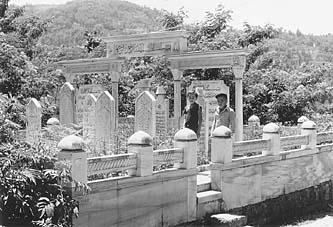
Figure 12. The parade on Liberation Day.
The militia forces advanced toward the pole in the center of Atatürk Square, on which was hung a black flag representing the foreign troops. They then began firing their rifles and pistols, still armed with blanks. After some moments, someone took down the black flag, placed it on the muzzle of his rifle, and tore it to shreds by repeated discharges. This impromptu performance much pleased the crowd. Once the flag had been destroyed, the Trabzon municipal band played the national anthem. The crowd listened quietly and respectfully but did not sing. After the band had finished playing, Molla İİshak gave his speech in honor of the militia forces, firing off his ancient pistol with a hammer at the conclusion, to the puzzlement of his audience. A girl and boy from the middle school followed, reading speeches they had written and passionately reciting a patriotic poem. The district officer concluded the ceremony by saying a few words and then reciting a poem by Mehmet Akif. The latter was the author of the Turkish national anthem, but also a critic of secularism and therefore a favorite of religious conservatives. The district officer had taken care to select a poem that fit the religious sentiments of the majority of those in attendance.[3]
The Liberation Day celebration, attended and enjoyed by a significant fraction of the district population, was an impressive demonstration of the public spirit of the Oflus. On an occasion that commemorated a local episode in a struggle that led to a national awakening, they were able to imagine themselves as something more than mountaineers living in remote and isolated hamlets. Many in the audience knew of ascendants who had taken part in the Battle for Of, and so had participated in the building of the Turkish Republic. A few also knew that more distant ascendants had taken part in imperial campaigns, and so had participated in the building of the Ottoman Empire. Despite a mishmash of local customs, an unacceptable Turkish dialect, an embarrassing non-Turkic language, and country manners, the Oflus did not consider themselves bystanders in world history.
But what exactly was being celebrated in Atatürk Square, and who exactly were the celebrants? The elements of Liberation Day in Of, as in Sürmene, were much the same as those of nationalist commemorations everywhere in the Turkish Republic. The officials, soldiers, bandsmen, citizens, teachers, and children represented the past, present, and future of the Turkish Republic. But the elements of Liberation Day in Of, in contrast to those in Sürmene, were presented in such a way that they departed from conventions that had until recently been in force. The citizens appeared as militia forces of the late Ottoman Empire. The children appeared as the men and women of the sultan's palace. This was the imperial past, not the national past.
During the early years of the Turkish Republic, it would have been unlikely, if not strictly forbidden, for schoolchildren to dress up as janissaries and concubines. After all, the revolution in public culture had been conducted against the Ottomans, first by force of arms, and later by legal reforms, at least according to official national history. But by 1967, if not sometime earlier, a deviation from radical Kemalist principles had become permissible. Now, the imperial period could be the subject of children's make-believe. In this context, the costumes and pantomimes of the schoolchildren could be seen as a sign of the success of the revolution in public culture in the later 1960s. The classical imperial period could be recuperated as a moment of triumph and glory, since no one believed that classical imperial institutions had any claim whatsoever on the present. Children could therefore "play" at being janissaries and concubines.[4]
On the other hand, citizens had represented an agha and a hodja as the leaders of the local militia on the occasion of a foreign invasion. Such a scene, or something much like it, had actually occurred repeatedly on the occasion of successive Russian incursions around the years 1787, 1810, 1828, 1877, and 1916. To so represent the Battle for Of was to trace the origins of the Turkish Republic to the regional social oligarchy of the post-classical Empire. Yusuf and the molla had played out this little drama before the bust of the founder of the Turkish Republic. But Yusuf, the "play agha" in the parade, really was the most powerful man in the town of Of, just as the molla, the "play hodja," really was his closest confidant, and the "play militia" really was drawn from a circle of agnates, relatives, friends, and clients. The little drama was both a play and not a play. So this part of the parade in Atatürk Square raised a question about the success of the revolution in public culture.
At the time, none of my interlocutors mentioned to me the significance that I have just attributed to this event. The little drama with antique flintlocks, blanks, and a black banner was dismissed by a good many as just so much "nonsense." But it is unlikely that the district officer who had addressed the public in 1939 would have tolerated any such nonsense if he were as good as his word: "We will thrash the aghas. We will save the simple and pure folk from their influence, their execrable acts, and their deceits and tricks. We will not give them precedence in any manner, with respect to any thing or task" (see chap. 9). By this radical Kemalist dictum of the time, the little drama of Liberation Day would have to be described as counterrevolutionary. It overtly asserted that aghas and hodjas had led the people of Of into the initial phase of their national history. It covertly asserted that the descendants of aghas and hodjas continued to lead the people of Of in the present phase of their national history. In this regard, the little drama during Liberation Day of 1967 was an unprecedented departure, inconsistent with existing accounts of the events in question.
Neither Altay Yiğit nor Hasan Umur had described the Battle for Of in counterrevolutionary terms (see chap. 9). Yiğit hoped to confirm that aghas from agha-families in 1916 were a local leadership that had already become a nationalist leadership even before the declaration of the Turkish Republic. This is why he described how they carried out the orders of the "Turkish" commander of a "Turkish" army, why he showed their faces in photographs, and why he suppressed references to hodjas and mollas. Taking these steps, he hoped to persuade his readers, and no doubt himself, that the revolution was still moving forward in 1949, as the descendants of aghas and agha-families were gaining control of nationalist organizations and institutions. Similarly, Umur also hoped to move the revolution forward by offering helpful criticisms based on his unusual experiences. He praised the role of professors and academies in the founding of the Turkish nation, but with the intent of pointing to an existing gap between the Turkish state and the Turkish people. He hoped to persuade his readers, and no doubt himself, that Islamic teaching and learning, properly supervised by the state system, might be a resource for narrowing this widening gap. He certainly did not intend to turn back the clock to the post-classical imperial period. Directly and succinctly, he described the "time of the aghas" as a time of misgovernment based on violence and terror.
Yusuf and the molla were not of such reflective dispositions. They were celebrating their own social standing, which they simply assumed to be historically sanctioned and legitimate. And in doing so, they exemplify how national public culture was continuing to split and divide from the 1950s to the 1960s. Kemalist representations of the nation-state and nation-people were increasingly challenged by other representations. In the instance of Liberation Day in the district of Of, officials, military forces, schoolteachers, and classrooms were going out of focus. Local elites, the descendants of aghas and hodjas, were coming into focus.
The colonization of the new republic, based on official hierarchy and authoritarianism, by the old republic, based on social hierarchy and authoritarianism, may explain in part the fury of the younger generation that was to follow in the 1970s. Many young people of both leftist and rightist persuasions were saying that the revolution had failed, making more radical steps an imperative. But this very special period, which appears in retrospect to have been a decisive transition, lies beyond the scope of my study. I shall conclude by sketching still other ways in which national public culture was splitting and dividing as a consequence of urbanization.
Oflus Come To the City
I first heard about the Of Culture and Assistance Association (Of Kültür ve Yardûmlaşma Derneği) at the time of its founding in the winter of 1967. By chance, I had encountered one of my early acquaintances who had been away from the town for some weeks. He had been looking after his firm in Samsun, where he was constructing an apartment building. Now he was planning to move the firm to Istanbul, where business was more promising. As he told me this, he mentioned that some Oflus living in Istanbul were launching a new association for the many thousands of their fellow Oflus who lived there.[5] Each member would pay dues of so much a month, not to exceed 125 Turkish lira a year ($10 U.S.). With the accumulated capital, grants would be made first to needy students, but then to entrepreneurs who required start-up money for new businesses in the city. The organizers had anticipated that their association might eventually have as many as ten thousand dues-paying members, and they had calculated that there might be twenty thousand students in need of some assistance.
Some hours later, I heard someone report the same news to Salih Selimoğlu, who was sitting and talking with his friends in the Town Square Coffeehouse. They laughed together heartily, considering the whole thing a great joke; nonetheless, Salih was careful to interrogate the man who gave him the report and to learn exactly what the organizers intended to do. Eventually, I came to understand that the new Oflu association was similar to others that had been organized by urban migrants from other parts of the country from the 1950s through the 1960s. These associations were a direct result of the appearance of urban colonies of provincials in Istanbul, Ankara, Adana, and Izmir.
In the fall of 1986, I was able to visit the Of Culture and Assistance Association for the first time. It was located in the crowded Laleli quarter of Istanbul, just a few steps away from the old covered bazaar.[6] The association still had thousands of members, probably more than ever. Its members had consistently sponsored various charitable projects for Oflus over the years, both in Istanbul and in Of. They continued to disburse monthly grants to students, and they were then raising funds for a student hostel to serve the new high school (lise) in the town of Of. When I learned of the composition of the association's executive committee at that time, I recognized the names of some of the most prominent merchants in the town of Of during my earlier residence there.
On the occasion of my visit, I entered the coffeehouse (kûraathanesi) that was part of the association, referred to by my companion as the "Of Locale" (Of Lokalû). It was more or less like the coffeehouses in towns and cities all over the country. Small groups of men were sitting, drinking tea or coffee, playing cards or backgammon, and talking at tables. There were no women present. My companion immediately encountered someone who knew him. The conversation that followed was broken by long pauses. It was as though we were sitting in a coffeehouse in the district of Of. The following excerpts are from my field notes:
The two men told my companion that in the coffeehouse a register was kept in which Oflus living in Istanbul listed their addresses and telephone numbers, both residential and business. My companion asked for the register and wrote down the name and address of his son, who had just set himself up in Kadûköy (across the Bosphorus) as an architect.We were greeted by two men sitting at a table in the Of Locale [1st pers.: selamün aleyküm; 2nd pers: aleyküm selam, hoş geldin; 1st pers.: hoş buldum; 2nd pers: merhaba]. They were invited to sit and drink tea with them [1st pers.: merhaba; 2nd pers: nasûlsûn?; 1st pers.: iyiyim, sen de nasûlsûn?, etc.]. One of them was well acquainted with [my companion]. The other man did not know him, but said he had known his father. He told [my companion] that they were related to one another (hûsûmlûğûmûz var); the sister of [so-and-so] was said to have married [so-and-so].
The man then asked [my companion] his birth date, rather than his age [thereby contextualizing him generationally in the past rather than biographically in the present]. They discussed whether this individual and that individual was alive or dead, when the funeral was held and where, and also who had married whom. [My companion] was having some dental work done and apologized for his slurred speech. The man then told us that he had been in Australia for five years. He spoke admiringly of it as rich country with factories that had been financed with English and American capital.
Some weeks later, the editor of a new magazine invited me to be interviewed by a group of students at the Of Locale. His magazine was written and published by Oflus and directed at an Oflu readership, especially those Oflus living outside the district in the larger cities of the country, not only Istanbul, but also Adana, Ankara, Izmir, and Trabzon. On the occasion of my second visit to the Of Locale, I was shown a complex just to the side of the coffeehouse. I met with the students there in a conference room with comfortable armchairs and couches. After the interview, I encountered individuals whom I had known during my residence in the town of Of during the later 1960s. They had since moved to Istanbul, where they now had places of business. I also met men in their later twenties who said they remembered me from when they were children. I naively asked one of my acquaintances the location of the squatter settlements (gecekondu) in which migrants from the district of Of had congregated. Offended, he told me that the Oflus lived in apartments and houses in the better parts of the city, not in squatter settlements.[7]
During a third visit to the Of Locale that same year, I attended a lecture that was given by a retired military officer who addressed a group of businessmen in the conference room. He was one of a number of Oflus who had distinguished themselves in the Turkish military (especially the army, but also the navy). Indeed, a resident of the old district of Of (the district of Çaykara) had been a member of the General Staff during the 1960s, after which he had become president of the Republic after election by the National Assembly. The talk by the retired military officer consisted of an insightful commentary on the contemporary political situation. A lively discussion followed, during which members of the audience asked the speaker penetrating questions. There were no women present.
Afterward, I was shown still other rooms behind closed doors. When I was taken behind the first set of doors, I discovered a few tables, waiters passing through, and a kitchen. I had been entirely unaware of the existence of this part of the association during my earlier visits. My hosts arranged for a meal to be served to me there, and I was able to talk with some children who had been born in Istanbul. I asked them whether they were themselves Oflu. One of the little girls insisted that she was not an Oflu, but an İİstanbullu, a response that amused my hosts. After my meal, I was briefly allowed to look behind yet another set of doors. To my astonishment, I discovered yet another dining room, crowded with men sitting at tables eating, drinking, smoking, and talking. There were interiors within interiors within interiors in the Of Locale.
Early the next year, I was invited to the annual celebration of the Of Liberation Day in Istanbul, which was held as close as possible to the official day itself, that is, February 28. The events were organized by the Of Culture and Assistance Association and took place in a music hall (gazino) in the Aksaray quarter of Istanbul, between the Laleli and Fatih quarters. I would estimate that about two thousand people attended this occasion. As the celebrants, both men and women, entered the hall, they were received by two lines of young men in formal evening dress who greeted them and escorted them to their tables. The seating was generally segregated by table, with the men sitting on one side of the table facing the women sitting on the other side. The women in attendance were dressed in various ways, according to their age, taste, and wealth. Some women kept their heads and arms covered, but there were also women without head coverings wearing fashionable dresses. In the course of the evening, some men left their tables to greet friends sitting elsewhere in the room. Most people remained seated at their tables talking among themselves and occasionally listening to the music. There were no formal speeches, such as I had heard during the meetings of cooperatives in the town of Of.
The entertainment consisted of performances according to the conventional format of a music hall in Istanbul, although some restraints were apparent. Men and women singers accompanied by different instrumental groups performed folk, pop, and classical songs. Alcohol was served at some tables but not at others. There was no belly dancing, otherwise common in most music halls. At one point, one of the members of the executive committee of the association called on those present to give generously to the building fund for the student hostel. He and others then passed through the tables with sacks for cash contributions. Toward the end of the occasion, after the professional singers had concluded their performances, a group of young Oflus mounted the stage and began to dance an Oflu horon to the frenetic music of the eastern Black Sea fiddle (kemençe), rather than the shrill music of the western Black Sea flute (zurna).
The celebration of Liberation Day did not make any reference whatsoever to the old republic of local elites, the aghas and the hodjas. This was a gathering of civil servants, professionals, shopkeepers, businessmen, and their families. They were men and women who had different political opinions and who followed different social conventions. They composed a Turkish nation not so much as a citizenry, but as a society, one that tolerated difference in the urban context, at least up to a certain point. It was possible for women to cover themselves or remain uncovered. It was possible to drink or not drink. It was even possible for the young men, some of who must have been born in Istanbul, to celebrate being Oflu by a folklore performance. In the district of Of, singing, dancing, and fiddling were frowned upon by the hodjas. Other than on Liberation Day, I never saw any such performances in the town of Of during the 1960s. But in Istanbul, young people from the district could represent themselves as a folk, perhaps for the first time in five hundred years. But this was but one of a number of new ways the Oflus of Istanbul were reimagining themselves as a society of a nation that had once been a society of an empire.
Before the end of my two-year residence in Istanbul (1986–88), I was invited to attend the opening of a second branch of the Of Culture and Assistance Association in the city of Kadûköy, across the Bosphorus. The earliest colonies of Oflus in Istanbul had been concentrated on the European side, but there were now also many Oflus who lived or worked on the Asian side. The second branch had been organized to provide the latter with a more convenient meeting place. When I attended the opening celebration, I was able to enter one of the association's inner rooms, which was crowded with men dressed in suits and ties who were standing and talking. Everyone was shaking hands, exchanging information regarding family backgrounds, village origins, and business activities. Those in attendance expected to meet Oflus whom they did not know. Some approached me to introduce themselves and to shake my hand, only to discover with some surprise that I was an American. The two branches of the Of Culture and Assistance Association were social clubs, not political clubs. The membership of both branches seemed to be distributed among a variety of political parties, as well as nationalist and religious parties. I cannot say in what proportion.
Of course, the Of Culture and Assistance Associations in Laleli and Kadûköy did not represent all the ways in which the Oflus had mutual interests and contacts. The Oflus also shared some new intellectual projects. For example, I have already mentioned the editor of the new magazine for Oflus. His name was Haşim Albayrak, author of Of and Çaykara (1986), which describes the social history of the old district of Of.[8] A picture of "Gazi Mustafa Kemal Atatürk" appears on the frontispiece. A chapter bears the title, "Were Turks the first settlers of Of?" and then reaches a positive answer to the question. On the other hand, the book cover represents the tombs of three hodjas credited with converting Christian Oflus to Islam during the seventeenth century. By these features, the work composes a history of the district of Of that fuses the official nationalism of the Turkish Republic with the official religion of the Ottoman Empire. Just a few years later, Ömer Asan would publish another kind of book, Pontic Culture. The title of the book uses a word that has negative connotations for Turkish nationalists since it is a word that Greek nationalists use to refer to the eastern Black Sea region. One of the initial sections bears the heading: "Who were the first natives of Of?" The author asks the question only to illustrate that it cannot be definitively answered. To make his point, he illustrates how any kind of official history or official identity is insufficient to recognize fully the richness of a people's past. He then argues that "Pontic culture," that is, eastern Black Sea culture, combines all kinds of heritages, but especially Hellenic and Turkic. The last section of his book consists of a Turkish-Greek dictionary of terms current in the villages of the districts of Of and Çaykara. These two examples of different intellectual projects mirror different circles of interpersonal association among the Oflus of Istanbul. Albayrak's readers are probably not Asan's readers. But there were still other kinds of projects and circles among the Oflus in Istanbul as well.[9]
To survive in the great city, the Oflus had deployed a discipline of sociability in all kinds of ways for all kinds of ends. Several of the Oflus had become prominent Mafia bosses in the city, while a large number of Oflus appeared among their followers. I had heard about "Oflu Hasan" during the 1960s, when he was one of the most infamous of the "fathers" (babalar) in Istanbul. By the late 1980s, others had taken his place. One of the Oflu "baba" was said to receive daily visitors who came to pay him homage in the old style, stooping down and kissing his hand. One of my interlocutors told me that the Oflus had only learned the "mafia business" (mafia işleri) after coming to Istanbul, but they were very good at it because they "stuck together" (tutkunluğumuz var).
Some of the Oflus were also followers of religious leaders (Şeyh) who were connected with religious brotherhoods (tarikat). The latter were principally Nakşibendi, but some were perhaps Kaderi. I have the impression that these kinds of religious associations were not circumscribed by place of origin, and so not necessarily headed by, or limited to, circles of Oflus. But I have very little information about such religious leaders and brotherhoods.[10] Most of my friends were pious, regularly performing their daily prayers, but they were not interested in religious leaders or brotherhoods. Perhaps this was a characteristic of the educated generation that came of age during the first decades of the Republic. Although I am not at all well informed about baba or Şeyh, I will venture a generalization. In regard to the Oflus, I would say that these two new types of leaders represented the reformulation of the tradition of old local elites in the urban context. The baba can be seen as a "fallen" version of the old agha. He is surrounded by armed followers. He receives visitors who pay him homage. He even serves as an intermediary between the state and citizens, fixing traffic citations and so on, for example. But unlike the old aghas, he is a shadow figure of urban life who lacks the legitimacy of state appointments or a community following. In contrast, the religious Şeyh can be seen as a "risen" version of the old hodja. He would appear to be a religious exemplar rather than a person of learning who offers instruction in ethical thinking and practice. So in effect he is "above" the context of a state society based on ethical thinking and practice. He is the focus of religious identification and association among urbanites whose daily lives are structured by economic rather than communal interactions.
I have been told that one of the baba from Of was a descendant of one of the old aghas. I have also been told that one of the Şeyh from Of was one of the last graduates of the old hodjas. If these facts are true, and my information is rather poor, I would nonetheless insist that both are new figures of the urban context (both in Of and in Istanbul), but at the same time adapted from the old imperial coordination of power and religion.
It was the prior existence of a public life in the district of Of that enabled the Oflus to immigrate and prosper in the greater cities of the country. However, in the absence of aghas and hodjas, who were still dominant figures in the district of Of, the Oflus in the greater cities formed associations that were less conventional, hence more inventive, and as a consequence, more differentiated and variegated.[11] By the 1980s, however, the town of Of was becoming more and more like a city.
The City Comes To Of
During my initial residence in the town of Of, my interlocutors had been preoccupied with aghas or, more exactly, with the quality of "agha-ness" (ağalûk), as they had come to call it.[12] The ghosts of the old regime had somehow recently surfaced in the district of Of, probably beginning in the later 1950s. Agha-ness was said to be everywhere once again, in the streets of the town, in its coffeehouses, in the management of tea cooperatives, in the administration of the municipality, and in the organization of political parties. Some said that the "agha mentality" (ağa zihniyeti)—meaning both to behave as an agha and to respect those who behaved as an agha—had never been eradicated in the district of Of. But others claimed that a pattern of leadership and followership, similar to what had existed in the old regime, had spread and intensified by a process of "aghafication" (ağalanûyor, ağalanacak).
As we saw in the last chapter, this intimation of an unwelcome return of aghas and agha-families was a consequence of a shift in the position of leading individuals from large family groupings. The new awareness of aghas and agha-families was actually a harbinger of a new degree of institutional rationalization that was accompanying economic differentiation and expansion. Aghas and agha-families had actually come into view because it was more possible than ever to imagine that they were unnecessary and unworkable. Eventually, institutional rationalization would lead to a diminution of the awareness of "agha-ness," but it would not lead to the disappearance of leading individuals from large family groupings. Leading individuals from large family groupings continued to adapt and adjust to public life. It therefore became harder and harder to understand where they had come from or what they represented.
In 1988, I was able to pay a visit to the district of Of, the first in about ten years. The population had doubled, redoubled, and then doubled again since the 1960s, so that it probably exceeded twenty thousand. Now there were three tea-processing plants, seven banks, eight pharmacies, six doctors, and five dentists. Previously, there had been only one of each. Now there was a high school (lise), a school for imams (Iİmam-Hatip Okulu), and a girls' vocational school (Özel Meslek Kûz Lisesi) in the town, as well as several middle schools (orta okulu) in different parts of the district. Before a single middle school in the town had served the entire district, and the only high schools had been in other parts of the province of Trabzon. The grid of streets had been expanded to include a large esplanade, and many more shops and warehouses had been constructed. There were also thousands of new apartments and many more planned. A significant number of people had made a lot of money, some by sellingtheir gardens at hugely inflated prices, others by building or renting apartments to the crowds of new residents who had moved from the villages to the town.
Measured against my earlier experiences, encounters on the street were comparatively anonymous. In the 1960s, a stranger like myself would have been noticed upon stepping off the bus. He would have immediately been asked who he was and what he wanted. When I mentioned this change to my friends, they agreed, saying they commonly encountered individuals whom they did not know, and so they no longer thought to ask their names, business, or place of origin. I was also impressed with the new urban atmosphere of the town. Before, many of the residences were actually small farms surrounded by tea gardens and with livestock in their basements. When I sent a friend a postcard, it was not even necessary to have his street address. Just a name and surname were sufficient: "Mehmet Öztürk, Of, Trabzon." Now the postman could not possibly know the thousands of residents who lived in blocks and blocks of six-story apartment buildings. Along with the new anonymity and urbanism, the old public sanctions had lost their force through differentiation of consumption patterns. Before, the wife of the only pharmacist in the town had been cursed and spat upon for leaving her hair uncovered during the weekly market. Now young women employees strolled through the market with bare forearms, something that would have been shocking two decades earlier. Before, a leading individual from a large family grouping had entered the studio of the town photographer and destroyed the photograph of one of his nieces that had been placed in the street window. Now, a son of the same photographer had opened a new boutique, a franchise of a national chain, with the latest women's fashions from Istanbul. Before, Hüseyin had run a stationery shop and bookstore as a way of involving himself in Kemalist politics and reform. Now his son, who was managing the store, had added a substantial video library. There was even a hint of cosmopolitanism. A large and comfortable hotel, The Tea City Hotel, had been opened. It featured an outdoor cafe where one might enjoy a splendid vista of the Black Sea coast. It also featured a restaurant with tablecloths and uniformed waiters, and dishes that matched the quality of those in the best Istanbul restaurants. The hotel, cafe, and restaurant had become a site for government and business conferences, and it had also become a regular stop for German tour buses passing between Trabzon and Rize. I could hardly recognize the coffeehouses because of all the construction. The Crystal Palace Teahouse, where I had been so warmly welcomed, was no longer to be found. The Town Square Coffeehouse was also gone, but it was eventually replaced by a smaller version across the square. Otherwise, there were many new coffeehouses, some of them incorporated as private clubs, just as there were new kinds of social groups who attended them. But even though there were more coffeehouses than before, the proportion of the population who frequented them must have diminished.[13] The arrival of television, already with several channels and with many more soon to come, had brought with it the living room as a meeting place for family and friends, including both men and women. Because of this change, the coffeehouses, still unattended by women, could not have been quite so important as forums of public life as they had been in the 1960s.
And yet many, if not most, of the public offices open to local residents in the town were still reserved for members of the Selimoğlu. How was it possible for circles of agnates, relatives, friends, and clients to continue to dominate public life? The discipline of interpersonal association had depended on all kinds of constraints that were now eroding. These included men's control of women, men's presence in coffeehouses, restricted intellectual engagements and resources, a political economy of patrons and clients, the imposition of authority by occasional threats of retaliation, the relative immobility of the rural population, and limited economic opportunities. Given that each of these conditions had been more or less compromised, how could circles of interpersonal association, based as they were on normative performances, survive in this town that was becoming a city?
The example of the Oflus in the greater Istanbul region provides the answer. A discipline of social thinking and practice was a resource by which the Oflus adapted to the city. The city was an anonymous urban environment, but it enabled interpersonal associations by concentrating the population, facilitating communication, and expanding economic opportunities. In Istanbul the Oflus were able to devise new kinds of interpersonal associations, some of them mercantile, some of them benevolent, some of them intellectual, some of them religious, and some of them criminal. In just the same way, circles of interpersonal association persisted in the town of Of even as they were becoming more differentiated and variegated in character.
The portrait of Mayors in the Municipal Building
One afternoon during my brief visit in 1988 I entered the new municipal building, where an employee invited me into the office of the mayor. Süleyman Selimoğlu, who had been the director of the "dissident" tea cooperative during the 1960s, was not in his office at the time. He had first been elected to the mayorship in 1984, his parsimonious style of management having apparently won the day with the voters. The municipal employee kindly offered me tea. Soon other employees joined us, as well as a number of town worthies. Together we recalled the days when I had been a resident. In the course of our conversation, I was shown a large framed picture hung on one wall. It was a montage of identity card photographs, purporting to represent all the mayors of the town since 1874. There were nine photographs in all, each accompanied by a name and dates of service. As we were examining the photomontage, one of the employees said that the mayorship of the town of Of had remained in the same family line for almost a 120 years. One of the town worthies present, an ex-mayor himself, said that this record of service for a single family line was without parallel anywhere else in the Republic of Turkey.
The portrait of mayors was indeed remarkable, even if not exactly for the reasons given. There were years in which the mayor had not been from the Selimoğlu family line, both before and after the declaration of the Turkish Republic.[14] The period of service of two of the other mayors had been inaccurately expanded to cover these gaps. There were also years when Mehmet Selimoğlu had served as mayor under a different surname. This detail was overlooked, although with justification, since he eventually reassumed the name of the family line. So the photomontage, by its inaccuracies and omissions, established what had not really been the case.
The portrait of mayors did, however, confirm that the hegemony of the family line still prevailed in the town of Of, since it was possible to assert a claim that was not strictly true. This having been said, one would have to add that the photomontage actually understated rather than overstated the historical prominence of the family line. Members of the Selimoğlu had figured in the government of the district of Of even before the town existed, for perhaps as long as 250 years, more than twice as long as the claimed 120 years. This is indeed a remarkable record that would surely have few parallels anywhere else in the Turkish Republic. The Selimoğlu had outlasted the "Hazinedaroğlu," the line of Süleyman Pasha and Osman Pasha. They had even outlasted the "Osmanoğlu," the line of Mehmet II and Süleyman I. So what we have to consider is not how members of the family line could claim so much, but rather why they were content to claim so little.
The photomontage commemorated the mayorship as the responsibility of the entire family line. It accurately recorded the fact that the mayorship had not been monopolized by the descendants of Ferhat Agha, but had passed from set to set (takûm). In doing so, as I have noted above, it did not recognize that the aghas and ayans of the district had come from the family line since the eighteenth century. So, in effect, it ignored the opportunity to claim a strong connection with the imperial period. But at the same time, it did not recognize the role of leading individuals of the family line in the Battle for Of. So it also ignored the opportunity to claim a strong connection with the transition from Empire to Republic. Instead, the photomontage correlated leading individuals of the family line with the municipality. They had served as its mayors from the moment of its initial founding in 1874, fifty years before the national revolution, right down to the present. In so doing, the photomontage identified leading individuals of the Selimoğlu with the history of bureaucratic modernization in the eastern coastal region. This history had begun in 1874 with the incorporation of all district centers of the province of Trabzon as municipalities, even though many of them did not even have towns. The representation of the mayors of the town by photographs was itself a way of emphasizing this identification. The mayors appeared more convincingly as bureaucratic modernizers precisely because they also appeared in the form of an identity card photograph, a token of bureaucratic modernization.
One would have to credit Hüseyin Selimoğlu with the idea of so legitimizing the role of the family line in the district of Of, perhaps as early as the 1950s. He had chosen to hang a portrait of Mithat Paşa (a photograph being unavailable) above the quilted and framed fabric behind his desk in his office in the tea cooperative. But Hüseyin had only had the idea of legitimizing the family line in this way. In contrast, Süleyman Selimoğlu had come to prominence by insisting on the practice of bureaucratic modernization. As I recounted in the last chapter, he and his allies had successfully organized a second tea cooperative in the town in the face of opposition by the descendants of Ferhat Agha. He had done so by stressing his commitment to fairness and efficiency. Some years later, he had entered the race for mayor and won the office, presumably on the basis of his reputation as the director of the tea cooperative. And now, altogether appropriately, his mayoral office featured a portrait of mayors that identified the family with the period of bureaucratic modernization.[15]
So the "argument" of the photomontage was not the same as the "argument" of Liberation Day in 1967. The Selimoğlu had traveled a certain distance since the time of my residence in the town. The old tactic of sovereign power through interpersonal association, which had been revived during the early years of multiparty politics, was now in the background. It had been replaced by a claim to public service that stretched back to the imperial period of bureaucratic modernization. This indicated that "class" distinctions characteristic of a modern nation-state now supplemented the circles of interpersonal association of a regional social oligarchy. That is, leading individuals of the Selimoğlu claimed the mayorship by their professional training, experience, and contacts, even as they continued to rely on agnates, relatives, friends, and clients. This was a striking change from the 1950s, when some said that the mayor did not know how to read and write very well.
The capturing of public offices by a combination of bureaucratic professionalism and interpersonal associations was, however, subject to challenge. There were sectors of the population who saw bureaucratic procedures as mechanisms of domination and exclusion, and these same sectors of the population also featured circles of interpersonal association. Before my visit to the town of Of in 1988, I had been told by an acquaintance that the residents of the town of Of now included a large number of supporters of the Welfare Party (Refah Partisi), whose national leader was Necmettin Erbakan. This party appealed to those who resented the secularist policies of the Turkish Republic, since they experienced them as instruments of repression rather than participation. For example, many of those who voted for this party supported a return to the sacred law of Islam. Such a move, they could imagine, would at the same time legitimize their place in the Turkish Republic and reinforce their social solidarity, thus enhancing their political position.
Given the tradition of official Islam in the district of Of, it is not at all surprising that many, if not a majority, of the villagers who had moved to the town would vote for this Islamist political party. My acquaintance had also told me that the Selimoğlu were no longer able to muster enough votes to win the mayorship without the support of the Welfare Party. The leading individuals from the family line were therefore required, he maintained, to work closely with representatives of the Welfare Party, the latter having not yet fielded its own candidate for the mayorship. The fact of such a partnership would soon be plain to see in the evolving urban character of the town of Of.
The Imperial Great Mosque in the Town of Of
I have already described how the town featured an extended grid of streets with blocks and blocks of new apartment buildings at the time of my 1988 visit. But I did not mention an impressive architectural project that had been initiated but not completed. A gigantic mosque in the style of the classical Ottoman mosques was being constructed in the old market center. An Oflu firm was going to use reinforced concrete to build a likeness of the domes and minarets that mark the skyline of Istanbul. The new mosque was to be situated at the western side of town in such a way that its grounds overlooked the Solaklû River at the point where it entered the Black Sea. By this arrangement, the new mosque would bring to mind the imperial great mosques that overlook the Golden Horn and Bosphorus Straits.
The construction of the new mosque was part of a trend throughout the country that was not in any way peculiar to the district of Of. During the years immediately following the military coup of 1980, the generals who had taken charge decided to place a new emphasis on religious education in the public schools. The Turkish military, a Kemalist bulwark in the Turkish Republic, thereby compromised the founding principle of a secular public culture. This departure was inspired by the hope that an updated version of official Islam might counter radical leftist and rightist political orientations among Turkish youths. In effect, the Turkish military had adopted the idea of Hasan Umur in his little book Of and the Battles for Of, but not with the end that he had in mind. They were not interested in bringing the state into closer alignment with the Islamic beliefs and practices of the people. They were interested in rectifying and improving the people so that they would occupy their proper places in a state society.
In other words, the generals had opted for a version of what I have elsewhere termed "Kemalo-Islamism." Partly as a result of this policy, but also partly as a consequence of the demoralization of the radical left and right, religion acquired a degree of respectability in national public culture. All kinds of groupings and movements were inclined, if not obliged, to align themselves with the updated version of official Islam. During the early 1980s, for example, new public monuments and memorials oriented toward imperial rather than national history began to be built in towns and cities all over the country.
The building of the great mosque in the old market center of the town of Of was just one of many such undertakings. The building project was widely supported by public donations, including gifts from Oflus who lived both inside and outside the district. But leading individuals from the Selimoğlu had also made an important contribution. The part of the old town center where the great mosque was to be located was also the site of the graves of leading individuals from the Selimoğlu family line. Some portion of the grounds for the new mosque was reported to have been donated by members of the family line, in emulation of an ascendant who donated the grounds for the old mosque in the old town center. And eventually, one side of the court of the great mosque would become the site for the reconstructed graves of leading individuals of the Selimoğlu family line. The old graves, some going back to the period of decentralization in the early nineteenth century, would be enclosed in white marble borders. They would be set with new white marble headstones and re-inscribed in the Latin letters of new Turkish. The refurbishing of the old graves thereby accomplished what had been missing from the portrait of mayors.
The leading individuals of the Selimoğlu family line had not only been bureaucratic modernizers. They had also been among the founders of an ottomanist provincial society that went back to the post-classical period of the Ottoman Empire. The leading individuals of the Selimoğlu still headed circles of interpersonal association, but now in a town that had assumed the character of a city. They were therefore inclined to supplement these circles of interpersonal association with a politics that would wrest an electoral majority from a diverse urban population. On the one hand, they represented themselves as fair and efficient bureaucrats, thereby appealing to a citizenry that had good reason to fear corruption. This was some part of the meaning of the portrait of mayors. On the other hand they were also supporters of Islamic monuments and institutions, thereby appealing to a citizenry resentful of bureaucratic domination and proud of its Islamist traditions. This was some part of the meaning of the old graves at the side of the great mosque.
The Muradoğlu, rivals of the Selimoğlu, faced another, more straightforward, version of the problem of changing political circumstances. The Muradoğlu family line was traditionally based in the villages rather than the town. They had never represented themselves as bureaucrats, like their rivals, but claimed instead to be close to ordinary Oflusin the countryside. They were less inclined to rely on the control of public institutions and organizations, and accordingly they had more readily aligned themselves with the Islamist sentiments of the majority of the population at an earlier date.
During a visit to Of in 1978, I had been shown the refurbished graveyard of the founders of the Muradoğlu family line, principally İİsmail Agha and Memiş Agha (see chap. 6), and of some of their children and wives. Members of the family line had collected funds to enclose the graveyard with white marble borders and arches. They had also arranged for the setting of new white marble headstones, inscribed in the old Arabic letters, rather than in the Latin letters of new Turkish (see fig. 13). During the same period, funds had also been collected to build a new mosque at the eastern edge of the district of Of, not far from the town of Eskipazar. This mosque was intended to commemorate one of the tombs of one of the hodjas credited with the mass conversion of the Christians in the district of Of (the Maraşlûlar) during the post-classical period. The mosque was not large, but its construction materials and facilities were especially fine and luxurious.

Figure 13. Graves of the founders of the Muradoğlu family line.
So by the later 1970s, the Muradoğlu were commemorating ascendants who had been prominent in the government of the district during the period of decentralization, before the beginning of bureaucratic modernization. By their claim to be a family line that extended back to the post-classical period, the Muradoğlu had also been able to align themselves with the Maraşlûlar, who converted the district of Of to Islam and initiated its tradition of professors and academies. Following the coup of 1980, the members of the Muradoğlu were therefore far better positioned than their rivals in the town of Of to respond to the new policy of encouraging religious identification and expression. They had soon taken part in the building of a great mosque at Eskipazar, one that also used reinforced concrete in imitation of the classical imperial style. The construction of this mosque was already more advanced than the great mosque in the town of Of in 1988.
By these developments, the Selimoğlu and the Muradoğlu continued to represent local elites closer to the state system and local elites closer to district networks. The difference between them is therefore analogous to the difference between Osman Agha şatûroğlu and Memiş Agha Tuzcuoğlu (see chap. 6).
Epilogue
The ruling institution of the Ottoman Empire is often understood as a household state, based on the model of a family.[16] In my opinion, this obscures important features of the imperial system. The Ottoman palace was founded on a discipline of face-to-face, person-to-person relationships, one that was unhinged from any local setting of primordial customs and habits. In this respect, it was against family, just as it was also against tribe, community, and ethnicity.[17] One did not have to be born into it, and perhaps all the better that one was born out of it. The discipline in question was derived from an ethico-religious system of scholarly construction, but it came to be used as an imperial instrument. Being valid for all times and places because not limited to any time and place, a tactic of sovereign power through interpersonal as sociation could produce a state society out of all kinds of families, tribes, communities, and peoples. But precisely because the imperial system was both transmissible and assimilable, it was also off balance and out of kilter. Its strategies of centralization always featured problems of decentralization.
The project of the nation features similar qualities insofar as it is a repetition of the project of the Empire. The fractures in the state society of the Empire—officials with and against aghas but also aghas with and against hodjas—reappear as fractures of the Republican period—Kemalists with and against local elites but also local elites with and against Islamists. The splits and divides in national public culture, such as I have described them in the district of Of, can therefore be seen as indications of the transformative and inventive potential of the old imperial devices in the environment of modernity. In the city today, the structural relationship of state and society is still apparent in the differentiation of Oflu associations, which range from high religiosity to low criminality. On the other hand, this structural relationship is neither closed nor inescapable. As we have seen, it was possible for a little girl to challenge her interrogator: "I am not an Oflu; I am an Istanbullu." This child's play might seem to be but a recent instance of more than three hundred years of Oflu identification with the great imperial city. But this would be a misunderstanding of my argument, and perhaps as well a misinterpretation of the child's meaning. The Oflus never identified with Istanbul as a city, but rather with the universal imperialism that the city claimed to represent. As for the child, she may have been asserting her identity as an Istanbullu, not an Oflu. But more likely, since she spoke with defiance, she was saying that she was not going to let others tell her who she was. If this is correct, her statement was a sign of a transformative and inventive potential of another kind, one unanticipated by either Mehmet II or Kemal Atatürk. Just where it might lead is anyone's guess.
Notes
1. As it had happened, the Battle for Of in 1916 had begun on virtually the same day of the year that the Russians had evacuated the district two years later in 1918. So Liberation Day simultaneously marks resistance to as well as liberation from the Russian military occupation.
2. I was repeatedly told that no one was allowed to mount a horse in Of except the agha, a point that was intended to illustrate how the old imperial hierarchy had been supplanted by republican equality. Compare the Ottoman sultan on his horse in the middle court (chap. 4).
3. He appealed to religious conservatives on other occasions as well. During the month of Ramadan, when attendance at the morning prayers was heavy, he stood outside the mosque to greet the crowds of men as they left the building.
4. Some years later in Istanbul, groups of an Islamist orientation would begin to commemorate Mehmet II's conquest at the old walls of the city. This presumably would have raised the question of whether the palace could henceforth remain a subject of children's play.
5. Hasan Ulusoy, father of one of the organizers of the new association, had contributed a substantial sum of money in the late 1960s (some said forty thousand Turkish lira) for the rebuilding of the minaret of the old mosque in Of.
6. The association has since moved into luxuriously furnished quarters on the top floors of a tall building in the Fatih quarter.
7. I would be surprised if this were universally true.
8. Altay Yiğit (1981) had also published a second volume thirty years after his account of the Battle for Of. It was a study of the history and folklore of Çaykara.
9. For examples of other intellectual projects in an urban context, see Meeker 1991, 1994b.
10. See Shankland 1999 for a good overview of the place of religious leaders and brotherhoods in the politics of Turkey.
11. For a recent study of money and association in the city, see White 1994.
12. The use of this term would appear to be a neologism, since "agha-ness" would have once referred to a state appointment of an individual to serve as an agha in accordance with certain defined duties. See chaps. 7 and 8.
13. After the collapse of the Soviet Union, another bizarre interlude, the "time of Natashas," repeated the "time of the waiter girls" of the 1920s.
14. Some of my acquaintances had cited the names of several individuals who had been the mayor of the town before and after the Great War but were not members of the Selimoğlu family line.
15. I do not know which mayor was responsible for the photomontage, or when it was first hung in the office of the mayor. My point is that the career of Süleyman brought the importance of fairness and efficiency to the foreground. Other members of the family line would have learned this lesson even before Süleyman became mayor.
16. This may be a result of the influence of Max Weber's views of patrimonial domination, but Findley (1980, 7) notes that the Ottomans themselves sometimes ascribed to such a viewpoint.
17. Cf. Delaney 1991, who has explored the prevalence of patriarchal symbolism in Turkey.