
Approaches to Democratic Control
These four cases define schematically how bureaucratic behavior may be constrained, and hence democratically
[27] A. D. Lindsay expresses this vision as follows: "Government [is] … given a free hand to deal with means. The purpose of the control exercised by the ordinary voters is to see that those means—the technical skill of the administrative—are used to the right ends" (Lindsay, The Modern Democratic State [London:Oxford University Press, 1969], p. 276).
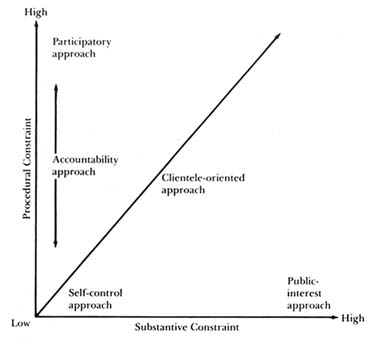
Figure 2. Approaches to Democratic Control
controlled. In the space between them we can locate various specific proposals arising both in social science literature and in popular discourse. I have grouped commonly occurring proposals into five broad approaches to democratic control: (1) control through participation, (2) control through clientele relations, (3) control through pursuit of the public interest, (4) control through accountability, and (5) self-control. Each of these approaches occupies a portion of the map, although the specific features of any given control strategy determine its exact placement. (See Fig. 2.) Each approach implies a
different perspective on why we need to control bureaucracies and on how to go about doing it.[28]
1. Participatory control lies near the top of the map where procedural constraint is high. According to proponents of this approach, the problem with public bureaucracies is that they are isolated from the public, and hence are closed, undemocratic institutions. To counteract isolation, highly constraining procedural changes, such as community participation requirements, are advocated. All such changes center on increasing direct citizen involvement in decision making.[29] Many control mechanisms have participatory elements, but for those that lie in this region of the map participatory decision making is itself the goal. Many advocates of participatory reform assume that these changes will also produce change in the nature of policies, and hence substantive constraint. However, since the essence of participatory reform lies in changing the way decisions are made, substantive constraint is ancillary.[30] Constraining procedures to increase the citizen role does not inherently imply constraining
[28] There are parallels between these approaches and those several other scholars have suggested. Douglas Yates contrasts two models of bureaucracy, an administrative efficiency model and a pluralist model. The former, based on Woodrow Wilson's ideas about neutral competence, is similar to my approach of self-control; the latter is similar to the clientele approach (Yates, Bureaucratic Democracy [Cambridge MA: Harvard University Press, 1982], chap. 2). Jerry Mashaw describes three models for administrative justice: bureaucratic rationality, professional treatment and moral judgment. The first emphasizes the accurate realization of legislative will and is a cousin of the public interest approach discussed below. The second emphasizes the appropriate use of professional expertise and is cousin to self-control. The third emphasizes the fairness of the process through which decisions are arrived at and is cousin to the accountability approach (Mashaw, Bureaucratic Justice , chap. 2).
[29] Authors such as Milton Kotler, Neighborhood Government (Indianapolis: Bobbs-Merrill, 1969), and Marilyn Gittell, Participants and Participation (New York: Praeger, 1967), are typical of this perspective.
[30] This point is made by L. Harmon Zeigler and M. Kent Jennings, Governing American Schools: Political Interaction in Local School Districts (North Scituate MA: Duxbury Press, 1974), pp. 8–9.
substance as well, and certainly not constraining it in a predictable way.
2. Clientele-oriented proposals, in contrast to participatory ones, are more concerned with the substance of decisions made in administrative agencies than with the procedural fact that they are made solely by administrators. Public agencies are seen as being undemocratic because their decisions inadequately serve the needs of citizens.[31] This substantive orientation is, however, linked to a procedural diagnosis of the problem—insufficient communication between bureaucrats and their clients. The clientele-oriented approach thus occupies a position near the center of the map, where both procedure and substance are moderately constrained. Constraint is moderate because advocates of this approach seek input and guidance from clients, not strict specification of action. Procedure is constrained primarily through requirements that administrators consult representatives of the groups most affected by the decisions being made, generally through advisory groups or panels.[32] Such consultation differs from that sought by advocates of participatory control in that the latter value involvement for its own sake, whereas clientele-oriented strategists seek more limited agency-citizen contacts to transmit information about the needs and values of client groups. By the same token, since the consultation is designed precisely
[31] Herbert Kaufman describes this approach (Red Tape [Washington DC: Brookings Institution, 1977], pp. 47–48). Philip Selznick, TVA and the Grass Roots (New York: Harper and Row, 1966), H. George Frederickson, "Toward a New Public Administration," in Frank Marini, ed., Toward a New Public Administration (Scranton PA: Chandler, 1971); Avery Leiserson, Administrative Regulation (Chicago: University of Chicago Press, 1942); and David B. Truman, The Governmental Process (New York: Knopf, 1951), pp. 457–67, are among the authors who fall within this perspective.
[32] Unfortunately, how to determine which groups are affected (or, for that matter, who should participate in the previous approach) is rarely specified clearly.
to produce substantive changes in agency policy, clientele-oriented strategies are more substantively constraining than participatory.
3. In contrast, what I call the public-interest approach to democratic control is predicated on the assumption that, far from being inadequate, contact between bureaucrats and individual citizens or group representatives is pervasive. Policies emanating from bureaucracies are seen as fragmented or overly geared to the interests of particular groups. For proponents of the public-interest approach, the hallmark of a democratically controlled bureaucracy is that its decisions serve collective interests. In Sheldon Wolin's words, "'Political' responsibility has meaning only in terms of a general constituency, and no manipulation of fragmentary constituencies will provide a substitute."[33] The public-interest approach is oriented almost entirely toward constraining the substantive aspects of bureaucratic behavior, and therefore lies near the lower right-hand corner of the map. Advocates of this approach presume that elected officials will act to further more general interests (though of course in practice they often do not). Control mechanisms revolve around ways of increasing the reach of these officials into bureaucracies, making bureaucrats more responsive to the expressed policy initiatives of elected officials.[34] A moderate form of this approach is reflected in efforts to increase the number of political executives in administrative agencies
[33] Sheldon Wolin, Politics and Vision (Boston: Little, Brown, 1960), p. 433. Other representatives of this approach include Theodore J. Lowi, The End of Liberalism (New York: Norton, 1969), and Mosher, Democracy and the Public Service , especially pp. 165–75.
[34] Proponents of this perspective have almost always written about bureaucracies on the national level, but a comparable position could be taken from the perspective of states or cities. In that case emphasis would be placed on meeting statewide or citywide needs, and the desired responsiveness would be to governors and state legislators or mayors and city council members.
because these executives serve as conduits for the substantive decisions of elected presidents, governors, and mayors.[35] It is also reflected in line-item budgeting designed to allow elected officials to direct how money should be spent. A stronger manifestation is the advocacy of decreased bureaucratic discretion through increased substantive decision making by Congress and other legislative bodies, including those at the neighborhood level.[36]
4. Procedure, not substance, is the focus of the accountability approach.[37] These proposals lie in a vertical band on the left of the map, where procedural constraint runs from moderate to high and substantive constraint is low. The emphasis on procedure derives from the diagnosis that bureaucracies threaten democracy when they abuse their power by acting corruptly, inefficiently, or unfairly. Procedural safeguards, or limits, are therefore advocated to ensure that such abuses do not take place. These constraints are generally directed only at limited aspects of agency behavior and are therefore usually less constraining than participatory reforms aimed at changing the fundamental processes through which agencies reach their decisions. Accountability mechanisms include codes of ethics, civil service systems, and hearing and notification requirements. They also include reforms aimed at facilitating the review of agency decision making such as freedom of information acts, ombudsmen, and oversight boards. All of these focus on guaranteeing that decisions
[35] Mosher, Democracy and the Public Service .
[36] Lowi, The End of Liberalism . For discussions of neighborhood based "legislatures," see Robert K. Yin and Douglas Yates, Street-Level Governments (Lexington MA: Lexington Books, 1975).
[37] Authors who have written in this tradition include: Finer, "Administrative Responsibility"; Joseph P. Harris, Congressional Control of Administration (Washington DC: Brookings Institution, 1964); and Walter Gellhorn, When Americans Complain (Cambridge MA: Harvard University Press, 1966).
are made in an "appropriate" fashion, with only peripheral concern for what the decisions are.[38]
5. Finally, there are those who say democratic control lies primarily with the administrators themselves. This approach of self-control is based on weak, usually indirectly imposed, external controls, and it therefore lies near the lower left-hand corner of the map. A mild form of this perspective is found among those who believe that control emerges from a process in which bureaucrats discern the limits of behavior the public will tolerate and then act within those limits. Proponents of a stronger, and therefore less constraining, form of this perspective assert that bureaucrats must serve the public, but that often they alone are in the best position to determine how to do so. In fact, for these people many more "political" forms of control work against the goal of public control.[39] For them, democracy is achieved by relying on bureaucrats' professionalism,[40] their sense of personal fulfillment,[41] or their background.[42] Many of these mechanisms, however, verge so closely on complete self-control that they scarcely lie within the borders of our map.[43] They may represent ways to achieve goals desirable in a democracy, but that does not make them democratic control.
[38] For a discussion of the argument that accountability need not always imply substantive responsiveness, see Michael A. Baer, "Interest Groups and Accountability: An Incompatible Pair," in Scott Greer, Ronald D. Hedlund, and James L. Gibson, eds., Accountability in Urban Society: Public Agencies Under Fire (Beverly Hills CA: Sage Publications, 1978), pp. 217–23.
[39] This is argument is discussed by Martin Meyerson and Edward C. Banfield, Politics, Planning and the Public Interest (New York: Free Press, 1955), pp. 38–39n.
[40] Friedrich, "Public Policy," pp. 12–14.
[41] Stephen K. Bailey, "Ethics and the Public Service," in Roscoe Martin, ed., Public Administration and Democracy (Syracuse NY: Syracuse University Press, 1965), pp. 283–98.
[42] Kingsley, Representative Bureaucracy , chap. 12.
[43] See, for example, Suleiman, Politics, Power and Bureaucracy in France , p. 158, for a critique of the reliance on "representative" background characteristics as a means of securing a democratic administration.
For even if the administrators in the end act in a way consonant with citizen preferences, if the action is purely at the behest of the administrators and not of the citizens, democratic control has not occurred.