
Public Relations Efforts And The AMA
Tiderock also played a role in helping to coordinate Brown and Williamson's efforts to influence the American Medical Association's (AMA) position on smoking. Unlike most of the health community, the AMA did not actively oppose the tobacco industry in the 1960s. Instead, it generally worked with the tobacco industry, both to perpetuate the scientific "controversy" about smoking and health and to keep federal regulation to a minimum (10). On November 10, 1967, J. W. Burgard wrote Rosser Reeves:
Enclosed is a copy of the memorandum I mentioned during our phone conversation. This is an attempt to summarize the comments made to me during the AMA meeting last week. I will not elaborate on the memorandum since I think the trend of the comments is self evident. In view of this, I think we should give immediate attention to the possibility of running ads stating, in effect, that there is no scientific evidence of a causal relation
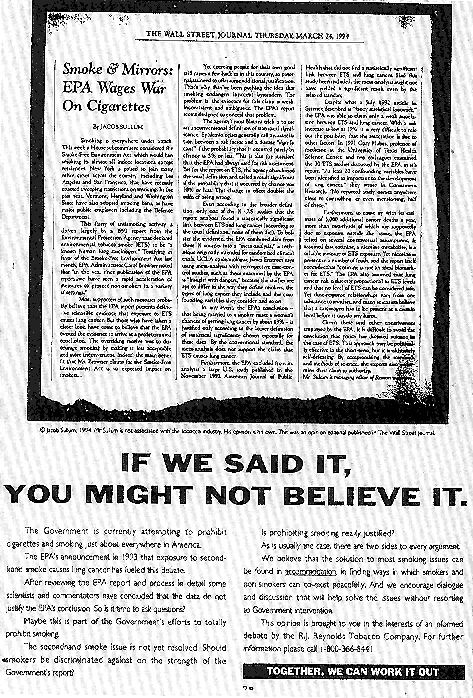
Figure 5.2 R. J. Reynolds advertisement based on Jacob Sullum's article
attacking the EPA report on environmental tobacco smoke.
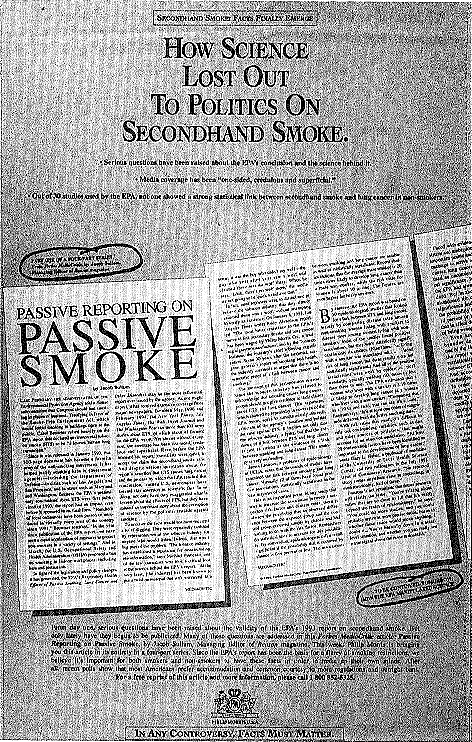
Figure 5.3. First of four full-page advertisements Philip Morris
Tobacco ran reprinting Jacob Sullum's article in full during 1994.
between smoking and lung cancer . Do this in a test market, as you originally suggested, to see what the reaction of the people and the various segments of the people are to a campaign.
In considering this, I hope you will also give some thought to an idea which intrigues us at Brown & Williamson of considering in such an ad not only the frontal attack on a causal relation but the "disclaimer" that smoking is an adult habit, or something to that effect. We feel that the combination of the two could well give the ad believability that an attack on the health relationship alone would not have . At the same time, it would let the public know the industry does not encourage smoking among teen-agers [emphasis added]. {2101.09, p. 1}
This campaign apparently was designed to maintain the AMA's neutrality and to encourage the AMA to issue statements that could be used by the tobacco industry as part of its broader public relations campaign. It succeeded (10).