
Five—
Laura Langford and the Seidl Society:
Wagner Comes to Brooklyn
Joseph Horowitz
Three thousand people applauded, and the orchestra played a fanfare, as Anton Seidl left the stage to fetch Mrs. Laura Langford and escort her to the front of the Brighton Beach music pavilion. He then mounted the podium and closed his concert—the last of the 1894 season—with Liszt's Les Préludes , of which Langford was especially fond. As she listened to the enraptured nature music of Seidl's orchestra, her eyes swept the 3,000-seat wooden auditorium, which was filled to capacity. To the sides, she could see the moonlit Coney Island sands; to the rear, the Atlantic sky. The ushers, all earnest-faced women, wore silver S pins on their dresses. Their job was to discipline smokers, talkers, and latecomers. But the stirring music, the sea breeze, and the whisper of the breakers cast a spell stronger than any enforced decorum.
This was the fruit of Laura Langford's "mission work." Her Seidl Society had disbursed $34,000 for the nine-week, June-to-September season. Tickets were sold for as little as 25¢, and yet she had finished the summer with her books balanced—"a remarkable feat of managerial skill," in the opinion of the Brooklyn Daily Eagle . When the music stopped, the applause would not. After many bows, Seidl stepped to the front of the stage. The crowd hushed. He said: "I thank you very much for this evidence of your appreciation, and it is very gratifying. There is one thing, however, which I do not want you to forget and that is that this effort to raise the standard of music would not have been possible without the Seidl Society and the women who are its members. To them more than anyone else your thanks are due."[1]
Coney Island is a sandy peninsula at the foot of Brooklyn, eight miles southeast of Manhattan. In 1894, it was not yet the home of Steeplechase, its most famous and longest-lived amusement park, built in 1897. But it was already a notorious city of enticements, "Sodom by the Sea," a playground of beer gardens, shooting galleries, and sideshows, con men, and whores. Its Iron Tower, equipped with two
The principal sources for this chapter may be found in the Seidl Society archive at the Brooklyn Historical Society, a collection including letters, clippings, programs, and pictures. Much of the chapter is drawn from my Wagner Nights: An American History (Berkeley and Los Angeles: University of California Press, 1994), 181–239.
steam elevators, was the tallest structure in the country. Its Sea Beach Palace could serve 15,000 diners at a time and house 10,000 guests overnight. Its Elephant Hotel was an immense tin-skinned structure with a cigar store in one leg, a diorama in another, and rooms available in the hip, shoulder, trunk, and thigh.
Coney Island was a metaphor for democracy. People from every walk of life mingled on Surf Avenue. And the surf itself was a common denominator, where men and women, boys and girls, donned revealing attire—arms and calves were fully exposed—to frolic in the waves.
If Coney's hot dogs and roller coasters catered to New York's toiling classes, fleeing their Calcutta tenements, respectable families and their servants gravitated to the island's east end, there to enjoy the vast Oriental, Manhattan Beach, and Brighton Beach hotels. These were patrolled by private detectives and supplied with fresh water piped from the mainland. The featured manicured lawns, elegant porches, fine restaurants, celebrated racetracks, and—on the model of comparable European watering holes—outdoor concerts.
Manhattan Beach's circular music pavilion, fronting the ornate verandas of the turreted hotel, boasted America's most famous bandmaster, Patrick Gilmore. The Brighton Beach Association, scrambling to catch up, built a second such pavilion and offered it to Johann Strauss, to England's Coldstream Guards, and to France's Garde Republicaine Band. When all said no, the association settled for Anton Seidl, who inaugurated the premises in June 1888 with members of the Metropolitan Opera Orchestra.
Seidl, born in Budapest in 1850, was famous—the high priest of a burgeoning Wagner cult. In fact, he was Wagner's own protégé, a member of the Wahnfried household from age 22 to 28. In Central Europe and England, where he had introduced the Ring as musical director of Angelo Neumann's touring Wagner ensemble, he was already recognized as one of the leading conductors of the late nineteenth century. In New York, where he had arrived in 1885, he embodied, as no one before him, the virtuoso conductor prophesied by Wagner. With his remote manner, Gothic features, and flowing hair, he was priestly, mysterious, charismatic. He was rumored to be an atheist, and Liszt's illegitimate son. On the podium—in James Gibbons Huneker's words—he "riveted his men with a glance of steel. It was the eye omniscient."[2]
But Seidl's 1888 Brighton concerts were a bust. Patrons of the hotel and racetrack expected to hear marches and waltzes, not excerpts from symphonies and operas led by the sober "Hair Seedle." And the orchestra, performing twice a day, seven days a week, claimed illness and fatigue; musicians griped to the press about Seidl's unreasonable demands. Seidl himself said: "I will confess frankly . . . that I do not content myself with the approval of the fashionable musical public; my chief aim is rather to attract to the concerts . . . the music-loving masses who wish to cultivate their taste, and who, lacking both time and means to attend the classical concerts given during the winter season, will now be afforded the opportunity of listening . . . at an outlay which lies within the reach of all."[3]
The solution to this impasse began with the formation of the Seidl Society in 1889. It was the brainchild of Laura Holloway, later Laura Langford. Born in Tennessee in 1848 and educated at the Nashville Female Academy, she was the daughter of a prominent country gentleman whose way of life was devastated by the Civil War. With her mother, a Quaker of Huguenot descent, she prevailed on him to take the family north. Early widowed, Laura lived for a time at the White House; President Andrew Johnson was a relative and close friend. While in Washington, she worked as a newspaper correspondent to help support her family. She spent some time abroad regaining her health. She returned to the United States to settle in Brooklyn, where she became well known both as a socialite and as an industrious journalist and author. She supported women's suffrage, and was corresponding secretary for the Brontë Society of England. She was admired for her cordial manner, for her rich and cultivated voice, and for her intrepid spirit. "What she does is done with all her might. She is not easily daunted by difficulties and ordinary obstacles have no terrors for her," the Brooklyn Daily Eagle testified. Colonel E. L. Langford, a former police commissioner whom she married in 1890 when he was fifty-five, was a well-preserved Civil War hero, and secretary and treasurer of the Brooklyn, Brighton and Coney Island Railroad Company.
Laura Holloway founded the Seidl Society in May 1889. According to its constitution, the society was "organized for the purpose of securing to its members and to the public increased musical culture and of promoting musical interest among women particularly. It aims to reach all classes of women and children and by its efforts in their behalf to prove the potent influence of harmony over individual life and character."[4]
Only women could join. At first, about two hundred signed on. Their initial goal was to undertake excursions to Seidl's Brighton Beach concerts. For dues of $5.00, all members were furnished with concert tickets at 25¢ each—about one-quarter the price of admission to comparable events in New York City. Rail transportation to Coney Island cost an additional 50¢. These outings, previously inaccessible to women without escorts, proved highly attractive once special cars were reserved for the Seidl Society. During the summer of 1889, as well, several thousand working girls and poor or orphaned children visited the Coney Island seashore and the concerts at the society's expense. The group also organized lectures, lunches, dinners, and receptions. It taught its members to sing. And it aspired to build a Wagner opera house in Brooklyn to house a permanent Wagner festival, an American Bayreuth.
The Seidl Society's trainloads of women rescued Seidl's seashore orchestra. Attendance increased by 50 percent. Seidl was emboldened to give entire symphonies, including Beethoven's Third, Fifth, Sixth, Seventh, and Eighth. But the project still seemed implausible. The music had to compete with bad weather and noisy railroad trains. Even when the elements and trains were quiet, the venue, so near rowdy crowds and roisterous amusements, seemed incongruous.
Early the next summer, when the concerts nonetheless resumed, Seidl blamed poor ticket sales on inadequate advertising by the Brighton Beach Association—
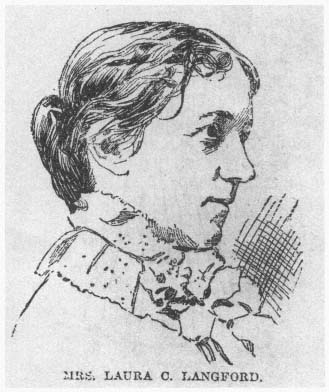
Fig. 14.
Laura Langford, founder of the Anton Seidl Society. Portrait from the
Brooklyn Daily Eagle .
Courtesy of the Brooklyn Historical Society.
whose president blamed Seidl's "too classical" repertoire. "The Seidl Society is in mourning," the weekly Spirit of the Times proclaimed.
As an iridescent dream, nothing could have been lovelier than a continuous, all year round season of Wagner, beginning at the Metropolitan; transferred to Coney Island; resumed at the Metropolitan, next autumn. Divested of their diamonds, free from the trappings of fashion, enjoying Wagner and clam fritters, Wagner and soft-shell crabs, Wagner and fish chowder, Wagner and bathing-suits, the worshippers of the Seidl cult could pass a summer of blissful harmony, and Pat Gilmore and his military band would be banished, for want of patronage, from the happy island. It was a dream worthy of the late king of Bavaria. But alas! it has not been realized. Herr Seidl went to Brighton Beach, and his orchestra and a full score of the Master's most intricate and diabolically difficult compositions. But, except a few curious members of the Seidl Society, nobody else would come, and the concerts for a few members did not pay.
Advertise yourself! Play popular music! Appeal to the general public! This was the brusque advice of the soulless, practical spectators who put up their unaestheti-
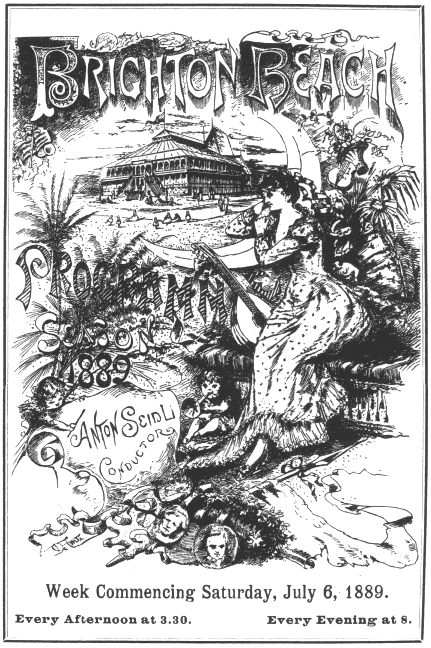
Fig. 15.
The Brighton Beach program cover for 1889, showing the 3,000-seat seaside music
pavilion.
Courtesy of the Brooklyn Historical Society.
cal money to pay the salaries of Herr Seidl and his band. It was a bitter Seidlitz powder to swallow; but necessity and empty benches know no law. . . .
Here is the light, airy, popular program which is expected to attract crowds to hear Seidl's concert, this evening: "1. Overture to the Flying Dutchman; 2. [Forest Murmurs]; 3. Lohengrin; 4. Siegfried Idyll; 5. Intermission of ten minutes; 6. Overture to Tannhäuser; 7. Song from The Meistersinger; 8. Good Friday, from Parsifal." If these selections do not bring the multitudes, nothing can. In anticipation of the result, the Iron Steamboats are running every hour; trains are starting on the Long Island, Bay Ridge, and other routes; the Brooklyn Bridge is open, and an annex boat connects Jersey City with the Coney Island lines. It is now 8 P.M. and the streets of New York seem deserted. Evidently everybody has gone to hear the triumphant Seidl's almost too trivial, amusing and blithesome concert. Yet there were rude skeptics who offer to bet that the ten minute intermission will prove the most popular part of the affair.[5]
The Seidl Society proved the rude skeptics wrong. Brighton continued to host concerts twice daily, with Seidl sharing the baton with his assistant, Victor Herbert. Attendance steadily increased. Some Seidl Society lecturers, such as the critic W.J. Henderson, were assisted by Seidl and his entire 60-piece ensemble—an innovation considered unique in the United States and Europe. The repertoire intensified its emphasis on new music—a gamut running from Chabrier, Massenet, and Saint-Saëns to Borodin, Dvorak[*] , and Richard Strauss. "The Americans must learn to know music better and to see the beauty of Beethoven and the great composers," Seidl intoned. "To that end I give concerts here and in New York. . . . I am not doubtful about the acceptance in America of the great German music—Wagner is already popular." Some Brighton regulars still grumbled. Other "disposed at first to scoff" remained—in the opinion of the Brooklyn Daily Eagle —"to pray."[6]
The grumblers prevailed in 1893 and 1894—the Brighton Beach Association withdrew sponsorship of orchestral concerts, and there were none. After that, the Seidl Society took over, and Seidl's concerts—now the Seidl Society Concerts—thrived as never before. Transportation improvements, including direct trains from Brooklyn Bridge and Fulton Ferry, made Brighton Beach more swiftly and cheaply accessible. Improvements to the pavilion enhanced protection against the weather. Seidl's evening concert was the event of the day. If one of his assistants led the opening numbers, his arrival was dutifully awaited. Then, unannounced, he swiftly picked his way to the podium through the stands of violins. He did not even nod acknowledgment of the thunderous applause before lifting his baton. The moment was electric.
According to the Musical Courier , Seidl's Coney Island audiences were quieter than those in New York's winter concert rooms. Smokers were banished to the back row and talkers subdued or excluded. The seashore locale, with its fresh air, was a tonic; audiences experienced no compulsion to "assume an expression of restraint." The crash of the breakers, which in earlier seasons had seemed a distraction, now seemingly enhanced Wagner's orchestral storms. The cheapest seats still
cost only 15¢ to 25¢—"ridiculously" little, in the opinion of the Musical Courier .[7] This, plus inclement days, plus the hotel's withdrawal of its former subsidy, plus the national economic depression, ensured that the society would lose money at Brighton Beach. Its deficits were covered by individual members.
The 1896 season was the longest ever—nine weeks and five days—and drew the biggest audiences. Seidl had effectively silenced calls for lighter programming. In fact, he was perceived to influence John Philip Sousa—who had taken Gilmore's place at Manhattan Beach—toward programming more "seriously." Then, on October 12, a "monster wave" struck. The highest tidal incursion in Coney Island's history, it split the storm-proof iron pier at West Brighton. Bathing pavilions, boardwalks, and shooting galleries were swept out to sea. Even before the storm had fully subsided, tear-stricken women rushed to the site. Where the Brighton Beach music pavilion had once stood, the wreckage looked like a lumber yard. Seidl never resumed his low-priced Brighton concerts.
The first stirrings of America's Wagner cult, paralleling Wagnerism abroad, had begun with great surges of German immigrants arriving at midcentury. A high proportion of these newcomers were middle-class professionals versed in the arts. This eventually became the impetus, in 1884–85, for an entire season of opera in German at the new Metropolitan Opera House, then only two years old. The chief conductor was Leopold Damrosch, who had known Wagner in Germany. The chief offering was the first respectable American performance of Die Walküre . But Damrosch died before the season was over.
Anton Seidl was hired to take his place. The six German seasons over which he presided were among the most remarkable in the house's history. The ensemble of those years arguably surpassed that of any company in Germany or Austria. Lilli Lehmann, who had taken part in the first Bayreuth Ring , was the leading soprano. Albert Niemann, the first Bayreuth Siegmund, was regarded by New York's critics—a more extraordinary group in this period than in any other—as the supreme singing actor of his time. Seidl would conduct three and four times a week. During one 1889 stretch, Lehmann sang all three Brünnhildes in the space of six days, plus Rachel in Jacques Halévy's La Juive (in German, of course). Wagner dominated the repertoire: 280 of the company's 490 performances were of Wagnerian music dramas. The entire undertaking was consumed by an implausible energy and idealism.
And yet the most profound impression was made less by the performances than by the operas themselves. Tristan, Die Meistersinger, Das Rheingold, Siegfried , and Götterdämmerung received their American premieres, all under Seidl's baton. And Seidl took Wagner on tour: to Utica and Rochester, Dayton and Cincinnati, St. Louis and Peoria.
Not the least remarkable aspect of this enterprise was its reception. The Wagner acolytes read books and librettos. They attended classes and lectures. Especially for wives whose husbands were away making money, and whose own pro-
fessional possibilities were suppressed by Gilded Age mores, Sieglinde's ecstatic pregnancy and Isolde's orgasmic love-death became necessary opportunities for intense emotional release. At the Met, the ladies were in love with Seidl; according to the Musical Courier : "Middle-aged women in their enthusiasm stood up in the chairs and screamed their delight . . . for what seemed hours."[8]
Seidl was indispensable to the Wagner cause, but—unlike his mentor Wagner—was no entrepreneur. He was "too modest," wrote his friend the critic Henry Finck. "He lacked the quality of Yankee 'push,' so necessary in this country."[9] It was Laura Langford who pushed Seidl into the center of Brooklyn's musical life and kept him there.
Until 1898, when it merged with New York, Brooklyn was a separate city of almost one million people—the third largest in the United States. With Seidl already entrenched at Brighton Beach, Langford envisioned Brooklyn becoming a year-round Wagner mecca. Like New York, Brooklyn was well-supplied with cultivated Germans. Thanks to Langford, it was quickly supplied, as well, with socialites whose cultural agenda stressed German opera. The resulting Wagner constituency was remarkably varied.
As early as 1889, Seidl at Brighton Beach had himself become a cult. A New York newspaper recorded these vivid impressions:
It is on the quiet days, the days when the week is new and all the Philistines and the madding crowd are gone, leaving only a wake of picnic litter behind them, that . . . the Seidl devotees are out in force. Perhaps Herr Seidl knows that he is adored. At all events his daily promenade about five in the afternoon is an event to see. With his white hat set well back on his head and the tails of his frock coat held at a meditative tilt by his right hand placed under them he paces deliberately along the paved walk which divides the hotel veranda from the pretty sweep of trim lawn which stretches away to the water's edge from the hotel. It is just barely possible that the gifted musician knows that hundreds of adoring eyes from hundreds of pretty faces are then bent upon him. . . . My impression is he does know it. But that may be blasphemy.[10]
Not all Seidl's adorers, the article continued, were "of the gushing type"—by which the writer meant women. Others were "serious and earnest lovers of music," who would "take their dinners solemnly" and "smoke a sentimental cigar"—in other words, cultivated gentlemen. Then, later in the week, the "true Seidlites" were swallowed up by gradually larger and noisier multitudes—many of whose number found their way either into the music pavilion or onto the nearby verandas and promenades, from which Seidl's orchestra was readily (and romantically) audible.
Obviously, laborers who escaped New York to ride the Steeplechase with wives and children were unlikely to wander east to the Brighton and Manhattan Beach preserves. Still, newspaper and magazine accounts leave no doubt that Seidl's Coney Island audience was notably diversified. And the same accounts stress that
Laura Langford's espousal of class diversity was no lip service—that her society's roughly 500 members encompassed a gamut of backgrounds and lifestyles.
A rough breakdown would have to include at least five categories of Brighton Beach listeners—all seated side by side in a circular structure unfitted with boxes and other marks of status. Especially after the Seidl Society undertook sponsorship in 1894, the best families of both Brooklyn and New York regularly attended Seidl's concerts—as they might the Metropolitan Opera, the New York Philharmonic, or the Brooklyn Academy. Some husbands came willingly on the weekend, joining wives and children who summered at the seashore; others were "overawed and somewhat sheepish looking."[11] The intellectual gentlemen who took solemn dinners were a second Seidl constituency. Third, there were the ladies of many degrees. For laboring women, the Seidl Society provided not only free or inexpensive railroad and concert tickets but childcare; special arrangements were made, as well, for ladies without escorts. Germans were a fourth distinct constituency, the only one to which symphonic resort concerts were not an utter novelty. Finally, there were the incidental patrons who had come to Coney Island mainly to swim or stroll along Surf Avenue.
It goes without saying that many upon whom Seidl cast his spell were newcomers to the music he conducted. "Hundreds of Brooklyn people got their first taste of fine music . . . , dropping in because [it was] cheap, and became regular patrons of the pavilion," the Brooklyn Daily Eagle observed.[12] Langford and Seidl testified alike that progress in musical taste was tangible in Brooklyn—that listeners who once considered a parlor ballad or a Strauss waltz "classical music" now stated their preference for this Beethoven symphony or that Wagner overture.
The Brighton Beach phenomenon amplified the singularity of what was taking place across the river in Manhattan. Gilded Age stereotypes notwithstanding, the Wagner cult gripped both Yankees and Germans, natives and immigrants. Startled observers repeatedly emphasized Seidl's appeal to all classes of Americans. And nothing startled more than the role women played in Brooklyn as initiators, organizers, and administrators. Langford called the Seidl Society a "new departure in the history of women's clubs." No American resort had ever offered a symphonic orchestra with any but—as Scribner's Magazine once put it—"the rheumatic instruments which a dancing master marshalled for his nightly dances in the hotel parlors." And the Seidl Society concerts were an American landmark in providing outstanding performances of important new music at low prices. "The capacity of the members of this society to hustle and sell concert tickets is what baseball managers call phenomenal," wrote the Brooklyn Daily Eagle in 1891.[13] Three years later, the same newspaper marveled:
[The Seidl Society] has maintained itself . . . with a perseverance almost of the Calvinistic saints until its name is everywhere known and famous. Businessmen would not assume such responsibility in the hope of accumulated wealth. They can scarcely be blamed, for business is business. But an organization of women will
sometimes courageously assume risks from which mere men will shrink. . . . They were prepared to accept [Seidl's] most advanced notions and inclined to advise him to go a step further. After some seasons of experience in New York, he learns in Brooklyn the worth of a woman constituency as contrasted with the disappointing worthlessness of a faint hearted following of men.[14]
In 1896, regarding what would be the Seidl Society's final summer season, the Musical Courier exclaimed: "Goodness knows what they do it for. Ordinary women would rather put the energy into new bonnets and send the money to the missionary Huyler. But these women are extraordinary, and some time after they are all dead the town will be putting up a monument to them as public benefactors, perhaps with a bas relief representing Herr Seidl waving his baton and a chorus of adoring angels about him."[15]
Today no such monument stands. Even books about Coney Island make no mention of Anton Seidl. But he was no marginal player at America's most famous playground. In the mid 1890s, Theodore Dreiser saw Broadway's first electric sign. Its 1,500 lights flashed seven messages, first in sequence, then all at once in a blaze of green, white, red, blue, and yellow. The sign read:
SWEPT BY OCEAN BREEZES
THREE GREAT HOTELS
PAIN'S FIREWORKS
SOUSA'S BAND
SEIDL'S GREAT ORCHESTRA
THE RACES
NOW—MANHATTAN BEACH—NOW[16]
For the Easter week evening of 31 March 1890, the Brooklyn Academy of Music was transformed. From the carriage canopy to the Montague Street entrance (this was the old academy in Brooklyn Heights, not the present one on Lafayette Street), carpets were laid between banks of flowers and plants. A temporary archway led to the foyer, itself remade as a series of drawing rooms hung with watercolors and engravings. In the auditorium itself, the boxes were decorated in green, red, and white. Green and white streamers looped from the ceiling to the walls. A white-and-silver cathedral scene—"the costliest scenery yet produced in the United States," according to Henry Hoyt of the Metropolitan Opera, who designed it—set the stage. An 84-piece orchestra, also on stage, was partly concealed by a garden array of fan palms, geraniums, and lilies. A banner upon the proscenium arch carried the word PARSIFAL in flowered green letters, and also a medieval S —the insignia of the Seidl Society, which had conceived and sponsored the event.
The huge audience (every seat and standing place was taken) was considered the most distinguished—in bearing, in attire, in pedigree—in the building's history. A New York World reporter took note of "the number of eager, intelligent faces, espe-
cially of the ladies," and "the interest with which the listeners followed the performance, many of them with scores on their knees." Ex-President Grover Cleveland was spotted, his wife at his side and a libretto in his lap. Others in the boxes included Brooklyn's Mayor Alfred C. Chapin and his wife, Dr. and Mrs. Lymon Abbott, and Mr. and Mrs. J. Pierpoint Morgan. Distinction of another kind was lent by the ladies of the Seidl Society, who had prepared themselves with books and lectures—most recently, a talk on "Parsifal , the Finding of Christ through Art." In fact, local libraries could not keep their Wagner books on the shelves. Music stores in New York and Brooklyn were specially stocked with Parsifal scores and Wagner treatises. A milliner named a new spring style the "Parsifal" toque.[17]
The music began at 5 P.M. , with an abridged concert performance of Parsifal act 1 and part of act 2. Then, at 6:30, came a 90-minute dinner break—incongruously catered by an Italian, who ran out of food. The performance resumed at 8 and lasted until 10, after which a reception was held for Anton Seidl, his wife, and the principal singers.
Henry Krehbiel wrote in the New York Tribune the following day: "It was evident that the music had been studied with great care and reverence, for the distinctness of enunciation, truthfulness of declamation and intensity of dramatic expression which marked the singing of the principals were greater than the audiences at the Metropolitan Opera House were privileged to hear during the season lately ended." According to Lilli Lehmann, who sang Kundry: "There was a Good Friday atmosphere. The place was transformed into a temple. . . . That the performance did not lack in devotion and dignity I can vouch for heartily."[18] Seidl was transported, and transported his players. Nothing he had previously done in New York was more effusively praised.
A final detail completes this account. Brooklyn was known as a city of churches. Its skyline, unlike that of New York, was a modest plateau, mainly broken by steeples and spires. Its parks were bucolic. Its better homes fronted quiet, tree-lined streets. Its neighborhoods shunned the grit and bustle of New York's Lower East Side. The Reverend Henry Ward Beecher presided in Brooklyn Heights. His sermons resonated with the aspirations of his affluent Anglo-American parishioners—and with the meliorism[19] of Wagner and of the Seidl Society, which organized Sunday morning services at Brighton Beach, and reserved Sunday nights for church and home life. Especially after the Metropolitan abandoned opera in German in 1891, Wagner found a Brooklyn haven from immigrant chaos. The New York World quipped of the Parsifal Entertainment:
When Richard Wagner was looking for an ideal town wherein to demonstrate his harmonic ideals he selected Bayreuth as a city that had not been contaminated by the songs of vulgar Italian melodists. So in these degenerate days the members of the Seidl Society, intellectual descendants of Wagner, let their eyes rest upon Brooklyn, . . . whose virgin senses were still unsullied by the low Italians who dealt in mere concourse of sweet sounds. Therefore it was that in the Brooklyn Academy of Music
was held yesterday afternoon and evening the first real Festspiel of the Devoted Wagnerites of America.
The same article observed:
One cannot but regret . . . that the beautiful churchly choruses had to be omitted because of the lack of time in which to train the singers. Whose fault this was we do not know. Probably it lies in the inability of the members of the society to sing the work in German. But English would, after all, have been the preferable language for the interpretation of the work to such a purely and characteristically American, intelligent musical audience as that of last night at the Academy.[20]
Juxtaposed with New York, Brooklyn was more "purely American," more a refuge for genteel Yankee Wagnerites, versus the world of singing societies and Bierstuben that enveloped Seidl across the river. It was no coincidence that the Seidl Society began with Parsifal , the "Christian" Wagner.
The success of the Parsifal Entertainment launched a series of six Seidl Society concerts at the Brooklyn Academy of Music—after which the society's Academy concerts became a mainstay of the Brooklyn concert calendar, complementing Seidl's summer activities at the beach. The society's first "winter" season began on 30 October 1890 with an all-Wagner program: the Lohengrin Prelude, The Ride of the Valkyries, "Forest Murmurs" from Siegfried , the Tannhäuser Overture, Wotan's Farewell, excerpts from Die Meistersinger ("In Eva's Praise"), Siegfried's Funeral March, and the Tristan Prelude, "Love Song," and Liebestod. The second concert, November 6, was all Liszt: Les Préludes , the First Piano Concerto (with Franz Rummel, who also played a set of solo pieces), Tasso, Orpheus , and the First Hungarian Rhapsody.
The repertoire for the 10-concert series eventually encompassed much more Wagner and Liszt, including a second all-Wagner night and a "Grand Parsifal concert." Grieg's Peer Gynt music was heard, as were Le Rouet d'Omphale by Saint-Saëns and Richard Strauss's Don Juan . Of earlier composers, Seidl programmed two Beethoven symphonies and excerpts from Fidelio , but only a smattering of Bach, Mozart, Schubert, and Schumann. There was no Handel, and hardly any Haydn. Conspicuously absent, as well, were celebrity soloists; they, too, would have vitiated Seidl's emphasis on the "Music of the Future." "Speaking in all earnestness," commented the Brooklyn Daily Eagle of the season's final event, "it ought to be said in dignity, in beauty, in loftiness of aim and fullness of fulfillment the concert has not had its equal in either New York of Brooklyn this season. . . . The ten concerts of the Seidl Society have been phenomenally successful. . . . They have also demonstrated most strikingly the capacity of women to labor in larger and nobler fields than ordinarily occupy their attention in the department of art."[21]
In fact, Seidl's Brooklyn repertoire—both at the Academy and at Brighton Beach—was singularly adventurous. In New York, with the Philharmonic, he was more prone to program old masters like Beethoven. In Brooklyn, the Seidl Society gave him free rein. No contemporaneous European concert series so concentrated
on Wagner, Liszt, Saint-Saëns, Berlioz, and other important new voices. Seidl was a contemporary music specialist.[22]
In addition to the main subscription concerts, the Seidl Society's winter seasons at the Academy offered young people's matinees, and working people's concerts for which tickets were distributed at churches and hospitals. A "popular concert" at the Claremont Avenue Rink attracted nearly 4,000 listeners at 50¢ a head. The orchestra for all these events, usually called the "Seidl Orchestra" or "Metropolitan Orchestra," included members of the New York Philharmonic and of the Metropolitan Opera orchestra. The conductor was always Seidl.
Democratic zeal was a constant motif. The Brooklyn Daily Eagle wrote of Laura Langford that she never "tolerated anything that savored of class or social distinctions." In fact, her fund-raising drives, which helped keep ticket prices low, stressed donations of 25¢ to $1.00. "Large contributions will of course be accepted, but if the desired sum should be raised by the donation of small amounts the society feels that it had accomplished a great work in reaching so many people."[23]
As a matter of policy, the Seidl Society never published a list of members. At the same time, membership conferred prestige on socialites who joined—and many did. Banquets and receptions in fashionable rooms were a part of the agenda. One of these, on 21 April 1894, was a fifth anniversary dinner—the occasion for what was believed to be Seidl's first speech in English. According to the Brooklyn Daily Eagle : "Anything more quaint than Mr. Seidl's imperfect pronunciation of our tongue, and his little translations of German idioms into English, it would be difficult to imagine. Almost every sentence was enthusiastically applauded, and a vast deal of unpreventable laughter mingled with the applause."[24]
The honeymoon between the Seidlites and their hero was only ended by his sudden death, at forty-seven, on 28 March 1898. His funeral, on the stage of the Metropolitan Opera House, was the most imposing ever accorded a conductor. The cortège, including a 100-piece band, found the route mobbed with people. Its destination was the Metropolitan Opera House, a scene of chaos. The vestibule had been clogged for an hour. Several women had fainted in the crush. One hundred fifty patrolmen had arrived to restore a degree of order, inside and out, before the house was opened a few minutes past midday, with six policemen stationed at every door. For fully ten minutes, the inrushing women formed a surging, smothering human mass. Many who lacked tickets gained entrance by clasping hands with ticketholders. Within fifteen minutes, every downstairs seat was occupied. The crowd poured upstairs. Standees were packed five and six rows deep.
The cortège arrived at the Fortieth Street entrance at 1:15. The pallbearers conveyed the coffin into the awesome horseshoe auditorium. From the railing to the stage, the pit had been draped in black and surrounded with masses of flowers. The casket was placed on a tall catafalque marking the conductor's desk. On the stage, set as a cathedral, the New York Philharmonic performed a program including the Funeral March from Götterdämmerung . According to Huneker, who was not a sentimental critic, Seidl's funeral "was more impressive than any music
drama ever seen or heard at Bayreuth. . . . A genuine grief absorbed every person in the building. . . . It was overwhelmingly touching."[25]
The press reported the next day that, among the downstairs mourners, women had outnumbered men twenty to one.
In the latter part of the nineteenth century, especially in its final decades, women emerged—energetically, even aggressively—from the shadows of anonymity to assume new public leadership roles as reformers and culture bearers. Dated conventional wisdom holds that an eviscerated, "feminized" culture pervaded the parlors, libraries, and churches of the Gilded Age. The domain of prim women and effete clergymen, it inflicted piety and parochialism. In The Feminization of American Culture , Ann Douglas writes of "the active middle-class Protestant women" who shaped literary affairs:
[They] did not hold offices or own businesses. They had little formal status in their culture, nor apparently did they seek it. They were not usually declared feminists or radical reformers. Increasingly exempt from the responsibilities of domestic industry, they were in a state of sociological transition. They comprised the bulk of educated churchgoers and the vast majority of the dependable reading public; in ever greater numbers, they edited magazines and wrote books for other women like themselves. They were becoming the prime consumers of American culture.[26]
Elsewhere, Douglas describes ladies confined to "a claustrophobic private world of over-responsive sensibility."[27]
The Seidlites did not run a profitable business. They were not "radical reformers." They did consume culture. Their sensibility could be called "claustrophobic" and "over-responsive." And yet this portrayal gets them wrong.
The feminine culture-bearers undertook "holy causes," according to Douglas. Culture was a surrogate religion, a "redemptive mission." So it was for the Seidlites. But did their Wagner mission also "propagate the potentially matriarchal virtues of nurture, generosity, and acceptance"?[28] The liberal minister, Douglas says, "shaped his female parishioners' taste and fantasies."[29] So did Seidl, the high priest of Wagnerism, mold his flock. But did his tastes and fantasies, like the liberal minister's, embody indecisive, emasculated authority?
In short: Does Wagner stand in for Douglas's feminized culture? Is he, for instance, part of the parlor repertoire—a composer for the spinet to which Gilded Age daughters and wives gravitated? It is true that Seidl Society programs included advertisements for pianos and sheet music, and that the English-language versions of the "Bridal Chorus" from Lohengrin and "To the Evening Star" from Tannhäuser both enjoyed some currency as sheet music. But these were rare exceptions, not typical instances.[30] Essentially, Wagner was too big and complex for parlor dimensions, too rich for parlor diets. Of the novels that feminized culture, Douglas writes that they confused literature with religion—which fits the Wagner
case. But she also writes of their "small scale," "intimate scenes," and "chatty tone"—none of which fits at all. The heroines of these books "did not act or observe; they FELT ."[31] Senta, Fricka, Brünnhilde, Isolde, Kundry—these are creations as remote from Martha Finley's once-famous Elsie Dinsmore as Electra or Medea. The triumph of sentimentalism in nineteenth-century America is never clearer," Douglas concludes, "than when one realizes the relatively small number of romantic writers and theologians, male or female, this country produced."
For, however one defines the romantic impulse . . . it clearly involves a genuinely political and historical sense, a spirit of critical protest alien to the sentimentalism so often confused with it. Romantics such as Goethe, Schiller, Keats, Shelley, Coleridge, or even Byron never lost touch with ethical concerns as the mainspring of their inspiration. . . . The unmistakable exaltation of the self found in the works of the romantics was a desperate effort to find in private resources an antidote and an alternative to the forces of modernising society; it was not, like sentimentalist self-absorption, a commercialization of the inner life.[32]
To this list of Romantics, we may add the name Richard Wagner—a Romantic not produced by America, and yet energetically and meaningfully appropriated.
Especially for the antebellum and early postbellum decades, Douglas's insights remain indispensable. But she ignores the fin-de-siècle ferment of which the Seidl Society was part. Challenging Douglas, Kathleen McCarthy, in Women's Culture , portrays women playing marginal or ambiguous roles as culture custodians, not fully at home in male houses of power, but seeking to live there. Truer authority, she argues, resided in "cadres of male professionals and elites" who founded and managed the great Gilded Age museums. Late in the century, when women emerged as influential cultural philanthropists, they tended to support "new aesthetic priorities." Bypassing the mainstream museums, foundations, and universities, women sponsored their own voluntary associations. They were specialized nonprofit entrepreneurs, who relied on infusions of volunteer time and often made do with limited financial resources.[33]
Although McCarthy concentrates on the visual arts, she glancingly observes that the Philadelphia Orchestra formed a women's auxiliary to promote out-of-town concerts and find new subscribers through women's groups in other cities and states, and that the Chicago Symphony similarly organized tours through women's clubs in other cities. In fact, women founded the Cincinnati Symphony in 1895. Anna Millar managed the Chicago Orchestra from 1895 to 1899. Jeanette Thurber sponsored Theodore Thomas's young people's concerts in 1883 and founded the American Opera Company and the National Conservatory in 1885. According to Thomas, Midwestern advances in musical understanding were due "almost wholly to women. They have more time to study and perfect themselves in all the arts. They come together in their great clubs and gain ideas."[34] These clubs were part of a vast and varied network espousing a variety of causes, including Christianity and temperance, music and literature, equality of suffrage
and education. In effect, they empowered women who possessed scant power as individuals. Typically, they invoked the language of religion—of women's moral suasion—in advocating culture and reform. At the same time, they advocated intellectual self-improvement, presenting classes and lectures for the clubwomen themselves. They tapped into creative energies previously dormant amid narrow domestic duties. After 1880, legions of dynamic clubwomen, of whom Jane Addams is today the most remembered, burst into national prominence. The sum total, writes Anne Firor Scott in her history of women's associations, was a formidable social movement, long hidden from view because it lacked the public edifice of a Metropolitan Museum.
Since the early days of the Republic women have organized to achieve goals that seemed to them important. In retrospect it is clear that such women, constrained by law and custom, and denied access to most of the major institutions by which the society governed itself and created its culture, used voluntary associations to evade some of these constraints and to redefine "woman's place" by giving the concept a public dimension. Many years later a participant summed up the matter succintly: "Suddenly they . . . realized that they possessed influence; that as organizations they could ask and gain, where as women they received no attention."[35]
Addressing the vexing issue of "social control"—the argument that one abiding, if unstated, purpose of the reform movement was to keep the underclass in line, Scott writes:
I think the evidence does not support any simple hypothesis. The [clubwomen], though often, perhaps nearly always, conscious of the difference between "our own people" and other people, did not always draw distinctions in terms of economic or social class. Their world might be divided into the saved and the lost, the abstemious and the intemperate, the chaste and the licentious, native born and immigrants, workers and loafers, those who cared about children and those who exploited them, the worthy and the unworthy—and they did not assume that these categories were necessarily connected to class. There is a difference, too, between trying to promote social order by keeping people "in their place," as the phrase went, and trying to help them develop characteristics that—if accomplished—might admit them to the middle class.[36]
Although, like McCarthy, Scott barely mentions music, the relevance of their findings to the Seidl Society need not be belabored. With its public concerts, and lectures and singing classes for members, the Seidl Society was a voluntary association dedicated both to cultural reform and self-improvement. As a nonprofit entrepreneurial institution, it espoused new music, not the canonized masters. Perhaps, in subconscious ways, its workers' concerts imposed symphonies and other upper-class refinements to civilize the moody and disordered masses. On the surface, it cheerfully aspired to reach women of all classes. There can be no doubt that New York's musical high culture would have been tangibly less progressive, tangibly more insular, had no Seidl Society existed. And the Wagner cult as a whole, with its additional immigrant constituency—with Lilli Lehmann's Isolde and Brünnhilde at the Met,
with Coney Island's Wagner nights emblazoned on Broadway's first electric sign—more contradicted than reinforced the notorious parlor culture of the Gilded Age.
Laura Langford herself clinches this perspective. What was she like? Her books and letters provide answers whose contradictions define her transitional fin-de-siècle role.
The books genteel women wrote fell into two principal genres. One was sentimental fiction. The other was sentimental biography—a hortatory genre innocent of the larger play of history. Langford's books are entirely of this second type. Her 60-page Adelaide Neilsen: A Souvenir (1885), for instance, is a "labor of love" whose purposes include revealing "the degree to which [Neilsen] possessed the power of recuperation." Neilsen was an illegitimate child. She ran away from home and worked as a barmaid prior to her regeneration as a famous actress. Offstage, she was "a very lovable and loving woman," "sweet and reverent; strong and earnest of soul." Of her early death—she was only thirty-two—Langford remarks that "doubtless it was best" for her to expire "in the fullness of her prime."[37]
Langford's Ladies of the White House (1870) is a 700-page survey of every first lady from Martha Washington to Mrs. Ulysses S. Grant—"short and simple annals of virtuous and exemplary women, who occupied the highest social and semi-official position known to their country, one replete with matter to point a moral or adorn a tale." Andrew Johnson's invalid wife, whom Langford knew personally, is portrayed with intense affection as a model of tenacious self-improvement. Another heroine of the book is Mrs. Rutherford Hayes, who was college-educated and took an interest in issues outside the family. "Her strong, healthful influence gives the world assurances of what the next century's women will be." And yet Lucy Hayes's feminist contemporaries rejected her docility and deference to her husband's career.[38]
Langford's other major volumes are her 650-page The Mothers of Great Men and Women, and Some Wives of Great Men (1883) and the 780-page Famous American Fortunes and the Men Who Made Them (1885). She was also the author of shorter books about Charlotte Brontë and General O. O. Howard, the latter a Christian soldier friendly to freedmen and Indians. She was the editor of the letters of General Charles George Gordon, of portraits of twenty notable. American women, and of a volume of religious poetry. One aspect of this output disturbs its prevailing complacency of tone and outlook: the advocacy of greater roles for women. Langford even betrays annoyance with her noble first ladies: "not a few strong, gifted natures have been content to lead automaton lives in that famous old mansion." Especially in the United States, she observes, wives of "public men" are "left behind" and "doomed to slavery of the most repulsive kind during perhaps the best years of life."[39]
It is in her letters to Anton Seidl, however, that another Langford completely emerges. The very antithesis of "automaton" or "slave," she sheds her florid style and stands behind no man. In every sense, she is all business, ascertaining how much to pay the musicians, how to transport music and instruments, what
arrangements are needed for rooms and meals at the hotel. Back salary' is due. The scheduled soloist has canceled. Inevitably, these practical questions broach artistic issues. "I swear that this is the only time that this will happen," Seidl writes on 8 November 1893, apologizing for the necessity of an extra rehearsal. On 15 May 1894, Seidl counsels as follows regarding a possible violin soloist: "I think Miss Maude [sic ] Powell can be had, she wrot [sic ] to me, and will be very moderate in salary. SHALL I WRITE TO HER ? Otherwise let out her name and put in Liszt's Préludes ." Sometimes Seidl instructs Langford to choose a soloist herself.[40]
A particularly revealing episode in their relationship occurred in July 1896, when the Brighton Beach orchestra engaged its first and only female member, a harpist identified as Miss Casuri. Some in the orchestra objected that she was not a member of the union—which, as a woman, she could not be. Miss Casuri complained that she was being paid much less than her male predecessor. Sigismund Bernstein, who contracted the players on Langford's behalf, reportedly threatened to fire the new harpist if she refused to keep quiet. But she spoke to Langford, who instantly and publicly took her side. Langford told the press she had put the matter in Seidl's hands: "I trust him." The affair died down as quickly as it had erupted: Miss Casuri stayed.
Langford's surviving correspondence with Seidl is at all times brisk and unadorned. She addresses her letters "Dear Mr. Seidl" and signs them "Sincerely." Seidl, who always writes in creditable English, calls her "Mrs. Langford." What personal relations lay behind the formal surface of these exchanges we can only guess. Langford unquestionably stood on equal footing in Seidl's world of art and artists. Lilli Lehmann, in a letter to Langford, signs herself "Lilli." Seidl's wife Auguste, writing to "Mrs. Langford," calls her "my best friend . . . you have my love for ever."
Well-bred females of the Gilded Age wrote romantic biographies like Langford's. They espoused Christianity, women's suffrage, and uplift through art much as she did. Hypersensitive, rarified, they were held in awe by their husbands and other male admirers. Langford was a businesswoman, a nonprofit impresario without whom no Seidl Society concerts could have existed. She did not shrink from the public gaze when Seidl acknowledged her with bows and bouquets, and the Brighton Beach audience "applauded wildly." Once, in 1893, Seidl proposed to Langford that his New York Philharmonic perform regularly under the auspices of the Seidl Society. "You will be then the Queen of the musical world in Brooklyn."[41] It never happened, but Langford must have seemed to many a queen. That is one possible explanation for the abuse the Musical Courier hurled at the Seidl Society on 28 October 1896:
There has always been lax management, the press has not been treated with the courtesy that insures attention, the whole scheme has been retained and carried on for the effort at personal aggrandizement of a few enterprising people, and the endeavor to establish popular classical orchestral concerts at a low price of admission has been defeated because of the internecine struggles of its adopters; because of the inaccessibility of the place in which they were given, and because of the narrow-
minded policy which dictated the display of the names of a few women who sought social supremacy as the total object of their efforts . . .
Never before in America has there been such a series of programs as those at the Brighton Beach Musical Hall, considering the fact that these were summer concerts. Never before has there been spent so large a sum of money . . . with so little net results to the good of art.
Nothing ever published in the Brooklyn Daily Eagle supports such an attack—but then the Eagle was for many years Langford's employer. It bears considering that denunciations of women who violated genteel codes were far from uncommon by 1896.
One signature fin-de-siècle phenomenon was the New American Woman. University-educated, sexually independent, she denied that fulfillment required marriage. She spoke of sexual desire as a beautiful and pleasurable impulse. She advocated a future world of sexual equality: of access to the "masculine" professions, of level camaraderie between men and women. She sometimes wound up celibate, lonely, and disappointed.
Ultimately, after 1900, the New Woman discovered a place within the modernist movement. In particular, dance, shedding the stigma of degeneracy, became an outlet for spirituality and self-expression. Modern dance, America's first native high art form, knocked culture off its pedestal. For Ruth St. Denis and other dance pioneers, art became praxis.
In this revolutionary context, Laura Langford seems a diligent worker on the sidelines of art, the New Woman's mother. She no more resembled St. Denis, born in 1880, than the Wagner cult embodied modernism, whose delayed American advent awaited the turn of the century. But Langford's Seidl Society shatters stereo-types of "feminized culture." On Wagner nights, the salty ocean breezes at Brighton Beach swept aside memories of the parlor spinet.
The legacy of the parlor lingered, however. Eleven years after Anton Seidl's death, Gustav Mahler became Seidl's most distinguished successor at the head of the New York Philharmonic. Concomitantly, the Philharmonic was reorganized by a group of philanthropic socialites. These "guarantors," headed by Mrs. George R. Sheldon, pledged to cover the orchestra's deficits in conjunction with expanding its activities. Mrs. Sheldon was no Mrs. Langford. When Philharmonic audiences dwindled, the lady guarantors began bickering with Mahler over his salary. They tried to supervise his programming. In the eyes of Mahler's wife, "he had ten ladies ordering him about like a puppet."[42] Mahler was already an ill man. His condition worsened. He died two years after his New York appointment.
In America, where the state stands aside, the affluent arts patroness has played a special role. Had Mahler enjoyed the services of a Laura Langford, of a "Mahler Society," the New World might have taken fuller advantage of his gifts, and he of ours.