
The Dialectic of Foi Social Process
Throughout the last four chapters, I have assumed (with considerable anthropological precedent) that a basic orientation exists among the symbolic usages of any people and that this orientation is a function of the workings of the symbols themselves. The function can be simply stated: the conventional usages define, in and of themselves, what we would call (in semiotic rather than sociological terms) the moral or collective realm. As opposed to conventional usages, there are others whose construction impinges upon these semantic (or syntagmatic) domains. Although the meaningful properties of conventional usages require that they be treated as metaphors in some sense, I shall go on to assume that nonconventional usages may be treated as a cultural order in contradistinction to the conventional. This self-structuring orientation that I am assuming thus replicates Geertz' notion of a dialectic between "ethical" and cosmological ("worldview") realms such that each "emerges" from the other (1973). Dumont's (1965) discussion of the individual versus the collective suggests, furthermore, that the nonconventional can be opposed to the conventional as a differentiating function. Marshall Sahlins (1979) has similarly argued that individual experience and cultural meaning are mutually constitutive, describing them as respectively encompassing referential (semantic) and metaphoric signification.
Given this opposition, the question arises of the relation between the two realms, which becomes the relation between conventional (that is, literal, nonmetaphoric) and nonconventional (metaphoric) usages. I have defined the Foi realm of conventional usages as consisting of a set of images that depicts a flow of vital and personal energies and forces. Symbolically opposed to this domain are the idioms of human action and intention. For the Foi, this domain comprises the efforts of men and women to halt and redirect such vital forces into morally appropriate channels so as to create the artifice of human sociality. In chapters 3 and 4, for example, having outlined the content of the conventional distinction between male and female realms, I described how this distinction is maintained by the ongoing attempts of men to control sorcery material and to ward off illness. In chapter 61 observed that the Foi geographical environment of place names is recreated in a socially relevant form through the innovative medium of mourning songs.
As I noted, the metaphoric quality of these processes rests on the fact that they involve the substitution of one kind of symbolization by another. But I have also emphasized that what we might label as Foi kinship is defined not by genealogical criteria but by the bridewealth networks a person participates in. And since the exchange of wealth items that forms such networks is also a matter of substitution—of wealth objects for human vitality and continuity—then the processes of Foi social structure should also be susceptible to this kind of tropic analysis. I therefore now wish to analyze the sequences of the Foi marriage and mortuary cycles, described in chapter 5 as the progressive alternation between what for the Foi are innate conventional distinctions and the opposed social processes that serve to maintain such conventional orders.
All major social process for the Foi begins with the conventional separation between men and women, or between male and female domains. In figure 6, I label this as the starting point A of a dialectical alternation I now describe. The daily life of the Foi represented in one of its most important aspects the intersection of male and female productivity, as I suggested in chapter 3. When bridewealth items are given, however, the focus is shifted from this general distinction between the sexes to a more specific one between wife-givers and wife-takers. The initial negotiations of betrothal and bridewealth are the affair of the immediate kinsmen of the bride and groom so that at this stage, the distinction between wife-givers and wife-takers is one
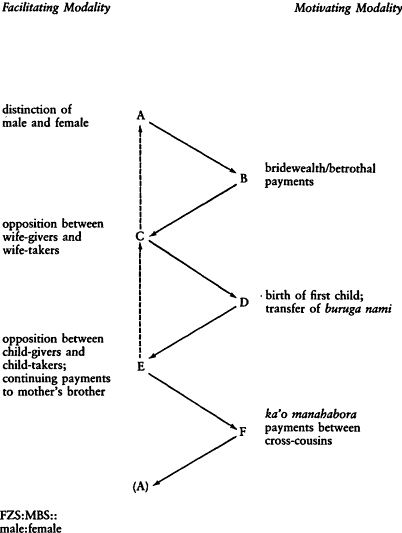
Figure 6.
Tropic Alternation in Foi Secular Marriage Sequence
between individuals rather than larger social units such as the local clan or lineage. Since affinity and its attendant behavioral restrictions begin with the acceptance of the betrothal payment, it is the transfer of wealth that creates the affinal alliance. I will label the giving of the betrothal and bridewealth payment as B in figure 6, and the resulting affinal distinction between wife-givers and wife-takers as C .
In terms of my argument, it is necessary to view these two distinctions as analogous. In the bridewealth transfer, the wife-takers give male items of wealth and wife-givers provide the bride and her attendant gifts of female domestic implements and clothing (the arera gifts). The two parties to a marriage thus represent themselves as provisioners of male and female products, in a manner similar to which men and women provide each other with specific sex-linked foodstuffs on a more regular basis. Though the two kinds of transfer are differentially contextualized, they are analogues of each other at the level of cultural analysis with which I am concerned. I have thus drawn a line between A and C in figure 6 to show that, in the act of transferring bridewealth, the conventional distinction between the sexes has been temporarily supplanted or substituted by that between affines, and that the two therefore become metaphors of each other.
I identify the next stage in the sequence, which I have labeled D , as the final transfer of the buruga nami , the bridewealth pigs that the wife-takers give upon the birth of the bride's first child. Since the Foi say that a person is equally the child of both his father and his mother's brother—in other words, since he is related consanguineously to both his father's and his mother's group—the conventional distinction between affines has become correspondingly ambiguous. Thus, although the buruga nami is part of the bridewealth, the Foi say that it is given only when the first child is born. In other words, the buruga nami is given by a "child-taker" to a "child-giver," thus once more shifting the meaning of the conventional distinction between affines. The men formerly related as wife-takers and wife-givers are now additionally related transitively through the child they both consider their own. The payments that pass from wife-taker to wife-giver at this point become matrilateral payments, given to ensure the health of the child by mitigating the spiritual illness that can be sent by the child's mother's brother. These payments are made by the sister's husband to the wife's brother but are called "payments to the mother's brother." I label this stage in the sequence E . The line I draw between E and C depicts the symbolic transformation of affinity into its analogue, matrilaterality.
As I described in chapter 5, a man who feels he did not receive enough bridewealth for his sister can become the unwitting agent of the matrilateral sickness that attacks his sister's child in such cases. Under the same reasoning, a man can also demand pay from his father's sister's son (FZS), especially upon the marriage of the latter's sister. A man and his cross-cousin thus may initiate ka'o manahabora exchanges of (female) foodstuffs and (male) wealth items in order to reimpose the original affinal interdict that existed between their fathers, who were brothers-in-law to each other. As I have already noted, the Foi say that cross-cousins are "like brothers," but unlike brothers they belong to different clans, and unlike brothers one's mother's brother's son (MBS) has the ability to send illness to his FZS if he is dissatisfied with the bridewealth he received for the latter's sisters. Yet because they are like brothers—in other words, because their parents were siblings—cross-cousins call each other's spouses by the same terms they call their siblings' spouses. The relationship between cross-cousins thus combines both consanguinity and affinity: their parents are cross-sex siblings, but they are also brothers-in-law. In the cross-cousin relationship, the original interdict that separated male and female and wife-giver and wife-taker has been dissolved, or combined into one analogue.
The initiation of ka'o manahabora payments that I identify as point F in figure 6 serves to return the sequence to its original distinction between male and female, since the two cross-cousins give male and female items respectively, and since one's cross-cousin can cause kumabo illness, which the Foi classify both etiologically and symptomatically along with women's menstrual illness.
In other words, what began with point A as a clear-cut division between male and female domains becomes, through the successive differentiations that the Foi make in marriage and childbirth, a sum-mating analogue of the normatively opposed principles of bisexuality, affinity, and consanguinity. Indeed, being merely different refractions of a single analogical social differentiation, they are all metaphors of each other. The progressive explication of this analogy can be defined as symbolic obviation. The sequence I have described begins with the literal or conventional separation of men and women and ends by transforming this literal or semantic opposition with a metaphorical one between male cross-cousins, who are figuratively like male and female to each other. In other words, the "symbolic" rather than the "factual" nature of the distinction between male and female has been
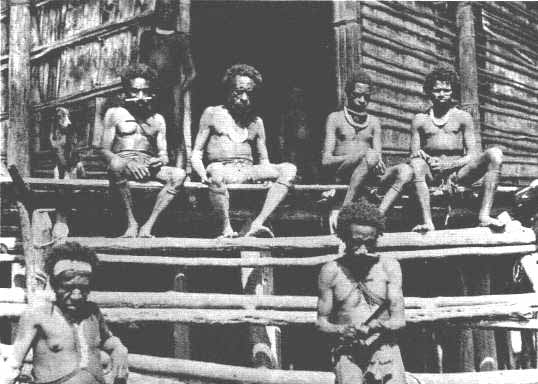
Entrance to longhouse, 1939 (photo by F. E. Williams)
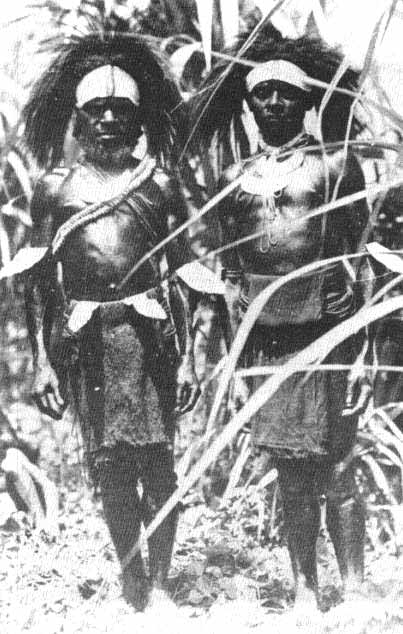
Foi men, 1939 (photo by F. E. Williams)
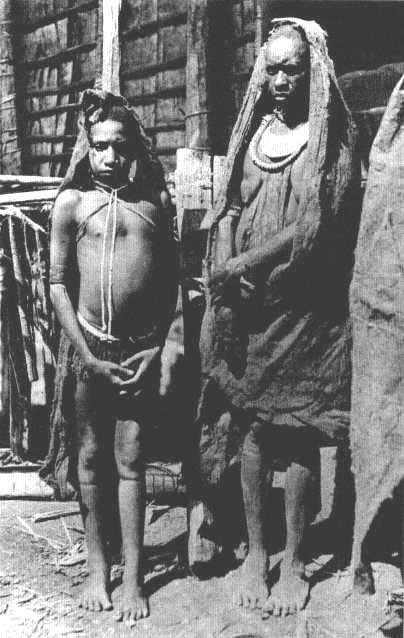
Foi women, 1939 (photo by F. E. Williams)
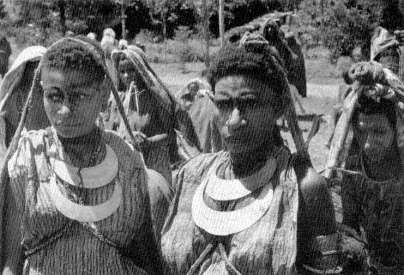
1979: Foi women in ceremonial dress: pearl shells and painted chest cloths (fefa'o kosa'a)
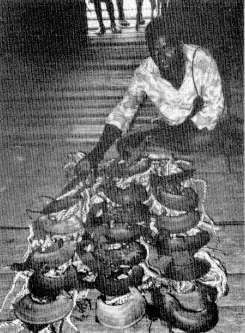
Wa'abu, a head-man of Barutage, displays the
bridewealth received for his daughter, Yebinu
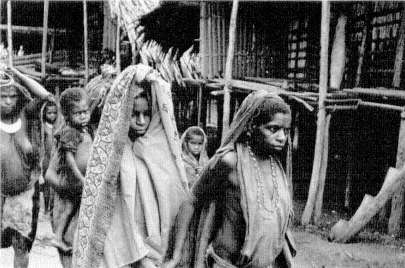
Sumabo of Hegeso leads her co-wife's daughter, Fu, to the house of her
husband-to-be
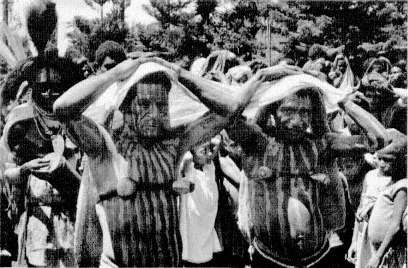
The transvestite i~ ka of the Usane Habora curing ceremony
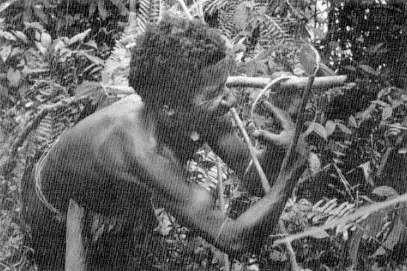
Horehabo of Hegeso demonstrates the procedure in constructing a cassowary snare
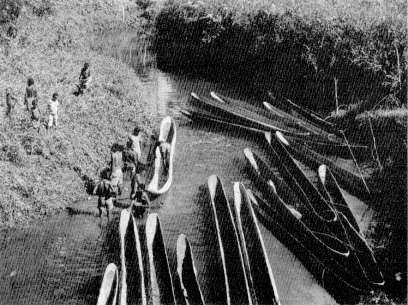
Canoes along the Faya'a River next to Hegeso longhouse
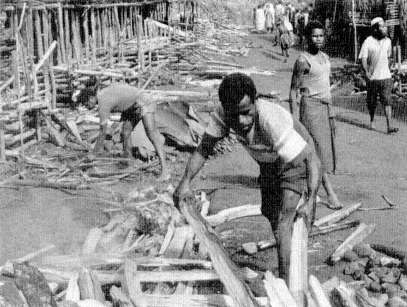
Heating stones for the earth oven prior to Hegeso's Dawa, December 1984
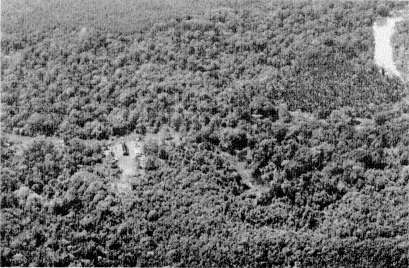
Baru longhouse, facing the Baru River
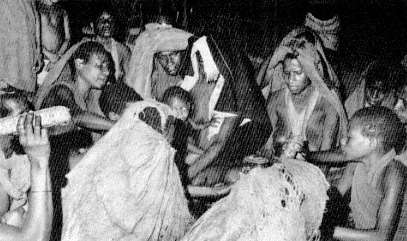
Women mourn over the corpse of Iraharabo in the Hegeso longhouse
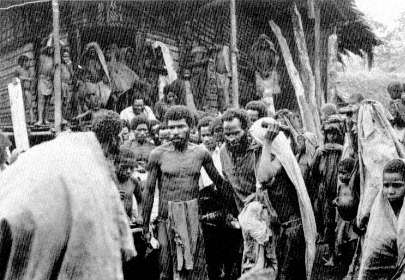
Men remove the body of Iraharabo, from the Hegeso longhouse surrounded by mourners
rendered apparent or "obvious," for it now encompasses both the relationship between affines and between (certain types of) consanguines.
If obviation concerns the relationship between literal (semantic) and metaphorical usages, then, given the assumptions I have outlined in the beginning of this chapter, it can also be defined as the mutual creation of the conventional (or collectivizing) and nonconventional (or differentiating) cultural realms as I have defined them for the Foi. Referring to figure 6, it can be seen that points A, C , and E represent the transformation of the opposition of male and female into wife-givers and wife-takers, then child-givers and child-takers, and finally back to the analogically intersexual opposition between cross-cousins. Points B, D , and F , by contrast, represent the transfers of wealth that impel the former transformations: betrothal and bridewealth, the buruga nami , and finally ka'o manahabora. B, D , and F therefore represent the imposition of categorical oppositions in Foi social life, while A, C , and E represent the conventional distinctions that result from them. Following Wagner (1978:47-48), I will refer to points A, C , and E as the facilitating (conventional) mode of the sequence, and to points B, D , and F , the tropic constructions that obviate the former, as the motivating (figurative) mode. A more accurate depiction of this tropic alternation would fold the sequence back upon itself so that the obviation of F leads back to the starting point A , as I have illustrated in figure 7. The resulting ternary figure allows one to view schematically the preceding analytic sequence as a series of interlocked triads, ABC , CDE, and EFA . Points A, C , and E are respectively the theses of the triads they initiate and the syntheses of the preceding ones.
However, I now wish to reconsider the significance of point D within this sequence. Recall that unlike the bridewealth pearl shells and cowrie, the buruga nami or bridewealth pigs are shared by all members of the bride's paternal and maternal groups respectively. It must also be noted that unlike shells, pigs have a male and female component, the external flesh and internal organs respectively. This distinction, however, is not given normative expression in the division of the bridewealth pork, since men and women share both kinds of meat without restriction. Therefore, D negates or obviates the original male-female distinction of A , while at the same time the birth of the child it represents serves to render ambiguous the distinction between wife-givers and wife-takers. It is significant in this respect that, unlike the Daribi and many Eastern Highlands groups, the Foi do not artic-
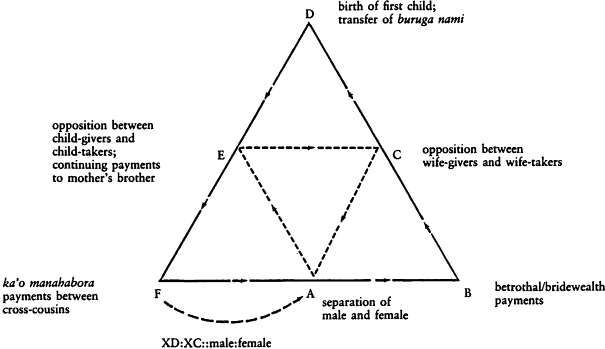
Figure 7.
Obviational Sequence of Foi Marriage Cycle
ulate the contrast between maternal and paternal procreative substances as an idiom of filiative asymmetry.
The obviation of A by D , on the one hand, thus depicts the moral implications of the analogy between the differential provisioning of male and female vegetable staples and the undifferentiated sharing of male and female meat: that maternal and paternal substance relate individuals equally and that the distinction between male and female procreative substances must not be made a model for asymmetrical filiative relations. The relationship between points E and B , on the other hand, extends the implications of this point further, showing that asymmetry in social relations should be confined to the parties to the marriage, and not to the offspring. The obviation of B by E thus depicts the fundamental identity between bridewealth and matrilateral payments that I have already elucidated. Finally, if F is contrasted with C , it can be seen that the end result of the affinal interdict is the paradoxical or analogic brotherhood of cross-cousins: consanguines or "sharers" who are nevertheless impelled by a residual affinity to make ka'o manahabora payments involving the exchange of male and female items. The Foi marriage sequence therefore begins with unrelated wife-givers and wife-takers exchanging male and female objects and ends with consanguines doing the same. Consanguinity and affinity thus become analogues of each other, and it is in this analytic sense that I define obviation.
The second example I describe is the Foi mortuary sequence that I analyzed in chapter 5 and which is in all respects an inversion of the normal Foi marriage cycle. When a man dies, the distinction between the living and the dead is substituted for that between wife-takers and wife-givers (point A in figure 8). The affinal relations existing prior to this death are quickly severed by the death payments made between affines linked by the deceased (B ). This motivates the community to reorient itself in opposition to the ghost (temporarily abrogating the conventional male-female distinction normally characteristic of the community), and all men and women partake of the cooked meat during the Nineteenth Day feast from which the ghost is excluded (C ). Implicitly, as I have shown in the line between C and A , the distinction between the ghost and the living has been substituted for that between men and women. The next step marks the beginning of the return of the community to its normal secular state, as the men and women separate, the men to assume identification with the ghost in the bush and the women staying in the village to care for the corpse (D ). In
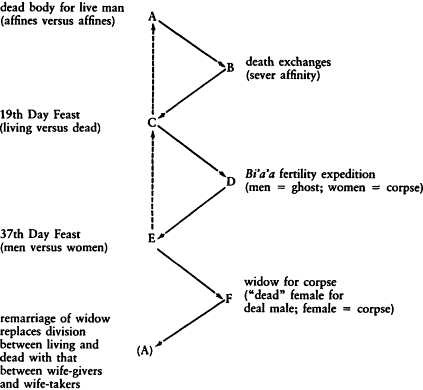
Figure 8.
Tropic Alternation in Foi Mortuary Cycle
relation to A, D marks the turning point in the obviation sequence: the reimposition of a male-female dichotomy for the original affinal opposition dissolved by death. It is consistent that the Foi represent this in terms of the essentially sexually bivalent composition of the corpse itself: the male spirit and jawbone and the female corpse or external flesh (which itself constitutes a metaphor of the separate male and female contributions to conception).
Upon their return to the village, the men hold their own feast (E ) from which they exclude the women, emphasizing their identification with the ghost brought about during the Bi'a'a hunting expedition. The men reestablish a total separation of male and female as the means of dispatching the ghost to its proper afterworld; thus E obviates B . Similarly, the death payments severed the previous affinal relationships among the deceased's kin for the same purpose: to separate or isolate the widow. When the feast is over and the men have been successful in ordering the ghost to take up residence in the afterworld, the widow is released from confinement and allowed to view the bones of her dead husband, after which the bones are permanently removed to the burial ossuary. As the community of men and women offered the bones to the ghost in the Nineteenth Day feast urging it to leave the living community, so the men and women now offer the dead man's bones to the widow (F ), forcing her to reassume her place in the society of the living. The sequence began with the disposal of a dead man and ends with the figurative rebirth of a live unmarried woman, and hence the resumption of the normal secular cycle of marriage and bridewealth (see figure 9).
However, it must be noted that if the widow resumes her place among the living, she does so in significantly altered form, for she wears the widow's kaemari mixture and is considered unmarriageable for a period of time due to the jealous interest her dead husband's ghost maintains in her. The kaemari mixture in fact is designed to simulate the offensive odor of a decomposing body: she has become the corpse, so to speak, an image which reveals that the distinctions between the living and the dead and male and female have become collapsed within a unitary ritual expression. Likewise, those affines linked through the dead man now prefix their affinal terms of address with denane , "ghost," so that they are to other normal affines as the dead are to the living. The distinctions between the sexes, between affines, and between the living and the dead have been established as analogues of each other.
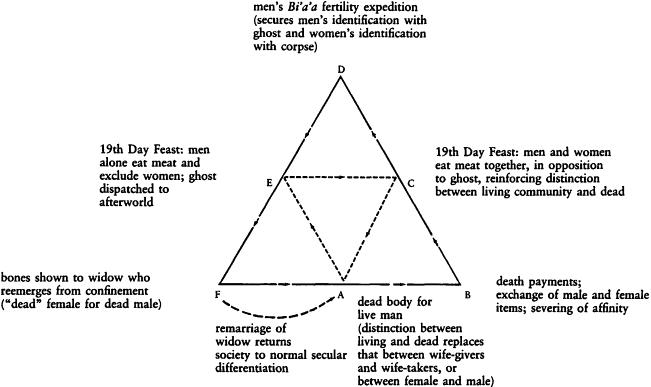
Figure 9.
Obviational Sequence of Foi Mortuary Cycle
The Foi sequences of marriage, the creation and obviation of affinity and consanguinity, the recreation of the conventional flow of male and female productivity following death, are all instances of processes that span months or years. However, this should not mask the fact that as a series of successively preemptive metaphors, they are a form of discourse, as I am employing the term. My depiction of them is thus a purposeful condensation of the relevant tropic substitutions and turning points so as to demonstrate the semiotic and discursive foundation of these most important Foi social phenomena. But the tropic creation of the Foi moral universe is by no means limited to these social processes alone. In their stylized and compacted genre, myths provide miniature examples of the effect of metaphoric substitutions. The obviation of social predicaments in myth are prized by the Foi for their humor, irony, or chilling revelation of crucial moral ambiguities.
It cannot be emphasized too strongly that the formal diagrams and the abstract terminology I have been employing are not meant merely to represent reality, as a map depicts a portion of terrain, but to illustrate the relationship between different symbolic functions themselves. I do not consider it necessary to demonstrate a relationship between these diagrams as models and some behavior that they are supposed to explain, simply because I do not think that it is profitable to separate so radically thought and action. I focus the "heart" of this book on myth, and use myth as a model for the rest of social reality, not because I enjoy the arcane exercise of formal analysis but because I feel that myths reveal not only the categorical oppositions of the structuralist enterprise but also what is fundamental to Foi conceptualizations of morality, intention, consequence, agency, and person-hood themselves.