
4
Organizing Leningrad's Science and Industry
For our economic network [Leningrad and the northwest of the Russian Republic], there simply is no other way. Demographic conditions will not permit us in the foreseeable future to count on an inflow of additional workers, on whose account production has extensively expanded in the recent past.
—N. I. Chikovskii, 1985
Technology and Development
We saw in Part 1 how, since the early 1950s, planners in Moscow and Leningrad have implemented a development strategy for Leningrad that relies heavily on economic specialization and technological innovation. This vision of the city's economic future highlights Leningrad industry's reputation as an innovator and a producer of high-quality goods and compensates for regional labor shortages. National and local Communist Party pronouncements, along with industrial investment patterns throughout the entire post-Stalin period, demonstrate the Leningrad economy's growing reliance on technologically sophisticated industrial production (frequently defense-related) in such economic sectors as shipbuilding, machine construction, and precision-instrument making.
As noted earlier, initial attempts in Leningrad to implement this new economic vision quickly foundered on demographic constraints and labor shortages. As new labor-management schemes were incorporated into the daily industrial life of the city, local administrators wrestled with vexing organizational and institutional dilemmas confronting their new industrial order. Local planners envisioned specialized industries dependent to a large measure on interenterprise and intersectoral cooperation. Traditional Soviet organizational and institutional barriers militated against such managerial flexibility and cooperation. Accordingly, Leningrad politicians and. managers were
forced to turn to the center to obtain the support necessary to remove the barriers and thereby advance the city's economic performance.
By the mid-1960s, Leningraders had begun to confront the issue of how best to organize production-research and development cycles. Drawing on their own experience, as well as that of their colleagues elsewhere, many Leningrad leaders sought to devise new organizational schemes to link the city's 300 or so scientific research institutions and 40-odd institutions of higher education directly together with its nearly 500 industrial enterprises.[1]
At first, these organizational efforts focused on merging industrial establishments through unified managerial interenterprise production associations (proizvodstvennye ob"edinenie ) linking management sites.[2] Later, Leningrad managers created interenterprise/research-institute scientific-production associations (nauchno-proizvodstvennye ob"edinenie ) to bring entire R&D cycles under single managerial systems incorporating both production and research.[3] By the early 1980s, under the leadership of Grigorii Romanov, the Leningrad party organization took the effort one step further, bringing pressure on the USSR Academy of Sciences to reorient the research agendas of the academy's Leningrad research establishments toward the needs of local industrial production by establishing a Leningrad Scientific Center.[4] Finally, in the mid-1980s, Leningrad political leaders concerned with the innovation process once again directed their efforts toward the production end of the research-design-production cycle. In 1984, for example, regional party First Secretary Lev Zaikov launched a new program of technological innovation at the workplace.[5] This much ballyhooed "Intensification-90" campaign was endorsed by Mikhail Gorbachev immediately on his elevation to the Central Committee's general secretaryship, and contributed to Zaikov's later promotion to a Central Committee secretaryship.[6] Zaikov's skills as an administrator and his interest in technological innovation also undoubtedly played a role in his subsequent appointment as Moscow party chief.[7] Similarly, it became the central focus of Iurii Solov'ev's first secretaryship and may have been pivotal to his elevation to candidate member status on the Politburo.[8] Still, for a fuller understanding of Zaikov's and Solov'ev's innovation campaigns, one needs to look back three decades to the period during which the overall Leningrad development strategy took shape.
The Legacy of the 1950s
In the early 1950s Frol Kozlov, when he was still serving as regional party second secretary, had first expressed concern over the inadequacy of existing organizational frameworks for the promotion of technological innovation. Initially, local leaders working in consulta-
tion with central institutions established an economic development strategy for the city and region that encouraged increased reliance on technologically intensive forms of industrial production.
After experimenting with various innovations intended to improve management of the urban workforce, Leningrad officials began to advocate new organizational forms to facilitate the interinstitutional cooperation so necessary for production innovation. Managers and other specialists won the approval of municipal and party officials who, in turn, obtained permission from central institutions in Moscow to try out new forms of industrial organization, such as the interenterprise production associations. After a successful test period, Leningrad managers experimented with a variation on the associational format by creating interenterprise scientific-production associations that incorporated scientific research institutes. This new organizational approach now dominates the local R&D scene. Moreover, Leningrad experience with both forms of associational management provided an institutional prototype for similar innovations throughout the Soviet Union. Finally, innovation efforts during the mid-1980s became more concerned with the introduction of existing technologies into the production cycle than with the development of new technologies. The remainder of this chapter will examine the distinct phases in the development of the series of innovation-oriented reforms that led to the incorporation of technological innovation into the city's general plan for the period 1986–2005.
Kozlov and Innovation in Leningrad
After graduating from the Leningrad Polytechnic Institute, Frol Kozlov spent much of his early career away from Leningrad.[9] During the late 1930s, Kozlov made a name for himself as the successful chief engineer of the strategic Izhevsk Metallurgical Plant in the central Russian city of the same name. Born in a village outside of Riazan', another provincial central Russian town, Kozlov's time in Izhevsk meant that he was returning home from Leningrad. By 1940 Kozlov had become the Izhevsk city party committee's first secretary, a post he would leave in 1944 to move to defense production work with the Central Committee in Moscow. Throughout this period Kozlov was deeply involved in the defense sector. As a reward for his wartime efforts, he was elevated to second secretary of the Kuibyshev regional party committee in 1947, returning briefly to the Central Committee in 1949.
In Chapter 2 we observed that Andrei Zhdanov's major rivals to power in Moscow, Georgii Malenkov and Lavrentii Beria, set in motion a large-scale purge of Zhdanov protégés in Leningrad and elsewhere following Zhdanov's death in August 1948.[10] Before the end of March 1940, several leading Zhdanov associates, including Central Committee
Secretary Aleksei Kuznetsov and Leningrad regional and city party First Secretary Petr Popkov, were removed from their posts, never to be seen again.[11] By late summer, Joseph Stalin had engineered the appointment of a new Leningrad regional party first secretary, Vasilii Andrianov, who set about dismissing scores of leading regional, city, and factory party and government officials.[12] Beyond Leningrad, Zhdanov associates in Moscow and Gorky also fell victim to the Leningrad Affair.[13]
As part of his effort to gain control over the local party organization, Andrianov placed several non-Leningraders in critical staff positions, including Kozlov. After his brief interlude with the Central Committee in 1949, Kozlov assumed control of the prestigious and powerful party organization at Leningrad's Kirov Metallurgical Plant. The Kirov plant and its party organization had provided a base of operations for supporters of previous Leningrad party leaders, including the assassinated Sergei Kirov, the now disfavored Andrei Zhdanov, and the recently purged Aleksei Kuznetsov.[14] Therefore, Kozlov's reassignment from a national post in Moscow and a regional one in Kuibyshev to the factory position in Leningrad represented an important political promotion, despi'te its apparently lower-ranking position on organizational charts. Kozlov's star continued to rise when, in 1950, he assumed the first secretaryship of the Leningrad city party committee. Just two years later, Andrianov appointed Kozlov to serve as his second secretary on the Leningrad regional party committee.
Kozlov quickly became a visible presence in Leningrad political life, using his public appearances to set forth a new vision of Leningrad's economic future.[15] That image was deeply influenced by his own career experiences and preferences. Kozlov considered technologically intensive defense-related industrial production of the sort he had supervised during the war as the key to Leningrad's future prosperity.
Shortly after Stalin died in March 1953, Andrianov was demoted, dismissed, arrested, and apparently executed, for his role in the Leningrad Affair. Kozlov replaced the destroyed regional party first secretary and assumed control of the Leningrad party organization.[16] Under Kozlov's leadership, a new economic development strategy took shape. Economic development in the city and region favored specialized (in both resource demand and product), technologically intensive (as opposed to labor-intensive) industry that depended on the introduction of new technologies to enhance productivity and develop fresh product lines, and that could draw on the coordinated effort of local factories and research establishments. The Leningrad economy became ever more specialized, with traditional light industry languishing.[17] This development formula sought to push the city's production record ahead of that of other Soviet industrial centers, without undue reliance on massive infusions of scarce labor reserves.
Kozlov built on his Leningrad power base to gain national promi-
nence. In February 1957 he became a candidate member of the party's Presidium, as the Politburo was then called, and a full member the following June. He prudently sided with Nikita Khrushchev during the pivotal events leading to the defeat in June–July 1957 of the "Antiparty Group"—Molotov, Malenkov, and Kaganovich.[18] Then, from late 1957 until 1958, he served as chair of the Russian Republic's Council of Ministers, a post he left to become first deputy chair of the USSR Council of Ministers. Kozlov retained this last post until the early signs of an ultimately fatal illness forced his resignation. Meanwhile, he became a senior Central Committee secretary with full Presidium (Politburo) status between 1960 and 1964. Despite his earlier ties with Khrushchev, however, Kozlov emerged in time as a leading spokesman for party officials resistant to Khrushchev's attempts to restructure national economic and Communist Party institutions.[19] Kozlov died in January 1965, only three months after the collective leadership of Leonid Brezhnev, Nikolai Podgorny, and Leningrader Aleksei Kosygin had overthrown Khrushchev in a Kremlin coup.[20]
Early Science-Industry Integration
The Leningrad party organization sought and obtained from central planners additional stipulations covering technological innovation from the city's 1951–1955 Five-Year Plan.[21] Precisely how this goal was achieved is lost from the public record. However, in 1951 Kozlov was able to enunciate the broad outline of a new centrally approved development strategy for the city at the tenth city and eleventh regional party conferences.[22] The policies proclaimed at these gatherings brought greater unity to a series of activities in Moscow and Leningrad alike, which encouraged the union of Leningrad's scientific and industrial establishments.
By late 1952, for example, both the regional and city party committees had organized departments to supervise the management of research and educational institutions. Further special discussion of technological innovation in the city took place at a citywide conference convened by the Leningrad city party committee during Kozlov's tenure as that body's chief executive. The conference brought together 727 leading scholars and captains of industry to examine various means for promoting technological innovation in the Leningrad economy.[23] In regard to all of these activities, the scanty available evidence indicates that the initial impetus for this development strategy originated in Leningrad, although approval from central institutions in Moscow was evidently gained quite early in the process. We do know for sure that, by June 1955, the Communist Party's Central Committee had officially endorsed this strategy.[24]
Soon, multifaceted efforts were made to expand the scope and
nature of cooperation among Leningrad's research and industrial establishments. Initially, institute directors and factory managers pursued traditional contracting arrangements. By 1954, for example, the Leningrad Technological Institute had signed 57 contracts with local enterprises to advance innovation.[25] Three years later, even Leningrad State University—an educational institution further removed from the R&D cycle than most of the city's research organizations—had entered into more than 80 direct research contracts with major industrial enterprises.[26] Unfortunately, the public record tells us little about the content of these projects, although Soviet authors of the period viewed their existence as important.
At the outset of the 1960s an intricate web of interinstitutional research and technological contracts involved many local research and production centers.[27] Most of these agreements specified task assignments. The limited nature of these original compacts, however, inhibited the more far-reaching forms of cooperation required to achieve broader developmental objectives. The search for more extensive linkages between research centers and production facilities eventually merged with local attempts to introduce industrial production associations, a form of industrial organization that had been initiated elsewhere but would be quickly molded to meet Leningrad needs.
Industrial Production Associations
The industrial production association came into existence at a time when Nikita Khrushchev had destroyed the power of the central industrial ministries by replacing them with regional economic councils (sovnarkhozy ).[28] In this policy climate one of the association's primary objectives became the integration of autonomous production units engaged in similar activities. Once the industrial ministries were reestablished in 1965, advocates of economic reforms, such as Premier Aleksei Kosygin and others, supported institutional arrangements that would enhance managerial coordination across ministerial boundaries.[29] One such arrangement, the industrial production association (ob"edinenie ), formalized previously existing relationships by bringing under a single managerial hierarchy enterprises engaged in the manufacture of components through to finished products.
Industrial production associations eventually grew to encompass enterprises subordinate to a variety of institutional and geographic hierarchies. Their integrative capacity proved both an asset and an encumbrance. In an economic and political microclimate like Leningrad's, where development policies had been predicated on interbranch and interinstitutional cooperation, local managers encouraged this new organizational format. Elsewhere, however, associations were vulnerable
to the machinations of disgruntled and insecure ministerial officials seeking to maintain their own autonomy. Although the association format originated elsewhere, it gained an immediate foothold in Leningrad, perhaps because of a local capacity to coordinate innovation across various interinstitutional (e.g., ministerial) boundaries.
The first production association was organized in L'vov in 1961, linking several local light-industrial establishments under a single organizational format.[30] A year later the same approach was used in Leningrad heavy industry. The first Leningrad production association combined four related enterprises into LOMO, the Leningrad Optico-Mechanical Association.[31] Only three years after LOMO's creation some 130 local enterprises had been joined together into 30 similar production associations, a faster rate of consolidation than found in other Soviet industrial centers. LOMO has subsequently grown into one of the largest, most prestigious and powerful production establishments of its type currently operating in the Soviet Union. The movement to establish production associations continued in Leningrad for years afterwards. By 1978, the city's 210 associations accounted for 80 to 90 percent of all its industrial production as opposed to nearly half of national industrial output.[32] The extent to which associations controlled local industry was unprecedented for the USSR, and remains so today.
To appreciate the singular success of production associations in Leningrad, we should recall that Kozlov's development strategy relied heavily on economic specialization and concentration, as well as technological innovation. By bringing scores of plants and factories under unified managerial systems, the associations enhanced the possibilities for both specialization and innovation planned from above. As smaller peripheral enterprises were absorbed by the new associations, the range of production activities changed markedly. A production shop that previously served a number of clients came to serve only one—its parent association. Possibilities for technological innovation could theoretically be exploited more efficiently as a relatively small number of conglomerates—the 200-odd associations—developed coordinated innovation plans for hundreds of production facilities.
This intense industrial centralization in Leningrad becomes ever more apparent at the level of the urban district (raion ). For example, by the 1980s, Evgenii Mikhailov, then first secretary of the city's important Vyborgskii District party committee, reported that just 13 industrial and scientific-production associations accounted for 80 percent of the area's total industrial production.[33] Of those 13 associations, six had party committees with the full rights and responsibilities of district party committees, thereby presenting multiple challenges to the authority of Mikhailov's own district party committee (raikom ).[34] To demonstrate that Vyborgskii was not an aberrant case, we note that 12
associations produced 90 percent of the industrial output of the Zhdanovskii District, 11 associations accounted for 80 percent of that of the Kirovskii District, and 10 produced 95 percent of that of the Leninskii District (all in 1980).[35]
Receptivity to Innovation
The production associations emerged simultaneously with the socioeconomic planning procedures (discussed in Chapter 6). This congruence was not coincidental. The success of socioeconomic planning depended on the existence of planning units sufficiently large and powerful to control a maximum number of social variables. Given the considerable degree to which local political and industrial elites staked their reputations on the success of socioeconomic planning, the advocacy among those elites of managerial centralization was almost inevitable. Shortly after the associational format had first been tried in L'vov, socioeconomic planning efforts helped create an imperative for managerial consolidation.
Conversely, creation of new organizational hierarchies cutting across traditional sectoral divisions, such as Khrushchev's sovnarkhozy and the industrial production associations, generated an institutional environment in which multifaceted, integrated socioeconomic planning became plausible. Both the regional economic councils and the production associations established interinstitutional forums that fostered integrated approaches to production planning. The convergence of reforms, along with the legitimation of industrial sociological research, strengthened the credibility of some form of socioeconomic planning.
Finally, both sets of reforms—production associations and socioeconomic planning—were initially implemented at many of the same enterprises. Anatoli Kirsanov, the Kalininskii District's party first secretary, has observed that the very first socioeconomic planning experiments were conducted at two of the city's first industrial production associations (LOMO and Svetlana).[36] This coincidence of innovation has several complex explanations. Party and state officials in Leningrad and Moscow considered those enterprises to be sufficiently prestigious as to serve as model sites for one set of reforms that were prominent candidates as testing-grounds for other innovations. Because of their previous reputations, these enterprises attracted some of the best-trained and most flexible managers. Once enterprises were anointed for innovation sites by higher party and state authorities, they retained managers with proven reputations as innovators, while other pro-innovation managers replaced more recalcitrant cadres. Thus, each set
of reforms reinforced the other, producing an institutional climate that was more conducive to innovation than the Soviet norm.
Receptivity to innovation did not end with acceptance of policy changes, but led to interest in technological change. In Leningrad, local party officials at the time saw the establishment of associations as a critical step in their successful implementation of far-reaching managerial innovations.[37] This view was widely shared by a number of political and economic leaders around the Soviet Union, who remained resistant to more radical economic reform packages based on the decentralization of managerial decision-making or the introduction of limited price-related mechanisms into the national planning procedures. The industrial association thus came to be the form of innovation favored by leaders such as Leningrad's own Grigorii Romanov, who opposed more market-oriented approaches to economic reform. The industrial production association was a managerial reform that called for more centralization, not less. This point is an important one. Leningrad's region-oriented centralized managerial structures (i.e., managerial authority is concentrated in middle-level institutions rather than either in the ministries in Moscow or in individual enterprises) stand in opposition to more market-oriented reform packages that have emerged as dominant under Mikhail Gorbachev. Leningrad nurtured organizational forms that were intended to be activist in that they required leadership by a new set of institutions on the periphery but, at the same time, were profoundly conservative in that they preserved a centralized bureaucratic ethos. When Romanov's bid for national power was crushed in 1985 by the Gorbachev juggernaut, such centralizing reform packages fell by the wayside. Nonetheless, the Leningrad experience of the 1960s and 1970s continues to offer an important alternative economic vision to that of either Brezhnev's ministry-oriented approach or Gorbachev's focus on quasi-market enterprise reform.
Despite the kudos given the early production associations—at least as initially conceived in L'vov, Moscow, and elsewhere—they did not begin to address the question of precisely how new production technologies could be developed in the first instance. The initial reorganization efforts discussed thus far focused primarily on the production cycle rather than the R&D cycle. Leningrad managers soon addressed this oversight, by modifying the initial association concept to produce a Leningrad hybrid—the scientific-production association.
Scientific-Production Associations
The scientific-production association differs from the earlier production association in that it incorporates scientific establishments as well as production units into a single managerial system. In other
words, industrial research institutes, design centers, and laboratories in a given production sphere could now merge with factories and shops active in the same sector. The scientific-production association thereby integrated R&D and production cycles much as the production association had brought together related production activities. This innovative managerial form proved itself particularly well suited to the Leningrad economy.
By the late 1960s, four industries were preeminent in the Leningrad economy: machine construction, instrument making, radio electronics, and shipbuilding. The four together produced 16 percent of local industrial output, as opposed to only an 8 percent share of national industrial production.[38] Each depends on the ability to incorporate scientific and technological advances directly into the production cycle.[39] Consequently, the very structure of the local industrial establishment encouraged Leningrad elites to advocate associational reforms designed to encompass entire R&D cycles.
Indeed, Leningrad's first four scientific-production associations—the Plastpolimer, Elektroapparat, Elektrokeramika, and Bum Mash scientific-production associations—were formed as early as 1968 and 1969.[40] By 1976, there were some 36 scientific-production associations in the city, linking production lines with more than 100 scientific and design centers. Nearly a decade later in 1985, associations of all kinds drew on the efforts of 500 industrial enterprises and 150 scientific research and design centers.[41]
For its part, the Leningrad scientific community welcomed attempts to integrate its research with the needs of industry. Over the years following removal of the headquarters of the USSR Academy of Sciences to Moscow, Leningrad-based research has evolved, shifting its center of gravity toward applied as opposed to basic research.[42] Despite the disruption accompanying the academy's move to the capital, Leningrad has remained the nation's second most important scientific center.[43] This hold on "second city" status among Soviet scientific centers generated a dramatic expansion of the city's scientific capacity in the late 1960s. Between 1965 and 1975, the local labor force employed in science and science-related endeavors increased by a phenomenal 94 percent, five times the rate of growth of the Leningrad labor force as a whole and several dozen times the increase in the Leningrad industrial workforce.[44] By the early 1970s, a full quarter of the entire Leningrad labor force was employed in the scientific sector, broadly defined.[45] This workforce represented 12 percent of all scientific workers employed in industry throughout the Soviet Union.[46]
Many of these changes have been chronicled by Leningrad social scientists. According to some of this work, at the beginning of the 1970s the Leningrad scientific labor force was tilted heavily toward applied
disciplines.[47] The relatively high qualifications of scientific workers engaged in research to meet the needs of local industry were also seen as conducive to innovation.[48] Studies found that in Leningrad, as elsewhere in the Soviet Union, the scientific workforce had become a focal point of female employment.[49] Such research noted further that because the mix of disciplinary skills and skilled support staff was combined with the presence of major educational institutions and research centers, it produced a uniquely favorable environment for scientific research.
Igor Glebov and Ivglaf Sigov confirmed the importance of the local scientific infrastructure in later work examining the economic and social functions of the knowledge industry in the development of major cities.[50] Glebov and Sigov pointed to the existence of Leningrad's far-reaching library, computer, and information infrastructures as a primary reason for the city's continued leadership in Soviet science. For example, the city played a critical regional role in the creation of the national State System of Scientific Technical Information—an information network established by the USSR State Committee on Science and Technology to collect, process, store, and disseminate foreign and domestic technical data and research results.[51] Leningrad's social science community has also contributed to the creation of a national information system in the relevant branches of the social sciences and humanities.[52]
To summarize the discussion of this point, the local Leningrad scientific community offered a unique set of assets and opportunities for programs to enhance cooperation between science and industry. Moreover, the city's scientific community underwent one of its most vigorous growth periods just as the associational reforms were being put into place. The early formation of scientific-production associations linking science and industry is not at all surprising in light of (1) the strong support among local political elites for associational reforms, (2) the needs of key Leningrad industries for technological innovations, and (3) the expansion of a scientific infrastructure already oriented toward applied research.
Typical Associations
For a better sense of the organization and function of the associations, it may be useful to recount briefly the histories of three rather different Leningrad scientific-production units that have many of the most prominent features of this new organizational framework.
The Leningrad Elektrosila Electro-Machine Building Association traces its institutional genealogy to the prerevolutionary Siemens & Shukert Dynamo Plant.[53] By 1922, the new Soviet government had
reorganized the Siemens & Shukert plant into Elektrosila, which immediately became known for a leading role in industrial innovation. By 1956 Elektrosila had established its first factory-based laboratory facility, an installation that was organizationally subordinate to the Leningrad branch of a major industrial research institute. In 1960 both that laboratory and the entire Leningrad branch institute were absorbed into the Elektrosila hierarchy. Nine years later, Elektrosila research facilities obtained organizational autonomy in the factory's hierarchy, a status that was retained in 1975 when Elektrosila was transformed into a scientific-production association linking all the stages of the research-development-production cycle. At present, Elektrosila's research institute is responsible for applied research, design, and development related to the production of turbines and generators.
The association's research facilities have become heavily involved in power-station development, including major research efforts on behalf of the Soviet Union's nuclear power industry. To a considerable degree, then, the Elektrosila association functions as the Soviet equivalent of Westinghouse or General Electric. It has continued to build on its Leningrad base to assume a major national and even international presence. Its prominence within the Soviet economy continues to be reflected in its leading role in developing Siberian hydroelectric resources, its sale of products to more than 75 countries, including Canada, India, Brazil, and Syria, and its long-sustained direct ties to the USSR Academy of Sciences and leading institutions of higher education.
For Leningrad, the urban presence of Elektrosila's central administrative, research, and production facilities helps establish the region's importance as a national economic center. The association's success, predicated to a considerable degree on its ability to integrate R&D with production, advances local interests by promoting Leningrad's role as a primary center of Soviet innovation. Nurturing of its research capacity by local political support for technological innovation helps defend Leningrad's regional economy, within the context of a centrally directed political economy.
The Plastpolimer Scientific-Production Association, a second Leningrad giant, shares many common development patterns with Elektrosila.[54] Like Elektrosila, Plastpolimer has always been a major innovative center within Russian and Soviet industrial life. Having evolved from a production facility that dates back to 1719, the association claims a lineage beginning with Peter the Great's orders to build munitions plants. Two centuries later, a new Soviet administration shifted the plant's focus from gunpowder toward plastics. By 1932, its main research branch, the Scientific Research Institute of Polymer Plastics, had become the first Soviet research institute devoted to plastics.
Various linkages between research and production were largely informal, however, until the period 1956–1962, when more formal contractual relations were established between the Plastpolimer research facilities and the burgeoning Soviet chemical industry. In 1969, various plastics and chemical research and production units in the Leningrad area joined to form the present-day association, which is the Soviet leader in developing and producing polyolefins, polystyrols, and fluoro-plastics.
Headquartered in Leningrad, Plastpolimer operates a sprawling network of factories and laboratories stretching as far as Erevan in Armenia and Novosibirsk in Siberia. If there were a "Fortune 500"-style list of Soviet "corporations," Plastpolimer would be near the top. As is true of Elektrosila, its presence in the city advances local economic interests. The two associations have become so powerful in their respective economic sectors that central institutions in Moscow cannot ignore their needs. Operating in a metropolitan economy, however, neither Elektrosila nor Plastpolimer can dominate the local scene in a way that would threaten to turn Leningrad into a company town.
The third scientific-production association, the All-Union Scientific Research Institute of Metrology , represents an alternative model of institutional development whose production capacity evolved within a research environment.[55] Established in 1893 as the Main House of Weights and Measures, the institute has long led the conversion of the Soviet Union to international standards of weights and measures. The research facility's presence promoted the development in the city of a local precision-instrument industry. At the outbreak of World War II, such plants as Kalibr, Gosmetr, and Manometr guaranteed Leningrad's position as the primary center for this increasingly important industry.
With the establishment of the All-Union Committee on Standardization in Moscow in 1930, the industry's center of gravity began to shift to Moscow. By the 1950s, Leningrad's dominance of precision-instrument production had waned, resulting in several reorganizations of local research and production facilities. From this nadir, however, Leningrad precision-instrument making began to expand once more, led in large part by the research center, which doubled the number of its laboratories while increasing its research staff from a low of just 100 in 1928 to 550 employees by 1955, and 1,500 in 1971. That year various production facilities merged under institute control to form the current scientific-production association. In the case of precision instruments, the city's scientific traditions have thus sustained local industry through some rough periods. The existence and eventual expansion of research facilities provided the necessary context for further economic development. The willingness of local Leningrad elites to promote the
merger of research and production facilities protected this vital sector of the city's economy. Local endorsement of associational reforms helped sustain economic development.
This discussion of the Elektrosila, Plastpolimer, and Metrology scientific-production associations illustrates many general themes in the evolution of Leningrad R&D management. Their histories document the continuing effort of local managers to gain control over the activities of related but semiautonomous research units in their jurisdictions by creating unified managerial structures. This long-standing tendency toward institutional centralization reflects similar trends among the ministries and economic planners in Moscow. A primary underlying assumption appears to be the notion that bringing all R&D under a single roof will inevitably reduce or redress traditional disincentives for innovation.
The USSR Academy of Sciences' Leningrad Scientific Center
As noted earlier, the drive toward integrated research-production management may also be seen in local support for attempts by the Academy of Sciences to unite all preexisting Leningrad operations within a single Leningrad-based scientific center. Along with wartime evacuations and losses, the prewar transfer of the Academy of Sciences' main administration to Moscow depleted Leningrad of many of its leading researchers and weakened its institutional base within the national academy structure.[56] By the mid-1950s, the relocated academy had spawned a dozen republic-level academies of sciences, as well as an embryonic network of regional scientific centers, including the prestigious Siberian Division based in Novosibirsk.[57] Two decades later, nearly every autonomous republic had an academy "scientific branch" integrating a series of research functions under local management.[58]
Meanwhile, Leningraders had only a handful of academy research facilities (e.g., institutes, laboratories, libraries, archives), most of them mere "Leningrad branches" in the hierarchy of Moscow-based research institutions. This long-standing subordination, by which Leningrad facilities were subdivisions of Moscow research institutes, placed many decisions concerning critical personnel, research, and resources in the hands of institute directors in charge of major academy installations in the capital. Such a state of affairs meant that Leningrad's local political officials had less than direct or total control over the academy's Leningrad operations. Admittedly, however, many in the city's scientific community preferred having the general political oversight function lodged with officials far away in Moscow rather than situated virtually next door in Leningrad itself.
By the mid-1970s, Grigorii Romanov had taken considerable interest in the state of the academy in Leningrad. In 1975, acting at Romanov's prompting (at least according to anecdotal evidence), the academy merged existing Leningrad divisions, as well as sections of a half-dozen Moscow-based social science research centers, to form the Institute of Socioeconomic Problems.[59] Very soon thereafter, Leningrad party officials began to agitate for a similar arrangement in the natural sciences so as to ensure that academy research would better serve the interests of local industry (and of political leaders such as Romanov).[60] As the seventies closed, Leningrad politicians were lobbying to upgrade the local presence in the academy structure, thereby recapturing some of the status lost when the academy moved to Moscow during the 1930s.
This advocacy for improved status not unexpectedly encountered bureaucratic opposition within the academy itself. To gain greater autonomy, Leningrad research centers would have to sever their longstanding affiliations with Moscow institutions, and the Muscovites naturally resisted such proposals. The academy began to relent, however, responding to pressure from an ever-more-powerful Romanov and other Leningrad-based politicians to hold local scholars accountable first and foremost to the Leningrad party organization. Considerable unofficial and unpublished evidence points to Romanov's major role in this effort. His growing stature in the national Communist Party hierarchy undoubtedly assisted the efforts of Leningraders to seize control of their local institutions. In 1979, the entire academy structure in the Northwestern RSFSR (see Map 1) was placed in the jurisdiction of a new Leningrad-based interagency coordinating council.
The new body quickly established 14 specialized subcouncils to coordinate all research in Leningrad (both the city and the region), as well as in the Arkhangelsk, Vologda, Novgorod, Murmansk, and Pskov regions and in the Karelian and Komi autonomous republics.[61] The new coordinating council did not limit itself to the Academy of Sciences, but publicly declared its intention to direct all research activities in the natural, technical, and social sciences carried out within its jurisdiction by all research centers, regardless of their institutional subordination.[62] In an article appearing in Pravda on August 4, 1981, Romanov emphasized the role of the council in coordinating the relationship between scientific research and economic production.[63] Thus, Romanov made it clear, as he did again in the party's leading ideological journal, Kommunist, that Leningrad science must serve Leningrad industry.[64] Finally, just weeks after Romanov had left Leningrad to join the Central Committee's Secretariat in Moscow, the Academy of Sciences, acting at the behest of the Central Committee, announced the formation of a new Leningrad Scientific Center, responsible for all academy activities in the Northwestern RSFSR (see Chart 4).[65]
The establishment of the academy's Leningrad Scientific Center
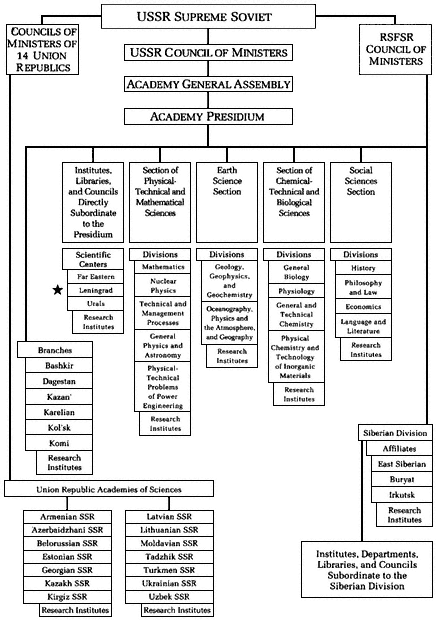
Chart 4.
Research system of the USSR Academy of Sciences
and the Academies of Sciences of the Union Republics.
marked a new stage in the relationship between Leningrad's scientific and industrial communities (and one not necessarily welcomed by scholars concerned with basic research). Based more fully on local control than was true of previous academy arrangements in Leningrad, the center declared its primary objective to be the advancement of local economic production. In published interviews appearing at the time, the center's chief executive, Academician Igor Glebov, noted that the new organization would seek to direct all research (not just that of the academy) toward the more efficient utilization of research results in production. Glebov reported that the center had incorporated 14 academy scientific councils and 31 research institutes operating within the Leningrad region, while its presidium included the 80 full and corresponding members of the academy resident in the region.[66] The center also anticipated moving the bulk of its operations to Shuvalovo, a new satellite community on the city's northern outskirts.
Romanov, Glebov, and, later on, Lev Zaikov repeatedly observed that the center's research branches must link scientific research with economic production so as to enhance opportunities for technological innovation in local industry.[67] In this regard, the creation of the Leningrad Scientific Center is yet another stage in the continuing effort of local political elites to control and maintain the city's economy as a leading innovative center in the national economic system.
In February 1985, on the eve of Konstantin Chernenko's death, Romanov returned to Leningrad to present his election speech to the RSFSR Supreme Soviet ward in the city's Smol'ninskii District.[68] The address, which turned out to be his last major public appearance in the city, stressed the need to quicken the pace of technological innovation in Leningrad industry. He offered perhaps the most precise formulation of the Leningrad Scientific Center's role in that effort, pointing to the development of the Ukrainian Academy of Sciences as a model to be emulated in Leningrad. Romanov's references to the Ukrainian academy are noteworthy, for that institution had reoriented much of its research effort around applied research designed to enhance the republic's economic potential.[69] Significantly, one of the first major institution-building efforts of the new Leningrad Scientific Center was the formation of a new Institute of Information Sciences and Automation just one year later, in March 1986.[70] This theme of the center's role in linking science and industry has been frequently repeated since.[71]
The history of the founding of the academy's Leningrad Scientific Center, as well as the development of local scientific-production associations, illustrates long-standing themes in the Soviet approach to R&D. As Thane Gustafson has pointed out, these are that (1) science is the source of most worthwhile innovations; (2) industry is a source of most obstacles to innovation; and (3) the solution is to give scientists direct control over production facilities.[72]
The "Intensification-90" Campaign
In July 1984, First Secretary Lev Zaikov informed the Leningrad regional party committee that he had just been invited by the Central Committee to report on the activities of the Leningrad party organization in planning fundamental economic and social development throughout the Leningrad region for the periods 1985–1990 and 1985–2000.[73] In preparing his report for the Central Committee, Zaikov continued, he would pay particular attention to the role of technological innovation in increasing productivity throughout the Leningrad region. Indeed, he concluded, automation and computerization would be the foundation of local economic growth for the next two decades. At the same time, the then regional party second secretary and soon-to-be city party committee first secretary, Anatoli Dumachev, informed the RSFSR Supreme Soviet that existing labor shortages in the city dictated that all increases in the production of Leningrad industry over the next three years could take place only through technological innovation. In Dumachev's view, Leningrad managers had no choice but to follow the example set by their American and Japanese counterparts and force extensive automation and innovation.[74] The available data support this intense concern over labor shortages.[75]
Zaikov's speeches heralded a new stage in the efforts of Leningrad elites to spur technological innovation. This "Intensification-90" campaign, as it became known because of its goal of automating the Leningrad economy by 1990, quickly gained momentum as Leningrad politicians stressed the program's origins both in the emergence of the scientific-production associations and in the establishment of the academy's Leningrad Scientific Center.[76] Such proclamations correctly viewed "Intensification-90" as a logical extension of earlier Leningrad innovations. Moreover, local elites identified the city's labor shortages as a driving force behind the innovation campaign.[77] Soviet cities with less acute shortages could well have been less hospitable to such a massive computerization drive.
However valid these elements of the official position on the program's origins may be, such statements ignore or purposefully obscure differences between this innovation drive and previous campaigns. As we have noted, the development of scientific-production associations and the founding of the academy's Leningrad Scientific Center were both moves that reflected the view of science as the source of most worthwhile innovations. In contrast, the "Intensification-90" campaign focuses first and foremost on the ability of industry to adapt managerial systems to technologies that already exist. This accent in the most recent program falls on the management side of the innovation equation. It is important, therefore, to review precisely what Zaikov and others sought to accomplish with "Intensification-90."
Following Zaikov's report, in August 1984, the Central Committee approved the "Intensification-90" program with the explicit intention of utilizing the Leningrad experience as a prototype for similar efforts elsewhere.[78] The goal was to involve representatives of the State Planning Committee (Gosplan ), the State Committee on Science and Technology, the RSFSR Council of Ministers, and the USSR Academy of Sciences in a joint effort, under the direction of Leningrad party leaders, to reduce manual labor through the automation and computerization of production lines and front offices. Approved with considerable fanfare a few days later by the Leningrad regional party committee, the specific program objectives soon emerged in the local press.[79]
In interviews published at the time, and in subsequent public appearances, Academician Glebov identified the campaign's goals as computerization of management, production, and design at all levels of the Leningrad economy; the creation of integrated computerized systems rather than the continued accumulation of mismatched components of such systems; a drive for energy conservation; and general support for nuclear power programs.[80] The initial computerization effort, Glebov repeated, would take place at 336 enterprises representing 99 ministries and institutions and employing more than 660,000 people. Ultimately, by the time of the program's final stages in 1990, Glebov concluded, there would be 5 totally automated plants, 69 automated shops, 152 integrated production complexes, 137 flexible production systems, 187 automated management systems, 232 integral lines of communications, and 160 other mechanized sites.
"Intensification-90" immediately gained the trappings of a major Soviet campaign, as program publicists added all the traditional bells and whistles. Articles appeared almost daily in the Leningrad press for well over a year praising this or that innovation initiative undertaken in connection with "Intensification-90".[81] More significantly, Leningrad's party chief, Lev Zaikov, began using the opportunities presented by the innovation drive to advance his own political position.
The Emergence of Lev Zaikov
Zaikov's rise to local dominance following Romanov's elevation to the Central Committee's Secretariat had been rather unpredictable. A graduate of the Leningrad Engineering-Economics Institute, Zaikov established his reputation as a dynamic and effective manager, eventually rising to the general directorship of an unspecified (though probably defense-related) scientific-production association by the mid-1970s.[82] He was appointed chair of the Leningrad city soviet in 1976, and by the end of the decade was serving as a member of the Commission on Foreign Affairs of the Supreme Soviet's Council of the Union.[83] From the time he began his career as a lathe operator in 1940
until his assumption of the Leningrad regional first secretaryship in 1983, Zaikov apparently held no major Communist Party post. With this general background, his interest in managerial innovation and economic efficiency is hardly surprising. In less than two years, Zaikov had joined Gorbachev's Secretariat in Moscow, where he assumed responsibility for defense industries and later became first secretary of the powerful Moscow party organization. His meteoric rise was facilitated by the successful promotion of the "Intensification-90" campaign in Leningrad and nationally. That promotion also generated economic resources for the city and its leaders to draw on.
Within days of the Central Committee's endorsement of the "Intensification-90" campaign, Zaikov published an article in Pravda stating its goals.[84] From that point forward, Zaikov's major addresses have stressed the innovation theme.[85] National publications publicized the program as well.[86] Finally, Leningrad politicians utilized opportunities afforded to them by various republic and national meetings to praise "Intensification-90."[87]
Gorbachev Comes to Town
Zaikov, a skilled manager with extensive practical experience, fit the initial mold of the new "Gorbachev Man." This image was strengthened by Gorbachev's visit to Leningrad in May 1985,[88] which was the new leader's first major foray outside of Moscow following his ascension to power. At first glance, this maneuver appeared to have been aimed at Gorbachev's chief rival of the period, Grigorii Romanov. This interpretation is bolstered by Romanov's own removal from the Politburo in July of that year.
Gorbachev's visit was extensively covered in the Soviet print and electronic media, and included stops at the Svetlana Electronic-Instrument Making Association, the Bolshevichka Sewing Association, Elektrosila, the Leningrad Metallurgical Plant, and the Kalinin Polytechnic Institute.[89] At each institution, as well as in Gorbachev's focal appearance before a meeting of Leningrad party activists, the new general secretary dwelled on the advances made by the Leningrad economy in the area of technological innovation, particularly under the "Intensification-90" campaign.[90] In his address to city party activists, Gorbachev reviewed all he had seen during his visit, stressing the positive impact of "Intensification-90" on local economic development. He noted that the Central Committee was pleased by the program's success, observing that the Leningrad party organization always played an important role in the formulation of national socioeconomic policies. The party's leadership endorsed the latest efforts in Leningrad to enhance labor productivity through scientific-technical progress, particularly in
the area of computerization in management. Hence, the "Intensification-90" campaign served as a model to be emulated elsewhere.
Gorbachev's endorsement was followed by Central Committee approval a month later during a plenum that also saw the elevation of Zaikov to the Secretariat.[91] Shortly after Zaikov's departure from Leningrad to assume his new post in Moscow, his successor as regional party first secretary, Iurii Solov'ev, devoted the preponderance of his initial speech in that post to the "Intensification-90" campaign.[92] By year's end, the city party first secretary, Anatolii Dumachev, similarly chose to use the "Intensification-90" campaign as the focal point for his report to the twenty-fifth conference of the city party organization.[93] Meanwhile, local bookstores established special displays of materials relating to the campaign, an exhibit showing off its achievements opened in Moscow, and, at the behest of the Central Committee's Secretariat, the local party organization organized seminars for party leaders and economic managers from around the Soviet Union to learn more about the "Intensification-90" campaign.[94] Finally, the "Intensification-90" program was incorporated into the 1986 general development plan for the city and region.[95] Regional party Secretary Pavel Mozhaev and city party committee First Secretary Anatolii Dumachev also reported in December 1985 that the campaign, with its concomitant emphasis on increased economic specialization and centralization, had formed the keystone for the 1986–1990 regional and city five-year plans.[96] Moreover, Iurii Solov'ev chose to highlight the program upon his elevation to candidate member status on the national party's Politburo.[97] As with the effort to develop scientific-production associations, Leningrad's "Intensification-90" advanced both the economic resources and the power of the local leaders. By the time of the twenty-seventh party congress in early 1986, the program had once again secured Leningrad's image as a national leader in technological innovation.
Problems Persist
Despite the apparent success of the "Intensification-90" campaign as a vehicle for promoting the political interests of Leningrad leaders, it is worth remembering that the successful adoption of a development strategy at the local and national levels is not the same as that program's successful implementation. By October 1986 both regional party First Secretary Iurii Solov'ev and Central Committee Secretary Lev Zaikov were beginning to sound more cautious in their evaluations of the program's impact.
In response to queries from local party propagandists, Solov'ev observed that innovation programs based on managerial reorganization can have the effect of increasing the bureaucratic apparatus without increasing productivity.[98] Consequently, he reported that the Leningrad
party organization was disbanding the association managerial structure in food industries in an effort to reduce administrative overhead costs by 20 percent, thereby reversing the policies of the sixties and seventies that had embraced centralization as facilitating innovation. Shortly thereafter, Solov'ev informed the Leningrad regional party committee that the region's critically important machine-construction industry was failing to meet various innovation goals.[99] The reasons for this failure were complex. At the core, Solov'ev argued, was the resistance of managers to drawing on the latest innovations generated by the scientific community. He concluded by suggesting that the "Intensification-90" campaign was a necessary means for breaking down such resistance. These sentiments were repeated by Solov'ev again just eight months later. In the interim they were echoed by city party First Secretary Anatolii Gerasimov, who in various reports to the city party committee suggested that technological innovation and enhanced labor productivity were proving more difficult goals to obtain than the architects of "Intensification-90" had ever before been willing to acknowledge.[100]
During an October 1986 speech to voters in Leningrad's Moskovskii election district, Lev Zaikov offered a more comprehensive review of the successes and failures of the "Intensification-90" campaign than did either Solov'ev or Gerasimov before or afterward.[101] Zaikov began his remarks by observing that Leningrad's political leaders had long been interested in strengthening the ties between science and industry. He proposed that a cardinal restructuring of society was required, and that the future well-being of the Soviet population lay with the economy's ability to perfect the research-development-production cycle. Further managerial reform was necessary to ensure that the Soviet economy's innovative capacity increased.
Zaikov also contended that the Soviet Union's current economic situation demanded varied responses. To begin with, Soviet scientists should work with their colleagues from other socialist countries to improve the industrial innovation process. Workers should also become involved to a greater degree in the factory innovative cycle, while the legal rights of enterprises to act as autonomous units should be expanded. By extensive restructuring of their bureaucracies, municipal agencies should attempt to reduce the bureaucratic drain on local industries. Finally, said Zaikov, the innovation problem must be viewed as, above all, a human problem.
For Zaikov, Leningrad's "Intensification-90" program provided a comprehensive format for action along all these fronts. For this reason, he viewed Leningrad as one of the Soviet Union's leading innovative centers. Despite the failure of local industries to meet all the campaign's goals, Zaikov suggested further, Leningrad was well situated to assist
the entire Soviet economy as it struggled to come to terms with the innovation process.
In reviewing various attempts to enhance Leningrad industry's innovative capacity, we must remember that these programs have only been partially successful, by the standards of the world economy. Although we do not have adequate data to evaluate the efficiency of local industry in comparative terms, on the basis of what we do know, it is difficult to believe that Leningrad's factories could compete openly with those of Western Europe, North America, and Japan. As Zaikov suggested, however, within the context of the Soviet economy the 35-year effort to improve relations between the city's scientific and industrial communities is noteworthy. This core of experience provides one of the single best models in the USSR today for helping national politicians and planners understand how they can develop comprehensive strategies for dealing with the research-development-production cycle. In this last regard, the political significance of the policies discussed in this chapter may be greater than their actual economic impact.
The political impact of strategies to link science and industry transcends the careers of Leningrad politicians. Economic accomplishment has dominated Soviet politics for decades. In its most recent manifestation, the issue of economic performance has become focused on the question of innovation. Soviet reformers and conservatives—as well as Western commentators—increasingly attribute the lackluster economic performance to a perceived inability of the economy to foster innovation. Gorbachev's response to this innovation challenge has been to nurture the development and implementation of market-oriented economic mechanisms. Should these reforms take hold, the argument goes, enterprises will become more responsive to changing needs in their environment, thereby prompting a greater receptivity to innovation.
The Leningrad approach to the innovation question emphasizes centralization of managerial decision-making, rationalization, and streamlining of organizational lines of command so as to force existing institutions to operate more efficiently. Implicitly, the approach advocated by Leningrad politicians from Kozlov through Romanov to Zaikov has offered a counterpoint to the more market-oriented reform efforts of an Aleksei Kosygin during the 1960s and a Mikhail Gorbachev today. Direct research contracts, production associations, scientific-production associations, and even the "Intensification-90" campaign constitute a conservative alternative in that such mechanisms need not undermine the traditional authority of central planners, necessitate a significant redistribution of resources away from traditionally favored heavy ("Group A") industries, or present a direct challenge to the supervisory authority of Communist Party officials over economic management. The Leningrad approach to economic development thus offers
an antimarket perspective that has informed national political discourse throughout the post-Stalin era.
Science and Industry: An Overview
For four decades Leningrad leaders have vigorously pursued an economic development strategy intended to reorient the Leningrad economy around technologically specialized industrial production. This effort has fostered increased investment in industry, a phaseout of light industry, and enhancement of technological innovation through strengthened ties between science and industry. Ultimately, Leningrad elites have sought to preserve their city's historic role as an innovative producer of high-quality industrial goods and as a leader of such specialized industries as precision-instrument making, machine construction, and shipbuilding. These policies have helped sustain the city's economic growth, thereby advancing the interests of several Leningrad political leaders. The resulting increase in the power and status of an influential politician, in turn, supported some of the initiatives discussed here—for example, we saw how Grigorii Romanov apparently prompted the Central Committee to instruct the USSR Academy of Sciences to establish its Leningrad Scientific Center.
The pursuit of Leningrad's postwar development strategy has rested in large measure on fostering new and more effective linkages between scientific research and industrial production. Technological innovation has been a major objective in Leningrad throughout the Soviet period. Confronting increasingly extreme labor shortages as early as the late 1950s, Leningrad managers actively sought new production techniques to increase labor productivity. Consequently, different and at times competing strategies have emerged over the years to bind the research-development-production cycle more tightly.
During the 1950s, leading Leningrad research centers entered into contractual relationships with major industrial enterprises. By the 1960s, an intricate web of interinstitutional research and technological contracts linked most major research and production centers through task-specific agreements. Within a few years, Leningrad researchers and managers attempted to broaden the range of their cooperation beyond assignment-oriented agreements. Local elites pursued the integration of autonomous but related production units engaged in similar activities. Not surprisingly, Leningraders enthusiastically encouraged the formation of inter-enterprise production associations in the hope that such a new organizational format might foster innovation. A decade later a vast preponderance of Leningrad economic output was being produced by a relatively small number of integrated production associations,
which were themselves at the pinnacle of industrial empires stretching across the Soviet Union.
Managers continued to confront difficulties in implementing innovation programs. More specifically, factory administrators demanded innovations adapted to the needs of their individual plants. Local elites responded by formally merging production and research units to form scientific-production associations. Leningrad was particularly suited for such programs of integration. On the industrial front, the city's economy had come to be dominated by a handful of sectors that relied heavily on infusions of new technologies for productivity increases. With respect to the scientific community, the city had long been a major national center for applied research. Sponsored by senior local political elites, the consolidation of production and research units into unified scientific-production associations moved forward swiftly, building on this preexisting base.
The prewar transfer of the Academy of Sciences' main administration to Moscow had left Leningrad's remaining academy research facilities in an ambiguous bureaucratic status. Converted for the most part into local affiliates of Moscow-based research institutes, Leningrad's research centers often served the interests of the national capital's scientific community. In 1979, the academy's hierarchy responded to growing political pressure from Leningrad, organizing an interagency council to coordinate research efforts throughout the Northwestern RSFSR. Five years later, the academy built on that foundation to establish its Leningrad Scientific Center, an institution that immediately proclaimed its primary mission as the continued integration of local research and production programs.
Production associations, which united production facilities under single management, and scientific-production associations, which united entire research-development-production cycles under single management, shared with the Leningrad Scientific Center a common set of organizing assumptions, the most important being the notion that technological innovation could be fostered through enhanced contact between scientists and managers. This principle also underlay Lev Zaikov's subsequent initiatives in support of technological innovation—namely, the "Intensification-90" campaign, which provided for the computerization of Leningrad industrial management and the automation of core production facilities by 1990. Its goals conformed with the development strategy first set forth 30 years earlier by Frol Kozlov and pursued by Leningrad political and economic elites ever since. These goals have had a deep and lasting impact on the shape of the local economy, and hence on the shape of the city's social and even physical face.
Unlike previous efforts, however, the "Intensification-90" campaign emphasized the full utilization of existing technical capacities
as much as the creation of new capacities through R&D programs. Leningrad elites had formulated an organizational model of technological progress that stood in opposition to market-oriented reform programs. Not surprisingly, some national politicians such as Lev Zaikov argued that "Intensification-90" become a model for innovation programs nationally. Thus, the program was subsequently emulated throughout the Soviet Union. Finally, the "Intensification-90" campaign was fully integrated into the 1986–2005 Leningrad general plan.
The emergence of an economic development policy predicated on innovation, together with an evolving pattern of policies designed to implement that policy, offers an opportunity to explore how local politicians and managers in the Soviet Union, at least in the case of Leningrad, maneuver behind a screen of bureaucracy to shape their city's future economic, social, and physical development. The efforts to integrate entire research-design-production cycles under a single managerial umbrella point to one of the various means employed by Soviet urban leaders to adjust central policies and constraints so as to foster new opportunities for their communities to grow, within the context of a centrally planned economy. With this observation in mind, it is time to look at policies that focus on managing the city's workforce.