Chapter III
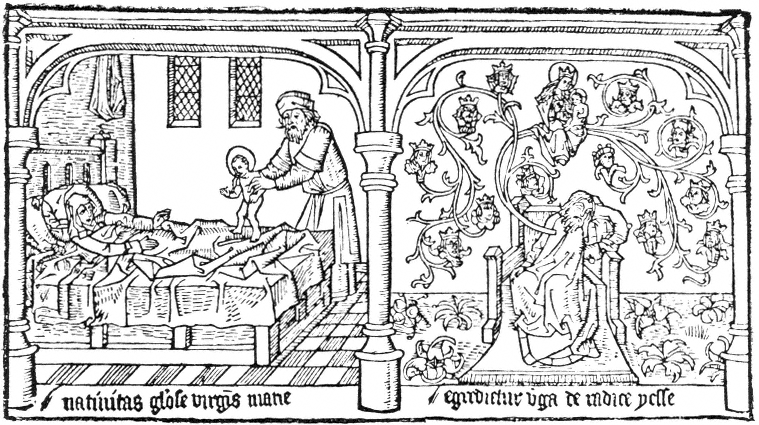
a. Hic annunciatur ortus Marie
(Here is announced the birth of Mary)
The annunciation by the angel who appeared to Joachim to foretell the birth of the Virgin Mary does not appear in the Gospels, but it is treated here as a New Testament event, prefigured in the following three typologies. The story is drawn from the Legenda aurea .
b. Rex Astyages mirabile vidit sompnium
(King Astyages had a marvelous dream)
The King dreamt that from the breast of his daughter a verdant and fruitful vine grew, signifying that her offspring, King Cyrus, would deliver the children of Israel from captivity. This prefigured that the daughter of Joachim and Anna would bear the child, Jesus, who would redeem mankind. The story is from the Historia scholastica of Petrus Comestor.
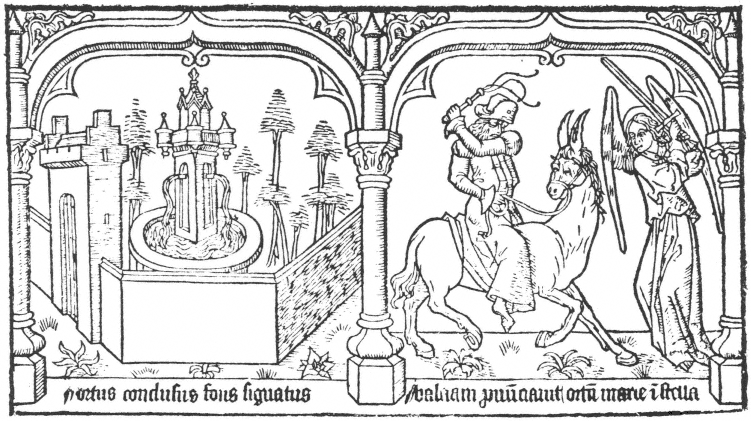
c. Ortus conclusus fons signatus
(The enclosed garden and sealed fountain)
Drawn from the Song of Songs, these symbols prefigure the virginity of Mary. The Middle Ages saw the Bride, in the biblical verses, as the Virgin Mary. St. Bernard applied all of its metaphors to her; she was the Burning Bush, the Ark of the Covenant, the Fleece of Gideon.
Song of Solomon IV, 12, 15
(Canticle of Canticles)
d. Balaam pronunciavit ortum marie in stella
(Balaam prophesied the birth of Mary in a star)
Balaam beat his ass with a whip of three cords when it turned away from the path on seeing the angel with a sword. As the text of the Speculum and the inscription state, Balaam saw a star and then prophesied the birth of the Virgin Mary. The prefiguration is that of Balaam's prophecy but the artist has omitted the star from the picture.
Numbers XXII, 22–34