
Chapter Nine—
Childrearing versus Childbearing:
Coresidence of Mother and Child in Sub-Saharan Africa
Hilary J. Page
Introduction
Producing Successive Generations of Adults:
Biological Versus Social Reproduction
Most demographic studies restrict their analysis of reproduction to biological reproduction; either there is no mention of social reproduction, or it is assumed to be fully congruent with biological reproduction in the sense that the actors are assumed to be the same. Thus, for example, we find analyses of fertility in terms of the "costs and benefits" of children, or in terms of the demand for children, all cast in a model in which the childbearer (or begetter) is assumed to be the person responsible for bringing the child to full adult status. Not only academic and policy discussions but also programmatic activities are dominated by the simplest of possible decision-making models: fertility decisions are made by individual bearers and begetters, who are assumed to be those who will have the direct rights and responsibilities associated with socializing as well as producing the next generation.
Such a model is quite inappropriate for most of sub-Saharan Africa. Indeed, one of the most striking features of the region is a seemingly paradoxical combination. On the one hand, there is the tremendous importance attached to parenthood. There is, for example, an exceptionally high desire for biological parenthood. This finds its expression in large desired family size, in reluctance to cease childbearing, and in a horror of subfertility in general and of barrenness in particular. There is also a particularly strong bond between children and their parents: in addition to the affective links and/or strong sense of moral obligation toward parents that are common to many cultures, there is also the respect due to parents in their capacity as the link with the ancestors, especially the fear of invoking the ancestors' wrath and of bringing down an ancestral curse.[1] On the other hand, there is a very
high incidence of children being reared by persons other than their biological parents. And these "foster" parents may assume not only the responsibilities of childrearing but also the rights associated with it.
This seeming paradox is, however, quite simple to explain. A first part of the explanation lies essentially in the nature of the family systems prevailing in Africa. Most important here is the absence of a long-established nuclear-family tradition (or of clearly defined nuclear-family units within an extended family) and of a strong husband-wife bond. Lineage links are traditionally more important than the husband-wife unit. One can question the extent to which one can even speak of a husband-wife-child unit since neither economic nor kinship links are traditionally thus defined. Along the economic dimension, the subsistence unit is commonly the woman and the children living with her, whereas along the kinship dimension the children belong to the husband's lineage, to which the wife does not belong (or, in matrilineal groups, to her lineage, to which he does not belong). In such cases where the broader lineage rather than the direct line is important, it is only normal that a wide range of other kin may exercise not only joint responsibilities in children but also joint rights in them.
Some recognition of the role of others in social reproduction is apparent in the demographic literature. One finds references, for example, to the fact that the grandparental generation may exert a not insignificant influence on fertility decisions and childrearing, or to the fact that various kin may help parents financially (for example with school fees) or may themselves press claims for economic assistance. By and large, however, this recognition has remained limited, with these features being perceived as affecting the parent-child relationship only marginally rather than fundamentally. The role of others in social reproduction has been seen largely as comparable to grace notes, or ornaments in a piece of baroque music—as forming a characteristic aspect of the whole but not impinging on the basic structure. Much more than this is involved, however. Rights and responsibilities may not merely be shared, they may also be transferred; not only may they be delegated to others, they may also be preempted by others. As a Mende saying puts it, "A child is not for one person" (Bledsoe, 1985).
The second part of the explanation lies in the commonly overlooked implications of the potential segmentation of parental roles. Not all aspects of social reproduction need be vested in the same adult or be transferred together: it is possible to transfer just some of them, or just one, along with the associated rights and responsibilities. Segmentation greatly facilitates the spreading of social reproduction beyond the primary parents to "pro-parents." Moreover, although transfers often occur within the kin group, segmentation of parental roles facilitates transfers beyond the bounds of the kin group. The result is that social reproduction constitutes a very flexible
system in which the distribution of children and of parent-child relationships brought about by fertility can be extensively manipulated socially.
The concept of a unitary parental role, however, dies hard in population studies. This is partly because it lends itself to relatively simple analytical models. But it is also because most practitioners come from other culture-regions where a unitary role is almost everywhere the norm and strongly segmented parental roles are culturally almost unimaginable. Before proceeding further, it is, therefore, useful to give a brief review of the various components of social reproduction sensu lato and to see how they are often segmented in sub-Saharan Africa. Our overview is based on the classic work of Esther Goody (1982), to which the reader is referred for a detailed discussion.
Patterns of Parenting
The Components of Social Reproduction
Next to the biological aspect of reproduction, that is, the bearing and begetting of children, Goody distinguishes four universal components of social reproduction.
1. Provision of civil and kinship identity and status (including residence rights and inheritance/succession rights)
2. Nurturance
3. Training for an adult role
4. Sponsorship into the adult community as a full member of it.
These four components are quite distinct from each other and do not have to be located in the same adult.
Provision of Identity
Civil and kinship identity is derived from one's social parents, almost invariably defined as the biological mother and/or a clearly defined male. In most societies that male is defined as the woman's husband; in some (e.g., the Gonja [E. Goody, 1982, p.9] and the Mossi [Gruenais, 1981]) it is the child's biological father. The identity provided by these parents can be transmuted to an identity derived from others only through adoption, that is, through a change of jural identity.
Although adoption is found in other regions, it is virtually unknown in tropical Africa. Most references to "adoption" in the literature seem to refer in fact to transfer of childrearing or of sponsoring rather than to transfer of identity. In general the identity a child acquires by birth cannot be manipulated subsequently in sub-Saharan societies.[2] The nonmanipulability of this
aspect of parent-child relationships is explained in large part by its cultural importance within the region. Religious beliefs concerning the importance of the ancestors, and the importance of descendants for performing ancestor rites, are probably highly significant here. These alone are insufficient, however. In other cultures that stress the importance of the ancestors and/or continuation of the line, adoption may be used to ensure descendants. Sub-Saharan Africa, however, is rich in other mechanisms for ensuring descendants (J. Goody, 1976) that mesh with the other cultural features and institutions typical of the region—especially the absence of strong nuclear-family forms in general and of a strong husband-wife bond in particular, on the one hand, and the importance of the kin group rather than just the direct line, on the other. Most striking here is the widespread institution of polygyny. Divorce and remarriage form a second common mechanism. Finally there are a large number of other, somewhat less common, mechanisms. Here we may mention the transfer of sexual and reproductive rights to another member of the descent group in the event of apparent infertility or widowhood, or the raising of seed for the individual by another member of the descent group (e.g., levirate and sororate); retention of a daughter to bear children for a father who has no sons (e.g., among the Krobo [Huber, 1963, cited in E. Goody, 1982, p. 11]); and "woman-marriage" to provide children when a father or a husband has had no sons (e.g., among the Lovedu [Krige, 1974]). Expressed another way, there is no need for adoption to ensure descendants; instead, reproductive rights need not be restricted to marriage with just one partner. Significant too is the widespread practice of bridewealth, by which the reproductive capacity of the woman is transferred from her natal kin to her husband's lineage. Adoption is sometimes seen as being incompatible with bridewealth, especially where the latter is high and nonreturnable and its payment diffuse; too many parties then have an interest in a woman's child either to necessitate or to permit his/her ready transfer to another group. This is, however, merely a reflection of a more general principle, namely that children traditionally belong to the lineage rather than just to their parents. And this applies not only to societies where, traditionally, rights in genetricem are transferred out of the woman's natal kin group (through acceptance of bridewealth), but also to those where they are retained by her natal kin group.
Adoption would be inconsistent with this constellation of institutions. Not surprisingly, therefore, it often appears quite alien and is even viewed with horror. At the same time, the absence of adoption may be linked to the redistribution of the other components of social reproduction. It may indeed be the case, as Esther Goody suggests, that the very immutability of identity in tropical Africa contributes to the ease with which the other three components of reproduction can be manipulated. If the child's identity and the rights and responsibilities between parent and child established by it cannot be called
into question, then redistribution of other rights and responsibilities concerning children is facilitated.
Childrearing and Sponsorship
Nurturance. The task of nurturance is almost everywhere normatively allocated to the biological mother, especially in the case of very young children. The physiological constraints of breastfeeding are obviously dominant here—though the classic case of nurturance by others is precisely that of wet nurses in nineteenth-century Europe. Wet nurses are rarely used in sub-Saharan Africa: the biological mother is responsible for suckling her child, and also, in most cases, for care of the child in other respects too.
Once the child is weaned, these physiological constraints fall away and fostering becomes a possibility. However, up to the age of about 6 or 7, nurturance continues to be allocated typically to the mother. According to Goody, children under 6 or 7 are unlikely to be cared for by anyone other than their biological mother, even in those areas of West Africa where pro-parenthood for older children is widespread. The major exception she notes in Africa itself is widespread fostering of young children under family "crisis" conditions—widowhood, divorce, or remarriage. Where the children belong to her husband's lineage, they will be claimed by that lineage if he dies or the parents divorce. Where they belong to the mother's lineage, they may stay with her for a while. If she remarries, however, it may be considered preferable for her to delegate responsibility to one of her female kin than to take the children with her into the new marriage. The only other exceptions Goody notes involve the fostering of young children of West Africans studying overseas, who find it difficult to combine their study/work schedule with child care. Several more recent studies suggest, however, that even quite young children may leave their mother (see below, Differentials by Age and Sex).
Training. Children above the age of about 6 or 7 are ready to start either formal or informal preparation for an adult occupation and role. They are also able to supply useful labor. Their parents, however, are not necessarily the best-placed persons to provide the type of training desired. Nor are they necessarily those who can make the best use of the child's labor.
Looking first at the training aspect, we see that proparenthood is often used to enable children to acquire training of a kind the parents are not able to furnish themselves. Obvious examples are sending children away to attend school (educational fostering, Creole wardship) or to become apprentices in a particular craft or trade (apprentice fostering). They may also be sent away in order to acquire contacts or to establish or reinforce social ties that will be useful to them (or their family) later (alliance fostering). In the first case, such children provide little by way of labor to their proparents; in the second, however, they may provide considerable labor inputs. This is particularly
true for some apprentices and for housemaids, where the child's labor input may be considerable relative to the practical training given.
But proparenthood in sub-Saharan Africa is not limited to situations where the proparents provide a type of training that is different from what the parents can provide. Kin may claim, or may be given, children to rear even when the type of rearing they provide is not fundamentally different. The stated reasons for this among the Gonja are that the proparents are better placed to insist on the discipline necessary for good upbringing (and for good labor productivity). Children may also be sent to proparents in need of a child's services: provision of assistance and companionship to grandparents by a foster child is common. So too is the giving of a child to a childless woman. Finally, as with younger children, widowhood, divorce, or remarriage may lead to children being reared by a proparent.
Sponsorship. Like training, sponsorship into adult society can take many forms. In Europe it traditionally involved marriage and the establishment of an independent economic unit; today it still involves achievement of economic independence, although the link with marriage has at least partially disappeared. In sub-Saharan Africa sponsorship for girls has traditionally involved celebration of puberty rights marking the threshold of womanhood and reproduction (more particulatly in matrilineal societies), or the actual transition to wife or mother (especially in patrilineal societies). For boys it most typically meant initiation. In all cases a range of kin could be involved as sponsors. Increasingly, and particularly in the more modernized areas, it is taking a more explicitly economic form—the provision of the training and, where necessary, the startup capital or the equipment needed to establish oneself in a particular profession. Here training and sponsorship tend to be intimately linked, with those who provide the training either indirectly or directly acting as full or partial sponsors. Thus the relative who acts as proparent or who has helped finance schooling is an indirect sponsor, whereas the master who provides skills to his apprentice is a more direct sponsor. Where the child's labor has been a relatively important element (as is the case with many apprentices and with most housemaids), the proparent/employer may be responsible for providing tools (e.g., a sewing machine) or startup capital, which effectively marks economic sponsorship into adult society.
Thus effective sponsorship can be seen to come from a wide range of proparents as well as from parents themselves.
Conclusions
Whatever the form it takes, proparenthood involves both rights and responsibilities for all the parties involved—parent, proparent, and child. In particular, it either establishes new sets of rights and responsibilities between child and proparent and between parent and proparent, or it reinforces
existing ones. In the latter case especially, the resulting reciprocities may be diffuse and long term in nature. The child, in particular, is likely to carry long-term responsibilities towards his or her proparent, especially where the proparent played a significant role in training or in sponsorship.
There is a resonance evident between the absence of adoption in sub-Saharan Africa and the widespread segmentation of other parent-child reciprocities. Adoption was seen as redundant because descendants and the associated jural/religious reciprocities are assured in tropical Africa by the possibility of extending rights in reproduction beyond the single husband-wife unit. Similarly, both rearing and sponsorship into adult life can be assured for the child (even an orphan)—and also access to the rights accruing from rearing and sponsoring children can be assured for all adults—by extending rearing and sponsoring beyond the initial parent-child unit. In both cases, both the extent to which the potential is taken up and the way in which it is taken up may vary depending on other aspects of the social structure. Given the internal heterogeneity of the region one would expect considerable variation. Both features are, however, common throughout the region, and constitute one of the constellations of characteristics that may be peculiarly African.
Data
The concept of proparenthood—particularly for children beyond the age of about 5 or 6—permeates daily life over large parts of the region. This is especially true in Western Africa where it appears to reach its highest levels and to manifest the greatest variety of forms. Even the most superficial outside observer can hardly fail to notice two of its more modern forms—both children living with foster parents while they attend school, and the preoccupation of well-to-do urban women with acquiring the services of reliable young girls as live-in housemaids/nannies, are readily apparent. In addition, references to proparenthood abound in African literature, both fiction and nonfiction. In the best-known childhood autobiographical works, for example, fostering as an institution is presented as both a common and a quite unremarkable part of everyday life. In an autobiographical work by Wole Soyinka (1981), a stream of children come and go from the Yoruba schoolmaster's household, sent to further their education and/or work as housemaids. In Laye's retelling of his early childhood experience in the Fouta Djallon (Laye, 1954), there are repeated references to the boys who lived in the compound as apprentices to his father, the village blacksmith; moreover, Laye's going to live with distant kin in order to pursue his schooling outside the village is among the key events of his story. In all cases, however, although the move to proparents may be a source of considerable personal upheaval, the institution itself is nowhere brought into question. It is prob-
ably precisely because of its normality that it has not yet formed the study object of many African social scientists (Fiawoo [1978] and Isiugo-Abanihe [1985] are exceptions), and most of the systematic studies on it have come from outsiders.
Previous Studies
Until recently, most of the studies that focused on child circulation were anthropological (e.g., Esther Goody primarily though not exclusively on the Gonja; Oppong on Dagbon [1971]; Skinner on the Mossi [1960,1961]; Schildkrout in southern Ghana [1973] and on the Hausa in Nigeria; Lallemand on the Mossi [1976] and Kotokoli [1980]; Etienne on the Baoulé [1979]; Brydon for Avatime [1979,1985]; Bledsoe and Isiugo-Abanihe on the Mende [1985, and this volume]; and Sanjek also on southern Ghana [1986]). In addition, there are numerous references to it in more general anthropological works (e.g., Fraenkel [1968] on Liberia). Despite the growing body of material provided by these studies, they largely failed to attract demographers' attention until very recently. As a result, the implications of extensive child circulation have been remarkably slow to penetrate the demographic literature.
The problem has not simply been a question of one discipline being unaware of work in another, although this factor doubtless played a role. That this was not the sole factor is shown by the fact that even Kreager's overview of the literature on fostering and adoption worldwide, prepared for IPPF (Kreager, 1980), largely failed to stir chords among people working in population studies. A second contributing factor is that these studies were largely unable to communicate effectively the quantitative importance of the phenomenon. Although they are often extremely rich in insights, they are also necessarily limited in scale, and many are limited in generalizability. The material ranges from the anecdotal (e.g., Smith's biography of Baba of Karo [1954]) to surveys of at most several hundred children (Isaac and Conrad [1982] on the Mende of Upper Bambara Chiefdom in Sierra Leone), with the majority of the individual studies focusing on a couple of dozen or fewer households. Moreover, with the exception of Goody, few of the authors have analyzed comparative material from more than one area and formulated theoretical generalizations from this. Thus it is perhaps not surprising that even Frank (1984) addressing specifically an audience of demographers, although able to alert them to the issues involved, was not fully able to convince many of those with little or no experience in Africa that the distinction between childbearing and childrearing is not only sufficiently deep-rooted but also sufficiently widespread to constitute a crucial element in discussions of reproduction in sub-Saharan Africa.
Large-scale data sets that might demonstrate the quantitative significance of the phenomenon more effectively have indeed been rare. Furthermore, the
few available analyses based on them have tended to use summary indicators based on indirect data. Most demographic surveys in Africa have collected information on the number of children each woman has borne. To reduce the omission of children living elsewhere or of children who have died, three separate questions (the number of her children living with her, the number living elsewhere, and the number dead) have routinely been asked instead of just one direct question on the total number of children. Although not always coded and published separately, the answers to the second question, where available, yield information on the numbers or proportions of children living elsewhere. These are the data that have most often been proposed for analysis of mother-child coresidence patterns. Only Isiugo-Abanihe (1985) has attempted to go beyond this, using data contained in the Ghana census on individuals' relationship to the household head for a part of his work.[3]
This type of summary data is extremely frustrating, however. First, these data indicate which mothers' children have moved away but give no information about where they have moved to. Second and more importantly, they are not specific by age of the child; often they are not sex-specific either. Yet coresidence of mother and child may vary markedly by age or sex of the child. Thirdly, and equally importantly, they refer on average to very young children. In order to exclude grownup, married children, the analysis must be limited to women married less than, say 15 years (or to women under, say, 30 years of age). Young children are inevitably overrepresented in such data because although the oldest women in this group can have children of any age up to about 15, younger women can only have young children. The result is that although children born to women married less than 15 years can be any age between 0 and about 15, their average age is well under 5. Since the residence patterns of very young children are not likely to be the same as those of older children—very young children are more likely to be with their biological mother in nearly all societies—the results obtained may be quite seriously misleading.
In other words, for study of child-residence and childrearing patterns there is an urgent need for comparative data that are both large-scale and representative on the one hand, and also age- and sex-specific on the other hand, in order to complement the anthropological work.
New Data and Their Potential
The surveys conducted in Africa in the context of the World Fertility Survey (WFS) provide, for most of the countries concerned, not only the above type of summary measures but also a unique set of unexploited data. Not only are these data both age- and sex-specific, they also refer to large and representative samples of children in each age-sex group.
The surveys included not only an Individual Questionnaire administered to women of reproductive age, but also a Household Questionnaire in which
all household members were recorded. Unfortunately in the Individual Questionnaire, although information was sought about each child the woman had given birth to, no information at all was collected about the child's residence. The Household Questionnaire, however, provides a unique source of information. For each child enumerated in a household, it was standard practice in the WFS to identify the child's mother, if present in the same household, and then to provide a code linking the child with that mother. The information was originally included in the design of the WFS to provide data for estimating recent levels of fertility: for example, allowing for mortality, the proportion of women aged 34 with a child aged 4 estimates the fertility rate 4 years before the survey of women then aged 30. Strangely enough, the procedure was retained in nearly all the surveys carried out in Africa in the context of the WFS (except Senegal), despite the fact that the method is largely inapplicable in these countries precisely because so many children are not living with their mothers (and also because of the limited knowledge of ages). Its inclusion turns out to be a windfall, however, because it provides a unique source of information on whether mother and child coreside. For children whose mother was not in the household a special code indicating that the mother was not enumerated in household was used.
The possibilities offered by these data are enormous. Firstly, sample sizes are unusually large. A total of nearly 300,000 young persons under age 20 are included in the WFS Household Files for the seven countries for which we have permission to use these data (Cameroon, Ghana, Ivory Coast, Kenya, Lesotho, Nigeria, and Sudan). Even if we restrict attention to children under 15 in order to facilitate exclusion of those who are already married or otherwise independent of their parents (and if we also exclude the few persons under 15 who were already married or recorded as a household head), there are still 225,000. The Cameroon survey in particular is a tremendous resource, with nearly 80,000 children under 15. These sample sizes are large enough to permit reliable age- and sex-specific estimates for major subgroups and regions representing a wide variety of populations.
Second, we can link the information on mother and child coresidence with a large range of other information. Through record linkage within each Household File, it is possible to link both the children and the information on their mother's residence with household composition variables and with characteristics of the household head. Some of the WFS Household Questionnaires included rather detailed information on the household and/or the socioeconomic characteristics of all household members: again Cameroon stands out here for its wealth of information, although the Ivory Coast, Nigeria, and Sudan should also be mentioned for their range of data. In these countries extensive analyses by socioeconomic subgroup should be possible. Furthermore, in all countries—even those with only limited information in their Household Questionnaires—it is possible through file linkage to link
the data for children contained in the Household Files with the data collected in the Individual Questionnaire for women of reproductive age, available in standard form for all participating countries in the Standard Recode Files.
In other words, it is possible not only to estimate the prevalence of nonmaternal residence and differentials by region or socioeconomic group, but also to analyse the patterns of child circulation. These data should, for example, permit us to assess two aspects of child redistribution that are of considerable demographic importance. We can examine not only the redistribution of children between socioeconomic groups but also the extent to which irregularities in the "natural" distribution of children—either between individuals or over the individual's life course—are smoothed out by redistributing the children from households with an abundance of children to those experiencing a shortage either as a result of subfecundity or because of advanced age. Put another way, we can examine the extent to which the distribution of children provided by fertility is socially manipulated.
In this chapter we present the first results from the first stage in analysis of these data, that is, estimation of the prevalence of nonmaternal residence and examination of its determinants. Our purpose is simply to document the extent of nonmaternal residence and to set the stage for subsequent work on the details of child-circulation patterns and on their implications.
Some Qualifications
Before presenting the results, we should mention a couple of cautionary notes:
Conceptual Issues. Our data refer to nonmaternal residence; this is not synonymous with child-fostering, although it is often referred to as though it were. Fostering refers to the assumption by someone other than a social parent of the rights and responsibilities associated with domestic provision of one or more of the functions of childrearing. It does not refer to residence as such, although by definition the child is unlikely to live in the same household as his or her social parent.
1. Fostering typically involves the child residing away from both social parents. Nonmaternal residence refers only to the mother; in some cases children may be living with their father. Fostering arrangements can thus be seen as a subset of nonmaternal coresidence patterns.
2. Lack of common residence does not necessarily mean lack of contact or full transfer of the maternal role. It can happen that a child who is not living with his or her mother is living close by. If this occurs in a case where the maternal role was already relatively limited (for example, an older boy in a society where the father is the adult primarily responsible for the upbringing and training of boys), residence nearby rather
than actual coresidence may have only a small impact on the mother-child relationship. Thus whereas transfer of the parental role is the essential element in fostering, it is not necessarily present in nonmaternal child residence. Where mother and child do not live together, however, it commonly means that the mother is no longer the primary childrearing agent: someone else has primary authority over and responsibility for the child.
These two considerations imply that nonmaternal residence is a phenomenon of interest in its own right; one which incorporates fostering but which is broader in scope.
Data Issues. As is the case with marriage and, indeed, with all the most interesting phenomena in African demography, the data should certainly not be treated as perfect.
1. Reporting on a social rather than a biological mother may occur in surveys, either as a result of genuine ignorance as to the identity of the biological mother or as a result of misunderstanding of the intent of the question. However, we suspect that the former is infrequent even if not entirely absent and that in the context of the WFS, with its strong emphasis on biological motherhood, errors of the second type were probably kept relatively low. To the extent that such errors are present they will lead to conservative estimates of the proportions of children not living with their mother.
2. The data refer to residence in the same household and thus are sensitive to the definition of household used. Again, in the context of the WFS—this time because of its strong emphasis on comparability—although differences in the definition of household may have occurred, they are likely to be less serious here than with most other data sets. Some differences may remain, however, particularly in the treatment of polygynous unions.
3. Given the difficulty sometimes experienced in defining who constitutes a "usual" resident, preference is often given to a de facto population definition in demographic analysis. Here, however, that could lead to overestimates of the phenomenon of interest: children of women who had gone away for just a short time on business or to visit their families would be counted as not residing with their mother. We have, therefore, not adoped a de facto definition here. We have considered the mother to be residing in the same household of the child if she was listed as either a de jure or a de facto member of it. As a result, our estimates of the levels of nonmaternal residence are likely to be slightly conservative the more so since respondents are more likely to have used overgenerous than overrestrictive definitions of "usual" residents of their households.
4. Finally we should note that the original WFS Household Files were not standardized or edited as intensively as the Standard Recode Files. We have, however, made systematic checks of the main variables used for this analysis, correcting any obvious errors.
Overall, we believe the data to be perfectly usable. The fact that we find quite good correspondence when we compare estimates for adjacent, related populations that were enumerated in the separate national surveys of two different countries is most reassuring.
First Results:
The Prevalence of Nonmaternal Residence
Overall Prevalence by Region
Proportions of children not living with their mother by age and sex are given in table 9.1 for each of the major regions used in the WFS reports. The corresponding sample sizes can be found in table 9.2. Figure 9.1 gives an overall impression: it maps the percentages of all children under 15 who are not living with their mother for some fifty-five regions (Lesotho is excluded only for reasons of space).
A distinct regional pattern is observed. The percentages are less than 10 percent throughout Sudan, in Eastern Kenya, and parts of Northern Nigeria. Ten to 20 percent is typical for most of Kenya and much of Cameroon, as it is for all the rest of Nigeria and the north of the Ivory Coast.[4] More than 20 percent of children are not living with their mothers, though, in parts of Southern Cameroon and throughout Southern Ivory Coast. The general pattern that emerges from these data is quite plausible, being in broad agreement with other, more fragmentary information indicating that child circulation is more limited in Eastern than in Western Africa, and agreeing with the fact that, within West Africa, particularly high levels of child circulation in Ghana and Southern Ivory Coast have drawn comments from several anthropologists (in addition to those already cited, see Clignet [1970]).
The percentages not currently residing with their mother among all children under 15 are of course well below the percentages who ever live away from their mother: in general, children are relatively unlikely to leave their mother in the very first years of life, and even older children who leave their mother do not necessarily spend all the rest of their childhood years away from her. The percentages ever living elsewhere are probably more closely approached by the percentages away from their mother in our oldest category, children aged 10–14. There are mapped in figure 9.2. A similar general pattern emerges here as in figure 9.1, though at markedly higher levels and with more marked differentials. Whereas the figures for Sudan and Kenya here are nearly all in the range of 10 to 19 percent (as are those for Northern Nigeria too), the whole of Cameroon, Ghana, and Ivory Coast, together with
| ||||||||||||||||||||||||||||||||||||||||||||||||||||||||||||||||||||||||||||||||||||||||||||||||||||||||||||||||||||||||||||||||||||||||||||||||||||||||||||||||||||||||||||||||||||||||||||||||||||||||||||||||||||||||||||||||||||||||||||||||||||||||||||||||||||||||||||||||||||||||||||||||||||||||||||||||||||||||||||||||||||||||||||||||||||||||||||||||||||||||||||||||||||||||||||||||
| ||||||||||||||||||||||||||||||||||||||||||||||||||||||||||||||||||||||||||||||||||||||||||||||||||||||||||||||||||||||||||||||||||||||||||||||||||||||||||||||||||||||||||||||||||||||||||||||||||||||||||||||||||||||||||||||||||||||||||||||||||||||||||||||||||||||||||||||||||||||||||||||||||||||||||||||||||||||||||||||||||||||||||||||||||||||||||||||||||||||||||||||||||||||||||||||||||||||||||||||||
| ||||||||||||||||||||||||||||||||||||||||||||||||||||||||||||||||||||||||||||||||||||||||||||||||||||||||||||||||||||||||||||||||||||||||||||||||||||||
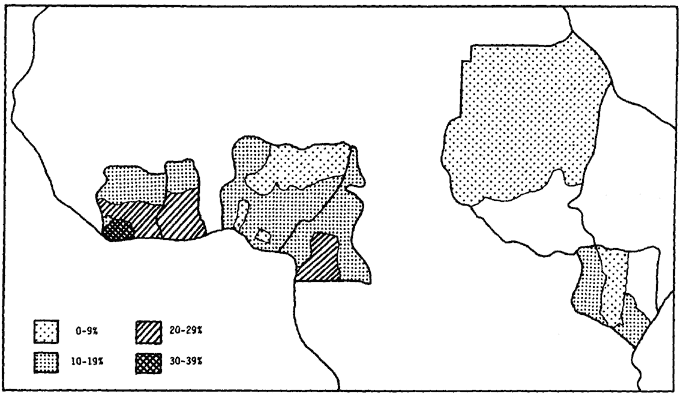
Figure 9.1.
Percentage of Children under Age 15 Not Residing
with Their Mother, by Administrative Region
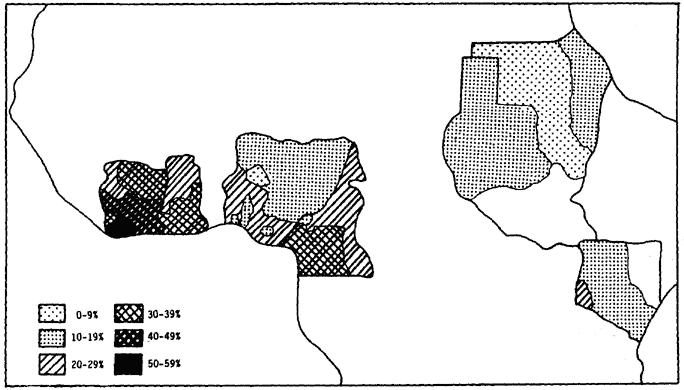
Figure 9.2.
Percentage of Children Age 10–14 Not Residing with Their Mother, By Administrative Region
parts of Southern Nigeria, record figures in excess of 30 percent. In Southern Ivory Coast, more than 40 percent of children aged 10 to 14 (and in one area over 50 percent) were not living in the same household as their mother.
Clearly it is the case that over very wide areas, large numbers of children spend considerable portions of their childhood in another household than their mother's.
Differentials by Age and Sex
It is worth looking more closely at the pattern by age and sex, and at rural-urban differentials. Figure 9.3 plots selected quantiles from the frequency distribution of the regional percentages for each age-sex group. For the youngest children (ages 0–4), the percentage not living with their mother is typically in the range 5 to 12 percent, although even at this young age higher percentages are found. There are only limited indications of differences between sons and daughters. For age group 5–9, the percentage of children not living with their mother rises to typical values in the range 10 to 22 percent. Again there is little indication of a marked sex differential. By age group 10–15, however, not only have typical values risen to 20 to 30 percent, with some very high values, but there is also a slight but clear tendency for girls to be away more than boys.
More information on this differential is given in figure 9.4, which portrays rural-urban differentials.[5]
Figure 9.4 shows that for the youngest age group (0–4 years), the percent-
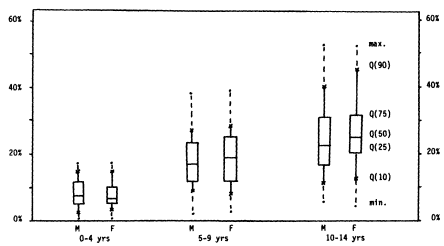
Figure 9.3.
Distribution (Selected Quantiles) of Regional Percentages of Children Not
Residing with Their Mother, by Age and Sex (56 Regions)
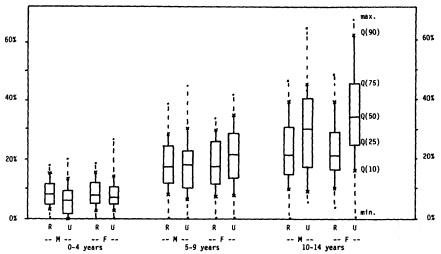
Figure 9.4.
Rural-Urban Differentials in the Frequency Distribution for the Percentage
of Children Not Living with Their Mother, by Age and Sex (55 Regions)
age of children not residing with their mother is systematically higher in rural than in urban areas. Either there is more circulation of young children in rural than in urban areas, or young children are being sent out of the urban areas. Although it is impossible with these data to disentangle these two possibilities, we suspect that the second may be increasingly important. Out-fostering of very young children from urban to rural areas has now been observed for several regions—for the Mende by Bledsoe (Bledsoe and Isiugo-Abanihe, in this volume), the Avatime by Brydon (1985), and in Zambia by Hansen (personal communication, 1986). There is a growing body of evidence that women find it hard to make child care arrangements for young children in urban areas, and that many find the presence of young children a financial, logistic, and even a social burden. Although the well-to-do may be able to employ housemaids, nannies, or ayahs to look after their young children, other women appear to prefer sending their children elsewhere, including to rural areas, at least until they reach school age. Some mothers say that rural conditions provide a better environment for their young children than do the towns. It may indeed be in the interests of the young child of a polygynously married woman or divorcée who cannot care for her child herself, to be left in the care of kin or with a neutral party rather than with a cowife or the husband's new wife (both persons commonly perceived as not having the child's welfare at heart, or even as being plainly hostile toward the child). Sending the child to a rural area may also be financially advantageous to the parents. Finally, sending the child to the home village may help reinforce links there and hence the position of both parent and child within the village.
Whatever the underlying reasons, it is certainly true that declines in breastfeeding in general and the increasing availability of bottle-feeding, of infant formula, and of various milk products and other weaning foods mean that physiological constraints necessitating coresidence of babies and very young children with their mothers are weakening.
For children aged 10–14 there are large rural-urban differentials for both sexes, particularly for girls. The proportions of both boys and girls not with their mothers are significantly higher in urban than in rural areas. This is probably largely the result of actual rural-urban movement related to the concentration of secondary schools in urban areas (see Gould [1985] for a discussion of education circulation in East Africa, Saint-Vil [1981] or Antoine sexes, particularly for girls. The proportions of both boys and girls not with their mothers are significantly higher in urban than in rural areas. This is probably largely the result of actual rural-urban movement related to the concentration of secondary schools in urban areas (see Gould [1985] for a discussion of education circulation in East Arica, Saint-Vil [1981] or Antoine [1983] on the Ivory Coast, and Sanjek [1986], for example), related to the better training and employment possibilities in the towns and, above all, for girls, to the demand for housemaids.
It is abundantly clear from these data that child circulation is a major phenomenon affecting sizable proportions of the population and that there are significant differentials to be explained. The extent of nonmaternal residence among very young children suggests in addition that child circulation may take forms other than the traditional ones of fostering originally studied. Before proceeding further, however, we need to consider the adequacy of the approach adopted so far. Analysis just by administrative region and by level of urbanization is in fact inadequate, for both methodological and substantive reasons.
Child circulation is a form of relocation or migration, and to analyze it most effectively using geographical units we need to have information on the place of origin of the children. Alternatively we need to use analysis units that form closed populations. Here we have neither. There is no indication of where the children originated, only of where they were residing at the time of the survey. Moreover, although administrative regions may be relatively closed in terms of their population (at least for many of the areas covered), not all are closed, and a breakdown of them into separate rural and urban areas is a clear contravention of the methodological requirements. We have already mentioned the impossibility of distinguishing differentials in circulation within two subregions from circulation from one to the other.
Moreover, categories based on "administrative regions" and the distinction "urban–rural" are both poor proxies for a host of social organization variables of key relevance for the study of child circulation in Africa.
Social Organization and the Prevalence of Nonmaternal Residence
A Model
Esther Goody's classic work on fostering developed a model in which fostering is a function of kinship, marriage, and inheritance systems on the one hand, and of social and political complexity on the other. In essence, the first group of variables determines both the extent to which the members of the lineage(s) to which the child belongs, have an interest in exercising direct rights over the child and the extent to which a child has property or other rights elsewhere. (It can also, through the intermediary of residence patterns, affect the extent to which it is in the direct interest of the parents, particularly the mother, to send a child elsewhere to live with kin in order to maintain close contacts and/or support there later—for example, in those societies where marital residence is neither uxorilocal or matrilocal but where women return to live near their own kin in old age). The second set determines the extent to which circulation of children, not only to kin but also to nonkin, can be used to develop or strengthen patron-client or alliance relationships either for training or to enhance social mobility.
Goody summarized the general implications of these considerations with three broad propositions concerning traditional fostering patterns (E. Goody, 1982, p. 275):
1. In undifferentiated segmentary societies, parental roles are unitary and there is little delegation of childrearing; these societies are characterized by very little, if any, fostering other than as response to family "crises" such as divorce or widowhood. In undifferentiated societies with matrilineal or double-descent systems, parental roles are not unitary; generally, however, only jural status and reciprocities involve anyone other than the biological parents (e.g., the mother's brother), while childrearing is still vested primarily in the biological parents and there is little occasion for fostering outside crisis situations.
2. Differentiated states are characterized by fostering extending beyond response to family crises. Goody makes in addition a distinction between simple differentiated states and more complex hierarchical states:
3. Simple differentiated states are characterized by fostering primarily to kin.
4. Complex hierarchical states are characterized by a greater importance of fostering to nonkin as well as to kin and by fostering for social mobility and for forging alliance or patron-client relations.
As Goody also indicated, this model can readily be extended beyond traditional social structures to include the effects of increasing social and
economic differentiation associated with contact with other populations (particularly trading and colonial contacts) and with modernization. Indeed, her model implies increasing levels of child circulation, especially circulation to nonkin for education, training, and sponsorship purposes, with the increasing social differentiation associated with modernization. The model could also be extended to include changes in kinship, marriage, and inheritance systems, although this seems less urgent given the slower pace at which these appear to be changing.
In Goody's model, modernization was not treated as a separate dimension but rather as an extension of the complexity variable. Figure 9.5 shows a simple extension that incorporates not only modernization as distinct dimension but also the fact that our data relate to nonmaternal residence rather than to fostering. Two sets of primary variables are distinguished. In the first are found the intensity and patterns of child circulation. In the second are found a series of variables reflecting other aspects of social organization. These are grouped under three headings:
Kinship and Marriage Variables
1. The form and strength of the lineage organization and inheritance systems provide an indicator of the potential interest of other lineage members in childrearing.
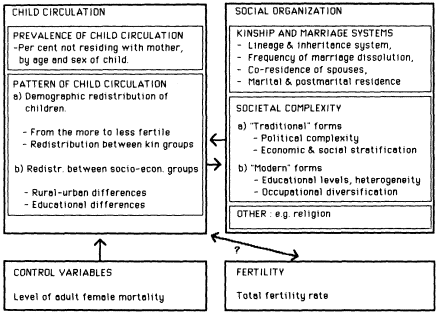
Figure 9.5.
Nonmaternal Residence and Social Organization
2. Women's marriage and residence patterns affect both the possibility for her children to reside with her and the desirability of having at least one raised elsewhere. We distinguish three key variables here:
3. Coresidence of spouses may constrain the possibilities for coresidence of children and their mothers since, where spouses do not live in the same household, it is not uncommon for the older children, more particularly the boys, to live with their father rather than with their mother.
4. Frequency of marriage dissolution also constrains the possibilities for mother-child coresidence, since older children of both sexes are then unlikely to stay with their mother: in patrilineal societies they are most likely to follow the husband or to go to a member of his lineage; in matrilineal ones they are more likely to go to one of their mother's kin.
5. Marital residence rules in combination with the residence patterns of women in old age, after divorce, or following widowhood determine the desirability of sending at least one child to be raised in the place the mother will later live.
"Traditional" Forms and Levels of Societal Complexity
1. Complexity of the traditional political structure.
2. Socioeconomic stratification as reflected in the traditional occupational or class structure.
"Modern" Forms and Levels of Complexity
1. Educational levels and heterogeneity.
2. Occupational diversification related to modernization.
Finally, two additional sets of variables have been included in figure 9.5 to complete the overall model, namely a control variable (the level of female adult mortality) and fertility itself.
Obviously regional and rural–urban breakdowns are as inadequate to handle this type of model as they are methodologically limited. The use of ethnic group as a unit of analysis, however, provides a solution to both substantive and methodological problems. Our further analysis proceeds, therefore, on the basis of results for ethnic groups.
Ethnic Group As Units of Analysis
Using ethnic groups with the WFS Household Questionnaires is not straightforward. We need, therefore, to describe our procedures in some detail.
Direct information on ethnic groups is available for all children only in Cameroon, although we can assume that practically all the children in the Lesotho survey are Sotho. In the Ivory Coast, ethnic group was asked only
for persons over age 15; we have linked the household head's data to each child and made the simplifying assumption that children were of the same ethnic group as their head of household.[6] In Sudan, too, ethnic group was not ascertained for individuals but at the level of the household; here, unfortunately, the meaning of the codes used for ethnic group is not available, so Sudan must be dropped from the analysis.[7]
In countries where ethnic group was not ascertained at all in the Household Questionnaire, we must use instead information from the Individual Questionnaire administered to women of reproductive age. In other words, we must link the data from two files. One possible procedure would be to identify for each child in the Household Files the data for his or her mother (if present) in the Standard Recode Files and then to assign to each child the ethnic group of the mother. Where the mother was not present one might assign the ethnic group of, say, the oldest woman interviewed in the household. Unfortunately, quite apart from any errors that might be introduced by interethnic marriages, this procedure would have the effect of excluding all children enumerated in households where there was no woman of eligible age interviewed. Since we suspect that a not insignificant portion of child circulation is movement of children to elderly persons, to help them in their household tasks and to provide companionship, this would be a potentially very serious loss. We have, therefore, opted for an alternative approach. We first split the Standard Recode Files into the smallest sampling areas used (there are between 150 and 250 areas per country in the countries concerned) and examined the ethnic distribution of women of reproductive age in each area. We then assigned to each child in the Household Files a probability of belonging to each ethnic group equal to the proportion of women in that ethnic group in his or her sample area. In other words, when making estimates for ethnic group A, each child has received a weight equal to the proportion of women in his or her sampling area who were from group A. Since the ultimate sampling units were usually small and rather homogeneous ethnically, this works rather well. In terms of the ethnic groupings used here, on average over 80 percent of the women in an area belonged to the same group; just over one-quarter of the areas were fully 100 percent homogeneous, and in over half, 90 percent or more of the women interviewed belonged to a single group.[8]
Finally, we should note that data on ethnic group can be quite hard to collect. The amount of assistance given the interviewers and coders (e.g., lists of the various names used for the different ethnic groups and subgroups, and detailed instructions concerning the way in which subgroups were to be recorded) varied considerably between countries. Moreover, ethnic group data can be extremely sensitive. Given the difficulties involved, it is perhaps not surprising that we cannot present results by ethnic groups for all the countries. Not only are ethnic group codes not available for Sudan, as we have
already mentioned, but, in addition, permission to use the Nigerian data does not extend to publication of any data by ethnic group.
For this chapter we have used for each country the broadest ethnic groupings given in the Standard Recode Files (apart from a few exceptions related mainly to sample-size considerations). The disadvantages of using these particular groups stem from the fact that many are broad language groups rather than ethnic groups per se; some are, therefore, highly heterogeneous internally (e.g., the Northern Ghanaian groups). For these cases our data are rather bland averages over quite highly contrasting groups. The main advantage of using these groups is ready comparability with other analyses based on the WFS data, including analyses found elsewhere in this volume.
Our estimates of proportions of children not living with their mother, specific by the children's age and sex, are documented for the five countries where documentation is possible in table 9.3. Our subsequent analysis attempts to relate the age- and sex-specific levels of nonmaternal residence to selected social organization variables. More specifically we relate them here to the following:
1. Among the kinship and marriage variables we have used lineage organization, coresidence of spouses, and the frequency of marriage dissolution.
2. For complexity of the "traditional" society we have used an indicator of political complexity and a measure of caste and class stratification.
3. For "modern" forms of societal complexity we first examined four indicators of educational and occupational heterogeneity—the proportion literate among women aged 15–49, their average years of schooling, the proportion of their husbands working in high-level jobs or as employers themselves, and the proportion of husbands in the traditional self-employment sector. A factor analysis showed that the proportion literate loads much more heavily on the first factor than do any of the other three variables. For simplicity of interpretation, therefore, we have simply used the proportion literate. Proportion urban is also included as a separate variable in some analyses, since it is not strongly correlated with educational or occupational differentiation between ethnic groups.
Our covariates—literacy, urbanization, marital residence, and coresidence of spouses —were all derived from the WFS files. They are thus derived from the same sample of households as our child-residence variables. The first three can be derived immediately from the Standard Recode Files, which refer to women of reproductive age located in the households covered by the Household Questionnaire.[9] They were operationalized as follows:
1. Literacy: percentage reporting themselves as literate, women aged 15–49
| ||||||||||||||||||||||||||||||||||||||||||||||||||||||||||||||||||||||||||||||||||||||||||||||||||||||||||||||||||||||||||||||||||||||||||||||||||||||||||||||||||||||||||||||||||||||||||||||||||||||||||||||||||||||||||||||||||||||||||||||||||||||||||||||||||||||||||||||||||||||||||||||||||||||||||||||||||||||||||||||||||||||||||||||||||||||||||||||||||||||||||||||||||||||||||||||||||||||||||||||||||||||||||||||||||||
| ||||||||||||||||||||||||||||||||||||||||||||||||||||||||||||||||||||||||||||||||||||||||||||||||||||||||||||||||||||||||||||||||||||||||||||||||||||||||||||||||||||||||||||||||||||||||||||||||||||||||||||||||||||||||||||||||||||||||||||||||||||||||||||||||||||||||||||||||||||||||||||||||||||||||||||||||||||||||||||||||||||||||||||||||||||||||||||||||||||||||||||||||||||||||||||||||||||||||||||||||||||||||||||||||||||||||||||||||||||||||||||||||
2. Urbanization: percentage residing in urban areas, women aged 15–49
3. Marriage dissolution: percentage of all ever-married women aged 15–49 who have ever been divorced or widowed.
Our fourth covariate is defined analogously:
4. Coresidence of Spouses: percentage of all currently married women aged 15–49 recorded as living in the same household as their husband.
Unlike the first three, however, this fourth covariate was not derived directly from the Standard Recode Files. These files do include data from a question asked each currently married woman as to whether her husband usually lived in the same household as she did. However, the question used varied in content between countries. Moreover, the data obtained were not included in the Standard Recode Files for all the countries. We have, therefore, used an alternative source of information located in the Household Files. On each Household Questionnaire, a link was made between each husband and his wife or wives, and a code identifying him and his wife/wives (the "couple code") was included routinely in the Household Files. Women with no husband present received a special code. In some countries, an explicit distinction was made between those with no husband present because they did not have a husband at the time of the survey (single, widowed, and divorced women) and those whose husband was elsewhere; this distinction can also easily be made by drawing upon data for a separate variable on marital status. In these countries it is a simple matter to estimate the percentage of currently married women whose husbands were enumerated in the same household, using just the Household Files. Not all countries included information on marital status in their Household File, however. For Kenya and Ghana, for example, there is no separate variable for marital status, and for the couple code no distinction is made between women who have no husband and those whose husband is elsewhere. For these countries we have used the proportion of women not currently married obtained from the Standard Recode File to adjust the proportion of women with no husband present recorded in the Household File. The estimated proportion of currently married women whose husbands are elsewhere is given simply by:

The data for our factors—lineage organization, traditional political complexity, and stratification —were extracted from Murdoch's Ethnographic Atlas (1962–1967, with updates through 1983), after identification of the ethnic group(s) in the Atlas corresponding most closely with the categories used in the WFS surveys. Since the number of observations incorporated in this analysis is rather small (sixty broad ethnic groups), we have reduced all the factors to simple dichotomies:
1. For our variable lineage, the small number of groups exhibiting bilateral or duolateral traits have been combined with the matrilineal groups:[10] our variable thus contrasts patrilineal societies (75 percent), with all the others (25 percent).
2. Political complexity contrasts societies with no chiefs or only petty chiefs on the one hand (65 percent), with states and with societies with paramount chiefs on the other hand (35 percent).[11]
3. Stratification contrasts societies with no stratification (or only despised, usually small, "caste" groups) (65 percent) with those exhibiting stratification by wealth or other more complex stratification (35 percent).[12]
Results
By way of exploration we pursued two lines. On the one hand, we conducted a factor analysis on the proportions of children not living with their mother in order to identify common patterns by age, sex, and rural-urban residence. On the other hand, we examined the effect of our social organization variables on nonmaternal residence levels using multiple classification analysis (MCA). First we did this on a very exploratory basis using the proportions by age; MCA is not the most appropriate technique in this regard, but it should suffice for the present exploratory purposes. Then we applied MCA to the factors extracted from the factor analysis. The results are presented in tables 9.4 through 9.6.
Turning first to the most exploratory MCA statistics on the proportions of children not residing with their mother, by age (table 9.4), we can note the following:
1. As expected, the explanatory power of our social-organization variables increases with the age of the child. The proportion of the variance in nonmaternal residence that they explain increases from 47 percent (39 percent, after adjustment for the large number of variables relative to the number of observations) for children under 5 years to 70 percent (66 percent after adjustment) for those aged 10–14. The effect of differences in social organization is clearly stronger for older than for younger children, who still tend to live with their mothers even in those ethnic groups that have social organization characteristics associated with high levels of nonmaternal residence in general.
2. Among the factors, lineage type is usually the most important factor in terms of zero-order associations, and it remains so when all variables are introduced simultaneously. Societies with matrilineal characteristics and those exhibiting any bilateral or duolateral traits tend to have slightly higher proportions of children not living with their mother. When the other variables are introduced, however, the effect generally becomes less marked (especially for the older children), although the beta values are statistically significant.
| ||||||||||||||||||||||||||||||||||||||||||||||||||||||||||||||||||||||||||||||||||||||||||||||||||||||||||||||||||||||||||||||||||||||||||||||||


| |||||||||||||||||||||||||||||||||||||||||||||||||||||||||||||||||||||||||||||||||||||||||||||||||||
|
3. Somewhat surprisingly, political complexity and class/caste stratification—two variables one might expect to be of considerable importance in the light of Esther Goody's model of traditional child fostering—do not exhibit significant systematic effects in the expected direction. The deviations are often small (especially for the central age group of children), and even where they are larger they do not reach the 5 percent significance level. The irregular pattern may, of course, be the result of relatively weak operationalization of these variables. It is also possible, however, that "modern" forms of social differentiation may be taking over from "traditional" ones.
| ||||||||||||||||||||||||||||||||||||||||||||||||||||||||||||||||||||||||||||||||||||||||||||||||||||||||||||||||||||||||||||||||||||||||||||||||||||||||||||||||||||||||
4. Among the covariates measuring forms of heterogeneity associated largely with modernization, however, education does not appear to have a very strong effect. The beta coefficients for literacy are generally small and cannot be said to exhibit the pattern we had hypothesized, namely that higher levels of literacy would be associated, through greater educational heterogeneity, with more child circulation, especially for older children. The beta values for the two older age groups are negligible. The coefficient for the youngest age group, however, is not entirely negligible (and reaches the 1 percent significance level). Although higher levels of literacy do not appear to lead to more child circulation among older children, they do appear to lead to slightly higher proportions of very young children living away from their mothers. Presumably this is a reflection of the increasing difficulty in caring for very young children already discussed in the context of rural-urban differentials. It could also be related to the sending of children to their grandmothers when they are to be weaned—especially if they are to be weaned relatively young—as referred to by Isiugo-Abanihe (1985).
5. The estimated effects for degree of urbanization are however somewhat larger, particularly for older children, as was expected. For young children, higher levels of urbanization appear to have little impact on the proportion of children not living with their mother; perhaps any effect they have has already been taken up in the effect of literacy. For the oldest children the levels have a noticeable impact, as hypothesized: more urbanized ethnic groups have higher proportions not living with their mothers.
6. Our nuptiality variables play a more important role. As expected, coresidence of husband and wife has no effect for younger children, but it has a clear (and highly significant) effect for children above age 5. The magnitude of its effect is comparable to that of urbanization.
7. By far the largest effects of all are recorded for the variable measuring frequency of marriage dissolution. This variable is highly significant for all age groups and, as expected, increases markedly with age.
Overall, the marriage and kinship variables dominate over our social-complexity variables. Before jumping to conclusions, however, we should look at tables 9.5 and 9.6.
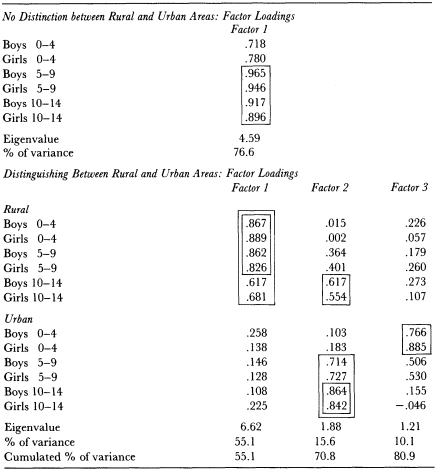
Table 9.5 shows the results of the factor analysis. When no distinction between rural and urban areas was made within each ethnic group (top panel), only one factor emerged: "all age and sex groups" loads relatively heavily on this factor (although the factor loadings are perceptibly lower for children under 5). When a distinction was made between rural and urban areas (bottom panel), three main factors emerged. The first is dominated by variation in rural values, the second by variations in values for older children
(especially older urban children), whereas the third factor predominantly reflects variation among very young children in urban areas. Rural, presumably more traditional, variations in child circulation levels thus emerge as the most important component of interethnic variability. Next comes a dimension capturing differences in child-training and child-labor patterns, especially although not exclusively in urban areas. And this is followed by a dimension reflecting interethnic differences in child-nurturing patterns in urban areas.
Table 9.6 takes the three components derived from the factor analysis and submits them to an MCA. Since an explicit distinction was made between rural and urban areas in creating the components, the variable urbanization can be dropped. Before discussing the results we should note that statistical significance is slightly harder to reach here than in table 9.4, because of a slightly smaller sample size: ten ethnic groups with a very small number of observations for a particular age–sex–rural/urban residence group were excluded. Not surprisingly, the results for the first component—the general, predominantly rural, prevalence of nonmaternal residence—are quite similar to those shown in table 9.4. The proportion of the variance explained is about 60 percent (54 percent after adjustment). Frequency of marriage dissolution is the only variable to be significant at the 1 percent level, although both the other covariates—coresidence of spouse, and literacy —and the lineage factor are significant at the 5 percent level. For the second and third factors, which load heavily on particular age groups and on urban areas, the model performs less well overall here, with proportions explained around 30 to 40 percent. The beta values are, in general, smaller than in table 9.4, and the 5 percent significance level is rarely reached. As in table 9.4, however, systematic deviations in the expected direction are observed for lineage organization and for frequency of marriage dissolution (although, as expected, the latter has no impact on the "urban nurturing" factor). Comparing table 9.6 with table 9.4 shows that the main features of table 9.4 are confirmed at least in the rural patterns where the model performs best.
These results draw attention to two issues. First, they confirm the prime importance of kinship and marriage patterns in general, and of the prevalence of marriage dissolution in particular, for the prevalence of child circulation. Their importance should come as no surprise. Esther Goody has already identified the importance of lineage organization in general, and there are ample grounds for expecting marriage dissolution to play a major role: (1) To begin with, there is the direct effect of divorce (and widowhood) already referred to—what Esther Goody refers to as crisis fostering. The anthropological literature contains numerous references to children, especially older children, living with their father or with other relatives after a marriage is dissolved. (2) There may be indirect effects leading to nonmaternal residence even when the parents' marriage is still intact. For example there may be
"insurance" against marital dissolution in societies marked by high instability of marriage (Frank, 1985). Where a married woman returns to her own kin at widowhood or divorce, there may be a greater tendency to ensure that at least one child is raised there in order to make certain that she always has a child to return to who will help support her; the child is also more likely to have rights there. Or, as Lallemand (1976) described for the Mossi, older women in the lineage may use a high risk of divorce as an argument for taking a child away from a woman who has not been married long in the compound, on the grounds that the child should be reared by women who have proven to be loyal and stable members of it. (3) Finally and more generally, as the Goodys suggested nearly 20 years ago in the context of child-fostering (J. Goody and E. Goody, 1967), circulation of children and circulation of women may be two intertwined elements of a single system. Where either marriage itself and/or the transfer of rights in a woman's reproductive capacity to her husband's lineage on marriage are essentially irreversable, neither children nor women circulate; where marriage and rights in a woman's reproduction are more flexible, both circulate.
The second finding is the rather surprising absence of systematic marked effects related to educational levels (at least as measured by literacy) and the only moderate effect of urbanization. These are found to play only a relatively minor role in determining differences between ethnic groups—although urbanization is significant for older children. However, this does not rule out the possibility that these variables exercise their influence within ethnic groups, affecting the pattern rather than the prevalence of child circulation. As figure 9.6 illustrates for literacy—which had almost no effect on between-group differences—within ethnic groups these variables indeed play a strong role. Within ethnic groups there are marked differentials in the proportion of children not living with their mother, depending on the literacy level of the area where the child lives. The prevalence of nonmaternal residence is nearly always higher for areas that have intermediate or high levels of literacy, indicating either more circulation within, or movement of children to, the more privileged areas. These variables can, therefore, be seen as constituting important determinants of internal redistribution patterns, even if they have only a small impact on the overall level of redistribution.
Conclusions
We certainly would not claim that these rather exploratory analyses are definitive. Much more remains to be done. Some points are, however, already clear.
First, these data demonstrate convincingly what several anthropologists have argued for some time, namely that nonmaternal residence is a widespread phenomenon and that it reaches such high levels over wide areas that
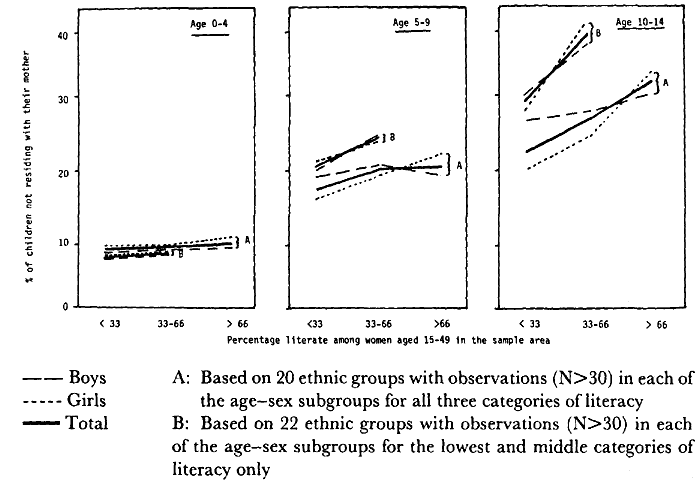
Figure 9.6.
Within Ethnic Group Differentials in Percentage of Children Not Residing with Their Mother, by Literacy Level of Women
Aged 15–49 in the Sample Areas Where the Children Reside
to ignore its existence is to risk making nonsense of discussions of childrearing itself. By extension, ignoring it risks making nonsense of discussions of both fertility and child health as well.
Second, they confirm the fundamental importance of family systems, as opposed to education and, to a lesser extent, urbanization, in determining the prevalence of nonmaternal residence. The latter variables exert their impact on the pattern of child circulation rather than on its prevalence. The overwhelming importance of lineage and marriage patterns for the level of child circulation is of considerable importance because it suggests that child circulation and proparenthood are likely to remain common for quite a long time. In general, family systems and the underlying familial values they reflect change much more slowly than such socioeconomic characteristics as educational and occupational diversity or urbanization (Mead and McNicoll, 1986). Indeed, although there are some indications that lineage, for example, is slowly losing its influence through such changes as the privatization of land, the process has not yet advanced very far: privatization of birdewealth payments, for example, still appears to be found only in relatively restricted areas. Moreover, it is not clear that the changes involved are leading toward a nuclear family model with emphasis on a strong and long-term
husband-wife link; they may be moving more toward more flexible union and family types with informal polygyny (deuxièmes bureaux or "outside wives") closer to those found in the Caribbean (Lacombe, 1983; Clignet, 1986; see also Wa Karanja, 1986). If change is in the direction of the nuclear family, then one would expect the prevalence of child circulation to decline considerably, but one would predict continuing high levels of child circulation (albeit with different patterns perhaps) in the latter case.
Finally, we should draw attention to what this particular analysis has not shown. It has restricted itself largely to the overall prevalence of child circulation and has not addressed the patterns of circulation in any detail. The extent to which proparenthood is used to redraw the pattern of access to children that is created by fertility has not yet been examined. Last but certainly not least, the social meaning of child circulation simply cannot be addressed with purely demographic data. Only anthropological studies can elucidate the extent to which child circulation changes the "costs and benefits" of bearing children, for example. Basically, therefore, the bottom line in terms of reproduction—"What effect, if any, does child circulation have on fertility?"—remains to be filled in.
Acknowledgments
I am indebted to Yvan Wijnant for his programming work, especially the very extensive work on data cleaning, record linkage, and development of contextual variables involved in the preparation of the data files used in this paper. I would also like to thank the authorities in the countries concerned (Cameroon, Ghana, Ivory Coast, Kenya, Lesotho, Nigeria, Sudan) for permission to use their WFS data.
The work reported on here was supported by grant CP82.39A from the Population Council International Research Awards Program funded by USAID. The Vrije Universiteit in Brussels also provided both staff support through its Research Council and generous computer time.
An earlier version of this chapter was presented at the annual meeting of the Population Association of America in San Francisco, 1986. Esther Goody and Lynne Brydon provided comments on the earlier version, some (but not all) of which I have already been able to take into account here.
Bibliography
Antoine, P. 1983. Urbanisation et taille des ménages: Le cas d'Abidjan. Cahiers d'ORSTOM, Série Sciences Humaines, 19(3).
Antoine, P., and A. Guillaume. 1986. Une expression de la solidarité familiale en Abidjan: Enfants du couple et enfants confiés. In Les familles d'aujourd'hui. Paris: Association International des Démographies de Langue Française, 289–297.
Bledsoe, C. H. 1985. The politics of polygyny in Mende child fosterage transactions. Paper presented at the meeting of the American Anthropological Association, Washington D.C.
Bledsoe, C. H., and U. C. Isiugo-Abanihe. 1985. Strategies of child fosterage among Mende grannies in Sierra Leone. Paper presented at the meeting of the Population Association of America, Boston (also included in this volume).
Brydon, L. 1979. Women at work: Some changes in family structure in Amedzofe-Avatime, Ghana. Africa 49(2): 97–111.
———. 1985. The Avatime family and circulation, 1900–1977. In Circulation in third world countries, ed. R. M. Prothero and M. Chapman. London: Routledge and Kegan Paul, 206–225.
Bukh, J. 1979. The village woman in Ghana. Uppsala: Scandinavian Institute of African Studies.
Cain, M., and G. McNicoll. 1986. Population growth and agarian outcomes. Working Paper of the Center for Policy Studies, no. 128. New York: The Population Council.
Caldwell, J. C., and P. Caldwell. 1988. Is the Asian family planning program model suited to Africa? Studies in Family Planning 19(1): 19–28.
Clignet, R. 1970. Many wives, many powers: Authority and power in polygynous families. Evanston: Northwestern University Press.
———. 1986. On dit que la polygamie est morte: Vive la polygamie! In Transformations in African marriage, ed. D. Parkin and D. Nyamwaya. Manchester: Manchester University Press.
Etienne, M. 1979. Maternité sociale: Rapports d'adoption et pouvoir des femmes chez les Baoulé (Côte d'Ivoire). L'Homme 19(3–4): 63–107.
Fiawoo, D. K. 1978. Some patterns in foster care in Ghana. In Marriage, fertility and parenthood in West Africa, ed. C. Oppong et al. Canberra: Australian National University.
Fraenkel, M. 1964. Tribe and class in Monrovia. London: Oxford University Press.
Frank, O. 1984. Child-fostering in sub-Saharan Africa. Paper presented at the annual meeting of the Population Association of America, Minneapolis, Minn.
———. 1985. La mobilité des enfants et l'autosuffisance économique des femmes dans le milieu patriarcal africain. In Femmes et politiques alimentaires, ed. J. Bisilliat et al. Paris: ORSTOM-CIE. 641–652.
Goody, E. 1982. Parenthood and social reproduction: Fostering and occupational roles in West Africa. Cambridge: Cambridge University Press.
Goody, J. 1976. Production and reproduction. Cambridge: Cambridge University Press.
Goody, J., and E. Goody. 1967. The circulation of women and children in northern Ghana. Man (1967) (2): 226–248.
Gould, W. T. S. 1985. Circulation and schooling. In Circulation in third world countries,
ed. R. M. Prothero and M. Chapman. London: Routledge and Kegan Paul, 262–278.
Gruenais, M.-E. 1981. Famille et demographie de la famille en Afrique. Collectif de Travail sur la Famille, Document de travail, no. 1. Paris: ORSTOM.
Isaac, B. R., and S. R. Conrad. 1982. Child-fostering among the Mende of Upper Bambara Chiefdom, Sierra Leone: Rural-urban and occupational comparisons. Ethnology 21: 243–257.
Isiugo-Abanihe, U. 1985. Child-fosterage in West Africa. Population and Development Review 11 (1): 53–73.
Kreager, P. 1980. Traditional adoption practices in Africa, Asia, Europe and Latin America. Research for Action, no. 6. London: International Planned Parenthood Federation.
Krige, E. J. 1974. Woman-marriage with special reference to the Lovedu—Its significance for the definition of marriage. Africa 44(1): 11–37.
Lallemand, S. 1976. Génitrices et éducatrices Mossi. L'Homme 16(1): 104–124.
———. 1980. L'adoption des enfants chez les Kotokoli au Togo. Anthropologie et Sociétés 4(2): 19–37.
Laye, C. 1954. L'enfant noir. Paris: Plon.
Locoh, T. 1985. La migration des enfants rapportée par les mères: Application au Sud-Togo. In Chaire Quételet: Migratione internes. Louvain: Ordina Editions for Département de Démographie, Université Catholique de Louvain.
Murdock, G. 1962–1967. World ethnographic atlas. Ethnology vols. 1–6 (with addenda and corrigenda also through vol. 19).
Oppong, C. 1973. Growing up in Degbon. Legon: University of Ghana.
Saint-Vil, J. 1981. Migrations scolaires et urbanisation en Côte d'Ivoire. Cahiers d'Outre Mer 34(133): 25–41.
Sanjek, R. 1985. Maid servants and market women's apprentices in Adabraka. Paper presented at the American Anthropological Association Annual Meeting, Washington, D.C.
Schildkrout, E. 1973. The fostering of children in urban Ghana: Problems of ethnographic analysis in a multicultural context. Urban Anthropology 2: 48–73.
Skinner, E. P., 1960. The Mossi Pogsioure. Man 60: 20–23.
———. 1961. Intergenerational conflict among the Mossi: Father and son. Journal of Conflict Resolution 5: 55–60.
Smith, M. F. 1954. Baba of Karo: A woman of the Muslim Hausa. London: Faber.
Soyinka, W. 1981. Aké: The years of childhood. London: Collings.
Wa Karanja, W. 1986. "Outside wives" and "inside wives" in Nigeria: A study of changing perspectives in marriage. In Transformations in African marriage, ed. D. Parkin and D. Nyamwaya. Manchester: Manchester University Press.