
6
Nurseries of the Ruling Race
All educational organizations worthy of the name have always recognized what must be the ultimate and significant principle of pedagogy: namely the absolute mandate, the iron bond, discipline, sacrifice, the renunciation of the ego, the curbing of the personality.
—Thomas Mann, The Magic Mountain
[The Nilgiris] might prove a nursery for future Indian statesmen, political residents, counsellors, and governors.
—Major William Murray, An Account of the Neilgherries, or, Blue Mountains of Coimbatore, in Southern India
No elements of the British colonial community were more closely identified with hill stations than women and children. While in India as a whole the overwhelming majority of the British were adult males, this was emphatically not the case in the hill stations. From the early decades of the nineteenth century, officials took their families to hill stations to protect them from the physical toll of the tropics. They did so with the endorsement of doctors, who warned that women and children were less suited to the harsh climate of India than men and more needful of the therapeutic benefits of the higher elevations. As the advance of the railway made travel faster and easier, increasing numbers of women took to the hills for the summer. Some of these women were accompanied by their spouses and children; others were "grass widows," whose husbands remained at their posts in the plains; still others were genuine widows and young unmarried women. A growing number of children also came to the hill stations to attend the boarding schools that began to spring up in the latter half of the nineteenth century. As a result much higher concentrations of women and children could be found in the hill stations than existed in the expatriate population as a whole.
This divergence from the predominantly adult masculine cast of the British presence in India had important ramifications. It distinguished hill stations as European enclaves where males and females, adults and children, existed in much the same proportions as in British society. Almost alone among the places where the colonizers tended to congregate in India, hill stations managed to take on some of the social and biological characteristics
of self-sustaining communities. While the seasonality of hill-station life and the transience of residents might be thought to have undermined the social cohesion of these enclaves, such oscillations actually contributed in a curious way to their viability and their importance to the imperial endeavor. Because much of the subcontinent's scattered British population circulated through these remote resorts, with women and children constituting particularly sizable portions of the seasonal migration, the hill stations bound the colonizers together in ways that were essential to the perpetuation of their power.
In the hill stations the otherwise widely dispersed representatives of the raj could reproduce their numbers, restore their sense of themselves as bearers of a superior civilization, and transmit their norms and values to their children in a setting protected from the alien influences of India. For the Victorians and their heirs, these were the responsibilities of the family unit and the educational institution. Nowhere else in India did the sense of family become so pervasive and the choice of schools so extensive as in the hill stations. They were the preferred sites within the subcontinent for single young adults to conduct their courting rituals, for married and widowed matrons to exercise their skills as society hostesses, for pregnant women to spend their confinements and new mothers to care for their infants, for toddlers to take their first steps, and for boys and girls to enroll in boarding schools. The hill stations accommodated all the functions essential to the biological and ideological reproduction of the British population in India. They were the nurseries for the ruling race.
British women first began to enter India in significant numbers after the East India Company lost the power to restrict immigration in 1833. Most were the wives and daughters of senior company officials, merchants, planters, and of some missionaries. While figures for the first half of the century are hard to come by, females numbered no more than 19,306 out of a total British population of 125,945 in 1861, and they remained a distinct minority throughout the rest of the colonial era, with the 1901 census showing 384 women per thousand men.[1] They tended to concentrate in
[1] PP, Report of the Commissioners Appointed to Inquire into the Sanitary State of the Army in India , XIX, 1863, 46; P. J. Marshall, "British Immigration into India in the Nineteenth Century," in European Expansion and Migration: Essays on the International Migration from Africa, Asia, and Europe , ed. P. C. Emmer and M. Morner (New York, 1992), 184.
Calcutta, Madras, and Bombay, although the expansion and stabilization of British imperial power across the subcontinent allowed increasing numbers of women to filter into the mofussil , or provinces.
Most of the women who spent time in hill stations in the early years were the wives of civil and military officers stationed in nearby districts. When some members of the family of John Briggs, resident at Satara, fell ill, he moved them to Mahabaleshwar. John Sullivan took his family to Ootacamund for the same reason: sadly, his wife and two children died there. Doctors ordered Henry Lawrence's wife to spend the 1839 hot season in Simla, and in the course of her stay she and her husband acquired an abiding affection for the place. Emily Eden observed that the ladies of Simla in the early 1840s were almost all the wives of high-ranking military officers; when these men departed for the disastrous Afghan campaign, British females outnumbered males in the station by forty-six to twelve.[2]
The number of women who went to the hills and the distances they traveled to do so increased dramatically in the second half of the nineteenth century. These increase occurred for two principal reasons. One was the conflagration that swept upper India in 1857. "The value of the hill towns, small as they then were, was shown during the mutiny," observed one advocate of the highlands. "They became places of refuge for many fleeing from the plains, and for the wives and children of those fighting in the field."[3] While the hill stations in the western Himalayas attracted refugees, even a station as far removed from the disturbances as Yercaud was fortified as a sanctuary for the women and children of Salem in case the rebellion spread to the Madras presidency.[4] The second reason was the construction of a railway network across India. The railway made it a great deal easier and more affordable for women to make the journey to a popular hill station at the onset of the hot weather without the assistance of a husband or other male chaperon.
One example of the opportunities for travel by British women in India in the latter part of the nineteenth century can be found in the diary of Mrs.
[2] Perin Bharucha, Mahabaleswar: The Club 1881-1981 (Bombay, c. 1981), app. B; Paul Hockings, "John Sullivan of Ootacamund," in Journal of Indian History Golden Jubilee Volume , ed. T. K. Ravindran (Trivandrum, 1973), 870; Sir Herbert Benjamin Edwardes and Herman Merivale, Life of Sir Henry Lawrence , 2d ed., vol. 1 (London, 1872), 210; Emily Eden, Up the Country: Letters from India (1930; reprint, London, 1984), 278.
[3] Hyde Clarke, "The English Stations in the Hill Regions of India," Journal of the Statistical Society 44 (Sept. 1881): 559.
[4] F. J. Richards, Salem (Madras, 1913), 254.
Robert Moss King, the wife of a colonial official stationed in Meerut. The nearest hill station was Mussoorie, and Mrs. King went there in the fall of 1878 in a journey that took a day and a half by train, coach, and pony. The following year she spent time in Naini Tal, with side trips to Ranikhet and Almora. In 1880 she returned to Mussoorie, or more precisely Landour, where she rented a house from March to November and took a trek into the Himalayan interior that included a stay at the hill cantonment of Chakrata. During the summer of 1881 she traveled via Murree to Kashmir, spending two months at Srinagar and its environs. Finally, before departing from India in 1882 she visited Matheran. Every year of her sojourn in the country included a lengthy stay in the highlands. Although her husband accompanied her on some of these journeys, just as often she led her children and an entourage of servants on her own.[5]
The peripatetic habits of women like Mrs. King arose not merely from an enthusiasm for the adventures they encountered in the hills but from an antipathy for the life they faced on the plains. This antipathy was usually traced to the tropical climate and its subversive effects on women's health. Maud Diver, the author of a number of successful novels about British India, insisted that memsahibs wilted under the heat much more rapidly than their menfolk. This invocation of the "weaker-sex" doctrine sparked some dissent. Another novelist, Flora Annie Steel, who had lived in India with her husband, a civil servant, between 1867 and 1889, claimed that women could cope with the climate just as well as men.[6] But her opinion was the exception, and it was certainly not shared by the medical fraternity. They believed that the physiology of females put them at a distinct disadvantage when the sweltering heat of summer set in, making their flight to the hills necessary. As one of the more popular nineteenth-century books of medical advice for women in India put it, "Women break down sooner than men."[7]
The problem with the weaker-sex argument, however, is that there was no epidemiological evidence to support it. The notion that British women in India suffered poorer health than their male counterparts is contradicted
[5] Mrs. Robert Moss King, The Diary of a Civilian's Wife in India 1877-1882 , 2 vols. (London, 1884), passim.
[6] Maud Diver, The Englishwoman in India (Edinburgh and London, 1909), 8-9; F. A. Steel and G. Gardiner, The Complete Indian Housekeeper and Cook , rev. ed. (London, 1917), 204.
[7] Edward John Tilt, Health in India for British Women , 4th ed. (London, 1875), 34.
by mortality data. A Parliamentary commission reported in 1863 that the death rate for women was just fourteen per thousand, compared with twenty per thousand for civil servants, thirty-eight per thousand for army officers, and sixty-nine per thousand for enlisted men.[8] Medical authorities could not, therefore, rest their case for sending women to the hills on the straightforward grounds of comparative life chances. Instead, they had to rely on exclusivist arguments about the physiology and sociology of the British female.
The physiological case centered on reproduction. The afflictions most often referred to in the health guides for memsahibs were miscarriages and menstrual irregularities.[9] Given what we know about the adverse effects of malaria, dysentery, and other diseases on female fertility, there can be little doubt that British women in India did suffer inordinately from miscarriages and other reproductive disorders. And given what we know about British colonial medicine's proclivity for tracing ill health in the tropics to climatic sources, it is hardly surprising that female patients were advised to go to the hills for convalescence. Hill stations thus came to be seen as places singularly suited to the reproductive needs of the British population in India. Women went there to relieve menstrual distress, to recuperate from miscarriages, and to ensure that pregnancies passed to term. Even hardy Flora Annie Steel went to a hill station—Dalhousie—for her two pregnancies.[10]
The other major argument for sending women to the hills was also couched in medical terms, but its real concern was the adverse effect of colonial social strictures on their lives. Many of the ailments that afflicted British women were attributed to their lack of purposeful activity. The stereotypical memsahib was a creature of leisure who spent her days in the darkened confines of her bungalow, surrounded by a compliant army of servants whose labor left her little to do besides nap, entertain, and gossip. This stereotype ignores the many British women who led active,
[8] These figures are averages for the period 1800-56. Report of the Commissioners Appointed to Inquire into the Sanitary State of the Army , 18, 40, 47.
[9] Francis R. Hogg, Practical Remarks Chiefly concerning the Health and Ailments of European Families in India (Benares, 1877), 2-4, 84; Major S. Leigh Hunt and Alexander S. Kenny, Tropical Trials. A Handbook for Women in the Tropics (London, 1883), 304-9; Tilt, Health in India , 34, 55-61. An excellent examination of these issues can be found in Nupur Chaudhuri, "Memsahibs and Motherhood in Nineteenth-Century Colonial India," Victorian Studies 31, no. 4 (summer 1988): 517-35.
[10] Flora Annie Steel, The Garden of Fidelity (London, 1929), 46, 52.
productive lives in India.[11] At the same time, it obscures the degree to which the memsahibs' leisured existence helped to maintain the social boundaries of colonial privilege by marking their gendered role in racial terms.[12] But the fact remains that most British women in India were confined to a monotonous and trivial existence: they were "incorporated wives" whose roles and status derived solely from their husbands' occupations.[13] Diver observed that British ladies' "domestic duties are practically nil ." Steel was even blunter: "the majority of European women in India have nothing to do."[14] With no duties to keep them busy, the wives of the colonizers were believed to be particularly susceptible to nervous disorders.[15] "Half the cases of neuraesthenia and anaemia among English ladies," argued Steel, "and their general inability to stand the hot weather, arises from the fact that they live virtually in the dark, . . . [in a state of] forced inertia."[16] Medical authorities were equally convinced that the neurasthenic ills of the memsahibs could be traced to their inactivity. As one doctor put it, "Their lives, especially those in affluent or easy circumstances, are generally torpid, and too little relieved by occupa-
[11] Much of the more recent literature on the memsahibs has endeavored to challenge or modify this stereotype. See Pat Barr, The Memsahibs: The Women of Victorian India (London, 1976); Pat Barr, The Dust in the Balance: British Women in India 1905-1945 (London, 1989); Mary Ann Lind, The Compassionate Memsahibs: Welfare Activities of British Women in India, 1900-1947 (New York, 1988); Margaret MacMillan, Women of the Raj (London, 1988); and Barbara N. Ramusack, "Cultural Missionaries, Maternal Imperialists, Feminist Allies: British Women Activists in India, 1865-1945," Women's Studies International Forum 13, no. 4 (1990): 309-21.
[12] This point is made by Margaret Strobel, European Women and the Second British Empire (Bloomington, 1991), 15. Also see the essays by Mrinalini Sinha and Nancy L. Paxton in Nupur Chaudhuri and Margaret Strobel, eds., Western Women and Imperialism: Complicity and Resistance (Bloomington, 1992); and the provocative work of Vron Ware, Beyond the Pale: White Women, Racism and History (London, 1992), esp. pt. 3.
[13] For an examination of this phenomenon and its application to the British colonial world, see the essays by Janice N. Brownfoot, Beverley Gartrell, and Deborah Kirkwood in Hilary Callan and Shirley Ardener, eds., The Incorporated Wife (London, 1984).
[14] Diver, Englishwoman in India , 16; Steel, Garden of Fidelity , 122.
[15] The same association between a dearth of meaningful tasks and nervous disorders has been suggested for upper-middle-class women in Victorian England. See the scathing critique of her own society by Florence Nightingale, Cassandra (reprint, New York, 1979); and see Elaine Showalter, The Female Malady: Women, Madness, and English Culture, 1830-1980 (New York, 1985).
[16] Steel and Gardiner, The Complete Indian Housekeeper , 178.
tion. . . . They become listless and apathetic, and they succumb to the climate sooner than men."[17]
Hill stations alleviated both the physical and the social ills that plagued colonial women. Insofar as the tropical heat confined women to their homes, the hill stations freed them, making it possible for them to enjoy fresh air and vigorous exercise. And insofar as their problems were precipitated by loneliness and monotony, the hill stations offered a refreshing change of pace, a new and enlarged network of companions with whom they could socialize and reinvigorate themselves. In either case, the hill stations held the promise of recovery for women whose lives had lost purpose.
For all these reasons, British women were drawn to hill stations in substantial numbers. A few statistics indicate the scale of the female presence. In Mussoorie, the imperial census of 1881 (conducted in February) counted nearly twice as many Christian men as women (289 males and 151 females), but a census carried out the previous September, near the end of the "season," found the Christian population to be almost evenly divided between men and women (960 males and 897 females). These figures suggest that females actually constituted a majority of the seasonal sojourners.[18] Moreover, their proportion increased over time. Summer European census figures for Simla show that the percentage of women grew from 44.6 percent in 1869 to 53.7 percent in 1904 to 57 percent in 1922.[19] Similarly, the imperial census for Ootacamund indicates that the female portion of the European population increased from 39 percent in 1871 to 41.5 percent in 1901 to 53 percent in 1921, and the percentages were almost certainly a good deal higher during the in-season months.[20]
[17] R. S. Mair, "Medical Guide for Anglo-Indians," in Edmund C. P. Hull, The European in India; or, Anglo-Indian's Vade-Mecum (London, 1872), 216. Also see Hunt and Kenny, Tropical Trials , 178; and Tilt, Health in India , 64.
[18] Edwin T. Atkinson, The Himalayan Gazetteer , vol. 3, pt. 2 (1882; reprint, Delhi, 1973), 597-98.
[19] Annual Report of the Simla Municipality, 1904-5, 18, HPSA; "Simla Summer Census, 30 June 1921," Simla Municipal Corporation Records, 179/1933/123/1921/II, HPSA.
[20] See Table 14.2 in Paul Hockings, "British Society in the Company, Crown and Congress Eras," in Blue Mountains: The Ethnography and Biogeography of a South Indian Region , ed. Paul Hockings (Delhi, 1989), 351. Although the proportion of women slips a bit in certain decades, the overall trend was one of growth.
"There are always plenty of females on the hills," observed the wife of a Madras Army officer, who proceeded to identify what seemed to her the principal categories:
There are the wives who can't live with their husbands in the plains; the 'grass-widows.' . . . Then there are the young ladies whose parents are not able, or not willing, to send them to England just yet. . . . And, lastly, there are the mothers themselves, with their troops of little ones, for whose health, perhaps, they have consented to separate from their lords and masters; or wives who have accompanied their husbands thither.[21]
Most of these women were related to civil and military officers, and their status made lengthy stays to the hills both affordable and socially obligatory. Women with official affiliations were not the only ones to go to the hills however. Female missionaries were a major presence in certain hill stations.[22] Toward the end of the nineteenth century the railways and an increasing number of businesses established rest houses in the highlands for the use of their employees' families. The Indian Army provided accommodations in its hill cantonments for the wives and children of soldiers: in 1875 the Bengal command alone housed 712 women and 1,367 children in the hills, and others resided there without military assistance.[23] A number of widows and unmarried women also lived in hill stations. Some supported themselves by opening dame schools: Richard Burton reported the existence of two schools for young children at Ootacamund in 1847, one run by a Miss Hale and a Miss Millard, the other by a Mrs. James and a Miss Ottley.[24] Others found employment as estate agents for absentee landlords: the mother of Jim Corbett, the famed tiger hunter, established a successful estate agency in Naini Tal after the death of her husband.[25] Still others operated boarding houses and hotels or rented out houses they had acquired: a guidebook to Mahabaleshwar informed its readers of several cottages available for rent from the widow Mrs. Riley, a twenty-five-year
[21] Florence Marryat, "Gup." Sketches of Anglo-Indian Life and Character (London, 1868), 101-2.
[22] For example, Rachel Kerr Johnson was an American Presbyterian missionary who wrote about her visits to Landour. Barbara Mitchell Tull, ed., Affectionately, Rachel: Letters from India 1860-1884 (Kent, Ohio, 1992), esp. 284-87.
[23] Tilt, Health in India , 18.
[24] Richard F. Burton, Goa, and the Blue Mountains (1851; reprint, Berkeley, 1991), 286n.
[25] Martin Booth, Carpet Sahib: A Life of Jim Corbett (Delhi, 1990), 29.
resident of the station.[26] In Ootacamund, a sixth of the houses listed in an 1858 directory were held by women, and one had nine property titles to her name; by 1886, women owned a quarter of all European dwellings.[27] A government report on Dalhousie in 1902 revealed that women owned thirty-five of the eighty-two houses in the station, including nine in the possession of a Mrs. Higgins, and the station's three hotels were owned by women as well.[28]
An unusually rich source of evidence concerning the mix of single, married, and widowed women in the hill stations comes from a 1911 directory of Ootacamund's European residents. It lists 599 names, 352 of whom are female. Approximately three-fifths of these women are identified as wives and daughters in households with a husband or father or both (although many of the males were probably not in residence). The other two-fifths are equally divided between unmarried women, many of whom appear to have been teachers, governesses, and nurses, and women identified by the designation "Mrs." but unattached to any male name—most of the seventy women in this category can be assumed to have been widows.[29] While similar data from other hill stations are scarce, most likely the distribution of their female residents by marital status was similar.
With so many British women ensconced in the hills, it is easy to understand why these locales acquired reputations for romance and scandal.[30] By providing settings and occasions where men from widely dispersed and often isolated parts of the subcontinent could meet a substantial number of women of their own class and culture, the hill stations were conducive to intimate relationships. "Everybody there is prompted to be gay if only because they are on a holiday," explained one observer of British social life in the hill stations. "What wonder, then, that there should be much innocent gaiety, some frivolity, and here and there a man and a woman who have lost their heads."[31]
[26] Mahableshwur Guide (Bombay, 1875), 12.
[27] Sir Frederick Price, Ootacamund: A History (Madras, 1908), app. C; A Guide to the Neilgherries (Madras, 1886), 71-76.
[28] Report of the Commission Appointed to Deal with the Transfer of the Punjab Government to the Hill Station of Dalhousie (Simla, 1902), app. E.
[29] J.S.C. Eagan, The Nilgiri Guide and Directory (Mysore, 1911), iii-x.
[30] This reputation survives in popular accounts of the British raj. See, for instance, Michael Edwardes, Bound to Exile: The Victorians in India (New York, 1970), ch. 17.
[31] L. C. Ricketts, "English Society in India," Contemporary Review 101 (1912): 684.
In its most respectable guise, this aspect of hill-station social life can be seen as a mechanism for furthering the efforts of young people to meet, to court, and to marry. Many of the leading stations' social events—the dinners, the picnics, the balls—were staged at least in part as vehicles for the "coming out" of daughters, nieces, and other single women—an announcement of their interest in entertaining marriage proposals. Annual dinners and other events where young people could meet were hosted by bachelor societies such as Simla's Order of Knights of the Black Heart and Darjeeling's Knights-Errant.[32] Much like the spas and seaside resorts of England, the hill stations were locales for the circulation of marriageable women.
This amorous image also had a less reputable side. Colonel Robert Blackham, an Indian Army medical officer who visited Mussoorie around the turn of the century, recalls that the Charleville Hotel rang a bell every morning at six, "and it is hardly an exaggeration to say that it was a sorting-out signal for visitors to return to their own rooms." He also describes a parlor game in Simla. "The men went underneath and the ladies sat round the edge of a large table, dangling their legs. The men were allowed to inspect as far as the knee and to recognise the fair competitors by what we used to call . . . 'their lower extremities.' "[33] Such tales recur in the memoirs of the period. Licentious behavior was most often associated with the grass widows. Even with medical sanction, these women risked accusations of neglecting their marital obligations by leaving their husbands to labor on the plains while they played in the hills. The presence of so many young, uniformed, and fun-seeking officers in the hill stations was considered a serious temptation to unattached women. Hobson-Jobson suggests that the term grass widow , which it observes was "applied . . . with a shade of malignity" in India, may have derived from the Suffolk "grace-widow," an unmarried mother, or the low German gras-wedewe , "a dissolute low married woman living by herself."[34] It is clear from the discourse of the time that the adulterous grass widow was often seen as the sexual aggressor: one official's wife described her as "the most dangerous [woman] that the
[32] Iris Butler, The Viceroy's Wife: Letters of Alice, Countess of Reading, from India, 1921-25 (London, 1969), 113-14; E. C. Dozey, A Concise History of the Darjeeling District since 1835 (Calcutta, 1922), 117-18.
[33] Col. Robert J. Blackham, Scalpel, Sword and Stretcher (London, 1931), 87, 194.
[34] Col. Henry Yule and A. C. Burnell, Hobson-Jobson , new ed. (1886; reprint, Delhi, 1989), 394.
idle young man could encounter."[35] Seldom did the male party suffer the same censure. A rare commentary on the double standard that operated here came from the anonymous (female?) author of an article about the hill stations of Kumaun:
Let the breath of reproach justly sully any woman's name, and she is marked and avoided. Let it equally sully a man's, and he is not. He is not thought unfitted for taking his place in respectable society; and even when his character is known to be thoroughly bad, his acquaintance is sought, and his visits allowed, as though he were really an ornament to the society which lowers itself by admitting him. It is impossible to help feeling that this is not as it ought to be.[36]
Much of the gossip was, in fact, hyperbolic. Nothing is quite so certain to titillate an audience than suggestions of infidelities among the high and mighty, as Rudyard Kipling and other chroniclers of Simla knew full well when they regaled their readers with the intrigues of Mrs. Hauksbee and her kind. Such tales exploited social estrangements within the British Indian community. The nonofficial British inhabitants of Calcutta, Madras, and other commercial centers, who resented the power and snobbery of the "heaven-born," savored stories that portrayed Simla as a sink of iniquity. Perhaps this is why the summer capital acquired far more notoriety than Mussoorie, even though everyone who visited both resorts knew that Mussoorie was the place to go for a good time unrestrained by stuffy formalities and finger-wagging.[37] There was much truth in the assertion of a visitor to Simla in the early 1870s that "the balls and picnics, the croquet and badminton parties, the flirtations and rumoured engagements, are given an importance which they do not actually possess."[38] It must also be remembered that moral standards changed over time. Conduct that stalwarts of the age of muscular Christianity considered shocking seldom would have raised an eyebrow among their fin-de-siècle progeny.
Despite all these qualifications, evidence does suggest that the conduct of Europeans changed when they got to the hills. Scrutiny was directed toward sexual scandal in the hill stations at least in part because it was the
[35] Marryat, "Gup ," 101.
[36] "Kumaon and Its Hill-Stations," Calcutta Review 26 (Jan.-June 1856): 392.
[37] See, for example, the remarks comparing Mussoorie and Simla by John Lang, Wanderings in India: And Other Sketches of Life in Hindostan (London, 1859), 402; as well as the comments on the respectable atmosphere at Simla during the Elgin years by Sir Claude H. Hill, India—Stepmother (Edinburgh, 1929), 50.
[38] Andrew Wilson, The Abode of Snow: Observations on a Journey from Chinese Tibet to the Indian Caucasus (Edinburgh and London, 1875), 51.
most dramatic indicator of the transforming power of these places. Up among the clouds it seemed permissible to behave in ways that went beyond the limits of propriety elsewhere. Yet it was not merely nor mainly sexual license that characterized the sense of release that the journey to the hills provided. Consider, for example, the American missionary David Coit Scudder's account of the emotions that overcame him when he arrived in Kodaikanal in 1862: "I . . . seized our United States flag, shouted out 'Long may it wave!' . . . at the English collector . . . and did other uncouth things that I am capable of doing up here—not down there."[39] The key to this odd outburst is the final clause of Scudder's statement, the contrast he poses between "up here" and "down there." Arriving in the hills, many visitors experienced a similar heady rush of freedom, a sudden sense of escape from social constraints, and its varied expressions encompassed not only the sexual irregularities that gave the leading stations their colorful reputations but such minor misdemeanors as the waving of an American flag in the face of a local British collector.
To understand this seeming intoxication, it is necessary to appreciate the degree to which it was a reaction to the confining commands of imperial power. Respectable British opinion accepted that certain things simply could not be done in the colonial context because they eroded the facade that the colonizers considered essential to the maintenance of their authority. In the parlance of the times, "prestige" was at stake. This preoccupation with prestige led to strict regulation of the actions of the expatriate population—rules that attempted to stifle those coarse and contrary aspects of human nature that could demean British rulers in the eyes of Indian subjects. But those restrictions did not apply—or at least did not apply with the same force—in the hill stations. The Times correspondent William Howard Russell, recently seared by what he had seen of the mutiny and its suppression, took the residents of Simla to task for their apparent neglect of so vital a matter as prestige. He described bacchanals of drinking, gambling, and other excesses, and warned that "not a season passes without damage to reputations, loss of fortune, and disgrace to some of the visitors; which are serious social evils affecting the British community directly, but which also bear a very grave aspect in relation to the influence we exercise over the natives."[40] While this argument had enor-
[39] Horace E. Scudder, Life and Letters of David Coit Scudder, Missionary in Southern India (New York, 1864), 304.
[40] William Howard Russell, My Diary in India , vol. 2 (London, 1860), 145. He goes on to remark: "Nothing is more remarkable during one of these little
effervescences than the behaviour of the native servants. They stand in perfect apathy and quiescence, with folded arms, and eyes gazing on vacancy as if in deep abstraction, and at all events feigning complete ignorance of what is going on around them" (148).
mous resonance on the plains, where it represented the norm, what Russell either did not understand or could not concede was that the hill stations were special realms where the rules of the colonial world did not apply. Thus, his rebuke did not stand out for its message, which was commonplace, but for its intended targets, who must have found it a surprising and singular outburst. For most Europeans in India, hill stations were places where they could find relief from the constraints that were elsewhere imposed on their behavior.
The implication to be drawn from this analysis is not that the British regarded their visits to hill stations as licenses to do anything they pleased—moral sanctions remained firmly in place—but rather that they regarded them as opportunities to free themselves at least temporarily from the colonial strictures that prevented them from doing what they would have done in the metropolitan milieu. If hill stations acquired reputations for scandalous conduct, it must be understood that this was in comparison to the straitened context of colonial society. From the perspective of metropolitan culture, such behavior represented little more than the normal workings of a regular community, albeit compressed and quickened somewhat by its seasonality. Members of the opposite sex met, socialized, courted, married, and occasionally engaged in adultery. They conceived children and perpetuated their breed. They did those things that were essential to the reproduction of the ruling race.
Thus we return to the prominent place of women in the hill stations. Their seasonal concentration in these enclaves can be seen as an ingenious response to two of the demographic problems that plagued the British in India: the huge disparity between the male and female portions of the white population and the wide dispersal of that population across a vast subcontinent. By establishing centers where relatively equal numbers of men and women could interact in ways that were culturally comfortable to them, where they could meet an array of possible marriage partners in a social milieu carefully conceived for that purpose, where they could engage in dalliances that caused less opprobrium than such behavior provoked on the plains (and certainly less than the alternative of interracial liaisons), and, finally, where they could raise families with less fear of the physical and social perils of an alien land, the British established environments that
affected the entire imperial endeavor. By concentrating their women in the hill stations, the British sought to strengthen their demographically precarious position in their Indian realm.
Those mothers who spent their summers in hill stations invariably brought their offspring with them. Many other parents sent their children to boarding schools in the hills while they remained on the plains. Even orphans and the children of poor whites were frequently placed in institutions located in the vicinity of major hill stations. The British had always regarded their young as the most problematic element of their strategy to establish a permanent presence in India, and the uses they made of hill stations for raising children tell us a great about the centrality of these mountain resorts to the British raj.
Like women, children were considered fragile creatures, especially susceptible to the diseases of the tropics; and indeed the mortality rate for European children in India was more than twice that of their cohort at home. The most dangerous period was the first five years of life: a report issued in 1870 calculated 148.10 deaths per thousand in the Bengal presidency compared with 68.58 per thousand in England. The death rate dropped after the age of five, but it was still double the domestic figure. This terrible toll gave some biological basis to the widespread conviction that Europeans could not sustain a permanent population in India past the third generation.[41]
From the start, hill stations were seen as promising retreats for ailing youngsters. Darjeeling, the station closest to Bengal with its large European population, was singled out for effusive praise. In an oft-quoted passage, Joseph Hooker exclaimed, "It is incredible what a few weeks of that mountain air does for the India-born children of European parents: they are taken there sickly, pallid or yellow, soft and flabby, to become transformed into models of rude health and activity."[42] This assessment was affirmed repeatedly, and Simla, Ootacamund, Mahabaleshwar, and other hill stations received similar endorsements.
[41] The child-mortality figures, and an interesting commentary on them, can be found in Sir Joseph Fayrer, Tropical Dysentery and Chronic Diarrhoea (London, 1881), 341ff.
[42] Joseph Dalton Hooker, Himalayan Journals , vol. 1 (London, 1854), 120. Also see The Dorjeeling Guide (Calcutta, 1845), 28, 37-38; Darjeeling , pamphlet reprinted from the Calcutta Review , no. 55 (1857): 25; and Capt. J. G. Hathorn, A Hand-Book of Darjeeling (Calcutta, 1863), 66.
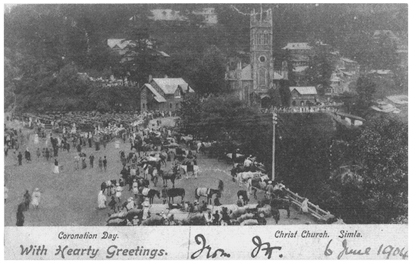
Figure 8.
Children riding ponies on the Mall at Simla. From a postcard in the possession of the author.
Consequently, children were a significant presence in the hill stations. They made an important contribution to the social character of these mountain enclaves—a contribution that is too often overlooked. They helped to give their summer homes the sights, the sounds, and the feel of a cohesive and permanent community. In contrast to the widespread practice on the plains of sequestering children indoors to protect them from a climate and a culture that seemed poised to snatch them away, in the hills these same children were generally set free to experience and explore their surroundings: the younger ones could be seen on the Mall in carriages pushed by ayahs and on ponies led by syces (Figure 8); the older ones could be met walking across the station to and from school and wandering in groups through the lanes of the ward and the alleys of the bazaar on adventures of their own. They were everywhere. Those who resided with their parents in the larger stations attended birthday parties and costume parties, picnics and fetes; they participated in theatricals and tableaux vivants; they mirrored their parents' social lives with startling exactitude.[43] So incessant were such activities that the author of one handbook for
[43] The memoirs of M. M. Kaye, who spent her youth in Simla, are particularly enlightening in this regard: The Sun in the Morning: My Early Years in India and England (New York, 1990), passim.
women in India warned, "The innumerable parties, dances, and elaborate entertainments for children, which are a striking feature of fashionable hill stations, make the children blase and dissatisfied with simple pleasures; and they become over-tired and over-excited."[44]
Parents in the upper echelons of British Indian society seemed especially eager to provide their children with lavish entertainments; it is possible to view these actions as compensation for the wrenching separations that loomed ahead, for it was widely accepted that British children should be shipped back to Britain before they reached adolescence. Their removal from India was one of the most rigidly enforced customs of the British in India. Most medical men and other self-styled authorities agreed that it was essential for boys in particular to be gone by the age of six or seven; for girls an early departure was considered less imperative.[45] The children's health was offered as the rationale for their removal, with warnings that prolonged presence in the tropics would make them feeble and "weedy." But their physical well-being was not as central a consideration as colonial rhetoric suggested. After all, the most precarious years in the lives of children occurred well before the age recommended for departure, and the natural dangers they faced were not peculiar to boys. The main motivation to ship children back to the motherland was concern about their social and cultural development and the role of this development in the perpetuation of the British imperial presence.
The child-rearing practices of the British in India—or more precisely of the great majority of parents who saw themselves as respectable—resembled the practices of the upper middle class at home: both used servants as surrogates for all but the least onerous of their parental responsibilities.[46] In India, these surrogates were with few exceptions Indians, and their most prominent and pervasive representative was the ayah, or nursemaid. She became a colonial institution, an essential element of the British Indian nursery. She was responsible for dressing her charges, feeding them, bathing them, entertaining them, and settling them into bed. Indian women were often employed as wet nurses for European infants, although
[44] Kate Platt, Home and Health in India and the Tropical Colonies (London, 1923), 143.
[45] See, for example, Joseph Ewart, Goodeve's Hints for the General Management of Children in India in the Absence of Professional Advice , 6th ed. (Calcutta, 1872), 28; Fayrer, Tropical Dysentery , 344; and Hull, The European in India , 133.
[46] See Chaudhuri, "Memsahibs and Motherhood."
this practice declined toward the end of the nineteenth century.[47] Some of the wealthier British families sought white or mixed-race women as nurses or governesses for their children, particularly in the latter period of colonial rule, but even in these households an ayah carried out the menial tasks of the nursery. In addition to the ubiquitous ayah, cooks, gardeners, syces, and many other Indian domestics in colonial households influenced the daily lives of young residents. The results were predictable: British children grew emotionally attached to their ayahs and other Indian attendants, and they frequently acquired more familiarity with and fondness for the language and culture of these people than they did for the European heritage of their parents.[48]
The colonial literature was replete with laments about how children were being corrupted morally by their intimate association with servants. The acquisition of an Indian dialect roused particular concern since it gave children immediate access to a world apart from parental supervision or even comprehension. For example:
[I]f left to the society of native servants, not only will [children] most assuredly contact native habits in the way of eating, gesticulating with the hands when talking, etc., . . . but, rapidly picking up the language, their little minds will soon become contaminated with ideas and expressions that would utterly horrify a mother did she herself understand the language of the country.[49]
Whatever the parents' response may have been to their children's drift into an alien embrace—and the persistent use of ayahs suggests that it caused them less anguish than we might suppose—its implications for imperial policy were profoundly disturbing. How could the British assert the superiority of their culture if their own children forsook it for indigenous alternatives? How could they maintain imperial authority in the face of this dissolution of difference? The inescapable answer is that they could not. This stark realization provided a powerful rationale for the British to
[47] See, for example, the contrasting advice offered by "A Lady Resident," The Englishwoman in India (London, 1865), 96-97; and by Steel and Gardiner, The Complete Indian Housekeeper , 163-66.
[48] See Rudyard Kipling, Something of Myself and Other Autobiographical Writings , ed. Thomas Pinney (Cambridge, 1990), 4; and Kaye, The Sun in the Morning , 91-94, 151.
[49] Hunt and Kenny, Tropical Trials , 403. Similar statements appear in "A Lady Resident," Englishwoman , 106; Diver, Englishwoman in India , 42-43; Steel and Gardiner, The Complete Indian Housekeeper , 166; and Platt, Home and Health in India , 138-39.
send their children away, to remove them from the seductive influence of India before it could make a permanent mark on their psyches, to place them in the sober environment of British homes and British boarding schools, where their socialization in British values could be assured.
The problem was that many parents either could not afford to send their children back to Britain or were unwilling to do so. The financial costs—the fare for the passage, the expense of maintenance with strangers or even relatives, the fees for schooling—were simply prohibitive for many families in India, especially those employed in the uncovenanted services (telegraph, mail, police, forestry, customs, opium), the railways, the army, and various commercial enterprises. Moreover, the emotional costs of shipping off one's children at the age of five or so, with little expectation of seeing them again (apart from the brief opportunities presented by periodic leaves) until they had become adults themselves, were understandably more than some parents could bear. Even those willing to make this sacrifice for what they regarded as their children's sake were often eager to postpone the fateful day as long as possible.[50]
The English saw hill stations, from their inception, as attractive sites for the education of children who were not sent to British boarding schools. A description of Darjeeling in its infancy praised it for possessing "one advantage . . . inestimable beyond all others"—an environment suitable for the schooling of younger children, whose parents could "so escape the pain and anxiety of a separation little less than those [sic] of death." The Nilgiris were described by an early promoter as a place where "those parents who cannot afford to send their children home" could meet their educational needs in a salutary setting.[51] At Ootacamund, the Church Missionary Society established a school for European children in the early 1830s, and although it soon vanished, the Fern Hill School, "a boarding-school for young gentlemen," appeared in 1847 and lasted for eight years. More durable was the school founded at Mussoorie in 1835 for "parents who are too poor to send children home." These were the words of Eden, who encountered a party of several children traveling to this institution
[50] The emotional estrangement this practice creates for a mother and daughter is the theme of "A Mother in India," an insightful short story by Sara Jeannette Duncan in her book The Pool in the Desert (1903; reprint, Harmondsworth, 1984).
[51] J. T. Pearson, "A Note on Darjeeling," 1839, reprinted in Fred Pinn, The Road to Destiny: Darjeeling Letters 1839 (Calcutta, 1986), 92-108; James Hough, Letter on the Climate, Inhabitants, Productions, etc. of the Neilgherries, or Blue Mountains of Coimbatoor (London, 1829), 137.
across the north Indian plains under the care of Indian bearers.[52] Mussoorie soon acquired a reputation as a center for European education. Several institutions in addition to the original Mussoorie school, which became a Diocesan school for boys in 1867, were successfully established in Mussoorie in the years before the 1857 rebellion—the Convent of Jesus and Mary (a girls' school founded in 1845), St. George's College for boys (1853), and the Woodstock School for girls (1856).
An important advance in the development of European schooling in the hill stations took place in the midcentury decades. This increased educational activity was propelled both by the needs of European residents and by the concerns of colonial authorities. New employment opportunities in commerce, planting, and other nonofficial enterprises, as well as in the railroads and the uncovenanted services, accounted for a rapid increase in the number of Britons entering India during this period. The nonofficial population exploded from little more than two thousand prior to the removal of restrictions on their entry in the early 1830s to nearly fifty thousand by 1861 and seventy thousand by 1871. As we have already seen, an increasing portion of the European population consisted of women, and their appearance also suggested the development of a larger and more significant domiciled community. While most railway engineers, telegraph operators, postal clerks, policemen, planters, boxwallahs, and others of similar socioeconomic standing could not afford to send their children back to England for schooling, they realized that an English-style education was important to their children's career chances. This was the principal social stratum that the hill schools tapped for fee-paying pupils.
At the same time, the colonial state and its ruling elite were growing concerned about the increasing numbers of poor whites in India. They were the inevitable residuum of the enlarged uncovenanted and nonofficial population, the underclass of unemployed workers, discharged sailors, abandoned and widowed women, orphaned children, alcoholics, lunatics, and others who lived on the margins of European society, often resorting to beggary, burglary, and prostitution to survive. Their presence was a reproach to British assertions of superiority, a menace to the social, moral, and above all racial underpinnings of the colonial order. Imperial authorities responded to this threat in two distinct ways: adults they sought to deport or incarcerate in workhouses, prisons, hospitals, asylums, and other holding facilities, claiming them to be incorrigible, but orphans and other
[52] Price, Ootacamund , 96; Burton, Goa , 285; Eden, Up the Country , 102.
children they considered redeemable when placed in suitable environments, such as orphanages and similarly regimented educational institutions, particularly when those institutions were removed from the subversive influences of the plains.[53]
The Lawrence Military Asylum was the earliest and most influential institution established to redeem orphans and other poor white children by transferring them to the hills. Its founder was the famed imperial consul Henry Lawrence, whose Evangelical solicitude for barrack children's moral and social fate inspired him in 1845 to propose the establishment of a military-style boarding school in the Indian highlands for the sons and daughters of British soldiers. His aim, as he described it, was to create "an Asylum from the debilitating effects of the tropical climate, and the demoralizing influence of Barrack-life; wherein they may obtain the benefits of a bracing climate, a healthy moral atmosphere, and a plain, useful, and above all religious education, adapted to fit them for employment suited to their position in life." Although Anglo-Indian children could and did gain admittance, Lawrence insisted that preference be given to children of "pure European parentage" since they were "more likely to suffer from the climate of the plains."[54] The first of these military asylums was opened at Sanawar near Simla in 1847, its construction financed by donations from fellow officers and a large grant from the maharaja of Kashmir. Subsequent branches appeared at Mount Abu in 1854, Ootacamund (later moved over a ridge to Lovedale) in 1858, and Murree in 1860, by which point the government had assumed responsibility for their finances. The success of the Lawrence Asylums was confirmed by the decision to close the government orphanages in Calcutta and Madras and to send their inmates to these highland institutions in 1872.[55]
The Lawrence Asylums offered an education that stressed discipline, obedience, piety, respectability, and acquiescence to a future of limited opportunity. Boys wore artillery uniforms, girls drab jackets and white bonnets, and both were divided into military-style companies that marched
[53] See David Arnold, "European Orphans and Vagrants in India in the Nineteenth Century," Journal of Imperial and Commonwealth History 7, no. 2 (Jan. 1979), 104-27; and Kenneth Ballhatchet, Race, Sex and Class under the Raj: Imperial Attitudes and Policies and Their Critics, 1793-1905 (New York, 1980), ch. 5.
[54] Quoted in The Lawrence Military Asylum (Sanawur, 1858), 3 and Appendix, i. Edwardes and Merivale, Life of Sir Henry Lawrence , vol. 2, gives an account of the origin of the Lawrence Asylum.
[55] Arnold, "European Orphans," 108.
on parade grounds. They did not depend on Indian servants; they did most tasks themselves so that they would become "trained in industrial habits."[56] Lawrence envisioned his wards taking up manual trades like carpentry and smithing, creating the nucleus for a British artisanal class in India. The schools' directors, however, soon realized this goal was not feasible in the face of indigenous competition.[57] Instead, the most talented boys were trained in telegraphy, civil engineering, and other skills that prepared them for employment in the technical branches of government service, while the rest enlisted in the army or obtained work with the railroads. The girls received training for domestic service, but for most the future lay with the noncommissioned officers who "came up to select them as fast as they could be married."[58] David Arnold observes rather pointedly that, "for all the concern to rescue them from the barracks and the back-streets, the orphans were trained and fed back into society at almost precisely the same level at which they had been extracted from it."[59] Although Arnold is right, Lawrence and his followers never intended the asylums to become vehicles for social mobility, ladders on which young unfortunates could climb their way into the ranks of the covenanted class. Rather, the founders wanted these institutions to instill the moral discipline and occupational skills that their pupils would need to live as respectable members of the British working class in India, content with their social lot yet aware of their racial responsibilities.
Lawrence's conviction that the redemption of poor white youths lay in their removal to the hills was shared by other authorities, who sought to extend the opportunity for a highland education beyond those born in the barracks. In 1860, Bishop Cotton of Calcutta called upon the government to take the initiative on behalf of European and Anglo-Indian children who were in "great moral and spiritual danger" because their parents could not afford to provide them with a proper education. A Cambridge-educated cleric who had been a master at Thomas Arnold's Rugby and the first headmaster of Marlborough prior to his Indian appointment, Bishop Cotton envisioned a string of boarding schools arising in the hill stations, each of them modeled after the newly reformed, Christian-infused public schools of England. His entreaty helped to persuade the governor-general,
[56] A Guide to the Neilgherries , 29.
[57] Lawrence's views appear in Edwardes and Merivale, Life of Sir Henry Lawrence , vol. 2, 34.
[58] Russell, My Diary in India , vol. 2, 140.
[59] Arnold, "European Orphans," 111.
Lord Canning, to issued an important minute on education in late 1860. In this minute, Canning emphatically endorsed the Bishop's plan. He addressed the dangers that the lack of schooling among poor European and Anglo-Indian children posed not only for their souls but for the colonial order as well: "if measures for educating these children are not promptly and vigorously encouraged and aided by the Government, we shall soon find ourselves embarrassed in all large towns and stations with a floating population of Indianized English, loosely brought up, and exhibiting most of the worst qualities of both races; whilst the Eurasian population . . . will increase more rapidly than ever." Unless immediate measures were taken to forestall these developments, the children would present "a glaring reproach to the Government" and give rise to "a class dangerous to the State." Canning announced his intention to act with what many of his contemporaries must have seen as great audacity given the religious rivalries and suspicions that plagued British educational policy at home and abroad: he promised government grants for all Christian denominations—Nonconformist and Catholic as well as Anglican—that established schools for European children in the hills. The matter was regarded as too important to be held hostage to denominational differences. However, Canning drew a rigid line between the education of Europeans and that of Anglo-Indians. Anglo-Indians, he felt, would be best served by day schools on the plains, especially since "the climate of the hills . . . is held to be injurious to them, if at all weakly."[60]
Canning's minute was, in the words of an official writing a dozen years later, "the Magna Carta of European education in India."[61] It provided the financial security that made possible the proliferation of boarding schools in the Indian highlands. Many of the newly founded hill schools were all-male institutions. St. Paul's, an Anglican school originally located in Calcutta, was moved to Darjeeling in 1864. The Church of England also established a school in Simla named in memory of Bishop Cotton (1866), and diocesan schools in Mussoorie (1867), Naini Tal (1869), and Panchgani (1876). The Catholics opened St. Thomas College of Murree (1882) and St. Joseph's of Darjeeling (1888) (Figure 9), of Naini Tal (1889), and of Coonoor (1889), in addition to expanding the pre-Canning-era schools, St. George's of Mussoorie (1853) and St. Joseph's of Ootacamund (1854). The
[60] Bishop Cotton's remarks and Lord Canning's minute appear in A. J. Lawrence, Report on the Existing Schools for Europeans and Eurasians throughout India (Calcutta, 1873), 1-4.
[61] Ibid., 5.
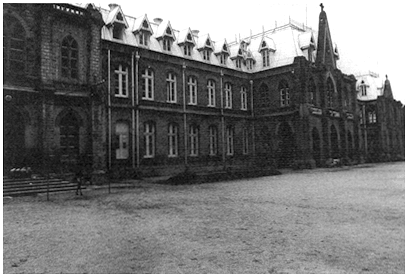
Figure 9. St. Joseph's College, Darjeeling. Photograph by the author.
American Protestant missions sponsored Oak Openings at Naini Tal (1880) and the Philander Smith Institute in Mussoorie (1885). Several nondenominational institutions also arose, notably Stanes' School in Coonoor (1861), Breeks' Memorial School in Ootacamund (1873), and the Modern School of Mussoorie (1896).
Educational opportunities in the hills were no less abundant for girls. Roman Catholics dominated the field, with the Loreto Convents particularly active. In addition to the branches it founded in Darjeeling and Ootacamund in the premutiny era, this Irish order opened schools in Murree (1876), Naini Tal (1878), Kurseong (1890), Simla (1895), and Shillong (date unknown). Other Catholic institutions for girls were the Convent of Jesus and Mary in Simla (1866), the Nazareth Convent School in Ootacamund (1875), and St. Joseph's Convent in Coonoor (1900). The Anglicans countered with Cainville House, Mussoorie (1864), Auckland House, Simla (1866), diocesan schools at Naini Tal (1869) and Darjeeling (1875), and St. Denys' School, Murree (1882). The American Presbyterian Mission took over the preexisting Woodstock House of Mussoorie (1872); the American Methodist Episcopal Church opened Wellesley School in Naini Tal (1880); and the Calcutta Christian Schools Society founded Queen's Hill School of Darjeeling (1895). Nondenominational schools included Wynberg, Mussoorie (1894), Hampton Court, Mussoorie (1895),
Petersfield, Naini Tal (1899), and Arycliff, Simla (1888), which subsequently affiliating with the Church of Scotland.
In addition to these institutions, a myriad of other schools arose in the hill stations. Most were private coeducational enterprises operated by widows and unmarried women in private homes. Some, such as Miss Twentyman's Darjeeling Home School for "young ladies" and boys under the age of ten, established themselves as successful, even venerable, institutions. The life of a great many others, however, was fleeting. Only one of the four schools for younger children referred to in an 1857 guidebook to Ootacamund was noted by Burton during his stay at the station in 1851, and none received mention in subsequent guidebooks.[62] A succession of these dame schools no doubt opened their doors and closed them a few years later.
Despite the intentions of Bishop Cotton and Lord Canning, the large denominational hill schools drew most of their students from the middle levels of British society in India, while doing their best to keep the lower orders out. Several government reports provide detailed information on the occupations of pupils' fathers. They included planters, merchants, missionaries, engineers, railway officials, clerks, and others employed in the uncovenanted services, but not the elite members of the Indian Civil Service or the Indian Army. As a general rule, "every European in India who can afford to send his children to Europe to be educated, does so. Similarly, it may be said in almost equally general terms that every parent, who can afford it, sends his children to the hills in preference to a school in the plains."[63]
The hill schools modeled their appearance and approach after English public schools, pitching themselves both to those parents who wanted their child to obtain the schooling needed to prepare them for "finishing" at an English institution and to those who wanted their child to receive the benefits of an English-style education without incurring the financial cost or facing the emotional loss entailed in sending them to England. For example, St. Paul's of Darjeeling was said to provide an education "after the model of the best English public schools," St. George's College of Mussoorie was "conducted after the best models of the English public school system," and St. Joseph's of Coonoor operated "on the lines of that given
[62] Robert Baikie, The Neilgherries , 2d ed. (Calcutta, 1857), Appendix, iv.
[63] Committee upon the Financial Condition of Hill Schools for Europeans in Northern India, Vol. 1: Report (Simla, 1904), 11. This report and Lawrence, Report on the Existing Schools , are filled with information about the occupations of parents.
in an English public school."[64] Students wore school jackets, played cricket on the pitch, and shared in their governance through the prefect system.[65] Some schools specialized in preparing students for transfer to particular home institutions, and the majority designed their curricula with the Cambridge Local exams in mind. At the turn of the century, a third of the boys who enrolled in the Himalayan hill schools went to England for further education (the figure for girls was one-sixth).[66] However, it was the other two-thirds (or five-sixths) who received the bulk of attention. Hill schools promised an education specially suited to those who did not leave India, an education that usually led to careers in the provincial or uncovenanted service for boys and to marriage for girls. They prepared male students for entry into administrative departments such as public works, surveys, police, opium, salt, telegraph, mail, forestry, subordinate medical service, and customs. Some institutions provided industrial training courses, including technical classes in civil and mechanical engineering.[67] St. Joseph's of Darjeeling specialized in preparing students for Rurki College, an engineering school, and most other schools established close ties with particular branches of the provincial service. After all, their reputations depended ultimately upon their success in garnering respectable jobs for their graduates, and those jobs were generally to be found in government.
Equally important to the reputations of hill schools was the racial composition of their student body. Although the state defined European schools as those that catered to pure and mixed-race Europeans who retained "European habits or modes of life,"[68] Anglo-Indians were not welcome at most of the better schools, and Indians were almost entirely prohibited from enrolling in them until the interwar years. British parents often objected to their children rubbing shoulders with mixed-race students. M. M. Kaye and her sister were pulled out of Simla's Auckland House by their horrified
[64] L. S. S. O'Malley, Darjeeling (Calcutta, 1907), 178; T. Kinney, The Echo Guide to Mussoorie (Mussoorie, 1908), 78; Madras District Gazetteers, Statistical Appendix for the Nilgiri District (Madras, 1928), 66.
[65] See the observations about St. Paul's of Darjeeling by Oscar Browning, Impressions of Indian Travel (London, 1903), 38.
[66] Committee upon the Financial Condition of Hill Schools for Europeans in Northern India, Report , 12.
[67] Dick B. Dewan, Education in the Darjeeling Hills: An Historical Survey, 1835-1985 (New Delhi, 1991), 196.
[68] Austin A. D'Souza, Anglo-Indian Education: A Study of Its Origins and Growth in Bengal up to 1960 (Delhi, 1976), 6. The problems posed by this definition of "European" are alluded to by Alfred Mercer, Report on the Progress of Education of European Children during the Quinquennium 1912-13—1916-17 (Calcutta, 1917), 1.
mother when they began to acquire the so-called "chi-chi" accent of Anglo-Indian classmates.[69] Breeks' School in Ootacamund led a highly checkered existence, with several financial crises and restructurings, because it failed to overcome its origins as a day school for poor Europeans, Anglo-Indians, and Indians.[70] It lacked the simple expedient most hill schools had to restrict the entry of undesirables—boarding fees. Bishop Cotton School was taken to task by the government of India for prohibiting the sons of Simla's "subordinate officials," mostly Anglo-Indians, from attending the institution as day students. But school authorities objected that day students "are not as amenable to discipline as boarders are; they are less regular in their attendance; they carry home school tales; and in many ways are a thorn in the flesh to masters." They went on to insist that the cultural shortcomings of Anglo-Indian households made students from such environments unsuitable for Bishop Cotton School.[71] This episode was characteristic of efforts by hill schools in the late nineteenth and early twentieth centuries to improve their reputations by imposing racial and social barriers to admission. Among the more dramatic examples was the transformation of Stanes' School in Coonoor from a day school for poor Europeans and Anglo-Indians to a high school divided into two sections, with the first serving the "sons of officials and missionaries."[72] Adding to the forces that ratcheted the social composition of the hill schools as high as it would go was the increasing expense of education in England. More and more parents were persuaded in the late nineteenth century to delay or even abandon the overseas education of their children.
As the elite schools sought to solidify their social standing through restrictive practices, the educational needs of poorer children attracted renewed attention. An inquiry by the Bengal department of education in 1875 aroused calls for the establishment of hill schools for children who occupied those subordinate tiers of society where Europeans and Anglo-Indians most often merged.[73] The railway companies began to establish
[69] Kaye, The Sun in the Morning , 194-95.
[70] See the references to Breeks' School in the Ootacamund Municipal Reports, 1888-89, 1892-93, 1894-95, 1897-98, 1899-1900, 1900-1, TNSA; and Price, Ootacamund , 96.
[71] This correspondence appears in Lawrence, Report on the Existing Schools , 121-23.
[72] The Visitors' Handbook of the Nilgiris (Madras, 1897), 58-59; Eagan, The Nilgiri Guide , 152-53.
[73] See the correspondence in Education Department, June 1875, File 70, Proceedings of the Lieutenant Governor of Bengal, WBSA.
schools for the children of their British and Anglo-Indian employees, and although these schools sprang up across the subcontinent, some of the most notable ones were placed in the hills. The Victoria School of Kurseong began as a coeducational institution for the children of Bengal railway workers in 1879, although it subsequently became an all-male boarding school open to others. A separate facility for girls, the Dow Hill School, was established in 1897. The Bombay Baroda and Central India Railway founded a school in Mount Abu in 1887; later, it was christened St. Mary's High School and began to admit nonrailway pupils. The East India Railway School of Mussoorie appeared around 1888, and the Great Indian Peninsular Railway sponsored a school at Lonavala. Various other institutions in the hills served orphans and other children on the margins of European society. Three orphanages were established in Mussoorie—one Anglican, one Catholic, and one Nonconformist—as was the Summer Home for Soldiers' Children (its purpose evident in its name), which strictly prohibited the admission of Anglo-Indian pupils.[74] Simla was the site of the Himalayan Christian Orphanage and Industrial School, later renamed the Mayo Industrial School. Other institutions for poor European and Anglo-Indian children included St. Andrew's Colonial Homes of Kalimpong (1900), Goethal's Memorial School of Kurseong (1907), and St. George's Homes of Kodaikanal (1914), which later moved to Keti, in the Nilgiris. Note should be taken of the sites selected for these institutions. They, like the Lawrence Asylums, were located more often in the secondary and satellite stations than in the central ones—Kurseong and Kalimpong rather than Darjeeling, Lovedale and Keti rather than Ootacamund, Sanawar rather than Simla—suggesting that their pupils' social standing made it desirable to keep them at a distance from the major hill stations.
Most of these institutions shared the same goal as the Lawrence Asylums—to imbue their wards with the Christian rectitude and work ethos that would prepare them for their place in society. "No attempt has been made here . . . to raise the children out of their natural position in life," declared one visitor to the Mayo Industrial School. The pupils of this all-female institution were taught needlework and other "industrial occupations." Some Indian children were admitted to the school in its early years but only as servants, and the experiment ended in 1872, most likely because of fears that the European and Anglo-Indian children would ac-
[74] John Northam, Guide to Masuri, Landaur, Dehra Dun, and the Hills North of Dehra (Calcutta, 1884), 57.
quire inflated opinions about their own station in life.[75] Indian servants were strictly prohibited from St. Andrew's Colonial Homes as a way of "removing the distaste for manual labour which is characteristic of the Anglo-Indian and poor European . . . [and thereby] instilling principles of self-respect, self-reliance and self-help." The same was true of St. George's Homes: "no servants are employed so that from infancy the children learn to do everything for themselves; . . . the Homes try and equip them to play their part as good citizens of the country of their birth—India."[76] And what part was this? Most of the male graduates of St. George's Homes and its counterparts found work on the railways and in other industries where Europeans were in demand to supervise Indian laborers, while the girls got jobs as hospital and children's nurses or, more often, found husbands and nursed their own children. One notable exception was St. Andrew's Colonial Homes, where boys worked at the school's farms in preparation for their emigration from India to Australia or New Zealand: the governors of the school believed there was no place for their wards in India.[77]
By the turn of the century, hill stations had become the primary locus of European education in India. To be sure, a number of children continued to attend schools in the plains, and many others did not go to school at all. A study conducted in 1879 found that nearly half of the European and Anglo-Indian children of Bengal were receiving no formal education, but these were mainly Anglo-Indians living in the slums of Calcutta.[78] The children who counted most in the imperial scheme of things—those of "pure" European descent—were likely to attend a hill school at some point in their youth. The Himalayan region alone harbored some sixty educational institutions with enrollments totaling around fifty-four hundred in 1905.[79] The only school on the plains to rival the reputations of the better hill schools was the Lucknow Martinière. Otherwise, parents who sought a respectable education for their children in India or an adequate preparation for their entry into a British public school sent them to the hills,
[75] W. H. Carey, comp., A Guide to Simla with a Descriptive Account of the Neighbouring Sanitaria (Calcutta, 1870), 55-56; Punjab Government, Gazetteer of the Simla District, 1888-89 (Calcutta, n.d.), 89.
[76] Newman's Guide to Darjeeling and Neighbourhood , 6th ed. (Calcutta, 1919), 47-48; Madras District Gazetteers, Statistical Appendix for the Nilgiri District , 1928, 70.
[77] Dewan, Education in the Darjeeling Hills , 187-88, 197.
[78] D'Souza, Anglo-Indian Education , 115.
[79] Arnold, "European Orphans," 109.
while even those who occupied the lower levels of the colonial order found it increasingly feasible for their children to enroll in highland institutions.
The European hill schools had enormous significance for the raj. They made it possible to remove the younger generation from the dangers that lay lurking in the plains without removing them from India altogether. The sons and daughters of poor whites, as well as other British children, were inculcated in the hill schools with the social and cultural values that set them apart from Indians. These schools allowed the British to envision the prospect of their permanent domicile in the subcontinent without fear that physical and moral degeneration would inevitably ensue. A passage from the prospectus of St. Andrew's Colonial Homes explained its intent: "it is a well known fact that the domiciled community deteriorates in the environments of a tropical country and oriental standards; and the object of the Homes is to break down the influence of heredity and of such environments, by removing the children at an early age to surroundings which are healthier, both physically and morally, than the towns in the plains."[80] This statement might be translated as follows: it is clear that the British cannot retain the racial solidarity upon which their imperial position depends if their children grow up in an environment that dissolves the cultural identity meant to distinguish them as representatives of a ruling elite; to maintain and strengthen this identity necessitates their physical removal from the forces that subvert it and their immersion in a total institution that inculcates the values appropriate to the place they have been deemed by authorities to occupy within the imperial system. Simply put, the hill schools held the promise of the social and ideological reproduction of Britain's imperial emissaries.
Ann Stoler has sought in several important articles to rehistoricize our understanding of the social world of European colonizers. She argues that the social identity of the colonizers was never unproblematic, that it was in fact repeatedly beset by pressures that required a refashioning of what it meant to be part of the privileged order. Central to the endeavor to define affinities and align boundaries was the regulation of reproduction, and hence of women. "What is striking," Stoler observes, "when we look to identify the contours and composition of any particular colonial community is the extent to which control over sexuality and reproduction [was]
[80] Quoted in Newman's Guide to Darjeeling , 47.
at the core of defining colonial privilege and its boundaries."[81] Stoler's insights help us to discern the significance of the hill stations' peculiar demographic attributes. They alert us to the fact that the unusual concentration of women and children in these enclaves constituted a message about the construction of a British colonial identity. And that message was the determination of colonizers to isolate the agents of their reproduction from the alien influences of the realm they ruled and thereby to retain and renew the cultural and ethnic markers that set them apart.
This endeavor was played out in terms of a public/private dichotomy that stood at the center of the bourgeois liberal ethos. From the British perspective, the public sphere was the world of business, politics, and the state; the private sphere was the world of women, children, and the family: the distinction lay between production and reproduction. Situated as they were in the profoundly public role of rulers over a foreign land, the British found it difficult to carve out a space for their private lives. Hill stations arose in part to supply that space. The physical remoteness of these enclaves was a measure of their distance from the public obligations of imperial authority, and their attraction for large numbers of women and children was a testimony to their success in constituting a private domestic domain. Here was a realm insulated from the repercussions of power where those who oversaw the raj could renew themselves, produce their scions, and reaffirm the creed that sustained their imperial endeavors.
[81] Ann Laura Stoler, "Rethinking Colonial Categories: European Communities and the Boundaries of Rule," Comparative Studies in Society and History 13, no. 1 (1989): 154. Also see Ann Laura Stoler, "Making Empire Respectable: The Politics of Race and Sexual Morality in 20th-Century Colonial Cultures," American Ethnologist 16, no. 4 (Nov. 1989): 634-59.