
Petrography of Hydrovolcanic Tephra Constituents
Hydrovolcanic tephra may show aspects of both magmatic and hydrovolcanic origin; in such cases, petrographic inspection is necessary to determine the relative proportions of the two endmember processes. Fisher and Schmincke (1984) used the terms pyroclastic and hydroclastic to distinguish products of magmatic and hydrovolcanic explosions, respectively. Table 2.7 reviews the salient features of hydroclastic products.
Hydroclastic tephra are generally distinguished from pyroclastic tephra by their fine grain size. However, this distinction is not always apparent, especially in hydroclastic tephra sampled at near-vent locations where fine fractions have not been deposited. Figure 2.20 shows plots of sorting vs median diameter for four characteristic tephra bedforms produced by hydrovolcanic activity. Although these statistics are often
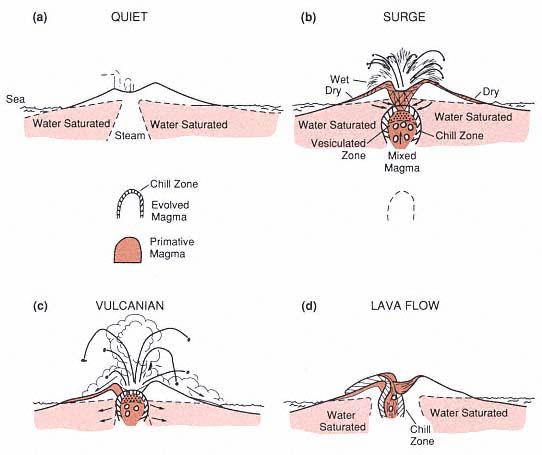
Fig. 2.17
This schematic model of typical Vulcanian eruption cycles at Vulcano is based upon interpretation of
stratigraphic successions shown in Fig. 2.14. Activity progresses from (a) quiet fumarolic emissions to
(b) magma vesiculation and surge eruptions caused by primitive magma intruding into older evolved
magma and interaction with groundwater. (c) The development of a steam chimney above the magma
reduces direct contact between water and the melt; steam explosions eject comminuted older lavas and
some pumice, producing surge and fallout deposits. (d) The final stage is marked by eruption of a
pumice fall and emplacement of a lava flow from the chilled zone of the magma body.
(Adapted from Frazzetta et al ., 1983.)
sufficient to characterize hydroclastic tephra, we advocate further analysis of size distributions by the techniques described by Sheridan et al . (1987) to separate subpopulations from the overall sample distribution. This method involves the detailed analysis of wet and dry sieve data and sample separation procedures described in Appendix A.
Constituents of hydroclastic tephra, including glass, crystals, and lithic fragments in various proportions, are sensitive to the emplacement mechanism and magma composition. Figure 2.21 illustrates the variety of tephra constituents that characterize tuff rings and tuff cones. One of the most distinguishing features of these tephra is the amount of glass alteration in samples of wet and dry hydrovolcanic facies. Basaltic glass readily alters to palagonite, a complex combination of zeolites and smectites; rhyolitic glass alters to hydrated glass, which can crystallize to fine-grained quartz, potash feldspar, and clays. Although such alteration generally occurs in any tephra deposit through weathering and diagenetic processes, stratigraphic
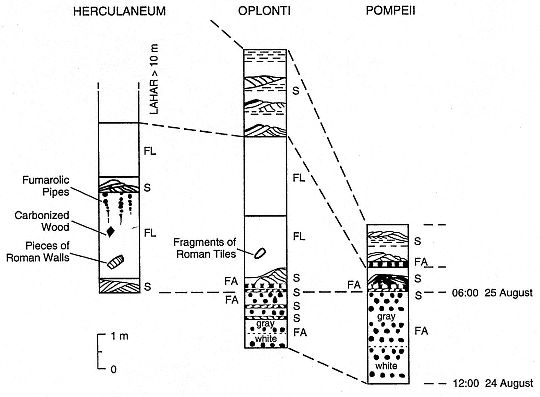
Fig. 2.18
Representative stratigraphy of AD 79 pyroclastic deposits exposed in archaeological excavations
along the coastal side of Vesuvius; FA = pumice fallout, FL = pyroclastic flows, and S = surges.
The basal white and gray pumice fallout was from early magmatic eruptions, and the upper
pyroclastic flows and surges are products of later hydrovolcanic eruptions.
(Adapted from Sheridan et al ., 1981.)
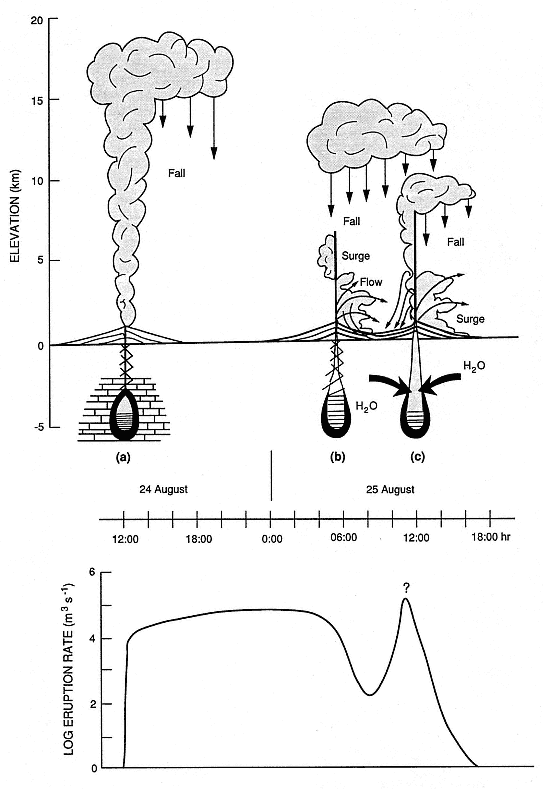
Fig. 2.19
Model of AD 79 Plinian eruptions at Vesuvius. This model, temporally and phenomenologically
constrained by accounts of Pliny the Younger (Radice, 1972), shows (a) the initial Plinian column
eruption, (b) the decline to intermittent magmatic and hydromagmatic explosions, and (c) the
terminal hydromagmatic phase that produced wet pyroclastic flows and surges. The beginning
of hydromagmatism, during the intermediate stage, is associated with the failure of magma
chamber walls, which added a thermally metamorphosed lithic constituent to the tephra and
allowed aquifer waters to flow into the chamber.
(Adapted from Sheridan et al ., 1981.)
information supports the conclusion that the alteration can also result when abundant hot water vapor is emplaced with the deposit.
Weathering and diagenetic effects, including the posteruptive saturation of tephra deposits by rain or groundwater, make it difficult to evaluate the timing of palagonitization and hydration; however, pertinent stratigraphic information can be useful (Fig. 2.22). Where fresh and altered tephra appear in alternating layers above the groundwater table, a strong argument can be made that alteration took place at the time of tephra emplacement. Proximity of altered tephra to a vent or fault is indicative of postemplacement alteration by hydrothermal fluids. Diagenesis below the groundwater table can be assessed for a region by determining the lateral extent of altered tephra and the presence of alteration zones that cross bedding planes.
Wet deposits can be distinguished from dry ones by the degree of glass alteration. Figure 2.23 shows that palagonitization of basaltic tephra is a function of median grain size, but for diameters <0.1 mm, palagonitization is most prevalent in samples from wet facies bedforms. This observation is not surprising if one considers the results of experiments with palagonite formation that demonstrate a strong dependence on temperature (Fig. 2.24a). Palagonitization also has a significant effect on glass chemistry; bulk chemical analysis of partly palagonitized tephra may show that its composition is considerably different than that of its parent (Fig. 2.24b).
Analyses of clast morphology by optical and electron microscope also provide important data for classifying tephra as pyroclastic or hydroclastic (Heiken, 1971; Heiken and Wohletz, 1985). Table 2.8 summarizes clast morphologies that are useful in understanding the eruptive mechanism (grain shape), transport or emplacement process (edge modification), and water abundance (clast alteration/palagonitization). Wohletz (1987) described these features for several examples of hydrovolcanic associations.
| ||||||||||||||||||||||||
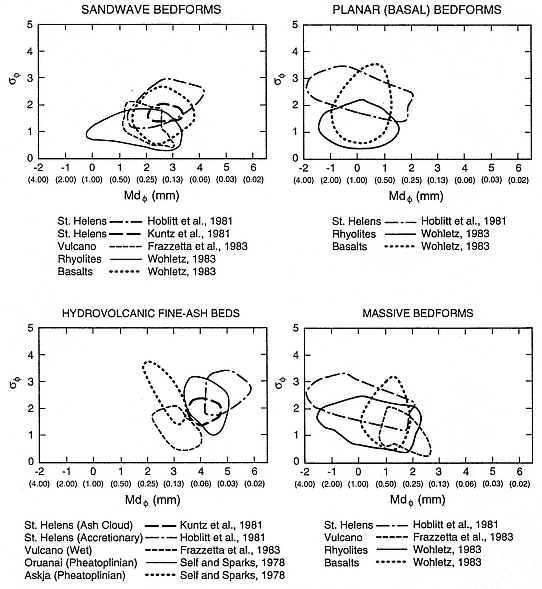
Fig. 2.20
Grain sizes of hydrovolcanic tephra deposits of different bedding textures are shown by plots of
sorting coefficient (sf ) vs median diameter (Mdf ). Whereas pyroclastic surge bedforms (sandwave,
planar, and massive) range in median diameter from 2.0 to 0.063 mm, fine-ash beds demonstrate
the intense tephra fragmentation capability of hydrovolcanism with median
diameters of 0.063 to 0.022 mm.
(Adapted from Sheridan and Wohletz, 1983a.)
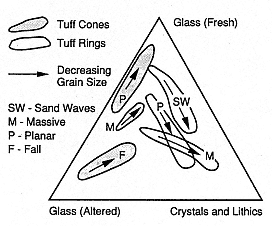
Fig. 2.21
This triangular diagram of hydrovolcanic tephra
constituents shows the relative contribution of
fresh glass, altered glass, and crystal and lithic
material. Fields for tuff rings and cones reflect
the relative proportions of these constituents in
different bedforms. The greater relative
abundance of altered glass for tuff cones
attests to the greater abundance of water in
the erupting system.
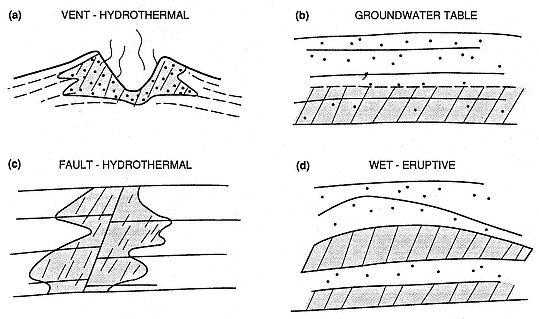
Fig. 2.22
Example of stratigraphic and structural settings for altered (palagonitized and hydrated) tephra
deposits. (a) Altered tephra (cross-hatched) may exist around a vent area as a result of hydrothermal
circulation. Such alteration is relatively insensitive to tephra bedding planes, but it does not show
lateral continuity away from the vent. (b) Palagonitization and zeolitization below a groundwater
table show lateral continuity and may cross bedding planes between tephra of different
depositional character. (c) Alteration may be structurally controlled along faults through which
hydrothermal fluids have migrated. (d) However, when tephra alteration occurs rapidly during
eruption and emplacement and before cooling, the altered tephra may be intercalated with
relatively fresh tephra layers. This alteration is relatively insensitive to
the groundwater table and initial dips of the strata.