
3
Toward a New City Plan, 1966–1986
Leningrad is celebrated as having the highest architectural culture. But for how long must we travel to the historic center for rations of this culture?
—S. P. Zavarikhin, 1986
Aftermath of the 1966 Plan
Any evaluation of the 1966 general plan's impact should begin by noting its calculated optimal population ceiling of 3.5 million residents up to the year 1990. That projection bore little relationship to reality, as Leningrad's population had passed that limit by the time the plan was ratified in Moscow, and it continued to increase, gaining by nearly 1 million residents over the next 15 years.[1] This increase, approximately 70 percent attributable to in-migration, contradicted central policies intended to limit population and economic growth in Leningrad, as well as in other major urban centers such as Moscow and Kiev. The objective of such policies was to force a redistribution of rural population to urban centers spaced more or less evenly across the USSR.[2]
Housing plans encountered immediate difficulty, owing to the pressure of unplanned-for population increases. The plan had specified that only 5 percent of the new housing was to be built within the city's traditional boundaries. As already noted, the remaining 95 percent of projected new housing was to be distributed fairly equally among new districts built to the south, north, and northwest of previously developed neighborhoods. Such spatial projections were designed to alleviate population pressures on the old city center.[3]
While the measures for reducing population densities at the city's center were successful,[4] other creative housing programs in the 1966 general plan faced several obstacles from the start. To begin with, housing construction must conform to central standards, a requirement that helps explain the incredibly monotonous cityscape built up across the USSR in recent years. Leningrad planners sought and sometimes received permission to bypass these norms by designating as experimental—and therefore beyond the reach of centralized construction
| ||||||||||||||||||||
norms—major projects such as the one on Vasil'evskii Island mentioned earlier. Local architects wishing to apply higher design standards also confronted locally generated difficulties. For example, the new industrialized prefabricated construction developed by the Leningrad construction industry ultimately accelerated housing construction, but exacted a high aesthetic price.[5]
Competition among enterprises and municipal agencies for control of local housing and services presented additional difficulties for Leningrad planners, as it did elsewhere in the Soviet Union.[6] Ironically, the Leningrad city soviet controls a far greater percentage of consumer services and housing than do municipal authorities in virtually any other Soviet city, so that the city's government developed many of the new residential superblocks erected over the course of the past 15 years.[7] Instead of alleviating problems of social services' control and coordination, however, this jurisdiction only exacerbated the problems, as municipally controlled land was located at the city's outskirts, far from employment sites and existing service centers. For the most part, services have not moved outward from the city center along with residents (see Table 8).
Unsatiated Demand
In the final analysis, the main housing problem was simply the very heavy demand. The pressures of this unsatiated demand led the best planners and architects to drop many of their most creative designs
in favor of efficiency and speed. The resulting emphasis on the pace of construction compounded long-standing difficulties in coordinating the service sector and residential development in a centrally planned economy. New Leningrad districts were served particularly poorly by consumer, health, educational, and recreational facilities.[8] During the mid-1970s, for example, the city ranked tenth among the 21 Soviet million-plus population metropolitan centers and union-republican capitals in the number of doctors available per capita, and ranked last among these same cities in the number of hospital beds per capita.[9] Concern over inadequate services led some local officials to discuss, and to a limited degree to experiment with, various schemes to place responsibility for developing social and commercial services under the same housing and construction agencies that were responsible for building the new districts in the first place.[10] While the results of these various experiments were never released, they apparently had scant impact, at least beyond the immediate neighborhoods involved. Consumer services in Leningrad remained terribly inadequate throughout the first half of the 1980s. Conceivably, this situation will improve once the small-scale cooperative stores legalized in May 1987 take hold.[11] As with several other Gorbachev-era reforms announced as this volume was going to press, such changes were not yet sufficiently developed to discern an impact. In many ways, such policy initiatives were responses to the futile experimentation of the period under examination here.
The continuing absence of services proved both psychologically detrimental and socially disruptive. Crime became acknowledged as a significant problem, especially where cultural amenities were thought to be deficient.[12] Both officials and the populace grew concerned. A major 1981 survey of popular attitudes toward the quality of urban life found that citizens' ratings of local services and general style of life consistently ranked Leningrad last among the five major cities examined (Moscow, Alma-Ata, Baku, Kiev, and Leningrad).[13]
Urban Sprawl
As might be imagined, the sprawling new residential districts also increased the demand for mass transportation. The city's transit system—particularly its subway—continued to expand rapidly (see Map 13), but the improved facilities failed to keep pace with increasing ridership. This state of affairs was due both to the city's continuing population growth and to the location of new housing construction on the city's outskirts. Meanwhile, other forms of transportation, especially the bus system, failed to meet rising demand.[14]
Local Leningrad authorities have been more successful than most Soviet municipalities in enforcing land-use laws, so that any expansion
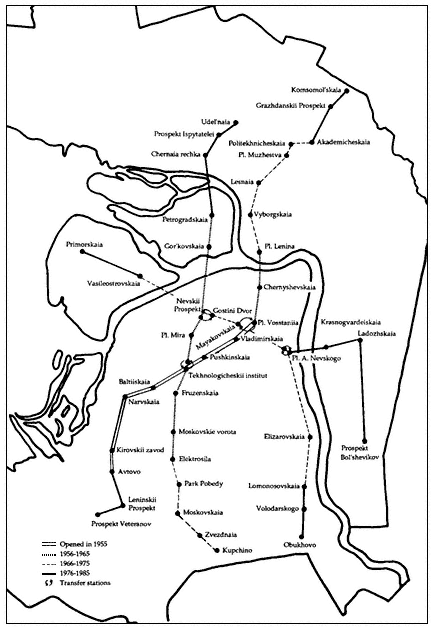
Map 13.
Development of the Leningrad subway, 1955–1985.
of the Leningrad economy came about through more intensive development of already existing facilities, rather than through the construction of new plants.[15] Consequently, employment opportunities were still concentrated in almost precisely the same districts as before 1966, while housing migrated outward. According to one study, the central city population will decline to a half-million residents by the year 2000, while 1.4 million people will be employed by institutions located in the same area.[16] Future city residents will therefore have to travel farther to work, making the commute even longer than the present average of two hours daily.[17] Finally, slow development of service infrastructures in new residential districts required many residents to travel to the city center to shop or meet other obligations.[18]
The pressure on the city's transit system to move people from the periphery into the city center suggests yet another issue: namely, the role of the historic city core in Leningrad's future development.[19] The general plan provided for preservation of the historic center, a goal that has been attained to a remarkable degree. The urban fabric of nineteenth-century Petersburg remains largely intact, helped by the designation of 1,017 structures as architectural monuments, 1,150 as cultural monuments, and 222 as "Lenin Places" to be preserved in honor of the founder of the Soviet state. Few Leningrad planners viewed this marriage of the old city with the new as merely an issue of historic preservation.[20] Instead, discussion of the proper place of the center city in overall regional development also engendered an intense and at times bitter debate over the architectural quality of newer districts.[21]
Environmental Angst
Public concern over the region's natural environment accompanied the concern over Leningrad's man-made environment. The 1966 general plan provided for establishment of a forest-park zone devoted almost exclusively to recreational purposes as well as a suburban greenbelt restricted to carefully controlled development (see Map 13).[22] Both zones have come under tremendous developmental pressure, owing to the region's unpredicted (and therefore unplanned-for) population growth.[23] The inner recreational zone suffers particularly severe strain from overuse by city dwellers who inadvertently tear up fields and forests in pursuit of leisure pleasures. This damage raises questions, for some, of the environmental desirability of maintaining any district solely for recreational purposes.[24]
In addition to general land-use decisions, problems of pollution also must be confronted. Here, as in other industrial societies, solutions are easier to propose than to implement. Many Leningrad municipal officials and industrial managers now appreciate that the nature of pollutants has changed over time, from the biological ones in the pre-
industrial city, through industrial contaminants during the industrial revolution, to the ever more toxic petrochemical pollutants of late-industrial production.[25] In recognition of the problem, local officials at times have supported a variety of coordinated measures that depend on a myriad of institutional actors.[26] Authorities in Moscow and Leningrad have planned to introduce unleaded gasoline at local gas pumps and to launch more aggressive testing programs for automotive exhaust and chimney emissions. Leningrad city planners have recommended removal of the most noxious factories to outlying areas, together with the construction of suburban arterial transportation systems designed to reduce commercial traffic on city streets.[27] Moreover, in 1984, the city undertook preparation of a soil map for a region within a 100-kilometer radius of the city to chart the changing chemical composition of the area's soil, and hence the impact of industrial fallout from the atmosphere.[28] Only a half year later, the city announced a major air-pollution control program.[29]
The paucity of available data prevents us from evaluating the success of these various environmental protection programs. Officially, academic commentators claim that Leningrad's air is less polluted than that of other major Soviet industrial centers. Unofficially, one is told of "black snow" and river water made so warm by chemical pollutants that it will no longer freeze even in the coldest winter. We can hope that the glasnost' (openness) campaign of the Gorbachev administration will make it possible for some meaningful data to be released on the city's air, water, and soil quality. Until such data appear, we must be satisfied to report that various air-pollution control programs are being initiated.
Officials and specialists responsible for protecting Leningrad's environment have voiced concern over the quality of the region's water resources. Local water-pollution control projects have been complicated by the Neva River's relative shallowness and shortness, which limits the natural exchange of stale and fresh water throughout the river and its tributaries. By the end of 1986, local scientists were warning that the region's water resources were threatened by the previously discussed flood-control dam being built across the Gulf of Finland through Kronstadt. According to these reports, the dam would inhibit even further the limited exchange of stale with fresh water that previously had taken place in the river and its tributaries, ensuring that pollution levels would increase and water life would be seriously threatened. Despite continuing protests, these concerns appear to have fallen on deaf ears.[30] At last report, the party's Central Committee moved in March 1987 to expedite completion of the dam and flood-control system, and plans for even more massive new coastal and landfill development on Vasil'evskii Island were being discussed as this volume went to press.[31] It should be noted, however, that municipal
authorities have recently taken some measures to restrict water pollution and now acknowledge the existence of an increasingly severe problem of petrochemical pollution.[32]
Controversy over the dam project refuses to die. Concern about the diversion of scarce resources to the project as well as its potentially negative environmental impact emerged as one of the most emotional issues in the Winter 1989 Leningrad district caucuses to nominate candidates for the Congress of People's Deputies. At one such meeting, Iurii Nikiforov, a Baltiiskii Plant worker and environmental candidate, declared to the voters of Election District no. 47 on Vasil'evskii Island that "Peter I Romanov hacked through a window to Europe, but Grigorii Romanov barricaded it up with a dam."[33] Nikiforov defeated all other candidates that evening but did not make it through the complicated nomination and election procedure to take a seat on the Supreme Soviet.
Specialists also became concerned with uniquely urban forms of "pollution" caused by intense human activity, such as noise pollution and the spread of infectious diseases. Leningrad city officials and their colleagues around the Soviet Union in such cities as Baku have long been aware of the health hazards of intense urban noise levels.[34] Moreover, the city's dank climate makes disease control difficult, encouraging seemingly annual massive influenza outbreaks.[35] Several Leningrad research institutions support programs studying environmental hazards and make recommendations to municipal and industrial leaders concerning environmental protection programs.[36] Finally, a lively academic discussion over the economic costs of environmental deterioration has developed in the national urbanist professional press.[37]
The Lessons of St. Petersburg
Such discussions over the quality of urban life and the city's environment increased after the accession of Mikhail Gorbachev and the initiation of his glasnost campaign. The summer 1986 conference of the 1,550-member Leningrad Division of the RSFSR Union of Architects (the main professional organization for architects) proved especially stormy as delegates excoriated their leadership for past mistakes.[38] In particular, local architects used the forum of the conference to decry what they see as the city's lost qualitative advantage in architectural design construction methods. For example, several delegates pointed to a failure in recent years to develop a sufficient variety of individual apartment unit-types to reflect changing family patterns. The quality of construction of new districts was similarly criticized. Concern was expressed that, unless a higher level of "urban planning culture" was rediscovered in the city, younger architects would lose their motivation to innovate and produce high-quality designs. Most interestingly, the architectural achievements of the city's pre- and postrevolutionary past
were pointed to as possible models for future architectural development.
Just one month later, Leningradskaia panorama published an eloquently biting comparison of historic Petersburg and contemporary Soviet patterns of urban development under the title "Stroll along Prospect Enlightenment."[39] The author, a professional architect, began by recalling an old Russian literary form based on the author or his hero rambling through a given country, city, town, or countryside. By reporting on his impressions, the author is able to share a social critique of the scene under scrutiny. What, queried our contemporary author, would such a literary observer have to say if he were to take just such a stroll through the new districts of contemporary Leningrad? His answer was a withering attack on the visual impact of the neighborhood along Prospect Enlightenment, its substandard quality of construction, and the theoretical underpinnings that led to the design in the first place.
Upon entering the avenue in question, the author tells the reader that an inquisitive reporter would be correct in feeling as if his "soul had been seized." To begin with, the stretch of Prospect Enlightenment in question is almost 200 meters wide. This boundless space could contain within it any of Leningrad's major squares. Unfortunately, the buildings, which were erected during the 1970s, have been placed so that they contribute to the funneling of wind and the acceleration of ground-level wind speeds. Understandably, therefore, our tour leader discovers that a strong wind constantly howls throughout this enormous expanse of open space. Such extravagant use of space is all the more extraordinary when one considers, as the author urges us to, that the traffic needs of the area are served by a two-lane road no more than ten meters wide.
The literary stroll along Prospect Enlightenment continues in this vein at some length, as the author points out various aesthetic and practical difficulties created by the choice of brick color, poorly laid-out internal space of buildings and courtyards, thoughtless landscaping, repetitive use of glass, and the like. Underlying this at times shrill commentary is an explicit belief that architectural design must be freed from dogged adherence to central decrees. Instead, architects are urged to seek inspiration from the historic ensembles of central Leningrad.
Discussions of this sort dominated the local professional press for months following the Union of Architects conference, with ever more strident calls for historic preservation in the center and a learning of the "lessons of Petersburg" by those who design Leningrad's new districts. In November 1986, for example, Stepan Khrulev, chair of the Oktiabr'skii District soviet executive committee, emphasized the need to renovate, reuse, and generally protect the area's aging and substan-
dard housing stock, 98 percent of which was constructed before the 1917 Bolshevik Revolution.[40] This plea was remarkable both for the candid manner in which it set forth the inadequacies of existing housing and for its concern for historic preservation. A month later, Leningradskaia panorama ran yet another article demanding the restoration and reuse of the city's prerevolutionary apartment buildings as the optimal response to the city's housing problems.[41] Here again, aesthetic considerations were among the justifications for rehabilitating existing housing, rather than simply tearing down older buildings to make way for new ones.
An even more authoritative plea for abandoning utilitarian approaches to city building appeared in January 1987 when Boris Ugarov, president of the Leningrad-based USSR Academy of Arts, demanded a perestroika (restructuring) of existing practices in the decorative arts and architecture. Ugarov's views, published in an interview in Leningradskaia panorama, praised the virtues of Petersburg classicism of the late eighteenth and early nineteenth centuries.[42] He spoke kindly of some of the architecture of the early Soviet period as well. However, he strongly denounced the finance-driven approaches to architectural and urban design of the past two decades. Such heartless functionalism, Ugarov contended, deprives the artist and architect of opportunities and destroys the city's unique appearance.
To the Street
Professional architects and even politicians were not the only Leningraders concerned about the limits of modern aesthetics and the inadequacies of current historic preservation efforts. In March 1987, scaffolding went up around two of the city's most historic hotels: the Astoria, from the bar of which John Reed and his fellow Western journalists witnessed much of the revolutions of 1917, and the Angletera where, in room no. 5, the poet Sergei Esenin committed suicide, writing a final verse in his own blood. Immediately following the first appearance of construction materials at each site, the city's morning paper, Leningradskaia pravda , was deluged with phone calls and letters. To quiet the storm, the editors ran a special interview with the city's chief architect, S. I. Sokolov, in which the renovation plans for the two hotels were set forth.[43]
Most of Sokolov's remarks dealt with plans for the more famous Astoria, a style moderne hostelry on St. Isaac's Square now reserved largely for foreigners (see Figure 23). Sokolov promised that the Astoria would be returned to its prerevolutionary magnificence, becoming a monument to the achievements of "the leading masters of Petersburg
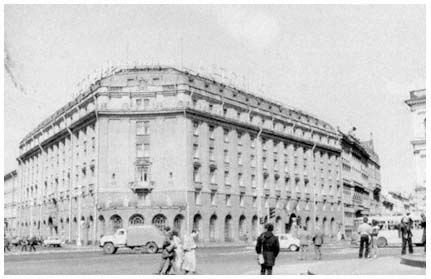
Figure 23.
The Astoria Hotel.
style moderne ." Accordingly, particular attention would be paid to restoring the hotel's facade and major public spaces to their original appearance, while service areas would be rationalized. Individual guest rooms, "several of which do not conform to contemporary levels of comfort," would be upgraded.[44]
Sokolov continued by indicating that the future prospects for the Angletera next door were more complex. The building, located on the corner of Maiorov Prospekt and Gogol' Street in central Leningrad, is much older, having been initially constructed in the 1840s and remodeled many times to suit various purposes. Sokolov noted that it would not, therefore, be possible to restore the Angletera to its original form. Rather, the city's chief architect promised that several major elements of the building's facade would be reconstituted, and some effort would be made to preserve the room in which Esenin died. The vagueness of his statements about the Angletera was emphasized at the close of the interview when Sokolov reported that the Finnish construction firm working on the Astoria site had committed itself to completing its work by August 1989, but gave no indication as to when the Angletera reconstruction would be completed.[45]
Only four days after the appearance of Sokolov's interview—and just days after the erection of construction barriers and scaffolding around both hotels—Leningradskaia pravda reported that hundreds of people had been demonstrating day and night at both sites, carrying placards reading, "Friends, the History of Our City Is Our Root! Save
Our Monuments!"[46] The paper went on to publish conversations with several participants in the increasingly raucous vigil, which had begun on March 18, the day following the Sokolov interview.[47]
Aleksandr Zhuk, an honored architect of the RSFSR and a corresponding member of the Leningrad-based RSFSR Academy of Arts, defended the renovation projects by pointing out that the plans had been developed as early as 1978 at the behest of Intourist, the agency responsible for foreign tourists in the USSR, and had been approved by the USSR Council of Ministers.[48] Zhuk observed further that the buildings had become quite dangerous. Meanwhile, Iurii Andreev, editor in chief of the publication series "Library of the Poet," joined with Zhuk to argue for renovation, pointing out that every effort would be made to preserve those rooms associated with Esenin and to turn them into a special memorial to the poet.[49]
Only days later, however, the influential national literary paper Literaturnaia gazeta recounted the entire incident in an article by Mikhail Chulaki.[50] Chulaki excoriated city officials for their mishandling of the affair, citing extreme heavy-handedness on the part of Chief Architect Sokolov as well as Leningrad city soviet Deputy Chair Boris Surovtsev. Chulaki thought the situation would have been better managed and the fate of the Angletera more secure had Leningrad officials practiced Gorbachevian glasnost.
The ruckus refused to disappear.[51] Weekly demonstrations continued each Saturday morning, sometimes leading to confrontations with the police. Letters continued to pour into the editorial offices of Leningradskaia pravda (and, presumably, to other public agencies) denouncing the insensitivity of Leningrad planners and politicians to their city's cultural heritage.[52] Meanwhile, the Finnish construction crew hired to carry out the job had totally dismantled the Angletera in a matter of weeks.[53]
As time passed, the Leningrad regional and city party committees attempted to assert their control over the situation. Evidently, party leaders moved on two fronts, both of which suggest that the real crime from their point of view was public disorder rather than the destruction of an historic building. On one hand, party agencies began quite early on to lay blame for the incident at the feet of city officials. Party agencies severely criticized city soviet Chair Vladimir Khodyrev, Deputy Chair Boris Surovtsev, and others for their lack of openness in dealing with the public prior to the beginning of demolition and for their clumsy handling of the street demonstrations once public order had broken down.[54] While few commentators seemed to argue that the Angletera could not have been saved (there appears to have been a clear consensus that the building was simply beyond repair), from the party's point of view, those involved with the project should have engaged the public in various review and deliberative sessions before the erection of con-
struction fences and the arrival of the wrecking crews. Within a year, such lessons may have been absorbed, as open discussions between planners and the public over the fate of the city center became more frequent.[55]
On the other hand, the party was not kind to the demonstrators. By some accounts, all students involved in the demonstrations were expelled from their institutions of higher learning (presumably non-student demonstrators suffered some form of punishment at work as well). After a process of negotiation, many students were readmitted, but their "leaders" were not permitted to return to their studies. In a more public vein, the regional party committee observed that, "under conditions of widening democracy," groups, on the whole, "performed patriotic and socially useful roles." Some groups, however, became "characterized by the display of nationalism, Slavophilism, unhealthy temper, and absence of civil maturity."[56] Such tendencies were seen by the regional party committee as manifest in the Angletera demonstrations and were clearly identified as violations of the public good.
Another important postmortem of the affair appeared in the July 1987 issue of Leningradskaia panorama .[57] Some architects contributing to this review reiterated those points made by Chief Architect Sokolov months before.[58] The Astoria, they argued, is one of the finest examples of Petersburg style moderne and is in urgent need of rehabilitation. The proposed plan will return the hotel to its previous splendor. The Angletera, on the other hand, is nearly a century and a half old, was originally constructed for other purposes, has been remodeled over and over again, suffered significant war damage, and simply can not be saved. Nevertheless, the architects involved in the project have worked closely with the Finnish construction crews to ensure that at least the facade will be restored before the construction has been completed. Additionally, the architect-commentators noted, plans for the project had been under consideration for nearly a decade, with relevant articles regularly appearing in professional publications since 1979. Therefore, they suggested, it is simply incorrect to assert that the city's architects have not been mindful of Leningrad's history and of the public interest.
Other commentators took exception to this position, pointing out that contemporary preservation methods, as internationally practiced, would permit restoration of the Angletera facade and interior.[59] If only Leningrad architects and builders were willing and able to practice their craft at the world level, they lamented, the entire issue could have been avoided. As it is, these commentators feared, Leningrad will be left with just another memorial plaque reading not even "In this building. . . ," but only "On this site stood a building in which. . . ."
Finally, some sought to separate questions of public decorum from the various architectural issues under contention.[60] "Youthful maximalism" cannot become the basis for serious professional deliberation,
this argument went. Although buildings of particular merit should be protected and preserved, everyone must recognize that cities are living organisms and must change. The Angletera has little architectural merit and is historically significant only insofar as someone committed suicide there. Therefore, the planners were correct in directing their attention to the more important Astoria. In conclusion, they suggested, professionals should approach complex problems such as those posed by the Astoria-Angletera project in a fully professional manner.
The commentary in Leningradskaia panorama summarizing the positions captures some of the emotion encountered and many of the practical problems raised as Leningrad architects have struggled to come to terms with the rich architectural heritage of their city. Even more important, perhaps, it helps illustrate precisely why the Angletera demonstrations mark an important watershed in public concern for historic preservation in Leningrad. As the opponents to the hotel's destruction stated over and over, what was at stake was the preservation and protection of the city's history and character from the onslaught of modern architecture. Rejection of two decades or more of architectural construction design and planning practices had now moved from the pages of professional journals to the city's streets.
At their core, such critiques of Leningrad and Soviet planning, design and construction practices—like those highlighted by the stroll along Prospect Enlightenment and by the demonstrators on St. Isaac's Square—rested on a shared rejection of modernist planning theories. Leaving aside the fact that construction in Leningrad is of lower quality than in the West, Prospect Enlightenment is not significantly different in conception from Sarcelles outside of Paris or the Southwest Redevelopment Project in Washington, D.C., or other dehumanized urban spaces created during the third quarter of this century. All these projects rest on a "radical" architectural vision that sought to liberate cities and their inhabitants from the tyrannies of bourgeois industrial development. Ironically, they do so through the construction of mass-produced apartment blocks that, by virtue of their size, psychological and physical isolation, and visual monotony, only fragment the social fabric and emphasize the tyranny of the individual over that of the public.[61] A socialist state system explicitly concerned with promoting collective values clings to an urban design philosophy that elevates res privata over res publica , even after architects and planners in various capitalist societies have turned their backs on many of these aspects of the modernist "revolution."
A New Role for an Old Center
The increasingly open calls for a retreat from the architectural and city planning principles of the 1960s and 1970s and movement toward the warm embrace of traditional Leningrad design practices spurred an
intense interest in historical preservation, and continued to do so for quite some time. Preservation efforts captured the public interest in Leningrad, with articles appearing in the daily press, mass magazines, and the professional press. But the actual restoration of historic monuments is only one of many interconnected issues that involve linkages of industrial and residential districts, balancing of service needs, reduction of overcrowding and population densities, and improvement in the distribution of cultural services.[62] Leningrad planners also attempted to improve communication and transportation links between old and new districts.[63] For example, by 1984 the city's streetcar lines, bus and trolleybus routes, and subway lines were carrying approximately 8.5 million passengers each day.[64] Somewhat at odds with standard Soviet practice—and despite the sustained expansion of the city's subway—the lowly streetcar remained a centerpiece of the city's transportation system.[65] In 1985 several existing streetcar routes were changed, and plans were announced for express streetcar routes from new districts to an ever-expanding subway system.[66] The subway system, in turn, had grown by year's end to extend 76 kilometers (about 47 miles), incorporating some 50 stations and carrying 2.3 million passengers on an average day.[67] To improve the distribution of services, Leningrad planners also initiated sociological studies to establish the service, housing, and occupational profiles of residential, commercial, and industrial districts.[68]
While the city's record on historical preservation is world-renowned and continues to attract tourists from around the globe,[69] complex issues like those already discussed have raised questions about the role of the central urban core. With the traditional role of the city center firmly protected by the 1966 general plan, Leningrad officials began to grapple with the problem of maintaining this preserved quarter as a vital and lively district.[70]
To begin with, the city's historic center continued to serve as the region's economic and cultural heart, and this status prevented central Leningrad from becoming a "museum city," despite its rather significant loss of population.[71] Preservation of the city center provided Leningrad's architects and planners with an alternative model of urban development to the one offered by central planning authorities in Moscow.[72] Leningrad's professional publications readily reflected the resulting preoccupation with architectural history and theory, with the psychological impact of physical structures, and with underlying aesthetic values.[73] In February 1985, in a plan designed to accentuate these values, the city announced a major effort to revamp 392 hectares of central Leningrad along and surrounding Nevskii Prospekt.[74] The plan, which was carried out in time for the celebration in 1987 of the seventieth anniversary of the Bolshevik Revolution, called for improving the design of existing commercial facades to bring them more into char-
acter with the avenue's original image. Further proposals advocated turning parts of the Nevskii into traffic-free pedestrian zones.[75] Meanwhile, as we have already noted in the discussion of Prospect Enlightenment, local architects inquired in print why the new districts were not more "cozy." How could the new districts really be called "Leningrad"?[76]
Official Responses
As we have just seen, a number of negative developments were not anticipated by the framers of the 1966 General Plan of Development of Leningrad and the Leningrad Suburban Zone. These include changing population dynamics, housing shortages, consumer service shortfalls, inadequate health care, overcrowded transportation facilities, unsatisfactory architectural aesthetic standards, and environmental deterioration. At varying times, to differing degrees and in different ways and with contrasting levels of success, numerous Leningrad publics—professional and nonprofessional—commented on these continuing urban problems. Local Leningrad authorities have also tried to deal with each of the problems mentioned thus far through official actions. The data supporting the preceding discussion are, after all, drawn almost exclusively from Soviet sources, and for the most part, generated by specialists and politicians in Leningrad itself. Furthermore, the concern of Leningrad's leaders has not been limited to mere recognition of pressing urban problems. They have relied on professional and academic specialists to identify emerging dilemmas; mobilize local resources to cope with such conditions; search the Leningrad past for possible solutions; and, when necessary, turn to central institutions for assistance.
We will now examine how Leningrad officials have sought systematic regulation of a wide range of activities carried out in their community by economic and political actors whose primary allegiance has been to central institutions in Moscow rather than to local institutions in Leningrad. The most important factors determining this process have been (1) the sustained political power of the Leningrad party organization under such national figures as Kirov, Zhdanov, Kozlov, Romanov, Zaikov, and Solov'ev; (2) the sustained presence of a cohesive and unified cohort of professional specialists; and (3) the enduring alternative urban vision of the neoclassical city built by Catherine and her grandsons, praised by turn-of-the-century architectural utopians such as the brothers Benois and Ivan Fomin, and given socialist credibility by Lev Il'in and his students such as Nikolai Baranov.
To explore these relationships further it is helpful to examine four major ways Leningrad officials have reacted to the difficulties encountered, as we noted, in implementing the 1966 general plan: (1) inter-
jection of a social dimension into physical urban planning; (2) a series of limited policy responses to specific emerging problems; (3) regionalization of the local planning process; and (4) initiation of efforts to draft a new general plan, which took effect in 1986. Examining each of these sets of responses in greater detail should shed more light on the complex process whereby Leningrad's leaders modified and adapted public policy objectives to meet local conditions.
Interjection of the Social Dimension
Soviet urban planning encompasses the long-standing conflicts between the two complementary processes of economic planning (planirovanie ) and physical planning (planirovka ). Over the past several decades, both processes have been infused with the tension between the goals of economic institutions controlled by central ministries and those of local municipalities. Leningrad planners have become particularly creative in trying to deal with these fundamental strains in Soviet urban life.[77]
As the discussion in Chapter 6 will indicate, Leningrad's industrial sociologists and labor relations specialists first introduced sociological methodologies into the enterprise planning process as early as the mid-1960s. Linked to growing concern over labor productivity, such socioeconomic planning sought to integrate factory production and social plans. From these early steps there slowly emerged the concept of district, city, and regional socioeconomic planning, whereby the economic plan of a city or region is tied to plans for social, educational, and cultural services. This new interest in socioeconomic planning stimulated considerable research focused on Leningrad, which viewed the urban organization as an integrated whole—a process that created the data base local planners now use for their projections.[78] Accordingly, a good deal of work has been done on developing indices to measure social, productive, and institutional infrastructural change, as well as to assess the general quality of urban life.[79]
These ideas, many of which first emerged in Leningrad, quickly spread to other Soviet planning centers through various conferences, professional publications, and other forums of professional interaction, such as meetings sponsored by the Union of Architects. Indeed, as will be noted in Chapter 6, social scientists and planners in other communities soon contributed, along with their Leningrad colleagues, to the unfolding planning philosophy.[80] For example, during the period of the Tenth Five-Year Plan (1976–1980), Leningrad, Moscow, and Sverdlovsk all had introduced a social dimension into their city five-year economic plans.[81] Finally, in July 1979, city socioeconomic planning received the official stamp of approval of the Communist Party's Central Committee and the USSR Council of Ministers. Both central
political institutions urged implementation of such planning techniques throughout the Soviet Union.[82]
According to resolutions of both bodies, the goals of socioeconomic planning in cities and regions should be (1) the proportional development of the sectorial structure of the local economy (e.g., no single sector should be promoted excessively at the expense of other spheres of economic activity); (2) the "harmonic personality development" of local citizens through improved services (e.g., the service sector, broadly defined, should promote the well-rounded development of the city's residents); (3) enhanced distribution of engineering equipment throughout the urban center (e.g., various technical services, as well as the city's general infrastructural development, should be evenly shared by all districts within the city); and (4) the rational use of material and human resources (e.g., the urban environment should be structured in such a way as to maximize economic efficiency).[83]
Over the course of the 1960s and 1970s, Leningrad's social scientists perfected a model for optimal socioeconomic plans for cities and regions.[84] According to this Leningrad model—which is used as a guideline for planning practices elsewhere[85] —a city's socioeconomic plan will take some 15 years to produce and should include the following eleven sections:
1. A statement of the overall conception of a city's socioeconomic development and its goals for further growth
2. Social characteristics of the city and/or region
3. Scientific development
4. Industrial development
5. Demographic and social development
6. Branch social and engineering infrastructural development
7. Social, "life style," and educational development
8. Protection of society against antisocial influences
9. Development of external and regional economic and social ties
10. Resource utilization and protection
11. Perfection of methods of the administration of territorial economic and social development[86]
Leningraders continued to be leaders in the evolution of these planning techniques at both the factory and the city level. During approximately the past two decades Soviet planning authorities elsewhere have joined in this Leningrad concern for the need for more fully integrated and far-reaching planning approaches. Nevertheless, municipal authorities in the Soviet Union exercise relatively little control over the development of major economic institutions operating within their boundaries, let alone over those in surrounding areas. The Leningrad experience thus continues to stand out not only for its academic so-
phistication, but also for the attention paid to integrated planning by senior political officials, and for, to a considerable extent (at least by Soviet standards), a concern among local municipal agencies for control over the activities of central institutions operating within their jurisdictions. These developments were initiated by responses to inadequacies of the 1966 general plan's population projections, which spurred sociological and demographic research. In short, the relatively successful interjection of a social dimension into Leningrad economic and urban planning emerged as a major response to difficulties encountered in implementing the 1966 city plan. The development of new approaches and their theoretical adaptation in cities throughout the Soviet Union illustrate the manner in which local elites were able to respond to local conditions on the periphery and to alter the planning practices and policies of central elites in Moscow that had previously ignored social considerations.
Limited Planning Responses
In addition to the major restructuring of Soviet urban and economic planning methods, local planners systematically attempted to foster a series of more limited responses to the initial difficulties of implementing the 1966 general plan: for example, control of urban sprawl through increased efforts at "in-filling" (construction of new residential and commercial complexes on vacant land within previously developed districts), promotion of increased population densities, greater attention to renovation, and reduction of the rate of housing construction to allow more care for quality.[87] These diverse efforts will be discussed in the context of a single initiative that embodies many of these somewhat less ambitious planning innovations of Leningrad officials. The proposal for municipal and consumer services in central Leningrad's Dzerzhinskii District put forward by local social scientists and architects illustrates how relatively minor alterations in planning concepts and practices can in time cumulatively cause major changes in accepted approaches to comprehensive urban planning.[88] This more recent plan appears to be moving ahead, in conjunction with an earlier socioeconomic plan for the district discussed later in Chapter 6.
As will be noted in Chapter 6, the Dzerzhinskii District shares unusual problems with the rest of the historic central city (see Map 11). Ninety-seven percent of its housing stock was originally constructed before 1917. Institutions located in the district employ nearly twice as many people as live there. The population is better educated (25.6 percent having higher or specialized secondary degrees, as opposed to a city average of 19.6 percent) and has more younger individuals (students) and older ones (pensioners) than other Leningrad neighborhoods. People also live much closer together in the Dzerzhinskii District
than in Leningrad as a whole (2,300 versus 400 per square kilometer). The district's historic and cultural attractions draw tourists and short-term visitors, who compete with local residents and employees for various consumer services. Finally, whatever the neighborhood's past industrial base may have been, the area is now primarily an educational, scientific, and service district, generating only 0.3 percent of Leningrad's total industrial output.
These rather unusual qualities prompted the proposal of several future socioeconomic developments. The district party committee, acting through its council on economic and social development, cooperated with various planning and academic research institutes located in the district.[89] These agencies developed short-range (5-year), medium-range (10-year), and long-range (20-year) plans for social, economic, and physical development, which were designed to maximize the district's uncommon heritage and to preserve its prominence and vitality. The result included improved recreational facilities (e.g., "vest-pocket" parks and specialized clubs), consumer services (e.g., outdoor cafes), and tourist amenities (e.g., apartment hotels located on the ground floor of residential buildings), intended to guarantee the district's social and economic well-being. The accompanying physical plans assume that the existing urban environment has proven itself to be essentially successful.[90]
Thus, official plan goals came to resemble those less official responses of architects and the public described at the outset of this chapter. Planners now seek to maximize the architectural and environmental potential of the prerevolutionary urban fabric by a variety of measures: for example, incorporating various public conveniences into one courtyard, a cafe into the next, and a small vest-pocket park into a third. This approach recognizes the existing environment as an ideal to be perfected rather than torn down and replaced. Moreover, the plan demonstrates not only a professional capacity to act on the widespread recognition of the failure of central architectural policies, but also a confidence in the ability of local officials to secure sufficient resources to implement their plans. Even on the district level, some Leningrad municipal officials have sufficient maneuvering room and adequate resources for effective responses to local conditions.
Regionalization of Urban Planning
Leningrad has been a pioneer in regional planning throughout the Soviet period, just as it was before. From the days of Peter I and Catherine II, the region's historic integration was fostered by the development of satellite palaces and cities.[91] Kolpino, Kronstadt, and Petrodvorets were all established during Peter's reign, Lomonosov and Pavlovsk during that of Catherine; Pushkin was formally incorporated
in 1808, and Sestroretsk followed in 1917.[92] All these cities were brought together under the jurisdiction of the Leningrad city soviet in December 1931.[93] By the mid-1960s, another two dozen or so communities had similarly been brought under the supervision of the Leningrad city soviet.[94] Then, in 1966, city planners were able to incorporate the entire Leningrad suburban zone into the city's new general plan.[95] Nevertheless, although local elites and common citizens both recognized the presence of a large suburban region around the traditional city limits, few saw these interrelated areas as a single regional urban system , where urban, suburban, and rural areas were locked together as part of a functional unit.
Since the late 1950s, there has been a revolution in the thinking of Soviet urban geographers, economists, and urbanists concerning the nature of the "city."[96] Soviet scholars no longer consider the city merely a large population point. Instead, conventional wisdom has come to define cities as hubs in an agglomeration of settlements linked by various functional subsystems into a unified whole and extending across the length and breadth of the Soviet Union. These views suggest the substantial intellectual impact of the systems approaches of the West on Soviet social science.[97] We will also observe this influence in Chapter 6 when we discuss the emergence of socioeconomic planning. Such procedures combine social and economic subsystems as part of a unified and interrelated system. We can possibly detect an even more pervasive influence of systems analysis in the recent intellectual history of Soviet urban geography.
The ascendancy of systems theory in the body of Soviet thinking about cities can be seen on several different levels. An extensive body of theoretical literature has appeared in recent years describing the systemic nature of Soviet settlement patterns. Since the late 1950s, a number of geographers, including Georgii Lappo, Boris Khorev, David Khodzhaev, and Kazys Seselgis, have pioneered in establishing a distinctively Soviet outlook on urban agglomerations. This literature eventually produced the overarching concept of the Unified Settlement System (Edinaia sistema rasseleniia —ESR) encompassing the entire Soviet Union.[98] Several Leningrad scholars contributed both to the development of that concept and, more generally, to an emerging literature on the city as a system. Indeed, their contribution represents one of the major findings of this study.
At a more practical level, systems approaches to the city have fostered urban planning and management philosophies that seek balanced and harmonious regional development of urban centers in their entirety rather than exclusively promoting the physical development of the central cities.[99] Some authors, such as Leningraders Ivglaf Sigov, Nikolai Agafonov, and Sergei Lavrov, as well as Muscovite Boris Khorev, identify the goal of balanced development as a primary feature
of Soviet settlement theory, thus differentiating it from systems approaches to urbanization emanating from the capitalist West.[100]
Moscow University geographer Khorev was for a long time a particularly prominent Soviet advocate of urban systems theory. He began vociferously to advocate systems approaches during the late 1960s and early 1970s when he first discussed the Unified Settlement System. His volume Problemy gorodov (Problems of Cities ), a work that sought to demonstrate the existence of such a settlement pattern, is still a basic textbook of urban geography in Soviet undergraduate and graduate programs.[101] Khorev elaborated his notions further in more specialized works, among them a coauthored discussion arguing for the necessity of developing an effective demographic policy for the Soviet Union.[102] Khorev defines the balanced and harmonious development of interrelated industrial, transportation, resource utilization, spatial, and social policies as the primary objective of urban and regional planning efforts.
One critical element in conceptualizing the urban system has been the companion notion of the urban hierarchy. Here the Soviet penchant for putting everything in its appropriate hierarchical niche combines with the systems classifications of the West in a steady flow of efforts to assign every Soviet community to some national, republican, regional, or local settlement pyramid. In the Ukraine, for example, Petr Kovalenko has identified a three-tier urban system that is itself a subsystem of the national urban settlement pattern.[103] According to Kovalenko, this Ukrainian subsystem incorporates major population centers (Kiev, Kharkov, Donetsk, Odessa, and L'vov) and large ones (Poltava, Cherkassy, Kherson, and others), as well as medium and small ones, into a unified hierarchy. Kovalenko finds that the republic's major and large urban centers have their own extensive subsystems, with urban agglomerations growing up around such cities as Kiev, Kharkov, Dnepropetrovsk, and Odessa. He then chronicles the various functional subsystems (industrial, commercial, cultural, scientific, and so on) that become integrated through their relationship to the overall urban settlement system. He concludes by arguing that Ukrainian planners should not view the city as merely a population point. Instead, it has become the nexus of a series of multifaceted and multifunctional economic, spatial, and cultural subsystems.[104]
Oleg Litovka has been engaged in a similar study of the Leningrad urban region,[105] identifying several tiers of urban settlements around the first-tier center of Leningrad. For Litovka, Novgorod and Pskov represent second-tier centers linked to the Leningrad agglomeration, while such communities as Vyborg, Luga, and Boksitogorsk are third-tier focal points (see Map 2).
Leningrad social scientists have made significant contributions to new conceptualizations of the "city." These include the general theo-
retical works of such geographers and economists as Nikolai Agafonov, Evgenii Murav'ev, Sergei Uspenskii, Oleg Litovka, and Marat Mezhevich, which examine the methodological problems of investigating socialist settlement patterns. Much of this work has been based on studies of the Leningrad region.[106] One practical result of such academic endeavors has been to persuade planners that the Leningrad agglomeration in fact includes the entire area within 90 minutes' commuting time from the city center by rail, and not just those areas traditionally considered to be part of the metropolitan region or subordinate to the city soviet.[107]
The widespread acceptance of systems approaches to urban settlement patterns drastically altered Soviet urban planning practices in general and Leningrad planning approaches in particular. The central focus of planners shifted from the specific structural environment of a given urban area to the interaction of that region with its surrounding communities through, various demographic, economic, spatial, transportation, communication, cultural, and environmental subsystems. This movement from a static architectural view to a dynamic systems view of the planning process marked a significant departure from traditional Soviet urban planning and managerial strategies.
In the case of Leningrad, the transformation meant that city administrators no longer saw their city merely as the urban system that was in place at the time of Alexander I. Instead they have accepted the vision of a "Leningrad" that comprises an extensive interlocking network of central, suburban, and exurban districts, many but not all of which are now under the jurisdiction of the Leningrad city soviet—rather than the regional soviet—and all within a relatively well-defined commuting radius of the city center.
The consequences of such a metamorphosis have been substantial. While the city's boundaries and direct authority were not extended outward, regional state and party agencies came to provide an integrating mechanism for the entire metropolitan region. In recreational design, for example, a new spectrum of nonurban facilities has fallen within the range of options open to Leningrad planners.[108] Similarly, industrial location policies are no longer limited by old geographic boundaries; nor, for that matter, are capital investment strategies.[109] Finally, planners have begun to consider the removal of entire urban functions from the central city to self-contained settlements on the periphery. In this last regard, Leningrad architects developed plans for self-contained academic communities, to the southwest of the city near Petrodvorets for the new campus of Leningrad State University, and to the north at Shuvalovo for the new complex of the USSR Academy of Sciences' Leningrad Scientific Center.[110]
In addition to expressing academic theories and planners' visions, expansion of the concept of the city and region conformed closely to
long-standing political and institutional arrangements. Throughout the postwar period, regional institutions and officials have dominated the Leningrad Communist Party organization. Consequently, institutional and political frameworks to support regional urban management approaches were already in place long before the 1970s. Since urban management and planning decisions had previously been made on a scale larger than the boundaries of the central city and adjacent suburbs, regional political elites probably viewed the new planning approaches as the logical extension of existing institutional patterns.[111]
By the 1970s, then, the same factors that will be mentioned in our next policy studies (academic expertise, enlightened administrative responses, and regional political custom) produced an innovative response to inadequacies in public policy implementation—in this case, inadequacies in the 1966 general plan. The plan's static architectural nature and its relatively confined geographic scope came to be widely rejected in Leningrad and elsewhere.[112] As in the other policy areas, Leningrad scholars, managers, and politicians were ahead of their colleagues, their inventiveness taking the form of a series of proposals incorporating the entire oblast into a new Leningrad general plan.[113]
Proposals for a New General Plan
By the mid-1970s, it had become obvious that the 1966 general plan was giving little guidance for the future development of the Leningrad urban system. Before the decade's end, the local branches of the Soviet Sociological Association (the professional organization for sociologists) and the Union of Architects had organized and published the results of a major multidisciplinary conference focused on the city's future development until the year 2000.[114] The discussions provide ample evidence that local party, municipal, and planning authorities, along with professional architects, designers, and social scientists, all recognized the obsolescence of the 1966 plan. Initial proposals for a new plan began to be circulated.
As a new decade began, references in the professional press indicated that a new general plan would become effective as early as 1984.[115] Since the actual planning process and documents are classified as secret—and public discussion of their content, as well as informal discussion with foreigners, constitutes an illegal activity—we can only speculate about the process on the basis of a limited public record. The primary objective of all of these recommendations appears to have been the incorporation into a comprehensive document of social and economic components, along with more traditional physical planning targets. As a major factor in the proposed expansion in the scope of architectural planning, advocates of new strategies pointed to the in-
ability of city administrators to adjust physical planning goals to changing social and economic realities.
Preparing a new general plan of development for an urban community as large and complex as Leningrad has become a mammoth undertaking, made even more complicated, of course, by the classified nature of the process. In the Soviet context, plan drafters initially consult with economic leaders to produce a statement of the region's long-term economic priorities. Such economic objectives are then established in an unpublished document, the "technical-economic foundations" (tekhniko-ekonomicheskie osnovy —TEO) for the future planning project. Next, architects and physical planners develop a detailed strategy to transform these economic objectives into construction and architectural design programs. The documents prepared for this second planning stage then become the basis for the proposed new general plan.[116]
A close reading of Leningrad's leading daily newspapers, Leningradskaia pravda and Vechernyi Leningrad , indicates that preparation of the new general plan moved forward with deliberate speed. In September 1983, a meeting of the city soviet executive committee's main architectural-planning administration convened to examine the status of the draft general plan's technical-economic foundations.[117] Reports published following that session indicated that the effective date for the new plan was postponed from 1984 to 1985 and that the overall planning orientation was still the city and its suburban zone. Participants expressed particular concern over the need to control urban sprawl through in-filling projects, as well as over the importance of developing more comprehensive transportation forecasts in general and subway ridership projections in particular. The following month, preparations for the new plan were discussed at a meeting of the executive committee of the Leningrad regional soviet.[118] Public reference was made at this point, and for the first time, to the possibility of expanding the general plan's scope beyond the 521-square-mile immediate Leningrad metropolitan area to incorporate projections for the Leningrad region as a whole.
In early 1984, regional party First Secretary Lev Zaikov informed delegates to the twenty-sixth Leningrad regional party conference that initial draft documents for a comprehensive regional general plan would appear before year's end.[119] By April, Zaikov was reporting further that Communist Party General Secretary Konstantin Chernenko had congratulated Leningrad officials on their preparation of a new general plan.[120] Despite all these references, no clear image of the nature of the new plan had been enunciated prior to the summary report of a session of the regional party committee in June 1984.[121] In discussions at that meeting, regional party committee members observed that the
executive committees of the city and regional soviets were preparing a unified general plan for both jurisdictions.
These efforts drew on the expertise of several departments of regional, city, and district party committees throughout the oblast, as well as the planning commissions of regional and city soviet executive committees, the main architectural-planning administrations of those same institutions, the Northwestern Branch of the RSFSR State Planning Committee's (Gosplan RSFSR's) Central Scientific-Research Economics Institute, the USSR Academy of Sciences' Institute of Socioeconomic Planning, local design institutions, and several other major organizations in design, architecture, and construction.[122] The projected plan sought to define regional development for the period 1986–2005, and would be issued in two stages. First, the draft technical-economic foundations would appear prior to December 1, 1984. Next, the draft general plan would be released for discussion before November 1, 1985. Then, the final plan documents would be ratified by the appropriate local and central agencies and put into effect prior to 1986.
Shortly thereafter, the city party committee secretary, Anatolii Fateev, reported to his committee that the proposed general plan would be the first project of its kind in Soviet history to integrate both city and regional planning processes.[123] Further evidence of the genuinely regional approach adopted by plan framers may be found in the September 1984 issue of the local architectural community's professional journal, Leningradskaia panorama , in which Iurii Baranov, the chairman of the Boksitogorsk city soviet executive committee, reported on his city's participation in the preparation of the new regional general plan.[124]
Leningradskaia pravda and Vechernyi Leningrad summarized yet another session of the Leningrad city council executive committee's main architectural administration in November 1984.[125] The papers' reports of the meeting noted that nearly every Leningrad political or economic official of any consequence, including the entire regional and city party committees' bureaus, convened in joint session with the main architectural-planning administration to discuss the "Technical-Economic Foundations of the Unified General Plan of Development of Leningrad and the Leningrad Region in 1986–2005." Regional party First Secretary Zaikov and city Chief Architect Gennadii Buldakov were among the most prominent officials to address the gathering. The rather brief communiqué nonetheless offered one of the most comprehensive statements concerning the contents of the new general plan's technical-economic foundations that had yet appeared in the Soviet press. Even in this truncated form, the articles made it clear that the new 1986 plan was based on extreme concern over labor shortages and would therefore stress technological innovation, increased economic specialization, and
regional integration. This statement of goals was reinforced when the entire city soviet executive committee ratified the plan's technical-economic foundations the following January.[126]
In the spring of 1985, Mikhail Gorbachev toured Leningrad and gave his blessing to the draft 1986 general plan.[127] A few weeks later, in early June, the Central Committee's Politburo also approved the document, thereby paving the way for public discussion of plan details.[128] The day after the Politburo's action, planning commission Chairman Kazimir Labetskii, in a front-page interview with Leningradskaia Pravda , revealed that the plan's primary objectives included more balanced regional development; technological intensification of the Leningrad economy; greater efficiency in the use of water, energy, and heating; strengthened environmental protection; and improved services for transportation, health care, child care, housing, and consumers.[129] Housing and service facilities would also expand, thereby improving the region's quality of urban life.
The proposed integration of regional and city planning, Labetskii continued, would end the disproportionate concentration of the region's productive capacity in the city of Leningrad. The more balanced approach to the regional economy would be achieved by reducing the number of workplaces in the city, while local labor productivity and aggregate production would be increased by stepped-up programs of technological innovation. Labetskii's portrayal of the draft plan was echoed in Iurii Solov'ev's initial appearances as regional party committee first secretary.[130]
Next, in October 1985, Leningrad's chief architect, Gennadii Buldakov, and the chief of the general planning process, Valentin Nazarov, coauthored a lead article in the journal Leningradskaia panorama spelling out the overall goals and parameters of the new general plan.[131] According to Buldakov and Nazarov, the plan was based on the previously mentioned technical-economic fundamentals approved by the Politburo earlier in the year. Covering the period 1986–2005, the new plan sought (1) intensive development of the local economy; (2) improvements in the city's consumer services, water supply, energy and heating systems, and transportation network; and (3) enhanced environmental protection measures.
The 1986 General Plan
The editors of Leningradskaia panorama devoted the better part of their July 1986 issue to a summary of the 1986 general plan.[132] This report provided the most publicly available detailed description of what is contained in the final (and still classified) plan documents approved by various regional governing bodies in late 1985.[133] Significantly, even
this overview of the 1986 general plan provides insufficient information for meaningful public participation in the planning process. Furthermore, it appeared only after the plan had been approved in Leningrad as well as in Moscow.
According to these articles, the 1986 plan represented a major departure from previous practices in that it included provisions for the entire Leningrad oblast.[134] This observation confirmed the previous evidence—noted earlier—that local planners had expanded the conception of the urban planning process to extend well beyond the boundaries of the city and its extensive surroundings to encompass much of Leningrad's hinterland. It also represented a strengthening of the general plan by bringing it into closer conformity with economic planning procedures, since the five-year economic plans governing Leningrad's economy are for the most part developed on a regionwide basis.[135]
The journal's editors also chided the drafters of previous Leningrad plans for not being sufficiently concerned with economic and social factors.[136] The 1986 general plan, they continued, placed prime importance on such broad social and economic contexts of urban development as the size and character of the existing workforce and the measures taken to support regional integration of science and industry. In this manner, the articles appearing in the July 1986 issue of Leningradskaia panorama confirmed the prominence of the various socioeconomic planning and managerial techniques that will be discussed in Part 2.
Science Dominates
Beyond these general observations, the articles focused on some of the more important provisions of the new general plan. At this point, the journal praised the "Intensification-90" campaign (to be discussed in Chapter 4) for its vision of a technology-dominated Leningrad economy by the turn of the century.[137] More specifically, the new plan called for the elimination of several smaller enterprises and the creation of a more limited number of larger and fully automated shops, assembly lines, and plants. In this manner, the previously mentioned trend toward increased concentration of the region's productive capacity in fewer and fewer institutions promised to continue.
In language that echoed the proclamations of Frol' Kozlov some three decades before, the journal's editors declared that the shift to a more scientific economic base would be accompanied by increased reliance on such sectors as machine construction, energy, shipbuilding, instrument making, electronics, and computers.[138] Infrastructural, housing, and cultural developments would be dominated by concern for the needs of these economic sectors.
Regional Integration
In preparing the new general plan, Leningrad officials concluded that labor shortages remained the fundamental factor limiting economic development in their region.[139] The plan endorsed regional integration as one means for reducing the negative impact of such shortages through improved resource allocation. In this regard, planners pointed out that 75 percent of the oblast's population lived in the immediate Leningrad metropolitan area, as opposed to 57 percent of the inhabitants of the Moscow oblast residing in metropolitan Moscow, 56 percent of the population of the Kiev oblast living in Kiev, and only 27 percent of the residents of the Sverdlovsk oblast living in and around the city of Sverdlovsk.[140] The Leningrad planners saw this concentration as restricting the possibilities for flexible regional growth strategies. Therefore, they sought to limit the metropolitan area's population growth over the next two decades to a ceiling of 5 million, with any additional population expansion being pushed off to the eastern areas of the Leningrad region.[141] To achieve this goal, the plan proposed to reduce the city's labor force from 945,000 in 1985 to 890,000 in 2005, while simultaneously increasing the population and housing stock of districts lying beyond the Leningrad metropolitan area.[142]
Despite the professed desire to expand economic activity outside the city, planners continued to view Leningrad itself as the focal point for the entire region.[143] The Leningrad neoclassical architectural tradition continued to be valued for providing both a blueprint for the restoration of existing structures and a set of principles that should govern the planning and construction of new areas.
Overall, the plan distinguished among six different urban zones within Leningrad (see Map 14):[144]
1. A central zone (including such areas as Kronverk, the point of Vasilev'skii Island, and the Admiralty district), which would retain some population while serving primarily as an architectural and cultural museum
2. A middle urban zone (stretching along Nevskii Prospekt roughly from the Fontanka River to the Moskovskii Station and in analogous areas elsewhere in the city), which would be subject to strict preservation regulations while continuing to have a multifunctional character
3. A zone of secondary urban development encompassing both green areas (such as those on Elagin Island and in the Smolenskii cemetery and Aleksandro-Nevskaia monastery) and mixed residential-commercial areas (such as are found in the Smol'ninskii District)
4. An industrial/residential zone (such as those areas on Krestovskii Island, in the Sovetskaia street system, and near the
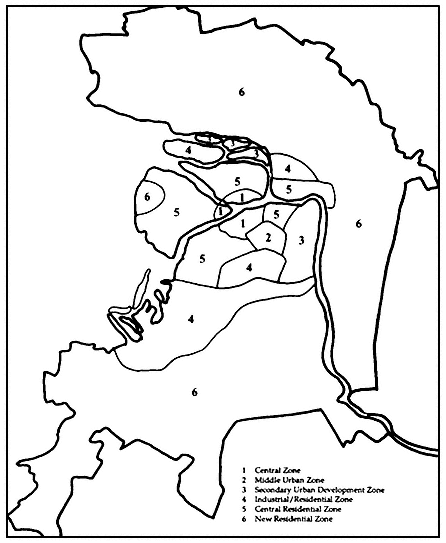
Map 14.
Major urban zones in the 1986 general plan.
technological institute), which would become the focus of efforts to modernize production facilities and to impose more stringent ecological controls
5. A central residential zone (including much of Petrogradskaia Storona, Dekabristov Island, and Aptekarskii Island), which would be home to large-scale industrial and scientific establishments, in addition to residential areas, smaller institutions in the area having been removed to create more open space
6. A new residential zone (including the west bank of the Neva and newer districts in outlying areas), which would remain residential in character while requiring significant reconstruction of apartment complexes built during the Stalin and Khrushchev eras, as well as the imposition of more stringent environmental controls to prevent future overdevelopment
Differentiated Development Strategies
To achieve the distinctive goals established for each of these zones, three different preservation/development strategies would be employed. First, the central city essentially would be preserved in its entirety. Second, the new residential zone would be subject to the "Moscow" approach, whereby all but the most significant structures are replaced. Third, the remaining areas would be developed according to the "Leningrad" strategy by making optimal use of existing structures, remodeling internal space to preserve facades whenever possible, and expanding open space while permitting new development that will not violate the essential character of a given district. This third strategy was thought to be the most expensive as it placed greatest demand on capital construction funds.[145] As the plan was for the entire Leningrad region and not just for the city and its metropolitan area, equivalent strategies were formulated for agricultural areas, as well as for the towns and cities spread out across the oblast beyond the immediate Leningrad area (such as Luga, Lodeinoe Pole, Priozersk, and Vyborg).[146]
Social Infrastructure
In addition to architectural and economic concerns, the new general plan was said to pay significant attention to the region's social infrastructure, including provisions for expanded facilities for education and health care.[147] In keeping with the regional thrust of the new plan, health care and cultural facilities were to be concentrated as much as possible away from central Leningrad. Moreover, the policy of relocating major scientific and higher education facilities in the city's suburbs (e.g., the move of Leningrad State University to Petrodvorets and that of the USSR Academy of Sciences' Leningrad Scientific Center
to Shuvalovo) was to continue. These shifts were to be facilitated by transportation and infrastructural development policies (canals, energy lines, and the like) that emphasized regional interdependence.[148]
Environmental Choice
In keeping with the various responses to the insufficiencies of the 1966 general plan, over the next two decades greater attention was to be paid to environmental concerns.[149] In particular, the movement of population outward from Leningrad was to be channeled away from environmentally vulnerable areas. Furthermore, in response to intense criticism of environmental degradation, special efforts were to be made to free Lake Ladoga, the central source of fresh water in the area, from industrial pollution by 1995.[150] This last goal would be of considerable import for the city, given its location in the delta of a river, the Neva, fed by waters from the lake.
Learning from the Past
Many of these provisions of the 1986 general plan were in keeping with the nature of the popular, specialist, and political discussion of the various inadequacies of the 1966 general plan described at the outset of this chapter. It appears, then, that the new planning document was a product of several years of probing, experimentation, and debate. Furthermore, the explanations of plan objectives that have appeared in various public forums (e.g.. the print media, lectures, television, and radio) are less reticent in commenting on the plan's potential limitations than was the case in 1966.[151] For example, local specialists are skeptical of the ability of local institutions to exert authority over the activities of the ministries within their jurisdictions.[152] This new-found public appreciation of the difficulties inherent in bringing to life provisions of a city plan, plus the considerable degree to which those provisions have drawn on the shortcomings of previous plans, suggests that many of those charged with regulating Leningrad's urban environment have attempted to learn from the past.
At the most general level, then, the new general plan identifies highly specialized, technologically intensive industries as the core of all future regional development. Furthermore, the plan's technical-economic foundations emphasize the importance of increased specialization throughout the regional economy. The plan document also apparently contains several specific recommendations to reconstruct and retool the region's operating industrial plant.
As a logical consequence of this orientation toward development, the plan stresses the primacy of workforce needs. In fact, as we will
see in Part 2, the draft document interjects into the physical planning process the same social variables that were developed some 15 years earlier in response to industrial planning needs during the emergence of socioeconomic planning methods. Capital investment and construction plans in the physical planning protocols will reflect the same over-arching economic priorities.
The new general plan focuses on integrated regional economic-social-infrastructural development.[153] The technical-economic foundations single out energy and transportation resources for special attention. Beyond the confines of the immediate urban agglomeration, the plan pays particular attention to long-term land reclamation projects, as well as to the vital role of the forestry and woodworking industries. Furthermore, the plan enunciates strategies for improving local living standards, and includes programs for service, health, cultural, and housing infrastructural development.
The heavy emphasis on both regional planning and balanced development reflects the strong intellectual influence of Western systems approaches on contemporary Soviet urban geographers. The sweeping pronouncements on living standards and urban infrastructural development are evidence of the extensive planning innovations of Leningrad urbanists over the past two decades. Those same pronouncements offer indirect testimony to the continuing symbolism of the traditional central city as an effective model of urban development. The incorporation of a social and an economic dimension into the physical planning process testifies to the long-term significance of the original socioeconomic planning experiments of the 1960s. To understand precisely how this is so, we now need to direct our attention to efforts to plan and manage Leningrad's socioeconomic environment.