
18—
The Caltech Years—
The Chairman
"I think you mean 'million,' Harold." Harold Brown and I, as the new president of Caltech and its chairman of biology respectively, were going over the biology division's budget for the next year. Until very recently, Brown had been secretary of the air force with a budget of some thirty billion dollars per year. The Caltech budget at that time was about thirty million dollars per year. Since the budget tables provided only the first three or four numbers, omitting the trailing zeroes, his numerical confusion was understandable. After the second correction, I stopped. The zeroes would soon enough correct themselves.
To become president of Caltech or chairman of its division of biology is to join a distinguished roster. Thomas Hunt Morgan became the first chairman of the division of biology at Caltech in 1928. Morgan, who received the Nobel Prize in 1933 for his brilliant studies of inheritance in the fruit fly, drosophila, was the most eminent geneticist of his time. He and his research group had been at Columbia University for more than two decades. That Robert Millikan, Caltech's president, was able to persuade Morgan at the age of sixty-two to uproot from Columbia to a small, little-known institute on the then-remote West Coast surely bespeaks a most persuasive man.
Millikan had raised a million dollars from a neighbor, the industrialist William Kerckhoff, to build the Kerckhoff Biology Laboratory and to endow the new division of biology. Caltech had been created in 1920 out of the existing Throop Institute (a practical trade school for training machinists and nurses) by three distinguished physical scientists, the
astrophysicist George Ellery Hale, the chemist Amos A. Noyes, and the physicist Robert A. Millikan. (Both Hale and Noyes had been associated with MIT.) Biology, which was introduced arbitrarily by Millikan, was a distinct departure from the earlier concentration in physical science and mathematics and is reported to have produced some faculty grumbling: "Biology! Will theology be next?"
Millikan and Noyes foresaw that biological processes would be increasingly amenable to chemical and physical investigation and it was this vision, and the potential for its realization at Caltech, that was persuasive to Morgan. It is curious, however, that the first Kerckhoff biology building did not have a single fume hood for chemical research.
Millikan was peculiarly astute in his selection of a geneticist to head the new division. Genetics was destined to become the central theme of biological research in the twentieth century (and likely beyond), but this was not obvious in the 1920s when experimental embryology and physiological biochemistry were in their heyday. Morgan brought his drosophila group with him, including Henry Sturtevant, Calvin Bridges, and Sterling Emerson. California was then considered so remote that these faculty were assured they could return every other summer to the marine laboratory at Woods Hole, expense paid, to maintain their scientific contacts.
After Morgan's death in 1943, the chairmanship was held by temporary appointments until Lee DuBridge brought George Beadle, who received the Nobel Prize in 1957 for his studies of biochemically deficient mutants in the mold neurospora, from Stanford. Under Beadle, the division began slowly to grow and diversify. Notable arrivals included Delbrück in 1948, Ray Owen, a geneticist interested in immunology, in 1946, and the neurobiologist Roger Sperry in 1954. Beadle left in 1960 to become president of the University of Chicago and was succeeded by Ray Owen. When Owen decided to step down in 1968, I was asked by DuBridge to succeed him.
In 1968, after twenty-two years as president of the institute, Lee DuBridge was approaching retirement. He had been an outstanding administrator. In his early years, he revitalized the institute. His continuing good judgment in science had retained the confidence of a somewhat arrogant faculty; his warm manner, his ardent conviction of the value of science, and his exceptional ability to present the aims of science in popular terms won broad local and national support for the institute. While accepting of specific tasks, he, unlike many of his confreres, had
eschewed long-term commitments to the Washington scene, believing that Caltech required his primary attention and energies.
In his later years, the success of his leadership in turn led to a gradual growth of institute activities, which outgrew his capacity for direct supervision. His personal style of administration did not permit him to develop an appropriate administrative substructure. Thus, toward the end of his tenure, the institute was in some disarray as regards finance and administration.
As a private institution, Caltech is formally governed by a self-perpetuating board of trustees. Their most important function is the periodic selection of a president. Having done this, a wise board—and Caltech has a wise board—leaves the academic administration of the campus to the person they have chosen. They continue to keep themselves informed, they maintain a close watch on the financial status of the institution, and they serve as a source of and conduit to the major gifts essential to the survival of all private schools.
In looking for a successor to DuBridge, the trustees were evidently seeking an individual with scientific training who also had the extensive managerial experience then needed to realign the institute's finances and administration. Good contacts in Washington, the primary source of research funds, were also desirable. The two leading candidates were James Fletcher, who had been director of NASA, and Harold Brown, former director of Livermore National Laboratory and the current secretary of the air force. After the election of Richard Nixon in 1968 and the onset of a new Republican administration, options changed quickly. DuBridge was asked by Nixon to become his science advisor, and Harold Brown obviously needed a new position and became instantly available.
His appointment as science advisor seemed a most fitting cap to DuBridge's distinguished career In fact, it developed otherwise. Unable to cope with the hardball, partisan tactics of the Haldeman-Ehrlichman shield around Nixon, DuBridge retired after two years.
Because of his military connections, Harold Brown's candidacy for president was regarded with some suspicion by Caltech faculty. An intensive series of meetings by Brown with various faculty groups allayed most doubts. With the urgency generated by the immediacy of DuBridge's departure, the trustees quickly selected Harold Brown to be the third Caltech president.
He proved to be an excellent administrator with rather little educa-
tional vision. He was content to let the faculty develop their own concepts of desirable research and educational directions. At an institution of the calibre of Caltech, this policy works for a time. Even at Caltech, however, faculty tend to reproduce themselves and their programs and a guiding, innovating hand is occasionally needed. Unquestionably brilliant, Brown lacked the personal warmth of DuBridge and never achieved similar personal rapport with faculty or supporters.
As president, Brown chaired the Institute Administrative Council (IAC). Because Caltech is small, the chairmen of each of the six disciplinary divisions of necessity also play a major role in the relatively small central administration. All major policy questions are discussed in the IAC, composed of the president, the provost, the six chairmen, and the vice-presidents for finance and for development. Thus, a division chairman became well acquainted with issues of institutional policy as well as with the concerns of his own division. Chairmen differed widely in their abilities to adopt an institutional point of view as distinct from the parochial interests of their own constituencies.
Under Lee DuBridge's more autocratic style, the IAC meetings were not so much forums for discussion as conventions to confirm decisions previously made in his office. Harold Brown had developed a different style while secretary of the air force in dealing with military commanders. Under his leadership, meetings of the IAC were much more vigorous, although the final decisions were clearly his to make. Men of eminence in their respective fields, these were no "shrinking violets," and discussion was intense, albeit respectful. Jack Roberts in chemistry was especially vociferous in defense of his views. Bob Huttenback, later to become chancellor at the University of California, Santa Barbara, was an effective advocate for an expanded role for the social sciences at Caltech. The meetings were frequently enlivened by differences between Robert Christy, the provost, and William Corcoran, the vice-president for development. Christy, a physicist, was direct and tended to see issues in black and white. Corcoran, a chemical engineer by profession, spoke in a very prolix manner, spiraling about his subject in ever narrower circles until he was finally ready to make his point. His perceptions were usually complex, even baroque. The two distinct visions and styles often clashed, producing sparks.
The IAC was concerned with academic, fiscal, and administrative issues. The problems confronting the institute in that period were significant but not critical. All tenure decisions in all disciplines were discussed there. The academic-research programs of the divisions were
reviewed. Those in biology, chemistry, earth sciences, and astronomy were considered eminent and in good hands, with sufficient opportunities for renewal with young appointments. Physics, especially theoretical physics with both Richard Feynman and Murray Gell-Mann, was outstanding; the lack of significant activity in solid-state physics did not seem troubling.
The mathematics program, however, was not considered to be of a stature commensurate with other facets of the institute and several efforts were made, unsuccessfully, to recruit leading mathematicians. An "ideological" spilt between the "pure" and "applied" mathematicians further complicated this area.
Engineering at the institute was a more severe problem. Student interest in engineering had ebbed to a low of 25 percent of the student body. While there were several outstanding faculty in various fields, it was widely felt that the institute had "missed the boat" in the development of computers and the associated technologies, although to some extent this was compensated by the activities at the Jet Propulsion Laboratory. The engineering faculty was aging, but there were few retirements and therefore limited opportunities for faculty renewal. Successive chairmen wrestled with this problem with limited success in this period.
Modest efforts were also made to broaden the institute's offerings in the social sciences, particularly in the more quantitative areas of economics and organization theory.
The IAC considered other, more immediate, often vexing issues of overall institute policy, including the provision, in a financially feasible manner, of adequate computing capability for the campus. Sharing facilities with JPL proved to be a salutary solution, though campus-JPL relations in general required continuing attention. The issue of classified research at JPL, undertaken at specific government request, was troubling especially during the Vietnam period of unrest. The institute received a modest but not insignificant "management fee" for its operation of JPL. The insistent temptation to build this into the institute budget had to be resisted so as not to make the institute beholden to continuation of this relationship, should that become undesirable. Periodic changes in "overhead" provisions on government grants and contracts produced corresponding fluctuations in the institute budgets and funding for graduate student support, which had to be met with one or another stratagem.
The institute's astronomy program, together with the astronomy di-
vision of the Carnegie Institute of Washington, operated the Palomar Observatory (which belonged to Caltech) and the Mt. Wilson Observatory (which belonged to Carnegie) jointly as a consortium. This arrangement worked for some years with a manageable degree of friction. The usefulness of Mt. Wilson, however, was increasingly compromised by light pollution from Los Angeles. The Carnegie Institute determined to shut down Mt. Wilson and to build a new observatory in Chile. It desired Caltech's financial participation in this project; however, at that time Caltech did not see such investment as a high priority. The consortium subsequently dissolved and Carnegie went ahead on its own with the Southern Hemisphere telescope.
For much of its history, Caltech had been an all-male institution. Women graduate students were first admitted in 1954 and women undergraduates in 1970. The proportion of undergraduate women quickly rose to 15 to 18 percent. At this level, however, their limited numbers created problems of mutual support and social ambience. The high entrance requirements and the restricted range of curricular options limit the potential pool of women applicants. In recent years, determined efforts have raised the proportion to over 30 percent, a more viable ratio.
This IAC experience with institutional problems in higher education was an invaluable, if only partial, preparation for what was to come.
As chairman, I was expected to attend the annual fall trustees' meeting, which was held off campus, usually at a ranch near Palm Springs. The Caltech trustees are a remarkable group, involving many distinguished citizens, including the chief executives of several of the most technologically innovative companies. While the trustees are concentrated in California, a deliberate effort has been made to include trustees from all parts of the U.S. and from a wide range of activities and industries. They included such civic and industrial leaders as Judge Shirley Hufstedler, later secretary of education; Robert McNamara, former secretary of defense; Thomas Watson, Jr., president of IBM; Arnold Beckman, president of Beckman Instruments; Simon Ramo of Thompson-Ramo-Woolridge; and so on. In addition to providing a broad range of expertise, this composition also gave access to a wide field of potential supporters.
As leading executives, the trustees are very often strong personalities. Brown, having coped with top military brass, was able by sheer intellectual prowess to manage and direct trustee meetings toward his desired ends. I watched with admiration as he verbally sparred with and
subdued a rambunctious Fred Hartley, the irascible head of Union Oil, or corralled an outspoken Howard Keck, the self-made, blunt-speaking oil magnate.
These kinds of issues and the accompanying milieu were distinct from those to which I had become accustomed in research and teaching. Why did I want to become chairman? The responsibilities, while not excessive, would cut into the time available for research, editorial, and other professional roles. Also, I was assuming a major implicit responsibility for the future welfare of the division and my colleagues. Partly, I felt honored that my colleagues, and the president, would entrust me with this role, to follow such distinguished predecessors. Partly, I was curious about the practice of university administration. Partly, I realized that a number of the biology faculty would be retiring in the next decade. The choice of their successors would be critical to the quality and direction of the division. I felt ready and qualified to provide this leadership. And, of course, if I did not accept this post, who would be the next chairman, and would I be satisfied under his leadership?
As chairman, I soon found that administration required a quite different pattern of cognitive skills. Experimental research requires an intense, almost single-minded focus on the question at hand. One lives with the problem, seeks for alternative explanations of the data, searches for a coherent generalization that can be tested. Administration, however, requires instant shifts of attention and quick shuttles from one memory bank to another as different issues are brought for one's consideration. One's thought is more reactive, less self-generated. Indeed, it is rare to find time to think extensively about any one issue. At first, this transition was quite difficult for me. Once it was made, however, going back to the previous pattern was even more difficult.
As a professor, I had shared the usual faculty perception of university administration: an unfortunate evil, seemingly necessary to provide an interface with the outside world, often dedicated more to its own interests than to those of the faculty. A good administration was one that intervened minimally with the wisdom of the faculty. I soon learned to recognize the myopia of that view. The administration does buffer and safeguard the faculty from the external world, but just as much, it protects the faculty from its own rampant self-centeredness. By maintaining civil and orderly processes, it forestalls entropy and preserves the faculty from drifting into anarchy. Even at Caltech, difficult decisions must be made concerning the allocation of resources, the distribution of emphases, and the boundaries of propriety. Wise leadership must seek to
discover the directions of the future amidst the importunities of today.
At its external face, the administration must raise funds, comply with government regulations, cope with lawsuits, and seek to maintain good public and community relations within a society that has little real understanding of the institution's activities or fundamental purposes.
As chairman, I participated in biennial joint meetings of the Caltech and MIT administrations. At these meetings, each discussed the issues it was facing, many of which were, of course, common, such as interactions with the federal government, overhead charges, relations with industry, policies regarding entrepreneurial faculty, patent policies, curricular issues, recruitment of students (especially women and minorities), and fiscal policies, and the often distinctive ways in which they sought to address these. It was most interesting to me, as a former student, to see this other, administrative side of MIT. Much larger than Caltech, more hierarchical, more bureaucratized, more involved with government and industry, the formal MIT style and the personal Caltech style were quite different, although both shared the same problem-solving approach and often, by different routes, came to similar conclusions.
Because of its greater diversity, its closer ties with the military, and its sheer size (which made it easier to gather a critical mass of activists), MIT was not spared the student turmoil of the 1960s. The administrators' accounts of their difficulties, and the efforts needed to cope with the issues, made us grateful for our more benign circumstances.
To be chairman of the biology division at Caltech is to occupy a position of prestige and wide notice. One is quickly asked to perform a wide variety of national services. In 1970, I was elected to the Council of the National Academy of Sciences for a three-year term. In the same year, I was elected president of the Biophysical Society. In 1971, I was appointed to the advisory committee to the director of the National Institutes of Health for a three-year term. In 1972, I became a member of the scientific advisory board to the Jane Coffin Childs Scholarship Fund for a four-year term (which was later renewed). I served for four years on the advisory board to the Scripps Institute and for four years on the scientific advisory board of the Merck Pharmaceutical Corporation.
As almost all of these activities were nonpaid, in effect Caltech subsidized these contributions of my time. Requests for such outside service can become excessive. I had to decline some, such as service as an alumni member of the MIT Corporation, because I was already making
two trips per month to the East Coast. Obviously, my research, my teaching, the biology division, and Caltech itself required some attention.
It is important for the chairman to be alert to the advances and developments in biology broadly so that he can provide leadership and guidance to the division and the central administration when it becomes necessary to replace renting faculty or when the opportunity arises to add new faculty positions. To accomplish this, I read widely; attended diversified meetings, such as those of the American Association for the Advancement of Science, or specialized meetings, such as those of the New York Academy of Sciences, that I otherwise would likely have passed over; and, when visiting other universities to lecture, made it a point to learn broadly about their programs and plans. My activities at the national academy (especially the editorship of the Proceedings ) and at NIH helped to inform me of the latest progress in varied fields.
In the early 1970s, it was becoming clear that the great discoveries of the 1950s and 1960s in molecular biology, which were largely achieved through studies of simple microorganisms, could soon be applied to the study of the much more complex cells and processes of higher organisms. The development of recombinant DNA technology and cloning methods in the early 1970s solved the long-standing difficulty of obtaining an adequate amount for analysis of any one gene of a higher organism. Newer methods of light microscopy and major refinements of the methods of electron microscopy provided the potential for new insights into cellular substructures.
Over the years, I encouraged the division to bring in new faculty who would exploit these opportunities. We added Elias Lazarides, an expert in the area of dynamic cellular ultrastructure, a field that has steadily grown in importance in unlocking the mysteries of cell shape and movement and the varying locations of cellular organelles. The complex field of immunology also seemed ripe for attack by molecular methods. We brought back Leroy Hood, a former Caltech graduate destined to make major advances both in immunology and in the associated area of biological instrumentation.
Giuseppe Attardi set out to unravel the functions of the mitochondria, small bodies present in every higher cell that, curiously, carry their own small pieces of genetic material. He succeeded in completely mapping and deciphering all of the genes of this organelle.
As refinement of technique made it possible for electron microscopy to approach its inherent potential, it became a tool of increasing im-
portance in many areas of biology. We were fortunate to bring on board Jean-Paul Revel, who established a research program and up-to-date laboratory in this field.
Developmental biology had a long tradition at Caltech, beginning of course with Thomas Hunt Morgan. After the sudden and untimely death of Albert Tyler, a student of Morgan's, we brought in Eric Davidson, who continued to exploit the classical system of sea urchin egg development. With Eric came Roy Britten, formerly of the Carnegie Institute, and together they began to analyze developmental processes at the genetic and transcriptional levels.
Subsequently, understanding of many of the genes involved in development and their roles in its early stages has advanced rapidly. Progress has been built in large part on the genetic analysis of development in drosophila, which had been painstakingly worked out at Caltech over many years by Ed Lewis. When the molecular techniques finally became available, Lewis could provide a wealth of genetic information together with the essential mutants and specialized breeding stocks.
My principal accomplishment as chairman was the establishment of a significant program in neurobiology. Caltech had had for many years a low-key program in neurophysiology with Professors Wiersma and Van Harreveld, and it had a singular program in psychobiology with Roger Sperry. I was convinced that neurobiology would be the next great frontier of biology. Armed with the techniques of molecular biology on the one hand and with the techniques of neural system analysis derivable from the field of computer design on the other, great progress seemed possible.
Dramatic progress in one field often derives from the introduction of new concepts developed in another. The availability, of heuristic conceptual models can be a key requirement. Thus, understanding of the mammalian circulatory system relied on the prior knowledge of pumps and pipes. Similarly, development of computers and computer programs that could simulate at least some mental processes has provided useful conceptual models for events in the central nervous system. But the brain is not simply an intricate computer. An elaborate chemistry, genetically programmed, is required for the formation of its complex circuits and, as well, for its continuing function. In the past few decades, a wide and growing variety of neurotransmitters, modulators, and associated receptors has been discovered, all required for the effective and specific transmission of impulses between neurons.
We needed first a leader for the program. Superficially, Roger Sperry
would have seemed the obvious candidate; his experiments on the specific programming of neural connections and on the distinctive functions of the two hemispheres of the human brain were extraordinarily brilliant in design and execution. Indeed, the latter, by demonstrating the existence of two separate consciousnesses in the separated hemispheres, provided one of the few true experiments on the nature of consciousness. But Roger had, unfortunately, the wrong personality, for this role. A loner in research, his opinion of virtually all other neuroscientists was dim at best. His scale of approval ranged from minus infinity, to zero. A "neutral" estimate was in fact high praise from Roger.
Of course, much is known about the outcome of brain function through simple observation, retrospection, and psychological research. What is sorely needed is understanding of the mechanisms at the chemical, cellular, and systems levels underlying these observations. For this reason, I sought to find a leader who could combine a firm grasp of neurobiology with a deep knowledge of the psychological phenomena to be explained. I found him in the person of James Olds.
Olds was at Michigan and was famed for his discovery of "pleasure centers" in rats, regions of the brain for which electrical stimulation was reinforcing. Rats, given the opportunity to stimulate their own brains in these regions, were swiftly addicted to the stimulus to the degree that they would cease to eat or drink so as to continue the stimulation. The neurochemistry and neurophysiology of these regions and their connections to behavioral patterns were clearly of great interest. Olds was also interested in the processing of sensory information and in particular the conditioned filtering of incoming data by centers in sensory pathways to permit the selection of those inputs previously determined to be significant or desirable.
To establish the program, we next needed a new laboratory, building. Happily, Arnold Beckman, then chairman of the Caltech board of trustees, quickly perceived the potential of this new frontier for biology and agreed to underwrite the cost personally. Caltech has repeatedly been most fortunate in the foresight and generosity of Arnold and Mabel Beckman.
With the prospect of a new building and funds for a broad new program, I was able to entice Jim Olds to come to Caltech. He quickly built up a strong group of young faculty members interested in varied aspects of neurobiology. Jack Pettigrew was interested in the role of early experience in the establishment of neuronal connections in the cat. John Allman, building on the work of David Hubel and Torsten
Wiesel, demonstrated the existence in the primate brain of multiple representations of the visual field, each specialized for a particular mode of analysis. David Van Essen explored in particular the pathways and domains revolved in color perception. Jim Hudspeth studied the exquisitely sensitive manner of sound transduction into neural impulse in the cochlea. Mark Konishi sought to analyze the combined roles of inheritance and early experience in the development of bird song in various species. And Seymour Benzer elegantly undertook to identify and characterize mutants affecting neuronal function in drosophila and thus provide probes for more detailed analysis of central nervous system organization in that organism.
Tragically, Jim Olds died in a drowning accident a few years later. While the program suffered from this loss, it has recovered well and continued to develop along the directions originally foreseen.
The new Beckman Laboratory of Behavioral Biology looked across a grassy mall to Baxter Hall, the locale of the division of humanities and social sciences. The humanities and social sciences had long been peripheral to Caltech, considered a necessary part of a rounded (or at least elliptical) education, but not intellectually linked to the institute's primary thrust. I thought that such a connection might now be made between behavioral biology and the humanities and social sciences through the introduction of a program in cognitive psychology. I felt this link would strengthen both sides of the mall and would provide a new coherence to the entire institute curriculum.
I broached this concept to Harold Brown and to the entire Institute Administrative Council. The chairmen of all of the science and the engineering divisions were strongly opposed. They clearly saw such a new division as a competitor for institute resources and one that would provide scant benefit to their programs. Harold Brown took a neutral stance. The power of inertia became startlingly clear. Each of the extant divisions had a strong spokesman, while a new, unborn division had none. The necessity for strong, visionary leadership also became very clear.
As chairman, I had my first experience with what I found to be the most frustrating and unpleasant of my administrative duties—coping with personnel problems. The excellent long-time executive assistant to the chairman of biology had retired a few months prior to my appointment and Ray Owen had hired a replacement. Owen warned me that he was not sure how the new man would work out. He didn't. For several months, I tried to work with him, to instruct him as to what was
needed and how it should be done, but to no avail, and in the end I had to bluntly fire him.
I also had my first, but not my last, experience in coping with alcoholism. A good friend and fine scientist on the biology faculty fell victim to this addiction. Therapists and clinics were to no avail and in the end he had to be coerced into resigning, for he was simply unable to perform his duties. This was a tragedy for himself, his family, and his friends.
But the most unpleasant encounters concerned "negative tenure" decisions, when the biology faculty, had concluded that a young faculty member's performance did not merit the award of a lifetime appointment of tenure. These junior faculty had typically been with the division for six years and had naturally been treated as colleagues. As chairman, I met regularly with individual young faculty members to review their performances, to ensure that they were receiving adequate resources, and to give them counsel. In each of the negative tenure decisions, I had seen the warning signs well in advance and attempted to provide constructive advice. Such advice was rarely taken and the decision, which I conveyed, invariably came as a bitter shock. The angry, disappointed candidates were given another year's appointment during which they could seek—and, at that time, always found—another position, but it was always a year of tension. As chairman, I could persuade myself that the decision was best both for the institute and for the individual, who could find a more appropriate position elsewhere—but that intellectual theorem did not much dilute my emotional distress.
By the mid-1970s, the research with f X was drawing to a natural end. The essential features of the viral structure were known. All of the stages of viral replication had been outlined, the viral genes had been mapped, and their functions deduced. Sanger was elaborating the complete nucleotide sequence of the viral DNA. Kornberg was using f X to disentangle the complex enzymology of DNA replication. Many details were still obscure, such as the manner and order of assembly of the progeny virus particles and the enzymology of lysis of the host cells. But these seemed likely to be of parochial interest, specific to this not especially important virus. Graduate students, perceptive of future scientific opportunities, were choosing to work in other laboratories.
It was time to initiate another research program. A major shift, as into neurobiology, was alluring but would require a few years to learn quite different techniques, acquire a background in the field, and establish a quite different laboratory. I had now taken on a variety of outside interests and commitments that would severely conflict with the
concentrated effort required to establish a wholly new research program. And I believed these interests merited a significant share of my time. After some thought, I therefore decided on a research direction that would make good use of my current skills and established laboratory. At this stage, I also sought a problem closer to practical application for societal benefit. I chose the field of nitrogen fixation.
All living forms require nitrogen, usually as ammonium. The nitrogen comes either from consumption of other organisms or their decay products or, for plants and many microorganisms, by fixation of nitrogen from the atmosphere. Plants cannot fix atmospheric nitrogen themselves but rely on microorganisms in the soil with which they establish a symbiotic relationship. The nitrogen thus supplied is frequently limiting for growth. Crop yields are markedly improved by the application of costly nitrogen fertilizer, produced by industrial processes but coming ultimately from the atmosphere.
The biochemistry and genetics of nitrogen fixation by those microorganisms with that capacity was poorly known and seemed a ripe subject for the application of molecular biology. And the possible benefits to agriculture of improvement in nitrogen fixation techniques were evident. Because this research would primarily involve microorganisms, many of our well-established techniques and laboratory facilities would be immediately applicable, though new modes of assay and equipment for work under anaerobic conditions would have to be added.
Considerable thought was given to the design of experiments to approach this problem. The first steps—acquisition of appropriate bacterial strains and familiarization with assay techniques—were underway when my career took another distinct turn.
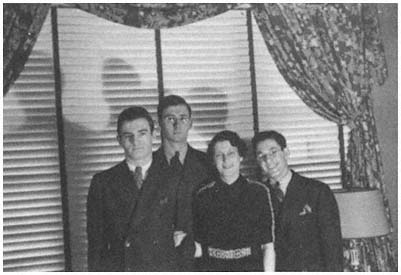
1. With mother, Rose, and brothers, Allen, Jr. (second from left), and
Richard (right), 1938.
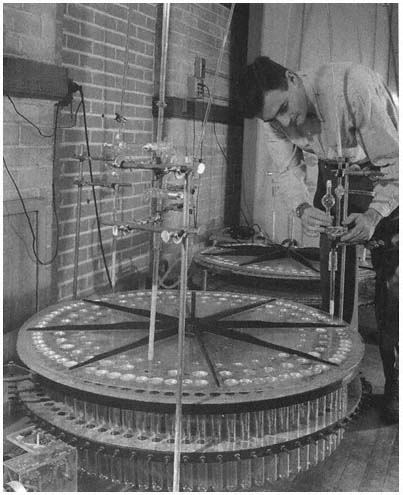
2. Laboratory at Iowa State, 1951.
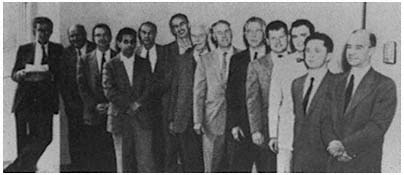
3. Biology faculty and research associates at Caltech, 1958. Left to right:
Max Delbrück, Ernest Anderson, Norman Horowitz, George Laties,
Roger Sperry, Harry Rubin, Alfred H. Sturtevant, George Beadle, Sterling
Emerson, Henry Hellmers, Robert Sinsheimer, Edward Lewis, Geoffrey
Keighley. Absent: James Bonner, Henry Borsook, Herschel Mitchell.
(Courtesy California Institute of Technology)
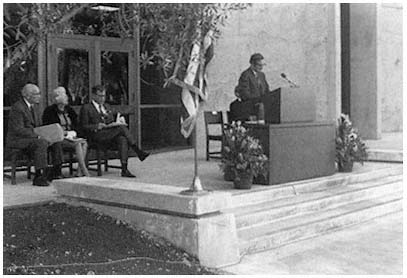
4. Speaking at dedication of Arnold and Mabel Beckman Laboratory of
Behavioral Biology, 1974. Seated, left to right: Arnold Beckman, Mabel
Beckman, Harold Brown. (Courtesy California Institute of Technology)
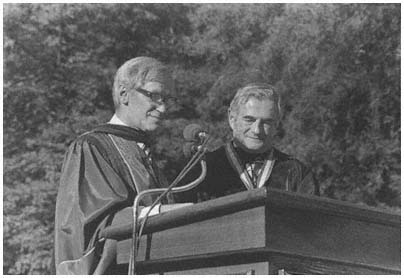
5. Inauguration as chancellor of UC Santa Cruz by UC president David
Saxon, 1978. Photo by B. Lee. (Courtesy UC Santa Cruz Photo Services)
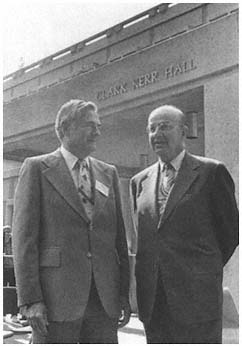
6. With President Emeritus Clark Kerr
at dedication of Clark Kerr Hall on Santa
Cruz campus, 1978.
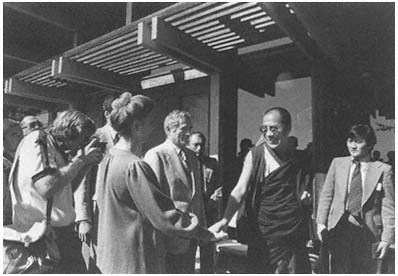
7. With Dalai Lama at University House, UC Santa Cruz. Photo by Carol A.
Foote. (Courtesy UC Santa Cruz Photo Services)
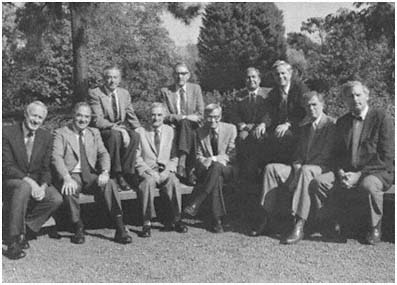
8. President Saxon and the chancellors, 1982. Left to right: Daniel Aldrich, Robert
Huttenback, Julius Krevans, Robert Sinsheimer, James Meyer,
David Saxon, Tomas Rivera, Richard Atkinson, Charles Young, Ira
Michael Heyman. Photo by Saxon Donnelly.
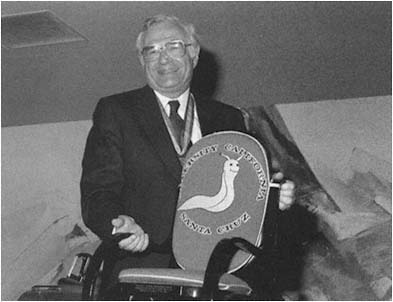
9. At retirement dinner, receiving "chair" symbolic of donated Sinsheimer
professorial chair in molecular biology, 1987. Photo by Don Fukuda.
(Courtesy UC Santa Cruz Photo Services)
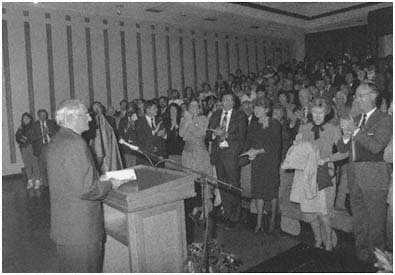
10. Speaking at dedication of Sinsheimer Laboratory, 1990. Standing, front
row, left to right: David Gardner, Libby Gardner, Karen Sinsheimer,
Cliff Poodry, Kathy Stevens. (Courtesy UC Santa Cruz Photo Services)
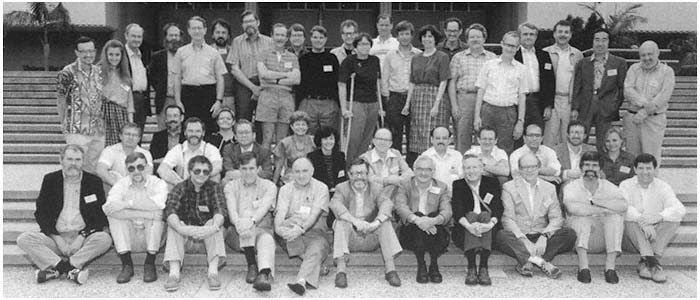
11. At seventieth birthday symposium, gathering of former students and postdoctoral fellows, UC
Santa Barbara, 1990. Front row, left to right: John Abelson, Graham Darby, Arnie Levine,
Larry Dumas, John Newbold, Walter Fiers, Bob Sinsheimer, Bob Nutter, Paul Johnson,
Lee Compton, Lloyd Smith. Center: Ali Szalay, Jim Strauss, Marshall Edgell, Ellen Strauss,
Tohru Komano, Nicole Truffaut, Jane Cramer Harris, Jim Koerner, Moises Eisenberg, Dave Denhardt,
Tony Zuccarelli, Bob Rohwer, Galina Moller. Back: John Hall, Erica Wickstrom, Harry Beevers,
John Sedat, Phil Hanawalt, Harry Noller, Björn Lindquist, Ted Young, Clyde Hutchison,
Nigel Godson, Stan Krane, Alice Burton, Peter Baas, Regis Kelly, Anne Haywood, Lorrie Greenlee, John Kiger,
Helmut Steiger, Karel Grohmann, Barklie Clements, Akio Fukuda, Jean Paul Revel.