
Chapter Seven
Advocacy and Opposition: National and International
Introduction
This chapter examines what the foregoing ethnography of affliction could not address: the attitudinal, economic, and political forces outside the afflicted community—whether at the regional, national, or global level—which until 1984 impeded the initiation of iodine prophylaxis in Spain.
It has been shown that neither underdevelopment nor local resistance posed serious obstacles to prophylaxis. Thus, we are left with the question that has animated this investigation from the outset: what nonlocal obstacles prevent prophylactic knowledge and techniques from getting to the people, when these are not only well established in science but have long been proven to be cost-effective? What, beyond the confines of local communities, are the obstacles that continue even today to impede the diffusion of simple facts and useful techniques? Paralleling the stream of events leading up to the prevention of scurvy in the British navy or the removal of asbestos in American schools, this chapter may be seen as a case study in the diffusion (or nondiffusion) of knowledge and the development (or nondevelopment) of the public's "political will," which WHO's present eradication team sees as so necessary to getting a project moving (DeMaeyer, Lowenstein, and Thilly 1979).
The chapter is divided into five parts. The first introduces an-
other, even more deeply afflicted, region of Spain, Las Hurdes, so that we may obtain a compressed overview of how, over a long period of time, IDD has been represented and managed (or misrepresented and mismanaged). Las Hurdes is appropriate for this overview because its deformities, dwarfism and cretinism, in contrast to Asturias, have long been subjects of published inquiry and salient in the public mind. The second part examines attitudes toward goiter and cretinism and toward rural people in general, as expressed in public health policies of the preprophylactic period. The third part concentrates on the prophylactic era, when silent opposition, vested interests, and threatening civil war defeated the advocates of prophylaxis. The fourth part examines prophylactic developments in the context of the economic priorities and political constraints of the Franco era. The fifth part examines the more immediate antecedents of the very recent campaigns to eradicate endemic goiter and cretinism in Spain.
Las Hurdes: The Realism and Surrealism of Iodine Affliction
Las Hurdes is a mountainous enclave in west central Spain, in northern Cáceres, close to Portugal. Because of its "monsters" and "backwardness," it has long been subject to travelogues and medical studies. It was also the subject of a "surrealist" film by the famous Spanish filmmaker, Luis Buñuel. It is therefore emblematic, for myth and polemics surrounding the Hurdenos' plight unite into a highly charged whole. For many, Las Hurdes stands for isolation, affliction, neglect, subhuman living conditions, and subhuman beings.[1] For some medical investigators, Las Hurdes has represented the natural field experiment.[2] For other social and medical investigators, Las Hurdes has stood as an unconscionable expression of disorganization and misdirection in Spanish medicine and public health.[3] For church spokesmen, Las Hurdes has represented the investment of church and state in compassionate and even visionary efforts.[4] For the purpose of gaining an overview of iodine prophylaxis and the obstacles to it in Spain, one can hardly do better than examine a chronology of missions to, and representations of, Las Hurdes.
Conspicuous efforts on behalf of Las Hurdes began in 1922
when the most famous Spanish physician-statesman of the twentieth century, Gregorio Marañón, who had come to recognize this remote area as a dramatic instance of endocrine disorder, urged the king to accompany him there on a visit. This visit triggered royally sponsored development programs and the creation of the Goiter Commission, headed by Marañón himself (whose work is examined below).
As a result of this royal attention, Hurdeno children became, though only briefly, the first experimental subjects of dietary iodine supplementation in Spain. Pregnant Hurdena women were also offered prophylaxis "as a wedding present, to avoid the emergence of the goiter normally expected during pregnancy" (Vidal Jordana 1924, Marañón 1927).[5] Before the end of the 1920s, however, both programs were dropped in favor of more general measures aimed at modernization.
Roads were gradually built into the area, followed by welfare and education programs brought in under the auspices of a charitable foundation (Patronato de las Hurdes) headed by Marañón during the few years of the Spanish Republic. It was in this period that Buñuel filmed Tierra sin Pan (1933), Earth without Bread, often seen abroad as the last of Buñuel's surrealist art films.[6] It was made, according to Buñuel (1982), to draw attention to the plight of the Hurdenos and to prompt long-promised reforms.
The film depicts Hurdenos in a state of perpetual hunger, forever foraging in scrub and forest for whatever the land may offer. Their faces are haggard[7] and their feet bare in a rough and thorny landscape.[8] Normal-appearing Hurdeno men are shown only in labor migration, walking off in single file to the central plateau to mow grain for absentee landlords. Goitrous women, dwarfs, and cretins are filmed from low camera angles that emphasize monstrous deformations. Even the fosterage of abandoned city children,[9] official wards of nearby cities and one of the few sources of local income, was turned against the Hurdenos.[10] For these children were assumed to be syphilitic, having been born to unwed mothers presumed to be prostitutes.
Earth without Bread, surrealist or naturalist, appeared so excessively alarming that Marañón's foundation refused to subsidize a sound track for the film (Buñuel 1982), and officials prohibited its showing.[11] The Franco regime also withheld it from public view.
Indeed, Spanish audiences did not see the film until the winter of 1982–83, soon after the Socialists were voted into office. Since then, it has been shown several times on the national channel.
Nevertheless, toward the end of the 1940s, even without such cinematic promotion, the Franco regime in close alliance with the church began to vigorously promote human and economic development in the area. The aim was to turn Las Hurdes into a symbol of governmental benevolence and national "redemption" (de la Vega 1964). The Ministerio de Gobernación (Ministry of Internal Affairs) sponsored and ultimately oversaw most of these "redemptive" activities, which gradually eliminated malaria and hunger and according to de la Vega, also eradicated goiter (1964).
Indeed, converging forces had the effect of making goiter in Las Hurdes seem to disappear. State-sponsored labor-intensive reforestation after mid-century gradually replaced the forest products, the chestnuts and acorns of the subsistence economy, with a rapid growth timber economy and with previously scarce cash. Such changes replaced the goitrogenous staples of the traditional diet with cultivated and commercial foods. In the course of this dietary transformation, the elderly bearers of gross goiters gradually passed on, while others, less grossly afflicted than their elders, gradually came into maturity.
Popular mythology regarding the people of Las Hurdes held that they were "crossed with wolves," "degenerate vestiges of a primitive race," "descendants of escaped convicts, Moors, or Jews," or simply "representatives of the New World in Spain"[12] or "our own interior Guinea."[13] The traditionally high incidence of disfiguring goiters and dwarfism surely contributed to these myths of different racial origin, or racial degeneration.
There was also an identity dynamic at work. As Spain in the nineteenth century was forced to withdraw from its colonial and missionary enterprise, the foreign "other" was discovered closer to home.[14] Hurdenos conveniently came to represent that other against which normal fitness and level of civilization could be measured. As in Strabo's time, descriptions of these humanoids were disseminated among "civilized peoples" both Spanish and foreign. For instance, the French Guide Michelin in the 1970s still assigned two stars to Las Hurdes, in part because of the picturesque nature of the people, a "picturesqueness" the Hurdenos occasionally ex-
ploited and, as far as we know, came to resent and resist only recently (R. L. Fernandez 1986:423–427).[15]
Whatever the dynamics of identity among marginated peoples of the peninsula (see chap. 3), Spaniards after mid-twentieth century had the impression that the prevalence of gross deformity was declining in places like Las Hurdes. This impression was correct insofar as the "irreversible cases, God's preferred children" (de la Vega 1964:88), gradually lost their visibility and diminished in number as the severity of deficiency declined. The precipitousness of the drop was more reassuring than real, however, because many of the afflicted, having become institutionalized, ceased to be on view.
But to one group of medical workers—long focused on Las Hurdes and located at the Instituto Marañón, Spain's national center for experimental thyroidology, a branch of Consejo Superior de Investigaciones Científicas (CSIC), which, by 1989, had become the Centro de Estudios de Endocrinología Experimental—this decline in overt pathology still left a great deal of room for improvement. For years, a team headed by Dr. Francisco Escobar del Rey had been monitoring the dietary and endocrine state of Hurdeno children in feeding programs, finding the rate of urinary iodine excretion (chap. 2) generally low[16] and endocrine disorders alarmingly high, especially among those not included in the feeding programs.[17] Escobar used these findings to demonstrate that consanguinity plays a minor role, if any, in the high incidence of goiter and other endocrine disorders found among these children and thus ruled out consanguinity as the primary cause of IDD in Las Hurdes. He argued, both in foreign and in national journals (Escobar del Rey et al. 1981a , 1981b , 1984; Escobar del Rey 1983, 1985), and most recently in a special issue of Endocrinología (1987), that only generalized iodine prophylaxis would lower the incidence of endocrine disorder in all the children.[18] In 1983 and 1984, he circulated a letter, under the letterhead of the Subcommittee for the Study of Endemic Goiter and Iodine Deficiency of the European Thyroid Association, later published in Lancet, drawing attention of colleagues both at home and abroad to the continued un availability of iodized salt in Spain. This circulating letter is considered instrumental in "embarrassing the Ministry of Health" and animating it to correct the situation.[19]
Escobar's findings and recommendations were hardly contrary to expectations or new to thyroidology, but their publication in Spanish professional journals and in Lancet makes them noteworthy. Coming from a thyroidologist esteemed both by his national colleagues and by the international members of the WHO goiter eradication team,[20] the carefully presented findings suggest that Escobar set aside his experimental work (at the leading edge of thyroidology) to convince his colleagues in both medicine and public health to set aside their hereditary thinking. Where the health of marginated people is concerned, such thinking may often be a key obstacle to prophylaxis.
Attitudes: Medicine for the Rich, Charity for the Poor
Hygienic life becomes a necessity in individuals and communities only when culture [education] and civilization make dirt incompatible with human dignity and prosperity. If Spanish sociologists and legislators have not been able to broadly promote hygienic practices, it is because progressive ideas cannot take root in the generally ungrateful, uncultivated, social terrain that is Spain.
—Ministerio de Gobernación, 1909[21]
However tautological the belief expressed in the epigraph—that it is pointless to offer health education to poorly educated people and that people living in ignorance, hunger, and filth cannot be educated—it expresses a long-standing attitude underlying the inaction with which we are concerned here.[22]
The attitude is well known, even if only rarely so explicitly stated. When, in 1898, the Spanish medical fraternity (Colegio Oficial de Médicos ) promoted programs of voluntary health insurance and social security[23] agreed to administer them, rural people were excluded from coverage. Perhaps, from the point of view of the planners and physicians, who were urbanites, the very groundedness of people living on the land made insurance unnecessary, for it gave rural people the kind of security that the urban sectors lacked. In any case, private and public charitable institutions,
beneficencias, could service those in dire need, the certified poor and the officially landless.
Beneficencias were custodial institutions run by the church or local government. Medicine and public health, meanwhile, were under the Ministerio de Gobernación, the Ministry of Internal Affairs, which exercised no control over the beneficencias. This division of administration distributed authority and concern over health and welfare unevenly: "cultured" urbanites were the major recipients of medicine and public health, and "ungrateful and uncultured" country people were the recipients, at best, of charity.
This voluntaristic and class-based approach to medicine and public health was to prevail long beyond the turn of the century, even after rural people were drawn gradually into the compass of health programs. Vaccinations, for example, while widely offered, were not made obligatory even though the hazards of this voluntaristic approach were pointed out by professors in the national school of public health. Every year's new crop of medical students would hear of the Galician village so mistrustful of government and its newfangled medicines that villagers unanimously refused vaccination and were devastated in the next epidemic. The lesson students generally extracted from such anecdotes, however, was of the pervasiveness of villagers' ignorance, mistrust, and foolhardy stubbornness, attitudes that they, as future public health officers, could hardly expect to surmount (R. L. Fernandez 1986:436–444).[24] However infrequently villagers actually refused such vaccinations, the relating of this classic incident sufficed to corroborate the complacent view that public health largely wasted its efforts trying to serve the rural poor.[25]
This view prevailed only as long, of course, as the elite and growing middle classes of the nineteenth and twentieth centuries failed to experience any threat from the lower classes. Physicians and public health officers had in the mid-nineteenth century mobilized and proved themselves capable of acting decisively, even in the countryside, when urban Asturians felt themselves menaced by infectious epidemics. Indeed, Losada, the Asturian physician, was decorated with the government's prestigious Cruz de las Epidemias for carefully having mapped the distribution of cholera and typhus throughout rural and urban Asturias. Losada's epidemiological charts enabled localities to take specific and local-
ized preventive measures, first in 1834 and again in 1834, to stem the spread of these dreaded infectious diseases (Fernández-Ruiz 1965:164).
With the momentum of that success, Losada went on in 1841 to map with equal meticulousness the distribution of goiter in the province. We know that goiter was far more prevalent in wider Asturias than it is now and therefore could also be seen as a threat to urbanites.[26] The technique this time, however, ruled out infection as a cause and suggested no practical action, so that Losada's document has been lost to all but some private archive (Fernández-Ruiz 1965). It is perhaps speculative to ask whether the findings, mentioned only briefly by Fernández-Ruiz, dropped out of sight because they failed to support hereditary causation, the favored hypothesis.[27] Without evidence supporting either dietary or infectious causation, public health officers could safely revert to the traditional view and regard goiter as merely a condition of existence—if damaging, then damaging only to its victim. In other words, it could safely be ignored.
This complacent stance toward chronic and endemic conditions may be accounted for in part by lack of funding, a financial constraint that persisted into the late twentieth century. It became increasingly modifiable, however, when not only middle-class people but governmental or larger financial interests felt themselves threatened, as can be seen in examples taken from the Franco era. Late in the 1960s, officials were prompted to clean up a localized source of contaminated water in a major city only when the worker-residents of the "red" neighborhood dependent on it threatened to strike. Similar foci of localized noncommunicable diseases in depressed parts of the country were cleaned up only when in the early 1970s the Ministry of Tourism, hearing of foreign tourists' apprehension regarding their health while in Spain and anxious to ward off any possible loss of foreign exchange, demanded immediate remedial action. Public health was able to respond to that demand only when the Ministry of Tourism shifted its own funds to invest in improving the water system.[28]
A curious set of works known as topografías médicas, medical geographies, which appeared over a thirty-year span from before the turn of the century, point up the pervasiveness and depth of the general attitude toward chronic conditions. The series was orig-
inally sponsored by Roël, the Asturian physician bent on refuting French defamatory images of pellagra. He was to become an eminent member of the Spanish medical establishment, heading up beneficencias and receiving, like Losada, the Cross of Epidemiology and a seat in the Spanish Academy of Medicine. Accorded such status, he made it his mission, in the closing years of his life, to redeem Spain from the malign effects of consanguineous unions. Indeed, after the pellagra affair, he insisted more than ever that chronic disease in Spain stemmed from failure "to renew the blood" (renovar la sangre ; Fernández-Ruiz 1965:177). He also resolved, in his closing address to the academy, that he would redeem Spanish medicine from ignominy by founding
a national medicine grounded in the geographies of medicine of our fatherland. These geographies will emancipate Spain from its shameful dependence upon foreign medicine, which has humiliated and enslaved us (ibid.).
Roël willed his large fortune to make that goal possible. The academy henceforth, for at least thirty-five years, annually awarded prizes in Roél's name to what it judged the best topografía médica. A number of these prize winners are situated in Asturias (Vilar Ferrán 1921; Villaraín y Fernández 1923; Junceda 1936).
A singular feature of these topografías is a section called antropología, anthropology (e.g., Jove y Canella 1932). We are hardly surprised that customs and dress are discussed in this section, but we are more than a little surprised—given the explicit social and medical goal of these works and the state of biomedical knowledge about the cause of endemic goiter and cretinism—that deafness, dwarfishness, goiter, and "collective behavioral traits" such as sluggishness or illiteracy are also discussed as if they were ethnic traits or immutable individual dispositions. These "anthropological characteristics," since they are neither discussed in other sections such as Diet, Prevalent Diseases, or Pathology nor targeted for treatment or prevention—represent the hereditary view, apparently unshakable even in the second decade of the prophylactic era.
The medical geographies must not be understood as representing, at the time of their publication, the forefront of Spanish medicine. They do represent, however, a widely shared classificatory
scheme endorsed by the medical profession in Spain through at least the first third of the twentieth century. This scheme views endemic goiter and cretinism as immutable. It holds that it is the nature of some populations, especially when inbred, to be goitrous and cretinous. It implies that environmental or nutritional intervention cannot remedy this situation. If in the Spanish literature of the time that view is not explicitly stated, it is because it went uncontested and was not successfully refuted until the 1980s. Refutation of the hereditary view finally paved the way for prophylaxis.
Withhold or Divulge: Informing the Public
"The Grand Detour": A Career both Medical and Political
Spain's best-known twentieth-century physician-statesman and polymath-essayist, Gregorio Marañón (1887–1960), knew the breadth of endemic goiter and cretinism in Spain and was ideally situated to endorse and promote iodine prophylaxis at any level, local or national. His opposition to prophylaxis—his reasons for opposing it and his methods of doing so—must be closely examined to understand the obstacles to prophylaxis in Spain. Understanding his opposition will allow us to come to a fuller understanding of the kinds of subtle obstacles that may anywhere impede the flow of practical, health, and nutritional knowledge.
Marañón came into full professional and political stature at the beginning of the prophylactic era. He imported endocrinology into Spain and held the center of Spanish endocrinological teaching, investigation, and publication for at least two decades (Glick 1976). In the 1950s, he was appointed head of the Institute of Endocrinological Research, an arm of the prestigious CSIC, which after his death was renamed the Instituto Marañón.
So influential was Marañón, and seemingly so irreplaceable, that the Chair in Endocrinology created for him at the Universidad de Madrid remained vacant, at least through 1984. His medical publications were extensive and widely translated, and his basic text, Manual Diagnóstico Etiológico, lives on, having been repeatedly reissued, most recently in 1984 (Marañón y Balcells 1984; see
R. L. Fernandez 1986:386). His nonmedical publications in history and biography and his essays and reviews were equally extensive, compiled in the eight thick volumes of his Obras Completas . The 1987 centenary of his birthday was marked by the unveiling of sculpture, commemorative ceremonies, and a spread of essays in the nation's most prestigious newspaper, El País, written by political, literary, academic, and medical figures. Marañón is such a national resource even today, more than a quarter century after his death, that he is still above reproach. Research physicians who have labored to introduce prophylaxis in Spain still refuse to subject Marañón's position to critical examination (see Aranda Regules et al. 1986:9, Escobar del Rey 1987), as if doing so were to jeopardize the very gains they have made in overcoming iodine deficiency. Indeed, Endocrinología's 1987 supplement on endemic goiter and iodine deficiency in Spain is dedicated to him.
Moreover, Marañón's reissued and translated works and works derived from his own publications also are not subjected to critical scrutiny. For instance, The Climacteric (1919), translated into English and published in 1929, presents Marañón's views of the psychoendocrinological crises of menopausal women. These ideas were accepted by his colleague Botella-Llusía and successively elaborated from the 1940s to the present in many editions of the Endocrinology of Woman, a work well known to Spanish medical students. This work was translated and published in English in 1973 and reviewed briefly in the Journal of the American Medical Association (Dec. 10, 1973; 1363). No mention was made of the antiquated sections dealing with goiter, cretinism, and nutritional deficiency—sections that only adumbrate Marañón's position. Cloaked in the mantel of Marañón, Botella-Llusía recently served as rector of one of Spain's major universities.
As Spain's top endocrinologist, Marañón received difficult thyroid cases from all parts of the country. Las Hurdes so impressed itself on him as an example of misery, and perhaps also as a promising field site for endocrinological research, that in 1921 he brought, as we have said, the depressed area to the attention of the king, who, in turn, called for creation of the Goiter Commission, naming Marañón its head. In this capacity, Marañón persuaded the king, in 1922, to accompany him to Las Hurdes, urging on him, once he had been duly impressed by deprivation, to pro-
mote development of the area. Marañón, it is clear, was already convinced of the solution: the poor and monotonous diet and unhealthy inbreeding could gradually be relieved by opening Las Hurdes to the modernizing flow of goods, people, and ideas. This could only be accomplished by building roads and establishing institutions under the auspices of the crown (Marañón 1921). The royal journey may well be seen as the first exhibition of Marañón's political persona.
That he was bent on gradualism rather than rapid alleviation of specific deficiencies can be surmised from his opposition to prophylaxis, an opposition he held well before the 1927 Swiss goiter conference, where he explained his position relatively briefly (1928a ). To his colleagues in Spain, he expressed himself more fully, speaking of preserving, uncontaminated by non-Hurdeno intrusions, the human genetic resources of Las Hurdes (1927, 1928b ). The interests of the pure scientist committed to the rebirth of Spanish science always struggled in Marañón with those of the clinician and public health officer, not to mention those of the statesman and polymath intellectual.
Marañón's Goiter Commission went on to survey numerous endemic areas in Spain, including Asturias. He presented its results in 1927 at the First International Endemic Goiter Conference, in Switzerland, where the roster listed him as Spain's only delegate (Schweizer Kropfkommission 1928). Other countries, by contrast, sent several or even many of their most distinguished thyroidologists and public health officials.[29] The Swiss conveners had two goals: to provide a forum for research into endemic goiter and cretinism and to divulge knowledge of prophylaxis, that is, of "full salt," Vollsalz, sal completa, or iodized salt (Eggenberger 1928).
Many of the conference papers were of high quality, supporting arguments with careful, well-ordered detail. Marañón's paper, a shortened version of a lengthy but impressionistic monograph on endemic goiter and cretinism he had earlier presented to the Spanish Royal Academy of Medicine (1927), was descriptive. Arguing on the basis of having treated thyrotoxicosis in patients who had ingested iodine abusively (for weight reduction), he could not endorse the use of dietary iodine supplements. He called instead for economic development of the afflicted area. He called special attention to two afflicted areas, Asturias and Las Hurdes. In the
former, he found enormous goiters and a high incidence of cretinism; in the latter, he found smaller goiters accompanied by a broader spectrum of affliction and a higher incidence of dwarfism. He attributed both endemias to isolation, consanguinity, and a monotonous diet, acknowledging that in the Hurdeno diet the lack of bread and foods of animal origin imposed unusual stress. Marañón dismissed "hydrologic" and "tellurgic" theories as unable to account for the endemia in these areas, positing a not-yet-identified biologic vector that "manifests itself only where poverty and isolation predominate." He saw iodine prophylaxis as too specific to alleviate the wide spectrum of undernutrition and misery seen in Las Hurdes, and he proposed instead that roads be brought into the remote endemic areas on which "commerce will flow. These will bring the benefits of civilization. Development will reduce the monotony, inbreeding, and reliance on local, inadequate foodstuffs" (1928:396).
At the 1927 conference, in other words, after being exposed to a wide range of scientific arguments testifying to the efficacy of iodized salt, after taking a field trip to an asylum of dwarfs and misfits, and after visiting an endemic Swiss village in which, because of iodine prophylaxis, cretins were no longer being born, Marañón still proposed economic development as the appropriate response to endemic goiter and cretinism in Spain. He seemed unaware that this kind of approach had already been discredited as "the Grand Detour" by one of Switzerland's early advocates of prophylaxis (Hunziker 1924). He was to ignore iodine prophylaxis and uphold economic development for the remainder of his career.
His scientific and humanistic personas, it should be pointed out here, were invested in gradual improvement (assumed to accompany economic development) rather than in the abrupt elimination of iodine deficiency. He championed Las Hurdes as "an excellent field in which to pursue the study of endemic goiter" (1928b :398). Indeed, because foster children introduce undesirable "confounding variables" (1928b :399) into studies of consanguinity, he recommended suppressing mercenary fosterage. Consanguinity and lineages were to Marañón a matter of long-standing concern, for Marañón the historian and humanist was soon to write a book based on the meticulous study of an aristocratic pedigree.[30] One can imagine his interest in preserving for Spanish science and similar
future study a remote endemic area rich in investigative possibilities for endocrinology and human genetics.
The afflicted Hurdeno population remained so rich in investigative possibilities, in fact, that, as mentioned above, in 1984, the médico titular had to protect Hurdenos from too many poorly designed social and medical investigations. "If at one time the Hurdenos were a neglected population, they are now the most overstudied, exploited population in Spain" (R. L. Fernandez 1986:426).
Marañón may not have intended in any conscious way to preserve affliction. He may, in the 1920s, in the bloom of professional and personal political success and an improving economy, have believed that economic development would really proceed as projected, bringing the benefits of commerce and civilization and eliminating dietary deficiencies in Las Hurdes. But he could not have been so sanguine when, in the 1930s, Buñuel was making his film and the Republic's rural programs were foundering. Even then, after having witnessed Vidal Jordana's small-scale success with iodization (Vidal Jordana 1924), he failed to endorse iodized salt to achieve the limited goal that was then feasible, as we will see shortly.
The reason for his opposition to iodized salt became plainer at the Second International Goiter Conference, held in 1933 in Bern. Another Spanish delegate, Carrasco Cadenas, reports on Marañón's views expressed at the conference, claiming to have repeatedly seen in his clinic cases of iodine abuse: self-administered to raise metabolism and reduce weight. Such self-medication, according to him, had all too frequently resulted in thyrotoxicosis, an impressive medical emergency (Carrasco Cadenas 1934a ). Being an attentive clinician, these cases must have impressed him deeply. Indeed, "Marañón was a man who had a remarkable memory for clinical detail; he could recall the details of any case he had ever operated upon."[31]
By contrast to these cases of self-induced thyrotoxicosis, the ordinary cases of IDD, however numerous, suffocating, or disfiguringly "big as winebags" (Casal 1959, ref. 1759) rarely made their way to the clinic. These noncases may impress an anthropologist living for an extended period in afflicted villages, but outside the operating room, Marañón the clinician could hardly
have been as impressed. Indeed, Marañón the statesman-politician turned such victims, who rarely if ever were to become patients, over to the king. In other words, he compartmentalized his clinical and political personas, thereby separating therapeutics from prevention.
This interpretation, discounting any pecuniary or self-promoting motives, finds that the statesmanlike qualities of Marañón and his nutritional understanding weighed (from the point of view of prophylaxis) all too lightly against his medical knowledge and skill. In the end, he responded to the clinical demands for therapy, not to abstract needs for prevention.
It is difficult, however, to so generously interpret his continuing opposition to prophylaxis after the war, when he simply avoided addressing the issue. Silence alone need not mean opposition, but Marañón headed the institute dedicated to thyroidological and endocrinological research and, as far as can be inferred from the record, supported within those precincts no research on iodine prophylaxis. We will see shortly that, on however limited a scale, such research was going on elsewhere in Spain under other auspices.
After agreeing to preface a bicentennial edition of Casal's Historia natural y médica del Principado de Asturias (1759), Marañón rejected a singular opportunity to reopen discussion of the "regional disease." The preface by Buylla y Alegre of a previous edition (1900) had allegedly brought Casal up to date; there was therefore even a precedent for updating the famed medical geography. But Marañón writing eloquently on behalf of the eighteenth-century physician-investigator, turned down this last opportunity of his lifetime to bring prophylactic endocrinology in Spain within the compass of universal biomedical understanding.
Undoubtedly, his age, character, and vision of himself as well as his intellectual beliefs played a part in that silence. Marañón was concerned throughout his life, both as a physician and as a man who played a role in historic moments, to avoid polemics.[32] His belief in an endocrine base for innate dispositions, which he had explored in a number of works both historical and medical (see n. 30), remained apparently unshakable in these declining years. He did not believe what his eyes did see, the transformation— merely by the ingestion of a dietary supplement—of lethargic and
forgetful hypothyroid organisms into euthyroid individuals functioning in society with vigor and alertness.
His prestige in the Spanish system of seniority and hierarchy may have insulated him from challenges by Spanish colleagues, whether on the fixity of innate disposition or the merits of prophylaxis. But was he never challenged on these matters from colleagues abroad? He was well traveled, and he had long and vigorously espoused the idea of sparing the patient (Laín Entralgo 1964). Moreover, he had deliberately imported medical knowledge from abroad and stimulated Spanish colleagues to practice the critical scientific discourse he found so "thin" at home (Glick 1976).
Given this record, one might wonder if, confronted by foreign endocrinologists of international stature, such as those serving in the 1950s on the WHO eradication team, Marañón might not at last have reconsidered his opposition to prophylaxis. Is it too speculative to ask if the WHO thyroidologist team might not have spared one generation of Spaniards the debilitating effects of IDD? Might not similarly distinguished colleagues from abroad—mindful of Marañón's concern to introduce critical discourse into Spanish medicine—have been able to persuade him to open a national forum on iodine prophylaxis? What may have stood in the way of such an attempt at collegial persuasion is the team's resignation in the face of what they believed were national differences, however wrongly perceived. Here such stereotypes can be suggested but not pursued. They seem of the same order as those seen previously—perceptions preventing for decades the extension of public health measures to rural Spanish populations.
Carrasco Cadenas: A Moment of Truth but a Failure to Persuade
Marañón could have opened a forum on prophylaxis, but for a number of reasons about which we can only speculate, he did not do so. A leader in public health who tried but failed in his attempts to open such a forum was Dr. Enrique Carrasco Cadenas. Carrasco argued cogently on behalf of prophylaxis in the first of a special series of lectures, "Three Topics of Alimentary Hygiene in Need of Urgent Attention by Public Health," that he delivered in 1934 at the National School of Public Health, where he was a professor.
An academic colleague of Marañón's in the 1930s, he also served with him on the editorial board of Revista de Sanidad e Higiene Publica (RSHP) , the Spanish journal of public health, under whose imprimatur the lectures were published.
He gave the first lecture, "Endemic Goiter and Cretinism as Diseases of Nutritional Deficiency: Their Prophylaxis by Iodine," not long after returning from the Second International Endemic Goiter and Cretinism Conference, which he had attended with Marañón. Considering himself a loyal disciple of Marañón's, he based his argument whenever possible on Marañón's teaching; indeed, as Marañón's student, he was bound by the Hippocratic oath—as understood by his Spanish colleagues—to avoid contradicting his master-teacher (Guerra 1970:419–453). Acutely aware of their differences with regard to the virtues of iodine prophylaxis, he nevertheless deferred as much as possible to Marañón so as to appear to comply with that tradition. The required deference, bordering on obsequiousness, detracted from his argument. Here are some illustrative passages.
Marañón's original work "Goiter and Cretinism in Spain" is a key work known by everyone. Its publication signals the beginning of an era that still awaits new contributions (1934a :5). Marañón's work demonstrates the anti-toxic and anti-infectious function of the thyroid . . . functions carried out by internal secretion. When the organism is stressed it requires more of those secretions and hence the thyroid demands more of the raw material from which it produces thyroxine (ibid.:53). In sum these final contributions [regarding the need for the protein tyrosene to which iodine becomes attached] demonstrate just how correct were those individuals who insisted on the multiple causation of goiter and cretinism, who insisted that what was lacking was not just a single and specific element [my emphasis]. All of these causes are perfectly expressed in Marañón's conception of goiter as the result of a life-way that is unhygienic and a diet that in many aspects is defective (ibid.:56).
Avoiding any semblance of a confrontational approach, Carrasco then narrows down his master's imprecise notion of goitrogenicity:
[Our] investigations demonstrate what over the years in several countries has been confirmed: that these goitrogenic factors are in practice not operative, for endemic goiter does not occur unless those goitrogenic factors are accompanied by a real lack of iodine. As is to be expected, all the other deficiencies only accentuate goitrogenic action, making it rela-
tively more intense. . . . Without "hunger for iodine" endemic goiter fails to appear. Therefore public health must first of all manage the problem of iodine deficiency (ibid.:57).
And he points out how long it may take for economic development to have the desired effect:
Because of this, we are going to refute only those opposing opinions that merit being taken into account, without wasting our time on those who systematically [read dogmatically or self-interestedly] oppose iodization. . . . No one is going to dispute the desirability and even necessity of raising cultural and educational levels, or bringing the progress of our era to the impoverished regions. . . . But if we take this approach, Public Health will have to wait years and years, entire generations, for the more serious and unfortunate cases to disappear (ibid.:58).
Carrasco introduces case material from Quirós and Teverga, two counties in central Asturias geologically and geographically similar to the county in which Escobines is located. Two indicators are used as a measure of the endemia's severity: the ratio of the most severely afflicted, defined as cretins and deaf-mutes, to the merely goitrous[33] and the age of onset, the more telling indicator. Of the 316 schoolchildren examined in this area, 295 had palpable thyroids.
The children of these counties . . . are battling even now against goitrogenic influences. Normal thyroid glands, which are not palpable, are hardly found here . . . Moreover, all the infants five months and younger coming from these two counties and examined in the Maternal Unit of the hospital in Oviedo had palpable thyroids (ibid.:63–64).[34]
And he went on to point out the high incidence, which along with high prevalence, characterized this endemia:
The goiters seen in this endemia are therefore not only residual goiters stemming from conditions that no longer prevail, for if this were the case we would not be seeing young cretins and deaf-mutes, adenomas in small children, and goiters in the newborn. However diminished in intensity than before, the endemia continues to find new victims. Public Health will be responsible for these victims for a long time to come (ibid.:65).
Carrasco gave short shrift to the hereditary hypothesis:
If we wait for the endemia in Asturias to decline spontaneously, the race there will continue to be damaged.[35] The cost of such damage will have
to be borne by government institutions, which will harbor these useless and unfortunate lives until they live themselves out. People similarly afflicted in Appenzell [Switzerland] were for a long time considered to be vestiges of an ancient, stunted race, different from other races (ibid.: 65–66).
And he dismissed the racial argument:
But the theory of a different heredity is easily refuted: one observes that the offspring of these afflicted people, growing up under the protection of iodine prophylaxis, are attaining the average height of Swiss children born to unafflicted parents (ibid.:77).
As to the problematics of appropriate dosage, he recommended that "physiological requirements should determine the level at which salt should be iodized," pointing out that "iodized salt will not court the risks undertaken when pharmacological doses of iodine were administered in earlier pilot programs" (ibid.:67). He dealt sensitively with Marañón's concern about the ingestion of iodine in dangerous amounts capable of inducing thyrotoxicosis.
The intake of iodized table salt—as opposed to iodine tablets or iodized chocolate—is self-limiting. Therefore, iodized salt cannot engender life-threatening flareups (ibid.:80).
Finally, he deals with the public's right to know.
Iodization is most immediately effective where it is introduced without the public being apprised of any change in the composition of its salt (ibid.:71).
But efficacy, he argues, should not be the only consideration in choosing a prophylactic mode, for the citizens of the Spanish Republic have a right to know.
Therefore and above everything else, the public that is to be the target of prophylaxis will have to be persuaded by well-designed propaganda of the benefits of iodized salt. Full salt, sal completa , must be presented as an essential food and not as a medication. Second, the real extent of the damage wreaked by this endemia must be appreciated by the public. It must be informed that deafness and deaf-muteness—conditions widespread in Asturias—are one manifestation of iodine deficiency, as are the mentally retarded children spoken of in Asturias as parados [those whose development has been stunted and fixed]. The public should similarly be
informed that [spontaneous] abortions and "bad births" [fetal wastage] are yet another manifestation of this plague (ibid.:86).
Carrasco addresses himself to the continuum of defects Greene (1973, 1977) was later to describe in an Andean community, a continuum of defect also reflected, as we have seen in chapter 6, in the Escobines vocabularly of affliction.
The public must sensitively be shown that this sickness against which prophylactic salt is offered is manifest not only in thick necks and goiters but in damage far more intensive and extensive. The people residing in these areas are well acquainted with this burden, even if they are unaware of its cause (ibid.:86–87).
Finally, without naming names, he warns about "the enemies of prophylaxis" (and these must include Marañón himself) who
will undoubtedly find new etiologies for all sorts of familiar diseases like arthritis and thyrotoxicosis: a fantastic and convenient cause will be found for them, namely, iodized salt.
And he closes:
We must prepare ourselves to refute the imputation that iodized salt can have such negative influences and prejudicial effects. In anticipation of the ways of our enemies, we must first (in the field) study the diseases of the region. We must, in open forums, listen seriously to any reservations people might have about iodized salt, about its suspected adverse effects. Most important, we must first measure the ordinary basal metabolic rate before prophylaxis is even initiated, and at intervals thereafter, to ascertain what changes, if any, the salt induces. This [data] will be our best armament (ibid.:90).
As coauthors, Marañón and Carrasco, a decade earlier, had published an article on the value of routinely establishing basal metabolic rates as baseline data for evaluating the subsesquent progress of patients (Marañón and Carrasco Cadenas 1923). Carrasco's final remarks on monitoring metabolic rate were surely intended to remind Marañón of that collegiality and persuade him to endorse prophylaxis.
Though the many issues of RSHP routinely printed commentary on previous published articles, subsequent issues[36] printed no commentary on Carrasco's proposal. Since no reply came from Mara-
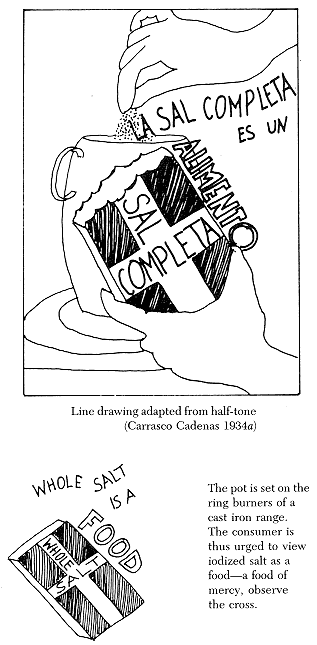
Fig. 20.
1930s Poster for Iodized Salt
ñón, whose specialty was endocrine disease and who, like Carrasco, served on the RSHP' s editorial board, no one else ventured to do so. Doing so would have intruded on Marañón's professional territory, violated the Hippocratic oath (as in Spain it was then understood), and shown a lack of proper professional respect.
Nothing of the quality of Carrasco's lecture in an open medical forum was to appear on the subject of prophylaxis in Spain for the next half-century. The Civil War erupted two years after his lecture was published. Even before the Loyalists were defeated, RSHP resumed publication, blazing the Nationalists' political colors on the usually black-and-white cover and blaming—in an editorial—the war and its sequela of diseases on the Republic (RSHP 1938).
Carrasco Cadenas disappeared toward the end of the Civil War. Some Asturian physicians remember his despair and suspect suicide; others say he disappeared into the Caribbean (see R. L. Fernandez 1986: Interviews with Physicians). Enríque García Comas, mentioned by Carrasco (1934a :81) as a member of his field team, told me in a telephone conversation his view of the man's disappearance.
After the war, Carrasco Cadenas did not go into exile but fell, instead, into substance abuse and simply and sadly degenerated before our eyes. With the fall of the Republic, the collective action he had advocated, promoted, and practiced on behalf of the miserable and poor—possible over only a brief number of years—came to an abrupt halt. Carrasco Cadenas under the Republic forged us into a team; when the Republic fell, our team was disbanded. (Enríque García Comas, telephone interview, 1984)
The Franco Years
Here, I will take four thematic approaches to iodine deficiency, treating research and advocacy, collective and individual prevention and treatment, the flow of technology and information and disinformation, and rising demands for health and prevention. I relate these approaches to the context of Spanish medical politics and patronage.
Censorship
When the war ended in Asturias, the prophylactic team's mission also came to an end. It was suppressed by the radical ideological shift imposed by the victorious Nationalists on the vanquished Republic. Early in the Franco period, this ideology expressed itself in the rejection of most collectivist activities, tainted by their identification with the defeated enemy. For health and welfare, this meant that idealistic collectivist approaches—such as espoused by Carrasco Cadenas in his 1934 lecture and executed in a limited way in a variety of programs before the eruption of the Civil War—were, whenever possible, set aside in favor of more individual approaches to disease.[37] In medicine, this meant treatment rather than prevention. As we saw in chapter 3, this meant that niacin (the antipellagra factor) was used only therapeutically, not preventively (Peraita 1940, Grande Covián y Jiménez García 1941:49–81).
The Comisión Central de Censura Sanitaria, the Central Committee for Censorship of Public Health (RSHP 1942:87ff.), expressed this anticollectivist and medical elitist approach on a different and larger scale. The committee was located in the Consejo General de Colegios Médicos, the general council of the regional medical fraternities. Created in 1898 as professional associations, these medical fraternities and their umbrella organization, the National Association of Physicians, have never been as independent as called for in the original design (de Miguel 1977). So it should be of little surprise to find that Francoist censorship over matters of health and welfare came to be lodged in the Colegios' central office. Technical matters of health were to be supervised by Sanidad (a division under the Ministerio de Gobernación) and those of health education at a popular level by the Vicesecretaria de Educación Popular, the undersecretary in charge of the press.
Some articles of the Censorship Act are relevant to our concerns:
Article One. Censorship rules will be enforced by the Colegios Médicos. Articles and announcements authorized at the provincial level must be approved at the national level before publication in other provinces.
Article Two. Advertisements for treatments and cures, unless approved by the Royal Academy of Medicine, are prohibited.
Article Three. Treatments and cures must not be described to the general public, for these descriptions, in lay language, are almost always clumsy
and stupid, lead to . . . confusion, false hopes, and the public's loss of confidence in medicine, and the disrepute of its practitioners. Descriptions of diseases and their therapies should be reserved exclusively for professional publication.
Article Four. Professional and political advertisement requires clear, clean, and exact composition, free of offensive words. The Commission of Censorship is authorized to censor texts expressed in bad Castilian, such expression being an insult to the dignity of our language.
Article Five. Medical services, except for those rendered officially to the poor, shall be given only for compensation.
Article Six. Articles omitting the stamp "Approved by the Censor" shall not be published. Approved publications thus acquire a value not necessarily previously ascribed to them.
Article Eight. The proclamation of medical specialization acquired abroad is prohibited, for such announcements put Spanish-trained physicians at a disadvantage.
Article Nine. Dermal medications must cite the name of the laboratory in which they have been produced. Products for losing or gaining weight must also cite the name of the laboratory.
Article Twelve. Cosmetic surgery will not be approved.
Article Eighteen. Announcements advertising painless treatment are prohibited.
These articles, longer and more elaborate than excerpted here, are followed by a warning about commercial advertising:
We are fully aware that the public is damaged by multiple aspects of commercial advertising, as by . . . pernicious industries, which we will control accordingly. Madrid, October 1941. Comisión Central de Censura Sanitaria.[38]
The articles make plain the impediment put on the free flow of health and medical information. Under these circumstances, the Spanish public outside of therapeutic circumstances was unlikely to become aware of the use of dietary niacin in the prevention of pellagra (Articles One, Two, Three, and Six). Nor, discouraged as the public was from seeking cosmetic surgery (Article Twelve)—which in the form of goiterectomies had been offered in Asturias since at least the 1920s (Torres 1925)—and therefore discouraged from seeking medical attention for goiter, was the public likely to
learn about iodine prophylaxis from physicians or about iodized salt prophylaxis from advertising (Articles Four, Six, and Eighteen). Neither could foreign medical experts freely dispense such information (Articles Five and Eight); nor were salt multinationals such as Solvay, the Belgian-American salt distributor with offices in Barcelona and Torrelavega,[39] free to do so. Moreover, the flow of information was curtailed. It was not likely that country women would be at ease explaining—at best in limited Castilian, at worst in Asturiano or Bable—their diverse, mystifying symptoms to a clinician (Article Four). Censorship would of course prohibit any advertising for sal completa such as had been seen in some endemic areas during the Republic.
Individual Prophylaxis in an Anticollective Context
In this anticollective context, some prophylaxis nevertheless reached some people at an individual level. Asturian physicians most commonly prescribed Lugol's solution: the daily ingestion of one glass of water containing one or two drops of a standard iodine solution.[40] Middle-class urban women now in middle age remember being given their daily bitter dose as children. To my knowledge, only one woman in Escobines knew of this method of prophylaxis and declined to subject herself to it.[41] Country physicians in other parts of Asturias, however, remember frequently prescribing Lugol's to goiter-prone women whom "they could trust" (not to abuse it) and to members of their families (R. L. Fernandez 1986:45–457). One physician is remembered as regularly injecting iodide into goiters (ibid.: 418).[42] Pharmacists remember keeping it in stock, but they have had little demand for it in recent years (ibid.: 417). Herbalists in Madrid remember stocking a "dark-colored iodized salt," which in 1984 the authorities required them to remove from the shelves (ibid.:404).
There were risks, of course, in administering iodine in these difficult-to-control dosages. Some physicians, at least, were aware of the dangers of triggering toxic reactions by these crude self-dosage methods (ibid.:422, 428–430), and it is now clear that one drop of Lugol's solution in any ordinary glass of water amounts not to a physiological but rather a pharmacological dose, far exceeding the optimal range of dosage on the dose response curve (Aranda Regules et al. 1986).
Small-scale iodine prophylaxis such as described here did not, during the Franco era, come within the compass of official preventive medicine; nor did mass prophylaxis fall within that compass. Piedrola Gil wrote many editions of Medicina Preventive y Social, a basic text for medical students and physicians. Physicians and public health workers now approaching retirement age were introduced to its material in their student days and continue to use it as a basic reference, as do the more recently trained physicians using newer editions.[43] Six sections of the book which might plausibly discuss endemic goiter do not do so,[44] nor is the use of Lugol's solution or any other aspect of IDD discussed. These omissions are glaring in view of the fact that high-technology medicine with radiation and isotopes was rapidly becoming part of the panoply of Spanish medicine during the later Franco years. The omissions become almost incomprehensible when we hear of the alacrity with which Asturian country doctors embraced the "paper test"—the Yalow radioimmune assay (R. L. Fernandez 1986:428–430).
Ballesteros, the country doctor who worked in the 1960s and 1970s in a rustic endemic zone in Asturias not far from the area where Carrasco Cadenas had carried out his pilot study, made frequent use of the Yalow test. It was he who had to decide, when thyrotoxicosis seemed to threaten, whether or not to evacuate the patient on foot through rugged terrain by litter. It was professionally costly for him and costly to the community to decide in favor of an evacuation that might prove to have been unnecessary but would be tragic should the patient die while remaining at home. The paper test, which became available to him in 1973, relieved him of this guesswork, providing him with the necessary information for making an authoritative decision without anguish. But iodized salt, which would have made most of these tests unnecessary, remained unknown to this country physician until 1983 (ibid.).
Pilot Projects
Some progress toward mass prophylaxis was being made. A few Spanish physicians such as Ortiz de Landázuri, Morreale de Castro, Delor Castro, and Escobar del Rey carried on, in the postwar period, the research that was sooner or later to support the extension of prophylaxis in Spain.
Morreale de Castro el al. (1953) hoped to demonstrate the need for iodine supplementation. To this end, in several afflicted communities of the Sierra Nevada near Granada, she documented low levels[45] of iodine in the groundwater and correspondingly low levels of serum iodine. But she found the diet of these mountain-dwelling Granadinos so compounded by other deficiencies and the inclusion of vegetal goitrogens[46] that iodine prophylaxis alone would have been judged, as in Las Hurdes earlier, too specific a remedy for a broad spectrum of problems.
Elsewhere in Granada, such compounding variables were apparently fewer, for in some villages of the region, Ibáñez González (Ibáñez González et al. 1956) and Ortiz de Landázuri (1959) did manage to introduce dietary iodine supplements. They employed a salt iodized by Sal de las Roquetas, a subsidiary of the national saltworks, Torrevieja, on the Valencian coast.[47] Five years of supplementation produced excellent results, but soon after these were published, the endocrinologist Ortiz de Landázuri was transferred to distant Pamplona and thereby forced to drop the project. This transfer cut him and the Granadinos off from the Mediterranean source of supply, soon returning the villagers to their former state of nutritional deficiency. However, Ortiz de Landázuri resumed his labors in Pamplona, identified another iodine-deficient population (in Navarra), and prevailed on another saltworks to produce handcrafted iodized salt. Despite this handicap, Ortiz de Landázuri managed to form an escuela, a school, a tradition of investigative endocrinology that, now under Escobar's inspiration and guidance, is alive and well.[48] Both of the men who have headed this escuela have had the vision to associate investigation with prevention.
"Where Scientific Culture is Thin"
The publications cited here make bibliographic references in standard scientific form but almost exclusively to foreign work, taking no cognizance of Spanish investigations made outside the author's own department or narrow geographic zone of concern. Thus, Spanish investigators appear to discount or simply be unaware of the work of Spanish colleagues working on IDD. Such discontinuity is characteristic of
settings where scientific culture is relatively thin, where national schools are isolated from the mainsprings of Western science, . . . where scientific communication is difficult . . . [and where] barriers to scientific communication constitute the core of the structural deficiencies that have impeded the growth of science in modern Spain. (Glick 1976:287)
Escobar was, therefore, not surprised to learn that Delor Castro—an Asturian diabetologist working quite alone with only Marañón's and otherwise foreign references to guide him—had tried but failed to create an Asturian public informed about IDD. Delor Castro articulated this attempt most forcefully from the platform of the Instituto de Estudios Asturianos (IDEA) when he gave his ceremonial inaugural address—a topic of his own choosing—on being received into membership. IDEA is one of a series of prestigious and exclusive interdisciplinary scholarly fraternities created under Franco to promote regionalist studies while safely containing regionalist aspirations (Uría 1984)[49]
Delor Castro entitled his lecture "Patología Regional de Asturias," Regional Pathology of Asturias, a topic that followed up the regionalist theme developed by Casal, whose Historia Médica y Natural del Principado de Asturias was just being prepared for its bicentennial edition. After the usual opening remarks, Delor Castro (1958:5) launched into his subject.
We of this province lay claim to a special distinction for having two diseases we can claim as our own: pellagra and goiter. Both of them are grounded in this region.
He then briefly outlined the rise and decline of pellagra, "which few of the younger physicians of the province have seen, despite its historical identification with Asturias (ibid.)." Then, he turned to endemic goiter, "a disease now just as characteristically Asturian as it was in Casal's time. This, as everyone in this audience knows, is goiter (ibid.:7)." Cautiously and methodically, he made a case for iodine prophylaxis, grounding his presentation empirically on his clinical experience in Madrid and Gijón (a coastal city in Asturias), and theoretically on the literature of prophylaxis developed in Switzerland and the United States. His references stemmed mostly from the 1920s and 1930s and omitted—whether for strategic reasons or out of lack of awareness—any mention of Carrasco Cadenas.[50]
The epilogue (García Miñor 1958), composed by the evening's presiding officer and published as part of the volume, underscored the range of Delor Castro's work in the areas of diabetes and hematological investigations, areas where he had indeed made a contribution. But it made no mention of goiter, cretinism, or iodine deficiency, the only topics the evening's inaugural speaker had really addressed.
Delor Castro's name failed to be mentioned in the medical history of the province published by IDEA six years later. Indeed, its author claimed that "goiter was once widespread in the province, but like pellagra it gradually disappeared of its own accord; and the cases still to be seen are residues of an earlier era" (Fernández-Ruíz 1965:87)
The single small paragraph on Delor Castro in the Gran Encyclopedia Asturiana (GEA s.v. Delor Castro) likewise omits mention of anything pertaining to goiter and cretinism or of his membership in IDEA. His advocacy, in other words, was virtually erased from both the regional medical and public record and never came to the attention of advocates of prophylaxis in Madrid.[51]
Eleven years later, the Gran Encyclopedia Asturiana published an article on goiter. As if Delor Castro had not previously seized an Asturian forum to enlighten his colleagues about goiter and cretinism in Asturias, the article mystified its readers (GEA 1970: s.v. bocio ). It was written by Suárez-Lledó, then one of the region's few licensed practitioners of nuclear medicine, qualified to treat thyroid disease by nuclear means. He was reputed to use these means both effectively and "lucratively."[52] However, Suárez-Lledó avoided giving the encyclopedia's readership—a popular regional audience—any clear or useful information about the goiter endemia in the region. Rather, he parroted what Marañón had long ago said about goiter, added details in technical language about the physiology of iodine transport, and managed to bury mention of iodized salt in a long list of iodine-rich foods. Thereby, in one deft stroke, he avoided committing technical errors while managing to keep the public as unaware as ever about prophylaxis (ibid.).
When a nuclear physician, a goiter specialist, writes this way for a general audience, is he only misguided? Or might he be held responsible for disseminating self-serving disinformation?
Unrefuted Mischief: Greenwald
Delor Castro, it should here be noted, also purveyed some "information" of dubious value but not, as will become clear, for self-serving reasons. In his closing remarks, he cautiously revealed doubts cast on the theory of iodine deficiency, mentioning a slow-acting virus posited as active only in populations predisposed to a "mysterious factor x." Such a factor had long been entertained by Greenwald, writing frequently in the pages of Bulletin of the History of Medicine, pointing out—since populations recently contacted by Western explorers and colonists had not been reported as goitrous—the lack of historical evidence for environmental iodine deficiency. He posited, therefore, a slow-acting virus introducing itself into the postcontact situation. Delor Castro's speculation about "factor x" can undoubtedly be traced most directly to Greenwald, though Marañón had earlier expressed himself in similar terms.
Greenwald's antiprophylactic position was surprisingly well known in Spain given the paucity in the 1950s of medical publications from abroad. A list of endemic areas in Spain compiled by Greenwald (1958) has been widely cited in many Spanish publications on goiter, even again in Endocrinología (1987:14), suggesting that those opposed to prophylaxis in Spain not only provided an eager reception for his ideas but purveyed them widely. Indeed, Greenwald seems quite singlehandedly to have countered the theory of environmental iodine deficiency on a wide front (Merke 1971) and, at least in the pages of the Bulletin of the History of Medicine, has never been refuted. Moreover, Greenwald was taken seriously enough to be repeatedly cited (but not refuted) in the 1961 WHO volume in Spanish on endemic goiter (Clements et al. 1961), a collection previously available in English (Kelly and Snedden 1960). Greenwald's mischievous argument was widely diffused in Spain, while works written by people of the quality of Ortiz de Landázuri and the commitment of Delor Castro gained at best a very narrow readership.[53]
The censor in Madrid could conceivably have restrained the publication of Delor Castro's Patología Regional for violation of the Article III, for its discussion of a technical medical subject before
a lay audience. Since the booklet never came to the censor's or Escobar's attention in Madrid, however, it was probably subject only to provincial censorship. Most likely, the regional censor let the "regional pathology" slip by him, insensitive perhaps to the book's potentially inflammatory message of centralist neglect and rising sense of regional disadvantage. Although Delor Castro's book managed to slip by the censor, the mass prophylaxis envisioned in it became a reality only in 1983—after autonomía, regional autonomy, became for Asturians a political reality.
Obstacles Overcome and Obstacles Persisting
The Alarming Costs of Retardation
During the 1960s, Spanish migrant laborers by the tens of thousands were working in European industries, and by the late 1960s, Spain itself was drawing people from the countryside into its own industrial labor force. In fact, predictions were made of a possible upcoming shortage of healthy and sufficiently educated young people to staff all the positions opening up in the cities.
Del Rey Calero, a physician and medical professor in the Cádiz region, responded to this concern in the late 1960s by sending sociology and medical students into the countryside to gather data on population movements, epidemiology, and school performance. His students recorded high rural outmigration, low school performance, and endemic goiter and thyroid disease. Del Rey then argued that the Cádiz youngsters' poor school performance was related to poor health and undernutrition and predicted that these children, destined as adults for outmigration, would be unfit for the jobs beckoning them in Spain's industrial centers (Del Rey et al. 1969a, 1969b, 1970).
Soon after this series came out, the National Department of Public Health, then still controlled by the Ministerio de Gobernación, prepared a campaign for the prevention of mental retardation. Escobar, called in as consultant, tried but failed to draw attention to the role of iodine deficiency in mental retardation. This can be seen in the leftover campaign materials that make no mention of thyroid disease or iodine deficiency as contributing factors in retardation.[54] Nevertheless, they do demonstrate that the national
government was beginning to consider the industrial implications of an underdeveloped work force.
Spanish ministries and departments brought such campaign materials out in an accelerated fashion in the 1970s, for example, advising prospective parents to eat well, to get medical supervision during pregnancy, and in the event of previous fetal wastage or known familial defects, to obtain genetic counseling. As a consequence, subnormalidad, or mental retardation, became a common term even in the vocabulary of the villagers. At the same time, as people came to understand that one could actively improve the chances of bearing offspring with normal intelligence, traditional fatalism regarding the prevalence of parados receded.[55]
Developing "Political Will"
Newly developed tests screening for congenital hypothyroidism (CH), also known as sporadic cretinism (see chap. 2), in Spain brought this preventive awareness to the fore. Frontera-Izquierdo demonstrated that the incidence of CH in Madrid was the same as that found in other European capitals but was several times higher among the rural populations on the Mediterranean coast. He proposed that given his discrepancy, in the Mediterranean provinces screening should be made routine for CH and have priority over screening for other congenital conditions. While such screening might be expensive, its cost was small compared to the human, social, and economic cost of mental retardation. He submitted this argument to Anales Españoles de Pediatría (Frontera-Izquierdo 1980a ) but strategically sent it off also as a letter to the European Journal of Pediatrics (1980b :287), undoubtedly hoping to assure by this initiative a faster response than was likely to be the case were the issue confined to the national readership.
Indeed, CH screening was soon established in the Mediterranean provinces of Valencia, arousing favorable expectations in the public at large. When a several-month-old infant was discovered to be retarded and seemingly found to have passed CH screening as a false negative, the parents, a working class couple said to have been subsidized by the Socialist Party, brought suit against the allegedly negligent institution (El País 1981a, 1981b, 1981c ). In reporting this suit, the press explained congenital hypothyroidism
surprisingly well, without, however, making any mention of environmentally based hypothyroidism (congenital or otherwise). The report nevertheless increased the public's awareness of the preventability of much mental retardation. Journalistic reports of this lawsuit, in combination with other events and publications, seem to have contributed to the "political will" seen only recently as necessary for mass prophylaxis to get off the ground (DeMaeyer, Lowenstein, and Thilly 1979:3).
Simple and Accessible Information
In this regard, the publication of Control of Endemic Goiter by WHO (ibid.), published also in Spanish, played a signal role in Spain. In contrast to the volumes previously published on goiter by the World Health Organization and its regional sections (Kelly and Snedden 1960; Clements et al. 1961; Stanbury 1969; Dunn and Medeiros-Neto 1974; all published in Spanish), this volume avoided investigative reports but simply presented the most essential information about IDD and iodine prophylaxis—technical aspects of salt iodination, prevention of severe endemic goiter with iodinated oil, administrative and legal aspects of goiter control, and an overview of IDD and supplementation in the world. Most important, it stated quite simply that "the most important single causal factor is an inadequate content of iodine in food and consequently an insufficient dietary intake of iodine" (DeMaeyer, Lowenstein, and Thilly 1979:9). In just as simple a fashion, it described ways in which salt could be iodized without great capital outlays or very specialized technical knowledge.
What made the volume significantly different from its predecessors is that the simplicity of its basic information was not cast in doubt by a thick core of densely technical reports on recent research. The DeMaeyer, Lowenstein, and Thilly volume was so readily understandable, so attractive and small, that no country physician or health officer could casually exempt himself from participating in the action it proposed. However, one problem that characterized its predecessors persisted: any prophylactic action had by medical convention to rest on "good indicators of the severity of the endemia" (DeMaeyer, Lowenstein, and Thilly 1979:10).
"The Watchdog in the Cabbage Patch"
As to statistics—it's the old story of the perro hortalero, the watchdog over the vegetable garden. The watchdog, in this case the man in charge of clinical and epidemiological statistics, won't let anyone harvest the cabbages which he himself won't eat. Satiated and having no desire to eat them himself, he prevents anyone else from ever getting at them.
—Dr. F. J. Díaz Cadórniga
Dr. Cadórniga, the chairman of endocrinology at the Hospital of Our Lady of Covadonga in Oviedo and animator of the campaign to eradicate endemic goiter and cretinism in Asturias, explained to me by way of this story—often told about bureaucrats in Spain—why for a long time he could not get the necessary data on which to mount a campaign. Having received his medical training elsewhere in Spain he noticed that "an unusually high proportion of thyroid cases make up the case load on the endocrinology service here in Asturias." He therefore sought verification of his impression in epidemiological or hospital statistics. The statistician refused to work up the data, and the archivist refused, also, to allow Cadórniga to work it up himself. He proposed, then, to get the statistics himself in the mountainous zones where the thyroid cases seemed to originate, but his proposal was turned down. Eventually he persuaded colleagues to voluntarily join him in gathering the necessary data during vacation periods (R. L. Fernandez 1986: 440–445).
This extraordinary private initiative, taken early in the 1980s before the Socialists were voted into office, yielded the alarming data that, during the transition to autonomía, prompted the release of funding for an official regionwide survey. These results, in turn, demonstrated in conventional medical terms the need for mass prophylaxis (Aranda and Díaz Cadórniga 1985; Aranda Regules et al. 1986:9–16; Menéndez Torre et al. 1986).
The difficulty of crossing this data threshold had earlier, in the 1970s, also impressed an Asturian médico titular, an officially appointed country physician. Concerned about the endemic goiter he had found in his school-age patients, and having visited briefly in the United States and having learned about the existence there of iodized salt, he had written up the results of his own clinical survey[56] on the basis of which he solicited authorization to run a pilot
iodization program and materials for the proposed feeding program at the school. His proposal was flatly turned down by health officials and ignored by the regional press.
I had written on his behalf to Solvay, the salt company, to Dr. Severo Ochoa the Nobel Prize-winning physiologist from Asturias, and eventually (on Ochoa's recommendation) to Dr. Francisco Grande Covián (previously mentioned as the eminent nutritional physiologist working since the 1950s at the University of Minnesota).[57] Grande Covián, long an expatriate like Ochoa but recently repatriated, expressed interest in the doctor's problem but needed demonstration, by UIE and T4 levels, of the existence of the suspected endemia. Until he received such biochemical data, he could not refer the matter to the proper authorities.[58]
The sympathetic interest from so eminent a physician was gratifying to the country doctor, who could not, however, accommodate Grande Covián's request for the biochemical data, which was beyond his means. García Pérez saw himself defeated and let the matter rest. Cadórniga's volunteers eventually did obtain exceedingly low readings from his schoolchildren. These proved to be key in prompting the official follow-up. Meanwhile, however, the country doctor, who knew exactly what essential element the children were lacking, had to watch them languish in the schoolroom, stunted and inattentive.
Regional Campaigns
Elsewhere in Spain, there must have been other private initiatives like these, emerging out of a combination of factors, prominent among them the growing awareness of the preventability of some kinds of mental retardation and the forthright approach taken toward prophylaxis in the DeMaeyer volume. Tribuna Médica, the organ of the Colegio Oficial de Medicos, received by every accredited physician in Spain, announced in January 1983 the opening of a campaign to eradicate both endemic goiter and cretinism and congenital hypothyroidism in Galicia.[59] The campaign, designed by Galician pediatricians and WHO consultants from abroad, required careful preparation so as not to offend the public whose cooperation was essential. Only broad public compliance would reduce the
very high rates of mental retardation and physical stunting said to have been found among the rural children of Galicia's interior.[60]
Cadórniga and his team in Asturias, meanwhile, during the months preceding the national election of 1982, quietly ran a pilot survey to determine the level of IDD in samples of schoolchildren. Soon after the Socialists won the elections, both in Asturias and the majority of Spanish provinces, Sanidad in Madrid relinquished responsibility for public health in Asturias, transferring that responsibility to the Consejería de Sanidad, now the autonomous public health service of Asturias. On the basis of the alarming results (Aranda and Díaz Cadórniga 1985) the newly created Consejería ran an open regional survey to identify the areas in which schoolchildren were goitrous or subclinically hypothyroid. As expected, extensive iodine deficiency was found in three of the six areas into which the region was divided (Menéndez Torre et al. 1986, Aranda Regules et al. 1986).
Fifty-three percent of the schoolchildren in the eastern interior zone, where Escobines is situated, were found goitrous (WHO's classifications of OB, I, II), as were 21 percent in Asturias generally. Counting as goitrous only those classified as I and II, 29 percent were found goitrous in the eastern interior zone, and 8 percent in Asturias generally (Aranda Regules et al. 1986:36). Urinary iodine excretion in all zones fell below 63 mcg/dl (micrograms per deciliter), and in the zone where Escobines is situated, below 50 mcg/dl; desirable levels are between 100–200 mcg per day (ibid.:39). These findings served as the warrant for launching the campaign to eradicate goiter and cretinism in Asturias.
Old Industries, New Structures, and Resentful Bureaucracies
The widely diffused Asturian campaign materials created a demand for iodized salt, which, paradoxically, did not become available until late spring and summer 1984, when demand had slowed down. The Asturian authorities had anticipated that the arrival of iodized salt might long be delayed and thus prepared themselves to give, if necessary, preventive injections of Lipiodol. This they did in spring 1984.
Asturias was not alone in having to confront this supply problem. Sanidad (Public Health) in Madrid, still in charge of public health for the nonautonomous provinces, seemed unable to get iodized salt onto the market. This is almost inexplicable. Neither raw material nor technical expertise could have been serious impediments: Spain was Europe's largest salt producer, and free-flowing salt had long been available on the Spanish market. This demonstrated that Spain had the technical expertise to keep salt moisture-free at standardized levels—a requirement for the production of large volumes of high-quality iodized salt.
Legal and bureaucratic requirements had to be met, but they posed no formidable hurdles. The Food Code of 1976 defined iodized salt as "salt containing 10–15 milligrams of sodium iodide or potassium iodate per kilo" (BOE 12.2.1976) and in 1983 (BOE 6.1.1983), raised the required level to 60 milligrams per kilo.[61] Any Spanish salt manufacturer could produce iodized salt, provided he first obtained the necessary authorization from the health department.[62]
Markets may have posed a problem at one time, as is suggested in this excerpt from a letter written by Francisco A. Orovio, Division Chief, Derivatives and Petrochemicals, Solvay, on January 13, 1982.
. . . in answer to your inquiry regarding iodized salt. We were sufficiently aware of the problem[63] to take the trouble to obtain authorization to produce and sell iodized salt. Moreover, we have manufactured some quantities of such salt on a small scale, and distributed them at no cost in the provinces of Granada and Zamora, and found that despite our efforts there really was no market potential to justify production of iodized salt at an industrial scale [emphasis added].
In 1984, when the market had at last been created, the demand for iodized salt could not be met. There were antecedents: the newly created Ministry of Health and Consumer Affairs had convened the salt manufacturers in autumn 1983, apprising them of the new standard of iodization and of its plan—over winter 1983–84—to stimulate demand for iodized salt, this stimulation being an important part of its Campaign to Prevent Goiter and Cretinism. Indeed, television programs as popular as Sanchéz Ocaña's Mas vale prevenir, A Stitch in Time, had produced the desired demand.
As can be seen in the excerpt below from the interview with Dr. Nájera, head of the Ministry's Department of Education and Preventive Health, a certain peevishness seemed to characterize the relations among the ministry, the new autonomies, and the salt manufacturers.
People responded to our television campaign demanding the salt. But the salt industries let down our Ministry, failing to get it to the market on time, not until spring, when people had already forgotten about the winter's campaign. When finally it did appear, it was in Galerias Preciadas [an expensive department store], getting first to the people who least need it.
Under this present political system, what can a ministry do to obtain compliance? Nothing. Now it's up to the autonomous regions. We prepared plenty of materials for them. We sent out 20,000 copies of the new WHO book [DeMaeyer, Lowenstein and Thilly, 1979] to all the physicians in the country. And we prepared posters, slides, and teaching materials for them, too.
But it's not our business to poke into how the autonomous regions are doing with what they've opted to take on. For all I know, the officials in those autonomous regions may have discarded the materials prepared by my department.
Regional health officers in the newly autonomous regions were aware of these attitudes and of the historical lack of cooperation among departments and ministries—the encumbering verticality of structures. Thus, when regional health personnel, such as those in the Asturian Consejería, were at last legally capacitated to take charge of their own affairs, in this case to take action on behalf of subclinically hypothyroid children (Aranda Regules et al. 1986:38), they counted on Lipiodol to safely surmount the shortcomings of the ministry (ibid.:10).[64]
Lipiodol was an ambiguous triumph for the advocates of prophylaxis, however. Traditional opponents of prophylaxis still occupied important desks, even in regional bureaucracies. Dr. F. Nuño, for instance, in 1984 the technical director of the Asturian Consejería and in that capacity the administrative head of the campaign to eradicate goiter and cretinism, had years earlier, as head of the Delegación de Sanidad in Asturias in 1972, assured me that
the former endemia is declining of its own accord. The incidence of goiter is negligible. Therefore we have no need for statistics on goiter and cre-
tinism. To introduce iodine prophylaxis into Asturias would not only be superfluous but expensive. (Dr. F. Nuño, Aug. 1972)
Yet Nuño was still in 1984 blocking prophylaxis wherever he could, refusing, for example, to obtain the authorization that would allow iodized salt to be marketed in the economical units of fifty or a hundred kilos preferred by Asturian country women.[65] His attitude put him at odds with Dr. Cadórniga, who had been appointed medical head of the campaign. When circumstances—which he had helped to create—required the use of Lipiodol injections, then Dr. Nuño may have felt himself vindicated, for, indeed, prophylaxis in this form proved to be expensive.
The View from the Bottom Line
Financial, specifically pharmaceutical, interests may have posed more of an obstacle to prophylaxis over the years than has so far been suggested. Several propositions can be explored by making some simple calculations. These calculations are based on advertisements in one issue of Endocrinología (July 1984). The analysis, only suggestive, looks at the proportion of full-page advertisements for thyroid medications in relation to all full-page advertisements. Those for thyroid medications represented a third of all the full-page ads.
Proposition 1: If the cost of advertising is proportional to incidence, 35 percent of the patients on an endocrinology service will be treated for thyroid conditions. It turns out that this proposition is not supported, for in Madrid, the only clinical service in Spain for which statistics were available (Laher Montoya n.d.), 17 percent of the patients were diagnosed with thyroid disorder, a figure the author considered alarmingly high and indicative of possibly underlying iodine deficiency.[66] Consequently, the proportion of monies spent advertising thyroid medication in a journal of endocrinology appears to be twice as large as the proportion of thyroid patients admitted into a Madrid endocrine unit.
Proposition 2: If an endocrinologist's income—legitimate and through kickbacks (de Miguel 1977)—is a reflection of the medications he prescribes, then a third of the prescriptions written by endocrinologists will be written for thyroid medication. If this
proposition does not hold up under scrutiny, then it must be supposed that a diagnosis of thyroid disorder is worth twice as much as other diagnoses to the prescriber. Statistics are unfortunately unavailable for demonstrating the proposition in either of its forms.
Proposition 3: Pharmaceutical advertisements are a kind of gamble reflecting hoped-for profits. The ENDOFREN ad (see fig. 21) and the following story would seem, at least under this initial, albeit very informal, scrutiny, to bear out this proposition.
Diiodotyrosene and reserpine are ENDOFREN's principal components, as the fine print makes clear. These compounds, according to my understanding of iodine physiology, seemed of dubious value in treating hyperthyroidism. Puzzled, I telephoned Dr. Escobar, then serving on the editorial board of Endocrinología, who commented on ENDOFREN as follows:
ENDOFREN is a compound useless for treating the disorders it purports to treat. Indeed, it has no specific action at all. Diiodotyrosene seemed, twenty years ago, a promising medication. One of the pharmaceutical houses in the United States gambled a lot on producing a batch before checking it through the FDA, which didn't let it pass. The manufacturer held on to it in the event it could be loaded off on someone overseas, which proved to be someone in Spain.
When I saw the ad in the journal I telephoned the editorial board of Endocrinología to let them know my outrage. It will not be run again. (Sept. 12, 1984)
Later, I could trace ENDOFREN only to BAMA, a tiny pharmaceutical house in Barcelona, now apparently out of business. Even its principal ingredient, diiodotyrosene, was untraceable in the International Guide to Pharmaceutical Products. The reserpine figuring in its description is a vasodilator. It might, for a short while, actually calm down the woman so artfully depicted on the verge of thyrotoxicosis.
Conclusion
We end on a tantalizing note of possible international, probably American, involvement in the production and promotion of a dubious drug to be used in treating thyroid pathology. No doubt there has been American involvement. The economic power and the inventive and productive potential, of the American pharmaceutical
Fig. 21
Advertisement for ENDOFREN
industry has made it a major actor in the therapeutics of most countries. These have benefited from its discoveries and sometimes have been mortgaged to its mistakes.
But the emphasis here has been on the regional and national contexts in Spain itself. Only to a limited extent has it been on the international factors that account for a sixty-year delay in implementing simple but cost-effective dietary supplements that prevent IDD. One draws back from calculating how many human lives have been tormented, stunted, or wasted by this delay. This chapter has looked primarily at the actors involved, at the men whose favorite theory or excessive loyalty—whether personal, bureaucratic, or political—prevented them from vigorously promoting the simplest of remedies. And it has looked at men who struggled early on and under discouraging circumstances to bring prophylaxis to those in need of it. Even here, to focus on personality alone—and it is not easy in these circumstances to avoid the fugitive satisfaction of blaming or praising—is to hang too much on ad hominem argument.
It is to miss the institutional frameworks within which persons act. These, in the end, are the enduring configurations that deserve our attention. Persons and personalities come and go, and some can have the greatest influence in their circumstance, men like Franco, of course, and physician-statesmen like Marañón. Institutions, however, not personalities, form the persisting framework within which people act. Institutions facilitate or block the flow of images and information. They, too, put the stamp of approval on attitudes and reward those individuals or classes holding the "correct" ones. Institutions promote or hinder the formation of a "political will." As admonitory as one may be tempted to be, to a Marañón or a mischievous Greenwald, it is nevertheless on institutions that accounts such as this must seek to have their influence.