
Student-Centered View
A schematic of the student-centered model is presented in Figure 3. 1 (Model A). The arrows imply causality and indicate the presumed direction of causal influence. Some of the relevant studies attempt to encourage environments of trust in the classroom (e.g., Reckless and Dinitz 1972); others provide instructional options that allow students a choice of workload (Jacoby and Covington 1973). Still other researchers have introduced curricula that permit nongraded academic experiences (Lawson 1974). These attempts to encourage learning through self-change have been generally disappointing. Some studies show little or no change in measured self-concept as a result of intervention, even though indices of academic achievement increased (e.g., Grant 1973; Lawson 1974; Stallings and Kaskowitz 1974). In other instances, although changes in measures of self-regard occurred, no parallel changes in achievement were observed (Hunt and Hardt 1969; Logsdon and Ewert 1973). Neither outcome is consistent with the assumption that positive self-regard is a necessary and sufficient precondition for productivity in the schools.
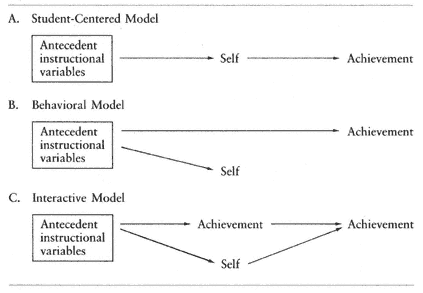
Figure 3.1.
Casual Models of School Achivment