
1949–1950: A Darkening Sky
Attempts by the RSFSR leadership to provide political cover for the Main Administration and the conservation movement ran up against an increasingly charged political atmosphere, which put that leadership itself in mortal peril. In this climate, regime vigilantes rediscovered that the conservation movement and zapovedniki were out of step with the regime's ethos. On February 21, 1949 Romanetskii wrote to warn Gritsenko that Makarov was planning to hold a conference on zoological research in the zapovedniki with more than 100 participants from February 22 through 26, even though permission had not been obtained from the Central Committee of the Party. Fadeev of the RSFSR Ministry of Finances had evidently provided 10,000 rubles for the event, but Romanetskii recommended last-minute cancellation, noting that the theses had not been politically reviewed and that the meeting was to be held in an inappropriate venue, a basement area without natural light. It was unclear whether Romanetskii was more worried about electricity bills or about the "underground" nature of the gathering.[37]
Romanetskii's second complaint to Gritsenko, on March 29, 1949, came after the fact and placed the spotlight on the subversive nature of the movement's ideology of nauchnaia obshchestvennost '. By going ahead with the full-scale conference, Romanetskii charged, Makarov had overstepped his bounds; Gritsenko, Romanetskii reminded the deputy premier, had only authorized an "expanded plenum of the Executive Council." Makarov needed to account for this personally in Romanetskii's and Gritsenko's presence.[38]
As it happened, Makarov had written to Gritsenko on January 26 asking permission to hold two meetings. He pointed out that no similar conferences had been held since 1933.[39] A program was outlined that included mostly technical talks by A. N. Formozov, Vsevolod Borisovich Dubinin (the director of the Academy of Science's Zoological Museum and a leading parasitologist), L. L. Rossolimo, S. V. Kirikov, and E. M. Vorontsov (Stanchinskii's relative and student). His own speech, "Tasks of Zoological Research in Light of Michurinist Biology," written later, on February 10, was intended to provide maximum political cover for the gathering. In it Makarov made the requisite perfunctory bow to the doctrine of the inheritance of acquired characteristics and the staged theory of development, and praised regime philosopher V. M. Iudin and Michurinist acolytes M. F. Ivanov and L. K. Greben', who had played such regressive roles in Askania-Nova. He also included attacks on M. M. Zavadovskii, N. K. Kol'tsov, A. S. Serebrovskii, and I. I. Shmal'gauzen, old supporters of the movement, by name. Finally,
he noted that the first page of the latest issue of Nauchno-metodicheskie zapiski included a quotation from Stalin, which, incidentally, was the only time that the great leader appeared in such an honored spot in a Soviet conservation publication. For the greater good, much like the legendary princes of Rus', Makarov sinned against his own civic conscience and his personal values. By contrast with others who denounced to save their own skins, Makarov was motivated by a painful burden of responsibility to the movement as he understood it. He had reached the limits of protective coloration, pushed there by an extremist politics. If anything else could be said in his defense, it is worth noting that all those he denounced had already been singled out in the violent, orchestrated campaign and had already lost their jobs.[40]
Another blow landed almost immediately afterward. On March 13, 1949 Rodionov was removed from office and arrested, and he was later executed in connection with the so-called Leningrad Affair. (Gritsenko was replaced slightly later.) Coincident with Rodionov's fall was an April 25 report by A. Safronov, state councillor of finance, first rank, to the new Russian premier, Boris Nikolaevich Chernousov (see figure 5), and his deputy, Mikhail Mikhailovich Bessonov.[41] In it, Safronov charged that "the Main Administration had not exercised the necessary leadership over the financial activity of the zapovedniki " and that in a number of cases even "abetted the violation of financial-budgetary discipline."[42] The agency was accused of overspending to the amount of 285,000 rubles, including 40,000 for salaries of personnel above the number officially permitted for the system and 196,000 on purchases of equipment "from private persons and in stores on personal account." These budget overruns, Safronov alleged, "were illegally concealed" through credits from the salary accounts of scientific workers who did not exist; the Main Administration claimed that there were 174, although on January 1, 1949 there were in fact only 142 in place.[43] Thus, Pechoro-Ilychskii zapovednik received salary credits of 228,000 rubles despite an actual need for only 180,000.[44] Particularly galling was the cost overrun on research even when the thematic plan was "significantly underfulfilled."[45]
Each new development brought the conservation movement closer to the brink. By late 1949, the Secretariat of the Central Committee of the Party had become involved. Its Agricultural Department had requested an investigation of the Main Administration, to be jointly conducted with the RSFSR Council of Ministers. The findings, not surprisingly, revealed a festering alien colony in the Soviet body politic. Only four of twenty-six scientific directors of reserves were Party members or candidates, and only twenty of 111 scientific researchers; most of the 207 party members and candidates in the 890-person system were reserve directors, workers, or bookkeeping personnel.[46] Five scientific workers were found to be moonlighting. Decrees of the center, it was further charged, never reached the grass roots.[47] The Main Administration was derelict in its financial manage-
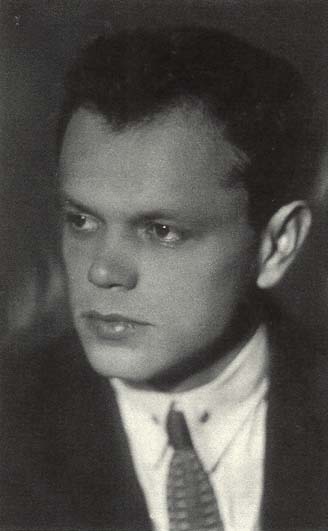
Figure 5.
Boris Nikolaevich Chernousov (1908–1978).
ment, scientific research activities, and in its "selection, appointment, . . . and training of cadres." Research "did not respond to the demands of the economy for the quickest possible expansion of economically valuable wild animals and plants." The bottom line seemed unsparing: "The methods of leadership over the reserves have fallen behind the times."[48]
Yet the appendix to the report that contained the inquest committee's
recommendations reveals the protecting hand of the RSFSR government. The highest priority was to find a new head to replace Shvedchikov, who had finally succumbed to a long and debilitating illness. Second, the report recommended increasing the numbers of scientific staff and forest wardens, reviewing the possibility of salary increases for the scientific staff of the reserves, allotting the Main Administration another, more convenient set of offices, and reviewing the statute on the Main Zapovednik Administration and its structure.[49]
In response to the impending report, on November 14, 1949 Makarov sent to Bessonov a seventy-three-page memorandum "On Essential Measures for Improving the Work of the State Zapovedniki of the RSFSR," requesting a budget of 20 million rubles as well as motor vehicles of various types.[50]
However, the official appointment of Aleksandr Vasil'evich Malinovskii (see figure 6) as the new head of the Main Administration on December 28, 1949 effectively ended Makarov's de facto leadership of the system during the interregnum.[51] Among Russian scientists, conservationists, foresters, and game specialists, Malinovskii remains enigmatic and controversial, and the degree to which he exercised initiative in the drama of the next two years is still a riddle.
Born in 1900 in the town of Kirzhach, Vladimirskaia guberniia, Malinovskii's roots were modest; his father was an engraver. As did many children of workers who sought upward mobility, upon graduation from the Kirzhach gymnasium in 1918 Malinovskii began his working career as a teacher in a rural school. He spent the years 1919–1920 in the Red Army. Upon graduating from the Petrograd Forestry Institute in 1923 with a specialty in forest engineering he began work as a stumpage assessor, later directing forest management teams and procurement assessment expeditions to Moscow and Gor'kii oblasts and to the Udmurt ASSR and the Transbaikal and Far Eastern regions for the People's Commissariats of Agriculture, Transport, and Communication, and VSNKh. From 1934 through 1942 he worked in the USSR People's Commissariat of Forests and then the Department of Forest Management of the Main Forest Protection Administration of the USSR Council of People's Commissars. From 1942 to March 1944 he directed the Briansk Technical Forestry Institute, which had been evacuated to Kirovsk oblast' , joining the Party in June 1943. In March 1944 he was named chief inspector of the State Forest Inspection Service under Motovilov; in three years the agency would be elevated to the USSR Ministry of Forestry.[52]
His official biographies do not mention his activities between 1945 and his appointment as head of the Main Zapovednik Administration. However, Malinovskii served as director of forests of the Soviet Military Administra-
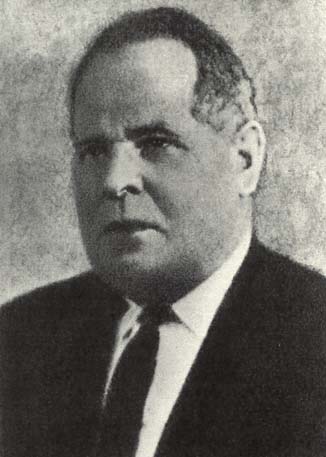
Figure 6.
Aleksandr Vasil'evich Malinovskii (1900–1981).
tion in Germany (SVAG) during that period, a post that may have recommended him to the attention of Beria and others in the Politburo.[53] Described in his nomenklatura dossier as "an energetic and experienced worker," Malinovskii's record was clear of administrative or Party reprimands except for one rebuke from the Agricultural and Forestry Administration of SVAG for publishing an article in a German forestry journal about the theme of shelter belts, evidently in late 1948 or 1949. With no relatives abroad or fallen victim to Stalin's repression, and with two medals for Valorous Labor (one for his wartime services), Malinovskii had little personal cause to doubt
the progressive and constructive nature of Stalin's revolution. For someone like him, the Stalinist view of the world corresponded to his personal one; it echoed his own ideas about "common sense."[54]
The circumstances of Malinovskii's appointment are unclear. Officially, a commission of three representatives of republic ministries was involved in the formal ceremony of leadership transition.[55] However, archival sources imply that the whole operation was overseen by the Central Committee, whose Agricultural Department had initiated the investigation of the Main Administration in December 1949.[56] On January 23, 1950 Chernousov received a memo from one of his aides, A. Prokof'ev, who argued that insofar as the Agricultural Department of the Central Committee had investigated the Main Administration itself and had come up with measures for the improvement of the agency's work, it was wiser for the RSFSR government to confine itself simply to formally issuing the decree certifying the new appointment (rather than acting on the proposals submitted in November by Makarov).[57] We know that in the postwar period the Central Committee's Cadres Department increasingly bypassed Shvedchikov with its appointments of retired military officers and security police as directors of zapovedniki .[58] Moreover, the head of the Main Zapovednik Administration was a nomenklatura position, subject to Party approval. Consequently, it is entirely likely that the Agricultural Department of the Central Committee had played a guiding role in Malinovskii's selection as well.
The first glimpse the old guard activists got of their new head was at a special meeting on January 10.[59] The activists, still behaving as if it were old times, presented Malinovskii with a list of issues they wanted him to raise with the RSFSR Council of Ministers. They included reviewing the statute on the Main Administration, extending to administrators and scientists holding academic degrees the same salary scale and benefits as all other degree holders,[60] increasing funding for work-related travel between the reserves and the center, and finally, providing the Main Administration with offices that met "hygienic norms."
At the meeting, before Malinovskii presented his own vision of affairs, Makarov alluded to the new, less secure political environment in which the movement and the Main Administration now found themselves. "I believe," he said diplomatically, referring to the RSFSR/Central Committee investigatory commission, "that the commission, owing to an insufficient amount of time, was truly unable to examine all of our work, our manuscripts, published works, etc., the work of our colleagues who actively conduct their research in the zapovedniki. But the facts are that around the zapovedniki through mighty efforts we have succeeded in creating a large circle of active, committed researchers—among the most prominent scientists of our country."[61] Shtil'mark and Geptner's commentary on this seems right: "the
commission was interested least of all in scientific work, manuscripts, and even the true state of affairs. The question of the radical reorganization of the zapovedniki had been decided ahead of time, and the new head's task was to put it into effect concretely."[62] But was Malinovskii's idea of "reform" identical with that of the Kremlin bosses? Meanwhile, an embattled Makarov signed over control of the agency at the meeting in the presence of the three RSFSR transition commissioners, an act that inaugurated a period of unprecedented turmoil, loss, and confusion for the agency and the movement.
An early preview of things to come involved the fate of the Seven Islands reserve's branch outposts on the southern island of Novaia Zemlia in the Arctic Ocean. Since 1947, protection of these territories had dramatically helped the recovery of eider duck populations, and their scientific director, S. Uspenskii, wrote to Makarov in early December 1949 to lobby for an expansion of that territory from the narrow littoral of Novaia Zemlia inland to include all representative landscapes of the island.[63] Most crucially, the Novaia Zemlia lands needed to be incorporated as a separate zapovednik , argued Uspenskii, as their financing, administration, and supplies were complicated by the great distance separating them from the main reserve, located in the Barents Sea. Complicating management tasks further was the existence of another branch of the reserve near Murmansk on the northern coast of the Kola Peninsula. Important populations of seals, walruses, reindeer, arctic fox, and other life forms would benefit from the creation of a separate reserve.[64] Uspenskii also appealed to Makarov to persuade the RSFSR Main Administration for Hunting to stop the "rapacious destruction of reindeer, polar bears, walruses, geese, swans," and colonial birds, and to impose a complete ban on killing fauna and taking birds' eggs.[65] Responding to this letter constituted Malinovskii's first official act as system director.
Malinovskii noted that the birds are present on the islands of Seven Islands reserve only four or five months out of the year, from late April to the end of August, and researchers visit the islands only during that time. The remainder of the year they work in labs and offices in Leningrad and Moscow, he wrote. The absence of suitable winter domiciles, equipment, and a library pose a barrier to year-round work there. Because the Kandalaksha zapovednik , also in Murmansk province, shares the same general research profile as the Seven Islands reserve, Malinovskii proposed integrating the administration and scientific research with headquarters at Kandalaksha. The merged reserve would be called the "State Zapovednik for Eider and Colonial Birds." Research expeditions to the Barents Sea islands would take
place only between April and September and would be based in Kandalaksha as well. Malinovskii also endorsed the creation of an independent zapovednik on Novaia Zemlia, generally according to the boundaries proposed by Uspenskii and supported by the Arkhangel'sk oblast' Soviet in its letter of January 19 to the RSFSR Council of Ministers supporting the move. Finally, Malinovskii proposed transferring the existing staff of Seven Islands to Novaia Zemlia.[66]
We can see from this episode that, first, Malinovskii's inclination from the start was to streamline the system, eliminating all units that seemed to duplicate others' functions. Second, he was pragmatic. He could be persuaded by images and arguments that appealed to his common sense, such as the need to protect the breeding stocks of commercially valuable birds and sea mammals, but he could hardly be expected to support the protection of fuzzily defined biogeocenoses, particularly if they seemed to be a research indulgence of terminally impractical field biologists. Yet his support for a new, independent Novaia Zemlia zapovednik should deter us from accusing him of seeking to obliterate the system from the start, much less of having initiated those plans.
Meanwhile, the forestry situation as viewed from the Kremlin had become urgent if not critical.[67] A worried Presidium of the USSR Ministry for the Forest and Paper Industry met on March 16, 1950 to discuss huge shortfalls in planned production even as Stalin was preparing a draft decree "On the Unsatisfactory Underfulfilment by the USSR Ministry of the Forest and Paper Industry of a Plan for Timber Cuts and Delivery of Wood-Based Products to the Economy during the First Quarter of 1950."[68] This decree followed on the heels of an earlier one of January 11. With production of commercially usable timber at only 57.6 percent of targeted quantities for the quarter, hundreds of key ministry staffers, including the minister G. I. Orlov and his deputy, were out in the key lumber-supply regions, trying to ensure that on-site machinery breakdowns were promptly fixed.[69]
Orlov promised to make up the shortfall by intensifying summer logging and increasing efficiency. However, he noted, targets had grown so great that additional help from the state would be essential to meet them: a minimum of 90,000 more workers, more housing and supplies for workers on site, and additional tracts provided by the USSR Ministry of Forestry on which coniferous trees could be harvested, particularly if they were located near railroad lines.[70] Although Orlov did not mention the forested areas of zapovedniki specifically, his pressure on the USSR Ministry of Forestry doubtless stimulated forestry minister Bovin's efforts to gain control of those 8 million additional hectares of forests with already existing, if rudimentary, infrastructure.
About that time a draft law was sent by Malinovskii to the USSR Council
of Ministers.[71] "State reserves fulfill an important economic function in preserving, restoring, and increasing supplies of game and other commercially valuable plants and animals," as well as pursuing the great work of studying the natural conditions of the Soviet Union, the opening paragraph granted. However, the text alleged, the organization of zapovedniki did not always take account of whether a given area required protection or was appropriate for the purposes pursued by reserves. "The experience of the zapovedniki has shown," the text continued, "that the imposition of a regime of inviolability in some cases did not permit us to use the accumulated reserves of game and in other cases hindered the solution of tasks . . . involving the restoration of basic types of vegetation and the implementation of active measures that would promote the increase and improvement of protected life forms."[72] This echoed Malinovskii's remarks to the January 10 staff meeting, where he announced that "the zapovednik must be that laboratory that will actually demonstrate, in nature, what can be accomplished under human influence, under the influence of goal-directedness." He went on to challenge the old-line activists' fixation on inviolability: "I am interested to know why, if a forest zapovednik , say, occupied an area of 15,000 hectares, all 15,000 must be inviolable. Why can't we organize it so that 5,000 are inviolable, 5,000 are used for other purposes, and 5,000 are dedicated to the transformation of nature? Nobody has spoken along these lines. . . . We must obtain results that are of interest to the economy."[73]
It is no exaggeration, though, to describe Malinovskii's draft decree as a radical, even epic departure from even the most "protectively colored" rhetoric and recommendations of Makarov. In the name of the USSR Council of Ministers and its chairman, Stalin, the draft called upon the RSFSR government to eliminate an entire slew of reserves: Verkhne-Kliazminskii, Gluboko-Istrinskii, Privolzhsko-Dubninskii, all in Moscow oblast' ; Visim in Sverdlovsk oblast' ; Kliaz'minskii in Vladimir oblast' ; Kuibyshevskii in Kuibyshevskaia oblast' ; Sredne-Sakhalinskii in Sakhalinskaia oblast' ; and the Tsentral'no-Lesnoi in Velikoluzhskaia oblast' . Seven Islands in Murmansk and Arkhangel'sk oblasts was included as well, although Malinovskii envisaged its partial reincarnation as a colonial sea birds reserve. The liquidation of the zapovedniki was to be completed by October 1, 1950 and their territory distributed to ministries and agencies according to an appendix included with the draft legislation.[74] Another list of zapovedniki were identified for reduction in area: Altaiskii, Barguzinskii, Caucasus, Kondo-Sosvinskii, Kronotskii, Pechero-Ilychskii, Saianskii, Sikhote-Alinskii, Sudzukhinskii, and Chitinskii. The remainder were to retain their current boundaries.
Second, the RSFSR Council of Ministers was urged to revise its statute on zapovedniki and their Main Administration, recognizing the value of exploiting the stock of commercial and game animals inside the reserves and
the need for active measures to restore and "improve" the condition of typical vegetation and other objects of protection.[75]
Interestingly, the draft supported extending the wage scales and benefits of those with academic degrees working in agriculture and covered by the legislation of 1946 and 1947 to degree holders in the reserves.[76] Finally, it recommended that the State Staffing Commission increase the staff allotments for both the Main Administration and for the reserves themselves, especially for scientists, forest experts, and wardens, and that the RSFSR guarantee the publication of the scientific proceedings of the reserves as well as popular scientific literature about them.[77]
Was this a preemptive strike by Malinovskii to offset what he believed were potentially worse initiatives from the Kremlin? That is, was this the ultimate in protective coloration? Or was Malinovskii fulfilling a decision already taken at a much higher level? Was it the first stage of a more far-reaching plan to dismember the reserves, or did policy in this area develop on an ad hoc basis? Or was Malinovskii a true believer in utilitarian values, whose own quite specific understanding of the appropriate role for nature reserves (as laboratories for the transformation of nature and the increase of commercially valuable species) was manipulated by officials high above to carry out a massive land grab? The available archival record does not permit us definitively to answer these questions.[78] Although the policy conclusions are in keeping with Malinovskii's own management philosophy, that in itself is no proof that he initiated the proposal to eliminate or radically reduce more than half the system; had Malinovskii written the proposal on his own, he would have had to conduct an in-depth analysis of the reserve system in a scant two and a half months.[79] This would have been possible, but we also know that the Central Committee Agricultural Department had just concluded an investigation of its own.
One clue to the riddle is contained in the appendixes 1 and 2, entitled "List of Zapovedniki to Be Liquidated" and "List of Zapovedniki of the RSFSR Subject to Reduction of Area." Of the nine reserves with a total of 332,800 hectares, 2,600 hectares were to be turned over to the Kandalaksha zapovednik , and the remainder (with the exception of fewer than 10,000 hectares that were to be handed over to local governments) was designated to be ceded to the USSR Ministry of Forestry.[80] Of the ten reserves slated to be reduced in size, their aggregate area was to go from 8,784,800 to 5,591,200 hectares , a reduction of 3,183,600. Taken together, the RSFSR reserve system would decline from 9,117,600 to 5,591,200 hectares, or by 39 percent. Of the total, all but 115,000 hectares was allocated to the USSR Ministry of Forestry.[81] In the light of later developments, such a plan would appear positively liberal.
It therefore seems plausible, even likely, that Malinovskii had been given powerful cues, if not explicit instructions, to produce such a draft at the
behest of his erstwhile colleagues in the USSR Ministry of Forestry, who from 1947 had been coveting the forests of the nature preserves, with their roads, domiciles, and other infrastructure. Nevertheless, Malinovskii's vision of a reformed system was colored by his own genuine concern not to vitiate the practical scientific research in the reserves. As it turned out, however, that did not go far enough. To what extent all this had already come to the direct attention of the great barons of the Politburo in mid to late 1950 is still far from clear.