
6
Timidity:
The International Education Board and Cornell, 1920s
Few professors of philosophy have been given $27 million to establish and direct their own philanthropy, but in the early 1920s, John D. Rockefeller, Jr., gave Professor Wickliffe Rose of Peabody College, Nashville, Tennessee, that sum to realize Rose's idea of a foundation devoted to "the promotion and advancement of education throughout the world." Rose had come to the attention of the Rockefellers during earlier administrative service. When he was asked to head the Rockefeller Foundation's General Education Board, which was charged with promoting education within the United States, Rose accepted on condition that another board be established with funds available for use outside the United States. With Rose as its president, the International Education Board (IEB) was formally established in 1923. [ 1]
A friend described Rose as "possessed by the faith of Aristotle that the salvation of mankind lay in the extension of knowledge." But when given millions to spend as he and his board wished, Rose suddenly realized that "extension of knowledge" embraced a hopelessly broad range of activities. Thus he settled on the promotion of the natural sciences and agriculture as "the fields in which lay the greatest promise of human service." Rose chose agriculture because "the development of farming and of men on the farm" was "the basis of democratic civilization." The recent world war had called attention to the precarious sufficiency of world food supplies and distribution. Moreover, success in the United States with farm demonstrations, cooperatives, boys and girls' clubs, and traveling fellowships seemed to demonstrate that rural life and agricultural production were amenable to improvement. [2]
After designating the general focus of attention, Rose was willing to entertain applications for grants from any institution anywhere. He set few specific guidelines. Permanent institutions were preferred, for "the education of a people can be accomplished only by permanent agencies rooted in the soil." And "nongovernmental" institutions were to be favored over official ones, because they had "greater freedom for initiative and for experiment" and could thus "serve to
stimulate and guide governmental effort." The IEB, which regarded itself as a "bird of passage," had no wish to establish and maintain its own institutions; instead, it sought to help institutions that "may be depended on to derive their support from the people they serve." [3]
Rose visited several agricultural colleges in the United States to evaluate programs and collect ideas. The notion of an international role for American agricultural schools was a novel one—indeed, when Rose wrote to Cornell in late 1923 of his interest in visiting and discussing "a scheme in agriculture on an international scale," both the president of the university and the dean of the agricultural college were mystified. After the visit, Dean Albert Mann wrote to Rose: "We all felt greatly stimulated by your outlook." [4]
The IEB's fraternal relationship with Cornell was tightened when Mann took a leave of absence to serve as the director of the IEB's agriculture program in Europe. No definite program plans were formed, but both the IEB and Cornell were concerned with how to strengthen agricultural education abroad. Into this window of opportunity walked Nanking's John Reisner, a Cornellian who asked for help in building a stronger agricultural college in China. Reisner was the right person in the right place with the right proposal.
Perhaps Reisner heard of Rose's interest in working with Cornell and calculated that the moment was ripe for a proposal from Nanking. But it is more likely that his propitious timing was mere coincidence. Excited by the news of receiving the China Famine Funds, Reisner had made plans early in 1924 to expand programs at Nanking, and had naturally turned to his alma mater for assistance. He wrote to Cornell, "We are looking for a plant breeder—a man who is interested in the practical applications of the principles of plant breeding and in getting practical results as quickly as possible, rather than one who is interested in the subject from a purely scientific rather than an applied scientific standpoint." An attractive feature of the position was the availability of large numbers of "inexpensive" assistants, so that a single plant breeder would be able "to make his time go a very long way." [5]
No one at Cornell was willing to trade Ithaca for Nanjing on a permanent basis, but several members of the plant breeding department expressed an interest in spending a sabbatical at the University of Nanking. Harry Love, a specialist in small grains and statistics, presented a counterproposal to Reisner: Love would spend a portion of the next year in China, and his colleague, Clyde Myers, would go the next. But this two-year plan seemed too short, so it was decided to try to arrange a cooperative program between Cornell and Nanking of five to ten years, "until such time as local workers are fully prepared to go ahead independently." The new plan meant that scheduled sabbaticals would be insufficient to cover the salaries of the visiting American participants. After conferring with Cornell, Reisner decided to attempt to secure financial assistance from the IEB. [6]
Reisner was by then an experienced hand at writing attractive grant pro-
posals, and the one he submitted to the International Education Board was elegant. The financial assistance he sought was not simply for the University of Nanking but also for review of experimental work and plant breeding projects at "nearby Chinese institutions." The money, he promised, would have a profound impact on Chinese institutions at the grass-roots level. He explained, "Experiment stations in China at the present time are really making almost no contribution to agricultural advancement. They tend more or less to museum interests, and while in many places they have the fields all cut up into small plots and have very detailed experiments worked out, they, in effect, are valueless because of the many factors of error which they fail to take into consideration." Reisner proposed to hold conferences with experiment-station workers and persuade them to work on more practical projects. To have a lasting impact, the project intended to train a staff of Chinese workers "to conduct the work after we shall cease to have direct supervision." [7]
The proposed Cornell-Nanking project, Reisner pointed out, was based on a strong existing program; would last long enough to do some good but would not drag on indefinitely; would build foreign technical competence; would be staffed by familiar faces from among the Cornell faculty; and would not cost much money. Albert Mann, former dean and now an IEB director, forwarded the grant application to the IEB's executive committee. It was one of the first proposals to be considered and was approved by the committee in December 1924, "with a view to improving agriculture in China."
The IEB still did not have a clear geographical focus for its agricultural work. Initially, the board appeared to favor Europe, and Wickliffe Rose personally toured nineteen countries in western and eastern Europe to canvas funding possibilities. The Cornell-Nanking project, however, called attention to other opportunities, so before committing the IEB to a course of funding primarily European projects, Rose decided to commission two systematic surveys, one of Latin America, the other of Asia. Thus in 1925 he hired H. L. Russell, the dean of the agricultural college at the University of Wisconsin, to undertake the tour of the "Far East": Japan, China, Siam, the Philippines, Java, Australia, and New Zealand. [ 8]
Russell was charged with surveying the physical facilities of campuses and evaluating equipment needs for the agricultural and natural sciences. The IEB was cautious about what it would consider donating; Russell was instructed to "consider improving equipment if such aid would have a stimulative rather than a replacement effect [and would] make for a more rapid advance of science and a quicker diffusion of scientific knowledge in the countries concerned." Equipment was to be supplied only for outstanding faculty members, whom Russell was to identify, not for the general use of the Chinese school. [9]
The International Education Board also wanted Russell to interview university and government authorities in Asia about prospective candidates for advanced
training abroad. The contemplated fellowships would be for one year of study in the United States and would be restricted to applicants younger than thirty-five; moreover, candidates would have to promise to "remain in service in their own country" after the award. Providing fellowships and equipment grants seemed the best means of supplementing existing programs and avoiding the high costs of starting new programs from scratch. It also met the board's own criteria of being short-term in nature and of keeping the board free of permanent commitments. [10]
Russell sailed for Asia a stranger to the region, but he had an observant eye and a good sense of humor, treating the trip as an adventure as well as serious service. He visited schools, conducted interviews, and dealt bravely with the gustatory perils of being the only English-speaking person on dining cars. When he arrived in China, one of his first visits was to the central government's Bureau of Agriculture and Forestry in Beijing. On paper, the bureau was in charge of an agricultural experiment station, three forestry stations, and four colonization projects, but when Russell visited the central offices, he found a most unimpressive sight. There was no minister of agriculture because the incumbent had "fled the capital" a few weeks previous, a victim of the political shifts that chronically rocked Beijing in the early Republican period. No summary of the bureau's work was available in English, so Russell had to rely upon "collateral sources" (i.e., gossip) to form an impression. He decided that "the work of this department is merely perfunctory and the frequent changes of administration make it quite impossible for constructive permanent policies to be carried out." [11]
At his next stop, outside of Beijing, Russell visited the National Agricultural Experiment Station, which had about 180 acres and claimed a staff of forty. The fields, however, seemed to be used primarily as a botanical garden and zoo; research was clearly at a low ebb. At an agronomy exhibit building on the grounds, Russell found interesting displays of hemp, cotton, tobacco, and medicinal plants, but "these are prepared primarily for general exhibition rather than for scientific use." In search of some sign of scientific work in progress, Russell asked to see the chemical laboratory. He was not impressed with what he found: "A few chemicals are on the shelves, and a small amount of simple apparatus; the laboratories were locked, and from the accumulation of dust, it was obvious that no scientific work was then in progress." Here, too, political upheaval was evident. "I have been told by those who are familiar with the history of the institution," Russell wrote, "that in earlier years considerable scientific investigation was carried on, but that unfortunately in this institution as in so many others in the government organization, the continual political changes have resulted in this institution being made a football of politics. As at present constituted, the institution has no scientific value." [12]
The more Russell saw of the dismal state of government agricultural agencies in China, the less optimistic he became that IEB money would make an appreciable difference. Fellowships for outstanding researchers seemed inappropriate when
Russell discovered that members of the faculty at the National College of Agriculture were receiving only 10 percent of their stipulated (and already modest) salaries. Most professors had to moonlight at other jobs to survive; such conditions, Russell observed dryly, were "probably not conducive to high grade research work." And Rose's dream of having the IEB purchase equipment seemed misguided when Russell discovered that the instruments already on site were underutilized. At the National College, he toured the biology and chemistry laboratories and reported: "Most of the apparatus had apparently been purchased at the time the institution was organized; a number of elaborate models were evidently intended for show purposes and not for class use. A great deal of apparatus [was] purchased without reference to its practical utilization with classes." [13]
Russell's arrival in Nanjing was eagerly awaited both by administrators at the agricultural college at the University of Nanking, who hoped to secure funds beyond those allocated for the Cornell-Nanking program, and by those at Southeastern, who had been pushed from the funding trough by their growing neighbor. Shortly after the IEB had announced the Cornell-Nanking project in late 1924, Southeastern had put together its own request for an almost identical program, which proposed bringing to China another Cornell expert to work in the college's horticulture department. The Southeastern administration reasoned that if Nanking could receive Cornell's help, surely it could, too. Guo Tanxian, the associate dean at the college, wrote to the IEB of Southeastern's plans to invite its own Cornell expert and explained, "As our institution is in such a very serious condition that we cannot afford to invite him we therefore make this request to you." Rose wrote back that the board "considered it inadvisable to enter into any other arrangements affecting China until a representative of the Board shall have had an opportunity to study the situation on the ground." Russell finally visited Nanjing in 1925 and gave Southeastern an opportunity to show the IEB that it was just as deserving of support as the University of Nanking. [14]
Zou Bingwen, Southeastern's Cornell-educated dean, opened his formal written appeal to Russell by emphasizing the global importance of Chinese agriculture: "I am given to understand that the International Board of Education is taking steps to devise and finance a large constructive plan for the promotion of World Agriculture." No such program could ignore China, the country with "one-tenth of the land surface of the globe and one-fourth of its total population," and Zou praised Russell's very presence in China as an indication that its importance had been recognized.
Zou recommended two general courses of action for improving Chinese agriculture: "training additional agricultural experts," and "accelerating a few lines of urgent activities already undertaken by established institutions." Both courses were in keeping with IEB priorities, and Zou's supporting analysis was cogent. He
told Russell, "Although native graduates of Agricultural Colleges from Japan, Europe and America total some few hundreds, the majority of them have had only a general training, sufficient to qualify them to teach perhaps, but inadequate for the persecution [sic ] of research and the solution of technical problems." By Zou's count, China had only two or three people in each agricultural discipline who were truly qualified to contribute to the "modernization" of Chinese agriculture. "Such a staff is hardly sufficient to man a first rate American agricultural college. How can it be sufficient," he asked, "to leaven and quicken the forty-century old agriculture of this vast country?"
Zou argued that a short period of support from America would put "scientific agriculture" in China on a firm basis. He explained, "I have had five years of experience in seeking [Chinese] governmental help for agricultural development. I am convinced that the slow response is solely due to our inability to demonstrate results on account of the time element." China also had "a further handicap of an unstable government," but if the current political difficulties could be weathered, agricultural development would progress rapidly: "The beginning in modern agriculture has been made through native initiative, and if foreign help could safeguard it through a period of acute crisis, native support will become a certainty when the value of agricultural work becomes known."
Southeastern's own growth was a demonstration of the inherent strength of native institutions. In 1913, when the first course in agriculture was offered, the school only had 2 professors, 27 students, and 40 mou of experimental land; in 1925, the college had 26 professors, 52 assistants, an enrollment of 180 students drawn from every province in China, and 3,330 mou of land. Knowing that American foundations preferred to grant money to institutions that had already demonstrated excellence by drawing financial support from other sources, Zou listed a long list of previous donors to his college, ranging from the nearby provincial government to the distant International Harvester Company. Unfortunately, financial support from several principal contributors had recently been curtailed. "We believe," Zou told Russell, "no financial support can be given to the College more opportunely than at this time."
Zou made two specific requests. He asked for support for a trained American entomologist to work for five years with the college and with the provincial bureau of entomology. Southeastern would pay travel and living expenses; all that was asked of the IEB was the money to cover an adequate salary. Second, he requested money to help erect a new building to house the college. The school found itself without one central building, Zou explained, because "from the beginning the College expended its appropriations in securing first class men, in purchasing equipment, and in prosecuting research, instead of using funds for the erection of an imposing building of brick and mortar." Settling for a "poorly constructed building," the college suffered a devastating fire in 1923, which destroyed all of its equipment, books, and research data. Since then, the different
departments of the college had been housed in widely scattered buildings. The IEB was asked to contribute half of the sum needed to build a "semi-fireproof" building to house the college; the balance would be raised from Chinese sources. [15]
Russell did not have the power to formally approve or disapprove such requests, but his recommendations to the IEB's directors would carry considerable weight. In private reports sent back to IEB offices in the United States, Russell praised Southeastern as an institution that "is so far ahead in its agricultural work of any of the other Chinese institutions examined that it is in a class by itself." But Russell nevertheless attributed this achievement to the "stimulus" of the neighboring agricultural college at the University of Nanking, and being the best of Chinese agricultural colleges was not sufficient to earn his support in the competition for IEB funds. [ 16]
The principal problem that bothered Russell was the politics that disrupted the work of Chinese schools, and Southeastern was unable to hide the fact that during 1925 its work had suffered embarrassing interruptions in the months preceding Russell's arrival. The campus had boiled with protests early in the year when its famous president, Guo Bingwen, was dismissed from his post by the Ministry of Education. The university's charter supposedly insulated the school from politics and stipulated that Southeastern's board of trustees was to have sole authority to make changes in the administration. But the charter had proved meaningless because the school's funds came from the local military governor; when Guo's military patron was displaced by rivals, the school lost its primary source of income and, soon after that, its president. Southeastern's students were not happy about Guo's irregular departure and the appointment of his unpopular replacement, Hu Dengfu. [17]
Campus demonstrations over sundry issues, large and small, were not uncommon in China in the 1920s, and the students at Southeastern did not hesitate to express in public their unhappiness about Guo's dismissal. A crowd of several hundred angry students marched to the president's office, where they found Hu and his brother, who was a member of the faculty. An American consul reported what then happened:
Recognizing the temper of the crowd the Hu brothers locked the door of the room in which they were. However, the upper half of the door being glass it was quickly broken in, and the unfortunate pair were subjected to a volley of ink wells and such articles as were handy. They were then subjected to the indignity of being spat upon by hundreds of students until they became nauseating objects to look upon and as a crowning indignity were taken out and photographed in their unfortunate condition so as to perpetuate their humiliation.
In order to prevent future claims of bodily injury, which was not inflicted, the students had their victims given a careful examination by a competent
physician. They then wrote out a letter of resignation addressed to the Ministry of Education for Hu Dengfu's signature, and upon his stating he had no seal with which to sign it, they compelled him to affix his thumb-print.Finally a carriage was called and the Hu brothers were placed in it and sent away. [18]
Russell heard the story, and though he might have been entertained by the embellishments added in its retelling among Americans in Nanjing, the tale had serious implications for Southeastern's bid for IEB funding. Russell learned that after Hu's ignominious "resignation" and subsequent transfer to a girls' school in Beijing, Southeastern's troubles had continued. He discovered that "at the present time the salaries are from six to seven months in arrears, and only about 60 to 70 per cent of the normal income of the university has been paid during the present fiscal year." The financial distress and continuing political turmoil had led a number of faculty members to resign and go elsewhere. Russell praised Zou for "masterful leadership" in such a time of crisis, but no single person could overcome the negative impression created by the institution's political and financial difficulties. [19]
Southeastern's requests did not fare well in the end. In the evaluations that he sent back to IEB offices, Russell was emphatically unsupportive of the request for help in constructing a building for the college: "Work has got to be placed on a very much more secure foundation than it is at the present time before a Board would be justified in spending very much in the way of capital improvement of these institutions that are now having a struggle even to keep their doors open." Southeastern's case had not been helped when Russell noticed an item in a newspaper reporting that another Chinese university, Beiyang, had been forced to close until further notice. Russell wrote, "As this university recently celebrated its thirtieth anniversary and has held a prominent place in Chinese education work, it shows the difficulty that even the longer established institutions have in maintaining themselves under these conditions."
Southeastern's request for money to hire a Cornell entomologist was also turned down. In Russell's opinion, the control of pests fell under the jurisdiction of pest control organizations rather than research institutions, and thus was an undertaking that "normally should be covered by the government itself." Even if the IEB were to help support a department of research in entomology, "from past experience with these problems I know too well the pressure that always comes from field outbreaks to absorb the time of scientific men in carrying out ordinary methods of control." Since the provincial government had not demonstrated its interest and ability to fund a pest control program, Russell thought that support for Southeastern's plan would be "injudicious." [20]
The only area in which Russell was willing to give even qualified support to Southeastern was that of fellowships. The college requested traveling professorships for two of its faculty members, one of whom Russell described as "not one of those highly brilliant men from whom extraordinary results are likely to be obtained, but he is an earnest and conscientious worker." Russell thought that if this
man, whose specialty was plant breeding, had the opportunity to see plant breeding operations at U.S. experiment stations, it would "enthuse him with new life." But Russell did not support Southeastern's request for funding five fellowships for instructors who had recently graduated from Southeastern and wanted to study abroad. Despite the kind words that he had for the college's accomplishments, Russell recommended little concrete support for Southeastern. [21]
The University of Nanking, in contrast, made a tremendous impression upon Russell: "This institution is the outstanding place that we have yet found in China so far as the possibilities of research in the fields of the fundamental sciences, agriculture and forestry are concerned." He praised John Reisner as a strong executive whose past accomplishments showed that "it is safe to bank on him for a wise and economical use of funds that may be placed in his hands for development." Russell was also impressed by the trust that had been placed in Reisner and his programs by the China Famine Fund and the other recent donors to the college at Nanking. [22]
At the time of Russell's visit, the IEB had already pledged $7,600 to help support the Cornell-Nanking plant improvement program, which had just begun. But that sum was a trifle compared with the $50,000 Nanking now requested of the IEB. Russell reviewed Nanking's requests carefully and ruled out funding fellowships for training recent graduates abroad: "After having studied this proposition in the various institutions which we have visited in China, I am strongly of the opinion that it is unwise to send over to America immature students to complete the later years of the regular college course or the beginning of their graduate work." Such students usually ended up spending a long period of residence in America. According to Russell, the extended stays had resulted "in most instances in the Chinese student being swept away from his home moorings so that he was quite out of touch with conditions in his own country upon his return." Russell believed that the university should continue to operate as it had in the past, dissuading its young graduates from going to the United States until after they had acquired considerable work experience in China following graduation. Thus, he felt that the IEB should "concern itself with the outstanding man, rather than immature men who might develop later." [23]
Russell endorsed most of the other items that Nanking requested; even after trimming, he still recommended that the IEB grant the college more than $32,000 during the next three years, which would more than quadruple the level of support that had already been promised. But by providing a dismal picture of Westernized agricultural students, Russell inadvertently undermined the prospects of the IEB increasing its expenditures in China, whether to Nanking or to any other institution. Reporting on the experiences of Chinese students who had been sent to the United States with Boxer Indemnity funds, Russell wrote, "They came back quite Americanized, at least so imbued with the American point of view that they were
often unable to adapt themselves readily again to the Chinese point of view." Moreover, once they had returned with "an American training that doesn't fit Chinese conditions," they had had little opportunity to find practical work in agriculture: "The Chinese farm is, generally speaking, only a few acres; no labor saving machinery is used. There is no demand for these men from the land, and there is no especial desire on their part to go to the land. Not even the graduates of the agricultural colleges here go into the applied field; practically all of them seek to become teachers or to occupy a government position."
Explaining why so many American-trained agricultural specialists were to be found in government positions was difficult until Russell learned more about government life in China: "With us in America the official class do not receive anything like as large an income as men in business or the more lucrative professions. In China an official receives a higher salary than is secured by most of the other groups. Moreover in a great many positions the opportunity for "squeeze" makes it still more profitable to enter this field." On his tour, a group of Wisconsintrained Chinese met Russell and presented a small gift; Russell used the occasion to inquire into their present occupations. Of the two who had majored in agriculture, one was now in the Ministry of Education, and the other was a provincial commissioner of industry. Concluded Russell, "One is quite as likely to find a man trained as a chemist in the Ministry of Communications as engaged in chemical industry or research."
The executive board of the IEB could only be dismayed to learn from Russell that in China there were no research positions available to students who had returned from graduate training in the United States. Russell reported: "In fact there is no research atmosphere in any of the Chinese institutions that we have yet seen. Research cannot thrive on a dung hill or a pile of brick bats; nor even within the four bare walls of a so-called college." When salaries of university professors in China were months in arrears, the professors could "hardly be expected to throw themselves soul and body into research." Indeed; Russell wondered "how some of them have hung on as long as they have."
Russell collected applications from Chinese professors and students for fellowships abroad, in anticipation of the International Education Board's inauguration, as planned, of a program of training fellowships. But he soon felt swamped and pessimistic about the prospects of accomplishing anything with such a program. His last report to the IEB ended on a decidedly negative note: "I am having all kinds of applications from men here who want to get away, go anywhere for further study, or get out of China for the present, but when you check up on their probable productive scientific future, it gives you too low a batting average." As long as China presented a face of political disorganization, potential foundation donors from the United States would be scared off: "Until China, somehow or other, is able to stabilize herself, so that 75 to 90 percent of the taxes raised does not go to maintain a military machine that is dragging the country to
ruin, it is not much use to offer opportunities for research training to men who have to face this condition on their return." [24]
China should put its own house in order, Russell recommended, before the IEB invested heavily in its future. He was not hopeful. China would probably "muddle through," but "no one here on the ground is optimistic enough to be able to tell me when this is going to happen." [25] Disturbing signs of radical agitation further darkened the picture in Russell's mind: "There is very positive evidence (I have had opportunity to see the confidential files of an American consul in one of the leading cities) to show that the Bolshevists are spending no inconsiderable sums of money for propaganda to inflame the Chinese against the introduction of foreign ideas." The recent organization of Sun Yat-sen University in Moscow and the scholarships provided to several hundred Chinese students to study revolutionary doctrines were "an index of the length to which the Russian party is now going to ally the Chinese in their world movement against 'Imperialism,' and 'Capitalism.'" Student organizations on Chinese college campuses seemed to be caught up in this Bolshevik movement as well. Although Russell dismissed part of the Chinese student movement as "the froth and exuberance of very immature youth," he did grant "a growing nationalism that is striving to express itself in terms of 'China for the Chinese'" [26]
If Russell had been reporting on "Bolshevik" influence on China in a later period, he might have suggested funding a massive program to try to win for America the hearts and minds of Chinese students. But in late 1925, Russell was extremely cautious and recommended, in essence, that the IEB stay out of China until China's future seemed less subject to upheaval and Soviet manipulation. The "uncertainty" created by the nationalist movement led him "to hesitate in the development of any very large plans for the future." [27]
The IEB had no idea that Russell would return with a recommendation to stay out of China. The very month that Russell was preparing his trip report, but before it had been mailed, Wickliffe Rose spoke excitedly of developing a center of agricultural science that would soon be able to "run under Chinese steam." Albert Mann, who was also unaware of the imminent arrival of Russell's negative report, leaned toward support of Chinese schools like Southeastern over foreign schools like Nanking. "Other things being equal," he said, "preference would be given to public and governmental institutions, rather than those supported by missionary agencies." [28]
At that moment, however, Russell was in Shanghai preparing to submit the report that would scuttle Southeastern's hope of receiving IEB funds. Russell wrote to Rose in New York, "I heard this last week that for the month of December the Southeastern staff only got five percent of their regular allowance. They are certainly in desperate straits, and are to be admired for the loyalty with which the agricultural crowd is holding on." But Southeastern's neediness made it an unat-
tractive candidate for support. Russell was not unaware of the paradox: "This is of course the time they need help the most of any, but on the other hand, until things become more stabilized it would look to me as a useless procedure to spend any material amounts for the work which they ask." [29]
Russell recommended increased support for the University of Nanking, but his report of his trip to China was dominated by so much negative commentary about the general conditions in the country that Wickliffe Rose lost interest in developing new programs there. The Cornell-Nanking program had started and would continue, but the IEB would make no new commitments. Rose axed almost all of Russell's recommendations for expanding support to Nanking. He explained his new outlook: "China is a backward country. Conditions in science and in agriculture are primitive. Under such conditions the Board cannot undertake the burden of developing either science or agriculture in any country." Although a limited role of providing some assistance to existing institutions would be possible, Russell's report on Chinese nationalism was disturbing, and it caused Rose to rule out any support for schools like Nanking, which had too close an association with Western interests: "Nanking is at present a Missionary institution, that is, a foreign institution planted on Chinese soil. The plan of the Board would be to cooperate with institutions rooted in the soil of the countries they are attempting to serve." [30]
Despite Rose's abstract interest in developing native institutions, the particular conditions reported in the case of China made him skittish; consequently, Chinese institutions like Southeastern received no IEB money. In effect, China was dismissed as a hopeless case. Although Rose wrote in 1926 that the Cornell-Nanking project would be observed closely and that experience gained there would guide any further China programs, a critical moment in the board's history had passed, excluding most of China. By 1928, the International Education Board had spent virtually all of its funds, and Rose retired. The Cornell-Nanking project turned out to be the only Asian project in the board's short history, and it was started before Rose and the board were familiar with actual conditions in China and the region. South America and other parts of the undeveloped world fared no better. Instead, the IEB developed a policy of "helping the already strong" and spent its millions in Europe and the United States. In the end, this "international" foundation gave its largest grants to American projects at Harvard, the California Institute of Technology, and the University of Chicago. [ 31]
The Cornell-Nanking program, designated by Rose as a trial, barely had time to begin before the IEB virtually liquidated itself by committing its funds to large projects elsewhere. In one respect, Rose's concern about growing Chinese nationalism was borne out, when the Cornell-Nanking program was interrupted in 1927 by antiforeign violence that shut down the University of Nanking. Harry Love had been the first participant in the program and had spent most of 1925 at Nanking;
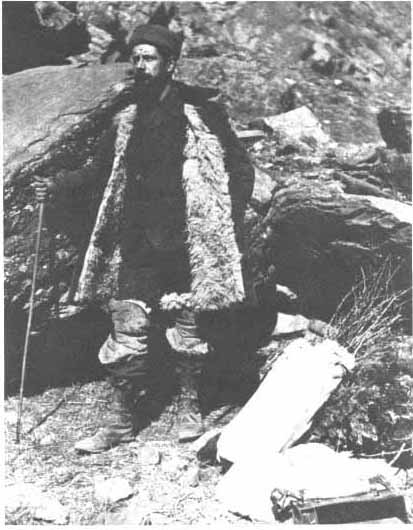
Frank Meyer in Shanxi (1908). Courtesy of USDA and Isabel Shipley
Cunningham.
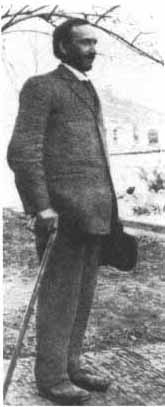
Joseph Bailie. Courtesy of
American Forestry
Association.
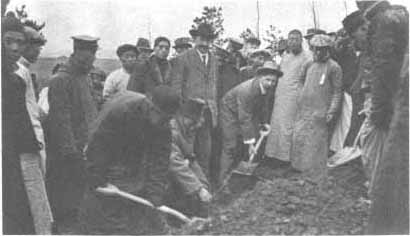
Groundbreaking at Purple Mountain (Bailie in slouch hat). Courtesy of Yale
Divinity School Library.
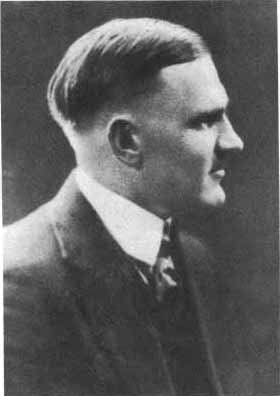
John Reisner, dean, College of Agriculture and
Forestry, University of Nanking. Courtesy of
Yale Divinity School Library.
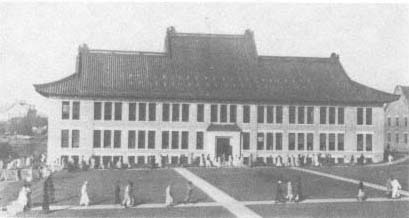
Bailie Hall for Agriculture and Forestry, University of Nanking. Courtesy of
the Rockefeller Archive Center.
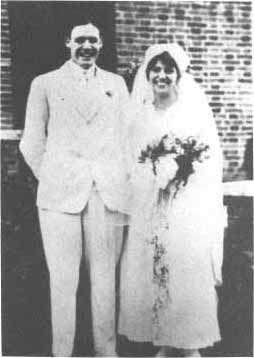
Lossing and Pearl Buck on their wedding
day, 30 May 1917. Courtesy of Paul Buck and
the Pearl S. Buck Birthplace Foundation.
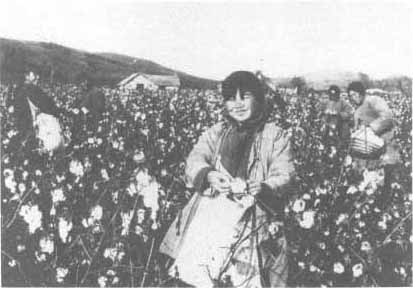
Picking cotton on experimental plot, near Nanjing. Courtesy of the
Rockefeller Archive Center.
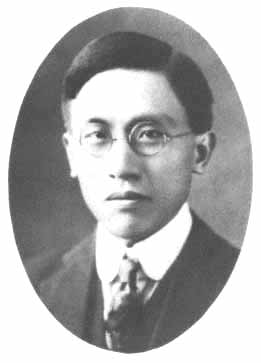
Shen Zonghan at Cornell (1924). Courtesy
of Linking Publishing Company, Taiwan.
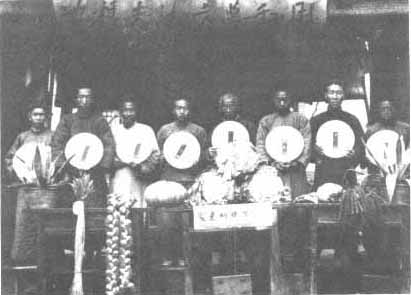
Prizewinners at an agricultural exhibit. Courtesy of the Rockefeller
Archive Center.
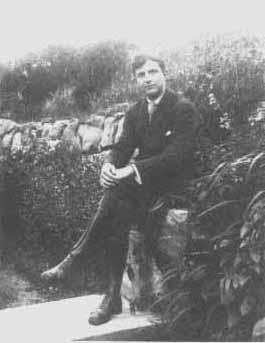
Selskar Gunn, vice president, Rockefeller
Foundation. Courtesy of the Rockefeller
Archive Center.
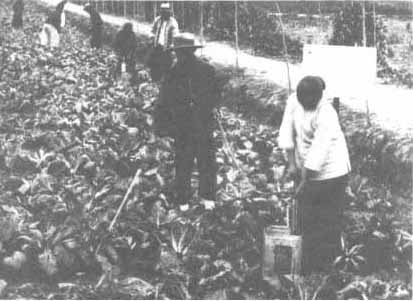
Insecticide experiment, National Agricultural Research Bureau. Courtesy of
the Rockefeller Archive Center.
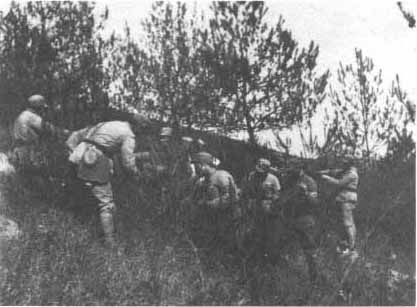
Soldiers on Purple Mountain assisting in pest control campaign of NARB
(1935). Courtesy of the Rockefeller Archive Center.
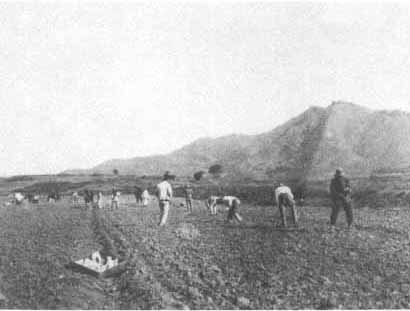
Experimental plots on University of Nanking farm. Purple Mountain in
background. Courtesy of the Rockefeller Archive Center.
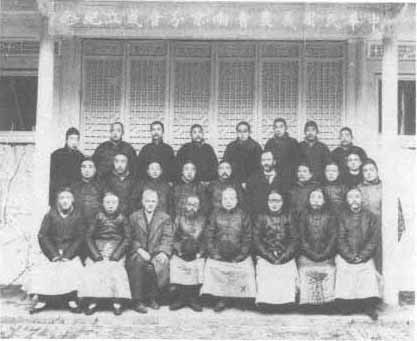
Officers of the Nanking Branch of the Colonization Association. Courtesy of
Yale Divinity School Library.
Clyde Myers had gone in 1926. But in early 1927, just as R. G. Wiggans, the third participant in the Cornell-Nanking program, was about to arrive, Nationalist troops under Chiang Kai-shek reached central China, clearing rival warlord armies from their path. When Chiang's troops reached Nanjing, they celebrated their achievement by terrorizing the foreign community. The University of Nanking, as the leading missionary institution, was a prime target.
At first, American professors in the agricultural school were complacent when large numbers of soldiers entered the city and combed the neighborhoods where the foreign residents lived; their Chinese students heard the soldiers say that they "were only after the British and Japanese." But then shocking news swept the community: John Williams, the vice president of the university (and the man with whom Joseph Bailie had worked closely ten years earlier) was shot dead by soldiers on the campus when he refused to give them his watch. Complacency turned to panic as the Americans at the University of Nanking realized that they were not immune to the violence that was sweeping the city. The foreign staff of the agricultural college took refuge in the attic and closets of Bailie Hall. R. H. Porter, a member of the plant pathology department, later wrote to his friends at Cornell of the ordeal that ensued when a group of soldiers stormed the building where the foreigners were hiding:
They called for us to come out, we heard them draw the bolts of their guns and we knew they would shoot into the doors so we decided the best thing to do was to come out. Accordingly every one came out and there before us were about 8 men, or rather boys about 17 to 18 years of age, armed with rifles, bayonets and knives. They began a systematic search of every one, taking anything of value, jewelry, money or clothing. Unfortunately, most of the people had been robbed in their homes so that the soldiers were not pleased with their booty. Accordingly they became desperate and two or three stepped back, drew the bolts in their guns and threatened to shoot us if we did not give them money. I remember distinctly that the worst one of the lot stood directly in front of me with his bayonet within a few inches of my heart region and I expected any minute either to be run through or shot.
Fortunately, a young Chinese officer appeared, took control of the "ruffians," and used good English to calm the terrified Americans. Porter wrote, "He talked with us for some time, explaining the ideals of the nationalist party and their three principles of government and emphasized the prize of liberty. By the time he got on that subject the atmosphere in the room became charged with a bit of the humor of the situation for we had just experienced the direct opposite of what he was teaching." Porter described the soldiers who had tried to shake him down as "the most reckless, high handed, insolent, ignorant youths I have ever seen." [32]
Having witnessed mob violence and feeling that Chiang's officers hardly had control of their own men, the Americans at Nanking evacuated the city, fled to Shanghai, and boarded ships for Japan and other destinations in the Pacific. In the
midst of the commotion, Wiggans, the representative from Cornell scheduled to spend 1927 in China, arrived in Shanghai, turned around, and returned to Ithaca. The next year, political conditions in China were still regarded as unsettled, so Cornell decided not to send anyone; only in 1929 did Love return and the program resume. Wiggans finally got his chance to see Nanjing when he was the 1930 Cornell representative, and Myers returned to Nanjing in 1931 as the last participant in the program. [33]
In total, Cornell had a representative in residence in China for five years, between 1925 and 1931. If the International Education Board had been interested in evaluating the progress of the program, it would have been quite pleased. The Cornell professors held to their institution's promise to emphasize the training of Chinese experts. Gains were made in plant breeding work, and the Americans were quite unassuming. They simply wanted to provide China with the most improved crops possible, while causing the least possible disruption of traditional practices.
Love and his colleagues decided at the outset to concentrate on selecting the most promising existing varieties rather than on hybridization work; selection was seen as "the cheapest and quickest way" to raise yields. The plant breeder picked a number of different plants from a range of fields and planted them in controlled field tests to observe which were the best. The Cornellians demonstrated the use of "head rows," in which the seeds from each head were planted in separate rows that preserved identical conditions but allowed for comparisons. Other standardized experimental procedures were followed, with explanatory Chinese-language brochures prepared for the staff and students. [34]
The Cornell representatives apparently thought that John Griffing's work on cotton improvement was unscientific, and Griffing was quietly deprived of university resources to continue his work (see chap. 5). The Cornellians, free of the financial pressure to serve the local cotton-mill interests, shifted Nanking's emphasis away from cotton and toward food grains. Love dabbled in rice improvement, but his unfamiliarity with the crop hampered progress. He tried planting rice seed, directly, without using the labor-intensive process of transplanting rice shoots into a prepared field bed. His claim to have obtained yields that were equal to those of transplanted rice proved difficult to verify when tried again; moreover, Nanking did not own much irrigated land upon which to proceed with experimental work on paddy rice. But important progress was made on the improvement of dryland crops such as wheat, sorghum, soybeans, and millet. [35]
The most spectacular results were obtained in the area of wheat improvement. From selections that led to the planting of more than ten thousand head rows, one variety, named "Nanking No. 2905," stood out from all the rest. Love had happened upon the variety by chance in 1925. Touring the countryside for head selections, he noticed that one field seemed to have outstanding characteristics that deserved immediate inclusion in the selections. He talked with the field's
owner, explained the university's experimental program, and offered to purchase a number of plants for testing. The owner readily agreed, but while Love and his assistants were busily gathering up what they thought was a rare find, a farmer who had been quietly observing the scene spoke up: "You think this is good? You should see the wheat across the way." Love was directed to a field a short distance away, where he found the best wheat he had seen, which subsequently became "Nanking No. 2905." [36]
The best selections were planted at a number of mission stations, and "2905" was found to yield about 30 percent more than the wheat varieties then commonly used in China. A new soybean variety that was isolated during experimental work promised yield increases of 80 and 90 percent above usual levels. As further selection produced superior varieties of a number of crops, the staff began preparing to distribute the new varieties to the public.
Extension to the countryside would be the hardest part, for "it was much easier to produce an improved variety than it was to introduce it to the growers and have it produced successfully." When discussing extension problems, Love and Reisner, like Griffing earlier, took pains not to appear condescending to Chinese farmers. They declared, "The Chinese farmer is no more conservative by nature than was the farmer of the United States [at the turn of the century]." Chinese lack of willingness to adopt new varieties merely reflected economics; their landholdings were generally too small to permit experimentation, whereas the American farmer "could usually spare a strip of land for some experiment without seriously affecting his income." The Cornell visitors recognized the difference in circumstances. [ 37]
As long as enough Chinese farmers were willing to try the limited supplies of improved seeds that Nanking could produce, no one examined the wisdom of distributing the seeds to whomever would accept them; the college was simply grateful that all of its seed supplies were distributed. But late in the program, Myers realized that the policy of distributing a small supply of seed through the college and through widely scattered mission stations diluted the potential impact of the crop improvement work. He proposed that a small area be selected as the target of improved seed distribution: "If results were satisfactory, the plan would be to move out in a more-or-less general circle surrounding the area where the seed was first distributed, and continue on in this way until an entire area, or at least the majority of the farmers of the area, were growing the new variety." Unfortunately, the idea came too late to be implemented as part of the program, and the practice of unsystematically distributing improved seed over a wide area continued. [38]
The Cornell participants emphasized that an important part of the plant improvement program was the training of Chinese counterparts to carry on after the Americans' departure. Thus the visitors used a portion of their time in China
presenting formal lectures, leading field trips, and holding summer institutes. "By the end of the formal cooperation between Cornell and Nanking," Love and Reisner wrote, "it was estimated that over 125 men, who had little or no previous experience, had been trained to where they were independently able to conduct crop improvement experiments." Later, the official history proudly claimed, "To a large extent, the Cornell team members had worked themselves out of the job. They left the program in efficient hands." Yet it is doubtful that more than a handful of the Chinese scientists and assistants had both adequate background and adequate exposure to the single American plant breeder who was in residence at any given time, and hence unlikely that many of them learned as much as the Cornellians claimed. [ 39]
The American participants also tried to heal the rift between Nanking and Southeastern. The feud was no secret: Clyde Myers learned about it the first day he arrived in China, when he was literally rushed off the pier in Shanghai by John Reisner, with Southeastern's Zou Bingwen in close pursuit. Myers was mildly amused by the melodrama into which he had walked. He held no prejudices against Southeastern and was initially quite eager to help that school as well as Nanking. When Zou was finally able to contact him, Myers cheerfully accepted an invitation to visit Southeastern's experimental wheat farm, examine procedures, which they translated into English for him, and make suggestions for improvement. Here was work similar to Nanking's and equally in need of expert guidance; Myers was happy to be of service. Nanking's refusal to cooperate with Southeastern seemed silly, and Myers thought that he could iron out the problems by arranging for both sides to meet in person. [40]
The peace council did not go well. Reisner had nothing positive to say about his Chinese colleagues from across town and took pleasure in noting Southeastern's most recent setback: a key member of their faculty had left, placing their college "in a very embarrassing position." In Reisner's view, Zou Bingwen was acting irresponsibly by "going ahead and planning for another experiment station…. His big difficulty is, in my judgment, always wanting to overreach his resources both in men and money." Reisner claimed at the meeting that "we went just as far as we possibly could" with the Southeastern representatives, and he left the matter of cooperation unresolved until Southeastern had submitted its specific proposals for cooperation. [41]
When Southeastern presented its suggestions in writing, including a request to work with Myers, Reisner would have none of it. Myers was the property of Nanking and not to be shared. Myers himself was disappointed that his efforts to reconcile Nanking and Southeastern ended so unsuccessfully. He attributed the problem to mutual jealousy between the two institutions: Southeastern staff felt that they were "as good as anybody," while "a lot of people at Nanking feel that they (Nanking U) are better than anybody else—a little bit of the Harvard attitude." The conflict between Reisner and Zou was intensified by their personal
similarities. Myers wrote, "The two Deans are very much alike in some respects in that they are both aggressive and hustlers and genuinely and sincerely interested in the future welfare of their own institutions." [42]
If official cooperation seemed unlikely, unofficial cooperation remained a possibility, and Myers encouraged informal contact between members of the faculty. In the summer institute that he gave at Nanking, he was happy to see a number of people from Southeastern who were sitting in without registering. "I guess that they felt they might lose face if they registered," Myers speculated. The Southeastern auditors were in fact in a difficult position, since they had been encouraged to attend the Nanking institute by one Southeastern supervisor but forbidden by another. [43]
By inclination, the Cornell participants were more than willing to work with whomever was interested in improving China's plant breeding efforts, but they were unable to free themselves of the restraints imposed by their hosts at Nanking. Institutional self-aggrandizement (danwei zhuyi) was a phenomenon among Chinese institutions then as well as now, and was frequently criticized by Americans who lived in China during the Republican period. The problem afflicted not only institutions operated by the Chinese government but also the Americans' own college, Nanking.
The interuniversity cooperation between Cornell and Nanking rested upon ad hoc financial arrangements, and the program fell victim to money problems. After the International Education Board grant was spent, no new source of funding was found to carry on the work. The United States government was preoccupied with the Great Depression; assisting agriculture in China seemed a noble but very distant concern. In China, notoriously little of the national budget was available for nonmilitary spending, and absolutely no money was considered for a foreign. missionary-sponsored school. Only if Southeastern had been included in the program might the national government have assumed the responsibility of continued funding. When the Cornell-Nanking program ended in 1931, Myers spoke for others as well as himself when he wrote, "There was some feeling of disappointment to have the formal cooperation discontinued at the close of the 1931 season, with only five years of actual, formal cooperation, when from five to ten years were originally contemplated and planned for." He mentioned that unspecified "changed conditions" necessitated early termination but affirmed his belief that "the work has been placed on a permanent basis and that it will come to its full development in due season." [44]
Full development, however, depended on more successful programs for extending improved seeds into the countryside. The Cornell-Nanking participants were scientific experts who knew little about the social, economic, and political problems that weighed upon the Chinese farmers whom they wanted to help. The scientists did not know the language, their visits to China were relatively short, and they were busy with campus-related responsibilities. Despite their awareness
of the importance of extension, the American visitors remained personally unfamiliar with conditions beyond the University of Nanking. They achieved beguiling success—selecting improved crop varieties and training dozens of Chinese "experts"—but it came without real acquaintance with the obstacles that lay in wait for the reformer who ventured away from the campus.