
International Organizations as Problem Solvers
Designing an international organization is a political activity; it does not resemble problem solving in architecture. International organizations are coalitions of coalitions. They are animated by coalitions of states acting out their interests; these international coalitions often are expressions of coalitions of interests at the national level, both bureaucratic and societal. Domestic and international coalitions interact.[1]
Robert Gilpin coined the term "coalition of coalitions" to describe decision making by a state; the application to international organizations is mine. See Gilpin, War and Change in World Politics (Cambridge: Cambridge University Press, 1981), 18-19. Robert Putnam uses the same term to develop a theory of national-cum-international bargaining that is very similar to my application. See his "Diplomacy and Domestic Politics: The Logic of Two-Level Games," International Organization 42 (Summer 1988): 427-60.
Design is a function of how the members of such coalitions think about their interests and values, what compromises they can strike, how they can come to reconsider and revalue their interests. Hence I shall draw on "political" organization theory to develop concepts about adaptation and learning, not on psychological, managerial, or other extant types.[2]Argyris and Schon distinguished "political" organization theory from five other types: organizations as group, agent, structure, system, and culture. Although the types are not mutually exclusive, the authors describe a political emphasis thus:)
Organizations are primarily understandable as interest groups for the control of resources and territory. Organizations are themselves made up of contending parties, and in order to understand the behavior of organizations one must understand the nature of internal and external conflicts, the distribution of power among contending groups, and the processes by which conflicts of powers result in dominance, submission, compromise or stalemate. (Chris Argyris and Donald A. Schon, Organizational Learning: A Theory of Action Perspective [Reading, Mass.: Addison-Wesley, 1978], 328)
Learning, in a political perspective—they argue—can be studied in two ways: first, as a game of strategy, in which the analyst puts himself into the minds of the actors; and, second, as a way by which the actors achieve "collective awareness of the processes of contention in which they are engaged, gaining thereby the possibility of converting contention into cooperation" (ibid., 329).)
Let us suppose that after an initial period of satisfaction with the performance of an international organization, certain member states have become disillusioned with the ability of the organization to solve problems. I wish to discover whether member-state dissatisfaction has enabled the organizations to learn how to solve problems collectively so as once more to give greater satisfaction. We therefore have to be concerned with a sequence. First come demands formulated by members. Demands are then filtered through an organization. The formulation of a program of action in and by the organization follows. The immediate results of the program take the form of outputs: loans made, human rights violations inspected, desertification projects launched, or a peacekeeping force deployed. Outputs lead to the longer-range consequences of these steps, experienced as satisfaction or dissatisfaction on the part of the members. The core stages are (1) demands, (2) organizational agenda formation, (3) organizational program, (4) organizational output, and (5) experience with the results of the output, or outcome (Figure 1).
Strictly speaking, only the second and third steps in the sequence
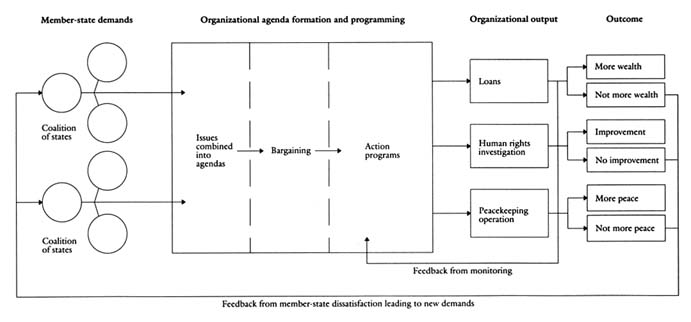
Figure 1. The core stages of organizational action
take place in the organization. But obviously it is not possible to conceptualize changes of organizational form unless the consequences of organizational action or inaction as experienced by the members are made part of the analysis: the nature of the feedback from dissatisfaction with outcome to the formulation of a new set of demands is a crucial issue.[3]
My argument throughout this study will be based on how organizations process dissatisfaction; I will not address situations in which all member states are satisfied with outcomes. My reason for this choice is as follows. Organizations entrusted with a certain mission may certainly discharge their tasks in such a way that everybody is generally satisfied. Although this happy state of affairs is extremely rare in the lives of international organizations, very likely the Universal Postal Union and the World Meteorological Organization are entities whose work engenders minimal dissatisfaction. Therefore, they are not under pressure to change their ways—to adapt or to learn. Since my task is to inquire into processes of adaptation and learning (and the absence of dissatisfaction means that the stimulus to adapt or learn is lacking), the experience of such successful organizations is uninteresting to me.
So is the feedback from output to programming because it captures the administrative experiences of the organization's staff when it monitors its own work. If learning takes place at all, it must occur as a result of these feedback processes. Therefore, although our concern is with the shape of the organization as such, we cannot explain changes in shape without paying attention to every step in the sequence. Still, our concern is not with the moral quality of the outcomes. Their character is irrelevant to the exploration. What matters is whether member states, not the observers, are satisfied or unhappy with the outcomes. A final step in the sequence might be an evaluation (moral or not) of whether the international system as a whole, or some regime within it, also changed as a result of the preceding activity. Such an evaluation, however, is the province of the observer passing judgment on history; it is not my concern at this time. True to my commitment to the logical priority of knowledge over interest and power, I begin the exploration of the consequences of dissatisfaction with organizational performance with a discussion of consensual knowledge.