
Founding and Funding Permanent Orchestras
As concert series generated increasing support for orchestral performances at the turn of the century, many women, either through their clubs or independently, began to work for the establishment of permanent symphony orchestras in their communities. Such contributions have tended to be deemphasized in histories of American concert life. The cultural historian Lawrence Levine, for example, in his analysis of the "sacralization" of the symphonic concert, elides the prominent role that women have played in supporting orchestras. He twice refers in passing to "affluent men and women,"[47] but he names no single woman—except for Frances Anne Wister, when quoting from her history of the Philadelphia Orchestra. Instead, he focuses on how individual businessmen such as Andrew Carnegie, Joseph Pulitzer, J. P. Morgan, and several of the Vanderbilts succeeded, through large contributions, in wresting control of orchestras away from the (male) musicians themselves, a process he describes as the "abandonment of the cooperative plan."[48]
In her study of women's role in American philanthropy, Kathleen McCarthy has aptly pointed out that "the role of women's voluntary associations in fostering professional opportunities through commercial enterprises has received scant attention." She notes that nonprofit entrepreneurship "was a crucial element of many female cultural ventures," which were so effective that "by the century's end even male-dominated cultural organizations began tapping into the marketing networks developed by women's auxiliaries and clubs."[49]
The fact is that, of the ten major cities that were the first to support permanent symphony orchestras in the years from 1842 to 1919, women were actively involved in setting up nearly all of them,[50] and they played leading roles in at least four: Cincinnati, Philadelphia, New York, and Cleveland. Similar stories of women's support of local orchestras can be told of other cities such as St. Paul, Houston,
and Washington, D.C., as well as smaller cities such as Greeley, Colorado, and Grand Rapids, Michigan.[51]
It is true that small numbers of male sponsors eventually stepped in, a development that, as we shall see, tended to reduce substantially the influence of the women who had done so much to establish the orchestras in the first place. (In that sense Levine rightly speaks of symphony boards as echoing the characteristically "paternalistic capitalism" of the age.)[52] But even so, women's work remained, and continues to remain, crucial to the financial stability of the nation's orchestras and to the nurturing of bonds between the orchestras and the communities that they were created to serve.
The first symphony orchestra to be established and managed largely, indeed, in this case almost exclusively, by a group of women was the Cincinnati Symphony Orchestra.[53] Looking back on five unsuccessful attempts by various individuals and groups to found a permanent orchestra in their city, the Ladies' Musical Club decided in February 1894 to take matters into their own hands. They formed a female governing board of directors whose job was to solicit funds and carry on the day-to-day management of the orchestra, along with a male advisory committee whose responsibility was to oversee the finances and function in the larger public sphere as a liaison between the orchestra and the business and professional community.[54] A week before the orchestra's opening concert, the New York Musical Courier predicted that "any orchestra gotten up by a committee of ladies of good intention will not flourish."[55] Despite this potentially self-fulfilling prophecy of doom, the arrangement did succeed, and it inspired women's music clubs in ever more cities to begin sponsoring (or helping to sponsor) the organization of permanent orchestras.
The Cincinnati Orchestra's female governing board of directors was first led by Helen Herron Taft (1861–1943, wife of the future U.S. president William Howard Taft). Taft, a woman of considerable means who had taken music lessons as a child, later wrote in her autobiography that in her work for the Cincinnati Orchestra Association, she had found "at last, a practical method for expressing and making use of my love and knowledge of music."[56] She realized within the first years of the orchestra's operation that its permanency would "depend entirely on the public and on the success which we may have in creating a popular demand for its continuance."[57] Although season-ticket sales were increased by booking well-known European soloists, and although members of other women's clubs rallied in support by purchasing tickets, Taft and her board soon realized that revenues raised by ticket sales alone could never cover the operating expenses of the orchestra. To cover the deficits, they increasingly had to rely on a relatively small group of wealthy individuals pledging large sums of money as needed on a year-by-year basis.[58]
In 1900 Taft was succeeded by Bettie Fleischmann Holmes (1871–1941), "an energetic, forceful woman with a keen mind and good business sense, who obviously enjoyed the power and responsibility of executive leadership."[59] Daughter of the founder of the Fleischmann Yeast Company, Holmes put her managerial connec-
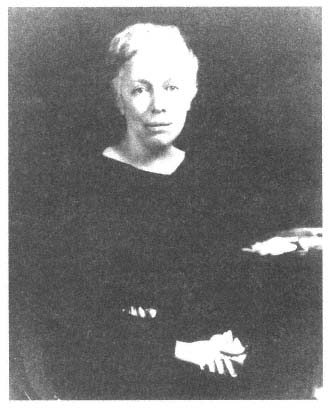
Fig. 4.
Helen Herron Taft (ca. 1894–1900), first president
(1894–1900) of the board of directors of the Cincinnati
Symphony Orchestra. Cincinnnati Historical Society.
tions to work for the orchestra by soliciting support from men of the business community. She also contributed generously to the fund herself, and obtained significant large donations from Mary Emery and Annie Sinton Taft. That the work of the club was recognized in the city is evident from one Cincinnati newspaper's account of a reception for Richard Strauss and his wife, the former singer Pauline de Ahna:
The occasion was notable not so much as a brilliant gathering of the four hundred, representative of the wealth and culture of Cincinnati, but rather for the significance of the underlying meaning, the epitomizing in a most graceful but unmistakable manner [of] the fact that women, while preserving all the charm that is the birthright of their sex, may exert a powerful influence for good, may mold society as it were, establish standards of right thinking and living by elevating the public tone.[60]
Prior to her resignation in 1913 for health reasons, Holmes recommended that the increased demands of managing the orchestra called for delegating more re-
sponsibility to men, so that the women's work load could be reduced.[61] Her successor, Annie Sinton Taft (1853–1931), followed her suggestions: the male advisory board was dissolved, the (formerly female) board of directors was enlarged to twenty-five (fifteen women and ten men), and an executive committee consisting of three men, three women, and the president of the board was given administrative authority for the orchestra.[62] Taft had been a member of the board since its inception in 1894 and, along with her husband, Charles Taft, had contributed more than $1 million to the orchestra between 1910 and 1929. Upon her death in 1931, Annie Taft bequeathed an additional $1 million to the orchestra, thus assuring the continued strength of the institution that she had helped to found.
The Philadelphia Orchestra is another important example of a major symphony that owes much to the work of women. At the time of its foundation in 1904, it was an unheard-of innovation that women should organize to further the interests of a permanent orchestra.[63] When the women proposed to do so, the incredulous male executive committee allotted them exactly one month to raise the necessary money. With great industry and ingenuity, the women set about the work of collecting funds through a variety of methods, ranging from personal solicitation to advertising, and through appeals to other types of clubs. In a month they had secured more than $10,000 in new guarantees and received new orders for $5,000 worth of seats and boxes, thus assuring the continuation of the orchestra.
One of the organizers of the Philadelphia Orchestra's women's committee was Frances Anne Wister (ca. 1870–1956), who held the position of president for forty-four years, from 1912 until her death.[64] Of the committee's success, Wister reflected that the women's collective efforts in support of musical culture were not unlike a woman's role in her own household, where circumstances often called upon her to supply moral and financial support to the "establishment."[65] The difference was merely that in this context, the "establishment" was not her family but the city's orchestra. By evoking images of the hard-working mother and wife, Wister conveyed the respect that she felt for the symphony women and their labors and, most important, deflected any attempts at trivializing their motives.
The Philadelphia women's committee had been somewhat more successful in securing a guarantee fund to rescue the orchestra than had the ladies of Cincinnati, yet they, too, found that the health of the orchestra required "constant begging on the part of everybody connected with this institution."[66] Wister identified one of the main problems as "the attitude of business men who felt that after a few years the orchestra should be making a return on the investment, or at least be self-supporting. Their opinion was that an institution that was a constant expense did not deserve the support of the community. Fortunately for music, the people of Philadelphia now understand that an orchestra never can be anything but a public charge."[67]
Financially connected women also helped in New York, where Mary Seney Sheldon headed the organization of the guarantors of the Fund for the Permanent Orchestra of the Philharmonic Society of New York. With their financial as-
sistance, the Philharmonic was guaranteed a twenty-three-week season by 1908–9, and in return for their promise to assume the responsibility for the deficits for three seasons, the guarantors took over the management of the orchestra. In his book on the Philharmonic, Howard Shanet credits the women's achievements: "They supervised the organization and contracting of a full symphony orchestra, engaged one of the world's most distinguished musicians, Gustav Mahler, as conductor, increased the number of concerts from eighteen of the preceding season to forty-six, arranged the orchestra's first tour outside the city, and raised more than $118,000 to cover the deficit that these activities incurred."[68]
The women on the guarantors' committee had strong feelings about programming and contract terms, and the conflict of wills sometimes precipitated stormy clashes between conductor and committee members, since Mahler found it an impossible situation to take suggestions from the guarantors' appointed program committee, which included four women. Consequently, they wrangled continually about conducting duties and compensation.[69]
The Cleveland Orchestra came into existence in a rather roundabout way, with the help of women under the leadership of the aforementioned Adella Prentiss Hughes. She persuaded the Musical Arts Association of Cleveland, which she had helped to found in 1915, to name the Russian-born violinist Nikolai Sokoloff director of a new educational initiative intended primarily to develop a music program in the public schools in 1918.[70] The women were convinced of the power of music to uplift and saw the symphony orchestra as a vehicle for musical education. Sokoloff agreed to the proposal because he saw himself establishing an orchestra with local musicians once he had settled in the city.[71] Within three months of his arrival in Cleveland, he had actually recruited an orchestra and, through the work of Hughes, assembled a committed group of financial supporters to assure the continuance of a permanent orchestra.
In 1921 Hughes established the women's committee of the Cleveland Orchestra to help with the educational concerts, publicity, hospitality, the phonograph-record lending library, and, of course, to help sell season tickets and campaign for the annual maintenance fund.[72] She retired from the management of the orchestra in 1933, at which time she looked back on the experience as "a joyous crusade to make music permanent and vital in the life of a great and growing city."[73]
These major symphonies, as well as orchestras in smaller cities, soon came to realize that season-ticket sales to the general public and guarantee funds would eventually have to be augmented by a more stable source of income: the endowment fund.[74] While many such funds were established by single individuals or couples (e.g., Annie and Charles Taft in Cincinnati [1927], Joseph Pulitzer in New York [1911], Edward O. Bok in Philadelphia [1916], and Elisabeth and John Severance in Cleveland [1929]), symphony women remained committed to collecting from a broad-based constituency. Women's committees had "long acted on the principle that the active interest of many people was a necessity in building up an
orchestra."[75] But, perhaps inevitably, the establishment of endowments increasingly focused attention on a small number of very wealthy contributors—many of them men—and as a result precipitated organizational restructuring.
In New York, Joseph Pulitzer's bequest to the Philharmonic hastened the formation of a new board of directors, but several members of the guarantors' committee, including Mary Seney, were retained.[76] A decade later a women's auxiliary board was established, whose influence on policy matters was as limited as its name suggests.[77] After the Cincinnati Institute of Fine Arts assumed control of the Cincinnati Orchestra in 1929, seven men and two women were appointed as trustees and eighteen women were named to an—again, subordinate—advisory board.[78]