
Battelle's Nicotine Research Program
Not disclosed in Sir Charles's 1962 speech was contract research on nicotine that BAT was already having done by the Battelle Memorial Institute laboratory in Geneva, Switzerland. The project was headed by Sir Charles, and its ultimate purpose was to develop a novel nicotine delivery device that would avoid the toxicity of conventional cigarettes.
Battelle undertook several projects for BAT on nicotine from the late 1950s through about 1967. Project Mad Hatter was a comprehensive literature review. Project Hippo I involved animal experiments exploring the effects of nicotine on stress, weight gain, water balance, and hormonal regulation. The investigators regarded each of these diverse phenomena as related to the action of nicotine on the hypothalamus, a part of the brain that was then the focus of intense scientific interest because of its apparent control over the pituitary gland, the so-called "master gland" of the body. Project Hippo II extended this work on the hypothalamic effects of nicotine by exploring whether nicotine acts in ways similar to major tranquilizing drugs such as reserpine. A separate series of experiments traced the basic pharmacokinetics (absorption, distribution, and fate) of nicotine. Finally, Project Ariel sought to develop an alternative nicotine delivery system: a device that would provide the consumer with nicotine while delivering negligible amounts of the other toxins found in tobacco smoke.
Project Hippo I
Project Hippo I was designed to explore nicotine's role in several areas the investigators thought involved hypothalamic functions, including reduction of stress, inhibition of weight gain, maintenance of water balance (hormonally controlled through the hypothalamus), and regulation of gonadotrophic (sex) hormones. The results of Project Hippo I are described in a January 1962 report from Battelle to BAT {1211.01}. The introduction to this forty-eight-page report describes the background and goals of Project Hippo I:
It is an everyday experience to each smoker that smoking a cigarette helps mastering the numerous stressful stimuli of modern life.
This effect is possibly one of the most powerful reasons which make one smoke.
How does nicotine exert this action? The normal defence mechanism against stressful agents is a nearly immediate release of those hormones synthesized by the adrenal cortex which act upon the cell metabolisms: they are called "corticosteroids" and play the cardinal role in the defence of the organism against stress. Their release from the gland is mediated through a very complicated system involving the stimulation of hypothalamus and pituitary function. ...
As a working hypothesis we assumed the idea that nicotine could help to master the stressful stimuli by way of enhancing (or facilitating) the normal defence mechanism.
If this were true, it would be easier to understand another very important effect of smoking: it is well known that stopping to smoke has an immediate
effect on body weight. As body weight is regulated by the hypothalamo-pituitary system, our working hypothesis could be enlarged in order to assume the idea of an interference of nicotine in the hypothalamic regulation of body weight as well as in the defence against stress. {1212.01, pp. 6–7}
By conducting these experiments, Battelle was testing some of the most advanced neuroendocrine theories of the day. The adrenal corticosteroids had been introduced as wonder drugs into clinical medicine about a decade before this, and since the mid-1950s neuroendocrinologists had been gradually coming to understand the central role of the hypothalamus in the regulation of pituitary gland function (10, 11).
The report also discusses experiments that Battelle's scientists conducted on nicotine tolerance in rats. Tolerance to a drug is said to have developed when an animal requires a larger dose to achieve the same effect as that previously produced by a smaller dose. Tolerance is a common feature of addicting drugs. It need not be present for addiction to exist, but it usually is. Addiction, or dependence, is a clinical syndrome that includes loss of control over use of a psychoactive drug, withdrawal symptoms when the drug is no longer taken, and continued use despite problems caused by the drug. The report notes that tolerance could be induced in all rats, although some required several months to achieve this state.
The report describes in detail the effects of nicotine on rats in the various experiments. Of interest here is the importance the authors attached to nicotine's ability to influence the response to stress. For these scientists, this response helped explain the tranquilizing effect of nicotine and provided a direct link to the subsequent project, Hippo II.
Project Hippo I also included an elegant series of experiments on weight control in rats using nicotine. Nicotine was shown to inhibit food intake in both tolerant and nontolerant animals. Reserpine did not modify this action of nicotine. Nicotine rapidly stimulated the mobilization of lipid deposits (fat) and the degradation of free fatty acids. Each of these actions was in the direction expected for a drug that would be of benefit in controlling obesity {1211.01, p. 3}. The work Battelle conducted for BAT under Project Hippo I on weight control preceded published accounts of these phenomena by twenty years (3, 12).
Project Hippo II
Battelle extended its research on the hypothalamic actions of nicotine in Project Hippo II. Battelle's final report on Project Hippo II, in 1963, spells out why the tobacco industry was interested in comparing nicotine and
reserpine: it was concerned that the new tranquilizing agents would compete with cigarettes as stress reducers. The results of Battelle's research must have been reassuring to BAT, since the experiments demonstrated that nicotine had far fewer side effects than the tranquilizer reserpine.
The aim of the whole research "HIPPO " was to understand some of the activities of nicotine—those activities that could explain why cigarette smokers are so fond of their habit. It was also our purpose to compare these effects with those of the new drugs called "tranquillizers", which might supersede tobacco habits in the near future. We studied mainly the drug called reserpine.
Why does one smoke? It is certainly not because of nicotine's cardiovascular activities, which are so well-known to pharmacologists. The reasons for the "pleasure of smoking" must be found partly in the relief of anxiety that cigarette smoking brings so constantly, and in such a very short time.
This sedative—or soothing—effect of cigarette smoking and of nicotine is however very different from the "tranquillizing" effect as it was defined by pharmacologists after the discovery of the Rauwolfia alkaloids. [Rauwolfia is the plant group in which reserpine is found.] Tranquillizers are highly effective in the management of overactive psychotic patients and, as such, are largely used in psychiatry; nicotine is certainly devoid of such effects.
However, as the new drugs are used increasingly by "the members of our so-called normal population who are subjected to intolerable stress" (see our First Report on HIPPO II , p. 3), they might, from this point of view, supersede tobacco habits.
Our investigation definitely shows that both kinds of drugs act quite differently, and that nicotine may be considered (its cardio-vascular effects not being contemplated here) as more "beneficial"—or less noxious—than the new tranquillizers, from some very important points of view.
The so-called "beneficial" effects of nicotine are of two kinds:
|
These effects do not seem to be shared by reserpine, which on the contrary shows undesirable side-actions that are not given by nicotine, i.e. a nearly complete blockade of gonadic and thyroid activities, reflecting most probably a general blockade of the hypothalamo-pituitary system, which normally controls all the endocrine activities. {1211.03, pp. 1–2}
Two pages later, the report indicates that one of the hypotheses under study might explain the phenomena of tolerance, withdrawal, and addiction to nicotine.
A quantitative investigation of the relations with time of nicotine—and of some possible brain mediators—on adreno-corticotrophic activity could give us the key to the explanation of both phenomena of tolerance and of addiction, in showing the symptoms of withdrawal. {1211.03, p. 4}
So, addiction to nicotine is real. The hypotheses guiding Hippo II were summarized in a diagram, which is reproduced as figure 3.1 {1211.03, p. 5}. In this model nicotine acts in the brain and at the level of the hypothalamus to affect appetite, stress reactions mediated through the adrenal gland, and changes in blood pressure and in water balance (antidiuretic effect). The experimental data gathered by the Battelle scientists in Hippo I and Hippo II provided direct empirical support for this model.
"Fate Of Nicotine" Study
In addition to conducting the Hippo projects, Battelle also studied how nicotine is absorbed into, distributed within, and eliminated from the body. This work seems to have been part of the overall development process for Project Ariel, an alternative nicotine delivery system discussed later in this chapter. To properly design this delivery system, BAT needed basic pharmacological data on how nicotine was absorbed, distributed, and eliminated from the body. The results of these pioneering experiments are described in a report titled The Fate of Nicotine in the Body , dated May 1963 {1213.01}. The report begins,
There is increasing evidence that nicotine is the key factor in controlling, through the central nervous system, a number of beneficial effects of tobacco smoke, including its action in the presence of stress situations. (Larsen, Haag & Silvette (1960)) In addition, the alkaloid [nicotine] appears to be intimately connected with the phenomena of tobacco habituation (tolerance) and/or addiction. (Larsen et al. (1960)) Detailed knowledge of these effects of nicotine in the body of a smoker is therefore of vital importance to the tobacco industry, not only in connection with their present standard products, but also with regard to future potential uses of tobacco alkaloids.
The numerous effects of nicotine in the body may, at first, be conveniently measured by various physiological and pharmacological experiments. However, the elucidation of the mode(s) of action of nicotine will ultimately depend on biochemical analyses dealing with the behavior of the nicotine molecule on, and its interactions with, the surface of physiologically active, macromolecular cell constituents (enzymes, receptors, etc.). The success of such analyses depends, in turn, on a detailed knowledge of the fate of nicotine in the body, i.e. of the various mechanisms which control the type and the rate of (a) absorption, (b) distribution, (c) breakdown or transformation, and (d) elimination [emphasis added]. {1213.01, pp. 1–2}
Battelle's 1963 report describes a comprehensive series of animal and human experiments on the absorption, distribution, metabolism, and elimination of nicotine.
To study the absorption of nicotine, Battelle used nicotine labeled with radioactive carbon (C14 ) to measure the amount of nicotine absorbed by
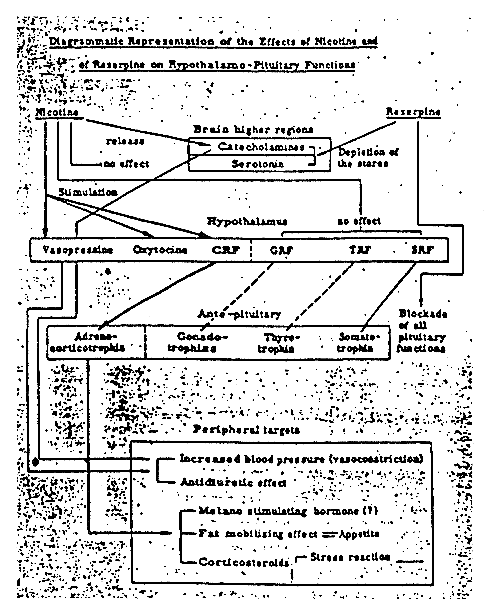
Figure 3.1. By 1962, when it was conducting the Project Hippo research, B&W had a
sophisticated understanding of how nicotine acts on the nervous system. Source: {1211.03, p. 5}
different types of smokers. The two subjects described as "non-inhalers" absorbed 22 percent and 42 percent of the nicotine drawn into their mouths, while most of those who inhaled absorbed between 70 and 90 percent of the ingested dose. The two subjects who "eject[ed] the smoke immediately after inhalation" had nicotine absorption rates in the 40 to 50 percent range. Daily consumption of nicotine among all the subjects in this experiment was found to range from 10 to 91 mg {1213.01, p. 8}. These data demonstrate the importance of inhalation for nicotine absorption from cigarette smoke. Inhalation is unrelated to taste or flavor; it is only important for nicotine absorption into the bloodstream (13). Similar work with C14 -labeled nicotine was not reported in the general scientific literature until a dozen years later (14).
The Fate of Nicotine in the Body also describes Battelle's animal work on nicotine absorption. Using C14 -labeled nicotine in rabbits, the Battelle scientists compared gastric absorption with pulmonary absorption. Gastric absorption was slow, and first pass removal of nicotine by the liver (which transforms nicotine into inactive metabolites) was demonstrated following gastric administration, with consequently low systemic nicotine levels. In contrast, absorption from the lungs was rapid and led to widespread distribution. These results show that nicotine absorbed from the stomach is largely metabolized by the liver before it has a chance to get to the brain. That is why tobacco products have to be puffed, smoked or sucked on, or absorbed directly into the bloodstream (i.e., via a nicotine patch). A nicotine pill would not work because the nicotine would be inactivated before it reached the brain.
Battelle's report also discusses earlier work on nicotine absorption, which had demonstrated that free-base nicotine is absorbed more rapidly than nicotine salts. Nicotine exists in the free-base form at an alkaline pH. In acidic environments nicotine exists as a salt. The more rapid the absorption, the greater the impact nicotine has on the brain. Work such as this on nicotine absorption has nothing to do with taste and flavor.
The Fate of Nicotine report concludes with a discussion of the work on nicotine metabolism in the context of tolerance and addiction. Pharmacologists had recognized that tolerance could develop either from breaking down a drug faster with repeated exposure (metabolic tolerance) or from adaptations to the drug at the level of the target tissue (cellular tolerance). They also recognized that there is an important relationship between the development of tolerance and the potential for a drug to cause addiction.
Although tolerance to some drugs may depend on accelerated enzymatic breakdown, prolonged consumption of others, including morphine, appears to induce cellular adaptions. (Axelrod (1956); Shuster (1961); Takemori (1961) (1962)) In any case, the present results offer no conclusive evidence for any particular mechanism involved in tolerance to nicotine, nor do they indicate a lead to the phenomenon of addiction. We believe that both tolerance and addiction are intimately connected, and that it would be most useful to investigate the two phenomena with regard to cellular adaptation, especially in target organs of the central nervous system [emphasis added]. {1213.01, p. 27}
Within a few weeks of completion of The Fate of Nicotine in the Body , Sir Charles Ellis sent a copy to William S. Cutchins, the president of B&W at the time. In his cover letter, Sir Charles asks that the report be given no wider circulation than the Hippo reports had received.
[The report] is an account of work which has been carried out in association with the other researches which were sent to you recently under the title of HIPPO . I feel sure you will agree that a knowledge of the fate of nicotine in the body is a necessary accompaniment to studying the physiological effects that nicotine can produce. ...
Would you please treat this as confidential document under the same conditions as I described for the report HIPPO . {1200.16}
The documents do not include any acknowledgment from Cutchins, but the person who would shortly replace him as president, E. P. Finch, received the report along with a summary by the B&W vice president of research, T. M. Wade, Jr. {1200.07, 1200.16}
A Tentative Hypothesis On Nicotine Addiction
The Battelle scientists who conducted the Hippo projects for BAT also wrote a speculative essay about the mechanism underlying nicotine addiction. The essay, marked "Confidential" and titled "A Tentative Hypothesis on Nicotine Addiction" {1200.01}, sought to explain nicotine tolerance, withdrawal, and addiction in the context of what was then cutting-edge neuroendocrinology.
The hypothalamo-pituitary stimulation of nicotine is the beneficial mechanism which makes people smoke; in other words, nicotine helps people to cope with stress. In the beginning of nicotine consumption, relatively small doses can perform the desired action. Chronic intake of nicotine tends to restore the normal physiological functioning of the endocrine system, so that ever-increasing dose levels of nicotine are necessary to maintain the desired action. Unlike other dopings, such as morphine, the demand for increasing dose levels is relatively slow for nicotine.
In a chronic smoker the normal equilibrium in the corticotropin-releasing system can be maintained only by continuous nicotine intake. It seems that those individuals are but slightly different in their aptitude to cope with stress in comparison with a non-smoker. If nicotine intake, however, is prohibited to chronic smokers, the corticotropin-releasing ability of the hypothalamus is greatly reduced, so that these individuals are left with an unbalanced endocrine system. A body left in this unbalanced status craves for renewed drug intake in order to restore the physiological equilibrium. This unconscious desire explains the addiction of the individual to nicotine [emphasis added]. {1200.01, pp. 1–2}
The short essay includes a review of the effects of nicotine on appetite and weight control, based on experiments using animals.
It is a well-known fact that fresh smokers show loss of appetite, and therefore loss of weight. Chronic smokers gradually turn to normal food intake. If nicotine is withdrawn from these individuals, the low FFA [free fatty acid] concentration in the blood provokes increased appetite, and therefore increased food intake, or at least a permanent hunger feeling. This feeling can be satisfied either by increased food intake or by renewed smoking.
Laboratory experiments with rats confirm this mechanism: injection of nicotine induces a marked reduction in food intake in the beginning of the treatment. Chronic application of nicotine in the so-called "tolerant rats" shows after a certain time no difference in the growth curves between treated and untreated animals. Interruption of nicotine application provokes a marked increase in food intake of "tolerant rats", which increase, however, turns very rapidly to normal (in our experiments within one week). {1200.01, p. 2}
The essay concludes,
[A] tentative hypothesis for the explanation of nicotine addiction would be that of an unconscious desire to restore the normal physiological equilibrium of the corticotropin-releasing system in a body in which the normal functioning of the system has been weakened by chronic intake of nicotine. {1200.01, p. 3}
In summary, pharmacological research at Battelle sponsored by BAT in the early 1960s was based on a paradigm of addiction. It sought to elucidate "beneficial" effects of nicotine such as "tranquilising" and weight loss effects, and it also explored the extent to which other drugs might compete with cigarettes in the consumer marketplace.
The results of the Hippo projects were distributed to BAT officials around the world, including executives at Brown and Williamson. The speculative paper on nicotine addiction, however, received only limited circulation. In fact, when Sir Charles Ellis sent a copy of the essay to
Brown and Williamson's general counsel, Addison Yeaman, he attached a cover letter advising Yeaman that the essay was "a private working paper" and that it was not being circulated to the other recipients of the Hippo reports {1200.02}.
Debate About Sharing Research Findings With The Us Surgeon General
The Hippo reports prompted a flurry of correspondence between BAT headquarters and the B&W executive suite in the summer of 1963, particularly over the question of what information, if any, to disclose to the US Surgeon General's Advisory Committee on Smoking and Health, which was to issue its report the following year. Despite the fact that the Battelle research added new insight into the area of nicotine pharmacology, BAT and B&W ultimately decided to withhold the results of the Hippo projects from the Surgeon General's Advisory Committee.
A note dated June 19, 1963, from A. D. McCormick, a senior R&D executive at BAT, to Bill Cutchins, B&W's president, mentions that BAT has decided to send the results of the Battelle work to the Tobacco Research Council (TRC) in the United Kingdom and the Tobacco Industry Research Committee (TIRC) in the United States. (As described in chapter 2, TRC and TIRC were created by the tobacco industry as "independent" organizations that funded scientific research related to the health effects of tobacco.) McCormick then asks about the advisability of submitting the results to the Surgeon General's committee.
On 4th June [1963] Sir Charles Ellis sent to you copies of reports of research which B.A.T. had sponsored at the Battelle Research Institute in Geneva showing the beneficial effects of nicotine on the smoker. B.A.T. decided to make this research available to the T.R.C. here and it is being evaluated by T.R.C.'s outside medical experts. Preliminary reports indicate that these experts think the Battelle work to be a sound piece of research. It was always contemplated that if the reports stood up scientifically it might be desirable to get them submitted to the U.S. Surgeon General's Committee.
Todd of T.R.C., is to-day sending copies to T.I.R.C. with a request that they consider whether it would help the U.S. industry for these reports to be passed on to the Surgeon General's Committee.
I thought you should have this information in case you or any of your colleagues in Louisville [at B&W headquarters] might for any reason think this course of action inadvisable.
Could you please let me know as soon as you get back what your views are [emphasis added]. {1200.10}
A handwritten note on this document indicates that Cutchins asked Addison Yeaman, the general counsel at B&W, to prepare a reply.
In his reply, dated June 28, 1963, Yeaman expresses some regret that the Battelle reports were shared within the industry's jointly funded research groups. Specifically, he mentions the connections between the Battelle work and a project being conducted at B&W by R. B. Griffith, director of R&D, to develop a special filter called the Avalon filter.
I rather regret that Todd [of TRC] took this action without preliminary consultation here for the reason the Battelle nicotine report ties in so closely to Griffith's work that we would have preferred including both Griffith's work [on the Avalon filter] and the Battelle report in our consideration of submission to the Surgeon General. Moreover, Ed Jacob [a lawyer with Jacob and Medinger] in a talk with me yesterday reported that there was reason to believe that the Surgeon General's report would give particular emphasis to the part played by the aerosols in relation to possible deleterious effects of tobacco smoke. This, again, ties in so closely to Griffith's work, and by extension to Battelle's work, as to lead us to the preliminary opinion that the Battelle work and the Griffith development should—if at all—go into the Surgeon General as part of one package.
Happily Ed Jacob will be with us on Tuesday to give us the benefit of his particular and special knowledge of the Committee, its reports, etc., etc., in deciding what disclosures B&W should make of Griffith's work to the Surgeon General's Committee and, if such disclosure is to be made, whether it should be through TIRC or direct by B&W. The fact that the Battelle report is now in TIRC's hands undoubtedly will have some effect on that decision. {1802.01}
It is not clear from the documents precisely what "special knowledge" Jacob had of the Surgeon General's committee.
McCormick of BAT replied by cable a few days later to say that the independent scientists who had reviewed the Battelle reports had concluded that the results should not be submitted to the Surgeon General's committee.
T.R.C. consultant scientists advise it is too early to submit Battelle reports to Surgeon General's Committee but we think they will agree that continuation by Battelle of this work would be useful. Charles Ellis convinced of beneficial effects of nicotine but agrees further investigation desirable before publication. Please inform T.I.R.C. {1802.02}
B&W's Yeaman cabled back the same day to say that William T. Hoyt, the executive director of TIRC, had not distributed the reports to TIRC's Scientific Advisory Board (figure 3.2):
Prior to receipt your telex July 3 Hoyt of TIRC agreed to withhold disclosure of Battelle report to TIRC members or SAB until further notice from me. Finch [of B&W] agrees submission Battelle or Griffith developments to Surgeon General undesirable and we agree continuance of Battelle work useful but disturbed at its implication re cardiovascular disorders .
We believe combination Battelle work and Griffith's developments have implications which increase desirability reevaluation TIRC and reassessment fundamental policy re health. Hope to get off comprehensive note next week [emphasis added]. {1802.03}
McCormick amplified on his cable to Yeaman in a letter written the next day, but before he had received Yeaman's cable.
Charles' [Sir Charles Ellis's] view is that as the situation has now developed it would be wiser for B. & W. not to take the initiative in submitting anything to the Surgeon General's Committee but rather wait and hope that the Committee will ask the individual manufacturers for further details of their research work and then, should this happen, it would give B. & W. the opportunity of submitting the Battelle work and the work on the "Avalon" filter. As further work on both has to be done, the work would be immune from detailed criticism, but its disclosure would demonstrate that B. & W. and its associates had adopted a forward looking positive policy of research. {1803.01}
Yeaman compiled his thoughts on the nicotine research at BAT, Griffith's work on a new filter at B&W, and the Surgeon General's committee in a five-page memorandum dated July 17, 1963 {1802.05}. The memorandum presents an overview of B&W's strategic position on the health question and argues for the aggressive pursuit of selective filtration (the Griffith filter, code named Avalon) and the promotion of the beneficial effects of nicotine as revealed by the Battelle work. In Yeaman's view, the Battelle findings on nicotine could be used to justify smoking because of its positive benefits. If B&W could remove harmful constituents from smoke, it could then—with a clear conscience—promote cigarettes as nicotine delivery devices for people under stress from modern living. The memo opens,
The determination by Battelle of the "tranquilizing" function of nicotine, as received by the human system in the delivered smoke of cigarettes, together with nicotine's possible effect on obesity, delivers to the industry what well may be its first effective instrument of propaganda counter to that of the American Cancer Society, et al, damning cigarettes as having a causal relationship to cancer of the lung. The Battelle work is not in any degree responsive to that indictment nor to the Report expected to be returned by the Surgeon General's Committee on Smoking and Health. I would submit, however, that the Griffith filter offers the bridge over which the industry might
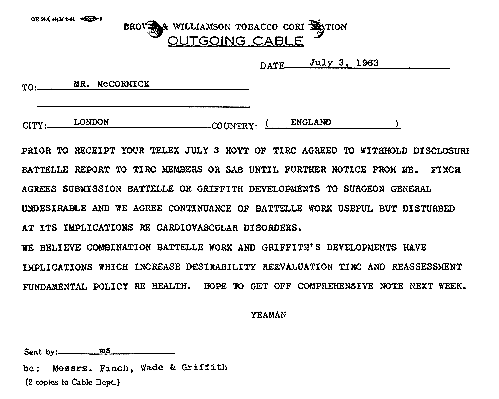
Figure 3.2.
July 3, 1963, cable from Addison Yeaman to Tony McCormick confirming agreement to
withhold scientific results on nicotine pharmacology from the Surgeon General's Advisory
Committee, which was then preparing the original 1964 Surgeon General's report {1200.12}.
pass from its present terrain of defense to a field for effective counter attack using the Battelle study as the basic weapon. I will assume for purposes of this note that the "Griffith filter" is one which permits filtration to specification; it filters taste and nicotine (and nicotine in even more effective form) free of constituent #1 to infinity, selectively. I grossly overstate and oversimplify Dr. Griffith's claims deliberately. {1802.05, p. 1}
Yeaman's statement clearly indicates that he regards nicotine as important primarily for its "tranquilizing" effects, not for its taste. In fact, he even mentions taste and nicotine separately, suggesting that they are independent in his mind. This understanding contrasts sharply with the tobacco industry's recent public claims that nicotine only adds taste and flavor.
Yeaman then offers his recommendations for possible responses to the Surgeon General's report. At the end of the paper, he returns to his discussion of nicotine. After quoting extensively from the final summary of
the Hippo II report {1211.03}, which describes the beneficial effects of nicotine, he adds,
Moreover, nicotine is addictive.
We are, then, in the business of selling nicotine, an addictive drug effective in the release of stress mechanisms [emphasis added]. {1802.05, p. 4}
As the documents reveal, B&W management knew about the work BAT had contracted for at Battelle in Geneva. Its decision to withhold important research on nicotine pharmacology from the Surgeon General's Advisory Committee is in stark contrast to the industry's public position of openness advanced in the "Frank Statement" ad and other public statements (see chapter 2).
Project Ariel
The basic pharmacology work embodied in the Hippo projects and in The Fate of Nicotine in the Body was based on the realization that cigarettes are, at root, nicotine delivery systems. They are dirty devices, though. BAT, with help from Battelle, extended the initial work on nicotine pharmacology by developing an alternative delivery system that could administer nicotine to the body free of the toxins from tobacco smoke. The design goal was a safe cigarette (discussed in chapter 4). The device was named Ariel.
Two patents were issued to Battelle on Ariel, but BAT's Sir Charles Ellis is listed in both as the lead inventor (15, 16). The patents were apparently assigned to Battelle to disguise their origin. A 1970 letter from BAT to Addison Yeaman at B&W notes that "the patents were put into Battelle's name rather than B.A.T.'s for security reasons" {1202.01}.
Ariel relied on burning tobacco to heat a centrally arranged tube containing nicotine and an aerosol generator, consisting of a material such as water, which would form an aerosol when heated and then cooled, so that the nicotine could dissolve into the droplets and then be inhaled as part of the aerosol. The consumer would inhale an aerosol enriched in nicotine but relatively deficient in the "tar" elements of cigarette smoke. The device clearly embodies Sir Charles Ellis's vision of the essence of a cigarette—that it is a nicotine delivery device. The fact that BAT funded the work in the first place indicates that this vision was also shared by others at the company at the time.
What did BAT see as Ariel's potential position in the market in the early 1960s? After all, the device was significantly different from a ciga-
rette. It would have been impossible to move all customers over to Ariel right away, so the product needed a beginning niche in the market to become established. To whom, then, would it be targeted initially? While the documents do not directly answer this question, the underlying rationale for the Hippo II project suggests a possible initial positioning: since the cigarette industry was worried about competition from tranquilizing drugs, which would help people deal with stress without the toxicity associated with cigarettes {1211.02}, a way to meet this competition head-on was to develop a substantially less toxic form of a cigarette. Thus, one potential market for Ariel was the group that otherwise might have used tranquilizing drugs to reduce stress.
The patents for Ariel explicitly emphasize the importance of nicotine for the smoking experience and indicate that its action is, at least in part, physiological. (Because nicotine is not a normal part of the body, the actions would have been more accurately described as pharmacological.) The first patent, filed February 4, 1964, begins,
This invention relates to an improved smoking device whereby an improved smoke stream of a controlled character is delivered to the smoker.
In commercially available conventional smoking devices such as cigarettes, cigars and pipes, tobacco and reconstituted tobacco, or tobacco substitutes, are ignited and the products of combustion, in the form of a smoke stream in filtered or unfiltered form, are delivered to the mouth of the smoker. The smoke stream thus formed of the products of combustion may contain components which do not enhance the quality and characteristics of the smoke.
It is a prime object of the present invention to overcome the difficulties and disadvantages heretofore encountered [presumably, all the toxins generated during the combustion process] and to provide an improved smoking device which delivers an improved smoke stream of a controlled character and which does not contain the products of combustion.
...
The smoking device incorporates a continuous smoke passageway from its outer end to its mouthpiece end and which communicates with the nicotine-releasing composition. The smoke passageway includes an aerosol-nucleating chamber between the nicotine-releasing composition and the mouthpiece. This chamber is arranged so as to cool at an appropriate rate the potentially aerosol-forming materials sufficiently to enable aerosol particles to form, and the nicotine vapor is caused to contact the aerosol particles and condense thereon, whereby the nicotine assumes the transferability of the aerosol particles on which they condense.
...
The nicotine-releasing material employed in this form of device preferably comprises cured, shredded or cut and blended cigarette tobacco or reconstituted tobacco or mixtures thereof. The nicotine content of the tobacco or
reconstituted tobacco is preferably enriched by mixing therewith a tobacco concentrate rich in nicotine so that the available nicotine in the mixture constitutes between approximately 5 and 20% by weight of the tobacco material [emphasis added]. (15, column 1, lines 10–63; column 4, lines 2–10)
Conventional cigarettes also transport nicotine in droplets, except that the droplets are largely composed of the tars produced during the burning of tobacco. In the Ariel cigarettes the droplets were derived from other "aerosol-forming materials," such as water, making them potentially much less dangerous. Smoke from the burning tobacco around the core of the Ariel cigarette would be vented to the outside.
The following additional details are from the second patent:
A total and satisfying 'smoke' can be obtained with a high nicotine to tar ratio or, as sometimes expressed, a low ratio of total particulate matter (T.P.M.) to nicotine. This latter ratio can readily be reduced to one-quarter or less of the values normally expected of smoke from cigarettes having no special provisions for reducing the ratio. If desired , the nicotine content may be made normal, but with little of the normal particulate and vapor phases.
...
Thus, when the smoking device is smoked the smoker will draw into his mouth a small amount of smoke adequate to satisfy the taste of the smoker along with the nicotine containing aerosol .
...
Although the invention thus seeks primarily to furnish a smoking device which will yield nicotine in an acceptable form, both psychologically and physiologically , but without the necessity for taking into the system so much of the products of combustion as is usual when smoking a conventional cigarette, it may also be used mainly or partially as a means for achieving greater freedom for influencing the taste of the smoke, for introducing flavors and so forth [emphasis added]. (16, column 2, lines 30–38, 52–55, and 66; column 3, line 3)
This patent demonstrates the pharmacological role nicotine plays in cigarettes. It shows that the essence of a conventional cigarette, stripped of its undesirable elements, is "a smoking device which will yield nicotine in an acceptable form, both psychologically and physiologically" (or, more accurately, "pharmacologically," since nicotine is not part of normal human physiology). The patent mentions the provision of tastes and flavors through this invention, but this benefit is clearly regarded as secondary and as a separate matter, distinct from nicotine delivery.
The Ariel patents preceded patents from R. J. Reynolds and Philip Morris for analogous alternative nicotine delivery devices by twenty years or more (17). The best known of these devices, Premier from R. J.
Reynolds, featured an insulated charcoal fuel element at the lit end of a cigarette-like device. The burning charcoal heated alumina beads coated with nicotine and glycerin, which, in turn, produced a nicotine-laden aerosol (18). Premier was sold in test markets briefly but was withdrawn because of poor consumer acceptance and opposition from the public health community (19). In 1994 RJR announced that it was conducting consumer tests on another charcoal-heated nicotine delivery device, called Eclipse, which produces an aerosol by heating glycerin adsorbed onto reconstituted tobacco. The resulting aerosol picks up nicotine and other soluble constituents from tobacco in the proximal portion of the device. As with Ariel and Premier, this device reportedly delivers nicotine while markedly lowering the delivery of other toxic constituents (20).
Brown and Williamson has continued to conduct research on Ariel-like devices. The Ariel formula of a central core that generates the inhaled aerosol and that is heated by a surrounding fuel is illustrated in two patents assigned to B&W in 1990 and one in 1994 (21–23). While the first of these recent patents envisions tobacco as the fuel, the latter two employ carbon in the style of Premier.
The flurry of patent activity in this area in the 1990s may be related to the expiration of the BAT patents on Ariel in 1983 and 1984 (originally issued in 1966 and 1967), in addition to advances in technical feasibility or market potential for these products. RJR seems to have begun the development of Premier in the early 1980s. This class of device incorporates a heating element, a reservoir for nicotine, and a means for dissolving vaporized nicotine in an aerosol for inhalation by the consumer. A cigarette contains each of these functions, but novel devices such as Ariel and Premier compartmentalize them and so make the normal operation of a cigarette easier to understand.
Ariel grew out of the realization that nicotine delivery is the essence of a cigarette and the belief that a nicotine delivery device relatively free of the major toxins of cigarette smoke could be designed. Although the product was never brought to market, its design and conception demonstrate what BAT and B&W thought was the most important part of their tobacco products: nicotine.