
Was Any Principle Favored?
The principle chosen in the experiments is supportive of neither Rawls's nor Harsanyi's conjecture. The experiments demonstrated an almost total lack of support for the difference principle. Specifically, in only one of the eighty-one experiments in which the groups made a choice did the participants decide to maximize the floor.[6] Indeed, it was the least popular principle![7] Harsanyi fared only slightly better. Only ten groups opted for the principle of maximum income.
[6] Here we consider only the eighty-one experiments in which there was choice. We exclude those experiments in which the principle was imposed by the experimenter and those time-constrained Polish experiments in which no choice was agreed on.
[7] Even this singleton choice of Rawls's principle may be in error. Our doubts regarding this group's choice are further discussed in footnote 14 in Chapter 5.
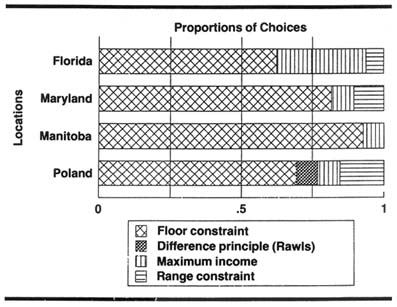
Figure 1. Location of Experiment and Group Choices of Principle
So the two principles argued for were not consistently chosen. But that does not mean that a general consensus was unattainable. A quick glance at Figure 1 shows that considerable agreement was achieved. Groups generally chose a floor constraint.[8] The groups wanted an income floor to be guaranteed to the worst-off individual. This floor was to act as a safety net for all individuals. But after this constraint was set, they wished to preserve incentives so as to maximize production and hence average income. Only occasionally was there a sustained interest in the imposition of a ceiling on incomes (a range constraint).
A floor constraint without a ceiling was dominant across all locations. If we consider the different cultural settings (Manitoba was the home of the only socialist government in North
[8] Rawls referred to this as a mixed principle.
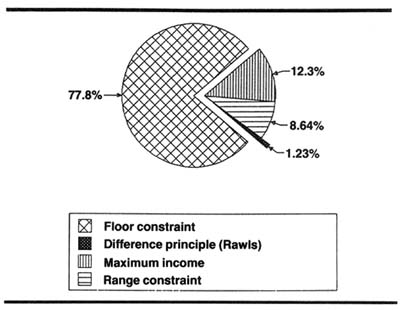
Figure 2. Distribution of Choices of Principle (81 Groups)
America at the time; Poland was under a communist regime; and the United States had Ronald Reagan as president), the widespread acceptance of the principle is testimony to its cultural robustness. The similarity of the distributions of choices in the four locations (as displayed in Figure 1) is quite apparent.[9]
The preeminence of floor constraints as a choice is demonstrated graphically in Figure 2, which shows exactly how popular this choice was. In the aggregate, roughly three out of four groups chose the floor-constraint principle.
[9] Recall from our methodological discussion in Part 1 that the experimental method is posited in the notion that there is some diversity in humankind regarding underlying preferences and attitudes toward aspects of distributive justice. Thus the experiments are designed to sample and bring these variations, which are so difficult to specify a priori, to bear on the results. A sample size of five people per experiment might well, therefore, sometimes result in groups that are somewhat atypical of the sample as a whole. They might well choose different principles.