
Postsecondary Education
Among the selected population of high school graduates, we see in figure 2.5 (and appendix B, table B.5) that attendance at college (percentage of high school graduates who went to college) is also influenced by sibsize (background factors controlled). Interestingly, however, among large sibsizes in particular (sibsizes six versus seven-plus), there is less difference than there is for proportions graduating from high school. This suggests that, among these large sibsizes, the high school selection left a population of "survivors" who had about equal chances of getting to college—in effect, that the differences in life chances between being from a six-child or a seven-plus–child family had already been taken into account at the high school level. We may also note that female-only children appear to be uniformly advantaged relative to females from other sibsizes in all of the surveys when it comes to going to college. This advantage does not persist, however, for years of college schooling (fig. 2.6).
If people have managed to enter college, does sibsize affect the number of years of college schooling they have been able to achieve? Figure 2.6 (appendix B, table B.6), for respondents and their wives in OCG 1962 and 1973, shows that the effects of sibsize are relatively small for this select group. That these effects exist at all, given the process of prior selection by sibsize that we have witnessed, is quite remarkable.
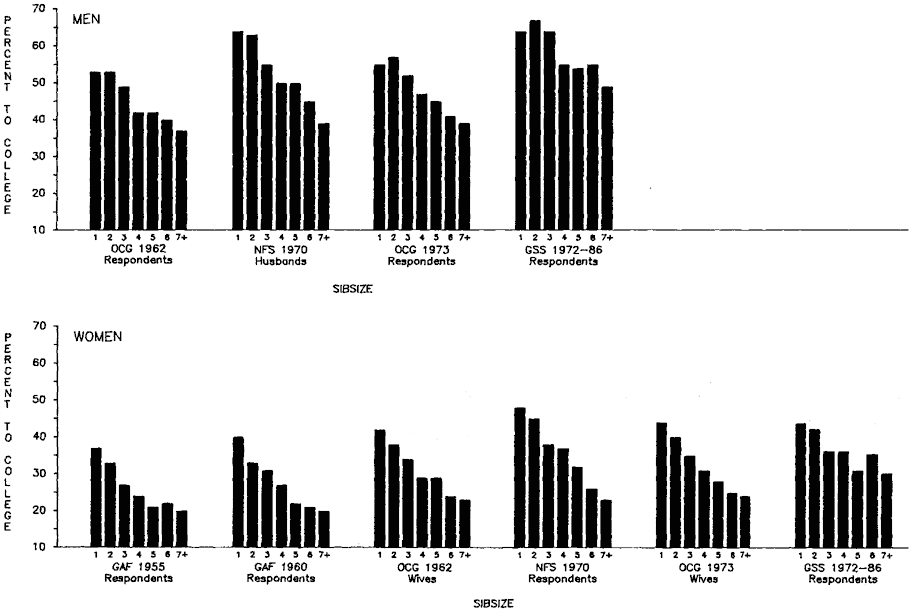
Figure 2.5.
Percentage of High School Graduates Who Went to College (Adjusted Means)
by Sibsize, White Men and Women Age 25 and Over, Various Surveys.
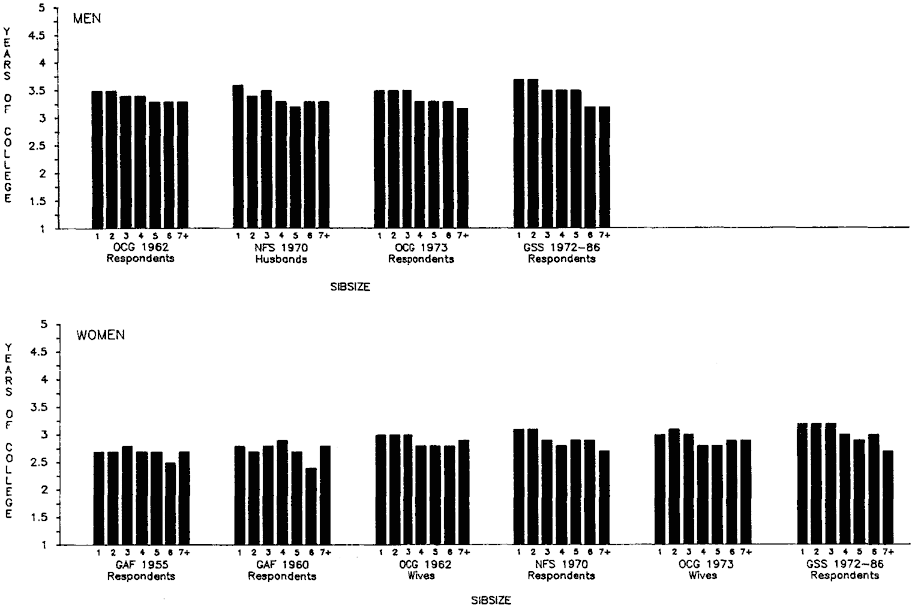
Figure 2.6.
Years of College Schooling among Those Who Went to College (Adjusted Means)
by Sibsize, White Men and Women Age 25 and Over, Various Surveys.
| ||||||||||||||||||||||||||||||||||||||||||||||||||||||||||||||||||||||||||||||||||||||||||