
5
Dreamworlds of the Bourgeois Interior (2) Domesticity and the Dog-Care Book
Odile Marcel reflects on the complex ideals of bourgeois life in her autobiography, Une Education française, the story of growing up well-to-do and Catholic in the conservative 1950s. "The bourgeois universe," she explains, "with its pot-bellied bankers, its splendid tables, its epicurean rites, its restaurants, and its Sunday roasts," was at the same time "haunted by the ideals of the hermit in the desert," self-denial, discipline, and control. Early childhood was an initiation into the distinctions between humanity and bestiality. "Don't eat like a pig," Odile and her siblings were told: "One must eat properly and act like a human being." Satiety was a base pleasure, "one must curb one's animal desires by limiting the signs of their gratification." Such injunctions were quickly internalized. "We have no wish to be beasts," Marcel writes in the words of a child. And whether in one's own being or in others, "an avid body . . . is abominable."1
Hunger and thirst were involuntary natural responses that had to be subjected to reason. "One must master them, check grossness, enfeeble and frustrate its drives." Emotions were equally subjected to restraint. "Good form presumes that one's anger and dislikes will lie hidden, as it places a limit on appetite and a brake on gluttony." A world was at stake in Odile Marcel's training: "La bonne éducation defines the world as it should be, a civilized, human world, where everyone is kind, obliging, and refined." No small task, it is "an enterprise, a vigil, which lasts for twenty years, the task of mothers, aunts, and grandmothers who pass on the secret of those principles by which one belongs to one's family, one's class, and one's nation."2
Marcel accurately locates the origin of her family universe in the anxieties of the previous century. Like the corsets packed away in her attic, the principles of Marcel's youth were constructions from another time. The best of recent scholarship supports the image of domesticity poetically presented by Marcel. A universe filled with precautions predicated by the notion of difference—between culture and nature and public and private—emerged alongside commodity capitalism.3 Animals in the home would seem to contradict the rules of domesticity as articulated by Marcel and her grandparents, but prefigured in nineteenth-century petkeeping culture was, nonetheless, the outline of regulated domestic life.
The paradox of a culture bent on banishing nature from the home resolved itself into the construction of a shadow world of denatured animals. Critics and canophiles alike remarked on the fetishistic qualities of pets, speaking of "living dolls" and of eternal children, whose care absorbed the family.4 Parisian merchants and veterinarians catered to dog owners' daily concerns, and dog-care books made a midcentury appearance in middle-class culture to outline suggestions on toilette and toilet—sexuality and obedience training—that marked the transformation of beastly behavior into quasi-human conduct.
The pages of the Didot-Bottin, the very useful annual almanac of commerce, are a help here. In 1863 they listed no dog stores (though dogs were sold on Sundays at the horse market along the boulevard Arago and privately through breeders).5 Only one vendor advertised in 1873 (Ravery, Etoiles-Ternes, 4), and in 1883 a handful of other dog merchants had joined him under the heading "chien." By 1910, however, we find dozens of advertisements for purebred puppies and for dog accessories, collars, clothes, and biscuits pour le chien. Consider also the reification of the home-away-from-home fantasy of bourgeois life, the evolution of the "bourgeois pension for healthy dogs" that a kennel such as the Chenil des Pyrénées (offices: rue des Petits-champs, 64; kennel: rue de La Fontaine, 46) presented in the 1910 Didot-Bottin.6
In these texts, members of the middle class found themselves "consolingly reflected in a world of their own creation."7 Petkeeping reveals a culture of domesticity in its first stage, at the separation of nature from
culture, from which the norms of middle-class life elaborately emerged. Gender and class distinctions among pets express the exoticism of the nineteenth century as, following Odile Marcel in a final point, we reclaim for bourgeois culture its place "dans le musée de la bizarrerie humaine."8
Nineteenth-century petkeeping was at once an extension and denial of medieval and early modern tropes. Perhaps the earliest dog-care manual is a hunting book, the Livre de chasse of Gaston III de Foix, called Phébus, count of Foix (1331- 1391). The oldest English book of hunting is for the most part a translation of Gaston's work: The Master of Game by Edward of Norwich, second duke of York (1373?-1415); it was composed between 1406 and 1413.9 More comprehensive than these is La Vénerie by Jacques du Fouilloux (1521-1580), whose 1561 work included not just advice on hunting and breeding but also instructions on how to care for sick dogs. Cardinal de Rohan's copy from around 1566 shows La Vénerie to have been a working manual for kennel masters. The cardinal's copy includes a manuscript, lists of the Rohan hunting dogs, and additional remedies for treating dogs and horses.
Jacques du Fouilloux's dog-care book encompasses music and verse. The inclusion of an account of his adolescence testifies to the opacity of La Vénerie, as does the following remedy for canine sterility: "Take two heads of garlic and half a testicle from an animal called the beaver (Castor ) with essence of cress and a dozen Spanish flies." Boil the concoction up together with some mutton, he says, feed it to a bitch, and she will never fail to come into heat.10La Vénerie's illustration of a kennel also expresses nicely the imperatives of another age. Its dictates of hygiene (fresh air and water, drainage and warm bedding) are, by contrast, familiar and seem very rational to the Belle Epoque's reigning dog expert, Pierre Mégnin.11 But the kennel as adjunct to hunting lodge represents an essentially masculine and aristocratic pursuit.
Surveying pets in early modern culture, Soling Bélin remarks that in contrast to the well-articulated principles of kennel keeping, pet-keeping during the ancien régime was a more or less makeshift affair. Dogs ate what people ate. According to Bélin, the Encyclopédie mentions that dogs were fed table scraps, which for luxury dogs in the eighteenth century might be quite delectable, consisting of "fat chickens, con-sommé, little cakes, and morsels of sugar." In the absence of veterinar-
ians, for another instance, pet owners themselves cared for their sick or hurt pets12 The Ecole nationale vétérinaire of Maisons-Alfort was founded in 1767, but graduates cared primarily for horses and cattle.13 It was only in the middle of the nineteenth century that urban veterinarians began to specialize in the care of dogs and cats.
In the course of the nineteenth century the definition of a pet lost its association with luxury, its affective properties becoming allied with a new notion of utility (as we saw in chapter three). At the same time, the kind of dog considered appropriate for petkeeping expanded to embrace all types—rugged as well as delicate, large as well as small—Dalmatians, poodles, Saint Bernards and Newfoundlands, pugs and miniature greyhounds.
The early modern motifs in dogkeeping were modified—modern-ized—in the nineteenth-century care of these beasts. What had been an exclusively aristocratic pastime developed in English society into an upper-class country house style of kennels, stables, and dog-care books that harked back nostalgically to Jacques du Fouilloux and his English counterparts. The British doggy world influenced in turn more "scientifically" inclined French kennel keepers and breeders, self-important practitioners of so-called cynographia, writings about canines.14 To a greater degree the typical French dog-care book is thematically indebted to the urban eighteenth-century world of luxury dogs. The concerns of French dog owners centered around the reconciliation of the dog and the city, of apartment living and animal life, and the authors of dog-care manuals had a primarily Parisian audience in mind.
Nineteenth-century dog-care books systematized this audience's concerns. Typically, introductory chapters defined the dog in terms of natural history, world history, and the history of the home. A description of breeds ordinarily followed. More to our point are the central chapters of these books, essays on training (éducation— this is the mot juste for Jean Robert: "I do not say dressage, I say éducation" ) and hygiene—morals, cleanliness, and sexuality. The purpose of dog training, Robert explains, being "to make the dog into as agreeable a companion as possible," it was a matter of deanimalization, feminization, and control.15
The pet-care book was invented in France in 1856, claimed Alfred Bonnardot when Des petits chiens de dames, spécialement de l'épagneul nain
was published in Paris in a limited edition of one hundred copies. His book would fill a gap—pet dogs were increasingly popular among the comfortable classes of society, but Parisians had no place to go for information on taking care of them. Perhaps, he suggested, one could find such books in England, but he knew of only one, Pathologie canine by Delabère-Blaine; even in this French version, it was hard to get hold of.16
Bonnardot, however, exaggerated the dearth of contemporary British dog books. Harriet Ritvo's research on Victorian pets shows that although these books were rare before the nineteenth century, "an expanded market inspired a sudden stream of dog books beginning with Sydenham Edward's handsomely illuminated Cynographia Britannica, which was issued in parts between 1800 and 1805."17 Yet a search through French bibliographies does support some of Bonnardot's claims to novelty, as does a comparison with those English works available to French readers; as Bonnardot noted, they were concerned with the care of robust breeds and thus had little relevance to Parisian pet owners: "It is scarcely a question of chiens de dames."18
On one level the purpose of dog-care books was quite simply to impart information to well-meaning pet owners. As Laure Desvernays explained in the introduction to Les Animaux d'agrément (one of the household manuals published by Colin, a series that also included L'Art et le goût au foyer, by Mme M. Hennequin, and La Cuisine, simple et à bon marché, by Mme Augusta Moll-Weiss): "To explain how to care for these various kinds of animals, how to breed them, as much for our enjoyment as for the profits we might gain, to insist on the observance of the rules of hygiene that are essential to success [in these endeavors], such is the goal of this little work."19
Echoing Bonnardot's lament on the dearth of pet-care books, Jean Robert also claimed to be filling a gap: "There are a number of very learned, witty, and literary, works in France on the dog in general, but almost all the specialized studies are on hunting dogs, the breeds called d'utilité and d'appartement, although the most common have been very unjustly neglected."20
Pierre Mégnin, in the pompous introduction to his authoritative work, Le Chien: histoire, hygiène, mèdecine of 1877, drawn from a series
of his articles published in the journal Acclimatation, made a similar claim: "Indeed, the works that exist now and that treat the same subject are simply undigested compilations made by completely incompetent authors or, worse, reproductions of books written in the first part of the century, a time when the most irrational and deadly theories reigned in medicine."21 Pierre Mégnin's son, Paul, presented his father's theories in accessible form to a wider audience in Nos Chiens: Races, dressage, élevage, bygiéne, maladies. With charming self-deprecation Mégnin fils explained that he had no pretensions "to produce an original work." He had, he said, "simply tried to raise, alongside the monuments that have been consecrated to these good and brave dogs, a tiny little chapel."22
Our interest in the crucial elements of bourgeois petkeeping, however, leads us to consider dog-care books on another, deeper level. Far from being a prosaic tool for household husbandry, dog-care books functioned as maps for the imagination, manuals of world making.23 In petkeeping culture we note the ultimately saddening but perhaps salutary attempt to create—with more faithful, affective, and malleable companions—a newer and better world.
The first French dog-care book suggested this impulse quite strongly. Its object was to help dog owners make for their pets "a sort of terrestrial paradise." In a participatory world where dog and dog owner acted in symbiotic unison, the owner worked with and on the inherent qualities of canines—affection and devotion, for example—as thinkers dealt with concepts of essence and existence. The petkeeping world came into being as a book comes into being, through the realization of a text. As Bonnardot explained the obvious, "It's not enough to own a good instrument, one must learn to produce beautiful music."24
The curiosities of petkeeping culture—the dressing of dogs in human clothing, and hair dying and styling, like the games and tricks that make up the repertoire of the well-bred dog (one source has a dog playing "soldier" at the turn of the century), even the prosaic and flexible game of fetch—are relevant items in a discussion of bourgeois culture.25 Like the tactics of deodorization that form a significant section of dog-care books, they help reorganize the themes of bourgeois life on a fictive plane. Recursive to bourgeois life but not reductive to it, petkeeping is a system of control that parallels domesticity. As we work our way
through the themes of nineteenth-century dog-care books, we can trace the dyadic relation of fiction and reality in everyday life—apparent also in the creation of the faithful and affective family pet.
Infantilization is the first of these themes. Dogs were eternal children, captive outside of narrative, without a past, a future, or a culture. Dogs were uniquely malleable and controllable, nineteenth-century authors insisted, "they live in an eternal childhood, a minority without end."26 Pets doubled as children in didactic tales for youth such as Chat et chien, ou les enfants volontaires, published by the Bibliothèque morale de la jeunesse and approved by the archbishop for Christian families.27 Postcards at the end of the century frequently featured canine and human children playing together, a motif pointedly elaborated by E. Leroy in L'Enfance du chien.28 Diagnosing canine illnesses posed problems similar to those children's doctors faced: "Dogs, like very young children, are unable to indicate the location of their sufferings; it must be guessed."29
Like children, pets needed to be trained, gently but firmly. "It is the same with dogs as with children, if one wants them to be loved they must be well brought up," Mme Charles Boeswillwald explained to the Belle Epoque readers of her manual for rich pet owners, Le Chien de luxe: Comment élever, dresser, et soigner nos chiens.30 Ideally, consistency, logic, and rationality governed pet pedagogy. With respect to the rules of propriety—not soiling the carpet, only sleeping on one's own bit of cushion or rug, and not jumping on forbidden furniture, perhaps, above all, refraining from jumping up on dinner guests—Jean Robert was optimistic: "It's simply a matter of patience and firmness." Predictably, he was less sure of feminine than of masculine pet owners' success in this realm (Robert divided women into three categories—those who refuse to own pets, those who treat them like a doll or a bibelot, and those who love dogs sincerely: "and these are the only true women").31 Laure Desvernays nicely summarized the rules governing these as well as more difficult lessons in obedience. "Punish only disobedient, not clumsy or maladroit, behavior. Punishment should be appropriate to the fault," was the enlightened advice.32
In model lessons for well-bred pets, their childlike aspect, in obvious references to women and children alike, reveals a deeper and more powerfully manipulable realm for the nineteenth-century imagination.
The doll-like ideal of nineteenth-century pets, set in lessons that mimic human behavior, evokes the urge to reproduce a controllable image of self.
The lesson "Portez arme! (to arms)," in which the dog poses as a soldier, is to the point here. Also interesting is "Attention!" as Boeswillwald calls the exercise consisting of "placing a morsel of sugar or cake on the nose of one's dog and making him stay still until one gives the order to snap up the treat." The game is also described in detail by Leroy, whose cocker spaniel puppy, Maggie, is his model pupil. "Fais le beau!" asks the dog to stand on hind legs as a person does, "En marche!" to walk like a child.33
We can see how Boeswillwald's system of pet training works as we look more carefully at the exercise "En marche." "You make him stand on his hind legs without giving him his treat but instead holding it out about two paces in front of him" (Boeswillwald recommends rewards for tricks well done). Inevitably, he immediately returns to four paws and runs toward you. Conceal the cookie from him, tap him lightly on the nose, and repeat the command, "Fais le beau!" When he is again standing up on two legs, hold the treat in front of him while saying the words. If he still does not grasp the command, "have someone hold him who will make him walk as one makes a little child walk. Then, give him a cookie."34
Boeswillwald wrote about ladies' dogs and suggested that the salon after dinner was the proper setting for performances. But it was pets of all kinds, not just ladies' dogs, who mimed for bourgeois families. Leroy chose a cocker spaniel for the leading role in his puppy-care hook. Very large dogs were less his concern, he believed (he was more certain of the principles than the facts of bourgeois petkeeping), for they had "the grave inconvenience of being too cumbersome in these times when everything is becoming smaller in consonance with our current needs and ideas about the comfortable: apartments, furniture, parks, gardens."35
Jean Robert in his dog-care book of the 1880s used different breeds for examples of training exercises. He clearly presented the goals of pet training as the manufacture, from any breed, of a chien de fantaisie. The discussion of "Fetch" is instructive. After noting the value of this trick—
"one of the most amusing, sometimes the most useful [of these exercises]"—Robert set before his readers the essential qualities of a pet. A choke collar, often employed in training a dog to fetch, was antithetical to petkeeping, "inadmissible when it is a question of an animal having to fetch all sorts of things for fun for the sole purpose of amusing its master and when it is important above all to inculcate in him a taste for retrieving." "To amuse you," Robert explained, "it is essential that a chien de fantaisie retrieve gaily and with pleasure"—with willing subservience, we might add.36
The impulse to impose quasi-human, quasi-toylike qualities on pets appears also in the matter of clothing and coiffure. Paul Mégnin was indulgent: "Some think it criminal and grotesque to impose quasi-human practices in this way on these little dogs (mignons toutous ) ." As for himself, he was resigned to the fashion. A decade earlier, Jean Robert also defended the practice of clothing dogs, especially in winter. Surprisingly, he was a gallant supporter of the miniature greyhound, the levrette, a breed somewhat out of fashion in the 1880s. Clothing these delicate dogs was, he thought, a matter of common sense.37
Some motives were more extreme. The wardrobe, the trousseau complet, of an elegant toutou in fin-de-siècle Paris might include shirts, handkerchiefs, dressing gowns, traveling cloaks, tea gowns, and rubber boots. Dog collars might be made of gold or silver; they were works of art, according to Alfred Barbou in the 1880s. The Didot-Bottin of 1910 included under its heading "collars, muzzles, and articles pour chiens," a dozen or so listings of places where dog accessories might be purchased including Lochet aîné et Dedertrand, established 1864 (and gold medalist at various international expositions); Bouyer and Gotschif, founded in 1835 and also "Aux Etats-Unis," which advertised "collars of the latest style, overcoats, and kennels" and was located prominently on the rue Saint-Honoré Fashionable dogs, as Barbou in careful detail explained, wore "costumes of a certain richness, pretty embroidered coats, silk jackets, warm outfits for the winter, light ones for the summer." The maison Ledouble, 29 galerie d'Orléans at the Palais-Royal, advertised in Jean Robert's dog-care book, offering shirts, housecoats, and raincoats for little apartment dogs along with "collars of superior quality, brace-
lets, clips, brushes, combs, and clippers for poodles, and special collars for Great Danes."38
The Parisian dog in its idealized elaboration was feminized. Duplicating the costumes for middle-class women was a proliferation of canine outfits for many occasions that could be coordinated with their mistresses' clothing, "in color always," Mégnin insisted, "in design, as closely as possible." The place to shop for canine clothing was the Palais-Royal, "absolutely [that is, exclusively, as in women's clothes] like Worth's or Paquin's." The fashionable dog had a costume for afternoon visits, for the evening, for travel, and for the beach. Some authors recommended canine underwear. For the beach, Mégnin explained, "our chic dogs have a special bathing outfit—in blue cambric with a sailor's collar hemmed in white with embroidered anchors in each of the corners; and on one of the sides, embroidered in gold, the name of the beach—Cabourg or Trouville." For travel, "a checked cloak of English cloth with a turned down collar, belted, with a small pocket for the train ticket." Boeswillwald recommended underclothes—"these little shirts. . . decorated all over with narrow bands of Valenciennes lace that will extend a half a centimeter around the coat giving a special cachet to the outfit"—and described in the following illustration (figure 6) the complete canine costume.39
Like people, not all dogs were equally well dressed. What mat-tered—to borrow from Lévi-Strauss—was that "in the economy of objects and identities that make up [the bourgeois] environment," dogs functioned as signatures for human nature.40 Clothes marked off bourgeois from beast; but more than that, the clothed pet was a double, a doppelgänger, a personalized expression of control.41 Canine clothing was clearly as restricting of movement, as denaturing, as that of contemporary women's fashions, brilliantly analyzed in these terms by Philippe Perrot.42 Owner's initials embroidered onto pet's clothing would further intensify this somewhat pathetic process of personalization, or superposition, a powerful doubling back of metaphors—of culture and nature, of bourgeoise and beast. "One will add, as one likes," Boeswillwald's directions to pet tailors read, "a pocket, with embroidered initials."43

Figure 6. Costume of the well-dressed dog. From Mme Charles Boeswillwald, Le Chien de luxe:
Comment é lever, dresser, et soigner nos chiens (Paris, 1907), 233 (by permission of the University of California, Berkeley, Library).
Canine coiffure also ingeniously removed beastly characteristics from animals in the home. Canine fur was shaped to resemble clothing, most obviously so in hairstyles for poodles: the "lion cut," the "English cut," and the coil shape (tonte en macarons ), to name three of the most common fin-de-siécle cuts.44 The effects of breeding could also be hobbling. Note the description of the Yorkshire terrier given by Desvernays: "Small luxury dog. Body of a terrier with very long and abundant silky, hair
parted down the middle of its back. . .. Very sweet, walks with difficulty. Needs a lot of care, is very delicate."45 There was a summer cut, also called the "seaside cut," which was suitably bare. The fur was shaved close except around the muzzle and paws. The "winter cut," or tome la soave, was more complicated, predictably. The most stunning styles perhaps were effected on the caniche royal, or canichecordé, a type of poodle very popular among dog fanciers. Illustrations show that the lion or demi-lion cut was most suited to these animals. La vie élégante, for instance, in 1882 depicted a fashionably dressed lady with her fashionably coiffured poodle in a warming room at the racetrack.46
Other breeds, too, had hairdressers, either one who clipped ordinary bourgeois dogs (les toutous bourgeois ) on the banks of the Seine or a coiffeur pour chiens who made house calls for the more pretentious. Very large dogs as well as little dogs received this service. Mégnin reported that not only poodles had haircuts, but so too did Newfoundlands, Saint Bernards, and Pyreneans. Among little dogs, Havanas were sometimes coiffured in the lion or demi-lion cut. The Yorkshire terrier had a special hairstyle, "very fin-de-siècle," popular at the resorts of Normandy, which consisted of tying its hair back from its face with ribbons of the same color as its owner's dress.47
The poodle's hirsute malleability certainly had much to do with its unrivaled popularity among Parisians by the end of the century.48 The historical trajectory of the poodle takes it from disrespect for the lowly but intelligent barbet, a hunting dog and blind person's companion, to high status for this same "elegant, fine, and fashionable dog." Many writers described the transformation. Boeswillwald contrasted the dirty, disheveled, badly groomed, and, as she believed, white barbet with the brown or black poodle, svelte and silky, whose coat "expert scissors had shaped and trimmed" (figure 7). No longer the blind person's bread earner, the caniche was to be found at the Bois de Boulogne or on the boulevard des Italiens, "well combed, freshly clipped, its legs ornamented with bracelets of fur, a pompon on the tip of its tail, wearing a handsome collar set off by silver bells."49
Alfred Barbou in his 1883 essay on Parisian dogs described two Parisian industries whose business was dog care, hair clipping and bathing, which took place along the banks of the Seine particularly near the
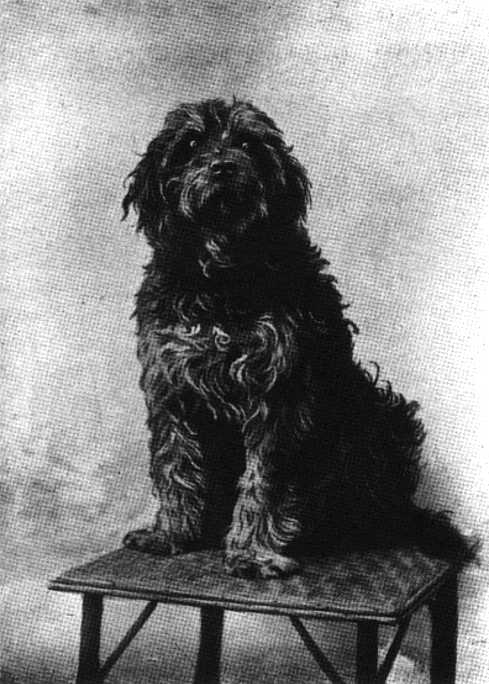
Figure 7. Illustration of a barbet, or caniche vulgaire. From Mme Charles Boeswillwald,
Le Chien de luxe: Comment élever, dresser, et soigner nos chiens (Paris, 1907), 121 (by permission of the University of California, Berkeley, Library).
Pont des Arts. On Sundays, most usually, Parisians brought their dogs to be washed. The dogs were soaped and brushed, dunked in sulfur water to deflea them; then to rinse them off they were sent to retrieve a stick tossed into the Seine.50 The clipper and the dog washer have histories that reach backward to the ancien régime. Solange Bélin tells us about les demoiselles Demoncy et Varechon who lived on the quai Pelletier. In 1774 they charged clients 1 livre 4 sous, a day's wage for a laborer, Bélin
notes, for various services, including bleeding, trimming coats, and clipping ears. Sébastien Mercier sent his dog, Diogène, to a certain Thomas for grooming. Thomas kept shop under the Pont Neuf while Thomas's wife tended more fussy clients, "making house calls to comb, perfume, and powder spaniels. . . or other pets (chéris ) of a dame de condition. "51
A qualitative as well as quantitative difference, however, separates eighteenth-century concerns from nineteenth-century ones, and Mercier's observations from Barbou's. To anticipate our next point, we note that the mode of nineteenth-century petkeeping evolved very strongly within class terms. A fantastic statement of deanimalization, petkeeping among the bourgeoisie set out a dialectics of exclusion and inclusion, of "outside and inside" in Bachelardian terms, with surprisingly profound implications.52
Canine death was a weak intrusion of reality into the insistent fiction of petkeeping. In the 1850s Bonnardot counseled pet owners to kill their aged and infirm pets. "Sometimes in old age they contract repulsive and incurable illnesses"; he recommended the use of chloroform, "that vapor that kills by numbing the senses."53 In the 1870s Robert deplored the practice of canine euthanasia, castigating pet owners who would replace a pet when it was no longer pleasing, "by caprice, out of distaste." This act stemmed from false values: "When young and attractive, [the dog] is pampered and spoiled, for as long as the vanity of his owner is nourished by possession of a pet. Come old age and its infirmities, and the unfortunate dog is relegated to some obscure corner." Neglected and in pain, he suffered until, Robert imagined, "moved by egoistic pity Monsieur or Madame says, in a forced and artificial manner: 'Poor dog! For humanity's sake, someone put him out of his misery!'"54
Evasions swept away the fact of death and doubled animal and object in the midcentury practice of stuffing one's pet, a macabre fashion offensive even to Bonnardot. "This mode of remembrance repulses me," he admitted, explaining in choice detail: "It's a sad thing to see one's little companion whose look was once so lively and bright forever immobile and staring. Moreover, if one kept all his successors in this way, one would end by having a somewhat cluttered and encumbering museum." Yet some pet owners kept only the head of their pet. "It is true that one
could limit oneself to having the head prepared in this way; that's even the fashion these days," Bonnardot noted. As for himself, it was enough to have an image of his pet, "at the time of his brilliant youth," captured by a photograph or painting, a practice he recommended to other pet owners. He went on to confide, however, that if he neglected this "act of foresight" he would arrange to have his dead dog's coat kept "as long as it had not lost its silkiness"—an act of tenacity not less bizarre, in our eyes, than the taxidermy.55
How to dispose of a dead pet remained a problem throughout the century. Pet owners had few options until the Parisian pet cemetery at Asniéres was founded in 1899. Although some pet-care books continued to recommend having one's pet stuffed and mounted for posterity—as Boeswillwald did in 1907: "Or you could have him stuffed in which case you will have with you, always, something that will recall your favorite to you"—most pet owners must have had recourse to less expensive solutions.56 The only legal expediency was to send a dead pet to a knacker. Most people simply threw a dead dog out with the garbage, and dog bodies ended up in the Seine or in ditches on the outskirts of the city. AS early as 1830, concerns about the pollution of the Seine from dead dogs led to the occasional proposal for a city dog cemetery, for instance, by M. Changeur, a veterinarian, who wrote to the prefect along these lines.57
In the 1890s, when Marguerite Durand and Georges Harmois lobbied for the establishment of a pet cemetery, hygiene and sentiment were linked goals. In the appeal for funds, the prospective Société anonyme du cimetière pour chiens et autres animaux domestiques (later the So-ciété anonyme du cimetière des chiens) announced its first goals: "To improve the sanitation of Paris where, in spite of the rules and regulations, dead animals are often buried in conditions that are detrimental to public health. To put a stop to the waters of the Seine being poisoned by dead animals thrown into it and spreading anthrax by being drawn by the current of water below Paris." Not less important was the sentimental goal of the cemetery, the due recognition of canines' real and imagined contributions to modern life: "To secure a patch of land to the animal who was a faithful companion, a consoler of pain, who often has
to his credit the rescue of human life and who in recompense of his devotion is tossed on the garbage heap like the vilest refuse."58
A brief glance at the Parisian pet cemetery, however, suggests that the distinction between animal and object was lost in canine mortuary art. Tombstone motifs were a pastiche of everyday life, cliches that evoke otherworldly fantasies within the ideal of petkeeping culture. We note the doghouses, dogs' heads and bodies in beautiful relief, as well as testimonies of canine goodness (that we glimpsed in chapter two and saw in figure 2), all set within lush funereal vegetation.59
"Wanting to perfect nature," Dr. Henri Blatin (presiding officer of the Parisian animal protection society) commented about fashion-conscious pet owners, "they allow the beast to die without posterity."60 What Blatin says figuratively about fashion (in a fad of the 1860s Parisians sported red-, green-, and purple-dyed pets) holds true literally, we suggested, about death. We can extend Blatin's insight to other aspects of petkeeping—to canine diet, sexuality, and bodily excretions—that also denied the animal nature of pets.
We turn first to a consideration of diet. As early as the 1830s, British experts were insisting that a meat diet was harmful to dogs. Francis Clater, for example, argued that meat-eating dogs were susceptible to mange and cankers as well as various inflammations. Some thirty years later, Delabere Blaine, the influential canine pathologist, recommended a mixed diet for dogs. Active outdoors dogs could be fed, he said, a diet containing a high proportion of meat. The constitution of apartment dogs, however, who were "always confined," demanded a primarily vegetable diet, "containing fewer nutrients," as Pierre Mégnin expressed the warning in his distinct treatise for French readers.61
The British makers of the first and widely successful commercial dog food, Spratts Patent (boasting in r907 foreign factories in Berlin, New York, and Sydney), translated Delabere Blaine's strictures into profits. Spratts Patent manufactured a dog biscuit consisting, its French advertisement read, of "25 percent beef, vegetables, all incorporated in a mixture of cereals." For little apartment dogs, for those spaniels and terriers and little loulous , "who could tolerate meat only in small quantifies," Spratts produced a special biscuit.62
Normative statements about bourgeois life appear with surprising clarity in discussions about the type of food dogs should be fed. British and French experts agreed in a mistaken assumption that once—in the ancien régime, as the French explained—dogs lived an outdoor life, subsisting on the raw leftovers from hunting.63 In what is now a familiar theme, they recognized that in the modern world, the lives of the most important of companions had changed with those of their owners. As one canine advocate approvingly noted in the 1870s, a dog's "power of assimilation to the customs, to the nourishment of human society, and the ease of his training is recognized by all."64 People were omnivores, so too were pets. The French promoters of Spratts explained: "Today, since he shares not only our roof, but often our table, [the dog] has become completely 'omnivorous.'" M. Baron, of the Ecole nationale vétérinaire of Maisons-Alfort, went further in his reasoning. He "not only acknowledges that the dog is omnivorous but believes that he may become a vegetarian like his master."65
La Grande Encyclopédie presented the conventional diet for French dogs in the 1880s. "A large dog will eat a kilogram or more of this food a day: bread, soup, meat, beets, carrots, and potatoes will form the base of his nourishment."66 Similar recipes are to be found in standard French dog-care books of the century. But this manifestly practical approach to canine diet uncovered other concerns. Pet diets described domesticity and set the basis for a criticism of bourgeois life, paradoxically itself a construction. Pierre Mégnin identified a common problem of bourgeois pets and owners in the 1899 edition of his second work on dogs (Le Chien: Elevage, hygiéne, médecine ). M é gnin described strangles (la gourme ), a disease often confounded with distemper, he said, but caused not by germs but by modern civilization. "The dog, from the time he accepted the domination of man, has been subjected to the same influences, the same food, the same lodging, that is to say, has been more or less completely deprived of his normal food, meat, and of an open-air life."67
Mégnin tapped a theme widely diffused in French culture but focused dramatically in ordinary peoples' fear of rabies, as we will see in the following chapter. Here we note not general fears of modernity per se but French experts' concerns about diet that also reflected dog owners'
needs for mimetic pets. Meat-eating was associated with the natural life of canines. Robert warned pet owners not to deprive their dogs of meat—"something that goes contrary to their carnivorous nature"—and contrasted a healthful, meat-eating regime with the one he believed harmful to little apartment dogs.68
Laure Desvernays also scolded pet owners for withholding meat from pets, noting that in Belle Epoque France: "The prejudice against including meat in a dog's diet has begun to decline a little." Still, three times a week was enough, it was advised, or else the dog would gain weight. Meat was too exciting for most of these dogs. Canine nymphomania and satyriasis might be controlled by eliminating meat from the diet of suffering dogs.69
Boeswillwald, too, urged pet owners to remember that pets had exigent needs and echoed Robert's insistence that pets were not dolls: "In order to maintain our dogs in good health, we must love them like friends in need of our protection and not like dolls." But we might ask if the ordinary pet owner followed her or his own inclination in this matter, treating a pet to mocha and le petit déjeuner (as Leroy did) or, more extravagantly (as Bonnardot suggested), to buttered bread, sugared milk, and pastry.70
Infantilization and control come together in nineteenth-century pet-keeping culture and most obviously in the treatment of canine sexuality—a problem that underlies all consideration of animals in the home and sets the terms for a discussion of class and gender. The problem was embarrassingly present to owners of female dogs, who come into heat twice a year. Many experts recommended cold baths to calm otherwise docile bitches. Desvignes warned readers in 1869 that if they wished to try this method the baths should be given before the onset of heat (la folie, it was called), to prevent chills, "always [so] dangerous when [bitches] are in that state." Bonnardot believed that unlimited exercise, runs in the woods, could make pets forget these "mad" ideas but admitted that there were times when recourse to this method was impossible. Various recipes and regimes were proposed throughout the century whose object was the prevention or masking, rather, of animals' sexual maturity. Desvignes directed concerned owners to her preferred method, a light diet consisting of crustless bread, three to four grams of
ground hempseed, and a little milk. Some years later Boeswillwald suggested, "One may delay the appearance of these episodes by giving the dog a light diet, laxatives, and anti-spasmodics."71
Failure to exert proper control over female sexuality could lead to adverse results. Nymphomania and false pregnancies, experts explained, were its dysfunctional extremes. So too were dizzy spells and rabies, as we see in the next chapter. Pierre Mégnin, for example, related the history of a terrier kept in seclusion during heat: "From that moment onward the animal was sad, uneasy, still eating well but walking about the room, unceasingly, raising her front paws in front of her like a horse . . ., that is to say like an ataxic."72
Canine "marriage" could forestall histrionics. The phrase first appears in Bonnardot. But mating itself had to be controlled. Paul Mégnin attended a canine "wedding" and reported, credulously, that it was customary for the "husband to present a marvelous set of wedding presents, for everyone to lunch, then for guests to leave the newlyweds 'finally, alone.'"[73]
The so-called canine wedding was the fin-de-siècle formal consequence of an idea whose function had more obvious prosaic expressions. Bonnardot warned that when one's female dog came into heat, it was essential that she not be allowed to play with "undesirables."[74] He meant that spaniel should mate with spaniel, but undesirability had also a class nuance, explicit in discussions of what British sources called telegony, the influence of the previous sire, the contamination of future generations by the first male to mount the bitch.[75] It would be disastrous, Boeswillwald warned, "if a moment's distraction would leave [one's bitch] vulnerable to a dog of a common breed, or even to a dog that was good-looking but of another breed than she." Future generations would be contaminated. "All of her litters will be marked by the breed of the first male who approaches her. That imprint will be indelible." She illustrated the danger: "If your fine miniature greyhound, or your pretty little spaniel accepts the approaches of a 'bumpkin' when she is still a virgin, her tenth litter still will bear the stigma of her violator."[76] Joanny Pertus in his dog-care book of 1893 explained the process in more scientific terms. "The procreator, by coupling, and through the resulting impregnation, leaves in some way a trait of his own in the [female's] system
(économie ) and one that can be discovered much later in his descendants, even indirectly."[77]
A misalliance demanded remedial action, a prudent douching with vinegar and water according to Boeswillwald, or, if this failed, abortion. See the recommendation along these lines of Mine H. Ducret-Baumann in L'Education et l'hygiéne du chien published in 1913.[78]
Other dangers also demanded vigilance; the fear of lower-class contagion inspired prescriptions of isolation. A chance encounter with a mongrel could soil one's pet and the benefits of an "éducation" might be shaken in a thirty-second encounter with a beast. "It takes only a half-minute in the street, when your maid is walking the dog, for a dirty dog to contaminate your pet (votre favori )" with mange.[79] In a universe fraught with invasions, lower-class people could spread fleas to upper-class pets, in a significant collapse of categories. "The princess Vaude-Vaudemont goes without personal maids," Robert explained to his curious readers, "for fear they would give fleas to her dogs."[80]
Inside exercise could take the place of risky walks, while the exigencies of evacuation posed serious concerns. In what seems another unavoidable association with nineteenth-century women, subject to the "green disease" (a condition caused by the fear of "breaking wind" in public), canines could be victims of their own pudency. In certainly another of petkeeping's myths, nineteenth-century dogs were known to die rather than soil the carpet with their excrement.[81]
The physical presence of animals in the home was shaped to bourgeois expectations of self, though a large gap undoubtedly exists between prescription and practice in petkeeping culture. Indeed, it is the interplay between fiction and reality in everyday life that is at issue here, or, rather, the dual landscapes of the imagination that insist on our appraisal. Petkeeping mirrored and mimicked bourgeois culture. The infantilization (read, feminization) of canines was part of a larger process of objectification that sets before us the bourgeois understanding of its own experience. Staging and framing bourgeois culture were such extravagances as portraits, later, photographs of pets (such as those by Th. Migneaux, a photographer located at 110, rue du Temple, Paris, who advertised "modest prices" at the 1890 canine exposition).[82]
The projection of bourgeois personality onto canine behavior allowed for self-referential criticism, for the evaluation of modernity on an imaginary plane. "Man, after having created a work worthy of himself out of something primordial not altogether his," wrote an unabashed canophile in the late 1870s, "beholds himself in his work, and admires himself there, body and soul."[83] But other participants in bourgeois petkeeping had more somber reflections, as the following chapter explains.