
Chapter Five Land and Diet
Introduction: Landed Resources and Life Chances
Chapter 4 evaluated by means of genealogical narratives the extent to which endemic goiter and cretinism in Escobines were exacerbated by the high level of inbreeding. That analysis showed that consanguinity appeared to account for the heightened vulnerability of some, but by no means all, Escobinos to iodine deficiency. Here I examine the role of other factors in iodine deficiency disorders, namely, land, poverty, and diet. I describe a situation where plowland is scarce, but communal forest products are available to everyone. Then, taking a materialist perspective, I consider how landed resources relate to life chances.
Diet, under subsistence conditions, is closely related to what the nearby land provides. That relationship becomes looser as income and, in turn, food come to be derived increasingly from elsewhere. This chapter examines the land, its produce, and the varying access to it that Escobinos have enjoyed in terms of rights over its fruits and how these, in turn, have affected the diet and the expression of IDD among Escobinos. We will find a mild but interesting correlation between access to landed resources and affliction. This is a correlation denied by villagers, however, in part because of an egalitarian ethic and in part because there are many more factors than landed resources which correlate with vulnerability. Last, it suggests how in a feedback relationship, IDD accentuates social divisions. These in the larger society are themselves already an expression of differential property rights.
The Land: Unequal Access to Its Fruits
The territory to which Escobinos have primary access, and on which most of them made their living until village men entered the mines, covers an irregular area of about fifty square kilometers at the southeastern tip of its municipio , or county (fig. 13).[1] The headwaters of the river El Escobón drain this area, to which Escobinos have for centuries had privileged access. At the lowest, most northern extremity of this area, El Escobón passes through the village of densely packed houses, through the flatland that lies between it and the parish seat, and passes altogether out of the township.
Escobinos conceive of this land primarily in terms of its economic use, and it is therefore appropriate to begin by laying out the villagers' land typology. For them and for us, as we shall see, the variations in that typology signify variations in diet.
The contrasting categories of vega and monte encompass almost all the subtypes of land. Vega is land that is cultivable, desirable, accessible, or relatively flat, denoting valley bottoms if they are wide or any flat to rolling land of high quality. It is a relative term, denoting in eastern Asturias, where some villages lack flatland altogether, the cultivable though not necessarily arable land that by terracing has been wrested from steep slopes. But situated in central Asturias, Escobinos have at their disposal a relatively wide valley and subsidiary hanging valleys above it. Thus, vega in Escobines refers to the valley bottom stretching from El Texu up to Abejas, all of which was once under the plow. But in its larger sense, vega encompassed also the land that individual families cultivated in subsidiary valleys like Nogales. In its most restricted sense, it encompassed, however, only the set of plowstrips communally enclosed which formed part of the two-field system: the Vega de Arriba , the upper vega just above the village, and the Vega de Abajo , just below it, between Escobines and the parish seat. Escobinos, not prone to quantifying, agree that less than 1 percent of the township territory is vega.[2]
Escobinos use the term vega also in a larger, social sense. For example, when they speak of los de la vega, "the people of the vega," context determines whether they are speaking of people residing beyond the mountains on the high plateau of Castile, on the
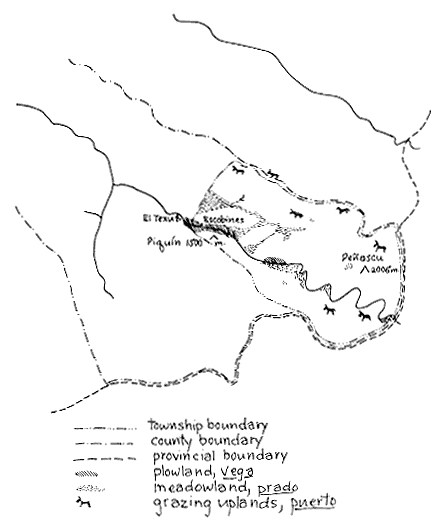
Fig. 13.
Escobines Township
relatively flat coastal areas of Asturias, or in the señorial dwellings of the nearby parish seat. Monte is, by contrast, land that is less desirable: sloped, unplowable, marshy, stony, forested, or inaccessible. People of the monte are by implication poor, hard-laboring, and humble.
Like vega, monte is part of a deeply felt dichotomy. Land in its "natural" state is monte, referring to the land that remains after
vega has been defined. Hence scrub, fern, broom, exposed rock, and mixed forest—uncultivated land—is monte. It also refers indirectly to human behavior, for a meadow that fails to be groomed periodically becomes monte, and a plowfield in the enclosed vega can become monte if it is not cared for properly.
By extension, monte is transformed into the adjective montés : unkempt, rustic, feral, wild. Escobinos who cultivate the land and seek out each other's company consider themselves sociable and civilized, contrasting themselves with others who spend most of their time with the animals in the wildlands and speak monosyllables or merely grunt. But Escobinos regretfully know themselves to be montés in comparison to "those of the vega" and to city people. In other words, the dichotomy of land types parallels the dichotomy of social types, and both, as we shall see, are related to local affliction.
The important economic categories within the local domain are as follows: tierra, plowland; huerta , garden; prado, meadow; pasto, open pasture; and puerta, open pasture in the uplands (see fig. 14). Bosque is forest in general, of which there is castañéu, chestnut; hayedo, beechwood; and robléu, oak. The fruits of these lands have been listed here as Escobinos view it, in terms of declining edibility: most valued are milk and grain, less valued are nuts, least valued are beechnuts, and acorns are reserved for pigs. In this way, the terms for land are dietarily significant.
Escobines households traditionally had access to all these categories of land (García Álvarez 1964; Tuero Bertrand 1974; Tuero Bertrand and Gonzalo Anes 1978), but by the twentieth century, with the economic shifts discussed in chapter 3, there were vecinos, neighbors, who, though residing in the village, did not have plowland at their disposal.[3] Their livestock, however, had access to grub, browse, and communal graze. Thus, it was possible even without access to plowland to fatten a pig on acorns or keep a few goats for milk. In addition, everyone could gather firewood and other useful materials in monte, and everyone could gather chestnuts on private property of "mixed ownership" (García Álvarez 1964:81) during a designated part of the day and season. Similar but more complicated provisions were made for access to hazelnuts and walnuts, the more esteemed nut crops.
Gleaning rights in the communally administered vega were un-
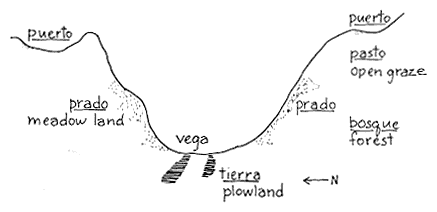
Fig. 14.
Vertical Profile of Land Types
derwritten by customary code and religion. Land-poor Escobinos who did not live off charity could scrape together a living by keeping a limited number of minor livestock, spading a potato patch, and foraging. As we know, these foraged tree fruits are goitrogenous. Thus, much of the plant material available as dietary staple for landless Escobinos and as a dietary supplement for landed Escobinos was goitrogenous. Landless families could live somewhat better, if still but poorly, combining herding and foraging with other activities. They could keep bees, carve wooden shoes, make baskets or charcoal, smoke hams for other villagers, or perform day labor as jornaleros, receiving their pay in meals, grain and tubers, milk, or cash. Nuts, potatoes, grain, occasional cabbage or turnips, and a little milk made up the very poor family's daily fare.
A symbolic reminder of this diet is an implement, a small brass or copper bowl attached to an arm-length iron handle. Mended by rivets in several places and polished, it hangs on the entry wall as a silent reminder of the milk and chestnut soup cooked in it—the mainstay of households where there was little else to eat in the winter. This implement signals a diet dependent on monte. Few Escobinos admit to ever having experienced such a diet.
Differentials in Landholding
Land, and the improvements on it, can best be appreciated visually, hence the township's territory will here be described from the
perspective of an Escobino standing on Peñascu (2,005 m), a peak at the upper, southern tip of Escobines territory. From it, one looks out on chain after chain of "unimproved" mountains. Puerto, the emerald green summer pasture over which one is perched, actually makes up only a small fraction of the mountain landscape. This perception comes as a surprise, for the importance of the concept of puerto to mountain villagers engaged in raising livestock seems, at first, quite out of proportion to its actual extent. It is the place where livestock, after a winter season of short rations, fattens "for free." And, in contrast to life in the village, puerto is a place of relative freedom where courtship tends to flower. It is, moreover, in puerto that whole milk was a regular part of the diet, rather than the skim milk or whey customarily taken in the village. It is thus a place, a condition, and also an evocative period in the Escobino life cycle—one of relative freedom and plenty—and it comes as a surprise that actually so little of the uplands reflects that verdant vision.
Surrounding puerto is monte, exposed rock and scrub; and on the slopes falling away toward the north is forest. The small fraction of land that has been improved in this territory—tierra and prado—is visible only several kilometers away where the land drops down toward the northwest. At its distant center lies the vega at about 600 meters, a narrow strip of valley floor through which El Escobón flows, flanked by the highway.
The last villages of the upper watershed of El Escobón, the three that make up its uppermost parish, cluster along at the edge of that valley floor, sparing the best parts of the vega for cultivation. Tierra thus makes up about 1 percent of the township territory, prado 35 percent, and pasto, monte, and rock the remainder. This distribution of land categories is plausible really only from a perch such as Peñascu, for the land that one sees as a cultivator, or from a passing vehicle, appears to be much more productive.
From Piquín (1,500 m), a vantage point closer to the village, improved land dominates the view, and property divisions become visible. Piquín towers over the village and casts a shadow over it on a December noon. From this peak, looking across the vega to the northeast, one sees several sets of meadows: those on the broad slopes bordering on the vega, those on the steep slopes set above the tributaries of El Escobón, and those in the bowls of the hanging
valleys. Multitudinous meadows, between 800 and 2,000 of them, are distributed over these territories.[4] Figure 14 gives a profile of the land types as seen between Escobines and Piquín.
Most prominent are the individual meadows, delineated by stone walls and hedgerows. Small-scale topographic features affecting their value can be distinguished on them, for example, the thin black lines of irrigation ditches that divide some meadows into horizontal segments, enhancing hay production. The history of a number of properties can be read from their shape and vegetation. For example, the recent creation and yet more recent subdivision of a large oval wrested from monte can be known from the age of the hawthorne planted on its boundaries and from the newly planted "living fences" of hazelnut quartering that oval. Meadows vary in size by a factor of one to twenty, but the majority cluster in a middle range of two-tenths to half a hectare.[5]
The land below Escobines is mostly tierra, good land used as plowland. It is divided into a multitude of strips clearly delineated in spring when new growth is just breaking through the soil. All of the strips are narrow and measure less than a hectare but differ from each other in size. Some parcels of vega closest to dwellings are not arable; enclosed behind their own walls, they are regarded as huertas, kitchen gardens, intensively cultivated by spade and hoe.[6]
When most Escobinos made their living from the land, tierra extended beyond vega onto the gentler slopes of colluvial soils that could be plowed, and prados extended high up the shady north-facing slopes, as can be seen on topographic maps published in the 1930s. Now the prados of most difficult access have reverted to monte, sloped tierra has become prado, and an increasing proportion of vega is dedicated to fodder. As a consequence, land use and its designation is in such flux that the records in the land tax office, Hacienda, reflect at best a situation that may have prevailed at mid-century. At that time, one and a half square kilometers in the township were taxed as tierra and ten as prado, but much of the land was not taxed at all because its owners fell below the threshold of taxation (Catastro del Ayuntamiento 1954).
For a variety of reasons, official land records are untrustworthy indicators of the landed resources at a particular moment of any single individual or household.[7] That is, these records are poor
indicators of any particular individual's access to the fruits of plowland. Thus, one cannot infer from official records whether or not a certain individual or family had—out of dire need—to resort regularly to the fruits of monte. But the records in general do corroborate (see fig. 15) the villagers' view that access to land's bounty was basically unequal and that some people, much more than others, consumed nuts from monte as daily fare.[8]
Goitrogen Consumption in Escobines and in the Wider Region
Several kinds of evidence suggest that the consumption of chestnuts—a goitrogenous food (see chap. 2)—was far more widespread than people like to remember or physicians have ever considered probable (Kruger and Ebeling 1922; Cátedra 1988; Douglass 1975; Lisón Tolosana 1971). Architectural features such as the corredor , balcony, where chestnuts were cured in the open air, and the sardão, a rack above the fireplace where food, especially chestnuts, were preserved by smoke, testify to the cultural and dietary importance of the chestnut. Vestigial customs of giving chestnuts and hazelnuts to children and needy-looking individuals and innumerable verses in which an important place is given to chestnuts give additional testimony.
Vengan moras abondas
esti aão,
Que quita la fame
el castaão.
Pray for lots of berries
this year
Chestnuts will take away
our hunger.[9]
Furthermore, the great detail in which access to chestnuts is spelled out in the various historical ordenanzas , the regulations at the most local level of government, indicate the importance of chestnuts to at least some segment of the community (García Álvarez 1964: 81–82; Tuero 1974, article 5: 51–54). This was true not only in the upper Escobón, or Asturias in general: a diet in which chestnuts had a prominent place was widespread across the
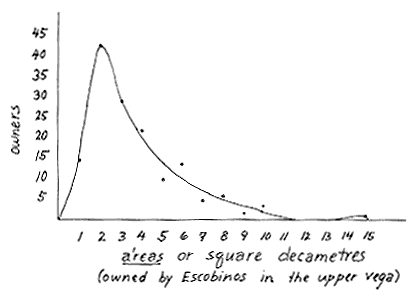
Fig. 15.
Distribution of Plowland
A curve drawn between the points suggests the inequality of access to plowland.
north of Spain.[10] Chestnuts as dietary staple were replaced, for example, by potatoes as recently as 1960 in the villages of Galicia's mountainous interior (Fernández de Rota 1984).[11]
Most Escobinos were not landless, however, and did not rely on chestnut as a staple for an entire season or more. As owner, tenant, or sharecropper, Escobinos had access to tierra in the vega and to prado, in conjunction with communal resources. Until at least 1910, escanda was grown as part of the agricultural rotation system involving two enclosed vegas.
The crops in which these vegas were planted give important insight into the historical diet. The upper vega was planted in winter wheat, escanda, and after harvest in late summer, in turnips. The latter, maturing over fall and winter, made way for a late spring planting of corn. Meanwhile, the stubble in the lower vega was grazed communally, then plowed and planted in corn (in symbiosis with beans), and harvested in autumn. If, because of bad weather, the corn matured late, soil could not be prepared in time for a December sowing of escanda. In that event, the vega was left
fallow over the winter or planted in clover and in potatoes in the spring. Weather permitting, this planting could be quite early. The timing was important. Crops had to be harvested early enough so that the lower vega could be prepared for the second winter's planting of escanda. In this way, the major crops were alternated between the two vegas over the course of two years (fig. 16).
This kind of concerted planting regime in Escobines gradually fell apart early in the twentieth century under two influences (fig. 17). Individuals returning from the New World insisted on having more personal control over land they had come home to purchase outright. And a newly promulgated prohibition on small firearms allowed small grain-eating birds to multiply into a plague, devouring the ripening small-grained escanda. Because of these changes, cultivators of escanda became discouraged and let it decline. Jointly, these changes favored expansion of potato culture in the enclosed vegas. As escanda declined so did the turnip, because the (usually) later harvest of potato and corn did not allow the turnip to take root before winter.[12]
These changes had significant implications for diet and disease: maize and potatoes became the new staple subsistence crops. The change altered Escobinos' niacin and goitrogen profile. Niacin uptake, as discussed in chapter 3, diminished with the replacement of escanda by corn. Turnips ceased to be planted when late-maturing summer crops began to occupy both vegas; thus, this source of goitrogen ceased to be available to the poor, who customarily gleaned turnips. These changes meant that niacin consumption diminished in the diet of the landowning majority. The diet improved, however, insofar as one source of goitrogens was subtracted from the diet of the landless and poor. Agriculture changes in this regard were a nutritional leveler.
No Escobino admits to having eaten turnips (a goitrogenous plant) or turnip tops (Palacios Mateos and Ramos Duce 1965). But a mocking verse, chanted by Escobinos about their neighbors in El Texu, holds that "turnips got stuck in their throats":
Aquí en Escobines
Tenemos la cadera ancha
Vosotras teneislo arriba
La coxera en la garganta.
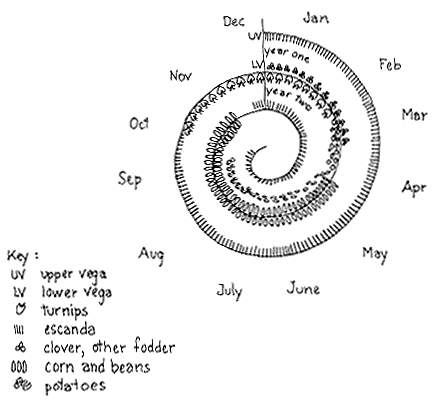
Fig. 16.
Crop Rotation I
A two-year cycle involving escanda , wheat, and turnips.
Here in Escobines
We've got it wide in the hips
You've got it wide
In your throats![13]
The allusion, in the context of intervillage rivalry, refers derisively to the consumption of turnips by non-Escobinos. Texuanas in this verse stand accused of being animals, of eating what Escobinas preferred to consider as fodder fit only for beasts. Texuanos, more often than Escobinos, may have had to descend to this dietary level because they lived within a village more socially stratified than Escobines and in greater proximity to señores. For El Texu had four casonas , great landed houses of gentry, surrounded by the
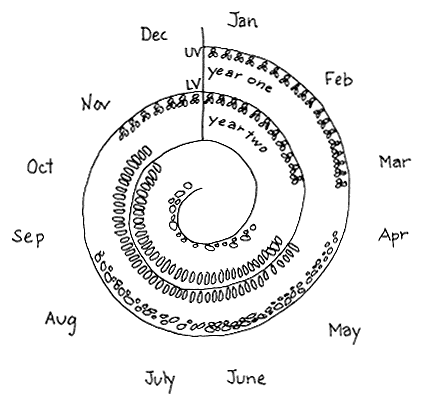
Fig. 17.
Crop Rotation II
A two-year cycle alternating between potatoes and corn.
lesser dwellings of labradores , cultivators. The gentry were the most proximate example of "los de la vega," and gentry do not exist except by contrast to humbler folk, in this case, the turnip eaters. Whatever the extent of turnip consumption, the genius of the verse resides in its association of turnips and goiter. While Escobinas sang it in rivalrous jest, in the wisdom of hindsight, it appears to be "folk etiology," an empirically derived insight.
Evidence of turnip consumption can be found throughout northern Spain. In this larger geographic area, the upper part of the turnip, rather than the knobby root, is dedicated primarily to human consumption, while the root itself feeds livestock over the winter. The stem and leaves are known as grelos in western Asturias and Galicia where they were an important part of the human
diet, at least until the introduction of new leguminous winter fodders in the 1960s (GEA, s.v. grelos).
If they did not consume turnips, landed Escobinos did—and do on a daily basis—consume berza , open leaf cabbage (brassica oleracea ). Escobinos may have lorded it over the Texuanos, derisively versifying as they did about the latter's consumption of turnips, but cabbage, to a lesser degree, is also goitrogenous. Berza, tenderized by frost and snow, is said to be especially delectable. Moreover, it is always available, for cabbages are grown on the perimeter of tierras in the vega, marking property lines. Cabbages are advantageous in this regard because they can remain standing yearround if flowering is delayed and their outer leaves are picked continually. Berza is so culturally ensconced that Escobinos tell stories of "replanting lines of cabbages after midnight" so as to secretly shift a furrow's width of property from one's neighbor to one's own. Tile shards are laid as testigos mudos , "silent witnesses," a meter or two below the berza roots to make such stealing more difficult. Plowland at one time was dedicated exclusively to the cultivation of food for human consumption, hence the standing witnesses—cabbage heads—had to become, and remain, an important element in the culinary tradition.
The consumption of berza has social significance, being a class marker. While an essential ingredient of daily fare for many Asturians, cabbage was until recently considered humble food, withheld from visitors at wedding banquets, in tourist-oriented restaurants, or in casas de labranza , rural bed and breakfasts. Nor was berza available in the ordinary town grocery stores of central Asturias, for every townswoman was expected to grow her own. Cabbage was, however, sold in the open city markets where the lower class purchased most of its produce—markets where the discerning rich also went from time to time to shop. But literature assiduously refuses to admit berza as a constituent in the diet of señores.[14] In other words, the urban middle class did not consume, or confess to eating, berza at their tables. To do so would apparently diminish the distinctions between classes.
Nor did the middle or upper class consume chestnuts, except as hand-warming street fare in winter. Urbanites purchased them from expatriate Pasiegos and Vaqueiros, rural migrants from marginated "ethnic" areas in the Cantabrian range. These people are
referred to in the literature as "despised peoples," echoing the Spanish term pueblos malditos (Tax Freeman 1979:24; Cátedra 1976, 1986). The Cagotes, a similar people on the French side of the Pyrenees, long fixed the imagination of outsiders, as did the Hurdeños of the mountains dividing Extremadura from Salamanca (Michel 1847, Maud 1896) (see chap. 7). The "ethnicity" of these people seems, however, to have faded away[15] over the same time that the incidence of deformities also diminished, presumably due to economic and dietary change.
The principal vegetal goitrogens in Asturias, therefore, are associated with and consumed in any large amount only by country people and the urban poor, though dietary segregation was never complete. Boundaries of culture or class are intentionally crossed with gastronomic "soul food": grelos are now served as a culinary specialty in the finer restaurants of Madrid's Galician quarter. But such boundary crossing occurs only at a safe distance, in the national capital, for example, where festive consumption of otherwise stigmatized foods signifies neither poverty nor rusticity. Goitrogenous foods, it can then be argued, mark symbolic class lines and, when ritually broken, reinforce them.
Unbeknown to most consumers, the symbolic food is also physiologically effective. Its goitrogens, when consumed on a regular basis as daily fare, promote the reproduction of stigmata thought to distinguish lowly people from "their betters." Habitual consumption of goitrogenous foods helps to distinguish gente de bien , the well off, from gente maldita , the cursed. In this way, symbol and biochemistry are linked. Morphologic stigma confirm primary unblessedness and justify social stratification.[16]
IDD: Vestige of Past Differences in Wealth?
Given that the symptoms of IDD generally take long to develop, and to some extent reflect the cost of the food consumed, one may well ask to what extent the distribution of IDD in a village actually reflects long-standing differences in wealth. A two-by-two distribution table should be able to test the strength of this idea (fig. 18).
It is important to keep in mind that before mid-century, Escobinas tended to become goitrous in their teens, earlier than they do now, and that it was largely the poorest households that
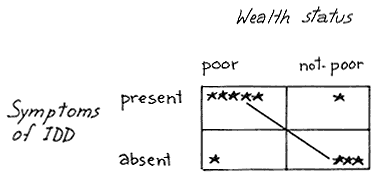
Fig. 18.
Theoretical Correlation of Poverty with Diet
High numbers found in upper left and lower
right boxes associate poverty with IDD.
after mid-century, sent their men to the mines, therefore poor households acceded earlier than other villager households to a diet richer in iodine. The materialist theory implicit in the two-by-two table could therefore, in 1972, be tested only on women age forty or older, born before 1933, whose goiters had been established before landed wealth in Escobines had ceased to be the principal indicator of income and diet. Goiters that have developed in younger women since the early 1950s could not, after all, be expected to correlate with wealth or poverty. In other words, the predicted distribution in the two-by-two table would be confounded by the inclusion of younger women, whose menfolk were the first to enter the mines. For the daughters of such men, though landless, were likely, because of the purchase of food grown elsewhere, to be more iodine replete than the daughters of the landed.
Likewise, it seemed inappropriate to hold strictly to the criteria of the IDD symptoms being either present or absent, for since everyone regardless of wealth lived in an iodine-deficient environment, ate goitrogenous cabbage as daily fare, and drank goitrogenous water, everyone was likely to have minor symptoms of deficiency "not inconsistent with a diagnosis of IDD." Therefore, I grouped women who had no symptoms at all with those who were obese or lethargic but not on medication, who had not been thyroidectomized, and whose thick necks were neither nodulated nor seen by their peers as goitrous. The distinction was made between the conspicuously symptomatic and everyone else.
The continuum of wealth required a similar distinction, between the conspicuously poor in this case and everyone else. The women neither poor nor wealthy in youth were grouped with the "wealthy," on the assumption that during their youth—not described as notably poor—they had not depended on goitrogenous nuts as a staple. Those who had been conspicuously poor in their girlhoods (difficult to establish from land records) I knew from autobiographical statements gathered during my years of focused participant observation. Women who had been very poor as girls made statements such as the following about themselves: "We rose before dawn to get chestnuts," "We lamented the scratch marks the brambles left on us, for those marks made it clear how we got our living!" (by foraging and herding goats, not cows), or "I never learned to milk a cow because we never had one" (as opposed to the wealthier woman who might also not know how to milk because her family had a servant), and "I got my meals as a day laborer," and "My family sent me to Castile for a year to scrub floors." The remainder of women, who had not experienced such poverty propelling them periodically into foraging, grew up presumably on the standard village diet based on cereals and tubers. This grouping resulted in the correlation of poverty with pathology shown in figure 19.
The distribution supports the original proposition—that the poor are more likely to be afflicted. According to figure 19, two-thirds (31 out of 47) of the poor who survived the reproductive years became goitrous or acquired symptoms not incompatible with a diagnosis of IDD, while less than half of those regularly consuming cultivated staples in their girlhood came down with clear and lasting symptoms (64 out of 146). In other words, poor girls had a distinctly higher probability of becoming goitrous.
Figures notwithstanding, Escobinas deny that wealth has anything to do with the distribution of goiter in the village. They point to well-off peers who have goiter. From their point of view, there are simply too many goitrous women in the older generation to discern any pattern at all. They disagreed with my "materialist perspective."
The Escobinas' view is understandable and anthropologically far more interesting than anything these statistics might be used to show. Any Escobina, whether or not her family cultivated much
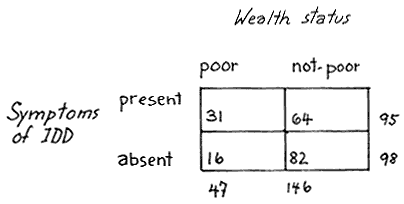
Fig. 19.
Test of Materialist Hypothesis
land during her youth, had to face the possibility of becoming goitrous. Despite the well-known saying, "No goiter, not beautiful," Escobinas did not aspire to becoming goitrous. They were, however, conditioned psychologically to accept rather than resist a goitrous fate.
Escobinas maintain that goiters are distributed according to laws they cannot fathom. To try, as I tried, to understand such laws is to be impertinent, to demonstrate one's immaturity and question God. My questioning displayed to the older women my principal fault, a lack of resignation. "Conformate Renata," they would say "Cada cosa tiene su misterio." "Accept things as they are, Renata. Everything has its divine mystery." Mysterious things should be left in place. Believing this, Escobinas habitually prepared each other to accept these mysteries and tried assertively to deny that inequalities of land or diet have anything to do with the present distribution of goiter in the village.
In this sense, Escobinas are egalitarian, expressing solidarity in the face of a common threat. By refusing to acknowledge any pattern in the distribution of goiter, by viewing goitrousness as capricious fate, they deny goiter any social significance—at least among themselves.
Conclusion: Vulnerability and the Ethic of Equality
I have taken a materialist approach to goiter and have suggested how the distribution of land and wealth, the consumption of crops
and wild fruits, play a role in the distribution of goiter in this afflicted village and across northern Spain. What was most interesting about these findings was not the support they gave to the proposition that goiter is more likely to afflict the land-poor but that the villagers denied any such proposition: they did not want to believe that goiter and IDD were distributed among them in some systematic fashion that was basically a reflection of inequalities. It was far more socially rewarding for them to assert, in solidary fashion, that all Escobinas were equally exposed to fate's caprice.[17]
Their insistence on this belief suggests the emotional and cultural weight that stigma carries. I see it as meaning to them, "If somebody's got to be situated at the bottom of the regional hierarchy, it's more comfortable not sitting there alone. All of us Escobinos are equally there together." To give credence to the patent inequality within the village jeopardizes this psychological posture. Unwittingly, however, this posture strengthens the opponents of prophylaxis—who have everything to gain by viewing endemic village populations as undifferentiated products of inbreeding, rather than as products of social neglect or of maldistribution of resources.
I have shown how land and diet are part—but only a part—of the fabric of affliction and especially how goitrogens are consumed unevenly, making the landed less vulnerable to iodine deficiency than the rural landless. The next chapter explores how these vulnerabilities are expressed in language and folklore.
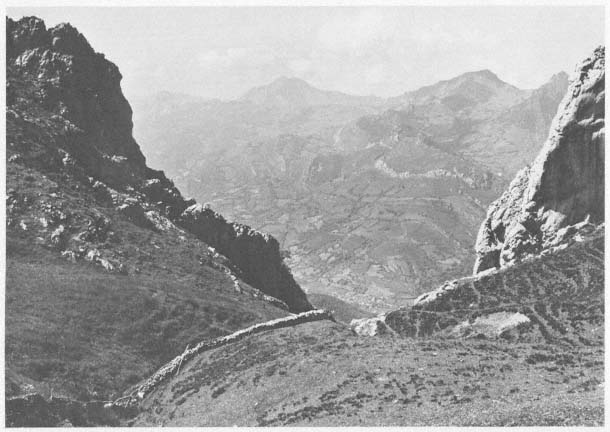
Karst, the classical landscape of IDD. Escobines is barely visible in the valley below.
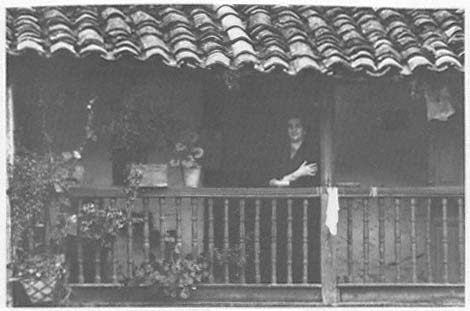
Ofelia the storyteller.
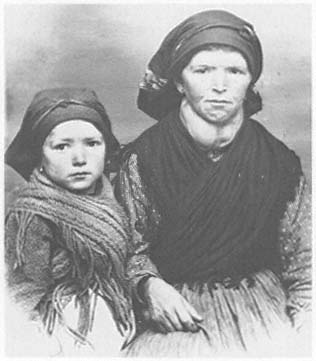
Daughter and goitrous mother, from a nineteenth century glass plate.
(Courtesy, Joaquín López)
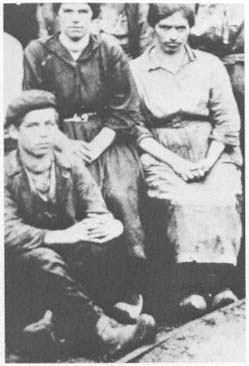
Asturian mining folk of the 1920s, when men as
well as women were conspicuously goitrous.
(Courtesy of Richard Detweiler)
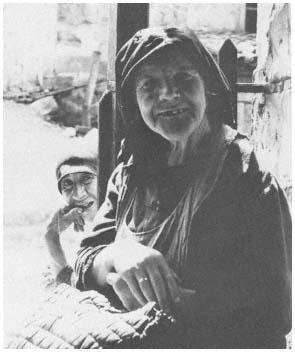
Few elderly Escobinas in the 1960s were
so unguarded as to allow a close-up.
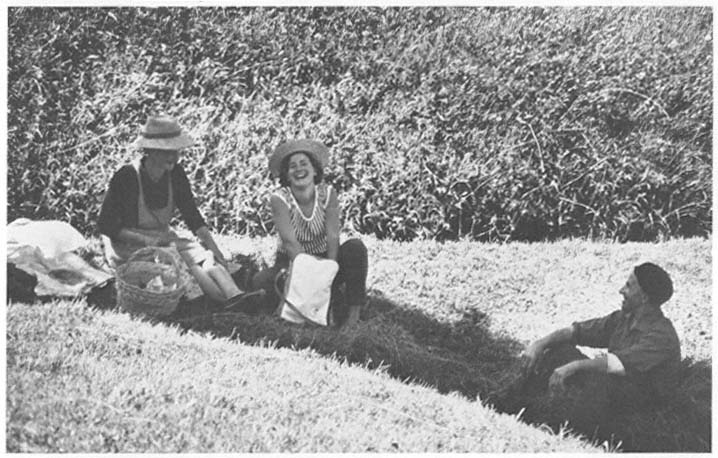
Haying break. In 1966 no one perceived this young woman as goitrous.
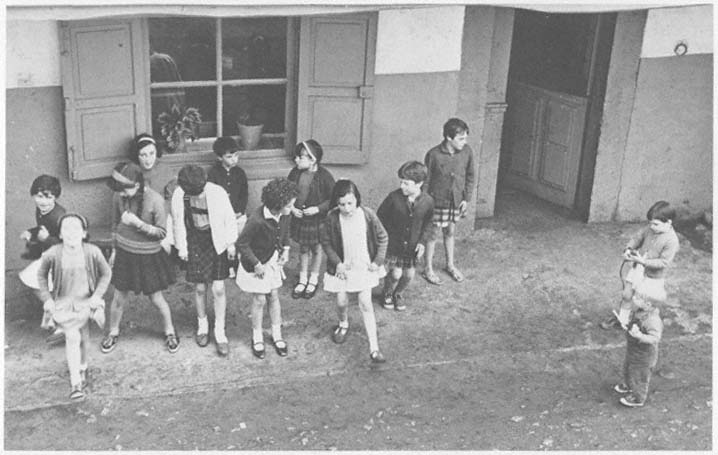
At least two of these girls, photographed in 1966, have recently undergone thyroidectomy.
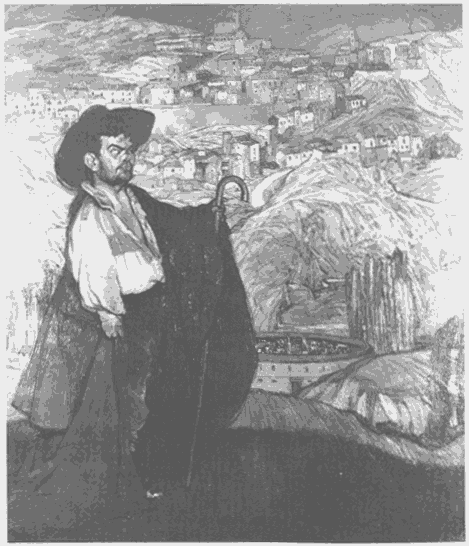
Hypothyroid dwarf, 1908.
(Copy out of Ignacio Zuloaga, Lafuente Ferrari. Barcelona: Hogar del Libro. 1980, p. 22)
The painter Zuloaga came to be severely criticized for exporting unfavorable images of Spain.
Perhaps, then, it is not surprising that his extant notebooks do not reflect the IDD of the 1920s
of Las Hurdes, the endemic area he is said to have visited with Marañón and the king. The
criticism suggests widespread denial of endemic affliction. Denial, in turn, helps explain the
paucity of Spanish images of IDD and sets the stage for inaction.
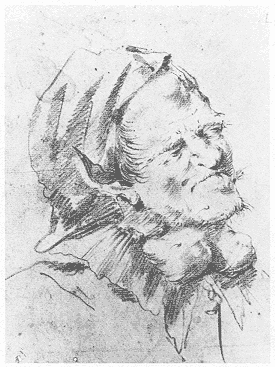
Man with bilobular goiter.
Artists rarely portray goitrous women.
(Copy out of Jusepe de Ribera, Prints and Drawings
Jonathan Brown. Princeton: Trustees of Princeton
University, 1973: 182)
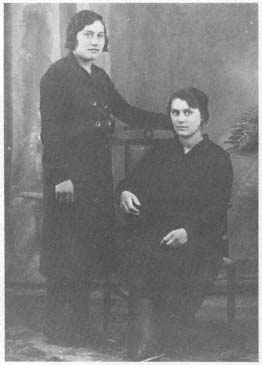
Two sisters epitomize the Asturian standard of
beauty of the 1920s; one has an unrecognized
juvenile goiter.
(Courtesy of Dr. Joaquín Fernández García)
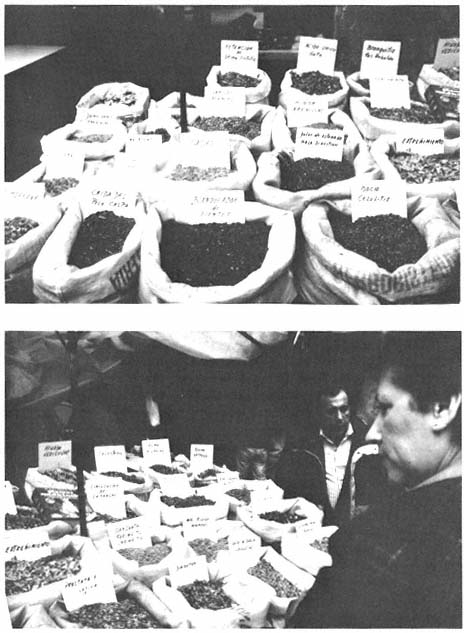
Herbalist in Asturias, 1989, offering seaweed for both cellulitis and goiter.