
PART I
AUTHORITY
Chapter 1
Genealogies of the Text
The theoretical descent of Roman jurisprudence from a Code, the theoretical ascription of English law to an immemorial unwritten tradition, were the chief reasons why the development of their system differed from the development of ours. Neither theory corresponded exactly with the facts, but each produced consequences of the utmost importance.
Sir Henry Maine
Viewed in detail, the development of the shari'a across the Muslim lands was a phenomenon involving specific men and specific texts. We know something about the particulars of this history because of the existence of accounts arranged in the form of biographical entries. Created by early Muslim historians, these biographical works played a crucial role in tracking the transmission of Islamic knowledge across regions and through successive generations. One such work, composed in twelfth-century Yemen, covers the early generations of Yemeni shari'a scholars. It also traces the arrival in the highlands of authoritative shari'a texts of the era, describing the specific teacher-to-student connections by which they were introduced and then diffused. A local node in one reported line of transmission was a man by the name of Faqih al-Nahi, until his death in 1171 a resident of the town of Ibb.[1] The text in question was a famous one, authored by an eminent shari'a jurist of the preceding century named al-Shirazi who lived and taught in Baghdad, an international center of Islamic learning.[2]
"Between me and the author are two men," al-Nahi of Ibb used to say to his colleagues. In this shorthand manner al-Nahi expressed the particular legitimacy of his stature as a scholar and teacher. It was a remark worthy of citation in an intellectual world in which the texts of knowledge were literally embodied, their conveyance reckoned in terms of known relayers. Authority of this sort relied upon the specification of human links between intellectual generations. Al-Nahi could explain that he had learned the text from his teacher, who had received it from an individual who had acquired it directly from al-Shirazi, in the author's Baghdad lesson circle. Then, as now, Yemeni scholars were
travelers, circulating in search of teachers and knowledge not only throughout their native highlands but also northward to Mecca and beyond to Cairo, Damascus, and Baghdad. Completing his studies with al-Shirazi, the traveling scholar in question returned to reside in Yemen, where he taught the text to his own students, including a man who would later teach it to a third generation, which included al-Nahi of Ibb. Each of the two intervening scholars identified in al-Nahi's personal line of reception is the subject of a separate entry in the same biographical history.
Authoritative texts are as fundamental to the history of shari'a scholarship as they are to the history of the other intellectual disciplines. Such a text was "relied upon" in a place and time:[3] the knowledgeable consulted it, specialists based findings upon it, scholars elaborated its points in commentaries, teachers clarified its subtleties, students committed its passages to heart. Authority in a text depended on a combination of attributes both ascribed and achieved: there were the built-in features of textual ancestry and authorship as well as an acquired reputation and record of dissemination. The fates of such texts were diverse, ranging from an enduring general prominence or more limited respect among the cognoscenti to a purely ephemeral authority and the all-but-forgotten status of the superseded. Since this authority would change radically in the course of the late nineteenth and the early twentieth century, its modalities must be examined in some detail.
A primary sort of textual authority was derived:[4] it followed from the existence and importance of an original, genuine, and ultimately reliable text, which refers back to the position and identity of the Quran. "In the genealogy of texts," Edward Said writes (1983:46), "there is a first text, a sacred prototype, a scripture, which readers always approach through the text before them." A genealogy of authoritative texts in Islam must begin with a consideration of the Quran as the authoritative original. The paradigmatic, Urtext qualities of the Quran concern both content and textual form. Substantively, the Quran and the Sunna, the practice of the Prophet, constituted the two fundamental "sources" (usul , sing. asl ) for the elaboration of shari'a jurisprudence. Discursively, the Quran represents both the end and the beginning of the kitab (text, scripture, writing, book). Just as Muhammad was the last, the "seal," of the Prophets, and also the first Muslim, the Quran was the definitive and final kitab , whose particular authority would initiate and delimit a discursive tradition.
A central problem in Muslim thought concerns the difficult transi-
tion from the unity and authenticity of the Text of God to the multiplicity and inherently disputed quality of the texts of men. A concurrent underlying tension was generated in shari'a scholarship where an unresolvable gulf opened between divinely constituted truth and humanly constituted versions of that truth. Purists of all eras, including many contemporary "fundamentalists," have made a distinction between the divine shari'a, defined as God's comprehensive and perfect design for His community, and a humanly produced shari'a, or, more precisely, the corpus of knowledge known as fiqh (usually translated "jurisprudence"), a necessarily flawed attempt to understand and implement that design. In this gap between divine plan and human understanding lay the perennially fertile space of critique, the locus of an entire politics articulated in the idiom of the shari'a.
If the transition from the divine plan to its human versions was difficult, it was also necessary, for the truth of Revelation could only be implemented through the medium of human understanding. With the death of the Prophet Muhammad in 632, the Muslim community found itself cut off both from further Quranic Revelations and from the Prophet's own practice, that is, from further elaborations of the two "sources" of secure knowledge. Thereafter, the community confronted the problems of developing a more detailed corpus of rules and procedures while continually adjusting to new social realities.
The growth of the fiqh as a body of knowledge, resulting from the work of jurists in the early centuries of Islam, brought with it the inevitable disagreements associated with purely human creativity. Authoritative fiqh works endeavored to further define the already definitive. Their derivitiveness was both necessary to their nature and the crux of their problematic: they were texts in the world of the Text. Participating with self-assurance in an authentic tradition, such texts had their recognized antecedent sources and their means of establishing legitimacy. At the same time, they pertained to history rather than to the eternal; to societies of rifts and hierarchies rather than to the ideal communitas of the umma ; to difference rather than to certainty.
Condensed and practical fiqh manuals, known as the mutun (sing. matn , lit. "text"), were a distinct category of authoritative text. At first glance, such manuals seem to have little to recommend their consideration. Since they contain neither the elaborations of material nor the refinements of method that characterize the field as a whole, the mutun might be thought the least impressive works of the jurisprudence literature, their bare-bones presentations being notable mainly for feats of
compression. But these handbooks took on a significance that went far beyond their modest literary qualities, and they eventually became the most widely disseminated of all shari'a texts. As instructional standards, they were influential gateways to the central academic discipline, representing for many the sum total of advanced (that is, post-Quranic-school) instruction. Particular manuals came to be symbols of the separate "schools" of shari'a thought, which in the Sunni tradition were one and the same as its principal subdivisions. Containing simple but authoritative statements of position on the range of substantive issues, manuals were studied by all educated adherents of a school at the outset of advanced instruction, and they were later referred to by scholars in their various interpretive activities. In addition, these compact works were among the typical source texts upon which the expansive commentary literatures of the fiqh were based.
Manuals appeared on the intellectual scene at a relatively late date, however. These were not the earliest works, handed down from the formative centuries of Islam, but were instead the products of a more mature, developed, and institutionally established later thought.[5] In contrast to the discourse-setting sort of originality of the foundational fiqh works, by jurists such as Malik, Abu Hanifa, al-Shafi'i, and Ibn Hanbal, for whom the four standard "schools" are named, the manuals were determinedly derivative. They offered creative synopses, in which a body of doctrinal views pertaining to a particular school was sifted, selected, and summarized. While most of the earlier classics were in the category of exhaustive (literally "long") works, manuals were examples of an "abridgment" genre that became common across the intellectual disciplines.
Manuals were similar to the long jurisprudence works in overall topic coverage but differed radically in depth of presentation. They included sections on ritual matters, such as ablutions, prayer, fasting, tithe and alms-giving, and the pilgrimage; the numerous types of contracts, transactions, and dispositions covering agrarian production, commerce, and the family; rules concerning evidence, court procedure, and punishments; and a variety of miscellaneous matters, such as hunting and dietary rules. Principles connected with the leadership of the Muslim community were covered in sections concerning the conduct of war, certain types of crimes, taxation, and the administration of justice.
The great Ibn Khaldun, who died in 1406, viewed with disapproval the routine use of such abridgments in his era.[6] They have a "corrupting influence on the process of instruction," he wrote, because they
"confuse the beginner by presenting the final results of a discipline to him before he is prepared." Ibn Khaldun's general pedagogic concern was with the acquisition of a properly developed intellectual habitus .[7] While he believed that the "crowded" meanings of the abridgments were an obstacle to this acquisition, he deemed contact with the "repetition and lengthiness" of the long works "useful." Regardless of Ibn Khaldun's opposition, however, some manuals went on to become classics in their own right, remaining basic to the intellectual landscape for centuries, until the moment of modern changes in the nature of schooling, knowledge, and the law.
Shafi'i Texts
One of four standard schools of Sunni legal interpretation, the Shafi'is take their name from the early jurist Muhammad b. Idris al-Shafi'i (died 820).[8] The word madhhab , conventionally translated as "school," literally means a "path," and in technical scholarly contexts the reference is to those jurists who claim intellectual descent from an eponymous jurist, in this case al-Shafi'i. In a broader, nontechnical sense, madhhab identities were a means of expressing geopolitical loyalties. In Yemen the Shafi'i school is associated with Lower Yemen, where Ibb is located, and with regions further South and East—the territory, until the unification of 1990, of the People's Democratic Republic of Yemen (South Yemen).
Prior to the tenth century, the Maliki and Hanafi schools, both developed earlier than the Shafi'i, represented the main currents of Yemeni legal thought. Although al-Shafi'i held a brief appointment (and is said to have engaged in political intrigue) in Yemen, the main centers of his teaching and later influence were Cairo and Baghdad. Ibn Samura, the historian who reported on the biography of Faqih al-Nahi, documented the advent and initial spread of Shafi'i thought in the highlands. In succeeding centuries, al-Shafi'i's intellectual descendants rose to predominance in instruction and judgeships throughout the central Middle East. With the sixteenth-century spread of the Ottoman Empire, however, the Shafi'i school was officially (but not always popularly) supplanted in most of these areas by the Hanafi school, which was favored by the Ottomans. Nevertheless, the Shafi'i school today probably has more adherents than any other in the Muslim world, its main centers other than southern Arabia being Egypt, East Africa, and populous Southeast Asia.
For many centuries now, Ibb has supported an active community of Shafi'i scholars. Despite their seemingly remote mountain valley location, town jurists were far from parochial. In terms of texts studied, theirs was not an unconventional local version of the shari'a. Beginning with Ibn Samura and continuing to the present century, biographical histories provide views of the changing scholarly community in Ibb. A recently published work (Zabara 1979) devoted to noted individuals of the just-completed (fourteenth) Hegira century contains an entry on a distinguished Ibb scholar and prominent political figure who lived from 1876 to 1922, some seven and a half centuries after Faqih al-Nahi. Like al-Nahi, 'Abd al-Rahman al-Haddad was an adherent of the Shafi'i school of shari'a jurisprudence. Both men were connected to the school through their relations with particular teachers and specific texts. In al-Haddad's case the teacher was his father, and the key text was a celebrated old manual known as Al-Minhaj . His biographical entry opens as follows:
The learned scholar and man of letters, the bright and sagacious 'Abd al-Rahman, son of 'Ali, son of Naji, al-Haddad, the Shafi'i, the Yemeni, the Ibbi, was born in the town of Ibb in the year 1293 [1876] and received instruction from his father, in Shafi'i jurisprudence [beginning with] Al-Minhaj .[9]
Ibb scholars such as 'Abd al-Rahman al-Haddad and, in the next generation, men such as his nephew and son-in-law, Ahmad b. Muhammad al-Haddad, whom I knew in the 1970s as an old man and a practicing court judge, commenced their higher studies with two standard Shafi'i texts, the just-mentioned Al-Minhaj by Muhyi al-Din al-Nawawi, a Syrian who died in A.D. 1277,[10] and a still more radically concise manual, known as Al-Mukhtasar ("the abridgment") or simply as the matn , the "text," of Abu Shuja', a resident of Basra active in the twelfth century.[11]
Both were classics of the Shafi'i school widely studied beyond the boundaries of Yemen. Al-Nawawi's and Abu Shuja"s manuals are to the Shafi'i school what Khalil's well-known Abridgment , for example, is to the Maliki school predominant in North and West Africa. In nineteenth-century Cairo, students of Shafi'i jurisprudence at the famous al-Azhar mosque-university began with the shorter work by Abu Shuja', while Al-Minhaj was a principal intermediate text in the typical sequence of study.[12] At the same time, at the eastern end of the Muslim world, in Malaya and Java where the Shafi'i school was pre-
dominant, the same two texts were fundamental in both instruction and Islamic court rulings. Both were translated from Arabic into French, Al-Mukhtasar just after mid-century and Al-Minhaj two decades later. For use in British-administered colonies, including the nearby Indian Ocean port of Aden, an English translation of the French edition of Al-Minhaj was available by 1914.[13]
In the following two sections, I examine the recitational and open identities of the fiqh-manual genre as a means of introducing some of the main features of the core discursive tradition. I elaborate upon the paradigmatic qualities of the Quran and make comparisons with the texts of the collateral science of hadith.
Recitation
Writing is the outlining and shaping of letters to indicate audible words which, in turn, indicate what is in the soul. It comes second after oral expression.
Ibn Khalbun
Concise fiqh manuals were explicitly designed to be memorized. The extreme brevity of Abu Shuja"s text was intended, as the author notes, to "facilitate its study for the educated and simplify its memorization for the beginning student." Referring to a larger work summarized in his manual, al-Nawawi says, "Due to its great size, many contemporaries, except for the most dedicated, are unable to memorize it, and I therefore undertook to shorten it to about half that size to simplify its memorization."
Recitation and memorization were at the foundation of Muslim pedagogy, in both literal and general methodological senses. In neighborhood Quranic schools in Ibb, as elsewhere in the Muslim world for many centuries, young children began their instructional lives by acquiring the sacred text by rote. The goal was recitation from memory, and the basic method was oral repetition, which was supported by the technology of the pupil's individual lesson-board. The passage to be learned was written on the board, and once it was memorized the writing was washed off, to be replaced by the next passage to be acquired. A similar pattern was repeated at the higher academic level, in training in the shari'a, the principal subject matter of advanced instruction. At this level Ibb students worked to memorize basic manuals, such as Abu Shuja"s Al-Mukhtasar and al-Nawawi's Al-Minhaj .
Pedagogical activity, in primary instruction as in advanced work, proceeded ideally from an initial oral recitation (or dictation) by the
teacher to the listening student. The student later repeated the text segment on his own, often until memorization was achieved. Finally, returning to the teacher, the student endeavored to accurately reproduce the original recitation. Writing intervened in these procedures in facilitating the work of repetition; its role was decisive but understated. Manuscript copies were often made by advanced students in the course of study, but these were considered by-products of the learning process. Students eventually received licenses to teach, which entailed permission for riwaya , the "oral transmission" of a particular text or texts through recitation.
The paradigm for this was the Quran. Received orally by a Prophet who, according to doctrine, could neither read nor write,[14] the revelations contained in the Quran are considered the spoken Word of God. The textual character of the Quran is quite different from that of the Bible, or at least the Gospels, which are considered humanly authored and which constitute a "book" in a sense closer to the contemporary Western meaning. The Quran, by contrast, is a recitation-text. The Prophet was instructed by the Archangel Gabriel to "recite," and the Quran, an extended "recitation," was received by him and then orally reconveyed in this way to his companions. As the Quran circulated in the world, recitations were repeated and memorized, the text was preserved in human hearts, and, in the event, a discursive style was set in place. The Quran's written form, the physical text located "between the two covers," would always be backgrounded in relation to its emphasized recitational identity. A century ago, Snouck Hurgronje urged Western scholars "to give up the erroneous translations of Quran by 'reading,' and [the root verb] qara'a by 'to read."'[15] By attending to the revealed Word and recitational (versus read) qualities of the Quran, recent scholarship has begun to revise earlier assumptions about the identity of this sacred text as a book or scripture in the conventional Western sense.[16]
If the links of recitational reproduction were crucial to the authoritative character of both teacher and transmission, they were essential as well beyond the lesson circle. Recitation (qira'a )[17] is the mode in which the Quran figures in ritual life, and a recitational style also structures the articulation of basic shari'a principles in legal practice. Trained jurists such as shari'a court judges did not have to refer to written versions of authoritative legal manuals any more than professional Quran reciters (or ordinary individuals in prayer) had to "read" the Quran: both recalled the text directly from memory. Memorization of
at least a small portion of the Quran is essential to the performing of daily prayers, a hallmark of membership in the Muslim community. Although memorization of the whole Quran was highly valued, the minimum necessary for prayer is the brief first section known as the fatiha , or "opening." Unlike the restricted scholarly lineages associated with the authoritative texts of the intellectual disciplines, the "descent group" of the paradigmatic authoritative text comprised all those who identified themselves as Muslims. In contrast to this community-defining status, shari'a scholarship passed down narrow channels, through such men as Faqih al-Nahi of Ibb.
Elements of the recitational complex were set in place early on, in dialogue with a reciprocally constituted form of "writing." A parallel to the patterned receipt and transmission of shari'a scholarship existed in the separate but closely associated scholarly discipline of hadith studies. The most significant hadiths report on the words or actions of the Prophet Muhammad and are, therefore, crucial in ascertaining his sunna , the statements and acts that represent his authoritative practice. Like the memorized and recited Quran, the once only orally transmitted hadith reports were also set down in written recensions, but this occurred despite specific Prophetic orders (also in the form of hadiths) to the contrary. Those who would undertake the recording of such reports had to contend with contradictory dictums (e.g., "Abu Sa'id al-Khudri said: 'I asked the Prophet permission to write the hadith down but he refused it'"; "Do not write down anything from me except the Quran. He who has noted down anything from me apart from the Quran must erase it"; but, on the contrary, "'Abd Allah b. 'Amr asked the Prophet permission to write the report down. It was granted"; and, generally, "Commit knowledge to writing").[18] Some early scholars held it was forbidden to place hadith reports in writing; others advocated memorization and cautioned about the unreliability of writing. One warned: "Strive eagerly to obtain hadiths and get them from the men themselves, not from written records, lest they be affected by the disease of corruption of the text."[19] The recording process went forward, but only after a century during which such reports were transmitted by exclusively oral means. As had occurred when the Quran was set down in a definitive written text,[20] the human interventions to preserve such reports in writing were fraught with intracommunity conflict. Collections of reports of established authenticity became the foundational works in the field of hadith studies.
In Ibb such studies were integral to scholarly activity. For example,
another of the town's twelfth-century cohort of scholars was a renowned specialist in hadith, nicknamed Sayf al-Sunna ("Sword of the Sunna").[21] In the year 1184, he traveled from Ibb to Mecca to hear the recitation of one of the most authoritative of all hadith collections, a work known as the Sahih , by Muslim b. Hajjaj (d. 875).[22] Returning to Ibb, Sayf al-Sunna taught this text in the same recitational way he had received it, licensing in his turn a number of regional scholars to transmit it to their own students.
As the field of hadith scholarship developed, the essential critical activity was to sift authentic from fabricated reports. Methodological emphasis in this discipline was placed on the close scrutiny of the individual transmitters. Since reports were initially handed down orally, attention was focused on the character and circumstances of the human links in the "chain" (isnad ) of transmission. It was said that "knowing hadith reports means knowing the men." The reliability of a handed-down oral report of what the Prophet had said or done depended on the existence of an unbroken and unimpeachable series of reputable and reliable word-of-mouth transmitters. A "science of men" ('ilm al-rijal ), as it was called, grew up at the center of hadith studies, influencing also the early development of biographical histories. The parallel orientation in the discipline of shari'a scholarship is indicated by Faqih al-Nahi's previously cited statement that "between me and the author are two men." In later centuries, the great length of intellectual genealogies as well as breaks in their links would contribute to local crises of textual authority.
Both a whole fiqh manual and the one or more sentences of the typical hadith report were referred to as a matn , "basic text." Manuals and individual reports shared a kind of textuality in which writing, or the text in its written form, was considered secondary and supplementary. The privileging of the recited word over the written text and an associated concern with the specific connections of oral-aural transmission marked both genres of authoritative text. Paradoxically, these distinctive attitudes grew up within the context of an encompassing literate tradition and a thoroughgoing social reliance on writing. Walter Ong (1982:26) has written that Muslim cultures "never fully interiorized" writing. Both Ong and Jack Goody (1968:14) refer to such privileging of recitational forms as "oral residues," features indicative of a "still" partly oral society. But this recitational emphasis is perhaps better understood as a complex motif of a fully realized type of civilizational literacy. Muslim societies elaborated diverse, historically
specific textual worlds, central elements of which were their particular understandings, and relative valuings, of the recited and the written. It is only with the application of Western-modeled yardsticks for complex forms of literacy and for universal (evolutionary) routes of oral-to-written shifts that cases such as the Muslim one can be made to appear incomplete, marked by residuals, or stalled in development.
One version of the divine-to-human transition was in the specific relation, and movement, of recited word to written text. Although there are major differences in structure and history, the associated Muslim attitude toward writing may be initially compared to one Derrida (1974) has detected in the Western tradition, beginning with Plato and continuing down to such figures as Rousseau and Saussure. According to Derrida, concrete writing has been consistently denigrated while a metaphorical writing, a kind of natural or divine inscription associated with the spirit, the voice, and speech has been extolled. In relation to this primacy of the spoken word, concrete writing was considered exterior instead of interior, human instead of divine, and artificial rather than natural. Consonant with the central Western metaphysical concern for "presence," speech was deemed the valued locus of truth, the means of direct voicing of the spirit, and, for Saussure, the proper focus of scientific linguistics. Writing—secondary, representational, supplementary—was frequently condemned as evil or contaminating. As such philosophical, theological, and theoretical positions were taken, however, it was concrete or "fallen writing" that was the consistent medium of intellectual discourse.
In Muslim societies, a culturally specific logocentrism, as Derrida terms this privileging of the spoken word, has had widespread institutional implications, many of which are connected to the recitational cast of the basic texts. In its varied forms, recitation purported to convey an authoritative genuineness of expression by replicating an originally voiced presence. Recitational logocentrism went hand in hand with a concern about the problem of authorial absence in certain written texts. While recitation was thought to maintain a reliable constancy of meaning, the secondary medium of writing was seen as harboring a prospect of misinterpretation. "Once a thing is put into writing," as Plato has Socrates say in the Phaedrus (1952: 158), "the composition, whatever it may be, drifts all over the place." Extending the authority-giving presence of an original author to other places and times would be the work not only of recitational devices but also of writing. In written form, however, the general misreadability of the
medium was dangerously extended by the open potentiality of the texts themselves. An author's voice, and thus his presence and his truth, could be securely recovered only through the technique of recitation.
All this was especially crucial in connection with the sacred text and similarly treated authoritative texts, including fiqh manuals and hadith reports, which partook of the privileged quality of the recited word. When textual authority, involving the restoration of an original voiced presence, was at stake, recourse was had to the faithful recitational reproduction, directly from memory or, secondarily, by reading the matn in question aloud. According to al-Shafi'i, an authoritative relayer of hadith should be "capable of transmitting the hadith letter for letter [bi-hurufihi ] as he heard it." Relaying a report in the form of its gist or paraphrased meaning was unacceptable and dangerous: "If he transmits only the meaning and is unaware of what might alter its sense, he might unknowingly transmute the lawful into the unlawful and vice-versa." Al-Shafi'i concludes that if a relayer "transmits letter for letter there remains no ground for fearing a change of the meaning."[23]
Recitational mechanics began at the alphabetic level. Much has been made of the supposed consequences of alphabet differences, especially the contrast between the "absence" of vowels in the Semitic languages and their presence, in the form of alphabetic letters, in languages such as the Greek. A tendency to focus on comparative civilizational advantage has obscured contextual consideration of how particular non-Western alphabets related to the systems of which they were a part.[24] As it usually appears on the page, Arabic script consists of strings of unvoweled consonants. The act of voweling, whether by marking in the vowel signs over and under the consonantal string or by voicing them in recitation, is an interpretive act, lending the script a particular significance in the process. This is important because written texts often allow alternative vowelings.[25] While script preserves a string of consonants, recitation units consonants and vowels, enabling the production and reproduction of a whole. Given the nature of its script conventions, there is an identifiable physical loss in "reducing" something in Arabic to writing. In comparison with a fully vocalized "word," a written text can be considered an incomplete consonantal fragment. Preserved in its voweled-consonant recitational form, by contrast, a memorized text is one that has been embodied complete.
Versification was often mobilized to enhance the mnemonic accessibility of basic texts. Further accentuating an already predominant recitational design, repetitions of what Jakobson called a "figure of
sound" facilitated the task of memorization while evoking the much admired oral declamations of the poets. The versification of scholarly texts presented the compositional challenge of compactly presenting complex matters, complicated by adherence to a set rhyme scheme. Many authoritative texts in jurisprudence and in other fields were composed and studied in verse form. Two of the basic texts used in turn-of-the-century Ibb, for example, one in hadith and the other in grammar, were compositions of a thousand verses each, and were thus known, with their respective author's names, as "al-Suyuti's Thousand" and "Ibn Malik's Thousand."[26] Earlier on, Shafi'i scholars in Ibb had relied on a verse-text jurisprudential manual by Ibn al-Wardi.[27] In several formal genre categories,[28] verse has long represented a principal channel for the assertion of scholarly views and rebuttal, as well as for the display of erudition and ingenuity.[29] Since they intimately and succinctly convey character and personal attitudes, verse excerpts also abound in biographical dictionary entries.
Composition could also be recitational, although this was typical only for the taught subset of the literary corpus. Al-Shafi'i's own works, including his famous Risala , are an example. Such works were constituted in the teaching circle. As al-Shafi'i dictated his leading pupils took down his spoken words in writing. He would later correct the text when it was read aloud in his presence.[30] An origin in recitation confirmed an authorial presence and thereby enhanced the authority of the work. Additionally, the Risala takes the form of a discussion, with questions by an anonymous interlocutor and answers given by al-Shafi'i. In this respect, the Risala resembles nothing so much as the Platonic dialogues. This dialogic, question-and-answer format occurs in many treatises constructed either in the form of a scholarly disputation or as queries posed to an authoritative interpreter.
A Yemeni example of recitational composition is a work by a former ruling imam who was deposed and in prison. This work, the basic jurisprudence manual of the shortly to be discussed Zaidi school, was, like Al-Mukhtasar and Al-Minhaj of the Shafi'is, designed for memorization. The imam taught it orally to a fellow prisoner who, upon release, had a written text prepared.[31] In terms of its framing, however, the imam's manual is different from al-Shafi'i's Risala . Like other manual texts, it was explicitly intended for oral instruction and memorization, but rather than presenting a quasi-modeling of direct speech, it is condensed and formulaic. In the Zaidi manual, the author's intention is preserved, not by a compositional format recalling an original inter-
change, but by a determined concision that facilitates the memorized acquisition of the fullness of his words.
This authoring in the lesson medium seems comparable to the situation in medieval England where "dictating was the usual form of literary composition" and where the individual activity of composition could be experienced as dictating to oneself (Clanchy 1979:219). But the comparison is deceptive, for the English case is one taken from the cusp of a particular historical transition to what Ong (1982:95) calls "high literacy," in which an author "puts his or her words together on paper." The Middle Eastern examples, however, pertain to another history, governed by specific cultural assumptions about the inscribing of authorial presence in recitational media. They also concern only one segment of a literate system that, in other sectors, already exhibited the compositional features of "high literacy."
A prominent feature of the intellectual and institutional landscape of Islam, the recitational complex was, at the same time, far from comprehensive. Recitational emphases mainly concerned certain core subjects, such as shari'a jurisprudence and supporting fields, which were also the instructional mainstays of the old curriculum; within these subjects, recitational structuring was especially relevant at the level of the fundamental texts. Beyond these core subjects, there were important recitational influences, but there were also intellectual fields (medicine, history, philosophy, etc.) and other domains of activity where reading and writing predominated relatively unfettered by recitational concerns.[32] Qualification must also extend, however, to the place of recitation within its principal strongholds, the core subjects and the authoritative texts. There, a foregrounded recitational construction of the transmission processes, an ideological emphasis on recitation, audition, and memorization, must be weighed against the evidently important, but consistently underplayed roles of the techniques of reading and writing.[33]
A sectoral supervaluation of recited texts also did not rule out a comfortable general relation with written texts. The coexistence of recitational forms and their written versions was taken for granted. An early exemplification of this is found in further comments by al-Shafi'i concerning his inclusion of numerous hadiths in his famous Risala : "I did not want to cite reports that I had not fully memorized, and I have lost some of my books, but I have verified the accuracy of what I memorized by checking it with the knowledge of scholars."[34] In another passage he establishes basic principles regarding memorization
and written sources. An authoritative relayer "should have learned the report by heart, if he relates it from memory, and should have memorized the written text if he relates it from its written form."[35] As the importance of memorized retention is repeatedly stressed, an interdependence with writings is consistently recognized.
In Yemen, as elsewhere in the Muslim world, there was a flourishing culture of the book, expressed in such activities as library keeping, the calligraphic arts, bookbinding and selling, and manuscript copying.[36] Some scholars made a personal practice or profession of copying books. One such Ibb copyist, who "copied in his own hand numerous books and . . . wrote lines of his own poetry on each of them,"[37] had studied calligraphy (khatt ), among other subjects, with the town's noted early hadith specialist Sayf al-Sunna. Another is said to have wanted to make a copy of a well-known book by al-Ghazzali, but lacked gallnuts, the standard ingredient in one type of ink. He used instead the wood of a locally abundant tree and composed lines of poetry to the effect that in the Ibb region, because of the availability of that particular species, one's work need never be interrupted by the lack of conventional ink (Ibn Samura 1957:193).
While authoring was a phenomenon of the qawl , an individual's "word" or "voiced opinion," copying was one of the yad , the "hand" or "handwritten script." Manuscript copies conclude with appended statements, "in the hand of so-and-so," which identify the copyist. The relation of qawl to yad , of voiced word to handwritten script, is another variant of the basic relation of original to supplement. Within the sphere of the written supplement, however, there were conventions to establish the relative authority of the versions. A familiar patterning was reproduced: copies had their own sort of genealogy. Most authoritative, as might be expected, was the autograph, a manuscript copied out in the hand of the author. In such cases qawl and yad came as close to convergence as possible. Otherwise, in the ordinary activity of manuscript copying, there was an important distinction between the written "original" (asl ) and the written "copy" (nuskha ). This relation of original and copy, internal to the written realm of manuscripts, suggests a replication there of the wider opposition of basic text to supplement. When a copy was completed it could be vested with authority through careful comparison with the original (a collation procedure referred to as muqabala bil-asl , "comparison/encounter with the original"). This was the work of two men, present to each other, involving an activity exactly parallel to the recitation (dictation) and audition of the teacher-
student lesson interchange.[38] In this manner the copy could take on the authority of the original and become, in turn, an asl (a source text) with respect to copies made from it. That authoritative copy making closely followed the structural pattern of authoritative knowledge transmission illustrates the reach of recitational models beyond the sphere of the core pedagogy.
Open Texts
There can be no commentary unless, below the language one is reading and deciphering, there runs the sovereignty of an original Text. And it is this text which, by providing the foundation for the commentary, offers its ultimate revelation as the promised reward of commentary. The necessary proliferation of the exegesis is therefore measured, ideally limited, and yet ceaselessly animated, by this silent dominion.
M. Foucault, The Order of Things
An additional set of attitudes surrounding authoritative texts may also be introduced with reference to instructional methods. As a second and integral part of the standard lesson, an initial recitation by the teacher of a segment of a matn , or basic text, was followed and complemented by his elucidating commentary, his sharh . This matn/sharh , text/commentary relationship was a fundamental one. In the pedagogical format, the relation of basic text to expansive commentary was also one of recitation meant for memorization to supplementary interpretation meant for nonmemorized understanding. While students would endeavor to acquire the matn by heart, this technique would not be applied to the sharh . The sharh served the subordinate role of informing a student's comprehension of the principal focus of instruction, which was the matn . The text/commentary relationship was crucial also to the format of books. The written literature of shari'a jurisprudence, for example, developed largely by means of interpretive elaborations on basic texts.
Radically compact expression in matns both facilitated the memorization of essential formulae and absolutely required interpretive commentary to clarify the "crowded" meanings. Standing alone, abbreviated matns are often only barely comprehensible, since they are composed in a kind of stripped-down, subconventional prose in which many of the connecting words and phrases of ordinary discourse are elided. A minimal accomplishment of a sharh , in the oral lesson as in written composition, was the filling in of such rudimentary connections.
In written works, the resulting expanded text, that is, the matn plus sharh , typically represented a much closer approximation of normally comprehensible prose. This transformation was made possible by a very important and immediately obvious fact about the text/commentary relationship: its physical aspect. While the matn is a textual "body," sharh means to "open up" (another referent is to surgery). The commentary, ranging from trivial linking words to lengthy and important doctrinal elaborations, is inserted in spaces opened up in the original text. Although they remain distinct, the two are not physically isolated from each other, as are either footnotes located on another part of the page or entirely separate volumes. With the commentary embedded directly in the original text, grafted into spaces opened up in its body, the two alternate in a jointly constituted, matn -and-sharh text: a segment of matn is followed by a segment of sharh , which is followed by another segment of the matn , and so on. A range of markers, from different ink colors (see fig. 3) and a type of overlining to conventional wording shifts ("he said"/"I say") were used to signify the transitions back and forth between the two.[39] In such a situation, reading involved traversing already familiar or even previously memorized segments of matn (as well as citations of Quran or hadiths) embedded in the larger commentary text.
In a work of sharh , interpretations literally become part of the text interpreted. If it consisted only of its insertions, a work of commentary would be merely a collection of disconnected and unviable fragments. Instead, a sharh work is actually taken to be the sum of the matn and the added comments, involving a complex notion of full quotation. Encompassed by the larger sharh , the matn appears in continually interrupted bits and pieces, but the quotation is faithful, word for word, and eventually complete. Interpretive in intent, the commentary genre joins two insufficiencies. It is the destiny of a matn to be interpretively expanded by sharh and that of a sharh to depart from a global invocation of a matn . A related sort of embedded, in extenso quotation of matn is also basic to hadith works. In synopses, the quotational process worked in reverse: as interpretive reductions rather than expansions, the distillations depended on preexisting full texts. At issue in both expansive and retractive genres are distinctive conceptions of originality and authorship.
Fundamental to both the pedagogy and the organization of books, the text/commentary relationship had further structural resonances. On a microlevel, the relationship is comparable to that of consonants and vowels in Arabic. A relation of insertion similar to that between
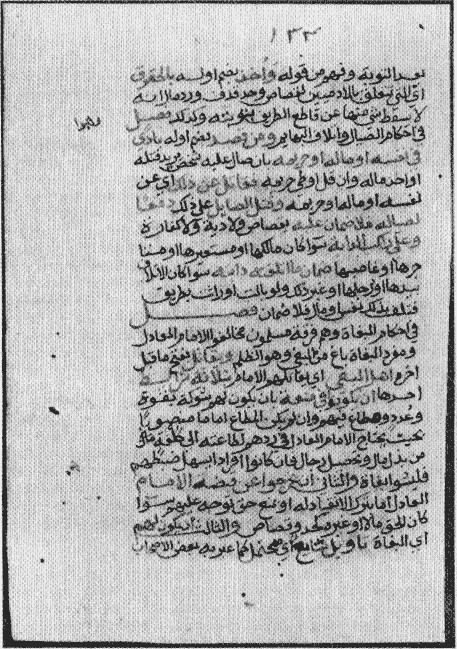
Figure 3.
Commentary by al-Ghazzi, in black ink, on text by Abu Shuja', in red ink,
shown here in gray. Late-seventeenth-century copy, Arabic ms. 4350. By
permission of the Houghton Library, Harvard University.
consonants and vowels obtained between matn and sharh . Like an unvoweled consonantal string, a matn can and frequently does stand alone; by contrast, neither vowels nor commentary insertions are independently viable. But both consonant strings and matns are open to, and ultimately dependent upon, the interpretive interventions of voweling and textual commentary.
A text and commentary type of relation is also part of a much wider pattern, one that goes to the heart of a general understanding of the growth of the shari'a. An equivalent relationship exists between the Quran, as the paradigmatic text, and the Sunna of the Prophet, with the latter standing as a kind of expansive elaboration, through Muhammad's actions and statements, upon the Revelations contained in the former. Taken together, the Quran and the Sunna, the two "sources," stand in turn in the position of basic "texts" with respect to the body of interpretive elaboration that became shari'a jurisprudence, or fiqh . Up to the establishment of the four standard schools of law, this jurisprudence developed through the efforts of the early Muslim jurists, who employed a method of analogically based interpretation (known as ijtihad ), the refining of which was one of the major contributions of al-Shafi'i. Thereafter, within each of the established schools, the text/commentary relationship was replicated still further, as the authoritative works were themselves subjected to successive commentaries and summaries, some of which became authoritative in their own right. Muslim jurisprudence developed like a branching tree, expanding outward from the single, original, and paradigmatic Quran, complemented by the Sunna, through the foundational early works of the several schools, to the concise manuals and then the outer reaches of proliferating commentaries and glosses.
New contributions stood squarely on the shoulders of earlier works. Both Al-Minhaj and Al-Mukhtasar are original texts upon which numerous subsequent written commentaries and glosses were based. Each constituted a point of textual departure for a separately branching literary tradition in Shafi'i scholarship.[40] Explicit lines of textual ancestry are traceable. Among the descendants of al-Nawawi's thirteenth-century Al-Minhaj , for example, are several sixteenth-century commentaries and synopses, while the same text's ascendant line goes back through a work by al-Rafi'i (d. 1266), which it synopsizes. Al-Rafi'i's text, in turn, was based on two short works by al-Ghazzali (d. 1111), both of which summarized one of the great scholar's own larger works, which was itself based on a work by his teacher al-Juwayni (d. 1086).[41]
The highly implicit and generally "unfinished" qualities of authori-
tative manuals necessitated and actively invited interventions, from recitational vowelings and the simplest reader emendations to full interpretive commentaries. Such texts were endowed with a dual and contradictory character: their marked stability was anchored in the assumed security of person-to-person instructional linkages and the authenticity of recitational transmission, while their equally fundamental instability derived from an absolute need for elucidation. While the intellectual world that this duality implied was one oriented toward a tension between a settled conservatism and a required, but criticizable, interpretive dynamism, the social world implied was one based on interpretive relations of hierarchy and power (see chapter 8).
Openness in authoritative texts was not only a consequence of concision, however, but equally a matter of internal discursive construction. Although by no means devoid of clear principle, shari'a scholarship was very much an ongoing argument, one characterized as much by recognitions of divergent views as by points of univocal consensus. The open character of such texts was crosscut by a basic positivism, a conviction that truthful positions existed, although particular truths might be known only to God. A polyvocality of competing opinion stood opposed to the notion that authorial presence was the medium of univocal truth. It was acknowledged that individual scholars could differ in their interpretations in the absence of a clear Quranic text or an authentic hadith from the Prophet.[42] Decisive texts, however, especially in the paradigmatic form of individual Quranic passages, were understood to convey truth. A "text" (nass ) of this type, that is, an individual source-passage within an authoritative text, was defined by scholars as "carrying only one meaning" (al-Juwayni n.d.: 46). When, as was often the case, positions were taken but the truth of a matter remained uncertain, this could be represented in manuals and other works by the appended formula "and God knows best."
When divergent views exist on an issue, al-Nawawi is very careful to report this fact. At the beginning of Al-Minhaj he establishes terminology to be used throughout the work to identify the status of alternative opinions. He exercises his interpretive preference, but in so doing he does not cover up other voices. "In all instances" he offers an "elucidation and evaluation of opposed opinions, of opposed ways a question can be addressed, and of opposed methods."[43] His terminology allows him both to specify that a particular doctrine appears preferable to him and to indicate whether the doctrine or doctrines rejected are widely accepted or not. Other terms similarly enable him to choose a manner
of addressing an issue while also noticing the strength, or weakness, of different approaches. An example of this precision is the usage of the comparative degree—"clearer" and "sounder"—to represent his choices in instances where, as he says, "disagreement is strong." When al-Nawawi simply states his own view, he utilizes the opening expression qultu , literally "I said," together with the cautious concluding phrase "and God knows best." The effect of such careful usage is to highlight the essentially disputed quality of many positions advocated. Other terms employed by al-Nawawi include madhhab , to indicate the commonly accepted positions of the Shafi'i school, and nass ("text"), to indicate the source-text positions of al-Shafi'i himself. Shafi'i's personal doctrine, which sometimes involves "a weak view or a divergent opinion," is further broken down, however, into the often opposed positions he held early and late, that is, during the Iraqi versus Egyptian periods of his career. Al-Nawawi uses the conventional terms "old" and "new" to mark off these different positions held by the school founder.
The overall impression of shari'a jurisprudence as presented in Al-Minhaj is of an unstable mix of the settled and the contested. In the text itself al-Nawawi remarks that he "has already begun work on a volume which will take the form of a commentary on the details of this abridgment." Despite the definitiveness Al-Minhaj came to represent in the Shafi'i school, it was nevertheless viewed, beginning with its author, as an open site, as a text in need of further clarification. To the extent that an extremely concise manual might be relatively univocal because of the dictates of space, commentaries inevitably opened up points of contention. This is the case with the very brief matn by Abu Shuja', the other manual relied upon in Ibb. Nothing beyond a single-view outline was possible in the scope of such a matn , but in the hands of al-Ghazzi, his principal commentator, many of Abu Shuja"s points are immediately modified, opened up to alternatives, or even bluntly reversed. As opposed to the Quran (12:1), which identifies itself as the "clear text" (al-kitab al-mubin ),[44] the discourse of the shari'a literature built up from it appears markedly and openly discordant. Divergences represented by the mere existence of separate schools of shari'a interpretation were further developed within each of the schools. Fiqh manuals served to summarize but could not finally contain the essentially contentious terrain of authoritative shari'a thought.
In many historical settings, schools competed for the intellectual and, the subject of the next chapter, the political terrain. In chapter 2, late-nineteenth- and early-twentieth-century highland history is the back-
drop for a discussion of differing shari'a conceptions of the state. With the Revolution of 1962, however, the Yemeni nation-state required and eventually adopted an entirely new form of law. Chapter 3 examines the transformation of the recitational and open character of authoritative shari'a texts through processes of codification and legislation.
Chapter 2
The Pen and The Sword
Both the pen and the sword are instruments of the ruler to use in his affairs.
Ibn Khaldun
Zaidi Texts
In terms of schools of shari'a interpretation, Yemen has a further, quite special, and largely homegrown tradition. This concerns the Zaidi madhhab , which takes its name from Zaid b. 'Ali (died 740), a fourth-generation descendant of the Prophet Muhammad. While the Shafi'is, as was noted, are one of four standard schools of the Sunni tradition, the Zaidis are Shi'is. In the local relationship of these two schools, Yemen has experienced its own microcosm version of a dialectic that has structured the Islamic world at large. Whereas the Shafi'i school, which prospered in many locales from the central Middle East to Southeast Asia, has an international identity, the Zaidi school is comparatively unknown, having flourished mainly in Yemen. In both technical ("school" of shari'a interpretation) and popular (geopolitical identity) senses, the two madhhabs have been associated with distinct regions of the country: the Shafi'is mostly concentrated in the southern highland districts of Lower Yemen, the Zaidis mainly in the northern plateau, or Upper Yemen.[1]
In substantive doctrine, regarding everything from ritual matters to contracts, the differences between Shafi'is and Zaidis are minor. Unlike the far more numerous and better-known Shi'is of Iran, the Zaidis prided themselves on being extremely close to many Sunni positions, so much so that they have been considered a virtual "fifth" Sunni school.[2] A fundamental divergence exists, however, between Shafi'is and Zaidis, and this centers on the issue of legitimate rule. While Sunni states were typically ruled by a temporal sultan or a king, the Zaidi state was led by an imam . The imamate is an institution of spiritual-temporal rule, although the very "this-worldly" Zaidis differ from other Shi'is in their
rejections of the doctrine of imamic infallibility and the concept of a "hidden" imam.[3] Whereas other Shi'i histories were interrupted (e.g., in the seventh or twelfth generations) with the occultation of a last imam recognized as genuine, the Zaidis continued to produce worldly incumbents until the mid-twentieth century. An essential requirement for a Zaidi imam was that he be a sayyid , a direct descendant of the Prophet Muhammad through the union of his daughter Fatima and his cousin 'Ali. Early on in Muslim history the Shi'is were a "faction" that resisted the emergent Sunni view of the legitimacy of leaders lacking this strict qualification of descent.
Beyond the descent requirement, according to Zaidi theory,[4] an imam is ideally an individual who, in addition to being of full adult capacity, male, free (not a slave), sound in senses and limbs, and both generous and just, is capable as an administrator, a battlefield commander, and a shari'a interpreter (mujtahid ). A pious but retiring scholar would not suffice: an imam is meant to be the sort of man who, upon recognizing his own exemplary qualities and perhaps on the urging of his fellows, rises up and makes himself known, actively and even aggressively asserting his call and claim (da'wa ) to be the imam. As a ruler, as the "commander of the faithful," an imam ought to be outgoing and responsive rather than reclusive, and he had to be willing, as the school's epoynym, Zaid b. 'Ali, put it, to "draw the sword."[5] An imam was meant to be a "master," as a twentieth-century Arab visitor said in honoring his host Imam Yahya, "of both the pen and the sword."[6]
Mastery of the pen was taken very seriously: Zaidi imams were the most scholarly of rulers, prolific in a wide spectrum of intellectual genres, most notably in shari'a jurisprudence.[7] As their scholarly achievements demonstrate, many imams were capable of advanced interpretation. The "word"/"opinion" (qawl ) of such imamic interpreters, especially when reinforced by the consensus of leading jurists, was authoritative among the Zaidis.[8] As had been the practice of some of their predecessors, the ruling imams Yahya and his son Ahmad of the twentieth-century Hamid al-Din line issued collections of personal interpretations, which guided rulings in the courts of their realm. The distinctive form of textual domination in the Zaidi state thus derived from the presence of a qualified interpreter at the pinnacle of authority. Although it was a general phenomenon that the shari'a provided the idiom of authority in premodern Muslim states, the Zaidis were special in their worldly fusion of the roles of interpreter and commander.
Although Sunni states, including several that ruled from capitals in Lower Yemen in the thirteenth through the fifteenth century, were typically led by the temporal authority of a sultan or a king, Sunni schools recognized their own version of the imamate.[9] A Sunni imam differed primarily from a Shi'i one in not being required to have the specific legitmacy of direct blood descent from the Prophet Muhammad, the issue that preoccupied Shi'is. There was a descent qualification for a Sunni imam (also known as a khalifa , "caliph"), but this pertained to the much more inclusive category of Quraysh, the leading "tribe" of seventh-century Mecca.[10] The other major difference, taking the Shafi'is and Zaidis now as specific examples, was that the Shafi'i imamate existed only in theory, in the confines of the fiqh manuals, while that of the Zaidis had an existence in both theory and practice. The Shafi'is nevertheless elaborated formal "requirements for the imam." According to al-Nawawi, he should be "Muslim, of full adult capacity, free (not a slave), male, a Qurayshite, a qualified shari'a interpreter (mujtahid ), courageous, of discerning views, and sound in hearing, sight, and speech."[11]
If an ideal Shafi'i imam was envisioned as scholarly and courageous, an interpreter-commander much like that of the Zaidis, in actual Shafi'i states interpretation and command were decisively separated into an interpretive authority controlled collectively by the scholarly community (the 'ulama' ) and a temporal authority held by the sultan or king. Ibn Khaldun remarked upon this division of labor between wielders of the pen and of the sword in Muslim states. In observing that "scholars are, of all people, those least familiar with the ways of politics" and that their intellectual craft was disdained by men in power, Ibn Khaldun was identifying a situation characteristic of Sunni sultanates, not the Zaidi imamate.[12]
Like the Shafi'is, the Zaidis had their own concise and authoritative manuals of shari'a jurisprudence, the most important of which is Kitab al-Azhar (The Book of Flowers). A chapter devoted to the imamate represents the mainstream Zaidi position on qualifications and activities connected with the position. The Azhar text is very similar to the Shafi'i manuals with respect to arrangement and chapter contents. Its author, Ahmad b. Yahya al-Murtada (d. 1432), was the deposed imam who composed his work while in prison. More than thirty commentaries and glosses were prepared for this authoritative manual, among them separate multivolume commentaries by the original author and by his sister.[13]Al-Azhar was often studied in its composite, commented-
upon form, known as Sharh al-Azhar , which was the basic text combined with its most noted commentary by 'Abd Allah b. Miftah (d. 1472).[14] A work of enduring importance in the northern highlands, the Sharh al-Azhar came to figure in the intellectual world of Ibb as a result of conquest.
The first Zaidi imam appeared in the far northern Yemeni town Sa'da at the end of the ninth century.[15] He was invited by local tribes to help in settling their disputes. Relations with the powerful northern tribes would be central to imamic politics of the subsequent centuries, but, as Paul Dresch notes, "there is something of a paradox involved: the tribes have always been politically important, and yet tribalism forms no part of the language of statecraft."[16] Despite wide vicissitudes in the reach of imamic authority, a long succession of these Zaidi leaders would be of continuing significance in highland history down to the mid-twentieth century. Originally confined to a far northern sphere of influence by strong Sunni states based in the southern highlands, Zaidi imams eventually managed to assert their control over the districts of Lower Yemen as well. It was at the conclusion of the first Ottoman occupation of Yemen, circa 1635, that Ibb and the rest of the southern highlands fell under extended but gradually weakening Zaidi imamic rule from the north. This rule continued until a period of nearly complete anarchy at about the middle of the nineteenth century, followed by the reappearance of the Ottomans in 1872. The second period of Ottoman rule, which concluded with the dissolution of the old empire at the close of World War I, was followed by the assumption of independent rule by Zaidi imams of the Hamid al-Din family. These imams, father, son, grandson, and (briefly) great-grandson, initially opposed Ottoman authority and then governed the highlands independently until the coming of the 1962 Revolution and the birth of the Yemen Arab Republic.
In Ibb, dominance was partly played out in the sphere of shari'a jurisprudence, as a relation between the schools of ruler and ruled.[17] During earlier, Lower Yemen—based dynasties such as the Rasulids, the Shafi'i school was the official madhhab (al-Akwa' 1980:9), but under the Zaidi imams it would become subordinate. It was not only in this period in Yemen that Shafi'is found themselves in such circumstances, however. Maktari (1971:3–4) suggests that their frequent remove from state control gave Shafi'i jurists "a measure of intellectual freedom which uniformity and authority to a great extent denied to the other schools." As the early Yemeni historian Ibn Samura astutely
observed, "governments have miraculous influence through suppression of knowledge, or in diffusing and publicising it or in swiftly consolidating it."[18] Madhhab politics under imamic rule dictated not only that imamic opinions were applied in the local Ibb courts, but also that scholars trained in the Zaidi tradition were appointed to judgeships and that texts such as the Sharh al-Azhar were taught in local schools. There was an impact as well on historical writing: the once prominent Shafi'i voice in biographical histories—including such Lower Yemen-based authors as Ibn Samura, al-Janadi, al-Khazraji, al-Burayhi—was replaced by that of Zaidi historians. From the limelight of historical attention, Lower Yemen passed into the shadows. In these later sources Ibb is regarded as a somewhat remote outpost, and, if they receive mention at all, local scholars are identified by the appended madhhab marker "al-Shaf'i." During the long period of imamic ascendancy and in the absence of such official stimuli as appointments, Shafi'i thought nevertheless persisted in Lower Yemen, its vitality attributable not only to intellectual resistance but also to continuing interchanges with Shafi'i communities elsewhere in Southwest Arabia. To the west, on the coastal Tihama, was the town of Zabid, a great, old center of Sunni scholarship, and there were also important communities of Shafi'i scholars located beyond the reach of Zaidi rule, in sultanates to the south surrounding Aden and especially in the Hadramawt to the east.
Nearly three hundred years of imamic suzerainty, interrupted only by the forty-seven-year interlude of Ottoman rule at the turn of the twentieth century, fostered among Zaidis a sense of their natural role as the overlords of Lower Yemen. In Zaidi eyes, the Shafi'is were a subject population (ra'iyya ); the inverse of this imaging was the Shafi'i view of the Zaidi imams as tyrants and of their tribal supporters as ignorant and ruthless. A reciprocally hostile sentiment[19] long characterized Zaidi-Shafi'i interaction, although this was recast with the birth of the politics of nationalism in this century. The rigidity of these old stereotypes was in some ways mitigated and in others exacerbated by the substantial southward flow of northerners into the Shafi'i districts during the centuries of Zaidi rule. Governors, administrators, judges, teachers, military personnel, and tribesmen moved into Ibb town and its hinterland. As a consequence, a significant number of the contemporary families of Ibb as well as many powerful rural families trace their arrival in the area to the two-and-a-half-century interval between the early and the late Ottoman occupation.[20] With the exception of some
townsmen who arrived this century and some rural "tribal" families who retained connections with the North, the descendants of Zaidis settling in Ibb and elsewhere in Lower Yemen, the scholarly and the untutored alike, eventually "became Shafi'is" (tashaffa'u ), in either the narrow juridical or the wider regional identity senses.
Muhammad Al-Shawkani
The distinctiveness of the Zaidi school in connection with shari'a interpretation went beyond the credentials of the imam. For the Shafi'is and the other Sunni schools, the right of scholars to engage in interpretation (ijtihad ) was eventually placed in question. In the centuries after the schools themselves had been consolidated, some scholars contended that the principal issues had been settled and that the requisite levels of interpretive skill for further fundamental elaboration were no longer to be found. This position was summarized in a famous assertion, that the "gate of independent interpretation (ijtihad )" was "closed." By contrast, in the Zaidi school, there had been no such debate concerning the practice of interpretation. For the Zaidis, the "gate of ijtihad " had always been unproblematically open, and the aggressive advocacy and pursuit of interpretation became a hallmark of their school.
Interpretive issues were at the center of the scholarly project of Muhammad b. 'Ali al-Shawkani, the towering intellectual figure of early-nineteenth-century Yemen.[21] A man of multiple talents and achievements, al-Shawkani was not only an active teacher and a prolific writer, but also a powerful actor in the Yemeni politics of his day. In addition to his contributions as a poet and as a historian, al-Shawkani authored a number of substantial and influential works in the fields of hadith studies, Quran exegesis, and jurisprudence. One of the leading advocates and practitioners of ijtihad in the entire Muslim world in his day, he was also the chief judge, the "Judge of Judges" (qadi al-qudat ) in the Zaidi imamic state, from his appointment in 1795 until his death in 1834. In his writings, al-Shawkani emerges as a highly independent thinker, who criticizes, synthesizes, and innovates, both with respect to the internal debates in the Zaidi school and in mediating between the Zaidis and the Sunni schools. A Zaidi by ascribed intellectual birthright (and in his political commitment to the imamate), he strove for an intellectual posture transcending conventional madhhabs.
One of al-Shawkani's works appreciated by Shafi'i jurists in Ibb is his commentary on the Azhar text. The Raging Torrent (Al-Sayl al-Jarrar ), as it is known, is a strong, section-by-section critique of the
standard Zaidi manual. In this commentary, as in all his other works, his desire to revitalize the interpretive project of ijtihad comes through clearly. This overriding aim of his scholarship is exemplified by the stated purpose of his biographical history, perhaps his best-known work among the generally educated in Ibb. In the opening pages of this book, The Rising Moon , al-Shawkani identifies and then criticizes the Sunni view that interpretive ijtihad pertained only to the early age of Islam.
The special competence of the early generations of this [Muslim] community with respect to substantial achievements made in the sciences of knowledge has come to be assumed among the uninformed rabble, while at the same time that of the later generations has been ignored. This has proceeded until the notion appeared among adherents of the four [Sunni] schools of the impossibility of there having been a qualified interpreter (mujtahid ) after the sixth [A.H. , twelfth A.D. ] century, as some say, or after the seventh century, as others claim. This assertion is indicative of an ignorance that should be obvious to individuals of the lowest level of knowledge, the least perception, the most humble understanding. Because this represents a restriction of divine grace, of the abundance of God, to some of the faithful while excluding the others, to people of some eras while excluding other eras, to individuals of one age excluding other ages. And this without evidence or supporting text. This weak and despicable assertion would deprive the recent era of an upholder of the proofs of God, an interpreter of His Book and the Sunna of His Prophet, and a clarifier of what He established as law for his faithful. This undoubtedly would amount to the loss of the shari'a and the disappearance of religion. God the Most High has, however, undertaken to protect His religion: the intent being not simply to preserve it in the bodies of pages and registers but rather to have actual individuals available to represent it to the people at all times and in every necessity.[22]
Al-Shawkani's purpose in The Rising Moon is thus to refute the idea held by some Sunnis that qualified practitioners of ijtihad did not exist after the formative centuries of Islam. He does so by providing biographies of about six hundred men and a few women, Yemenis and non-Yemenis, all of the highest scholarly achievements, who lived in the period from the eighth Hegira century down to his own time. His statement concludes by saying that the shari'a, and Islam generally, survives not so much in concrete writing ("in the bodies of pages and registers") as through embodiment in the lives of individuals, in the living "text" they transmit and interpret. One of al-Shawkani's intellectual endeavors in this connection was to document the specific human links (isnads ) by which his own learning had been received. Like
al-Shafi'i and others of the earlier generations, al-Shawkani authored a personal genealogical, men and texts, record that established the authoritative transmission of his knowledge.[23] Al-Shawkani's position on ijtihad and his activity as an interpreter have been taken into account in recent reconsiderations of the controversial history of the "closure" of Sunni interpretation (e.g., Hallaq 1984). Such rethinking of the history of ijtihad will influence our understanding of the relative dynamism of the various schools. In the case of Yemen, for example, it cannot be maintained that the Zaidis were unique in their continuing intellectual vigor while the scholarship of the Sunni Shafi'is was "largely frozen in a tenth-century mold."[24]
Al-Shawkani also wrote several treatises on the specialized subject of jurisprudential method. That is, in addition to such works as his commentary on the Azhar , which is at the shari'a manual level of applied jurisprudence (fiqh ) proper, he also wrote in the separate genre of legal studies known as the "sources of jurisprudence" (usual al-fiqh ). This special, methodological branch of the legal literature, which was launched by al-Shafi'i in his Risala , is specifically concerned with interpretation. One way the distinction between the two levels of discourse has been characterized in Yemen is by means of a simple botanical metaphor. In the new Preface to the published text of the Azhar , the difference between usul , the sources methodology, and furu' , the rules of applied law, is explained by means of the manual title, The Book of Flowers:
In the usage of scholars of interpretation in the Islamic community, fiqh is said to be composed of usul and furu'. Usul is the science through which shari'a rules are derived from first principles [i.e., Quran and Sunna]. Furu' are the applied shari'a rules concerning ritual obligations and worldly undertakings. Such applied shari'a rules are what this book [the Azhar manual] contains. The usul are like the tree, and the furu' are like the branches. On the branches there are leaves and flowers. And the author of this book therefore took flowers (azhar ) as his title.
Shari'a manuals together with their commentaries and glosses—that is, the furu' literature—were the practically oriented product, while the usul (commonly known as the "roots") literature contained the methodology. In Ibb, the principal usul work studied was the extremely short and memorizable text, known simply as the Pages (Waraqat ) by the famous early Shafi'i jurist al-Juwayni (d. 1086),[25] the teacher of the great al-Ghazzali. Al-Juwayni's text concludes with a concise definition
of the intellectual activity of ijtihad and the position of the interpreter, the mujtahid. This discussion is arrived at after a summary treatment of the essential features of several related disciplines, all of which are brought to bear in the exercise of ijtihad. Thus al-Juwayni touches upon key issues of the language sciences, rhetoric, logic, and argumentation; the field of Quranic exegesis (tafsir ); and the field of hadith studies, including the mechanism of oral transmission. The practice of ijtihad is a method predicated on competence in all these fields. The usul, or "roots," of jurisprudence are four: the two foundational "source-texts," the Quran and the Sunna, and two methods, analogy and consensus. An interpreter reasons from the two authoritative "texts" to new applied principles that are not specifically covered in either the Quran or the Sunna, and such individual interpretive acts may become generally accepted through the working of scholarly consensus (see chapter 7).
Nearly a school unto himself, al-Shawkani had numerous students and influenced many colleagues, and as chief judge he was responsible for recommending judicial appointments to the imam. He also visited Lower Yemen where he is said to have taught briefly in the towns of Ta'izz, Jibla, and Ibb.[26] Among his close disciples was his student and son-in-law Salih al-'Ansi.[27] As al-'Ansi's biographer, al-Shawkani emphasizes his studies in the field of hadith: "He studied under me the two sahihs [i.e., the works of al-Bukhari and Muslim] and the sunan of Abu Da'ud and some of my own writings." Al-'Ansi initially served as a judge in San'a', where he occasionally represented al-Shawkani in the imamic council. Later in his career, al-'Ansi was posted to a judgeship in Ibb, where he died in 1875. With this appointment, a local scholarly family of contemporary importance took root in Ibb town society. As eventually occurred in the case of the descendants of other new arrivals from the Zaidi north, the al-'Ansi line became Shafi'i. In this instance it happened that the shift to a Shafi'i identity occurred in one generation, as Salih's son 'Ali received instruction in Shafi'i jurisprudence from 'Ali b. Naji al-Haddad (d. 1893), father of 'Abd al-Rahman al-Haddad, whose biography was quoted earlier. 'Ali b. Naji, the apical ancestor of the Haddad line in Ibb, is memorialized in a poem by his student al-'Ansi, who speaks of his mentor's "passion for jurisprudence, which he used to / Dictate to me in the early morning darkness." Al-'Ansi goes on to lament the "death of our scholar and the interpreter of our era / Who clarified the ambiguous and the obscure."
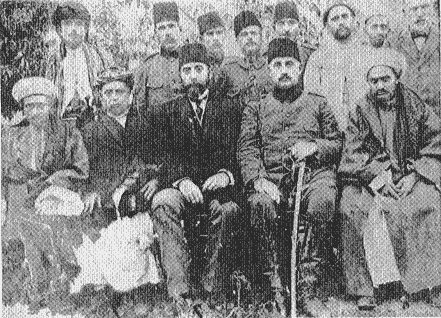
Figure 4.
'Abd al-Rahman al-Haddad, front right, seated next to Sa'id Pasha, ca. 1915.
'Abd Al-Rahman Al-Haddad
Unlike his father, 'Ali b. Naji, al-Shawkani's transplanted student Salih al-'Ansi, and others of the previous generations in Ibb, who were witnesses to the dissipated patrimonial authority of the Zaidi imamate, 'Abd al-Rahman al-Haddad grew up in a district that identified itself as part of the far-flung Ottoman Empire.[28] His dates (1876–1922) nearly coincided with those of the Ottoman Province of Yemen (1872–1918). Trained, as his biography states, on such manuals as al-Nawawi's Minhaj , al-Haddad was a distinguished representative of turn-of-the-century Shafi'i scholarship. By 1904 he had succeeded his father as the Ibb mufti, a judicial post requiring the highest level of scholarly achievement. During the protracted but unsuccessful siege of that year (ensuing from the accession of Yahya Hamid al-Din to the imamate), al-Haddad was a town leader, responding at one point to a Zaidi commander's surrender demand with a well-remembered defiant riposte: an envelope containing five bullets and a satirical poem.

Figure 5.
Ibb governor Isma'il Basalama with two sons, after meeting Imam Yahya in San'a', ca. 1920.
Three years later, he was among forty prominent Yemenis sent on a delegation to Istanbul to meet the Ottoman sultan. He was returned to a judgeship and a political position as vice-governor of Ta'izz (which then included the Ibb district). With the outbreak of World War I and the attack on the British near Aden, he headed a Lower Yemen contingent of mujahidin attached to the regular Ottoman forces under the overall command of Sa'id Pasha. A photo taken at the time shows al-Haddad, with deep-set eyes and in turban and engulfing robes, seated next to Sa'id in his officer's tunic, high boots, and tarbush. (See fig. 4.) Following the collapse of Ottoman authority in 1918, as Imam Yahya prepared to assume control of the southern highlands, an emissary was sent to reconcile the powerful men of Lower Yemen, including al-Haddad and the governor of Ibb, his father-in-law, Isma'il Basalama (al-Akwa' 1987). This descendant of Hadrami merchants who had settled in Ibb by the early 1800s was also the town's leading merchant in the valuable caravan trade to Aden. (See fig. 5.) Both men and a handful of other regional dignitaries traveled north to offer their allegiance to the imam. Like Basalama, who was reappointed to
his post in Ibb, al-Haddad was continued in his political position in Ta'izz and was also made presiding judge of the southern branch of the appeal court.
This Yemeni Shafi'i biography—bullets and a poem, military command and muftiship, political and judicial posts—is one that joins assertive leadership qualities and important state charges with distinguished scholarly credentials. In a manner reminiscent of an ideal Zaidi imam, al-Haddad combined an aptitude for statecraft (siyasa ) with shari'a knowledge: he "had a great capacity for siyasa ," his biographer writes, and "when he finished his work issuing juristic opinions and his responsibilities in conducting the administrative affairs of state, he would turn to study the works of al-Suyuti and others like him in the sciences of shari'a interpretation (ijtihad )." A more rarely instanced combination of power and knowledge, this alternative Sunni leadership ideal was modeled on the simple modesty of Abu Bakr (the first caliph) rather than, as was the Shi'i ideal, on the charisma of 'Ali (the fourth caliph) and the legitimacy of his issue. "Despite his unusual opportunity," the biographer remarks of al-Haddad, "he accumulated nothing in the way of worldly possessions, not even a house for his children." Al-Haddad was an urbane exemplar of a type of Yemeni "great man" accomplished in both the spoken and the written word. In stories told about him, al-Haddad is said to have expressed himself extemporaneously with audacious self-assurance, whether confronting the Ottoman sultan or the ruling Zaidi imam. In addition to his scholarly and administrative status, he was an adib , a man of letters: "Attributed to him are writings and dialogues, in verse and in prose, characterized by the most eloquent style and verbal facility."[29]
Among al-Haddad's last works was a versification of Imam Yahya's recently issued ikhtiyarat , his personal shari'a interpretations.[30] This commentary by a leading Shafi'i jurist on the opinions of the pivotal Zaidi interpreter is but one instance of an intellectual dialogue that has gone on in the highlands for many centuries. Aside from those aspects of their schools that set them apart—represented by their respective manuals, such as the Minhaj of al-Nawawi, the Mukhtasar of Abu Shuja', and the Azhar of Imam al-Murtada—in many other respects the Shafi'is and Zaidis of Yemen shared a common intellectual tradition. Beyond a convergence in the Quran itself, highland scholars of both schools held in equivalent esteem a number of fundamental works in such disciplines as hadith, Quran exegesis, grammar, and so on.[31] A revitalizing synthesis of the combined tradition was the great accom-
plishment of Muhammad al-Shawkani, who is counted as an intellectual ancestor by virtually all Yemeni shari'a scholars.
Shari'a Politics
When Ottoman Turkish troops arrived in Ibb in 1872, they found a town adrift in stateless anarchy. Rule by the Qasimi line of Zaidi imams, which in vital early years ended the first Ottoman occupation (circa 1635), had weakened drastically by the beginning of the nineteenth century, and waves of insurrection began to sweep across Lower Yemen.[32] By 1812 a tribal leader of northern ancestry had carved out a domain that was said to extend from the Sumara Pass down to the Red Sea port Mocha; in 1838–41, his son served as the military commander in an uprising led by a local saintly figure named Faqih Sa'id.[33] From mid-century to the arrival of the Ottomans, the breakdown of authority was nearly total. The period is known as the ayyam al-fasad , the "time of corruption." Local tribal leaders fought among themselves in the countryside and periodically besieged the towns. In the absence of imamic control, a series of commoner merchants attempted to run the affairs of the capital city, San'a', while in Ibb a town butcher named al-Akhshar, who owned a small cannon, was pressed into service to mount a defense against marauders.[34]
In the scheme of the venerable old empire, the recently acquired province of Yemen was relatively remote, comparatively backward, and intermittently rebellious. Because of the difficult circumstances of Ottoman rule in the highlands, the full array of institutions established in better-integrated and less problematic provinces could not be put in place.[35] In Shafi'i Lower Yemen, Ottoman rule received a decidedly different sort of reception than it did from the Zaidis of the northern highlands. In Ibb, a district seat,[36] the coming of the Ottomans was significant for eliminating any remaining filaments of Zaidi hegemony. Since the Ottomans were Sunni Muslims (Hanafi school), a further by-product of their rule was a general florescence of local Sunni life. In addition to the stimulus to Shafi'i scholarship, there was a resurgence in saint-tomb visitation[37] and Sufi brotherhood activity,[38] both of which the Zaidis attempted to suppress. This open flourishing of Sunni diversity in Ibb would be curtailed by the resumption of ever-tightening imamic control, beginning in 1918. It should be noted, however, that some Shafi'i scholars also disapproved of such forms of piety, as the polemical verses of the senior al-Haddad, a straitlaced shari'a
jurist, demonstrate.[39] Whereas later Zaidi governors in Ibb would merely forbid such activities, as governor of Ta'izz in the 1940s, the future Imam Ahmad ordered the exemplary destruction of the tomb of Ibn 'Alwan, the most important saint of Lower Yemen.[40]
While the fact that the Ottomans were Sunnis offered a formula for compatibility with the Shafi'is, it provided for just the opposite in relations with the Zaidis. In Ibb, the Ottoman administration was considered sound, many Turks were well liked as individuals, and there were marriages into local families. When the town was besieged by Imam Yahya's forces in 1904, town loyalty to the Ottomans was clear.[41] In Upper Yemen, by contrast, the Turks met fairly constant hostility, including two imam-led rebellions, in 1891–92 and 1904. When the imamic historian al-Wasi'i wrote in the mid-1920s about the reasons why the "people of Yemen" (ahl al-yaman ) had rebelled against the Turks, he was articulating an imamic line, not speaking for the population of Ibb and Lower Yemen.[42] Interviewed by a Syrian traveler in 1927, Ibb governor Basalama said that the differences between Imam Yahya and the Ottomans had concerned "the shari'a." This was not a narrow reference to "legal" differences but a reference to political positions expressed in the shari'a-based discourse of the period. The protracted conflict between the Turks and the imams was fought out as much in the idiom of the shari'a as on the battlefield. The Zaidis were irritated by what they perceived as a Turkish misconception: "Inasmuch as the Turks are foreigners ('ajam ) they do not understand what 'Zaidi' is—a school (madhhab ) among the other schools. The founder of this school was the Imam Zaid, son of 'Ali Zain al-'Abdin, whose grandfather was the Prophet Muhammad."[43]
The imams asserted their claim to spiritual and temporal authority in Yemen and attacked the Ottomans for their alleged failure to uphold the shari'a. Zaidi opposition at the turn of the century was framed not in the vocabulary of national aspirations but as a defense of the shari'a. Refusing to allow the imams the discursive high ground, the Ottomans stoutly defended the empire's long-standing commitment to uphold the shari'a[44] and mobilized a locally tailored shari'a politics of their own to counter that of the imams. They argued that the imams represented only the narrow sectarian interest of the Zaidi community, not those of the substantial populations adhering to other madhhab s. The Ottomans called for the transcendence of sectarian differences and for solidarity with the Ottoman state to meet the aggressive inroads of the un-
believers, including the British and the Italians, upon the lands of the Muslims.[45]
In the two imamic uprisings, declarations focused on shari'a-framed issues. In a letter to the Ottoman sultan, Imam Mansur (al-Wasi'i 1928: 149) claimed he had acted in order to "uphold the shari'a of our grandfather" (i.e., the Prophet). His letter goes on to enumerate a stylized, shari'a-anchored list of wrongs attributed to the Turks, including "forbidden acts," the "consumption of alcohol," "fornication and pederasty," and the nonapplication of the Quran/shari'a-prescribed punishments, the hudud (sing. hadd ).[46] These punishments, the imam pointed out, had been "eliminated by Ottoman law in violation of the sacred shari'a."[47] When Imam Yahya succeeded his father in 1904, there was a similar ideological motif. The new imam "ordered the tribes to lay siege to the towns in which there were Turks, who had brought corruption (fasad ) to the land, relinquished shari'a precepts, and oppressed the believers."[48] Two years later, following battlefield reverses, Imam Yahya began making overtures toward an eventual coming to terms with the Turks.[49] His initial negotiating position of 1906 stressed a spectrum of interrelated, shari'a-connected issues.[50] The first and second conditions were that court judgments be in accord with the "noble shari'a" and that he be given the power to appoint and remove shari'a court judges. Other conditions demanded a return to shari'a-based state funding structures, including pious endowments (for instruction) and the tithe. Condition six concerned the hudud , the shari'a punishments, to be applied to the "perpetrators of crimes among the Muslims and the Israelites, as they were ordered by God Almighty and enacted by His Prophet, [and] which [Ottoman] officials have abolished."
Strict enforcement of the hudud , for Zaidi imams as for purists of other periods, was a key summarizing symbol, shari'a shorthand for the existence of legitimate government.[51] If the implementation of a single part of the shari'a could stand for that of the whole, hudud application frequently served this discursive purpose. Ironically, it was these same hudud punishments that were typically singled out both by critical Westerners and by Muslim modernizers—again as the distinctive part representing the whole—to stand for the backwardness of the shari'a. In the shari'a manual of the Zaidi school, the imam's personal responsibility in the "administration of the hudud " heads his list of duties, and the same holds, in theory, for a Shafi'i imam.[52] Official imamic histo-
rians duly noted their proper enforcement. One way of exemplifying the existence of legitimate authority was by means of reports on otherwise unremarkable instances of punishment.[53]Hadd administration notices appeared also in the official imamic newspaper.[54] An account concerning the flogging of an adulteress concluded by saying, "All those attending departed asking God to support our majesty and his perfect state in his efforts to implement the shari'a." A condensed biographical sketch of Imam Yahya that appeared shortly after his death states that "he carried out the hudud established for criminals by God."[55] In this type of shari'a politics, the hudud offered a litmus test of upright rule.
Another integral part of the old shari'a discourse was the classification of the sociopolitical world into madhhab s and other equivalent groupings.[56] With the rise of the new political discourse of the nation-state, however, the madhhab construct—technically, a school of jurisprudence and, by extension, a label of regional geopolitical identity—underwent a further shift in meaning. When Isma'il Basalama, the former Ottoman and then imamic governor of Ibb, was asked by his visitor about the issue of Zaidi rule over a Shafi'i district, he responded in a way that both recognized and denied the relevance of madhhab categories. "I am a Shafi'i man," he began,
and I am free to act and invested with full power in Ibb. I appoint or dismiss whomever I want among the functionaries, and neither His Majesty the imam nor his distinguished government enter into such small matters. He has delegated to me the requisite authority to enable me to govern the people with an Islamic and shari'a government. There is no difference for me between a Zaidi or a Shafi'i, and everything you have heard in the way of foreign propaganda is nothing but lies and slander against Yemen and its people. (al-'Azm 1937:290)
Basalama acknowledges ("I am a Shafi'i man") that a madhhab category fits, but at the same time he asserts that there is no practical difference between Zaidi and Shafi'i, and that the idea of difference is itself the product of outside efforts to divide Yemenis. This interview occurred at exactly the time when the first opposition groups were coalescing in the highlands and in Aden. These groups would frame their opposition to the imams in increasingly nationalist terms, and the government would respond with a quasi-nationalist discourse of its own. The new, "nation" view of Yemen and Yemenis, like the "people of Yemen" usage of the twenties,[57] attempted to override old madhhab distinctions in order to project an image of unified national support for
imamic rule. Basic elements of this new discourse, especially its focus on new political wholes ("Yemen and its people") and a reinterpretation of the madhhab notion, already appear as assumptions in Basalama's statement. In its official newspaper, the imamic regime developed the political theme that it was the British who encouraged Zaidi versus Shafi'i sentiment to further the aim of drawing Lower Yemen into their own sphere of colonial influence.[58]
By the Revolution of 1962 madhhab distinctions had come to represent the divisive subversions of national fulfillment and the true shari'a under the old regime. The First Proclamation of the Revolution, issued "in the name of the free and independent Yemeni people (sha'b )," states that the first goal of national reform is to "give life to the correct Islamic shari'a, after its death had been caused by tyrannical and wicked rulers." The same provision calls for the "elimination of hatreds and envies, and divisions of descent and of madhhab."[59] Post-Revolution writers would continue to criticize the misuse of the shari'a and the geopolitical divisiveness of madhhab identities. One speaks of the "manipulation of the shari'a" under the imams.[60] "If we look fairly at the two madhhabs, the Zaidi and the Shafi'i," another cultural historian writes,
and make a detailed study of the subjects of difference between them, we would find them very insignificant . . . but the ignorant and the fanatical (muta'assabin ) made out of them a tool for the destruction of national unity and a means for sowing the seeds of discord among a people tied together by the bonds of unity and brotherly ties for thousands of years. This has had the greatest impact in troubling social life in Yemen and affects its political condition until today.[61]
As a shari'a politics grounded in madhhab affiliations gave way to a nation-state politics anchored in the new notion of a citizenry, so the old manual texts relied upon by Shafi'is and Zaidis would be replaced by a new type of authoritative text, the legislated code. It is to an examination of these specifically textual aspects of discontinuity, illustrated by the ground-breaking nineteenth-century efforts of the Ottomans and (a hundred years later) the legislative work of the Yemen Arab Republic, that the discussion now turns.
Chapter 3
Disenchantment
Ottoman Texts
For the better part of the nineteenth century, the Ottoman Empire had been in the throes of an internal reform movement known as the tanzimat , a term derived from the word nizam , meaning "order." The reforms occurred in specific response to Russian expansionism and in a larger context of the growing military-technological and commercial-financial strength of the European powers. The Ottomans had felt continual critical pressure from Westerners, one of whose old refrains was "Bring forth your code; let us see it and make it known to our subjects."[1]
In 1869 the Ottoman drafting committee charged with producing the first shari'a -derived civil law characterized the old corpus of jurisprudence they had begun to draw upon as "an ocean without shores."[2] Represented in this instance by the standard manuals and commentaries of the official Hanafi school, shari'a jurisprudence had come to be viewed by Ottoman reformers as problematically vast, difficult of access, and generally inappropriate for the times. New understandings of the nature and role of the shari'a would be central to the emergence of new political orders across the Middle East. To the extent that it survived such transitions, the shari'a would be contained in a new type of authoritative textual form, the legislated code.
The key Tanzimat reform concerning the shari'a was the production of the shari'a-derived civil code, known as the Majalla . Drafting committee work began in 1869, and the full code was finally promulgated in 1876. Its innovative and contradictory character centered on the fact that it was "Islamic in content, but . . . European in form."[3] Distilled in a new, eclectic manner from leading works of the Hanafi school, the
Majalla covered most of the mu'amalat (transactions) sections found in the old manuals. This material was equated by the drafters with the "civil law" of the "civilized nations."[4] Included also was a section on judicial procedure, but neither marriage nor inheritance was dealt with. The code was intended for use in the recently created civil (nizami ) courts and for convenient consultation in the parallel shari'a court system. Although the new court structure was not introduced in Yemen, the Majalla was applied there in the provincial shari'a courts. It is remembered in Ibb that two local men received instruction in its provisions.
Among Ottoman reformers, many of whom were astute observers of European society, the shari'a was considered archaic and unsuited for modern purposes. If "order" was the leitmotif of the reforms advocated, the shari'a had come to represent precisely the opposite: "disorder." A fundamental criterion of Western law, one that suddenly appeared to be unsatisfied in the shari'a, was that it be "known." The newly perceived obscurity of the shari'a was such that the essential task of "finding" the law was considered cumbersome if not altogether impossible. "In works of fiqh , general principles are mixed in with specific questions," the Majalla committee complained.[5] In addition, the "rules" the committee sought to tease out of the manuals "were scattered throughout the works of various jurists."[6] Drafters of the Ottoman Commercial Code (1850), which was based on French law, stated flatly that the relevant sections in the shari'a "were not recorded and organized; consequently, they do not meet the needs of present conditions." The authors of the Majalla , which was constructed exclusively of shari'a materials, likewise described these original texts as extremely difficult to work with. Their metaphor, again, was a boundless "ocean" "on whose bottom one has to search, at the price of very great efforts, for the pearls which are hidden there. A person has to possess great experience as well as great learning in order to find in the sacred law the proper solutions for all questions which present themselves."[7]
Painstakingly located in the texts of the oceanlike fiqh , the old "pearls" were fixed in the structural grid of numbered code articles, re-presented in an innovative abstract format that rendered the shari'a into something resembling the familiar form of "law." In the Majalla the Ottomans took the significant step of making a portion of the shari'a manageable and perusable. As the drafting committee wrote, "the need has . . . been felt for a long time for a work which dealt with transactions in general on the basis of the sacred law, containing only the least contested and least controversial opinions and composed in a manner
which would be sufficiently clear so that anyone could study it easily and act in conformity with it" (emphasis added).[8]
Accessibility in codes required that they be built in an orderly and regular fashion, ideally of conceptual units that could stand alone, equivalent in their logical self-sufficiency and in their independence from any need of interpretive clarification. In selecting "only the least contested and least controversial opinions" from the fiqh manuals, the drafters took an important step toward silencing the open-ended argumentation of shari'a jurisprudence. Once central to a vital intellectual culture, openness was now considered a drawback. As against the purposely unfinished old textuality, the new works were closed by design. In addition, the exercise of interpretive ijtihad was specifically disallowed where an article provision already existed.[9] For Muslim reformers elsewhere, ijtihad would be reconceived as an essential tool for the adapting of an invigorated shari'a to the changing necessities of the "modern world." The Egyptian Rashid Rida (d. 1935), for example, drew on the Yemeni jurist al-Shawkani, among others, in his efforts to reassert and define the continuing relevance and importance of interpretation.[10] A new, "free ijtihad" would be a key instrument of early modernist movements.[11] While the gate of this new ijtihad was being opened, that of the old was finally being shut. Codes such as the Majalla for the first time brought closure to the "open text" of shari'a jurisprudence.
The idea that this new digest of laws would also be accessible to "anyone" was quite revolutionary, and it directly threatened the exclusive role of the shari'a jurists, specifically the institutional hierarchies of the Ottoman 'ulama', as qualified interpreters. An underlying intention in framing the Majalla was to write it "in language comprehensible to every man,"[12] rather than in the esoteric jargon or the highly condensed manual style of the earlier generations. Unlike the basic fiqh works, most of which were in Arabic, the new code was originally written in official Ottoman Turkish. A further aspect of the new accessibility was an explicit policy to disseminate the codified laws through official publication, translation, and distribution. Subversive of the positions of the shari'a jurists and of their entire system of formation in the old system of jurisprudence-centered instruction, this new attitude toward the legal text also foreshadowed the Western notion of the responsibility to the law of the ordinary individual, the citizen.
The positions of the jurists were further undermined by the fact that the Majalla was finally promulgated by the Ottoman sultan. The shari'a had theretofore been a "jurist's law," which had been developed
and had retained its vitality through exercises of interpretive ijtihad, through commentary and opinion giving. Although the Ottoman Empire had lengthy experience with supplementary administrative law (qanun ), an essential feature of the shari'a was that it provided no legislative authority to a head of state. Now, however, the production of an entire corpus of shari'a law was taken out of the hands of the jurists and allocated to a new breed of public officials constituted as a drafting committee, with their work to be passed before the sultan for approval and promulgation.
It was general principles and theoretical constructs that the Majalla was intended but ultimately failed to provide. Whatever its shortcomings, it was this movement in the direction of abstraction, so characteristic of the constituted form of bourgeois law (Pashukanis 1978:120–21), that the Majalla initiated with respect to the shari'a. Abstraction and generalization—the creation of order out of newly perceived "disorder"—would be enduring hallmarks of the transformation of the shari'a into law. In shari'a manuals, for example, key concepts such as "property" were embedded in the chapters, where they figured, not as highlighted terms, but rather as implicit assumptions. In the innovative form given the Majalla , by contrast, such concepts were identified and separated out for definition. It has been said that the shari'a was essentially atheoretical, that it lacked the clear statements of general principles that had become requisite in international legal discourse. Despite the paradigmatic position of the contract of sale in relation to other bilateral contracts in the mu'amalat sections, for example, it has been repeatedly remarked that in the shari'a there was no "theory of contract."[13] The Majalla as a whole opened with a section explicating a "series of fundamental principles," and before each chapter was placed an "introduction containing definitions of all legal terms pertaining to the subject matter of the chapter."[14]
The new authority of codified texts would rest not only on abstraction and generalization, but also on the development of related conceptions of the state and of individuals as responsible legal subjects. An important model was provided by the French Civil Code of 1804. As Weber explains (1978:865), this was the first code to be "completely free from the intrusion of, and intermixture with, nonjuristic elements and all didactic, as well as merely ethical admonitions; casuistry, too, is completely absent." The new type of code "possesses, or at least gives the impression of possessing, an extraordinary measure of lucidity as well as a precise intelligibility in its provisions." These and other char-
acteristics of the French Civil Code were "expressions of a particular kind of rationalism," a "particular method of framing abstract legal propositions," which would be imitated not only elsewhere in Europe but in nation-states born across the Middle East. With the exception of what was to become Turkey, where the shari'a as a whole was summarily abolished in 1926 to be replaced by Swiss law, Western models would be synthesized in various ways with newly formalized shari'a materials.[15] It was with the Majalla that this reworking on the shari'a side of the equation began.
The immediately perceived shortcomings of the Majalla were several, all resulting from its inclusion of unreconstructed shari'a contents. Critics pressed for more rational codification: its general principles were deemed too few and insufficiently general, and the casuistic approach of the manuals had not been eliminated. It was also considered deficient in its character as a code, since "it was not a complete and exclusive statement of the law as it existed at the time of codification, but rather a nonexclusive digest of existing rules of Islamic law."[16] It was, in short, more of a modernized manual than a fully realized code. Despite explicit recognitions of the contemporary forces of economic change by its drafters,[17] the political economy of the Majalla was also not modern enough. Like the shari'a, it seemed not to accept the crucial Western legal notion of "freedom of contract";[18] there was a retention of moral principles rather than a guarantee of free rein for economic action.
Colonial Shari'a
They mingled up religious, civil and merely moral ordinances, without any regard to differences in their essential character; and this is consistent with all we know of early thought from other sources, the severence of law from morality, and of religion from law, belonging very distinctly to the later stages of mental progress.
Sir Henry Maine (1861)
In colonial-period reappraisals of the status of the shari'a by scholars, officials, and some Muslim reformers, the particular "rationalism" of the West, including an understanding of the nature of law and its appropriate textual forms, was elevated to the standard for comparison. One aspect of this thought, exemplified by the quotation from Maine, was an evolutionism and a teleology that identified the discursive separations particular to bourgeois societies of the era as the logical end points of normal legal development. Another involved reciprocal
negative estimations—as primitive, backward, or traditional—of non-Western discursive formations that did not exhibit such features. As the shari'a was reconceived as a foil for "modern" law, ideas concerning the superiority of Western forms legitimated a variety of colonial-period and early nationalist policies. The same positivism that contributed so fundamentally to the creation of modern Western codes led to significant misunderstandings when serving as the lens for students of "Islamic law."
This type of colonial-period thought was supplemented, however, by a more plural register in which the local importance and regional variations of the shari'a were recognized. While the simple antonymic, point-by-point opposition between the shari'a and Western law was a perspective characteristic of mainstream Orientalist fare designed primarily for home consumption, it coexisted with a specialist literature in which scholars debated scientific issues and addressed the practical problems of colonial administration. While the former was generalizing and essentializing, concerned with "common denominator" Muslims and broad civilizational comparisons that reinforced the uniqueness and the cultural hegemony of the West, the latter was more apt to be contextually sensitive and pragmatic about differences and similarities.
Late in the colonial period, the British chief magistrate in Aden (Yemen) began an article on Islamic family law with a reference to al-Nawawi's Minhaj : "A legal handbook, without modification over seven centuries, still regulates much of the domestic life of the people of Aden" (Knox-Mawer 1956:511). Among the colonial-era conceptions that contributed to decentering and bracketing the discursive authority of the shari'a was that it was "immutable." This was in contrast to Western law, which, it was assumed, "responds . . . to the ever changing patterns of social and economic life."[19] The thesis of doctrinal immutability also spawned related understandings, chief among them that the underlying system of instruction was "inflexible."[20] The attribution of an ossified character to Islamic law fit general Western conceptions of non-Western societies as either dormant (simple societies) or stagnant (traditional civilizations) until the enlivening moment of Western contact or colonization. As a consequence, patterns of discursive vitality different from those known in the West would remain unacknowledged.
Following, in part, from the immutability thesis was the conclusion that the shari'a was largely irrelevant. Law that did not adapt to changing societal circumstances must be increasingly out of touch. In addition, there was an attitude exemplified by Maine's opinion of
Hindu law, which he considered an "ideal picture of that which, in the view of the Brahmins, ought to be the law."[21] This he contrasted with Roman law, ancestor of the continental systems, which he described as "an enunciation in words of the existing customs of the Roman people." Classification as a "jurists' law" further suggested that the shari'a was largely hypothetical rather than reality oriented, emphasizing, as Weber put it (1978:789), the "uninhibited intellectualism of scholars" rather than the dictates of practice. With manual texts open before them, Western observers could put societies to the test: the lack of fit between rules and practices would be judged as deficiences, either in the legal texts or in the societies in question.
In a double-edged comment, C. Snouck Hurgronje (1857–1936) wrote that Muslims "exhibited an indifference to the sacred law in all its fullness quite equal to the reverence with which they regard it in theory" (1957:290).[22] "Indifference" points to nonapplication and noncompliance. Joseph Schacht (1964: 199, 209) would later argue that the "perpetual problem" of Islamic law was the "contrast between theory and practice." Hurgronje's qualifier, "in all its fullness," reveals the yardstick of a textual purist, for whom doctrine and reality are, or ought to be, perfectly matched. In a similar formulation, J.N.D. Anderson (1959:20) states that the shari'a was "never applied in its purity and entirety throughout every sphere of life" (emphasis added). Seizing exclusively upon the inevitable gaps between texts and practices, observers drew general conclusions about the social importance of the shari'a. Little attention has been given, by contrast, to the obeyed dimensions of the shari'a, or to the extent to which its categories and concerns have influenced behaviors.
The second part of Hurgronje's statement speaks of "reverence . . . in theory." Although the sentiment might appear futile, especially in the case of a purely ideal law, the comment does identify a potent authority adhering in the shari'a. Hurgronje elsewhere remarked upon the puzzling "zeal which thousands of scholars show in studying a law of which only some isolated chapters have retained practical importance" (1957 [1898]:266). Had a context-specific measure of relevance been applied, indications of "reverence" and "zeal" might have been more comprehensible. Had the degree of "practical importance" of the shari'a been considered historically variable, the colonial context in which Hurgronje wrote might have become a relevant issue. Then the question would be this: Is the described combination of nonobservance and reverence characteristic of Muslim societies in all times and places or
should it instead be understood in terms of the dislocations and attachments common to situations of colonial domination? Was a problematic specific to the colonial period being read as the timeless nature of the shari'a in Muslim societies?
Another new conception, as significant as it was seemingly simple and unobjectionable, was the labeling of the shari'a as a "religious" or "sacred" law.[23] The counterpoint was "secular" law, and two types of circumstance were modeled: the historical superseding of the traditional (religious) by the modern (secular) and the coexistence of the specialized communitarian (religious) with the generalized public (secular). Designation as a "religious" law relocated the shari'a in a Western-conceived past and future. As a newly specialized and restricted domain of the religious began to be imagined, attempts were made to refashion and reposition parts of the shari'a as its template.
Shari'a materials came to be understood as divisible in a manner that went far beyond the old categories of the 'ibadat (ritual obligations) and mu'amalat (transactions). Thus the Majalla report opened by narrowing its focus to the "temporal" (amr al-dunya ) content of the jurisprudence. In 1926 Dr. 'Abd al-Razzaq al-Sanhuri, the Egyptian jurist who would become the leading drafter of civil codes for new Arab states, wrote that the "point of departure" for this activity must be "a separation of the religious from the temporal portion of Islamic law."[24] While Western scholars acknowledged the comprehensiveness of the shari'a (e.g., as "the whole duty of mankind," as "the totality of Allah's commands that regulate the life of every Muslim in all its aspects," etc.),[25] in practice they restricted coverage to its "legal" aspects. Since the shari'a includes "an enormous amount of material that we in the West would not regard as law at all,"[26] an editing approach was adopted to separate out the "law" from the shari'a. In the influential introduction by Schacht, the systematic sections concern only "those subjects-matters which are legal in the narrow meaning of the term."[27]
A further conception was that, its ritual sections aside, the shari'a had an identifiable "core" or "heart,"[28] located in family, marriage, and inheritance law, in what the French referred to as statut personnel . The main support for this view was that these matters were comparatively fully dealt with in the Quran itself. It has been argued that the spheres of ritual and family law were characterized by a uniquely close fit of shari'a theory and practice and that they alone were relatively immune from Western legal "penetrability."[29] A corollary held that the shari'a was purely ideal, deficient or silent in virtually all other key
areas of modern legal-legislative life, especially in criminal, constitutional, and commercial law. This legitimated the suppression of large areas of the shari'a while opening new spaces for secular "law," for the "imposition" (Burman and Harrel-Bond 1979) or, more passively put, the "reception" of Western-inspired legal forms. Criminal law was an early focus of Western indignation and intervention. The Dutch, for example, found it necessary to issue a new penal code for their Indian Archipelago colonies, because, as the translator of al-Nawawi and Abu Shuja' put it, it was "clear that no civilized nation can push its respect for indigenous institutions to the extent of sanctioning the application of barbarian punishments, long practiced by virtually all oriental peoples" (Van Den Berg 1882:v; cf. Foucault 1977). Governmental forms were similarly suppressed or incorporated in a variety of colony, protectorate, and mandate formulas while property regimes and commercial regulations were adapted or replaced to fit the requirements of colonial economies.
An implicit contrast was made with the "heart" of Western law, located in forms associated with the market. Prominent in the fiqh, however, are such legal constructs as individually disposable property, a contract of alienation, complex notions of money and capital, and partible inheritance. With particular reference to the commercial sphere, where the shari'a was previously considered a dead letter, Udovitch (1970) has demonstrated the extent to which manual doctrine deeply informed and was informed by practice in premodern times. Descriptions of the shari'a as being viable only with respect to its ritual and statut personnel sections diverted attention from the existence of deeper and broader family resemblances to Western law.[30]
In the more pragmatic register, colonial administrators in Algeria, to give one specific illustration, recognized that milk , the key shari'a category of individually held property, was both extremely important in the local land regime and very similar to the Western notion of private property. With the different agenda of land appropriation in mind, it was written: "Private property existed and was perpetuated in Algeria on the same basis as among us: it is acquired, transmitted, and held and is recognized by long possession, Moslem testimonials, and regular titles; the laws protect it and the courts assist it."[31]
A last colonial-era conception concerns the mode of thought in shari'a texts. Three-quarters of a century prior to the already cited remarks of the Ottoman drafting committees, British officials in India discovered in Hanafi manuals "a system copious without precision,
indecisive as a criterion (because each author differed from or contradicted another), and too voluminous for the attainment of ordinary study."[32] For Anderson, a twentieth-century scholar, the old jurisprudence was simply a "hotchpotch."[33] Unlike modern forms of rationality that emphasized abstract analytical thought, shari'a texts exhibited a concrete or, in Weber's terms, "substantive" rationality. In contrast to the Western drive toward the elaboration of concepts and laws, principles in shari'a manuals tended to be developed indirectly, through particular examples. The result, according to Schacht (1964:205), was a "literary form" in which "the underlying rule is implied by the juxtaposition of parallel and particularly of contrasting cases." Given the theoretical and political exigencies of both code drafting and Orientalist scholarship, such discursive differences would not be neutrally assessed.
Summarizing the distinctive features of Islamic legal thought Schacht (1964:5), following Weber, focuses on the "casuistical method," "which is closely connected with the structure of its legal concepts, and both are the outcome of an analogical, as opposed to an analytical, way of thinking." Maine (1972 [1861]:11) wrote that "analogy, the most valuable of instruments in the maturity of jurisprudence, is the most dangerous of snares in its infancy." Analogy was especially "dangerous" in league with casuistry. As Weber noted, the elimination of casuistry was a positive accomplishment of the French Civil Code. For Westerners, this method of "case" reasoning, in which general moral or ethical principles are adapted to particular circumstances by means of analogic extension, had become a despised mode of thought.[34] In the shari'a, high-level constructs, such as the all-inclusive evaluative scale known as the "five qualifications" (obligatory, recommended, indifferent, reprehensible, forbidden), developed not so much through the analytic refinement of concepts as through the casuistic specification of applicable phenomena.[35]
Through a feedback pattern such conceptions about the shari'a circulated among indigenous elites and early nationalists. European-model schools existed across the region by the late nineteenth century, Middle Easterners were traveling and studying in Europe, and Western scholarship on Muslim society was available in translation.[36] In addition to the already cited views of the Majalla committee and Dr. Sanhuri in Egypt, a particularly dramatic example of the interregional circulation of such ideas is the resounding criticism of the shari'a issued by the modernizing framers of the Turkish Civil Code of 1926. The
shari'a, represented at this juncture by the Majalla , had just been abolished and was being replaced by an adaptation of the Swiss code. These postmortem remarks focused on the link of the Majalla (shari'a) with "religion" and with what was understood as a "primitive" evolutionary-developmental stage of society. The memorandum attached to the new code explained that, of the 1,851 articles contained in the Majalla , "barely 300 articles satisfy modern needs."
The rest is nothing but a mass of legal rules which are so primitive that they have no relationship to the needs of our country and are inapplicable. The principles of the Majalla are based on religion, whereas human life undergoes fundamental changes every day, even every minute. . . . States whose law is based on religion become incapable after a short time to satisfy the needs of the country and the nation, because religions express immutable rules. Life, however, marches on and requires rapid changes. As life changes constantly, the religious laws become nothing but empty words without meaning and formalities without value. Immutability is a dogmatic necessity for religion. . . .
The laws inspired by religion fetter the nations in which they are applied to the primitive periods when these laws were first born and they constitute insuperable barriers to progress. . . .
The modern state is distinguished from primitive societies by the fact that there are codified rules applicable to the relationships within the community. During the period of semicivilization, in a nomadic society, the laws are not codified. . . .
It was important therefore that justice in the Turkish Republic emerged from this chaos, this confusion, and the primitive state and adapted itself to the needs of the revolution and of modern civilization through the urgent adoption of a new civil code. This is why the Turkish Civil Code has borrowed the Swiss Civil Code. . . .
There are no essential differences among the needs of the nations which belong to the family of modern civilized societies. The constant economic and social relations have actually made one family out of civilized humanity.[37]
Instructive at the outset, the Turkish case is uniquely extreme in its final resolution concerning the shari'a.[38] Representing a full acceptance of the Western ethos of modernization and an associated desire for world-system assimilation, the memorandum expresses an uncompromising rejection of the shari'a (in the guise of the Majalla ), which has become a stigmatizing symbol of backwardness.
Where Muslim populations were under direct Western rule, local
versions of the shari'a changed in several characteristic directions. Protracted colonial articulations of the shari'a with Western law resulted in the emergence of wholly new legal syntheses. In Algeria and Tunisia, colonial French jurists worked out fusions of elements of the shari'a with aspects of the Roman-law-influenced continental legal tradition, while in British India, a composite of the shari'a and English law known as Anglo-Muhammadan law appeared. Another type of change, especially in shorter or partial colonial situations, concerned the relation of shari'a to local custom. From the point of view of the colonizers, custom had to be either standardized or abolished altogether in favor of a unified legal system. Although the shari'a was considered disorderly relative to Western law, when compared with "custom" it appeared orderly. As a consequence, the interests of colonizers and local elites in seeking to suppress custom and extend the sphere of shari'a application frequently coincided.
In highland Yemen, in the absence of colonial rule, imams and town-based scholars had long felt an imperative to spread the shari'a system (instruction, courts, and the state itself) to remote "tribal" districts where ignorance of Islam and pagan custom (taghut ) were thought to prevail (cf. Dresch 1989). In precolonial Morocco, application of the shari'a had been confined mainly to the large towns and their immediate hinterlands while custom held sway in the countryside. After the establishment of the French Protectorate in 1912, the sphere of shari'a court jurisdiction expanded dramatically as the colonial state took control of rural districts (cf. Messick 1989:42). In the circa 1900 British Protectorate over the Fulani Sultanate of Northern Nigeria, where the shari'a was already predominant, colonial officials promoted a still purer application. According to Schacht, administrators there were "inclined to prefer a formal and explicit doctrine, such as is provided by Islamic law, to changeable and badly defined customs."[39] In the Yemeni sultanates known collectively as the Aden Protectorate, the British were instrumental in the institutionalization of formal shari'a courts and in the consequent decline of customary law. "Shari'a law appears in South Arabia largely as the tool of the centralized government, whether indigenous or foreign," Anderson writes (1970 [1955]:11). For the "Protecting Power," he continues, "there is . . . a natural tendency to champion the shari'a, for it is 'tidier' than the vagaries of local custom from the administrative point of view and provides better political propaganda." Promotion of the shari'a en-
abled the British to "pose as in some degree the champion of Islam, in partial imitation of the Governments of the Yemen and of Saudi Arabia" (1970:12n).
Translation
British judges in Aden and elsewhere consulted al-Nawawi in E. C. Howard's 1914 English translation of Van Den Berg's earlier rendering in French. Translation, an extremely important part of the general Orientalist project, also had its more pragmatic dimensions. Van Den Berg states in a preface to one of his translations:
From year to year European control over Moslem populations is extending, so that it is unnecessary to insist on the importance of rendering the two works that form the basis of the legal literature of the School of Shafi'i accessible, not only to a small number of Arabic scholars, but also to magistrates and political agents.[40]
Translations produced under the auspices of colonial administrations were informed by reigning philological methods and understandings about the nature of texts. An initial task was to sift and select among extant manuscripts to identify, or reconstruct, a sound original text. A recognized contribution of many such translations was to publish and, in a new sense, to create an authoritative Arabic text. Together with the possible variant readings, the additions, omissions, and alternative formulations found in other manuscripts would be relegated to footnotes.[41] However enigmatic or convoluted the original texts appeared to Westerners in argument and style, in translation they could be made to reveal bodies of discrete and objective meanings. Despite the apparent cacophony of its texts, the shari'a could be shown to be "saying something." The resultant raw materials of positive knowledge contributed to the construction of more general notions about the essential nature of Muslim civilization.
In successive translations of the Minhaj and of Abu Shuja"s Mukhtasar there was a sense of an advancing positive science. Early and partial translations of Abu Shuja"s manual into Latin and Malay were described by Bousquet, a twentieth-century scholar and translator, as "absolutely barbaric," and the 1859 French translation by Keyzer [Keijzer] was deemed "of very little value."[42] In 1894 Van Den Berg, who had earlier translated al-Nawawi, published his French rendering of the Abu Shuja' text, embedded in the al-Ghazzi commentary. Looking back at his predecessor's effort, Van Den Berg notes, "It must not be forgotten that in the thirty-five years which have passed since the
publication of the book by Keyzer, science has not stayed stationary and that I have had available to me more powerful means of interpretation than he."[43]
Although, in the estimation of Bousquet, Van Den Berg's effort represented considerable "progress" over that of Keyzer, there remained weaknesses to be rectified. The translation was still of "insufficient rigor." Like Keyzer before him, Van Den Berg had responded to the extreme concision of the text with a "tendency for paraphrase." Bousquet, by contrast, would "proceed systematically in the reverse direction," placing "in parentheses the words and the ideas indispensable for completing the Arabic phrase so as to render it intelligible in French." Bousquet found loose and variable translations of terminology in the earlier translators particularly unsatisfactory. Keyzer's work reminded him of that by Perron of Khalil (the principal Maliki manual), "where the same technical term is rendered by diverse expressions in French," while in the translation of al-Nawawi Van Den Berg had been "satisfied with a vagueness that was the most absolute, the most inexact, and the most exasperating concerning the translation of terms for legal categories." In his own translation, Bousquet adopted a "rigorous terminology," which, he explained, involved "systematically rendering technical expressions by a single term."[44]
As Van Den Berg saw it, his problems in translating al-Nawawi had begun with the "succinct" expression of the original: "Anyone who has studied the Arabic text of a book of jurisprudence and particularly one of the concise style of Minhaj al-Talibin will understand the difficulty of explicating all the subtleties, all the double meanings and all the ellipses." A further problem was understood to concern the Arabic language itself: "The construction of phrases in the Semitic languages," he wrote, "is poorly suited for philosophical reasoning," and, as a consequence, the translation of a work such as the Minhaj "presents more difficulties than the translation of a code written in a European language." In addition to its crude linguistic ethnocentrism, this is a view that seems to have forgotten the crucial historical role played by Arabic translations and other treatises in preserving and elaborating upon the Greek philosophy so cherished in Western intellectual culture (see Peters 1968).
Van Den Berg mobilized a variety of techniques to tame this unruly text and render it cognizable: in addition to a standard table of contents, a conventional subject index, and an apparatus of clarifying footnotes, he provides a glossary index of key Arabic terms and full
cross-references, via special footnotes and summary tables, to the relevant articles of the several French codes (Civil, General Procedure, Criminal Procedure, Penal). In addition to these ordering devices, when a series of points occurs in the Arabic, it is set off in the French text in a numbered outline format. In the margins throughout the translation there are topic headings in small print as guides to the subject matter. In a manner parallel to the efforts of Ottoman and later code drafters, Van Den Berg endeavored to make his work of translation accessible, orderly, and relevant to international legal concerns.
Republican Texts
In 1975, a commission of shari'a jurists, composed of men who had trained either on the Shafi'i manuals of al-Nawawi and Abu Shuja' or on the Al-Azhar text of the Zaidi school, was created to participate in the drafting work connected with taqnin , the legislative restatement of shari'a materials in the Yemen Arab Republic.[45] Under Ministry of Justice auspices, this activity was defined as the "legislation of Islamic shari'a principles in the form (shakl ) of modern codified laws appropriate to the spirit of the age and its requirements."[46] The republic had known no impositions or receptions of Western code law, and its legislative efforts were being initiated in a postcolonial era of questionings of Western values and reassertions of indigenous ones. The Muslim world climate was one of emergent fundamentalist movements and efforts to reintroduce the shari'a. As a guiding principle, the 1970 Permanent Constitution identified the shari'a as "the source of all laws" (Art. 3).[47]
Two varieties of legislation have been produced, one of which is explicitly shari'a based. The initial fruits of the jurist commission's work appeared in the fourth volume of republican legislation, covering laws enacted from 1976 through the first six months of 1977. In his introduction, the Director of the Legal Office observed that it "comprises legislation of tolerant Islamic shari'a principles, a harbinger of learned efforts in which our honored scholars ('ulama' ) can take just pride."[48] What the volume contains, however, is mainly legislation produced by "government economists and commercial experts" together with administrative regulations divided according to their ministries of origin. In each of the shari'a-based laws, credit is given to the scholarly commission for a draft version presented to the Ministry of Justice. The commission's efforts have been associated with the expected substantive area of statut personnel —inheritance, legacies, gifts, endowments, and
marriage[49] —and also with such major pieces of general legislation as the Code of Procedure (1976) and the Civil Code (1979).[50]
This last has a double title, "Civil Code" (al-qanun al-madani ) and "Shari'a Transactions" (al-mu'amalat al-shar'iyya ), invoking both the Western model of civil legislation and the fiqh model of the mu'amalat . Like the Ottoman Majalla (and unlike the Civil Code of the Turkish Republic), this legislation is explicitly shari'a-derived. The first article refers to the law as "taken from (ma'khudh min ) Islamic shari'a principles." The old notion of the asl , "source," is reemployed here, as it is in the Constitution, to identify the new position of the shari'a. Whereas shari'a jurisprudence once drew on "sources," it now has become the "source" drawn upon. In the old tree metaphor, shari'a principles have become the "roots" and legislated laws are the new furu' , the "branches." The method involved, however, is not that of the usul al-fiqh , but rather procedures standard to legislative enactment, as adapted to the Yemeni setting.
The new source-authority of the old jurisprudence is both particular and general. Fiqh is the derivational source for the specific rules contained in the legislation and also the background or reference source for matters not explicitly covered or requiring interpretation. In addition to the "taken from" language, the derivational authority is expressed in Article 13: "Regarding the transactions, their types and particulars, the source is what the shari'a has established." Background authority is stated in Article 1: "If a specific text (nass ) is not found in this law it is possible to proceed by means of reference to the principles of the Islamic shari'a from which this law is taken." Article 20 specifies that "the authoritative reference for the explication (tafsir ) of the texts (nusus ) of shari'a legislation and their application is Islamic jurisprudence (fiqh )." As it carefully specifies the influential role of the shari'a as both source and surround, the newly established hierarchy of legal principle nevertheless places "this legislative enactment (hadha al-qanun )," the newly derived "law" itself, in the foreground. Writing in English, the director of the Legal Office restates Article 1 to identify the four "sources of Yemeni law" (sources—now in the Western sense). These are law (legislation), principles of shari'a, custom (not contradictory to the shari'a), and principles of justice (in agreement with the shari'a).[51]
Such legislative texts have cleared a new legal space, a privileged enclosure of fixed and orderly rules. Simultaneously, they have relocated the old jurisprudence as an authoritative but distanced backdrop. As in codes enacted elsewhere, the open argument that once
characterized the fiqh is curtailed here: according to Article 2, change by legislative amendment is envisioned, but interpretive modification by individual "scholars of religion and carriers of the shari'a" ('ulama' al-din wa hamalat al-shari'a ) is restricted. In its new status as a source, shari'a jurisprudence is ideally treated by drafters as a "whole corpus," in an attempt to hold divisive madhhab concerns at bay.[52] In accord with the "spirit of the age," there is no explicit critique of the shari'a as too vast, disorderly, or inadequate, but many of the issues explicitly motivating earlier legislators elsewhere are implicit assumptions here as well. The new space of law is also explicitly theoretical in construction: the section heading concerning "the contract in general," for example, further identifies itself as being concerned with the "theory of contract" (nazariyyat al-'aqd ).[53]
In addressing persons as either natural or legal (i'tibari ), the code moves away from the pronounced individual basis of the fiqh to a more complex recognition of abstract entities ranging from the state and cities to official organizations, commercial companies, cooperatives, and corporations.[54] This integration into the legal requirements of the world market system is reinforced by numerous specific laws developed by the Ministry of the Economy, ranging from the new Commercial Code (1976)[55] to specific legislation concerning such matters as trademarks.[56] These laws have been buttressed by the creation of commercial courts in the three largest cities.[57] Representing the first official alternative to the formerly exclusive shari'a court jurisdiction, the commercial courts are the beginning of a civil court system.
Every piece of legislation opens with the phrase "After perusal of the Permanent Constitution."[58] As a "constitution," dustur in Arabic, this new foundational text partakes of a worldwide and also a specifically Arab-world formula for the authoritative creation of a nation-state polity. Chapter 1 begins, "Yemen is an Arab Islamic state." The preceding Preamble opens, "We the Yemenis are an Arab and Muslim people." The document as a whole is headed by five short passages from the Quran. The first of these, "We set thee on a clear road . . ." (45:18), refers to a shari'a (in contrast to the shari'a), invoking the word's general meaning as a "way," "path," or "road." The second (45:20) refers to the original authoritative text, the Quran itself: "This is a clear indication for mankind, and a guidance and a mercy for a folk whose faith is sure." Taking a position developed earlier by some reformers and many fundamentalists and by Yemeni nationalists, religion is conceived of as a dynamic force. In striking contrast to rejections of religion as an
immutable block to progressive change, exemplified by the quoted Turkish view from the 1920s, according to the Yemeni Constitution, "Islam, with its instructions, magnanimity, and breadth, is synonymous with development, marches with the times, and does not stand as an obstacle in the path of progress in life."[59]
Three additional opening Quranic verses (3:159, 42:38, 27:32)[60] invoke the idea of consultation, which figures centrally in the conception of the Yemeni state, viz., Article 1: "It is a consultative, parliamentary republic." As was, and is, true among Muslim reformers generally, shura (consultation) "represents an indigenous principle of representative or constitutional government in Islam."[61] The legislative body of the Y.A.R. was known as the majlis al-shura , Consultative Assembly.[62] Beyond the theoretical design of the state, however, consultation also characterizes the events of a formative moment in Yemeni history, one equivalent in national significance to the deliberations of the Founding Fathers over the Constitution of the United States. The Permanent Constitution was promulgated on December 28, 1970, but before this date an interval occurred during which a draft version was submitted to "all sectors" of the populace for consideration. This is described in the Preamble:
Three months have elapsed since the publication of the draft constitution on the evening of September 26, 1970, and since then meetings of the various sectors have been held in the capital, towns, and villages in which the constitution was openly debated and opinions and views exchanged about it. The Republican Council has received letters and telegrams on the constitution, has held meetings with Shari'a scholars, the Ulama, Shaykhs, wise and cultured men; it has listened to their views and entered into useful debates with them.
This national discussion, the Preamble concludes, "explicitly proves the Nation's determination to follow the democratic, consultative path by both word and action." A novel sort of popular authority is thus provided for the nation's constitutive document.
This new discourse of nation and people grafts shari'a constructs upon Western legislative and constitutional forms. The singular authorship of the old fiqh texts is replaced by the plural legislative voice; the authoritative manual opinion, by the authoritative code article. Where opinions entered a contentious arena of ongoing argument, the legislated text becomes effective as law from its "date of publication" in the Official Gazette. In Yemen, it has appeared possible, as the Preamble to the Constitution says, to "preserve . . . character, customs,
and heritage" while adapting to the standards of the community of "interlocked" nations. In the absence of a colonial rupture with the past, change has seemed to involve critiques of the old regime and systematic installations of new institutions made possible by the Revolution.