
1
Ethnographic Context and Fieldwork
Recent debates in anthropology have underscored the importance of attending to issues bearing on ethnographic authority ("how we know—and convey—what we know"), polyvocality (the existence of multiple voices), and the tensions and politics entailed in the collection of ethnographic data and the anthropological enterprise as a whole. This chapter addresses various topics of this sort in the course of a discussion of strategies, methods, and dilemmas of fieldwork, including my relations with local men and women, my adoption by the village headman and his wife, and the ways in which changes in my life cycle—moving from bachelorhood to newlywed status, and ultimately to fatherhood, hence full social adulthood—informed my experiences in the field, including the collection of data. Many of these issues are examined in greater detail in subsequent chapters. So, too, of course, are the brief snippets of basic ethnographic data—on history, social organization, religion, and so on—presented in the short orienting section of the chapter and in the narrative on fieldwork to which most of the chapter is devoted.
Locating Negeri Sembilan
Negeri Sembilan is one of eleven states in the Malay Peninsula (see maps 1 and 2).[1] Its population is ethnically diverse (as is true of the Peninsula as a whole), and is usually discussed in terms of three major ethnic categories: "Malays," who make up 48.7 percent of the total; "Chinese," who constitute 34.2 percent; and "Indians," who, along with "Others," account for the remaining 17.1 percent (Government of Malaysia 1991).[2] The Malays of Negeri Sembilan have much in common with Malays elsewhere in the Peninsula, but they also differ in various ways. As for the most basic commonalities, all Malays speak a common language, identify with the Shafi'i branch of Sunni Islam, and order various aspects of their social relations in accordance with a body of cultural codes glossed adat . English translations of the term adat have included "tradition," "custom," and "customary law," but none of these (or any others that come to mind)
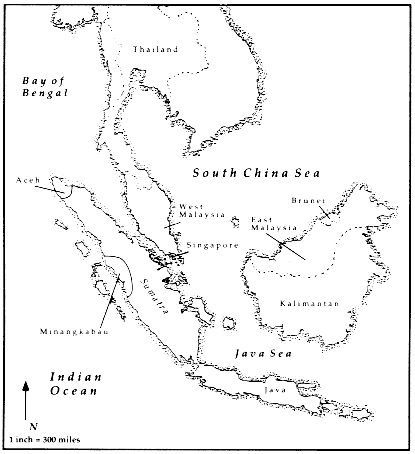
Map 1.
The Malay Peninsula (West Malaysia) and surrounding regions
adequately convey the cultural meanings, moral force, or social relevance of this unifying, broadly hegemonic construct. The scope of this concept can be gleaned from the well-known saying hidup di kandung adat, mati di kandung tanah , which proposes that the living are moored and guided in all of their actions by adat just as the dead are surrounded and held in place by the earth of the grave.[3] The traditional adat concept also subsumed that which is "natural" in the sense of being consistent with the laws of nature; for example, that water runs downhill.[4]
While the adat concept is a strongly marked symbol of basic similarities among all Malays, it also symbolizes locally salient (but analytically overdrawn) contrasts, for there are two major variants of adat in the Pen-
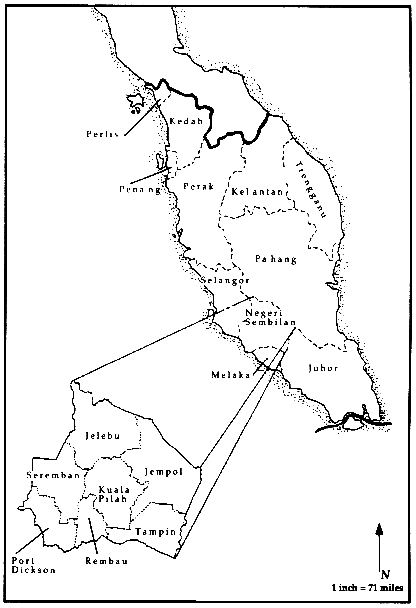
Map 2.
The states of the Malay Peninsula (West Malaysia) and the districts
of the state of Negeri Sembilan
insula. The first, referred to as adat perpatih , is predominant in Negeri Sembilan (and in the Naning district of Melaka and a few other enclaves scattered about the Peninsula—see maps 1 and 2). This variant of adat has long been associated with a social structure having descent units of matrilineal design, all of which reflects the Minangkabau (West Sumatran) ancestry of the area's earliest permanent settlers, who began immigrating to Negeri Sembilan in the 1500s, and perhaps even earlier. The second, known as adat temenggong , prevails in almost all other regions of the Peninsula and has long been linked with a social structure that is usually characterized as "bilateral" (or cognatic). The latter form of adat and the Malays who define themselves in relation to it are also assumed to be of Sumatran (perhaps even Minangkabau) origins, and to have evolved from the same ancestral culture as the Malays of Negeri Sembilan; it is also generally agreed that their forebears established permanent settlements in various areas of the Peninsula long before the ancestors of the Malays of Negeri Sembilan began their emigration from Minangka bau areas of Sumatra. (Which of the two adats is older is unknown. And no one can say with certainty whether the bilateral variant of social structure predates the matrilineal [or another] variant or vice versa [but see Blust 1980].)
The Malays of Negeri Sembilan are often treated as a special ("matrilineal") case that cannot be accommodated by general statements or models that are meant to apply to the ("bilateral") Malays living in other parts of the Peninsula. Elsewhere I have suggested that this perspective is misguided, and that, matters of convenience aside, we are best advised not to compare and contrast these two variants of Malay society by focusing on their systems of descent ("unilineal" vs. '"non-unilineal"—see Peletz 1994a; see also Peletz 1988b). Some of the general conceptual problems with descent-focused comparisons and contrasts have been underscored by Leach ([1961] 1966:3; see also Yanagisako and Collier 1987):
Ever since Morgan began writing of the Iroquois, it has been customary for anthropologists to distinguish unilineal from non-unilineal descent systems, and among the former to distinguish patrilineal societies from matrilineal societies. These categories now seem to us so rudimentary and obvious that it is extremely difficult to break out of the straightjacket which the categories themselves impose . (Leach [1961] 1966:3; emphasis added)
Descent-focused comparisons and contrasts of Malay societies tend to gloss over the strong emphases on matrifiliation, matrilaterality, and ma-
trifocality characteristic of all Malay systems of social relations. They also lose sight of the importance of siblingship, which, for all Malays, is a central organizing principle as well as a "core" or "key" symbol in Ortner's (1973:1339–40) sense; that is, it is an object or focus of marked cultural interest and cultural elaboration, which provides both a "source of categories for conceptualizing the order of the world" and a model for human conduct. Comparisons and contrasts of Malay societies that focus on descent also tend to lose sight of basic similarities in all Malay societies with respect to constructions of gender, personhood, and prestige.
For these and other reasons, I prefer to treat both the Malays of Negeri Sembilan and Malays elsewhere in the Peninsula as variations on a single set of Malayan (or Malay-Indonesian) themes, much like the Sumatran (Minangkabau, Acehnese) and Javanese cases I discuss below. In thus locating Negeri Sembilan Malays squarely within the Malayan world, I am also adhering to local practice, for, as explained in greater detail elsewhere (Peletz 1994a), the Malays of Negeri Sembilan view themselves as "thoroughly Malay," and do not regard or refer to themselves as "Minangkabau(s)," or "Minangkabau Malay(s)" (as is frequently suggested in the literature), although in most contexts they do acknowledge and are generally proud of their Minangkabau ancestry.
Gender, Age, and Self in the Field: Strategies and Dilemmas in Fieldwork
Anthropologists are often asked about their fieldwork experiences and about the factors that led to their decisions to settle in the communities which served as the loci for their research. We are also asked, especially by students, how we came to pursue research on the topics on which we eventually focus. Both for these reasons and to provide the reader some sense of how my fieldwork experiences informed my knowledge of Malay society and culture, I devote the rest of this chapter to a discussion of strategies and dilemmas in fieldwork. I introduce the discussion with brief comments on what led me to anthropology and the study of Southeast Asian societies and cultures.
My interest in anthropology dates from my undergraduate years (1969–73) at the University of California, Berkeley. After taking a number of courses in different areas of the social sciences, I was drawn to anthropology, especially social and cultural anthropology, which offered fascinating accounts of radically different cultural alternatives and simul-
taneously provided what I took to be well-grounded critiques of my own society and culture. Casting about for someone to sponsor an inchoate project on the local Hare Krishna movement, I introduced myself to Professor Herbert Phillips and asked for his support. He was less than receptive to my ill-conceived project but he said he would be willing to sponsor independent research focusing on Southeast Asian Buddhism (which I knew absolutely nothing about). He gave me a lengthy bibliography and sent me on my way. I thus began exploring topics in religion and social structure in Burma and later became interested in Thailand, the Philippines, and other areas of Southeast Asia. The following semester I conducted library research on various issues and debates in the literature on kinship and social structure in Southeast Asia, much of which focused on why Southeast Asian societies have long struck anthropologists and other outside observers as anomalous and "loosely structured" in comparison with Japanese and Chinese societies, and various groups in Africa and beyond. I subsequently decided to pursue graduate work on some of these topics at the University of Michigan.
At the University of Michigan I explored the field of social structure under the guidance of Professors Raymond Kelly and Aram Yengoyan, whose specialties include kinship and social structure, social and cultural theory, and the peoples and cultures of Southeast Asia and Oceania. (Conrad Kottak, Shepard Forman, and Sherry Ortner in particular also provided tremendous intellectual stimulation, but for the most part this came later.) I also began formal language study both in Malay/Indonesian and in Dutch, in anticipation of conducting anthropological fieldwork either in Sumatra or another area of Indonesia (a former Dutch colony), or in the Malay Peninsula. I became especially interested in the social structures of the ethnic groups in West Sumatra, such as the Minangkabau, and the Malay Peninsula, such as the Malays of Negeri Sembilan, who trace their descent from the Minangkabau. These groups have long fascinated outside observers: They are Muslims, yet they have matrilineal clans, and both houses and land tend to be owned and inherited by women. The available literature on these seemingly contradictory features of Minangkabau and Negeri Sembilan was sketchy at best and contained very little information on how Islam and matrilineality were interrelated in local organization, and how they combined in the everyday lives of people in these societies. Much of the literature was also ahistorical, and characterized by a dearth of reliable information on how the precolonial systems of property relations (land tenure, inheritance, etc.) and social structure more generally
fared under the impact of colonial rule, modern market forces, and Islamic nationalism and reform. For these and other reasons I decided to focus on such issues in the research that I planned to undertake for my doctoral dissertation.
In the course of preparing proposals to obtain funding for my project, I learned that a project of the sort I wished to pursue might be construed by Indonesian authorities as politically sensitive, and that for this and other reasons the process of obtaining research clearance from the Indonesian government could take well over a year. I therefore decided to pursue my project in Malaysia, among the Malays of Negeri Sembilan. After preparing a number of research proposals that I submitted (in some cases successfully, in others not) to the National Science Foundation, the National Institute of Mental Health, and other granting agencies, I applied to the Malaysian government for a research visa and made other preparations for going to the field. Much to my chagrin, I had to wait a full twelve months for research clearance from the Malaysian government, but since I knew that such a delay was likely, I was able to use this time productively, e.g., by carrying out further language study and making arrangements for institutional affiliation with a Malaysian university.
In September 1978 I left Michigan and went to San Francisco to spend some time with my family and my future wife, Ellen. From there I flew to Hawaii, where I spent a week with an old friend, and on to Japan, where I visited for about ten days with fellow graduate students from Michigan, who were conducting research on organized crime. I then flew on to Singapore, and finally to Malaysia. Arriving in the capital city of Kuala Lumpur, I was met by a Malaysian colleague (Ramli Mohd. Salleh) with whom I had struck up a friendship at the University of Michigan. Ramli was kind enough to help me get settled in a hotel and to provide other assistance during my initial stay in Kuala Lumpur.
In Kuala Lumpur I met with government officials and Malay scholars who directed me to local research efforts of which I had been unaware, and advised me on the best place to carry out the project. Armed with letters of introduction from the president of the University of Michigan and from my local sponsor (Dato Professor Ismail Hussein, then head of the Department of Malay Studies at the University of Malaya), I set out for Seremban, the capital of Negeri Sembilan, where I arranged to meet with government officials who provided additional advice and assistance, including letters of introduction to the administrative heads of the various districts of the state. After a few days in Seremban I traveled to the district
of Jelebu, which was the locus of a classic study of Negeri Sembilan society undertaken in the late 1950s, Michael Swift's (1965) Malay Peasant Society in Jelebu .
My objectives in going to Jelebu were partly to determine whether or not Jelebu would be the most productive locale for my research, and partly to help give me a sense of regional variations (if any) in the state. To this end I met with local government figures and others, including a leathery, bent old man by the name of Haji Ibrahim, who, upon meeting me for the first time and finding out that I intended to conduct research on local tradition (adat ), offered to come to the government rest house where I was staying and to share with me his copy of the Hikayat Jelebu (Tale of Jelebu). He showed up at the rest house at about 10 o'clock one morning, some fourteen hours after he had agreed to meet with me, and after a bit of small talk he began reciting the tale. That he was familiar with anthropologists and their tool kits was quite obvious from his visible disappointment and frustration that I had no tape recorder to take down his tale. I apologized for being "ill-equipped," at which point he suggested that I find some paper so that I could take notes on the Hikayat . I went back into my room and dug up some paper. As soon as I returned he began reciting a very long and difficult to follow myth of origin containing complex genealogical information. It quickly became apparent to both of us that I could not keep up with him, and he became palpably frustrated and annoyed that he had taken the initiative to seek me out, only to find me unprepared to benefit from the encounter! I found Haji Ibrahim rather overbearing, but unfortunately my encounter with him did not serve to impress upon me that my "ethnographic experience" had begun as soon as I stepped off the plane in Kuala Lumpur. Indeed, partly because I initially conceived my study as set within the confines of a village, I did not begin to make systematic notes about my experiences or observations until I settled in a village, some two months later. In fact, most of my first impressions of Malays, and of Malaysia generally, were only set down in writing in letters to Ellen.
Following my brief stay in Jelebu (and a return to Kuala Lumpur to beef up my tool kit) I journeyed to the Rembau district of Negeri Sembilan, where I again made the rounds of government offices, and otherwise endeavored to find a suitable locale for my research. Having been told in Kuala Lumpur, Seremban, and Jelebu that Jelebu or Rembau would be the most suitable locale for my research, my decision boiled down to a choice between Jelebu and Rembau. Partly on aesthetic grounds (Rembau struck
me as "much prettier"), I elected to conduct my research in Rembau, and eventually settled on the village of Bogang (a pseudonym) as my field site.
As I have discussed elsewhere, a number of factors influenced my decision to settle in the village of Bogang.[5] I had already decided that I would be best off living by myself, but I wanted to find an empty dwelling close to currently occupied houses. Thanks to the transportation, advice, and other kind assistance of the local parish headman (penghulu mukim ), who had many relatives and contacts in the community, I was able to locate such a house in Bogang.
My first lesson in Malay kinship and social relations began even before I settled in Bogang in December 1978, largely as a result of my search for someone in the village to hire to cook one or two meals a day and do laundry. Although I had assumed that this would be relatively easy to arrange, I was mistaken. The parish headman, among others, told me that rural Malays were not accustomed, nor did they like, to be paid in cash for the labor and other aid they provided friends and fellow villagers; they would be especially ashamed and embarrassed (malu ) to accept cash in return for cooking and cleaning, which are usually done free in the context of relationships of reciprocity. At the same time, the parish headman and others observed that Bogang undoubtedly had many households composed of married couples whose children had left home, some of whom would surely welcome me at their afternoon and evening meals. This possibility struck me as ideal, especially since it would present me with many of the research and social benefits of living in a Malay home.
Within a few days of settling in Bogang, I discussed the matter with the wife of the village headman (ketua kampung ), who was a close relative of the parish headman and one of my immediate neighbors. I asked her if she knew of any households that might like to have the newly arrived anthropologist join them at their afternoon and evening meals in exchange for payment. She replied that most villagers would be reluctant to accept such an arrangement because "people here aren't comfortable with the idea of charging guests for meals." So I decided to upgrade my sparsely provisioned kitchen to allow some improvements on the meals of eggs, bananas, peanuts, and tea that I had been preparing for myself since moving to the village.
In our initial conversations, the headman's wife had plied me with numerous questions about my eating habits in America, the composition of typical American meals, and my experiences with Malay cuisine. Although much of what I told her elicited only puzzlement (about the un-
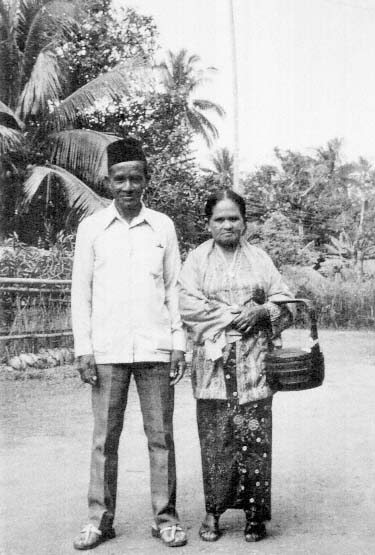
Figure 1.
Village headman and his wife
fathomable ways of orang putih , or "white people"), a fair number of my remarks also met with approving nods and comments such as "my husband likes that too," and "that's just what we eat." It did not occur to me at the time that she was exploring our culinary compatibility or trying to assess my reactions to various Malay dishes, including, especially, her favorites. Nor was I aware, needless to say, that she would soon—and perhaps already did—regard me as her "adopted child" (anak angkat ).
Within a week of my arrival in the village I realized that I was both welcome and expected to join the headman and his wife for lunch and dinner, and that they had in fact adopted me. Informal adoptions among villagers are extremely common, though the more important point is that our eating together on a regular basis presupposed our having a relationship couched in the symbols and idioms of kinship. The imperatives of this relationship were quite varied but most definitely included the unspoken expectation that I reciprocate the sustenance and care I received from my adoptive parents as village-born children of working age (ideally) acknowledge and repay their obligations to their parents—that is, through periodic gifts of cash and store-bought consumer items such as tobacco, tea, canned or imported fruit, and good cuts of fish and meat.
My adoption by the village headman and his wife proved advantageous in ways I had not anticipated. Soon after being adopted I realized my adoptive father was a healer (dukun ) specializing in the treatment and cure of people who had been poisoned and/or sorcerized. Since I took my evening meals at the headman's house, and since many of his patients came to his house for treatment in the early evening, I was able to observe many curing sessions and to talk to the headman and his patients about different types of illness, various features of healing rituals, and related matters. I had not originally intended to study such issues, but my adoption afforded me a valuable opportunity to do so, and, in the process, to get a sense of Malay views of the seamier side(s) of human nature. These views comprise the flip side of the idealized picture of human nature, personhood, social relations, and the like that is embedded in the formal ideology of kinship, religion, and community life, and that is frequently (and erroneously) dealt with by outside observers as if it constituted the totality of Malay views bearing on sociality.
My adoption also aligned me with other members of the lineage compound in which the headman and his wife resided, as did the location of my house, which was in the same compound. Consequently, during the early months of fieldwork I became much better acquainted with the members and dynamics of this lineage than with those of other lineages
in the village. Although this situation might have posed obstacles to my interacting freely with the members of other segments and factions of the community, fortunately it did not; soon after settling in the village I managed to establish close working relationships with a number of village elders outside my village compound.
During the initial four months of fieldwork, I devoted most of my time to participant observation and to building rapport with my neighbors. I attended numerous ceremonial feasts held in connection with weddings, funerals, and the Islamic ritual calendar, and I spent a great deal of time at village kedai , where dry goods and other supplies are sold, but which have the more important (social) function of serving as "coffee shops" where men congregate, relax over cups of coffee or tea, and discuss issues of local interest. Throughout this period I collected data on the content and ideology of bonds among members of households and household clusters, as well as between individuals and groups residing in different parts of the village; the basic characteristics of lineages, clans, affinal ties, kin group alliances, and kinship terminology; and forms of exchange, share-cropping, and tenancy. In addition I began detailed sketches of local political alliances and secular organizations. The material gathered during these early months increased my awareness of local sensitivities with regard to community factionalism and strife (and various national-level political issues); it also helped me organize more structured interviews and design a comprehensive household survey.
My interaction with villagers during the early months of my research was greatly facilitated by my fluency in Malay/Indonesian. The fact that my speech incorporated certain Indonesian (to wit, Jakartan) idioms was, initially, a source of great amusement to adult villagers, some of whom were nonetheless quick to take me aside and instruct me in the more appropriate (local) conventions. Somewhat to my surprise, a fair amount of this instruction—and the ribbing that typically preceded it—came from women over fifty years of age. I soon realized that adult women of, or senior to, the generation of my adoptive mother (aged fifty-one) were just as accessible as, and typically more informative and uninhibited (in their dealings with me, at any rate) than, their male counterparts. Although I did not realize it at the time, I came to understand that women are both permitted and encouraged to be more talkative, outgoing, and "expressive" than men, who are socialized to be more attuned to status and prestige considerations, which require greater verbal and emotional restraints and self-control generally. This pattern, which exists throughout the Malay/Indonesian world (see Siegel 1978; Keeler 1987; Smith-Hefner 1988a,
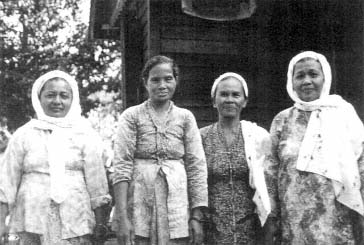
Figure 2.
Village women
1988b), is related to widespread Southeast Asian notions that men have greater spiritual power or "potency" than women, one outward sign of which power is their greater self-control and their tendency to talk less than women (see Atkinson and Errington 1990). Partly because of these unforeseen circumstances, I spent the greater portion of my time—especially during the first three or four months of fieldwork—among middle-aged and elderly women, where I was able to collect extensive data on the dynamics of women's relationships with their natural and classificatory sisters and other kin. These dynamics appeared in especially sharp relief in the context of labor and other exchanges associated with feasting, and in women's appraisals of one another's behavior and motivations.
My observations of interactions among sisters, along with other experiences with villagers of both sexes, confirmed many points emphasized in the literature on Negeri Sembilan: for instance, that ties among adult natural sisters were of central importance in numerous realms of society and culture (see Lewis 1962; Azizah Kassim 1969). At the same time, however, my observations led me to question other published conclusions. The moral force of relationships cloaked in idioms of siblingship, for example, appeared far more compelling than the available literature suggested, yet many such relationships were infused with ambivalence and tension as well. I was similarly struck by the fact that most of the local terms and categories villagers used to describe their ties to their relatives
were keyed to concepts of siblingship and only secondarily, if at all, to notions of descent. Initially, I interpreted the relative hegemony of siblingship and the profound ambivalences surrounding these and other types of relatedness as indicating the erosion or collapse of an earlier (pre-colonial) system based primarily on principles and idioms of descent. Only much later did I realize that norms and values derived from matrilineal descent were far less pervasive in precolonial times than other observers had assumed, and that principles and idioms of siblingship have long, and perhaps always, been of comparable if not greater significance in myriad domains of society and culture.
A social drama that occurred a few months into my fieldwork illustrates some of the ambivalences inherent in local siblingship and in local kinship more generally, and also speaks to some of the initial dilemmas I encountered in my fieldwork. The background to this drama is far more complex than can be discussed here, so I will provide only the basic facts.
In certain respects the drama began when Mak Su, my adoptive mother's sister, appeared at my house one afternoon announcing that Pakcik Rosli, a knowledgeable dukun from a neighboring village, was at her home, and was eager to talk with me and help me with my study.[6] I had already spoken with Pakcik Rosli on a few occasions, and I had been deeply impressed by his knowledge of local myth and history, adat , and various kinds of esoteric knowledge (ilmu ). He was in fact an ideal informant. For these and other reasons I was exhilarated when I heard that Pakcik Rosli had actually taken the initiative to assist me with my study, and I fantasized that my experiences with him might prove as productive as Carlos Castaneda's encounters with Don Juan! I eagerly went over to Mak Su's house and drank tea with Pakcik Rosli, Mak Su, and the others who were present. We talked for some time, and it was very productive.
In the weeks that followed Mak Su appeared at my door on other occasions, again telling me that Pakcik Rosli was waiting for me at her house. On those and other days I enthusiastically went to her house, though I did so partly for reasons having little to do with my study. I thoroughly enjoyed Mak Su, and I also struck it off rather well with her two daughters—Kakak Zaidah, a thirty-nine-year-old divorcée, and Maimunah, an unmarried and very attractive woman of about twenty-eight. I also enjoyed the company of some of Mak Su's other friends and neighbors, particularly Indok Jaliah, who was an unusually interesting woman and very outspoken and humorous to boot.
Some time later I crossed paths with an old man by the name of Pakcik Hamzah, who stopped me as I was walking, wanting to know why I was
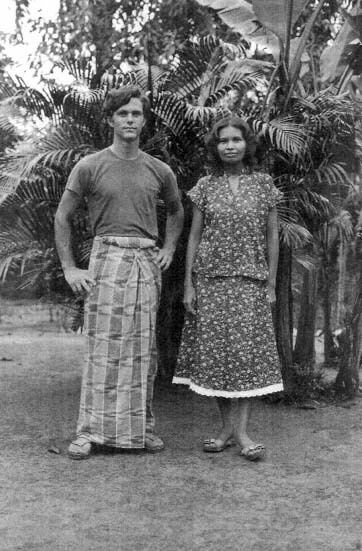
Figure 3.
The author with Maimunah
spending "so much time over at Mak Su's," and wanting to make sure I knew of the dangers of "love magic" (ilmu pengasih ). I didn't know what to make of his questions and warnings, though they were rather disturbing. On the one hand, I was inclined to discount Pakcik Hamzah's concerns, partly because I knew there was bad blood between his household and Mak Su's. (One of Pakcik Hamzah's relatives had once been engaged to Maimunah. The two of them had apparently been very fond of one another, and all the wedding plans had been finalized; at the last minute, however, Maimunah backed out and refused to go through with the wedding. Among other things, this caused extreme embarrassment to Pakcik Hamzah and his relatives. For these and other reasons he harbored intense bitterness toward Mak Su and her household.) On the other hand, Pakcik Hamzah's questions and warnings made me feel quite uncomfortable and, as time went on, slightly paranoid. I had read a fair amount about Malay poisoning and sorcery, and I had observed many people come to my adoptive father's house seeking alleviation of the pain and suffering they attributed to poisoning and sorcery at the hands of fellow villagers.
Pakcik Hamzah's admonitions were similar to those I had received on many previous occasions. Long before setting foot in Malaysia, I had in fact been warned by my (male) graduate advisors that I would have to be very careful in my dealings with local women; the basic advice, as I recall it, was "stay away from the girls." I was struck by the stereotypical accounts of the faux pas that foreigners, especially Americans, committed in their dealings with local women. I was apprised repeatedly of the dangers of behavior which may appear innocent enough by American standards, but which, in Malay society (and many other Southeast Asian contexts) might seriously alienate village folk, and might even constitute grounds for a forced marriage or expulsion from the community or country. I received similar cautions from the officials at the Immigration Office in Kuala Lumpur.
Interestingly, I was also forewarned about local women on other occasions during my first few weeks in Kuala Lumpur. These warnings were of a different sort than those I had received earlier, and came from young men I encountered in restaurants, hotels, and the like, who were both surprised and impressed by my fluency in Malay, and rather stymied by my statements that I was going to Negeri Sembilan to carry out research on local society and culture. These latter warnings concerned the dangers of women from Negeri Sembilan, who reportedly used powerful "love magic" to get those they were interested in to fall in love with them, or, alternatively, to get back at those who had ignored their advances or
otherwise rebuffed them. The dangers of which I was being informed had to do with my presumed ignorance of Malay social dynamics but also, and more importantly, with the active agency of local women.
I continued to receive warnings along these lines after I moved to the village of Bogang. While these admonitions sometimes pertained to other districts than the one from which the speaker hailed (in Rembau, for example, I was advised repeatedly to be especially careful of women from the Jelebu district), they came from women as well as men, and frequently pertained to women who were both neighbors and relatives of the person giving me the warning. (Indeed, some of the most persistent charges along these lines concerned sisters.) This is not to imply that people in Bogang felt that their village was more dangerous in this regard than other villages; rather, they simply felt that since I spent most of my time in Bogang, the greatest dangers to me would "naturally" come from there.
These warnings did not really sink in until my conversation with Pakcik Hamzah, which was followed by a visit to my house by Mak Lang, my adoptive mother's other sister. Mak Lang appeared at my kitchen window one evening and gave me a half-hour-long lecture on how I "better not get married here," that is, to a Malay woman. She did not mention Maimunah by name, but it was clear that she was referring to her. Mak Lang implored me not to forget my fiancée (I had told her and other villagers of my engagement) or the wishes of my parents, who, she assumed, would be devastated if I married a Malay (a Muslim). Mak Lang was visibly shaken at the time, and was pleading and crying intermittently, holding her hands palms up, in prayer position. (Some of Mak Lang's emotional distress may have been due to the fact that her daughter's house in Petaling Jaya had just been robbed. She was in fact on her way to a dukun with a reputation for being "very clever" at getting stolen goods returned.) Before leaving, Mak Lang emphasized that she had prayed for me, and for my marriage to Ellen, and that she hoped with all of her heart (more precisely, her liver or hati ) that her prayers would help.
The situation deteriorated (if only, or especially, in my mind) when Mak Lang's daughter and her husband informed me that a clan leader (Pakcik Abu) with whom I wished to discuss various aspects of adat "didn't feel that it was necessary" for us to get together, especially since I "had already learned about many features of adat from another clan leader" (who happened to be one of his principal rivals). Mak Lang's daughter suggested that the real reason Pakcik Abu might not want to talk to me had to do with the fact that I was spending "too much" of my time at Mak Su's house—going there for tea in the afternoon and stop-
ping by after dinner as well. Pakcik Abu didn't feel that this behavior was appropriate: Maimunah, after all, was single, and Kakak Zaidah was a divorcée. I was deeply distressed to hear this, particularly since Mak Lang's daughter and her husband also informed me that some other village elders did not approve of this type of behavior either; indeed, some of them were reported to have been less than enthusiastic about having me join them on the verandah at a recent feast, as I had been encouraged to do up until that time.
I felt thoroughly misunderstood, defending myself with the unimpressive argument that I had never gone to Maimunah's house when she was alone; in fact, whenever I had gone to the house, her older sister and mother had been there, along with her disabled (and largely deaf and lame) father, and frequently other villagers as well. It was true, however, that a few weeks earlier I had gone to the beach (some forty miles away) with Maimunah, her sister's adolescent daughter, and a young man from a neighboring community. We had left the village before dawn so that no one would see us, but unfortunately it got light while we were waiting by the side of the road for our ride, and we were thus observed by a few villagers. Making matters worse, we had been "spotted" at the beach by a young school teacher from Bogang, who proceeded to broadcast news of what he had seen to everyone in the village!
Mak Lang's daughter and her husband explained that if I was really interested in Maimunah I should go about things "the right way," and not as I had done. I explained that I was not romantically interested in Maimunah, and that I considered her "family," just as I considered Mak Lang, Pak Lang, and other members of the lineage compound "family," as well.
Much of the anger that Mak Lang's daughter and her husband expressed in the course of our conversation was directed at Mak Su and the other members of Mak Su's household, who, they were sure, had made a concerted effort to "snare" me. They asked me rhetorically why everyone over there was so kind to me—treating me like one of their own—much nicer in fact than they treated Mak Su's husband, Pak Su. "Look at the way poor Pak Su is sometimes left to fend for himself at meal time; there are times when he is not fed or properly cared for because Mak Su and the others are 'too busy with other things.'"
Mak Lang's daughter and her husband also expressed concern that someone "over there" would "charm" me, and in this connection they brought up Pakcik Rosli's frequent visits to Mak Su's house. "Why do you think he is over there all the time? He is a dukun , after all, and if he
hasn't done so already, he would certainly be willing to concoct some sort of love potion and put a spell on you." They went on to point out that while some such potions are only effective if they are consumed repeatedly, and are very slow acting (taking a number of days "to work"), others are effective after a single exposure and work almost immediately. "Since you go there all the time, you are at grave risk." In good Frazerian fashion they also told me not to leave my clothes outdoors, lest someone from "over there" get hold of them and work magic on them. I, in turn, recalled that they had asked me for photographs of myself, and that I had given them one or more pictures that contained my image.
I was devastated by the conversation and the various warnings and accusations it entailed. And I was certain that everyone in the village was upset with me and that I had thus jeopardized my entire research project. Though I tried to convince myself that I didn't really believe in magic, sorcery, and the like, I knew full well that virtually everyone in the village—and many highly educated, urban Malays I had met, as well—was thoroughly convinced of the phenomenal reality of such things. I was the only person in a community of nearly five hundred people who was skeptical of such matters: They obviously knew something I didn't.
A few days after my conversation with Mak Lang's daughter and her husband I discussed all this with my adoptive mother, who reassured me somewhat by telling me (falsely, perhaps) that she had not heard any complaints about my behavior. She explained that Pakcik Abu's reluctance to talk to me might well have nothing to do with me, or with anything I had or had not done. "He mixes very little with other villagers, doesn't let many people come to his house, dislikes most of the people in the lineage with which I am associated, and hardly speaks to his own brother." My adoptive mother added that her sister Mak Lang was an inveterate gossip, an alarmist, and a worrier, and didn't even get along with her own sisters. She was probably envious or jealous of her sisters because I spent far more of my time at their houses than at her house.
There was still the question of Maimunah, however. I wondered what people would think if I went home, as I had planned, and didn't get married after all. (The status of our wedding was by this point very much in question, largely because of the uncertainties attendant upon our six-month separation, but also because all of the arrangements for the wedding had to be handled by Ellen, who understandably felt burdened by having to shoulder them all herself.) People would surely think that the "love magic" had "worked" and that I had "fallen for" Maimunah. My adoptive mother's sound advice: If you go home and don't get married,
and thus come back to the village alone, you simply tell people here that you got married but weren't able to bring your wife back with you; that will put an end to the rumors!
This helped calm me even though I later had serious doubts about the veracity of my adoptive mother's reassurances that she hadn't heard any complaints about my behavior. As I walked out of the village to catch the bus for Kuala Lumpur, I found myself obsessed with the idea that it would be a disaster if I returned to the village unmarried.
The next few days in Kuala Lumpur were disorienting and distressing. The King of Malaysia had died, many shops and offices were closed down, and the streets were largely empty—all of which intensified my feelings of alienation. And I got word of the meltdown at Three Mile Island, the initial reports of which suggested a cataclysmic disaster.
When I returned to the village a few days later, I was extremely anxious and apprehensive, even though I sensed that many of the problems associated with my apparently excessive contact with members of Mak Su's household might quickly dissipate, particularly since I would soon be heading back to the United States for a month to six weeks. I had never had an ulcer and had no clear sense of the symptoms of such, but I felt certain that this was "ulcer material," and that I would soon get one if I didn't have one already. Much to my dismay, I also had to admit that many of the problems that I encountered were largely of my own making, and that, having achieved a certain level of familiarity with Malay society and culture, I had gotten complacent, had let down my guard, and had begun taking too much for granted. At the same time, I realized that many of the dynamics described here indicated that sibling ties, especially among sisters (e.g., my adoptive mother and her two sisters), are suffused with far-reaching tension and ambivalence, and are in fact more conducive to the realization of ambivalence than virtually any other social ties in local society and culture. More generally, I realized that kinship, laden as it is with heavy moral entailments, cuts both ways, and that for these and other reasons the most difficult aspects of my fieldwork were likely to be interpersonal and emotional rather than intellectual.
In mid-April 1979 I left the village for approximately six weeks, which I spent largely in Kuala Lumpur, Singapore, and the United States. Ellen and I got married in mid-May, and in late May I returned to Bogang with her, after which time I no longer ate regularly at the headman's house. With a few exceptions (members of Mak Su's household), Ellen's presence in the village was greeted with considerable enthusiasm even though she spoke no Malay at the outset and had to devote much of her first few
months in the village to informal language study. Her commitment to learning Malay and to exploring the experiences of Malay women and children were especially rewarding to her and enriched my own understanding of women, gender, socialization, and other issues.
It is also true that Ellen's presence in the village altered some of my relationships in a fundamental way. Members of Mak Su's household were now rather standoffish to me, and were certainly very cool to Ellen. Maimunah, for that matter, had moved out of the village and was residing with one of her sisters in Seremban. My relationship with Pakcik Rosli grew cold; and some of the young boys that had hung around my house in the months when I lived there alone no longer did so, since they were malu ("embarrassed," "ashamed") to spend time there now that I was married. On the positive side, I developed deeper relationships with my adoptive mother and other adult female members of her lineage, particularly since these women (and our next-door neighbors especially) expressed strong interest in spending time with Ellen and me (if only because I was needed as a translator), and in helping Ellen learn to speak Malay and carry out the chores and responsibilities of a Malay woman. I also developed new perspectives on the interactional styles of male elders, realizing, for example, that they were sometimes rather uncomfortable in Ellen's presence and, more generally, that they did not have much experience interacting with women to whom they were unrelated. This was markedly different from the interactional styles of female elders, who exhibited no such discomfort when dealing with unrelated males. In addition, I learned much about the sexual segregation enjoined upon newlyweds and all married couples; for while we had been accustomed to spending much time together in the United States—walking arm-in-arm on occasion, and the like—we quickly realized that in Malay society such behavior is not simply frowned upon, but is largely beyond the pale. This was rather frustrating, all the more so since we were on our honeymoon.
During the next few months I buried myself in my work. By September 1979 I had finished much of the informal, open-ended interviewing pertaining to kinship, property relations, and local history, as well as the survey questionnaire that I administered from October 1979 through January 1980 to each of Bogang's 106 households. The questionnaire focused on basic census issues: the residential and marital histories of household members and their formerly resident children; the acquisition, utilization, and future conveyance of various categories of rights over houses and land; tenancy relations and labor exchanges; and income sources, living standards, and participation in various Islamic rituals and other religious
activities. The scope of the questionnaire was, in retrospect, overly broad, but it did yield a wealth of valuable information that lent itself to quantification, diachronic analysis, and a fairly precise delineation of continuity and change in numerous realms of village society and culture. The questionnaire was also extremely helpful in that it began to sensitize me to the differential distribution of knowledge pertaining to Islamic inheritance codes and other aspects of Islam, and to the distribution of cultural knowledge more generally.
In January of 1980 I began a month-long study of all District Land Office records for the village of Bogang (from 1888, when land titles were first recorded in writing, through 1980), to augment the household survey data and elucidate continuity and change in property and inheritance relationships from the late nineteenth century to the present. I was aided in this endeavor by two young men from the village who I had hired as research assistants. Their assistance proved invaluable, as did that of others I hired to help with the transcription of tape-recorded interviews.
At about this time Ellen began teaching at the local elementary school, partly because of her interest in teaching (she has a certificate in elementary education), but also to help repay villagers for their kindnesses in assisting me with my study. The subjects she taught included arithmetic, geography, drama, and English; all of the instruction was in Malay, for by this time Ellen was quite conversant (though not yet fluent) in the language. Her experiences at the school and her informal tutoring of young girls at our home in the late afternoon were especially enlightening to her, and to me as well, since they provided considerable insights into socialization processes and the world of children.
The final months of fieldwork (February-May 1980) were devoted primarily to gathering, through open-ended taped interviews, additional information on the substance and local conceptualization of kinship bonds and other social ties. I also collected mythical material on the origins of the universe and human society, the initial settlement of Negeri Sembilan, and the domain of spirits.
In mid-May 1980 Ellen and I completed our fieldwork, left Bogang, and went to Kuala Lumpur to spend four weeks analyzing early British administration reports on Negeri Sembilan and other historical documents deposited at the Malaysian National Archives (Arkib Negara Malaysia). Our departure from the village was rather traumatic for us, for while we were desperately in need of privacy and eager to reestablish old friendships and familiar routines in the United States, we had also developed intimate ties with villagers, such as my adoptive mother, and we
knew that we would miss them dearly and might never see some of them again.
We then left Malaysia and spent six weeks in archival study in England, focusing on colonial records housed in the Public Record Office, the British (Museum) Library, and the School of Oriental and African Studies of the University of London. In late July we returned to the United States, and to our respective careers. In my case, this involved preparing a doctoral dissertation on social structure and agrarian change in Negeri Sembilan, and, with that completed, beginning a teaching job at a small liberal arts college (Colgate University) in upstate New York; in Ellen's, it involved returning to work in the field of graphic design.
Over the next few years I completed a book and a number of articles on kinship, property, and social history in Negeri Sembilan, with special reference to the district of Rembau. In the course of preparing both the book and the latter articles in particular, I realized the value of broadening my perspectives by conducting additional research on topics that I had initially, and, in retrospect, mistakenly, viewed as more or less separate and distinct from the domains of kinship and social structure. I realized, for example, that I knew a fair amount about gender roles and the autonomy of women, but that I had a relatively limited understanding of "underlying" issues, such as the way Negeri Sembilan Malays represent or "construct" not only similarities and differences between males and females, but also gender inequality and domination. I also recognized that I needed to gain a better understanding of meaning and experience, of the ways in which different constructions of gender varied according to context, and of the political economy of contested symbols and meanings generally. Similarly, though I was fairly knowledgeable about continuity and change in norms and laws concerning property relations, marriage, divorce, and related matters, I did not know much about the ways individuals deal with property and inheritance issues and various types of disputes in the local Islamic courts and in Malaysia's pluralistic legal system as a whole, or about the ways the state uses the courts to effect social control and sociocultural change.
I subsequently designed a program of research concerning legal procedures in Negeri Sembilan, especially the handling of disputes within the Islamic legal system. The proposed research would enable me to collect data both on the relevant legal and political issues, and on topics of gender, since the Islamic courts constitute one of the principal arenas in which gender differences and inequalities are institutionalized and given formal, state-sanctioned backing. I took a leave of absence from Colgate Univer-
sity during the 1987–88 academic year in order to conduct field research on this project. The study, which extended over a period of nine months, was carried out mostly in the Rembau district of Negeri Sembilan, though I also spent some of my time in the neighboring, predominantly urban, district of Seremban to acquire a broader perspective. In conducting the research I was struck both by the ways in which court officials and litigants alike invoked contrasting representations of gender and kinship in their interpretations of the cases in which they were involved, and by the deeply perspectival nature of cultural knowledge (cf. R. Rosaldo 1980). Since an understanding of these latter issues is a prerequisite for a proper analysis of the cultural logic of judicial process, I decided to write up the material on gender and kinship before embarking on a separate monograph on the Islamic legal system.
Our return to Bogang in August 1987 was greeted with considerable enthusiasm, and throughout our stay in the village we were accorded the same warmth and hospitality that we received during our previous visit. On August 7 we had taken the train from Kuala Lumpur to Seremban, where we spent the night. On the following day we continued on, via train, to the bustling town of Tampin, where we hailed a taxi and began the roughly eight-mile trip to the village. We were stirred by a rush of pleasant memories as we turned off the main road and followed the dirt road to Bogang, passing stands of rubber trees and the ancestral shrine that houses the village's mythic founders, and, finally, the mosque. As we had done so many times before, we stopped at the kedai run by Mak Azza.
Mak Azza and Abang Ariff, along with a villager I did not recognize, were at the kedai , and as we got out of the taxi, I said, "Hey, it's me, Michael," to which they responded with exclamations of "Wah, they've arrived!" (I had kept in touch with my adoptive parents and other villagers, and had told them that I would be returning in July or August.) Much of the initial excitement focused on our two-and-a-half-year-old son, Zachary. Mak Azza and Abang Ariff wanted to know if he was a boy or a girl, and what his name was. They were especially pleased about his name; in their words, "Wah, Zakri, a Malay name!"
Some of the early conversation concerned who had died, and I learned that Mak Azza's husband had passed away a few years back after a slow, agonizing illness, widely attributed to sorcery, which entailed his turning black and so gatal ("itchy") that he could barely stand being alive. A number of other villagers had died, more than a few in automobile accidents (a disturbing index of Malaysia's "modernization"), but many of those
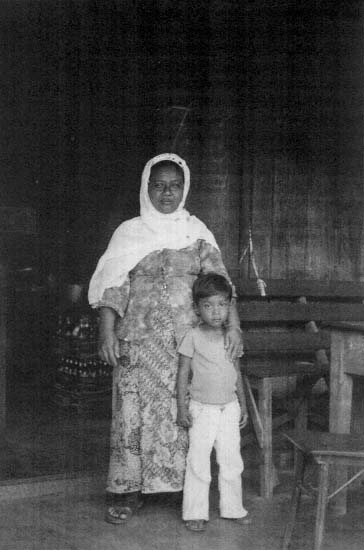
Figure 4.
Mak Azza and grandson
who were among the eldest villagers during our previous stay were still alive, much to our pleasant surprise.
Our initial encounter with our adoptive parents was quite joyous, as was our first interaction with Mak Lang and Pak Lang (my adoptive mother's sister and brother-in-law), all of whom embraced us warmly. From the outset we were asked how long we were going to stay, to which I replied that much depended on housing. If I was able to find a vacant house that would be suitable for us, we might stay as long as eight to nine months. Though I did not want to proceed too quickly with instrumental inquiries concerning housing or anything else, I also wanted to get settled in the village as soon as possible, so I pursued the matter as tactfully as I could.
I learned that Kak Jamilah's house, which I had lived in from 1978 to 1980, had been torn down, the lumber and other materials earmarked for her new home in Melaka. All that remained of the old house was a part of the kitchen, the rest now being an overgrown lot full of weeds and banana trees. So that option was out. Her sister's house, in the back, was available, we were told, and Mak Su, eager to have us live near to her, offered to help clean it up for us, make it elok ("pretty"), and fix up the garden as well. Pak Lang, who lived next door, added that this was a desirable option especially since it would be very reassuring to his wife, who didn't like being alone in their house when he was gone.
Later in the day, as we headed out of the village and back to Seremban, we encountered Haji Baharuddin, whose wife had died a few months earlier. As is the custom among men, most of whom live in houses which are owned by their wives and which are situated on residential acreage belonging to their wives, he had moved out of the house (and village) after his wife's death, and was now living with his daughter and her family in the town of Rembau (some seven miles away). When Haji Baharuddin told us of these developments, I made a point of saying that we were looking for a house, to which he replied, "Well, my house is empty." I remembered his house being one of the nicest—and most spacious—houses in the village; since it was also located in the same lineage compound as the one we had lived in earlier, the possibility of renting it struck me as especially attractive.
The following day I returned to Bogang and talked to my (adoptive) parents about the possibility of renting Haji Baharuddin's house.[7] Both of them were very cool to the idea, even though the house was right next to their own home and would thus afford us the opportunity of living in close proximity to them, as we had done during our previous stay.
Mother was the first to express her disapproval of the plan. She did not like Haji Baharuddin or his children and (correctly) assumed that we would have trouble with them if we rented their house. His children were "not good" (tak baik ): "They argue with him, and send him away. The son, for that matter, is unsettled and volatile, doesn't have steady work, and once assaulted his mother for not giving him money."
We tried to talk our mother into softening her position, and to this end we spoke separately with our father, who agreed to try to "work on her" so that we could live in the house that seemed most desirable. We let the matter drop for the time being, though it came up later in the day when Mak Su pressed us into looking at Kak Jamilah's sister's house. The latter house was especially unappealing, not only because it needed so much cleaning and renovation, but also because of the dozen or so bats that had made it their home and seemed less than enthusiastic about giving it up for us.
A day or two later, as I was walking into the village, I encountered Mak Su, who told me that Mother "wasn't going to let us" live in Haji Baharuddin's house. It was clear from her comments that she, too, disapproved of our plan to live in his house, if only because it meant that we wouldn't be living next door to her, as would have been the case if we had stayed in Kak Jamilah's sister's house. Mak Lang also told us that if we lived there she "wouldn't have the nerve" (tak berani ), to come visit us. All of this reminded me of the dilemmas of finding a suitable house nearly a decade earlier, and of the personal politics and favoritism that were so pronounced—and taxing—during our previous stay.
There were few attractive options, however, and so we went ahead and rented Haji Baharuddin's house. This decision caused our mother a certain loss of face, particularly since she had voiced her initial objections to the plans in no uncertain terms ("Mother won't let you"); and it no doubt contributed to some of the tension and ambivalence we subsequently experienced in our relationship with her.
Within the village I was struck by the many changes that had occurred since 1980, foremost among them those of an economic and more generally material sort. My parents, for example, had replaced their "traditional" kitchen with a lavish concrete kitchen with glass windows, and were now the proud owners of a color television, a refrigerator, an electric coconut grater, and other modern appliances, as well as a small motorcycle, which my father used to travel to and from his stand of rubber trees, and to make other daily rounds both within and outside the village. Many village homestead plots were also encircled with urban-style fences and
heavy iron gates, and boasted modern mailboxes as well, typically inscribed with the name of the male head of household, despite the fact that most houses and residential plots in the village are owned by women. Similarly, a dirt path running through the village had been widened considerably so as to permit automobile traffic, and the dirt road behind the village had been metalled and now serviced factory busses that picked up villagers, especially young women, to work on the shop floors of electronics firms in the satellite town of Senawang and elsewhere. Overall, the village was much less self-contained and self-supporting (rice production had declined to an all-time low and had been abandoned by many villagers altogether)—and much noisier—than it had been during our previous stay.
Other dramatic changes in the village were associated with Malaysia's Islamic resurgence, which is known as the dakwa movement. (The term dakwa , from the Arabic da'a , means "to call," or to respond to the call, hence missionary work, including, most notably, making Muslims better Muslims.) Before addressing these changes—the most visible of which involved the more modest attire of girls and young women—it will be helpful to provide some basic background information on what the resurgence is and how and why it has swept over the national landscape in recent years.
Malaysia's Islamic resurgence is generally said to date from the late 1960s or early 1970s, even though it is most appropriately viewed as an outgrowth of earlier developments in Islamic nationalism and reform, such as those associated with the Kaum Muda ("Young Group") movement of the 1920s and 1930S (see Roff 1967). The Kaum Muda movement was in many respects thoroughly home-grown, but was nonetheless animated and sustained in part by the activities and organizations of Muslims in Indonesia, Singapore, Pakistan, Egypt, and elsewhere in the Islamic world. The same is true of dakwa , which most scholars approach as a response—indeed, a form of resistance—to one or more of the following analytically related and culturally interlocked sets of developments: First, the postcolonial state's Western-oriented development policies, which entail a heavily interventionist role for the state with respect to economic planning, distribution, and capitalist processes as a whole. These policies are widely seen as contributing both to Malaysia's (over) dependence on foreign (particularly Western) capital, and to the economic successes of Chinese and Indians, who make up about half of the country's total population. They are also viewed as responsible for having facilitated upper-class corruption and engendering both deracination and moral and
spiritual bankruptcy throughout the Malay community. Second, the simultaneous shifting and hardening of class interests and animosities, especially the development of a new middle class and the attendant jockeying for power and privilege between its members and members of the entrenched (aristocratic) ruling class. And third, the shifting and/or tightening of ethnic boundaries, particularly those separating Malays and Chinese. These boundaries have become increasingly salient in recent decades due in no small measure to the New Economic Policy (NEP), implemented in 1971, which was geared toward helping Malays "catch up" economically with Chinese and Indians, and which thus placed tremendous emphasis on "race"—being a Malay or a non-Malay—as a criterion figuring into the allocation of scarce and highly prized government resources (scholarships and loans, contractors' licenses, business permits, openings for students and faculty in universities, etc.). The NEP is commonly regarded as having encouraged a certain cultural assertiveness—some would say chauvinism—among Malays (see Chandra Muzaffar 1987; Zainah Anwar 1987). This cultural assertiveness is quite pronounced as regards Islam, which—along with speaking the Malay language and observing Malay "custom" (adat )—is a defining feature, and increasingly the key symbol, of Malayness. In sum, whatever else the dakwa movement is or aspires to be, it is generally viewed by scholars as (though not usually reduced to) a powerful vehicle for the articulation of moral opposition to government development policies, traditional as well as emergent class structures, and ethnic groups such as Chinese and Indians, or some combination of the above.
The movement's organizations are highly diverse and their objectives are in certain respects mutually incompatible, but they all share an overriding concern to revitalize or "reactualize" (local) Islam and the (local) Muslim community by encouraging greater awareness of and stronger commitment to the teachings of the Koran and the Hadith, and in these and other ways effecting a more Islamic way of life (din ). The movement's primary supporters, for their part, tend to come from the urban middle class.[8] They are especially visible in university settings, and are rather easily identified in such contexts by virtue of the distinctive dress that many of them wear (long, loose-fitting robes [hijab ] as well as veils and other headgear in the case of women; long, flowing robes [jubah ] and in some instances turbans in the case of men), as well as their active participation in religious study groups (usrah ). Their overall numbers, however, are rather difficult to gauge. Some observers have estimated that roughly 60 to 70 percent of university women don the costume of dakwa adher-
ents and otherwise ally themselves with the resurgence, and that the figure for university men is comparable (Chandra Muzaffar 1987:3; Zainah Anwar 1987:33; Nash 1991:710). These figures may be too high, or too low. The more relevant and uncontested point is that dakwa supporters actually constitute a minority —though certainly a vociferous, powerful, and otherwise significant minority—of urban Malays as a whole (see Karim 1992).[9]
Having thus provided some basic background, I should note that evidence of the resurgence, including women donning dakwa garb, had been much in evidence during my earlier research, but was largely confined to university settings and other predominantly urban environments (but see McAllister 1987). Indeed, I do not recall ever seeing women in Rembau wearing such outfits during the initial period of fieldwork. In 1987, however, many village girls in Bogang and other areas of Rembau were sporting the attire of the Islamic resurgents, and the uniforms of even the youngest schoolgirls were far more modest as well. While this change in dress did not necessarily signal a greater commitment to the ideals of the Islamic resurgents, it certainly marked a sharp contrast to the late 1970s and early 1980s. It also indicates that local symbols and idioms of gender—and village notions of "taste" as a whole (Bourdieu 1984)—are the product of a dialogue between local traditions and sensibilities on the one hand, and extralocal developments on the other. More generally, circumstances such as these help remind us that gender is most profitably analyzed in relation to broad, extralocal systems of political economy, religion, and prestige.
Another village-level change that struck me was less tangible but no less real. It had to do with the air of negativity and cynicism in the village, particularly on the part of my mother. How much of this had to do with the changing political climate in Malaysia—the trend toward repression; the worsening economic situation; the Islamic resurgence and the heightened politicization of so many things legal, economic, linguistic, and the like—is unclear. Some of my mother's negativity might well have been related to changes in her own life, such as her aging, her husband having relinquished the role of village headman and his—and her—subsequent decline in status, and the fact that her youngest son (following the footsteps of her older children) had left home and was now residing in Kuala Lumpur.
Additionally, it is quite possible that our mother was distressed by the changes that had occurred in our relationship with her, particularly that we were now far more autonomous and independent of her—and spent
much less time interacting with her and her husband—than was the case ten years earlier. Part of the reason we spent less time with her was that most of my research in the courts took me out of the village on a regular basis, and thus precluded, or at least made more difficult, the constancy and closeness of the relationship that she and I had once had. Also, the second period of research entailed far less of a shotgun approach—in which virtually all "data" are of interest—and was far more focused on issues relating to gender and law. Consequently, I found myself impatient at times with conversations of the sort I frequently had with my mother that, rightly or wrongly, I regarded as only tangentially related to the main areas of investigation. For these and other reasons (see below), I had a much less satisfying relationship with her than had been the case a decade earlier, even though we remained deeply involved in one another's lives.
Another reason why Ellen and I spent less time with my mother is that we developed new friendships, some of which clearly offended her. Mother was especially disapproving of the relationship we developed with Kak Suzaini, a thirty-seven-year-old divorcée with three children, whom we liked very much and eventually hired to help us with cooking and other chores. Kak Suzaini was a member of a low-status clan, was of mixed Malay-Javanese ancestry, and was from a very poor family. Making matters worse was that, by our mother's standards—and those of the community more generally—Kak Suzaini had had a rather checkered marital history and was of dubious morality: She had been married three times and divorced twice, and two of the three marriages had required hastily arranged weddings since she had gotten caught in compromising circumstances with married men and was forced to wed them. The fact that Kak Suzaini had been involved as the second wife in two polygynous unions caused other women (and presumably men as well) to view her as a "husband-stealer" and troublemaker generally. Two other factors contributed to her questionable morality so far as our mother and other villagers were concerned. First, Kak Suzaini had worked for a spell at a local factory (female factory workers are widely assumed to have lax sexual standards [see Ong 1987]); and second, she was frequently seen flirting, hence assumed to be "involved," with a young Javanese man who had been adopted by our mother's brother-in-law and had taken up residence in Bogang, but who was assumed to be shiftless and transient ("like all [local] Javanese").
Our relationship with Kak Suzaini proved to be one of the highlights of our second period of research, particularly since we thoroughly enjoyed
her company and her acerbic sense of humor especially, and learned much from her perspectives on village life and the world at large. Partly because of her marginal position in the community social structure, she was unusually outspoken on many topics of direct interest to me (e.g., local views of men as husbands). Kak Suzaini also provided a perspective on village life that differed radically from the ones we encountered in the course of our interactions with our parents and other members of the local elite, and thus helped impress upon me that with respect to a good many issues villagers neither speak in a single voice nor passively accept the ways in which they (and their worlds) are defined by the powers that be (see Scott 1985, 1990). She was, moreover, much more upbeat and not nearly so negative and cynical as our mother. An added plus was that Kak Suzaini had three small children of whom our son Zachary was very fond, and vice versa.
Other relationships that made the second period of fieldwork memorable—and simultaneously annoyed our mother and helped make up for the disappointment we encountered in our relationship with her—were the friendships that we developed with two of our next door neighbors: Pakcik Hamid, a sixty-year-old pensioner who had served for some twenty-five years as a policeman in Singapore, and his wife, Mak Shamsiah, a fifty-three-year-old woman who was in the same lineage branch as our mother and was very good friends with Kak Suzaini. Pakcik Hamid and his wife were exceedingly kind to us, and we spent a great deal of time in their company. Their household was all the more interesting since they shared their home with Mak Shamsiah's mother, Wan, who was the eldest living member of the lineage and, as such (though also by dint of her strong personality), a force to be reckoned with, despite her advanced senility (see chap. 4, below; cf. Peletz 1988b). Pakcik Hamid and his wife did, moreover, take an instant liking to Zachary (and vice versa), and they were forever treating him to various kinds of fruits, fried cakes, and other delicacies. (Because Zachary was highly verbal in relation to Malay children his own age, and because he rather quickly picked up enough basic Malay to communicate with youngsters and to understand some of what adults said to him, they also thought he was a genius, as did many others!) Zachary clearly enjoyed and benefited from the love and attention they lavished on him. Their many kindnesses toward him also made Ellen's and my job as parents much easier, especially as we had been rather apprehensive about taking a two-and-a-half-year-old child to the field and subjecting him to a physical and cultural environment that differed radically from the one to which he had become accustomed in upstate New York.
More generally, their behavior toward him opened up worlds that would have been closed to us had we not had a child with us in the field.
During the initial months of the second period of research, I spent much of my time at the Office of the Islamic Magistrate (Pejabat Kadi ) in Rembau, sitting in on hearings, discussing the details of cases with the Islamic judge and various members of his staff, and studying marriage, divorce, and other court records going back to the early 1960s. Most of these cases concerned civil matters relating to marriage and divorce (such as men's failure to support their wives and children) though I encountered some criminal cases as well. I also observed court hearings at the District Office (Pejabat Daerah ), which handles matters of inheritance and other types of property transactions. Finally, I attended hearings at the Magistrate's Court (Mahkamah Majistret ), which deals with most civil and criminal offenses (traffic violations, theft, assault, and the like), in accordance with the specifications of national (statutory) law.
By sitting in on formal court sessions and on the informal processes of mediation, especially those run by the Islamic magistrate and his staff, I was able to acquire important insights into Malaysia's legal system and various other issues on which I sought additional information. These activities proved to be helpful in shedding light on conflict and contradiction both in marriages and other types of relationships, and in terms of gender relations more generally. The courts, after all, are one of the few contexts in which Malays are inclined to air their grievances openly and directly. Though procedures for doing so are in theory laid out in adat , these are not the quiet, consensus-oriented affairs about which Clifford Geertz (1983) has written in his discussions of legal sensibilities in the Malay-Indonesian world. I was in fact struck repeatedly by the strident nature of some of these disagreements, having been conditioned by the rounds of village life, where restricted speech codes are "pressed into service to affirm the social order" (Douglas 1970:22), to view Malays as thoroughly averse to conflict and litigation.
One of my objectives in observing court hearings and counseling sessions was to try to determine the extent to which the cultural understandings that Islamic magistrates and their staff brought to bear on the disputes that came before them were comparable to those of the disputants themselves. I was particularly interested in ascertaining whether court officials' notions of equity, justice, and due process, as well as their notions of personhood and gender, were similar to, or at variance with, those of villagers who appeared before the court. I also wanted to find out if
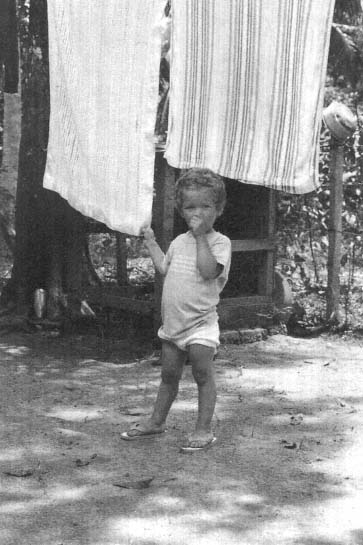
Figure 5.
Zachary
court officials' understandings of the dynamics and tensions of marriage, and of the patterns and causes of divorce, corresponded with villagers' understandings of these phenomena, and with my own understandings of these matters, as laid out in arguments I developed after leaving the field in 1980 (Peletz 1988b). Finally, I wanted to see if men and women used and experienced law and legal knowledge—as both a resource and a constraint—in broadly similar or different ways.
Data on marriage, divorce, and gender that I obtained from the study of court sessions and records of past cases were supplemented by data collected in the course of a household survey conducted by my research assistant—a twenty-five-year-old man who had helped me during my previous study—at all of Bogang's houses (which numbered 115 in 1987). This survey was intended to update the similar survey I conducted in 1979, and thus covered many of the topics dealt with earlier, though it was far more limited in scope. One of the advantages of having my research assistant conduct the survey, which was very time-consuming, was that it allowed me to spend my time on other tasks. One of the disadvantages was that much of the information that my assistant collected, but may not have written down due to his viewing it as irrelevant, was lost. Another, less concrete, disadvantage was that it reduced my social field in ways that probably offended villagers whose houses I never visited during the second period of research.
A more narrowly focused research instrument was the questionnaire on gender that I administered to twenty individuals (ten male, ten female) in February and March of 1988, the main purpose of which was to help me assess the degree of convergence in male and female views and understandings of gender. The questionnaire contained relatively straightforward questions which built on my field experience and which were designed to explore issues that frequently came up in conversation. (For example, "In your view, are males and females essentially similar or different?"; "Are these similarities and differences the result of learning and experience, or are they inborn?"; "Why do females appear to be more susceptible to spirit possession and latah ["pathomimetic behavior"] than men?"; and so on.) Although questions and questionnaires of this sort have obvious limitations, mine proved very helpful, particularly in light of the other information on gender roles and gender ideologies that I had collected. They were especially useful in my efforts to understand (1) the content and the silences of the dominant/hegemonic ideology of gender to which males and females subscribe; (2) the precise extent to which one can legitimately speak of alternative hegemonies; and (3) the frequently
paradoxical and contradictory ways in which particular individuals experience, understand, and represent masculinity and femininity alike. The questionnaire also yielded valuable information on the contexts in which contrasting representations of gender are realized, and on how their implications are dealt with in local society and culture; as such, it clearly enhanced my understanding of various aspects of ideology, experience, and ambivalence.
Data obtained through the questionnaire were also supplemented by life history material and other information that Ellen collected from local women, much of which focused on pregnancy, delivery, postpartum restrictions and experiences, midwifery, and child rearing. Ellen pursued this research both because of her own interest in these topics, and in her capacity as a co-investigator on the project. Though she may write up some of this material in the future, she has generously allowed me to make full use of it in the present book.
As we began wrapping up the fieldwork phase of the project and making public the specifics of our plans to leave Bogang, friends and neighbors in the village hastened to lay claims to the furniture and other consumer items and provisions we had purchased earlier in the year to help make our house more habitable.[10] The staking of such claims also occurred prior to our departure from the field in 1980 and is in fact a common occurrence in fieldwork (see, e.g., Rabinow 1977). A good number of these demands put us into double binds, especially since our parents wanted—and clearly felt morally entitled to—many of our possessions, yet were relatively well off and thus had far less need for these things than some of our closest friends, who were quite poor by village standards. The compromise we decided upon (after discussing the issue with Malay anthropologists and other urban-dwelling friends) entailed distributing a few small items and sums of money as we saw fit, and selling most of our furniture and other "big ticket" items back to the Chinese merchant from whom we had bought them. Though some of our friends were undoubtedly annoyed by this course of action, everyone seemed to recognize—and more than a few people commented—that it solved the problem of competing claims and loyalties.
In the day or so preceding our departure, many of our closest friends shared with us their most cherished secrets and their deepest hostilities. Simmel ([1908] 1971:145) has written incisively about this remarkable phenomenon, noting, for example, that the stranger" who moves on "receives the most surprising revelations and confidences, at times reminiscent of a confessional, about matters which are kept carefully hidden from
everybody with whom one is close." One effect of this "opening up" (confessional venting) was to underscore to us that we had been accepted by the community in important ways, but that such acceptance was nonetheless highly conditional or contingent, based as it was on the tacit recognition that both our time within the village and the ways in which we touched people's lives (and vice versa) were ultimately quite limited. As with the rather mercenary fashion in which some villagers had laid claims to our possessions, these experiences left us feeling rather ambivalent both about the naked instrumentality at the base of fieldwork, and about anthropology generally.
Taking leave from the village (March 1988) was a bittersweet experience, much as our earlier departure (in 1980) had been. On the one hand, we were very sad to say good-bye to dear friends and neighbors, some of whom (e.g., the very elderly) we knew we would never see again. On the other hand, we felt that we had accomplished just about all that we could within the confines of the village and at the district court; and we were eager to spend time in Seremban, where we would have more privacy, more freedom to move about, and more interactions with urban friends and local scholars. Further enhancing the appeal of the move to Seremban was the fact that it was in some ways the beginning of our journey back home.
Overall, the second period of fieldwork was far more trying than the first, which was the most enjoyable period in our lives. Some of the difficulties were related to the fact that during the second period (unlike the first) we had a young child with us, and, as such, had to contend with a host of problems associated with logistics, diet, heat, poisonous insects and snakes, and so on, many of which were basically nonissues during the first research. Others were due to the deteriorating political climate (especially the more pronounced repression), the Islamic resurgence, and the heightened politicization of myriad religious, legal, linguistic, and other phenomena. Especially relevant were political and religious factors: While a non-Muslim anthropologist can relatively easily pursue matters of kinship, social organization, and adat , as I did during my initial study, such a researcher is more than likely to run up against suspicions if his or her project focuses to one or another degree on Islamic law or other aspects of Islam, as was the case during my second fieldwork.
I have discussed some of these tensions and suspicions elsewhere (Peletz 1993b). I will simply remark here that most of the difficulties I experienced had to do with treading too closely to the line separating Muslims from non-Muslims, and that the majority of them surfaced in my encoun-
ters with bureaucrats and other officials outside the village; within the village, most of my relations were highly amicable, and people were, as noted earlier, quite hospitable and warm. As a non-Muslim stranger, the dangers I presented to the social order during my second period of fieldwork were more directly related to the threats to the larger Muslim community of believers (umat ), and less directly to local women, as had been an issue during my first fieldwork. In both cases, however, we see a concern with locally salient boundaries. That I was perceived in the first instance as a potential threat to local sexual mores and the various boundaries associated with them, and only indirectly, if at all, as a threat to the integrity of the Muslim community and the boundaries between Muslims and infidels (kafir ), may well reflect my identity, at least initially, as an unmarried male, which in some ways overrode my identity as a non-Muslim. During the second period of fieldwork, however, I was both a husband and a father, and thus in many respects a full social adult; hence the issue of possible sexual transgression was much less of a concern, and people's mixed feelings toward me focused on other aspects of my role and behavior. The changing political climate helped guarantee that my status as a non-Muslim would be central here.
The second period of fieldwork was also more challenging and difficult because of changes that had occurred in the 1980s in the field of anthropology and in the human sciences generally—changes which made me more self-conscious and ambivalent about my role as anthropologist, and which also resulted both in shifts in the nature of my research interests and in the investigation of somewhat more vexing issues. During the seventies and eighties the field of anthropology had become more "politicized," and many of the long-taken-for-granted issues in fieldwork were thrown open for debate, especially those bearing on asymmetries between fieldworker and people studied, the uses of anthropological knowledge, and its benefits to local people and host governments. While I cannot claim to have resolved all of these issues to my own satisfaction (or that of others), debates bearing on such issues did have a sobering effect on me and clearly resulted in my being quite self-conscious at times about behavior of mine that might have been construed as intrusive or violative of people's privacy. Thus I was quite reluctant to tape conversations, though I had done so on many occasions during the first fieldwork, and was reticent as well to walk about with a notebook and pencil, or even to write down what people said as they spoke (except in the courts and in interviews focusing on gender). More generally, I was often quite ambivalent about steering conversations along paths that fit my agenda(s), particu-
larly since the issues that I sought to explore were at times of little immediate interest to villagers. Indeed, in many instances I made no effort to do so, even though this meant spending a tremendous amount of time in conversations and encounters that were socially and emotionally gratifying but of little if any direct value with respect to the realization of my research objectives.
In addition to becoming more "politicized," the anthropology of the eighties was in the throes of paradigm crises, which have been discussed by Ortner (1984), Marcus and Fischer (1986), Clifford and Marcus (1986), Sangren (1988), Wolf (1992), and others. These crises have entailed a questioning of received wisdom and "essentialist," "totalizing" visions characteristic of much earlier work (including some of my own), and have led some practitioners and outside observers to wonder whether anthropology in any form is either doable or worth doing at all. (I obviously think it is both.) It is too soon to assess the long-term consequences of these developments, but their positive effects to date certainly include making many of us more self-conscious if not reflexive, and underscoring the importance of attending to issues bearing on ethnographic authority, polyvocality, and the tensions and politics involved in the collection of ethnographic data and the anthropological enterprise as a whole. In planning, executing, and writing up this research, I wanted to make sure that I addressed some of the more relevant issues foregrounded in the current debates and crises, and that I captured at least some of the dissonance and contestation that is characteristic of local understandings and experiences of gender and kinship both in Negeri Sembilan and in much of the rest of the world. Commitments such as these made the research and writing for this book rather difficult but have, I hope, resulted in a book that is richer than might otherwise be the case.