
PART IV—
CONCLUSION:
EVALUATING THE PROSPECTS
Chapter 8—
Reducing Scarcity and Expanding Choice
It is possible to look at the study of public policy from a number of distinct vantage points.[1] Each is valid in itself and may involve considerable overlaps in actual application. First, an institutional approach probes the varying effects of different decision rules, showing the way in which each produces diverse results. For example, it is possible to demonstrate that different voting principles involve what may prove to be divergent private and social costs and benefits for collective action. Second, either a cost-benefit or cost-effectiveness approach places considerable emphasis on relating expenditures to political system outputs either for individuals, for groups, or for the society as a whole. The manner in which government revenues are collected and allocated either to individuals, groups, and geographic areas or to the entire community is based on a set of cost-benefit, cost-effectiveness government priorities. And third, a systems approach focuses broadly on the interaction between political system and environment. In doing so, it subsumes an examination of inputs,
[1] On this, see the discussion in Elinor Ostrom, "Public Policy Analysis: An Institutional Approach," DEA News, no. 5 (Spring 1975), p. S–2.
decisions, implementation, and consequences. Our analysis in this work concentrates on both institutions and cost-benefit considerations and pays somewhat less attention to the input side of the systems equation than is frequently the case.
In pursuing such a line of analysis, we have adopted something akin to a problem-solving focus, looking upon the state as an action agency that can be harnessed for the achievement of publicly determined tasks. These collective goals are multiple in nature and include the following most prominently among their number: ensuring survival, establishing a national identity, integrating societies, creating an acceptable authority system, mobilizing and distributing resources efficiently, and securing freedom from external control. Although we are mindful of the need to relate the social and political dimensions to the economic forces under study, a goal-securing and problemsolving focus, as adopted here, nonetheless places emphasis on the ways in which public agencies can mobilize resources and distribute outputs efficiently and equitably where scarcity exists and also increase the availability of resources. In brief, we give primary attention to coping with those aspects of scarcity which pose obstacles to expanding choices in regard to the six basic goals confronting middle Africa.
What makes a concern for enlarging African options, or expanding choices, imperative at this juncture is the existence of an environment of want and insufficiency. Scarcity (i.e., output limited by an inadequate input base) is both a cause and a product of underdevelopment; it results in inadequate opportunity and unfulfillment for large numbers of people on the African continent. When it is commonplace for food, clothing, shelter, medical facilities and personnel, water, electric power, transportation, and communications to be extremely limited, we have a human tragedy of untold dimensions. Such scarcity—which has its origins in colonial neglect, traditional practices, lack of human and physical resources, organizational ineffectiveness, hesitancy to innovate, and the hostility of the international environment—puts heavy constraints on the ability of public institutions to absorb legitimate demands emanating from the environment. As these demands gain force and come to exert a formidable pressure on groups and institutions but-
tressing these fragile political systems, there is an imbalance in capabilities which threatens regime, and even possibly state, survival. Elliott P. Skinner reaches a pessimistic conclusion as to the effect of this capabilities imbalance when he asserts: "The basically neocolonial economies of the African states were unable to meet the social and economic needs of their people. The result was civilian conflict and military coups."[2]
Of course, evidences of a capabilities imbalance are by no means restricted to African experience.[3] What is especially noteworthy about the African situation is the extent and variety of problems confronting current leaders and their peoples. Despite the great responsibilities assumed for overcoming a heritage of scarcity, these decision-makers find themselves handicapped by insufficient skills, technology, resources, information, supporting institutions, norms and values, and international markets to cope effectively with the challenges at hand. In this sense, we regard current trends toward executive leadership, single-party or no-party dominance, or administrative centralization with understanding and considerable sympathy. Once the observer looks from within and comprehends the effect of scarcity on the decision process in the LDCs, that person is unlikely to accept at face value facile analogies to Western experience.
Certainly scarcity affects the policy process differently in developed and in developing countries. For one thing, the effects of inefficiency in production and distribution are more
[2] Elliott P. Skinner, "African States and Israel: Uneasy Relations in a World of Crisis," Journal of African Studies 2, no. 1 (Spring 1975): 13.
[3] See the discussion in Ted Robert Gurr, "A Comparative Study of Civil Strife," in Hugh Davis Graham and Ted Robert Gurr (eds.), Violence in America: Historical and Comparative Perspectives (New York: New American Library, Signet Books, 1969), pp. 569–76. In addition, a highly controversial private report prepared by Samuel P. Huntington, Michel Crozier, and Toji Watanuki for the Trilateral Commission stated that "demands on democratic government have grown, while the capacity of democratic government seems to have shrunk." Its conclusion that "Overall, the United States and Western Europe need to restore a more equitable relationship between governmental authority and popular control" was denounced by the commission as much too pessimistic. See New York Times, June 1, 1975, p. 17.
drastic in poor countries; a misuse of scarce resources in the LDCs has a more adverse effect on a great number of citizens who lack alternative opportunities available to people in wealthier societies. For another, these states vary noticeably in their ability to cope with scarcity-related problems. In the African lands, planning organizations suffer from an insufficiency of skills, resources, and information. They have a hard time securing adequate supports for policy, implementing decisions, and appraising the consequences that follow these action programs. In addition, it is never wise to lose sight of the exogenous variables in these instances. The strains emanating from the international environment contrast with the experience of industrialized Western states and, when combined with evidences of long-term scarcity, lead to a sense of urgency with respect to overhauling economic and political structures and processes. As a result, it is the polities with the lowest capabilities which often evince the strongest preference for comprehensive planning. Amitai Etzioni comments on this paradoxical phenomenon as follows: "Developing nations, with much lower control capacities than modern nations, tend more to favor planning when they may well have to make do with a relatively high degree of incrementalism, while modern pluralist societies—which are much more able to scan and, at least in some dimensions to control—plan less."[4] Certainly France and some smaller Western European countries have shown a strong predilection for sophisticated mathematical planning; nevertheless, it seems broadly true that it is the states least able to engage in synoptic planning which exhibit the strongest preference for such an approach.
This volume, therefore, starts from the premise that a fundamental problem remains to be solved in most of the
[4] Amitai Etzioni, The Active Society (New York: Free Press, 1968), p. 294. It is interesting here that planning in the Ivory Coast, with its emphasis on ultramodern growth and high standards, has had negative effects for indigenous African economic activity. "In asserting the need for planned development . . . ," comments Michael A. Cohen, "the planners have exaggerated the necessity for public control of financial resources and public conception of specific projects." Urban Policy and Political Conflict in Africa: A Study of the Ivory Coast (Chicago: University of Chicago Press, 1974), pp. 214–15.
middle African states, namely, that of effectively and humanely coping with scarcity. In addressing itself to this issue, three basic areas are examined: decision-making processes that shape policy choice, the economic environment in which policy choices are effected, and the implementation of public policies.
The Decision Processes
We have directed our attention to two major aspects of decision-making—the processes regarding resource allocation and output distribution, and the strategies of political choice that both support economic institutions and are themselves permitted by economic performance. African institutions clearly are not comparable to their counterparts in developed countries in their capacity to process demands and implement policies. They are nonetheless vital to the decision-makers who strive toward setting out and achieving collective goals. Consequently, in both colonial and postcolonial times, heavy investments have been made in the institutions required to effect desired public purposes—for example, economic organizations, the civil service, executive bodies, the military and the police.
An extremely important point in regard to decision processes is the effort by decision elites in these societies to reduce the costs of decision-making. Something of a dialectical process is discernible here. In stage one, the colonial authorities radiated a network of institutions to the periphery. Various types of command models were imposed in which bureaucratic hierarchies secured control over the societies under their sway. These bureaucratically run territories encountered low levels of mass participation and accepted only the most limited forms of public accountability; this enabled them to concentrate decision-making authority in few hands. And since the colonial command processes kept the number of participants in decision-making activities at a minimum, the tight-knit ruling elites, as aloof as they were foreign, needed to make only marginal investments in political structures to achieve their rather limited objectives.
This situation changed dramatically as the African lands neared independence (stage two). Not only did decolonization
involve a change in decision procedures (the circle of active decision-makers widened and government became increasingly accountable to the public), but it also entailed the assumption of important responsibilities long handled by the metropole (i.e., foreign affairs, defense, and public finance).[5] The bureaucracy was quickly Africanized and, for a short time at least, compelled to compete with other organs of government in the policy-making process. Moreover, a primary responsibility for development was added to government's traditional function of maintaining law and order. Therefore, in the transitional period prior to and immediately after independence the colonial command model gave way—in appearance at least—to a polyarchical one, which increased participation in the decision process and thereby raised decision-making costs. From the colonial years to the present, this second stage was short-lived indeed;[6] yet while it existed, it allowed more open and intense conflict to emerge between the subregions and the center as well as between the organs of state at the center itself. However, because such institutionalized conflict was regarded as a luxury that Africa could ill afford, leaders, intent upon enhancing their capacity for public action, moved swiftly to reduce what they regarded as needlessly heavy burdens upon effective decision-making.
After a rather short-term exposure to the dissonance of polyarchy, the African states completed the dialectical process by going into stage three. The decision process combined the limited participation of the colonial era with both the Africanization objectives and the developmental purposes of the nationalist response to alien rule. Stage three was marked in particular by the transformation of political institutions so as to reduce decision costs to a minimum. Single-party and no-party
[5] James O'Connell, "The Inevitability of Instability," Journal of Modern African Studies 5, no. 2 (September 1967): p. 183.
[6] Our use of a time horizon stretching back to stage one, rather than to the more unique stage two, raises questions in our minds as to the utility of the popular notion of "de-participation" in the current African experience. See Nelson Kasfir, "Departicipation and Political Development in Black African Politics," a paper presented at the Ninth World Congress of the International Political Science Association, Montreal, August 19–25, 1973.
(often military) regimes came to power, holding in common a distrust of open, conflictual politics. Hence, in their various ways these regimes tended to cope with conflict by denying it public exposure.[7] Such a movement toward the avoidance of publicly aired conflict was not inconsistent with considerable rivalry and contention within the ranks of the decision elite itself, but this conflict was encapsulated so as to keep the costs of decision-making within bearable limits.
Thus stage three represented an important alteration of institutional rules so as to effect a decisive lowering of decision costs. New political structures were promulgated which simultaneously reduced conflict and concentrated authority. These acculturated mutants largely reflected locally held elite values on the concentration of authority, the circumscription of the conflict arena, and the reduction of the costs of decision-making. As a result, a number of Western institutions which were perceived as impeding central action and credibility were modified to conform with the preferences of the new ruling elite. Measures were put into effect limiting the autonomous authority of the legislative bodies, opposition parties, trade unions, and subregional administrative units; in addition, the institutional roles of judicial agencies, second chambers, and constitutional protections were revised so as to remove curbs on central government initiative.[8]
But if a process of impedance was in evidence with respect to such colonially radiated institutions, a process of facilitation was also apparent. Quite noticeably, those institutions enhancing regime authority and capacity for effective action were reinforced and expanded. Such organs of state as the executive, civil service, police, and military as well as those of public and private corporations were often given official encouragement and support. With regard to these generally supportive institutions, what innovations did occur usually
[7] Leonard W. Doob and William J. Foltz, "The Belfast Workshop: An Application of Group Techniques to a Destructive Conflict," Journal of Conflict Resolution 17, no. 3 (September 1973): 512.
[8] See the excellent discussion on this in Y. P. Ghai and J. P. W. B. McAuslan, Public Law and Political Change in Kenya (Nairobi: Oxford University Press, 1970), chaps. 6–8.
involved an expansion of tasks and control mechanisms as well as the Africanization of recruitment policies, but not a disturbance of basic functions, procedures, or values as such.
In other areas, however, greater attention was paid to altering the rules under which the inherited institutions operated. Thus national electoral procedures, political party organizations, federal-state relationships, and economic programs and alignments were transformed in order to bring them in line with locally preferred values on participation, authority, and decisional efficiency. In certain instances, the single-party system was consciously linked to "democratic" principles by the inclusion of procedures for the election of constituency representatives from within the party, rather than between parties. Such an intraparty selection process allowed for public participation while minimizing the tensions attendant on open conflict. Similarly, Uganda's A. Milton Obote laid the groundwork for experiments with his country's inherited election process: by requiring that candidates for parliament gain significant voter support from outside their basic constituency, Obote sought to promote societal integration and to reduce interethnic tensions. Moreover, new economic instruments (parastatal bodies, cooperative village schemes, and the regulation of economic activities by "national agencies"[9] ) have been utilized during stage three to restructure colonially derived economies and to foster economic growth and development objectives.
In these and other innovative efforts, something of a pattern became manifest: that the new African elites were striving to redesign structures carried over from an earlier, alien-dominated period in order to bring them in line with new needs and priorities. To the extent that inherited institutions thwarted the African regimes' initiatives in mobilizing and distributing resources, arriving at decisions, or implementing programs, they were regarded as expendable or ripe for revision. In
[9] In Somalia, national agencies have been established by the Barré government to control building materials, petroleum products, and food. As a consequence, Phillipe Decraene writes, the "big European companies which still play an important role in West and Central Africa have practically disappeared from the Somali Republic." "Somalia Goes It Alone," Manchester Guardian Weekly, April 12, 1975, p. 13.
making what they considered necessary revisions, the ruling elite tended to come down most heavily upon manifestations of institutionalized conflict, seeing in such formalized arrangements a challenge to their continuing control and to their capacity to make decisions at minimal cost. Hence the new elites altered the nature of their institutional investments, playing down the ritualized conflicts inherent in Western constitutionalism and encouraging the growth of systems supportive of their own emergent political culture.
This redesigning of decision-making structures not only had the effect of concentrating authority, limiting the conflict arena, and reducing decision costs, but it also had direct implications for regime decision strategies. The newly revised procedures on decision-making facilitated the agreement on and the implementation of desired strategies. Thus whether regimes chose to pursue accommodationalist, reformist, or transformationalist strategies, the existence of an adequate and effective institutional base usually proved indispensable to the achievement of policy goals. Without supportive structures and reasonably efficient rules for conduct in the public arena, government lacked the capacity to ensure meaningful choice.
These strategies of accommodation, reorganization, and transformation represent fundamental political choices on the means which regimes may use to cope with scarcity in what they view as the most effective manner. Whereas the decision rules are procedural guides to the decision-making process, the strategies for choice represent broad approach patterns for coping with the main collective tasks at issue. To be sure, the range of choice in real-world situations is bounded by a restraining environment of scarcity; such factors as lack of indigenously trained cadres, capital, enterprise, information, access to markets, and freedom from external control severely restrict the maneuverability of decision elites. Even so, we see a dimension for political action remaining which allows political elites some scope for the determination of economic policies, including the setting of the basis on which they will relate to the international environment.
In evaluating the strategies themselves, we regard as desirable those patterns of choice which expand alternatives. To accomplish this end, policies must enlarge productivity while
allocating resources efficiently and distributing output effectively. A rational government will select such policies on the basis of cost-benefit considerations. Where a conflict occurs among multiple objectives, then it becomes necessary to make trade-off choices. Frequently, only the slightest of distinctions between these trade-off choices mark the difference between one strategy and another. The policies of different regimes on matters of taxation, capital investment, subregional allocations, the pace of Africanization programs, the scope of multinational ownership, and so forth often may prove quite significant, even if their ideological positions should appear to indicate otherwise. The environmental situations of most African states are basically quite similar; therefore, it is only to be expected that the policy outputs of these countries will differ to a limited extent only. Nevertheless, it is because the preferences of the various decision elites are important in terms of their impacts that it is useful for us to delineate both policy-making patterns and the consequences following from these lines of action.
For coping with scarcity, then, we see three general policy patterns in evidence: the accommodational, the reorganizational, and the transformational. The emphasis here is on the decision elite's doctrinal preferences and perceptions of the national, regional, and international environments in which they operate. In these terms, a different cluster of priorities appear, depending on which of these three strategies has been embraced. Thus when we set up a classification scheme that related the six system goals to strategies of choice, several groups of characteristics emerged (see Table 1, p. 114).
If all the strategies of choice tended to share categories on ensuring national survival, creating a national identity, and establishing a hierarchical authority system, they diverged on a number of organizational aspects and public policy stances. The states that opt for an accommodation strategy, and who thereby accept their structural dependence on the international capitalistic order, tend to align themselves politically and economically with the West. To secure such major objectives as political order and rapid economic growth rates, they strive to assure their attractiveness to external investment, skills, and enterprise. This combination of main priorities entails a number
of consequences. The emphasis on order leads to extensive internal discipline and a limited political accommodation with ethnic and interest group self-determination; as President Houphouet-Boigny of the Ivory Coast states: "I prefer injustice to disorder."[10] The stress on productionist objectives inclines these regimes toward policies designed to facilitate foreign enterprise: policies, for example, with respect to an open economy, the maintenance of a large, unskilled labor force, a preference for private initiative, low public-sector expenditures on social welfare, a slow pace in implementing Africanization programs, and a de-emphasis of pan-Africanism and ideological concerns generally. In brief, the accommodationalist states mould their internal policies to conform to the demands and expectations of the dominant international capitalistic order. In doing so, they repress domestic calls for distributive equity (as between classes and subregional units), hoping thereby to elicit substantial long-term economic benefits—even though the public at large benefits only marginally in the short term. By increasing internal class and subregional inequities, such an approach may well prove costly in terms of systemic legitimacy, even while showing itself to be productive of relatively high economic growth rates in certain instances. This strategy can be considered, therefore, to be an ever precarious trade-off choice. Because of its inability to solve the crisis of distribution, it fosters general environmental instability. Not only are the deprived classes frustrated and dissatisfied but a significant base exists upon which a grim (zero-sum) process of intra-elite competition may materialize.[11]
The states selecting a reorganizationalist strategy stand somewhere between the polar extremes of accommodation and
[10] See Cohen, Urban Policy and Political Conflict, p. 205.
[11] Although we consider the existence of socially deprived elements an important environmental factor, we are emphasizing the role of competing elites rather than social deprivation as such in the process of social change. As one author notes, some of the most socially and economically disadvantaged groups, such as urban squatters, can be "among the strongest supporters of the present [Kenya] government despite the fact that it has done little or nothing to improve their lives." Marc Howard Ross, The Political Integration of Urban Squatters (Evanston: North-western University Press, 1973), p. 16.
transformation. As such, they are more optimistic about their ability to achieve multiple objectives. They seek simultaneously to augment productivity, allocate resources on an efficient basis, and distribute output in an effective manner. Their decision elites express confidence in their ability to harness the energy, resources, and skills of international capitalism to their own national growth and development.[12] At the same time, more outspokenly nationalistic and ideologically oriented than the accommodationalists, they remain committed, in principle at least, to raising social welfare conditions for the masses of their people.
Thus the reorganization strategy predisposes decision elites toward two courses. The first tendency encourages the preservation or adoption of organizational styles and public policies that promote rapid economic growth objectives. In their effort to further productionist ends, the reorganizers are steadfast in maintaining their inherited linkages to the Western capitalistic system. Such ties ensure access to markets as well as to Western investment capital, skills, and enterprise. And, as is the case for the accommodationalist regimes, this identification with Western interests involves something of a "spillover effect." As noted above on the process of institutional transfer, the new African regimes carried over certain "statist" features of the colonial system; these features were applied to conceptions of bureaucratic-military roles as well as to administrative behavior—in particular, the emphasis on maintaining law and order, extraction, and "efficient" rule.[13] Consequently, those states seeking to build upon what they regarded as a fortuitous base tend to display a strong preference for structural continuity. This orientation facilitates the growth of existing institutions, enhancing the authority and capacity of the new central authorities. In addition, it gives African decision-makers an incentive to pursue economic policies that preserve and
[12] See the discussion in Donald Rothchild, Racial Bargaining in Independent Kenya: A Study of Minorities and Decolonization (London: Oxford University Press for the Institute of Race Relations, 1973), p. 436.
[13] Goran Hyden, "Basic Civil Service Characteristics," in G. Hyden, R. Jackson, and J. Okumu (eds.), Development Administration: The Kenyan Experience (Nairobi: Oxford University Press, 1970), chap. 1.
strengthen current relationships. Structural ties to the Western capitalistic order, then, subsume a series of decisions aimed at maintaining a relatively open economy for domestic and international capitalist action. In accordance with this predisposition toward continuing linkages with international capitalist interests goes a series of interlocking policy commitments: the emphasis on private initiative generally, and supportive policies, within limits, on such matters as licensing, plant location, urban concentration, remission of profits, management contracts, nationalization of industry, selection of key personnel, and utilization of capital-intensive technology. In pursuing such an approach, these decision elites strive to create an appropriate climate in order to attract extensive interest on the part of the international investment community. They are reluctantly accepting dependent status on a temporary basis, hoping thereby to reap the harvest in the form of meaningful selfreliance in the future. To be sure, this outward-looking strategy has not been uniformly successful in terms of achieving economic growth objectives. In Ghana, "as against a population estimated to be growing at 2.7 percent per annum, the Gross Domestic Product (GDP) grew at an average rate of only 2.5 percent per annum" over the decade of the 1960s.[14] Nevertheless, in general, the reorganizers can be said to have made important achievements in expanding productivity. To the extent that they can also successfully humanize capitalism (by coping effectively with the challenges of distribution and social dislocation), they will have taken an important stride toward the objective of efficient allocation of resources. But in light of the structural constraints of the national and international environments, it is vitally important not to underestimate the dimensions of this challenge.
This brings us to the second tendency in the reorganizational approach: the preference for liberal symbols. Such a predisposition encourages decision-makers to take on the most tolerant stance of our three groupings for choice toward the fact (if not the legitimacy) of ethnic, subregional, and economic interest group demands, and to be more receptive than the
[14] Republic of Ghana, Guidelines for the Five-Year Development Plan, 1975–1980 (Accra: Ghana Publishing Corp., 1975), p. 2.
accommodationalists to ideological and welfare claims generally.[15] So long as equity considerations do not place overly serious restrictions upon productionist objectives, the reorganizers are prepared to espouse multiple courses of action. Hence, in the domestic sphere, their decision elites are prone to call for policies of rapid Africanization; effective regulation of multinational enterprises; a designated economic role for cooperatives, trade unions, and parastatal bodies; redistributive programs to overcome the most glaring of rural-urban and interclass inequities; and, in some cases, partial or total nationalizations of key industries. In the international sphere, liberal symbols came into play with respect to such issues as racial discrimination, sanctions against South Africa, pan-Africanism, and nonalignment. If their ideological input is tempered by an awareness of overriding economic linkages to the Western capitalistic order,[16] their spokesmen nonetheless frequently voice strong support for progressive positions. Even so, many observers claim to detect an underlying spirit of caution and pragmatism in these representations. On both domestic and international fronts, therefore, the reorgainzers must contend with a legitimacy challenge of significant proportions. Critics regularly question the moral validity of their primary link to international capitalism. And their domestic achievements in enlarging productivity are played down, being depicted as an instance of "perverse growth" beneficial to the dominant bourgeoisie of Africa and the West rather than to the African economies as a whole.[17] A dramatic indictment of class cleavages resulting
[15] See Murray Edelman, The Symbolic Uses of Politics (Urbana: University of Illinois Press, 1964), and his Politics as Symbolic Action (Chicago: Markham, 1971).
[16] In Tom Mboya's words, "Since independence African countries have come to realize that certain practical realities of life make it impossible to order our external affairs in purely ideological terms." The Challenge of Nationhood (London: André Deutsch, 1970), p. 4.
[17] The nature of the relationship between the bourgeoisie of Africa and the West remains a subject of extensive disagreement. For example, whereas Issa G. Shivji places the socio-economic base of the petit-bourgeois class "in the International bourgeoisie," John S. Saul, while not questioning the intimate ties between the two, does warn strongly against the temptation of underestimating the "deep roots" of petit-bourgeois class interests within Tanzania itself. See Shivji, "Tanzania—The SilentClass Struggle," and Saul, "Who is the Immediate Enemy?" in Lionel Cliffe and John S. Saul (eds.), Socialism in Tanzania, vol. 2 (Nairobi: East African Publishing House, 1973), pp. 319, 355.
from a selective growth process was that advanced by Kenya's former populist parliamentarian, Josiah Mwangi Kariuki, who warned that "a small but powerful group of greedy, self-seeking elite in the form of politicians, civil servants and businessmen has steadily but very surely monopolized the fruits of independence to the exclusion of the majority of the people. We do not want a Kenya of ten millionaires and ten million beggars."[18] Such undesirable possibilities make a heavy stress on productionist aims (especially those involving close connections with international capitalisrr) very costly: in terms of policy effectiveness. Under these circumstances, the decision elites in the reorganizing states cannot afford to remain aloof from the legitimate demands for equity and social justice. To the extent that the reorganizers stand aside and permit income and opportunity gaps to widen between classes and subregional groups, they are themselves responsible for extending public disillusionment, and possibly systemic instability.[19] Although it is unlikely that the populace will itself take on the role of agent for political change, we view widespread social deprivation as a nurturant of intra-elite competition over which group will rightfully govern.
In this respect, the crisis of legitimacy encountered by the reorganizers is akin to that of the accommodationalists. Paradoxically, however, it is the reorganizers' greater success at combining liberal principles with productionist achievements which creates the additional burden upon the political system. Promise outpaces performance, and what accomplishments do materialize frequently have the effect of raising expectations to unsupportable levels. Where the resulting public demands outpace systemic supports, these fragile reorganizational states may come to experience intense intra-elite conflicts over the
[18] This quotation appears in the report of the Select Committee of the Kenya legislature appointed to examine the circumstances leading to Kariuki's death. See Weekly Review (Nairobi), June 9, 1975, p. 8.
[19] On the positive relationship between modernization and instability, see Samuel P. Huntington, Political Order in Changing Societies (New Haven: Yale University Press, 1968), p. 44.
distribution of power and resources.[20] Whether the much criticized ties to the Western capitalistic order- the main lynchpin of the reorganizers' strategy of choice—can survice such a "zero-sum" struggle depends largely on which group of political actors proves triumphant.
Finally, the states choosing a transformationalist strategy are essentially pessimistic as to the possibility of building upon and making meaningful reforms in their inherited relationship to international capitalism. They seek to move toward the achievement of the six systemic goals through a comprehensive reordering of internal structures and external linkages to the Western capitalistic order, not through improvisation. The old life-styles and relationships, regarded as humiliating and exploitative, are rejected as totally unacceptable to the new human and social order being established. Capitalism, structural dependency, elitism, inequality, excessive individualism, pluralism, racism, acquisitiveness—all of these are explicitly condemned as undignified and anticommunitarian vestiges of old social systems. Along these lines, for example, the newly inaugurated president of an independent Mozambique, Samora Machel, proclaimed the advent of a revolution upon assuming power in July 1975. By revolution, Machel meant the deliberate transformation of his country in order to create "a new man" as well as a new society. He therefore urged policies aimed at transforming public consciousness which would eliminate individualism, increase party discipline, concentrate authority at the center, and inculcate the party line into the thinking of the people.[21]
The transformationalist strategy, then, reacts negatively to continued structural dependence on the Western capitalist order; in Julius K. Nyerere's words, "A capitalist economy means a foreign dominated economy."[22] And in seeking to sever ties with this externally dominated order, the transforma-
[20] For a discussion of intra-elite competition in Zambia, see Jan Pettman, "Zambia's Second Republic—the Establishment of a One-Party State," Journal of Modern African Studies 12, no. 2 (June 1974): 242–44.
[21] New York Times, July 2, 1975, p. 5.
[22] Julius K. Nyerere, Freedom and Socialism (London: Oxford University Press, 1968), p. 264.
tionalists are attempting to discard many formerly held social and cultural values they consider inextricably intertwined with such a system. In their place, the transformationalists advance a strategy designed to create socially positive, egalitarian, and self-reliant societies. These decision elites look upon "the costs of moderation" as unacceptable; [23] consequently, they are moving boldly and comprehensively to engineer new, more humane social orders. As one author summarizes this approach in terms of Latin American experience: "The goal of such a development policy would be the creation of 'livable' societies, viable alternatives to hyper-urbanized, semi-industrialized, permanently underdeveloped, permanently inequitable countries."[24]
Inevitably, such a pulling back from past interconnections has broad organizational and policy ramifications. In the domestic political sphere, the creation of relatively closed polities is facilitated by an emphasis on unitary control, hierarchical authority, doctrinal purity, party discipline, and a general delegitimization of ethnic, subregional, and interest group pluralism. To be sure, measures to concentrate power are thwarted by such factors as institutional fragility, intra-elite competition, and lack of fiscal and skilled manpower resources; nevertheless, some progress in this direction is apparent. The upshot—when taken in conjunction with a series of interrelated economic programs on land redistribution, village cooperatives, urban redevelopment, indigenization programs, nationalization initiatives, expansion of parastatal bodies and state trading organizations, and a radical overhaul of management contracts, debt practices, taxation structures, and profit remission statutes—is a considerable amount of state control as well as systemic stability and constancy of purpose. Such ability to influence events at the state level has the effect of freeing the transformationalist regimes from certain external political and economic trade-offs. In particular, their strategy of socialist self-reliance reduces the need to court the goodwill of external
[23] Barrington Moore, Jr., Social Origins of Dictatorship and Democracy (Boston: Beacon Press, 1967), p. 505.
[24] Robert L. Ayres, "Development Policy and the Possibility of a 'Livable' Future for Latin America," American Political Science Review '69, no. 2 (June 1975): 515–16.
aid agencies, multinational corporate managers, and foreign investors generally. Thus Sékou Touré remarked on the policy of "human investment" adopted by the Democratic Party of Guinea at the Fourth Congress of June 1958: "In political terms, the results of human investment have proved that the Guinean population was sufficiently enlightened and determined to make the sacrifices, which would prevent their country from having to rely on the enslaving subsidies and the other forms of aid with which colonialism gilds the chains of dependence.[25] In fact, the estimated value of projects carried out through human investment was put at three billion Guinean francs during the first development plan. Although not made a central feature of the second plan (because of public resentment over coercive methods as well as administrative and technical complications), it has been retained as an aspect of Touré's public policy.[26]
By reducing ties to Western capitalist interests, the transformationalists can follow their radical instincts and strike militant stances on such salient issues as colonialism, neocolonialism, racism, pan-Africanism and nonalignment. Their disengagement from the Western capitalist order by no means entails an aloof neutralism on these questions; rather it facilitates a positive form of alignment with Third World forces intent upon restructuring what is perceived as a hostile international environment.
Although a strategy of socialist self-reliance reduces the need for certain economic trade-offs with international capitalist interests, it by no means eliminates the difficult task of establishing priorities as to conflicting objectives. In principle, the transformationalists seek simultaneously to enlarge productivity, allocate resources efficiently, and distribute output effectively. To quote Sékou Touré: "It is imperative to economize resources—not in a petty bourgeois spirit, but out of concern for efficiency." His example of efficient utilization of
[25] Ahmed Sékou Touré, The Doctrine and Methods of the Democratic Party of Guinea, Part II (Conakry: Democratic Party of Guinea, n.d.), p. 118.
[26] Ludipo Adamolekun, Sékou Touré's Guinea: An Experiment in Nation-Building (London: Methuen, 1976), p. 70.
productive forces (i.e., labor-intensive methods) is pertinent. Touré writes that, "if a community of villagers cultivates ten acres of land, it would be nonsensical to equip them with a tractor, when the work can be done more economically with a plough, making better use of the labour force."[27] In other words, a socialist policy attempts to promote growth and equity objectives at one and the same time.
However, what if resource limitations require that these goals be ranked? Here, in the final analysis, lies a key difference between the transformation world-view and those of the accommodationalists and the reorganizers. Ultimately, the transformationalists' commitment to socialist self-reliance leads to a preference for equity and social welfare over productionist tasks. Nyerere decries "growth without development," stating that "if this kind of capitalist development takes place widely over the country, we may get a good statistical increase in the national wealth of Tanzania, but the masses of the people will not necessarily be better off."[28] A strategy based on the twin principles of socialism and self-reliance will avoid such a situation by building "slowly but surely" upon local resources.[29] In analyzing the meaning and implications of self-reliance, Nyerere places great emphasis on realistic expectations:
Whereas it is possible to find the sort of investment capital which can bring great increases in agricultural output from our present resources, it is not possible for us to envisage establishing heavy industries, or even very much in the way of light industries, in the near future.
To be realistic, therefore, we must stop dreaming of developing Tanzania through the establishment of large, modern industries.[30]
Thus the Tanzanian strategy of choice attempts to mobilize the people irt the villages in order to cope with the problem of scarcity. In doing so, it tries to avoid future class
[27] Ahmed Sékou Touré, p. 89.
[28] Nyerere, Freedom and Socialism, p. 344.
[29] A. Sékou Touré, The Doctrine and Methods . . . , p. 272.
[30] Ibid., p. 319. For a similar point by assassinated leader Amalcar Cabral of Guinea-Bissau, see the quotation in Basil Davidson, The Liberation of Guinea (Harmondsworth: Penguin Books, 1971), p. 237.
inequity by concentrating on the rural majority rather than the relatively more privileged urban minority. This involves a subordination of economic growth, if necessary, to the larger purposes of creating a more humane society. The upshot in terms of critical priorities is to subordinate "economic interest," defined in terms of total growth rates, to "political interest," defined in terms of equitable distribution and broadened and deepened regime legitimacy.
What is the effect of this trade-off choice on the part of the transformation regimes? If, as indicated above, the accommodation and reorganization strategies of choice engendered a crisis of regime legitimacy, the transformation strategy, by playing down economic growth goals, encounters what may be called a performance crisis. Not only may elite elements be disappointed over the regime's inability to sever ties with the international capitalistic order and to achieve genuine economic independence, but the critically important modernist elite (civil servants, military officers, party cadres, business managers, and high-level technicians) may come to feel "relatively deprived," in the sense of not securing what they deem to be their fair share of the society's resources. In the long term, then, a radical policy-making style may be faced with possible intra-elite competition over the distribution of the outputs of the political and economic system. The regime's efforts at broadening its base of legitimacy do not take place in a vacuum; rather, in zero-sum fashion, the sharp shift toward an egalitarian principle of distribution may occur at a cost in terms of some dissatisfaction on the part of elements within the elite itself. This situation explains the vehemence of a regime's responses to any internal challenges to its hegemony. The administration lacks the resources to achieve its aim of social justice, and it lacks the capacity to reconcile all dissatisfied elite elements with the dominant political and economic system. Consequently, for all their efforts at reducing internal and external claims upon the state, these overburdened and fragile regimes find it extremely difficult to escape once and for all from the spectre of political instability.
Each strategy of choice, or each policy, has its own mix of benefits and costs. Probably no approach is equally valid
cross-nationally, and the responsibility for determining goals and priorities is left up to the decision elites of the various African countries. Let us, for example, consider the critical trade-off that policy-makers must weigh in determining the appropriate mix of system goals five and six of Table 1 (p. 114). We can analyze the process of choice by using the community decision-making model developed in the appendix to Chapter 1. Figure 16 assists in our exposition. The x-axis measures goal five (mobilizing and distributing resources efficiently), and the y-axis deals with goal six (securing freedom from external control). The community's indifference map reflects transitive preferences moving from the zero intercept to progressively more preferred positions on indifference curves I0 ,, I1 , and 12 . Consider that an African state initially is situated at point B or indifference curve I0 . This reflects a desirable security from external control, Y0 (the transformationalist strategy), and would offer at the same time, resource mobilization, and so forth at X0 . But there are constraints on eventually moving beyond the initial equilibrium at point B, such as point A, because unsupplemented local resources scarcity underlies production possibilities. The community's most preferred attainable position combines X0 and Y0 at point B on curve P0 Attaining point A is impossible without external assistance. This assistance, whether through direct foreign investment or multilateral aid, involves the threat of extensive external control. Here the transformation-oriented decision-maker faces a very critical choice: Shall security be reduced below a desirable minimum (from a more preferred Y0 to a less advantageous Y1 ) in order to increase resource availability (from a less advantageous X0 to a more preferred X1 )? Dependency can come about because of the terms of gaining external assistance, thus endangering security. The transformationalist would be willing to give up some resource availability for security, but ideally the decision-makers would like to avoid having to make this trade-off. If the community could move to the most preferred situation—point C on I2 —neither security nor resource availability would have to be sacrificed. But this means, first, that either local resource scarcity or inefficiency situations would have to be improved. It would mean that local economic
growth would have to be promoted, production would ideally be labor intensive, Africanization would be pursued rapidly. Second, it would mean that links to Western capitalism would not be expanded and security would not be impaired. In effect, the production-possibilities frontier would shift to P2 , enabling the community to reach I2 at point C without bargaining away security in exchange for donor resources. Aid in this case would be appropriate.
It is likely that economic reality would place serious constraints on an African nation's ability to move to P2 . But a production-oriented approach offers at least a limited prospect for moving transitively to indifference curve I1 as the production frontier shifts to P1 , as in Figure 16. Consider the probable shape of indifference curve I1 under a transformationalist orientation. It is tangent to P1 at point D, reflecting the fact that relatively less security will be sacrificed in moving from initial situation B (from Y0 to Y2 ). In order to accomplish this, some access to foreign resources will be given up because of unacceptable terms; that is, resources gained increase from X0 to X2 and not X1 .
By contrast, the accommodation and reorganization strategies are prepared to make different kinds of sacrifices. Decision-makers adopting these strategies, under similar local circumstances, are willing to give up more freedom from external control in order to obtain resources that supplement local endowments. Consequently, they are less reluctant to form more substantial links to Western capitalism. The accommodationalists (


[31] It is not always the case that the external actor actually does allocate the amount of resources that the recipient envisions under this strategy. Here we note the marked differences between Western investment in Gabon and the Ivory Coast as compared with Chad and Niger (the Third as against the Fourth World).
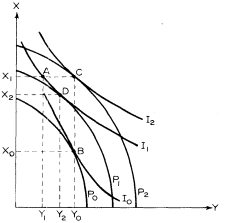
Figure 16
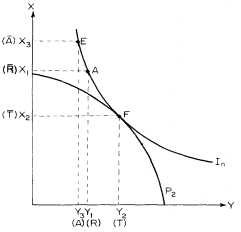
Figure 17
graphic terms, suggests a move to some midpoint where a relatively minimal security level is acceptable—such as Y1 —as resources are extracted from international capitalism in a quantity sufficient to reach X1 . But a transformationalist (

The Implementation of Public Policies
Public-policy relevance requires dual attention to the environment in which choice occurs as well as to the means for achieving external policy objectives.[32] Having discussed some aspects of the decision process that shapes choice, we now turn in a summary manner to the second aspect of policy relevance—that is, the implementation of policies.
We have noted that the environment of scarcity confronting most states in middle Africa places severe limits on their ability to achieve rational-choice objectives. At the same time, however, we have warned against adopting a self-defeating pessimism, one which holds out little or no prospect of escape from perpetual underdevelopment. Such pessimism undermines a determined search for creative policy options from the outset, precluding serious and meaningful change on the basis of partial information. We have set forth the range of bargaining options and the dimensions of planning and external assistance that could be utilized by African governments intent upon expanding their economic alternatives. In particular, we discussed the process of African governmental bargaining encounters with external private and public actors through intergovernmental cartels, through bilateral negotiations with multinational companies, and through regional, continental, and extracontinental exchanges.
Any analysis of African bargaining options must begin from the vantage point of the current structure of international exchange. Throughout we have emphasized that the present-day exchange relationships between African governments and nonAfrican public and private actors are decidedly unequal in nature. The inability of the African governments to achieve more beneficial bargaining outcomes stems largely from their relatively disadvantaged position in terms of such variables as reciprocal demand intensity, impatience, skill, flexibility, information, power, experience, and changing external factors. The result of this unequal exchange is an interactional process that
[32] Stephen J. Andriole, Jonathan Wilkenfeld, and Gerald W. Hopple, "A Framework for the Comparative Analysis of Foreign Policy Behavior," International Studies Quarterly 19, no. 2 (June 1975): 168.
does little to undercut the inherited pattern of structural dependency in any substantial manner.
Even so, we do not regard an asymmetry in power relations as automatically precluding the possibility of improving African transactions with external actors.[33] So long as no bargaining rival has a power monopoly, divergent interests can enter into reciprocal exchanges in order to secure convergent goals. As Paul Diesing remarks, "When each side is powerful enough to inflict considerable damage on the other, unilateral dictation is no longer possible and bargaining becomes necessary."[34] In brief, common need facilitates what two observers describe as "relational control,"[35] enabling the weaker bargaining party to extract some benefits from engaging in a process of economic exchange with its more powerful rival. We analyze this situation in the following graphs. Figures 18 and 19 are derived from our rational-choice model developed in the appendix to Chapter 1 and the elements of the bargaining model that we outlined in the appendix to Chapter 4. Our task here is to give meaning to the elements conceptualized in our choice and bargaining models by applying them to the process of extracting some benefits from asymmetrical bargaining. An excellent example is the matter of foreign aid as it relates to the system goals of limiting reliance on external dependence and of obtaining resources for allocation and distribution. In Figure 18, consider that two countries are involved in bargaining: state B is an African (or other Third World) state and A is an industrialized developed state. Assume that the two are bargaining over the conditions on which rewards will be exchanged.
[33] On suppliers' credits as an example of "asymmetric power relations," see D. L. Cohen and M. A. Tribe, "Suppliers' Credits in Ghana and Uganda—An Aspect of the Imperialist System," Journal of Modern African Studies 10, no. 4 (December 1972): 530.
[34] Paul Diesing, "Bargaining Strategy and Union-Management Relationships," in J. David Singer (ed.), Human Behavior and International Politics (Chicago: Rand McNally, 1965), p. 406.
[35] T. Baumgartner and T. R. Burns, "The Structuring of International Economic Relations," International Studies Quarterly 19, no. 2 (June 1975): 128. On spontaneous field control in bilateral and multilateral relationships, see Robert A. Dahl and Charles E. Lindblom, Politics, Economics and Welfare (New York: Harper and Row, 1953), p. 104.

Figure 18
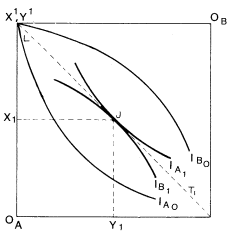
Figure 19
State B holds a reward package Y, given up in order to receive foreign assistance, for example, access to raw materials, selfesteem generated by the aid-granting nation, and goodwill. This is measured on the vertical axis. Country A holds the aidpackage reward X—economic and technical assistance—measured on the horizontal axis. Offer curves


accept at various levels of exchange activity. The resulting terms of exchange are T1 ; at the intersect of the curves at point J, state A gives up X1 in order to obtain Y1 . It is an exchange that suits country B as well because it gives up YI , a like amount, to get X1 .
Figure 19 is a box diagram showing the indifference maps of states A and B superimposed on each other. At point L, there was no exchange, the African country holding Y1 of its reward package, and the developed nation holding X1. of an aid package. At the exchange agreement T1 , the African government gives up (Y1. –Y1 ) in order to get the aid (X1 –X1 ) that the unilateral (or multilateral group, for that matter) is willing to give up. Each trading or exchanging partner moves to a higher indifference curve or a more preferred position. In this case, both sides gain approximately equally. But, of course, we are dealing with actual structured inequalities in exchanges that usually favor the powerful donor country. But we feel that African governments are in positions to accept exchange terms that reflect relatively greater benefits for given costs (or given benefits for relatively less costs) than would be forthcoming in isolation, that is, outside the global aid-granting structure. In presenting our argument to this effect, we stress the role of policy externalization, the reduced costs of organizing internal group decisions in the process of coordinating the various African decision systems, and the effects of impatience and reciprocal demand intensity on the benefit-to-cost ratio established in bargaining with external actors.
The collaborative efforts by the less industrialized states to improve their situations in negotiations with the dynamic hegemonial center (i.e., policy externalization) facilitates the development of a decision network uniting these separate African actors. The necessity for continuing exchange relationships (albeit unequal ones) with powerful external parties can act as a catalyst for cartel arrangements as well as regional, continental, and extracontinental harmonization schemes. Providing that the decision elites give evidence of sufficient entrepreneurial skills in coordinating the partners for negotiations with foreign private and public interests, they are at a vantage point at which they can achieve improved bargaining
outcomes. Moreover, the consequences of this expansion of economic alternatives are not exhausted with this improvement in bargaining outcomes. As political actors learn of the benefits following from collaborative action, a sense of overlapping and interdependent interests comes to prevail. Thus policy externalization promotes a consciousness of common fate which, in turn, encourages the African powers to sacrifice some of their individual autonomy for wider joint ends.
Even though policy externalization can be said to facilitate action by African cartels, governments, and regions in making common policy decisions, the cost of coordinating sovereign actors for decisional purposes remains necessarily high. In this regard, the critical differences between the Intergovernmental Council of Copper Exporting States (CIPEC) and the cocoa exporting states on the one hand and the Organization of Petroleum Exporting Countries (OPEC) on the other are instructive. Whereas the oil producers cartel is strengthened in its bargaining encounters by the low-price and high-income elasticity of petroleum as well as the presence of rich and powerful internal participants (such as Saudi Arabia and Kuwait) which can cushion the arrangement by reducing production at times of slack world demand, the members of CIPEC and the cocoa exporters have no comparable hegemonial actor to play such a role. As a result, the CIPEC and cocoa partners must both engage in an extensive process of internal bargaining over production quotas before entering into exchange relationships with their international rivals.[36] Because the cocoa and CIPEC states are all under intense pressure to secure foreign exchange for developmental purposes, such internal bargaining among equals seems likely to place strict limits on any accords involving constraints on impatience.[37]
The points we are raising make Figures 16 and 17 more than mere blackboard exercises. Shifting offer curves, improving exchange terms, and reaching higher indifference curves or attaining more preferred positions conceptualize a complicated
[36] Kofi Ata-Bedu, "The Cocoa Battle," Daily Graphic (Accra), October 25, 1975, pp. 8–9.
[37] I. K. Nkrumah, "Intrigues in the International Cocoa Agreement," Daily Graphic, November 22, 1975, p. 9.
process. This process involves African decision-makers employing their skills, capacities, and ingenuities to operate more effectively within an international structure and manipulate to their advantage the parameter variables that determine what that structure is.
Internal group dynamics have an impact on the costs of harmonizing state actors for common objectives. With respect to both regional coordination (the East African Community) and continental coordination (the Organization of African Unity), direct bargaining among sovereign member states resulted in the establishment of minimalist structures which encountered severe performance difficulties soon af ter their founding. The negotiations on the 1967 Treaty for East African Cooperation led to subsequent interactional strains, causing struggles to take place among the constituent units over appointments, appropriations, communication and transportation linkages, and the functions of the East African Authority. Similarly, the compromises made by African leaders at the Addis Ababa summit conference in 1963 were to become the source of later organizational problems; because the OAU lacked an adequate machinery for effective control over conflict as well as for economic and military coordination, it proved to be incapable of meeting some of the primary goals originally set for it by the heads of state and government at their founding sessions.
By contrast, however, an even more minimally structured arrangement (the ACP grouping) proved relatively effective in securing organizational aims. Here the costs of harmonizing state actors were reduced by the functionally specific nature of their program, namely, securing improved terms of trade and increased developmental assistance. Despite strikingly different perceptions of interest on the part of the associated and nonassociated African partner states during the early stages of ACP genesis and negotiations with the EEC, a surprising degree of unity ultimately emerged as the negotiations reached the later stages. A social learning process had become evident. Not only did the ACP grouping build successfully (albeit unequally) over time upon the various exchange agreements of the past, but they also achieved in these external encounters a unity of
purpose that fostered a harmonization of objectives and procedural tactics. In part, ACP successes reflected the entrepreneurial skills of Nigerian leadership at the meetings. In part, it also showed the effects of increased inter-African communications arising from common experiences at the bargaining table. The upshot was an augmented awareness of shared ACP interests and destinies, leading in turn to a greater willingness to subordinate separate advantage for that of the group as a whole.
If policy externalization acts to reduce the costs of organizing internal decisions, what of the related problem of securing decisional coordination to achieve ongoing objectives? How are multiple governments, all under intense domestic pressure to bring about immediate developmental benefits and eager to safeguard the automony of their decisional processes, to work out collaborative arrangements? This is an age-old challenge and most suitably the topic of another treatise. Yet as part of our search for decision processes being between the comprehensive and incremental extremes, we are led inevitably to touch on the need for new reconciliation patterns. In limiting the costs of organizing decisions over time, we see little alternative to working out new accommodative practices among the cooperating units. Some insight into the lines that such a polycentric relationship might take may be gained from a consideration of the notion of J. K. Friend, J. M. Power, and C. J. L. Yewlett of "contextuating" control. They write:
Etzioni, in The Active Society (1968), has drawn a distinction between systems of prescriptive and "contextuating" control, the latter allowing freedom of action [for our purposes, by the African state members of a regional organization] within certain agreed limits. In theory, the latter form of control releases the central body from the requirement of detailed knowledge of the activities and circumstances of each of the local agencies it seeks to influence and is thus more economical in terms of the level of communication between them. However, the more stringent such contextual controls become, the more they may in practice be challenged by the local agency, which will seek to establish that special local circumstances make the rules inapplicable in its own case. Referring to Lindblom's typology of modes of co-ordination, the central body seeks to exercise "unconditional manipulation" over the choices of the peripheral bodies, which must respond through "adaptive adjustment." However. . . , severe distortions can arise from any attempt to apply controls that do not match the complexity of local problem
situations. The pressures acting upon the local agency [as used here, the individual African states] are then such as to change the relationship into a more symmetrical one, typically involving some form of bilateral negotiation. Of course, if all such requests from local agencies [again the African state members for our purposes] are acceded to, this can quickly create a situation of information overload for the superordinate agency. The trick of effective "contextual control" is therefore to design generalized forms of "conditional manipulation" which limit the pressures on subordinate agencies to establish symmetrical relations with the superordinate, while not stifling their capacity to exercise initiatives in desired areas.[38]
Although the parallel between a central and superordinate body and a cartel or regional arrangement is not, of course, exact, it seems possible that the notion of contextuating control sketched out here might be of use to African decision elites as they seek to reduce the costs of organizing decisions among sovereign actors.
If integrative harmonization strengthens the general effectiveness of African bargaining agents in their encounters with external public and private actors, it remains to be seen what specific options exist for improving the terms of economic exchanges. Here we focus on the effect that two variables, impatience and reciprocal demand intensity, have upon the benefit-to-cost ratio established in a bargaining relationship. As noted above, the transactions between multinational corporations and African host countries most often proved to be on a highly inequitable basis. Such an asymmetry in bargaining strength tended to reflect the extent of skills, information, flexibility, experience, and international support at the disposal of these powerful international firms. Even so, in keeping with our emphasis on the relational nature of power, we do not envisage any necessary equivalence between the resources at the command of a bargaining agent and the outputs and outcomes of a bargaining encounter. Hence we see a somewhat unexplored dimension open to African regimes for securing more preferential outcomes established in a bargaining situation.
In probing this dimension, we concentrate on the way each
[38] J. K. Friend, J. M. Power, and C. J. L. Yewlett, Public Planning: The Inter-Corporate Dimension (London: Tavistock Publications, 1974), pp. 350–51. This reference was brought to our attention by Geoffrey Wandesforde-Smith in a letter of August 8, 1975.
bargaining agent's impatience and demand intensity affects the benefit-to-cost ratio that is mutually acceptable to the negotiating parties. As an African government places restraints on its impatience to acquire productive factors from external actors or to assume foreign debt obligation for a broad variety of developmental objectives, it may be in a position to insist on terms more preferable to its interests. By curbing its impatience to strike an immediate agreement, it gains flexibility in its negotiations with the multinational firms. Thus through economic diversification, the placing of contract arrangements on competitive tenders, delays in reaching agreement, and reductions in production, African negotiators may possibly be able to move the bargaining reference (i.e., the realizable bargaining outcome) to a more preferential point.
Clearly, the existence of alternative investment sources, external markets, and supplies of goods, technology, and skills are critical in determining the ability of African governments to influence the outcomes of bargaining. In this sense, the variable of reciprocal demand intensity complements that of impatience, for it sets the parameters on which regimes may exercise control over their impatience to come to agreement with a particular multinational. Thus, as African regimes manage to broaden their alternatives (by diversification of products, suppliers, and investment sources) or to limit those available to the multinational companies (by means of cooperation in regional, continental, or global policies), they are in a position to improve the economic terms of bargains. In this regard, no initiative seems more central to the goal of expanding economic alternatives than that of regional harmonization. The creation of such a decisional network reduces the options of MNCs, denying them the opportunity to play one regime off against another in search of more preferential terms of exchange. In brief, while in no way minimizing the constraints under which African regimes labor when negotiating with powerful external actors (such as the MNCs), we nonetheless see the effective manipulation of such variables as impatience and reciprocal demand intensity as offering a means of improving the outcomes of bargaining. We feel that in certain situations the
tactics described above might result in more preferential agreements from the standpoint of the African host country, as the companies might come to accept increased costs in order to gain the benefits of continued or expanded operations.
Finally, we turn to another policy option open to planners seeking to reconcile growth and distribution while avoiding the impediments of political obstinacy on the parts of business, military, professional, and bureaucratic elites.[39] This option has to do with supplementing scarce local resources and technical know-how with those obtained from external private and multilateral economic and technical assistance. But the obtaining of supplementary resources and technology poses yet another trade-off; this one involves the possible cost of global dependency and the benefits derived from acquiring resources and technology. In bringing in outside assistance the planner seeks to achieve multiple productionist and distributional objectives. However, at times the costs of aid obtained within asymmetrical exchange relationships are so great as to be considered unbearable. Such a situation involves inappropriate concessions, as the aid given to African recipients creates and reinforces structural dependency.
In conclusion, we attempt in this work to sketch a middle route to African development. We seek to be neither so optimistic as to be naive nor so pessimistic as to lose hope in the possibility of improving existing conditions. We try to outline a positive approach to reducing and coping with scarcity and thereby increasing choice. We feel it imperative that developing countries search for and find new and improved economic options within the existing international structure and work toward reforming an essentially inequitable relationship to dominant external actors. The emphasis is on creative transformational efforts in which the reality of world interdependence is utilized to advance African interests.
In calling for a mixed scanning approach to the current
[39] G. K. Helleiner, "Beyond Growth Rates and Plan Volumes—Planning for Africa in the 1970s," Journal of Modern African Studies 10, no. 3 (October 1972): 345–46.
international system, seeking to determine what alternatives avail, we in no way wish to underestimate the dimensions of the challenge at hand. The pressures upon African regimes internally are intense, and articulate interest groups make heavy demands and hold high expectations—all at a time when fragile state structures are confronted with global inflation; worsening terms of international trade; failures in their distribution mechanisms; strict limitations on utilizable human, material, and fiscal resources; population explosion; extensive urban migration; and so forth. Clearly, new alternatives are essential at this juncture. Social and economic processes at the domestic level must be transformed to achieve the various multiple goals set forth in Chapter 3. In particular, we have stressed a policy-relevant focus on the means by which public authorities can provide increased productivity, allocate resources efficiently, and distribute output effectively because of the centrality of economic processes to development administration during this period. But this concern for internal economic mobilization and distribution cannot be separated from the exogenous variable. Consequently, at the external level a complementary process of transformation must be facilitated which will work simultaneously to enhance Africa's benefits from its exchanges with hegemonial actors outside the region. With this object in mind, we underline the important role played by policy harmonization in enhancing the bargaining power of Third World countries. As Robert S. Jordan and John P. Renninger put the matter: "Poverty cannot be eliminated quickly, but co-operative organization and a sense of common purpose can be utilized to increase the power and bargaining strength of African, and indeed all developing countries."[40]
In summary, we regard this as a time for imagination, initiative, and creativity, not for an unproductive and unrewarding despair either by African decision-makers or by theorists having African interests in mind. It is as African leaders take positive steps to enlarge choice that they fulfill their respon-
[40] R. S. Jordan and J. P. Renninger, "The New Environment of Nation-Building," Journal of Modern African Studies 13, no. 2 (June 1975): 197.
sibilities to their countrymen and to the world.[41] These efforts at reaching (even straining) for the possible are the key element of realism too often cavalierly dismissed by the adoption of a grossly pessimistic outlook.
[41] The responsibility of African leaders and bureaucrats as developers is clearly pointed out in Irving L. Markovitz's "Bureaucratic Development and Economic Growth," Journal of Modern African Studies 14, no. 2 (June 1976): 183–200.