
Nine
Marriage and Mobility under Rural Collectivism
William Lavely
The structure of economic inequality was radically altered in China by the Communist party when it took power in 1949. In a series of land reallocation measures—beginning with land reform in the early 1950s and leading to full collectivization and the establishment of communes in 1958—the party created a rural environment in which people were no longer divided into classes of tenants, wage laborers, smallholders, and landlords. Although some of the most radical features of the commune system were later revised, it was not until the 1980s and the introduction of the new "responsibility system" that the machinery of collectivization was dismantled. This chapter will investigate how rural collectivism affected marriage.
As stated in the Introduction, every marriage changes the standing of the relevant parties in a variety of ways, major and minor. In this chapter I focus on one of the most concrete and observable of these changes: the physical movement of a woman at marriage from one locality to another. In China, as elsewhere, some localities are better than others. The implied "spatial hierarchy" thus becomes a factor in the mate-selection process.
The linking of spatial and social stratification is not new. It is implicit in G. William Skinner's conception of social structures patterned by spatial hierarchies of economic exchange (1977). But in rural China after 1949 spatial inequalities were thrown into very sharp relief. As economic inequalities within villages declined and migration was curtailed, place of residence became a crucial indicator of living standards; and as location emerged as a mark of social status, mate selection was increasingly molded by the spatial hierarchy.
If any theory guides this study, it is that the mate-selection process is analogous to that of commodity exchange. The essential idea is common to that of demography's "marriage market," sociology's theory of exchange
Data for this study were collected under the auspices of the Committee on Scholarly Communication with the People's Republic of China. I am grateful for the assistance of the Institute of Population Research of Szechwan University, the Shih-fang County People's Government, and Nan-ch'üan Commune. The study was conceived during my tenure as American Council of Learned Societies/Mellon Fellow for Chinese Studies at the Population Studies Center, University of Michigan. G. William Skinner's generous comments on an earlier paper provided the inspiration for this one. Patricia Ebrey, Stevan Harrell, James McCann, Jonathan Ocko, Rubie Watson, and Martin Whyte offered valuable comments.
(Homans 1958; Blau 1964; Nye 1979; Shornack 1986), anthropology's reciprocity (Sahlins 1972; Lévi-Strauss 1976; Arhem 1981), and to explicitly economic approaches to mate selection (Becker 1976; England and Farkas 1986). Whether the marriage bargain is struck by parents, the principals themselves, or jointly, each side will act rationally to maximize its position. Because residence is a crucial determinant of economic success in contemporary rural China, females (or those acting for them) seek through marriage to move to a higher level in the spatial hierarchy. For males (or their agents), place of residence is a resource that, along with other attributes, will influence their degree of success in the marriage market.
Survey and register data from a rural commune in Szechwan (some data cover the period 1978-80; other data cover 1950-80) are consistent with these propositions. Women have shown a strong tendency to move up through the spatial hierarchy via marriage. Moreover, the mate-selection process sorts women into upwardly or downwardly mobile streams that tend to reinforce the relationship between location and status. The phenomenon is significant because marriage migrations account for a major part of physical mobility in rural China.
Marriage and Stratification After 1949
Rural marriage has changed since 1949, but it remains strongly patrilocal: that is, women change residence at marriage, but men rarely do.[1] A woman moves to where her husband lives, which is generally in his parents' household or next door to it. Although the taboo against same-village and same-surname marriages has broken down, most marriages take a woman to a different village.[2]
If anything, the economic arrangements of the collective encouraged patrilocal marriages and have generally discouraged neolocal or uxorilocal unions. In the past, patrilineal solidarity tended to keep outsider males from moving into the community; still, outsiders could sometimes gain a foothold by purchase of land or entering into tenancy. Men could also enter the community by assuming the status of chui-hsu (uxorilocal son-in-law), a status that caused no economic loss to the community. But the economy of the collective inherently proscribed an open community membership. That is, males and their progeny were in effect given a share in perpetuity of the collective property. As a result, outside males were virtually never permitted to take up residence in the collective, and recent government efforts to promote a modern version of uxorilocal marriage have met with failure. It should be noted that outside women are viewed quite differently, perhaps because women are subsumed under existing patrilineages and, unlike alien males, do not establish new or competing groups.
Although the institution of arranged marriage has undergone change
since 1949, mate-selection criteria remain highly objective, with personal attraction remaining a relatively minor factor. Marriages are still arranged by parents, but it is now generally with the advice and consent of the principals. In one survey of women aged twenty to twenty-nine in 1981, 55 percent of women reported that their parents had chosen their husband and another 17 percent said it was a joint decision (M. Wolf 1985:171). Mate selection involves a go-between. Engagement often occurs after a single meeting of the couple, if neither party raises any objections to the match. Because parents are generally able to screen the field of potential spouses, and the prospective couple has little opportunity to get acquainted before a decision is made, subjective or personalistic criteria are rarely taken into account.
In any case, it is not clear that reduced parental control over mate selection has necessarily led to vastly different outcomes. "Arranged marriage" often conjures up the image of families crassly vying for advantage, fathers scheming for brideprices or political connections, and the private hopes of daughters trampled in the scramble for money and status. Families, it is true, sometimes put their own economic interests before concern for a daughter's welfare, selling or pawning her as a prostitute, concubine, or "little daughter-in-law," well aware that her life would be hard (see the chapters by Hershatter and Watson here and Wolf and Huang 1980). But the assumption that the goals of the parents are inevitably at odds with those of their daughter is doubtful. On the parents' side, we have Margery Wolf's nuanced account of women in rural Taiwan, in which the mother's sentimental attachment to her daughter is a powerful motive to secure for her a satisfactory match (1972:109-10). On the daughter's side, we have numerous accounts of what rural women themselves desire in a marriage partner: political clout, good class origins, wealth, and a "future" (Croll 1981:86-97).
In China, homogamous pairings are perhaps typical, but hypergamy is not unusual. The expression men-tang hu-tui (to match gates) is probably the ideal for families seeking a daughter-in-law, but for those in need of a son-in-law, "matching gates" would constitute the bare minimum. Hypergamy springs in part from an asymmetry of interests between the two families—an asymmetry inherent in patrilocality. For a rural Chinese woman, the social and economic status of the family she joins will largely determine her own status for the rest of her life. A mate of superior standing is thus always in her best interests, and those of her parents as well, because they will accrue status from their affines. By contrast, a bride's social status has little in fluence on a groom's living standards, and the groom's family, although concerned with the social standing of their affines, must also consider the bride's reproductive potential, her potential contribution to household production, and other personal qualities. Above all, a bride must be able to fit into the family, and a bride from a high-status family might not adapt well to humble
surroundings, a fact long recognized, and even rued, by imperial families, as Chaffee shows in his chapter here.[3]
A revolution in stratification and mobility, wrought by the radical changes of the 1950s, altered mate-selection criteria. Land reform and collectivization reduced status differentials within communities, and class labels and the new political hierarchy created a new rural elite. At the same time, no institution effectively redressed regional differences. Household registration regulations and the structure of the collective itself effectively halted migration. Residence thus emerged as a crucial index of economic status in rural China, and hypergamy increasingly became defined spatially.
A restructuring of the rural economic and class hierarchy was one of the first, and most successful, projects of the Communist party. It involved (1) economic leveling through land reform and collectivization; (2) inverting the traditional status hierarchy via assignment of class labels and the persecution of "bad" classes; and (3) establishing a new political order in which the Communist party and its local deputies monopolized political power.
The post-Mao reforms of the 1980s, it should be noted, have begun to alter the picture described here and below. Class labels have been officially lifted, and decollectivization and the rise of peasant entrepreneurship have reduced cadre power and are creating a new rural elite. These changes are outside the scope of this chapter.
The new class and political hierarchy established in the 1950s strongly influenced mate selection. Parish and Whyte found evidence of class endogamy: lower- or lower-middle-class peasant males tended to marry females with the same status, as did those with "landlord" and "rich peasant" labels. "Bad class" males had difficulty finding brides (1978:179). Croll (1981:86-92) has described how party membership and cadre status became sought-after qualities in a prospective spouse.
The egalitarian economic regime also influenced marriage. Land reform led to a significant redistribution of income to the rural poor; the subsequent pooling of land and labor under the collectives further leveled household incomes within "teams," the unit of collective accounting. But income levels were highly dependent on the team's natural endowment, and there was no effective mechanism (for example, graduated taxation) to redistribute income among teams or across local regions. The attempt in the Great Leap Forward (1958-60) to raise the level of accounting to the brigade or commune ended in failure (Lardy 1978:180-81).
Migration was one other mechanism that could have redressed regional inequalities, but it was regulated by the household registration directives instituted in 1955. This and related regulations were designed to prevent an influx of peasants into cities and towns, but they also effectively prevented intrarural movements.[4] Economic migrants needed permission from their
TABLE 9.1 | ||
Income | No. of | Percentage |
250+ | 4 | 3 |
200-249 | 6 | 4 |
150-199 | 22 | 17 |
100-149 | 76 | 58 |
<100 | 23 | 18 |
Total | 131 | 100 |
SOURCE : CKNYCCTTC . NOTE : Cities are omitted from this table, as are the three autonomous chou (Liang-shan Yi, Kan-tzu Tsang, and A-pa Tsang). | ||
home unit as well as receiving unit, but for reasons recounted above that permission was usually impossible to obtain. Opportunities for mobility—higher education, the army, advancement through the party, or temporary work in state units—were extremely rare in rural areas (Potter 1983).
Spatial inequalities in rural China are significant, both at the local and the regional levels. In Nan-ch'üan (a relatively homogeneous commune on the Ch'eng-tu Plain that will be discussed in some detail below) per capita team income in 1980 varied by a factor of 2.5 to 1. Elsewhere, team incomes in the same commune have been observed to vary by as much as 7 to 1 (Parish and Whyte 1978:54). In eastern Szechwan in 1980 per capita distributed collective income of entire counties ranged from a low of 40-60 yuan to a high of 150-200 yuan (CKNYCCTTC :37-38). The range of total incomes was similar (table 9.1). Between local units of far-flung areas, the range of incomes must be very much larger.
This is not to argue that spatial inequality was a creation of the rural revolution, but rather to point out that economic leveling made it more important. Variations among communities began to overshadow those within them. Increasingly, the economic lot of families was defined by their location in the spatial hierarchy.
The effects of this on mate selection can be illustrated by the experience of Chen village in Kwangtung (Chan, Madsen, and Unger 1984). Chen village had historically been poor relative to its neighbors, although this had never prevented it from acquiring brides from richer villages because even they contained poor tenant households willing to match gates with the Chens. But land reform and collectivization leveled such social distinctions, and
Chen village males found themselves at a uniform disadvantage in the marriage market. A shortage of brides emerged. In response, the Chen families adopted a strategy of village endogamy (ibid., 188-89).
Economic reforms and migration controls suddenly rendered the spatial hierarchy a salient indicator of social status, a development not lost on those who select grooms. The result, noted with consternation in China (see Ji, Zhang, and Liu 1986), has been a wave of women using marriage to move to more prosperous areas—spatial hypergamy.
Research Setting and Sources of Data
Data for this study were gathered in Nan-ch'üan Commune, Shih-fang hsien (county), in 1980-81. Shih-fang is located in the Ch'eng-tu Plain, seventy kilometers north of Ch'eng-tu, Szechwan's capital. Data are drawn from two sources: three annual migration registers for Nan-ch'üan Commune for the years 1978-80, and a sample survey of 527 ever-married women conducted in Nan-ch'üan in the spring of 1981 by this writer and associates from Szechwan University. Both the registers and the survey have been described elsewhere (Lavely 1982; 1984).
Sloping gently from the foot of the Tibetan Plateau, the Ch'eng-tu Plain contains the richest agricultural land in the Szechwan basin. An intricate system of waterworks and canals distributes mountain waters to the far reaches of the plain. Most Szechwan counties have effective irrigation covering less than 40 percent of their area; all counties in the plain have irrigation over 60 percent of their areas, and most have more than 80 percent. Agricultural incomes in the Ch'eng-tu Plain are also higher. The agricultural population in the plain's median county had a per capita income of 150-200 yuan in 1980, compared with a median of 100-150 for all Szechwan counties (CKNYCCTTC ).
Shih-fang has an elite position among the counties of the Ch'eng-tu Plain. Its main crops are rice, rape seed, and winter wheat, but a large part of its income comes from a profitable cash crop, tobacco. Shih-fang was one of two counties in Szechwan to cultivate more than 100,000 mu of tobacco in 1980, which made Shih-fang one of five counties in the plain that year with a per capita income of more than 250 yuan; this put Shih-fang's income in the top 3 percent of counties in eastern Szechwan (see table 9.1).[5]
Shih-fang is a slender, north-pointing rectangle of a county divided sharply between mountains and plain. The southern tier lies in the plain and contains sixteen of Shih-fang's nineteen communes (reorganized after 1981 as townships). The northern tier is mountainous, containing three communes in addition to state-run mines and lumber camps. On the extreme north Shih-fang borders the Mao-wen Ch'iang Tsu Autonomous County, but there is no
apparent interaction between the mountain Ch'iang and the lowland Han Chinese of Shih-fang. The county seat of Shih-fang, Fang-t'ing chen , lies in the south of the county and is served by a railroad.
Nan-ch'üan Commune (formerly Ho-hsing) is located seven kilometers west of the county seat. According to commune records, Nan-ch'üan's population was 17,298 at the end of 1979, of which 98 percent were classified as in the agricultural sector. Agricultural density was 1,184 per square kilometer, and per capita income in 1979 was 256 yuan. Data on income for neighboring communes are unavailable, but there were no apparent differences between Nan-ch'üan and neighboring communes in standard of living. However, Nan-ch'üan's propinquity to the county seat offers clear social and economic benefits. Market days in Fang-t'ing are festive events, well-attended by sellers and buyers from Nan-ch'üan. Fang-t'ing has a cinema, an opera house, restaurants, and other amenities and diversions that are unavailable in commune markets.
Nan-ch'üan was organized into thirteen brigades, each averaging about three hundred households. Brigades were in turn divided into teams which averaged about forty households. Elsewhere in China, brigades generally correspond to the natural village, and teams to hamlets. In the Ch'eng-tu Plain such divisions are less clear because the population is settled in dispersed clusters (yuan-tzu ), each containing about ten households.
According to the retrospective data of the commune survey, 94 percent of marriages since 1950 have been "major," that is, the virilocal union of Chinese tradition. A maximum of 6 percent of the marriages have been uxorilocal, although most of these are not so in the classical sense but instead result from unions between Nan-ch'üan women and men with an urban registration, often the employees of state mines or residents of the county seat. It is extremely difficult for a rural resident to transfer legally to an urban residence, and marriage across the rural-urban divide thus usually produces split households. In the commune, women in such marriages usually maintain residence with their parents and the spouses commute between their two households.
Migration registers include only marriage moves that involve a change of brigade. Marriages within a brigade do not involve a change of registration and thus are not counted as a migration. Since 1950 about 20 percent of Nan-ch'üan marriages have occurred within the brigade. Altogether, 42 percent of Nan-ch'üan brides come from within the commune; 36 percent come from other communes of the county; and 21 percent come from beyond the county, of which about half are from beyond the Ch'eng-tu Plain. The commune survey data reveal that although brides from neighboring counties were not uncommon in the 1940s—about 15 percent of brides came from outside Shih-fang—it is only since the mid-1960s that substantial numbers have come from distant counties.
TABLE 9.2 | ||||||||||
To | From | Gross | Net | |||||||
Reason | N | % | N | % | N | % | N | |||
Marriage | 350 | 61 | 266 | 48 | 616 | 55 | 84 | |||
Other | 221 | 39 | 283 | 51 | 504 | 45 | -62 | |||
Total | 571 | 100 | 549 | 100 | 1,120 | 100 | 22 | |||
Annual Migration | 10.9 | -10.4 | 21.3 | .4 | ||||||
SOURCE : Commune migration registers. NOTE : Omits returning educated youth (N = 123) and within-commune migrations (seventy-two in marriage and sixty-nine for other reasons). | ||||||||||
Migration registers do not record short-term visits or illegal migrants, but it is fair to say that they capture a large part of long-term population movement. Temporary sojourns, such as stints in state factories, the army, or jail, are all recorded there, along with more permanent relocations. It is remarkable, then, that the movement of women in marriage accounts for about half of all the recorded migrations and thus a large portion of all relocation in rural China. Nan-ch'üan's registers (table 9.2) are apparently not atypical in this regard; a study of Ta-hsing County, Peking, found a similar percentage.[6] Nan-ch'üan migration in 1978-80 was low by the standards of a market economy,[7] although there is reason to believe the commune was experiencing unusual mobility in the period under the new economic policies then being introduced.[8] Unusual numbers of women were probably marrying into Nan-ch'üan in the period because the ratio of in-marriages to out-marriages (350 to 256) could not have remained at such high levels for long.
Counties of Choice
Because Shih-fang County is near the pinnacle of Szechwan's rural economic hierarchy, women would do well to marry into Shih-fang, or, if they are Shih-fang residents, to avoid marrying out. This is, of course, exactly what they do (table 9.3). As table 9.3 shows, the inflow of women (fifty-four from other counties) exceeds the outflow (eighteen departing). Observe also that in-marrying women are from low-income counties—a median of 100-150 yuan—while out-marrying women are generally heading for counties with incomes of 200-250 yuan or above.
It is natural for a daughter to wish to marry close to home—unless, of course, home is a hardscrabble county in the Szechwan basin. Some brides
TABLE 9.3 | |||||||
Origin or destination | In-marrying | Out-marrying | |||||
Migrations to or from Shih-fang Countya | |||||||
<100 | 1 | 0 | |||||
100-149 | 40 | 1 | |||||
150-199 | 5 | 0 | |||||
200-249 | 6 | 12 | |||||
250-299 | 2 | 0 | |||||
300-349 | 0 | 5 | |||||
Migrations within Shih-fang County | |||||||
Nan-ch'üan Commune | 72 | 72 | |||||
Other Shih-fang Communes | 223 | 241 | |||||
Unknown | 73 | 10 | |||||
Total | 422 | 341 | |||||
SOURCE : CKNYCCTTC in commune migration registers, 1978-80. a Per capita income of the county agricultural population in yuan, 1980. Statistical test: Collapsed to a 2 by 2 table dividing counties at 200 yuan income, chi-squared = 45.6 (1 df), p < .001. | |||||||
TABLE 9.4 | |||||||
Origin | Destination | ||||||
Distance (in km) | 1950-77a | 1978-80b | 1978-80b | ||||
< 30 | 18 | 11 | 15 | ||||
30-119 | 9 | 17 | 3 | ||||
 | 22 | 24 | 0 | ||||
Total N | 49 | 52 | 18 | ||||
Mean | 92 | 116 | 26.4 | ||||
SD | 73 | 98 | 17.8 | ||||
a From women's responses to survey. b From commune migration registers. Statistical tests: Contrasting mean distance of 1950-77 origins with mean for 1978-80 destinations, t = 5.7 (df = 65), p < .001. Contrasting mean distance of 1978-80 origins with mean for 1978-80 destinations, t = 6.2 (df = 68), p < .001. | |||||||
come to Shih-fang from remarkable distances (table 9.4). More than a third of in-marrying women come from counties that are over 120 kilometers away. Once a tie to a distant county is established, more matches are made as women introduce their sisters and cousins to men in Shih-fang. Many of the long-distance introductions, however, may be the work of professional matchmakers.[9]
In-marrying women often come from great distances, but out-marrying women tend to stay in the immediate area. Of eighteen women leaving the county, fourteen married men from adjacent counties—P'eng, Kuang-han, and Mien-chu. Two married Ch'eng-tu residents—perhaps men on its rural fringe—and only one woman married a man from a county outside the Ch'eng-tu Plain, San-t'ai (table 9.5).
Women migrating to Shih-fang generally come from poorer counties in the Szechwan basin but not from the remote periphery of the Upper Yangtze macroregion as delineated by G. William Skinner (1977). Shih-fang is adjacent to—indeed, contains part of—a large economic and social "periphery," but it is apparently beyond the connubium. Although marriages between Han men and aboriginal women were a typical frontier phenomenon historically, no cases of marriage in Nan-ch'üan involved any minority nationalities, including the neighboring Ch'iang. Under collective socialism, commerce with minority areas mainly took place under the aegis of government agencies. Controlled economic relations between mountains and plains (and, possibly, unpublished regulations governing relations between Hans and certain nationalities) have probably confined the marriage area mainly to counties of the Szechwan basin (see table 9.5).
Communes of Choice
The principles that influence the movement of women across great distances also govern the marriage choices of short-distance movers. More than 80 percent of marriages are contracted within county boundaries, but even these movements reveal a geographic hierarchy. The relative attractiveness of a place should be directly measurable from the movement of women. A net flow of women from Nan-ch'üan to another commune indicates that the other commune is a relatively more desirable place; conversely, a net flow away indicates the opposite (table 9.6; cf. map 9.1).
Communes adjacent to Nan-ch'üan—namely, Liang-lu-k'ou, Yun-hsi, Min-chu, Ssu-p'ing, and Yuan-shih—have the highest frequency of nuptial exchange with Nan-ch'üan and, along with Nan-ch'üan itself, constitute the core of the commune's connubium. But the balance of entering and exiting brides varies among these six communes. While forty-four women married from Liang-lu-k'ou to Nan-ch'üan, only thirty-six went in the opposite direc-
TABLE 9.5 | |||||
Origin | Destination | ||||
County | Distance (in km) | 1950-77a | 1978-80b | 1978-80b | |
Kuang-han (c ) | 15 | 11 | 1 | 3 | |
P'eng (a ) | 20 | 5 | 9 | 11 | |
Mien-chu (a ) | 20 | 1 | 1 | 1 | |
Te-yang (c ) | 20 | 1 | 0 | 0 | |
Hsin-tu (c ) | 30 | 1 | 0 | 0 | |
Chin-t'ang (c ) | 50 | 1 | 6 | 0 | |
Kuan (a ) | 50 | 1 | 0 | 0 | |
Ch'eng-tu (c ) | 55 | 0 | 1 | 2 | |
Wen-chiang (c ) | 60 | 1 | 0 | 0 | |
Chung-chiang (c ) | 60 | 1 | 3 | 0 | |
An (p ) | 65 | 0 | 1 | 0 | |
San-t'ai (c ) | 80 | 0 | 3 | 1 | |
Chien-yang (c ) | 80 | 4 | 3 | 0 | |
Chiang-yu (a ) | 120 | 0 | 1 | 0 | |
Le-chih (c ) | 120 | 2 | 1 | 0 | |
Ch'iung-lai (c ) | 120 | 1 | 0 | 0 | |
She-hung (c ) | 125 | 0 | 1 | 0 | |
Yen-t'ing (c ) | 130 | 0 | 4 | 0 | |
P'eng-hsi (c ) | 140 | 2 | 1 | 0 | |
Sui-ning (c ) | 150 | 5 | 0 | 0 | |
Tzu-chung (c ) | 170 | 0 | 6 | 0 | |
An-yueh (c ) | 180 | 2 | 0 | 0 | |
Pao-hsing (p ) | 180 | 0 | 1 | 0 | |
Nan-pu (a ) | 180 | 7 | 0 | 0 | |
Ya-an (p ) | 180 | 1 | 0 | 0 | |
Sung-p'an (p ) | 200 | 1 | 0 | 0 | |
T'ien-ch'üan (p ) | 200 | 0 | 2 | 0 | |
Lung-ch'ang (c ) | 220 | 0 | 1 | 0 | |
P'eng-an (c ) | 220 | 0 | 2 | 0 | |
Kuang-an (a ) | 270 | 0 | 1 | 0 | |
Mian-yang (a ) | 270 | 1 | 0 | 0 | |
Feng-tu (p ) | 400 | 0 | 2 | 0 | |
Chiang-pei (c ) | 400 | 0 | 1 | 0 | |
NOTE : Counties designated in Skinner n.d. as core, periphery, or divided between core and periphery, are respectively designated c, p , and a . a From women's responses to survey. b From commune migration registers. | |||||
TABLE 9.6 | |||||
Commune | Origin | Destination | Net | Gross | |
Pa-chiao | 2 | 1 | -1 | 3 | |
Fang-t'ing | 1 | 5 | +4 | 6 | |
Ho-feng | 1 | 2 | +1 | 3 | |
Hung-pai | 0 | 2 | +2 | 2 | |
Hui-lan | 4 | 3 | -1 | 7 | |
Liang-lu-k'ou | 44 | 36 | -8 | 80 | |
Ling-chieh | 4 | 1 | -3 | 5 | |
Lung-chu | 8 | 4 | -4 | 12 | |
Ma-ching | 5 | 5 | 0 | 10 | |
Min-chu | 30 | 32 | +2 | 62 | |
Nan-ch'üana | 72 | 72 | 0 | 144 | |
Ch'ien-ti | 7 | 4 | -3 | 11 | |
Ssu-p'ing | 21 | 46 | +25 | 67 | |
Shuang-sheng | 11 | 12 | +1 | 23 | |
Yin-feng | 17 | 18 | +1 | 35 | |
Yung-hsing | 2 | 0 | -2 | 2 | |
Yuan-shih | 13 | 22 | +9 | 35 | |
Yun-hsi | 42 | 33 | -9 | 75 | |
Tsao-chiao | 10 | 15 | +5 | 25 | |
Other Shih-fang | 1 | 0 | |||
Total | 294 | 313 | |||
NOTE : Migrations accounted for in this table are recorded in commune migration registers, 1978-80. a Marriages contracted within a team involve no change in registration and are not recorded in the registers. | |||||
tion; twenty-one women came to Nan-ch'üan from Ssu-p'ing, but forty-four Nan-ch'üan women married into Ssu-p'ing.
The net movements reveal a clear pattern. On map 9.1, showing Shih-fang county, communes with net gains of women are shaded; communes with net losses are unshaded. Across the southern flank of the county, along the east-west road linking the county seats of Shih-fang, P'eng, and Te-yang counties, lies a clear band of "preferred" communes. The ratio of net to total moves rises in the environs of the county seat and decreases markedly in the northern tier of communes. It would appear that Nan-ch'üan women have a penchant for husbands residing near the county seat or close to Nan-ch'üan, in that order.
The foregoing has demonstrated how spatial stratification affects marriage migrations. In the next section we shall see how individual characteristics determine selection into upwardly or downwardly mobile streams.
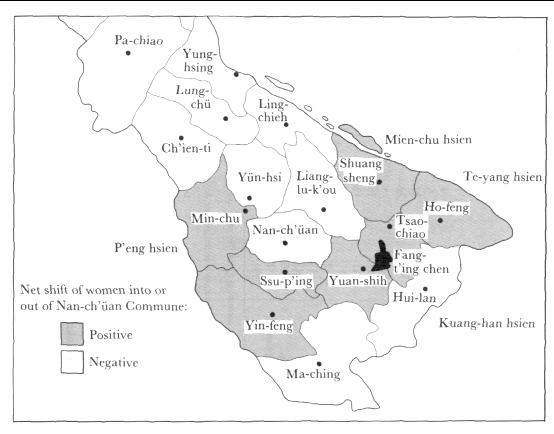
Map 9.1.
Southern Shih-fang county
Brides' Education and Mobility
If women hope to improve their lot through marriage, not all of them succeed. The reasons for such failures are complex, but it is still possible to explain the process in a general way. I shall take the simple approach of describing one measurable characteristic—education—of women who marry up or down the "spatial hierarchy."
First, the counties of Szechwan and communes of Shih-fang must be classified according to their "desirability" relative to Nan-ch'üan. Communes of Shih-fang that enjoyed a net positive movement of Nan-ch'üan women (the shaded communes on map 9.1) were classified as "Shih-fang—desirable." All others in Shih-fang were classified "undesirable." Counties that had per capita incomes in excess of 200 yuan in 1980 and received brides from Nan-ch'üan were classified as "desirable." All others had incomes under 200 yuan and were thus classified as undesirable. This scheme should not be treated as an ordinal scale because it is unclear whether "undesirable" communes of Shih-fang are more or less desirable than "desirable" counties.
Movements to more desirable areas correlate with a woman's educational level. In table 9.7 mean years of education are tabulated by the desirability of place of origin or destination for in- and out-migrants; women who marry within Nan-ch'üan Commune have 3.1 years of education on average.[10] Women who marry into the more desirable communes of Shih-fang have 3.5 years, while those who move to the undesirable communes of Shih-fang have 3.0 years on average. Those who move to desirable counties have 3.1 years. This pattern repeats itself in reverse for in-marriers to Nan-ch'üan. Women coming to Nan-ch'üan from the communes of Shih-fang have 3.0 years; those coming from desirable counties outside of Shih-fang have 4.4 years; and those coming from the poor counties of the Szechwan basin have 4.2 years.
Simply stated, better-educated women are moving up the spatial hierarchy; the lesser educated are moving down. It is certainly not the case that the average education of in-migrants reflects the average education in the region of their birth. The residents in poorer counties of the Szechwan basin, for example, have educational attainments well below that of the Ch'eng-tu Plain,[11] yet they are sending more highly educated women. It would appear on the one hand, then, that when Nan-ch'üan men import brides from low-income counties, they are getting women with higher-than-average levels of education. On the other hand, Nan-ch'üan's exchange of brides with the better-endowed communes of Shih-fang is decidedly unequal. Not only does Nan-ch'üan send more women to Ssu-p'ing and Yuan-shih than it receives, but it sends better-educated brides only to receive women with lower education in return.
TABLE 9.7 | |||||||||
Out-marrying | In-marrying | ||||||||
Origin or Destinationa | Education | N | Education | N | |||||
Nan-ch'üan | 3.1 | 61 | 3.1 | 61 | |||||
Shih-fang (d ) | 3.5 | 130 | 3.0 | 84 | |||||
Shih-fang (u ) | 3.1 | 82 | 3.0 | 96 | |||||
Counties (d ) | 4.0 | 13 | 4.4 | 5 | |||||
Counties (u ) | — | 0 | 4.2 | 43 | |||||
Total (nonmissing) | 3.2 | 286 | 3.4 | 289 | |||||
Missing | 52 | 133 | |||||||
SOURCE : Commune migration registers, 1978-80. NOTE : Education was recorded in the registers as illiterate, lower elementary, upper elementary, lower middle, upper middle, and college. It is likely that this classification represents any exposure at these levels rather than graduate status. The levels were translated into years of education as follows: illiterate = 0; lower elementary = 3; upper elementary = 5; lower middle = 7; upper middle = 9; college = 11. a Classification of communes and counties as desirable (d ) or undesirable (u ) was on the basis of the net flow of women from Nan-ch'üan. Communes in southern Shih-fang County that received a positive net gain of women from Nan-ch'üan (i.e., Fang-t'ing Chen, Ho-feng, Min-chu, Shuang-sheng, Ssu-p'ing, Yin-feng, Yuan-shih, and Tsao-chiao) were classified as desirable. Neighboring counties that received a net gain of Nan-ch'üan women (Ch'eng-tu, Kuan, Kuang-han, P'eng, and Mien-chu) were also classified as desirable. These counties had annual per capita incomes for the agricultural population of over 200 yuan. All undesirable counties had incomes of under 200 yuan. Statistical tests: Out-marrying . Contrasting mean education of women marrying within Nan-ch'üan with women marrying to desirable communes of Shih-fang, t = 1.48 (df = 189), p < .20 (2-tailed). In-marrying . Contrasting mean education of women marrying within Nan-ch'üan with women marrying from undesirable counties, t = 2.56 (df = 102), p < .02. | |||||||||
A Segmented Market
By focusing on the spatial hierarchy and a single attribute, education, the discussion thus far has greatly simplified the operation of the marriage market. We shall investigate other characteristics below, suggesting in the process that the market is segmented into economic and social groupings with particular interests, and that marriage movements within these market segments have characteristic spatial patterns.
Who marries women from the relatively poor, undesirable areas? The answer—relatively poor men—can be deduced from the marriages of women from undesirable communes and counties into teams whose income is low in relation to the commune as a whole.
It should be added that this is a relatively demanding test of the proposition that spatial. inequalities influence marriage movements because
TABLE 9.8 | ||
Origin a | N | Team Income b |
Nan-ch'üan | 108 | 396 |
Shih-fang (d ) | 37 | 413 |
Shih-fang (u ) | 37 | 372 |
Counties (d ) | 19 | 401 |
Counties (u ) | 38 | 366 |
Total | 240 | 390 |
SOURCE : Commune survey. a See n. a in table 9.7. b The total of collective income and private-plot income of the team in 1980, divided by the population of the team. Stratum means are computed by giving equal weighting to women. | ||
such variations within Nan-ch'üan Commune are minimal. A casual inspection of Nan-ch'üan in 1980 revealed less economic variation than one can observe by rounding a block in a tract-house subdivision in the United States. The commune is situated on a featureless plain with unlimited access to water; houses were invariably constructed of rammed earth and straw thatch. Survey data revealed, however, some variation in living standards across brigades and subbrigade units (teams) of the commune. Team income per capita in 1980 (including all private plot and sideline income) had a mean of 390 yuan, a standard deviation of 87, and ranged from 290 up to 700. Below-average teams tended to be concentrated in the northwest quarter of the commune, farthest from Fang-t'ing chen .
Data from the commune survey show that women migrating to Nan-ch'üan are also sorted by the economy of teams within the commune (table 9.8). The data refer to respondents of the survey whose first marriage occurred in the period 1966-81. The index of team per capita income was produced by attributing the total per capita income of the team to each respondent, and then taking an average of that income for respondents of each origin. The index thus represents the average value of the team joined by women of a given origin.
The differences shown are small but consistent: women from low-income counties move to teams with the lowest per capita incomes. For other origins the income means are consistent with the proposition that women marrying "down" to Nan-ch'üan are marrying into better teams of the commune, while women marrying "up" to the commune are marrying into teams that are less well-off.
TABLE 9.9 | |||||
Origin a | N | Brideprice | Dowry | BP/Dowry b | |
Nan-ch'üan | 108 | 123 | 143 | .86 | |
Shih-fang (d ) | 37 | 113 | 110 | 1.02 | |
Shih-fang (u ) | 38 | 100 | 121 | .82 | |
Counties (d ) | 19 | 120 | 169 | .71 | |
Counties (u ) | 38 | 66 | 82 | .80 | |
Total | 240 | 109 | 127 | .86 | |
SOURCE : Commune survey. a See n. a in table 9.7. b The brideprice:dowry ratio is here calculated in the aggregate from the data in this table. Statistical tests: Brideprice . Contrasting brideprice of brides originating in Nan-ch'üan with that of brides originating in undesirable counties, t = 3.48 (df = 144), p < .001. Dowry . Contrasting dowry of brides originating in Nan-ch'üan with that of brides originating in undesirable counties, t = 3.53 (df = 144), p < .001. | |||||
It would appear then that Nan-ch'üan has a segmented market. Men (or teams) of average or superior means generally contract marriages in the local area; those with lesser means are more likely to go afield of the traditional market area. They are more likely to do so because of the financial advantages afforded by such matches (table 9.9). The commune survey asked each woman three questions: (1) the value of the goods in her dowry, (2) the value of gifts sent by her husband's family, and (3) the value of cash sent by her husband's family. In addition, probes were in some cases used to elicit a list of goods received; this was then translated into cash values. No attempt was made to adjust for change over time in the value of goods or money. The brideprice figure given in table 9.9 is the sum of goods and cash received from the groom's family.
I hasten to add that I believe these values are far from the real absolute value of goods exchanged in the typical Nan-ch'üan marriage. Evidence from all other sources suggests that typical exchanges involve sums of a magnitude greater than those listed here. "Marriage by purchase" has been officially stigmatized and austerity in nuptial matters repeatedly glorified. Respondents in our survey answered questions under the gaze of local officials, and it is likely that many downplayed the truth or discounted the actual amounts by a large factor.
These deficiencies notwithstanding, I believe the data are useful in ratio form or in comparing stratum means. Previous work with these data has revealed consistent and interpretable patterns (Lavely 1983). The data in
table 9.9 should nevertheless be treated with caution, and the reader may judge whether the patterns are the product of chance.
Nan-ch'üan men who marry women from low-income counties pay only about 60 percent as much in brideprice as do men who marry women from the local area—doubtless an attractive feature of such matches for men in this market segment (see table 9.9). Women from the low-income counties bring far less valuable dowries than do local women, but the amount probably does not seem so little to their fathers, given the standards of their home counties. But launching one's daughter into a marriage in the Ch'eng-tu Plain is probably worth the extra expense. Parents may feel that a daughter will be happier there and may perhaps some day send some money home.
The highest brideprice is paid for women from Nan-ch'üan, but an even larger amount comes back in the form of a dowry. Again, a family may be willing to put more into a dowry so that a daughter can stay closer to home. But for both families, a match made close at hand will involve real affinal ties, and traditional matters of face will enter in. It would not do for either party to skimp, but (particularly because Nan-ch'üan is near the top of the spatial hierarchy) the groom's family is in a stronger position. After all, they can find less-expensive brides all over Szechwan. Given these conditions, we might expect the dowry to exceed the brideprice.
Brides coming from the desirable communes of Shih-fang are the only group who are unambiguously moving down the spatial hierarchy. It also happens that the brideprice-dowry ratio of this group is the highest of all. Because Nan-ch'üan is probably not the commune of first choice for most of these women, and Nan-ch'üan affines are not their family's first preference either, excessive dowries are unnecessary. At the same time, the groom's parents may see value in having affines in the prosperous communes ringing the county seat, and a bride from there may thus be seen as a "catch" warranting a substantial brideprice.
Of course, the same logic applies at lower levels of the spatial hierarchy. On the one hand, Nan-ch'üan parents put a lower value on affinal ties with Shih-fang's less prosperous and more distant communes, and brideprices reflect this. On the other, parents—and daughters—from those communes are eager to make the tie, so the dowry rises accordingly.
The high dowries of and brideprices for women from desirable counties. are less easy to understand. Permit me to speculate that matches in this category represent grooms in yet another market segment. Skinner (1964:36) has suggested that local marketing systems are united at higher levels by elites who exchange, among other things, brides. It is possible that brides from neighboring P'eng, Kuang-han, and Mien-chu counties represent a version of this. If these matches are indeed quasi-political or mercantile alliances contracted by local notables on both sides, then the considerations of face
TABLE 9.10 | |||||
Out-marrying | In-marrying | ||||
Origin or Destinationa | % Poor | N | % Poor | N | |
Nan-ch'üan | 45 | 47 | 45 | 47 | |
Shih-fang (d ) | 54 | 96 | 61 | 57 | |
Shih-fang (u ) | 65 | 66 | 62 | 90 | |
Counties (d ) | 89 | 9 | 54 | 11 | |
Counties (u ) | — | 0 | 70 | 37 | |
Total | 59 | 218 | 60 | 242 | |
SOURCE : Commune migration registers, 1978-80. NOTE : The following statuses were recorded in the registers under class status: poor, middle, and rich peasant; landlord; educated youth; and cadre. (Neither of the latter two types appears in this table.) The year 1980 was officially the last time class status was recorded in population registers. a See n. a in table 9.7. | |||||
and the high expectations for affinal ties would explain the costly marriage payments. I have no data on the parents of brides and grooms, but perhaps the husbands of respondents provide some clue. Taking the same base of 240 women by origin as in tables 9.8 and 9.9, the following percentages have husbands who are cadres: Nan-ch'üan, 14; Shih-fang—D, 24; Shih-fang—U, 10; Counties—D, 21; Counties—U, 13. Brides from nearby desirable counties, like those from the prosperous communes of Shih-fang, are more likely to be married to men of high status. It seems plausible that these grooms come from families with political connections—families that by dim of their prestige or wealth could bring a bride from a more desirable area. The very high dowries (and low brideprice-dowry ratio) are consistent with the notion that these are matches between families of wealth and status. But this is merely speculation.
Under rural collectivism class origins were a consideration in mate choice.[12] The best class background was that of poor peasant; middle peasant, rich peasant, and landlord backgrounds were below the ideal. Class origin had more important implications for males than females because, unlike residency status, class origin was passed through the male line. An undesirable class background was thus less of a stigma for women than for men. It is remarkable, then, that poor peasant women are more mobile than those of other designations. This is revealed in table 9.10, which shows the percentage of women with poor peasant backgrounds, tabulated by their place of origin or destination.
Poor peasants form a majority of the rural population, and their distribution on the landscape should be fairly even. At least there is no reason to
believe that Nan-ch'üan should have a deficit of poor peasants relative to surrounding areas. Yet only 45 percent of marriages within the commune involve women from poor peasant families. From this we can deduce that middle and rich peasants tend to marry within the commune.
The less desirable classes may incline toward commune endogamy in order to build affinal ties because the stigma of their class status may make such families more dependent on their affines for social and economic support. (Classes are also likely to be endogamous, as Parish and Whyte found [1978:179], but this is a separate issue.) Another reason for local endogamy may be that neighborhood matches depend less on objective criteria and are influenced more by personal characteristics. When a matchmaker carries a brief resumé from a distant place, an inferior class label may tip the scales against the match; but when it involves a neighbor family, affect and other considerations may overshadow class origin.
Women of inferior class status, whether through defensive affinal strategy or their lower valuation on the wider market, are inclined to marry within their own commune.
Implications
To summarize, this discussion of mate selection in Shih-fang permits us to draw the following conclusions. First, women generally move up by engaging in spatial hypergamy. Second, women are sorted into distinct migrant streams according to their personal attributes; for example, better-educated women are more likely to move up. Third, the mate-selection process is differentiated by social domains or market segments that themselves have implications for marriage migrations: the poor generally draw brides from further down the spatial hierarchy, while those with inferior class designations tend toward local endogamy. Finally, the overarching assumption for the entire discussion is that the mating selection operates like a market, in which the bride's side seeks to maximize her position in the spatial hierarchy. Measurable characteristics, such as education, brideprice, and class, all seem to bear out the market analogy.
All of this raises questions. Here I would like to address briefly the generalizability of these findings and their demographic and social structural implications.
Our vantage on marriage migrations has been from the top of the rural economic hierarchy. From below, they are likely to look quite different. The poorest locales should experience a net loss of women in marriage, and men in those places would face a severe marriage squeeze. Women with better qualifications would be the first to be recruited as brides by wealthier areas, while men with poorer qualifications would be the last to find brides. Beyond this, however, it is difficult to predict the possible responses to this geo-
graphically structured marriage squeeze. Chen village, finding it difficult to attract brides, broke sharply with the tradition of village exogamy, anti same-village matches became the norm. In his chapter in this volume, Jonathan Ocko discusses "exchange of relatives" as an alternative when brides are difficult to secure. Many other responses are possible.
Another question concerns the extent to which the marriage market is influenced by other global factors affecting the economy, demography, and social structure. I have described the peculiar spatial aspects of rural marriage as a product of the socialist collective, but did this phenomenon predate the collective period, and will it persist under the post-Mao economic reforms?
As I have argued above, the economic reforms of the 1950s cast the spatial hierarchy into sharp relief. Although the spatial hierarchy was not an innovation of the Socialist revolution, its rigidification and insitutionalization were. Other factors may have broadened the marriage area. Improvements in long-distance transport and communications opened a wider market for brides. At the same time, collective organization may have eroded affinal ties, thereby reducing the utility of local matches.
Still, the process described here was probably a feature of traditional rural Chinese marriage, although perhaps hidden amid local social variations and unrelated population movements. The traditional market for female servants, concubines, and prostitutes in cities and towns, along with higher female mortality, created a shortage of marriageable women that would have intensified competition for brides and put poorer locales at a disadvantage.
As for the current reforms, they are undoing the rigid world of the collectives, but not completely and not immediately. Status differentials within communities are on the rise; economic diversification and greater labor mobility are reshuffling the spatial hierarchy. A man's fortune now depends less on his residence, and his residence has lost some of its permanence. Still, for farmers and the new proletarians alike, economic opportunities will remain tied to access to markets. Although the correspondence between marriage migrations and the spatial hierarchy will wane, it is not likely to disappear.
Finally, the operation of the marriage market offers insights into China's demography and social structure. The underlying spatial structure of the marriage market implies that males at the top of the spatial hierarchy occupy a favorable position. Other things being equal, the ratio of brideprice to dowry should be lower, male marriage ages should be lower relative to females, and males should marry and remarry with greater frequency than males lower in the hierarchy. Females at the top of the hierarchy should experience a marriage squeeze.
The upwardly mobile stream of women would also affect females' spatial distribution, depending on the demography of the underlying populations.
TABLE 9.11 | |||||||
Income Per Capita (yuan )a | |||||||
Females | < 100 | 100-149 | 150-199 | 200-249 | 250+ | Total | |
< 34 | 5 | 18 | 3 | — | — | 26 | |
34 | 15 | 33 | 5 | — | — | 53 | |
35 | 3 | 19 | 12 | 2 | 1 | 37 | |
36 | — | 5 | 1 | 2 | 1 | 9 | |
 | — | 1 | 1 | 2 | 2 | 6 | |
Total | 23 | 76 | 22 | 6 | 4 | 131 | |
Mean %b | 34.5 | 34.6 | 35.1 | 36.7 | 37.0 | 34.8 | |
SOURCES : Income data from CKNYCCTTC . Population data from Population Atlas of China (State Council Population Census Office, 1987). NOTE : Females here are aged fifteen to forty-nine as a percentage of the population fifteen and over. This table accounts for 131 eastern Szechwan counties. a Cities are omitted from this table, as are the three autonomous chou (Liang-shan Yi, Kan-tzu Tsang, and A-pa Tsang). b Equal weighting for counties. | |||||||
Assuming that each male is permitted to marry one female, the number of women who could migrate to a favored region before the market reached saturation is limited to the number of eligible males in the population. But the effect on the sending populations will vary with the overall number of eligible females. If there is a preexisting deficit of females in the total population or in the sending population—as there is likely to be (see n. 13)—then the marriage migrations could have a substantial influence on the distribution of females, regardless of the limits imposed by the assumption of monogamy.
The distribution of reproductive-age females in Szechwan is in fact related to the spatial hierarchy. Table 9.11 shows the distribution of Szechwan counties by agricultural income per capita and by the proportion of reproductive-age women of the population, defined as females aged fifteen to forty-nine as a percentage of the total population fifteen years of age and over. There is a clear relationship between income and the proportion of females: in counties with incomes of less than 100 yuan per capita, reproductive-age women make up 34.5 percent of the population, compared with 37.0 percent for counties with incomes over 250 yuan.
That such percentages are mainly the result of marriage migrations is a plausible hypothesis, but it cannot be proved here. If the county populations were stable—that is, were closed to migration and had experienced constant birth and death rates over a long period—then we would expect the proportion of women aged fifteen to forty-nine to be roughly constant across counties. Rural women aged fifteen and over in 1982 were born in a period of
uncontrolled "natural" fertility, a condition consistent with the asumption of stability. But many other factors, including the famine of 1959-62, could have produced distortions in county age-sex structures, which vary systematically with the economic hierarchy.[13]
Shortages of reproductive-age females obviously imply a marriage squeeze for men at the bottom of the hierarchy; they also imply lesser reproductivity in these populations. If there are 7 percent more women aged fifteen to forty-nine, and if all women bear children at the same rate, the population with more women will have crude rates 7 percent higher. The emigrant counties not only lose women who move away but also lose the children that the women would produce.
In theory, then, counties richer in resources have greater reproductive success. And because mate selection also sorts women by personal characteristics—promoting those with better education, for example—the result would be to improve the educational level of the receiving counties. To the extent that education is a proxy for health and other attributes, mate selection could affect other population characteristics as well.
The market analogy will raise questions in the minds of some; are we arguing, they may ask, that women are being bought and sold? Is there a continuum, as Gail Hershatter suggests in her chapter here, between the market in prostitutes and the market for brides? There are undeniable semblances between commodity markets and marriage markets, but the latter refers to a much broader and more complex set of transactions. In mate selection, something is being exchanged, and someone is doing the exchanging. There are sharp qualitative differences, however, between this kind of transaction and the sale of a good. The rights and claims transferred in marriage are not total or absolute, as in the sale of slaves, and they may be quite limited. In marriage the woman herself may have considerable control over the transaction. And husbands and their families may also give over certain rights to the bride (for example, in property). Within the realm of Chinese marriage, there is considerable variation in the kinds of rights that are transferred, the extent of control over the transaction exercised by the woman, and the degree to which the woman herself gains rights to property or power within her husband's family. In this sense, there is not just one continuum but many. No doubt in some times and places, marriage exchange leans to the commodity end of these continua.
The process of mate selection is sufficiently complex to tax the ingenuity of econometricians. Individuals can act rationally within this complex structure because for any particular family or daughter, choices are made from among a relatively simple set of alternatives. In the aggregate, these choices produce a market that is a clearinghouse for a special kind of spatial and social mobility. The process affects only women and it affects all who marry. It takes account of their economic standing, their education, and no doubt many
other personal factors. It then relocates them permanently in space. One result is to alter marriage chances at the extremes of the spatial hierarchy. But the process works more subtle changes across every spatial stratum, continuously promoting women of higher status and demoting those of lower, thereby reinforcing the link between social and spatial stratification.
Glossary
A-pa Tsang 
An 
An-yueh 
chen
Ch'eng-tu 
Chiang-pei 
Chiang-yu 
Ch'iang 
Chien-yang 
Ch'ien-ti 
Chin-t'ang 
Ch'iung-lai 
chou
chui-hsu
Chung-chiang 
Fang-t'ing 
Ho-feng 
Ho-hsing 
Hsi-k'ang 
Hsin-tu 
Hui-lan 
Hung-pai 
Kan-tzu Tsang 
Kuan 
Kuang-han 
Le-chih 
Liang-lu-k'ou 
Liang-shan Yi 
Ling-chieh 
Lung-chü 
Ma-ching 
Mao-wen Ch'iang-tsu 
men-tang hu-tui
Mien-chu 
Min-chu 
Nan-ch'üan 
Nan-pu 
Pa-chiao 
Pao-hsing 
P'eng 
P'eng-hsi 
San-t'ai 
she-hung 
shuang-sheng 
Shih-fang 
Ssu-p'ing 
Sui-ning 
Sung-p'an 
Ta-hsing 
Te-yang 
T'ien-ch'üan 
Tsao-chiao 
Tzu-chung 
Wen-chiang 
Ya-an 
Yen-t'ing 
Yin-feng 
Yuan-shih 
yuan-tzu
Yun-hsi 
Yung-hsing 
References
Primary Sources
CKNYCCTTC. Chung-kuo nung-yeh ching-chi ti-t'u-chi . Chung-kuo nung-yeh k'o-hsueh-yuan nung-yeh tzu-jan tzu-yuan honung-yeh ch'ü-hua yen-chiu-so
  1983.
1983.
State Council Population Census Office and Institute of Geography of the Chinese Academy of Sciences. 1987. The Population Atlas of China . Hong Kong: Oxford University Press.
Secondary Sources
Arhem, Kaj. 1981. "Bride Capture, Sister Exchange and Gift Marriage among the Makuna: A Model of Marriage Exchange." Ethnos 46.1-2:47-63.
Becker, Gary S. 1976. The Economic Approach to Human Behavior . Chicago: University of Chicago.
Blalock, Hubert M., Jr. 1972. Social Statistics . New York: McGraw-Hill.
Blau, Peter. 1964. Exchange and Power in Social Life . New York: John Wiley & Sons.
Chan, Anita, Richard Madsen, and Jonathan Unger. 1984. Chen Village . Berkeley and Los Angeles: University of California Press.
Croll, Elisabeth. 1981. The Politics of Marriage in Contemporary China . Cambridge: Cambridge University Press.
England, Paula, and George Farkas. 1986. Households, Employment, and Gender: A Social, Economic, and Demographic View . New York: Aldine.
Homans, George. 1958. "Social Behavior as Exchange." American Journal of Sociology 63.6:597-606.
Ji Ping, Zhang Kaiti, and Liu Dawei. 1986. "Marriage Motivated Population Movement in the Outskirts of Beijing." Social Sciences in China 7.1:161-80.
Lardy, Nicholas R. 1978. Economic Growth and Distribution in China . Cambridge: Cambridge University Press.
Lavely, William R. 1982. "China's Rural Population Statistics at the Local Level." Population Index 48.4:665-77.
———. 1983. "A Rural Chinese Marriage Market." Paper presented to the Morrison Seminar in Demography, Stanford University.
———. 1984· "The Rural Chinese Fertility Transition· A Report from Shifang Xian, Sichuan." Population Studies 38.3:365-84.
Lévi-Strauss, Claude. 1976. "The Principle of Reciprocity." In Sociological Theory , ed. Lewis A. Coser and Bernard Rosenberg. New York: Macmillan.
Nye, F. Ivan. 1979. "Choice, Exchange, and the Family." In Contemporary Theories about the Family , ed. Wesley R. Burr, Reuben Hill, F. Ivan Nye, and Ira L. Reiss. Vol. 2. New York: Free Press.
Parish, William L., and Martin King Whyte. 1978. Village and Family in Contemporary China . Chicago: University of Chicago Press.
Pasternak, Burton. 1983. Guests in the Dragon: Social Demography of a Chinese District, 1895-1946 . New York: Columbia University Press.
Potter, Sulamith. 1983. "The Position of Peasants in Modern China's Social Order·" Modern China 9.4:465-99.
Sahlins, Marshall· 1972. Stone Age Economics . Chicago: Aldine.
Shornack, Lawrence L· 1986. "Exchange Theory and the Family." International Social Science Review 61.2:51-60.
Skinner, G. William. 1964. "Marketing and Social Structure in Rural China." Pt. 1. Journal of Asian Studies 24.1:3-43.
———. 1977. "Cities and the Hierarchy of Regional Systems." In The City in Late Imperial China , ed. G. William Skinner. Stanford: Stanford University Press.
———. N.d. "China's Regional Systems: A Research Guide." Unpublished manuscript.
Sorokin, Pitirim A. 1927. Social and Cultural Mobility . New York: Harper & Brothers.
Tien, H. Yuan. 1973. China's Population Struggle . Columbus: Ohio State University Press.
Wolf, Arthur, and Chieh-shan Huang. 1980. Marriage and Adoption in China, 1845-1945 . Stanford: Stanford University Press.
Wolf, Margery. 1972. Women and the Family in Rural Taiwan . Stanford: Stanford University Press.
———. 1985. Revolution Postponed: Women in Contemporary China . Stanford: Stanford University Press.