
Adaptation and Learning: An Analytic Code
The variables we have discussed are descriptive and may be recognized by the actors themselves; they might even be of use to students not concerned with adaptation and learning. Since my concern is the discovery of patterns of events in the experiences of international organizations—patterns that enable us to make judgments regarding the forms of adaptation and learning that occur—I must furnish some criteria for making these judgments. How, in short, can we identify an
adaptive or a learning pattern when we see one? The discussion of such evaluative variables is the next task.
I begin by restating the sequence of steps involved in changing one's policy that I assume as the most common in international politics. When facing disappointment with the outcomes of earlier actions, actors rarely question the theory of causation that led them to the initial choices. They start by questioning the adequacy of the policies—of the means—chosen. If no better outcomes are attained after a different set of means is selected, they begin to question the reasonableness of the ends they pursue. And only when the choice of different ends still results in unsatisfactory outcomes do they question the theories about the problem that needs to be solved.
The criteria we need hinge on how we, as observers, judge the encounters among the clashing coalitions in organizations. They hinge on the concepts we contrive to judge the decisions and bargains made by the actors. I remind the reader that the purpose of the exercise is the elaboration of a code for observing how international organizations adapt and learn; but I also offer the reminder that learning occurs as a result of negotiation and of encounters in which the parties seek to solve common problems so as to advance their individual interests at the same time. Learning is not sudden enlightenment or even incremental insight. It is the establishment of shared meanings among parties that may be active antagonists but that find themselves condemned by their interdependence to negotiate better solutions than they had created in earlier attempts. In my approach, adaptation as well as learning are completely associated with bargaining.
A discussion of bargaining is therefore necessary. We also need to study the acts antecedent to bargaining and the consequences and qualities of the bargains in relation to the organizations in which the bargaining occurs (Figure 2). We begin with a discussion of the types of knowledge available and the varieties of political objectives in play. Those clarified, we can then proceed to an analysis of decision-making styles, issues, and issue linkage. The character of the actual bargains sums up key combinations of decision-making styles and modes of issue linkage. Certain of these combinations favor learning; others favor adaptation; some favor neither. Whether bargains are based on "similar" or "dissimilar" linkages is the crucial judgment that can help
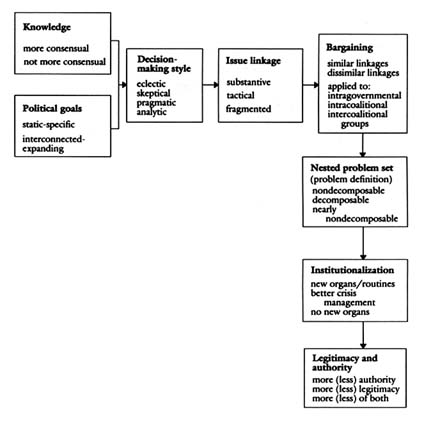
Figure 2. Organizational adaptation and learning
in identifying learning. The quality of the bargain is captured by the "nested problem sets" the bargainers manage to define; these are judged according to how easily causal interconnections are composed. or decomposed. We then come back to the results of such bargains for international organizations by taking up the matter of institutionalization, authority, and legitimacy.
Knowledge
All decisions in organizations use information in the effort to reduce uncertainty, despite all our caveats about unmotivated and motivated error. What matters for our purposes is whether this information
is "raw" or structured, generally agreed to be true and reliable, or subject to controversy. We are most concerned with the kind of structured information that is offered by epistemic communities as a guide for action. The term knowledge is more appropriate than information because it implies the structuring of information about whatever topic engages the organization in conformity with some theoretical principle.
Consensual knowledge, we now know, is the sum both of technical information and of theories about it that command sufficient agreement among interested actors at a given time to serve as a guide to public policy. If the epistemic community involved in the decision encounters no opposition, its knowledge is in effect consensual for all. In the absence of consensuality, the decision will be characterized by conflict among rival claimants to knowledge. Decisions, in short, have to be studied with regard to the knowledge brought to bear. That knowledge is either consensual or it is not.
The lack of consensual knowledge does not mean that no knowledge is involved in the decision or that no issue linkage occurs. A decision about environmental protection may be informed by the separate bodies of information of toxicologists, meteorologists, soil chemists, and agricultural economists, even if these professionals cannot yet agree on an integrated, consensual, view of how their separate disciplinary lores might cohere. Issue linkage, if it occurs, will still be based on knowledge. Hence, more accurately, a decision is based on knowledge that is or is not becoming more consensual.
Political Goals
Political goals are determined by the ideologies to which decision makers subscribe. Ideologies vary considerably in their determinateness. In the life of contemporary international organizations, the applicable ideologies are one of the five notions about a desirable world order we discussed above. Each suggests the concrete interests a politician chooses to advocate and defend.
Goals can be either "specific" or "interconnected," "static" or "expanding." A specific goal seeks the attainment of a single outcome—a higher per capita income, or cleaner air, or cheaper fuel prices. An interconnected
goal envisages causal connections among these separate desired outcomes. Actors who espouse such goals define the superordinate problem to be solved in a more complex way than actors who remain committed to the attainment of specific goals. Static goals remain constant over long periods of time. Expanding goals refer to situations in which politicians feel compelled to enlarge their targets to include new goals in order to be able to satisfy the demands associated with the original goals. Interconnected and expanding goals tend to go together because they are justified by the same cause-effect chain. A commitment to them creates a dependence on producers of transdisciplinary knowledge, whose advice becomes a crucial input. No such commitment is evident among decision makers, who tend to entertain static and specific goals because the fragmented knowledge proffered them by separate professional and disciplinary groups (not organized as epistemic communities) is deemed adequate by the decision makers.
There is of course a logical possibility governing decision making that differs from the four we envisage here. Interests need not be informed by knowledge (as here defined) at all. Ideology may be the source of interest, unaided by any notion of technical information—structured or unstructured, consensual or disputed. In such a situation a politician's sense of interest retains its immunity from the truth tests to which epistemic communities are subject. These possibilities do not concern us here. I am elaborating a notion of organizational decision making in which knowledge, consensual or not, deflects raw interest. I am not here interested in goals based on interests uninformed by knowledge.
I feel justified in taking this position because it is hard to imagine any political issue in modern international relations that is not informed to some extent by experts' claims that command some respect, mixed with a fair amount of ridicule and even contempt. The point is that even though the knowledge claimed by experts may be partisan, it still enters the decision-making process (this is the situation covered by cell A in Figure 3).
When we combine the codings for the kind of knowledge involved in decision making with the types of goals politicians are able to entertain, we obtain the four situations described in Figure 3. Each cell
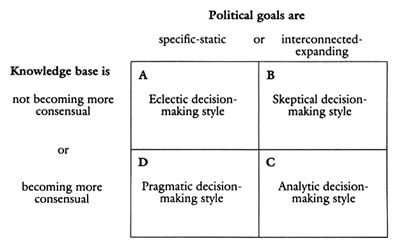
Figure 3. Decision-making styles used by international organizations:
how knowledge interacts with interest
represents a decision-making style that might be associated, empirically, with a subunit within a public organization that teams experts with politicians.
Issue Linkage
I refer to an "issue" as a single goal that has found its way onto a decision-making agenda, such as the cessation of nuclear testing or the establishment of a maximum sustainable yield for catching salmon in international waters. Agreement, or lack thereof, in the ensuing bargaining process will dispose of the single issue. "Issue linkage" refers to bargaining that involves more than one issue. Issue linkage is being attempted if the nuclear test ban is discussed in conjunction with limits on strategic weapons, or if the salmon catch is being negotiated in connection with the nutritional needs of the consumers. The attainment of interconnected and expanding goals is almost always accompanied by the attempt to link issues in negotiations.
We are attempting to understand how issues are linked in multilateral negotiations in international organizations, a bargaining process dominated by politicians who are aided by technical experts in national and international bureaucracies and urged on by other
experts associated with NGOs. In short, we must understand a bargaining process in which all styles of decision making operate. This requires a closer look at how experts persuade each other, how politicians bargain, and how experts interact with politicians.
There are three ways of persuasion. First, one can link issues by introducing into the agenda items that are not substantively or inherently connected. We call this "tactical linkage." The objective is simply to extract a concession not obtainable if the discussion remains confined to a single issue. For instance, deep-sea mining can be regulated without also worrying about the right of passage through straits. Yet in the UNCLOS III (Third U.N. Conference on the Law of the Sea) these issues were in fact linked by the Group of 77 because the weaker countries had no other way to force the stronger ones to internationalize deep-sea mining. Tactical linkages are commonly used by the weaker parties in bargaining. Since the issues linked are not considered inherently connected, the sacrifice of a secondary demand poses no problem as long as what is really wanted is accomplished. Tactical linkage describes the conduct of most international negotiations when politicians are left to themselves to bargain, when no effort is made to inform the negotiations with a changing consensus on causes and effects, or when experts make no attempt to transcend their separate professional perspectives.
Second, issue linkage may also proceed on the basis of causal understandings, or consensual knowledge applied to an agreed overarching social goal. This "substantive linkage" is of greatest concern to our efforts to understand collaboration. An item from the NIEO debate illustrates the pattern. Experts in the developing countries have come to regard technology transfer as an overarching concept instead of worrying separately about such matters as foreign capital inflows, obtaining patents for specific products, finding markets for their products, or building a certain type of factory. These things remain the issues, staying in people's minds even when they are combined and abstracted into a more comprehensive pattern. But instead of being ends in themselves, they become means toward a more complicated end—the achievement of technological self-reliance. Instead of being effects, they are reconceived as causes leading to more basic effects such as wealth, prestige, status, and autonomy. Substantive linkage is typical of
decision making not only by experts committed to consensual knowledge but also by politicians who profess interconnected-expanding goals informed by consensual knowledge.
Third and finally, issue linkage may also be attempted in situations where most of the political aspirations are issue specific, but where strong strands of causal understandings among issues also exist. Moreover, the bargaining situation demands that the negotiators maintain cohesive coalitions in the face of this mismatch between knowledge and interest. We call this "fragmented issue linkage." Each coalition is held together by a commitment to some overriding social goal, even though the politicians disagree with respect to the knowledge necessary to attain it, while the experts see eye to eye. Politicians may also disagree on the extent to which the issues in the package have interdependent anticipated effects. Uncertainty about outcomes is the glue that holds the coalitions together. Even though the linkers are uncertain about the joint gains promised by the issue package, it is safer to link because only by doing so can big concessions be obtained from the industrial countries. Moreover, because the relationship between relatively specific-static goals and increasingly consensual knowledge is by its very nature volatile, we can expect changing calculations of joint gains within and among coalitions. This changeability suggests the possibility of occasional elaborate agreements covering a variety of issues, but not a pattern of such agreements.
Even though bargaining that features tactical linkages does not depend on knowledge, whereas negotiations that conform to the fragmented linkage pattern do, both modes depend on the size of the "win-set." Win-sets, however, are irrelevant to bargaining in the substantive-linkage mode because the persuasiveness and acceptance of the consensual knowledge alone predict agreement.[4]
I have taken the idea of win-sets in two-tiered negotiations and the argument about the importance of large win-sets from Robert D. Putnam, "Diplomacy and Domestic Politics: The Logic of Two-level Games," International Organization 47 (Summer 1988): 427-60.
The notion of win-sets is intrinsic to international bargaining because international organizations are coalitions of coalitions. The negotiators in the organizations are tied to coalitions by virtue of their membership in blocs of states; they also have to "sell" any agreement to a domestic constituency made up of bureaucratic entities as well as of varying combinations of voluntary groups and political parties. The wise negotiator does not seek to reach agreement on the international level until he or she has some idea of the size of the domestic win-set required to assure acceptance of the international bargain.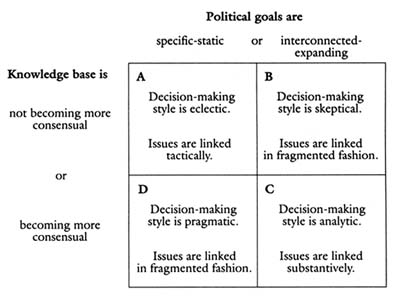
Figure 4. A typology of decision-making styles and issue linkage
in international organizations: how knowledge interacts with interest
In general, the larger the win-set the more likely that an acceptable international agreement will be concluded. Having a large win-set implies the inclusion of many groups of constituents into the bargaining process, which in turn implies a large number of interests to be represented and satisfied. A large basket of interests implies a large number of issues that call for linkage in order to become acceptable, at least for tactical linkage. The larger the issue packages, the greater the chance that the various proposals for an agreement offered by the international coalitions will overlap sufficiently to produce a general agreement. Conversely, small win-sets at home imply more restricted issue packages on a narrow range of issues, thus increasing the chances that the competing international formulas will not overlap.
We are now in a position to combine the typology of decision-making styles with our typology of issue linkage (Figure 4). We are still positing an organizational subunit as the decision-making entity, not an international bargaining session (even though our discussion of linkage was illustrated with episodes that occurred in international organizations).
Let us examine what each cell in this figure suggests. In cell A, neither
experts nor politicians are motivated by a growing body of consensual knowledge. Neither thinks of the conceptual unification of separate goals nor uses analytic techniques for conceptual integration. If this situation prevails in an organization, the linkage pattern among issues will remain purely tactical. Agreements persist only as long as the initial interests of the participants remain intact.
In cell B, the experts and politicians are committed to some new and ambitious goals that call for new causal theories. Yet they have no consensual knowledge to help them (though some experts and some politicians undoubtedly propound concepts that have not yet become consensual). Issue linkage is based on political demands alone. The situation is that of fragmented linkage. Agreements can be made, but they are subject to rapid obsolescence if new consensual knowledge develops.
In cell C, the analytic mode of decision making is supreme. All participants accept the expanding knowledge base and employ it in designing their ambitious social objectives. It is the perfect case of substantive issue linkage. The founders of UNEP had something like this in mind, as did the epistemic community and its political allies that dominate UNCTAD.
In cell D, finally, a more complicated situation prevails. The expert knowledge for more ambitious problem solving exists and is available to politicians, some of whom may even be persuaded by its relevance. Yet the definition of social objectives remains fragmented, though some politicians probably would wish to move in the direction of more conceptual complexity. Bargaining under such conditions will also show the fragmented-linkage pattern, with more pressures toward substantive linkage than in cell B. Agreements are subjected to the pressure to adapt in line with knowledge. But the unstable consensus on goals is likely to make the adaptations short-lived.
Bargaining
My argument was based on the assumption that all participants in decision making are located in a single cell and the negotiation in question can be described in terms of the characteristics of a single cell. This assumption is unrealistic. It is truer to life to imagine a bargaining situation in which the participants are located in different
cells. Analysis would then have to focus on a bargaining situation between say, a set of negotiators characterized by an eclectic style and tactical linkages and another made up of skeptics committed to the fragmented linkage of issues.
Let us use the NIEO negotiations in UNCTAD as an illustration. In 1975 the situation would have looked as follows. The governments of the Group of 77 were skeptics; they entertained interconnected and expanding goals but were not united by any commitment to consensual knowledge about how the NIEO package of issues would make them wealthy and strong. The experts advising these governments tended to be of an analytic frame of mind since they did claim such a body of knowledge for themselves, i.e., the structural antidependency position. The UNCTAD staff agreed with them. Group of 77 governments were tied together on the basis of fragmented issue linkage, while UNCTAD staff and the experts advising the Group of 77 governments packaged things on the basis of substantive linkages. In contrast, the B-group governments were divided by a lack of consensual knowledge and united by a commitment to static and specific goals; they were eclectics. Their experts (and the staff of the Organization for Economic Cooperation and Development [OECD]) were agreed that NIEO, as based on structural antidependency arguments, was nonsense, whereas good theory favoring economic development was available in the form of the basic-human-needs approach (a variant of managed liberalism). B-group governments embraced tactical linkages, if they were committed to any form of linkage, whereas their experts were willing to engage in fragmented issue linkage with the opposing coalition. We all know the result: years of bargaining produced no agreement because the win-set was at no time large enough to result in any appreciable overlap between the two coalitions. Put differently, decision styles and types of issue linkage were too diverse to allow the kind of formulas that might have yielded large enough win-sets.
Things were different ten years later, but they still did not permit agreement on the NIEO. Owing to many events since 1975 and many new arguments advanced in the meantime, the differences between the two camps were reduced, though not eliminated. Group of 77 governments are less sure of their skeptical style and of their commitment to fragmented issue linkage; they have moved toward the position
of eclectic-tactical linkage as recession, debt, and dependence on foreign funds forced a disaggregation of the old issue package. Their experts lost the earlier commitment to substantive linkage as the doctrines of classical liberalism and pragmatic antidependency reemerged as legitimate. B-group governments, in contrast, became sufficiently concerned with the financial viability of Third World countries to link the issues of debt, debt relief, and world trade in a more substantive manner than was done in 1975, although they did so without professing a greater degree of agreement on the economic theories underlying the linkage. In short, they edged toward skeptic-style fragmented linkage. Although the NIEO did not come into being, shared adversity brought about more intercoalitional agreement than existed ten years earlier. Both coalitions now straddle cells A and B.
How then shall we code the bargaining styles that pit differently minded coalitions against each other in single negotiating encounters? The first point to be noted is that decisions can be based either on "similar" decision-making styles and modes of linkage or on "dissimilar" ones. The decade of NIEO negotiations made the encounter between the two coalitions more "similar" than it had been in 1975, when the coding would have been "dissimilar." I predict that negotiations in which the bargaining coalitions "live in the same cell"—when they profess "similar" modes of linking issues and of merging knowledge with political goals—are more likely to produce lasting collaborative agreements than when "dissimilar" modes occur.
A little later I shall introduce evidence of a number of bargaining encounters that resulted in the evolution of agreements based on "similar" decision-making styles and modes of issue linkage after having first suffered through encounters that were "dissimilar." The sequence of these encounters illustrates the important differences between the pragmatic-fragmented mode and the analytic-substantive ones. Pragmatists, unlike analytic thinkers, experiment with combining two or three issues. Once convinced that the combination is conceptually faulty or politically unacceptable, they are willing to decompose the issue package. Pragmatists prefer to link issues substantively at all times. But they will accept tactical linkages when they must. Moreover, they will bargain with opponents who are not willing to make substantive linkages, thus permitting the fragmented pattern to
operate. Therefore, this mode permits tentative movement toward the growth of consensual concepts. To the extent that these take root, certainty about how to proceed also develops. For the pragmatist, however, nothing is ever final and complete. The social and economic goals to which politicians subscribe may not be expanding as the expert wishes. Therefore, the varying concepts that permit the nesting of goals and policies continue to coexist and to compete. Improved knowledge cannot be used to order goals in any final way. As single goals change and coalitions among bargainers shift, so does the order of priorities acceptable to the pragmatist. Improved knowledge may help in the ordering. But since such knowledge too is rarely final and complete, pragmatists must work on the border of relative and temporary "certainty," of social goals that are only occasionally ordered consensually. Hence they are willing to settle for stop-and-go tactics and for attempts to construct more encompassing concepts, followed by periods of retrenchment and disaggregation.
These conclusions, however, require a more refined typology of bargaining situations than has been offered so far. Since international organizations are coalitions of coalitions, such a typology must contain these three possibilities: (1) intragovernmental negotiations before a national position is developed; (2) intracoalitional negotiations to harmonize the positions of members of single blocs; and (3) intercoalitional bargaining to arrive at an agreement for the entire membership.
Intracoalitional bargaining is likely to be easier than bargaining with one's antagonists.[5]
Negotiations among the bureaucratic units of a government can be expected to display the array of cognitive styles described by Steinbruner. Some of the participants will be theoretical thinkers, while others will display grooved or uncommitted thinking. The theoretical thinkers approximate our analytic ones, and the, uncommitted thinkers resemble the pragmatists, while the eclectics show some similarity to the grooved type. Normally, because in principle national decision makers are subject to hierarchical direction from ministers and heads of government, disagreements among the negotiators can be resolved on the basis of any of these styles; prediction of which one dominates is not possible. Conversely, if no central direction is provided and if no clear agreement is reached (which has been known to happen), the scene is set for the phenomenon of transgovernmental bargaining. Units within the national government approach their opposite numbers in other governments in order to work out a common stance, which may contradict the stance taken by the negotiator's fellow nationals. The national unit with the most complete access to the international bargaining process, then, is in a position to force its fellow decision makers into an agreement they had initially opposed.
Also, the styles involved will probably be similar, or at least not drastically different. The knowledge that the coalition will eventually have to face an opposing coalition is a powerful incentive to hold the members together. Intercoalitional bargaining is very likely to pit the competing styles against one another, with the patterns described above expected to characterize the encounters.Problem Definition
Assume now that the bargaining has resulted in an agreement that will take the form of a new program of action. Such a decision seeks to define a commonly experienced problem that is to be solved by collaboration. Assume also that this decision is just the latest effort to
tackle the problem. Each new effort produces slightly different definitions of the problem. Each time the components of the problem are "nested" more (or less) complexly than before. A "nested problem set" contains a theory about what causes the dissatisfaction that constitutes the problem; how various institutions, processes, and physical parameters are thought to bring about the unhappiness; and what can be done about it. Differently arranged nests correspond to different sets of Chinese boxes (or Russian dolls), each governed by the shape of its largest unit. Successive conceptualizations (nests) will contain elements of the various world-order ideologies. The extent to which the set straddles and combines elements in these ideologies in arriving at its particular manner of nesting shows the extent to which meanings are actually being shared.
I illustrate alternative ways of nesting concepts with a summary discussion of four major U.N. conferences that sought to define key economic questions.[6]
See Ernst B. Haas, "What Is Progress in the Study of International Organization?" Kokusai Seiji 76 (May 1984): 11-46. The four conferences illustrate (1) the failure to arrive at any nesting of concepts (U.N. Conference on Science and Technology for Development [UNCSTD], 1979); (2) nesting patterns that at first approximate the analytic style—substantive linkage mode and then degenerate (U.N. Environment Program Conference, 1972 and 1982); and (3) nesting patterns that conform to the pragmatic style—fragmented linkage mode (the deep-sea-mining aspects of the U.N. Conference on the Law of the Sea III and the World Conference on Agrarian Reform and Rural Development, 1979). I gratefully acknowledge the work of Susan Sell, Wayne Sandholtz, Jacki Reich, Stephen Sloan, and Mark Trexler as extremely helpful in the analysis of these conferences.
Each conference attempted to construct new nested problem sets about the same issues. In each case, the effort to link issues was more complex than the earlier iteration because states questioned the consensus that had inspired almost all pre-1970 international collaboration on economic welfare.The earlier consensus accepted the desirability of a complex international division of labor and the dominance of free trade and free investment abroad. It envisaged that human welfare would improve as a result of these practices, that economic benefits would trickle down to the mass of the urban and rural populations. Scientific and technological knowledge was crucial in this process. It was expected to be diffused automatically and would therefore require no special intervention by states and international organizations. Efficiency was the organizing concept uniting the processes considered relevant to development. The economic experience of the Western countries inspired it.
Efficiency was challenged in each of the conferences, and other modes of nesting were discussed. Equality—national and international—was the most important rival to efficiency, as represented by the ideology of dependency reduction and the NIEO program. Other rivals included various efforts to organize international collaboration under the concept of improving the global quality of life. They relied
heavily on substituting labor-intensive indigenous technology for imported Western modes of production and on meeting the basic human needs of the poorest in the poor countries, such as food, medical care, shelter, and education. At a minimum, the conferences showed the move away from the efficiency criterion as the dominant concept and toward a different understanding of human and national welfare. At a maximum, they sought a new way to nest the problem of poverty in a matrix of complicated causes that were no longer "decomposable."
How then shall we code problem definition? The dominance of the analytic-substantive mode results in the elaboration of a "nondecomposable" set of tightly interrelated issues and concerns.[7]
The source of the typology is, of course, Herbert A. Simon's work. For a recent discussion of these distinctions see Simon, Reason in Human Affairs (Stanford, Calif.: Stanford University Press, 1983). The normative and perhaps evolutionary significance of the typology is discussed further in chapter 9.
To the extent that the set is derived from a single overarching principle or norm—such as the predominance of a higher quality of life or improved international equity—the set is hierarchically arranged. The prevalence of the pragmatic-fragmented style tends to yield a "nearly nondecomposable" nested set. Less hierarchy is evident in the nesting because the bargainers have to do some compromising among the basic principles in assembling the set. Not all parts of the set are equally tightly and permanently linked to the other parts, so that some decomposition is always possible. A "fully decomposable" set is the result of bargaining in the eclectic-tactical style. Whatever arrangement is reached remains subject to relatively easy dismemberment as bits and pieces of the problem can be tackled. Bargaining that features the skeptic-fragmented style is more difficult to code and classify. It depends on the style of the opposing coalitions. If they are eclectically minded, the result will also be a fully decomposable set. But if they are analytically or pragmatically minded, then the outcome is likely to be a nearly nondecomposable set.Institutionalization
We now need some evaluative variables for assessing the impact of various kinds of issue linkage, bargaining, and problem definition on a specific organization. I shall use the notions of institutionalization and organizational legitimacy and authority for that purpose. The coding in each case is a simple bivariate one: the features to be elaborated either do or do not develop. I define institutionalization as the development
of new organs, subunits, and administrative practices that are designed to improve the performance of the organization in the wake of some major disappointment with earlier outputs.
So defined, institutionalization assumes that learning involves decision-making routines that actively search for consensual knowledge and make serious efforts to use it. Evidence that such a trend is under way would include any and all of the following: the organization may establish a think tank to work up consensual knowledge; it may decide to use modeling techniques useful in other decision-making contexts in order to reduce uncertainty; program budgeting may be adopted in order to monitor performance more systematically and to gain insight about failures; recruitment practices may be changed to reflect the need for personnel adept in these activities and skills; rules of deliberation may be changed so as to encourage serious nonconfrontational discussion instead of posturing and voting. Adaptation, as opposed to learning, may feature attempts to use one or two of these innovations in an ad hoc manner. It must be stressed that the episodic use of these innovations—all of which have occurred—does not amount to successful institutionalization; coding cannot be done by merely noting the effort to introduce innovations. Successful institutionalization takes place only when they are consistently used and fully integrated into the regular decision-making process.
Crisis management can be used as a short-hand indicator for successful institutionalization. A crisis is a sudden concatenation of circumstances that threatens the major values of most of the membership—a major war, a famine, a global depression. A crisis presents the membership with an unfamiliar set of problems in the sense that the causes of the disturbance are seen as complex and not amenable to one-shot solutions. It is not that the membership never before experienced war, famine, or depression. A crisis consists not in the recurrence of these events, but in the membership's recognition that the recurrence is brought on by the insufficiency of institutional routines to avert it. Hammarskjöld's invention of peacekeeping forces constitutes successful crisis management in this sense, as does the work of the 1974 World Food Conference. Successful crisis management incorporates in a single institutional response the qualities and routines described above.
Legitimacy and Authority
Successful institutionalization, or crisis management, can be appreciated or neglected by the membership. A one-time jump in institutionalization is far from guaranteeing its continuation. It also does not imply that everybody applauds the innovation. Peacekeeping remains controversial despite its thirty-year history. The reforms suggested by the World Food Conference did little to prevent the recurrence of famine in Africa. Modeling and program budgeting are talked about but not integrated into U.N. decision making.
Organizational legitimacy exists when the membership values the organization and generally implements collective decisions because they are seen to serve the members' values. Organizational legitimacy increases when, and only when, the innovative institutional practices are accepted and appreciated as desirable for meeting the values of the member states. The legitimacy of U.N. peacekeeping practices has not uniformly increased, though on balance more members value than denigrate them. The legitimacy of technical assistance for economic development has certainly increased, but not uniformly so for all donors. The overall legitimacy of the United Nations has probably decreased as far as the industrialized member states are concerned; but the same is not true with respect to the IMF and the World Bank. Judgments about increases in legitimacy must be finely tuned.
Authority is different from legitimacy. States may grudgingly meet the organization's expectations without at the same time appreciating or valuing them. The targets of peacekeeping operations defer to the United Nation's authority without granting it legitimacy. So do the victims of the International Monetary Fund's conditionality requirements and the small artisans and farmers who pay the European Community's value-added tax. Organizational authority consists of the ability of the organization to have its decisions implemented irrespective of the goodwill of the members concerned. Organizational authority, like legitimacy, either increases or fails to do so. Of course, it can decline, too.
Finally, the development of an international organization can be judged as to whether legitimacy and authority, taken together , decline, increase, or stay the same. I commend an exercise that would trace
the changes in the legitimate authority enjoyed by all public international organizations. I suspect that only the Universal Postal Union (UPU) would show a consistent upward trend shared by most of the membership.[8]
Legitimacy and authority can be measured quantitatively when the rule-supervisory decisions of the organization call for regular reporting on implementation and/or when a complaint procedure exists. For a method of measurement in the case of human rights programs see Ernst B. Haas, Human Rights and International Action (Stanford, Calif: Stanford University Press, 1970), 47-49.