
NOTES ON TRANSLITERATION
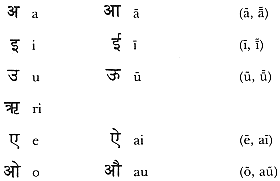
Vowels and Diphtongs (Nasalized Vowels)
The nasalized versions of the diphtongs ai and au carry the tilde only on the second element: ai[*] , au[*]
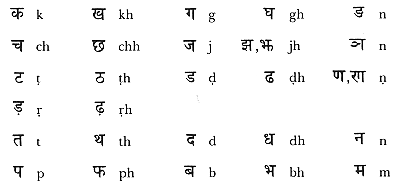
Consonants
Stops and Nasals

Others

Arabian and Persian Consonants


General Rules
1. Personal names and place names are printed without diacritics; Tulsidas and Banaras. This applies as well to languages and scripts.
2. Diacritics are retained in book titles and newspaper names: Kalyan[*] (magazine), Bharat[*]durdasha[*] (play).
3. Social and political movements, societies, festivals, months, places (e.g., of worship), and castes are in roman type, with an initial capital letter and diacritics: Sankat[*] Mochan Temple, Sanatan[*] Dharm movement.
4. All other words not listed in Webster's Third Edition are in italics, with diacritics and no initial capital letters: rasdhari[*] , akhara[*] .
Exceptions
As the Bhojpuri used in Chapter 3 differs somewhat from the Hindi for which the transliteration system is designed, certain exceptions have been made in that essay. Also, because the
