
Two—
Toward a Model of Development
Gustav Ranis
1—
Inroduction
There can be little doubt that future historians will view the effort at transition to modern growth by contemporary less developed countries as the major economic and political event of the late twentieth century—an event equaled only by the development of atomic energy. The effort by two-thirds of humanity to move from colonial agrarianism toward what Simon Kuznets has described as the epoch of modern economic growth is surely a monumental societal undertaking. In the socalled mature industrial countries, this process began in England with the Industrial Revolution during the last quarter of the eighteenth century. From there it spread gradually across Europe and into North America, Japan, and Russia, but stopped short of the so-called overseas territories, thus helping to create the current dichotomy between developing and industrially advanced countries.
This phenomenon of modern economic growth encompasses major structural change away from agriculture in terms of both value added and employment over time by enlisting the routinized and institutionalized exploration of science and technology in its manifold applications. It entails a most profound change in the way of life of a society as well as in the institutional environment that helps regulate economic activity. This new way of life has been deemed attractive and irresistible and seems to be the objective of most of the Third World—almost regardless of initial conditions, cultural milieu, or even ideological preference.
This chapter has benefited from very helpful comments by Larry Krause on an earlier draft.
| |||||||||||||||||||||||||||||||||||
Accordingly, the effort that spread geographically from England to the Continent, the United States, Canada, and Japan in the nineteenth century and to eastern Europe as well as parts of Latin America in the early twentieth century was only temporarily interrupted and was resumed with greater vigor as well as impatience in the postindependence, postwar era. The development effort we are now witnessing thus really represents the resumption of the spread of that transitional growth effort to Asia, the rest of Latin America, and parts of the Middle East, with Africa bringing up the rear.
It has, moreover, become increasingly apparent in recent years that of all the contemporary LDC transitional efforts, those of the so-called East Asian NICs, Taiwan, South Korea, Hong Kong, and Singapore, have been most successful. In addition, I believe that Japan, an unquestioned case of earlier success, had much in common, in terms of initial nineteenth-century conditions, with these contemporary East Asian situations. Furthermore, it is quite obvious that what the entire East Asian family of nations seem to have in common is relative shortage of natural resources—with the possible exception of the favorable entrepôt locations of Singapore and Hong Kong—in association with heavy population pressure on limited land, a relatively good human-resource base, and a relatively small size.
The contemporary East Asian NICs, like Japan in the late nineteenth century, may thus be labeled as belonging to a group of open dualistic economies characterized by the coexistence of a large agricultural and a small nonagricultural production sector internally and by the relative importance of international trade externally. These systems have clearly been more successful than other postwar LDCs by any criteria contrasting East Asian performance with that of Latin American countries over the postwar period (see tables 2.1 and 2.2). They have clearly done well
| |||||||||||||||||||||||||||||||||||
on all counts, not only in terms of per capita income growth but also in terms of the generation of sufficient employment to mop up their labor surpluses by the end of the 1960s and the maintenance and even improvement of an equitable distribution of income during exceptionally rapid periods of growth.
The "why" of this success is, however, still little understood, as is the extent to which the experience is transferable to differently situated developing countries. It is not at all obvious why the initial conditions more or less shared by these five countries—their poor natural-resource endowment, the relatively high quality of their human resources, the heavy pressure of their populations on the land, and their relatively small or medium size—should all add up to a natural advantage in effecting a successful transition to modern growth.
While it is fashionable nowadays to say that success resides in "good management," that these countries somehow pursued "good" economic policies, this does not take us far. It is, as we shall see, undoubtedly true—but we must try to probe deeper and again ask ourselves, "Why?" In other words, it is clear that there must be some politicoeconomic forces at work that led to the adoption of relatively better policies in these countries than elsewhere, and that permitted them not only to perform better in general, but also to be able to adjust much more flexibly to the deterioration of the international environment during the past decade. It is my hope to relate the initial conditions cited to the issue of a conformable evolution of policy and, in so doing, to try to show both the longer-term policy direction of a society and the absence of undue oscillations in that policy to be at least to some extent endogenous. In other words, a satisfactory approach to understanding a particular model of development relevant to this type of developing country must go beyond a description of what happened and try to relate it to politicoeconomic forces within the system.
While most of the prior work on the analysis of transitional growth has focused on the discovery of statistically measurable regularities in countries' performances and production structures over time, the deviations from that average convergent pattern have usually been explained in a rather ad hoc descriptive fashion. This is certainly characteristic of the work of Chenery (1979) and Kuznets (1966) as well as of many of the descriptive analyses of the East Asian historical cases in the literature.[1] Perhaps the time has now come to try to focus on precisely why, in these few cases, a conformable evolution of policies has resulted in a more or less linear set of policy changes, whereas in the majority of LDCs there has been inconsistency and policy oscillation in spite of the profusion of advice from academics, international organizations, and so on. It is no longer sufficient to dismiss the East Asian NICs as "special cases." We must ask what, if anything, can be learned from them and see whether their experience is relevant for other developing countries, still largely marching to a different tune. This is the basic motive for attempting to explore the model of development of the natural-resource-poor LDC in this chapter.
The search for a prototypical case, of course, always runs up against the problem of each individual country's inevitable "specialness," and even within our subfamily of five natural-resource-poor countries there are obviously marked differences that could take up much of our energy and space. I have therefore decided to focus most heavily on one case, that of Taiwan, partly because it is best known to me, and partly because Singapore and Hong Kong can easily be eliminated as extremely atypical city-states. I shall, however, also make reference to both South Korea and historical Japan, while maintaining the main focus on Taiwan as a prototype for the exploration of the natural-resource-poor (NRP) development model. The contrasting example of the natural-resource-rich LDCs (NRR), as illustrated by a "typical" Latin American case, will also be useful.
Traditionally, the analysis of policy stresses its economic impact on growth, distribution, employment, labor allocation, trade patterns, and so forth in assessing its economic costs and benefits. Analysis typically does not focus on the question of why certain policies were adopted and/ or abandoned in the first place. The fundamental hypothesis of this chapter is that major development policy instruments (the interest rate, the foreign-exchange rate, the rate of monetary expansion, the rate of
[1] See, among others, Galenson, ed. 1979; Fei, Ranis, and Kuo 1979: Mason et al. 1980; and Fei, Ohkawa, and Ranis 1985.
protection, the tax rate, the unskilled wage rate) must be interpreted as political instruments to achieve certain social objectives, benefiting some classes at the expense of others, and that there are usually good and sufficient reasons for certain countries pursuing what might be called "bad policies," whereas the East Asians have generally pursued "good policies." I do not, in other words, intend simply to accept superior wisdom or cultural advantages as an explanation for the different paths followed by the East Asians and the rest of the developing world in the postwar era. Moreover, I intend to demonstrate that the relative shortage or abundance of natural resources represents a key ingredient of the explanation.
Section 2 will focus on the set of initial conditions shared by the family of natural-resources-poor countries (NRPs) in contrast to the naturalresource-rich countries (NRRs) in the context of transition growth. Section 3 describes the actual evolutionary performance via different subphases of transitional growth that has been in evidence in the two types of LDCs. Section 4 focuses on the "why" of this divergence, emphasizing especially the importance of the natural-resource endowment for political economy.
2—
Initial Conditions
Postwar Taiwan, like South Korea and like Japan in the third quarter of the nineteenth century, quintessentially exemplifies the naturalresource-poor country. Not only were there no large deposits of exportable minerals or reproducible raw materials in existence, but even the amount of good arable land was limited (22 percent of the total land area in Taiwan, 25 percent in Korea, 14 percent in Japan) and the population density on that available land was high (see table 2.3). Such scarcity of basic natural resources, critical to the thesis of this chapter, is, of course, never an absolute matter. Yet at the simplest level of causation, it means that with the natural temptation to find an "easy solution" rendered inoperative by the absence of abundant natural resources to be exploited along the way, the overall success of the typical NRP country has to be explained in terms of the ability to exploit "something else," something that is available, namely human resources.
The successful mobilization of a system's human resources must in turn be associated with collective traits conducive to modern growth. According to Kuznets, these include secularism, egalitarianism, and nationalism. As he put it, "secularism is the concentration on life on earth
| ||||||||||||||||||||||||||||||||||||
that assigns priority to economic attainment. Egalitarianism means the denial of any inborn differences among human beings unless and except as they are manifested in human economic activities. . . . All this is bound by nationalism, the claim of the community of feeling grounded in a common historical past" (Kuznets 1966, 12–13).
The so-called pragmatism of the East Asian populations, which as we shall see affected their policy choices and their success, undoubtedly represents a mixture of these three elements, all of which are to some extent associated with an initially high level of literacy and other societal attainments. But the critical element is a belief in a reward system that encourages the deployment of existing human capacities. The tradition of secularism, in other words, means a preoccupation with the here and now and not with the otherworldly—contradicting the contrast between Eastern otherworldliness and Western pragmatism that one frequently finds in the literature. Egalitarianism in the Kuznets interpretation is the fundamental belief that social distinction is expected to be awarded to those who perform economic tasks with distinction. Belief in the eventual equalization of opportunity through the educational system and participation in markets on a relatively equal tooting are clearly important ingredients of success in East Asia, where both competitive examination systems and equitable land-tenure systems exhibit strong elements of this egalitarian credo.
Finally, nationalism as conceived by Kuznets was very much in place in Taiwan and the other East Asian cases. What might be called "mature nationalism" is basically acquired from an awareness of one's own history and the belief that one continues to exist as a member of a group—the understanding that some public cohesion and a sharing nexus may be required, at least temporarily, putting limits on acquisitive individualism. In other words, there exists a basic feeling of concern for the larger national, more or less homogeneous, community—even though differences always exist, of course (for example, between the indigenous Taiwan population and the migrants from the mainland). The trick is to translate this sense of an essentially common heritage into behavioral rules conducive to the institution of orderly reforms that express calculated sympathy with other members of the community without endangering the underlying principles of a self-interested and acquisitive reward system. The historical Japanese case well demonstrates the point (see, e.g., Ranis 1955). Such "organic nationalism" is to be differentiated from a situation where, in the absence of these conditions, the government often seems to value an activist role almost for its own sake—for
the headlines and the expectations it produces. Such manifestations of what may be called "synthetic nationalism" are often associated with the willingness of governments to take actions whose costs do not have to be faced for some time. Given national cohesion, as in East Asia, there is less need to continue to mollify competing interest groups by means of inflation and the other components of import-substituting inter ventionism.
In Taiwan the tradition of pragmatism and the fact that a mature nationalism already existed and did not have to be invented by the newly independent government meant that it was easier for the population to come to realize that government had important functions to perform, but should not be exclusively relied upon to dependably provide benefits over time. It does not stretch the imagination too far to see the significance of these elements in determining the nature of a system's transitional growth effort. They are clearly conducive to an increasingly market-oriented economy (the pursuit of a gradual liberalization process in various markets) or, another way of putting it, the gradual depoliticization of the economic system.
Traditional analysis of transitional growth stresses the economic impact on such factors as employment, growth, labor allocation, and trade, assessing the economic costs and benefits without much reference to arguments from political economy. Conversely, a central component of the approach of this chapter is to examine not only the policy impact of various structural changes but also the process by which they are adopted and/or abandoned within a given political milieu. As stated above, the fundamental hypothesis underlying my analysis of the natural-resource-poor economy is that major development policy instruments (interest rate, foreign-exchange rate, rate of monetary expansion, wage rate, rate of protection) must be interpreted as political instruments for promoting growth by transferring income among social groups, in other words, to "manufacture profits" for one class at the expense of another—a task initially facing every newly independent government. It is the early, if gradual, abandonment of massive interventions of this type that distinguishes the East Asian NRPs from much of the rest of the Third World.
In this context it is helpful to differentiate between "on the table," or overt, revenue-and expenditure-related government policies and "under the table," or covert and implicit, income transfers among various groups. In the context of an essentially political process, "under the table" transfers are usually sanctioned by a powerful need to solve short-
run problems, with the possibility of social conflict being put off to a later point in time. The aforementioned major policy instruments are often used in this "under the table" fashion. For example, incomes are artificially transferred, say by overvalued exchange rates or by inflation, in ways very different from those of the market system, supplemented by government taxation and expenditures, used in the type of advanced economy toward which transitional growth efforts are pointed. The deployment of covert policy instruments not only touches almost everyone indirectly, as is well recognized in the literature, but also plays an important political function, as is less well recognized.
In contrast, "on the table" policies—including sectoral taxation and expenditures on education, on science and technology, on socialoverhead investment, and for public enterprises, all real or alleged cases of public goods or external economies—serve to accommodate the transition process in the sense that such interventions tend to be a part of the game in even the most laissez-faire advanced economies. I intend to develop the thesis here that, while initial politicization of the economy is common to almost all LDCs, the rate, extent, and linearity of the subsequent liberalization trend of some economic systems, primarily involving a shift from "under the table" to "on the table" policy interventions, are related to the natural-resource wealth or poverty of the particular developing country. Clearly, such a shift does not necessarily mean a diminished role for government, but merely a changed role, as its direct functions may actually increase with the continued progress of liberalization even as its indirect functions diminish.
What differentiates the evolution of policy in the NRPs is the relative linearity of movement in the direction of gradual liberalization in contrast to policy oscillation elsewhere. In the NRP model we witness a more or less continuous metamorphism (albeit, of course, with fluctuations) around the trend, whereas in the typical NRR case of Latin America and Southeast Asia we encounter cycling without a clear trend.
What I would therefore like to stress here is that the NRP development type has been witness to a gradual withdrawal of political forces from various crucial markets over the almost forty years of its development experience. The underlying notion is that if a country is to perform well, as Taiwan clearly has, and to achieve not only production and structural contours similar to those of the developed countries but also the associated organizational features, it is inevitable that these political forces must gradually become less important and that implicit policy interventions must yield to the explicit type. Otherwise, LDCs are
bound to continue to pay a heavy toll in terms of both policy oscillation and inferior economic performance. In that sense, the changing performance as well as the organizational features observed in the NRPs should be viewed not as mere historical accidents but as part of a broader nexus of political economy that requires explanation and is tied up with the initial conditions cited above. The same, of course, holds for the NRRs.
3—
Contrasts in Transition Growth
The very notion of transitional growth presumes an evolutionary view of economic development. This metamorphic stance envisions the existence of subphases in the course of transition to Kuznetsian modern growth, with each subphase characterized by a distinct set of structural characteristics and a distinct mode of operation helpful for the analysis of postindependence performance. By this I do not mean to imply any sense of inevitability attending movements along a fixed historical pattern, only to record what can be observed as a set of evolutionary phenomena.
During the colonial or pretransition period, the East Asian NRPs (like the Latin American and Southeast Asian NRRs) routinely consumed imported factory-produced nondurable consumer goods, while exporting traditional agricultural products (in the case of Taiwan, rice and sugar). Taiwan possessed somewhat more favorable natural/geographic features than Korea in terms of climate, soil, and the potential for multiple cropping and related land-saving technology change, but both Korea and Taiwan benefited from the Japanese emphasis on such infrastructural investments as irrigation and such institutional investments as farmers' organizations.
The basic structural condition of this pretransition phase, labeled So for the typical NRP, is shown in diagram 1a of figure 2.1. The agricultural sector, A, produces the domestic food supply, F, as well as traditional exports, Ea , which help to finance the import of manufactured nondurable consumer goods Mt (such as textiles) consumed by the household sectors, H.
Given this colonial heritage, the NRP, here typified by Taiwan, initiated its modern transitional growth effort during S1 with the customary primary import-substitution pattern, as shown in diagram 2a. A portion of the traditional export earnings, E a , is now diverted from the importation of nondurable consumer goods, Mt , to the importation of
producers' goods, Mp . This permits the emergence of new import-substituting industries, In , producing domestic non-durable consumer goods, D t , which gradually substitute for the previously imported Mt , in the domestic market. Such a growth type, fueled by traditional exports, entails two observable import-substitution phenomena: substitution in the foreign exchange allocation sense, Mp (M pMt ), and substitution in the domestic market sense, Dt (M tDt ) Both indices can be expected to rise markedly over this period.
Moreover, foreign trade as a percentage of national income can be expected to decline during this same subphase, given the fact that the policy syndrome that accompanies it differs from the colonial pattern in that it strongly favors domestic markets by erecting various protective devices in support of a new industrial class. Given a long-run relative shortage of natural resources, a relative abundance of unskilled labor, and a good educational base, the development of human resources—entrepreneurial and managerial—appropriate for industrial production must gradually become an essential ingredient of the growth process. During subphase S1 , modern factory production for domestic markets, often with the help of foreign capital, Sf was rapidly expanded; traditional populations were converted into modern factory workers; landbased or commercial entrepreneurs were converted into industrial entrepreneurs capable of absorbing modern science and technology; and law-and-order-oriented civil servants tended to become developmental change agents.
It is common knowledge that during this S1 subphase all the policies of government are directed toward supporting the new industrial class. With profits taking on a windfall character not directly linked to productive efficiency, we usually encounter inefficient capital-intensive technology and output mixes, a neglect of rural industry, and an even more serious neglect of the food-producing agricultural sector. But what is especially noteworthy here is that the East Asian countries chose a relatively mild version of the syndrome; they neglected their agricultural sectors less and maintained lower levels of effective protection of their industries than is "typically" the case. Thus, while the well-known strategy combining tariffs, import licensing, overvalued exchange rates, and low interest rates conforms to the stereotype, its execution in the East Asian countries was milder and more flexible.
As is also well known, this process of primary import-substitution growth, which lasted approximately a decade in the East Asian NRPs, must inevitably come to an end. The inevitability of its termination rests
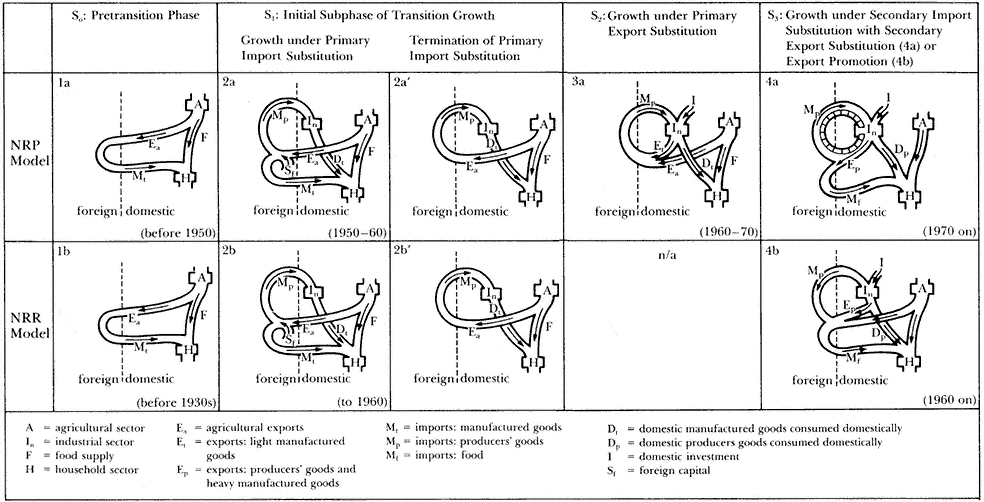
Figure 2.1
| |||||||||||||||||||||||||||||||||||
| |||||||||||||||||||||||||||||||||||
on the fact that, once "all" nondurable manufactured goods imports, Mt , have been substituted for by domestic output, Dt , any further industrialization must slow to the pace of population and per capita income change. The resource-flow picture that emerges at this point, roughly in the early 1960s, is shown in diagram 2a1 .
Difficult social decisions, such as whether to maintain the import-substitution strategy (but shift to the domestic production of previously imported producers' and durable consumer goods) or move toward the exportation of the same nondurable consumer goods previously produced for domestic markets, now had to be made. The East Asian NRPs, after some hesitation, chose the latter, and entered the S2 subphase pictured in diagram 3a. This is termed "primary export substitution" because the basis for comparative advantage in foreign trade now gradually shifts from land to unskilled labor, with Et exports gradually "substituting" for Ea exports. By the end of the 1960s their relative roles had, in fact, been dramatically reversed—from 90 percent land-based to 80 percent labor-based (as seen in tables 2.4–2.6)—while the trend in
| |||||||||||||||||||||||||||||||||||
| |||||||||||||||||||||||||||||||||||
the overall trade orientation, E /GDP, increased markedly as a consequence of prodigious increases in labor-intensive industrial exports (see Table 2.7).
Moreover, the rate of labor reallocation (the shift of the labor force from agricultural to nonagricultural pursuits over time) accelerated substantially during this S2 subphase owing to a combination of rapidly increasing agricultural productivity and the expansion of labor-intensive industrial output now destined for relatively unlimited international markets. Once industrial entrepreneurial maturation, combined with the relative non-neglect of food-producing agriculture, had laid the foundation, labor-intensive export industries offered a full opportunity, really for the first time, to absorb the system's underemployed on a massive scale. This labor-based "vent for surplus" led to a pronounced increase in the rate of domestic intersectoral labor reallocation, culminating in not only a relative but an absolute decrease in the agricultural labor force, and, in the course of little more than a decade, the exhaustion of the labor-surplus condition, as indexed by nearly constant unskilled wages giving way to rapidly rising wages. This export-substitution mode,
it should be noted, implies both vigorous domestic intersectoral growth and a substantial integration of the East Asian economies into the world economy. It meant a spurt in domestic agricultural/nonagricultural exchanges, as well as spectacular expansion of international trade. At the same time, in spite of considerable political and strategic uncertainties— especially in the case of Taiwan—capital inflows more than replaced the earlier infusion of concessional foreign capital.
Such a shift into export substitution must, of course, be accommodated by a shift in public policies that is difficult to achieve. Any enhanced orientation toward international markets on a competitive basis requires, first of all, a shift from an inflationary (under the table) method of taxing the landed interests on behalf of the new industrial classes to one of more explicit (on the table) taxation. It requires, moreover, a reduction in protection, the adoption and maintenance of more realistic exchange rates, interest rates closer to their shadow levels, and the continued avoidance of the temptation to artificially increase elite industrial workers' wages and depress domestic agriculture's terms of trade. The transition to export substitution in East Asia was also facilitated by such direct government actions as the establishment of export-processing zones and the rebating of import duties on raw materials destined for exports, as transitional devices.
This primary export substitution, or S2 , subphase also, of course, had its limits. Once the unskilled labor surplus has been exhausted, as it was by the early 1970s in East Asia, unskilled real wages began to rise in a sustained fashion. Competitive industrial output and exports tended to become more skilled labor-, technology-, and capital-intensive, and the subphase of secondary import and export substitution. S3 (see diagram 4a), was gradually entered. As their skill, entrepreneurial, and technological capacities increased further, Taiwan and Korea have, in fact, since the mid 1970s moved into the production of capital goods and consumer durables, as well as the processing of raw materials for the domestic market and, almost simultaneously, for export (with the degree of simultaneity related to the importance of economies of scale in the context of the size of their domestic markets). At the same time, the slack in the system's agricultural sector in the form of sustained "Green Revolution" productivity increases had been substantially mopped up. As the agricultural sector becomes less of a leading sector and more of an appendage to the rest of the economy, the basic need for food imports in a natural-resource-poor system increasingly asserts itself. As indicated in diagram 4a, East Asia now supplies both domestic (Dp ) and export
markets (Ep ) with producers' goods, while importing an increasing volume of food (Mf ).
The per capita growth rates in Korea and Taiwan during their more than a quarter century of transitional growth have been remarkably high (see table 2.1). At least as interesting is an examination of their employment, labor share, and size distribution of income performance, which have also been outstandingly favorable by any standard. We should not, of course, be too surprised by an improvement in equity during S 3 once the labor surplus has been absorbed, wages rise, and industrial output shifts according to the product cycle in continuing response to changes in the endowment. This is in accordance with both cross-sectional evidence and the crude theorizing surrounding the inverse-U-shaped, or Kuznets curve, hypothesis (Kuznets 1955). What is of special interest, however, is that the distribution of income seems not to have worsened and even to have improved substantially during the period of most rapid early transitional growth, especially S2 (see table 2.2), which runs counter to overall LDC experience and to the inverse-U-shaped hypothesis.
The East Asian countries under discussion provide striking cases of a remarkably strong growth performance, especially during their S2 phases in the 1960s, combined with low and falling levels of income inequality, owing largely to initially high and rising relative shares of labor, and rapid absorption of unskilled labor hours in new rural and urban activities during the decade. The distribution of rural families' merged "agricultural incomes" also showed an improvement during the fifties and sixties, not only because of the initially favorable effects of land reform, but also because technologies were developed and promoted that rendered small farm holdings more productive over time. This was a function both of the more intensive use of land via double cropping, and of the shift to new, more labor-intensive, and higher-valued crops, such as vegetables and fruit for the domestic market and mushrooms and asparagus for the foreign market, in contrast to the more land-intensive traditional crops. Such shifts in cropping pattern were of particular benefit to the poorer (smaller) farmers, who were able to participate more than proportionately in these activities.
Turning now to the Latin American NRR case, which, of course, hides a great deal more heterogeneity within itself, the most striking characteristics are these countries' more favorable initial man/land ratios and natural-resource endowments generally, their more concentrated rural assets structure, their somewhat larger size, and their
somewhat higher initial levels of wealth and income. Nevertheless, as indicated in diagram 1b, the initial colonial resource-flow pattern during S o in the Latin American case bears a substantial resemblance to the East Asian case (the export mainly of land-based raw materials—mostly minerals and tropical cash crops—Ea , in exchange for mainly industrial consumer goods, Mt ). Essentially the same holds true for S1 , the easy import substitution subphase of transition starting in the Depression years of the 1930s (some say earlier), but focusing once more on reallocating the proceeds from the traditional natural-resource-based exports, mainly to finance new import-substituting industries producing nondurable consumer goods.
It should be noted that growth rates during the postwar primary import-substitution period were on the average as high in Mexico and Colombia as in East Asia, undoubtedly related to the higher levels of initial endowments and per capita incomes in Latin America (see table 2. 1). On the other hand, the primary, or "easy," import-substitution policy package there may be judged to have been more severe, partly perhaps as a consequence of its substantially longer duration (from the 1930s to the early 1960s). One important consequence of this was a relatively much greater neglect of the food-producing agricultural subsector, reinforcing colonial policy antecedents that concentrated attention on the lucrative extractive enclaves. In short, both types of countries share an infant industry rationale that calls for the creation of a new industrial class out of the landlord or commercial elite, with the help of reasonable levels of protection and profit transfers.
The most striking difference, however, resides in the choice made at the end of S1 , the primary import-substitution subphase of transition. Faced as were the NRPs, with a decline in the rate of industrial growth and the threat of price wars in protected domestic markets for consumer nondurables, the NRRs decided to continue with the import-substitution mode, but now focused on the manufacture of producers' and durable consumer goods—first for the domestic market and, somewhat later, for export as well (see diagram 4b).
This metamorphosis seems initially to parallel the secondary import-and export-substitution subphase recently reached by the NRP cases. But only at first blush. The most crucial difference is that the system now moves directly from primary import substitution into the production of the more skilled labor-, capital-, and technology-intensive products instead of by way of primary export substitution. Thus, not only was the protection and controls-oriented policy structure maintained, but its
further deepening and strengthening was required. So, during the 1960s (after the end of primary import substitution), while the rates of effective protection declined somewhat in East Asia, they rose in most of Latin America. Interest rates generally remained at low, if not negative, real levels; the agricultural sector's terms of trade continued to be depressed; and even traditionally self-sufficient or food-exporting countries became net importers.
Moreover, given the still narrow domestic markets for the products of secondary import substitution, especially in the 1970s, the NRRs have, in fact, pushed for and achieved some sizeable increases in their nontraditional industrial exports (see table 2.6). While some of this expansion has admittedly been in the nondurable consumer goods area, particularly shoes and textiles, most of it has taken place in such higher technology, higher capital-intensity areas as automobiles, electrical machinery, chemicals, and even aircraft. In many cases it is related less to the march of dynamic comparative advantage or the product cycle than to the government's willingness to subsidize industrial exports that are by now generally recognized as the hallmark of successful development.
This industrial export phenomenon thus differs markedly from the primary export-substitution subphase encountered in East Asia, and instead entails the promotion of exports on top of a deepened import-substitution regime. It is distinguished by a difference in the composition of industrial output, by the fact that it is not preceded by a pronounced change in the overall policy package, and by the prevalence of substantial subsidies. Under it, particular industries or firms are selected for direct encouragement either via public sector tax rebates, differential interest rates, and export subsidies or via enforced private sector cross-subsidization (such as assuring companies of continued high windfall profits in protected domestic markets in exchange for compliance with rising export targets).
Both the composition of exports, as between traditional and nontraditional (see tables 2.4–2.6), and the change in the overall export orientation (see table 2.7) present a startling contrast between the NRPs and the NRRs, with the NRRs remaining much more oriented toward natural resources, fuel, and domestic markets. Also, in the NRRs the relative neglect of food-producing agriculture, already noted during S 1 , is exacerbated during S 3 as protectionism deepens. As a consequence, with more and more traditional granaries empty, more of the cash crop exports proceeds, supplemented by foreign capital, must typically be devoted to food imports.
The prolongation of import substitution in this fashion, with export promotion eventually added, is evidently likely to be socially costly even if privately profitable (for obvious reasons). But the key fact is that with a favorable natural-resource base it can be "paid for," as exports and tax proceeds can continue to pay the piper, and in so doing help maintain very respectable growth rates (see table 2.1). What is less clear, however, is whether the consequences of this "skipping" of the S2 export substitution subphase and moving directly from S1 into S3 are acceptable from the employment and distributional points of view.
Turning to the employment and income-distribution outcomes, the different transition paths chosen yield very different bottom lines. In the rural sector the combination of a worse distribution of land with the relative shift toward, rather than away from, traditional primary export cash crops tends to make for lower labor intensity and a higher (less favorable) agricultural income Gini. Rural nonagricultural incomes, which are more equally distributed than are agricultural incomes, constitute only 15 percent of farm family income, declining to 10 percent over time, in Colombia, in contrast to the initial 30 percent, rising to 60 percent, in Taiwan. Moreover, such rural industry and services as exist, given the maintenance of the import-substitution regime, are much more capital-intensive and contribute much less to favorable employment and distributional outcomes than they would in an NRP-type regime. Rural industry's labor share in Colombia, for example, was much lower (and falling) than was Taiwan's over virtually the entire period under discussion here. The same sources also indicate a sizeable gap in the urban labor share between the two countries. The much less favorable, and worsening, distributional outcome associated with the Latin American choice of a growth path should therefore come as no surprise.
All the statistical evidence that can be brought to bear thus indicates that the NRPs pursued a more or less linear path of policy liberalization and registered far and away the better development performance. On the other hand, in the NRRs we witness a different, less clear-cut, and more oscillatory pattern of policy or organizational choices, with market-oriented episodes displaced by the occasional return to import-substitution types of interventions, and much less successful outcomes in terms of the assessment of economic performance.
It is indeed a challenge for economists to try to move toward a better understanding of the fundamental causes of this divergent pattern. In that sense it is necessary to proceed beyond the above description of divergent growth performance (the skipping of a particular subphase in
the case of the NRRs) and toward a comparative development perspective that includes the evolution of organizational and policy choices as part of the explanatory framework. A better understanding is needed as to why, in the NRP case, a more or less conformable evolution of policy resulted in the linearity of policy change, while in the NRR case we have been exposed to more or less continuous oscillation in spite of the profusion of "good advice" offered by economists and the donor community. It is to this political economy explanation of the divergence of performance that we now turn.
4—
Natural Resources and the Political Economy of Transitional Growth
In discussing import substitution I identified six main instruments of interventionism: the interest rate, the exchange rate, the rate of monetary expansion, the rate of effective protection, the tax rate, and the unskilled wage rate. It is my basic contention that what has characterized NRP success is gradual, but consistent, adherence to liberalization in these various markets over time. This meant, in part, that interventions in period S1 were milder than in the NRR case in the first place, and, more important, that liberalizing trends were maintained thereafter, even as the international situation deteriorated from time to time as a consequence of oil crises, recession abroad, inflation, and protectionism.
With respect to the first dimension, the policies in place in Taiwan did not differ very much from those in other developing countries during S1 —except for their relative mildness. Taiwan's policymakers set out to deploy the major macro policy instruments to achieve two main purposes: first, to promote the relatively new industrial sector through the creation of profits for domestic industrial entrepreneurs; and, second, to create revenues for the government. As noted above, these two purposes, creating profits and creating revenues, represent political acts. While both tariffs and quantitative restraints hold off foreign competition, monetary expansion, along with import licensing, low interest rates, and other direct allocations, permits windfall profits or rents to be awarded to the industrial and importing sectors, while the agricultural and exporting sectors are squeezed.
Most LDCs, in fact, view the increase in the supply of money as a way of putting purchasing power into the hands of the government so that it can accomplish certain developmental objectives. The fact that the resulting inflation may also muddy the water of relative prices by which
people allocate goods and services rationally is often a not undesired outcome; it is a means of obscuring the transfer of resources that has taken place among various groups. At the individual level an expansionary monetary policy on the part of the government can be traced in part to the fact that there is an erroneous generalization by society as a whole that a plentiful supply of money has pleasant effects on individual beneficiaries, and that even those who are adversely affected get the benefits eventually. For the government it is tempting to view the creation of purchasing power through the printing press as a powerful instrument for acquiring goods and services in the market and for achieving larger resource mobilization for the system as a whole without having to seek taxation through some sort of consent by the population.
While such a move is, of course, easily tolerated when national survival is at stake, many contemporary LDCs resort to the same convenience in the absence of such an emergency. There is simply a general desire to make the tax burden less explicit and smaller, to avoid opening it to debate and/or to obscure the fact that government has this ability to create its own purchasing power. Thus, while inflation is generally symptomatic of the evasion or postponement of the assumption of some of the responsibilities by government, and is often tolerated by a narrow social consensus, this was not the case in the NRPs.
An expansionary monetary policy clearly represents a substantial convenience for a typical LDC government. It is also a welcome blessing for large-scale industrial enterprises that can borrow cheaply from the organized banking system. While these businessmen may not know the full theoretical implications of a rapidly expanding money supply, they are clearly aware of the advantages to themselves of a low interest rate combined with expansionary monetary policy. The credit rationing that results is only occasionally a problem for them—it is the medium-and small-sized companies and the farmers who are unable to borrow at these low rates. Moreover, if money creation leads to inflation, debt is made cheaper to repay. Thus the expansionary monetary policy typical of LDCs is popular with powerful segments of the business community, who expect inflation to "bail out" their borrowing. Not only is money creation and inflation a form of taxation, it is also an income-transfer mechanism whereby the purchasing power of the consuming public is transferred as windfall profits to the elite business class. It is thus a political act and an important component of the import-substitution strategy that was pursued in the typical LDC but abandoned in Taiwan and South Korea. The easiest way for the government and its favorite large-
scale industrialist allies to obtain the rents basically generated on the land is through this policy combining low interest and inflation, as the central bank is typically an instrument of the government's efforts to acquire purchasing power through the monetary expansion mechanism.
In the natural-resource-rich LDC, inflation through monetary expansion is always intertwined closely with the foreign-exchange rate, as a crucial component of the import-substitution strategy. As is well known, the exchange rate is also almost universally regarded as a policy instrument rather than as an equilibrating market price regulating the level of imports and exports. In such an economy, overvaluation of the domestic currency benefits the import-substituting manufacturing class and amounts to an explicit tax on producers of export products. Here again we see the clear exercise of political power transferring windfall profits from where they exist, the rural primary-producing export sector and the consumer, to the urban manufacturing sector. Producers of import substitutes can buy imported raw materials and capital goods at artificially low prices and sell the finished products behind tariff walls at artificially high prices.
Such politically and artificially created cheapness of foreign exchange certainly makes it attractive to import at the official exchange rate, but it also generates two types of problems. First, the available foreign currency must be rationed, leading to import licensing, again a political process, and the possible use of different exchange rates for different categories of goods. Second, artificially set prices usually lead to "parallel" markets, a polite word for gray or black markets, again with certain groups having a distinct advantage over others Usually, as domestic price inflation continues, the official exchange rate is occasionally devalued to at least partially correct for its excessive overvaluation. However, the pace of devaluation typically lags behind the domestic inflation rate; as a consequence the external purchasing power of the domestic currency is almost always higher than its internal purchasing power, as in even the crude versions of the purchasing-power parity theory. Typically again, the government is usually hesitant about the timing and scale of devaluations since it can easily be accused of aggravating preexisting domestic inflation, inasmuch as imported products immediately suffer price rises in terms of the domestic currency. Such a directly visible consequence of a political act is unpalatable, especially when price increases naturally apply to many items of mass consumption.
But, on the other hand, if the government does not devalue occasionally, domestic inflation means an increasing degree of overvaluation,
which makes imports ever more attractive, and places an ever-heavier tax on land-based exports. Moreover, this hesitancy about whether or not to devalue usually strengthens the false belief that domestic inflation is mainly import-cost pushed, with the attention diverted from the fact that it was the excessive monetary expansion in the first place that fed the inflation. In this way, the government creates a complicated set of problems for itself: a controlled exchange rate hand in hand with monetary expansion, itself a function of the government's need to try to capture resources for itself and favored private groups. The complexity of the intervention policies, in terms of the administrative systems that need to be devised to replace the market and partially correct for the problems created by direct interference in the first place, then leads to the large-scale diversion of entrepreneurial resources to the pursuit of rents, well described by Anne Krueger (1974) and others.
In the attempt to carry out an import substitution strategy with the help of a substantial expansion of the money supply and an overvalued exchange rate, the extent of initial natural-resource wealth provides an important possible constraint. If the depressed profits of raw material producers discourage production, it may well be that natural resources can no longer be "squeezed" as effectively, exacerbating problems in other areas; for instance, export-product-related workers may have to be laid off, and so forth. On the other hand, if the natural-resource situation is comfortable, much more can be squeezed out, and for a much longer period of time, which can include finding new types of natural-resource-based exports (or foreign capital) to keep the process going.
What differentiates the NRP from the more typical NRR type, therefore, is that the extent of the NRP's import substitution policy regime has to be more limited—its duration shorter and its severity more restricted. We all know that primary import substitution must ultimately come to an end everywhere, especially in relatively small or medium-sized economies once domestic markets are exhausted. What is less well understood is that it is likely to end earlier, ceteris paribus, in situations where natural-resource endowments are poorer, since, in such cases, traditional exports are not ample enough to continue to fuel import substitution after it has reached its "natural" termination in terms of the exhaustion of domestic markets for nondurable consumer goods. Once excess capacity in textiles appeared in Taiwan in the late 1950s, the industry exerted pressure for cartelization, market sharing, even the subsidization of exports (dumping). But after some considerable filling and backing, it was recognized that the system could not "afford" this way of
escaping from its cul-de-sac, any more than by shifting to a strategy of secondary import substitution.
The relative "mildness" of Taiwan's primary import-substitution subphase manifested itself in several dimensions. For one, the usual explicit discrimination against the agricultural sector, partly carried out via imposed terms-of-trade deterioration (by means of the rice/fertilizer barter system), and partly via relatively heavy taxation of land-based exports, was relatively less severe. Secondly, the customary resort to low interest rates plus an inflationary tax to shift resources "under the table" toward the new industrial urban elite was less pronounced. As early as the 1950s—during the height of the primary import-substitution subphase—the Taiwan authorities had already directed their attention to bringing inflation under control by means of interest rate reforms, along with monetary and fiscal cutbacks, as well as the timely help of foreign aid. Industrialization, in tandem with a dynamic agriculture and aided by the provisions of the land reforms of 1949–53, was already exceptionally dispersed into the rural areas. Even the level of protection (the usual combination of tariffs and quantitative restrictions) was exceptionally low, with QRs abandoned in favor of tariffs by 1958.
At the end of this relatively mild version of S1 , the prototypical East Asian NRP then shifted gradually into S2 , characterized by export orientation of the primary export-substitution type (which constituted a shift toward the exportation of the same labor-intensive nondurable consumer goods previously produced for the domestic market). In order to achieve international competitiveness in these areas, a substantial change in each of the various crucial policy areas, all in the direction of enhanced liberalization, was required. This was accomplished through the famous nineteen points of reform during the late 1950s and early 1960s, which included a further liberalization of domestic financial markets, the unification and devaluation of the exchange rate and the maintenance of more or less realistic levels thereafter, plus the maintenance of fairly restrictive monetary and, especially, fiscal policies throughout. It should be noted that the level of tariffs was not radically reduced at this time nor were international financial markets liberalized.
Taiwan, in fact, enjoyed a period of considerable price stability throughout its most rapid growth decade, the externally oriented 1960s, an experience unmatched anywhere else in the developing world. Even during the period of the pronounced worldwide inflation of the 1970s, inflation on Taiwan was only permitted to occur in short spurts, interspersed with longer periods of relative price stability. While "growth
with stability" was a slogan first popularized in the 1950s, largely in response to the dangers of mainland hyperinflation, inflation as a political expedient continued to be rejected even during the period of the post-oil shock 1970s, when it would have been easy to point the finger at costpush explanations. From the beginning, Taiwan seems to have accepted the notion that, for the long term, sustained severe inflation is a basically monetary phenomenon and that thus, to control it, it is necessary to curb the growth of the money supply. This well-accepted conservative tenet is an important distinguishing characteristic of the East Asian model, though occasionally abandoned in the South Korean case.
It is thus, I believe, the absence of an ample natural resource endowment to help finance a Latin American style direct progression from the easy primary to the more costly secondary import-substitution subphase that is the key to explaining the comparative success of the Taiwan economy. Both the relative mildness of the earlier primary import-substitution subphase and the shift from import to export substitution before moving into the more capital- and technology-intensive output mixes can basically be laid at the doorstep of Taiwan's natural-resource scarcity. There was no alternative possibility of pursuing a dependable path of employment and output generation by combining the system's own natural resources with its abundant supplies of unskilled and semi-skilled labor.[2]
In contrast, in the more typical Latin American NRR case, as the exhaustion of domestic demand forces the inevitable termination of primary import substitution, the economy moves into secondary import substitution (durable consumer goods, capital goods, and the processing of raw materials) skipping the labor-intensive S2 phase. The dramatic shift in the composition of exports in the NRP case, as well as the dramatic shift in overall export orientation, both in contrast to the NRR case, is illustrated in tables 2.4–2.7. Put bluntly, as long as substantial windfalls exist, as in Latin America, powerful interest groups will fight off changes in the system as well as be in a position to buy off pressures emanating from "outsiders," such as exporters, agriculturalists, and
[2] Hong Kong and Singapore (once separated from its Malaysian agricultural sector) clearly had even less choice. Their urban concentration and small size, coupled with unusually strong entrepreneurial capacities from the outset, meant the virtual absence of import-substitution policies, especially in the case of Hong Kong. As Scitovsky puts it, "among the larger countries that had a choice [sic ] between alternative policies, Taiwan and Korea were the first to recognize the gains to be had from encouraging the production for export of those products in whose manufacture they had an advantage " i. e., primary export substitution (Scitovsky 1985, 234).
consumers. Importers, industrialists and civil servants continue to be the beneficiaries of the policy package in S3 , and as long as the rents emanating from natural-resource-intensive exports are ample enough and can be "squeezed out" via the indirect transfer mechanisms referred to earlier, it is difficult politically to change the rules of the game. There is neither desire nor necessity to do so, and the existing strong tendencies to continue to promote growth by various "under the table" policy interventions in various markets will persist. This means that, while industrial entrepreneurs and governments continue to benefit, the burden continues to fall on consumers, who have to pay higher prices for inefficiently produced goods, as well as on the dispersed farmers who are providing agricultural output for both domestic and export destinations.
These costs are, of course, bound to be even higher as the system moves deeper into S3 and tackles ever more capital- and skill-intensive output and export mixes. In fact, as I have pointed out, S3 in the NRR cases usually requires an increasing subsidization of industrial exports and is thus more appropriately termed "export promotion" as distinct from the "export substitution" of S2 , which results from the more nearly neutral set of policies between import-competing and export activities in the NRP case. Export promotion can be economically sustained only as long as it can be "afforded," in other words "paid for" out of largely natural-resource-generated rents, and it can be politically sustained only as long as domestic consumers can be appealed to by way of the "synthetic" nationalism that governments usually continue to trot out at this stage, and/or as long as they remain ignorant of the additional burdens they are being asked to carry.
During S1 essentially the same kind of policy syndrome is in place in both the NRP and NRR: an overvalued currency, import controls, and substantial increases in the money supply—except that the NRP version is milder and briefer. In this very direct sense, Taiwan's shortage of natural resources can be seen to have been a substantial advantage. With its main primary product exports, rice and sugar, reaching market limits by the late 1950s, an alternative approach became a necessity. It was soon realized, although the record of policy discussions of the late 1950s indicates a good deal of back-and-forth hesitation, that, since natural resources were limited, the economy had to turn to its abundant labor supply for the new engine of growth. The shift to a human-resource base became a necessity. The exchange rate, which had been overvalued during import substitution, was now consistently undervalued, contributing
to the emergence of the frequent export surpluses of the sixties and seventies and assuring all the actors that the government was indeed serious about its refusal to relapse into import-substitution-type policies even when threatened by external business cycles and other shocks.[3]
With respect to the level and method of taxation, it is, of course, possible to mobilize resources without taxation by consent. When a government incurs a budget deficit, increases the money supply, and permits price inflation, these are part and parcel of the mechanism for covert forms of taxation; they avoid the necessity of assessing, negotiating, debating, and imposing a system of taxes. While such a system of ambiguous, non-negotiated burden sharing in the development effort is usually tolerated when national survival is at stake, it is surprising that contemporary LDCs continue to resort to it in the normal course of their transitional growth effort. Clearly there exists an unwillingness to make the tax burden too explicit, too open to debate, or to abandon the sheer convenience of the government creating its own purchasing power and directing precisely how it should be allocated. In fact, the inflationary process described is generally symptomatic of the desire to postpone "on the table" responsibilities, which require much more of a social consensus as to who ought to pay the taxes and who ought to benefit from development expenditures.
In the early stages of import-substitution growth, it is usually tariffs that are imposed, partly for protective, partly for revenue reasons, and they constitute most of the existing tax yield. This is partly because of the convenient point specificity of their method of collection. There thus exists a commonality of interest between governments requiring revenue and infant manufacturers requiring protection—both provided via the use of high tariff walls as a crucial component of the import-substitution policy package. The adoption of this tariff wall, of course, also represents an income-transfer mechanism in that the consuming public must pay for the inefficiency of the infant manufacturers as they face higher prices for previously imported consumer goods. Thus income is transferred by political force, in the form of windfall profits, from consumers to urban industrialists. Since the now domestically produced items have traditionally been scarce and expensive, many
[3] On the other hand, it also led to the perhaps premature exportation of capital from Taiwan and the accumulation of foreign-exchange reserves beyond the needs of a rapidly growing economy. There was probably also a military security motivation behind the accumulation of foreign-exchange reserves in the wake of the U.S. recognition of the People's Republic of China and Taiwan's increased political isolation.
| |||||||||||||||||||||||||||||||||||
consumers may not even be aware that this scarcity and the likely deterioration of quality that accompanies it are created by political force.
An income tax system was established in Taiwan in 1955; by 1961 the government's fiscal deficits had been brought under control. By 1964 there was a budgetary surplus and the emphasis had shifted to fiscal restraint, including the generation of surpluses over many years as an anti-inflationary device. Here again we see the need, because of the natural-resource shortage, to shift taxes from a land base to a human-capital and, later, physical-capital base.
Thus, previously referred to monetary reforms (raising interest rates and moving toward greater central bank autonomy) and these fiscal reforms (legislation shifting from land-based taxes to income taxes on the rest of the system) represent major evolutionary steps in the NRP-type country—all part of the gradual depoliticization of the economy as income transfers and resource reallocations, once hidden, are gradually discontinued and become subject to "on the table" public scrutiny. The displacement of the habit of printing money cannot, of course, be accomplished overnight. The typical LDC government's ability to raise taxes is limited, and there will be an increased tendency to reduce import duties—not only to help with import liberalization, but also because urban consumers increasingly come to realize that they have been paying for the inefficiency of domestic industries. But only as liberalization in the first stage makes it possible to experience a substantial increase in the GNP growth rate is a government likely to be in a position to close the budget deficit by raising other taxes and effecting the shift from agricultural to nonagricultural levies previously referred to. A shift in the composition of taxes, in other words, is likely to have to be associated with an increase in the overall level of taxes (see tables 2.8–2.10). Finally, the increased revenues place the government in a position to increase its other developmental functions via increased expenditures
| |||||||||||||||||||||||||||||||||||
| ||||||||||||||||||||||||
on such things as science, technology, agricultural research, education, overheads, and so forth.
In a broader context, the existence, and persistence, of substantial economic rents leads, as we have already seen, to artificial support of urban areas and neglect of agriculture and rural industries. Politically, economically, and technologically sensitive cities represent the usual base of modernization, which includes the capacity to produce inputs for agriculture incorporating modern science and technology. However, the acceleration of these linkages through government expenditures is likely to be reserved for a later stage of any liberalization. The excessive costs of too-early or forced urbanization, so typical of the NRR case, were avoided in the NRP case. The need for a food-producing agricultural revolution as precursor to or, better, companion of an industrial revolution, in a balanced growth context, has been amply demonstrated in the NRP case; they generally permitted their agricultural sectors to fulfill their historical mission en route to becoming an appendage to the system. In chapter 8 D. Gale Johnson observes the tendency of the NRPs to subsidize their agricultural sectors at a later stage. But this is after they have permitted this sector to fulfill its historical mission, essential to the success of the system's development effort in the first place. Apparently
| |||||||||||||||||||||
in this area, as well as in the fields of social security, welfare legislation, and so on, the successful NRPs also become subject to "rich man's" diseases.
In the NRR, by contrast, we witness more of an implicit assumption (somewhat modified in recent years) that there is no need to have an agricultural revolution, and that the agricultural sector can be discriminated against from the outset by means of the covert policies of government intervention, as we have already seen, as well as by the more overt biases in allocating human and physical infrastructure. It is very difficult to move toward a market-oriented approach and liberalization as long as rent-seeking political forces deny farmers the purchasing power that rightly belongs to them.
The requirement of balanced rural growth to propel the economy forward also carries with it the need for a more participatory or "open" education system, focused on primary education in the rural areas rather than higher education for the urban elite. In fact, it may be helpful to take a brief synoptic look at contrasting educational policy and expenditure patterns in the NRR and NRP cases. Table 2.11 indicates that the NRP governments generally spend somewhat more on education than the NRRs, even though they undoubtedly start with somewhat higher levels of human capital in place at the outset.[4] But what is certainly as significant is the much greater emphasis on ensuring a broadly based primary and secondary education structure over time in the NRP cases (see table 2.12). This is reflected both in public-sector expenditure allocations and, more subtly, in the much greater access to talent via competitive examinations at every level. There can be little doubt that the necessity of relying more on one's wits—or, if one prefers, less on the ability to "afford" education as an elite consumption good—is reflected
[4] Adult literacy rates, however, were not markedly different in the 1950s.
| ||||||||||||||||||||||||||||||||||||||||||||||||||||||||
in both the educational policies and expenditure patterns under observation in the NRPs.
Since newly independent governments normally face demands for spending that easily exceed available revenue, as well as for imports in excess of export earnings, other means must be found to deal with deficits. This holds for NRRs as well as NRPs. In East Asia in the 1950s the inflow of foreign aid, mainly from the United States, was helpful in that context, as was the inflow of private foreign capital in the 1960s and 1970s. While concessional capital inflows played an important historical role in both filling governments' budget gaps and helping to combat inflation, it is wrong to assume that foreign capital has been of overriding importance in financing overall capital accumulation during the past three decades in the NRP cases, as is sometimes asserted. Even if this may seem to hold for South Korea, foreign capital amounted to only 7 percent of cumulative investment in Taiwan, the most successful LDC, over that period (see table 2.13). The NRRs have received as much, if not more, foreign capital (measured either on a per capita basis or as a percentage of the total investment fund), so it can hardly be said that the relatively greater success of the NRPs is owing to the greater generosity of foreign friends and investors.
More generally, while aid was admittedly qualitatively important at particular points in time in helping, say the Taiwan government, to accept and bind up the wounds of policy change, the quantitative role of foreign aid, not dominant throughout, declined steadily after the mid 1950s, and was completely phased out by the early 1960s.[5] It seems
[5] In fact, there are some who claim that the announcement of an impending aid phaseout a few years down the road was helpful in concentrating policymakers' minds and getting reforms adopted.
| |||||||||||||||||||||
generally true for the East Asians, certainly including historical Japan, and with only Korea as something of a deviant,[6] that, with the exception of emergencies such as earthquakes, floods, or droughts, foreign aid in the sense of open-ended, long-range resource transfers to help growth is not really needed. Where it can be very helpful is in particular timely infusions, or what may be called the temporary "ballooning" of aid, in relation to major policy changes that governments may be ready to undertake.[7]
With respect to the official attitude toward private capital, both direct foreign investment and, later, commercial bank or portfolio investments, we may again note the role of "synthetic nationalism," under which foreign intrusions into the domestic market are often resented. Not needing to "create" a nationalist spirit and national self-confidence at the outset also meant a greater willingness by the early 1960s to accept private foreign capital and foreign companies in substantial quantities in Taiwan.[8] This early evolution away from synthetic nationalism moved the system in the direction of a greater integration of its financial markets with those of the rest of the world, even if the full liberalization of the capital market was clearly postponed and is only now under full consideration.
We can thus also observe a gradual depoliticization of long-term capital movements via the replacement of politically negotiated foreign aid by the inflow of private foreign investment induced by the market, as
[6] The precise reasons for this deviation, related inter alia to Korea's less full agricultural mobilization, are spelled out in Ranis and Fei 1975.
[7] This is similar to the view expressed in Scott 1979.
[8] See Ranis and Chi 1985. All this may be somewhat complicated by the fact that part of the motivation may also have been to put in place a tripcord mechanism in the event of an attack from the mainland.
foreign investors sought to combine their capital and technology with the abundant labor supplies of Taiwan. The fact that foreign investment increased substantially in spite of the shift of diplomatic recognition from Taiwan to the People's Republic of China in the 1970s is a powerful indicator of the gradual integration of the East Asian economies into world markets. Increased levels of foreign investment over time, as comparative advantage changed rapidly, can be viewed not simply as a means of attracting capital or providing employment for the surplus labor population, but also as a vehicle for transferring technologies that could then be adapted to Taiwan's own requirements. But full integration into international capital markets, short- or long-term, was delayed. Such a reduction of capital controls and the accompanying increase in competitive pressure for industry and banking, likely to facilitate a more rapid transfer and adaptation of technology, is only now being fully considered.
The final important policy parameter for consideration is, of course, the wage rate, or more precisely, the extent of intervention in the unskilled nonagricultural labor market. As we have seen, the initial land/labor ratios differ markedly in the NRR and NRP cases, presumably leading to higher equilibrium levels of real wages in the former. But what is of special interest to us here is the extent to which governments intervene, especially in urban labor markets, and the politicoeconomic reasons for doing so. It is well recognized, for example, that unionism and minimum-wage legislation had much greater strength in the NRR than in the NRP cases. Unionism is, in fact, a phenomenon that may be said to be primarily political, stemming from governments' efforts to establish a political base and demonstrate a sense of strength among urban workers. It is thus very much related, on the one hand, to the existence or nonexistence of an initial "organic nationalism" (the need to create cohesion among the citizens of a society) as well as, on the other hand, to the existence or nonexistence of natural resources to pay for what might be considered elite benefits accruing to a small minority of the laboring class. While the wages, benefits, and prestige of the usually 5–10 percent of the industrial working class that may be termed "organized" can indeed be raised by direct intervention, the impact on that class as a whole is likely to be negative. As long as a "labor surplus" condition exists—definable in terms of relatively unskilled workers—unions' ability to raise real wages, like the effect of minimum-wage legislation, depends almost entirely on government actions and support. However, no one can successfully "legislate" against the endowment; such measures are
capable only of raising real wages for an elite subgroup of workers at the expense of wage incomes for the majority—even if union and government pronouncements invariably pretend to argue the case for the entire working class.
"Premature" (before the unskilled labor supply is absorbed) urban-rural wage differentials can, of course, be a serious handicap for societies potentially in a position to export labor-intensive manufactured goods to world markets. They are bound to induce the wrong choice of technology and the wrong choice in the direction of technology change. Thus, a minority, perhaps as few as 10 percent of the workers in the nonagricultural sector, may effectively deprive their nonunionized colleagues of employment opportunities and deny the country the comparative advantage of lower labor costs in competitive markets. In the presence of natural-resource-generated rents, it is possible for a bilateral oligopoly of industrialists and elite workers to divide up these rents in a bilateral bargain. In the absence of such rents, a labor-surplus country clearly faces a choice between high wages for a minority and unemployment for the majority, and is likely to find it politically difficult to maintain a favored position for the few under those circumstances. It is this difference, and not simply the presence of a "repressive" set of governments, which led to the virtual absence of a politicized militant unionism in the NRP's, at least prior to the advent of labor shortage in the 1970s.
In the NRRs, on the other hand, union activism is usually an endemic component of the politicized development process I have been describing. As inflation affects certain groups at the expense of others, unions may gain strength by leading protests, and usually achieve a perpetuation of their bilateral bargains with capitalists at the expense of the majority of nonunion workers. Union power is really given by the government and can be taken away by the government. Two monopolistic powers, the money-printing state and the wage-gap-creating union, can thus combine to create a situation that is often detrimental to the well-being of the working people of a developing country, as well as to the growth of the system as a whole—certainly before all the labor surplus has been mopped up.
As already noted, given the scarcity of natural resources, the NRP's primary import-substitution subphase (S1 ) is likely to be both short and, judging from the way the major policy instruments are exercised, not as severe as in the NRR case. The comparative severity of the government's interventionist impact in the two cases can be seen mainly via comparative rates of monetary expansion, the level of the real rate of interest,
the exchange rate, the rate of protection, the rate of taxation and the organized sector's real unskilled wage rate. There is an inherent tendency for inflation to result if restraint is not exercised in deploying these tools of government intervention. When deployed over extended periods of time in the fashion typical of NRR import-substitution regimes, they are likely to undermine the ultimate success of the very growth-oriented strategy they are intended to serve.
What is basically at work here is the relatively greater ability of the East Asian NRP to renounce the exercise of political muscle to "manufacture" purchasing power, in sharp contrast to the more typical Latin American NRR. It is this renouncing of power, or better, the more restrained exercise of power via "on the table" rather than "under the table" actions that is part of the deliberate trend toward NRP liberalization. Such depoliticization of the system implies that the government gradually learns to be more responsible and open about what it is doing, moving away from implicit taxes and covert transfers and toward explicit and more equitable and efficient types of influences on the economy. The willingness to avoid monetary expansion and the rejection of the printing press as a dependable source of revenue represent an important part of this liberalization movement. In monetary policy it means permitting the interest rate as well as the exchange rate to assume levels that might be closer to equilibrium over time. With less financial repression it also means greater reliance on a competitive institutional credit structure and the commercial banking system. The importance of policies that induce human resources to take over from natural resources in the NRP setting is indicated by the fact that gradual liberalization permits the opening up of opportunities not only for cultivating peasant households, but also for medium and small-scale industrial entrepreneurs in the rural areas—in strong distinction to what goes on in the more typical large-scale urban-oriented NRR case.
The liberalization process described for Taiwan has, of course, both a domestic and an international dimension. Domestically, the movement implies a reduction of government controls in order to accelerate the growth of saving and investment and the broader participation of human resources. Internationally, liberalization means an opening up of the economy with respect to trade and finance, and therefore enhanced economic integration with the rest of the world. Such an enhanced external orientation, of course, carries dynamic efficiency advantages as well as static gains from trade. Once domestic entrepreneurs become subject to the rigors of international competition, as they are forced to
compete in world markets, they come to recognize the merits of quality and price and cease being a captive audience, as domestic consumers are. Instead, they become increasingly competitive risktakers, innovators, and production managers in the context of a "learning by doing" process.
The enhanced international competitiveness of the NRP case warrants mention for a number of reasons. One is that while a producer may dominate a local market, in the international arena the situation is much more likely to be workably competitive. The more open an economy to imports and foreign competition, the more this helps to control domestic market power as well as to force domestic entrepreneurs to select more appropriate technologies and innovate in more appropriate directions—both in the process and in the product sense. As long as traditional import-substitution strategies are maintained and domestic manufacturers are sheltered by political means, an intense fear of foreign competition is gradually built up. This represents one of the more vicious of the various vicious circles of development: the fear generated under political protection in turn generates demand for more political patronage, and for continued import substitution even when the initial infant industry argument has long lost its validity. This is very much a feature of the natural-resource-rich Latin American scene. It is only experience in world markets during an external orientation phase that can dependably allay these fears.
I have already noted that, while Taiwan shifted from quantitative restrictions to tariffs during its primary import-substitution subphase, and thus provided greater access to competitive imports and a milder form of infant industry protection, its overall levels of tariff protection did not diminish sharply for some time. This is because the effective rate of protection is not as sensitive to external short-term fluctuations as the other instruments of policy previously referred to. It is therefore not as vital that it be reduced early on. Moreover, a too-early radical reduction of tariffs could embarrass a government by reducing revenues before alternatives are in place or before industrialists have gained some confidence that they can manage competitively, and thus force a general policy reversal.
What Taiwan did instead was adopt a customs rebate system in the late 1950s and a policy of export-processing zones in the 1960s, amounting to a partial liberalization of trade as a first step. While the full meaning of liberalization is not to bias a system in favor of exports but to provide a more equitable game, this may have to be done in stages. Tariffs
were further reduced in 1971, with the executive branch given the authority, without additional legislative approval, to adjust tariffs downward by up to 50 percent. Further across-the-board tariff reductions have taken place in the 1980s but, as is well known, Taiwan today is still far from a paragon of free trade. Its efforts at partial trade liberalization by first eliminating quantitative controls, subsequently introducing tariff rebates and export-processing zones, and only then reducing tariffs permitted some industries to continue to be protected and remain isolated from international competition as long as they sold only in the domestic market. This policy made it possible to continue to coerce the consuming public by political force in these areas not only to pay import duties but also to pay for the inefficiency of those protected industries. On the other hand, export-oriented sectors gradually and selectively increased their efficiency through the rebate system and the export-processing zones in areas in which the government gave up its political power. Since the government is clearly unable to coerce foreign consumers to pay for the inefficiency of domestic producers, these are also the industries that were the first to reduce their costs under the newly competitive pressures.
I hope it is by now clear that the gradual trend toward liberalization during the transitional growth process described here does not imply anything like a shift toward laissez-faire and an abandonment by the government of its major economic role.[9] What it does imply is that the NRP government gradually abandons its "under the table" efforts at shifting resources from some groups to others, including itself, via the exercise of its monopoly power in the fiscal and monetary arenas. For domestic monetary policy this means that, since the government cannot control both price and quantity, it must focus increasingly on quantity and let price (the interest rate) be market-determined. In the case of foreignexchange management the same principle implies an increasing focus on the quantity of reserves and a more clearly (and cleanly) floating exchange rate. This means viewing money increasingly as a medium of exchange required for the internal division of labor, and viewing foreignexchange reserves increasingly as a medium of exchange required to take advantage of the international division of labor. In this sense gradual liberalization is consonant with the notion that money is not simply purchasing power that can be artificially created to achieve socially desirable purposes, such as transferring profits among interest groups.
[9] This point is also forcefully and effectively made in Wade 1985.
Increasingly, the view of a more independent central bank also means that the government must replace covert income transfers by explicit taxation, with consent. Basically what is involved here is avoiding the misapplication of the short-run Keynesian message (that large government deficits do not matter, that inflation is always cost-pushed, that an increase in the supply of money always lowers the rate of interest, that commercial bank lending does not represent the creation of purchasing power for investment finance, and that governments can and should manage economic affairs in general) to the development problem. The more or less linear trend toward liberalization in East Asia has depended to a large extent on a change in monetary thinking in regard to the role of money as a medium of exchange rather than as a means of providing purchasing power to the government, as well as on a different attitude toward the accumulation of foreign-exchange reserves.
As we have seen, such policy parameters as the interest rate, the exchange rate, and the growth rate of the money supply are the instruments that constitute the core of the politicization mechanism during import substitution and of possible depoliticization thereafter. In the NRP case they are used less and less over time as policy instruments to promote growth, with the government more and more assuming the role of a direct actor, as "on the table" taxes and expenditure patterns emerge, including a continued important role for public enterprise. In the East Asian countries, in fact, public enterprise continues to extend substantially into directly productive activities, well beyond traditional areas of public goods or external economies.[10] Domestic financial markets remain protected and underdeveloped to this day, rendering it difficult to collect a sufficient volume of savings to permit some relatively large-scale activities to take place. This bottleneck has become more important of late as Taiwan's comparative advantage has continued to evolve in favor of capital- and technology-intensive output mixes. Consequently, we may note that, while the relative role of public enterprise in directly productive activities declined during the 1960s, it is currently again on the upswing. Liberalization in this area, which may entail some privatization, has clearly been given a lower priority and must await improvements in the capital market.
Currently, as the NRPs enter the era of science- and technology-based production and exports, they have also turned to changes in the patent and trademark laws as an indication of the perceived need for more
[10] Amsden (1985) points out that Taiwan's recent "ten major development projects" included public-sector involvement in integrated steel, shipbuilding and petrochemicals.
indigenous innovations in the context of the international technology-transfer environment, which has itself undergone marked changes. The Taiwan government, for example, has played an increasingly active role in providing for an improvement in the science and technology environment, including support for R&D, especially where there are external economies of sufficient magnitude that individual private enterprises cannot be expected to meet the costs. Its current reexamination of the required level of taxes, including the possibility of a value-added tax, relates to the need for additional resources to provide for the explicit expenditures of the mainline ministries where overhead creation is required, as well as to meet the costs of a second land reform (land consolidation in agriculture and the creation of new large-scale public enterprises in the nonagricultural sector).
When the natural-resource base is substantial and increasing in importance (the NRR case) both foreign-exchange accumulation and agriculture-based taxes are likely to be substantial, especially when the terms of trade are favorable. This often leads to the temptation to increase government expenditures out of line with long-run realities, especially once the terms of trade turn down. In the NRP case much more caution is likely to be exercised, given the need to shift taxes rather quickly from the natural-resource to the human-resource basis of production, and likewise with respect to foreign-exchange reserves.
Finally, an interesting and more complicated question is sometimes raised concerning the type of government required to carry out liberalization in a systematic, or more or less linear, fashion. It is argued that the problem with the East Asian case is that it seems to require a more or less hard, or authoritarian, type of government not acceptable to many of the contemporary LDCs. One could, of course, point out that there are many authoritarian governments (including some in Latin America) that have, in fact, been signally unsuccessful in effecting a successful transition. We also do not know what the proverbial man on the street would choose if confronted with the stark inevitability of a trade-off. What does seem to hold is that successful liberalization, once under way, is likely to mean moving in a direction in which organizational choices, like the structure of the system itself, ultimately approach those of a developed country—including an increasing role for markets and an increasing pluralism within the society in general. This certainly seems to be happening now, if not very rapidly, in contemporary South Korea and Taiwan. But at what stage in the transition process economic pluralism must be supported by political pluralism is less clear. The
covert forms of income transfers typically seem to linger longer when a system is not yet politically a pluralistic society in which each of the multiplicity of interest groups can exercise only relatively small influence on the political stage and countervailing power exists. Yet we also know that the costs and benefits of overt government policy cannot be calculated, debated, or compromised as readily ex ante when political parties vie with each other in promising visible actions to various vocal, if often elite, minority interest groups.
It is difficult indeed to render a comparative judgment on Latin American versus East Asian authoritarianism, either in terms of its parliamentary or its human rights dimension. It is much easier to compare performance in terms of the speed of transition, growth, equity improvement, or poverty alleviation. Yet I am prepared to argue that parliamentary trappings may, in fact, constitute an aspect of the synthetic nationalism I see as an obstacle to early economic liberalization. If we assume, for example, that the quality of the policymakers in the East Asian and Latin American contexts is equivalent, it may well be true that acting sensibly in response to that vision may be easier for policymakers in more authoritarian NRP governments, which can take a longer view and need worry less about placating public opinion or their early reelection. In such a situation "accommodating" sequential policy reforms might be more readily carried out with less likelihood of protests by special interest groups, public demonstrations, or, worse, military coups.
But we also know that economic liberalization via enhanced mobility and participation is something which can be achieved in one or two decades. The emergence of an authentic differentiated political pluralism, on the other hand, is just as clearly a longer-run organizational accomplishment, different from the trappings of a multiparty system, and has to be dealt with differently. We must indeed try to distinguish between political pluralism as a plaything of the urban elite and mass participation plus the protection of habeas corpus for the many—just as we endeavor to assess the extent of participation and mobility in economic affairs by means of equity and poverty-alleviation indices.
In sum, an ample natural-resource endowment, like an ample supply of foreign capital available for the asking, can be a mixed blessing for a developing society attempting transition to modern growth. Such an abundance of resources contains the seeds of a generalized "Dutch disease" phenomenon extending well beyond the narrow impact on the exchange rate. On the one hand, it provides rents for both private parties and public decision makers that will likely induce second-best critical
choices in the economic policy arena. On the other hand, it increases the society's exposure to terms-of-trade fluctuations and enhances the tendency over time to oscillate between liberalization and retreats to import-substitution policies. The problem is not that more natural resources (like more foreign capital) cannot be good for you—but that instead of being used to ease the pain of change, they are likely to be used to postpone change. Like individuals, societies that are not "up against it" prefer to avoid sustained changes in the policy mix that are perceived as potentially painful by powerful vested interest groups.[11] The naturalresource-poor society, on the other hand, is forced to "bite the bullet," so to speak; not being able to put off the day of reckoning, it is much more likely to begin relying in a sustained fashion on its human resources. This, in turn, implies a more competitive system over time and greater flexibility in adjusting to the inevitable changes in the international environment. And finally—though here we are admittedly on more speculative grounds—the productive participation of the majority resulting from the sequential liberalization in various markets is likely to generate its own pressure for a gradual liberalization in the political sphere as well.
References
Amsden, Alice. 1985. "The State and Taiwan's Economic Development." In Theda Skocpol, Peter B. Evans, and Dietrich Rueschemeyer, eds., Bringing the State Back In. New York: Cambridge University Press.
Chenery, Hollis B. 1979. Structural Change and Development Policy. New York: Oxford University Press for the World Bank.
Fei, John C. H., Gustav Ranis, and Shirley W. Y. Kuo. 1979. Growth with Equity: The Taiwan Case. New York: Oxford University Press for the World Bank.
Fei, John C. H., Kazushi Ohkawa, and Gustav Ranis. 1985. "Economic Development in Historical Perspective: Japan, Korea, and Taiwan." In Kazushi Ohkawa and Gustav Ranis, eds., Japan and the Developing Countries: A Comparative Analysis. Oxford: Basil Blackwell.
Galenson Walter, ed. 1979. Economic Growth and Structural Change in Taiwan: The Postwar Experience of the Republic of China. Ithaca, N.Y: Cornell University Press.
International Monetary Fund. Various years. International Financial Statistics. Washington, D.C.: IMF.
———. Various years. Yearbook. Washington, D.C.: IMF.
[11] Riedel, in a good survey of East Asian development, misspccifies the nature of the opposition. It does not come from agricultural interests resisting industrialization but from industrial interests, plus civil servants and organized labor, resisting the loss of rents that come from agriculture.
Krueger, Anne O. 1974. "The Political Economy of a Rent-Seeking Society." American Economic Review 64 (June): 291—303.
Kuznets, Simon. 1955. "Economic Growth and Income Inequality." American Economic Review 45 (March): 1–28.
———. 1966. Modem Economic Growth. New Haven: Yale University Press.
Mason, Edward S., Kim Mahn Je, Dwight H. Perkins, Kim Kwang Suk, and David C. Cole. 1980. The Economic and Social Modernization of the Republic of Korea. Cambridge, Mass.: Council on East Asian Studies, Harvard University.
Ranis, Gustav. 1955. "The Community-Centered Entrepreneur in Japanese Development." Explorations in Entrepreneurial History 8 (December): 80–98.
Ranis, Gustav, and John C. H. Fei. 1975. "A Model of Growth and Employment in the Open Dualistic Economy: The Cases of Korea and Taiwan." Journal of Development Studies II (January): 32–74.
Ranis, Gustav, and Chi Schive. 1985. "Direct Foreign Investment in Taiwan's Development." In Walter Galenson, ed., Foreign Trade and Investment. Madison: University of Wisconsin Press.
Riedel, James. 1985. "Economic Development in East Asia: Doing What Comes Naturally?" Paper presented to the National Centre for Development Studies, Australian National University, Canberra.
Scitovsky, Tibor. 1985. "Economic Development in Taiwan and South Korea, 1965–81" Food Research Institute Studies 19, no. 3: 214–64.
Scott, Maurice, 1979. "Foreign Trade." In Walter Galenson, ed., Economic Growth and Structural Change in Taiwan: The Postwar Experience of the Republic of China. Ithaca, N. Y.: Cornell University Press.
Shail, Jain. 1975. Size Distribution of Income. Washington. D.C.: World Bank.
Summers, Robert, and Alan Heston. 1984. "Improved International Comparison of Real Product and Its Composition." Review of Income and Wealth 30 (June): 207–62.
Taiwan. 1982. The Trade of China. Taipei: Inspectorate General of Customs.
———. Various years. National Income of the Republic of China. Taipei: Directorate General of Budget, Accounting and Statistics.
———. Various years. Statistical Data Book. Taipei: Council for Economic Planning and Development.
———. Various years. Statistical Yearbook of the Republic of China. Taipei: Directorate General of Budget, Accounting and Statistics.
United Nations. Various years. Statistical Yearbook. New York: UN
———. Various years. National Account Statistics. New York: UN.
———. Conference on Trade and Development. Various years. Yearbook of Trade and Development Statistics. New York: UNCTAD.
———. Educational, Scientific and Cultural Organization. Various years. Statistical Yearbook. New York: UNESCO.
Wade, Robert. 1985. "State Intervention and 'Outward Looking' Development: Theory and Taiwanese Practice." In G. White and Robert Wade, eds., Development States in East Asia. Sussex, England: Institute of Development Studies.
World Bank. 1981. World Tables, 1980 . Washington, D.C.: World Bank.