
Chapter 2—
Ghana in Economic Crisis
Ghana began independence in much better economic condition than most African economies. It had a relatively well developed infrastructure, large amounts of foreign exchange, and a civil service generally recognized as one of the best in Africa. It is startling to note that in 1957 Ghana had the same per capita income as South Korea. However, in the twenty-five years after independence, successive governments in Ghana adopted policies that caused the average person to be significantly poorer in 1982 than he or she had been in 1957. During the same period, the Koreans quintupled their per capita income.[1] Figure 1 documents the decline of Ghana's economy in the first twenty-six years of independence.
While other African countries have also declined since independence, the Ghanaian experience stands out for the comprehensiveness with which successive governments pursued economic destruction. Although Ghana had one of the very highest per capita incomes on the continent in the early 1960s, by 1982 it was ranked twenty-first out of forty-four African countries.[2] Even though Ghana has received its share of exogenous shocks, including occasional price decreases for its major exports, domestic policy decisions are primarily responsible for its deterioration
[1] Clive Crook, "Survey: The Third World," Economist (23 September 1989): 4.
[2] Robert Szereszewski, "The Performance of the Economy, 1955–1962," in A Study of Contemporary Ghana, vol. 1, ed. Walter Birmingham, I. Neustadt, and E. N. Omaboe (Evanston: Northwestern University Press, 1966), 41–42; and World Bank, African Economic and Financial Data (Washington, D.C.: World Bank, 1989), 18.
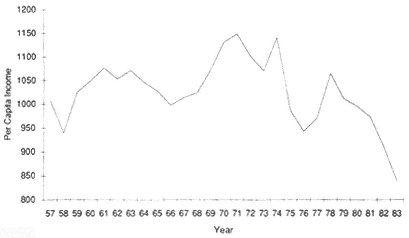
Fig. 1.
Per Capita Income, 1957–1983 (1985 U.S. $)
Source: R. Summers and A. Heston, "The Penn World Table (Mark 5),"
computer disk provided by authors.
vis-à-vis other African countries. Therefore, reviewing the extended Ghanaian economic tragedy is important because it demonstrates, in extremis, the processes of decline that are also at work in other African countries. In addition, understanding the economic processes at work in Ghana is important because the burden of history weighed very heavily on the second Rawlings government when it confronted Ghana's ultimate economic crisis after taking power on December 31, 1981.
The Early Years and Economic Crisis
Ghana began its long period of decline soon after independence when the government began to overspend. Between 1959 and 1961, the government surpassed its capital budget by 10 percent.[3] This overspending was possible in the short run because the country was still rich in reserves inherited from the colonial regime; however, it set the pattern for fiscal mismanagement in years to come. At the rate with which government and foreign exchange reserves were being drained, by 1962–63 Ghana would have faced a crisis.
The modern economic history of Ghana began with the government's
[3] Andrzej Krassowski, Development and the Debt Trap: Economic Planning and External Borrowing in Ghana (London: Overseas Development Institute, 1974), 42.
response to the initial foreign exchange crisis in December 1961. To resolve the foreign exchange crisis, Prime Minister Kwame Nkrumah announced that nonrestrictive import licenses would not be renewed for 1962 and that from then on all importers would be required to possess specific licenses to gain access to foreign exchange. A large number of other steps that effectively transformed Ghana from an open to a closed economy were also taken: restrictions on the external operations of banks were imposed; Ghana delinked completely from sterling and began to issue its own currency (the cedi); the government took over sterling securities held by public and private institutions and replaced them with government securities; and it granted monopoly rights to the Ghana Trading Corporation to import a large number of basic commodities.[4]
These steps were taken despite the fact that many recognized the dangers of the state's becoming too intimately involved with the economy. For instance, as early as July 1961, the minister of finance had said that import "controls are expensive in terms of man-power, and often lead to corrupt practices which we must avoid at all costs."[5] The decision to control imports administratively and to adopt the other measures was made for the same reasons that caused African leaders across the continent to avoid adjusting the exchange rate when faced with balance of payments problems. Nkrumah, for instance, had become more and more committed to heavy state involvement to promote an early transition to socialism. Administrative control of imports also appealed to many African leaders who simply wanted to increase their political power and enhance their individual wealth and security.[6]
It is also important to note that in the 1950s and 1960s the state was viewed by economists, aid donors, and multilateral organizations as a much more capable economic agent than it is perceived to be in the 1990s. During the colonial period, Ghana had extensive experience with price controls and import licensing, although not to the degree to which subsequent postcolonial governments adopted these types of regulations.[7] More generally, in the 1960s countries across the world were
[4] Ibid., 59.
[5] Quoted in Tony Killick, Development Economics in Action: A Study of Economic Policies in Ghana (New York: St. Martin's Press, 1978), 264.
[6] See Henry L. Bretton, The Rise and Fall of Kwame Nkrumah (New York: Praeger, 1966), 65–71.
[7] A. H. O. Mensah, "Some Aspects of Economic Regimentation—Ghana's Experience with Price and Import Controls," Journal of African Studies 13, no. 2 (Summer 1986): 69–70.
increasing the state's role in the economy. The economic orthodoxy of the time therefore coincided with the political imperatives of African leaders.
The 1961 decision to increase the state's role in the economy set the stage for a dramatic increase in the public sector's involvement in the economy. The Seven-Year Plan, adopted in 1964, declared that the state should retain control of the strategic branches of the economy, including public utilities, raw materials, and heavy industry. The state was also to participate in light and consumer goods industries in which the rates of return on capital would be high.[8] In particular, a large number of state-owned enterprises (SOEs) were established to promote socialism and enable the government to gain control of the commanding heights of the economy.[9] Often, these state enterprises and other government operations were financed by external loans (when Ghana was still credit worthy) or simply by the government's printing more money.[10] Although government investment between 1960 and 1965 was very high, it resulted in very little productive growth because so many projects (e.g., Ghana Airways, the new State House) were chosen for noneconomic reasons.[11]
Another of Nkrumah's economic policies, which was widely followed by other African countries, was taxing cocoa, the country's major export. The Cocoa Marketing Board had been established to stabilize the price cocoa farmers received. When the world cocoa price fell in the early 1960s, however, the entire price decrease was passed on to farmers. The substantial reserves that the marketing agency had built up were not used to help farmers in bad times but instead were transferred to the central government and used for recurrent and capital expenditures.[12] Cocoa farmers were also hurt because Ghana's overvalued currency kept the cedi price of cocoa artificially low. As the 1960s and 1970s progressed, these farmers turned to marketing their produce in neighboring
[8] Ghana, Seven-Year Plan for National Reconstruction and Development (Accra: Office of the Planning Commission, 1964), xiii.
[9] H. P. Nelson, "Report on the Administration and Operation of State Enterprises . . . ," reprinted in Eboe Hutchful, The IMF and Ghana (London: Zed Press, 1987), 146.
[10] Tetteh A. Kofi and Emmanuel Hansen, "Ghana—A History of Endless Recession," in Recession in Africa, ed. Jerker Carlsson (Uppsala: Scandinavian Institute of African Studies, 1983), 64–65.
[11] Naseem Ahmad calls this process "investment without growth." See his Deficit Financing, Inflation and Capital Formation: The Ghanaian Experience, 1960–1965 (Munich: Weltforum Verlag, 1970), 114.
[12] Robert H. Bates, Markets and States in Tropical Africa (Berkeley: University of California Press, 1981), 15–16.
Côte d'Ivoire, where the government paid more in hard currency for cocoa.
Continued overspending as well as increasingly obvious government improprieties caused the last two years of Nkrumah's rule to be disastrous. The overheated economy forced prices to increase by nearly 70 percent between 1963 and 1965. There were massive budget and balance of payments deficits.[13] In 1965, the government announced that reserves could not be lowered any further without threatening the stability of the cedi.[14] Therefore, it initiated a process that successive governments would repeat with numbing regularity: calling in the World Bank and the IMF. The World Bank, in an observation that would also be repeated many times, noted that the basic problem in Ghana was an overstraining of resources and that the government had to begin a period of consolidation. However, its actual recommendations were weak, especially compared to the kind of conditionality that would be a commonplace aspect of World Bank financing by the early 1980s. In particular, the bank trusted the government to enact the needed changes and simply called for financing to be available before programs were to be implemented and the necessary studies were done.[15]
Before the Nkrumah government was able to implement any kind of reform program, however, it was overthrown by the National Liberation Council (NLC) headed by Lt. Gen. Joseph Ankrah. The NLC immediately declared that it would adopt a stabilization program to try to stop the hemorrhaging of Ghana's fiscal and foreign exchange accounts. It signed an agreement with the IMF that tied its policies to certain conditions in exchange for IMF resources. It is crucial to note, however, that the NLC did not envision significant departures from the system it had inherited from Nkrumah. For instance, while the NLC stated that it would like to liberalize import and licensing controls, after it took power it announced that it was only going to reform those regulatory mechanisms so that they would operate more efficiently.[16]
The NLC succeeded in adopting a standard IMF disinflationary package of fiscal and monetary policies that went a considerable way toward reducing pressures on the economy. The projects inherited from Nkrumah that were viewed as economically sound were continued, but
[13] Krassowski, Development and the Debt Trap, 90.
[14] Parliamentary Statement by Minister of Finance, 10 September 1965, reprinted in Hutchful, The IMF and Ghana, 45.
[15] World Bank Preliminary Report, 24 September 1965, quoted in ibid., 48–49.
[16] "Proposed Letter of Intent, IMF Standby Agreement," 26 April 1966, reprinted in ibid., 64.
few new ones were adopted.[17] As in the case of state regulation of imports, however, the NLC did not fundamentally alter the involvement of state-owned enterprises in the economy. The military officers had originally displayed outright hostility toward the state enterprises, but their attitude began to change rapidly. In the end, of the forty-six industrial and commercial state enterprises established by Nkrumah, only seven were offered for sale; private participation was sought for eleven others that would continue to be owned by the state. Of the seven put up for sale, only three were of significant size. In the end, only three state enterprises were sold, and private participation was increased in only four others.[18]
Even this extremely limited sell-off of state enterprises created great controversy in Ghana and established an important legacy with which successive governments would have to cope. The NLC was attacked for even its limited efforts to sell state enterprises because many believed the government was receiving too little for its assets. At a more general level, the sale of the state enterprises, which Nkrumah had portrayed as an important way of gaining the commanding heights of the economy, struck many Ghanaians not only as an improper political step but also as a retreat from the pursuit of economic independence. The NLC came under attack because it could not provide an alternative vision to Nkrumah's on how the state could participate in the economy. The military officers had been able to overthrow Nkrumah, but they could only slow the momentum of his policies; they could not displace his ideology.
True to its word, the NLC did sponsor competitive elections, and Dr. Kofi Busia was elected prime minister in September 1969. Under Busia, much of the NLC-initiated rhetoric of turning away from the Nkrumah regime continued. There is, in fact, some evidence that economic management of programs was better. However, the government reverted to the expansionist economic policies of the Nkrumah regime. It was possible to carry out high spending policies for a short time because world cocoa prices were exceptionally high. In addition, in the early years of the Busia regime the civilians, despite their rhetoric, showed no more desire to change the fundamental relationship between the state and the market than the NLC did. Wage, price, and, of special importance, import controls were all retained. After the controversy that the NLC
[17] Killick, Development Economics, 55.
[18] Krassowski, Development and the Debt Trap, 118.
faced in trying to privatize a few state enterprises, there was very little energy devoted to changing the status of other parastatals.[19]
In mid-1971, after cocoa had returned to its historic price levels, the Busia regime was faced with another in Ghana's continuing series of balance of payments crises. In a fundamental break with the past, the Busia regime finally decided to address the foreign exchange shortage by a massive devaluation. This decision was a benchmark in Ghanaian economic history because it marked a fundamental departure from using state instruments as the major means of dealing with an economic crisis and instead relied on market mechanisms to balance the external account. A few days after the devaluation announcement, however, the Busia regime was overthrown by Lt. Col. I. K. Acheampong. As explained in chapter 3, the coup, coming so closely after the devaluation, had an enormous impact on later governments when they contemplated resorting to market mechanisms to address their foreign exchange shortages.
The National Redemption Council (NRC), led by Acheampong, immediately revalued the cedi, thus eliminating most of the devaluation implemented by the previous regime. Indeed, M. M. Huq is correct in noting that the Acheampong coup initiated a period of "complete mismanagement."[20] As noted in chapter 3, the decision to revalue the cedi and then to use administrative measures to control foreign exchange ad hoc led to a massive overvaluation of the cedi, crippling the economy.[21]
The NRC also kept all the other administrative controls on the economy—and added more. In addition, there was a compulsory acquisition of 55 percent shareholding in the timber, mining, and oil industries.[22] Finally, in a startling indication of just how far the regime would flaunt economic conventions, the Acheampong regime simply repudiated a substantial portion of the foreign debt it had inherited from previous regimes.
The Acheampong regime also continued the previous governments' patterns of using government largesse to build political support. As Jeffrey Haynes has noted, "Most political leaders, whether civilian or
[19] Killick, Development Economics, 307–9, is especially persuasive on this point.
[20] M. M. Huq, The Economy of Ghana: The First 25 Years since Independence (London: Macmillan, 1989), 16.
[21] World Bank, Sub-Saharan Africa: Progress Report on Development Prospects and Programs (Washington, D.C.: World Bank, 1983), 8. Although unusual in degree, the overvaluation of the exchange rate that the Acheampong regime caused was similar to what many other African countries were experiencing. Between 1973 and 1981, African countries' real effective exchange rates appreciated by 44 percent.
[22] Killick, Development Economics, 317.
military, believed that economic growth and their own political survival required the state to develop jobs, industries, and public welfare services."[23] Corruption, already endemic in the Nkrumah regime, reached almost unbelievable heights as government decisions on fundamental issues such as import permits were made largely on the basis of personal connections. While the regime did put substantial emphasis on agriculture, it was unable to meet its own goals because of the sharp deterioration in the Ghanaian economy and because of mismanagement.[24] Figure 2 documents one important indicator of the growing lack of confidence in the Ghanaian economy—the decline in the percentage of the economy devoted to investment.
Cocoa perhaps best demonstrates the dramatic decline of the Ghanaian economy. The 1970s were a time of generally high cocoa prices. Ghana's policies of overvalued exchange rates and low prices for cocoa farmers, however, caused a decline in the country's share of the international market from 29 percent in 1970 to 17 percent in 1980 (figure 3).[25] There are probably few better examples of how a nation's leaders can propel a country into bankruptcy. In July 1978, Acheampong was overthrown in a military coup; but the new leaders, many of whom had been deeply involved in the Acheampong government, continued most of his disastrous policies and did not make fundamental reforms.
On June 4, 1979, Flt. Lt. Jerry John Rawlings seized power. Rawlings said he was disturbed that the military men who had ruled Ghana for the previous decade would escape unpunished after they held long-planned civilian elections. In an extraordinary action for Ghana, a country that had largely escaped political violence, Rawlings executed Acheampong and several other military leaders for corruption. Rawlings said that he was not interested in ruling and, true to his word, in September 1979 he handed power to Hilla Limann, the democratically elected president.
It is important to briefly examine the first Rawlings government's economic policies given that his second government would embark on fundamental changes in the economy. Rawlings's diagnosis of the economy's problems in 1979, if he really had a coherent one, did not seem to
[23] Jeffrey Haynes, "Ghana: Indebtedness, Recovery, and the IMF, 1977–1987," in The African Debt Crisis, ed. Trevor W. Parfitt and Stephen P. Riley (London: Routledge, 1989), 99.
[24] Donald Rothchild, "Military Regime Performance: An Appraisal of the Ghanaian Experience, 1972–1978," Comparative Politics 12, no. 4 (July 1980): 470–71.
[25] K. Ewusi, Statistical Tables on the Economy of Ghana (Legon: Institute for Statistical, Social, and Economic Research, 1986); Commodity Research Bureau, CRB Commodity Yearbook, 1991 (New York: CRB, 1991).
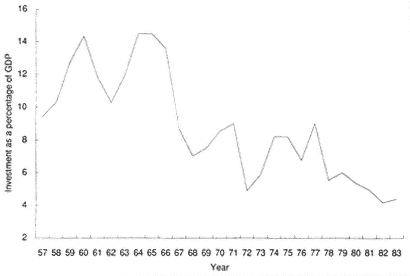
Fig. 2.
Investment as a Percentage of GDP, 1957–1983
Source: R. Summers and A. Heston, "The Penn World Table (Mark 5),"
computer disk provided by authors.
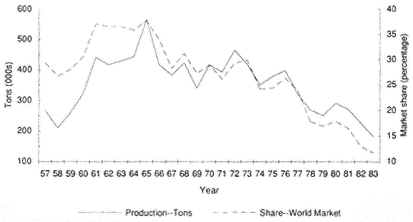
Fig. 3.
Cocoa Production, 1957–1983
Sources: K. Ewusi, Statistical Tables on the Economy of Ghana (Legon: Institute of
Statistical, Social, and Economic Research, 1986); and Commodity Research Bureau, CRB
Commodity Yearbook, 1991 (New York: CRB, 1991).
differ substantially from the statements of previous leaders. He attributed "the greater part of the country's present economic and social woes" to "some businessmen who hide through the curtain to dupe the country through trade malpractices and other anti-social activities."[26] The Rawlings government's response to these perceived malpractices was to continue previous attempts to regulate the economy while adding a level of brutality to enforcement that even the Acheampong government had managed to avoid. In the most spectacular example of its determination that the state would control the market at any price, the Rawlings regime destroyed Makola Number 1 Market, which had been the center of commercial activity in Accra for fifty years.[27] The Rawlings government also declared it would conduct unannounced searches of traders and stated that if any were found with hoarded goods they would be "taken away to be shot by firing squad."[28] It proclaimed the same fate for those caught smuggling cocoa.[29]
The Limann government that took power in September 1979 may have recognized the fundamental problems of the economy, but it had neither the political will nor the analytic ability to cope with the quickly deteriorating economy. In particular, no fundamental changes were made in the relationship of the state to the economy. As inflation continued at a high rate and the exchange rate became increasingly overvalued, cocoa farmers diverted an ever larger share of their production to Côte d'Ivoire. State enterprises also continued to generate significant losses. Most businessmen found it impossible to conduct commercial operations legally and either closed down their operations or began to operate on the now ubiquitous black market. As Naomi Chazan has noted, "The Limann regime's proposals [to address economic decline] offered paliatives where more surgical structural moves were required."[30] International donors, already gravely suspicious of Ghana following Acheampong's disavowal of external debts, essentially walked away from Ghana. By 1981, Ghana was receiving only $13.3 dollars per capita in net official development assistance compared to an average of $26.3 dollars for all sub-Saharan countries excluding Nigeria.[31]
[26] Ghanaian Times, 7 July 1979.
[27] Daily Graphic, 20 August 1979.
[28] Ghanaian Times, 12 June 1979.
[29] Ernesto May, Exchange Controls and Parallel Market Economies in Sub-Saharan Africa: Focus on Ghana, World Bank Staff Working Paper no. 711 (Washington, D.C.: World Bank, 1985), 68.
[30] Naomi Chaza, An Anatomy of Ghanaian Politics: Managing Political Recession, 1969–1982 (Boulder: Westview, 1983), 313.
[31] World Bank, African Economic and Financial Data (Washington, D.C.: World Bank, 1989), 196.
Indeed, looking at Ghana's macroeconomic indicators, there was little reason to question the proposition that Ghana had become a hopeless case. Per capita income, which had been approximately 640 cedis in 1971, had declined by the end of 1981 to approximately 460 cedis in constant (1975) terms.[32] Every organization in the country, ranging from the government to the private sector to voluntary organizations in the rural areas such as the churches, had essentially ground to a halt because of a lack of resources. It was estimated that two million Ghanaians had simply left the country because of a lack of economic opportunity.[33] Ghana had completed the transition from a prospering middle-income developing country with great hopes at independence to a nation suffering from Fourth World poverty.
The Second Rawlings Coup
With Ghana facing these disastrous conditions, Flt. Lt. Jerry Rawlings initiated his coup on December 31, 1981, an event known throughout Ghana as Rawlings's second coming. Rawlings came to power seeking, in his own words, "nothing less than a revolution."[34] As was customary for Ghanaian leaders, Rawlings noted soon after the coup that the country had hit bottom: "For so many of the adult population of this country over the last few years, even if they have not resorted to suicide to escape the shame of their condition, there has been for them no point to this life, nothing to look forward to except a continued slaving for others to enjoy."[35] However, in the early days after the coup, Rawlings did not even hint at an economic philosophy that would reverse the plunge of the nation. Rather, in his first speech, he talked about government power, indicating a willingness to use even more force than his previous administration had: "There is no justice in this society and so long as there is not justice, I would dare say that 'let there be no peace .' "[36]
The new Provisional National Defence Council (PNDC), as the group of civilians and army officers who ruled with Rawlings called themselves, then went about proclaiming a revolution. The economic policies they
[32] Calculated from Kodwo Ewusi, Statistical Tables on the Economy of Ghana, 1950–1985 (Legon: Institute of Statistical, Social and Economic Research, 1986).
[33] Dr. Joseph Abbey, "Ghana's Experience with Structural Adjustment," mimeo, n.d., 2.
[34] Radio Broadcast to the Nation, 31 December 1981, reprinted in A Revolutionary Journey: Selected Speeches of Flt. Lt. Jerry John Rawlings, vol. 1 (Accra: Information Services Department, n.d.), 1.
[35] Radio and Television Broadcast to the Nation, 5 January 1982 in ibid., 4.
[36] Radio and Television Broadcast to the Nation, 31 December 1981 in ibid., 3–4. Emphasis in the original.
implemented, however, did not differ significantly from those of previous governments. Instead, the PNDC's four-year economic program, announced in December 1982, devoted itself to establishing a state monopoly on export-import trade, eliminating corruption in the allocation of import licenses, and trying to reorient trade away from the West.[37] With a flourish of populist and socialist rhetoric, the government sought to mobilize workers, students, and the rest of the urban population to bring about (through unspecified policy measures) radical change in the economy. Workers' Defence Committees (WDCs) and People's Defence Committees (PDCs) were established to mobilize the population, and quite a bit of organization was done on the shop floor. While helping urban workers, the Rawlings regime seemed to accentuate the urban bias of previous regimes by imposing controls on the sale and price of food, the major source of income for the 70 percent of the population that live in the rural areas.[38]
The government also tried to coerce traders, sometimes through blatant physical force, into making goods available at controlled prices. In other words, the Rawlings regime instinctively adopted the old measures of trying to cure the ills of the economy through expanding the state. The regime's calls for vigilante action against anyone perceived as an enemy of the state led to continual human rights violations by many the regime had designated, or who had appointed themselves, to advance the "revolution." The first year of PNDC rule was replete with violent acts against those who even appeared to be in opposition to the regime, notably the kidnapping and brutal murder of three high court judges on June 30, 1982. As the Catholic bishops of Ghana stated,
In the wake of the "revolution" atrocities of all sorts have been committed against innocent civilians by some members of the armed forces and various groups purporting to support the revolution. The wanton killings, senseless beatings, merciless molestation and general harassment continue without the Government showing any willingness or ability to do anything about them.[39]
Similarly, the Association of Recognised Professional Bodies noted, "The application of the law of the jungle has resulted in the total break down of law and order. There is no accountability. Many who hold guns or are protected by the gun feel they can do anything and get away with it."[40]
[37] Ghanaian Times, 31 December 1982.
[38] Baffour Agyeman-Duah, "Ghana, 1982–1986: The Politics of the P.N.D.C.," Journal of Modern African Studies 25, no. 4 (1987): 623.
[39] Catholic Bishops' Conference of Ghana, Statement on the State of the Nation (Accra: Catholic Bishops' Conference, 1982), 2.
[40] Quoted in Echo (Accra), 25 July 1982, 2.
As both the economy and civil society fell apart, it soon became apparent to the regime that it did not have the economic policies to cope with the crisis confronting Ghana. First, the Soviet Union and its Eastern European allies, which the PNDC had hoped would come to the aid of its revolution, told Ghana they had no money, suggesting that the Rawlings regime negotiate a program with the IMF. Second, soon after Rawlings took power, there was an increasing realization, among at least some members of the regime, that the socialist/populist slogans they were mouthing did not add up to a coherent economic program. Even the usually sycophantic Ghanaian press observed in April 1982 that the regime had no economic policy to speak of.[41] Finally, 1982 and 1983 were absolutely disastrous years: the country suffered from a severe drought, which caused a decrease in agricultural production, and bush fires damaged a substantial portion of the countryside. Further, Nigeria, experiencing its own problems, expelled approximately one million Ghanaians who had been working in the country illegally. Thus, almost overnight, during the worst economic crisis the country had ever faced, the government had to cope with the influx of an additional 10 percent of its population desperate to work.
The 1983 Budget Announcement
Finally, after fifteen months of economic failure, the Rawlings government reversed course. The April 1983 budget, announced by Finance Secretary Dr. Kwesi Botchwey, suggested a fundamental break with not only the PNDC's previous policies but also from the thrust of economic practice since independence. Dr. Botchwey said that what was required was "a complete overhaul of policy in the areas of incomes, and pricing, including the pricing of foreign exchange."[42] As discussed in chapter 3, the new budget enacted a substantial devaluation, which previous governments had deemed politically impossible. Also, as discussed in chapter 4, the new budget raised prices on a large number of basic foodstuffs, once again putting the PNDC in grave danger.
More important, Rawlings, addressing the country a few days after the budget was announced, suggested that the government was committed to changing fundamental incentives in the economy:
[41] Accra Domestic Service in English, "Graphic Cites Absence of Revolutionary Strategy," 14 April 1982, reprinted in Joint Publication Research Service, Sub-Saharan Africa, 16 April 1982, T2.
[42] Quoted in People's Daily Graphic, 25 April 1983.
We have reached a critical stage in our history and we need to ask ourselves serious questions: why has it become so profitable in this country simply to engage in trade instead of production? Why are the most productive and industrious people usually the poorest? Why do we make it less profitable for a person to produce maize here than for him to get an import license to import it from abroad? Idleness and parasitism have become more rewarded in this economy than productive work. . . . This is the time to reverse this process.[43]
In particular, the budget promised a new relationship between the state and the economy. Botchwey noted that "the rigid enforcement of prices unrelated to costs of production is [not] a satisfactory basis for action" and instead insisted that "pricing policy . . . be based on production costs together with appropriate incentive margins."[44] As the following chapters explore, implementing these fundamental changes posed enormous challenges for the PNDC.
Why did the PNDC suddenly change course and adopt what soon became the most comprehensive economic reform program on the continent? The most basic explanation, and one often suggested for Ghana, is that the PNDC had no choice given the state of the economy. In fact, Rawlings, in his May 1983 speech, had claimed that the recently announced budget was "the only viable option open to us."[45] However, as chapter 1 indicated, there is a long tradition of Ghanaian leaders proclaiming (correctly) that the economy had hit rock bottom and then doing nothing to reverse the slide.
Similarly, in many other countries in Africa (Zaire is perhaps the classic case), scholars and many others have repeatedly been proven wrong as governments continued counterproductive economic policies even though the experts were saying the economic situation could not get any worse and the government in question would have to take action. In general, there is no clear relationship between an African country's economic condition and its willingness to undertake reform measures.[46] In fact, as Gulhati and Nallari note in their study of Mauritius's successful stabilization effort, reform is much less likely if the country is already experiencing an acute stabilization crisis.[47] The economy could have become worse in Ghana and the government could have limped by,
[43] J. J. Rawlings, Ghana's Moment of Truth (Accra: Information Services Department, 1983), 4–5.
[44] People's Daily Graphic, 25 April 1983, 4.
[45] Rawlings, Ghana's Moment of Truth, 2.
[46] Ravi Gulhati, The Political Economy of Reform in Sub-Saharan Africa (Washington, D.C.: World Bank, 1988), 9.
[47] Ravi Gulhati and Raj Nallari, Successful Stabilization and Recovery in Mauritius, EDI Development Policy Case Series no. 5 (Washington, D.C.: World Bank, 1990), 59.
perhaps with some kind of modified reform program. Certainly, it was clear to the government that the new budget posed enormous political risks, and these fears were quickly borne out by public demonstrations against price increases in the days after they were announced. Previously, there had not been public demonstrations against the PNDC, despite the deteriorating economy. That the PNDC had no other choice is too deterministic an explanation and does not take account of the huge political and personal gamble that Rawlings and the rest of the PNDC undertook when they adopted the program. After all, given the precedent that he had set in executing Acheampong, Rawlings stood a good chance of being killed in a successful coup.
One aspect of this "no other choice" argument, however, is relevant to the Ghanaian experience. As noted in chapters 3 and 4, the economy had collapsed to such an extent that most people were paying shadow prices. For instance, given that the black-market rate of the cedi was roughly twenty times higher than the declared rate, very few goods on the shelves of stores (and nothing in the markets) were priced according to the official rate. The devaluations and lifting of price controls therefore had less effect than might have been expected—given their magnitudes in nominal terms—because people were already paying well above the official price for goods. Finally, because of the economic crisis, most urban workers were forced to take second jobs or otherwise supplement their income, so a decrease in wages or even outright loss of employment may not have been quite as significant as it appeared.[48] Thus, the extremely poor state of the economy may have made enacting a stabilization program easier than it initially appeared. This argument avoids the artificial determinism of those who argue that Rawlings had no choice but to adjust but does give due attention to the extent to which shadow prices can operate in an economy that reached the depths Ghana's had by 1982–83.
A second explanation for the timing of the adjustment decision looks to the political strength of the leader. Joan Nelson, summarizing a sophisticated series of case studies examining economic reform, argues that among the important factors determining the timing of adjustment decisions is
a basic minimum of political support for the chief executive. Strength in a chief executive is no guarantee of quick decision, but acute weakness and
[48] Reginald H. Green, Ghana (Helsinki: World Institute for Development Economics Research, 1987), 23.
inability to command support from party and/or legislature or other key support groups virtually guarantees delays or paralysis.[49]
In the case of Rawlings in 1983, however, there was little reason to believe that he had the support needed not only to enact an adjustment program but also to reverse the thrust of economic practice in the country over the previous twenty-five years. Indeed, what was striking was how narrow Rawlings's constituency was: some of the military, university students, and some workers. All these would be alienated to some degree if the government adopted a reform program that reversed the urban biases of past governments. A number of coups against Rawlings had been attempted before the budget announcement, and more would follow.
Nor did Rawlings's assembling an economic team around him (another factor Nelson cites as being crucial to the adoption of an adjustment program[50] ) necessarily suggest that the government was seriously interested in adopting a reform program. The intelligentsia that surrounded Rawlings was strongly opposed to any kind of liberalization program or to relations with "imperialist" agencies such as the World Bank or the IMF.[51] Further, given the exceedingly poor policies that had been implemented since Rawlings had come to power, there was little reason to believe that the PNDC's team had the ability to implement any kind of coherent economic program.
The PNDC was also an unlikely proponent of reform because it was riven with factionalism. Of the original seven members of the PNDC, two (Brigadier Joseph Nunoo-Mensah and the Reverend Dr. Vincent Kwabena Damuah) had resigned voluntarily by November 1982. One (Joachim Amarte Kwei) was executed in August 1982 for his part in the killing of the three high court judges. And two (Sergeant Daniel Aloga Akata-Pore and Chris Bukari Atim) were forced to leave the PNDC after an attempted coup. The other member of the original PNDC besides Rawlings, Warrant Officer Class One Joseph Adjei Buadi, resigned from the PNDC in December 1984.[52]
However, Rawlings and those who became his close associates once
[49] Joan M. Nelson, "Conclusions," in Economic Crisis and Policy Choice, ed. Joan M. Nelson (Princeton: Princeton University Press, 1990), 335.
[50] Ibid.
[51] Richard Jeffries, "Ghana: The Political Economy of Personal Rule," in Contemporary West African States, ed. Donal B. Cruise O'Brien, John Dunn, and Richard Rathbone (Cambridge: Cambridge University Press, 1989), 75.
[52] Donald I. Ray, Ghana: Politics, Economics and Society (Boulder: Lynne Rienner, 1986), 31–32, 34.
the economic reform program started had well-developed political skills. Rawlings had accomplished major political feats just by emerging out of two chaotic coups as the unquestioned leader. After December 31, 1981, he also defeated a number of attempts by others to gain power. In addition, there is no doubt that he had his hand on the popular pulse in Ghana as few other leaders have. Some of his associates have also proven to be politically adept, although more than a few have not. As noted in chapter 3, development of the proper political strategy by astute leaders can often substitute for the kind of intellectual and analytic cohesiveness that Nelson suggests is necessary. The technocratic input that Nelson describes is important, but to some degree, especially in Africa, it can be supplied by others (notably, the World Bank). Political strategy, however, must come from the leadership itself and is therefore arguably more important than the beliefs and cohesiveness of the senior civil service.
A crucial aspect of Rawlings's decision to adopt the reform program was the intellectual and financial bankruptcy of those who opposed it. While out of power, Rawlings had been influenced by dependency theory.[53] Once in power, however, he associated with a wide range of people, with the result that the PNDC had a particularly confused ideological view.[54] It soon became obvious, especially in light of Ghana's disastrous economic experience, that the proponents of dependency theory or other radical formulas did not have a coherent answer to Ghana's woes. Finance Secretary Botchwey, who before his appointment had been a well-known radical university lecturer, suggested some of the problems the regime encountered when actually trying to follow its radical inclinations: "The experience that we have gone through does indicate that there are very fundamental problems of social transformation that the Left is only now beginning to address."[55] Rawlings, showing his disgust for radical demands in 1983, finally turned and announced what he called an all-out war against "populist nonsense."[56]
Of equal importance to the failure of radicals to propose a coherent solution to Ghana's problems were developments on the international scene. Starting with the election of Prime Minister Margaret Thatcher in
[53] James C. W. Akiakpor, "The Success and Failure of Dependency Theory: The Experience of Ghana," International Organization 39, no. 3 (Summer 1985): 540.
[54] Chris B. Atim and Ahmed S. Gariba, "Ghana: Revolution or Counter-Revolution," Journal of African Marxists, no. 10 (1987): 97. Atim was an original member of the PNDC.
[55] "The Right Signals," West Africa, 28 January 1985, 146.
[56] Donald Rothchild and E. Gyimah-Boadi, "Populism in Ghana and Burkina Faso," Current History 88 (May 1989): 241.
the United Kingdom, many countries across the world began a fundamental reevaluation of the role of the state in the economy. The extremely high rates of growth among Asian countries had a particularly strong effect on attitudes toward the political economy of development, especially in other parts of the Third World, which increasing felt left behind.
In Africa, the reevaluation of the state was marked by the World Bank's extremely influential 1981 report, Accelerated Development in Sub-Saharan Africa .[57] The report was especially important because it went beyond the traditional diagnosis of stabilization crisis to argue that the problems affecting Africa were tied to the way government regulated the economy in such areas as exchange rates, prices, and the control of agriculture. This report was, of course, especially relevant to Ghana, which came to be seen as the paradigmatic case for much of the bank's critique.
The World Bank and the IMF had the great advantage of being able to base their case on an extremely powerful theoretical framework—neo-classical economics—more coherent than anything the radical proponents of change in Ghana could muster. Rawlings, notorious for his lack of attention to economic detail, quickly mastered the logic of exchange rate reform. The bank's message concerning the need for structural reform was also reinforced by the actions and messages from the international community and bilateral donors. As Rawlings noted,
Our measures must be seen as an integral part of the new wave of realism cutting across geographic and ideological boundaries the world over. The wave of realism has led to major economic policy reversals in both the West and the East, both in the North and the South. Both the USSR and China have had to review some of their fundamental economic policies. And so have France and the USA.[58]
The strength with which Botchwey and Rawlings in particular grasped the bank's analysis can be seen in their 1983 budget speeches in which both stressed that Ghana was facing much more than a stabilization crisis. In line with the bank's rhetoric, they argued that fundamental economic institutions had to be changed.
Proadjustment officials' ability to take advantage of such a fundamental change in the intellectual environment gave them an unquestioned advantage over those who opposed adoption of the economic reform
[57] World Bank, Accelerated Development in Sub-Saharan Africa (Washington, D.C.: World Bank, 1981).
[58] People's Daily Graphic, 5 March 1987.
program. When faced with criticism, either public or private, Ghanaian officials consistently asked what they could have done instead. While aspects of the reform program can be criticized, no one inside Ghana has devised a coherent counteragenda that could compete with the PNDC's economic reform program. The intellectual dominance of economic reform in Ghana parallels the situation throughout Africa, where details of World Bank- and IMF-sponsored programs are often criticized; seldom, however, is an alternative proposed.
In addition, the international community was willing to support its new diagnosis of Africa's ills with significant resources. The World Bank initiated lending for structural adjustment in 1980–81 to promote economic reform. In addition, in 1985 the bank created the $1 billion Special Facility for Sub-Saharan Africa. In 1987, seventeen donor countries pledged $3 billion in additional aid to debt-distressed low-income countries.[59] The International Monetary Fund also had large amounts of funds available, especially since most African countries had not availed themselves of the IMF's financing facilities in the 1960s and 1970s. In addition, the IMF authorized members to make cumulative purchases outside the special facilities of 500 percent of the members' quotas in 1981, further increasing the resources available to Africa. Finally, in 1986, the IMF created the Structural Adjustment Facility to provide debt-distressed, primarily African countries with medium-term, highly concessional aid. A year later the Extended Structural Adjustment Facility was created to provide even more generous terms for debt-distressed nations.[60] The importance of these resources should not be underestimated, especially when so many analysts are arguing that the power of ideas alone is responsible for many of today's trends toward economic liberalization and democracy. Ideas count, but the Ghanaians would not have been so fast to embrace the World Bank's views if the money had not been available.
The Rawlings regime's decision to adopt a reform program came at a fortuitous moment, just as the international community was increasing resources to Africa. Indeed, after the World Bank's highly controversial report, it needed a success story to justify its new approach and the resources Western countries were committing to economic reform in
[59] Peter Nicholas, The World Bank's Lending for Adjustment: An Interim Report, World Bank Discussion Paper no. 34 (Washington, D.C.: World Bank, 1988), 7.
[60] Jerry Wolgin, "Fresh Start in Africa: A.I.D. and Structural Adjustment in Africa," Washington, D.C., mimeo, 1990, 10; and Joshua Greene, "The External Debt Problem of Sub-Saharan Africa," International Monetary Fund Staff Papers 36, no. 4 (December 1989): 854–55, 860.
Africa. Ghana, a notorious basket case but with a new, committed government, fitted the World Bank's requirement for an exemplary case. Indeed, at the pledging conference in 1987, Ghana received $818 million in commitments even though it had asked for only $575 million.[61] As will be noted throughout this book, the World Bank's need for a success story did not mean that the conditionality requirements were eased for Ghana; in fact, many PNDC officials were bitter about the World Bank's lack of faith in their commitment to reform in the years immediately after 1983. Also, the IMF did not particularly need a success story, and its conditionality programs were, as usual, quite difficult for a country like Ghana to adopt. However, Ghana could be assured that if it made the required reforms, large amounts of funds from international donors would be available.
The intellectual and financial clout of the World Bank and the IMF had a profound impact on domestic Ghanaian politics. First, the positions of those favoring stabilization and adjustment were strengthened because they could point to the availability of real resources. Ghanaian officials reported that a considerable portion of the initial stabilization program they adopted had been on the shelf for some time as senior civil servants had long ago diagnosed the major problems in the economy. The multilateral organizations were crucial in providing support so these officials could forcefully advocate within the government the policies they had designed. At the same time, the fact that the Ghanaians could argue that at least part of their reform program was locally developed may have helped somewhat in convincing the public to swallow the IMF's bitter medicine.
In addition, once Ghana started accepting money from the IMF and the World Bank, radical suggestions were made untenable. As Dr. Botchwey noted, "We had to pay a political price for our external ties. . . . you don't go to borrow money and say you are going to nationalise the lender's local assets."[62]
Finally, World Bank and IMF officials were crucial in providing much of the administrative and analytical resources necessary to make the program work, especially given that the Ghanaian state had all but collapsed.[63] As Dr. Joseph Abbey noted, "A critical element that facili-
[61] Nii K. Bentsi-Enchill, "Vote of Confidence," West Africa, 1 June 1987, 1044.
[62] Quoted in "Paying the Price," West Africa, 12 January 1987, 64.
[63] Thomas Callaghy, "Lost Between State and Market: The Politics of Economic Adjustment in Ghana, Zambia, and Nigeria," in Economic Crisis and Policy Choice, ed. Joan M. Nelson (Princeton: Princeton University Press, 1990), 285.
tated the success of the adjustment program was the very close and fruitful, even if at times acrimonious, dialogue that was established with successive [IMF] missions."[64] As noted throughout this book, while there are many problems with the public diplomacy of the World Bank and the IMF, the provision of technical expertise was absolutely crucial to the adoption of the Ghanaian program.
The next three chapters review in depth the Ghanaian experience of stabilization and structural adjustment in two key areas—exchange rates and the prices of basic goods—and then explore the regime's ability to construct durable political constituencies in the rural areas as it continues with economic reforms.
[64] J. L. S. Abbey, On Promoting Successful Adjustment: Some Lessons from Ghana (Washington, D.C.: Per Jacobsson Foundation, 1989), 11.