
Should I Earn My Daily Bread, or Should I Write a Poem? (Ma Bhat Jorum Ki Kavita Lekhum?)
At home my aged mother
watches for her son
on every festive day,
wondering if he will come
to help her make ends meet;
Each night in her lodgings,
my wife watches the door,
hoping that her husband will bring
something sweet and fine;
My daughter wears torn pajamas
and runs round telling tales
to neighbors, strangers, friends:
this winter father will bring her
a fine new suit of clothes;
My son, sent home from school,
plays all day in the dust
with crowds of local children;
he hopes father will send him
back to school this term;
The little one's asleep now,
teasing milkless breasts,
his nakedness forevermore
mocks my very manhood;
Speak not of brothers and sisters:
for them no work could be found,
for them no spouse was chosen;
How much longer can 1 go on
in my tattered coat and patched-up jacket,
holding together heaven and hell?
Tell me, oh respected friend,
with such an evening in my arms,
should I earn my daily bread,
or should I write a poem?
Forget the radio, papers, speeches,
speak not of slogans, marches, placards,
and if some time remains
do not push me into darkness
with affectionate intent.
It is hunger I endure,
a greater Everest by far
than any ideal or doctrine.
The drying softness of life,
learning's gentle kindness:
only these can defeat hunger.
It is done: do not make me hesitate
by relating the Buddha's story,
if your dreams delay me,
if your temptations beguile me,
if I do not work these fingers to the bone,
if I neglect to sell my sweat,
my parents, my wife, my children,
will all grow hungry and die;
I am tired, a beaten warrior,
at war with the stomach's demands.
How much longer can I go on
in my tattered coat and patched-up
jacket, holding together heaven and hell?
Tell me, oh respected friend,
with such an evening in my arms,
should I earn my daily bread
or should I write a poem?
I always bear upon my head
an Annapurna of need,
I always carry on my back
a Kanchenjunga of crisis,
how long can I fight this battle,
lifting a Machapuchare of costs
up onto my shoulders?
I believe that life should mean
flowing onward, a boon from God,
so do not mock my prayer.
Please try not to let me hear
of the horrors of the Falklands,
of massacres in Vietnam,
Afghanistan,
they are salt in my wounds.
Life is iron, I know you must
bite down hard upon it.
Life's a desolate shore, I know
you must water it with sweat,
but with what simile, what metaphor,
can I adorn and embellish this life?
How much longer can I go on
in my tattered coat and patched-up jacket,
holding together heaven and hell?
Tell me, oh respected friend,
with such an evening in my arms,
should I earn my daily bread
or should I write a poem?
(from B. Shreshtha 1987; also included in Samsamayik Sajha Kavita 1983)
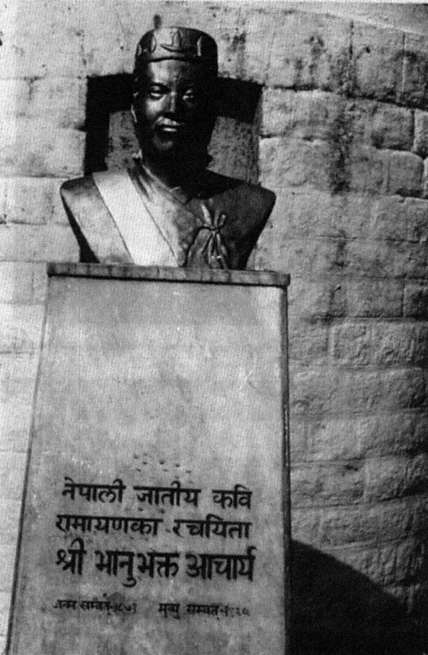
1.
Bust of Bhanubhakta Acharya, the adi kavi (founder poet), at Darjeeling.
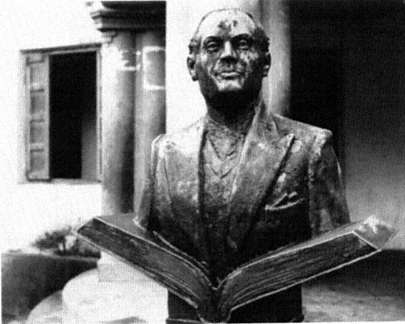
2.
Bust of Lakshmiprasad Devkota near his home in Dilli Bazar, Kathmandu.
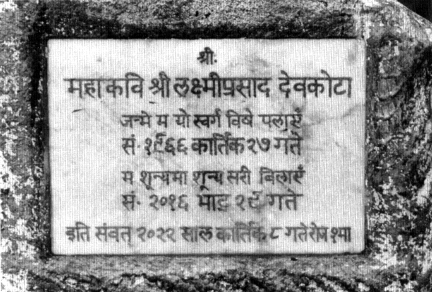
3.
A verse from Devkota's "Like Nothing into Nothing," inscribed beneath
the bust in Kathmandu.
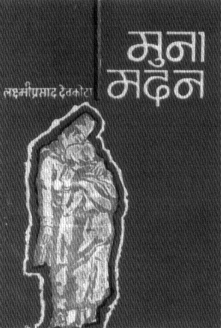
4.
Cover of the nineteenth edition of Lakshmiprasad
Devkota's classic Muna-Madan, published in 1988
in Kathmandu. Twenty-five thousand copies of this
43-page booklet were printed for this edition. A total
of 140,000 copies have been produced since the
fourteenth edition was published in 1976.
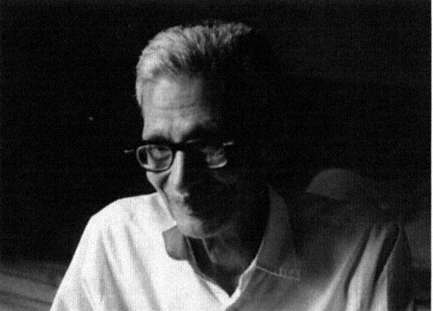
5.
Siddhicharan Shreshtha at his home in Om Bahal, Kathmandu.
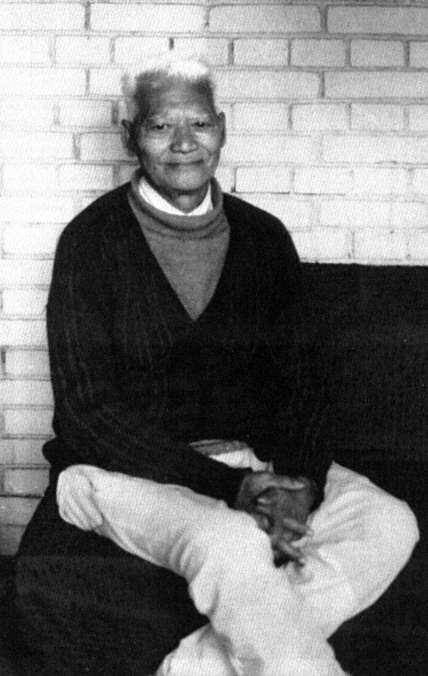
6.
Kedar Man "Vyathit" at his home in Jyatha Tol, Kathmandu.
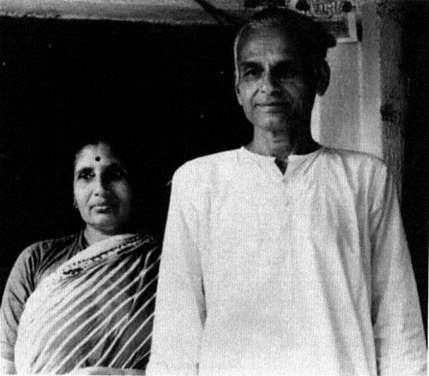
7.
Mohan Koirala and his wife at their home in Dilli Bazar, Kathmandu.
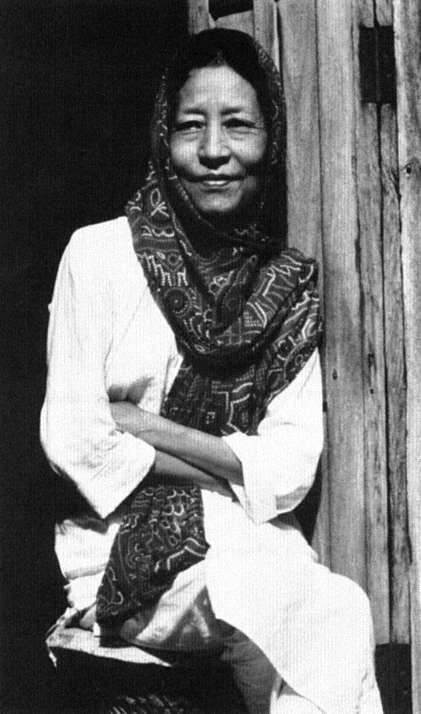
8.
Parijat at her home at Mehpin, Kathmandu.
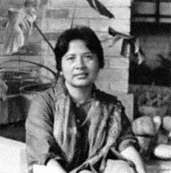
9.
Banira Giri at her home in New Baneshwar, Kathmandu.
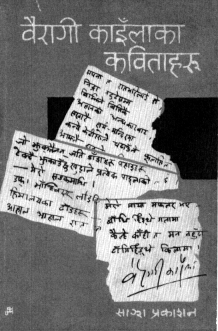
10.
Cover of Bairagi Kainla's collected
poems, published in Kathmandu
in 1974.
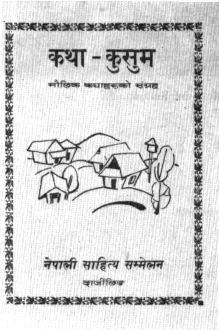
11.
The eleventh edition of Katha
Kusum, published in 1981 in Darjeeling.
Katha Kusum, the first anthology
of short stories in Nepali,
was initially published in 1938.