
Weaving.
—Weaving is done on a hand loom of the two-barred type, which is set up in the kiva or in the house. In all probability this loom originated either in Peru or in Middle America,[17] and thence was introduced among the early Pueblos. It is always associated with cotton, and cotton is associated with corn in the most generally accepted theory of the New World origins of agriculture.
To prepare the warp a frame is made, consisting of two square side bars and two round end bars. The yarn is tied to one end bar, then strung from the ball in a series of figure 8's over the end bars until the required width of warp is obtained. These loops are called sheds. The side bars are then removed and the end bars replaced by loom strings, which are fastened to the loom poles by heavy cords wrapped spirally between the warps. A simple support is made by fastening a crossbar to the roof beam or to hooks in the wall. From this hangs the yarn beam, a small pole held in place by a rope wound spirally around the two. The tension of the warp can be adjusted by tightening or loosening this rope. The upper loom pole is now swung from the yarn beam by a series of loops, and the lower pole is fastened at the bottom to another beam, which in turn is secured to pegs in the floor or specially made sockets.
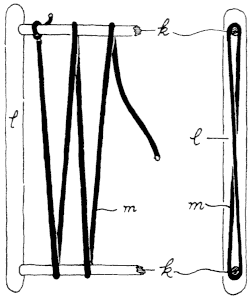
Figure 6.
Warp setup on end bars. Side bar l holds end bars k in position
so that warp m can be wrapped around them in figure-eight
loops. The first sketch, front view; second, side view.
For weaving, a shed rod is placed in the upper loop to retain the original order and to separate the lines of warp. Loosely tied to the front threads of the lower shed is a heddle rod, by which the alternate series of warp threads can be drawn forward, allowing a passageway for the shuttle or bobbin carrying the weft or filler which completes the fabric web. This passage is further opened by the use of a batten, a smooth,
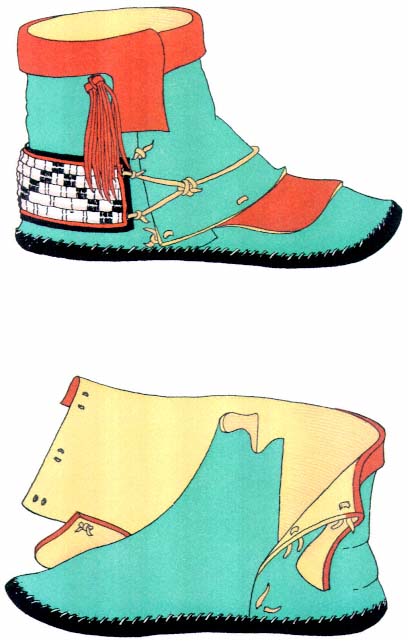
Plate 8.
Special two-piece dance moccasin. Heelpieces are
wound with white porcupine quills and black horsehair.
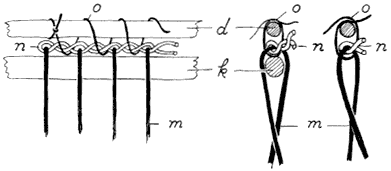
Figure 7.
End bars replaced by loom strings. Heavy cord n is twisted
between the warps m. Loom poles are tied to this twisted
cord by twine o. The end bars k are then removed.
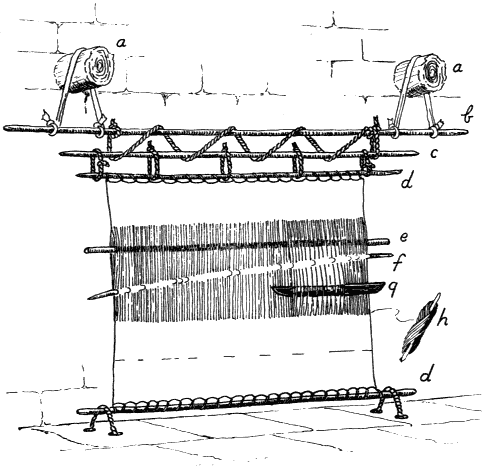
Figure 8.
A two-barred loom. A dress is being woven.
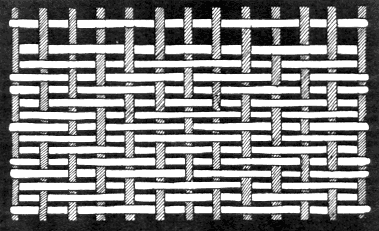
Figure 9.
Diamond twill.
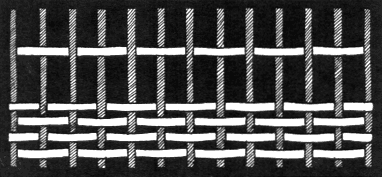
Figure 10.
Plain weave.
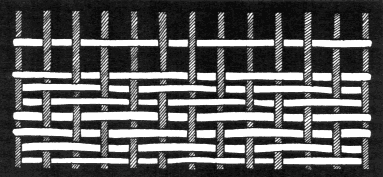
Figure 11.
Diagonal twill.
thin board with beveled edges, which is threaded between the warp and by a dexterous twist holds the shed open by its width. The weft is then beaten down with the same tool.[18] Self patterns and surface textures result from use of the different weaves and depend upon various heddle setups. A plain weave is the simplest and undoubtedly was the first ever to be
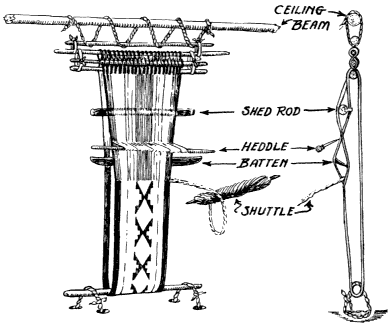
Figure 12.
Belt loom.
adapted to a loom. A simple 'over one, under one' formula produces a fabric in which each thread of weft intersects that of the warp on the same vertical line and both are equally visible.
A similar setup in which the weft becomes the dominant element and is pressed down so tightly that the warp is hidden is called a tapestry weave. This produces a firm, stiff fabric. Designs are effectively made by varying the number of warp threads behind which the weft is allowed to pass, a method called warp floating. This is done with the fingers, without the use of a heddle device. The designs are always limited by straight lines, which tend toward a constant repetition of a unit figure.
Pueblo examples of this technique are the belts, sashes, and garters. For these a smaller loom is required, which also differs slightly from that used for large fabrics. It is called a belt loom.[19]
A twilled basket weave is produced when each line of weft intersects the warp at constantly varying points, or when the regular alternation of the point of intersection produces ribs which trend diagonally across the face of the fabric. The width of the stitch may vary; but at least every other stitch must be two or more warp strands in breadth in order to provide for the alternation of the intersections in regular order. This makes the twill.[20] Two variations of this method are to be observed: a diamond twill, in the border of women's dresses, and the diagonal twill, often seen in maidens' shawls.
A brocade weave is used to decorate the ends of a special sash for men. This is made by the Hopi. The result simulates embroidery, but the method is weaving. It consists of a secondary or overlaid weft which is woven through the warp independent of the original weft. Color is introduced in this second thread, and by picking out certain warp threads with the fingers or by substituting another color simple designs are made. These are restricted, however, by the right-angled intersections of the loom setup.[21]
The Hopi of today is the Pueblo 'textile manufacturer'. He is the master craftsman and trader. From his villages on the three mesas overlooking the Painted Desert he carries on an extensive trade with the Zuñi and the Rio Grande Pueblos, who depend upon him almost entirely for their native textiles. In exchange for their turquoises, shell necklaces, and money he gives them dresses, robes, kilts, and belts, which they in turn "embellish with embroideries to their individual liking."
There is evidence that weaving was done in other pueblos. The Zuñi still produce some dresses, belts, and blankets.[22] It is known that loom weaving was practiced by the Acoma, the Santa Clara, the Nambé, and
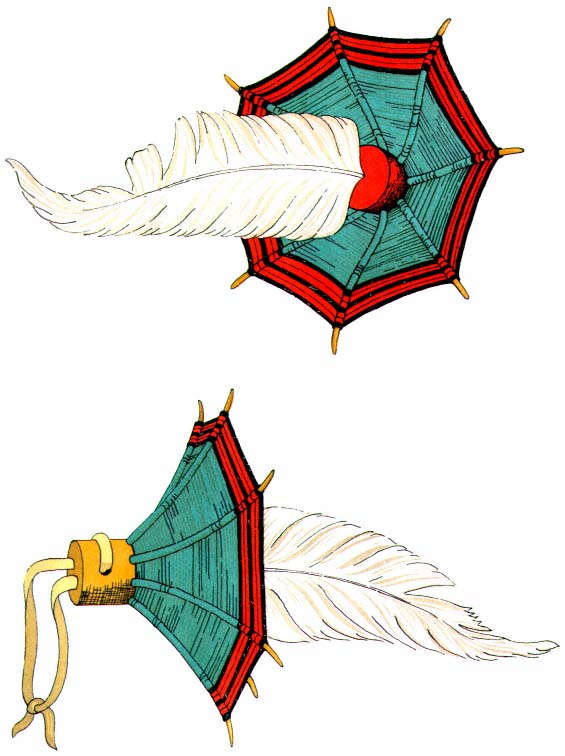
Plate 9.
Squash-blossom ornament used on headdresses and masks.
the Cochiti. However, these all depend upon Hopiland for those sacred garments which they carefully preserve for use on days of ceremony and entertainment.[23]
With very few exceptions men are the weavers[*] among the Pueblos.[24] They also make moccasins and the turquoise and silver jewelry, while the women make the pottery and weave the baskets.