
3. Religious Dissent and Civil War in France and the Low Countries
- 1. Firstly, no church should aspire to any precedence or domination over another.
- 2. Each colloquy or synod should elect a president to preside over it. This office to come to an end at the conclusion of each synod or council.
- 3. The ministers should take with them to each synod an elder or deacon, or several.…
- 6. The ministers shall be elected by the elders and deacons of the consistory, and presented to the congregation to which they are ordained; if there is opposition, it shall be for the consistory to adjudicate.…
- 15. Those [ministers] who teach bad doctrine, and after having been admonished do not desist, those also of scandalous life meriting punishment by the magistrate or excommunication, or disobedient to the consistory, or insufficient in other ways, shall be deposed.…
- 20. The elders and deacons are the senate of the church, and the minister shall preside.…
- 27. Heretics, despisers of God, rebels against the consistory, traitors against the church, those accused and condemned for crimes worthy of corporal punishment, and those who bring scandals upon the church, are to be excommunicated and cast out, not only from the sacraments, but also from the whole assembly. As for other vices, it will be left to the discretion of the church to decide whether those excluded from the sacraments will be admitted to hear the word of God preached.
There is no province which is not infected, and in some of them the contagion has spread even to the countryside, as in Normandy, almost all of Brittany, Touraine, Poitou, Guyenne, Gascony, a large part of Languedoc, Dauphiné, Provence, Champagne—together making almost three quarters of the kingdom. In many places, the heretics hold their meetings, which they call assemblies, wherein they read, preach, and live in the way of Geneva, without any regard for the king’s ministers or his commands. The contagion extends to every class, and (a strange thing!) even to ecclesiastics.…All the harm done has not yet appeared openly.…
In May 1559 representatives of a handful of the many fledgling Protestant churches in the kingdom of France met secretly in Paris to draft a common Confession of Faith and to adopt Articles of Discipline for a national church. Though the famous leader of the Genevan Reformation might not have approved of every detail, the work of the Synod of Paris bore unequivocal witness to the immense influence of Jean Calvin in his estranged homeland. And although the delegates to the synod might very well have bridled at the charge of separatism, their work betrayed an acceptance of their inability to capture the Gallican Church from within. Instead of reforming the old Church root and branch, they created an entirely alternative and distinctively “Reformed” ecclesiastical structure modeled on Geneva’s Ecclesiastical Ordinances (Duke, Lewis, and Pettegree 1992: 72–76). Thus, according to the Articles of Discipline, the new French Church would be ruled by a pyramidal structure of elected bodies extending from local consistories to national synods, all of which would include both clergy and laity. Ministers would be elected by and responsible to local consistories, and local consistories, including elected elders and deacons as well as clergy, would be responsible for the discipline of the faithful. To be sure, there were ambiguities and unresolved issues in the documents of 1559, which later synods would attempt to correct, but there is no doubt about the course that the Synod of Paris charted for French Protestantism: the “true” church would be a separate church including only the faithful who were willing to submit to the authority and discipline of the consistory.[1]
On the face of it, the spring of 1559 may be considered an inauspicious time for a clandestine meeting to organize a revolutionary church. Just one month earlier the kings of Spain and France, Philip II and Henry II, had signed the Peace of Cateau-Cambrésis, thereby ending a long series of Habsburg-Valois wars. This pivotal agreement not only reversed the diplomatic alignment of Europe but also “bound the Catholic monarchies in a joint endeavor to crush Protestantism” (Salmon 1975: 117). While the synod was meeting in Paris, then, the French royal government was redoubling its efforts to persecute “heretics.” Indeed, given the history of official intolerance of Protestants in France, extreme Catholic partisans like the duke of Guise felt entirely justified in resolving to “exterminate all those of the Huguenot religion as guilty of divine and human lèse majesté.” [2] Still, the situation changed dramatically when in July Henry II died from the wound he received in a tournament celebrating the treaty with Spain; the genuine political uncertainty that ensued resulted in unprecedented opportunities for the new Reformed Protestants.[3] Increasingly public in their worship and organization, Reformed preachers seemed by 1562 to be gaining new adherents everywhere.[4] With a touch of the paranoid exaggeration that characterized the defenders of the Catholic faith, the Venetian ambassador reported that the “contagion” seemed to be spreading throughout France and that “the heretics…read, preach, and live in the way of Geneva, without any regard for the king’s ministers or his commands” (Coudy 1969: 96). It was soon evident, however, that the Protestants’ greatest expectations and the Catholics’ worst fears would not be quickly realized, for in the course of 1562 France was torn by the first of a series of nine civil wars that would last until 1598 and would end in a temporary stalemate.
Meanwhile, the intended repression of Protestant dissent fared no better in the Low Countries domain of Philip II.[5] After concluding the peace with France, Philip departed the Netherlands for Spain, leaving his half-sister, Margaret of Parma, as governor-general and opening up a period of genuine political uncertainty. Following an aborted attempt by local noblemen to reverse the most aggressive religious policies of the new government, however, there was an explosion of popular religious dissent in the Low Countries as well. Like their counterparts in France, Reformed preachers in the Low Countries attracted thousands of people to their illegal assemblies on the outskirts of the region’s many cities, and in 1566–1567 a spectacular wave of popular iconoclasm spread from Flanders in the southwest to Groningen in the northeast.[6] The seventeenth-century historian Gerard Brandt describes the beginning of the process in Flanders:
Philip responded to the iconoclasm by sending the duke of Alva at the head of a sizable Spanish army in 1567, but a military countermobilization by a broad coalition of religious and political dissidents set the stage for eight decades of intermittent warfare that by 1600 resulted in the de facto independence of the United Provinces of the Northern Netherlands in which the new Reformed Church enjoyed a public and privileged position.At first, [the Mob] attacked the Crosses and Images that had been erected in the great Roads of the Country; next, those in Villages; and lastly, those in Cities and Towns: All the Chappels, Churches, and Convents which they found shut they forced open, breaking, tearing, and destroying all the Images, Pictures, Shrines, and other consecrated things they met with.…Swift as lightning the evil diffused itself, insomuch that in the space of three days above four hundred Churches were plundered. (Rowen 1972: 34)
These developments in France and the Low Countries are central to the second phase of the European Reformation, which unfolded in the second half of the sixteenth century. The first phase had been especially associated with two prominent German theologians—Luther and Zwingli—and had enjoyed only limited success outside the relatively autonomous cities and territories of the German Empire and the Swiss Confederation. In the absence of royal or princely conversions as in Scandinavia and England, there were, as it turned out, only limited opportunities for popular reformation coalitions to accomplish the formal religious reformation of whole communities and the institutional transformation of territorial churches.[7] Conversely, initially promising reform movements were effectively repressed or at least driven underground in Iberia, Italy, France, and the Low Countries. Following a series of Protestant reversals in the 1540s, however, there was a new explosion of popular religious dissent beginning in the late 1550s that immediately and directly challenged the authority of the established Church and boldly announced the beginning of the “Second Reformation.” [8]
The religious conflicts and civil wars in France and the Low Countries bear many striking similarities.[9] In both cases, the new Reformed churches grew out of the experience of official repression and the formation of secret conventicles; they were nurtured by truly international networks of support, rooted in exile communities like those in London, Emden, Wesel, Strasbourg, and Geneva; they drew much of their popular support from urban artisans; and they depended for their survival on the political and military support of powerful noble factions. They were also quickly caught up in the maelstrom of very long and destructive civil wars. By 1600, however, these parallel, even interdependent, developments had yielded remarkably different ecclesiastical and political outcomes.[10] In France the Edict of Nantes (1598) established a limited toleration for Reformed Protestant worship and even allowed the continued fortification of Protestant strongholds—at royal expense!—but nevertheless set the stage for the forceful reconstruction and extension of royal power in the coming decades. By contrast, the northern Netherlands territories that joined the Union of Utrecht in 1579 and formally abjured their sovereign in 1581 emerged by 1600 as a permanent confederation of sovereign provinces in which the Reformed church enjoyed a privileged status and Catholics a variable but severely limited toleration. In between, in the southern Netherlands the Catholic church was restored to its monopoly position, but at the cost of a massive emigration of Protestants and permanent constitutional limitations on its “foreign” sovereign, the Habsburg king of Spain. These very different outcomes established, in turn, clearly divergent trajectories of constitutional and political-cultural development that lasted for nearly two centuries.
Against the backdrop of broadly similar experiences during the First Reformation, these clearly divergent historical trajectories in France and the Low Countries represent the comparative problem that is at the heart of this chapter. Not merely a matter of the success or failure of “The Reformation”—and thus not easily reducible to universalizing arguments regarding regional culture or social structure in either a Weberian or a Marxian mode—the religious settlements that emerged from the Second Reformation were the unintended and thoroughly ambiguous consequences of many decades of political and military struggle that pitted religious dissenters against the defenders of the Catholic church. Rather than narrate the military/political struggles at the (inter)national level, however, I highlight the varieties of popular mobilization during the civil and religious wars of the second half of the sixteenth century and explore variations in the patterns of political interaction across time and space. Throughout my goal is to show how the divergent trajectories that were the consequence of the religious struggles of the Second Reformation need to be understood in terms of differences in the character and fate of popular mobilization for political action in relation to both local rulers and national claimants to religious and political authority (see figs. 6 and 7 below). In this phase especially, the political process of religious reformation entailed deep and enduring divisions within as well as among communities and polities.
| • | • | • |
Building “Churches under the Cross”
In the 1560s and beyond the history of political revolt intersected powerfully with the history of religious dissent to precipitate several decades of intense civil strife in both France and the Low Countries. In retrospect, the conjunction of dissent and revolt often seemed logical, even inevitable, to Protestant and Catholic apologists alike, though for obviously different reasons. Catholics equated evangelical Protestantism with sedition whereas Protestants justified their insurrections as morally necessary resistance to religious and political tyranny (Nicholls 1984b; Duke 1990; Van Gelderen 1992). General historical accounts of the era further reinforce the connection between religious and civil conflict by including the French civil wars and the Dutch Revolt in a larger conception of an “age of religious wars,” which reached its deadly climax in the Thirty Years’ War. One Dutch scholar has even characterized the earliest phase of the Dutch Revolt as a “revolutionary reformation” (Van Gelder 1943). For our purposes, however, it is important to break down these monolithic constructs and to locate the engagement of ordinary people more precisely within the fragmented spaces of sixteenth-century civil and ecclesiastical politics and within the larger chronologies of religious dissent and political insurrection. Indeed, a more prospective view of the Dutch and French conflicts suggests that the confluence of the histories of dissent and insurrection was neither automatic nor complete; and in the experience of most political subjects, the direct connection between Reformed Protestantism and political revolt was short-lived indeed.
The early decades of the Reformation era would certainly not have predicted the kind of Reformed Protestant mobilization that emerged in the 1560s. In cosmopolitan centers like Antwerp and Paris, the theological debates surrounding the “Luther question” immediately attracted considerable attention, and the Lutheran critique of established religious ritual and belief was easily translated into calls for local reform of the Church. The initial attraction appears to have been among the educated elite,[11] but as always the key to building popular enthusiasm for religious renewal was effective popular preaching, which in France was for a brief time even nurtured officially by the bishop of Meaux.[12] As in Germany, charismatic preachers in the many cities of northern France and the Low Countries might meet with a variety of responses, ranging from a private withdrawal from the ritual life of the Church to very demonstrative attacks on the symbols of Catholic piety and clerical abuse.[13] Despite evidence of locally significant popular response, however, the cause of religious reform was effectively stunted in both France and the Low Countries by the 1540s.
Whereas Charles V was largely powerless to stem the tide of evangelical protest in imperial Germany, he was in a much better position to combat heresy within his patrimonial territories in the Low Countries where his personal rule was much less compromised by locally powerful elites. It is critical to note here that Charles was neither king nor emperor in the Low Countries. Rather, he served variously as duke, count, and lord of his accumulated territories, and as a territorial lord, his day-to-day authority was more direct and less mediated than in his role as emperor or even king (in most of Iberia). The provinces of Flanders, Brabant, Zeeland, and Holland formed the core of his patrimonial lands, and from the beginning of his rule in 1516, Charles aggressively sought to expand his domain, especially in the north. In 1521 he added the small southern province of Tournai, but his most extensive acquisitions were in the northeast: Friesland in 1524, Overijssel and Utrecht in 1528, Groningen (with Drenthe) in 1536, and Gelderland finally in 1543 (cf. Pettegree 1992b: 2). At the same time, he attempted to consolidate his control of the core provinces through the creation of new fiscal and political institutions (De Schepper 1987; Tracy 1990).
Since the Netherlands quickly became the most important center of evangelical publishing outside Germany, the first of a series of steps that Charles took to combat heresy was a placard aimed at controlling the book trade in 1520. Then in 1521 Charles promulgated a special Dutch/French version of the Edict of Worms that condemned Luther’s teachings; attendance at gatherings where the Scriptures were read was prohibited in 1525; and as soon as the first editions were published in 1526, those who possessed vernacular versions of the Bible were ordered to surrender them to authorities. By 1529 all those who were found in possession of forbidden books faced the death penalty. When, in July 1523, two Augustinian monks were burned at the stake in Brussels for being “obstinate heretics,” they were the first martyrs for Lutheran belief anywhere in Europe. As Alastair Duke describes the situation,
Duke estimates that during Charles’s reign, there were 63 executions in the Walloon towns of Mons, Tournai, Lille, and Valenciennes; 100 in Flanders; and 384 in Holland.[14]The degree of political pressure which [the Habsburg administration in] Brussels exerted in the provinces of Brabant, Flanders and Holland, which together with Zeeland and the Walloon towns comprised the heartland of the Habsburg Netherlands, ensured that the Reformation could not survive for long in the open. The relatively large number of persons executed for heresy and related offenses under Charles V from these provinces tells its own tale. (1992: 146)
At first the investigations of heresy focused on prominent supporters of the new learning, but by 1527–1528, there were investigations of small groups of artisans as well, especially in the industrial cities of Flanders and Brabant where the climate was most forbidding (Duke 1990; Pettegree 1992b). As a result, it became clear that a German-style reformation, predicated on the more or less public formation of a broad reformation coalition, did not have much of a chance in the Low Countries. The authorities’ worst fear that the “contagion” might spread more generally to the mass of the population was nevertheless realized by the growth of an Anabaptist movement in the early 1530s, especially in the northern provinces of Holland, Friesland, and Groningen. The Anabaptists shared the Lutherans’ contempt for the elaborate rituals of the Catholic church, but they further marked themselves by symbolically separating their “brotherhoods” from the existing Church, usually by means of the ceremony of (adult) believer baptism; and rather than appeal primarily to the learned elite, they drew their greatest support from the urban poor, who were most receptive to the apocalyptic message of preachers like Melchior Hoffman. The Dutch Anabaptist movement reached its first peak in 1534–1535 with the rise and fall of the anabaptist “kingdom” in Münster. After several thousand Dutch militants were intercepted on their way to defend Münster from attack, there were abortive conspiracies to seize control of the cities of Leiden and Amsterdam. In the aftermath of the fall of Münster, there were more than two hundred executions in those areas of the north where authorities had previously been most complacent in rooting out heresy among “simple” folk.
Such resolute persecution could not eradicate “heresy” altogether, of course, but it effectively deprived the early reform movement of its leadership and drove it underground. The evangelicals who survived gathered together in small conventicles where they met regularly to read the Bible and discuss theological issues (Duke 1990; Pettegree 1992b). Some of these were Anabaptists who, in the aftermath of Münster, followed the more pacific leadership of Menno Simons, but others remained more cautious and essentially nonconfessional.[15] Those reform-minded intellectual leaders who remained in the Netherlands tended to hold themselves aloof from the common folk of the conventicles, but there was a growing political opposition among the urban elite to ongoing religious persecution—opposition that at times bordered on open confrontation with the central authorities in Brussels (Decavele 1975). At the same time, each wave of persecution brought with it a wave of emigration that eventually resulted in the establishment of exile churches in Wesel, London, and Emden. Of these, the most important was the Dutch exile community in Emden, just across the Groningen border in East Friesland.[16] Indeed, by the later 1550s the Dutch exile church in Emden had become the “Mother Church” of a new, more clearly organized Reformed Protestant movement in the Low Countries (Pettegree 1992b).
By comparison with the Low Countries, the initial opportunities for elite discussion of evangelical ideas may have been slightly greater in France. As David Nicholls (1983) describes the situation under Francis I, a combination of elite protection and competition among civil and ecclesiastical authorities may have afforded a “cultural space for heretical thought” both among the intellectual circles of Paris and in the bishopric of Meaux. At the first sign of popular enthusiasm, however, there was enormous pressure to clamp down on “Lutheranism.” Thus the first “martyr” for the evangelical cause in France was a modest weaver from Meaux who was burned at the stake in 1524. In 1525 all translations of the Scriptures were suppressed, and early the following year the first list of forbidden Lutheran doctrines was issued by the Parlement of Paris. In 1528 the smashing of an image of the Virgin in Paris, which seemed to indicate something a good deal more menacing than private, intellectual speculation—perhaps even a clandestine sect—drew an official response involving all civil and ecclesiastical authorities: expiatory processions were organized, and rewards for information about the guilty were offered to the public (Nicholls 1992).
As it happened, the persecution of evangelicals in France tended to be cyclical, reflecting in part the course of events internationally. The first cycle (1524–1526) coincided with and was surely reinforced by the Peasants’ War in Germany; the second (1534–1535) was sparked by the so-called Affair of the Placards, a famous incident involving the simultaneous distribution in several cities of broadsides attacking the sacraments, and coincided with the Anabaptist revolution at Münster. Another cycle, beginning in the late 1540s, followed the end of Francis I’s involvement in the Schmalkaldic War in the empire, during which he had toned down his attacks on heretics at home in deference to his Lutheran allies abroad. Though the cumulative death toll from judicial prosecutions was certainly not as high in France as in the Low Countries, the number of formal heresy investigations was formidable: at least five thousand and perhaps as many as eight thousand by the 1550s (Greengrass 1987: 32–38). In addition, the first of a devastating series of religious massacres in France was inflicted on the Vaudois (Waldensians) of Provence in 1543 and 1545. The Parlement at Aix-en-Provence apparently feared that the Vaudois might rebel and “turn Swiss”; thus they ordered what appears to have been a preemptive strike that destroyed the Vaudois villages, the viciousness of which, in turn, provoked an international outcry and the prosecution of those responsible.[17]
As a result, the growth of a popular reform movement was also effectively stunted in the domain of Francis I. Indeed, as in the Low Countries, each successive wave of persecution brought with it a wave of emigration: first primarily to Strasbourg but in the late 1540s and 1550s, especially to Geneva, where a magisterial reformation had established Calvin as the leader of a radically new ecclesiastical organization based on the combined authority of clergy and laity (cf. Denis 1984). There, the stream of French exiles may have been as high as ten thousand by mid-century. Meanwhile, the Protestants who remained in France appear to have organized themselves into informal conventicles similar to those in the Low Countries. These clandestine meetings appear to have attracted their membership from a cross section of urban society, though the bedrock of their support was to be found among skilled artisans, and as at Meaux, they might even organize a Protestant church with an elected leadership and a sizable membership (Heller 1986; cf. Meyer 1977). Still, the cycles of repression continually forced the nascent evangelical movement to remain largely invisible until the late 1550s, except in the south where it enjoyed a variable degree of noble protection and encouragement in the countryside.[18] The growing contact between the exile community in Geneva and the pockets of Protestant sympathizers in France nevertheless created the framework for a more organized Reformed Protestant movement capable of challenging the hegemony of the Catholic church on a scale that seemed to the Venetian ambassador, at least, to amount to three quarters of the kingdom when it became suddenly visible in 1562.
In both the Low Countries and France, then, embattled evangelicals began building “churches under the cross” that were separate from the established Church and dependent, at least in part, on the theological and pastoral leadership of “mother” churches outside the immediate scope of official repression. In retrospect, it is tempting to emphasize both the organizational and the theological coherence of these embattled minorities, but prior to the 1560s there was little evidence of unity or uniformity in either movement. According to David Nicholls, early French Protestantism, in the cities at least, “retained something in the nature of a religious debating society” in which a number of distinct tendencies might be visible:
The same might be said of the evangelicals of the Low Countries, where, Alastair Duke emphasizes, the movement was both regionally and socially diverse. Still, in the 1560s and beyond, the outbreak of open hostilities and civil war not only revealed the extent and diversity of the underground movement but also ensured that the most coherent, organized, and militarily resourceful among them would set the tone and direction of the Protestant movement.There were militant prophetic Protestants, some influenced by millenarian ideas, who wished to overthrow the papal Antichrist and impose the new religion on the unregenerate; peaceful Protestants, who merely wanted to be left alone to practice their religion; Protestant sympathizers, who kept their feelings secret, partly through fear and social convention, but also partly for genuine religious reasons; and the Protestant nobility, who never stopped being nobles, with a concomitant mentality and lifestyle. (1992: 129)
| • | • | • |
Popular Mobilization and the Coming of Civil War
In the first half of the sixteenth century the cumulative effect of the many and various attempts to suppress evangelical dissent in France and the Low Countries was the criminalization of not only a wide range of religious beliefs but also a variety of fairly commonplace behaviors. Indeed, in France by the 1550s heretical belief could legally be inferred from the behavior of the subject being investigated. This might include interpreting Scripture without official sanction, attending secret meetings of all kinds, attacking sacred images, selling and distributing forbidden books, even speaking “words contrary to the Catholic faith and the Christian religion.” Individuals were also, not surprisingly, forbidden to associate with the French exile community in Geneva, and those who were found to possess books or letters from Geneva were subject to arrest as “heretics and disturbers of the public peace and tranquility” (Greengrass 1987: 34; see also Sutherland 1980). In short, virtually any outward sign of affinity or association with evangelical ideas in general and with Geneva in particular was equated with public unrest and even sedition, which was, of course, punishable by death (cf. Duke 1990: 73–74).
In this climate of heightened fear and suspicion, becoming a member of an underground church or even attending an evangelical worship service must be considered a deliberate act of defiance of, if not quite outright rebellion against, both civil and ecclesiastical authority. But this is precisely what thousands of ordinary French and Netherlandic subjects did during the “wonderyears” of the 1560s. Though there were only a handful of churches represented at the clandestine Synod of Paris in 1559, evangelical preachers were attracting increasingly large numbers of enthusiastic followers, some of whom defied authorities by openly chanting psalms in the evangelical fashion or holding public worship services (prêches) outside the towns. By March 1562 one of the most prominent patrons of the French evangelical movement, Admiral de Coligny, tried to assemble a list of more than two thousand churches then extant. Even a much more conservative estimate of the number of organized congregations (see Garrisson 1980) yields an estimate of the adult Protestant population in the neighborhood of two million or perhaps 10 percent of the total population of France (Greengrass 1987: chap. 6; see also Benedict 1981: appendix 1).
Likewise, in the Low Countries there was an explosion of openly defiant evangelical activity. The first Calvinist church was formally organized at Antwerp in 1555, and before the decade was out there were churches in all the major towns of Flanders; in 1561 in the Walloon towns of Valenciennes and Tournai psalm-singing crowds of evangelicals even demonstrated publicly in the streets (Duke 1990; Steen 1985; cf. Le Barre 1989). Even more impressively, however, beginning in May 1566 evangelicals began to hold open-air services (so-called hagepreken, or hedgepreaching) just outside the walls of the cities; at first these bold demonstrations of popular support drew modest crowds, but by July they had swelled in some places to more than twenty thousand.[19] Then, in August, there began the wave of iconoclastic attacks, described above, that spread from Flanders all the way to Groningen, permanently damaging hundreds of churches as well as the relative calm that had prevailed under the cloak of official repression.
How are we to understand these sudden demonstrations of evangelical strength in both France and the Low Countries? Though the religious appeal of evangelical theology in general and of Calvinism in particular may be considered to have remained relatively constant, the perceived opportunities for individual religious choice and for open dissent had changed so dramatically as to set off what may usefully be considered a cycle of religious protest analogous to that which had begun in Germany in the early 1520s (see chap. 2). In the first instance, the sweeping claims that both the Valois and Habsburg regimes made for an unprecedented degree of control over religious ritual and belief belied the obvious limits of royal/princely repression, even if that was significantly more potent than imperial control in Germany. Despite evidence of the pervasive recourse to exemplary justice, indeed, the rulers of these relatively novel composite states were necessarily dependent on a variety of more or less independent institutions, with variously pliant personnel, to implement their repressive policies. In the Netherlands, for example, municipal governments insisted on the primacy of their own jurisdictions in the face of a threatened Spanish-style Inquisition, but they remained reluctant to persecute even small cultural minorities within the very populations on whose immediate goodwill the viability of their rule depended. Likewise, the growing attraction of the high French nobility to Calvinist ideas clearly compromised the repressive capacity of the Valois regime in those places where religiously suspect nobles, by virtue of their positions of local and regional authority, were the filter through which royal policy necessarily passed. This was especially true in those regions with functioning provincial estates, the pays d’etat, which were clustered especially in the south and west of France.[20] Thus it was clear that at the peripheries of these extensive and variegated domains—especially in the north of the Low Countries and the south of France—the reach of princely pretensions to control religious practice and belief far exceeded their effective grasp.
Closely related to these structural constraints on royal action, another factor that appeared more immediately to open significant new opportunities for religious experimentation and choice, if not general reform, was the availability to the clandestine religious movements of politically influential allies. In some places in the north and south significant numbers of both urban notables and rural nobles were attracted to the new evangelical spirituality as well as to Calvin’s emphasis on lay religious leadership, but even where that was not so obviously the case, any attempt by the central administration to perform judicial and ecclesiastical end runs around locally and regionally powerful elites might easily invoke a familiar sort of resistance in the name of established privilege and traditional rights. For Brabant and Flanders, in the heart of the Habsburg domain, Wim Blockmans (1988) has described a “Great Tradition” of revolt that helped to establish both the political and the ideological foundations of the Dutch Revolt. In this view the many important urban centers of the Low Countries not only anchored an ongoing resistance to Burgundian/Habsburg fiscal and political ambitions but also actively developed institutionalized, practical alternatives to monarchical centralization in the Low Countries. More recently, Marc Boone and Maarten Prak (1995) have argued that this Great Tradition of urban revolt was complemented by an equally long-standing and impressive “Little Tradition” of internal opposition to the domination of powerful and wealthy oligarchs in both town and countryside. Indeed, from the Flemish Peasants’ Revolt of the early fourteenth century (1323–1328)[21] to the tragic revolt of Ghent against Charles V in 1540,[22] the complementary traditions of elite and popular revolt had revealed myriad possible alliances against an unwanted consolidation of central authority or administration. As embedded in both historical memory and constitutional reality, then, the multiple histories of political insurrection or revolt afforded the new evangelical communities with a repertoire of fairly familiar collective actions that might complement the organization of independent churches and some very powerful allies, if not always spiritual brothers, when the long-standing traditions of local autonomy and self-government were at stake.
Though these urban-centered models of the “Great” and “Little” traditions of revolt are clearly rooted in the most urbanized provinces of the Low Countries, they may still be useful in thinking about the more rural provinces of the Low Countries and the kingdom of France more generally.[23] Rural insurrections are, not surprisingly, more clearly the dominant theme of French history from the fourteenth-century Jacquerie onward, but it is clear from Henry Heller’s (1991) survey that French history, too, betrayed elements of multiple traditions of revolt—of internal division and conflict within communities as well as collective resistance to outside control. Heller presents an impressively diverse collection of tax protests, food riots, and peasant insurrections with peaks of activity in the 1520s and 1540s (ibid., 42–44 table), but he notes, in addition, the appearance in the mid-1540s of religious issues amid the political agitation, especially in the cities. The more general point may be that, in both France and the Low Countries, corporate communities—whether rural communes or chartered towns—could (and frequently did) serve as an arena for local political contention as well as the bedrock for a more generalized opposition to the intrusion of unwanted outside authority (cf. Blickle 1986).
In the short term, however, the precipitant for this new cycle of religious protest was neither the structural limits of dynastic state making nor the long tradition of opposition to it; rather, it appears to have been a genuine uncertainty about the government’s commitment to the policy of repression. Despite the announced intentions of Philip II and Henry II to redouble their efforts to suppress heresy after the Peace of Cateau-Cambrésis in 1559, a constellation of forces pushed central authorities in precisely the opposite direction in both France and the Low Countries. Following the untimely death of Henry II, the enfeebled government of Francis II (1559–1560) briefly renewed the government’s long-standing commitment to enforcing religious uniformity, but under the regency of Catherine of Medici during the minority of Charles IX (1560–1563), government policy moved decisively in the direction of moderation and compromise. By the Edict of Amboise (March 1560), the government effectively admitted that the persecution of Protestants had become unenforceable. Then after the regent failed, amid increasing tumult and political pressure, to achieve a theological compromise between Catholics and Protestants in the famous Colloquy at Poissy (September 1561), the Edict of St. Germain (January 1562) granted a limited toleration of evangelical worship (see Christin 1995, 1997). It was precisely in this context that an increasingly organized religious protest movement was emboldened not only to petition formally for official sanction but also to demonstrate its popular strength more openly and defiantly on the local level.
Likewise, following Philip II’s departure from the Netherlands to Spain in 1559, although the government of Margaret of Parma was formally committed to his policies of repression, a series of unforeseen challenges brought that policy into serious question. In particular, broad elite opposition after 1561 to a plan to reform the primitive ecclesiastical structure of the region—reforms that undermined or threatened a broad range of local and regional officials in favor of a starkly centralized ecclesiastical regime—resulted in the dismissal in 1564 of Cardinal Granvelle, one of Philip’s most trusted advisers in Brussels. Inasmuch as many local officials were refusing to enforce the government’s heresy laws against otherwise law-abiding subjects, several high-ranking noblemen strongly urged revision of the heresy legislation in favor of a more tolerant policy. When Philip steadfastly refused all compromise, however, some four hundred lesser noblemen, who were derisively called “Beggars,” pledged to unite in opposition to the Inquisition, and in the spring of 1566 Margaret secretly agreed to moderate temporarily the enforcement of the heresy laws (Parker 1985; Van Nierop 1991).[24] It was thus amid exaggerated reports of Margaret’s “concessions” that the enormous potential for a popular evangelical movement burst into full view.
What began in the 1560s in both France and the Low Countries, then, was a new, generalized cycle of religious protest that revealed both the weaknesses of government repression and the availability to popular religious dissenters of influential political allies. In this heady atmosphere, news of (successful) popular demonstrations traveled quickly and invited imitation elsewhere. For example, news of prêches in northern France emboldened evangelicals to do the same (the so-called hedgepreaching) in the southern Low Countries; notorious incidents of iconoclasm also begat imitation across a broad terrain. For a time, indeed, it seemed to Catholics and Protestants alike as if the established religious regime might be destroyed along with the harshest elements of dynastic political consolidation. To the extent that this seemed to be the fulfillment of apocalyptic hopes and visions nurtured in the darkest days of repression—the answer to fervent prayer—it helped to underwrite ever bolder evangelical action in a variety of contexts. Yet to the extent that it awakened the worst fears of those dedicated to, if not personally invested in, the ecclesiastical establishment, it sparked a vigorous countermobilization in defense of the old regime. And very quickly in both north and south, what began as a spectacular series of relatively independent local mobilizations was overshadowed by the formation of political and religious alliances and the subsequent explosion of armed conflict on a much broader scale.
In France the first round of civil war followed quickly on the first public recognition of the Protestant movement. A massacre in March 1562 of evangelical worshipers at Vassy by the duc de Guise precipitated a massive military mobilization by the Huguenot leadership, and by summer civil war had begun in earnest. Indeed, the conspiracies and strategies of “national” leaders—that is, of high-ranking nobles or influential notables who could deploy military resources on a grand scale and who claimed to speak for far-flung alliances on one side or the other—are almost necessarily the principal mileposts for any coherent account of the long decades of conflict that ensued.[25] Likewise, in the Low Countries the massive hedgepreaching and iconoclasm of 1566 quickly gave way to an equally massive military repression under the duke of Alva in 1567 and the first military countermobilization by the rebels—the so-called Beggars—in 1568. These military conflicts were at first closely linked, and in retrospect, 1572 can be seen as a significant turning point in both cases: in France, the disastrous Saint Bartholomew’s Day massacre of Huguenots in Paris signaled the stagnation and eventual decline of the Huguenot party;[26] in the Low Countries, by contrast, the Beggars achieved their first military success in the seizure of the small city of Den Briel in southern Holland.[27] In both cases the rebels began after 1572 to take concrete steps toward the creation of independent, revolutionary governments, but in the long run these complex religious/political/military conflicts gradually separated into relatively discrete “national” histories, though outside intervention remained an important element in both the French civil wars and the Dutch Revolt.[28]
| • | • | • |
The Character and Fate of Popular Protestantism
As popular protest gave way to civil war, the character and fate of popular political action varied considerably, and it is this pattern of variation that is our chief concern here. In retrospect, it is perhaps tempting to conclude, as Henry Heller (1991) does with regard to the French Huguenots, that the heavy hand of elite leadership in the context of open warfare sidetracked or even stifled the growth of an otherwise promising popular evangelical movement. At the local level and in the short term, however, it often seemed as if the popular movement was in the driver’s seat, forcing otherwise tentative or cautious elites to make choices or take risks that they would much rather have avoided (Benedict 1981:chap. 10). But rather than generalize in this strictly dichotomous fashion, let us look briefly at a series of examples that illustrate the range of variation and highlight the complex relationship between religious dissent and political revolt.
To the extent that religious conflicts in France and the Low Countries grew out of the political pressure of local reformation coalitions on variably receptive municipal authorities, they may be said to reflect the same political dynamics as were evident in the urban reformations in Germany (see fig. 4 above). As we shall see, however, the politicization and nationalization of the complex problems of religion and regime in France and the Low Countries produced a distinctive pattern of direct political and military contestation between two “religious” parties—Reformation and Counter-Reformation coalitions. Indeed, the long years of often violent struggle require us to imagine a rather different set of political interactions that tended toward rather different (though, in many cases, equally transient) outcomes, including both civil war and the formal accommodation of religious difference, which was conspicuously absent in the First Reformation.
Thus, Figure 6 describes and accounts for the distinctive features of this second round of reformation conflict in terms not only of variations in the character and capacity of the Reformation coalitions—highlighting its social comprehensiveness as well as its military capacity—but also of variations in the character and capacity of established religious authority—highlighting especially the extent to which the Church was integrated with political elites and enjoyed the support of popular political actors within a larger Counter-Reformation coalition. We shall return to these broader comparisons later, but first we must disaggregate the larger historical constructs—the French Wars of Religion and the Dutch Revolt—and locate the variety of conflicts within concrete political spaces. Let us begin with the example of Toulouse.
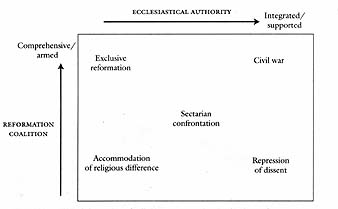
Fig. 6. Political dynamics of political contestation in the Second Reformation
In the southern French city of Toulouse the leaders of the newly organized Reformed church—the consistory as well as some of the city’s notables—met urgently on the evening of May 11, 1562, and decided, in light of the rapidly accumulating evidence of civil war more generally between Catholics and Protestants in France, to take immediate action.[29] Armed Protestants were surreptitiously let into the city, occupied the Hôtel de Ville, and took several capitouls, the city’s chief magistrates, prisoner. They subsequently moved quickly to occupy several colleges of the university and to erect barricades across key streets so as to fortify those sections of the city in which they were able to establish themselves before dawn. Though this well-planned coup was initially successful, rumors of an armed Protestant uprising had compromised the element of surprise, and the Catholics were prepared to meet the Protestant challenge; indeed, the Catholics enjoyed a clear advantage in the numbers of armed men immediately available in the city, although the Protestants benefited from the armaments, including cannons, they captured in the arsenal of the Hôtel de Ville. Four days of very destructive urban warfare, beginning on May 13, finally yielded to a truce on May 16, which amounted to a capitulation by the Protestant forces.[30] A guarantee of limited safe passage afforded the Protestants only marginal protection from the vengeance of their Catholic enemies when their mass exodus from the city was completed by the evening of May 17. By the time the dust had settled, as many as four thousand people may have died.
These dramatic, albeit exceptionally fast-moving and destructive, events in Toulouse encapsulate clearly some of the most important general characteristics of political and religious conflict in the second phase of the European Reformation: the integral involvement of ordinary people at the community level; the deep religious/sectarian divisions within communities; and the final arbitration of armed might, more often than not in alliance with actors outside the community. But the conflagration at Toulouse also announced the more specific theme of short-term success followed by ultimate failure for the Reformed Protestants, a theme that was replayed with often devastating variations in many communities not only in France but in the Low Countries as well. In the Walloon town of Tournai, for example, we can see in rather slower motion and more vivid detail the political dynamics of what was essentially a revolutionary process that exploited the complex relationships among a popular religious movement, locally vulnerable magistrates, and an implacable but distant sovereign (see esp. Steen 1985; Le Barre 1989).
As early as 1563 a crowd of perhaps two thousand evangelicals openly chanted psalms and listened to sermons in the streets of Tournai after authorities had broken up clandestine meetings in the countryside; some in the crowd even boasted, “They [the authorities] do not wish us to sing in the woods where we bother no one, so we will sing in the city; and if they put in a garrison of one thousand, we will raise two thousand” (quoted in Steen 1985: 49–50). Such bravado notwithstanding, the local Reformed Protestant movement remained generally invisible until the surprising summer of 1566. Then, in Tournai as elsewhere in the Low Countries, the popular dimensions of the evangelical movement became fully visible in the massive crowds that thronged to worship services just beyond the immediate jurisdiction of the urban magistrates who were continually pressured to enforce the central government’s uncompromising placards against heresy. On one such occasion, Pasquier de Le Barre, a local notable who chronicled these events, reports, “In open defiance of the magistrates, the flower of Tournai was in attendance, leaving so few people of quality behind in the city that no one could remember the like, even during times of war and adversity that the place has suffered” (1989: 102).
Indeed, the steady growth of popular support for the evangelical movement produced a locally formidable coalition, led by the Reformed consistory and supported by the guilds, that local authorities were unable to resist.
And well they might be anxious, for after iconoclastic crowds “cleansed” the city’s churches in August, the Reformed Protestants not only moved their services inside the walls and indoors, but the preachers and members of the consistory who claimed to speak for the movement forced their way into the exclusive domain of the local town council’s deliberations, pressing a program of popular armament and religious reform. Still, a hastily assembled citizen’s militia of about four thousand appeared to be no match for the small royal garrison and the army that Margaret of Parma raised to support it. Thus, following the defeat of a rebel “army” near Lille on December 27, Tournai was quietly occupied by royal troops in January 1567. Though there was little bloodshed inside Tournai, the city paid a very high price for its brief Reformed Protestant rebellion: a period of harsh persecution (with more than 1,000 condemnations) was followed by the complete dissolution of Tournai (and the Tournésis) as a separate province.Recognizing their own inadequacy in the face of the problem, some magistrates began to worry about [the governor general’s] repeated warnings that the King would someday demand an account of their regime and find them wanting. However, the King who was far away inspired much less concern than did the people of Tournai itself, for the fervor of the masses of people who went to sermons began to make the magistrates anxious. (Steen 1985: 70–71)
A similar scenario was played out in nearby Valenciennes where, in the absence of a local garrison, it took a siege that lasted until March 24, 1567, to end the city’s defiance of Philip’s authority (Clark 1972; Parker 1985: 93–98). Likewise, at Rouen during the first French civil war, a royal siege forced the surrender of a rebel Huguenot regime (Benedict 1981). At Lyon, by contrast, the rebel Huguenot regime that seized power in the spring of 1562 lasted until 1567, but it, too, ultimately failed under pressure from a potent countermobilization in defense of the established Church (Davis 1975). What all of these cases have in common is that a locally formidable reformation coalition—which brought together notables, bourgeois, and artisans under the leadership of the local Reformed consistory—opted, in the heady atmosphere of escalating political crisis during the 1560s, for a course of action that amounted to local revolution;[31] yet lacking outside help in the face of a spirited defense of the established regime, these revolutionary regimes ultimately failed not only to bring on the Calvinist millennium but also to preserve even a limited space for public evangelical worship. In the terms suggested by figure 6, all of these cases moved quickly from a common starting point in the lower right—the repression of dissent—toward sectarian confrontation in the center; in addition, each was engulfed in the larger pattern of civil war that thrust them back toward the forceful repression of dissent.
In other cases, of course, the defeat of the Reformed Protestant movement was not predicated on a sudden coup or even the apparent pretense to found a revolutionary regime. In Amiens, for example, though Protestantism appealed to a broad spectrum of the local population, the Reformed community never joined the political alliances or took on the political aspirations of their coreligionists in Toulouse or Rouen—which had roughly similar levels of popular support in the total urban population—at the beginning of the French civil wars (Rosenberg 1978); having remained politically discreet at the height of Huguenot strength, then, the local reform movement quickly found itself on the defensive in Amiens as the conflict and warfare escalated elsewhere. Similarly, across the border in the Habsburg Netherlands, despite a sizable evangelical movement in the region, Reformed Protestantism was held in check in Lille (a close neighbor of Tournai and Valenciennes) as the local elite remained firmly united in its resistance to religious change; thus even in the summer of 1566 the Reformed Protestants of Lille were unable to exploit the fleeting opportunities for bold dissent that others seized where elite loyalties were more clearly divided or their policies uncertain (DuPlessis 1991). At the heart of the Valois domain, the city of Paris presents yet another variation on this theme. Home to a sizable Reformed community and torn by sectarian violence throughout the 1560s, Paris nevertheless remained the political and cultural capital of the “most Catholic” French kingdom; indeed, short of conversion of the monarchy to Protestantism and conquest by Huguenot armies, it is hard to imagine a scenario in which the people of Paris might have been free to establish an entirely new religious regime or even a publicly dissenting church.[32] In these cases, then, evangelical dissent did not in fact connect with political revolt in the experience of ordinary people for a variety of reasons, each of which reflects the locally specific structures of political opportunity as much as the absolute strength of the movement itself.
It would surely be mistaken, however, to dwell on examples of the failure of religious dissent during the Second Reformation, for eventually dissenting communities established themselves as public churches and drew on both elite alliances and popular support in large stretches of both France and the Low Countries. Here again, the character and the fate of local interaction were quite variable. La Rochelle, an important port on the west coast of France, is illustrative of a number of French cities, primarily in the south and southwest, where in the early 1560s Reformed Protestantism quickly attracted majority support among the urban population without serious resistance from the religious and political establishment.[33] Indeed, despite considerable division between the oligarchical corps de ville and the city’s bourgeois citizens over alleged abuses of power by municipal officials earlier in the century, the Reformed church, which claimed at least forty-two of the one hundred members of the corps de ville among its congregation, boldly but peaceably inserted itself into the public arena without an open break with the local political regime. What is more, during the first civil war in 1562–1563 and against the backdrop of very serious municipal conflicts with the Crown in the 1540s and 1550s, this openly Protestant city managed to resist considerable pressure to ally itself with the Huguenot rebellion more generally and even continued to proclaim its loyalty to the king. Thus it was that the successful establishment of Reformed Protestantism in La Rochelle invoked neither the “Great” nor the “Little” tradition of revolt, both of which had been prominent features of recent Rochellais history. The “moderates” who had managed to steer this remarkable course were, however, temporarily swept aside in the second war (1567–1568) by “zealots,” who insisted on alliance with the Huguenot party and the suppression of the Catholic church, and although the moderates quickly returned to power, they also formally negotiated an alliance with the Huguenot party when the city was threatened with a royal garrison in the third war (1568–1570). Henceforth, La Rochelle remained an important Huguenot stronghold until the Edict of Nantes guaranteed its position as a place of Reformed worship and surety in 1598.
Although the experience of La Rochelle was in some sense exceptional, it nevertheless illustrates the experience of those communities in which the popular evangelical movement enjoyed explosive growth, with or without the active support of local elites, and an increasingly Protestant community as a whole managed to avoid outside intervention to restore the Catholic church, with or without the support of the broader Huguenot alliance. Thus Reformed Protestantism quickly gained the upper hand and remained in a dominant cultural position in cities like Nîmes, Montpellier, and Montauban as well as a broad range of small towns in the south and west of France. In the course of the civil wars, and especially in the aftermath of the Saint Bartholomew’s massacres in 1572, the religious and political leaders of these places where Protestantism had gained the upper hand moved to establish not only a new national church but also a politically independent confederation—what Janine Garrisson (1980) has called les Provinces Unis du Midi—outside the immediate domain of a severely crippled monarchy. Although these self-governing communities would certainly be considered rebellious from the point of view of the monarchy, in the experience of ordinary people within these Huguenot strongholds, a fully institutionalized Reformed Protestantism, with its corporate discipline and generally austere morality, undoubtedly seemed the very opposite of rebellious (see, e.g., Segui 1933). In all these cases, then, amid the genuine uncertainty of the early 1560s, we can see an exit from the starting point of repressed dissent in the direction of initially local and informal accommodations of religious differences followed by locally variable movements in the direction of exclusive reformations.
Yet another scenario for Reformed Protestant success may be seen in the experience of the rebel cities of the northern Low Countries after 1572. Following the hedgepreaching and iconoclasm of 1566, the notoriously repressive regime of the duke of Alva had driven both religious dissenters and political opponents either underground or into exile. Yet the capture of the small town of Den Briel on April 1, 1572, set off what Geoffrey Parker (1985) calls the Second Revolt in which the Beggars established a more or less permanent territorial base within the Low Countries from which to challenge the Habsburg regime militarily. This outcome was far from certain as, at first, only widely scattered cities took the side of the Beggars (see Parker 1985: 139 map). By September, following a strategic retreat toward the south by the duke of Alva, the map of rebel-held territory had begun quite dramatically to fill in especially in the north, only to be pushed back by a Spanish counteroffensive almost exclusively into the provinces of Holland and Zeeland by the end of the year—with the notable exception of cities like Middelburg and Amsterdam that remained loyal to the king (see Parker 1985: 143 map). In this new cycle of revolt some cities like Valenciennes replicated the wonderyear experience of only short-lived success for religious and political revolt. In Holland and Zeeland, however, a number of cities established new political and religious regimes that survived the test of time and the depredations of intermittent civil war.[34]
In cities like Leiden and Delft, which had experienced both the iconoclasm of 1566 and the repression that followed, there was a residue of resistance to Spanish tyranny that quickly reemerged in the form of popular demonstrations in 1572 in response to the news of rebel success elsewhere, but an official shift to the rebel cause awaited the arrival of rebel troops and a change in the local magistracy (Boogman 1942; Kooi 1993). Then, of course, religious dissenters suddenly enjoyed opportunities for both demonstrative and organizational activity, the latter aided by both the return of exiled leaders and the organization of district-level classes and regional synods on the Calvinist model. Even in places like Gouda, Dordrecht, and Rotterdam, which had not been touched by the iconoclasm of 1566, churches were “cleansed” of idolatrous images, Reformed pastors were installed, and consistories were organized, sometimes in opposition to local magistrates who advocated a less stringently confessional reformation (Hibben 1983; Ten Boom 1987; see also Spaans 1989). Though the newly public Reformed Protestant congregations usually attracted only very small minorities of the local populations as full members, the experience of local church building and intercommunity networking “under the cross” gave them enormous advantages in the contest for local position, virtually assuring them the biggest churches and eventually a formal monopoly on public worship.[35] Yet the same organizational discipline and confessional rigor that strengthened them internally made it difficult for these essentially voluntary congregations to assume the role of a community church: zealous and aggressive consistories often kept local magistrates at arm’s length while the requirement of submitting to the spiritual discipline of the consistory appears to have made the transition to full membership in the worshiping community a comparatively difficult one for most people (Parker 1985; Duke 1990; Pettegree 1994). In each of these cases the local trajectory of the process of religious contestation went from repression (via sectarian confrontation) toward civil war and quickly veered toward exclusive reformations before reaching various forms of accommodation of sectarian difference.
By the mid-1570s, then, the basic geography of Reformed Protestant success had begun to take shape in the south and west of France and in the north of the Low Countries—that is, on the peripheries of the Valois and Habsburg regimes where rebels enjoyed their greatest military success. In these areas, the Huguenot and Beggar coalitions began to fashion revolutionary governments that consolidated their political power on a regional scale and served to underwrite still costlier and more destructive civil wars.[36] In the southern Netherlands, which had always been the heartland of popular support for Reformed Protestantism, there would be one more round of popular religious/political revolution. There, in the context of the Pacification of Ghent (1576),[37] locally variable Reformation coalitions once again seized the initiative in Brussels, Antwerp, and Ghent, forcing reluctant elite leaders to open up new opportunities for popular political action as well as religious choice (Decavele 1984; Marnef 1986, 1987, 1994, 1996). In Ghent, which had lost its chartered self-governance in 1540, a radical Reformed Protestant regime came to power in 1577, reasserted the city’s political independence, and in alliance with Holland and Zeeland anchored a significant pocket of rebellion in Flanders and Brabant until 1584. By the mid-1580s, however, the political/military tide had once again turned; in particular, the Walloon nobility had made a separate peace with the Spanish regime by the Treaty of Arras (1579), and with the urban rebels cut loose from their former allies, the Spanish were able to consolidate their reconquest of the southern provinces by attacking the towns one by one (Parker 1985). And by the same token the waves of popular evangelical mobilization, which had begun so dramatically and with great promise in the 1560s, had finally ended—either crushed by military failure or co-opted by the consolidation of elite leadership in rebel enclaves.
| • | • | • |
Popular Mobilization and the End of the “Religious” Wars
Ordinary people did not simply disappear as political actors midway through the Second Reformation. Rather, the focus of popular mobilization shifted dramatically in the last quarter of the sixteenth century, especially in France: first, there emerged an increasingly bold and organized popular movement in opposition to the Huguenots and in defense of the Catholic church; and second, there were dramatic waves of nonsectarian opposition to the depredations of elite politics and seemingly unending civil war. Together, these new patterns of popular mobilization in France help us to understand the very different trajectories of political development that emerged in France and the Low Countries in the last quarter of the sixteenth century.
The potential for significant popular opposition to the apparent success of the Huguenot movement in the early 1560s was evident almost immediately. The dramatic failure of the Protestant coup in Toulouse in the spring of 1562, for example, was clearly due to a broad countermobilization, including large numbers of ordinary people, in defense of the municipal government and the Catholic church (Greengrass 1983a, 1983b). At the same time, ordinary people in many other parts of France undertook generally less organized—and less immediately effective—action to counter the growing audacity of evangelical attacks on “papists” and their ritual “idolatry.” The cumulative result was a widespread pattern of very demonstrative, ritualized, and often violent competition in the streets (see esp. Davis 1975: chap. 6; Crouzet 1990). As the civil wars dragged on, however, local contestation between Huguenots and Catholics began generally to tip in favor of the most zealous Catholics in places like Rouen and Paris and culminated in the 1580s in a spate of local revolutions under the banner of the Catholic League (Sainte Union) which were intended to prevent the triumph of (or even a royal compromise with) the Huguenot party on a national scale. Though the Catholic League failed, in the end, to prevent a formal compromise with “heretics” in the Edict of Nantes, it prevented something much worse by prolonging the civil wars long enough to ensure that the monarchy would remain Catholic (Salmon 1975; Holt 1995).
The formation of Counter-Reformation coalitions in many parts of France mirrored, in some respects, the process by which Reformation coalitions were formed more generally. Though the monarchy’s vigorous defense of Catholic orthodoxy certainly validated and encouraged popular mobilization in defense of the established Church order, the latter, where it became visible and effective, was more directly a reflection of locally variable conditions: the history of relations between local clergy and laity, the density of religious institutions and the structures of ecclesiastical authority, the integration of ecclesiastical and political elites, and so forth (cf. Woltjer 1994). Yet, as with the Protestant reform movements, what appears to have been essential to the vigorous engagement of ordinary people on behalf of the established Church was popular preaching that went beyond mere criticism of “heretics” to suggest concrete means by which ordinary people might identify themselves with a larger movement and become actively involved in the process of spiritual renewal.[38] The popular response, in turn, might take a variety of forms, ranging from presumably private or individual acts of traditional piety to much more public or demonstrative acts such as participating in public processions and physical attacks on Protestants or the symbols of their worship and belief.[39]
Thus the local mobilization of a Counter-Reformation coalition necessarily involved an informal alliance between a segment of the clergy and the local population; it also appears almost everywhere to have drawn on one of the peculiar institutional legacies of the late medieval upsurge of popular piety in France: the religious confraternity (Benedict 1979; Harding 1980; Diefendorf 1991). Confraternities might take a variety of forms and be segregated by both class and occupation, but they were everywhere dedicated to the principles of mutual prayers and pious works. As Barbara Diefendorf describes them, “the whole popularity of confraternal associations in the later middle ages derived from the notion that salvation was at least in part a collective enterprise. Their members participated through their prayers and services in the salvation of their fellows, as well as the saving of their souls” (1991: 34). Not surprisingly, confraternities were also at the cutting edge of the popular piety that the Counter-Reformation church sought to build following the Council of Trent (1545–1549, 1562–1563). As specific and voluntary subsets of the mystical corpus christianum, confraternities could serve as especially valuable mechanisms for mobilizing the most committed members of the orthodox Catholic community for action in defense of the faith, just as the conventicles and underground churches formed the organizational basis of powerful Reformation coalitions.
In principle, one might assume that a robust Counter-Reformation coalition—one that involved both charismatic preaching and an institutional base in confraternal associations—would be a comfort to officials, whether local magistrates or agents of the central government, dedicated to the eradication of Protestant heresies. Yet to the extent that the contestation between Catholics and Huguenots erupted in public confrontations and violence, popular Catholicism presented a serious problem for magistrates whose primary responsibility was the preservation of domestic tranquillity; at the very least, disturbances and riots of whatever sort simply made the local community more vulnerable to outside intervention. But even more serious, when in the course of the civil wars local Counter-Reformation coalitions allied themselves with the aristocratic faction of orthodox Catholics in the form of the Catholic League, zealous popular Catholicism became a real threat to those political elites—the so-called politiques—who sought to steer a delicate course toward accommodation and peace in the midst of an increasingly politicized and polarized population. In a number of cities, indeed, popular movements brought ultra-Catholic elite factions to power in the late 1580s, and in some exceptional cases, like St. Malo and Marseilles, popular Counter-Reformation coalitions helped to establish independent revolutionary governments that frightened even their noble allies in the Catholic League (Heller 1991:chap. 5). In its most extreme form, then, the Catholic League declared war on the state itself—in both its local and its royal manifestations—but in the end the league, which was in essence only a loosely amalgamated composite of local movements, fell victim to the exigencies of the civil wars that it had deliberately prolonged. With its political and military defeat, we see also the end of the cycle of popular Catholic mobilization that had sustained it locally.[40]
The general contrast with the Low Countries in this regard could not be more striking. Though Alastair Duke (1990: 95) reports that in 1566 in Hainaut and Artois, “rural smallholders [were] prepared to stand up for their Catholic convictions” by reporting illegal assemblies and repulsing bands of iconoclasts, there is little evidence of sustained popular collective action on behalf of the Catholic church within the Habsburg domain despite the central government’s best efforts to marginalize and eliminate religious dissenters. To be sure, there were signs of local political resistance to the establishment of a Protestant regime in the northern Netherlands in 1572 (Boogman 1942), and in the long run there is ample evidence that many inhabitants of the “liberated” provinces of the north were unwilling to abandon their affection for the Catholic church (Duke 1990; Elliott 1990); yet it is striking that, as was generally the case in Germany earlier in the century, there were no locally significant Counter-Reformation coalitions capable of competing with the Reformed Protestants in the local political arena. Although the reasons for this are undoubtedly many and various, two in particular appear to underscore what seems to have been peculiar about those places in France where a strong Counter-Reformation coalition did appear. On the one hand, Philip II’s controversial attempt in the early 1560s to reform the ecclesiastical system within his Low Countries domain highlights the institutional marginality of the Catholic church, especially in the northern provinces.[41] On the other hand, cultural studies of the Low Countries prior to and during the early Reformation suggest a distinct pattern of lay spirituality that was expressed in the morality plays of very independent and frequently anticlerical rederijkerkamers (chambers of rhetoric) rather than devout confraternities (cf. Woltjer 1994).
In France there was also an important counterpoint to the mobilization of popular Counter-Reformation coalitions, which were largely urban phenomena, in a series of massive popular mobilizations in the largely rural south and southwest of France between the mid-1570s and the 1590s that ultimately served, in contrary fashion, to bring the civil wars to an end. One of the earliest of these, in the Vivarais between 1575 and 1580, illustrates the essential dynamics of this process. The Vivarais, a largely mountainous territory intersected by narrow river valleys to the west of the Rhône, was by the mid-1570s thoroughly divided politically and militarily between Huguenot and Catholic factions of the aristocratic elite. With each successive war, the towns and villages of the Vivarais were routinely subjected both to the violence of warrior bands and to the emergency taxation demanded by both sides to finance their war efforts; yet with each successive edict of pacification, the general demobilization that might have been expected to ease these burdens never materialized. In 1575 in the midst of the fifth civil war, a local chronicler noted,
The peasants removed tiles and beams from their houses and brought them to sell in Aubenas in order to keep alive through war and famine. The countryside was despoiled by the treachery of the soldiers of both religions. They [the warlords] cooperated with each other in betraying wealthy civilians, and in committing atrocities, thefts, and all kinds of evils. (Quoted in Salmon 1979: 8)
When the Catholic faction of the provincial estates determined to deal with the growing anarchy by, yet again, increasing direct taxation to strengthen royal garrisons, they provoked a peasant mobilization that culminated in the formation of peasant leagues, which one official described as “combinations, conspiracies and rebellions perpetrated in the said region by plusieurs Catholiques, who have formed a syndicate to refuse royal taxes and all others, ordinary and extraordinary, imposed on the district, and resisting with united force and display of arms the sergeants and commissioners sent to execute our instructions” (quoted in Salmon 1979: 9). As this tax revolt gained strength in early 1576, the elite factions of the province were induced to negotiate a local peace treaty that anticipated a national treaty by several months. This apparently sincere attempt at local conciliation in the interest of easing the burdens of war was, however, undermined by yet another war in 1577, and once again peasants mobilized to attack the garrisons as well as the tax collectors.
What was distinctive about this growing opposition to those deemed to be primarily responsible for the ongoing carnage was the nascent cooperation between Catholics and Huguenots. As one royal official reported in 1577, “I have received warning that the twenty-two parishes which have rebelled are on the point of joining the Huguenot party and have massed in force. If something is not done, there will be a rash of these evil beggars” (quoted in Salmon 1979: 10). Though this fear that peasant rebels would actually join the “Huguenot party” appears to have been unfounded, the rebels in the Vivarais developed an ongoing cooperation between largely Catholic peasant communes and the small Protestant cities of the region. And the prediction that the “evil beggars” would proliferate certainly was prescient: not only did tax revolts continue in the Vivarais through 1780, but across the Rhône in Dauphiné a similar coalition between rural Catholics and urban Protestants mobilized in opposition to aristocrats deemed responsible for a thoroughly desperate situation in 1579–1580 (Le Roy Ladurie 1979; Hickey 1986). The most dramatic mobilizations of this sort occurred, however, in the mid-1590s. From the Bonnets-Rouges of Burgundy to the Tard-Avisés or Croquants in the southwest, there were locally significant mobilizations in opposition to perceived injustice and excessive taxation that through the mechanism of informal alliances and leagues were capable of shaking the very foundations of aristocratic rule.[42] These mobilizations varied significantly with regard not only to the issues they addressed and the claims they made but also in the effectiveness with which they could deploy armed force that was capable of frightening, if not defeating, those who were deemed to be responsible for prosecuting the civil wars and exploiting the ordinary political subjects of France for more than three decades. Yet what they all had in common was that they were independent of both the Catholic and the Huguenot alliances; these powerful revolts clearly transcended the deep polarization of French society along sectarian lines and thus signaled an end to the extreme politicization of the issue of religious reform.
In this sense the popular revolts of the 1590s in France bring us full circle. On the one hand, they remind us of the larger histories of popular mobilization and political revolt that both preceded and survived the intensely sectarian religious conflicts of the Second Reformation. They are at once rooted in the multiple traditions of medieval insurrection and a prelude to the great peasant revolts of the seventeenth century; and for that reason, they are necessarily part of any convincing treatment of the long-term continuities of popular political action in the larger political history of Europe (see Bercé 1987). On the other hand, these revolts remind us of the specific wave of peasant protest that so loudly heralded the beginning of the Reformation era in southern and central Germany in the 1520s (see chap. 2). Like the Revolution of 1525 in Germany, the composite French revolts were loose and highly transitory aggregations of countless small-scale mobilizations; their informal coalitions transcended local and regional boundaries and even occasionally the walls that typically divided cities from their hinterlands; their magnitude and intensity forced otherwise quarrelsome and religiously polarized elites to close ranks in the face of this obvious threat to their political authority; and for that reason they were ultimately military failures. Yet their essential difference is obvious: the deeply religious, almost millenarian ideology that underwrote the German revolts was conspicuously absent in the French revolts. And this underscores, in turn, the important fact that many elements within the repertoire of popular political action were essentially modular, capable of being deployed in a variety of settings in the service of a variety of short-term goals and long-term visions for the future.[43] Thus, while it is important to treat seriously the religious issues of the day, it is surely mistaken to associate all of the popular politics of the sixteenth century with the challenges of Reformation (or Counter-Reformation) theology.
| • | • | • |
Patterns of Religious Contestation
There remains the more specific task of sorting out the broader patterns of popular engagement in the religious contestation of the Second Reformation and assessing their significance for the outcomes of these conflicts. Let us begin with some general comparisons with the urban reformations in Germany (see fig. 4). Because of the direct threat of princely repression, municipal authorities in France and the Low Countries were generally much more resistant to demands for the kind of magisterial reformations that took place in most of the imperial cities and even some of the territorial cities of Germany; this was true even where the same magistrates were less than zealous in their pursuit of heretics. Thus for most of the century and across much of the territory from the North Sea to the Mediterranean Sea the political dynamics of the reformation process tended toward either revolutionary splits or stunted reform. Still, as we have seen, there were some places where, especially in the heady atmosphere of the 1560s, municipal administrations no longer resisted popular pressure and negotiated an essentially peaceful, though not always lasting, transition to Protestantism (e.g., Tournai and La Rochelle); or in the context of civil war, municipal authorities might even, in some places, promote a kind of top-down religious reform as a result of a political/military shift to the rebel cause (e.g., in the rebel territories of southern France and the northern Netherlands after 1572). Despite these similarities, however, it is important to recognize the extent to which the political dynamics of the Second Reformation were not merely minor variations on the themes established by the First.
I have already argued that both the Valois monarchy in France and the amalgamated Habsburg lordships in the Low Countries proved to be far more effective in their attempts to crush religious dissent during the first three or four decades following Luther’s bold theological challenge to Catholic orthodoxy.[44] Despite their obvious limitations as rulers of composite states and their historical vulnerability to multiple forms of domestic revolt, Francis I and Charles V forcefully claimed an unprecedented authority to determine what was acceptable religious practice and belief within their sizable domains. Under their successors, spectacular and equally unprecedented waves of popular religious dissent exposed the very real limits of those authoritarian claims; yet it is clear that most of the chartered, self-governing cities of France and the Low Countries would not be afforded the luxury of a gradual reformation process largely exempt from outside intervention such as had occurred in the free cities of Germany. Although an exceptional place like La Rochelle might successfully avoid both tumult within and punishment from afar,[45] the experiences of Toulouse, Tournai, Valenciennes, and Rouen more clearly established the rule. The central governments in Paris and Brussels, despite their constitutional and strategic limitations, effectively made the promotion of unsanctioned religious change the legal equivalent of sedition and revolt.
Having thus politicized (and nationalized) the question of religious choice—for ordinary people as well as their local rulers—the “princes” of France and the Low Countries effectively stunted the growth of the Lutheran Reformation in ways that the emperor of Germany could not (cf. Koenigsberger 1989). Yet in their spirited defense of the established Church, they set the stage for distinctly different patterns of religious contestation in the Second Reformation. On the one hand, certainly the most important, albeit unintended, consequence of their harsh repression of locally vulnerable reform movements was the eventual creation of organized networks of underground churches; these clandestine networks, which were inspired and actively nurtured by exile communities in Emden, Geneva, and elsewhere, combined the discipline and dedication of a voluntary association with the formal solidarity and resources of an (inter)national alliance. Thus, as soon as new opportunities for religious dissent opened up in the 1560s, there were in many places well-organized groups of zealots ready to seize the initiative and lay claim to a new vision of the Church. On the other hand, princely penetration of the local political arena in the starkly propagandistic name of religious orthodoxy both spawned and valorized popular mobilization in defense of traditional forms of religious ritual and belief, with or without the active support of local authorities. For the most part these popular Catholic mobilizations were reactive and episodic, but by the 1580s the mobilization of robust Counter-Reformation coalitions in defense of established religion in France was instrumental in forming an array of revolutionary municipal governments under the general organization of the Catholic League, and thus steered France as a whole away from Protestantism and in the direction of a unitary “Catholic” monarchy.
In combination, these two specific legacies of the stunting of the first reform movements in France and the Low Countries underwrote what was surely one of the most striking features of the Second Reformation: a widespread pattern of sectarian confrontation and violence from the 1560s onward .[46] As we have seen, however, sectarian violence was not a uniform feature of the Second Reformation, nor was it synonymous with popular religious dissent. Rather it can usefully be considered the occasional, though not unpredictable, by-product of a much larger history of religious contestation. In terms of the frame of reference provided by figure 6, one might argue quite simply that the likelihood of violence increases as one moves from the lower left to the upper right—that is, toward the armament of both of the coalitions and thus the militarization of the conflict. Inasmuch as sectarian confrontations (in the middle of the diagram) were often played out using symbols rather than guns, civil wars (in the upper right) were necessarily more destructive even though they are less intriguing to most analysts; by the same token, consolidating and defending the victory of one side or the other (upper left or lower right) is as likely to produce bodily harm and physical destruction as an ongoing interaction in the middle of the diagram.
As we have seen, within the many and various corporate communities of France and the Low Countries the character and fate of Reformation coalitions varied considerably. At one extreme, they were often decimated by decades of determined repression, but even where the hand of official repression was not as heavy, Reformation coalitions might remain fragmented: segmented by social as well as confessional differences. In the face of official intolerance, however, these differences might be temporarily overcome, especially in the heady atmosphere of the explosive cycles of popular dissent that characterized the 1560s. At the other extreme, a truly comprehensive local coalition may be said to have entailed, in the political context of aggressively consolidating “princes” and civil wars, not only the submerging of local differences for the sake of evangelical unity but also a strong bond with wider alliances. These included, of course, the initially clandestine networks of Reformed Protestant churches as well as the political/military alliances of the Huguenots and Beggars.
On the other side of this local coin, the strength and character of established ecclesiastical authority also varied considerably. At one extreme, there were thoroughly marginalized ecclesiastical regimes that were beset by an enormous reservoir of anticlericalism yet alienated as well from the local structures of social and political power. In principle, even these marginal regimes were strengthened by the aggressively authoritarian Valois and Habsburg claims for religious uniformity in the name of Catholic orthodoxy, but at the political peripheries of these composite states, such claims were clearly more fictive than real. A truly integrated ecclesiastical regime, by contrast, entailed not only the political support of official repression, whether initiated locally or by the central government, but also a robust Counter-Reformation coalition that tapped the upsurge of popular Catholic piety following the Council of Trent. Even where princely authority was distant and local magistrates were divided, popular support could salvage the authority of the established Church.
At the local level, then, the character and strength of popular mobilizations varied considerably on both dimensions of the cultural/political interaction that is schematized in figure 6, and these variations are certainly salient to our understanding of the widely variable experience of religious contestation within specific communities. In light of the general repression of dissent in the first half of the century, we can safely say that everyone in France and the Low Countries started out in the lower right of the diagram: tiny evangelical communities were barely visible in the midst of the officially catholic church that appeared to enjoy the boundless political support of aggressive dynastic princes. The explosion of evangelical dissent in the 1560s changed this equation dramatically, but not all communities set out in the same historical direction. Some communities, like Toulouse, moved quickly from sectarian violence toward civil war and then back toward official repression of dissent; others, like La Rochelle, avoided obvious sectarian violence en route to a temporary accommodation of sectarian differences only to be pushed toward an exclusive reformation by zealous partisans of the Huguenot party; still others, like Leiden, moved via sectarian violence toward civil war and then toward exclusive reformations that eventually yielded, in turn, to an informal accommodation of sectarian differences within the community. For some communities, like Paris or Ghent, situated at the political and geographic center of the ongoing wars, the cycles of violence and temporary resolution must have seemed infinitely various as each successive phase of the civil wars seemed to plunge them into a new round of conflict. Regardless of the specifics of each experience, however, figure 6 suggests how we can transcend the peculiarities of specific cases to include the locally decisive mobilizations of ordinary people in a larger narrative of the Second Reformation.
| • | • | • |
Revolutionary Reformations and State Power
As we have seen, local contests for control of the religious future were quickly overshadowed and often consumed by political and military conflicts on a grander scale in both France and the Low Countries. As the scale of the conflicts grew, the opportunities for locally independent popular political action certainly declined, but the character of popular mobilization nevertheless remains salient to our understanding of the dynamics of religious contestation and the fate of the larger coalitions of which they were an essential part. For example, truly comprehensive Reformation coalitions on a regional or national scale depended not only on the organization of religious dissenters in worshiping communities but also on their willingness to ally themselves with and commit their collective resources to larger alliances. In short, without ordinary people national Reformation coalitions could not be formed. Likewise, a truly integrated ecclesiastical establishment entailed winning not only the military resources of the central state or an ultra-Catholic elite alliance but also the active commitment of those who continued, even on the dismal days, to attend the Mass, to pay the tithe, to join in the sacred processions, and not least of all to pay the extraordinary taxes that the state’s defense of the Catholic church required.
Within the same framework provided by figure 6, then, we can also begin to reassess the clearly divergent paths of regional political development that emerged from the religious and political conflicts of the Second Reformation in France and the Low Countries. Let us begin in the north. As noted at the outset, by 1600 the successors of the Dutch Beggars had willy-nilly established an independent republican regime in which the Reformed church enjoyed a privileged position as the “public” church. This was clearly the revolutionary achievement of a comprehensive Reformation coalition that, following the first explosion of evangelical dissent in the 1560s, brought the combined lay and clerical leadership of an extensive network of illegal churches together with the aristocratic leaders of a military resistance to Philip II of Spain and a succession of his governors general in the Low Countries. The public privilege of the Reformed church meant that, besides turning over the best churches to Protestant worship, the new republican regime required that all public officials be at least liefhebbers (supporters as opposed to full members) of the Reformed church. Compared to the authoritarian principle (cuius regio eius religio) by which the rulers of Germany claimed the right to determine the religion of their subjects, this strikingly limited privilege for the Reformed church within the territories brought together by the Union of Utrecht mirrors a less than exclusive Protestant reformation at the local level as well.
Although the elaborately articulated structure of the Reformed church polity—consisting of a hierarchy of congregations, classes, and synods in which clergy and laity shared authority—allowed the Reformed communities a disproportionate influence within both the rebel coalition and the new republican regime, the formal membership of local Reformed churches remained in most places small minorities. Indeed, amid a variety of religious “dissenters,” they were required to accept variably limited accommodations of their confessional differences on the basis of the Union of Utrecht’s prohibition of persecution of individuals with regard to matters of conscience. “Protestantization,” to the limited extent that it was successful, was thus a slow process yielding very mixed results, and, not unlike the Lutheran reformations in Germany, the process tended to the gradual estrangement of the clergy from what they considered a generally “ignorant” laity (Kaplan 1989, 1995; Duke 1990:esp. chap. 10). By the same token, the limited success of the orthodox Calvinists in the northern Netherlands is testimony to the dogged determination of countless ordinary people to exercise what was in effect a precious, if limited, freedom to remain “dissenters” in the face of official orthodoxy.
In France, by contrast, the Edict of Nantes, which formally ended the last of the sixteenth-century civil wars, established a religious peace that was surely exceptional in Europe at that time: it granted formal toleration to two mutually antagonistic Christian “confessions” within the same polity.[47] Though this was a cultural and political compromise that surely did not please the most zealous on either side of the Catholic/ Reformed divide, it did effectively depoliticize and denationalize the issue of religious reform for critical decades to come. Clearly this was a political victory for the religious Huguenots who had fought so long and hard for an enforceable right to worship in public, though it was, like that of their coreligionists in the northern Netherlands, a limited victory that reflected their inability to institutionalize their voluntary religion as a truly communal church. As most elite-centered accounts insist, this was as well a political victory for the aristocratic politique faction that insisted on religious accommodation as national policy, but it was also an eloquent testimony to the political importance of the massive waves of nonsectarian popular political action in the mid-1590s that had lent such urgency and credibility to their arguments that the wars must stop.
Finally, of course, the success of the Edict of Nantes—in contrast to the failure of earlier compromises, many of which included similar provisions—was a triumph for Henri IV, the formerly Protestant king who became a Catholic to make good his claim to the throne. Though it involved very significant political and military concessions to the Huguenot faction—including a secret subsidy to pay for the fortifications of their self-governing cities—the edict was a political triumph in that it preserved the king’s political claim to his whole kingdom. That he was the “patron” of the remnants of the Holy League at the same time as he was the “protector” of the Huguenots reinforced the monarchy’s political centrality and thus underwrote the king’s implicit claim to cultural and political sovereignty (fig. 2c) even though it would take the doggedly ruthless political efforts of Cardinal Richelieu to subdue and disarm the many Protestant enclaves within the kingdom in the course of the seventeenth century. By the same token, the lingering fear and mutual distrust of Huguenots and Catholics at the local level underscore the important and abiding fact that royal declarations and elite agreements had been incapable of determining the spiritual affections or taming the infrapolitics of religiously divided communities for the better part of a century.
The starkly authoritarian cultural settlement of religious contestation in the southern Netherlands contrasts sharply with the variously successful, if often informal, accommodation of religious difference in France and the northern Low Countries. Although the region’s earliest and largest evangelical movements were located in the Walloon and Flemish towns of the south, Philip II and his agents in Brussels were able to deploy overwhelming military force at critical moments to defeat successive waves of religious/political revolt in the 1560s, 1570s, and 1580s. The Spanish reconquest of the southern provinces reflects, of course, Philip II’s determination to defend the Church at all costs, but it also reflects the fragmentation of the Reformation coalition in the south, for by the Union and Treaty of Arras in 1579 the nobility of the Walloon provinces won a guarantee for their political prerogatives—which amounted to a permanent brake on the further consolidation of Spanish authority—in exchange for maintaining the public monopoly of Catholic worship.[48] This defection from the general resistance to Spanish “tyranny” clearly exposed the rebellious Flemish and Walloon towns, along with their sizable Reformed Protestant congregations, to a piecemeal reconquest that, in turn, precipitated a massive stream of more than 100,000 Protestant refugees, many of whom were prosperous merchants and skilled artisans, toward the officially Protestant north. To be sure, this was a relatively unambiguous victory for the central government’s authoritarian claim to cultural sovereignty, but it was clearly one that came at enormous political and social cost.
In summary, then, how was it that the generally similar patterns of popular religious contestation in France and the Low Countries had yielded these strikingly different settlements? If the above analysis is correct, we can isolate two broad regional trajectories of religious contestation that need to be understood in terms of the active engagement of ordinary people as both religious laity and political subjects (see fig. 7). Coming out of a common experience of repression in the first half of the century, popular Reformation coalitions had exploded into full public view in the 1560s to expose the essential weaknesses of the established churches in both the Habsburg and the Valois domains. The episodic sectarian violence that characterized this early phase quickly escalated into civil war, however, as organized networks of Reformed Protestant churches joined forces with elite opponents of “princely” tyranny. The variable success of these armed coalitions in the course of intermittent warfare resulted in two divergent regional trajectories within these large composite states. After 1572 the “rebel” territories of both the northern Netherlands and southern France veered sharply in the direction of exclusive reformations on the strength of their military leaders in alliance with the popular network of Reformed Protestants who were now in a position to establish their own public churches. As new republican regimes were consolidated in these areas of rebel success, the zealous evangelicals who surely hoped, at one level, for a complete reformation of church and society were nevertheless confronted by the reality of both hesitation among their elite protectors and stubborn resistance, whether public and demonstrative or merely passive, among devout Catholics. Consequently the rebel territories veered away from strictly authoritarian reformations toward some form of accommodation, albeit reluctant in many cases, of other religious “dissenters” or Catholics.
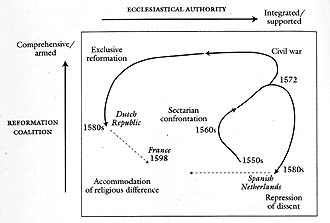
Fig. 7. Regional patterns of religious contestation in the Second Reformation
Meanwhile, the “obedient” territories of northern France and the southern Low Countries veered, once again, in the direction of repression as locally powerful Reformation coalitions either confronted overwhelming military force from outside their communities, without the benefit of equivalent support from their (erstwhile) allies, or, in some cases, were bested at their own game by robust Counter-Reformation coalitions. As these Counter-Reformation regimes were consolidated, however, they too had to confront the practical limits and the enormous social and economic costs of an uncompromising victory. But for the cultural compromise that a formerly Protestant sovereign was able to sell, with the help of nonsectarian rebellions, to both his Catholic and his Protestant subjects, France too might have been divided between an oligarchic Protestant republic and a severely limited Catholic “prince.”
By comparison with the “official” reformations that had characterized the first phase of the Protestant Reformation, the reformations in France and the Dutch Republic may usefully be considered “revolutionary” reformations. By this I do not mean to suggest that there was an ideological propensity among Calvinists to radical revolution or even democracy, as both their opponents and some later-day scholars have suggested; on the contrary, the literature on confessionalization in Germany suggests that Calvinist theology was perfectly compatible with authoritarian politics (cf. Fulbrook 1983; Hsia 1989; Nischan 1994). Rather, by calling these reformations revolutionary I want to point out that while the Reformation coalitions aimed for the religious transformation of whole communities, like the Lutherans and Zwinglians before them, after decades of struggle they were forced to accept the long-term segmentation of cultural authority among alternative religious groups. Thus by the beginning of the seventeenth century it was clear that in neither France nor the Dutch Republic would the reformation be officially enacted for the whole community and that the authoritarian principle of cuius regio eius religio would not be institutionalized. As these contrasting political histories suggest, such a cultural compromise was not the consequence of a particular sort of state formation; indeed, it proved to be variously compatible with both the local consolidation of power that characterized the Dutch Republic (fig. 2a) and the territorial reconstruction of a severely decimated monarchy that occurred in France (fig. 2c). In both cases ordinary people remained important political actors, though in strikingly different ways. By contrast, in the southern Netherlands the political cost of Philip II’s refusal to compromise his claim to cultural sovereignty was his long-term acceptance of the consolidation of elite power—at the immediate expense of well-organized popular political actors (fig. 2b). This is, of course, a settlement clearly reminiscent of the one his father had found it necessary to accept in both Catholic Germany and Castile.
In the end, of course, it is true that ordinary people were neither the principal architects nor the primary beneficiaries of these cultural and political settlements. It is equally true, however, that in a variety of ways ordinary people were actively involved in establishing the basic historical trajectories of two of Europe’s most “successful” regimes in the early modern period as well as one of its more dismal “failures.” Though the traditional, elite-centered histories of the French and Dutch conflicts have tended to separate the combatants into clear winners and losers, from the point of view of ordinary people, the religious wars of the latter part of the sixteenth century were too destructive and their eventual settlements too ambiguous to yield to simple tallies on either side. But having challenged and, in various ways, broken their rulers’ unambiguous claims to both cultural and political sovereignty, ordinary political actors may be said to have entered the early modern era with a new array of political and cultural resources with which to exploit the political and cultural opportunities afforded to them by a whole array of strikingly novel regimes.
Notes
1. This is not to say that the French Protestants had given up all hope of eventually controlling the French Church through the conversion of the king; Greengrass 1994.
2. Quoted in Greengrass 1983a: 376; on the origins of the term “Huguenot” to designate French Protestants, see Gray 1983.
3. See Benedict 1981: 9–94. The term “Reformed” may be preferable to the term “Calvinist,” for despite the obvious influence of Jean Calvin, not only in France but more generally in Europe during the second half of the sixteenth century, we should not exaggerate the unity of the movement or the influence of a single leader; what is more, “Reformed” along with the originally derogatory “Huguenot” is what the actors themselves used.
4. See the map of French Protestantism in Mandrou 1977: 127.
5. On the character and fate of Protestant dissent in Spain, see Kamen 1994.
6. See the map of Netherlandic iconoclasm in Parker 1985: 77.
7. On the limited success of the early Reformation, see the articles collected in Pettegree 1992a, especially the introductory survey by Andrew Pettegree.
8. On both the utility and difficulty in adopting this term, see Schilling 1992 and Scribner 1994.
9. For an early and very suggestive comparison, see Van Gelder 1930; unfortunately, suggestive beginnings like this have rarely spawned systematic international comparisons in the largely “national” historiographies of the Reformation era. See also Van Nierop 1995 for a comparison that is very similar to my own except that it focuses more clearly on elite politics on a grander scale. Woltjer 1994 presents a very useful comparison on the question of popular violence in particular.
10. On the interdependence of these histories, see Parker 1985 and Sutherland 1980.
11. On the connection between humanism, municipal schools, and early interest in reform, see Pettegree 1992b and Nicholls 1992.
12. For a brief survey in English of the history of the French Reformation, see Greengrass 1987; there is no equivalent for the Low Countries, though the collection of pathbreaking essays in Duke 1990 comes close.
13. See Greengrass 1987: 11–12 on eating meat on Friday and stealing the Host (“a surprisingly frequent occurrence”). The first iconoclastic attacks in the Netherlands occurred in Antwerp and Delft in 1525 (Pettegree 1992b: 9); in Paris an image of the Virgin was smashed in 1528 (Nicholls 1992: 125).
14. Altogether at least 1,300, and perhaps as many as four or five times that number, were executed between 1523 and 1566 under the combined reigns of Charles V and Philip II (see Duke 1990: 71, 99). This was clearly the most sustained and destructive persecution of Protestants anywhere in Europe.
15. Reformation historians use the term “confessional” to denote the various strands of theological and ecclesiastical difference (often articulated in formal, propositional “confessions” of faith) in European Christianity during the Reformation and Counter-Reformation era and beyond; the most general confessional tendencies (each with regional variations) are, thus, Catholic, Lutheran, [Swiss] Reformed (i.e., Zwinglian or Calvinist), and Anabaptist, each with its own increasingly distinctive confessions.
16. Though the Dutch exile church in London was very promising when it was established in 1550, it was quickly closed down following the death of its patron, Edward VI, in 1553 (see Pettegree 1986).
17. See Audisio 1984 and Cameron 1984. Unfortunately, most historians have considered these events as largely peripheral to the French Reformation considered on a “national” scale.
18. On the limited growth of Reformed Protestantism in the countryside of Languedoc, see Le Roy Ladurie 1979 and Molinier 1984.
19. The largest gathering appears to have been approximately 25,000 at Laer on July 14; meetings of 20,000 were reported at Ghent and more than 10,000 at Valenciennes and Tournai. See Crew 1979; Pettegree 1992b:chap. 5.
20. See the map of France prior to the civil wars in Salmon 1975: 28.
21. For the better part of five years, the peasants of coastal Flanders staged the most sustained rural insurrection of the otherwise rebellious fourteenth century, which not only demonstrated the revolutionary potential of rural communities but also modeled a remarkably successful political alternative to seigneurial domination of the countryside. See Te Brake 1993.
22. This heroic, if unsuccessful, defiance of Charles V’s various attempts to consolidate his control in the Low Countries resulted in the complete revocation of Ghent’s traditional liberties as a chartered city, but not before Charles had traveled from Spain to preside personally over the symbolic humiliation of the whole community. See the vivid contemporary account of both the revolt and the city’s humiliation in Rowen 1972: 16–25.
23. And more generally in Europe as well. The Comunero Revolt in Spain, for example, may be seen as a classic example of Blockmans’s Great Tradition, but there, too, urban resistance to the monarch was predicated on a pattern of urban riots that would seem to be evidence of the Little Tradition of popular challenges to urban oligarchs; see chapter 2 above.
24. By August 23 Margaret had conceded freedom of worship for Protestants where preaching had already taken place (Pettegree 1992b: 132).
25. See, for example, the very impressive and useful chronologies in Salmon 1975: 333–342 and Crouzet 1990: 1: 23–41; for a recent narrative account, see Holt 1995.
26. Not only was the most prominent Huguenot leadership summarily executed, but some 3,000 Huguenots in Paris and 8,000 more elsewhere were killed in the space of just a few days. See Benedict 1978; Diefendorf 1991.
27. After earlier military failures, this modest success gave the Beggars a base from which to “liberate” large parts of Holland and Zeeland. See Parker 1985.
28. For brief introductions, in English, to these very complex histories (and historiographies), see Knecht 1989 and Holt 1995 on the French civil wars and Limm 1989 on the Dutch Revolt.
29. This account of events in Toulouse is based on Greengrass 1983a, which includes a map of the Protestant and Catholic strongholds within the city; cf. Davies 1979.
30. Greengrass 1983a notes that the failure of anticipated outside support and a severe shortage of food as well as military reversals quickly demoralized the Protestant forces.
31. Though these municipal conflicts will certainly not pass muster as “great” revolutions, they do pass the test of “revolutionary situations,” which is predicated on the condition of multiple sovereignty and highlights exclusive claims by challengers and a significant level of popular support for those claims as proximate causes. Cf. Tilly 1978, 1993.
32. In the successive peace settlements of the civil wars in which the monarchy allowed limited freedom of worship to Huguenots, Paris was invariably excluded from the list of places where Calvinist worship was formally authorized; see Salmon 1975. On the divisions between Huguenots and Catholics and the bitter fate of evangelical Protestantism in Paris, see Diefendorf 1991 who emphasizes the critical importance of popular mobilization on numerous occasions between 1562 and 1572.
33. The following account of events in La Rochelle is based on Meyer 1977; see also Meyer 1984 and Trocmé 1976.
34. On the ebb and flow of the rebels’ military campaigns through the end of the century, see the maps in Parker 1985: 210–212, 229.
35. Following the immediate failure of Spanish repression due to mutiny and bankruptcy, the Pacification of Ghent (1576) recognized the Reformed church as the official church in Holland and Zeeland; following the failure, in turn, of the Pacification (which included all the Low Countries provinces), the Union of Utrecht, negotiated exclusively by the northern rebel provinces and the city of Ghent in 1579, gave the Reformed church the status of a “public” church but prohibited the persecution of religious dissenters. Consequently, not only other Protestant confessional groups—especially Lutherans and Mennonites—but also Catholics continued to exist as worshiping communities albeit under occasionally severe limitations. See especially Spaans 1989 for an analysis of this confessional interaction within a single urban community (Haarlem).
36. Although they did not formally abjure their “sovereign” until 1581 (and they did not give up their search for a replacement until the end of the decade), the provinces of Holland and Zeeland had effectively become independent of the Brussels government in 1572, and under their tutelage the other signatories of the Union of Utrecht—formally known as the United Provinces of the Northern Netherlands—had begun to create the conditions for fully independent self-government after 1579 (Te Brake 1992). Likewise, the “United Provinces” of southern France established a self-governing confederation after the debacle of the Saint Bartholomew’s Day massacre. See Garrisson 1980; Parker 1985; Heller 1991:chap. 3.
37. Under this ill-fated agreement, the elite leadership of the amalgamated provinces, meeting extralegally as the Estates General, had extracted important political concessions from the incoming governor-general, Don Juan, in return for the restoration of Catholicism everywhere except in the provinces of Holland and Zeeland.
38. Robert Wuthnow (1989) uses the term “figural action” to denote the ways in which culturally critical discourses go beyond simple criticism of the status quo to suggest concrete and often symbolic actions by which ordinary people might mark themselves as part of a larger movement. Though Wuthnow uses this discursive element to explain the nonrevolutionary “success” of the Reformation (as well as the Enlightenment and European socialism), it may be just as useful in describing the discursive qualities of “successful” cultural innovations more generally, including the Counter-Reformation (cf. Delumeau 1977).
39. For a detailed analysis of this process in the city of Paris up to its deadly culmination in the Saint Bartholomew’s Day massacre in 1572, see Diefendorf 1991.
40. The league may be considered successful to the extent that it forced the Huguenot claimant to the French throne, Henry IV, to abjure his Protestantism in 1593 in order to establish his authority in the whole of the kingdom. This partial victory helped enormously to depoliticize and demobilize the Counter-Reformation coalitions that were implacably opposed to a “heretic” king; by the same token it undercut the local political support of those elites who had used the league to establish their independence from the central government.
41. There was, for example, but one bishopric (Utrecht) in all of the northern provinces, and by contrast with France (with some 80 bishoprics) and even perhaps the southern Netherlands, where in many places ecclesiastical and political elites were often linked by family networks, the ecclesiastical establishment in the north was very much marginal to and in extreme cases estranged from those who occupied positions of local and provincial power. See Israel 1995.
42. Cf. Bercé 1990, Salmon 1975, and Heller 1991 who differ relatively little in their sense of the essential chronology of what happened in the course of these revolts but disagree profoundly in their understanding of their political significance. Bercé sees them as vertically integrated coalitions against the central state whereas Heller insists on their antiaristocratic thrust.
43. I borrow the concept of modularity from Sidney Tarrow (1994) who (unfortunately from my perspective as an early modern historian) insists that it is an exclusive property of the repertoires of “modern” social movements. On the contrary, the evidence from sixteenth-century Europe suggests that both the modularity of popular political practice and the social movements of which modularity is said to be characteristic appear to have a longer and more complicated history than the current literature admits.
44. The political-structural comparison between an empire and a collection of (more or less contiguous) territories under a single overlord (albeit with various sovereignties) is especially telling in this case, because it was the same Charles of Habsburg who was emperor in Germany and territorial lord in the Low Countries until his abdication in 1555; presumably his personal determination to stem the tide of heresy did not vary and thus cannot be considered a salient factor in the very different histories of religious dissent in the empire and the Low Countries.
45. In fact, Judith Meyer (1977, 1984) argues that La Rochelle was more like an imperial free city than a typical French city in this respect.
46. In fact, from Natalie Zemon Davis (1975:esp. chap. 6) to Denis Crouzet (1990), research that focuses specifically on the problem of violence has been among the most fertile and suggestive work on the French Reformation. The same might be said less emphatically for the work on Dutch iconoclasm (see Duke 1990:esp. chap. 6). The difficulty, as I see it, is that by focusing on the ritualized and ideological aspects of many acts of violence, abstracted as a general problem outside the context of specific events whether violent or nonviolent, this research cannot address the obvious question of its variations in time and place. See also Woltjer 1994, which highlights a number of structural and institutional factors that comport well with the more dynamic argument I am making here.
47. The formal accommodation of religious diversity in France was certainly exceptional but not unique: The kingdom of Poland (and later the combined kingdom of Poland and Lithuania), which had become known as a “refuge of heretics,” formally recognized the fact of religious diversity under the Warsaw Confederation of 1573 (see Lecler 1960). It is unclear, however, how much popular support Protestantism involved in this “republic of nobles” (Fedorowicz 1982). See also Christin 1997 on France and Germany.
48. I do not mean to suggest that the political status quo was frozen in place in the southern Netherlands; rather, it is clear that henceforth development was channeled within the narrow confines of aristocratic and provincial “privileges.” Cf. De Schepper 1987.