
7. Mughal Culture and Its Diffusion
There is no heavier burden on the neck of a Muslim than the burden of being true to the salt.
| • | • | • |
The Political Basis of Mughal Culture in Bengal
Miniature paintings of the seventeenth-century Mughal court typically depict rows of nobles neatly arranged and ranked by status, their eyes riveted on the raised figure of the seated emperor, while the latter, his head enveloped in a luminous halo, gazes benevolently over the gathered flock (see fig. 18). In our efforts to reconstruct the content of Mughal culture, it is well to consider the model of order and hierarchy evoked in such paintings. For Mughal culture as it evolved over the course of the sixteenth century was above all a courtly and imperial culture, one that, in the manner of those miniature paintings, focused on the person and charisma of the emperor.
Whereas the early Delhi sultans tended to rule as foreigners over a subjugated Indian population, the Mughals, beginning with Akbar (1556–1605), sought to knit North India’s many religious and ethnic communities into a single political system. This policy, which crystallized around 1580 in the wake of the emperor’s abortive experiment in posing as “king of Islam,”[1] inclined the court to an extraordinarily accommodative, even syncretic style of politics.[2] Elaborated by Akbar’s principal ideologue, Abu’l-fazl, the model of imperial authority projected from the Mughal court drew on both Indian and Perso-Islamic notions of kingship. It also drew on a Sasanian Persian model of imperial authority, according to which virtue and order radiated outward and downward from an all-benevolent and semi-divine emperor, supported politically and ideologically by a hierarchically graded corps of soldiers-administrators, the manṣabdārs.[3] While patronizing Islamic institutions as was expected of any premodern Muslim sovereign, Akbar presented himself to his subjects in the radiant glow of an Indian maharaja, appearing in public audience (darbār) seated on a raised platform (jharokhā) in the manner in which traditional Indian kings or images of Hindu deities were presented for public viewing (darśan). As a result, when Indian courtiers gazed upon the seated emperor, they could share a certain double vision, seeing either a pious Muslim sultan or a traditional maharaja tinged with divine power, or both simultaneously.
Splendidly articulated at imperial courts in Delhi, Agra, or Lahore, this hybrid model of political authority was duplicated in miniaturized form in Mughal provinces. In Dhaka, Islam Khan built a scaled-down replica of Jahangir’s imperial court, complete with a jharokhā. Located in the inner garden adjoining the governor’s palace, his jharokhā consisted of a window and enclosed space built on a platform elevated some twelve feet above the ground. Behind the window and raised above those in the garden below, the seated governor received those admitted for private or public audience, or darbār.[4] As a stage for enacting political rituals, the jharokhā thus expressed themes central to Mughal political culture: the subordination of all state servants (i.e., both imperial appointees and Bengali zamīndārs assimilated as imperial jāgīrdārs) to the governor, the corporate solidarity of the ruling class, and the precise position of each member relative to others in the graded hierarchy of state service. Mimicking the court of Jahangir, during formal review, officers would stand before the governor’s jharokhā according to rank, the highest officers situated closest to the jharokhā and the lowest officers furthest from it.[5]
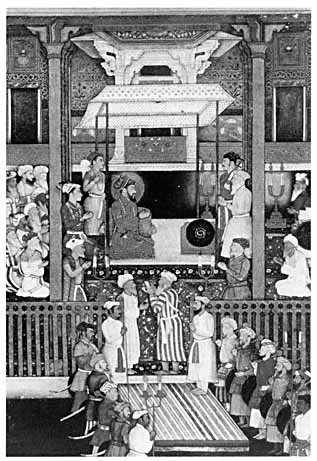
Fig. 18. “Shah Jahan Honors Religious Assembly.” From Stuart Cary Welch, Imperial Mughal Painting (New York: George Braziller, 1978), 102, pl. 31. Reprinted by permission of George Braziller, Inc.
Mughal political culture was also expressed in pervasive categories of thought. From the emperor down to the lowest servant, parties were bound together by mutual obligations articulated through the ideology of “salt” (namak), a semantically rich term expressing notions of protection and dependency that operated simultaneously at social, political, and superhuman levels. Deeply embedded in the culture of the Middle East, this ideology can be traced to the ancient Mesopotamian world, where the Akkadian phrase meaning “to eat the salt of (a person)” expressed the act of making a covenant with a person or of permitting a reconciliation with another individual.[6] The ancient Hebrews considered that they were tied to God by a “covenant of salt,”[7] and that such a covenant legitimized and underwrote earthly kingship.[8] The ancient Persians, too, used the symbolism of salt in the sense of concretizing political covenants—in their case between the emperor and his corps of servants. Officials serving Artaxerxes I (465–425 B.C.) felt obliged to warn their sovereign of possible threats to the collection of imperial revenues, noting that “we eat the salt of the palace and it is not fitting for us to witness the king’s dishonor.”[9] Given these deep historical roots, it is hardly surprising that salt appeared as a metaphor for sociopolitical loyalty and dependence in high Perso-Islamic culture. We find the term used in this sense in the poetry of the Khurasani epic poet Firdausi (d. 1020).[10] From Khurasan, Persianized Turks brought the ideology of salt with them to North India, where in the early fourteenth century it appeared in the poetry of Amir Khusrau (d. 1325).[11]
In Mughal Bengal, the behavior of officers and their subordinates illustrates how thoroughly the ideology of salt had penetrated the ruling class. On one occasion in the early seventeenth century, two rival officers conducted a quarrel through messengers who were dependents of one of these two men. When the messengers were in the company of the other officer, the latter pointed out that their patron had already lost his honor and asked the two why they continued to ally themselves with him. Replied these lowly servants, “We know that our honour has also been lost and will (continue to) be lost; but what can we do? We are under the obligation of his salt.”[12] Here salt is used to convey its most ordinary, metaphorical sense: patrons gave protection to clients, who in turn gave loyalty to patrons.[13]
Within the corps of Mughal officers, salt was understood as a substance either ceremonially or metaphorically accepted and eaten at the hands of the emperor, exactly as in the case of the court of the Persian emperor Artaxerxes I in the fifth century B.C. Binding members of the imperial corps horizontally to one another and vertically to the emperor, the ideology of salt gave expression to corporate solidarity, especially at times when the group felt itself mortally endangered. In 1615, during an imperial invasion of Assam, for example, Mughal troops once found themselves totally surrounded by the army of the Ahom raja. On this occasion the commanding officer and his comrades wrapped their heads in shrouds and, preparing for death rather than surrender, cried out to the Assamese: “As we have taken the salt of Jahangir, we consider martyrdom to be our blessings for both the worlds.”[14]
This usage of the salt metaphor recalls F. W. Buckler’s discussion, in a 1926 essay, of the importance of “rituals of incorporation” in the running of the Mughal political system. The emperor, he wrote,
Within this conceptual framework, ingesting the salt of the emperor communicates the symbolic sharing in the body of the emperor, analogous to the Christian ritual of Communion, in which the believer ritually partakes of and thus shares in the body of Christ.stands for a system of rule of which he is the incarnation, incorporating into his own body, by means of certain symbolical acts, the persons of those who share his rule. They are regarded as being parts of his body, membra corporis regis, and in their district or sphere of activity, they are the King himself—not servants of the King but “friends” or members of the King, just as the eye is the man in the function of sight, and the ear is the realm of hearing.[15]
Finally, Muslims in the imperial corps regarded salt as a substance binding them both to their emperor and to their religion, thereby combining the ancient Persian sense of the “salt of the palace” with the ancient Hebrew sense of God’s “covenant of salt.” In 1612, after defeating the last Afghan chieftain in Bengal to resist Mughal authority, Islam Khan’s men faced the question of how to deal with their defeated Muslim foes. “It was decided,” wrote Mirza Nathan, “to extend hospitality to all the Afghans in the first halting place and to distribute to them the salt of the emperor according to their status: because there was no heavier burden on the neck of a Muslim than the burden of being true to the salt.”[16] Here again clients were bound to their patron—now the emperor himself—by receiving his “salt” in what appears to have been a formal political ritual in which actual salt was distributed and consumed. But in the statement that there was “no heavier burden on the neck of a Muslim than the burden of being true to the salt,” the ideology of salt is transposed to a religious context in which the patron may be understood as God, imposing obligations of loyalty on his community of believers just as the emperor imposed such obligations on his subjects, or as lesser Mughal officers did on their own clients.
Another Mughal ritual of incorporation was the conferral of the imperial cloak (khil‘at) upon a subject or former enemy. Authority, Buckler observes, “was exercised in virtue of this incorporation into the royal person by means of succession established by physical contact through royal clothing. Refusal to acknowledge this transmission of authority, by refusing the robe of honour was an act of independence, that is of treason to the King.”[17] This sort of ritual was dramatically enacted at the dawn of Mughal rule in Bengal, when Daud Karrani submitted to imperial forces in April 1575. Before prostrating himself in the direction of Akbar’s capital at Fatehpur Sikri, the defeated Bengali sultan donned a Mughal sword and an embroidered belt in addition to a cloak of Akbar. All of this symbolized Daud’s incorporation into Akbar’s person as well as Akbar’s empire.
To be sure, as political symbols the jharokhā, salt, and the khil‘at were already present in pre-Mughal Bengal. Both Chinese and Portuguese travelers to the Bengal capital had described raised platforms on which the sultan sat and reviewed his officials in a manner not unlike Governor Islam Khan Chishti in his Dhaka darbār. And we have noted the political usage of salt in the poetry of Firdausi and Amir Khusrau. Presumably, the early governors and sultans of Bengal carried into the delta the same notions of statecraft and political legitimacy that had informed their Persianized Turkish forebears in Khurasan and North India, including the ideology of salt. Finally, the political use of the royal cloak, or khil‘at, was also known to the Bengal sultans. In the course of an interview with a Portuguese mission in 1521, Sultan Nasir al-Din Nusrat Shah embraced the European captain, laughed, and promised him favors. “Then,” narrated the European interpreter, “he turned to me and ordered that I be given a robe that he had worn.”[18]
But in other respects Mughal political culture in Bengal can be sharply distinguished from that of the sultanate. Down to the end of the sixteenth century, the Mughal ruling class had been predominantly non-Indian. In 1595, 61 percent of Akbar’s nobility were ethnic Iranians or Turks, of whom the vast majority had migrated directly from Iran or Central Asia. During the seventeenth century, however, the empire’s foreign character steadily diminished. By the end of that century, just over a third of the nobility were of known Iranian or Turkish ancestry, and fewer than a quarter of these were foreign-born immigrants.[19] Already by Jahangir’s reign there had emerged in the imperial corps an important and growing section of Muslims who, while claiming a paternal ancestry beyond the Khyber, had been born in India of Indian mothers. These persons not only spoke a form of vernacular Hindi-Urdu as their “mother tongue”; they also carried with them deeply held assumptions about life and death that for several centuries had been nurtured in North India within the matrix of Rajput culture.
Thus, for example, when the Mughal governor Qasim Khan faced imminent defeat in a bitterly fought battle near Dhaka in 1617, he personally beheaded his chief wives, after which many of his comrades similarly performed the rites of murdering their own families in one another’s presence.[20] The practice of jūhar, or the destruction of women and children as an alternative to suffering them to be captured by enemy forces, was a Rajput rite assimilated into imperial culture through Akbar’s policy of incorporating Rajputs into the Mughal corps and the inclusion of Rajput women in the Mughal harem. Now it was carried into Bengal. Similarly, too, Mughal officials in Bengal preferred Ayurvedic, or native Indian, medical theory over the Yunani, or Greek (“Yunani” is a corruption of “Ionian”), medical system inherited by classical Islamic civilization. The ailing Islam Khan, himself an Indian Muslim, requested an Indian physician when he neared death. There not being one available, the governor only reluctantly accepted a Muslim ḥakīm, who was later blamed for having administered the wrong treatment and unnecessarily killing him.[21] When the governor of Bihar suffered from an illness that paralyzed half his body, the Emperor Jahangir sent him two Indian physicians from amongst his personal staff.[22] And when illness seized Mirza Nathan, the officer’s advisors sent for a practitioner of Ayurvedic medicine (kabirāj) who successfully treated him by consulting the appropriate astrological signs and having him drink a poisonous drug mixed with lemon juice and ginger.[23] Such reliance on Indian systems of medical therapy in the face of fatal illness and on Rajput customs when faced with immanent annihilation in battle—both of them life-threatening situations—suggests how thoroughly Indian values had penetrated Mughal culture by the early seventeenth century.
| • | • | • |
The Place of Bengal in Mughal Culture
Despite the extraordinary ways in which imperial culture had accommodated itself to North India, with respect to distant Bengal, isolated for centuries from the north, the Mughals saw themselves as distinctly alien. In part, this was because of the delta’s wet monsoon climate, of which North Indian officers posted in Bengal frequently complained.[24] Too, the Mughal policy of frequently transferring officials around the empire inclined imperial servants to regard the delta more as a temporary assignment to be endured than as a permanent, adopted home. Most important, perhaps, were the sheer numbers of new immigrants who inundated the delta as a result of Bengal’s political reintegration with North India. These included soldiers recruited from the north, Marwari merchants who accompanied and helped finance their Mughal patrons, swarms of petty clerks attached to Mughal officers, and the many artisans who supplied and equipped the Mughal military establishment. In effect, Bengal had become a colony for outsiders, effectively reversing the long-term pre-Mughal trend whereby a Muslim ruling class had progressively accommodated itself to the Bengali environment owing to generations of intermarriage with Bengali women and centuries of isolation from the north.
Both the literature and the architecture of the period reveal the new ruling class’s profoundly foreign—that is, non-Bengali—character. In 1626 an Afghan, Mahmud Balkhi, journeyed to Rajmahal and wrote of encountering people whose family origins lay in Balkh, Bukhara, Khurasan, Iraq, Baghdad, Anatolia, Syria, and North India.[25] These would have been remnants of the predominantly Sunni ashrāf of Akbar’s day, when Rajmahal was the provincial capital. Some years later the poet-official Muhammad Sadiq Isfahani, who lived in Dhaka from 1629 to his death in 1650, kept a diary, the ṣubḥ-i ṣādiq, in which he mentions the dozens of artists, poets, generals, and administrators he had come to know in that city. Most of these men were Shi‘as whose ancestors had migrated from distant centers of Persian culture—for example, Mashhad, Teheran, Ardistan, Isfahan, Mazandaran, Qazvin, Taliqan, Shiraz, Tabriz, Herat, Bukhara, or Gilan.[26] This suggests that between the reign of Akbar (1556–1605), when Rajmahal was capital, and that of Shah Jahan (1628–58), when Dhaka was capital, an increasing proportion of Bengal’s urban ashrāf, although born in North India, claimed Iranian ancestry.[27]
The most striking statement of the imperial attitude toward Bengal was made by Akbar’s chief advisor, Abu’l-fazl. “The country of Bengal,” he wrote in 1579, shortly after imperial armies had routed the capital’s Afghan occupants, “is a land where, owing to the climate’s favouring the base, the dust of dissension is always rising. From the wickedness of men families have decayed, and dominions [have been] ruined. Hence in old writings it was called Bulghākkhāna (house of turbulence).”[28] Here, in this “Mughal colonial discourse,” we find a remarkable theory of political devolution: an enervating climate corrupts men, and corrupted men ruin sovereign domains, thereby implicitly preparing the way for conquest by stronger, uncorrupted outsiders. In linking Bengal’s climate with the debased behavior of people exposed to it, Abu’l-fazl’s theory of sociopolitical decay anticipated by several centuries the similar views adopted by British colonial officials.[29]
Even immigrant holy men harbored negative attitudes about the delta. Shah Ni‘mat Allah Firuzpuri (d. 1669), an ashrāf shaikh from the Punjab who settled down in Malatipur near Malda early in the reign of Shah Jahan, quickly grew tired (malūl) of the region. Mincing no words, he revealed his thoughts in the following clumsy but blunt quatrain:
While harboring such attitudes toward his adopted home, the shaikh nonetheless curried favor with the province’s ruling class, whose life-style he and his descendants adopted, and from whom he accepted substantial lands in personal endowments (madad-i ma‘āsh).[31]
Bengal is a ruined and doleful land; Go offer the prayers to the dead, do not delay. Neither on land nor water is there rest; It is either the tiger’s jaws, or the crocodile’s gullet.[30]
The Mughals’ feeling of alienation from the land was accompanied by a sense of superiority to or condescension toward its people. In matters of language, dress, and diet, newly arrived officials experienced great differences between Bengal and the culture of North India. The delta’s diet of fish and rice, for example, disagreed with many immigrants brought up on wheat and meat, basic to the diet in Punjab. Written in 1786, the Riyāẓal-Salāṭīn faithfully reflects the ashrāf perspective regarding Bengali culture, and reads almost like a colonial British manual on how to survive “amongst the natives”:
Mughal officers also associated Bengalis with fishermen, whom they openly despised. Around 1620 two imperial commanders, aiming to belittle the martial accomplishments of one of their colleagues, taunted the latter with the words: “Which of the rebels have you defeated except a band of fishermen who raised a stockade at Ghalwapara?” In reply, the other observed that even the Mughals’ most formidable adversaries in Bengal, ‘Isa Khan and Musa Khan, had been fishermen. “Where shall I find a Dawud son of Sulayman Karrani to fight with, in order to please you?” he asked rhetorically, and with some annoyance, adding that it was his duty as a Mughal officer to subdue all imperial enemies in Bengal, “whether they are Machwas [fishermen] or Mughals or Afghans.”[33] In this view the only truly worthy opponents of the Mughal army were state rebels or Afghans like the Karranis; Bengalis, stereotyped as fishermen, were categorized as less worthy adversaries.And the food of the natives of that kingdom, from the high to the low, are fish, rice, mustard oil and curd and fruits and sweetmeats. They also eat plenty of red chilly and salt. In some parts of this country, salt is scarce. The natives of this country are of shabby tastes, shabby habits and shabby modes of dress. They do not eat breads of wheat and barley at all. Meat of goats and fowls and clarified butter do not agree with their system[s].[32]
Mughal officials thus distinguished themselves from Bengalis not only as tax-receivers as opposed to taxpayers but as North Indian fighting men as opposed to docile fishermen. On one occasion Islam Khan’s chief naval officer, Ihtimam Khan, expressed resentment that the governor had once treated him and his son like “natives.”[34] Since the Persian term used here, ahl-i Hind, means simply “Indian,” one might expect to find it used only by nobles who had immigrated from beyond India. But Ihtimam Khan was himself an India-born Muslim from the Punjab;[35] hence his use of the term in a pejorative sense suggests he had acquired ashrāf attitudes through his service with the Mughals. That ashrāf Muslims occupied a social category distinct from the “natives” was also noted by the Portuguese friar Sebastião Manrique, who in 1629 described Bengal’s population as composed of three groups—“the Portuguese, the Moors, and the natives of the country.”[36] In this social classification Muslims were, by definition, foreigners to the land. From the perspective of the ashrāf Muslims whom Manrique met, it was conceptually impossible for “natives” also to be “Moors”—that is, that there could be Bengali Muslims.
The Mughals’ foreign character is also seen in their monuments. The earliest surviving architectural record of the new order is the Kherua mosque, built in 1582 by members of the Qaqshal clan in Sherpur, southern Bogra. Although the Qaqshals had participated in the Mughal conquest of 1574, six years later they spearheaded the manṣabdārs’ revolt against Akbar’s authority, in the midst of which they patronized the construction of this monument. But the Qaqshals’ alienation from North India was political, not cultural. Unlike the Afghans before them, they had not been in the province long enough to absorb the local culture fully, which perhaps explains the mosque’s somewhat hybrid nature. Its brick exterior, engaged corner turrets, and curved cornice were all staple indices of the native Bengali mosque as it had evolved for over a century under the patronage of Bengal sultans. On the other hand its ground plan—a single-aisled rectangle divided into three bays—had been popular in the Delhi region since the fifteenth century; beginning with this mosque, it would become a characteristic feature of the Mughal style in Bengal. The building’s inscription, moreover, was in Persian, the official language of the Mughals, whereas most pre-Mughal Muslim inscriptions in Bengal had been in Arabic. Thus the mosque aptly reflects the culturally ambiguous position of its patrons, with one foot in Bengal, the other still in Delhi.
More emphatically North Indian, and hence from a Bengali perspective more foreign, is the congregational mosque of Rajmahal. Built during the governorship of Raja Man Singh (1594–1605) as the principal mosque of Akbar’s provincial capital, this imposing structure (252 × 212 feet) was an architectural assertion of the Mughals’ claim to the province. In no other provincial capital during this period was such a large mosque built.[37] In it we find Akbar’s characteristic architectural signatures as already articulated in the imperial capital at Fatehpur Sikri (c. 1570): a high monumental gateway, a single-aisle plan, ornamentation on the façade, battlements around the exterior, and a division of the bays into two stories, each containing chambers.[38]
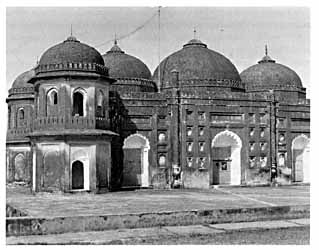
Fig. 19. Satgumbad Mosque, Dhaka (ca. 1664–76)
It was in Dhaka, however, that the imperial style was most lavishly indulged in. Overturning a Bengali architectural tradition patronized by centuries of Muslim rulers, Mughal rulers raised buildings here that were virtual transplants from the North Indian heartland. Typical was the Bara Katra (1644), a huge hostelry that once contained chambers, shops, and an imposing multistoried southern gate with an octagonal central chamber.[39] Although the Bara Katra is now ruined, a number of splendid mosques from the period have survived, in particular the Satgumbad mosque (ca. 1664–76) and the mosques of Haji Khwaja Shahbaz (1679) and Khan Muhammad Mirza (1704). With their battlements, cusped entrance arches, increased articulation of exterior and interior surfaces, and, especially in the Satgumbad mosque, projecting corner turrets with pavilions, these monuments firmly established in Bengal the aesthetic vision of Mughal imperialism (see fig. 19).[40] That vision reached its acme in the handsome ensemble of garden and monuments in Dhaka’s Lalbagh Fort (fig. 20). Included in this complex are a mosque, a tomb, an audience hall (Diwan-i Khas), a bath, a tank, and a walled enclosure with gates.[41] Standing within Lalbagh one readily recalls the great palace-garden complexes of the imperial heartland—at Lahore, Delhi, and Agra—and realizes that this, too, could only have been conceived and built by outsiders to Bengal. No element of the complex is indigenous to the delta.
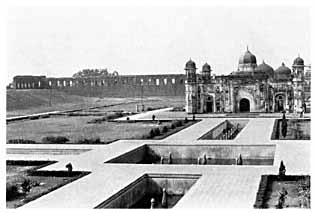
Fig. 20. Lalbagh Fort, Dhaka. Foreground: Fountains and tomb of Bibi Pari (late seventeenth century). Background: Two domes of the Lalbagh Fort Mosque (1649)
The concentration of Mughal power in Dhaka also had the effect of driving remnants of Bengal’s pre-Mughal Muslim political tradition into the hinterland. One sees this most clearly in the Atiya mosque in Mymensingh District (fig. 21). Built in 1609 by Afghan patrons, this mosque, with its complex terra-cotta façade, its ringed corner towers, and its curved cornice, is a highly evolved elaboration of the sultanate style, now rusticated to the interior. Architecturally, it would appear to have been the last gasp of the old order, soon to be submerged under the Mughal tide. Yet one should not exaggerate the notion of a monolithic Mughal architectural style expanding inexorably from its North Indian heartland as new provinces were annexed. Even as the old, Bengali style of mosque was rusticated into the hinterland after the Mughal intrusion into the delta, certain elements of the indigenous style—especially the sharply curved cornice—were absorbed into the Mughal tradition and subsequently surfaced in the imperial capitals of Delhi and Lahore. Thus the evolution of the Mughal architectural tradition shows a certain double movement. Reflecting the imposition of central authority on the periphery, a new style moved outward from the center to the provinces; yet features associated with the provinces were simultaneously appropriated by the imperial center and absorbed into a new, composite style, reflecting the assimilation of theperiphery into the center.[42] This model of cultural expansion, assimilation, and feedback—here reflected in architecture—closely paralleled the growth of Islam as a religious system in Bengal, a theme to which we shall return in later chapters.
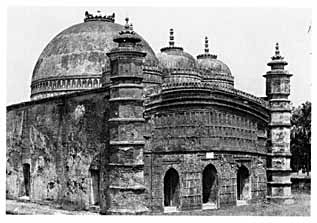
Fig. 21. Atiya Mosque, Mymensingh District (1609).
| • | • | • |
The Place of Islam in Mughal Culture
As regards their religious culture, Bengal’s Mughal ashrāf were distinctive in at least three respects—their special link with the pan-Indian Chishti order, their conceptual separation of religion and state, and, as a corollary to this, their disinclination to convert Bengalis to Islam. Since the Tughluq period, the Chishti order of Sufism had enjoyed a special status among Delhi’s rulers, who lavishly patronized the descendants of the great Chishti shaikhs with magnificent tombs and considerable tax-free land. Mirza Nathan counted himself a “faithful disciple” (murīd-i bandagī) of Shaikh Farid al-Din Ganj-i Shakar (d. 1265), perhaps because his ancestors had come from the Punjab, where the cult of that saint enjoyed special prominence.[43] And Governor Islam Khan, the man most responsible for consolidating Mughal rule in Bengal, was the grandson of Akbar’s chief spiritual guide, Shaikh Salim Chishti,[44] which explains why the governor once referred to Sufism as “our ancestral profession.”[45]
The extent to which Sufi piety was integrated with the imperial vocation is aptly illustrated in vignettes from the career of Mirza Nathan. In early 1612, Islam Khan, having earlier promised Nathan a month’s leave of absence, subsequently ordered the junior officer to assist in repelling an Arakanese invasion of southern Bengal. The Mirza vigorously protested this order by shaving his head and donning the ragged garb of the faqīr, that is, one who abandons the world by embracing a life of poverty (fuqr). What is more, 4,700 of his fighting men, plus a large number of camp followers (bāzārīān), did the same. Some, the officer wrote, acted from fear of losing their rations if they did not mimic their patron’s behavior, and others did so “out of their simple and pure devotion for him.”[46] The governor’s response to all of this is equally revealing. “Alright,” he replied through messengers,
On another occasion, exasperated over political intrigues during one of his military campaigns in northern Bengal, Nathan again referred to the Sufi model of renunciation, writing that he “derived consolation in his trouble by recounting what happened to Mansur Hallaj,” a reference to the classic martyr in the Islamic mystical tradition.[48] And in 1624, when his loyalties were irreconcilably divided between Emperor Jahangir and his rebel son, the future Shah Jahan, and having betrayed both, Nathan ultimately chose the drastic step of deserting imperial service altogether. Feeling as though he were “thrown into the well of calamity,” he repaired on foot, and nearly alone, directly to the shrine of Mir Saiyid Ahmad al-Husaini in Malatipur, where in confusion and despair he fell before the successor to that saint, kissing his feet.[49]No body has to say anything about any mode of life one selects to lead. But in taking to the life of a Faqir, which is the profession of our ancestors, it will be graceful of you to come to us to receive our benediction and then to engage yourself in that profession.[47]
It would seem, then, that Sufism, or more precisely the style of piety informed by institutionalized world-rejection and the cult of saints, was very much built into the ethos of Mughal service in Bengal. Just as a Mandarin official in contemporary Ming China could be a Confucian at his desk but a Taoist when at home or retired, in Mughal Bengal the activities of the soldier-administrator and the world-renouncing mystic/ascetic were similarly integrated. Tamed through routinized saint cults and the close historical ties between the Chishti order and the Mughal ruling house (and before that the sultans of Pandua and Gaur), Sufism’s world-renouncing vision formed, not an antithesis to the worldly business of running an empire, but a complement to it.
Secondly, the ruling class in Bengal maintained a clear separation between matters of religion and matters of state. We see this in the functional specialization of Mughal cities. As the provincial capital and administrative center, Dhaka was devoted to the secular concerns of revenue collection, politics, and military reviews. Even its most imposing mosques, such as the Satgumbad mosque (ca. 1664–76), bear the stuccoed stamp of their North Indian patrons and seem intended at least as much to display imperial power as to inspire piety. The city was also devoted to trade and money-making. Fray Manrique noted that Dhaka’s merchants had raised the city “to an eminence of wealth which is actually stupefying.”[50]
By contrast, the ancient capitals of Pandua and Gaur were denied any political significance under the Mughals and emerged instead as Islamic sacred centers. One-third of all extant Mughal inscriptions down to 1760 are found on sacred sites in these two cities alone.[51] Gaur’s sanctity rested primarily on the Qadam Rasul, a reliquary established by Sultan ‘Ala al-Din Husain Shah in 1503, containing a dais and black marble stone purporting to bear the impression of the Prophet’s footprint.[52] But the institutions most lavishly patronized by the Mughals were the older and more important tomb complexes in nearby Pandua—the shrines of Shaikh ‘Ala al-Haq (d. 1398) and Shaikh Nur Qutb-i ‘Alam (d. 1459), Bengal’s most prominent Chishti saints. The latter had been the object of state patronage ever since the saint’s death in the mid fifteenth century, and by the end of that century it had become the focus of annual pilgrimages by Sultan ‘Ala al-Din Husain Shah (r. 1493–1519).[53] A century later, in 1609, Mirza Nathan made a three-day pilgrimage to the shrine, having vowed to do so should his father recover from an illness.[54] And on the occasion of his own marriage, he made a pilgrimage to Gaur’s Qadam Rasul and the shrine of Shaikh ‘Ala al-Haq in Pandua.[55]
A third feature of ashrāf religious sentiment was a hands-off policy toward non-Muslim religions. Unlike the contemporary Ottoman Empire, where Christian military recruits were converted to Islam as part of their assimilation into the ruling class, in Bengal, as in Mughal India generally, it was imperial symbols such as salt, not Islam, that conferred corporate identity on the officer corps. Moreover, bonds of loyalty among Mughal officers not only ran across community lines but persisted over several generations. When Mirza Nathan donned the garb of the Sufi by way of lodging a personal protest against Governor Islam Khan, several Hindu officers obstinately stood by Nathan and even suffered imprisonment and flogging for showing their loyalty to him. When brought before the governor to explain their behavior, one of the Hindus, Baikuntha Das, was interrogated with the words, “ ‘You are a Hindu; why did you join this rebellion?’ He replied, ‘God forbid! No rebellion will ever be raised either by Ihtimam Khan or his son [Mirza Nathan]. But as from my childhood, my father, at the request of his father, has given me to serve him and as I have been equally sharing his prosperity and adversity from my early life, so I can not leave his company.” ’[56]
When making vows or swearing oaths, moreover, members of the imperial corps appealed to different deities according to the officers’ particular religious identities. On one occasion, a copy of the Qur’an and a black geode representing a form of Vishnu (sālagrām) were brought to a mixed group of Mughal officers who had resolved to swear an oath among themselves. Placing their hand on the Qur’an, the Muslim officers took solemn oaths in the name of Allah, while the Hindu officers, placing their hands on the geode, did the same in the name of Vishnu.[57] Clearly, unlike the early sultans of Bengal, Mughal officials did not perceive Islam as the state religion. Except for a brief episode of Hindu persecution in the early 1680s—which in any event had been initiated in Delhi and not Dhaka[58]—Bengal’s rulers, despite pressure from local mullās and Sufis to support Islam against other religions, maintained a strictly non-interventionist position in religious matters.[59]
A corollary of this policy was the refusal to promote the conversion of Bengalis to Islam. Indeed, given the Mughals’ negative sentiments toward Bengal’s “natives,” one should hardly expect otherwise. For Muslims in the imperial elite, their religion and their family and political contacts with North India served, in their own minds at least, to distinguish them from the delta’s indigenous peoples. Islam Khan is known to have discouraged the conversion of Bengalis, and on one occasion he actually punished one of his officers for bringing about the conversion of a Bengali Hindu. In 1609, when the governor’s army was moving across the present Bogra region subduing hostile chieftains, one of his officers, Tuqmaq Khan, defeated the zamīndār of Shahzadpur. Soon after this the officer employed the son of the defeated raja as his personal servant and at the same time converted him to Islam. This news so annoyed the governor that he had Tuqmaq Khan transferred from his jāgīr.[60] Clearly, the governor did not view government service as a reward for conversion to Islam. Moreover, it was not only Islam Khan who opposed the conversion, but also “the other officers of the State,” suggesting that this non-interventionist policy was a general one.
| • | • | • |
The Administration of Mughal Law—the Villagers’ View
The Mughals’ policy of not interfering with Hindu society was also noted by outsiders, in particular Fray Sebastião Manrique, the Augustinian friar who traveled through Bengal in 1629–30 and 1640.[61] Manrique’s narrative richly illustrates how a Mughal court of law actually adjudicated, at the village level, a dispute involving Bengali Muslims and Hindus.
It was August 1640, and Manrique, having just been shipwrecked in a violent monsoon storm off the coast of Orissa, had elected to return to Europe overland. Riding a horse and accompanied by a party of Muslim attendants, the missionary was making his way up Bengal’s western corridor from Orissa toward the Ganges River, which he intended to take through Upper India. He had adopted the dress of a Muslim merchant, apparently in the hope of not drawing undue attention to his true vocation. As the monsoon rains were then drenching lower Bengal with full force, Manrique and his party became bogged down in muddy swamps about ten miles north of Jaleswar, near the present border between Orissa and West Bengal. Unable to make further progress that day, the travelers were obliged to pass an uncomfortable night, tormented by swarms of mosquitoes, in the cowshed of a Hindu village. There they spent the next day, too, for heavy rains prevented immediate resumption of their journey.
While Manrique was dozing through the gray afternoon, one of his Muslim attendants, with an eye to a good meal, seized and killed a couple of peacocks that had wandered into the cowshed.[62] Awakened to what had happened, Manrique suddenly became agitated lest the Hindu villagers learn of the killing, which he knew would be seen as a grave transgression. So he ordered his attendants to conceal the birds until nightfall. Then, under the cover of darkness, they cooked and ate their quarry, promptly burying the birds’ feathers so as to hide the crime. The next day, however, a few uncovered feathers betrayed the deed to the villagers who, armed with bows and arrows, pursued the travelers out of the village and along the road with great fury. Manrique fired a musket shot over the heads of the villagers, but the gun blast so terrified his Hindu guide that the latter fell down in panic, causing the villagers to believe they had mistakenly killed one of their own with an arrow. In the confusion, Manrique revived his guide and got him to lead the party to the nearby town of Naraingarh, in present-day Midnapur District, where there was a caravansarai intended for travelers such as himself.[63]
Once in the safety of Naraingarh, Manrique tried with a gift of pepper to persuade his Hindu guide to forget about the unfortunate peacocks, while he and his party made themselves comfortable in the caravansarai. But the attempted bribe failed in its purpose, and the guide, together with another aggrieved villager, hastened to the house of the local shiqdār where they filed a formal complaint against the entire party. The shiqdār, appointed by Mughal authorities to supervise the collection of revenue, also maintained law and order at the pargana level, and it was in this capacity that he was approached by the aggrieved Hindus. Throwing themselves on their knees before the shiqdār in the middle of the night, the two loudly remonstrated that although they and the other villagers had received the foreigners with great kindness, these “robbers” and “men of violence” had nonetheless violated their religion by killing the peacocks. Evidently aware that to Hindus the peacock was a sacred bird, the shiqdār promptly ordered Manrique and his party arrested, bound, and brought to a dungeon beneath his house, where they spent the night and all the next day in a state of misery and fright.
After a detention of twenty-four hours, around midnight the next day the prisoners were brought before the shiqdār, who, seated in his tribunal, prepared to adjudicate the dispute. Summoned before the official, Manrique presented a document he had received from the Mughal governor of Orissa, affirming that he was a Portuguese from Hooghly (Manrique here dropped his Muslim guise) and permitting him to travel through Mughal territories. After hearing the document read out loud, the shiqdār salaamed and asked Manrique to approach nearer. “He told me of the Heathens’ complaint,” Manrique related,
The shiqdār and several other venerable Muslim officials on hand leaned forward in rapt attention to Manrique’s speech, an impromptu homily on Islamic teachings respecting animal life. When it was finished they stared at one another in surprise and approval, while the shiqdār commented to his colleagues that “Allah, the sacred, has bestowed much wisdom on the Franguis [European].”in reply to which I gave him the true story of the occurrence. He then asked which of my attendants had committed the outrage on the peacocks; and while I hesitated in my reply, pretending not to understand, so as not to condemn the offender, one of his companions, with greater assiduity, at once named him. The Siguidar [shiqdār] then turned to the offender and said, “Art thou not, as it seems, a Bengali and a Musalman…? How then didst thou dare in a Hindu district to kill a living thing?”
As the wretched man was more dead than alive with fear, and unable to reply, I was obliged to take his hand and, after the usual salaam, exclaim, “Sahib! as a good Musalman and follower of your Prophet Maomet’s [Muhammad’s] tenets he pays no heed to the ridiculous precepts of the Hindus; as you yourself would not. This, principally because God in His final, sacred, and true faith has nowhere prohibited the slaying of such animals; for His Divine Majesty created all of them for man’s use. And, if we accept this dictum, this man has committed no fault against God or against His precepts or those of your Alcoran [Qur’an].”[64]
But the friar’s appeals to Islam and Islamic sentiment were to no avail. The shiqdār turned to Manrique and replied that notwithstanding the religious truths he had just uttered, when Akbar had conquered Bengal—sixty-five years previous to this time—he had given his word “that he and his successors would let [Bengalis] live under their own laws and customs: he [the shiqdār] therefore allowed no breach of them.” With that the Muslim offender was led off to prison, while the others were given leave to return to their caravansarai, it now being 3:00 A.M. The punishment would be severe. By local custom, Manrique tells us, this particular offense required a whipping and the amputation of the right hand. Feeling compassion for the prisoner, Manrique tried the next day to intervene on his behalf by plying the shiqdār’s wife with a piece of silken Chinese taffeta, worked with white, pink, and yellow flowers. This time his gift yielded its intended effect. “She, by importuning her husband, cajoling him, and pretending to be annoyed with him,” he wrote,
What is remarkable in this narrative is not that the culprit was released with only a whipping. Given that the accused was a Bengali Muslim being tried and sentenced by a Muslim judge, and that the offense was understood as one that violated specifically Hindu sensibilities, it may seem remarkable to modern readers that the man was punished at all. Yet we hear the words the shiqdār used when interrogating the accused: “How then didst thou dare in a Hindu district to kill a living thing?”[66] The shiqdār clearly ruled on the principle that the district’s predominantly Hindu population must be judged according to its own customs and not by Islamic or any other law. Nor were Muslims to be judged differently from Hindus when it came to breaching local custom, informed in this case by Hindu sentiment. Notwithstanding Manrique’s appeals to the official’s own religious beliefs, the shiqdār, though duly impressed by the friar’s knowledge of Islam, at once invoked the pledge made by Akbar to allow non-Muslims to live under their own laws and customs.at length accomplished what we so ardently desired, that no mutilation of any of the prisoner’s members should take place; for although the Governor had decided to forgo the punishment of the amputation of a hand, it did not follow that they would not cut off the fingers from it. But such is the power of a lovely face, strengthened by the seal of matrimony, that even the remission of the fingers was acceded to, and in the end it resolved itself into no more than the carrying out of the whipping.[65]
The incident compares with Islam Khan’s refusal to encourage or reward religious conversion while subduing Bengali rebels some thirty years earlier. The Mughal government was simply not interested in imposing or advancing religious causes, either in its official pronouncements or, what is more important, in the way provincial commanders or local district officials implemented official policy. Ultimately, the Mughals had conquered Bengal in order to augment the wealth of the empire, and not for the glory of Islam. And they understood that the application of social justice was a more practical means to achieving this end than was religious bigotry. This, in any case, was the policy that a lowly shiqdār of Naraingarh professed on that rainy night in August 1640. Neither a foreigner’s appeal to the common Islamic faith binding the judge and the judged nor bribes slipped to the shiqdār’s wife prevented the execution of that policy.
In sum, the vignette of Fray Manrique and the several peacocks illustrates the functional compartmentalization of religion and politics in Mughal Bengal. Legally, such compartmentalization was expressed in the strict protection of Hindu custom in local courts. Spatially, it was expressed in the emergence of two functionally discrete cities—Dhaka, the administrative center, and Gaur-Pandua, the sacred center. It was also expressed in the lack of congruence between the Mughal heritage and the Islamic religion in the imperial service, since non-Muslims were not obliged to convert to Islam on entering the Mughal ruling class. This de facto separation of religion and state permitted a distinctively Mughal style of political authority, etiquette, patronage, and architecture to survive and flourish throughout the seventeenth and eighteenth centuries.
Yet the functional compartmentalization of religion and politics also encouraged an autonomous Muslim ashrāf class to view itself as a self-contained community encapsulated within the larger Mughal ruling class. Seeing Islam as the proud emblem of their cultural heritage, ashrāf Muslims did not regard their religion as something that should properly be assimilated by the indigenous classes of non-Muslim “natives,” whether those were the more Sanskritized Hindus of West Bengal or the less Sanskritized semi-tribals of the east. Hence the Mughals did not officially encourage conversion to Islam among the general population. Nonetheless, Bengalis in various parts of the delta responded quite differently to the imposition of Mughal rule and the influx of Mughal culture, including Islam. Politically, responses ranged from placid acceptance to outright rebellion; religiously, they ranged from indifference to an exceptional degree of Islamization. Let us look closer at these responses.
| • | • | • |
West Bengal: The Integration of Imperial Authority
Despite Abu’l-fazl’s frequent pronouncements that Mughal forces had finally dispersed the “weeds and rubbish” of rebellion and brought peace to all of Bengal, it is clear that at the time of his writing (in 1595) Mughal authority remained confined to the western delta, represented today by India’s state of West Bengal. Both Raja Man Singh in 1594 and Islam Khan in 1608 had been ordered into the province to quell refractory chieftains of the east, not the west. Hence, when Islam Khan marched through western Bengal en route to Dhaka, the three chieftains controlling the cultivated tracts to the west of the Bhagirathi-Hooghly River—Birbhum, Pachet, and Hijli—all submitted without resistance.[67] The same was true of Jessore, the large, densely populated tract just east of that river. When Raja Pratapaditya failed to abide by the terms of his submission to Islam Khan, the chief provincial revenue officer had no difficulty securing the written agreements of local landholders and clerks to remit the land revenue on new, more stringent terms.[68]
We should not be surprised at the ease with which Islam Khan consolidated Mughal authority over the lands on either side of the Bhagirathi-Hooghly. Local officials of the west had long served as mediators between cultivators and the region’s entrenched zamīndārs and had for long been integrated into the revenue system of the sultans of Gaur and Pandua. Thus in West Bengal the shift of administration from the sultans to the Mughals passed with minimal social or political disruption. Substantive changes occurred only at the uppermost levels, while in the rural districts old and familiar local officials worked side by side with the Mughal officers through whose hands the cash revenue was sent up to Dhaka, and thence to Delhi. Fray Manrique’s experience with a local official in southwestern Bengal shows the extent to which Mughal authority had been accepted by rural society there.
| Vaishnava | Śaiva | Goddess | Total | |
|---|---|---|---|---|
| Source: Brick Temples of Bengal: From the Archives of David McCutchion, ed. George Michell (Princeton: Princeton University Press, 1983), 195–254. | ||||
| Note: The temples listed by Michell are limited to monuments “in reasonable state of preservation.” | ||||
| 1570–1580 | 1 | — | — | 1 |
| 1580–1600 | 3 | 3 | — | 6 |
| 1600–1620 | 3 | — | 2 | 5 |
| 1620–1640 | 5 | 1 | — | 6 |
| 1640–1660 | 15 | 3 | 2 | 20 |
| 1660–1680 | 16 | 2 | 2 | 20 |
| 1680–1700 | 17 | 2 | 4 | 23 |
| 1700–1720 | 12 | 4 | 2 | 18 |
| 1720–1740 | 24 | 22 | 6 | 52 |
| 1740–1760 | 18 | 40 | 10 | 68 |
The west was also the region of Bengal where, at the advent of Mughal rule, Hindu civilization was most deeply established. This is seen in the appearance of dated brick temples patronized by Hindu zamīndārs and dedicated to Brahmanical deities (see table 3). Such temples began appearing concurrently with the rise of Mughal power and proliferated throughout the seventeenth and eighteenth centuries. Most were dedicated to one of the incarnations of Vishnu, especially Krishna, until the eighteenth century, when temples dedicated to śiva or the Goddess began to predominate.[69] The geographical distribution of these temples, moreover, shows a clear concentration in the delta’s western and especially southwestern sections. Of the total 230 surviving temples built between 1570 and 1760, over half (127) are located in Hooghly, Burdwan, and Bankura districts, and over a quarter (62) in Jessore, Howrah, Midnapur, and Birbhum districts. By contrast, in East Bengal only one temple of this period has survived in each of Bogra, Dhaka, and Bakarganj districts, and none at all in Chittagong, Noakhali, Comilla, Faridpur, Rajshahi, Mymensingh, and Sylhet districts.[70] As measured by temple construction, then, in the Mughal period, patronage of Hindu institutions decidedly weakened as one moved from west to east.
The greater extent to which Brahmanical culture had penetrated the west is also seen in the elaborated caste system there. Toward the end of the sixteenth century, the poet Mukundaram, a native of Burdwan, described a stratified society dominated at its upper end by Brahmans and Kayasthas who controlled the region’s ritual and landholding functions respectively, followed by a large class of cultivators and artisan castes, each endogamous, and each ranked according to a graded hierarchy. These were followed by the lower castes of fishermen and boatmen, and, finally, by unclean untouchables (tanners, sweepers, scavengers, etc.).[71] The latter were mainly devotees of the Goddess in her various manifestations, folk deities whose wrath and volatility required appeasement by blood sacrifice.[72] In the Mughal period, West Bengal’s middle castes of cultivators and artisans were mainly Vaishnava, devotees of Krishna,[73] and it was owing mainly to their support and the patronage of Vaishnava zamīndārs that the region’s Vaishnava temples proliferated in the seventeenth century. For their part, West Bengal’s higher-caste Brahmans and Kayasthas were primarily devoted to śiva, though many had become Vaishnava with the growth in popularity of the Krishna cult among their cultivating and artisan clients.[74] In short, West Bengal presented a stable agrarian society whose constituent strata were, relative to other parts of the delta, well advanced in their religious and social integration with the hierarchical values of Brahmanical Hinduism.
There is also evidence of pockets of North Indian Muslims settling in the west, but their social impact appears to have been negligible. As this area already possessed a monetized economy based on surplus rice cultivation and a revenue system designed to extract that surplus, the introduction of Mughal rule had little sociopolitical impact beyond making changes of personnel at the apex of a densely populated and highly stratified agrarian order. In these circumstances the local population neither resisted Mughal authority nor adopted the religious ideology of the dominant section of the new ruling class, Islam.
| • | • | • |
The Northern Frontier: Resistance to Imperial Authority
To the north, following the Brahmaputra River upstream, where it makes its great bend eastward toward the plains of Assam, Mughal officers encountered peoples who responded very differently to the imposition of imperial rule. In their efforts to dominate this region, the Mughals followed in the footsteps of earlier Muslim governors and sultans, who had made repeated invasions of the region, with results ranging from temporary success to utter catastrophe.[75] Bordering Mughal Bengal to the north was Kuch Bihar, which stretched from the Karatoya River to the Brahmaputra and Sankosh rivers. East of Kuch Bihar lay Kamrup, which extended along the banks of the Brahmaputra to the Bar Nadi River, the frontier of the kingdom of Assam.[76]
Kuch Bihar was more than a political frontier. The “Pani Kuch” peoples had for long lived along the fringes of Indo-Aryan civilization: they dwelt in forests, cultivated by hoe, drank rice beer, were matrilineal and matrilocal, and spoke a language distinct from Bengali. From at least the sixteenth century on, however, Brahmanical culture had been making inroads into their society.[77] In the early decades of that century there appeared a dynasty of Kuch kings descended from Haria Mandal, a village headman whose son, Bisu, had put together a powerful confederation of Kuch tribes. Having established supremacy from the Karatoya to the Bar Nadi, Bisu adopted the title of “raja” and proclaimed himself king of the region. On his death around 1555, Bisu’s son Nara Narayan (d. 1586) succeeded to the throne, and he, like his father, avidly patronized Sanskritic culture.
The emergence of a Kuch kingdom was accompanied by the adoption of fictive genealogies appropriate for an upwardly mobile tribal dynasty. Thus the humble headman Haria Mandal and his twelve Kuch family heads were said to have been sons of twelve fugitive Kshatriya princes who had settled in the hills of Kamrup and intermarried with women belonging to the Mech tribe. Linked thereby with the uppermost rungs of the Hindu social hierarchy, the dynasty now sought linkage with the Hindu divine hierarchy, accomplished by the myth that Bisu’s mother had been miraculously impregnated by śiva. These legends thus established Bisu as the son of a major Hindu god and the grandson of a Kshatriya warrior. Not surprisingly, Bisu lavishly patronized the North Indian Brahman priests who were evidently responsible for furnishing the king with his illustrious genealogies.[78] Here, then, was a familiar process: tribes aspiring to access to economic power and political domination employed Puranic mythology to link themselves with the ritually clean gods and castes of Brahmanical culture. For millennia this had been a route of upward mobility for India’s indigenous tribes living on the fringes of Brahmanical society, and the vehicle for their integration into caste society.
From the sixteenth century on, the Kuch religious system also absorbed considerable Brahmanical content. Formerly, native priests called “kolitas ” had officiated at ritual sacrifices to the sun, the moon, the stars, and to various gods associated with local forests, hills, and rivers. They employed no images in worshiping their pantheon of deities, headed by a supreme god named Rishi, married to a goddess named Jogo. By the sixteenth century, however, neighboring Brahmans had begun informing the Kuch people that the deities they called Rishi and Jogo were in fact identical with śiva and his wife Parvati. This identification of local divinities with Hindu divinities validated by Sanskrit lore and supported by Brahman priests proved crucial in the Kuch adoption of a Brahmanic worldview and social system. At the same time, the Kuch priests, whose status had initially been threatened by the Brahmans introduced by Bisu, reestablished themselves by adopting Brahmanical ritual functions. Under their direction the entire society gradually became “Sanskritized,” and by 1810 Kuch peasants would be calling themselves “pure Sudras.”[79]
Kuch society consisted of a number of clan-based tribes loosely organized around a king to whom local landholders owed fealty, and to whom their subordinate clansmen owed tribute. This tribute was paid not in cash or crops but in corvée labor, a system apparently modeled after the practice of the Ahom kings in neighboring Assam. Peasants known as pāīks belonged to units of four cultivators and owed service to the king in turn by rotation within these units. A peasant would render his services to the king for a period of one year while the other three members of his unit looked after the land, so that every peasant served the king one year in four.[80] Unlike that of Bengal proper, then, the Kuch political economy was not monetized. Never lastingly integrated into the Bengal sultanate, its population had never evolved the institutional mechanisms of land-revenue extraction long prevalent in western deltaic Bengal. Nor was its peasantry organized into endogamous and hierarchically arranged castes like West Bengal’s stratified social order. In fact, it was only in the sixteenth century that Kuch society had moved from hoe to plow, adopting with it the sedentary life associated with the cultivation of wet rice.[81]
Thus the Mughal army sent to conquer Kuch Bihar and Kamrup confronted a society very different from that of the Bengal delta. Satisfied that he had subdued the “twelve chieftains” of Bengal proper, Islam Khan in early 1613 sent into Kuch Bihar an army of five thousand musketeers, over a thousand cavalrymen, four hundred war boats equipped with large cannon, and three hundred state elephants, with Rs. 700,000 for expenses. This was the first important expedition in which the recently defeated chieftains of Bhati participated, fighting now on the side of their new masters and patrons.[82] Reaching Dhubri, an important Kuch fortress on the western banks of the Brahmaputra, the Mughal forces settled into a three-month siege against a hostile population.[83] Mughal forces eventually prevailed, pursuing the Kuch to their capital of Gilah, and driving the Kuch raja, Parikshit Narayan, out of the country altogether. Having entered the capital city, which they triumphantly renamed “Jahangirabad,” the imperialists annexed Kuch Bihar to Mughal Bengal and pursued the former king across the Sankosh and Manas rivers into Kamrup. There the fugitive raja at last submitted to Mughal authority and was sent off to Dhaka in order, as Mirza Nathan put it, “to learn the court etiquettes.”[84]
By July 1613 both Kuch Bihar and Kamrup had been annexed and brought under Mughal fiscal administration. The land was divided into twenty revenue circles, taxes were levied on the peasantry, and imperial agents (kurūrī) were sent out to collect the newly imposed land revenue. Some revenue circles were given to revenue farmers (mustājir) with whom the government contracted for stipulated amounts of revenue to be remitted to Dhaka.[85] Soon the Mughals sent a new revenue officer to Jahangirabad, Mir Safi, who introduced further changes in the revenue assessment and demanded that the local militia, or pāīks, be paid salaries out of the general land tax. In this way a corvée militia intended for the service of a local king was transformed into a salaried army under the authority of a distant governor. Moreover, the army was supported by additional revenue burdens placed on a peasantry unfamiliar with a monetized economy. To make matters worse, Mughal revenue farmers, having contracted to pay the government at agreed levels of revenue, further squeezed the peasantry for their own profit by raising taxes within their revenue circles.[86]
The entire Kuch political economy now fundamentally shaken, and with no king to articulate the considerable resentment caused by these changes, a series of violent peasant rebellions erupted throughout Kuch Bihar and Kamrup. In 1614 peasant rebels overpowered the Mughal garrison at Rangamati and besieged the regional headquarters at Gilah. Mughal forces responded by relieving Gilah, recovering Rangamati, and establishing garrisons in eastern Kamrup, between the Manas and Bar Nadi rivers. Around August-September 1615 they launched a full-scale invasion of Assam, at which point insurgents in eastern Kamrup seized the Mughal garrison of Dhamdhama. There, Kuch rebels made a bold bid for independence under the leadership of a peasant named Sanatan, probably the hereditary leader of a number of pāīks.[87] Sanatan communicated four demands to the besieging Mughal forces: that the revenue collector sent to Kamrup be punished for his oppression, that all Mughal taxes be remitted for a full year, that the imperial army withdraw from Kamrup, and that “the allowance of the pāīks should be given to them direct and not made an addition to revenue due to government.” In response, the Mughals expressed willingness to appease the rebels by dismissing Mir Safi, the oppressive collector. But they were not willing to rescind the new system of taxation they had introduced; nor were they willing to restore the former status of the pāīks.[88] At this impasse Sanatan, seizing the symbols of Hindu political authority, proclaimed himself “raja” of the area.[89] Mughal commanders, deploying their overwhelming superiority in manpower and firepower, now doggedly mowed down Sanatan’s fortified stockades, killed a thousand rebels, and ultimately compelled Sanatan to flee for his life.[90]
In this way, Bengal’s northern frontier region was forcibly subjugated to imperial authority. Accompanied as it was by a drastic break in the region’s former political economy, the conquest sharply contrasted with the orderly transition to Mughal power in western Bengal. In Kuch Bihar and Kamrup a monetized economy replaced a non-monetized one; a distant governor replaced a local king; and an armed militia paid from a general tax levied on the whole peasantry replaced a corvée militia paid by a system of customary service to a king. These disruptions explain the widespread and popular resistance to the imposition of Mughal authority, reflected in the support given Sanatan’s warriors by several thousand villagers, who brought rations for their besieged comrades in the garrison.[91]
Finally, the advance of the plow over the hoe in Kuch society, a change already in progress before the Mughals’ arrival, seems to have been identified with the advance of Hindu culture and the Bengali language from the plains, and not with Islamic culture or the Mughal administration. “At this time,” wrote Buchanan-Hamilton with reference to this period, “the nation had in general betaken themselves to the plough, and the Kolitas [traditional priests] could read the Bengalese language, and that seemsat least to have been in frequent use.”[92] In short, by the early seventeenth century the Sanskritization of Kuch society had progressed to such an extent that the Mughal conquest, by posing a broadside threat to that society, not only ensured the survival of Brahmanic culture on Bengal’s northern frontier, but evidently strengthened it.
| • | • | • |
East Bengal: Conquest and Culture Change
The instruments of Mughal conquests in Bhati, or eastern Bengal—the threat or the use of brute force and the use of sizable rewards for enticing enemy defections—did not differ from those used in the west or the north. Typical was Islam Khan’s annexation of the zamīndārī of Bhallua, in what is now the Comilla-Noakhali region of the southeastern delta. Around 1611 a force of four thousand cavalry, three thousand musketeers, and fifty elephants entered the territory of Raja Ananta Manik with orders to extend to the king the hope of imperial favors should he submit; and if he resisted, to bring to Dhaka either the king’s person or his severed head.[93] Advancing into the Comilla region, the army easily reduced one of the king’s forts near modern-day Chandpur, while groups of Mughal soldiers pillaged the countryside and terrorized the peasants by killing or imprisoning those who refused submission.[94] Here as elsewhere military sticks were accompanied by political carrots. After making overtures to Mughal officers, the raja’s chief minister was offered and accepted a middle-level imperial rank.[95] His military and political positions thus undermined, Ananta Manik eventually abandoned his territories, which were forthwith annexed to Mughal Bengal.
About the same time, Raja Ram Chandra of Bakla in eastern Bakarganj, one of the “twelve chieftains” of eastern Bengal, was similarly overwhelmed. Although placed under detention in Dhaka, the ex-king wasallowed to retain enough of his former territory to maintain a navalfleet, while his remaining lands were handed over to Mughal collectorsand assigned to other jāgīrdārs.[96] As we have seen, in the delta’s centraland northeastern sectors—today’s Dhaka, Mymensingh, and Sylhet districts—‘Isa Khan’s son Musa had already been defeated and integrated into Mughal service, and in 1612 ‘Uthman Khan, the last major holdout against Mughal authority in the province, was killed and his Afghan troops were absorbed into Mughal service.
Unlike the population of the northern frontier region, however, and despite the pillaging of village communities as had occurred in the campaign against Ananta Manik, the people of eastern Bengal did not mount a prolonged resistance to the imposition of Mughal authority. On the contrary, for much of this region’s population, political submission was gradually followed by the adoption of a distinctly Islamic identity. In the Dhaka region, Muslim peasant communities were reported as early as 1599, even as the balance of power in the region was shifting from ‘Isa Khan to Raja Man Singh. Such communities were also reported in the Noakhali region in the 1630s, and in the Rangpur region in the 1660s (see pp. 132–34 above). Map 3 indicates that by 1872, when the earliest reliable census data come to hand, Muslims predominated in Bengal’s eastern districts in proportions ranging from 60 to 90 percent, in contrast to western districts, where they shaded off from less than 40 percent of the total to virtually zero along the delta’s western edge.
Clearly, given its extraordinary incidence of Islamization, the cultural evolution of the east departed radically from that of the rest of the delta—or, for that matter, the rest of India. Yet Mughal policy, which in any case was not directed at converting the “natives,” does not appear to have been applied any differently in the east than in the west. Nor is there any evidence that Sufis were any more pious, preachers any more zealous, or warriors any more courageous in East Bengal than were those in the west. For so different an outcome to have occurred, there must have been other factors or forces operating in the east that were altogether unique to the region. In the next few chapters we shall explore this question in detail.
Notes
1. For the development of Akbar’s religious and political policies, see Iqtidar Alam Khan, “The Nobility under Akbar and the Development of His Religious Policy, 1560–80,” Journal of the Royal Asiatic Society of Great Britain and Ireland, pts. 1 and 2 (1968): 29–36.
2. As is well known, Akbar banned activities offensive to Hindus, such as cow-slaughter. He also abolished discriminatory taxes such as those levied on Hindu pilgrims, admitted Hindu sages into his private audience and Rajput chieftains into his ruling class, ordered the translation of Hindu sacred texts into Persian, and celebrated Hindu festivals. Sri Ram Sharma, The Religious Policy of the Mughal Emperors, 2d ed. (London: Asia Publishing House, 1962), 19–24.
3. For a useful summary of the factors that helped shape Akbar’s political ideology, see Douglas E. Streusand, The Formation of the Mughal Empire (Delhi: Oxford University Press, 1989), esp. 123–81.
4. Nathan, Bahāristān, text, fols. 49a, 60b; trans., 1: 120, 153.
5. Ibid., text, fol. 78b; trans., 1: 205. These political rites also carried the danger of encouraging loyalty to provincial governors at the expense of the larger loyalty due the emperor. This possibility was not lost on Jahangir himself, who at one point issued an edict forbidding governors to compel others to salute or make obeisance to them, to hold reviews with a jharokhā, or even to sit on places higher than half a human height above the ground. In a political universe in which the substance and symbolism of power overlapped, if not coincided, such niceties of elevation above ground level were far from trivial. Ibid., text, fol. 103a; trans., 1: 213.
6. Daniel Potts, “On Salt and Salt Gathering in Ancient Mesopotamia,” Journal of the Economic and Social History of the Orient 27, no. 3 (October 1984): 228.
7. The Lord commanded both Moses and Aaron to include salt in holy offerings made by the people of Israel: “you shall not let the salt of the covenant with your God be lacking from your cereal offering” (Lev. 2:13). See also Num. 18:19.
8. “The Lord God of Israel gave the kingship over Israel forever to David and his sons by a covenant of salt” (2 Chron. 13:4–5).
9. Ezra 4:14. The Bahman Yast, composed most probably in the Achaemenid period (553–330 B.C.), stated that men at the Zoroastrian End of Time “have no gratitude and respect for bread and salt, and they have no affection for their country” (Pahlavi Texts, trans. E. W. West, vol. 5 of The Sacred Books of the East, ed. Max Müller [Oxford: Clarendon Press, 1880], pt. 1, p. 204). I am indebted to Said A. Arjomand for this reference.
10. Ali Akbar Dihkhuda, Lughat-nāma (Teheran: University of Tehran, 1341 Solar [1962]), 30: 790.
11. Ibid.
12. Nathan, Bahāristān, text, fol. 213b; trans., 2: 460. “Mā ham mīdānīm ābrū ba bād rafta wa mīravad, valī chi-kunam? ḥuqūq-i namak khūrdagī dāmangīr shuda. ”
13. In the modern Persian language, as in Mughal Bengal, the metaphor of “salt” still expresses pervasive ideas of patronage, clientage, loyalty, and betrayal. It reflects a society deeply concerned with the fragility of human relationships—especially across different strata—and with how such relationships can be established, maintained, or broken. Thus namak khūrdan, “to eat salt [of someone],” means to accept, acknowledge, and enjoy the benefits of a patron. Conversely, namak-dān shikastan, “to break [someone’s] salt vessel,” means to betray a patron. Similarly, namak shinās, “acknowledging [someone’s] salt,” refers to one who is loyal to a patron; whereas namak nā-shinās, “not acknowledging [someone’s] salt,” refers to one who is disloyal to, or even betrays, a patron.
14. Ibid., text, fol. 260b; trans., 2: 596–97. “Chūn namak-i Jahāngīrī khūrda shahādat-rā sa‘ādat-i dārain-i khūdimān mīdānīm. ”
15. F. W. Buckler, “The Oriental Despot,” Oberlin Alumni Magazine 22, no. 5 (February 1926): 15; and 22, no. 6 (March 1926): 14. Reprinted in Legitimacy and Symbols: The South Asian Writings of F. W. Buckler, ed. M. N. Pearson (Ann Arbor: Center for South and Southeast Asian Studies, No. 26, 1985), 177. The idea that imperial servants were “the eyes and the ears of the king” extends far back in the political tradition of the ancient Near East; it was introduced into Perso-Islamic notions of statecraft via Iran’s Sasanian dynasty.
16. Nathan, Bahāristān, text, fols. 75b-76a; trans., 1: 197. The phrase “according to their status” given in Borah’s translation does not appear in the Persian text. “ṣubḥ-ash kūchīda qarār dād tā ham dar manzil-i avalīn hamagī Afghānān-rā mihmān sākhta, namak-i Bādshāh-i dīn-panāh ba khūrd-ashān badahad, ki az ḥaqq-i namak bārī zīāda-tar dar gardan-i Musalmān namībāshad. ”
17. Buckler in Legitimacy and Symbols, ed. Pearson, 181
18. Voyage dans les deltas du Gange, 333. Just as the ideology of salt, although of foreign origin, harmonized with Indian ideas of reciprocal obligations between people of different occupation or social rank (e.g., jājmān and kamīn), so also the donning of clothing already worn by the ruler/donor paralleled indigenous conceptions of religious authority. In the context of the ordinary Indian pūjā ceremony, the religious devotee accepts and eats prasād, or the leftovers of a meal offered a deity by the devotee. As these leftovers are considered ritually touched, discarded, and hence “polluted” by the divinity, ingesting them, like wearing the robe worn by a donor, expresses subordination to the divinity. Therefore, even though the terms namak and khil‘at were foreign to India—one is Persian, the other Arabic—both found ready reception in the broader context of Indian culture.
19. M. Athar Ali, The Apparatus of Empire (Delhi: Oxford University Press, 1985), xx; and id., The Mughal Nobility under Aurangzeb (Bombay: Asia Publishing House, 1966), 16–17, 34–35.
20. Nathan, Bahāristān, text, fols. 203b-204a; trans., 1: 440.
21. Ibid., text, fol. 140b; trans., 1: 256.
22. Ibid., text, fol. 143a; trans., 1: 262.
23. Ibid., text, fol. 165a; trans., 1: 323–24. Earlier, when Mirza Nathan’s father had been ill, a kabirāj from Alapsingh, in Mymensingh District, was similarly called upon. Again the patient’s astrological signs were studied, his pulse taken, and a poisonous brew dissolved in ginger and lemon juice administered. Ibid., text, fol. 14a-b; trans., 1: 39.
24. In 1583 Mirza ‘Aziz Koka, one of Akbar’s early governors, grew so disgusted with the delta’s soggy weather that he pleaded for and won a transfer. Abu’l-fazl ‘Allami, Akbar-nāma, trans., 3: 594; text, 3: 401. Military men, particularly cavalry officers, faced special difficulties moving men and equipment in a terrain utterly unlike the plains of North India. Mirza Nathan describes becoming hopelessly lost in a “swamp which appears in the whole country of Bengal during the rainy season. He found no way out of it and wandered about in that deep water in the whirlpool of perplexity.” Nathan, Bahāristān, text, fol. 15b–16a; trans., 1: 43.
25. Mahmud b. Amir Wali Balkhi, The Bahr ul-Asrar: Travelogue of South Asia, ed. Riazul Islam (Karachi: University of Karachi, 1980), 48.
26. See A. Halim, “An Account of the Celebrities of Bengal of the Early Years of Shahjahan’s Reign Given by Muhammad Sadiq,” Journal of the Pakistan Historical Society 1 (1953): 355; Nazir Ahmad, “Muhammad Sadiq Isfahani, an Official of Bengal of Shah Jahan’s Time,” Indo-Iranica 24 (1972): 103–25; S. N.H. Rizvi, “Literary Extracts from Kitab Subh Sadiq,” Journal of the Asiatic Society of Pakistan 16, no. 1 (April 1971), 1–61.
27. Moreover, Dhaka’s Muslim elite was overwhelmingly Shi‘a, whereas the older ashrāf of Rajmahal had been generally Sunni. The predominance of Shi‘as in Bengal became even more evident during the 21-year governorship of Prince Shujā‘ (1639–60), who according to later traditions brought three hundred Shi‘a nobles to Bengal and even turned Shi‘a himself. Halim, “Account,” 355–56. See also Jadunath Sarkar, ed., History of Bengal, 334–35.
28. Abu’l-fazl ‘Allami, Akbar-nāma, trans. Beveridge, 3: 427; text, 3: 290.
29. Typical were those of Robert Orme, written in 1763: “The abundance of advantages peculiar to this country,” he wrote, “through a long course of generations, have concurred with the languor peculiar to the unelastic atmosphere of the climate, to debase all the essential qualities of the human race, and notwithstanding the general effeminacy of character which is visible in all the Indians throughout the [Mughal] empire, the natives of Bengal are still of weaker frame and more enervated disposition than those of any other province.” Orme, History of the Military Transactions of the British Nation in Indostan (reprint, Madras: Pharoah, 1861), 2: 4–5. Passages like this are often cited as representative of Orientalism, or of a British “colonial discourse.” Whether located in the modern imposition of European rule over the peoples of Asia or traced to the writings of Dante or even Homer, this discourse has been identified as peculiarly European in origin and character. However, passages like this one from Abu’l-fazl suggest that at least some of its elements were rooted not in Europe but in India itself, and specifically in Mughal culture as articulated in or with reference to Bengal. Rather than bringing to Bengal ideas that were “inherently” European, men like Orme appear to have appropriated and assimilated values and attitudes that were already present in India, and that were associated in particular with Bengal’s former ruling class. For a useful discussion of the Orientalism debate, see Aijaz Ahmad, “Between Orientalism and Historicism: Anthropological Knowledge of India,” Studies in History 7, no. 1 (1991): 135–63.
30. Imam al-Din Rajgiri, Manāhij al-shaṭṭār (Khuda Bakhsh Library, Patna, Pers. MSS. Nos. 1848, 1848-A), 2: fol. 383b:
Bangāla zamīn kharāb va dil-tang; Rū fātḥa khwān va manumā;mzī dirang. Andar bar-o baḥr jā-yi āsāyish nīst, Yā hast dahan-i shīr, yā kām-i nahang.
31. The shaikh was connected with the highest levels of power in the province. Having met the governor when the latter was once hunting in the Malda region, Shah Ni‘mat Allah requested and received a grant of four hundred bighas of land. Later, Prince Muhammad Shuja‘, son of Emperor Shah Jahan and governor of Bengal from 1639 to 1660, became a disciple of the shaikh’s, while his servants and descendants amassed such fortunes from the ancestral grant that they were able to acquire horses, elephants, camels, and hunting animals. Ibid., fols. 384b-385a.
32. Salim, Riyāzu-s-Salātīn, trans. Abdus Salam, 21.
33. Nathan, Bahāristān, text, fol. 278b; trans., 2: 650–51. Emphasis mine.
34. Ibid., text, fol. 18a; trans., 1: 51.
35. M. Athar Ali, The Apparatus of Empire: Awards of Ranks, Officers and Titles to the Mughal Nobility, 1574–1658 (Delhi: Oxford University Press, 1985), 32. Abu-l-Qadir Ibn-i Muluk Shah al-Badaoni, Muntakhabu’t-Tawarikh, trans. and ed. T. Wolseley Haig (1899; reprint, Delhi: Idarah-i Adabiyat-i Delli, 1973), 2: 300.
36. Manrique, Travels 1: 40.
37. Asher, “Inventory,” in Islamic Heritage of Bengal, ed. Mitchell, 120.
38. Ibid., 120–21.
39. Ibid., 55.
40. Catherine B. Asher, “The Mughal and Post-Mughal Periods,” in The Islamic Heritage of Bengal, ed. George Michell (Paris: UNESCO, 1984), 203–4.
41. All but the mosque, dated 1649, were built between 1678 and 1684. Ibid., 200–201.
42. See Catherine B. Asher, “The Architecture of Raja Man Singh: A Study of Sub-Imperial Patronage,” in The Powers of Art: Patronage in Indian Culture, ed. Barbara S. Miller (New Delhi: Oxford University Press of India, 1992), 191–96.
43. Nathan, Bahāristān, text, fol. 302b; trans., 2: 716.
44. Akbar’s patronage of the Chishti order was most visibly expressed in his pilgrimages to the shrine of Shaikh Mu‘in al-Din Chishti at Ajmer, which the emperor performed nearly every year between 1568 and 1579. Iqtidar Alam Khan, “Nobility under Akbar,” 34, n. 28.
45. “Faqīrī ki kasb-i buzurgān-i māst.” Nathan, Bahāristān, text, fol. 60a; trans., 1: 152.
46. Ibid., text, fol. 60a; trans., 1: 150.
47. Ibid., text, fol. 60a; trans., 1: 152.
48. Ibid., text, fol. 161b; trans., 1: 313. In A.D. 922, Mansur Hallaj was publicly executed in Baghdad on the grounds that his theologically unorthodox ideas threatened the stability of Abbasid society and government. However, throughout his execution his love of God never faltered, providing subsequent generations of Muslims with a model of steadfast devotion to God despite social or political persecution.
49. Ibid., text, fol. 328a; trans., 2: 786.
50. Manrique, Travels, 1: 44.
51. Shamsud-Din Ahmed, ed. and trans., Inscriptions, 4: 256–305.
52. Ibid., 163. In 1609 Mirza Nathan, while in the midst of military operations in northwestern Bengal, paid his respects to this shrine, noting that the marble footprint had been purchased and brought from Arabia by one of the sultans “so that the people of Bengal and everybody else, who were destined to come there, might attain eternal blessing by kissing the holy footprint.” Nathan, Bahāristān, text, fol. 58a; trans., 1: 146.
53. ‘Abd al-Rahman Chishti, Mirāt al-asrār, fol. 517b; Nizamuddin Ahmad, ṭabaqāt-i Akbarī, text, 3:270; trans., 3, pt. 1: 443.
54. Nathan, Bahāristān, text, fol. 15a-b; trans., 1: 42–43.
55. Ibid., text, fol. 299b; trans., 2: 707.
56. Ibid., text, fol. 60b; trans., 1: 153. “Tā tū Hindū būda, chūn mushtamal bar fasād kamarbast-ī? ”
57. Ibid., text, fol. 219b; trans., 2: 476–77.
58. In 1679 Aurangzeb (r. 1658–1707), the most controversial of Mughal emperors, imposed the religion-sanctioned jizya tax on all non-Muslims of the empire. Theoretically required of non-Muslims in return for state protection, the jizya had never previously been imposed or collected in Bengal. But in early 1681 Dutch observers noted that imperial officials had begun collecting the jizya from the Hindus of Dhaka “ever so strictly.” Dagh-Register gehouden int Casteel Batavia vant passerende daer ter plaetse als over geheel Nederlandts-India (Batavia: C. Kolff, 1928), A.D. 1680: 121. And in Cossimbazar, at that time the center of Bengal’s flourishing textile industry, officials forcibly demanded the jizya from Hindu silk workers, which disrupted the local textile production business and drove the city’s “little people” into the interior. Bengal’s dīwān, or chief revenue officer, demanded that even resident European officials of the Dutch East India Company, as non-Muslims, pay the tax. Generale missiven van gouverneurs-generaal en raden aan Heren XVII der Verenigde Oostindische Compagnie (The Hague: Martinus Nijhoff, 1960), 4: 391, 445, 564.
59. Fray Manrique, who was in Dhaka in 1640, wrote that both mullās and Sufis had urged the Mughal government in Dhaka to prosecute European Christian missionaries on grounds that they had been encouraging Muslims to break Islamic injunctions against taking pork and wine. But both Shah Jahan and the governor rejected these appeals. “These attempts at persecution,” the friar observed, “would have succeeded had the [Christian] Brethren not obtained the support of the Emperor and consequently of the Nababo [governor].” Manrique, Travels, 1: 46–47.
60. Nathan, Bahāristān, text, fol. 10b; trans., 1: 32.
61. The following narrative is drawn from Manrique, Travels 2: 95–115.
62. Manrique wrote that the birds had been strangled to death. But for Muslims, the taking of life in this manner is unlawful; the bird would have to have been properly decapitated with a knife. Either Manrique’s Muslim assistant was not aware of the unlawfulness of his action, or, as is more likely, Manrique recalled this detail of his account incorrectly, substituting strangulation for a proper killing.
63. This is the town listed in the ā’īn-i Akbarī as Narainpur. It was a pargana headquarters of some considerable size and importance, for Abu’l-fazl mentions that it had a strong fort on a hill, and that it maintained one hundred imperial cavalry and four thousand imperial infantry. ā’īn-i Akbarī, trans., 2: 156.
64. Manrique, Travels, 2: 111–12.
65. Ibid., 115.
66. Manrique’s own words are “in a Hindu pargana” (em pragana de Indus). As the translator remarks, the friar “must be recording the actual Hindi [i.e., Bengali] words as he remembered them, since the expression pargana is not one he would have used in giving a mere paraphrase” (Travels, 2: 112n). This is all the more likely given that Manrique referred to his persecutors not as “Heathens” or “Unbelievers,” as was his usual practice when referring to non-Muslims of India, but by the Bengali word “Indu .” Hence the phrase em pragana de Indus is probably a nearly verbatim representation of the shiqdār’s own words as recalled by Manrique, Hindu parganae, “in a Hindu pargana.”
67. Bir-Hamir, the zamīndār of Birbhum, which lay to the immediate west and southwest of Gaur, readily submitted to a Mughal army of two thousand cavalry and four thousand infantry. So did Shams Khan, the zamīndār of Pachet, located in the Damodar valley, in the present Bankura District. Salim Khan, the zamīndār of Hijli, which roughly corresponded to the present-day Midnapur District, ignored the advice of Afghans who counseled resistance; instead, he presented a tribute payment (pīshkash) to Mughal officers, who “conferred upon him the right of administration of his whole territory.” Nathan, Bahāristān, text, fol. 6b; trans., 1: 19–20.
68. Ibid., text, fol. 61b; trans., 1: 156–57.
69. The architecture of these brick temples also points to Vaishnava influence: whereas classical Hindu temples in Bengal had been small, single-doored structures intended for little more than housing the deity’s image, those built from the late sixteenth century on featured larger rooms, multiple doorways, porches, and additional chambers intended to accommodate the sort of convivial religious gatherings typical of Vaishnava devotionalism. Hitesranjan Sanyal, “Temple-building in Bengal from the Fifteenth to the Nineteenth Century,” in Perspectives in Social Sciences, ed. Barun De, vol. 1, Historical Dimensions (Calcutta: Centre for Studies in Social Sciences, 1977), 131–32.
70. The distribution is as follows: Hooghly, 49; Burdwan, 43; Bankura, 35; Jessore, 18; Howrah, 16; Midnapur, 17; Birbhum, 12; Twenty-four Parganas, 8; Murshidabad, 5; Nadia, 6; Pabna, 4; Khulna, 4; Dinajpur, 4; Rangpur, 3; Purulia, 2; Kushtia, 1; Bakarganj, 1; Bogra, 1; Dhaka, 1. George Michell, ed., Brick Temples of Bengal: From the Archives of David McCutchion (Princeton: Princeton University Press, 1983), 195–254.
71. Mukundaram, Kavikaṅkaṇa Caṇḍī, 347–61.
72. Smith, One-eyed Goddess, 56, 73, 133, 173.
73. Bhattacharya, “La Déesse,” 40, 41; Wise, “Hindus of Eastern Bengal,” 8.
74. Ray, “Medieval Bengali Culture,” 90.
75. Muslim commanders had invaded Kuch Bihar, Kamrup, or Assam in ca. 1206, ca. 1238, 1257, 1321–22, 1332–33, 1457, 1493–94, and 1567–68. The longest period of the sultanate’s domination of this region followed ‘Ala al-Din Husain Shah’s 1494 invasion and conquest of Kuch Bihar and Kamrup. Coins minted by the Husain Shahi government continued to mention “Kamru” until 1518, and from evidence in Ahom chronicles it appears the sultans remained in control over these frontier regions until 1533, when they were decisively defeated by the Ahom kings and forced to withdraw from Kuch Bihar and Kamrup altogether. See Sudhindra Nath Bhattacharyya, A History of Mughal North-east Frontier Policy (Calcutta: Chuckervertty, Chatterjee & Co., 1929), 52–80; and Momtazur Rahman Tarafdar, Husain Shahi Bengal, 1494–1538A.D.: A Socio-Political Study (Dacca: Asiatic Society of Pakistan, 1965), 40–80.
76. Bhattacharyya, Mughal North-east Frontier, 6–9.
77. Buchanan-Hamilton MSS., “List of Papers Respecting the District of Ronggopur” (India Office Library, London, Eur. MSS. D 74, vol. 1), bk. 2, 127–31.
78. K. L. Barua, Early History of Kamarupa from the Earliest Times to the End of the Sixteenth Century (Shillong: n.p., 1933), 284–88.
79. Buchanan-Hamilton MSS., “List of Papers,” bk. 2, 133–38.
80. See Amalendu Guha, “The Medieval Economy of Assam,” in The Cambridge Economic History of India, ed. Tapan Raychaudhuri and Irfan Habib (Cambridge: Cambridge University Press, 1982), 1: 483–85.
81. Buchanan-Hamilton MSS., “List of Papers,” bk. 2, 128, 137–38.
82. These included the Afghans formerly loyal to ‘Uthman Khan of Sylhet, Raja Satrajit, Bahadur Ghazi, Suna Ghazi, and the forces of Musa Khan. Nathan, Bahāristān, text, fol. 105b; trans., 1: 222–23.
83. An exasperated Mirza Nathan, who played a leading role in this expedition, complained of Mughal forces during this siege “wallowing perpetually in mud like buffaloes.” Ibid., text, fol. 112b; trans., 1: 236.
84. Ibid., text, fols. 116b–118b, 153a-b; trans., 1: 248–53, 292.
85. Ibid., text, fol. 147a; trans., 1: 272–73.
86. Ibid., text, fol. 152a; trans., 1: 288–89.
87. Gautam Bhadra, “Two Frontier Uprisings in Mughal India,” in Subaltern Studies II: Writings on South Asian History and Society, ed. Ranajit Guha (Delhi: Oxford University Press, 1983), 55n.
88. Nathan, Bahāristān, text, fol. 181a; trans., 1: 370.
89. Ibid., text, fol. 183b; trans., 1: 378.
90. Ibid., text, fol. 184b; trans., 1: 381.
91. Ibid.
92. Buchanan-Hamilton MSS., “List of Papers,” bk. 2, 138.
93. Nathan, Bahāristān, text, fol. 40b; trans., 1: 97.
94. “Ba tākht-i nawāḥī rafta, ra‘āyā-rā ba khūd īl mīgardānīd wa har ki rujū‘ namīnumūd mīkushtand wa asīr mīsākhtand.” Ibid., text, fol. 40b; trans., 1: 97.
95. Ibid., text, fol. 41a; trans., 1: 98.
96. Ibid., text, fol. 53a, trans., 1: 131–32.