
3. Roots Rediscovered
The Internist and the Pediatrician as Generalists
The philosophical difference between “medicine” and “surgery” is a time-honored one. Surgeons have long been distinguished by their use of knives for manually removing disease from the body. In contrast, practitioners of medicine have relied on their powers of observation and analysis to make decisions about therapeutic interventions. Early in the twentieth century, as medical science progressed and the tendency toward specialty training and practice gained momentum, several important developments occurred. The first was the formalization of the distinct professional identities, organizations, and, eventually, certifications for medicine and surgery with the founding of the American College of Surgeons in 1913 and the American College of Physicians in 1915. Next was the emergence of pediatrics as a distinct discipline and its formal separation from the field of adult medicine (increasingly known as “internal medicine”) with the founding of the American Academy of Pediatrics in 1930. During this period increasing numbers of physicians were choosing to do nonsurgical postgraduate training as “internists” or pediatricians but with the principal intent of entering practice in the general care of adults or children.
Continued developments in medical science, however, created more and more clinical possibilities and stimulated the birth of a spate of sub-specialty fields rooted in the traditions of “medicine” but focused on specific organ systems and patients with diseases of those organs. By the 1970s, two-thirds of internists and one-third of pediatricians were training
Internal medicine and pediatrics were becoming holding companies of subspecialists who had divided up the body, organ by organ—all of whom were highly competent in their respective organ systems, but none of whom took responsibility for the human being as a whole. Questioning voices began to be heard, lamenting the balkanization of internal medicine and pediatrics and calling for the recapitalization of the idea of the “general” internist and the “general” pediatrician. As early as 1952, a group of pediatricians convened at the annual meeting of the pediatric academic organizations to discuss the state of teaching and practice in outpatient departments, the indisputable center of primary care pediatrics in training programs. In 1960 they formalized their group as the Association for Ambulatory Pediatric Services, stating that their goal was “to improve the teaching of general pediatrics, to improve services in general pediatrics and to affect public and government opinion regarding issues vital to teaching, research, and patient care in general pediatrics.” The organization, which was subsequently renamed the Ambulatory Pediatric Association (APA), has grown over the years and has continued to be a force for generalism in pediatric education, research, and practice. In addition to sponsoring an annual meeting, a journal, and a variety of regional programs, the group collaborates regularly with kindred organizations in internal medicine and family medicine.[1]
The challenge of supporting generalism in internal medicine was in some ways harder than in pediatrics—and in some ways easier. Because specialization was far more prevalent in medicine than in pediatrics, the challenge of organizing was more difficult. Without a real revitalization of the idea of adult primary care, it was altogether possible that internal medicine would become exclusively a land of specialties, with the residual generalists absorbed by family practice. The 1960s saw an increase in interest in the teaching of generalist principles in academically affiliated programs such as clinic-based teaching practices, neighborhood health centers, and area health education centers.
Increasing numbers of academic internists who embraced generalist values found that fields such as clinical epidemiology and health service research provided areas of scholarly pursuit that dovetailed with their generalist practices. In 1972 and again in 1976, Congress passed versions of the Health Professions Educational Assistance Act, which provided support for training programs in general internal medicine and general
The Society, which simplified its name to the Society for General Internal Medicine (SGIM) in 1987, has been a strong and articulate force for generalist values and careers in internal medicine. SGIM has supported federal generalist activities, including the founding and development of the Agency for Health Care Policy and Research (now the Agency for Healthcare Research and Quality) and has worked extensively with other groups such as the Primary Care Organizations Consortium and the Public Health Service Primary Care Policy Fellowship. Patient-centered medical care, evidence-based medicine, ethnic diversity, and cultural competence are among the values promoted by SGIM and the movement of general internists.
The line of demarcation between generalists and specialists in internal medicine and pediatrics is crossed frequently and argued about a great deal. All specialty internists and pediatricians have completed basic residencies in those fields. Many who have gone on to training in specialties continue to treat patients for ailments that fall outside their chosen domain and many, doubtless, do a reasonable job of it. Some specialists, of course, choose not to work outside their areas, and others are sufficiently out of date or out of practice that their competency is not what it should be. Debates continue about the division of labor between generalists and specialists and about the training requirements for both. These issues will not be decided easily or by fiat, but it is worth reflecting that the central issue is not one of simple skills but one of perspective. Generalism requires an attitude, an interest, a degree of patience, an element of human curiosity—a perspective—in addition to a set of special skills that cut across all of the specialties and enable a practitioner to reach out to the whole person. It is a vocation, not a subsidiary or passing occupation. It is an attitude of practice that goes back to the roots of the profession and to the roots of the individual practitioner.
Beach Conger, M.D., is a general internist in the heroic mode—a solo practitioner in a rural area, practicing a care-taking and individualized
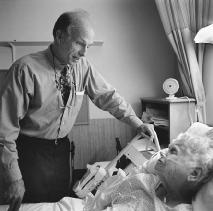
Beach Conger engaging in spirited dialogue.
BEACH CONGER, M.D.
CARETAKER AND CONTRARIAN
Windsor, Vermont
Beach Conger started into medicine with an eye on public health. He worked in Mississippi as a medical civil rights worker, led a job action at the Boston City Hospital to improve patient care conditions, and spent two years as an epidemic intelligence officer for the Centers for Disease Control. Thirty years later, though, he is the quintessential personal physician, practicing in a small town in Vermont, watching illnesses come and go, families grow up, and the elderly pass on. When he finally began practicing medicine, it turned out that he loved it.
His vocation is internal medicine, but his avocation is professional contrarian. He enjoys gently telling people the truth about their health (some day they're going to die), the doctor (he doesn't know everything), and their part of the world (it has some strange medical habits). His handson engagement with life and his eye for the humorous started him writing, first a column for the local newspaper and then two books of auto-biographical musings. The cover of the first book, titled Bag Balm and Duct Tape, advertises itself as “How a doctor taught a town to be proper patients and how the patients taught the man to be a doctor.” The second
Conger counts himself an activist generalist who happily handled all manner of medical challenges that face a small-town physician. After adjusting to life in the country, he came to take pride in his ability to cope with most of the medical problems that came his way, calling on specialists only occasionally. But the environment is changing, and a determined generalist such as Conger is finding mounting pressures to join networks, to refer, and to rely on technology for diagnosis and treatment. “Today I feel more like an endangered species than a role model,” he observes. “Kind of like the gray wolf or the cougar. It seems my feeding grounds are gradually being replaced by multispecialty clinics and CAT scanners. Still,” he concludes, “I can't think of anything else I'd rather do.”
I HAVE ALWAYS BEEN INTERESTED in public health. I used to think that I would wind up being the Surgeon General. Who wouldn't want to battle the scourges of history—tuberculosis, infant mortality, malnutrition? Medical school reinforced my interest. We studied salmonella outbreaks, cholera, and clean water strategies in the second-year epidemiology course, and I loved it. This was the era when we thought we had beaten infectious disease, before AIDS, before Legionnaire's disease and hantavirus and drugresistant TB. Smoking wasn't much of an issue then, and diet and exercise were still the concern of health food types. We had no idea how important public health would become to medicine and to all of us.
But it turns out that medicine involves a lot of acting, and I'm a bit of a ham. You can't crack jokes when you're trying to solve the problem of infant mortality, but I can with my patients. I have spent time working in public health. I enjoy the problem solving and dealing with public issues like access to health care, abortion, and prevention. I've been active in local politics and, for a while, served as chairman of my local school board. But it turns out that for me it isn't as much fun as the one-to-one with patients. As things have developed, I'm a country doctor, not the Surgeon General—and I love it.
I started in the city. I was born in 1941 in New York City but was raised in suburban New York, first in Hastings-on-Hudson, and then in Pleasantville, a suburb about thirty miles outside New York City that is known as the home of the Reader's Digest. My parents were both writers.
Pleasantville was your basic town, all that its name implies. In the 1940s it had about 5,000 people and was just far enough out that most people who lived there did not commute to New York City. We had one African American in town. His name was Sidney Poitier. I went to a small high school, where about 40 percent of the kids went on to college. They tended to be the ones from educated families who worked in New York City.
My decision to become a doctor was basically the result of my doing well in school; that was one of the things that kids who did well in school then were supposed to do. I went to Amherst College, where I majored in Russian and traveled to Russia in 1962. I thought it would be more interesting to become a Russian scholar than a doctor, but I couldn't see far enough on the horizon in that field, whereas medical school was pretty clear.
I went to medical school at Harvard. I found the first two years tedious, and I didn't apply myself much. I'm not good at compulsive learning, so if it wasn't interesting I tended not to study it, with the result that I didn't do very well. One day after I got a D in physiology, I was called into the dean's office. Since you've been accepted to Harvard they assume you're smart, so if you're not doing well they think you're having some problem at home. Just before entering medical school I had married. The dean asked me if my home life was happy. I replied, “Yes, I think that's fine.” After that I realized it was in my interest to have been a little bit unhappy, otherwise they thought there was something wrong with me. The second two years were better. I enjoyed the practical stuff.
During my junior year I did my medicine rotation at Boston City Hospital, which I loved. A city hospital setting is much more egalitarian than places like the Massachusetts General and the Brigham Hospitals [now the Brigham and Women's Hospital]. It's much more forgiving, both in terms of what the patients expect from you and the way people treat each other. I did my medicine and surgery rotations there, as well as my internship and residency.
Between my second and third years of medical school, in the summer of 1965, I went to Mississippi. Jack Geiger, one of the leading spokes-men for the Medical Committee for Human Rights, gave a talk in Boston. As a newspaperman turned doctor, he envisioned health care as an instrument to raise people out of poverty. This appealed to my public health instincts. Geiger was very charismatic. He'd gotten a grant from the Office of Economic Opportunity to set up a clinic in Holmes County, Mississippi, and he was looking for summer volunteers to go south. I signed on.
After a week of training at the University of Pittsburgh School of Public Health, they sent me to Holmes County. My wife, who was similarly politically inclined, was teaching math that summer at Tougaloo University in Jackson, Mississippi. I wound up living in the house of a sharecropping family that was about five miles outside the county seat, Lexington, Mississippi. I was full of grandiose concepts about what I was going to do as a medical civil rights worker but I wound up working on voter registration and school integration—not the stuff of medicine but historic movements of the time. It was a remarkable experience.
The one medical experience I had was being called to the home of a child who was lying on a bed seizing. At that point, I probably knew something about the idea that children may have febrile seizures, but that's about it. “We'll have to take him to the hospital. This is terrible,” I said. The mother put him on the floor so he wouldn't hurt himself. “It's just a seizure,” she said. “And besides, they won't see us at the hospital.” I was horrified. I assumed that something drastic was going to happen to the child if they didn't get him to the hospital, and the family accepted it. They thought I might have a pill I could give the child. They never asked me anything again.
For my wife and me—as for many others who went south to work in the Civil Rights Movement—the experience was a politicizing one. Once back in Boston, we decided that we wanted to be active in local politics, so we moved into the Cabot Street Housing Project in Roxbury. We were the only white couple living there. The rent was $44 a month, which was a nice benefit, and my wife served on the board of the local Community Action Agency. I worked on the Boston arm of Dr. Geiger's project, which was opening a clinic in the impoverished Columbia Point section of the city.
Living in the ghetto at that time was very different than it would be today. People used drugs and alcohol and fell asleep on the sidewalks,
When I was a fourth-year medical student I still didn't know much, but I came and went in a white coat. My neighbor was a taxicab driver. One day, his wife came over to see me and said, “You've got to see my husband. He needs to go to the hospital and he won't go.” So I went over. He was sitting watching television with a Band-Aid on his forehead. “What's the matter?” I asked.
He said, “I've got a headache.”
Being a dutiful medical student, I began asking him a recently learned list of questions about a headache. “When did it start? Did it come on suddenly or gradually? Does it radiate, or do you feel sick to your stomach?” We didn't know each other very well, but I think he figured this was something he had to go through. Then I asked, “What's the Band-Aid for?” I thought it was some kind of funny thing he did to make him feel better. So he took it off and said, “That's the bullet hole.”
“What do you mean?”
“Well, I was driving my taxi and I went to let my fare out, and the guy put a gun to my head and said, ‘Give me your money or I'm going to shoot you.’ And I said no, so he shot me.”
“He shot you in the head?”
“Yeah.”
“With a bullet?”
“Yeah.”
I said, “You've got to go to the hospital! You've been shot in the head!”
And his wife said to him, “See, I told you he'd say that. Listen to the doctor.”
He says, “No, if I go down there, I'll sit around for five hours, they'll take an X ray, they'll say there's nothing they can do, and they'll send me home again.”
I said, “No, no, no. You've been shot in the head. I'll call an ambulance.”
He said, “I'm not going to take an ambulance.”
He went to Boston City. Five, six, seven hours later, he comes back. “What happened?” I asked.
“They took an X ray, they said there's nothing they could do, and they sent me home.”
So now, whenever anyone comes in for a headache, the first thing I ask them is if anybody shot them.
We lived in the project for the last two years of medical school and into my internship. My son was born while we lived there. We moved out of the housing project because we were no longer economically eligible after I began to make a salary. Because of my background, living in Roxbury provided me with a perspective I hadn't had. It gave me an understanding that, even in this country, there is a way of life that has nothing to do with what goes on in places like Pleasantville, where I grew up, or Vermont, where I have lived since 1977.
Going to Mississippi and practicing at Boston City Hospital were conscious decisions I made to work with people who were poor. Working with the poor was more rewarding for me. I was not comfortable as a student at Boston's upscale hospitals. I didn't feel smart compared to the doctors there, but also those hospitals seemed a little too classy, too detached. The Shah of Iran was a patient at the Mass General when I was there. That wasn't why I was in medicine. In contrast, I felt at home at Boston City Hospital, which was falling apart.
In 1967, while I was a fourth-year student at Boston City Hospital, we held a “heal-in” to protest conditions at the hospital. The heal-in was an alternative to a strike where we continued to admit patients but didn't discharge anyone. Interns were paid only $100 a month and wanted a raise. We also wanted better laboratory services, more nursing, and improved patient care all around. The city said, in essence, “Listen, we'll give you pay increases and some lab technicians, but we're not going to address nursing and patient care. We don't have control over that. If you fight this, you may not get the money you want.” The house officers were getting tired of the heal-in, so we settled for our money and the promise that they were going to work on our other demands.
In 1968 I became president of the house officers' association, and we became the first labor organization of house officers in the country, although I didn't find that out until I attended our thirtieth anniversary this past year in Boston. We hired a lawyer and, full of righteous zeal, we sat down to finish the business of improving patient care. At the time I felt I had really accomplished something. Now, years later, I am ashamed. The real tragedy of Boston was not how they treated the house officers, who would soon go on to rich and prosperous careers, but how they treated the poor people of the city of Boston and the health care
I was at Boston City Hospital for two years, then I joined the Public Health Service and was assigned to the Centers for Disease Control in Atlanta in a special program called the Epidemic Intelligence Service. Practicing public health appealed to me, especially given the choice of going to Vietnam or an assignment in the Public Health Service. My intent was to stay in the Public Health Service permanently, and the time I spent at the CDC substantially raised my estimation of the federal government. The dedication of some medical staff at the CDC was improved by the sense that if they weren't at the CDC somebody would be glad to take their places, and they could always be sent to Vietnam as medical officers.
This was pure public health work in a public health agency, and I liked it a lot. When I began, the entire focus of the CDC was infectious disease, but they were at the point of applying epidemiological principles to other aspects of health. I went to work with a gynecologist who was beginning a program of contraceptive evaluation using data from family planning clinics. I staffed rural health clinics in southern Georgia, where the local doctors, who were all white, wouldn't go, because public health clinics were believed to be a Communist plot. I traveled to these clinics, where a very pleasant, condescending white nurse would usher in her black clients, whose faces I would never see. When I would come into the room they were already in the stirrups, covered with a sheet, draped around so that it was physically difficult for me to talk to them, which was intentional. I would be either checking an IUD, or putting an IUD in. That was what these clinics were doing.
In 1970 New York state passed a law legalizing abortions, and I was sent there in 1971 by the CDC to conduct surveillance of outpatient abortions in New York City, tracking down complications and deaths. People came to New York from all over the country to get abortions, so it was really a national issue. For the first time the CDC recognized that the morbidity from abortions needed to be treated on a par with tracking down salmonella outbreaks and eradicating smallpox. Abortions had finally become part of the mainstream political debate in this country. This was 1969 and 1970, long before AIDS arrived on the scene.
We were still based in Atlanta, and we had had our fill of the South. My wife was involved in a class action suit against AT&T because she was one of many women who were being paid less than their male counterparts.
The clinic, called the South of Market Health Center, was just off Mission Street, smack in an area of dilapidated housing, soup kitchens, and rundown hotels. We saw people on a first-come, first-served basis and, often when I arrived in the morning, I would see my patients sleeping on the sidewalk, waiting to get in. Medical care at the clinic had been terrible before we started—Vitamin B-12 shots and antibiotics for everything. We came in with new money, new employees, and outreach programs. We treated patients with respect, practiced preventive medicine, and went door to door. Besides homeless alcoholics and heroin addicts, there was also a large immigrant Filipino population living in the same area who, in contrast, were very stable and upwardly mobile. Many had come from the upper classes in the Philippines, including some doctors who were working as housekeepers. Tension existed between these two populations over the clinic. The Filipinos wanted it to be their clinic, and after a while many of them joined the clinic staff. The alcoholics then tended not to show up as much.
I worked there for six years and discovered, somewhat to my surprise, that I liked practicing medicine. Although public health planning had been a lot of fun, I really enjoyed patients. At that time, of course, I had the illusion that you could do both population medicine and clinical medicine. I was no longer planning to become Surgeon General. But if someone said, “Would you want to become director of the city's health clinics, at some point?” I might have said yes. This was an activist time in San Francisco with many free clinics and a lot of federal money available to set up neighborhood health centers. The budget for our clinic doubled about every two years.
By 1977 I'd gotten an amicable divorce and married Trine Boh, who was a first year law student at Golden Gate University. My focus changed
The doctor who was leaving told me, “Oh, you don't want to come here. There are no patients to see.” I thought, “Why not? They're going to guarantee my salary, and I can do this for two years. In the mean-time, we'll figure out what we're really going to do.” That was nineteen years ago.
For the first six months I was petrified, because I was used to places where there was always somebody around to help you deal with a problem. If somebody got sick, I sent them to the hospital. I might visit them, but I didn't start the IVs, insert tracheal tubes, put casts on people. I prescribed drugs, and I talked. Suddenly I was dealing with everything—train wrecks and broken wrists, things I'd seen a hundred times and things I'd never seen before. I was the doctor. There were no diagnostic radiologists, no backup orthopedic surgeons, no backup anything. It was anxiety-provoking.
And then I got used to it, and realized that you do what you can do. For instance, I was treating a man with chest pain. I don't remember what went wrong, but he died suddenly. I told the family I felt just awful, and they could see it. “Doc, don't feel bad,” they said. “You did the best you could. He would have died anyway.” They were understanding of the idea that doctors don't always succeed. People in Windsor back then accepted the idea that doctors could fail or even screw up.
An example of the kind of thing I had to learn on the spot was caring for a patient with a fracture. In all my years of medical training, I was never taught how to place a cast. Internists didn't do that in city hospitals. When I worked in the emergency room at Boston City Hospital,
There were a lot of things I just gradually started doing. I practiced more intense medicine than many internists do today, largely because people expected me to. I referred very few patients out unless they needed a surgical consultation.
We now have six internists in Windsor, two pediatricians, a general surgeon, a full-time orthopedic surgeon, and a variety of visiting specialists. The specialists visit from the Dartmouth-Hitchcock Medical Center twenty miles to the north, or they've set up a private practice in which they circuitride to a series of community hospitals, of which we remain the smallest. So specialists are all around me again. Patients are now more likely to consider a specialty referral option, so I do a lot more referrals than I did when I first arrived here and a lot more than I would otherwise want to do. Several of our physicians have become employees of a huge physician organization whose brochure states, in essence, that “Primary care is the doctor you go to, to help you figure out which specialist to see.”
Fifty percent of my patients are on Medicare. Of the other 50 percent, everybody has managed care of some type. The only difference it makes to me is that I have to fill out more forms. Part of the reason it's not a problem is that there is no competition here in primary care. The patients who live in this town are going to have to come to see someone in this group, by and large, unless they hate us all, in which case, they could travel some distance. Managed care will never have the same impact here as it does in a place like California, where you have plans competing with each other, and there are real issues about patient jumping. I have patients who have gone through three plans in the last five years. I'm always the doctor. If they're in California, they would be changing doctors. But here there's nobody else for them to see.
What has changed is that if somebody came in with a headache nineteen years ago, I would have talked to them and, unless I had been really worried, I would not have ordered any more tests. Now, the chances are better than fifty-fifty that the same patient with a headache knows about CAT scans and expects one—regardless of the fact that I don't think one is indicated in the vast majority of cases. When I first came here, patients were not as educated about health issues as they are today. “What are you here for?” I'd ask them. “That's what I came to find out,” they'd respond. “You're the doctor, you figure it out.” This sort of attitude gave me latitude in where to go with things, but also showed that the patient remained marginally involved in what was going on.
Poverty in this area is not concentrated, the way it is in what's called Vermont's northeast kingdom in the northern part of the state, where people have no money and live in shacks with no electricity. Isolated poverty is quite common here, but most of my patients get by okay. Windsor is distinctive in that we had a maximum-security prison and several factories. Once the factories left town, a large apartment complex, initially designed for factory workers, became home for the wives and children of the prisoners, and that brought in an underclass. The apartment complex looks like something that was airlifted out of the Bronx. It's a huge brick structure. There's nothing anywhere like it in Vermont. So we have this small underclass population. I handled a case of lead poisoning when I first got here, a kid who lived on a back porch and ate lead, just like in an urban setting. Outside of the prison-related population, some immigrant Vietnamese, and a few adopted black children, it's still a white culture.
I have more access to specialists than I would like to have. It's kind of like having too many restaurants to choose from. You're also more likely to eat out when you have a lot of restaurants, and I'd really rather eat at home. For every disease there's someone who is smarter than I am. I could send every patient to somebody else for every complaint, but that's not what I choose to do. My practice is made up of patients I've known for a long time, and they tend to look primarily to me for guidance. An irritated cardiac surgeon to whom I had sent one of my patients called me once, saying, “We think your patient needs to have his mediastinum opened up because he's gotten a postoperative infection, and he wants me to check with you.” That's patient loyalty.
There's a group practice of younger physicians in a nearby town who don't even come into the hospital when they're on call. When somebody gets sick they send him to Hanover to the medical center. If somebody
When I was in medical school, cholesterol wasn't much of an issue. If you identified a patient with high cholesterol, it was really high—like 500 and they'd have huge globs of fat hanging from their eyeballs. You'd call people. Big hoopty-do. Now, everybody is potentially a patient because we've lowered the cholesterol standard so that nobody will pass. This means that there are people trooping in and out of the office all the time who aren't sick. People have gotten used to going to the doctor on the premise of not being sick—which is okay. But when they get sick, they think, “I've got to see a different doctor. This is not my doctor for sick. This is my doctor for cholesterol, and blood pressure, and maybe Pap smears. Now that I'm actually sick, I need a specialist.” Many younger internists and family practitioners collaborate in this by focusing on health maintenance and avoiding more intensive forms of patient care. And since everybody does get sick sooner or later, this kind of thinking has led to a doubling in the number of specialists in the country. A cynic might say that we were training too many doctors in this country and we didn't have enough sick people to go around. Since lots of the new doctors were becoming specialists, we had to find something more for them to do, so we invented diseases in well people.
One way to stem the tide of expense and futility in medicine would be to admit students into medical school who aren't quite so smart. Why don't we just conclude that we have enough medicine right now? We won't make any more improvements, and we'll live with what we've got for a while. Maybe thirty years from now we'll start working on it again. If our doctors were not particularly smart, sort of nineteenth-century doctors, we wouldn't invent new procedures. We'd just muddle along, and things would stabilize. The rest of the economy would grow for a while, and we'd stop spending larger and larger chunks of it on medical care.
When a patient arrives in my office I put this cuff around his arm and pump it up. “You've got hypertension,” I say. The patient says, “That's the silent killer,” and we start down the long, long road of antihypertensive treatment. Now the fact that everybody's going to die, and that
I think that the evolution now is toward primary care as very distinct from secondary care. Primary care, as I see it, is really wellness care, secondary care is general sickness care, and then tertiary care is caring for people with special sicknesses. Wellness care means dealing with the “presick” who have yet-to-be-determined diseases. I see my general internist role as doing secondary care as well as my own brand of primary care. That's what I was trained to do. What I like best about my practice is the interaction with people but, I have to admit, there still is a part of me that likes disease. I get energized when somebody comes in with an abnormality. But I've known most of these people for a long time, and it's always upsetting when I pass along a bad diagnosis. I had a medical student with me one day when a patient's CAT scan came back with an ominous spot in the right lung. The student was excited. “This person's going to have lung cancer.” I responded, “If your sister had this CAT scan you would not be very excited.”
I've lived in the community and know everybody here. A woman on chemotherapy just came in with a sore ear, terrified. I looked in her ear and it was okay; she felt great and so did I. I like that. I have to have a certain number of sick people to fuss with or I feel that I'm betraying my training. But I don't need a lot of it; I don't even need it every day. People in Windsor give doctors so much benefit of the doubt—more so than anyone else including the local clergymen. I can make a fool of myself, and people don't mind; I march in parades wearing wild outfits, I write crazy stories in the newspaper and, because I'm a doctor, people like me.
I'm an ex–Epidemic Intelligence Service officer, and I keep up with infectious diseases. In 1983 I made the diagnosis of Legionnaire's disease in a hospital patient. After another case was diagnosed and we found the source in the hospital's water heater, we were credited with what has
At the press conference I joked, “This is nature's revenge. You put people in buildings and nature says, ‘This is not what you're supposed to be doing,’ so it's got germs to try and combat you with this.” A guy there from the local newspaper said, “You've got a strange way of looking at things. Will you write an article about this?” So I did. They then asked if I'd write some more, and I did. The paper is called the Valley News and has a circulation of around forty or fifty thousand. I wrote a piece on herpes, and something on why doctors lie. A couple were sort of whimsical. Eventually, I wrote a column every other week under the heading “The Second Opinion.” It was never serious, though I always told the truth. I enjoyed the writing, and after three or four years my editor suggested I collect the pieces into a book. I sent them to a publisher, who responded, “I don't know how we're going to use this. There's no market for it. But maybe you want to write it into something that fits together.” I turned the articles into a sort of diary that, in 1988, came out as my first book, Bag Balm and Duct Tape. After that, I was off and running. My second book, It's Not My Fault, was published in 1995.
I really enjoy writing. It imposes a kind of discipline on me that medicine doesn't. My first and second drafts are usually gibberish. I have to rewrite probably six or seven times to get what I want. In medicine you don't usually have that chance. I'm working on a book that is much more difficult than my other two, which were just stories I wrote from my everyday experience. This one is about a doctor who practiced in my town one hundred and seventy years ago. She was a woman, but because women weren't allowed in medicine she had to practice as a man. It has been a real challenge to set myself in a time where doctors knew almost nothing and the only two medicines of any definite benefit were morphine and quinine. I'm not sure I am good enough to write it, but I'm working at it.
Trine and I have three children. Our youngest, Nadya, teaches Spanish in the Boston area and the oldest, Matt, teaches science in Woodstock, Vermont. He lives about one mile from us. Our middle daughter, Dylan, lives in Brooklyn, New York, with her husband. She is a research analyst for the Vera Institute, which does analytic work on social service programs. None of my children ever showed the slightest interest in medicine, which is okay.
Trine is a recovering attorney. After she got her degree here she went into private practice, which is not what she really wanted to do. One of the problems in the country is that you feel left out of the real problems of the world. She went into family law and had an extremely busy and successful practice for twelve years. In 1990, she became a family court magistrate. Then she quit it all in 1994 and went to Baltimore as an Annie E. Casey Foundation Fellow. She worked as a consultant for the Rhode Island Department of Children's Services and now for the state of Vermont trying to bring some sense into the way the courts and the social services deal with abused and neglected children. Unless Trine takes a job elsewhere (which is a possibility), I plan to practice here until I retire, because at this point there's nothing else I can do. I have an excellent practice, and I'm the senior physician in town. Everybody looks up to me, except the people who can't stand me. It's a very small pond, but I'm the biggest frog in it. In ten years, if I'm still in good health, I'll cut back my practice and start writing more.
I'm fond of telling patients something that is very clear to me. “You know, if I treat you long enough only two things can happen. Either you die or I die.” So I keep treating sick people, and I recognize the futility of it because they're going to die. But I keep at it because it's what I do.
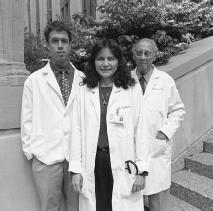
Linda Headrick with her colleagues in quality improvement, medical student Kenan Sauder and faculty member Jack Medalie, M.D.
LINDA HEADRICK, M.D.
SEEKING A COMMON LANGUAGE IN PRIMARY CARE
Cleveland, Ohio
Linda Headrick is an academician—a teacher, a clinician, and a trafficker in new ideas. She is a member of the “academy” by dint of being on the faculty of Case Western Reserve University Medical School in Cleveland, Ohio. But she is not a classical academician by traditional standards. Her patients tend to be those with common problems rather than those with esoteric ones. Her teaching addresses the problems of the system and the population in addition to the biological problems of the individual. Her research subjects are neither patients nor laboratory animals but rather the system that makes the medical center and health care delivery function—or malfunction.
She is a quiet but constant warrior against complacency in medicine. Her passion is “quality” or “quality improvement,” but these well-worn terms do not do justice to her mission. “What is the aim of our work?” she asks. “How do we know when it works and how well it works?” Satisfying the doctor or the institution or meeting some long-outdated goal does not mean that “our work” is “working.” Her research and her
Dr. Headrick's base of operation is one of the nation's most prestigious medical schools—one that is increasingly open to her mission but still uncertain what to make of it. There is growing respect for her ability to interpret the powerful industrial forces that are buffeting academic health centers across the country, but for many the enthusiasm for applying this wisdom at home is tempered by a reluctance to abandon age-old institutional behaviors.
The daughter of a career agricultural extension agent, articulate and enthusiastic, Dr. Headrick speaks with gusto about her work. She is applied and practical in her vision, and she has a growing cadre of allies around the country in education, practice, and business. She believes that the generalist physician and nurse are well positioned to lead a quiet revolution in how we do our medical business in this country, how we improve it, and how we keep on improving it over time.
RIGHT FROM THE START I wanted to be a primary care doctor. I was going to take care of folks over time. I was going to be there for them, the first contact person, whatever they needed. I liked the science, but it was the relationship part of medicine that I found most appealing and where I thought I had the greatest skill.
I think my dad's work influenced me, although I didn't realize it until I was talking with a medical student a couple of years ago. He asked me about what my folks did. I told him about my dad. My father worked for the University of Missouri Extension Service, helping community businesses and community development in general. He started as a county agent after World War II and spent his career in the extension service. I tried to explain to the student what that was. “Well, basically he was part of the community and used the resources of the university to try to make things better.” The student responded, “Oh, that's interesting. That's sort of like what you try to do.” This huge light bulb went on, and I realized that the extension ethic was a big influence on me.
The Protestant ethic—literally, the Protestant ethic—was a factor for me too. My mother's influence was very important there. Her father was a Baptist minister, although our own family was Methodist. Responsibility
I'm from Missouri. I grew up in Chillicothe, a little town of about ten thousand people, a hundred miles northeast of Kansas City. When we moved to Chillicothe, my dad was promoted to director of a nine-county area for the Agricultural Extension Service. It was in seventh grade I decided I wanted to be a physician. There were no doctors in my family, but I came from a family where it was, “Sure, whatever you want to do. Education is important, and if you want to go for that, that sounds good.” Except my grandmother, interestingly enough, who got this downcast look on her face and said, “Linda, I always thought you'd be such a wonderful nurse.”
I went to the University of Missouri–Columbia and majored in chemistry for, what I'm embarrassed to say now, were pretty typical premed reasons. This was 1973, and at that time the competition for medical school was tough. I went to a meeting—one meeting, that's all I could tolerate—of the Pre-Med Society and they had us, all the freshmen, stand up and look at the people on either side, and they said, “Only one of the three of you will actually get into medical school.” That was the competitive atmosphere.
Everything wasn't premed at the university. I met my husband there. He was a year ahead of me, a molecular biologist. When I started looking for medical schools, I was trying to follow where he'd gone to graduate school, which was Stanford. I started there in the fall of 1977. But Stanford was different, filled with people with very different backgrounds from mine—prep schools, Ivy League, and cultural experiences I hadn't had. I found the first two years difficult, but I felt that I blossomed in the clinical years because I could draw upon all of my skills, not just my ability to read a book and memorize what was there. Stanford has a reputation of not being supportive of primary care. I didn't feel that so much because it was not difficult to find people who shared my interests. There was a growing group of general internal medicine people, and they had a small but valiant group of family medicine physicians. I didn't feel particularly discouraged in my interest in primary care, except that I clearly didn't match the specialty and research focus of many of the faculty.
My husband got his degree in molecular biology and accepted a postdoctoral position at the Carnegie Institution in Baltimore. That meant I needed to find a residency in the Baltimore-Washington area. I had to decide between family medicine and general internal medicine. The fact
My husband was also looking for faculty jobs at that time. He was offered a position in Cleveland. On his second visit, he was invited to bring “the wife” along, and they tried to find “the wife” a job. Interesting position to be in. It worked out quite well, in fact. I wound up joining the Division of General Internal Medicine at Metro [Metro Health Medical Center, formerly Cleveland Metropolitan General Hospital]. All of the physicians there were fulltime faculty of Case Western Reserve University [CWRU]. My job was as a halftime practitioner and a halftime educator, helping to run the residency program and a fourth-year primary care medical student clerkship. This was 1985.
I started out in practice, loved it, and got so busy that, after about two years, I couldn't take any more new patients. Everybody wanted us—the general internists—for everything. The specialists wanted to refer their patients to us because once they controlled a specific problem, they recognized that the patient needed longterm primary care. They were delighted to send patients to us. The surgeons grew to value our contributions in doing perioperative consultation. The house staff said they thought that the generalists were the best teachers in the wards.
When I became involved in the larger educational programs, though, I began to encounter some of the more negative attitudes about primary care, particularly from people in other fields. I'm afraid I was surprised that other faculty didn't care about the same things I did. Why isn't it a good idea to teach physical diagnosis in the first year so people can be learning with patients at the same time they're learning in the classroom? That's not a primary care–oriented issue on the surface, but it has a very primary care–oriented flavor to it. Why shouldn't we have students learn from generalists as well as specialists? Don't we learn scientifically even if we can't isolate one variable and have sixteen controls? What I'm interested in is harder to control, harder to experiment with, but so important, so critical to the problems before us.
I also continued my role as an innovator, in that I couldn't leave things alone. There were lots of opportunities to do things differently, and I was
I decided to evaluate and write about some specific education projects that we had done that others seemed to think were interesting and unique. I was frustrated by my inability to do that very well, and particularly by my lack of preparation with respect to quantitative and research methods. Early on, I started going to national meetings. In particular, the Society for General Internal Medicine helped me see that people were defining careers for themselves in academic general internal medicine that were education-focused. With those role models, I began to think of myself as an educator, a primary care physician and an educator. Eventually, I also arranged to work part time to get a master's degree in health services research.
It was great luck that Duncan Neuhauser was here at CWRU in the Department of Epidemiology and Biostatistics. He has a Ph.D. in business administration and was interested in teaching students about the costs of medical care in the context of primary care. We designed a project in which students wrote case studies of patients with asthma and shared what they learned about how to think about measuring quality and cost of care in asthma. Initially, we focused on cost. We asked the students to simply go out and find out how much it cost for what they prescribed for a particular patient with asthma. That was astonishing. Students had no idea it cost $40 for a steroid inhaler, for instance. Duncan kept saying, “You know, Linda, it's a very interesting thing about cost. We can't think about it alone. We can't talk to our class about cost without teaching
With tremendous help from the chief of general internal medicine, Randall Cebul, I did a randomized controlled clinical trial, an education trial about cholesterol screening and management with the residents at Metro. None of it worked. Resident behavior didn't change. I thought, I wonder what happened? The residents picked up a chart, and there would be a bright yellow piece of paper on the front that stated, “Patient's last cholesterol was 270. According to the guidelines, the next thing to do is … “and all they had to do was fill out a form to do it. So I surveyed the house staff. I said, “Was the yellow form there?” “Yes.” “Do you agree that this is an appropriate thing to do with your patients?” “Yes.” “Do you agree with the recommendations?” “Yes.” “How often do you do it?” They thought 75 percent of the time. The real answer was only half the time, which was no different from the residents who received no coaching and prompting. “Why didn't you do it?” It was all systems issues. “There wasn't enough time.” “I didn't have enough help.” “I couldn't find the form.” There also was no difference in performance of residents who scored well on the test of cholesterol management knowledge and those who did poorly.
I was stuck. Until I learned about quality improvement, I had no way of getting at the systems problems that kept us from being able to do what we knew how to do, and we'd like to do, but just couldn't do consistently, patient to patient. Then I met Edward McEachern, who had been a medical student at CWRU, and was working as a consultant for hospitals that were trying to improve quality. He taught me a lot and helped me identify what to read. Duncan helped me connect with Donald Berwick and the Institute for Healthcare Improvement [IHI], which has sponsored our work using and teaching quality improvement in medical education. I've been learning like crazy ever since. Paul Batalden, who leads IHI's work in health professions education, has become my most important mentor in this area. Now working out of Dartmouth, he is one of the country's best thinkers about the improvement of health care. I'm constantly finding other people who have also been influenced by his work.
What I want is to have medical students finish medical school, or residents finish residency, ready to actively improve the care that they're
Physicians now seem to be fairly accepting of the fact that cost is something they're going to have to deal with. Improvement methods allow them to deal with the cost issue by focusing on quality, and that is very attractive. But many physicians, and particularly academic physicians, are still negative about thinking of the people we serve as customers. They don't like the idea of transporting business ideas into medicine, they don't think they belong. Generally, though, I'm finding now that a lot of academic leaders are asking me about quality improvement. People seem more friendly to the idea of thinking in systems—including managed care systems. I've been asked to travel all over the country to consult for medical schools and hospitals on teaching quality principles in medicine. Many physicians recognize in their everyday lives now that they have to work as part of systems. Otherwise the system will roll right over them.
I think that the natural leaders of systems in health care are general-ists, because they have the broad perspective needed to have a systems view. The same personality types and the same sort of worldview fit both places. But even if you're not a leader, if you're a practitioner working with your office nurse, your receptionist, and the pharmacy, you're going to be better off if you can be thinking about that as a system and figuring how to deliver better care in that system. And you have to, because people are going to be asking you what your outcomes are.
One of the critical tensions that is going to be important in my lifetime as a health care professional is the tension between reductionist thinking that breaks things into small parts and broad systems thinking
For a while I was trying to learn how to play the banjo. I was very serious about it. My teacher was trying to get me to learn how to play by ear, but I had picked out a couple of songs on a record that I liked a lot. In my typical reductionist way, I tried to listen very carefully to write the song down so I could understand the chord structure, exactly what the notes were. I was going to try to tape it, and write it down, and break it down into pieces, learn the pieces, and put them back together again. I completely blew my teacher away. He thought that was the dumbest approach to learning how to play a piece of music he ever heard in his life. He was trying to get me to try to think of the music as a system, to really hear the music and have it come out in my fingers. And he had no better way of describing it to me, and I had no idea how to do it.
I would argue now that a good generalist needs to be able to do both—reductionist thinking and systems thinking. In fact, I think that from the perspective of a system of care, one has to ask, why are internal medicine and family medicine separate? What are the roles here? The goal is to deliver the best primary care. It doesn't make sense to divide it up between medicine, family medicine, and pediatrics. We have to sort of scramble, depending on the environment we're in, to define how we're different from one another. I also think that it's nonsensical and, frankly, foolish not to take advantage of what our colleagues in nursing and other disciplines know about doing primary care. I'm a general internist. There are things that family practitioners know, that physician assistants know, that I'd be a much better primary care physician if I knew. There are things that nurses do that the ideal primary care physician of the future would be better off knowing how to do—such as listening, counseling, thinking about families, and thinking about the caring part of care. So why are we not teaching them together, and why are we not combining our strengths rather than splitting them up? What I would like to see in the future is a new kind of primary care provider who is the product of the best in all those fields.
As I look to the future, I know I want to be in a place where I continue to have the freedom to explore and learn, and have a laboratory in which to do that. I think that I'll stay in academic medicine because of my devotion to education. Some days I think I'm better off staying
At home I'm still married to the same biologist who enticed me west to Stanford years ago. My work is way out there at a systems level. He spends his days on a molecular level, working on the precise factors that control RNA transcription. He's a good bellwether for me because he is a very thoughtful guy who cares about the world and shares my values of what would be good for the community and the country. The kind of thinking I do is so different from what he does. He respects me and my work and is willing to explore my professional interests—ideas that otherwise might make him very suspicious. He's a key reminder to me about important parts of my audience in the academic medical community.
Recently I heard a senior physician, a family physician, describe his career to a group of medical students. He talked about all the different paths he has taken, and he did so with considerable excitement about every step of the way. I was listening to him and thinking, you know, I can do that. I think when I'm seventy, I will still get excited about these things, because so far I've been challenged and excited by new questions and new solutions that I think are important—and will remain important. That's the one thing that I absolutely can be sure about, that I'm going to be an avid learner, and have fun doing it. I will continue to work hard to move us closer to a world in which all physicians finish their educations ready to assess and improve the work they do every day, with a clear focus on the individuals, families, and communities they serve.
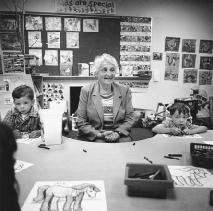
Selma Deitch brings pediatrics to the classroom.
SELMA DEITCH, M.D., M.P.H.
CHILDREN FIRST
Manchester, New Hampshire
One hundred fifty years ago, when the first American children's doctors began calling themselves pediatricians, some 200 of every 1,000 infants born died before the age of twelve months. Today that rate is 7 in 1,000, a monumental accomplishment of pediatrics and of public health and a marker of dramatically improved child health in the United States.
Selma Deitch is a practitioner of both of these disciplines, and for much of the latter half of this century she has devoted her training, her energies, and her personality to the cause of improving the health of children. At seventy-three, she remains in full stride as the founder, executive director, and chief booster of Child Health Services, a nineteen-year-old, innovative pediatric clinic for lowincome families in downtown Manchester, New Hampshire. Part clinician and part public health zealot, she sees patients, raises precious support funds, and consults nationally on maternal and child health issues. “I work two weeks a week,” she states simply.
Born in Manchester to immigrant parents, she grew up wanting to be a veterinarian but gravitated toward medicine under the influence of her
Child Health Services occupies a large storefront on Manchester's Elm Street in the city's old business district, which surely has seen no elm trees in many decades. The offices are newly refurbished thanks to a $1 million community fundraising campaign. Energetic and grandmotherly, carrying a stethoscope and a notepad, Deitch points with pride to the mini–jungle gym in the waiting room, the engaging animal prints on the walls, and the new, multipurpose teen room. Her enthusiasm for her creation is palpable.
Deitch is not without her adversaries—individuals or institutions whom she considers rigid or not clear about the needs of children. “Child Health Services,” she observes, “has given me the privilege of being a bit of a free thinker, of having the luxury of being my own person and being able to push the system. That really is a privilege.”
I HAVE SEEN A LOT of children over the years, including many sick ones. Some of the things that make me happiest about my work, though, don't have to do with medicine in the traditional sense. Recently I was able to arrange for a photography shop to donate a camera to a thirteen-year-old patient and to get him enrolled in a photography camp. He's having a wonderful summer. But I know that he was born to a thirteen-year-old girl and that he bounced from day care center to day care center while his mother tried to stay in school. His mother finally quit school because she just couldn't get coverage for her baby. At age five he was molested by a boyfriend of his mother. Now his mother has settled down, is married to a stable man, and is working fulltime. But along the way, terrible things happened to the little boy.
With a little help now from the staff of Child Health Services, he was enrolled in a summer program for gifted students for the previous two years and is showing real promise as a photographer. He brought me his
This is a critical part of pediatric care in the 1990s in Manchester, the city where I was born, the adopted city of my parents. My father came from the Ukraine near Kiev, and my mother was from Lithuania. She was eight years old when she arrived with an older sister to stay with relatives in the Boston area. My father came to Boston when he was eighteen or nineteen. He had been a premedical student in Odessa, Ukraine. When he arrived, he enrolled in high school and then went on to medical school at Tufts, graduating in 1918. My mother became a nurse. In those days that was a pretty special thing for an immigrant woman. Her relatives expected that as soon as she could speak English, she would work in a button factory. She was head of an operating room where my father was the intern during the influenza epidemic of 1919. The day they married in 1919 was the end of her nursing career.
They moved to Manchester in 1921, where my father went into practice as a GP with a special interest in surgery. After that, my mother was responsible for answering the telephone when the office was closed. I used to imitate the way she answered. “Hello,” she used to say angrily. She was not really an angry person, but the role tied her down. I think that was characteristic of the time. Women were not getting out to do their own thing. When I was thinking about what I wanted to do with my life, she shook her hand at me and said, “Don't ever be a nurse.”
I was born in 1924, the second of three girls. I was going to be a veterinarian because I loved dogs. I think my father gave me subtle encouragement to pursue medicine, support that made it easier for me to keep going to school. I went to Jackson College, which was the women's part of Tufts, and took mostly premed requirements, all those courses that have labs. I was even advised to take scientific German. Scientific German! I snuck in a few liberal arts courses, but the rest was science. It was wartime, and we were encouraged to go to school summers and get through quickly. I was nineteen when I graduated in 1944 and too young, they told me, to go to medical school, so I was accepted for the following year. I moved into the Elizabeth Peabody House, a settlement house in Boston, where I taught neighborhood kids to build airplane models as my contribution as a tenant.
I started at Tufts Medical School in the fall of 1945. There weren't many women in our class but more than in earlier years. There was some sense that the war provided an extra opportunity for women, since it wasn't clear how many men would be available. Although I'm very
I wanted a rotating internship. I couldn't go to Boston City Hospital because they had no place for women to stay. Mount Auburn was the other hospital that I wanted to go to, but they wouldn't take women in rotating internships. I finally accepted a position at Springfield Hospital in Springfield, Massachusetts, mostly because the man I was going to marry was taking a surgical residency in Boston, and Springfield was the closest rotating internship I could get.
One of my first rotations was in ENT; I had to give anesthesia for tonsillectomies. Kids. I felt sorry for them. I remember dropping ether on the gauze over their noses while they were lying on stretchers and rolling them into the OR. In Springfield I was inspired by a very bright pediatrician, Hy Schumann. He taught me an awful lot about hospital pediatrics, and I enjoyed the way he practiced. This exposure got me thinking about pediatrics.
I came back to Boston after the year of internship and did what was called a fellowship at the Boston Dispensary—the outpatient department for Tufts teaching hospitals. I worked as a preceptor for the same home medicine program that I had taken as a student, this time in the Irish neighborhoods of South Boston. I still loved the work. I began to see pediatric patients on my own under the supervision of the pediatric staff from the Boston Floating Hospital. I had decided that pediatrics was what I wanted to do with my life and, in the summer of 1951, I began two years of pediatrics residency followed by a year as chief resident at the Boston Floating Hospital. It was an intensive exposure to the hospital treatment of sick children. Penicillin was a new and exciting drug then, and we had chloramphenicol with its benefits and complications. We saw a lot of things that you don't see often today; replacement transfusions were common for Rh incompatibility, acute epiglottitis, meningitis,
I saw my first and most tragic case of lead poisoning in my first week as a resident. The child came in with acute encephalopathy, the only child of older parents. The anesthetist put four burr holes in his head to relieve the pressure, but the boy died. He'd been eating his crib paint, and his parents kept repainting it. We knew about pica, but people didn't know that most paint contained lead at that time.
I was amused to read recently about a professional athlete who had raised money to make a floor at the New England Medical Center into a residential facility for families of patients with cancer. The article said something like, “Farnsworth Five, a dilapidated part of New England Medical Center that has tile falling down, and floors that need repairing, and rugs that are torn.” When I was there, female residents didn't have a place to stay the nights we were on call, so we all shared one room on Farnsworth Five. Sometimes there were more of us than there were beds. It could be crowded, but we thought Farnsworth Five was a pretty spiffy place in those days.
When I finished my residency, I moved to Needham and went to work covering the practice of a pediatrician who was called up during the Korean War. I continued doing this kind of parttime coverage until he returned, but I kept up my affiliation with the dispensary. In 1958, I became the director of the pediatric outpatient department of the Boston Dispensary, which was the Boston Floating Hospital outpatient department. It was a general pediatric outpatient department for lowincome patients from South End, South Boston, East Boston, and Charlestown. The pediatric residents rotated through. The attendings were physicians who had privileges at the Floating, who gave their time for a month or two a year to precept the residents and the medical students.
I did a lot of teaching, and I learned a lot. One thing I never forgot is not to assume that a person who's in training knows how, for instance, to look at an ear. I always had to look for myself. I also learned about the role of social work from a woman named Liz Wheeler. She taught me a great deal about families and how they function. We also had the benefit of a nutrition service in the outpatient department. Right there in our outpatient department was an ongoing nutrition program where they served food to the kids and taught people how to budget and purchase, to do all those basic but important things.
The chairman of pediatrics at Tufts at that time was a wonderful generalist named James Marvin Baty. Those of us who worked with him
These experiences had a lot to do with shaping me as a pediatrician and determining what I would do in the future. But a lot also went on in my own family life during these years. I married my classmate in 1950 and had my first child when I was finishing my residency in 1953. We were divorced in 1957. Through my extended family, I met a wonderful man, a chemical engineer back in Manchester, and we were married in 1960. He had three children, and we had one more together. I actually commuted to Boston until 1965, when I finally settled down in my old hometown after being away for nineteen years.
During this whole period, I believe I was beginning to use a different language about health care. From what I had learned in the outpatient department, I was much more aware of things that had to be brought together based on the role of communities in health care. I became more of an advocate for kids in school and families who didn't get care at all. I didn't know what public health was then, but in retrospect I had become a public health–oriented pediatrician. When I left my work in Boston, I enrolled at the Harvard School of Public Health, commuting daily for a full year and graduating in 1966. It was a wonderful time at the school with fabulous faculty and students from all over the world. I wrote my master's thesis on day care in Manchester, a system previously unknown to me, resulting in my growing interest in child care policy.
My first real job in public health was as a parttime, volunteer medical director of the Head Start program in Manchester. We had Head Start only in the summertime then, and it gave me the chance to get to know people in Manchester whom I hadn't really known before, an entirely white, poor population who were largely French Canadian. We started programs in three different public schools. I got to know school principals in a nice way that held me in good stead as life went on. In 1966, the director of the New Hampshire Department of Health hired
It had always been difficult to use federal funding to build programs in New Hampshire. The basic philosophy was against accepting any federal money because the federal money would eventually “go away” and the state would be stuck with the program, so the attitude was “Let's not do anything the government pays for.” Nonetheless, we did get some new MCH money and were able to start many programs, including well-child clinics, all over the state and the real jewels, four comprehensive Children and Youth [C and Y] clinics in North Conway, Exeter, Charlestown, and Suncook. We established family planning sites in many places and, despite much opposition, they survived. People associated birth control with abortion, and still do. If you don't talk about one, you don't talk about the other. Many decision makers were against family planning—period. My strategy always was to start programs first by going to where people were receptive. There was need, goodness knows, everywhere. In the Dover and Rochester areas, we started prenatal and family-planning programs together because there was good community support and good local leadership. The federal Community Action Program came in at that time and collaborated well with us.
While I was MCH director, I worked as a pediatrician in one of our clinics at Suncook. I also saw patients in the Crippled Children's Clinic, a multispecialty service for children with problems like cleft palate, seizure disorders, and cystic fibrosis. It kept my clinical hand in, and I got to know physicians and public health nurses around the state. I learned a lot from those public health nurses.
I left state government in 1974 because I wanted to spend more time laying on hands. I'd become much more aware of underserved populations
The Institute did well enough for three or four years, but I really wanted to be able to provide primary health care services to lowincome families with children in need here in Manchester. Mrs. Gruber pushed me to look for more backers because she was restless about being our only resource. A number of foundations had turned me down, but suddenly two grants came through simultaneously—the federal Bureau of Maternal and Child Health and the local United Way. At about the same time I called the Children's Defense Fund in Washington, D.C., and they were able to provide me with articles that showed that comprehensive programs (like Head Start) were far more effective in the long term than piecemeal programs. The Manchester superintendent of schools at the time was my classmate from high school. I asked him to go up before the mayor and board of aldermen with me, using the data I had collected, to argue that even if 10 percent of the children we saw in our clinic were more healthy and ready for school, we could reduce the cost of education because they were not going to need special help later on. It would save the city money. Amazingly they voted to fund us and have continued to supply about 8 percent of our budget ever since.
In November of 1979 we opened Child Health Services on Elm Street in Manchester as a nonprofit agency with one pediatrician—me. We also had a program administrator/community organizer, a social worker, a family-support worker, a parttime nutritionist, a secretary, and a board of community doers. Our aim was to provide fullservice health care to children from lowincome families. From the very beginning we limited our enrollment to families that had at least one child younger than two or a child younger than seven with a special medical need. We did this because we planned to promote parenting functions, to support family strengths, and to be in a position to intervene when necessary.
Almost twenty years later, we are following the same model, more or
We get a high percentage of referrals from other agencies, hospital emergency departments, intensive care units, and nurseries, plus private doctors, neighbors, and relatives of current clients. We have a waiting list, but if we get a call saying, “This mother's going to be discharged, and we doubt the family's ability to provide consistent parenting,” we arrange to take that family right away. We have one social worker who meets the family at the hospital. Her job is to project to what extent that family will need our involvement as an agency. Meanwhile, we collect all of the medical information so that we can go over it prior to the first visit. We do the same with a child born with spina bifida, for example, or an infant with an enlarged liver. We try to make all the needed connections: education, transportation, and treatment. Local pediatricians provide our hospital backup.
Over a third of our clients are now teenagers, just by virtue of the fact that they've stayed with us since infancy. So we do a lot of adolescent health, both through a Planned Parenthood/Teen Options program that meets in our office space in the late afternoon or evening and through our regular clinic program. But our adolescent strategy isn't working well. Our way is still too traditional for adolescents. We knew we needed more staff to be able to have dropin discussion groups, “hang-around” sessions for teens, peer counseling–type activities. We needed to shake up our system for teens and, for that matter, for their parents. We needed a much more casual, flexible approach with much peer influence. Our space became too small for the “hangaround” approach. A grant from the American Academy of Pediatrics got us started on a new teen program,
I think Dr. Robert Haggerty had it right a few years back when he began talking about the “new morbidities”—what we now call psychosocial health care. I mean young people using drugs and alcohol, and risky sexual behavior resulting in part from more and more dysfunctional families. Young people not finishing school, not being able to provide for themselves, and not being able to take care of their own families. These are the problems that are tearing our families and communities apart. These “morbidities” result in dysfunctional human beings in far greater numbers than the children who have physically disabling conditions—especially among the poor.
This is the part of pediatrics that I see as the major forte of the generalist pediatrician. It takes the skilled generalist together with support staff and a caring community to deal with these problems. I want every general pediatrician to be a good diagnostician and well trained so as to be able to treat illnesses properly. But the generalist also needs to be able to recognize simultaneously other aspects of that child's environment and development that are key to that child's health. How old are the parents, are they well, do they know how to use resources, what is their level of education, what are the community resources, and how does one access them? From the beginning, it has been the intent of our staff and board to promote this model of practice—the Child Health Services model—so it could be adapted in more traditional settings.
I think that over the past twenty years I've learned that I knew less about the health of people who were poor than I thought I did. I used to say that no child in New Hampshire was sexually abused except “up north in the wintertime.” That was naive and wrong. We have held parenting classes for young mothers who came to talk about how to raise children. By the second or third session these young parents want to talk about themselves, and often they begin to talk about how they were abused in their own lives: “This is what happened to me. I thought I had the big secret.” Spousal abuse is a big problem too. Just recently a teenaged mother with three small children—all my patients—was with her drunk husband and two or three of his friends. He picked a fight with his friends and then got out a knife to go after her because she was telling him to stop. So she called 911, and he went to jail. Two days later he got out again because he said he was sorry. And the children witnessed the whole thing.
There is an increase in family violence. It's not just that we've scratched the surface and found more. More is going on. People have more access to drugs and alcohol. Poverty is more prevalent, and with it comes more stress in the population we see. I have learned an enormous amount about how children are handled in families and how the community itself has not always responded to the needs of children. I simply didn't appreciate how rigid and provincial some people's attitudes can be in the face of the actual pathology that takes place. It's sort of like, “Oh, the plane crashed in Guatemala. Glad it wasn't here.” Many people aren't really accepting the fact that the kinds of things we're talking about are happening in our town, and they need fixing.
I have been blessed with a good and supportive blended family. My second marriage was a very good one with love, compatibility, and fun things, but my husband died in 1982. My youngest son is a lawyer here in New Hampshire and active in state government affairs. My older one is a lawyer in Boston. The youngest of my three stepchildren is a social worker in an HMO in Minnesota, the second teaches school in Barbados in the West Indies, and the third is a psychiatrist in Boston. All of their spouses and my grandchildren are a great pleasure to me.
Seeing Child Health Services grow and flourish has been a source of real satisfaction to me. I really try very hard to stick to what I feel is close to the truth, and to say what I feel has to be said. That's a privilege. I know there are some people along the way who think that I have been a troublemaker. Maybe I have been. I do know that for the sake of the program and the people supporting it, I try not to go out on a limb alone and risk the limb being chopped off.
But still, the system can be so rigid. I have a teenaged patient with tattoos who never did anything wrong to anybody. She got a little bit defiant regarding the dress code and piled up a bunch of administrative absences halfway through her junior year in high school and got expelled. She was born to a fifteen-year-old girl who works and who loves her daughter. We have provided her health care since infancy. She is a very bright girl and a talented musician, but she's determined to be herself. She loves hard rock, wants to play the piano professionally, but she needed to be in school badly. I called the principal, and I went down with her mother to see the superintendent but they said, “Look. She just doesn't fit the model.” So now she has her GED, works as a stock clerk, and plays the keyboard with a local band as we help her pursue other educational opportunities and keep healthy.
I went to my fifty-fifth high school reunion—the same high school—shortly after this girl's rejection. The high school principal was the featured speaker and was telling my classmates how wonderful the high school is now. They all were listening to him, pleased to hear what he had to say about “our” school. It really angered me because this was the same guy who wouldn't keep our patient in school. These graduates were told just what they wanted to hear, and then they went off to dance.
I think there's a lot of work still to be done.