
| • | • | • |
Constructing the Local
All the connotations of Old Damascus converge in the current transformation of the Old City into a recreation center. Most old notable families left their Old City houses decades ago, in favor of modern-style apartments in the elite districts of New Damascus. Their children and grandchildren are returning to the Old City now not to live as their ancestors had, or to shop during the day, like the peasants and tourists, but to spend leisure hours in the evening, either at the Piano Bar or at one of several newly opened restaurants. Set in old merchant houses, these establishments abandon the Western restaurant model that had inspired the previous generation of Damascus restaurants. Instead, they aim to provide a restaurant experience that is deliberately “Eastern” and, beyond this, distinctively Damascene. The most elaborate of these is the Omayyad Palace Restaurant, in the vaulted basement of what is believed to be the long-destroyed Umayyad Palace. “Damascus generosity and hospitality invite you to the Omayyad Palace,” reads the restaurant’s glossy brochure, in Arabic and English. The diner is ushered down a carpet-lined staircase into a cavernous room lavishly decorated with numerous carpets, a bubbling fountain, plants hanging from skylights, patterned marble floor, mother-of-pearl–inlaid and brocade-upholstered chairs, low brass tables, locally blown glass, copper urns, and glass cases filled with pottery and old photographs. Waiters in baggy black sharwal, black- and silver-striped shirts made from local cloth, fezzes, and imitation Docksider shoes serve drinks. The floor show begins with a “folklore” troupe, in shiny polyester black-and-green outfits, dancing to taped music. The dancing continues for half an hour, after which guests are asked to help themselves to an almost exclusively “Oriental” buffet. Tea, coffee, and water pipes are offered after the meal, as a “traditional” band, dressed in jalabiyas and fezzes, plays old songs. Whirling dervishes and Sufi music round off the evening.
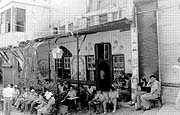
Fig. 7. Old Damascus: Café al-Nawfara. Photograph by Christa Salamandra.
Commoditized representations of Old Damascus are not limited to the Old City itself. Old Damascus theme restaurants and cafés have sprung up in the wealthier districts of the New City over the past decade. Noteworthy among these are recent additions to the Damascus Sheraton, the city’s most elegant hotel and favorite haunt of the city’s elites. Al-Narabayn, built on the hotel’s back grounds, is an upscale version of al-Nawfara, the popular café behind the Umayyad Mosque in the Old City. This establishment serves families and groups of teenagers coffee and tea and simple foods long associated with the poor, such as ful (fava beans) and fatta (a chickpea, bread, and yogurt dish), all at exorbitant prices. During the summer al-Narabayn moves outdoors, becoming al-Nawafir (a name again reminiscent of the popular Café al-Nawfara). The Meridien Hotel followed suit with Café Tric Trac, a two-tiered patio eatery decorated in mosaics and greenery, popular for water-pipe smoking and backgammon and card playing on summer evenings. Patrons pass away long hours, buffed, coiffed, and glittering in gold, talking and playing backgammon, seeing and being seen. Restaurants are uniquely intense people-watching sites. Unlike other leisure activities, such as cinema or theater, in which participants are afforded passing glimpses of fellow audience members, restaurantgoing provides a prolonged gaze of the other (Finkelstein 1989, 17). Tables are filled with al-mas’ulun—“the responsible,” the powerful and well connected.
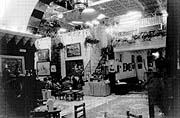
Fig. 8. The Omayyad Palace Restaurant. Photograph by Christa Salamandra.
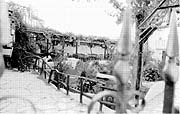
Fig. 9. The Sheraton Hotel: Café al-Nawafir. Photograph by Christa Salamandra.
The Sheraton has also replaced its elegant French restaurant with the “Oriental” Ishbilia (Seville). Here too the atmosphere is consciously “Eastern” right down to the waiters’ long waxed mustaches. On the night I visited, most tables were filled with Syrian men, many entertaining what appeared to be business associates. One table was composed of Syrian media figures. In 1986 the Sheraton invented a local tradition with its weekly Layalina, an outdoor, summertime, “Oriental” food and entertainment extravaganza that replaced the smaller and more expensive events at which French or continental food was served. This new event takes place around the hotel’s swimming pool, which, because of its long, grand staircase designed for bridal processions, is the most sought-after location for summer weddings.[6] Layalina is held on Monday nights because hairdressers in Damascus are closed on this day, thus limiting the likelihood that the Sheraton would lose wedding bookings.[7] In addition to a lavish “open buffet” of local specialties, a server in old-fashioned costume doles out falafel—a street food not habitually eaten in restaurants, let alone one of the Sheraton’s caliber—from a carriage like those once used in the Old City. Another serves sweets like those that used to be sold outside schools. All of these innovations were sound business decisions, according to the assistant food and beverage manager and service manager, Sami Farah. “People are fed up with classical European food,” he explains, “they want mezza, grills, and ‘araq.”
Yet the popularity of Old Damascus theme restaurants should not be seen as a rejection of the non-Damascene, the foreign and the Western. Instead, local culture is taking its place, self-consciously, among global cultures, with Café Tric Trac literally next to the Meridien’s Mexican restaurant and al-Narabayn next to the Sheraton’s pizzeria. Although the contrast between the eclecticism of the Piano Bar and the image of the Old City appears ironic, one of the markers of social differentiation in Syria is the ability to command both cosmopolitan and local idioms.
The increasing prevalence of Old Damascus simulacra also reflects the development of modernity through the growth of new leisure practices. Once an integral part of communal life, leisure activities are now separated from work, privatized, and commodified (Rojek 1995, 191). Restaurants are a case in point. Dining out has become the most popular pastime among the Damascene elite. Just two decades ago restaurantgoing was largely restricted to foreigners, travelers, and students.[8] Damascenes used to denigrate the quality and cleanliness of their eateries. Dining was a home-bound, family-centered activity. Now restaurants are central to the experience of past and present, near and far, seeing and being seen, being and becoming. They are the locus of a new local culture.
Restaurants and other cultural forms relatively new to the Middle East are sites at which tradition is reinvented. Here the concept of “public culture,” as developed by the pioneering journal of the same name, provides a useful framework. Studies of public culture are concerned with the local production and reception of transnational cultural forms, often in urban non-Western contexts. As Carol Breckenridge and Arjun Appadurai note, “Much of the non-Western world has now adopted forms of technological representation, consumption and commodification which are harnessed to the idiosyncrasies of their own traditions, and to the ways in which indigenous elites reconstruct these traditions” (1988, 1). I would add that what is occurring in Damascus is not mere synthesis of local tradition to Western form but the very construction of the local. While identity construction involves consumption of cosmopolitan cultural forms, these are locally produced and locally transformed.
Television is the most easily available of these forms. During the first half of the fasting month of Ramadan in 1993, Syrian television aired a fifteen-episode serial drama entitled Ayyam Shamiyya (Damascene Days), directed by Bassam al-Mallah. This series, said to be inspired by Egypt’s successful Layali al-Hilmiyya (Hilmiyya Nights), was the first to depict social life in Damascus in the late Ottoman period (1910).[9] It is also said to be the first such program without a strong plot, and with politics as a backdrop rather than the central focus. Damascene Days attempted to portray daily life in an unnamed Old City quarter, concentrating on family relations, problems between neighbors, and local administration. Customs and traditions associated with rites of passage were carefully depicted.
Damascene Days was clearly the media event of the year. It is difficult to overestimate the extent to which the series was watched and discussed. Most Damascus homes receive only two television channels: Channel 1, which aired the series, and Channel 2, which broadcasts foreign-language programs.[10] Syria produces many low-budget serial television dramas each year, but showpiece productions are aired during Ramadan.[11]Damascene Days was shown during what might be called Ramadan prime time, one hour after the beginning of iftar, the fast-breaking meal. It is a time when most people relax at home with their families, digesting the first food of the day. Television sets were tuned to the series even in the presence of large numbers of guests. Damascene Days sparked lively debate in the media and in conversation. Syrian Television also aired a two-hour discussion, filmed in an Old Damascene house, with all those involved in the production.
Assessments of the series were generally split along predictable lines: people with Damascene origins themselves were enthusiastic, whereas non-Damascenes’ reactions ranged from mild disinterest to fervent opposition. Most debates centered on the issue of authenticity. Critics argued that the series sanitized and romanticized life in the Old City, glossing over or collapsing social and economic differences. In Damascene Days both merchant and hummos seller have mother-of-pearl–inlaid furniture, and all characters are positively drawn, save the brutal but buffoonish Turkish soldiers. It was even argued that the Turks, who appear only briefly to hunt down a fugitive and to rape the sandwich seller’s daughter, should have been portrayed more harshly. Supporters stressed the authenticity of the dialogue, which was rich in archaic idiom; of the decor, which showcased inlaid furniture and other local products; and of social customs, such as those connected to marriage. As for the supposed neglect of class distinction, fans of the series argued that social differences at this time were in fact less accentuated than they are now.
Old Damascus once again occupied Syrian Television’s post-iftar slot during Ramadan 1994, in ‘Ala’ al-Din Kawkash’s thirty-episode series, Abu Kamil, Part Two. Set in an Old City quarter during the last days of the French Mandate, this unsuccessful sequel to the popular Abu Kamil was heavily criticized in many circles, but particularly among Damascenes. Most thought it drawn out, outlandish, and dull. Unlike Damascene Days, which presented an Old City quarter galvanized against the Turks, Abu Kamil, Part Two depicted Damascenes as traitors who collaborated with the French and fought among themselves. Another series broadcast in a later slot, Najdat Isma‘il Anzur’s Nihayat rajul shuja‘ (The End of a Brave Man), showed the people of Baniyas, a coastal city, struggling together against French forces. Based on a novel by the acclaimed Syrian author Hanna Mina, The End of a Brave Man won high praise in many circles for its tight plot and high production value but also for its depiction of a valiant and noble past, in which everyone was unified.