
Part I: Aghas and Hodjas
The Republican District of Of
1. Amnesia
Clan-Society and Nation-State
A First Account of Arrival and Discovery
In August of 1965, during my first trip to Turkey, I was traveling by minibus eastward along the coastal road from Trabzon, hopping from town to town, taking first one van and then another, intending to reach Rize by the evening. Sometime after noon, taking advantage of a stop at the small town of Eskipazar in the district of Of, I decided to have lunch in a restaurant that catered to the travelers making bus connections in the market center. Just as I had begun to relish a dish of chicken pilaf, the room fell silent as several men, some of them dressed in suits and ties, abruptly rose from their chairs, standing at attention as though soldiers presenting themselves to a commanding officer. An elderly bearded man who had just then entered the room with a perfunctory greeting motioned to the men to sit and then ordered two of the waiters to carry a suitcase and a millstone from the nearby market to a minibus that he was about to board on his way to Trabzon. The waiters followed him from the restaurant to do his bidding while the patrons, having taken their seats again, resumed eating and talking as before.
Impressed that someone without any apparent official standing would be accorded this kind of deference in a public place, I decided to return to the district of Of as soon as I had finished my tour of the eastern Black Sea coast from Rize to Hopa. When I did so a week or so later, I was able to question a university student whom I had met in one of the coffeehouses in the town of Of. After describing the scene in the restaurant, my acquaintance was able to explain to me exactly what I had seen. He told me that the elderly bearded man and all the other men who had risen to salute him would have been members of the same large family grouping, as was most of the population in the vicinity of Eskipazar. The older man, whose identity he was able to guess, was one of the more prominent elders (büyüklerinden) of this family. The younger men had stopped eating and talking and stood at attention as a sign of their respect (hürmet ediyorlardıı) for a senior relative.[1] Some of them might have been his own sons or grandsons, but others would have been more distant junior agnates (amcaoğlu).
I expressed surprise that the majority of the residents near a major district market consisted of a single kin-group composed of many households. My host, who was not displeased by my reaction, explained that this situation was not at all remarkable. The majority of the population in the vicinity of the town of Of, where we sat, also belonged to a second large family grouping. Each of the two families consisted of hundreds of households, and each was concentrated around one of the two small coastal towns of the district. Moreover, the members of these two families dominated the public life of the two little towns. As my acquaintance explained it, leading individuals from the two families had, by virtue of the support of their numerous kinsmen, monopolized all the higher official positions that were open to locals in each town. Except for a certain number of district state officials, the heads of municipal government, agricultural cooperatives, nationalist associations, and political parties were drawn from one of two large family groupings, the Muradoğlu in the town of Eskipazar and the Selimoğlu in the town of Of.[2]
As our conversation continued, my host told me that the two families had been in a dominant position in the district as far back as anyone could remember, that is to say, for well over a hundred years. Throughout the final decades of the Ottoman Empire, they usually monopolized the higher official positions open to locals. More often than not, they were able to intimidate, if not coerce, local representatives of the provincial government. After the declaration of the Turkish Republic, the two families were set back politically for only a few years. Toward the end of the one-party system, from 1945 on, leading individuals from the Muradoğlu and Selimoğlu rose in prominence through participation in political parties. Now, the two families were fierce rivals with one another, each aligned with a different national political party and competing against the other to bring government projects to Eskipazar and Of, respectively. The "Oflus" (native residents of the district), as well as the district state officials who served among them, were more or less resigned to the fact that members of the two families would dominate public life in the district. Some considered this situation a kind of scandal, running counter to the democratic principles of the multiparty period, but no one expressed such an opinion openly.
I wrote down a summary of the remarks of my coffeehouse acquaintance with a sense of excitement. I had stumbled upon a situation that posed exactly the kind of questions on which I had intended to focus my research. When I came to the Turkish Republic as a graduate student in anthropology, I had been interested in understanding how local tradition had played a role in shaping the course of economic and political modernization. I was searching for a site, preferably a district center, where I could study these two sides of everyday provincial life. I had the idea that interpersonal relationships in villages and towns had not been transformed by the nationalist movement to the same degree as in the major cities of the Turkish Republic. Presuming that the Ottoman Empire had left most localities to fend for themselves, I expected to discover a rich variety of local social and cultural systems.
I was therefore anticipating that townsmen and villagers had responded to the nationalist project of state modernization in different ways, and I was hoping to demonstrate that local traditions were sometimes the basis for both positive and negative engagements with modernity. I had been specifically attracted to the eastern Black Sea coast by the reputation of its inhabitants. They were said to be unusually conservative in their social relations but nonetheless successful as officials, professionals, and entrepreneurs.
In the district of Of, I had now encountered just the profound contrast between a local tradition and state modernity for which I had been looking. An "order" of a social system, consisting of leading individuals from large family groupings, could be clearly differentiated from an "order" of the nation-state, consisting of representative government, state administration, and public associations. By this distinction, the elites of a local social order had succeeded in infiltrating the new national order. These elites, whose conduct of social relations was apparently conservative, familial, and religious in orientation, dominated a public sphere that was in principle reformist, nationalist, and secularist in orientation. The district of Of therefore seemed an excellent place for a study of the way in which local social formations had adapted themselves to state projects of political and economic modernization. Using the methods of anthropology—the ethnographic study of interpersonal relationships—I could hope to uncover the limits of "top-down" reforms that a study of government policies and institutions could not easily detect. From the outset, I had assumed the existence of two separate but interacting orders at the local level: a traditional social system and a modern state system.
A Social System Divided from the State System
What I had observed as the result of an incidental stop for lunch would not have ordinarily come to the attention of a passing traveler. Normally, there was nothing to be seen or heard in either the market of Eskipazar or the town of Of to indicate the dominant position of the Muradoğlu and Selimoğlu. It was not openly announced by any kind of sign, building, or plaza. The town of Of, where I was eventually to conduct my fieldwork, actually offered a strong first impression of the new state rather than the old society. By the design of its streets and squares, and by the appearance of its offices, shops, and residences, this was a town of the Turkish Republic, even more so than its counterparts elsewhere in the country.[3] Forty years earlier, when the Ottoman Empire came to an end, it was hardly a town at all.[4] Its public spaces and structures, most of which had come into being since that time, were therefore almost entirely the creations of the new nation-state. Some body of state officials and experts, probably in Ankara, had devised a definition of what a Turkish town should be. The town of Of, such as it was during the summer of 1965, conformed to this nationalist canon far more perfectly than other Turkish towns, some of which were cluttered with Ottoman, Seljuk, Byzantine, or even Roman leftovers.
What first struck the eye of a casual visitor was therefore very much a "republican" town (see fig. 1).[5] There was a new government building (hükümet), designed in a spare modernist style and larger than any other building. Here, a district officer (kaymakam), two district judges (hakim), and a district prosecutor (savcıı), none of them natives of the district, conducted their affairs and received visits from citizens. A large central square (meydan) had been laid out before the government building for the purpose of national commemorations and ceremonies. A bust of Mustafa Kemal (Atatürk) was located at the center of one side of this square, always to be seen looking to the west—and so, specifically, not to the east. On national holidays, state officials, local worthies, military bands, schoolchildren, and villagers assembled in the square before the bust in order to pay homage to the founder of the Turkish Republic.
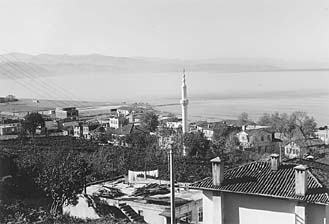
Figure 1. View of the town of Of.
With the government building and central square as its center, the town spread out along the coastline. To the west, where the small nucleus of a late Ottoman town had been laid out around the turn of the century, the grid of streets was more compact, but the roads were still rectilinear rather than winding and irregular. Most of the shops, workshops, and warehouses of the town were located here, as well as most of its coffeehouses, hotels and dormitories, and restaurants. To the east, two wide avenues ran parallel to one another, interspersed with vegetable gardens and citrus groves. The residences of officials, the gendarmerie and military posts, the primary and secondary schools, and the public health and social services agencies were all located here.
The town was centered around the government building and central square, the administrative and ceremonial spaces of the Turkish Republic. By the arrangement of the two, which had been determined sometime around the early 1930s, one could detect the principle that had inspired the Kemalist one-party regime.[6] Although barely a stone's throw from the coastline, the government building and central square had been oriented landward rather seaward, so that they were facing away from a spectacularly beautiful vista. Given the sensitivity to architectural siting and views in Turkey, the pair of them seemed to insist, "We do not represent the people of this district to the world so much as we represent the central government to the people of this district."
Such a reading of the town plan is more simplification than exaggeration. From the later 1920s, the Kemalist leadership of the nationalist movement had faced the difficult task of transforming a citizenry of Ottoman Muslims into a citizenry of Republican Turks. To do so, they encouraged a certain degree of popular participation in various kinds of governmental and nongovernmental organizations. In this way, a new kind of public life would be propagated, one based on republican rather than ottomanist principles. All these governmental and nongovernmental organizations had always been subject to official regulation, even closure and banning. Nonetheless, resident state officials did not have direct control over a certain number of genuinely public organizations whose numbers and functions had gradually multiplied over the first four decades of the Turkish Republic.
The most important of these public organizations, in terms of their services and their financing, were the municipal government and four agricultural cooperatives.[7] Just to the west of the central square, toward the older section of town, the municipal government was located in a new concrete building, along with the water, electric, and telephone utilities. The town mayor and council, who had their offices there, were residents of Of and natives of the district. They had assumed their posts after facing other candidates in free and open elections. Elsewhere in the older section of the town, the four agricultural cooperatives maintained separate offices and warehouses. They consisted of a loan cooperative for purchasing agricultural tools and supplies, founded in the 1930s; a cooperative for hazelnut producers, founded in 1942; and two cooperatives for tea growers, founded in 1955 and 1965. Each of the four agricultural cooperatives had a director, councilmen, membership rolls, annual meetings, and a written constitution. The director and councilmen were elected by the membership from a list of nominees during the annual meeting. The elections, which were by secret ballot, were observed by government inspectors, who ratified the results. The membership of each cooperative varied from somewhat fewer than a thousand to more than two thousand, and the annual budget of each varied from about a half million to more than two million Turkish lira, a very considerable sum of money at the time.[8]
In addition to the municipal government and agricultural cooperatives, there were also a number of local branches of national public associations. Most of the latter had first been organized in the larger cities during the early years of the Turkish Republic with the express intention of facilitating, but also guiding, popular participation in political, cultural, and charitable activities. Each branch office had appeared in the district of Of not long after the association's founding at the national level. The Republican People's Party (Cumhuriyet Halk Partisi) had been founded by Mustafa Kemal (Atatürk) in 1922, shortly before the declaration of the Turkish Republic. The RPP had a chairman in the town of Of no later than 1927, and probably several years earlier than that.[9] The People's Houses (Halkevleri), which were directly linked with the RPP, were culture clubs for the promotion of local history, folklore, music, and literature.[10] First founded in Istanbul in 1924, the People's Houses had established a local branch in Of no later than the 1940s, and probably by the 1930s. It had become defunct when the national organization was closed down by the government in 1951.[11] The Turkish Air Association (Türk Hava Kurumu), founded on the national level sometime after 1922, was in existence in the town of Of by 1925. This association collected contributions—principally the hides of sheep sacrificed during the annual religious festival (Kurban Bayramıı)—for the building of a national air force. The Red Crescent Society (Kıızıılay Cemiyeti) raised relief funds for victims of disasters. There was a local branch during the 1940s, and probably by the 1930s. The Primary and Middle School Parent-Teacher Associations (ıılk Okul/Orta Okul Aile Birliği) were in existence by the 1940s. They had a chairman who called an annual meeting at least once a year to discuss issues regarding the schools. A local branch of the Small Businessmen's Association (Küçük Esnaf Derneği) was organized in the town of Of in 1966, soon after it was first founded at the national level. Its officers managed a loan fund for the promotion of small businesses.
Like the municipal government and the producer cooperatives, most of these local branches of national organizations were supposed to manage their affairs according to a written constitution that had been legally approved and registered. Their membership was to elect a chairman and councilmen during an annual assembly in accordance with prescribed procedures. Their officers were to maintain a membership roll, keep a record of dues paid, announce meetings, conduct open discussion, and so on.
The municipal government, the producer cooperatives, and the local branches of national associations were therefore in principle the means by which private individuals in the town of Of were able to participate in the public life of the Turkish Republic. During the period of their existence in Of, their directors, councilmen, and membership were almost always composed of natives of Of who were not themselves state officials. And yet, popular participation in the public life of the town was certainly not in any way free and open.
At the time of my arrival, the top officer of every public association in the town was a member of the Selimoğlu family. This included the mayor of the municipality, the headman of the central municipal quarter, the directors of the four producer cooperatives, the chairman of the Republican People's Party, the chairman of the district Turkish Air Association, the chairman of the district Red Crescent Association, the chairman of the Parent-Teachers' Associations, and the chairman of the Small Businessmen's Association. As for the councilmen and committeemen in these same public associations, they included a few more individuals from the Selimoğlu, but for the most part consisted of their friends and allies, many of whom were the members of other large family groupings. As I was eventually to learn, this situation was not at all transitory. The monopoly of the directorships and chairmanships by the Selimoğlu, together with their support by other associated large family groupings, spanned many years, going back to the first two decades of the Turkish Republic.
At first it seemed that this situation was not altogether surprising or unusual. Since a majority of the residents of the town may have had the same surname, onecould expect most officeholders would be selected from the Selimoğlu. Similarly, one could also explain the large proportion of the members of other large family groupings who appeared as councilmen and committeemen. Nothing more than the common tendency for voters to support their relatives, whether close or distant, would have probably produced such a result. But once I was able to determine the exact identity of the directors, chairmen, councilmen, and committeemen, it was clear that the pattern was no simple artifact of a normal electoral process.
With only one exception, all the individuals who served as directors or chairmen in the town of Of were the sons or grandsons of one man, so they were not at all randomly selected from among all the qualified members of the Selimoğlu family (see fig. 2).[12] Ferhat Agha Selimoğlu (c. 1860–c. 1931) is remembered as the last preeminent public figure of the old regime in the town of Of. In the 1960s, during the fourth decade of the Turkish Republic, the sons of the eldest son of this one man held the top office in as many as seven different public associations at the same time. The officeholders in the town of Of appeared to be the "dynastic successors" of the last "reigning" member of the family during the late Ottoman Empire.
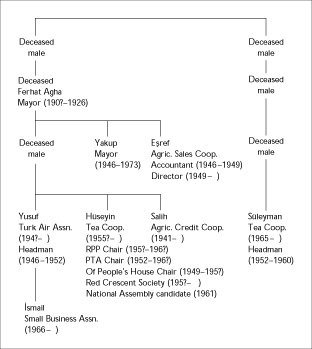
Figure 2. Prominent sons and grandsons of Ferhat Agha (c. 1960s).
Members of other large family groupings were similarly predominant among the councilmen and committeemen. These individuals came from large family groupings that were not necessarily settled in or even near the town of Of. They appeared as councilmen and committeemen by virtue of some kind of friendship or partnership among large family groupings, not as a consequence of the voting preference of an organized membership. So it appeared that the public life of the town, although not directly subject to state officials, was nonetheless under the strictest supervision by some other kind of authority.
A variation on the same pattern prevailed in the vicinity of Eskipazar, which was dominated by leading individuals from the Muradoğlu. This area was little more than a marketplace with some shops, warehouses, coffeehouses, and dormitories. Although it was not a subdistrict and had not yet been incorporated as a municipality, producer cooperatives and nationalist associations were appearing in Eskipazar just as they had earlier in Of. Moreover, the Muradoğlu had recently been far more successful than the Selimoğlu in bringing government installations and factories to their area. So the vicinity of Eskipazar was on its way toward becoming an ostensible "republican" town, rivaling the ostensible "republican" town of Of.[13] In effect, the formation of public institutions and organizations in these "republican" towns was working through the rivalries of leading individuals from the Muradoğlu and Selimoğlu. These were towns where popular participation in public life was not so much under the regulation of the state system as under the regulation of a social system internal to the district of Of. Or so it seemed to me during the first period of my fieldwork.
The Ethnographic Analysis of a Clan-Society
Soon after my return to the district in 1966, I began to consider how best to understand the Selimoğlu and Muradoğlu as local social formations. I was more or less familiar with the state system, because the ideology and institutions of the Turkish Republic had been studied so thoroughly, but I did not know anything about the social system that had come to my attention in the district of Of, since I had read of nothing like it in the anthropology of Turkey. So I eagerly set about to define and analyze what I considered to be my anthropological discovery.
Although the Selimoğlu and Muradoğlu were the most prominent family groupings in Of, they were but two of many other similar family groupings in the district. The names of these family groupings were always constructed in the same way. The names of large family groupings are composed of the putative personal name, attribute, or title of an ancestral father (never a mother) plus a suffix, "öğlu," which means "son of" (never "daughter of"). So, for example, Selimoğlu and Muradoğlu can be translated as "the son(s) of Selim" and "the son(s) of Murad," respectively.[14] These names can therefore be described as patronyms. They refer literally and narrowly to groups of agnatically related men (not their mothers, daughters, or wives) who are conceived to be the descendants of a single individual. These groups of agnatically related men can be described as patronymic groups.[15]
Before the adoption of official "Turkish" surnames some years after the declaration of the Turkish Republic, patronyms of the type described were very common in the coastal districts that had comprised the old province of Trabzon, all the way from Batum to Ordu.[16] Probably most men (but not any women) identified themselves with a patronym that signified their membership in a patronymic group.[17]
The prevalence of patronyms as well as the salience of patronymic groups was a regional peculiarity. In other parts of rural Turkey, groups of agnatically related males often designated themselves by a nickname, but they did not consistently take the form of a patronym. Correspondingly, the nicknames for descent groups, so common elsewhere in rural Turkey, did not have their counterparts in most of the eastern coastal districts of the old province of Trabzon.[18] This was an odd contrast that had never received any attention but that seemed significant, given my interest in local variation and diversity. I began to consider the patronymic group as a local social formation more or less distinctive of the eastern Black Sea coast without any exact equivalent in other parts of the country. There was other evidence that this might be the case.
The patronymic group was called an "akraba" in the district of Of as well as in neighboring districts to the east and west. So, for example, my interlocutors sometimes spoke of the Selimoğlu or the Muradoğlu as an akraba. Sometimes, however, the word was used in a different way, so that it had a more inclusive meaning. Instead of referring only to the males who comprised a patronymic group, the term "akraba" referred to all the patriarchal households (hane) of a patronymic group. In this case an akraba took the form of a "great patriarchal family," which included men, women, and children. All these usages, like the patronyms themselves, were peculiar to the eastern coastal districts and not at all typical of Anatolia.[19] I concluded that the patronymic groups could be appropriately described as "clans." This term, which correctly pointed to their qualities as bounded patriarchal collectivities, was a move toward a certain theory of the division of society and state, as we shall see.
On the basis of more or less random inquiries, I estimated that the large majority of clans ranged from ten to fifty households.[20] The residences of such ordinary clans were usually territorially grouped within a village, so that they extended across a hillside or along a ridge. Otherwise, the prominence and population of clans varied enormously. About a score of the dominant clans were very much larger than the average, so that they comprised more than a hundred, and sometimes several hundred, households.[21] These larger clans sometimes made up virtually the entire population of the quarter (mahalle) of a village or even an entire village (köy). In a few instances, the very large clans comprised the population of two or three villages. During the 1960s, I estimated that the score of very large clans represented a minimum of 15% to 20% of the total district population.[22] So a major proportion of the entire population belonged to a very large clan (akraba). Taken together, these large clans were significant social and political factors in the district, if for no other reason than their sheer numbers.
I concluded that I was confronted with a "clan-society." The local social order took the form of a political system altogether independent of the national order. Almost every male in the district of Of recognized his attachment and loyalty to a clan. This suggested that membership in a clan was the basis of personal and familial security.[23] The size of a clan was correlated with its social and political prominence. This suggested that large clans had dominated small clans on the basis of force and numbers.[24] Two of the very largest clans appeared to have subverted the public life of the nation-state in the marketplace of Eskipazar and the town of Of. This suggested that these two large clans were able to face down provincial state officials responsible for regulating local public institutions and organizations.
If all this was correct, I could apply, or at least adapt, existing anthropological theories to the clans in the district of Of. These theories proposed that concepts of unilineal descent could provide the basis of a political system among peoples who otherwise lacked centralized government.[25] By simply historicizing these theories, which were synchronic rather than diachronic, I could argue that a principle of agnatic solidarity would be reinforced if a state system weakened or failed. Given concepts of kinship that favored patrilineal descent, near agnates would have become the first line of political identity and support during times of insecurity. This would explain why almost all the males in the district of Of had become members of patrilineal descent groups (clans) at some time during the post-classical imperial period.[26] Furthermore, these theories would also explain why groups of agnates, that is, the members of different patrilineal descent groups (clans), would unite with and divide from one another. The members of each clan would look for allies in order to protect themselves from enemies, and they would generally find these allies among more distant clans, rather than among neighboring clans, who would be their nearest competitors. By this logic, a checkerboard pattern of clan alliances and oppositions could be expected to emerge during conditions of insecurity. Such a pattern would constitute a political system based on the principles of balanced opposition and lineage mediation. When a dispute or conflict occurred, two broad coalitions of clans would oppose one another. The resulting stalemate would force a resort to political settlement that would be worked out by mediators who wereoutsiders to the clan-society. The return of centralized government would be understood by all the clans as an assault on the broad range of their mutual agreements and arrangements. The two coalitions of clans could therefore be expected to have come together to resist interference in their local affairs by state officials.
Such an analysis seemed plausible in consideration both of the facts I was assembling and of the explanation of those facts by my interlocutors. I decided to focus my research on the two clans that seemed to be the key to the local political system. The results of my initial findings were encouraging.
The Selimoğlu and Muradoğlu were among the largest of all the clans in the district of Of. I was eventually able to arrive at a good estimation of their population and location in each of the two valley-systems that comprise the district (see map 1):
The Muradoğlu are reported to consist of about 700 households or about 4,000 individuals. Most of these people are settled in three villages at the foot of the eastern valley-system. These villages are set in the midst of the more prosperous agricultural region in the district, especially so after the introduction of tea cultivation. The leading individuals of this group dominate the nearby market town of Eskipazar, where they are estimated to constitute 80% of the population.
Map 1. Lands of Rize, Of, and Süreme (c. 1923)The Selimoğlu are reported to consist of about 350 households and 2,000 individuals in two different areas. One group is settled in their "home" village about 20 kilometers up the western valley-system. A second group is settled in and around the town of Of, which is the district center, an incorporated municipality, and the most extensive market. The leading individuals of this group dominate the municipality where they are said to constitute a majority, but no more than 60%, of the population.[27]
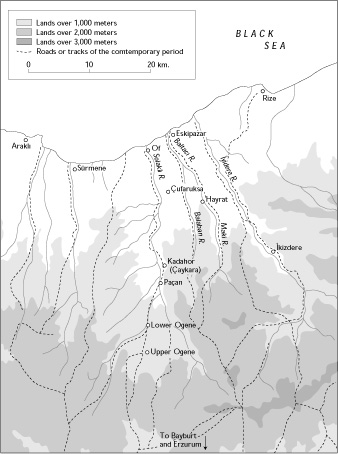
These two clans were preeminent among all the larger clans because of their strategic coastal locations. Many of their households were concentrated near the shoreline at the foot of each of the two valley-systems that comprised the district. Here, leading individuals from each of the two clans were in a good position to serve as intermediaries between the district population and outsiders. Officials, merchants, and travelers inevitably came under their surveillance, whether they landed on the shore, traversed the coastal tracks, or descended the valley-systems. About a score of other very large clans, scattered throughout the lower reaches of the eastern and western valley systems, had also dominated their vicinities at some time in the past, just as they continued to do in the present. They, too, were located near a point of commercial significance, such as a marketplace, a trade route, an anchorage, or a pass. All claimed a kind of social, if not political, ascendancy over the smaller clans who were their neighbors.
The members of all these large clans were said to be mutually associated by partnership, friendship, and marriage. For example, my interlocutors would say that the Muradoğlu or the Selimoğlu were allied to (çok yakıınıız), related to (hıısıımlıığıımıız var), or friendly with (dostuz) this or that other group. Some claimed that the large families were grouped into two district-wide coalitions, separately led by the Selimoğlu and Muradoğlu, that competed for social honors, government influence, and control of public affairs. The leading individuals from the large clans in the district of Of also had close relationships—by marriage, friendship, or partnership—with leading individuals from large clans in the districts to the west and east of Of. These relationships were mutually exclusive, so that the families in other districts allied to the Selimoğlu would be rivals of those allied to the Muradoğlu. Some of my respondents claimed that there had long been a patchwork of competitive coalitions that ranged up and down the coast. There were also indications that this might have still been the case in the eastern Black Sea districts during the 1960s.
Eventually I began to encounter evidence that the clan-society was associated with competitive displays of force and numbers. During my first visit to the district of Of, when I was still a bachelor, my acquaintances in the market of the town sometimes invited me to their residences in the mountain villages just beyond the town. On one of these occasions, late in the morning on a warm summer day, a series of distant explosions began to reverberate through the mountain valleys. When I asked my host what this could be, he said matter-of-factly that it was a marriage (düğün), as though this were a sufficient explanation. Seeing that I still did not understand, he promised me a demonstration. After leaving for a moment, he returned with what appeared to be a small mass of dough and invited me to come outside, into the garden. There he placed a fuse into the dough, lit it with a cigarette lighter, and flung it into the brush. A few seconds later there was a deafening explosion. After my return to Of the following year, I was able to witness the fetching of the bride that takes place at one point in the celebration of a marriage. If the groom and the bride come from different villages and different families, the bride-takers would organize a caravan of supporters equipped with firepower.[28] Cars, trucks, and buses were assembled to transport the scores, and sometimes hundreds, of individuals who might participate in such an event. There were always at least a few women in one of the cars to assist the bride on the return trip, but the remainder of the celebrants was men. As such a caravan proceeded on its way to fetch the bride, other villagers, who were not part of the festivities, would venture to test the resolve of the bride-takers by barricading the roadway with fallen trees or piles of stones. If the caravan traveled along a major highway, oncoming trucks and buses might suddenly swerve across the tarmac in order to bar the passage of the bride-takers.[29] Even the gendarmerie would sometimes attempt to stop the caravan if it passed near one of their guard posts.[30] In each instance, the groups who blocked the road would demand money before they agreed to allow passage. Only the bravest of souls had the courage to challenge a caravan of bride–takers, since these groups were usually heavily armed with pistols, rifles, and explosives. As a caravan left the main road and climbed into the mountain areas, gunfire and explosions would break out. When the caravan arrived at the village of the bride, the men descended from their vehicles and advanced upon the house of the bride with more gunfire and more explosions, like a skirmish line advancing against the enemy. After taking the bride from her house, the caravan then made its return, again with a noisy manifestation of numbers and force.
The fetching of the bride seemed to confirm that a clan-society, based on masculine solidarity and military power, existed alongside the nation-state. Moreover, these two principles appeared to be deeply ingrained in masculine personal identity, hence, something more than a quaint way of celebrating a wedding. The preoccupation with firearms along the eastern Black Sea coast had come to my attention during the first days of my second residence in the district of Of in 1966. I had been obliged to go to the provincial capital, the town of Trabzon, in order to apply for a residence permit. When I arrived there late in the day, I found a harried clerk who was anxious to leave the office and did not want to hear my business. He brusquely waved me away saying, "No more gun permits today, come back tomorrow." The clerk was unaccustomed to foreigners applying for residence permits, but all too familiar with citizens who somehow felt it necessary to carry guns. I soon became aware that more than a few of my acquaintances in the town of Of carried handguns underneath their suit jackets, such that they could be glimpsed when they leaned forward to tie a shoe or pick up a dropped key. Miraculously, these concealed firearms always vanished during the periodic sweeps of the coffeehouses by the gendarmerie, and they were rarely discovered and confiscated. When I asked my acquaintances who carried concealed weapons why they did so, they said they were obliged to do so because they had enemies (düşman), as they also had friends (dost). The carrying of firearms was then an artifact of a local social order in which individuals were politically allied to some and politically opposed to others.
The local social order of a clan-society, nowhere written into law, was incompatible with the national order of state officials and public associations. The two orders referred to two incompatible kinds of sovereign power, one nonofficial, based on force and numbers, the other official, based on legal procedures and judicial enforcement. By state law, one was not allowed to parade along streets and roads in large numbers firing off weapons and tossing dynamite. One was not allowed to carry a gun in the district of Of or anywhere else in Turkey without a permit. The local social order was thereby divided from the state order. Or so I presumed during the first period of my fieldwork.
The Clan-Society Belongs to the Past, Not the Present
I have described a path of investigation inspired by my notion of a clan-society divided from the state system. But all along, this direction of my fieldwork had been faced with an unresolvable difficulty. I could not really locate a system of rights and duties that was uniquely linked with the clans, the sine qua non for the anthropological theories to which I was appealing. The patronymic groups were not associated with either a rule of marriage, an obligation to give or receive bride-price, the taking of vengeance, or the payment of blood money. Even the fetching of the bride was not really an occasion when a bride-taking clan was opposed to a bride-giving clan. The armed participants were largely composed of individuals from many patronymic groups, some related and some not related to the groom's patronymic group. So the fetching of the bride only demonstrated a connection of military power with broad social formations, but not with bounded patriarchal collectivities.
Ultimately, I had to qualify my concept of a clan-society in the district of Of with a series of negative conclusions. The patronymic groups in the district of Of lacked the minimum attributes by which anthropologists had defined a political system based on unilineal descent groups. I duly drew up a list of the essential "missing" features:
- Assembly and Ceremony. The members of a patronymic group did not assemble on any occasion or unite for any collective purpose. They did not observe any distinctive ceremony associated with their common descent, either separately or collectively.
- Property or Territory. The members of a patronymic group did not have a mutual share or claim to any property or endowment. Some large family groupings were associated with specific vicinities, but neither patronymic groups nor any of their constituent patrilines claimed collective ownership over a demarcated territory.[31]
- Vengeance Obligations and Blood Money. The members of a patronymic group did not collectively recognize any obligation to take vengeance for an injury or insult that was inflicted by an outsider on one of their agnatic relations. They did not collectively pay or accept blood money on the occasion of a homicide involving one of their agnatic relations.
- Marriage Rule and Bride-price Payments. The members of a patronymic group were not obliged to consult with agnates about marriages or to follow any kind of endogamous or exogamous marriage rule. They did not collectively contribute to the bride-price paid by a member of their patronymic group. They did not collectively receive a portion of the bride-price received on the occasion of the marriage of a daughter of a member of their patronymic group.
- Mediators. There were local specialists in the sacred law of Islam who could be considered outsiders to the clan-society. They were often consulted on matters of religion by individuals and families, but there were no reports that they served as mediators on the occasion of conflicts among clans.[32]
In the absence of collective institutions or organizations, the patronymic groups could not be represented by specific individuals, could not support or challenge one another, and could not enter into collective contracts and agreements. This being the case, the clans did not comprise a political system in their own right. This meant that I had failed to discover how the Selimoğlu and Muradoğlu had dominated the public life of the district. Given this difficulty, I turned to a strategy of anthropological reconstruction. The patronymic groups in the present must be but a pale reflection of a more structured and institutionalized clan-society in the past. Once upon a time, when the authority of the central government was either weak or absent, there must have been a clan-society in the eastern coastal districts. Now its shadowy legacy continued to distort and subvert the institutions of the nation-state. As my theory of a social order divided from the state order was seriously mistaken, one might have expected that such a study of history would immediately reveal the flaws in my thinking. On the contrary, my errors were reinforced and compounded by the sources available to me.
Aghas and Clans
Questioning my acquaintances in the town of Of, I began to piece together a picture of leading individuals from large family groupings during the late Ottoman Empire. Since it appeared they had been even more socially prominent and politically powerful at that time, I assumed the local social order had been more assertive during the old imperial regime than during the new nationalist regime. The leading individuals from large clans, I was told, had then been locally accorded the title "agha" (ağa) and had played a significant role in governing the district of Of.[34] Some of my interlocutors believed that the backing of a large clan was necessary for someone to qualify as an agha, and, consistent with this presumption, they designated those large families that had once been the base of their support as "agha-families" (ağa akrabasıı). Some of my interlocutors in Of also spoke of "the time of the aghas" (ağa devresi), when aghas from agha-families had been able to defy state officials and rule segments of the district as their personal possessions. During this period, they levied and collected taxes, assembled soldiers, arrested lawbreakers, and imposed forced labor.
Accordingly, my interlocutors also said that the aghas in the district were at loggerheads with officials from Trabzon, but they inconsistently described the confrontation of the two. Sometimes it would be said the aghas had protected the people from rapacious state officials always eager to raise more troops and more funds. At other times it was said that state officials had protected the people from the aghas who imposed illegal taxes, seized fertile lands, kidnapped women, and suppressed opponents. I was easily able to reconcile these inconsistencies in terms of a division between two separate political systems, one a social order based on patrilineal descent groups and the other a state order based on administrators, police, courts, and laws. Each of these two political systems could lapse into its own peculiar version of exploitative subjection. The tyranny of the agha was warm and familiar while the tyranny of the official was cold and formal.
The "Five" and "Twenty-Five" Parties
When speaking of the old days, some respondents recalled a definite structure of rivalries and alliances in the district of Of as well as elsewhere in the old province of Trabzon. My interlocutors also recalled two opposed hierarchies of aghas in the district. A greater agha of the Selimoğlu and a greater agha of the Muradoğlu were said to have been preeminent along the western and eastern coastlines, respectively. Other lesser aghas, distributed in checkerboard fashion through the western and eastern valley-systems, aligned themselves with either the agha of the Selimoğlu or the agha of the Muradoğlu. Just as the latter were personal rivals, so the two networks of aghas saw themselves as rivals with one another. These personal rivalries and alignments extended to their supporters to include all the members of their respective clans. Moreover, all the aghas also had allies and partners among the prominent members of ordinary clans, who were also supported by all the members of their clans. So the two networks of aghas and clans, opposed as factions, included many, perhaps most, of the individuals and families in the district of Of.
My interlocutors also said that these hierarchies had once formed two "parties" (fıırka) in the district during the time of the aghas, one designated "Five" and the other "Twenty-five." Each party had a kind of coat of arms (arma) that was carved on a wooden slate marked by the number five or twenty-five and placed near the fireplace in the house. The two parties are thought to have been led by the aghas of the Selimoğlu and Muradoğlu but included many of the individuals and families throughout the two valley-systems. The presence of coat of arms markings on the fireplaces of old houses, even those belonging to ordinary households, confirmed extensive participation in the Five and Twenty-five parties.[35] According to one interlocutor, a man's personal relationships were directly determined by membership in one or the other party. If a man visited a house and saw the coat of arms of the other party, he politely said goodbye and went on his way. To illustrate this legacy, an acquaintance of mine, born in the early twentieth century, was able to draw up a list of the names of the clans that had been associated with the Five and Twenty-five parties at some time during the nineteenth century.[36] He recorded fifteen family names under the Selimoğlu, the Five Party, and six family names under the Muradoğlu, the Twenty-five Party.[37] He was of the opinion that a pattern of marriages, friendship, and partnerships among the members of all these clans still followed the lines of their membership in the Five and Twenty-five parties.[38]
I was pleased to discover that a local historian of Of had described the old social system in terms that almost exactly fit my suppositions. Hasan Umur (1880–1977) had been born early enough to hear first-hand reports of the period when the authority of the central government was either weak or absent. In one of his books he argued that the aghas, clans, and parties constituted an alternative political system. According to Umur, this system first arose with the breakdown of central government in the 1200s (1785–95). This was the "time of the aghas" (ağa devresi), which continued until the end of the 1240s (1834), when it was brought to an end by a provincial governor of Trabzon, Osman Pasha Hazinedaroğlu. It seemed possible to accept what he had written as only one step removed from an eyewitness account:
Umur went on to explain that membership in a party was based on membership in a clan. In doing so, he arrived at his own formulation of the anthropological theories of unilineal descent groups. He even included the principles of balanced opposition and lineage mediation:So it was that the people [of Of], who joined parties because of the weakness of the government, gradually became enmeshed in a state of perpetual conflict by depending on their membership in parties. In the absence of a government that would have protected them and preserved the law, and with the natural thought that they might try to secure their lives by means of the parties which they blindly took for granted, the people participated in the spirit of the affair by searching for the means to either kill their enemy or save themselves from their enemy. Every leading agha, in as much as he could do so, tried to protect those who belonged to his party, as though they were his subjects.[39]
Sometimes the clans (kabîle) who were adversaries made peace among themselves. As I heard it from an elderly man in my village: "Peace was made between the Boduroğullarıı (the clan of which I am a member) and the Ceburoğullarıı and a celebration was held." The elderly man related that he had witnessed this celebration when he was a child. . . . And let me add this further point. While the clans (kabîle) who were adversaries were continually agitated and in a state of tumult, there were also neutral clans. These did not recognize any side but went along getting by on their own. The sides who were adversaries did not intervene on their behalf.[40]
Looking into the past seemed to be a way of understanding what could be glimpsed only obscurely in the present. In the course of my interviews, the outlines of a social order, apart from the state order, seemed to come more clearly into focus. Furthermore, I had also learned that the district of Of was in no way unique or peculiar. A social order that had come into being with a breakdown in the state order had been duplicated, not only in the near neighboring districts to the east and west, but throughout the old province of Trabzon. A patchwork of aghas and clans had once existed in all the coastal districts from Batum to Ordu during the last centuries of the old regime.
Mansions
Indeed, I had both heard of and seen clear physical evidence of such an old order of aghas and clans in the form of the remains or ruins of mansions (konak) that once existed throughout the eastern Black Sea coast. All the greater aghas from the larger clans were said to have been "valley lords" (derebey), independent rulers of their separate domains. As such, they had constructed large, semi-fortified mansions to serve as their personal residences, seats of government, and reception halls. According to my interlocutors, there had once been at least a score of these mansions in the district of Of alone. During my travels along the eastern Black Sea coast, I was told of the remains of foundation stones or ruined walls of such structures that had once existed on this promontory or that hilltop. All these mansions of the old social order were said to have been razed in the 1830s by the aforementioned Osman Pasha. He was credited with having restored centralized government in the coastal region, but only by resorting to drastic measures. Large numbers of troops invaded and occupied the outlying districts, where they burned the mansions of the aghas and destroyed the villages of their followers.
Inexplicably, a number of the old mansions had somehow escaped these depredations and remained standing. Here and there I had observed these old, dilapidated structures, many times larger than ordinary houses and always situated in a prominent location. They had stone foundations, massive doorways and hearths, spacious storerooms, and pleasingly decorated salons fitted with wood panels and conical fireplaces.[41] Oddly, and contrary to the report of their destruction, these existing mansions were those of the most powerful aghas, that is, just the mansions one would have expected Osman Pasha to have put to the torch.
I concluded, with some prompting from my hosts, that the mansions had been essential architectural instruments of the old social order. In light of their ownership and location in the district of Of, they could be reliably correlated with the aghas, clans, and parties. The mansions had been built by individuals of prominence who were now remembered as the ascendants of large clans. The mansions had all been located near markets, crossroads, routes, or anchorages. So wherever there had been leading individuals from large family groupings, there had also been a mansion. And wherever there had been a mansion, one could be assured that its location was of strategic significance. For its chief residents, a mansion was a necessary physical infrastructure for bringing together relatives, friends, and allies. In this manner, a mansion became a center of political authority that first replaced and then later challenged state officials. The handful of dilapidated mansions appeared to stand as testaments to the existence of a local political system that had once been distinct from the central government during the first decades of the nineteenth century.
Aghas Create Clans, Clans Do Not Create Aghas
But again, this second path of investigation, like the first, became less and less credible as I learned more. Public life, social memory, local history, and architectural leftovers all pointed toward the same conclusion. But the conclusion was dependent on a logic of analysis that was inconsistent with what is known about the social history of the eastern Black Sea coast.
A mass of other details, all conveniently suppressed in the preceding arguments, could not be reconciled with the idea that the aghas, mansions, clans, and parties were a local social system divided from the state system. One of these "details" stands out in all the discussion that has preceded as a blatant contradiction. According to all authorities, Osman Pasha had brought the "time of the aghas" to an end in 1834. And yet leading members of the Muradoğlu and the Selimoğlu had dominated the public affairs of the district of Of during the remaining eighty years of the Empire, and then appeared soon again to repeat this performance during eighty years of the Turkish Republic. How could a local social order that was outside the state system continue to exist inside the state system for well over a hundred years?
The simplest kind of anthropological facts finally pointed toward a resolution of this contradiction. As I have indicated in the preceding discussion of the leftover mansions, the pattern of aghas and clans that I had discovered in Of was also more or less characteristic of the eastern coastal region from Batum to Ordu during the nineteenth, if not the twentieth, century. Everywhere one found the same kind of local elites, backed by the same kind of large family groupings, designated by the same type of patronyms, and aligned in the same type of rivalrous alliances. That is to say, the same kind of clan-society was found throughout the coastal region. If concepts of patrilineal descent had originally provided the elements for this pervasive pattern, then a specific idiom of kinship must have been common to, or at least dominant among, all the peoples of the coastal region. And if this was the case, there must have been a common ethnic tradition that was the same everywhere throughout the eastern coastal region. In other words, the thesis of a clan-society separate from the state system demanded the presence of a "primary folk" in the coastal region, which raised the question of "which folk?"
Since the patronyms, which were everywhere current in the coastal districts, were Turkic in form, I first considered that the clan-society might be traceable to a "Turkic folk." This solution was not acceptable on the basis of the comparative ethnography of rural Anatolia. There was a plethora of lineage and tribal names of Turkic origin in other parts of Asia Minor, but they only sometimes and exceptionally took the "oğlu" form. They tended to vary in their character and composition, even from village to village, so that one did not normally find the same type of names across a broad region. This inconsistency was compounded by other considerations. In many parts of the eastern Black Sea region (and especially where leading individuals and large family groupings were most prevalent), Turkic settlement had occurred much later and in lesser numbers than elsewhere in Asia Minor.[42] So it was difficult to explain why a clan-society of Turkic origin would be more important and developed in a region where Turkic peoples had settled at a later date and in fewer numbers than in other parts of Anatolia.[43]
This raised the possibility that the clan-societies might be traceable to some underlying non-Turkic ethnicity that had been subsequently Turkicized in its overt forms if not in its substance. Perhaps the patronyms were simply a Turkicized version of the family names of another ethnicity (the "son of" construction being a common practice among many non-Turkic peoples in northeast Asia Minor).[44] The role of non-Turkic peoples in the social history of the Muslim population in the eastern Black Sea region was undisputed. The problem was that none of these non-Turkic groups could be considered to have been a preponderant influence throughout the coastal districts. The Muslim population in this part of Turkey was formed relatively recently out of many different ethnic groups, including peoples of Turkic, Lazi, Kurdish, Greek, and Armenian background. The influence of each of these ethnic groups varied in different parts of the region, from valley to valley as well as from the lower to the upper parts of a single valley.[45] The pattern of aghas, mansions, clans, and parties, which was more or less the same throughout the eastern coastal region, could therefore not be explained in terms of an underlying ethnic tradition, since the latter was variable throughout the coastal region. As there had been so many folk in the eastern coastal region, it was impossible to argue that any of them could claim the status of a primary folk.
An obvious and simple solution had always been at hand but seemed unthinkable given the prevailing climate at the time of my early fieldwork. The aghas, mansions, clans, and parties could only be derived from some kind of uniform sociopolitical process that had been common to all the coastal districts of the eastern Black Sea region. And the only general condition that could have determined such a process would have been the state system of the late Ottoman Empire, given the variable ethnic, linguistic, and religious backgrounds of its inhabitants. The aghas, mansions, clans, and parties in the eastern coastal region were not essentially outside of, or consistently opposed to, the central government. They had arisen as district social formations in the course of local participation in the imperial system. What was recalled as a breakdown in the central government was more precisely a spread of certain kinds of imperial thinking and practice that moved outward and downward into the coastal districts.
With this conclusion, local memories and traditions that had once seemed to me so unanimous and convincing now appeared both contradictory and questionable. Setting aside everything that I had been told and shown in the district of Of, I drastically revised my assessment of the aghas, mansions, clans, and parties:
- Aghas. During the post-classical imperial period, the aghas were local elites who always claimed and usually held some kind of position in the state system. They were invariably the descendants of individuals who themselves had claimed or held some kind of position or appointment in the state system.
- Patronyms. The patronym ("oğlu" or "zade") had its origin in official references to local elites who received government positions and appointments. To claim a patronym was therefore to claim descent from an individual who had some kind of standing in the imperial system.
- Agha Clans. The aghas were able to set down family lines (ağa akrabasıı) because their positions in the state system were perpetuated from generation to generation.[46] It was always aghas who made large clans and never large clans who made aghas. Upon a review of my field notes, I discovered that the ascendant of every large family grouping with which I was familiar was said to have held some kind of state position or appointment.
- Mansions. The mansions of the aghas were not local in origin but were constructed to emulate the residences of state officials. They symbolized their occupants' claim to the right to participate inthe state system by collecting taxes, conscripting recruits, imposing forced labor, and enforcing judicial decisions. When my interlocutors had said the mansions were like a "government," they were citing a memory of aghas having usurped the sovereign power of the state system.
- Patronymic Groups. The ubiquity of family groupings taking the form of patronymic groups was not the simple and direct result of a reaction to the threat of anarchy (pace Hasan Umur). By membership in a patronymic group, one also claimed descent from an individual who once had a role in the imperial system, that is, someone who was more than a mere farmer or villager. The ubiquity of patronymic groups along the eastern Black Sea coast points to a greater degree of participation in the imperial system than was typical of most parts of rural Anatolia.
- Parties. The Five and Twenty-five parties had been linked with irregular or regular military regiments. The members of the two parties had been rivals, but specifically for precedence and privilege in the imperial system. Membership in a patronymic group was usually correlated with membership in one or the other party. The aghas were then social leaders of social formations, but also military leaders of military formations.
- Force and Numbers. There was always a certain amount of rivalry among different aghas and hence also among their followers. Through displays of force and numbers the aghas and their followers claimed sovereign power on the inside, not the outside, of the state system. This rivalry sometimes degenerated into military skirmishes and sieges.
- Vengeance and Vendetta. The militarization of the population of the coastal districts did compromise legal statutes and judicial procedures (but the latter were never completely overturned). The solidarity of patronymic groups did become a refuge against insecurity, and this did lead to the law of talion. But these tendencies were directly related to local participation in the imperial system rather than a breakdown in the central government.
By such revisions, the aghas, mansions, clans, and parties were not based on the elaboration of a local system of kinship. They were country extensions of the imperial military and administrative establishment. I therefore dropped the term "clan" since it evoked the idea of a local social system complete in itself.[47] Thus, by this new approach, the outlying coastal districts of the old province of Trabzon were anything but marginalized and isolated with respect to governmental institutions and activities. Local elites at the head of large followings had always had a close relationship with state officials of the central government, even if not always according to the terms that the latter would have wished to impose upon the former.[48] This was then the "solution" to the problem of the existence of aghas, mansion, family lines, and parties throughout the coastal region.
Of course, the "solution" brought with it other kinds of problems. The anthropological theories by which I was trying to describe and analyze the social order of aghas, mansions, family lines, and parties only made sense if the central government was weak or absent. All the structural features of local social order—leading individuals, large family groupings, a checkerboard pattern of alliances and oppositions, and binary coalitions—were understood to be responses to insecurity that arose with a power vacuum. If the aghas, mansions, family lines, and parties were instead the consequence of participation in the imperial system, a wholly new kind of analysis was necessary. Why did state officials permit local elites to become part of the imperial system? What did local elites have to gain from becoming part of the imperial system? Why did participation in the imperial system result in such extensive social formations? Why werethe latter associated with the principle of force and numbers, and, as a consequence, divided into rivalrous factions?
All these questions pointed to the necessity of a theory of a society within, rather than against, the state. This suggested that a full understanding of the local societies in the coast districts would be dependent on an understanding of the imperial regime of which they were a part. Even before any such analysis had been undertaken, however, the abandonment of the concept of a clan-society had led to an important conclusion. The aghas, mansions, family lines, and parties were examples of state phenomena because they had come into being through local participation in the imperial system. But at the same time, the aghas, mansions, family lines, and parties were also social phenomena because they took the form of an oligarchy woven together by agnation, affinity, partnership, and friendship. With this provisional conclusion, we can return to the question of local memories and traditions.
A Regional Social Oligarchy of the Post-Classical Empire
Why was it that my interlocutors could not understand that participation in the imperial system had produced a regional social oligarchy? One might object. Perhaps I was asking for too much. After all, local memories and traditions are never fully reliable, and the time of Osman Pasha was long, long ago. But the issue was a matter of remembering as well as forgetting. If the Oflus had simply "forgotten," they would have no understanding of the aghas, mansions, family lines, and parties at all. This was most certainly not the case. They "remembered" them, saying they had appeared with the breakdown and vanished with the restoration of the central government. I was therefore obliged to consider memories and traditions as desire rather than fact.
My interlocutors did not want to believe that a regional social oligarchy had anything to do with the state system. They therefore insisted it had arisen only under the conditions of the absence or weakness of centralized government. By this thesis, they were driven to the conclusion that the aghas, mansions, family lines, and parties must have vanished with the restoration of centralized government. So it was that they analyzed the old social order as impeccably as any social anthropologist, demonstrating how its characteristics were perfectly consistent with the absence or weakness of the state system. So it was that they focused on Osman Pasha, deeming him to be a transitional figure between governmental breakdown and restoration.
If my supposition was correct, the motivating desire that had generated so many deductions seemed to have a kind of origin or center: the figure of Osman Pasha during the 1830s. How was it that this particular man in this particular period could be imagined as an epochal divide, thereby clouding all that was the same before and after him? Was it possible that Osman Pasha had accomplished something during the 1830s to make the relationship of the present to the past incomprehensible? These questions led me toward a third path of investigation: the writings of western Europeans who had visited the old province of Trabzon. These "outsiders" had described what they had seen and heard, entirely unencumbered by the burden of local history. Perhaps these "outsiders" might reveal what Osman Pasha had actually accomplished in the 1830s and why this accomplishment left behind so much confusion.
During the first decades of the nineteenth century, foreign diplomats, soldiers, and explorers—most of them French and British—had begun to visit the province of Trabzon in increasing numbers. What they reported was indeed revealing, but not by way of an explanation of what had really happened during the 1830s. In their accounts, they wholly agreed with local memories and traditions in the district of Of. The French and the British consuls affirmed that the aghas, mansions, family lines, and parties were a distinct form of government outside of and opposed to the central government. They also affirmed that Osman Pasha had suppressed and abolished this alternative political system and so restored the authority of the central government. But it was not their agreement with Oflu memories and traditions that cast a new light on the aghas, mansions, family lines, and parties. Instead, their affirmations were inconsistent with other archival sources, as well as inconsistent with their own accounts of what they had seen and heard during their travels. In other words, I had rediscovered in the accounts of western Europeans the same desire that I encountered among my interlocutors in the district of Of.[49] They did not want to believe that a regional social oligarchy had anything to do with the state system.
As a provisional demonstration of this, I shall cite one of the most knowledgeable of all the western European visitors to Trabzon during the period in question. From 1821 until 1833, Victor Fontanier intermittently served as a naturalist, political observer, commercial advisor, and consular official attached to the French embassy in Istanbul. During this time, he resided in Trabzon on at least two occasions, first as a visitor in 1827, a time of deepening political crisis. Just months previously, Sultan Mahmut II had succeeded in abolishing the old central army of the janissaries (yeni çeri), opening the way to reforms in the military establishment. Osman Pasha Hazinedaroğlu had assumed the provincial governorship in the midst of these destabilizing events, and the local elites of the coastal districts were testing his mettle. Fontanier described the situation as a confrontation of two kinds of government, that of a weak state system, as represented by Osman Pasha, and that of a strong feudal system, as represented by aghas, mansions, family lines, and parties in the coastal district:[50]
The pasha of Trabzon is appointed by the Porte [Ottoman government] and placed under the command of the chief of staff in Erzurum; his authority is not great owing to the division of his territory among several chiefs who for the most part are hereditary, and in open revolt against him. These chiefs have the title of aghas, and were formerly called derebey; but the Porte, desiring to seize their fiefs, has suppressed this last denomination. This institution is precisely the feudal system of thirteenth-century Europe; the aghas reside in fortified mansions, sometimes equipped with cannons, where they preserve their families and treasures; they go about surrounded by servants and armed partisans, impose laws, raise taxes, and take refuge in their retreats, from where they defy the authority of the pasha, even the fermans [decrees] of the sultan. [Italics mine][51]
A few years later, Fontanier returned to Trabzon once again, this time to take up residence as French consul. In the intervening years, Osman Pasha had consolidated his hold on provincial government and taken advantage of the military reforms. Impressed with all that had been accomplished since his previous visit, Fontanier submitted a report in which he once again described the feudal system, now to declare that the aghas, mansions, family lines, and parties had been decisively and permanently suppressed. Writing as a consular official on January 31, 1831, he took care to be precise, citing the names of individuals and their places of residence:
Fontanier leaves his reader the impression he is listing the names of the "chiefs" in the different districts, but in every instance he does not give the personal name of an individual but rather the patronymic of a family line. The two patronymics that he associates with Of are those of two large family groupings that I encountered when I was carrying out my fieldwork during the 1960s.[53] Otherwise, all the other patronymics in the consular report save one refer to the ascendants of family groupings that are still prominent in the eastern coastal region today.[54]The pashalik (province) of Trabzon has for a long time been divided into small feudal domains [petites féodalités] whose chiefs [chefs] resided in fortified strongholds, some of which were located in the city itself. The most important of these chiefs were situated at Trabzon, Şatııroğlu and [illegible] oğlu; at Tonya, a town twelve hours from Trabzon, Hacıı Salihoğlu; at Rize, Tuzcuoğlu; at Of, Selimoğlu and Cansıızoğlu; and finally at Gönye [between Hopa and Batum], Fatzanoğlu. Other less important chiefs were affiliated with these and provided their clients. But as often happens in governments of this sort, they made war on one another and sought the good graces of the pashas [at Trabzon] and the Sublime Porte [at Istanbul].[52]
As the report continued, Fontanier described how the feudal system had threatened the very existence of the provincial government: "these chiefs combined to form formidable coalitions [coalitions redoutables] . . . sometimes managed to drive the officers of the Ottoman sultan from the sandjak [sub-province]." On several occasions, he observed, "the Imperial Divan attempted to destroy them by setting them against one another but was never strong enough or capable enough to achieve this end.[55] But now, Fontanier declared, the aghas, mansions, family lines, and parties were a thing of the past; thanks to the vigor and energy of Osman Pasha's provincial government, they "no longer existed.[56] And yet, within months, the populations of outlying coastal districts were once again refusing to forward taxes or conscripts to the provincial government, and within two years, another formidable coalition had besieged the town of Trabzon, forcing Osman Pasha to take refuge in his citadel, then to vacate his capital.[57]
Osman Pasha did eventually settle the "revolts" of the 1830s, but neither he nor any of his successors ever fulfilled Fontanier's declaration. For decades, aghas would continue to be appointed, mansions would still be built, family groupings would grow ever larger, and district networks would remain in place. Nonetheless, Fontanier's erroneous report of the end of the aghas, mansions, family lines, and parties was but the first statement of what eventually became a fixed consular opin ion during the later nineteenth century.[58] The "valley lords" had been a separate form of government, but Osman Pasha had abolished them once and for all. And yet this consular opinion, announced and re-announced, was repeatedly contradicted by incidents that confirmed that leading individuals, large family groupings, district networks, and coastal coalitions still existed and still participated in the provincial government, bottom to top. As the Ottomans eventually moved to reform the imperial system by borrowing "western" technology and methods, a regional social oligarchy in the province of Trabzon adapted itself to the new bureaucratic centralism and continued to play a role in the state system. Nonetheless, the consular opinion, despite all the evidence to the contrary, never retreated but instead spread. By the later nineteenth century, Ottoman officials and citizens in Trabzon also believed what Osman Pasha had most likely never believed, that he had put down the "valley lords" once and for all. Ottoman officials and citizens, and later Turkish officials and citizens, would therefore find themselves "surprised" by incidents revealing that leading individuals from large family groupings still permeated district and provincial government.
Why, then, did Osman Pasha come to be remembered for something he did not accomplish, even in the coastal region itself? A provisional, and thus imperfect, answer to this question is as follows. The officials and citizens of the Ottoman Empire had come to believe what the consuls believed for similar reasons but by a different path. A new thinking and practice about the proper relationship of state and society had migrated from western Europe into the Ottoman Empire during the later nineteenth century, eventually to be carried over into the Turkish Republic. By this new thinking and practice, the centralized government should have taken the form of an official association of professional bureaucrats. Accordingly, the state system should not have included aghas, mansions, family lines, and parties. And yet, the state system did include the latter, necessarily so, since it would have been impossible for the association of professional bureaucrats to perform the most elementary governmental acts without relying on them. As the new thinking and practice gained ground among the ordinary citizenry of the coastal districts, a fracture appeared in local memory and tradition. It was no longer possible to reconcile the existence of leading individuals, large family groupings, district networks, and coastal coalitions with principles of government. So it was no longer possible to understand how the aghas, mansions, family lines, and parties had come from inside the state system and so continued to serve the state system as a mechanism of local control in the years and decades after Osman Pasha. The citizenry of the eastern coastal districts therefore came to believe that the aghas, mansions, patronymic groups, and parties had arisen from outside the state system during a period of governmental breakdown. Accordingly, by this belief, they could not explain either the perpetuation of leading individuals from large family groupings or, more importantly, the ability of the latter to monopolize public institutions and organizations.
Osman Pasha had thereby come to be credited with suppressing an alternative political system in the 1830s that still endured in the 1960s. He marks the onset of a period of incomprehension when first western European consuls, then the public of Trabzon, could not understand the place of a regional social oligarchy in the state system. This is the significance of Osman Pasha and the 1830s. Why then did the unacceptable, a regional social oligarchy, remain in place, even after the Empire was replaced by the Republic? This is a harder question that will be tackled in the later chapters of this study.
A Second Channel of Imperial Participation
As I have noted, the aghas, mansions, family lines, and parties point to a society within, rather than against, the state. In later chapters, I will undertake a step-by-step demonstration of this theory of the imperial system. First, however, I must address an issue that has loomed ever larger as I have moved toward my conclusion. I have argued that Osman Pasha faced the necessity, which was also an opportunity, of retaining the aghas as his assistants and intermediaries. They were at the same time more dangerous than any kind of anti-state clan-society but also more useful, precisely because they represented social formations oriented toward the state system. But if this was the case, what exactly was the foundation of these social formations in terms of everyday interpersonal interactions and association? By the previous arguments, it would appear to have arisen from participation in the imperial system, and given the nature of the imperial system in question, it would have some kind of connection with Islamic belief and practice. So representatives of peoples of different backgrounds, Turkic, Kurdish, Lazi, Armenian, and Greek, would have come to constitute a regional social oligarchy by a process of Islamization. That is to say, they would have turned away from parochial customs and habits and turned toward the universal norms of the imperial system.
I must now confess that I had become aware of a second avenue of local participation in the imperial system at an early stage of my fieldwork. Scores of religious academies, hundreds of religious professors, and thousands of religious students had once been scattered through the villages of the district of Of. All these academies, professors, and students had been officially recognized by the imperial religious establishment before going underground some years after the declaration of the Turkish Republic. There were then two separate channels by which the inhabitants of the district of Of had once participated in the state society of the imperial system. That of the aghas, mansions, family lines, and parties was linked with the military and administrative establishment, while that of the teachers, schools, and students was linked with the religious establishment.
Notes
1. According to the conventions of showing respect, younger men do not eat or talk before senior male relatives unless bidden by them to do so, standing ready to perform any task that might be asked of them.
2. Muradoğlu and Selimoğlu are not the actual names of the families in question. In an earlier publication (Meeker 1972) I used other fictitious names, Karahasanoğlu and Hadjimehmedoğlu, for the same two families. I have adopted the new names because they are easier to print and read.
3. The population of the town of Of was in the range of one to two thousand during the first two-thirds of the twentieth century, after which it began to soar.
4. See the Trabzon yearbooks (salname) from the late Ottoman period, in particular, the re-publications supervised by Emiroğlu (1993–95).
5. I use the words "republican" and "ottomanist" to refer to attributes of the new and old regimes, respectively.
6. Lewis 1961, chap. 8, and Zürcher 1993, chap. 11.
7. The district center had been a municipality as early as the 1870s, but its financing was limited. See Emiroğlu 1993–95.
8. The exchange rate was 9 Turkish lira to $1 U.S. during the mid-1960s. Robinson (1963, 207) cites estimates of the average annual per capita income for 1953 and 1956 as just over 500 TL. By this estimate, the average annual per capita income during the mid-1960s would have been somewhere between 500 and 1,000 TL.
9. Local branches of other political parties had been opened in the town of Of starting in 1945, but they were still of little importance to the town during the 1960s.
10. The People's Houses were based on the Turkish Hearths (Türk Ocağıı), an early nationalist club first founded in 1912 (Lewis 1961, 376).
11. After the Democrat Party defeated the Republican People's Party in the national elections of 1950, the government abolished the People's Houses and seized their assets (Zürcher 1993, 233).
12. The one exception, a father's brother's great grandson of Ferhat Agha, was a significant departure from usual practice. See the analysis of the tea cooperatives in chap. 11.
13. In 1986, one of the villages of the Muradoğlu just to the west of Eskipazar was incorporated as a municipality, rather than Eskipazar itself, by then a town center. See chap. 12 for the significance of this move.
14. The patronymic suffix is usually expressed in the singular, but sometimes in the plural, "sons of" (oğullarıı), as in Selimoğullarıı or Muradoğullarıı.
15. This is a paraphrase of the analysis of large family groupings in the district of Of that appears in my dissertation (Meeker 1970).
16. The new province of Trabzon is bounded by the provinces of Rize in the east and Giresun in the west.
17. One can say that women come from the group of males designated by a patronym, for example, "His wife is from the Muradoğlu" (Ailesi Muradoğlundan) or "She is from the Mehmet Muradoğlu group [of the Muradoğlu]" (Mehmet Muradoğlunun takıımıından). For other examples of local patronyms, see Umur (1951, 1956).
18. The contrast is described in my dissertation (Meeker 1970), but my attempt to explain it there is flawed.
19. Ibid. Elsewhere in rural Turkey, the word "akraba" normally referred to kinsmen, relatives or family in the broadest sense, that is, both males and females, including relatives by both blood and marriage. This means that the word "akraba" did not refer to any kind of bounded collectivity. Elsewhere in rural Turkey, the word "sülale" was commonly used to refer to "descent line" but without the meaning of a "descent group" as in the expression, "He is from my family line" (sülalemdendir). I rarely heard this word in the district of Of, probably because they were more preoccupied with descent groups than with descent lines.
20. Ibid., 159–60. The households are assumed to be headed by a descendant of the putative ancestor of the patronymic group. The households are otherwise of variable composition. They might include a couple and their unmarried children or a couple, their married children, and their unmarried children, or they might include other relatives of the household head, or even relatives of his spouse in some instances.
21. In rural areas of central and western Turkey in the 1960s, by contrast, patrilineages consisting of more than 100 households would have been considered extraordinary.
22. Meeker 1970, 158–59. The estimate, which is a conservative one, applies to the villages of the district of Of as newly constituted in 1948. It is based on interviews, a partial census of the Selimoğlu, official census results by village, and official vote counts by village.
23. The local usage of the word "akraba" seemed to confirm that this was so since it indicated that the clan was a basic unit of the social system.
24. This was sometimes asserted to be a fact of life in the district of Of: "Here among us large families crush small families" (bizde büyük akrabalar küçük akrabalarıı ezilir).
25. The classical statements of these anthropological theories are to be found in Evans-Pritchard (1940, 1949) and in Evans-Pritchard and Fortes (1940).
26. I use the phrase "post-classical period" to refer roughly to the seventeenth and eighteenth centuries. Later, in chap. 4, I will also use the phrase "period of decentralization," following Hourani (1974, 71) and ıınalcıık (1977).
27. Meeker 1970, 158.
28. I have argued elsewhere (1976a; 1976b) that marriage at a distance was more common in the eastern Black Sea region than in other parts of Turkey. The logic of my analysis depended on the inability or reluctance of women to press their legal right to property inheritance, both under the Ottoman and Republican legal code. Since the probability that women may press their claims to property is increasing, endogamous marriages may be increasing accordingly, as a device for maintaining male control over property. Cf. Hann and Beller-Hann (2001), who conclude that marriage to close kin is common in the Lazi districts from Pazar to Hopa.
29. In the 1960s, one encountered these large caravans along the coastal road from Rize to Trabzon during the warmer months. I do not know if they were also typical of the coastal districts further east or further west.
30. The use of firearms during wedding celebrations was illegal, but the gendarmerie looked the other way during the 1960s.
31. The patronymic groups in Of were sometimes associated with one or more village quarters, or one or more entire villages. This was a stronger relationship of patronymic group and a specific territory than usually existed in the villages of western Turkey at the time (Meeker 1970, 147, 149).
32. The tradition of religious study in the district of Of is the subject of chap. 2.
33. See Fortes (1953) for a discussion of unilineal descent groups as "corporate groups" and "effective lineages" and Stirling (1965) for a limited application of these concepts to villages in central Anatolia.
34. The word "ağa" is translated in English-Turkish dictionaries as "chief," "master," or "lord." Cf. Meeker 1972. At the time of my fieldwork, I assumed that the aghas of the nineteenth century were local elders and leaders. I failed to understand they had been appointed and titled by state officials, who assigned them certain governmental tasks in designated groups of villages. See chaps. 6, 7, and 8.
35. Umur 1949, 18.
36. I have chosen not to publish this list of twenty family names, all of them of the "oğlu" form, but I shall be using the list to evaluate historical documents in later chapters. I have preserved the families' anonymity in order to avoid associating family members, who are many in number, with the activities of leading individuals, who are few in number.
37. He wrote down the name of one patronymic group under both parties, saying that its members had recently split between the groups.
38. I carried out a census of a large number of households from the Selimoğlu. This census confirmed that leading families from the Selimoğlu had repeatedly intermarried with leading families from other large family groupings of the Five Party in the district of Of (Meeker 1970).
39. Umur 1949, 18–19. Umur later conducted an extensive program of archival research on the district of Of. He may well have revised his views after completing this research.
40. Ibid. Umur uses the Turkish word "tribe" (kabîle) instead of "family" (akraba) to refer to the clans, thereby choosing to emphasize their extra-state character.
41. I saw five such mansions in the old district of Of and heard reports of a few others that had fallen into ruins. For a description of one of the old mansions east of the town of Trabzon, see Winfield et al. (1960).
42. See the analysis in chap. 3.
43. Nonetheless, Sümer (1992) has argued that prominent individuals and families along the eastern coastal region were traceable to the late arrival of Çepni Turkic peoples.
44. Some years ago I argued the possibility that the aghas and clans could be an artifact of the settlement of the eastern coastal region by Kartvelian peoples (Meeker 1971). Recently, Toumarkine (1995) has pointed out a weakness in my argument. If the dominant pattern of social organization all along the coast is derived from a Kartvelian kinship system, one must explain why almost all the peoples who feature such a dominant pattern failed to retain any consciousness of their Kartvelian origins. To address this problem, he devised an ingenious hypothesis. However, I have since concluded that the aghas and clans are artifacts of local participation in the imperial system and so not associated with any one of the many ethnic groups who settled in the eastern coastal region.
45. See the analysis in chap. 3.
46. I use the English phrase "family line" as a translation of the Turkish word "akraba" but with its special meaning in the district of Of, that is, a descent line which is also a descent group. See note 19, above.
47. I retained the terms "family grouping" and "patronymic group" as two translations of the broader and narrower meanings of the local term "akraba."
48. This problem will be examined in chap. 6. See Van Bruinessen (1978) for an assessment of the relationship of local elites and the state system among the Kurdish-speakers of eastern Anatolia.
49. See chaps. 6, 7, and 8 for a fuller discussion of French and British consular reports.
50. Fontanier may have received this idea from P. Fourcade, who preceded him as French consul in Sinope. See chap. 7.
51. Fontanier 1829, 17-18.
52. MAE CCCT L. 3, No. 11, Jan. 1831. British consul Brant reported a similar assessment, PRO FO 524/1, Jan. 26, 1831.
53. The first, Selimoğlu, already known to us, is remembered as the preeminent family line of the old Five Party. The second, Cansıızoğlu, is remembered by some as the preeminent family line of the old Twenty-five Party during the time of Osman Pasha.
54. The exception is the Fatzanoğlu. I do not know if this family line is today a large family grouping in the vicinity of Hopa.
55. MAE CCCT L. 3, No. 11, Jan. 1831.
56. Ibid. British consul Brant had reached the same conclusion (PRO FO 524/1, Jan. 26, 1831).
57. PRO FO 524/2 p. 29, Feb. 1833. Brant acknowledges the reports of a force of twelve thousand but believes that it is a force of only six thousand.
58. See chaps. 6, 7, and 8.
2. Prohibition
Social Relations and Official Islam
A Second Account of Arrival and Discovery
In August of 1965, traveling by minibus eastward along the coastal road from Trabzon, I reached the town of Rize in the late afternoon. Wanting to shower and rest, I took a room in a comfortable hotel, patronized for the most part by businessmen, professionals, and officials. That evening, some of the guests invited me to join them in the lobby of the hotel and asked me questions about my university studies. When I found the opportunity, I told them about the elderly bearded man in Eskipazar for whom the restaurant patrons had stood at attention. My hosts were impressed with the story but unable give me any further information about what I had seen. They explained that they had never visited the district of Of and were poorly informed about its peoples and villages. They had the impression that many of the Oflus were exceptionally hardworking and successful in business, but socially conservative. One of them described the Oflus as backward (gerici) and fanatical (mutaassııb) in their religious outlook. Another said there had once been numerous religious academies (medrese) in the mountain villages of the district of Of, but these had all been closed down soon after the declaration of the Turkish Republic in 1923. With this comment, someone spoke of country religious teachers who came from the district of Of, the very mention of which provoked laughter.[1]
As I was to learn later, the "hodja from Of" (Oflu hoca) represented a stereotype for educated urbanites everywhere in the Turkish Republic. He brought to mind a man with a trimmed beard, an education limited to a few religious texts, little or no knowledge of the world beyond the small towns and villages of Anatolia, and a literal, if not erroneous, interpretation of the sacred law of Islam (şeriat). A district that was little known by outsiders had somehow become notorious for its religious teachers. The obvious questions this posed eventually became an important part of my fieldwork. Why had there once been religious academies in a district that was entirely rural and remotely situated? Why was the hodja from Of still notorious all over the Turkish Republic four decades after the National Assembly had imposed strict penalties on all forms of unauthorized religious teaching and learning?
Society Conforms To Islamic Belief and Practice
When I returned to the town of Of some days later, I took a room at the Crystal Palace Hotel and Teahouse. The name, which has metropolitan associations, was probably inspired by a downstairs room enclosed by large glass windows where men from the villages took refreshments during their visits to the town. In my first conversations with those whom I met there, I raised questions about Islamic belief and practice, since I had always intended to make religion part of my study. My queries, together with my ability to speak a little Turkish, were immediately taken as a sign of my readiness to convert, hence to become a "Turk." During my first few days in the town, I was repeatedly "called to Islam," usually before crowds of people in coffeehouses or in the market. Even when I declined to accept, my acquaintances were not discouraged. As far as they were concerned, I was on my way to the truth, and my acceptance of Islam was a virtual certainty. Soon I found that I had been "adopted," breathtakingly transformed from foreigner to companion.
In the Crystal Palace, I had made contact with a group of friends and partners from different villages involved in a variety of business enterprises (see fig. 3). They managed the hotel and teahouse, bought and sold farm products, rented a warehouse in the town, managed a stall during the weekly town market, leased and operated a truck, and so on. Their houses were in the villages of the foothills not far from the town, but they resided in the town for most of the week rather than return each night to their wives and children. Some of them frequented the markets along the coast, buying and selling hazelnuts. Some traveled to nearby cities such as Erzurum, Rize, and Trabzon, buying and selling cheese. Some took the truck on long-distance hauls to other parts of Turkey, such as Adana, Ankara, or Istanbul. Overnight, they had set about to make me part of their little business association, and for a while I no longer had time for anything else. During the remainder of that summer in Of, I was always in the company of others.
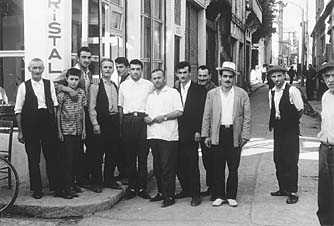
Figure 3. Friends at the Crystal Palace Hotel.
My new companions plied me with refreshments during hours of conversation in the coffeehouses. They insisted I join them in their lunches and dinners. They assigned me tasks to perform, including even collecting and holding the cash from sales. They gave me a new name, changing my Christian name, Michael, into a Muslim name, Mahmut. They expressed concern if I was not feeling well or low in spirits. They offered to prepare hot water and to pour it for my baths, an occasion that was as much social and moral as hygienic. They invited me to their homes in their villages and introduced me to their aging fathers and mothers (but not their wives or daughters). They took me with them on excursions to Erzurum and Trabzon, where I accompanied them to markets, mosques, restaurants, and nightclubs. During our trips, we might walk together as couples, hand–in-hand. In the cities, during our entertainment, we might sing to each other, groom one another, two-by-two. When I sometimes left the town to travel alone to other towns—partly in search of respite from their attention—they urged me to look up their relatives and friends and to stay with them during my visit.
Some of my friends from the Crystal Palace were lax in their religious observance until the approach of the month of Ramadan. In the course of their trips outside Of, some drank alcohol, smoked cigarettes, gambled at cards, and visited prostitutes, all of which met with strong disapproval in the district of Of during the 1960s. But others were strictly observant, regularly performing their prayers throughout the year and keeping the fast during Ramadan. Despite these differences in religiosity, they formed a circle of intimacy based on notions of obligation, cooperation, and sociability that referenced Islamic belief and practice. Both the bad and the good Muslims had accepted me because of my interest in Islam, and they were all excited at the prospect of my conversion. When I asked about Islamic belief and practice, they were usually able to provide explanations, and, if not, they summoned a friend whom they thought might address my question more authoritatively. They assured me of their wholehearted support. They welcomed me into their community. I could settle in their district forever. They offered me land for gardens and a house to live in. They would find me a wife. Why should I ever return to Chicago, a city of racists and gangsters? Accept! Join us! Stay with us!
The news of my coming to Islam, outrunning the event itself, spread to other parts of the district. I would hear stories about myself during my travels to this or that market or village. After introducing myself as a visiting American, my interlocutor would exclaim, "You are an American. Have you met one of your countrymen who has recently come to Of to accept Islam? You should do the same. Study our religion. You will find it is true and right." At the same time, I found myself trapped by the topic of religion whenever I visited the coffeehouses in the town of Of. My interlocutors would describe for me correct religious practice, the performance of the daily prayers or the pilgrimage, the keeping of the fast at Ramadan, the obligation to pay alms, and so on. Sometimes they would raise questions of a philosophical nature. How could one recognize the truth? How did this recognition affect one's actions? Why did some individuals refuse the truth? What were the consequences of this refusal? Even a visit to the barber, a store, or a workshop would result in a religious debate with a gathering of three to six individuals. And when I sat on the terrace of a coffeehouse, a conversation about religion would soon attract a larger crowd of listeners. At moments when my response to a challenge appeared weak or defensive, the audience might urge me to accept Islam, seeing my hesitation as a fleeting recognition of the truth.
On one occasion in the tiny square of the old town center, I was surrounded by younger men urging me to accept Islam. Then, to my surprise, one of them with whom I had gone swimming in the sea that day revealed that I was circumcised. The crowd was ecstatic. They knew I was interested in Islam and surprisingly well informed about it. Now they had learned that this painful but necessary operation had already been performed. They suspected I had hesitated to accept Islam for fear of the knife, but no such obstacle stood in the way. Come with us to the mosque! Do it now! Accept! Join us! Stay with us! There was a place for me, stranger and foreigner, in the district of Of. I had no family or relatives there, but that would come in the course of time. Someone like myself—that is, anyone at all no matter who he was—could become an Oflu through interpersonal association, underwritten by Islamic belief and practice.
Only very reluctantly, I came to realize that social thinking and practice in the district of Of was not so much "parochial," that is, based on a local system of kinship, as "universal" in orientation. My companions' business association included men who were related and unrelated to one another. They came from different patronymic groups. They even came from different villages. They had gradually become both friends and partners in the course of working together, but it was their mutual acceptance of a discipline of Islamic sociability that had made it possible for them to do so. An ethic of face-to-face exchanges—sitting, conversing, and sharing—was the basis of their business association. Seeing others and showing oneself, speaking and listening in turn, gestures of respect and tokens of affection, all fostered sentiments of intimacy and contracts of reciprocity. Their circle was certainly not independent of kinship relations, but the latter had been channeled through Islamic regulations and courtesies.[2]
In this respect, my acceptance and inclusion were in no way extraordinary but were consistent with the mixed composition of their little group. In the course of time, as my Turkish improved, they marveled at mygradual acquisition of their language and were pleased when I adopted their social thinking and practice. In time, someone noticed that I bore an uncanny resemblance to the Oflus.[3] This provoked a discussion about what might possibly account for this. One of my companions asked me directly about my family origins, and I replied that I was an American, as he well knew. "No, no," he said. "All Americans come from somewhere else. What about your forefathers?" Relenting, I told him that the Meekers were said to be Flemish or Dutch people from Belgium or Holland. "That's it," he replied. "You are descended from a Turk! The Ottomans conquered the Low Countries (Belçika) in the seventeenth century!" The experience of intimacy and familiarity, gained through a discipline of sociability, had led gradually to a sensation of resemblance, then finally to a revelation of common identity.
I did not arrive at the preceding understandings either quickly or easily. From the moment of my arrival, my interest had been in leading individuals and large family groupings. On any occasion that was possible, I steered my companions away from Islam toward the topics of descent lines, marriage rules, vengeance obligations, and dispute mediation. These efforts were not especially rewarding, since my companions seemed to have no concept at all of balanced opposition or lineage mediation.[4] This was extremely annoying and frustrating to me. I was an aspiring anthropologist engaged in a study of a uniquely "local" society and culture. If I could not discover such a phenomenon, if my informants were going to refer their conventional thinking and practice to the sacred law of Islam, my fieldwork made no sense at all. I began to think that my first queries about religion had been a serious mistake. When I came to be perceived as a potential convert, everything "local" had been pushed to the background and the issue of Islam had come to the foreground. I therefore made a renewed effort to uncover a substratum of local society and culture "untainted" by Islam. I began to ask my companions about stories and legends, rituals and shrines, witchcraft and sorcery—anything of an exotic or marginal character that could be opposed to Islamic belief and practice. And, of course, I was able to find such material, although extremely little during my initial, shorter visit. What impressed me, however, was the hostility with which some of my acquaintances greeted my interest in these "lies" (yalan) and "nonsense" (saçmalama).
Attempting to outwit my interlocutors, whom I suspected of exaggerating their piety for the benefit of the potential convert, I devised another tactic to uncover a layer of Oflu society and culture that was "outside" conventional Islam. I was able to discover certain local customs that were either forbidden or disapproved in the learned Islamic tradition. These included such matters as the payment of bride-price, the marriage of daughters without their consent, the exclusion of women from land inheritance, and the belief in possession by spirits (cin, peri). When I pointed out these disparities, I was astonished that my remarks were enthusiastically received with expressions of guilt and apology. My companions were not at all surprised by my examples, but told me they had long been subjects of controversy in the district. As it happened, local customs (örf ve âdet) were commonly evaluated by reference to Islam; moreover, such evaluations were not recent but seemed themselves an aspect of district "tradition." Even insignificant gestures might be subject to an Islamic critique. For example, one man told me that the Oflus incorrectly greeted one another in the coffeehouses by touching their fingers to their forehead. "Our hodjas have told us that we should instead greet one another by touching the flat of our right hand to our heart." I began to glimpse a history of Islamization whereby local habits had been subjected to revision according to the sacred law of Islam.
Ordinary Oflus, lacking common family or village origins, were able to form a business association by virtue of a discipline of Islamic sociability. Similarly, they could accept a stranger who did not know the local dialect and came from a distant country on the basis of his anticipated acceptance of that same discipline of Islamic sociability. The inhabitants of what I took to be remote and isolated mountain valleys were somehow able to see themselves as participants in a greater Islamic society. By my experiences in the Crystal Palace, I was fitfully coming to understand that religious teaching and learning, through a process of criticism and argument, had left its mark on the district of Of. In the 1960s, however, the hodjas from Of were a more or less forbidden topic.
Local Elites Conform to Islamic Belief and Practice
During intermittent visits to Rize and Trabzon I heard further reports about religious teaching and learning in the district of Of, at some time in the past, or perhaps still in the present. Meanwhile, in the district of Of, I had difficulty finding anyone who would speak to me openly about such matters. For example, no one ever explained to me the simple fact that scores of religious academies (medrese), hundreds of professors (müderris), and thousands of students (talebe) were officially listed in the district during the final years of the Ottoman Empire. My interlocutors were understandably reticent. The tradition of religious study had gone underground sometime after its prohibition during the first years of the Turkish Republic. At the time of my visit, unauthorized religious instruction could still result in a prison term, even though many public prosecutors chose to look the other way. No one was eager to delve into the sensitive subject of proscribed religious activities with a foreigner who had appeared out of nowhere, even if he was a potential convert.
At last one of my regular interlocutors commented on the local tradition of religious study when I pressed him about the issue. "Oh yes, there were once religious academies in Çaykara [a sub-district of Of that had become a separate district after 1948], but they are no longer in existence and they were not located here [in the new district of Of]." By this response, the hodjas from Of were set at a double remove, both in time and in space. The man who made this comment was the director (müdür) of the middle school (orta okul), or so I erroneously considered him to be. He was about forty years old and resided in a nearby village. He usually wore the standard dress of local officials, a necktie, hat, dress shirt, and suit. He sometimes spoke of the backwardness of the villagers and made condescending remarks about their accents, expressions, food, and dress. By his conversation and appearance, I took him to be a radical nationalist (Kemalist, Atatürkçü), and by that fact an enthusiastic secularist.[5] He seemed exceptionally well informed about contemporary affairs and was something of a polemicist on the subject of the place of Islam in the Republic. This was not especially surprising to me, given his (supposed) position as a school administrator. He had no doubt developed arguments to counter local religious conservatives. Based on such presumptions, I came to depend on him as an authority when I had questions about religion in Of, failing to recognize numerous clear indications that he was not at all what I had taken him to be.
On one occasion, the "school director" had delivered an eloquent lecture, or should I say a "sermon" (hutbe), ostensibly for my benefit, but in fact for a crowd that surrounded us before one of the coffeehouses. He explained to me, now and then turning to his audience, how the Turkish Republic was not an "innovation" (bid’ءat) but was compatible with the sacred law of Islam.[6] He went on to argue that the National Assembly and Constitution of the Turkish Republic had their direct counterparts in the first community of Muslims at Medina and the Charter of Medina drawn up by the Prophet Muhammad. I was impressed with his cleverness in defending secular national institutions by references to Islamic history. He knew his listeners were resentful of the restrictions that the early nationalist movement had placed on religious observance. He had therefore chosen to undercut their objections by defending the Turkish Republic as conforming to Islamic tradition. I surmised that the "school director" had composed his little lecture by way of familiarity with the writings of nineteenth-century Islamic modernists, such as Afghani and Abduh. The thought even crossed my mind that he might have read these authors as part of the curriculum of a government training institute for school administrators. Perhaps the works of Islamic modernists had been included in the curriculum, precisely as a way of countering religious reactionaries.[7] And so I kept missing the significance of our private conversations that took on the color of public harangues.
During another conversation, or at least what had begun as such, the "school director" told me a parable about the Sufi mystic and poet Celalettin el-Rumî, founder of the Mevlevi religious brotherhood (tarikat). The two of us were seated facing one another in the old town square, surrounded by a crowd of adolescent boys. He spoke directly to my face but in a louder voice than necessary since his intended audience was really not I but all the boys around us:
The "school director" concluded with the moral: "A man will wish to see the face and body of a woman that much more when she is covered up. The practice of veiling does not keep the peace but sows discord among the believers."One day a man saw Celalettin put something under his robe as he came out of a shop. Curious, this man began to follow the great mystic and poet. As he did so, he met others who asked him where he was going. He explained that he was following Celalettin in hopes of learning what he was hiding. These others then joined him until at last a large, noisy crowd was trailing along behind the sage. Upon noticing that he was followed by a throng of people, Celalettin turned to ask what it was they wanted from him. Their leader replied that he wished to learn what he had concealed beneath his robe. "Bread," Celalettin replied, exposing the loaf for all to see.
I correctly understood the narrow meaning of the story at the time, even if its wider implications had escaped me. The "school director" was obviously criticizing local veiling practices that were regarded as Islamic by most villagers during the 1960s. When women of the villages in the surrounding countryside came to the weekly market, they covered their hair with white scarves and their heads with large shawls of various sizes and colors in accordance with the convention of their particular village. If they happened to encounter a man on the way to the market, or if they asked a shopkeeper a question about price or quality, these women would often draw the shawl across their nose and lips as they did so. The "school director" had told his story in response to my questions about this kind of behavior, and he had concluded it by mocking village women, drawing his hand across his face as though concealing his nose and lips.
I had my first hint of the gravity of what the "school director" had said only a few days later. Hitching a ride with an Oflu trucker near the town of Giresun on my way back to Of, I told the driver about Celalettin's loaf of bread, simply by way of making conversation. By the time I had finished, the trucker was almost bouncing out of his seat, so angry that he considered stopping his rig and asking me to get out. I regained his good graces only by telling him that it was not my story but a story told to me by one of his own countrymen. "And who was the man who told you this lie?" he asked. This was only the first of many occasions that proved to me how seriously women's dress was taken. In the 1960s, all the women who were natives of Of, whether they lived in towns or villages, covered their head and hair as I have described, while wearing blouses, skirts, and aprons that concealed their lower arms and legs. When my wife accompanied me to Of the following year, she decided the best course would be to respect local custom because we were guests. She therefore adopted the use of a headscarf and wore a long coat when she left our house to go to the marketplace. This behavior was rewarded with gifts of anchovy pilaf and fresh yogurt brought to our door in thanks for our respect for Islam. On the other hand, the wife of the pharmacist, also an outsider, was less compromising. Having moved to Of from Istanbul only after her marriage, she was an avowed secularist who detested all forms of veiling. She purposely went to the marketplace with her head uncovered, provoking some of the village women to curse and spit at her.
In retrospect, I realized that the "school director" had been expressing an inflammatory opinion in a loud voice in the middle of the town square, and that it was as though some invisible barrier protected him from any kind of challenge. The trucker had been on the right track when he had asked for his identity. He was indeed a man of a certain social position and background, but not at all the one I had supposed. I am embarrassed to recall that I did not immediately understand that the "school director" himself was a hodja who had studied in a religious academy of the district. Knowing only that he worked at the middle school, I had assumed that he was the highest functionary of that institution by virtue of his reception among the town worthies. The directors and chairmen of public associations invited him to their tables in restaurants to share their meals, listened respectfully to his opinions, and addressed him as "my hodja" (hocam) rather than by his personal name. Without really thinking about it, I had assumed that the title accorded him referred to an earlier career in the classrooms of state schools. After all, it was common practice for Turkish citizens to address their former teachers by the title "my hodja" all their lives. Only toward the end of my initial visit did I realize he was merely the school secretary (as I shall henceforth refer to him). The town worthies deferred to him not because of his employment, which was a post of no particular distinction whatsoever, but rather by virtue of his religious studies, which were entirely unofficial, even illegal, in character.
I was later to learn of various partnerships between leading individuals and religious teachers, especially in the past but continuing during my residence. These took the form of friendships of convenience between an uneducated but socially prominent individual and an educated but socially humble individual. The town worthies did not extend their hospitality to everyone engaged in religious study, far from it. Instead, they welcomed and hosted the school secretary because he was a hodja from Of who spoke with and for them. As I came to understand some years later, his arguments were not intended to persuade religious conservatives that the Republic and Kemalism conformed with Islam. They were instead intended to justify the dominant position of his kinsmen, friends, and associates in public institutions and organizations. To see how this is so, the lessons I learned from my companions in the Crystal Palace must first be applied to leading individuals from large family groupings. As I have explained, it was my initial presumption that the town worthies had come to dominate the public life of the district by means of clan solidarity and alliances. However, my experiences at the Crystal Palace had indicated that social relations in the district of Of were based on a discipline of Islamic sociability rather than any parochial system of descent and marriage. Like my companions at the Crystal Palace, the town worthies also engaged in day-to-day interactions of sitting, conversing, and sharing. By these activities, they, too, were bound together by sentiments of intimacy and contracts of reciprocity. So the town worthies had come together to dominate public life in much the same way that my companions at the Crystal Palace were able to come together to engage in multiple entrepreneurial adventures.
Leading individuals of the Selimoğlu and Muradoğlu were the principals of two circles of interpersonal association in the district of Of. But the latter were but unusual examples of many other circles of interpersonal association among townsmen and villagers, such as the one that had adopted me at the Crystal Palace. Leading individuals of the Selimoğlu and Muradoğlu were different only in their ability to extend and reinforce their circles of interpersonal association by dominating public institutions and organizations. The least seepage of power or resources out of the hands of state officials had always resulted in the consolidation of their social networks. Moreover, their interpersonal associations had been purposely perpetuated from generation to generation by the collusion of state officials who had relied on them for local social control, now in the Republic as formerly in the Empire. Anyone who might oppose the Selimoğlu or Muradoğlu would therefore take on more than a single individual with a few friends and partners. They would confront entrenched district social oligarchies that had bee n and still were supported by the state system.[8]
So leading individuals from large family groupings controlled public institutions and organizations by using them to consolidate their position in interpersonal associations based on a discipline of Islamic sociability. And yet at the same time, they dominated these same public institutions and organizations, not for the most narrow and selfish reasons, but to assert their claims to take part in the sovereign power of the state system. They therefore presented themselves as members of a national political elite. In the instance of the Selimoğlu in the town of Of, this fusion took the form of a curious strategy that I shall characterize as "Kemalo-Islamism." To explain this phenomenon, I must first mention how the old rivalries had more recently come to work through national political parties.
The Selimoğlu and their friends and partners, once associated with the old Five Party (fıırka), were aligned with the Republican People's Party (RPP), the political party founded by Mustafa Kemal (Atatürk). The RPP had been the only legal political party from 1925 to 1945. During this period, the RPP had implemented the Kemalist program of secular reforms that placed certain restrictions on religious observance and was much resented by some believers. The Muradoğlu and their friends and partners, once associated with the old Twenty-five Party (fıırka), were aligned with the Justice Party (JP), successor to the Democrat Party (DP). The DP (now the JP) had turned the RPP out of the government in the first openly contested, national elections held in 1950. Since that time, the DP (now the JP) had been able to appeal to those believers who resented the restrictions placed on religious observance.
So, then, the rivalry between the Selimoğlu and the Muradoğlu was a rivalry between the defenders and the critics of the Kemalist principle of secularism. Accordingly, the town worthies who were most active in public affairs declared themselves to be Kemalists and defended the principle of secularism. And yet they were also scrupulous in their observance of Islamic beliefs and practices, more so than their friends and partners (see fig. 4). They performed their daily prayers punctiliously, and not only during the month of Ramadan. Then, during Ramadan, they demonstrated exceptional piety. They kept the fast in full view of the public, sitting in their coffeehouse. They joined the supererogatory prayers (teravih) in the old town mosque each evening. They received visitors in their public offices during the holiday Şeker Bayram, which followed the month of Ramadan. Very few if any of them ever touched a drop of alcohol or smoked a cigarette so far as I could determine, and the coffeehouse they attended had banned card playing, not to mention gambling. The town worthies of Of therefore led a kind of double life that drew together contradictory principles. They would extol the radical secularist policies of the RPP in the midst of a coffeehouse discussion, then suddenly excuse themselves to perform their ablutions and prayers. They wore hats, neckties, dress shirts, and suits in accordance with the strictest Kemalist codes, but would not fail to be present at the Friday prayers.[9] Echoing official RPP policy of the day, they condemned the JP and its predecessor, the DP, for injecting religion into politics, even as they took care to display their religious piety.
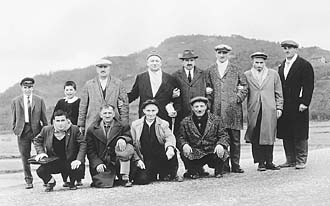
Figure 4. A descendant of Ferhat Agha (in fedora), relatives, friends, and others.
If we recall the aghas of the 1830s during the time of Osman Pasha, this contradictory behavior becomes familiar rather than strange. The ascendants of the Selimoğlu and the Muradoğlu were a local elite exercising sovereign power in the state system. They had built immense mansions and maintained large households, more or less in the manner of higher state officials, but they had also been recognized by the central government on the basis of their position in district networks and coastal coalitions. Now during the Turkish Republic, their descendants were still a local elite exercising sovereign power in the state system. While they no longer had mansions and households, they held directorships and chairmanships in national associations, supported national party ideologies and programs, and were recognized by RPP and DP party officials. So the Selimoğlu had become Kemalists who donned hats and neckties and defended the principle of secularism, and the Muradoğlu had become populists who dressed like country squires and criticized official curbs on religious observance.[10] But neither of the two had achieved public prominence on the basis of their commitment to (and certainly not their understanding of) their respective party ideology and programs.[11] They were the leaders of circles of interpersonal association that spread from their coastal settlements into all the villages of the district. And because these district social oligarchies were based on a discipline of Islamic sociability, they performed the prayers and kept the fast more visibly if not more scrupulously than most other Oflus.
The Kemalo-Islamism of the town worthies largely fits into what we have already learned in the preceding chapter regarding the aghas, mansions, family lines, and parties. Party officials (and, by that fact, state officials as well) recognized the town worthies because they could not possibly ignore them, just as Osman Pasha could not ignore their forebears in the 1830s. And yet, the preceding analysis, based on drawing an analogy between my companions at the Crystal Palace and the town worthies in public offices, has most definitely led us to a discovery: In order for an individual to position himself in the state system (whether as leader, follower, or subject of the district social oligarchies), he was obliged to accommodate himself to a certain kind of Islamic belief and practice. That is to say, he had to be a certain kind of Muslim, not just any kind of Muslim. The school secretary had already announced such a principle in his two "sermons", but I had been unable to recognize it during the period of my fieldwork.
On the occasion of his first "sermon," the school secretary cited the first Muslim community at Medina as an Islamic precedent for the National Assembly and Constitution. As I saw it, he was cleverly responding to criticisms of religious reactionaries who saw the Turkish Republic as an unacceptable "innovation." However, he never really addressed the basic principle of republican government at all. Neither the parliamentary representation of a body of citizens nor the constitutional balancing of state powers appeared in his analysis. Rather, by his analogy, the National Assembly was a kind of community (like the Muslims at Medina), while the National Constitution was its charter (like the Charter of Medina). In other words, an exclusive political elite (Kemalists) who formed an interpersonal association (Muslims) came into his mind when he contemplated the Turkish Republic.
On the occasion of his second "sermon," the school secretary cited the story of Celalettin's loaf of bread as an Islamic precedent for the disapproval of women's seclusion and veiling. I had assumed he was defending Kemalist standards of dress and behavior by meeting religious conservatives on their own ground. However, he never made a case for the active role of women in public life, which was the point of the Kemalist attack on seclusion and veiling. Rather, the school secretary concluded with the moral that ordinary villagers who practiced seclusion and veiling (they were not good Kemalists) were beset by social discord (they were not good Muslims) and thus unfit to manage their affairs. By way of contrast, the town worthies were fit to share in the sovereign power of the state system (that is, they were good Kemalists) because they formed a proper interpersonal association (that is, they were good Muslims). The school secretary, a hodja from Of, was able to please the town worthies. He could articulate their embarrassing Kemalo-Islamist predicament as a coherent political philosophy. For our purposes, his exotic views are significant because they indicate that the domination of the state system by circles of interpersonal association had placed a kind of pressure on Islamic belief and practice. As we shall see, an oligarchy of leading individuals from large patronymic groups had evolved in tandem with the tradition of religious study in the district of Of.
The Hodjas From Of
Toward the end of my initial visit, my interlocutors had more difficulty evading my questions about religious teachers and students. I had repeatedly encountered individuals in the streets of the town who had been introduced to me as a "hodja."[12] Almost none dressed in a manner that was consistent with the conventions of the Turkish Republic (see fig. 5). Many compromised these conventions by wearing berets and overcoats, western apparel that was tolerated by authorities but consistent with an Islamic sensibility.[13] Some wore scarves wrapped around their heads to form a turban, a gesture for which one could be prosecuted, if the authorities wanted to make a case of the matter. Most of them also had well-trimmed beards, signifying they had performed the pilgrimage to Mecca.[14]
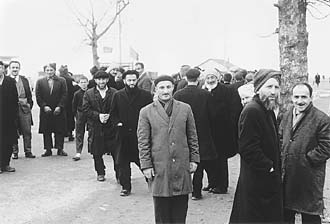
Figure 5. Village hodjas (in berets, turbans) bid pilgrims farewell.
When I asked the school secretary about all these berets, turbans, overcoats, and beards, he attempted to belittle the question with a joke. "But of course, after our local squash (kabak), we Oflus are most famous for our hodjas!" In other words, religious teachers, like the humble squash for which the Oflus were indeed famous, were also a matter of little importance. Each time I questioned the school secretary about hodjas, he refused to attribute any significance to them. They had existed in the past but not in the present. And if they somehow did exist in the present, they were not here in Of but only in Çaykara. And if they were somehow here in Of, they were of no more importance than squash. As a dis-informant, the school secretary was a revealing informant, but only after I could understand how and why he was misleading me.
During the later Ottoman Empire, the largest numbers of professors, academies, and students were to be found in the upper western valley-system, which had later become the district of Çaykara.[15] This part of the old district of Of had not been settled until the sixteenth century, at which time it became a place of refuge for Pontic Greek-speaking Orthodox Christians who subsequently converted to Islam. More isolated and mountainous than the rest of the district, the upper western valley-system lacked fertile soil and level land, and the growing season was shorter. Grain deficits were therefore persistent, and the absence of fodder precluded large flocks or herds. Under such circumstances, its villagers had been pressed to use whatever skills they had to make up for the lack of material resources. These skills appear to have included reading and writing and, quite possibly, even before conversion, religious teaching and learning.[16] After a shift from Greek literacy and Byzantine Orthodoxy to Arabic literacy and Ottoman Islam, a tradition of religious study had not only continued but even flourished in the upper western valley-system.[17] According to one of my interlocutors, the conventional manner of addressing an elder in this part of Of had recently been "O teacher" (Ey hocam), in contrast to "O father's uncle" (Ey amcam) or "O mother's uncle" (Ey dayıım) elsewhere in the district.
Perhaps the tradition of religious study had first begun in the upper western valley-system, but if this was the case, it had also spread to other villages.[18] Ultimately, the professors, academies, and students had become a local industry of impressive proportions all over the old district of Of. And although most of the fee-paying students were residents of the district of Of, some came from other parts of the coastal region as well as from the interior highlands. As a pathway toward some level of learning in the Islamic sciences, the religious academies in Of were affordable, beyond the immediate oversight of government inspectors, and most importantly, perhaps, open to almost anyone, regardless of their social background. The religious academies therefore exported large numbers of graduates, both Oflus and non–Oflus, in the manner of any contemporary university system. A few would continue their studies in the more prestigious religious academies in the major cities. A few would become religious officials in the middle to upper ranks of the imperial religious establishment. But most would seek appointments as prayer-leaders and sermon-givers in the towns and villages of Anatolia.[19] It was the latter, the very large majority, who had come to be known as "hodjas from Of," famous and infamous throughout Asia Minor during the Empire and then again during the Republic.
The professors, academies, and students in the district of Of therefore represented the outer, marginal reaches of the imperial religious establishment. In this regard, the local tradition of religious study was both inside and outside the state system, legal and proper in some respects, but illegal and improper in others. Many hodjas from Of were officially recognized as sermon-givers and prayer-leaders in the mosques of towns and villages all over Anatolia. But many others made a living from what was called "imaming" (imamlıık) without official assignments or licenses.[20] Most of these illegal hodjas from Of provided religious advice and services for a fee in the course of pursuing other itinerant occupations. When the occasion arose in the course of plying a trade—peddling, tinning, cooper-working, or carpentry—they were always ready to give a sermon, lead the prayers, conduct a burial, conclude a marriage contract, or perform a circumcision for a modest gratuity. All the hodjas from Of, the legal and the illegal, were of variable character and judgment. By my own experiences during the 1960s, some of them would have been relatively thoughtful and educated. Others would have been "şeriatçi," subscribing to an interpretation of the sacred law of Islam so literal as to bar any kind of music or dancing, not to mention the use of alcohol and tobacco. And still others would have been "cinci," engaging in shady practices such as casting spells for the lovelorn (büyüme), performing cures (okuma) for the possessed, and selling charms (nuska) to fend off the evil eye.[21]
When I had mentioned berets, turbans, overcoats, and beards, the school secretary had thought of the practitioners of imaming. These were the hodjas who came from the poorest villages, like those of Çaykara, villages that had no leading individuals and no large family groupings.[22] With this low end of the tradition of religious study in mind, the school secretary had compared the local hodjas with the local squash. The most impoverished of the Oflus had been able to supplement the income of their families either by peddling religion or by peddling squash. Both were produced in the district of Of, and both could be put up for sale in the towns and villages of Anatolia. The comparison appropriately directs our attention to a "religious market."
The professors, academies, and students in the district of Of represented only one kind of Islam, the official Sunni Islam of the imperial religious establishment. Elsewhere in Anatolia, other kinds of Islam were to be found among the townsmen and villagers of the later Ottoman Empire. There were leaders and followers of religious brotherhoods (tarikat), some closer to and some distant from the official Sunni Islam. There were also what might be called non–Sunni Islams, such as the Alevis and Bektaşis, who varied in their beliefs and practices from group to group. And finally, there were folk Islams that featured Islamic, Christian, and Judaic influences as well as Hellenic, Central Asian, and Anatolian influences.
If the tradition of religious study in the district of Of flourished during a certain period of imperial history, this increase in the "supply" of hodjas versed in official Islam must have been the result of an increase in the "demand" for this kind of Islam. The likely correlate of such a change in the religious market has been mentioned in the conclusion to the last chapter. An important segment of the population along the eastern Black Sea had begun to participate in imperial military institutions during the post-classical period. Those who did so would have most likely been motivated to bring themselves into conformity with the behavioral standards of the imperial system, that is to say, official Islam. If this is correct, the aghas, family lines, and parties were linked with the professors, academies, and students.
Before this last issue is considered, we have to know more about the tradition of religious study, its "upward" relationship to the state system, and its "downward" relationship to ordinary townsmen and villagers. In the next two sections, I shall examine each of these matters in turn as they appear in recollections of the professors, academies, and students during the transition from Empire to Republic.
Professors, Academies, and Students
The professors, academies, and students in Of had been officially recognized by the imperial religious establishment during the eighteenth and nineteenth centuries.[23] But does recognition alone demonstrate that the tradition was really representative of the imperial system of religious education? The writings of Hasan Umur (1880-1977), our local historian, provide an answer to these questions.[24] Umur received his early schooling in one of the local religious academies before pursuing further study in Istanbul. Some years before the Great War, he left Istanbul and returned to Of, where he carried out an "investigation" of the conditions of religious education, a project that brought him into contact with teachers and students all over the district.[25]
According to Umur, the teaching duties of the professors, the course loads of the students, the methods of instruction, the kinds of courses offered, and the granting of diplomas in the district of Of all more or less conformed with official standards. Indeed, he tells us, this was exactly what was wrong with the local tradition of religious study, since it consequently suffered from all the many problems of the imperial system of religious education. The professors had to teach too many subjects for too many hours each week so that they never dealt with any topic as they should have. Their methods of instruction retarded the progress of the students so that they never properly learned Arabic after many years of study. The official curriculum was excessively narrow, being entirely limited to courses in the Islamic sciences.[26] Since students were never given instruction in basic subjects, such as writing, arithmetic, history, and geography, they could not progress satisfactorily in their studies of the higher Islamic sciences.[27] The absence of any kind of examinations meant that many graduates received their diplomas without learning anything at all.[28]
Umur paints a bleak picture of religious education in the district of Of.[29] In addition to its pedagogical deficiencies, he also refers in passing to widespread corruption, which he preferred not to discuss.[30] Still, Umur admired the old tradition of religious study, to which he felt personally indebted. As an example of the best of what it had to offer, he gives a brief account of the accomplishments of his own teacher in the district of Of, Zühtü Efendi Veli Efendi Oğlu. This man, still famous for his erudition during the 1960s, appears to have offered his students a rigorous and demanding program of study. He had himself received his diploma, or "authorizing certificate" (icazet), sometime during the middle of the nineteenth century, at the age of twenty-eight. So it would appear he had studied for many years before qualifying for his diploma.[31] By time of his death at an advanced age, he had granted thirty-one authorizing certificates. Since this number is considered exceptionally large, it would appear that many of the teachers offered courses of study that were not easily or quickly completed. The character of the thirty-one certificates provides a hint of the intentions of his students. Thirteen had been "general" authorizing certificates (büyük icazet), confirming that the graduate had mastered the complete course of study in the religious academy. These individuals may have been hoping to qualify themselves for appointment as minor officials in the imperial religious establishment.[32] The remaining eighteen had been "inheritance" authorizing certificates (feraiz icazet), confirming that the graduate had mastered the law of inheritance, but nothing more than this. These individuals may have been content to provide advice and counsel to clients among townsmen and villagers.[33] Knowledge of the law of inheritance would have enabled them to give plausible assistance in regard to the writing of wills, the distribution of property, bills of sale, and the arrangement of marriages.
From Umur's account, we can conclude that the professors, academies, and students were most certainly a local branch of the imperial system of religious education. Their "upward" relationship to the state system confirmed, I shall now examine the tradition of religious study as it continued after the imperial religious establishment was no more. Once the superstructure of the state system had been swept away, the "downward" relationship of the tradition to townsmen and villagers was all the more clearly exposed.
The Underground Tradition of Religious Study
Under the leadership of Mustafa Kemal (Atatürk), the National Assembly abolished the Ottoman Sultanate (1922) and declared the Turkish Republic (1923). Soon afterwards, steps were taken to remove Islam from the public life of the new nation-state. The Caliphate followed the Sultanate into oblivion (1924), and along with it the upper hierarchy of the imperial religious establishment, the Şeyh-ül-İİslâm, the Ministry of the Şeriat, the Şeriat courts, and the religious academies and schools.[34] This accomplished, the National Assembly adopted the Swiss civil code and Italian penal code (1926), thereby removing the last traces of the sacred law of Islam from the state legal system.[35] For a short while, the nationalists contemplated a reform of the system of religious education and so permitted a number of new religious academies to reopen during the later 1920s. Then, after serious incidents in which religious conservatives challenged the Kemalist program of reforms, all religious academies were closed and all religious instruction was banned (1931).[36] Religious study in Of was henceforth largely useless as an official path toward any kind of position in the state system, just as the religious expertise of its graduates had no relevance whatsoever to the official legal system. And yet, religious teaching and learning did not come to an end in the district of Of. Why was this the case?
With the collapse of the Empire and the founding of the Republic, "Muslim subjects" had become "Turkish citizens." To take part in public institutions and organizations, they would henceforth be obliged to conform to a new nationalist standard of behavior. In the district of Of during the 1960s, the changes in masculine dress were still keenly remembered. Turbans, baggy pants, and slippers were out. Hats, trousers, and shoes were in. These examples of the transformation of masculine attire are but superficial indicators of a wide range of profound changes whose significance should not be minimized. But, this admitted, it must also be said that the old standards of personal conduct and social relations were still very much in place in the context of family, relatives, friends, and partners. That is to say, everyday interpersonal association was still based on a discipline of Islamic sociability. So there was still a demand for religious expertise regarding official Islam, even after the transition from Empire to Republic, and the teachers and students of Of, tucked away in their mountain fastnesses, would have a near monopoly on the supply for a while.
Toward the end of my first period of fieldwork, I had known some residents of the town of Of for more than two years. Over this period of time those who had become my friends had told me what they knew about the tradition of religious study. One of these men had traveled and worked among Oflus in all parts of Turkey. He had a wide network of friends in the district, and he had always been interested in its history. Born in 1908, he was able to write Turkish in the old Arabic letters and was familiar with the official terms and offices of the late imperial period.[37] He offered me the following synopsis of religious study during the first decades of the Turkish Republic, saying that it still continued as before:
Judging from this account, the tradition of religious study in Of had continued to resemble the old system of professors and academies even after the latter became illegal.[40] The one-on-one relationship of teacher and student, the subject matter of the courses taught, the period of study required, and the granting of authorizing certificates all remained similar. On the other hand, my friend's account, by contrast with Hasan Umur's analysis of the religious academies, underlines the ad hoc character of the tradition of religious study. The teacher and student met one another from time to time, in any place of convenience, for a number of years. At some moment, without examination, the teacher decided the course had been completed and granted a written slip of paper to that effect.A student might come to the village of a reputed hodja during the summer or winter for a few months in order to receive lessons from him for a certain fee. They would meet in the dwelling of the teacher or in the mosque of his village. [The speaker did not use the defunct official terminology, "professor" (müderris) or "academy" (medrese), even though he was familiar with these words.] This student might be from some other village in the district or he might come from elsewhere in Anatolia. He would continue his studies under the tutelage of his teacher for several years until he had mastered a course of study of some kind. A student required at least four years to complete a course of study, more if he were not especially gifted. The average course of study normally took six years. [However, it has already been stated that teacher and student met together duringonly part of the year.] The lessons would involve the memorization of the Koran, the study of the Arabic language, instruction in the sacred law, explanations of passages in the Koran, and other matters. Eventually, the student would meet certain requirements stipulated by his teacher. In recognition of this, he would be awarded an "authorizing certificate," a written document also known as a "permission" (izin). The written document recorded the name of the student, the course of study he had followed, the name of his teacher, and the scholarly lineage (silsile, zincir) of the latter. For example, the scholarly lineage might pass from the Prophet Muhammad to Hazreti Ali, or sometimes Hazreti Abubakr, or one of the other four rightly guided Caliphs, thence to Mustafa Samarkanti, or another Konyavi, Bagdadi, Hindustani, or Andalusi, and finally to an Ofi [Oflu], after which the name of the student is given.[38] The hodjas are very anxious to grant these authorizing certificates to the students who work with them and very upset should a student choose to leave them in order to work with someone else.[39]
Given the ad hoc character of instruction, not only in Of but also in Istanbul, the religious teachers and students in the district of Of would have found themselves in a singular position soon after the disestablishment of Islam. The upper level personnel of the imperial system of religious education, situated in the major cities such as Istanbul, would have been under the nose of state officials. So the implementation of the Kemalist program of reforms would have been especially successful in curbing or suppressing their activities. In contrast, the professors, academies, and students of Of had always been at the outer reaches of the state system. They had, in effect, penetrated and colonized the imperial religious establishment from its fringes. By virtue of their more or less marginal position, the hodjas from Of had adapted and adjusted their activities to suit themselves and their clients. Already during the imperial period, they had streamlined courses of study, granted diplomas for a fee, and worked without licenses. It was precisely all these illegalities and subversions that Umur Hasan had chosen not to discuss when he referred darkly to the widespread corruption.
During the years immediately following the declaration of the Republic, it seems, the tradition of religious study in the district of Of remained more or less the same. The professors, academies, and students had lost their official and legal status, but the ban on unauthorized religious instruction was not enforced, at least in the mountains of Of. Then, from the early 1930s, state officials became more vigilant in meeting any challenge to the Kemalist program of reforms, and thus vigorously enforced the ban on religious instruction. When this happened, the numbers of teachers and students in the district of Of probably declined for a while. By the later 1940s, however, the tradition of religious study had moved underground, where it began to flourish anew. For a few years, before the re-opening of official religious academies in the later 1950s, the hodjas from Of became the principal suppliers of religious expertise responding to a rising demand.
One of my acquaintances in the district of Of had been a schoolteacher in the sub-district of Kadahor (later called Çaykara) at that time. The following passage is an edited version of my notes:
The schoolteacher then told a story that pointed to the opening of a divide between state and society at just that point where they had previously been cobbled together:He told me that it was certainly true that many individuals had received religious instruction in Çaykara and had gone elsewhere in Turkey to work as imams in villages and towns. This was a result of the restrictions that the government had placed on the training of prayer-leaders and sermon-givers. Because Çaykara had a tradition of religious academies, it had become an ideal place for meeting the shortage of imams that had arisen as a consequence of the government ban on religious education. In more remote villages of the district, the Çaykaralııs were able to continue religious teaching and learning in secret. On a one-by-one basis, those individuals with religious training had trained just a few young men at a time, usually in the mosques. When their course of study was completed, they moved out to other parts of Turkey in order to serve as prayer-leaders and sermon-givers.
The profession of imaming had acquired a new significance by continuing its old function. Earlier, during the Empire, the hodjas from Of had provided "popular" access to a scarce resource, official Islamic belief and practice. That is to say, they had facilitated the wish of ordinary Muslims to align themselves with the normative standards of the imperial system. Now, during the Republic, the hodjas from Of still provided "popular" access to what had become a still scarcer resource. But now, in doing so, they were enabling ordinary Muslims to subvert the imposition of a new standard of thinking and practice in the public life of the nation-state.When [the hodjas from Of] left their homeland, they could not depend on the living they made from imaming alone. They also had to ply other trades. To illustrate this point, he mentioned an acquaintance of his, a schoolteacher in a secular state school who had been threatened with dismissal [for his criticism of the secular reforms]. This man had received lessons from one of the local hodjas and was prepared to look for work as an imam somewhere in Anatolia. He had said on this occasion, "If I am dismissed, I shall take my kit bag and put my hammer (çekiç) on the bottom, then I shall put my saw (bııçkıı) on top of that, and I shall put my Koran on top of that and leave. Wherever I go, I shall certainly be able to find work."[41]
Another interlocutor in the town of Of told me of a personal experience that also illustrates these points. At the end of World War II, he was demobilized from the army. Since he had some education and could use a typewriter, he began to work as "public secretary" (kâtip, yazııcıı). He would sit in a small stall or even on the street before his typewriter, somewhere near a government building, and accept requests to fill out official forms, write letters to friends and family, and submit petitions to the court. During this time, he had not been able to return to his family in the district of Of but moved from town to town in accordance with changing prospects for work. On one such occasion, during the month of Ramadan, he had stopped for the evening in the town of Havza (near Amasya):
Townsmen and villagers had difficulty finding prayer-leaders and sermon-givers at the time because none had been officially trained for many years. By my interlocutor's eastern Black Sea accent, the citizens of Havza realized he was from the district of Of and assumed he was a hodja. They were determined to keep him because they had no one else to instruct them in the performance of prayers, to perform marriages, or to bury the dead. They believed that he might have been summoned by a district religious official (müftü) but assumed they might be able to persuade him to abandon his official obligations:When I arrived there, I went to a restaurant. After finishing the meal and asking what I owed, the proprietor told me, "We don't accept money from people like you" (Böylenizden para almayıız). I was surprised but simply accepted this response. I then asked where I might find a room for the night. The proprietor then took me to a room with nothing but straw mats that were ordinarily let to travelers. But now he brought in a nice bed for me and again refused to accept my money. That evening I was taken to meet several people as a guest of the town. By then I realized that they thought I was an itinerant imam. They were trying to persuade me to stay with them and become their imam.
My interlocutor had not explained that the month of Ramadan had traditionally been the occasion for the so-called cer. During the old regime, religious teachers and students had traveled into Anatolia to preach to the people and lead them in prayer in return for alms to finance their studies. The religious teachers and students of Of had always done the very same thing, and they were once again going out on the cer during the later 1940s.[42] The citizens of Havza would have therefore been on the lookout for hodjas from Of who might serve as their prayer-leader and sermon-giver.I told them that I did not know anything about being an imam. I had business in another town and was obliged to leave. They did not believe me. They suspected I was going to report to the müftü in that town. They urged me not to continue on my way. They said the müftü would send me to a very poor village where I would be uncomfortable. I told them I did not have any business at all with the müftü. They would not accept this. They thought I was only trying to escape from them and take a job as imam in some other village that would offer me more money. At long last I was able to escape them and reach my destination.
Official Islam As Social Islam
I have still not answered the question with which this chapter began, "Why so many hodjas from Of?" but the conclusions reached in the last two sections permit the question to be rephrased more precisely. Why had the hodjas specialized so exclusively in official Islam, to the neglect of all other versions of Islam? And having done so, why was the demand for official Islam at the outer reaches of the imperial system so great as to generate such a large supply of hodjas? These questions direct our attention to the ways in which the district of Of was similar to the other coastal districts of the old province of Trabzon.
The very large numbers of professors, academies, and students in Of were unusual, without any exact counterpart in the other eastern coastal districts.[43] But this having been said, a number of the other eastern coastal districts certainly did have important traditions of religious study, some of which produced graduates who were more successful than the Oflus in obtaining middle- and upper-level appointments in the imperial religious establishment.[44] Moreover, the dominant position of official Islam was not a unique feature of Of, but typical of most of the coastal districts of the old province of Trabzon.[45] Almost everywhere in the eastern coastal region, religious teachers, academies, and students represented official Islamic belief and practice while other versions—folk Islams, brotherhood Islams, and heterodox Islams—were strangely undeveloped or even altogether absent. So it is not just Of but all the eastern coastal districts that stand out as different. In this particular region of Asia Minor, unlike other regions, official Islam was unusually dominant while other Islams were unusually absent.[46]
This brings to mind another way in which the eastern coastal region stands out as different. As we have seen in the last chapter, aghas, mansions, family lines, and parties had been local branches of the imperial military and administrative establishment during the post-classical imperial period. And, as we have seen in this chapter, the aghas, mansions, family lines, and parties, which had comprised a major proportion of the masculine population, took the form of interpersonal associations based on a discipline of Islamic sociability. So it is possible that the rise of professors, academies, and students was somehow associated with the rise of aghas, mansions, family lines, and parties. If so, the district of Of would certainly be an excellent place to examine the relationship of aghas and hodjas, for this particular coastal district had been just as famous for its soldiers as for its students. To explore this issue, on a structural rather than historical level, I shall return to the question of the "downward" relationship of the tradition of religious study to the inhabitants of the district of Of.[47]
The professors, academies, and students had been hosted and feted by the villagers of Of on specific occasions. A group of religious teachers, working together with the residents of one or more villages, would arrange to hold such celebrations whenever a large number of students had completed their course of studies.[48] The religious teachers called them an "authorizing certificate prayer" (icazet duasıı) or a "granting of permission prayer" (izin duasıı). But ordinary people called them an "authorizing certificate celebration" (icazet merasimi). The different terminology indicates that these occasions had two different but related sides. For the hodjas, they were primarily solemn ceremonies of learned Islam, while for the villagers they were communal festivals as well.
During the later Ottoman period, several "authorizing certificate celebrations" were held each year in the district of Of, and some of them had been attended by thousands of villagers.[49] By the size of the crowds they attracted, these occasions would have been without rival as public ceremonies during the old regime.[50] The same friend who described the tradition of religious study in Of gave me an account of the granting of authorizing certificates during the course of an extended interview.[51] He had attended more than one and had heard of many others.[52] He began by explaining how such occasions had initially declined but then later recovered in the course of the first two decades of the Turkish Republic:
The ceremony (merasim) is an occasion when the teachers in the academies give their students certificates that qualify them to practice as a teacher (hoca). During the period immediately following the declaration of the Republic [more probably, some years after 1931], these occasions were held in secret and were never very large. During the Inönü period [more probably, during the years following World War II], these occasions were held more or less openly but in a more secluded spot in a forest or away from the road. During the Menderes period [1950–1960], they were completely out in the open and held at the side of village mosques. At the present time, they are occurring very frequently. Many hodjas are now granting authorizing certificates to students.[53]
According to these remarks, the graduation celebrations never ceased altogether. Few villagers had participated during the period when the ban on religious education was vigorously enforced, but they had been eager to sponsor the celebrations when not faced with official reprisals. My friend then described an example of this:
First several hodjas determine that they have a group of students who are ready to receive certificates. They come together and decide on a time for the award and they look for a village to sponsor the occasion. Such an occasion adds to the religious merit of its sponsors (sevaptıır). So the villagers are anxious to sponsor the ceremony in their village, and they all contribute money for the occasion in accordance with their means. Different villages vie with one another for the honor of having the ceremony in their precincts because it is a matter that reflects on the honor of the village (köy şerefi için). It is said that some villages would not even be considered as a site for such a ceremony because of stains on their reputation. "What! You people want to have an authorizing certificate ceremony? You are all drunkards (sarhoşsunuz). You are lazy and shiftless (çalıışmazsıınıız). You have no manners (edipsizsiniz). You are without morals (ahlaksıızsıınıız)."
My friend spoke as a townsman who considered himself more educated and cultivated than an ordinary villager. When he said that the sponsors of the graduation ceremony wanted to gain merit or honor, he was more or less belittling them as typical villagers who were concerned with matters of reputation and standing. For example, he mimicked the villagers by speaking in dialect, making a face, and brusquely gesturing. But even as he so portrayed them, the words he put in their mouths—their denunciations of the ethics and morals of their competitors—implied that they strove to behave as good and proper Muslims. In this last respect, he admired them.
For my interlocutor, the residents of the district approached Islam more or less as simple villagers, but they nonetheless found in Islam something that could make them more than simple villagers. As he continued, he oscillated between these two contrasting themes. For example, he next told me that the graduation celebrations were organized as marriage celebrations. That is to say, an occasion of high religious study and learning appeared in the guise of a familiar rural festival:
Once the village is chosen, people are invited from everywhere. Of course the families of the boys who are to receive certificates invite guests, but other people come as well.[54] It is like a marriage celebration (düğün).[55] Individuals and families come from Rize, Istanbul, Sürmene, and Trabzon, from everywhere. A proper ceremony is expected to host 5,000 people and as many as 10,000 is possible.[56] The invitations are sent out (davet ederler) to friends and relatives.They say, "There is an authorizing certificate prayer, come!" (Icazet duasıı var, gel!). The villagers begin to make preparations. They bake sweets (baklava, tatlıılar) to be served on the occasion. As many as ten beds, or even more, might be laid out in each house. On the day or night before the ceremony, the guests begin to arrive and they are assigned to different houses.
He then adopted a very different tone as he began to describe the granting of the authorizing certificates. He was now specifically recalling a graduation ceremony that he had attended. As he did so, he became less condescending as he began to indicate how the occasion revealed special qualities of the students and teachers:
The students sit before their teachers, not facing them directly, but rather as though presenting themselves to God. In the course of their studies they have acquired religious learning, and we now see this achievement through a performance. The students remain in their assigned places, sitting silent and still, enduring the heat of the sun that bears down upon them. This passivity is also an activity.[57] To acquire religious learning is not just to acquire knowledge; it is also to acquire discipline.The next day the people assemble in the village, and the ceremony begins after the morning prayers (sabah namazıı). Let us say that there might be five teachers (hoca) who are awarding certificates and about twenty students (molla) who are receiving them. There might be about two hundred other hodjas at the ceremony. All the hodjas collect in rows at the head of the assembly, and the students are in lines in front them, sitting as though in the mosque and facing sideways one behind the other. Their heads are bowed. As the day wears on and the sun shines down on them, they perspire under their turbans (sarıık) that they are wearing.
With the picture of the teachers and students before his mind's eye, my friend began to contemplate the effect of the occasion on the audience. As he did so, he implied that their witnessing the teachers and students brought the villagers closer to Islamic belief and practice. This thought first appeared, however, in the guise of the negative example of the women in attendance:
The women are bored and restless because they cannot see or hear the teachers and the students. Their marginal position is correlated with a lack of personal discipline, a quality instilled by Islamic belief and practice. To calm the women, the hodjas delegate one of their number to preach to the women.All the men assemble in this open square surrounding the hodjas and the mollas. The women assemble in another place apart from the men, but close enough to listen. The women want to hear what is said by the hodjas because it is meritorious (sevaptıır) to do so. They listen to the speeches much as they listen at the back of the mosque during the festival prayers (bayram namazıı) and the festival sermon (bayram vaazıı). Among the 10,000 people who attend, there might be as many as 2,000 women. Sometimes the women become bored with being shunted aside and are anxious to participate [The speaker is now recalling a particular occasion]. They begin to complain and the hodjas are forced to send someone to speak to them expressly. When this happened on one occasion, they sent a hodja who was considered a "contrary" (aksi) person and was not liked by the women. The hodjas were simply trying to get rid of the problem presented by the women so they would no longer be bothered by them.
At the same time, the hodjas have taken the opportunity to rid themselves of a troublesome character. The contrary hodja will eventually reappear as a negative example of what the teachers and students give to their audience just as the women are a negative example of what the audience receives from the teachers and students. First, however, my friend returned to the scene of the graduation ceremony:
The hodjas exhort and encourage the assembly to lead their lives as good and proper Muslims. Some hodjas address the assembly plainly and directly in the local dialect. But other hodjas will speak in a manner that reveals their ties with a center of religious study and learning. The ceremony brings the audience into contact with the simple truths of Islam but also with a world center of Islamic sophistication and cultivation.Eventually some of the hodjas begin to speak [in turn], not only those who have students receiving authorizing certificates, but others who are considered appropriate, such as the elder ones (en lâyıık olan hocalar konuşurlar, ihtiyarlar konuşurlar). As they speak, the hodjas exhort the people of the assembly to live a good life (ikna ederler).[58] For example, Hacıı Dursun Efendi, one of the well-known district hodjas, might preach to the crowd (vaaz eder). There might also be hodjas from Istanbul who would speak with an Istanbul accent. Their address would be more cultivated and dignified. The speeches of all these hodjas might last a few hours. When I heard Hacıı Dursun Efendi speak, for example, he continued for about an hour. After the hodjas have finished speaking, they say a prayer, in Turkish or in Arabic.[59] They ask for blessings from God on the proceedings, on the village, on the people present, and so on. They ask for help that they might be good people (iyi insanlar), have sufficient land, or a good road. At the end of the prayer, all the people say, "Amen!" (amin!)"
My friend then described the granting of diplomas according to procedures that would have previously been in conformity with the criteria set by the imperial religious establishment:
The accomplishment of the teachers and the students has enabled the villagers to gain merit and honor before God, but precisely as a proof that they are not just simple villagers. They have attended the assembly in hopes of seeing and listening such that they will be able to live as good and proper Muslims.Then when the hodjas have finished preaching, the certificates are awarded. Each of the hodjas who are awarding certificates has a notebook (defter) with the certificate written out, with its heading, a chain of attribution (silsile), and the name of the student (molla). He reads it out and awards it. Thus all the students receive their certificates. At the end, a hodja recites a short prayer. He announces the names of the students. He asks blessings on the people of the assembly, and he asks that the angels (melek) give the news of their having attended. He concludes by saying, "Let there be another one like it."
As he brought such an image before his mind's eye once again, my friend also recalled the contrary hodja who had been dispatched to address the women:
The contrary hodja has crossed a line. The criticism of others by appeal to religious learning results in belittling and shaming of others. The gift of expert knowledge and performance to the assembly should enable them to experience the pleasure of sociability, not mutual conflict and discord. All those present begin to remark on this difference:The "contrary" hodja who had been sent to the women had been listening to the proceedings from afar.[60] Now, at the end, he returned and insisted on speaking. He came running up, saying to the people of the gathering, "O Assembly!" (Ey cemaat!). At first the hodjas tried to silence him, but they reluctantly agreed that he might speak. An elderly man, he launched into criticisms of some of the younger hodjas present. He accused one of them, who was assigned to one of the district mosques to which pilgrimages were made, of improperly accepting gifts from the people. As he made these remarks, the hodja who was being attacked began to bow his head in shame, but the contrary hodja hotly continued with his criticisms.
The contrary hodja is silenced by a call for him to serve the assembly by exhorting and encouraging them, not by criticizing. The graduation ceremony is an occasion for both recognizing the achievement and enjoying the rewards of a discipline of Islamic belief and practice. If these rewards will only be experienced in full measure in the next world, they are partially available in this world through the pleasure of sociability. The granting of authorizing certificates having concluded, the villagers go to their separate groups of families and friends, where they enjoy one another's company.The people in the assembly began to murmur. He is not preaching to us; he is insulting individuals (vaaz etmiyor, hakaret ediyor). One of the hodjas then shouted out, "Don't tell us stories, preach to the people!" (Halka vaaz et, bize atma!). Finally the contrary hodja desisted. The people of the assembly scattered to the different houses, where they were then served baklava and visited with one another.[61]
Conclusion
The granting of authorizing certificates came at the end of years of effort on the part of teachers and students. In principle, if not always in fact, these efforts consisted of memorizing the Koran, learning to read and speak classical Arabic, and the mastery of some secondary canonical texts. At the same time, the graduation celebration was also a very special occasion for the villagers who attended them. By taking part in them, the inhabitants of a remote rural landscape, both men and women, could lay claim to being something much more than impoverished and ignorant villagers. During these occasions they could demonstrate to themselves that they were good and proper Muslims, and also participants in an imperial civilization whose foundations lay in the Islamic religion. This is why their engagement in and celebration of religious learning was so closely aligned with the imperial religious establishment.
My friend's description attributed to the graduation ceremony the quality of theater, with a multiplicity of performances and audiences. First of all, of course, the teachers and students, as well as the attendees assembled, performed for a divine audience who was beseeched to respond with blessing and favor. But the teachers and students also performed for one another, just as they also performed for the assembly, and the assembly performed for them. In the wings of this theater, somewhere offstage, there were yet other audiences that have gone unmentioned in my interlocutor's account.
During the later imperial period (nineteenth century), one of these other audiences would have been provincial governors, district administrators, judicial authorities, and military officers of the imperial system. All these state officials, who were in a position to tax, conscript, arrest, punish, and coerce, might have been impressed by a district population who so diligently took its proper place in the imperial system. So the Oflus would have been claiming a moral standing in the eyes of state officials who represented a regime that sponsored Islamic belief and practice.
But now, with this official audience in mind, let us consider the moment when the professors, academies, and students first appeared and proliferated during the post-classical imperial period (late seventeenth to early nineteenth century). During these years, all the higher state officials just mentioned would have been far away and out of sight since they had been locally replaced by aghas, mansions, family lines, and parties. These local representatives of the state system exercised the same sovereign powers as higher state officials, but they had a very different relationship with the district populations.
The rise of the aghas, mansions, family lines, and parties, let us recall, was coincident with the militarization of the population, hence the principle of force of numbers and the compromise of legal statues and judicial procedures. By local memory and tradition, the rivalry among the aghas grouped in different factions had led to anarchy and disorder, the resort to talion and the spread of vendetta. But, all this admitted, the legitimacy of aghas, mansions, family lines, and parties was also directly linked with official Islam. The aghas, mansions, family lines, and parties were local branches of the imperial military and religious establishment, but took the form of broad and deep interpersonal associations that comprised a substantial proportion of the masculine population.
So the aghas, mansions, family lines, and parties were doubly linked to the official Islam of the imperial religious establishment. First, like state officials, they claimed to exercise sovereign power in an imperial system whose legitimacy was underpinned by official Islam. And second, unlike state officials, their claim to exercise sovereign power was entirely dependent on their position in interpersonal associations based on a discipline of official Islam. This being the case, they were more significant than state officials as an audience whom ordinary villagers might hope to impress by the performance of a discipline of official Islamic belief and practice. Moreover, in so impressing them, the ordinary villagers might also advance a claim to being true and better Muslims than those who ruled them in the name of official Islam.
And so, whatever the precise origins of professors, academies, and students in the district of Of, the aghas, mansions, family lines, and parties would have provided a strong incentive for the broadening and deepening of the influence of official Islam at the expense of other versions of Islam. Ordinary townsmen and villagers, whether affiliated or not with the aghas, mansions, family lines, and parties, would have been inclined to claim moral standing and social prestige by the performance of the discipline of official Islam. And as for those who were not affiliated, they would have been inclined to align themselves with the local representatives of the imperial religious establishment.
So the rise of aghas, mansions, family lines, and parties was coordinated with the rise of professors, academies, and students. As some Oflus became soldiers of the aghas, so, too, other Oflus became students of the hodjas. The result was the "imperialization" of personhood and community, most notably in the district of Of, but also generally in all the old provinces of Trabzon. As a consequence, then, of an especially far-reaching process of ottomanization, the inhabitants of Trabzon became adherents of an official Islam to the relative exclusion of all the other kinds of Islam that were otherwise available in Asia Minor during the later centuries of the Ottoman Empire.
Osman Pasha brought the post-classical phase of the imperial period to an end in the coastal region in the 1830s, but he did not suppress leading individuals, large family groupings, district networks, and coastal coalitions. This being the case, ordinary townsmen and villagers would have continued to align themselves with the official Islam of the imperial system. As a consequence, aghas and hodjas continued to be a part of the later imperial period, right up to the declaration of the Turkish Republic. As we have seen, however, the two representatives of the post-classical period met different fates after the declaration of the Turkish Republic. By the 1960s, leading individuals and large family groupings occupied a central place in public associations, but religious teachers and students were more or less reviled by state officials as subversives and outlaws. I shall conclude with a few remarks on the Kemalist attempt to disestablish Islam.
I have already cited the comments of a retired schoolteacher who had described how the practitioners of imaming had defeated the ban on unauthorized religious instruction, if not during the 1930s then certainly during the 1940s. On another occasion, however, I had met a second retired schoolteacher who had also been assigned to Kadahor [Çaykara] during these same two decades. Unlike the first, this second schoolteacher had always been a firm supporter of the Kemalist program of reforms, and, not surprisingly, he had a very different recollection of the local reception of the new regime.[62] He recalled that a large speakers' platform had been constructed in the sub-district center of Kadahor on the occasion of the tenth anniversary (1933) of the declaration of the Turkish Republic. Some of the best known of the hodjas (âlimler) had been invited to address the crowd, and each of them had spoken eloquently in praise of the Turkish Republic. He went on to conclude that the residents of the upper western valley-system had accepted the Kemalist program of reforms, never rebelling against them as had some of the residents of Rize.
Although the second retired schoolteacher was overstating his case, he nonetheless made an important point. There were many representatives of the old tradition of religious study who became nationalist supporters, and even nationalist activists.[63] On the other hand, some other representatives of the old tradition, whose numbers were no doubt very considerable, would more reluctantly and hesitantly transform themselves from Muslim subjects into secular citizens. The schoolteacher himself continued with the following recollection seemingly designed to minimize this fact:
The example, which takes the form of a traditional moral teaching (misal), even though the speaker is a Kemalist, makes two points. It was only the very aged who had been unable to accept the new regime, and state officials had treated these individuals with discretion and humanity.I was teaching in the middle school of [Kadahor] during the year 1935. This was the peak of the program of secular reforms that had been put in place by Atatürk. A report came to the sub-district [Kadahor] that a certain individual was giving lessons from a book in the old [Arabic] script. Members of the police, the gendarmerie, and myself set out to arrest this man.[64] This was not long after the events at Menemem [a local uprising in western Turkey calling for the restoration of the sacred law of Islam].[65] As our party approached the village, a line of women [moving along a narrow trail] were returning with baskets on their backs [having been gathering crops or fodder from the fields]. When they saw us coming, one dropped her basket and ran to warn the man. The police came by one path and the gendarmerie came by another [to prevent the man from escaping]. The man tried to run away but he was apprehended. He was shaking with fear. They had a warrant for his arrest. But he was ninety years old. They took his books, but they didn't have the heart to take him in. He was not involved in politics. He was only teaching. They decided to put the warrant away. They did not destroy it. It would be overlooked.[66]
The Kemalists were attempting to displace Islamist associational virtues from public life so that they might be replaced with civic associational virtues. To do so, they would have to break open the closed circles of interpersonal association that dominated the institutions and organization of the old regime. Otherwise there would have been no hope of broadening and deepening the circle of citizenship. And so they were obliged to mount a challenge to, if not entirely defeat, the old imperial religious establishment. But our concern here is not intentions but rather the results of Kemalist policies in the eastern coastal districts.
As we have seen in the previous chapter, leading individuals from large family groupings gradually aligned themselves with the new nationalist standards of public life so that they were Kemalist rather than ottomanist in orientation by the close of the second decade of the Turkish Republic. It was not the old aghas that did so of course, but their sons, grandsons, nephews, and grandnephews. First they donned hats, neckties, and suits at an early period. Later they learned to defend their different party ideologies and policies. Their ability to reposition themselves with changes in the state system had always been a feature of their very existence as a local elite. They therefore instinctively sought to retain connections with state officials just as state officials sought to retain them as their assistants and intermediaries.
On the other hand, leading individuals, family groupings, district networks, and coastal coalitions were circles of interpersonal associations based on a discipline of Islamic sociability. Hence the local elites in many of the eastern coastal districts, Kemalist on the surface and Islamist below the surface, still monopolized public power and resources on the basis of the old, not the new, associational virtues. The disestablishment of Islam had therefore not led unambiguously to the opening up of public life beyond the old circles of interpersonal association. It had led instead to Kemalo-Islamism.
As a consequence, many ordinary villagers and townsmen could not participate as citizens in the public life of the nation-state since they were prevented from doing so by closed circles of interpersonal association. These ordinary villagers and townsmen were therefore left with their older claims to moral standing and social dignity based on Islamic belief and practice. So then a large segment of the population continued to resent its exclusion and rejection by the state system when it should have rather recognized and accepted them. And with the beginning of the multiparty period, this segment of the population became a "floating" electorate for which every political party would attempt to provide dock and anchor. Their combined efforts would eventually lead to the end of the hodjas from Of.
In the 1930s, state officials had disestablished Islam, abandoning the religious market in provincial Turkey to the low end of the religious tradition where hodjas would proliferate like squash. For a few years, from the 1940s through the 1960s, the hodjas of Of enjoyed a near monopoly as suppliers for the continuing demand for religious expertise. But sometime in the 1970s, the expansion of the state system of religious education brought an end to the old tradition of religious study in the mountain villages of Of.[67] The problems of access to public power and resources had not been resolved. The political parties had only agreed that the state should reclaim the sponsorship and propagation of official Islam.
Notes
1. The term "hodja" (hoca) would have commonly designated a religious teacher during the Ottoman period. The term is now used to refer to any kind of teacher, whether religious or secular. On the other hand, the phrase "hodja from Of" would always be understood to refer to a country religious teacher.
2. Elsewhere (Meeker 1994a), I have given another account of Islamic sociability in Of.
3. The peoples of the eastern Black Sea coast are thought to conform to a certain physical type, with tall stature, light complexion, narrow head, and large nose. While I fit this type, many Oflus do not.
4. These are classical anthropological concepts. See, for example, Evans-Pritchard (1940, 1949) and Evans-Pritchard and Fortes (1940).
5. During the early years of the Turkish Republic, the National Assembly, under the leadership of Mustafa Kemal (Atatürk), had adopted various laws that encouraged or required new forms of "secular" (lâik) dress and behavior, usually of western European origin.
6. The word "bid’ءat" is usually translated as "innovation" or "heresy." It is a technical term in the Islamic sciences that some believers use to condemn behavior they consider un-Islamic.
7. This would have been very unlikely. During the first decades of the Turkish Republic, there was very little dialogue between Kemalist and Islamist partisans. See Esposito (1991) for an account of the Islamic modernists.
8. By comparison, the circles of interpersonal association among ordinary Oflus were both more flexible and more evanescent. Economic opportunities that required group cooperation and organization stimulated a potential for sociability derived from Islamic belief and practice and so spawned a little circle of interpersonal association that did not exist before the fact. Correspondingly, as economic conditions changed during the early 1970s, their little circle began to change in its membership and activities. Two brothers who were key members of the group became more and more involved in long-distance trucking. This was a demanding occupation that entailed extended absences from the town. Eventually the two brothers no longer worked together with their old associates, but made new friendships and partnerships among Oflus residing outside the district.
9. The fusion of Republican and Islamic principles was a common feature of public life in the district of Of in the 1960s. The holders of the most important public offices, including the district officer (kaymakam) and the executive director (müdür) of the tea factory, neither of whom were Oflu, "officially" recognized major religious holidays in various ways. For example, during the holidays concluding the month of Ramadan, the district officer personally greeted the crowds who issued from early morning prayers in the mosque, and the executive director received visitors in his office in the tea factory.
10. The "Kemalo-Islamism" of the Selimoğlu in Of was matched by the "Libero-Islamism" of the Muradoğlu in Eskipazar.
11. Cf. Lewis 1961, 280.
12. During the 1960s, the government was opening religious schools at the middle and high school levels. These were designated "prayer-leader and sermon-giver school" (imam hatip okulu). Since there was no such school in the district of Of at the time, the hodjas were clearly the result of illegal religious teaching and learning.
13. Many believers were reluctant to accept brimmed headgear, since the forehead must touch the ground during prayer, or tight–fitting outer clothing, since it is identified with secular life.
14. In this respect, the hodjas were not alone. By the time of my first visit to Of in 1965, the government had eased currency and passport controls that severely restricted the ability of Turkish citizens to perform the pilgrimage. After the easing, the pilgrimage had become highly organized as a commercial business. A convoy of buses departed from the district each year on the same day.
15. The religious academy in the village of Paçan [Maraşlıı], not far from Kadahor [Çaykara], may have been one of the first. See chap. 5.
16. See chap. 5 for a fuller discussion of the historical documentation of the tradition of religious study in the old district of Of.
17. It is probable that the first religious academies in Of were founded in the upper western valley-system, but it is not altogether certain that the first professors and students in these early religious academies were Greek-speakers. See chap. 5.
18. Umur (1949, 22–40) lists the religious academies in the eastern valley-system, citing them by name and by village.
19. So the hodja from Of is not necessarily from Of at all but is rather an individual who pursued his studies there for some period of time.
20. The staff of an official mosque—for example, the prayer-leader (imam) and the caller-to-prayer (müezzin)—required official approval in both the Ottoman and Republican periods.
21. Strasser 1995. See also Hann and Beller-Hann (2001) for an account of such a hodja from Of in the eastern district of Pazar. Even though some of the hodjas indulged in shady practices at least some of the time, this should not obscure their other, more prosaic function as modest religious experts in the sacred law of Islam.
22. Although there were some hodjas from large family groupings (as was the school secretary), the individuals who worked as itinerant prayer-leaders and sermon-givers were rarely the descendants of aghas or the members of their family lines. I was sometimes told that individuals had pursued the profession of imaming for lack of economic opportunities in the district of Of and as a means to escape domination by or collaboration with the aghas.
23. For the later nineteenth century, see the citations of the Trabzon yearbooks (salname) for 1869/1286 and 1888/1305 in chap. 8 (notes).
24. Umur, a native of Yıığa [Yarlıı] village, received his first diploma in the district Of and completed his studies at the Beyazit Mosque in Istanbul before returning to the district of Of. When the Russian army occupied the district in 1916, he left the district again to become an activist in the nationalist movement, serving as the mayor of Samsun from 1935 to 1936. Sometime later, he turned from politics to commerce before retiring in Istanbul. In his retirement, he carried out an extensive program of archival research on the history of Of. The published results of this work are cited in later chapters.
25. Umur 1949, 25-28.
26. He lists the subjects taught as grammar (sarf), syntax (nahiv), logic (mantıık), semantics (maânî), rhetoric (beyan), jurisprudence (fııkııh), applied jurisprudence (usulü fııkııh), study of the Koran (kelâm), commentary on the Koran (tefsir), and study of the Tradition (hadîs). This list appears to include the full range of subjects that would have been offered in a religious academy of the Ottoman Empire.
27. After his first return to the district of Of, sometime around 1910, Umur is reported to have offered such supplementary courses. According to Albayrak (1986, 68–70), this was the first time such basic subjects had been taught in the district of Of during the late Ottoman period. Umur is also said to have given instruction in Persian and Arabic.
28. Examinations, once a part of the system of religious education, had been abolished by official decree sometime during the later Ottoman period.
29. Umur (1949, 25–28) formulated a program of reform for religious education in Of and submitted it as a proposal to the müftü. He recommended that a new kind of academy be set up in Çufaruksa (Uğurlu) village. This new kind of academy would be financed by public contributions (an idea that suggests Umur's views were shared by other Oflus). Its professors would use different teaching methods and offer a different course of study. There would still be religious courses and instruction as before, but they would be supplemented by secular courses and instruction. The müftü was never able to implement his proposal because of the crises that were to accompany more than a decade of warfare.
30. He writes that he will leave unmentioned irregularities that were characteristic of the religious academies in Of (ibid., 27). I would guess he is referring to the offering of authorizing certificates for a flat fee. The status of certified religious teacher would have sometimes been useful for escaping conscription during the later nineteenth century. Umur also writes that a good system of religious education is necessary in order to protect the people from charlatans (ibid., 30–31). I would guess he has in mind the hodjas who worked spells and cures. See chap. 8 for further discussion of the significance of this practice.
31. Ibid., 36-37.
32. See chap. 8 for a review of the number of Oflus in the imperial religious establishment in the later Empire.
33. The Ottoman Civil Code (mecelle), compiled between 1869 and 1876, was based on the sacred law of Islam but took the form of a modernized legal code (Lewis 1961, 120-21).
34. Ibid., 259–60, 266–69. The nationalists did not ignore official Islam. A new Ministry of Religious Affairs and Ministry of Pious Endowments took the place of the old imperial institutions. See Zürcher (1993, 195).
35. Ibid.
36. The nationalists discussed reform of the existing religious schools (medreses) during the Independence War (1921–22). Later, in 1924, they abolished these schools but opened new ıımam-Hatip schools "to train enlightened [aydıın] imams," and reopened the faculty of theology, which had been closed in 1919 (Akşit 1991, 161). Then new, more restrictive policies were adopted. An ıımam-Hatip school that had been opened in the town of Of in 1925 was closed down in 1928 (Tursun 1998, 45). By 1929, instruction in Arabic and Persian was abolished in secondary education, and the last two ıımam-Hatip schools in the country were closed in 1931 (Lewis 1961, 409).
37. In 1928, the National Assembly adopted a new Latin alphabet for printed Turkish and prohibited the public use of the old Arabic alphabet. See Lewis (1961, 271–74) and Zürcher (1993, 196-97).
38. When I interviewed the müftü of Of in 1988, he told me that the authorizing certificate would not list a chain of authorities but only the name of the student's teacher and the name of a teacher's teacher, usually a sheikh (şeyh) of a Nakşibendi religious brotherhood (tarikat). It is possible that this comment reflects a change in the character of the authorizing certificate over the intervening period. See chap. 8 (notes) for further comment on religious brotherhoods in the district of Of.
39. The passage fuses together the results of two interviews with the same individual, one in the fall of 1966 and another in the fall of 1967.
40. When I interviewed the müftü of Of in 1988, he told me he was the last graduate of one of the last academies during the early 1940s. By his account, I have concluded that his early religious education in Of at that time was but a fragment of the old system of religious education as described by Hasan Umur.
41. The citations, which are edited versions of my field notes, were recorded in 1967.
42. In 1988 I met a young man from Çaykara who told me that he had himself engaged in religious studies in his village and had gone out on the cer when he was in his early twenties (circa 1970), as had all the young people from his village. During the month of Ramadan, they had traveled to Çukurova, near the city of Adana, where they were received as guests by villagers and given food and lodging. However, his generation may have been one of the last to engage in this kind of activity, at least in any significant numbers.
43. There appears to have been at least one other country area where residents had accomplished such a massive penetration and colonization of the imperial religious establishment: the districts of Akseki and Ibradıı, which are adjacent to one another in the province of Antalya. But see chap. 8 for an analysis of the differences between Of and these two districts in the Toros Mountains of southern Asia Minor.
44. See the counts of learned class officials for Batum, Arhavi, and Rize in chap. 8, table 3.
45. This was more the case toward the east than toward the west. See chaps. 3, 4, and 5 for a more precise accounting of the place of official Islam in the coastal districts.
46. Various peoples and groups affiliated with other kinds of Islam had from time to time arrived and settled in the eastern coastal districts. Eventually, however, these peoples and groups tended to re-orient themselves toward official Islamic belief and practice. See chaps. 3, 4, and 5.
47. See chaps. 4, 5, and 6 for further discussion of the historical connections between soldiers and students.
48. I have never heard of such ceremonies elsewhere in Anatolia, but it would be surprising if they did not have their counterparts. See chap. 8 for a discussion of the professors and academies of Akseki and Ibradıı.
49. Umur 1949, 32.
50. The fairs (panayıır) held each year during the late summer would have been attended by a larger number of people, but these were informal gatherings rather than ceremonial occasions.
51. I was not able to witness an authorizing certificate celebration, but I have spoken with a number of individuals who did attend someof them.
52. I have taken the citations that follow from my notes, breaking the text at certain points for the sake of analysis. Before analyzing their content, I edited them for grammar and redundancy. They have not been rewritten to support my commentary.
53. I have not been able to refer to descriptions of any official graduation ceremonies, which would have been held by the teaching staff of the imperial religious academies in Istanbul, so I cannot comment on the extent to which these local celebrations imitated them. One has to consider the possibility that the authorizing certificate ceremony had come under the influence of secular graduation exercises by the 1950s or 1960s.
54. This indicates that the graduates were usually adolescents during the later years of the Turkish Republic. This was confirmed by the reports I received from other individuals who were religious teachers and students.
55. The word "düğün" can be applied to any of the festivities that are part of the marriage, such as the fetching of the bride, the hosting of the bride-takers, or the reception of the bride.
56. Cf. Umur (1949, 32) for the Ottoman period.
57. See Meeker (1997), in which I describe the same kind of performance, silence and stillness, as a recognition and acceptance of state authority, versions of which appear in both the Empire and the Republic.
58. Umur describes these exhortations as follows: "The best known of the learned class give advice and counsel [to those in attendance]. They condemn such immoral practices as dishonesty, rape, carousing, and gambling, and so they encourage the fostering of brotherhood among the Muslims and they give especially effective advice and counsel" (Umur 1949, 32).
59. My friend may be "forgetting" that public prayers were sometimes still spoken in Pontic Greek in some of the villages of Çaykara. See chap. 5, note 38, for further comment on Pontic Greek in the district of Of.
60. My friend was well known for his ability to provide entertaining accounts of individual characters, reflecting their speech and behavior. The translation suffers from the absence of his mimicking of accents, facial expressions, and gestures.
61. The text is based on an interview that took place during the fall of 1967.
62. I met this man in Sürmene in 1988. He was nearly ninety years old and had been retired for many years.
63. We have already encountered two, Hasan Umur and the school secretary. Another interesting example is Mustafa Cansıız, reported to have been well read in both the Islamic sciences and Western philosophy. He is also said to have joined the Turkish Workers Party (Türk Işci Partisi) during the 1970s.
64. Most secular schoolteachers would have been ardent Kemalists during the 1930s.
65. The uprising occurred at a town near Izmir on December 23, 1930. More than a score of men were hanged in the aftermath. The schoolteacher may have incorrectly remembered the date of the incident in Kadahor, or, more probably, the events at Menemem may have still been fresh in his mind five years later when he accompanied the gendarmerie to the village.
66. The citations, which are edited versions of my field notes, were recorded in 1988.
67. A new faculty of theology was opened in Ankara in 1949, and the first new ıımam-Hatip schools began to be opened in 1951. By the 1980s there were nine faculties of theology and 376 middle-level and 341 lycée level ıımam-Hatip schools enrolling about a quarter-million students. See Akşit 1991, 147. By the 1980s, a school for prayer-leaders and sermon-givers had been opened in the town of Of. By the early 1990s, hundreds of students were enrolled in two ıımam-Hatip schools in the district.